
Luxembourg is one of Europe’s smallest countries, yet it packs in an extraordinary variety of landscapes, towns, and industries. Bordered by Belgium to the west and north, Germany to the east, and France to the south, this landlocked Grand Duchy covers just over 2,500 square kilometers. Its history stretches back through Celtic, Roman, and Frankish rule, and by the medieval period a string of powerful ruling houses had shaped its identity. The country’s three official languages — Luxembourgish, French, and German — reflect centuries of cultural overlap at the heart of Western Europe. Roman Catholicism has long been the dominant religion, practiced by the great majority of native citizens.
In May 1995, a photographer traveled across the Grand Duchy and captured its towns, railways, postal infrastructure, and steel industry in striking detail. The images offer a ground-level look at what Luxembourg felt like just before the digital age changed everyday life. Small communities, working trains, post office facades, and industrial skylines all appear side by side — a snapshot of a country balanced between its industrial past and its European future. We start in one of the country’s quieter rural corners.
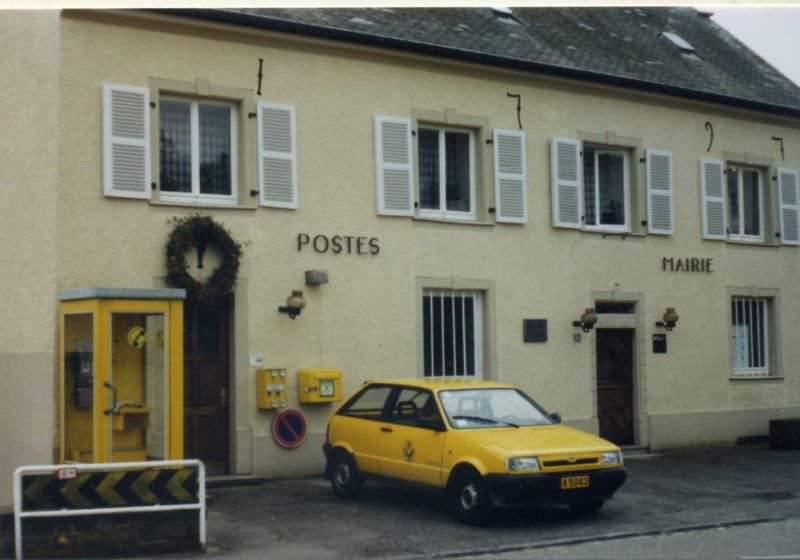
Arsdorf is a small village in the canton of Redange, in western Luxembourg. Its combined post office and town hall building — a common arrangement in Luxembourg’s smaller settlements — served as the administrative hub for local residents. Across the country, post offices were a visible part of daily life, appearing in even the most modest villages. The national postal service, known as “Die Post,” maintained a dense network of branches that kept communities connected.
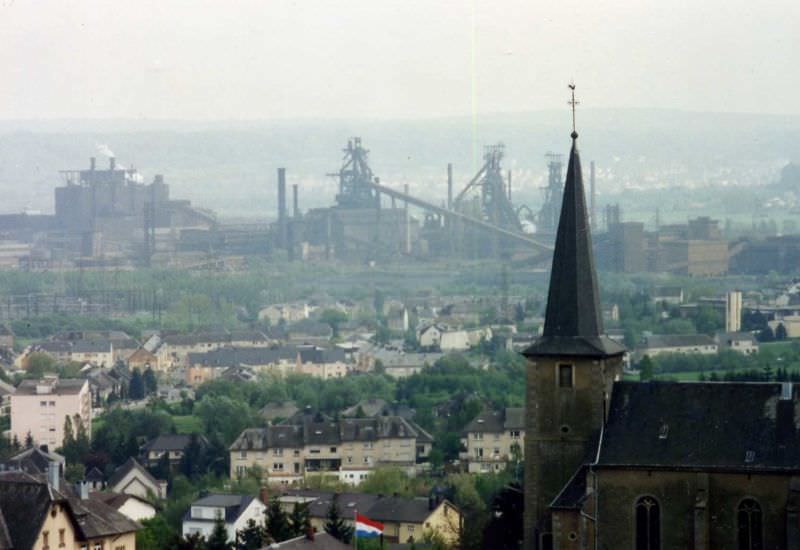
Luxembourg’s steel industry was once the backbone of its economy. The Belval steelworks, located in the south of the country near Esch-sur-Alzette, was one of the most significant industrial sites in the region. By 1995, the steel sector was already in a long decline driven by global competition and falling demand, but the towering blast furnaces still dominated the skyline. The Diekirch post office, seen below, stood in sharp contrast — a civic building in a quieter, northern market town.
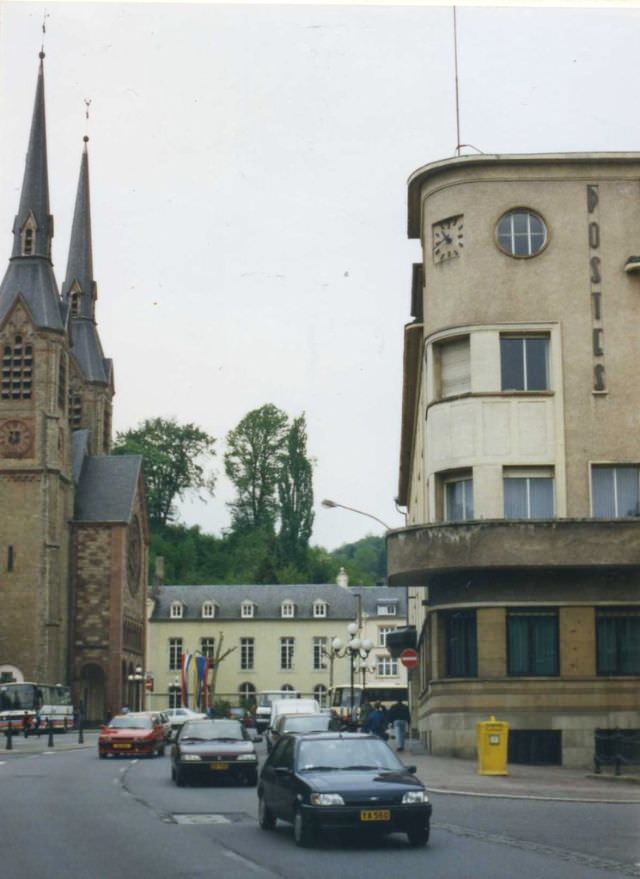
Diekirch sits along the Sûre River in northern Luxembourg and is best known today for its brewery and its military history museum. In 1995, its Bureau de Poste served the local canton and displayed the clean, functional architecture typical of Luxembourg’s public buildings during that era. Public transit was equally well-organized. The country’s bus network connected towns and villages that the rail network did not reach, run by both the national railway operator CFL and private companies.
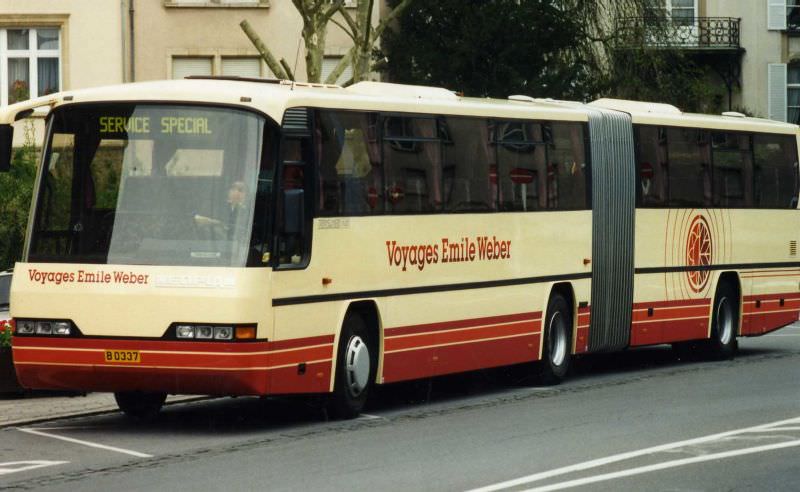
Voyages Emile Weber was one of Luxembourg’s major private coach and bus operators in the 1990s. Their Neoplan Transliner N321 articulated bus — known in German as a “gelenkbus” — was a high-capacity vehicle used on longer intercity routes. These buses complemented the rail services run by the Chemins de Fer Luxembourgeois, or CFL. The railway network was central to the country’s transport system, and by 1995 it operated a modern fleet of electric trains across the Grand Duchy.
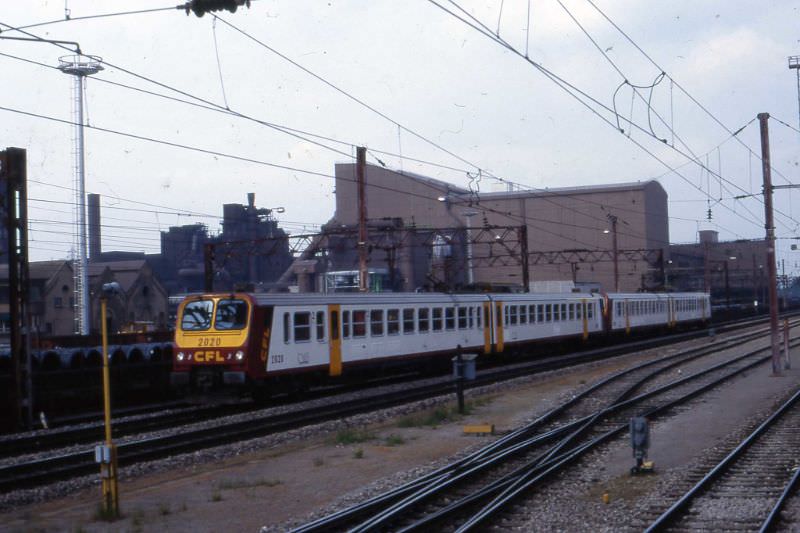
The juxtaposition of an electric CFL passenger train passing against the backdrop of a steelworks captures two eras of Luxembourg’s economy in a single frame. The CFL Series 2000 locomotives were workhorses of the national rail network, hauling both passenger and freight services. CFL also operated a fleet of buses to cover routes beyond the rail network, including Van Hool vehicles that were a common sight on Luxembourg’s roads in the mid-1990s.
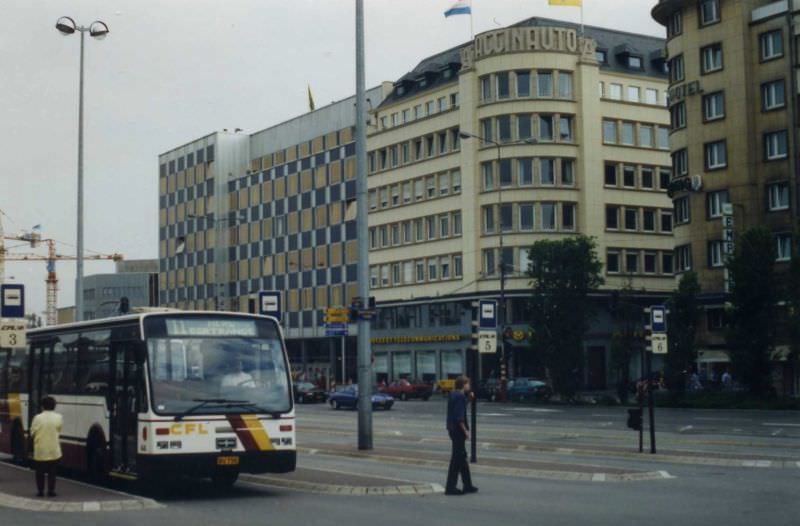
Van Hool is a Belgian bus manufacturer whose vehicles were widely used by transit operators across the Benelux region. CFL’s bus number 44, registered BU 796, was part of the operator’s road fleet that served communities without direct rail access. Back on the rails, Luxembourg’s main station — Gare de Luxembourg in the capital city — was the busiest hub in the entire network, handling both domestic and international services.
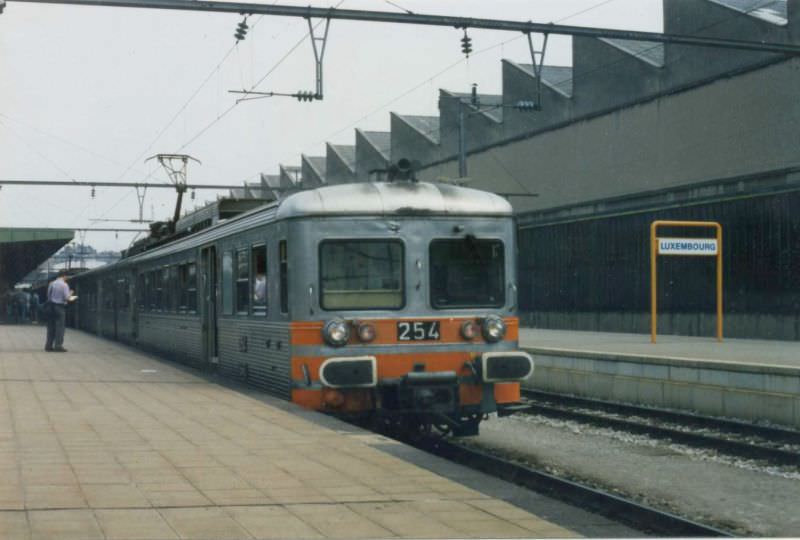
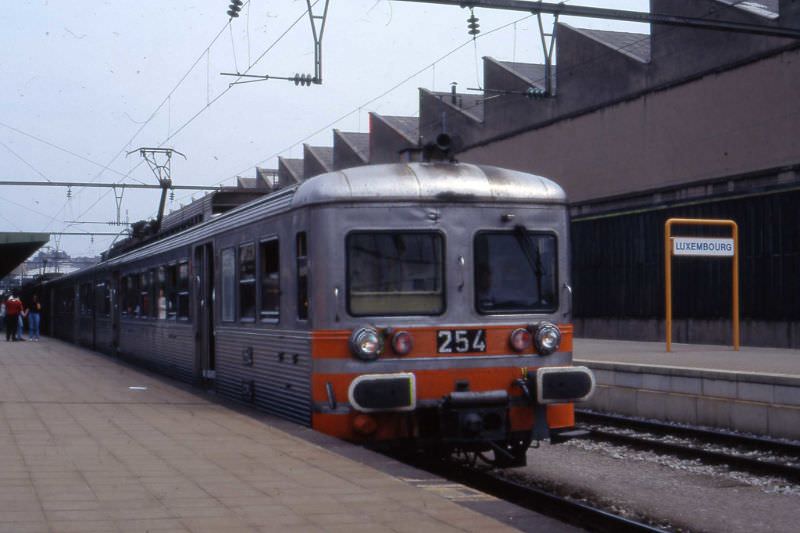
Electric multiple unit 254 at Luxembourg Gare represents the standard commuter rolling stock of the era. These units ran regular services between the capital and towns throughout the Grand Duchy. The station itself was a lively interchange, with cross-border trains arriving from France, Belgium, and Germany every day. One of the quieter stops on the northern line was Wiltz, a small town in the Ardennes region of Luxembourg.
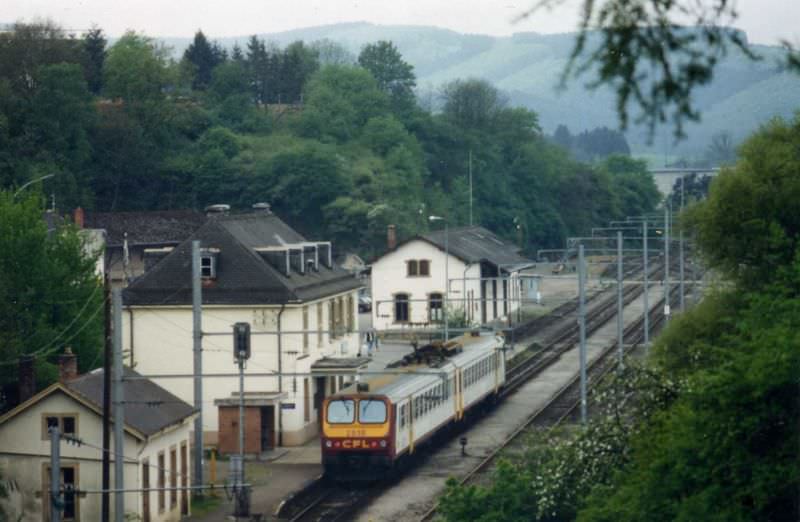
Wiltz sits in the forested hills of northern Luxembourg and was one of the towns hardest hit during the Battle of the Bulge in World War II. By 1995, its station served as a quiet terminus on the northern rail branch. Everyday commercial life across the country was anchored by familiar institutions — among them the cooperative stores that operated under their own distinctive branding.
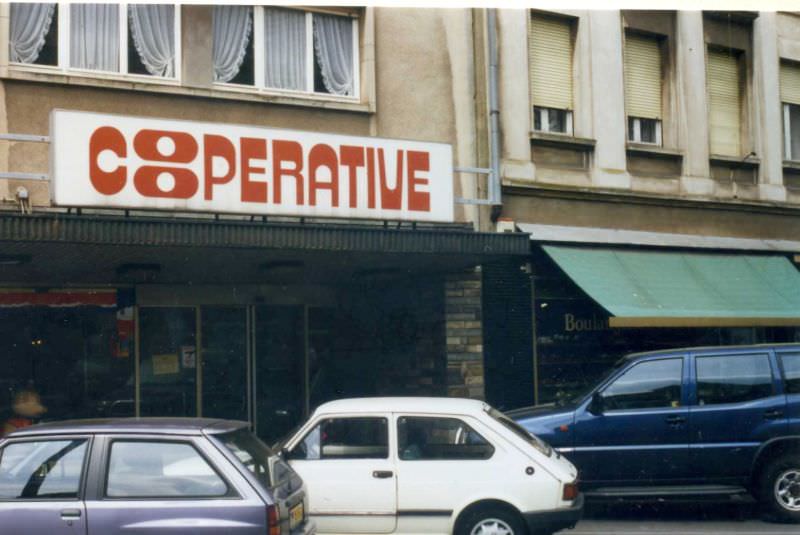
Cooperative retail in Luxembourg had roots going back to the early 20th century labor movement, when workers in the industrial south formed buying cooperatives to access affordable goods. By 1995, these stores were still a recognizable feature of the commercial landscape. Religion was equally embedded in the country’s physical landscape, with church steeples rising above nearly every village and town, including Schifflange in the south.
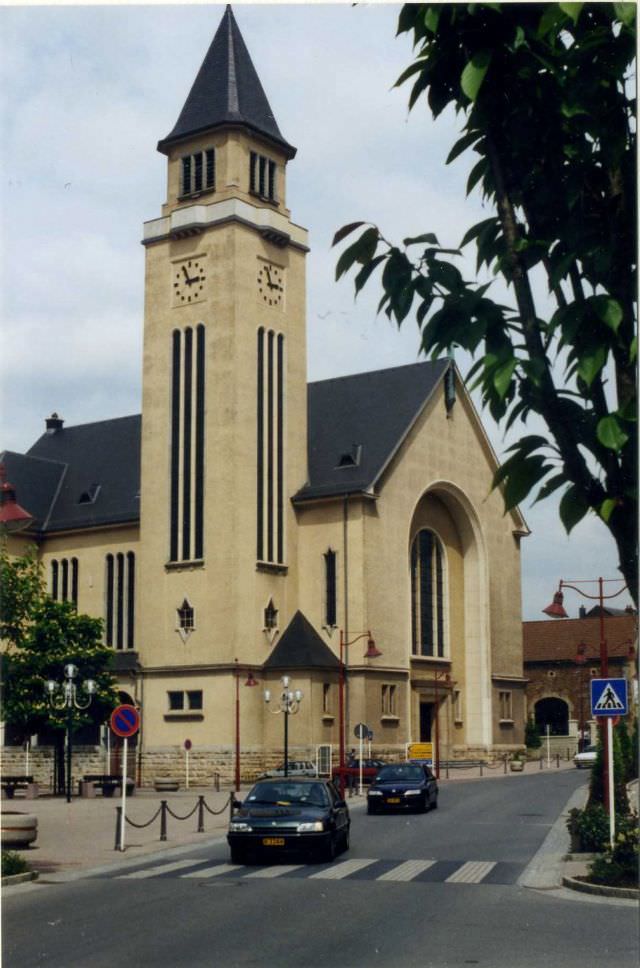
Schifflange is an industrial commune in the canton of Esch-sur-Alzette. Like many southern Luxembourg towns, it grew rapidly in the late 19th and early 20th centuries as the steel industry expanded. Its parish church remains one of the town’s most prominent landmarks. The postal service was another constant presence across Luxembourg, with delivery vans making daily rounds through both urban and rural areas.
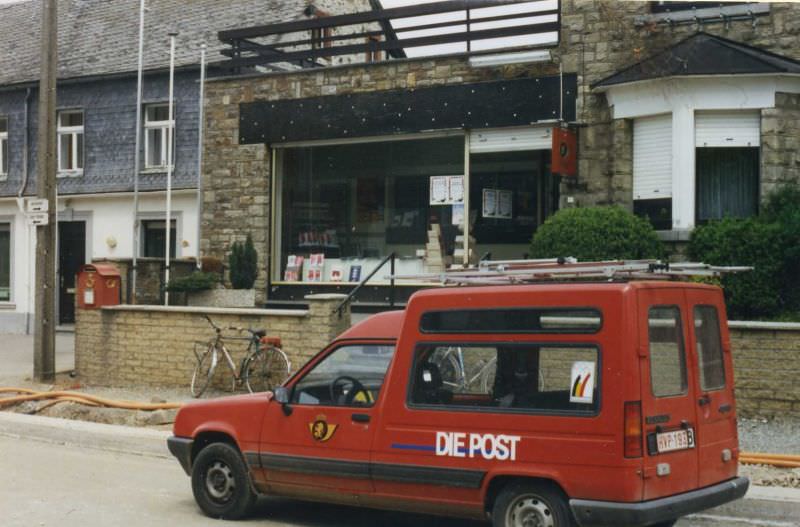
Die Post vans were a familiar sight on Luxembourg’s roads in 1995, threading through narrow village streets and along rural routes to deliver mail to every address in the country. The town of Dudelange, in the far south near the French border, was served by this network like every other community. Dudelange was one of Luxembourg’s most industrialized towns, and three separate photographs from May 1995 document its character.
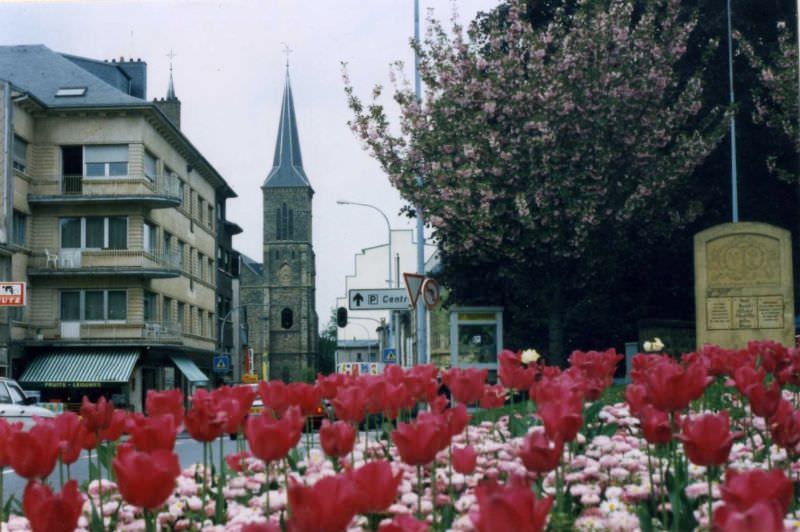
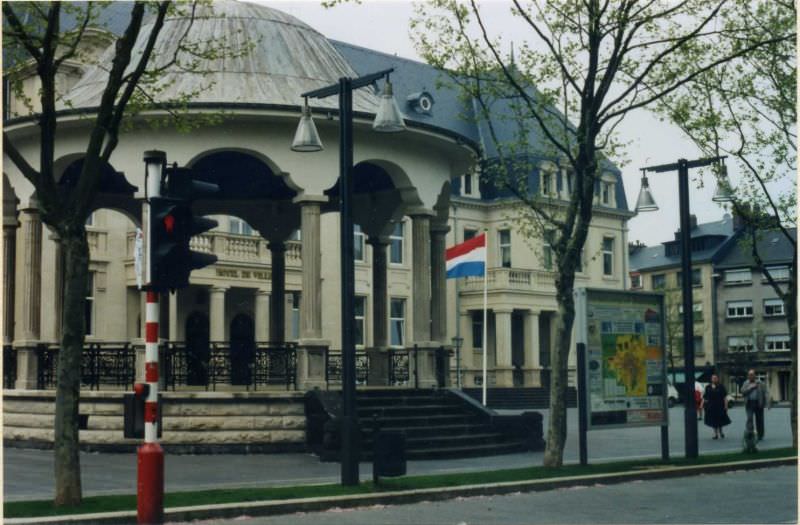
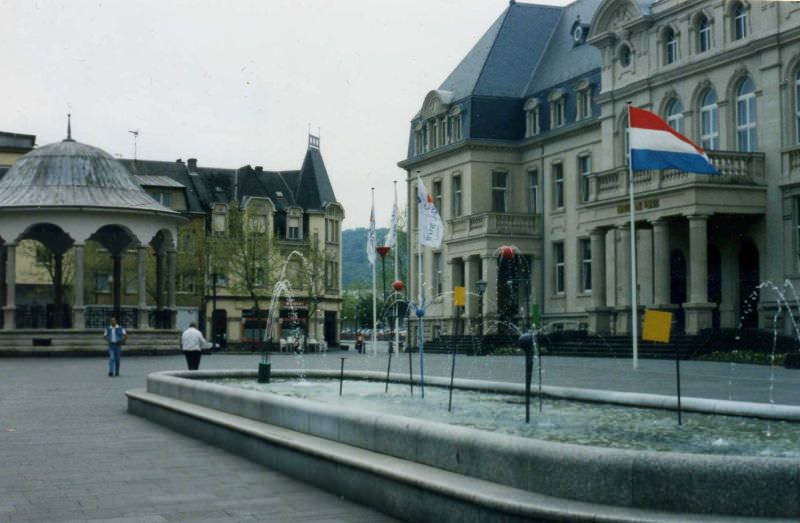
Dudelange grew from a small village into a significant industrial center during the steel boom of the early 1900s. By 1995, its streets showed the mix of working-class architecture and civic pride typical of southern Luxembourg’s industrial belt. Electric commuter trains connected Dudelange and surrounding towns to the capital, running on infrastructure that had been modernized steadily since the postwar era.
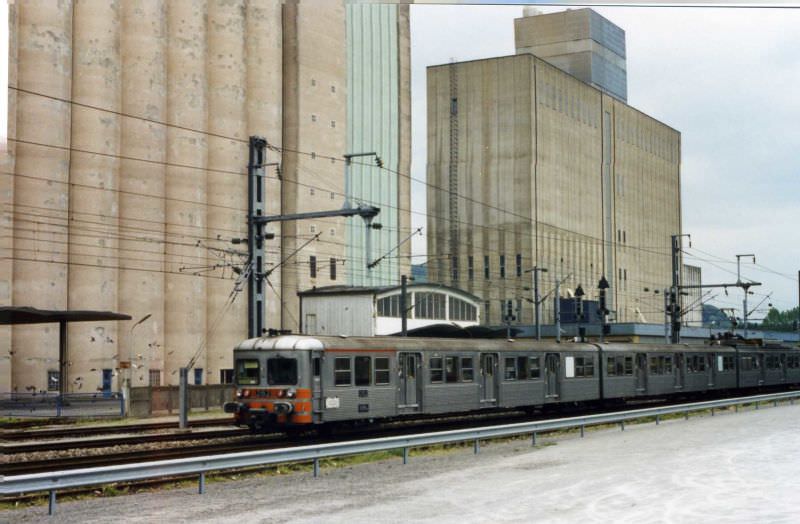
Electrification of the CFL network was completed across most main lines well before 1995, making Luxembourg one of the more thoroughly electrified rail networks in Western Europe relative to its size. The rail yards at Esch-sur-Alzette tell a different story — one of freight, steel, and heavy industry rather than commuter traffic.
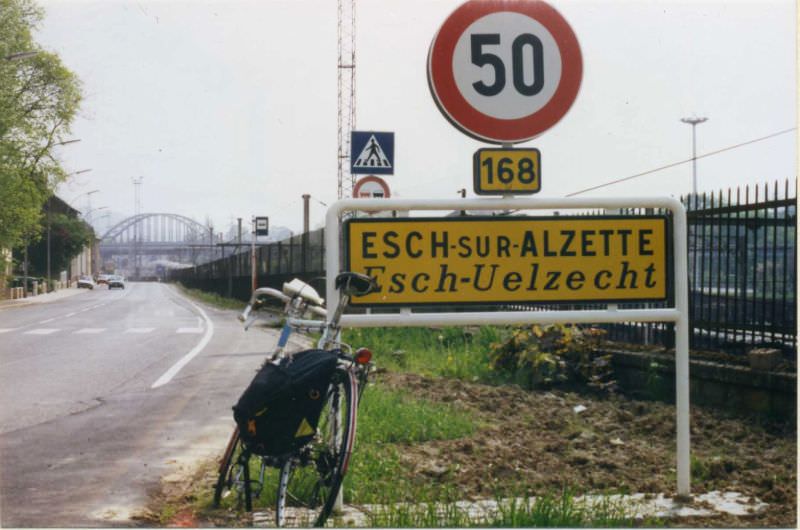
Esch-sur-Alzette is Luxembourg’s second-largest city and the historic capital of its steel industry. In 1995, its railway sidings still carried freight traffic serving the nearby mills and processing plants. A short distance from Esch, the borders of three nations converge — a geographic curiosity that draws visitors to this day.
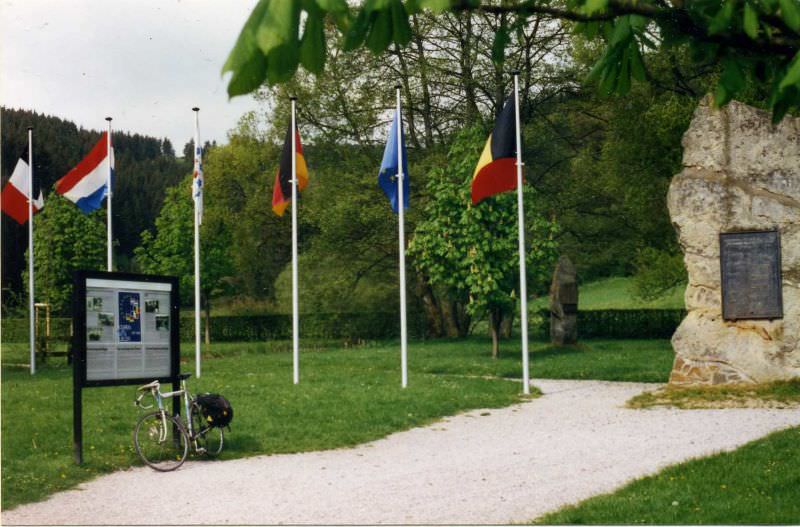
The tripoint where Belgium, Luxembourg, and Germany meet lies near the town of Trois-Frontières. In 1995, with the Schengen Agreement already in effect since 1985 and fully implemented for most member states, border crossings between these three countries had become seamless. The main station in the capital, Gare Luxembourg, was the gateway through which many of those cross-border journeys began.
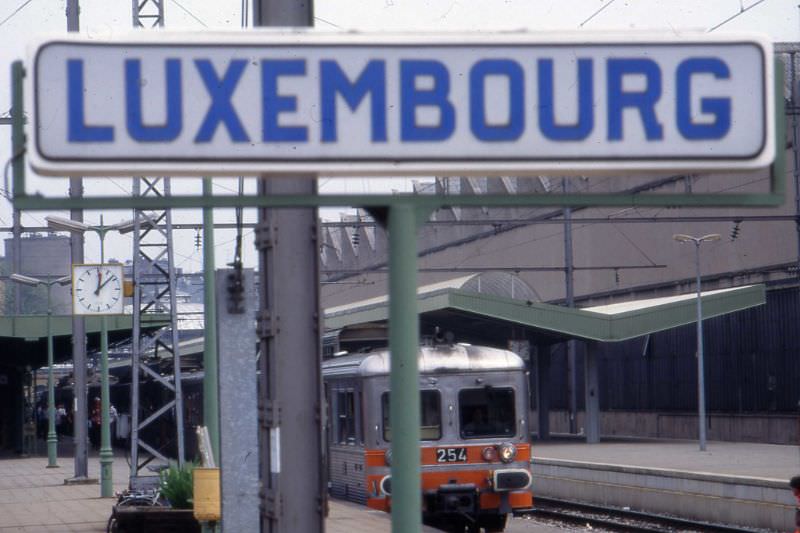
CFL electric multiple unit 254 appears again at Gare Luxembourg, a station that handled hundreds of train movements daily. International services to Paris, Brussels, and Frankfurt all passed through here. Outside the capital, smaller towns like Grevenmacher on the Moselle River maintained their own post office branches as essential community services.
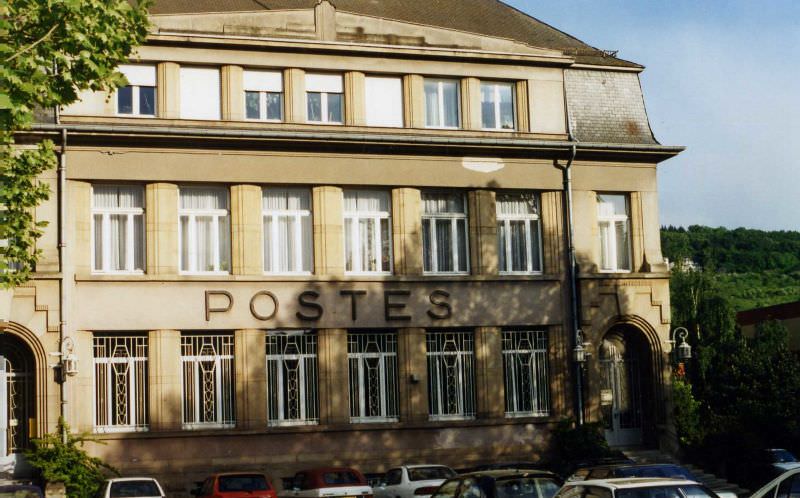
Grevenmacher sits on the Moselle River in eastern Luxembourg, facing Germany across the water. It is the administrative capital of the Grevenmacher canton and is well known for its wine production. Its post office, like those across the country, carried the standard Die Post branding. Further west, the station at Kleinbettingen served as an important junction on the line toward Belgium.
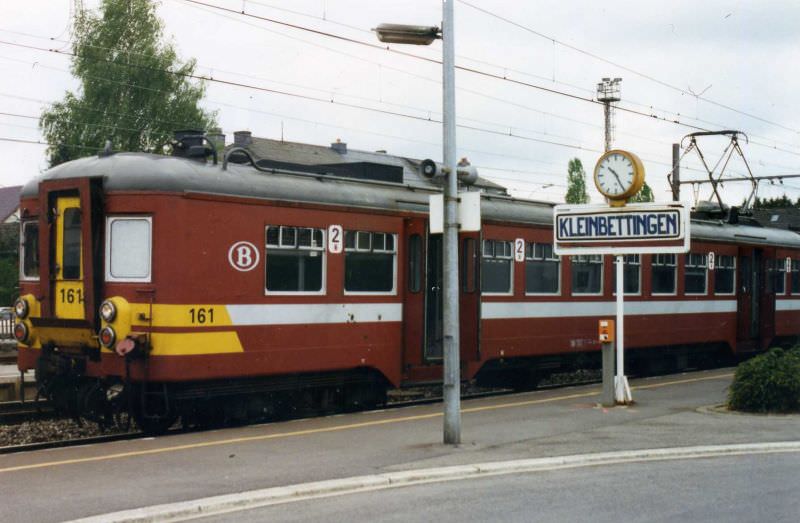
Kleinbettingen station sits near the Belgian border in the Steinfort commune and was a junction point for trains crossing into Belgium. In the far north of Luxembourg, the station at Troisvierges connected the Grand Duchy to the Belgian rail network heading toward Liège. Troisvierges — meaning “Three Virgins” in French — is a small border town with a station that saw cross-border traffic every day.
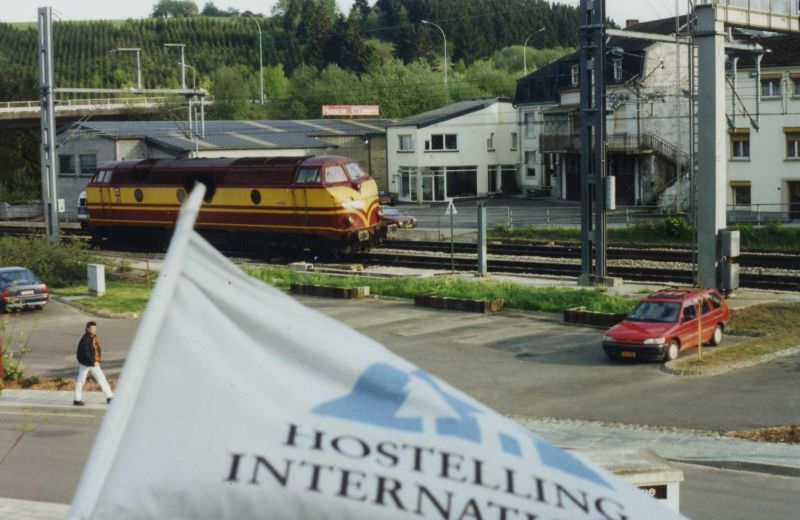
La Gare at Troisvierges marked the northern terminus of the CFL main line and the point where Luxembourg’s railway met the Belgian SNCB network. Back in the capital, the locomotive fleet at Gare Luxembourg included older, distinctive rolling stock alongside the modern electric multiple units.
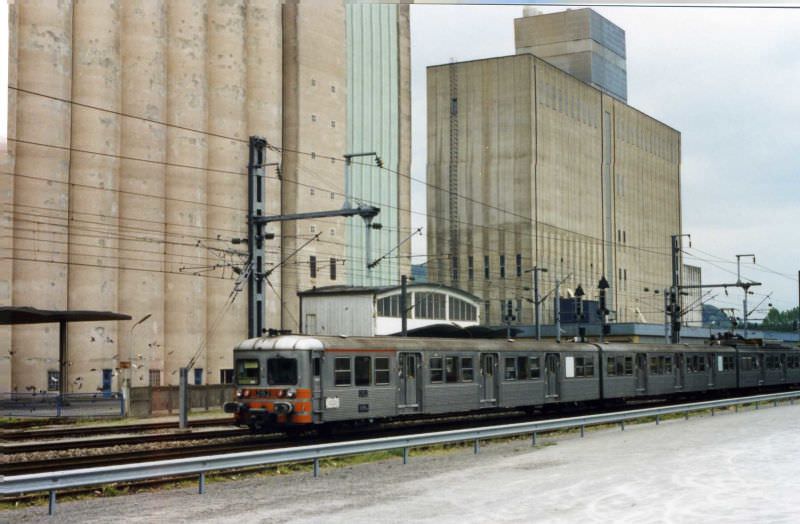
The capital city in 1995 was already establishing itself as a major European financial center, but its streets still held the character of a compact, historically layered city. To the east, the Moselle River valley formed a natural boundary with Germany, and the view from the German bank looking back into Luxembourg showed how intimately the two countries were connected.
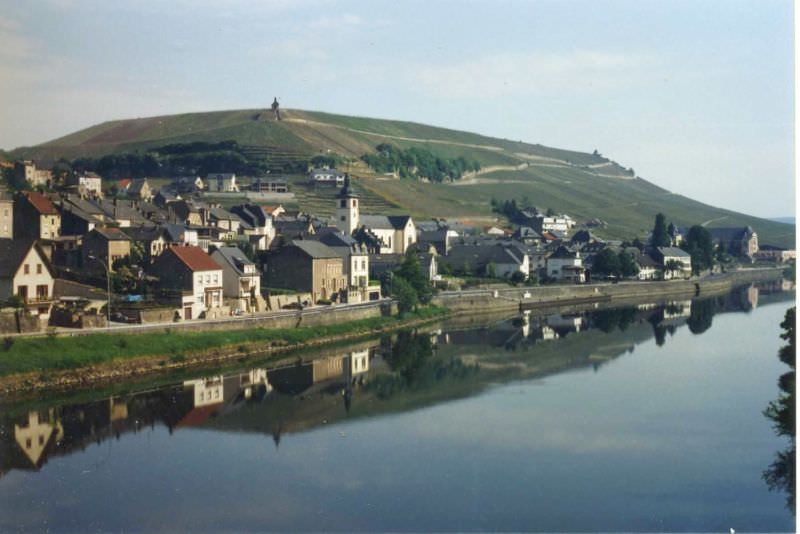
Wormeldange is a wine-growing village on the Luxembourg bank of the Moselle, facing the German Rhineland-Palatinate across the river. The valley’s gentle slopes were covered in vineyards in 1995, as they are today. Moving inland to the center of the country, the village of Niederpallen offered a very different attraction — a preserved piece of Luxembourg’s narrow-gauge railway heritage.
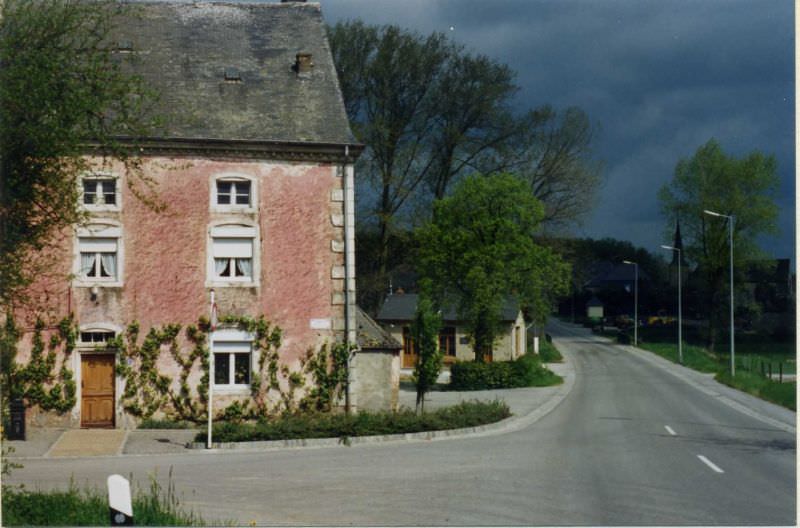
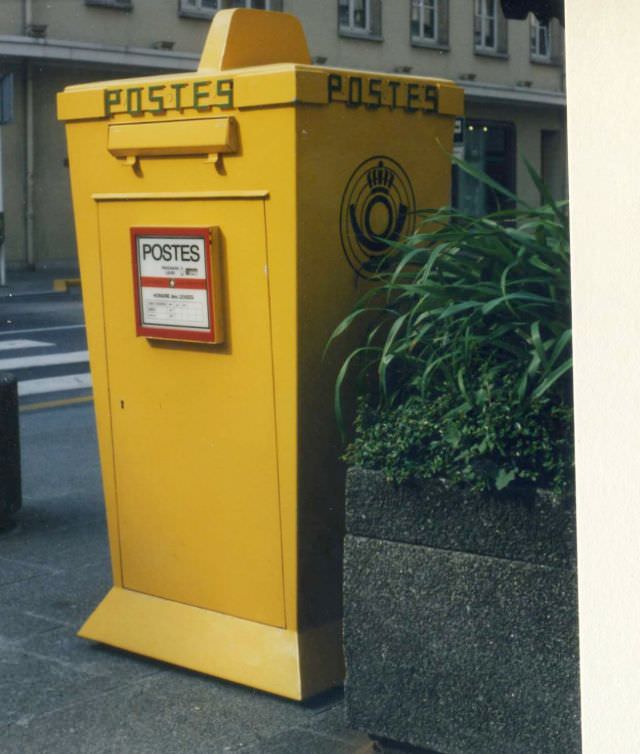
Luxembourg’s distinctive yellow post boxes were a familiar feature on street corners and building walls throughout the country. The postal color scheme — yellow and blue — matched Die Post’s vans and office signage, creating a unified visual identity across the national service. In the Ardennes region, the post office at Esch-sur-Sûre served one of the most scenic areas in the entire Grand Duchy.
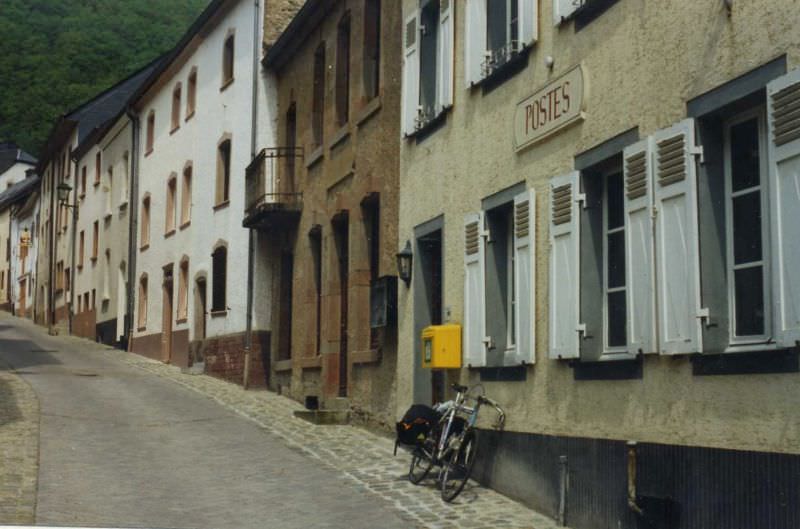
Esch-sur-Sûre is a tiny town almost entirely encircled by a loop in the Sûre River, with a ruined medieval castle rising above it. Its Bureau de Poste handled mail for the surrounding rural communes. Further east, the town of Bettendorf in the Diekirch canton maintained its own post office branch, as did nearly every settlement of any size in Luxembourg.
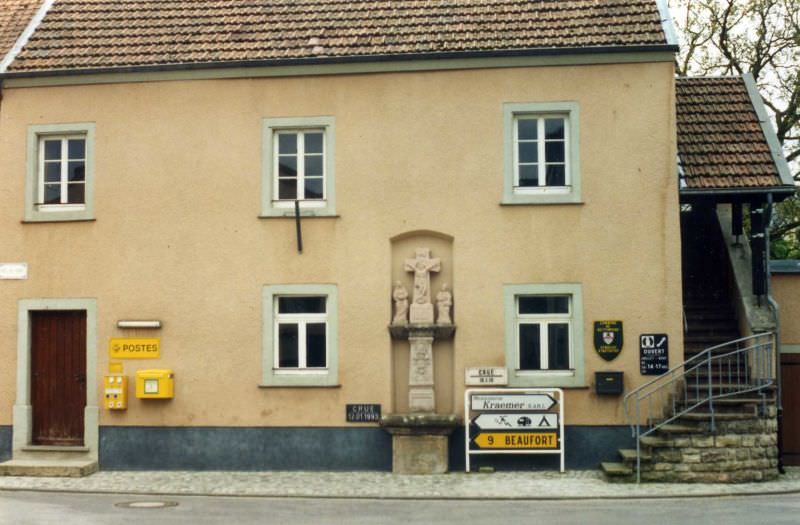
Bettendorf sits above the Sûre River valley and in 1995 was a quiet residential commune in the eastern part of the country. At Niederpallen, a very different kind of vehicle was on display — a preserved narrow-gauge steam engine called De Jhangeli, maintained as a piece of living railway history.
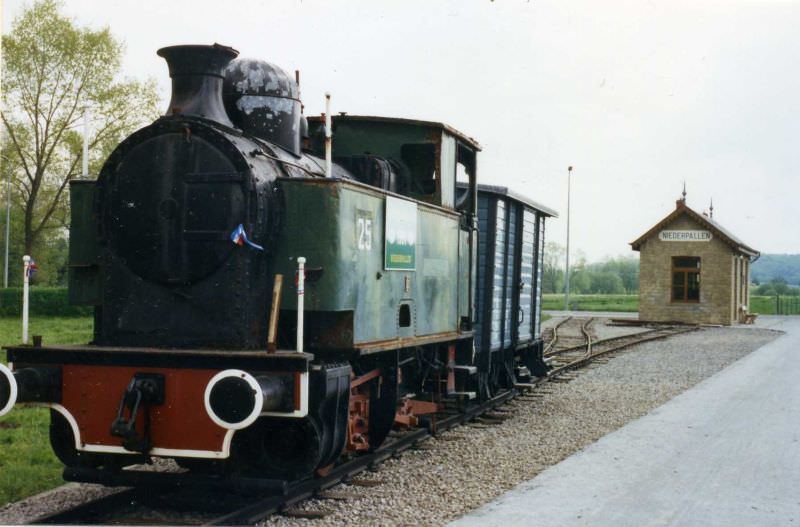
De Jhangeli was part of the preserved narrow-gauge railway at Niederpallen, operated by enthusiasts keeping alive the memory of Luxembourg’s once-extensive narrow-gauge network. The “Usines à Fer” railway system had served the country’s rural areas and iron ore fields for decades before being closed and partially preserved. In the commune of Reckange-sur-Mess, everyday life continued at its own quiet pace in May 1995.
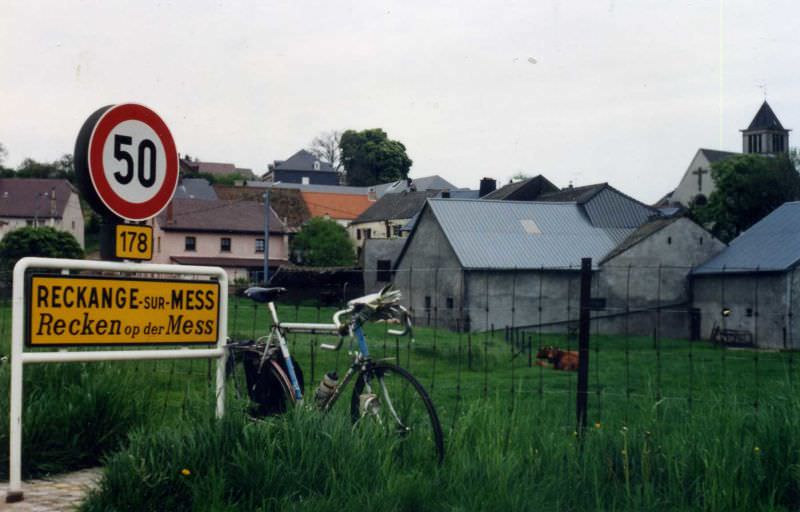
Reckange-sur-Mess — known in Luxembourgish as Recken op der Mess — is a small village in the canton of Capellen. Its rural character contrasted sharply with the industrial south just a short distance away. Cross-border railway operations were visible throughout Luxembourg’s network, and French SNCF trains regularly appeared at stations like Mersch in the center of the country.
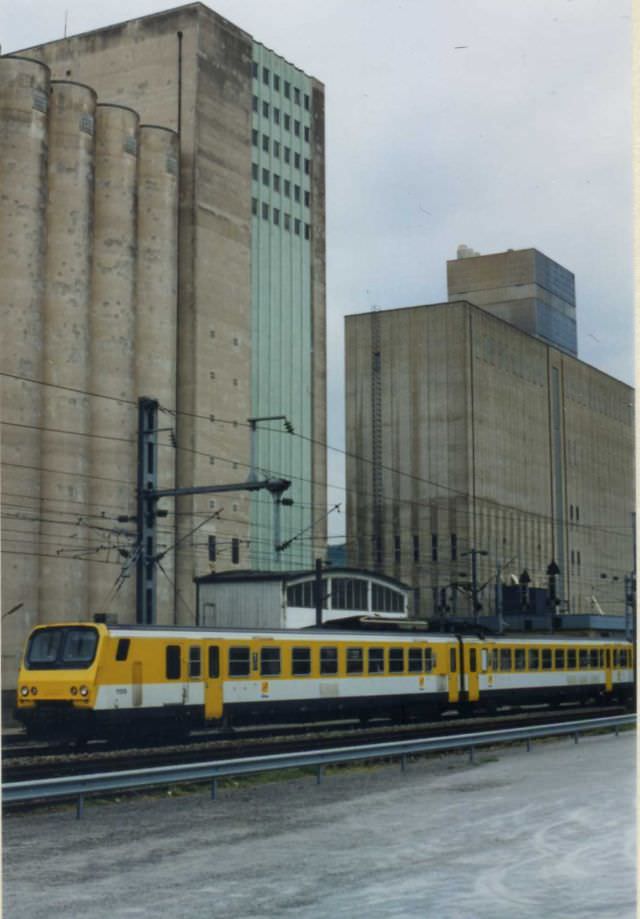
French SNCF units operating in Luxembourg reflected the deep rail integration between the two countries, built on shared infrastructure agreements going back decades. Belgian locomotives also worked into Luxembourg, with SNCB — the Belgian national railway — running through services that used the same electrified network.
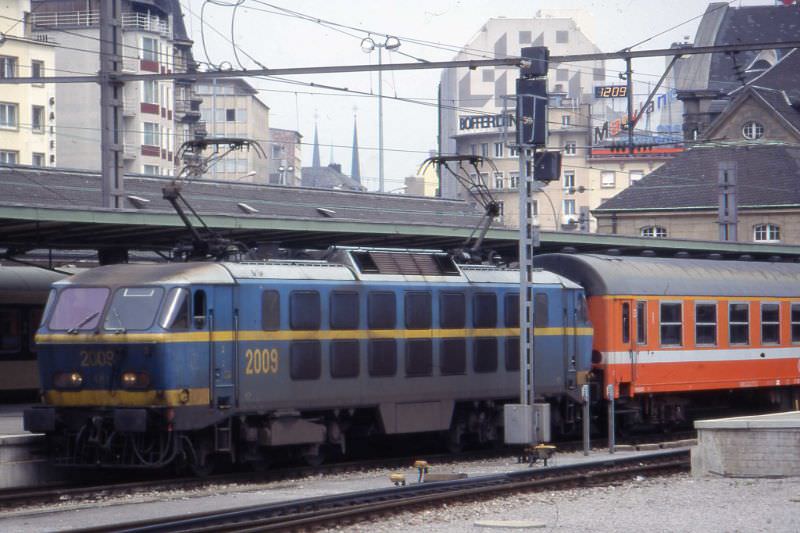
SNCB locomotive number 2009, photographed in Luxembourg in 1995, was one of the Belgian Class 20 electric locomotives used on heavy passenger and freight duties across the Benelux network. Away from the railways, the food on offer at a local establishment gave a glimpse into everyday Luxembourgish meals of the period.
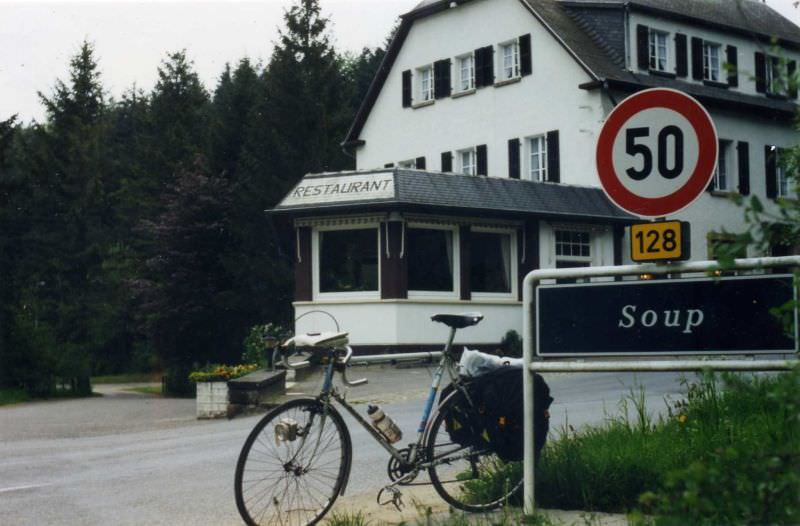
A bowl of soup in Luxembourg in 1995 reflected the country’s hearty, Central European culinary tradition. Bean soup, pea soup, and Bouneschlupp — a green bean soup with smoked bacon — were staple dishes. Just across the border in the Belgian Ardennes, the town of Stavelot provided a comparison point for the broader regional character of this part of northwest Europe.
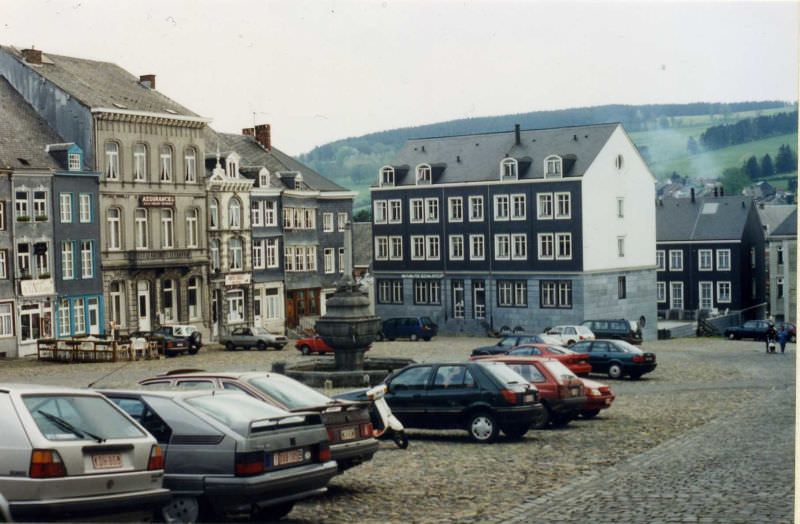
Stavelot is a historic Belgian town in the Ardennes province of Liège, not far from the Luxembourg border. In May 1995, its old town streets and abbey ruins were already a draw for visitors to the region. Back in Luxembourg, the steelworks at Dudelange continued to operate as one of the last active sites in the country’s shrinking but still functioning steel sector.
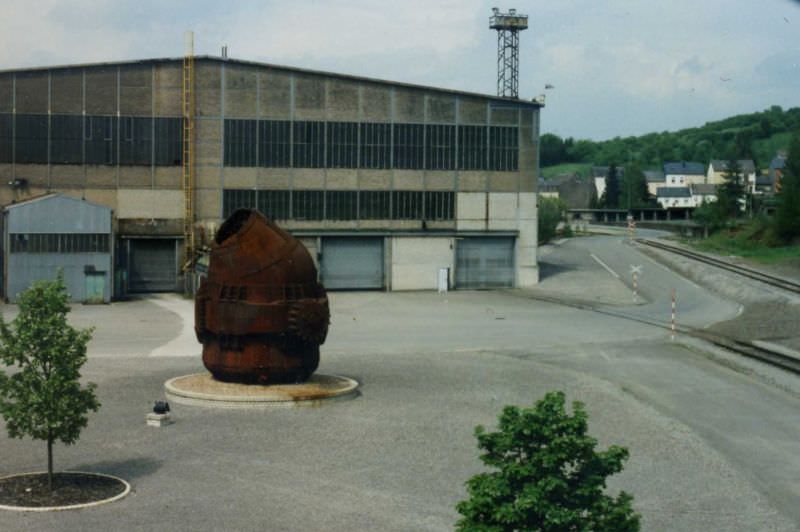
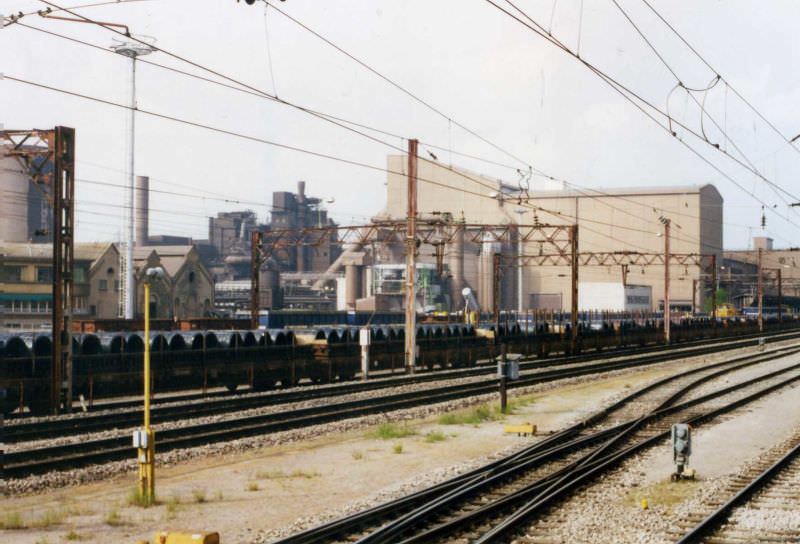
The steelworks at Esch-sur-Alzette were among the largest in the country. The ARBED company — Aciéries Réunies de Burbach-Eich-Dudelange — dominated Luxembourg’s steel output for most of the 20th century and employed a large share of the southern population. At the capital’s main station, one of the more unusual locomotives in the CFL fleet was the steeple cab electric engine, a type that dated back to earlier decades of railway electrification.
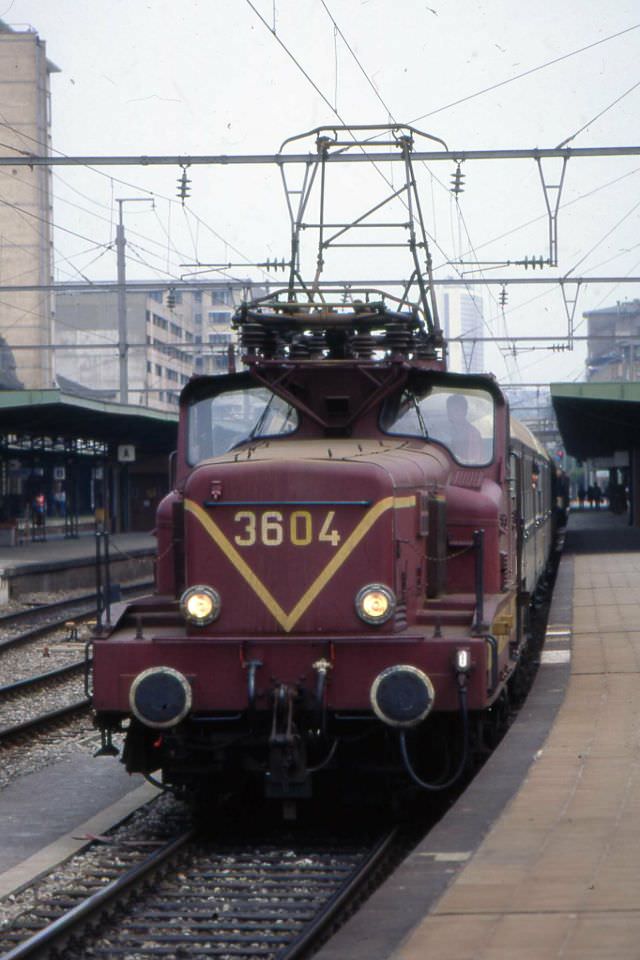
CFL steeple cab 3604 was a veteran locomotive still in use at Gare Luxembourg in the mid-1990s. These distinctive engines, with their raised central cab flanked by machinery housings on both ends, were a product of early 20th century electric railway engineering and had become increasingly rare by 1995. The three-country border was another rare geographic feature worth documenting.
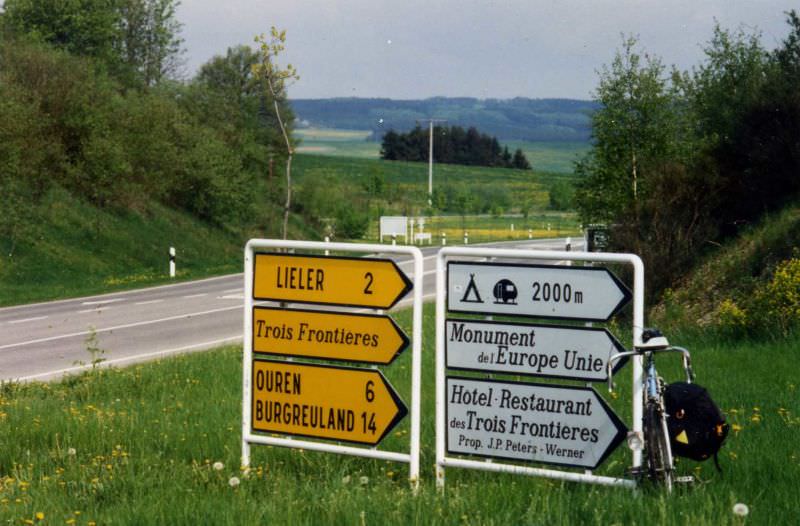
The tripoint marker where Belgium, Luxembourg, and Germany converge is one of those quietly remarkable spots on the map of Europe. In 1995, with open borders under Schengen, it was possible to stand in three countries simultaneously without any border formality whatsoever. Further north in Luxembourg, the station at Wilverwiltz served the Clerve valley and the small communities of the Ardennes highlands.
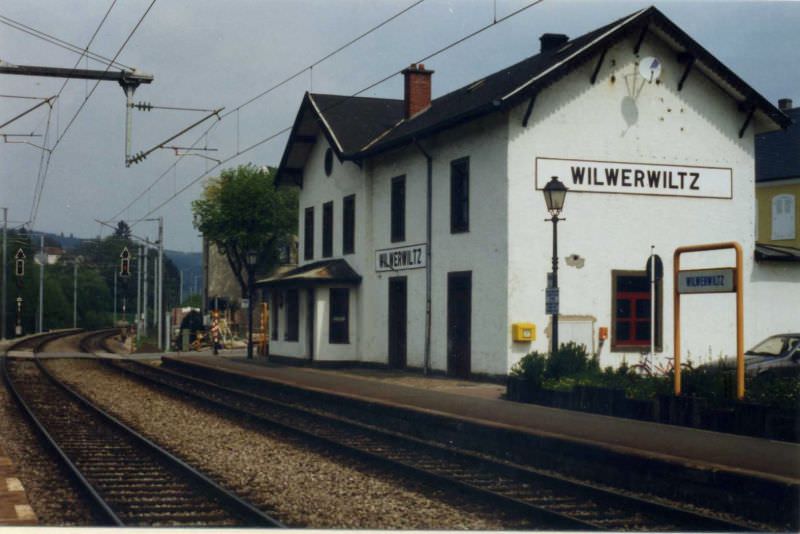
Wilverwiltz station sits on the northern CFL line in the canton of Clervaux. The surrounding landscape in May 1995 was characterized by rolling hills, forests, and small farming villages that had changed little in appearance over the preceding decades. For travelers in Luxembourg that month, accommodation ranged from hotels to the country’s network of youth hostels, including one with a memorable outlook in Troisvierges.
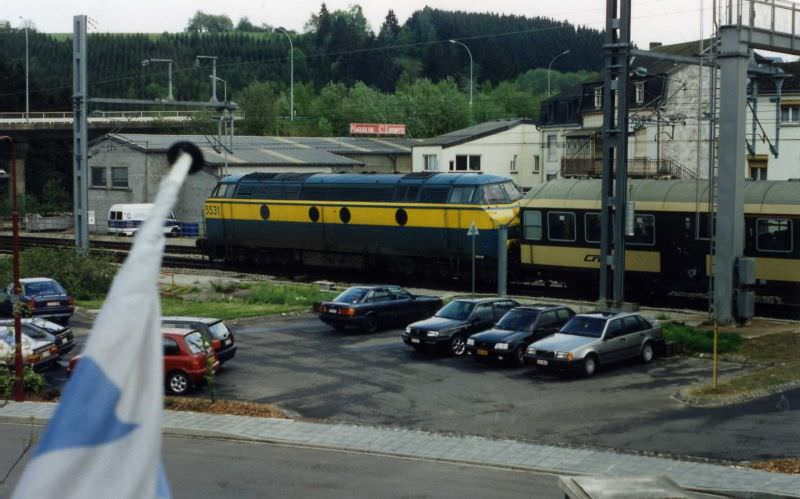
The youth hostel at Troisvierges offered guests a view over the northern Luxembourg countryside — green hills and quiet villages stretching toward the Belgian border. In May 1995, that view out the window looked much as it had for generations, unhurried and uncluttered. These photographs, taken across just a few weeks, capture a version of Luxembourg that was still deeply connected to its industrial roots and small-town character, even as larger economic shifts were already underway.





Those 90s out of town buses were much more comfy than the RGTR ones we have today… or is it just me?
Thanks for sharing!
Nice to see a mix from outside VDL
This, the photos from Schifflange, Troisvierges and Dudelange were a nice nostalgia flash for me.