
In 2017, photographer Chris Dorley-Brown was working through the collections at the Tower Hamlets Local History Library & Archives when he made a remarkable find. Tucked away in the stacks were thousands of color slides taken by David Granick, a local East End photographer who had spent much of his life documenting the streets, buildings, and people around him. The slides had sat largely unknown for half a century, yet they survived in good condition.
Granick was deeply rooted in the community. He was an active member of the East London History Society and used his photographs to illustrate lectures he gave on local history. His images were never just personal snapshots — they were built into a teaching collection, a visual record of a place changing rapidly in the postwar decades. In total, around 3,000 slides date from the 1950s onward, stretching through to 1980.
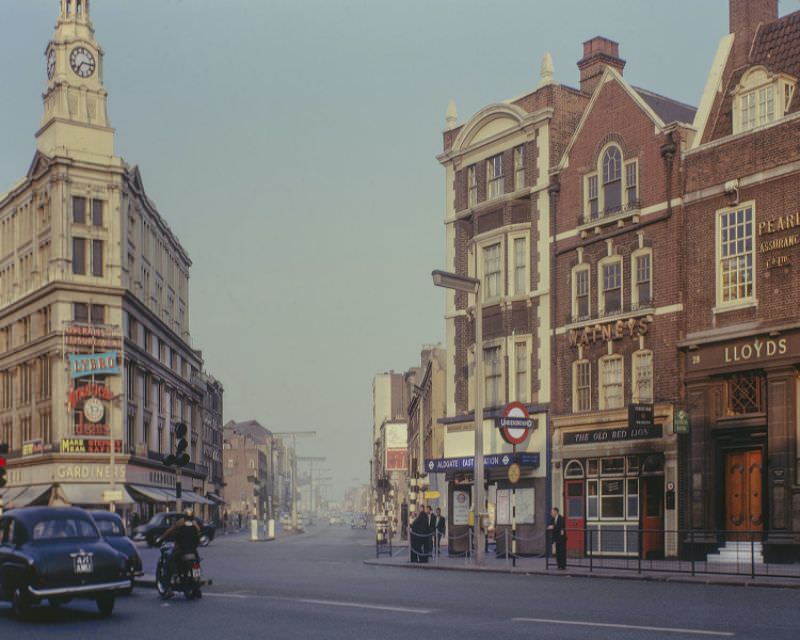
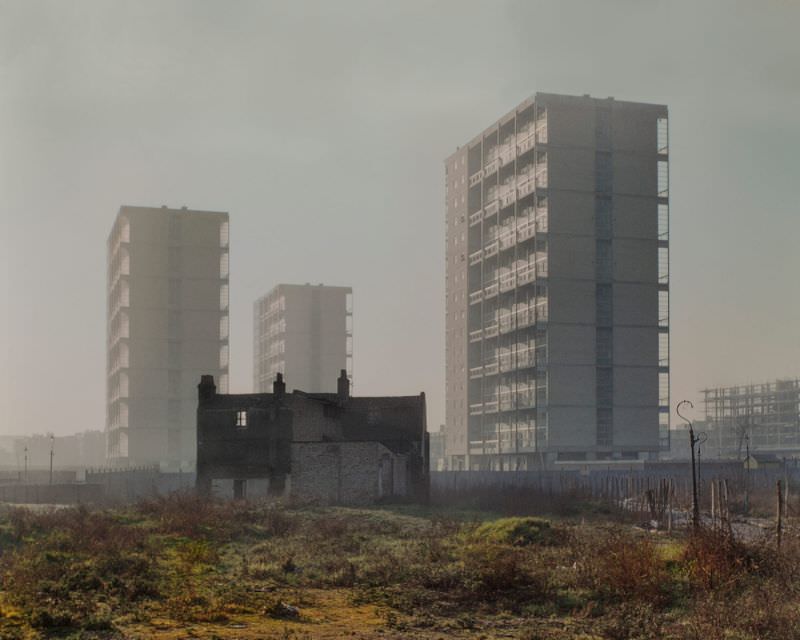
The East End Granick photographed still bore the marks of the Second World War. Bomb sites, cleared plots, and gap-toothed streetscapes appear throughout his work alongside the everyday rhythms of shops, markets, and pubs. The late 1950s shots show a neighborhood still rebuilding. By the 1970s, wholesale redevelopment and demolition had transformed whole streets.
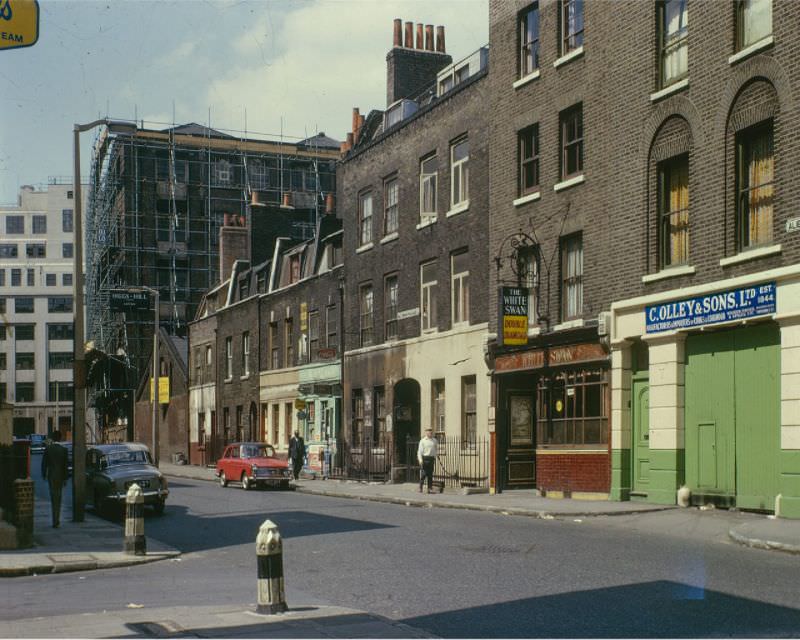
Streets like Alie Street and Whitechapel Road appear in his slides from the early 1960s, capturing the particular texture of that era — the signage, the vehicles, the street-level architecture that has since largely vanished.
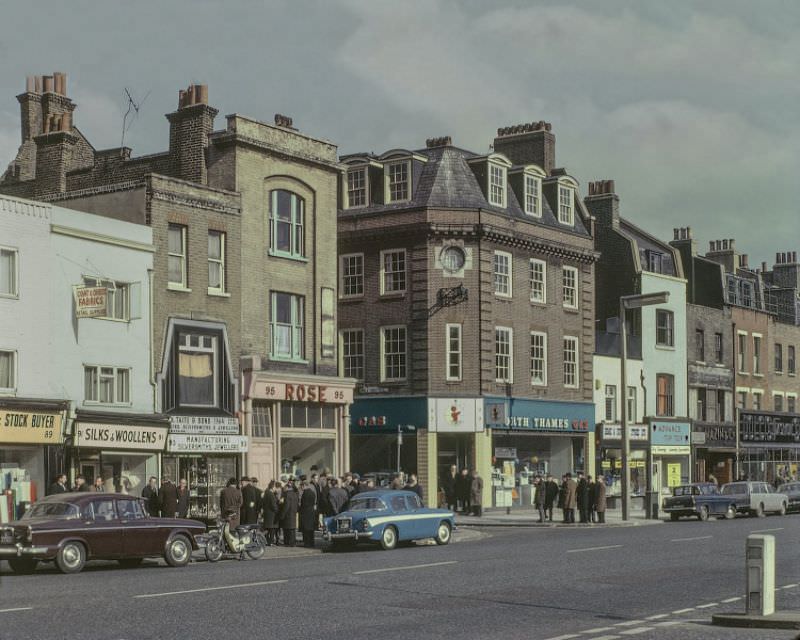
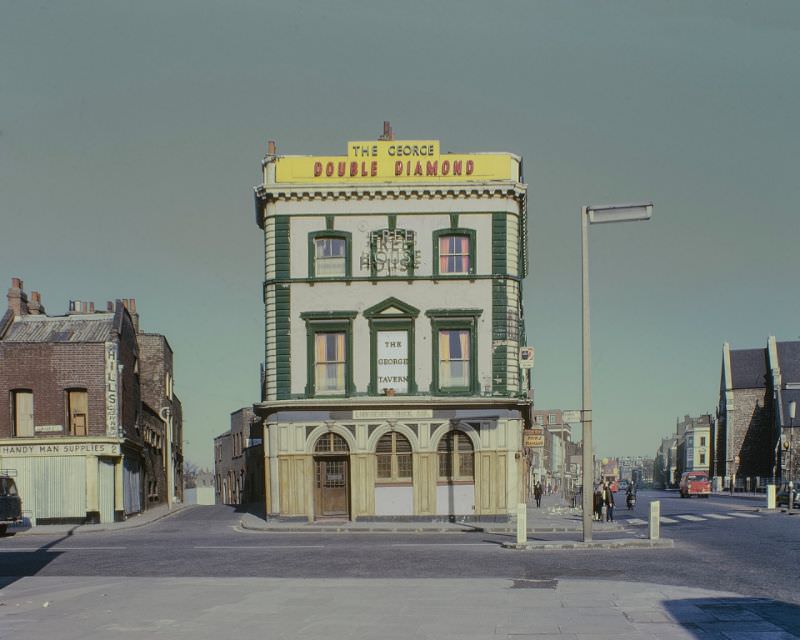
By the late 1960s, Granick was photographing the pubs and commercial strips that defined East End social life. The George Tavern on Commercial Road, captured in 1969, is one of many local landmarks he turned his lens on — places that served as anchors for their communities even as the surrounding area shifted.
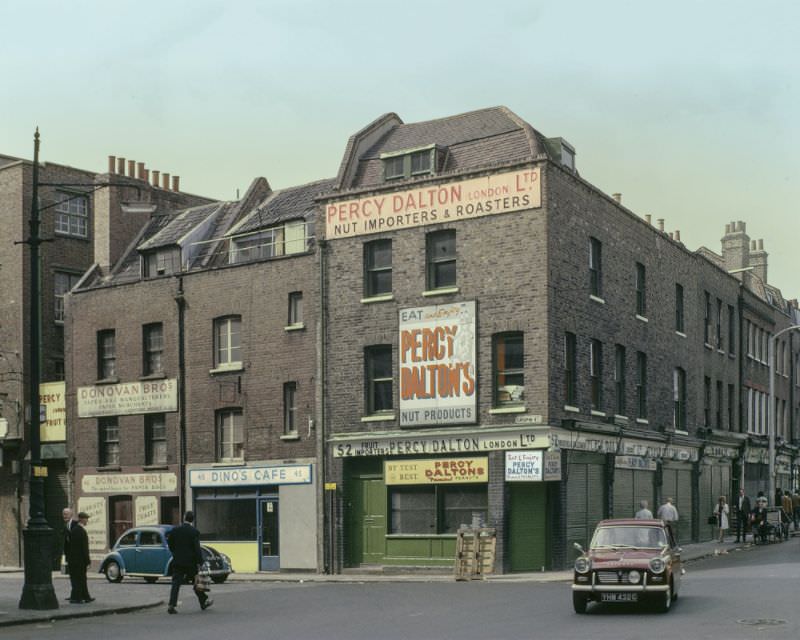
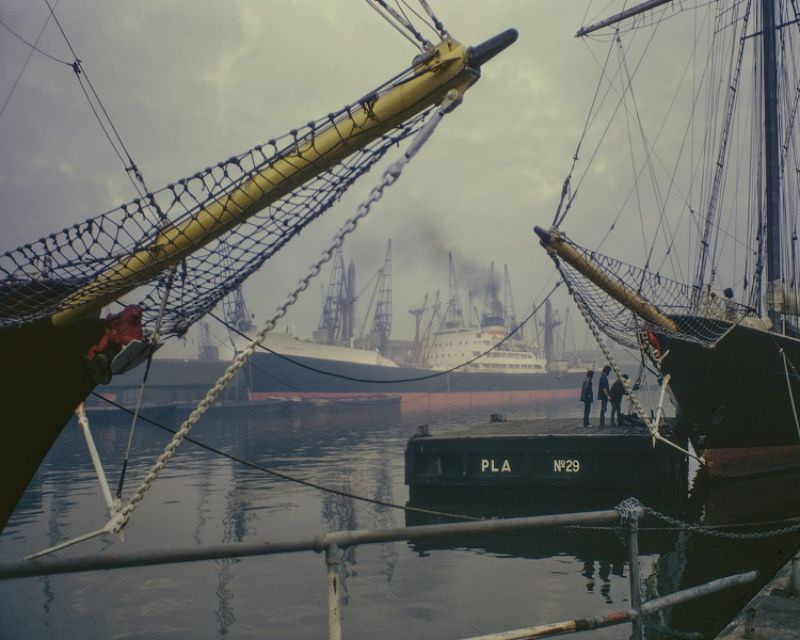
Brushfield Street in 1970 and the West India Dock in 1971 show the industrial and commercial backbone of the East End at a pivotal moment. The docks were entering their final years of active use, and the streets around Spitalfields were on the edge of significant change.
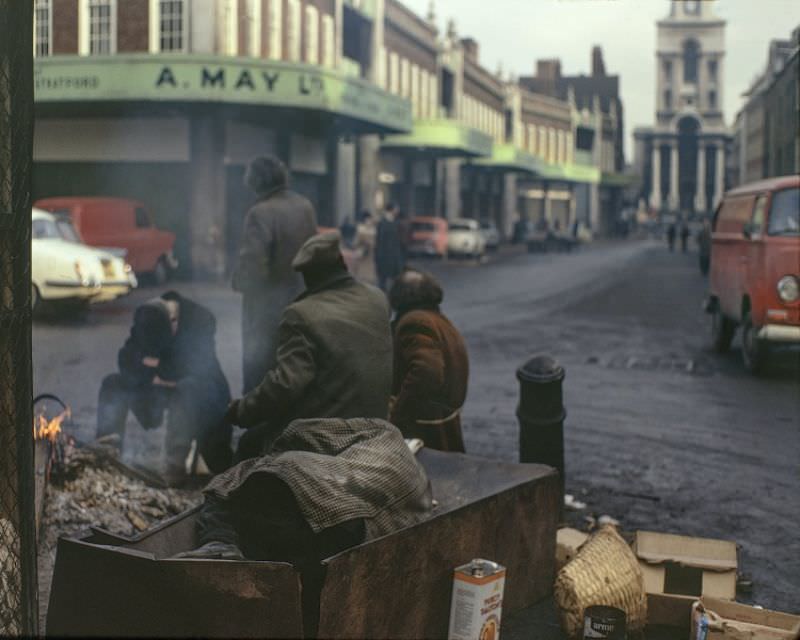
Spitalfields Market itself appears in a 1973 slide, still operating as a working wholesale market before the redevelopment debates of later decades took hold. Granick’s shot fixes it in a moment of ordinary business — exactly the kind of scene that tends to go unrecorded until it’s too late.
The mid-1970s slides take in Commercial Road and Watney Market in 1974, both key arteries of East End daily life. Watney Market, a long-running street market in Stepney, was a hub for local shopping and street commerce that Granick clearly saw as worth preserving on film.
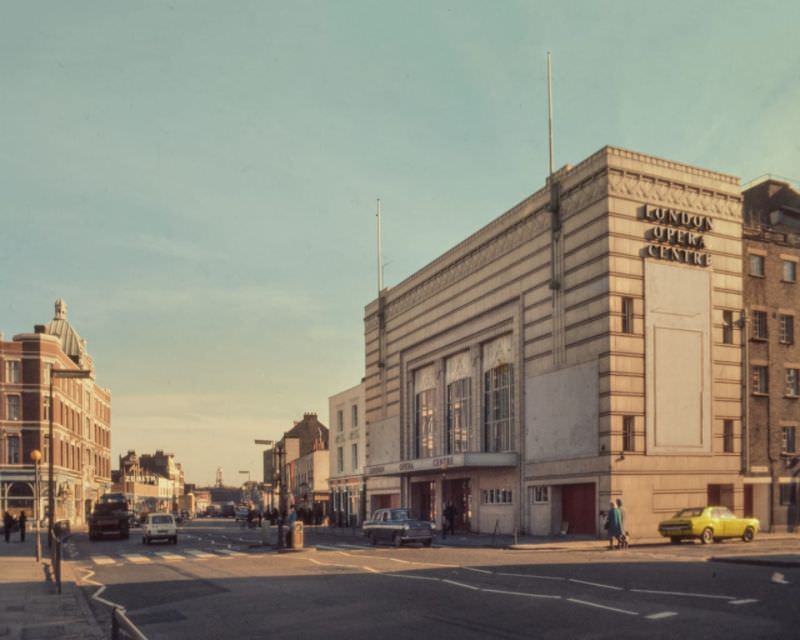
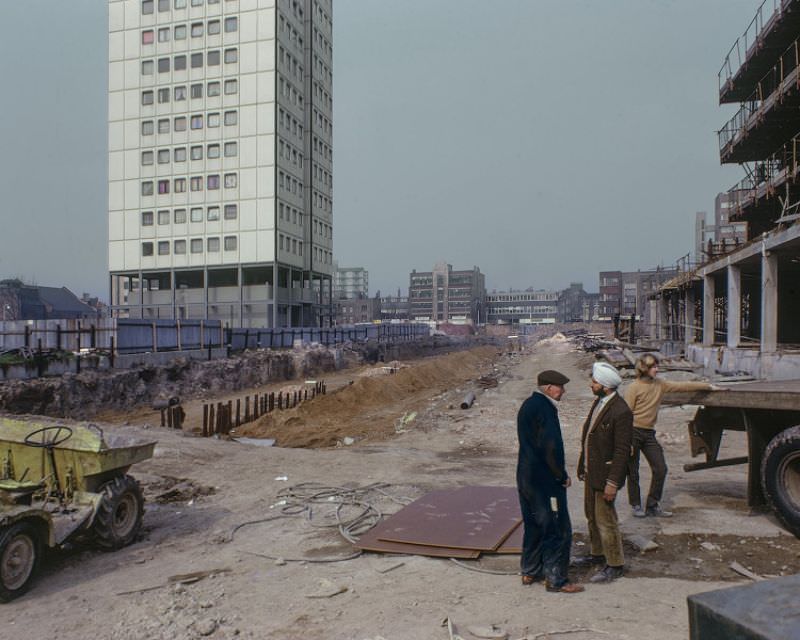
His 1977 photographs — Belhaven Street and The New Globe on Mile End Road — show the East End deep into a decade of economic decline and physical change. These images close out the mid-period of his collection, just a few years before the archive record ends at 1980.
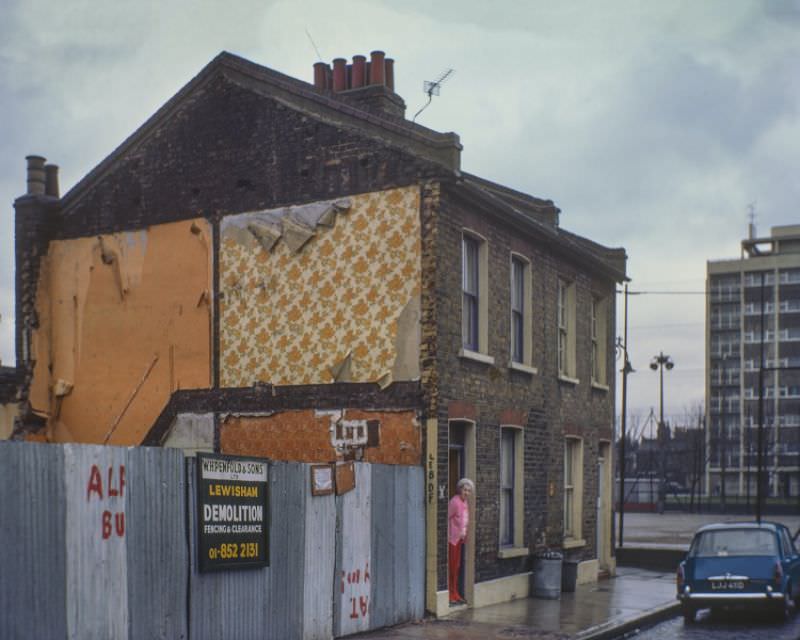
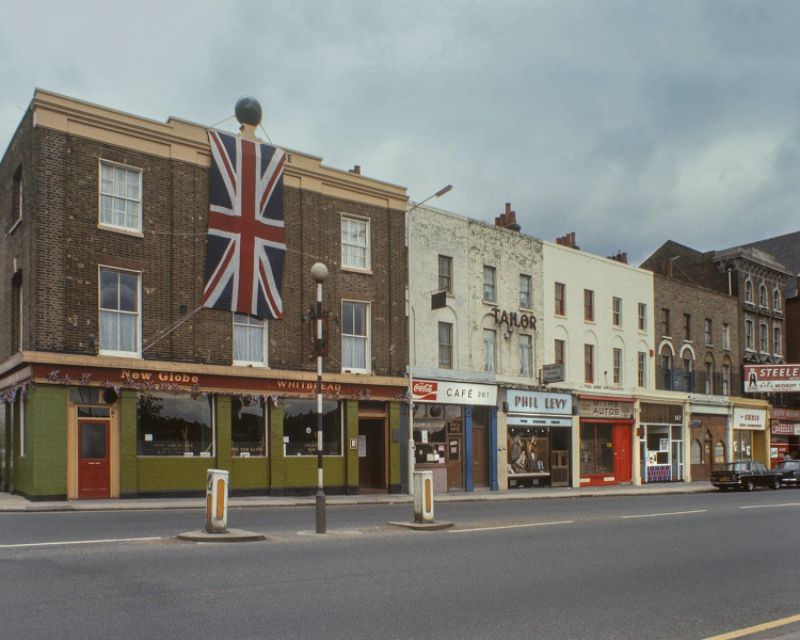
What Dorley-Brown uncovered in that archive was not just a personal collection but a structured historical record — one man’s systematic effort to document a place he clearly cared about deeply. The fact that roughly 3,000 slides survived in good condition, despite being unknown for decades, makes the discovery all the more significant for anyone interested in the visual history of East London.




