London in the 1980s was a city in constant motion. Its streets carried the noise of a culture that was shifting fast — in music, politics, and entertainment. Among the clearest signs of that change were its cinemas. Photographer Peter Marshall walked those streets and captured the buildings that housed London’s movie-going life, from the grand to the faded, the open to the already shuttered.
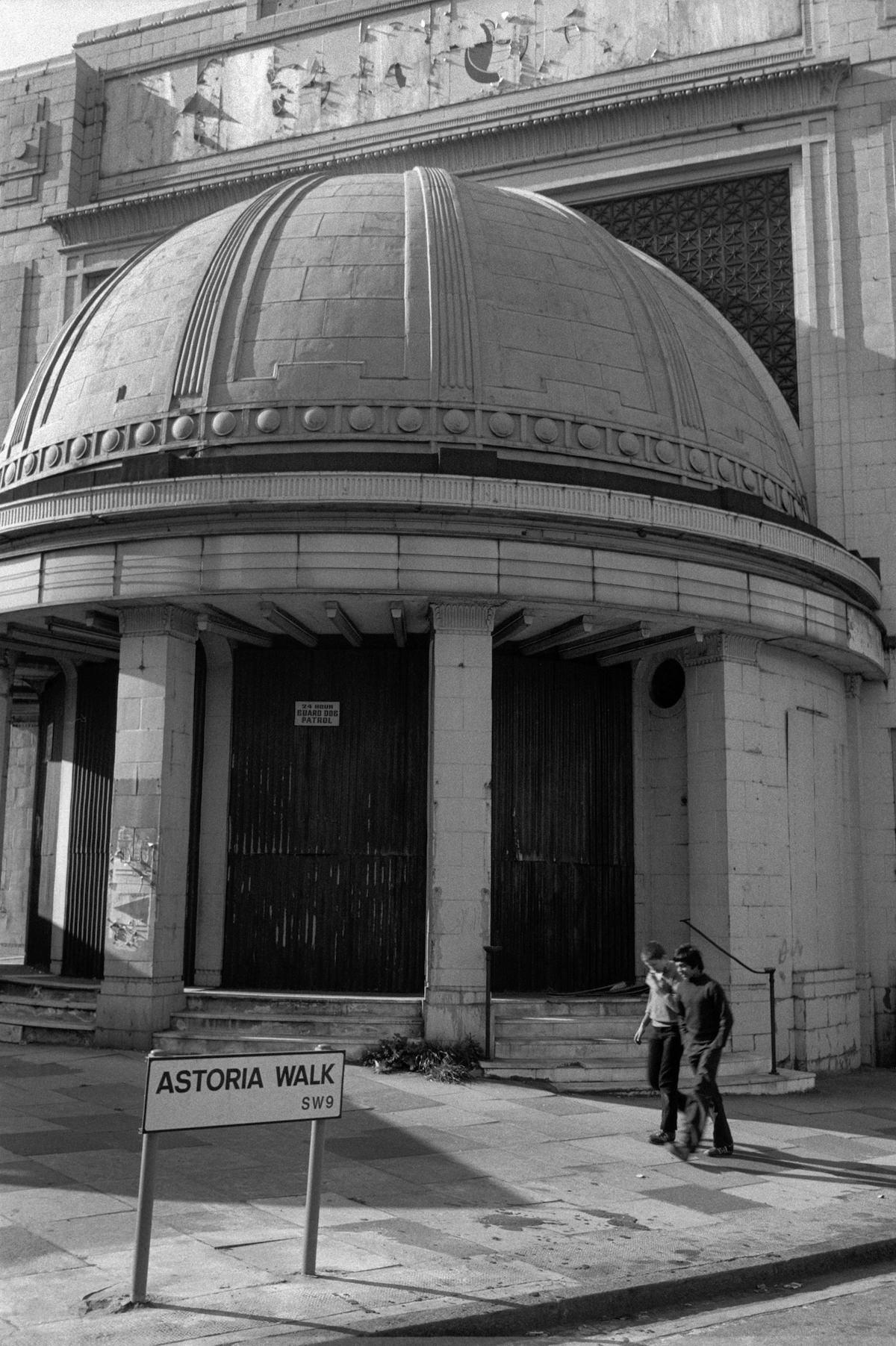
At the start of the decade, venues like the Brixton Astoria still stood as monuments to a more theatrical age. Built in an era when entertainment spaces were designed to impress, these buildings carried elaborate facades and large interiors. Some had already moved away from showing films entirely, repurposed for live music or other events. The Brixton Astoria, later known as the Brixton Academy, became one of London’s most iconic music venues — a second life that kept it standing when others did not survive.
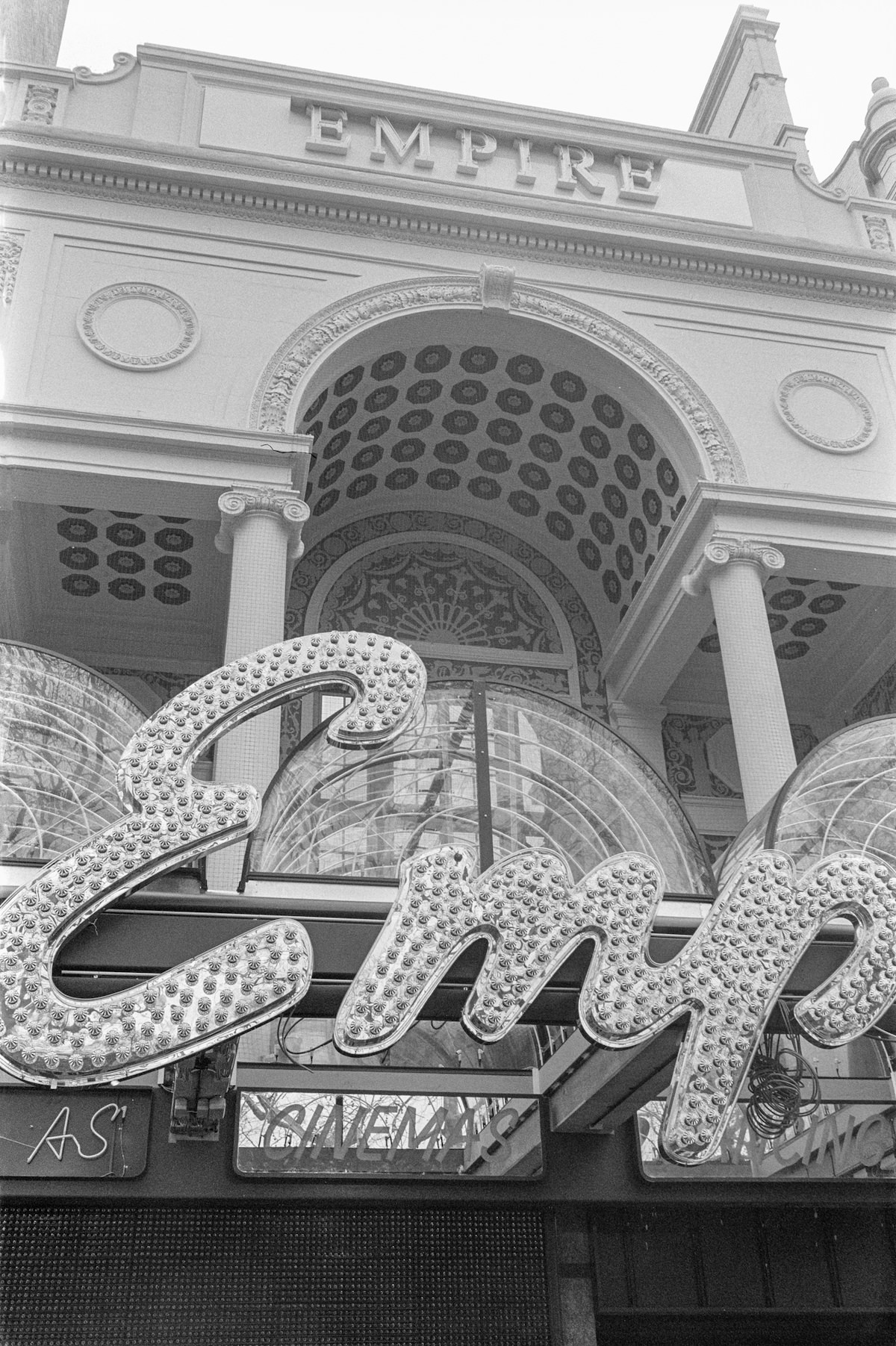
The Empire on Leicester Square was one of the few cinemas that remained firmly at the top of London’s movie hierarchy throughout the decade. Known for its enormous screen and powerful sound system, it drew crowds for blockbusters and major releases. Leicester Square itself was the center of London’s cinema culture — the place where premieres happened and where going to the movies still felt like an event worth dressing up for.
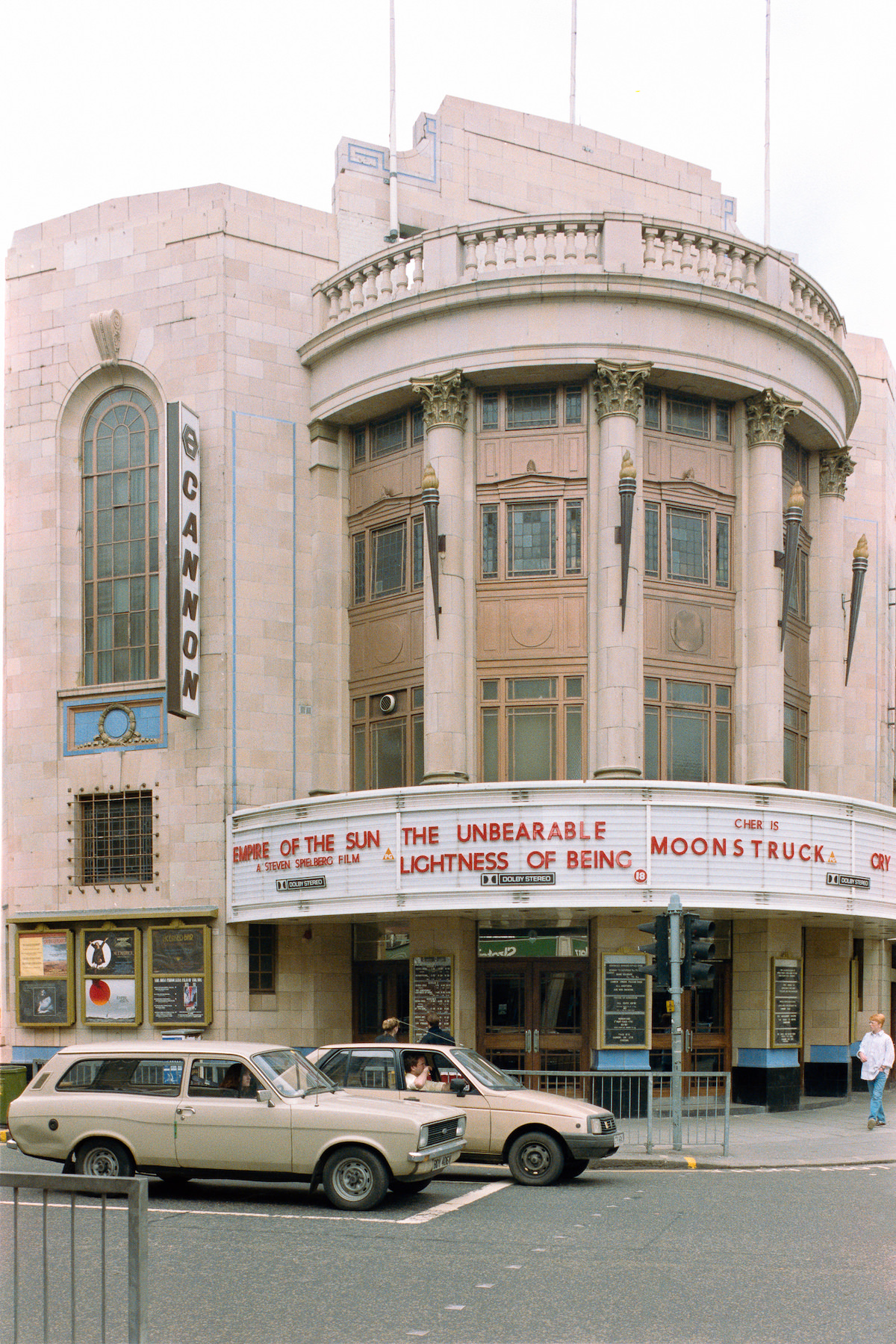
Away from the West End, the Cannon chain operated cinemas across London’s boroughs. The Cannon on Fulham Road in Chelsea was one of them — a neighborhood cinema serving local audiences who didn’t need to travel into the city center for a night out. The Cannon brand itself reflected the era’s consolidation of cinema ownership, as independent theaters were increasingly absorbed into national chains.
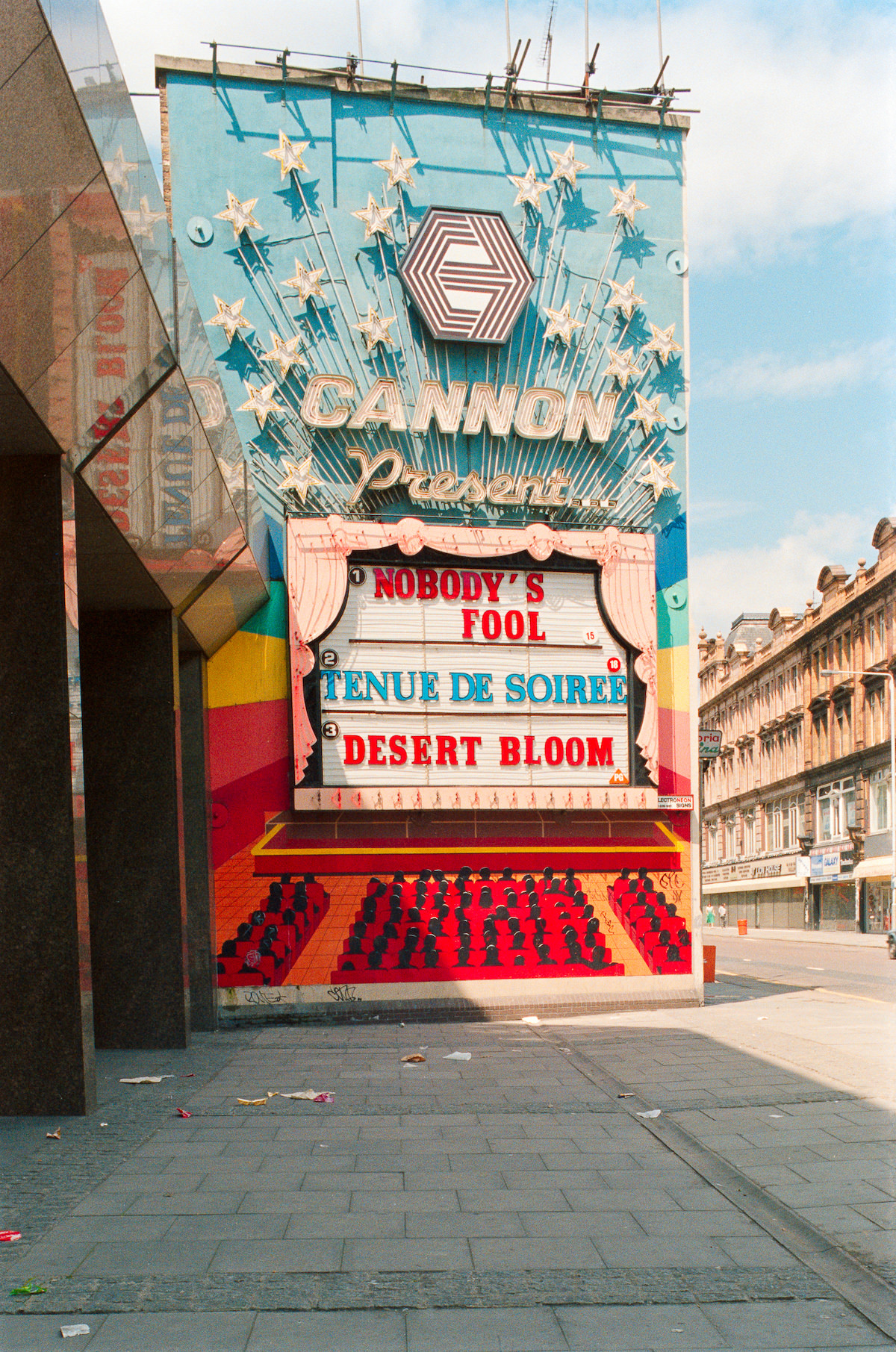
Another Cannon site sat on Tottenham Court Road in Camden — a busier, more commercial stretch of the city. These mid-range cinemas filled the space between the grand Leicester Square palaces and the tiny neighborhood picture houses. They were workhorses of the industry, showing mainstream films to steady audiences week after week.
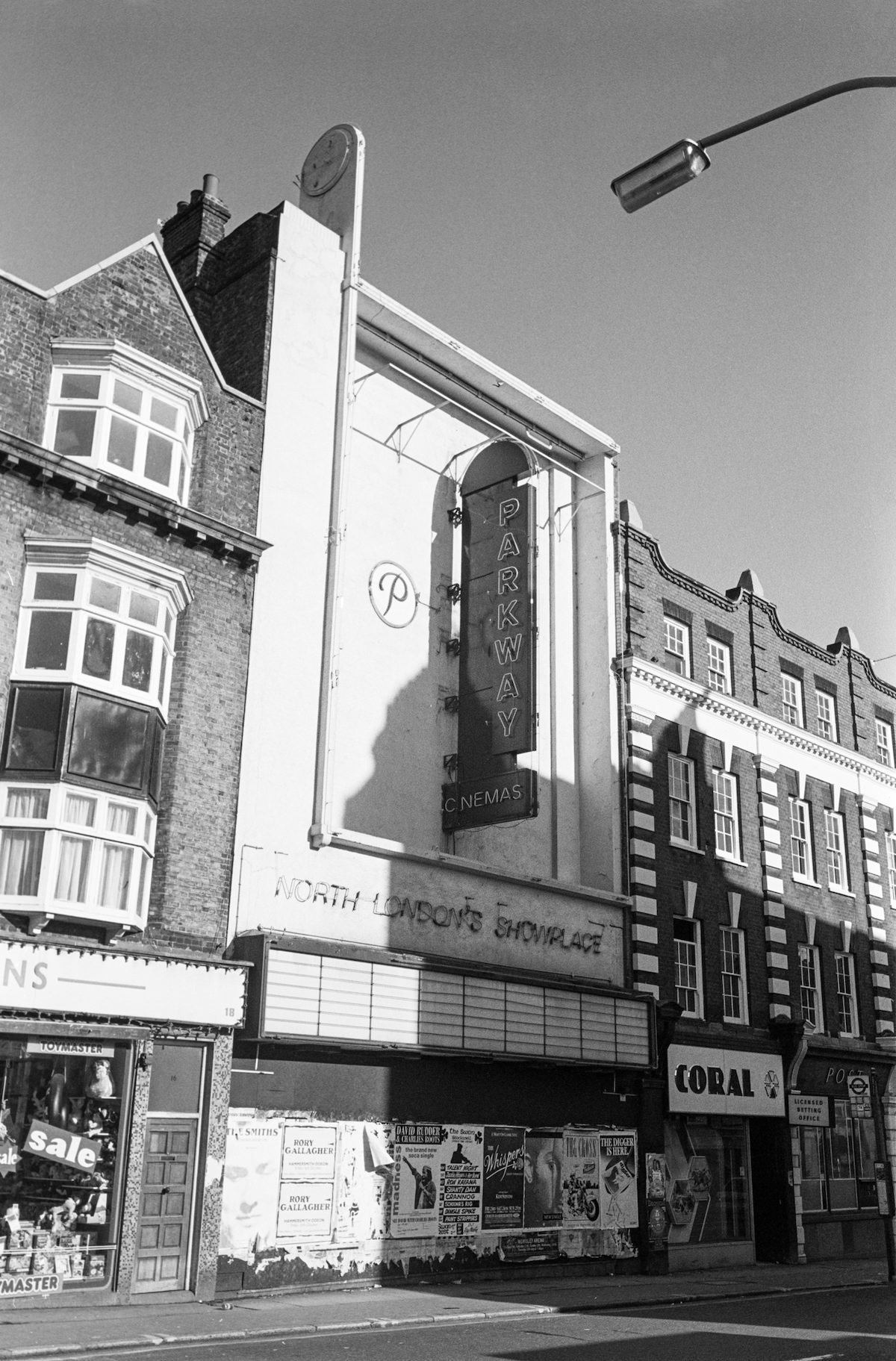
Camden also had smaller, more character-filled venues. The cinema on Parkway was the kind of local theater that built a loyal following over years. Audiences at places like this often knew the staff by name. The atmosphere was informal and personal in a way that larger cinemas rarely managed. These smaller venues frequently programmed art house films, cult classics, and foreign language cinema that mainstream chains ignored.
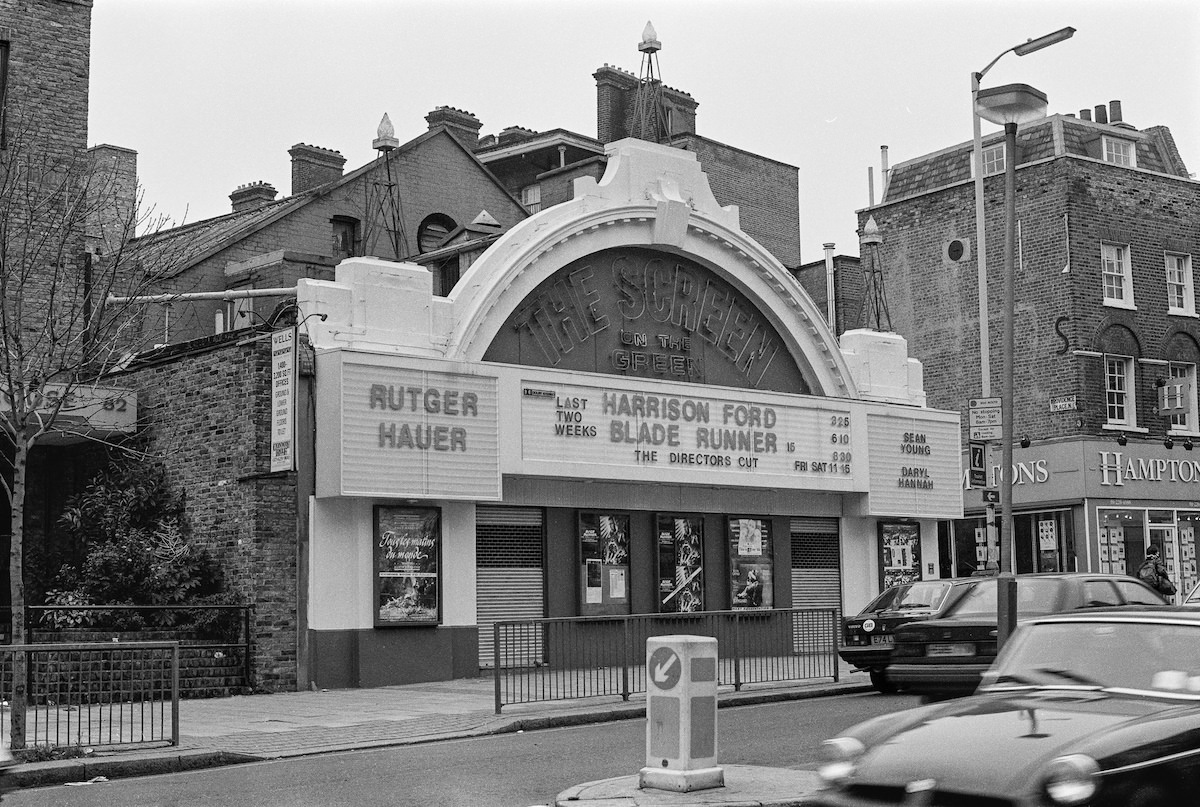
The Screen on the Green in Islington was another cinema with a distinct identity. Sitting right on Islington Green, it had been showing films since the silent era and continued through the 1980s as an art house venue. It screened independent and international films and attracted an audience that wanted something beyond the Hollywood mainstream. By the time Marshall photographed it in 1992, it had survived decades of competition and change.
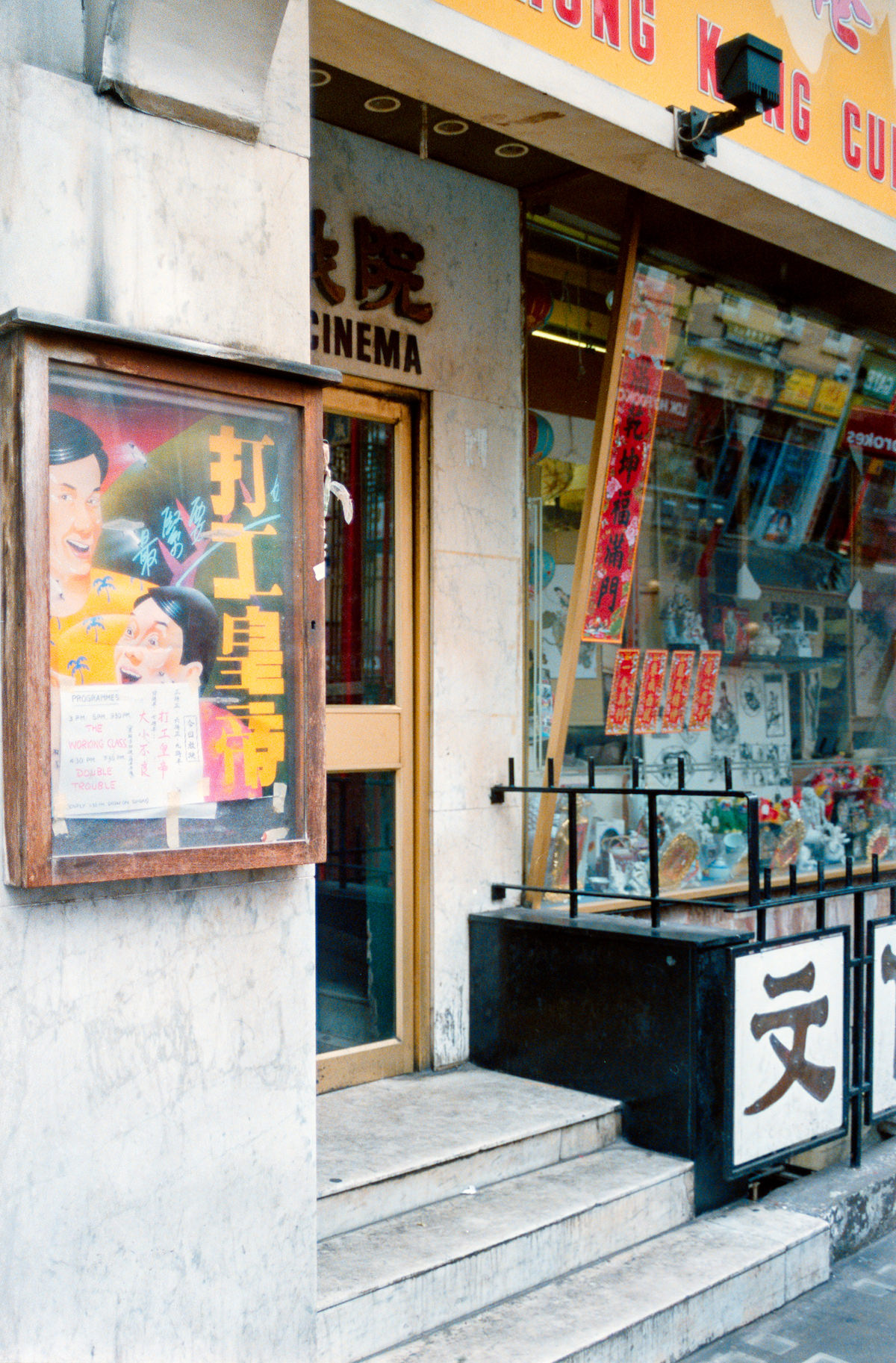
Soho had its own concentration of cinemas, many of them catering to very different tastes. Gerrard Street, at the heart of London’s Chinatown, hosted a cinema that reflected the neighborhood’s character. Soho in the 1980s was still a dense, complicated part of the city — a mix of film industry offices, small theaters, sex shops, and restaurants. The cinemas there existed within that wider ecosystem.
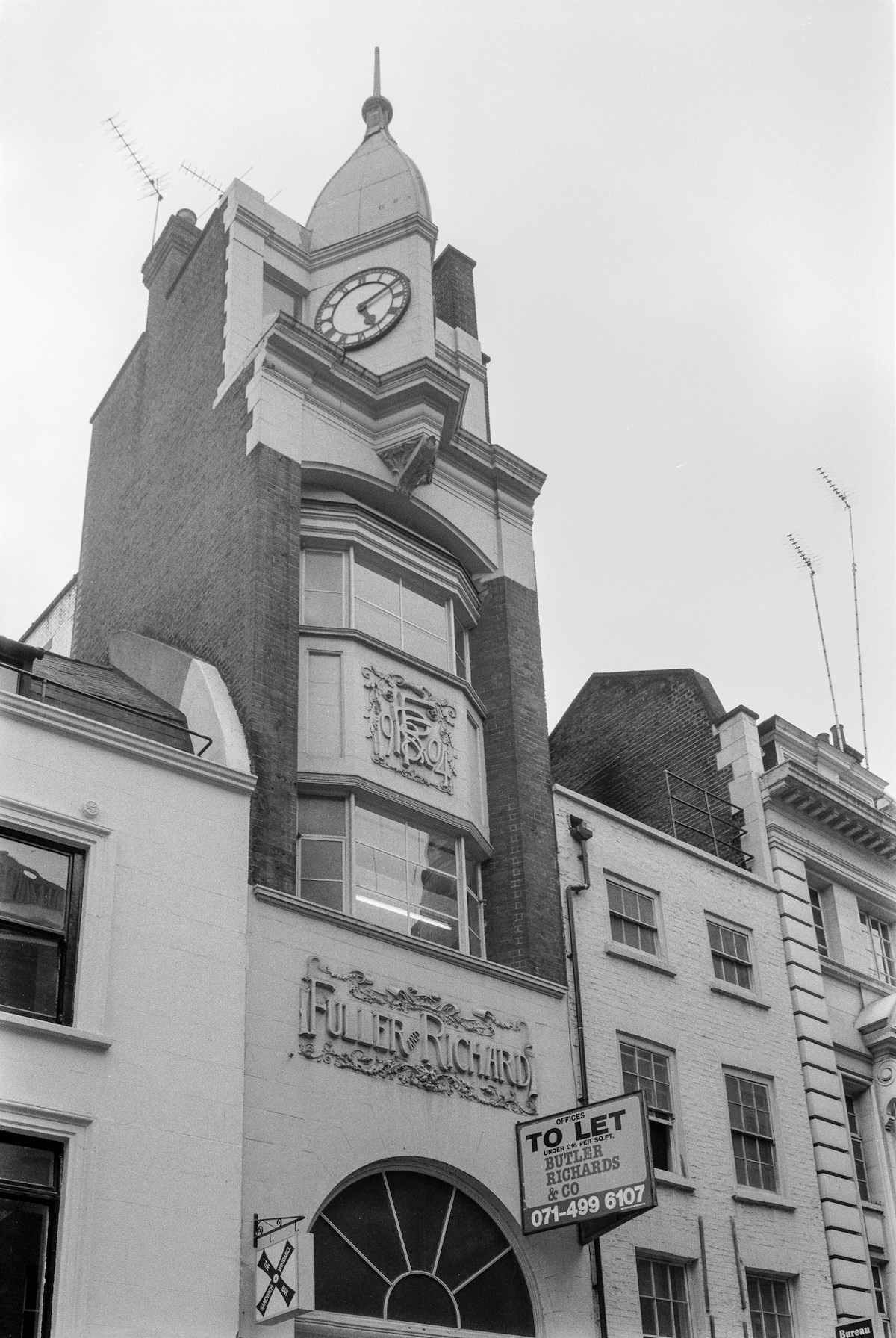
Just around the corner on Great Windmill Street, the Fuller & Richard building showed what happened to many former cinema sites as the decade progressed. By 1991, conversion was already well underway across the city, with old screening halls being turned into shops, restaurants, pubs, and other commercial uses.
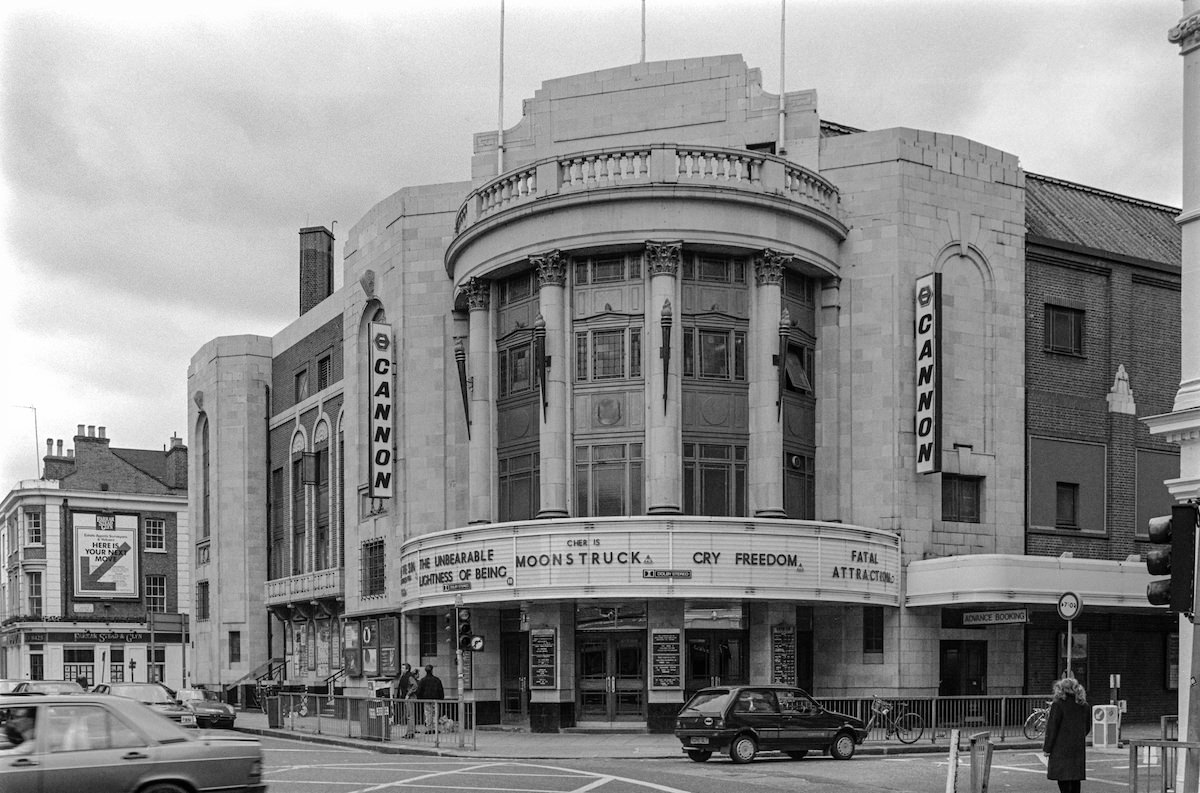
Chelsea had more than one cinema along the Fulham Road corridor. The cinema near Drayton Gardens served the residential streets of Kensington and Chelsea, a borough that in the 1980s was becoming increasingly expensive and exclusive. Neighborhood cinemas here served a professional middle-class audience with the money to go out regularly but a preference for local venues over the West End.
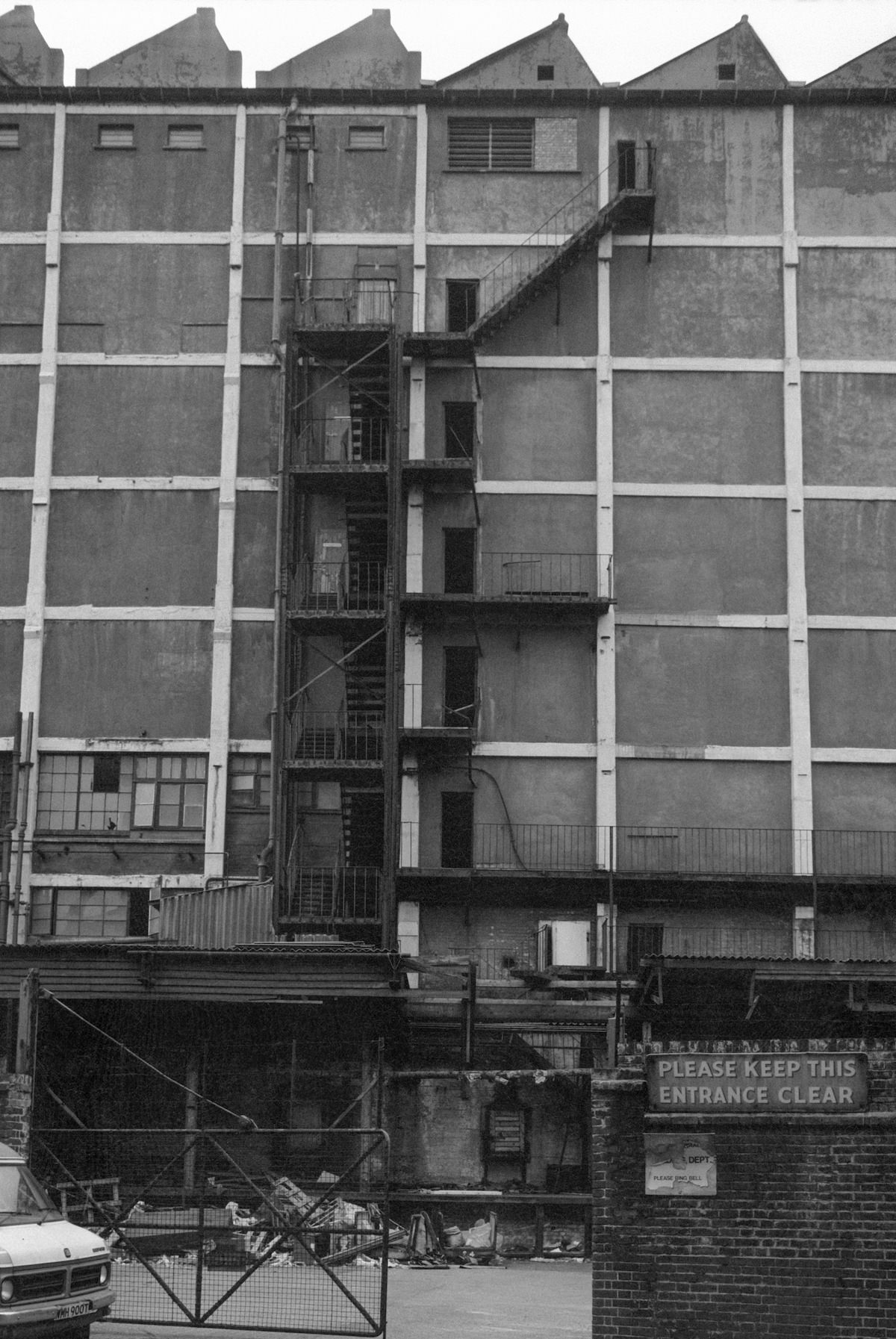
The South Bank in 1981 still had large stretches that were underdeveloped or repurposed from their original industrial use. The warehouse Marshall photographed there represents the other side of London’s entertainment geography — spaces that had been used for screenings, events, or temporary venues outside the formal cinema circuit. The South Bank was on the cusp of the transformation that would eventually make it one of London’s primary cultural districts.
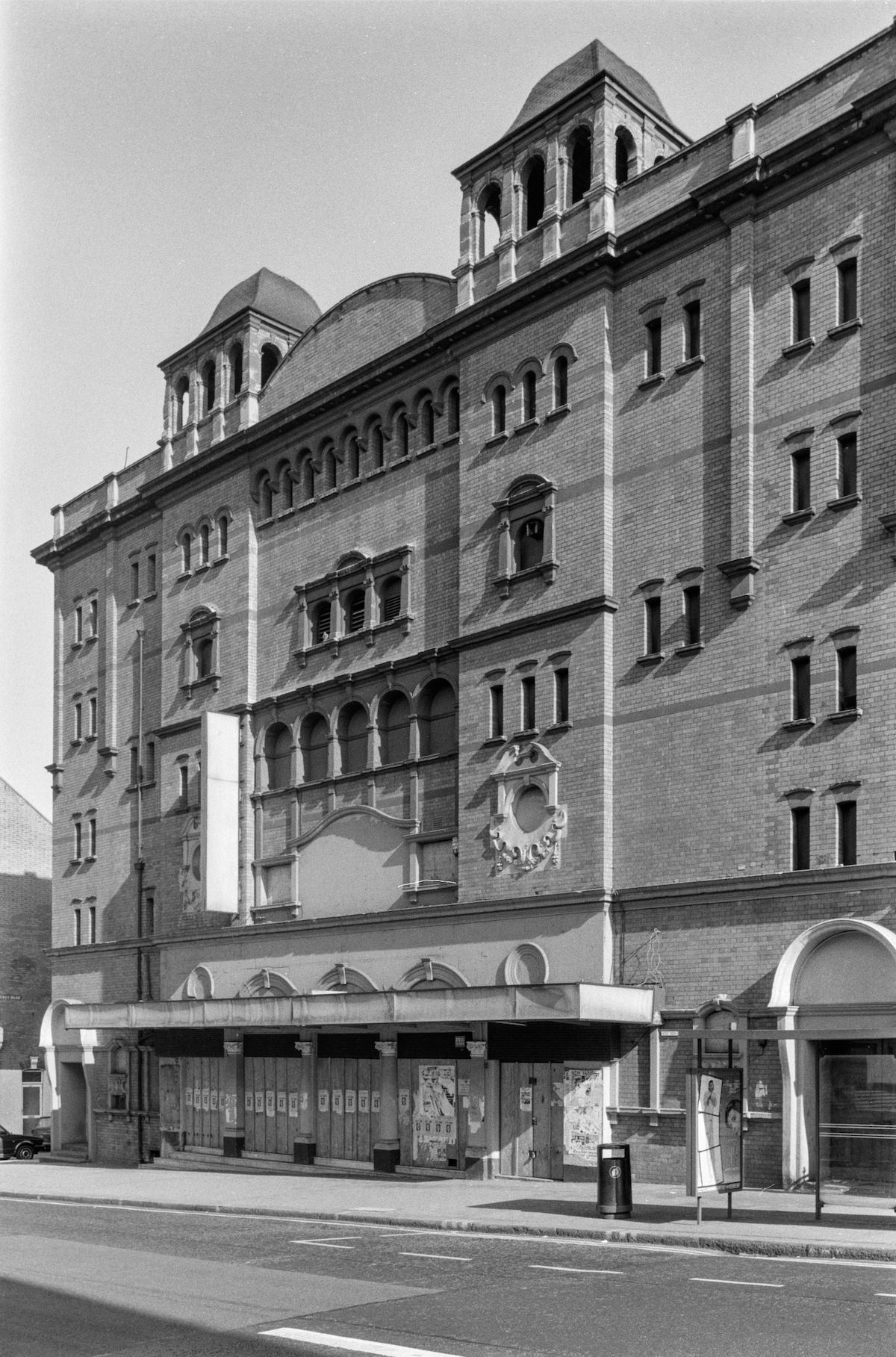
In Battersea, The Grand Theatre on St John’s Hill was one of many former entertainment venues whose original purpose had long since ended. Buildings like The Grand were designed in an era of live theatre and variety entertainment, later converted to cinema use, and then often converted again. By 1989, many were struggling to find a sustainable function at all.
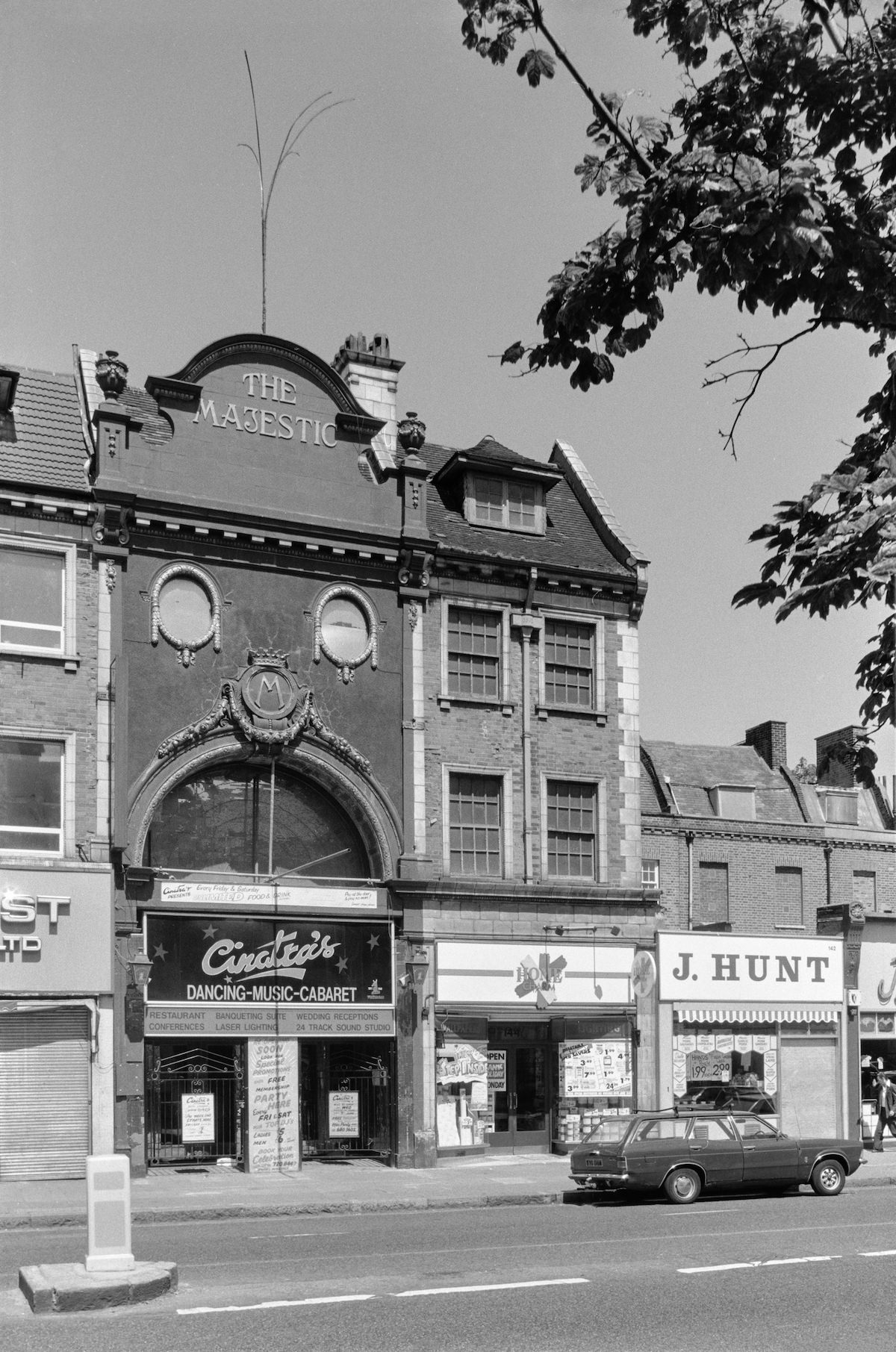
The word ‘former’ appears frequently in Marshall’s captions — a sign of how rapidly cinema closures were accumulating by the late 1980s. The Majestic on Clapham High Street had already lost its original function by 1989. Clapham, like many south London neighborhoods, had supported multiple cinemas at its peak. The Majestic’s name alone points to the ambition of its original design — these buildings were built to impress.
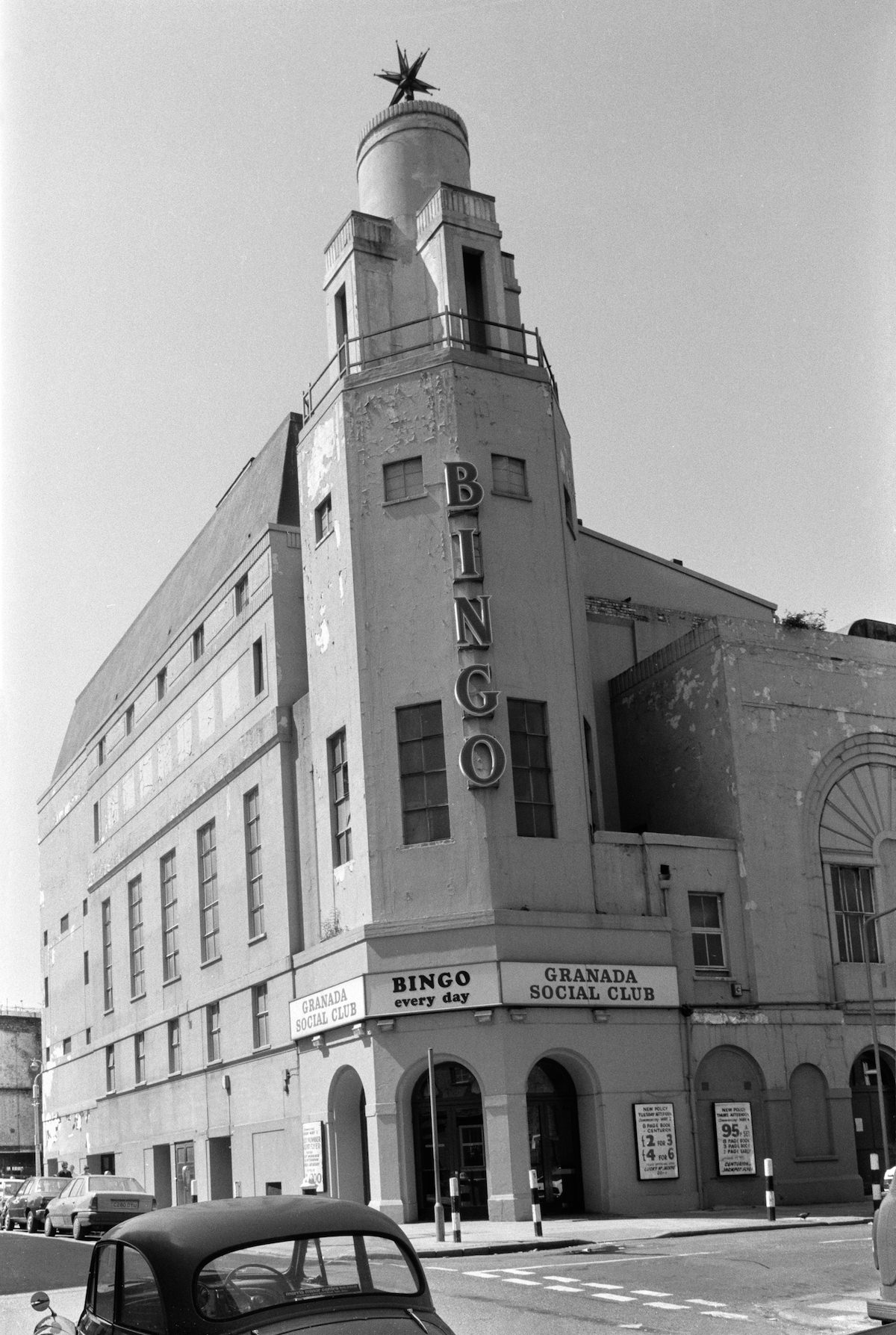
The Granada chain had operated some of the most architecturally elaborate cinemas in Britain. The Granada Brixton on Brighton Terrace was part of that network. By 1989, Brixton itself was still recovering from the upheaval of the 1981 riots and the ongoing social pressures of the decade. The cinema’s fate in that context was tied to the broader economic health of the neighborhood around it.
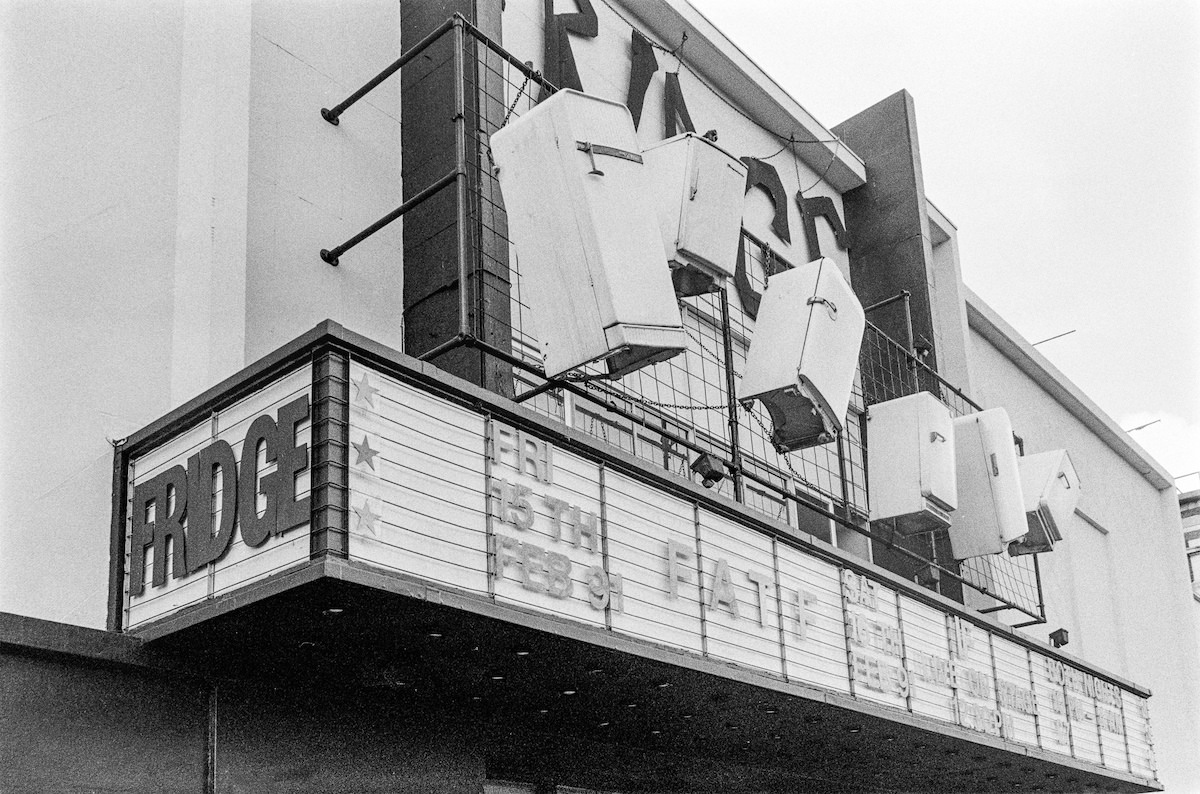
Brixton also had the Fridge, a venue on Brixton Hill that became one of London’s most important nightclubs during the 1980s. Like the Brixton Academy nearby, the Fridge occupies a former entertainment building repurposed for a new generation’s culture. Marshall captured it in 1991, when it was at the height of its club life.
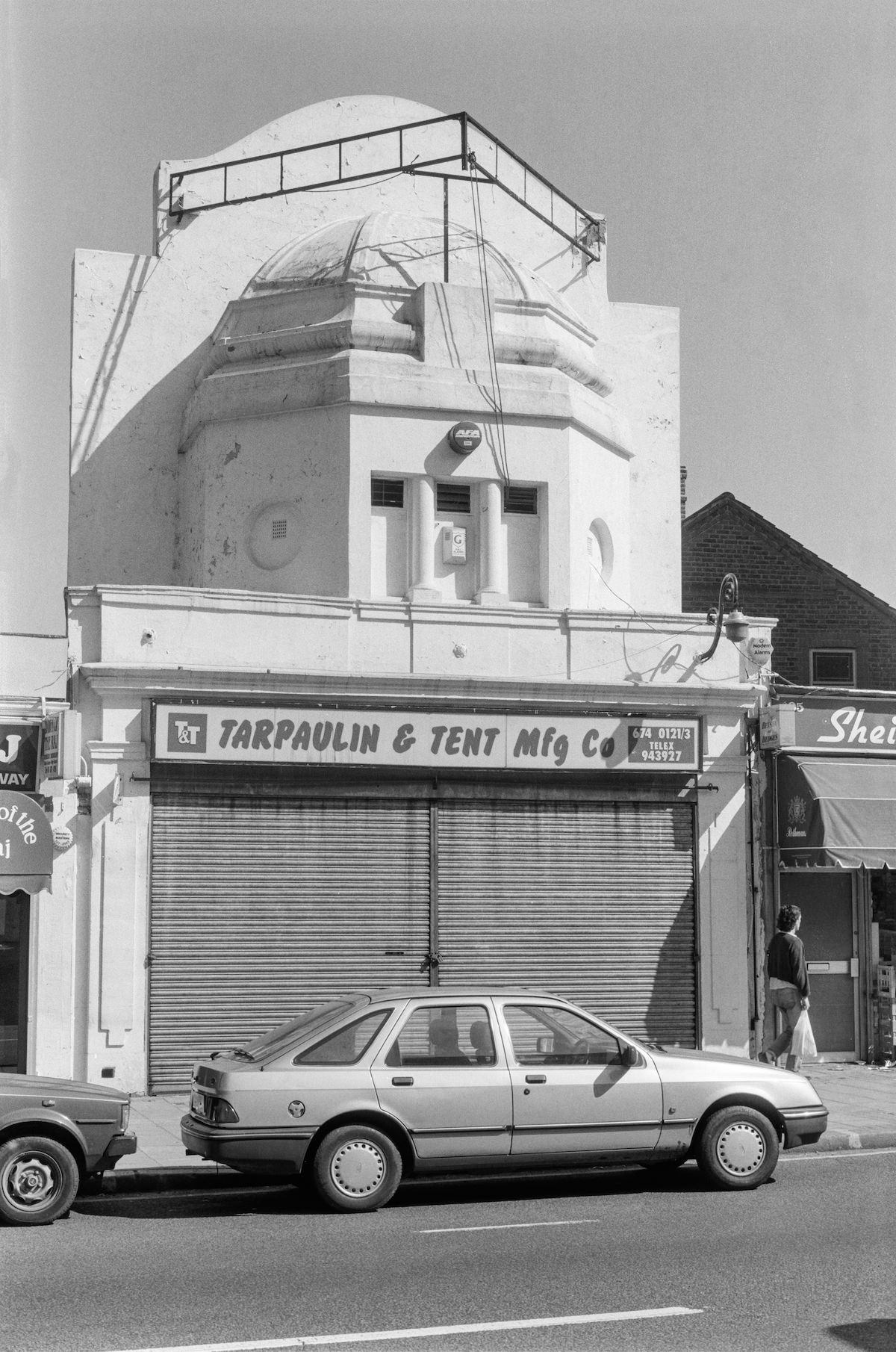
Further up Brixton Hill, another former cinema had already gone dark. By 1989, the building at 101–3 Brixton Hill had lost its identity as a cinema and was awaiting whatever came next. Across south London, these redundant buildings presented a recurring challenge: too large for most commercial tenants, too expensive to restore, and too significant architecturally to simply ignore.
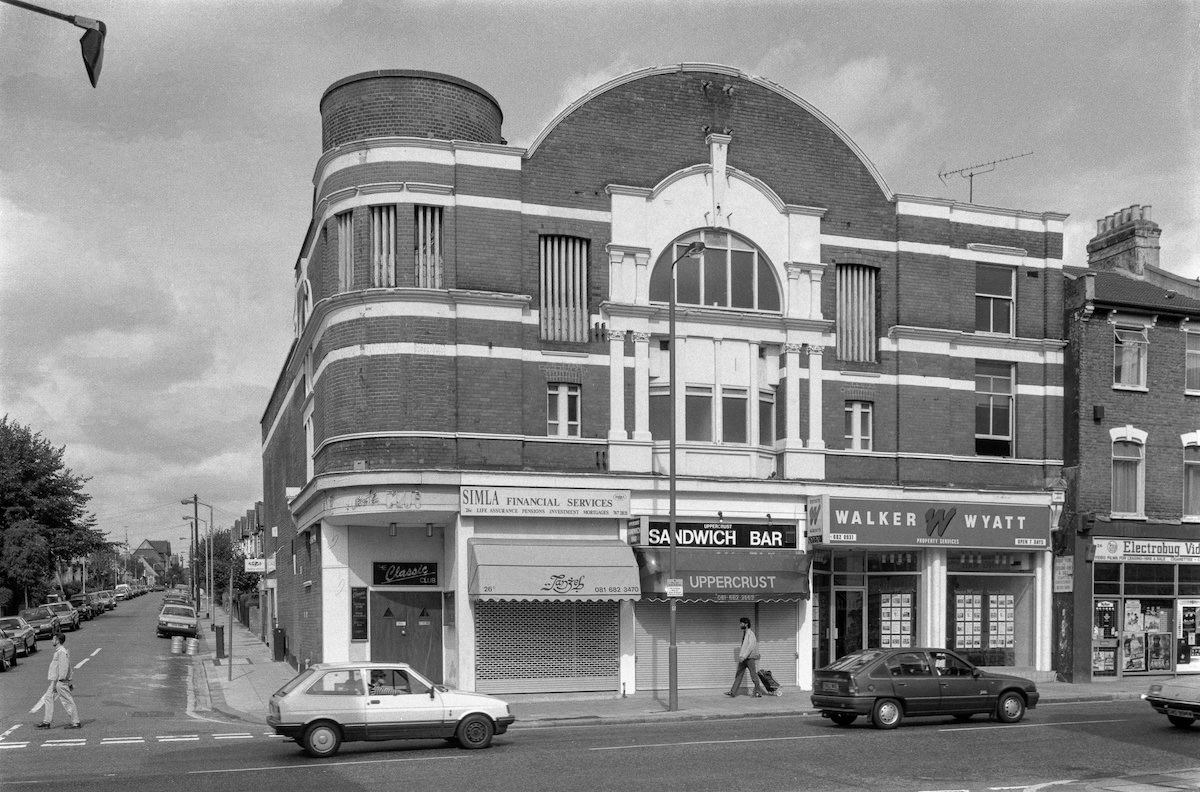
The Classic chain was another operator that ran cinemas across London’s outer boroughs. The Classic Tooting, sitting between Fircroft Road and Upper Tooting Road, served the large residential population of Tooting Bec. The Classic brand was known for showing older films and cult favorites — a niche that became more important as home video changed what audiences expected from a cinema trip.
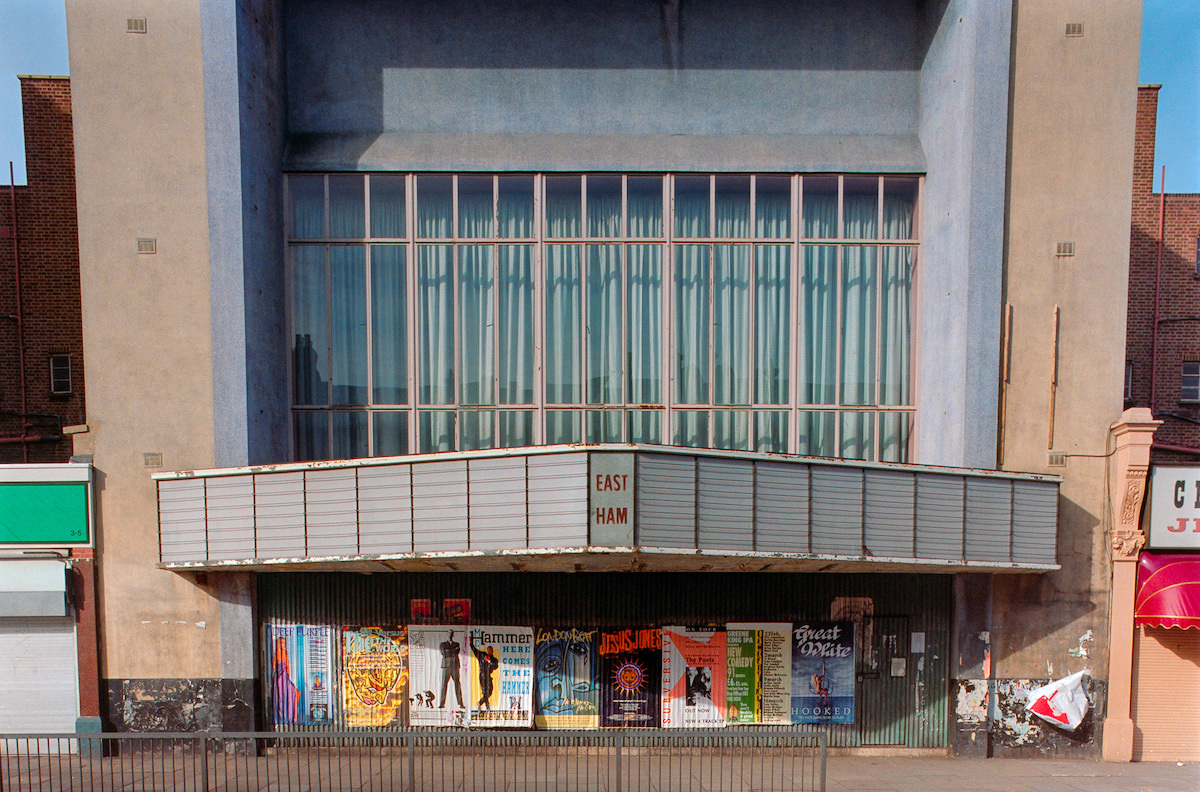
The Odeon on Barking Road in East Ham was once part of the most recognizable cinema brand in Britain. By 1991, it was a former Odeon — the brand gone, the building left behind. East Ham’s Odeon had served a densely populated working-class neighborhood in Newham, one of London’s poorer boroughs. When it closed, the loss was not just commercial but social.
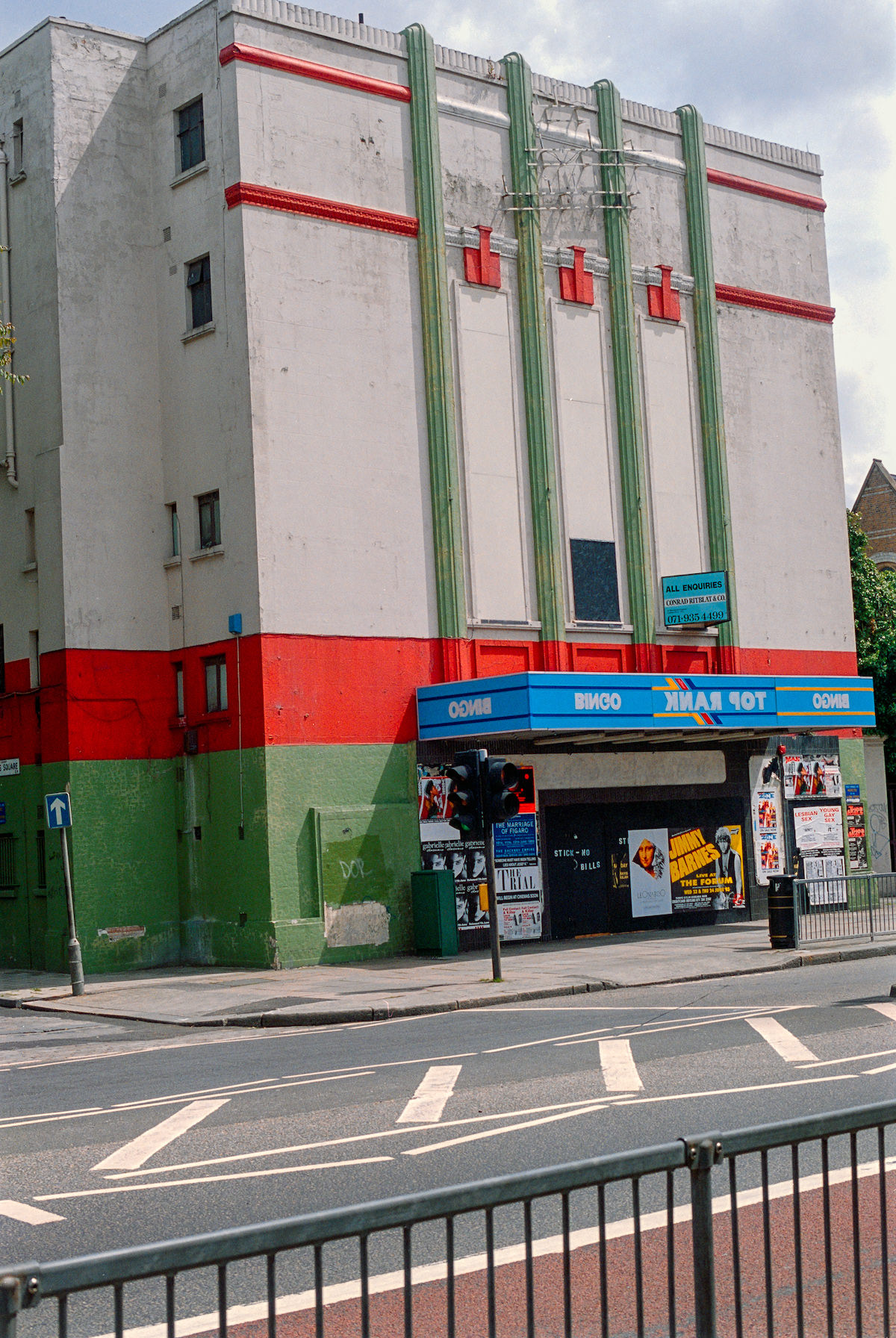
In Hackney, the former Essoldo on Mare Street told a similar story. The Essoldo chain had been an important part of post-war British cinema, but by the 1980s it was long gone. Its buildings lingered in various states of reuse or neglect. Marshall photographed the Hackney Essoldo in 1993, by which point it had been out of use as a cinema for many years.
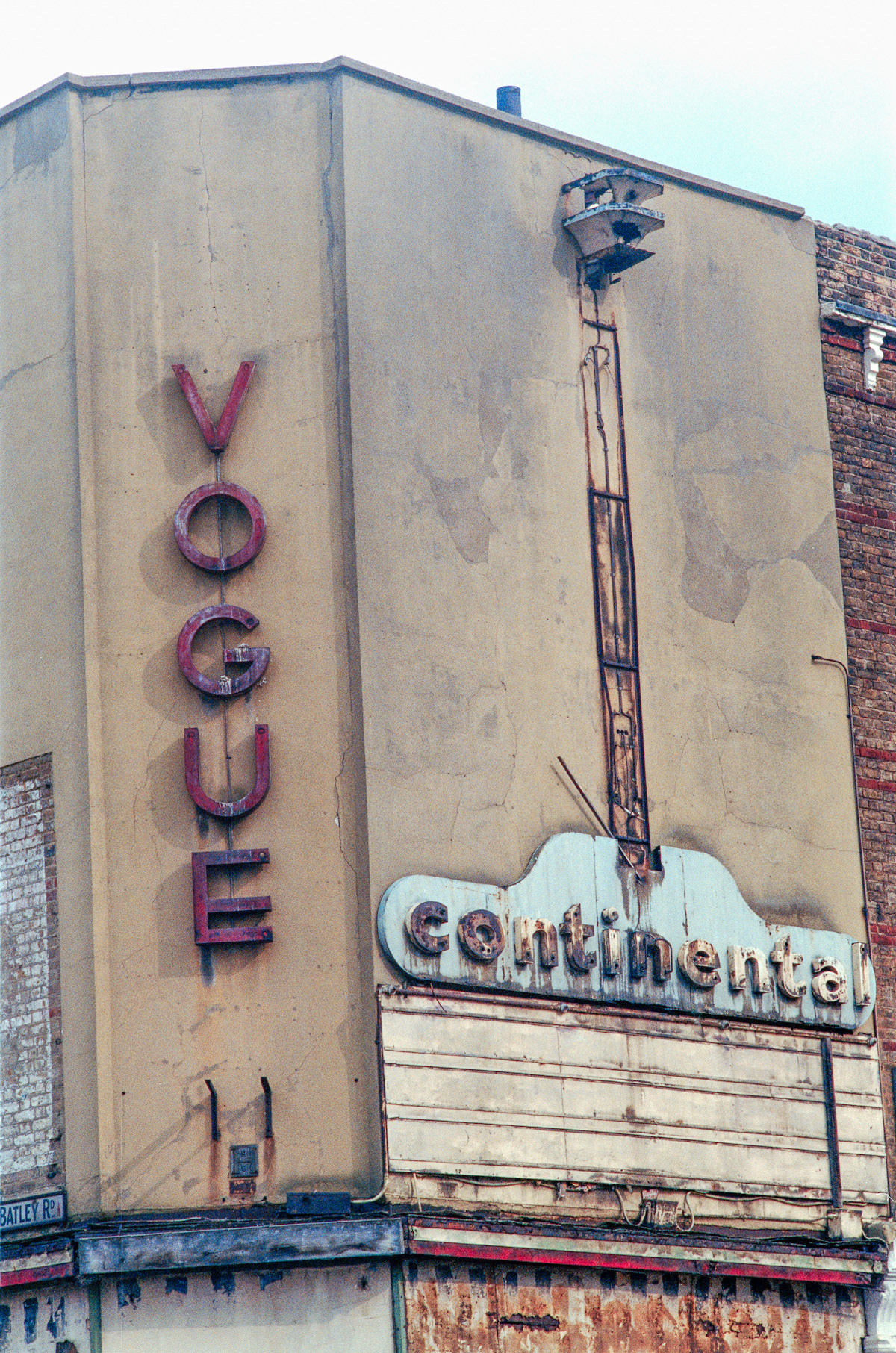
Stoke Newington had the Vogue Continental on its High Street — a name that combined glamour with a nod to international cinema. By 1989, ‘continental’ cinema in London often meant adult films rather than European art house, and many small cinemas had moved in that direction as a way to stay financially viable. The Vogue Continental’s name reflected both aspirations and the realities of the market.
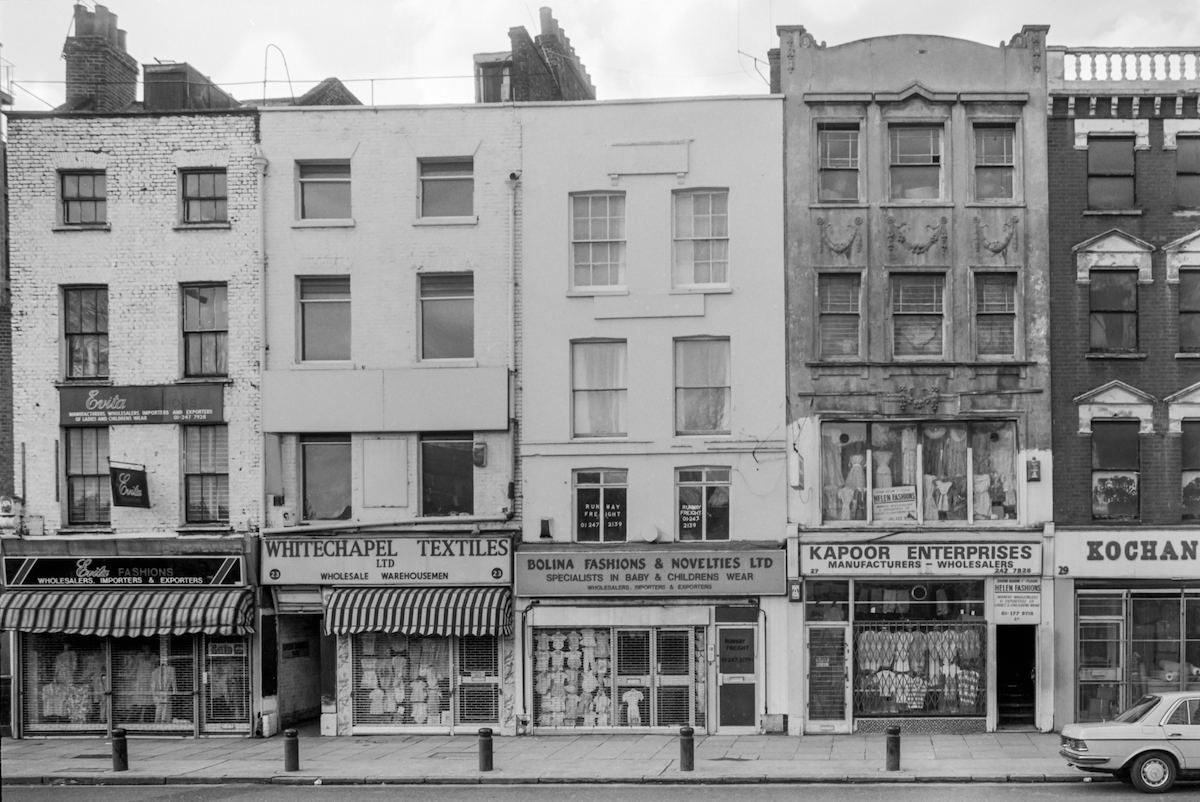
Whitechapel Road in Tower Hamlets was a busy commercial corridor with a large Bangladeshi community that had grown significantly through the 1970s and 1980s. Cinemas in this area often screened South Asian films — Bollywood releases that served a community whose tastes were largely ignored by mainstream British chains. Marshall photographed Whitechapel Road in 1986, capturing a stretch of East London commercial life that was distinct from the West End’s cinema world.
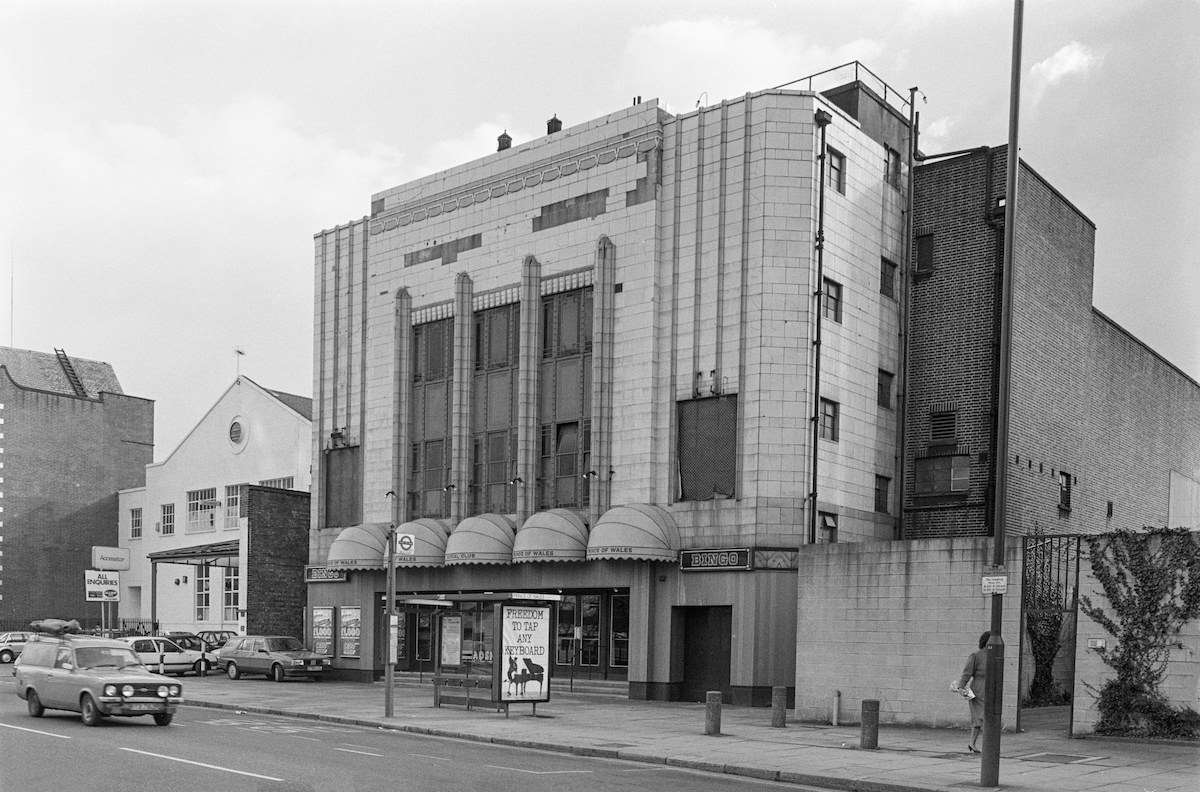
One of the most common fates for a closed cinema in London was conversion to a bingo hall. The Prince of Wales on Harrow Road in Westbourne Park had made that transition. Bingo was enormously popular in working-class communities from the 1960s onward, and cinema buildings — with their large open floors and existing seating — were ideal for conversion. The economics worked: bingo drew regular crowds that cinemas, by the 1980s, often couldn’t match.
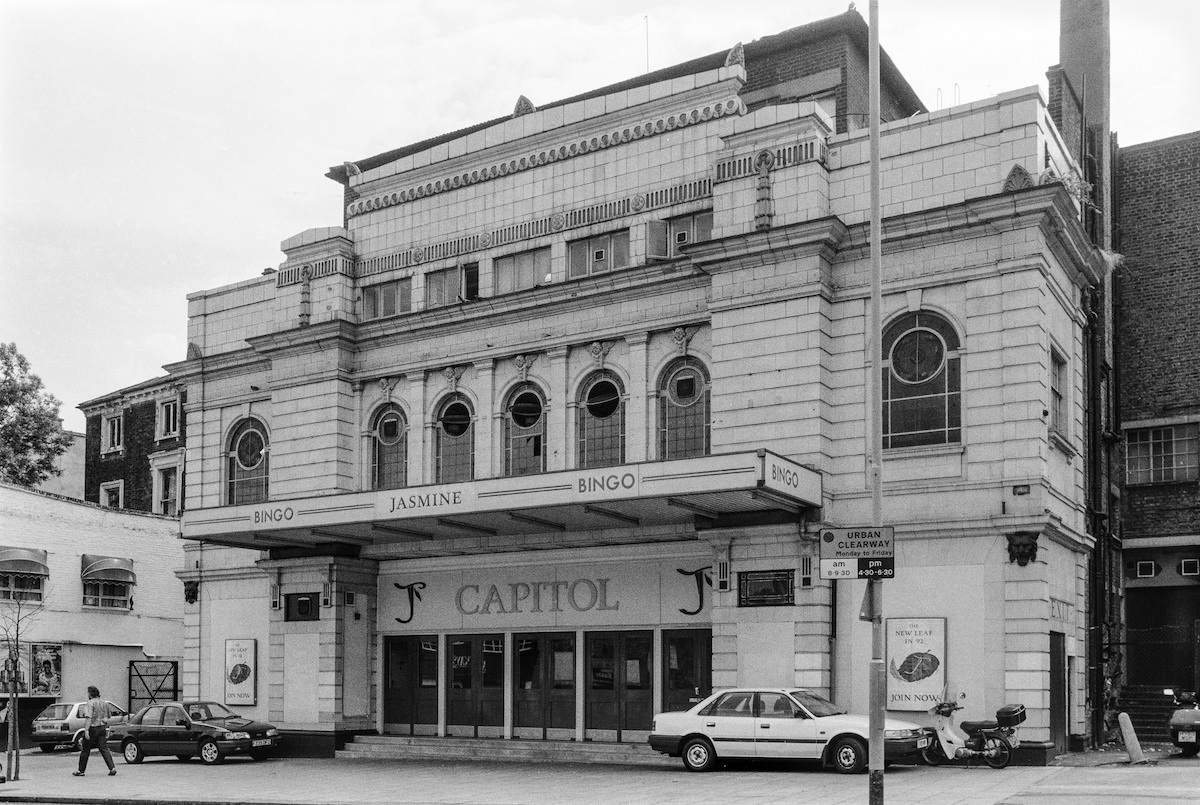
Forest Hill in Lewisham saw the same pattern. The Jasmine Bingo Club on London Road had been a cinema in an earlier life. By 1992, it served a different but equally loyal community of regulars. The bingo clubs that filled old cinema buildings were not just entertainment venues — they were social anchors, especially for older residents who gathered there several times a week.
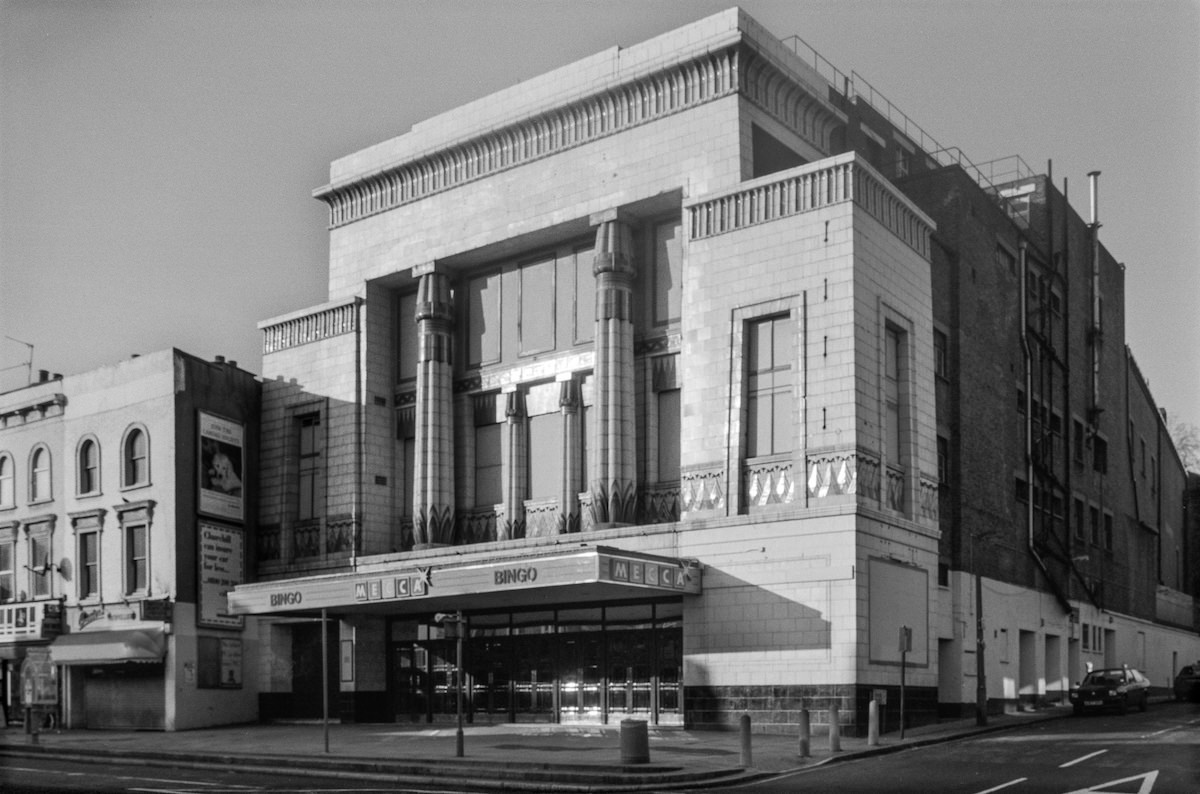
The Mecca chain was the largest operator of former cinema bingo halls in the country. On Essex Road in Islington, Mecca ran a bingo hall in what had once been a cinema building — the interior largely intact but the function entirely changed. Islington in 1992 was mid-gentrification, and buildings like this one existed in the gap between the neighborhood’s working-class past and its emerging professional present.
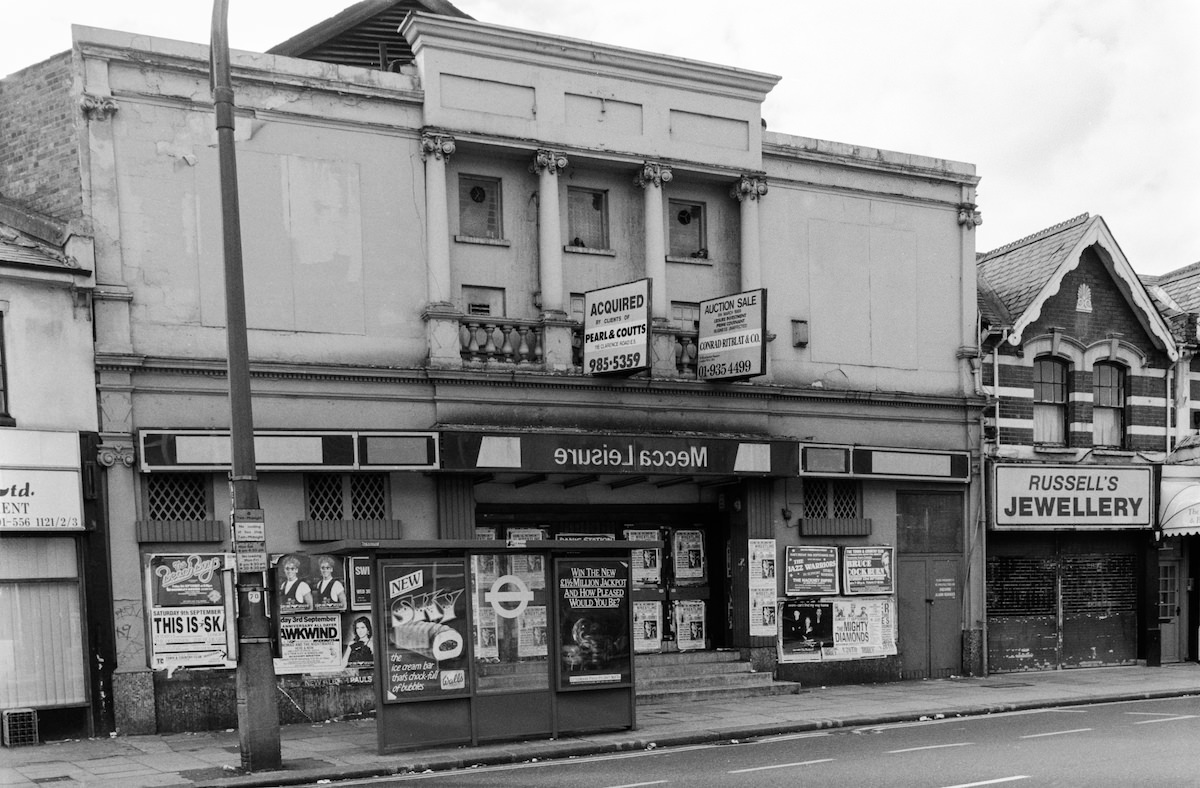
Walthamstow had its own Mecca bingo hall on Hoe Street. Waltham Forest was one of the London boroughs where former cinemas had almost entirely transitioned to bingo use by the late 1980s. The Hoe Street building retained the scale of the cinema it once was — large enough to feel significant in the streetscape, even with its new signage and purpose.
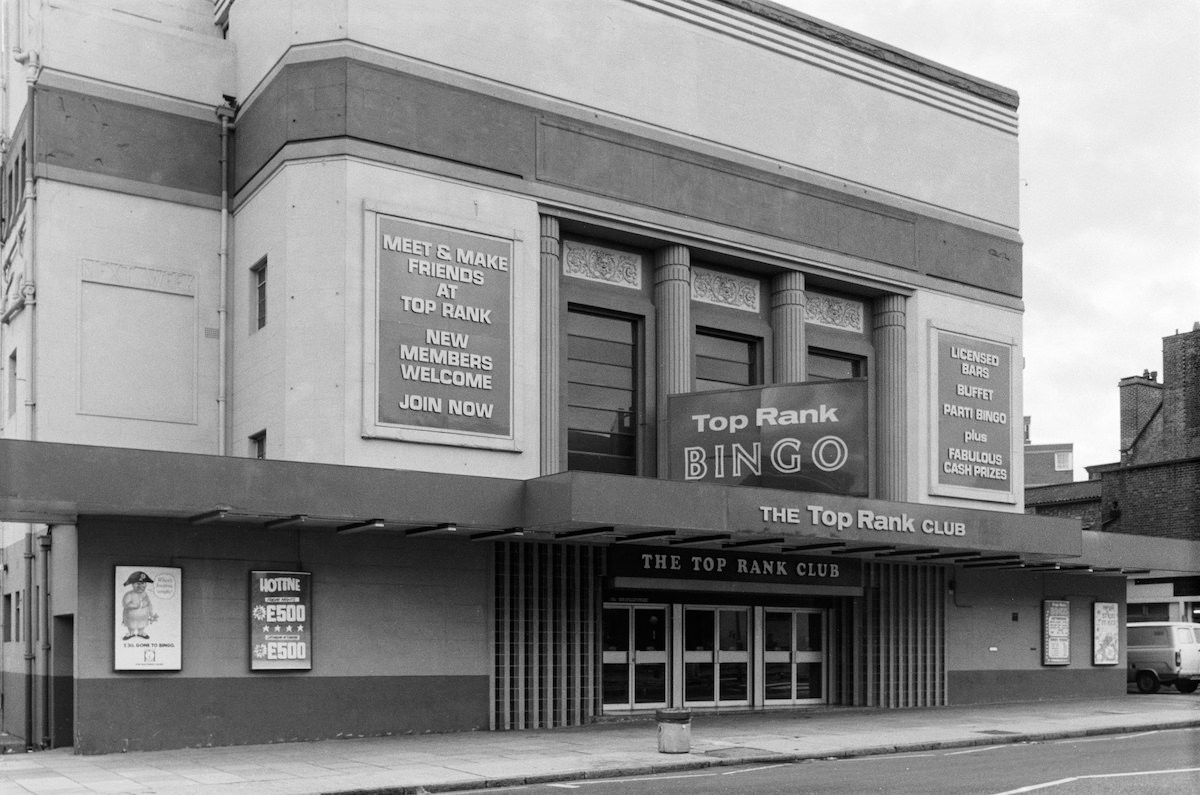
Top Rank was another major bingo operator that had taken over cinema buildings across London. Their hall on Caledonian Road in Lower Holloway occupied a building that had once drawn film audiences from across the neighborhood. By 1989, it drew bingo players instead. The Caledonian Road corridor in Islington was a working-class stretch of the borough, distinct from the wealthier streets to the south.
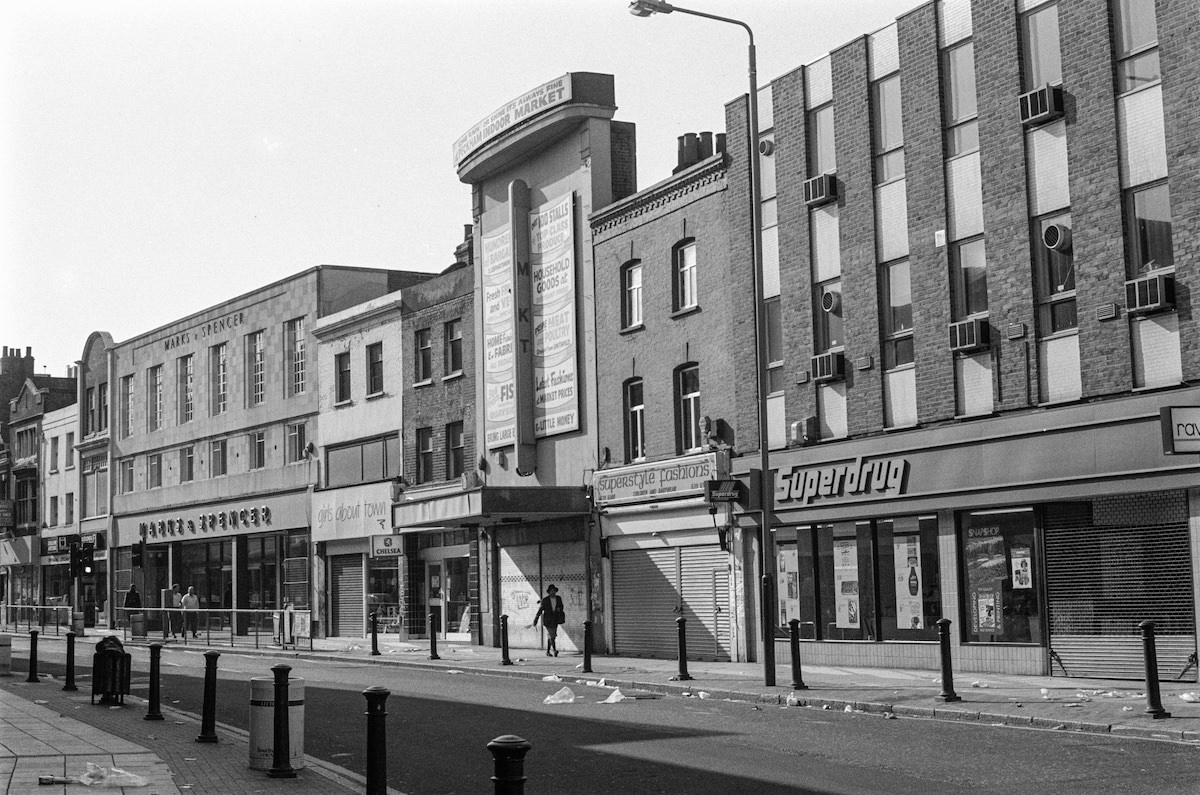
Not every former cinema became a bingo hall. On Rye Lane in Peckham, a former cinema had been broken up into retail units. Rye Lane was — and remains — one of south London’s busiest street markets, and the commercial pressure to convert large buildings into shops was strong. The interior of what had been a single auditorium was divided, the original architecture mostly hidden behind new shopfronts.
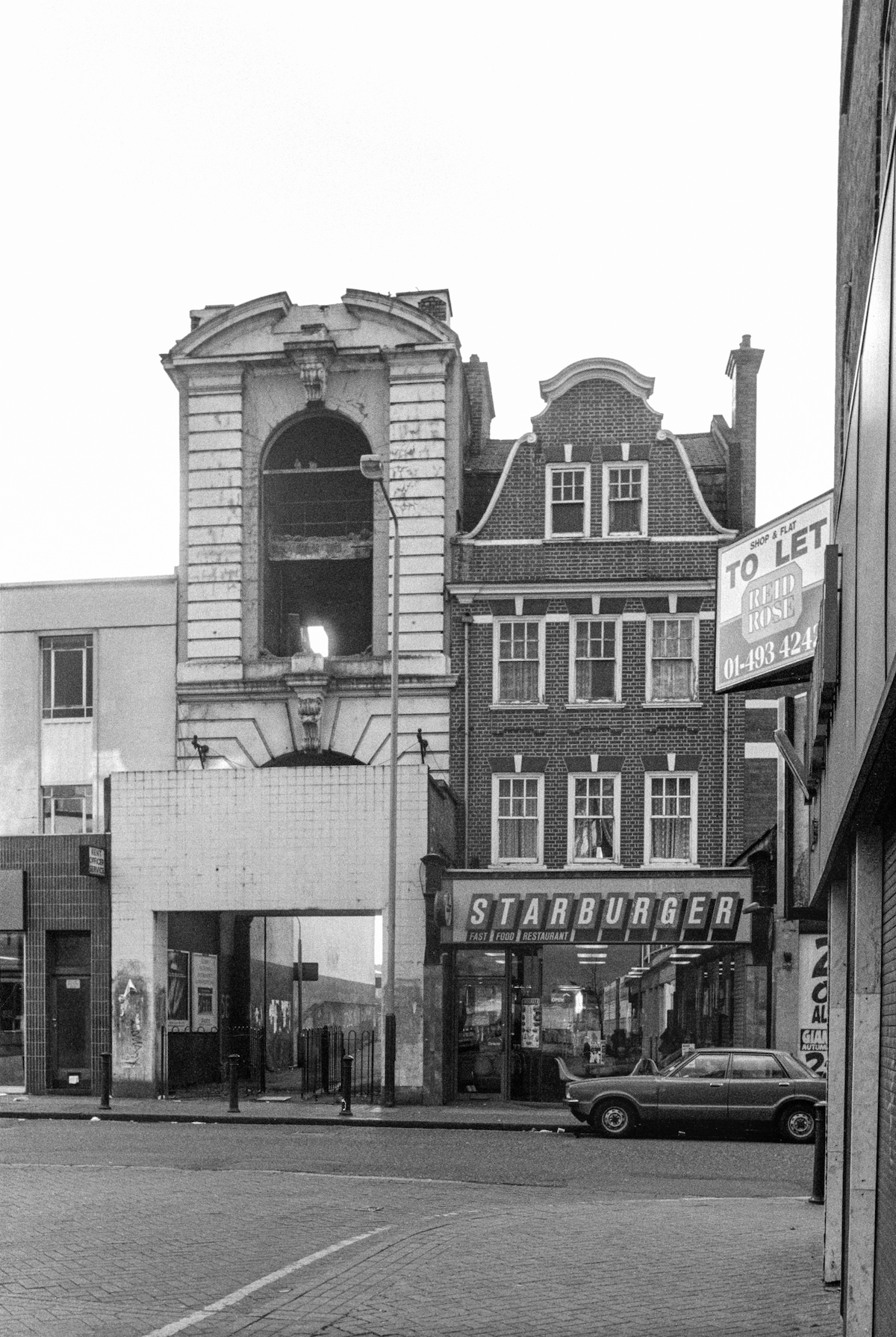
A year earlier, Marshall had photographed another building in the Rye Lane area on Bournemouth Road. Peckham in the late 1980s was a neighborhood under significant economic pressure, and its cinema buildings reflected that. Buildings that had once been community focal points were finding new lives or simply standing empty.
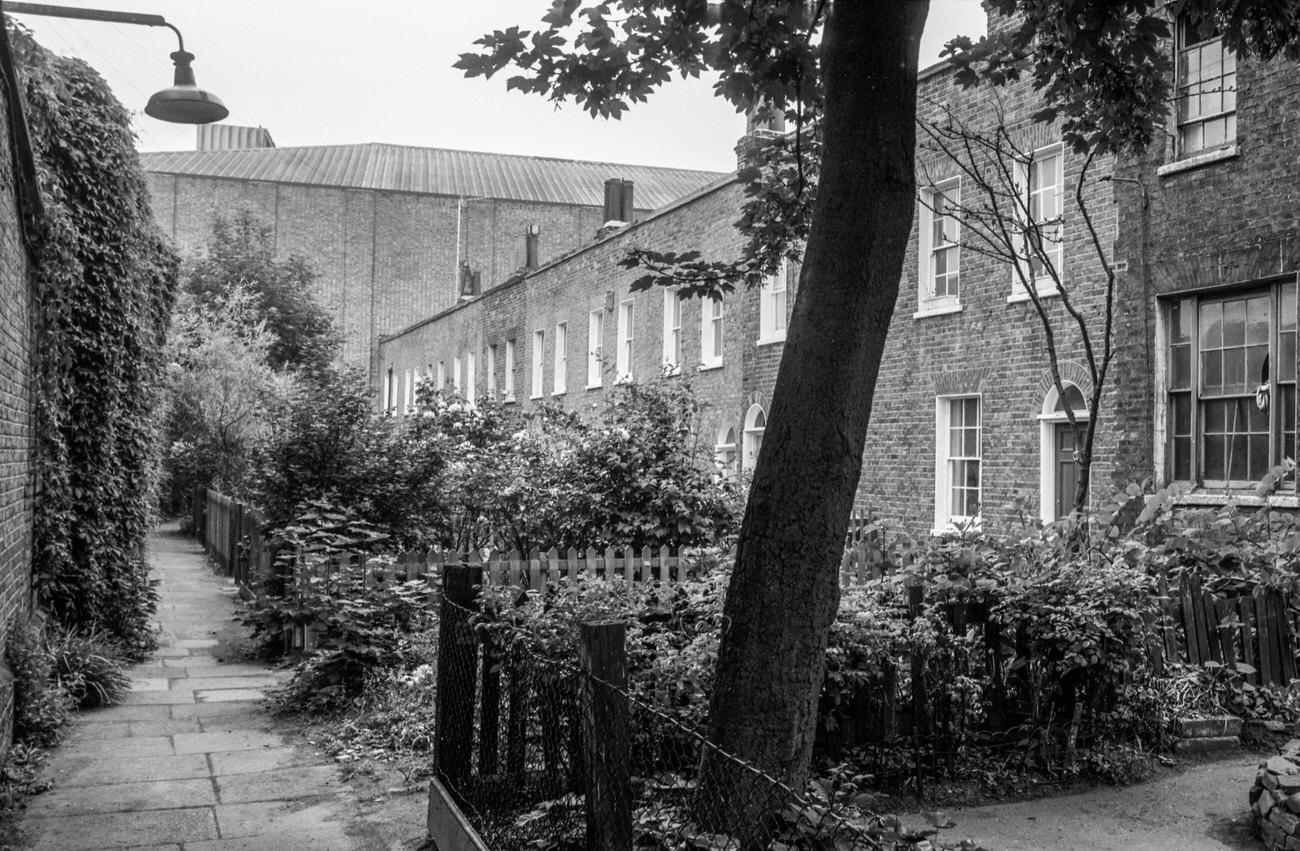
Taken together, Marshall’s photographs form a detailed record of an industry in transition. The home video boom, rising property values, and changing leisure habits all put pressure on London’s cinema stock throughout the 1980s. Some buildings survived as cinemas. Many became bingo halls, nightclubs, shops, or churches. Others were demolished entirely. What Marshall’s camera preserved was the evidence of what had been there — the facades, the signage, and the scale of buildings that were built when cinema was the dominant form of mass entertainment.