Marjory Collins was born in New York City in 1912 and built a career as one of America’s most observant documentary photographers. Her eye for ordinary life — the details that most journalists passed over — made her work stand apart. After writing about Hoboken, New Jersey for U.S. Camera and Travel, she was invited to join the Foreign Service of the United States Office of War Information. There, she photographed the American home front in ways that told the full story of a nation at war, not just the battles overseas.
The Office of War Information placed a new focus on showing the diversity of American life, and Collins took that charge seriously. She documented African Americans, and citizens of German, Italian, and Jewish descent — communities whose stories were rarely centered in mainstream coverage. All of the photographs below were taken for the Farm Security Administration Office of War Information, and together they form a detailed portrait of the United States between 1942 and 1943.
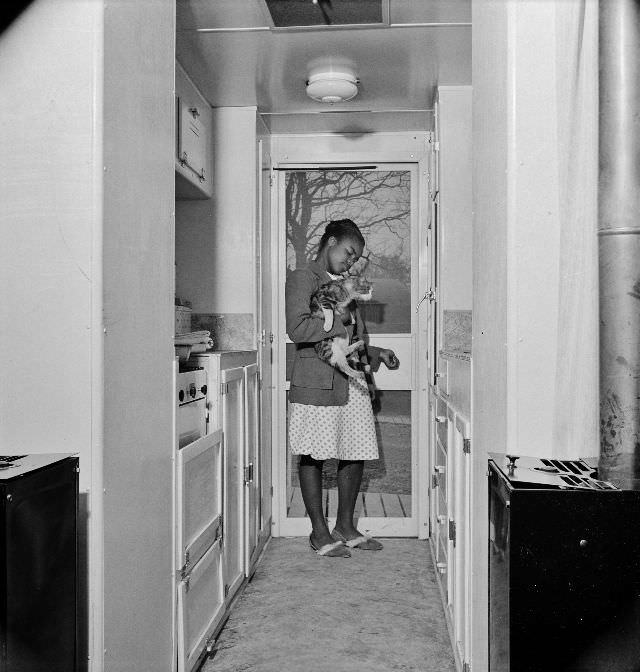
One of Collins’s early assignments took her to Arlington, Virginia, where the Farm Security Administration had set up housing relief camps for African Americans. These weren’t temporary shelters thrown together without thought — some units were designed to be expandable, with distinct living spaces built into trailer structures.
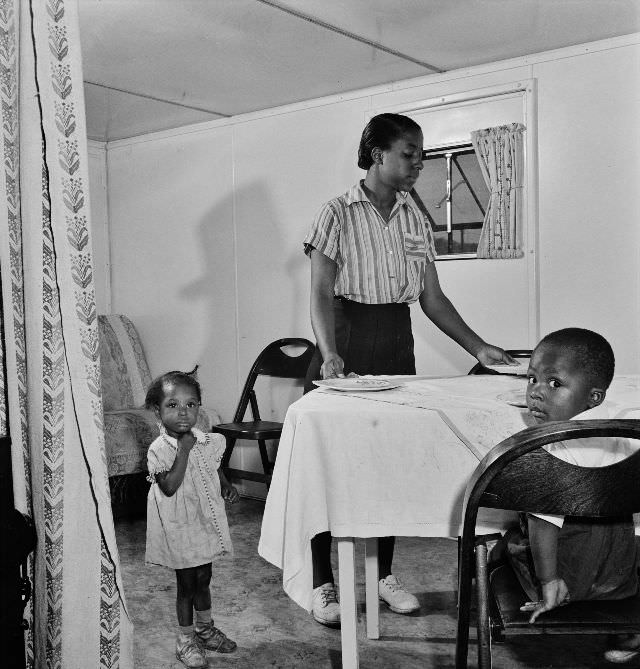
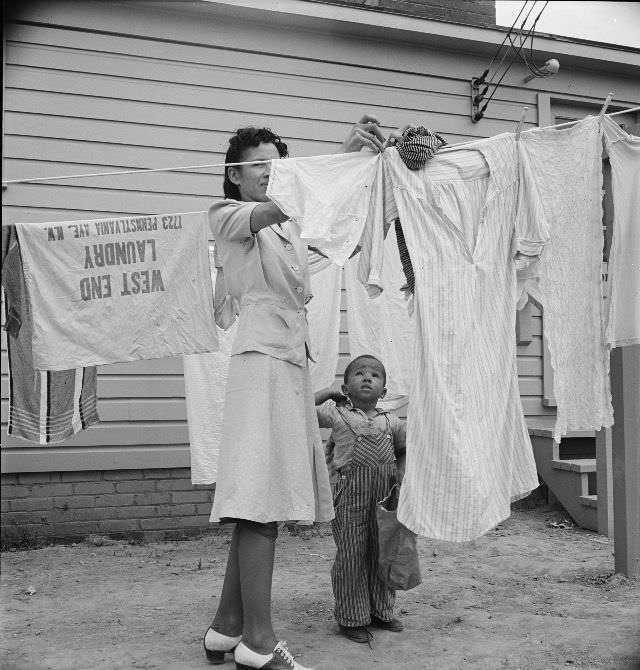
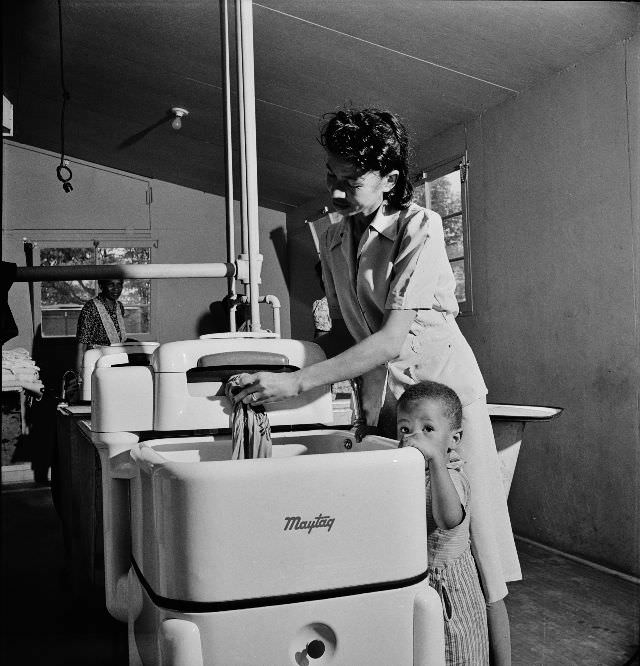
Daily life inside these camps continued much as it did anywhere else in America. Residents did laundry, looked after children, and used shared community facilities. Collins captured that normalcy without romanticizing it.
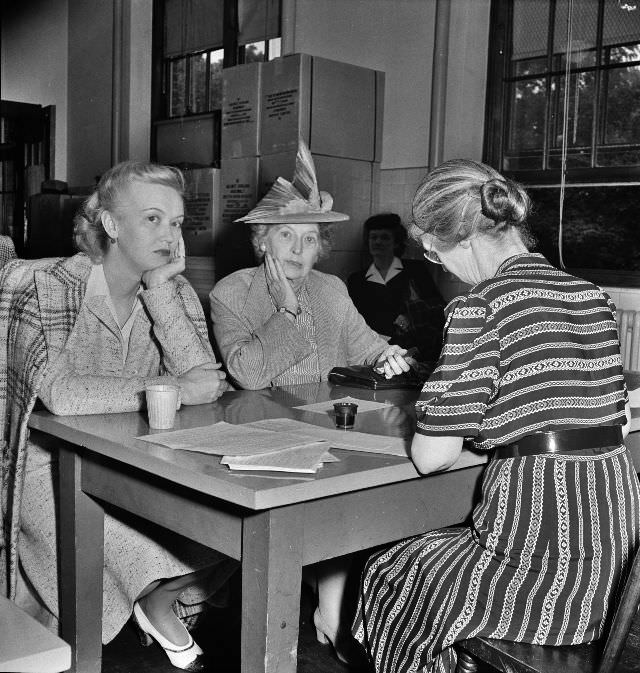
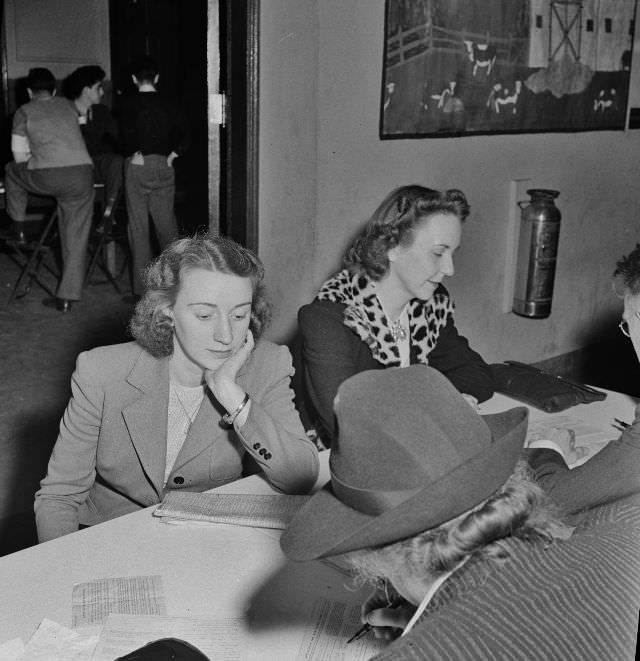
In Washington, D.C., the war touched everyday routines in direct, practical ways. Rationing was one of the most visible disruptions. The U.S. government introduced sugar rationing in the spring of 1942, and residents across the capital lined up at schools and public buildings to register for their cards. The lines stretched long — even in the city’s better-off neighborhoods.
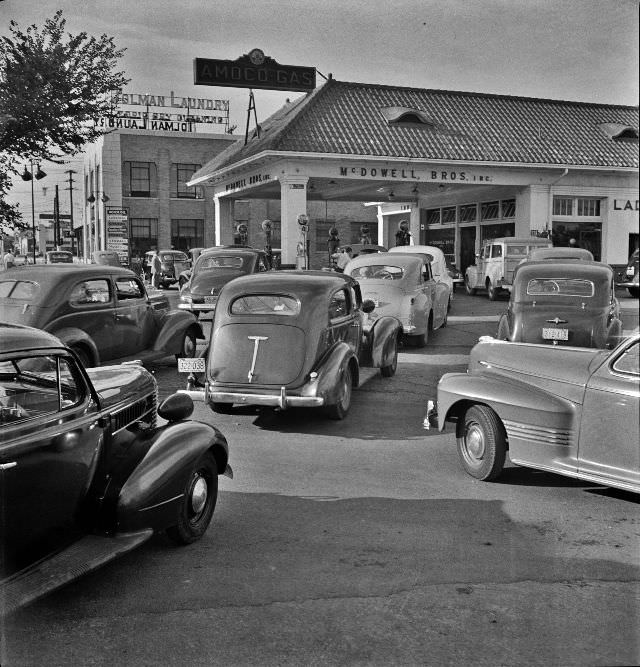
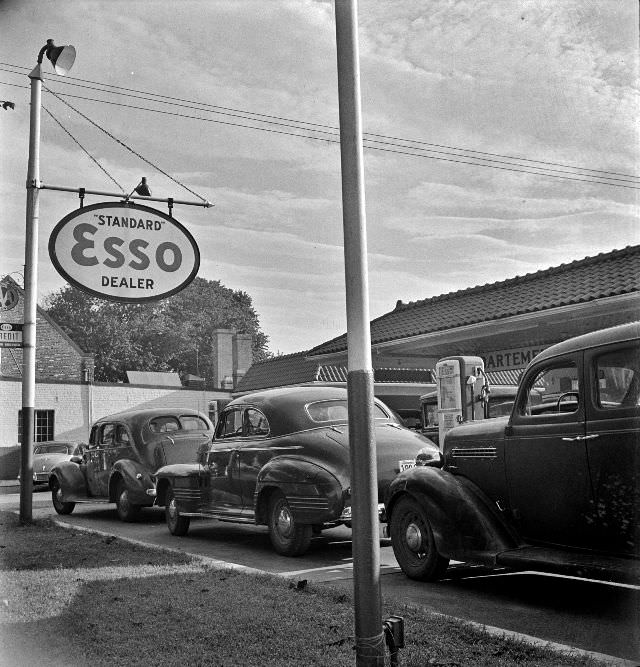
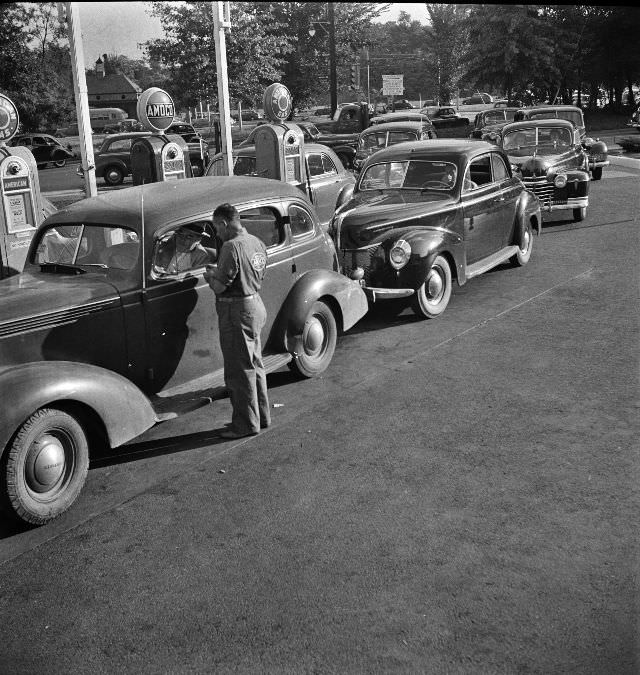
Gas rationing created its own kind of urgency. The night before stricter rules went into effect, drivers across Washington flooded the city’s filling stations. On June 21, 1942, cars were already pouring in at 7 a.m. The scene repeated itself on July 21st — the last day before a second round of tighter restrictions. Drivers parked and waited, sometimes long before stations even opened, determined to top off their tanks one last time.
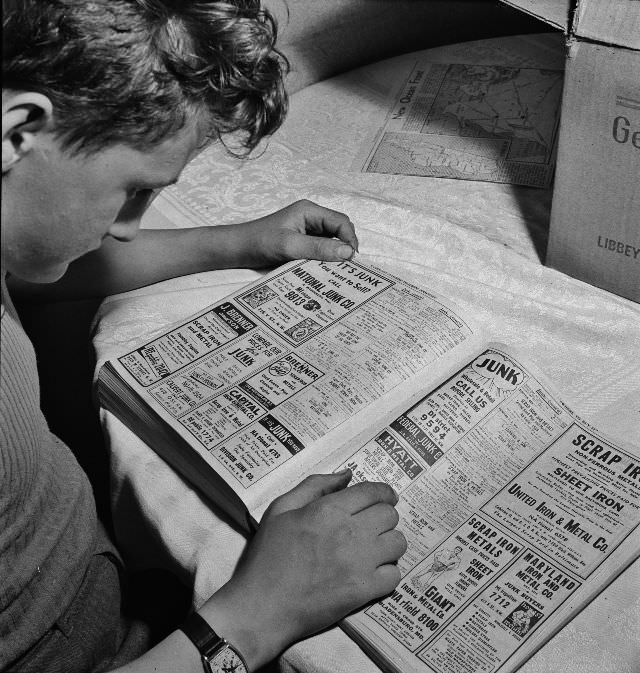
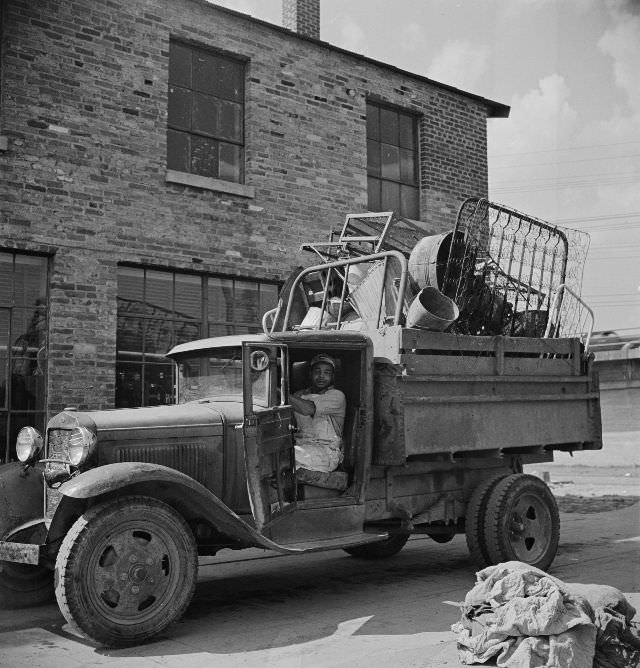
The war effort called on civilians of all ages to contribute. In Washington, a boy searched through the telephone directory to find a junk dealer willing to pick up the scrap metal he had been collecting and storing in his cellar. Across the country, scrap drives like this fed raw materials back into weapons and vehicle production. Junkyards ran platform scales to weigh incoming loads, keeping precise track of every pound collected under the Victory Program.
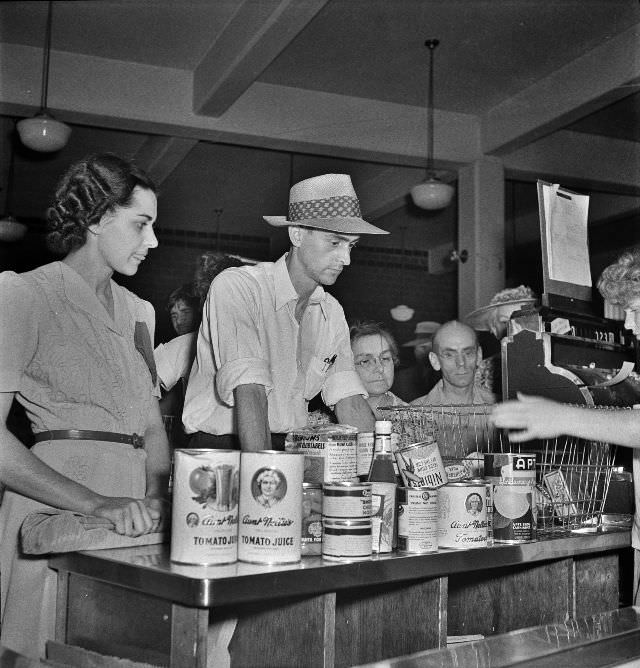
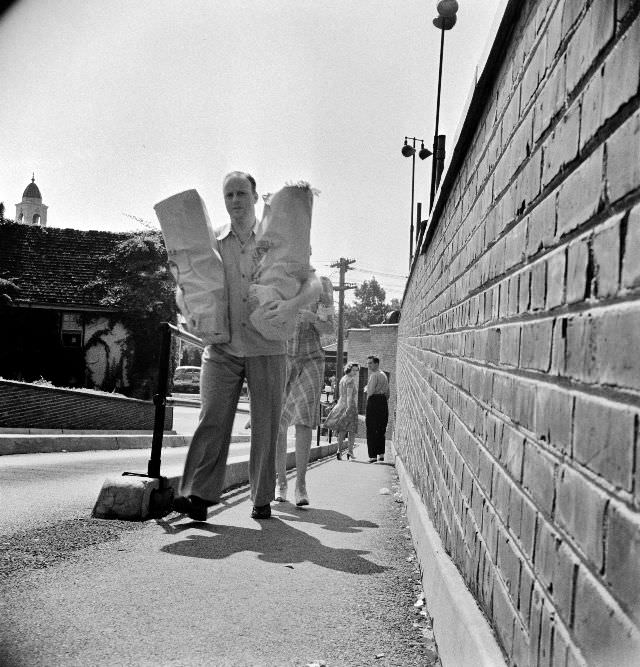
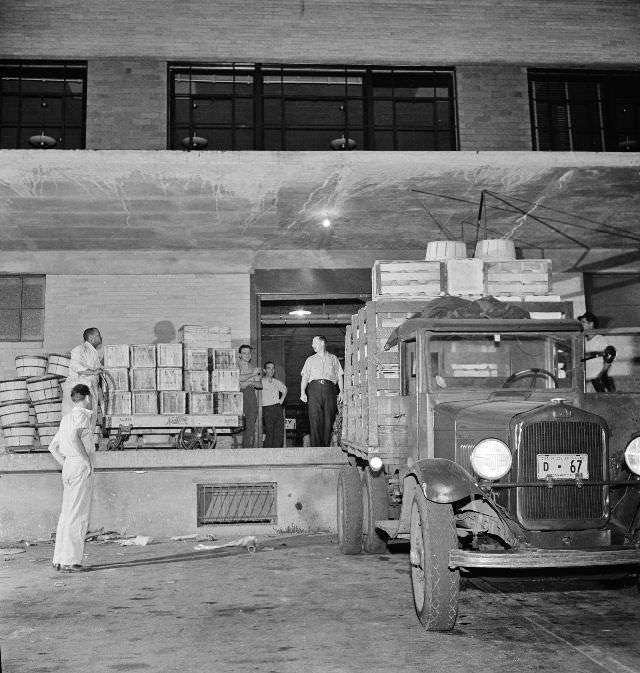
Washington’s grocery and retail sectors kept moving despite the disruptions. Collins photographed the Giant Food shopping center on Wisconsin Avenue, where customers drove up a ramp to a rooftop parking space — a practical solution to the crowded city streets. Inside, cashiers processed purchases at busy checkout counters. Behind the scenes, farmers were delivering produce to the district’s grocery warehouses on 4th Street S.W. in the early hours of the morning, between 2 and 5 a.m., to keep the shelves stocked.
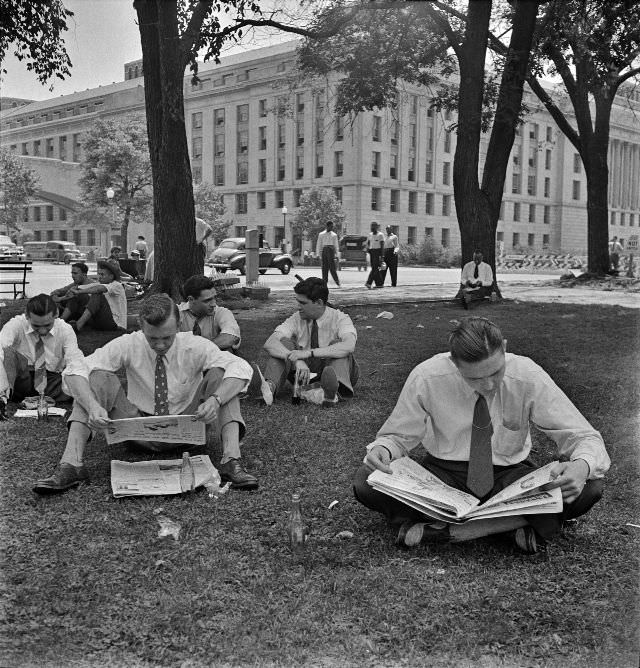
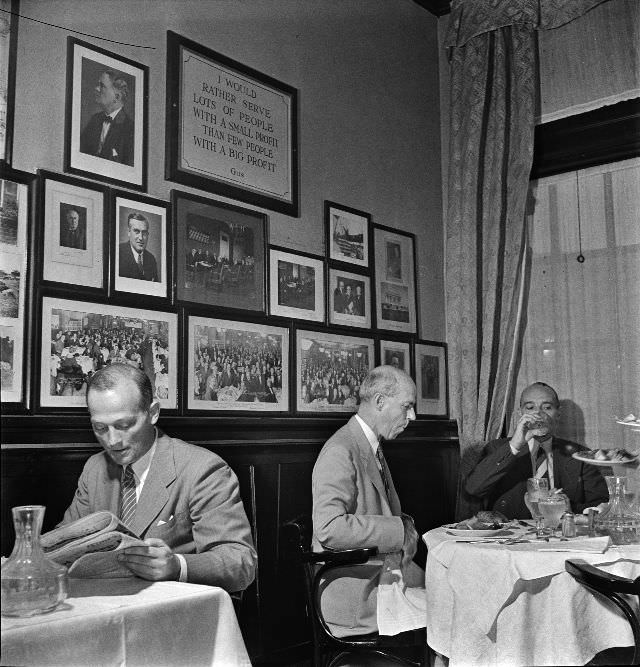
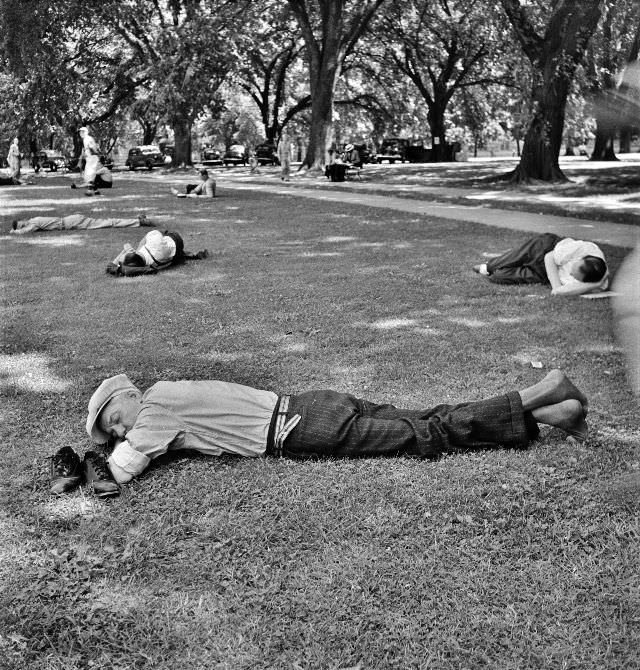
Restaurants and lunch spots stayed busy, serving the large workforce that had expanded to support the federal government’s wartime operations. The Occidental Hotel restaurant on Pennsylvania Avenue was packed at noon. Out in the open air, government workers spread out in the park near the Washington Monument and the U.S. Department of Agriculture building to eat their lunches and rest between shifts.
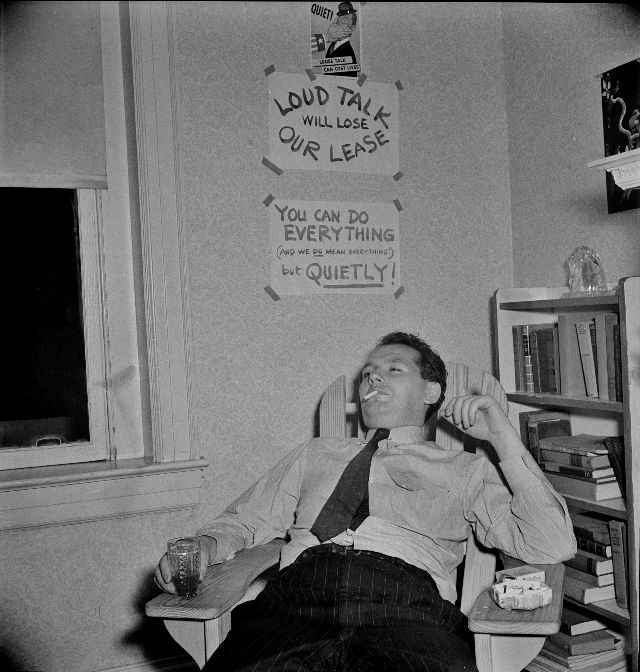
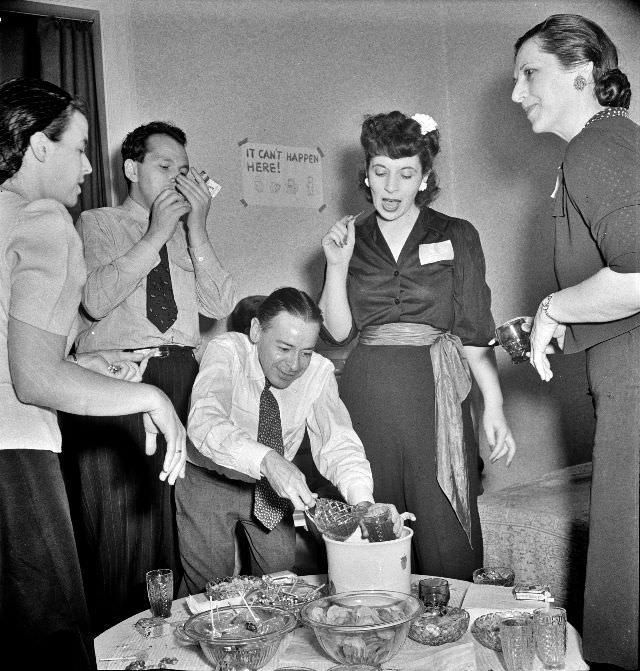
Even in wartime, social life continued. Collins attended an evening party at the home of a government artist in Washington — one of many small gatherings where the city’s creative and professional class unwound from the pressures of the week.
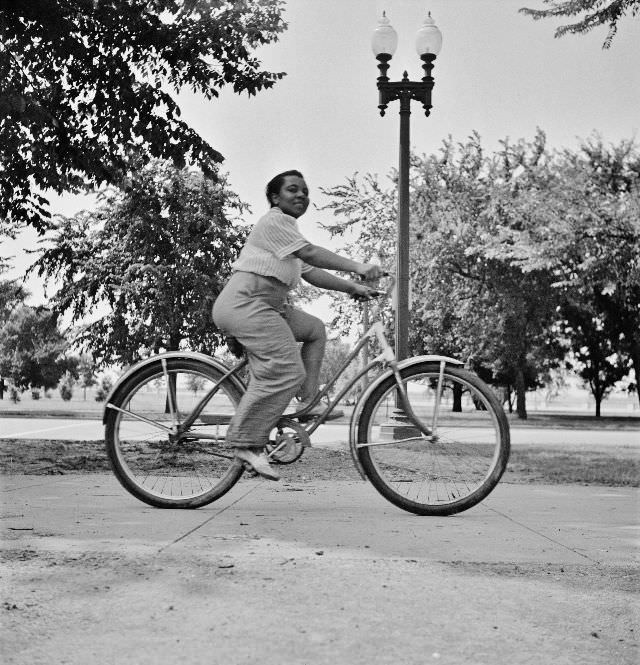
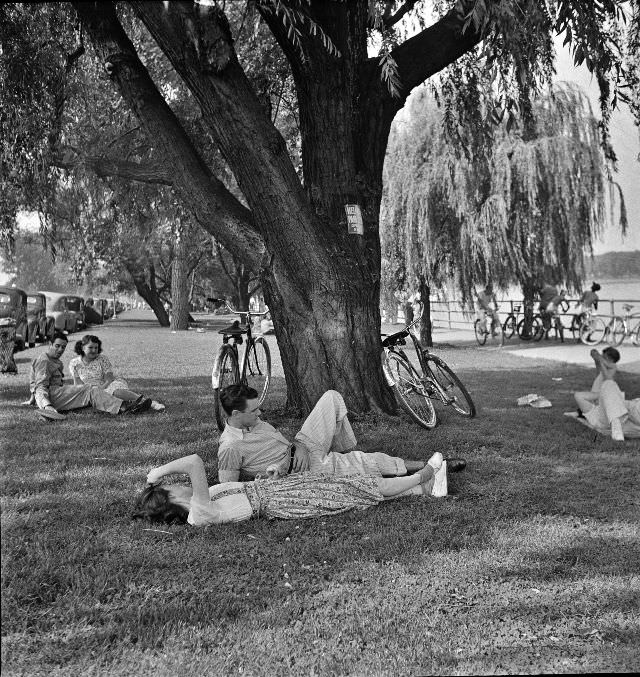
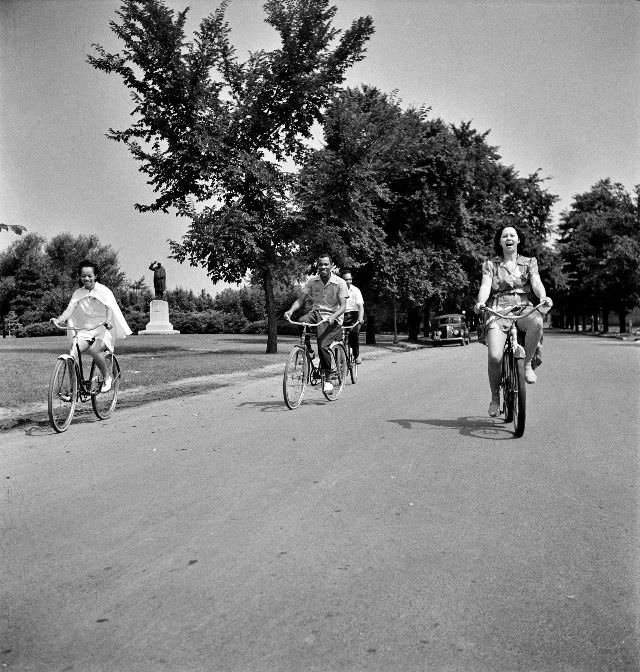
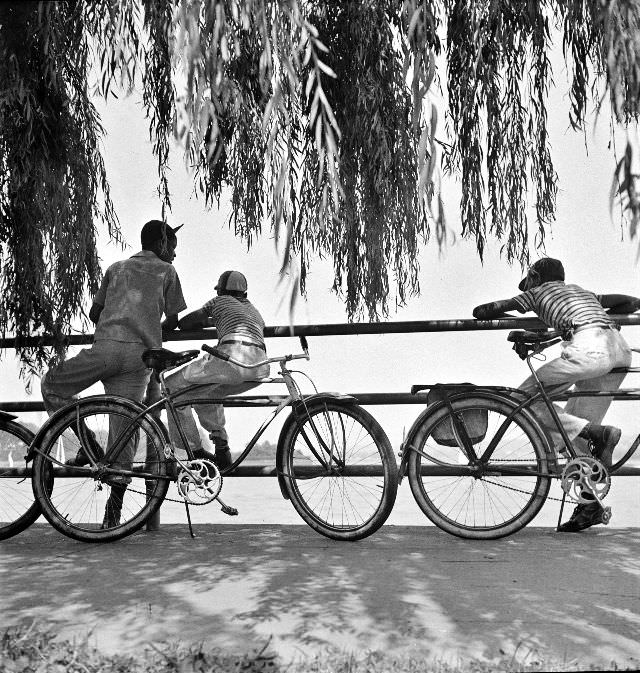
On weekends, Washington residents made full use of the city’s parks and outdoor spaces. East Potomac Park and Hains Point were popular destinations for cyclists, who rode along the river and stopped to watch sailboats from the water’s edge. Ellipse Park drew families and groups on hot summer Sundays.
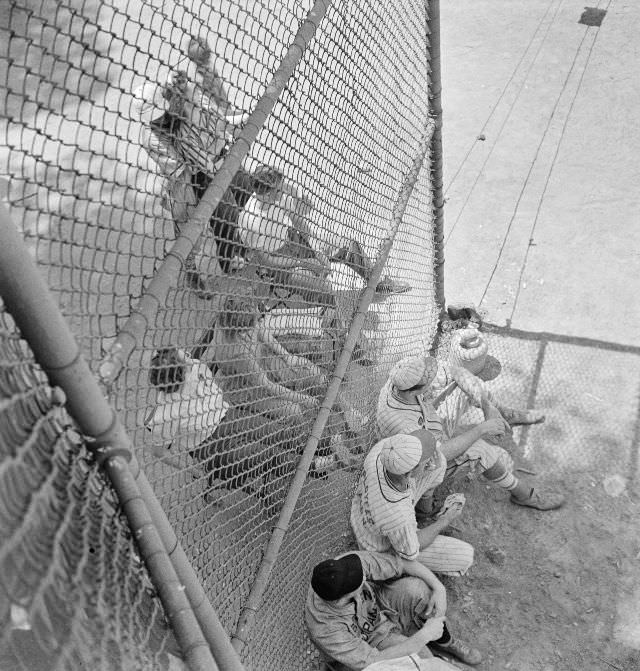
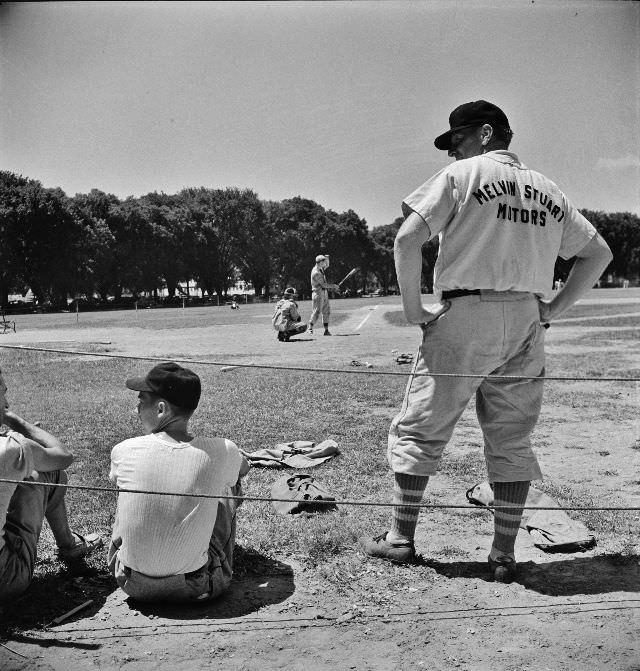
Baseball remained a fixture of summer life. Teams made up of employees’ recreation associations played against garage workers, and crowds gathered at Ellipse Park to watch amateur games under the summer sun.
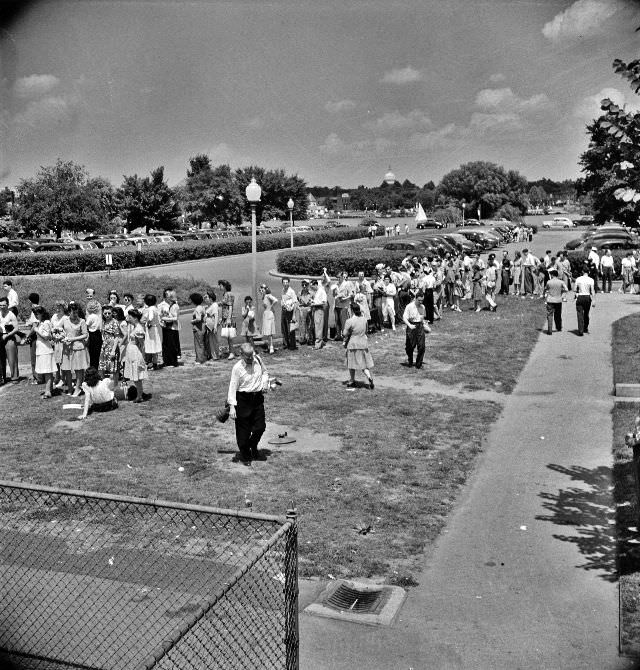
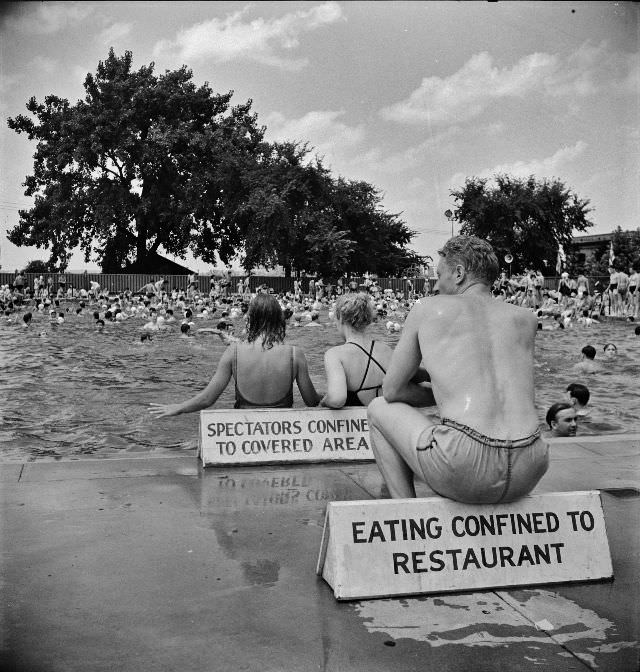
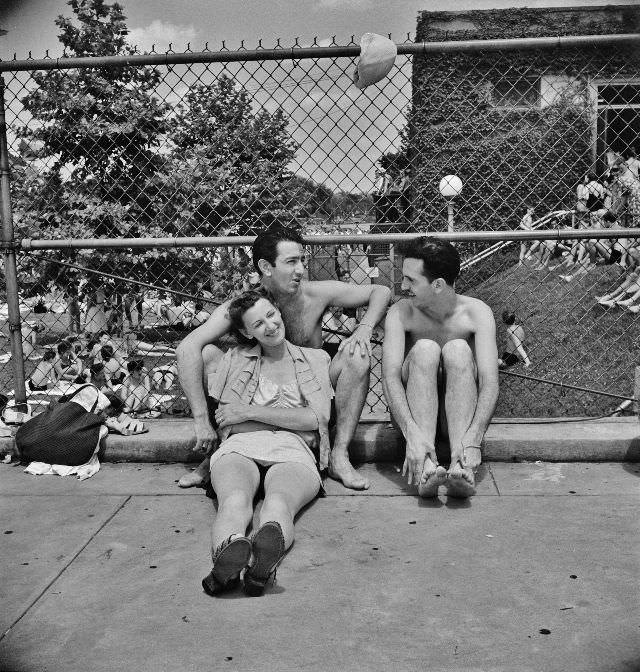
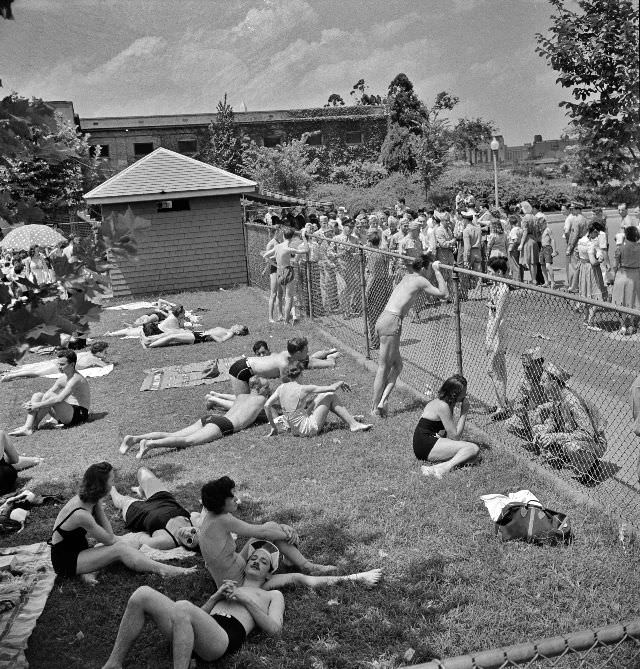
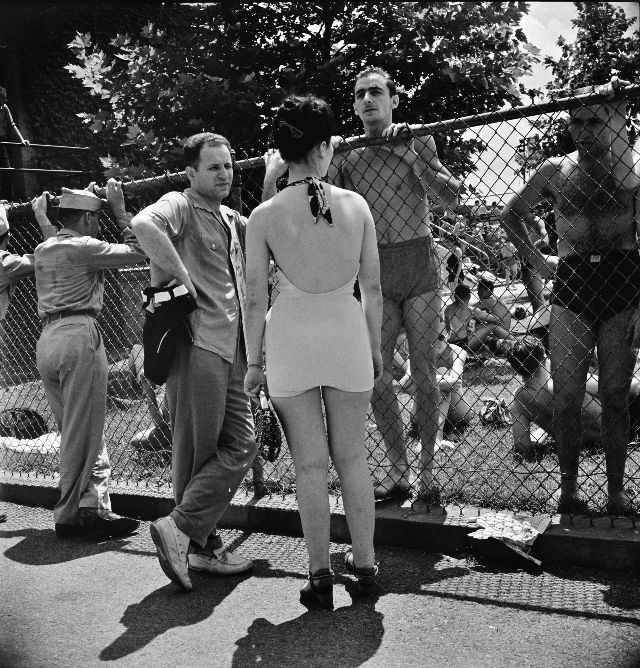
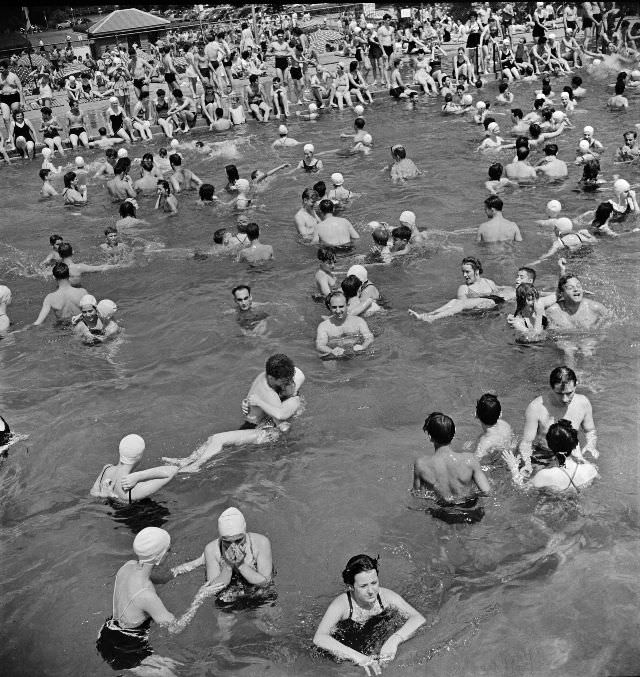
The municipal swimming pool was one of the most crowded spots in the city on summer Sundays. The lines of people waiting their turn stretched long. Sunbathers spread out on the surrounding grass when the water was too packed, and others simply relaxed along the pool’s edge.
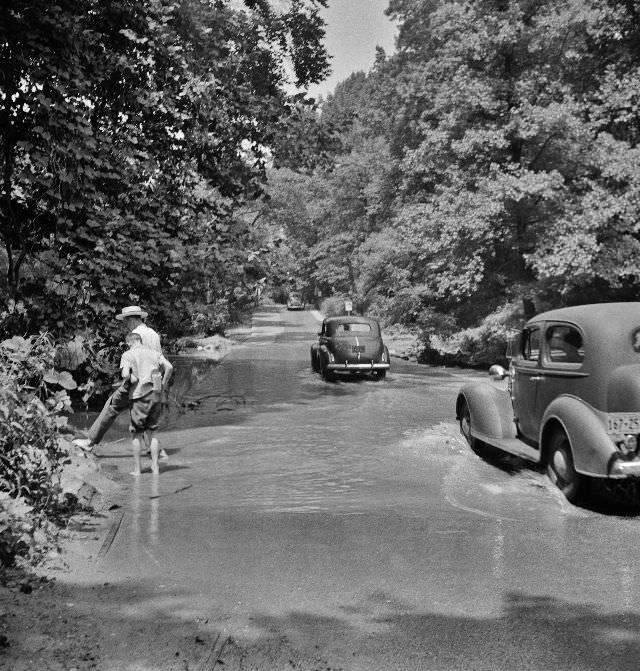
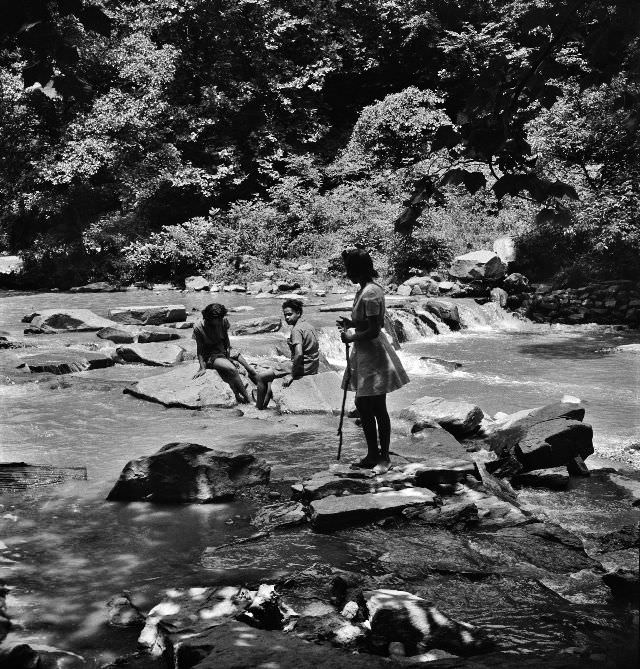
For those who preferred nature, Rock Creek Park offered a quieter escape. Families waded in the creek on warm days, finding shade and cool water without having to fight the pool crowds.
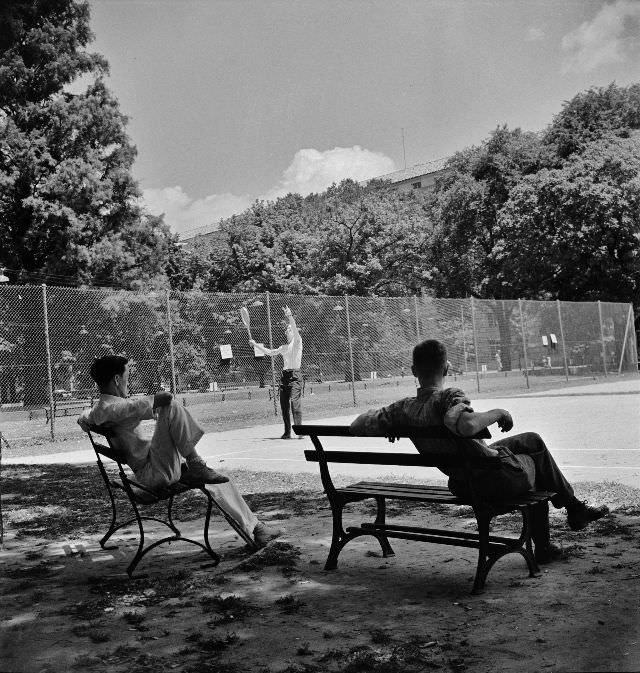
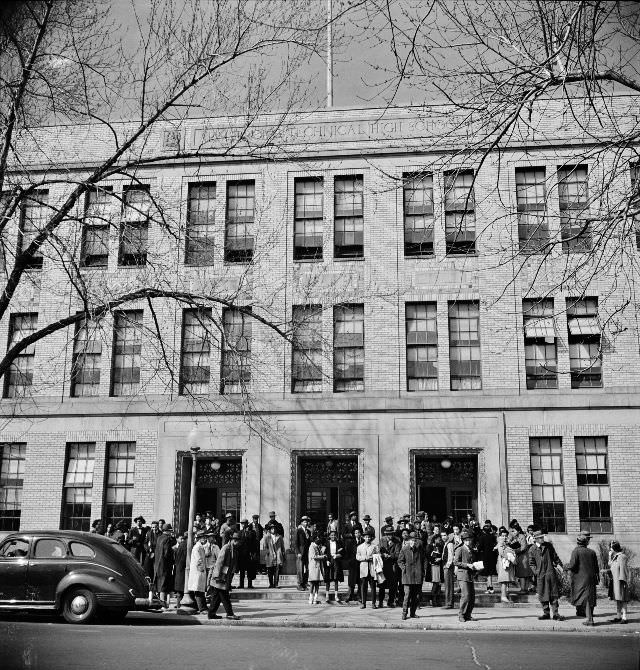
Tennis courts in front of the U.S. Department of Commerce building also saw regular use on Sunday afternoons. Armstrong Technical High School students continued their education throughout 1942, photographed by Collins in March of that year as the city adjusted to its new wartime rhythm.
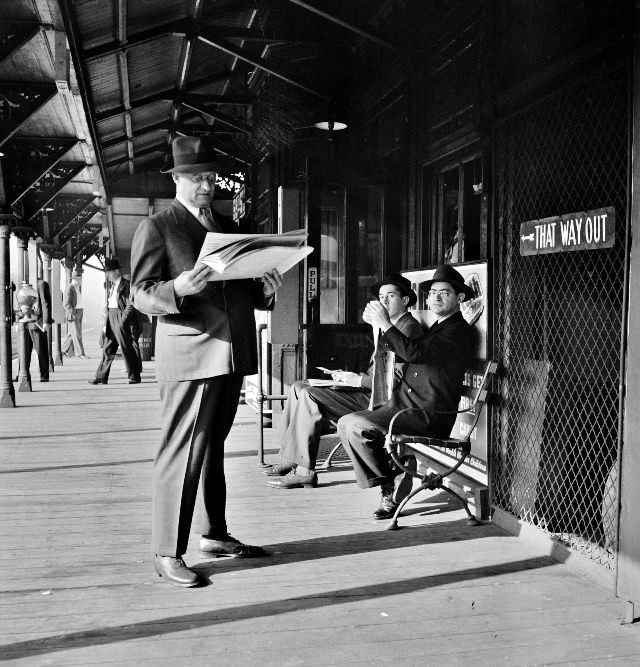
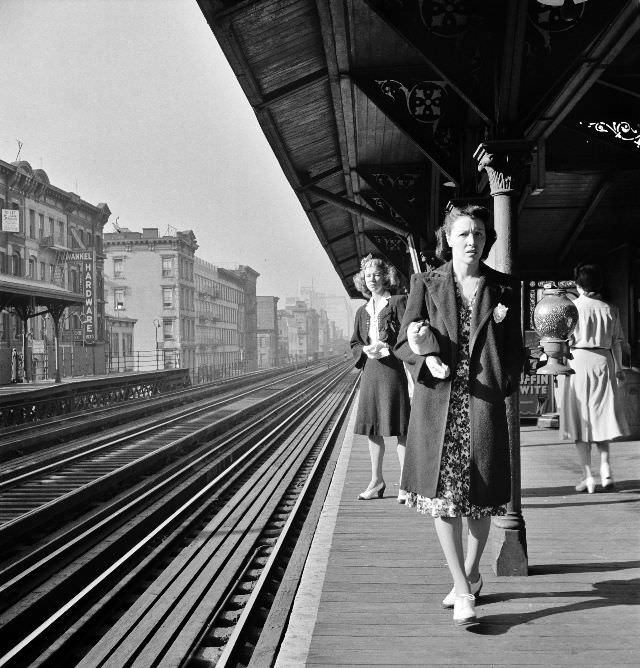
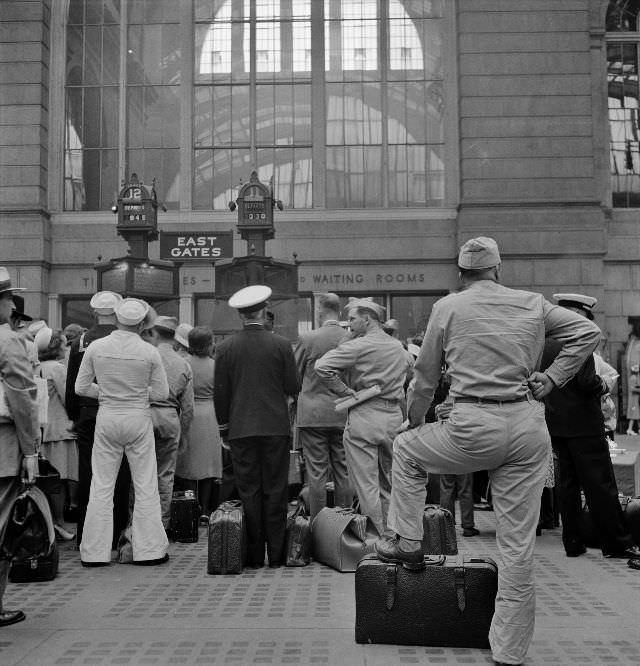
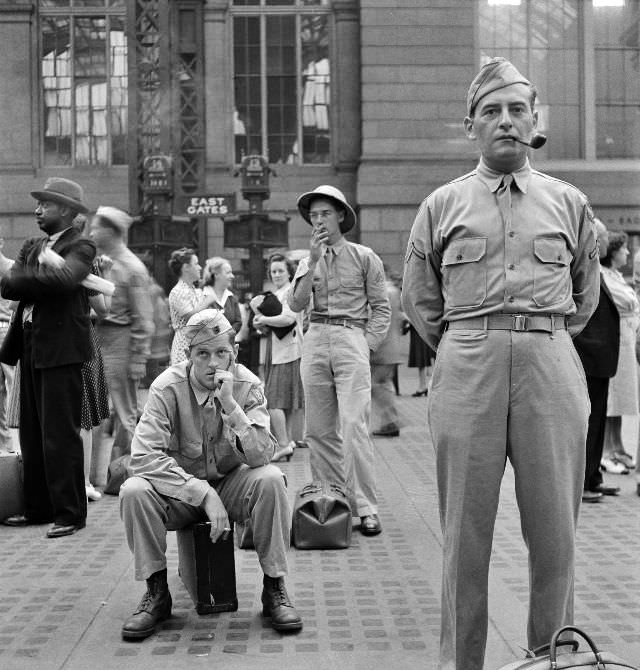
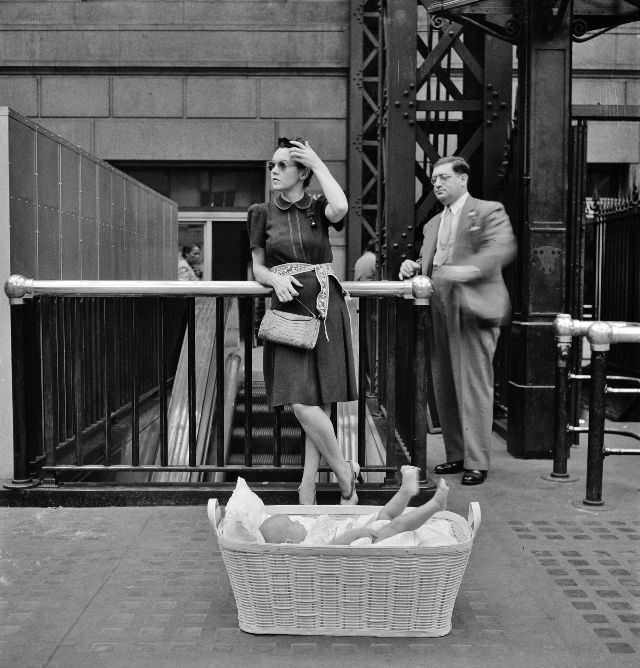
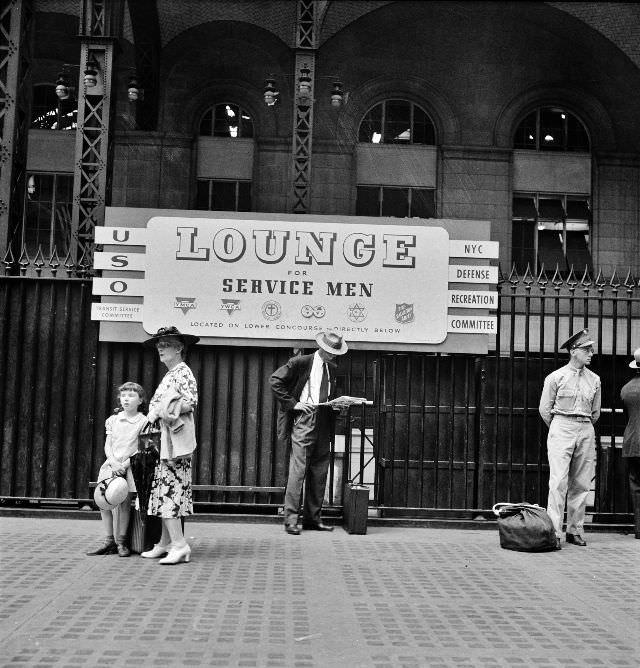
New York City told a different story. In the Fifties and Sixties, commuters packed onto elevated train platforms each morning, waiting for the Third Avenue line to carry them into the working day. Pennsylvania Station was filled with a different kind of crowd — servicemen heading out and families seeing them off, the station’s grand hall thick with the energy of departure.
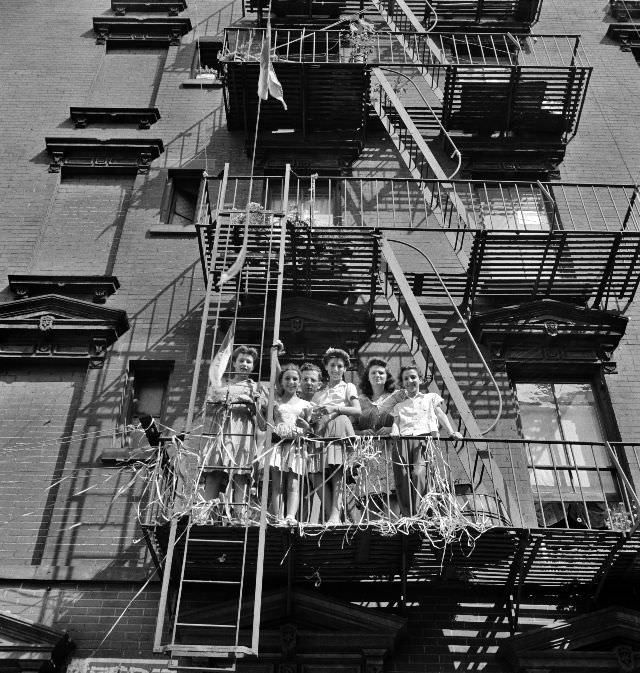
In New York’s Italian-American neighborhoods, the war took on a deeply personal dimension. On Mott Street, Italian Americans gathered to watch a parade and flag-raising ceremony held in honor of young men from the neighborhood who had enlisted in the U.S. Army. These communities — whose loyalties were sometimes questioned by the broader public — showed up visibly and proudly for their sons.
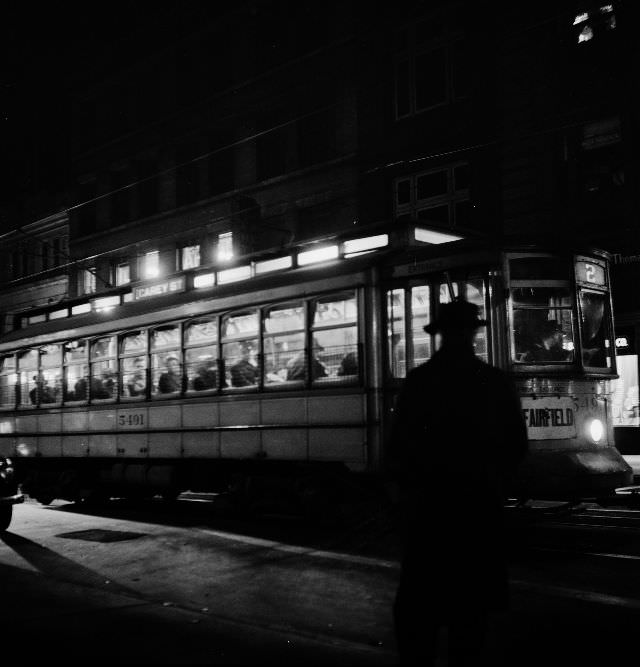
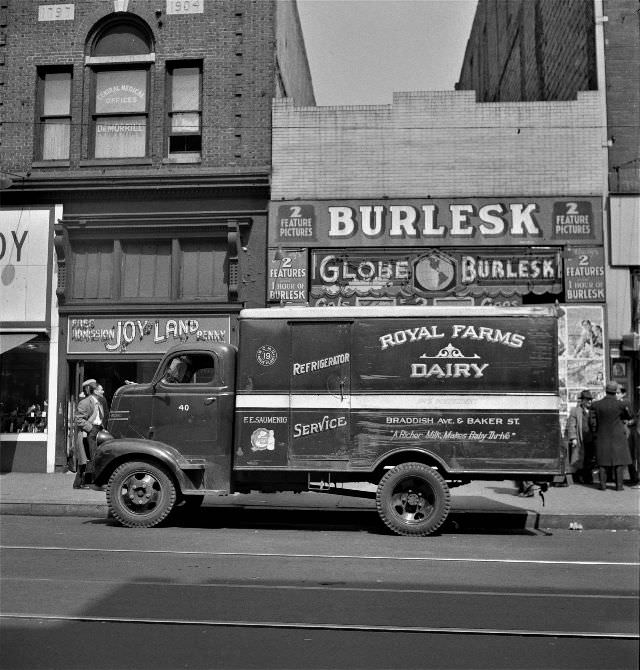
By 1943, Collins moved her lens to Baltimore, Maryland, where the war economy was running at full speed. Trolleys carried workers to the night shift at the Bethlehem Fairfield shipyard. Defense workers on the third shift waited in delicatessens and restaurants around midnight for their car pools to pick them up. Early in the morning, workers rushed to catch transport to their jobs, and in the afternoon they waited at busy intersections for buses home.
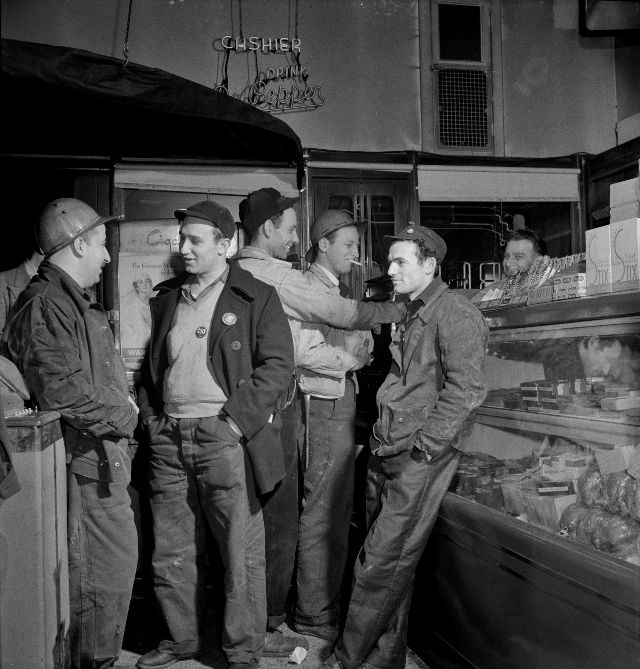
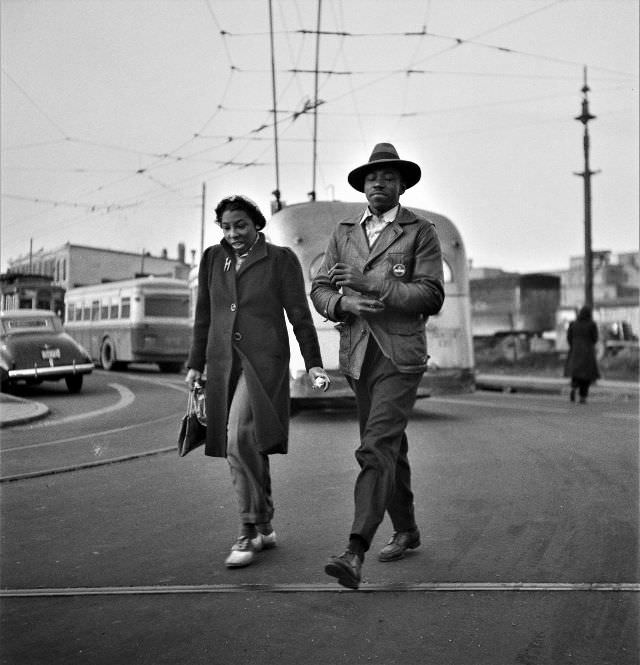
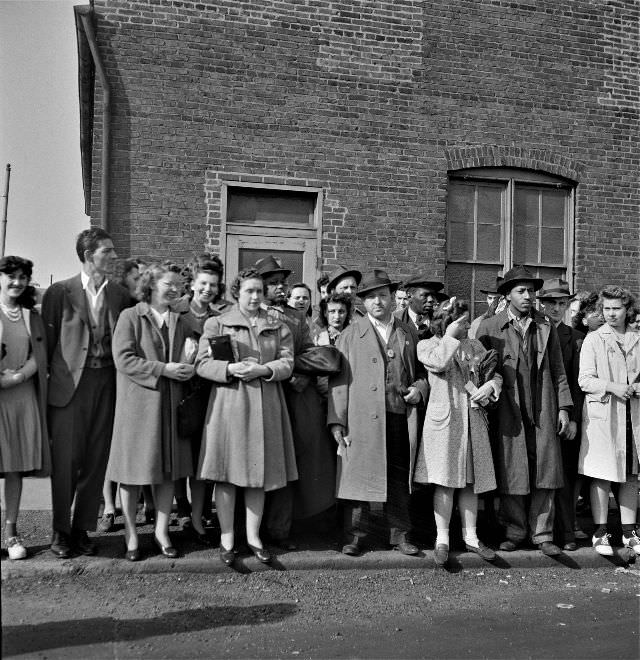
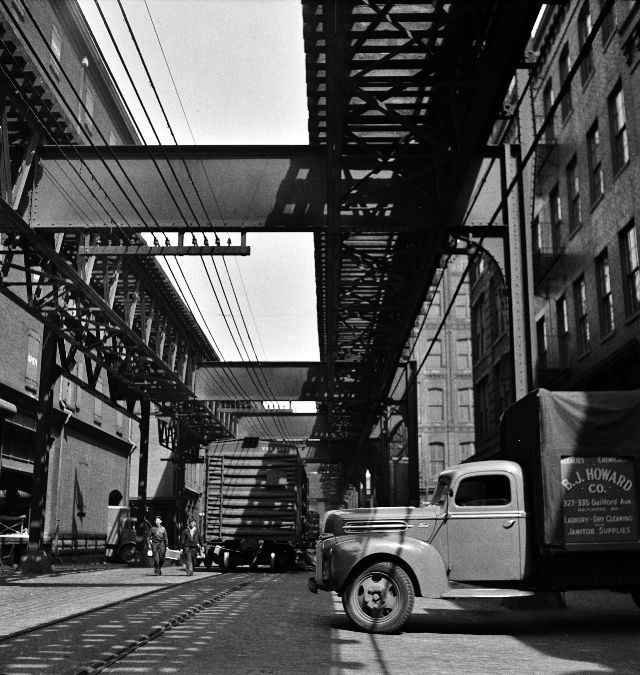
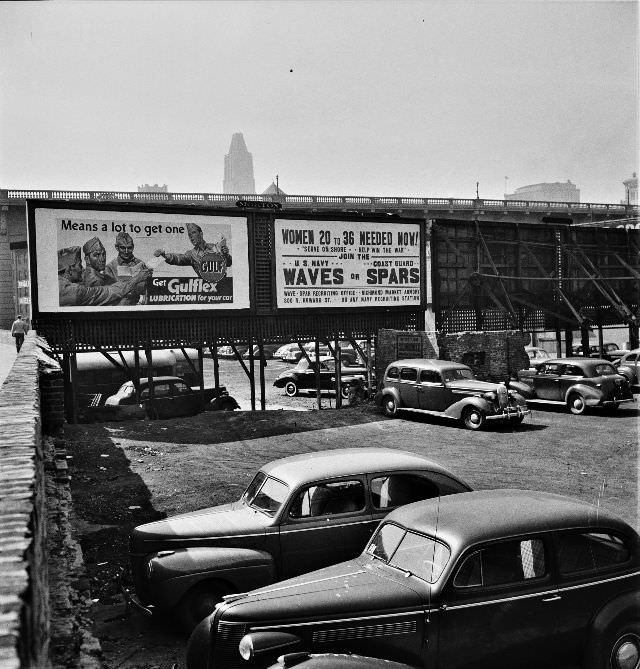
Baltimore’s streets and infrastructure were under constant pressure from the volume of wartime freight and commuter traffic. Trucks and trains unloaded goods beneath elevated trolley lines, and parking lots filled up alongside billboard-lined streets.
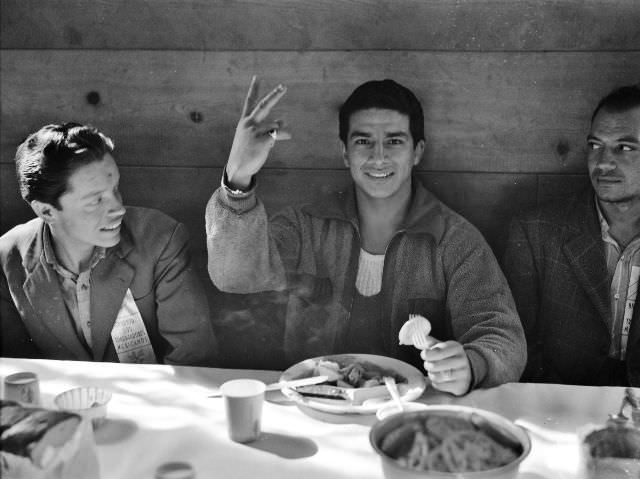
Collins also traveled to California in May 1943, where she documented Mexican agricultural laborers who had come to help harvest sugar beets in Stockton. These workers were part of the Bracero Program, a wartime labor agreement between the U.S. and Mexico that brought hundreds of thousands of Mexican men north to fill the agricultural jobs left vacant by American men who had gone to fight.
After her time with the Office of War Information, Collins continued working freelance, including assignments for an Alaska construction company. She traveled to Africa and Europe in 1944 on both government and commercial work. In the 1960s, she edited the American Journal of Public Health and covered civil rights and the Vietnam War. In 1971, she cofounded the feminist journal Prime Time, which ran until 1976, with the stated goal of working against the oppression of women in their prime. She was elected an associate of the Women’s Institute for Freedom of the Press in 1977. Marjory Collins died in 1985 at the age of 73.