
By the late 1940s, American kitchens were changing fast. Families wanted meals that were quick, easy, and flexible. Canned goods were already a pantry staple, but the standard mixed vegetable tin offered little in the way of choice. Everything was packed together — same taste, same texture, no options. That all changed in 1948 when the Larsen Company introduced the Layer-Pak Vegetables tin.
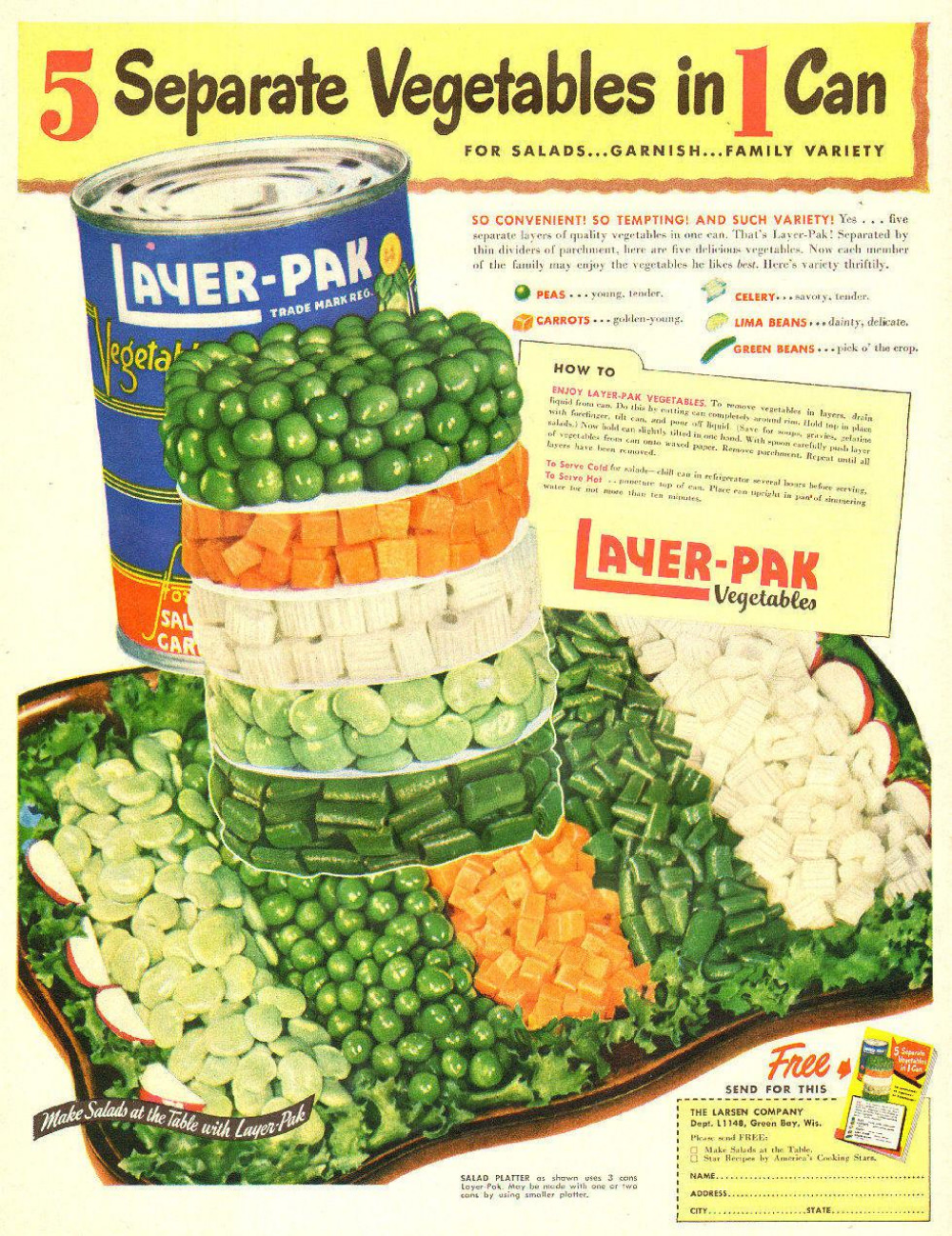
The Layer-Pak tin was built around a simple but clever idea: keep each vegetable separate. Rather than mixing carrots, peas, green beans, and celery into one uniform blend, the Larsen Company packed each variety into its own distinct layer inside the can. Consumers could open the tin and lift out exactly what they wanted, leaving the rest untouched. It was a level of control over canned food that shoppers had never seen before. The practical appeal was immediate. If a family member disliked peas, they skipped that layer. If someone wanted extra green beans in their salad, they took more. No waste, no compromise. For households juggling different tastes and preferences, the Layer-Pak tin answered a real everyday problem.
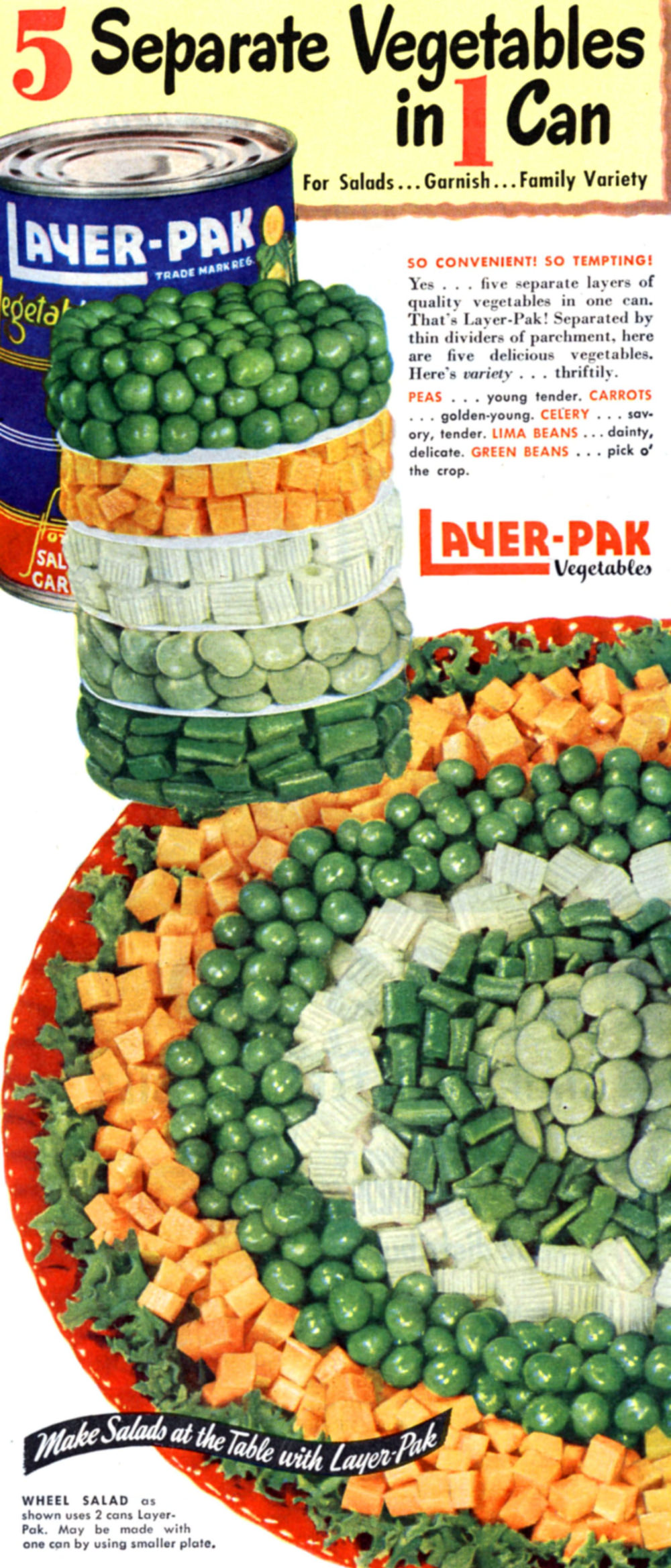
Beyond salads, the tin proved surprisingly versatile. Home cooks added individual layers to soups, casseroles, and stir-fries, pulling only the vegetables a specific recipe called for. That flexibility pushed the Layer-Pak tin beyond the role of a simple side dish and turned it into a genuine pantry workhorse. The design also protected the quality of each vegetable. In a standard mixed can, prolonged contact between different vegetables during processing caused flavors and textures to blend together. The separated layers in the Layer-Pak tin prevented that cross-contamination, so carrots stayed firm and tasted like carrots, and green beans kept their distinct flavor. It was a meaningful difference that consumers noticed.
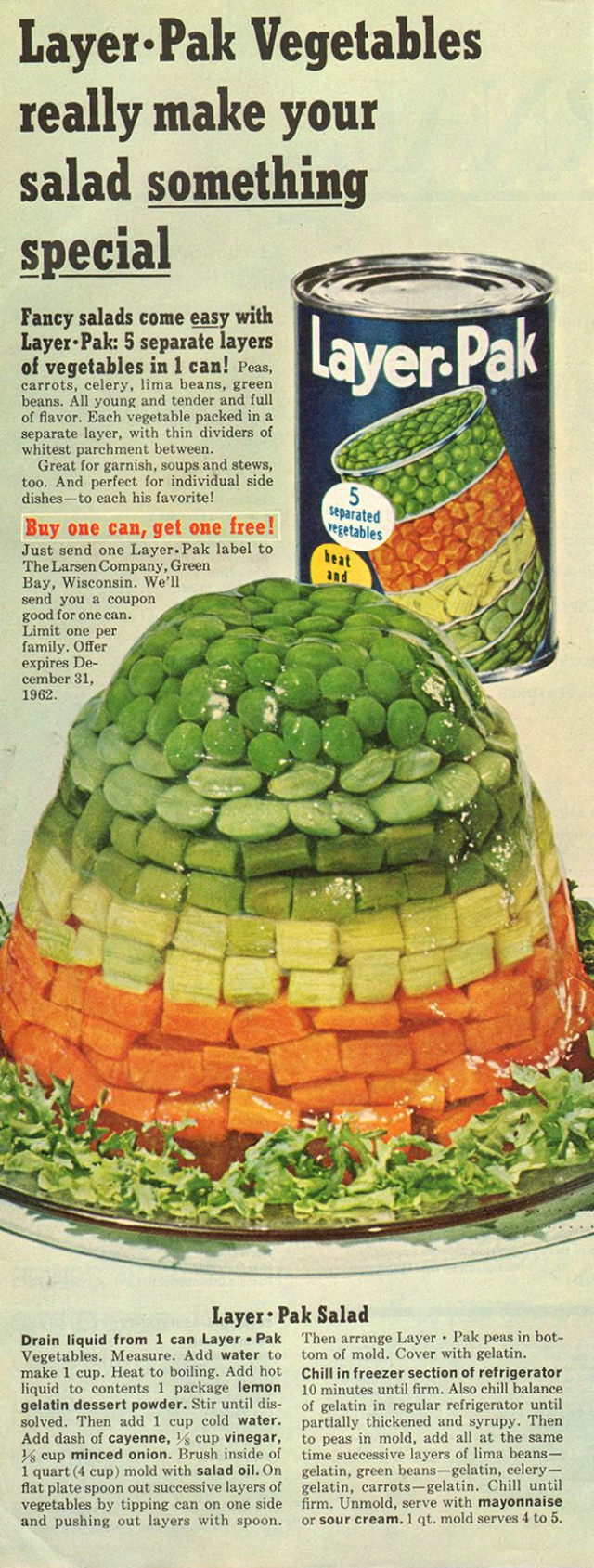
Larsen backed the product with heavy advertising in 1948, leaning into the growing postwar demand for convenience and personalization. The marketing positioned the Layer-Pak tin not just as a food product, but as a smarter way to eat — one that respected individual preferences and reduced wasted food. The product also eliminated the need to buy, prep, and store multiple types of vegetables separately. One tin covered several needs at once. For busy households trying to put nutritious meals on the table with minimal effort, that was a genuine selling point, not just a marketing claim. The Larsen Company’s Layer-Pak Vegetables tin stood at the intersection of food technology and shifting consumer expectations. A straightforward engineering choice — layering instead of mixing — solved multiple problems inside a single can and gave American families something the canned food industry had not yet offered: a real say in what ended up on their plates.



The only flaw was that the vegetables shared the same liquid they were canned in, making their separation irrelevant.