Hey There! Before You Go. 😧
Get the best vintage content straight into your inbox!

Don't worry, we don't spam

Japanese Culture and Society in the Late 19th and Early 20th Centuries Through Herbert Geddes' Photographs

British photographer Herbert Geddes traveled to Japan during one of the most dramatic periods in the country’s history. Arriving in the late 19th century and continuing into the early 20th, he documented a nation balancing centuries-old traditions with the pressures of rapid modernization. His photographs are not posed studio portraits or tourist novelties — they are direct, detailed records of real people living real lives.
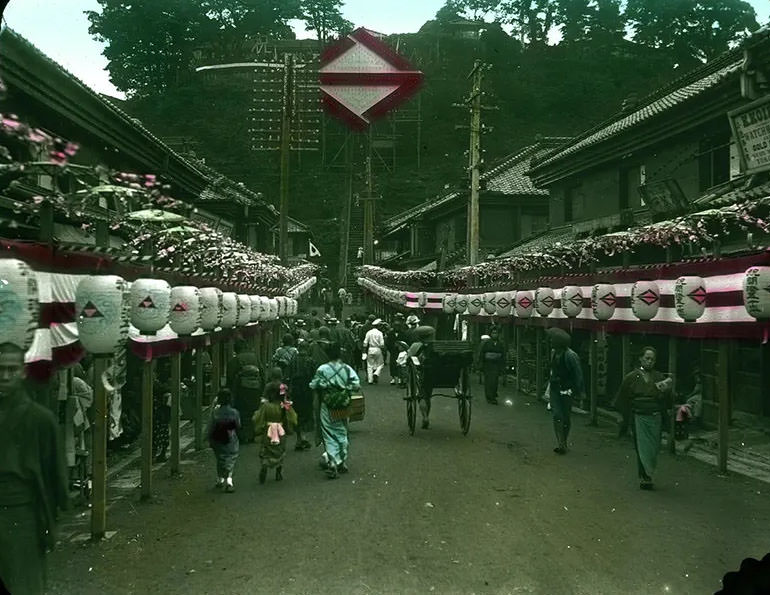
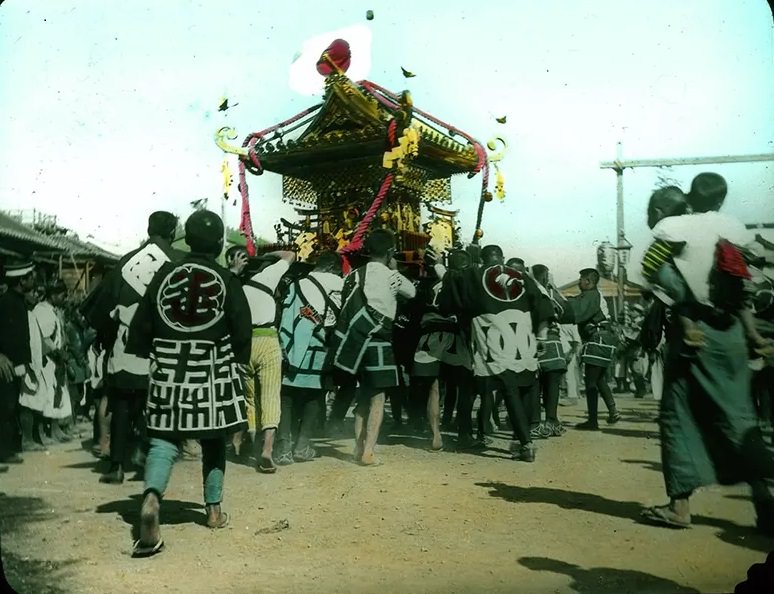
Crowd-filled street lined with banners and lanterns.

Public life in Japan during this era was deeply communal. Streets filled with people during festivals, and lanterns and banners marked celebrations tied to deeply rooted religious and seasonal customs. Geddes captured these gatherings with an eye for the energy of a crowd, showing how collective ritual was woven into everyday Japanese life.
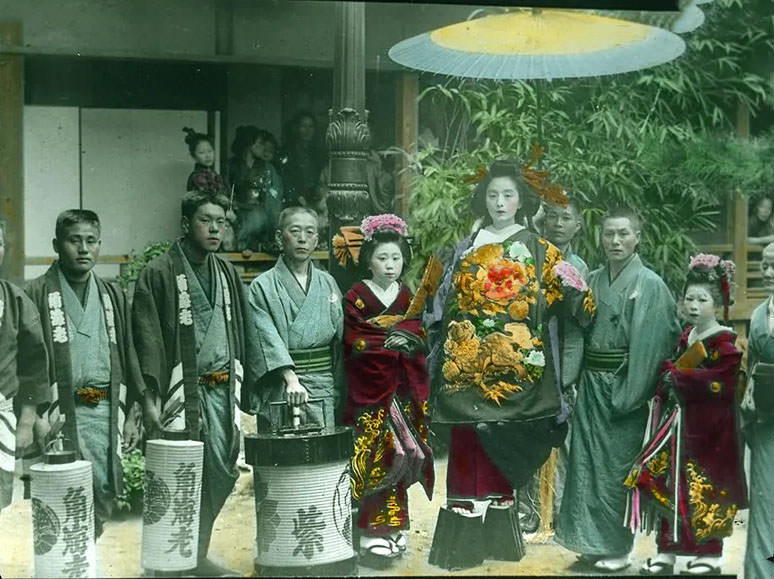
People in special attire, with lanterns, posing for photograph.

Geddes also turned his camera toward the quiet, private side of Japanese culture. Geishas were skilled entertainers trained in music, dance, and the tea ceremony — roles that required years of dedicated practice. His images of geishas at rest show the tools of their trade close at hand: musical instruments, fans, and tea ceremony implements.
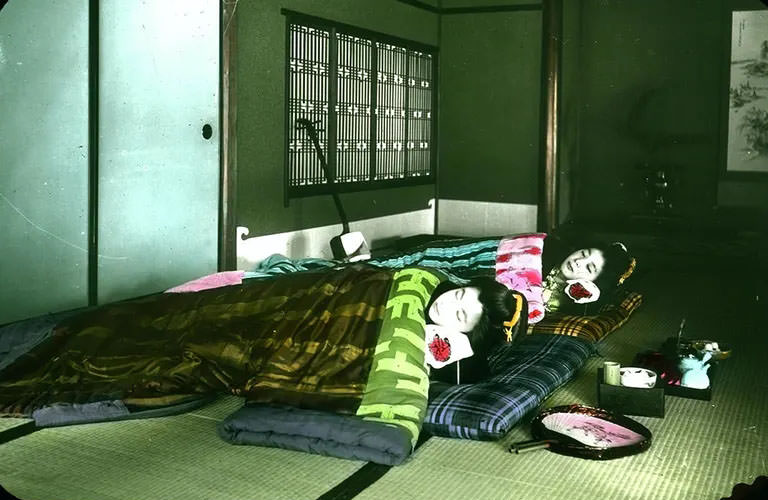
Interior shot of two geishas asleep in bedding on floor mats; musical instrument, fan and implements for tea ceremony nearby.
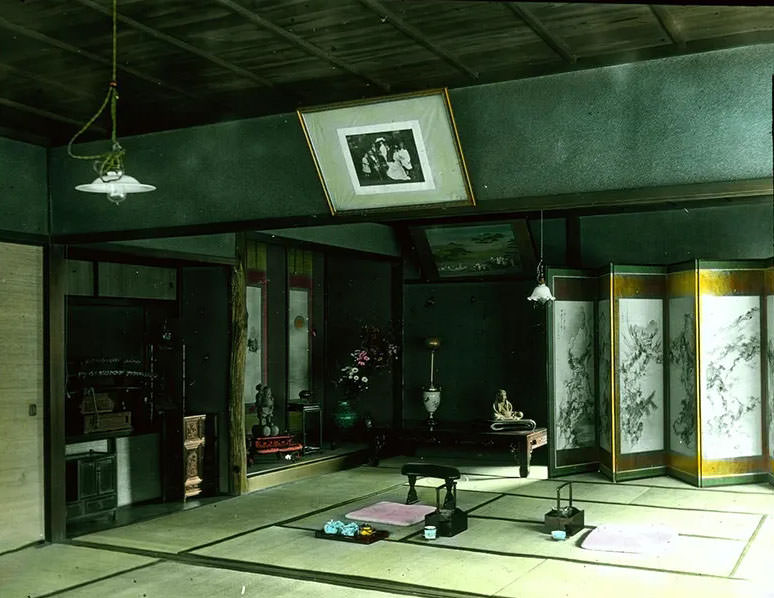
Tea implements in centre of richly furnished room.

The tea ceremony itself was far more than a social habit. It was a disciplined art form rooted in Zen Buddhist principles, and the carefully arranged implements in Geddes’ photographs reflect that sense of order and intention. Similarly, his images of women in kimonos and people gathered around food and music capture social rituals that structured daily interaction.
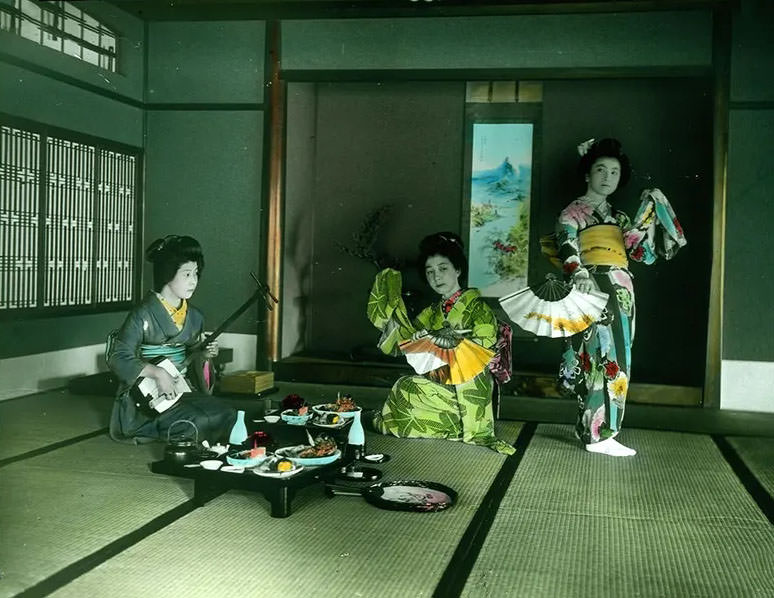
Three women with fans, musical instrument and a table set with food.
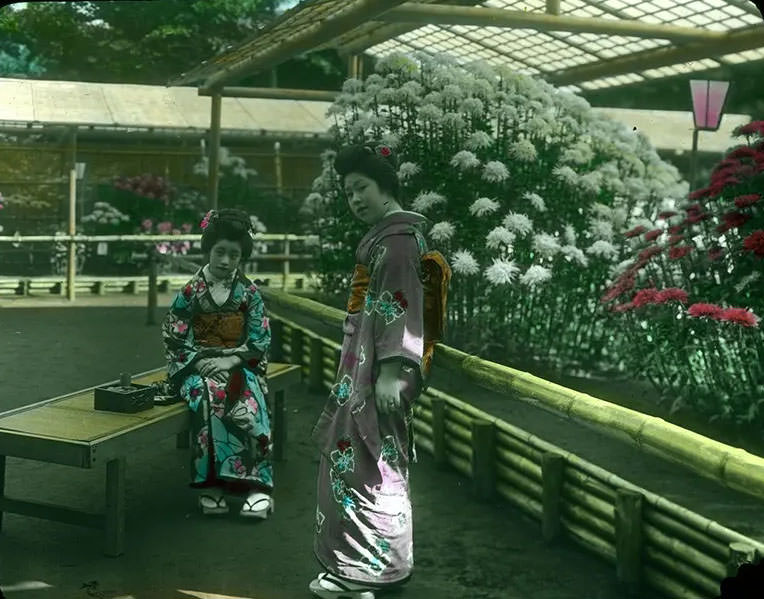
Two young women in Kimonos, one standing, one seated on wooden bench outside open greenhouses filled with blooming flowers.

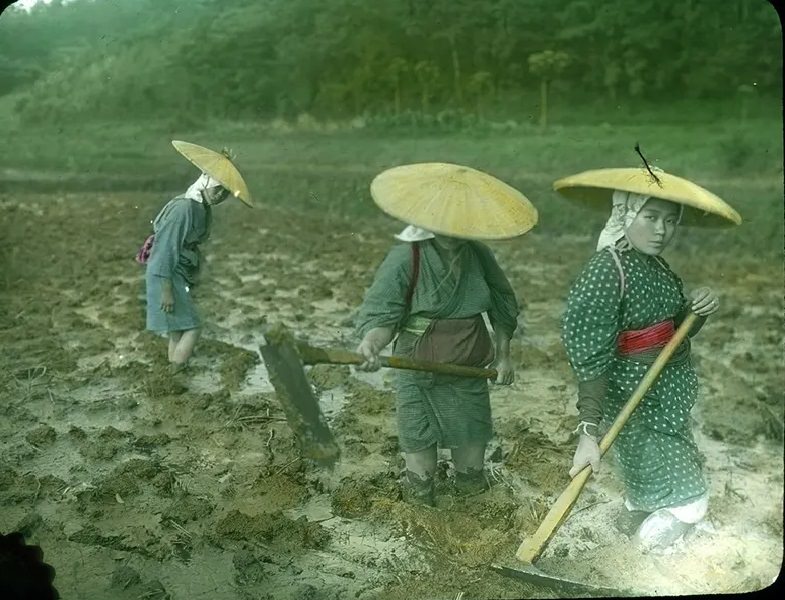
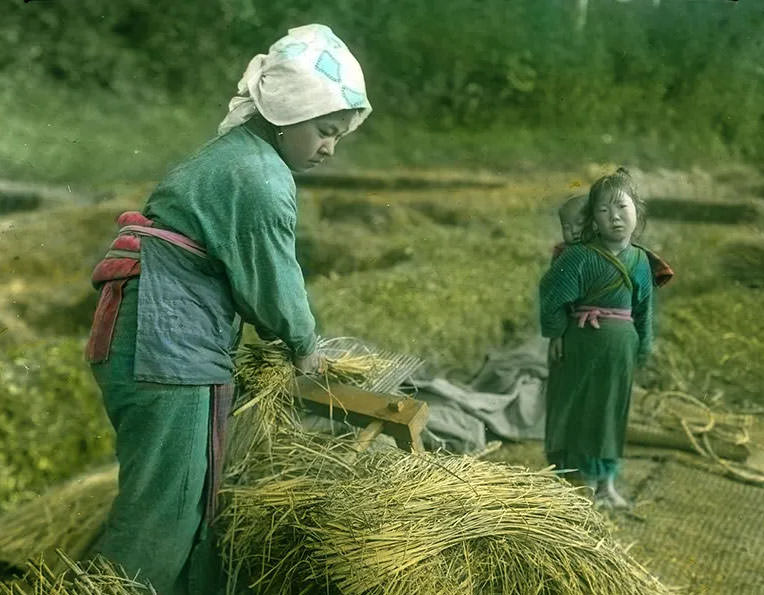
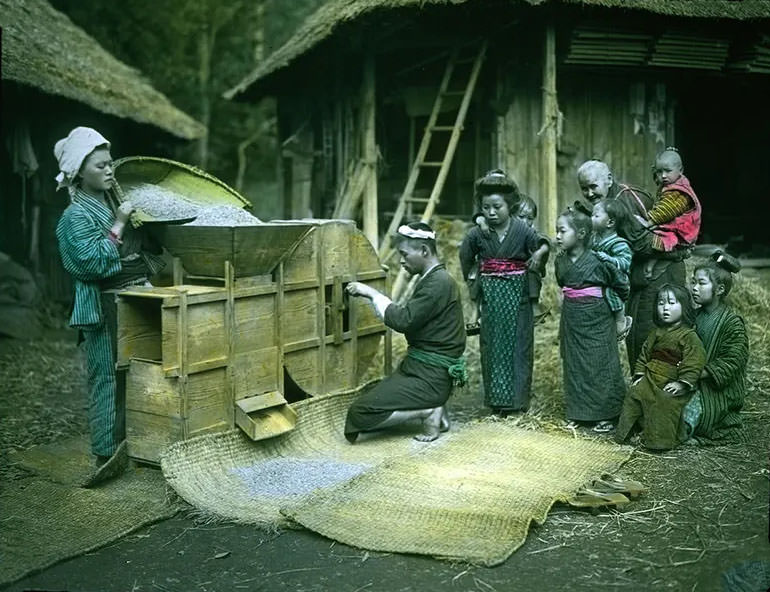
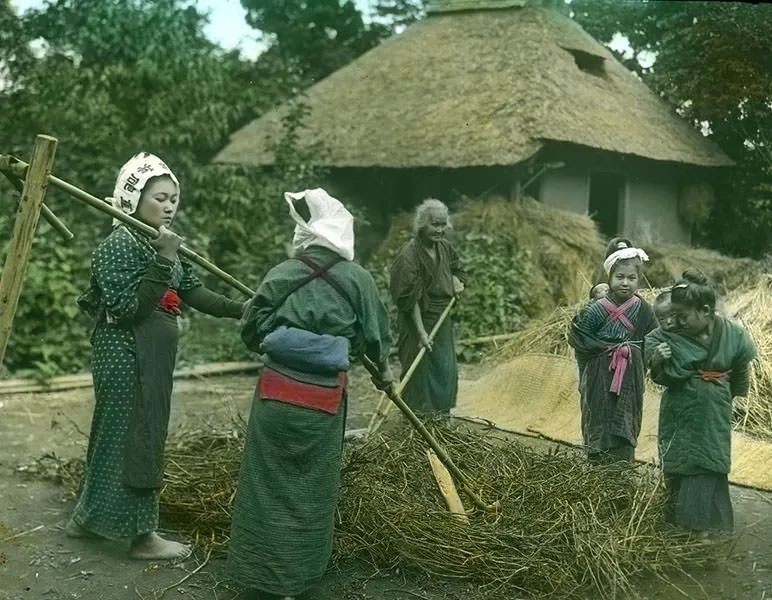
Much of Geddes’ work focused on labor. Japan’s economy in this period depended heavily on agriculture and skilled craft industries. Rice farming was backbreaking, communal work performed almost entirely by women, from preparing the muddy paddies to planting, harvesting, and processing the grain.
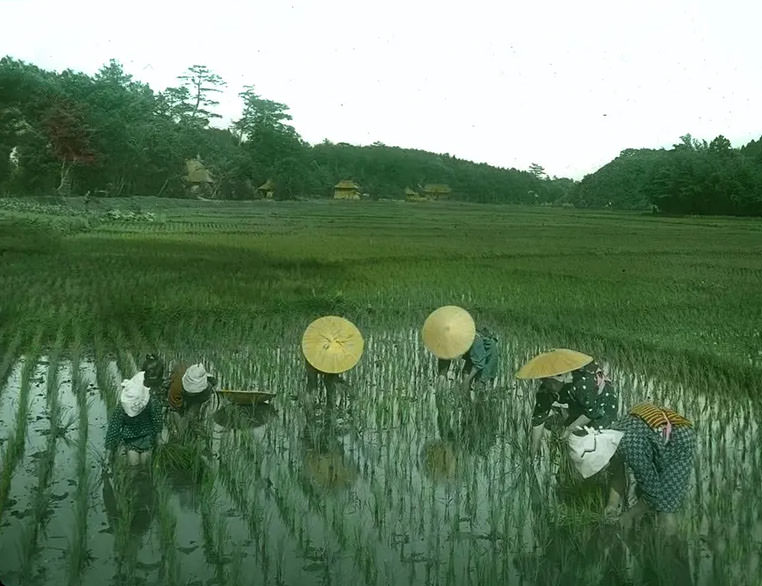
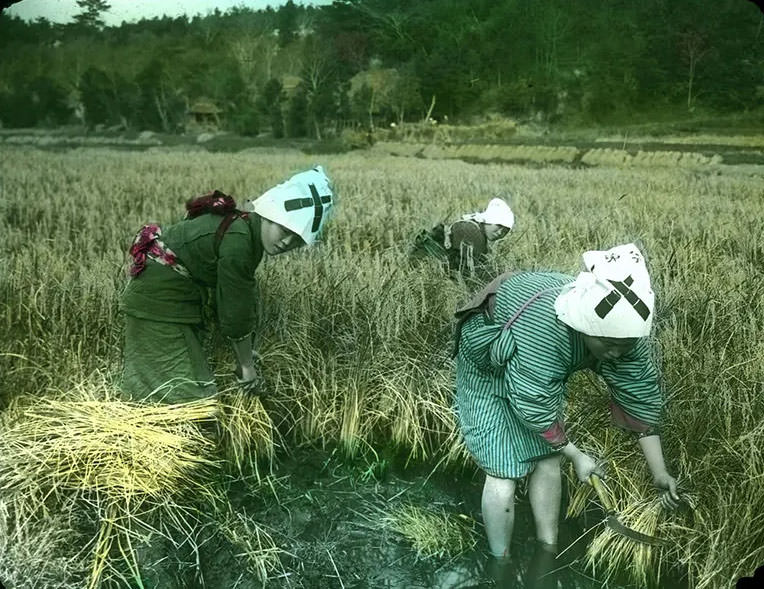
Women planting rice.
Women harvesting rice.
Women preparing rice field in mud.
Woman separating rice from chaff with steel comb.
Rice being poured into a wooden mechanical hopper.

Alongside rice farming, Japan’s silk industry was a major source of national income. Silk production was meticulous work, from extracting thread from cocoons to weaving and finishing cloth in large factory settings. Geddes documented this process in full.
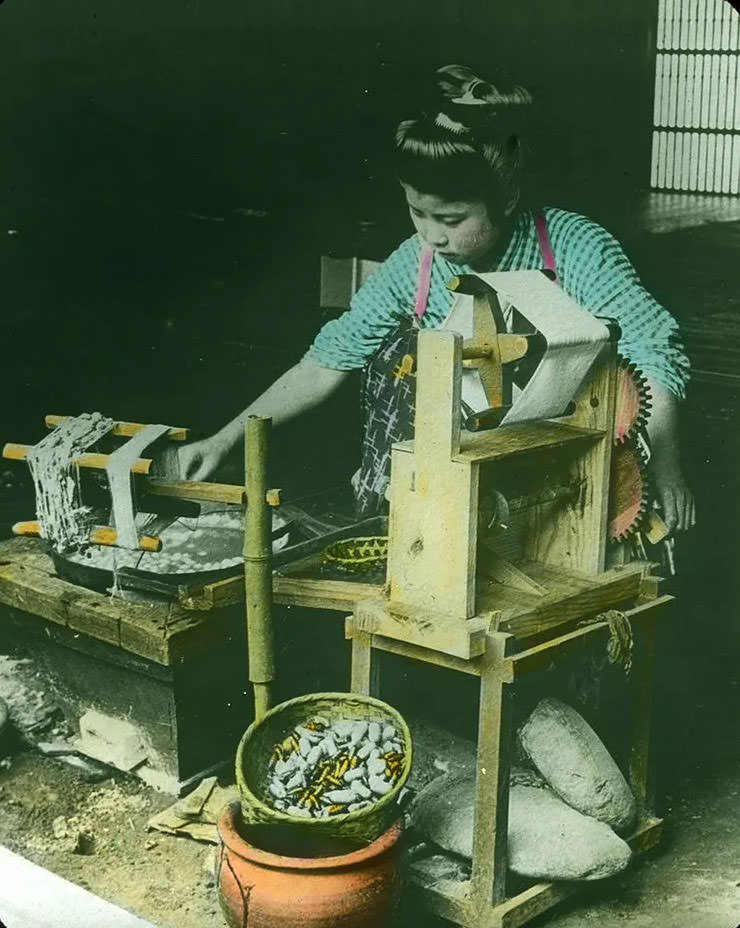
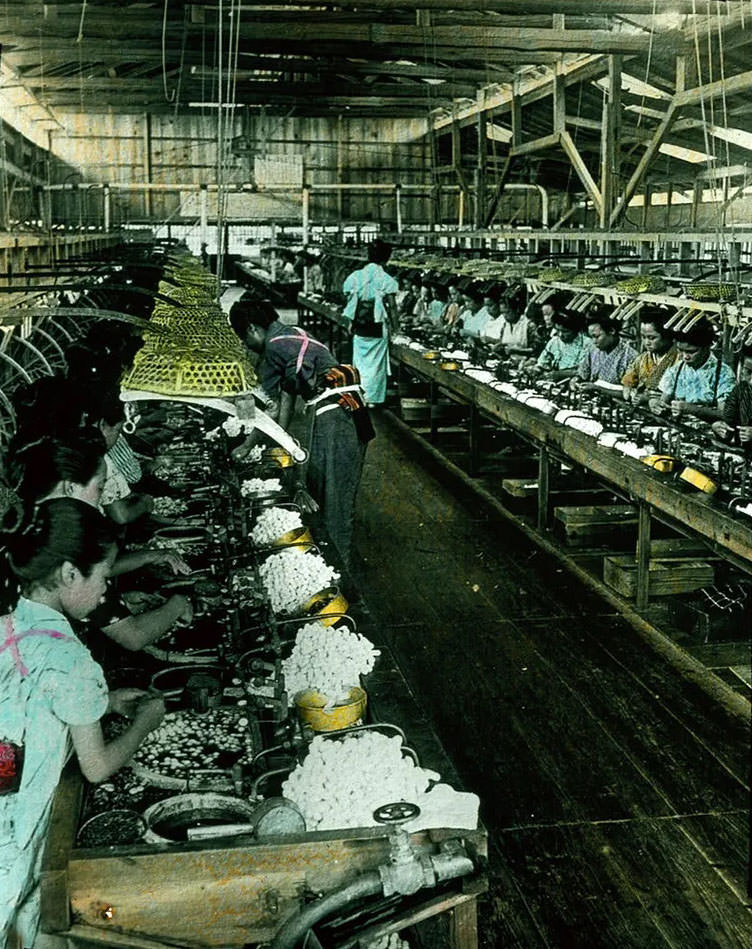
Taking Silk From Cocoons.
Large silk factory.
Large silk factory.

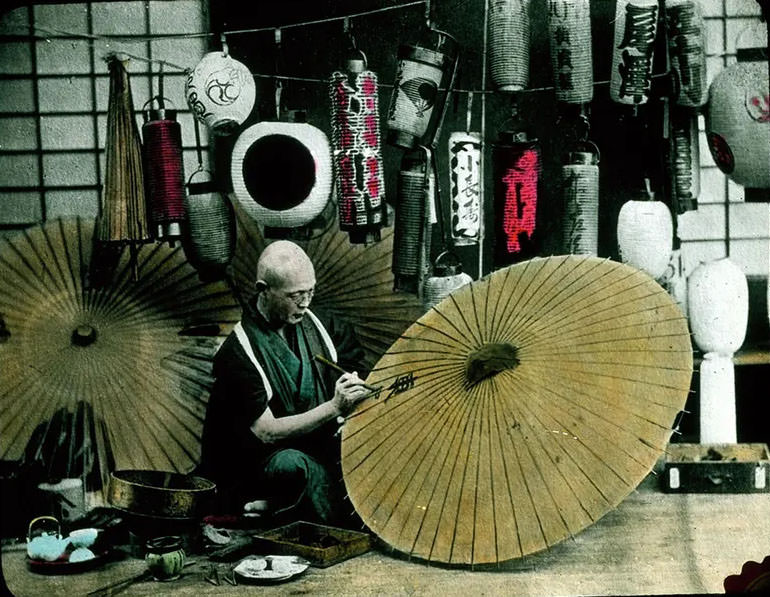
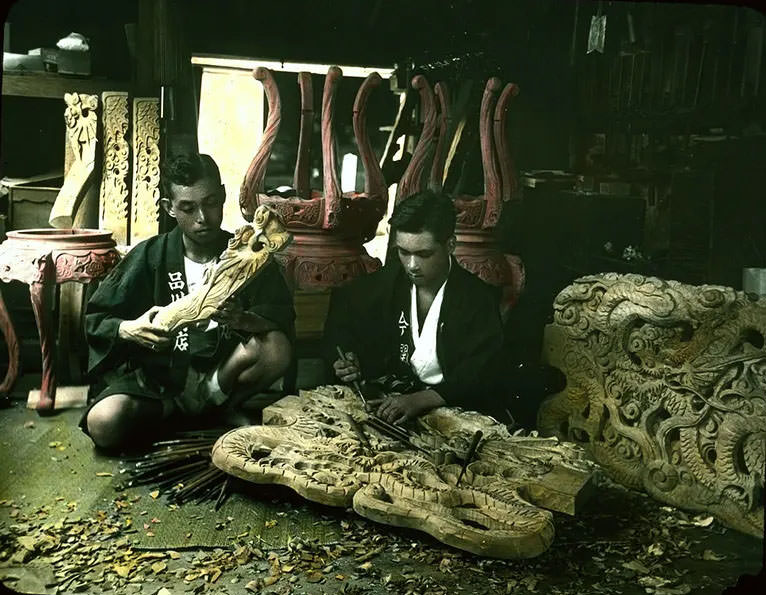
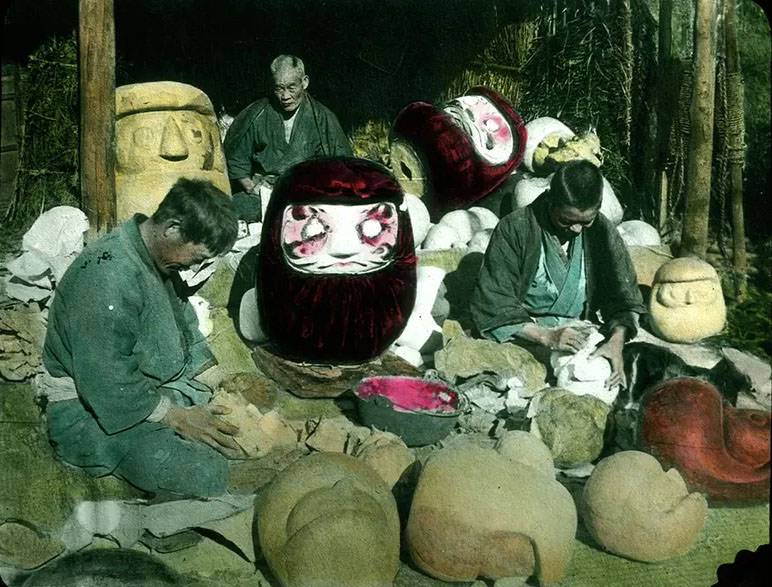
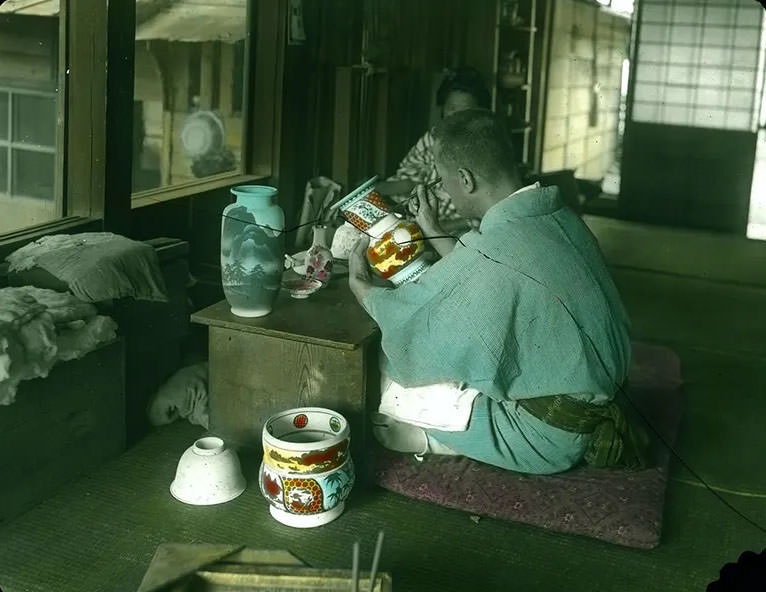
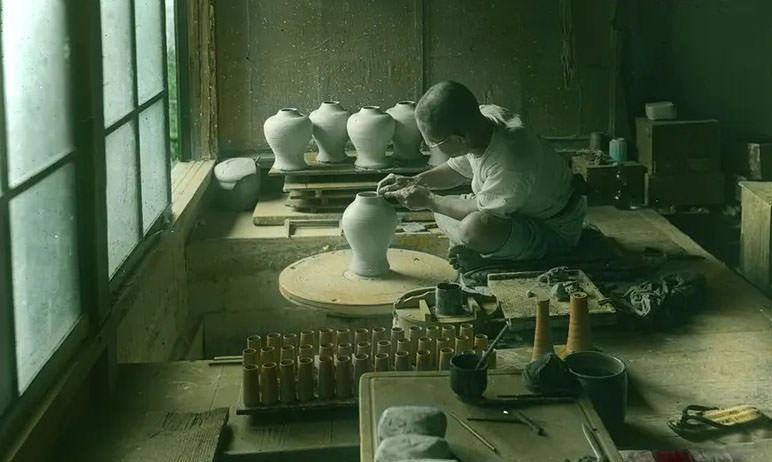
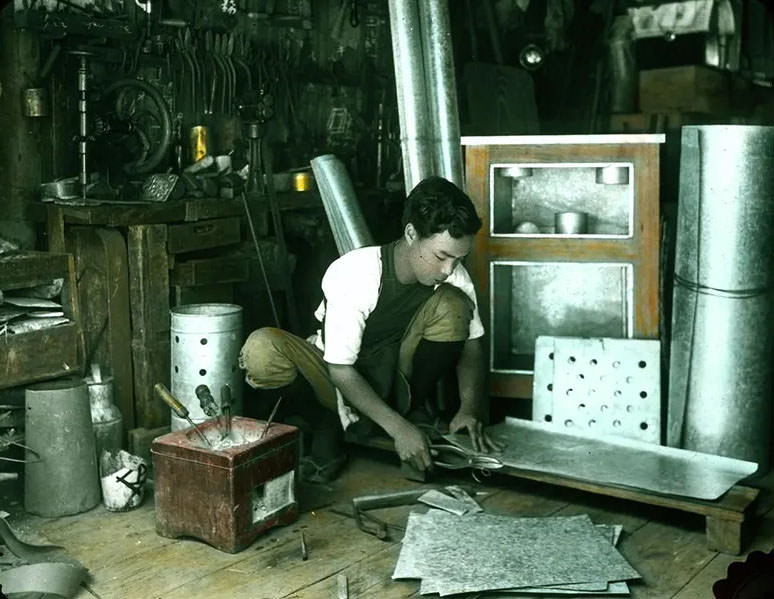
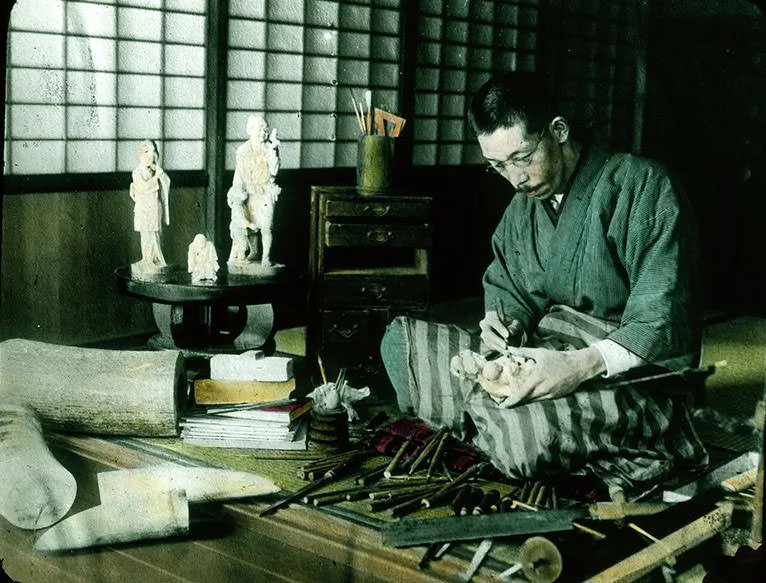
Craft work of all kinds appears throughout Geddes’ archive. Skilled workers carved stone lanterns, shaped ivory figures, painted parasols and vases, formed clay into giant mask molds, and worked metal into finished goods. These trades were passed down through generations and remained central to both local commerce and Japan’s export economy.
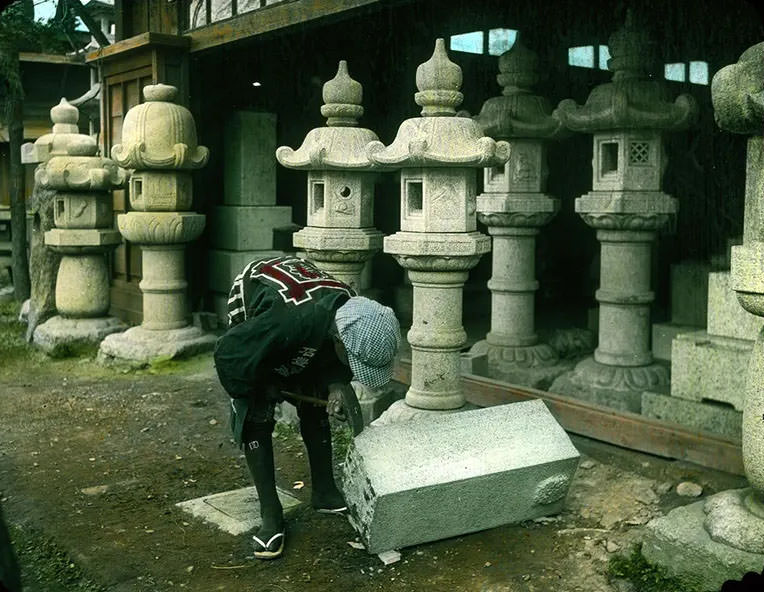
Man beginning to carve lantern from block of stone.
Man carving ivory statue of mother and child.
Man painting parasols; painted lanterns in background.
Men carving wooden furniture of intricate design.
Men making clay moulds for giant masks.
Painting vases. (slide cracked).
Potter making vase on wheel.
Tinsmith at work.
Tinsmith at work.
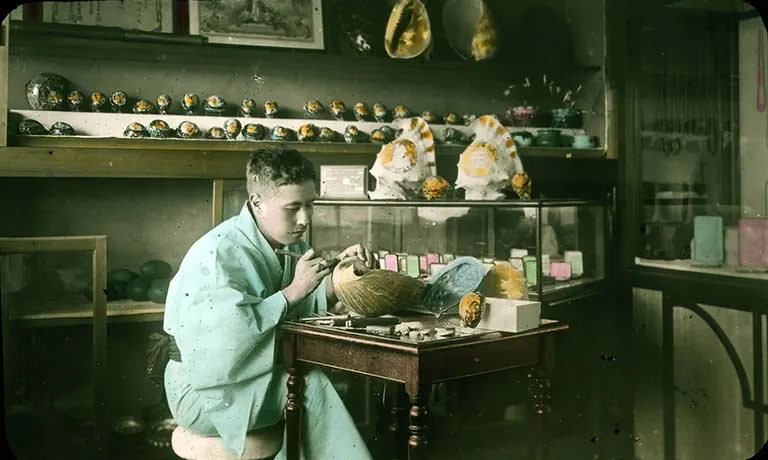
Man painting shells.
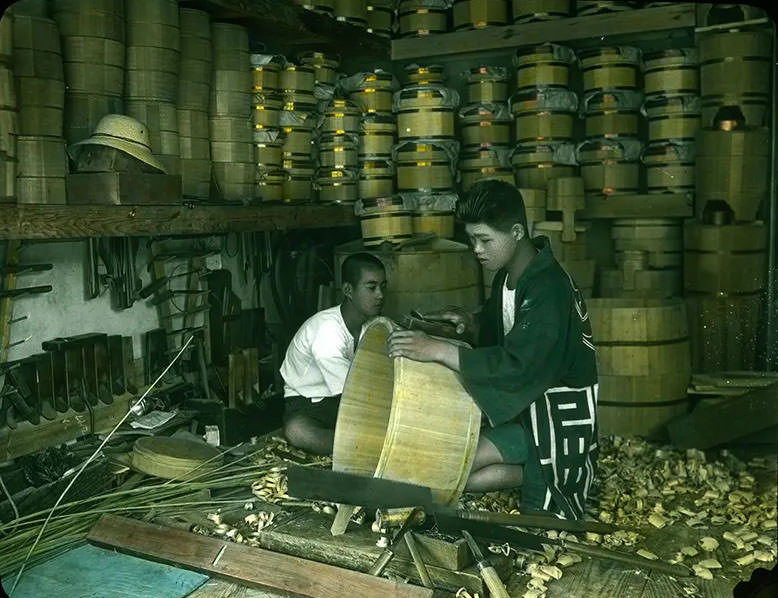
Making wooden barrels.
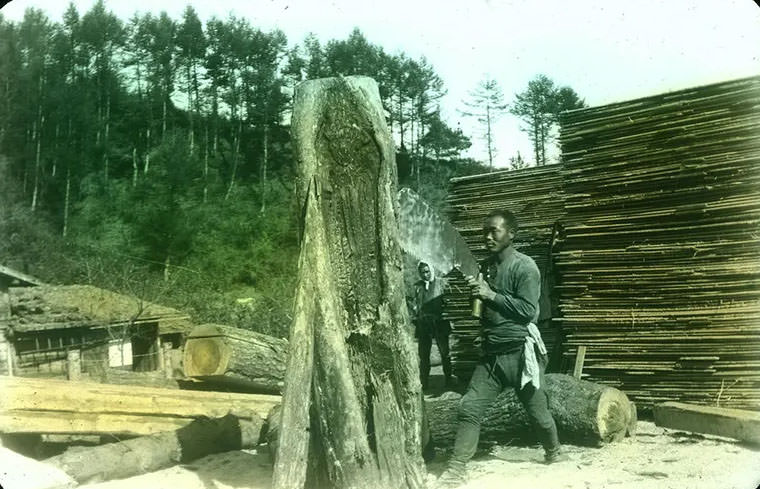
Man using handsaw on tree trunk.

Trade and transport connected these industries to markets. The rickshaw — a human-pulled two-wheeled cart — was the dominant form of short-distance transport in Japanese cities and towns during this period. Geddes captured one on a long, tree-lined dirt road, an image that illustrates both the scale of the landscape and the physical demands placed on working men.
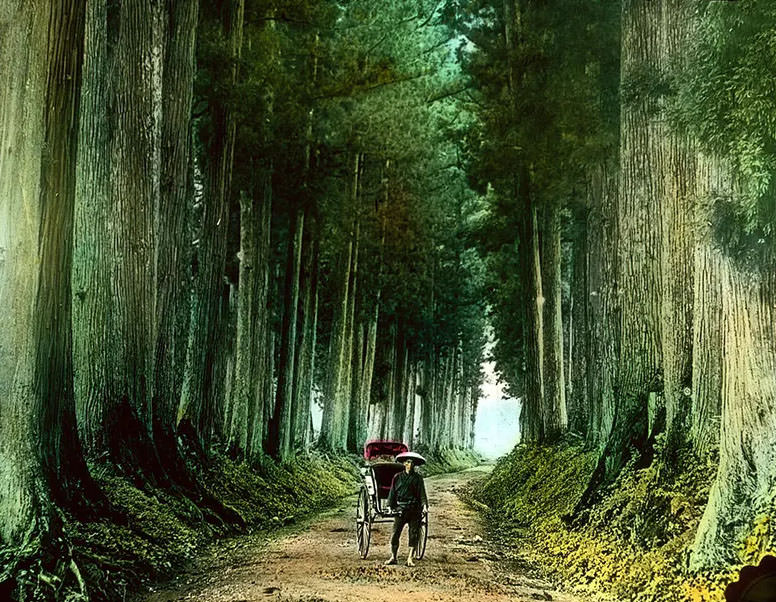
Man with rickshaw on tall tree lined dirt road.

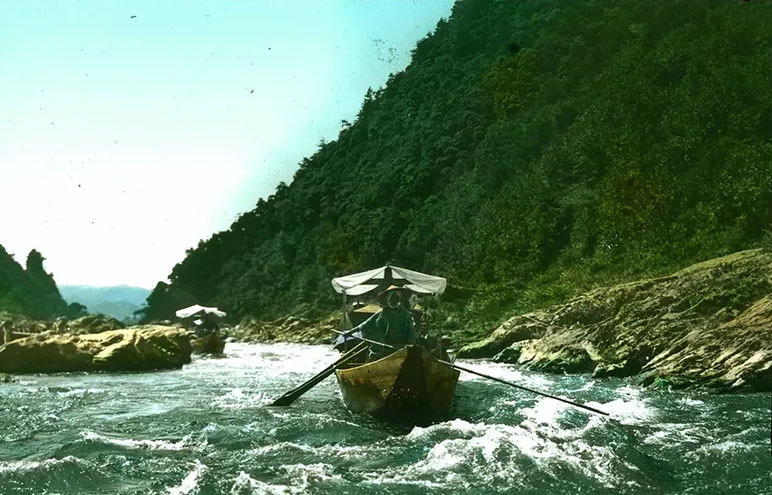
Japan’s coastal and river communities relied on fishing and water-based transport. Geddes photographed fishermen wading in the sea with hand nets, boats being landed on beaches, and covered river boats moving through forested mountain valleys. These images show the importance of water to daily survival and movement across the country.
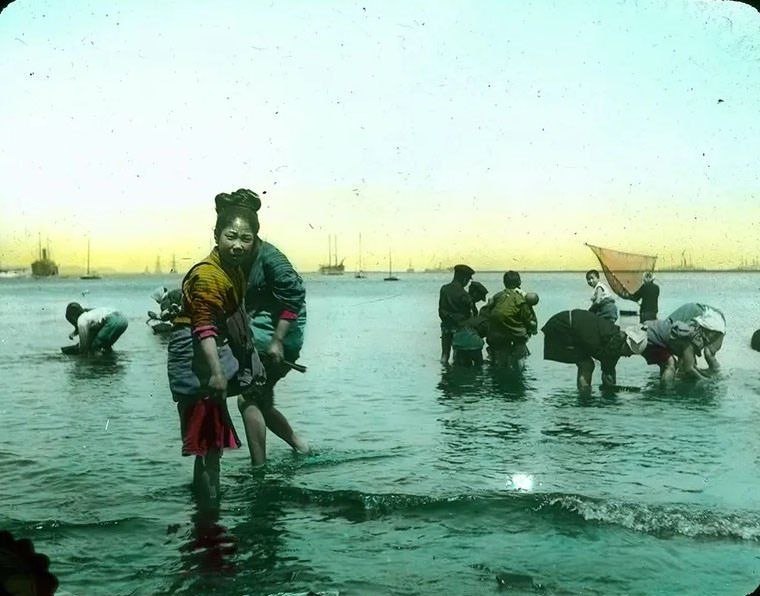
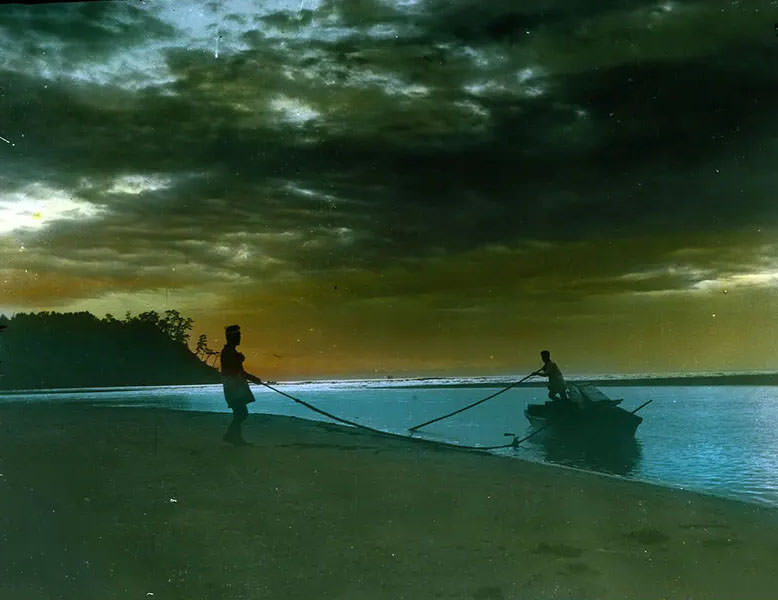
People wading in sea; fisher with hand net; boats in background.
Two men landing boat on beach.
Two boats with cloth canopies being rowed along river; wooded mountain on one side; rushing water in foreground.
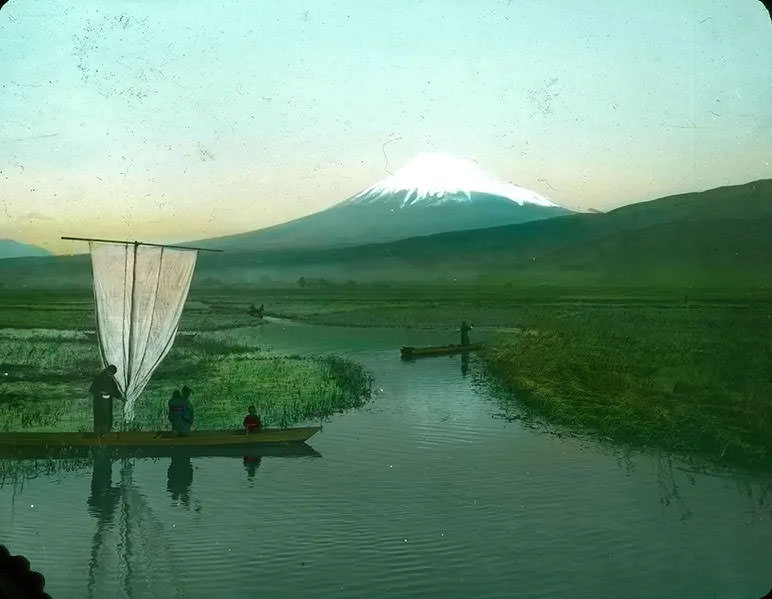
People in boats on waterways through rice fields; snow-covered mountain in background.

Religious life was a constant presence. Shinto shrines marked with rows of red torii gates were visited for prayer, ceremony, and community gatherings. Priests performed rituals that connected the living to the divine forces believed to govern nature and human affairs. Geddes photographed both the physical structures of worship and the people who maintained them.
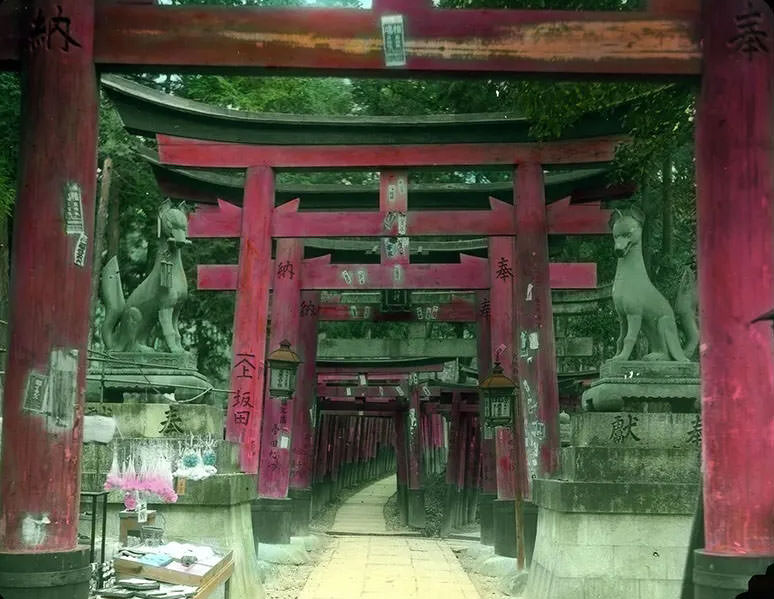
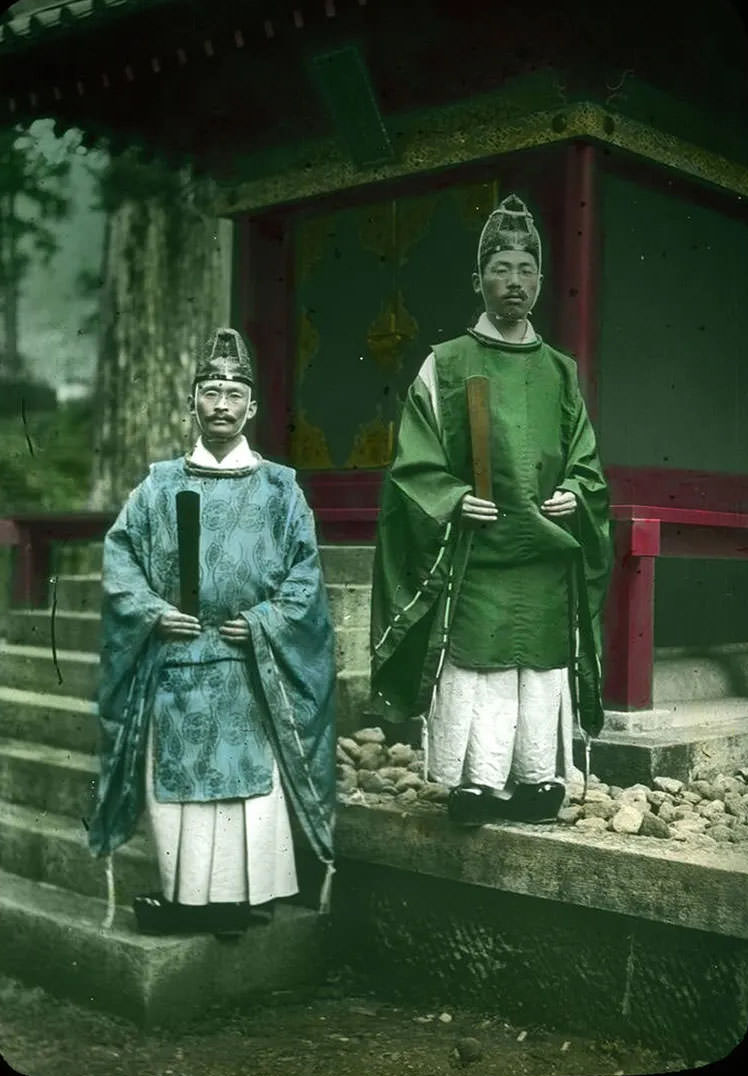
Series of red wooden gateways; stone animals on pedestals between first and second gateway.
Two (priests ) outside shrine.

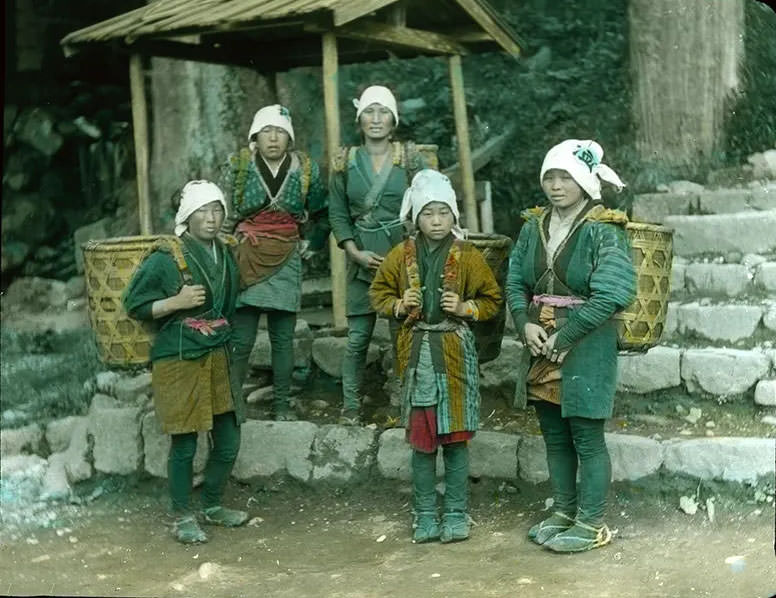
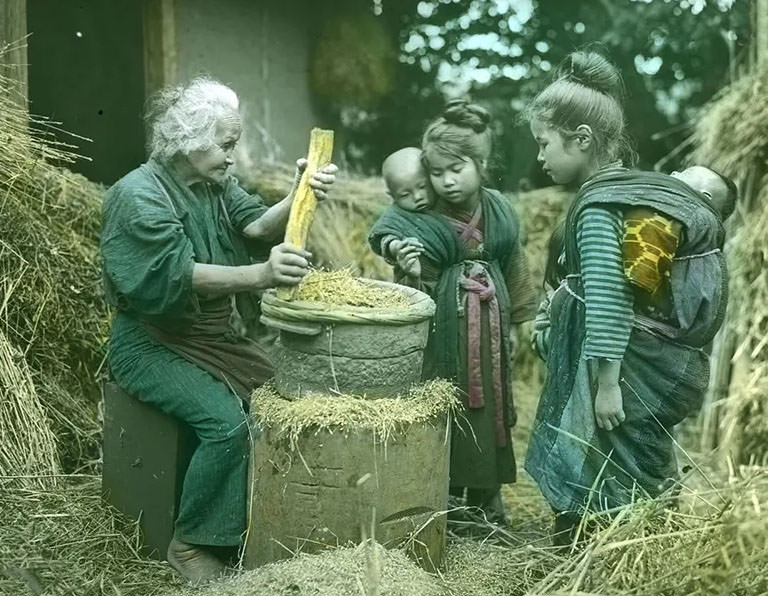
Sumo wrestling, one of Japan’s oldest sports, was practiced outdoors and drew both participants and spectators. The open-air ceramic market, the rural women carrying heavy baskets, the old woman with a grinding stone watched by two young girls — each of these images adds a specific piece to the larger picture of how ordinary Japanese people worked, traded, and moved through their world.
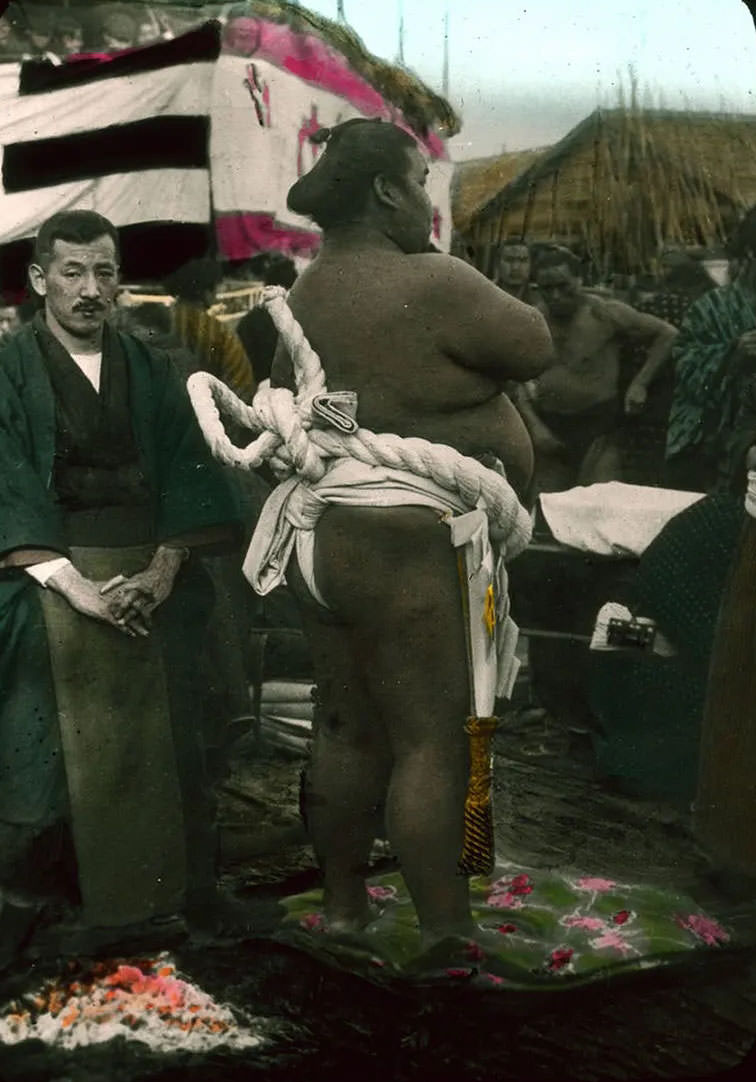
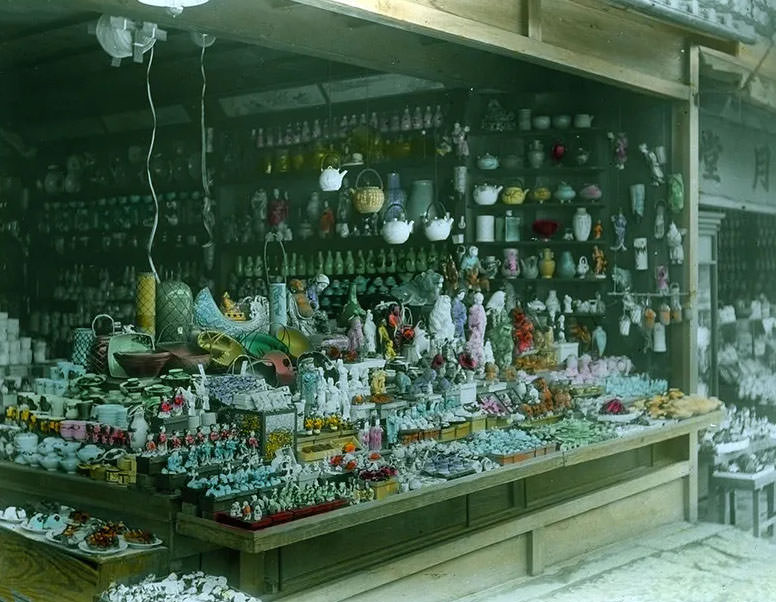
Men preparing for sumo wrestling outdoors.
Open air ceramic shop.
Rural women in local attire carrying large baskets on their backs.
Old woman with raised grinding stone; two little girls carrying babies on their backs looking on.
Women at work with children watching.

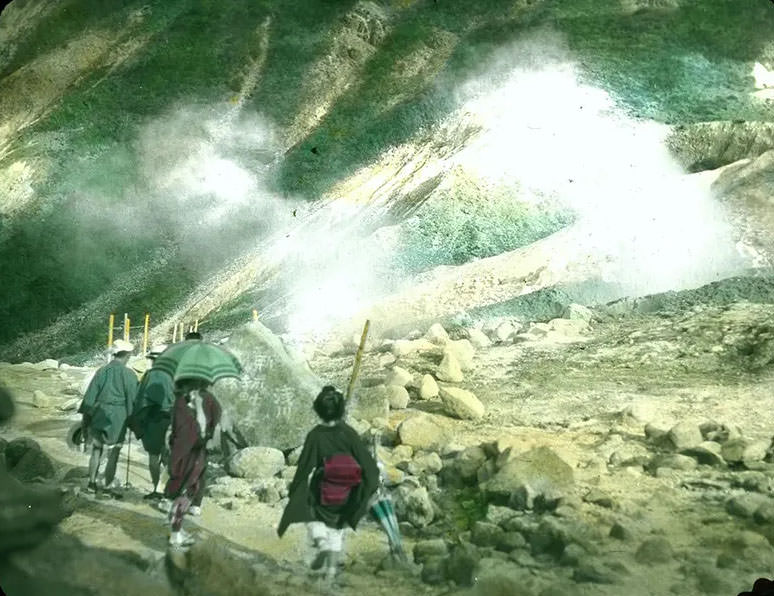
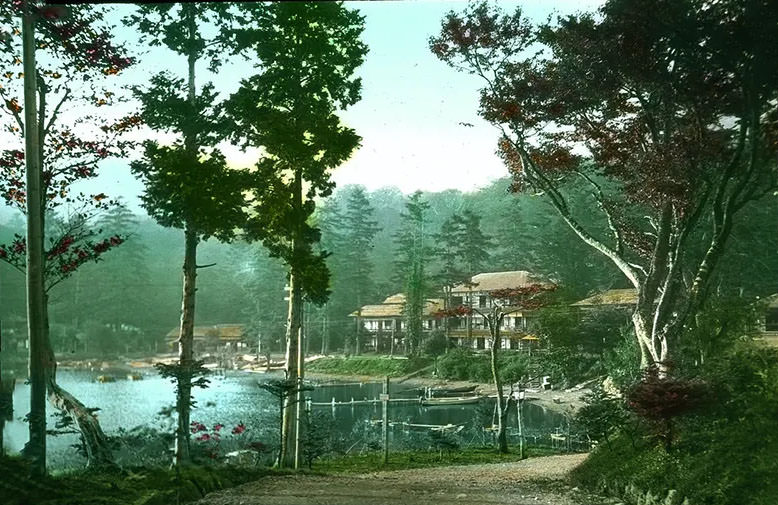
Japan’s landscape was as much a subject for Geddes as its people. Mount Fuji, the country’s most recognizable landmark, rises above the clouds in one photograph. The Daiya River runs below Mount Nantai in another. Hikers in local dress cross mountain paths, and a lakeside resort sits quietly at the water’s edge — all images that show a country of striking natural beauty.
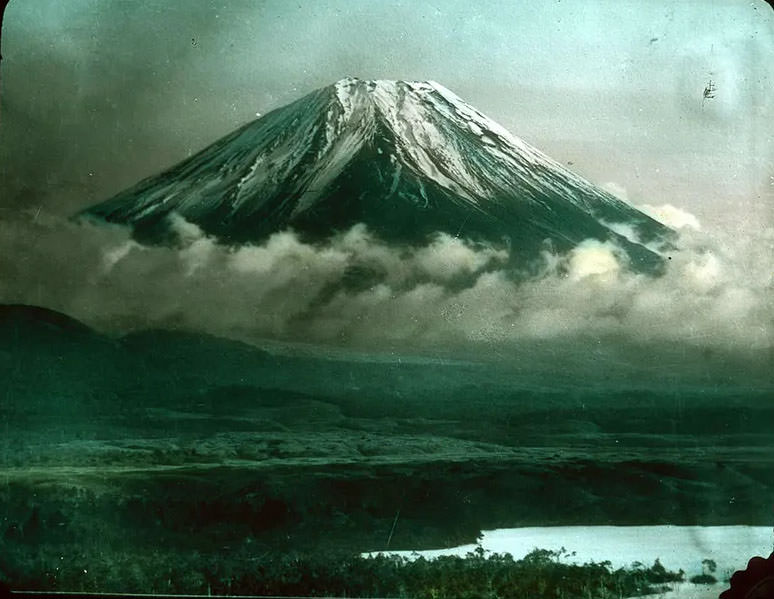
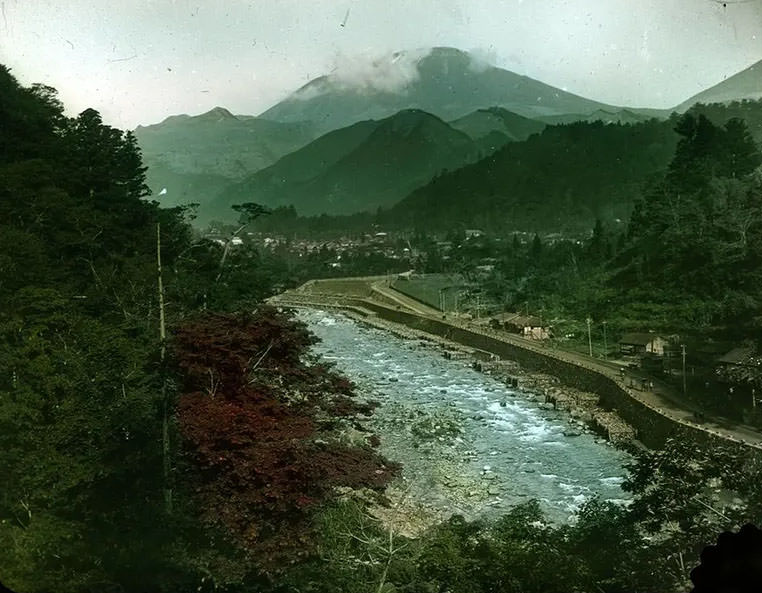
Snow-covered mountain (Mt. Fuji ) wreathed with clouds; low ground leading down to water in foreground.
Mount Nantai and Daiya River.
Japanese people in local attire hiking through mountains.
Lake side resort.
Lake side resort.

Geddes also photographed social moments that reveal a warmth and ease in front of the camera. Four women lean smiling through a lattice screen, and a group poses in ceremonial dress holding lanterns. These images remind us that behind every historical document are people with distinct personalities and lives.
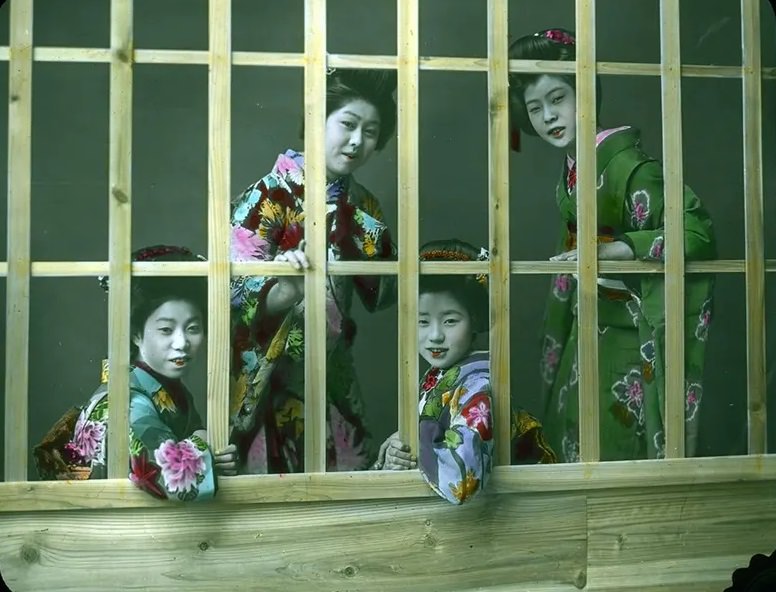
Four women smiling and leaning through openings in lattice work.
Japanese Culture and Society in the Late 19th and Early 20th Centuries Through Herbert Geddes' Photographs
Enjoyed this post? Get new ones in your inbox.

Leave a Comment

Your email address will not be published. Required fields are marked *

Share this Post 🄺

Please take a moment to share this content. Your support is greatly appreciated! šŸ™ŒšŸ™

Share this Post 🄺

Please take a moment to share this content. Your support is greatly appreciated! šŸ™ŒšŸ™
Scroll to Top
 
Hey Friend, Before You Go.. Please like & follow for more interesting content