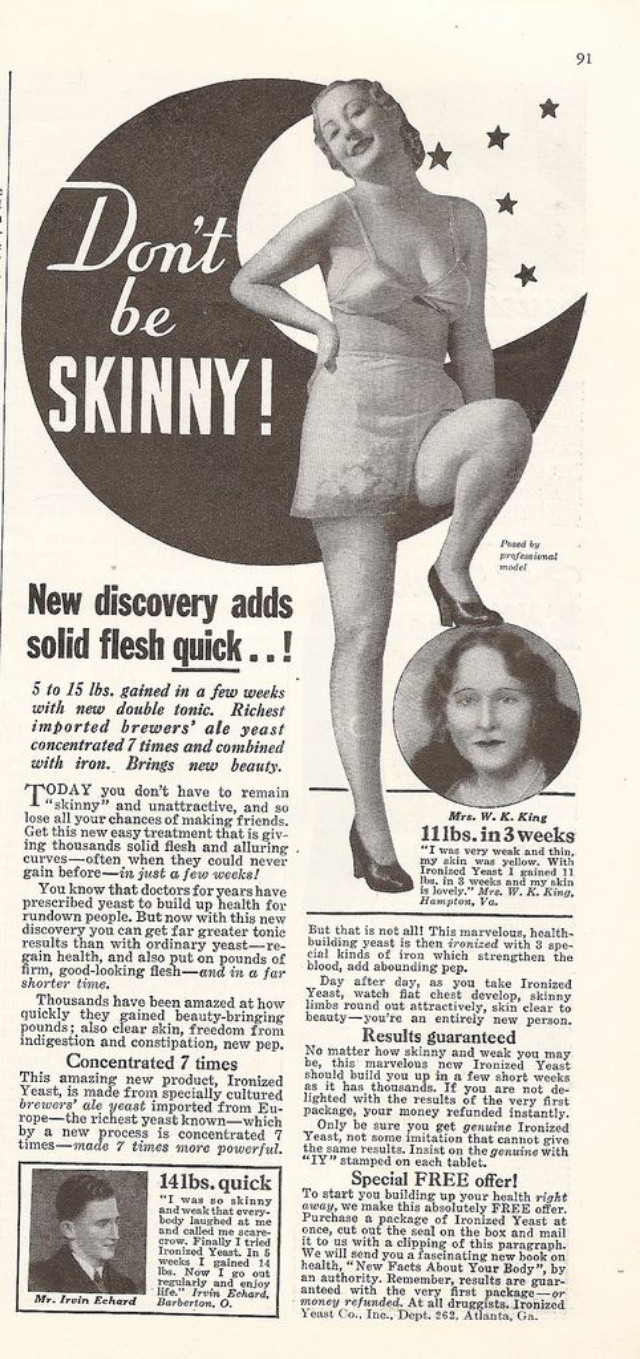
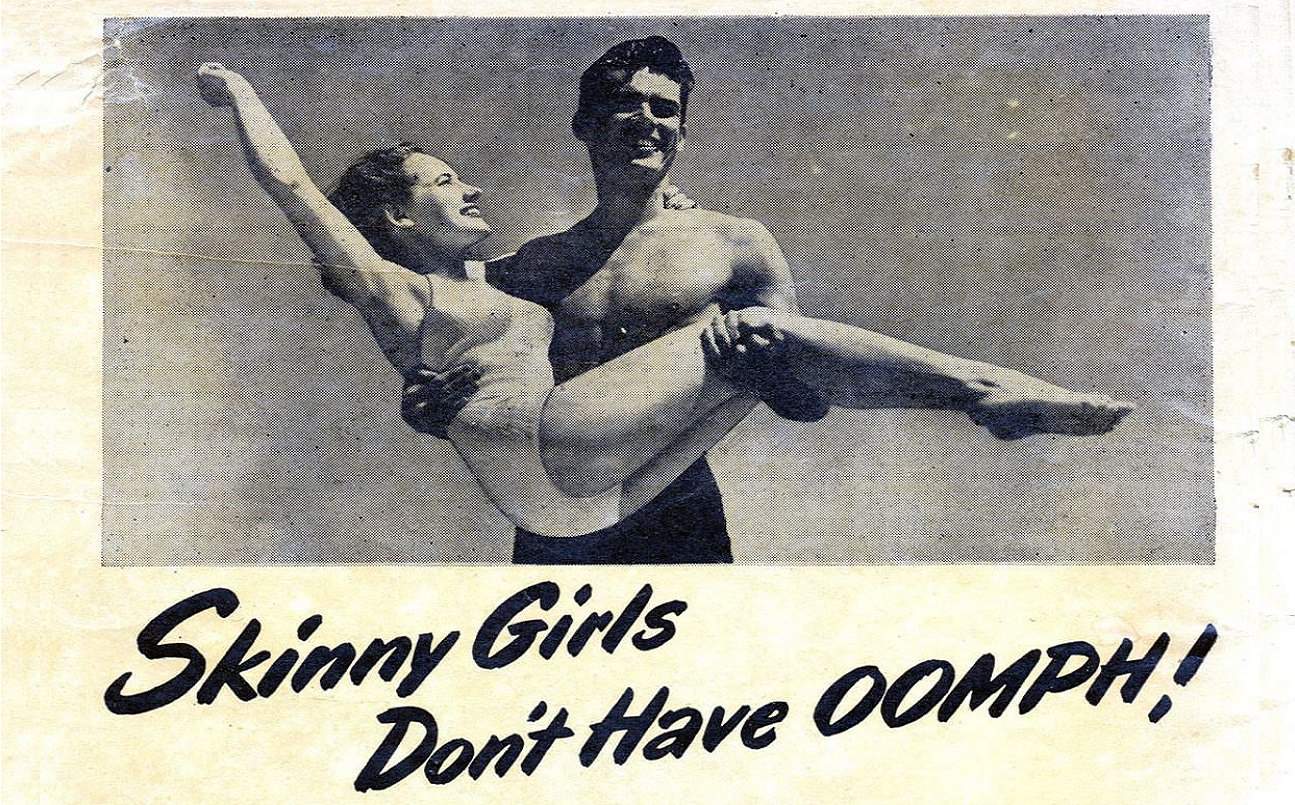
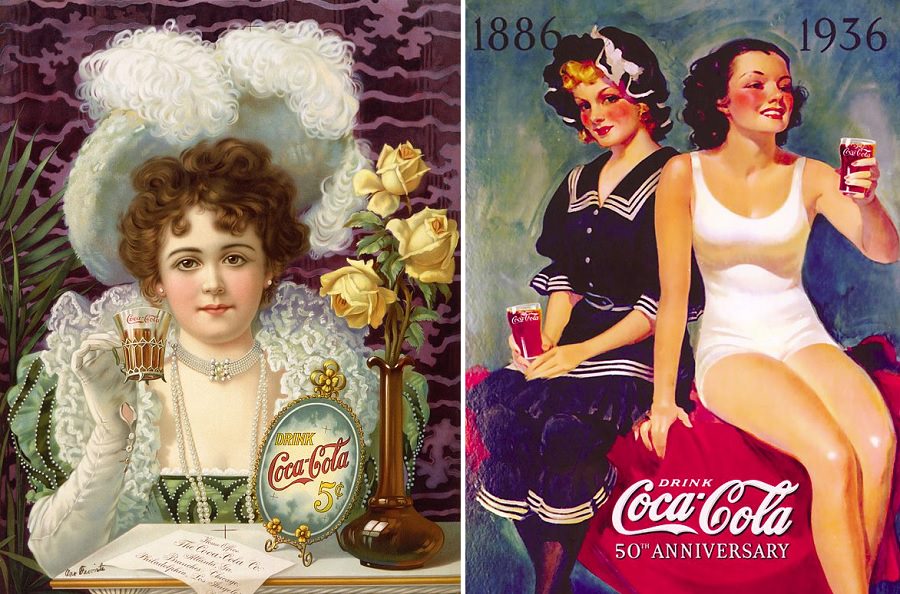
By 1938, the Great Depression had already ground on for nearly a decade. Millions of Americans were underfed, underweight, and visibly worn down. Being too thin was not just a personal concern — it was a public one. Advertisers knew this, and they moved quickly to offer solutions. One of the most heavily marketed products of the era was Ironized Yeast tablets, sold specifically to help thin people — especially women — put on weight and look healthier.
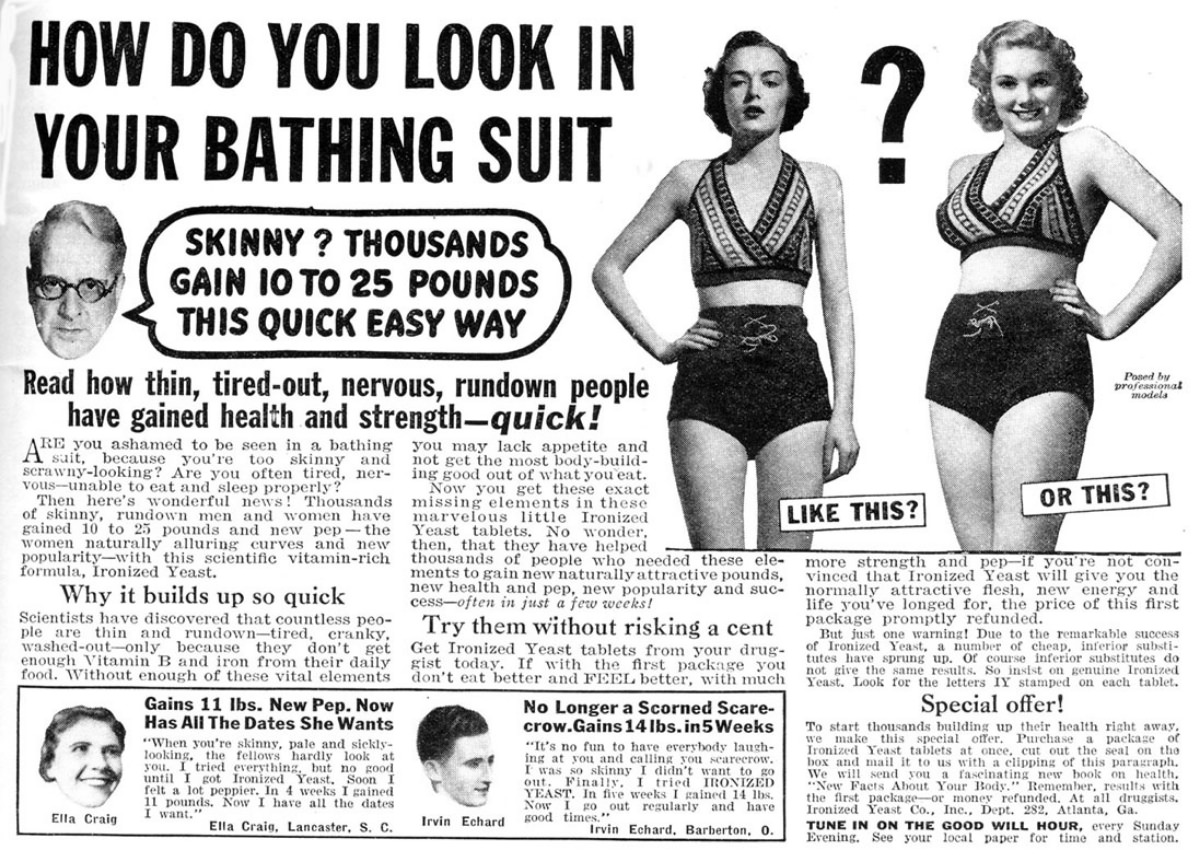
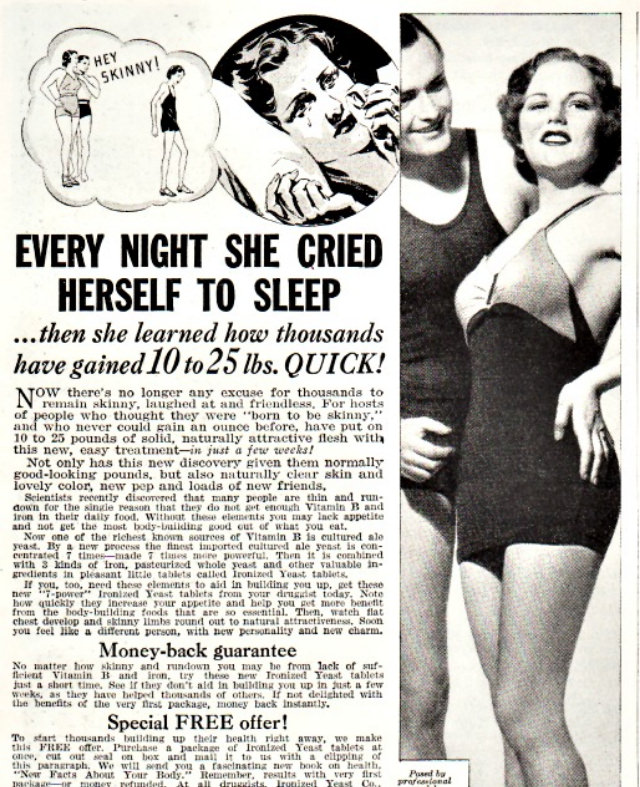
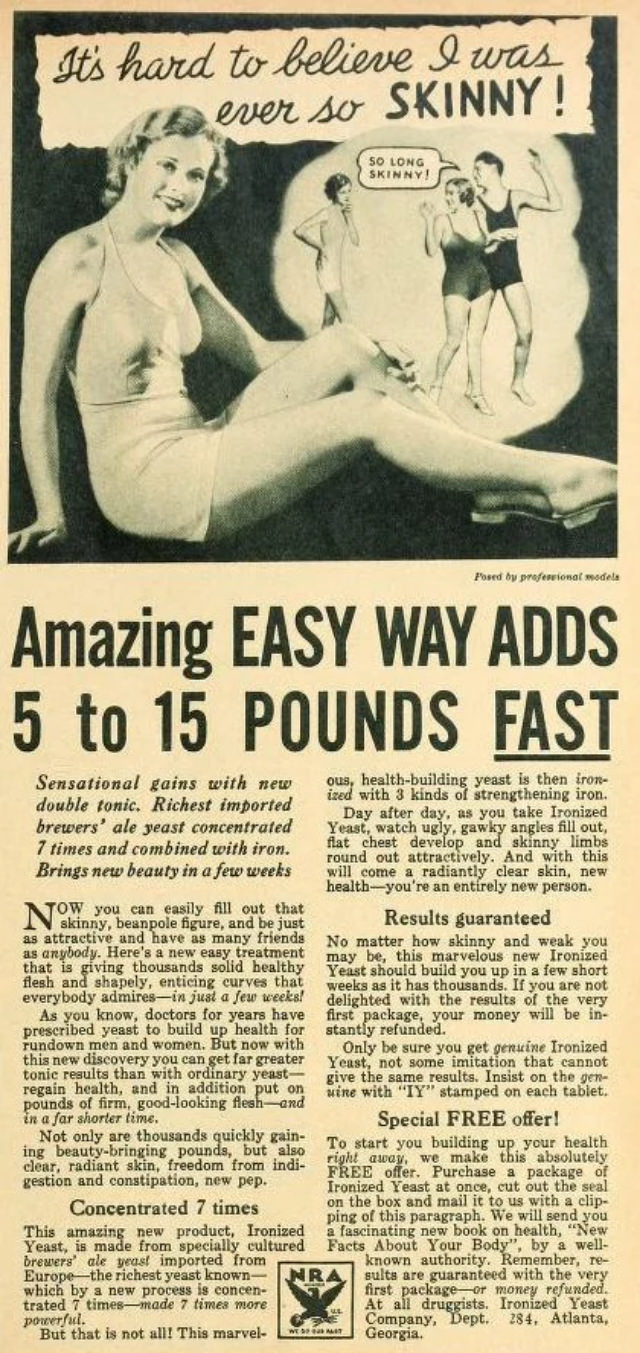
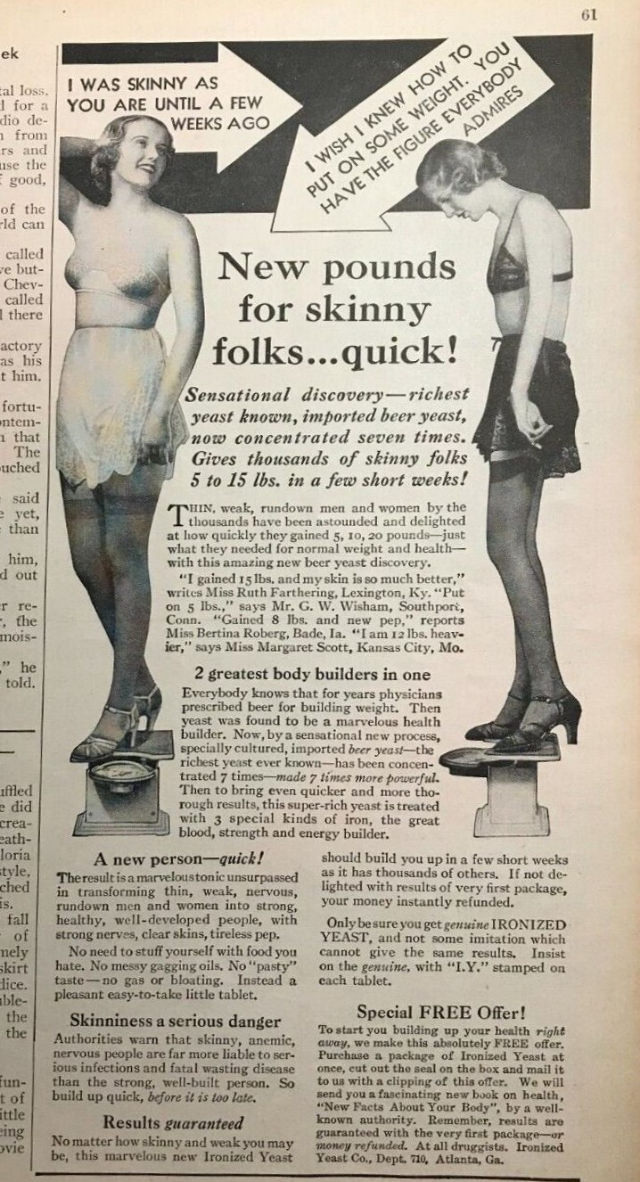
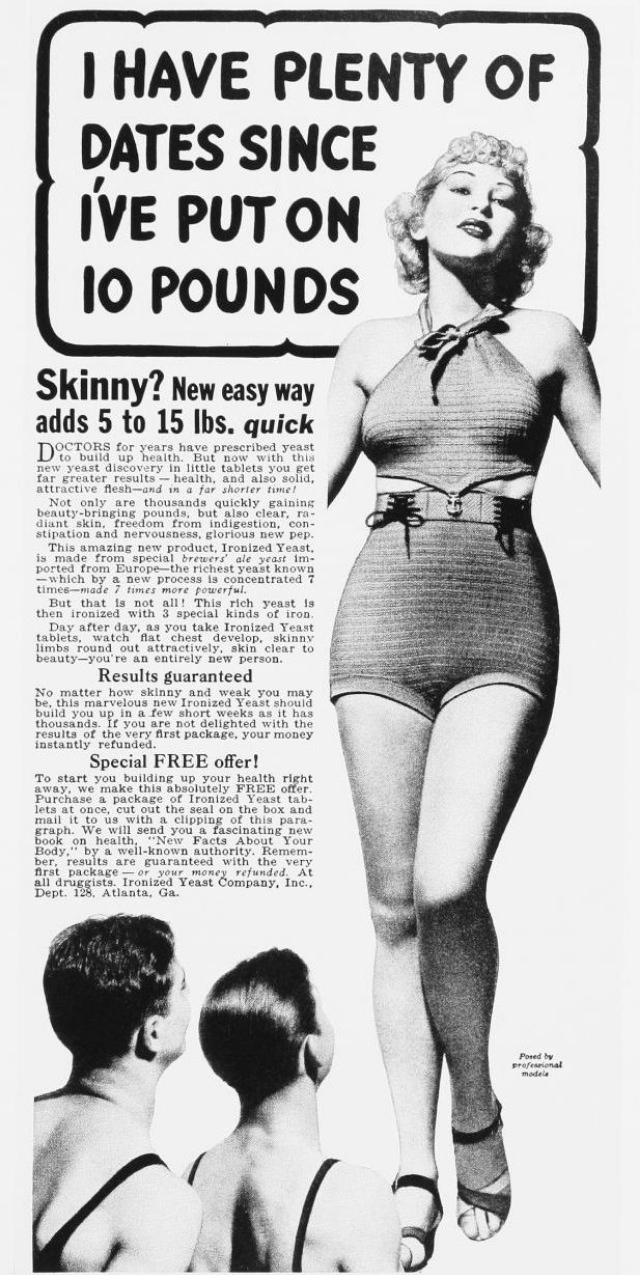
The ads were blunt. They told thin women that they looked unattractive and that their slender frames were a problem to be fixed. The promise was simple: take Ironized Yeast tablets daily, gain weight, and finally look good in a bathing suit. The marketing leaned hard on social pressure, making it clear that a fuller figure was the standard of health and beauty at the time.
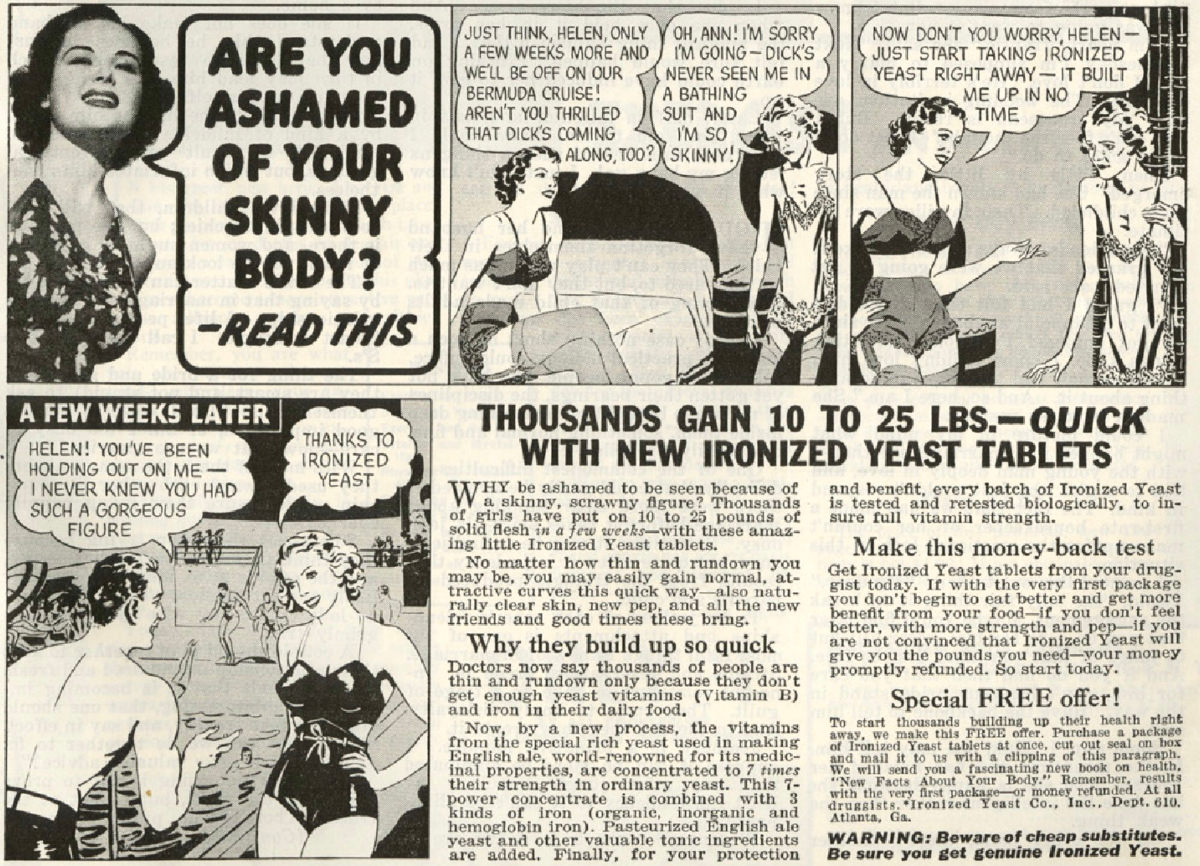
There was real science behind part of the pitch. Widespread malnutrition during the Depression left many people deficient in key vitamins and minerals, particularly iron and B vitamins like B-12. These deficiencies commonly led to anemia — a condition where the body doesn’t produce enough healthy red blood cells. Anemia causes fatigue, paleness, and a general look of poor health. Yeast is naturally rich in B vitamins, and B vitamins are known to stimulate appetite. Iron supports red blood cell production. Together, they offered undernourished people a genuine nutritional boost.
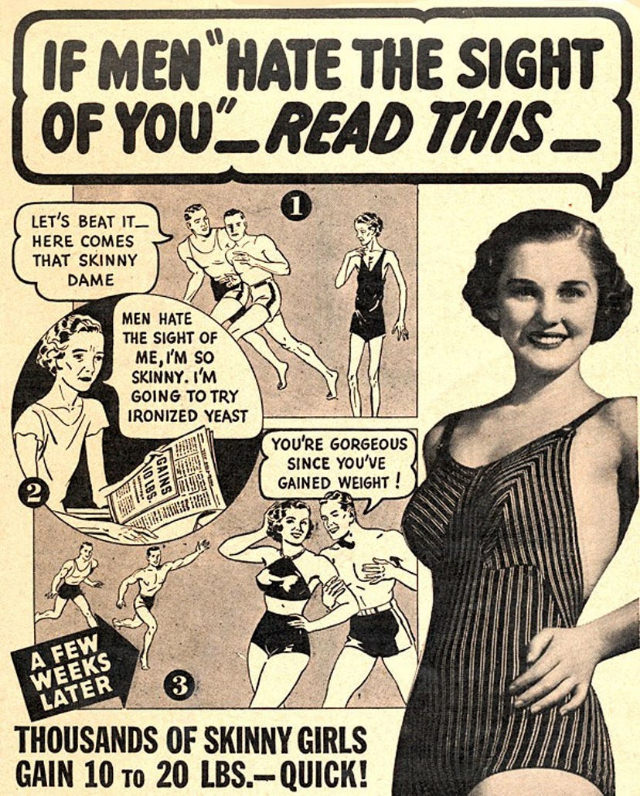
The weight gain came as a direct result of that improved appetite. People who were barely eating — either from poverty or from the appetite suppression that comes with nutritional deficiency — began eating more once their B vitamin levels improved. More food meant more weight. For many Depression-era women, that was exactly what they needed.
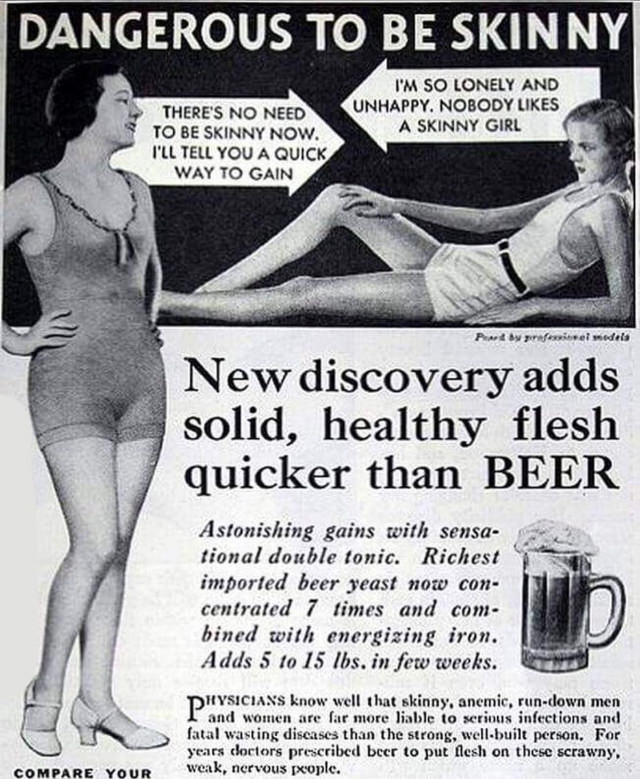
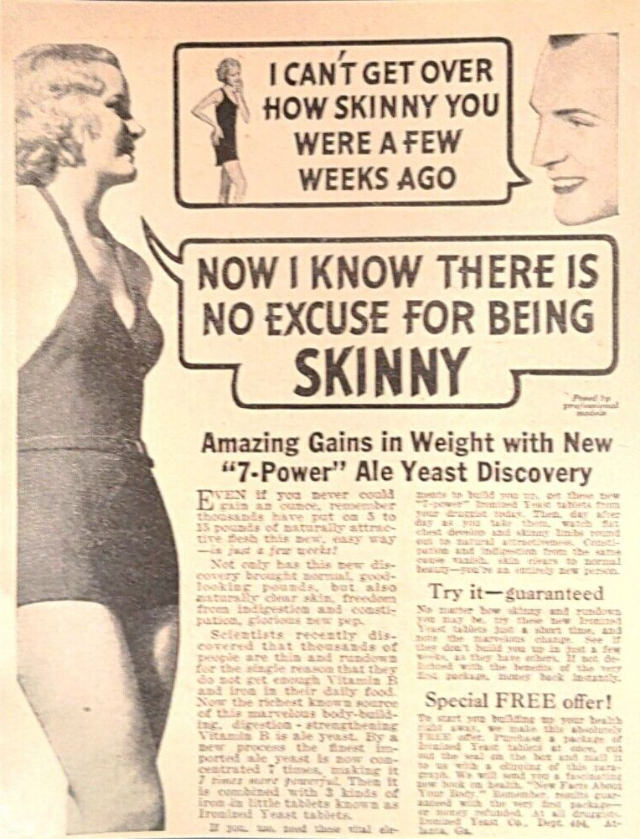
The ads themselves reflected the social attitudes of the time without apology. Thin women were described as unlikely to attract friends or romantic partners. A fuller, rounder body was seen as a sign of vitality, prosperity, and good health. In a decade defined by scarcity, looking well-fed carried real social weight.
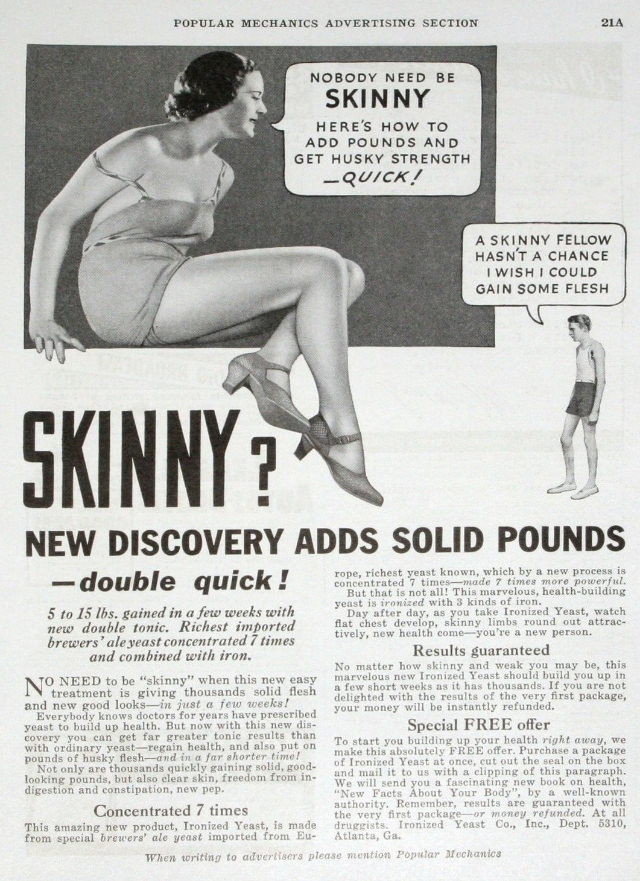
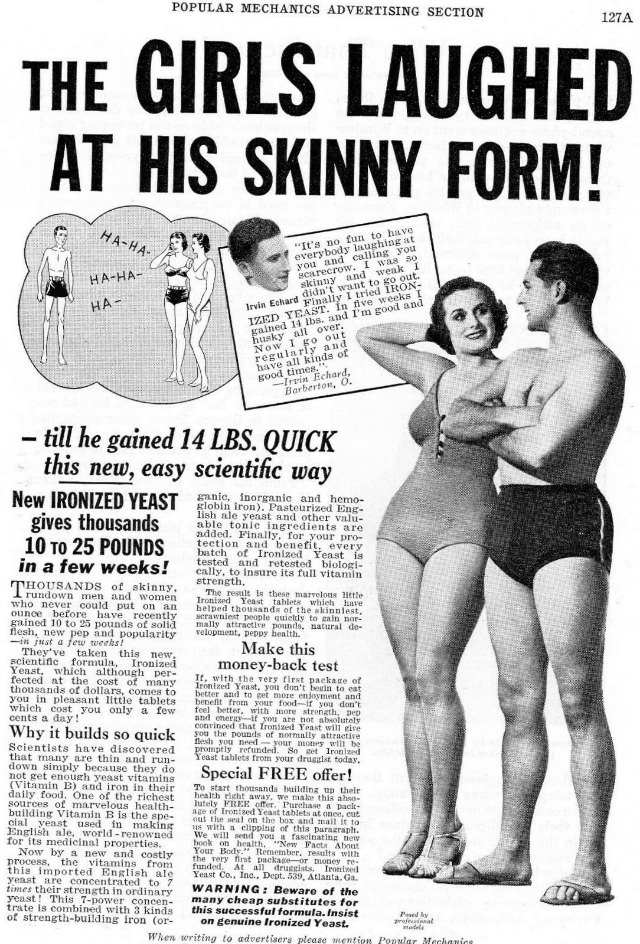
Ironized Yeast was not a fringe product. It was widely advertised in newspapers and magazines across the country. The company ran testimonials from women who claimed to have gained 10 or more pounds in a matter of weeks. Whether every claim held up under scrutiny is another matter, but the product found a ready market among a population that genuinely struggled to maintain a healthy weight.
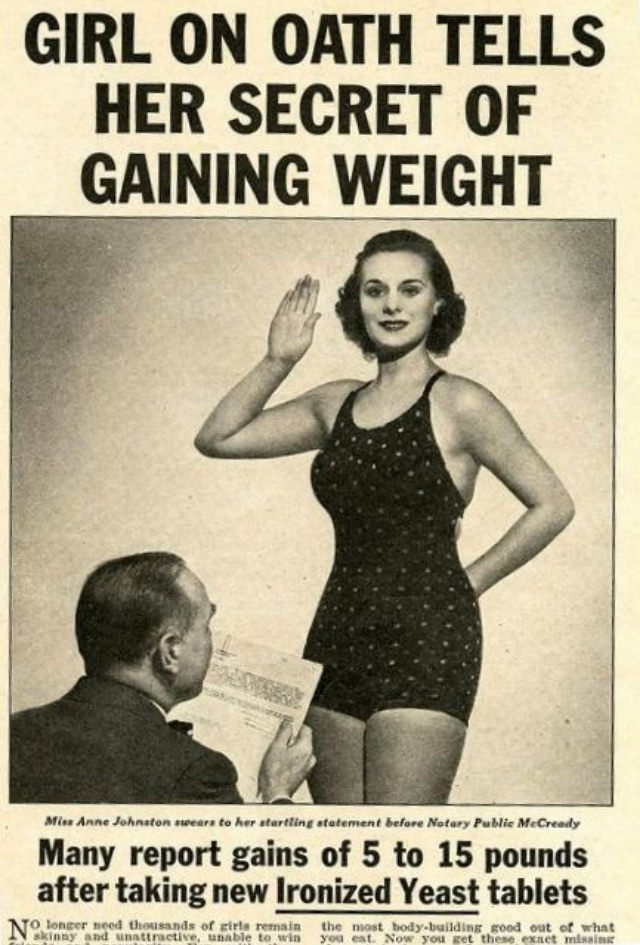
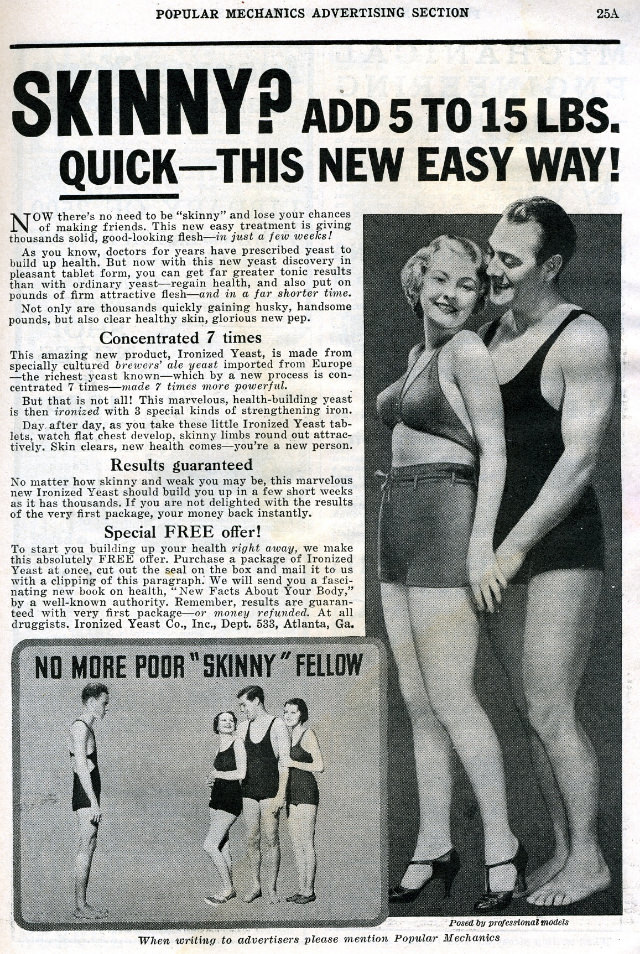
By the 1950s, the landscape had shifted dramatically. Fast food chains began spreading across the country, making cheap, calorie-dense meals available to nearly everyone. The nutritional problem facing most Americans was no longer getting too little food — it was the opposite. Obesity became a growing public health concern, and products like Ironized Yeast quietly faded from mainstream advertising.
Food fortification also changed the equation. Starting in the 1940s, manufacturers began adding nutrients directly into staple foods like flour, bread, and rice. This practice filled the vitamin and mineral gaps that had left Depression-era Americans so vulnerable. Iron and B vitamins — the very ingredients that made Ironized Yeast marketable — were now showing up in everyday meals without any extra effort from the consumer.
The Ironized Yeast ads are a clear window into what life looked like during the Depression. Nutritional deficiency was common enough that a weight-gain supplement could dominate advertising space. The beauty standard of the era was shaped directly by the economic reality of the time. Being thin was not aspirational — it was a sign that you were struggling.
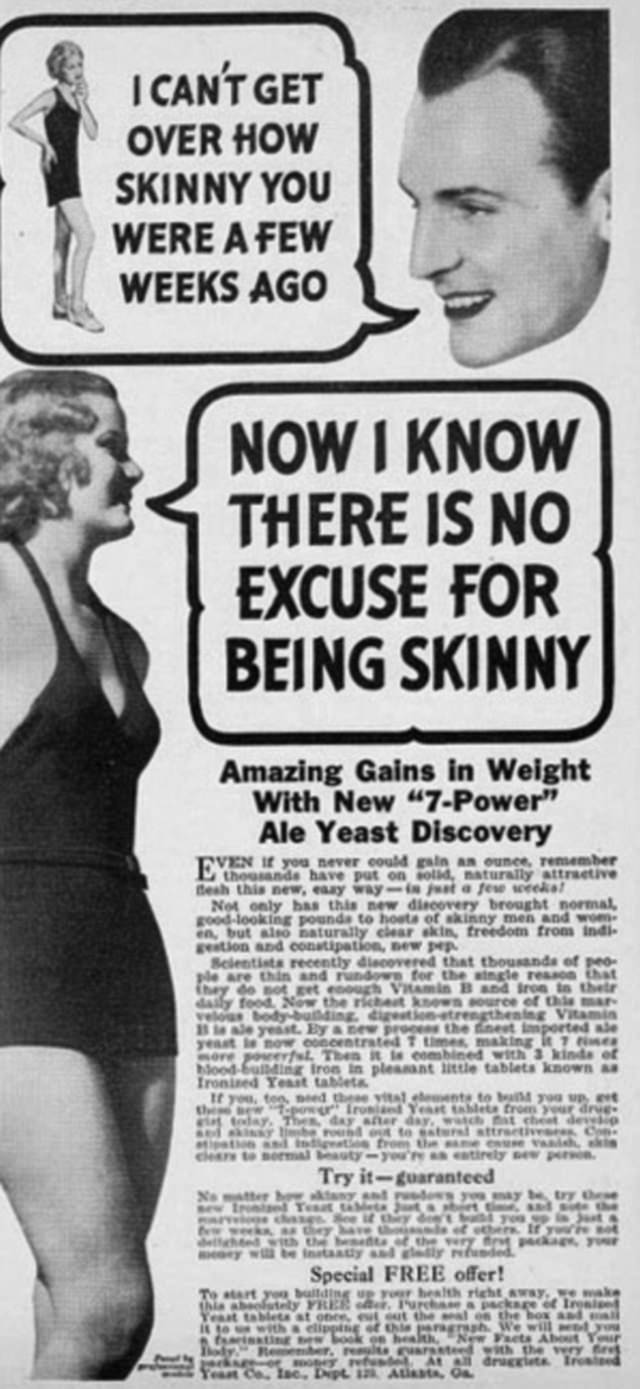
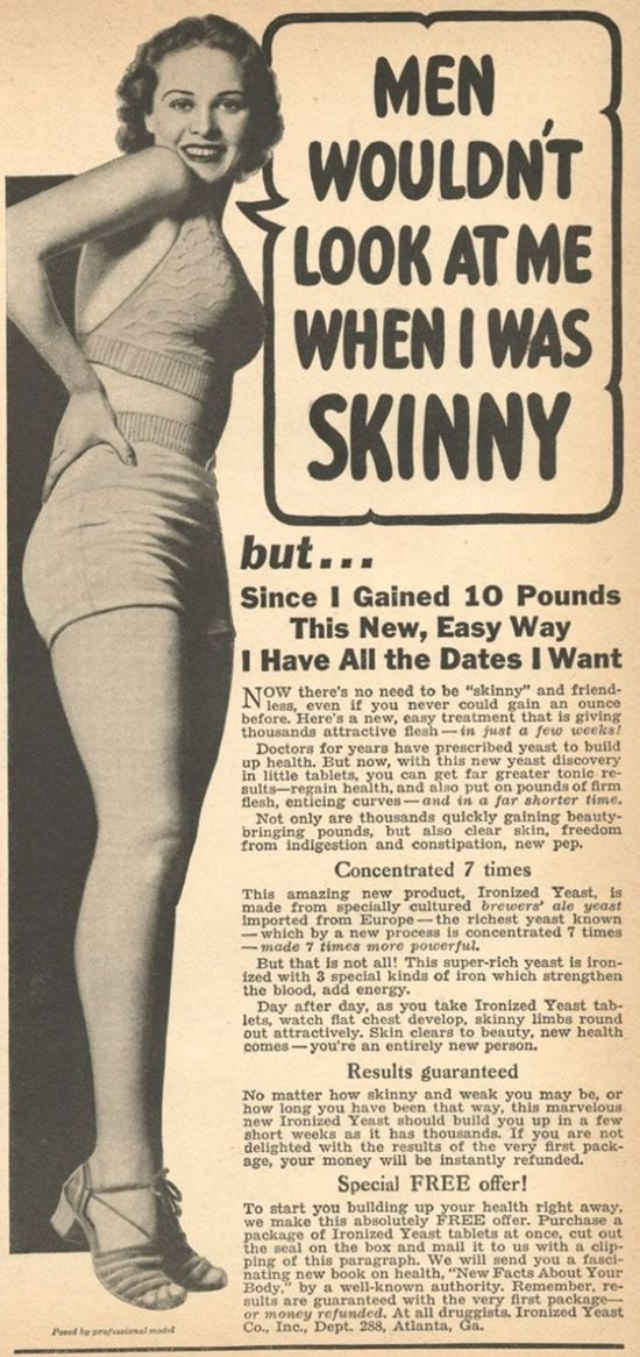
These advertisements also show how dramatically marketing can shift based on public health conditions. The same society that told women to gain weight in 1938 was selling diet products by the 1960s. The product changes, but the underlying strategy — telling people their bodies are wrong and offering a fix — stays the same.