Hugo d’Alési was one of the most skilled poster artists of the late 19th century. Working primarily through lithography, he produced bold, richly colored prints that advertised travel destinations, railways, and commercial products across Europe and beyond. His work was in high demand, and for good reason.
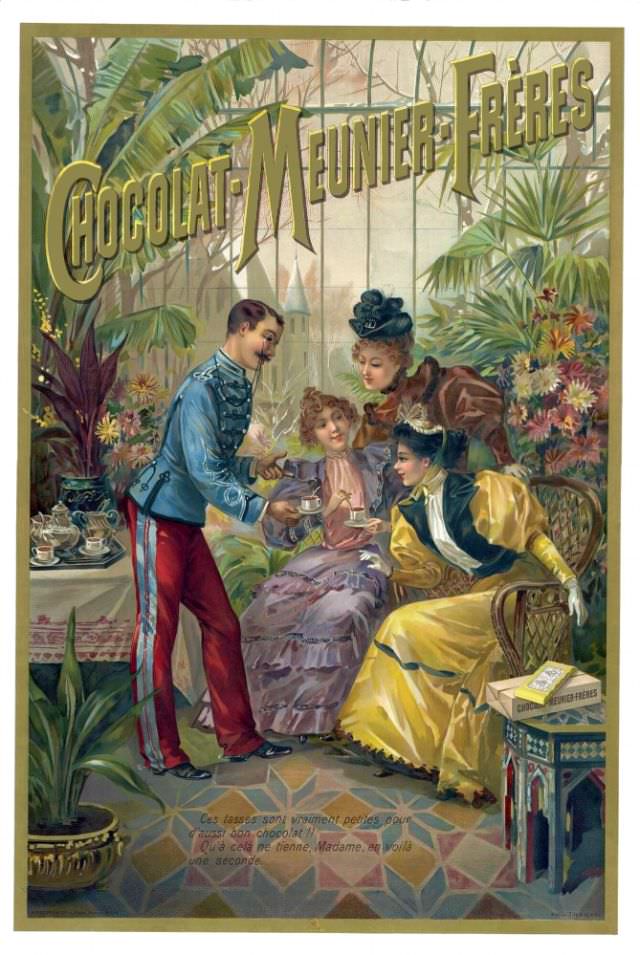
D’Alési’s early commercial work, like his Chocolat-Meunier-Frères poster from the 1880s, showed his ability to balance product promotion with genuine artistic craft. He brought the same careful attention to detail to every commission, whether it was for a chocolate brand or a railway company.
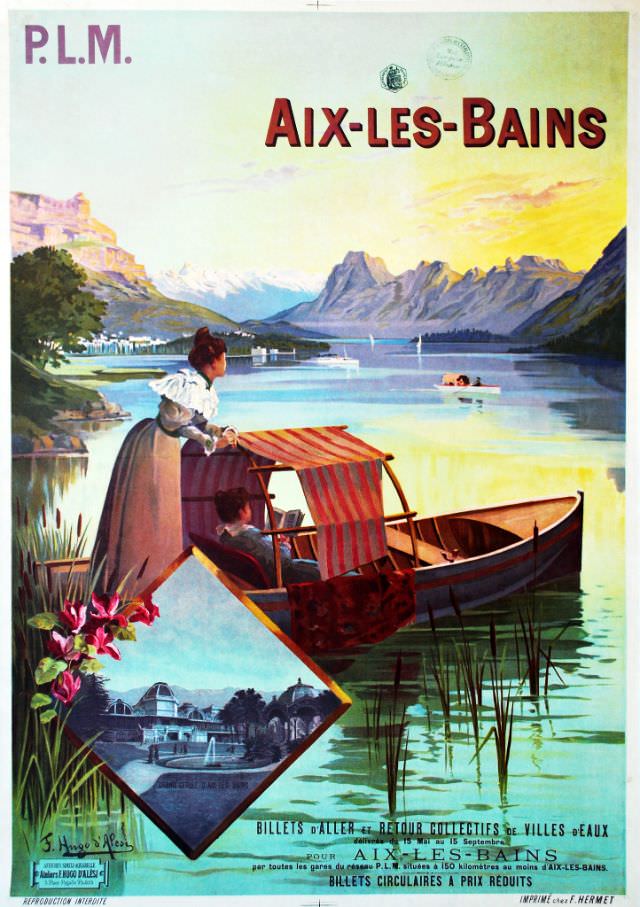
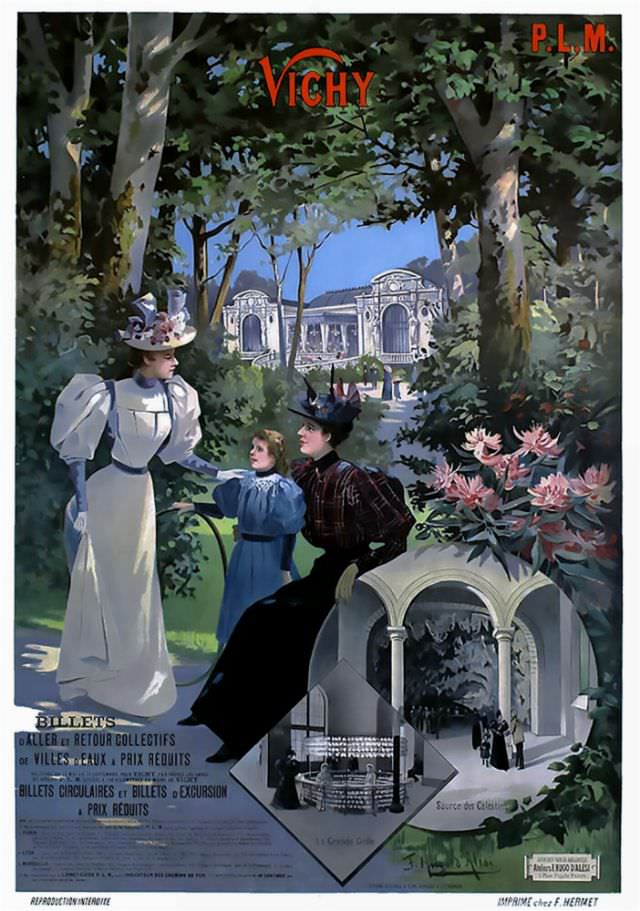
The Paris-Lyon-Méditerranée railway, known as the P.L.M., was one of d’Alési’s most frequent clients. His 1889 poster for Aix les Bains set the tone for a long and productive partnership. He depicted resort towns, alpine peaks, and Mediterranean coasts with a precision that felt almost like a window onto the place itself.
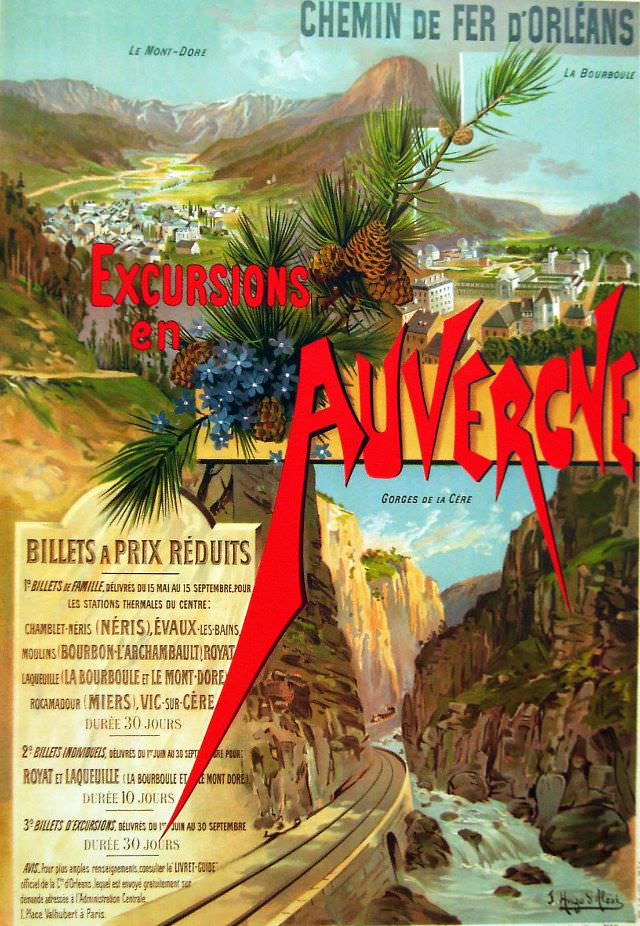
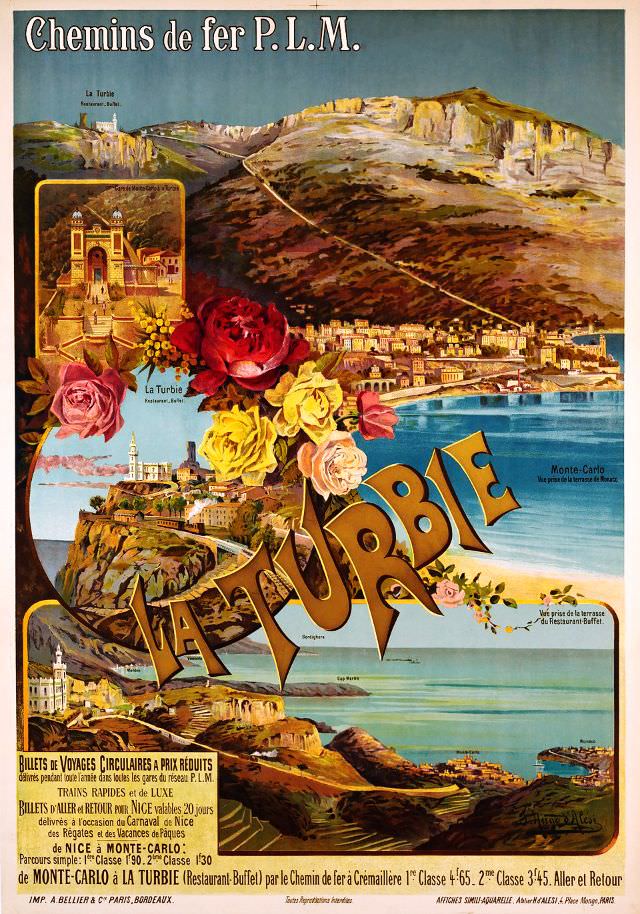
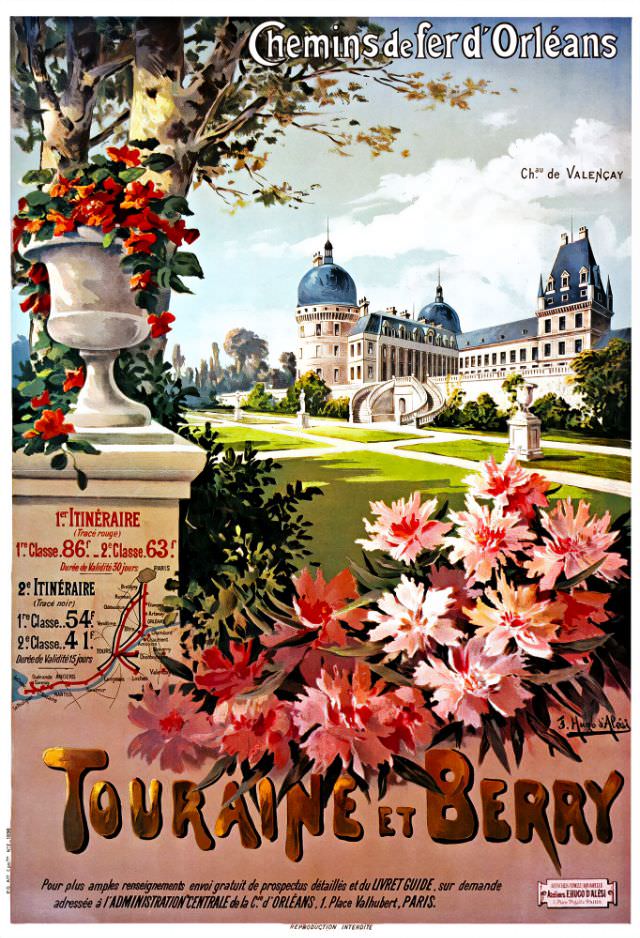
By 1894, d’Alési was producing posters for multiple railway lines at once. The Chemin de Fer d’Orléans sent travelers toward volcanic Auvergne, while the P.L.M. promoted the cliffside glamour of La Turbie above Monte-Carlo. Each poster framed the destination as both accessible and extraordinary.
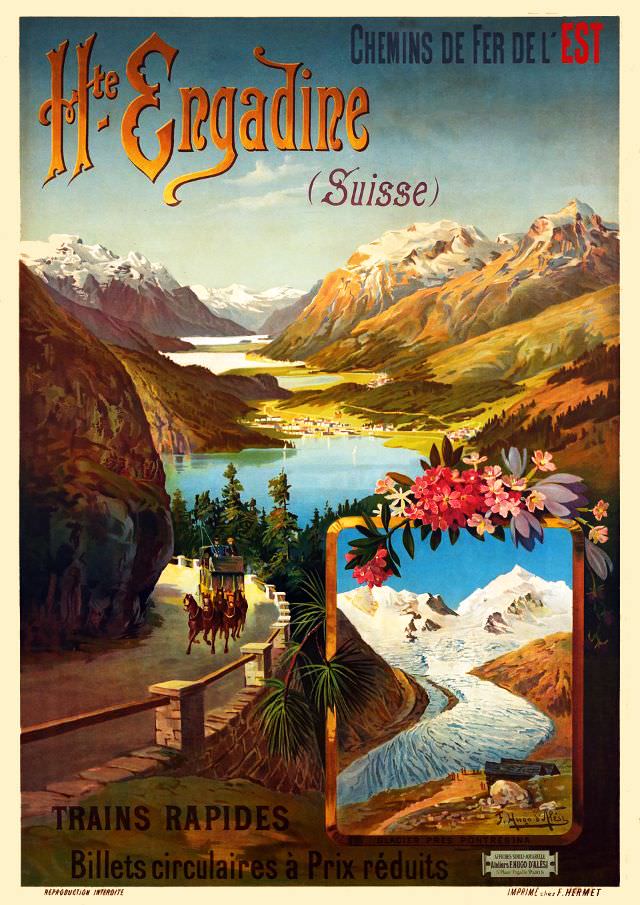
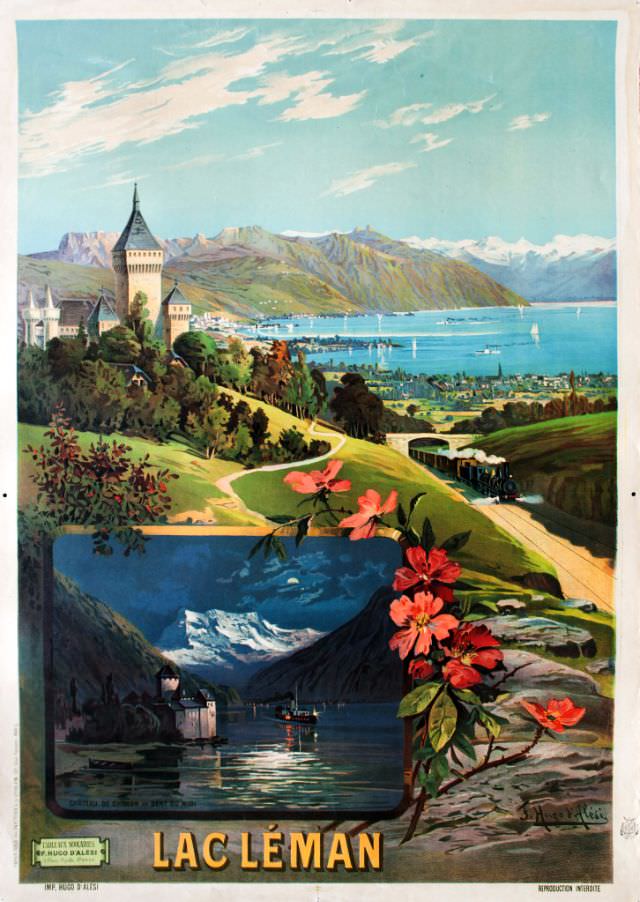
Switzerland was a recurring subject in d’Alési’s portfolio. His 1895 posters for the Haute Engadine region and Lac Léman used crisp alpine imagery to appeal to wealthy travelers seeking fresh mountain air and dramatic scenery.
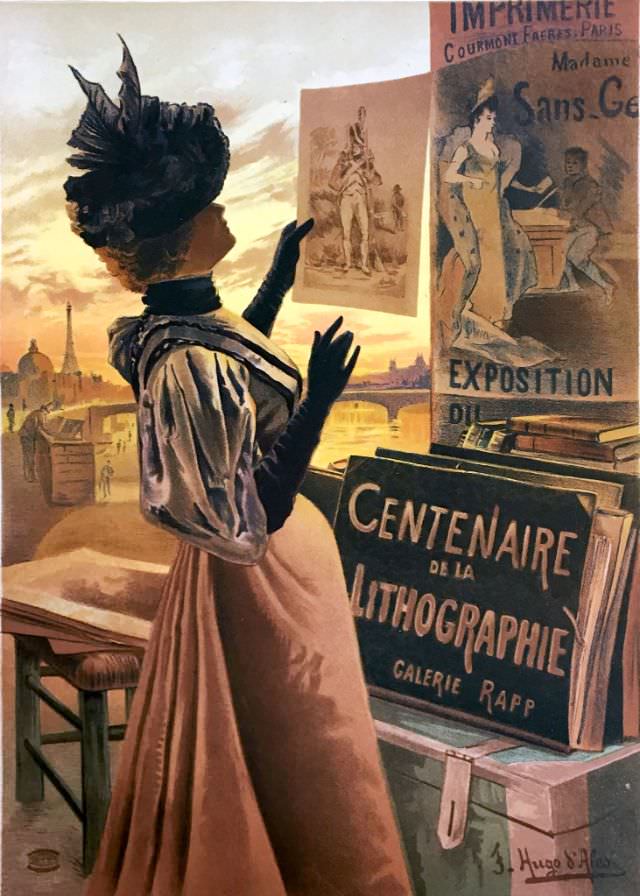
In 1897, d’Alési designed the poster for the Exposition du Centenaire de la Lithographie — a centenary celebration of the very printing technique he had mastered. It was a fitting assignment for an artist whose entire career had been built on pushing lithography to its visual limits.
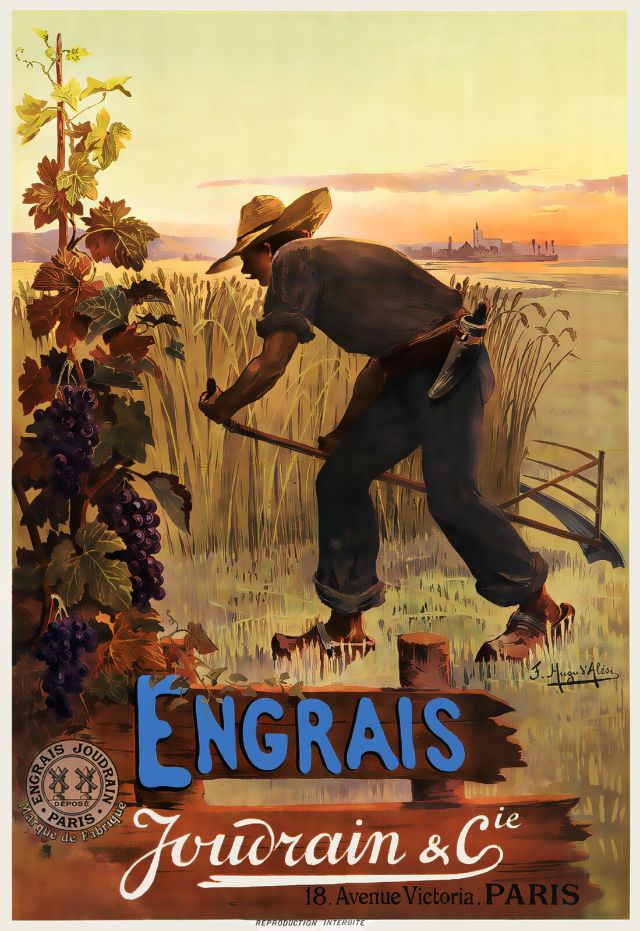
Not all of d’Alési’s work was romantic. His 1898 poster for Engrais Joudrain & Cie., a fertilizer company, demonstrated his versatility. He applied the same clean composition and vivid color to agricultural advertising that he used for grand European travel destinations.
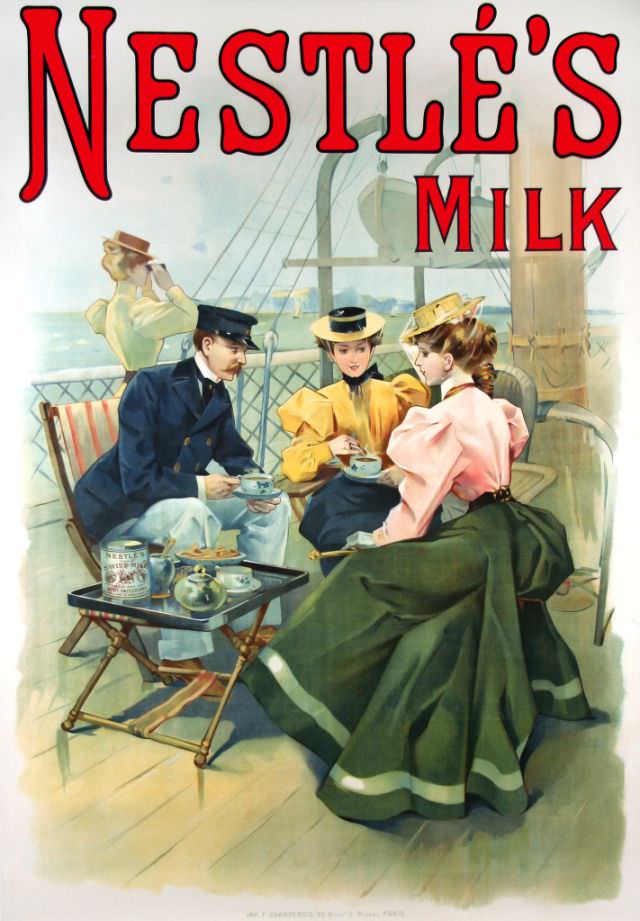
Major consumer brands also recognized d’Alési’s talent. His Nestlé’s Milk advertisement from the 1890s sat alongside his railway commissions as proof that he could adapt his style to any audience without losing quality or impact.
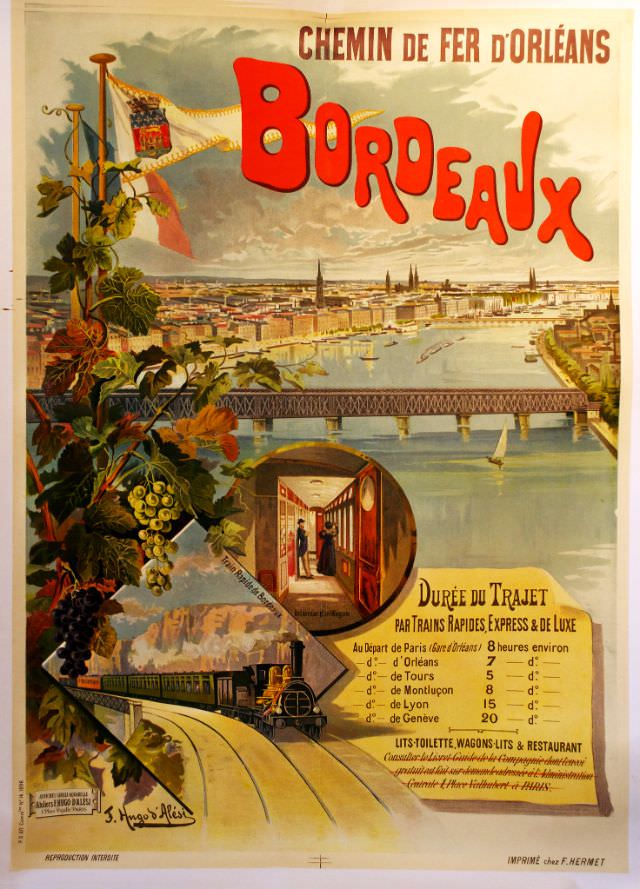
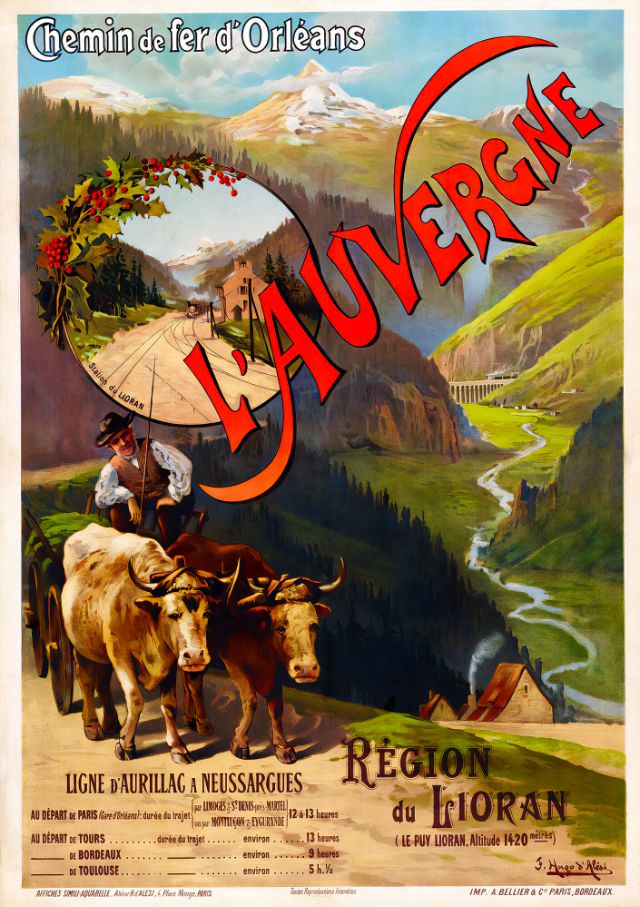
The Chemin de Fer d’Orléans relied on d’Alési to promote destinations across central and southwestern France. His posters for Bordeaux and the Auvergne gave each region a distinct visual identity, making the railway network feel like a portal to an endless variety of French landscapes.
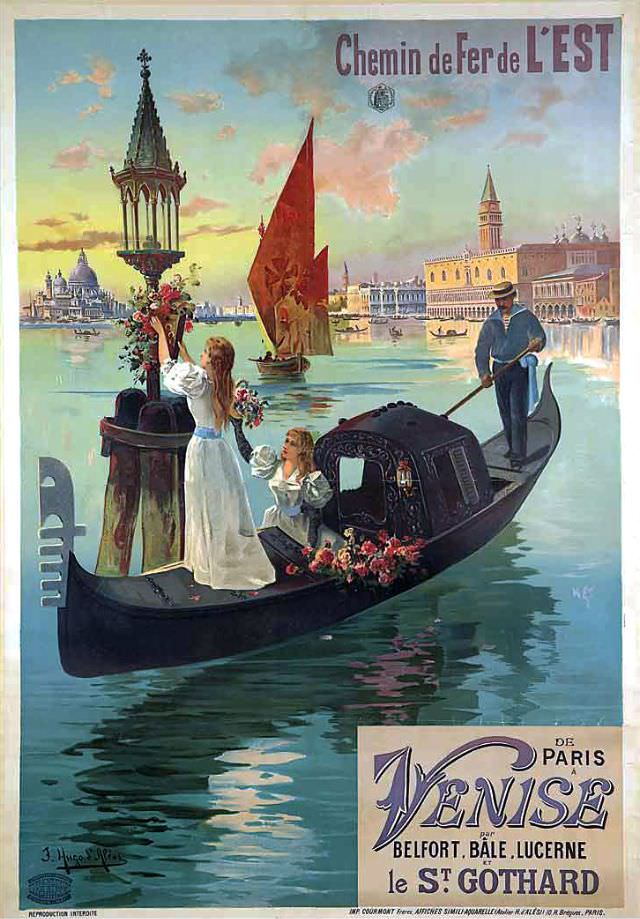
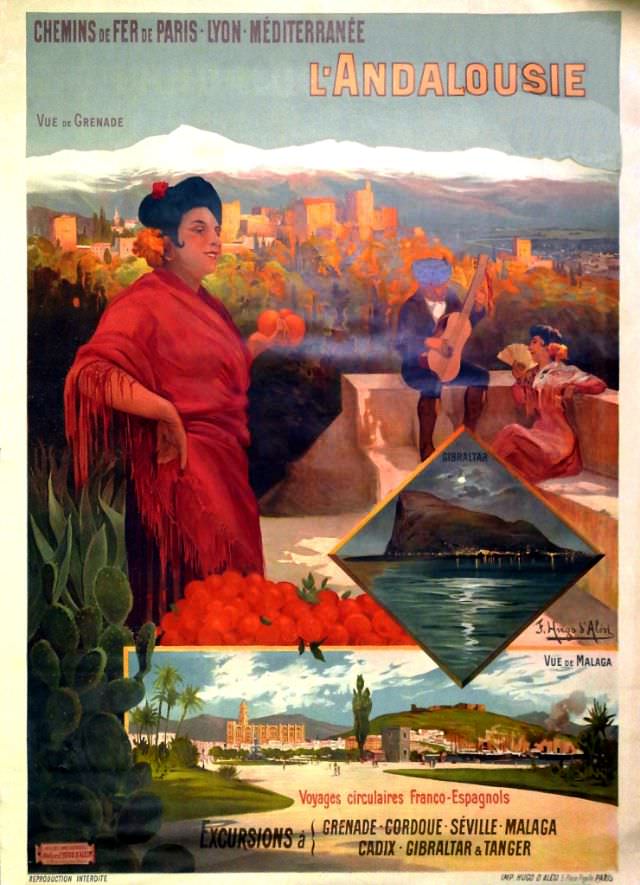
D’Alési also took viewers beyond France’s borders. His poster routing travelers from Paris to Venice captured the romance of the journey itself, while his Andalusia poster offered a view of Granada that felt far removed from the grey skies of northern Europe.
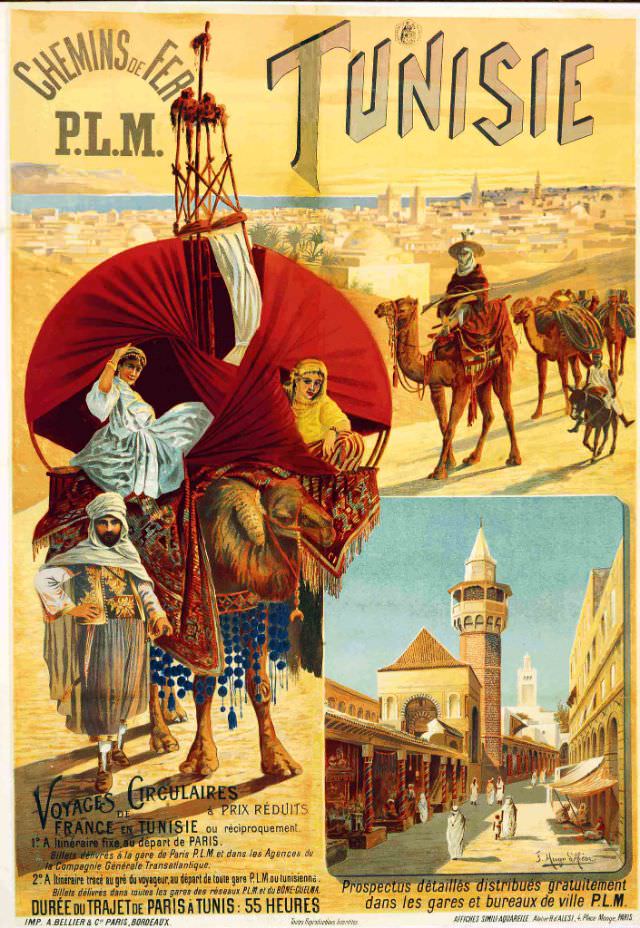
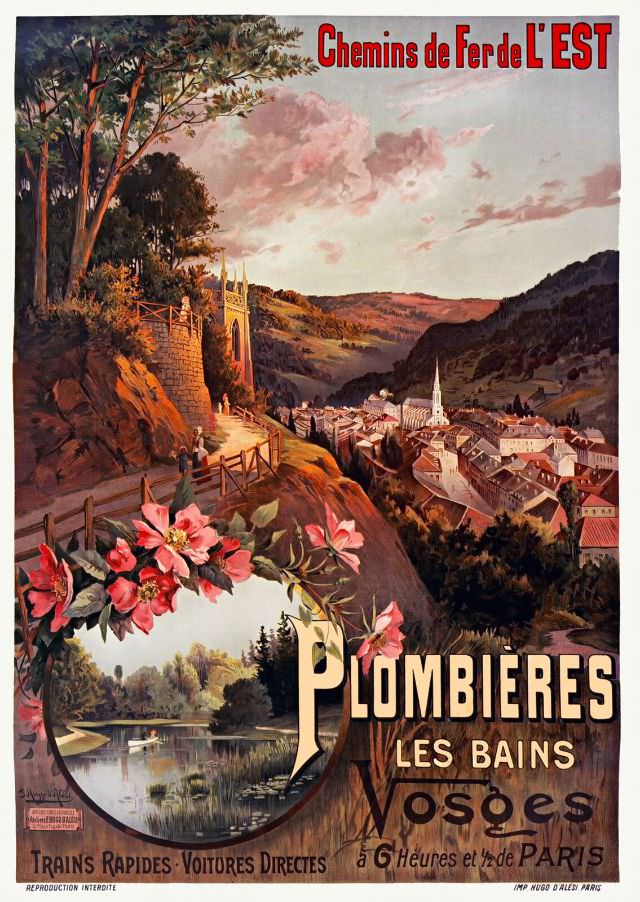
His P.L.M. poster for Tunisia pushed the geography of his work into North Africa. The contrast between that exotic subject and the gentle spa town of Plombières-les-Bains in the Vosges shows the remarkable range d’Alési covered within a single decade.
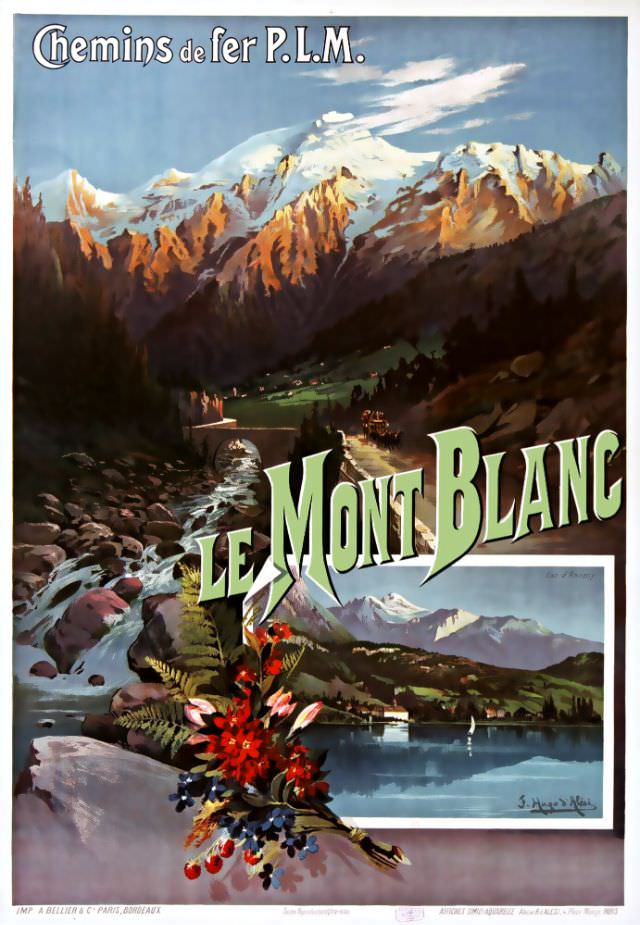
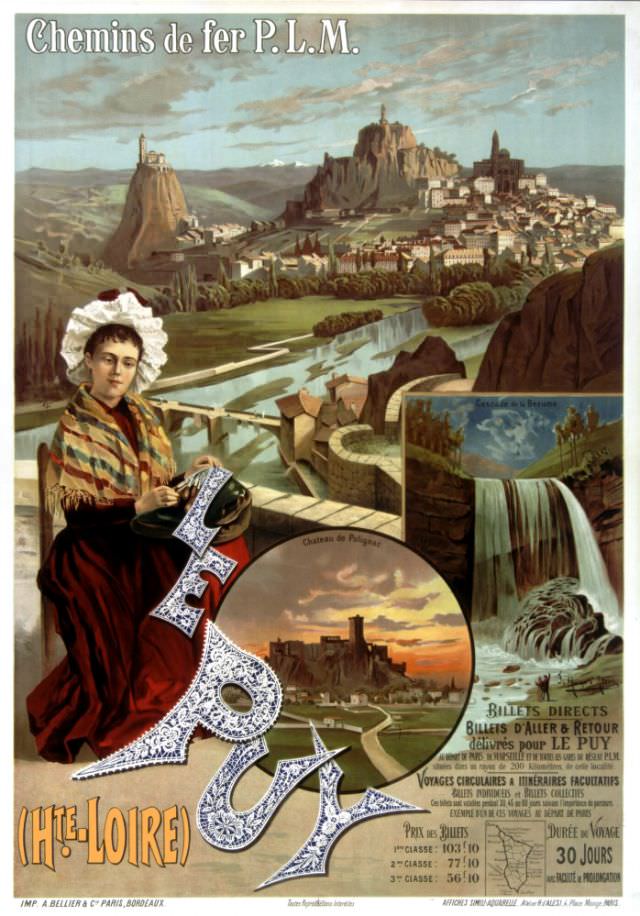
Mont Blanc appeared in multiple d’Alési compositions, a testament to its pulling power as a tourist destination. His poster for Le Puy in the Haute-Loire offered something different — volcanic rock formations and medieval architecture instead of glaciers and snow.
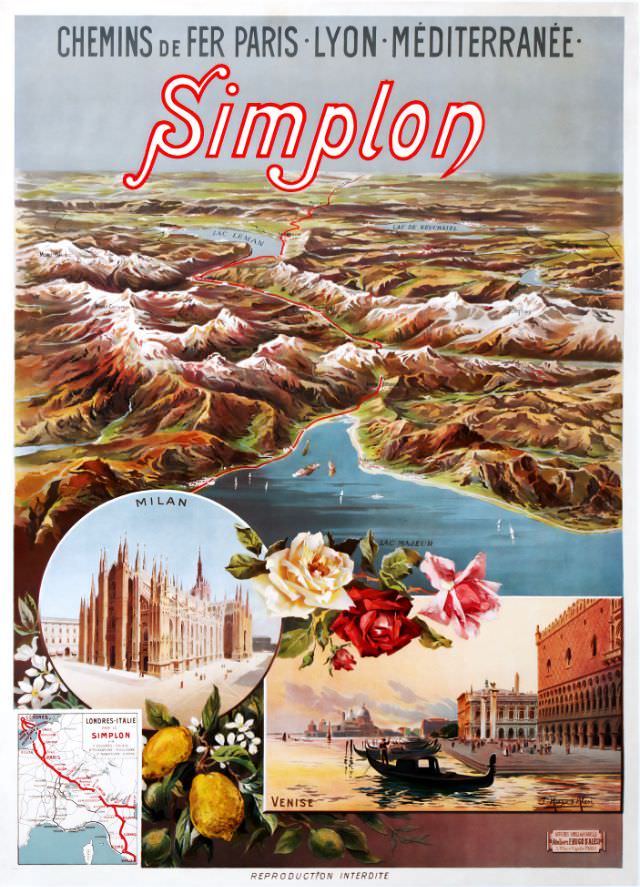
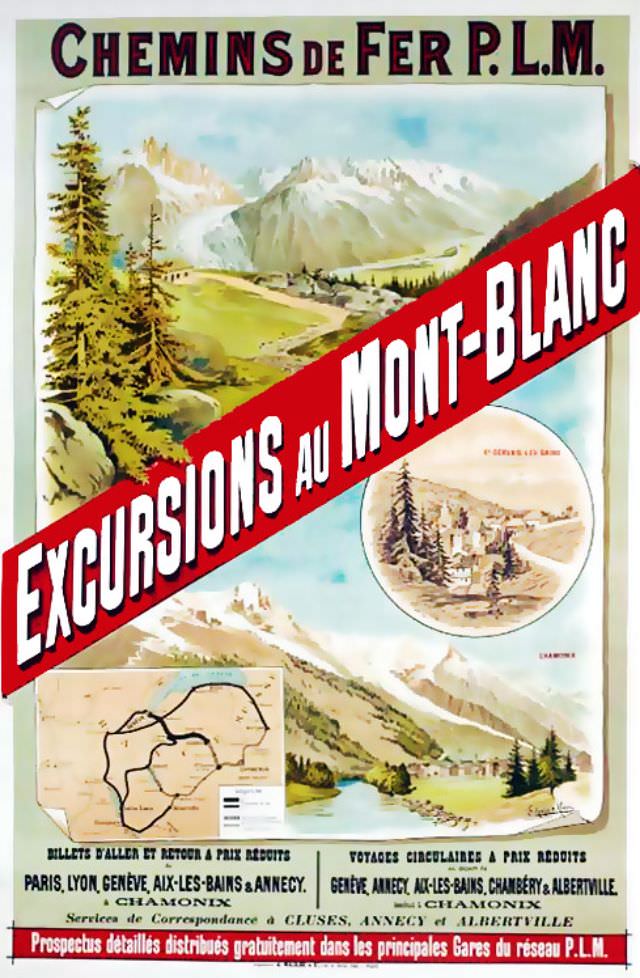
The Simplon route connecting France to Venice and Milan was a prestige corridor for the P.L.M., and d’Alési’s poster gave it the visual grandeur it deserved. His Mont Blanc excursion poster reinforced the Alps as the centerpiece of European leisure travel.
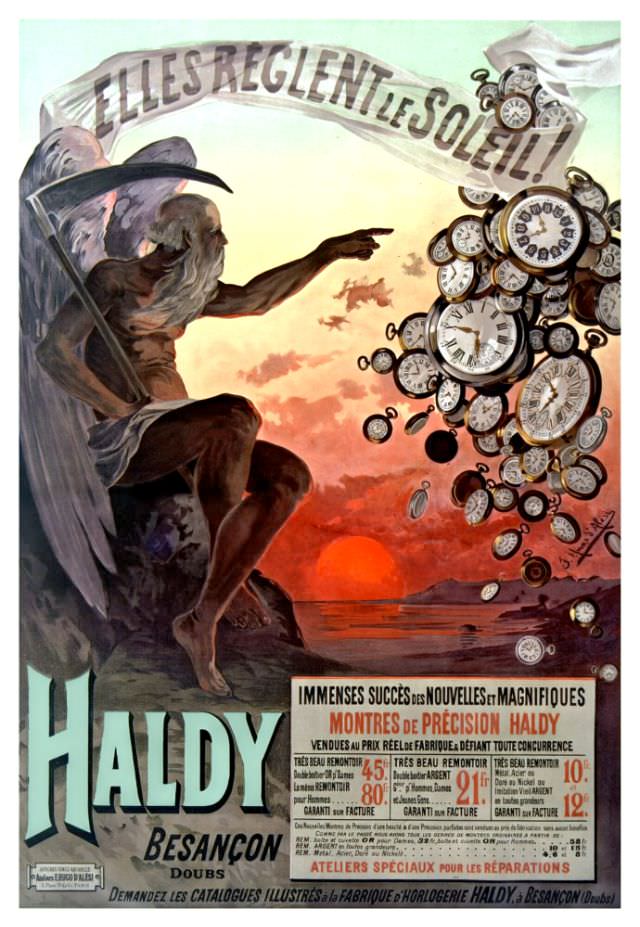
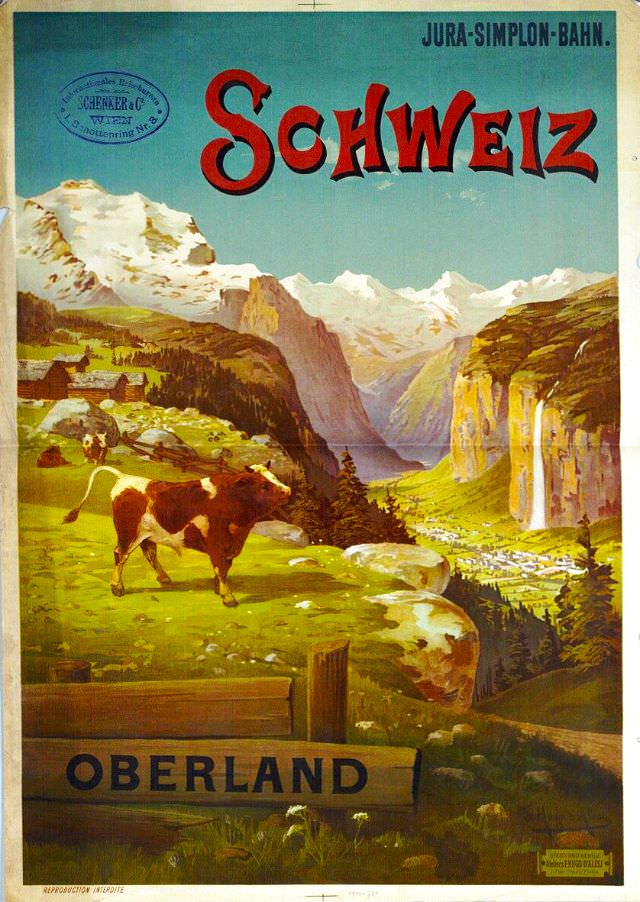
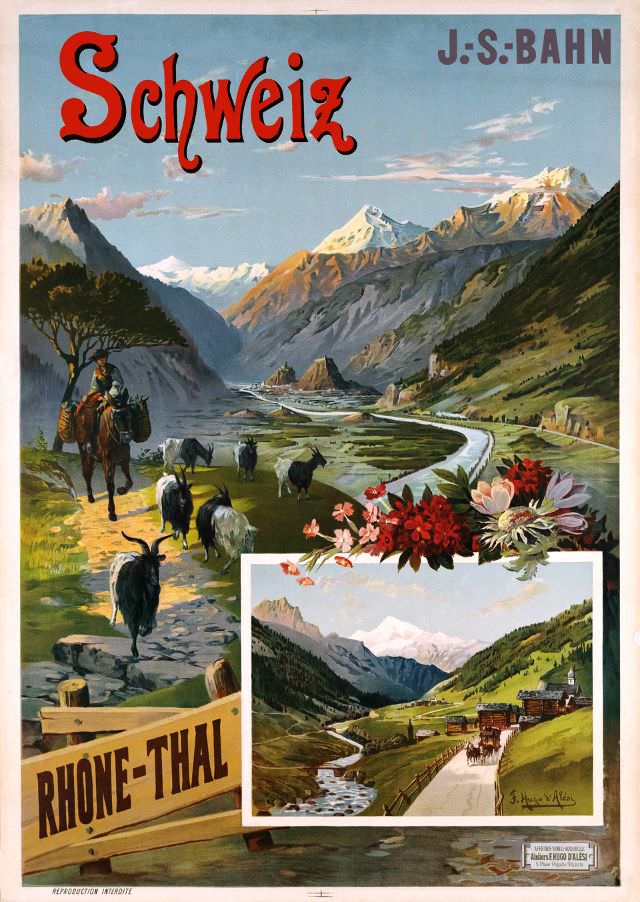
Even commercial products like the Haldy watchmakers of Besançon received d’Alési’s full artistic attention. The tagline “Elles Règlent le Soleil” — They Set the Sun — was paired with imagery that matched its confidence. His Swiss Oberland poster for the Jura-Simplon railway maintained the same high visual standard.
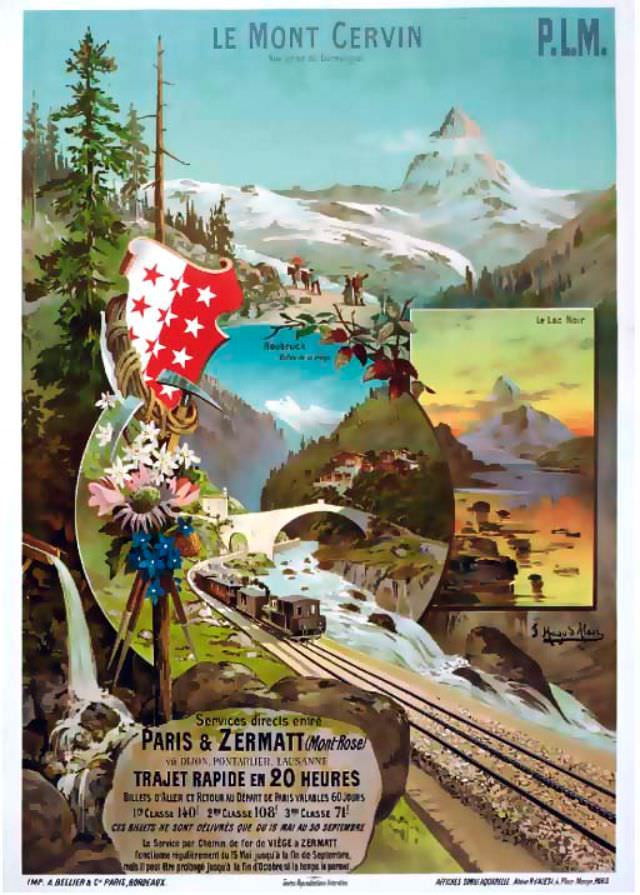
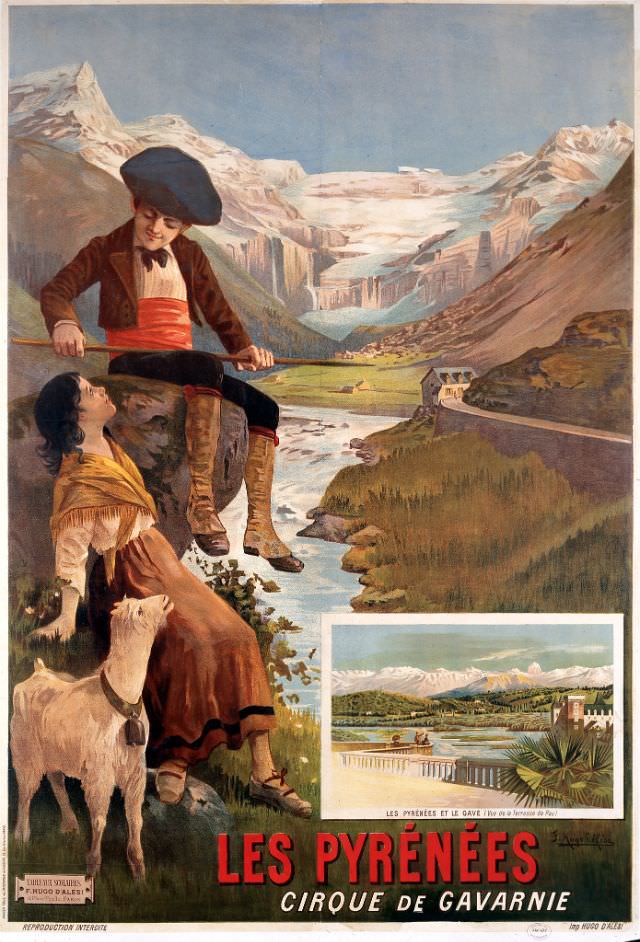
The Matterhorn, known in French as Le Mont Cervin, was another iconic alpine subject in d’Alési’s catalogue. His Pyrénées poster for the Cirque de Gavarnie shifted the focus westward, showcasing the dramatic natural amphitheater on the French-Spanish border.
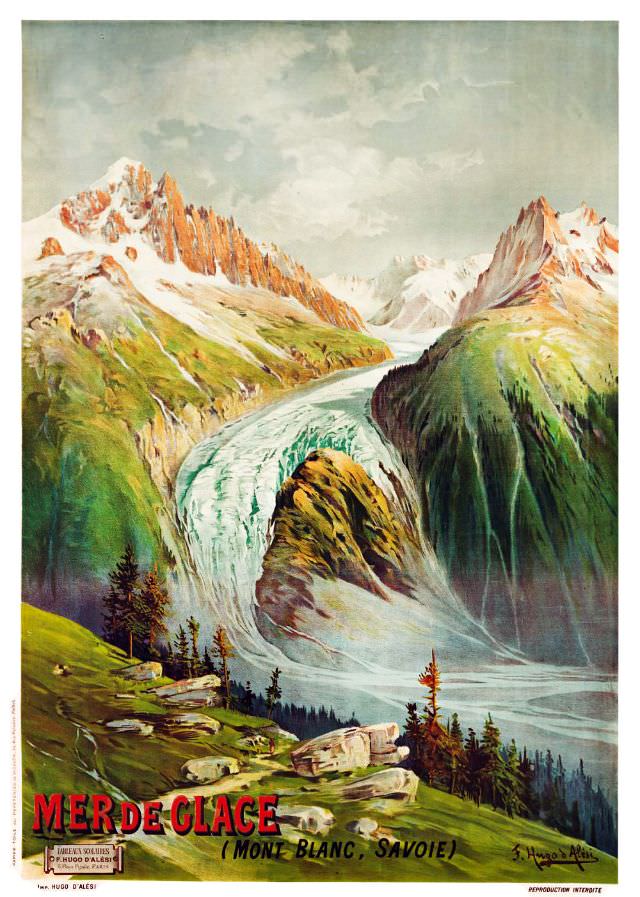
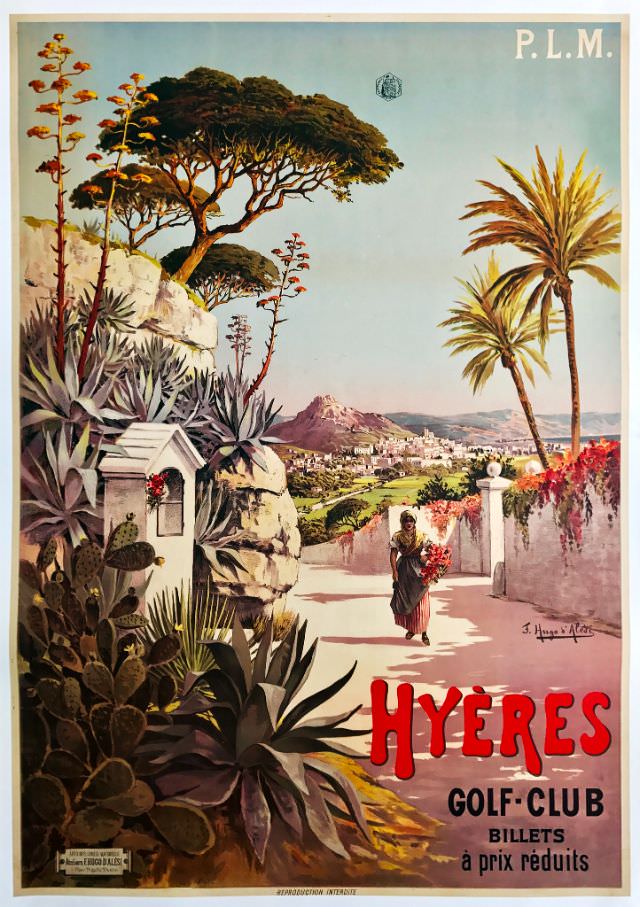
The Mer de Glace glacier above Chamonix was one of the most visited natural sites in 19th-century Europe, and d’Alési captured its immense scale with striking accuracy. His Hyères Golf Club poster shows an entirely different side of P.L.M. clientele — the leisure class seeking warm Mediterranean sunshine.
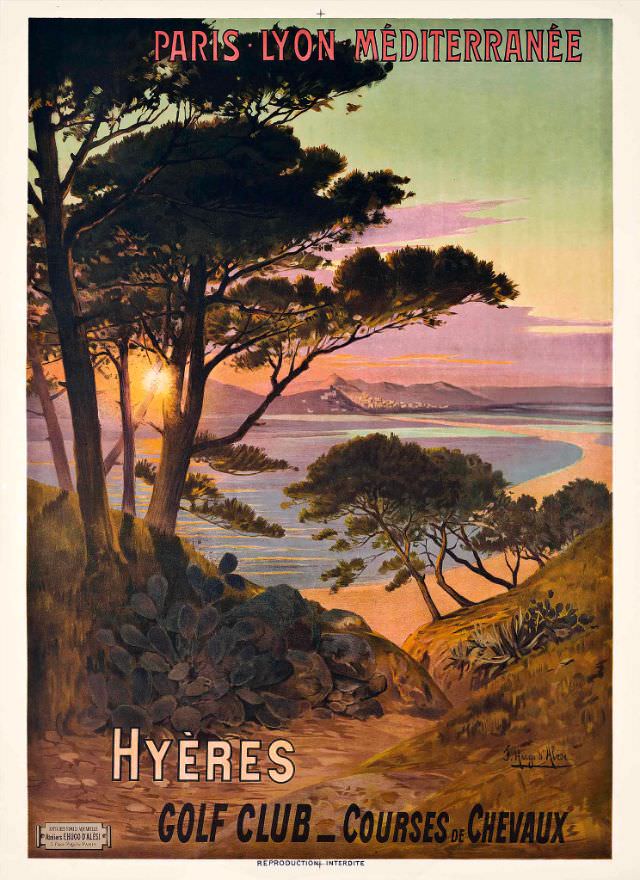
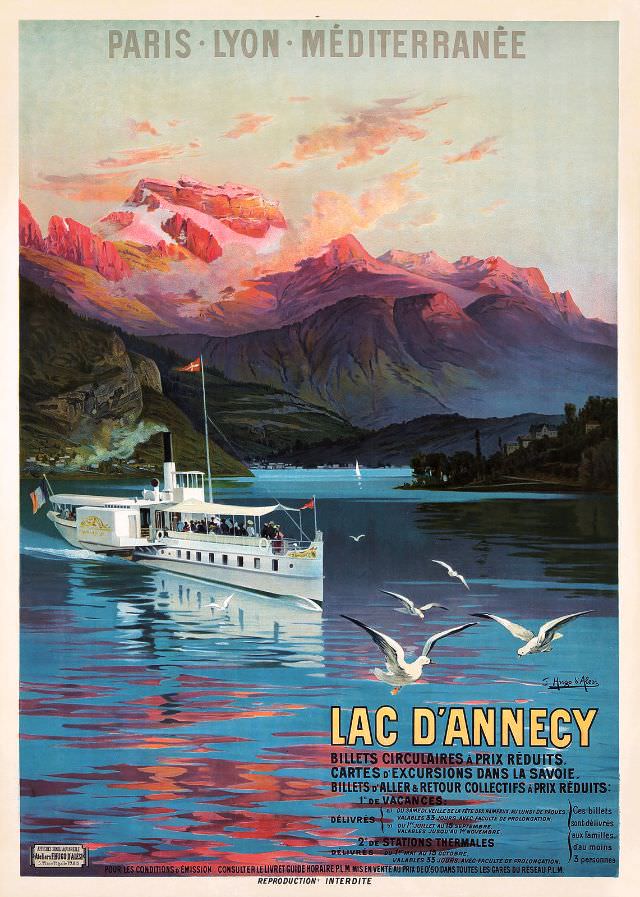
Horse racing at Hyères and the tranquil waters of Lac d’Annecy both found their way into d’Alési’s P.L.M. series. The two posters together highlight how the railway sold both excitement and serenity to different kinds of travelers.
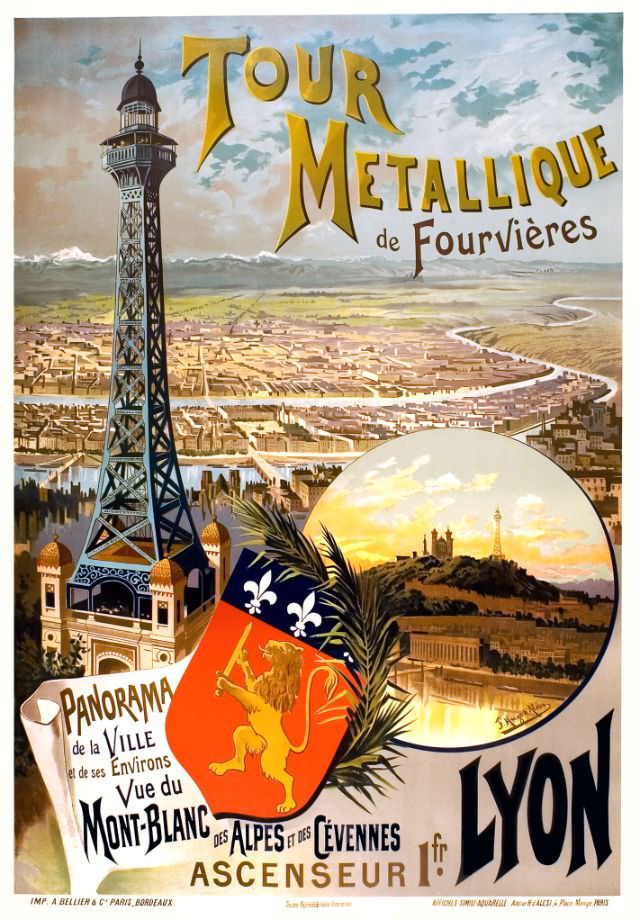
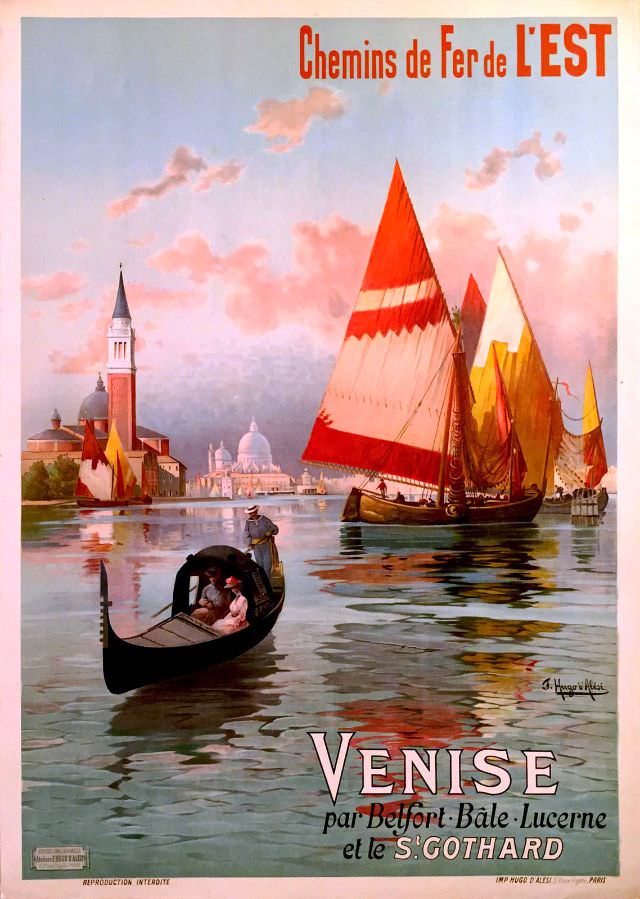
His poster for the Tour Métallique de Fourvières in Lyon documented a local landmark with the same care he gave to international destinations. The Venice-via-Saint-Gotthard poster closed out his Swiss and Italian work with a route that passed through some of the most scenic terrain in Europe.