Johnson Publishing built one of the most powerful media empires in 20th-century Black American culture. The Chicago-based company launched several well-known titles, including Ebony and the digest-sized Jet. Hue was another title in that lineup — a monthly celebrity and gossip magazine that ran through the 1950s and into the early 1960s. Like Jet, Hue was compact in size, but it didn’t skimp on presentation. Its covers were printed in full color, and the back cover regularly spotlighted up-and-coming actresses and models.
Hue’s covers were a mix of established stars and fresh faces. While a male celebrity appeared on occasion, the magazine leaned heavily toward women — singers, dancers, actresses, beauty queens, and everyday women with compelling stories. The cover lines were bold and direct, teasing personal stories and social topics that were on readers’ minds. Together, the covers form a vivid snapshot of Black celebrity and beauty culture during the decade.
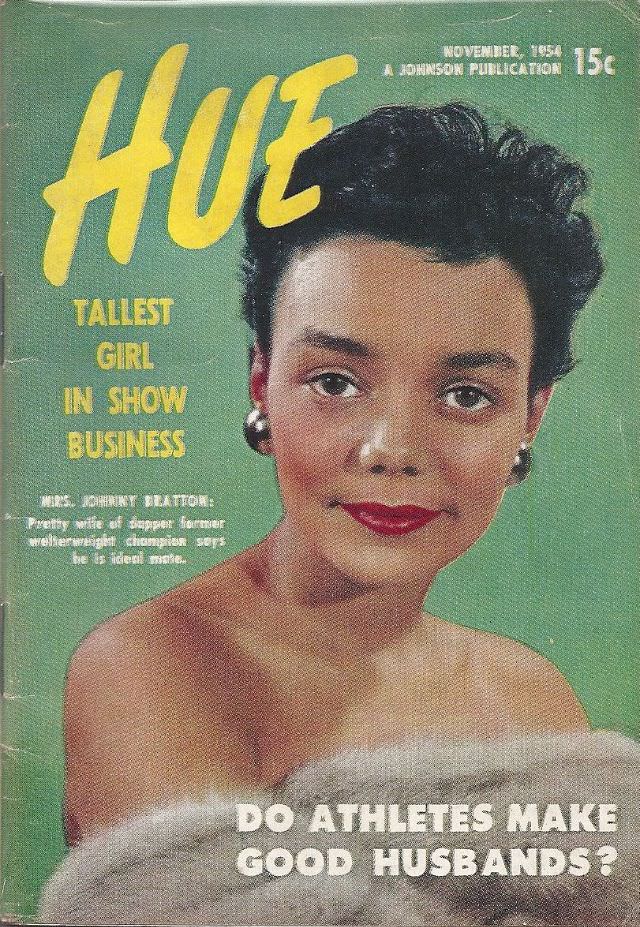
Legendary singer and actress Lena Horne was among the first to grace a Hue cover in the magazine’s early run.
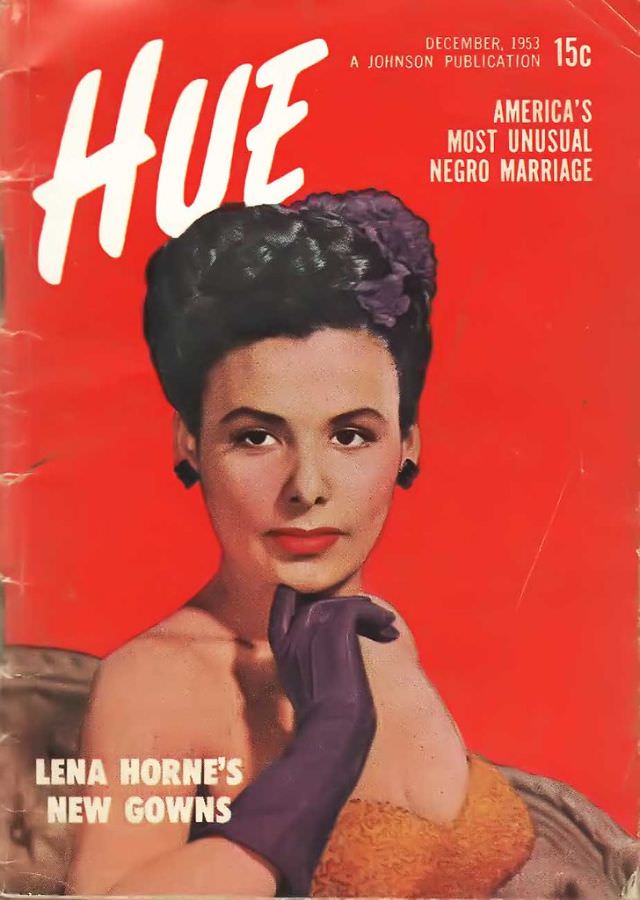
Just a few months later, the magazine turned its lens toward the performing arts world. Carmen DeLavallade was already making a name for herself as a ballerina when she appeared on the June 1954 cover.
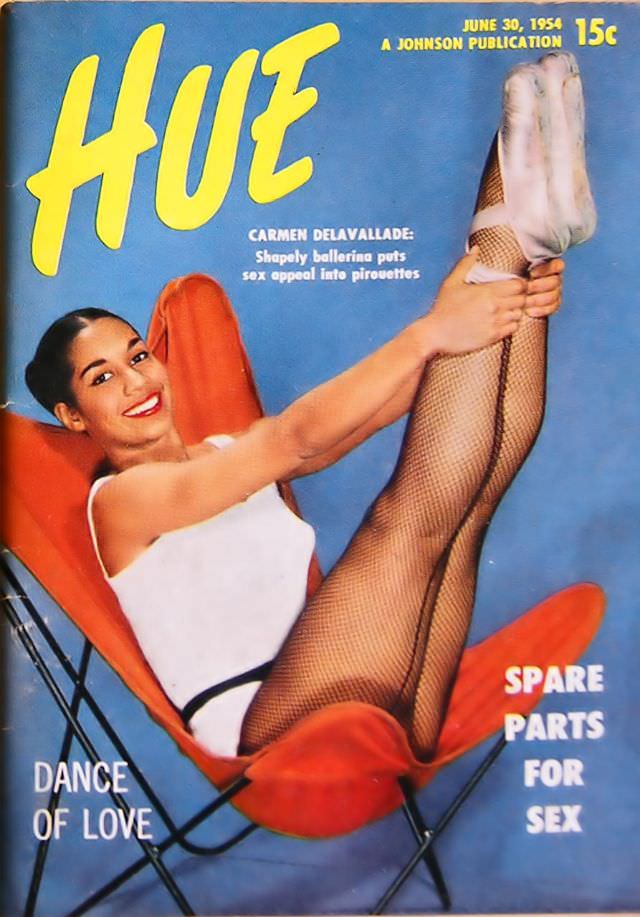
That same summer, dancer Paulette Easley was featured on the July 1954 cover, continuing the magazine’s celebration of women in performance.
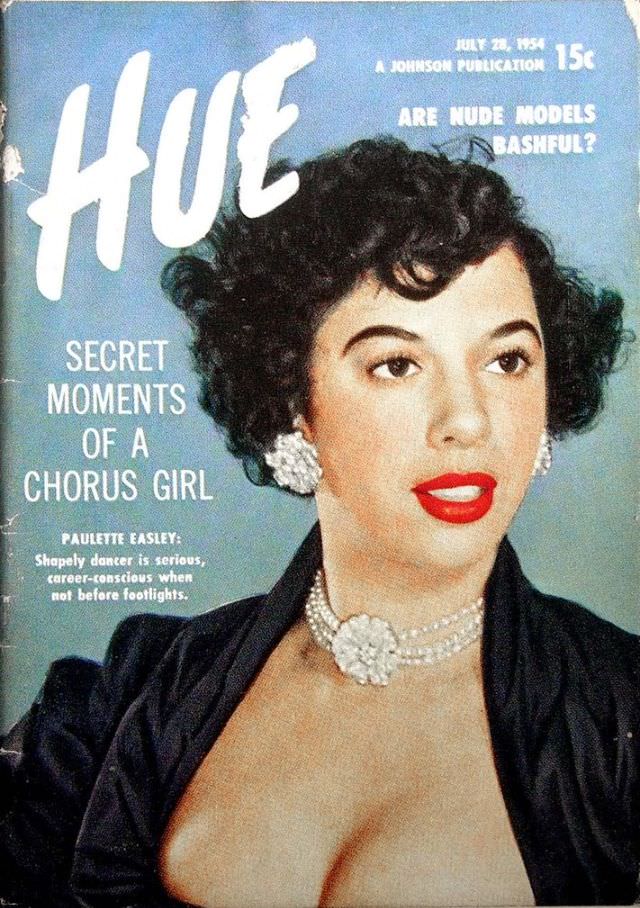
Hue also tackled social questions that resonated with its readership. The November 1954 issue featured Mrs. Johnny Bratton weighing in on whether athletes make good husbands — a topic that put a real woman’s perspective front and center.
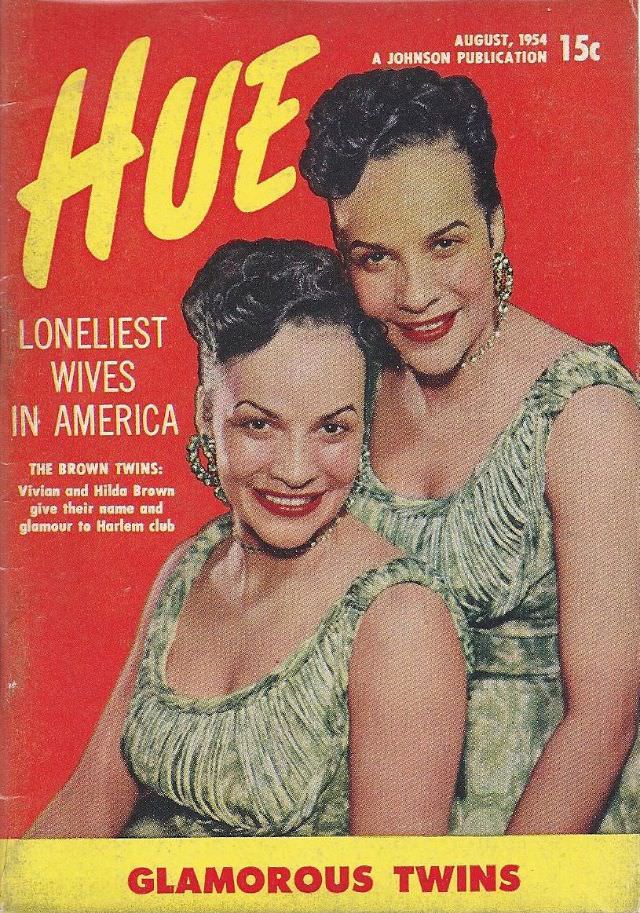
The August 1954 issue took a different approach entirely, putting twin sisters Vivian and Hilda Brown on the cover. Their dual appearance made for one of the more eye-catching covers of that year.
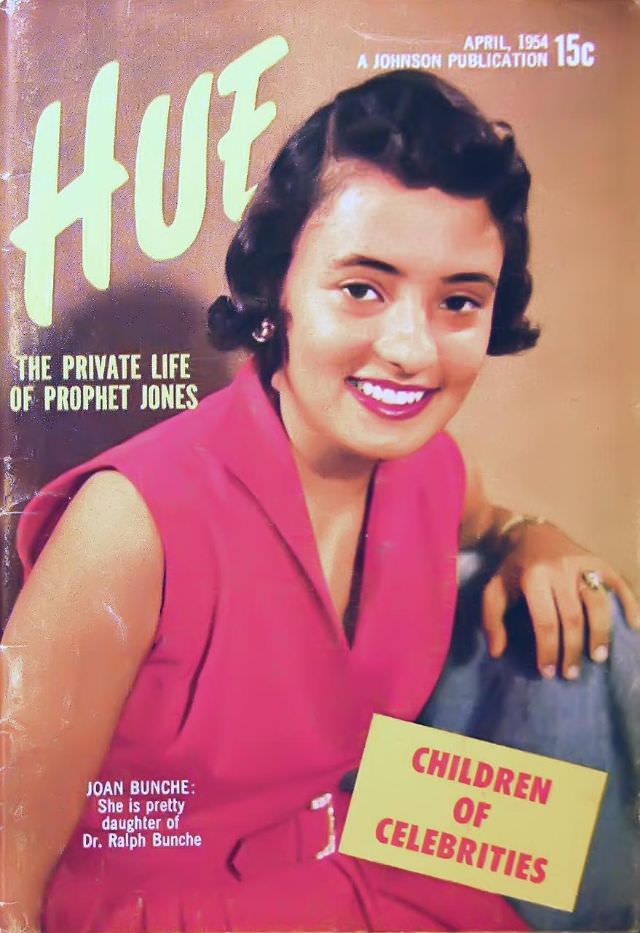
Not all cover subjects were entertainers. Joan Bunche, daughter of Nobel Peace Prize winner Dr. Ralph Bunche, appeared on the April 1954 cover — reflecting the magazine’s interest in notable Black families beyond the entertainment world.
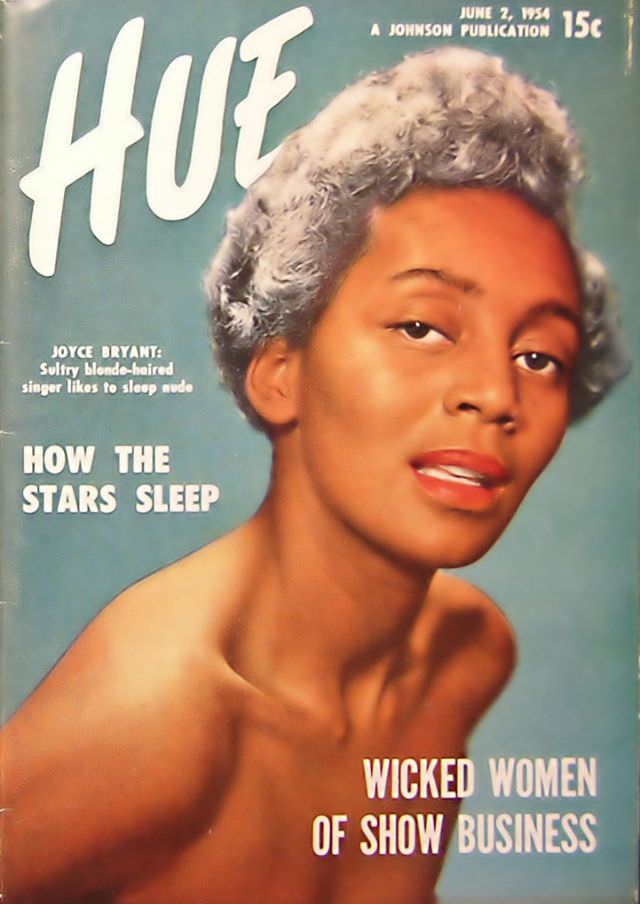
Singer Joyce Bryant was billed boldly on her June 1954 cover as one of the “wicked women of show business” — a headline that reflected the magazine’s flair for provocative cover lines.
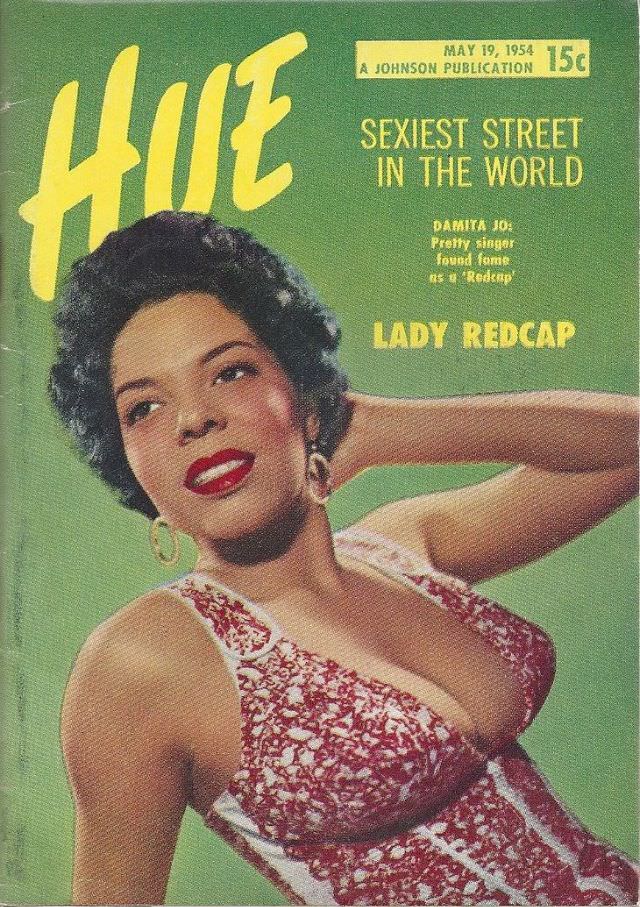
Entertainer Damita Jo appeared on the May 1954 cover under the title “Lady Redcap,” one of her known nicknames during her performing career.
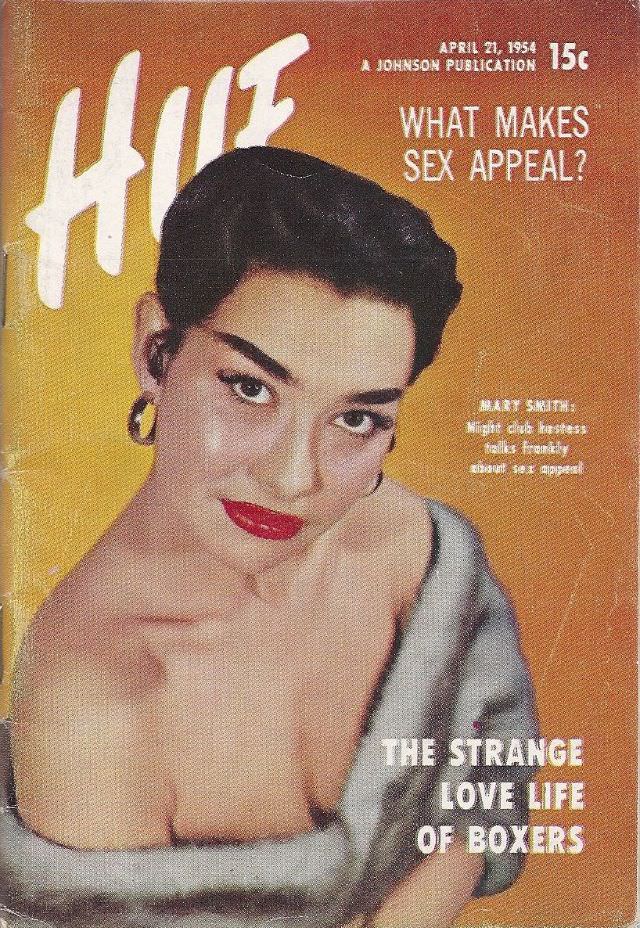
Hue wasn’t shy about exploring topics like sex appeal. The April 1954 issue featured Mary Smith alongside the question of what actually makes sex appeal — a topic the magazine handled with its characteristic directness.
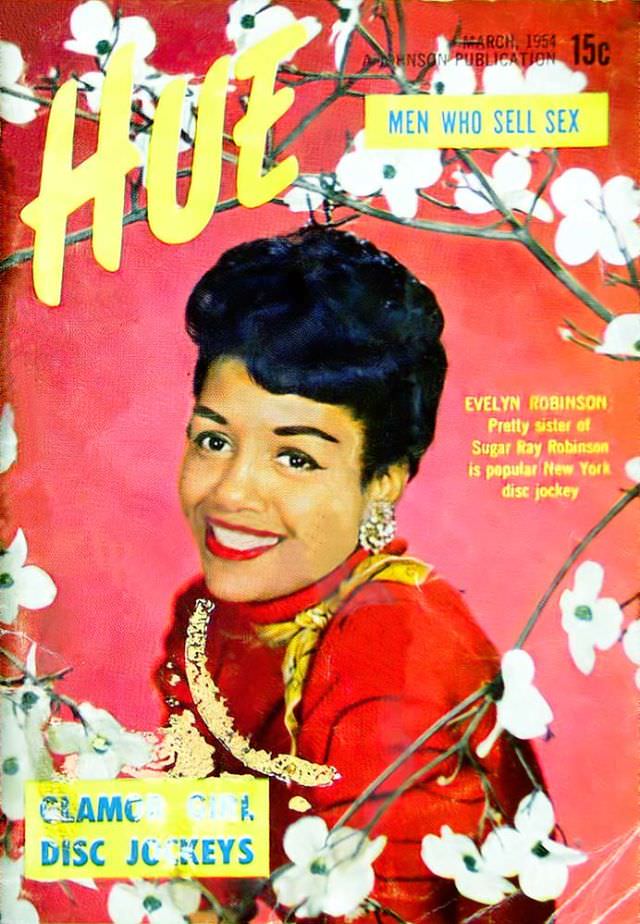
The March 1954 issue turned the conversation in another direction, with a cover story titled “Men Who Sell Sex” — one of several issues that year that engaged with gender and performance in popular culture.
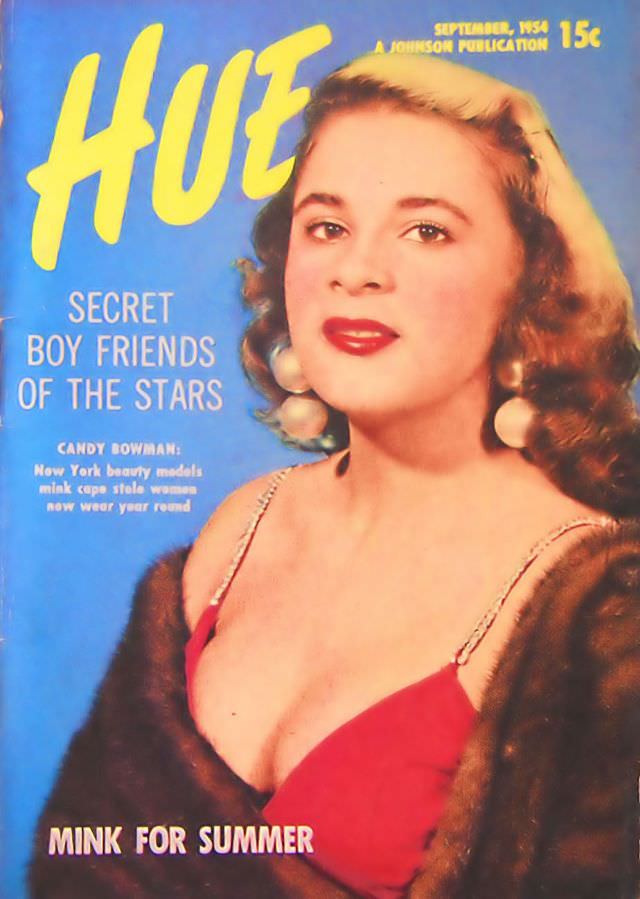
The September 1954 cover took a fashion-forward approach, pairing a glamorous model with the headline “Mink for Summer” — a luxurious image that spoke to aspirational Black style at the time.
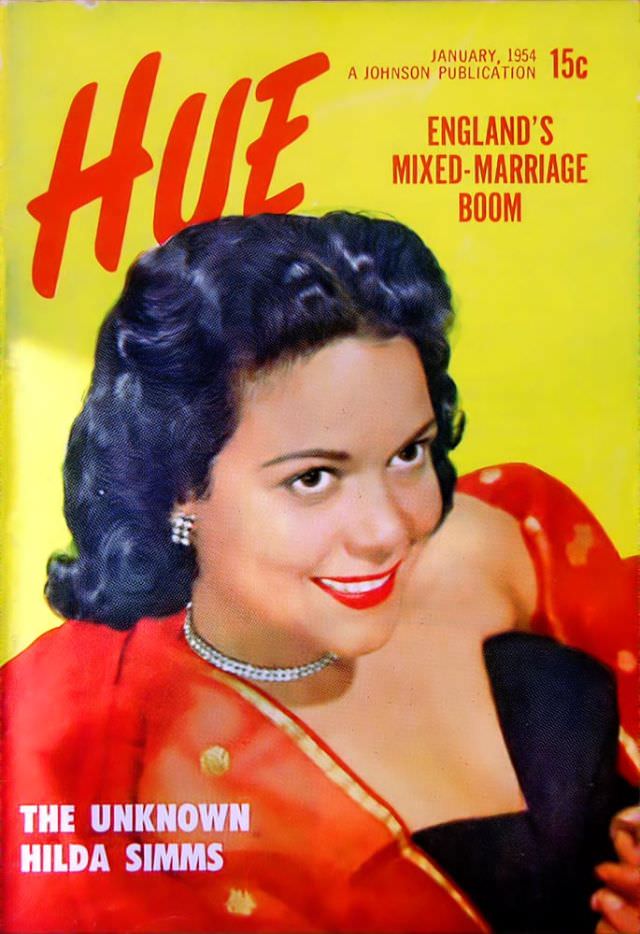
Actress Hilda Simms, known for her stage work, was featured on the January 1954 cover under the headline “The Unknown Hilda Simms,” suggesting the story aimed to reveal a side of her that audiences hadn’t seen.
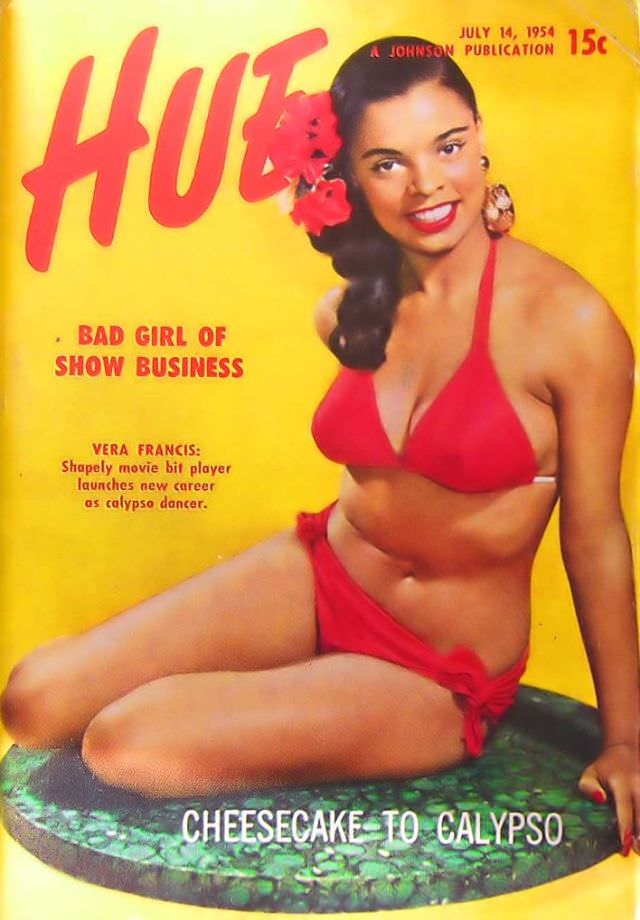
Vera Francis landed on the July 1954 cover with a headline that matched Joyce Bryant’s in its boldness — “Bad Girl of Show Business” — a label Hue used to generate reader curiosity.
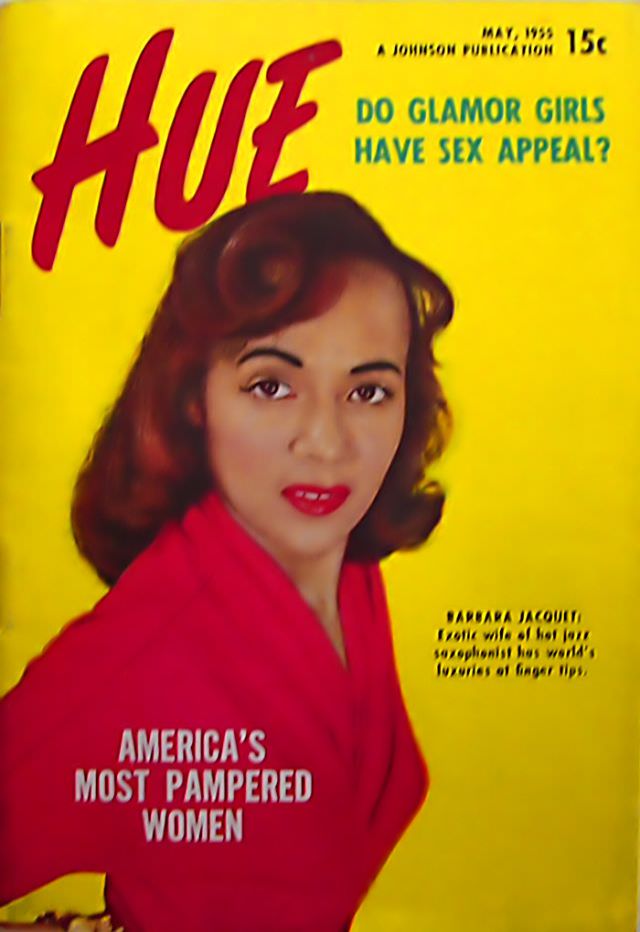
Moving into 1955, the magazine continued featuring a range of women. Barbara Jacquet was billed as one of America’s most pampered women on the May 1955 cover.
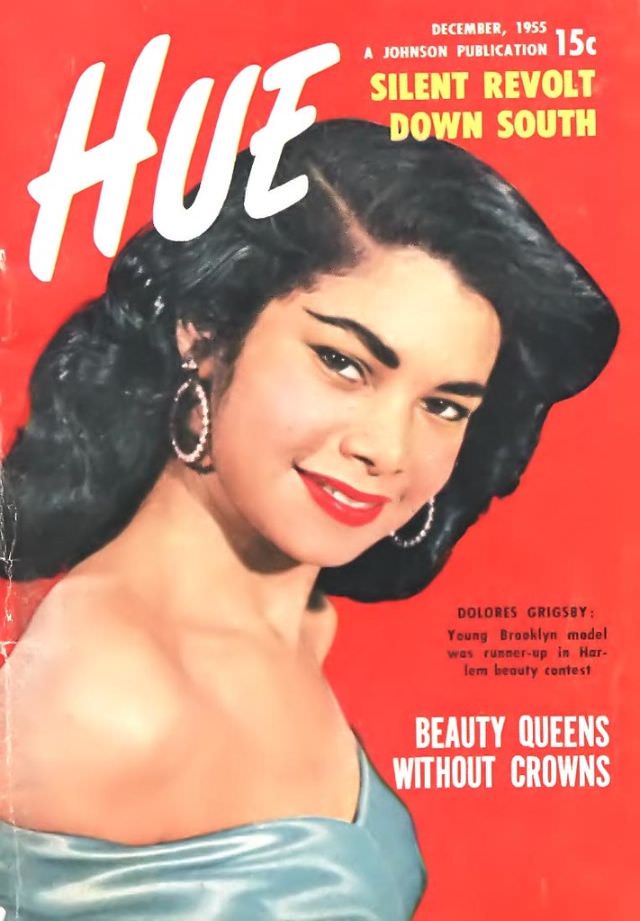
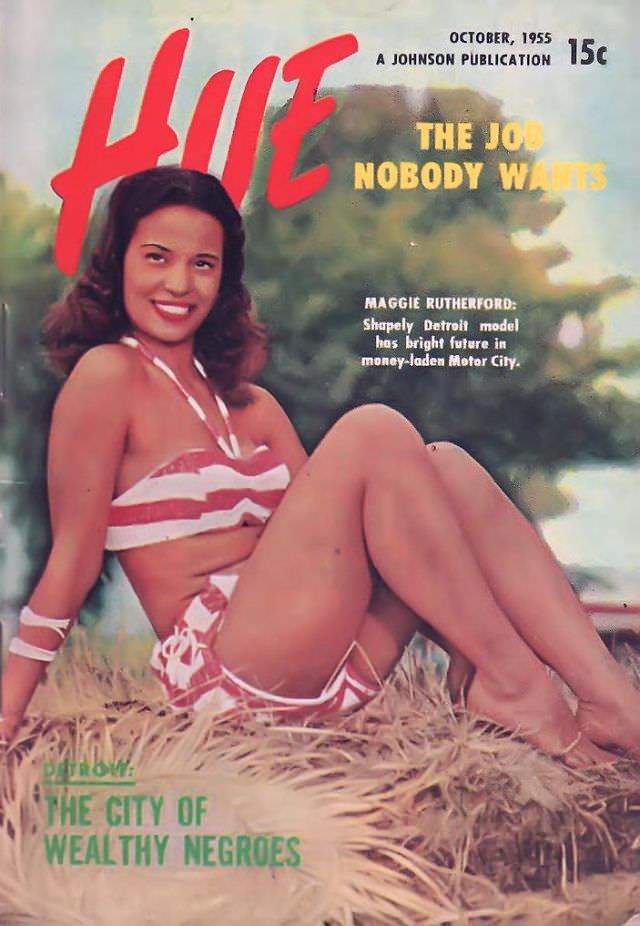
Beauty pageant culture was another recurring theme. The October 1955 issue spotlighted Dolores Grigsby, a beauty queen runner-up whose appearance on the cover showed that Hue valued near-winners just as much as title holders.
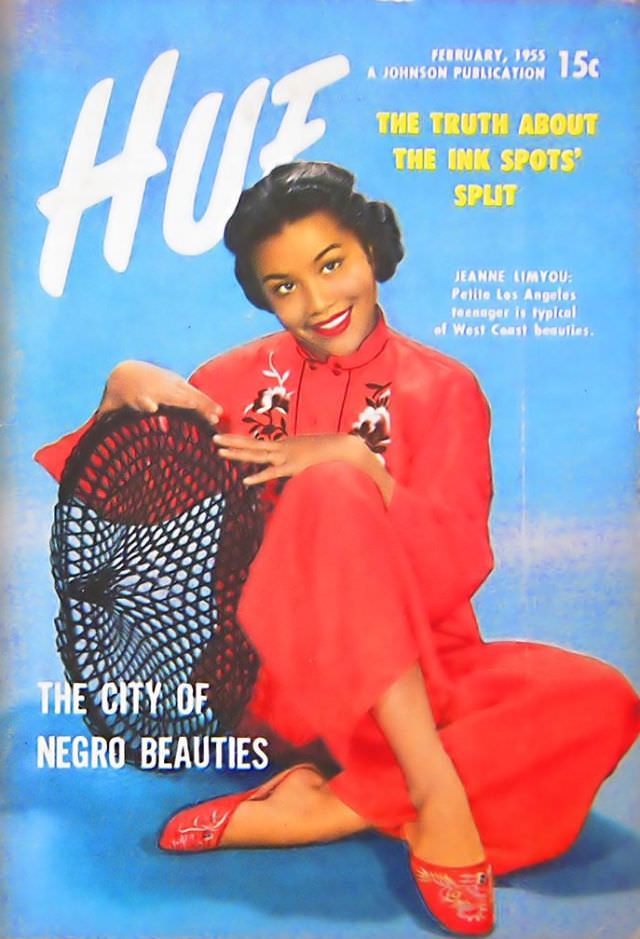
Jeanne Limyou graced the February 1955 cover, one of several lesser-known names the magazine helped bring into the spotlight during the mid-decade run.
That same October 1955 issue that featured Dolores Grigsby also ran a companion cover with Maggie Rutherford, billed directly as a covergirl — a straightforward nod to the modeling world.
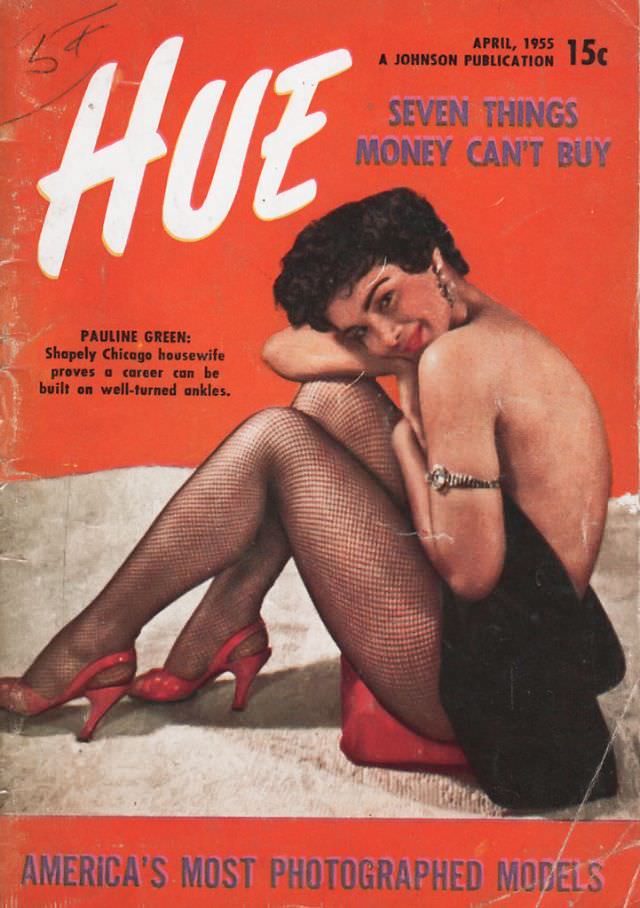
Hue regularly featured women from outside the entertainment industry. Pauline Green, described as a shapely Chicago housewife, appeared on the April 1955 cover — a reminder that the magazine celebrated everyday Black women alongside celebrities.
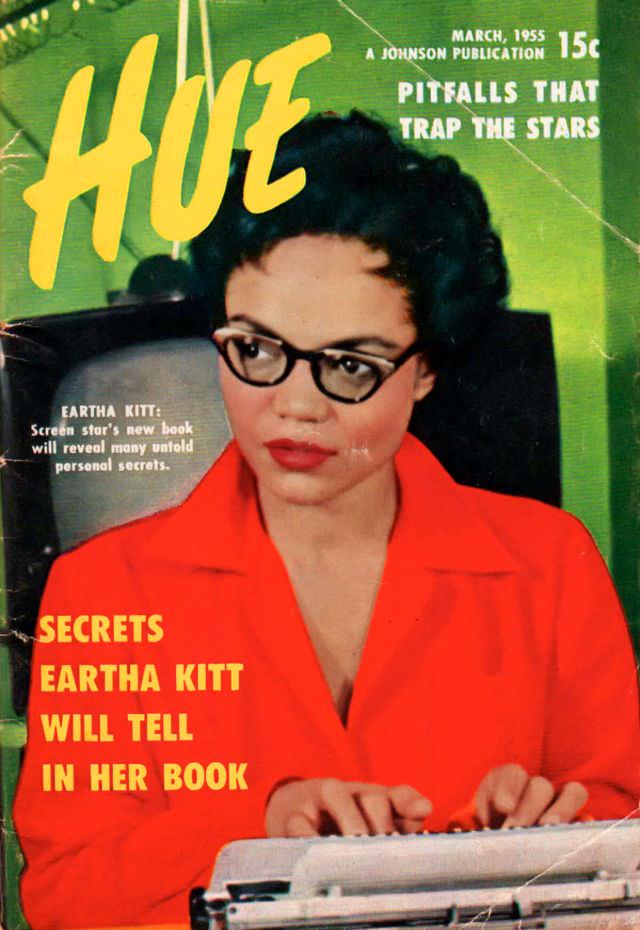
Singer Eartha Kitt was one of the biggest stars of the 1950s, and Hue used her March 1955 cover to tease revelations from her upcoming book — a publicity move that highlighted Kitt’s willingness to share her personal story publicly.
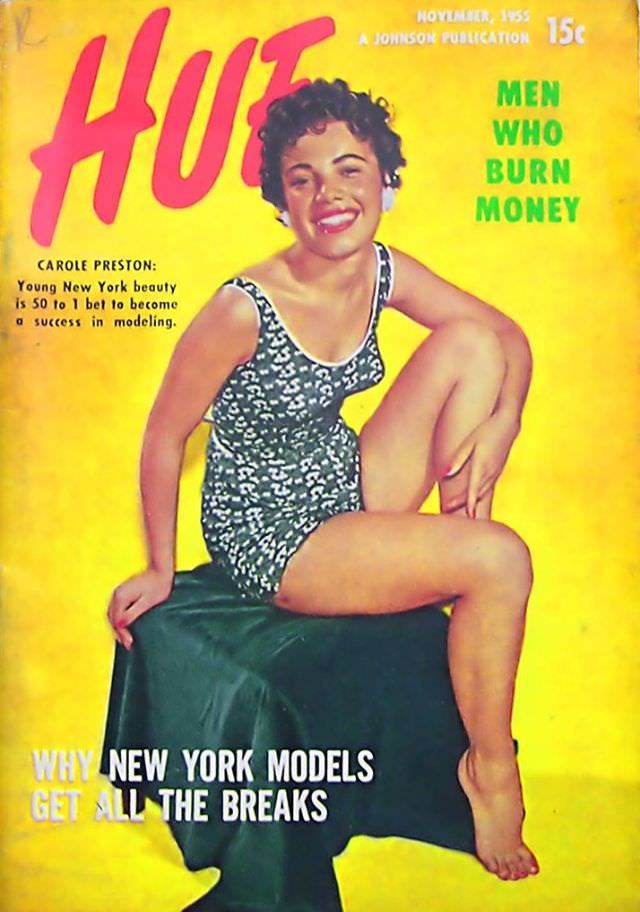
The November 1955 issue asked why New York models like Carole Preston seemed to get all the breaks — a cover story that touched on opportunity, industry access, and what set certain models apart in the business.
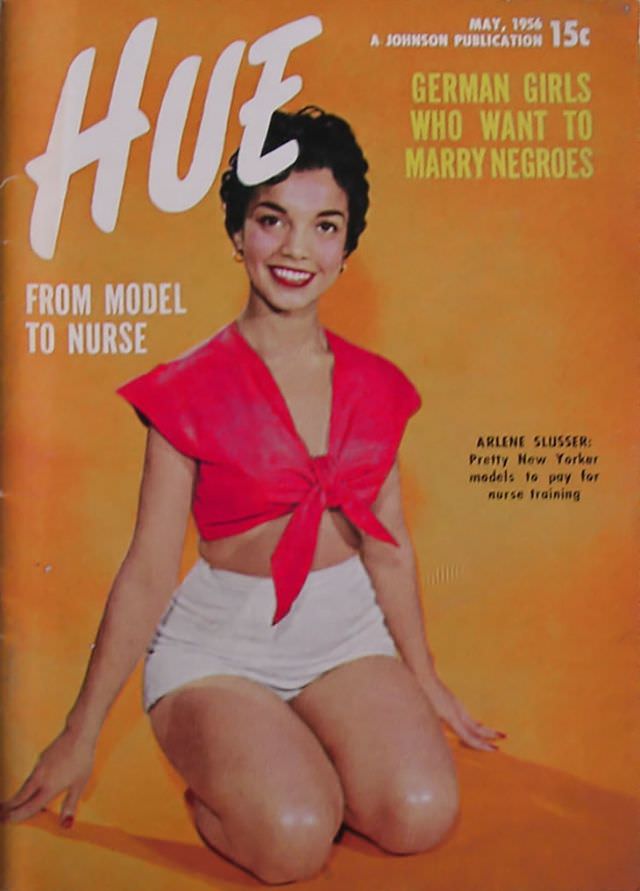
By 1956, Hue’s covers were engaging with broader social topics. The May 1956 issue addressed German women who wanted to marry Black American men — a topic rooted in the postwar presence of Black U.S. servicemen stationed in Germany.
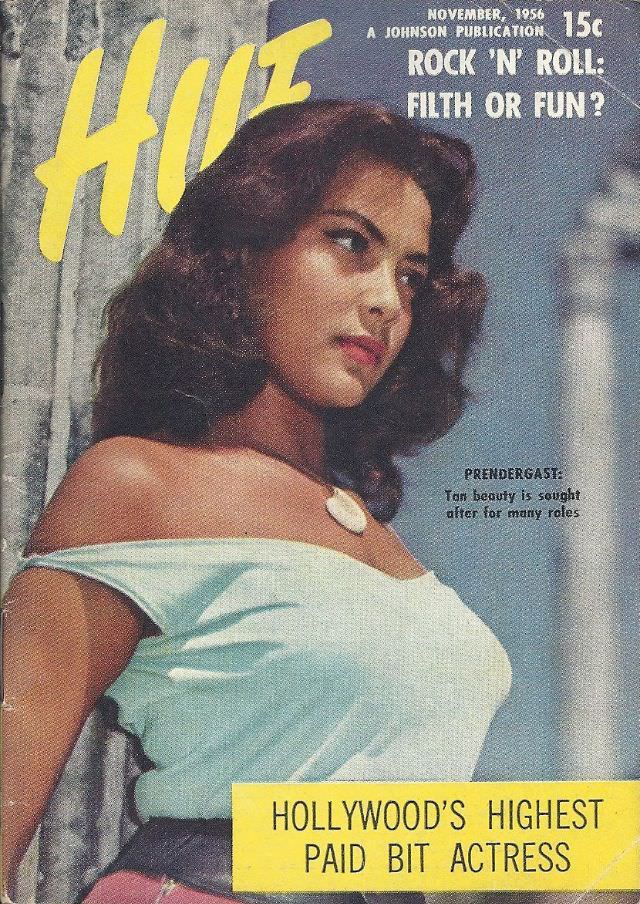
The November 1956 cover focused on Hollywood’s highest-paid bit actress — a story that examined how certain performers earned top dollar in small, supporting roles rather than starring parts.
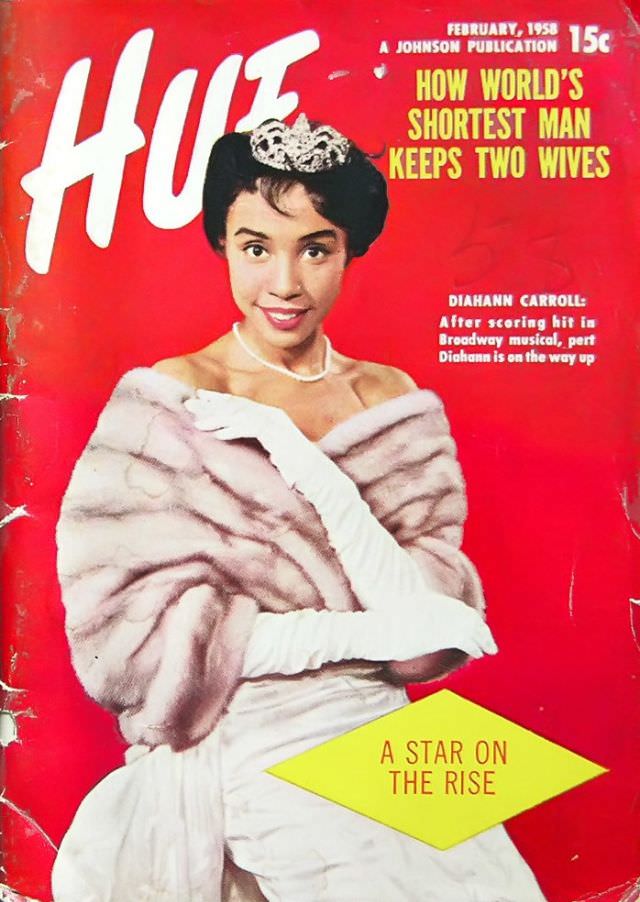
Diahann Carroll appeared on the February 1958 cover under the headline “A Star On The Rise” — an accurate description for the actress and singer who would go on to become one of the most recognized names in Black entertainment history.
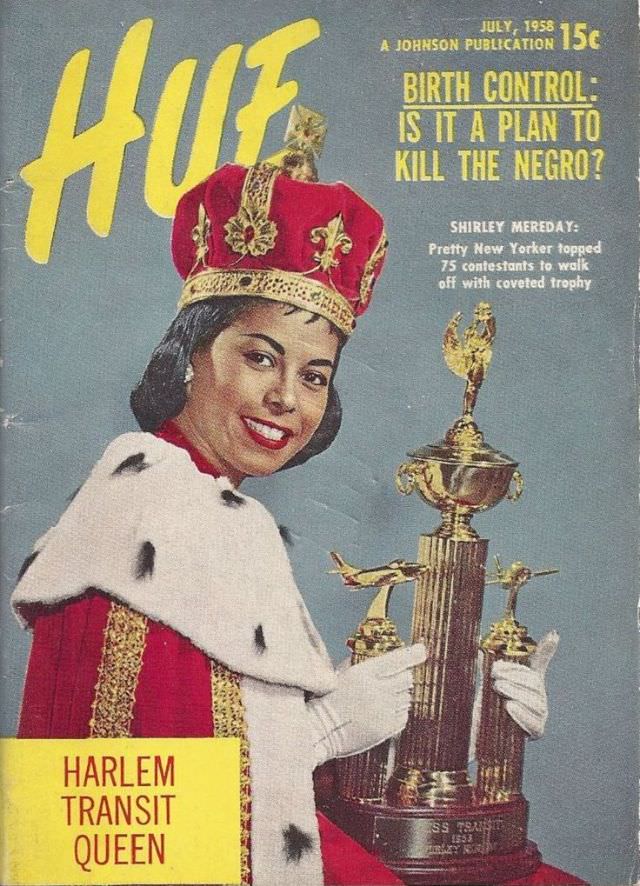
Hue also highlighted women who gained recognition in unexpected fields. Shirley Mereday was crowned Harlem Transit Queen, and her July 1958 cover appearance celebrated that local distinction.
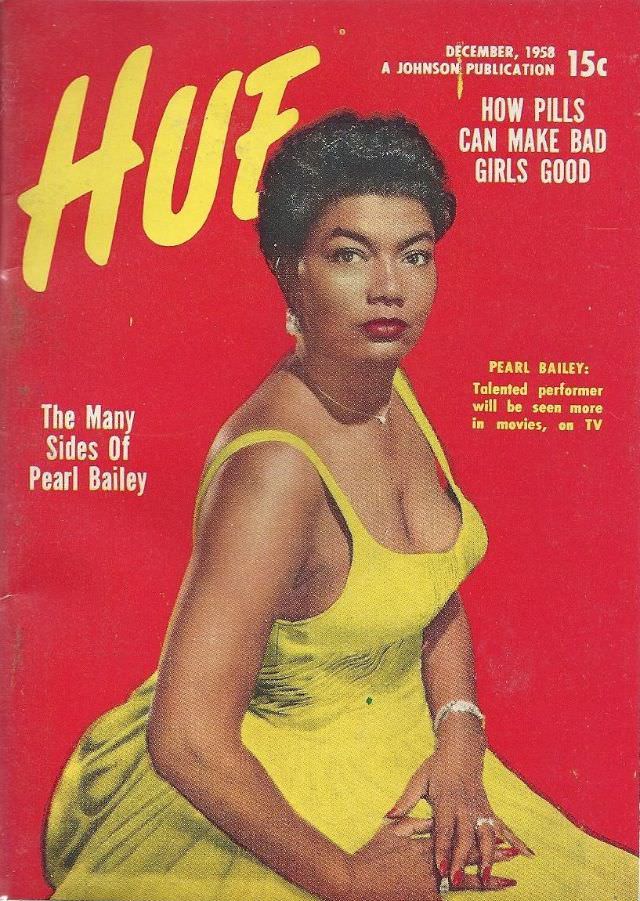
Entertainer Pearl Bailey closed out 1958 with the December issue. The cover promised a look at “the many sides” of Bailey — a fitting subject for a performer known for moving easily between music, comedy, and film.
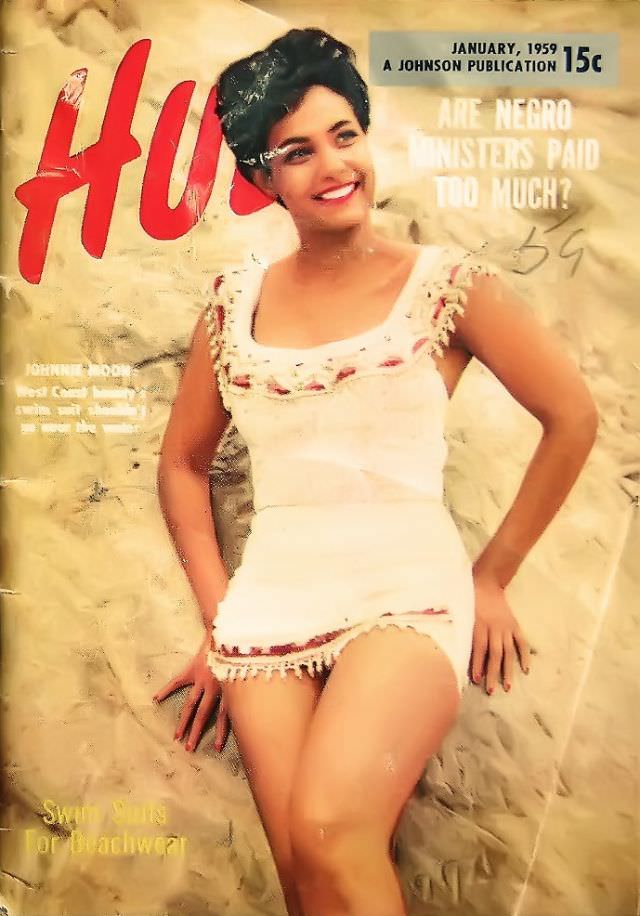
The collection wraps up with Johnnie Moon on the January 1959 cover, carrying the magazine’s tradition of pairing striking visuals with stories that connected readers to the broader world of Black celebrity and culture.