
Houston, Texas was founded in 1836 and named after General Sam Houston. During the Civil War, it served the Confederacy as a regional military logistics hub. After the war, a large number of Black Americans moved to the city and built their own social and economic networks. By the early 1900s, Houston’s population had reached 58,203. In 1912, Rice Institute opened as the city’s first higher education institution. Through the 1920s, Mexican immigrants arrived in growing numbers, and the population surged. By the 1940s, horse-drawn streetcars were long gone, replaced by buses, and Ellington Field had reopened to serve the needs of World War II. Heading into the 1950s, Houston was a city on the move — growing fast, wrestling with the tensions of the era, and carrying on the traditions that made Texas unmistakable. These rare vintage photographs capture that decade in vivid detail.
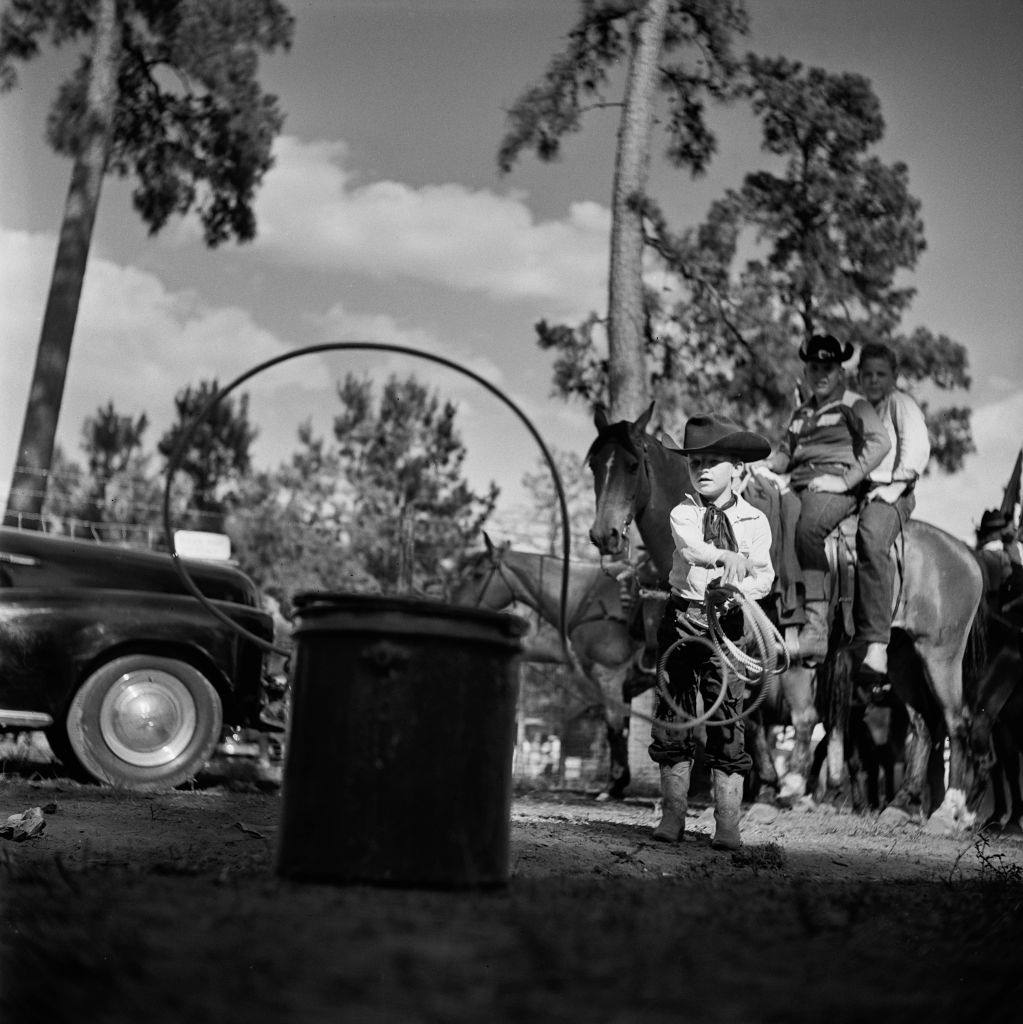
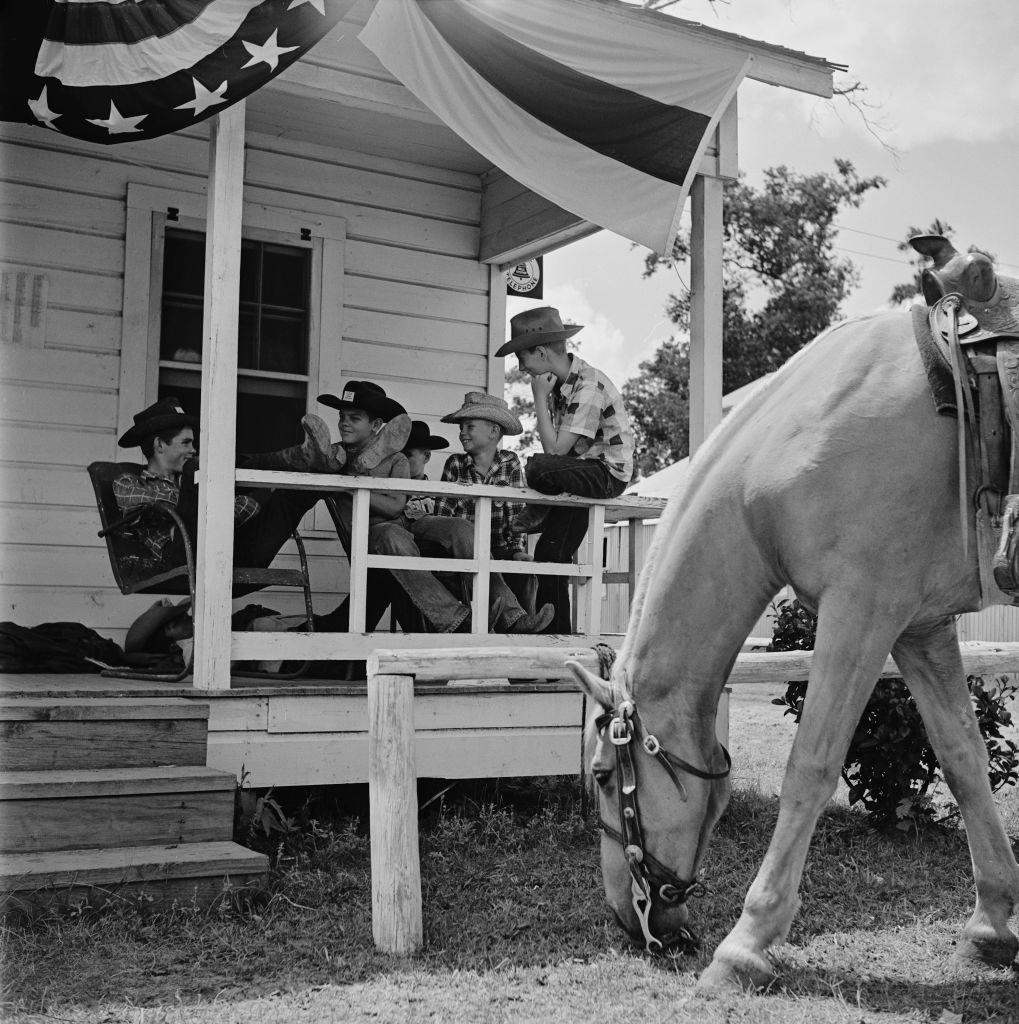
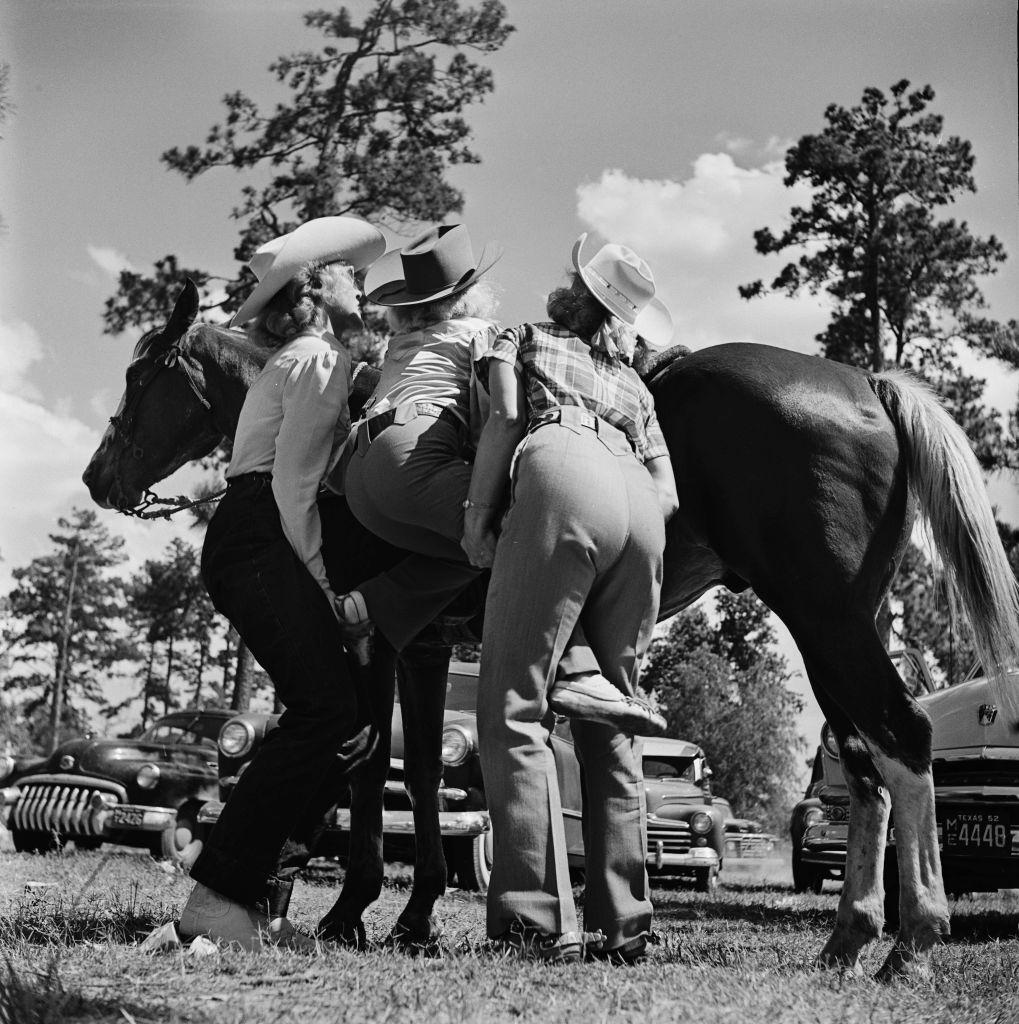
Few events captured the spirit of Texas in the 1950s quite like the rodeo. Houston’s youth rodeos gave young contestants the chance to learn the skills that had defined the region for generations — roping, riding, and competing under the open sky.
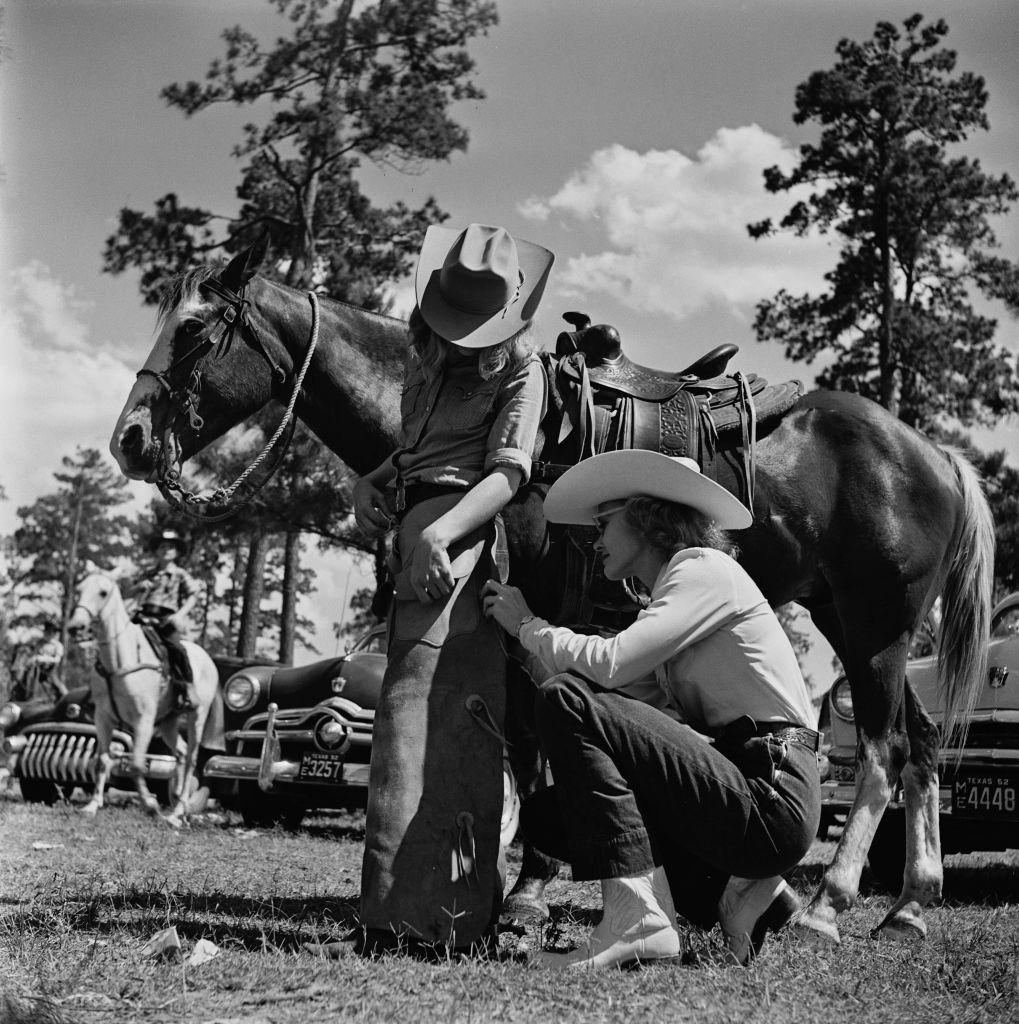
At the May 1952 youth rodeo, children practiced their lasso technique with serious focus. Adults coached from the sidelines, and the atmosphere mixed the thrill of competition with the warmth of community tradition.
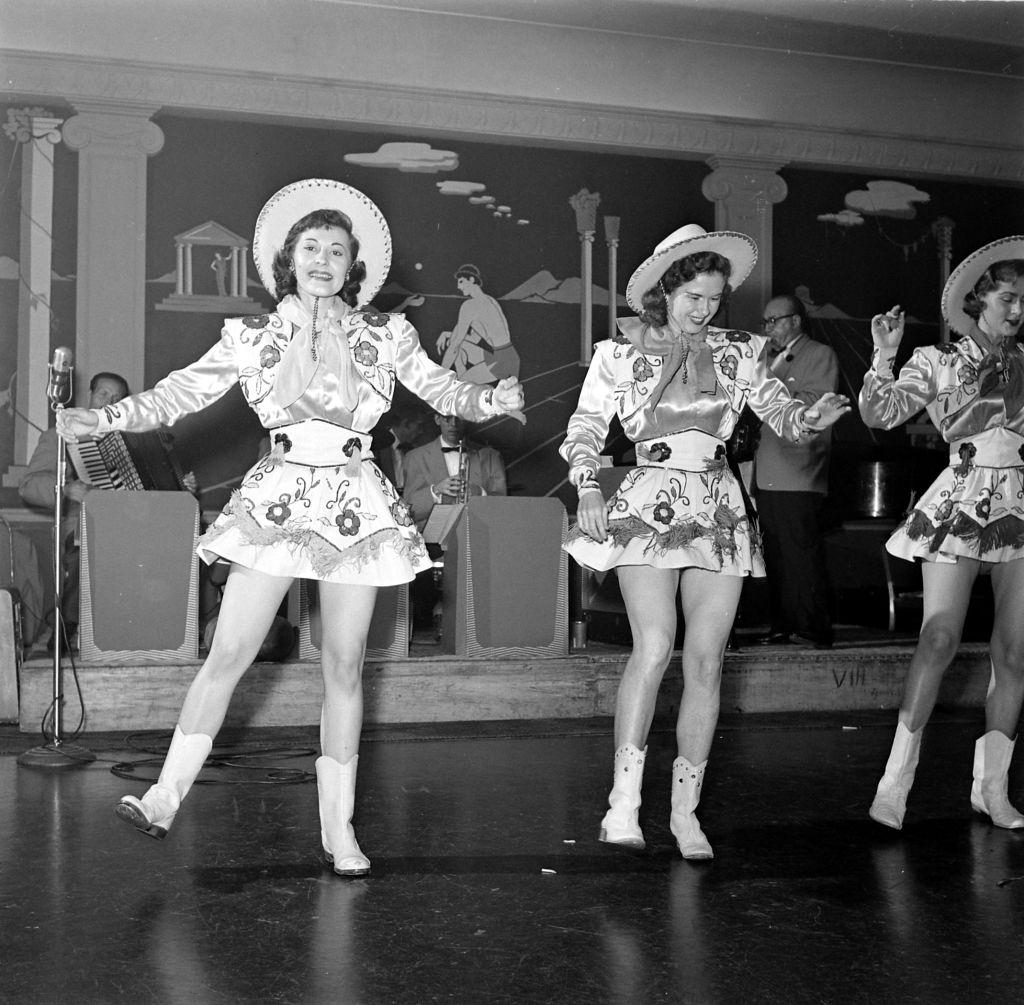
The rodeo spirit carried into Houston’s social calendar as well. Charity balls of the early 1950s embraced Western themes, with performers arriving in full cowgirl costumes, bringing a theatrical energy to formal fundraising events.
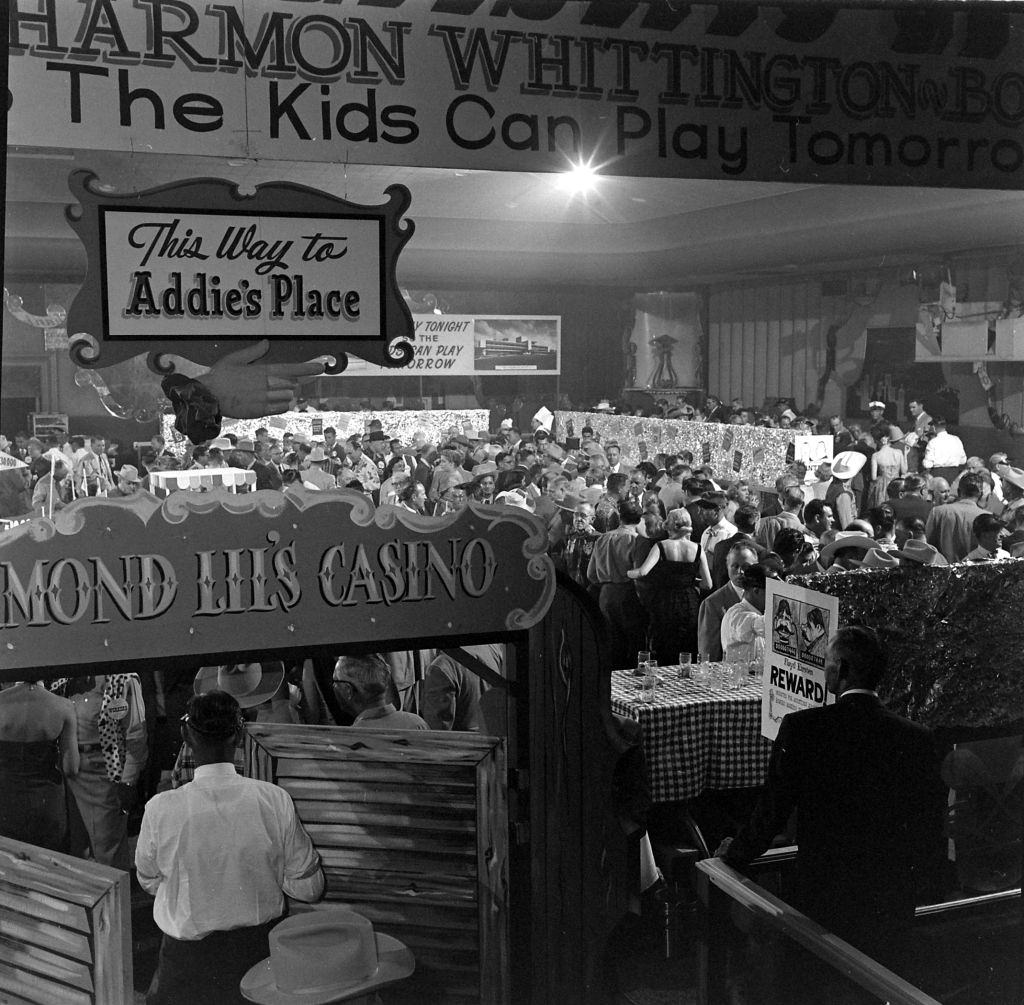
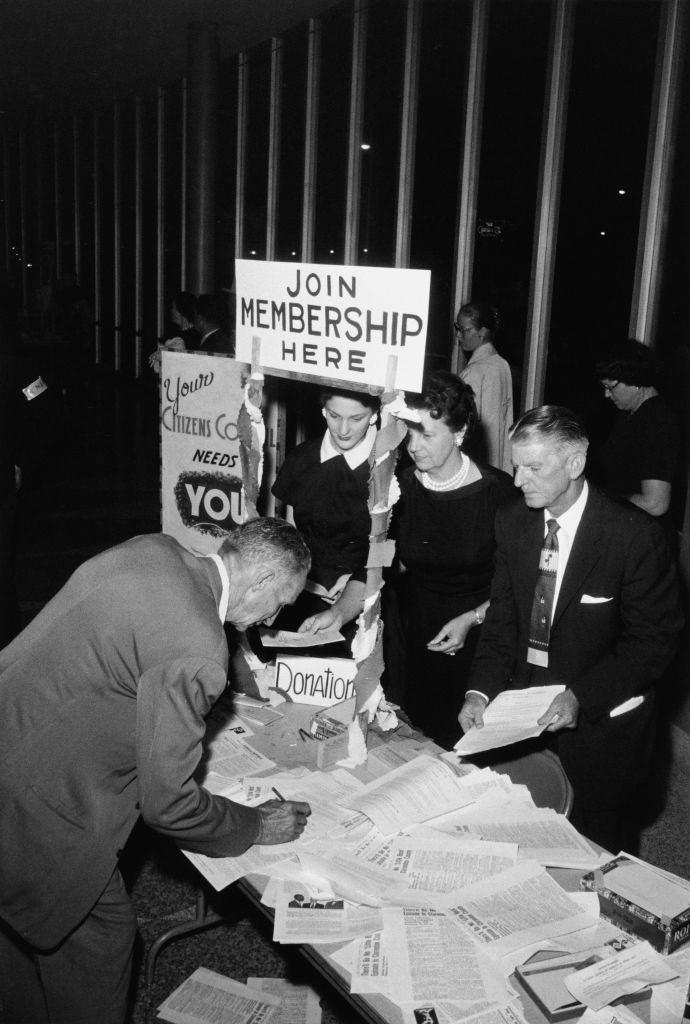
The 1950s in Houston were not free from the ugliest politics of the era. Racial segregation was not just a law — it was actively championed by organized groups. Pro-segregation meetings were held openly, with participants distributing materials that pushed back hard against any step toward integration, including referencing events like the Little Rock school crisis of 1957.
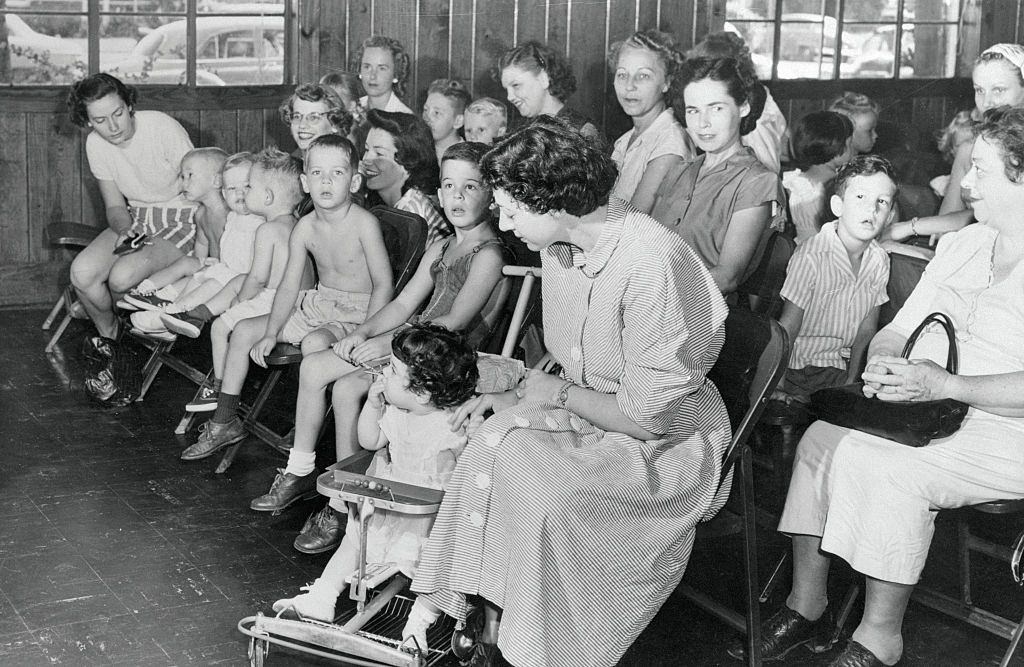
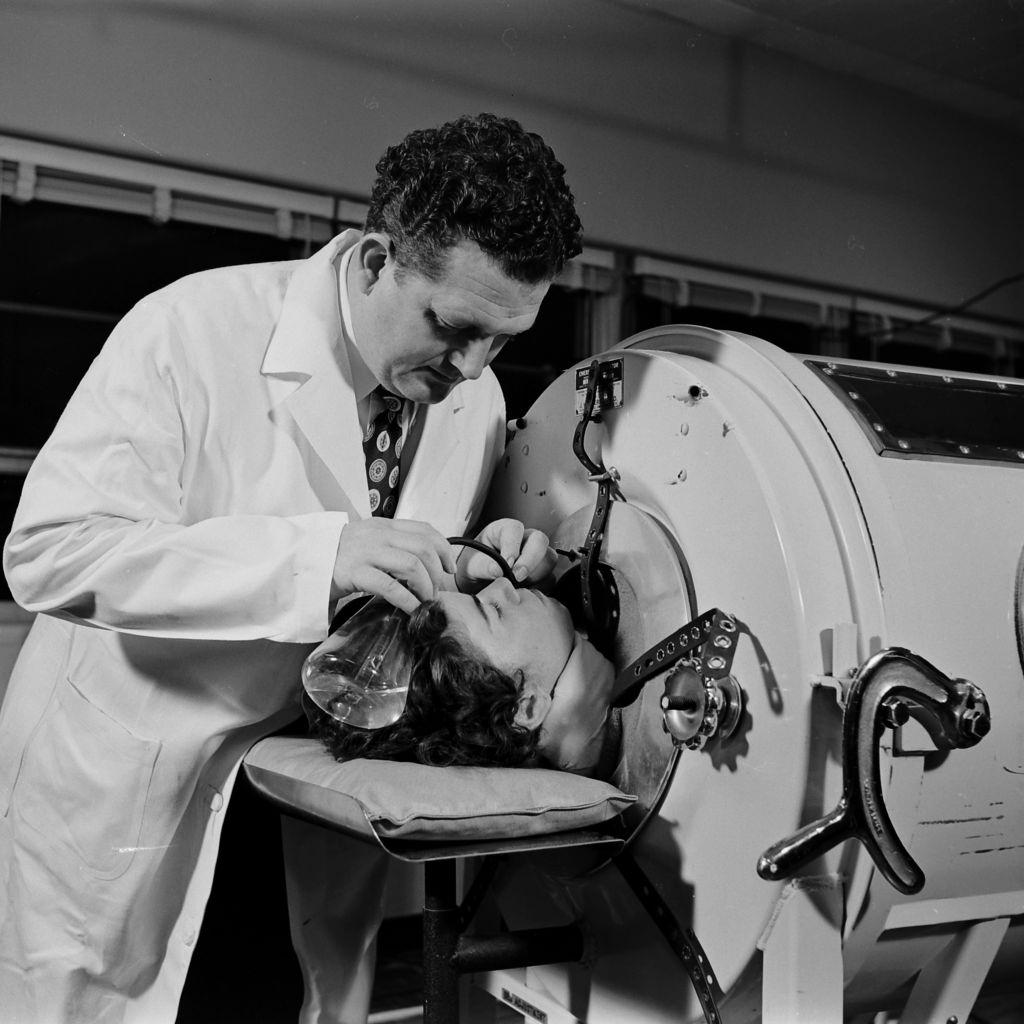
Public health was a defining issue of the decade. Polio was still a serious threat in the early 1950s, and Houston organized drives to vaccinate children and treat those already affected. Iron lungs — large metal chambers that helped patients breathe — were a common sight in polio treatment centers across the country, including Houston.
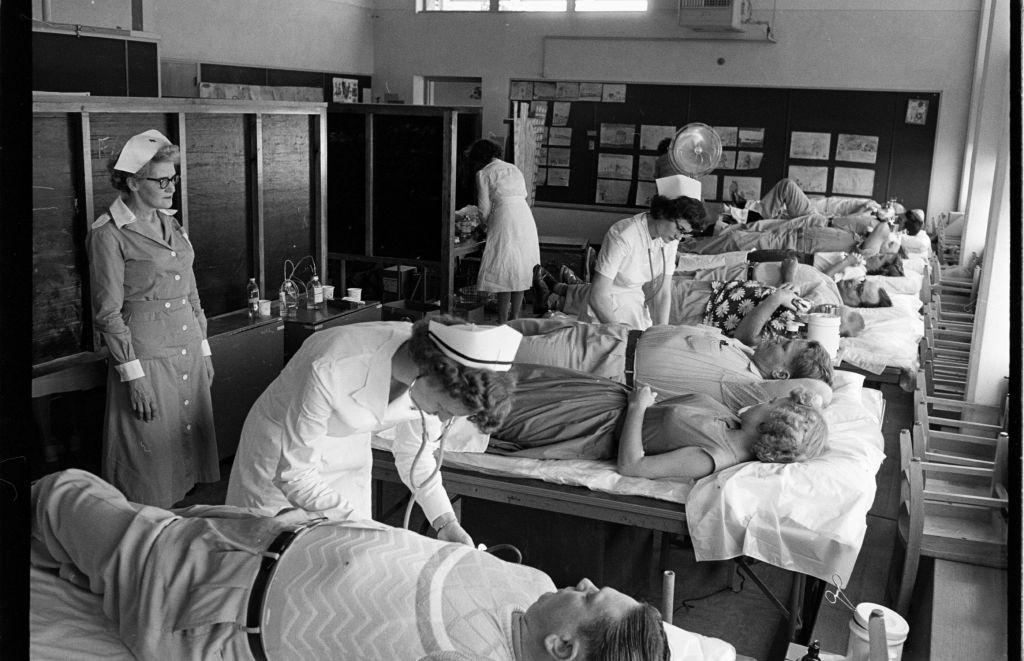
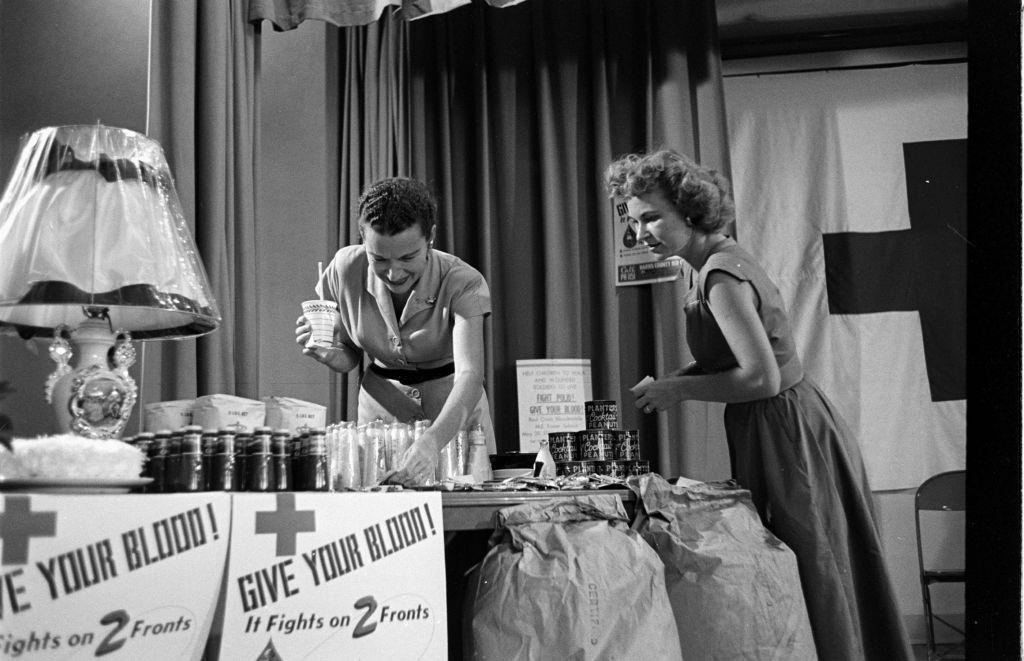
Blood drives were another form of community mobilization. Houstonians turned out in large numbers throughout 1953, with volunteers and organizers going out of their way to make the events engaging and accessible.
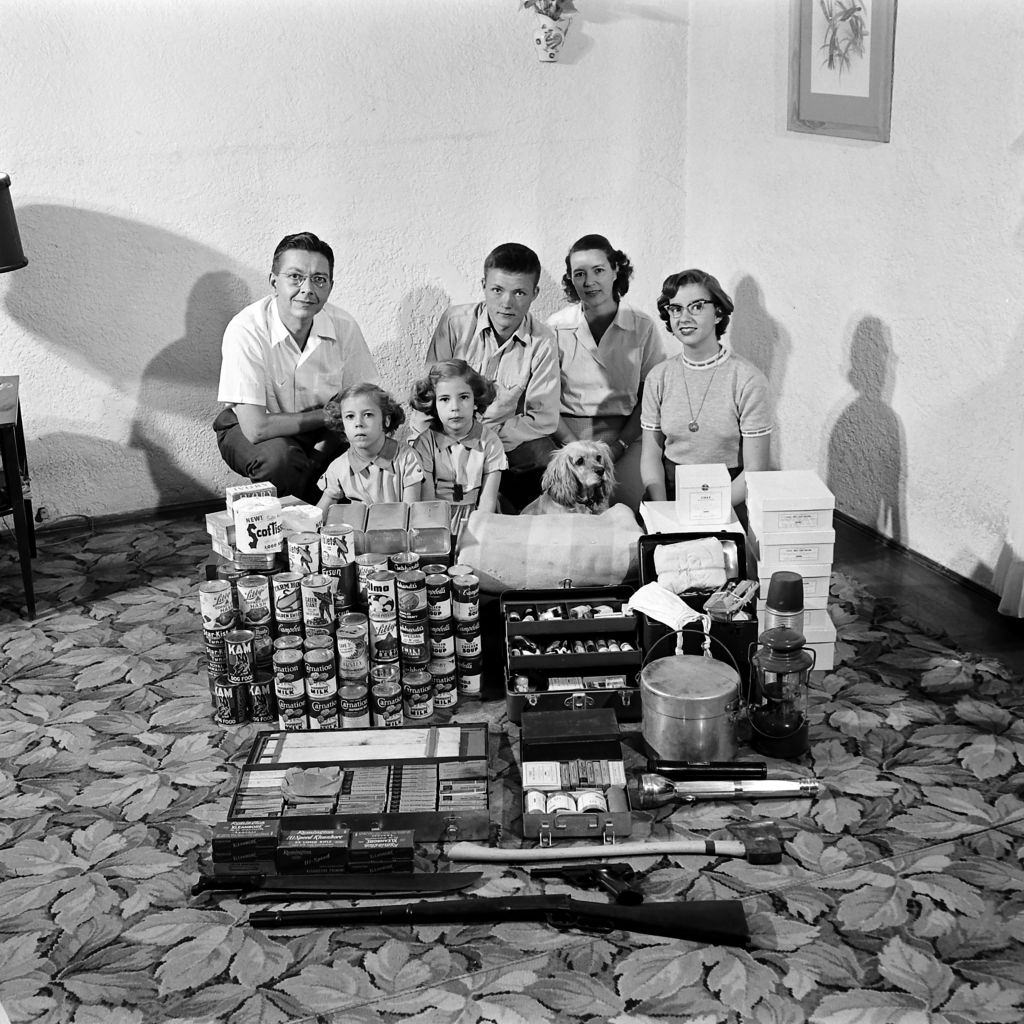
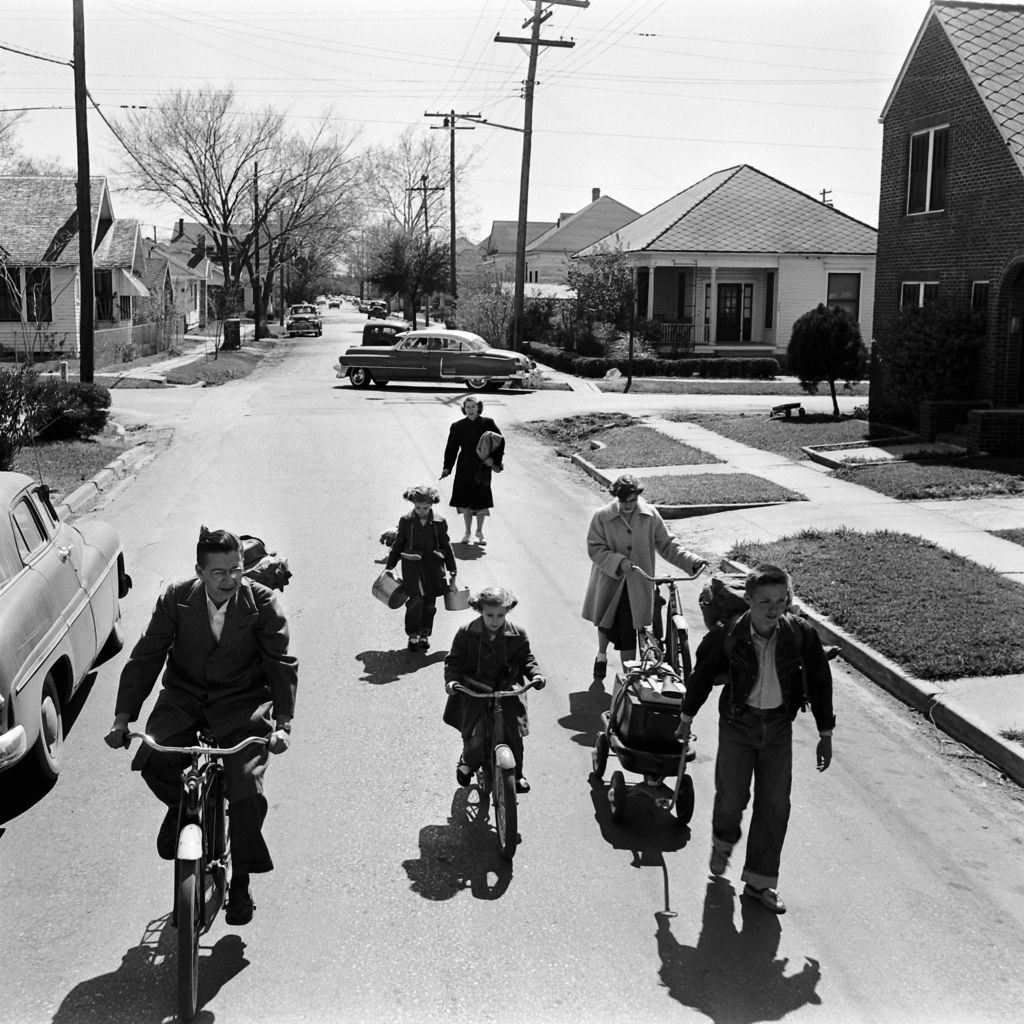
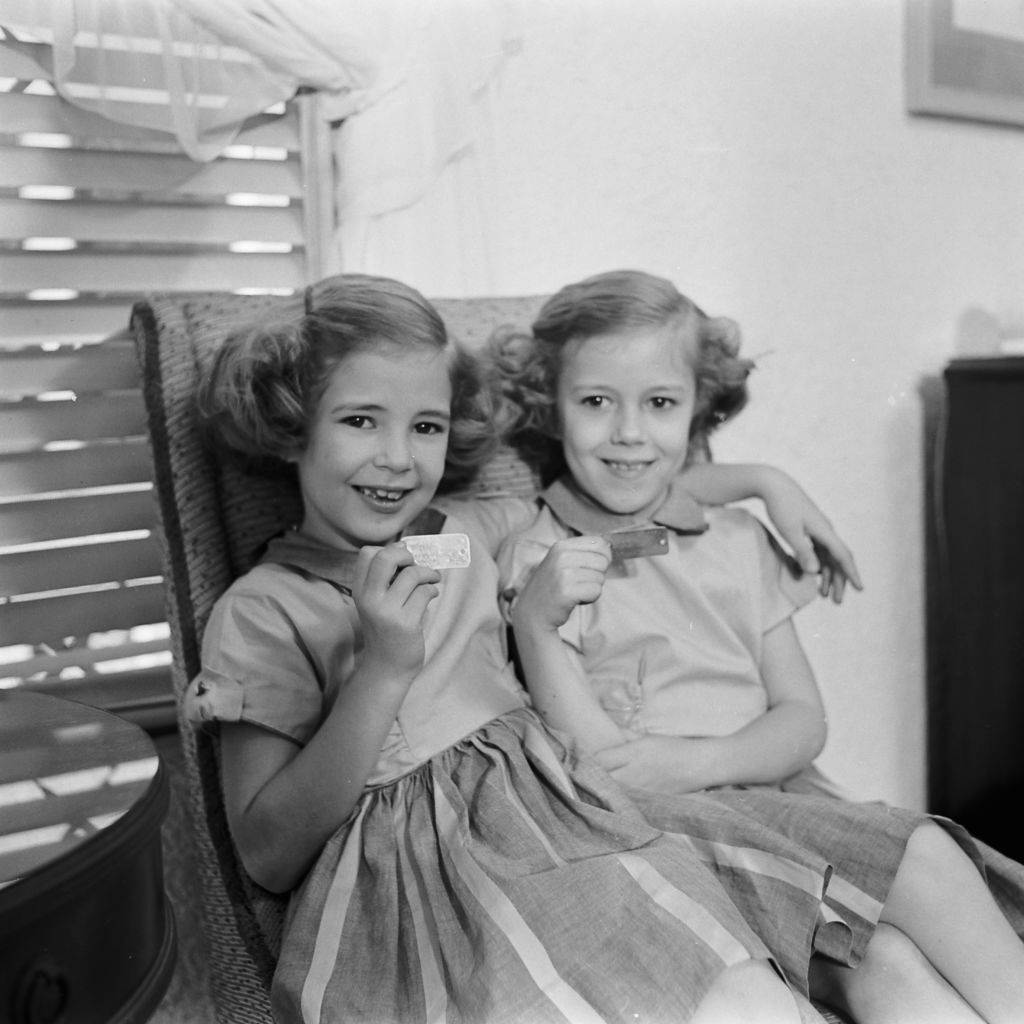
The Cold War cast a long shadow over American domestic life. In March 1954, Houston families ran atomic war drills, stocking makeshift bomb shelters with food and first aid supplies. Children wore identification tags around their necks during the drills — a sobering detail that reflected just how seriously families took the threat of nuclear attack.
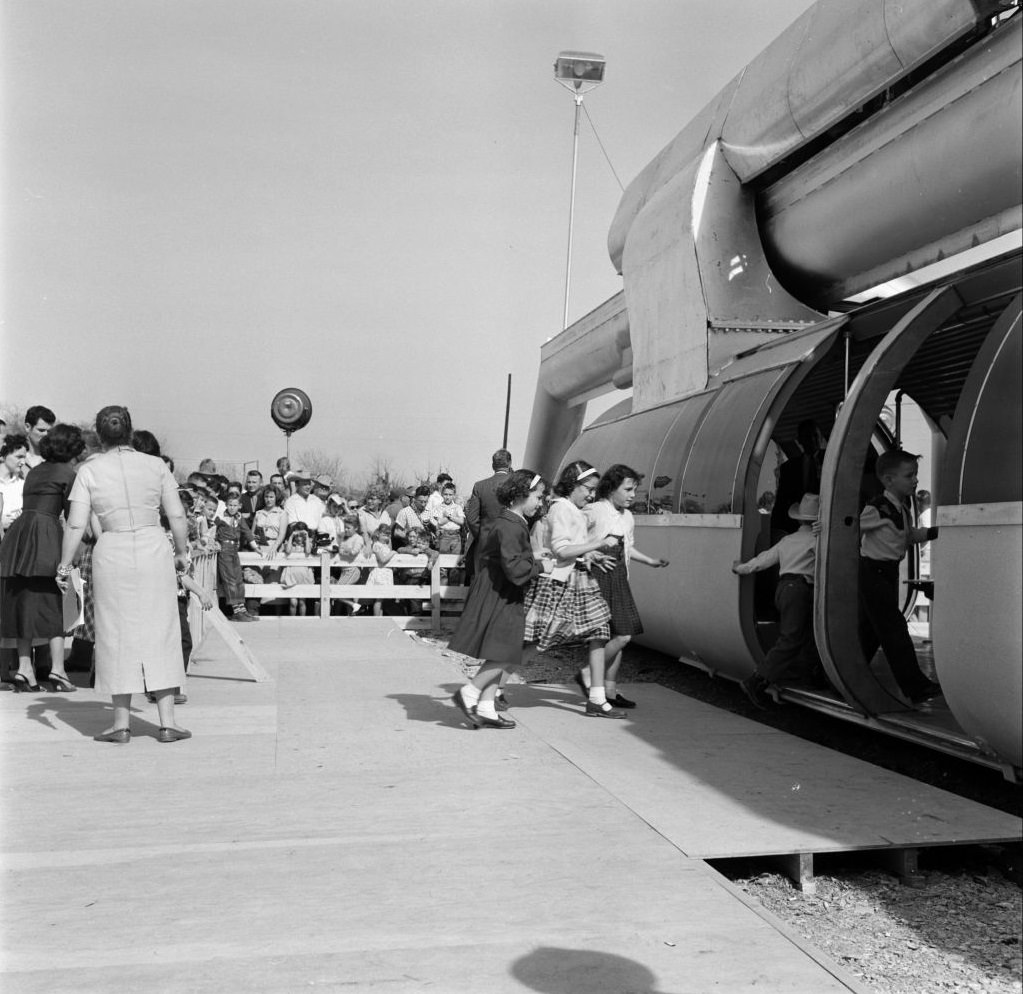
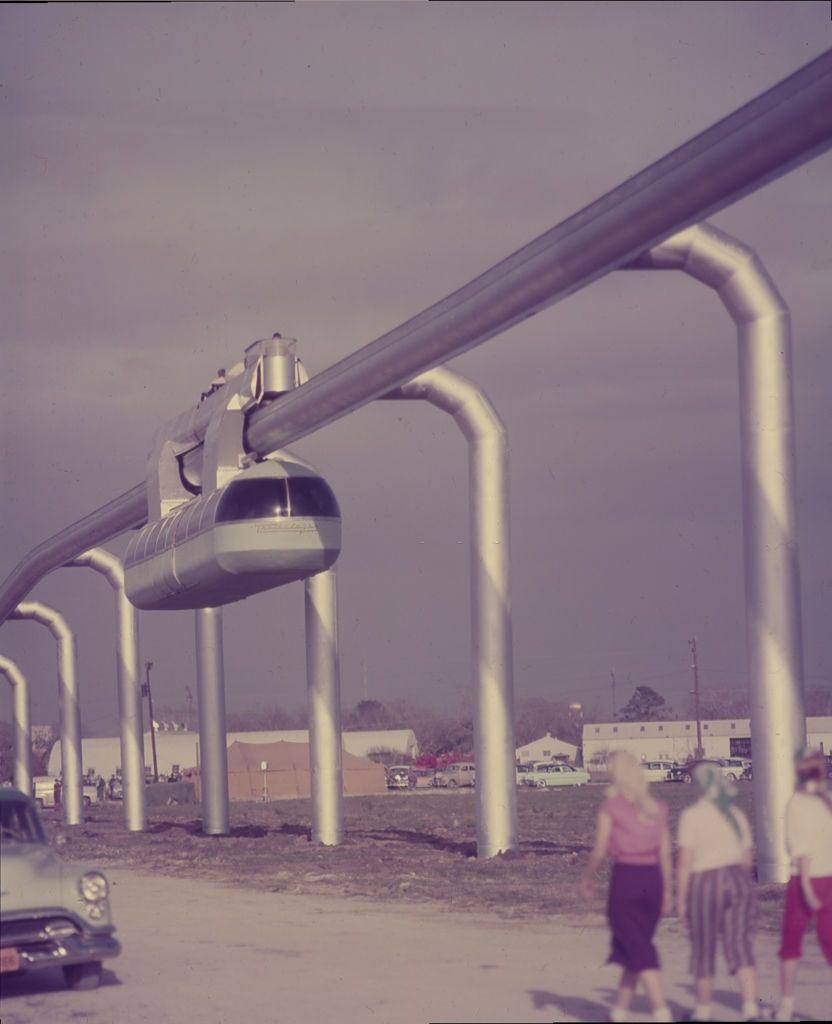
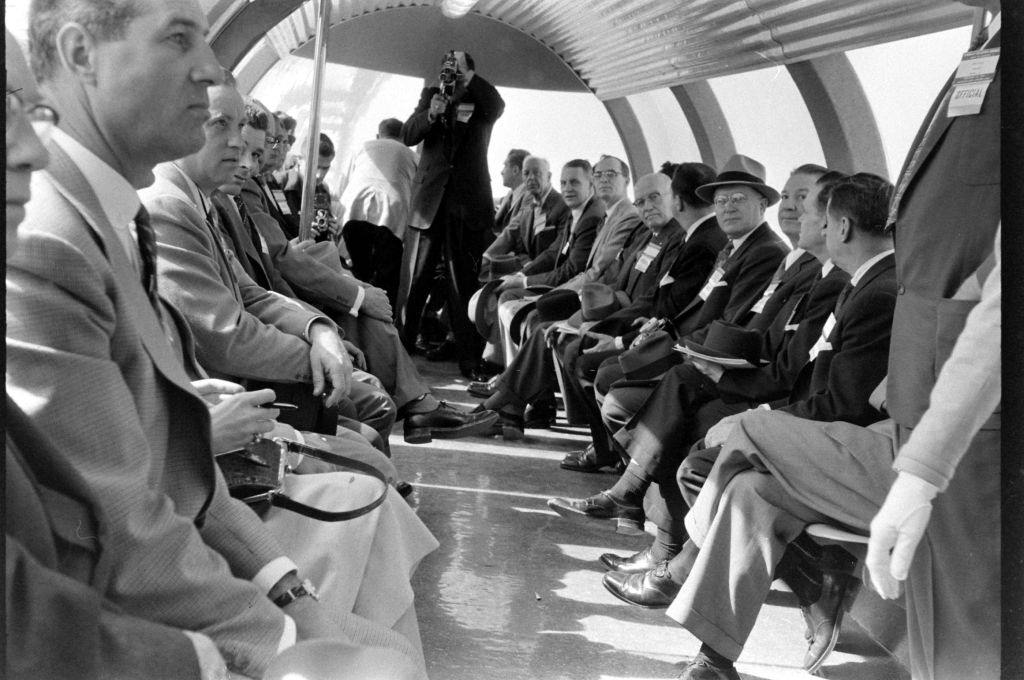
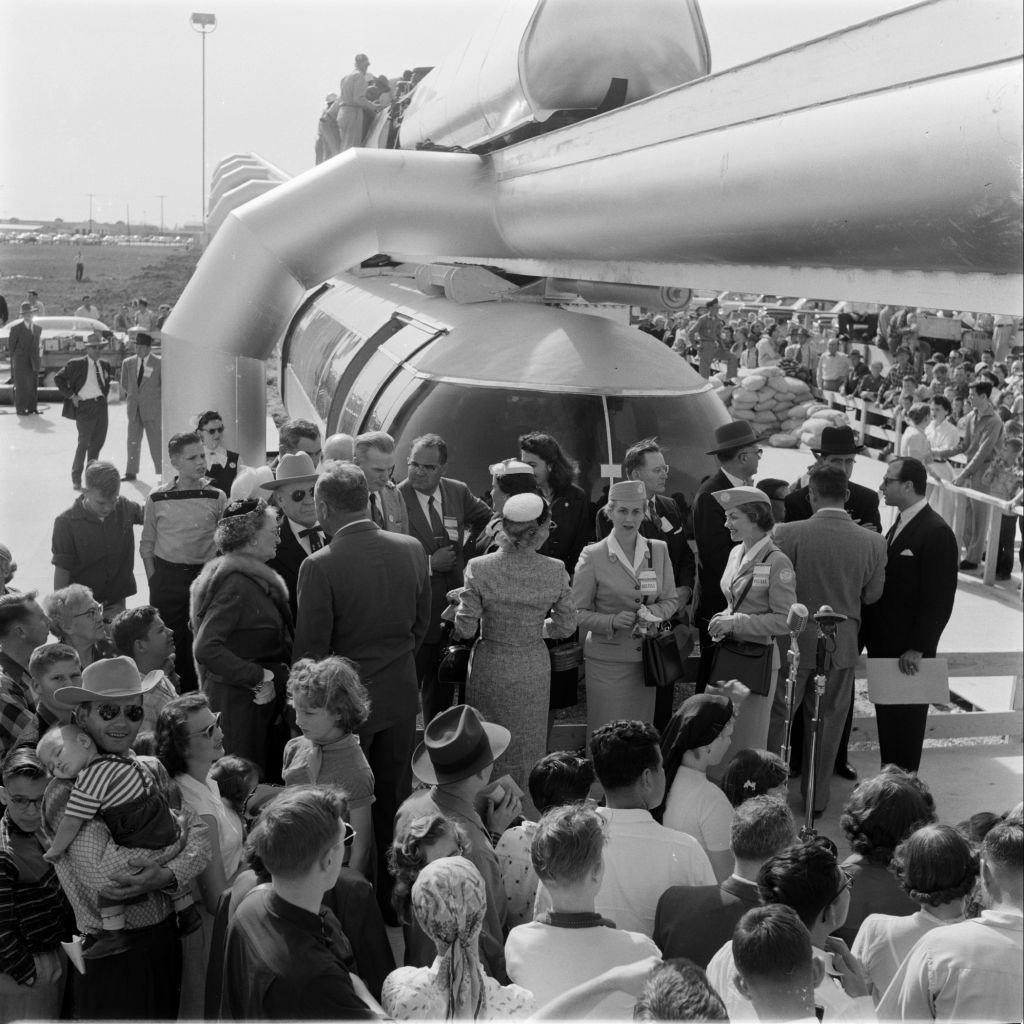
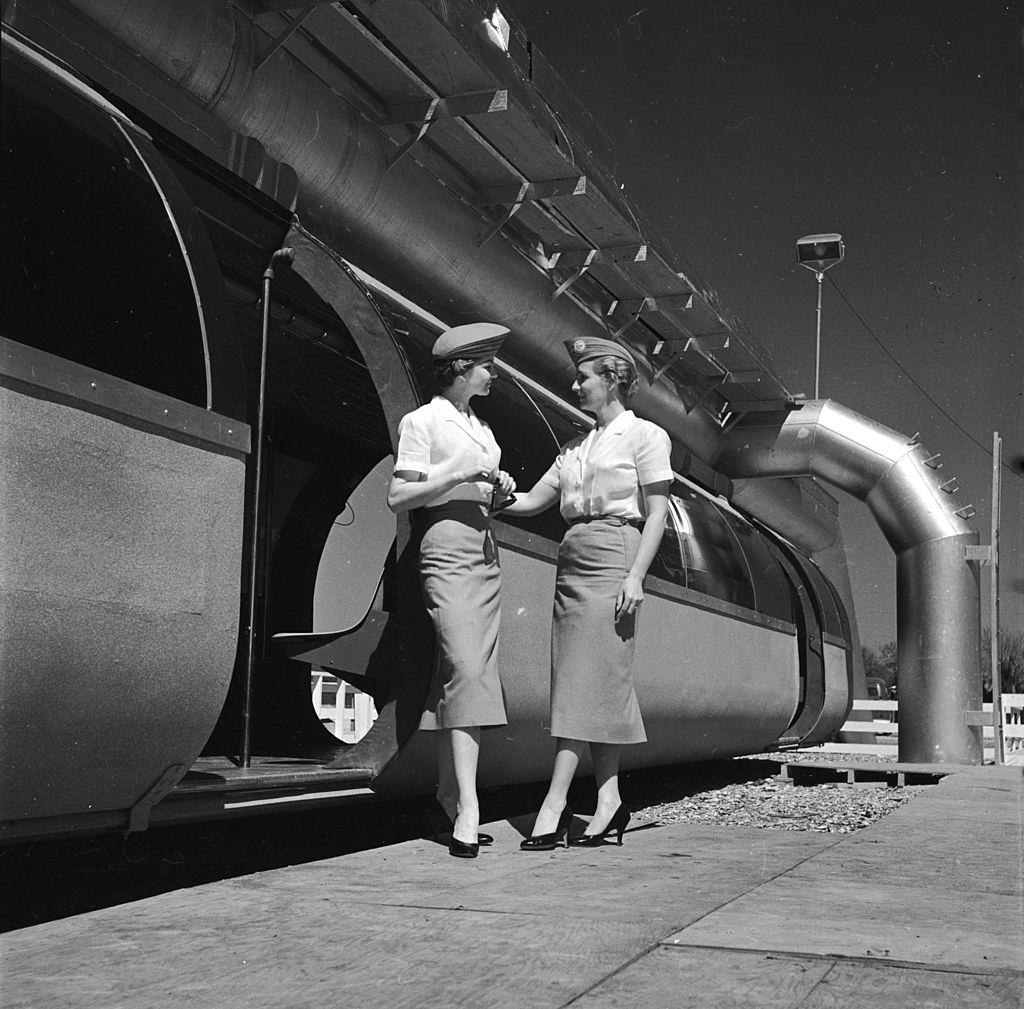
Houston’s infrastructure was growing just as fast as its population. In 1956, a new monorail service made its debut, drawing crowds of curious residents who came to ride it or simply watch. The sleek trains represented the city’s forward-looking ambition during a decade defined by optimism about technology and progress.
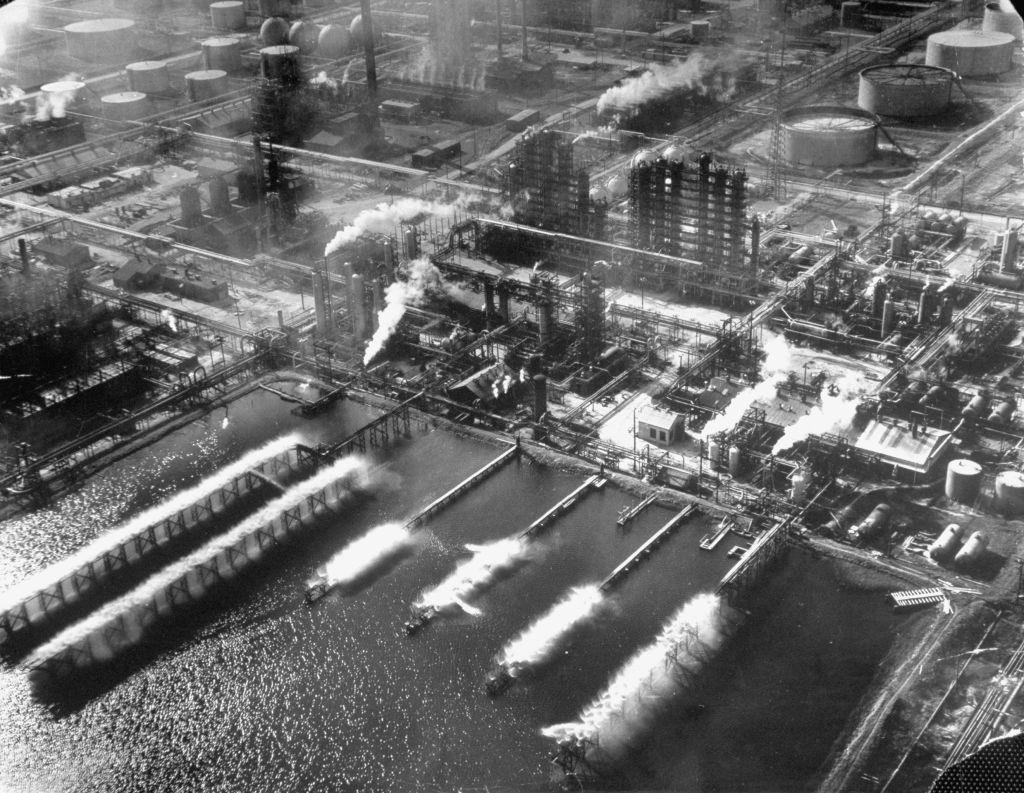
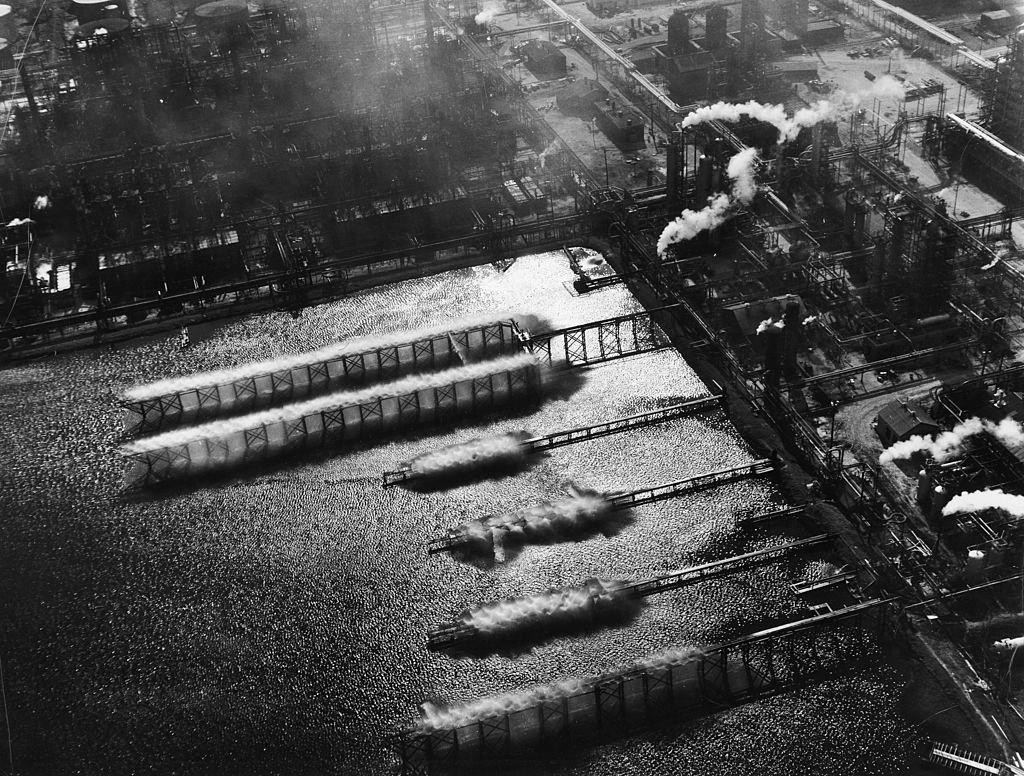
The oil industry remained the backbone of Houston’s economy throughout the decade. Humble Oil Co. operated extensive dock facilities, and aerial views from 1951 show just how large-scale the operation had become. The petrochemical industry’s presence defined the city’s skyline and its workforce.
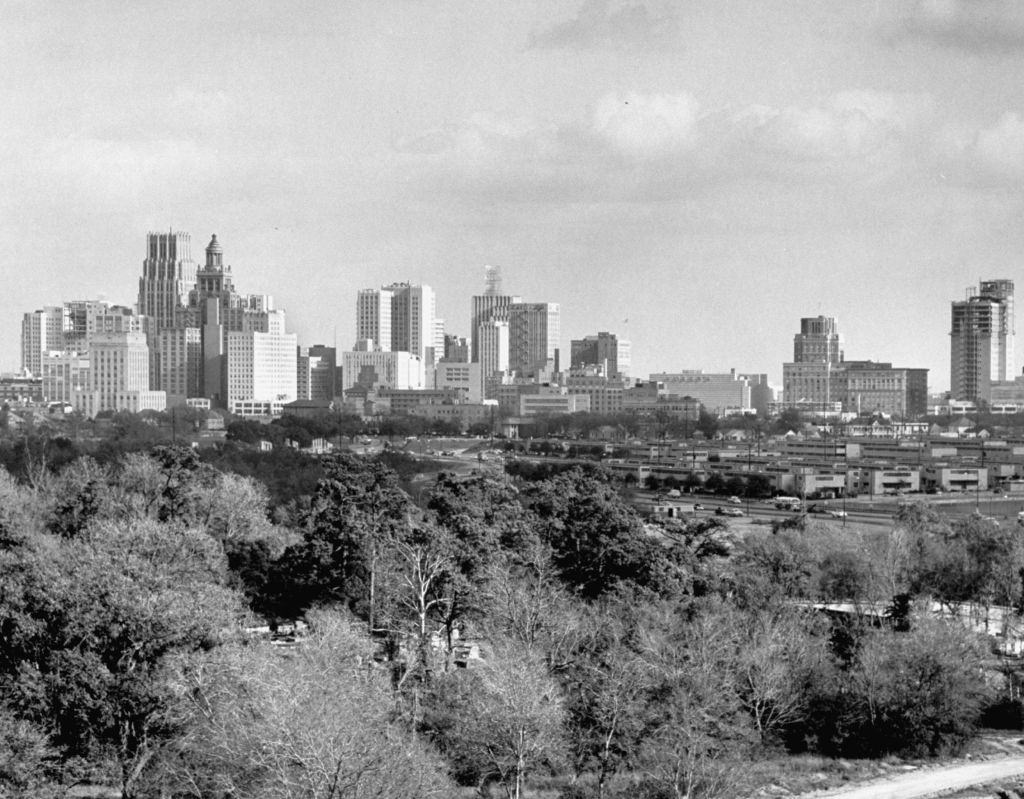
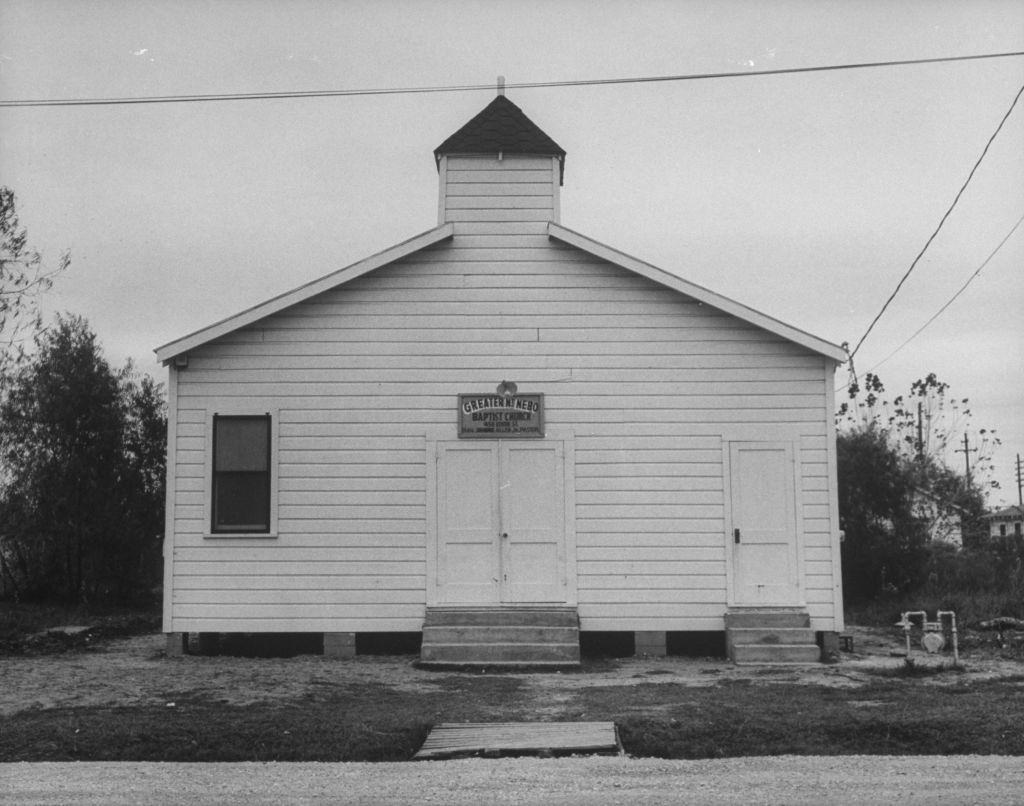
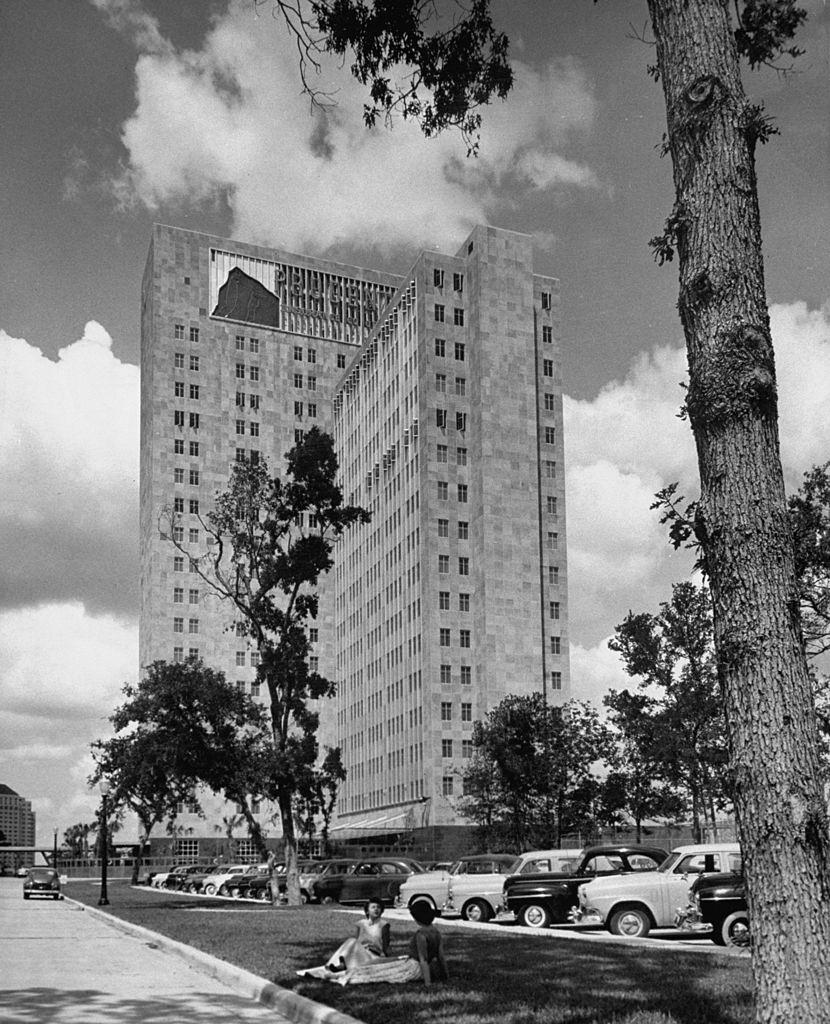
Houston’s skyline itself was changing rapidly through the 1950s. New office buildings, churches, and institutions were going up across the city. The Prudential Insurance building stood as one example of the commercial construction boom, while dozens of new churches reflected the city’s expanding residential neighborhoods.
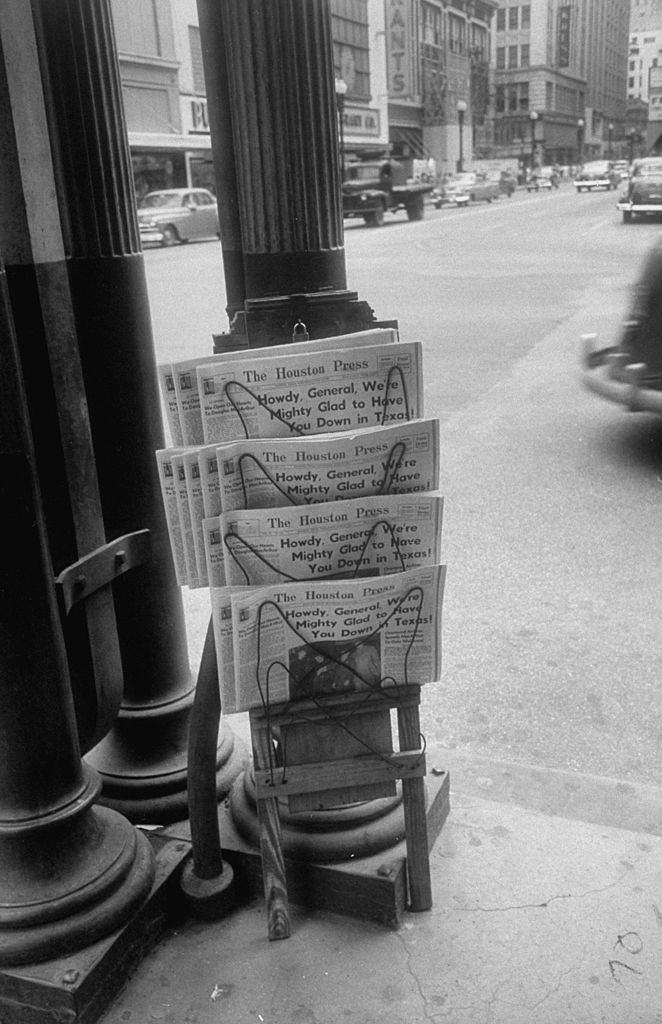
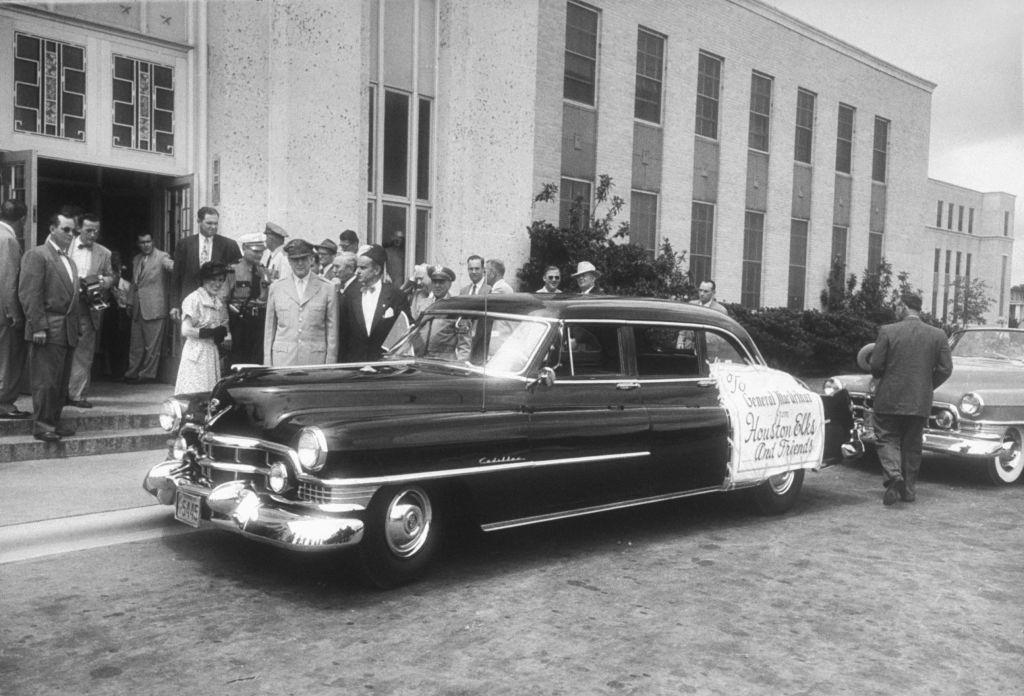
General Douglas MacArthur visited Houston in 1951 and received a warm welcome from the city. Local newspapers celebrated his arrival, and the Houston Elks presented him with a new Cadillac as a gift. His visit was treated as a major civic event, drawing significant attention from residents and officials alike.
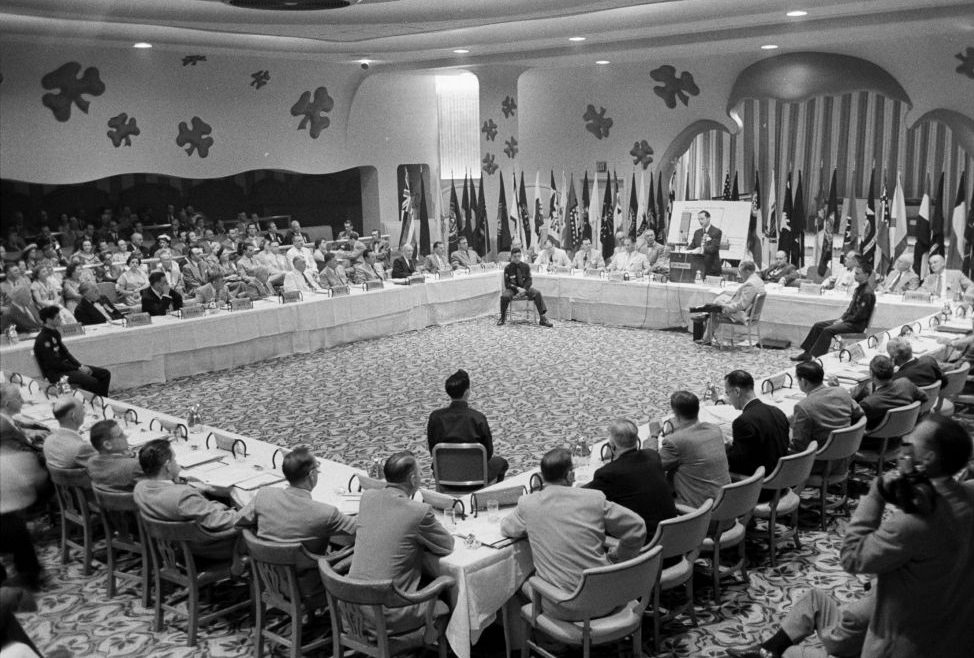
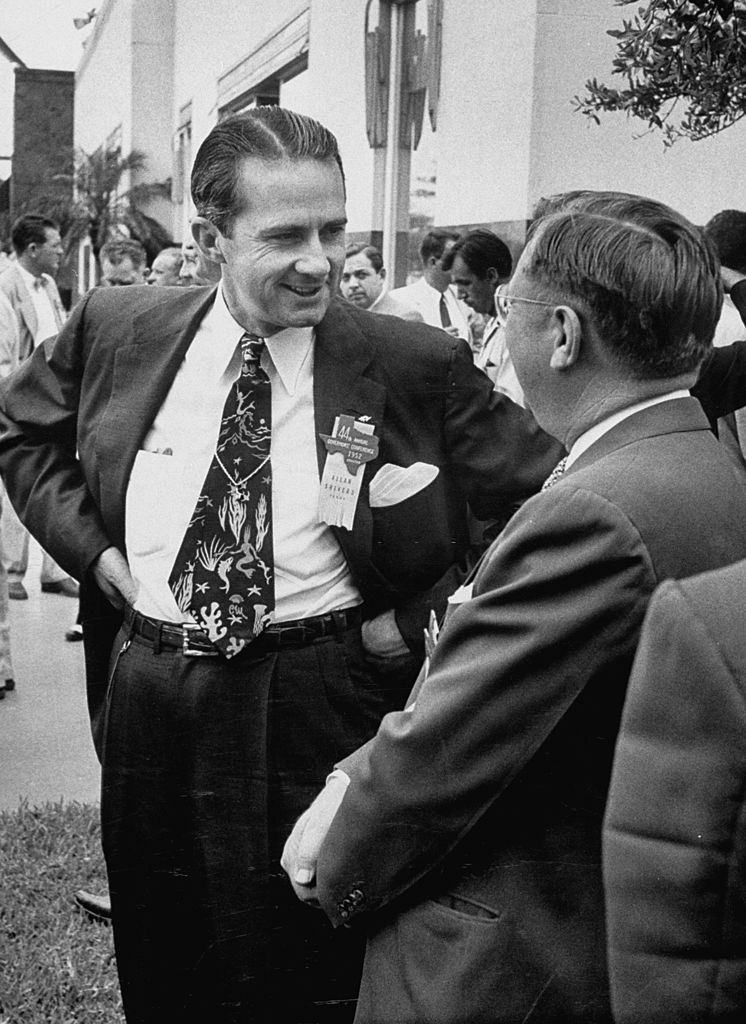
Houston also hosted the National Governors’ Conference in the 1950s, bringing together state officials from across the country. Governor Allan Shivers of Texas was among those in attendance, and the event drew figures including the Warren and Stevenson families.
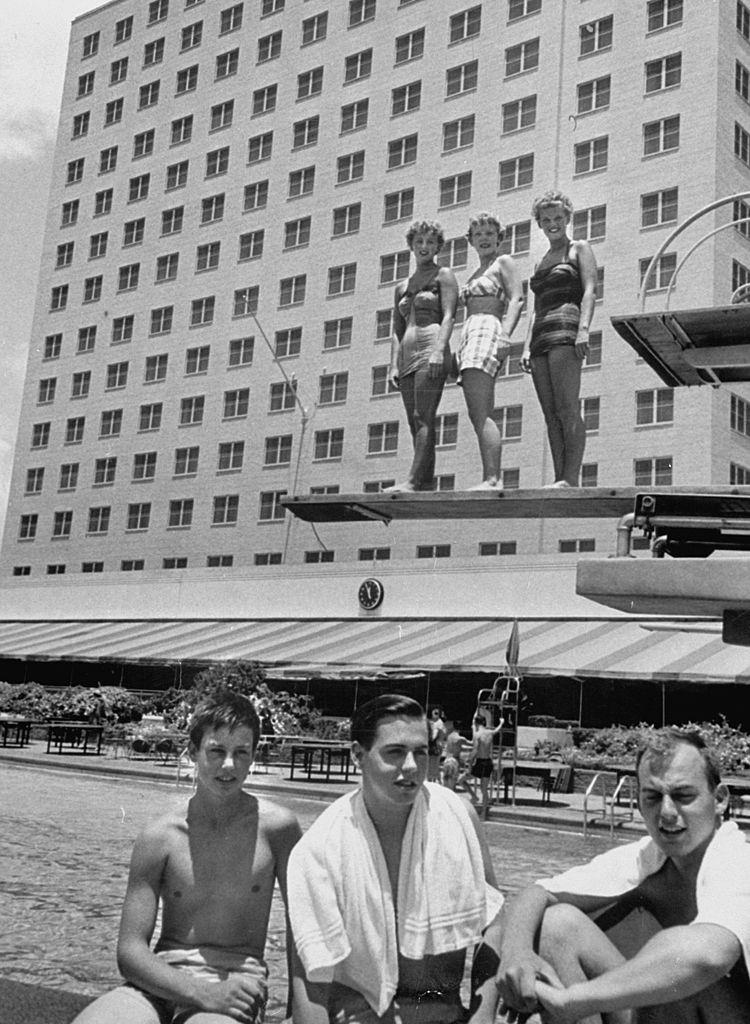
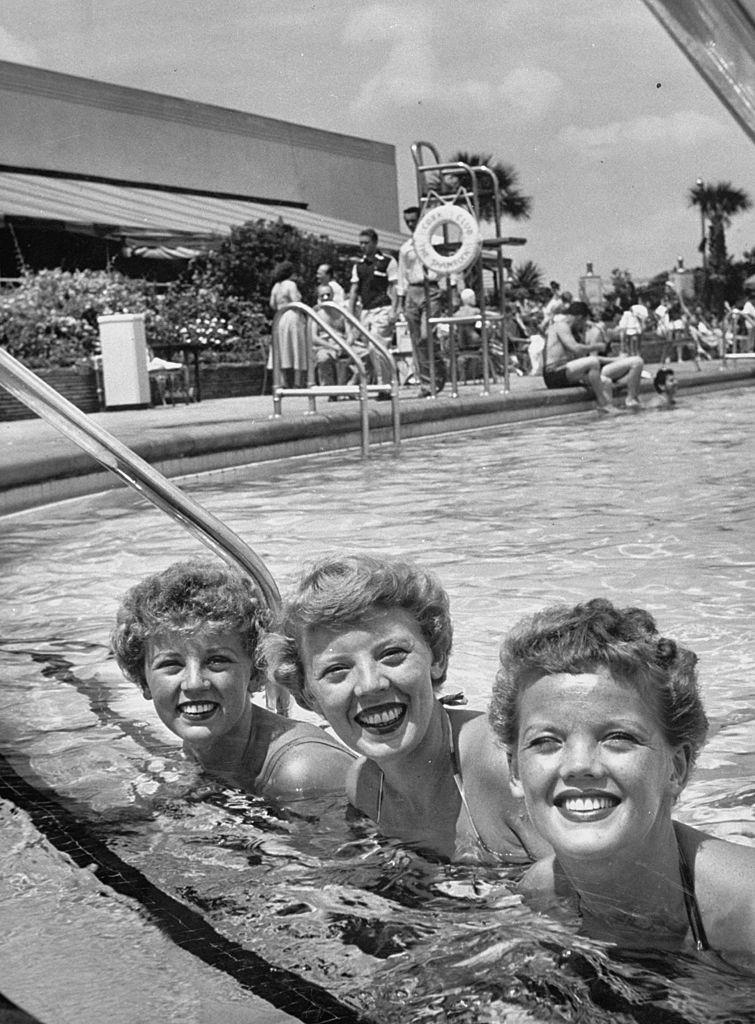
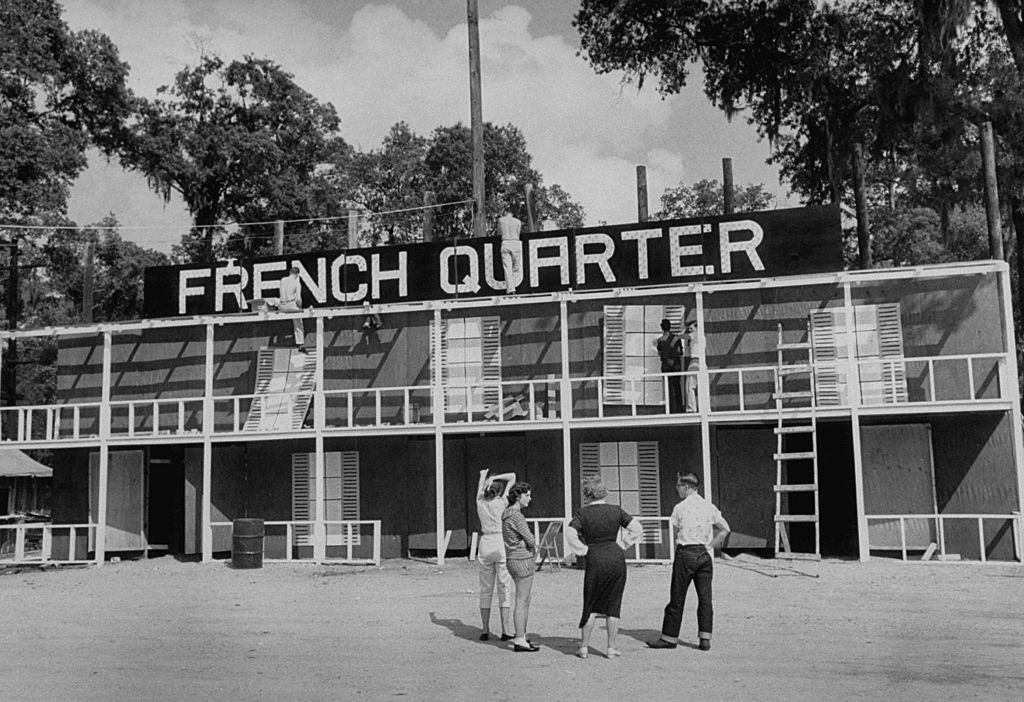
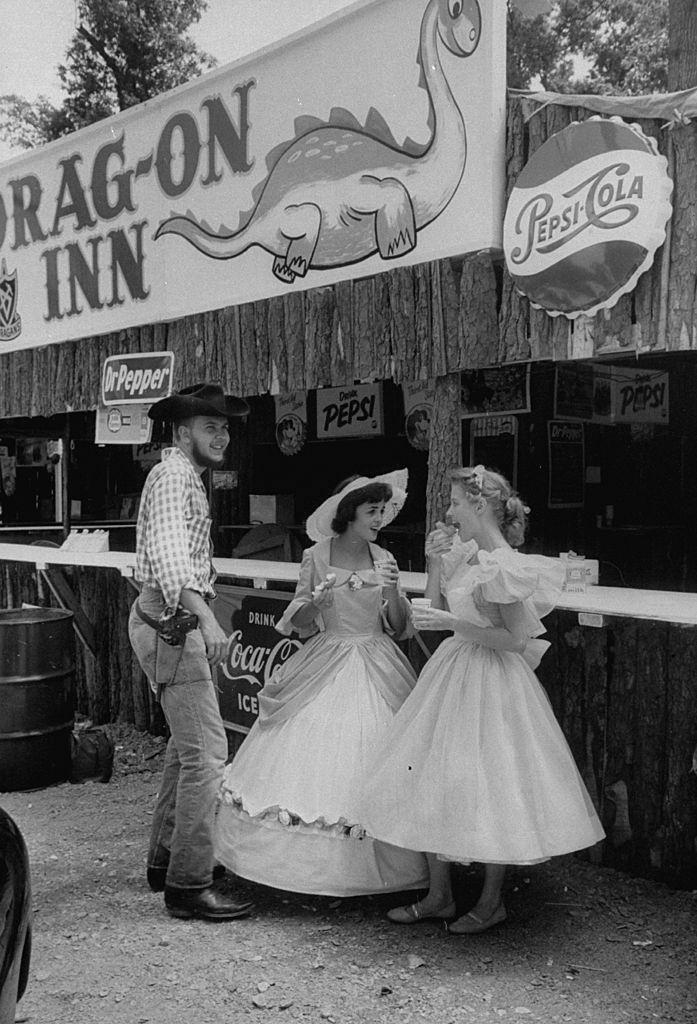
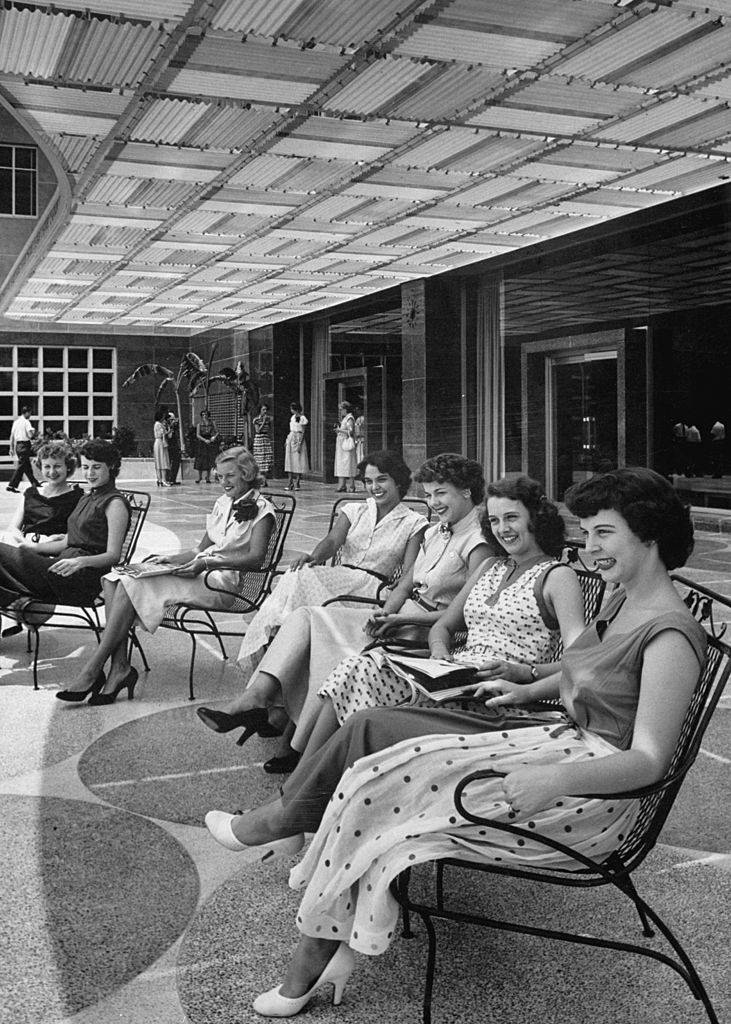
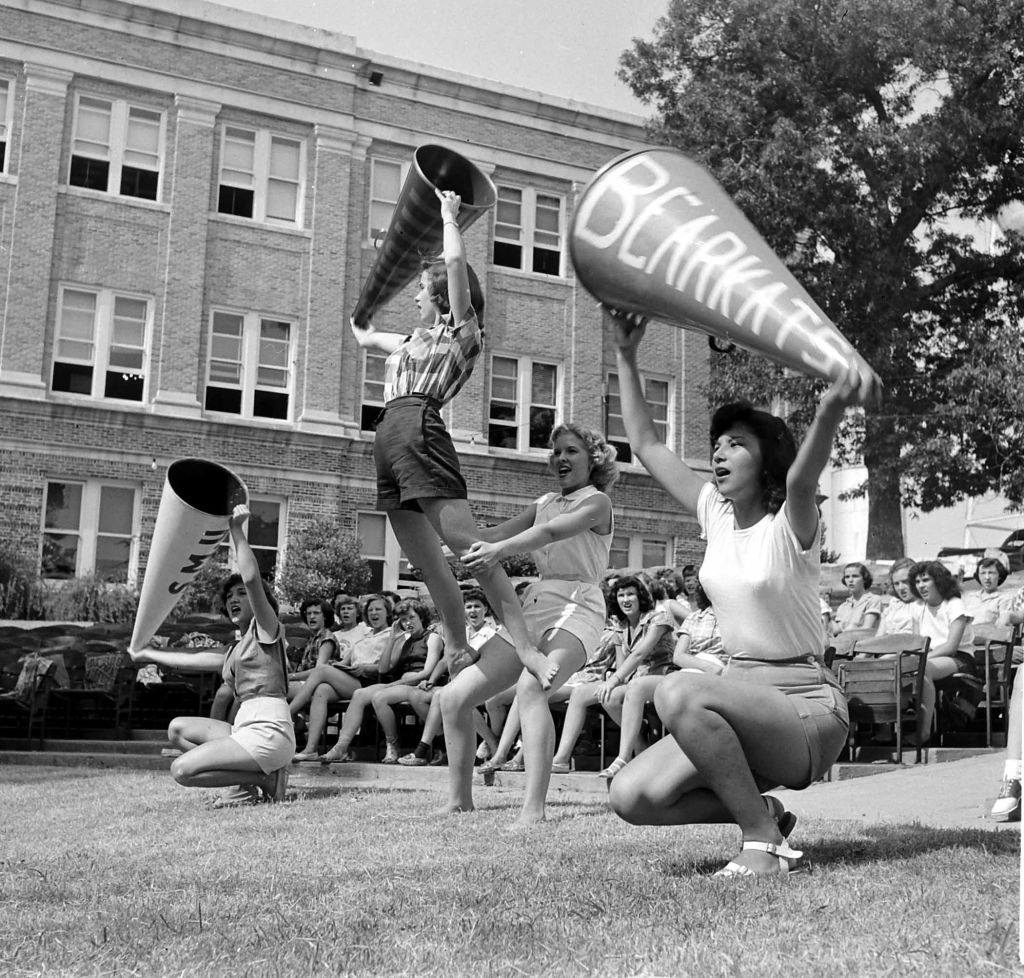
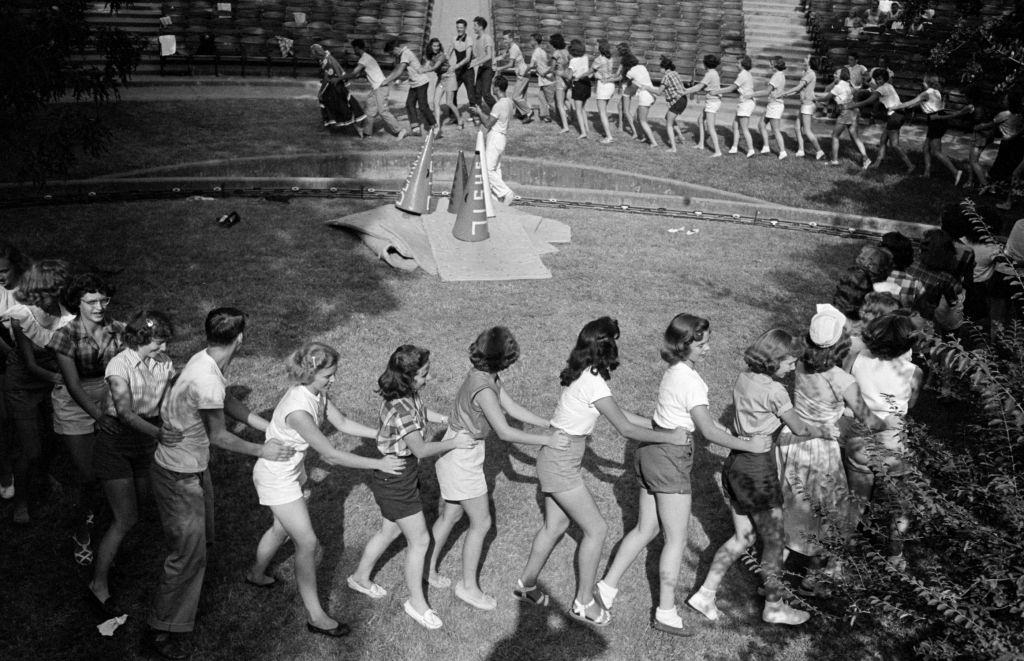
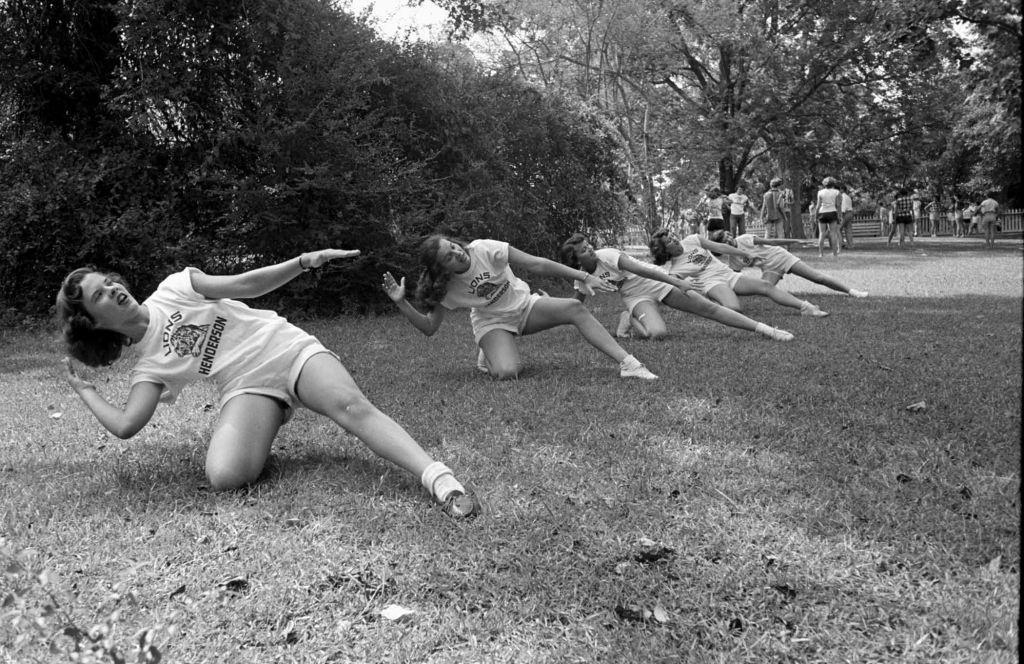
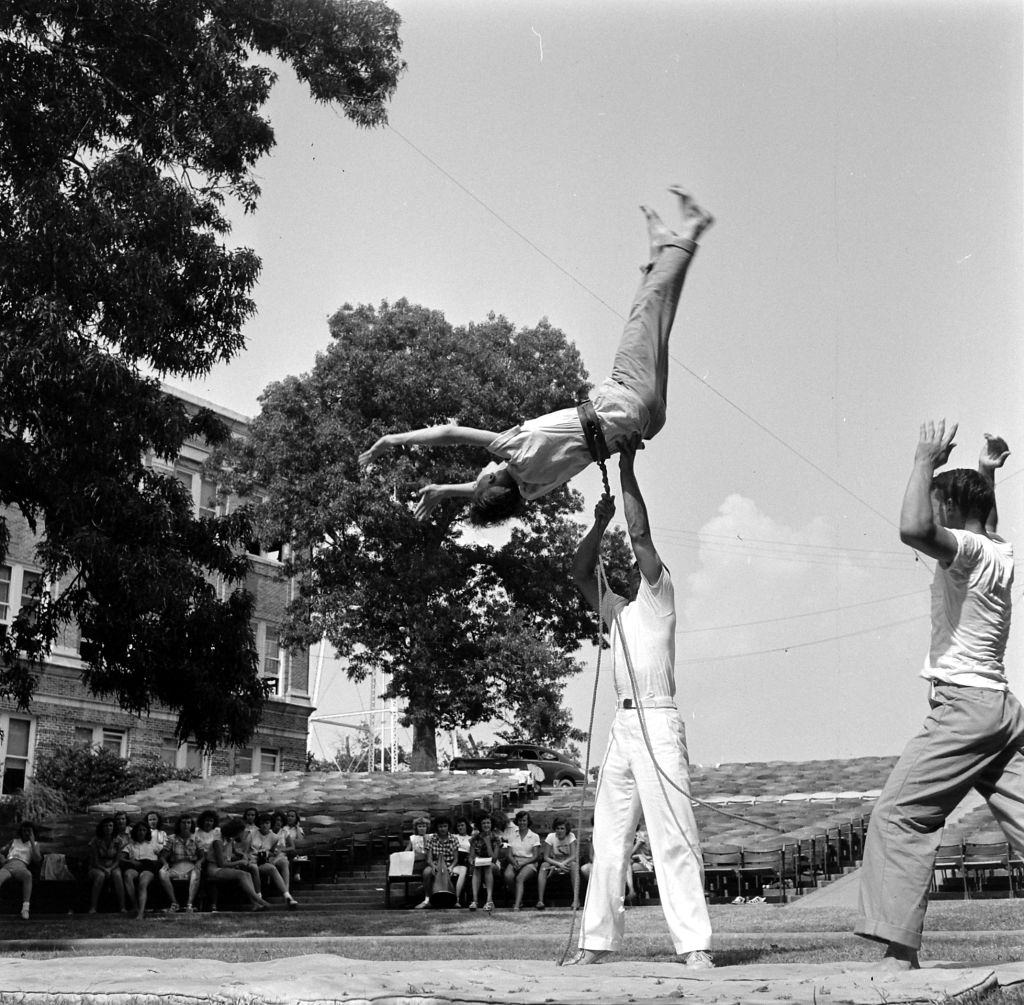
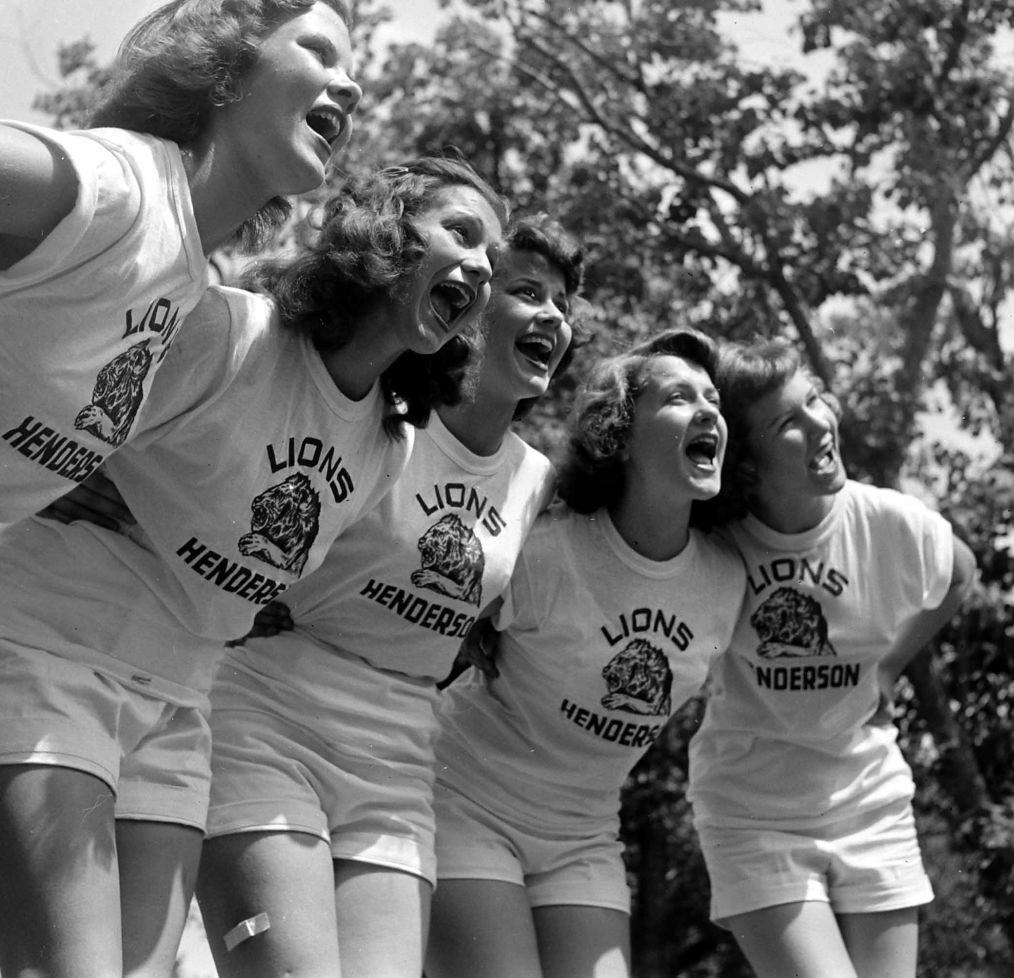
University life was lively and creative throughout the decade. The University of Houston’s annual Frontier Fiesta became a celebrated student tradition, featuring elaborate performances and displays. Sam Houston State Teachers College was also known for its energetic cheerleading program, which trained students in organized routines and acrobatics.
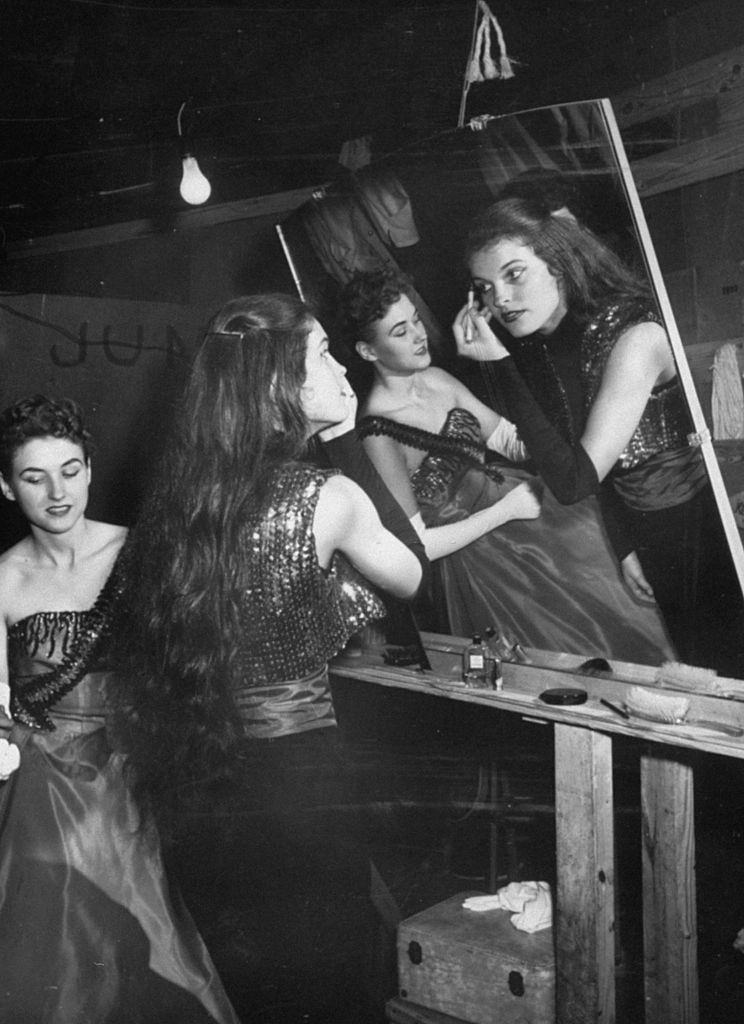
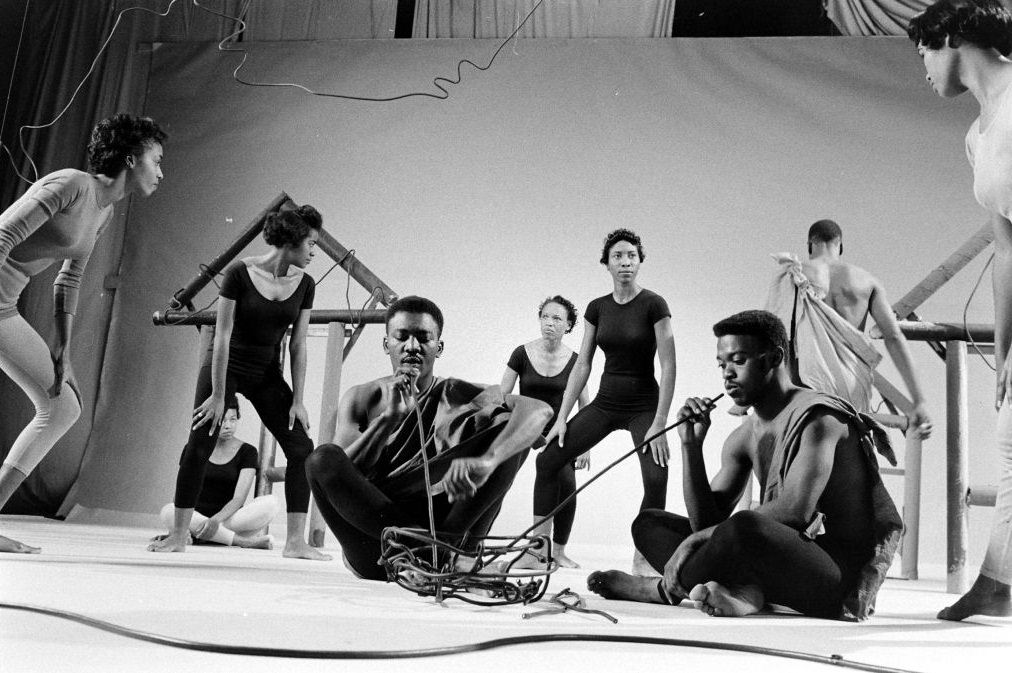
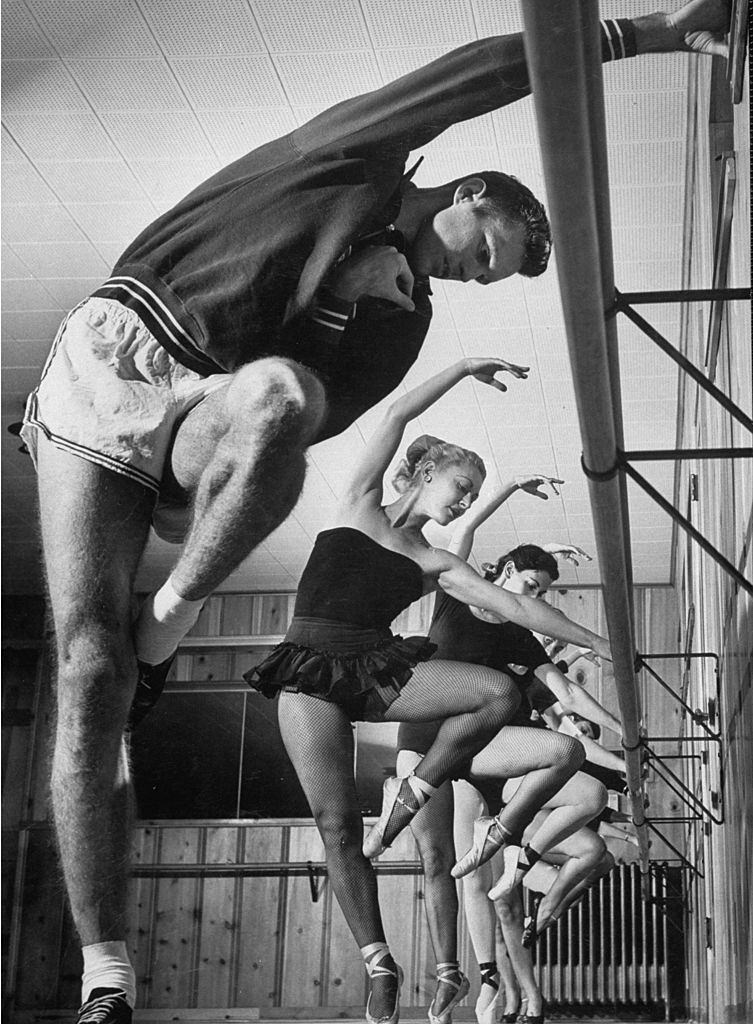
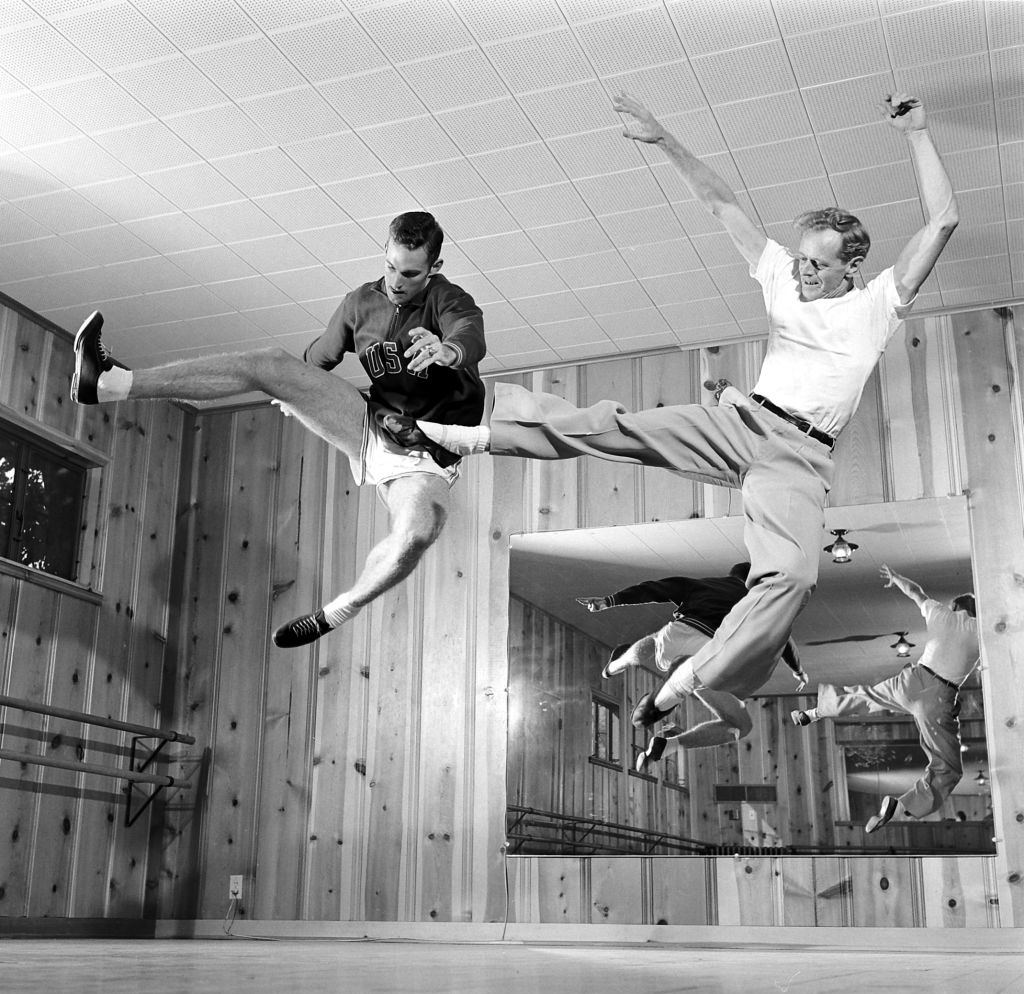
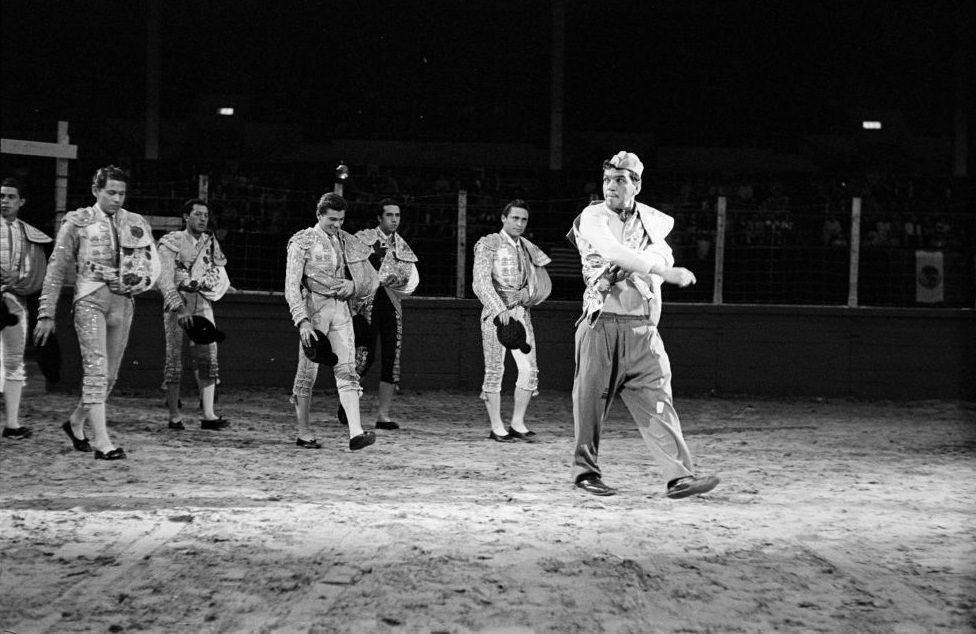
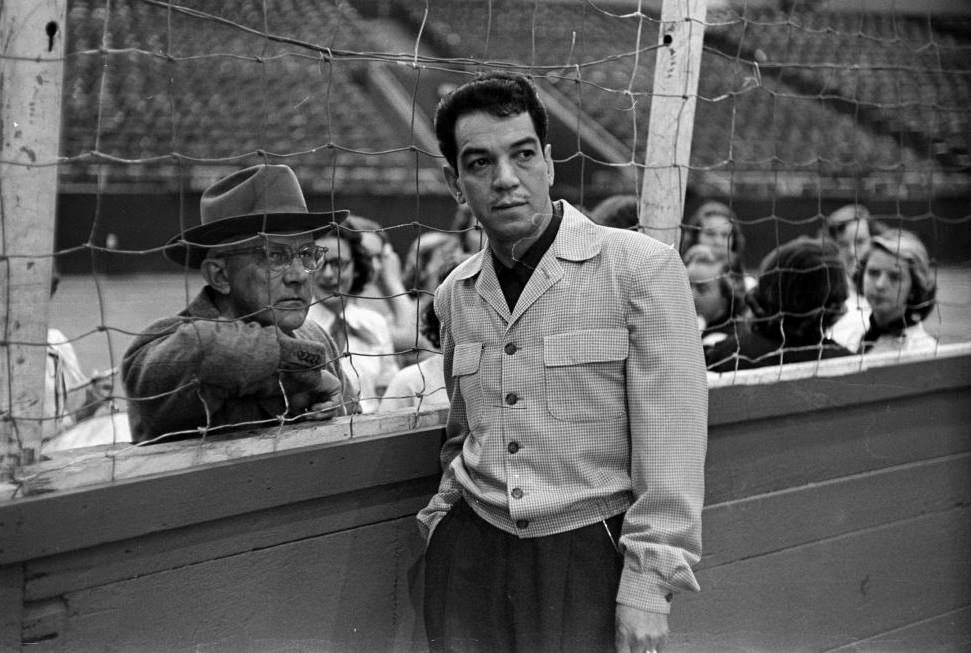
The performing arts were also active in Houston during this period. Dancers staged educational performances at the University of Houston in 1956, and Olympic high jump champion Walt Davis was photographed doing ballet exercises alongside women dancers — part of the cross-training methods athletes were beginning to explore. Mexican comedian Mario Moreno, widely known as Cantinflas, visited Houston in 1952.
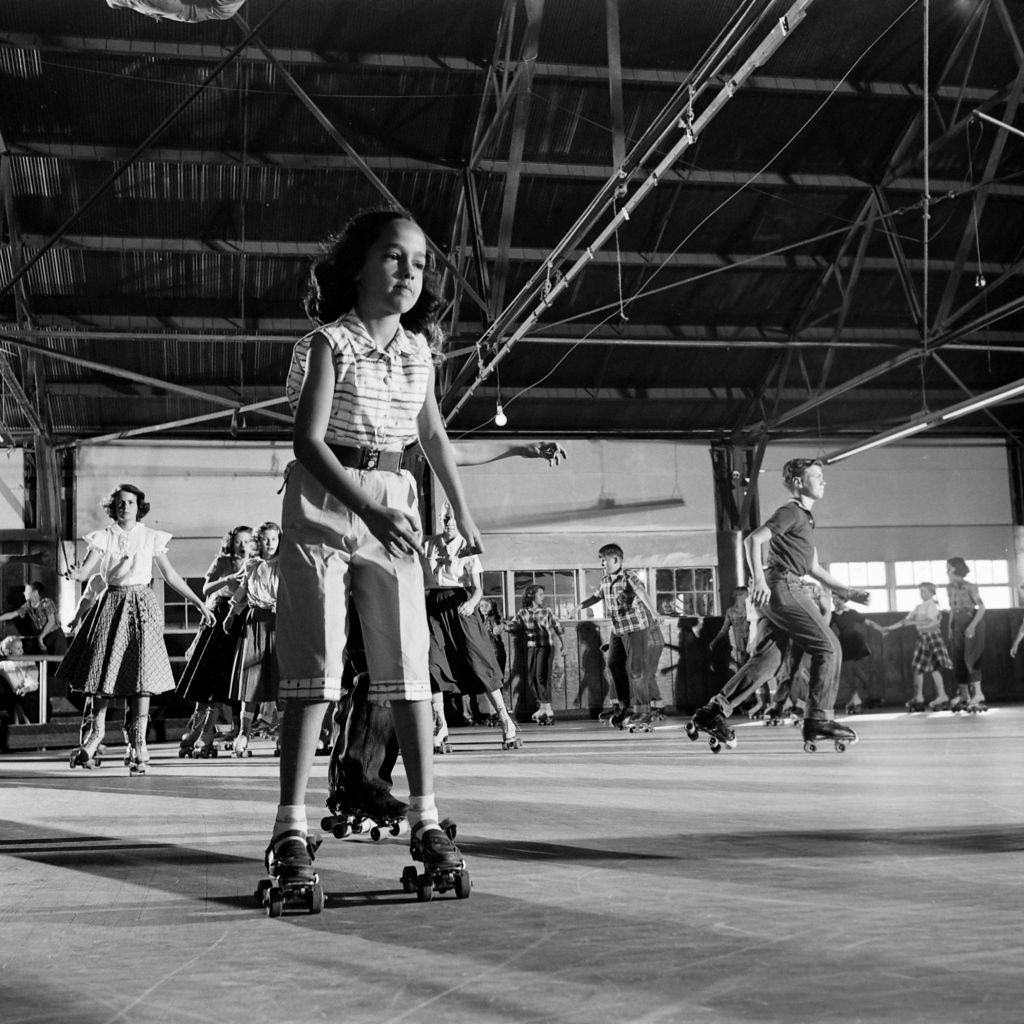
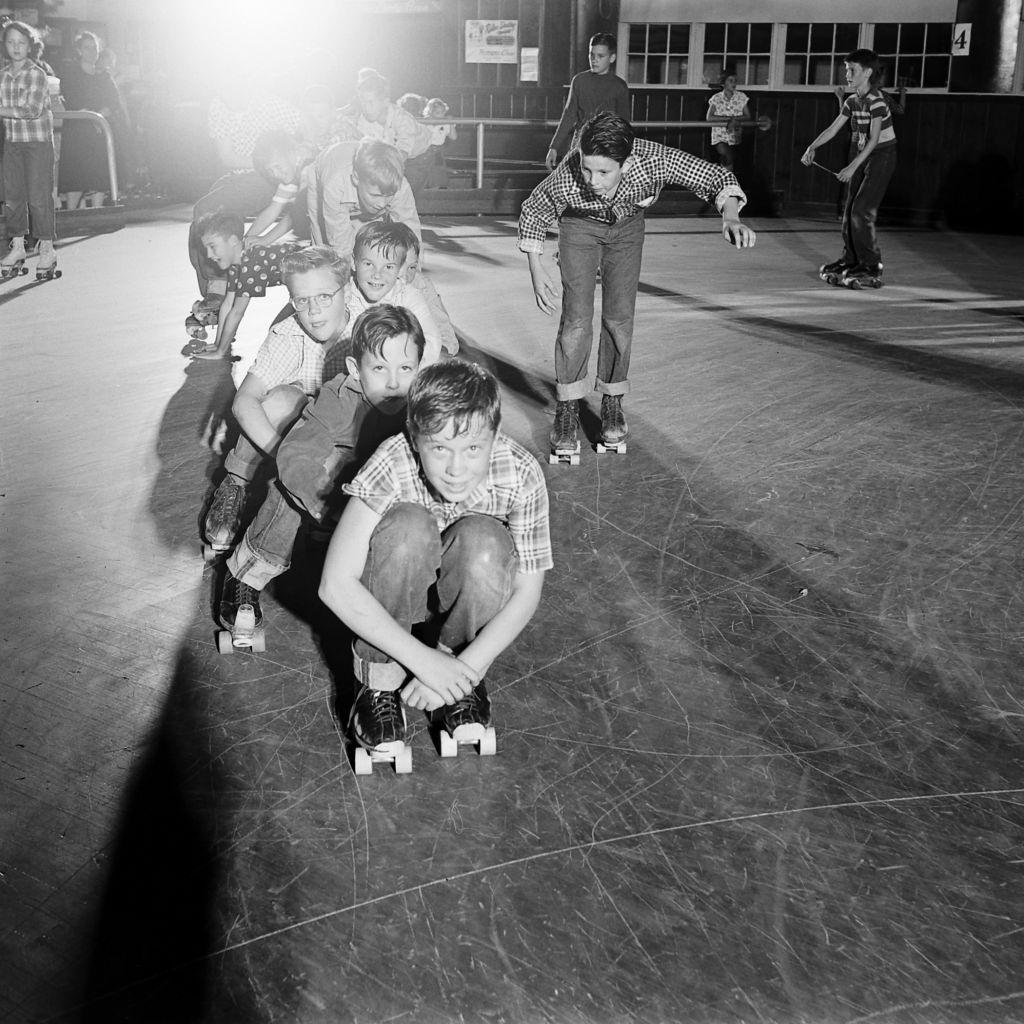
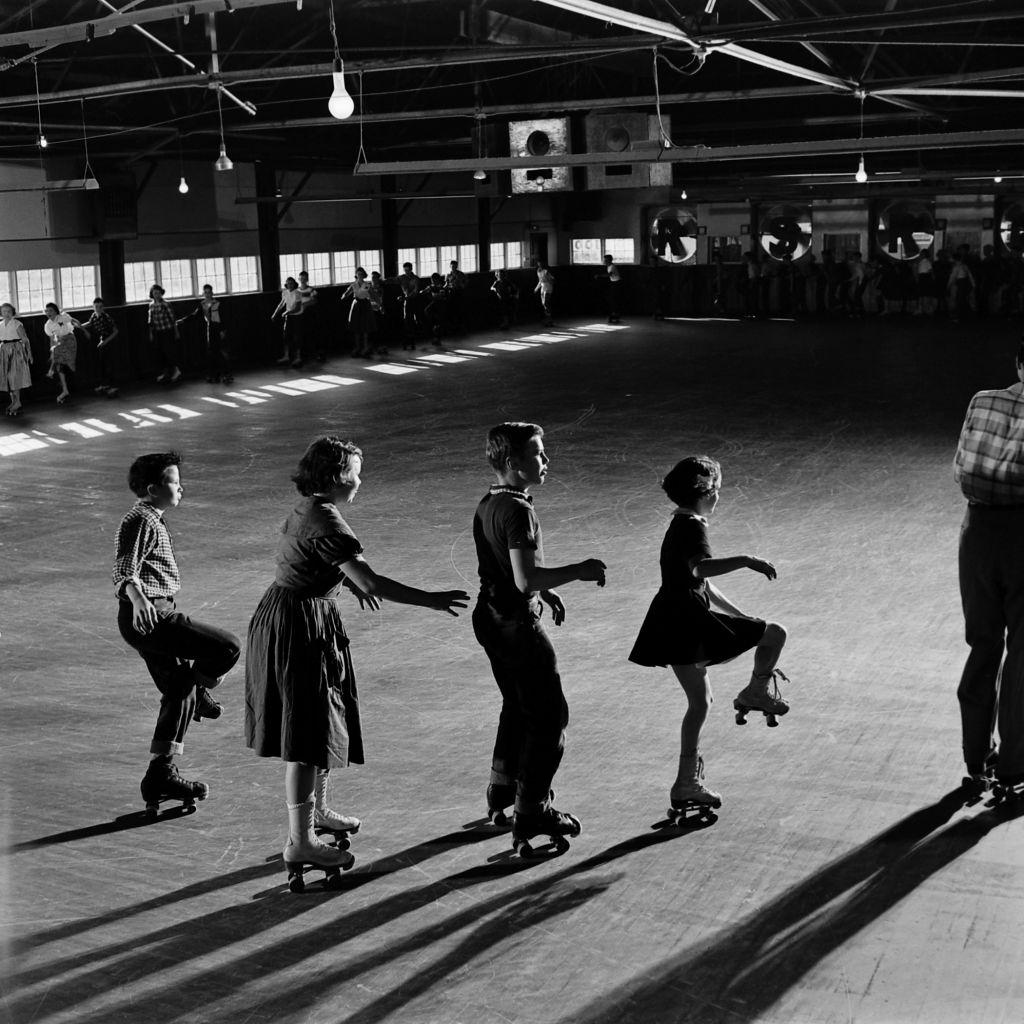
Children’s parties in Houston during the mid-1950s were anything but ordinary. Roller skating became a popular party activity by 1954, with kids racing across floors at organized gatherings. Birthday celebrations like Joanne King’s party in 1959 show how family life in the city blended the casual and the celebratory.
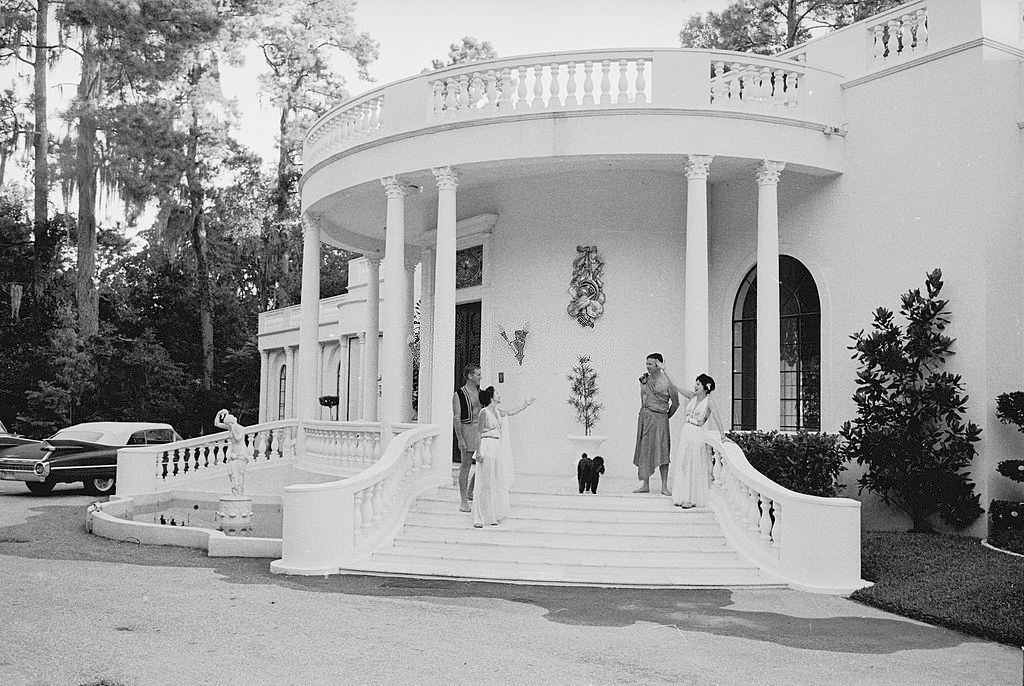
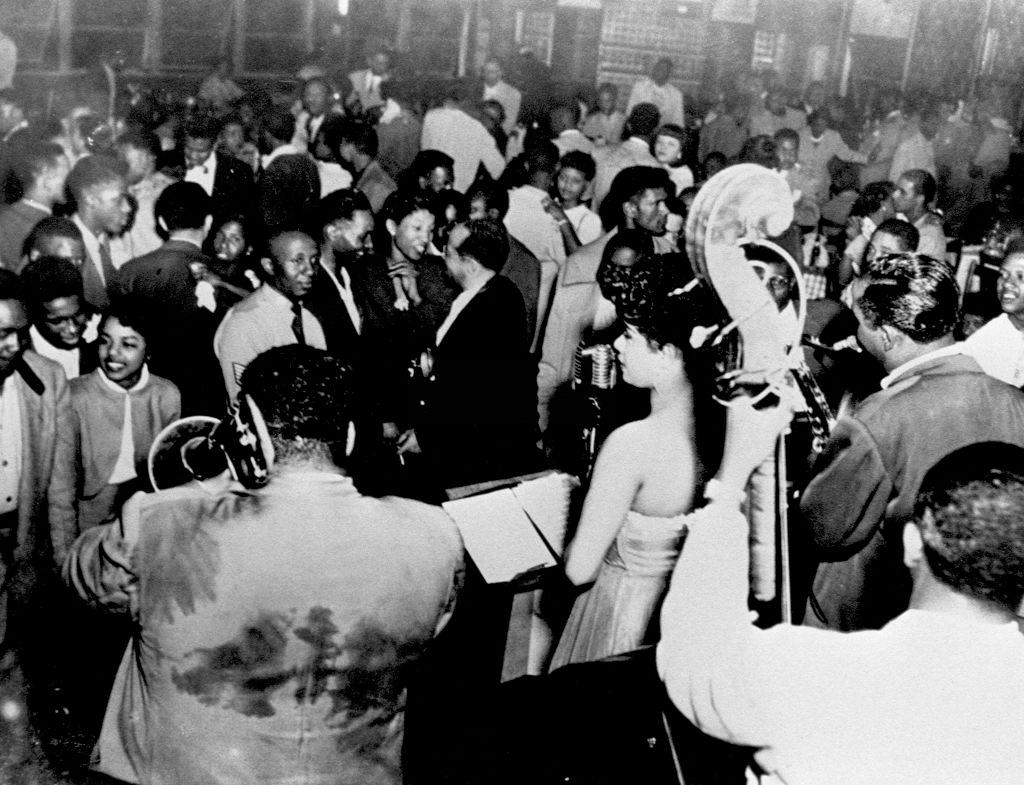
Houston’s Bronze Peacock Nightclub was one of the city’s notable Black entertainment venues during the era of segregation, representing the independent cultural life that Black Houstonians had built for themselves. The city’s nightlife and entertainment scene during the 1950s reflected both creativity and the strict racial boundaries of the time.
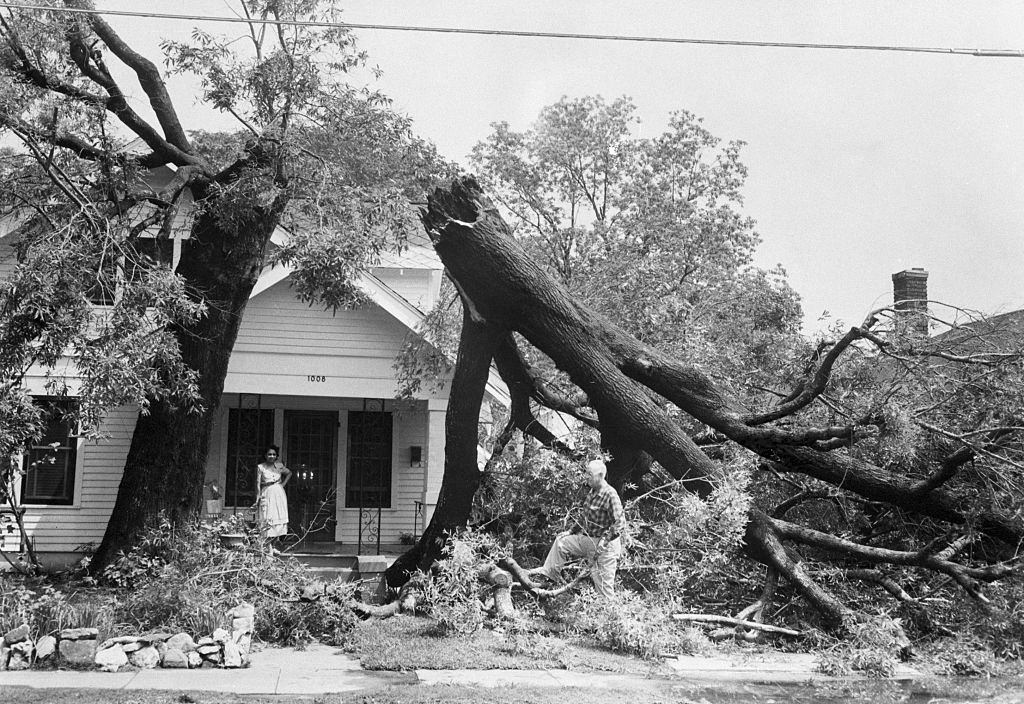
Not all of the decade’s events were festive. In 1959, firefighters responded to a major tanker explosion in the ship channel — one of the industrial hazards that came with Houston’s booming petrochemical trade. Severe storms also left their mark on the city; one century-old tree was split by lightning during a storm that dropped six inches of rain in a single day.

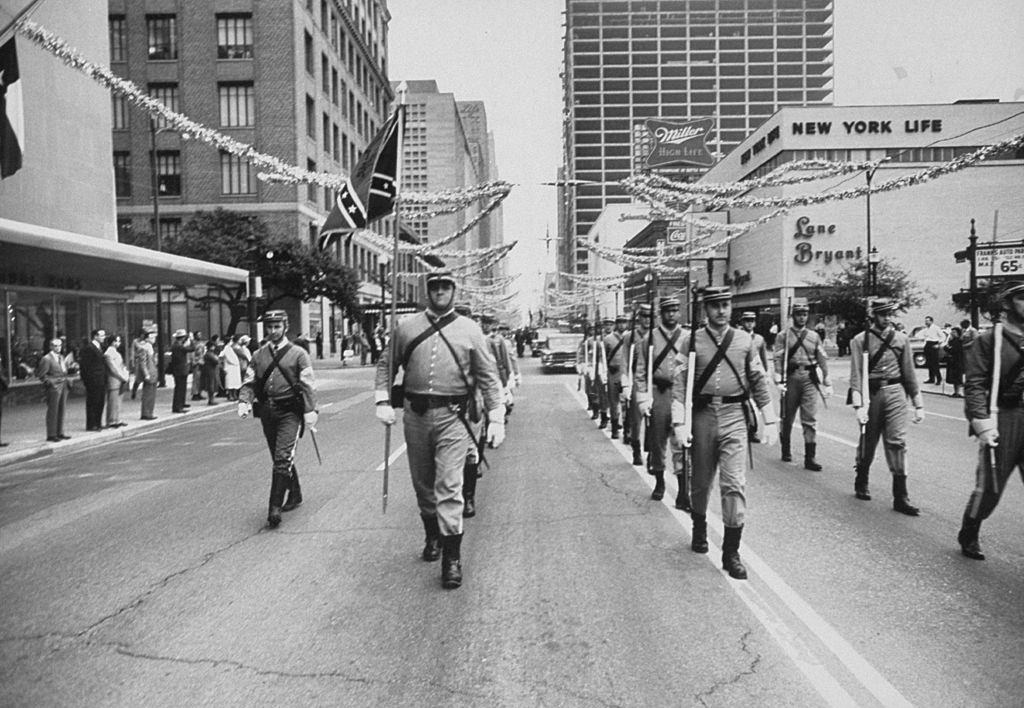
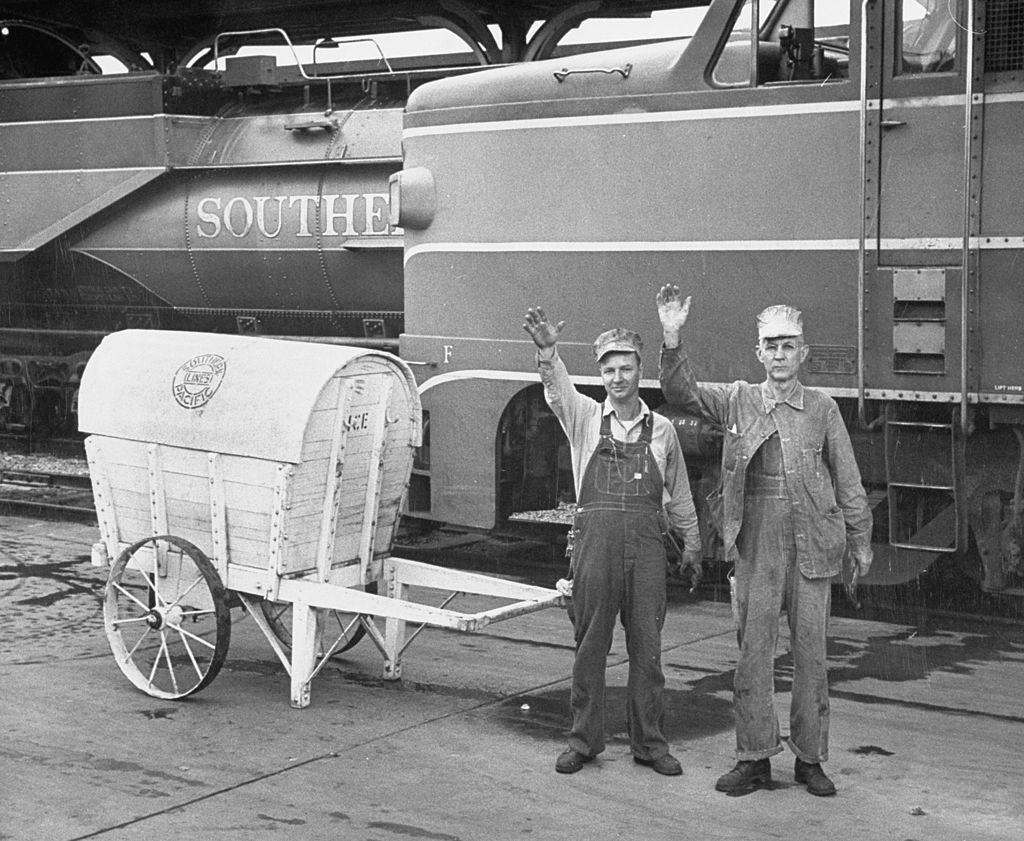
Houston witnessed moments of solemn historical significance during this period as well. The funeral procession of Walter Williams, reported as the last surviving Confederate soldier who died at the age of 117, drew considerable attention. Presidential candidate Dwight D. Eisenhower passed through the region by train, and railroad workers lined the tracks to wave as his car rolled past.
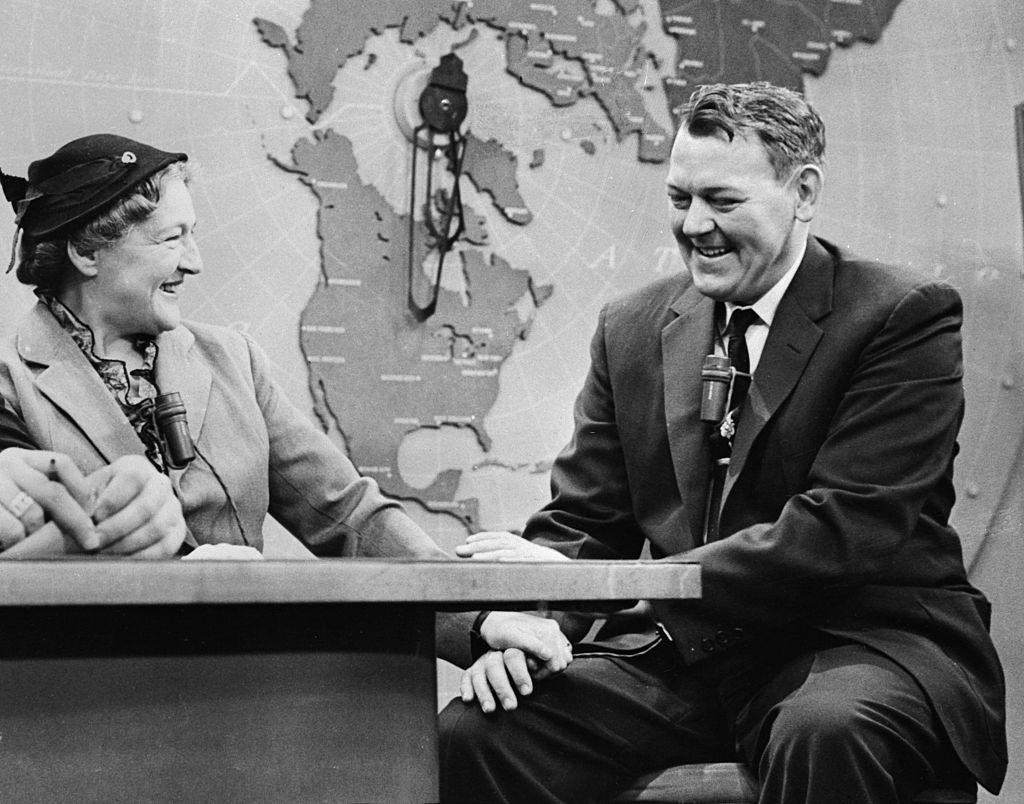
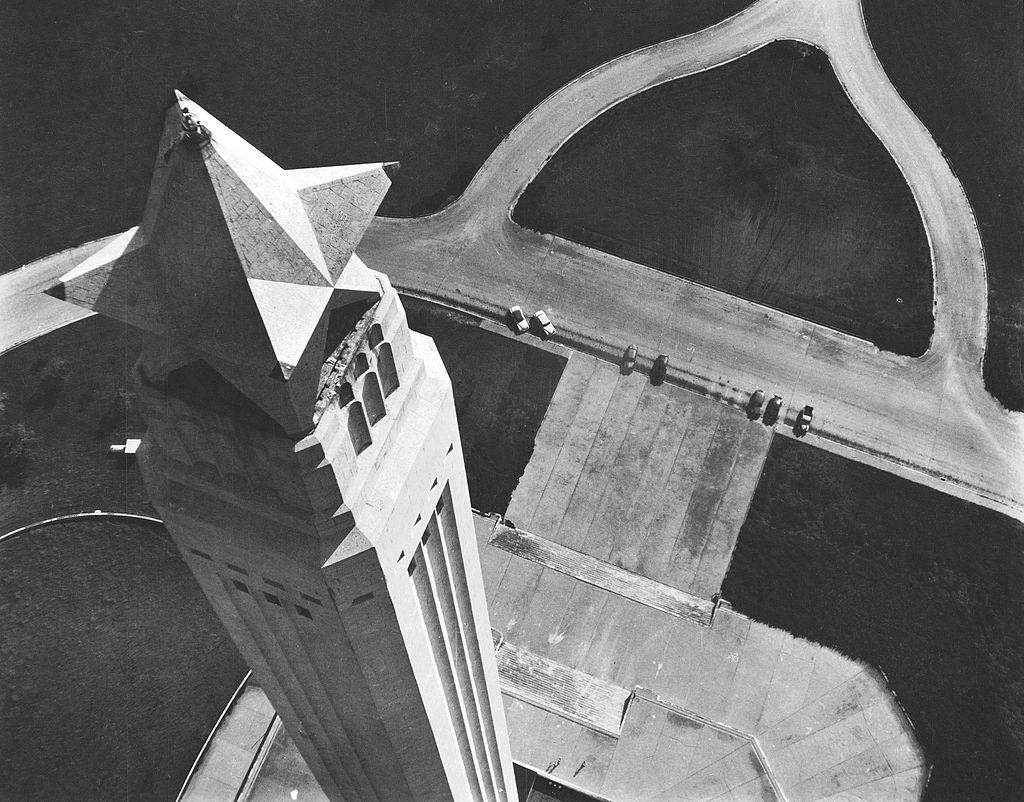
The city had a connection to international affairs as well. Romanian Princess Catherine Caradja was photographed in Houston in 1955 alongside former Air Force Lt. Richard Britt — a reminder that the city attracted visitors from well beyond Texas. Meanwhile, from the air, the San Jacinto Monument remained one of the most striking landmarks in the region, a 570-foot column marking the site of the 1836 battle that secured Texas independence.
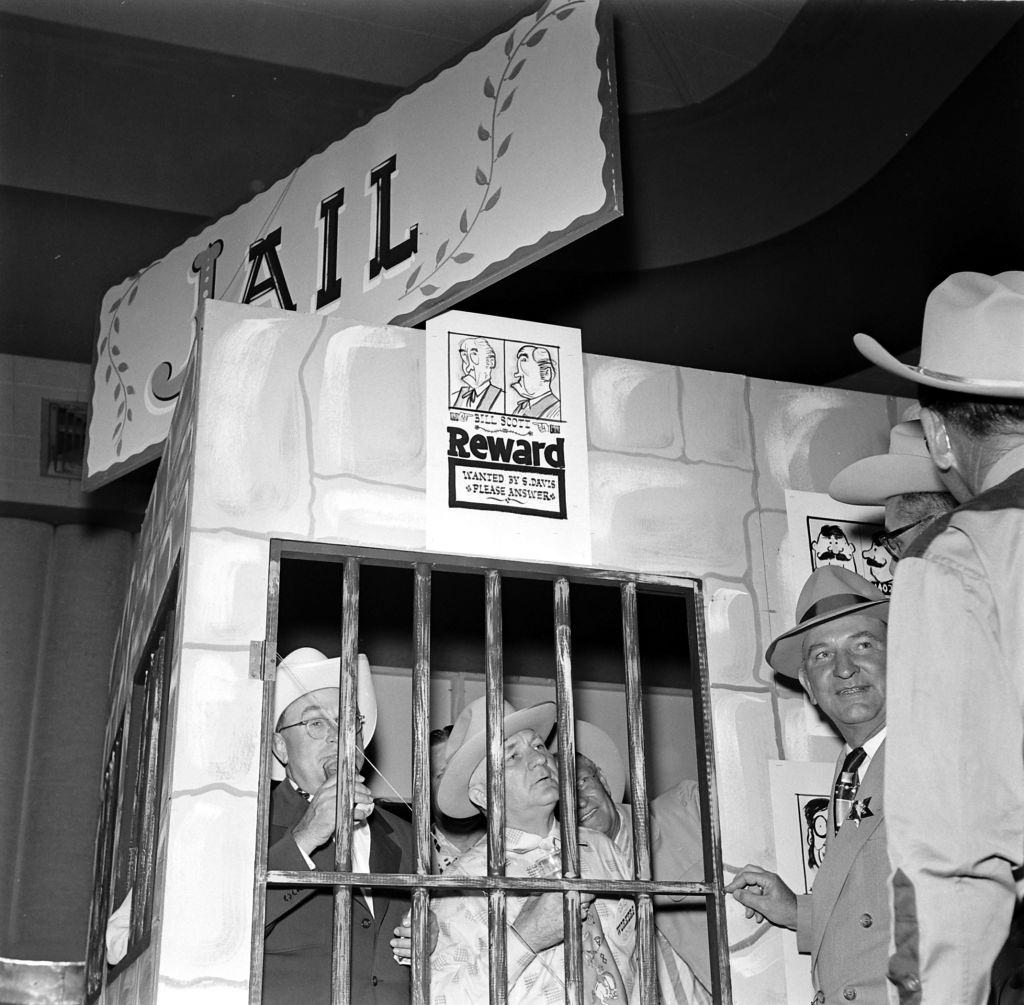
Pop culture touched Houston too. In November 1958, actor Cameron Mitchell filmed an unaired CBS television pilot called I Am a Lawyer, in which he played a Houston attorney named Mark Costello. The production reflected how the city had become a recognizable American setting, not just an industrial hub. A mock-up jail set up at a 1953 event drew men in for photos with a sense of humor that captured the lighter side of 1950s Houston life.





Oh, not the monorail.. please not the monorail!
I got to ride on the monorail in this set of pictures….