Photography has been around for roughly two centuries, but color photography didn’t become common for most of that time. For decades, historical moments were frozen in black and white — and that distance in tone has always made the past feel far away. Colorizing these images closes that gap in a way that’s hard to explain until you see it. A gray, flat image suddenly carries weight. Faces look like people you might know. Streets feel like streets you could walk down.
The process of restoring color to old photographs is far from simple. Artists must research the era, study clothing styles, estimate the time of day, judge available light, and make careful decisions about every object in the frame — down to the color of a wall or the shade of a coat. Even with thorough research, no restoration can claim absolute certainty. But the results speak for themselves. Communities like Reddit’s r/ColorizedHistory have built a dedicated practice around this art, digitally breathing life back into some of the most important images ever taken.
One of the most quietly devastating images in this collection comes from post-war London. A small boy stands alone, clutching a stuffed toy animal. He is unaccompanied. The city around him had just endured years of bombing. In color, the image hits differently — the softness of the toy against the harshness of his situation is impossible to ignore.
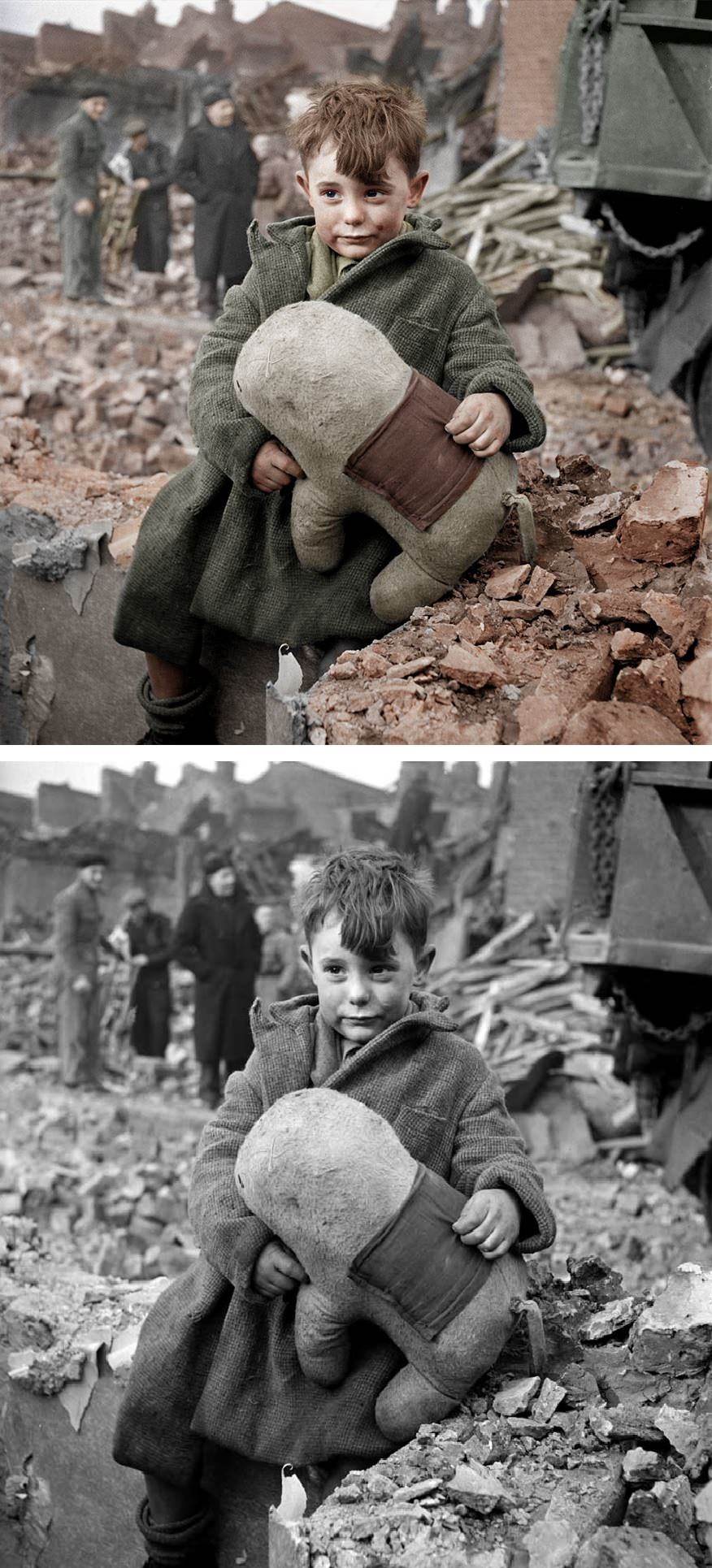
Not all images in this collection carry grief. Some carry pure genius. In the summer of 1939, Albert Einstein was photographed at Nassau Point on Long Island — relaxed, human, entirely unlike the formal portraits most people associate with him. Seeing him in color makes the legend feel like a neighbor.
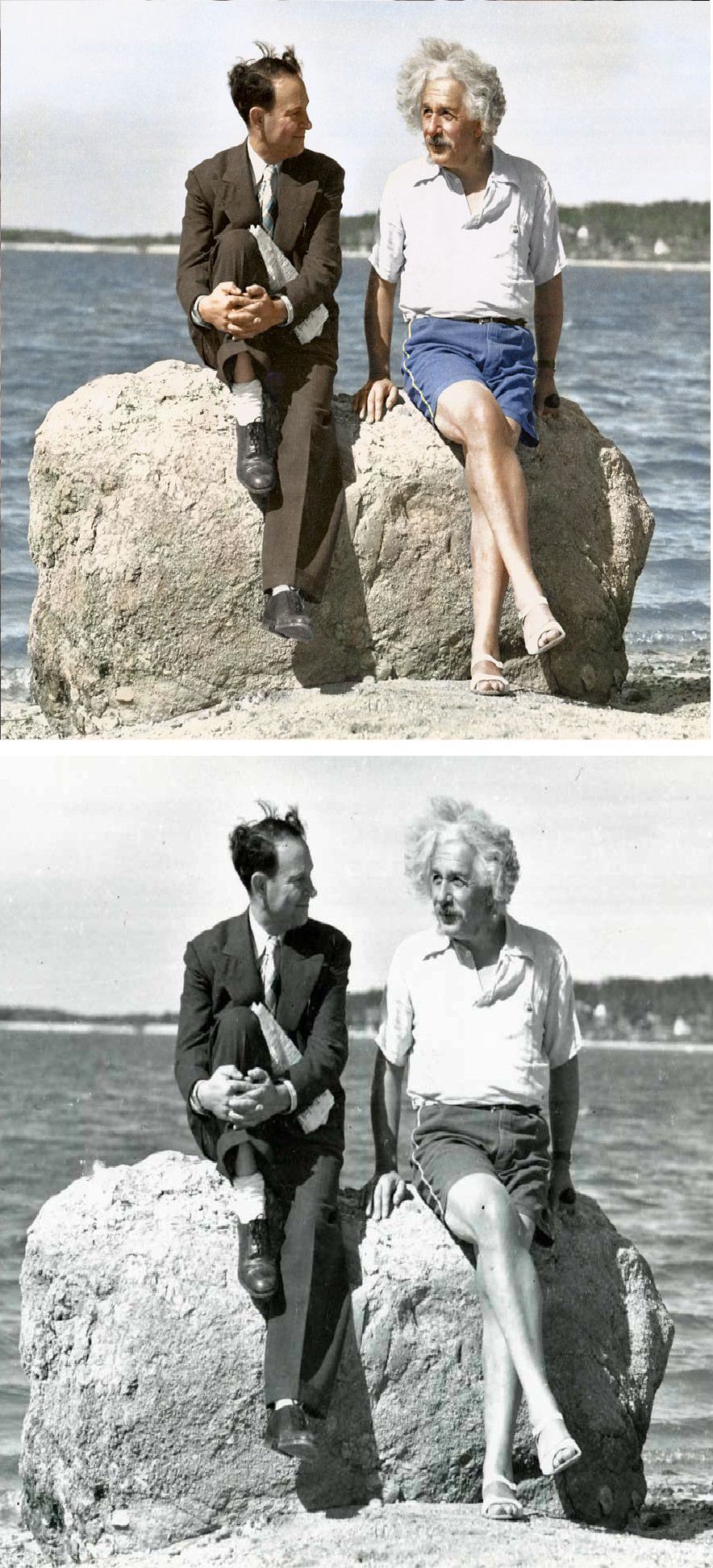
The Great Depression left visible marks on American cities. This 1938 photograph of a young boy in a Baltimore slum area documents that reality without commentary. His surroundings, rendered in color, make the poverty concrete rather than abstract.
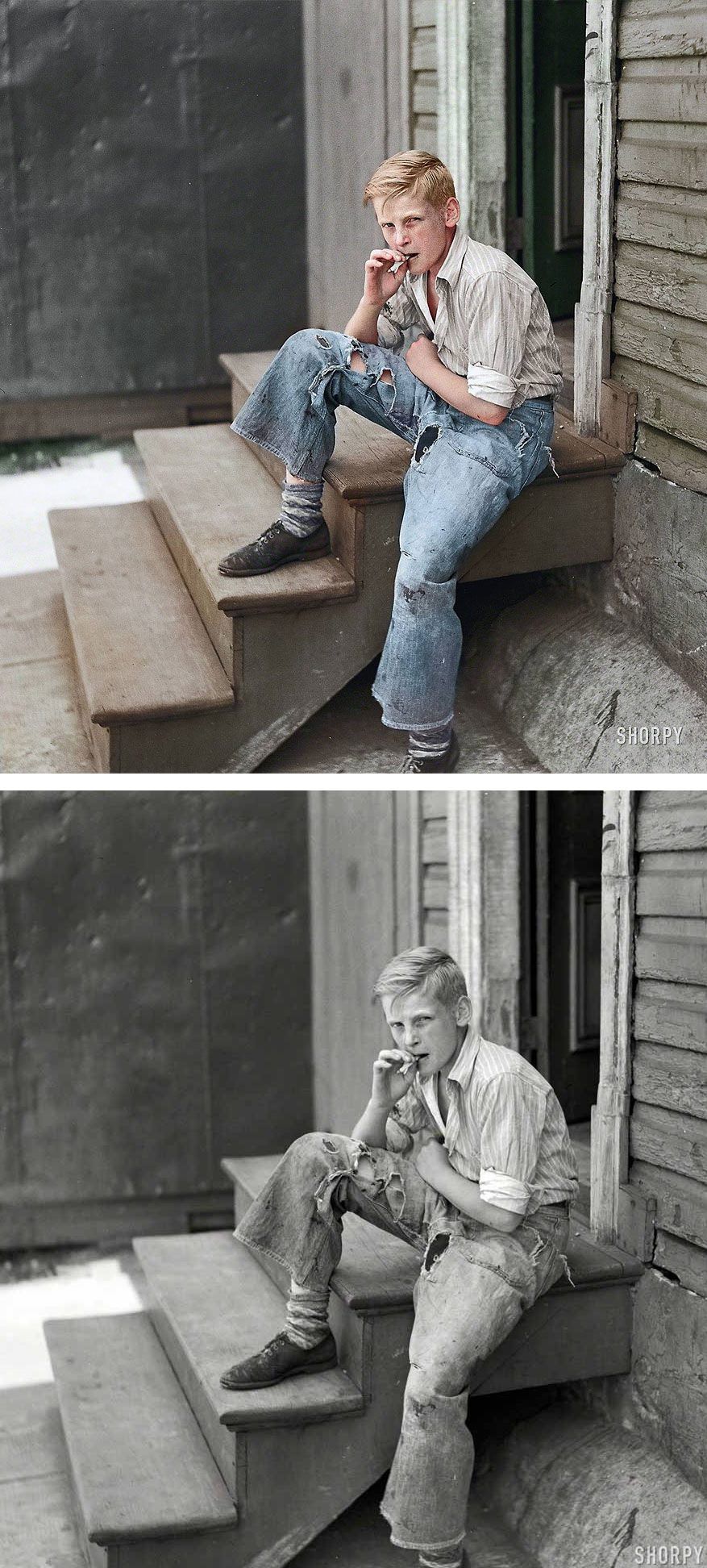
Hollywood’s golden age produced icons that still feel immediately recognizable. Elizabeth Taylor on the set of the 1956 film Giant is captured here with the kind of presence that dominated movie screens for decades.
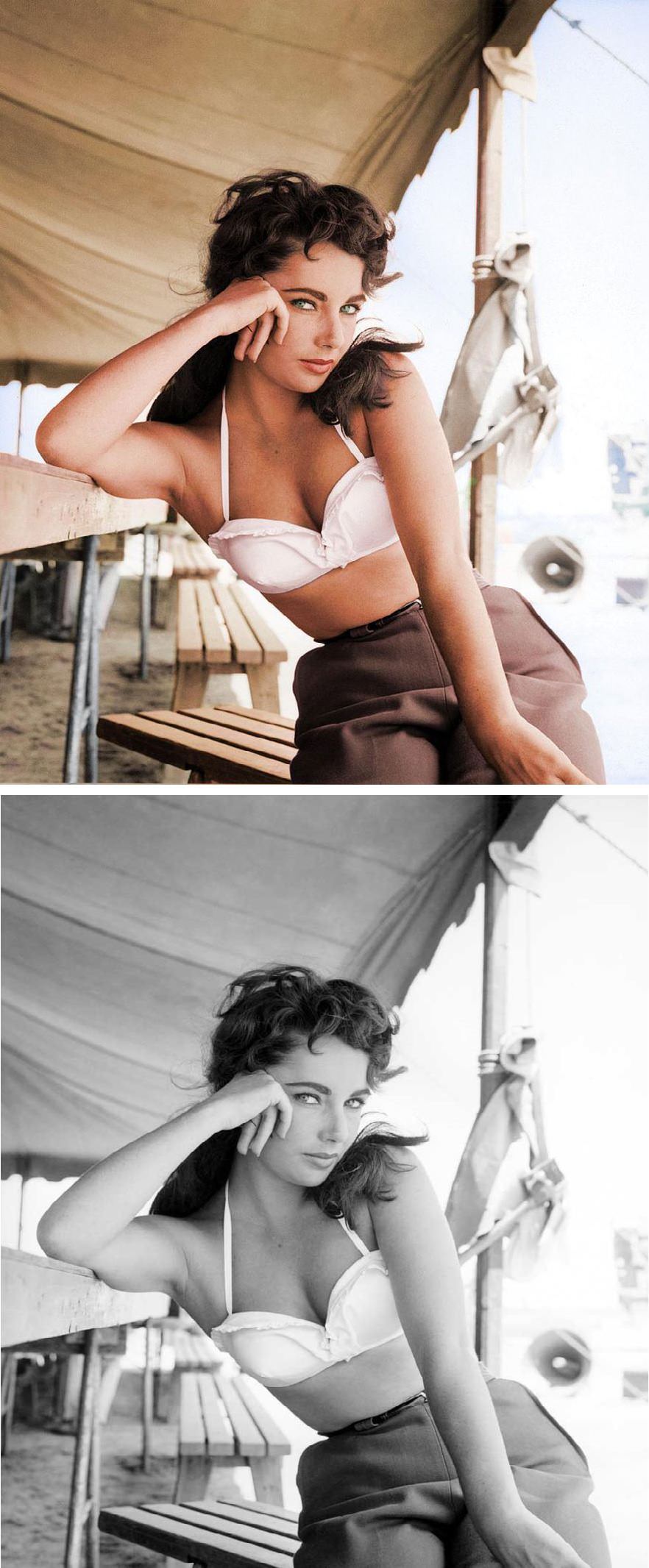
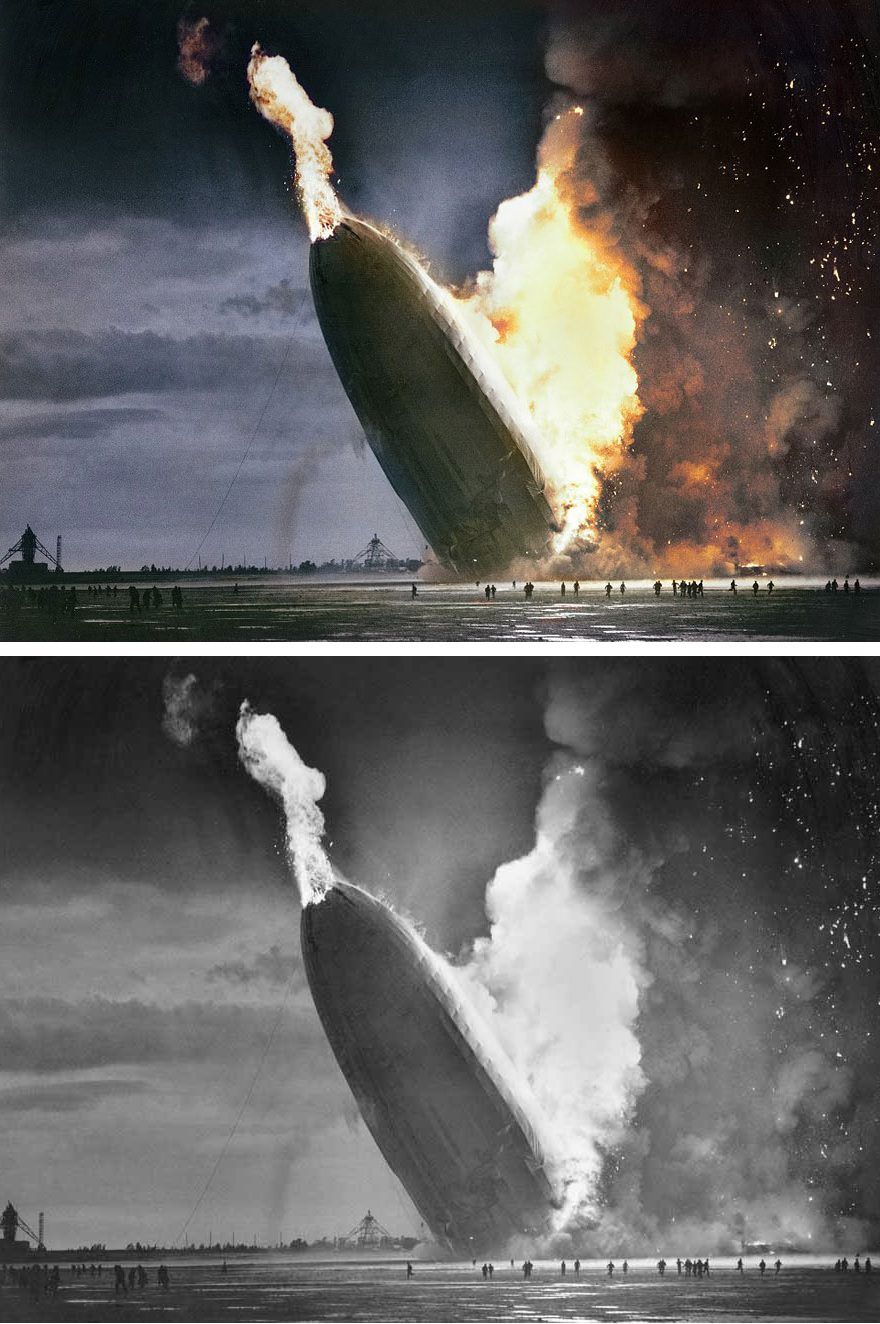
On May 6, 1937, the German airship Hindenburg caught fire above Lakehurst, New Jersey, killing 36 people. The disaster ended the era of passenger airships. Colorized, the flames against the darkening sky carry a visceral urgency that the original black and white frame could only partially convey.
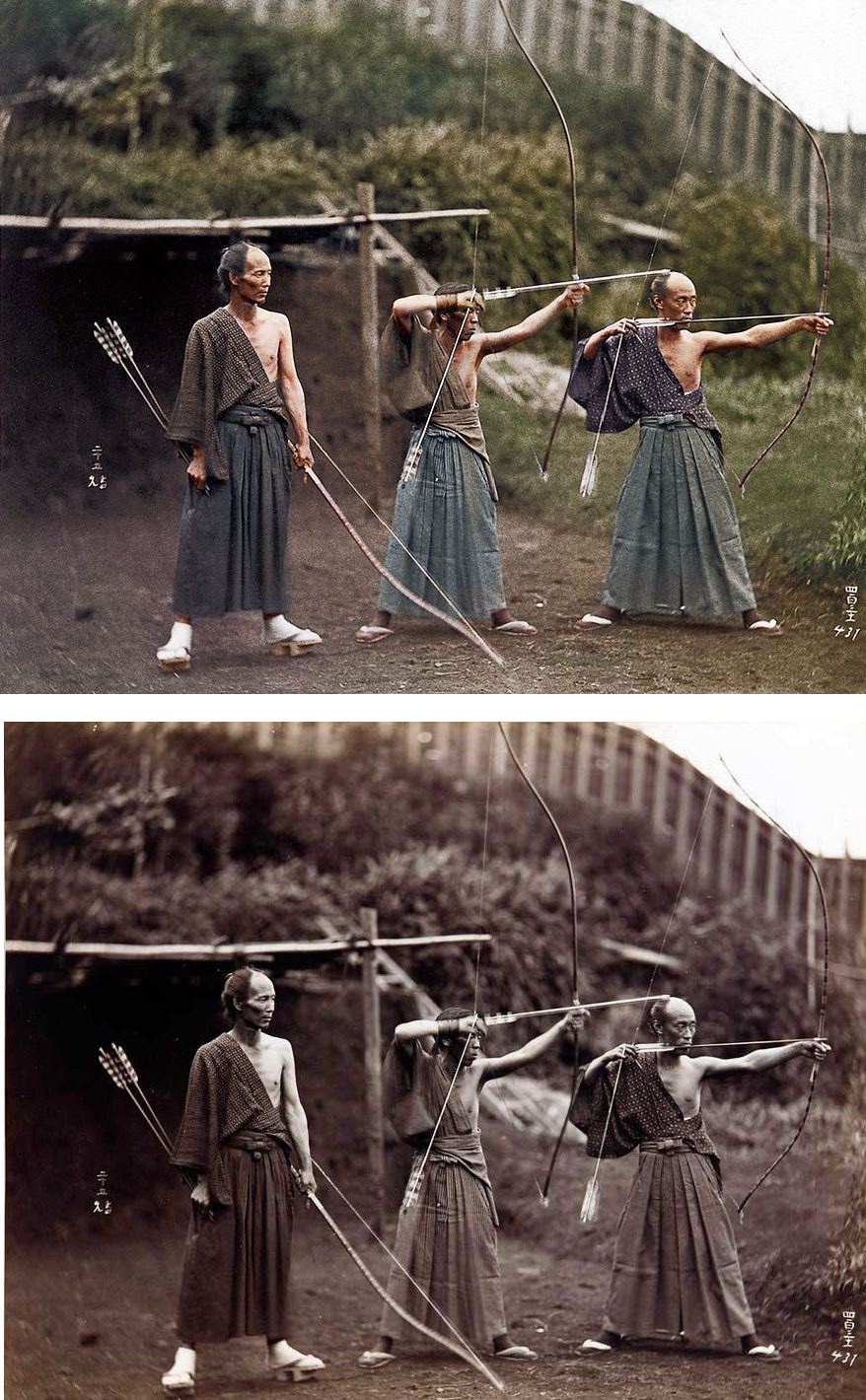
Long before photography existed, Japanese archery — kyudo — was already a centuries-old discipline. This photograph from around 1860 catches the practice at a moment when Japan was just beginning to open to the outside world. The color restoration highlights the precision of the archers’ dress and stance.
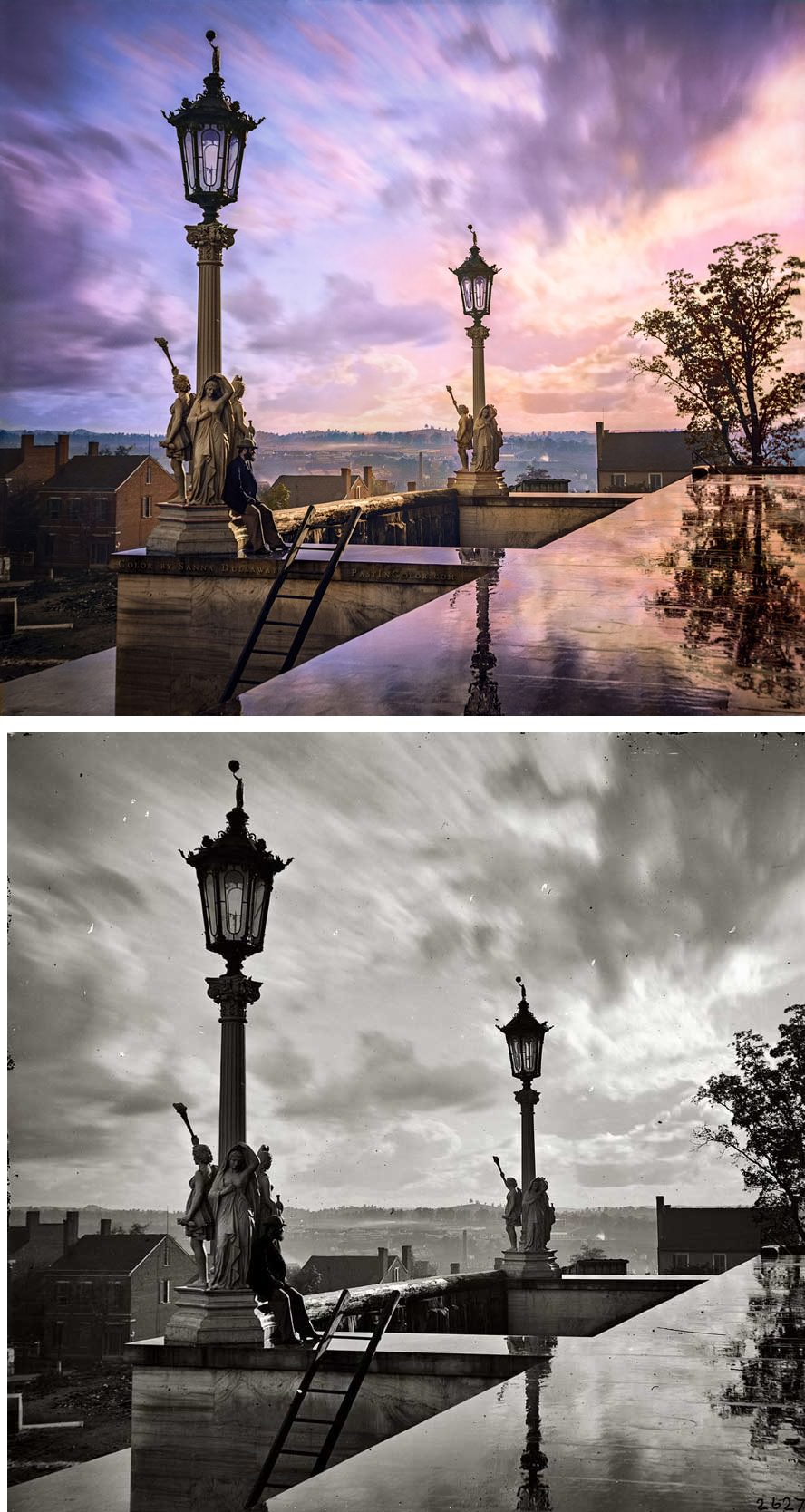
The American Civil War reshaped the country in every possible way. This 1864 view from the Capitol in Nashville, Tennessee, shows a city under the grip of that conflict. The landscape of tents, earthworks, and a nation at war with itself comes through vividly in color.
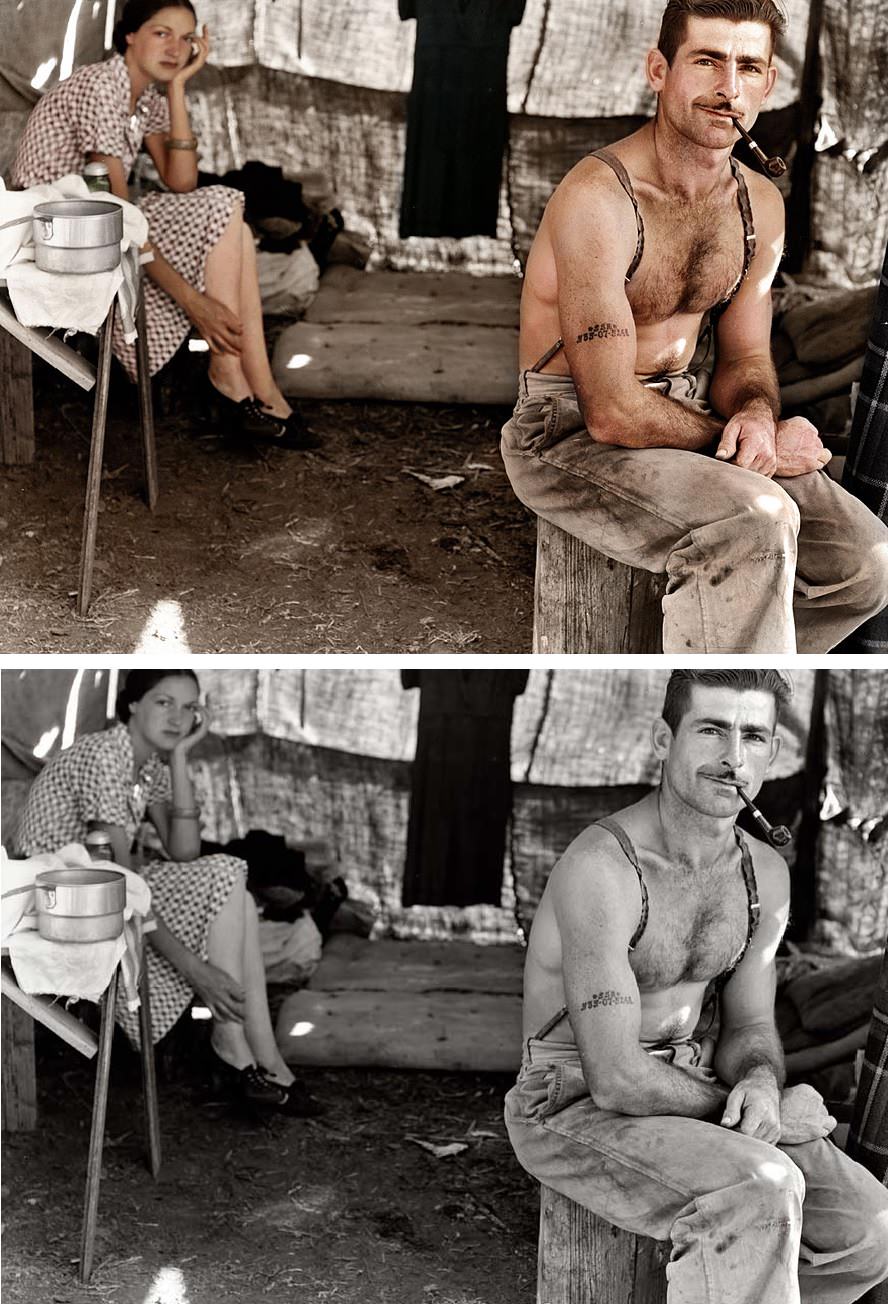
The late 1930s saw unemployment devastate working-class Americans. This portrait of an unemployed lumber worker from around 1939 puts a single face on an economic collapse that affected millions. His expression carries the exhaustion of prolonged uncertainty.
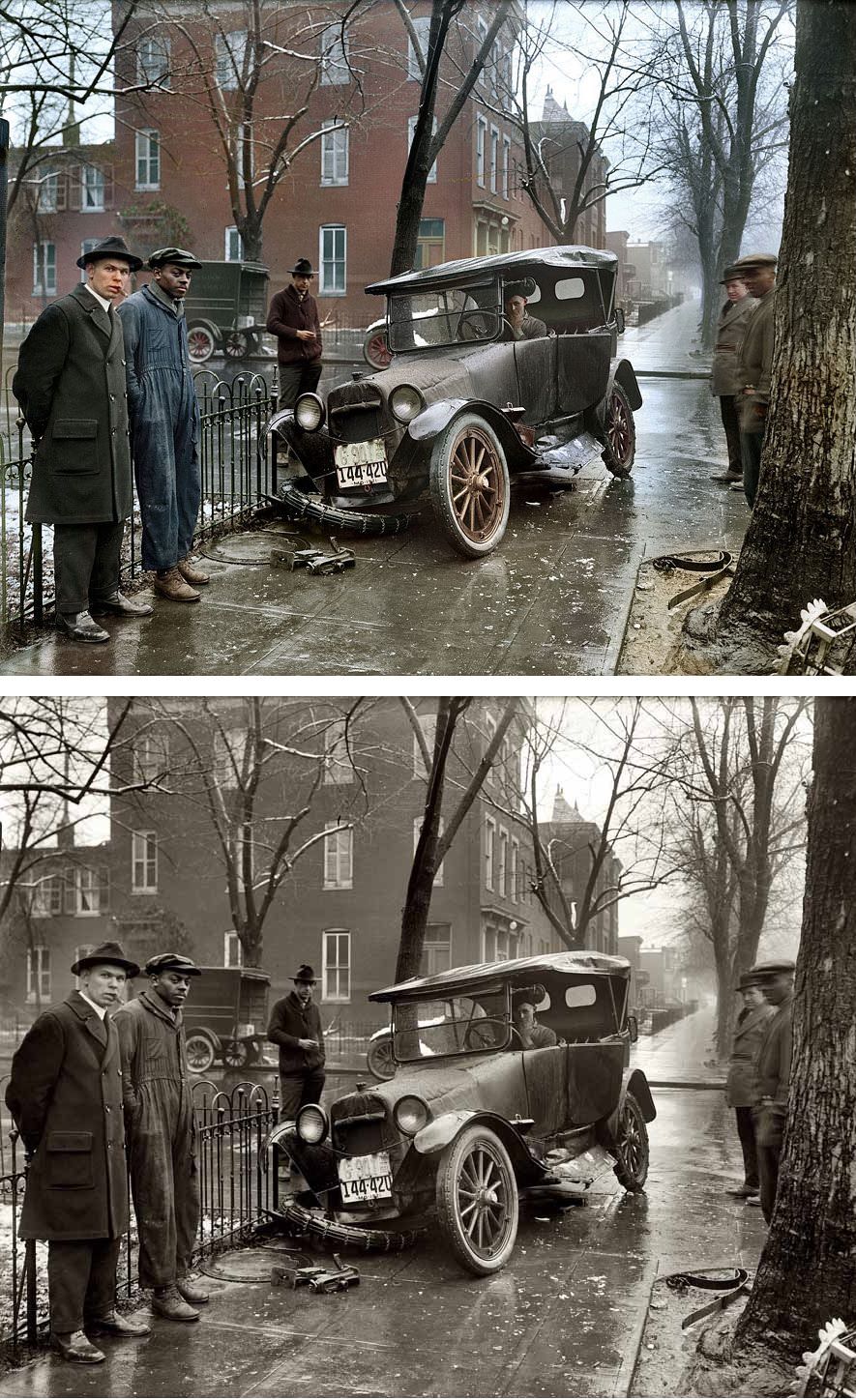
Traffic accidents are not a modern invention. This 1921 auto wreck in Washington D.C. is a reminder that the early days of automobiles were genuinely dangerous — vehicles without modern safety standards, roads without modern design, and drivers learning a brand-new machine.
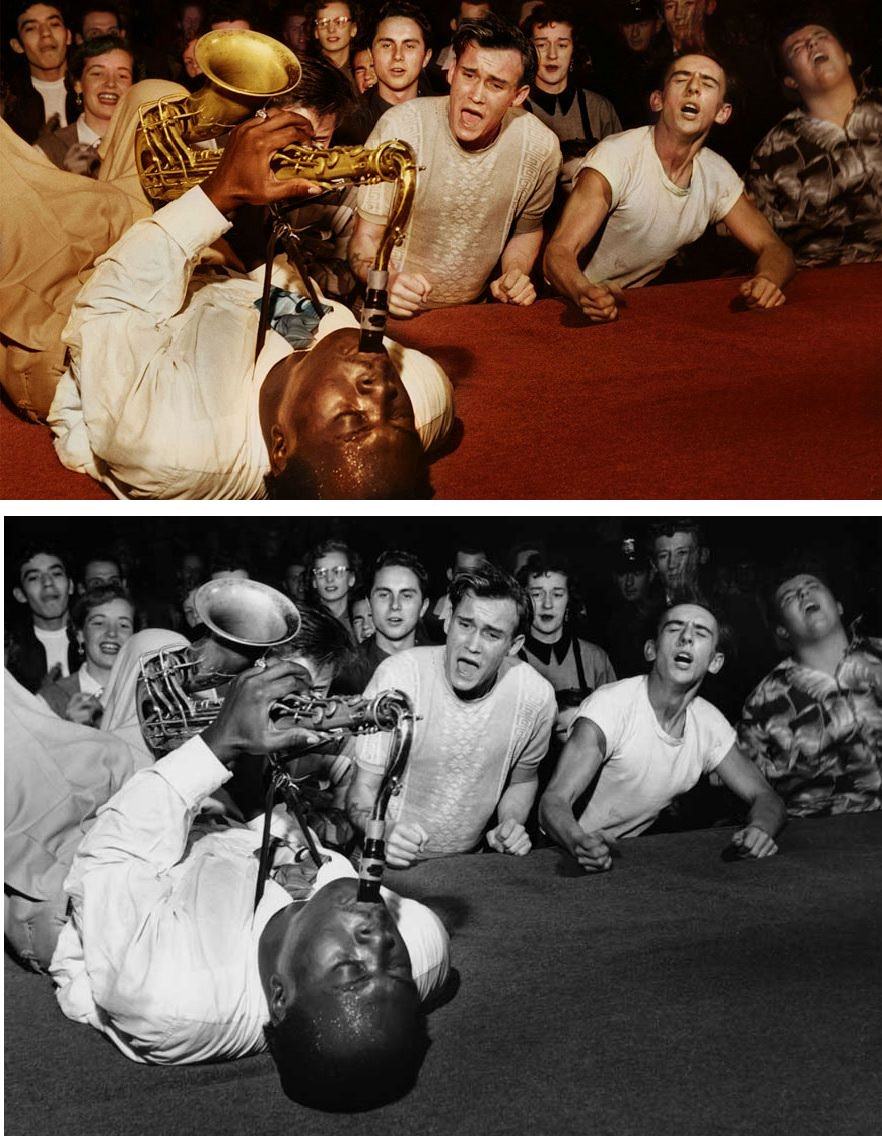
In 1953, saxophonist Big Jay McNeely took his performance to the floor of the Olympic Auditorium in Los Angeles and sent the crowd into a frenzy. The energy captured in this photograph is electric — fans pressing forward, bodies leaning in, a room completely overtaken by the music.
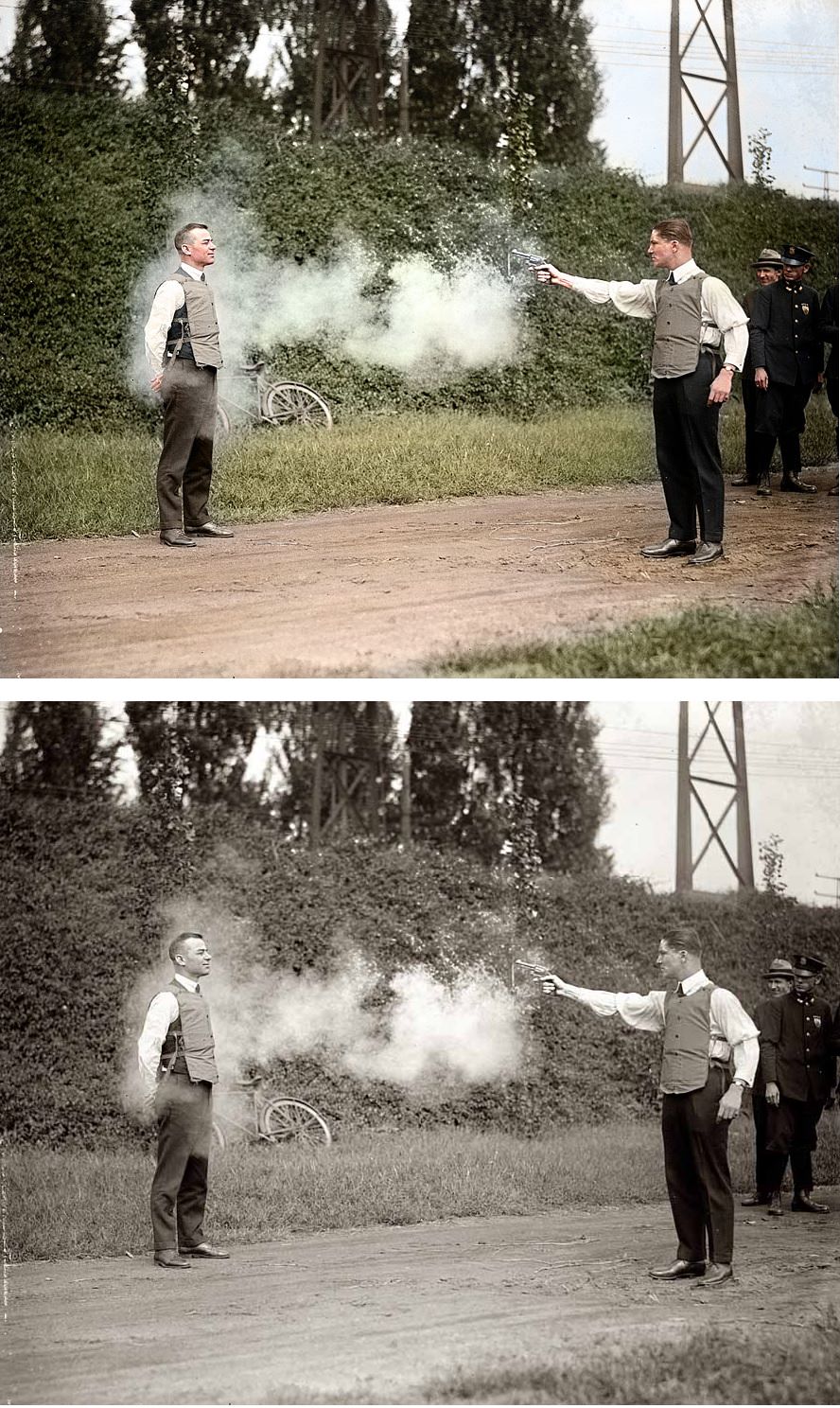
On October 13, 1923, W.H. Murphy and his associate ran a live demonstration of a bulletproof vest — by shooting at it while someone wore it. The confidence required for such a demonstration was extraordinary. The color restoration shows the setting in clinical detail.
Few faces in cinema history carry as much warmth as Audrey Hepburn’s. This colorized portrait restores a dimension to her image that black and white photography always had to sacrifice.

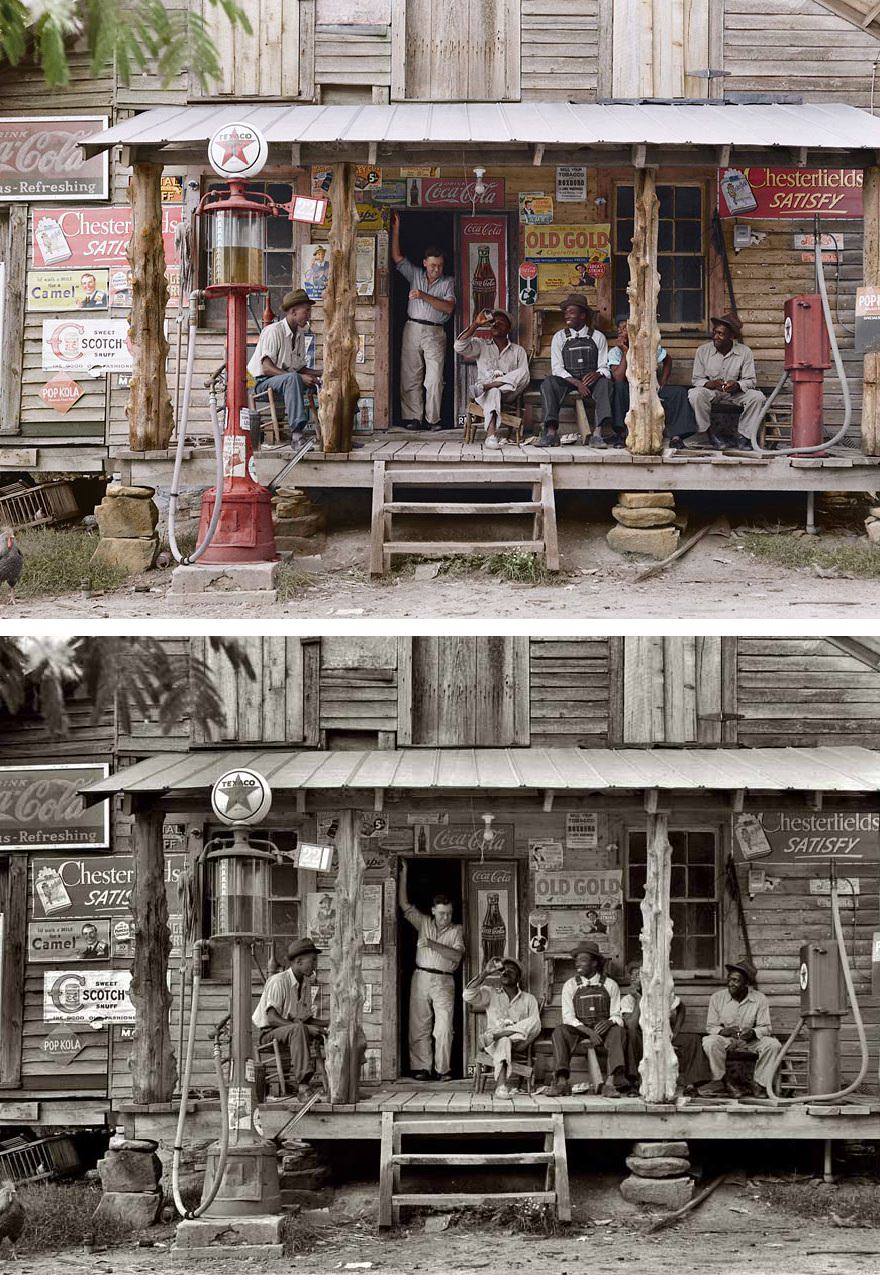
Rural America in 1939 had a distinctive look — hand-painted signs, wooden storefronts, and goods stacked without the sleekness of modern retail. This photograph of a country store advertising ‘Old Gold’ tobacco captures that world with warmth and texture.
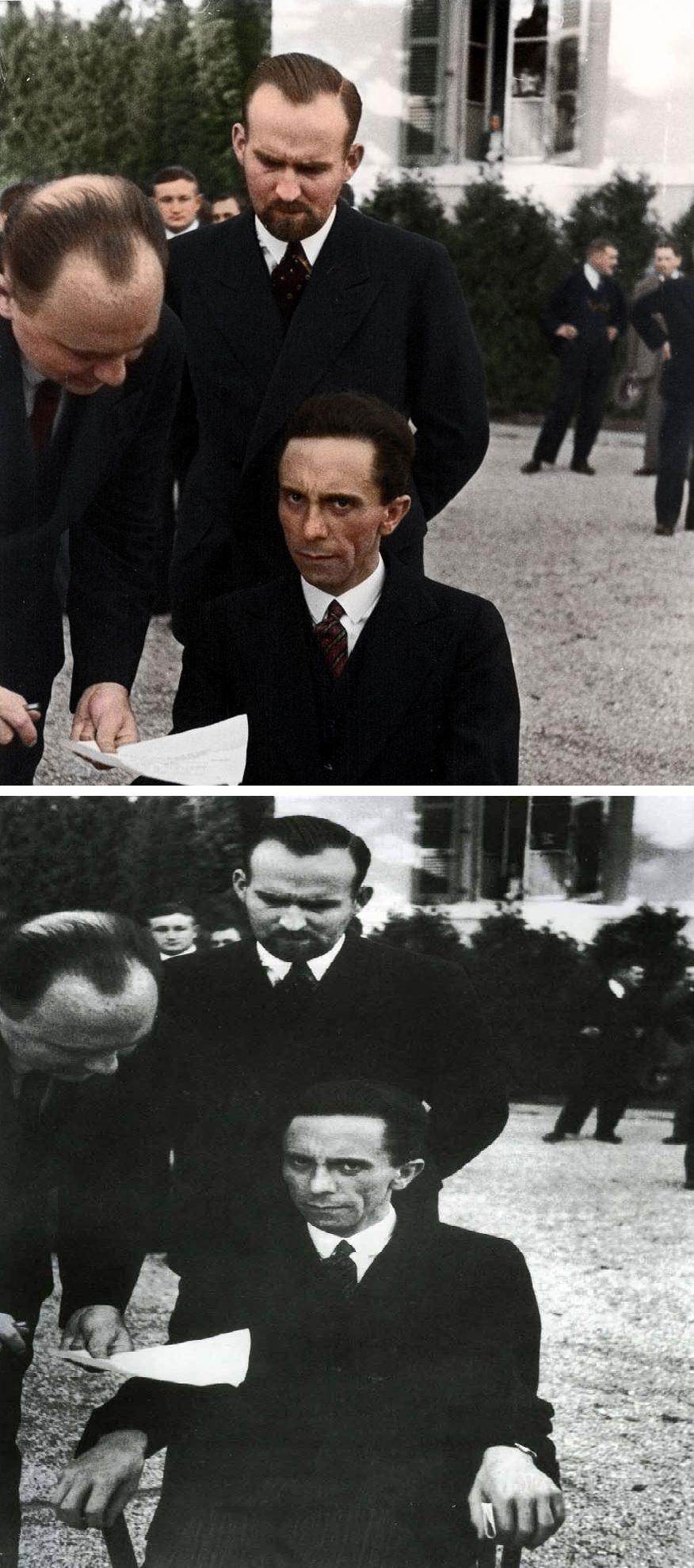
This photograph, taken in 1933, captures one of history’s most chilling moments of interpersonal hostility. Nazi Propaganda Minister Joseph Goebbels is seen scowling directly at photographer Alfred Eisenstaedt after learning Eisenstaedt was Jewish. The hatred in Goebbels’ expression is unguarded and undeniable.
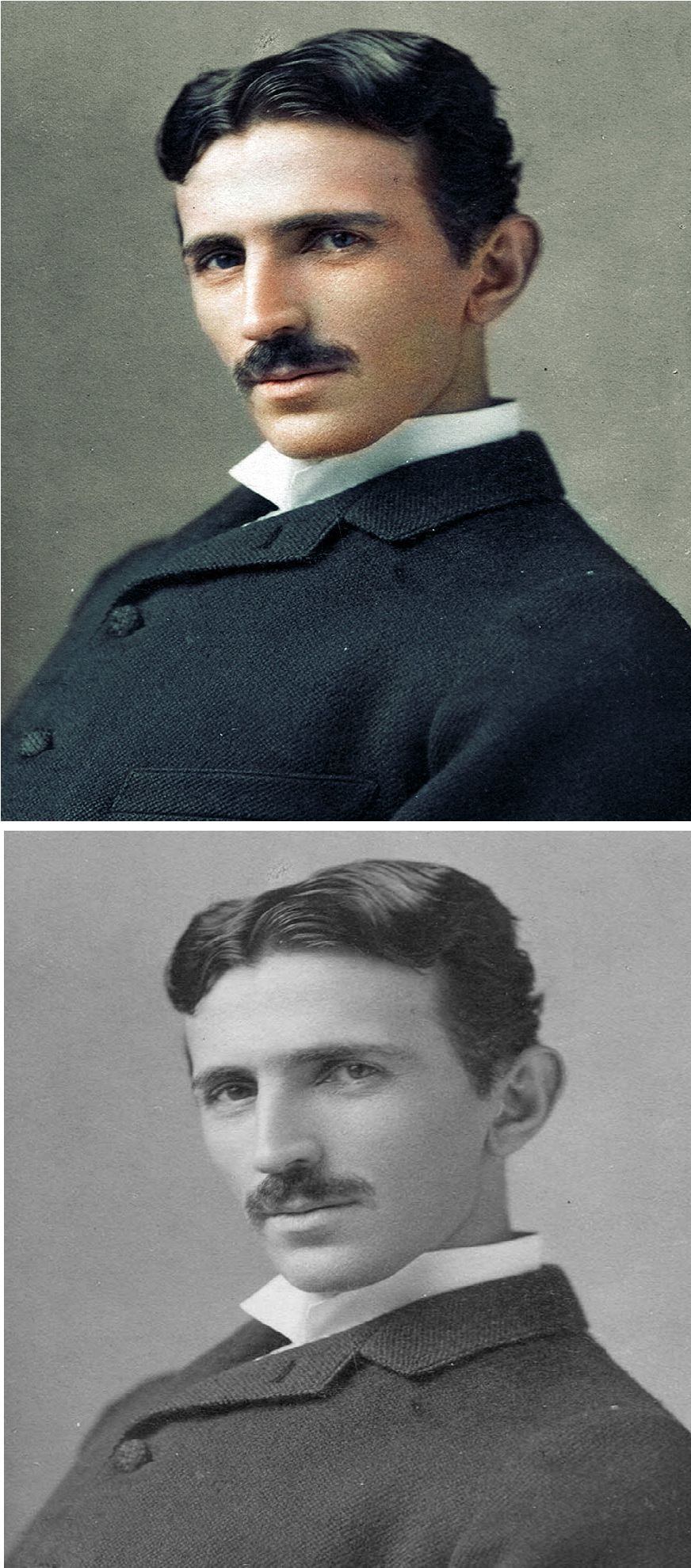
Nikola Tesla was photographed in 1893 — just as he was beginning to demonstrate alternating current electricity to a skeptical public. The man who would redefine how the world uses power looks here like exactly what he was: a scientist consumed by his work.
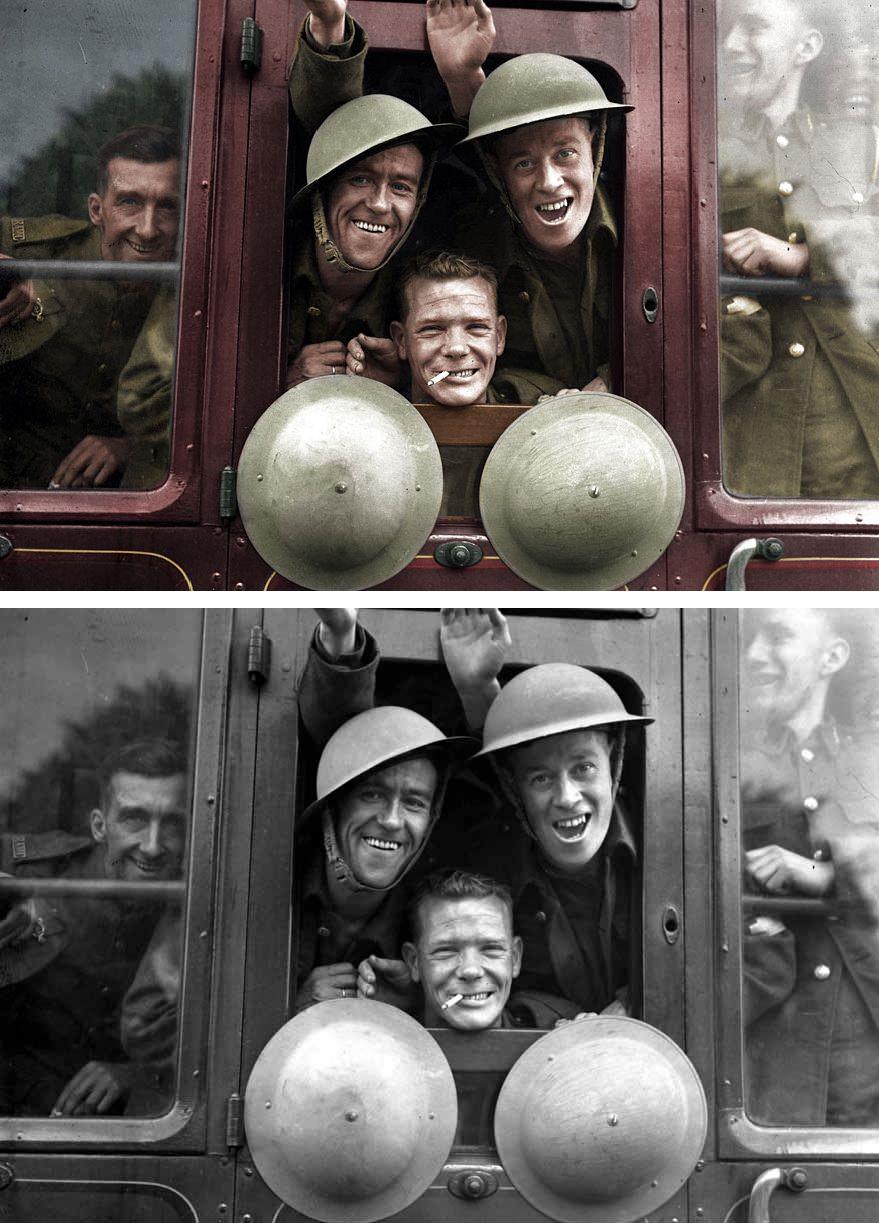
On September 20, 1939, British troops boarded trains heading for the first stage of their journey to the Western Front. They are smiling in the photograph. At this point, the full scale of what lay ahead was not yet apparent to most of them.
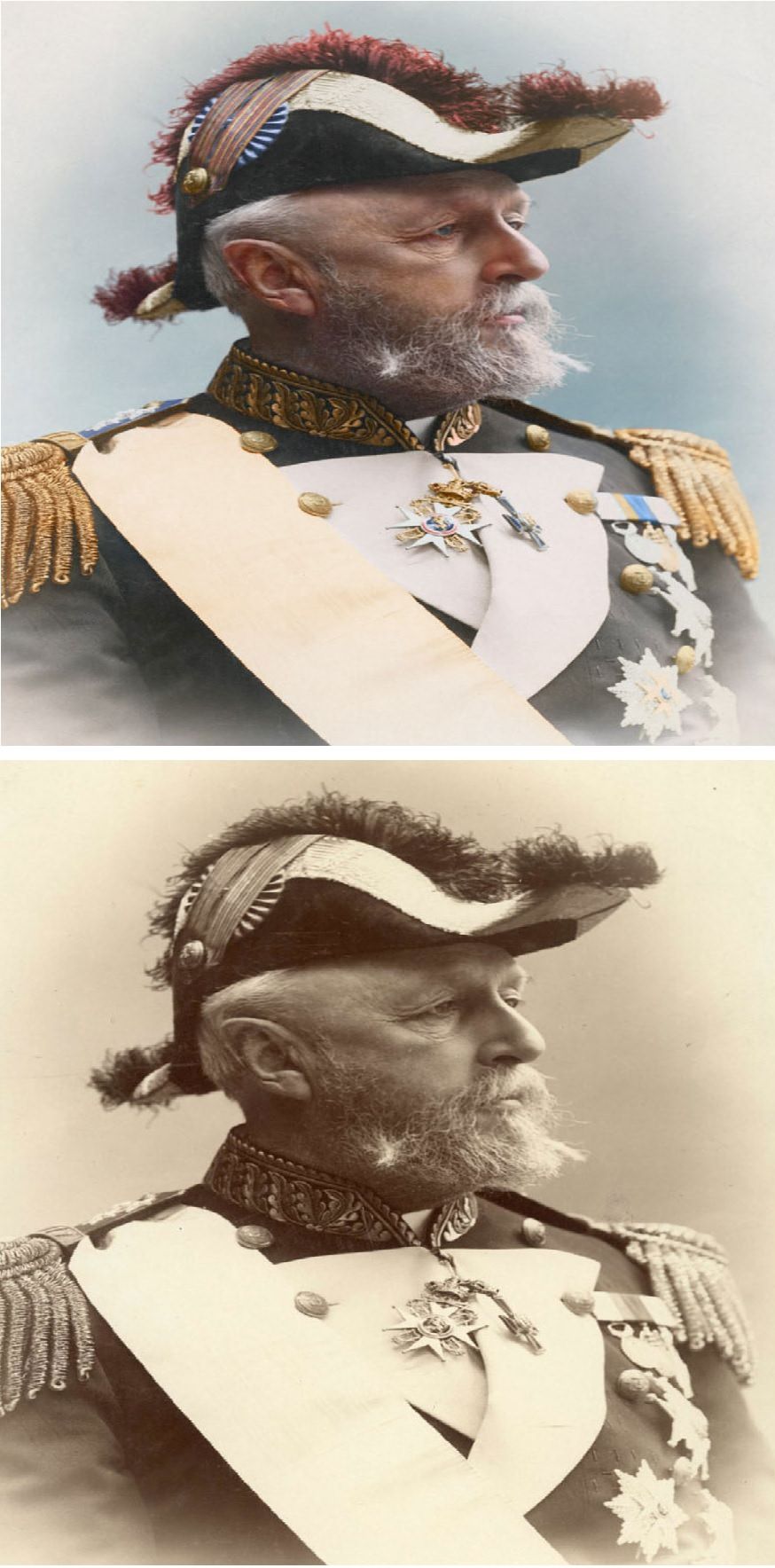
Oscar II served as King of Sweden and Norway and was known as one of the more intellectually engaged monarchs of his era. This 1880 portrait, restored in color, presents him with a formality appropriate to the period.
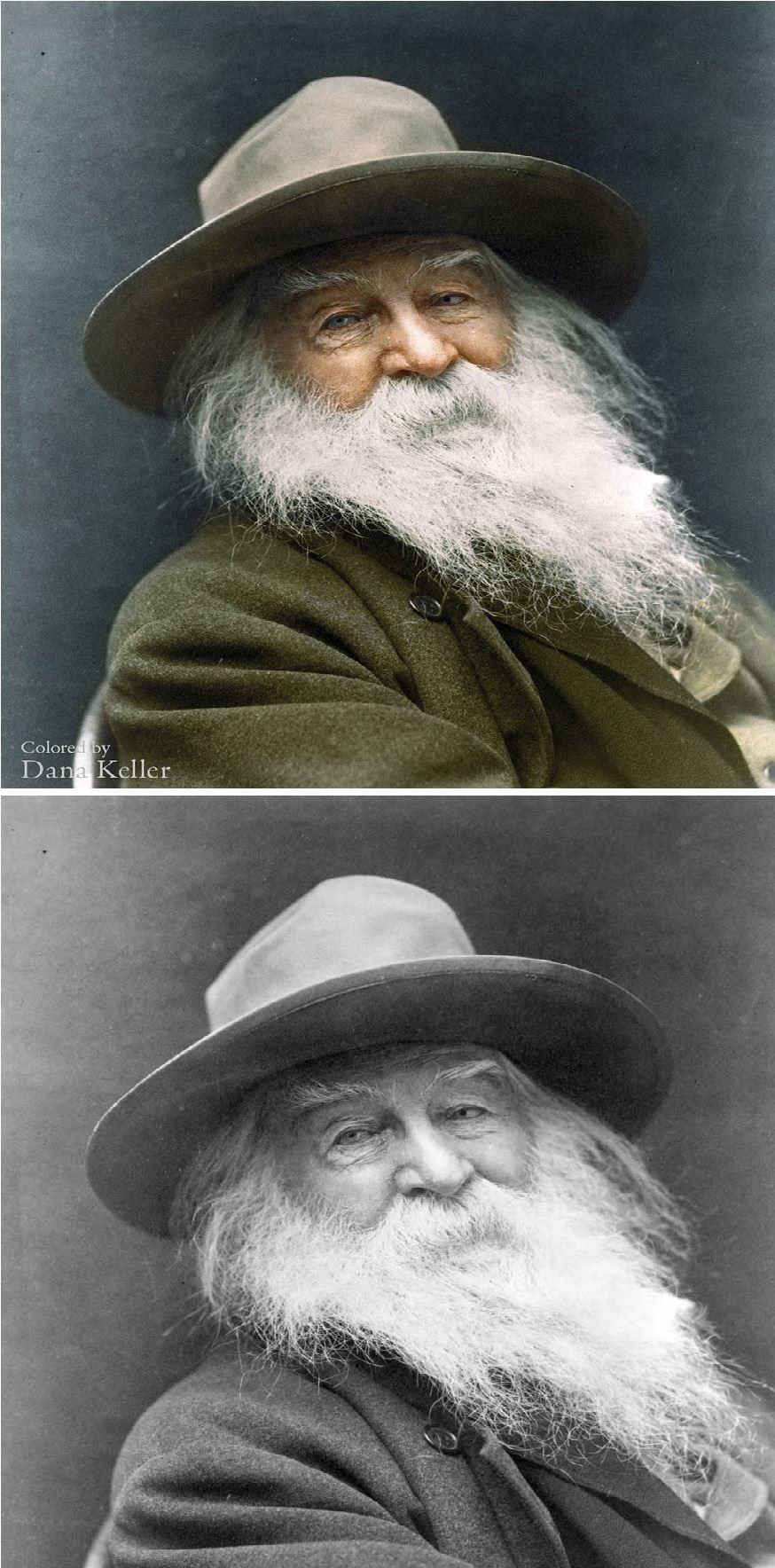
Walt Whitman spent his life writing about America with an openness that was radical for his time. By 1887, when this photograph was taken, he was an old man whose most influential work was long behind him — but his bearing remained that of someone who had lived fully.
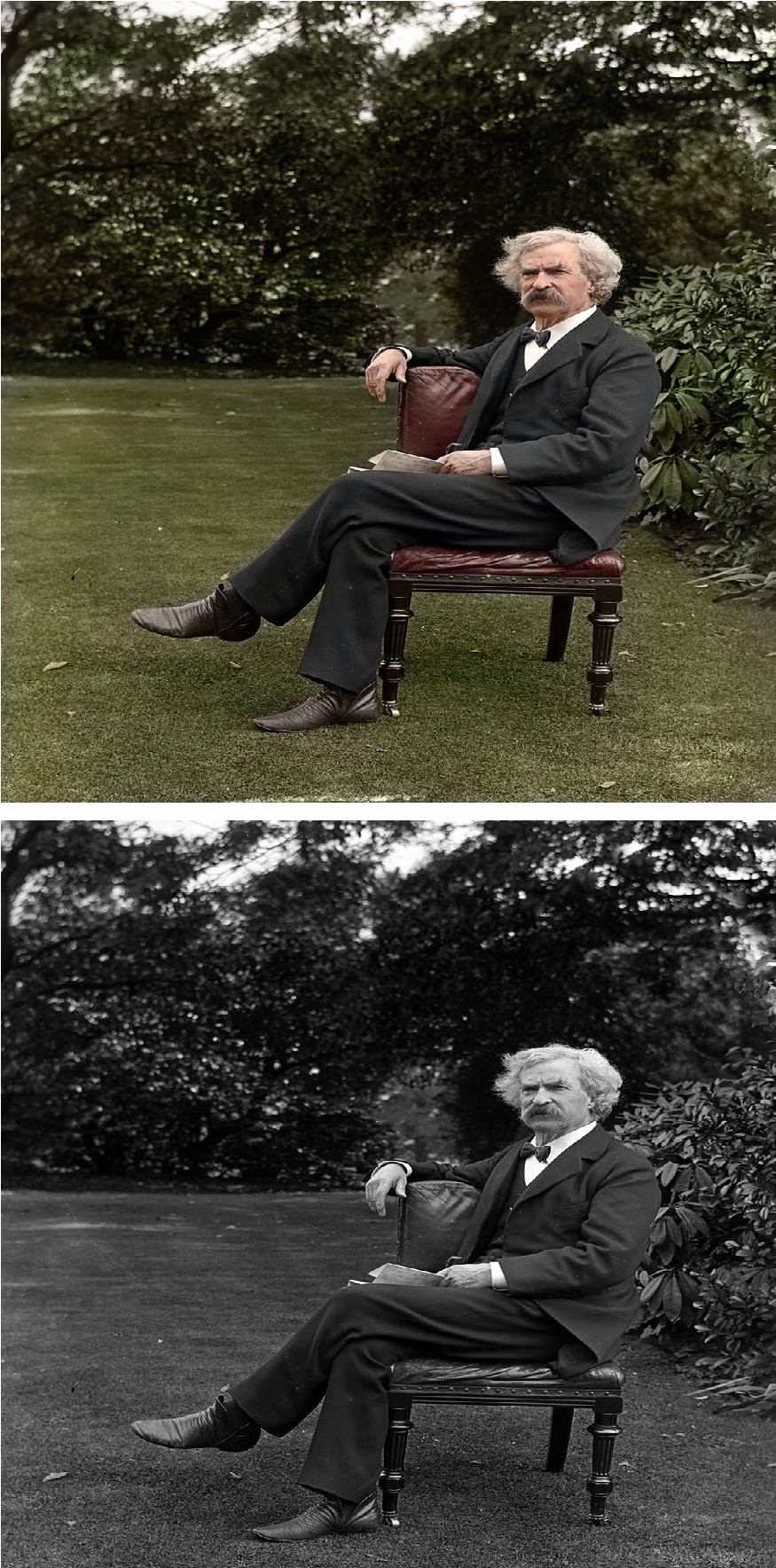
Mark Twain photographed in his garden around 1900 shows a man in the final chapter of his life. His white suit — which he deliberately wore year-round as a statement — stands out clearly in the colorized image, exactly as he intended it to.
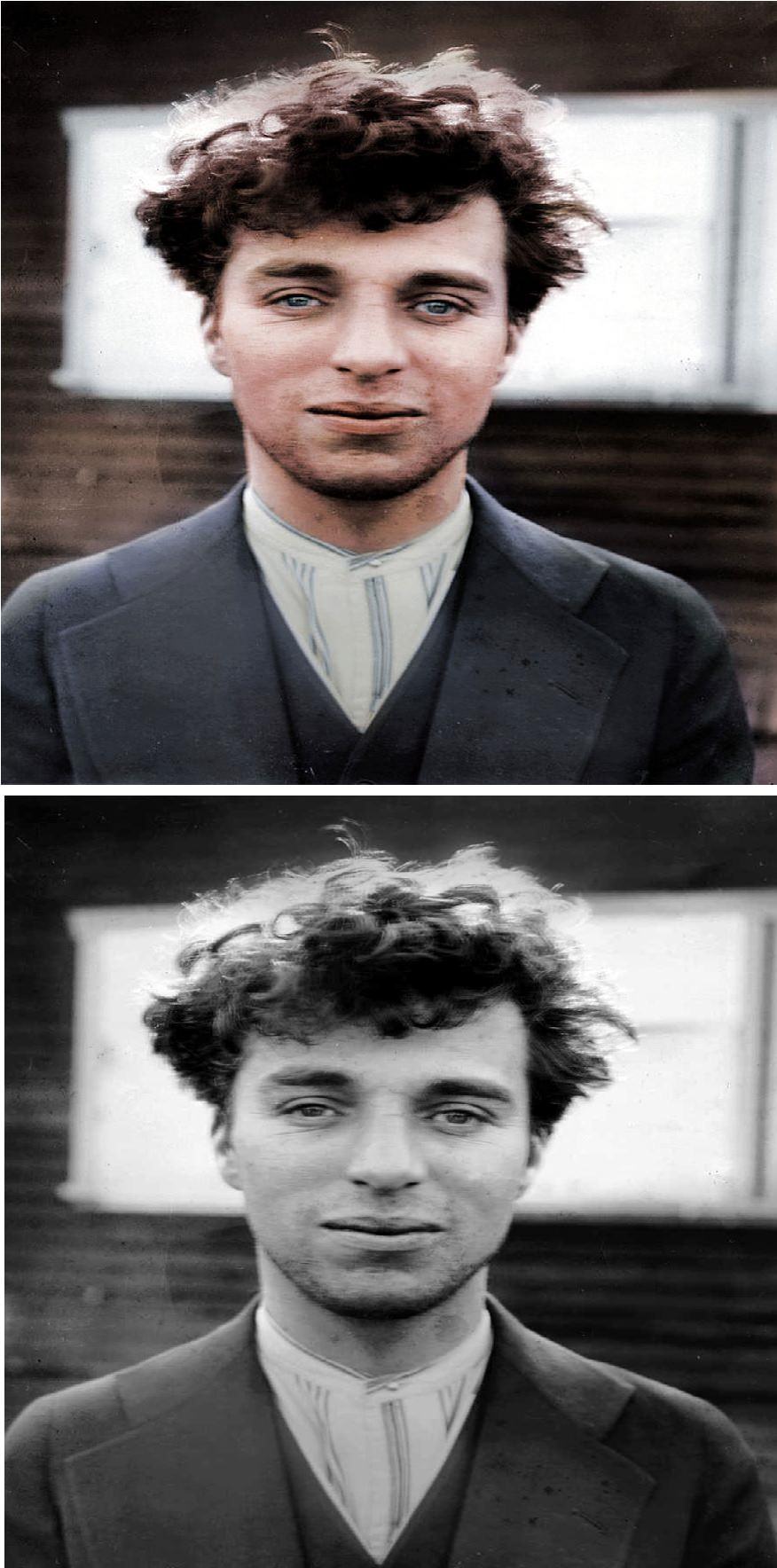
In 1916, Charlie Chaplin was 27 years old and already one of the most recognized faces on Earth. Silent film had made him a global star. This colorized portrait captures him at the height of his early fame.
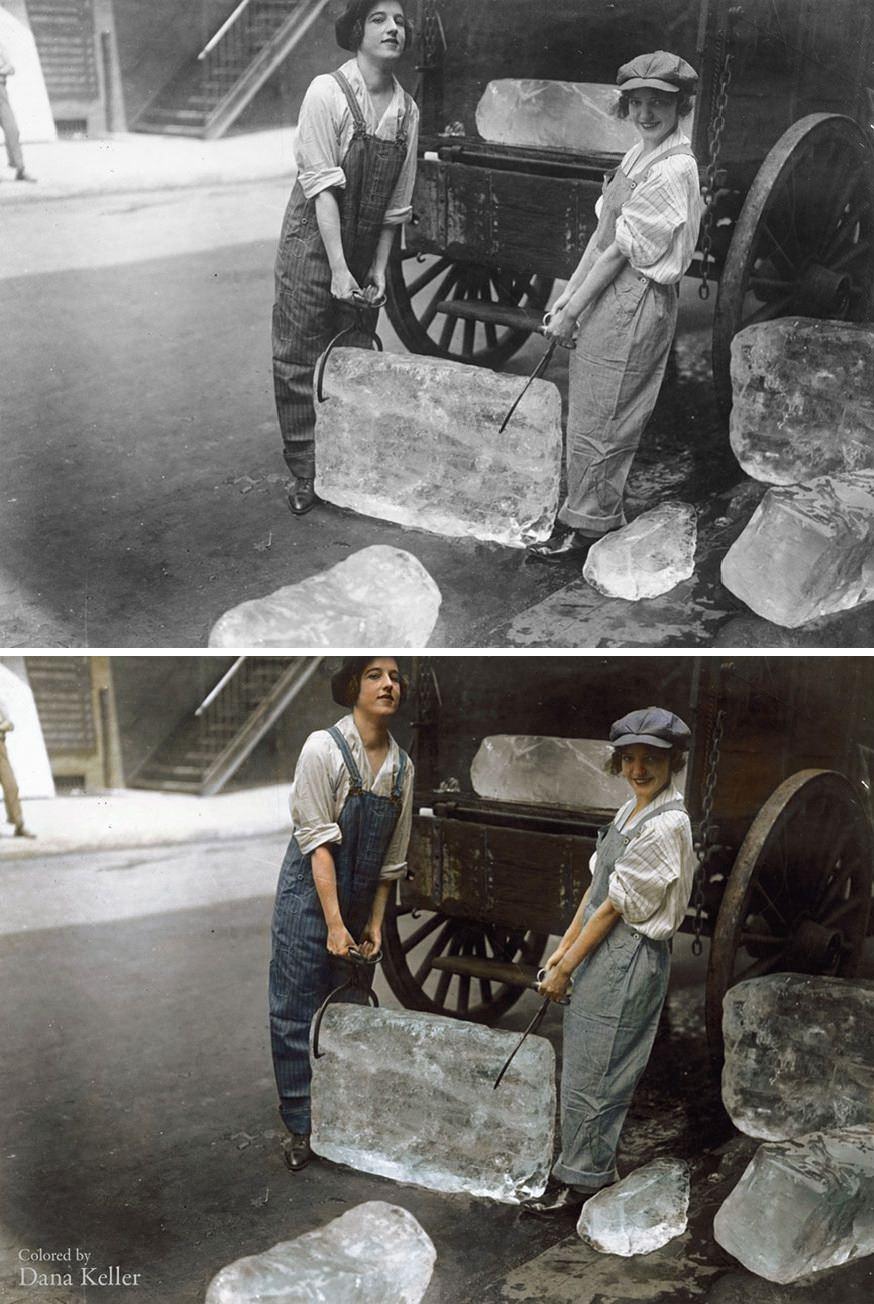
World War I pulled enormous numbers of men out of the American workforce. Women stepped into roles that had been strictly male — including physically demanding jobs like ice delivery. This 1918 photograph shows that shift in direct, practical terms.
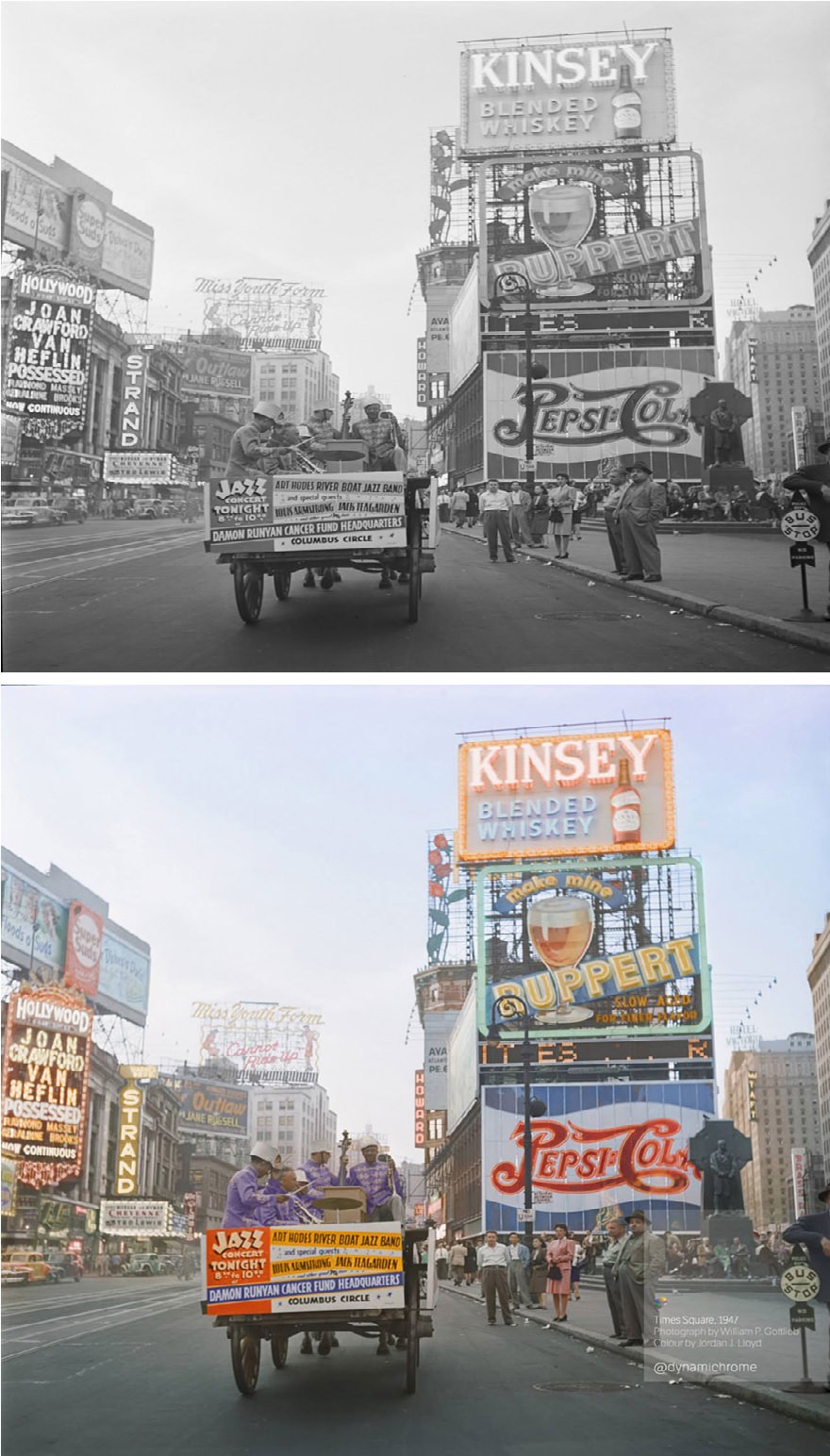
Times Square in 1947 was a world away from what it would become. The postwar energy of New York — neon signs, crowds, returning veterans, a city ready to move forward — fills this frame completely.
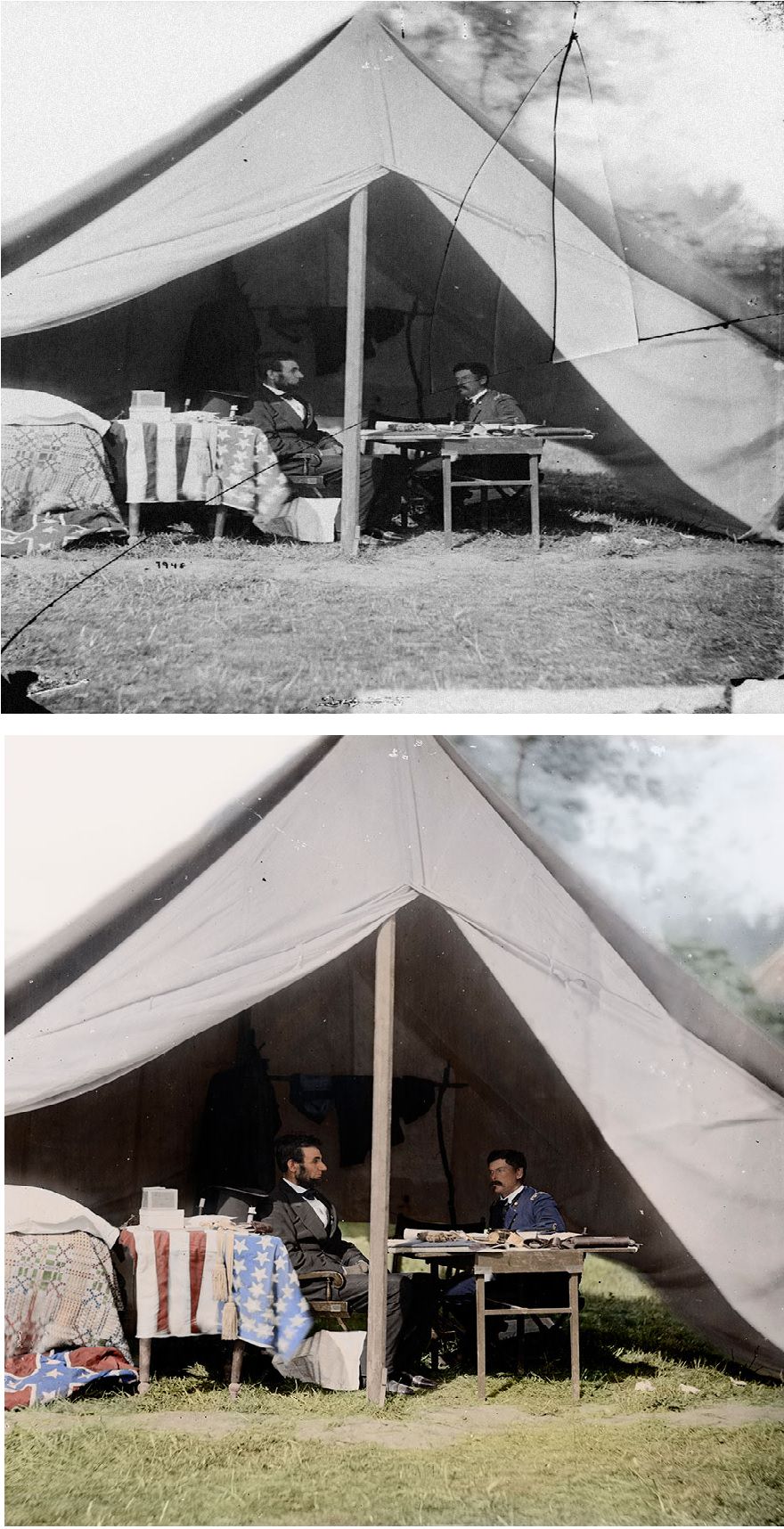
In September 1862, President Abraham Lincoln visited General George McClellan at Antietam, Maryland, shortly after one of the bloodiest single days in American military history. The photograph taken there by Alexander Gardner was later used as the basis for Lincoln’s image on the penny.
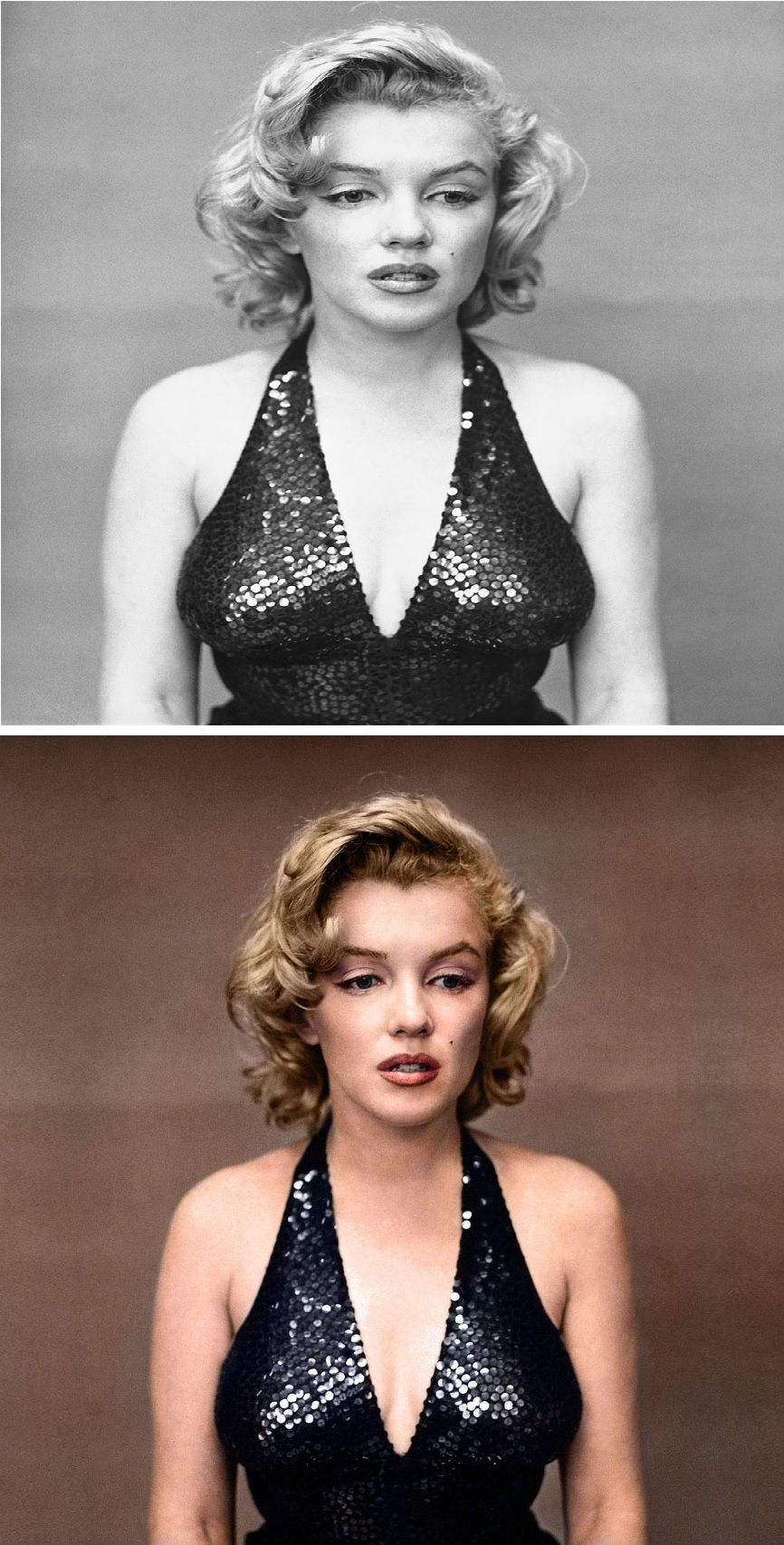
Marilyn Monroe in 1957 was at the center of American popular culture in a way that few figures ever have been. This colorized portrait restores the full warmth and vibrancy of an image that, in black and white, loses much of its original character.
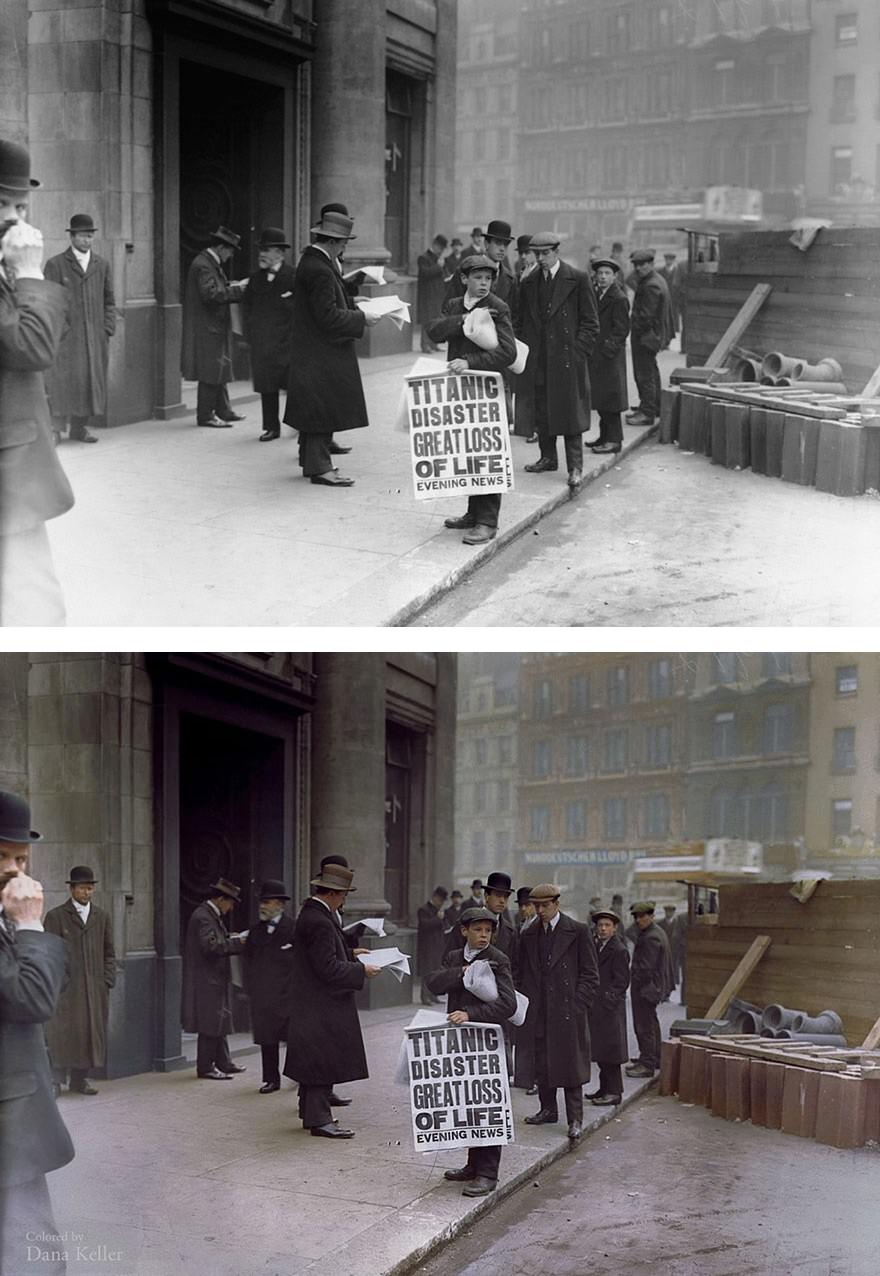
On April 16, 1912 — the morning after the Titanic sank — newspaper boy Ned Parfett stood on a London street selling copies of the evening paper carrying the news. He appears calm, almost casual. The weight of what the headlines announced is entirely absent from his expression.
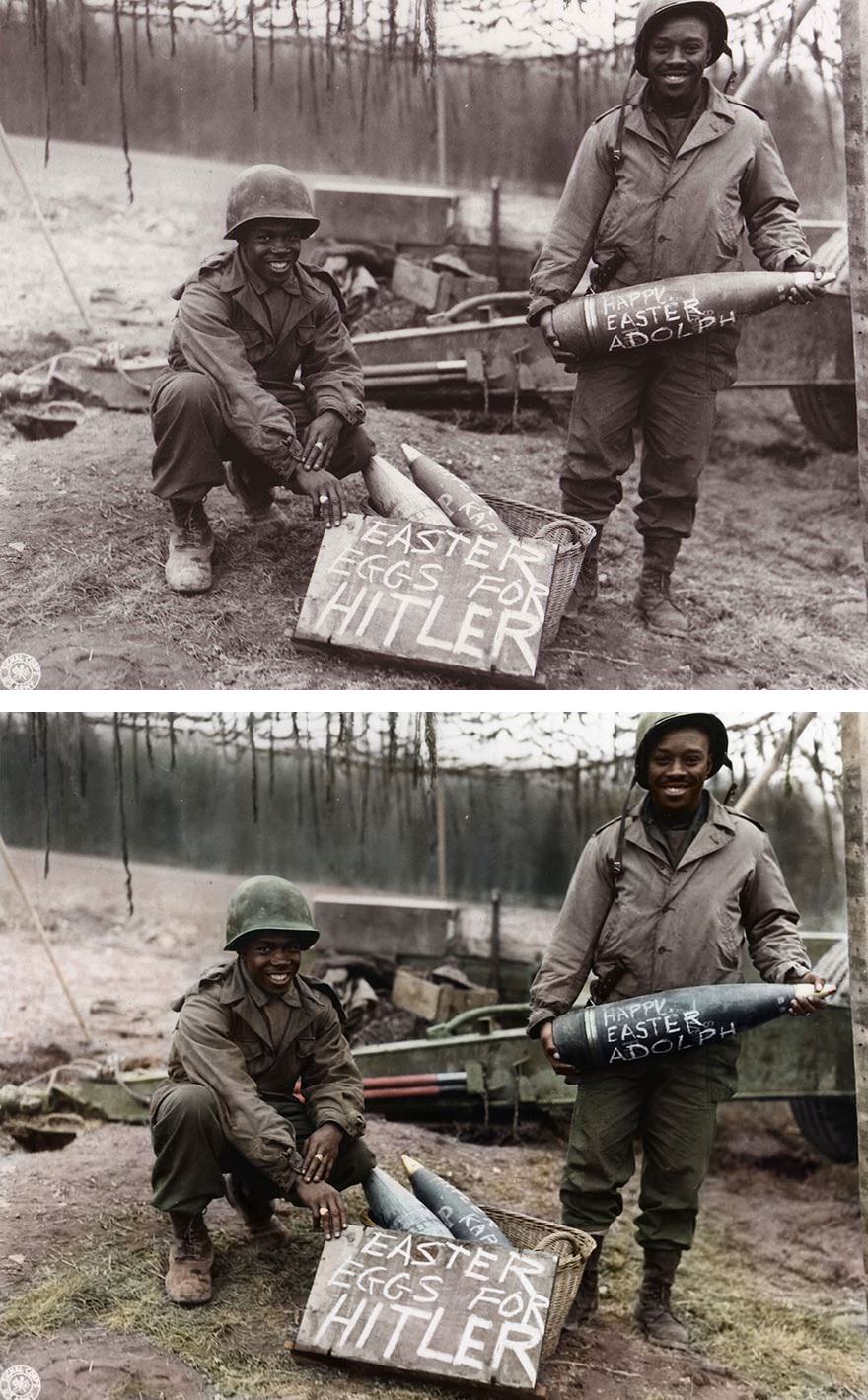
Near the end of World War II, Allied soldiers posed for photographs with captured munitions labeled as ‘Easter Eggs for Hitler.’ The image reflects the dark humor that soldiers used to process the final stages of a war they had fought for years.
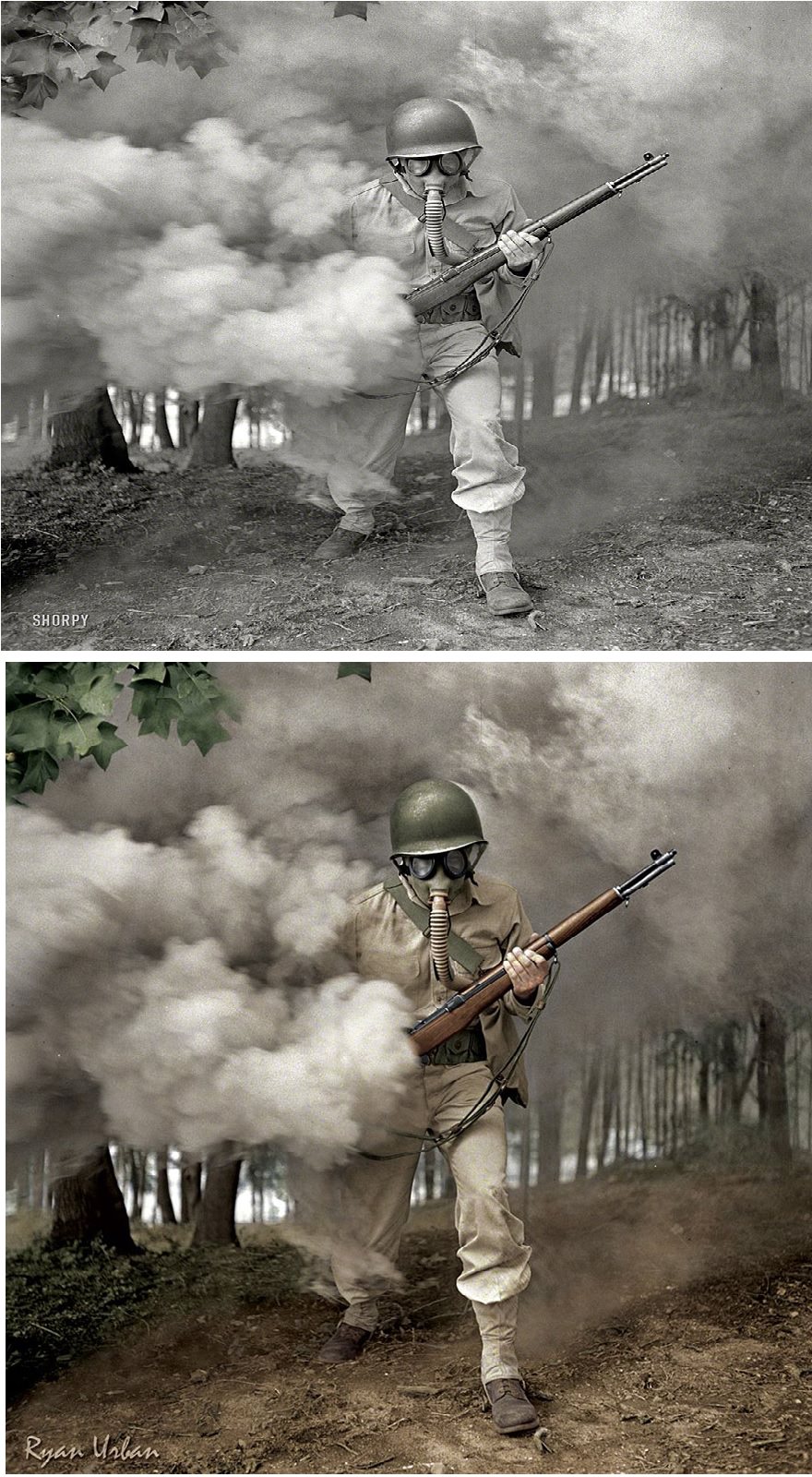
At Fort Belvoir, Virginia, in 1942, Sergeant George Camblair trained with a gas mask inside a smokescreen. Military preparation for chemical warfare was standard practice during World War II, and images like this one show how seriously that training was taken.
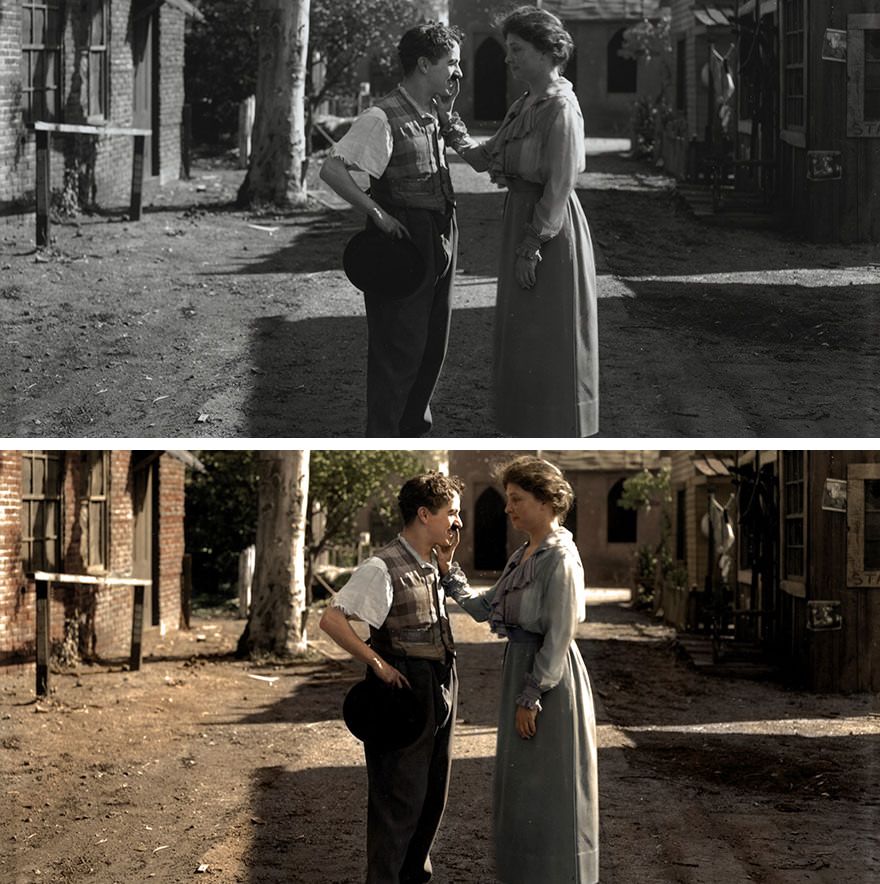
In 1919, Helen Keller — who had been deaf and blind since infancy — met Charlie Chaplin. The photograph of their meeting is one of the more quietly remarkable images of the era: two of the most famous people in the world, each transformative in entirely different ways.
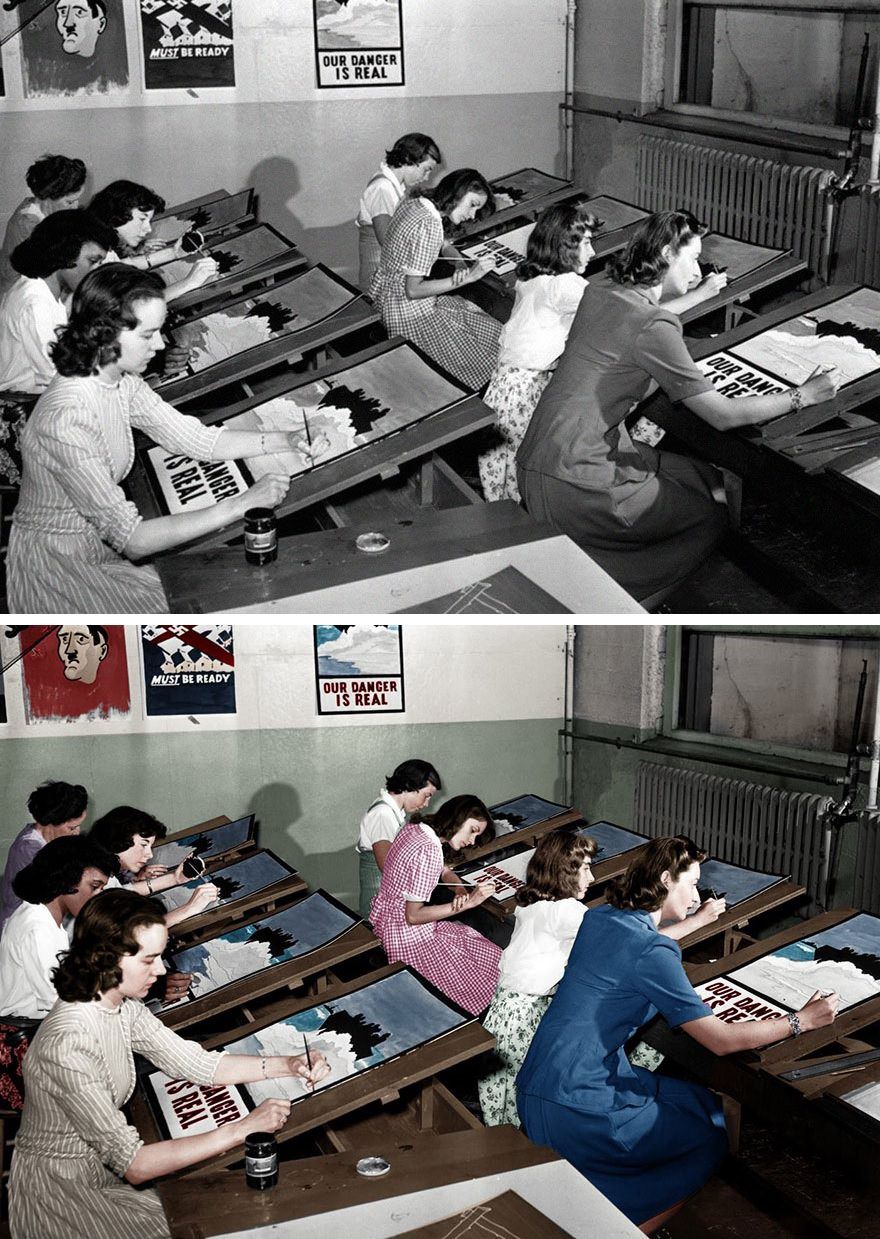
On July 8, 1942, artists in Port Washington, New York, worked on WWII propaganda posters designed to rally public support for the war effort. The scale and craft of these productions — entirely hand-painted — is evident in the colorized image.
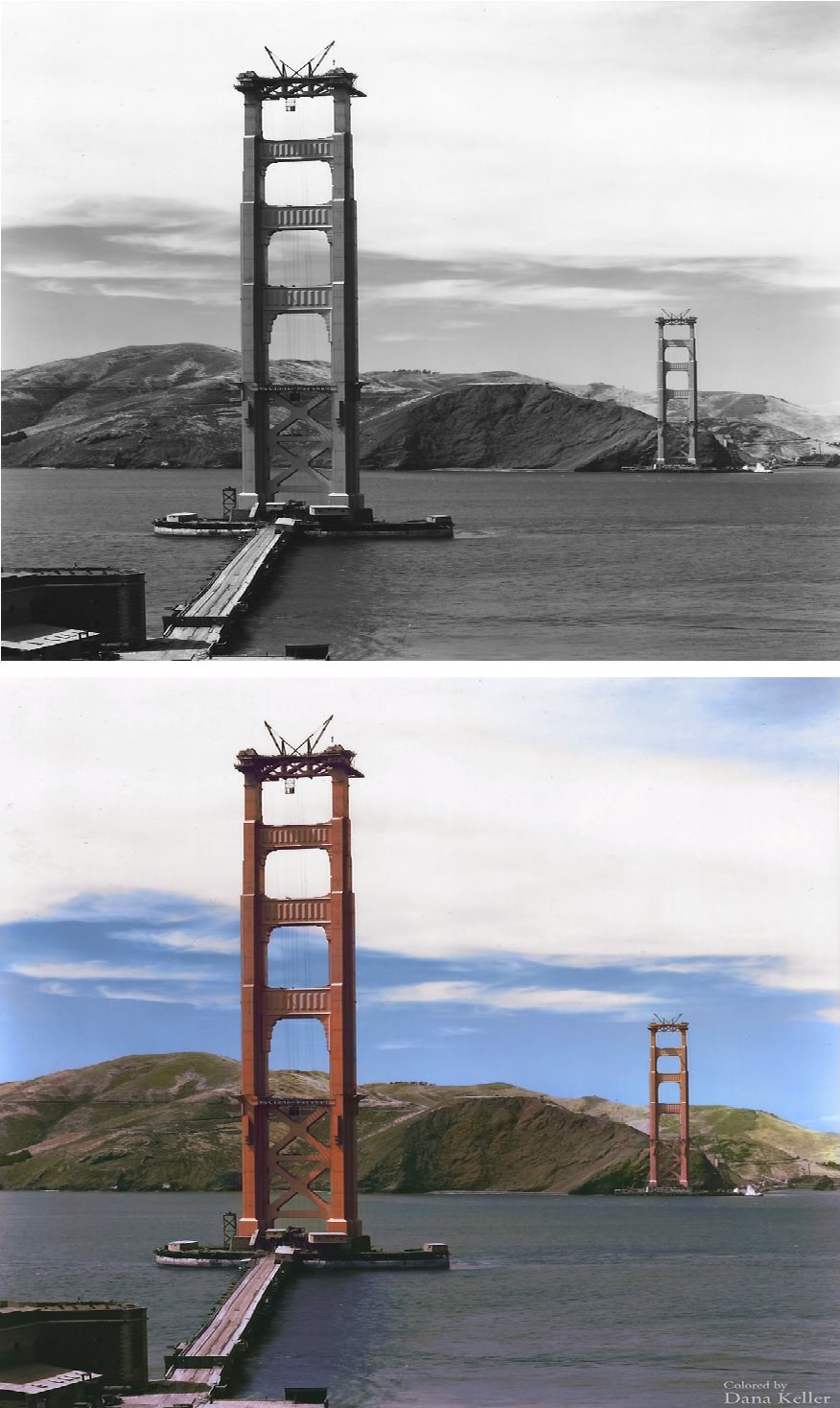
The construction of the Golden Gate Bridge, photographed around 1935, was one of the greatest engineering undertakings of the 20th century. Workers built it across a dangerous strait, with strong currents and frequent fog, without the safety technology that would be standard today.
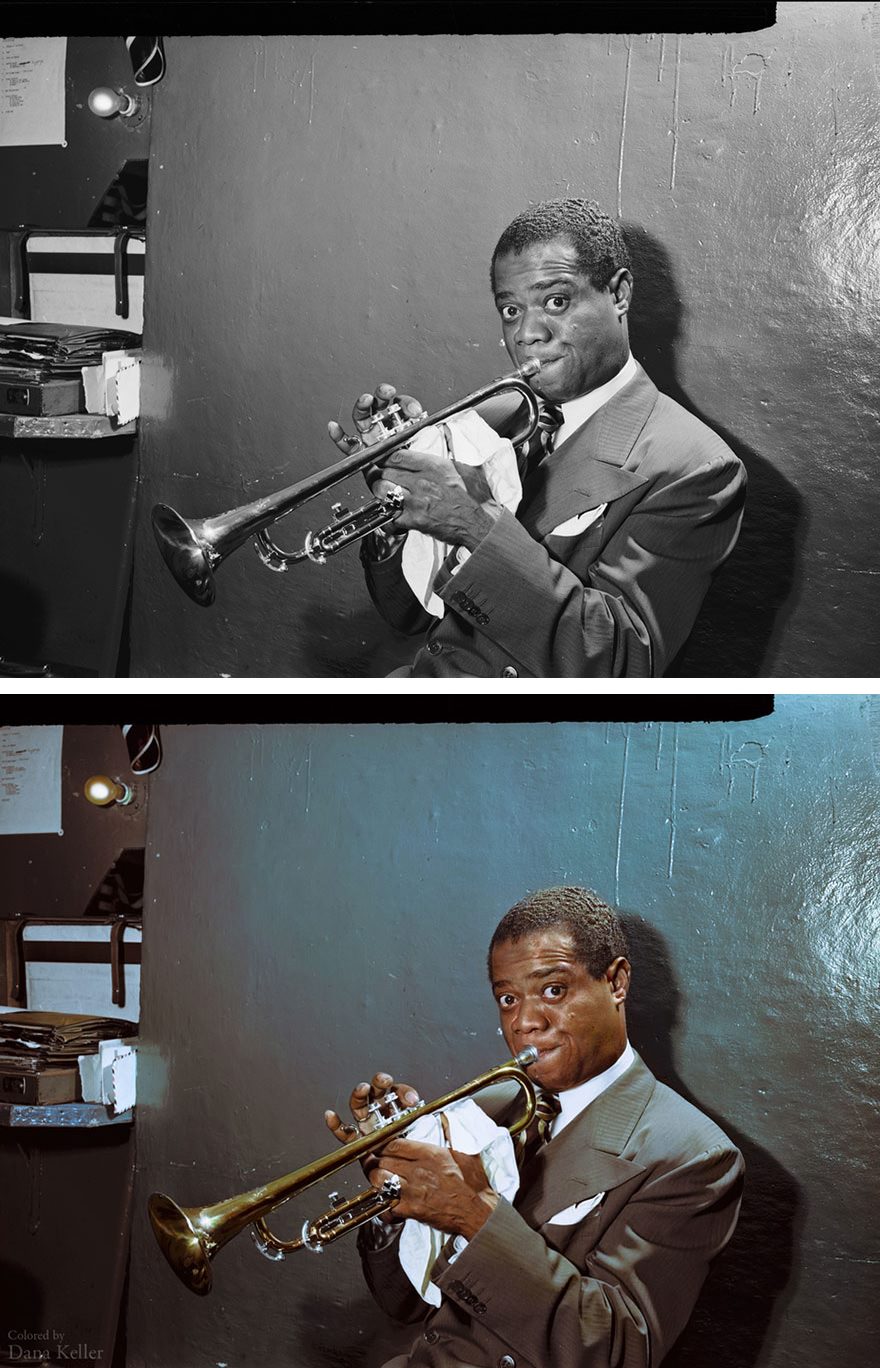
Around 1946, Louis Armstrong was photographed practicing in his dressing room — trumpet in hand, focused and alone. His dedication to his craft matched his extraordinary natural talent. The color image shows a working musician, not a monument.
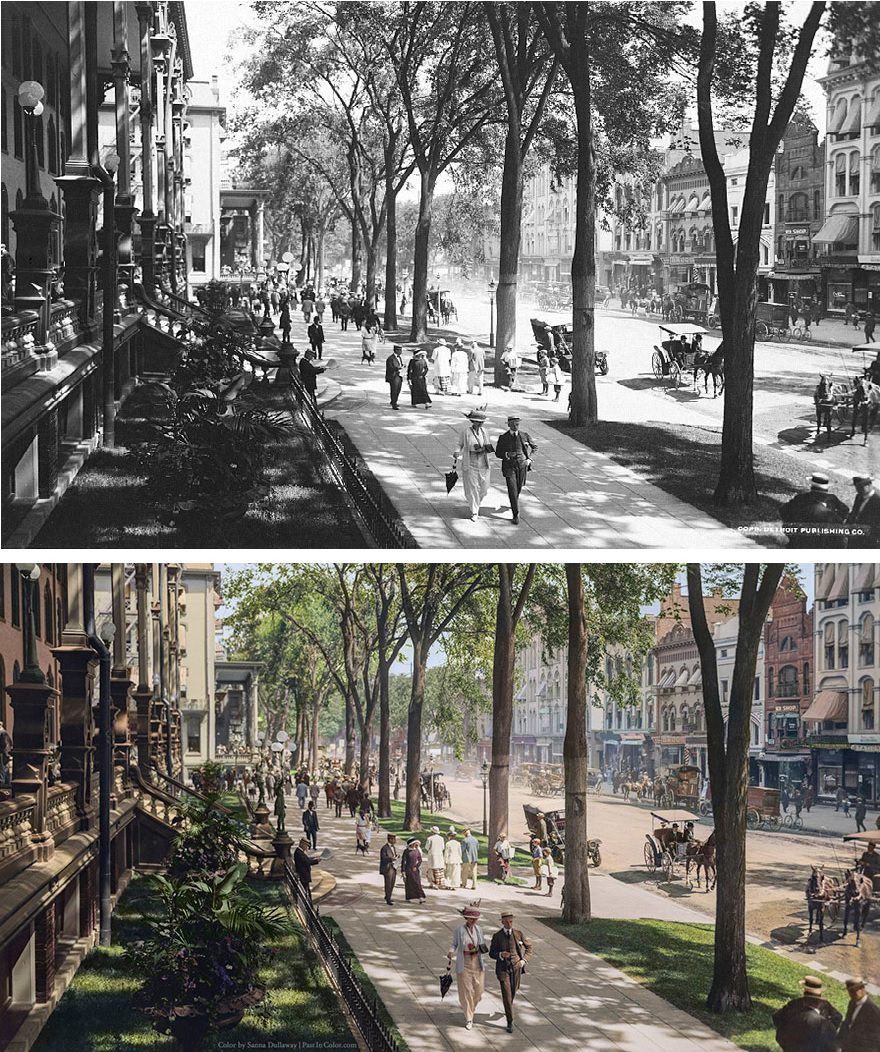
Broadway at the United States Hotel in Saratoga Springs, New York, photographed between 1900 and 1915, captures a prosperous American town in the early automobile age. Horse-drawn vehicles and early cars shared the same streets.
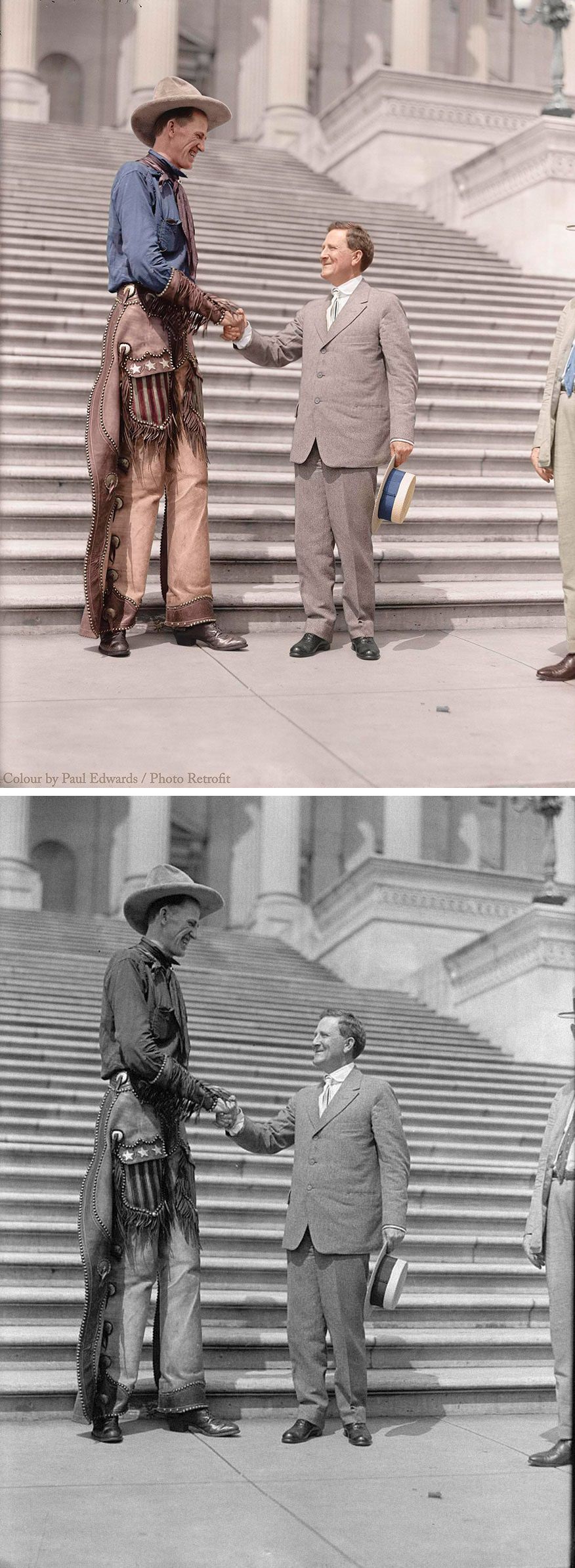
In 1919, Ralph E. Madsen — known as ‘The Tall Cowboy’ — was photographed alongside Senator Morris Sheppard. The height difference between the two men is striking, and the colorized image gives the scene a vivid, documentary quality.
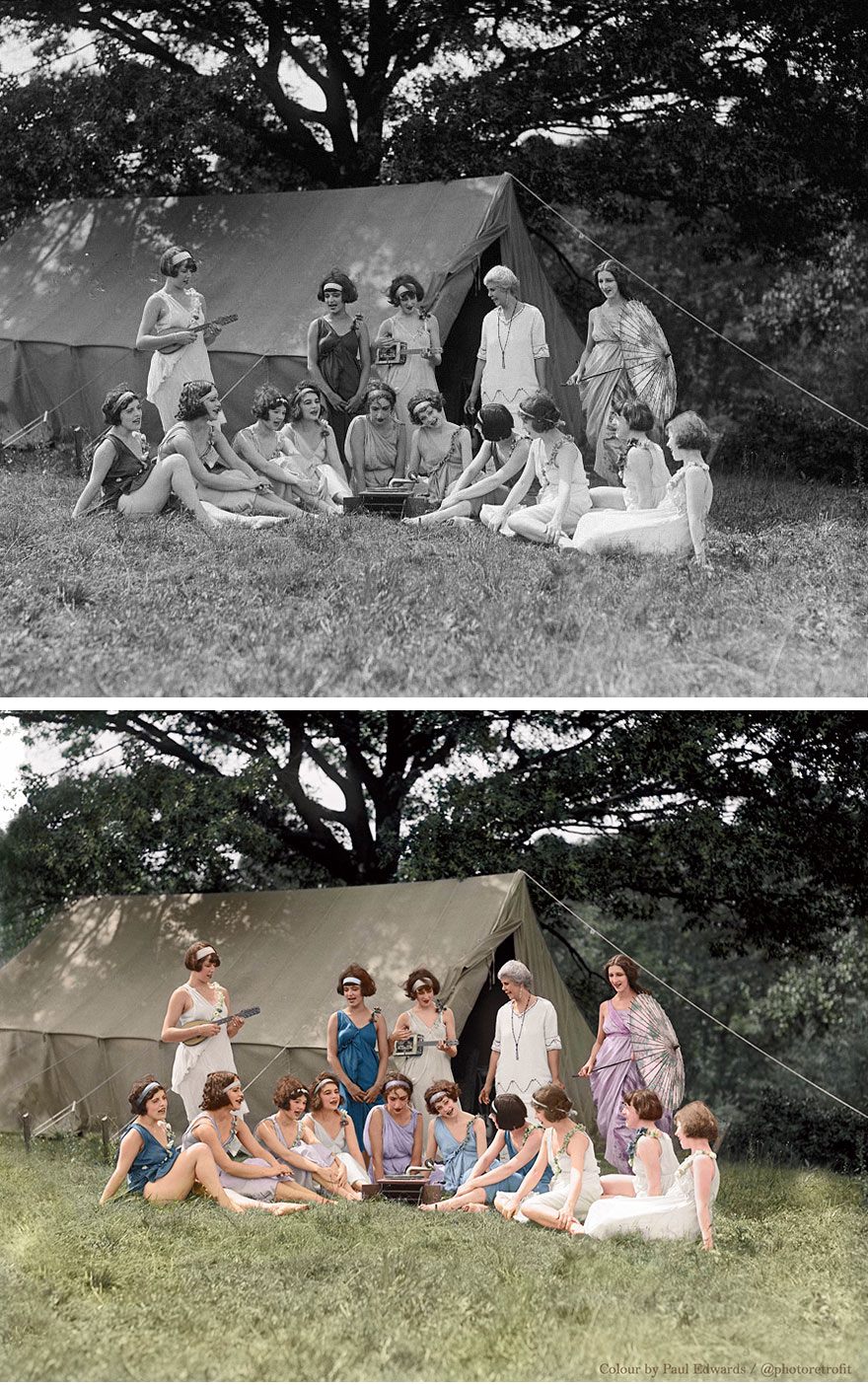
On August 20, 1924, dancers of the National American Ballet were photographed in a formal group portrait. The posture, costuming, and staging of the image reflect the formal discipline of classical dance in the early 20th century.
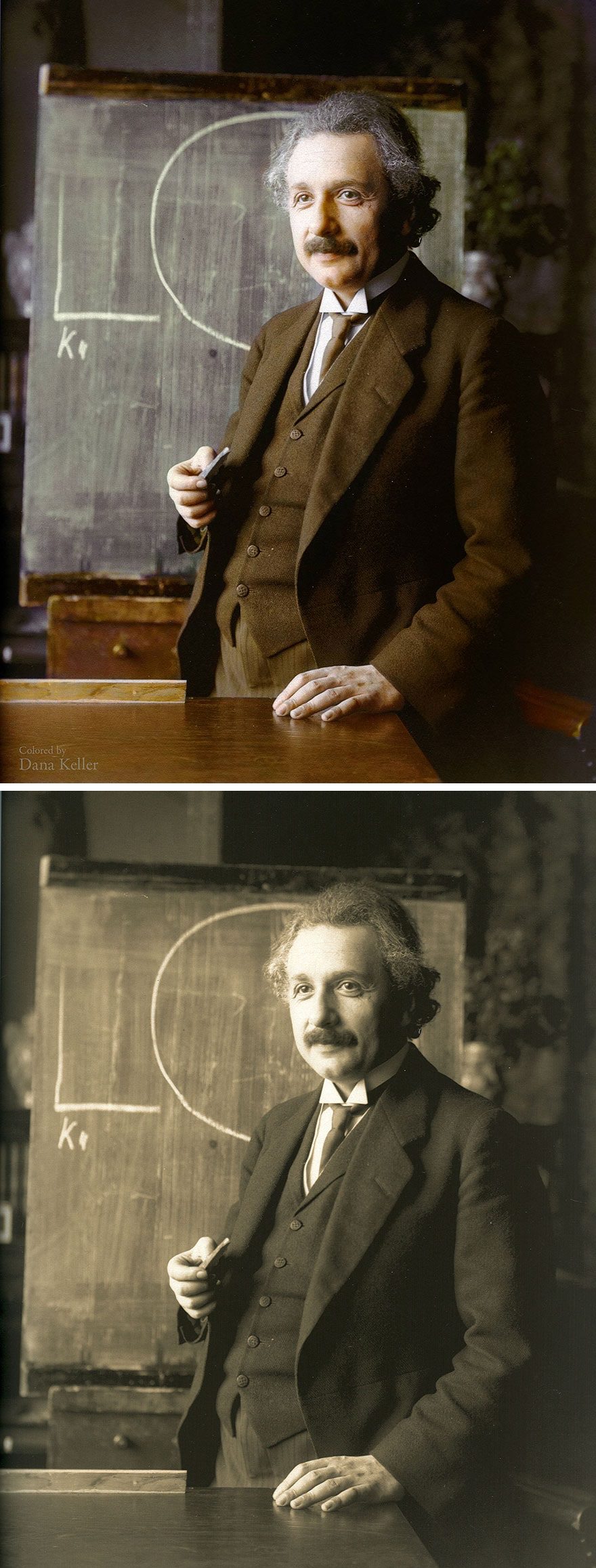
By 1921, Albert Einstein had already published his theory of general relativity and was becoming internationally recognized. This portrait from that year captures him at 42, between the work that made him famous and the decades of continued research still ahead.
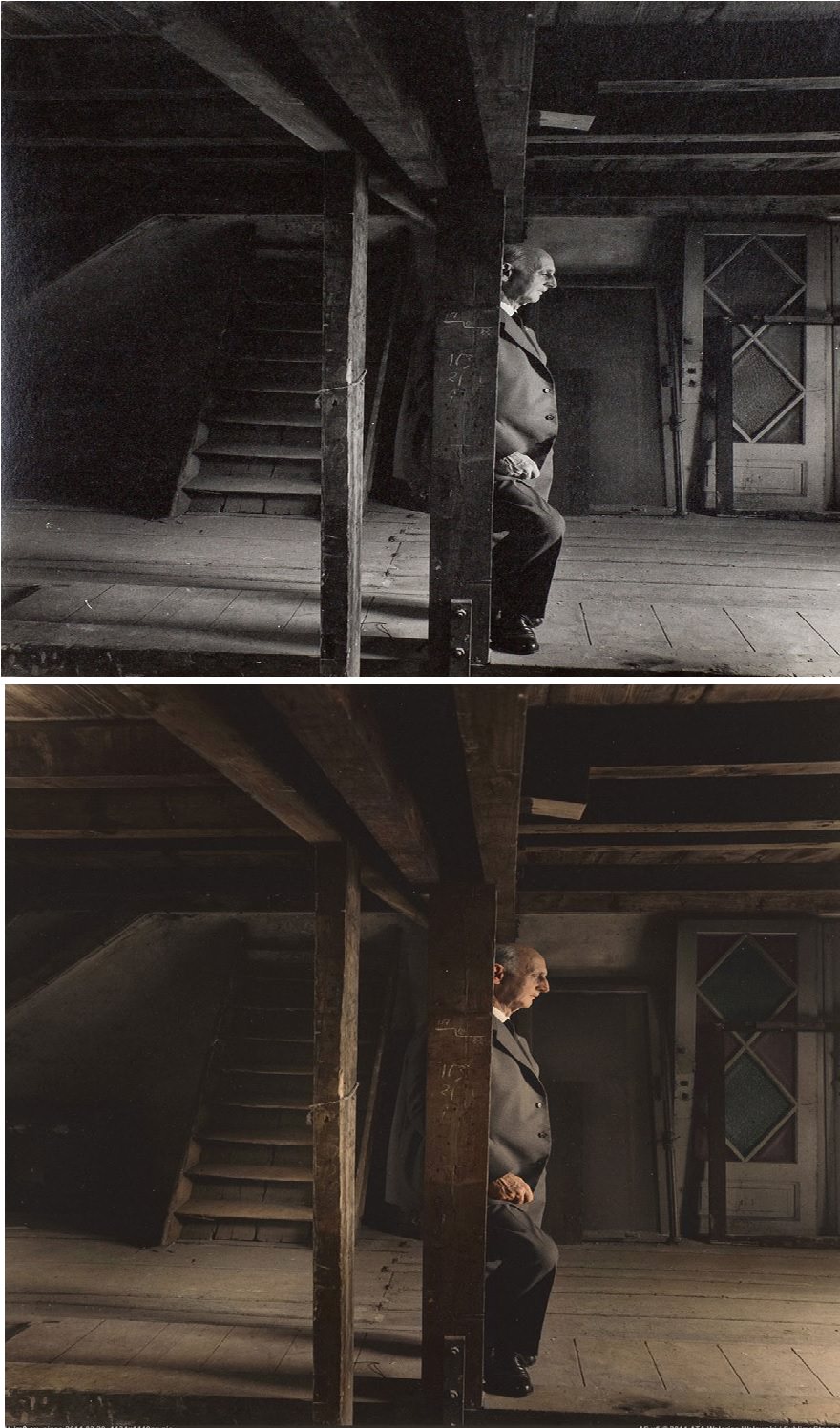
On May 3, 1960, Otto Frank — the only surviving member of the Frank family — returned to the attic in Amsterdam where his family had hidden from Nazi forces during World War II. His daughter Anne Frank died in the Bergen-Belsen concentration camp in February 1945. Otto Frank stands in the space that holds that history.
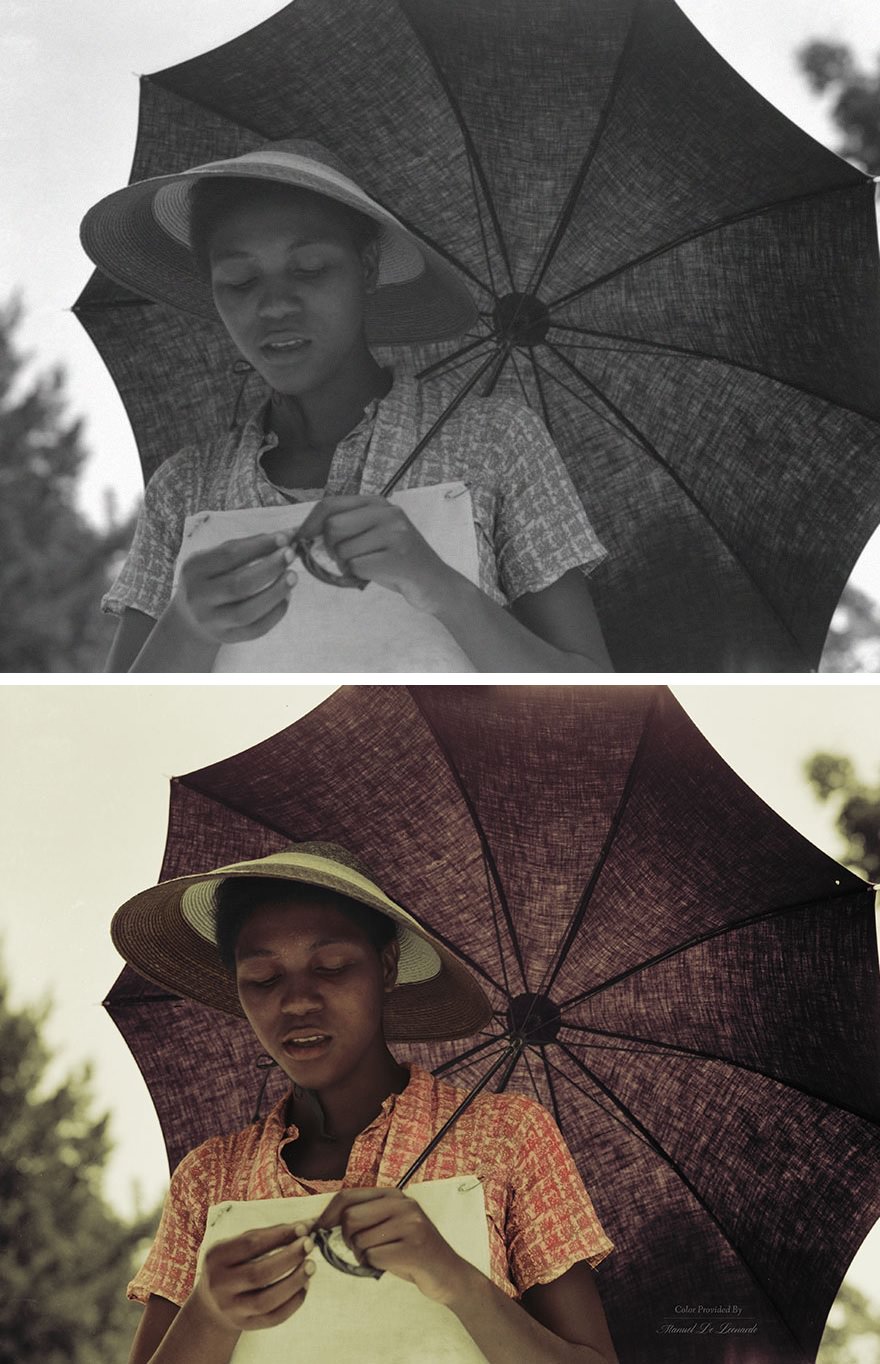
This 1937 photograph of a young woman with an umbrella in Louisiana documents everyday life during the Depression era. The color restoration gives her image a warmth and presence that the original black and white couldn’t fully carry.
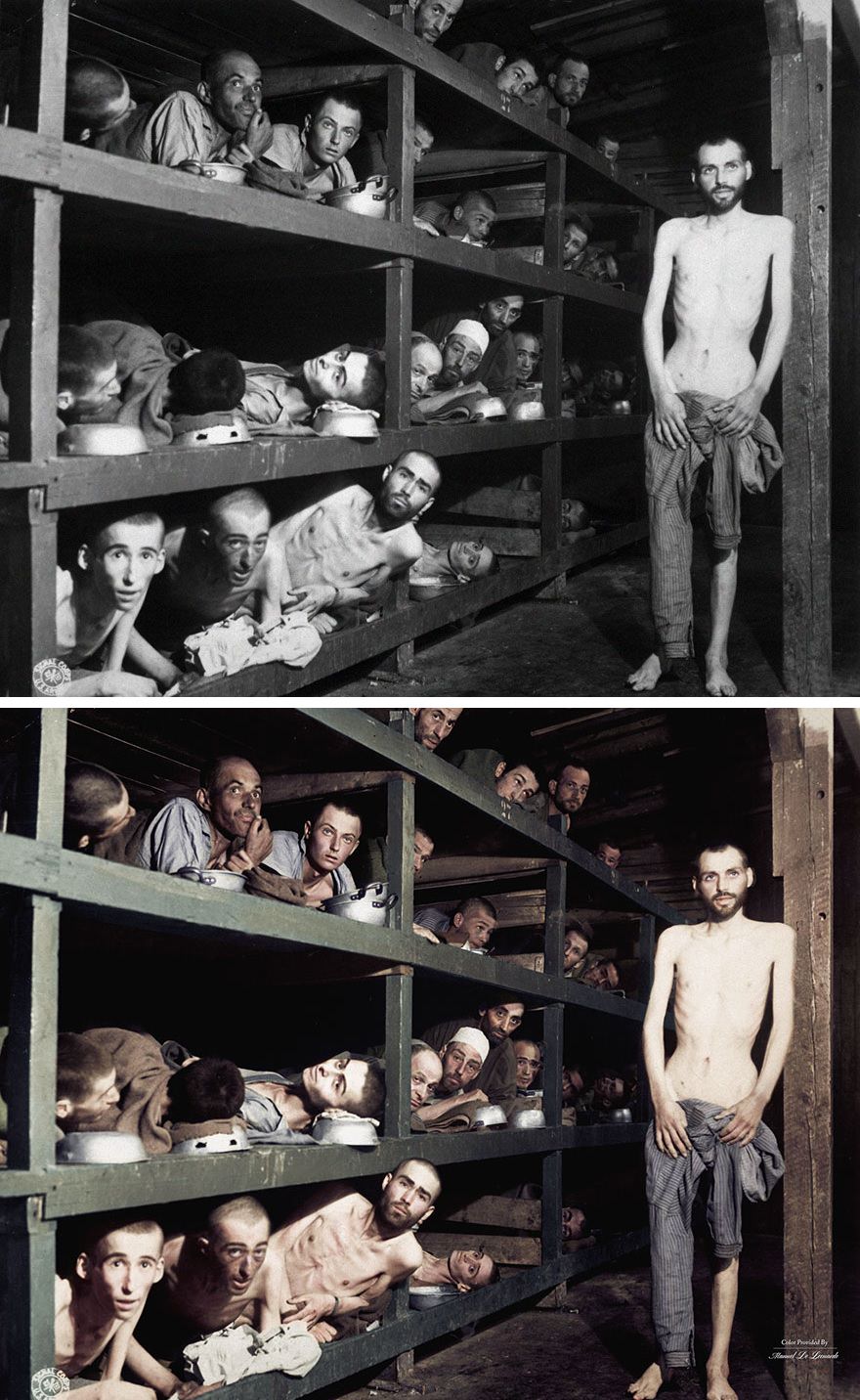
On April 16, 1945, American forces liberated the Buchenwald concentration camp and documented what they found. This photograph shows prisoners crowded into wooden bunks in the camp barracks. The men in the image had survived systematic starvation and brutality.
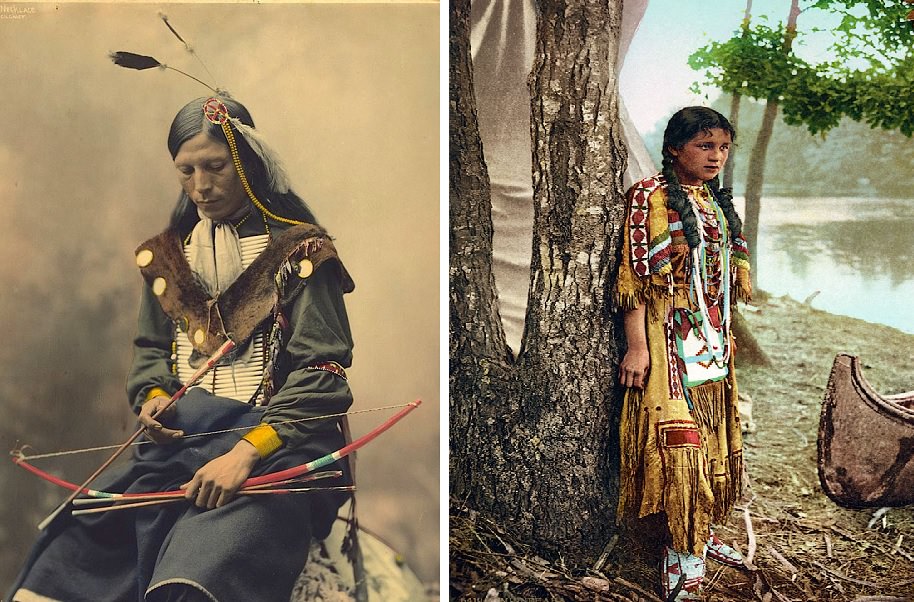
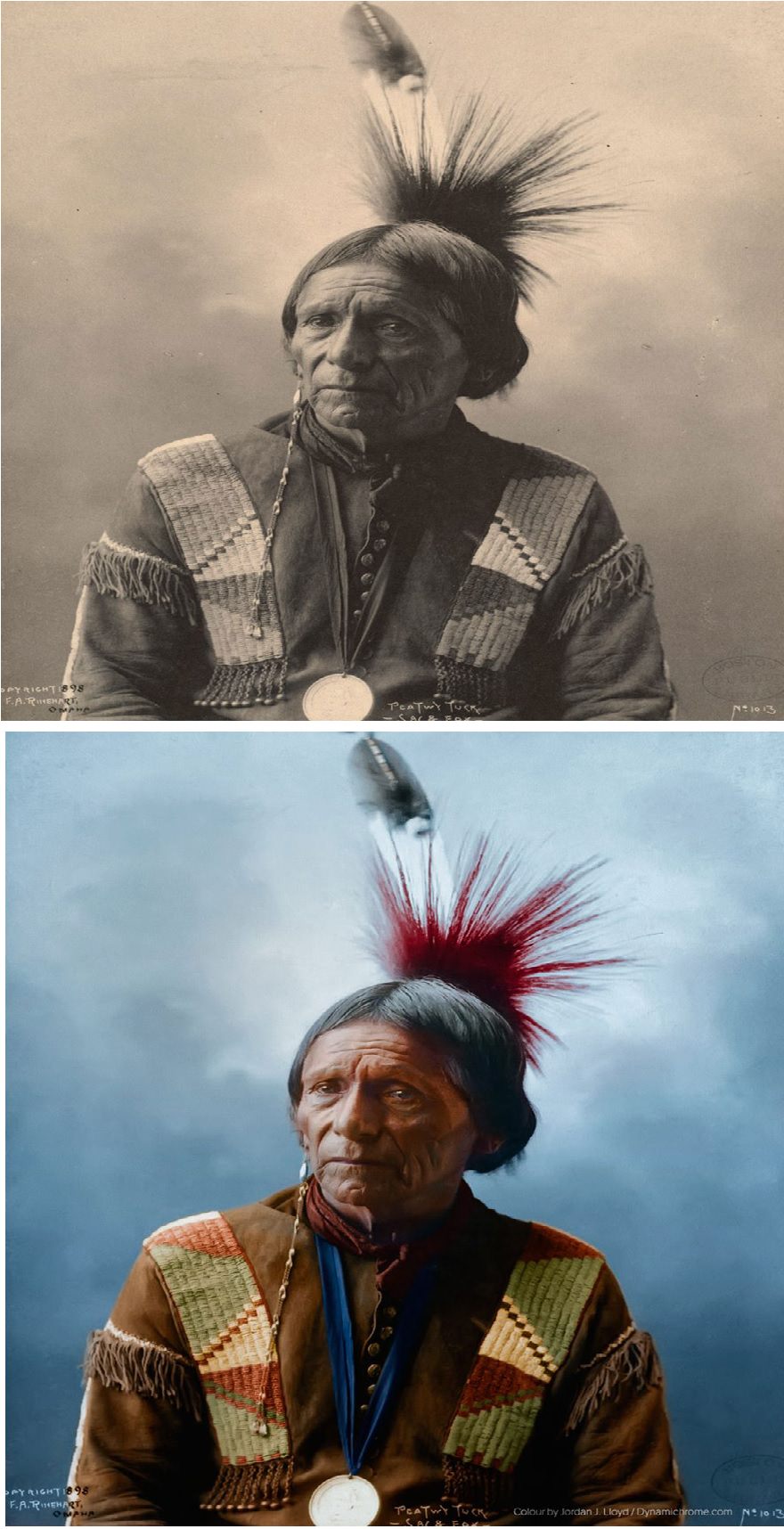
This 1898 portrait of Peatwy Tuck of the Meskwahki — a Native American people of the Great Plains and Midwest — was taken at a time when Indigenous communities were under intense pressure from U.S. government assimilation policies. The color restoration returns dignity to an image that history too often filed away.
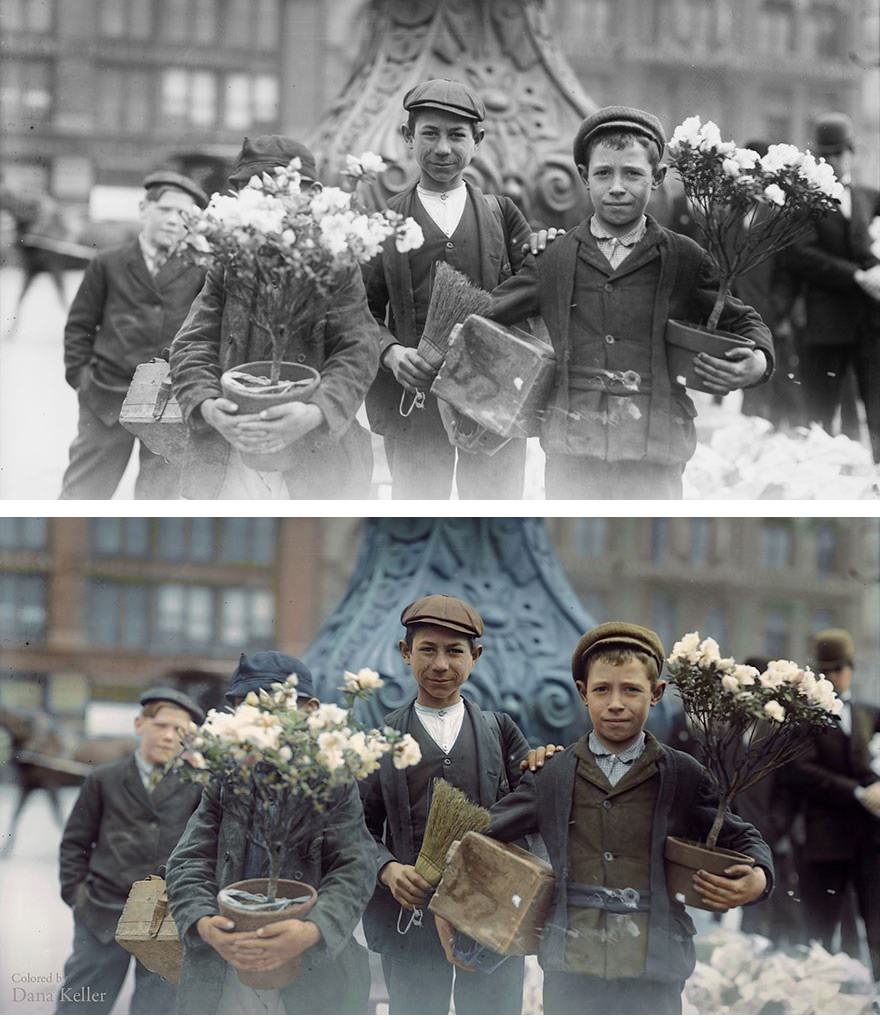
In April 1908, boys in New York’s Union Square were photographed after buying Easter flowers from street vendors. The colorized image shows a city teeming with street-level commerce, where children moved freely through crowded public spaces.
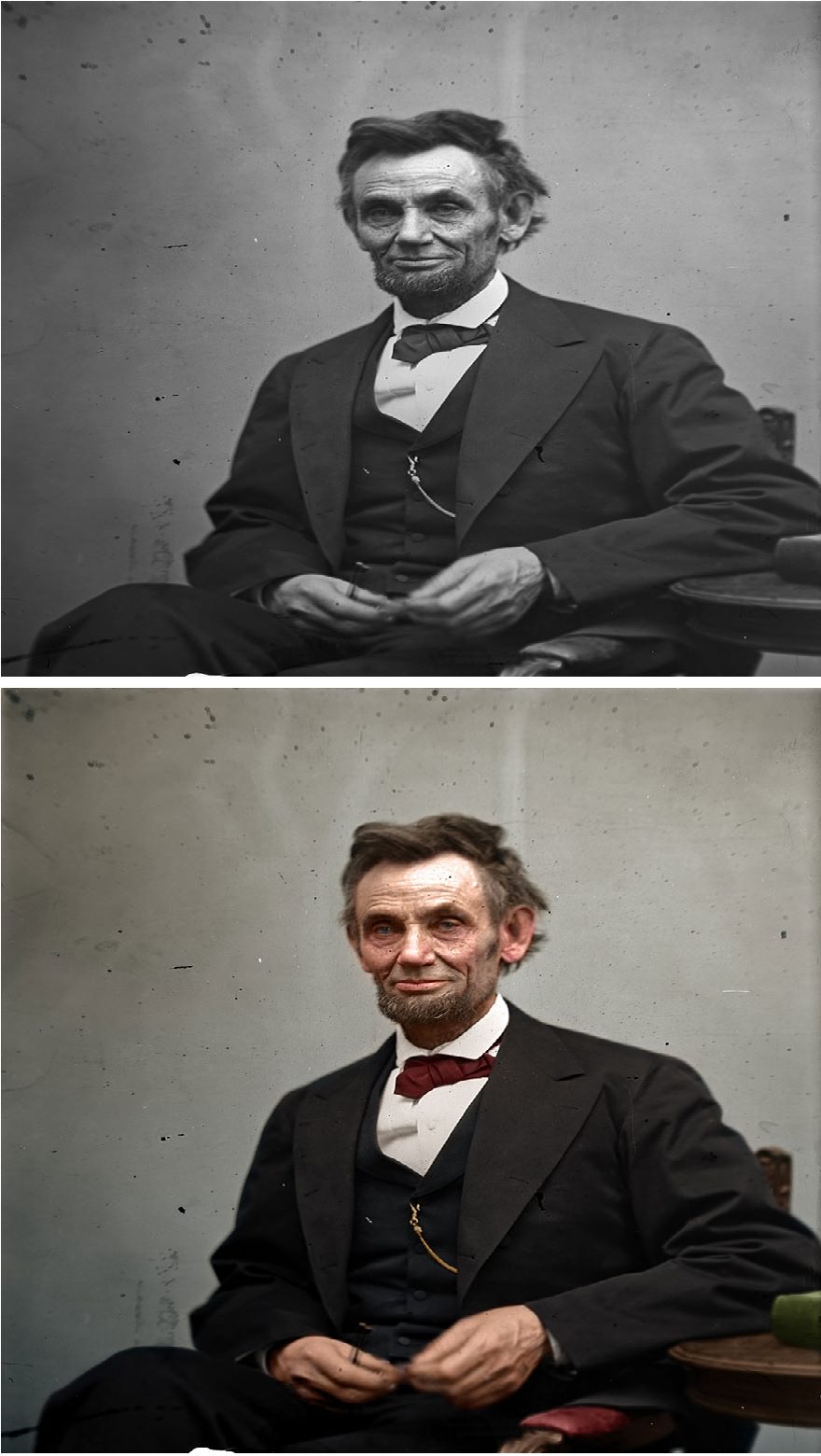
This February 1865 portrait of Abraham Lincoln, taken by photographer Alexander Gardner, was captured just two months before Lincoln’s assassination. It is one of the last photographs ever taken of him. In color, the exhaustion of four years of war is written plainly across his face.
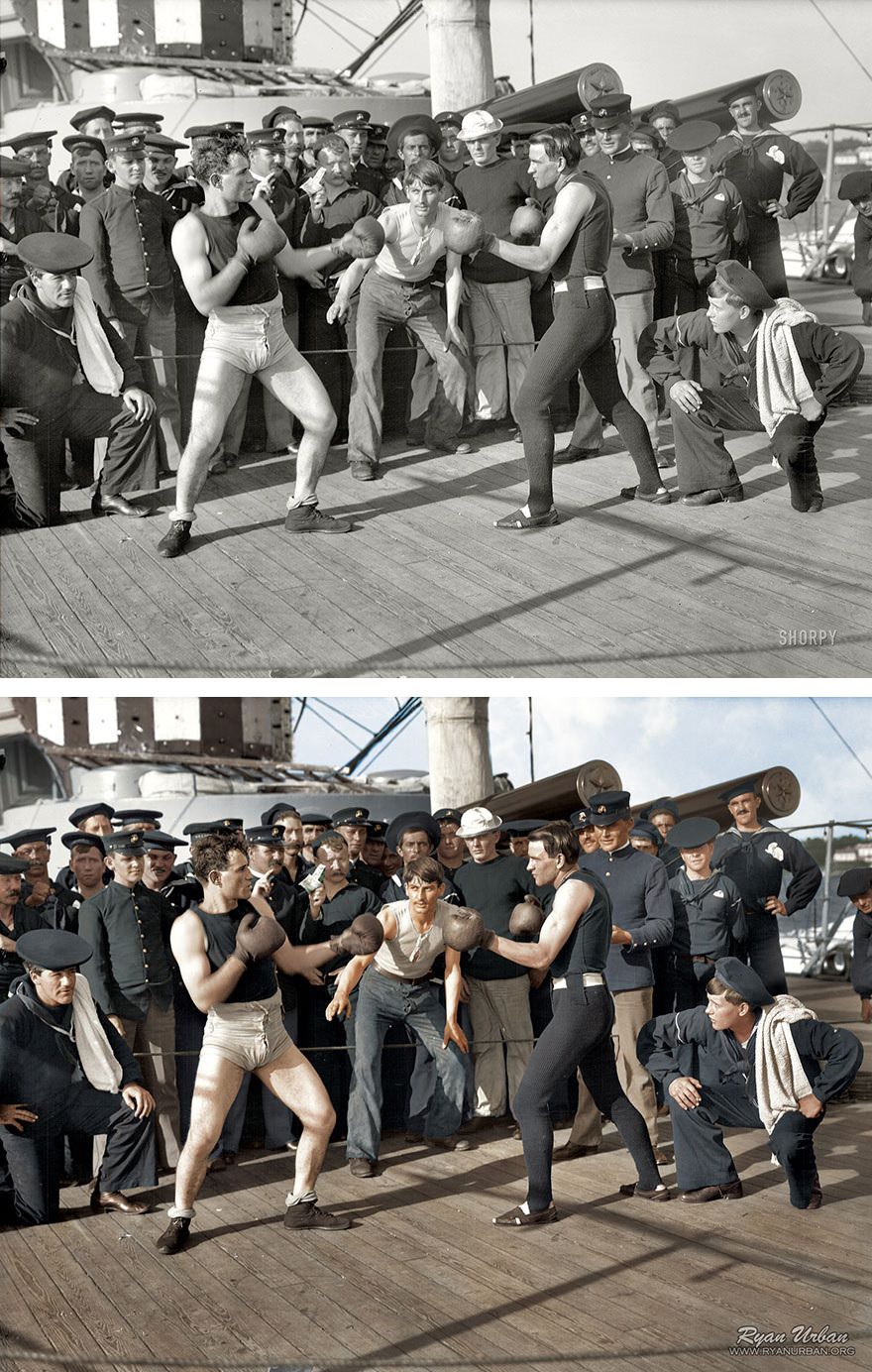
On July 3, 1899, a boxing match was held aboard the U.S.S. New York. Naval life required discipline, and organized athletic competitions served as both recreation and morale-building. The color image puts the sailors and the ship’s deck in sharp, human focus.
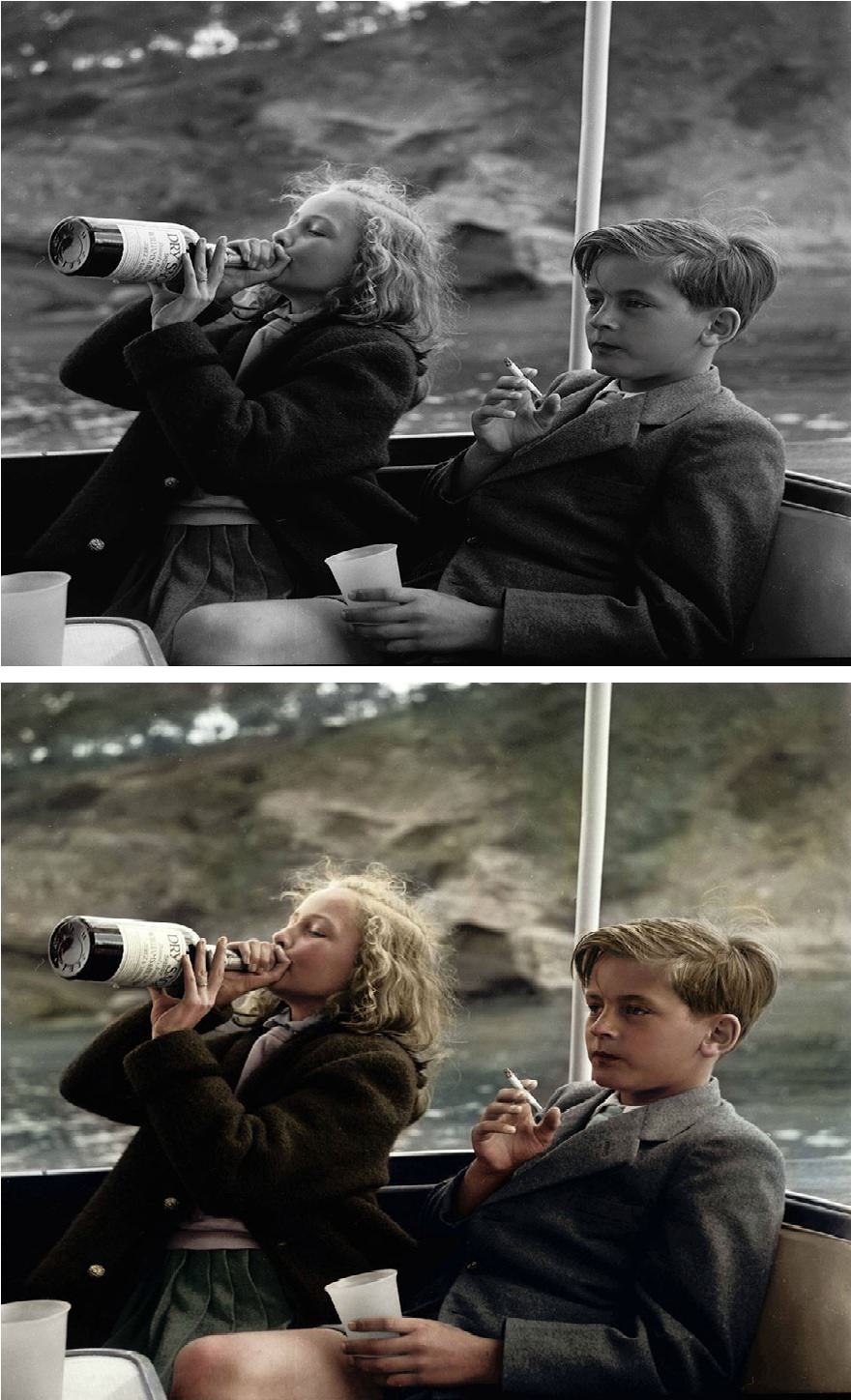
This photograph of Yvonne and Alexander Sayn-Wittgenstein-Sayn — 13 and 12 years old respectively — drinking and smoking on a yacht near Majorca represents a specific world of European aristocratic childhood that operated by entirely different rules than ordinary life.
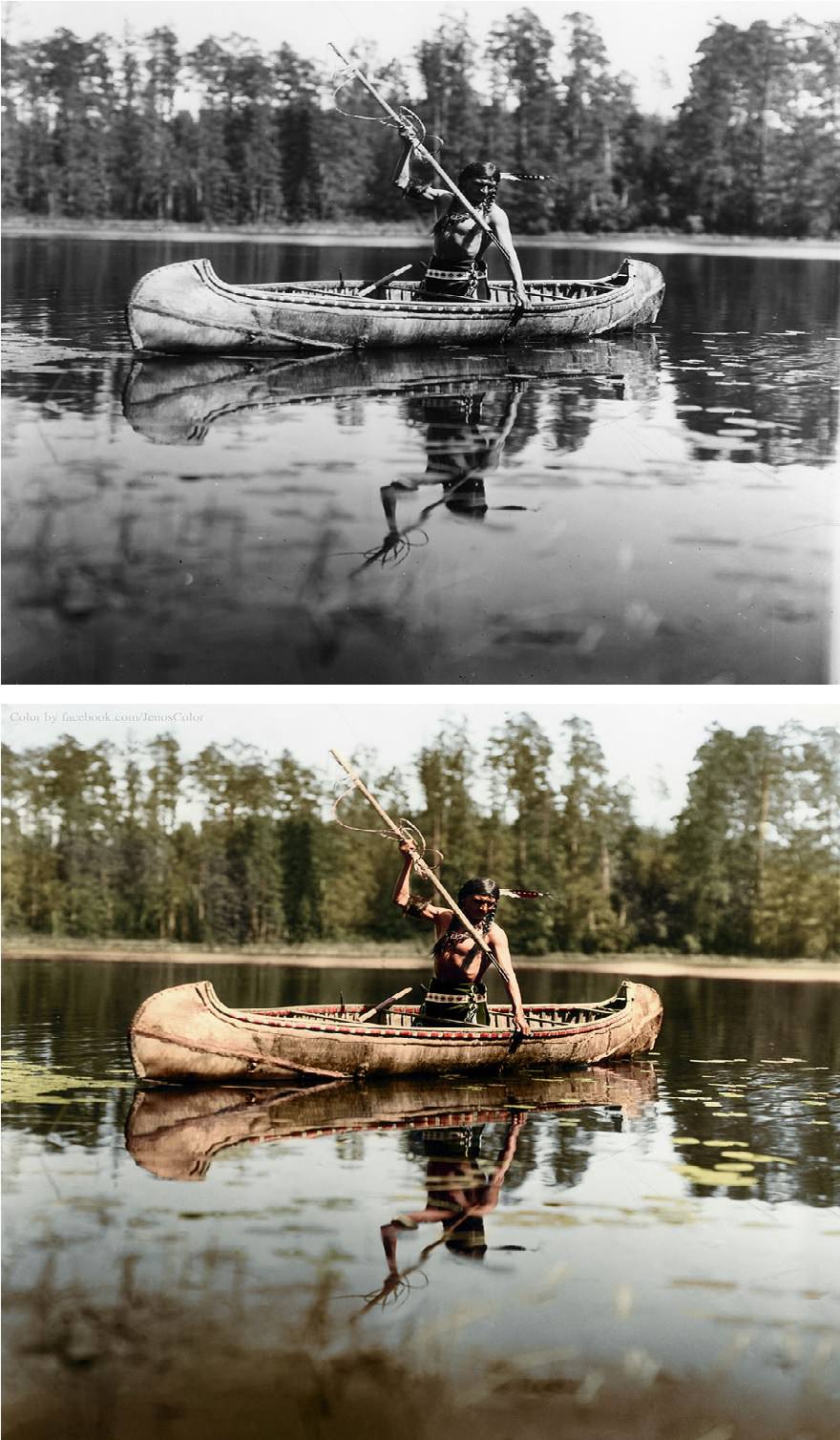
In 1908, an Ojibwe man was photographed spearfishing in Minnesota using traditional methods passed down through generations. The colorized image captures both the skill involved and the natural setting with a clarity the original could not provide.
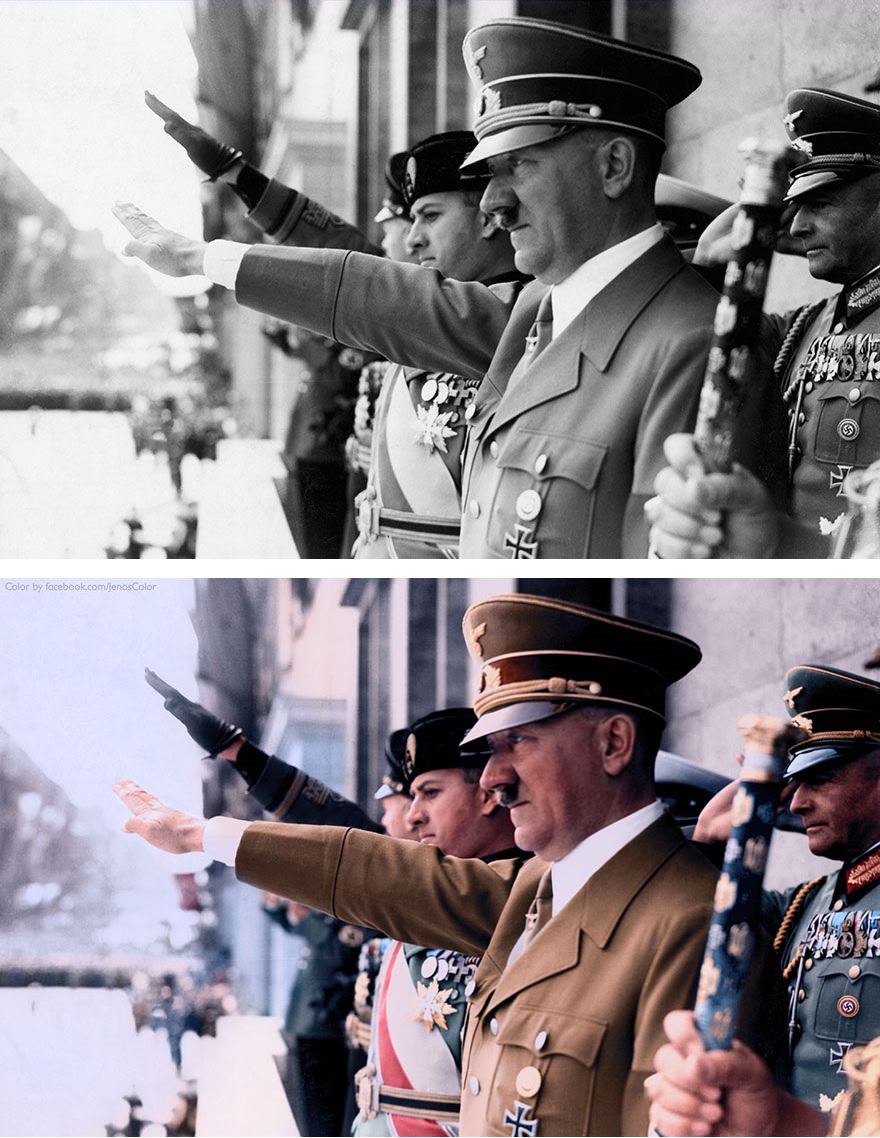
This photograph from the 1930s shows Adolf Hitler alongside Mussolini’s son-in-law and Foreign Minister Joachim von Ribbentrop at a Nazi Party rally. The rally setting — designed for maximum visual impact — reflects how deliberately the Nazi regime staged its public image.
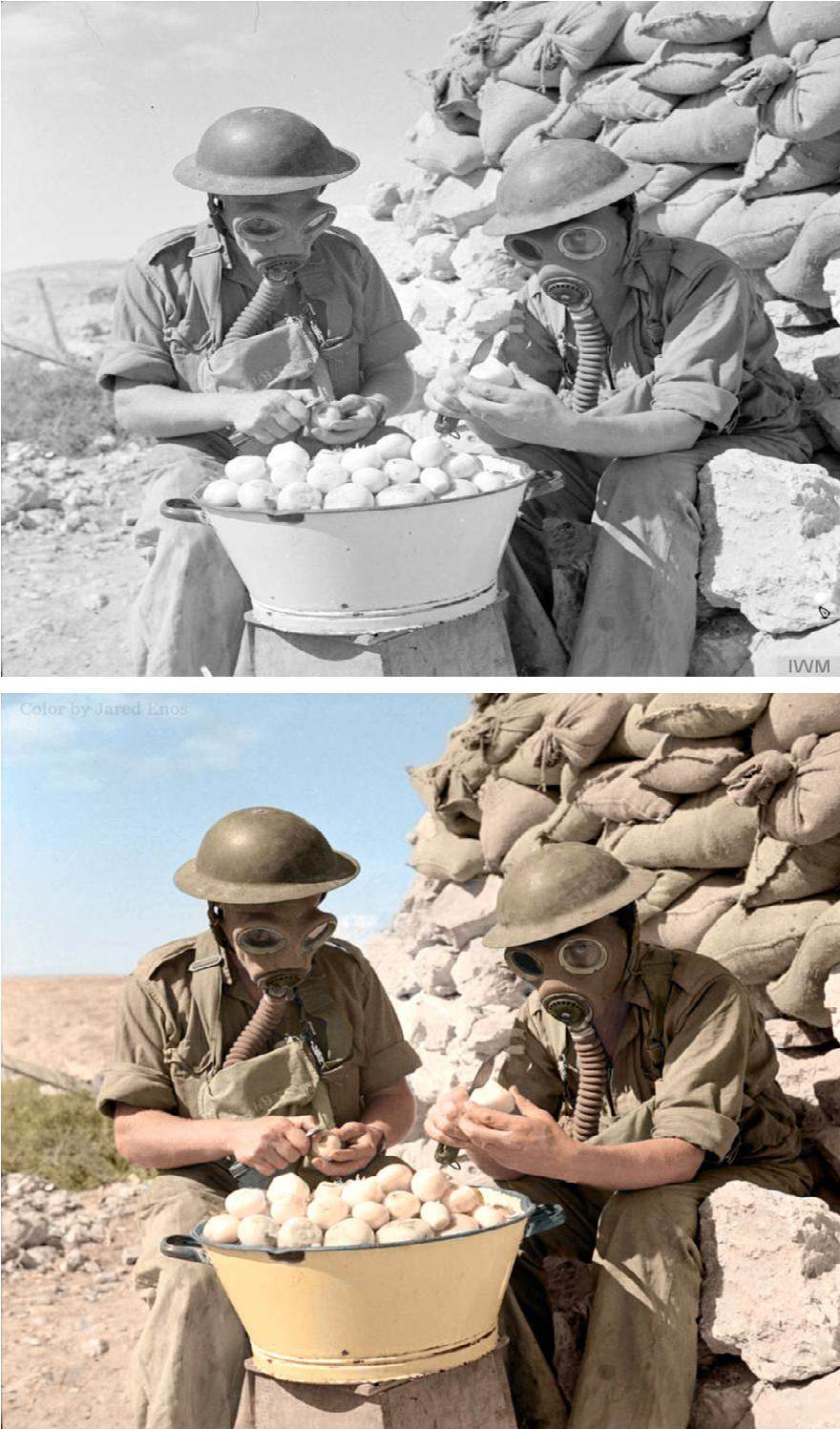
At Tobruk on October 15, 1941, soldiers wore full gas masks while peeling onions — a practical joke that became an iconic image of wartime humor. The photograph shows that even in a combat zone, moments of absurdity found their way through.
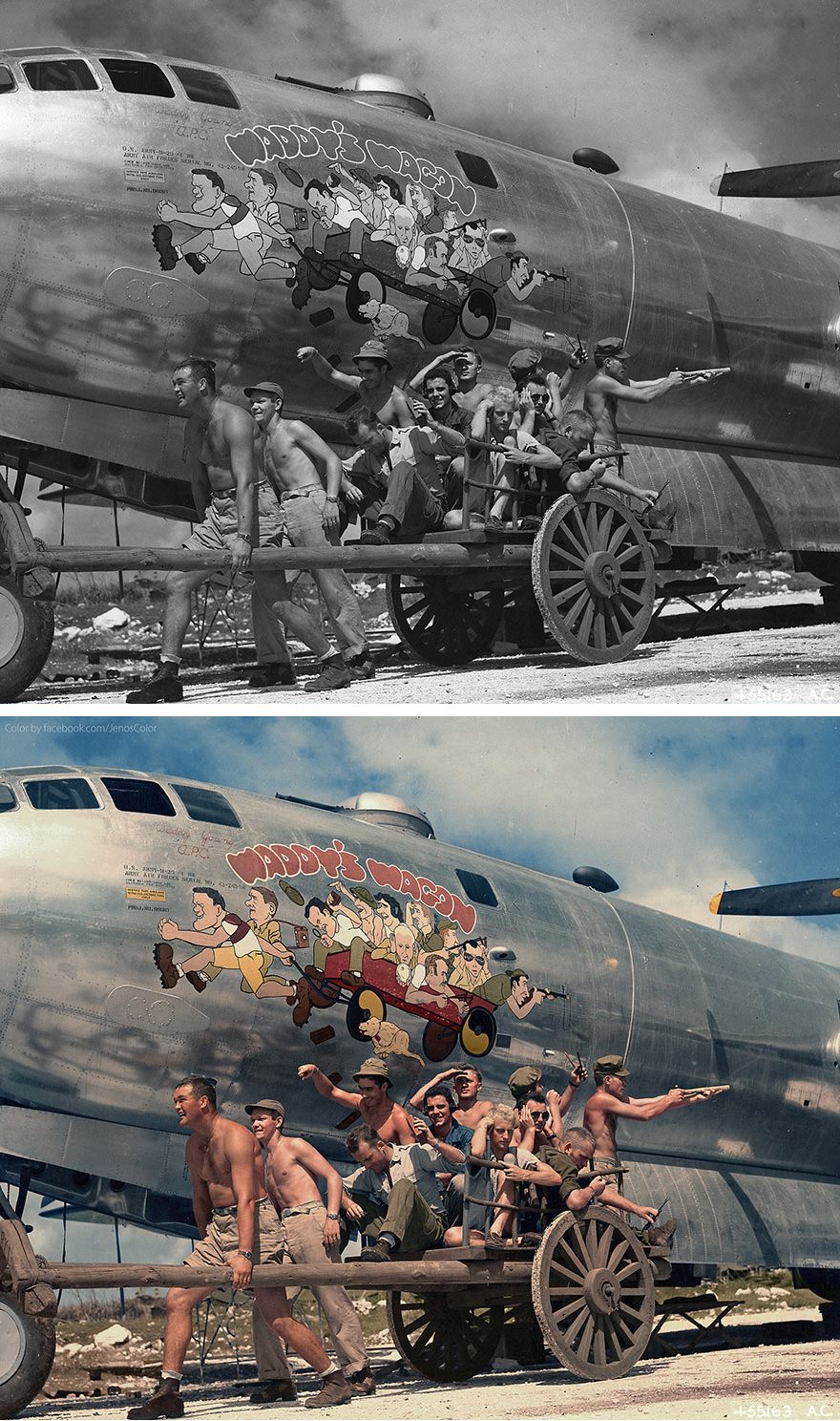
On November 24, 1944, Captain Walter ‘Waddy’ Young and his crew posed in front of their B-29 Superfortress bomber alongside the nose art painted on the aircraft. Crew photographs in front of named bombers were a tradition that gave individual identity to the machinery of industrial-scale warfare.
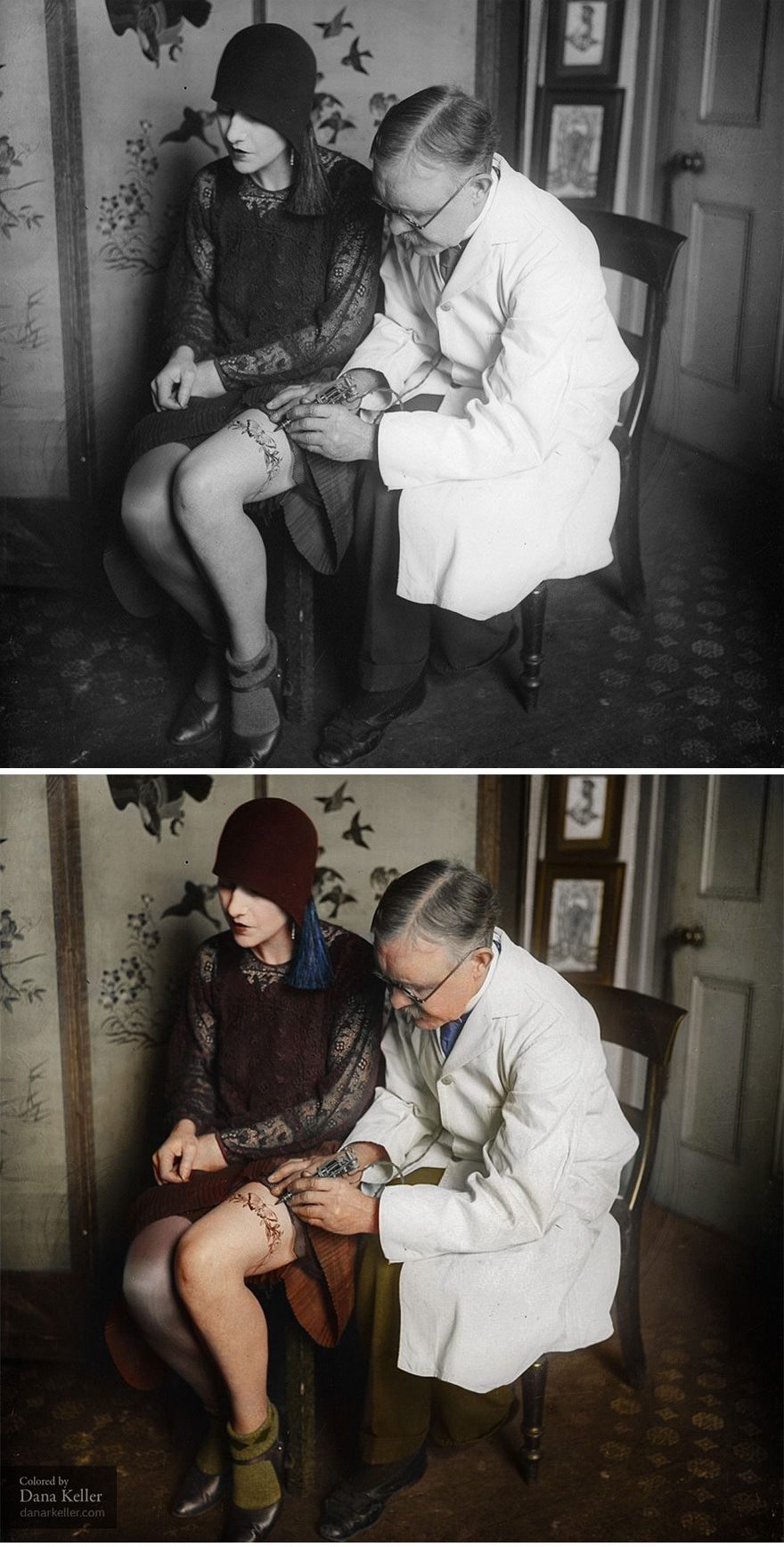
George Burchett, photographed around 1930, was known as the ‘King of Tattooists’ in Britain. He tattooed royalty and celebrities during a period when the art form was still largely associated with sailors and the working class. The color image shows his work and his confidence in equal measure.
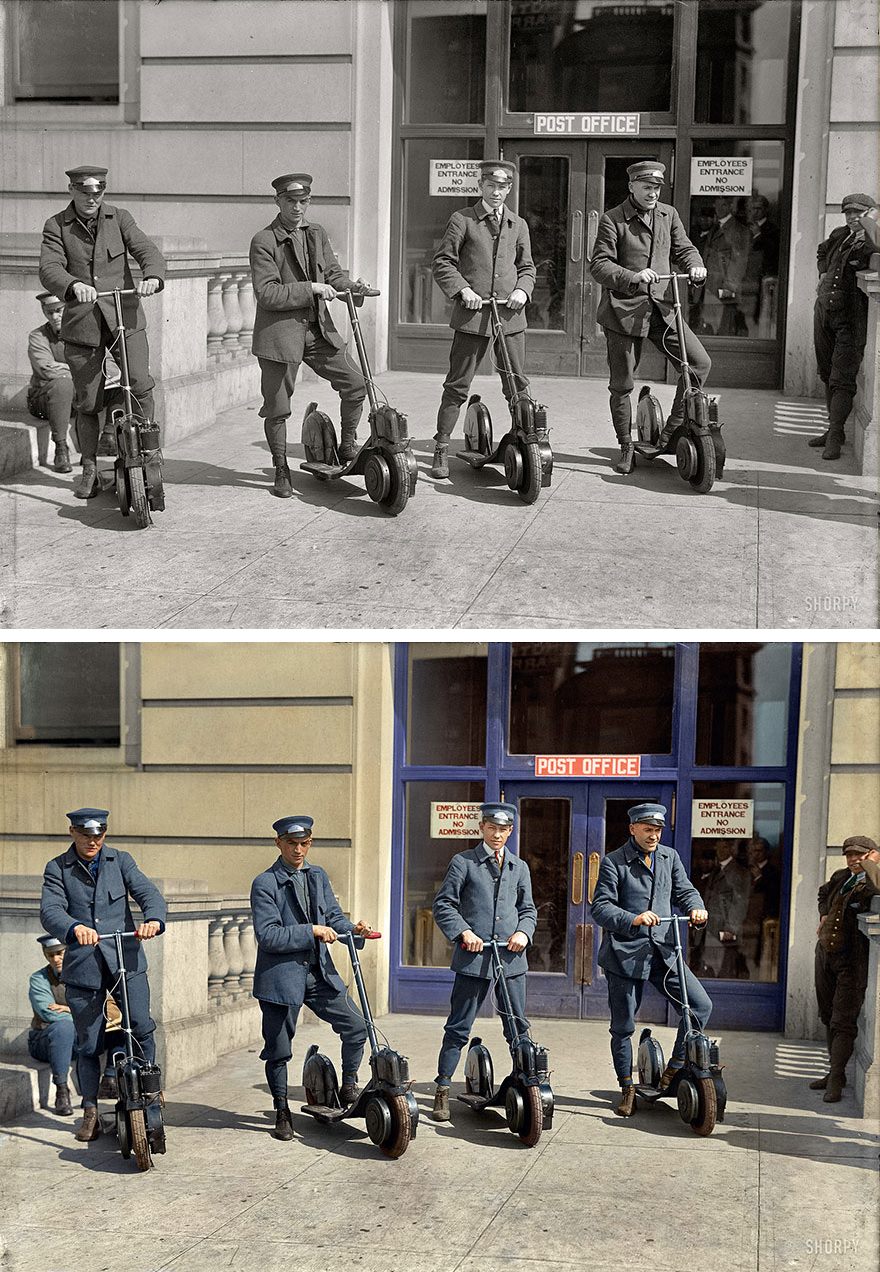
In 1917, U.S. Post Office employees in Washington D.C. showed off their brand-new Autoped motor scooters. These early scooters were a genuine novelty, and the postal service was among the first organizations to explore them for delivery routes.
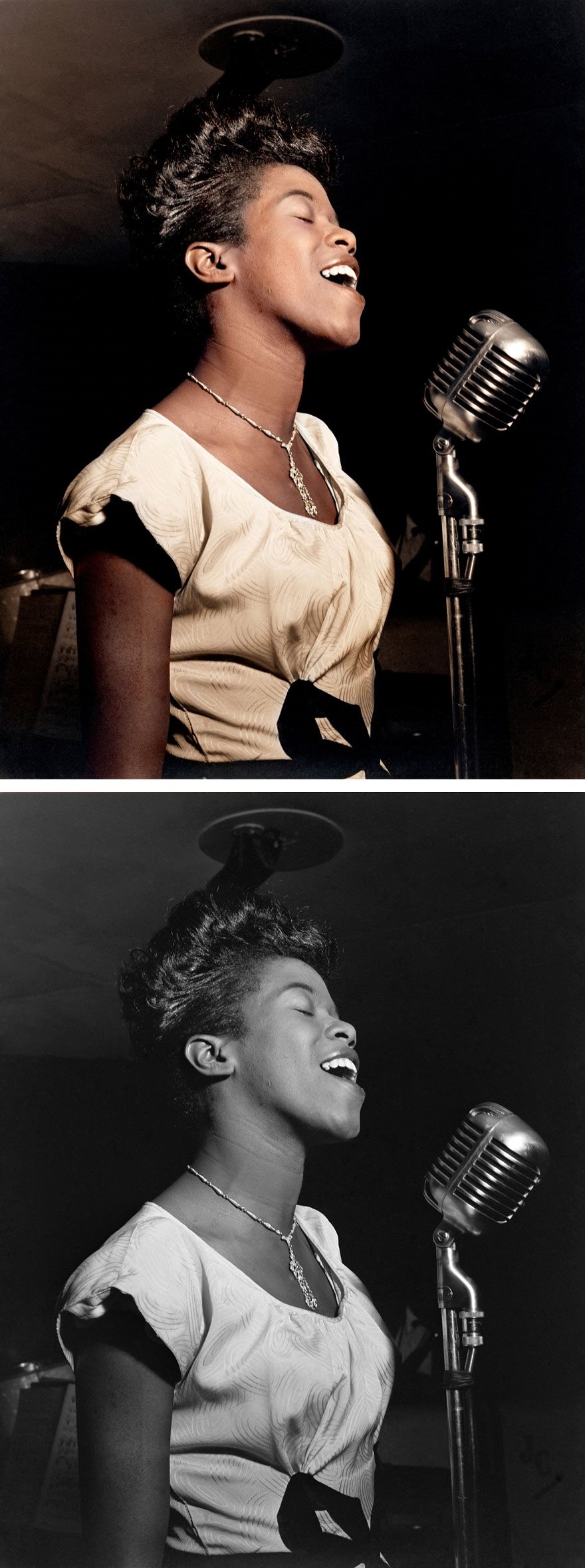
Jazz vocalist Sarah Vaughan was photographed around 1946, early in a career that would make her one of the most celebrated singers of the 20th century. Her voice ranged across three octaves and brought a technical depth to jazz that few performers matched.
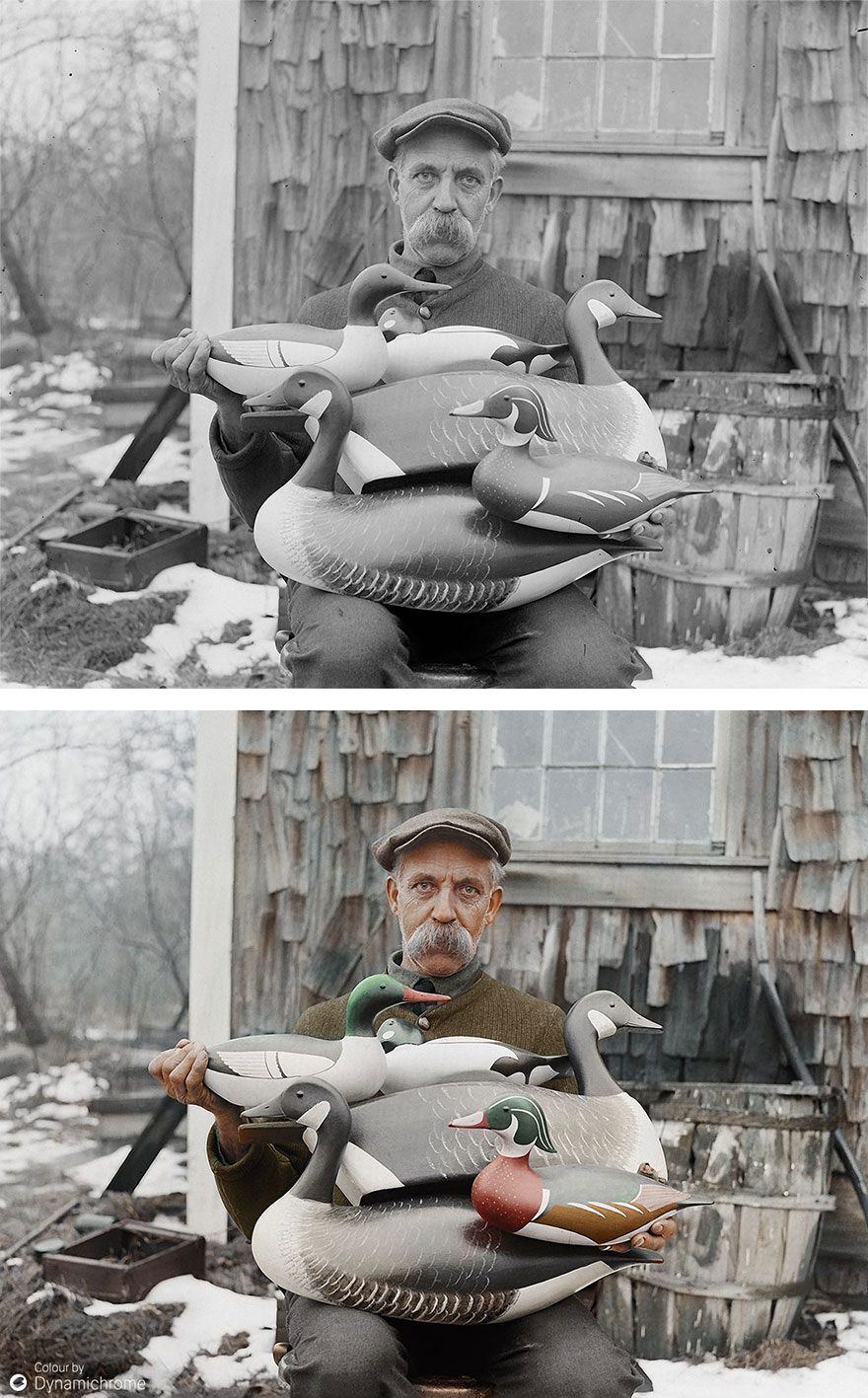
Joe Lincoln of Accord, Massachusetts, was photographed in 1926 as the champion decoy maker of New England. His hand-carved duck decoys were considered the finest of their kind. In color, the craftsmanship of both the man and his work comes through clearly.
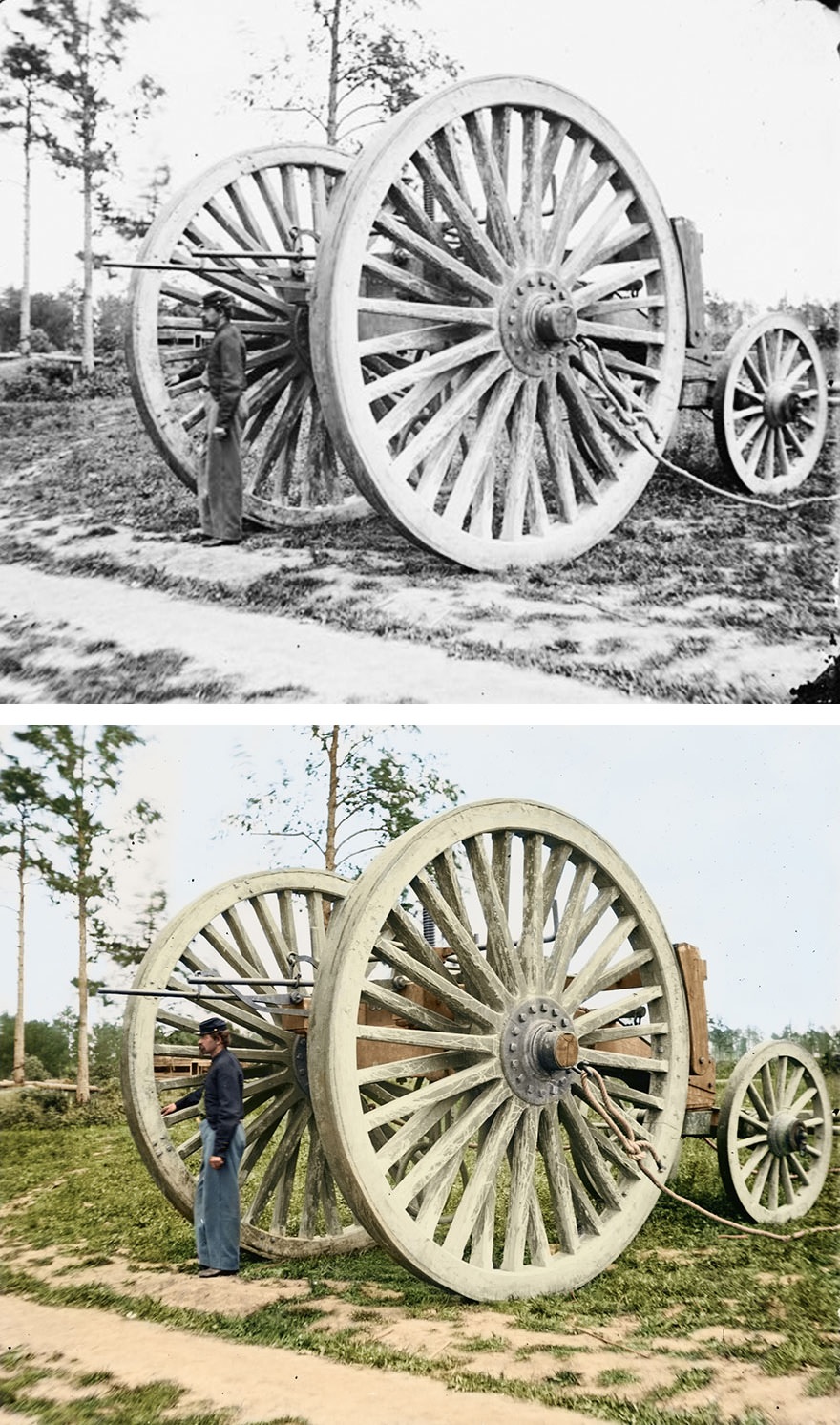
Near the end of the Civil War, around 1865, a sling cart used to move captured Confederate artillery was photographed at Drewry’s Bluff, Virginia. The machinery of war — the logistics of moving heavy guns across difficult terrain — rarely made it into the historical record as directly as this.
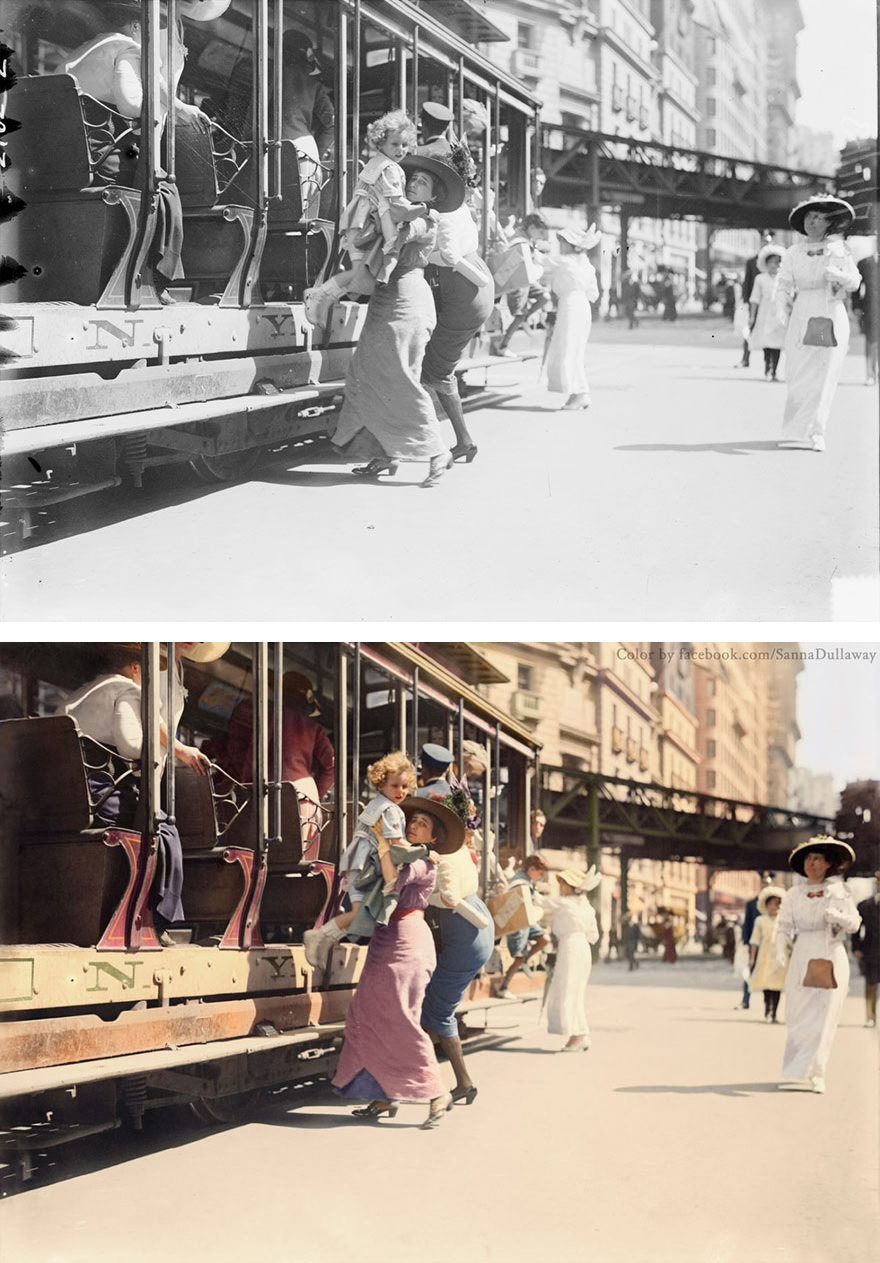
In July 1913, a mother helped her child step off a trolley on a Broadway street in New York City. The scene is entirely ordinary — and that’s exactly what makes it powerful. Color makes it feel like something that happened this morning rather than over a century ago.
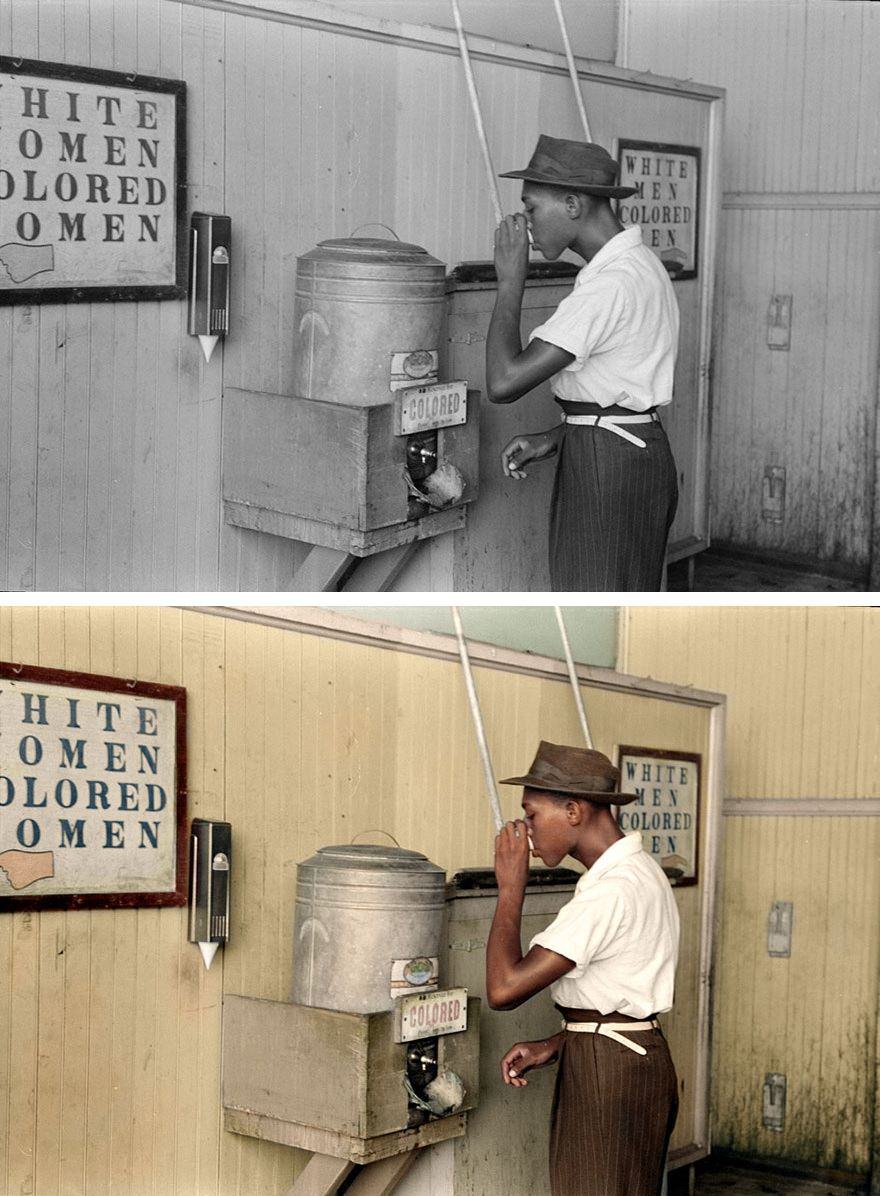
This July 1939 photograph, taken at a streetcar terminal in Oklahoma City, shows a Black man using a water cooler marked ‘Colored.’ Racial segregation was enforced by law across the American South at this time. The color image makes the sign’s lettering unmistakably clear.
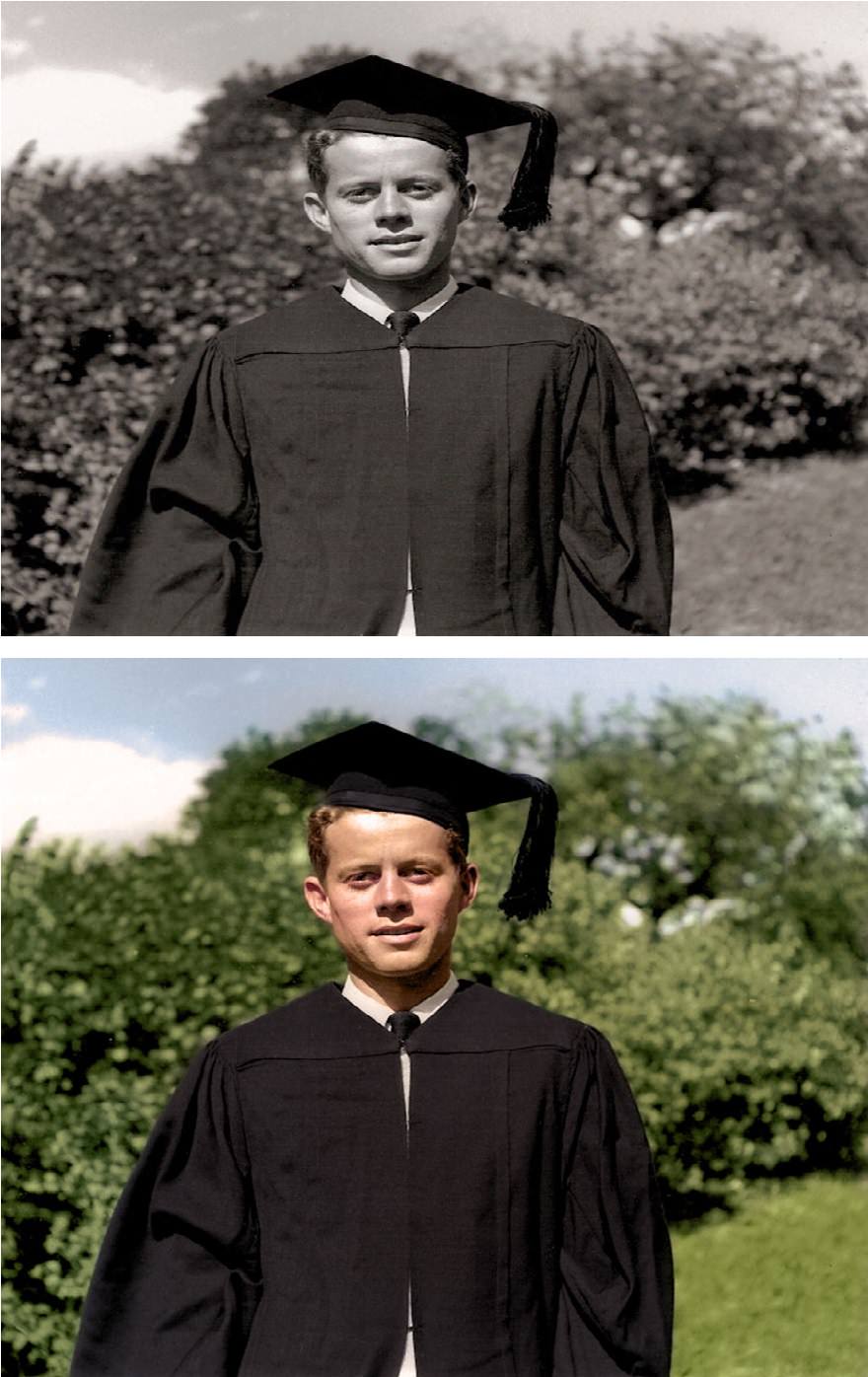
John F. Kennedy was photographed in the summer of 1940, immediately after graduating from Harvard University. He was 23 years old. The young man in this image would go on to serve in World War II and eventually become the 35th President of the United States.
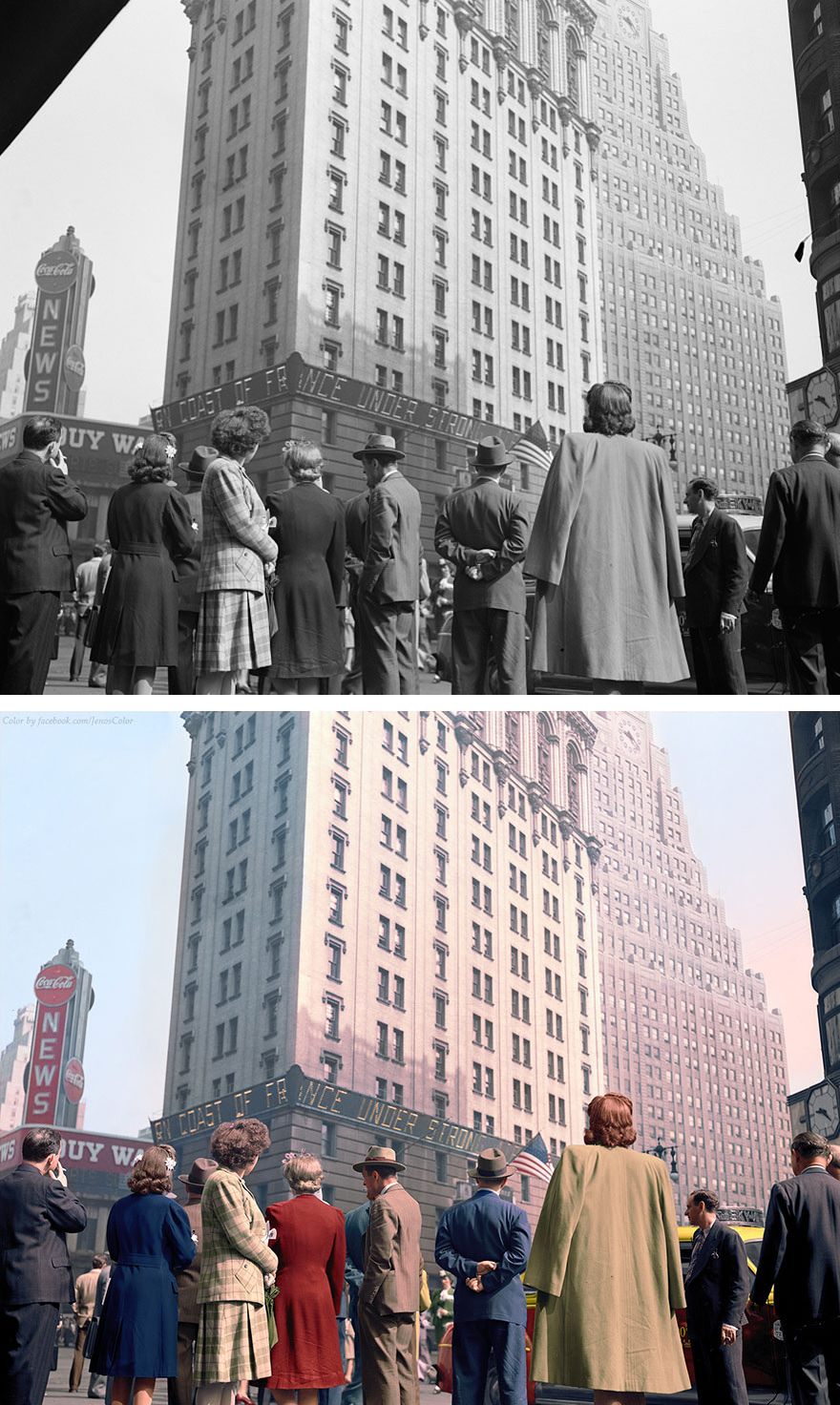
On June 6, 1944 — D-Day — news of the Allied invasion of Normandy reached New York City. Times Square filled with people desperate for information. This photograph captures the crowd in those first hours, when the outcome of the invasion was still uncertain.
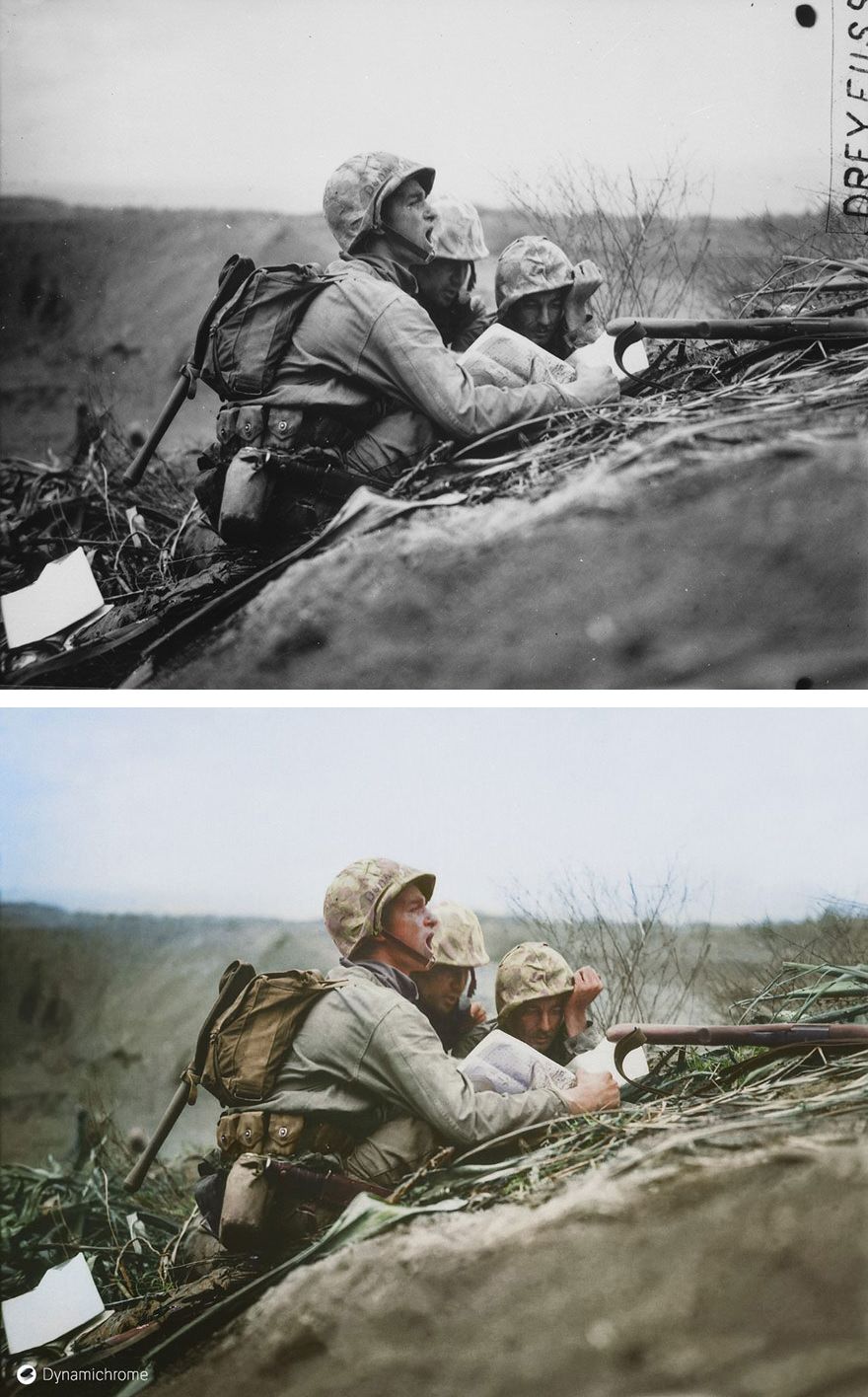
In February 1945, an observer on Iwo Jima watched as U.S. Marines fought one of the Pacific War’s most brutal battles. The battle for the small island lasted 36 days and resulted in nearly 7,000 American deaths and over 18,000 Japanese deaths.
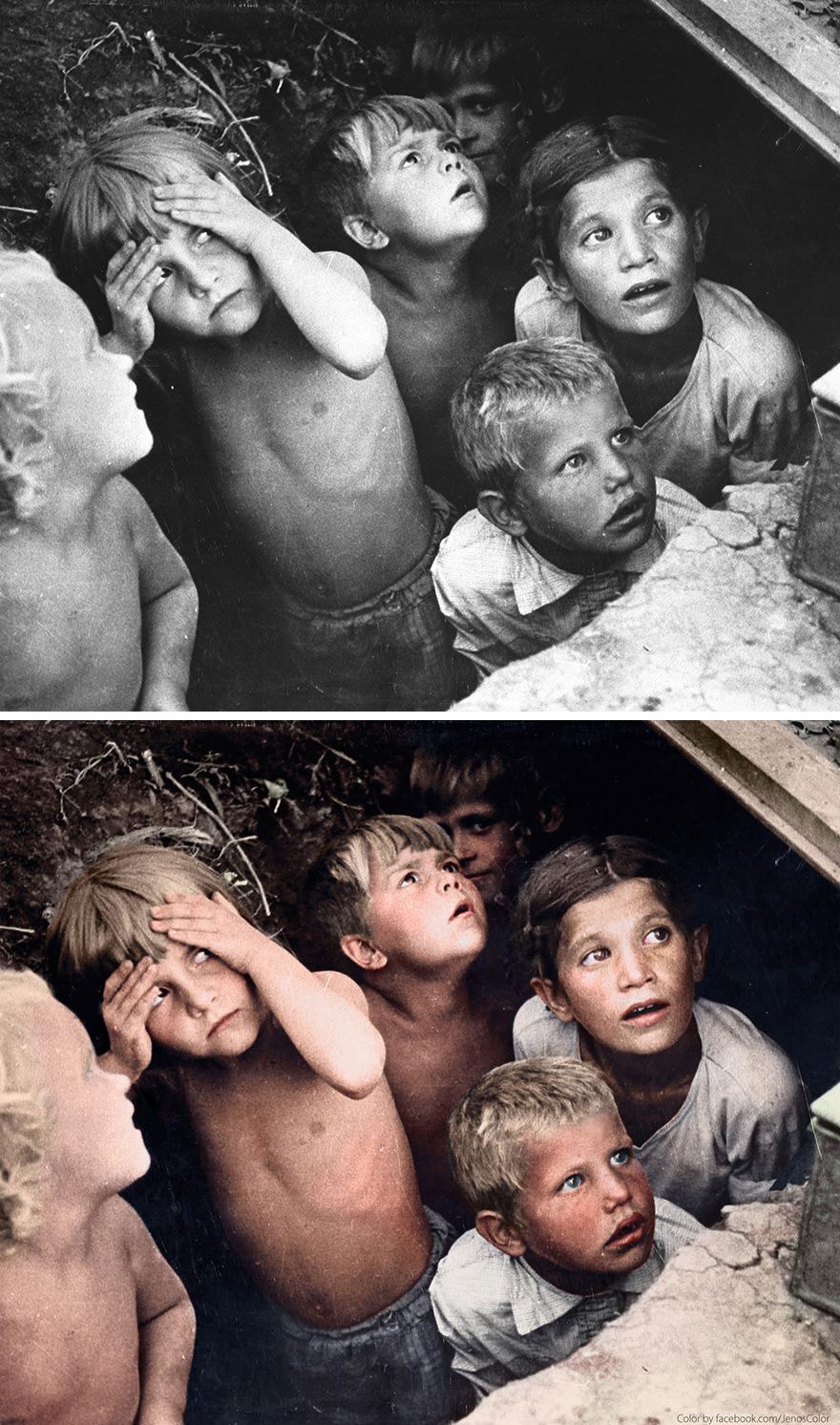
In June 1941, German forces launched Operation Barbarossa — the invasion of the Soviet Union. In Minsk, Belorussia, children stood and watched as their neighborhood was bombed. The photograph is one of the most direct records of what that invasion meant at street level.
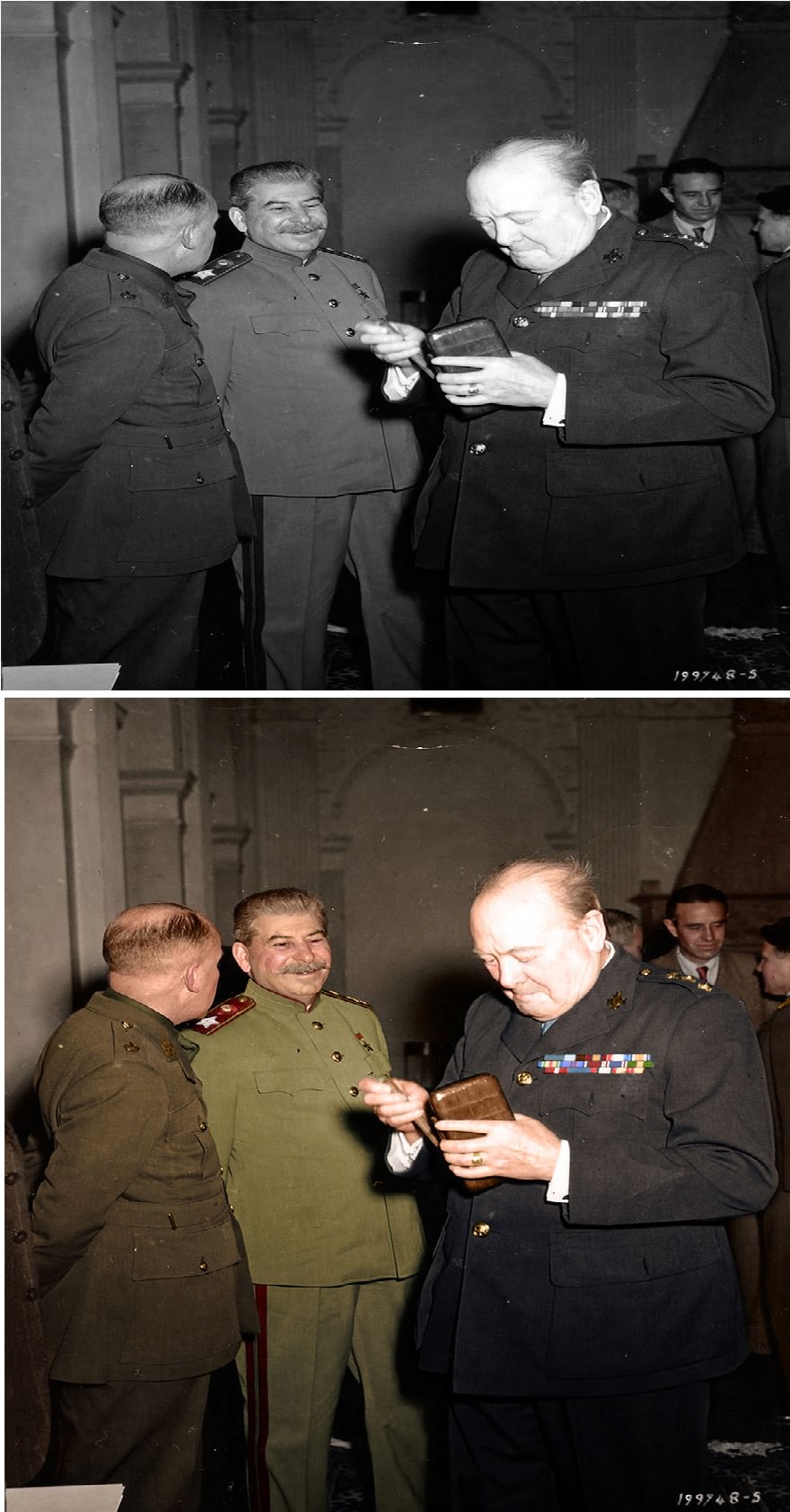
In February 1945, Joseph Stalin and Winston Churchill met at the Yalta Conference in Livadia Palace — one of the most consequential diplomatic meetings of the 20th century. The decisions made there shaped the post-war division of Europe for the next four decades.
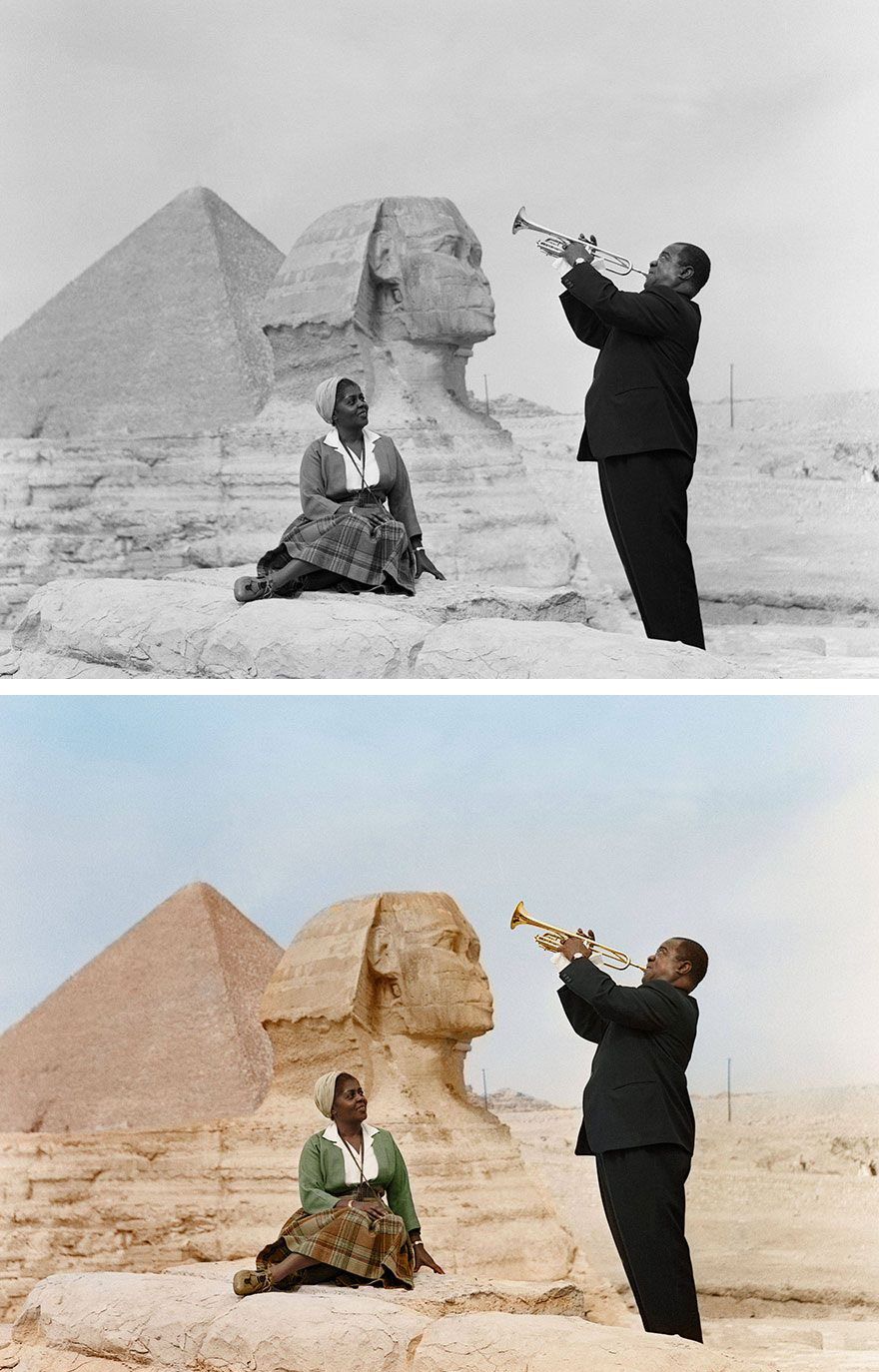
On January 28, 1961, Louis Armstrong and his wife Lucille visited the Sphinx in Egypt. The image of one of America’s greatest musical figures standing before one of humanity’s oldest monuments, rendered in full color, is a fitting close to a collection that spans the full breadth of modern history.