
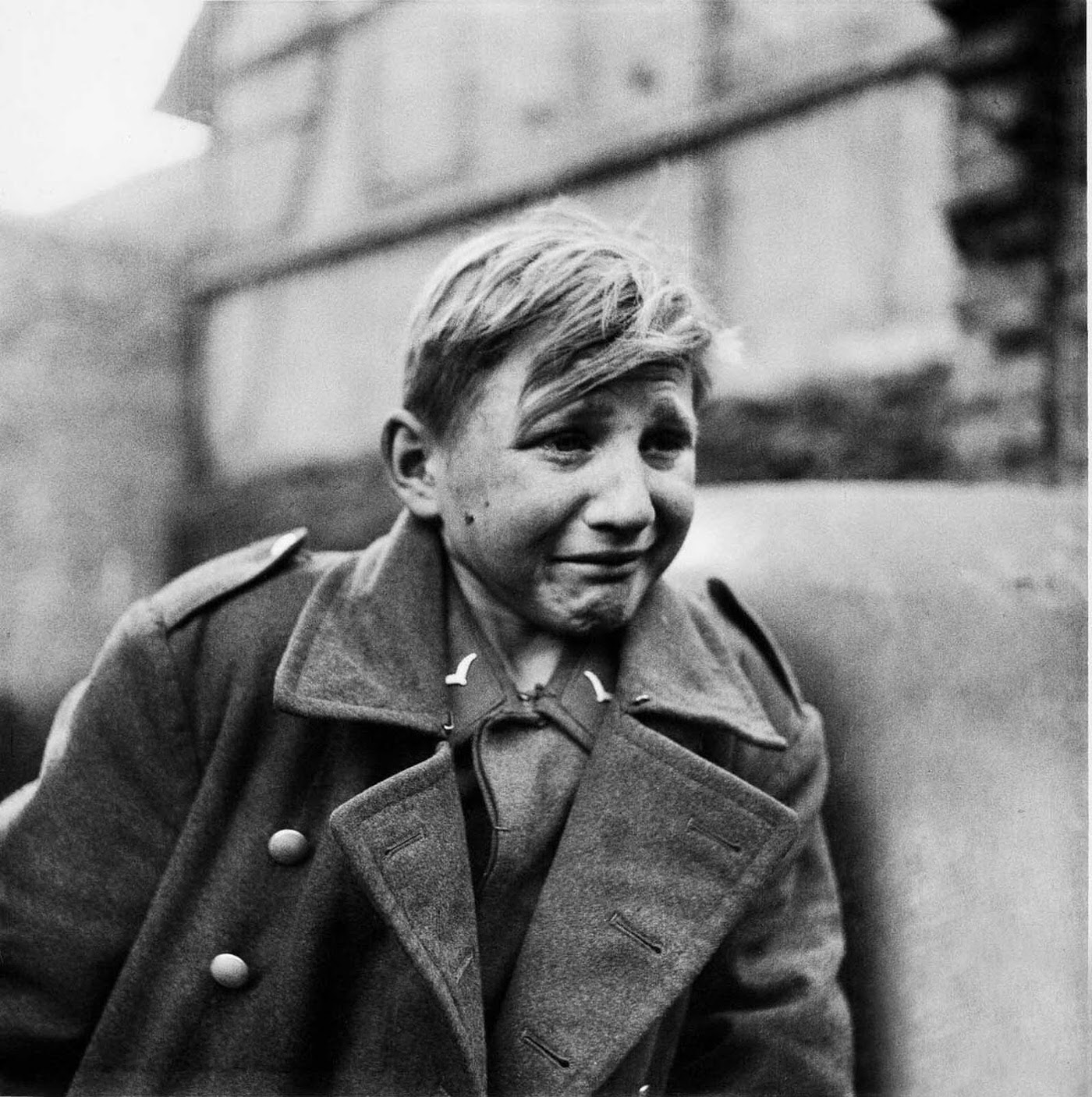
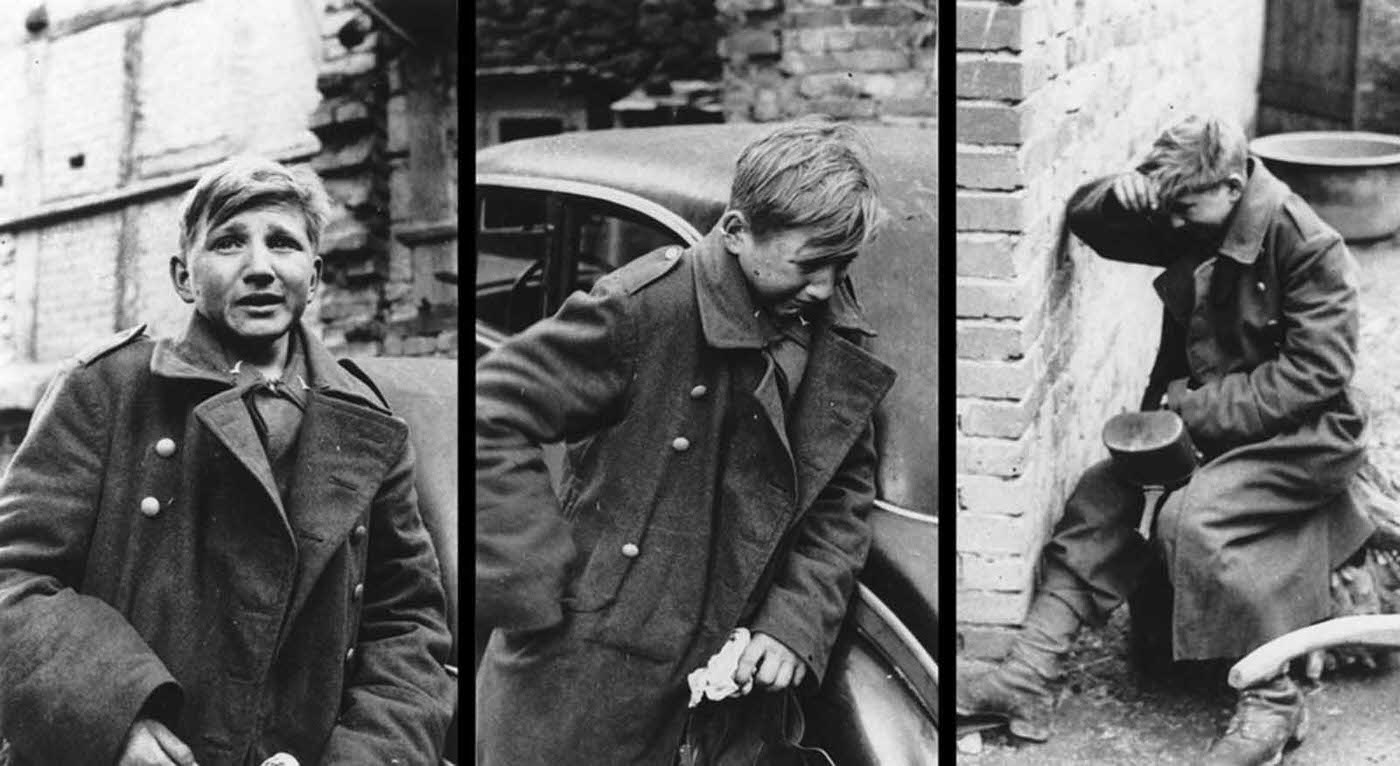
On April 3, 1945, American photographer William Vandivert raised his camera toward a teenage boy standing among captured German soldiers in Hessen, Germany. The boy’s hands were pressed against his face. His shoulders shook. He was sixteen years old, dressed in a Luftwaffe uniform, and weeping without restraint. His name was Hans-Georg Henke, and the photographs Vandivert took that afternoon would become some of the most recognized images to come out of the final weeks of World War II.
Hans-Georg was born in 1929 in Wiesbaden, a city in western Germany. His early life was shaped by loss long before the war came to its bloody conclusion. His father died in 1938, when Hans-Georg was just nine years old. His mother followed in 1944, leaving him an orphan at fifteen. With no parents and no stable home, Hans-Georg had only the structure and community that the Nazi state offered its young people — and he had been embedded in that structure since the age of ten, when he joined the Hitler Youth.
The Hitler Youth was not simply a club. It was a carefully designed system meant to replace family loyalty with loyalty to the state and to Adolf Hitler. Boys attended political rallies, listened to speeches from Nazi leaders, and were trained to see themselves as soldiers of a future German empire. For a boy who had lost both parents, the movement offered belonging. By the time Hans-Georg turned sixteen, that belonging came at a price: conscription into the Luftwaffe anti-aircraft unit, where he was trained to shoot down Allied planes.
Hans-Georg was sent to the front lines during the final desperate phase of the German war effort. By early 1945, Germany was collapsing. Allied forces were pushing in from the west, and Soviet forces were advancing from the east. The Wehrmacht was throwing anyone it could into the fight — including teenagers from the Hitler Youth and the Luftwaffe auxiliary units. Hans-Georg found himself mixed in with a regular infantry unit that was overrun by American forces in hard fighting. When the US 9th Army captured him on April 3, the psychological weight of everything he had endured — combat, loss, the collapse of everything he had been told to believe — broke through all at once.
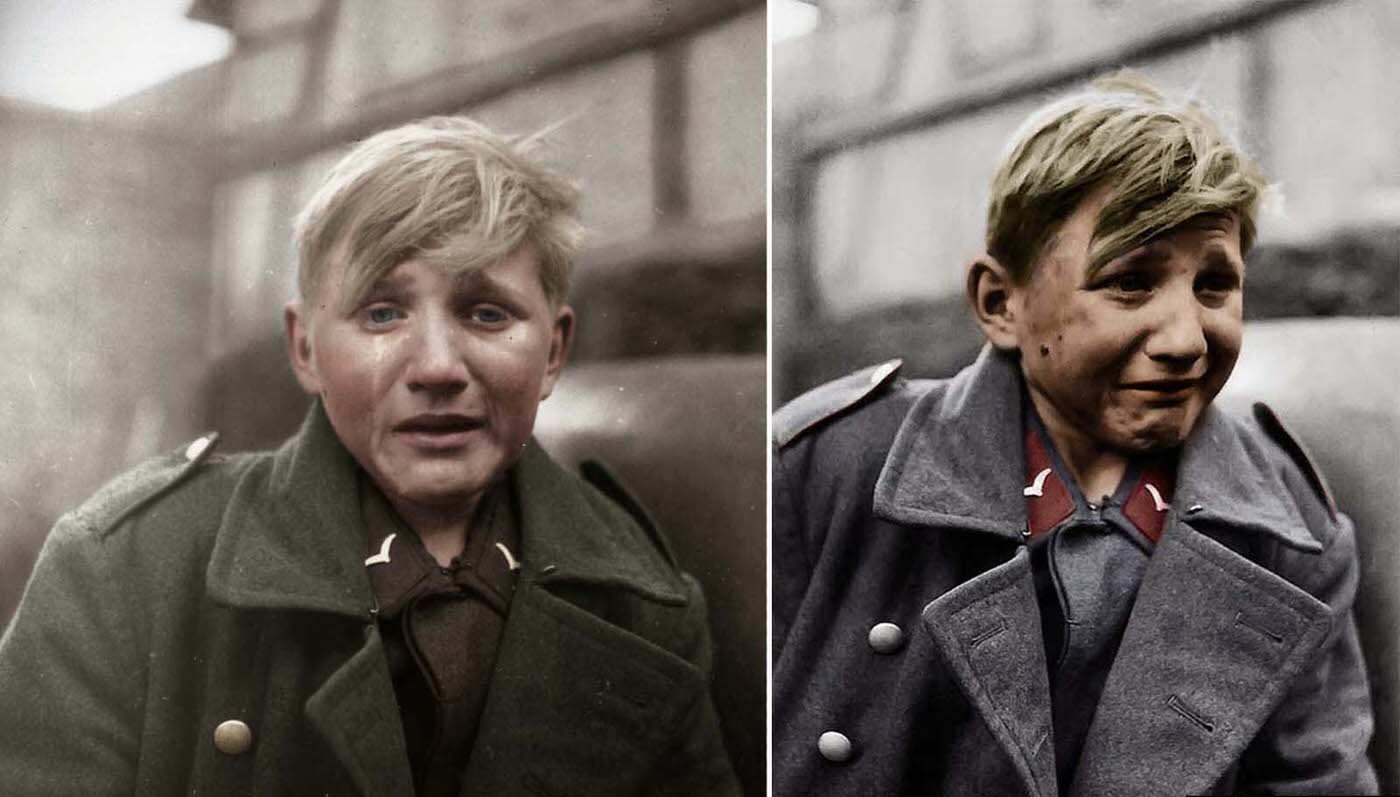
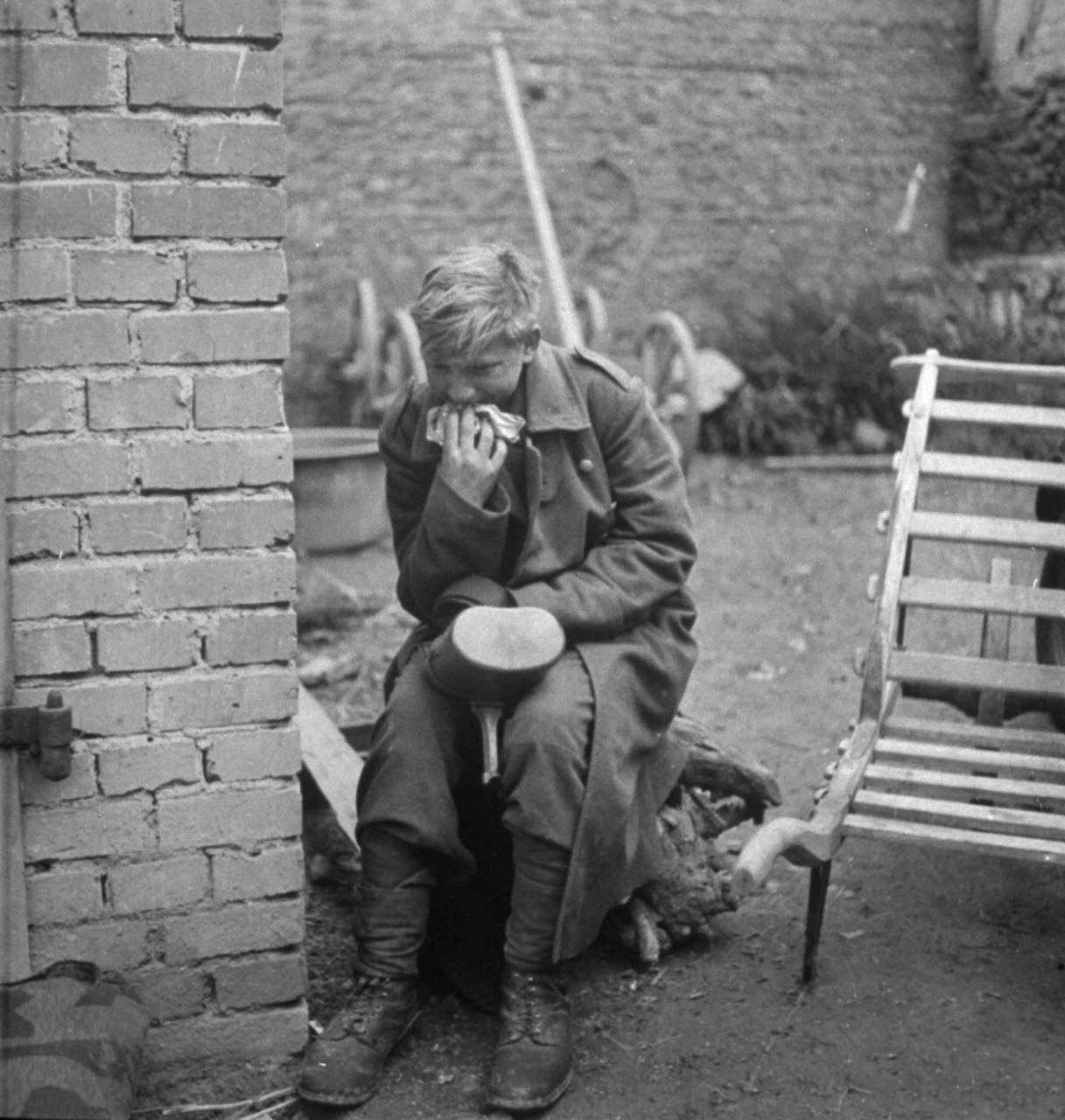
Vandivert’s photographs show Hans-Georg in several moments of that breakdown. In some frames his hands cover his face entirely. In others, his expression is open and raw — a face that belonged on a school photograph, not a battlefield. The images were published widely and struck readers across the Allied world not with triumph, but with the complicated grief that comes from seeing a child caught inside a war made by adults. Hans-Georg was not a hardened soldier. He was a teenager in shock, standing in the rubble of a country and an ideology that had consumed his entire childhood.
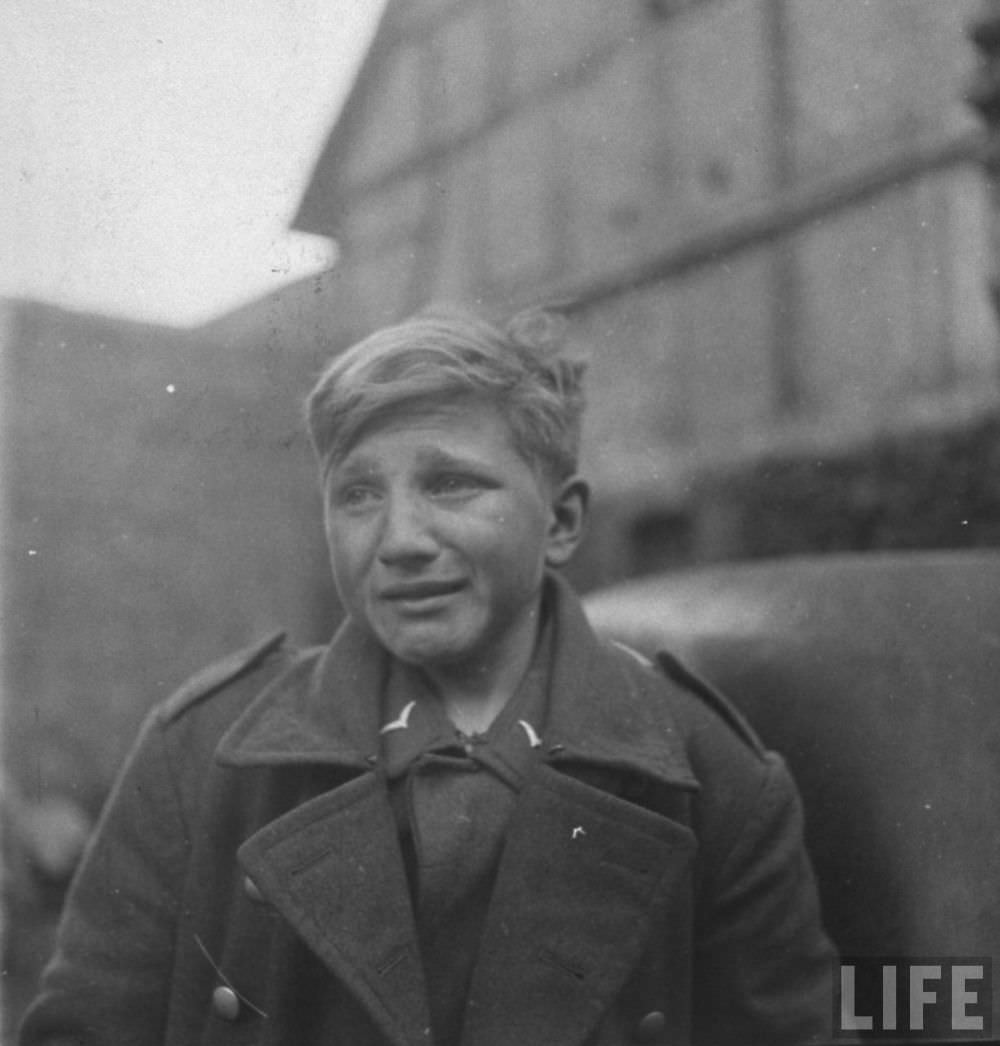
What made Hans-Georg’s story particularly striking was his background. His father had been a Communist sympathizer before dying in 1938 — a political identity that sat in direct opposition to Nazi ideology. Despite this, Hans-Georg was absorbed into the Nazi youth system, as were millions of other German children regardless of their family backgrounds. The Third Reich made participation effectively mandatory, and dissent carried serious consequences. A fatherless boy had little power to resist the machinery around him.
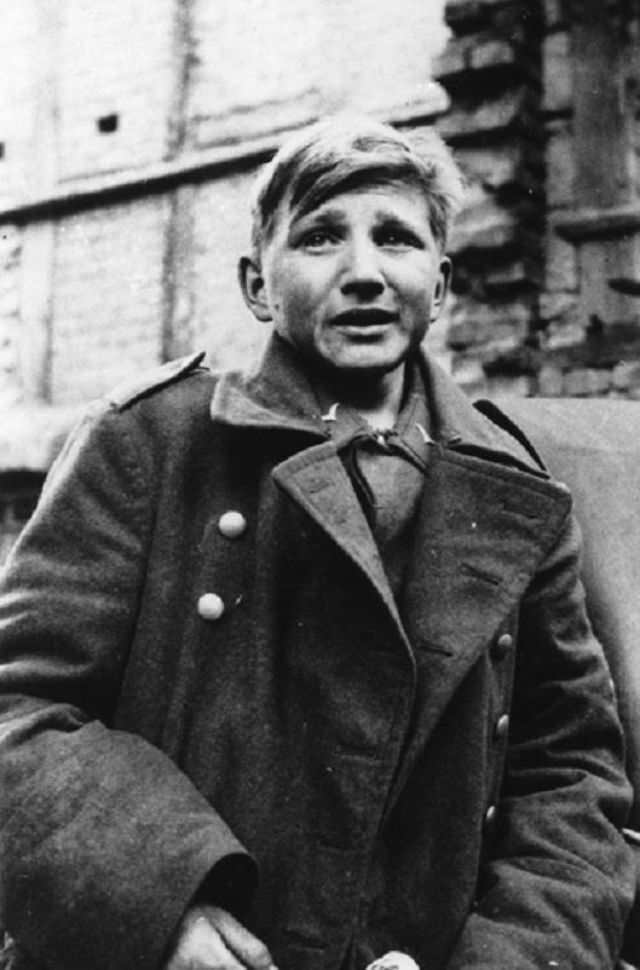
After Germany surrendered in May 1945, Hans-Georg returned to a country divided and ruined. The towns he had known were bombed out. The ideology he had been raised on was exposed in its full horror as the concentration camps were discovered and the full scale of Nazi crimes became public knowledge. Hans-Georg carried the weight of having served that regime, even as a boy with no real choice in the matter. He struggled with guilt and the persistent memories of what he had seen — fellow soldiers dying, German cities burning, the steady disintegration of the front.
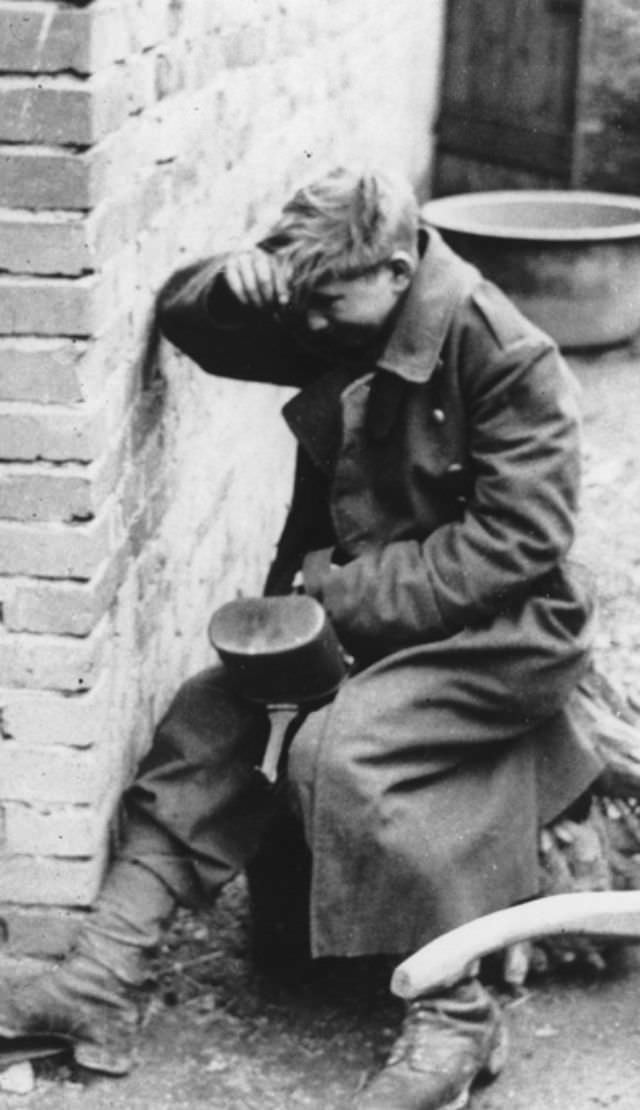
His path after the war reflected his family’s roots. Hans-Georg joined the Communist Party and moved to Finsterwalde in East Germany, choosing a political identity that aligned with his late father’s beliefs rather than the regime that had drafted him as a child. He lived a quiet life, away from public attention, and found stability in his faith and his family. He was not a war criminal. He was not a willing architect of destruction. He was a sixteen-year-old boy who had been orphaned, conscripted, and broken — and who was photographed at the exact moment his world gave way.
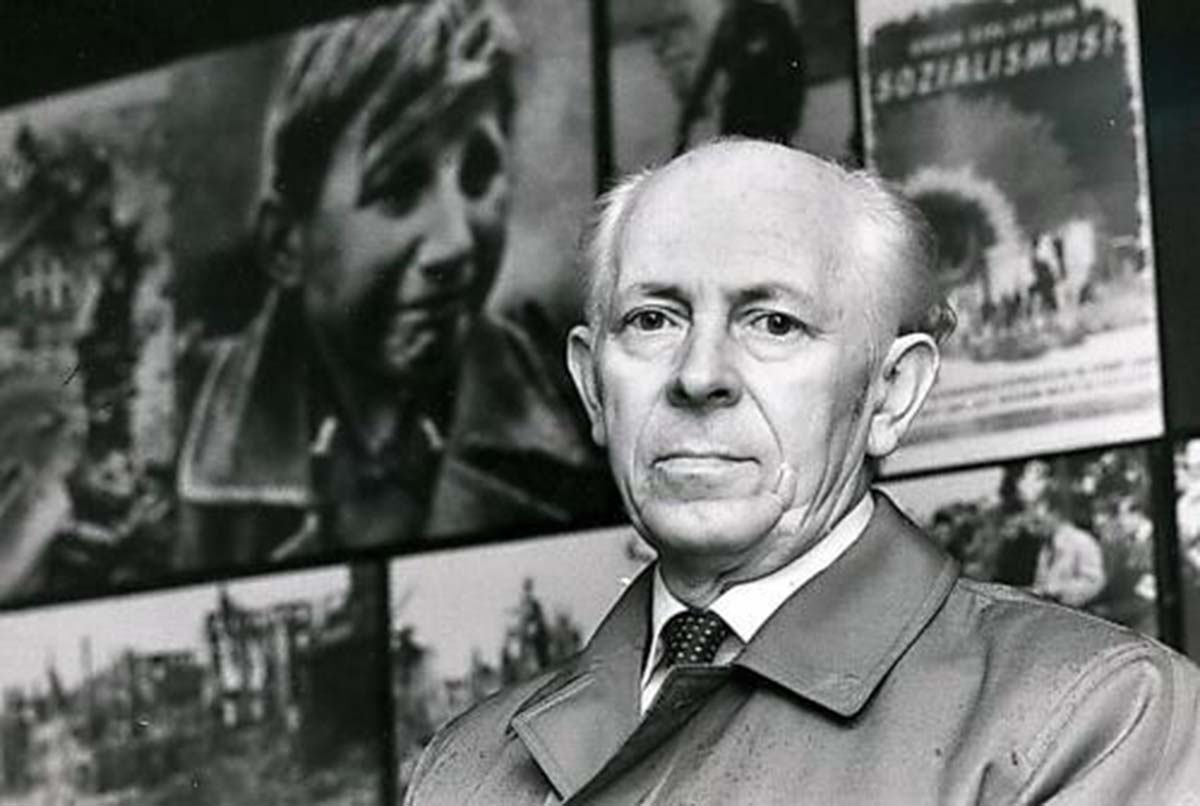



Excerpt from an article by Michael Breuer, journalist at the Frankfurter Rundschau, 2013:
“…until a journalist from the Frankfurter Rundschau, in the July 1, 2013 edition, raised serious and well-founded doubts about the account given by Hans-Georg Henke. After meticulous research, Michael Breuer succeeded in turning Henke’s ‘That is me’ into a ‘That cannot have been you.’ Breuer examined not only the one (famous) photograph, but all seven images of the same person, and was able to clearly identify two things: the location where the photographs were taken and the name of the photographer.
Without doubt, the pictures were taken on a farm in Rechtenbach, a district of Hüttenberg near Wetzlar in central Hesse. Descendants of the property owner confirmed this fact, not least through a comparison of the masonry in the background of one of the photographs. Breuer was also able to determine the name of the photographer: it was John Florea, a U.S. war correspondent during the Second World War. The boy was photographed on March 29, 1945, immediately after the Americans had taken the village. The famous image, along with two similar shots of the same person — this 16-year-old boy — first appeared in the Washington Post on April 9, 1945. So far Breuer’s findings.”
But who, then, was the person in the photograph?
Could this boy really have been Henke? Based on everything he later recounted — he died in 1997 — he could not have been. There was never any mention of the Western Front, of Hesse, or of U.S. soldiers. The idea that, after being captured in Rechtenbach, he could have made his way back through the front lines into the remaining Reich is absurd.
So who was the boy?
Michael Breuer followed another lead — one dating back to 1967, concerning Günther Herma, a former anti-aircraft auxiliary (Flak helper) who had once been searched for by his parents, as briefly reported in the magazine Neue Illustrierte Revue. In a book self-published in 2025, Breuer presented the results of his research in detail. After investigating archives, successfully locating descendants, comparing photographs preserved within the family of Günther Herma — who, like Henke, was born in 1928 — with the famous image, and above all considering that the parents claimed to have recognized their son in the photograph, he arrived at the conclusion: This is Günther Herma.”
Source: Landbote, “Hitler’s Child Soldier”
https://landbote.info/hitlers-kindersoldat/#more-58392
Interesting