High in the mountains of the northern Philippines sits Sagada, a small town in Mountain Province surrounded by pine forests, limestone caves, and steep cliffs. It is a place of quiet beauty — but it is also home to one of the most striking funerary traditions in the world. Wedged into the faces of sheer limestone cliffs are wooden coffins, some centuries old, suspended far above the valley floor. These are the hanging coffins of Sagada, and they belong to the indigenous Kankanaey people, who have practiced this form of burial for generations.
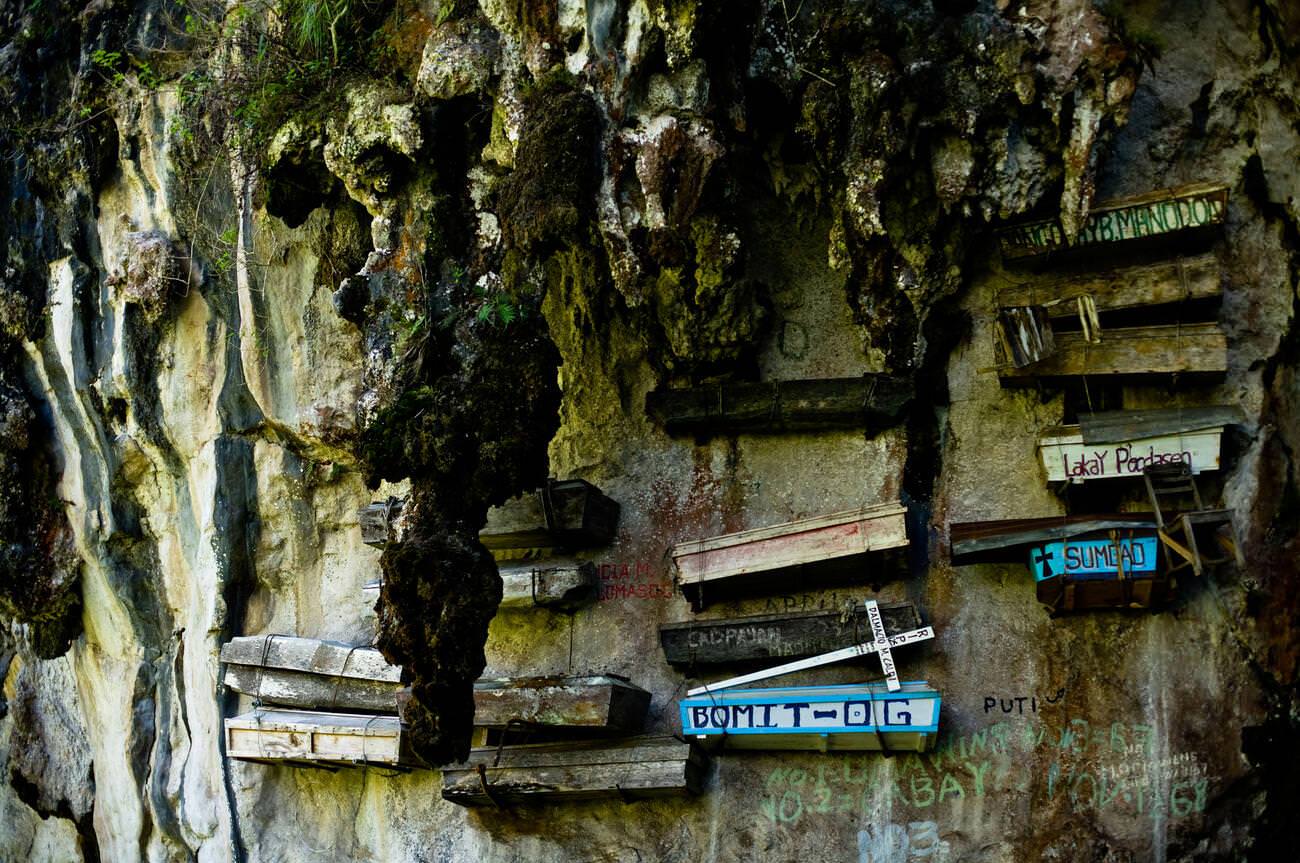
The practice dates back hundreds of years, predating Spanish colonial rule in the Philippines. The Kankanaey did not bury their dead in the ground. Instead, they placed coffins in natural rock crevices or fixed them to beams driven into the cliff face, sometimes dozens of feet above the earth. The choice to go high was not random — it was rooted in deeply held spiritual beliefs and very practical concerns.
The limestone cliffs of Echo Valley, just outside Sagada’s town center, are the most well-known burial site. The rock walls here are dramatic and imposing, the kind of terrain that demanded skill and effort to navigate. Yet the Kankanaey consistently chose these difficult locations. Understanding why requires looking closely at what they believed — and what they feared.
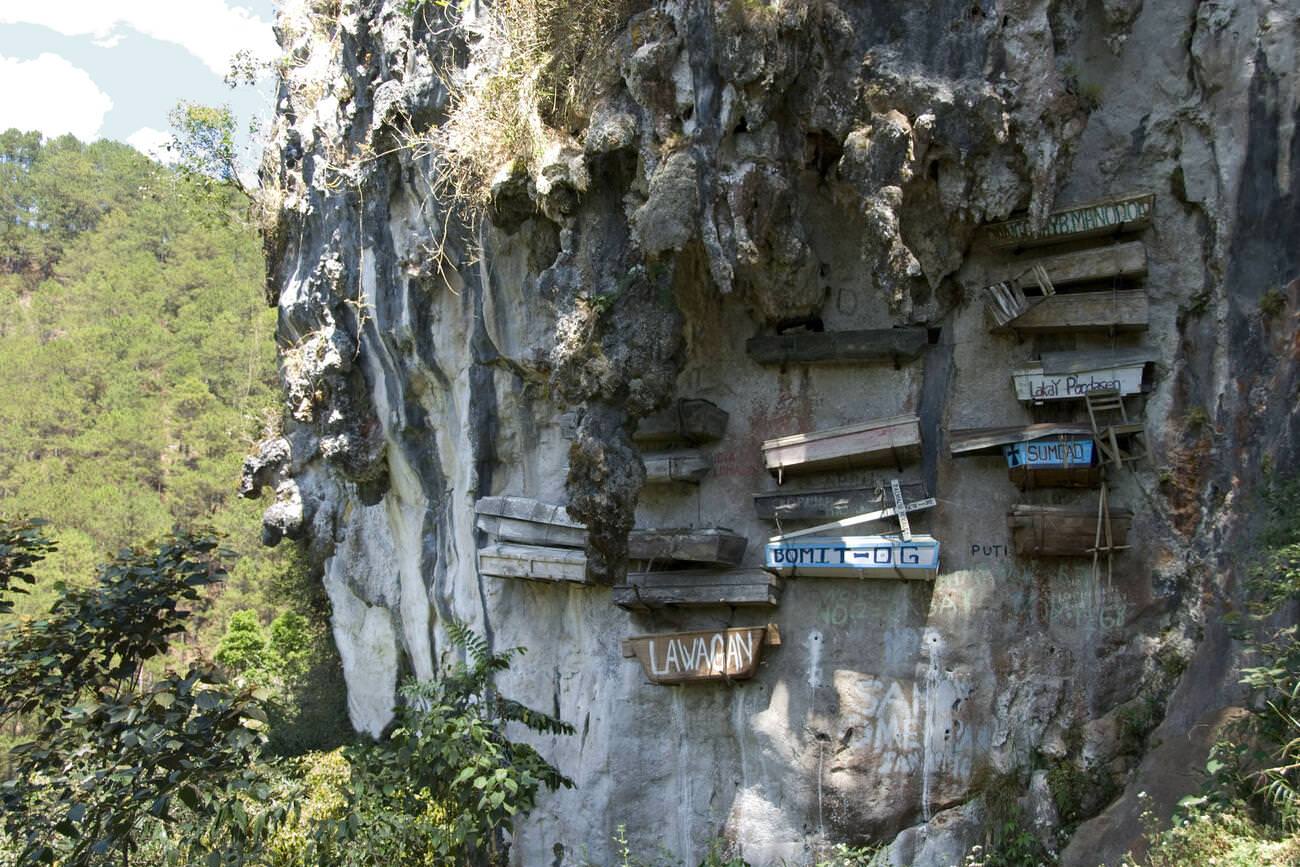
The Kankanaey believed that placing the dead at great heights brought them closer to ancestral spirits and the spiritual world beyond. Elevation was not symbolic alone — it was functional. Ground burials carried real risks: water seepage could cause rapid decomposition, wild animals could disturb remains, and historically, rival groups or headhunters could desecrate a burial site. High on a cliff face, a coffin and its occupant were beyond the reach of all of these threats. The dead were protected, both in body and in spirit.
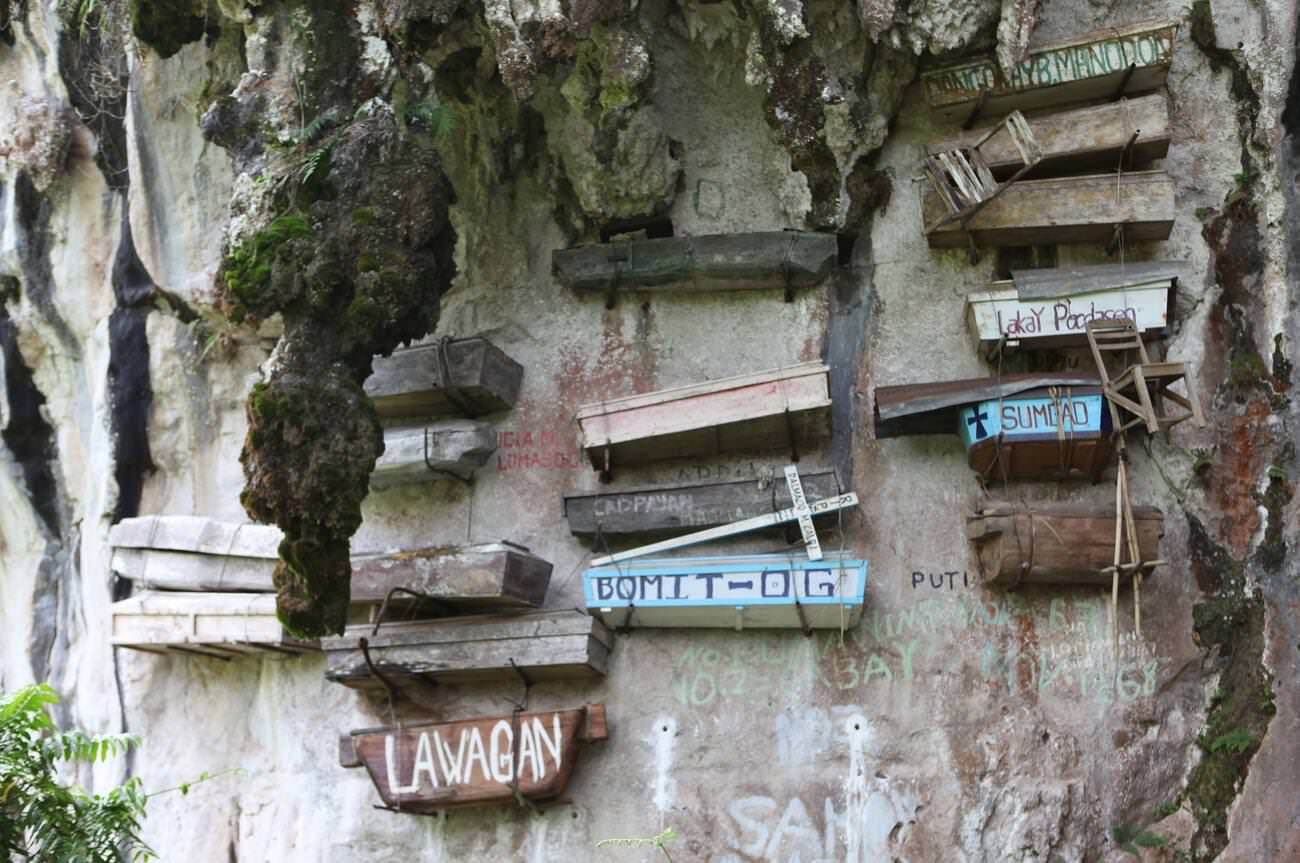
The coffins themselves are notably short — far smaller than the full-length coffins common in Western burial traditions. This is because the Kankanaey placed the deceased inside in the fetal position, knees drawn up toward the chest. The reasoning behind this posture is tied to a cyclical view of life: a person should leave the world in the same position they entered it. Birth and death were understood as mirror images of each other, and the fetal position made that connection physical and literal.
Preparing the coffin was a personal responsibility. The elderly in the community often carved their own coffins from hollowed-out logs while they were still alive and healthy. Carving one’s own resting place was considered an honorable act. When a person was too sick or frail to complete the work, family members took over. In some cases, fitting the body into the fetal position required breaking bones. This was done deliberately, reflecting how seriously the tradition was observed — even when compliance came at a physical cost.
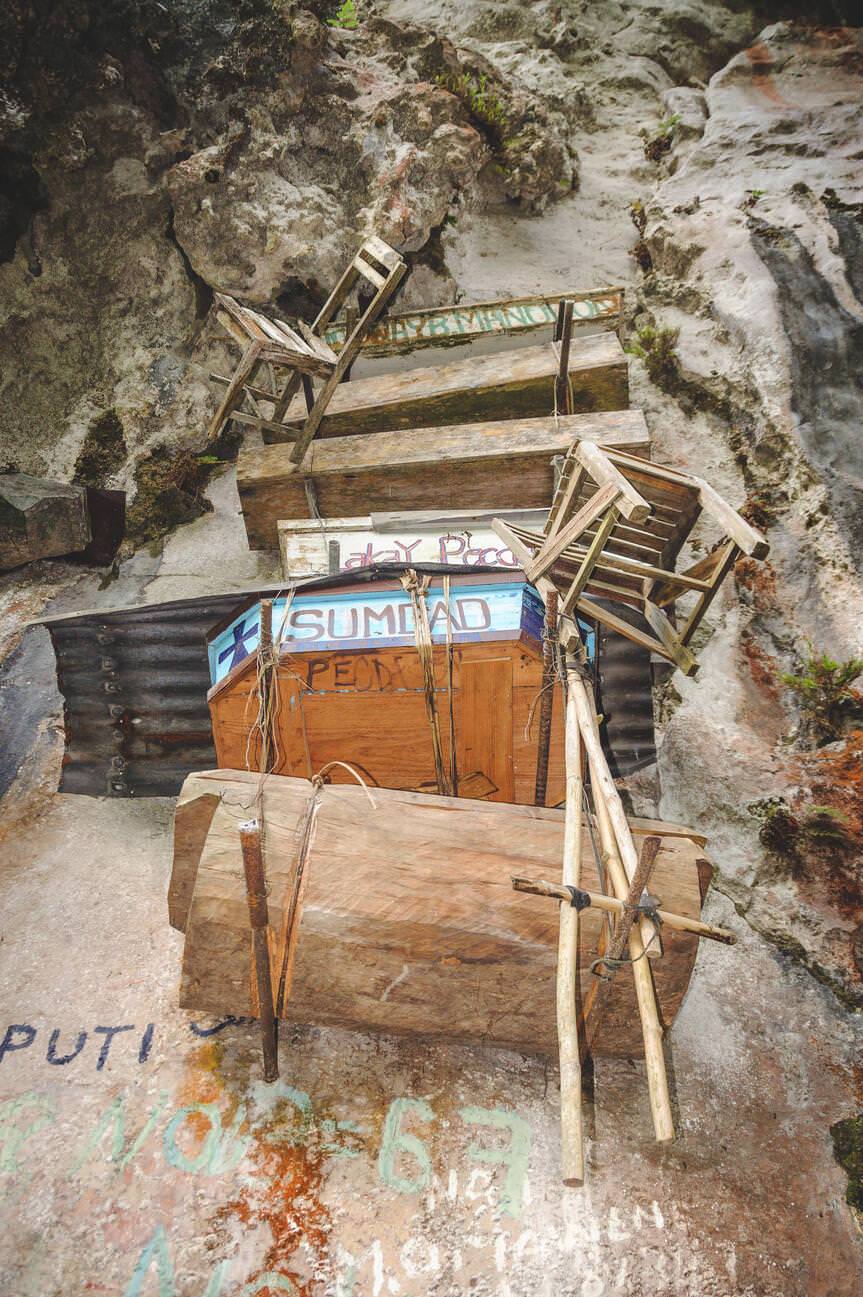
The procession from the village to the cliffs was a communal event. The entire community participated in carrying the coffin to its final resting place, an act that expressed collective mourning and respect. The physical effort of the journey itself carried meaning — it was the community’s last act of service for the person who had died, and it acknowledged the soul’s transition to another realm.
This practice is not entirely without parallel elsewhere in the world. The ancient Bo people of China suspended wooden coffins on cliff faces across the Yangtze River gorges, driven by similar motivations — elevation, protection, and spiritual proximity. In Tibet, sky burials involve placing the deceased on high ground to be consumed by vultures, a process understood as releasing the soul upward. These traditions differ greatly in execution, but each reflects a desire to lift the dead out of the earth and toward something higher.
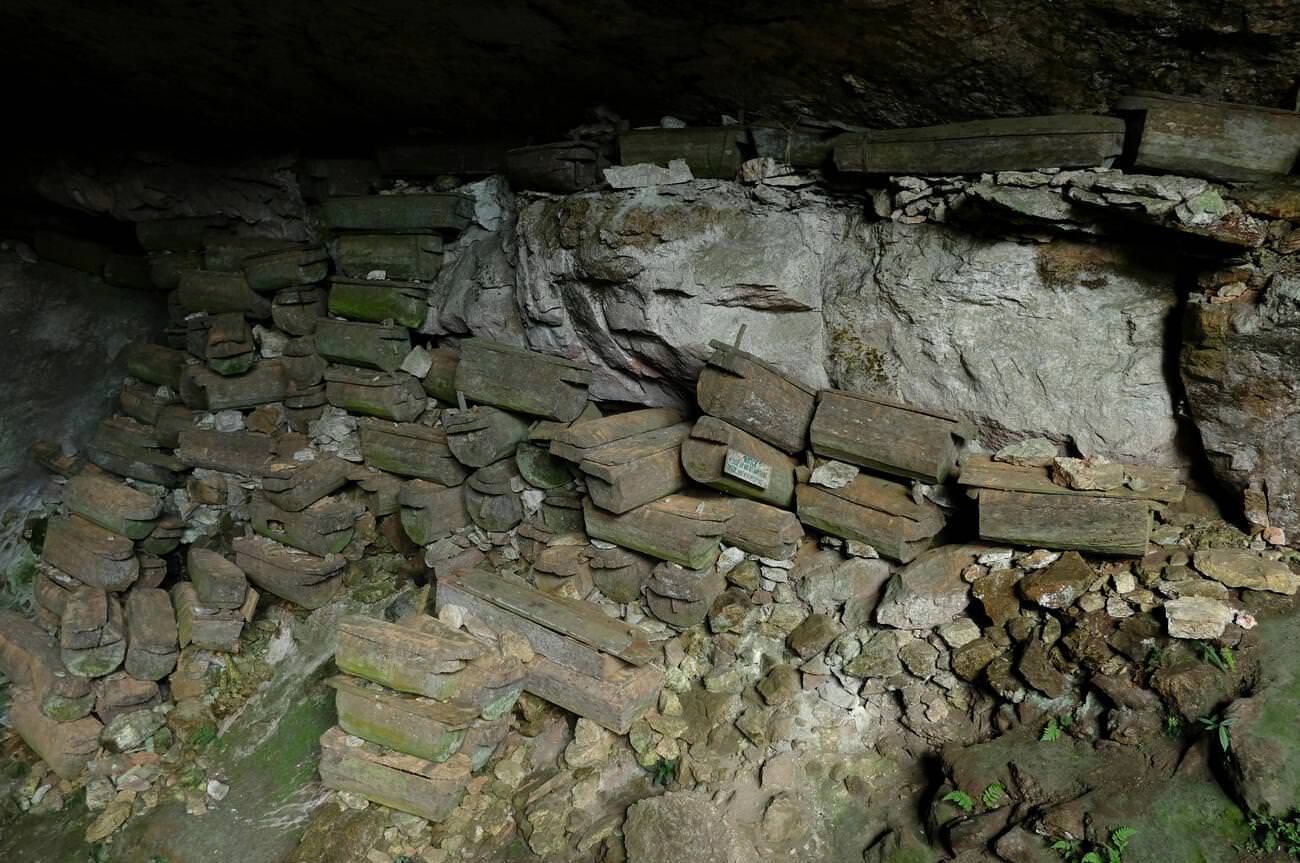
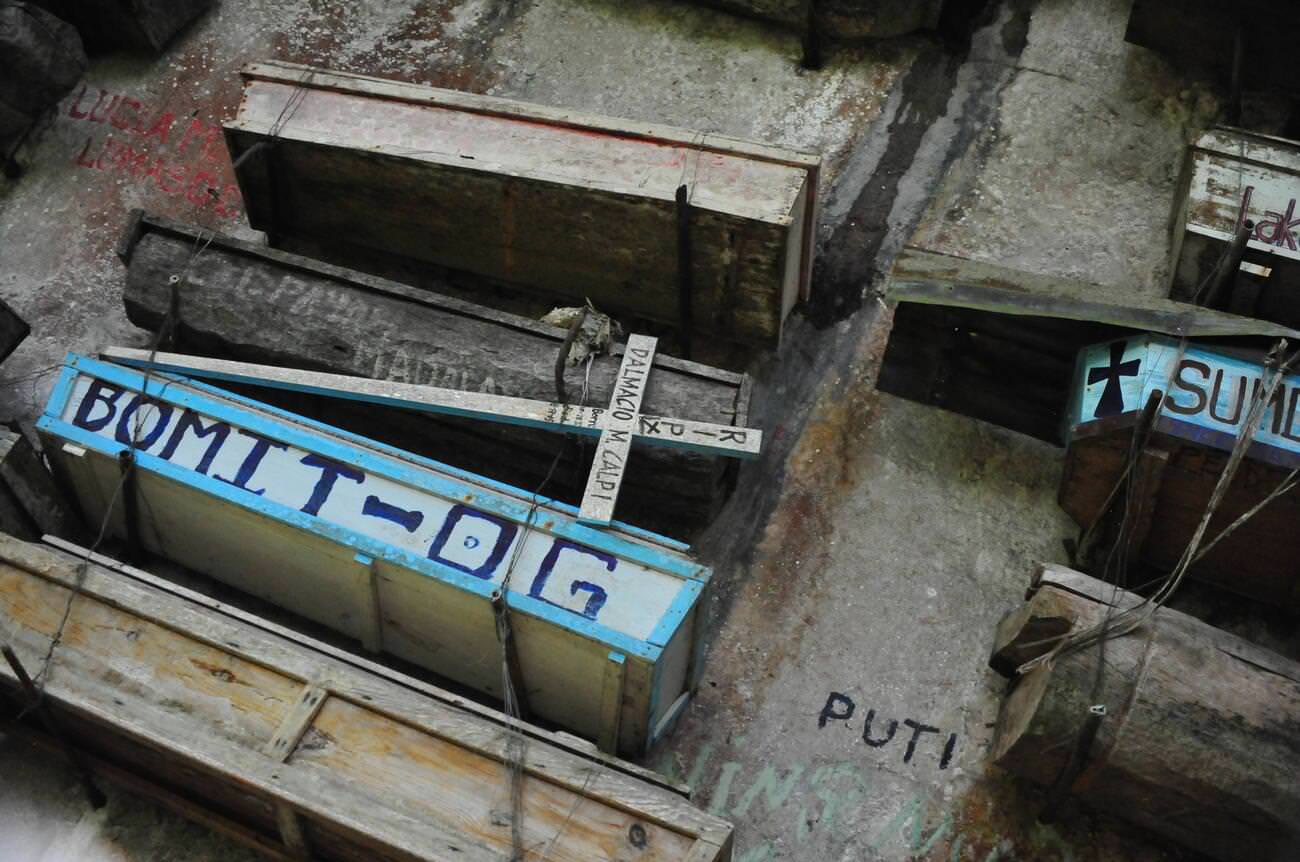
Back in Sagada, the coffins that remain on the cliffs today range in age and condition. Some are old enough that the wood has begun to split and crack. A few have broken open over time, exposing the bones within. New coffins are still occasionally added, though the practice has become far less common as younger generations have moved toward other burial customs. The cliffs now hold the layered history of the Kankanaey — generations of the dead, stacked and staggered across the limestone in a record that no written document could fully replicate.
Tourism in Sagada has grown steadily over the past few decades, with visitors trekking to Echo Valley specifically to see the coffins. The town has worked to manage this foot traffic in a way that does not compromise the sacred nature of the sites. Guided treks are the standard approach, and visitors are expected to observe the area respectfully. The burial sites remain active cultural and spiritual spaces for the Kankanaey community, not museum exhibits.
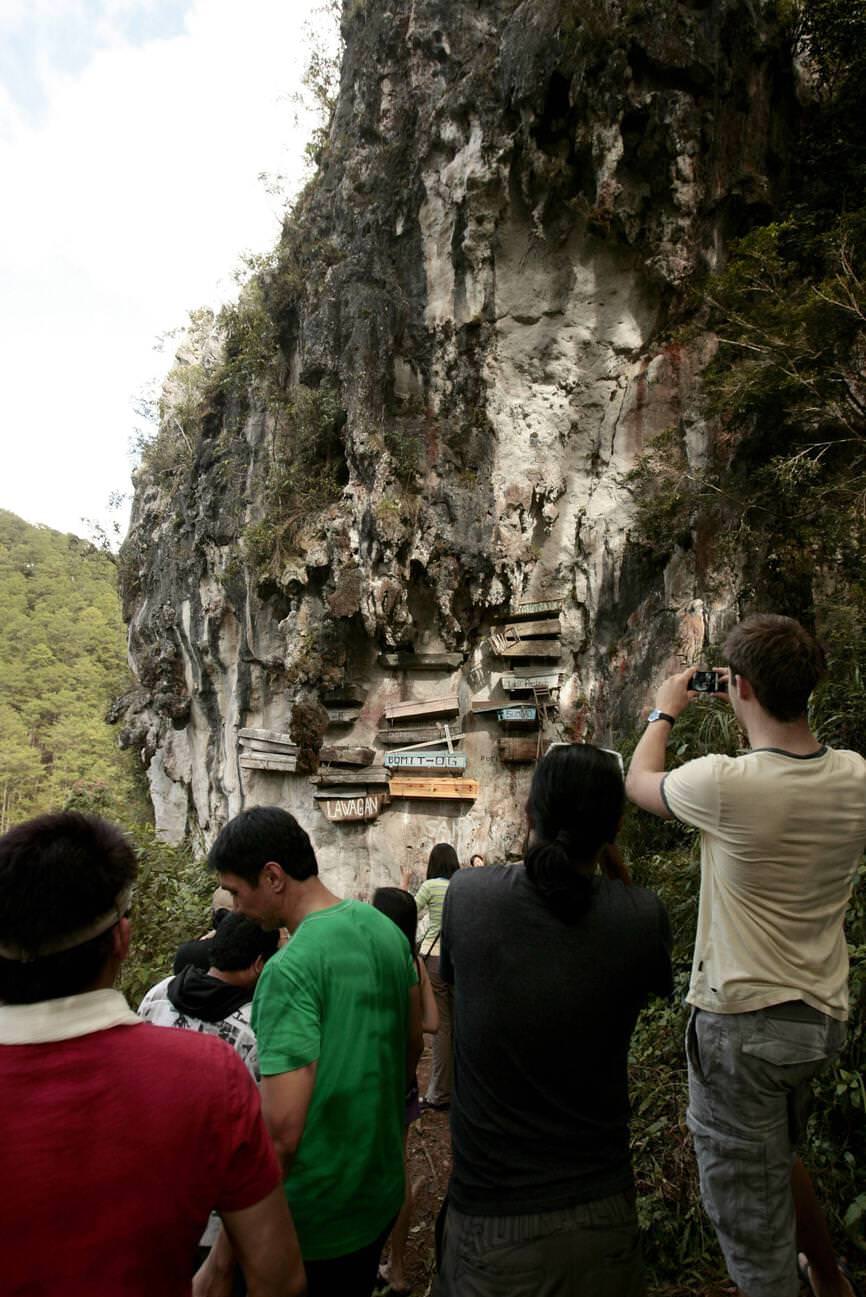
What makes the hanging coffins so compelling is precisely how much they reveal about the people who created the tradition. The Kankanaey built a practice around real fears, spiritual convictions, and a deep sense of community obligation. Every element — the height, the posture, the hand-carved wood, the shared procession — was deliberate. These coffins were not simply a method of disposal. They were a statement about how life ends, where the dead belong, and what the living owe to those who came before them.