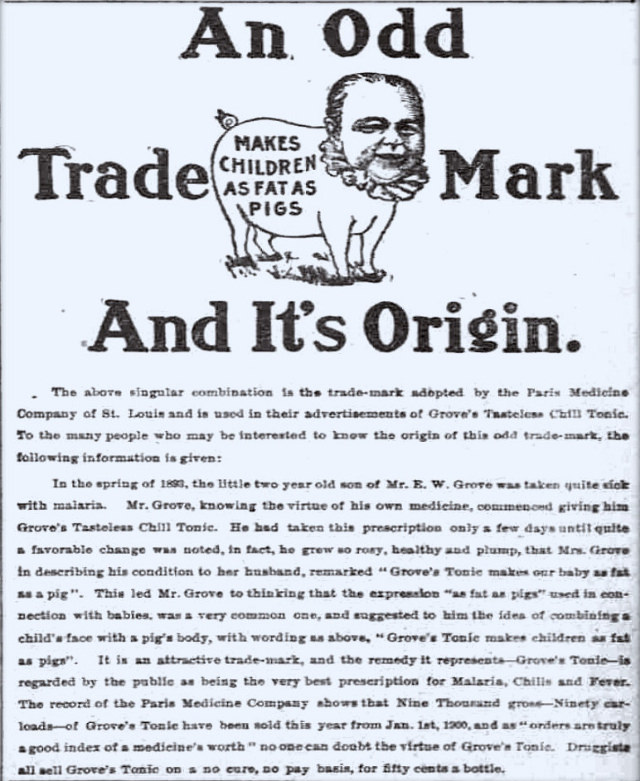
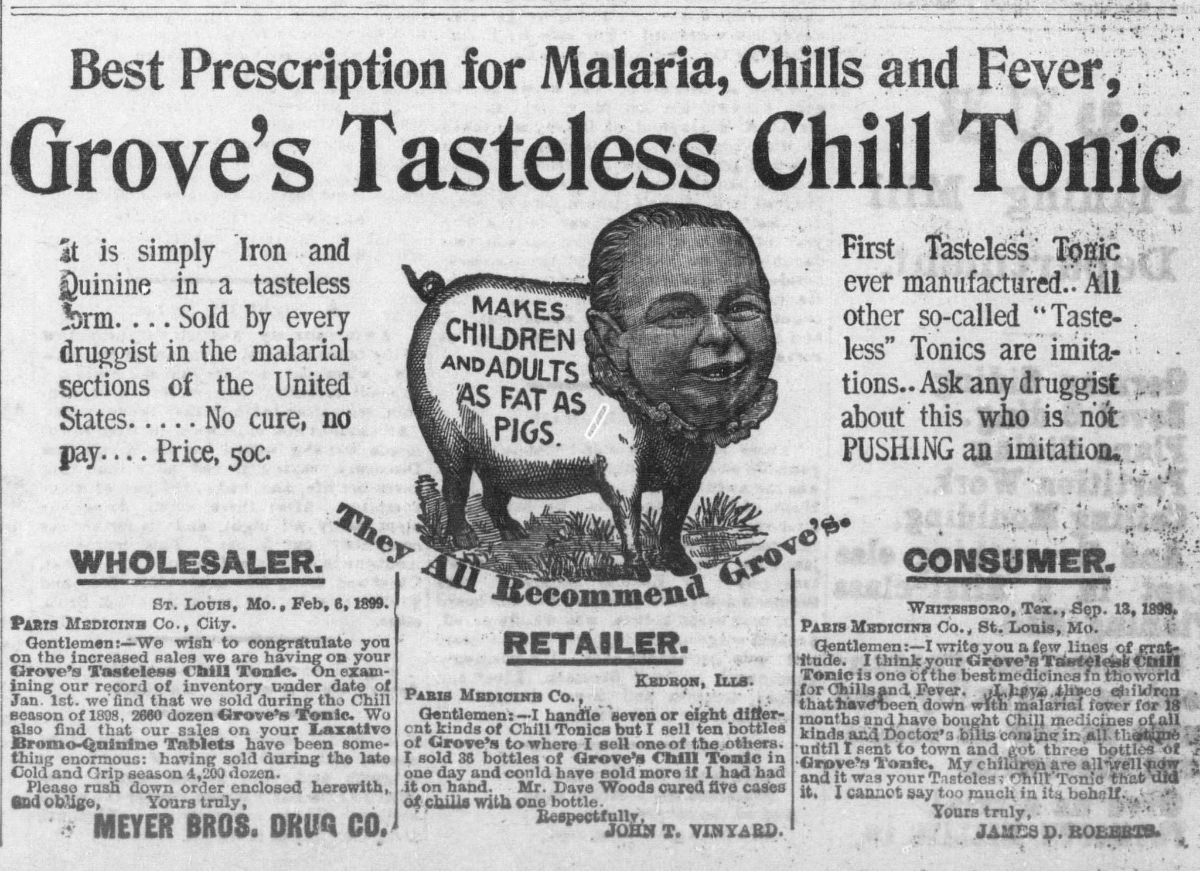
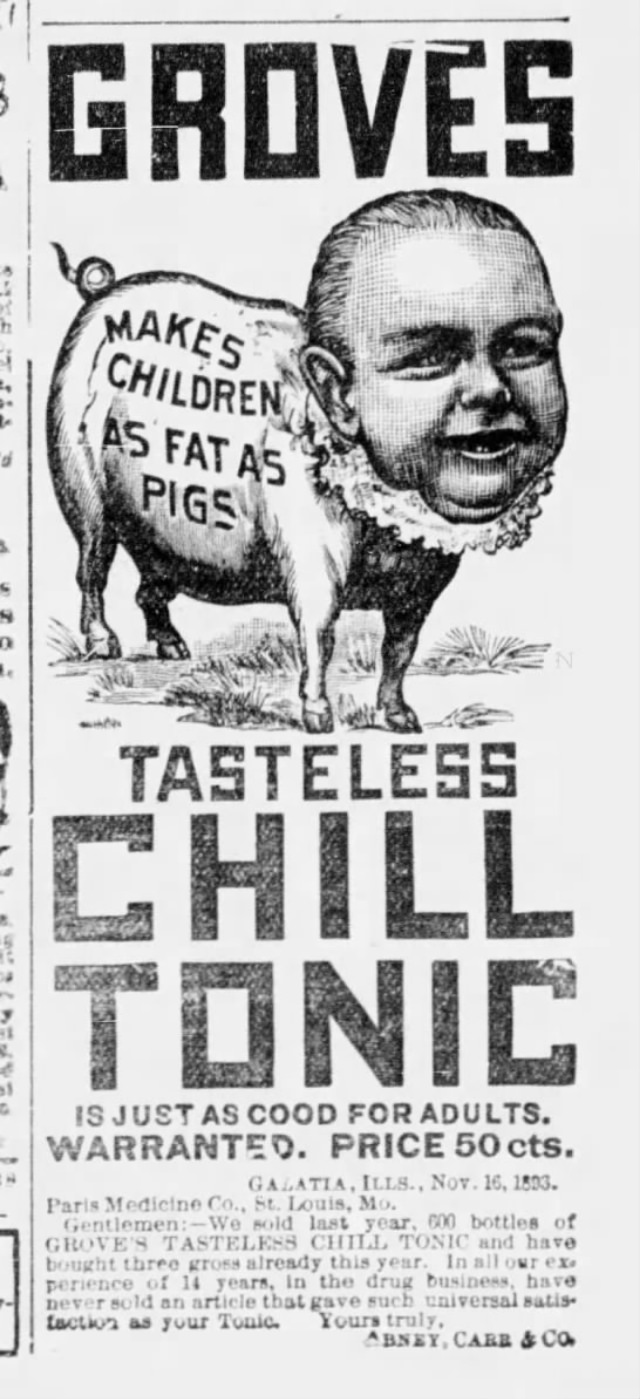
At first glance, the ads look deeply strange — a pig bearing a child’s face, plastered across medicine packaging with the promise of making your children “as fat as pigs.” These are real vintage advertisements for Grove’s Tasteless Chill Tonic, a malaria remedy that became one of the best-selling patent medicines in American history. The imagery is jarring today, but to understand it, you have to understand the world it came from.
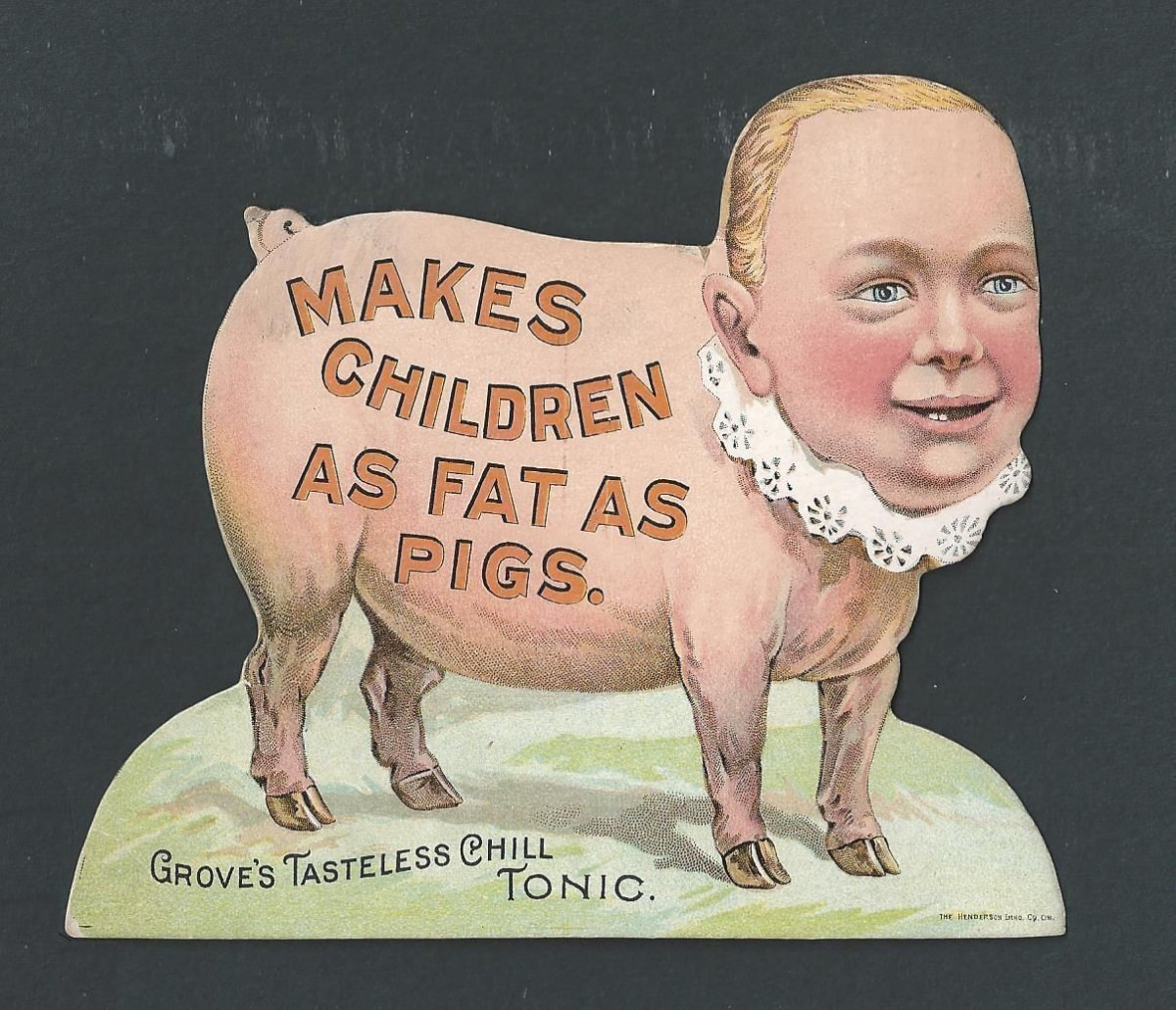
In 1878, pharmacist Edwin Wiley Grove developed a fever remedy built around quinine, a well-known treatment for malaria. The problem with quinine was its intensely bitter taste, which made it especially hard to give to children. Grove solved this by suspending the quinine in a sweetened flavored syrup, masking the bitterness entirely. The name said it all: “Tasteless Chill Tonic.” By the late 19th century, the product was a household staple across the American South, where malaria was common.
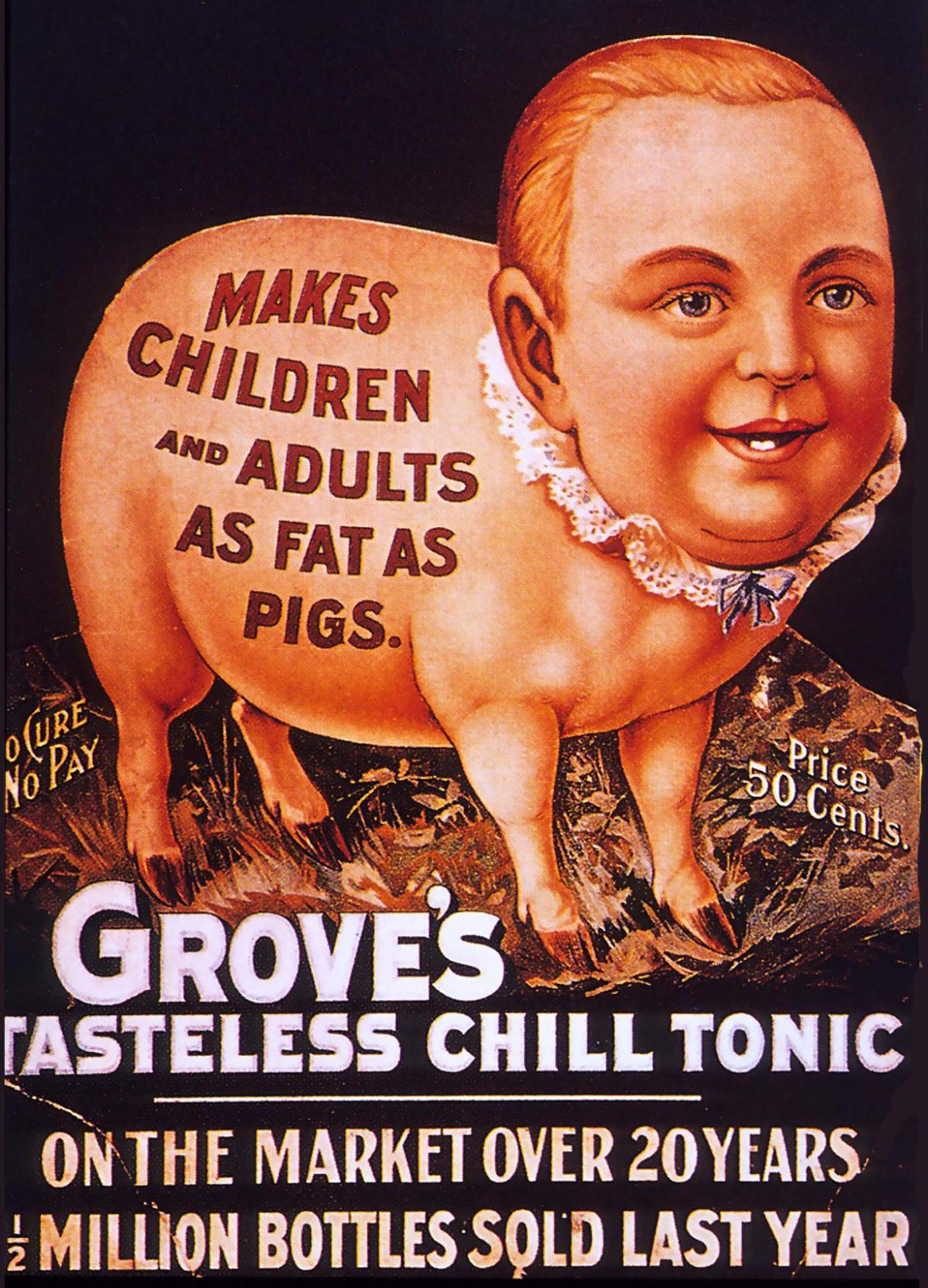
Grove grew up in poverty, and his success with the tonic represented a dramatic personal rise. The fat pig — a traditional symbol of wealth, abundance, and good fortune — reflected that journey. At a time when obesity carried none of its modern health associations, a plump body signaled prosperity and recovery. Children who were thin and sickly from malaria would, after treatment, regain their weight and energy. The slogan “Makes Children as Fat as Pigs” was meant to communicate robust health, not ridicule.
The dosing instructions on Grove’s Tonic were specific and strict. For acute malaria attacks, patients took two tablespoonfuls three times a day. For recurrent attacks, two tablespoonfuls were taken morning and evening for a full eight weeks. The tonic was marketed equally to adults and children, with the same dosage applying to both.
The tonic’s uses extended beyond malaria. Text printed on the bottom of the box promoted it as “an excellent remedy for Coughs and Colds,” claiming it relieved the cough, the fever, and the headache that typically came with a cold. The box further stated that the second or third dose would move the bowels within 8 to 10 hours, at which point “the cold will be relieved.” By today’s standards, these claims would never pass regulatory scrutiny, but in the era of patent medicines, they were entirely normal.