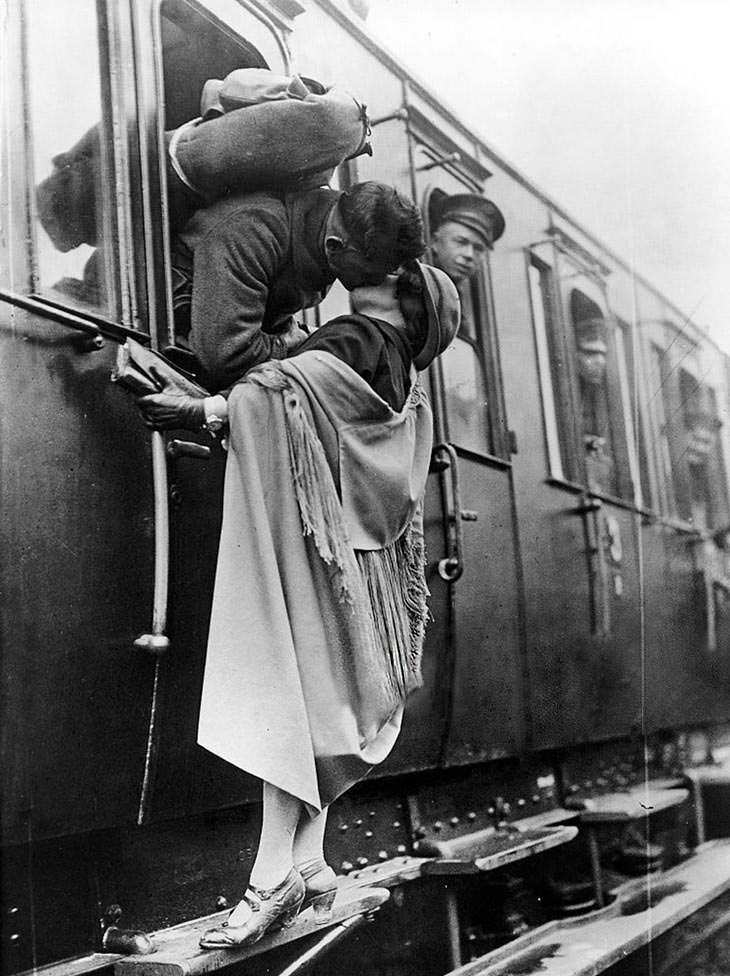
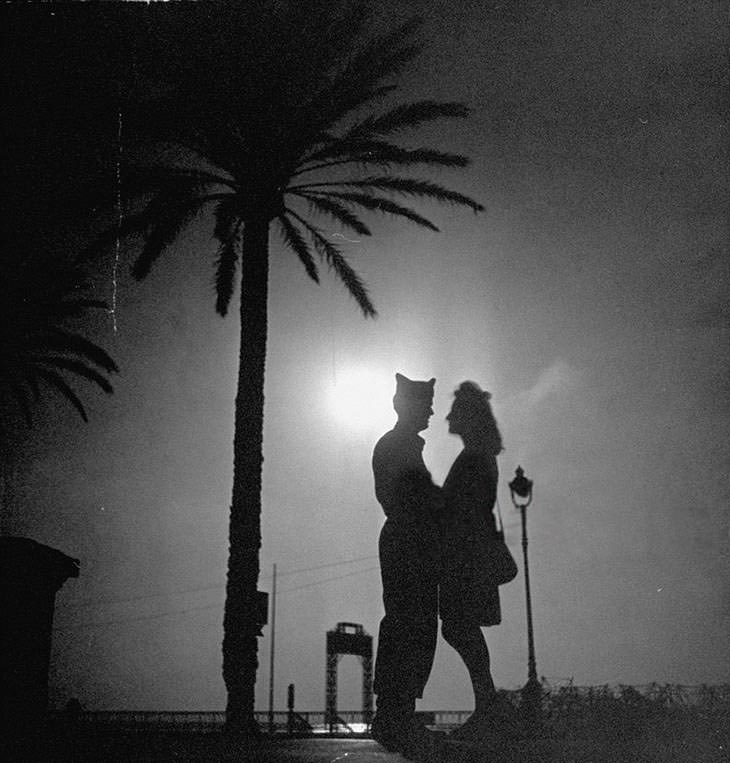
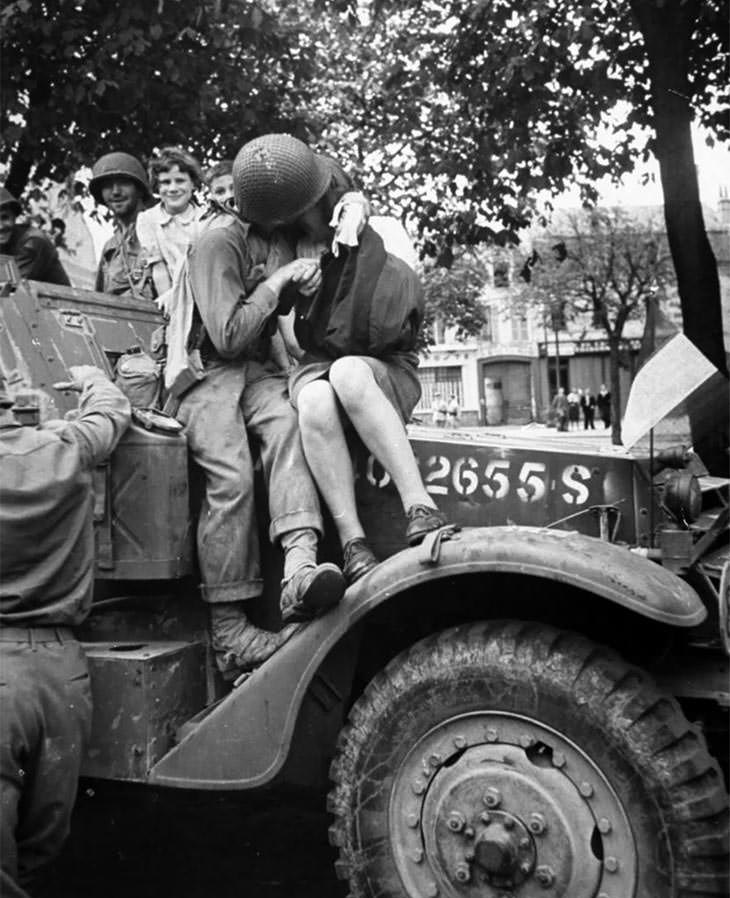
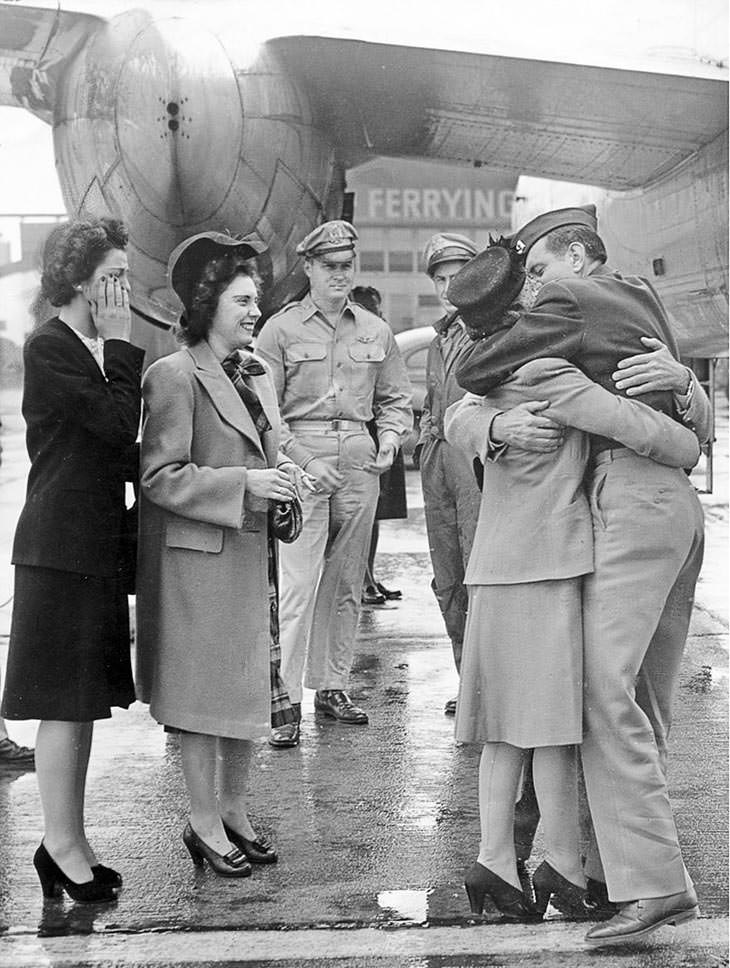
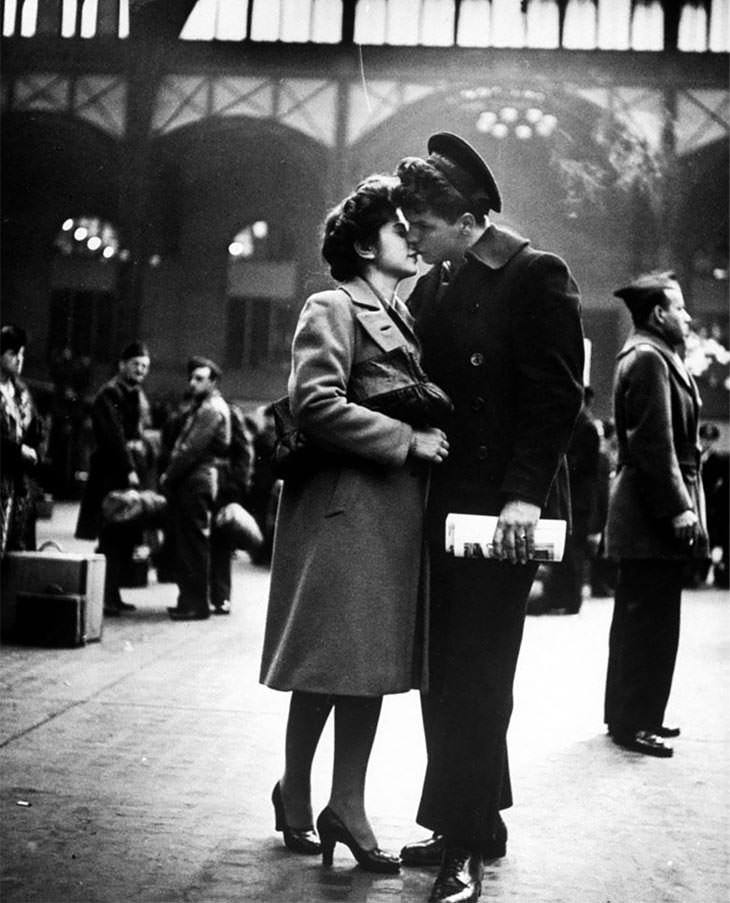
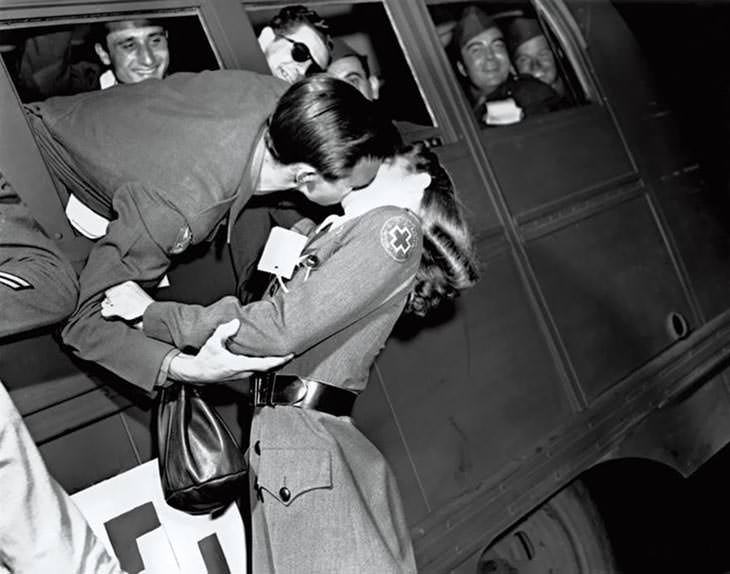
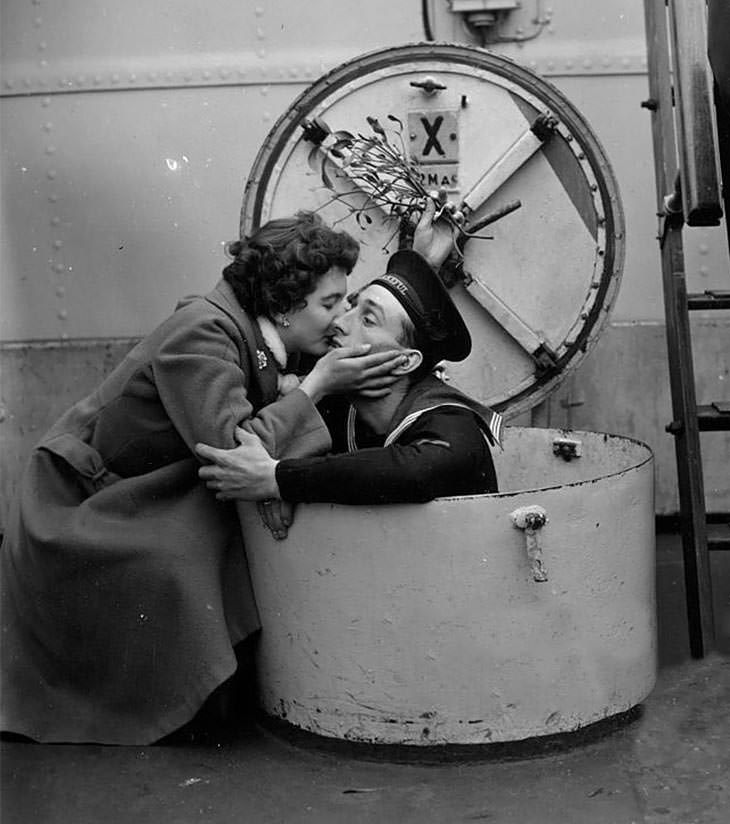
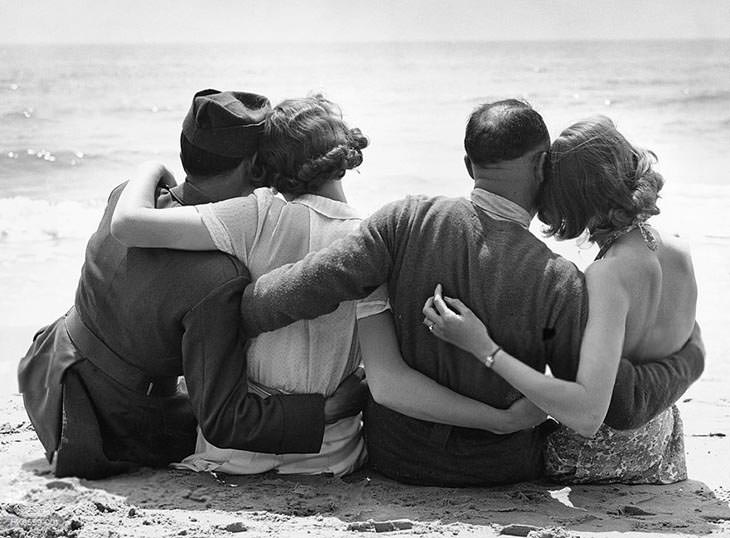
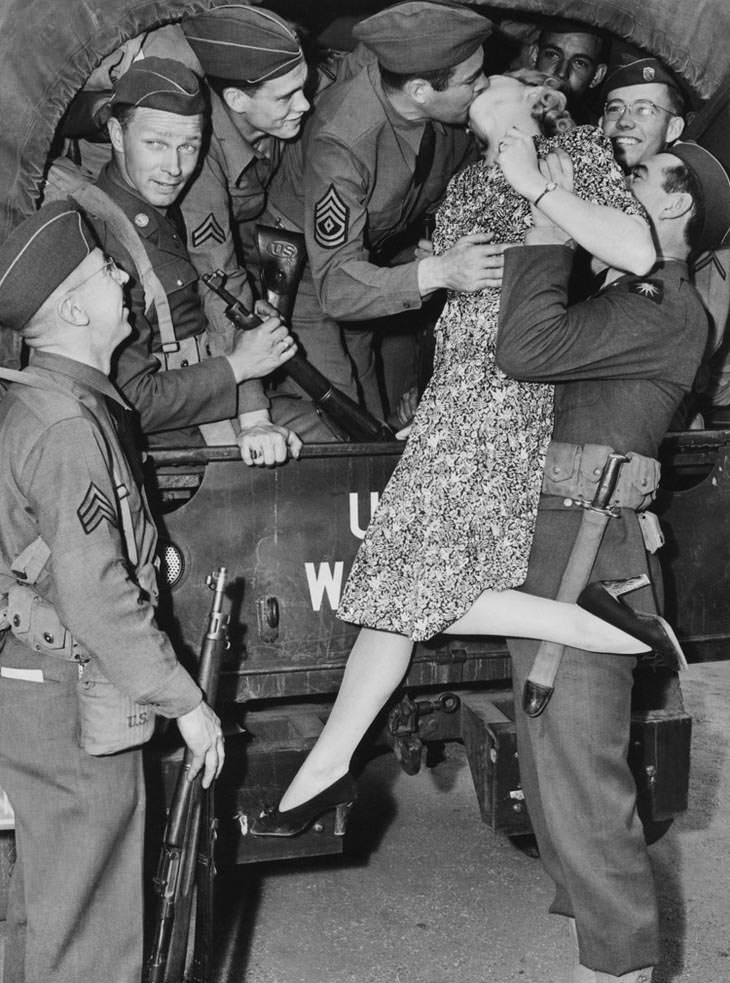
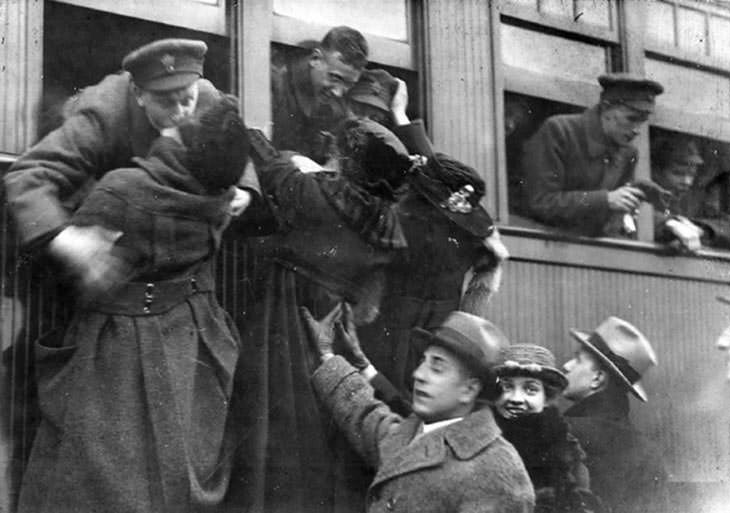
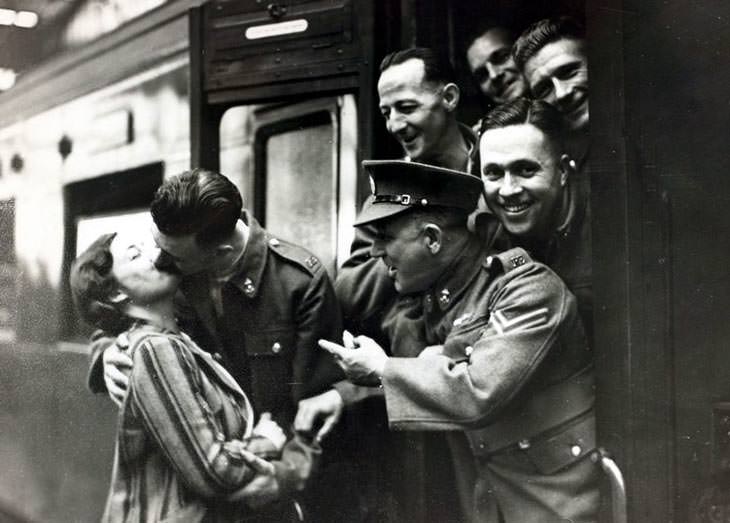
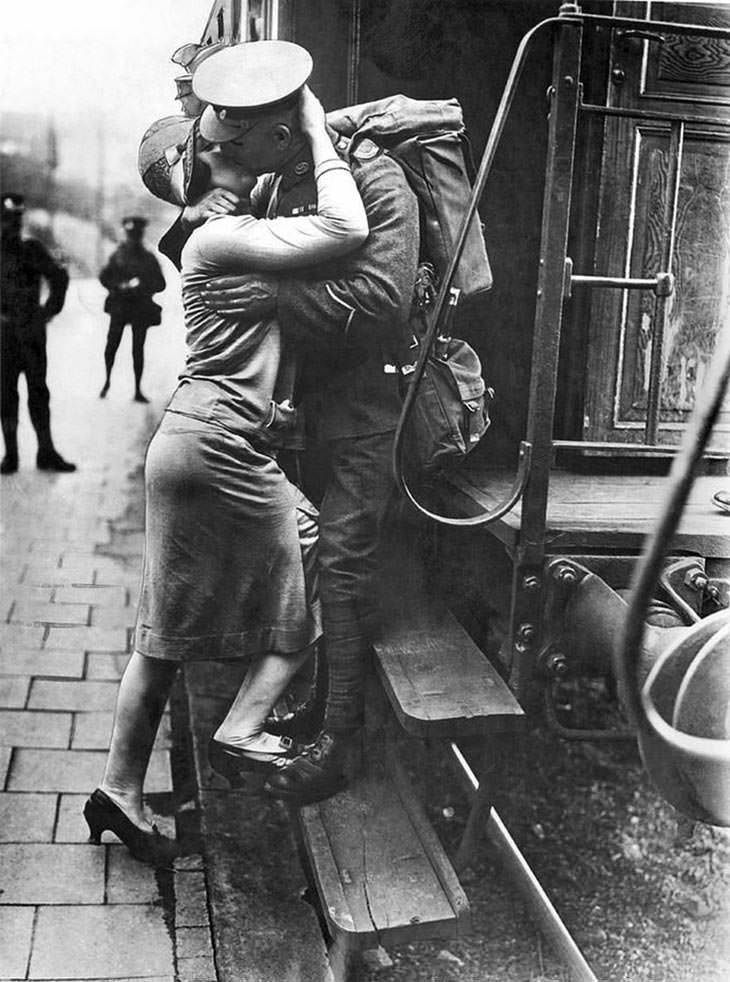
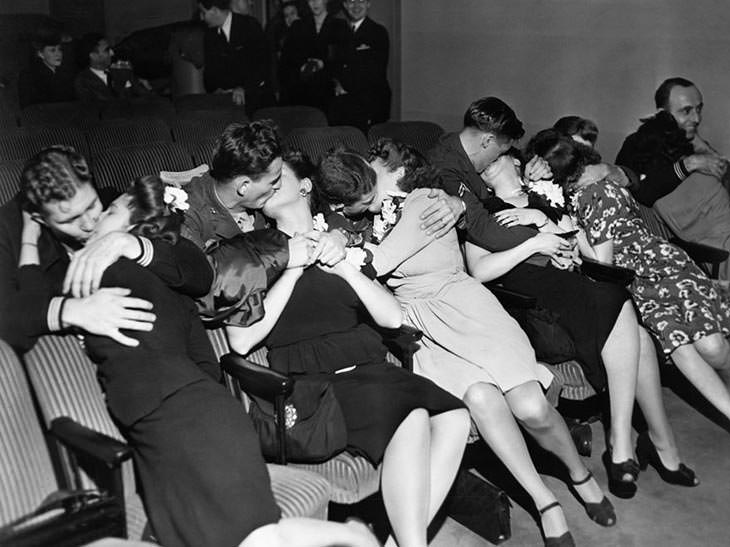
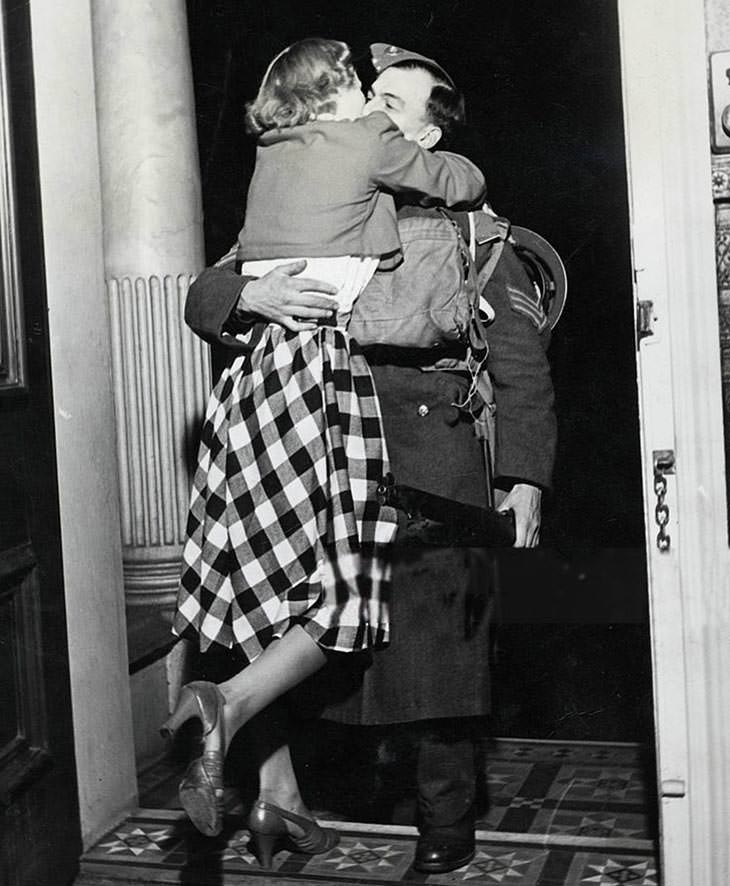
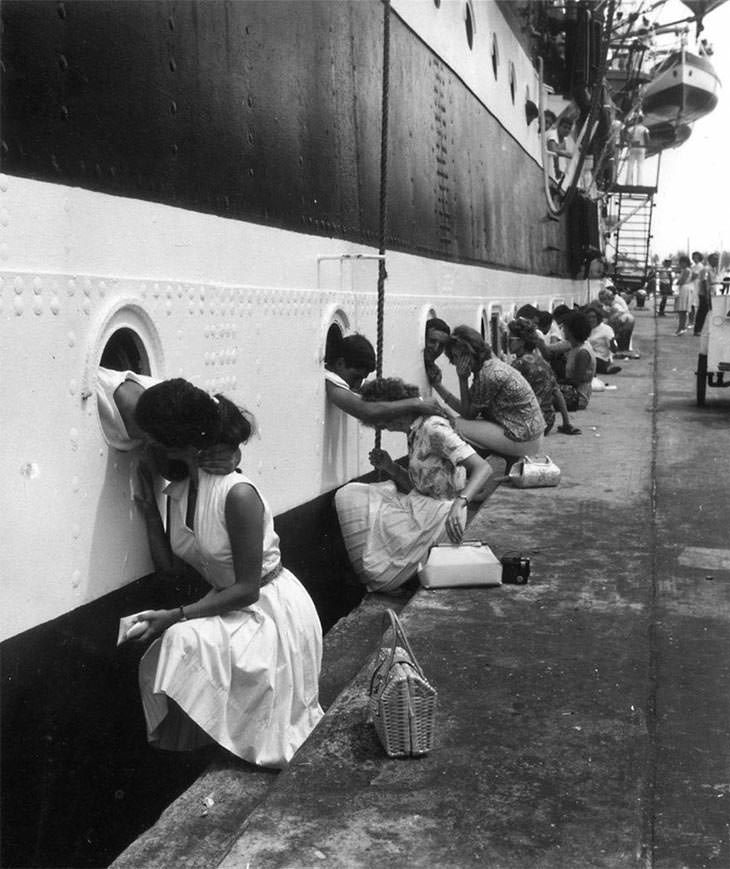
From train station platforms to bustling city docks, the farewell kiss became one of the most recognizable images of wartime. Spanning conflicts from World War I through the Korean War and beyond, these moments were captured by photographers who understood the weight of what they were witnessing. A couple pressed together for a final few seconds, not knowing when — or whether — they would see each other again.
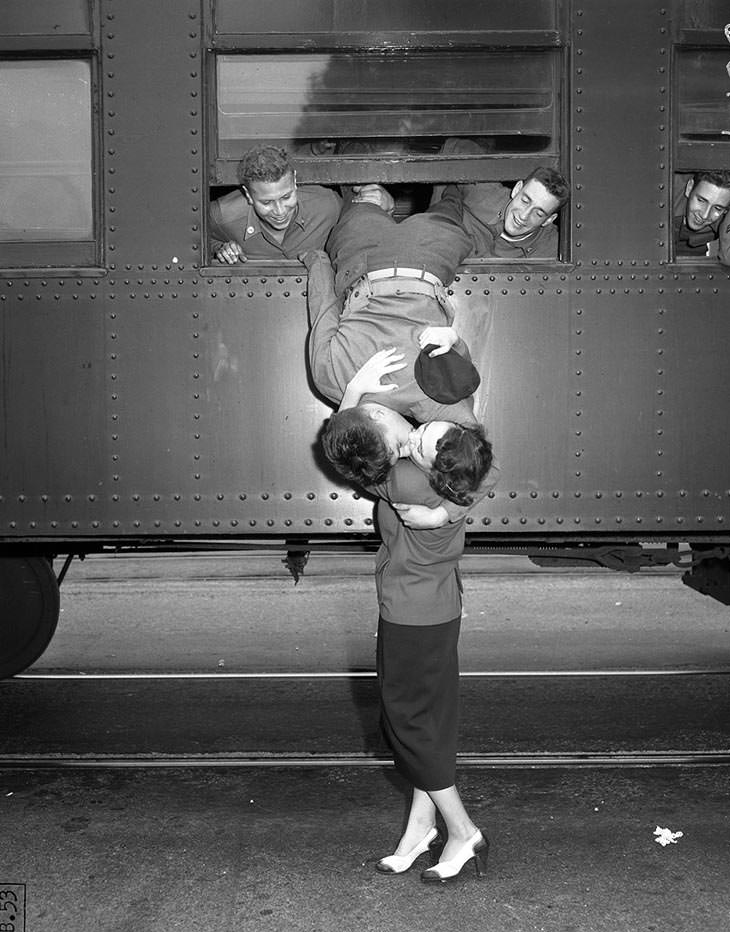
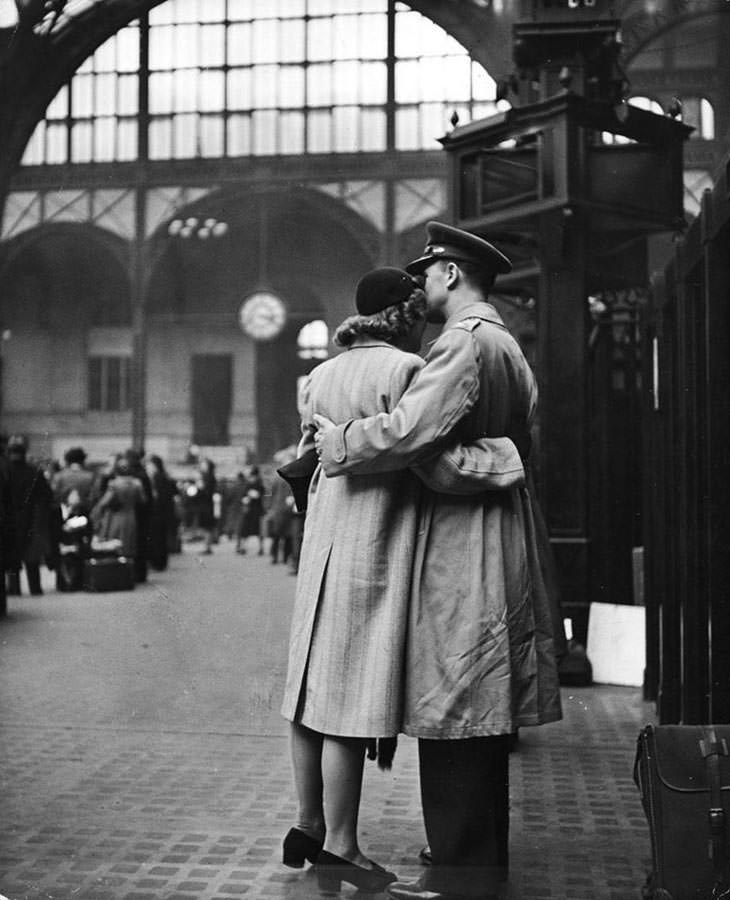
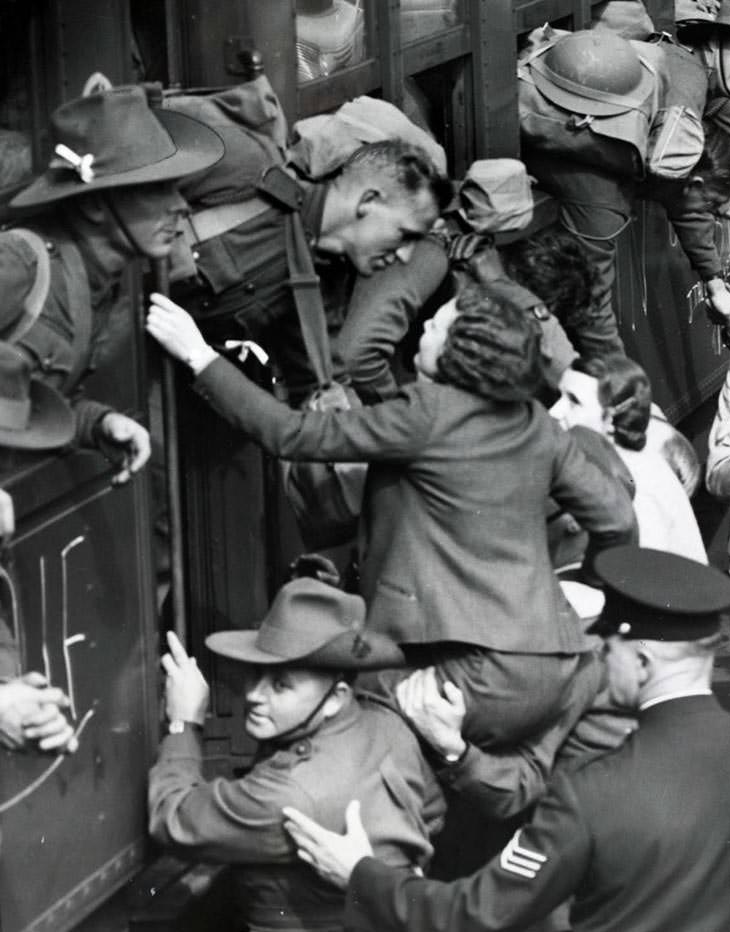
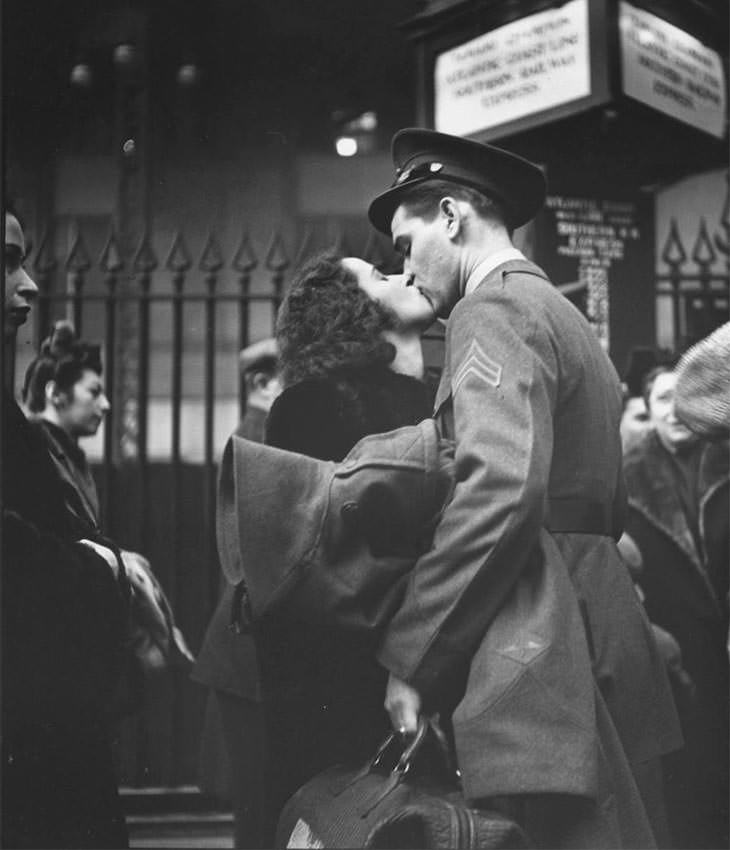
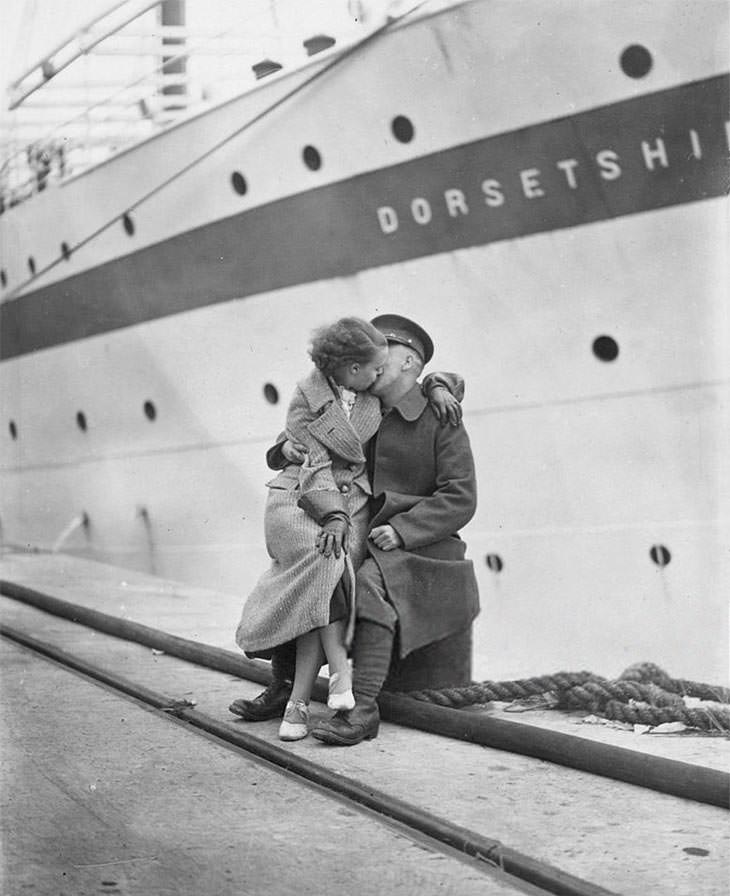
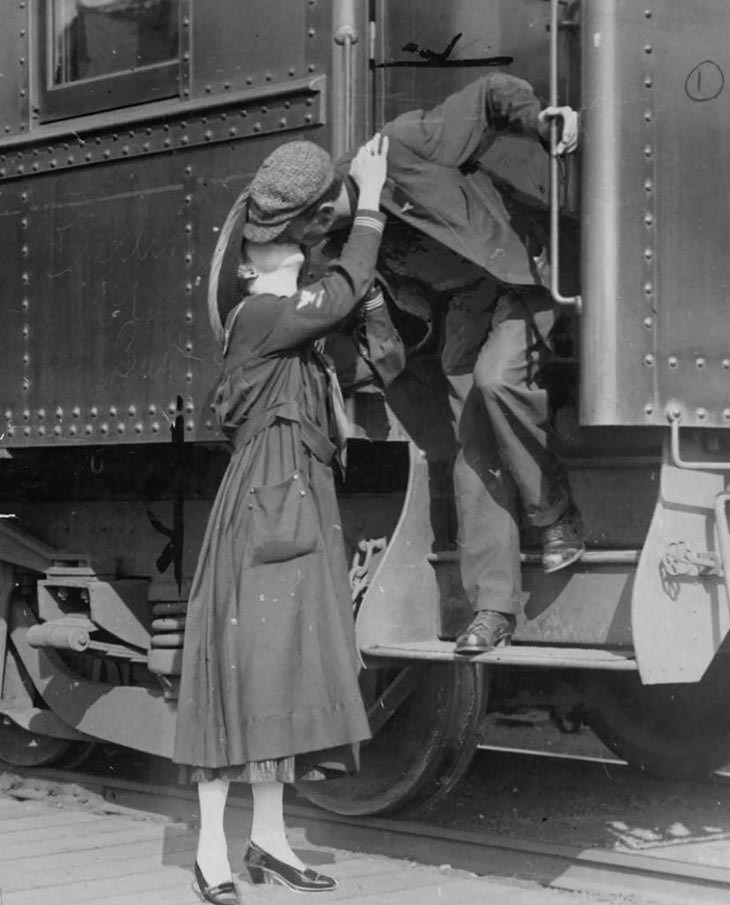
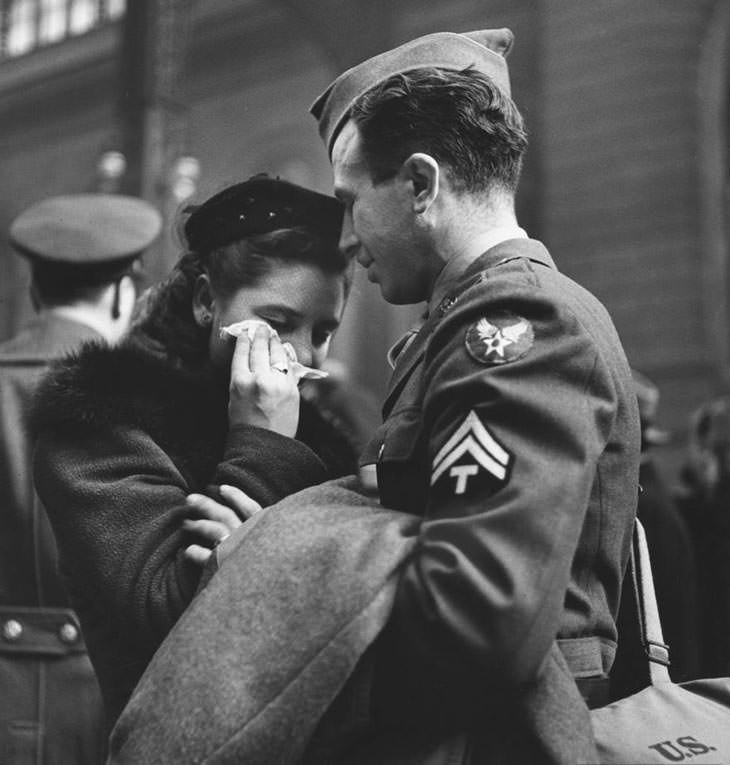
During World War II, departures happened on a massive scale. Penn Station in New York became a recurring backdrop for these scenes, packed with soldiers in uniform and the women who came to send them off. Some goodbyes were rushed, snatched in the noise and chaos of crowded platforms. Others were slow and deliberate, two people holding on as long as they could.
Letters and photographs kept couples connected across thousands of miles. A soldier might carry a worn photo in his breast pocket. A woman at home might keep a framed picture on her nightstand. These weren’t sentimental extras — they were anchors. When the wait stretched on for months or years, a photograph was proof that someone real was waiting on the other side of the war.
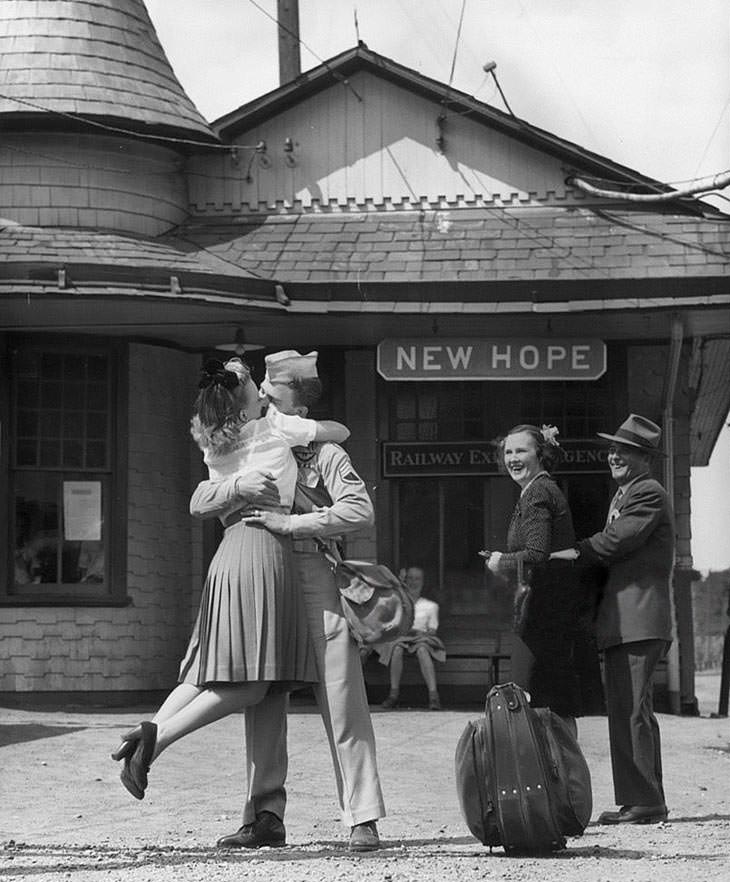
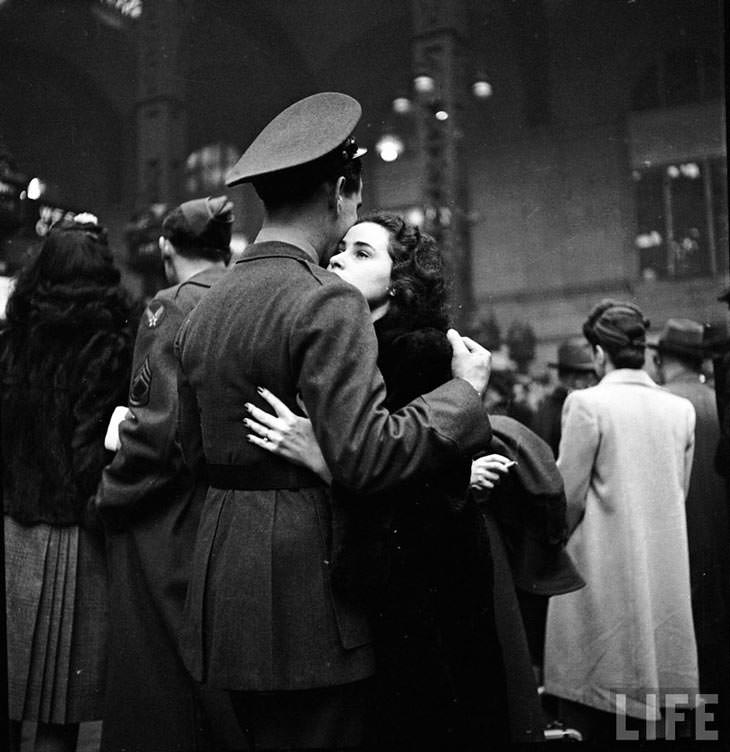
Not every story ended in reunion. For some couples, the farewell kiss at the station was the last time they would ever see each other. That reality hung over every departure, unspoken but present. The photographs carry it — in a tight grip, a closed eye, a face turned into a shoulder.
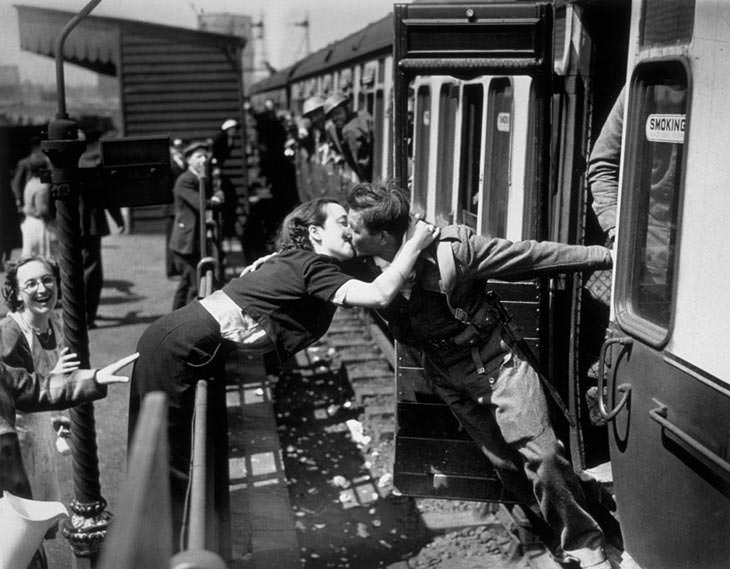
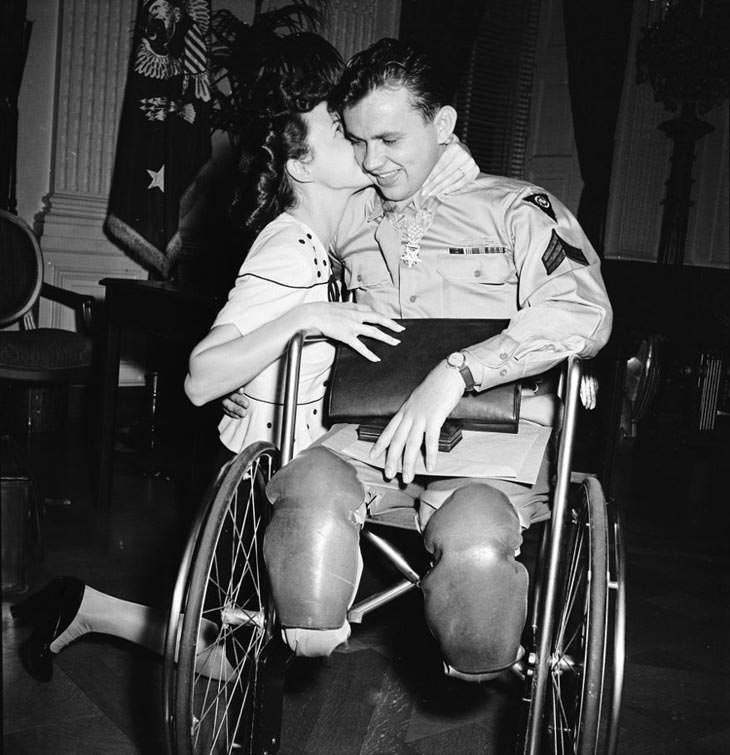
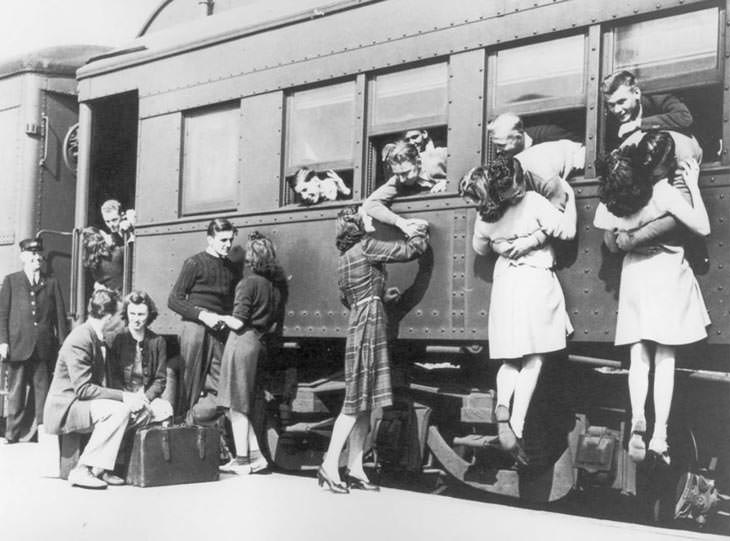
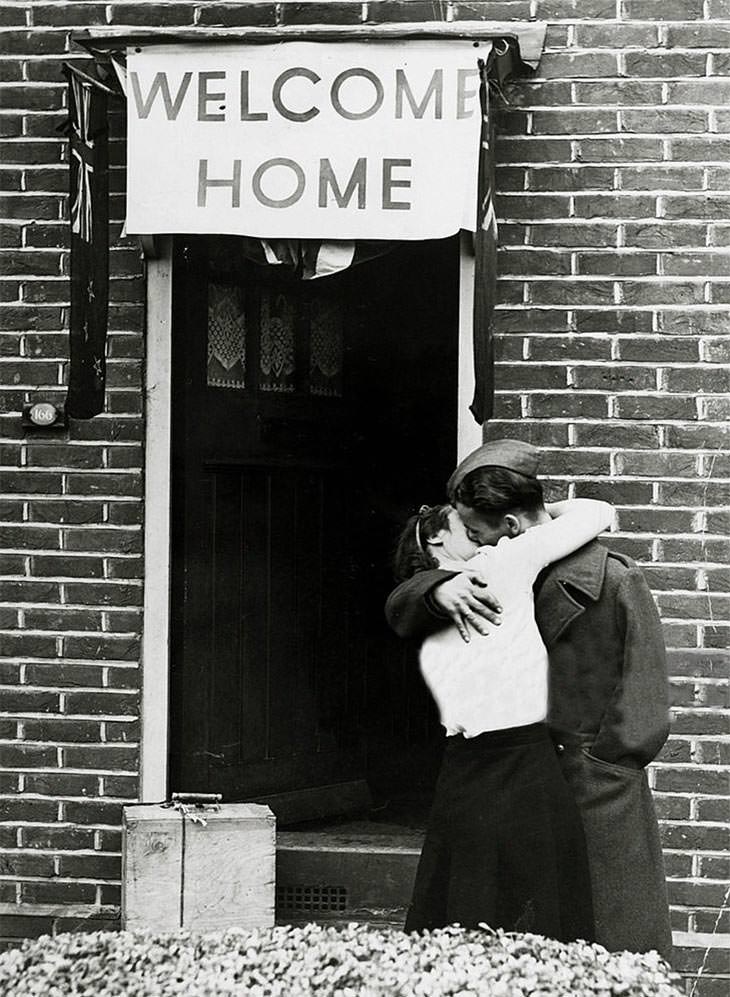
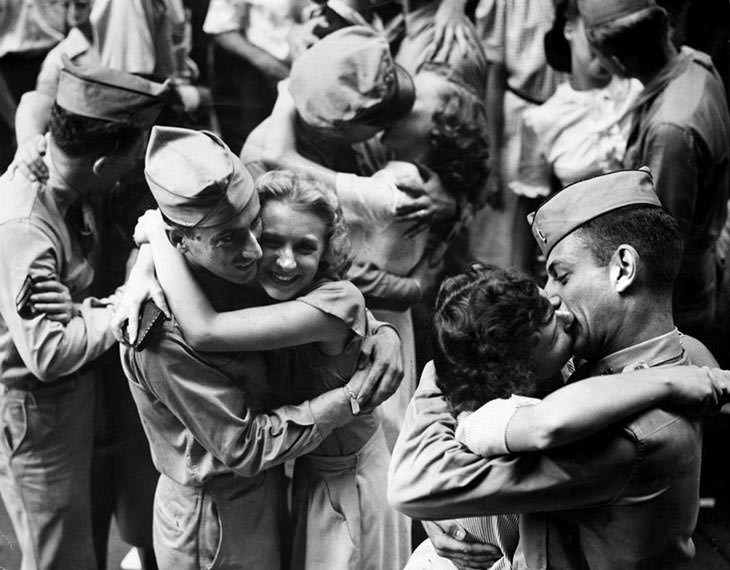
Reunion photographs carry their own distinct energy. When soldiers returned — from Europe, from the Pacific, from Korea — the kisses captured on film look nothing like the farewells. Relief replaces dread. Arms that reached out in goodbye now pull someone close in disbelief that the waiting is over.
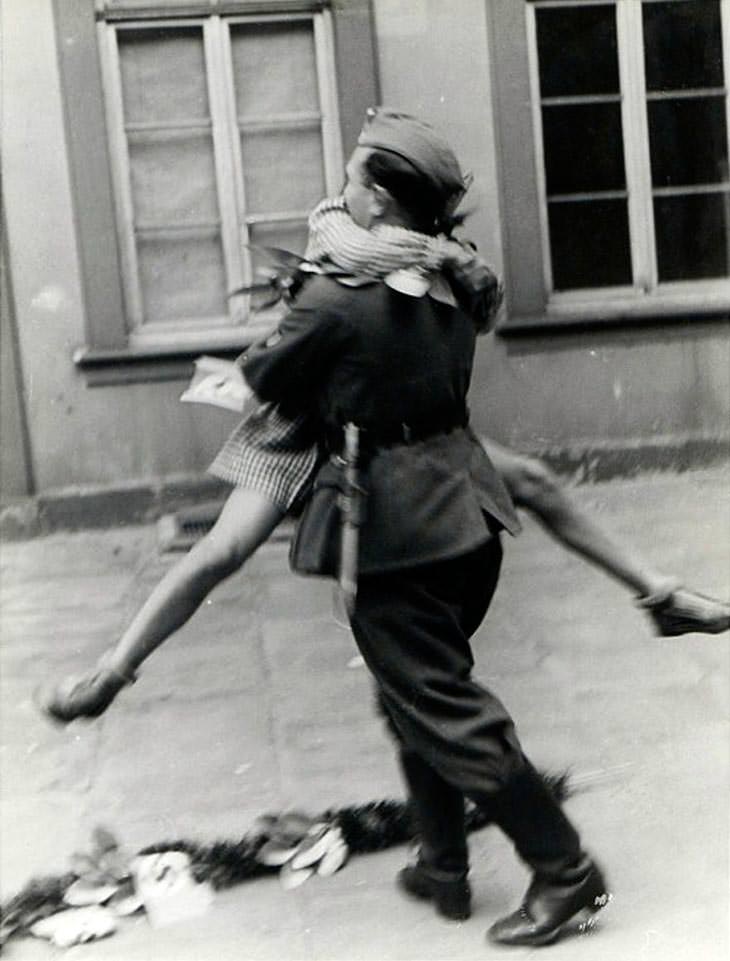
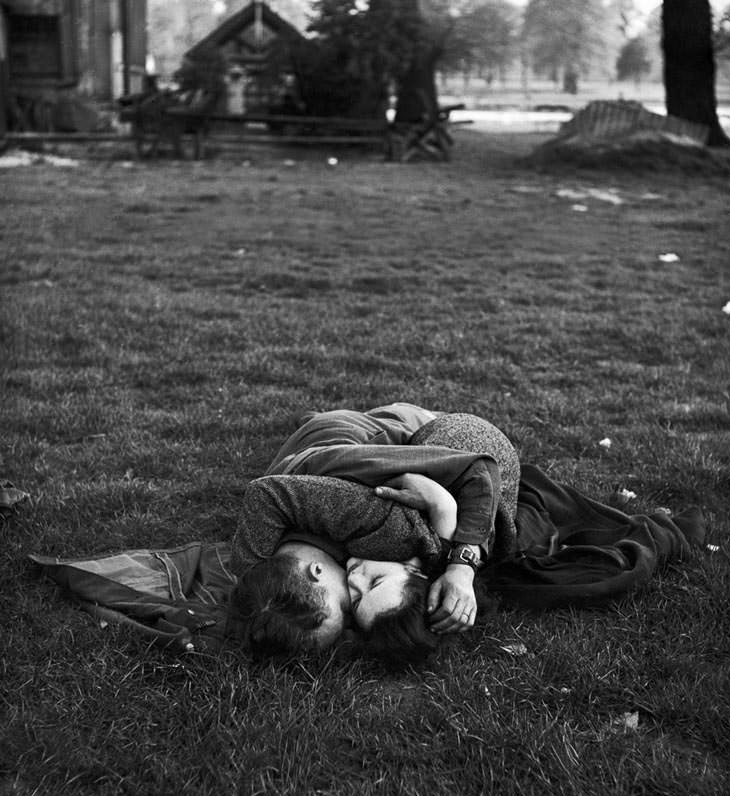
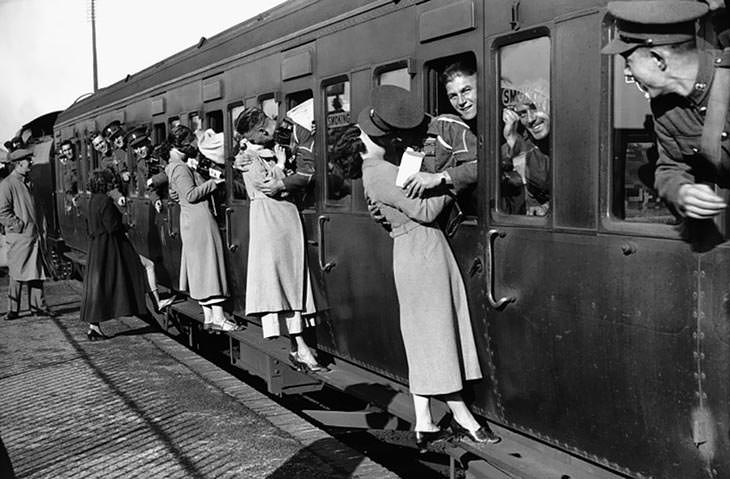
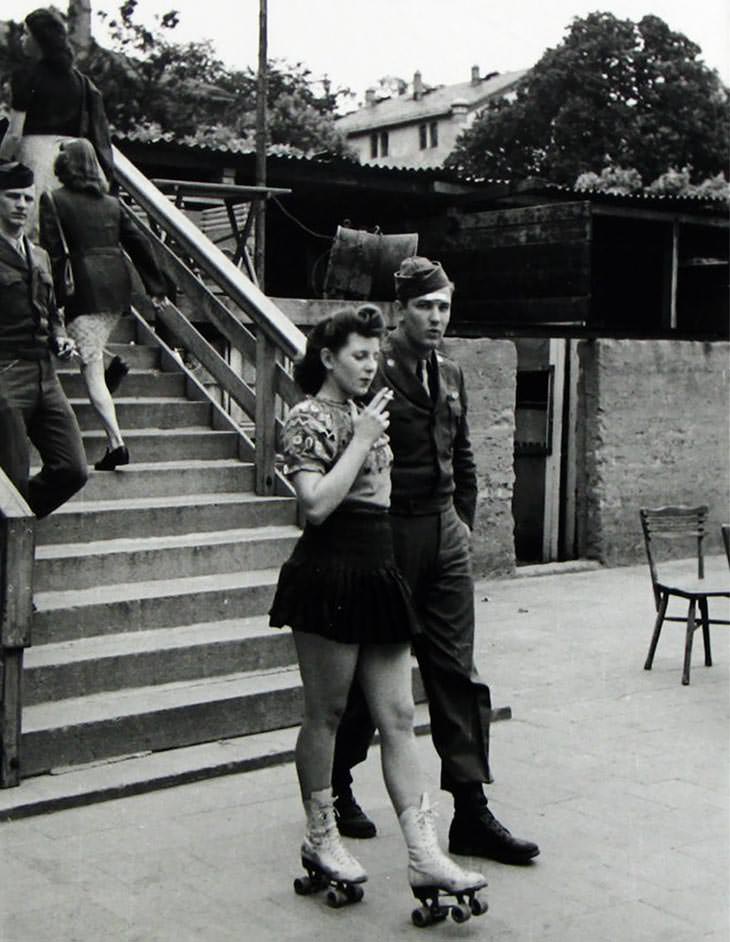
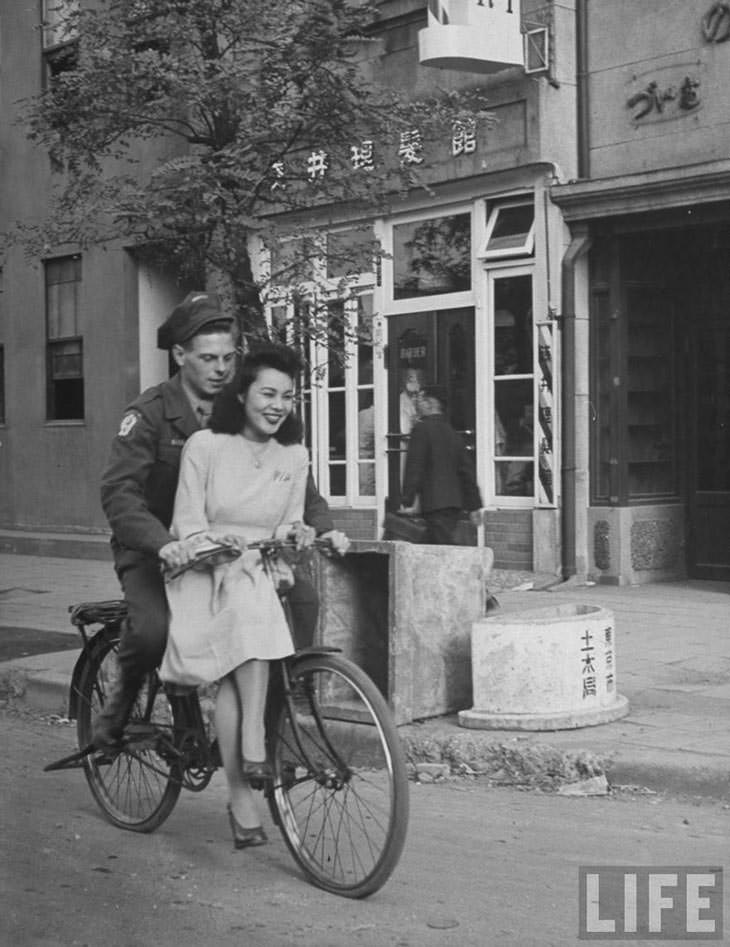
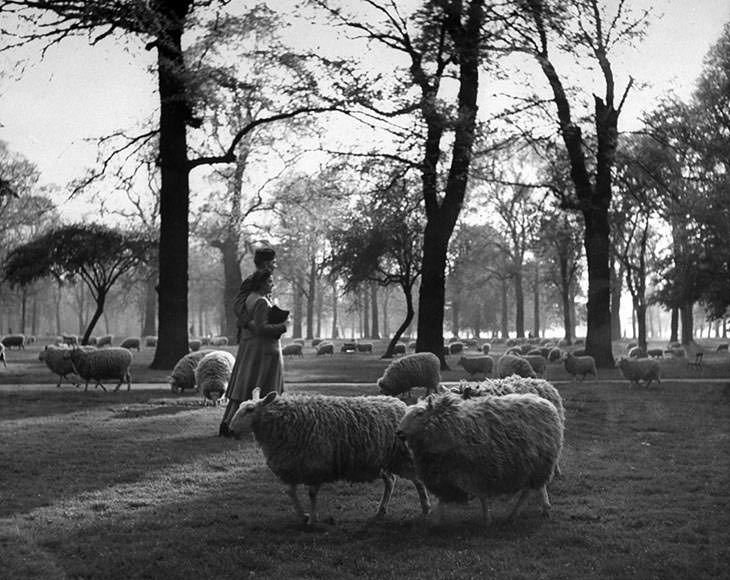
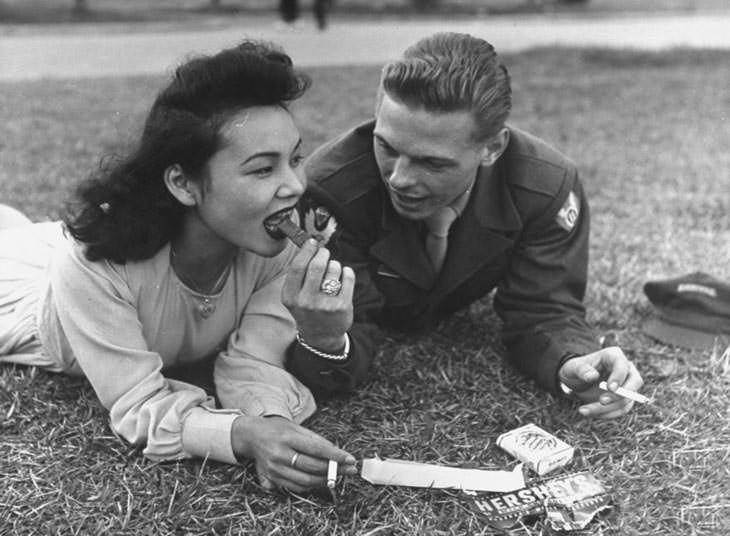
The international scope of these conflicts created relationships that crossed borders. American GIs stationed in Britain, France, and Japan formed bonds with local women. Photos from Hyde Park in London and the streets of post-war Japan show couples whose connection grew directly out of the upheaval of war — two people from different countries finding something ordinary in extraordinary circumstances.
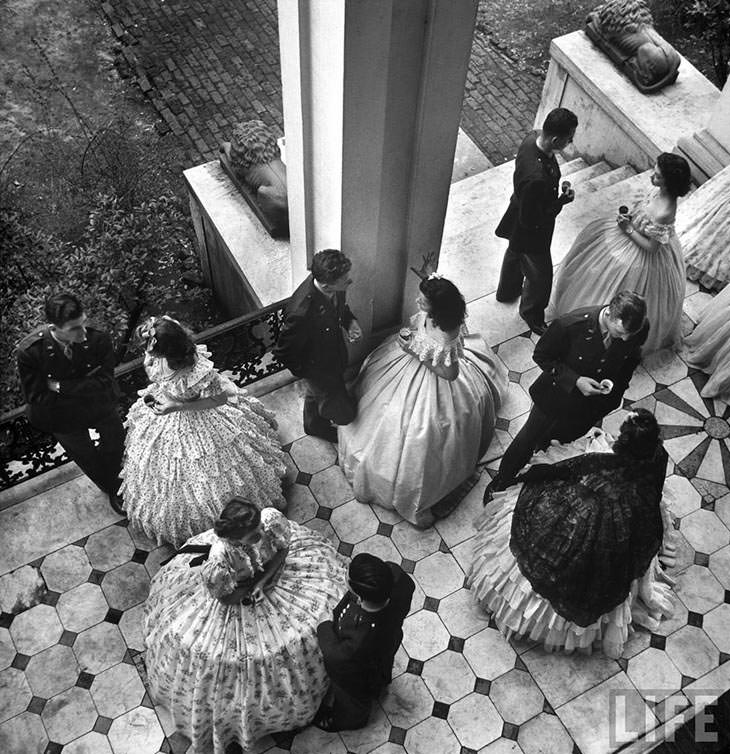
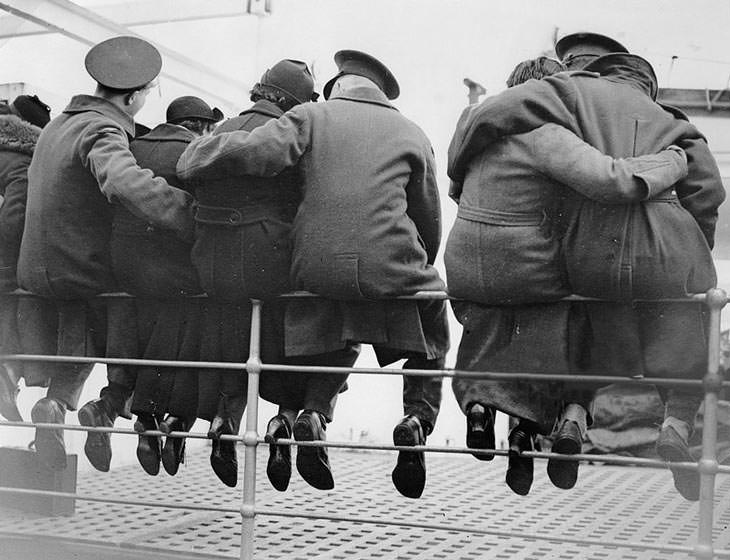
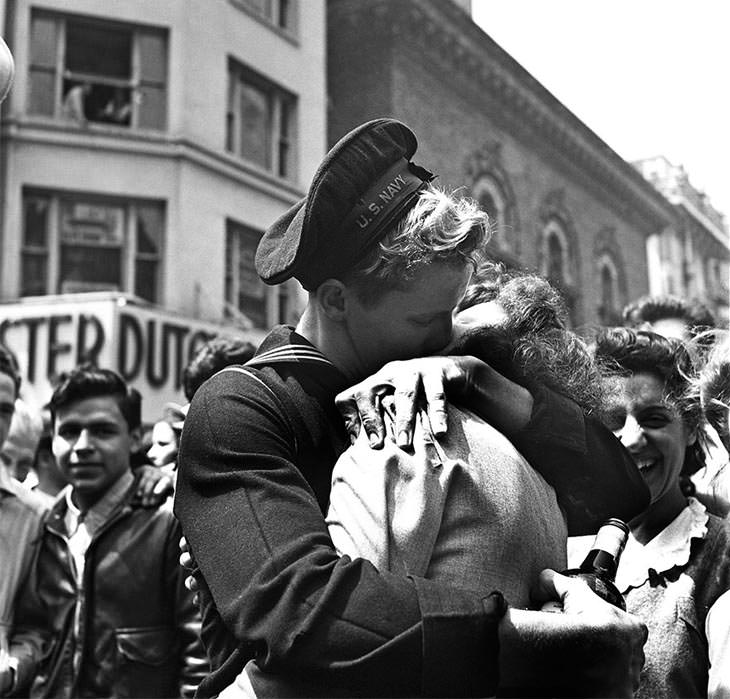
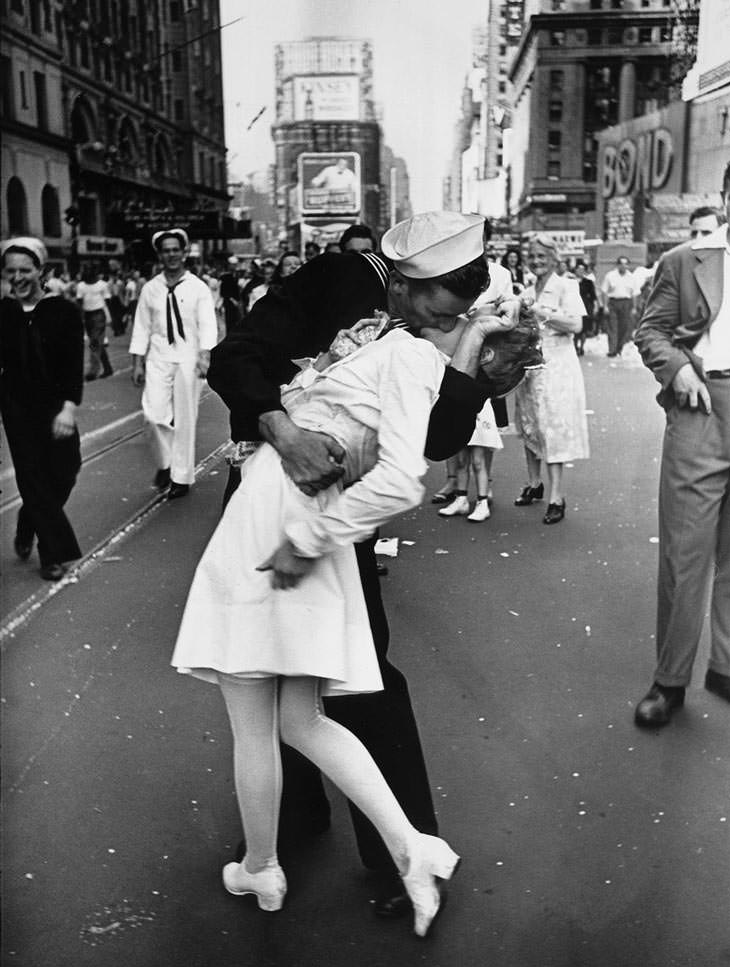
V-E Day on May 8, 1945 — Victory in Europe Day — produced some of the most famous images of spontaneous celebration in history. Times Square filled with strangers embracing, kissing, and crying. The war in Europe was over, and the relief spilled out into the streets in a way that photographers captured from every angle.
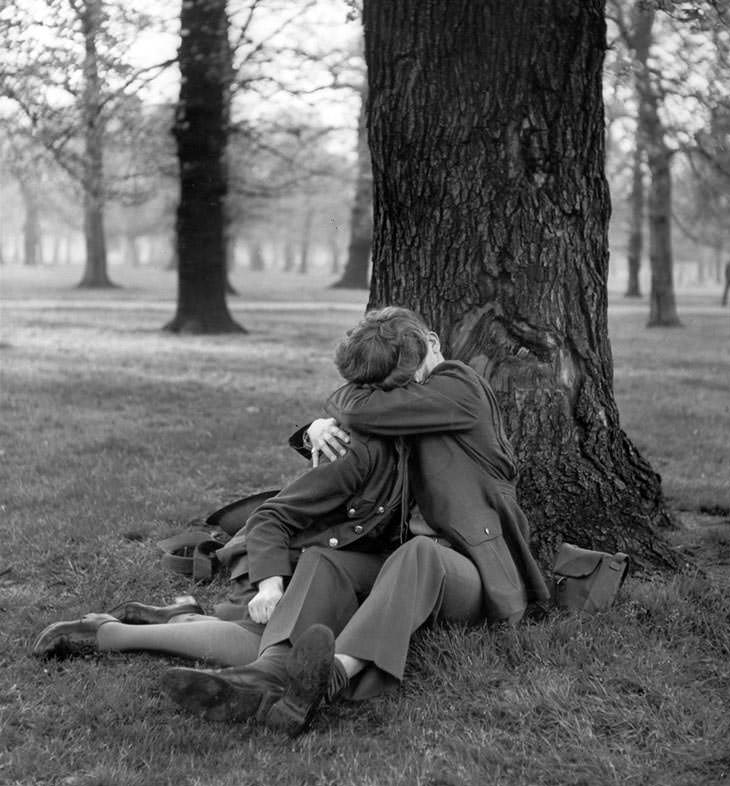
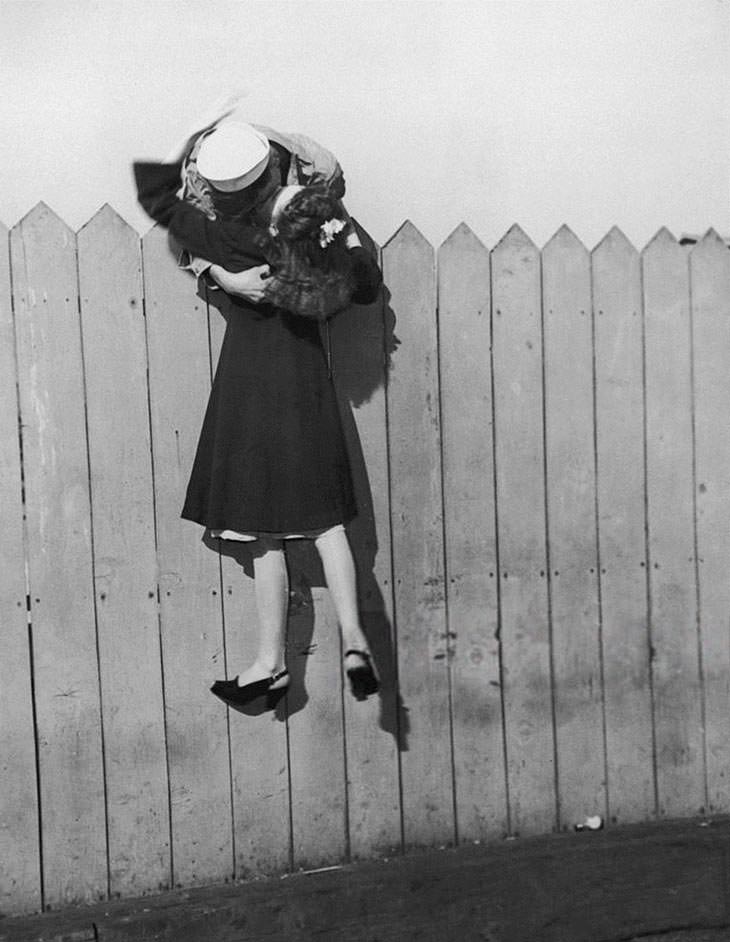
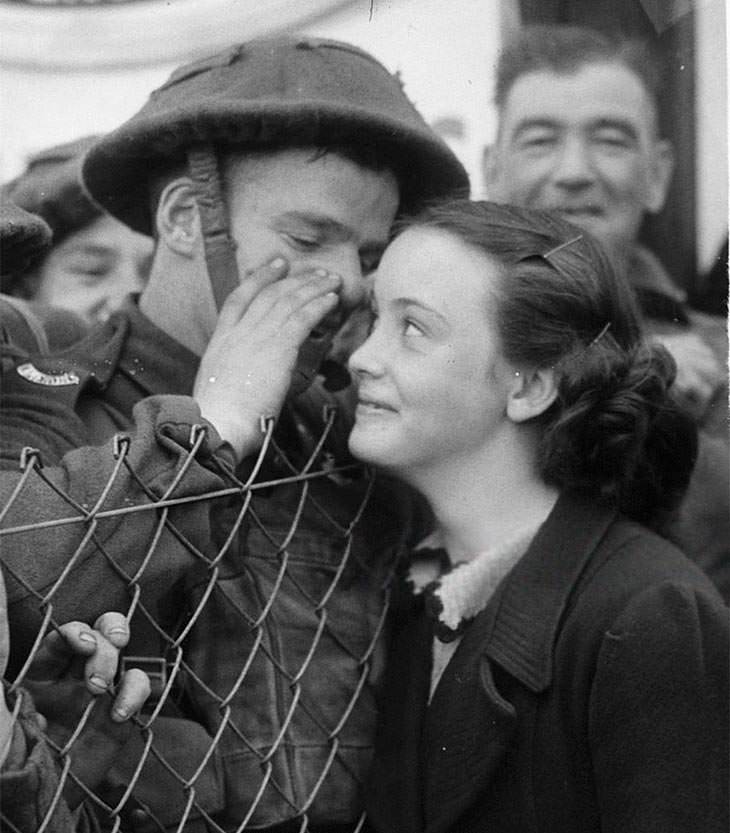
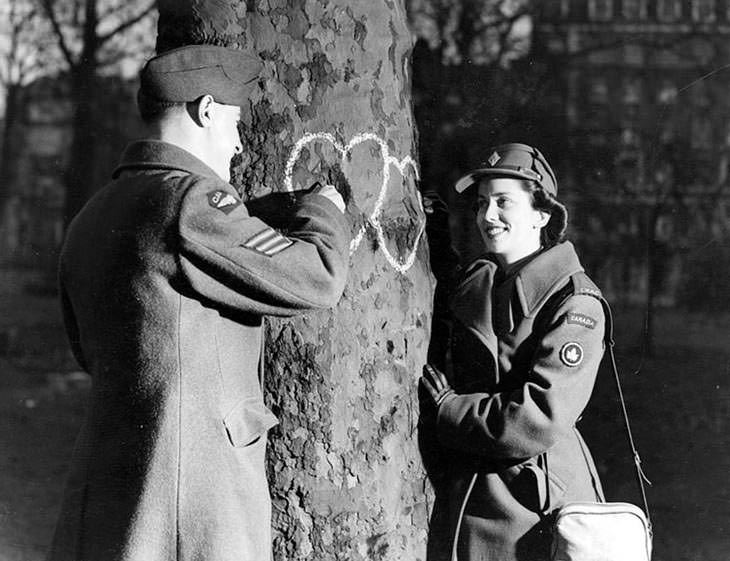
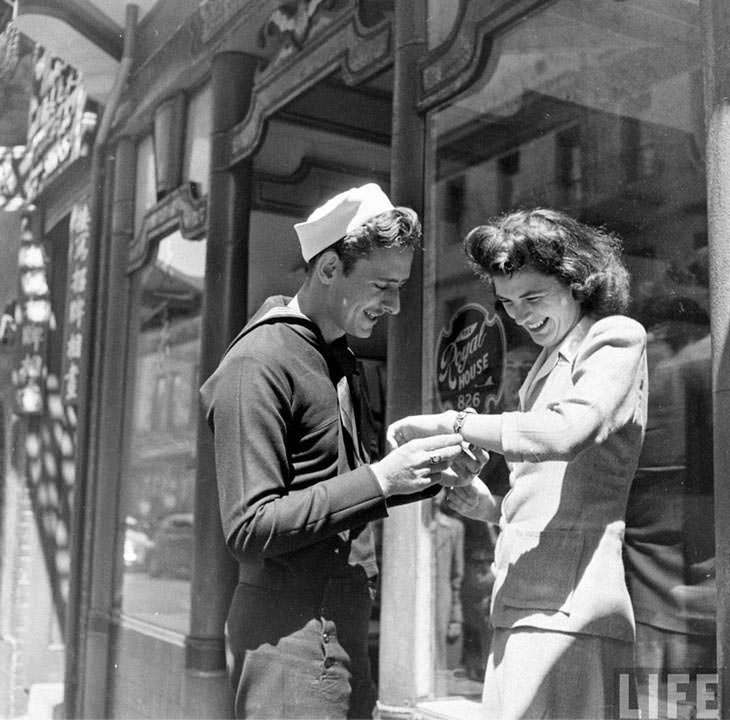
Some images are quieter. A British soldier leaning in close to whisper something to a loved one in 1939. A couple chalking hearts on a tree on Valentine’s Day, 1944. A sailor lifting his girlfriend over a fence just to reach her for a kiss. These smaller moments reveal that even in wartime, people found ways to be tender and even playful.