When the Second World War ended in 1945, millions of soldiers returned home. But for some German prisoners of war held by the Soviet Union, the wait stretched on for years — even decades. By 1956, a small number of men were still being released from Soviet captivity, among the very last to make the long journey back to Germany. One of those men arrived at a transit camp near the town of Friedland, where his family was waiting. What happened next was captured in a photograph that won the World Press Photo award that year.
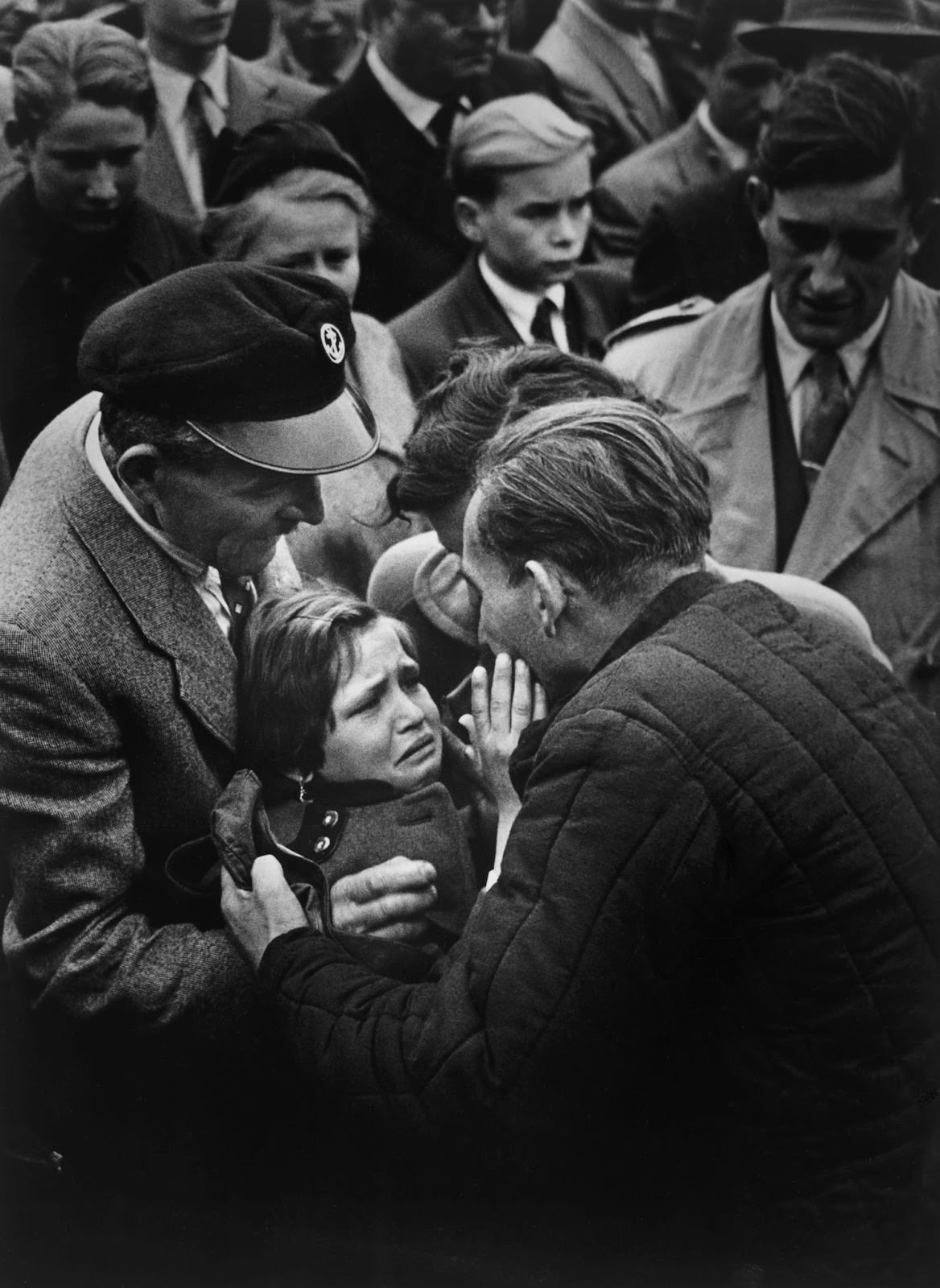
The man’s daughter had been just one year old when he was taken prisoner. She had grown up without him — without any real memory of him at all. Now, more than ten years later, they were standing face to face for the first time she could remember. His face carried the weight of years spent in captivity. Hers was the face of a child just beginning to understand what this moment meant. The photograph froze that instant: a father and daughter bridging a decade of absence in a single embrace.
The reunion took place at the Grenzdurchgangslager Friedland, a transit camp located in the German federal state of Niedersachsen. The camp had been established in September 1945, right at the end of the war, and it sat at what was then the border with East Germany. Over the years that followed, it served as a processing point for an enormous range of people — refugees, displaced civilians, and returning soldiers. For many families, Friedland was the last stop before home.
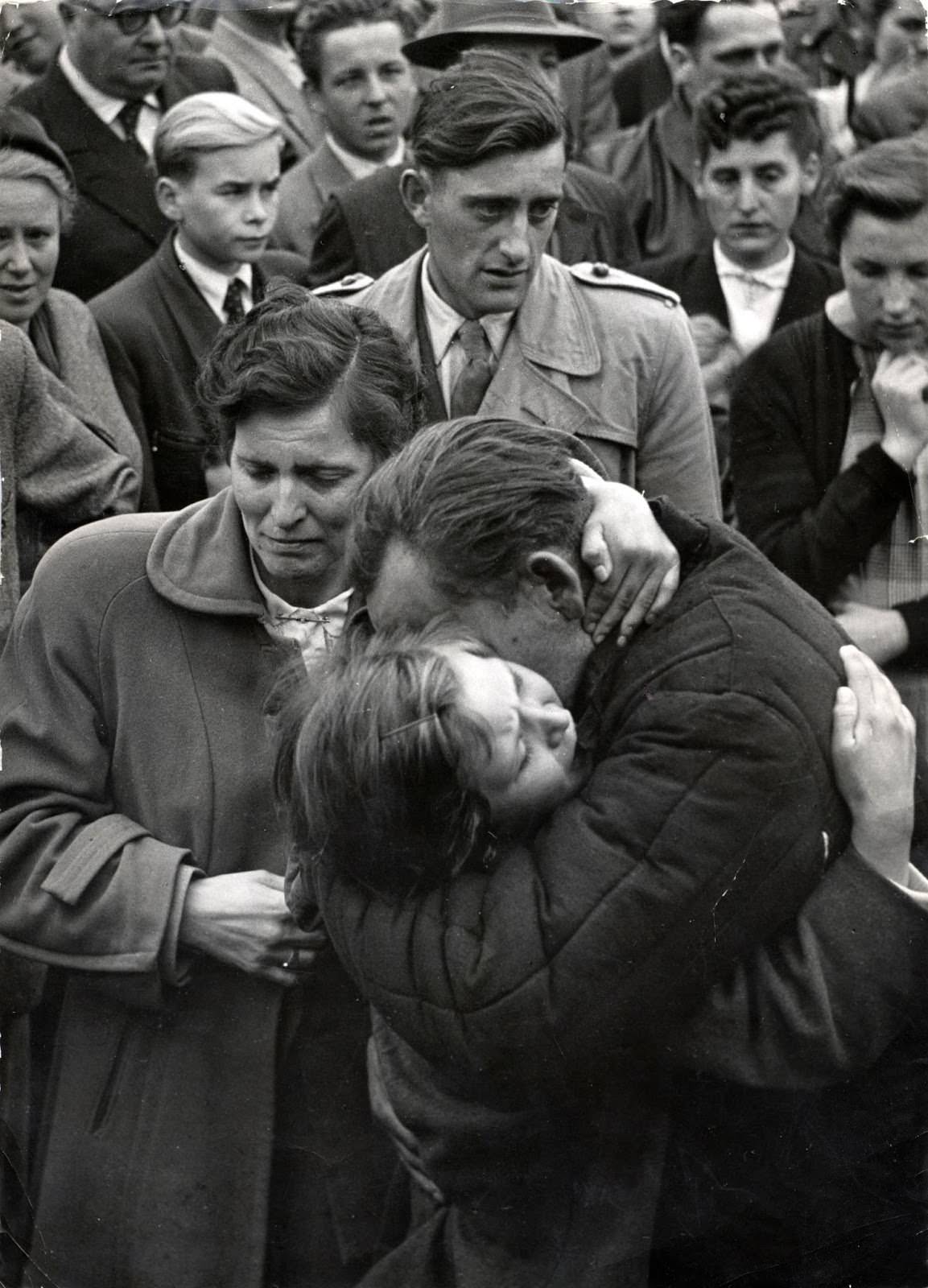
The photographer who captured this moment was Helmuth Pirath, a German photojournalist. Pirath was working the camp at a time when the return of the last Soviet-held prisoners was major news across West Germany. These men had been held far longer than prisoners taken by other Allied powers. The Soviet Union had used German POWs as forced labor to help rebuild infrastructure destroyed during the war. Many did not survive. Those who did return often came back in poor health, deeply changed by years of hard conditions and isolation.
In Pirath’s photograph, the man’s expression is one of raw, unguarded emotion — joy and relief breaking through years of hardship in an instant. His daughter holds on to him, her grip instinctive. She does not fully understand the history behind this reunion, but she responds to something deeper. The image does not need a caption to explain what is happening. The body language alone carries the full weight of the moment.
The photograph won the World Press Photo award in 1956, making it one of the most recognized images of the post-war period. It stands as a direct record of what the return of the last German POWs from Soviet captivity actually looked like — not as a political event or a historical footnote, but as something felt between two people in the span of a few seconds at a camp in Lower Saxony. Pirath’s camera caught a reunion that almost did not happen, between a father who had spent his daughter’s entire childhood behind Soviet fences and a child who had grown up knowing him only as an absence.