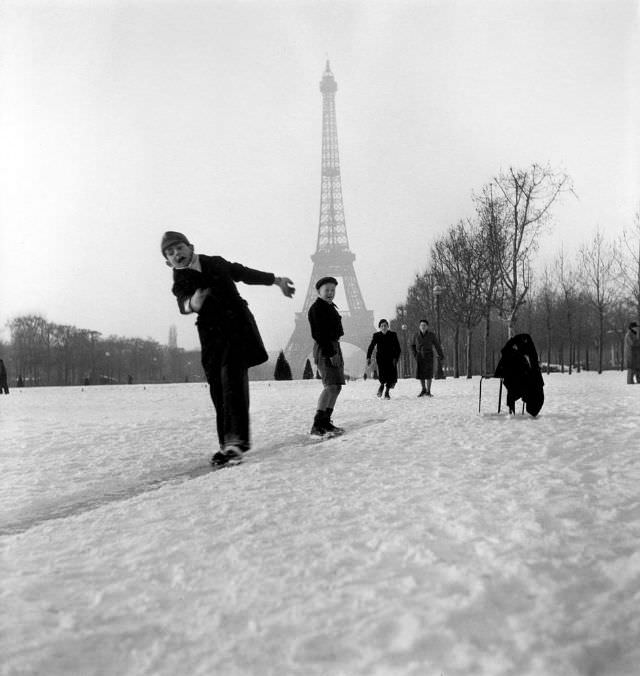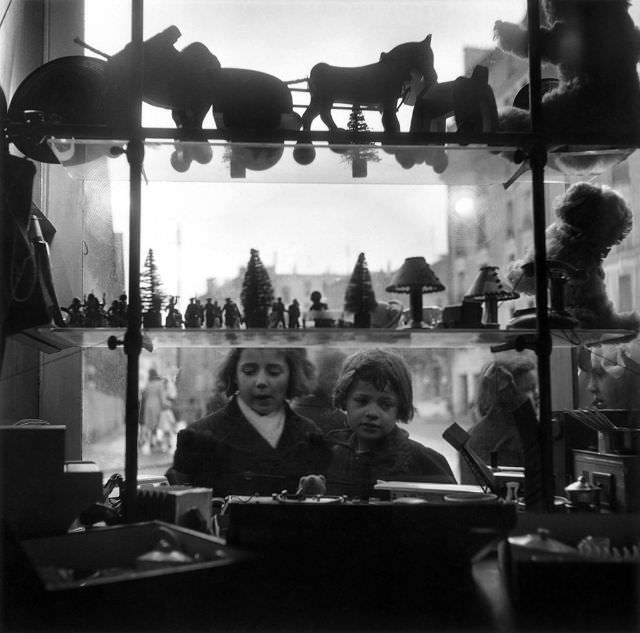
Robert Doisneau spent decades walking the streets of France with a camera, and few subjects drew him back more consistently than children at play. Active from the 1930s onward, Doisneau built a body of work rooted in the everyday — the unscripted moments that most people walk past without a second glance. His photographs of French street children are some of the most candid records of working-class urban childhood ever taken.
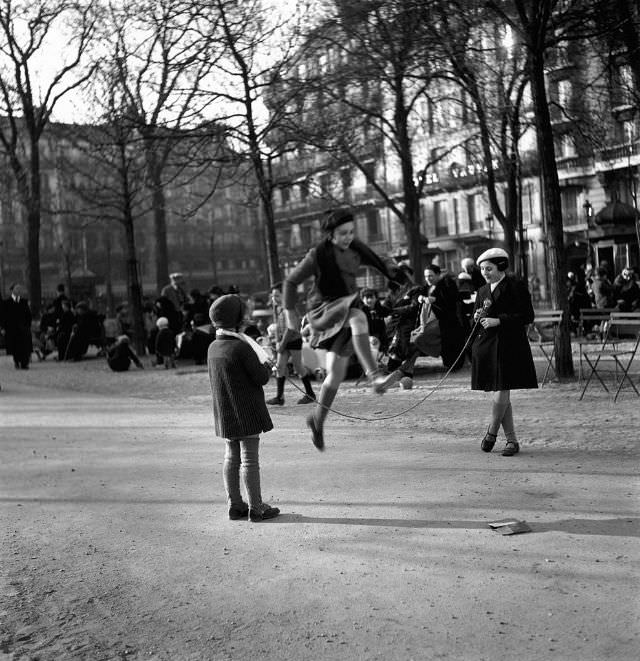
What made Doisneau’s eye so distinctive was his interest in contrast and oddity. He gravitated toward juxtapositions — a child’s game unfolding against a crumbling wall, laughter in a narrow alley, barefoot kids sprinting across cobblestones worn smooth by decades of foot traffic. The streets of Paris and its surrounding neighborhoods were his stage, and the children who lived there were entirely at home in it.
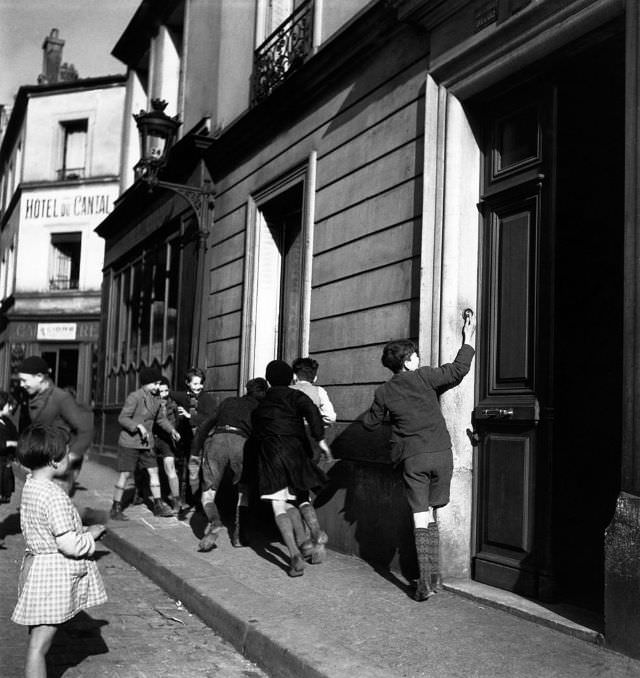
During the 1930s, France was still feeling the weight of the Great Depression. For many working-class families, the street was simply where children spent their time. There were no organized activities, no supervised playgrounds for most kids. The curb, the alley, the courtyard — these were the playgrounds, and children made full use of them.
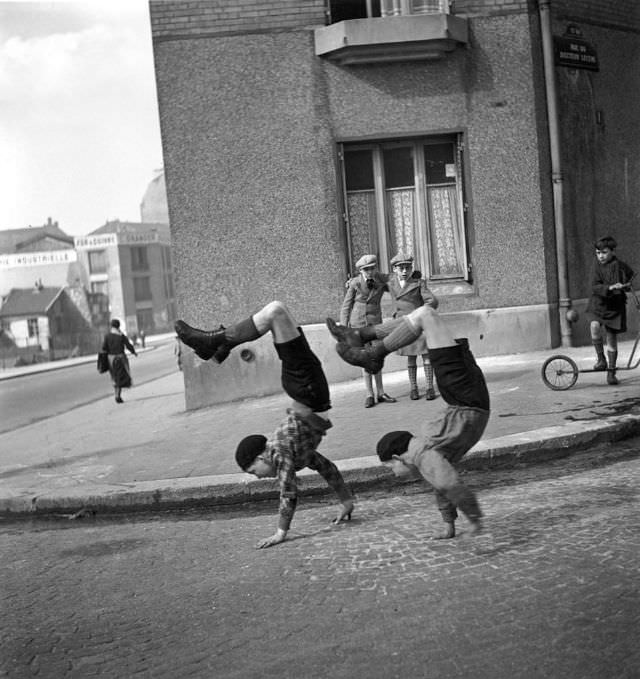
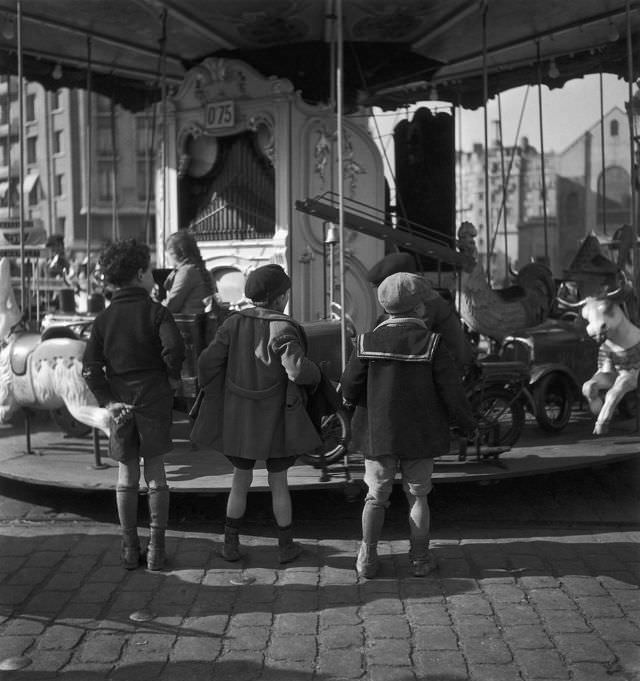
Doisneau photographed these scenes without staging them. He was known for his patience — waiting for the right moment rather than directing his subjects. The result is a collection of images that feel genuinely alive. Kids chase each other, huddle together, and go about their invented worlds with complete focus.
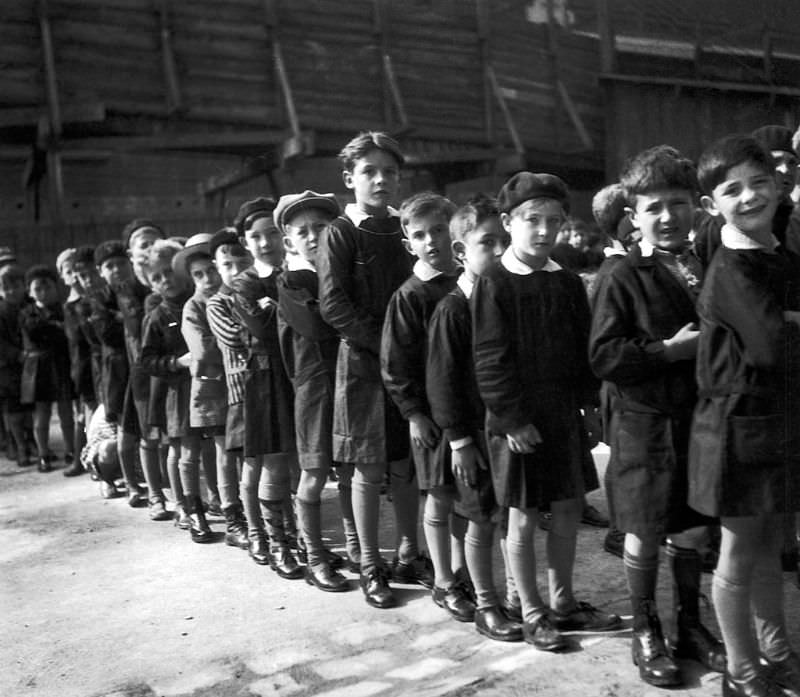
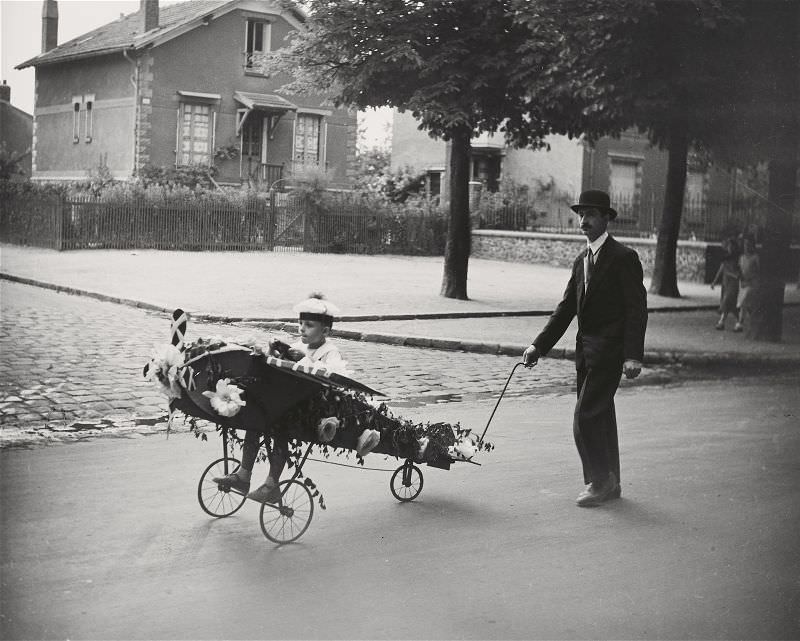
By the 1940s, the backdrop had changed dramatically. German forces occupied France from 1940 to 1944, reshaping daily life across the country. Doisneau continued to photograph through this period, and images of children playing in the streets take on a sharper edge when set against that context. Life carried on in the most ordinary ways even under occupation.
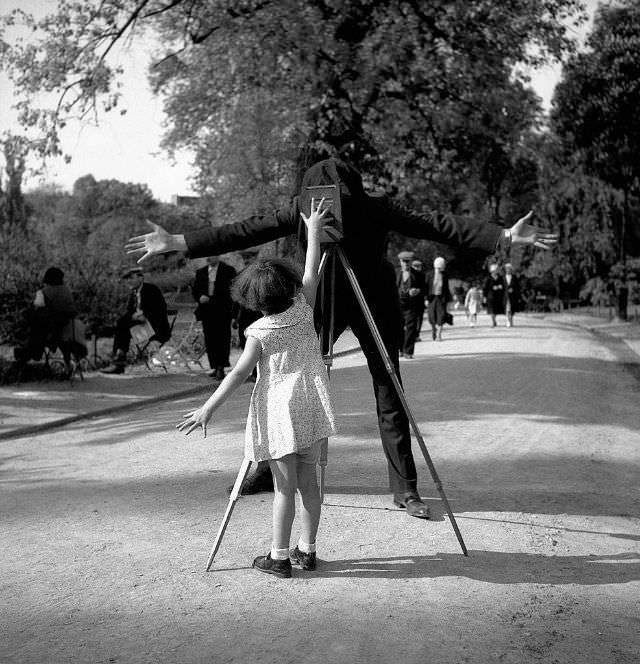
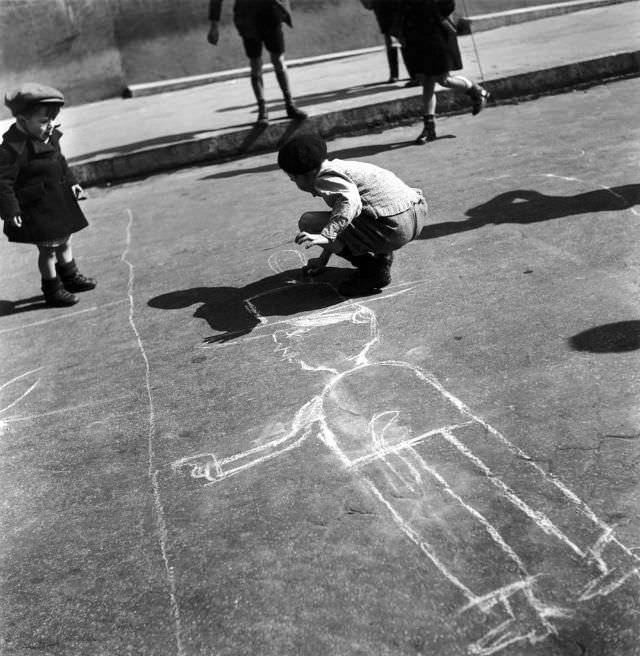
The social class dimension is visible throughout his work. The children Doisneau photographed were rarely from wealthy families. Their clothes were plain, their shoes often worn. The streets they played in were lined with modest buildings, small shops, and the everyday clutter of urban working life. Doisneau never dressed this up or looked away from it.
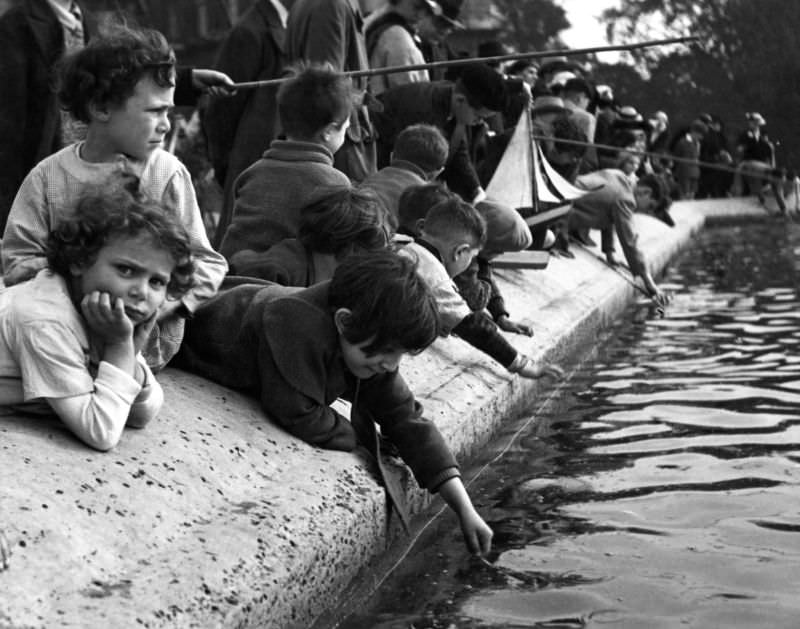
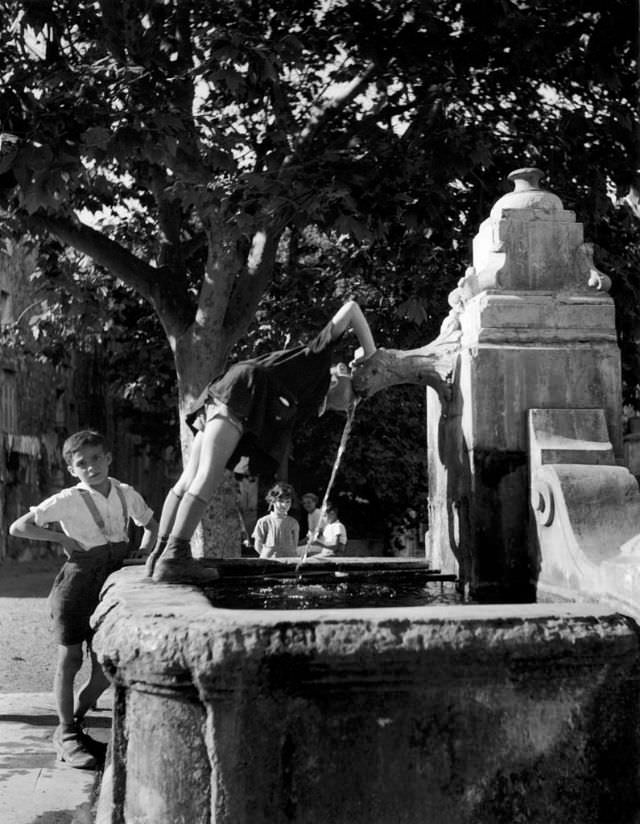
Street culture among French children in this era had its own rules and rhythms. Marbles, spinning tops, hopscotch, and improvised ball games were common. Older kids looked after younger ones. Groups formed naturally along the same block or courtyard, and the games they played were passed down without any adult instruction.
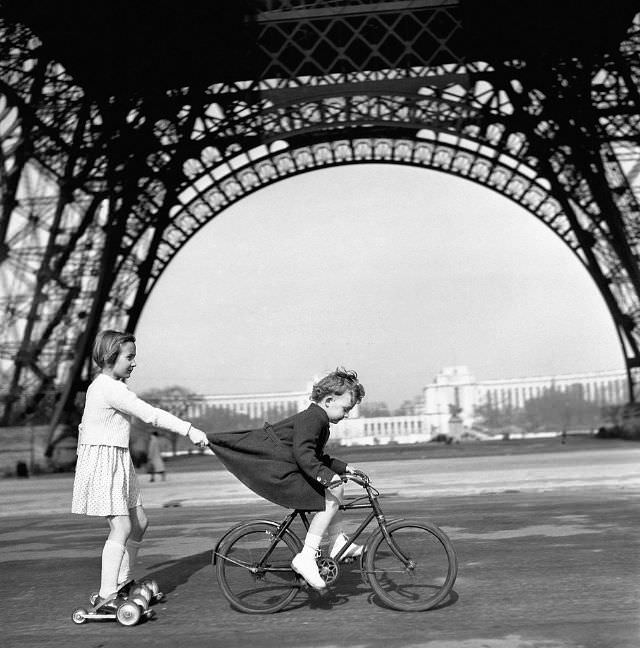
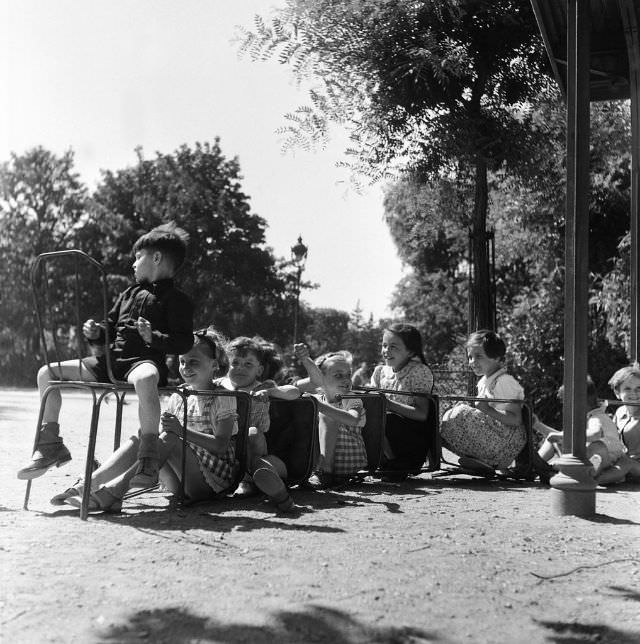
Doisneau’s technical approach matched his subject matter. He used a small, unobtrusive camera that allowed him to move through a crowd without drawing attention. He worked at eye level — often crouching — so that his perspective matched that of the children themselves. This gave his photographs an intimacy that set them apart from more formal documentary work of the same period.
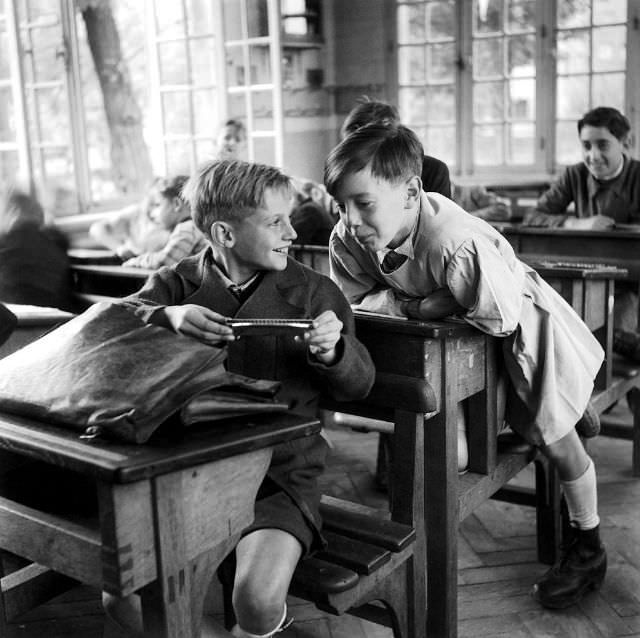
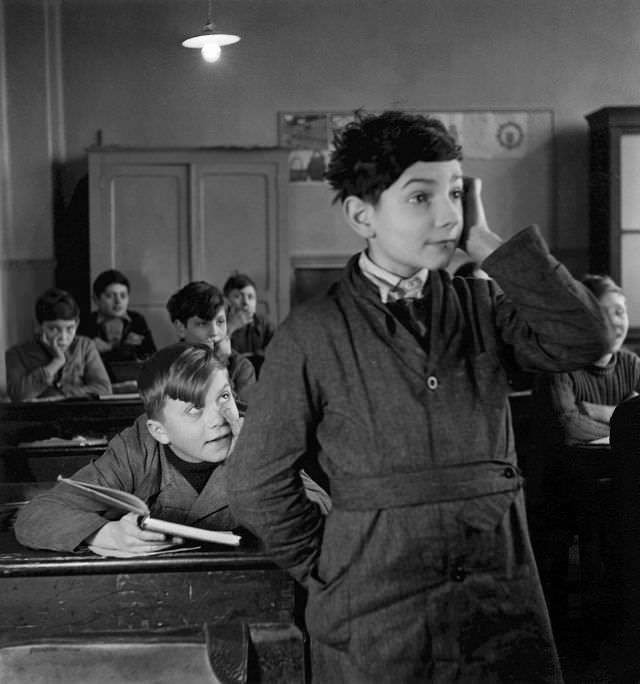
The neighborhoods he frequented most were in and around Paris — areas like the suburbs of Gentilly and Montrouge, where he grew up. He knew these streets personally, and that familiarity shows. The children in his photographs were not curiosities to him. They were part of a world he understood from the inside.
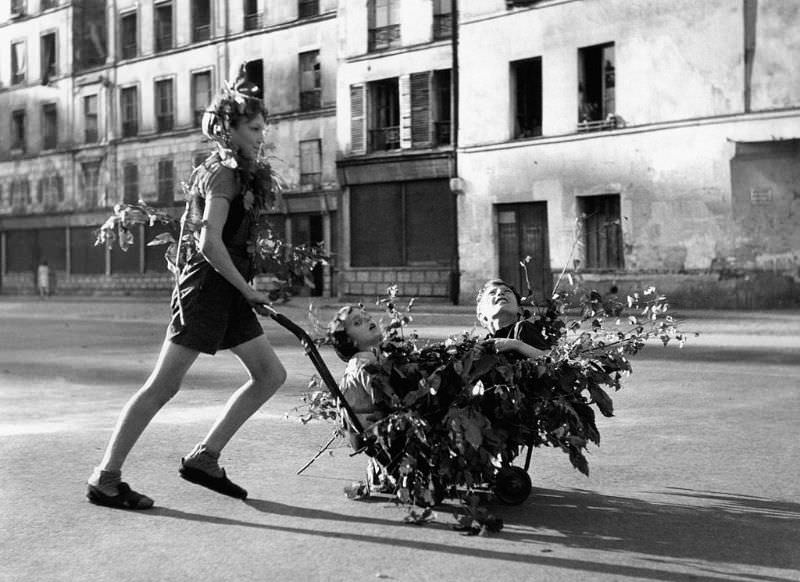
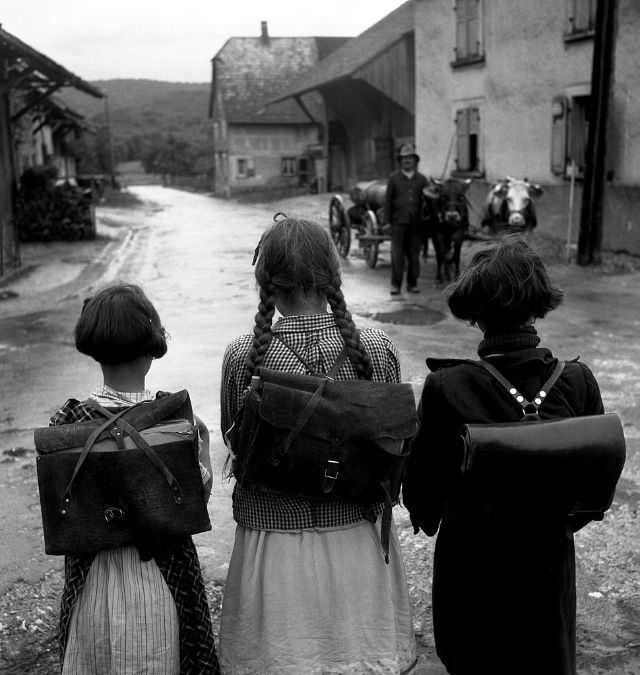
Across both decades, one thing remains constant in his photographs: the total absorption of children in their own play. Whatever was happening in the adult world — economic hardship, political upheaval, war — the kids in Doisneau’s frames are entirely present in the moment in front of them. A spinning top commands the same serious attention as anything else.
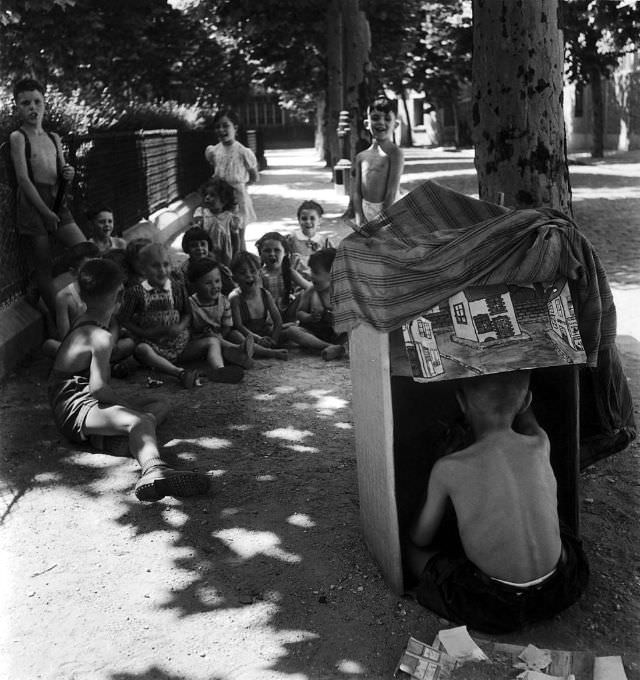
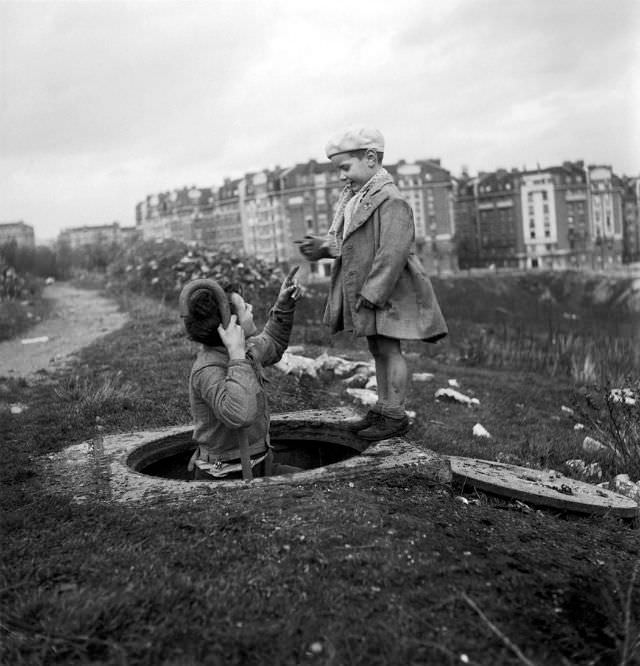
These photographs now serve as a primary visual record of what French street childhood actually looked like in the 1930s and 1940s. No posed studio portraits, no staged family scenes — just children in motion, on their own terms, in the streets where they lived.