
The Fort Worth Stockyards sit just north of downtown Fort Worth, Texas, covering 98 acres of ground that has hosted a livestock market since 1866. In 1976, the district was added to the National Register of Historic Places, cementing its status as one of Texas’s most important cultural landmarks. By the 1990s, the Stockyards had shifted from a working cattle hub into a destination built around Fort Worth’s “Cowtown” identity, drawing visitors with shopping, entertainment, and annual festivals that filled its streets with music, costumes, and crowds.
Photographer Steven Martin captured the Stockyards throughout the decade, documenting the energy of its biggest annual event — the Chisholm Trail Roundup — along with other festivals held across the district. His photos from June 1993 offer one of the most complete looks at what the Roundup felt like at street level. Live bands performed outdoors, drawing large crowds to Exchange Avenue, the main strip running through the heart of the Stockyards.
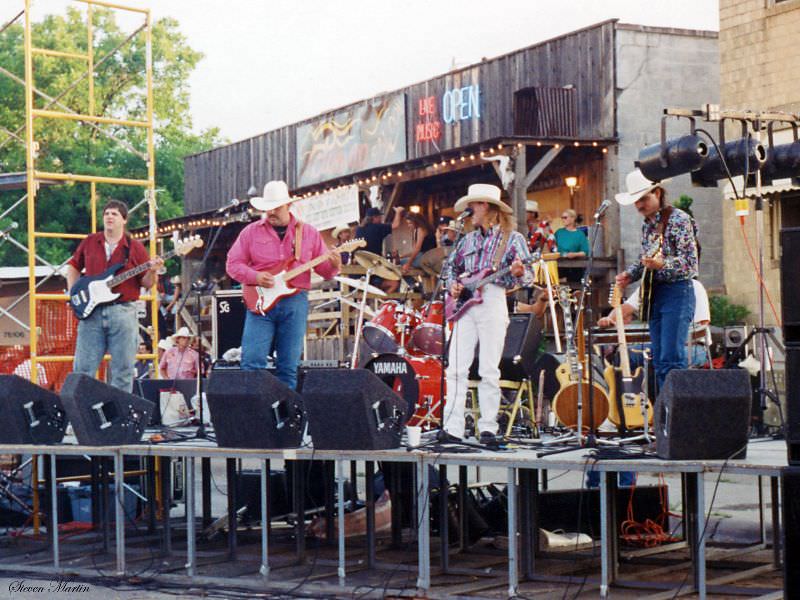
The Chisholm Trail Roundup celebrated the famous cattle drive route that once moved millions of longhorns north from Texas. During the festival, the streets filled with performers, vendors, and visitors dressed in full Western attire. Cowboys and cowgirls in period costumes were a common sight, adding to the atmosphere that blurred the line between history and performance.
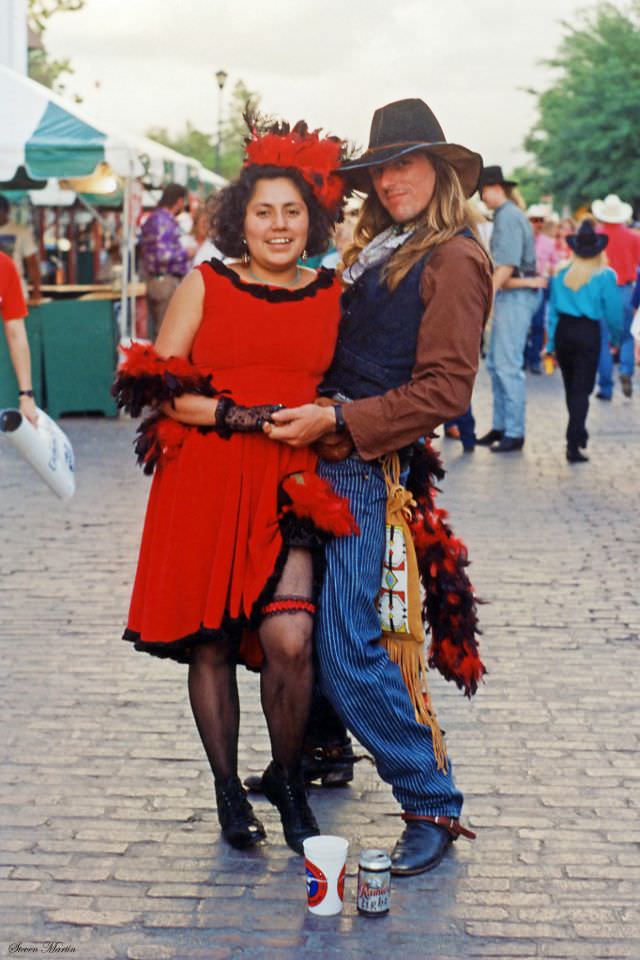
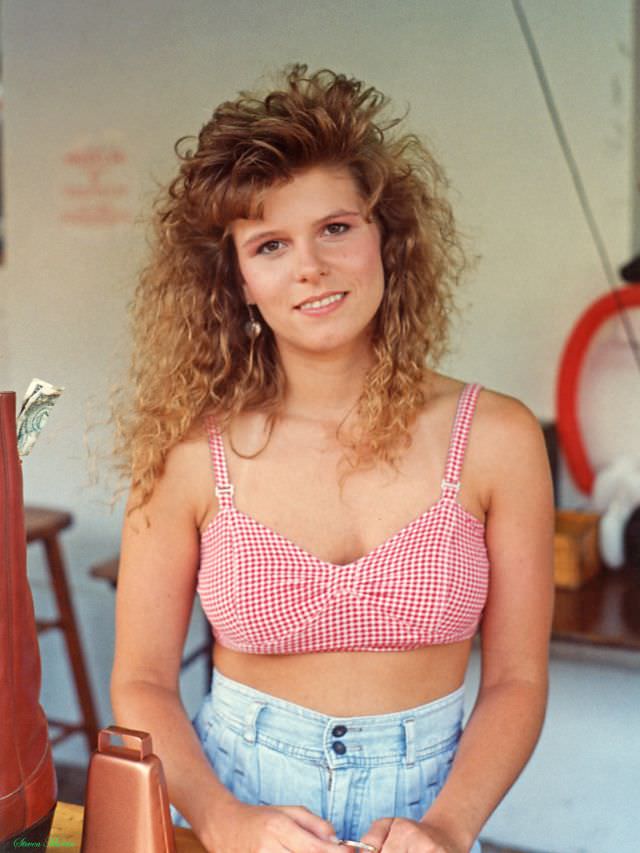
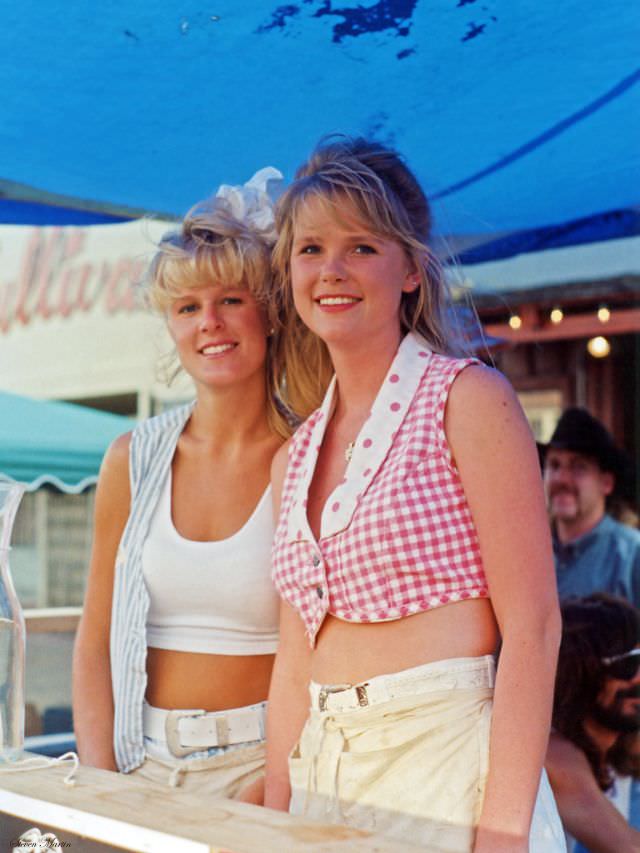
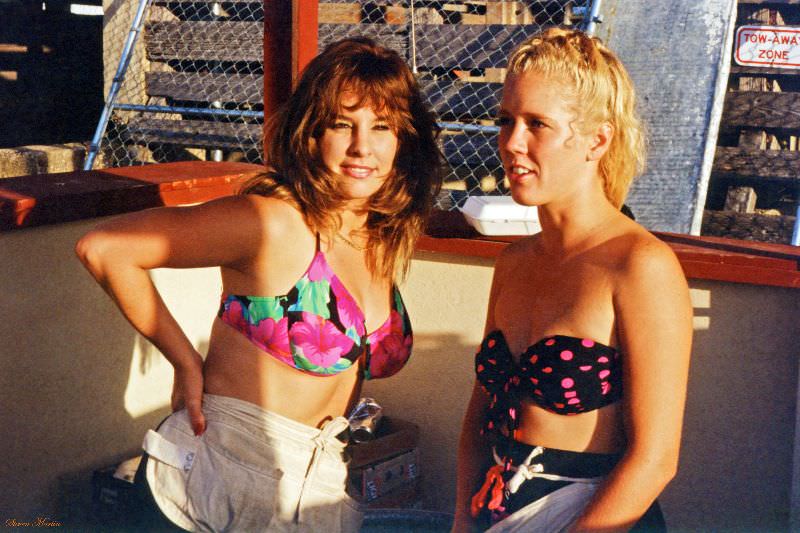
Drink booths lined the festival grounds, staffed by workers who kept the cold beverages flowing for the large crowds moving through the district. Establishments like the Maverick Fine Western Wear and Saloon, located in the heart of the Stockyards, were a natural part of this scene — offering cold beer and a place to rest, much as saloons had served trail drivers in the 19th century.
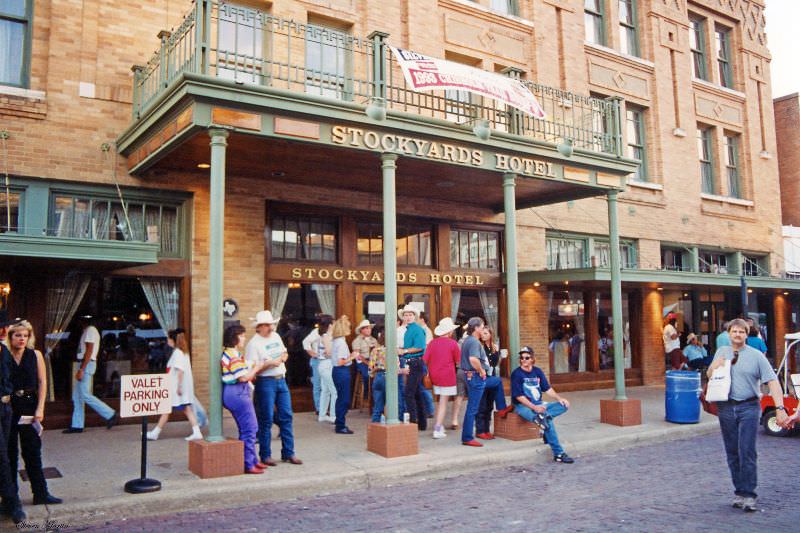
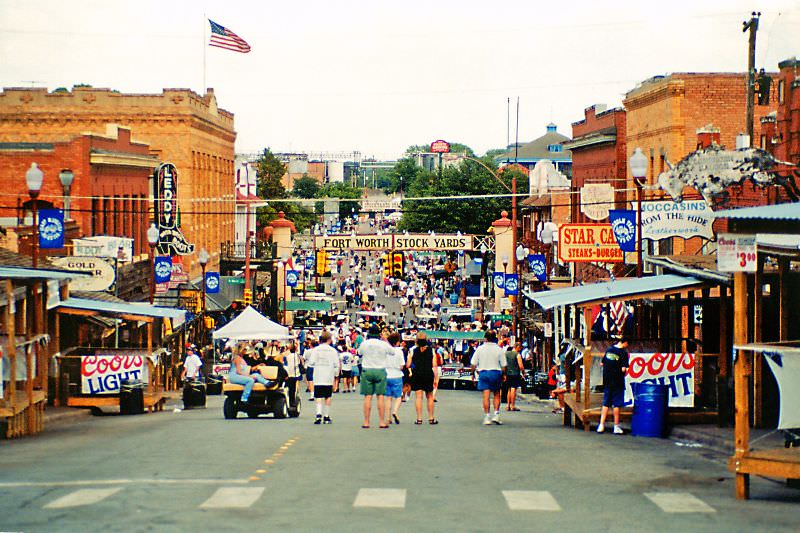
Exchange Avenue transformed completely during the Roundup. The street closed to traffic and filled with festival-goers, shoulder to shoulder, taking in the sights and sounds of the event. The Cadillac Club drew its own crowd outside its doors, while the Stockyards Hotel — anchored at the corner of Main Street and Exchange Avenue — served as a recognizable backdrop for the passing crowds.
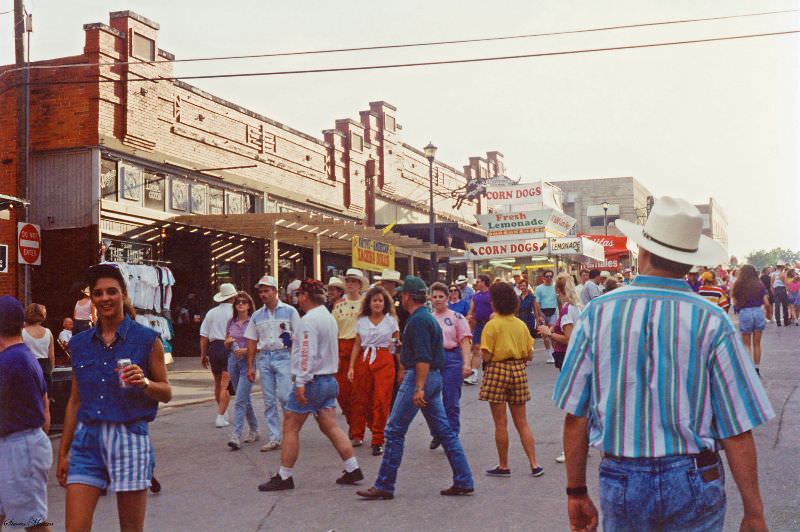
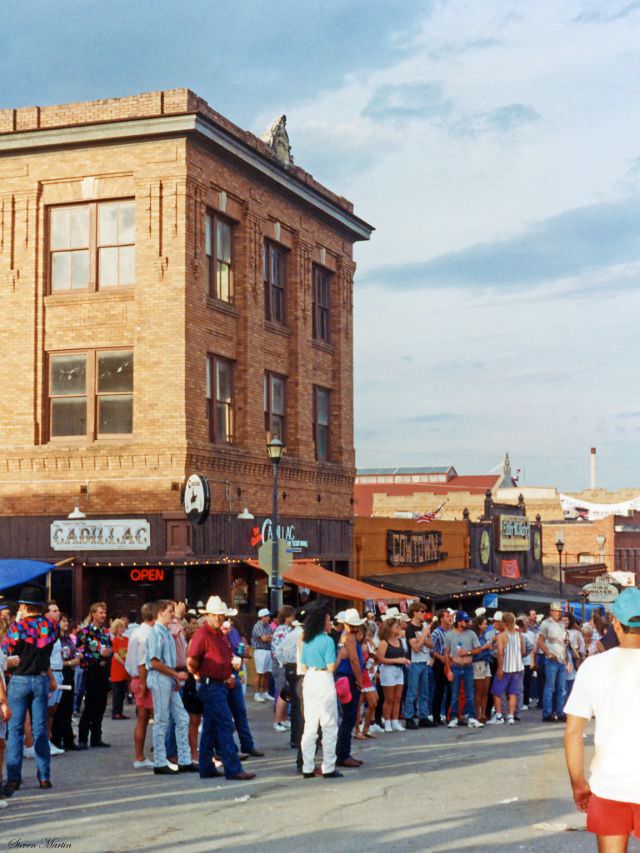
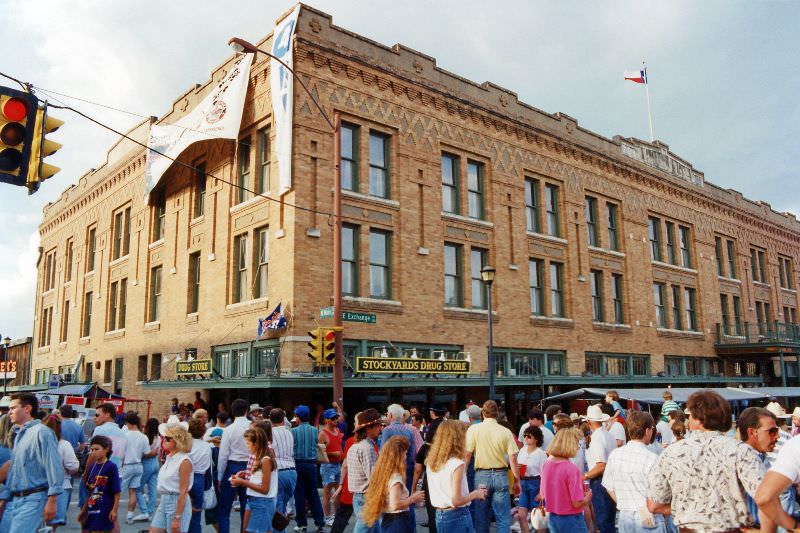
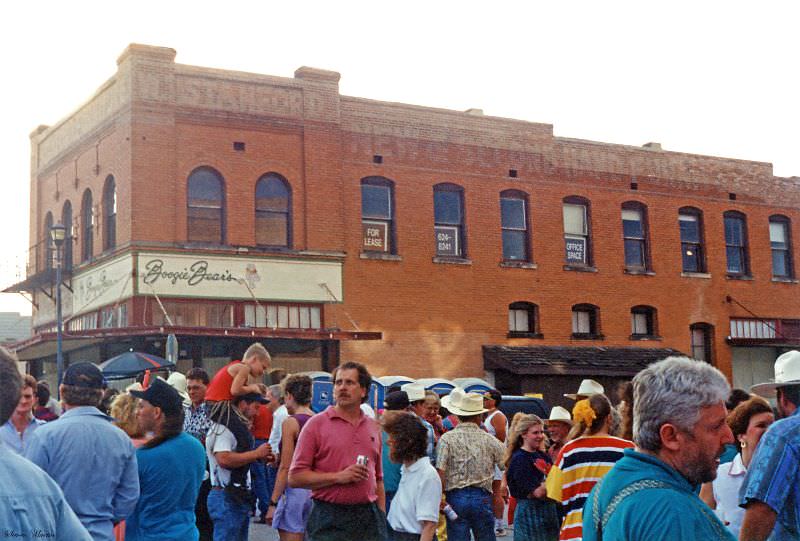
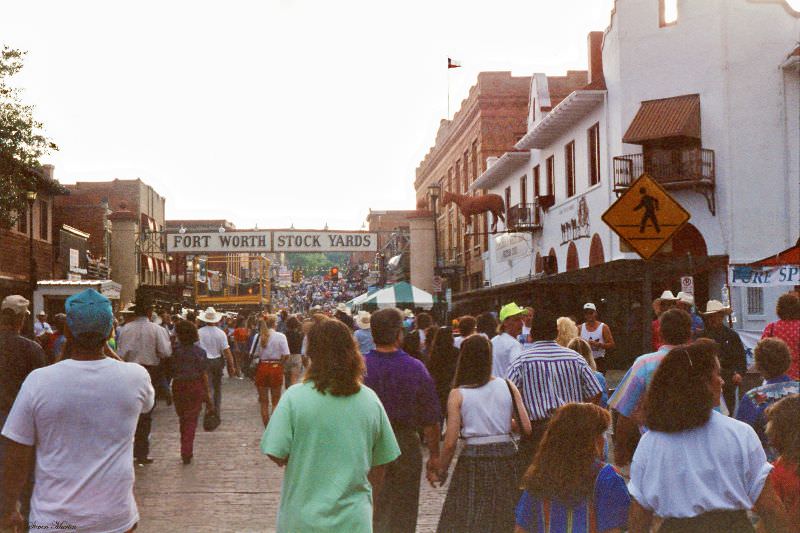
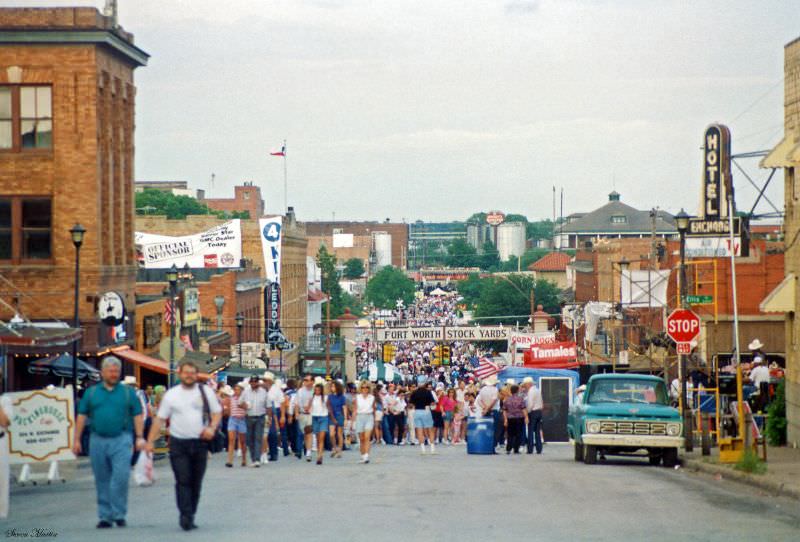
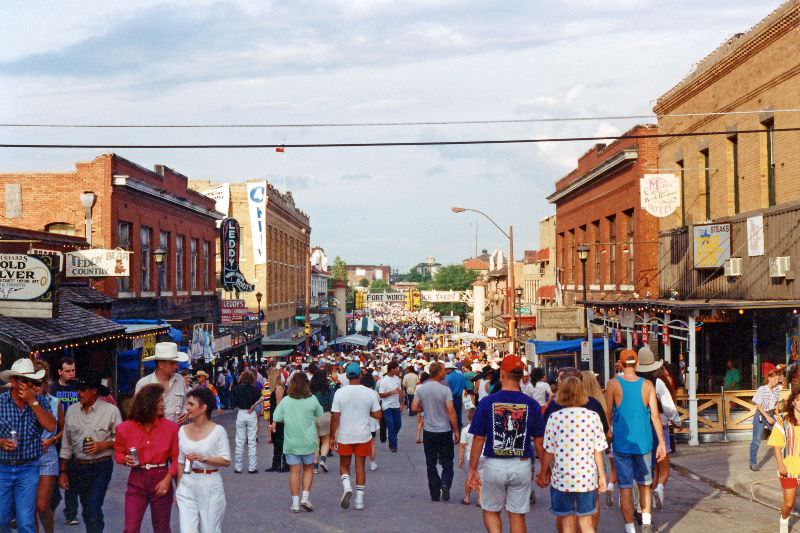
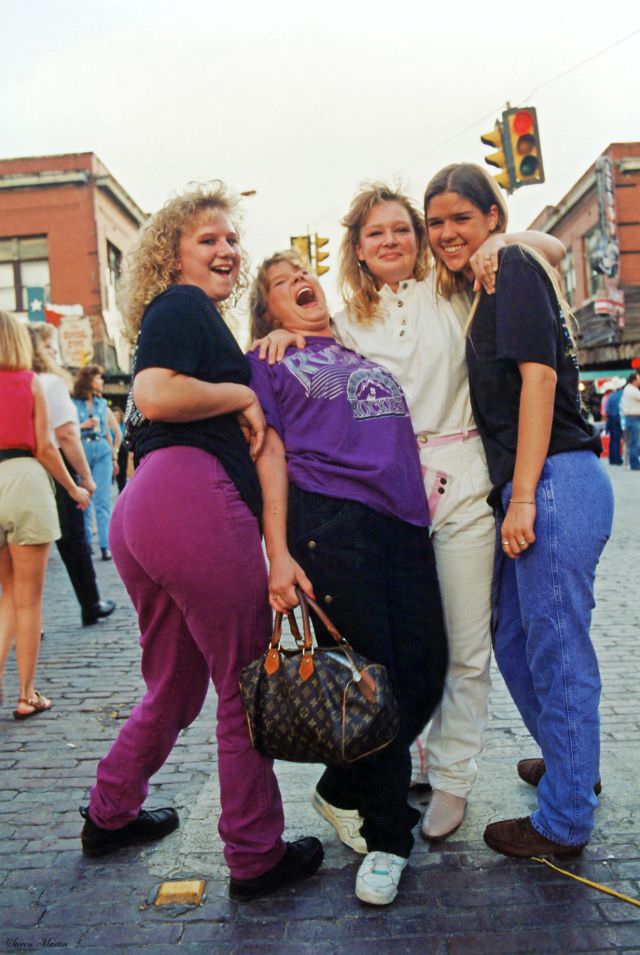
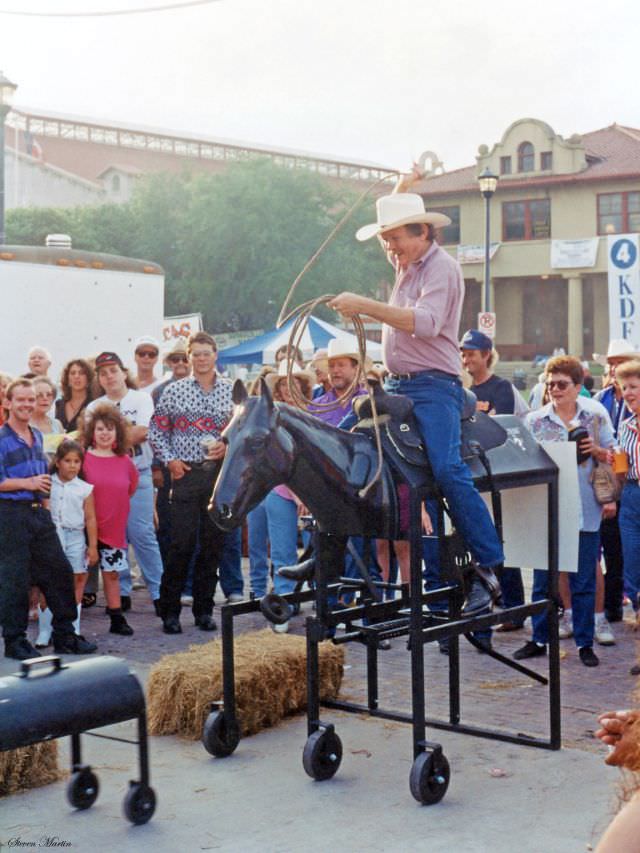
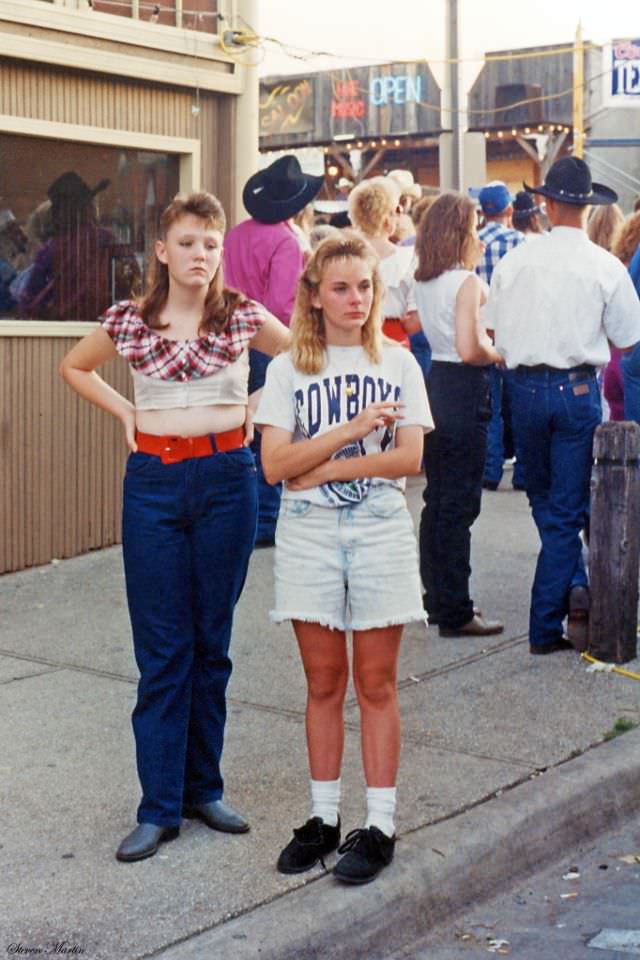
Younger visitors were very much part of the scene. Groups of teenagers moved through the crowds, watching performers and soaking up the atmosphere that made Exchange Avenue one of the most active streets in Fort Worth during festival week. Rope trick artists were among the most crowd-pleasing acts — a performer working a lasso in wide spinning loops drew onlookers of all ages to watch the display.
The Stockyards Hotel, which has stood at the center of the district for over a century, was especially prominent during the 1993 Roundup. Saloon patrons who made their way up to the roof deck had a clear view straight down Exchange Avenue, watching the festival unfold below from an elevated vantage point.
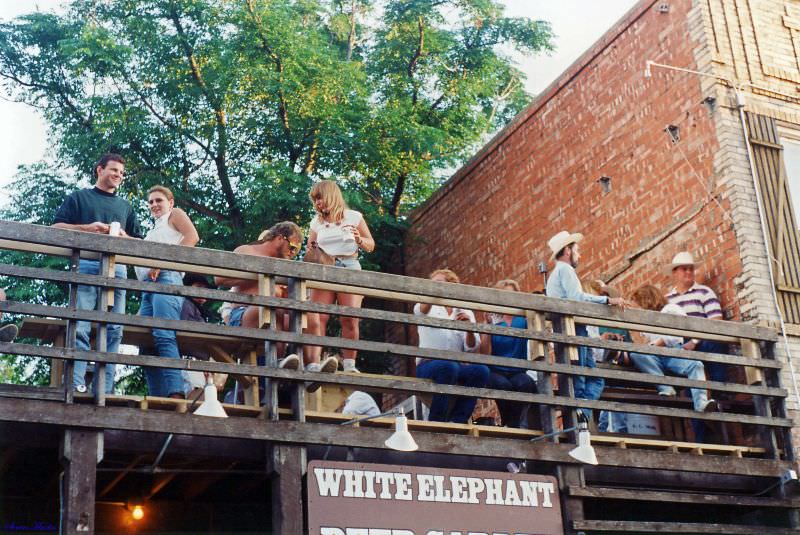
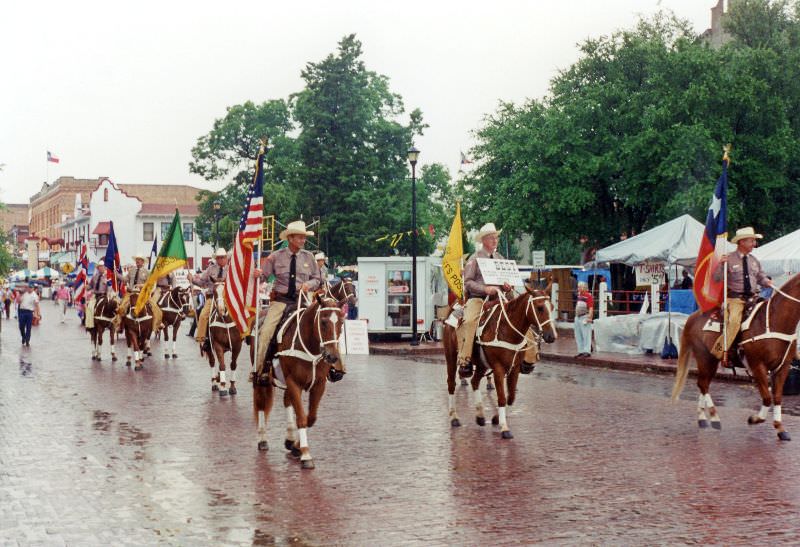
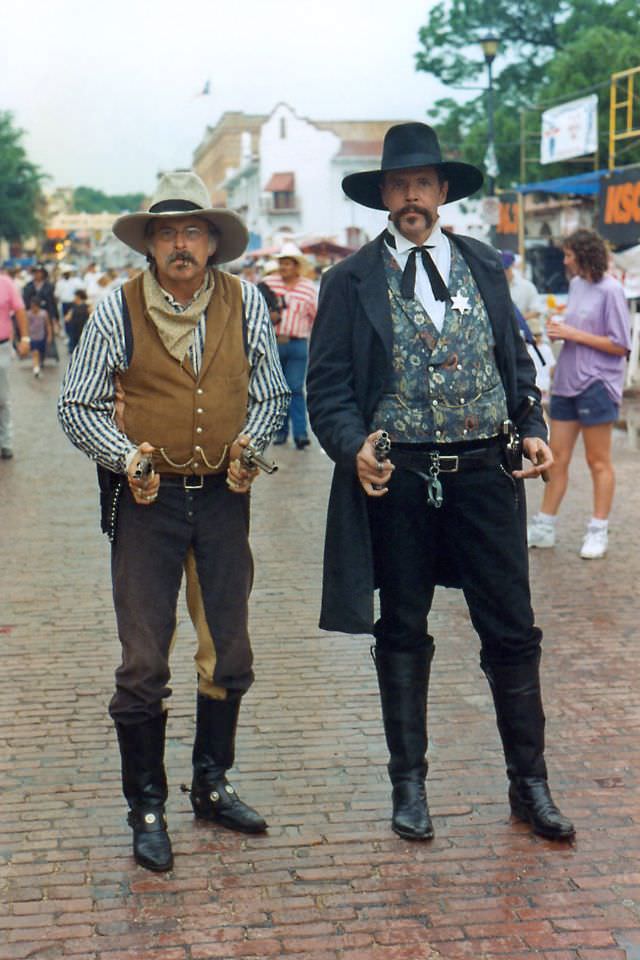
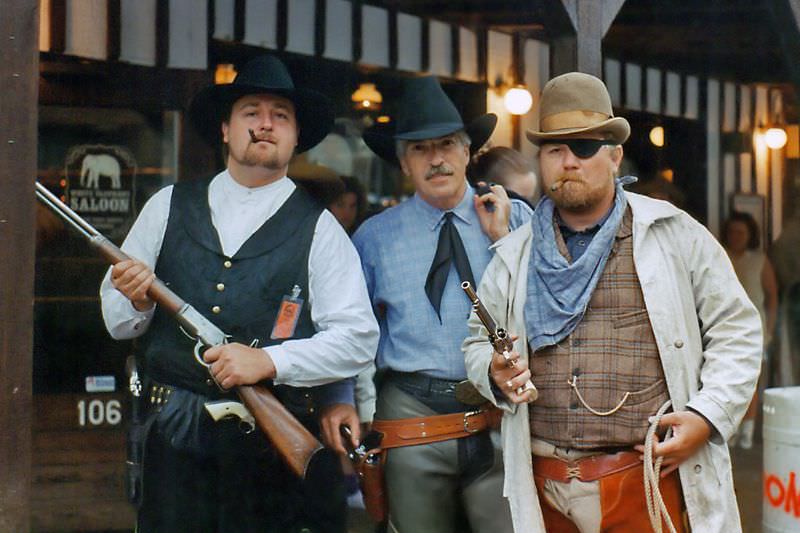
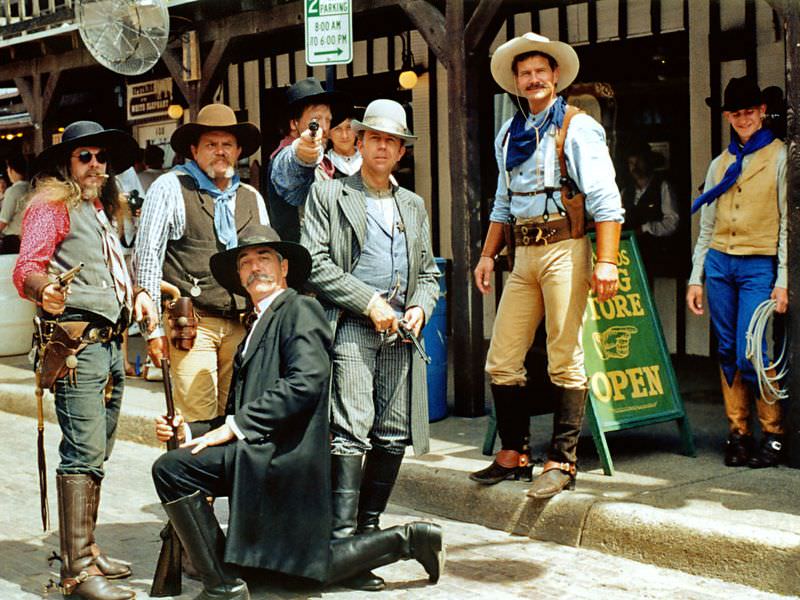
By June 1994, the festivals at the Stockyards had grown even more layered in their programming. A parade rolled through the district, and costumed re-enactors filled various roles — sheriffs, deputies, and gunslingers posted up outside venues like the White Elephant Saloon, posing for photos with festival-goers. The White Elephant, one of the most storied saloons in Fort Worth history, made for a natural backdrop for the gunfighter performances.
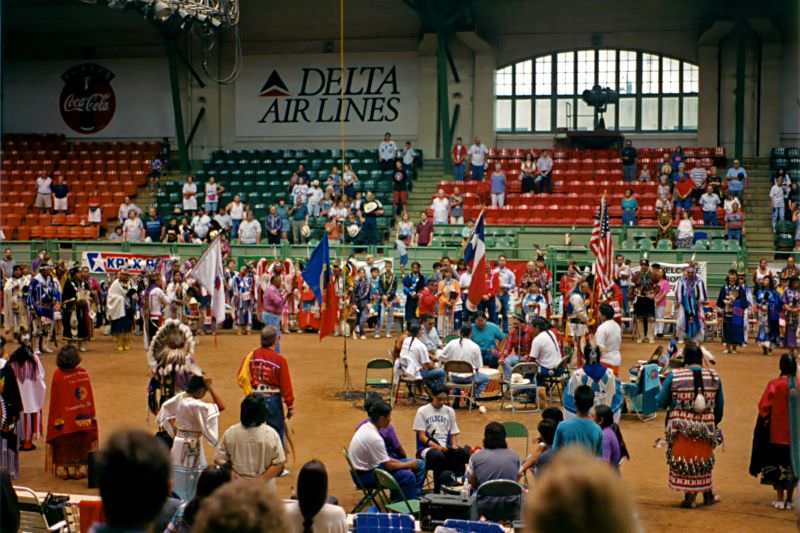
The 1994 Roundup also featured a Native American Powwow, expanding the cultural scope of the festival beyond its strictly Western cowboy framing. Dancers and drummers performed in traditional dress, drawing large gatherings and adding a dimension to the event that connected the region’s history to Indigenous peoples who had lived on this land long before the cattle drives began.
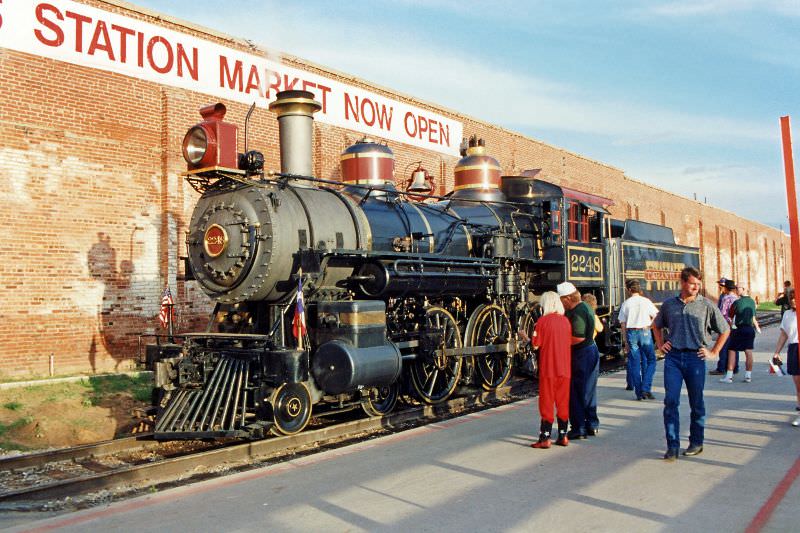
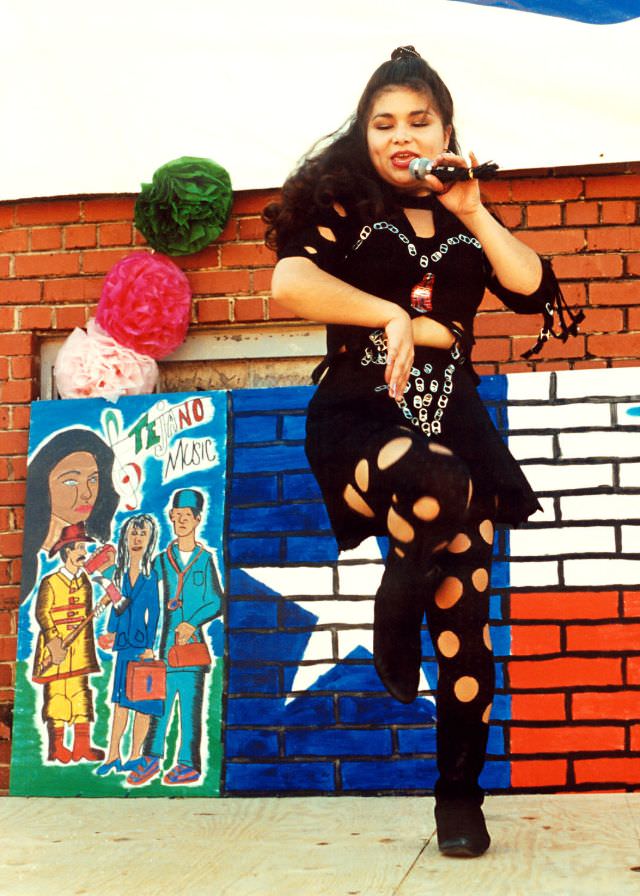
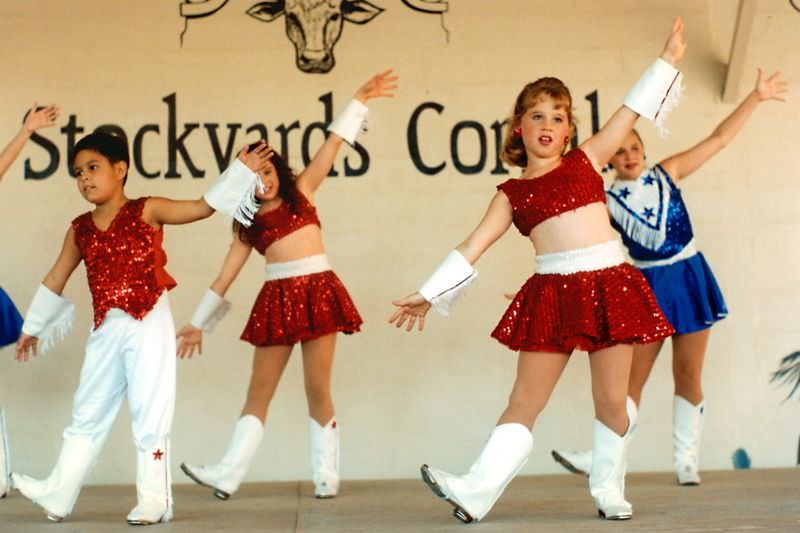
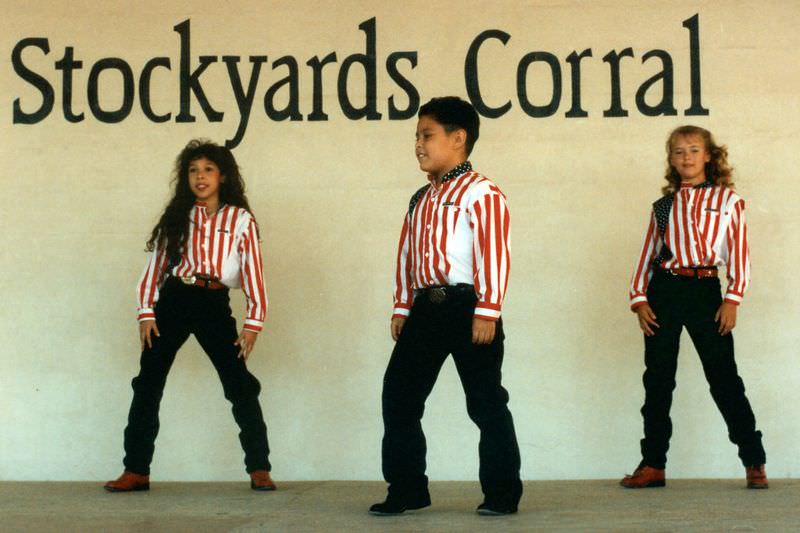
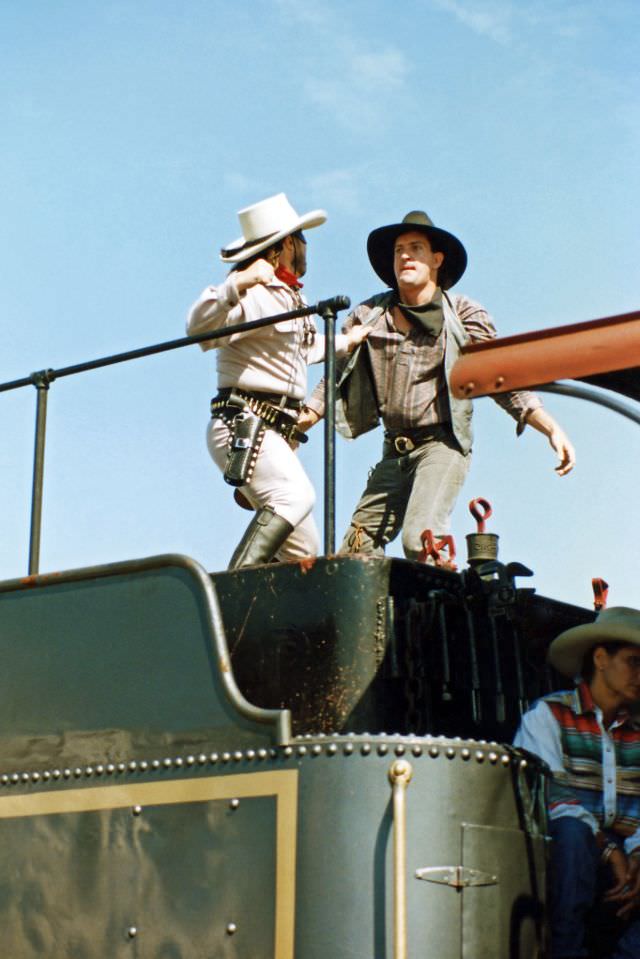
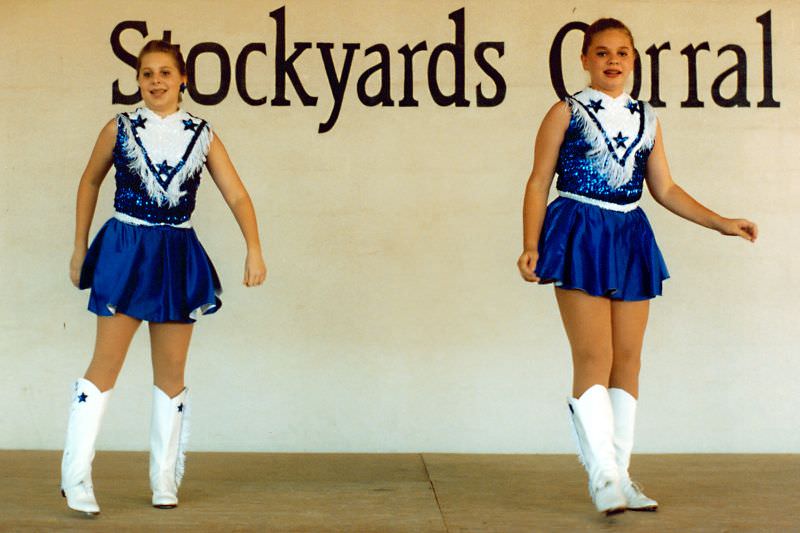
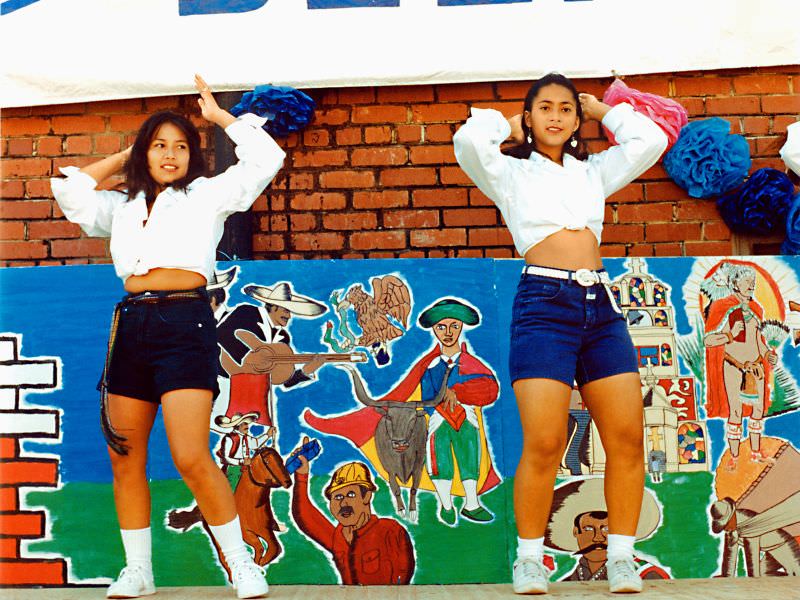
The mid-1990s brought a wider variety of performances to the Stockyards festivals. In June 1995, young performers took the stage, and dance acts were a regular feature of the programming. The Tarantula Railroad — a steam-powered excursion train that operated out of Stockyards Station — even became part of the entertainment when a Lone Ranger-themed act staged a mock train robbery atop the locomotive’s tender during the Chisholm Trail Roundup.
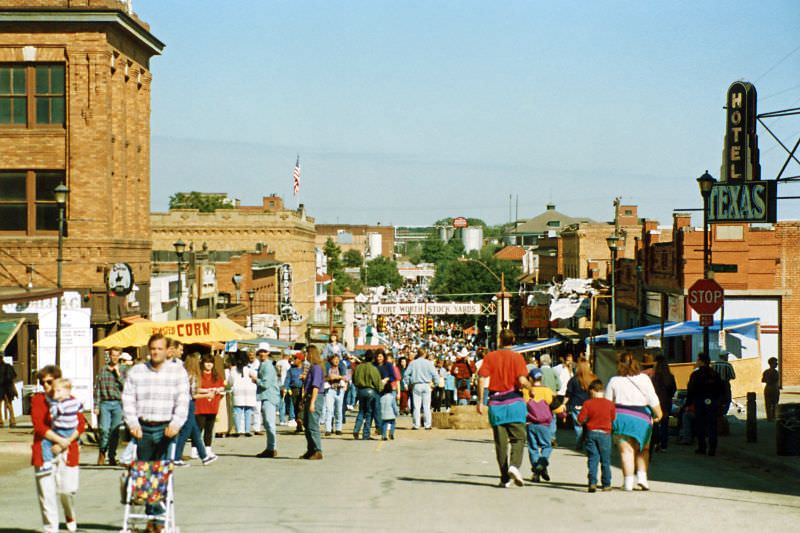
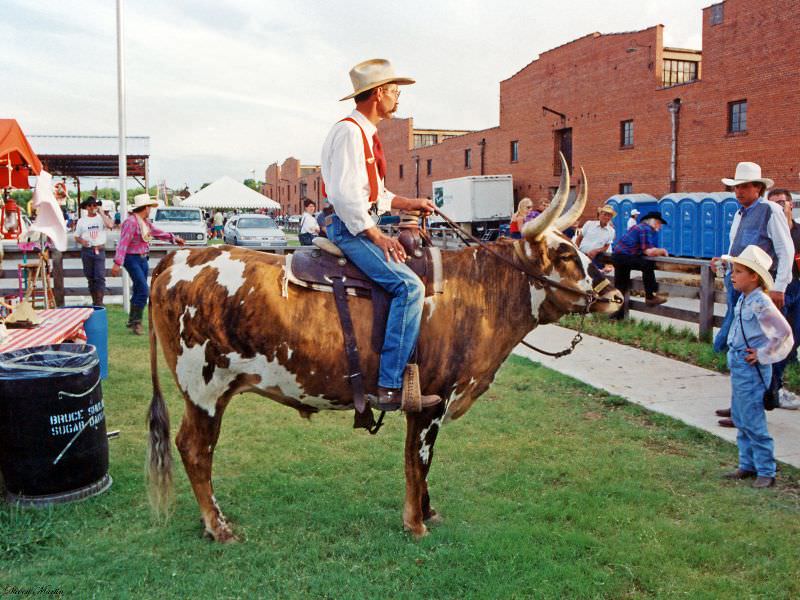
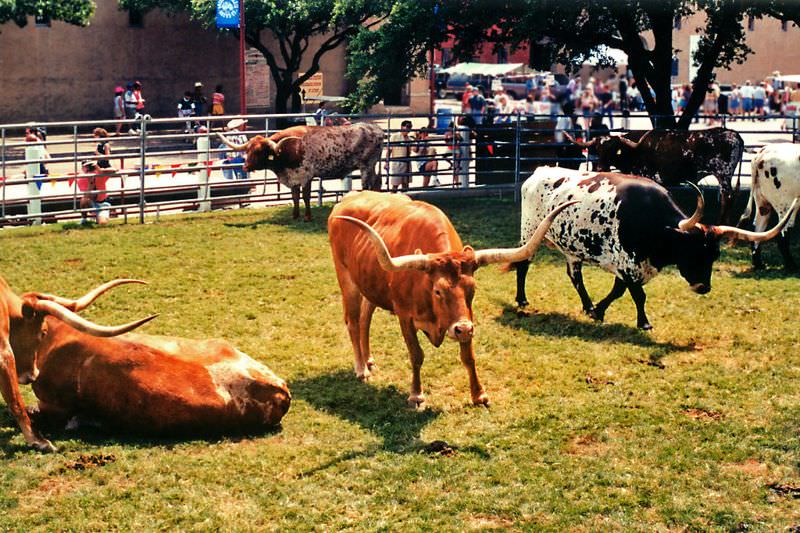
By the time Martin returned to photograph the Stockyards in June 1999, the festival format was well established. Exchange Avenue was closed to vehicle traffic as usual, giving the street entirely over to pedestrians. The Fort Worth Herd — a group of Texas longhorns driven through the Stockyards daily — remained one of the most iconic sights in the district, a living reminder of the cattle drives that built Fort Worth’s economy in the 19th century.





I remember those Risky’s cups! There were about ten of them in my house.
What’s fascinating?
They kept calling the pretty women ladies all the time, which I thought was strange