Fort Worth in the 1960s was a city on the move. Neighborhoods expanded, new buildings replaced old ones, major institutions grew, and national events touched the city in ways that left permanent marks on its history. From the busy streets of downtown to the quiet residential blocks spreading outward in every direction, Fort Worth showed all the signs of a city with confidence in its future. The photos below capture that decade in remarkable detail — a visual record of a Texas city building itself up block by block.
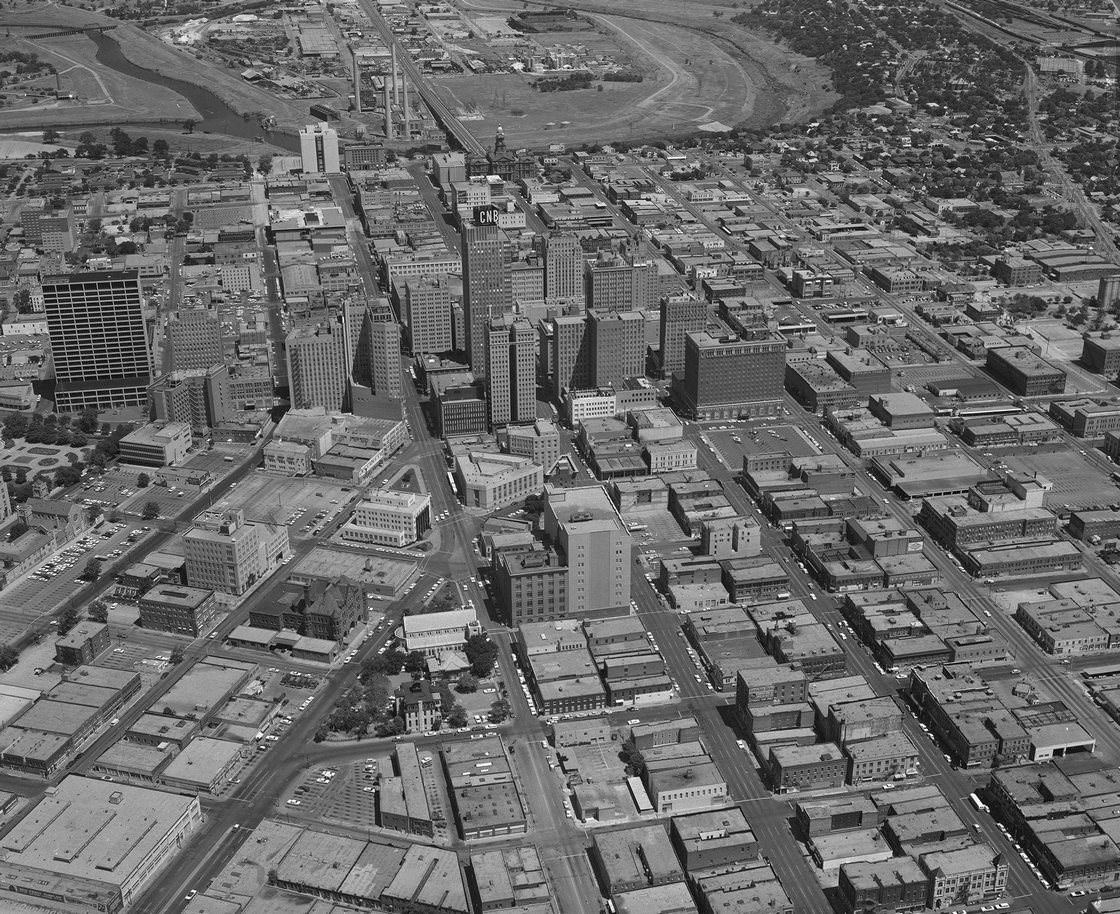
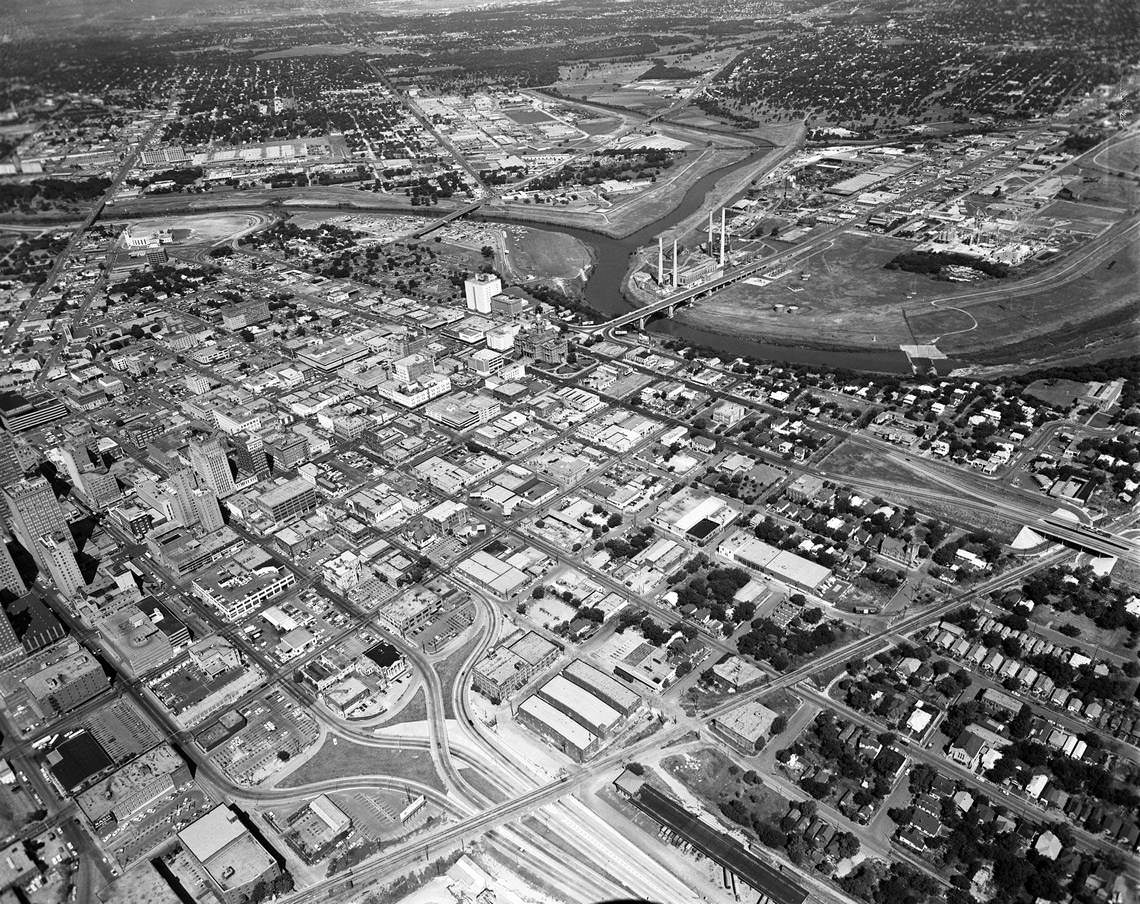
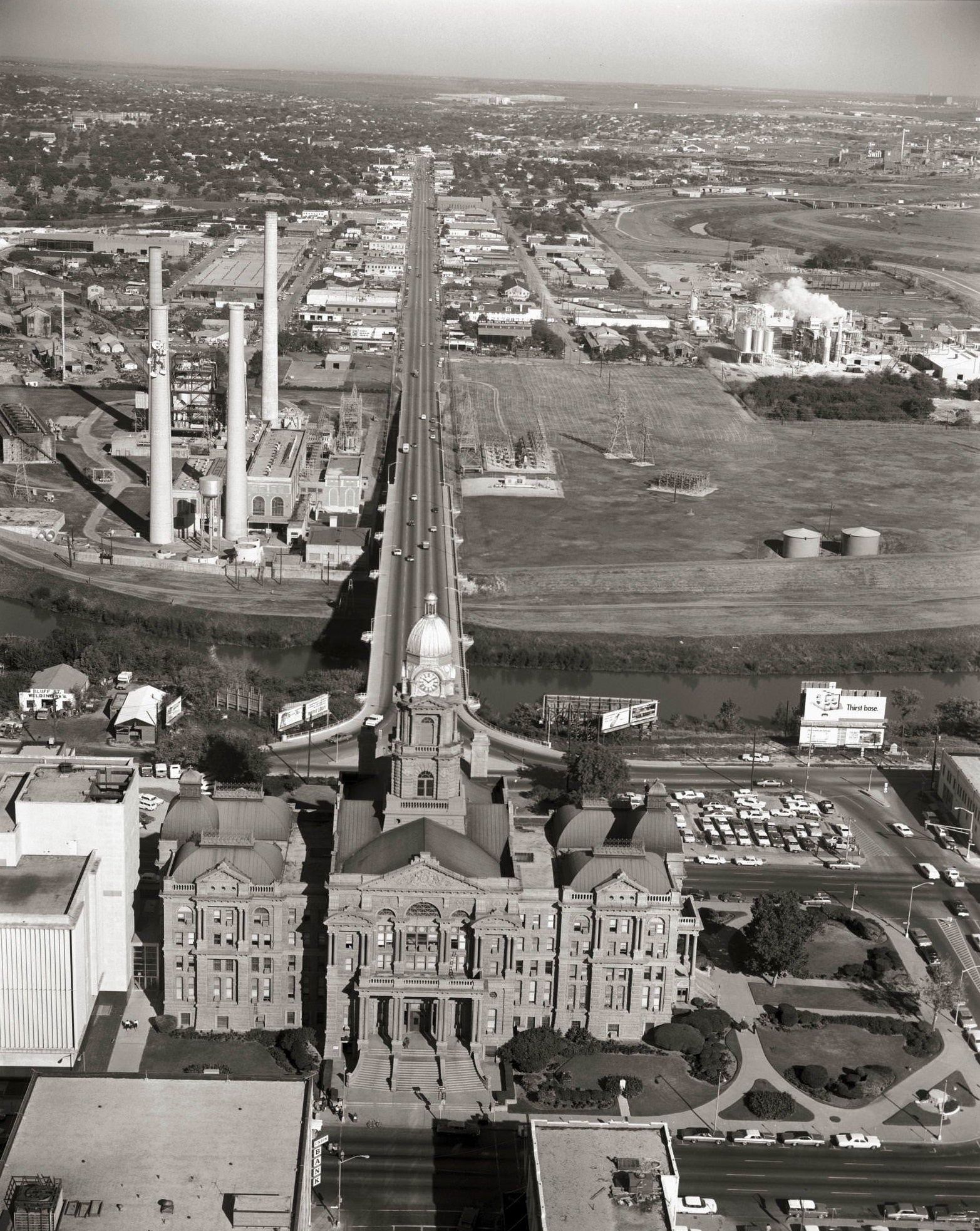
Aerial of downtown Fort Worth, Texas, 1962
Downtown Fort Worth in the early 1960s was a dense mix of banks, hotels, retailers, and office buildings. The skyline was still relatively low compared to what would come later, but construction activity was constant. Streets like Main Street buzzed with foot traffic, and the city’s financial institutions competed for prominent corners and visible signage.
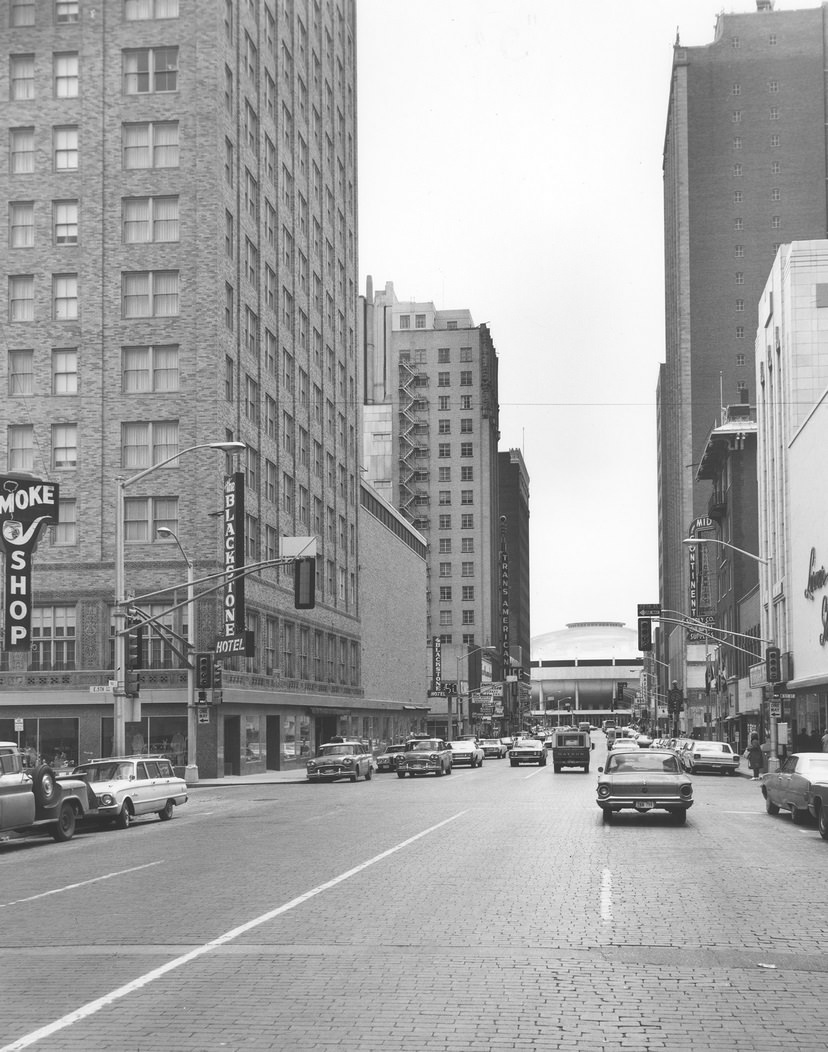
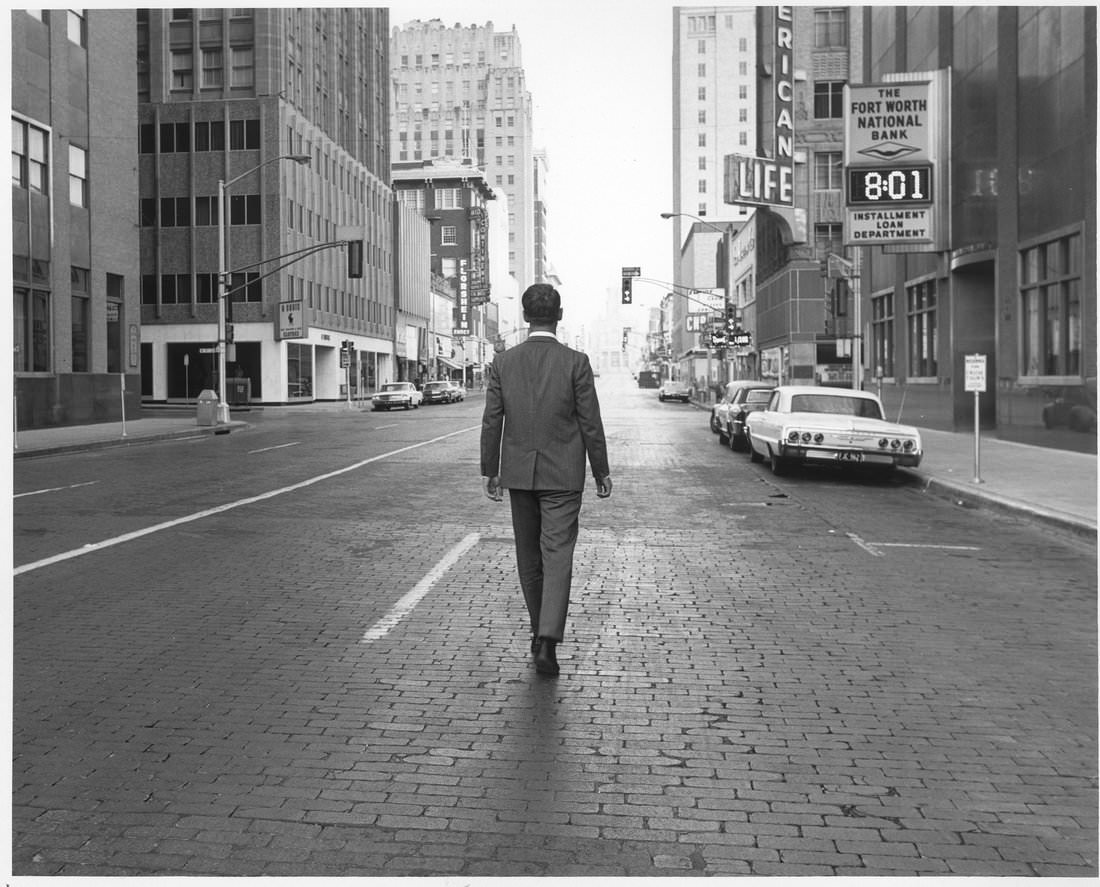
Blackstone Hotel and Lerner Shops department store, downtown Fort Worth, Texas, 1960Main St. between 7th and 8th Streets showing Fort Worth National Bank sign and man walking down middle of street, 1960s
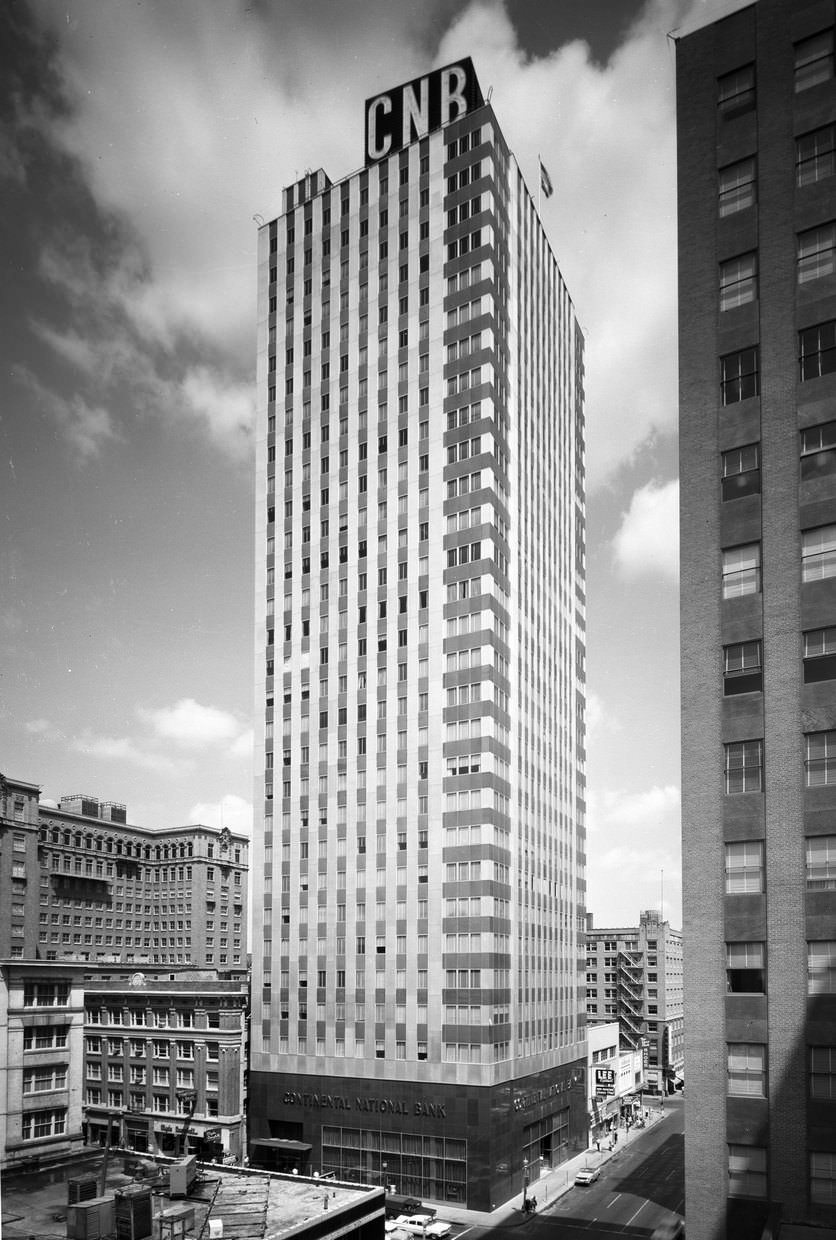
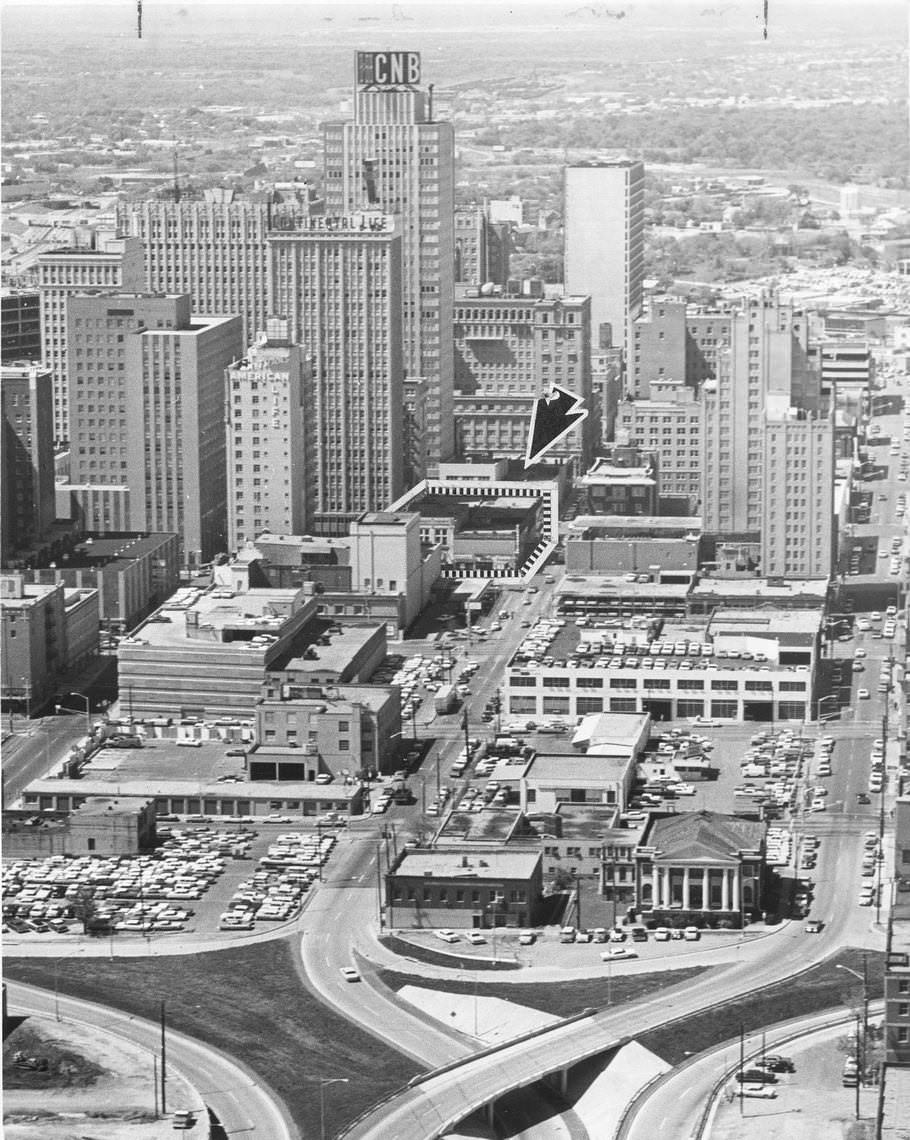
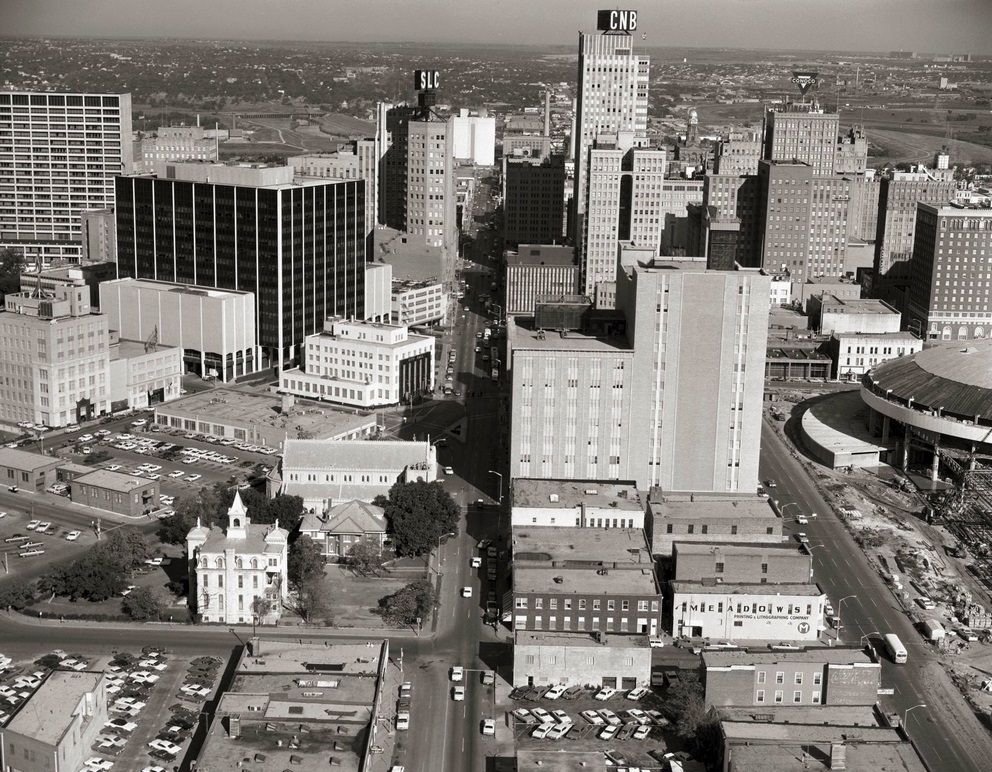
Banking was serious business in Fort Worth during this era. The Fort Worth National Bank and the Continental National Bank both made major investments in the downtown core. The Continental National Bank building, designed by local architecture firm Preston M. Geren & Associates, stood 30 stories tall and was the tallest building in the city from its 1957 opening until 1974. By 1961, it was already a defining feature of the skyline.
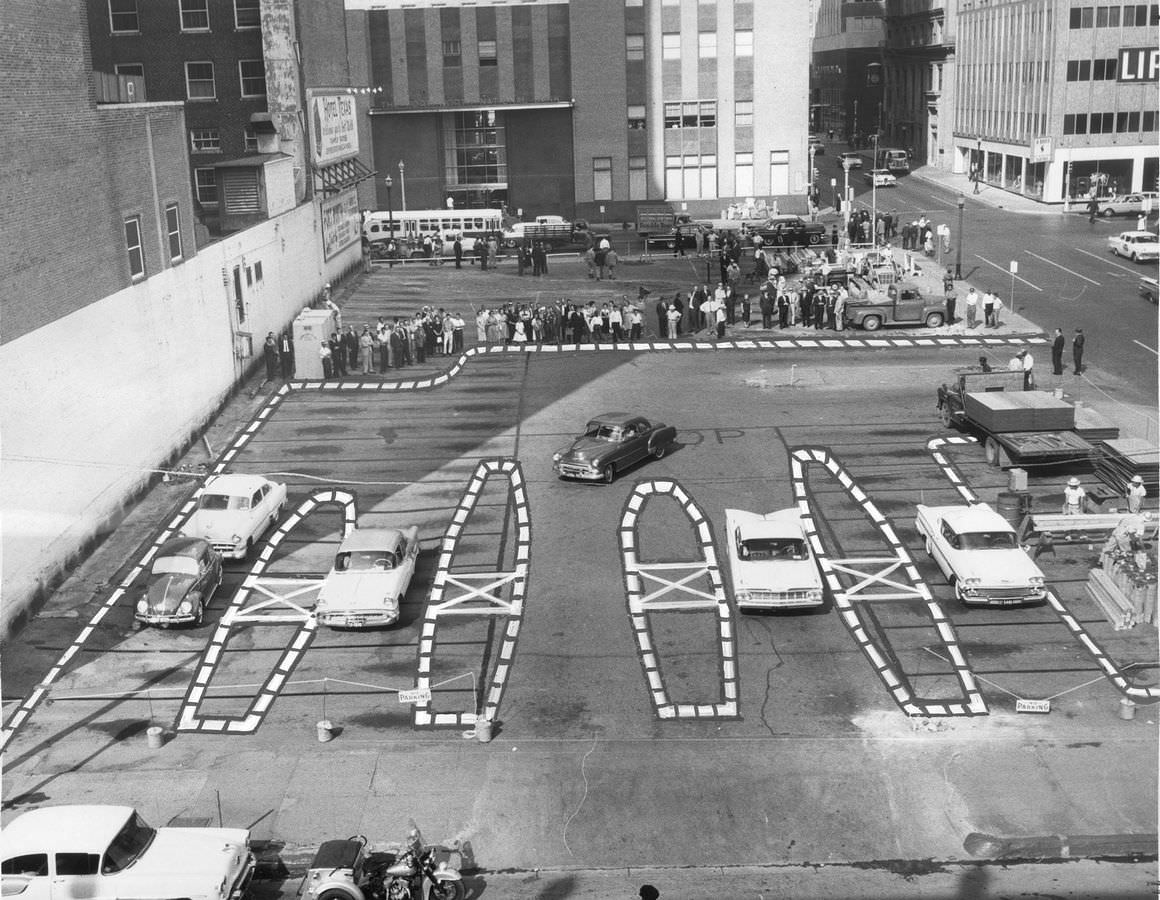
Continental National Bank building with revolving clock, 200 W. 7th and Houston Street, downtown Fort Worth, 1961.Fort Worth National Bank proposed motor bank, 1960Aerial of future location of a parking garage for the Continental National Bank, downtown Fort Worth, Texas, 1966
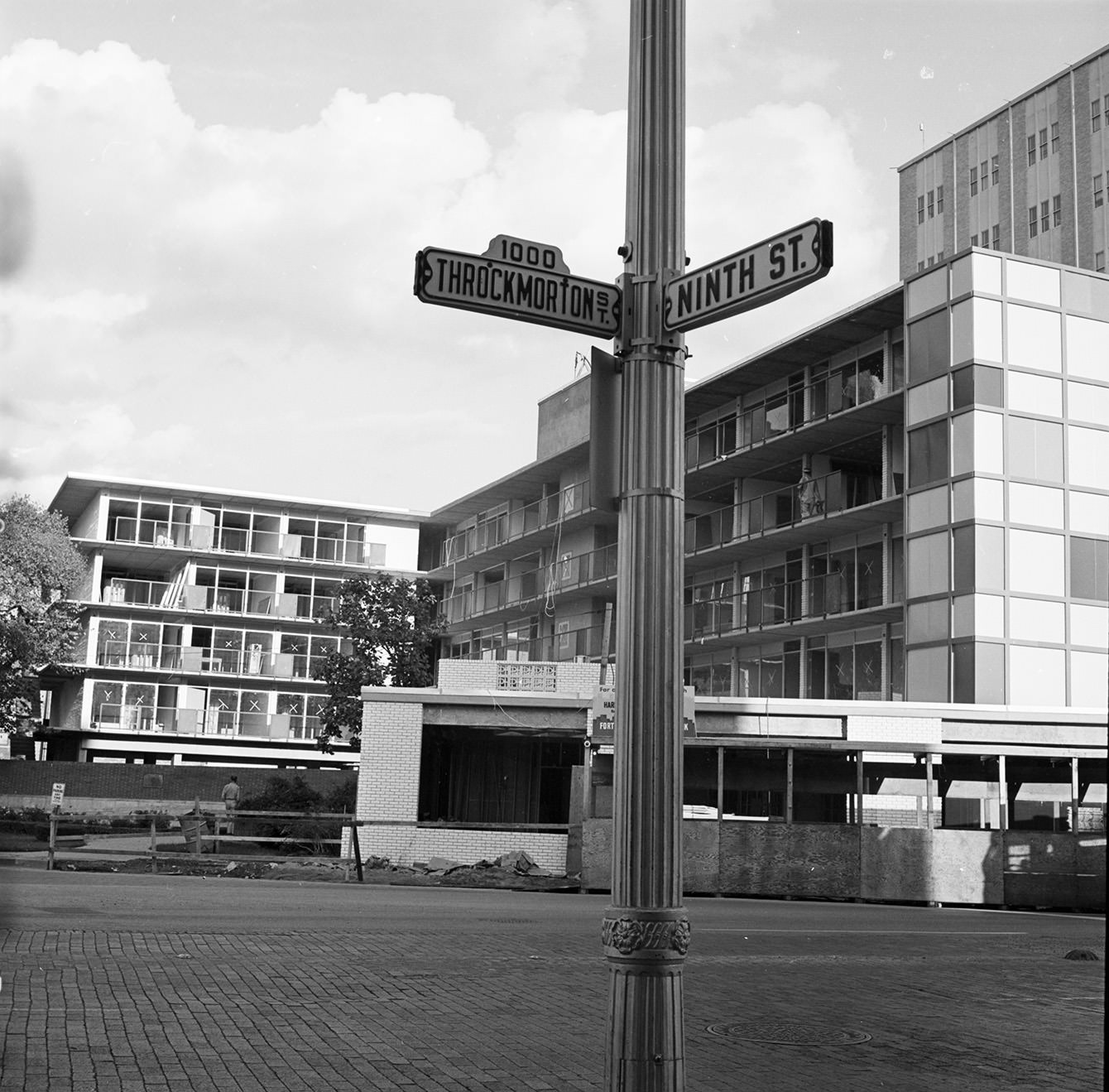
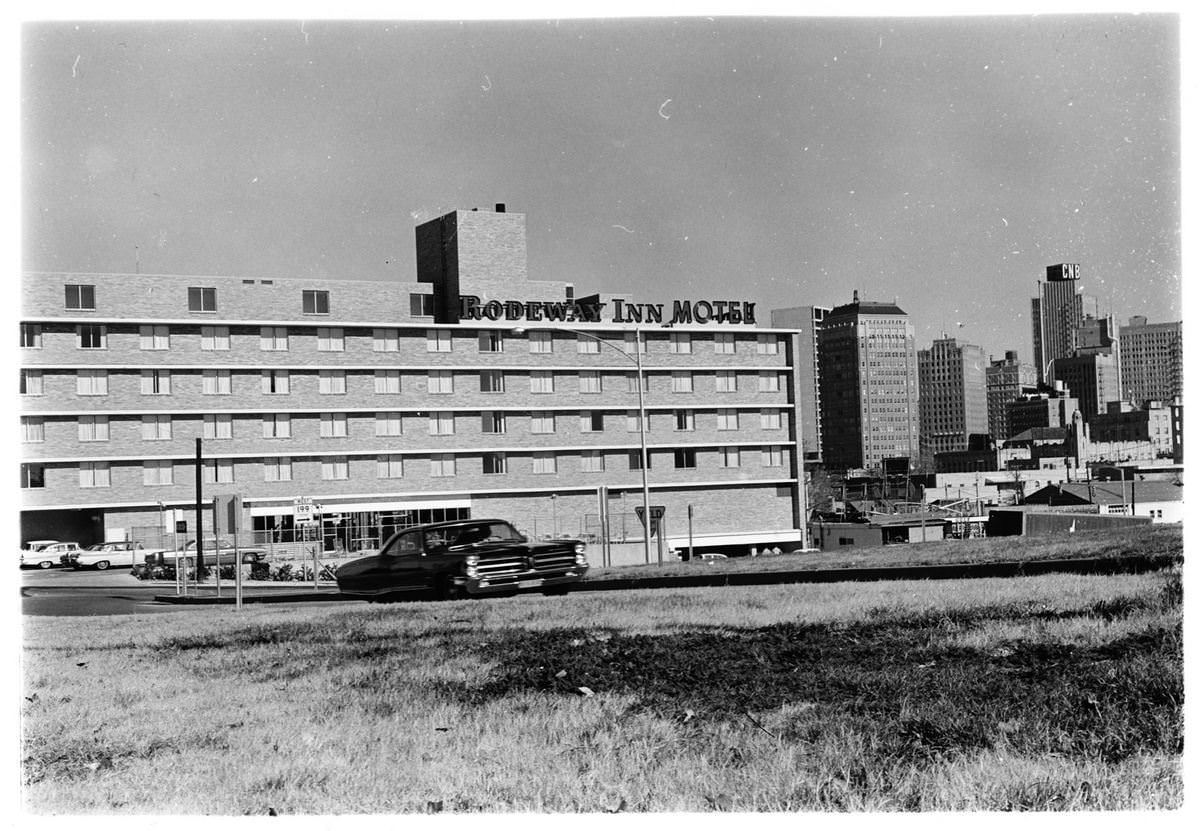
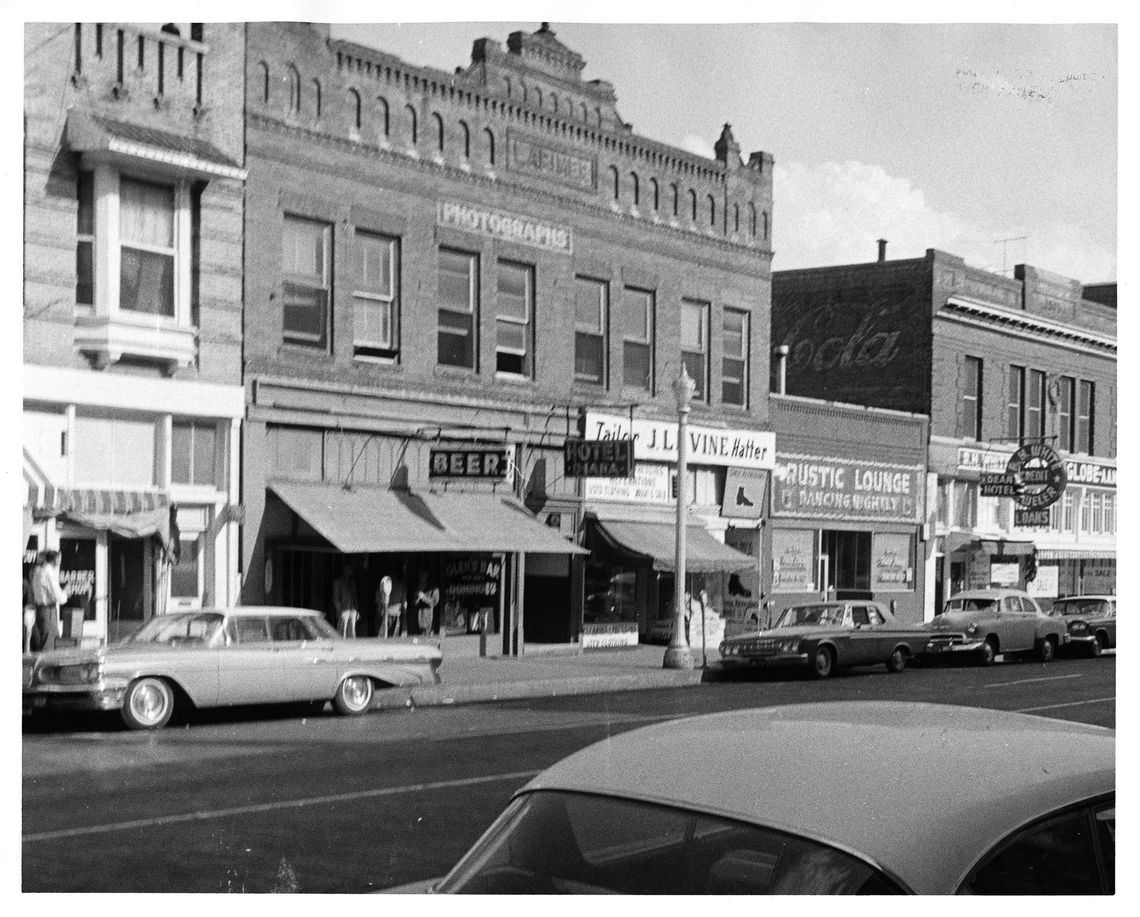
Retail anchored downtown life in ways that shopping malls later replaced. Leonard’s Department Store was one of the biggest draws in the city, while smaller shops filled in the gaps along the main commercial corridors. Hotels like the Blackstone and the Downtowner Motor Inn served business travelers and visitors passing through a city that was increasingly connected to the wider region.
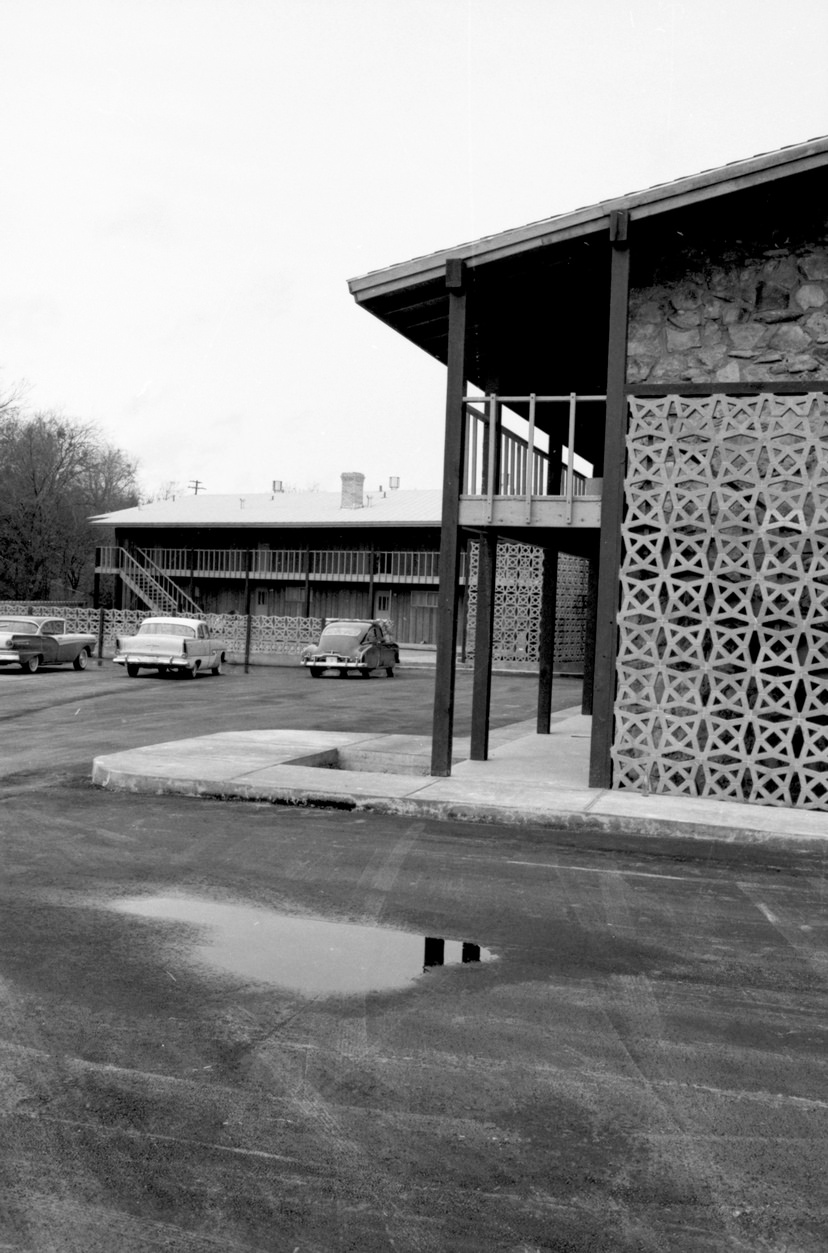
Leonard’s Department Store, 1967Downtowner Motor Inn Hotel at Throckmorton Street and 9th Street, Fort Worth, Texas, 1964Rodeway Inn Motel, Lancaster Avenue and Henderson Street, Fort Worth, Texas, 1960s
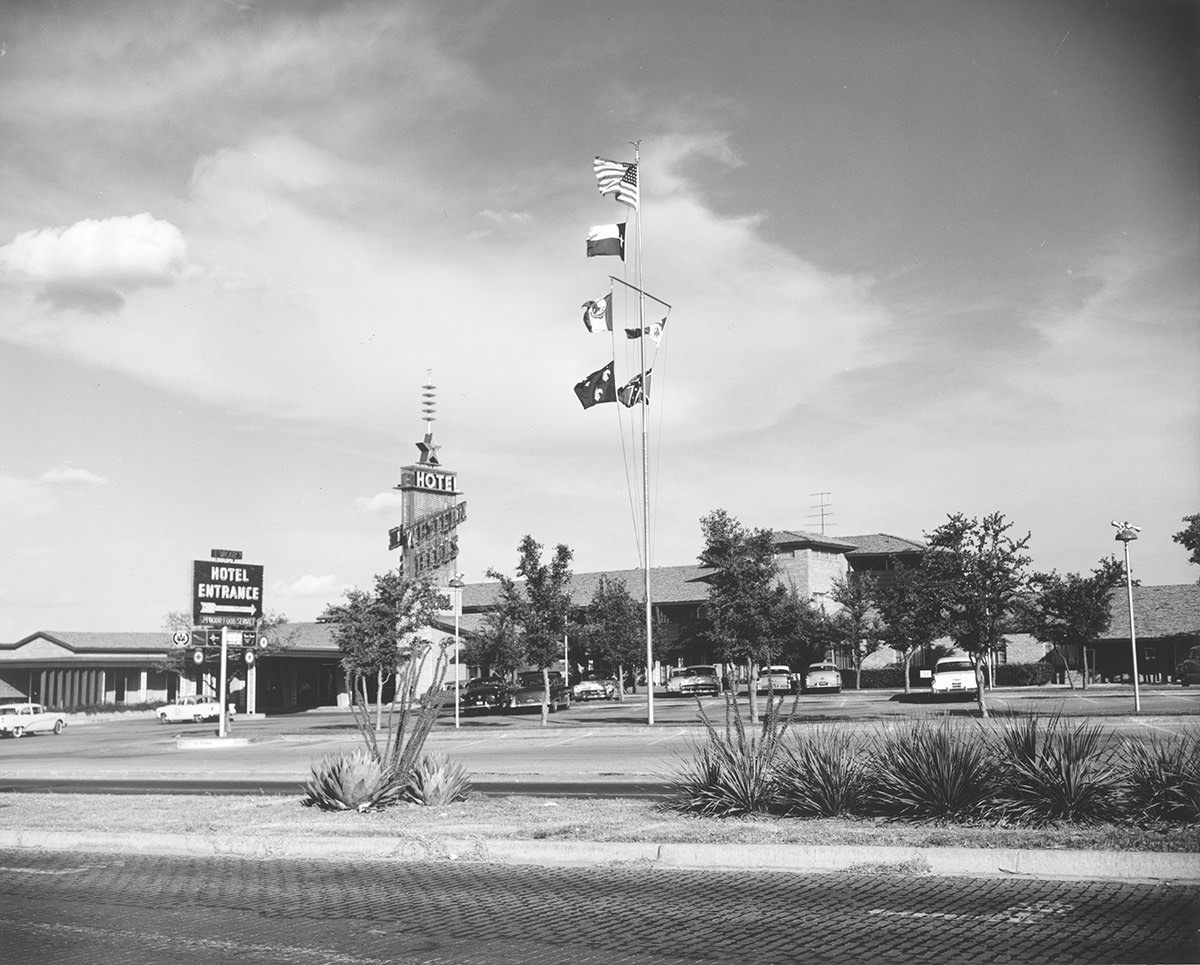
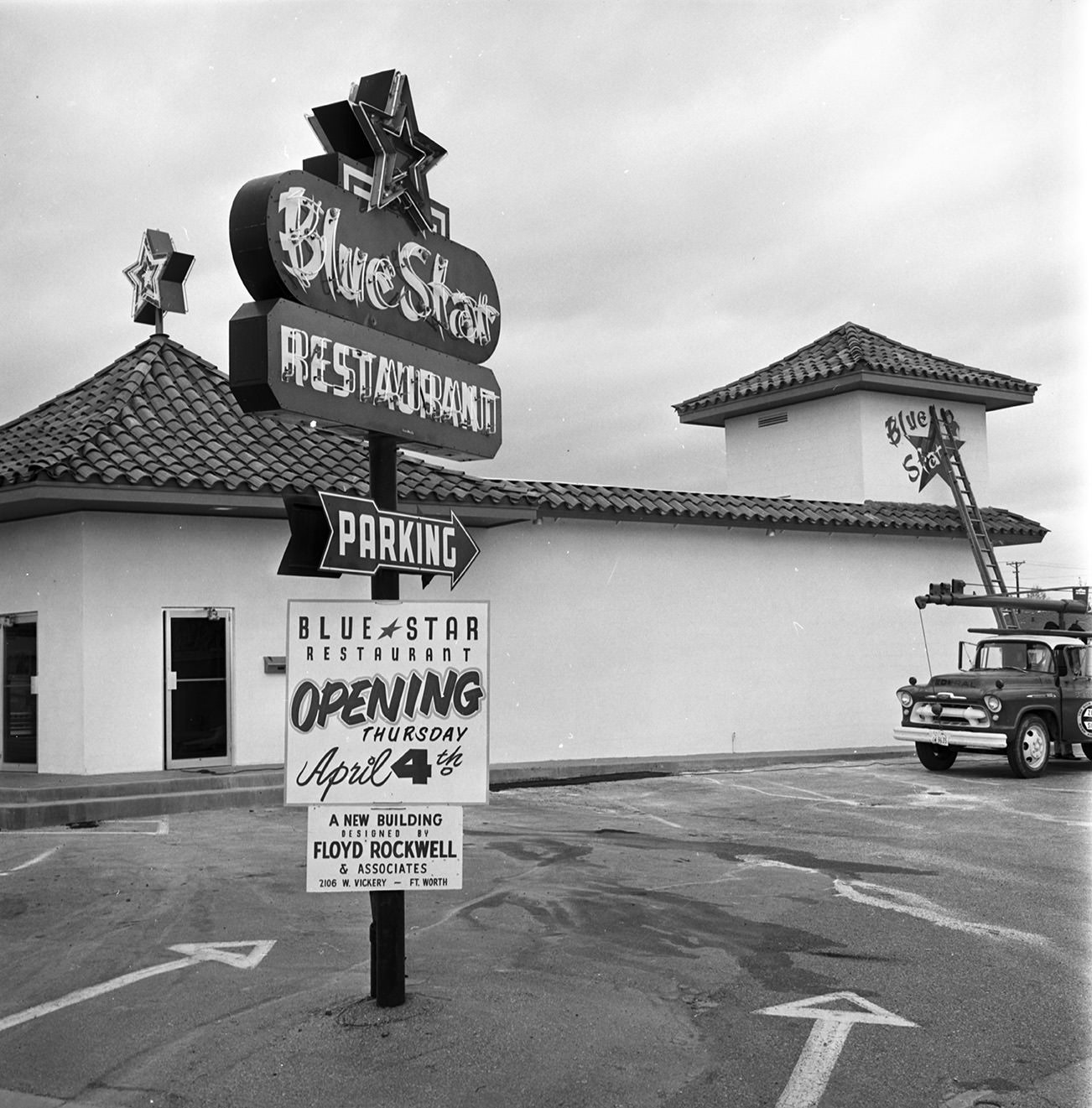
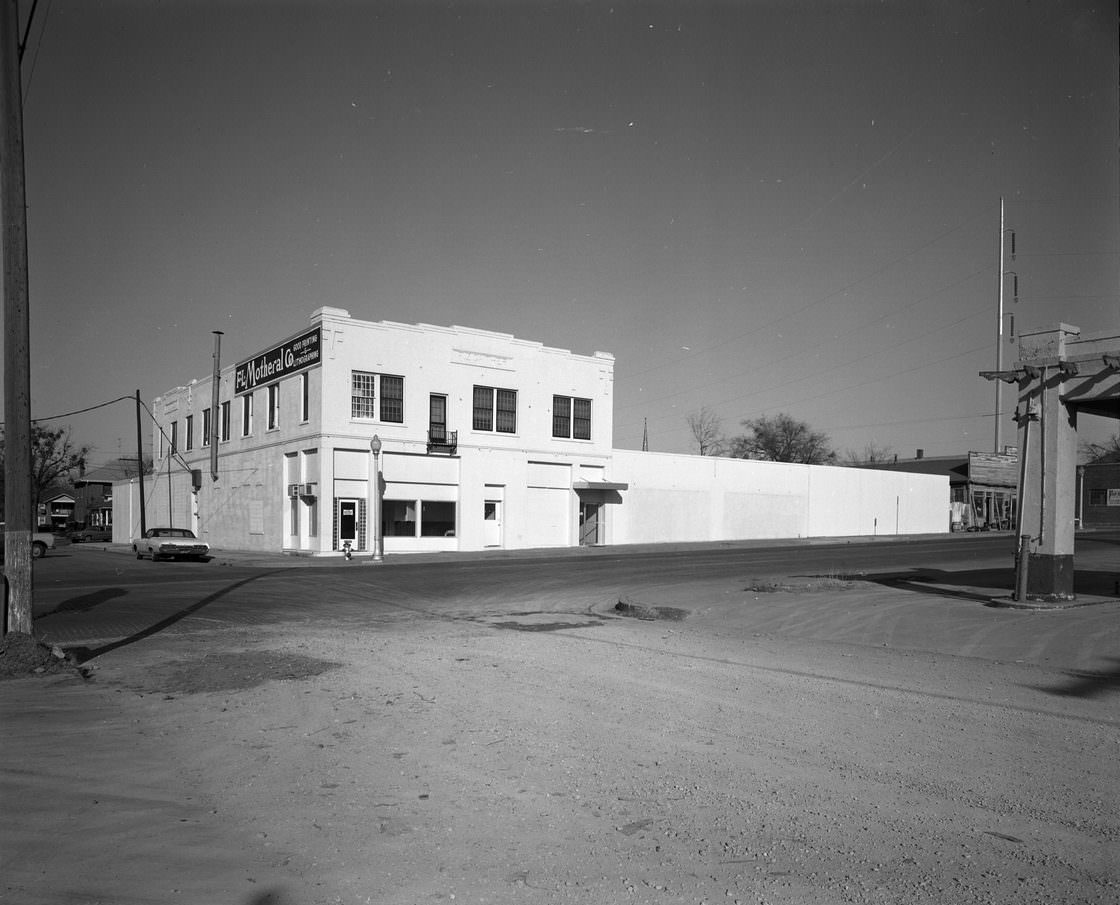
The Western Hills Hotel served the city’s west side and was a well-known gathering spot during the decade. Alongside these larger establishments, local businesses like the Blue Star Restaurant on Camp Bowie Boulevard and Motheral Printing Company on South Main Street kept the city’s commercial fabric alive at the neighborhood level.
Western Hills Hotel, 1960sBlue Star Restaurant, 5716 Camp Bowie Boulevard, Fort Worth, Texas, 1963Motheral Printing Company, 510 South Main Street, Fort Worth, 1967
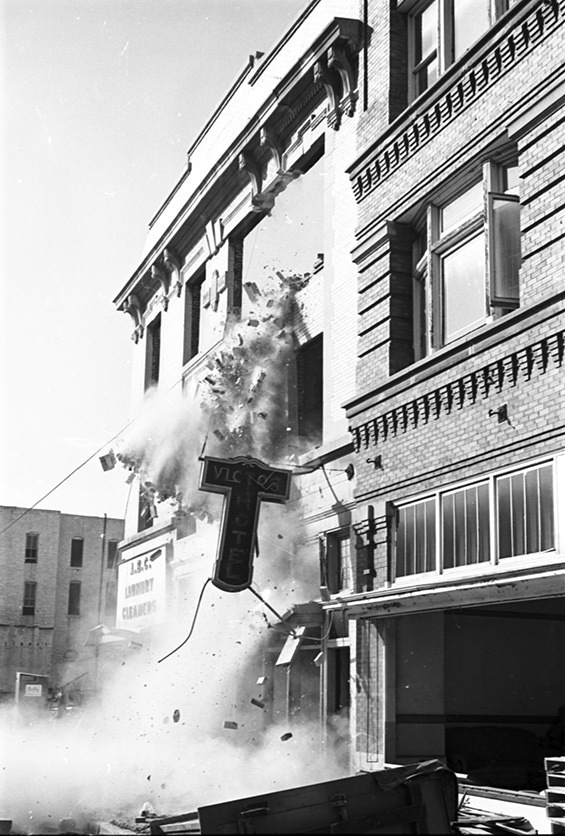
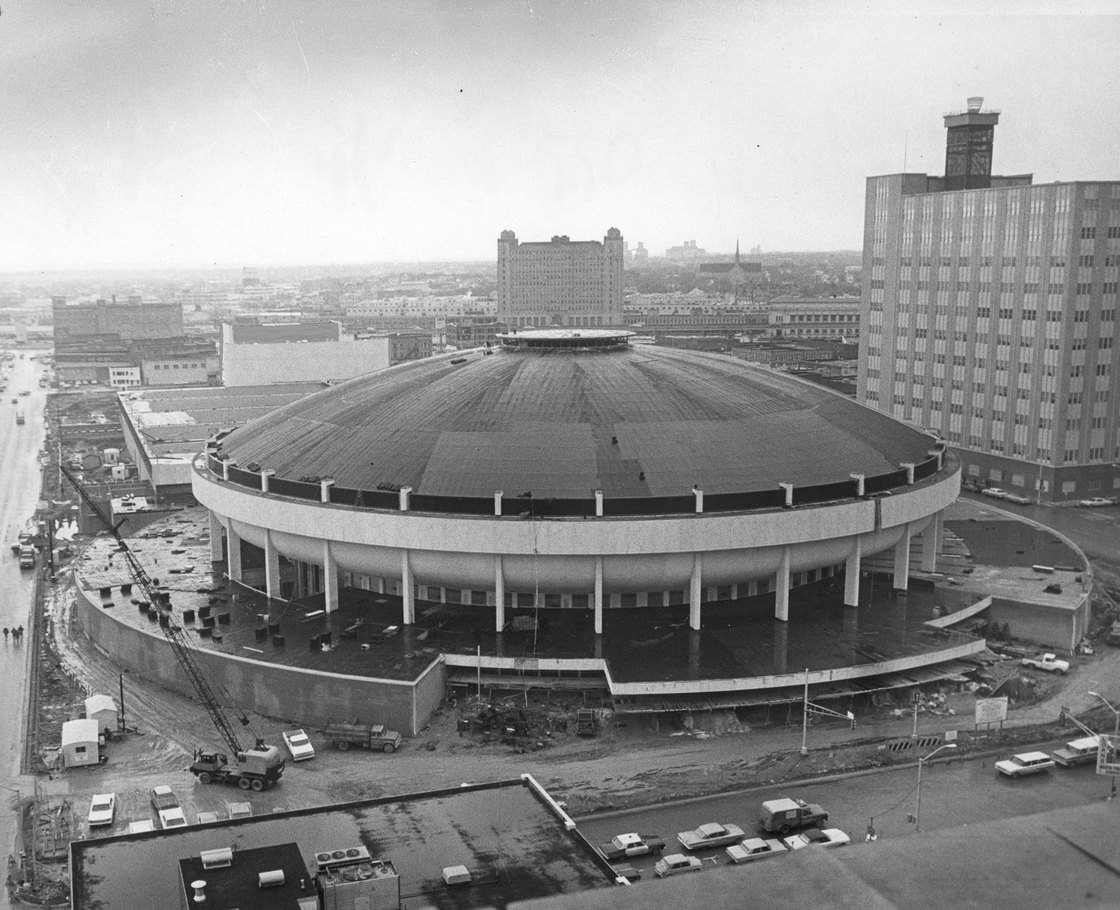
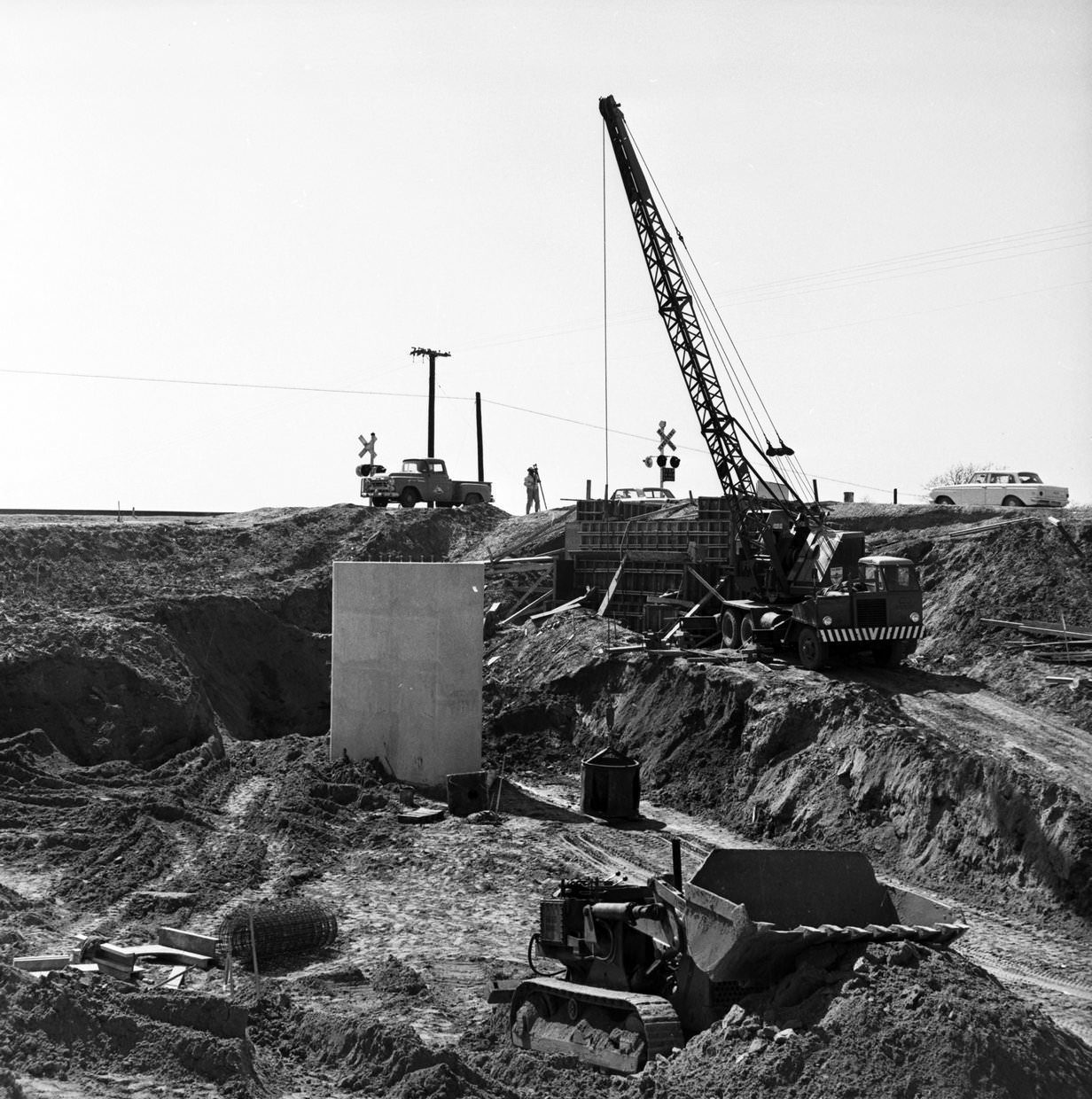
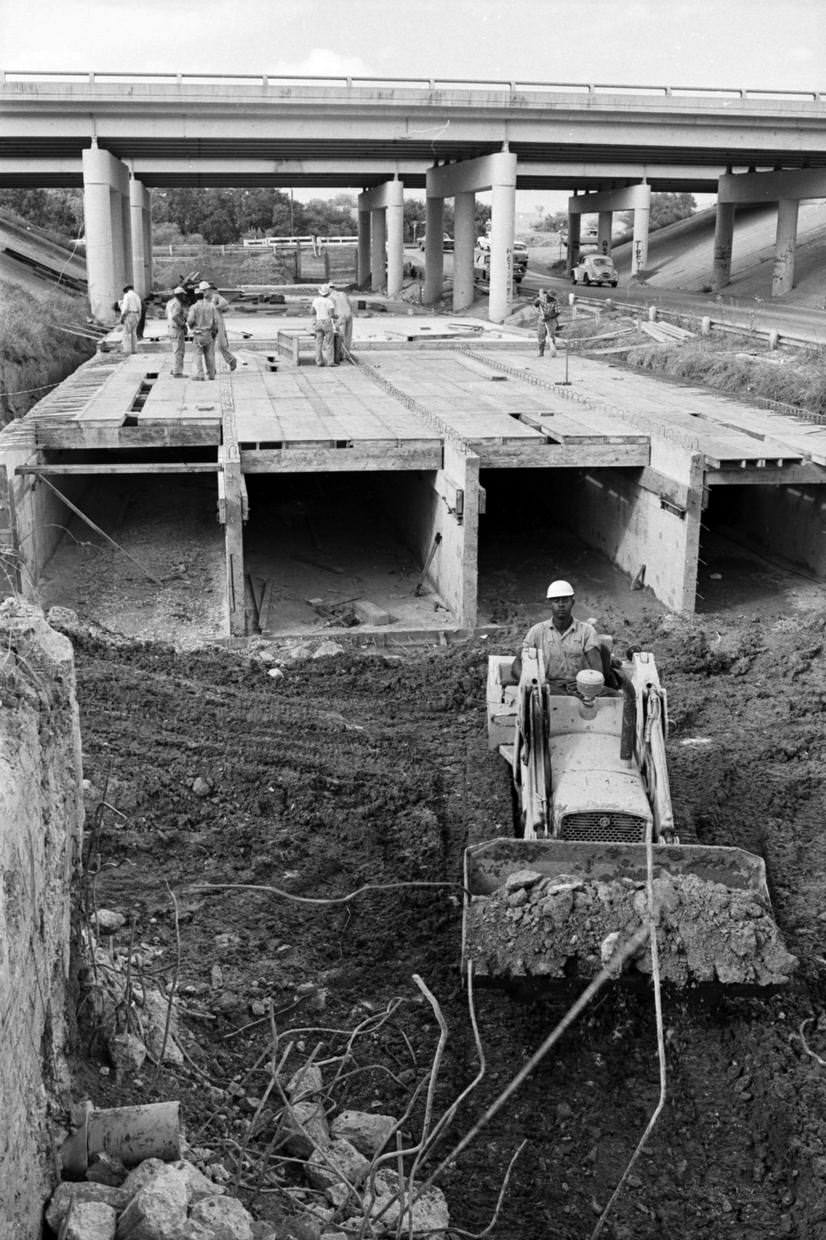
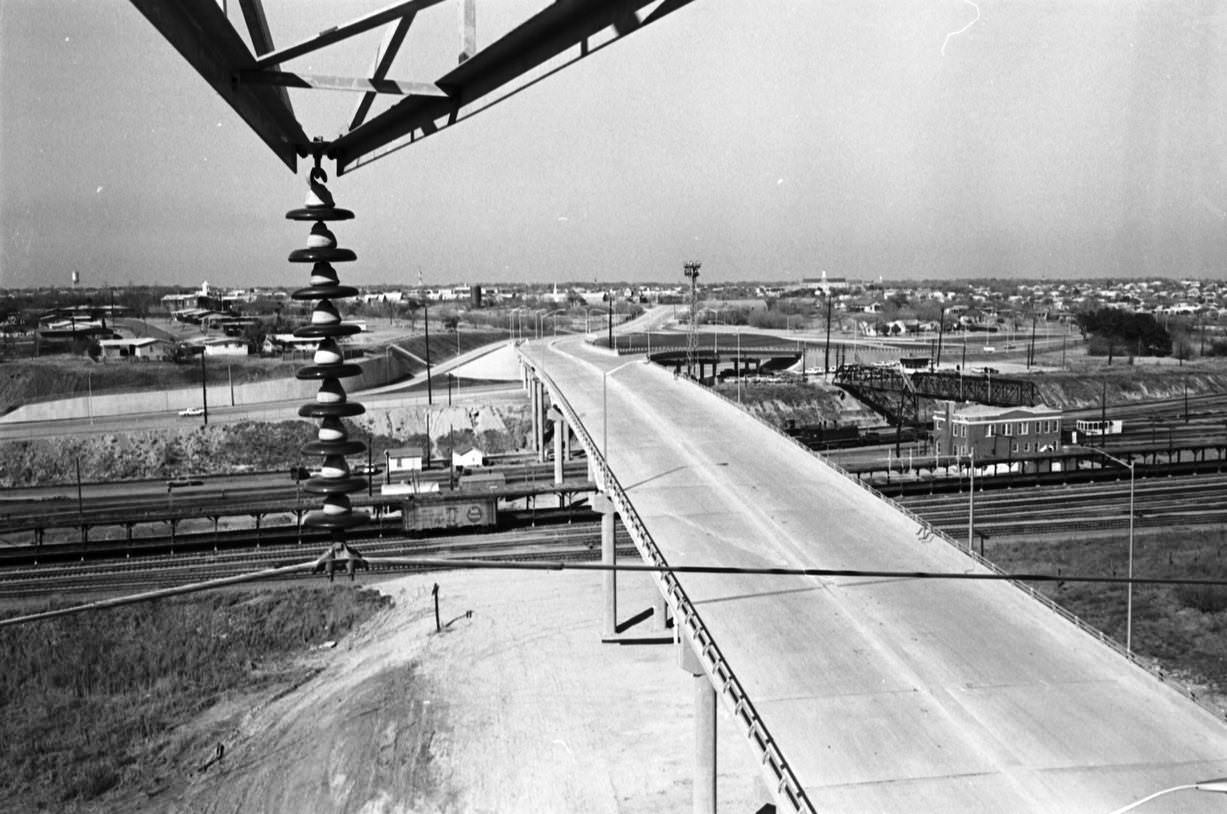
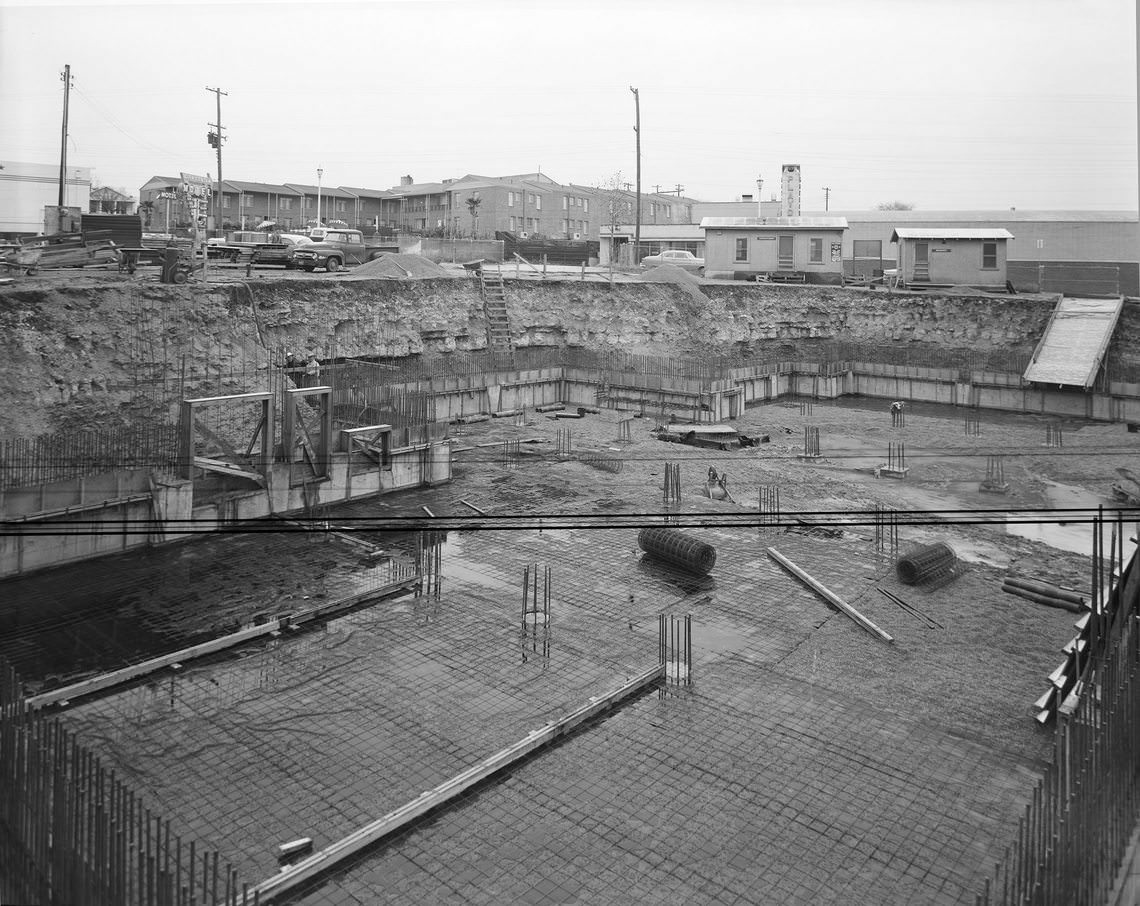
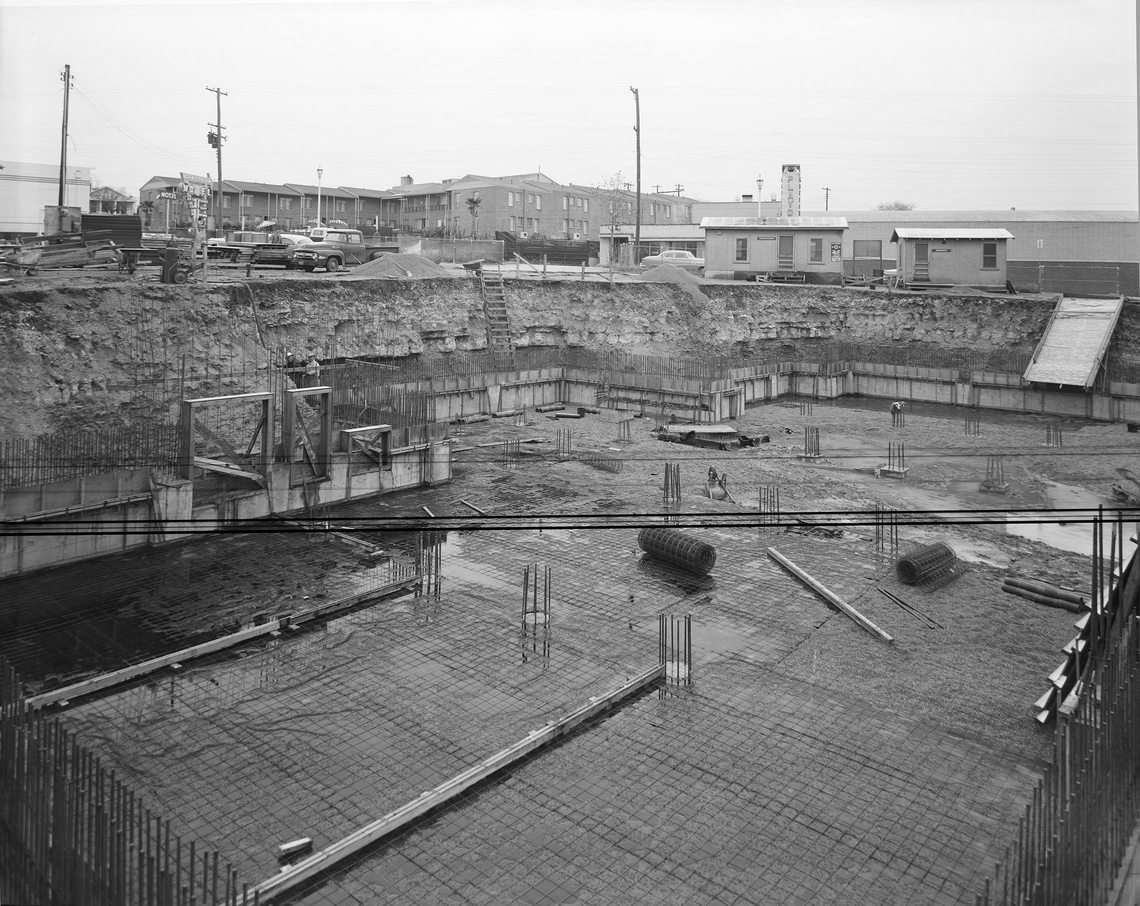
Construction was everywhere. The Tarrant County Convention Center project required tearing down existing buildings, including the Victor Hotel at 1312-1/2 Main Street, which was demolished in 1965 to clear the site. Road work expanded the city’s capacity for cars, and new overpasses and freeway connectors changed how residents moved through Fort Worth.
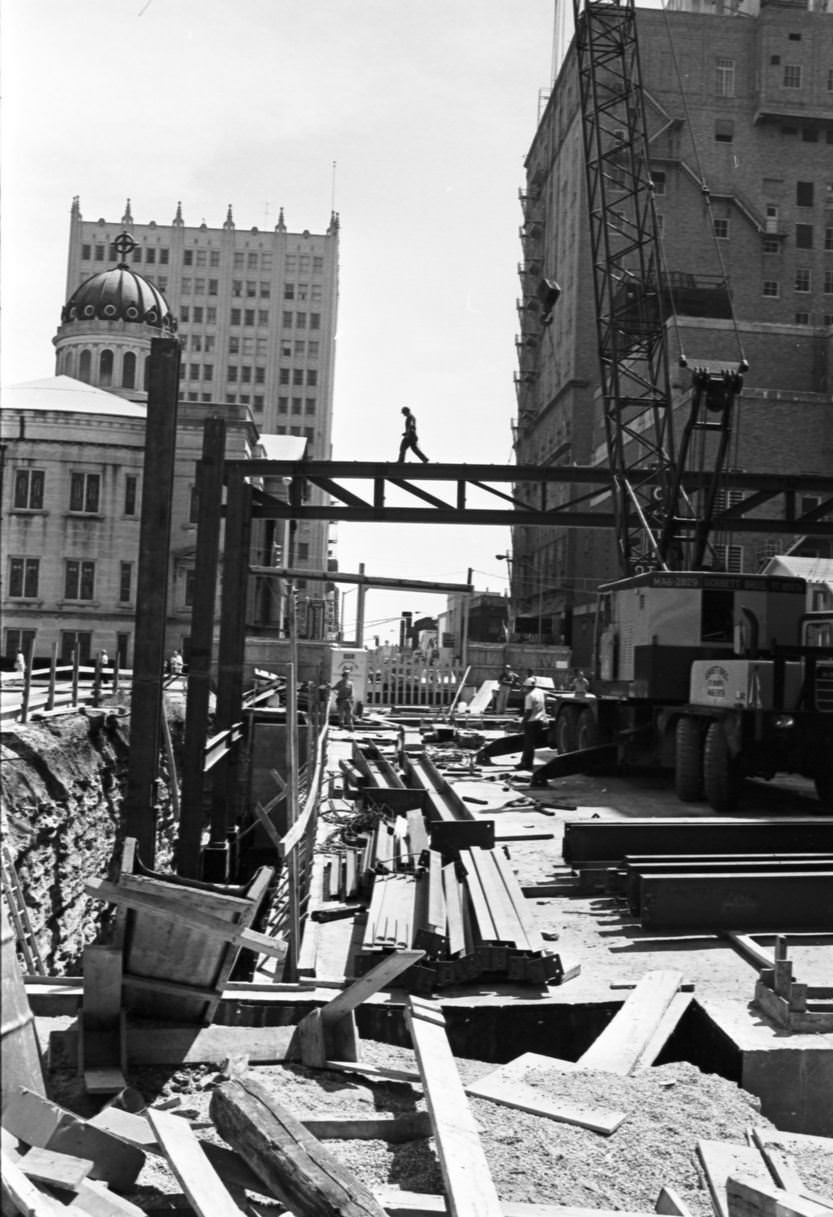
Demolition of Victor Hotel, 1312-1/2 Main Street, to make room for Tarrant County Convention Center, 1965Tarrant County Convention Center construction, 1968Buildings to be demolished for Tarrant County Convention Center construction, 1968Construction at Sixth Street, 1967Poly Freeway connector with 5th Street, downtown Fort Worth, Texas, 1961Road construction at Edeville Road and Bridge Street, Fort Worth, Texas, 1968Looking north at Hulen Street bridge over the railroad yard at time of completed construction of bridge, 1967
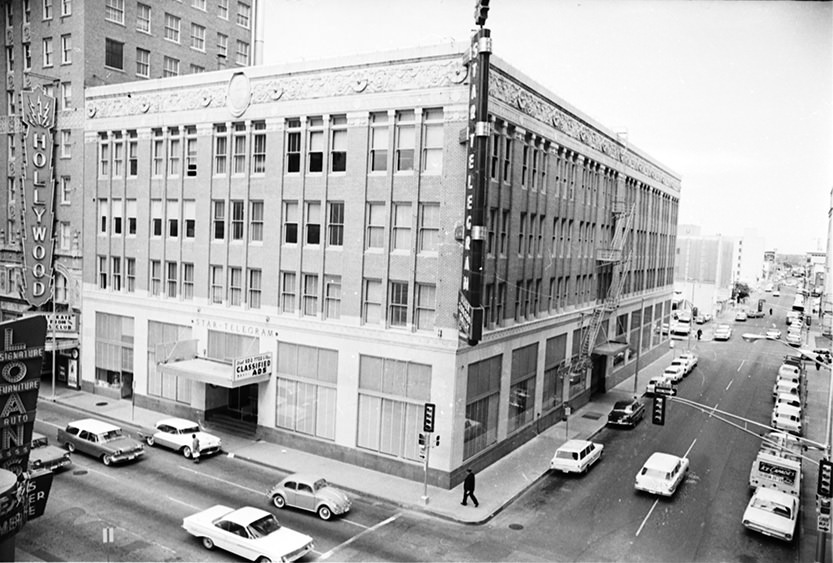
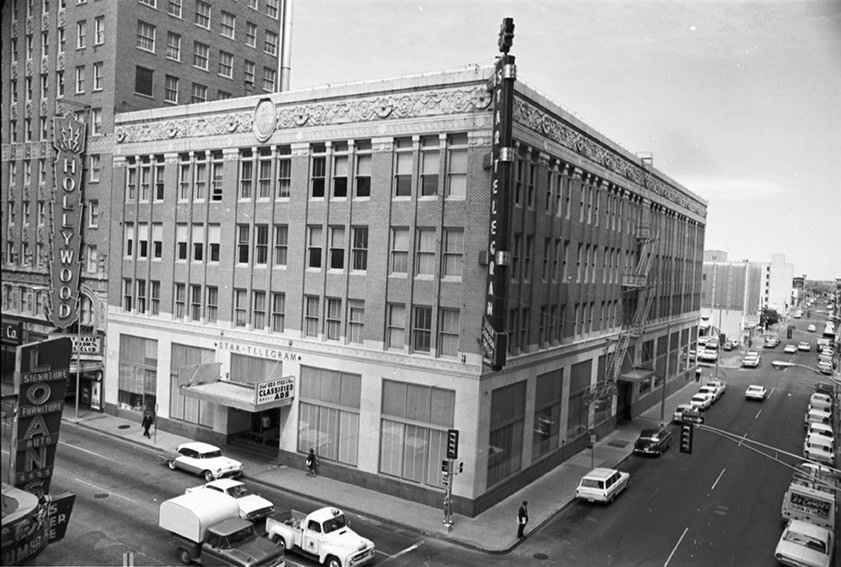
The Fort Worth Star-Telegram building at 7th and Taylor Streets was one of the most recognized structures in the city. As the home of one of Texas’s most prominent newspapers, it stood as a symbol of Fort Worth’s media presence throughout the decade.
Exterior of the Fort Worth Star-Telegram building, 7th and Taylor Sts., downtown Fort Worth, 1963Fort Worth Star-Telegram building, exterior, 7th and Taylor Street, Fort Worth, Texas, 1963Side of Fort Worth Star-Telegram building, 1961
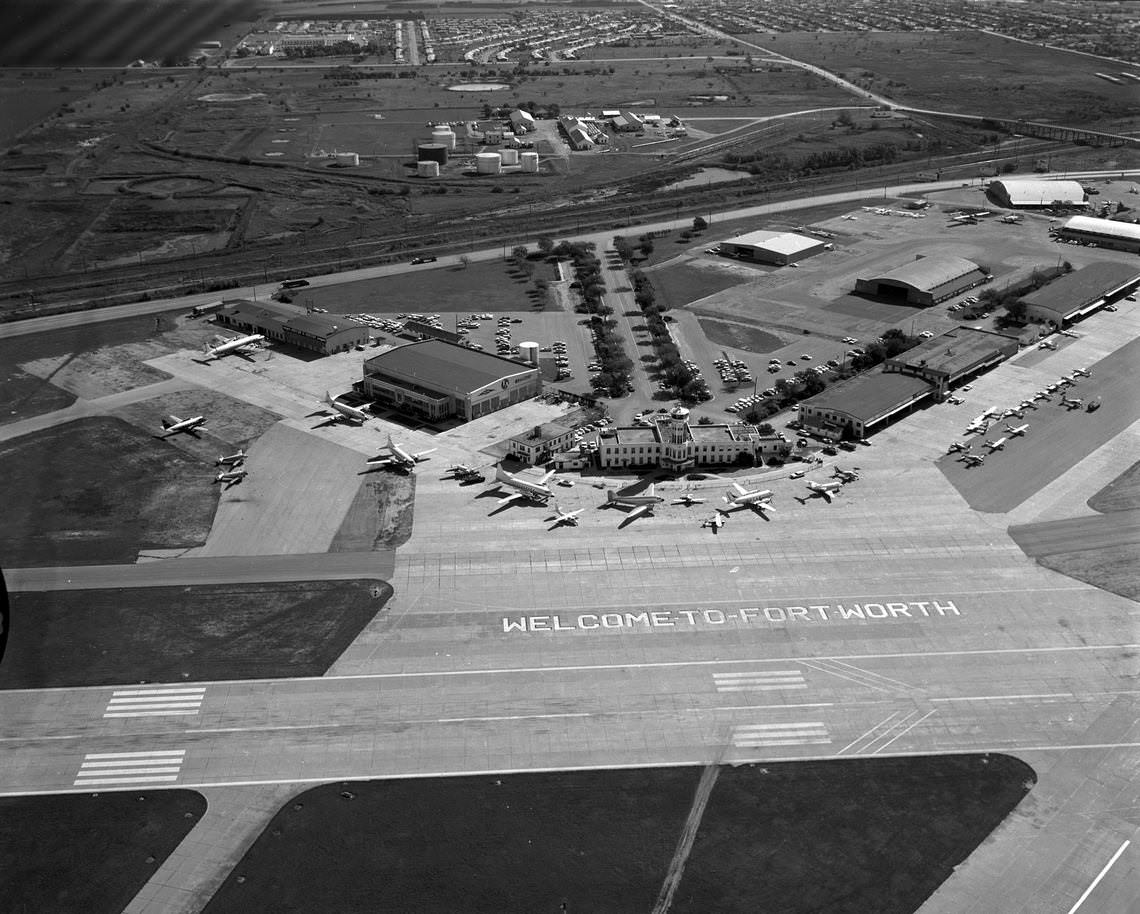
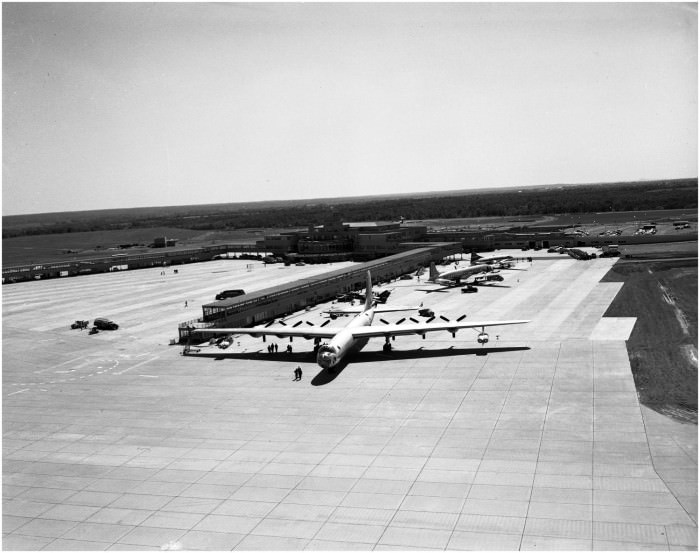
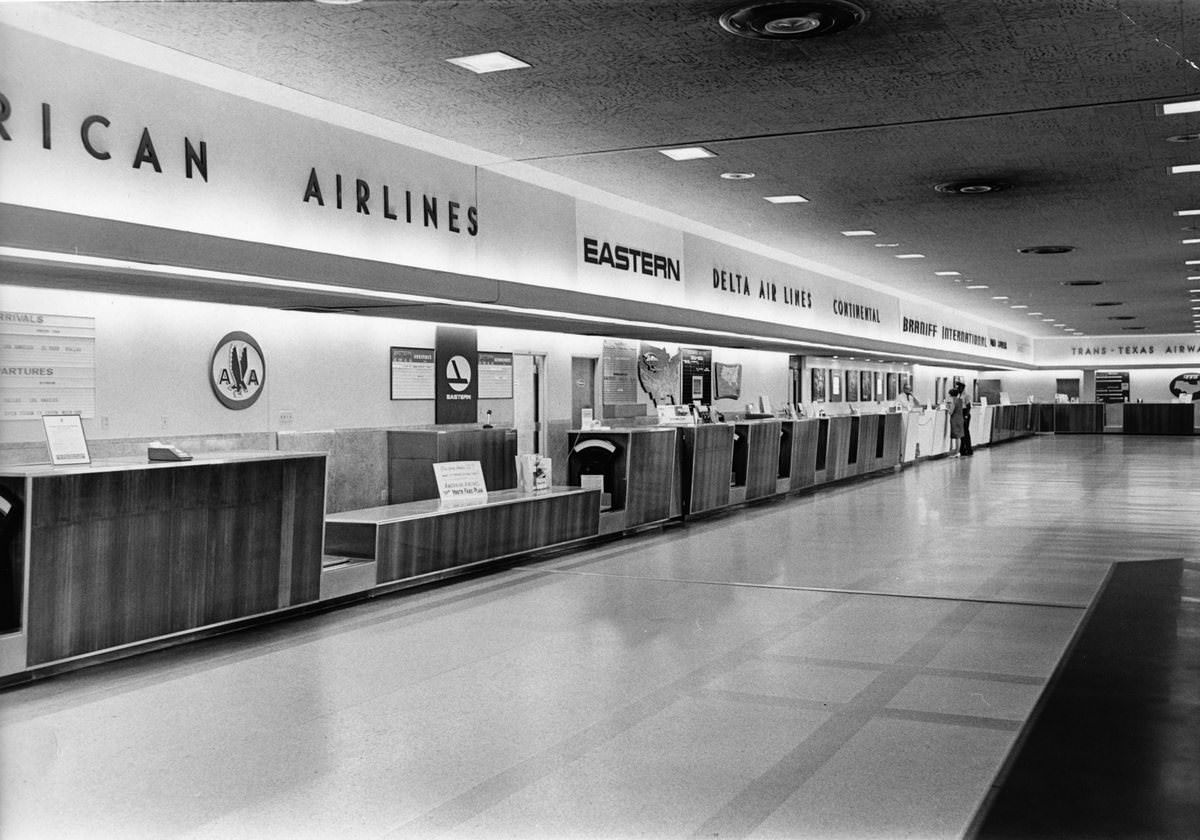
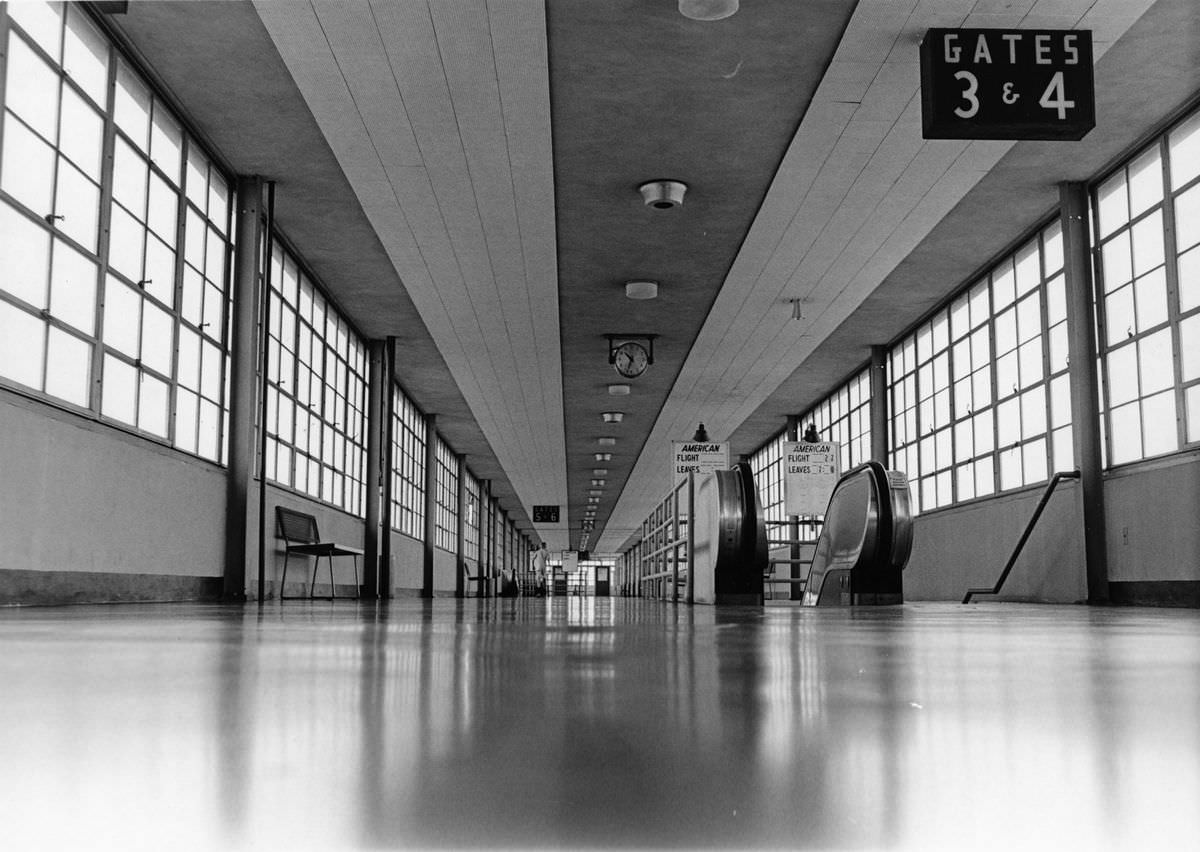
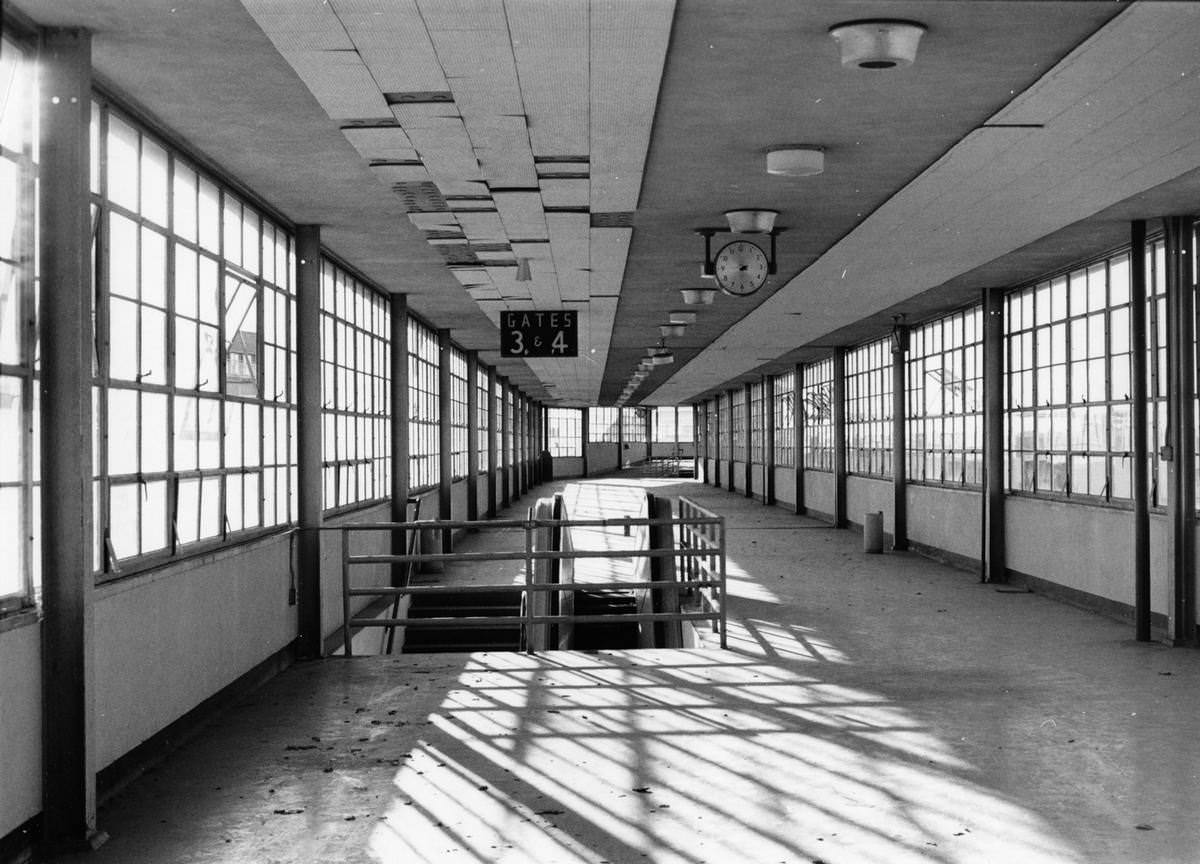
Fort Worth and Dallas both operated competing airports during this period. Meacham Field served Fort Worth for general aviation, while the Greater Southwest International Airport — also known as Amon Carter Field — positioned itself as the region’s major commercial hub. The airport held a grand opening in 1963, with aerial views showing three planes on the ramp ready to welcome passengers.
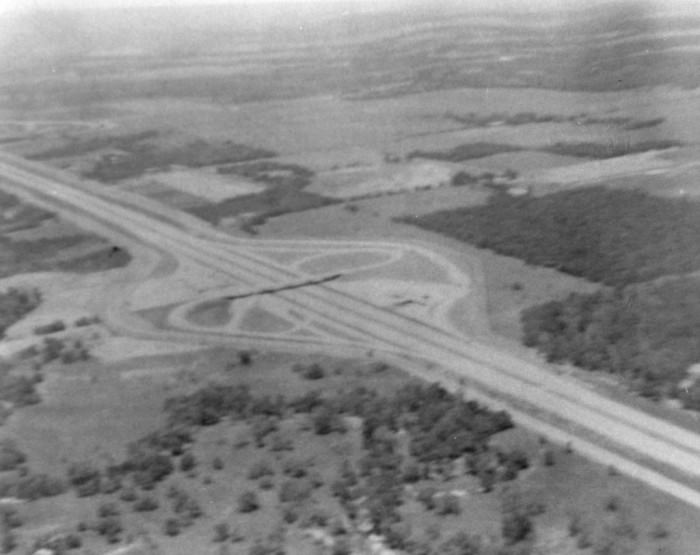
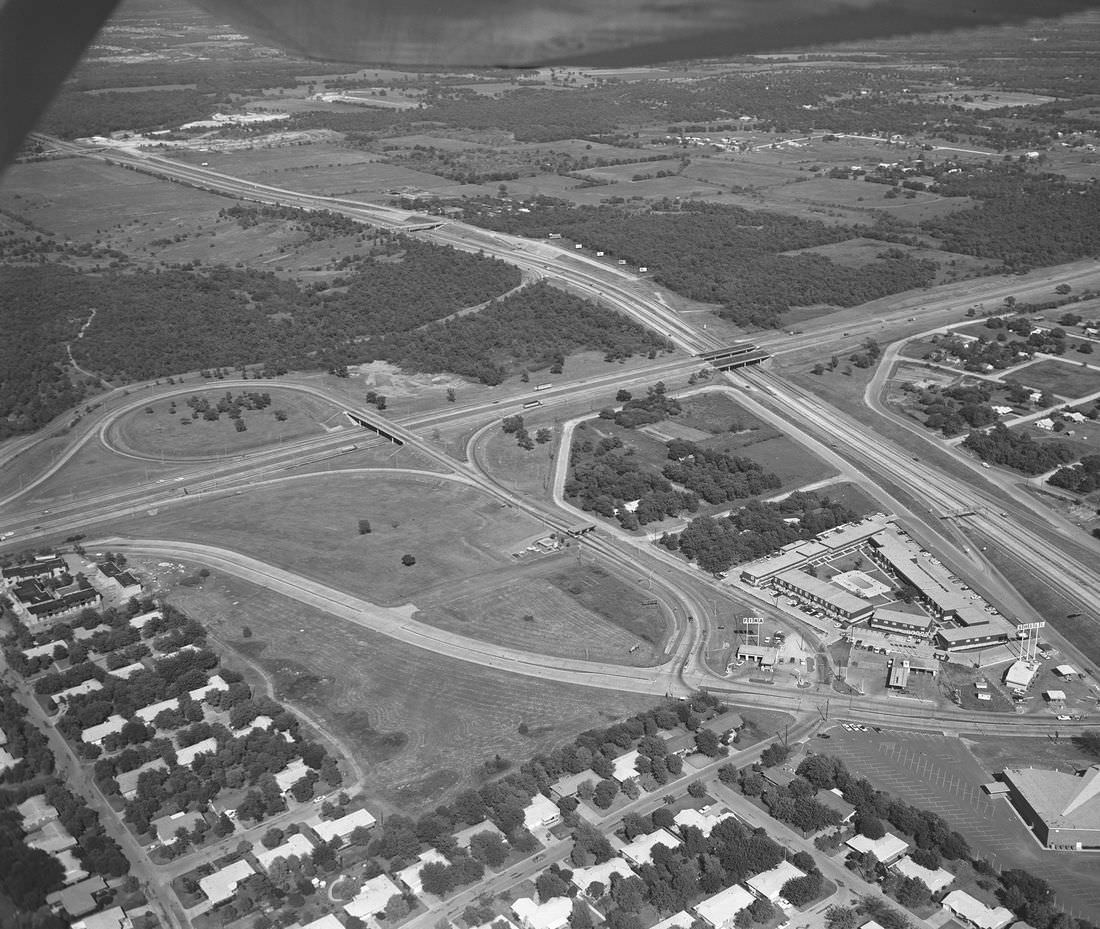
Aerial of Meacham airfield and terminal, Fort Worth, 1965Open House at Fort Worth, 1963Ticket counter at Greater Southwest International Airport, 1968Greater Southwest International Airport concourse, Gates 3 and 4 with escalators to American flights, 1968Empty concourse, Gates 3 and 4, clock hanging from ceiling, Greater Southwest International Airport, 1968Dallas-Fort Worth Turnpike, 1960s. Aerial view of Dallas-Fort Worth Turnpike looking northwest.
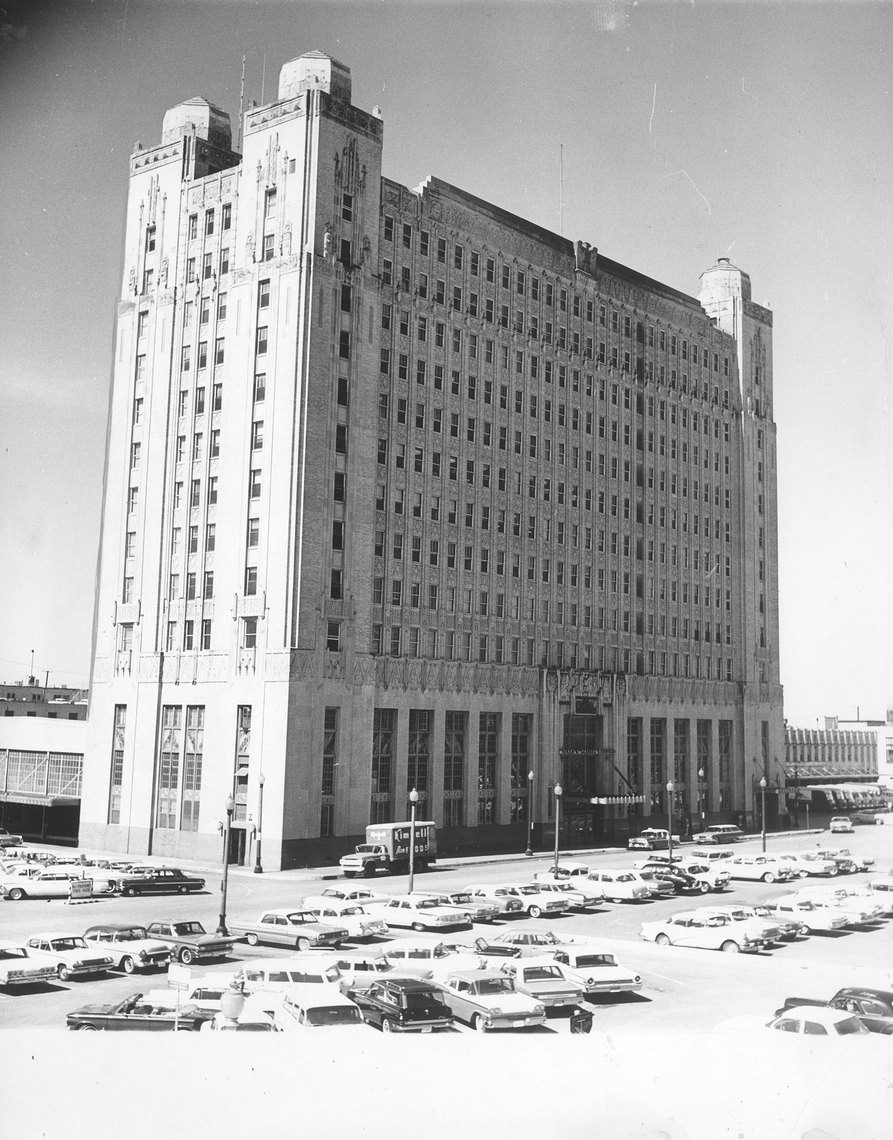
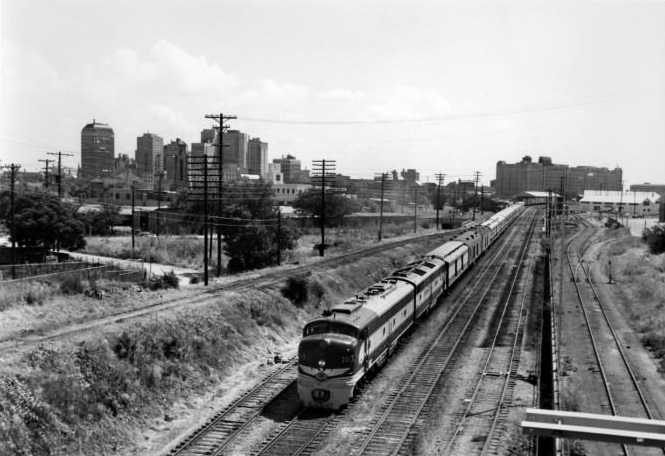
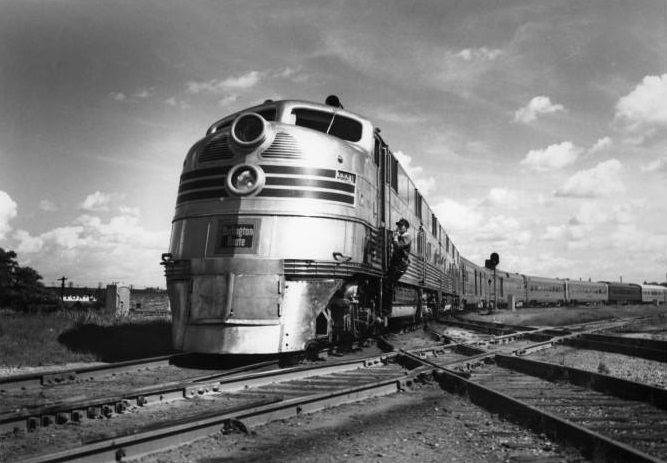
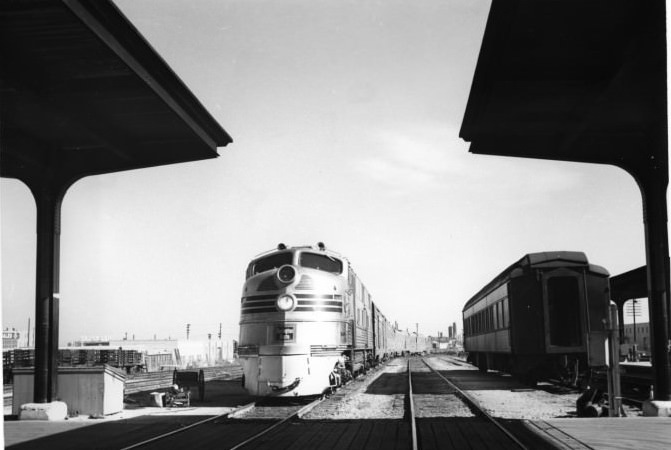
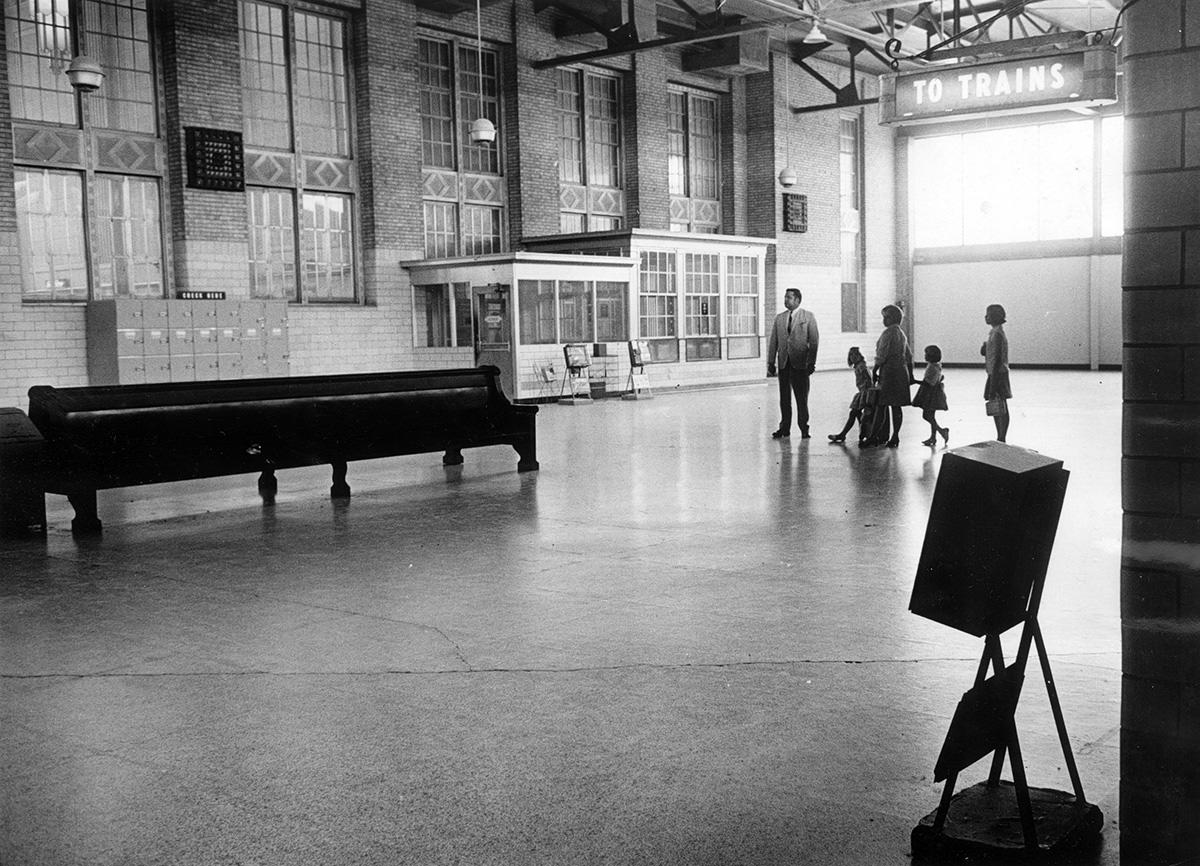
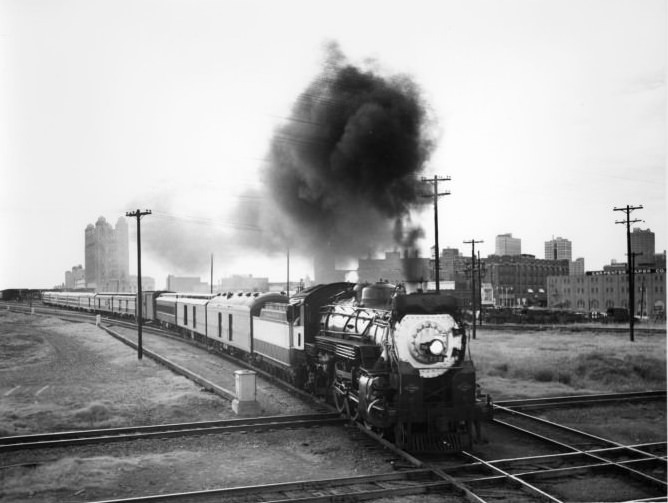
Rail travel remained a part of Fort Worth life well into the 1960s. The Texas & Pacific Railway Station was still in operation, and named passenger trains like “The Texas Eagle,” the “Texas Zephyr,” and the “Sam Houston Zephyr” continued to pass through or originate from the city. Families like the Balcoms were still boarding trains as late as 1969.
Texas & Pacific Railway Station exterior, 1963“The Texas Eagle” leaving Fort Worth, 1960s“Texas Zephyr” in Fort Worth, 1960s.“Sam Houston Zephyr” arriving in Fort Worth, 1965Mr. and Mrs. B. T. Balcom and daughters on their way to board a train, 1969
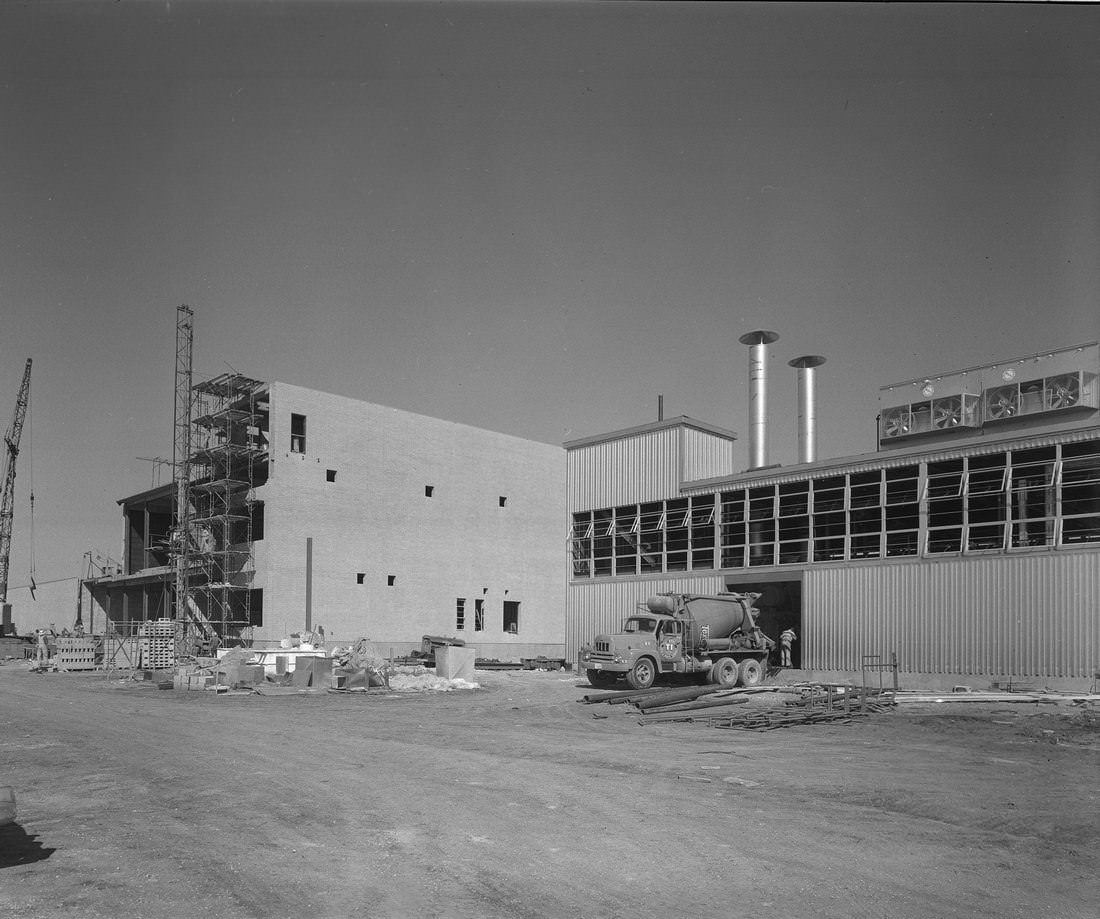
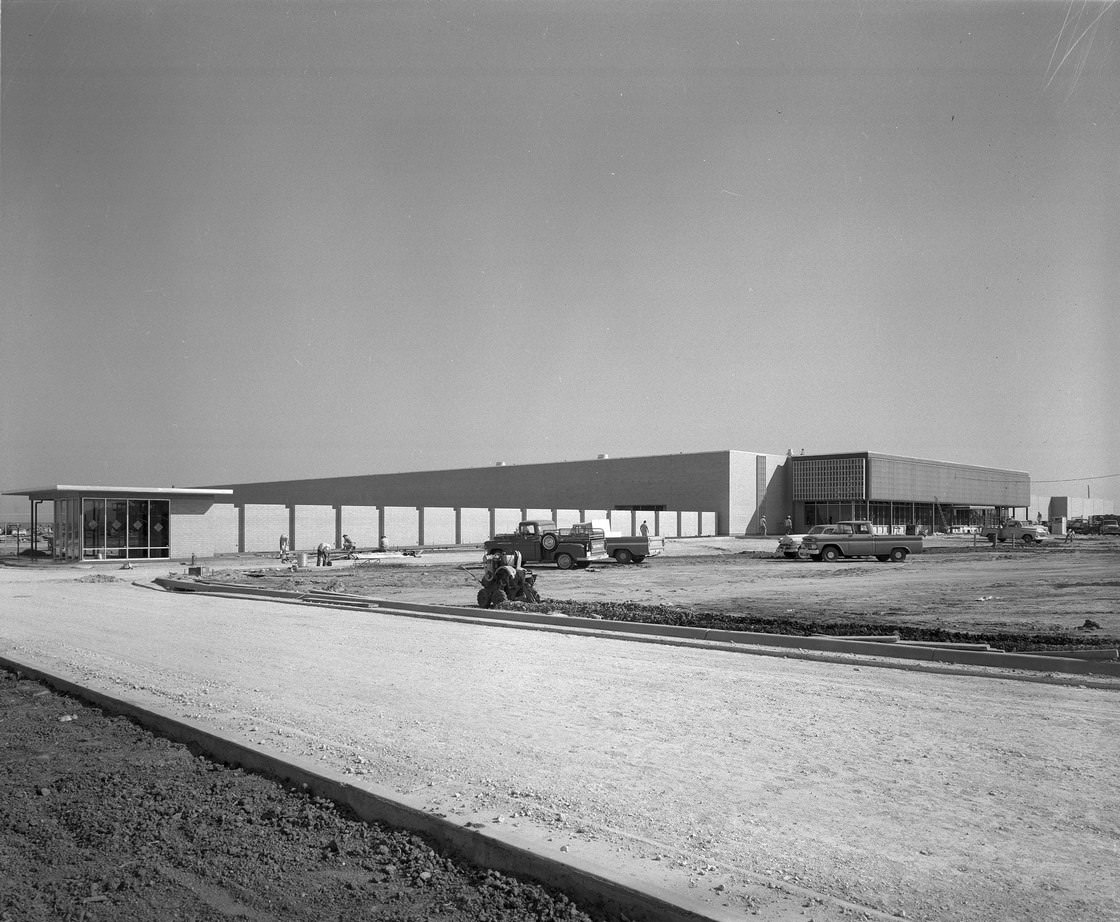
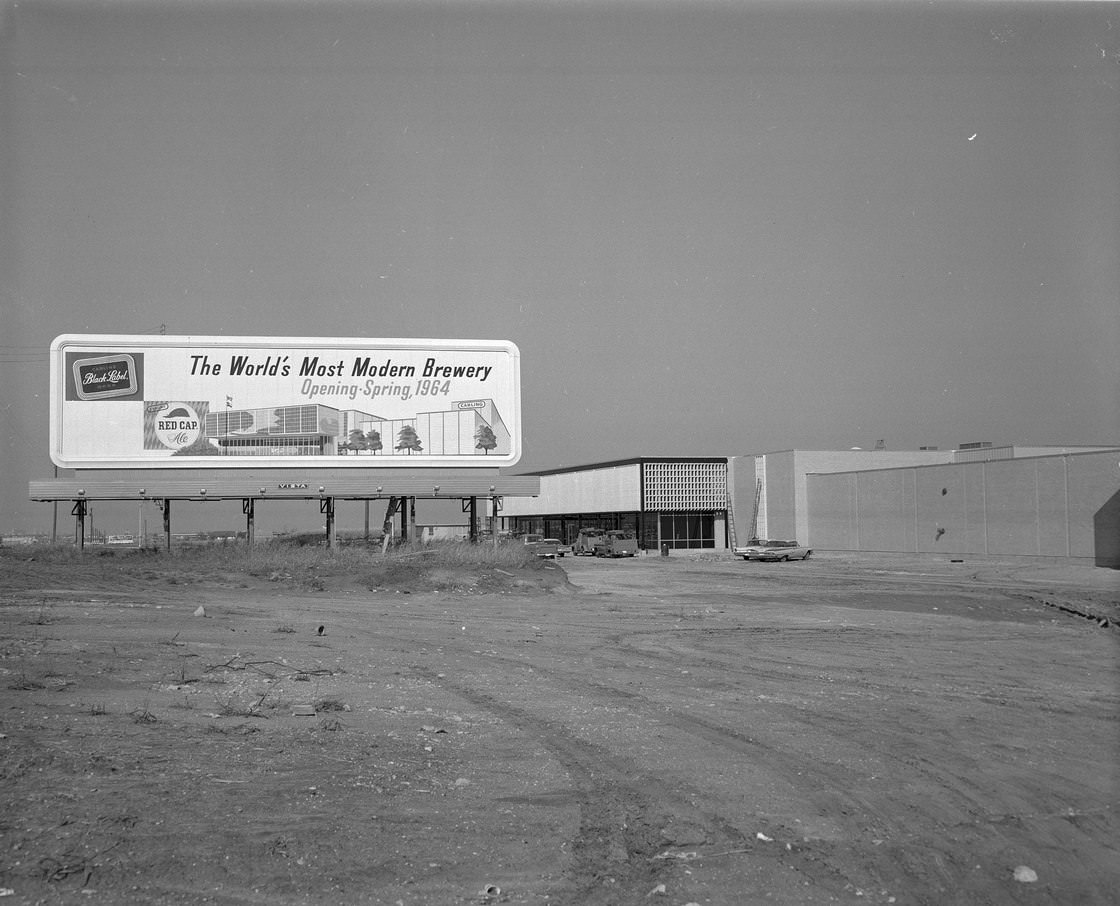
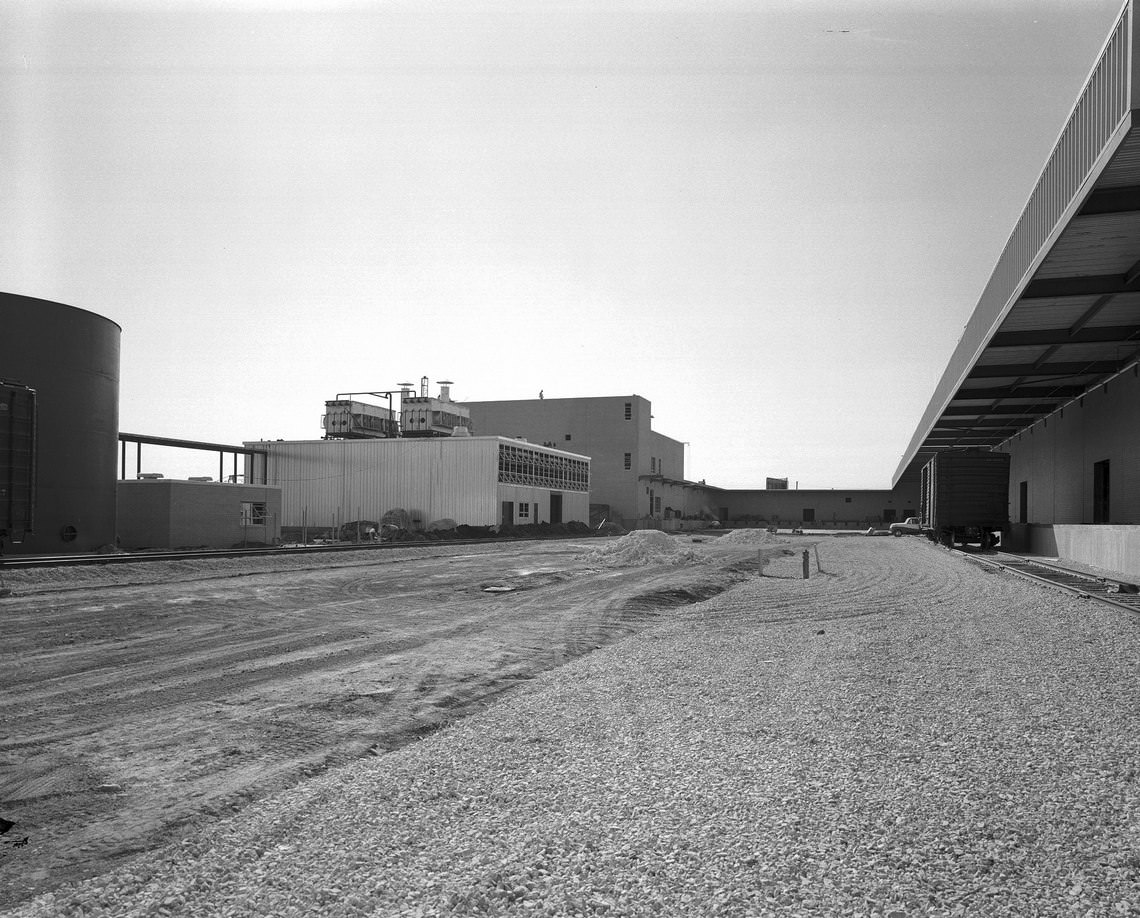
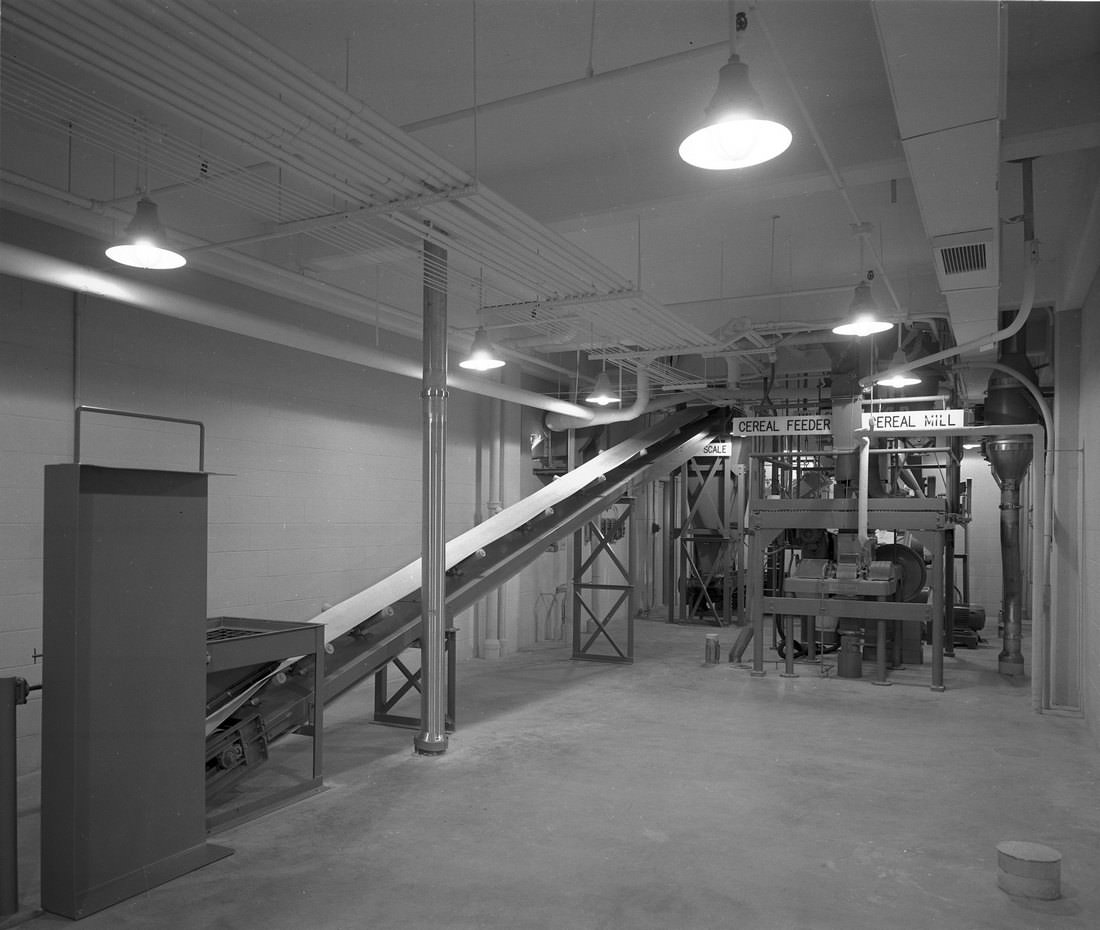
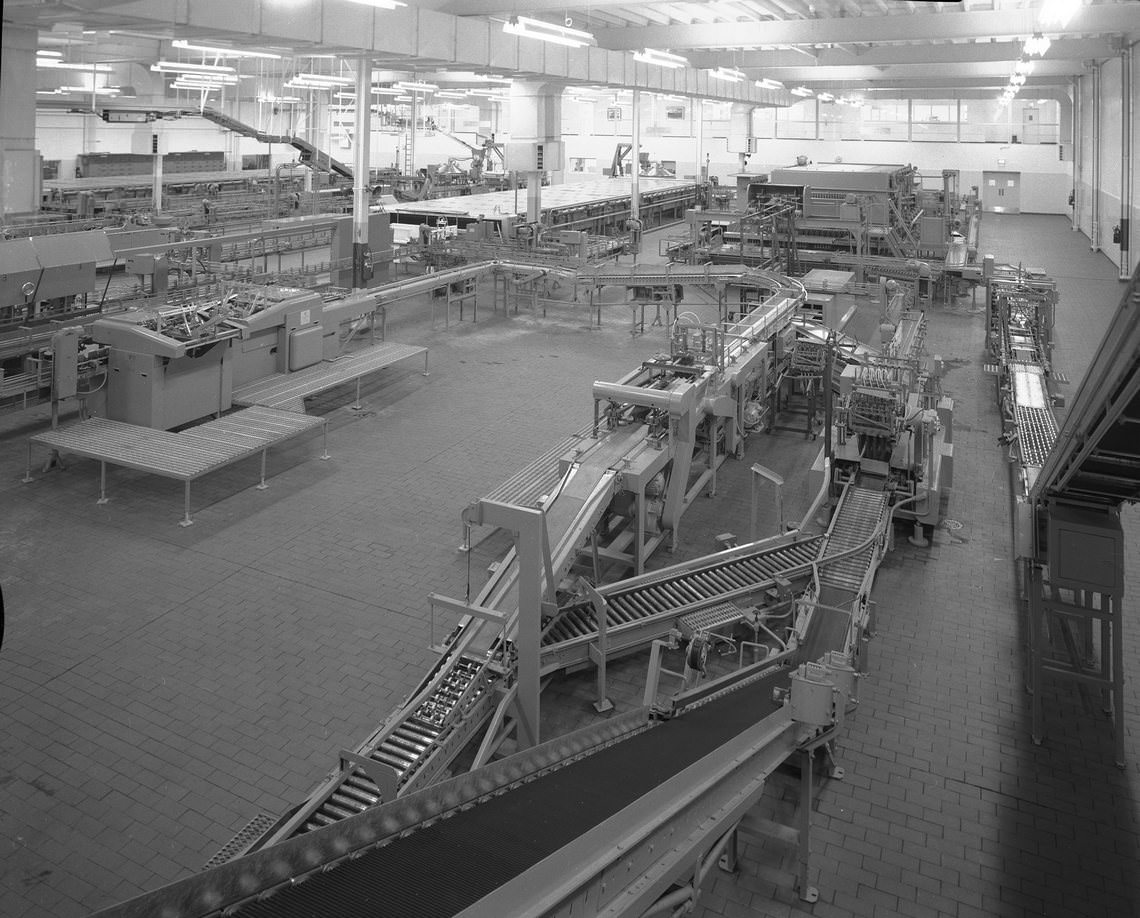
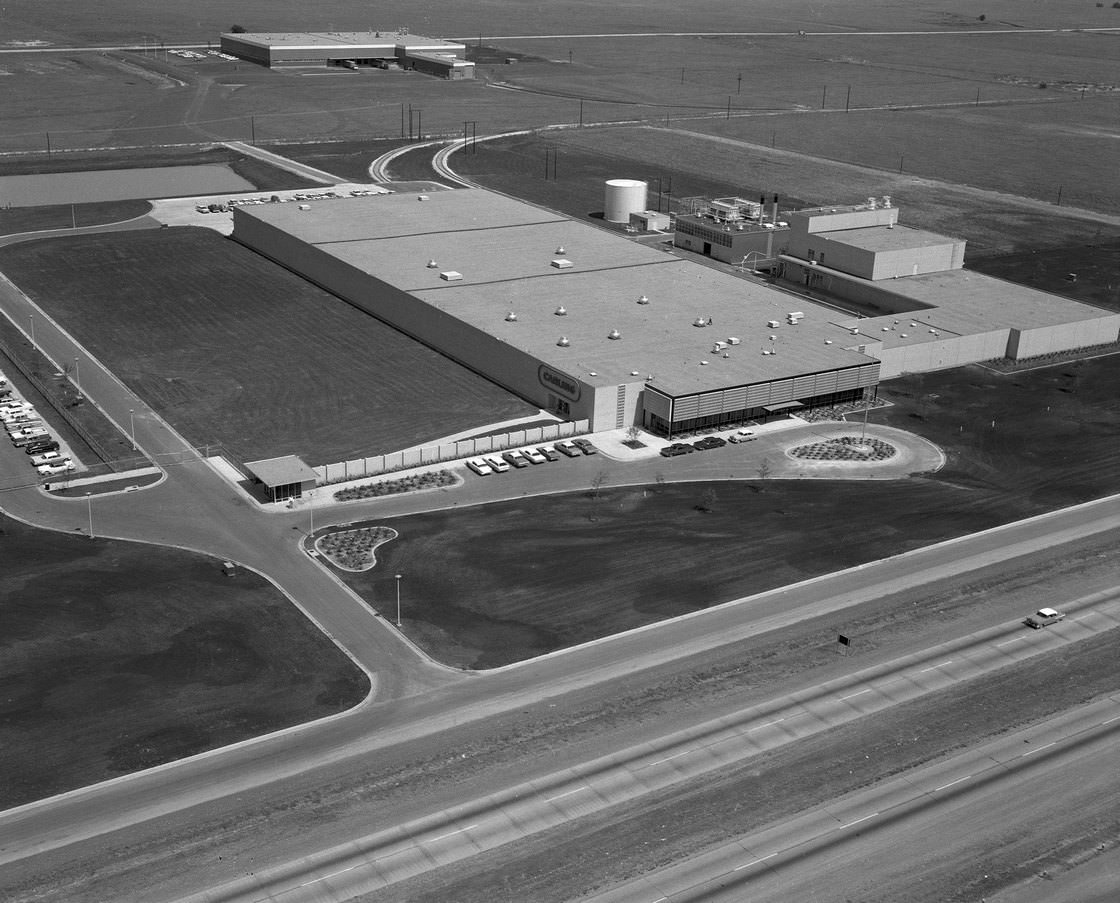
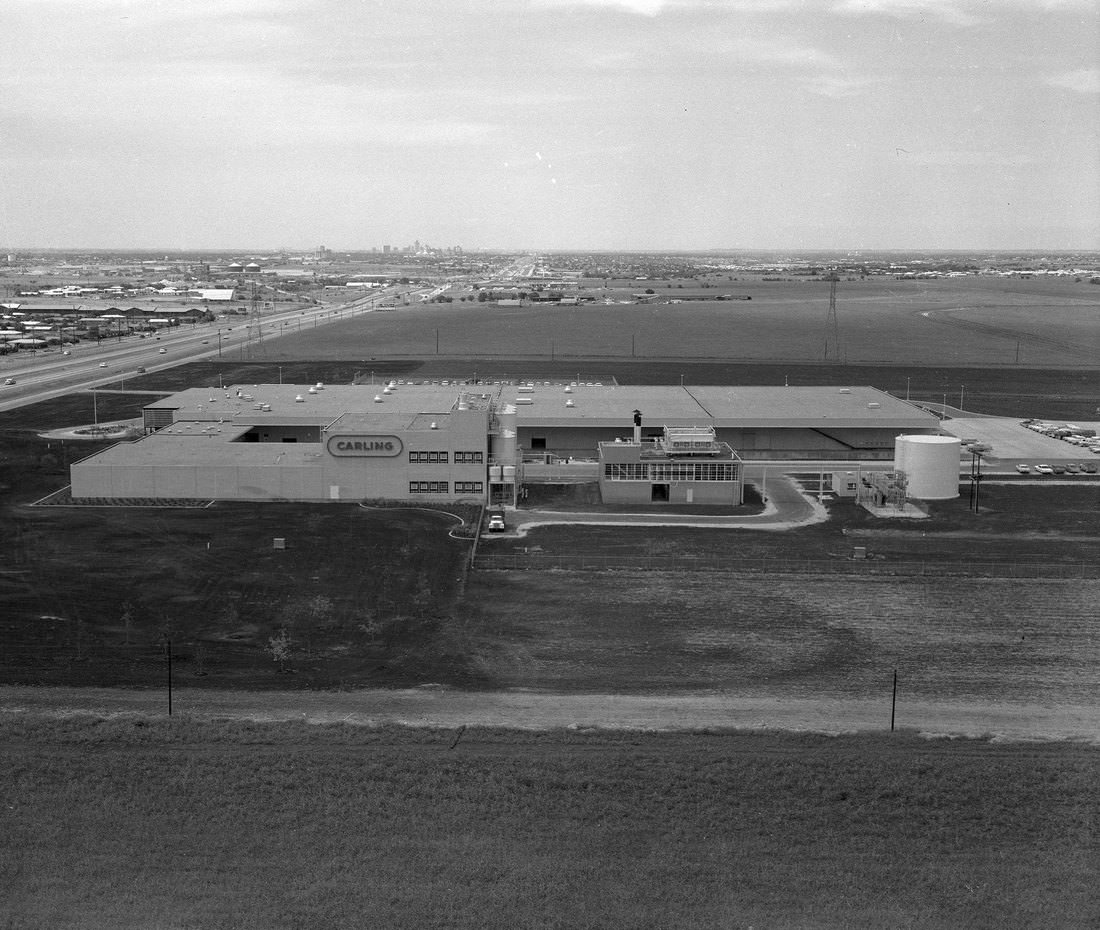
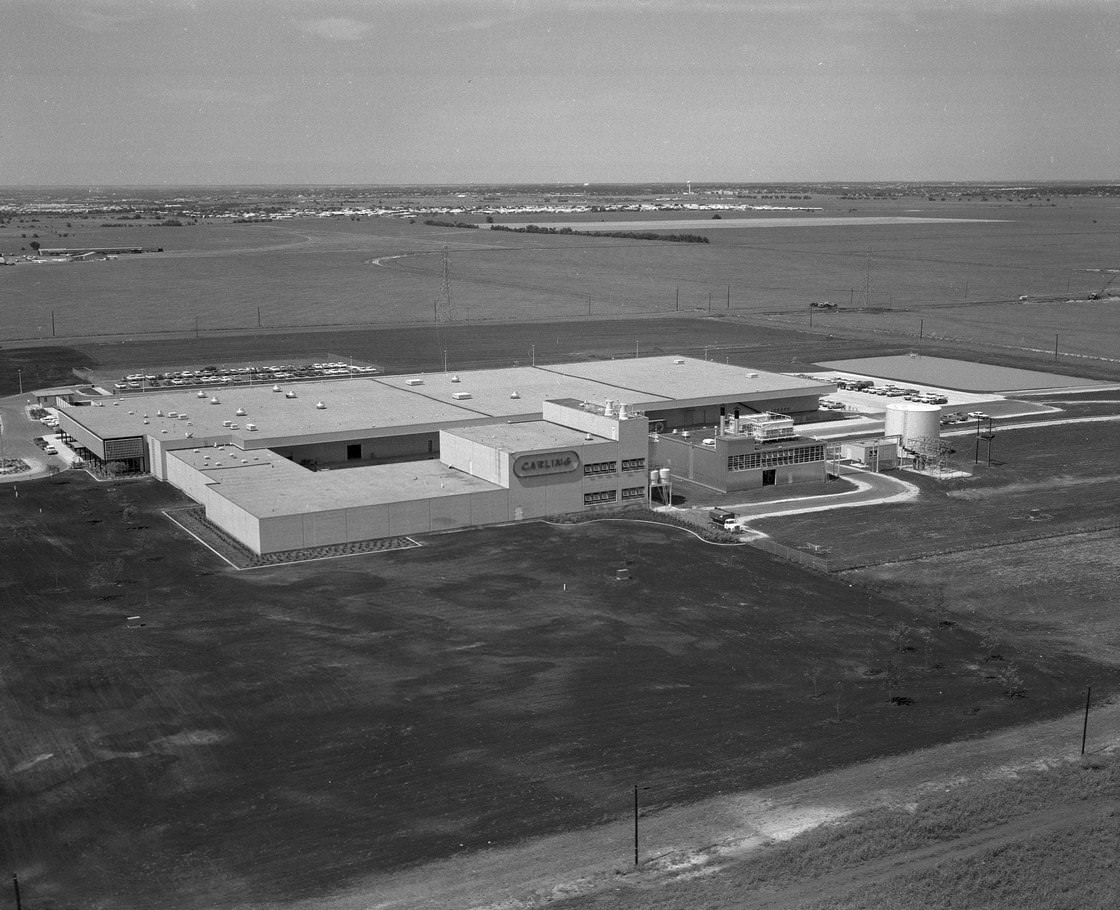
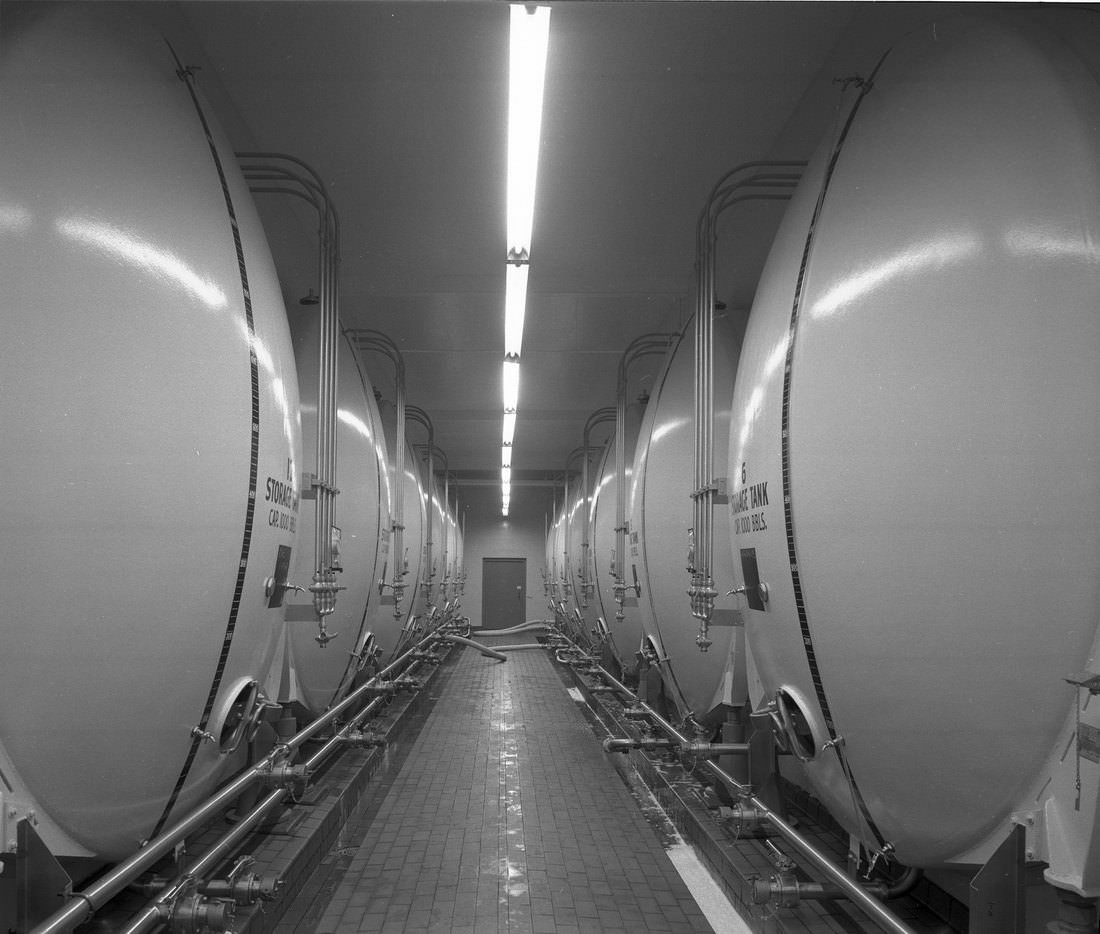
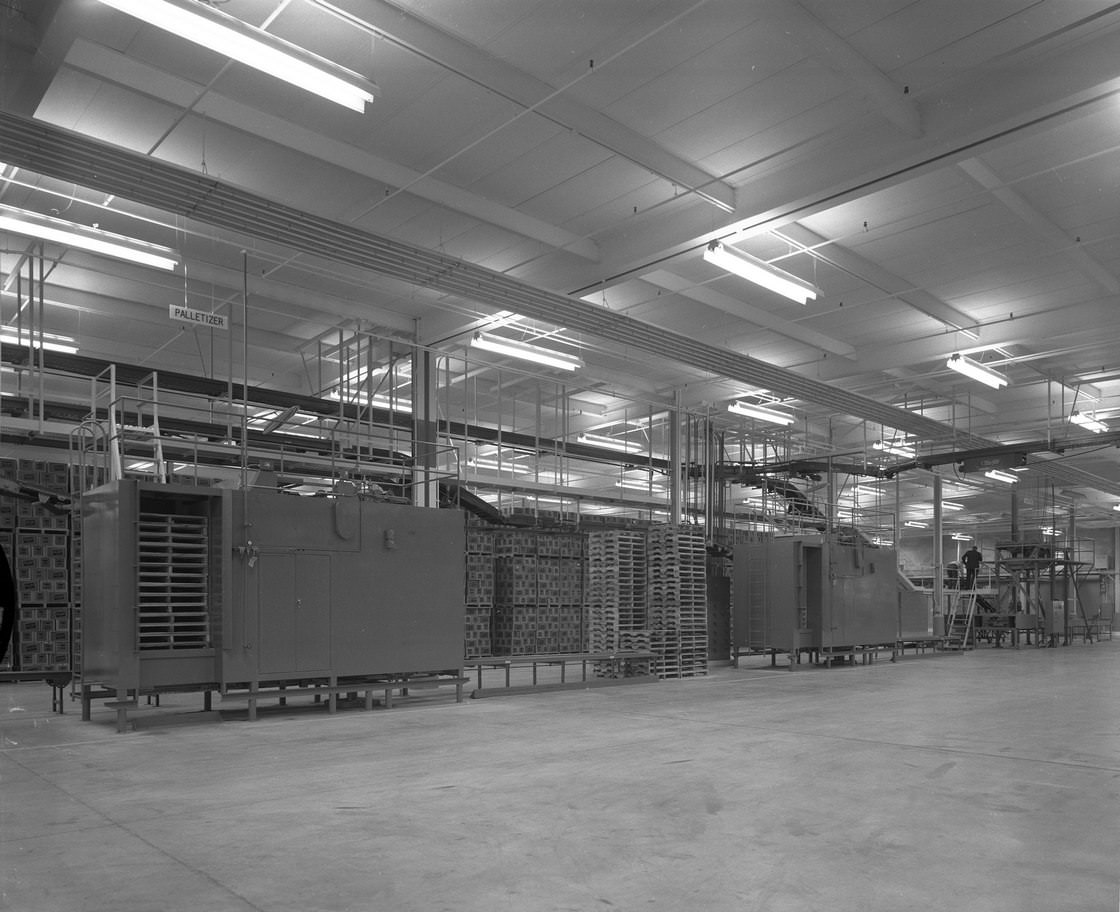
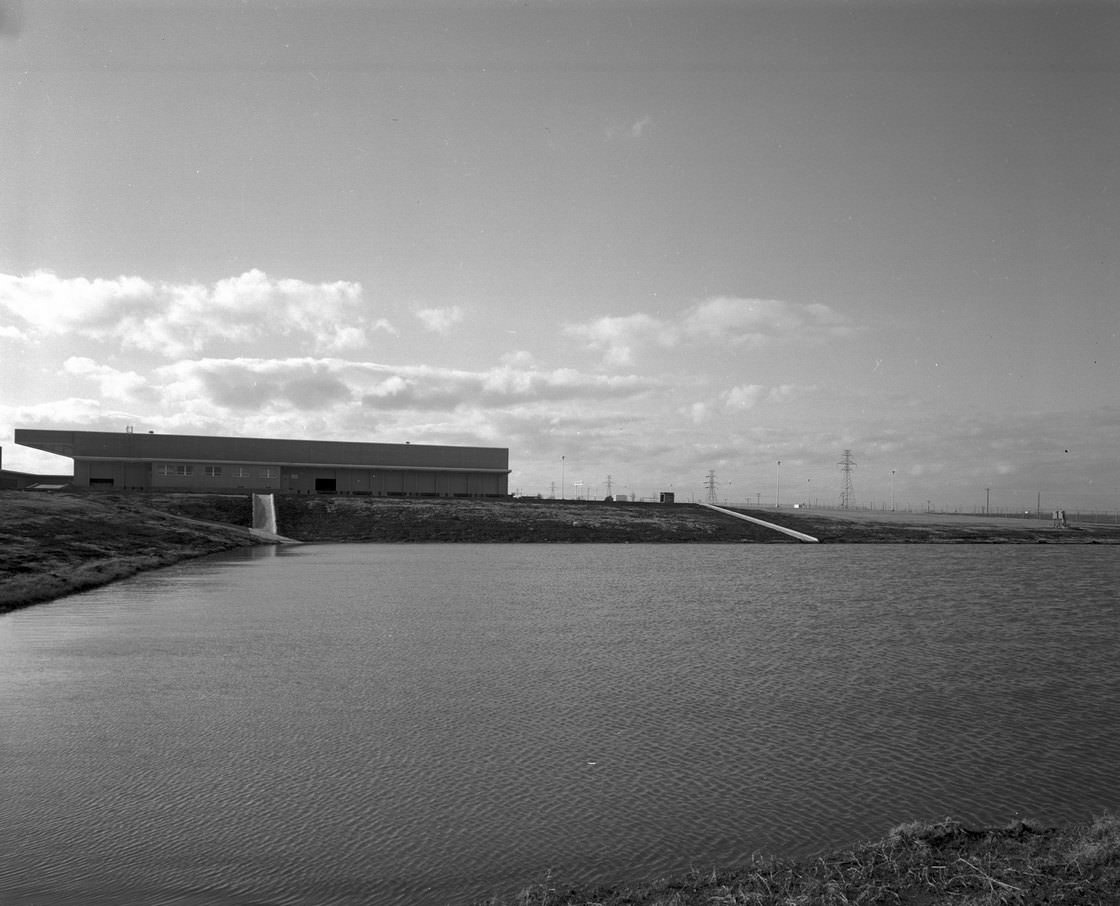
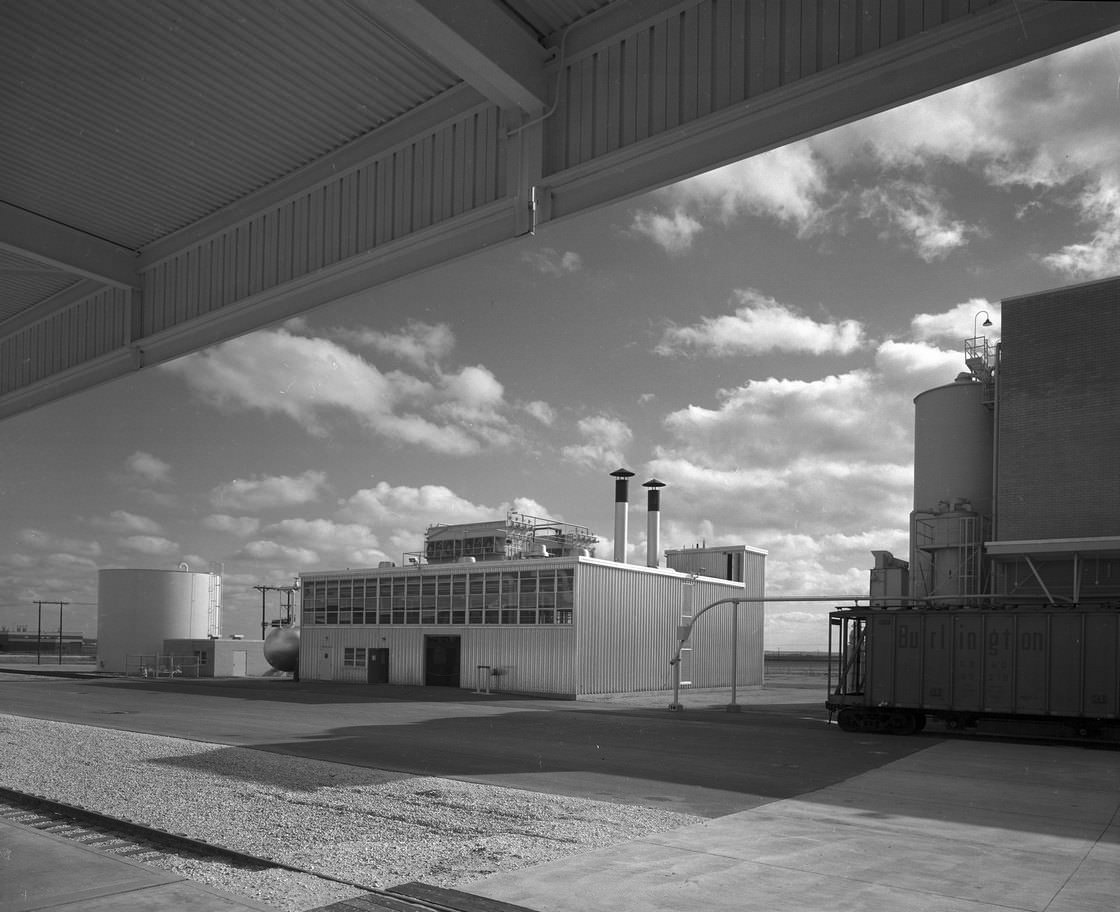
The Carling Brewery was one of Fort Worth’s notable industrial operations during this era. By the mid-1960s, it was a major employer with a sprawling facility that included a brewhouse, powerhouse, cereal feeders, packaging lines, and warehouse rail docks. The brewery represented the kind of large-scale manufacturing that gave the city a stable economic base.
Carling Brewery, Fort Worth, construction, powerhouse and brewhouse before the silos, 1963Carling Brewery, Fort Worth, front of building showing driveway, 1963Carling Brewery, Fort Worth, Texas, 1963Carling Brewery, Fort Worth, warehouse rail dock and railcar on truck, 1963Cereal Feeder, Carling Brewery, Fort Worth, 1964Packaging liner, Carling Brewery, Fort Worth, 1964Carling Brewery, Fort Worth, Texas, 1964Carling Brewery, Fort Worth, Texas, 1964Carling Brewery, Fort Worth, Texas, 1964The interior of Carling Brewery, 1964Crates for mass moving, 1964Carling Brewery, Fort Worth, Texas exterior of building with pond in foreground, 1965Exterior view of building, storage containers, Burlington freight container at Carling Brewery, 1965
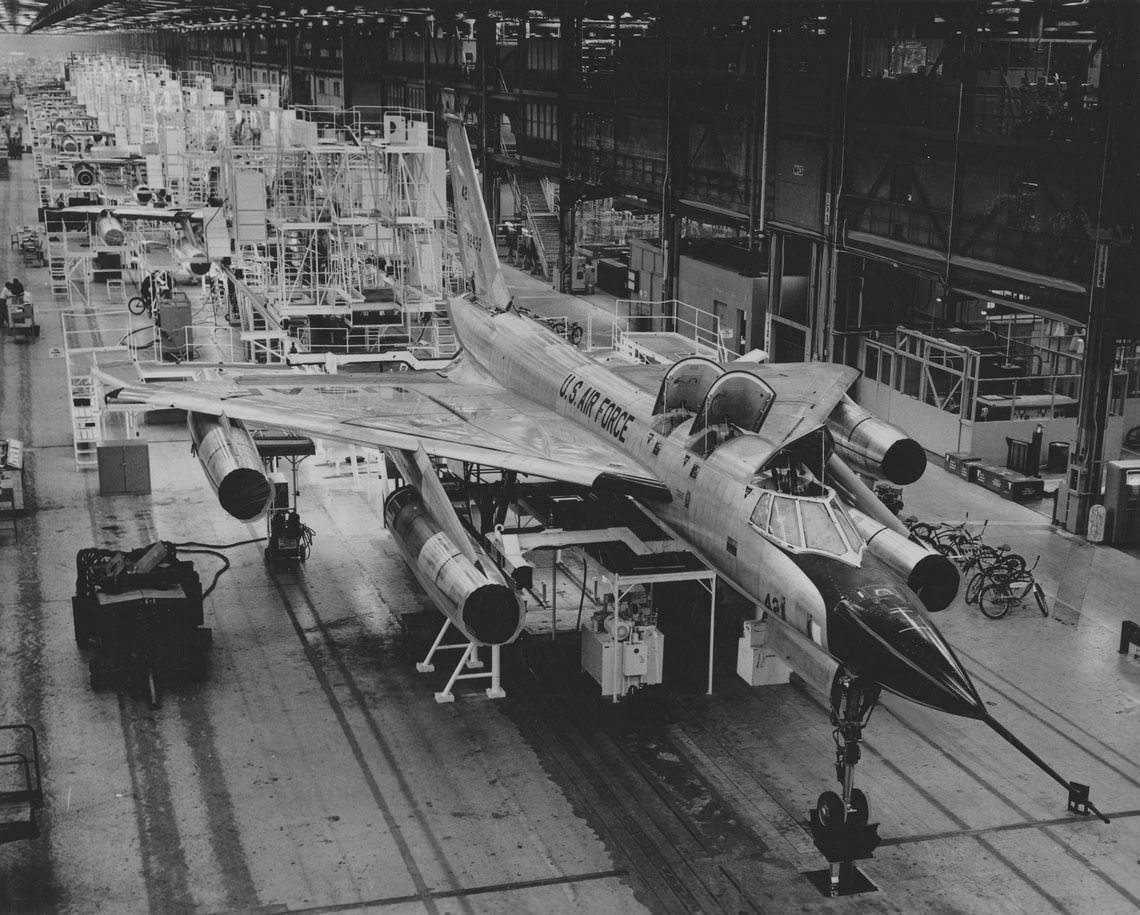
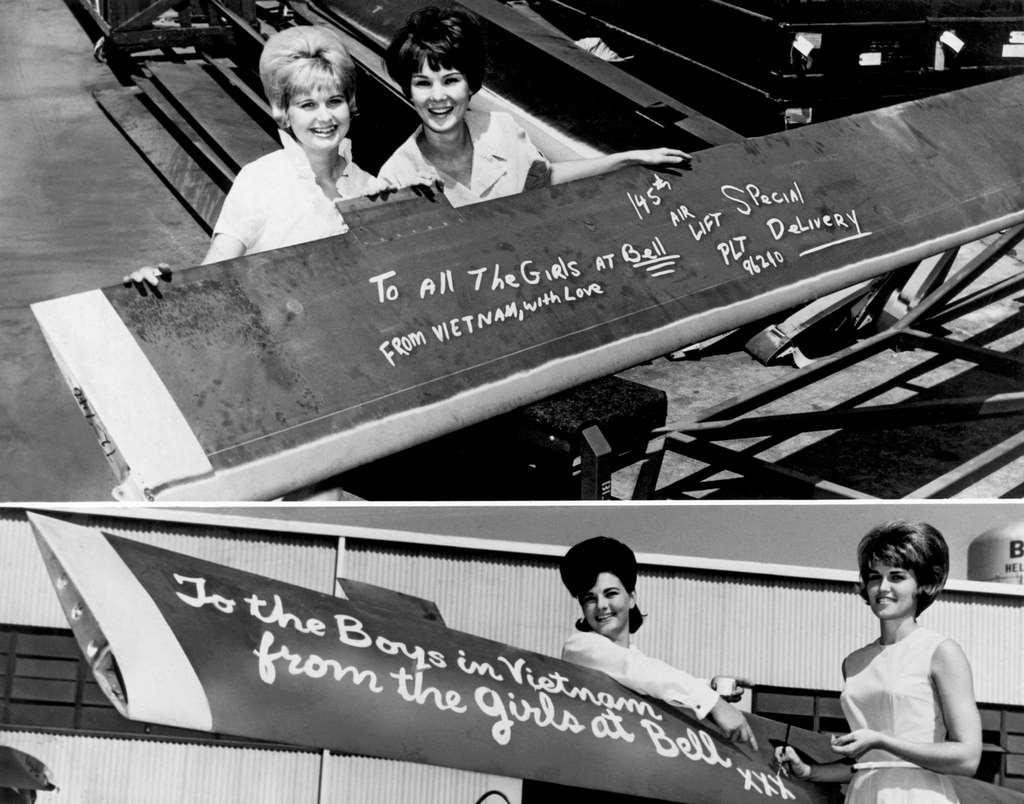
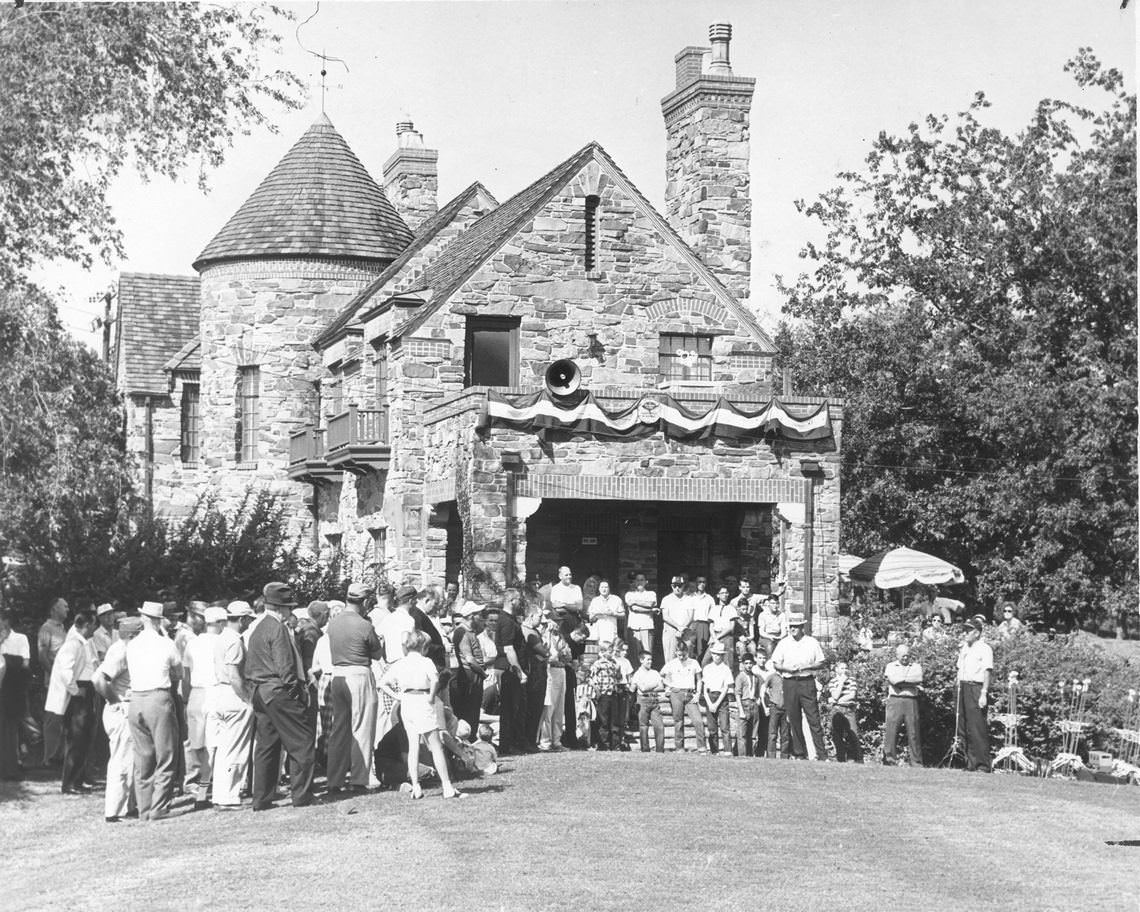
Defense manufacturing was another pillar of Fort Worth’s economy. Convair’s factory in the city produced the B-58 Hustler, a supersonic jet bomber that was cutting-edge military technology at the time. Carswell Air Force Base sat on the city’s west side and maintained a strong military presence throughout the decade. Bell Helicopter, operating under Textron, built UH-1 Iroquois helicopters — known widely as Hueys — that shipped directly to U.S. troops fighting in Vietnam.
B-58 production line at the Convair factory, Fort Worth, 1960Textron’s Bell Helicopter company employees show them pose with UH-1 Iroquois (Huey) helicopter main rotor blades, Fort Worth, Texas, October 20, 1965.The dedication of golf course clubhouse at Carswell Air Force Base, 1960
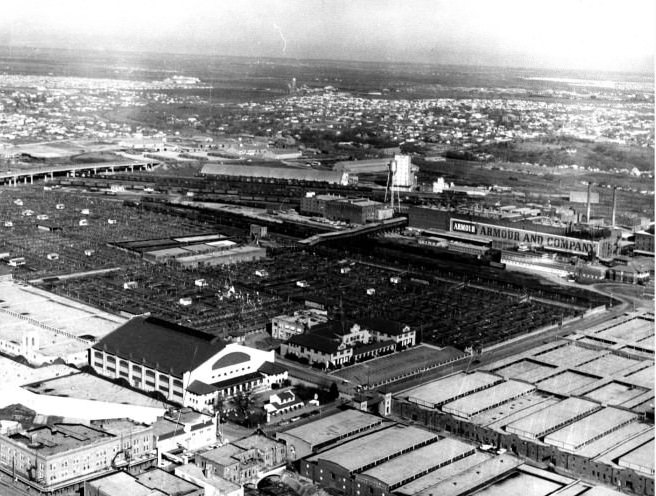
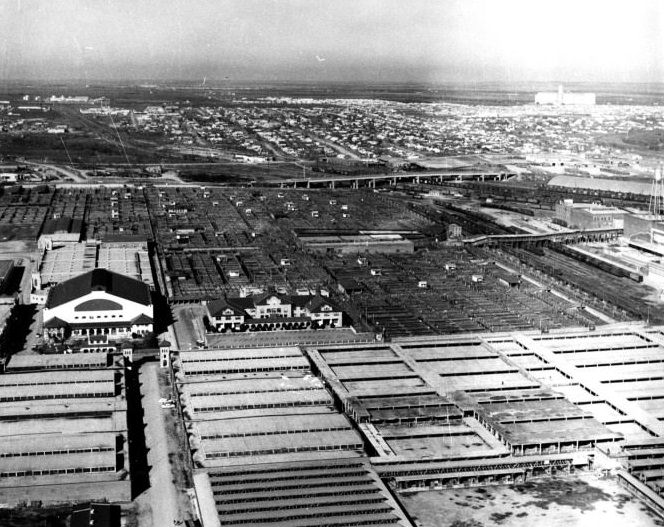
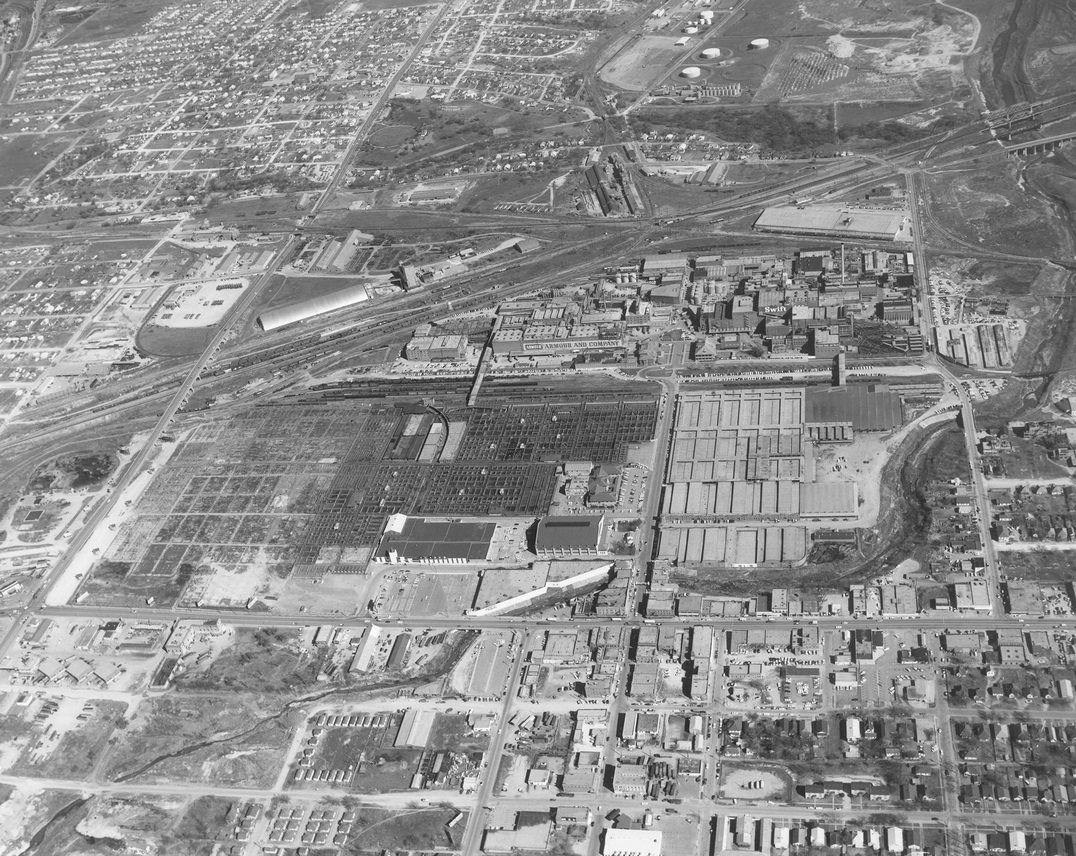
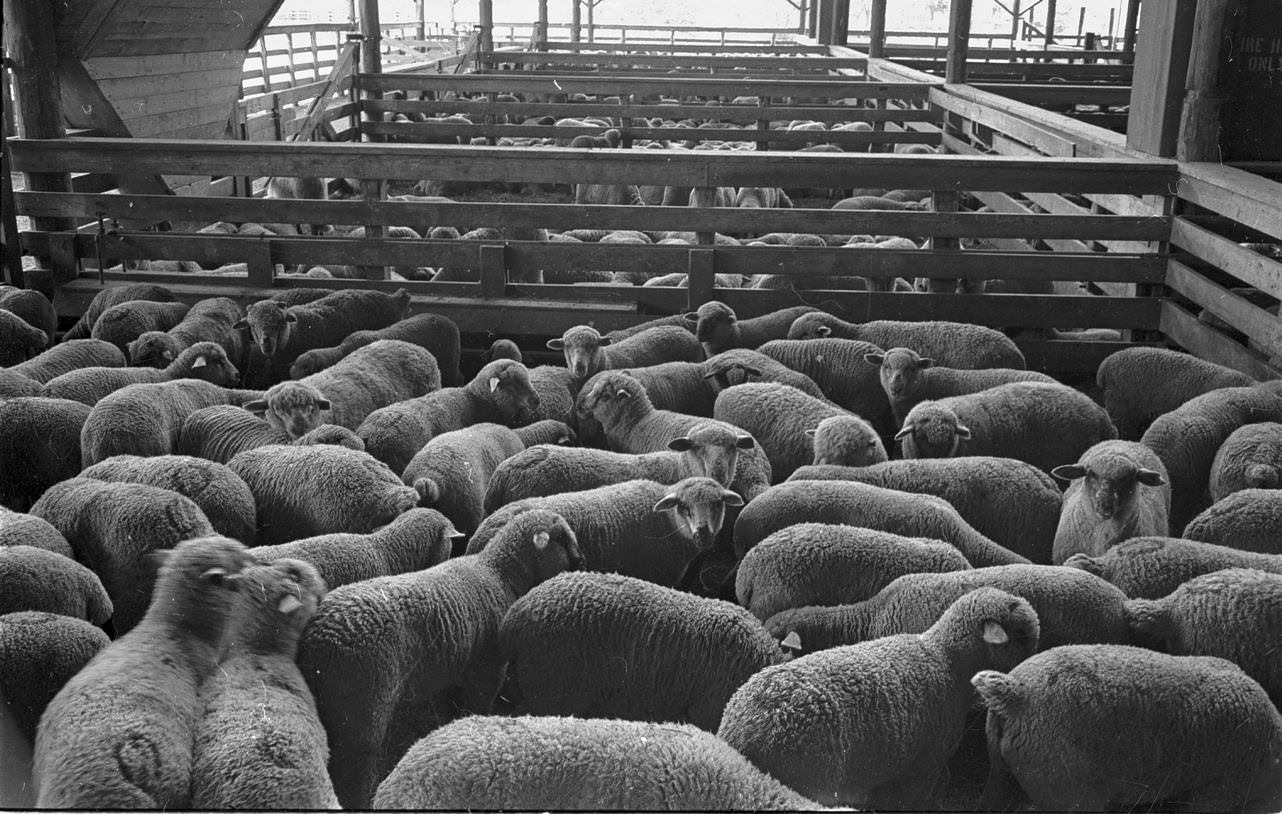
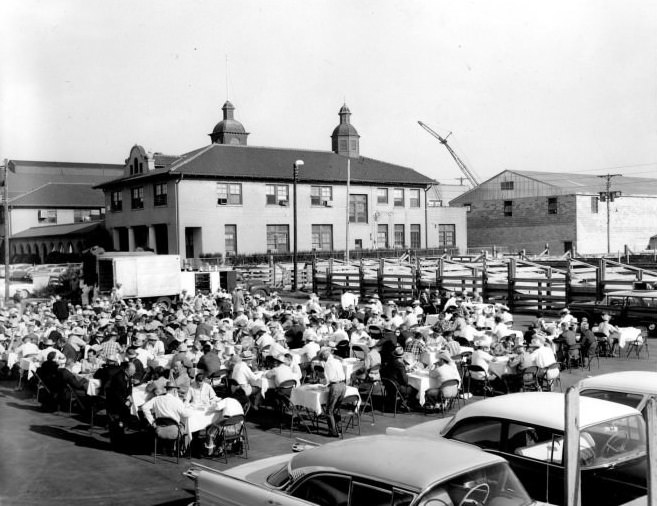
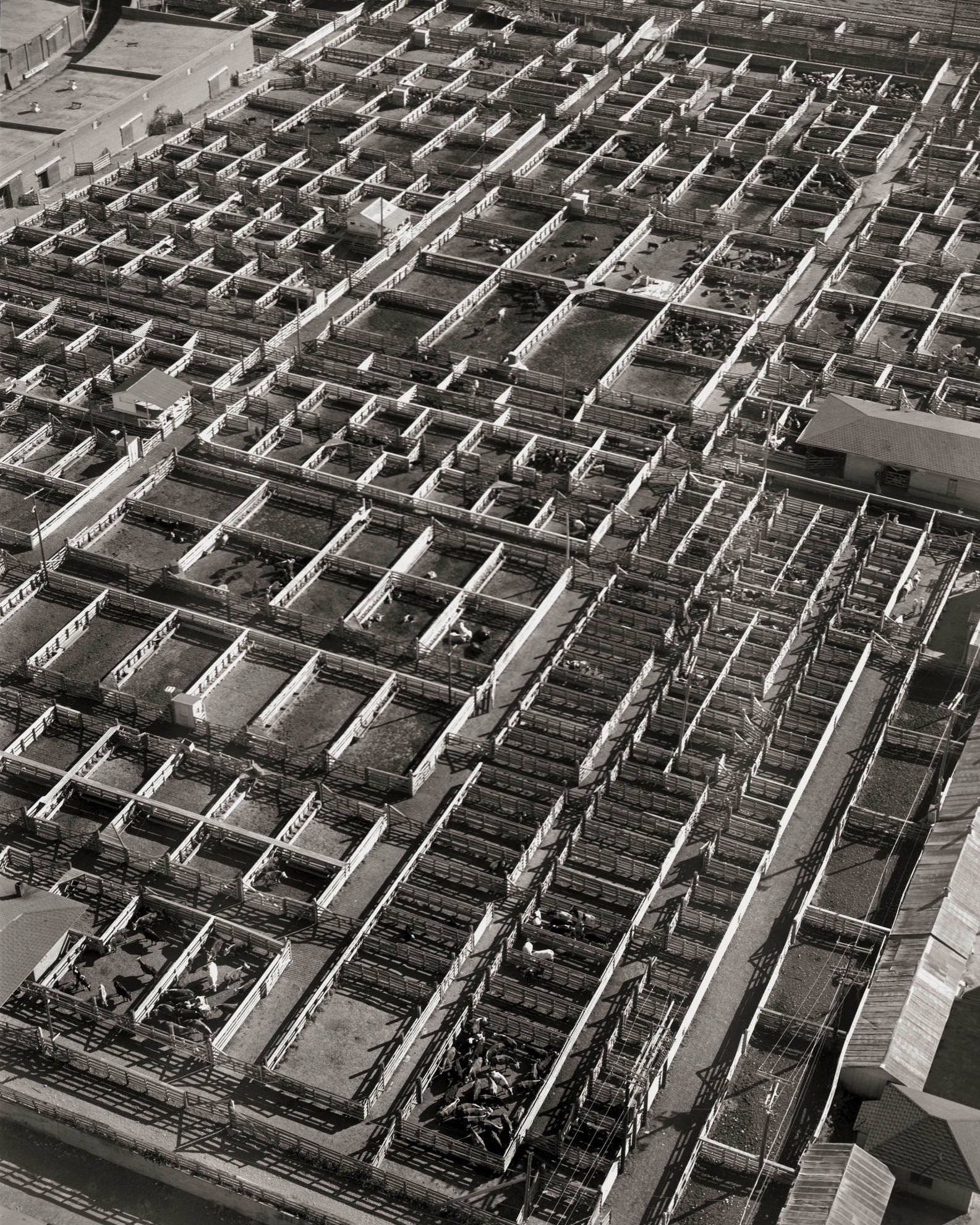
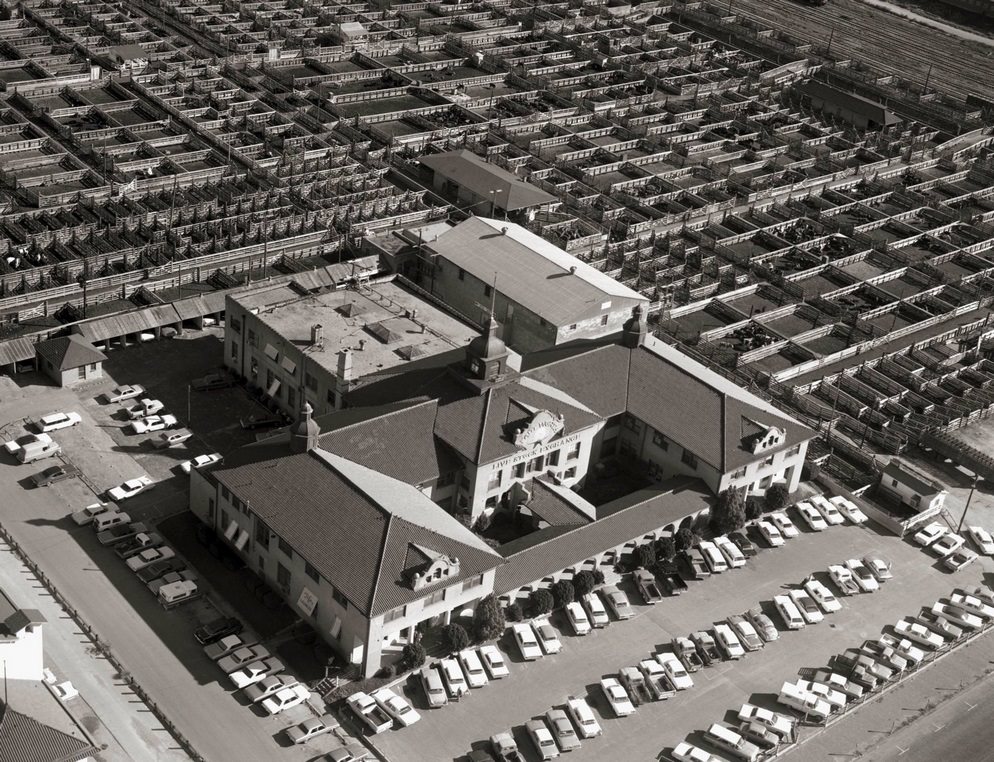
The Fort Worth Stockyards remained active through the 1960s. Aerial views from 1960 and 1961 show the full scale of the complex, with pens of sheep and cattle, auction facilities, and surrounding infrastructure all still operating at capacity. The 1960 Fort Worth Auction Market opening at the stockyards marked another chapter in the city’s long cattle trading history.
Aerial View of the Fort Worth Stockyards, 1960Aerial View of the Fort Worth Stockyards, 1960High altitude aerial of Fort Worth Stockyards, 1961A pen of sheep in Fort Worth Stockyards, 1961The opening of the 1960 Fort Worth Auction Market at the stockyards.Fort Worth Stockyard, 1967Fort worth stockyard, November 1967, Fort Worth.
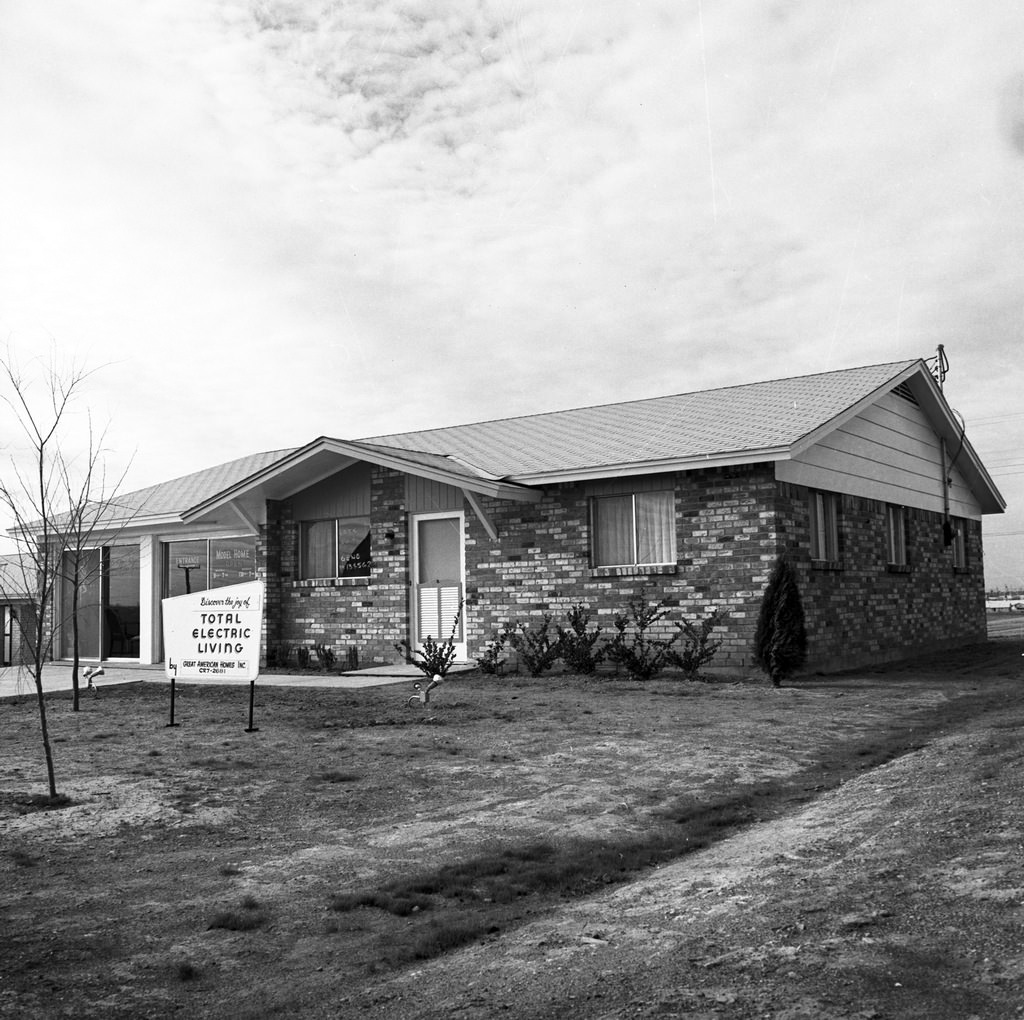
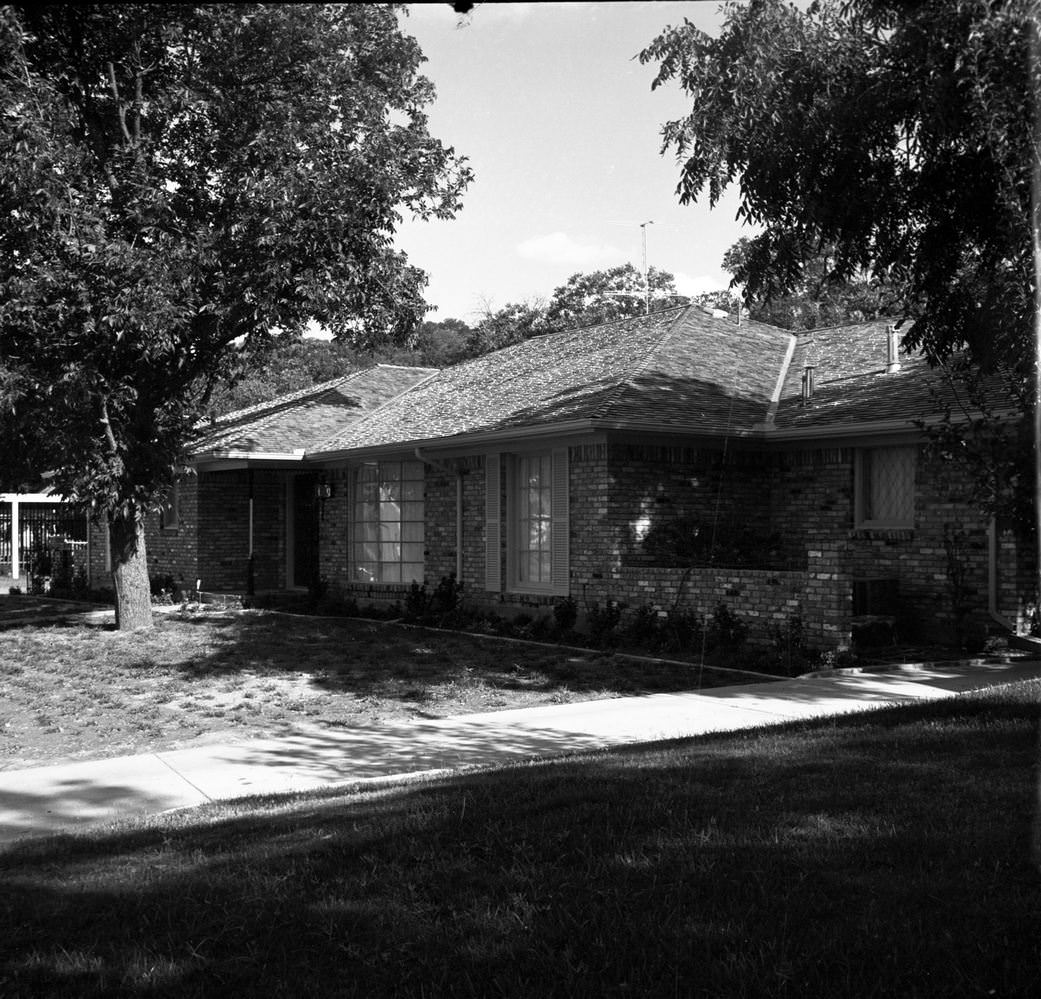
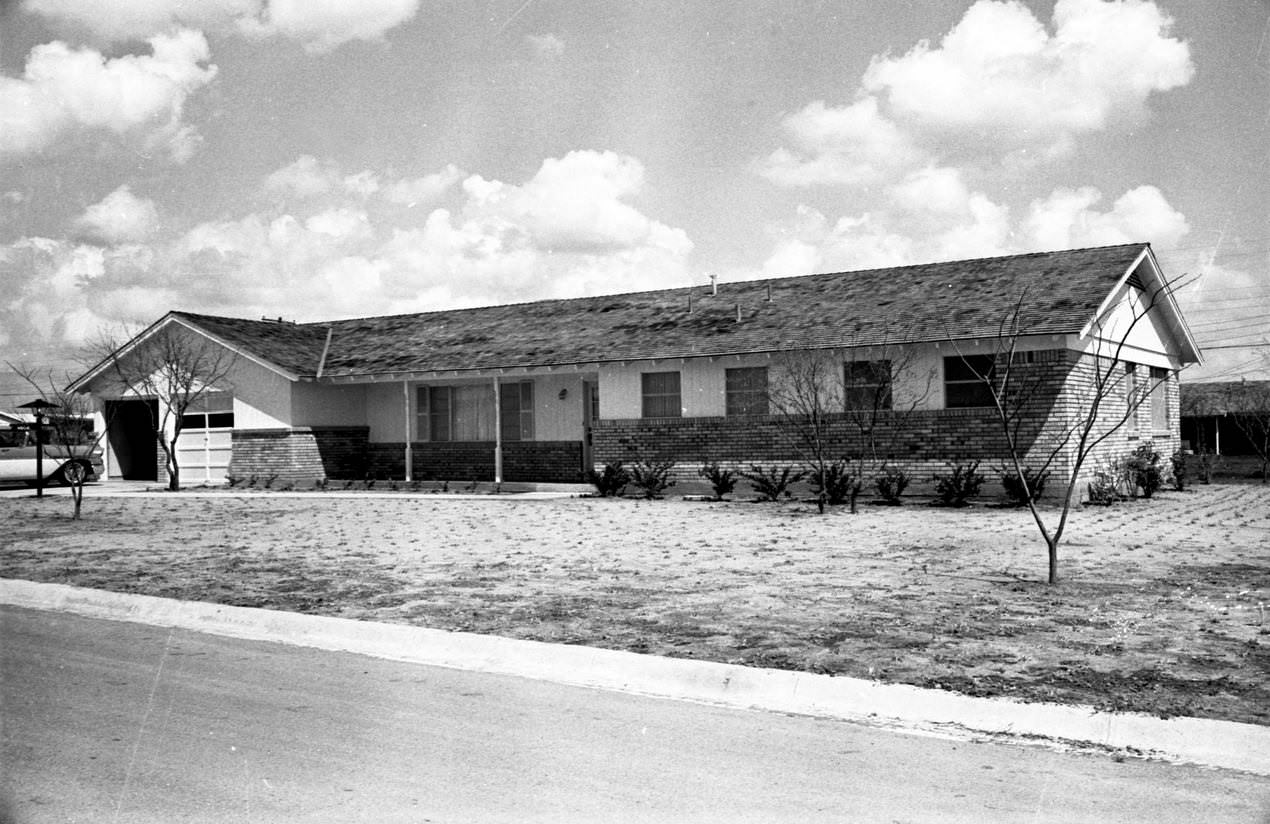
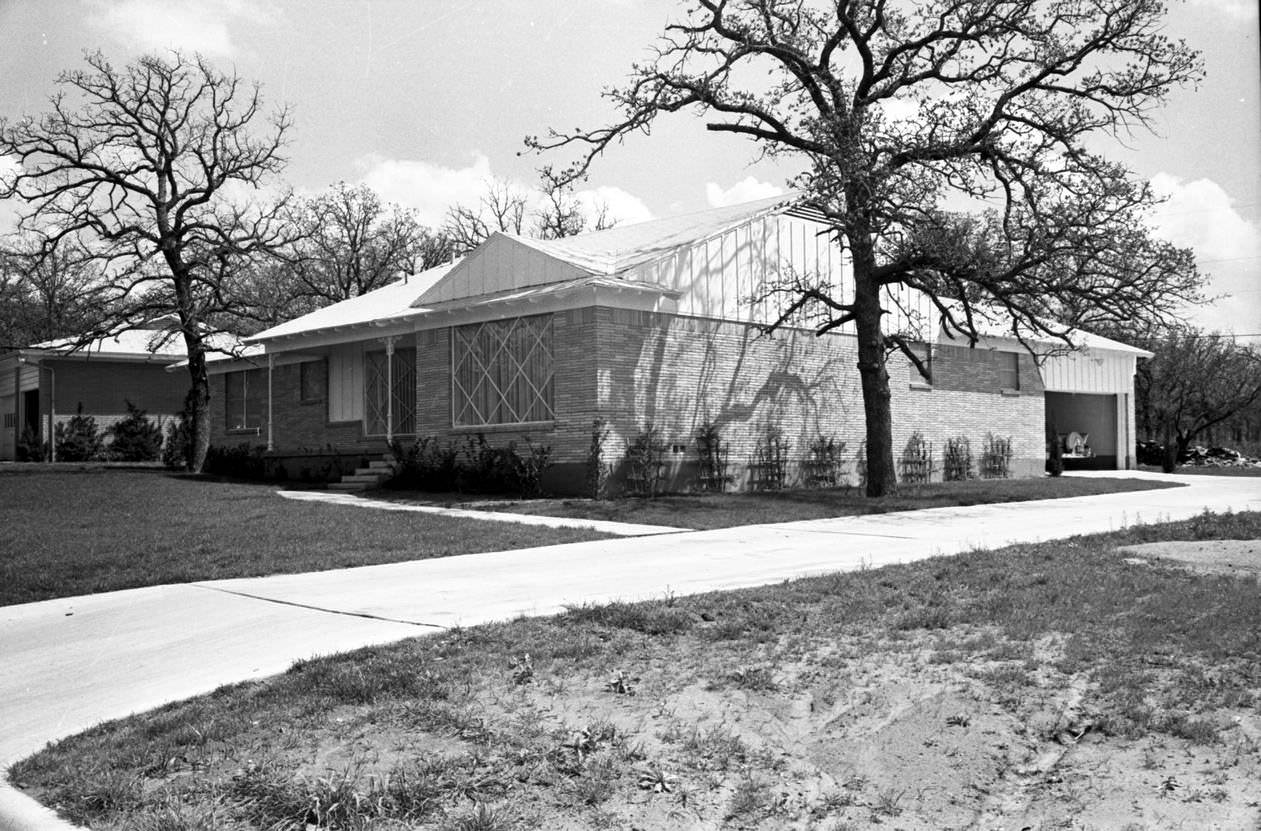
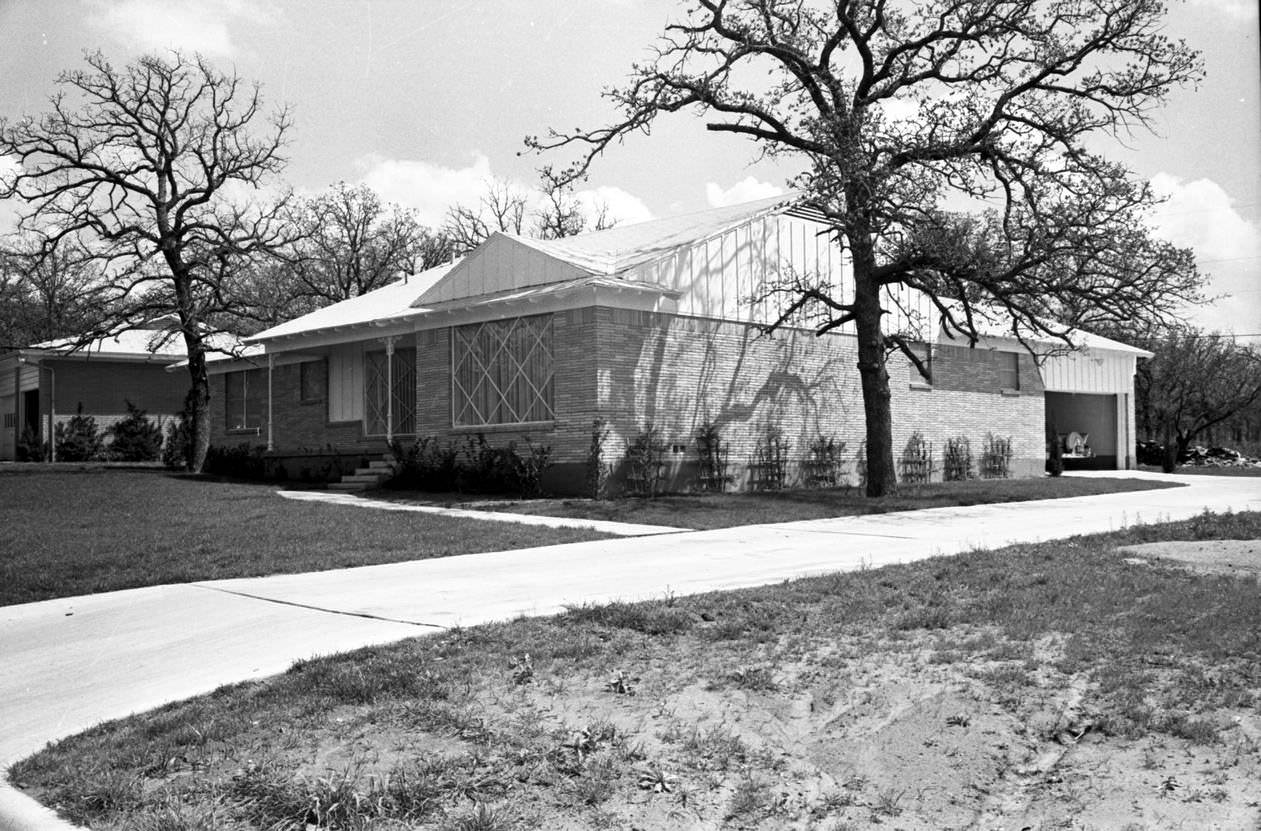
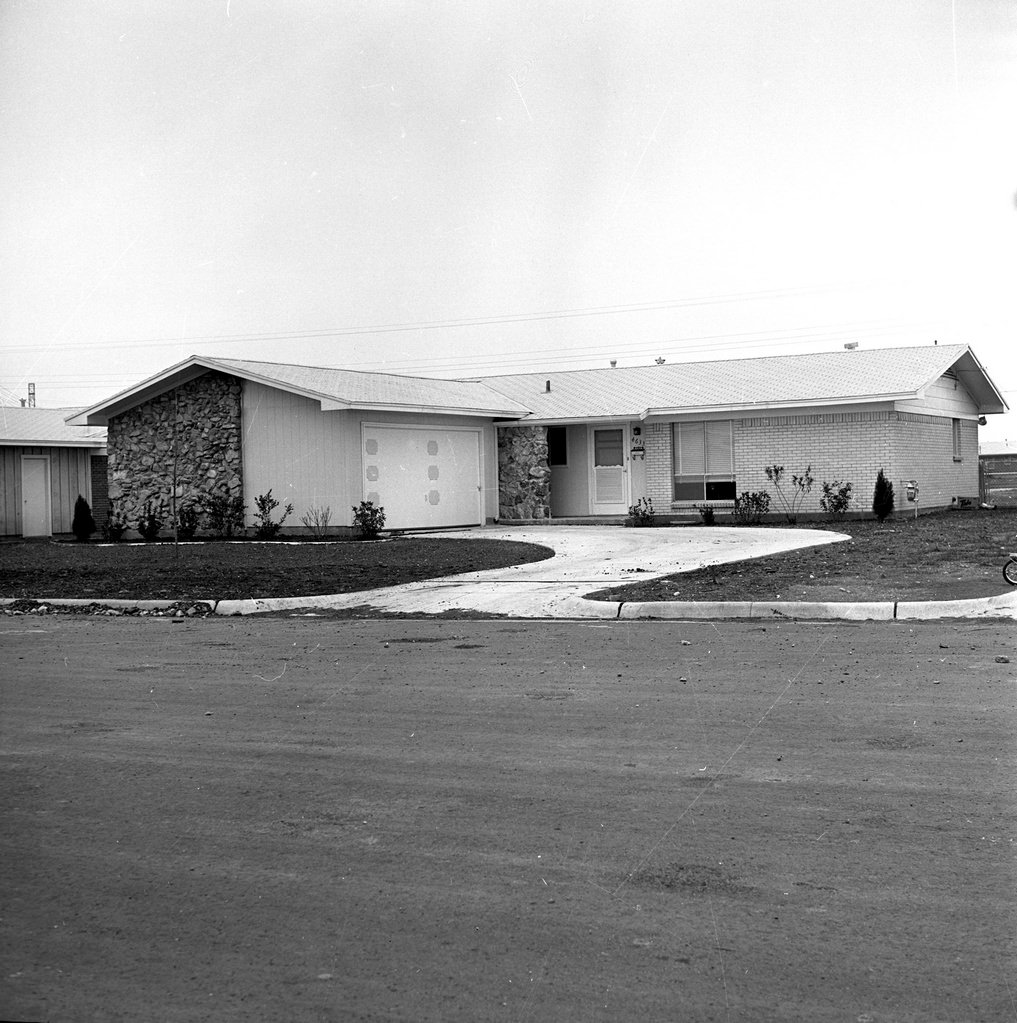
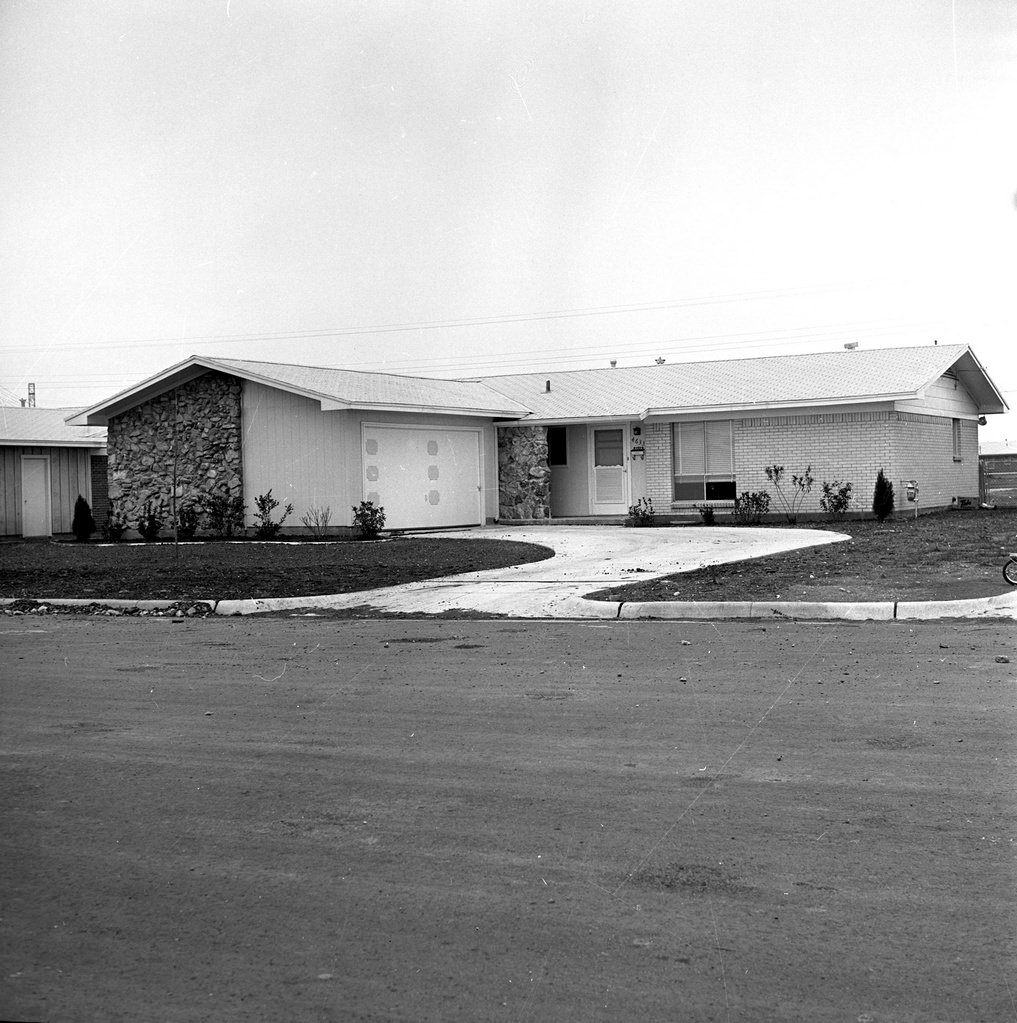
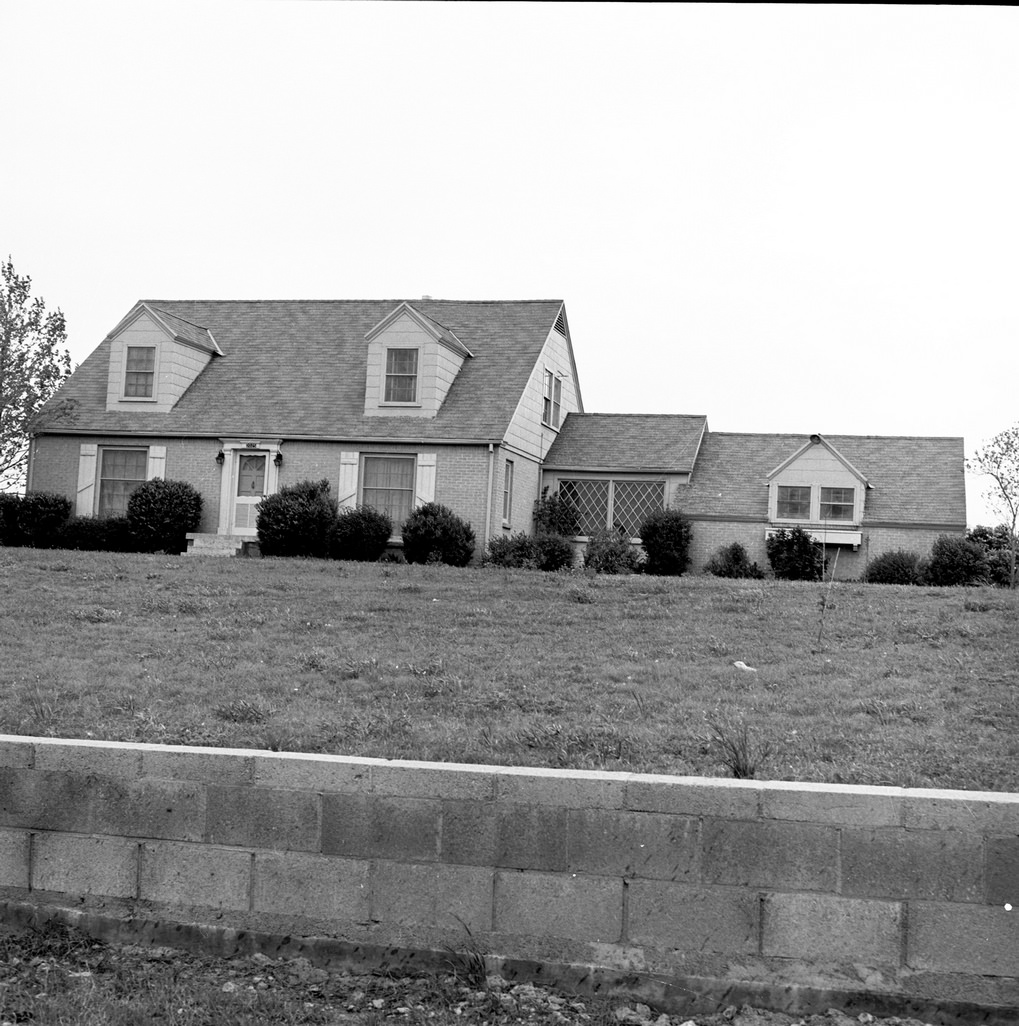
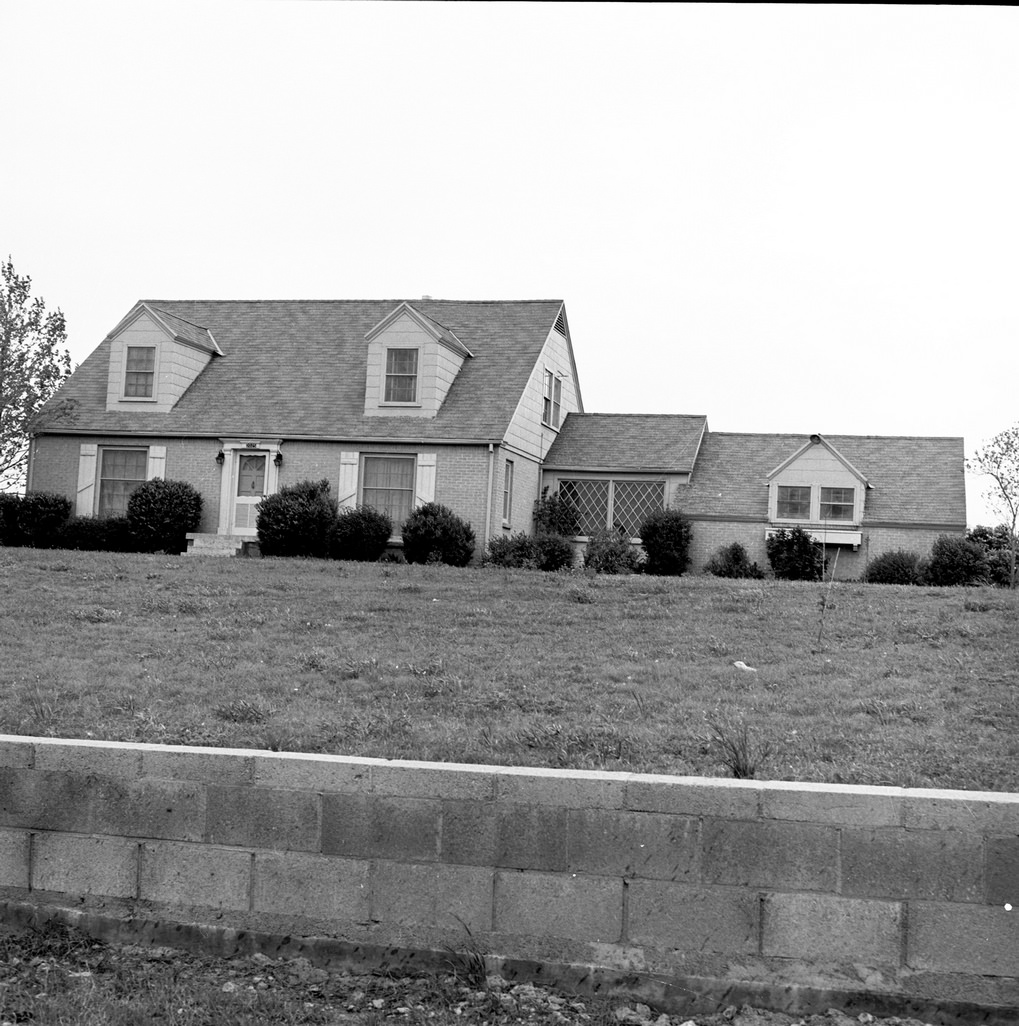
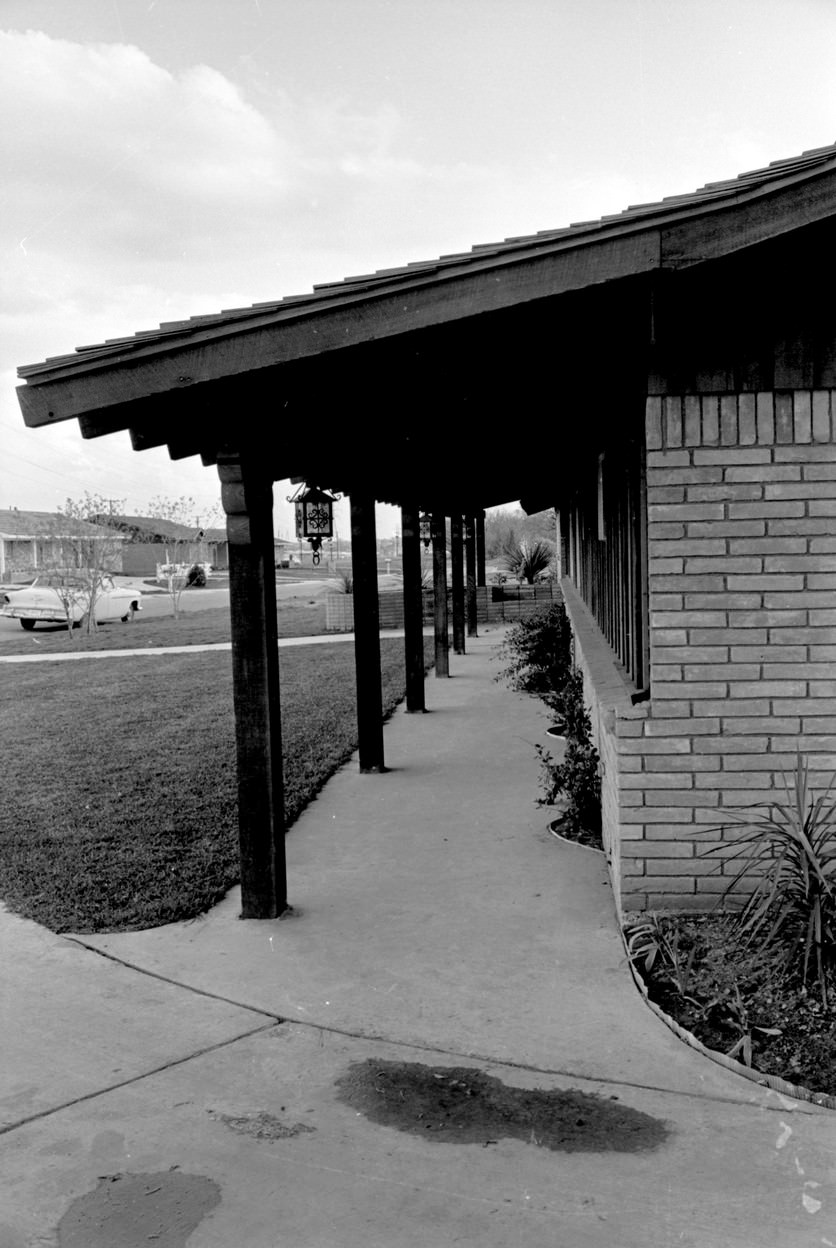
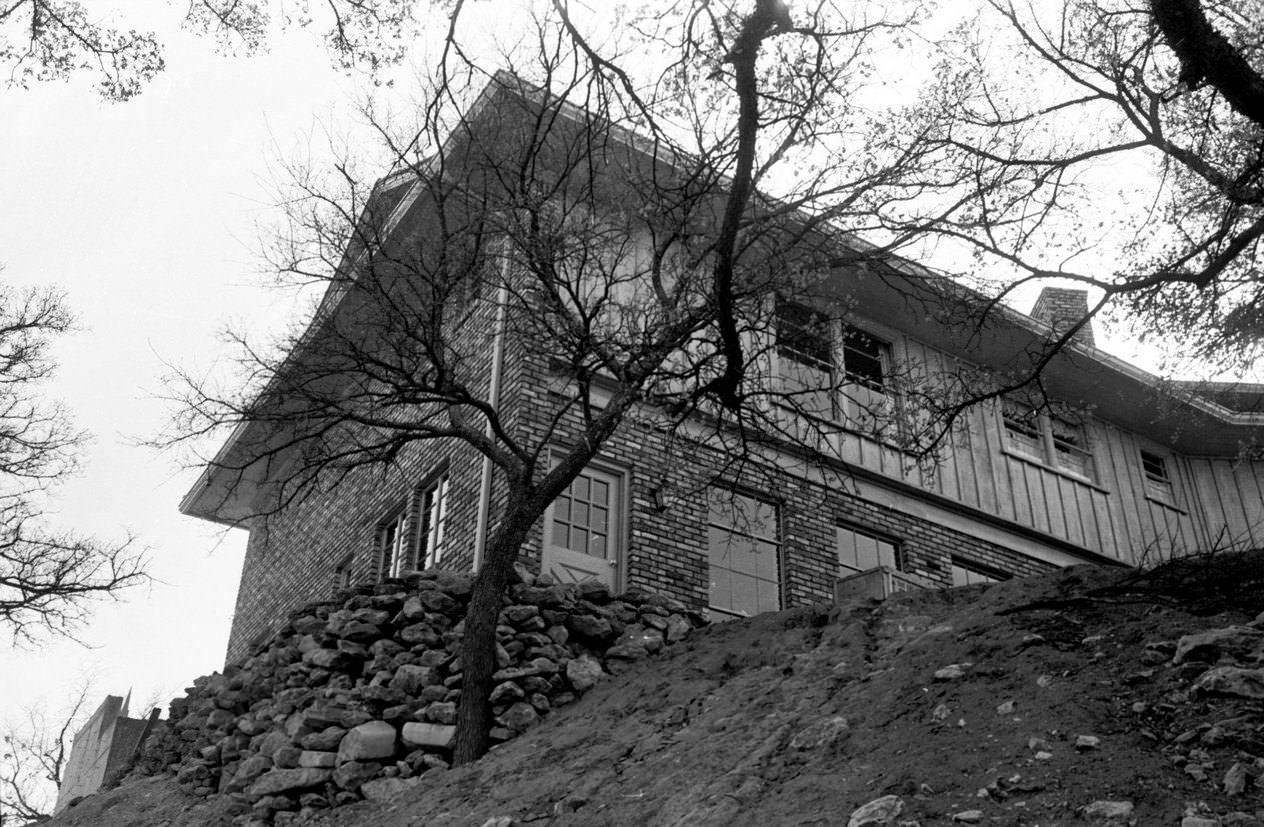
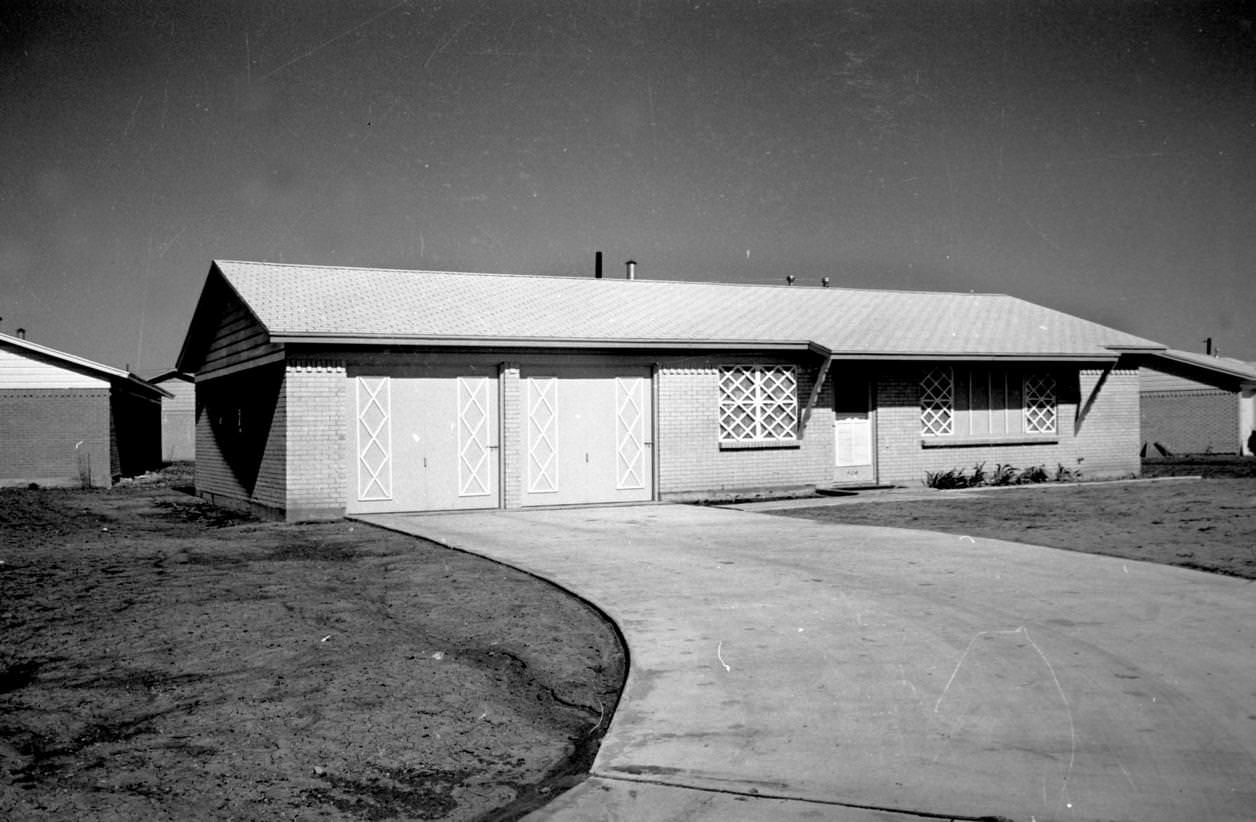
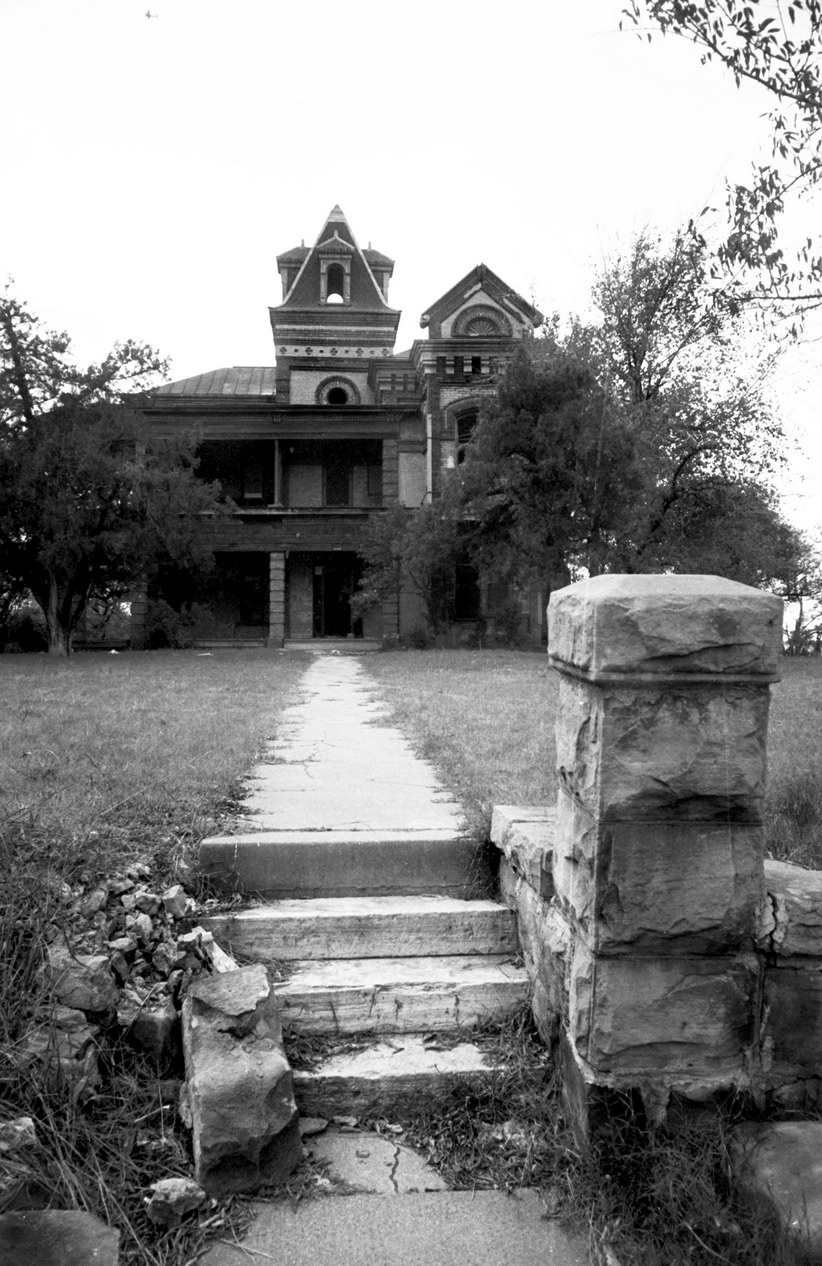
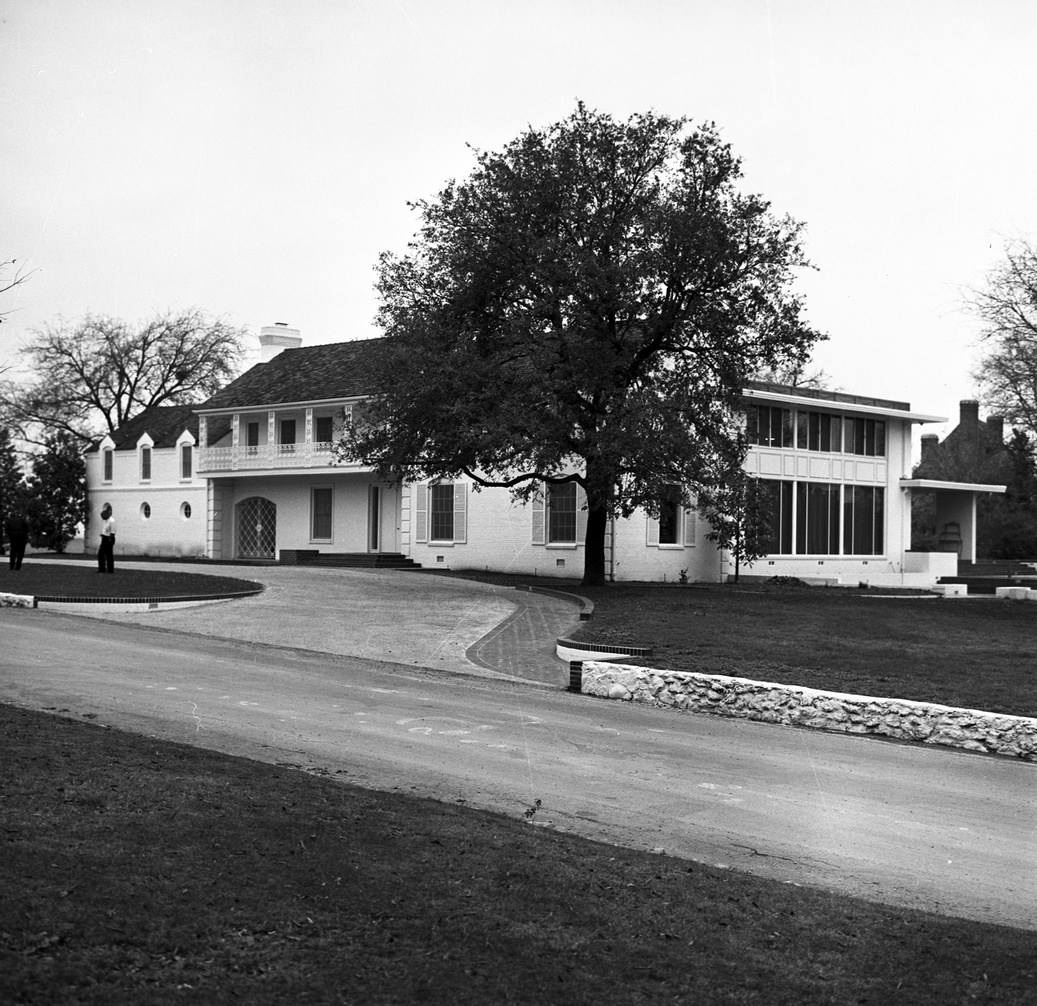
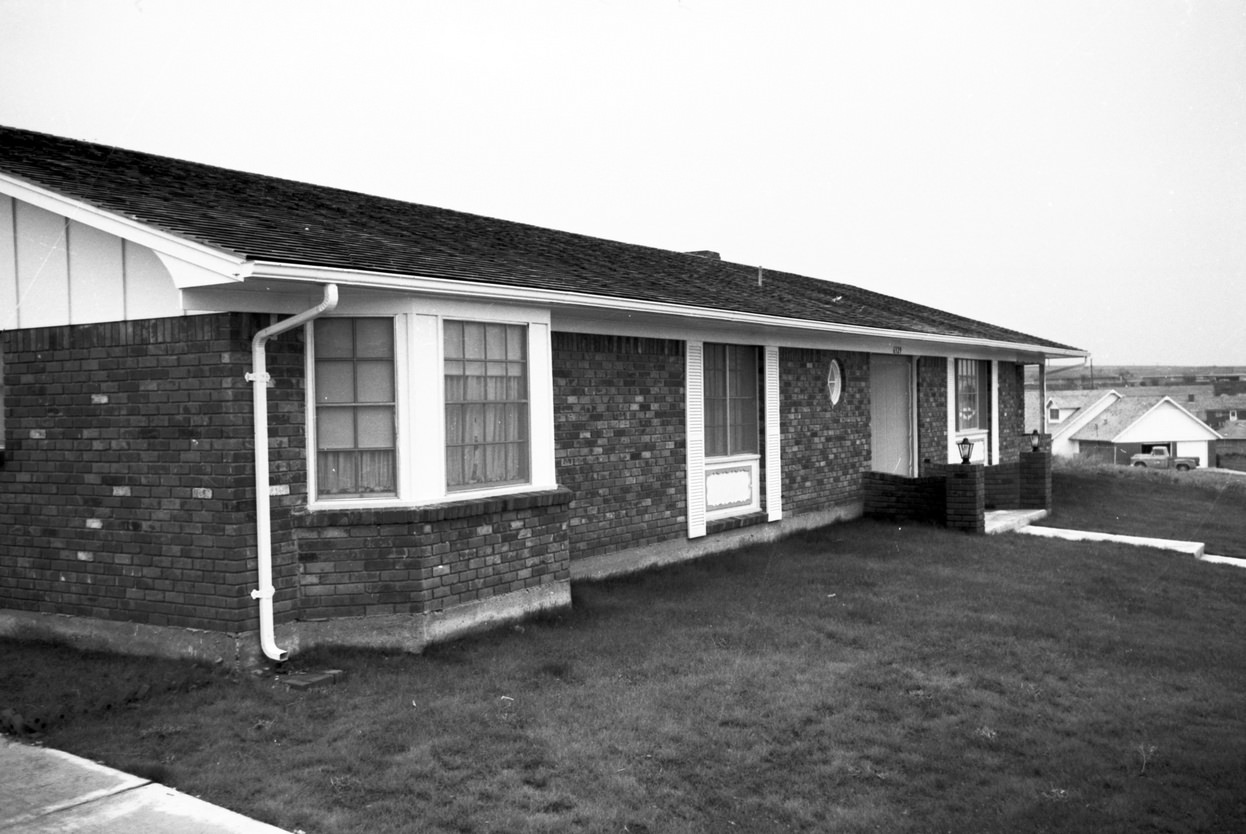
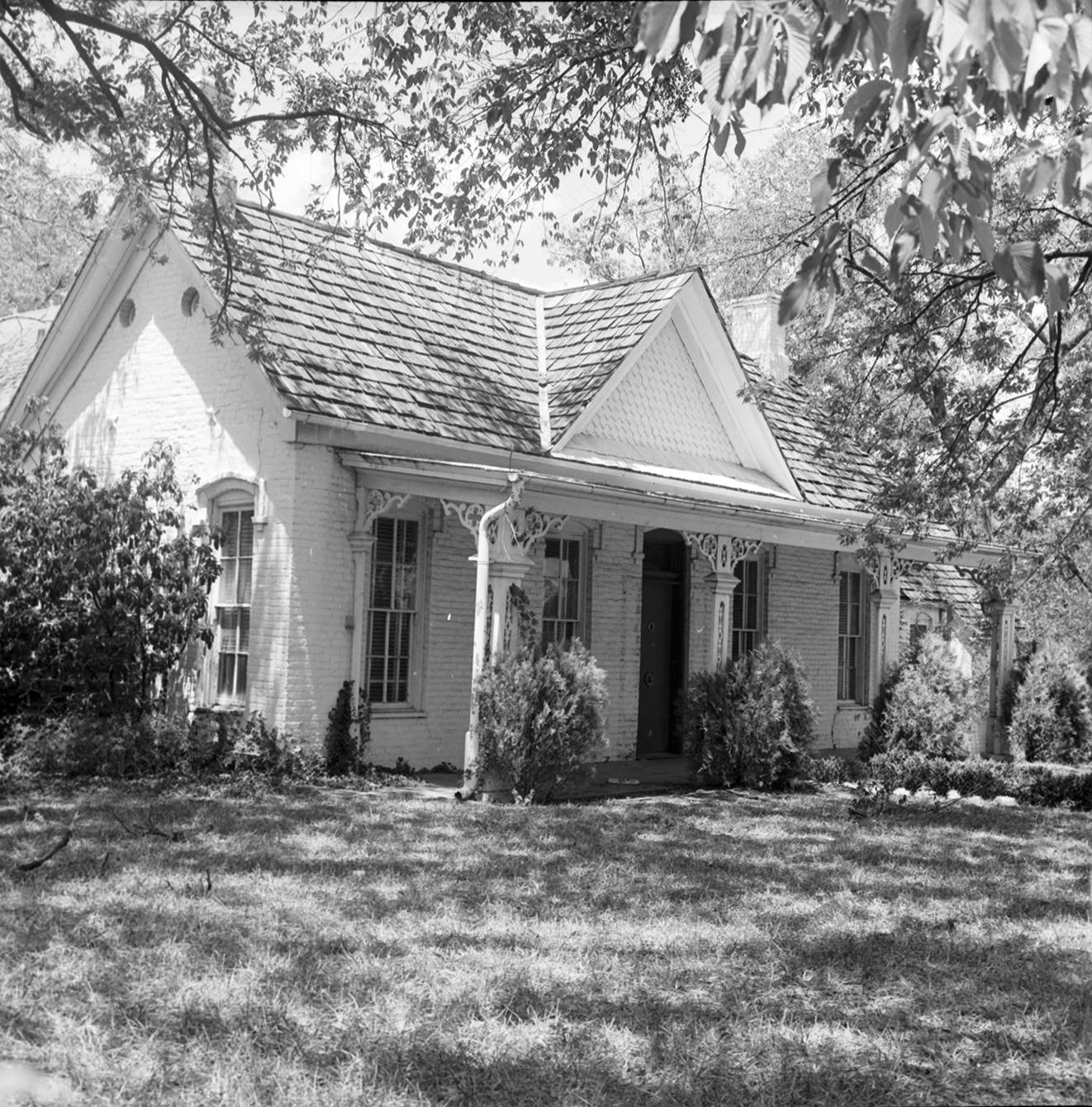
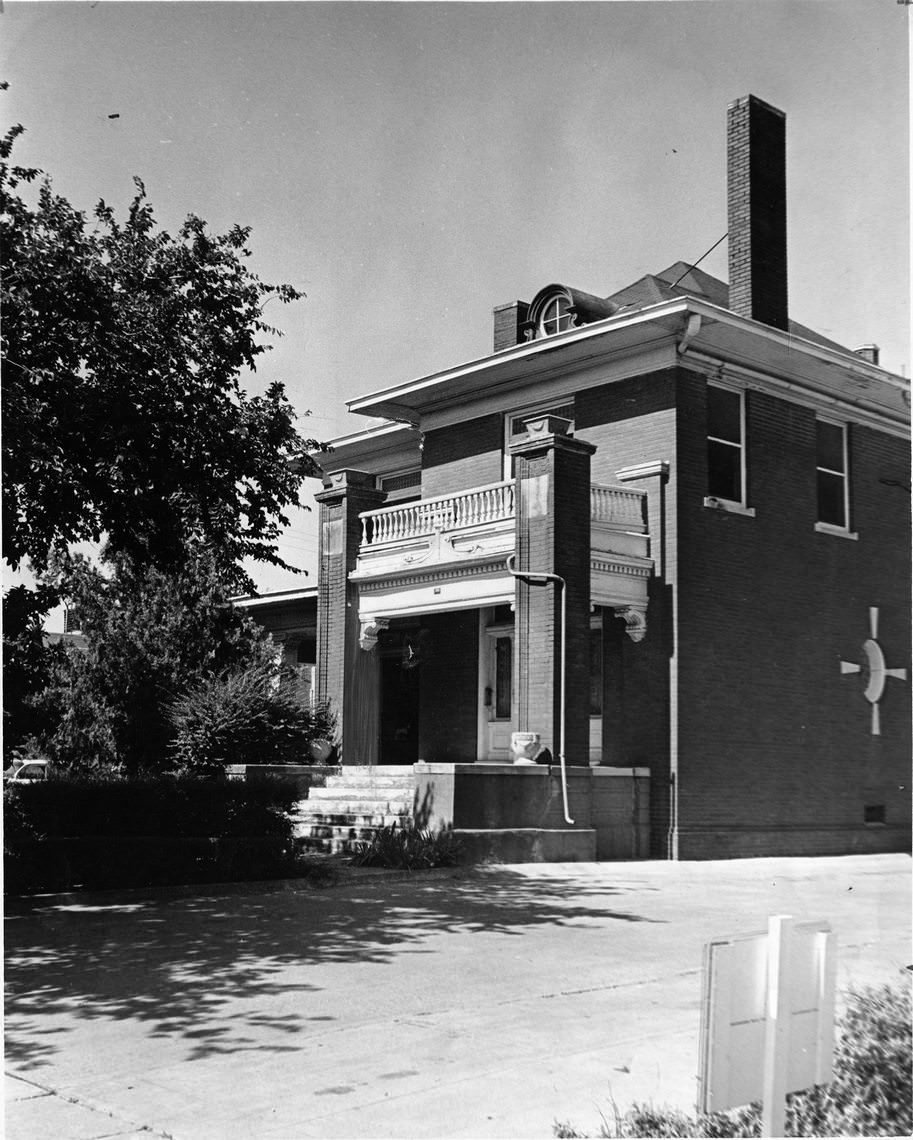
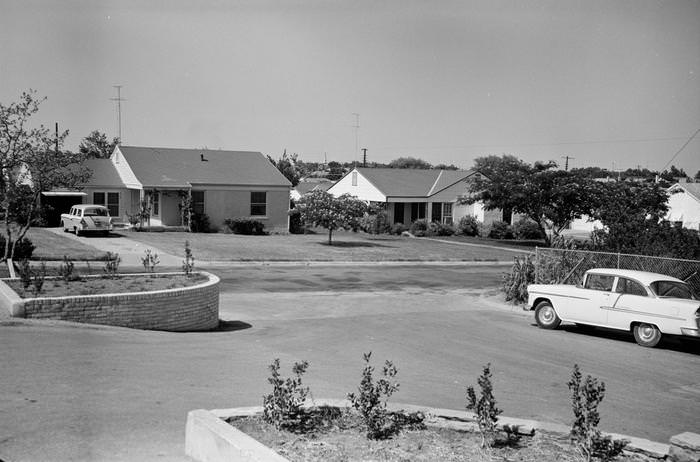
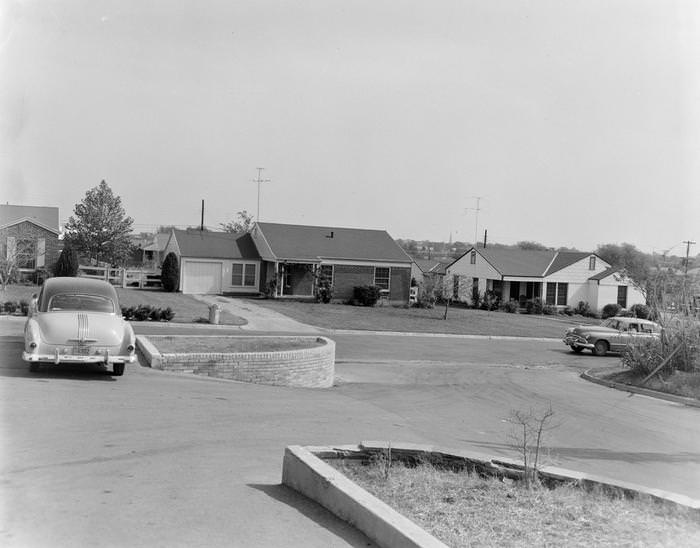
Residential growth pushed outward in all directions. New subdivisions like the Hi-Crest section of Western Hills Addition offered model homes designed to appeal to young families. Neighborhoods like Westwood, Everman Park, and Arlington Heights had distinct characters, from modest ranch-style homes to larger properties like the Van Zandt Mansion on Penn Street. The city’s housing stock in the early 1960s was diverse — from Dutch Colonial residences to modern brick construction.
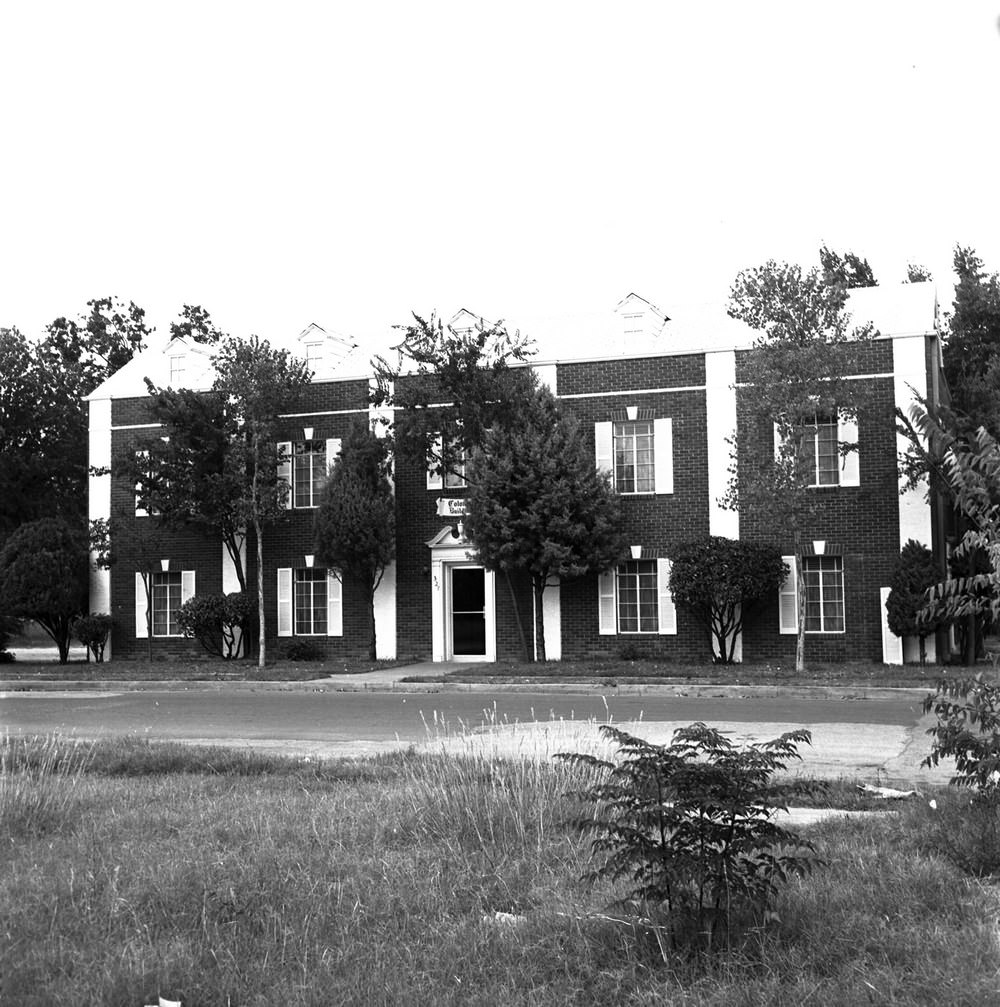
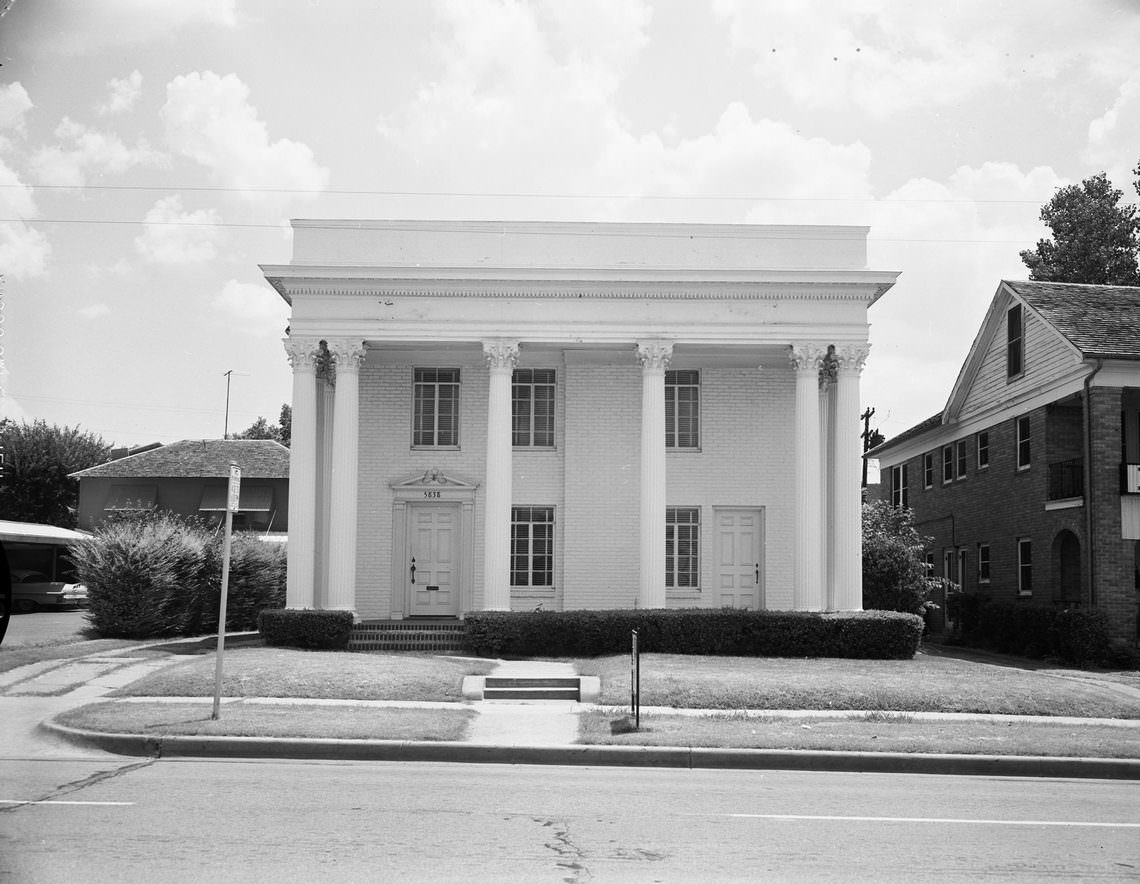
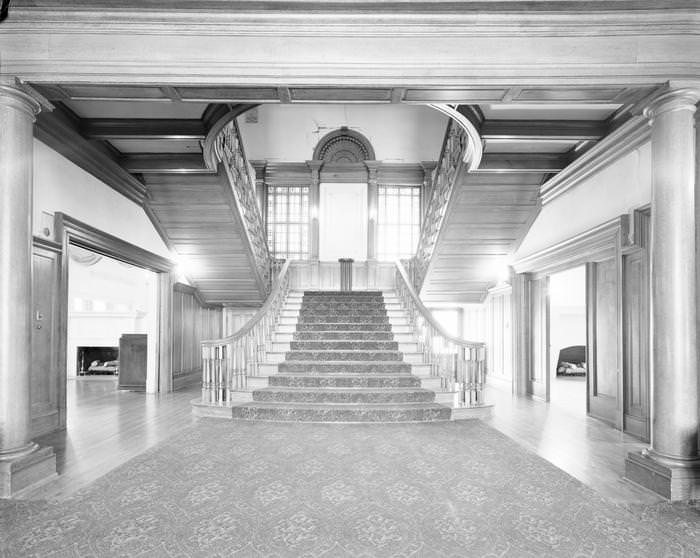
Exterior of a model home in the new Hi-Crest section of Western Hills Addition, Fort Worth, Texas, 1966Exterior of a “Show house,” 6349 Juneau Road, Fort Worth, Texas, 1963Apartment building, 3572 Bellaire Drive North, Fort Worth, Texas, 1960Hightower family residence, Fort Worth, Texas, 1961Hogue family residence, Fort Worth, Texas, 1961Hogue family residence, Fort Worth, Texas, 1961Exterior of Fort Worth family residence in Westwood, Fort Worth, Texas owned by Mr. and Mrs. Taylor, 1961Exterior of Fort Worth family residence in Westwood, Fort Worth, Texas owned by Mr. and Mrs. Taylor, 1961Exterior of the Dutch Colonial residence purchased by the Hull family, Fort Worth, Texas, 1961Exterior of the Dutch Colonial residence purchased by the Hull family, Fort Worth, Texas, 1961Golston family residence, Fort Worth, Texas, 1961Jack E. and Jane Turnbow family residence, 3409 Autumn Court, Fort Worth, Texas, 1961Perry family residence, Everman Park, Fort Worth, Texas, 1961Exterior of the Van Zandt Mansion on 800 Penn Street, Fort Worth, Texas, 1965Exterior of the Amon Carter home, 1962Exterior of the Bernie L. Anderson family home on 1025 Penn Street, Fort Worth, Texas, 1963Exterior of the Armer family’s Fort Worth, Texas residence, 1962Fort Worth’s first brick house, 904 Penn Street, 1963
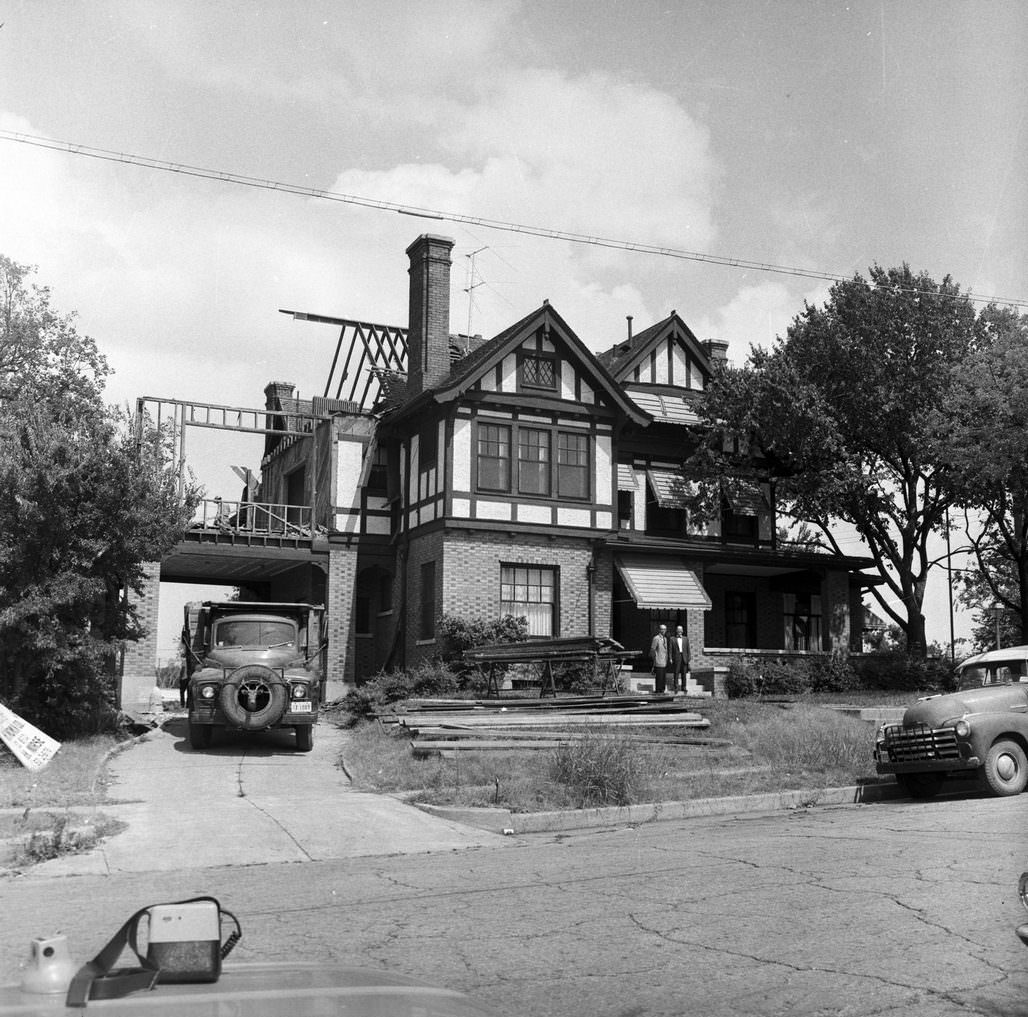
J. M. Ware home will be demolished soon, 1965
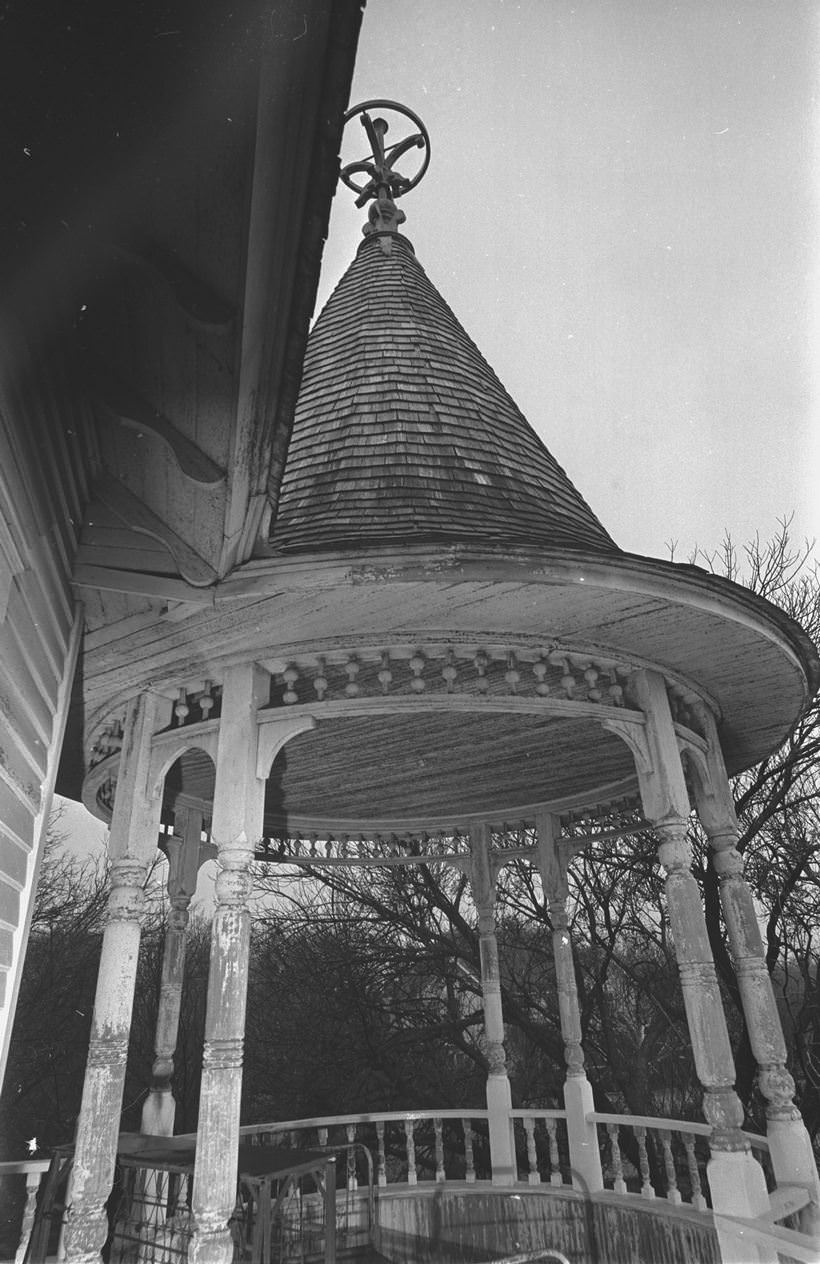
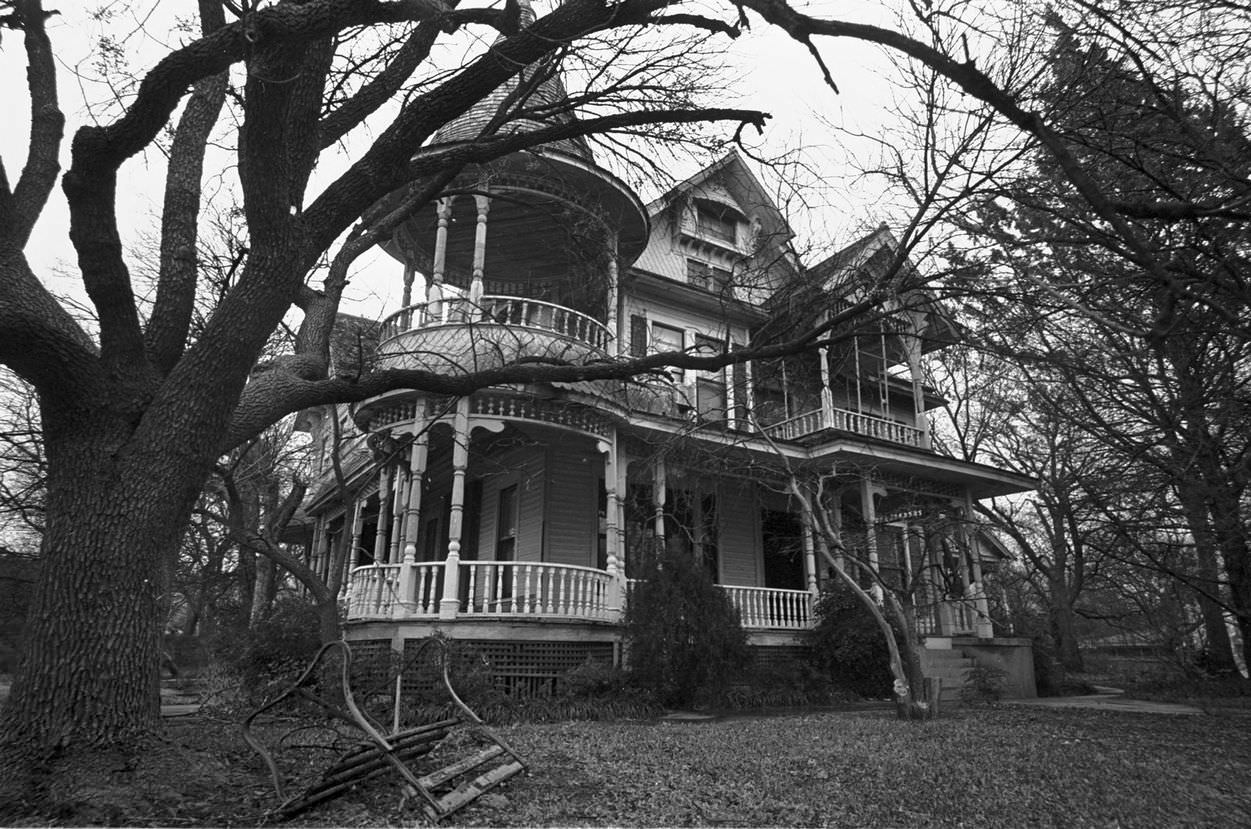
A round porch at McCart house, Arlington Heights, Fort Worth, Texas, 1969
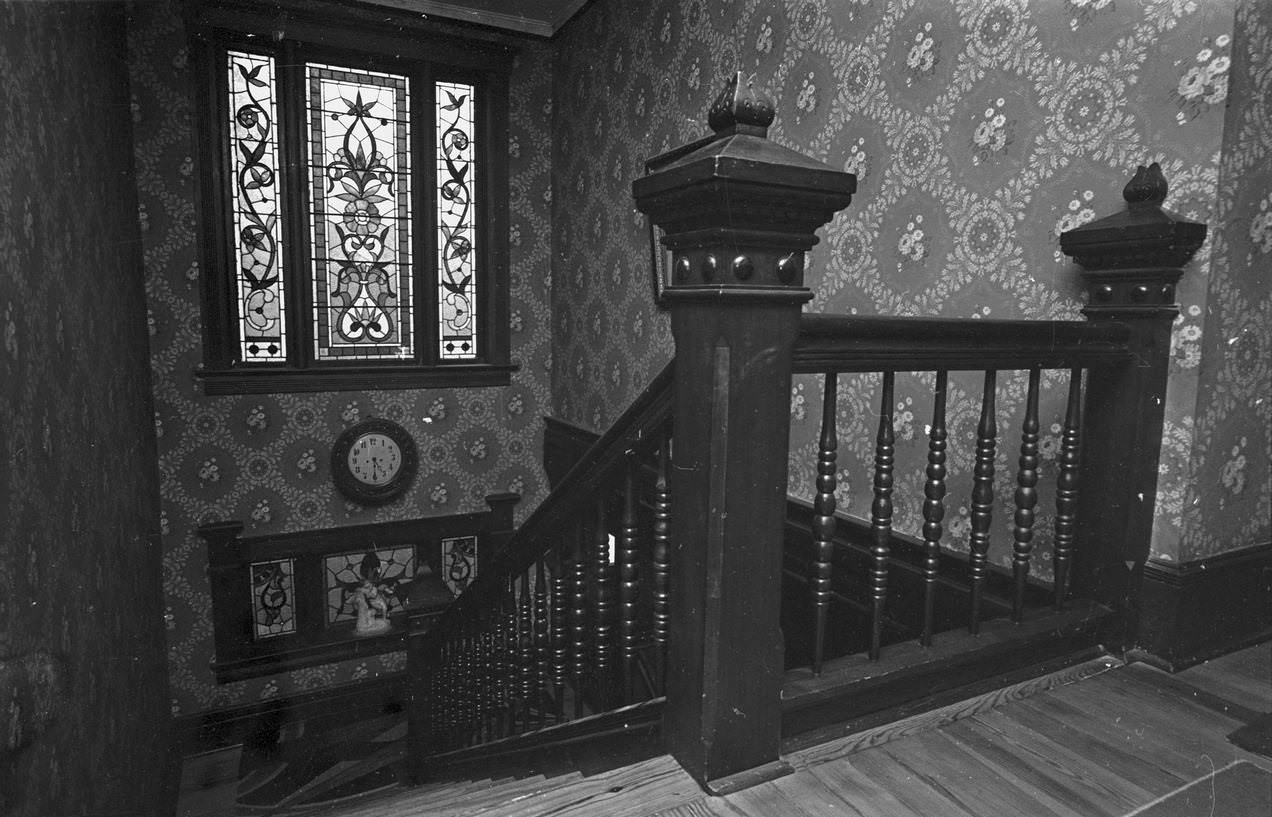
A staircase in McCart home, Arlington Heights, Fort Worth, Texas, 1969Exterior of McCart residence, Arlington Heights, Fort Worth, Texas, 1969
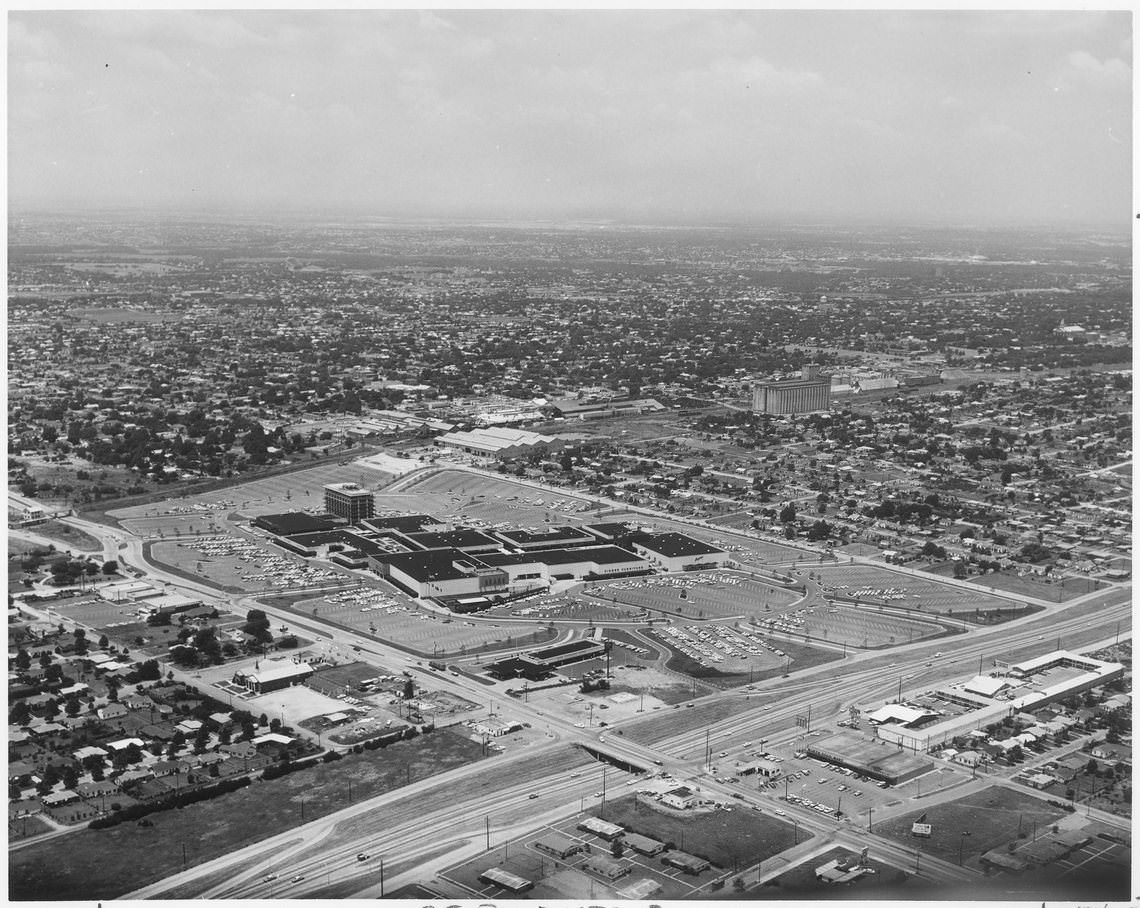
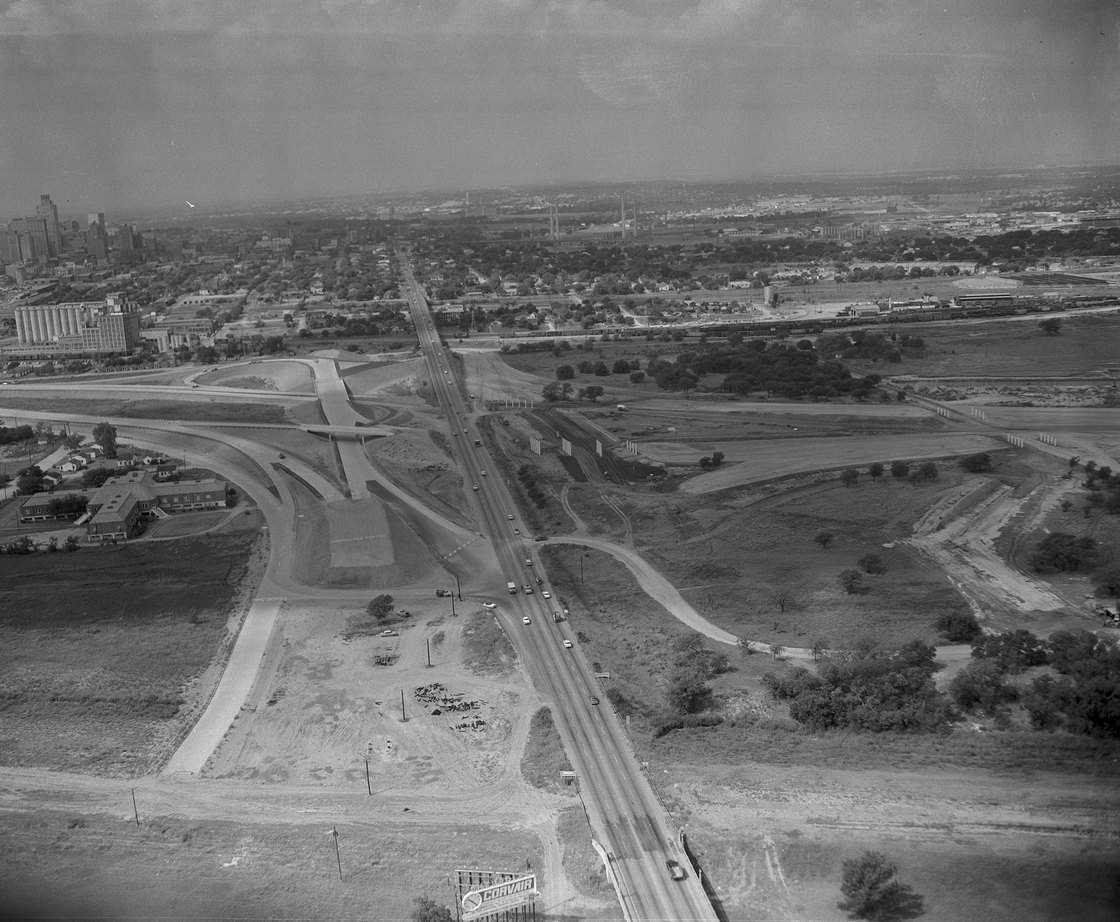
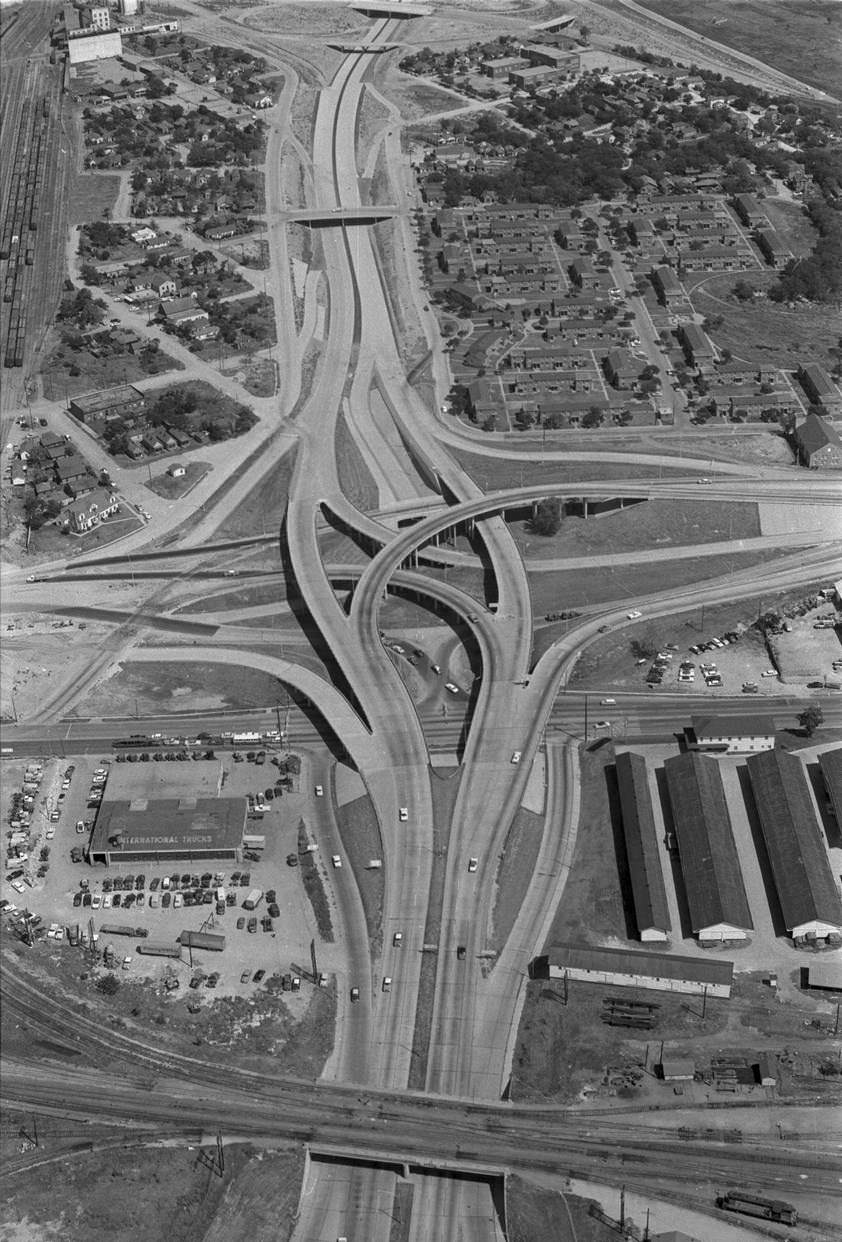
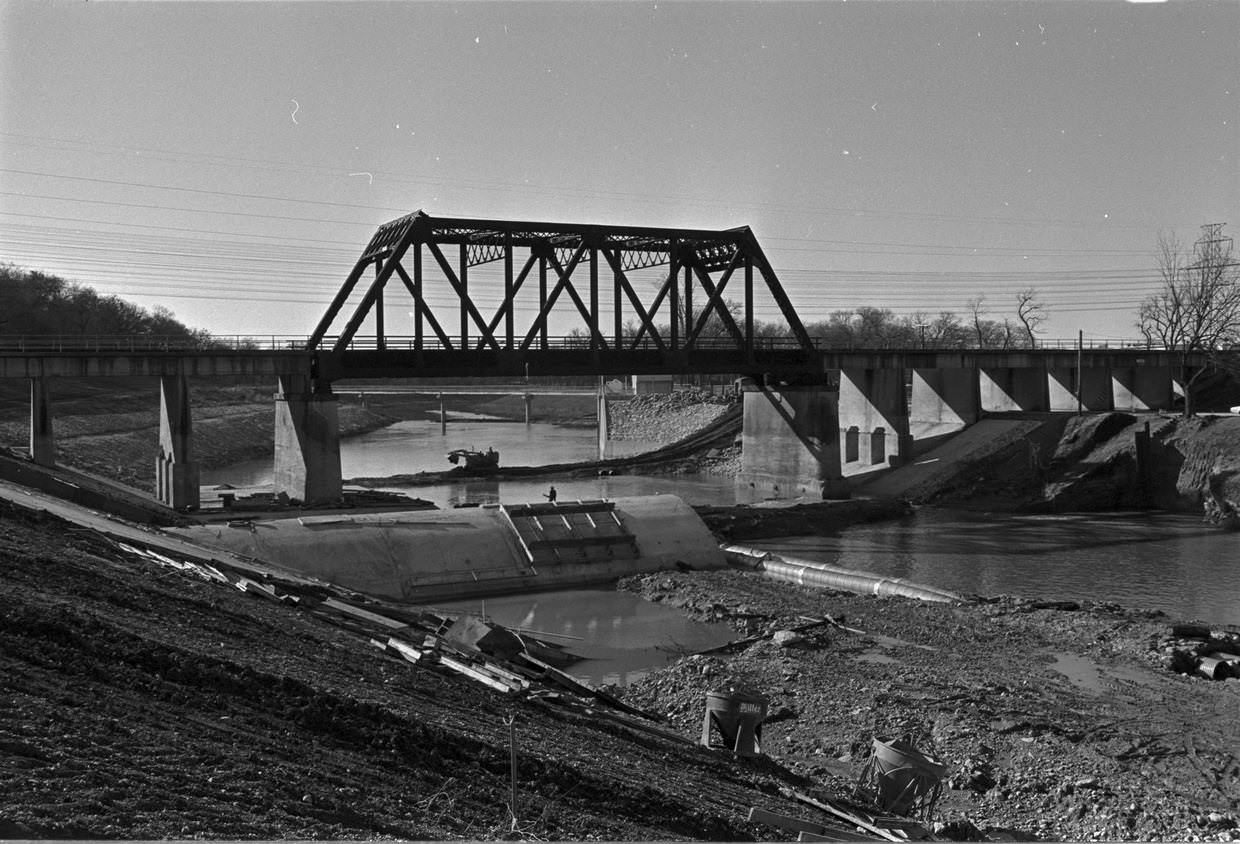
New construction around Ridglea Country Club in 1960 showed how affluent neighborhoods were expanding, while aerial views of Seminary South captured the growth of suburban shopping. The city was also investing in infrastructure beyond roads — the Trinity Park dam project began construction in 1969, and freeway systems like the north/south freeway and the famous Fort Worth Mixmaster interchange were already defining how the city moved.
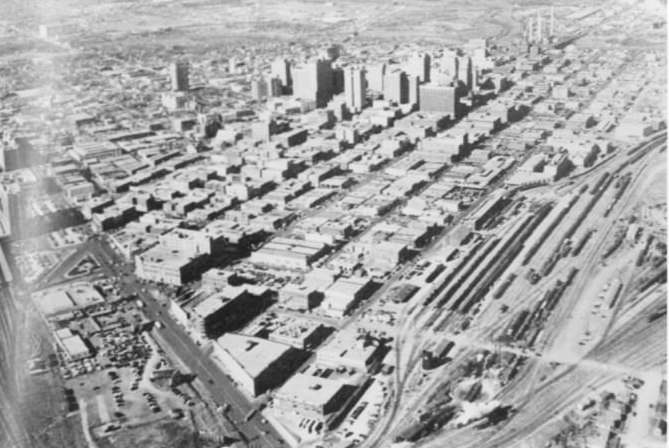
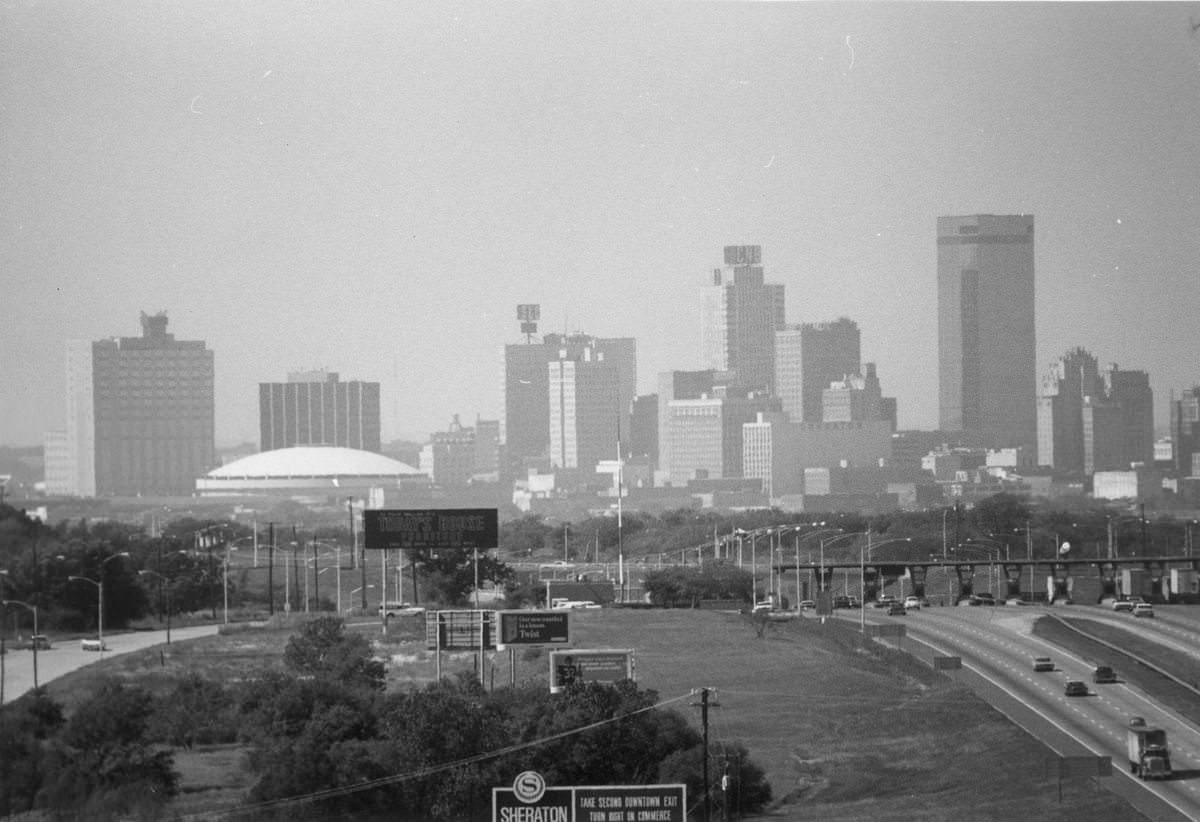
Aerial of new construction around Ridglea Country Club, 1960Aerial view of Seminary South shopping center, Fort Worth, Texas, 1962An airview of Fort Worth north/south freeway, 1960An airview of Fort Worth mixmaster, 1960An aerial of turnpike at Handley, 1969The Construction of 225 foot structure for the Trinity Park dam, 1969Aerial of downtown Fort Worth, Texas showing Jones Street, Spur 280 (4th Street access), 35W, Hwy. 121; Santa Fe railroad tracks on eastside near bottom right, 1967Aerial View of Downtown Fort Worth in 1960sDowntown fort worth, November 1967, Fort Worth, TexasFort Worth downtown skyline looking northwest, 1969
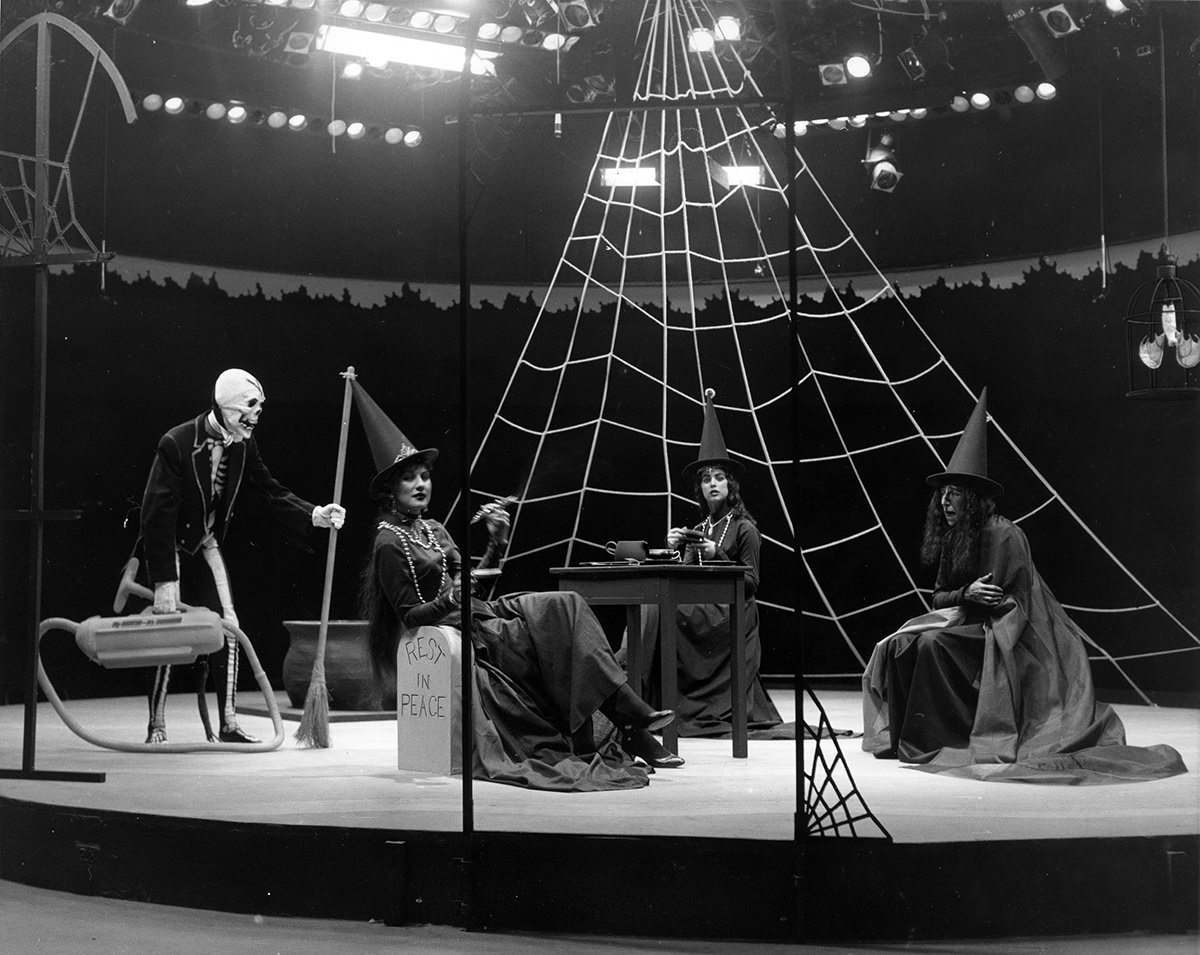
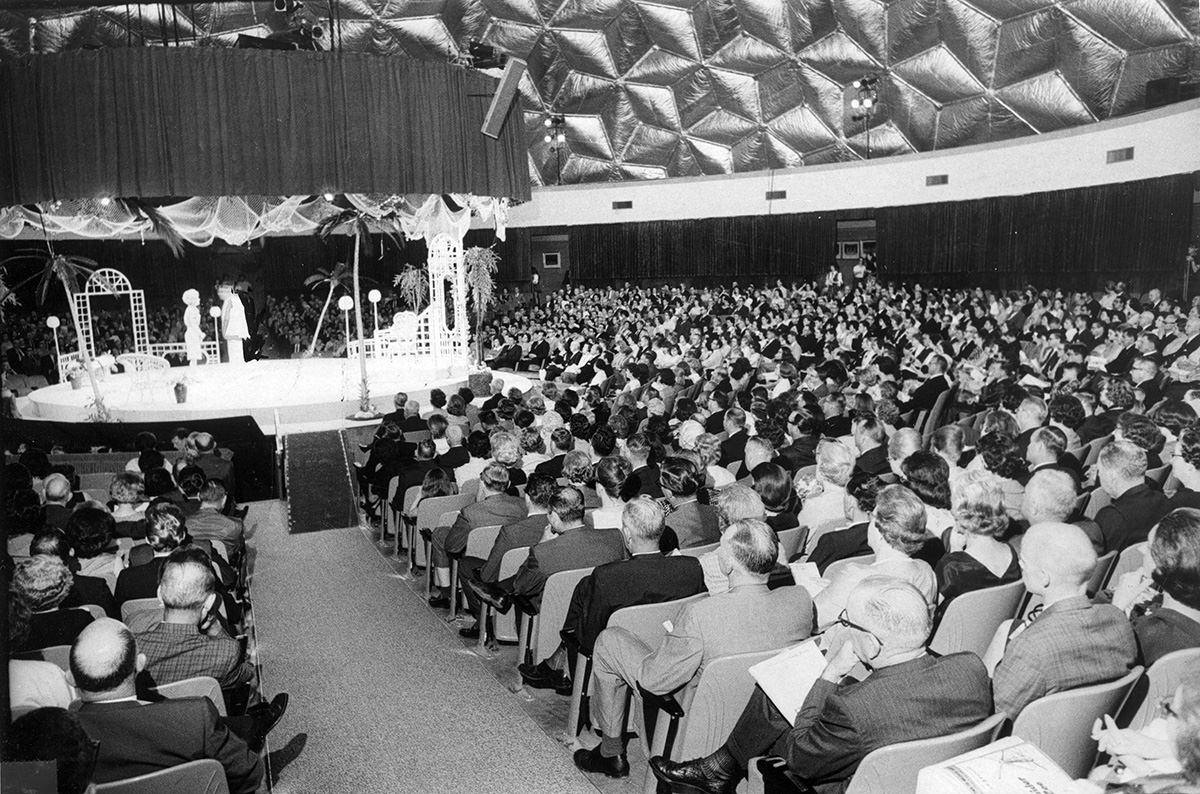
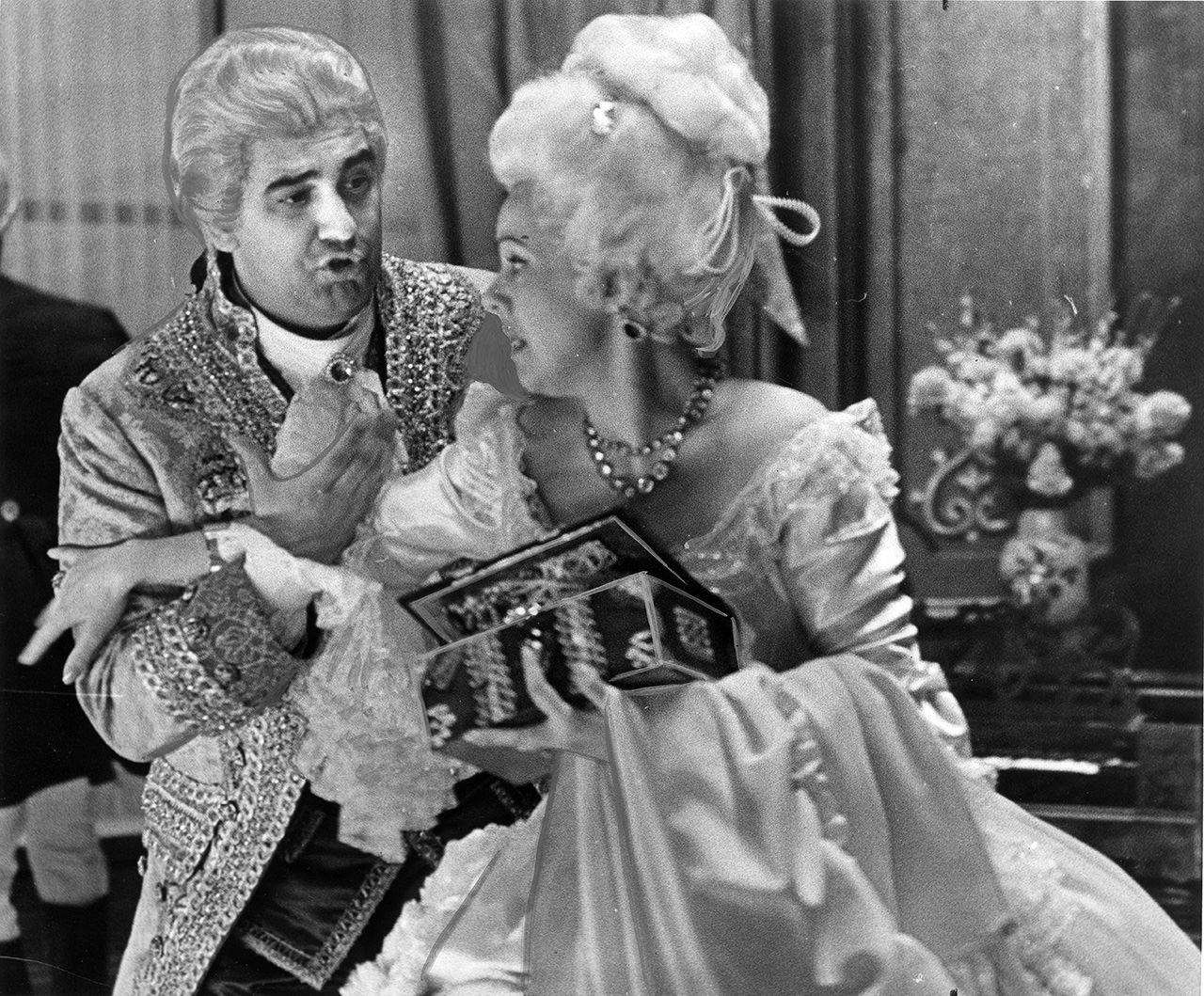
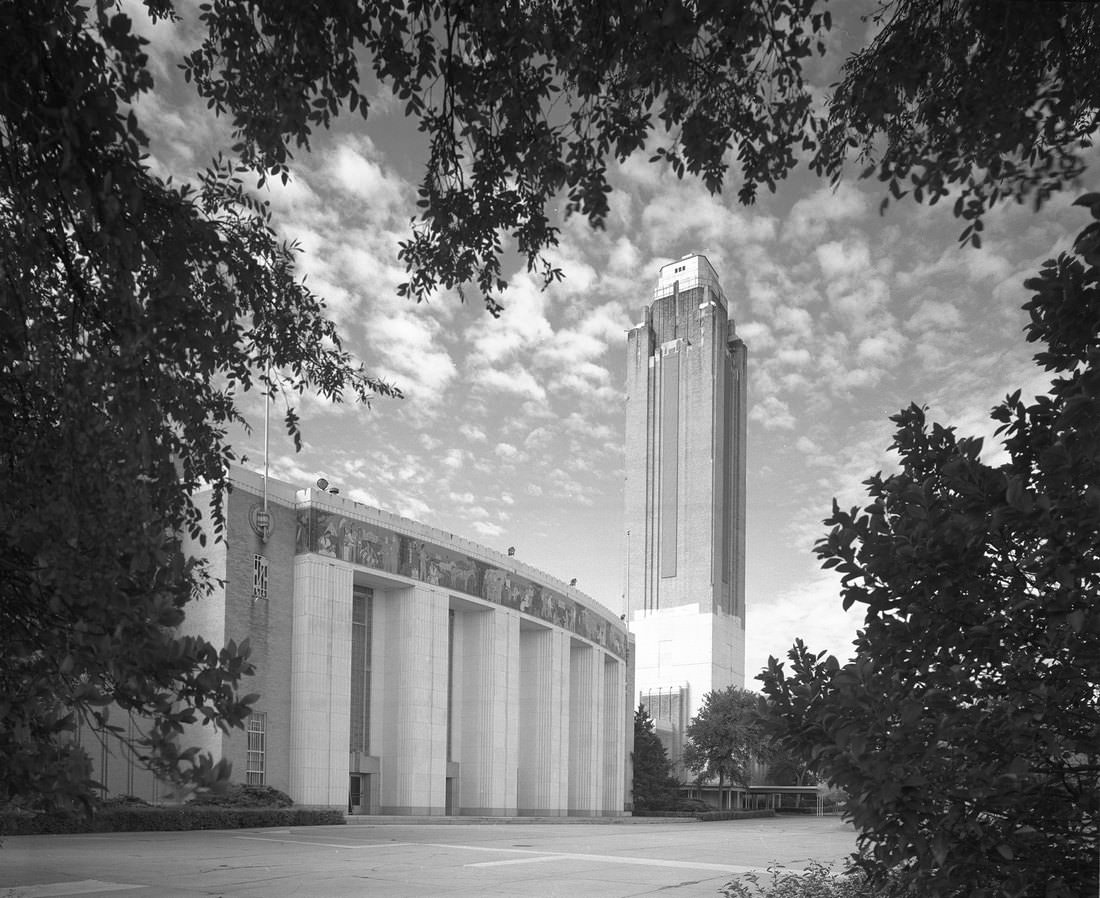
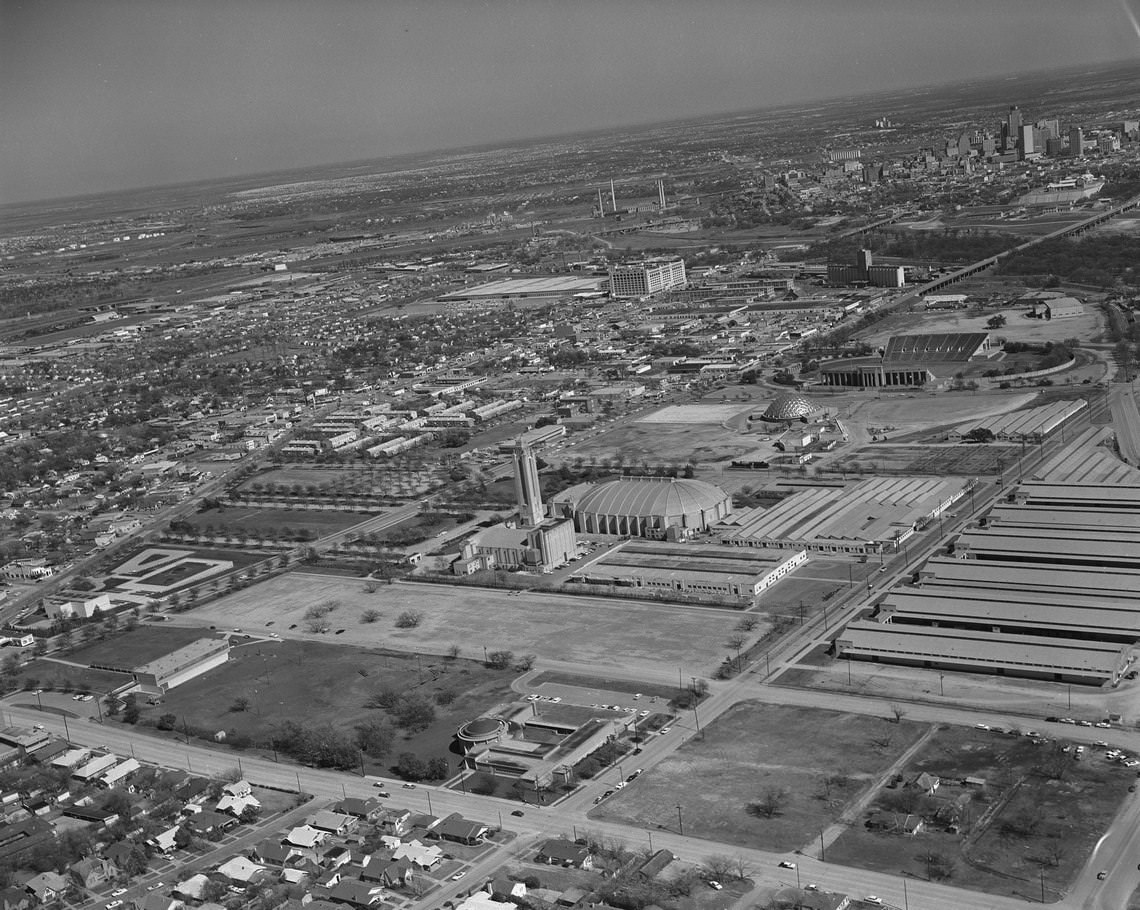
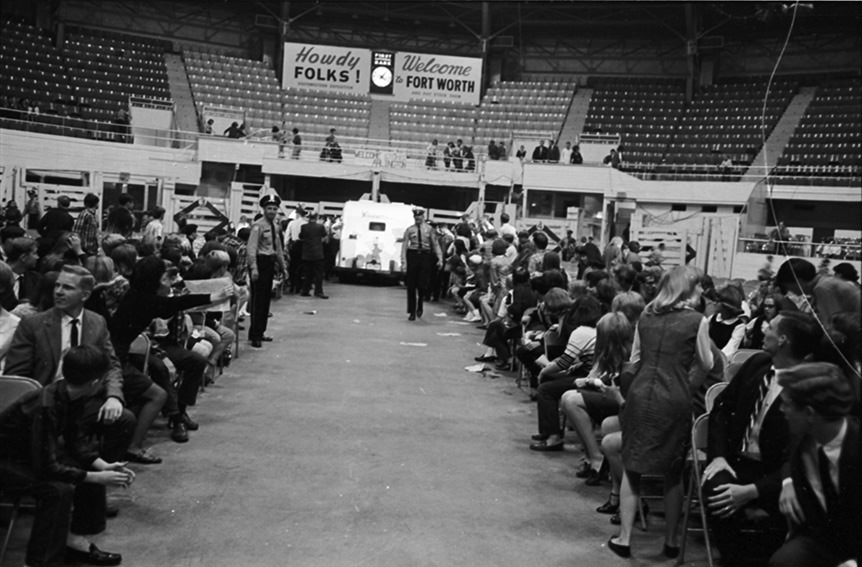
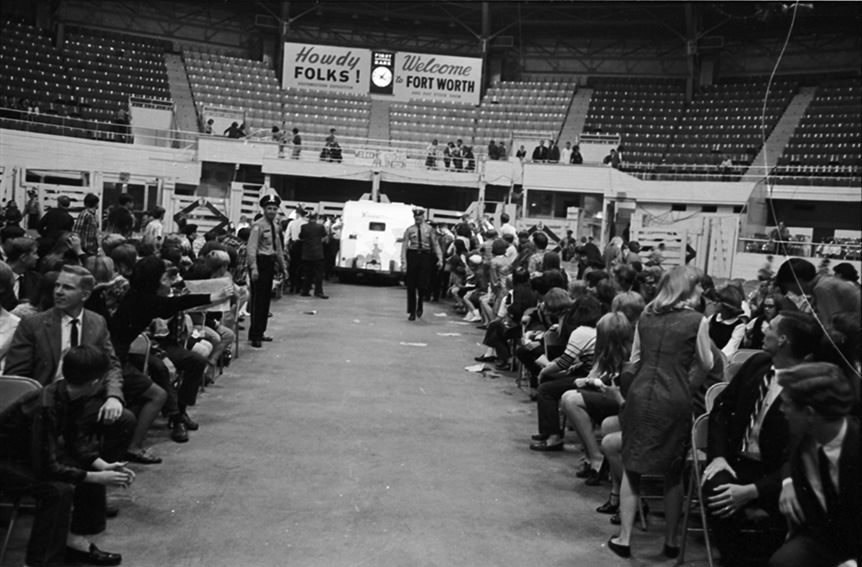
The arts and culture scene in Fort Worth was growing alongside the city’s physical expansion. The Amon Carter Museum of Western Art was under construction in 1960, and Casa Manana produced popular theatrical performances throughout the decade, including a 1961 staging of the Wizard of Oz and a 1965 show titled “An Enchanted Evening.” The Fort Worth Opera Association staged ambitious productions, including a 1968 performance of Puccini’s “Manon Lescaut” featuring Placido Domingo and Raina Kabaivanska. Will Rogers Coliseum hosted everything from livestock shows to rock concerts, including the Rolling Stones arriving in an armored car for a 1965 performance.
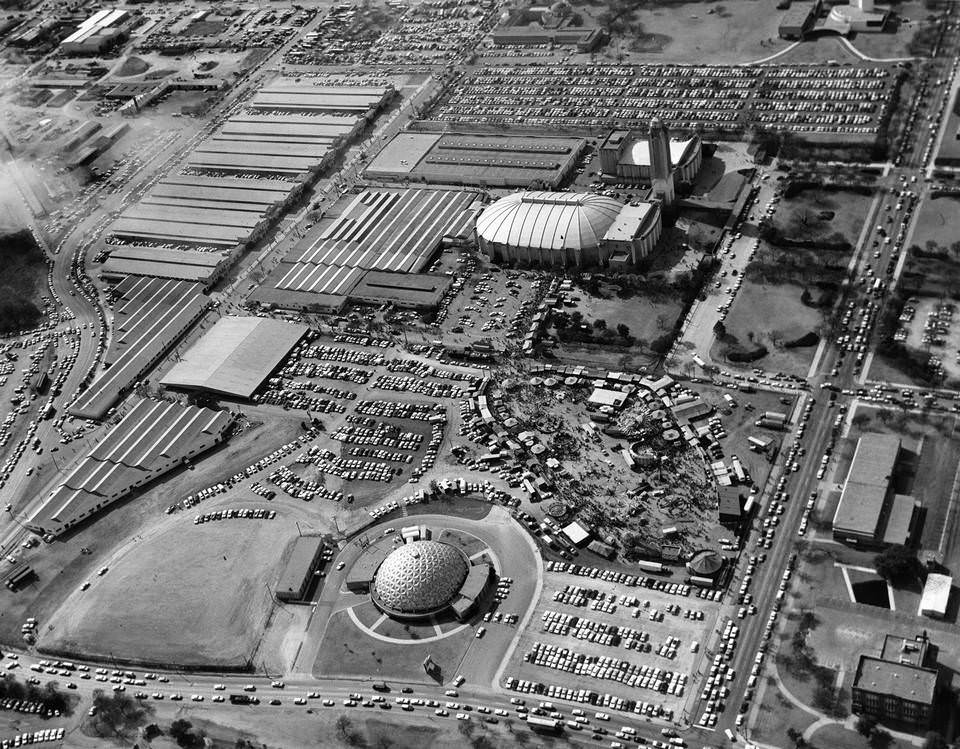
Ongoing construction of the Amon Carter Museum of Western Art, 1960Ongoing construction of the Amon Carter Museum of Western Art, 1960Casa Manana – Three women dressed as witches lounging on stage, a skeleton butler with broom and vacuum in “Wizard of Oz,” 1961.Casa Manana performance of “An Enchanted Evening,” 1965Placido Domingo and Raina Kabaivanska in Fort Worth Opera Assoc production of Puccini’s “Manon Lescaut”, 1968Will Rogers Coliseum, 1967Aerial of Will Rogers Coliseum, Casa Manana, Farrington Field and surrounding area, 1961Rolling Stones rock group arrives in armored car inside Will Rogers Coliseum for a concert in Fort Worth, Texas, 1965Rolling Stones rock group arrives in armored car inside Will Rogers Coliseum for a concert in Fort Worth, Texas, 1960sAerial of Southwest Exposition and Fat Stock Show at Will Rogers Memorial complex, 1967
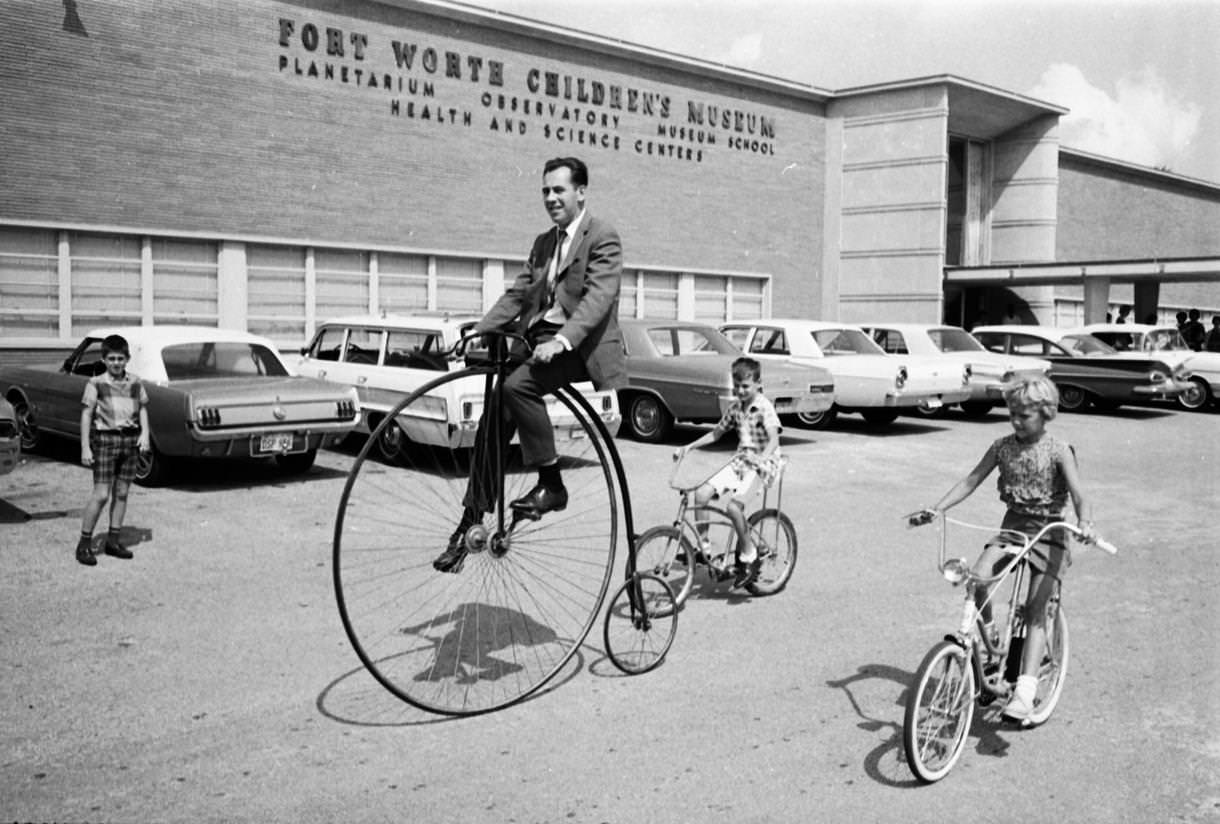
The Fort Worth Children’s Museum added its own charm to the city’s cultural life. In 1967, director Helmuth Naumer was photographed riding an old-fashioned bicycle, a light moment that reflected the museum’s spirit of playful education. Across the city, schools, hospitals, and civic institutions were also expanding to keep pace with a growing population.
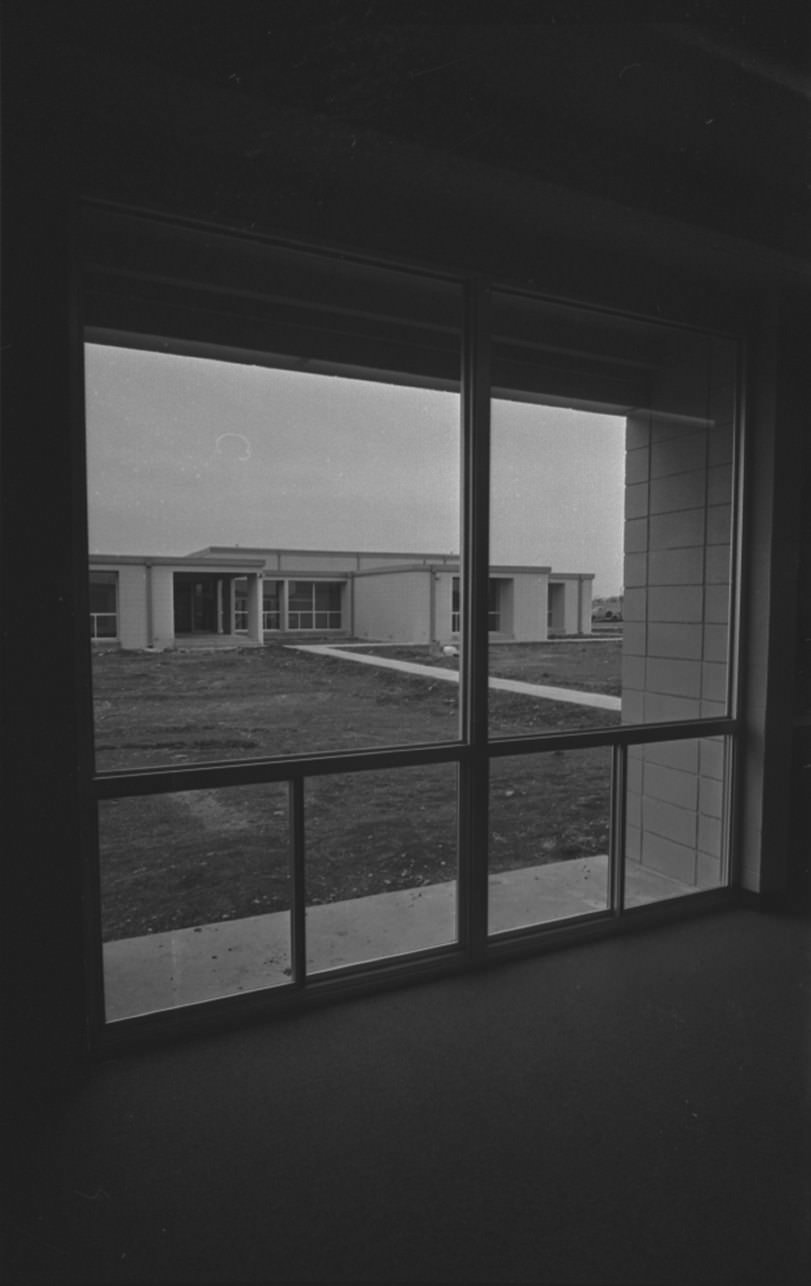
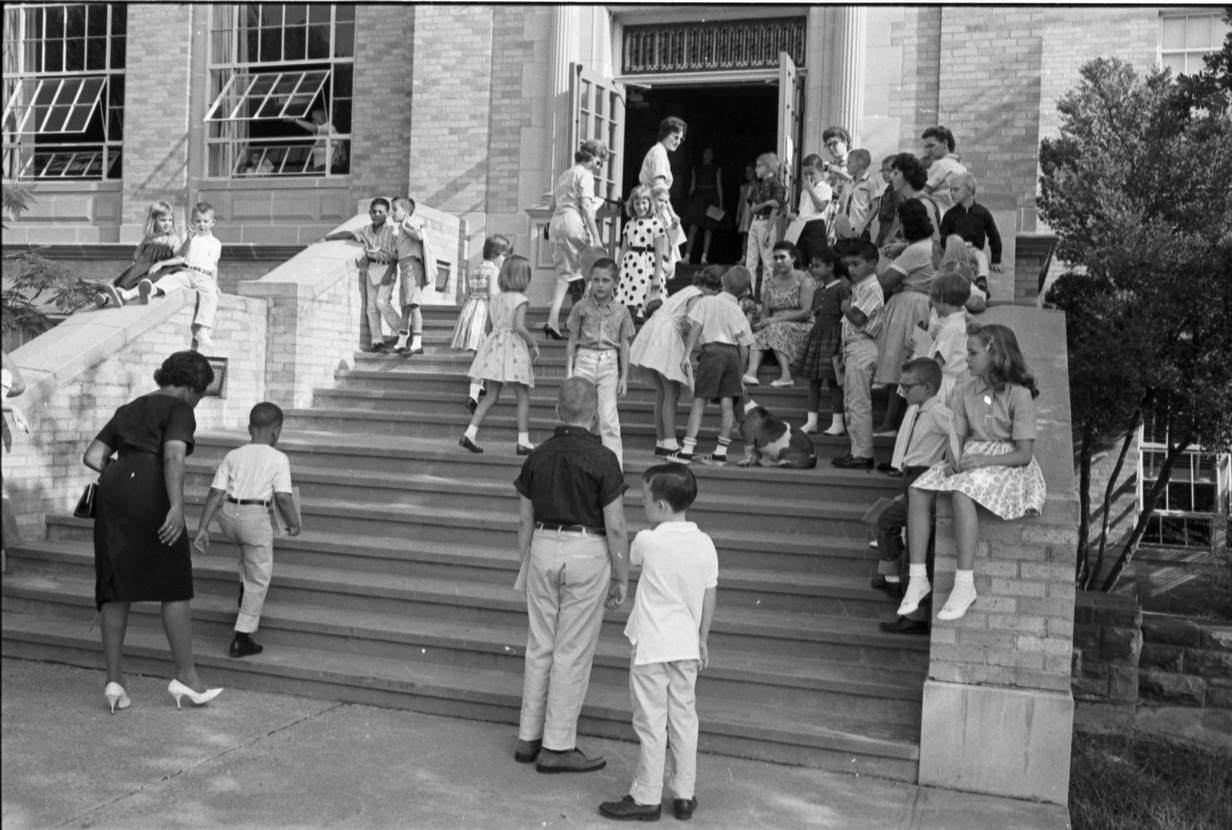
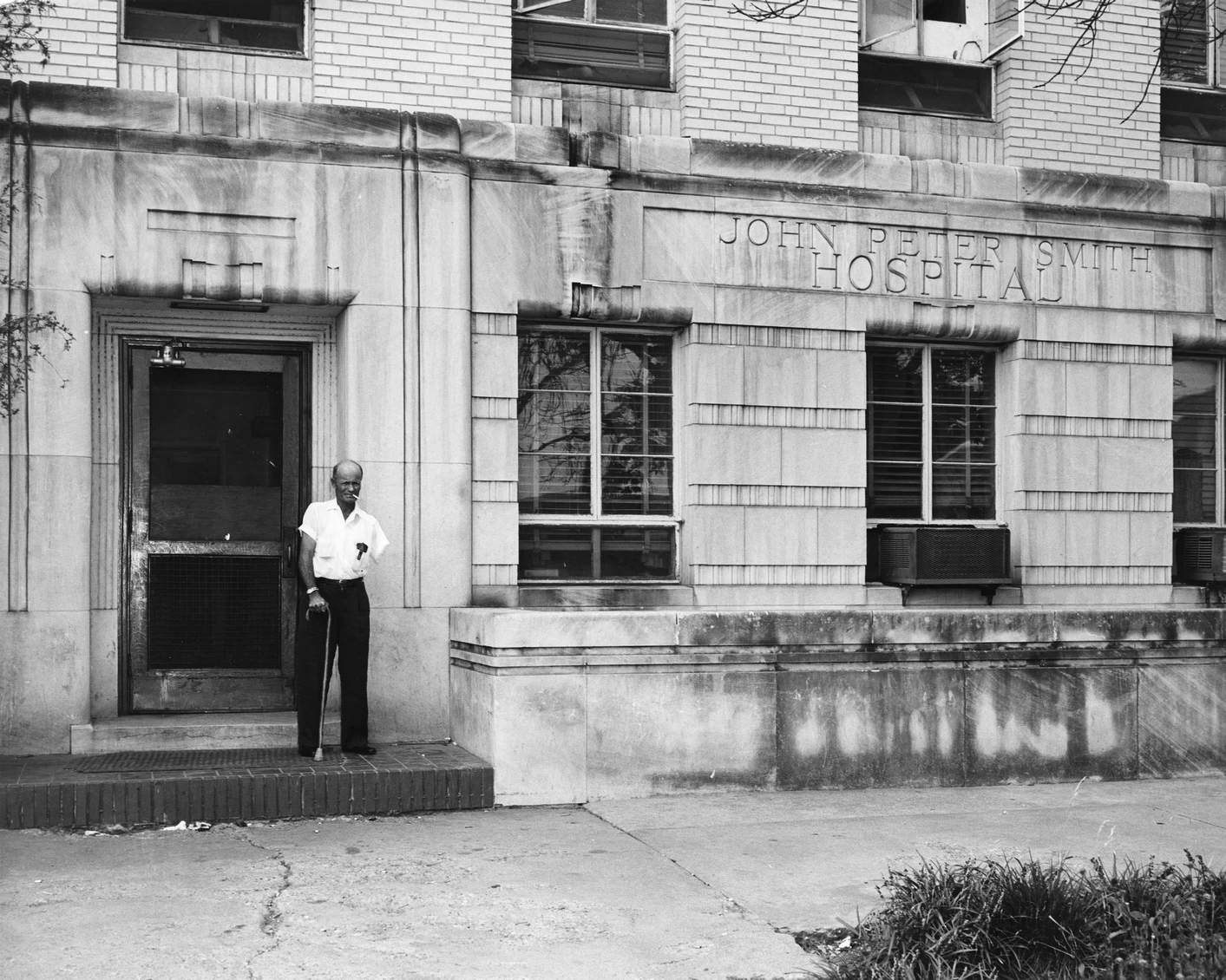
Helmuth Naumer, director of Fort Worth Children’s Museum, rides an old fashioned bicycle, 1967Trinity Valley, new secondary school and gymnasium shown from window, 1969First African American Student at Lily B. Clayton Elementary School, 1963John Peter Smith Hospital building, 1961
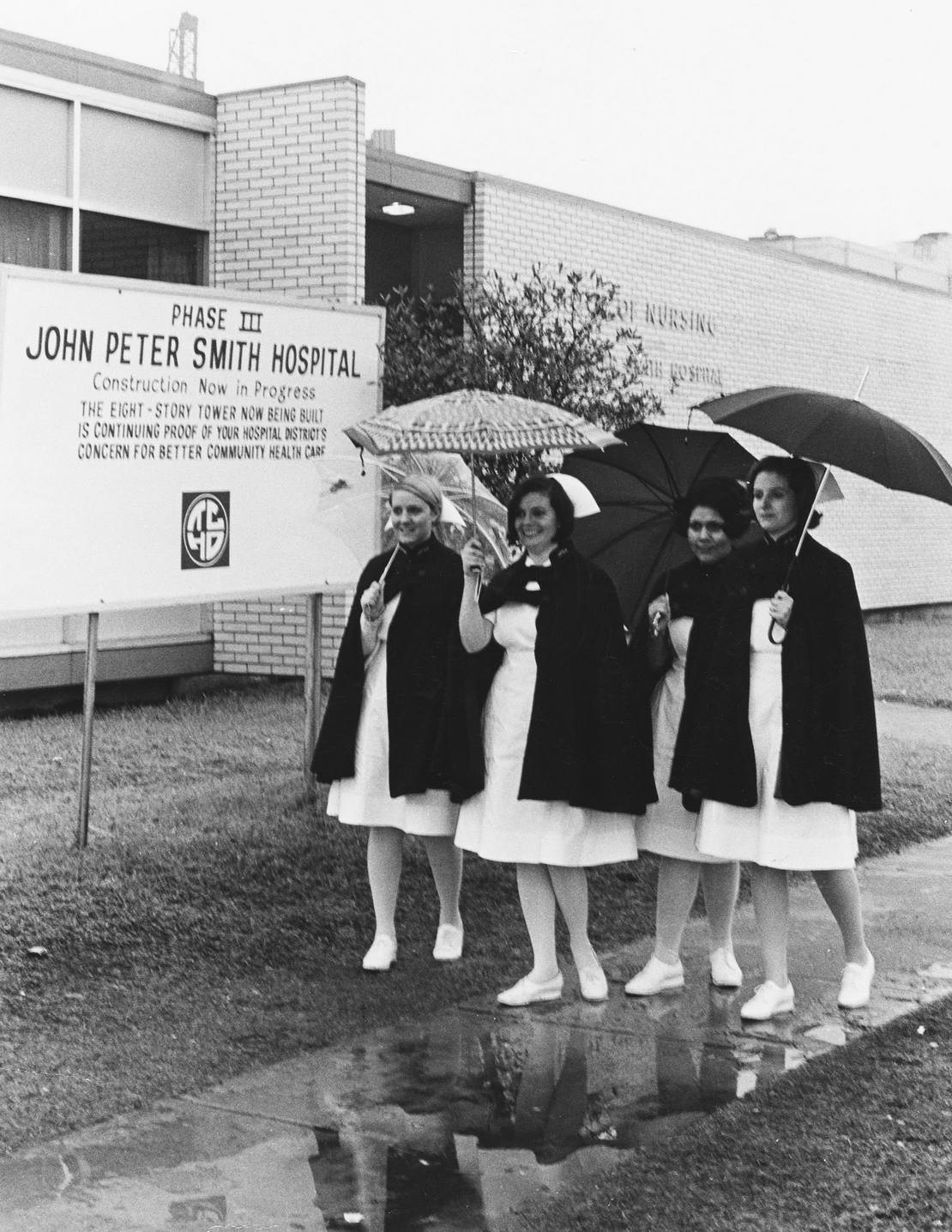
John Peter Smith Hospital students in front of the new school in Fort Worth, Texas, 1964
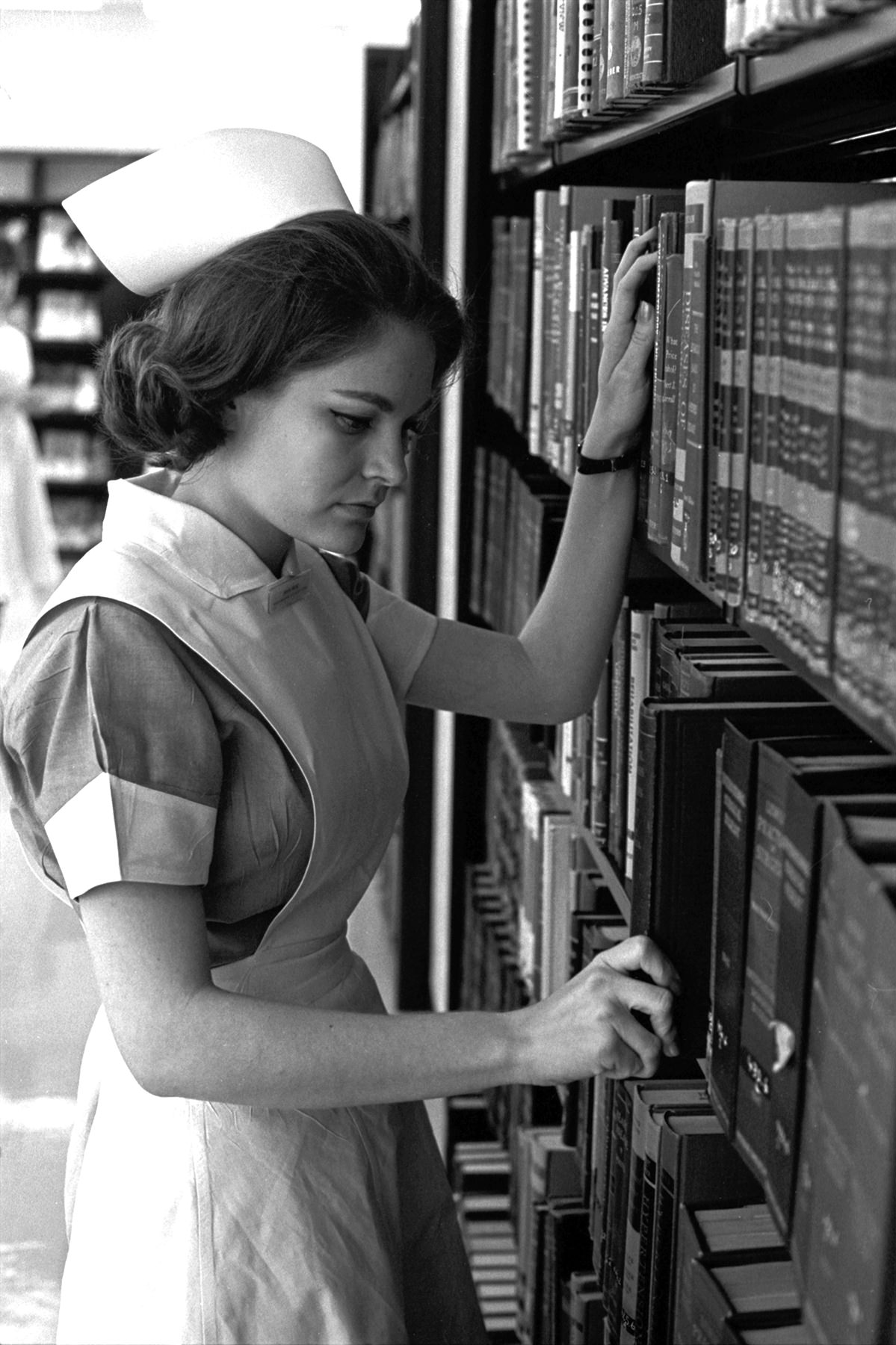
Miss Alita Rose, president of one of the two classes of student nurses at John Peter Smith Hospital School of Nursing, locates a book in the library and prepares to spend a couple of hours in quiet study, 1965
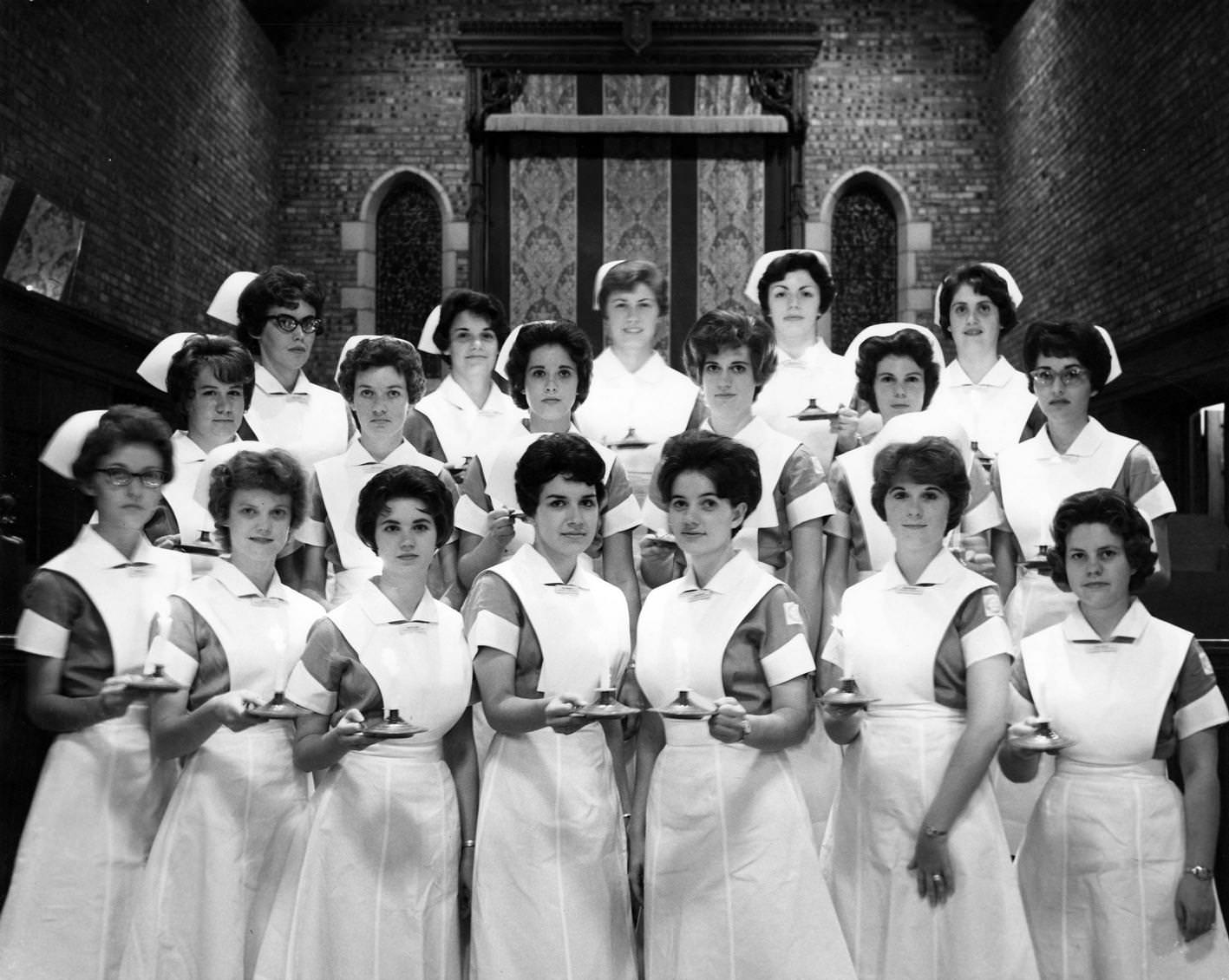
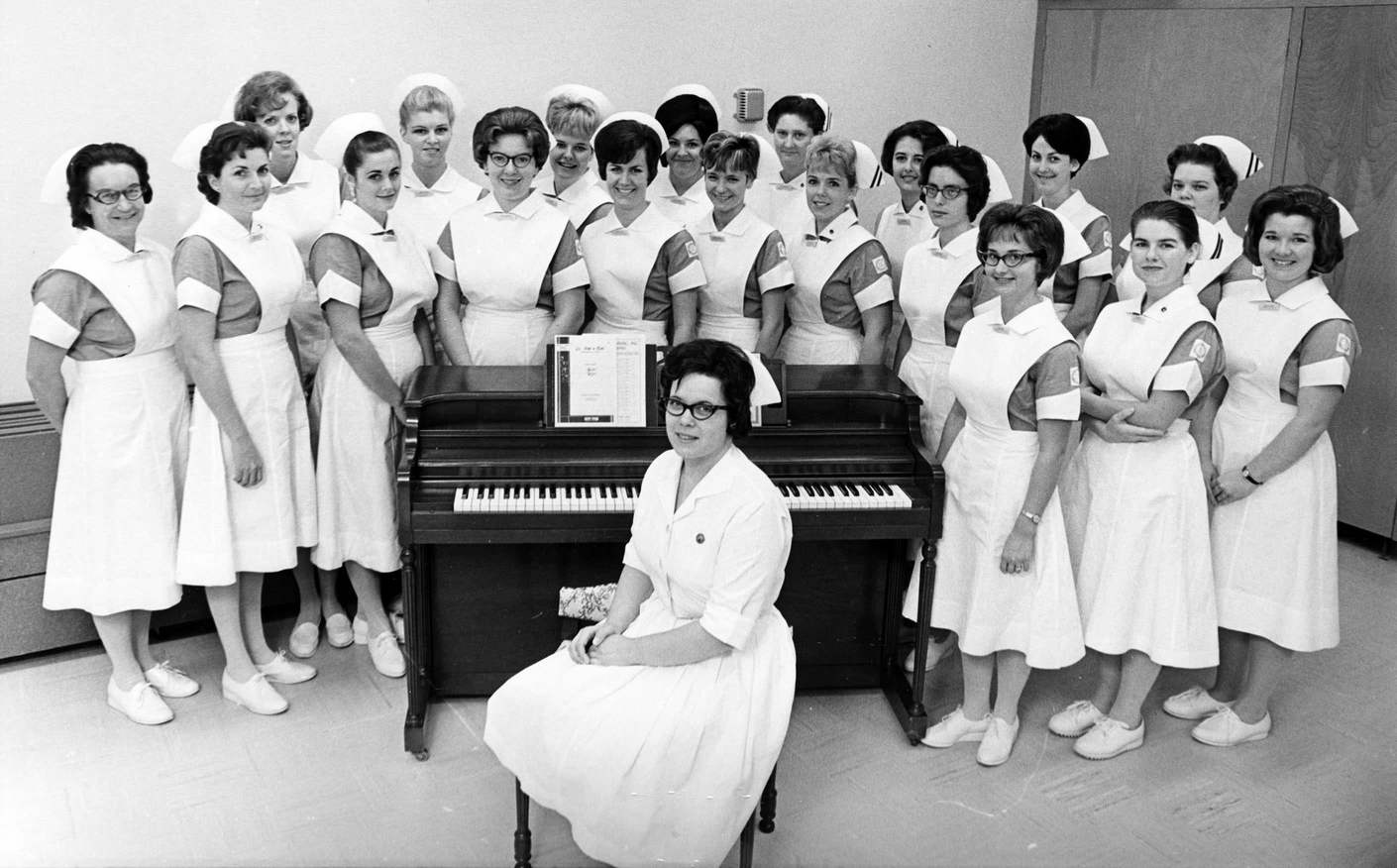
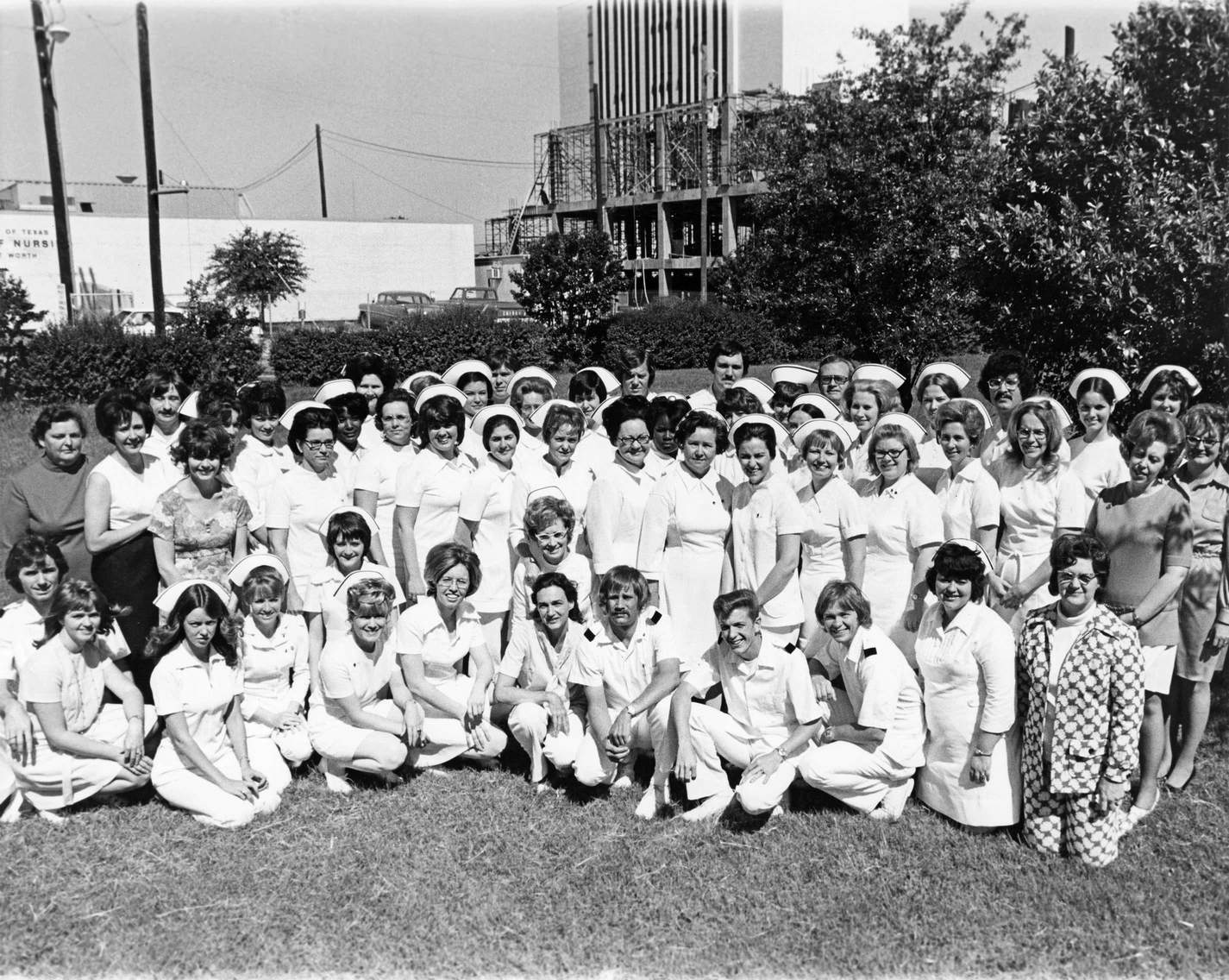
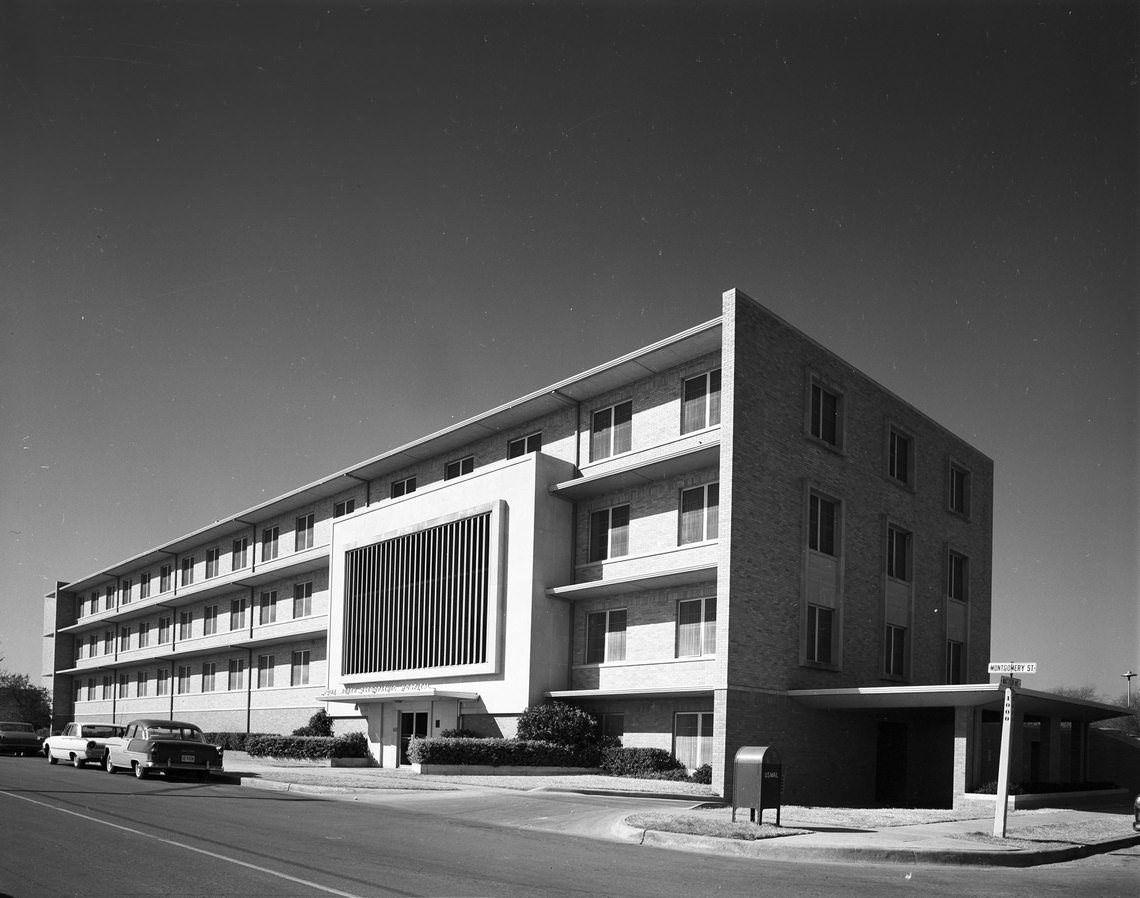
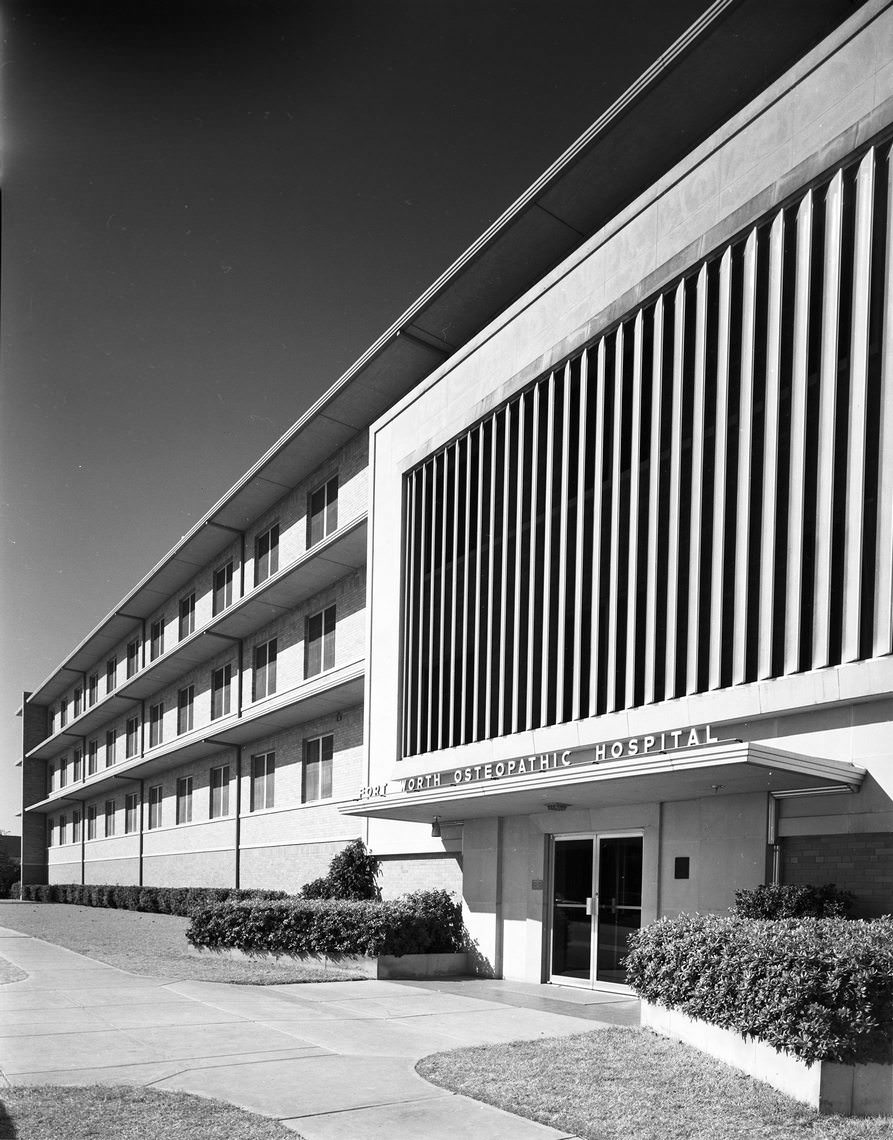
John Peter Smith Hospital Capping Class of 1963Lois Lynn and John Peter Smith Hospital nursing student choir, 1960sNursing students at the University of Texas School of Nursing in Fort Worth. Jeanneane Cline, front row center, Mary Beth Steward, school secretary, at bottom right in the front row, 1968.Fort Worth Osteopathic Hospital exterior, Mattison and Montgomery streets, 1962Fort Worth Osteopathic Hospital, 1962Exterior of the new Fort Worth State Adult Mental Health Clinic, 1962
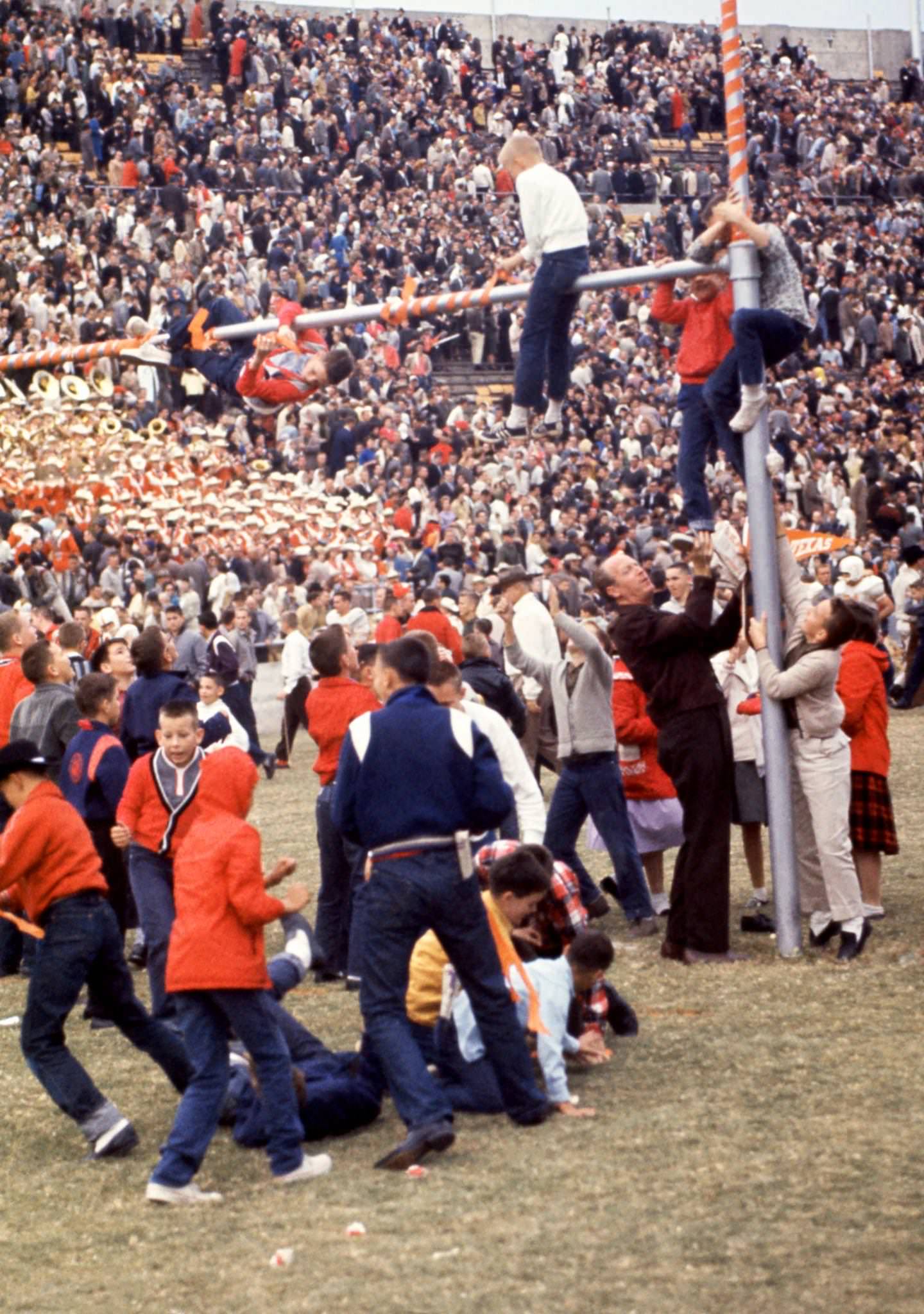
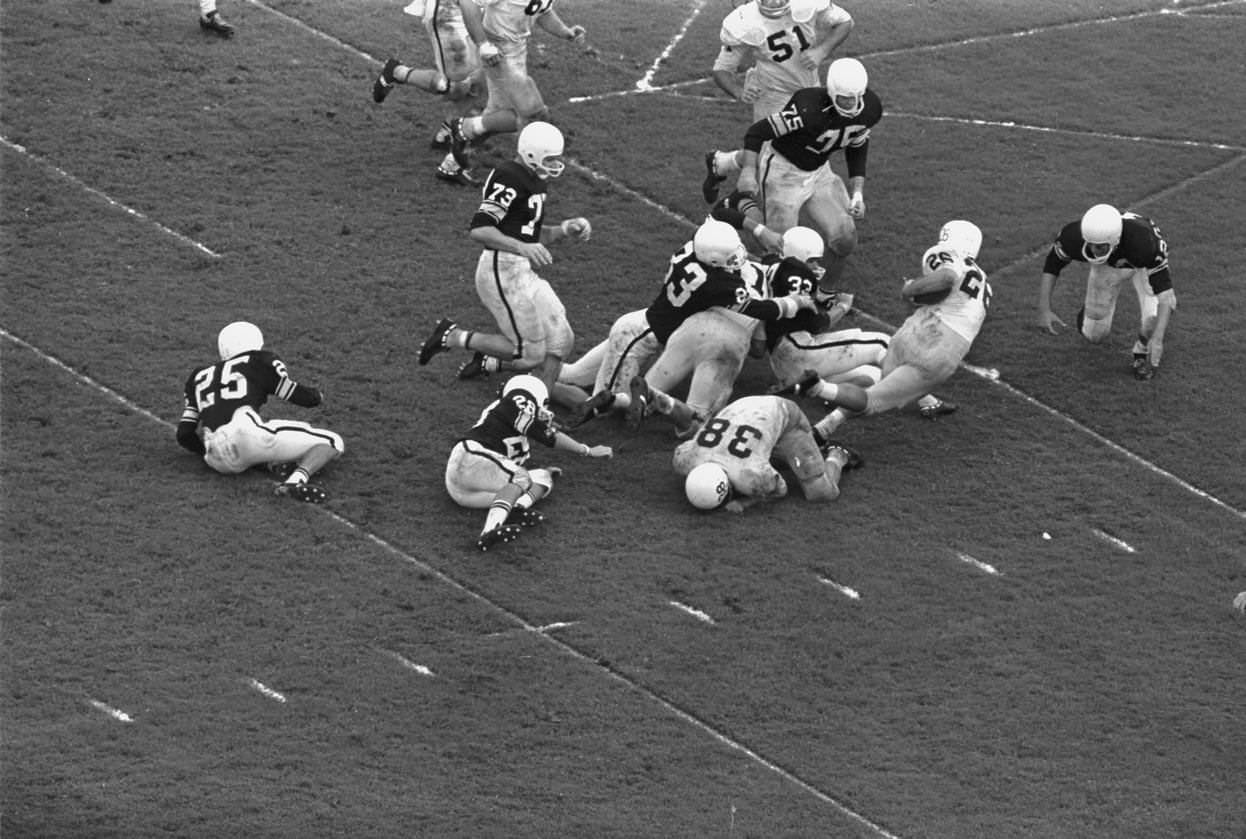
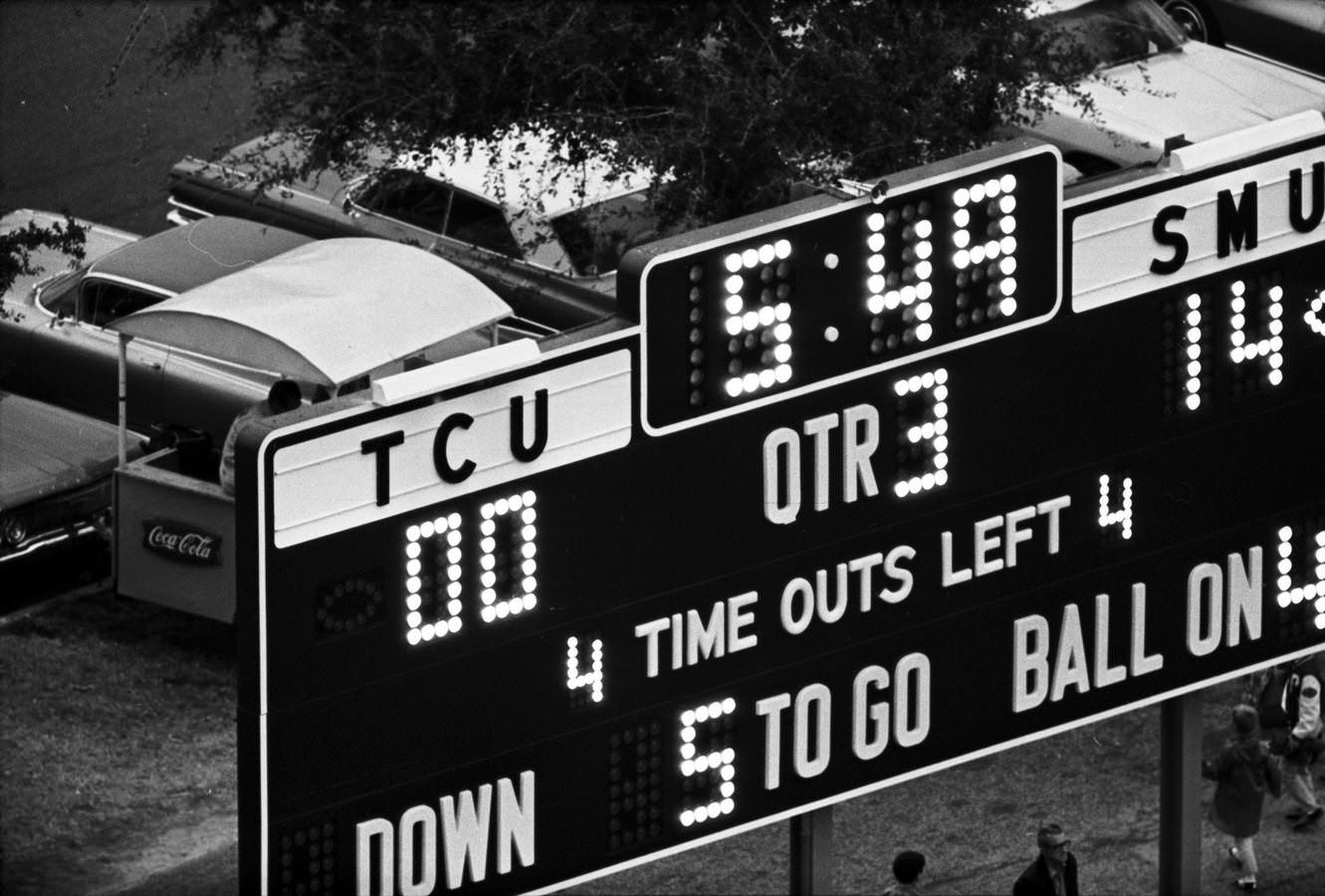
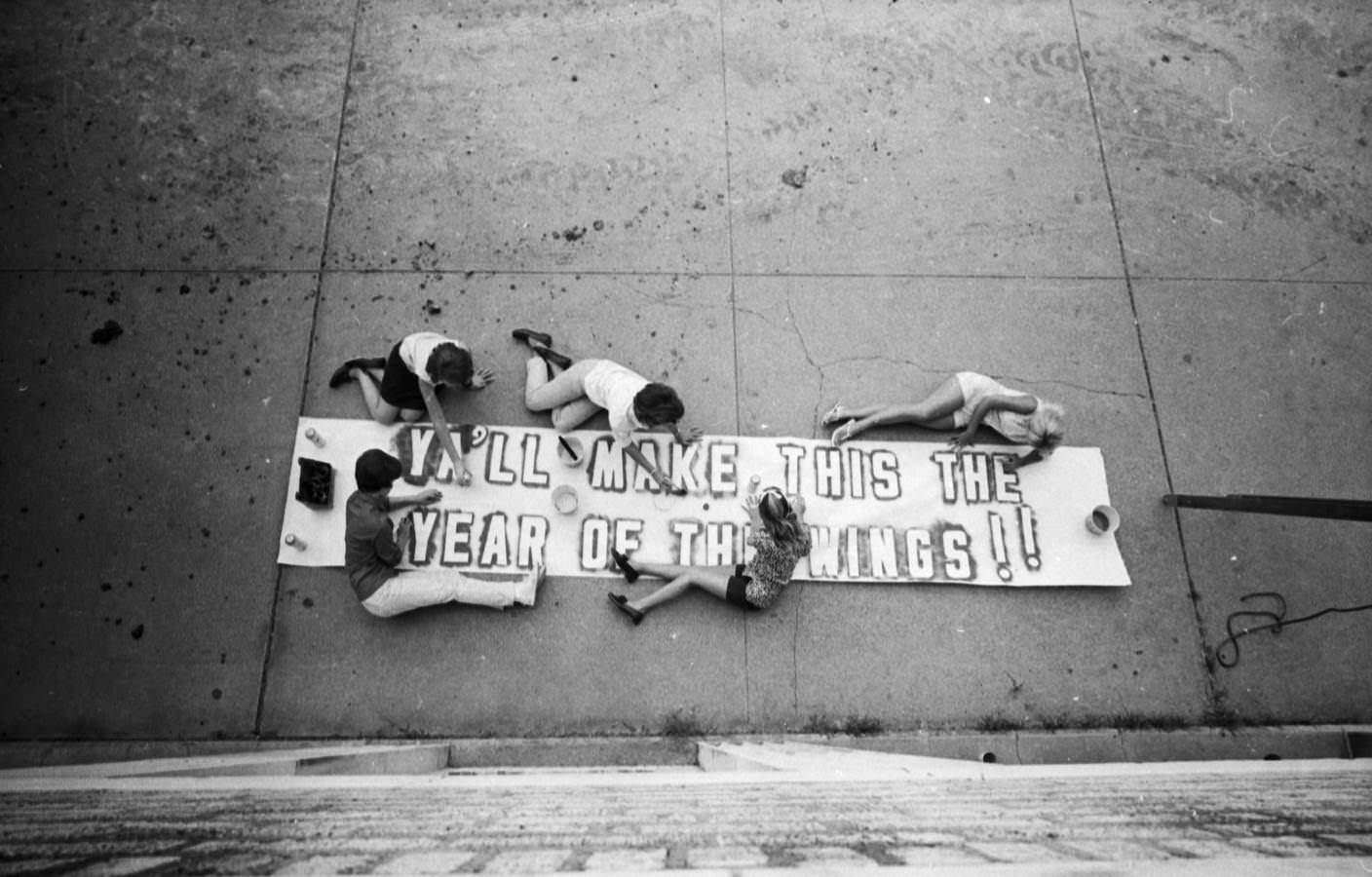
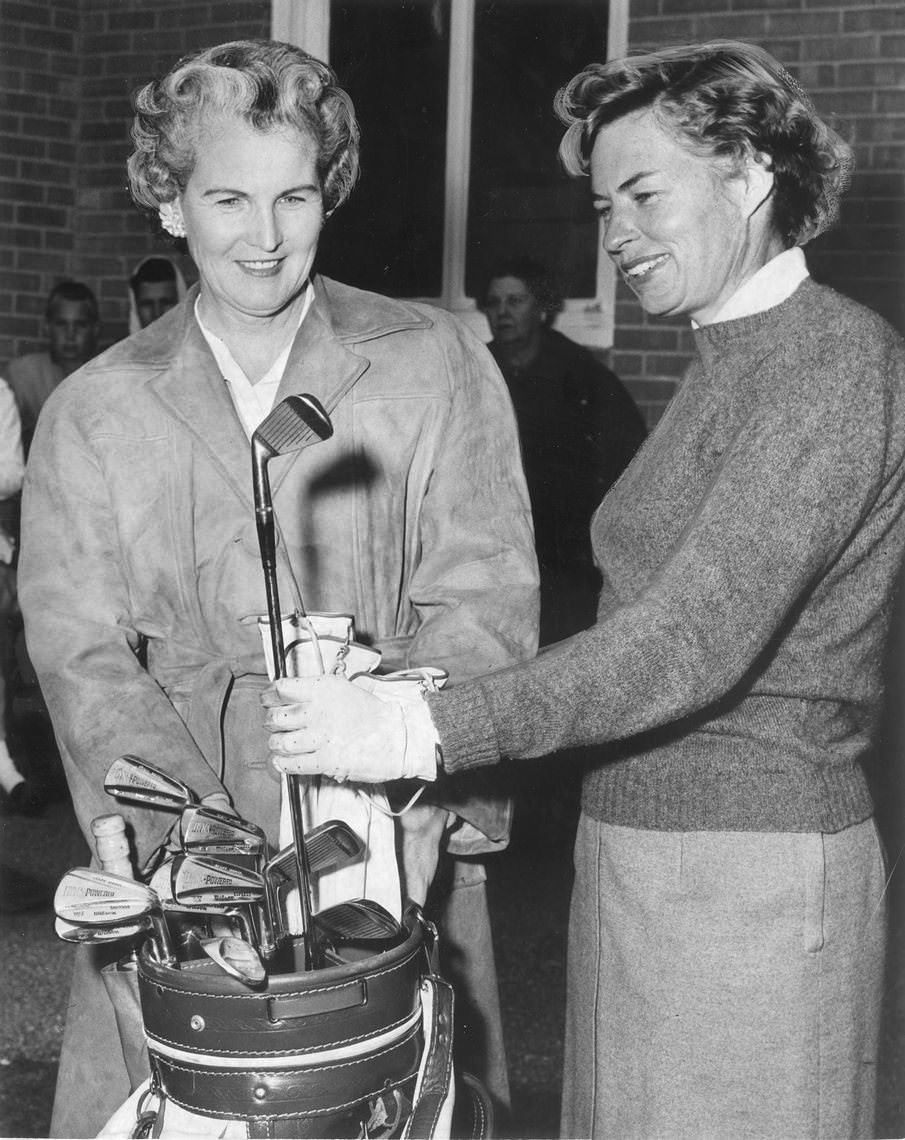
Sports gave Fort Worth residents shared moments of excitement and community. TCU Horned Frogs football drew large crowds to Amon G. Carter Stadium, and in November 1960, Texas Longhorn fans famously climbed the goalposts after their team beat TCU 12 to nothing. Fort Worth also had its own minor-league hockey team, the Fort Worth Wings, and River Crest Country Club hosted nationally recognized golfers like Betsy Rawls.
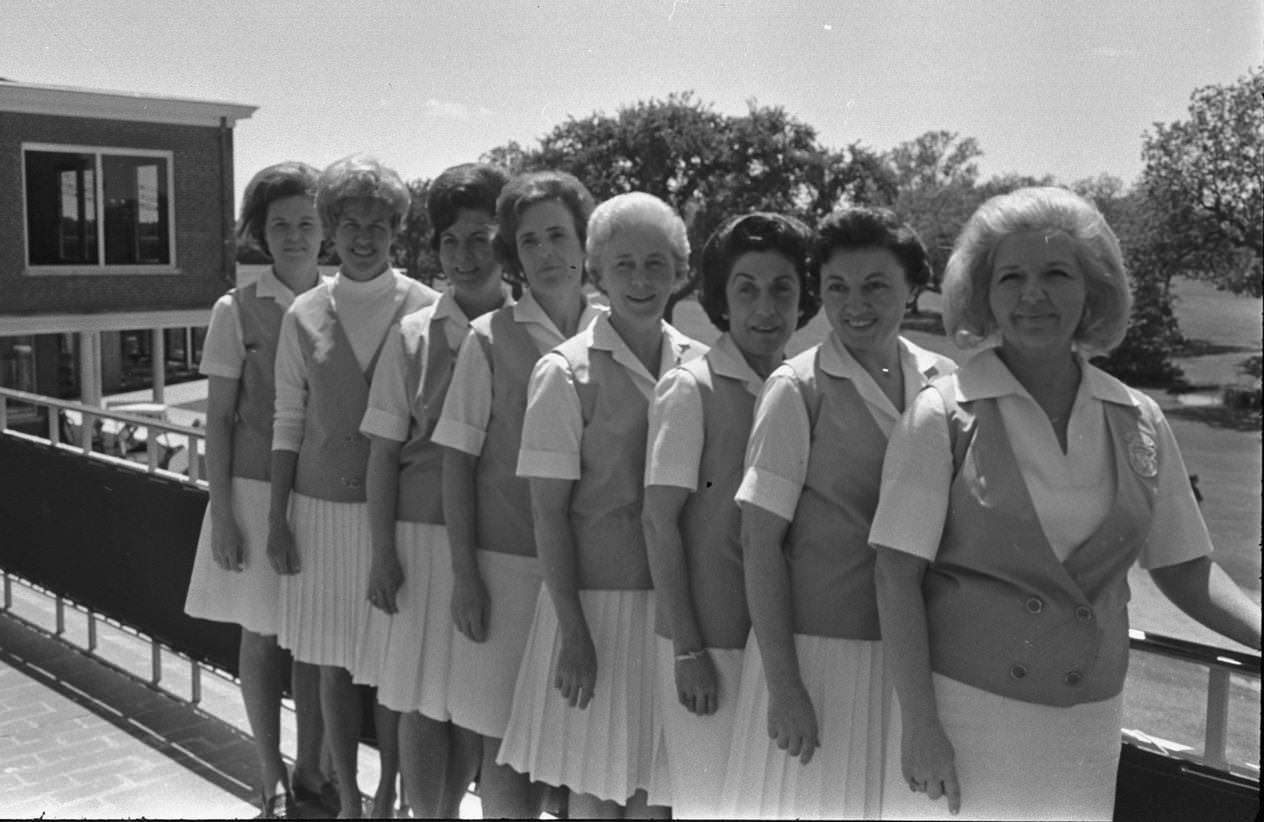
Fans of the Texas Longhorns celebrate and climb on the goal posts after the win against the Texas Christian University Horned Frogs after the rivalry game on November 12, 1960 at Amon G. Carter Stadium in Fort Worth, Texas.Larry Bulaich, Texas Christian University (T. C. U.) #26, drives for touchdown, 1962TCU vs. SMU football game scoreboard, 1966Goal Tenders, Fort Worth Wings booster club, 1968Betsy Rawls and Aniela Goldthwaite at River Crest Country Club, 1961The Women’s Golf Association ready for National Invitational Tournament, 1968
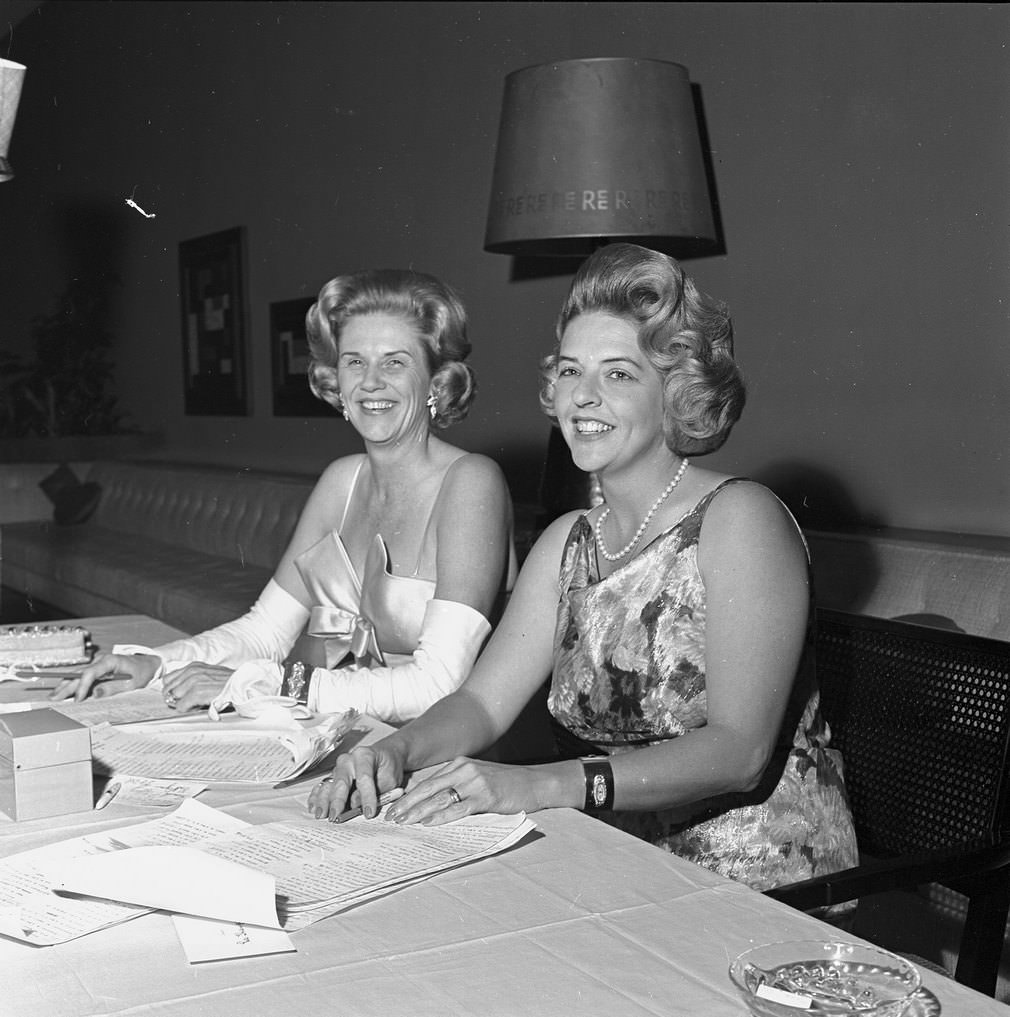
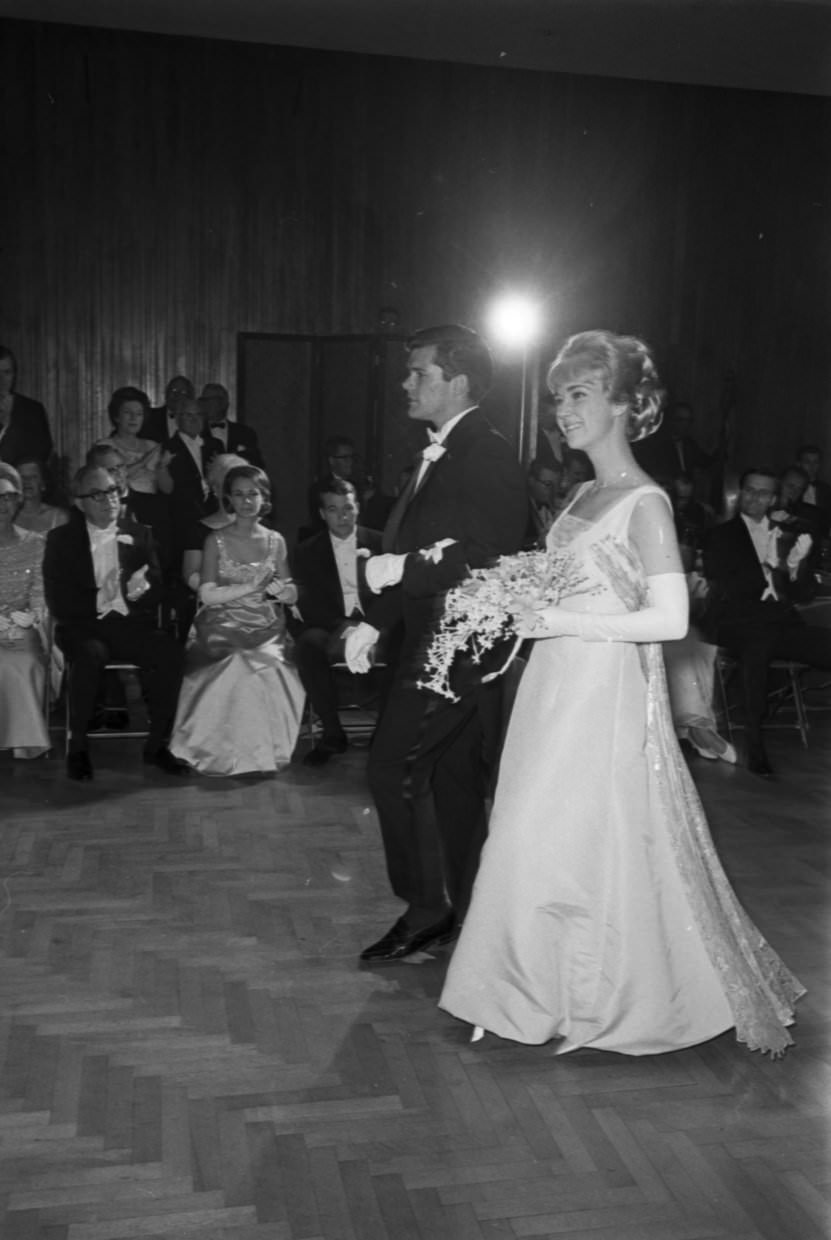
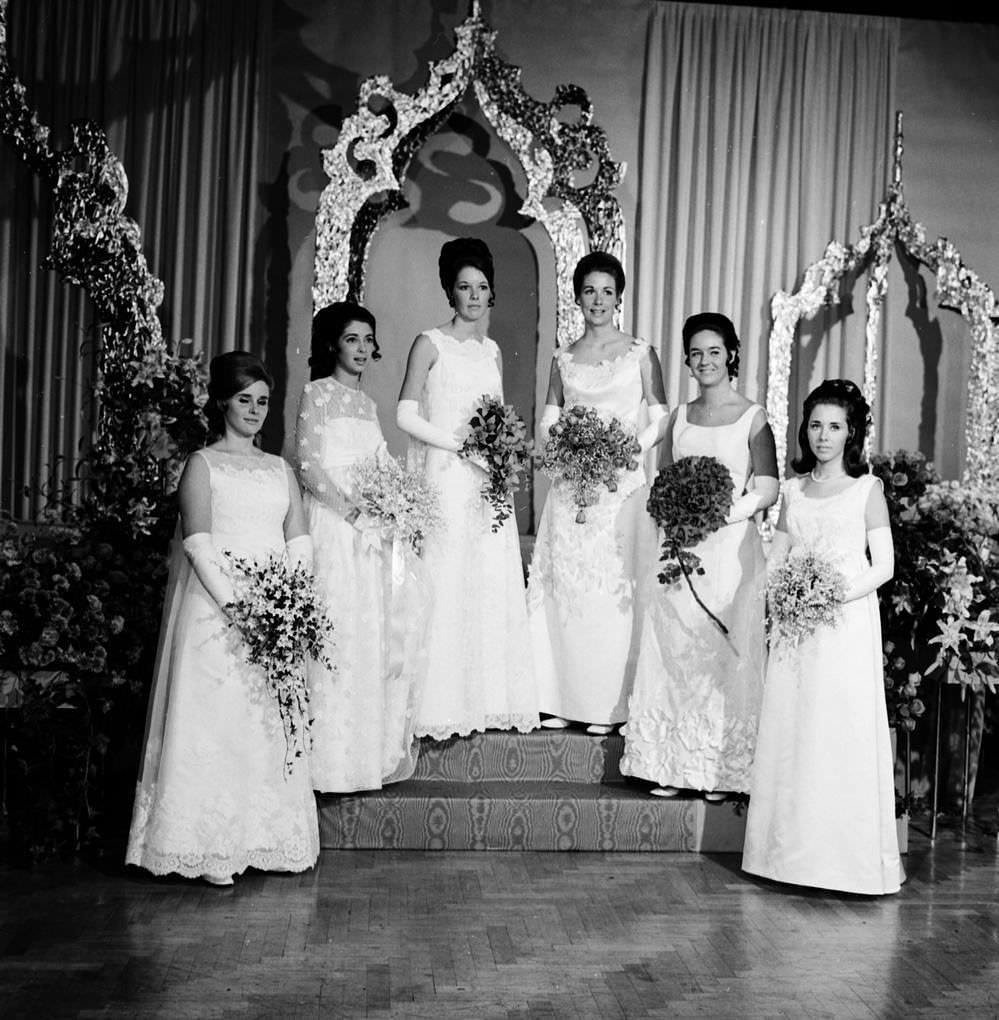
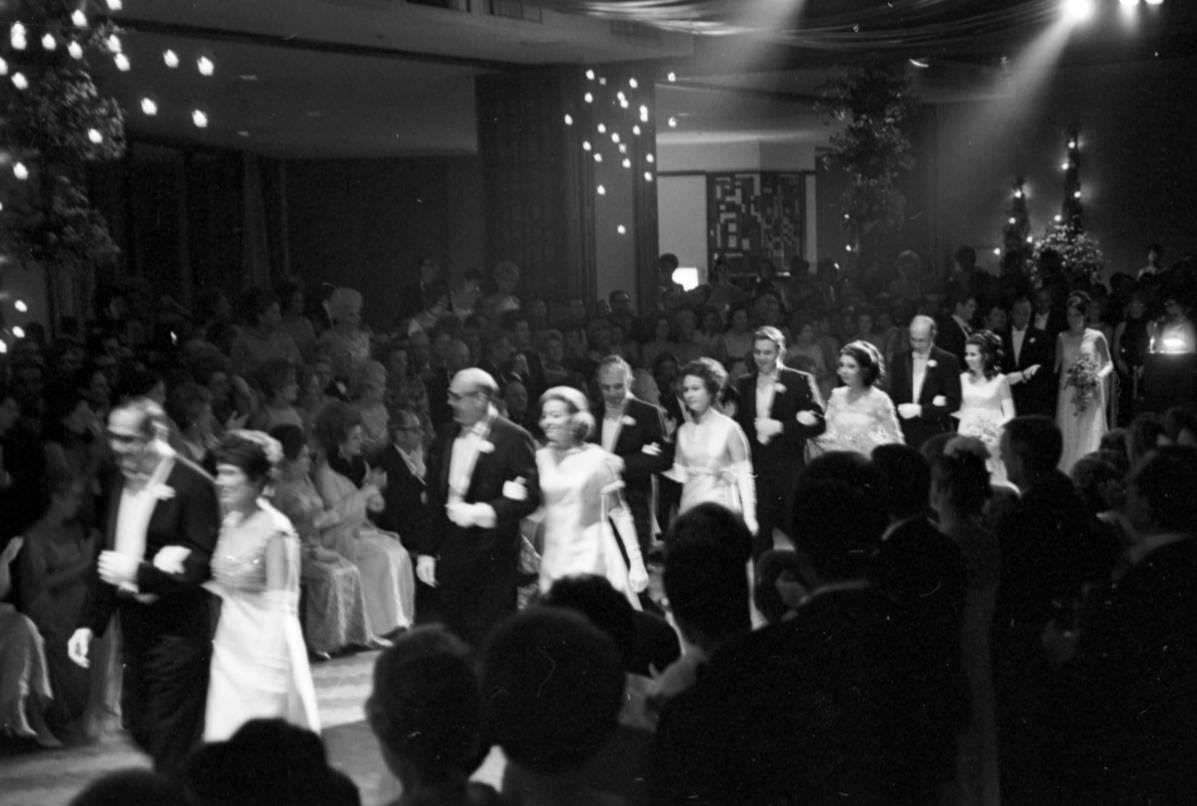
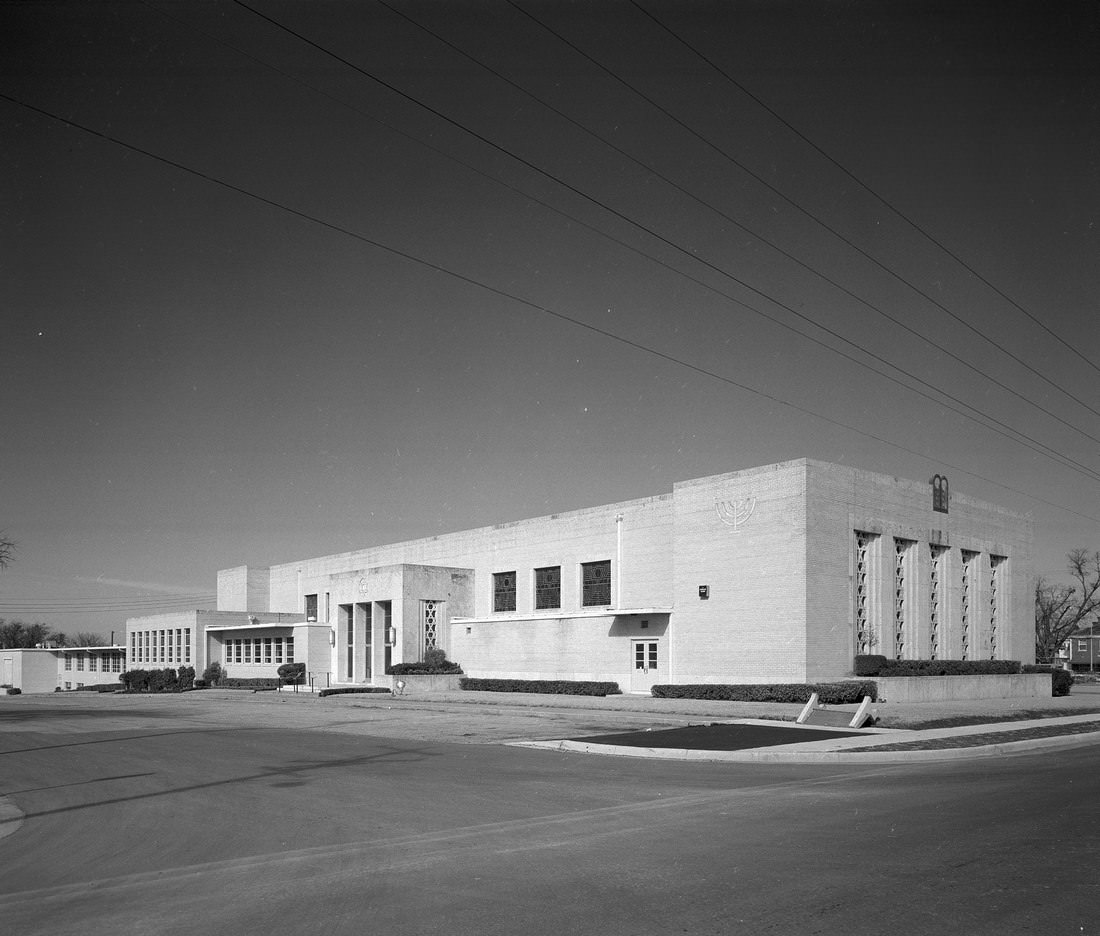
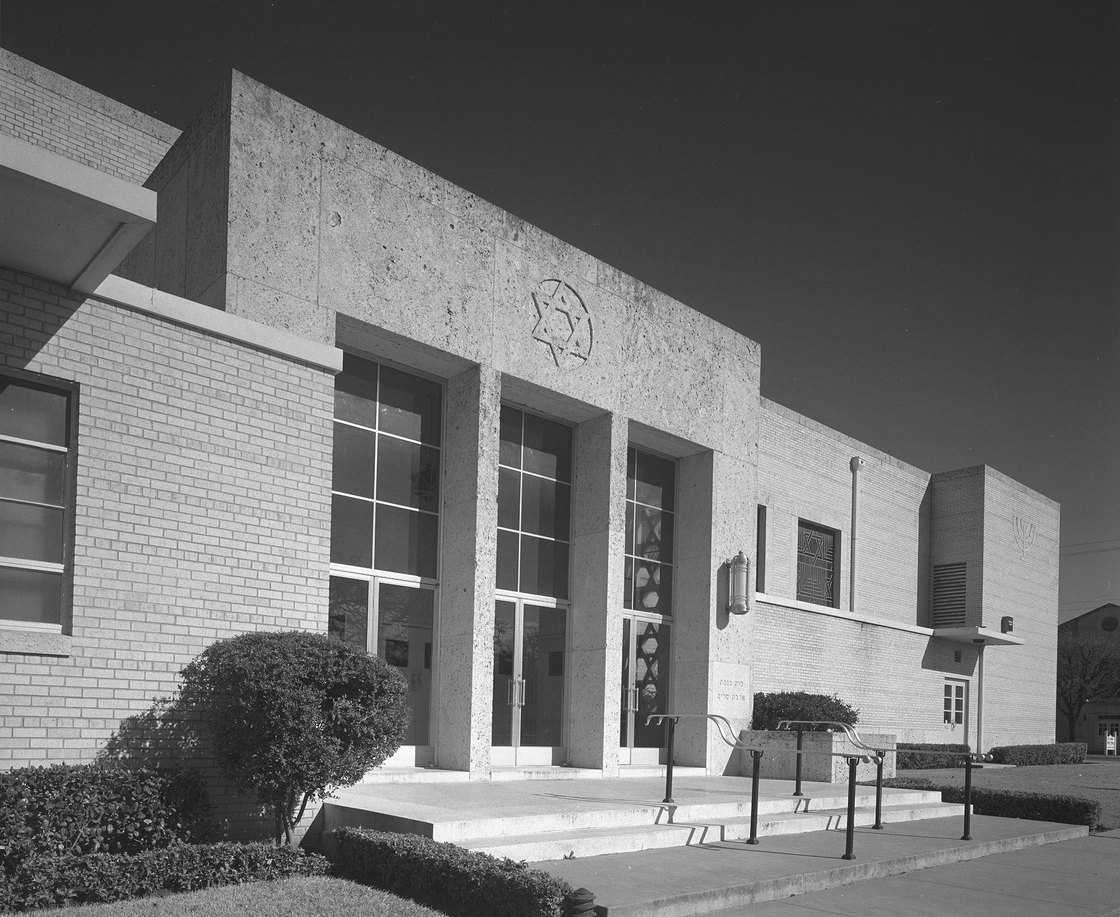
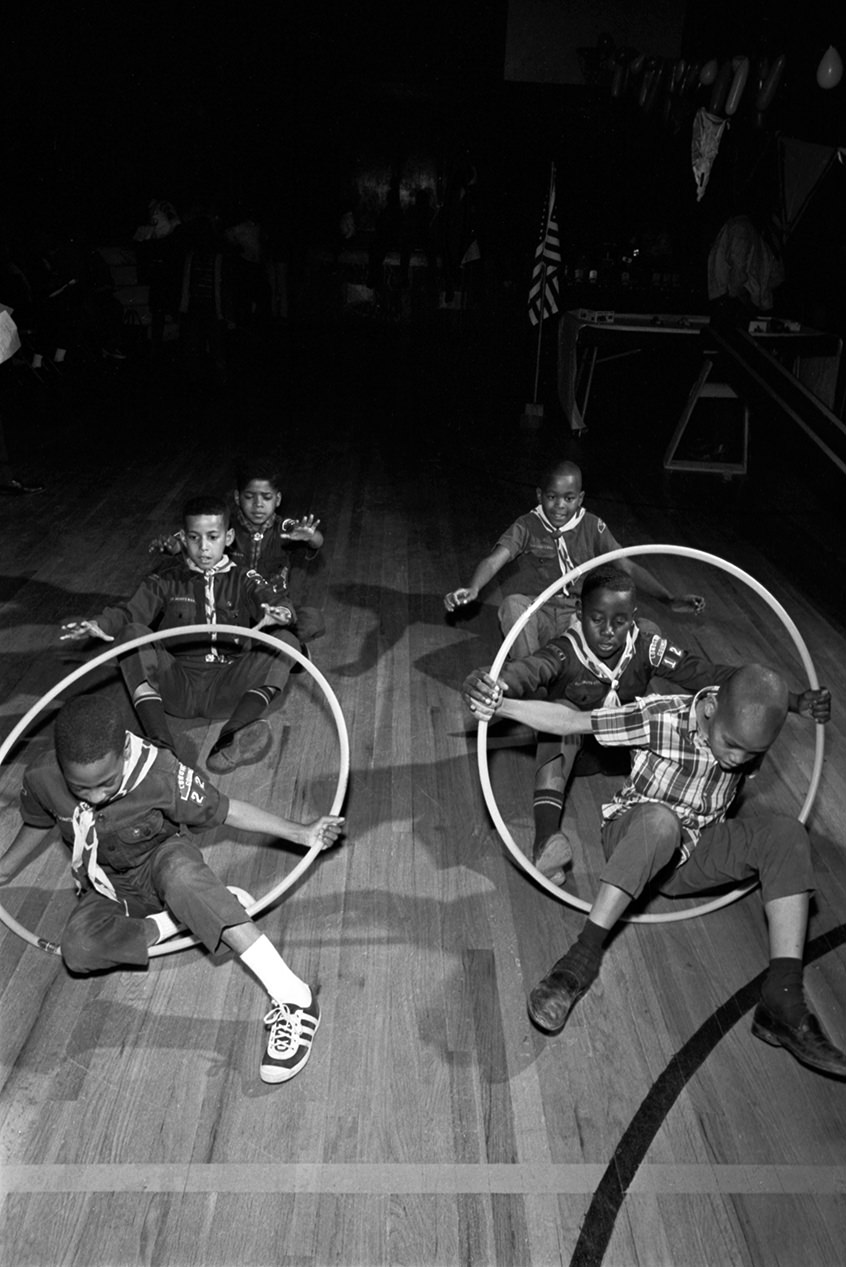
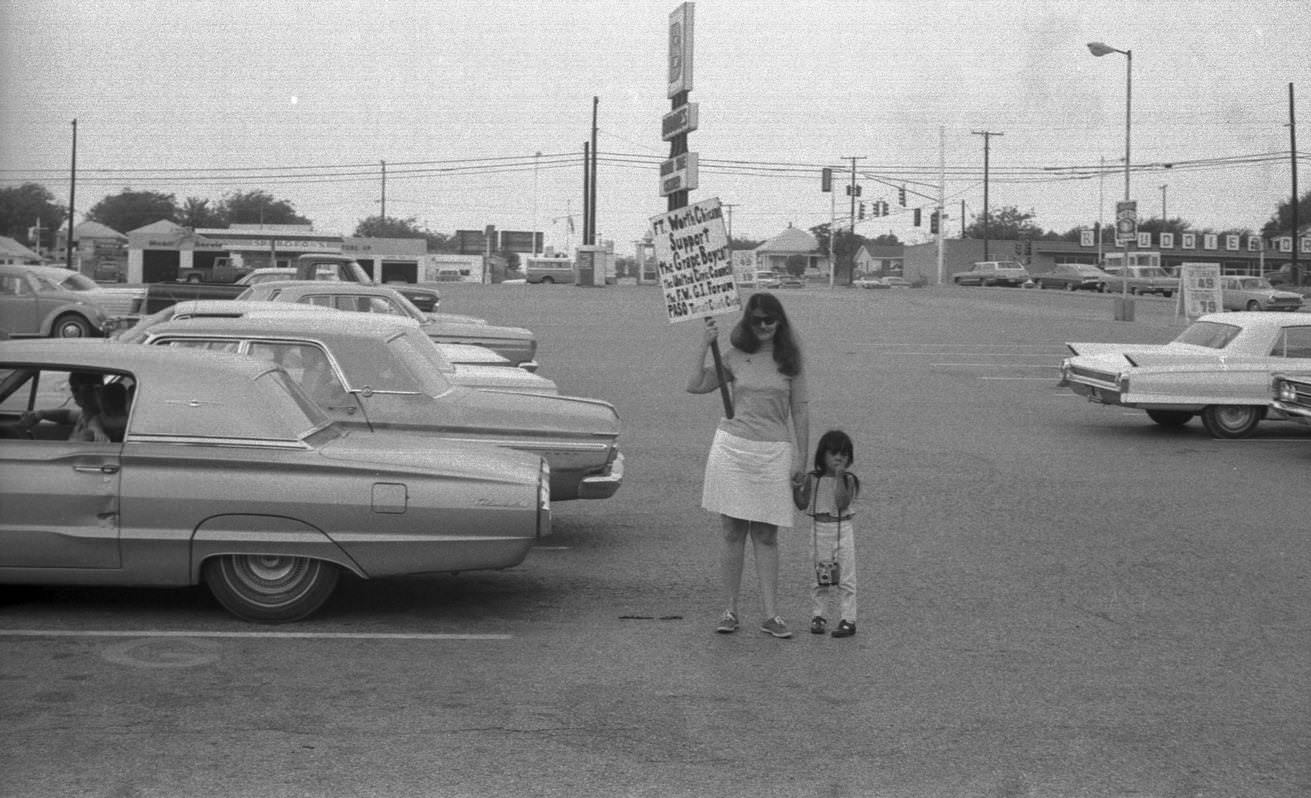
Social life in Fort Worth took many forms. The Assembly Ball at Ridglea Country Club was a fixture of the city’s social calendar in both 1961 and 1968. Congregation Ahavath Sholom on West Myrtle Street represented the city’s religious communities, and community events like the 1968 Cub Scout Olympics at Harmon Recreation Center brought neighborhoods together. Farm worker strikers picketed at Buddies Grocery in 1969, reflecting labor tensions that reached even into everyday Fort Worth commerce.
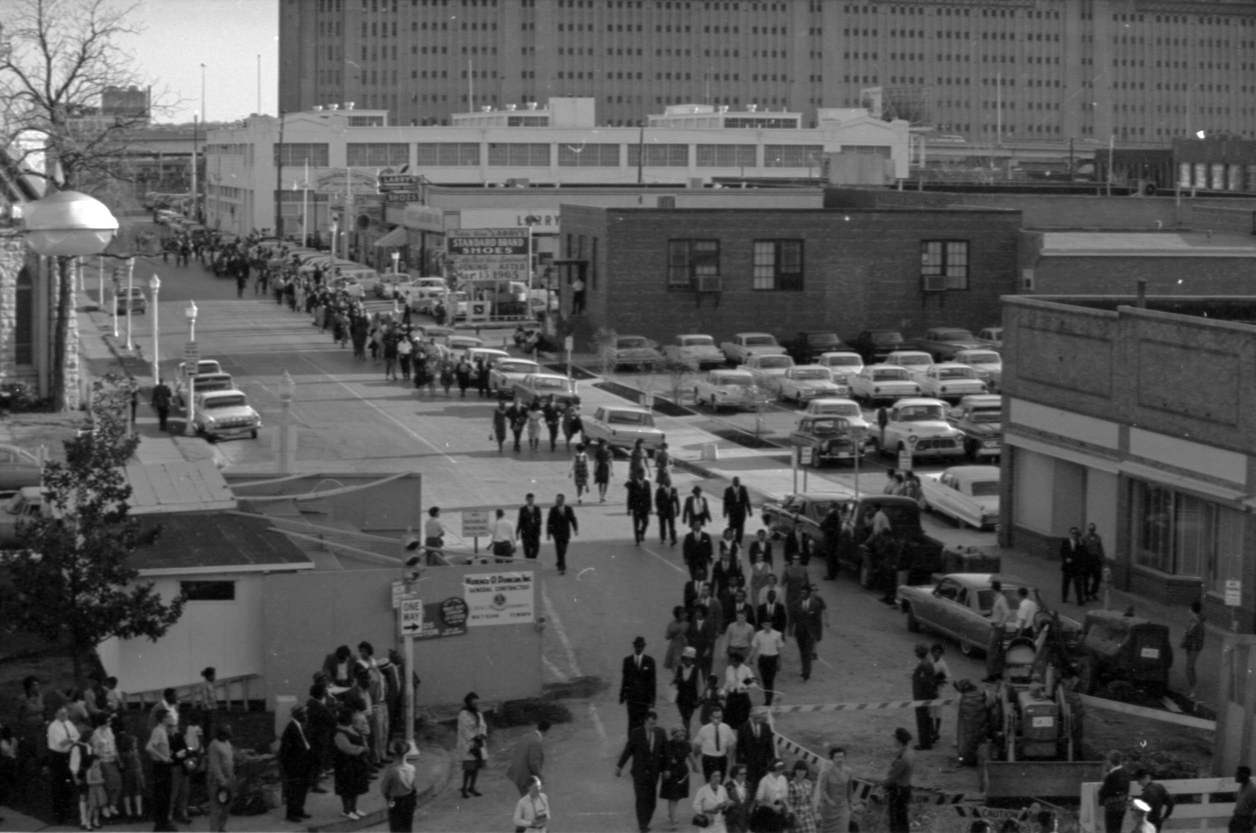
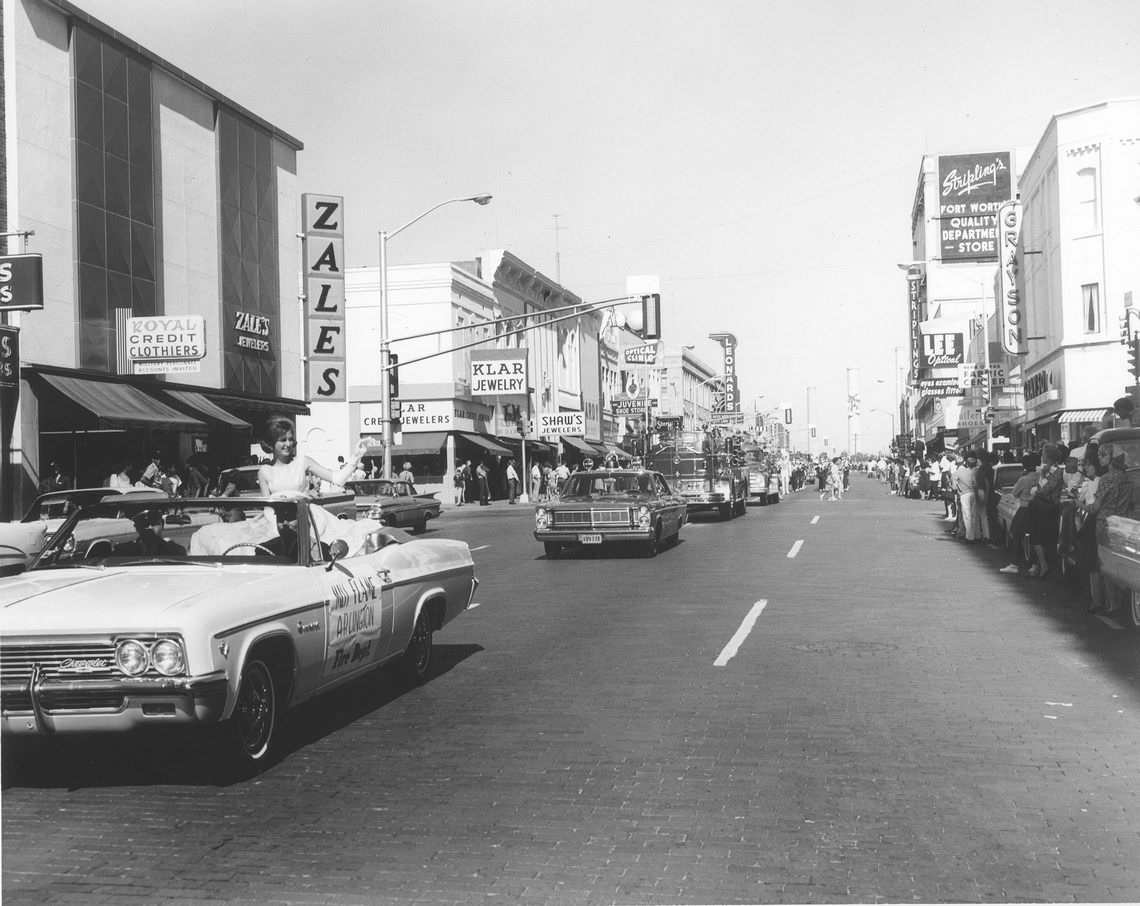
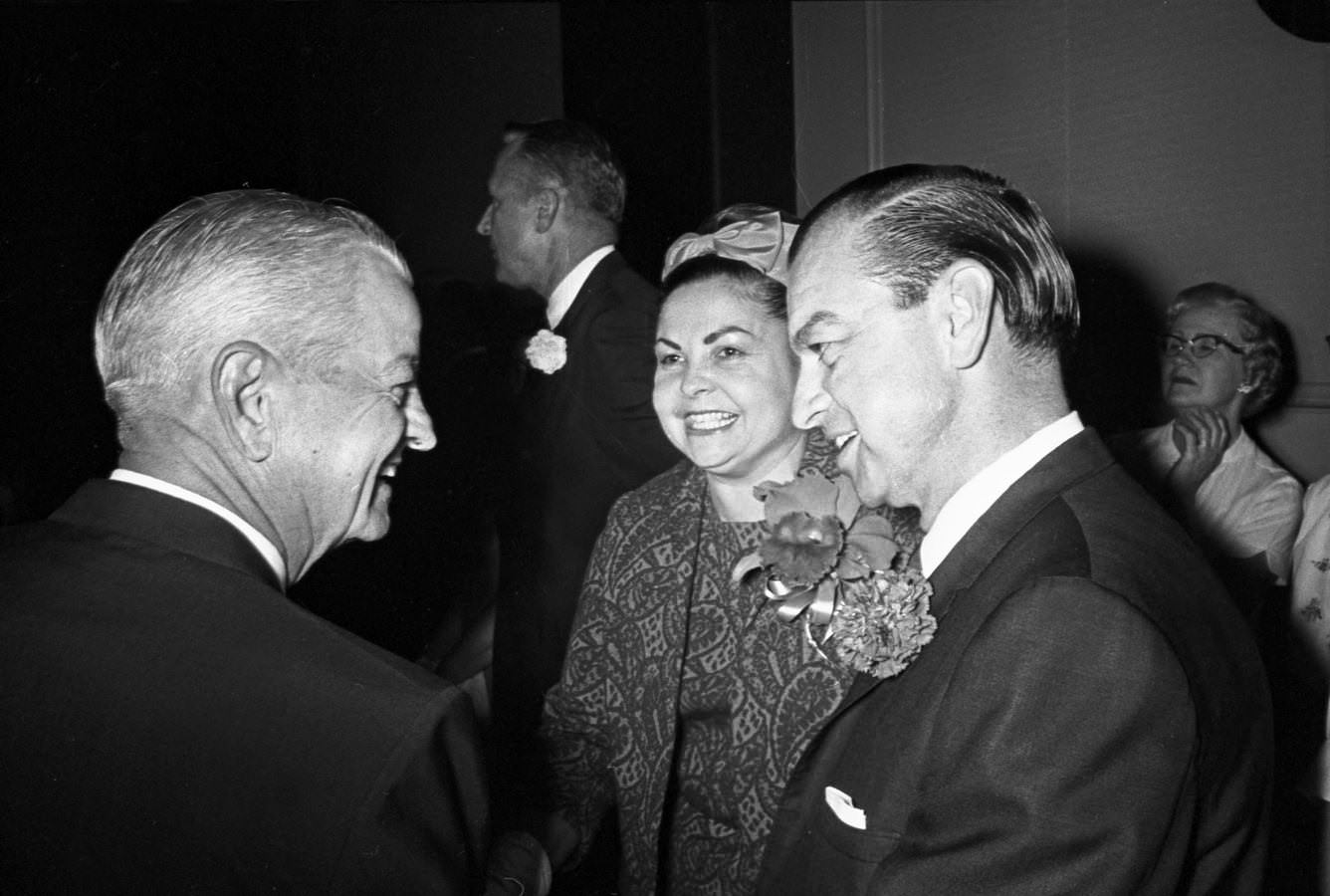
Mrs. W. K. Gordon Jr. with Mrs. James M. Harrison taking tickets at The Assembly Ball, Ridglea Country Club, Fort Worth, 1961The 1966 Assembly Ball at Ridglea Country Club, 1966The 1968 Assembly Ball at Ridglea Country Club, 1968The 1968 Assembly Ball at Ridglea Country Club, 1968Congregation Ahavath Sholom, 1300 West Myrtle Street, Fort Worth, Texas, 1968Congregation Ahavath Sholom, 1300 West Myrtle Street, Fort Worth, Texas, 1968A group of Cub and Boy Scouts at 1968 Cub Scout Olympics competing in a hula hoop race.Farm worker strikers picketing at Buddies Grocery store, Fort Worth, Texas, 1969Overview of marchers, Civil Rights demonstrations in Fort Worth, protesting brutality in Selma, Alabama, 1965Parade in downtown Fort Worth with Miss Flame of Arlington, 1965Arlington Mayor Tom J. Vandergriff and his wife, Anna, conversing with an attendee of an appreciation dinner held in Vandergriff’s honor in Hotel Texas’ Grand Ballroom, 1966
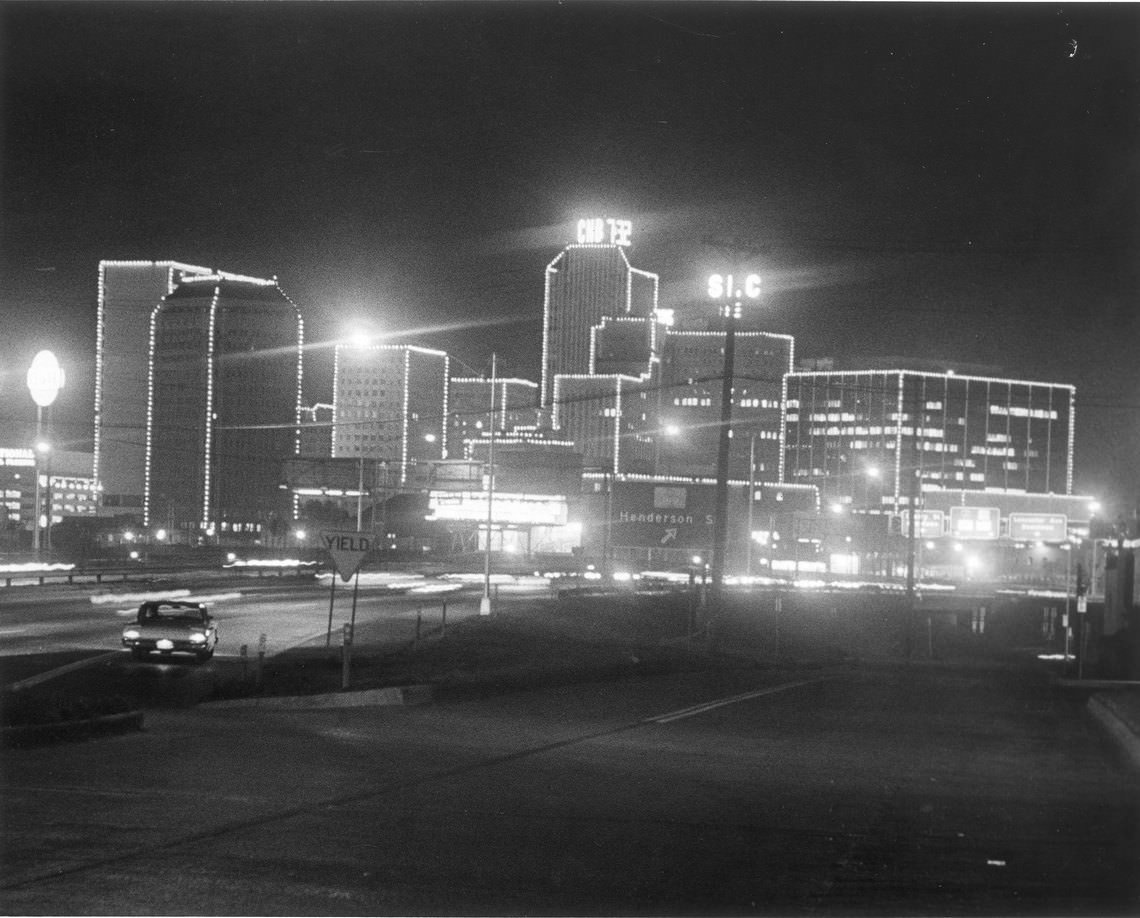
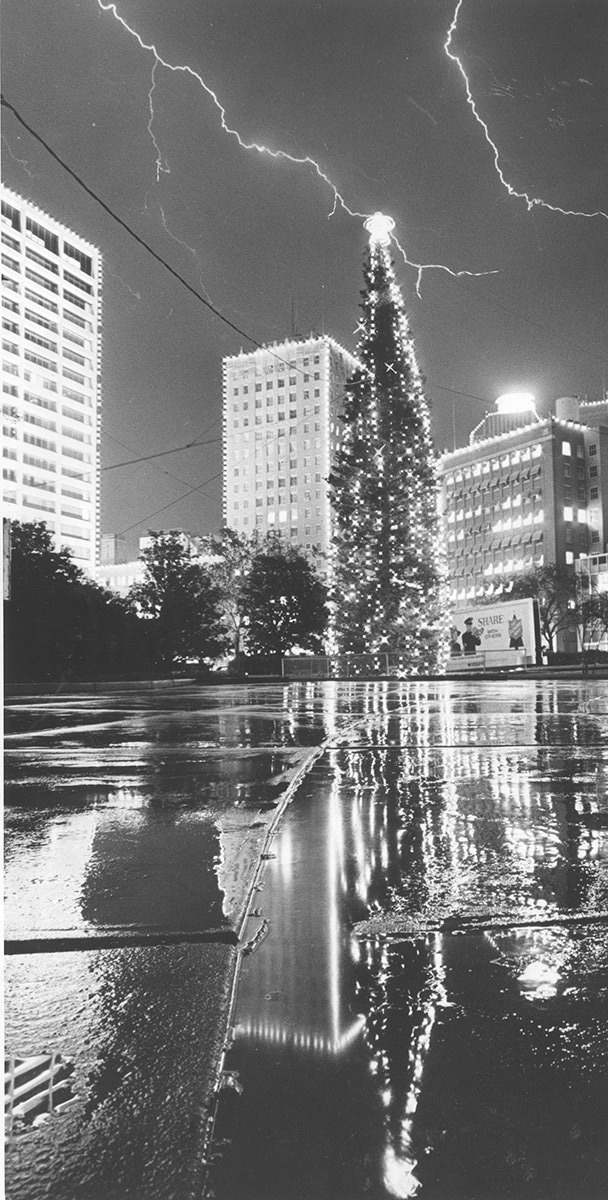
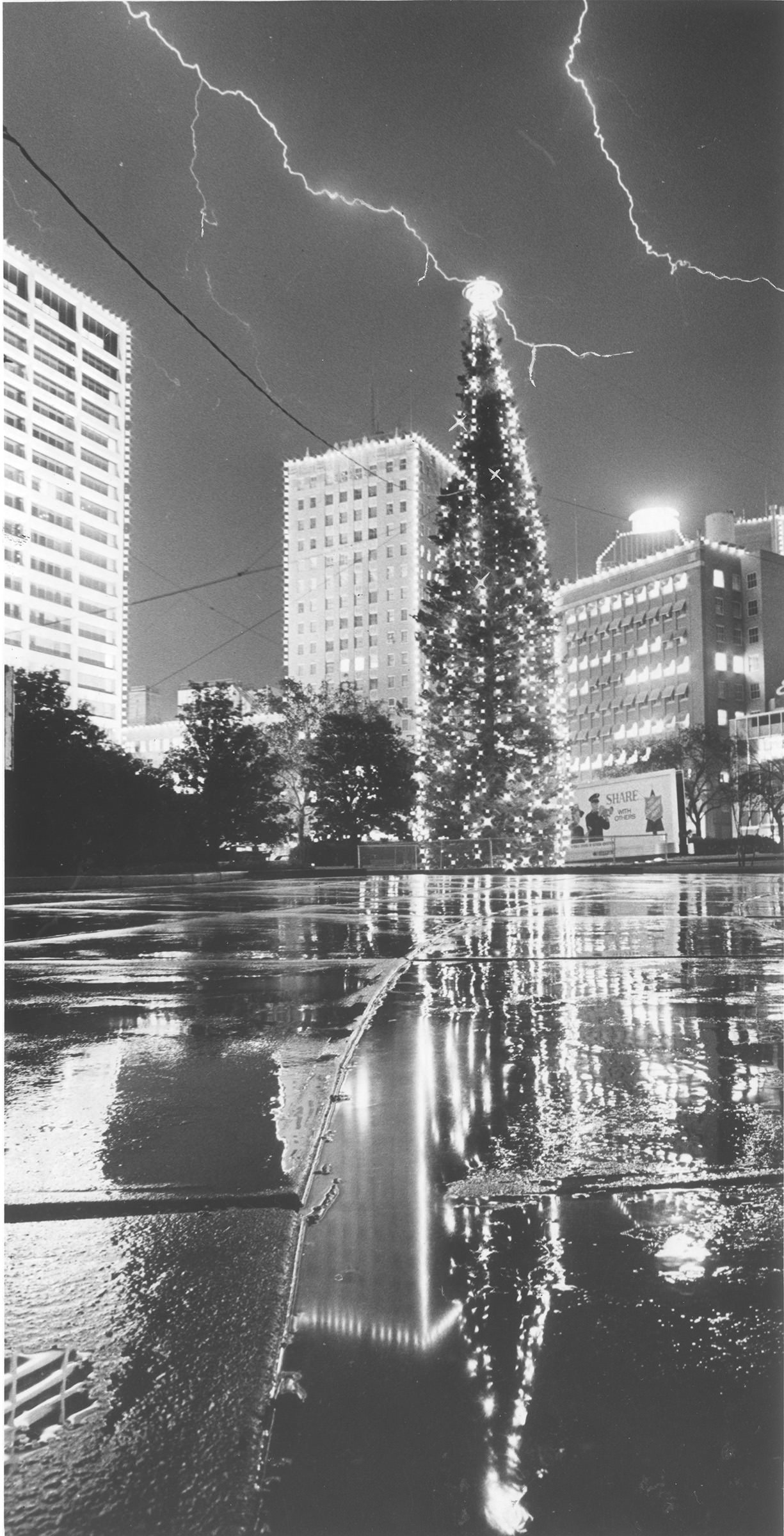
The holiday season brought its own traditions. Downtown buildings were outlined in Christmas lights in 1967, and lightning strikes were captured over the Fort Worth community Christmas tree in Burnett Park in 1966 — dramatic photographs that showed nature upstaging the festivities in spectacular fashion.
Downtown Fort Worth at night with buildings outlined in Christmas lights, 1967
Lightning above the Fort Worth community Christmas tree, 1966
Burnett Park in Fort Worth with lightning flashes over the Christmas Tree, 1966
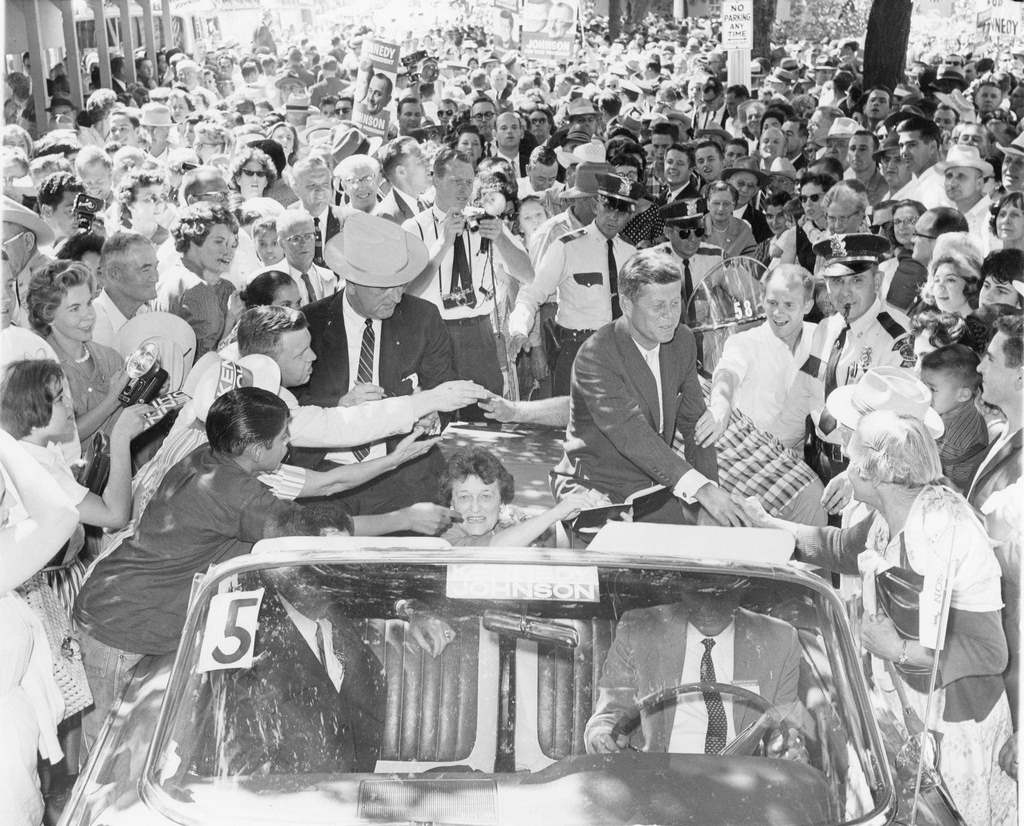
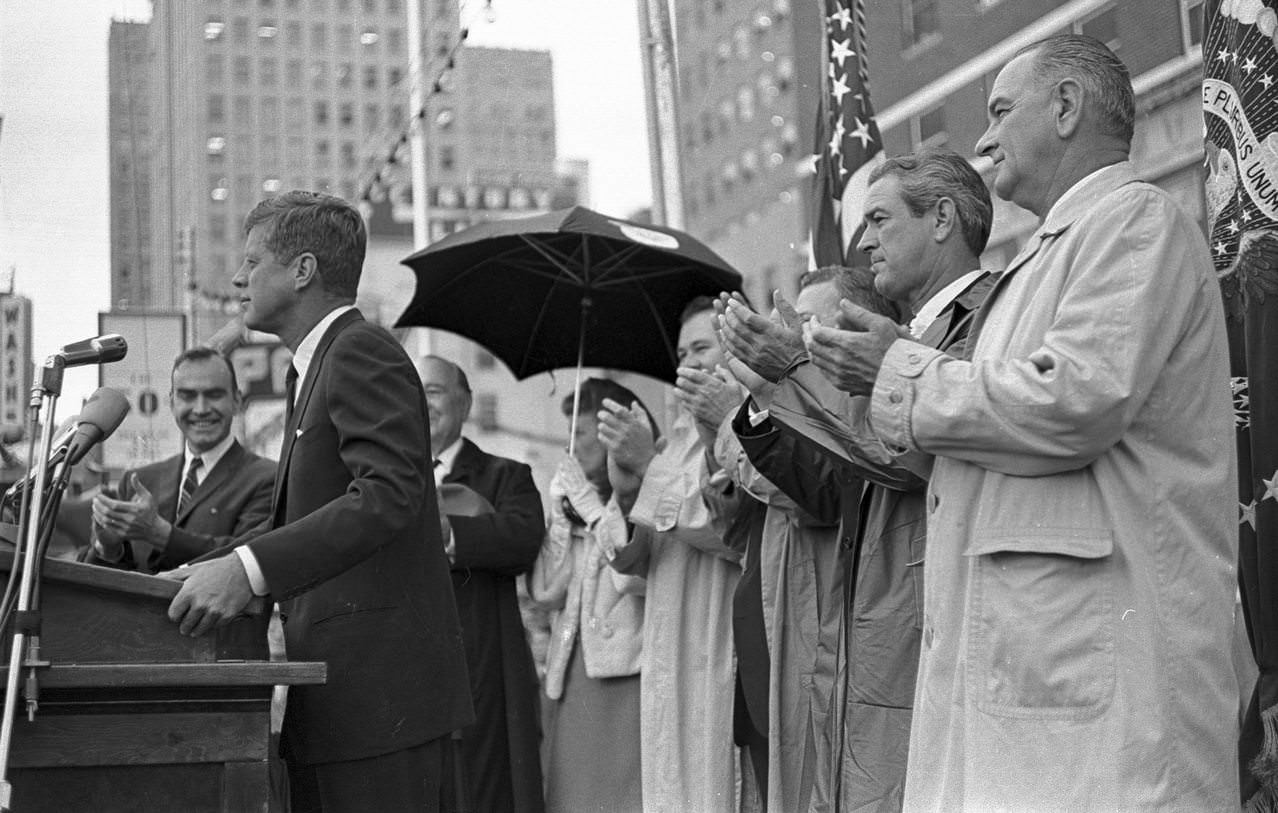
Two national political figures with strong Fort Worth ties made significant appearances in the city during the decade. On September 13, 1960, then-Senator John F. Kennedy and his running mate Lyndon B. Johnson rode together through Burnett Park after a campaign rally, greeted by cheering supporters. Seated between them in the convertible was Judge Sarah T. Hughes, who would later administer the presidential oath to Johnson following Kennedy’s assassination.
LBJ & JFK Campaigning
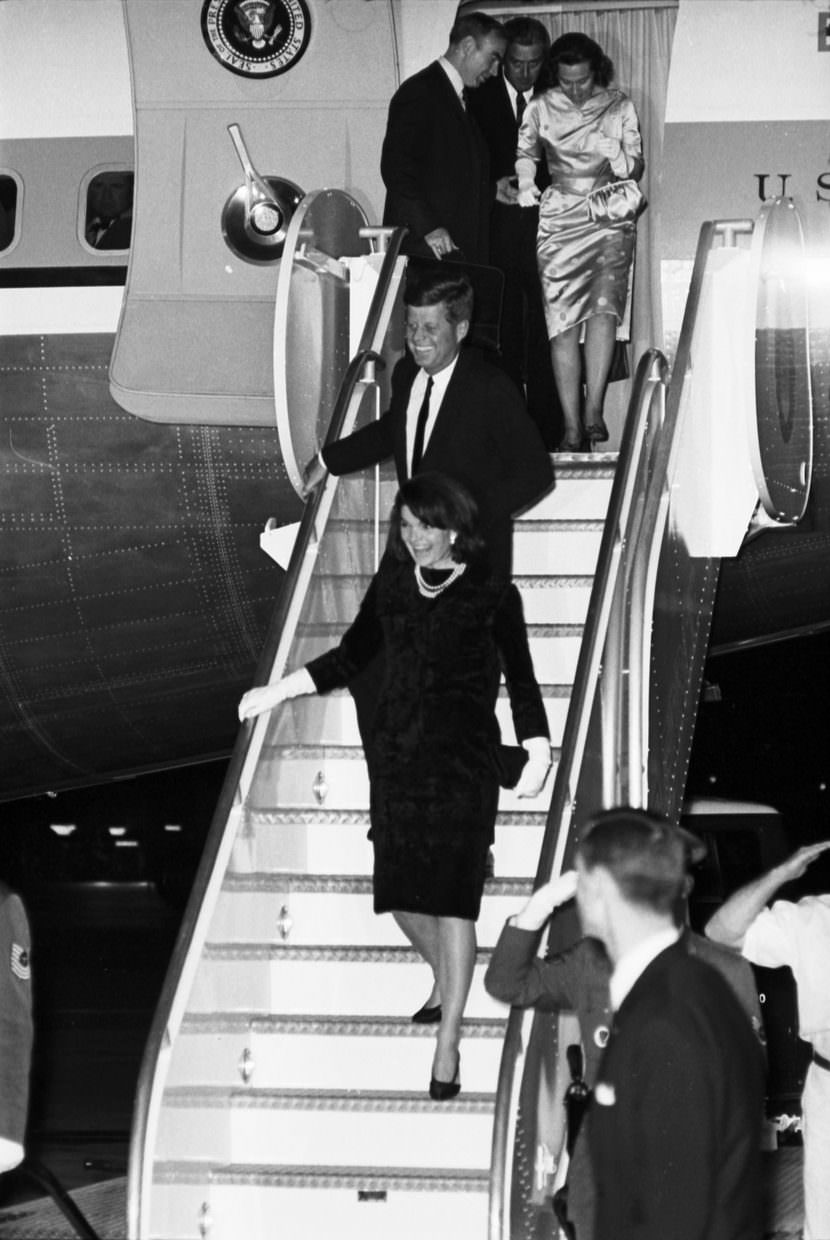
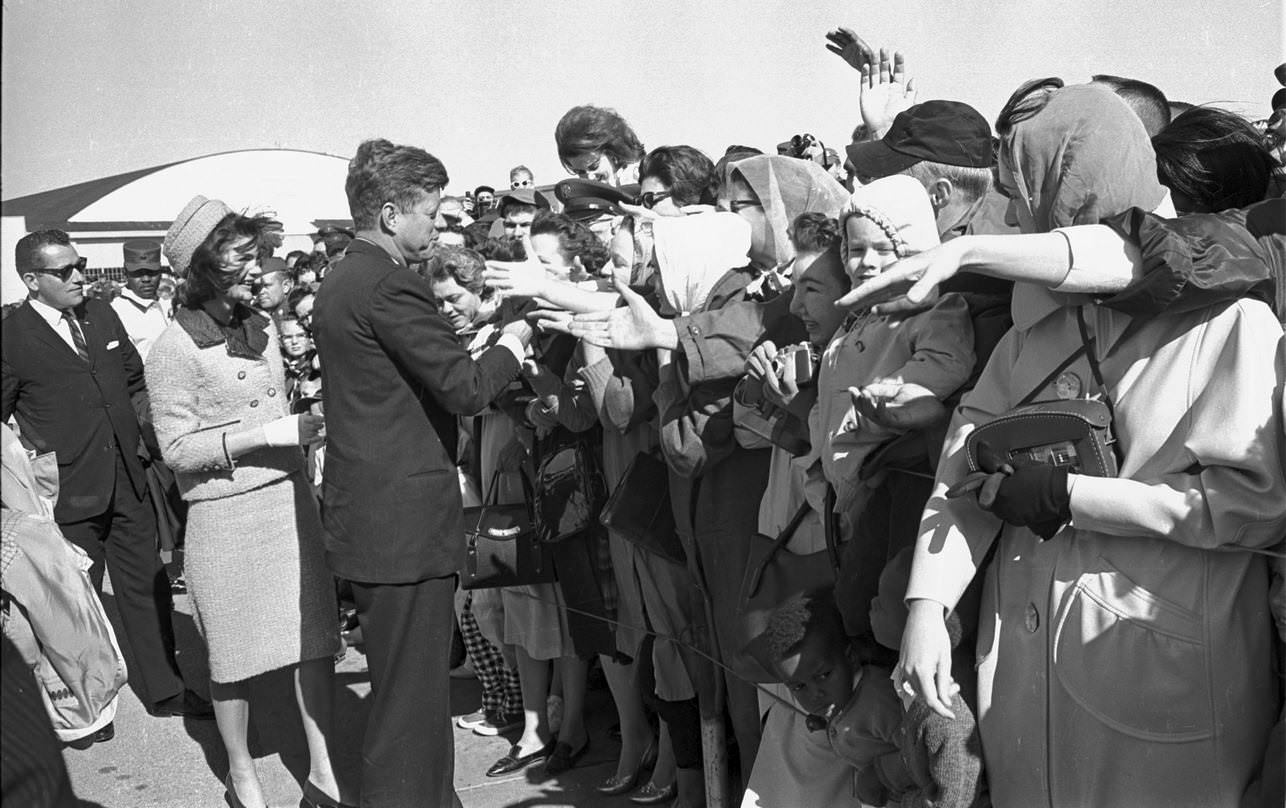
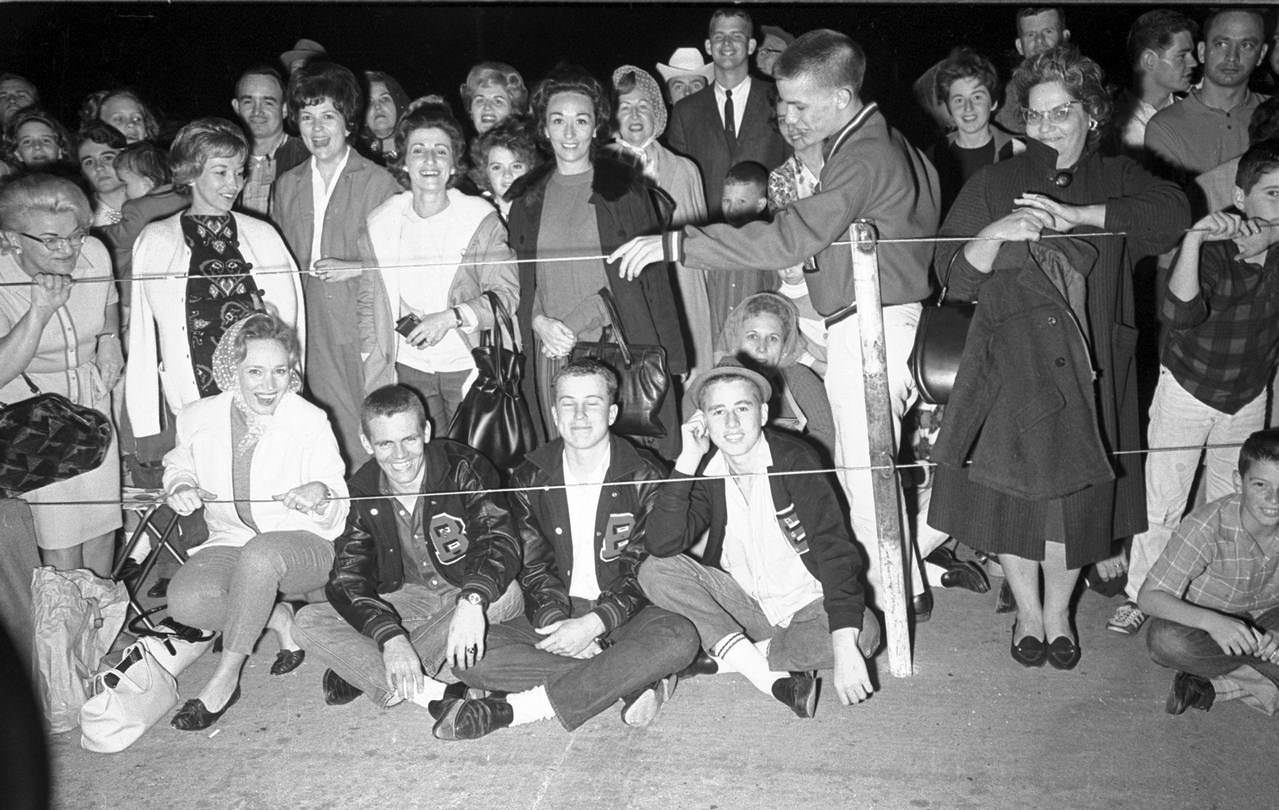
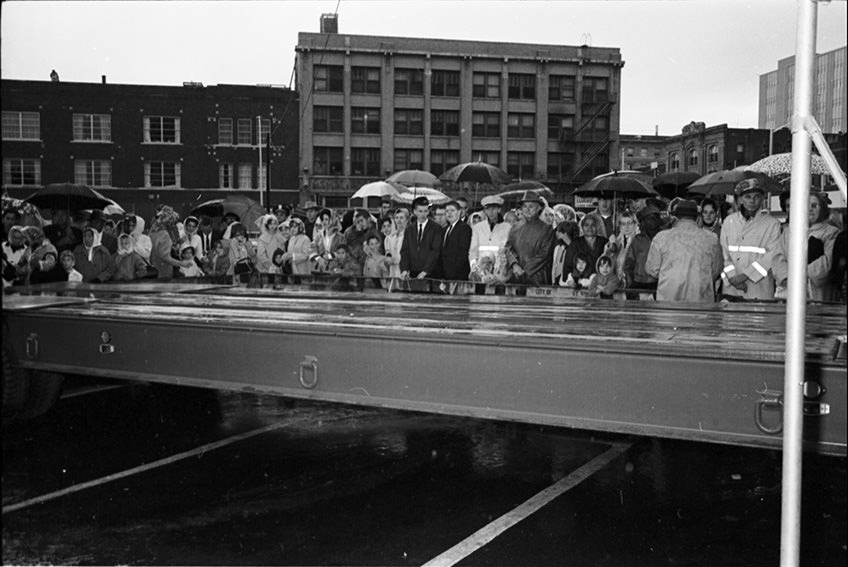
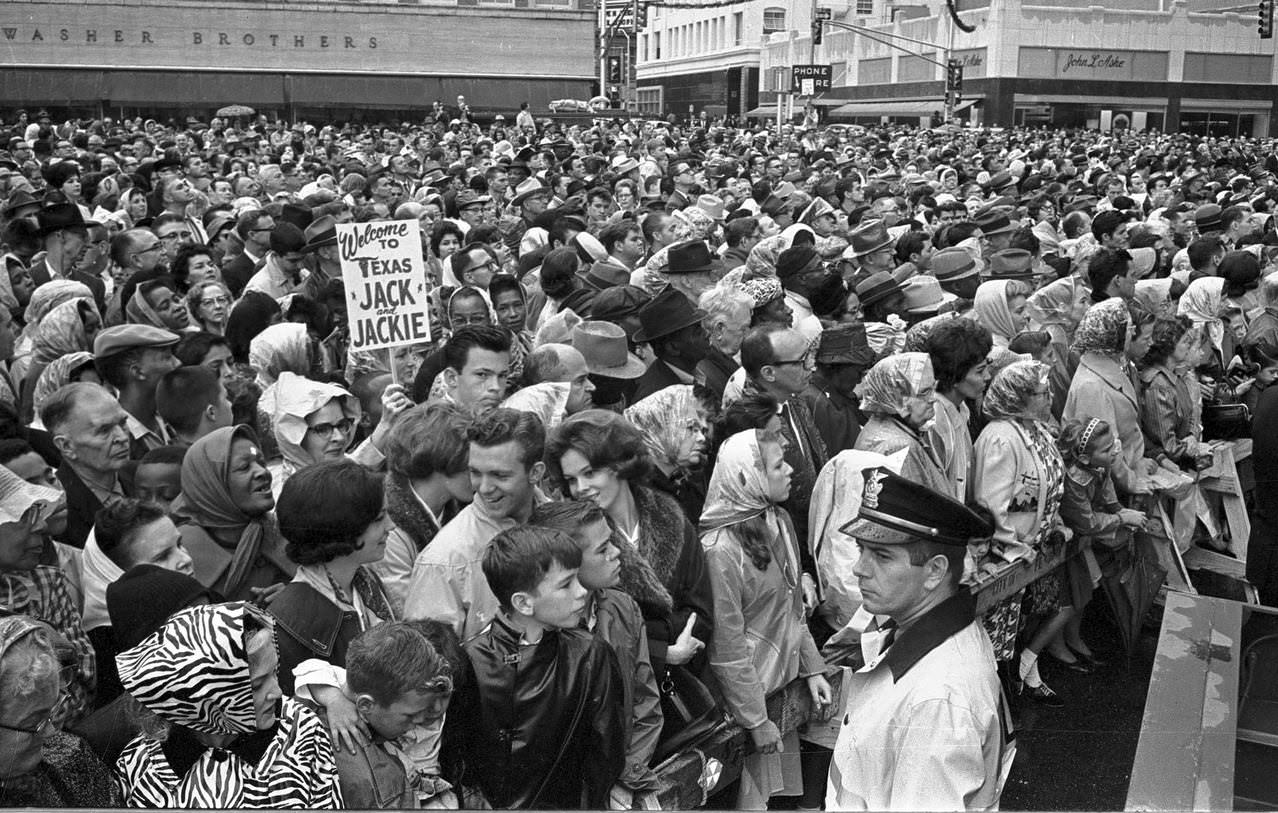
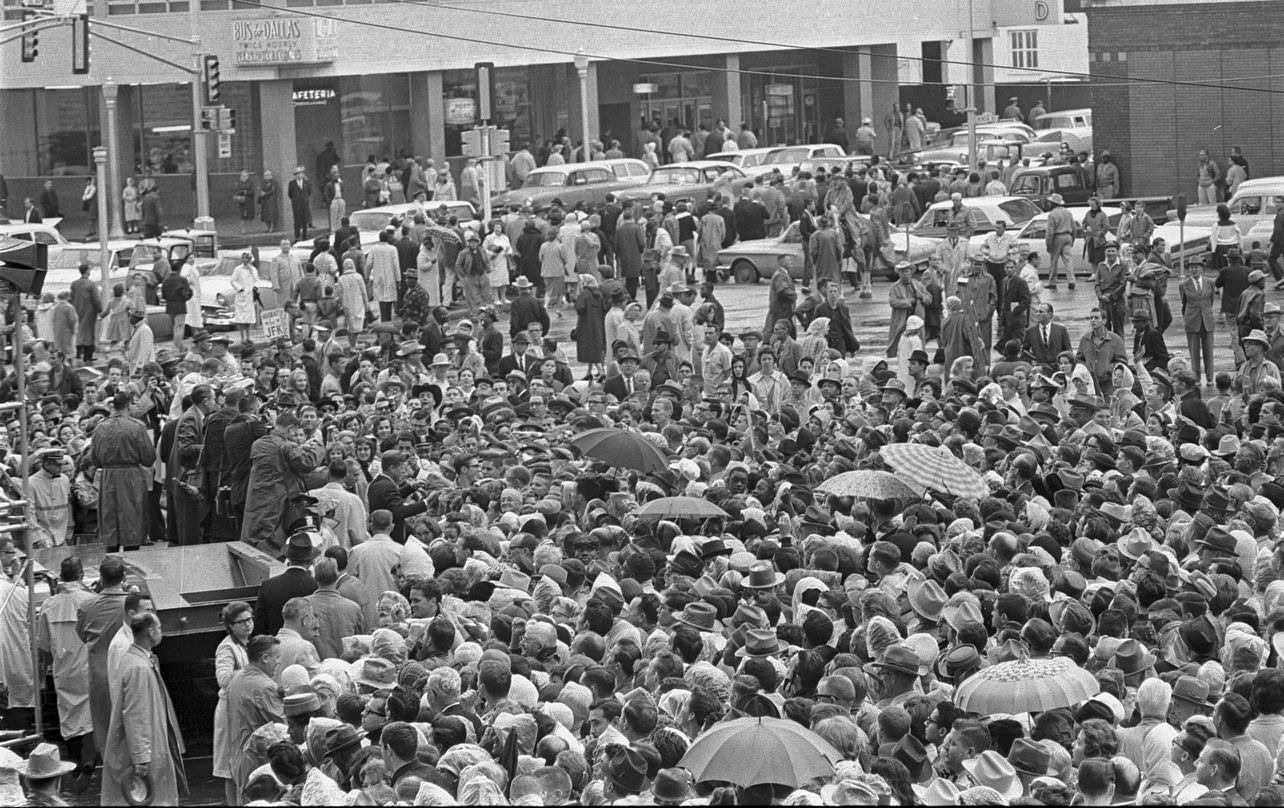
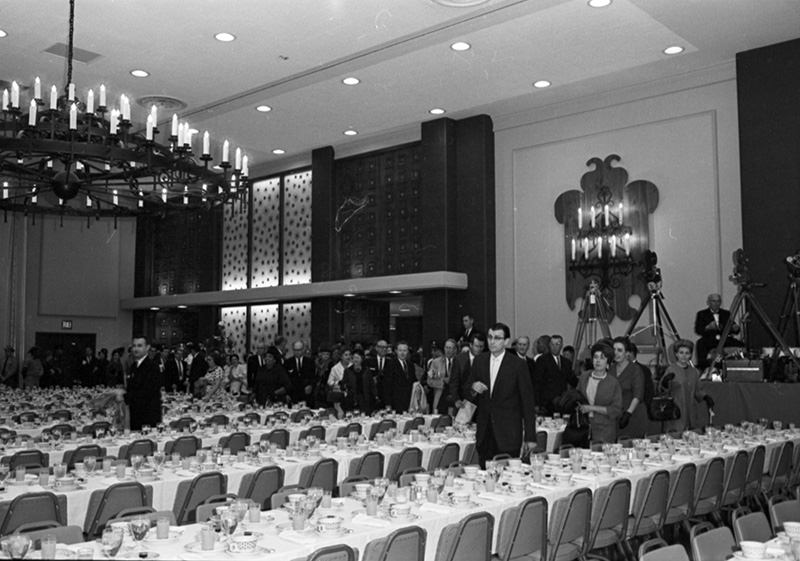
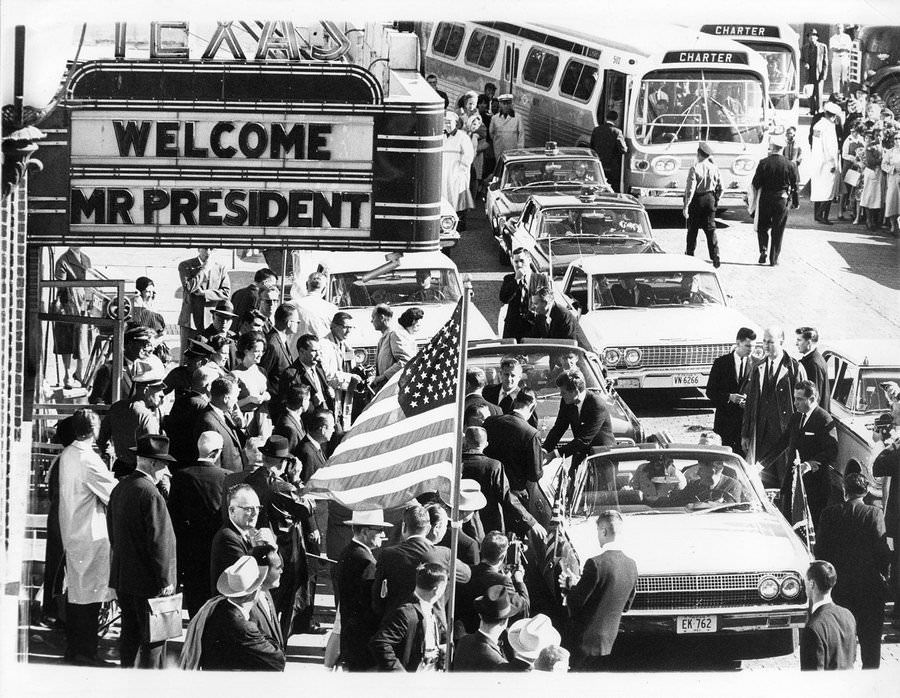
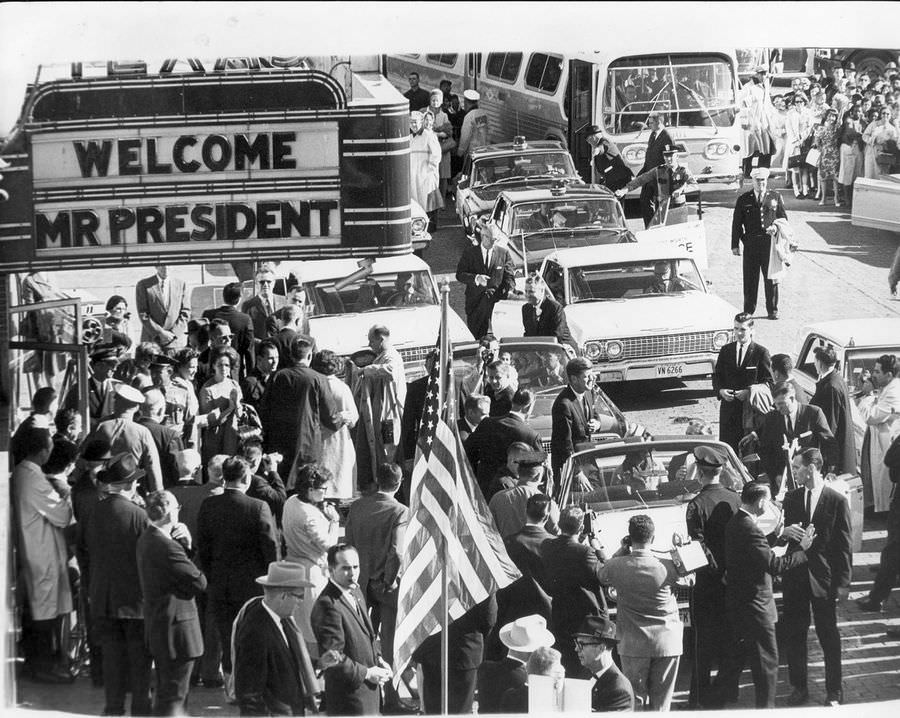
On November 22, 1963, President Kennedy made his last public appearance in Fort Worth before flying to Dallas. He arrived at Carswell Air Force Base with First Lady Jackie Kennedy, Congressman Jim Wright, Governor John Connally, and Mrs. Connally. The next morning, Kennedy addressed a large crowd gathered outside Hotel Texas, then attended a breakfast in the hotel’s Grand Ballroom. Hours later, he was assassinated in Dallas.
President John F. Kennedy and Jackie Kennedy descending from Air Force One. Congressman Jim Wright, Governor John Connally, and Mrs. Connally seen in doorway, Carswell Air Force Base, Fort Worth, 1963President John F. Kennedy and Jackie shaking hands in crowd just before leaving Carswell Air Force Bas , Fort Worth, 1963People waiting on flight line at Carswell Air Force Base, 1963Flatbed truck brought in for President John F. Kennedy to speak from to crowd outside Hotel Texas; crowd begins to gather, 1963Crowd gathered to hear John F. Kennedy speak, 1963John F. Kennedy speaks to crowd outside Hotel Texas, 1963Overhead view of large crowd outside Hotel Texas, 1963People entering Hotel Texas Grand Ballroom with tables set for breakfast for President John F. Kennedy and party, 1963President John F. Kennedy and Jackie Kennedy in presidential limousine with Texas Governor John Connally, outside Hotel Texas, Fort Worth, 1963John F. Kennedy standing in convertible car, 1963
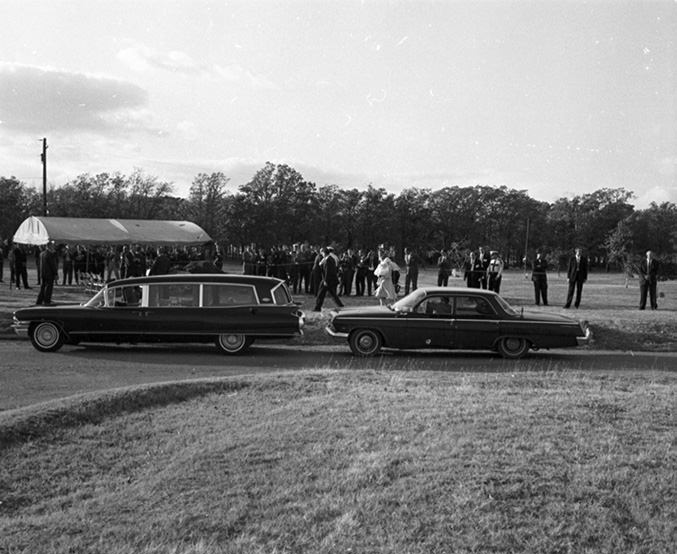
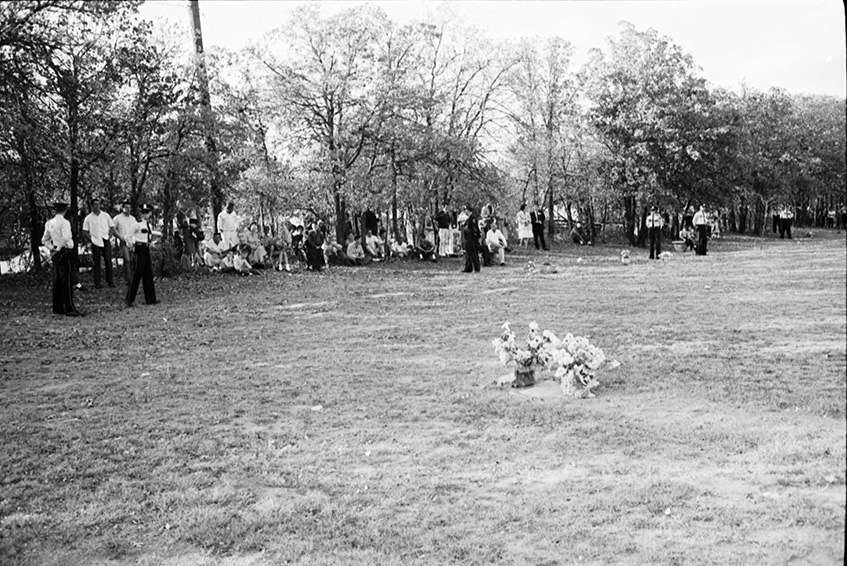
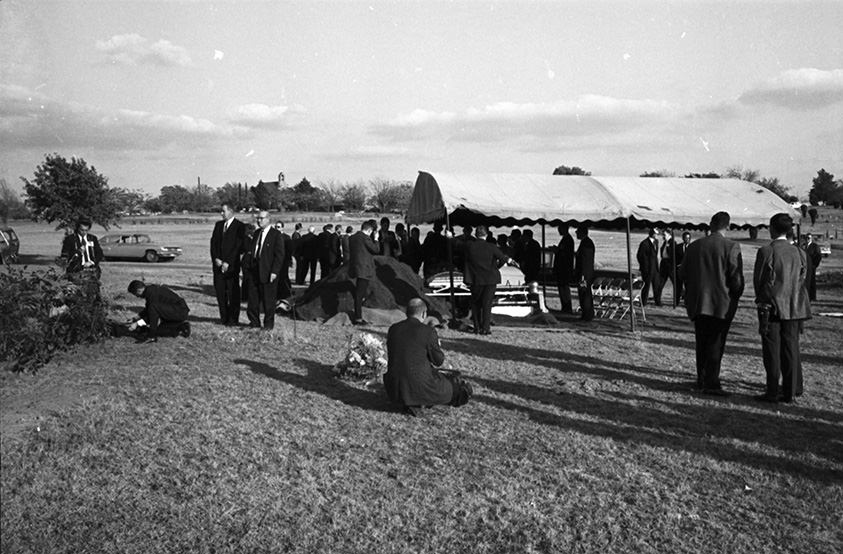
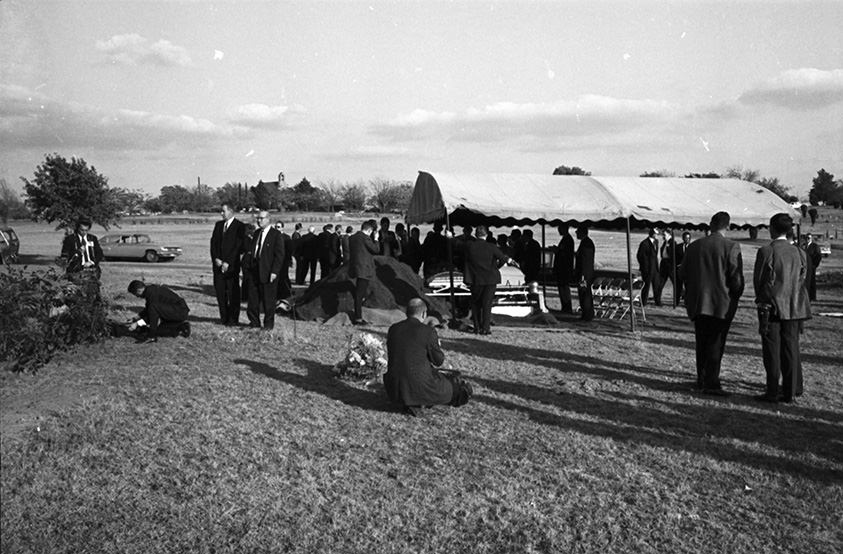
Kennedy’s assassin, Lee Harvey Oswald, was himself a Fort Worth native. After Oswald was shot by Jack Ruby two days after the assassination, he was buried at Rose Hill Cemetery in Fort Worth. The funeral drew mostly reporters rather than mourners, and the photographs taken there are among the more somber images in the city’s historical archive.
Lee Harvey Oswald’s funeral, Fort Worth’s Rose Hill Cemetery, 1963Lee Harvey Oswald’s funeral, Fort Worth’s Rose Hill Cemetery, 1963Lee Harvey Oswald’s funeral, Fort Worth’s Rose Hill Cemetery, 1963Lee Harvey Oswald’s funeral at Rose Hill Cemetery with people (mostly reporters) standing near the gravesite, Fort Worth, Texas, 1963
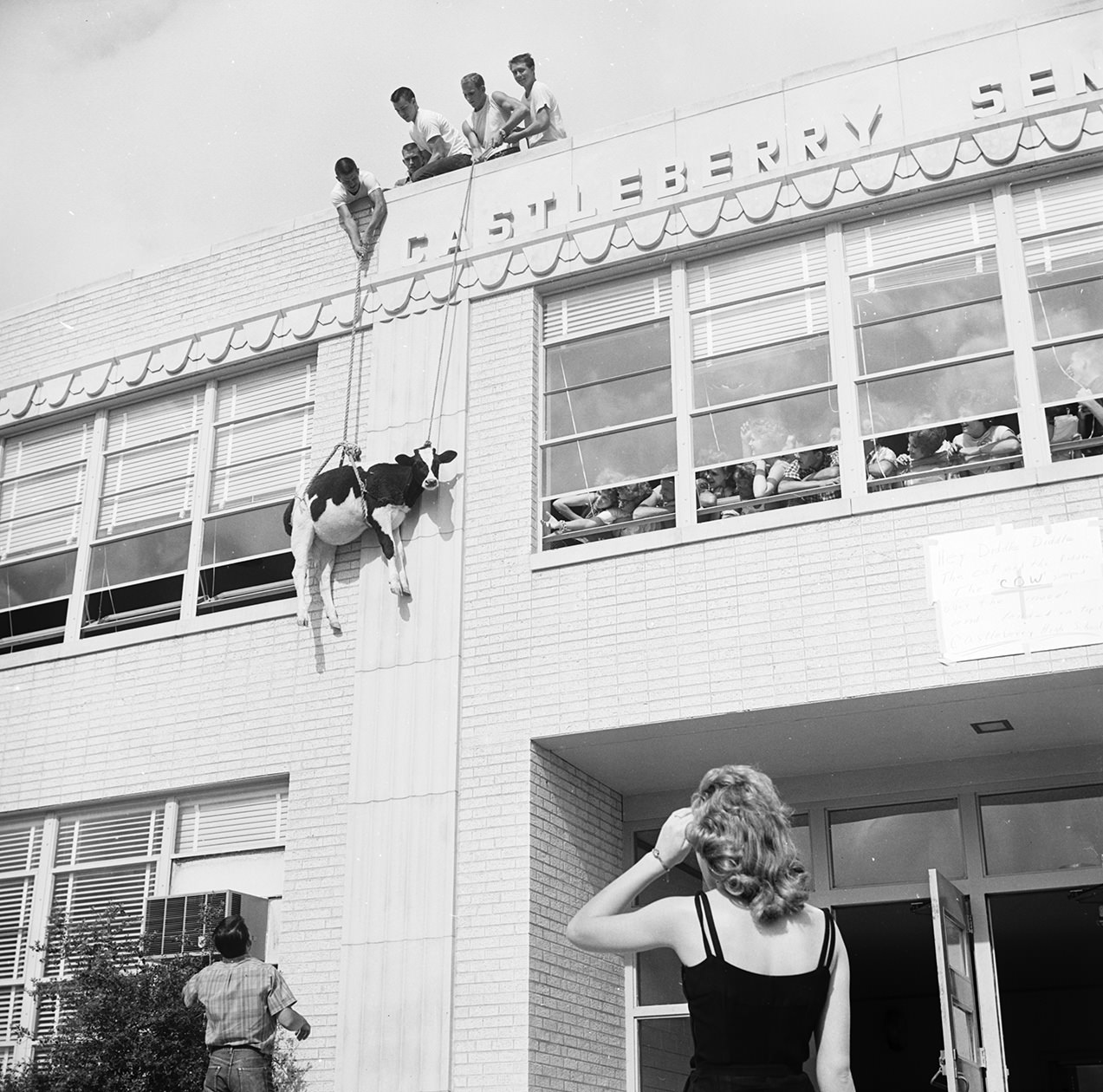
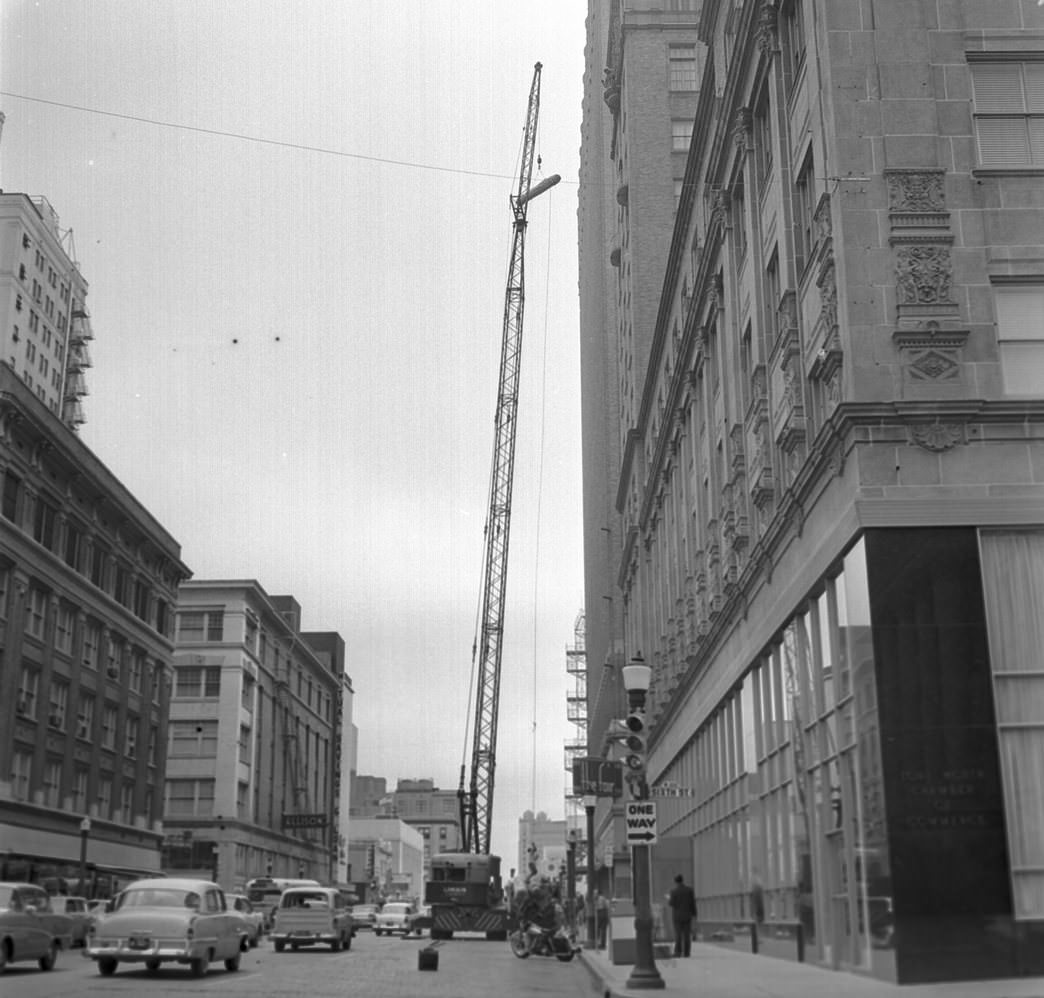
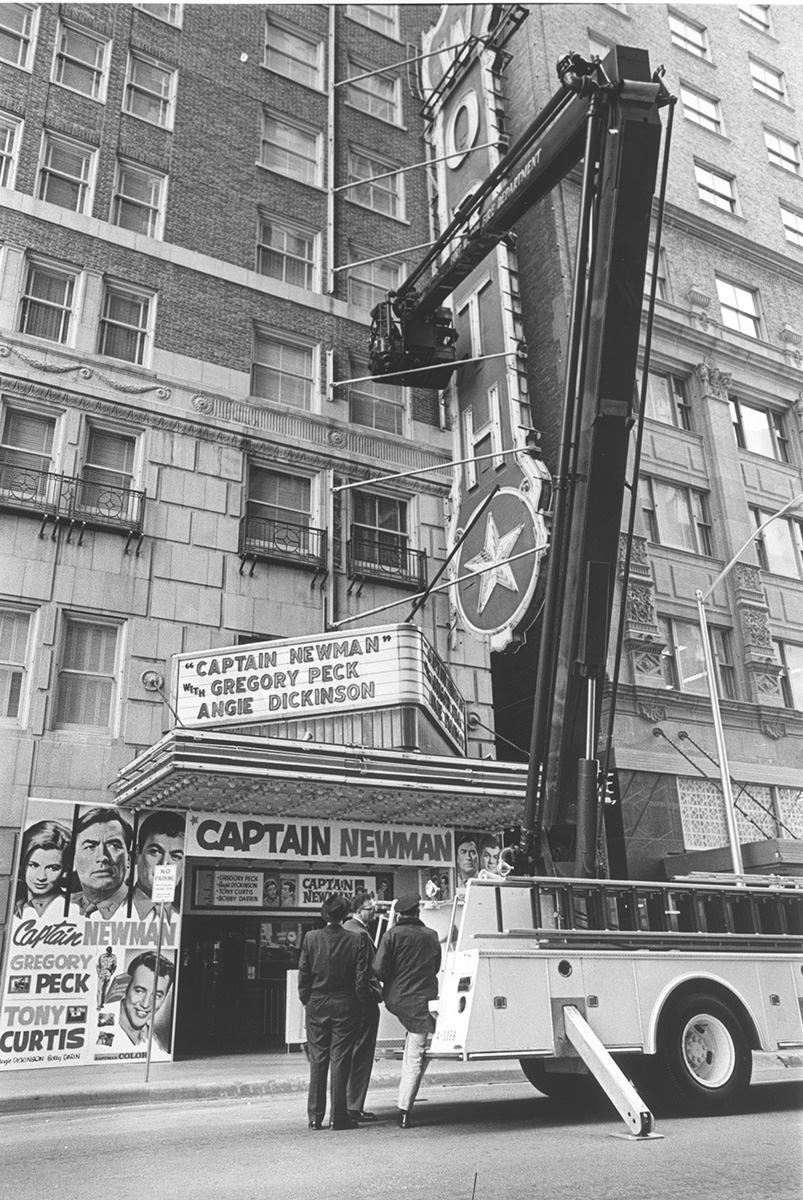
Lighter moments existed alongside the serious ones. Castleberry High School seniors hoisted a live heifer cow onto the roof of their school building in 1962 — a prank that made the news and captured the mischief of a generation. The Fort Worth Club underwent remodeling, with workers hauling rugs up to the 12th floor in 1960. The Worth Theater used a fire truck to adjust its marquee sign in 1964. These small scenes give texture to daily life in a city that was always in motion.
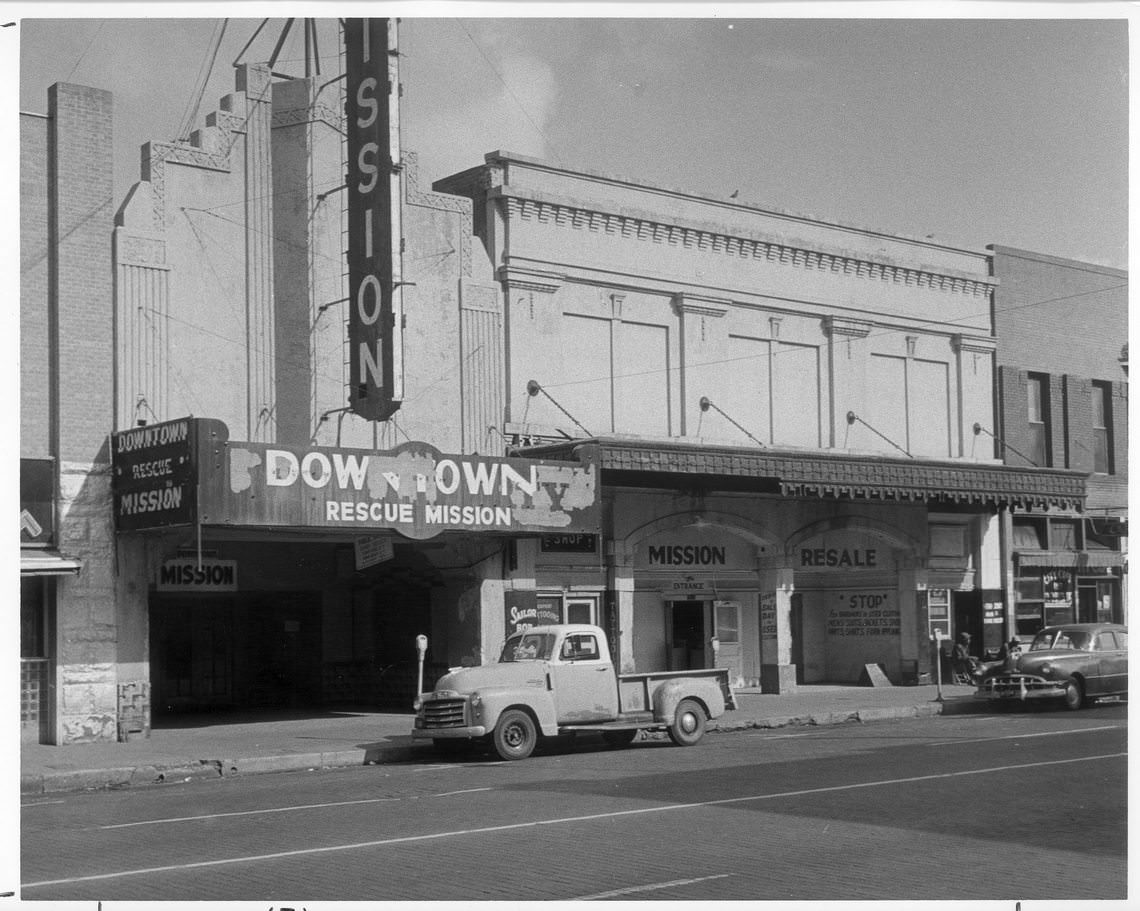
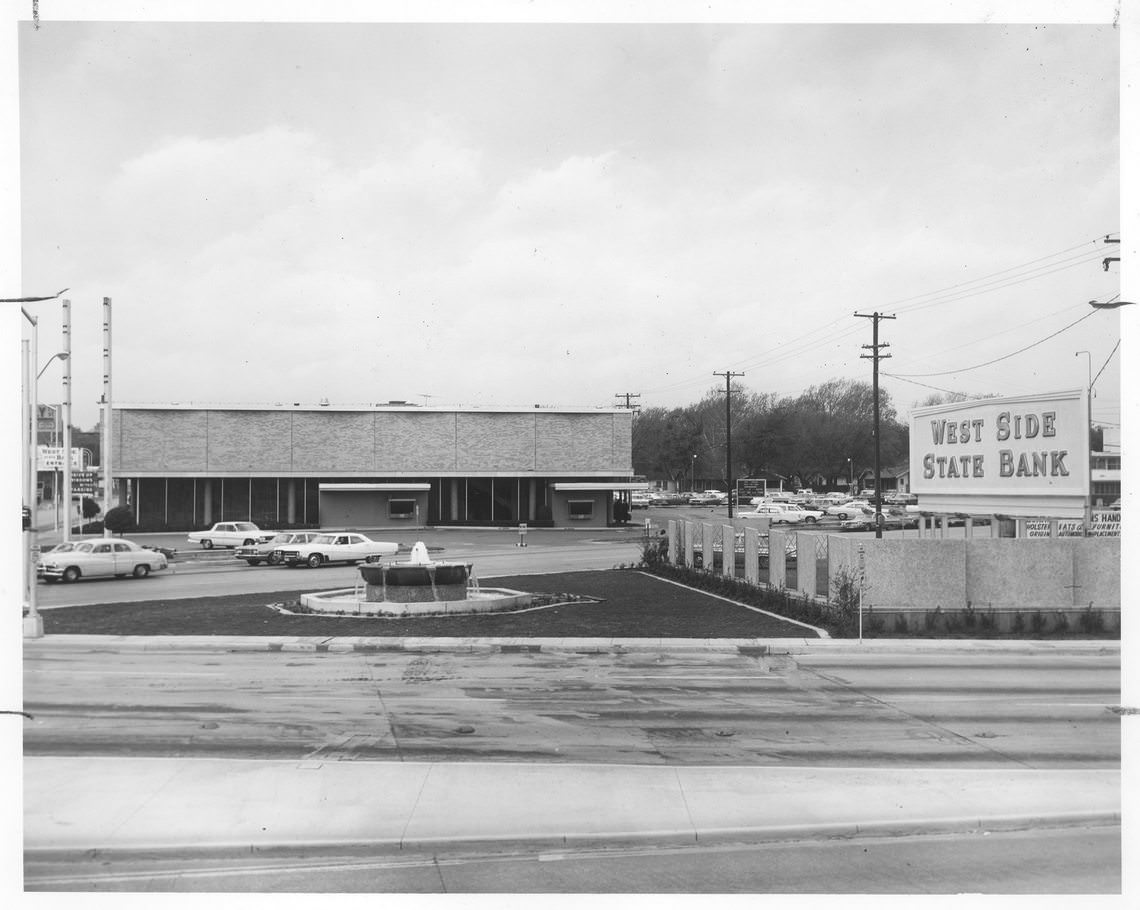
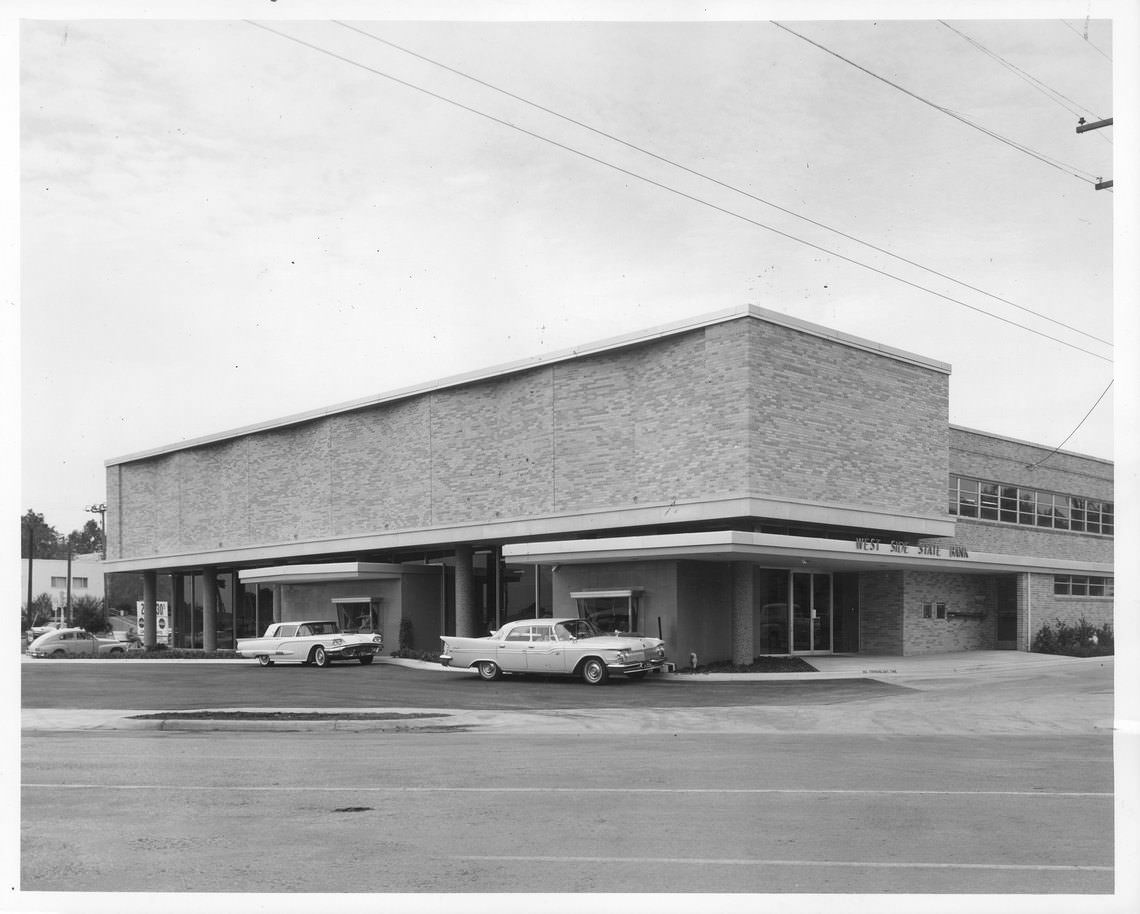
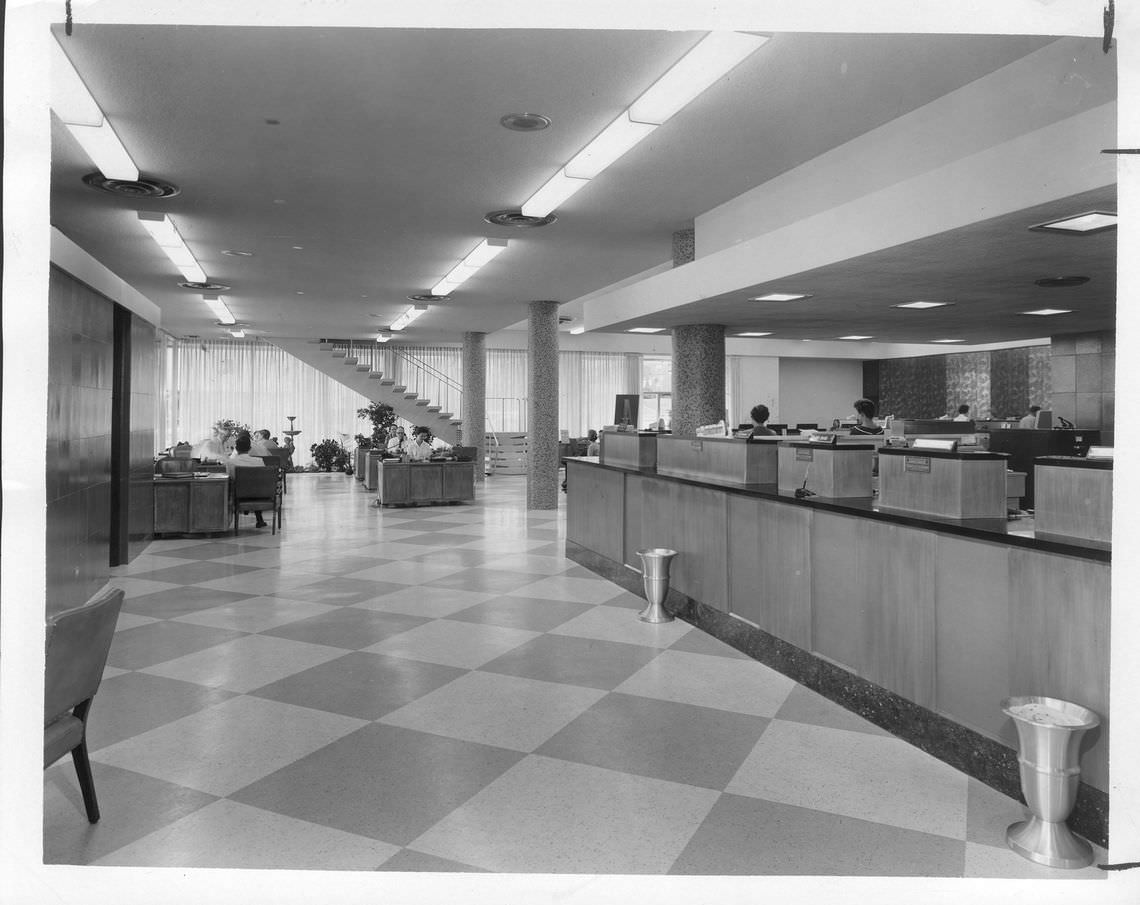
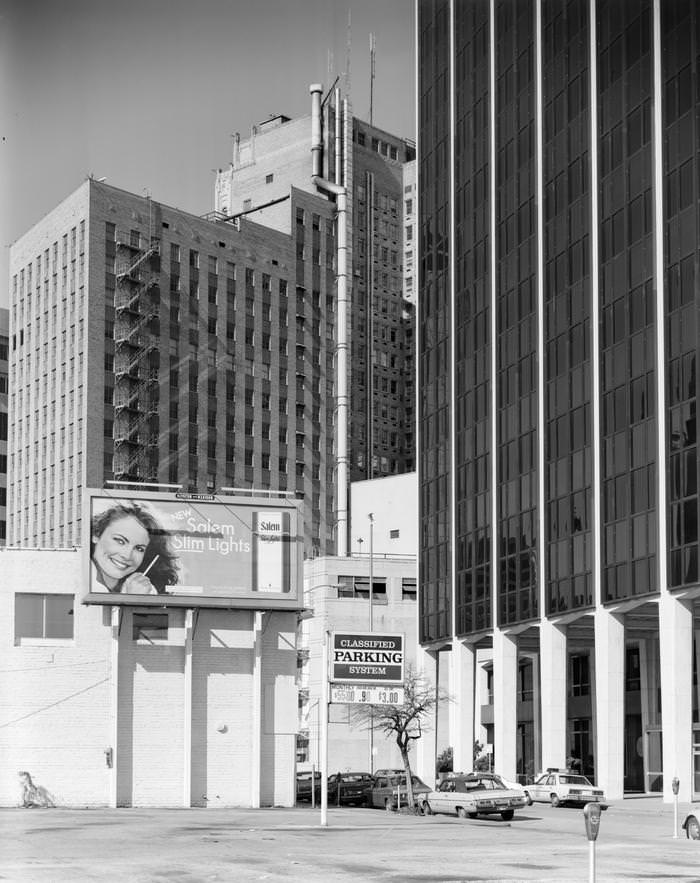
Seniors at Castleberry High School hoist a heifer cow to the roof of the high school building, 1962Fort Worth Club remodeling, rugs being lifted to 12th floor, 1960Fire truck adjusts Worth Theater sign, 1964Fort Worth downtown Rescue Mission in old Liberty Theater building, 1100 Main Street, Fort Worth, Texas, 1960sContinental Life exterior, 1960The Exterior of West Side State Bank with fountain in front, 1967The exterior of West Side State Bank, 1960The interior of lobby of renovated West Side State bank, 1960Fort Worth Courthouse, 1967A driveway in Fort Worth, 1950A driveway in Fort Worth, 1950Photograph of a billboard, 1950The interior of the Thistle Hill/Wharton-Scott House, 1950“Louisiana Limited” leaving Fort Worth, 1950.
In 1960 tho 1964 I’ve lived as a little kid on Baylor Street, then moved to regency Street, went to elementary school there my bus driver his name was Mr Anderson. 1962. Then we moved to Dallas to open a business barricades. wow! Time goes by.

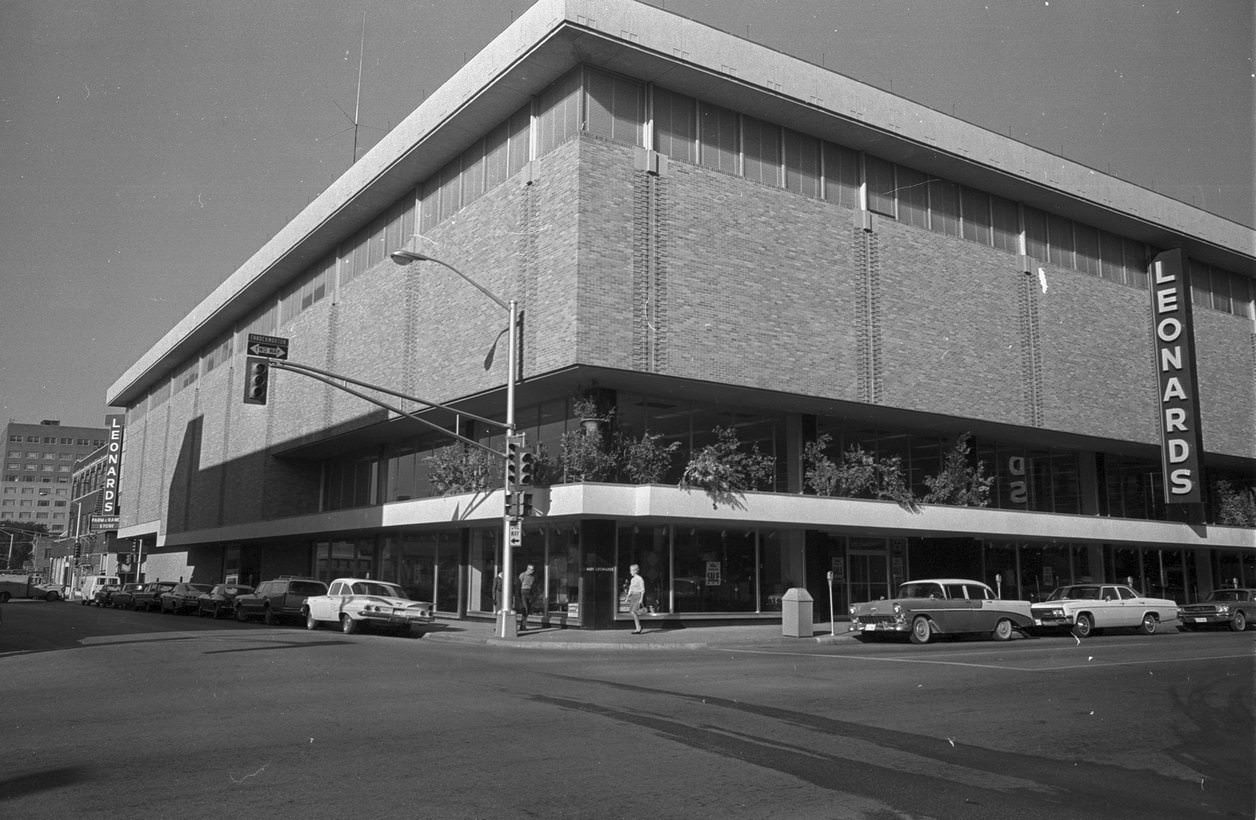





My mom hung out at Leonard’s all the time as a teenager. It was her home away from home. Then she would take the bus back home to Rock Island.
My dad during this time was working as a watch maker’s apprentice downtown.
They wouldn’t actually meet until 71.
In 1960 tho 1964 I’ve lived as a little kid on Baylor Street, then moved to regency Street, went to elementary school there my bus driver his name was Mr Anderson. 1962. Then we moved to Dallas to open a business barricades. wow! Time goes by.