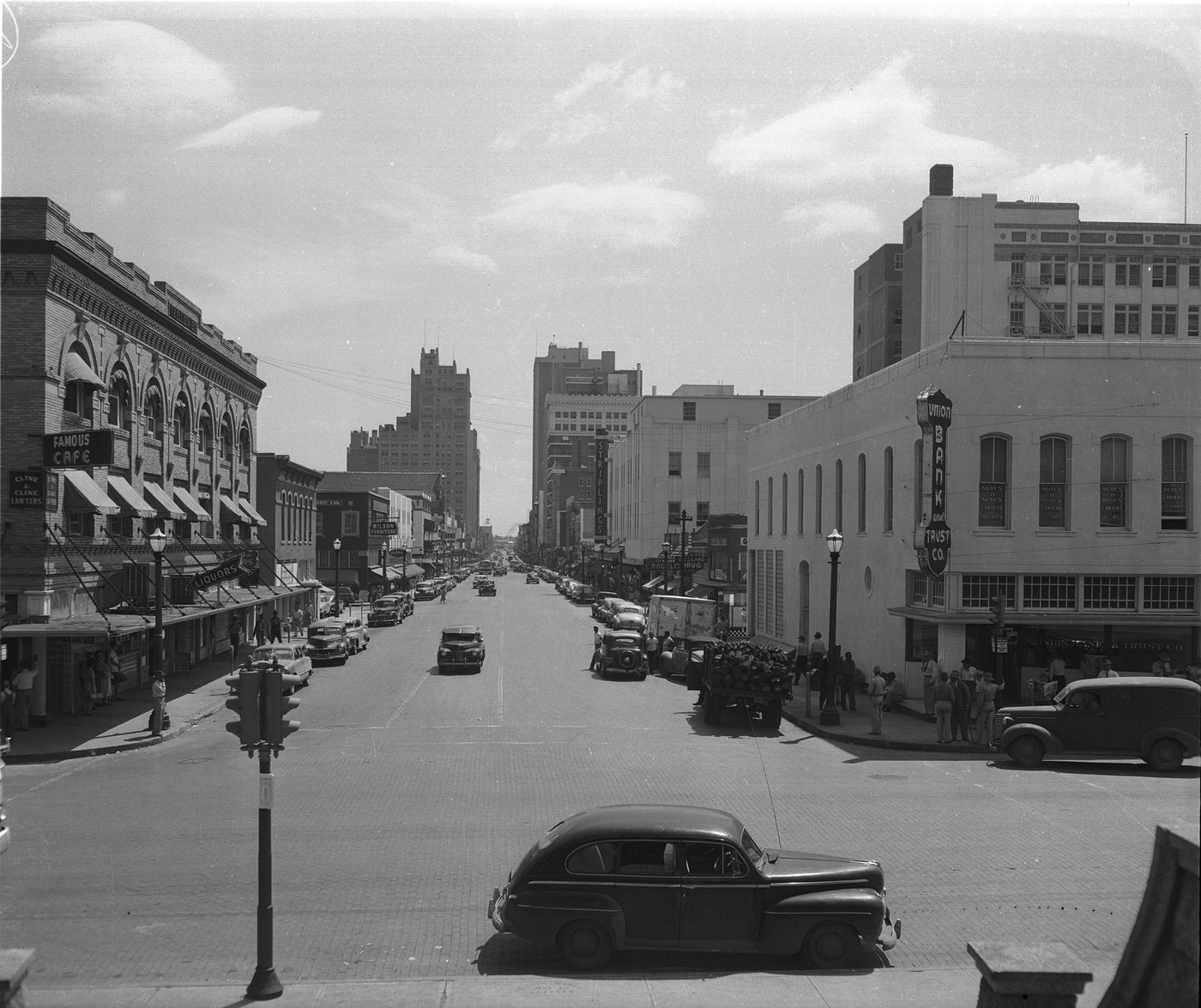
At the start of the 1940s, Fort Worth, Texas, was home to roughly 177,662 people and growing fast. The city had clawed its way out of the hardships of the Great Depression, and a new energy was taking hold on its streets. Downtown sidewalks buzzed with foot traffic, local businesses thrived, and neighborhoods expanded outward in every direction. Parades rolled down Main Street, churches filled on Sundays, and the Fort Worth Botanic Garden drew visitors year-round. This was a city on the move.
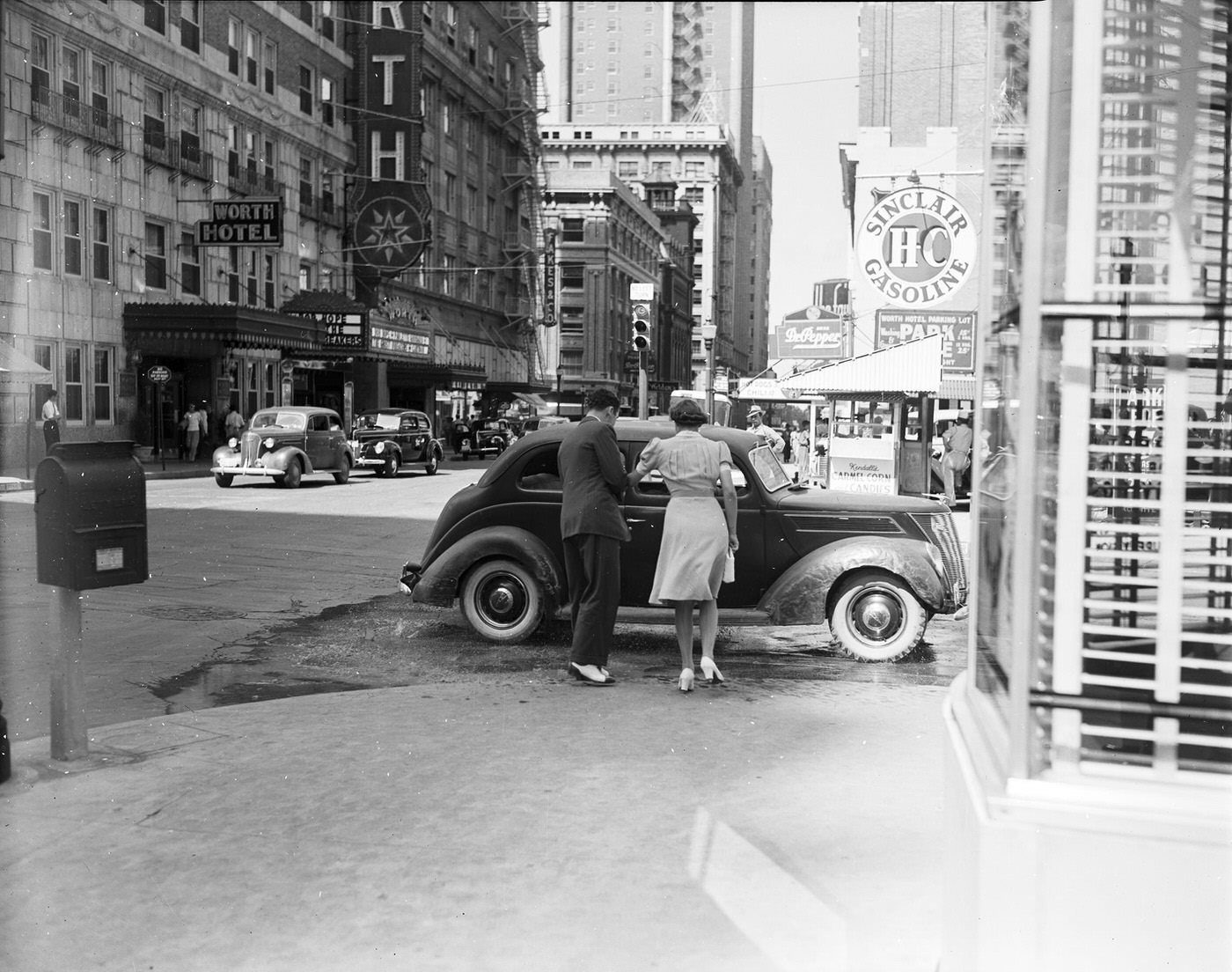
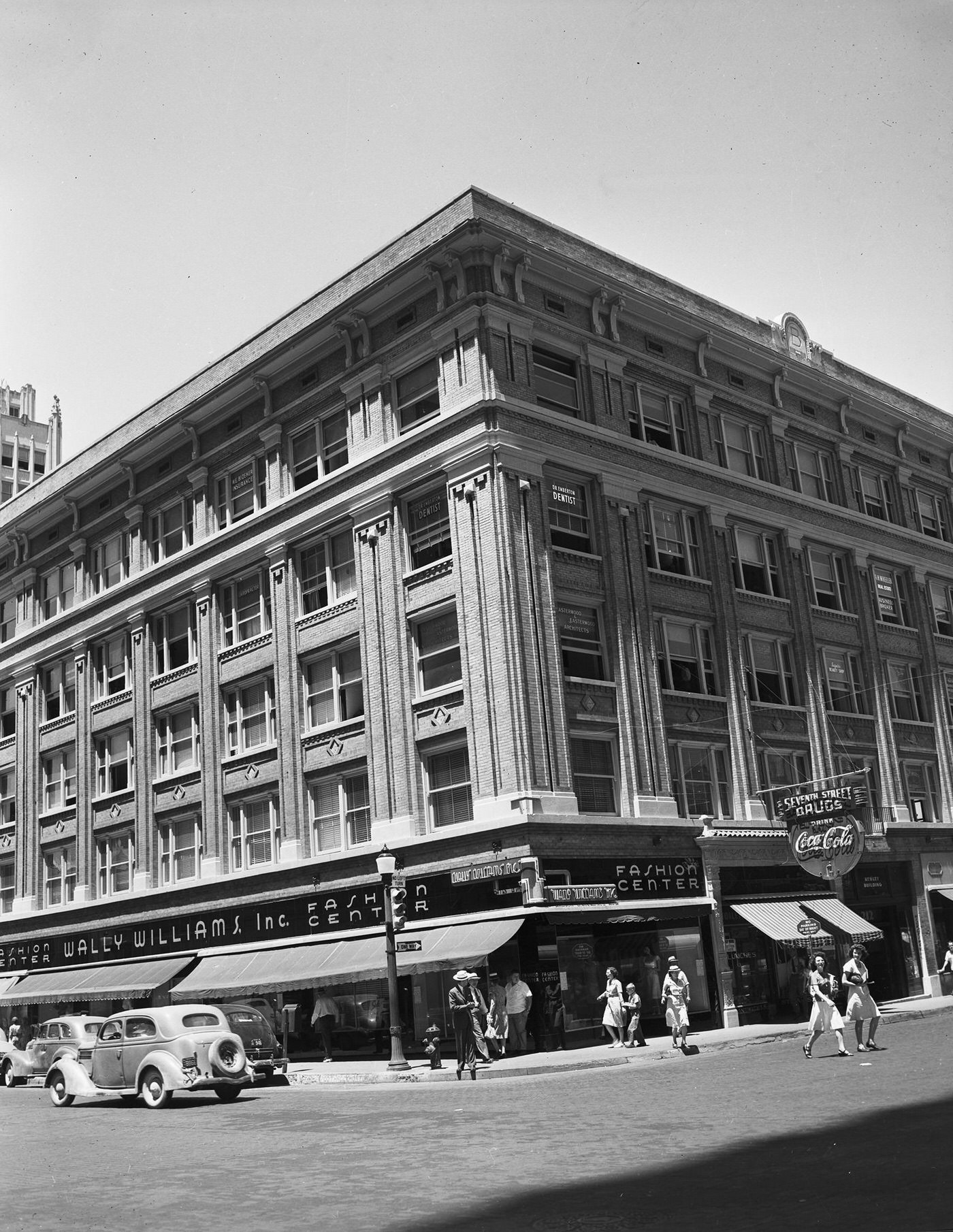
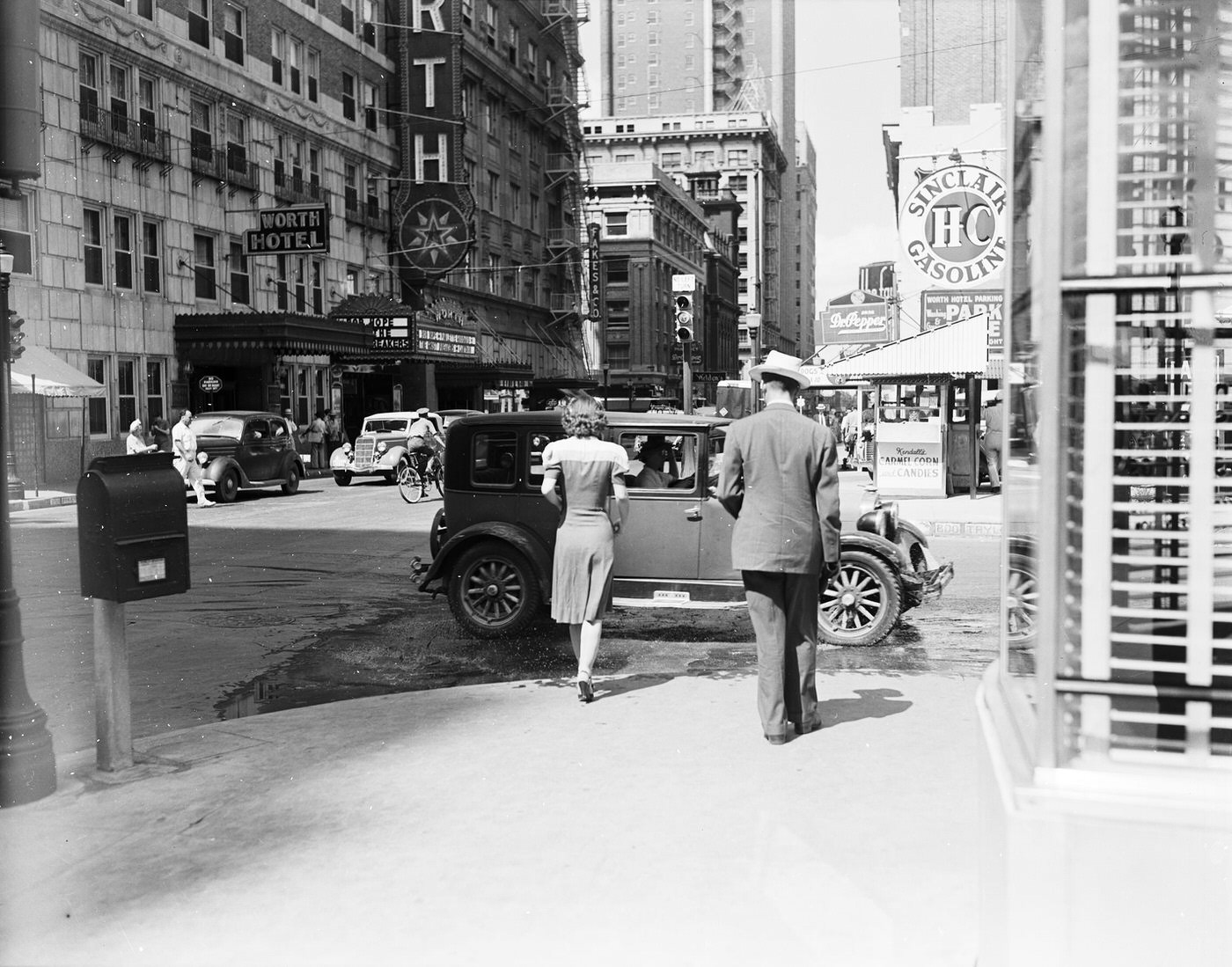
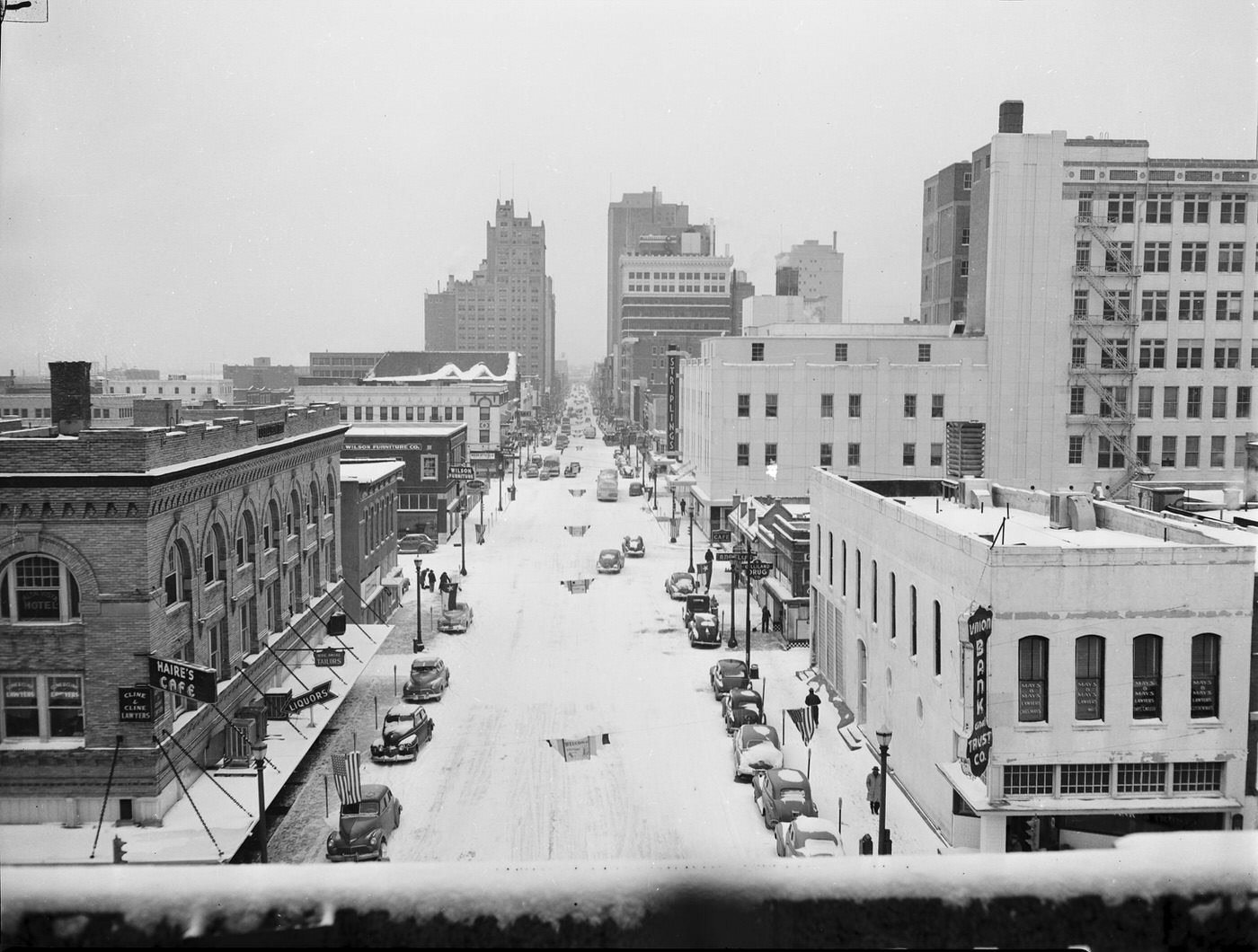
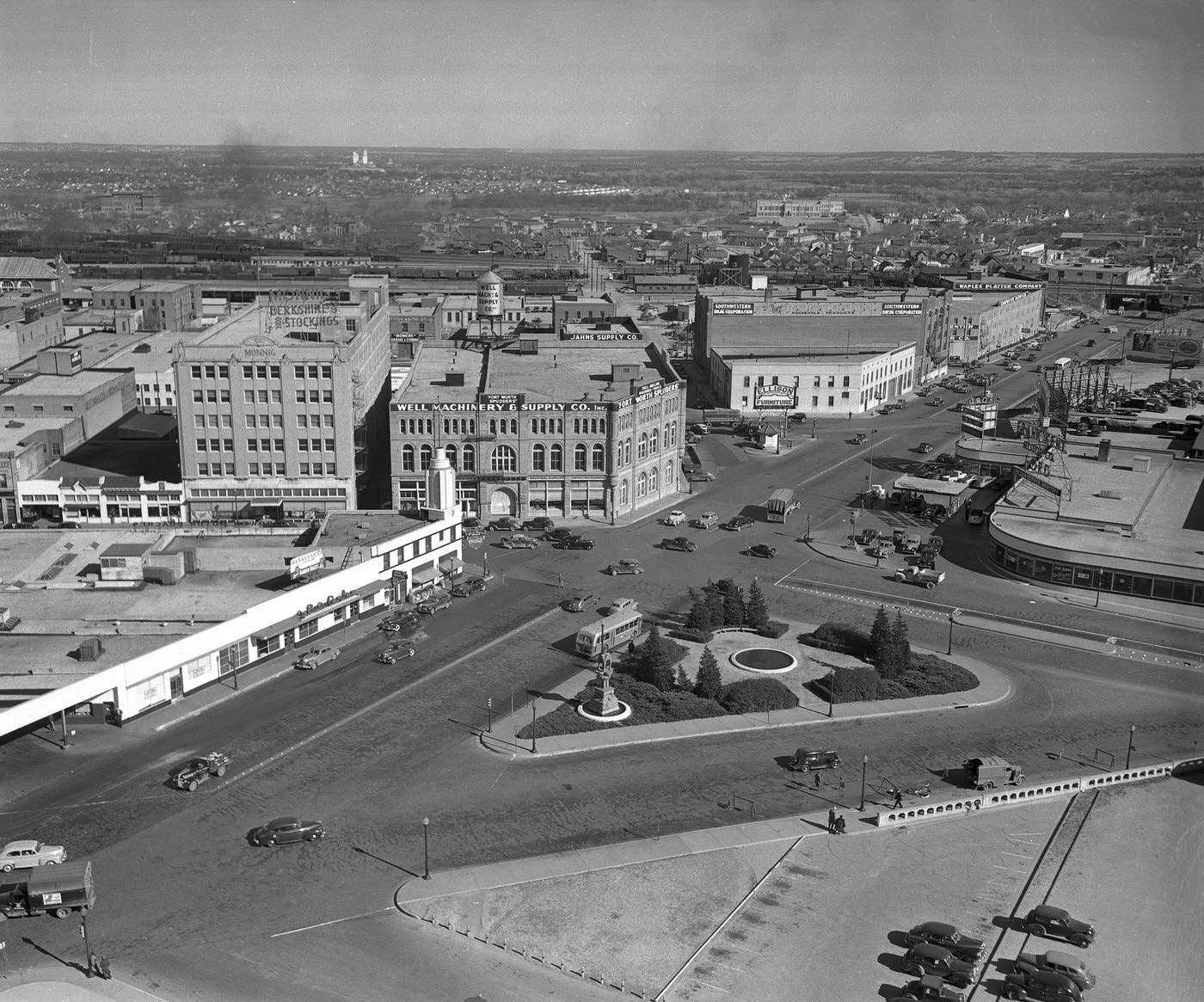
Downtown Fort Worth, Texas, West 7th Street looking east, 1940
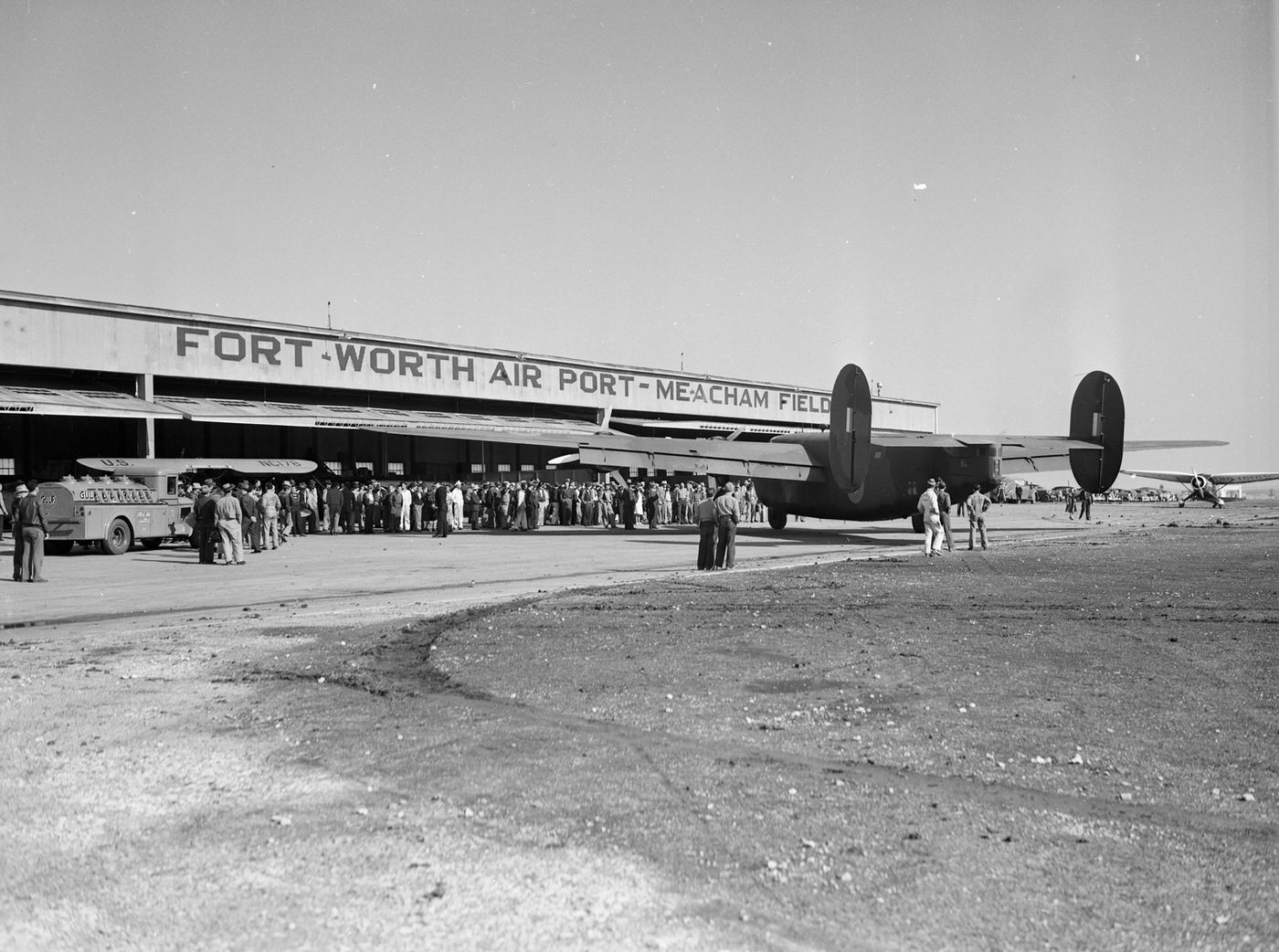
The war years defined Fort Worth like nothing before them. The Consolidated Vultee Aircraft Corporation opened what locals called the “Bomber Plant,” a massive factory dedicated to producing B-24 Liberator bombers. The plant pulled the city permanently out of the Depression. Workers flooded in from across the country to take well-paying assembly line jobs. By 1942, women made up 23 percent of the Bomber Plant’s workforce — a dramatic shift from the decade before. The factory did not just change the local economy; it changed who Fort Worth was.
Crowd around Consolidated Aircraft 30-ton land bomber at Meacham Field, Fort Worth, Texas, 1941
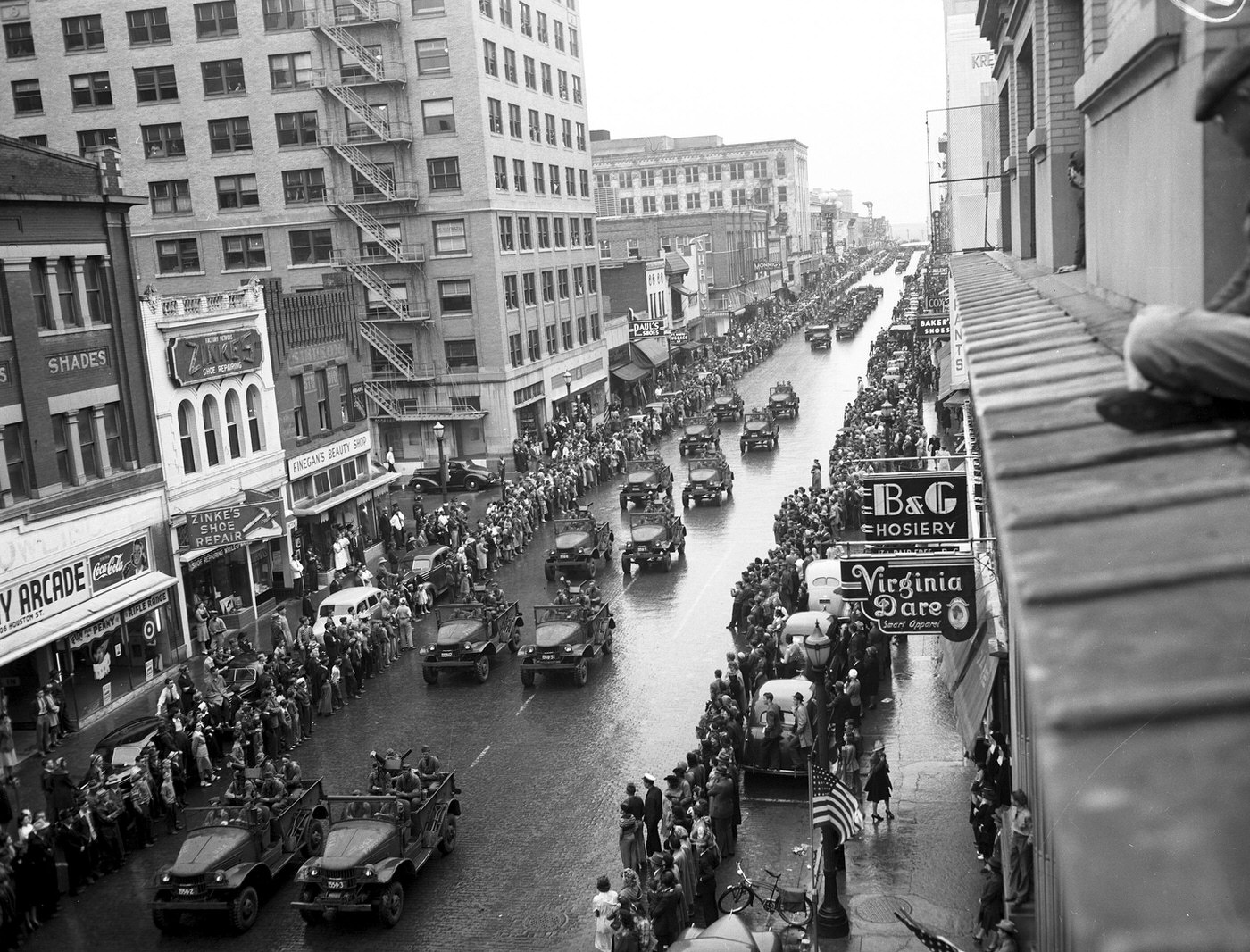
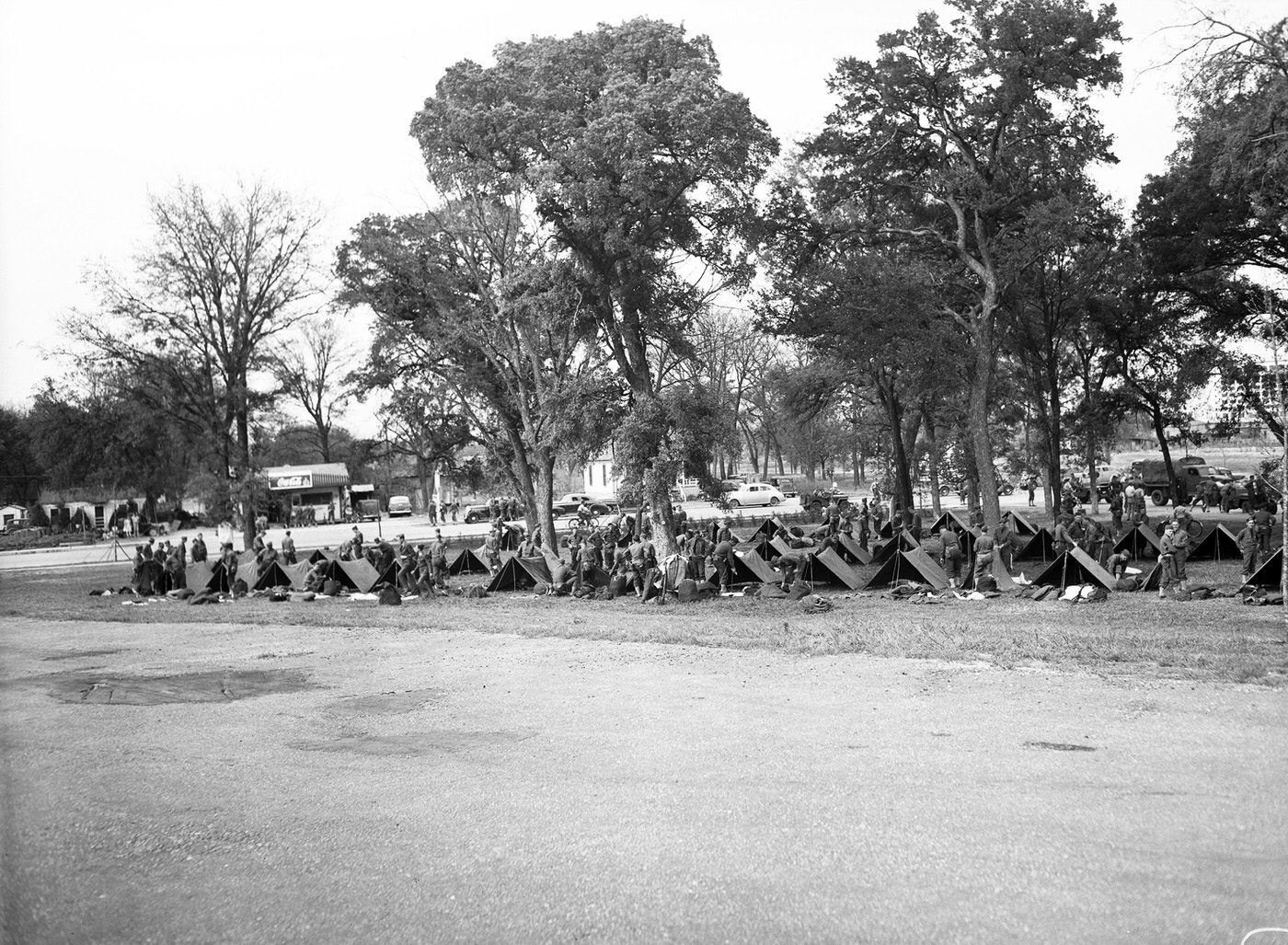
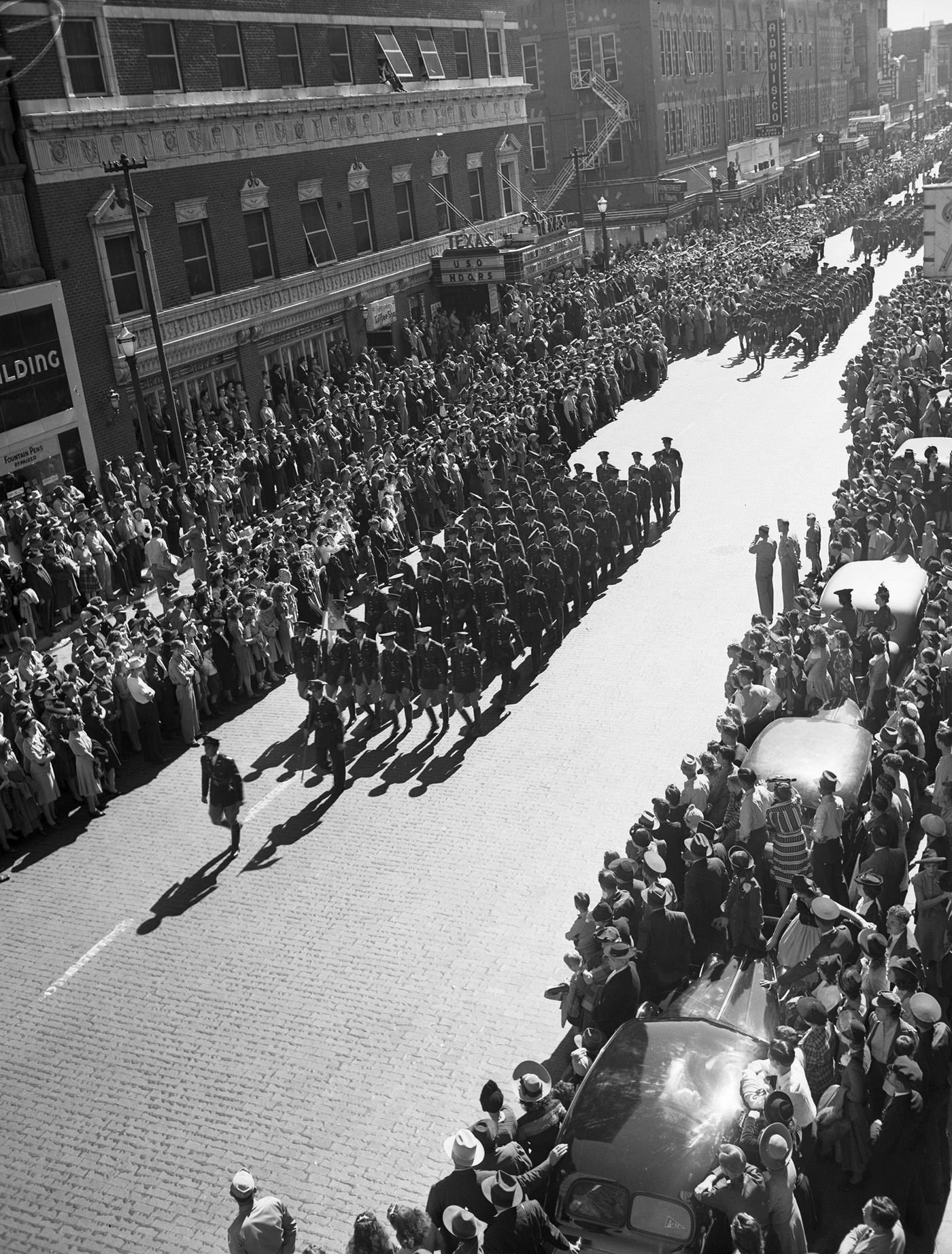
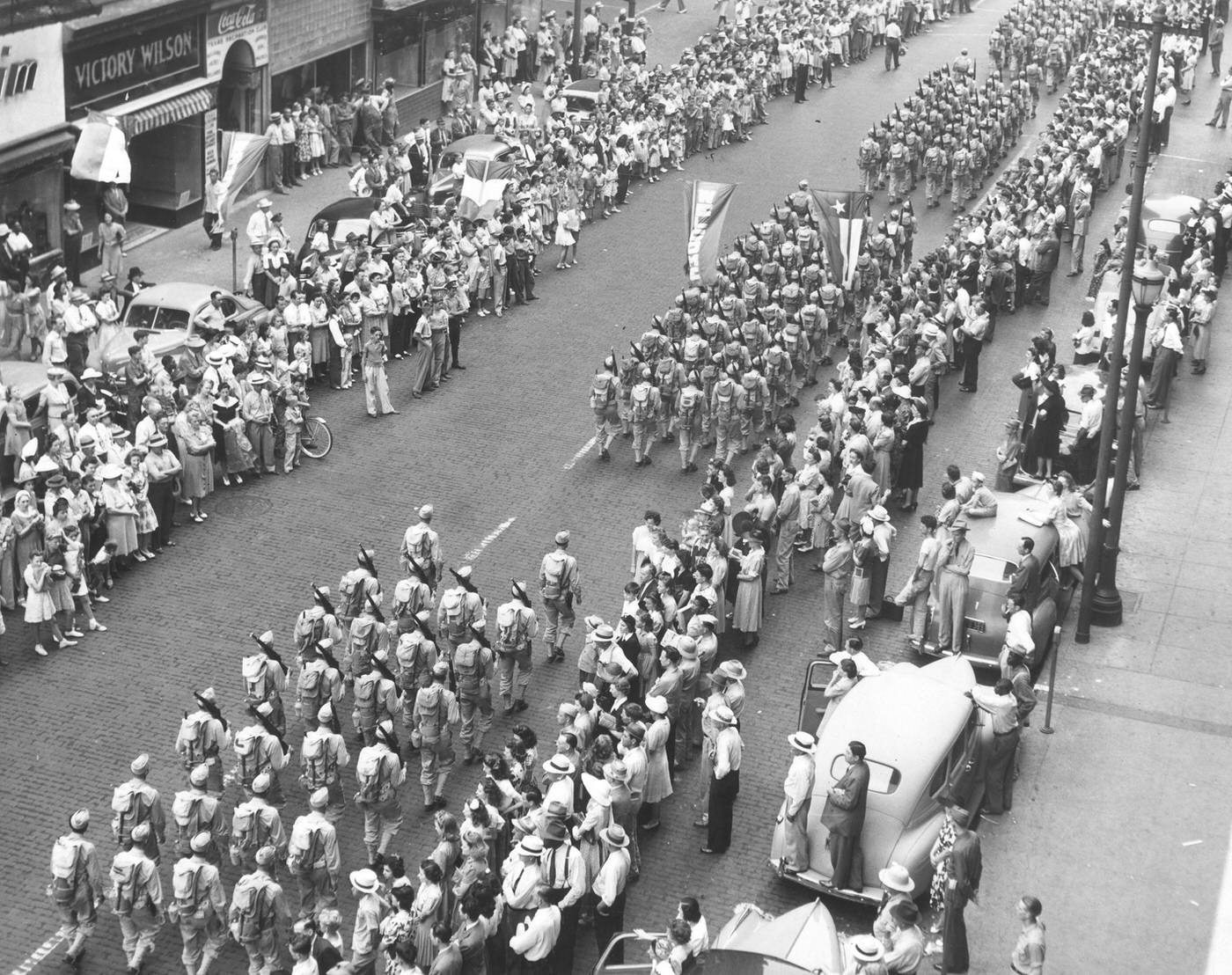
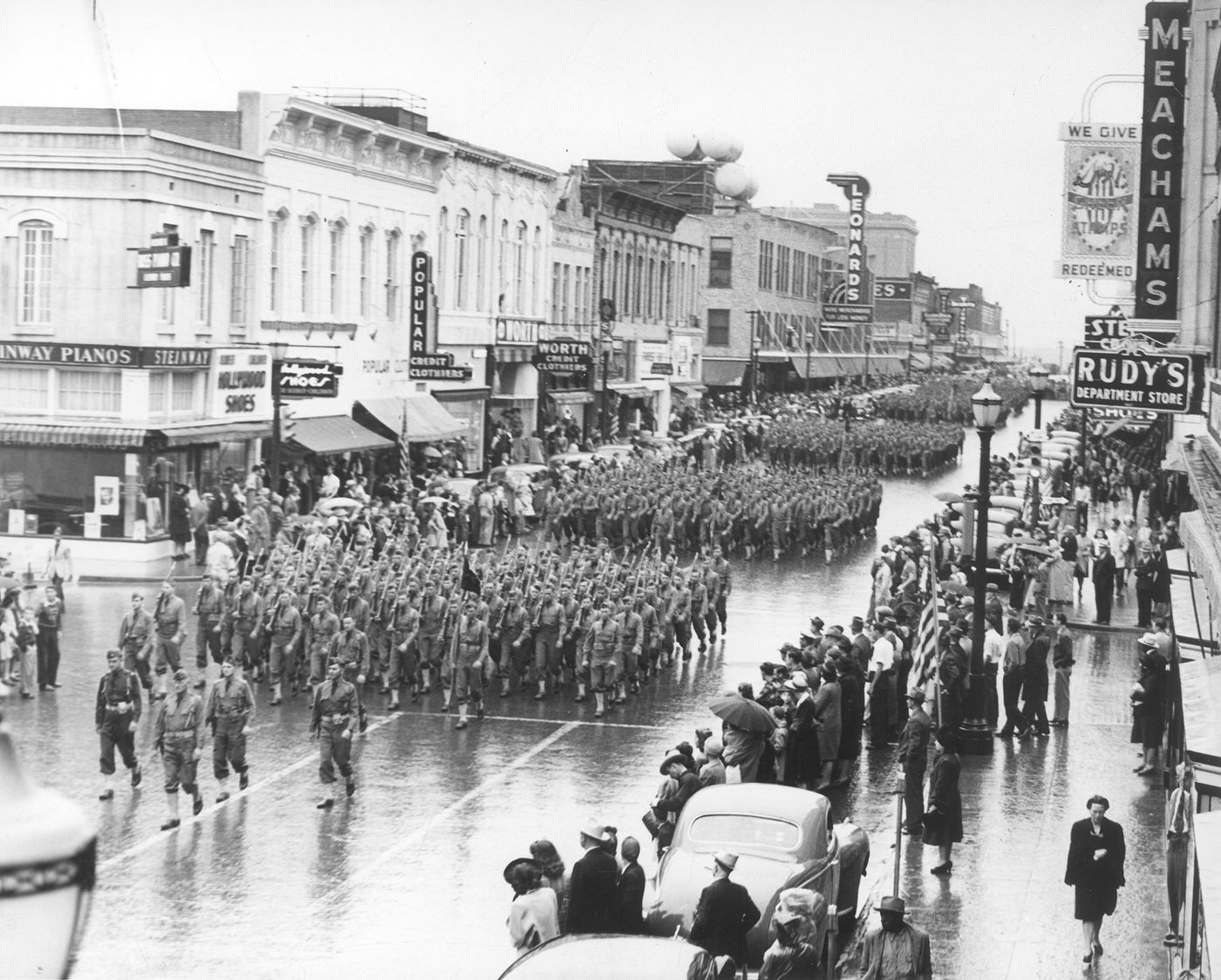
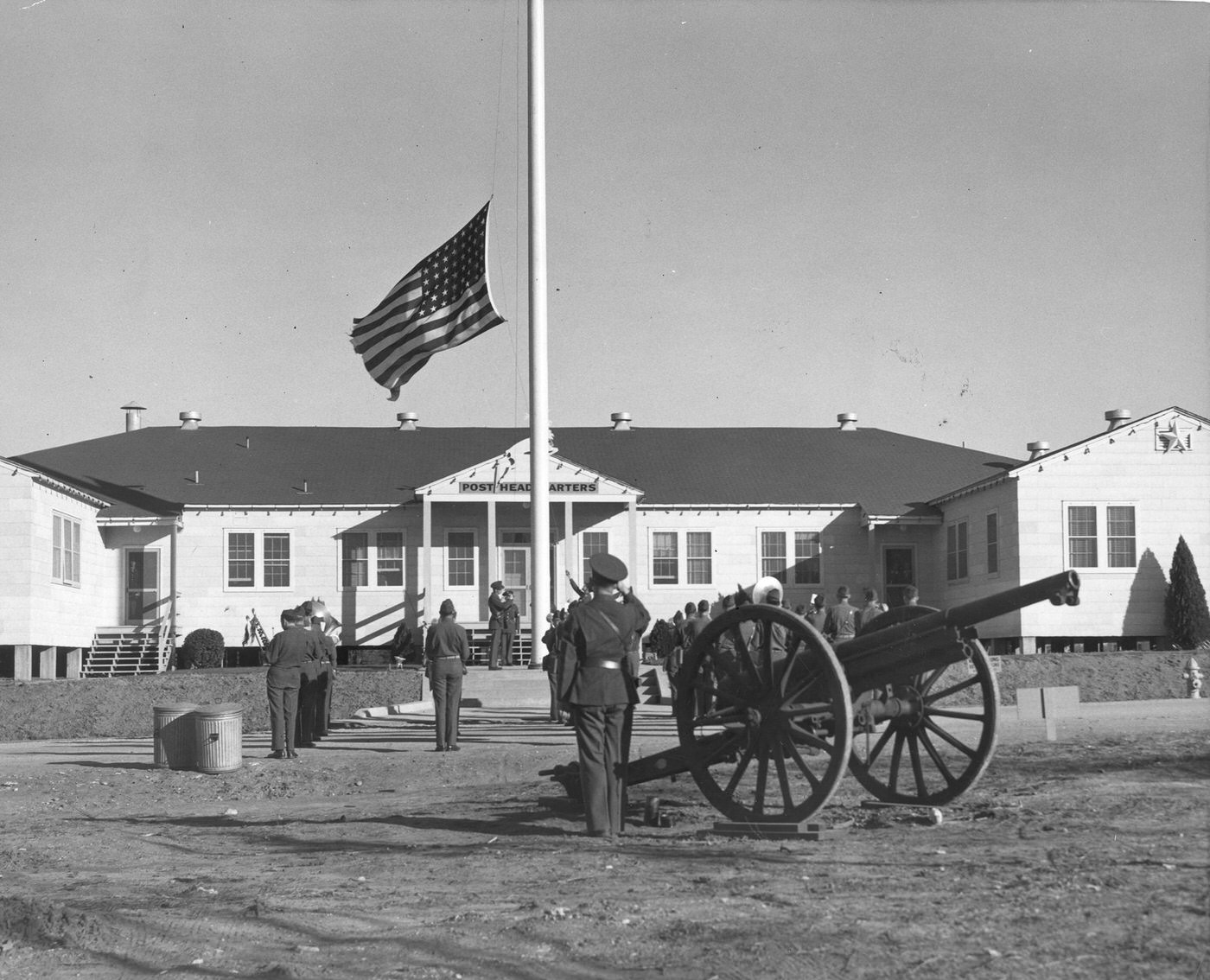
The military presence in Fort Worth ran deep throughout the decade. Tarrant Field Airdrome served as a critical training and operations hub during the war years, and Army Day celebrations drew enormous crowds downtown. In 1942, crack troops of the 155th Infantry Regiment, 31st Division, paraded through Fort Worth in the rain, with 297 military vehicles rolling through the streets in two neat rows as spectators lined the sidewalks.
Army Day Parade at downtown Fort Worth. Crack troops of the 155th Infantry Regiment, 31st Division, paraded downtown Fort Worth Monday morning between crowd-lined sidewalks, 1942Army Day Maneuvers: Pup Tents, 1942
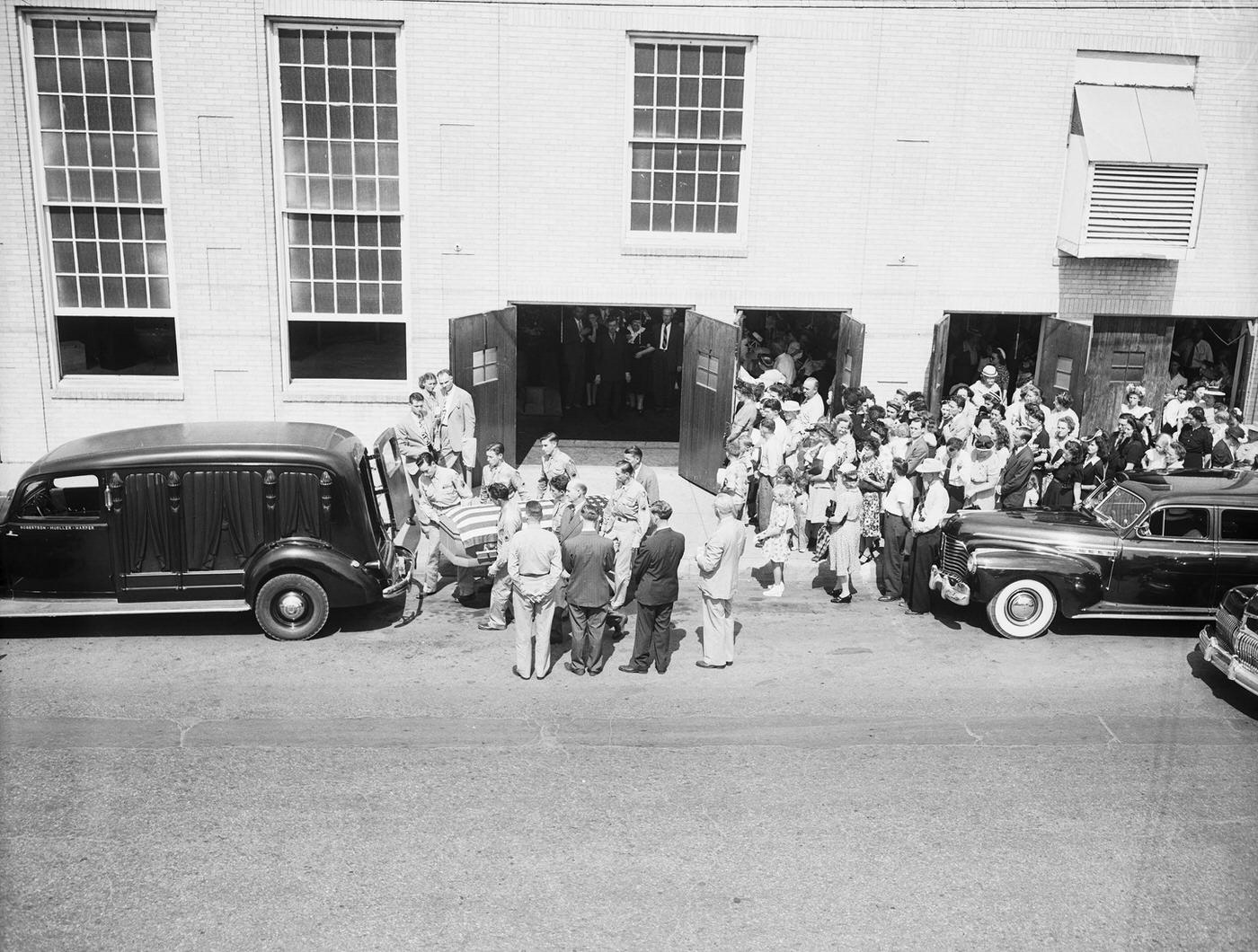
The cost of the war was felt personally in Fort Worth. In 1945, the flag-draped casket of Corporal James E. Newman — a Japanese prison victim — was carried from First Baptist Church by an honor guard of six soldiers from the Fort Worth Army Air Field. Ceremonies like his funeral reminded residents that the headlines were not abstract; they had names and faces from their own neighborhoods.
Corporal James E. Newman funeral, 1945
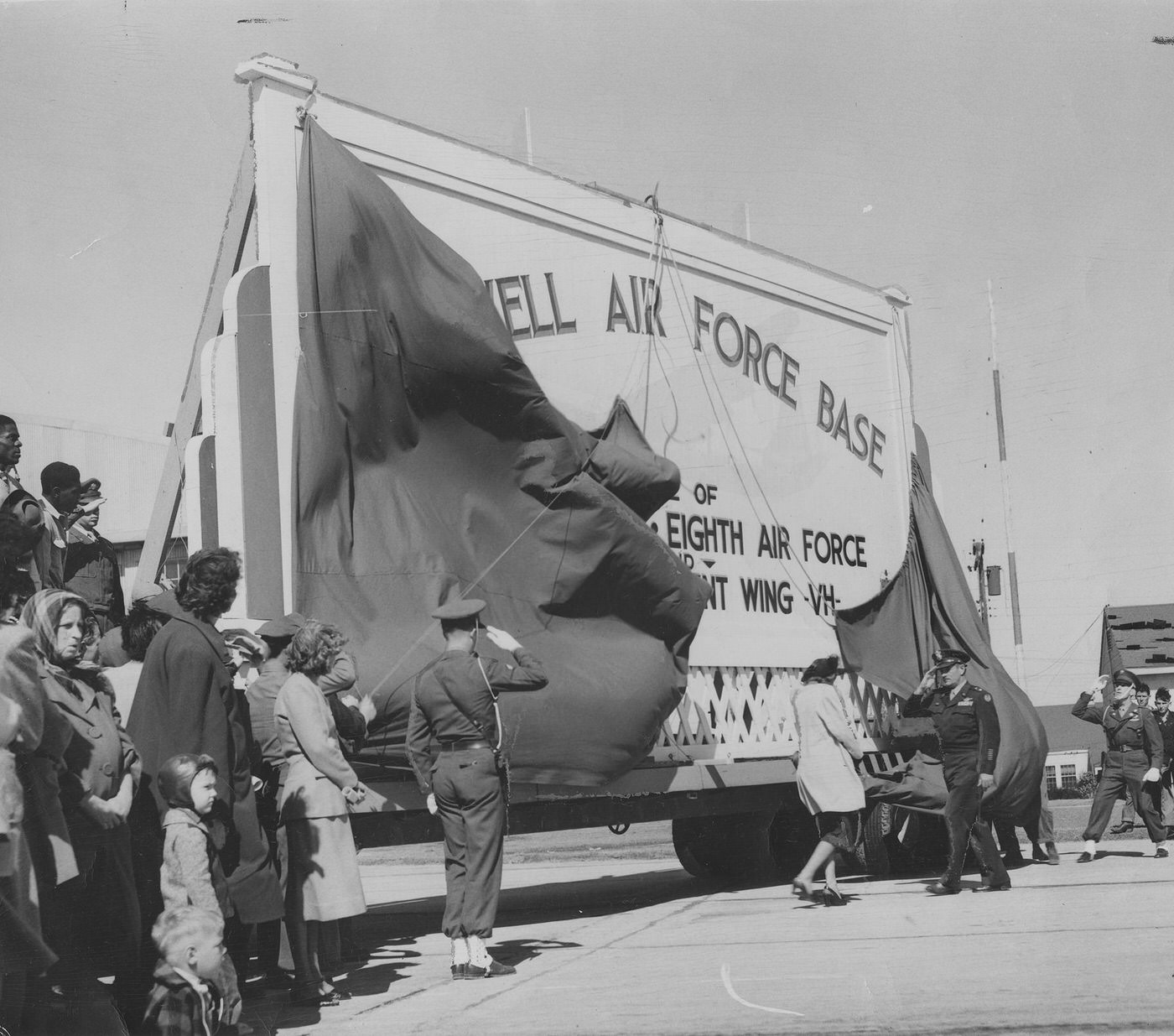
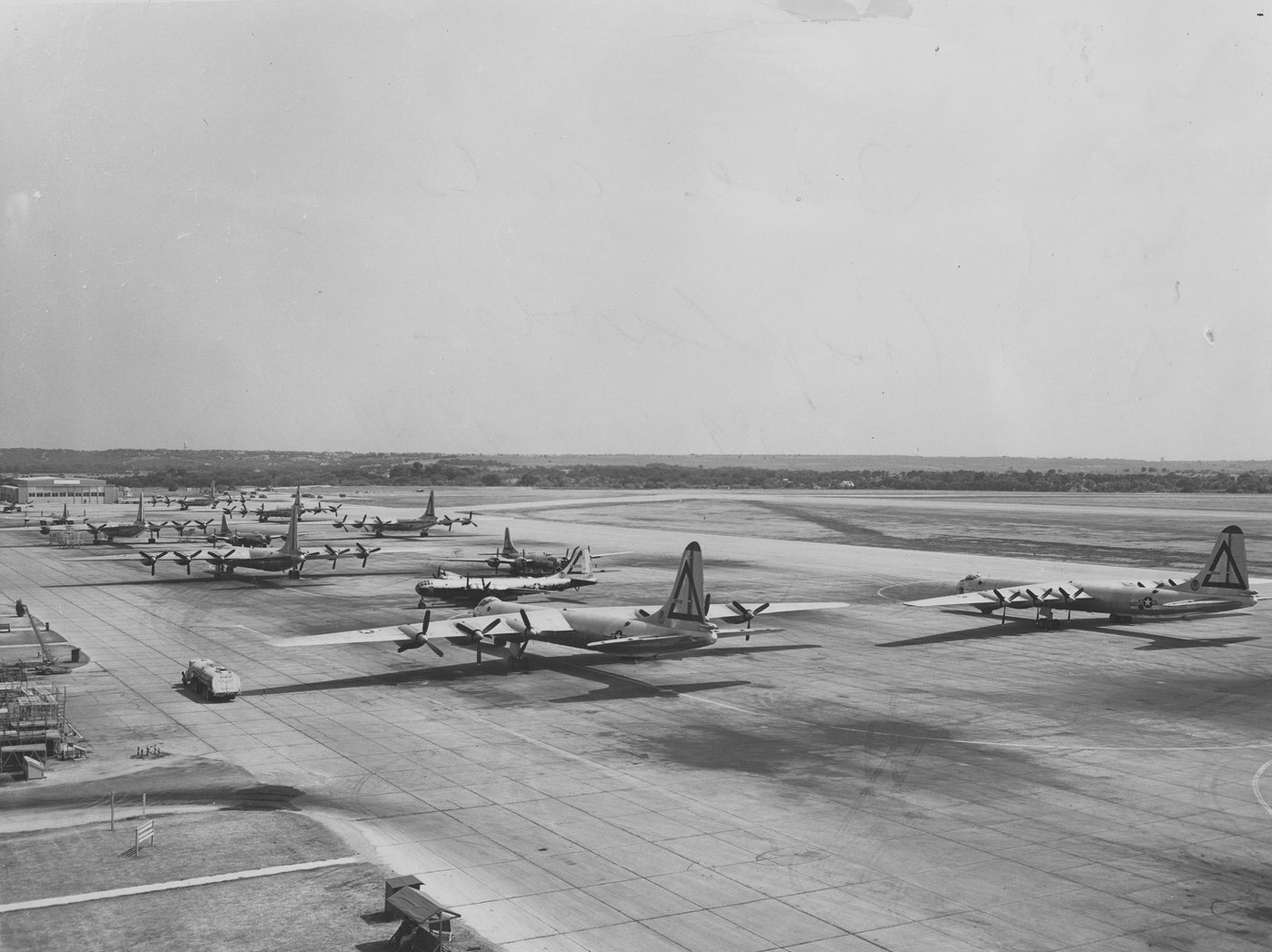
Tarrant Field Airdrome was officially renamed Carswell Air Force Base in 1948, honoring Major Horace S. Carswell Jr. Major General Roger M. Ramey personally saluted Mrs. Virginia Ede Carswell at the rededication ceremony. By that same year, the base was already home to the 8th Air Force’s fleet of B-36 bombers, parked in long rows on the tarmac — a visible symbol of Fort Worth’s permanent bond with American air power.
Maj. Gen. Roger M. Ramey saluting Mrs. Virginia Ede Carswell at the rededication ceremony in honor of Maj. Horace S. Carswell Jr., Carswell Air Force Base, 19488th Air Force fleet of B-36 bombers parked on tarmac, Carswell Air Force Base, 1948
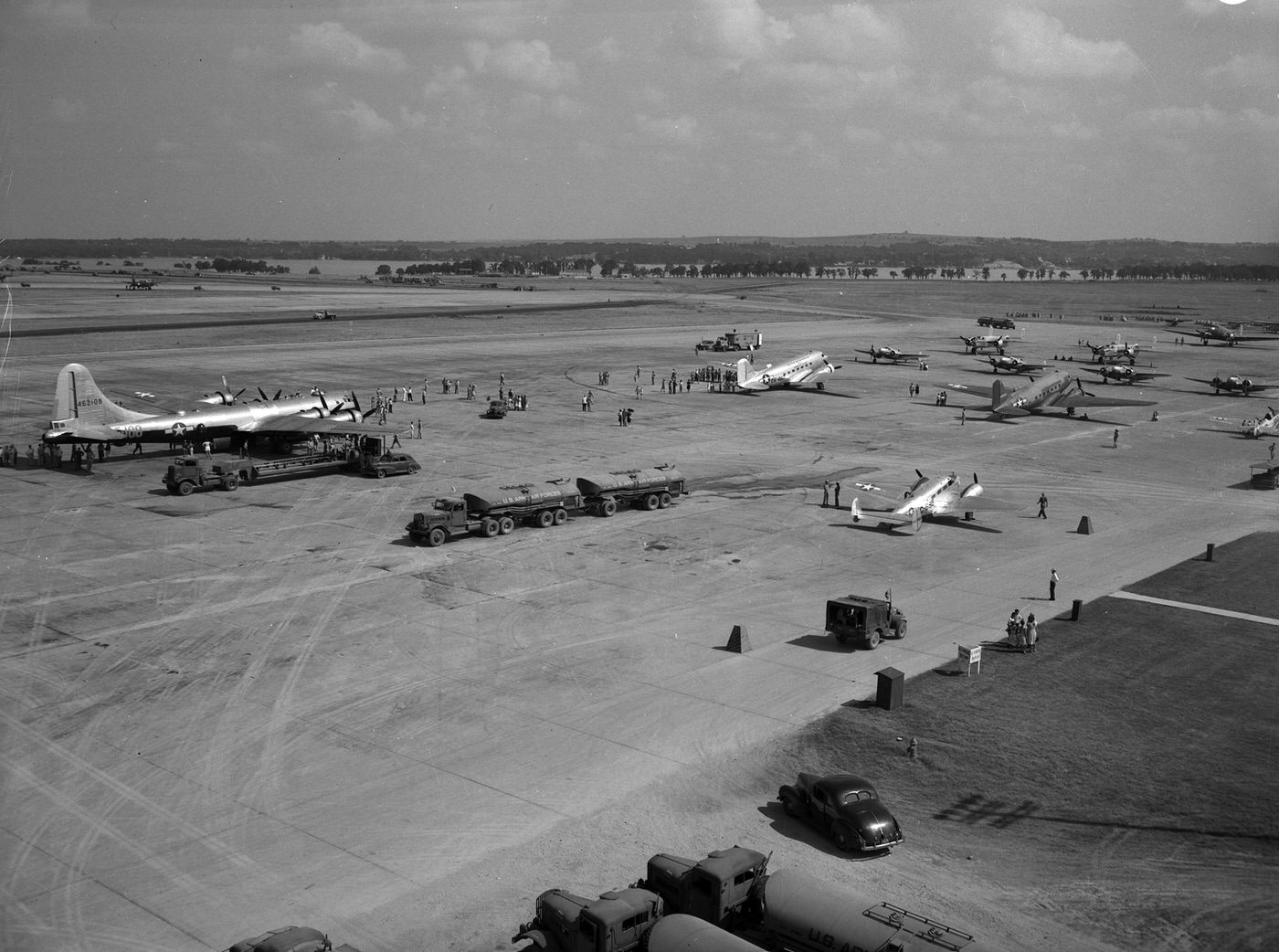
On Army Air Forces Day in 1946, civilians streamed onto Fort Worth Army Air Field to inspect aircraft up close. Viewed from the air traffic control tower early in the day, the field was already filling with people. A B-29 Super Fortress sat at the far left, drawing long lines of curious visitors who had spent the war years reading about such planes in the Star-Telegram.
A view of the Fort Worth Army Air Field (FWAAF) on Army Air Forces Day. The air field is pictured early in the day from an air traffic control tower, 1946
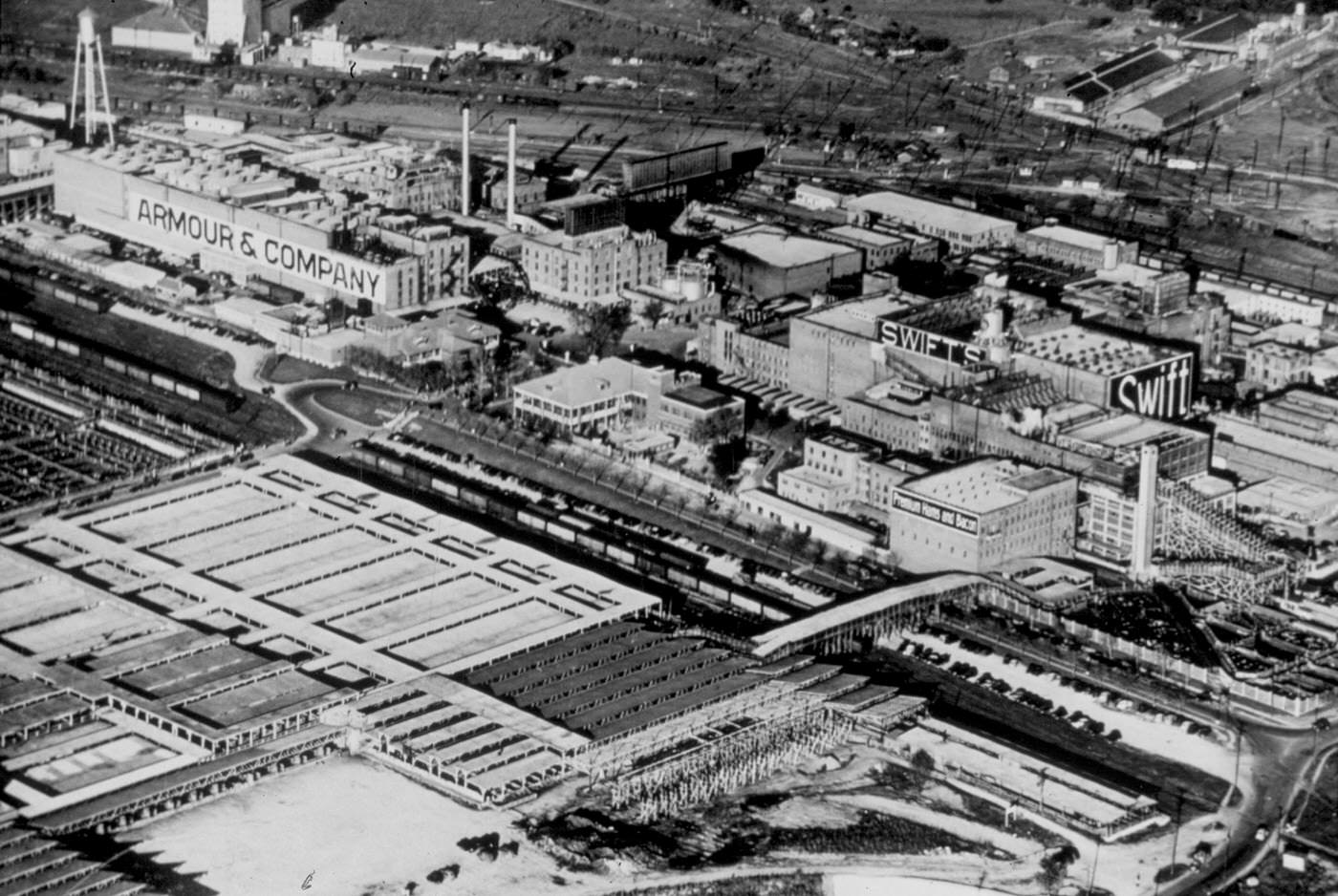
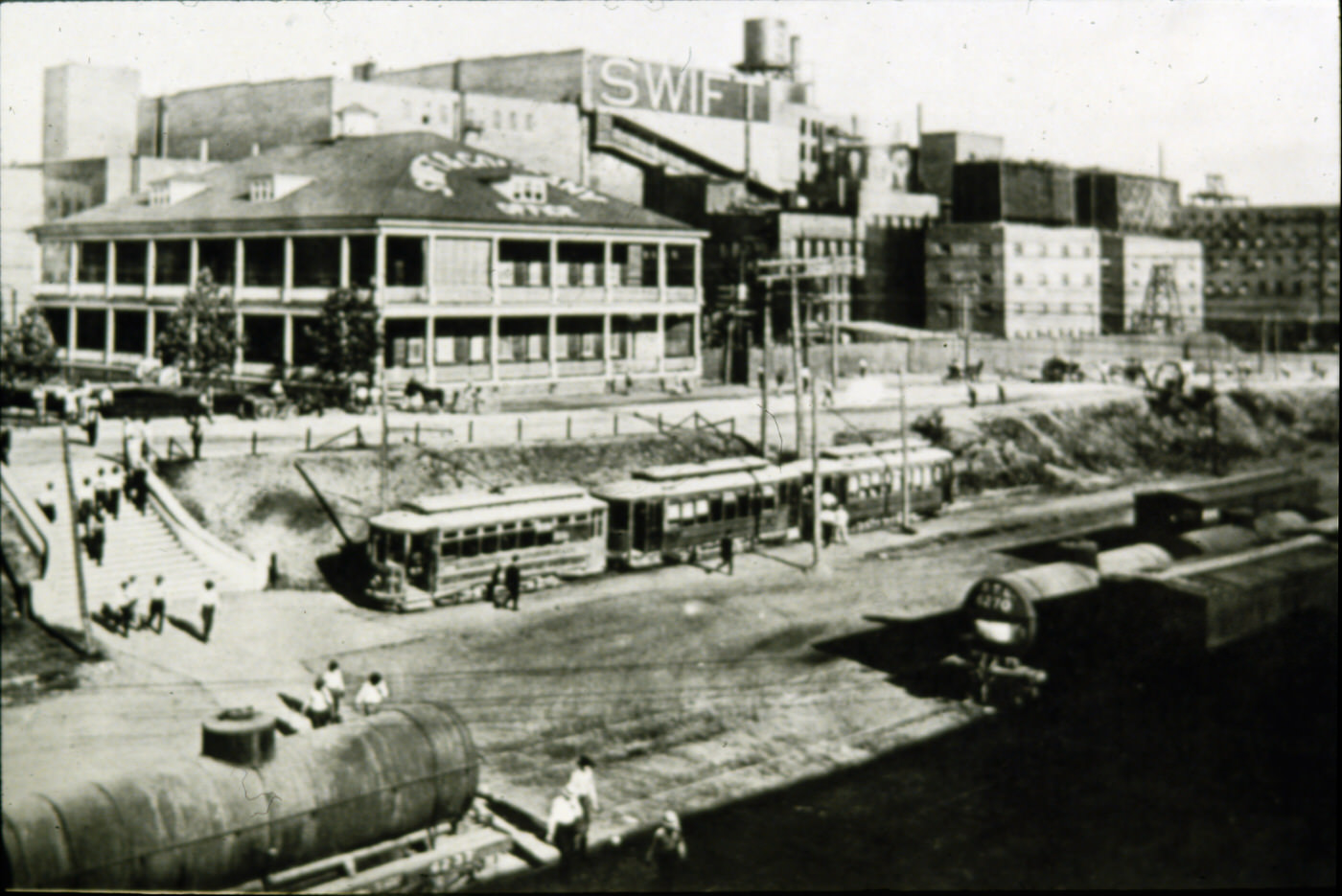
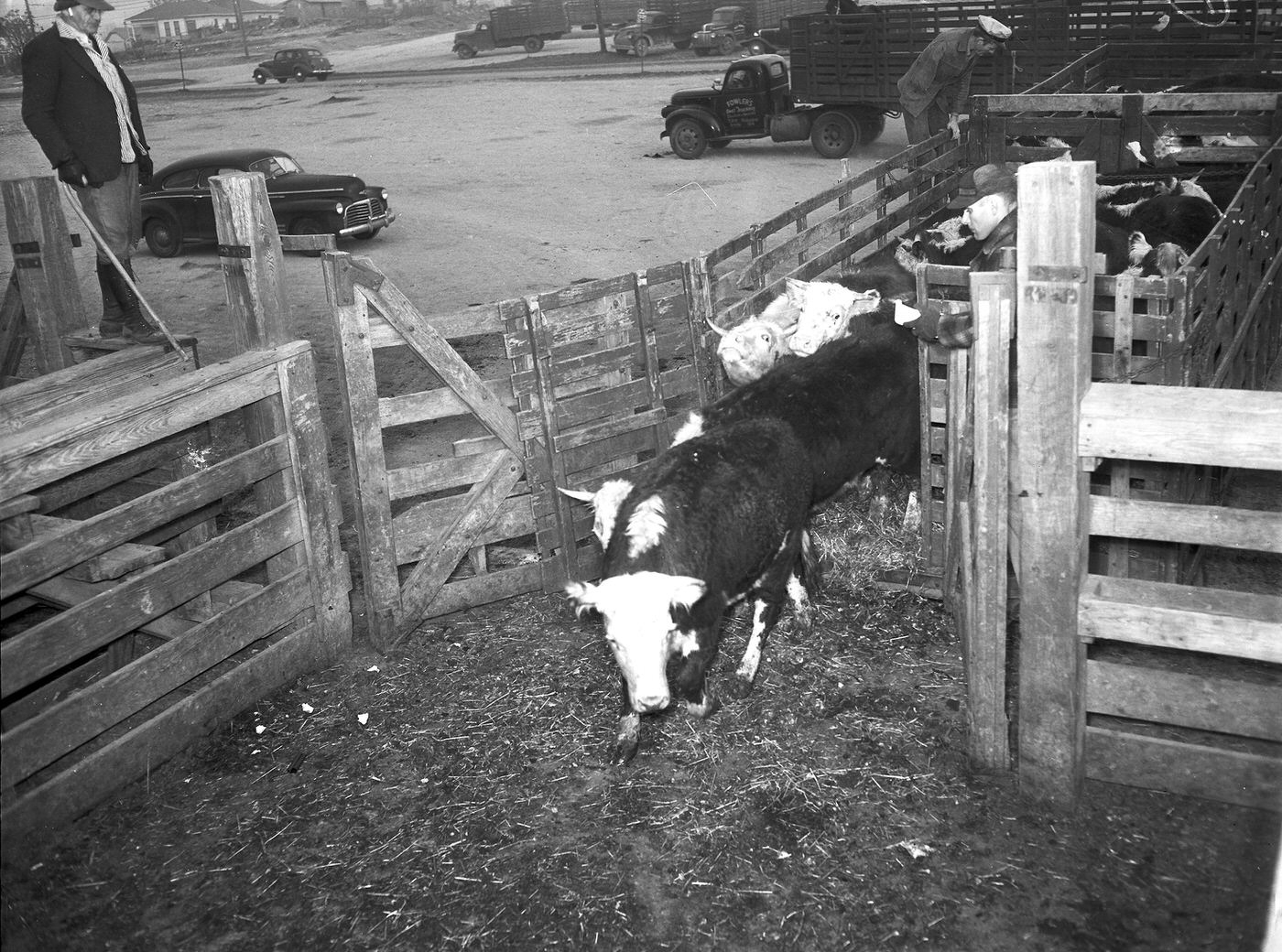
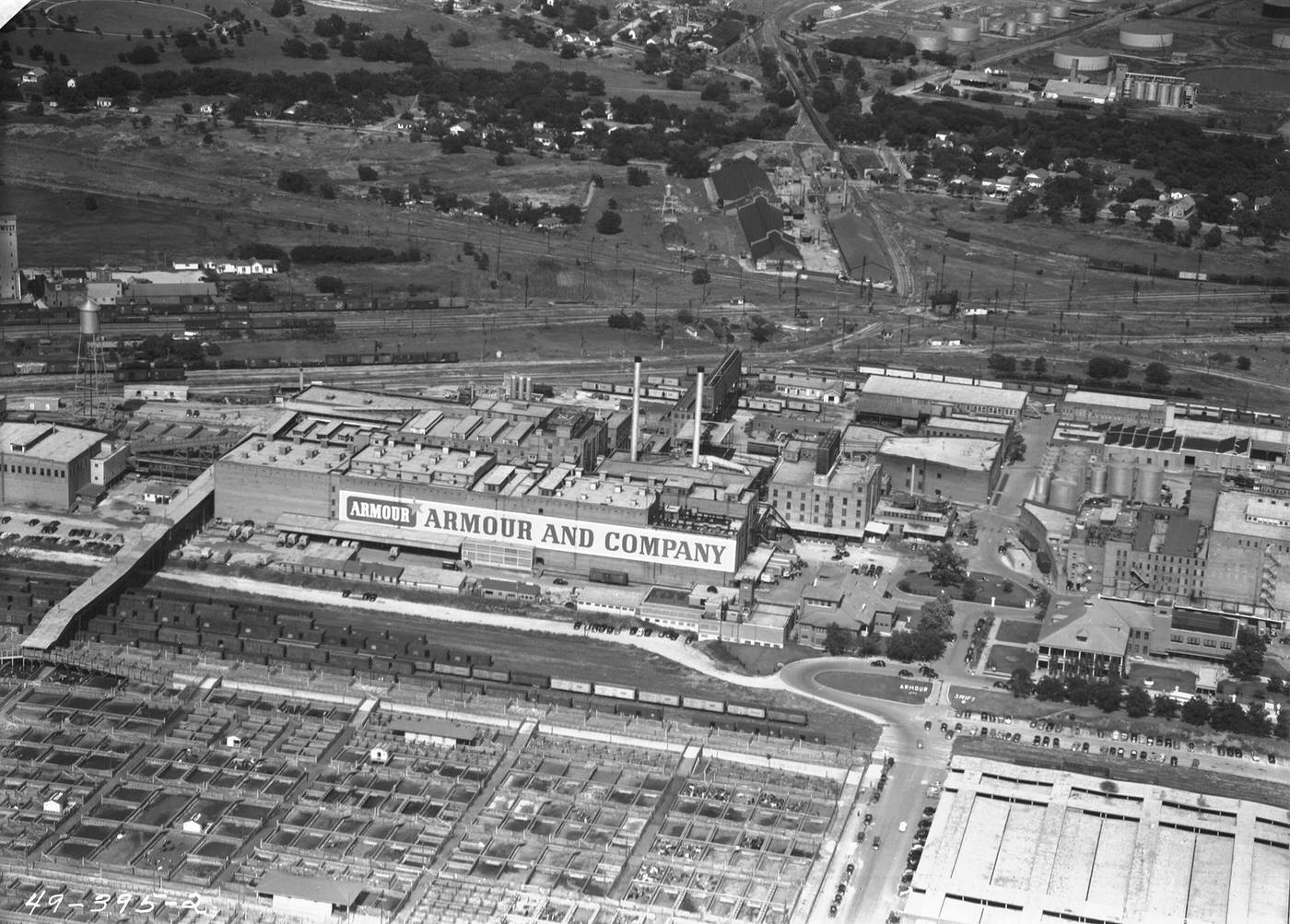
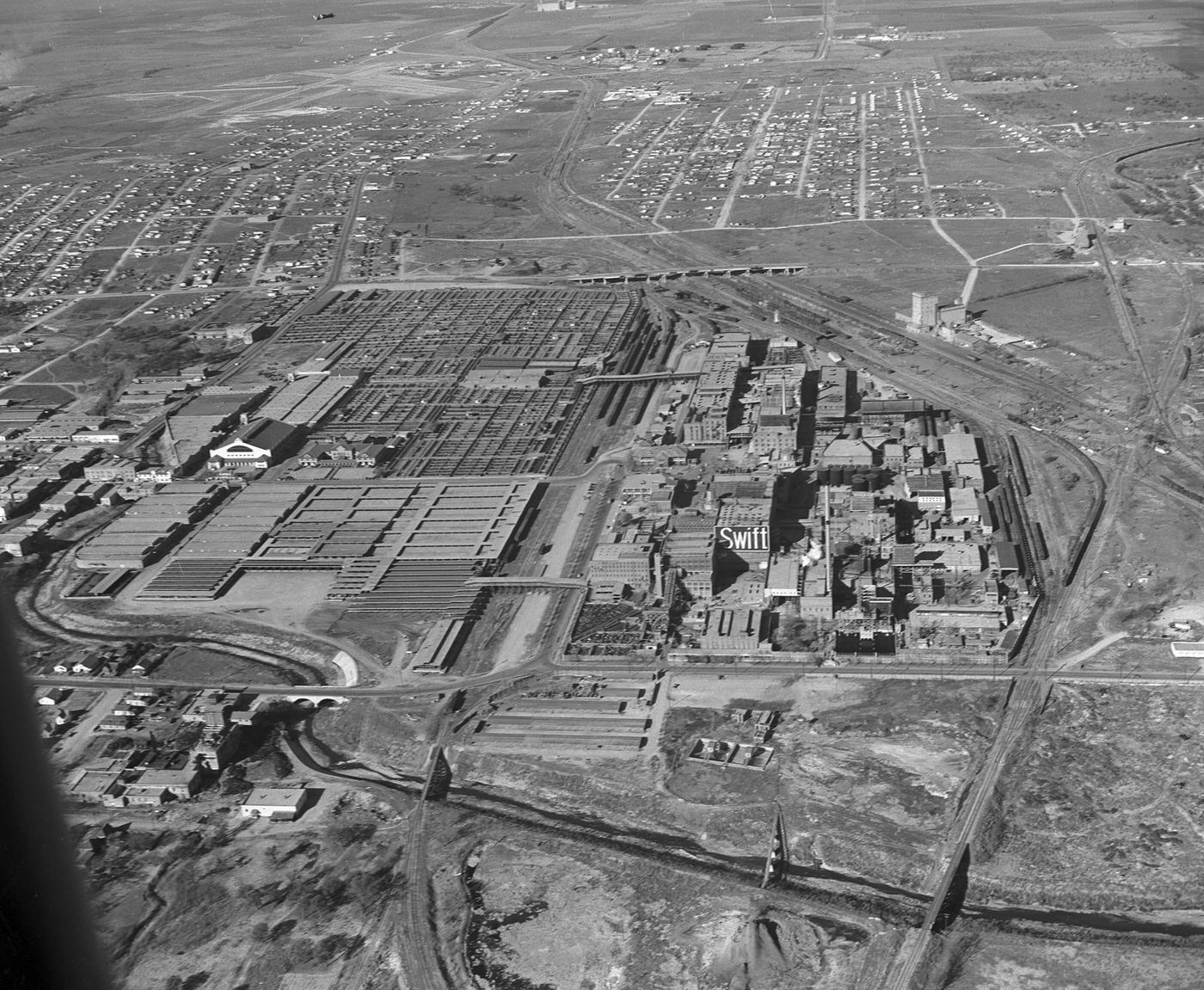
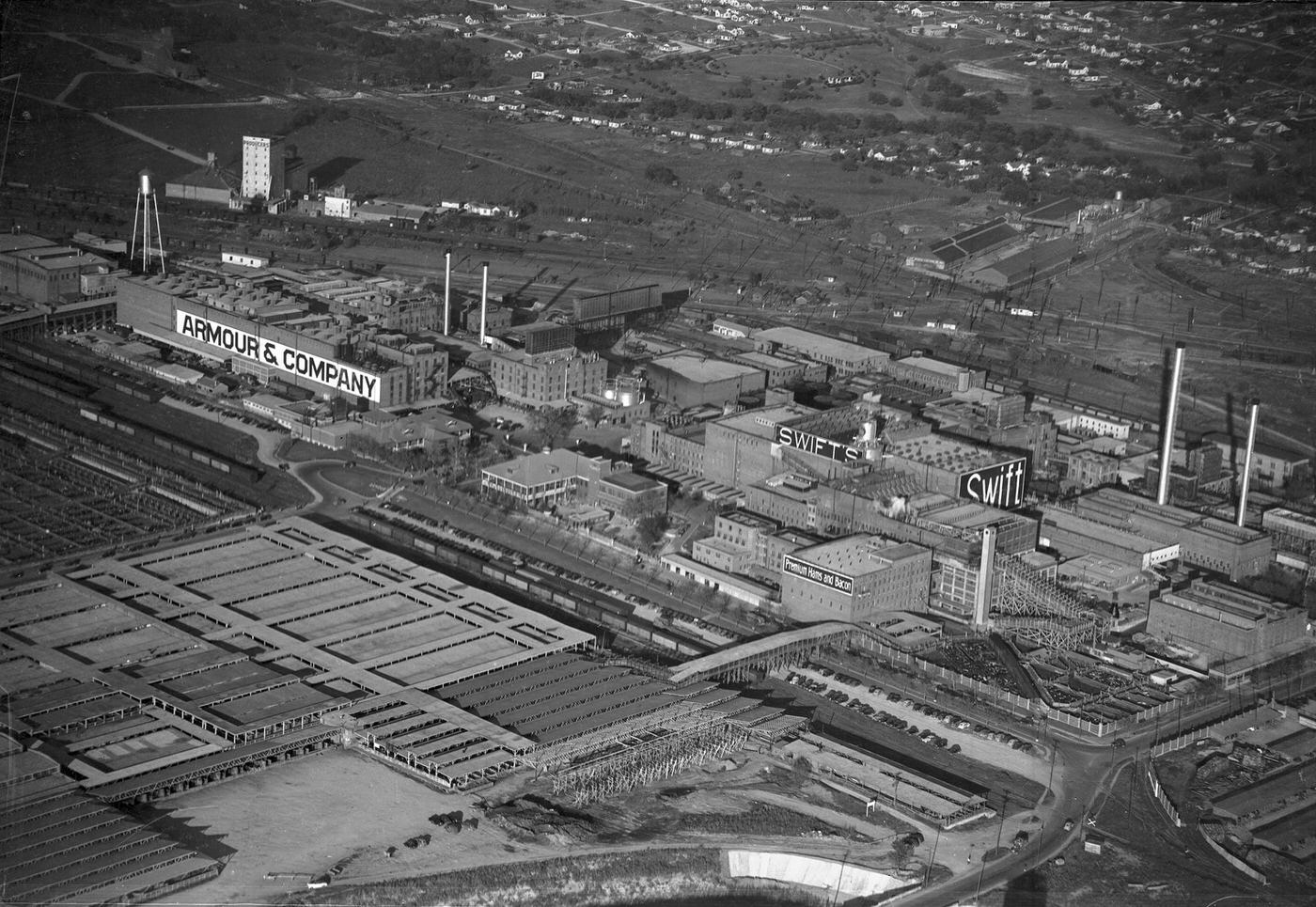
Fort Worth’s stockyards remained one of the city’s defining economic engines throughout the decade. The Armour and Swift meat packing plants processed cattle that arrived by rail and on foot, with workers and street cars moving in steady rhythm around the yards. The stockyards were not without conflict — a twelve-day CIO strike in 1946 left the pens nearly empty, until livestock handlers and packing plant employees returned to work and cattle began arriving at the unloading docks once more.
Armour and Swift meat packing plants in the Fort Worth Stockyards, 1940Swift & Co., Fort Worth stockyards, people disembarking from street cars and climbing stairway to meat packing plants, 1940s.Stockyards Strike Ends, 1946
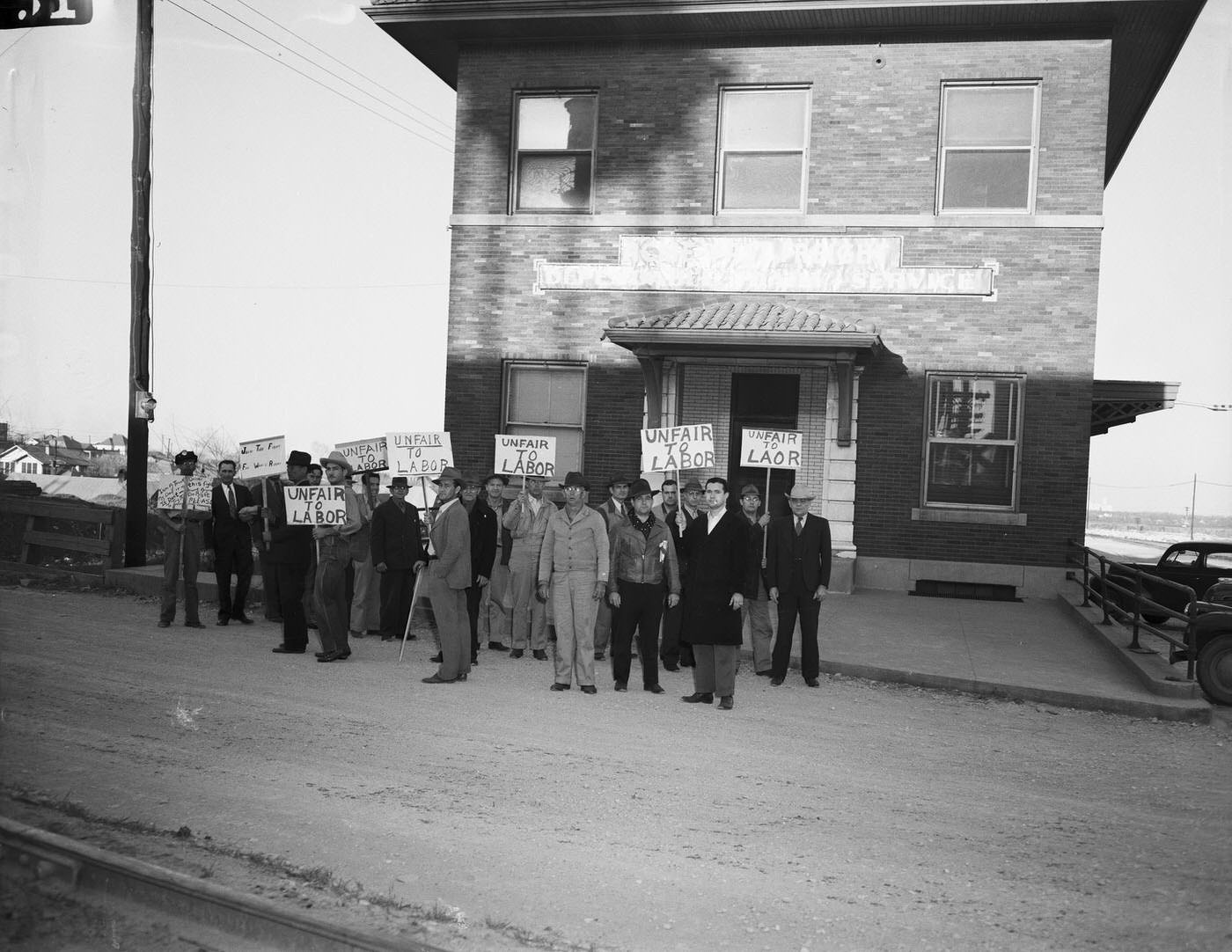
Labor tensions extended beyond the stockyards. In 1946, Convair workers picketed in front of Acme Fast Freight’s offices at 701 E. 5th Street after a truck driver lost his job for refusing to cross picket lines at the bomber plant. The dispute showed how tightly connected Fort Worth’s various industries had become — a conflict at one workplace could ripple outward across the city within days.
Convair workers picket Acme Freight Service, 1946
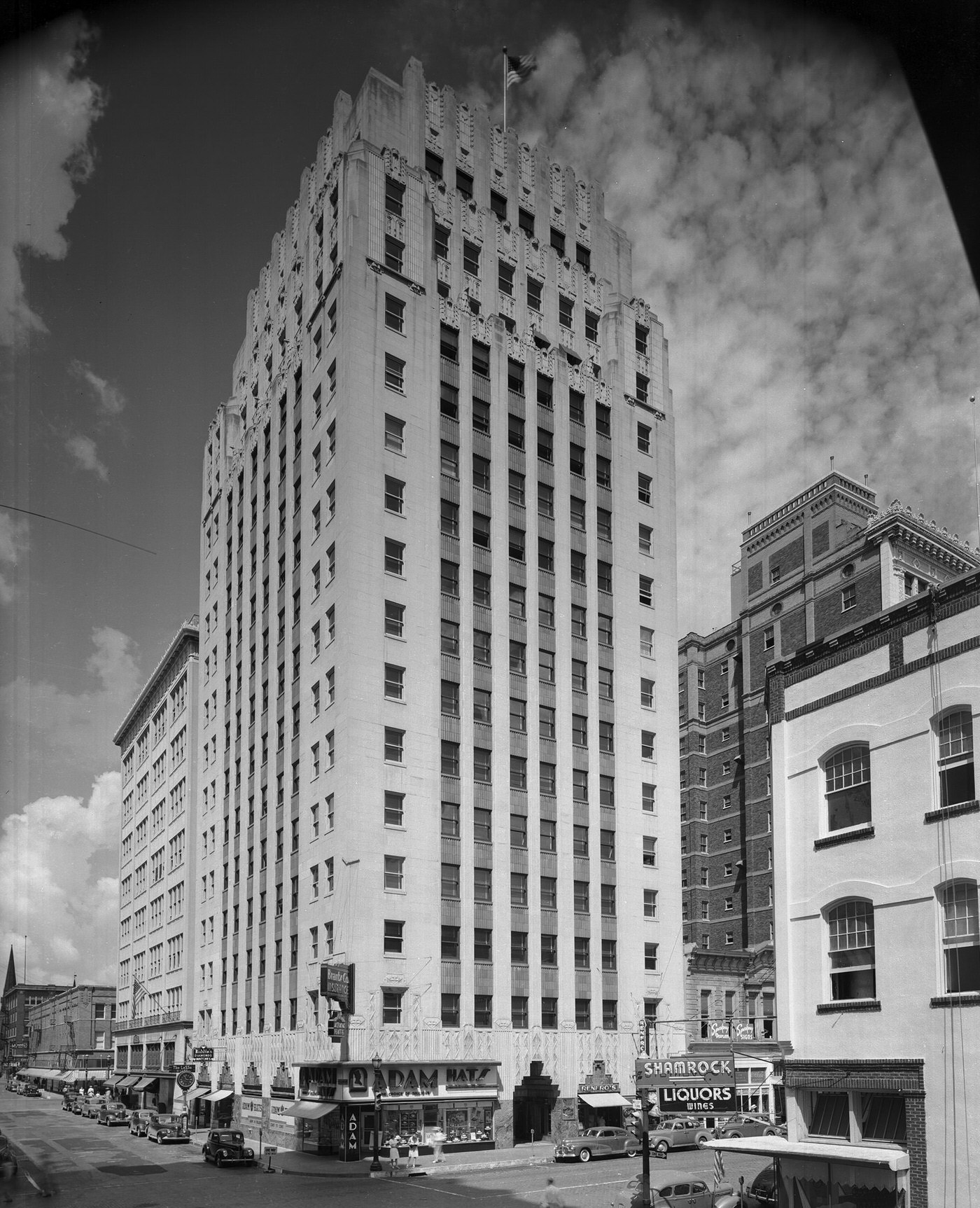
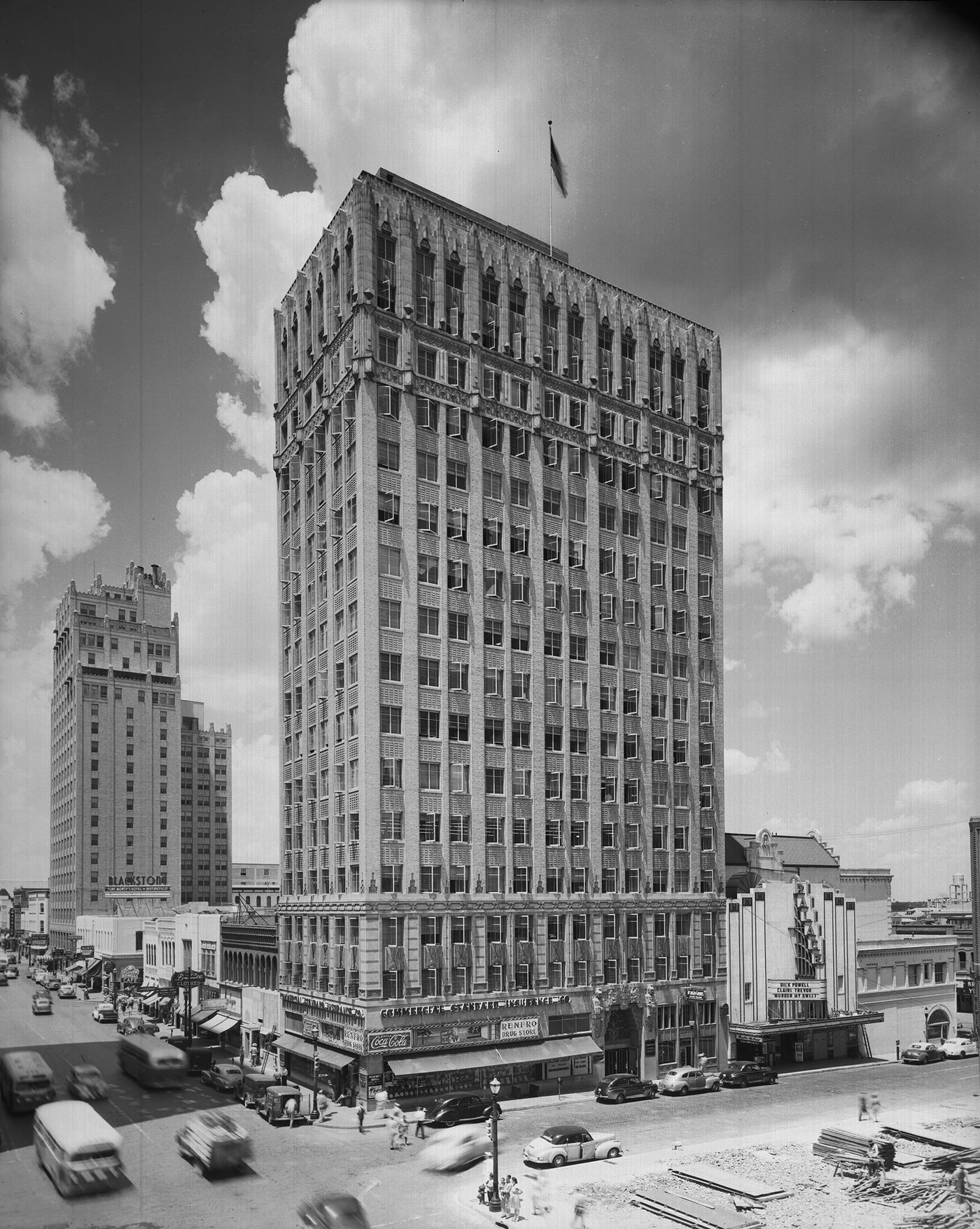
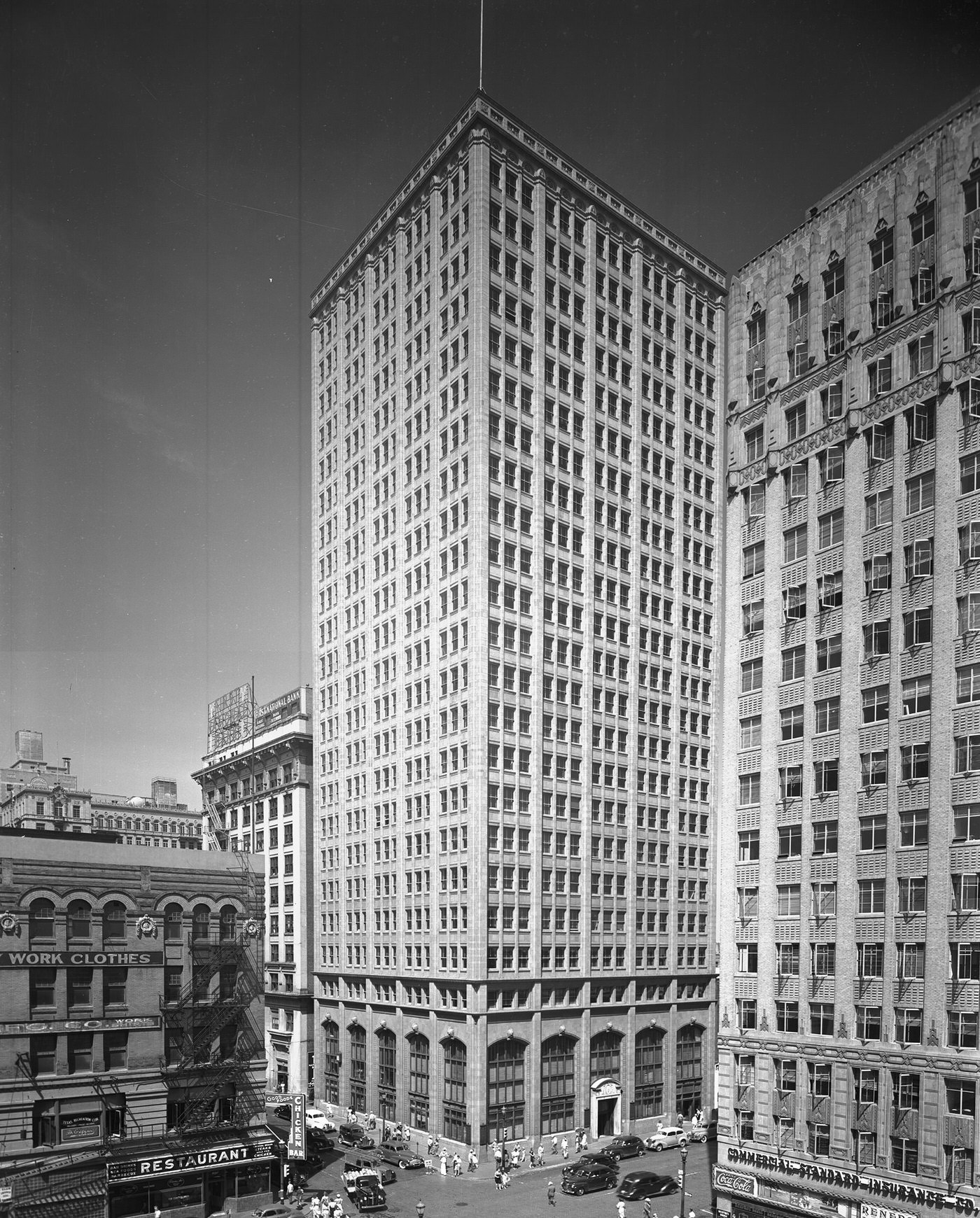
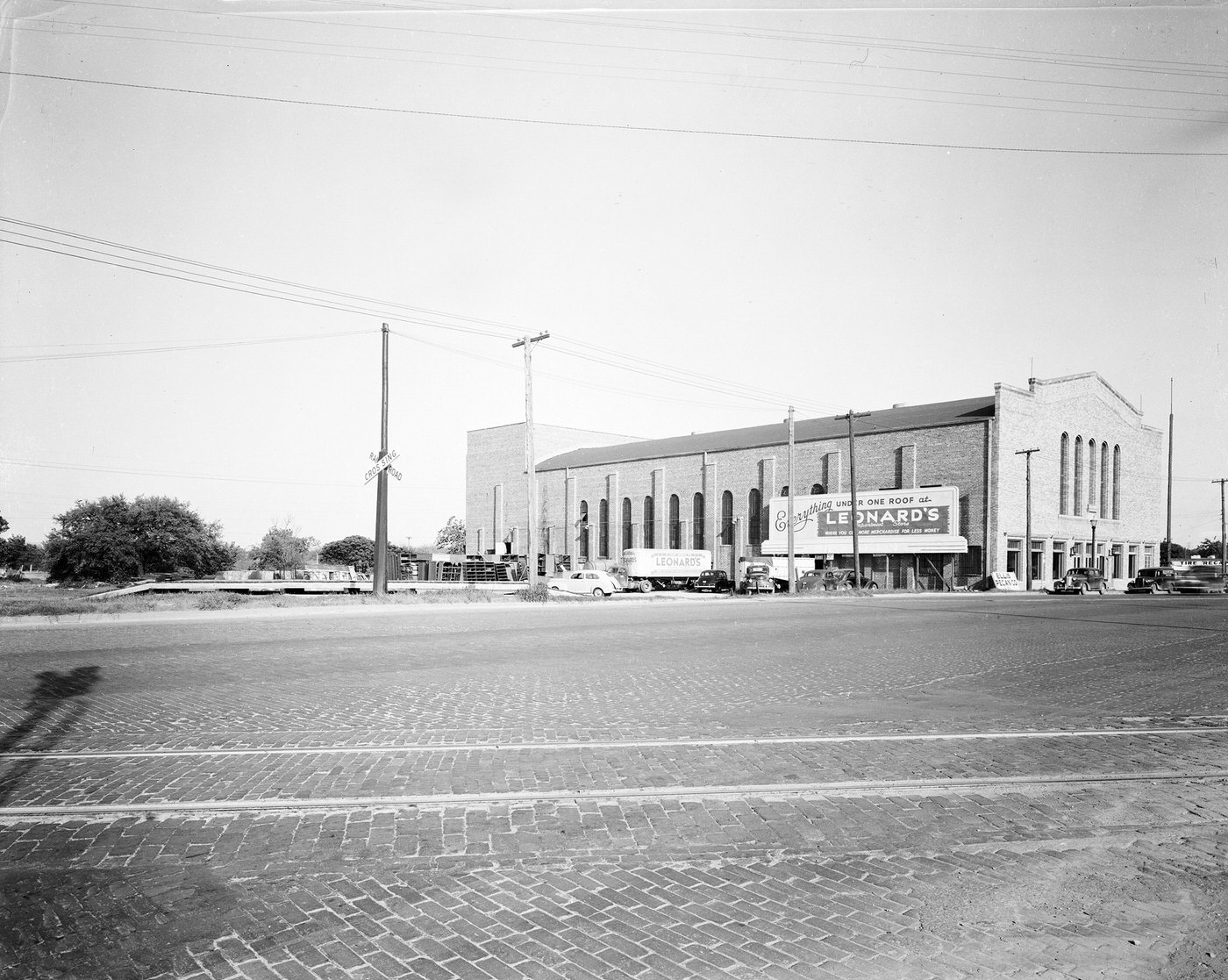
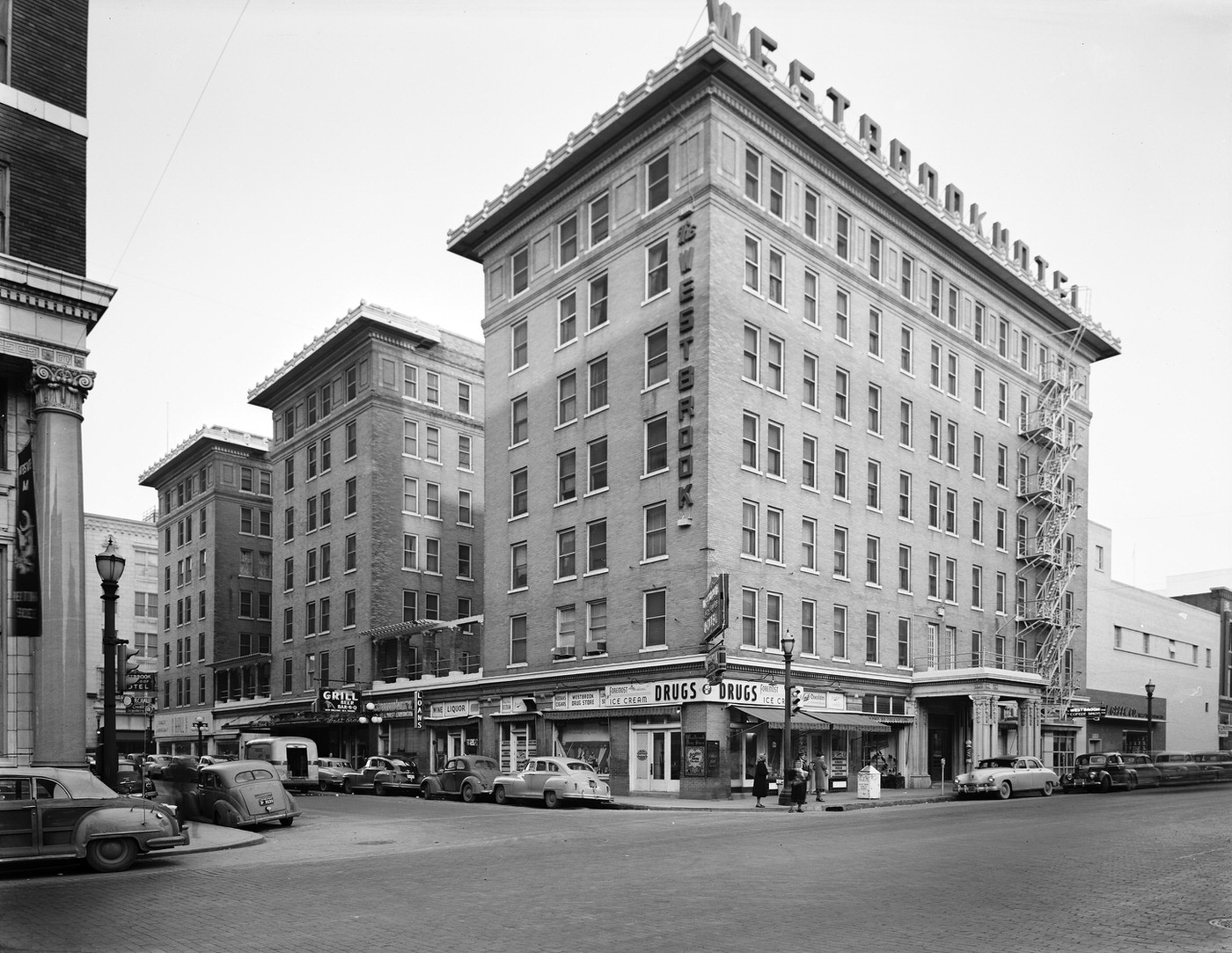
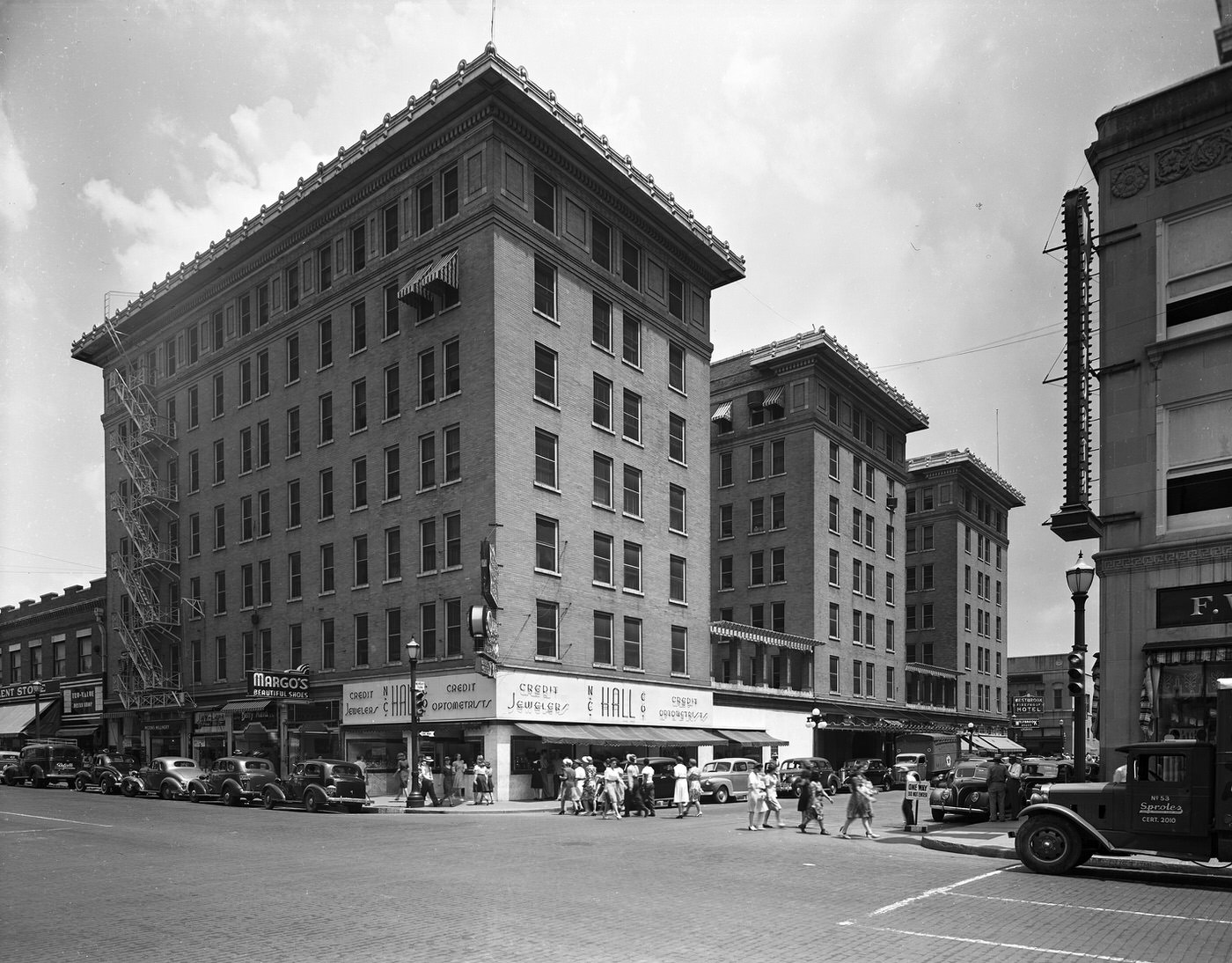
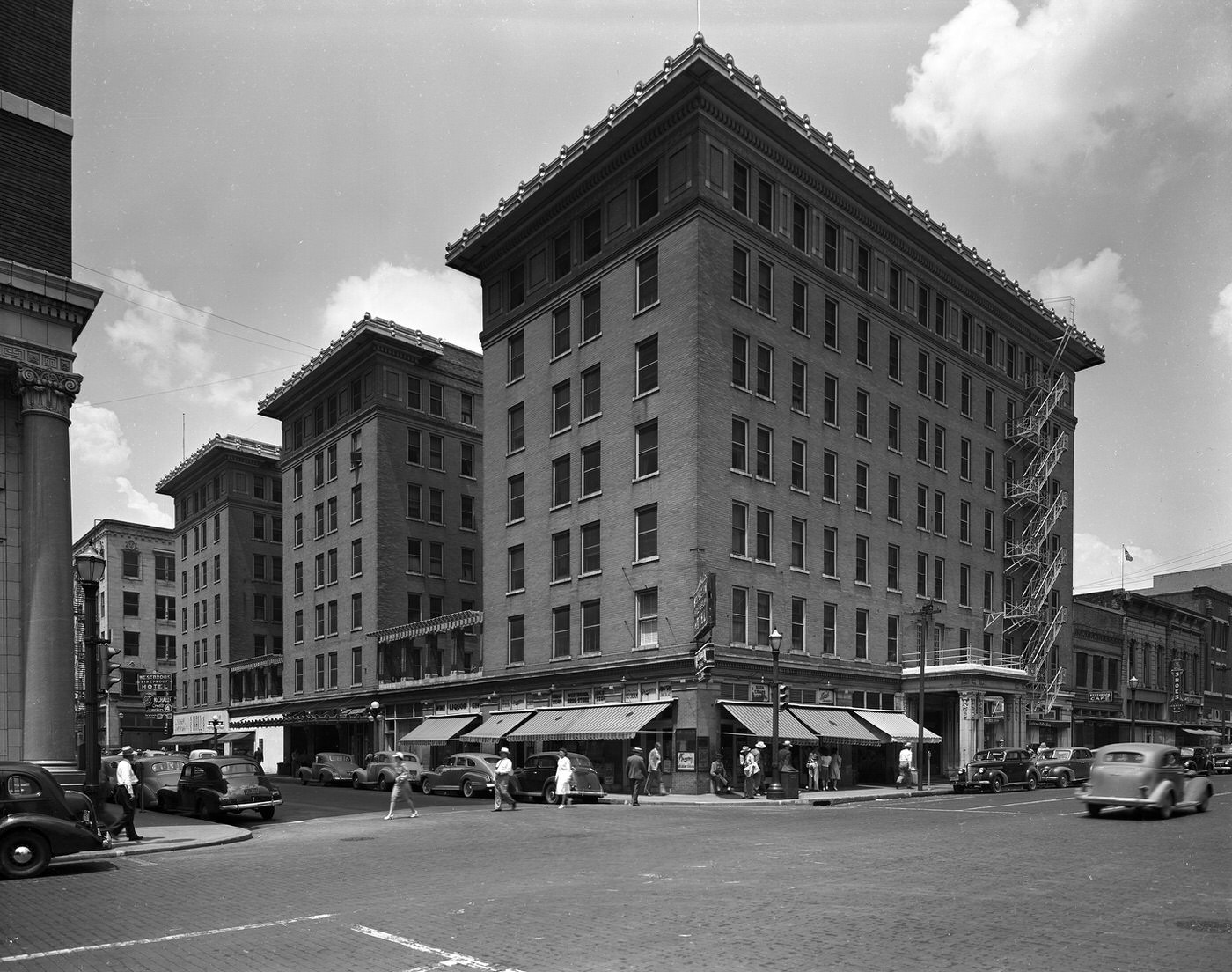
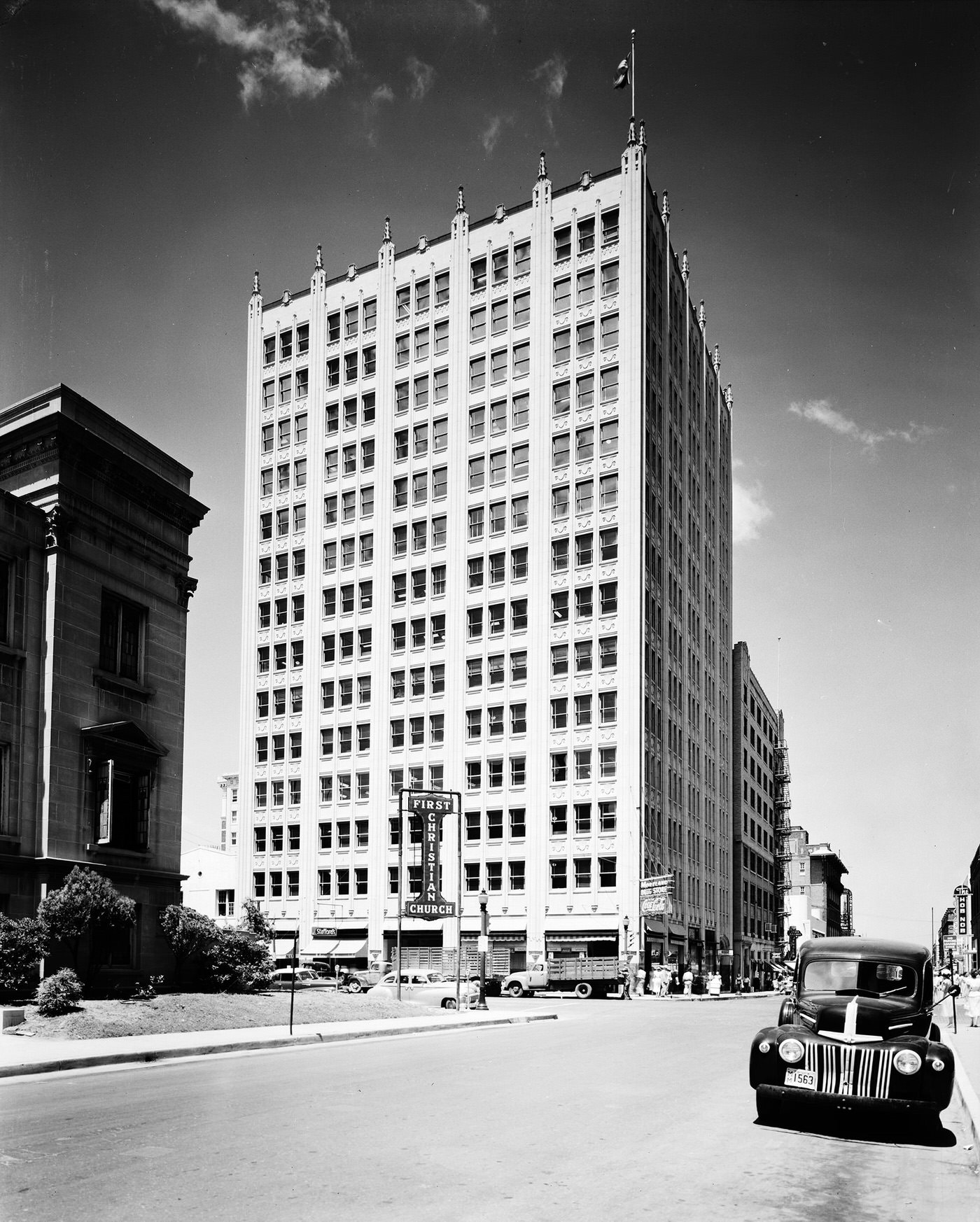
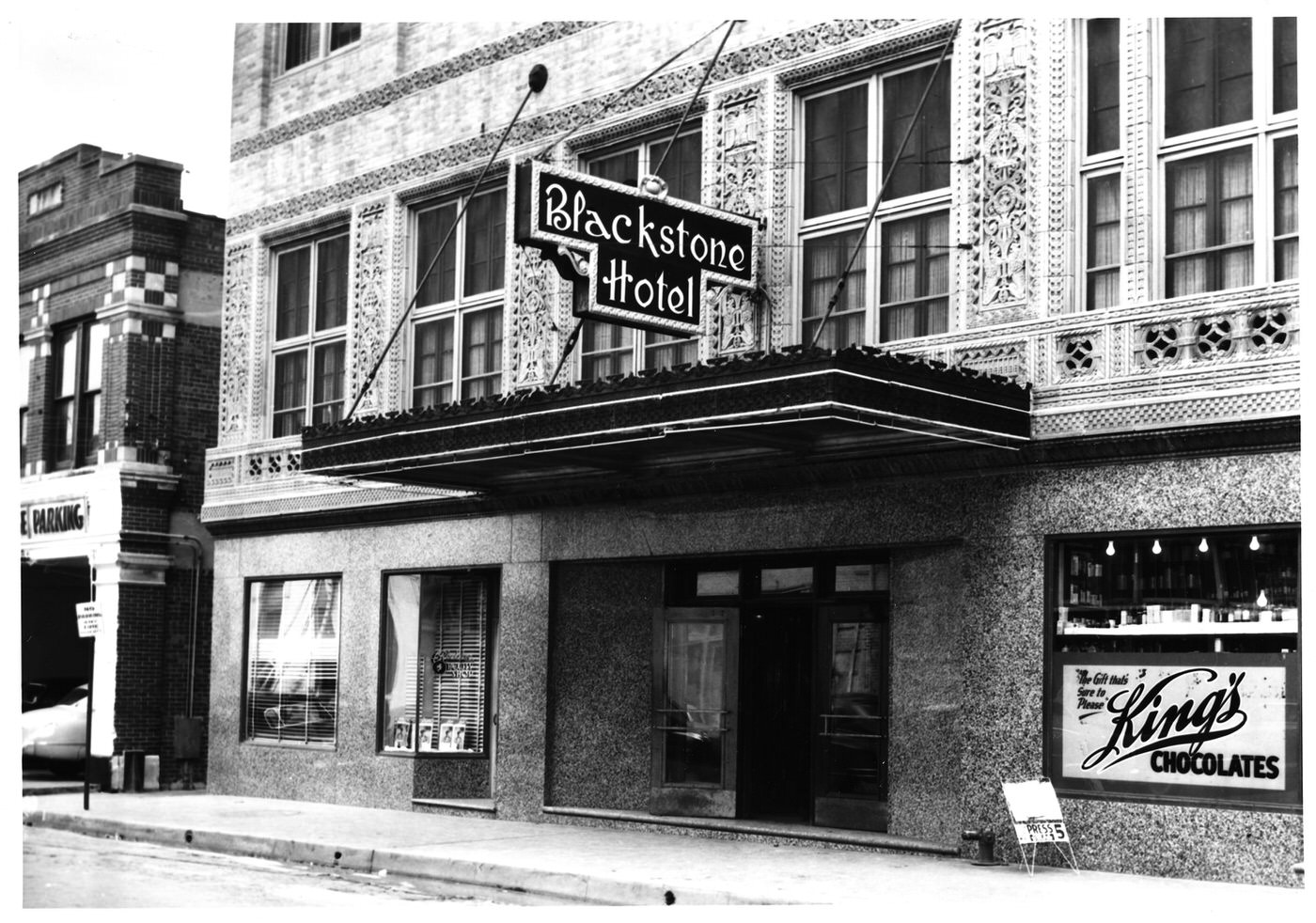
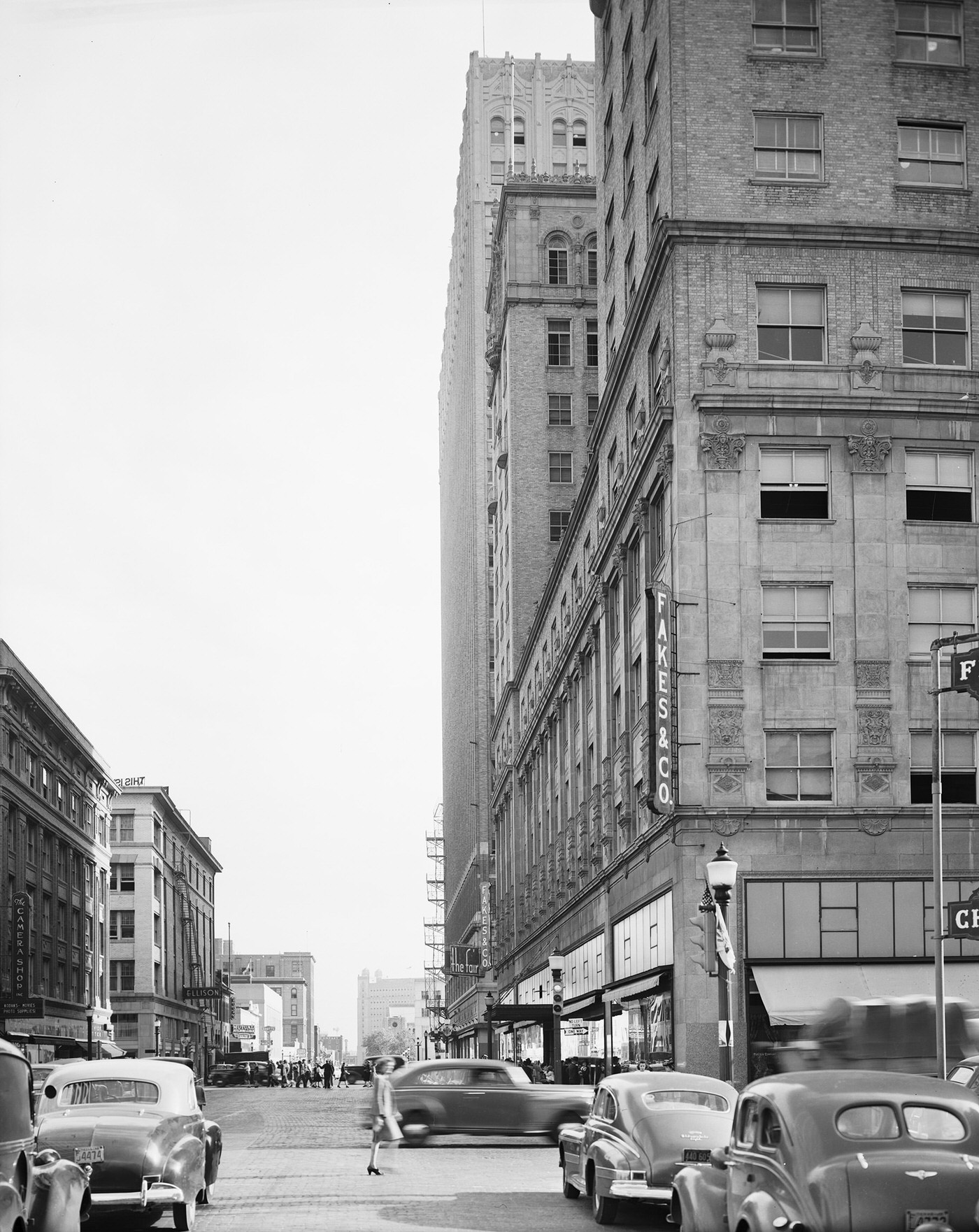
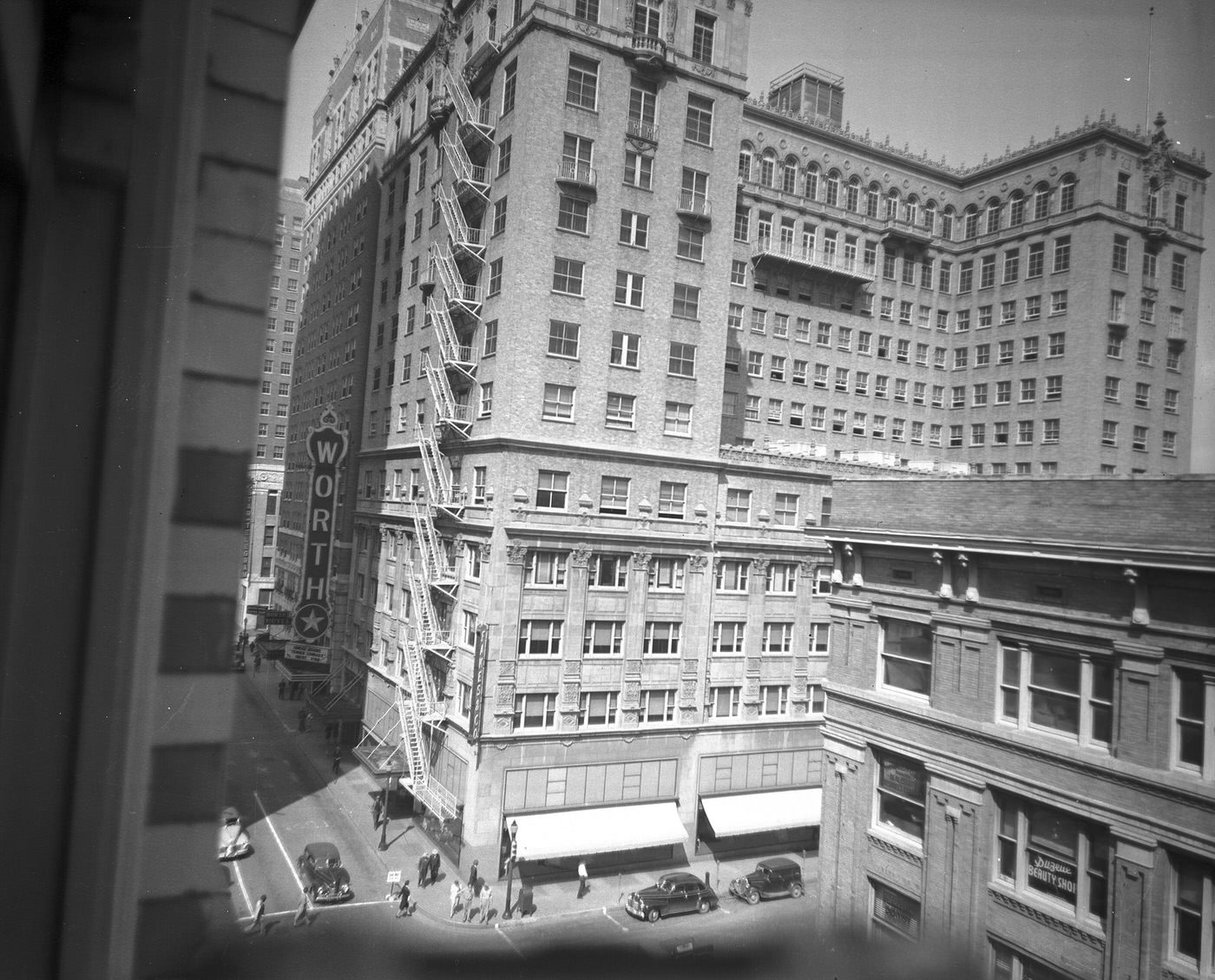
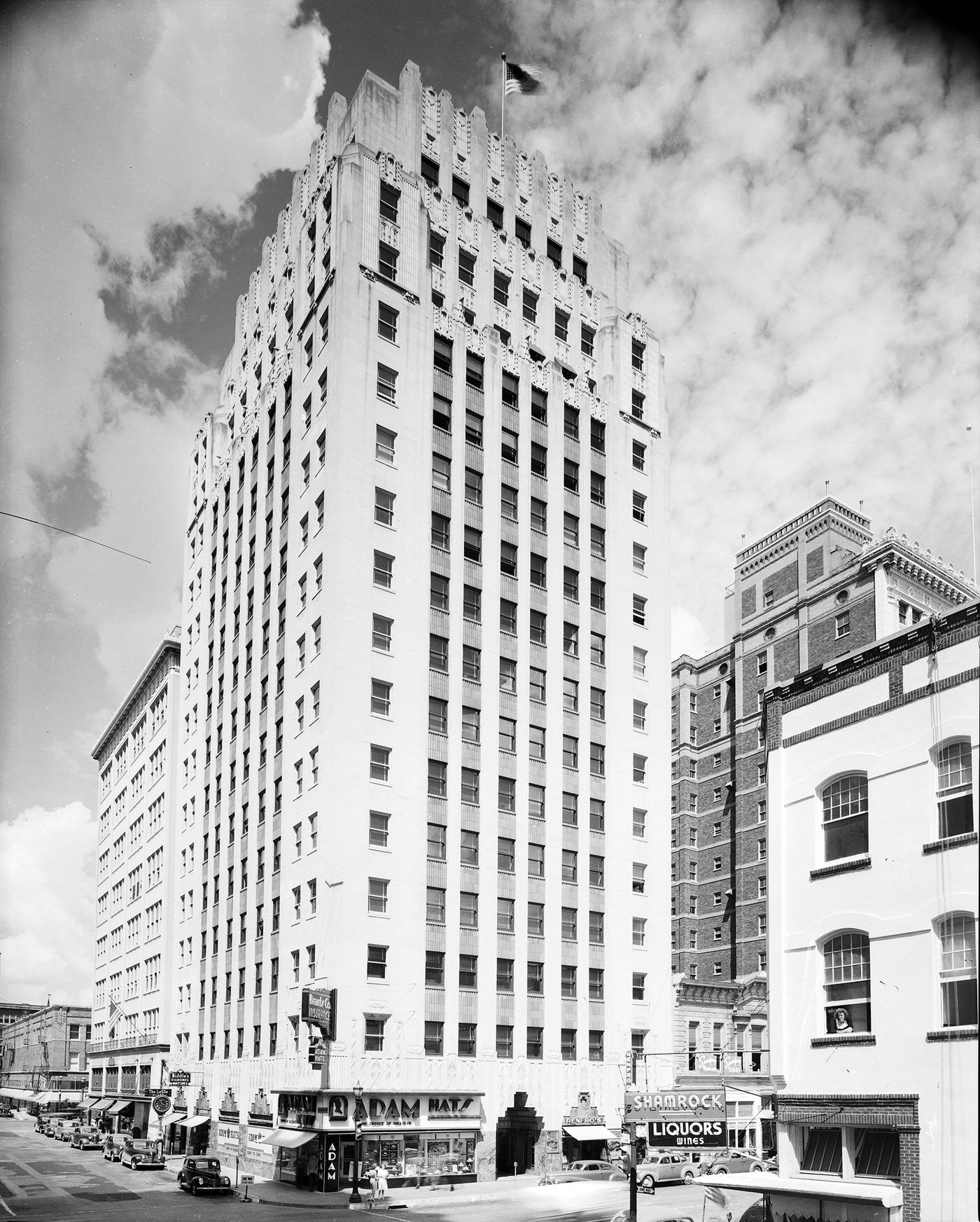
Downtown Fort Worth in the 1940s was a dense, walkable stretch of banks, hotels, department stores, and office buildings. The Sinclair Building, a sixteen-story Art Deco tower at Fifth and Main, stood alongside the Kress Building and the Blackstone Hotel. The Worth Hotel, Westbrook Hotel, and Hotel Texas served travelers and hosted major events. Leonard’s and Meacham’s department stores drew shoppers to Houston Street. The streets were almost always busy.
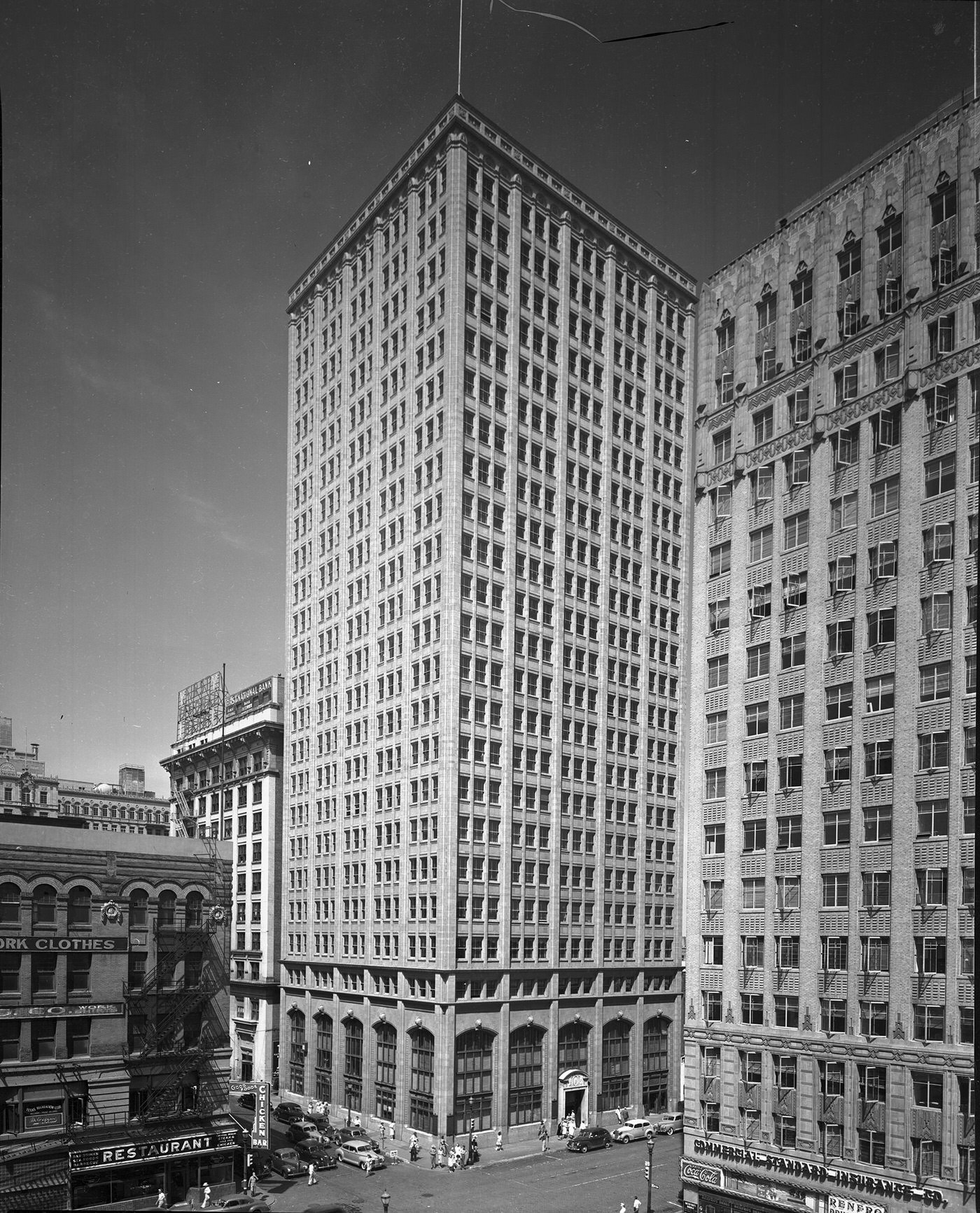
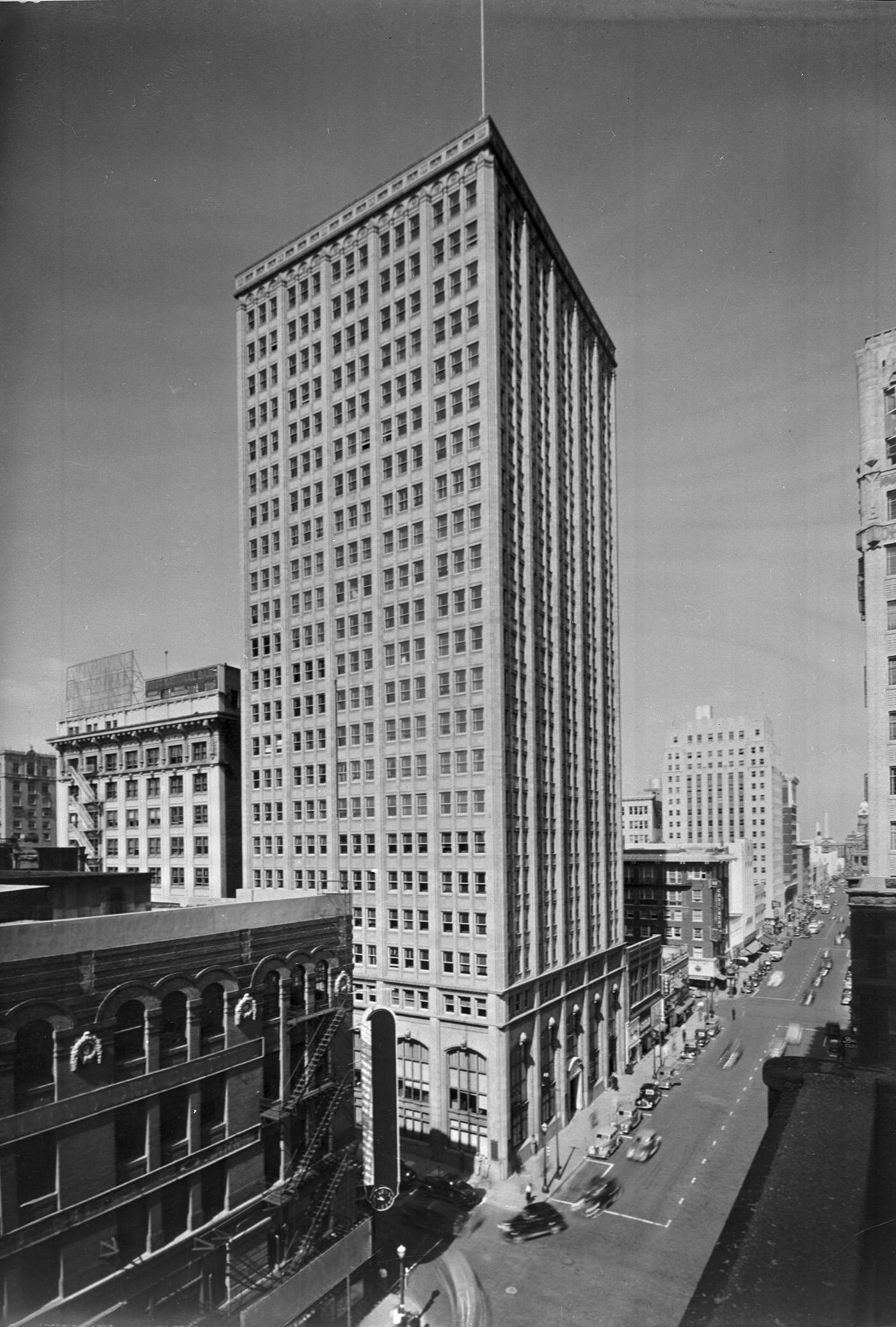
Sinclair building, 512 Main Street, downtown Fort Worth, Texas, 1945
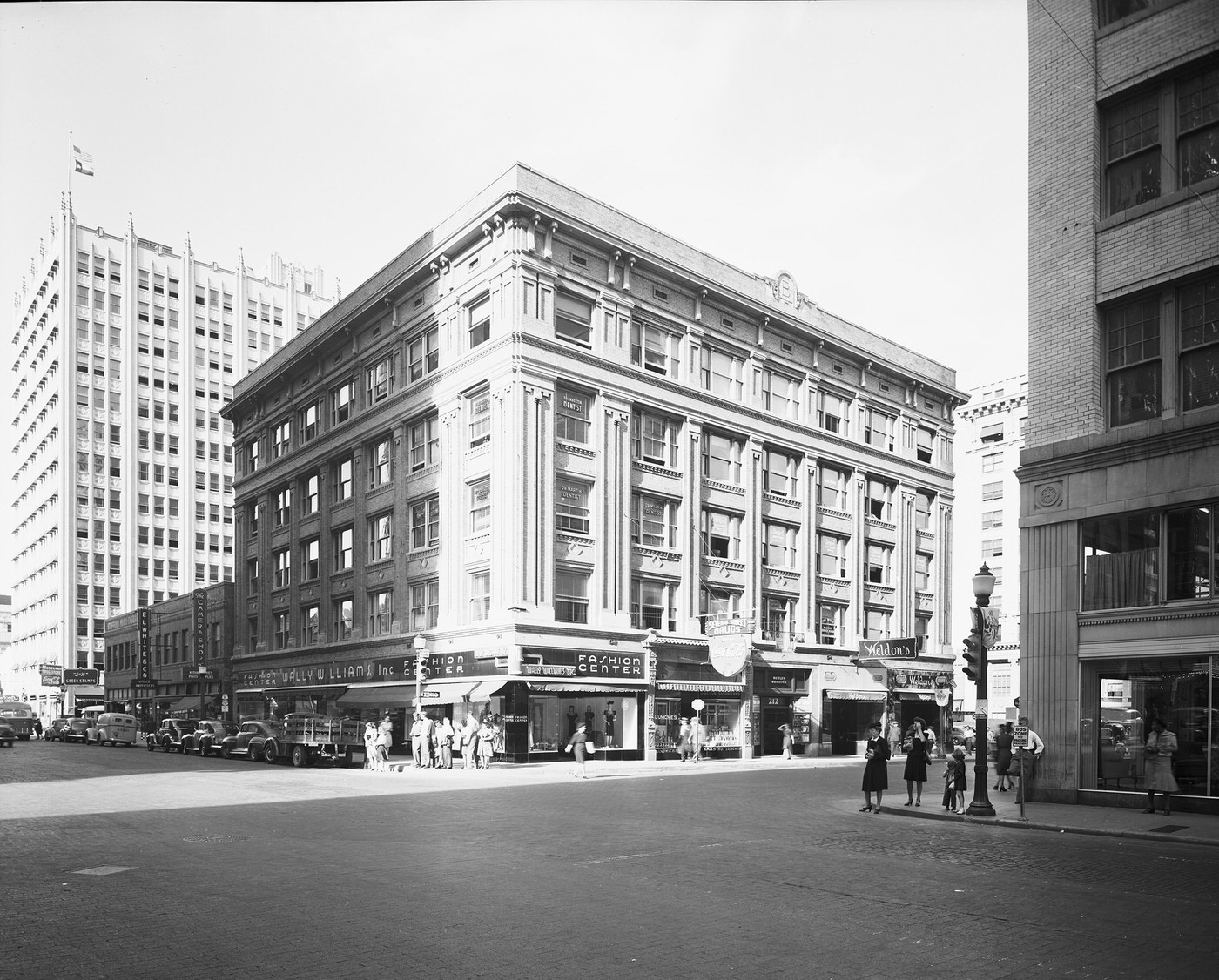
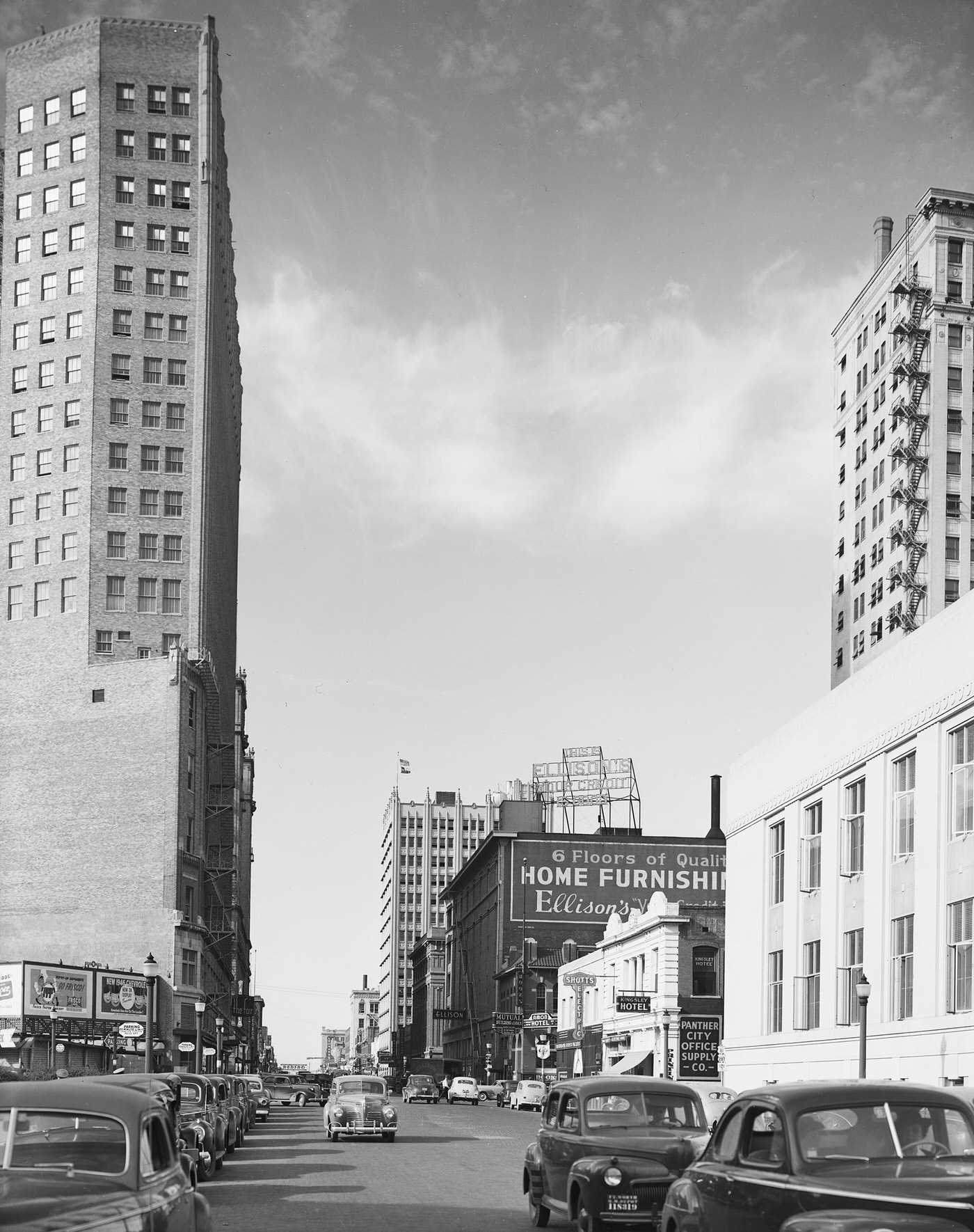
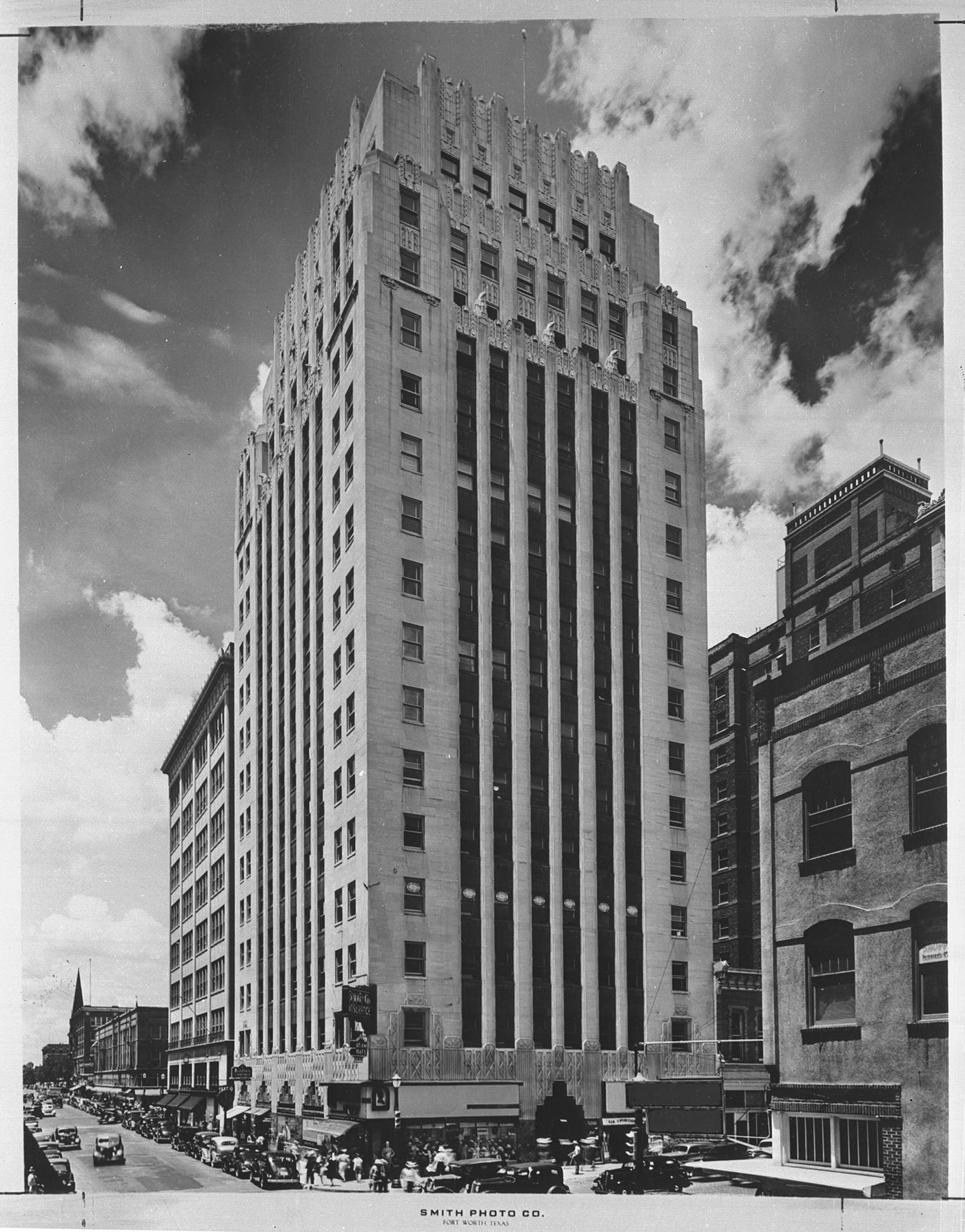
Aviation building at 7th and Main, downtown Fort Worth – Commercial Standard Insurance Company, Blackstone Hotel on Main St., Palace Theater on 7th St., Ellison Furniture in background on right, 1945
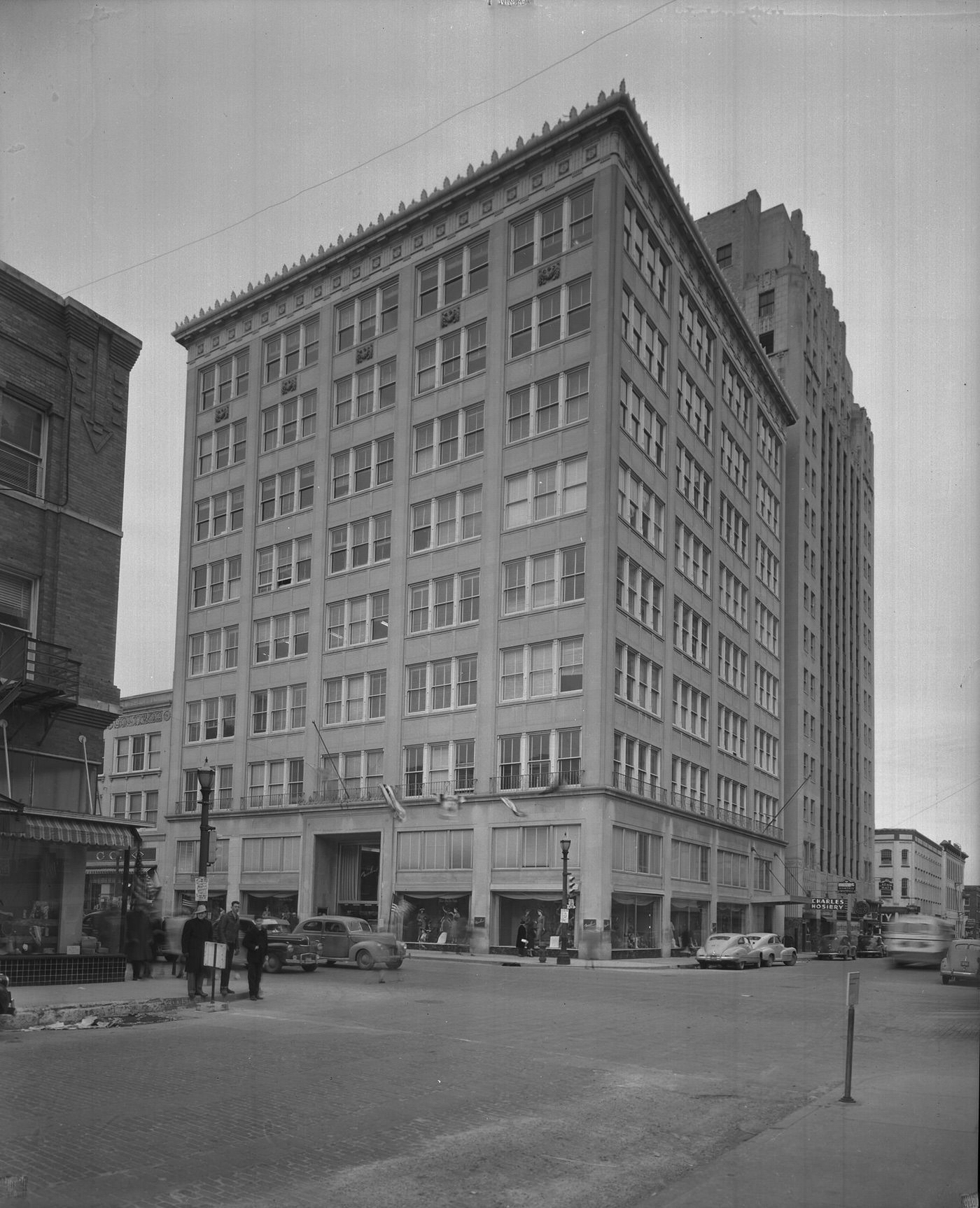
Meacham’s Department Store, 515 Houston Street, downtown Fort Worth, Texas, 1949
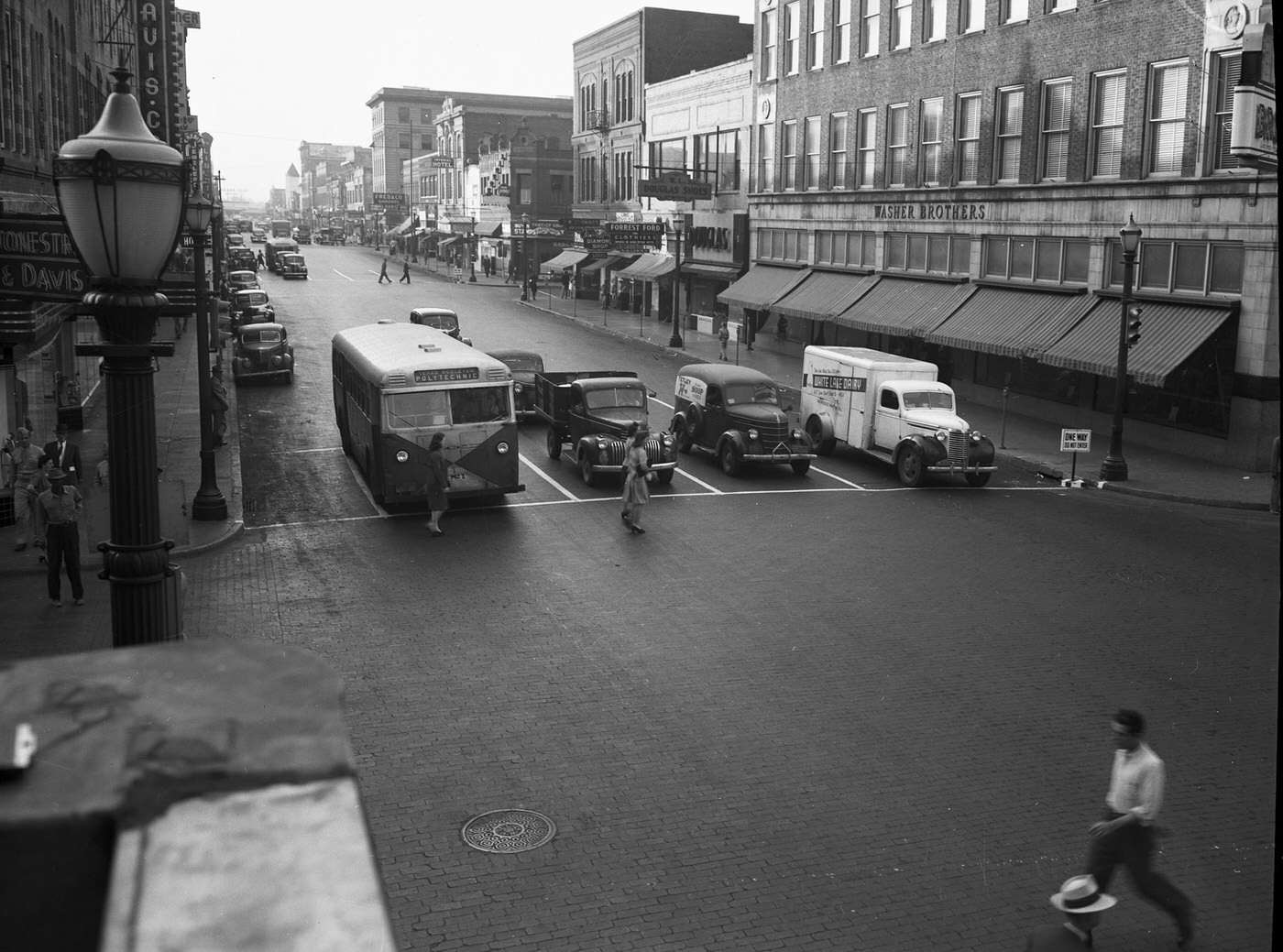
In September 1944, downtown Fort Worth converted to one-way vehicular traffic. On the first day of the change, Patrolman J. L. Nash stood at Houston and Seventh, warning drivers that center lanes on the new one-way streets were for straight-ahead driving only. A Polytechnic High School bus, a dairy truck, and several cars navigated the intersection alongside the city’s new traffic rules.
One-Way Traffic, 1944
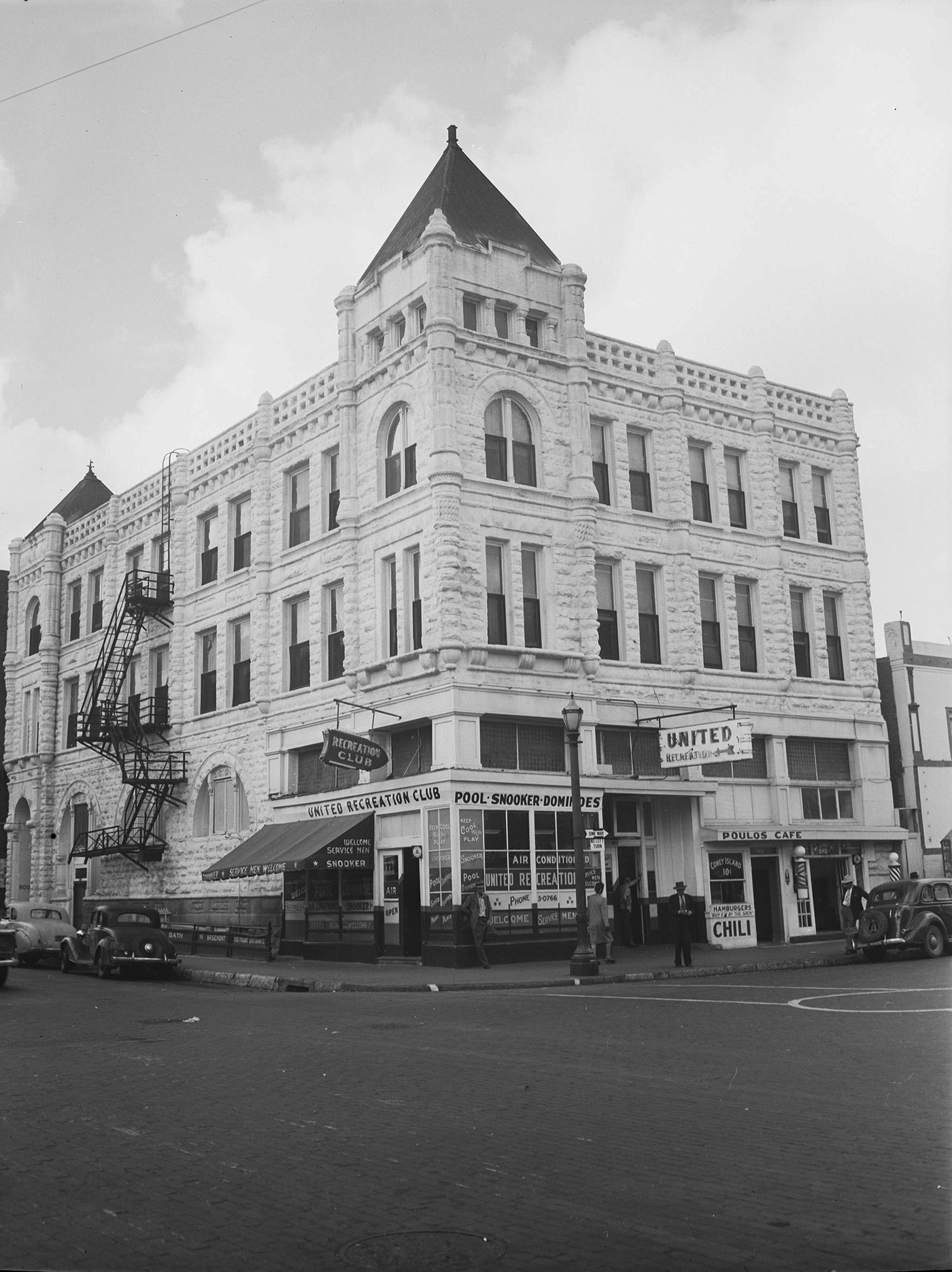
The city’s historic architecture told the story of Fort Worth’s growth across decades. The old Farmers and Mechanics National Building at 14th and Main, built in 1889, had once been the city’s tallest skyscraper. The building at 1012 North Main Street had a darker history — it had once served as the Klavern No. 1 Ku Klux Klan hall before Leonard’s Department Store purchased it in 1927 for use as a warehouse. By the 1940s, it had passed through other hands and was operating as a business address.
Exit views of the old Farmers and Mechanics National Building at 14th and Main Street, Fort Worth, 1944Exterior view of building at 1012 North Main Street, 1946
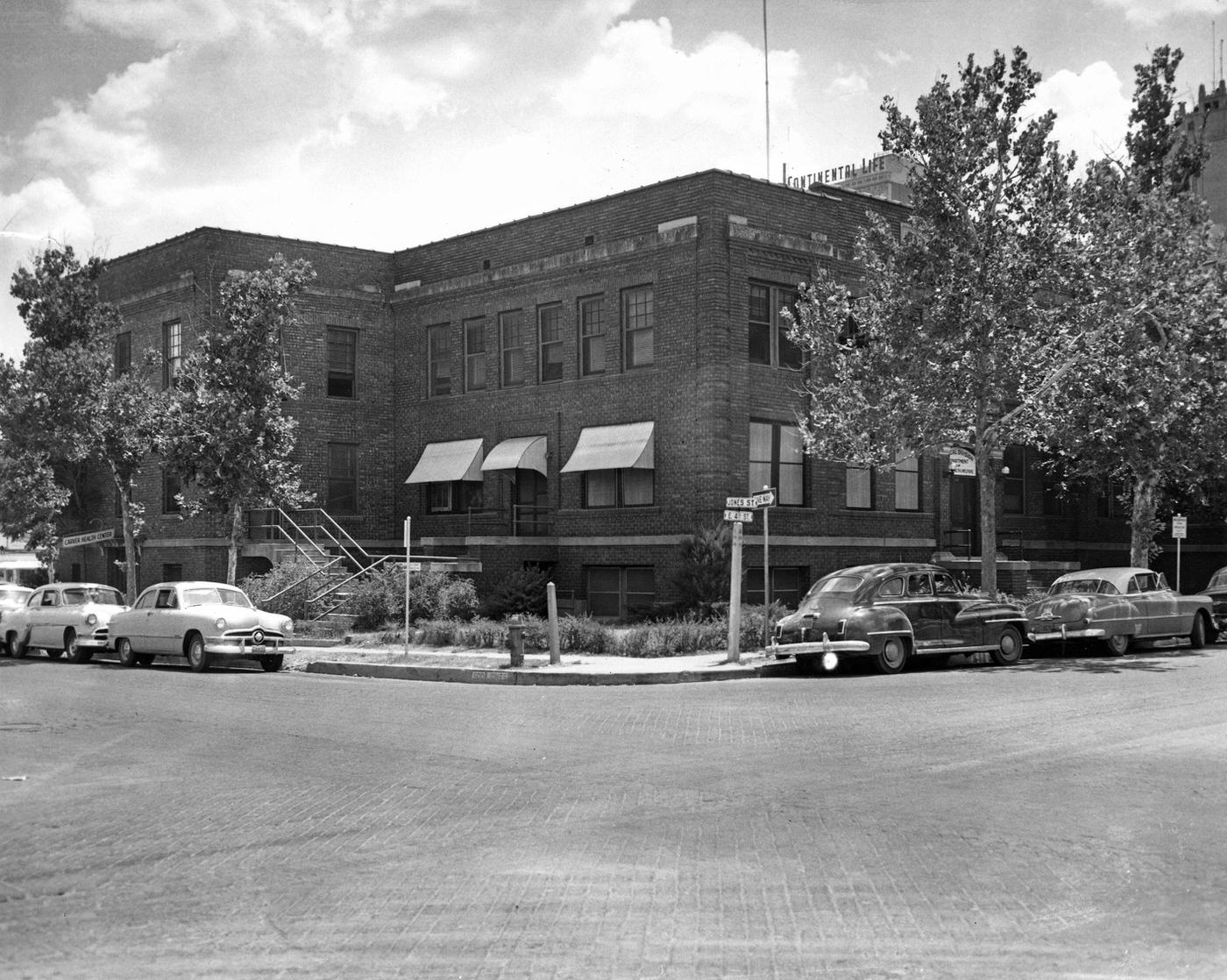
Medical services expanded during the decade to meet the city’s growing population. The George Washington Carver Health Center for Black residents opened in January 1946 at 506 Jones Street. The building itself had a long history — constructed in 1913–1914 as the Emergency Hospital, it later became the City-County Hospital until 1939, when a new facility opened on July 16 of that year. The Carver Health Center operated in the basement of the original structure.
Carver Health Center, 1946Harris Memorial Hospital exterior to entrance, Fort Worth, Texas, 1942
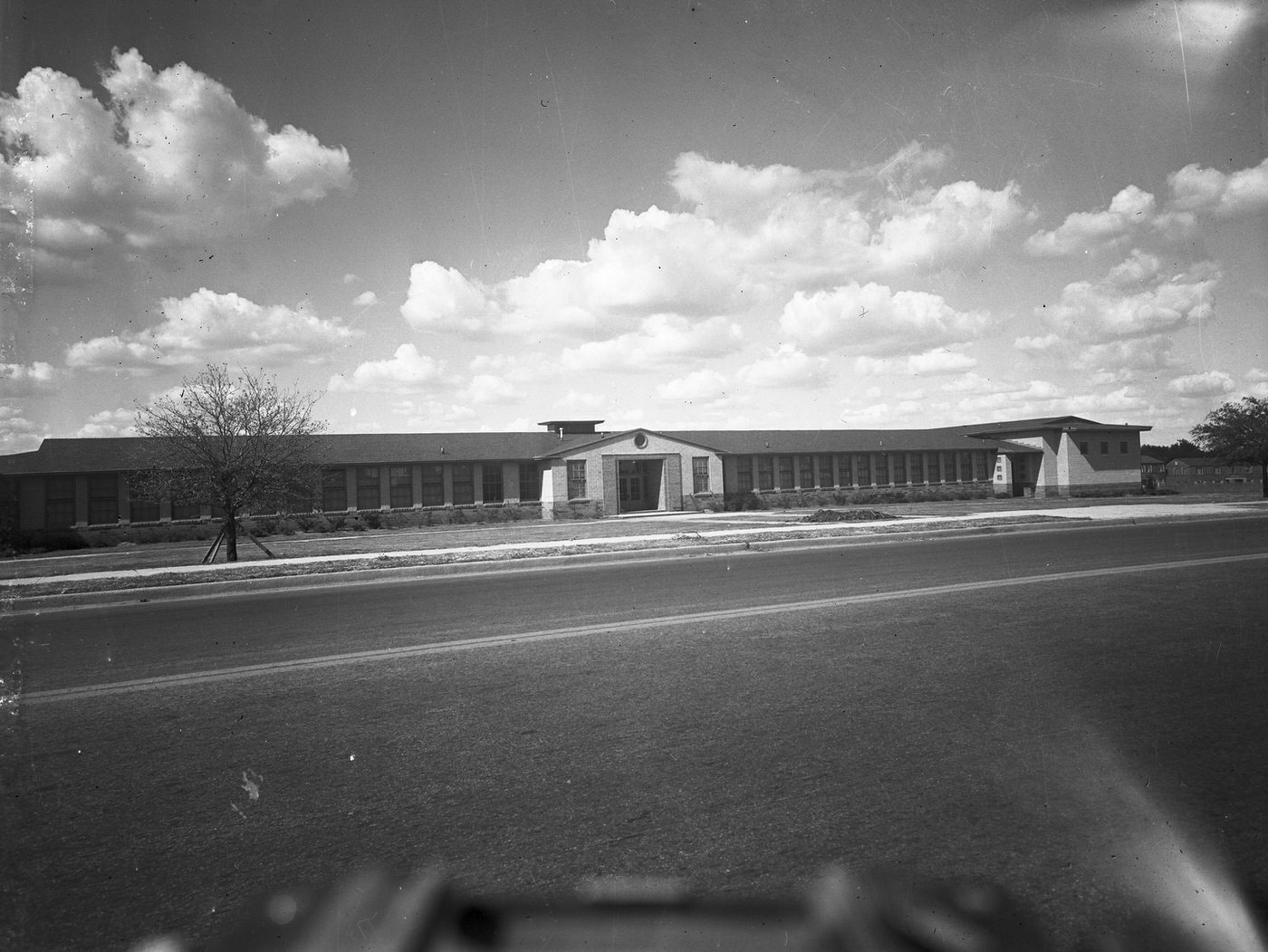
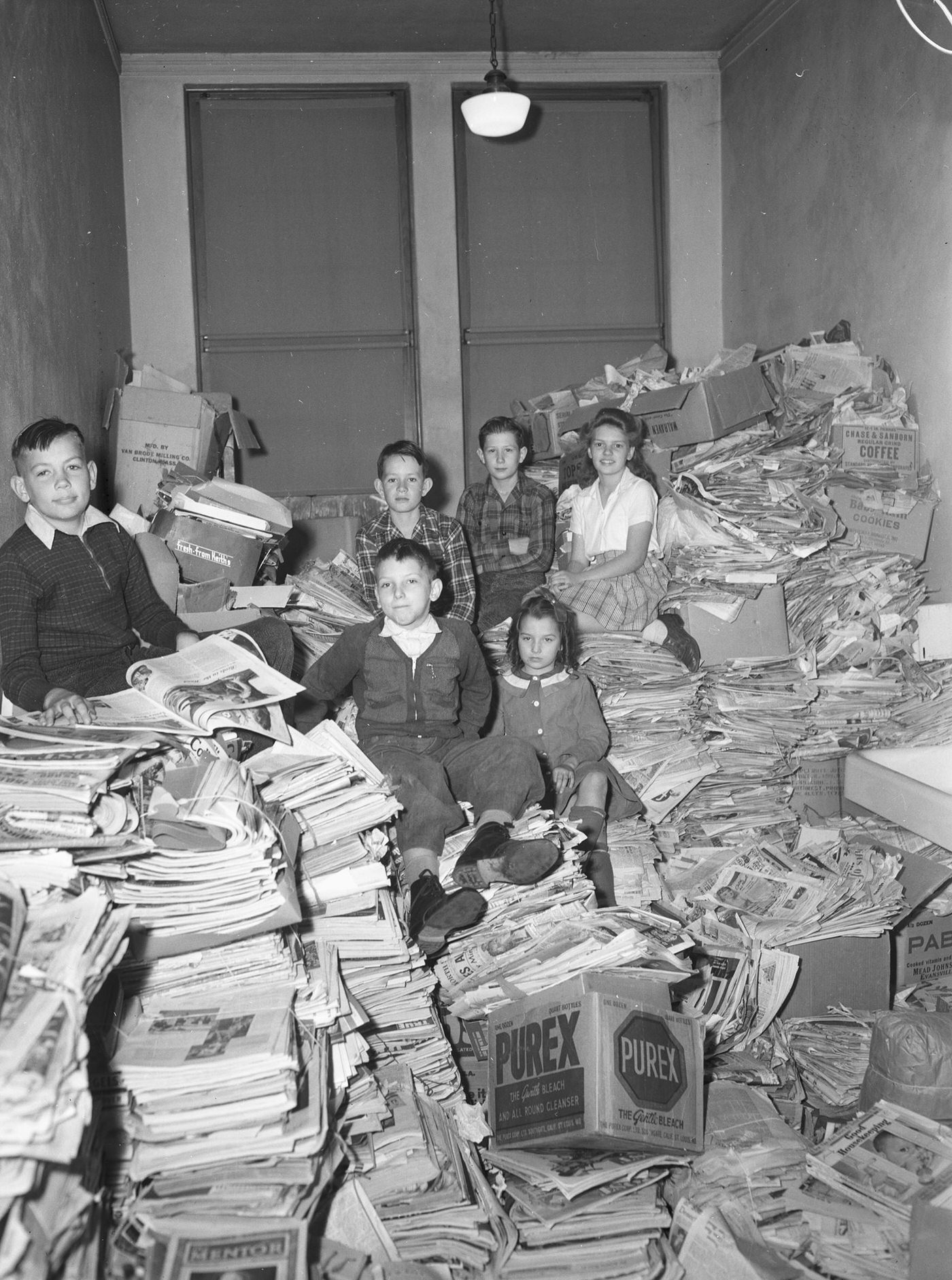
Fort Worth’s schools kept pace with the neighborhood growth spreading across the city. Crestwood Elementary School opened on September 12, 1944, at the intersection of White Settlement Road and Bailey Avenue. The one-story brick building contained eight classrooms, a library, a kindergarten room, a health unit, a teachers’ lounge, a book room, and a combination auditorium-cafeteria, all surrounded by five acres of landscaped playgrounds. Students at Oakhurst Elementary did their part for the war effort by collecting waste paper — one student, Carla Sue Davidson, gathered 1,500 pounds on her own.
Front view of the new Crestwood Elementary School facing the White Settlement Road at the intersection of Bailey Avenue, 1944Waste paper collection at Oakhurst Elementary School, 1944
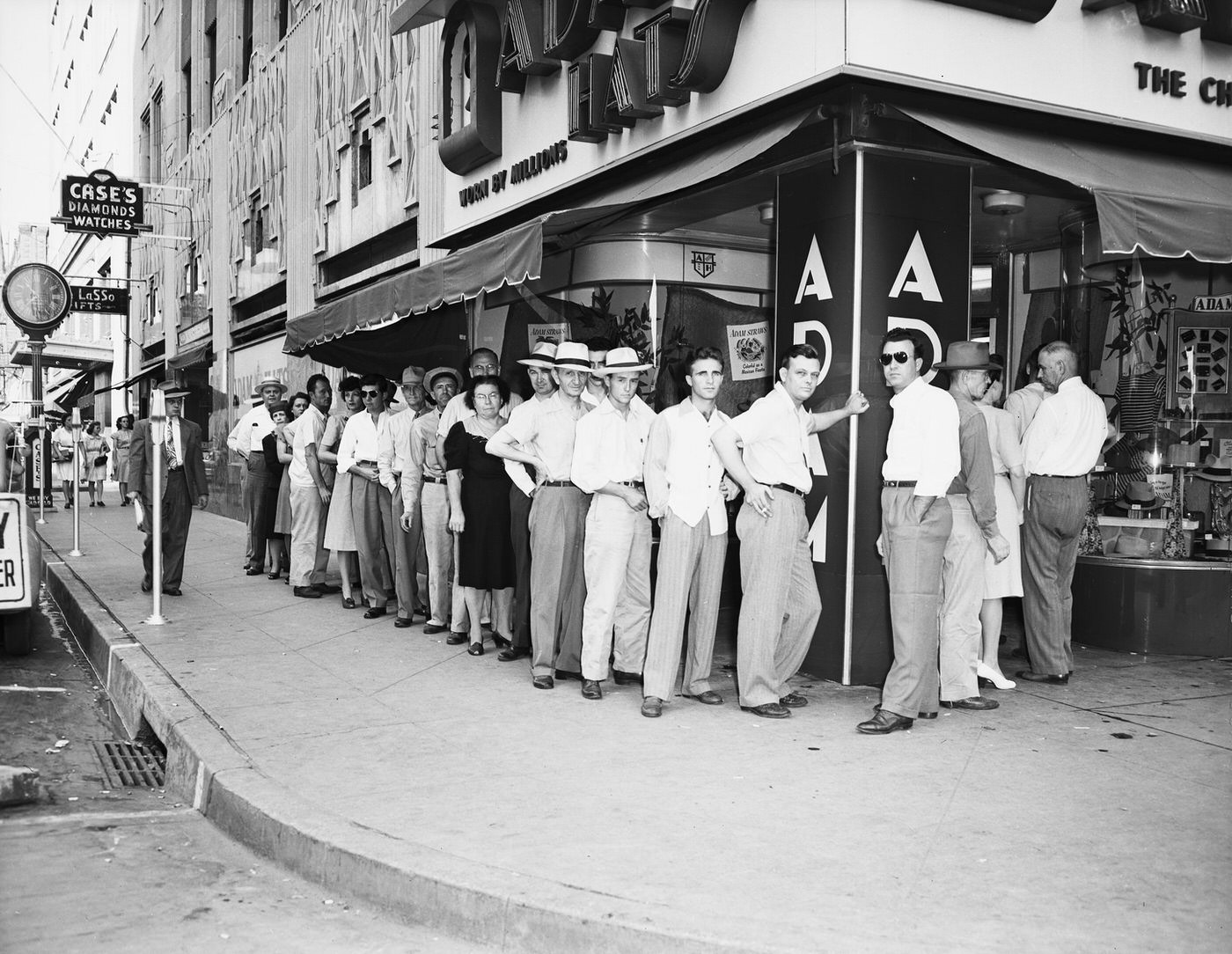
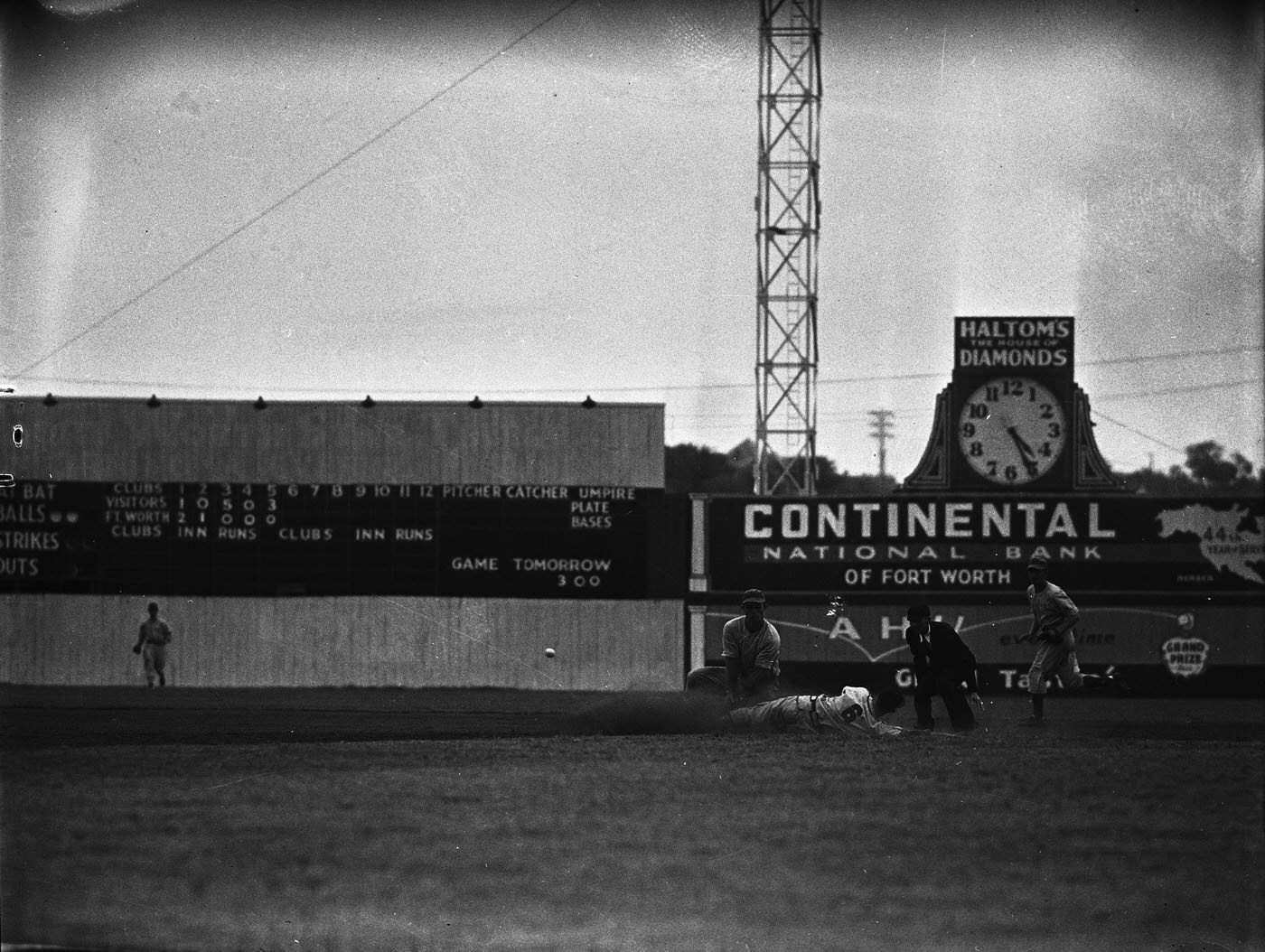
Sports gave Fort Worth residents something to cheer about even during the hardest years of the war. The Fort Worth Cats, a minor league affiliate of the Brooklyn Dodgers, played at LaGrave Field and drew devoted fans. In 1946, more than 100 fans lined up along West 5th Street before dawn when tickets went on sale at the Adam Hat Store for the Texas League playoff. That same season, the Cats hosted the St. Louis Cardinals, and in the sixth inning, Cardinals star Stan Musial attempted to steal second base, sliding feet-first as the throw from catcher George Pfister bounced away from shortstop Barney White.
Fort Worth Cats Fans, 1946Fort Worth Cats vs. St. Louis Cardinals, 1946
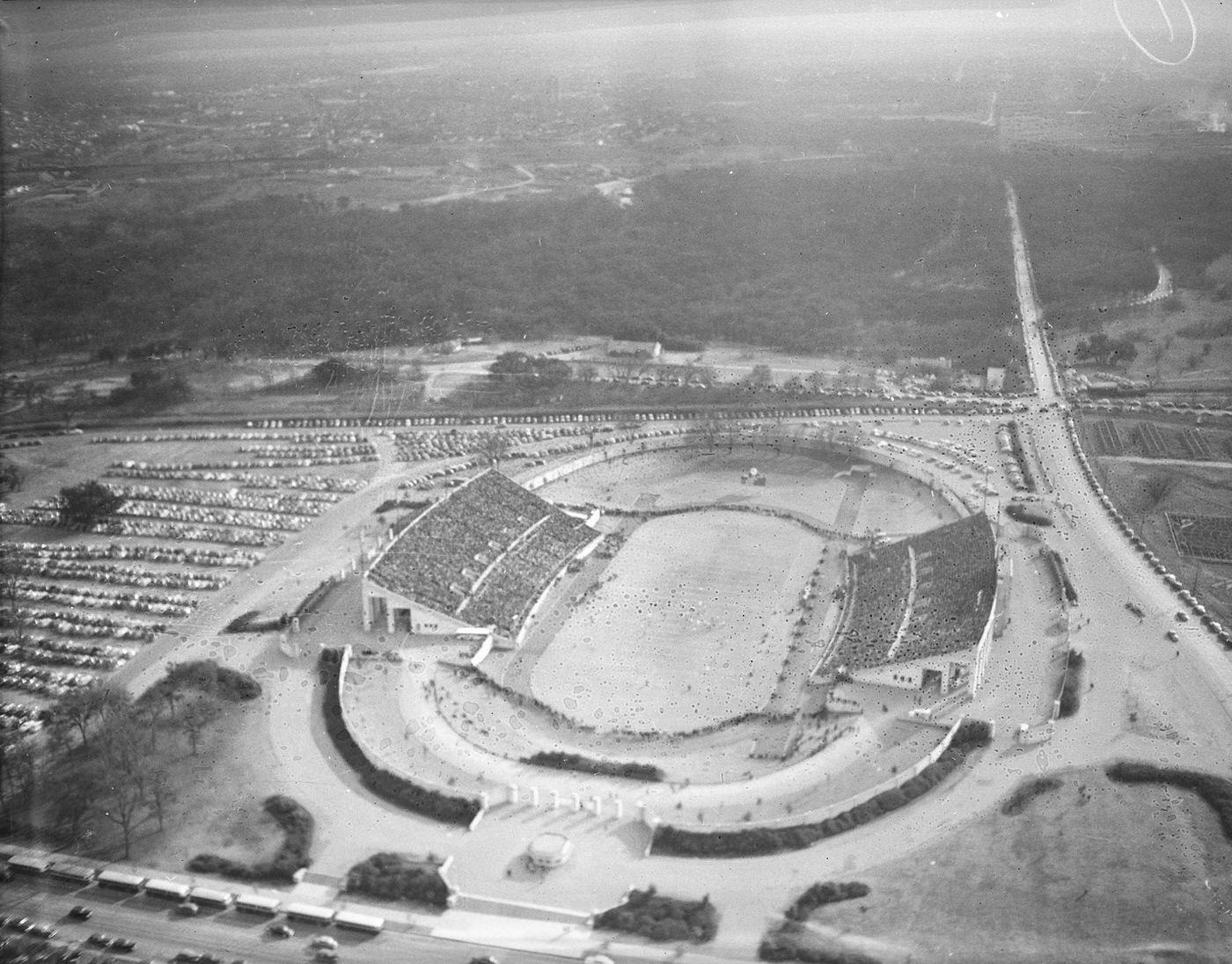
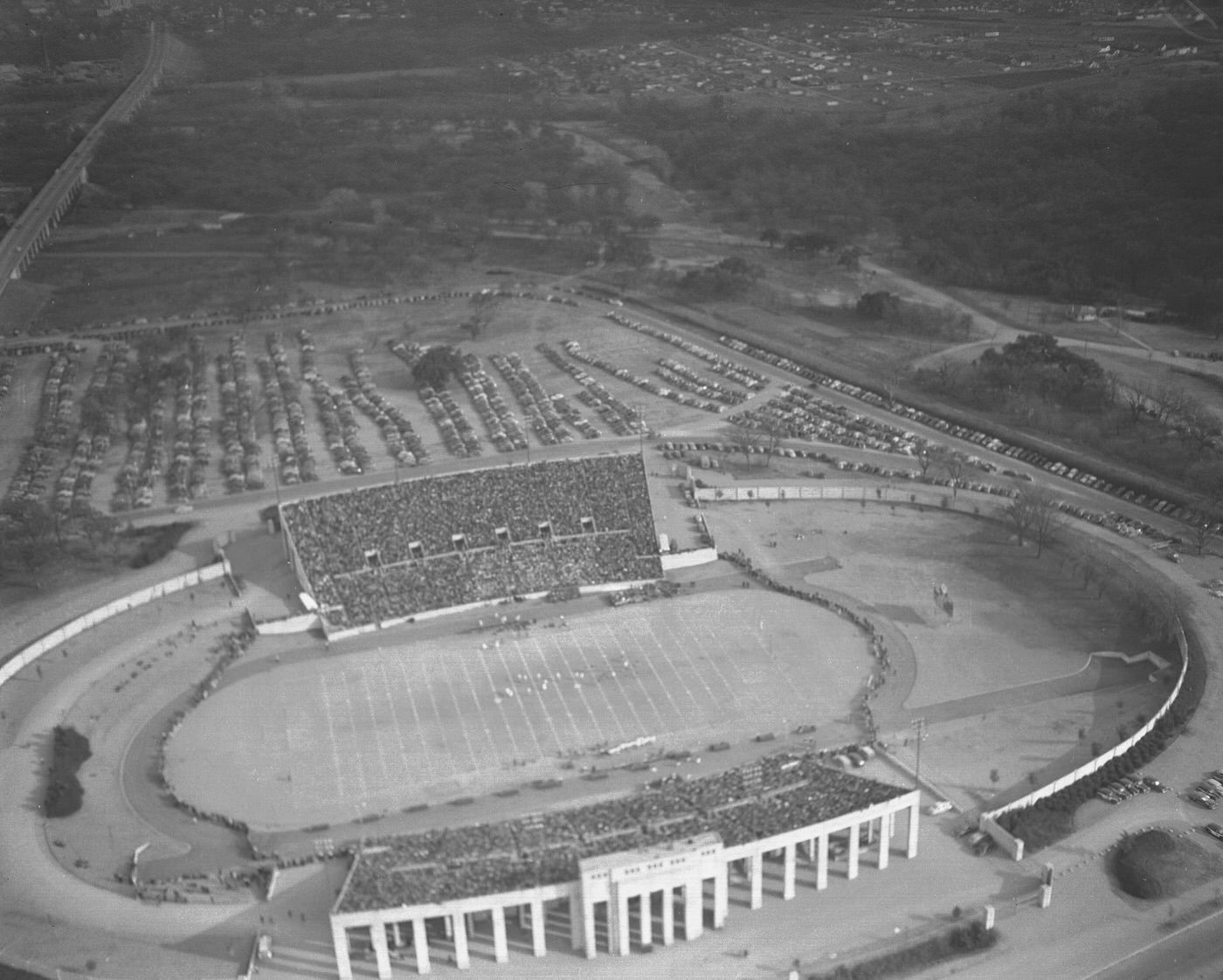
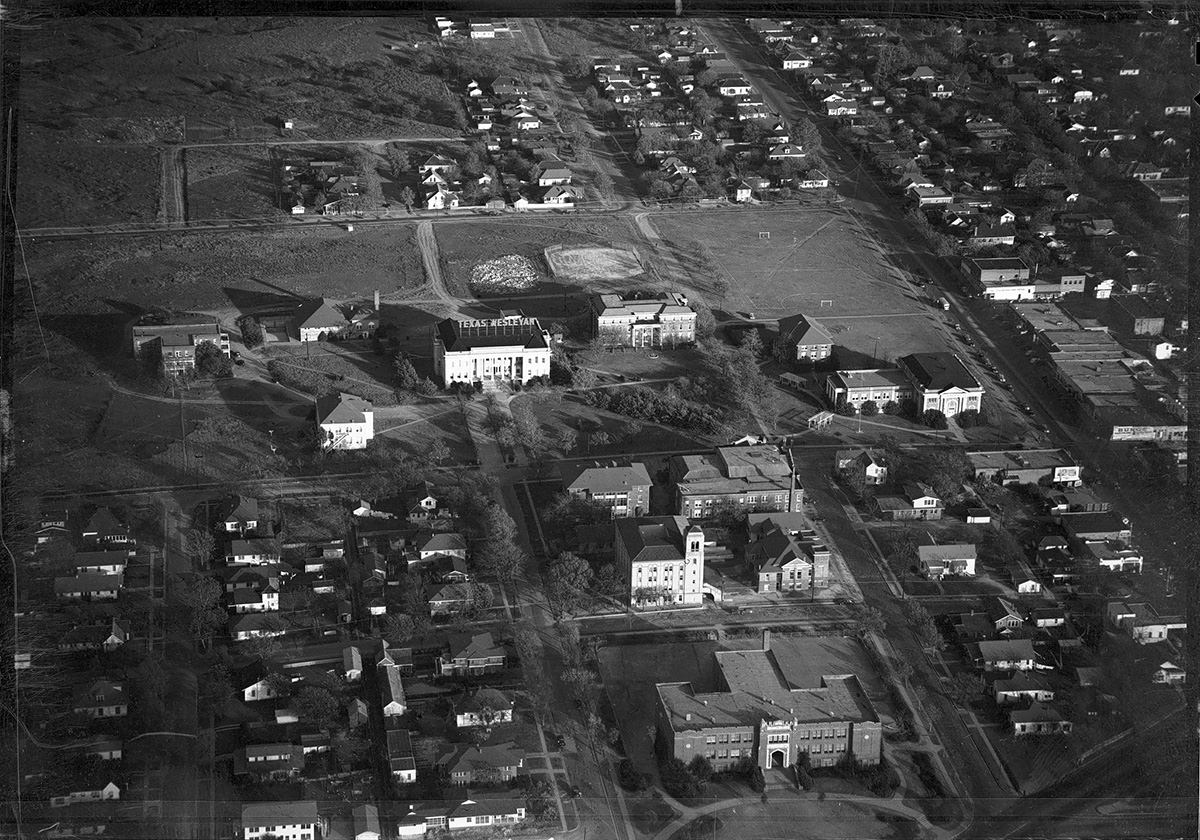
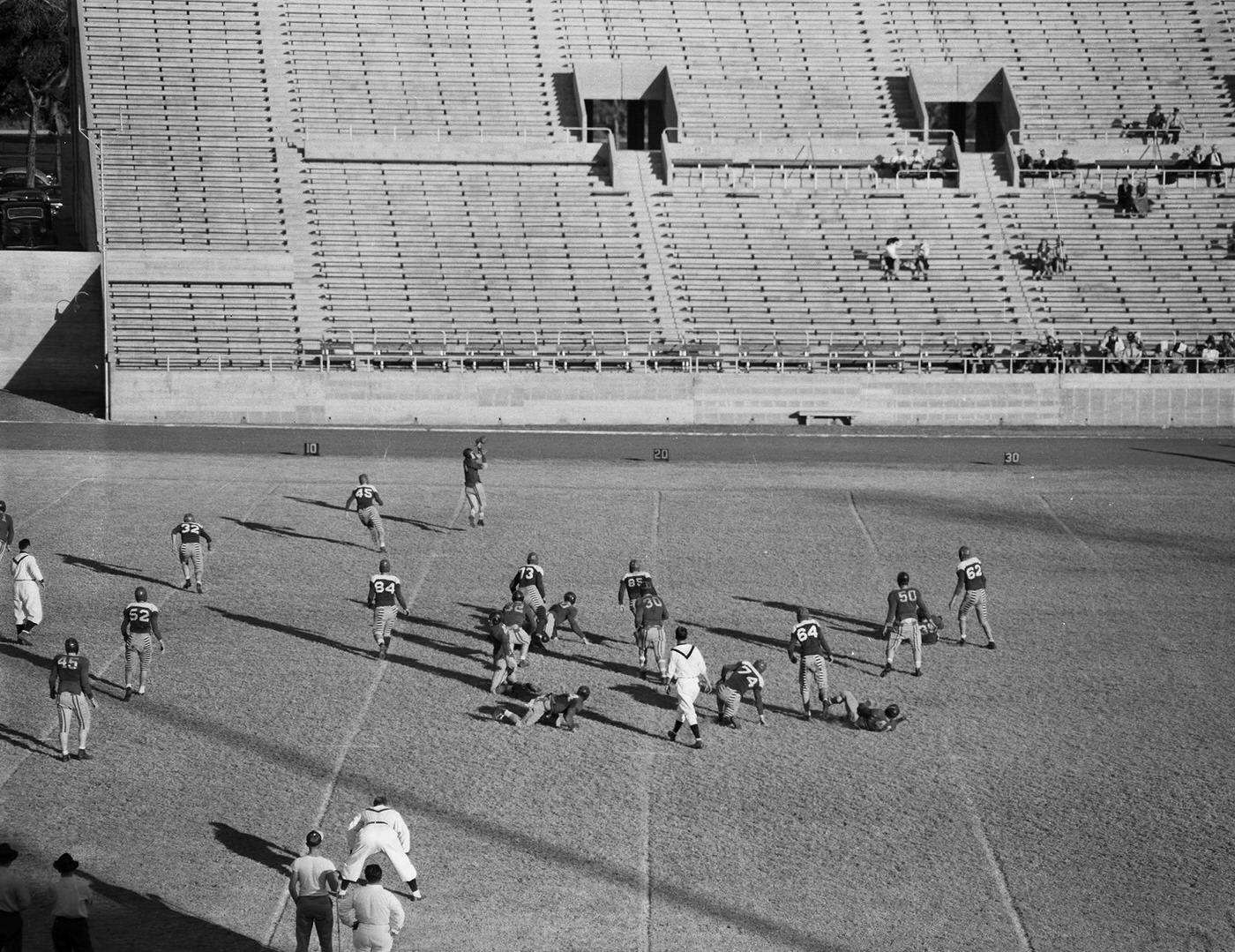
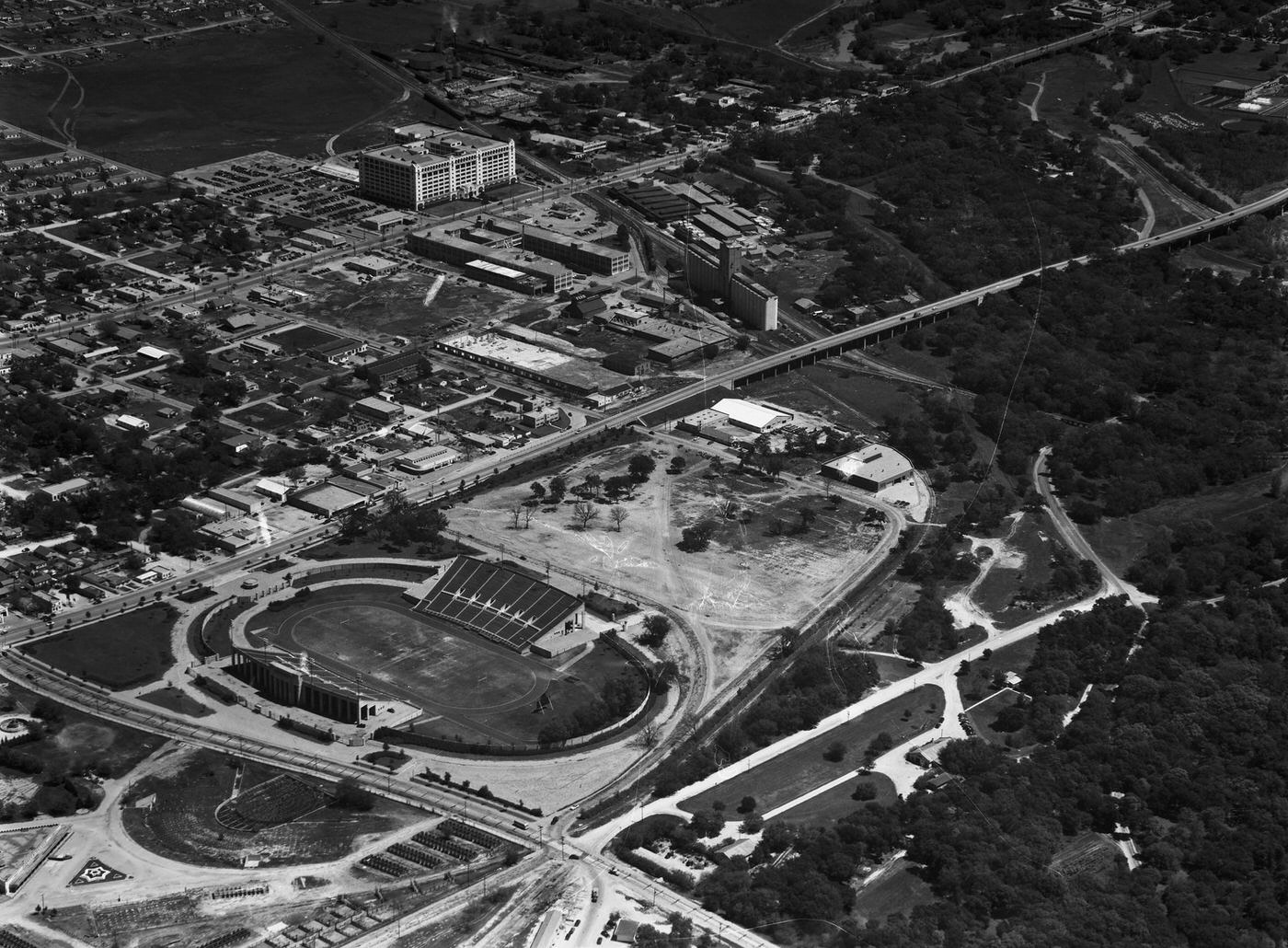
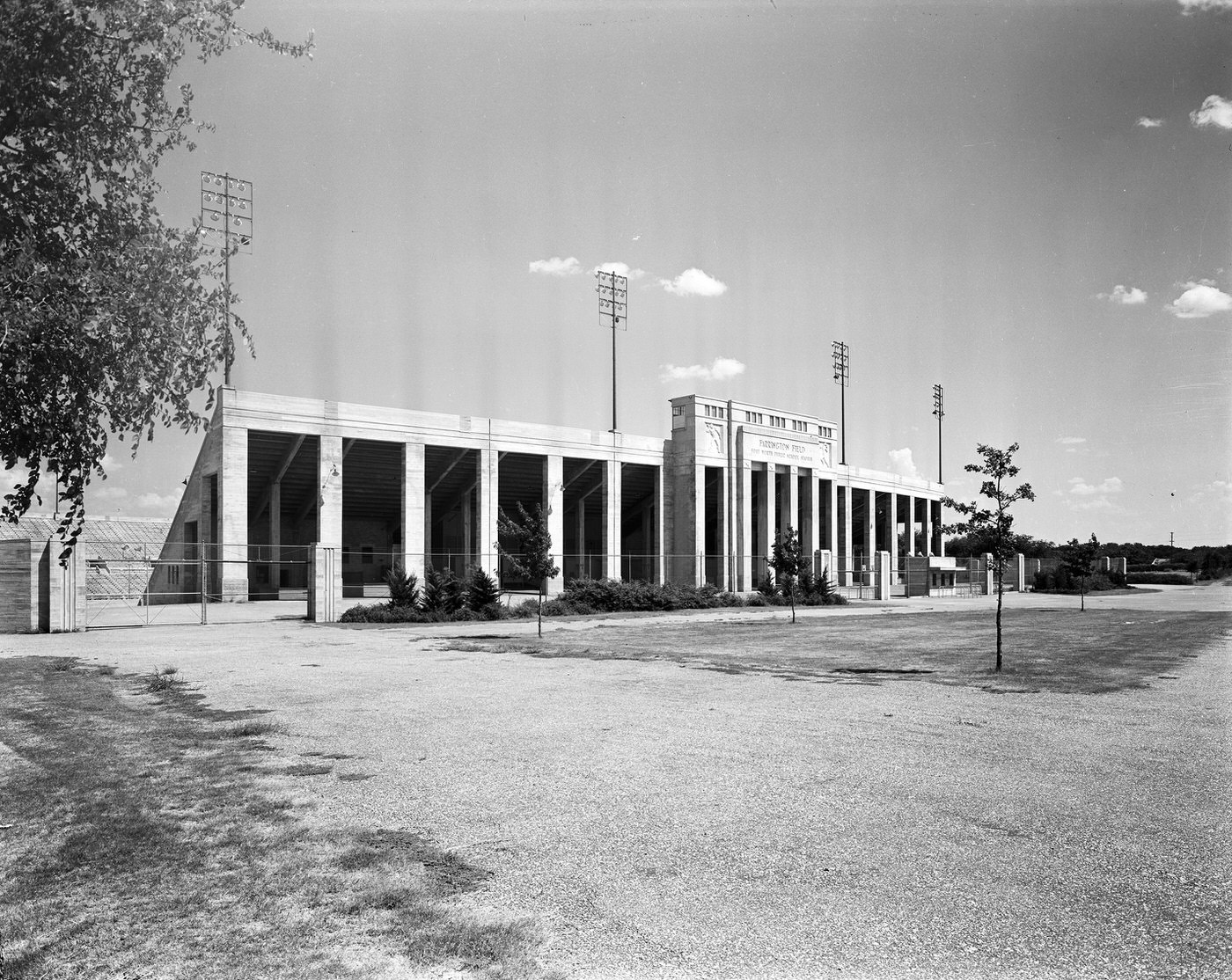
High school football was a serious institution in Fort Worth. Farrington Field served as the city’s dedicated high school stadium, hosting games that drew aerial photographers and packed crowds. In 1945, the Ritchey Flying Service captured an aerial photo of Farrington Field during the semifinal game between the Wichita Falls Coyotes and the Highland Park Highlanders. The stadium and its surrounding neighborhood stretched clearly into view from above.
Air view of Farrington Field, 1945
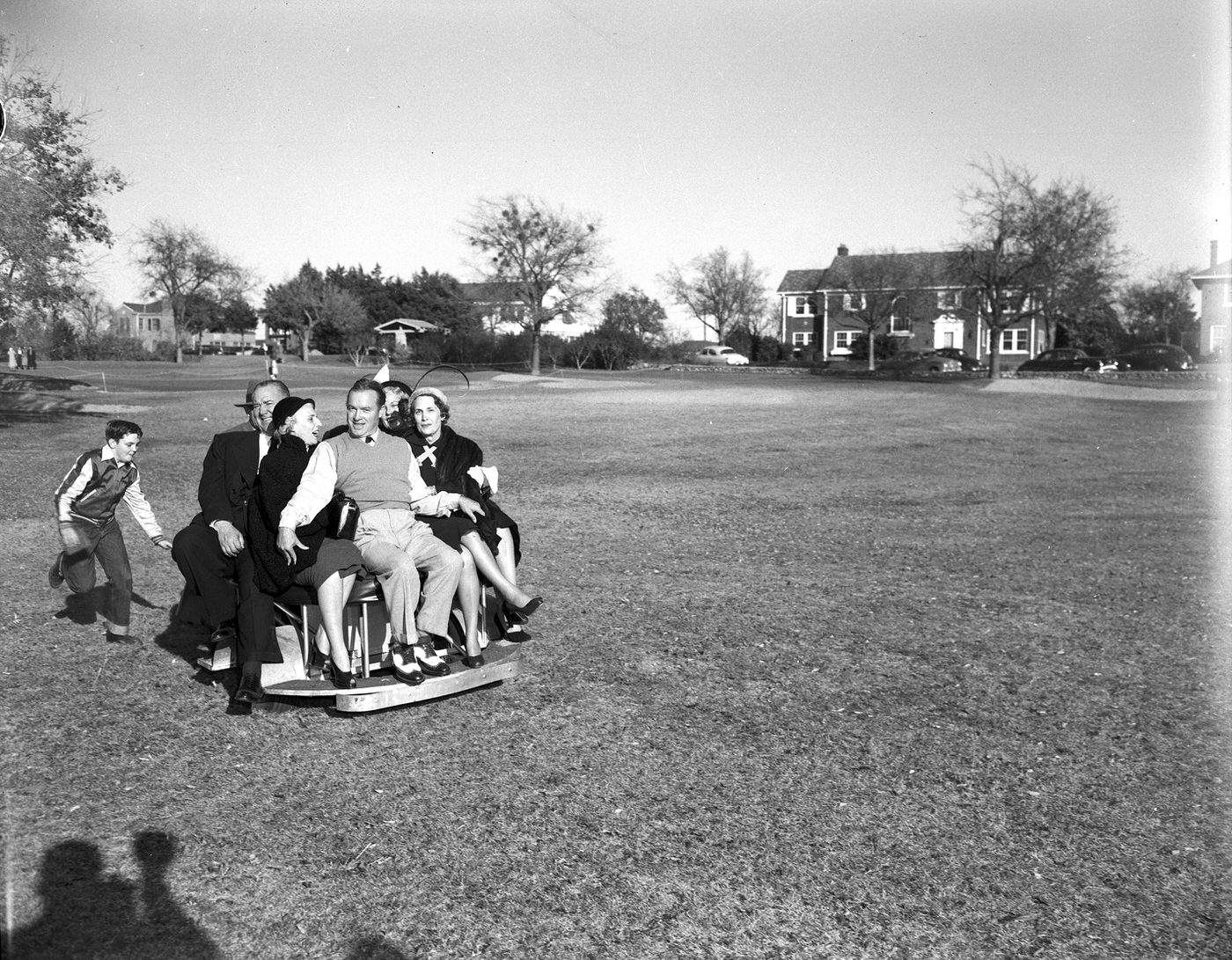
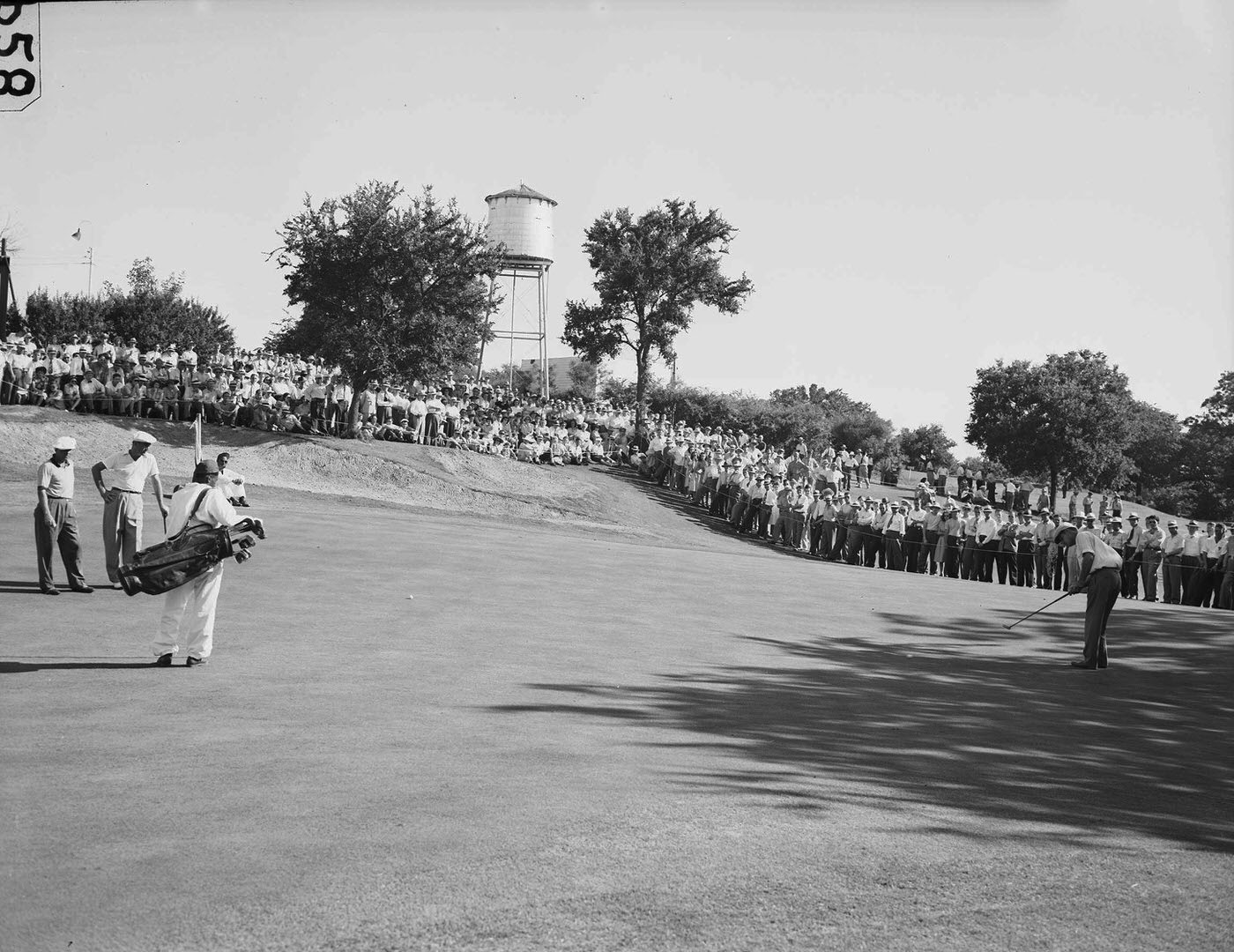
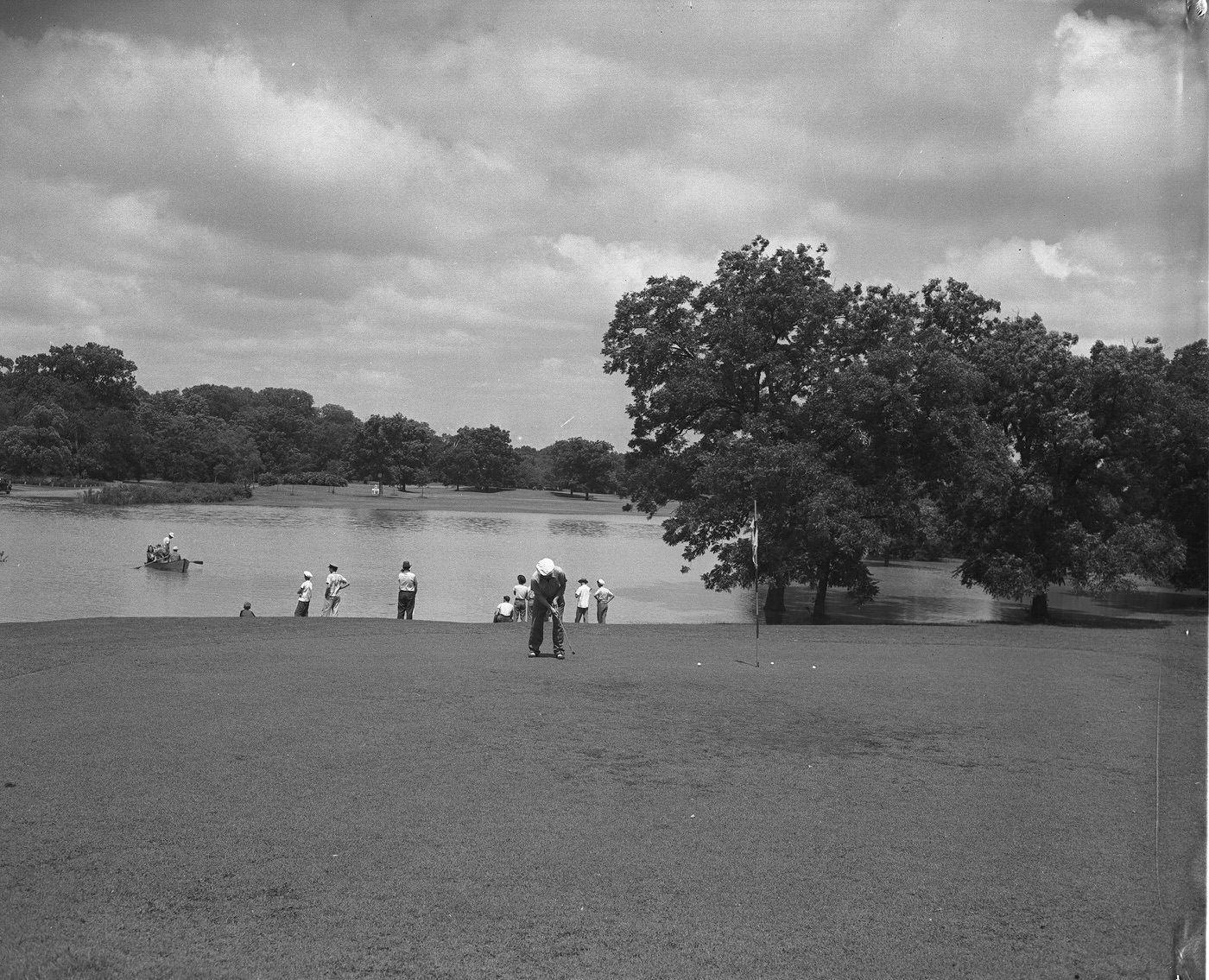
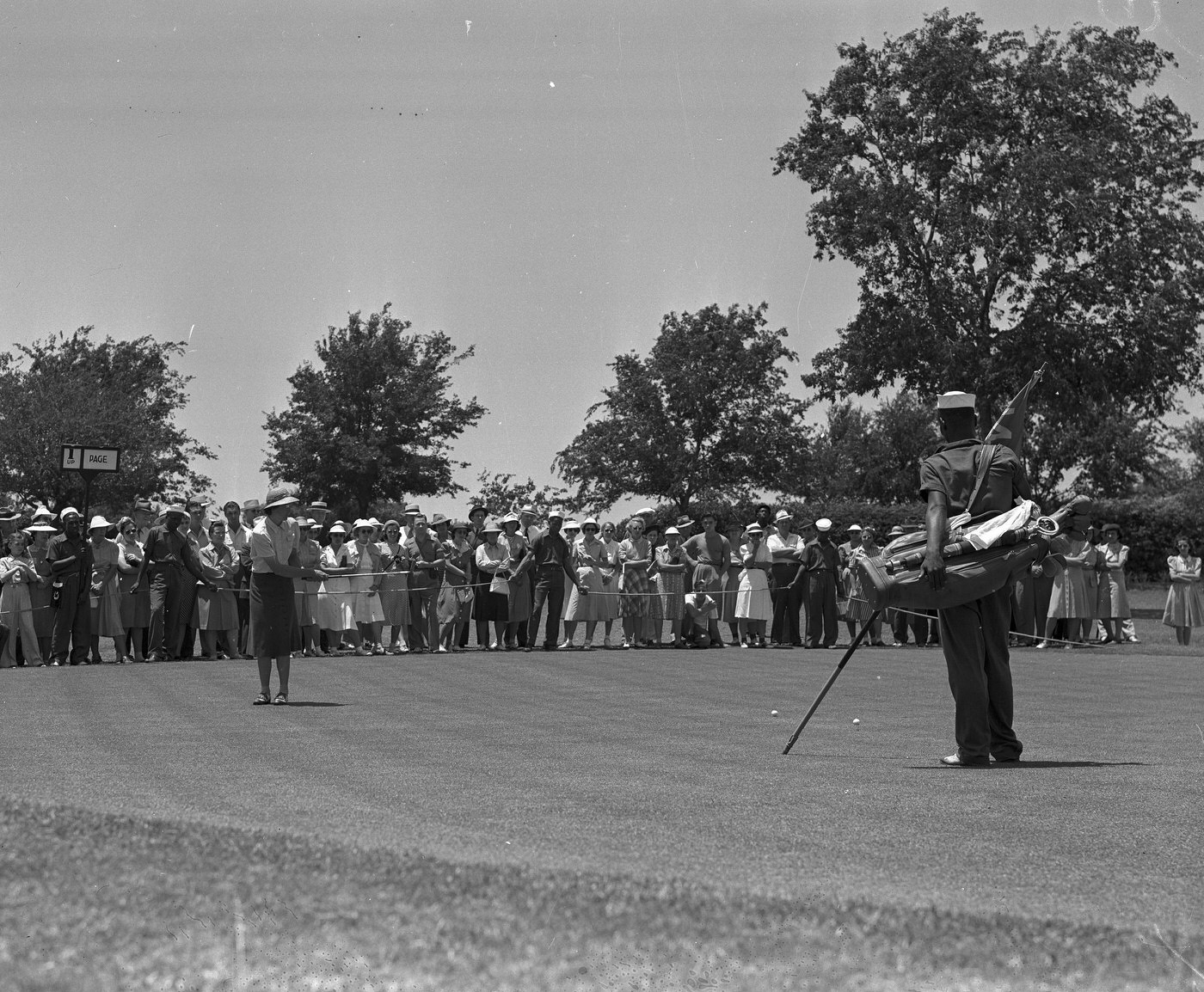
Golf and country clubs gave wealthier residents their own entertainment. At the River Crest Country Club in 1949, Bob Hope joined Byron Nelson, Raymond Gafford, and Jimmy Nichols for a Milk and Ice Fund benefit match. Hope and several guests famously crowded onto a single motor scooter between shots, posing for photographers on the course. Tournament golf also drew serious competition — at another 1946 event, Harry Todd’s long putt for birdie on the 18th green stopped just short, while the gallery held its breath, before he tapped in for par and took the 54-hole lead with a total of 211.
Bob Hope golf match, 1949
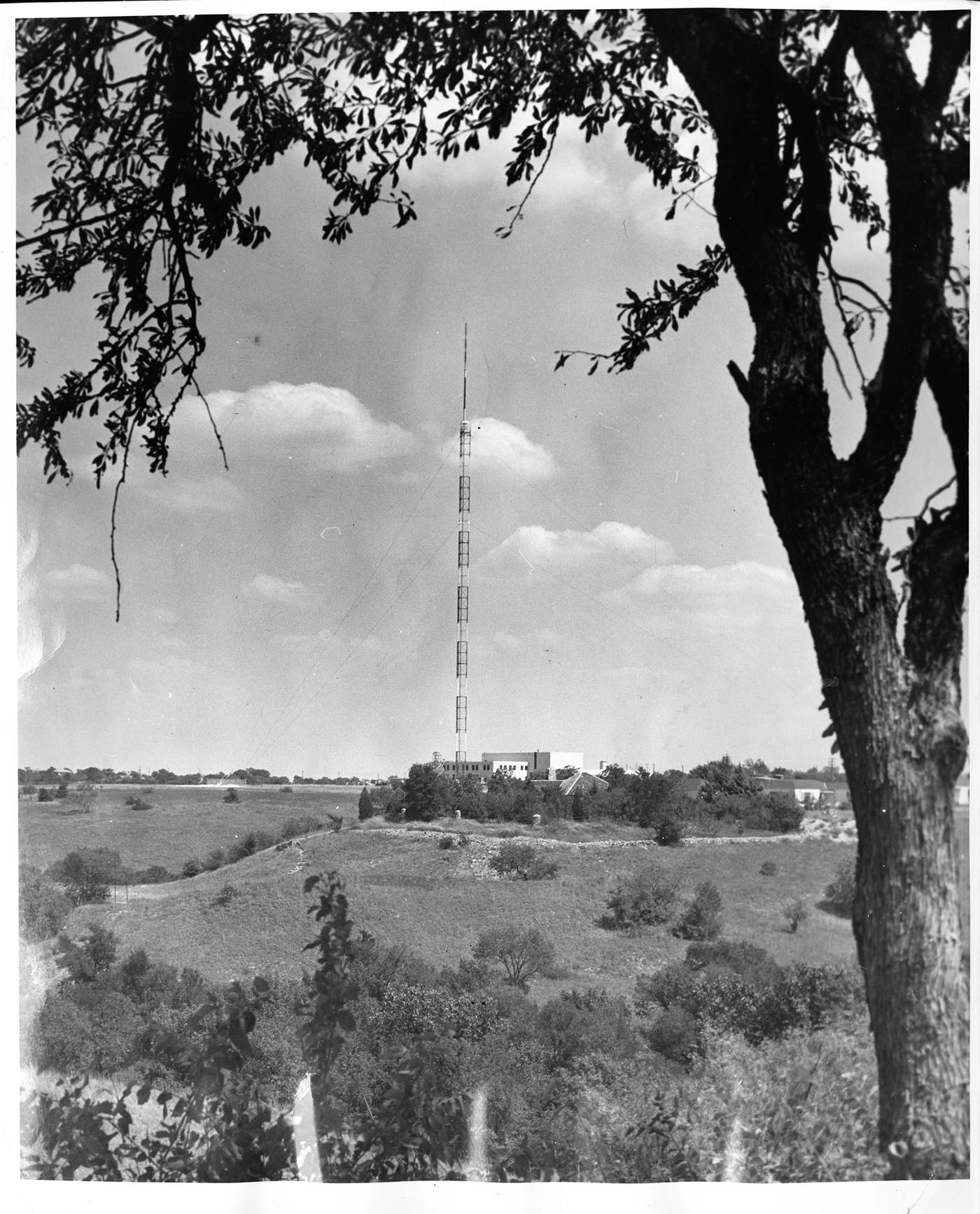
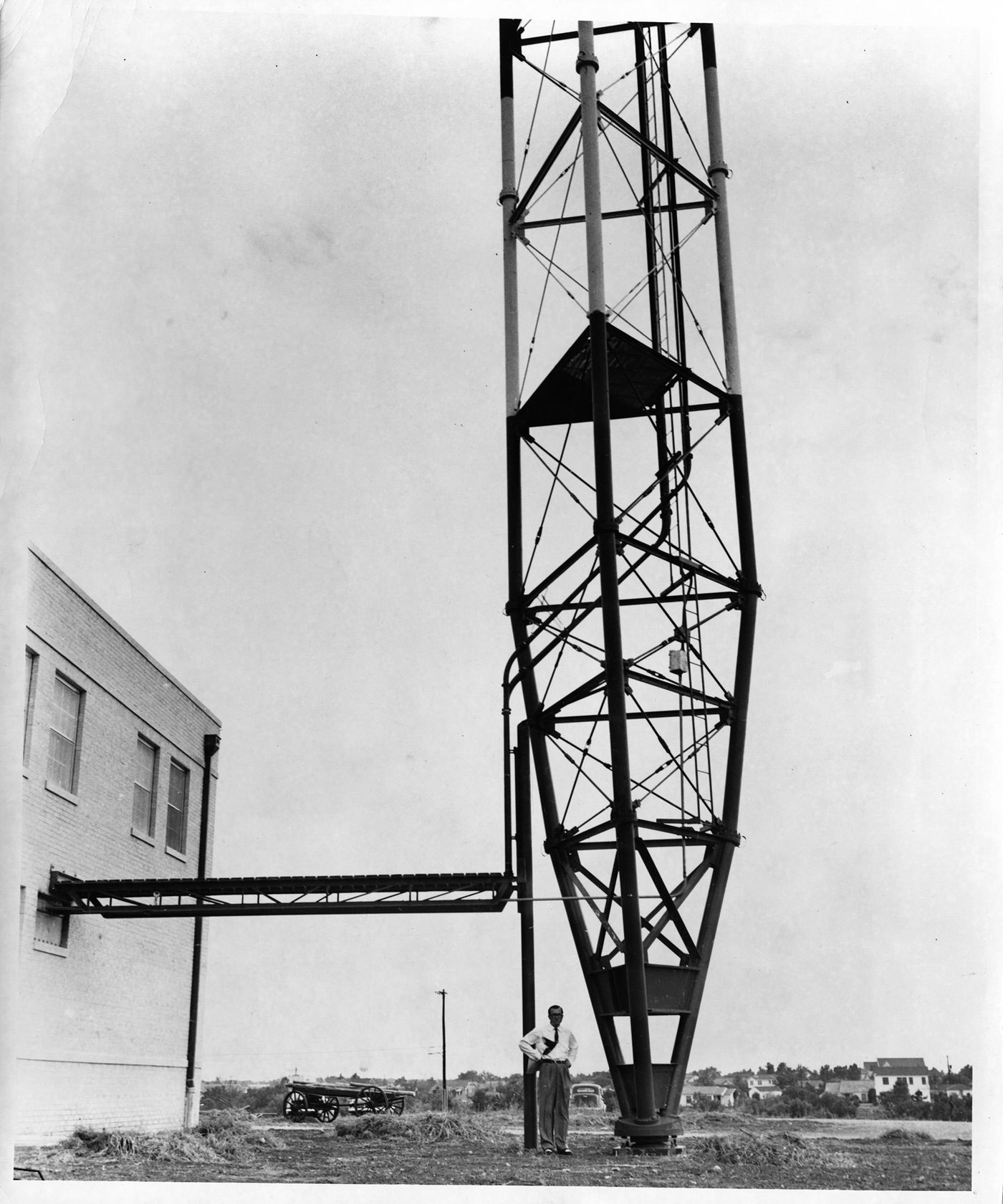
Fort Worth’s television age began at the end of the decade. WBAP-TV constructed a 502-foot transmission tower and built its new studio-transmitter building at 3900 Barnett, known as Broadcast Hill, in Fort Worth. The tower went up in 1948, and by 1949, the station’s new facility was operational — making WBAP-TV one of the earliest television stations in Texas.
502 foot television tower for WBAP-TV, 1948
WBAP-TV building and transmitting tower on a knoll in east Fort Worth, Texas, 1948
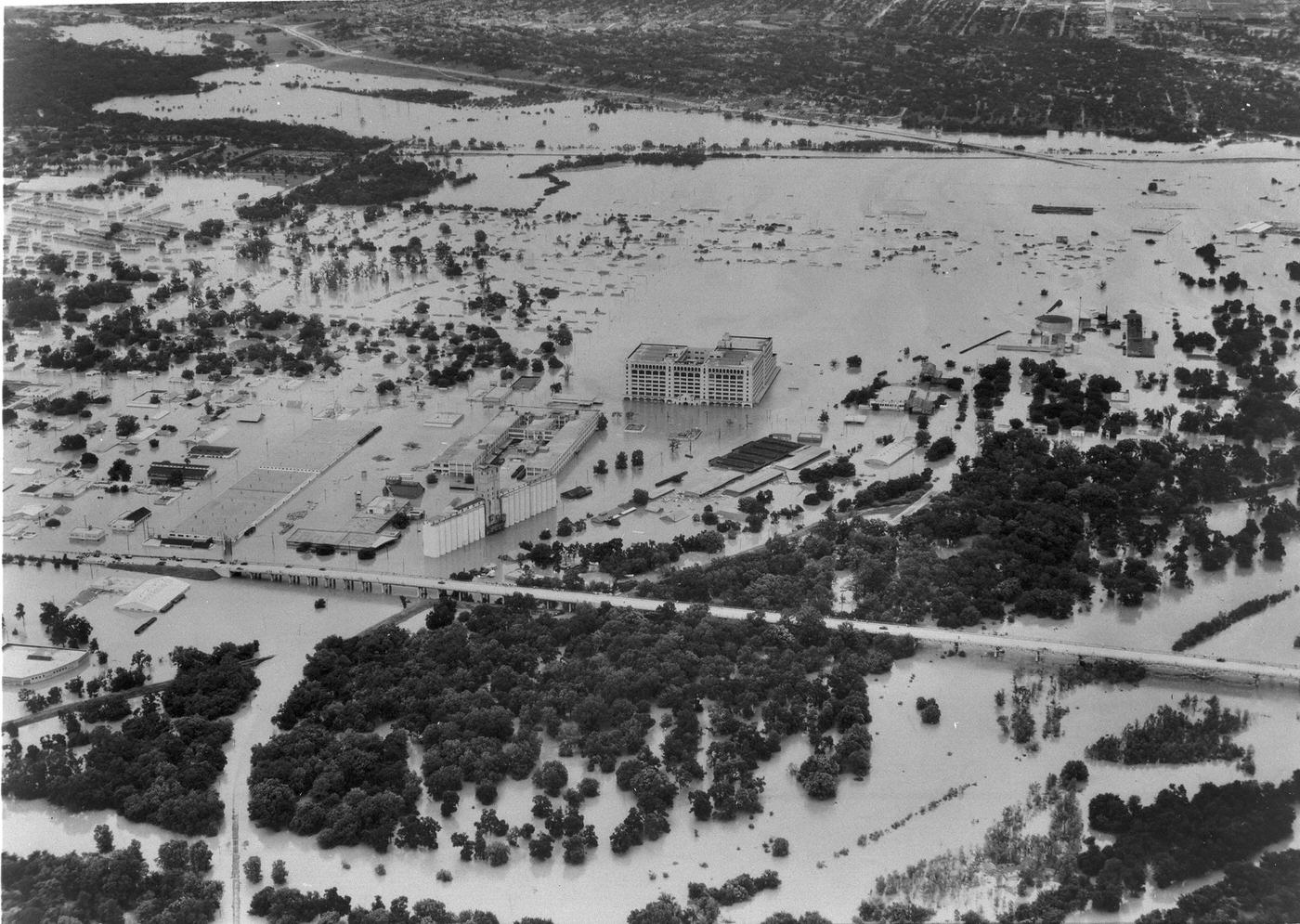
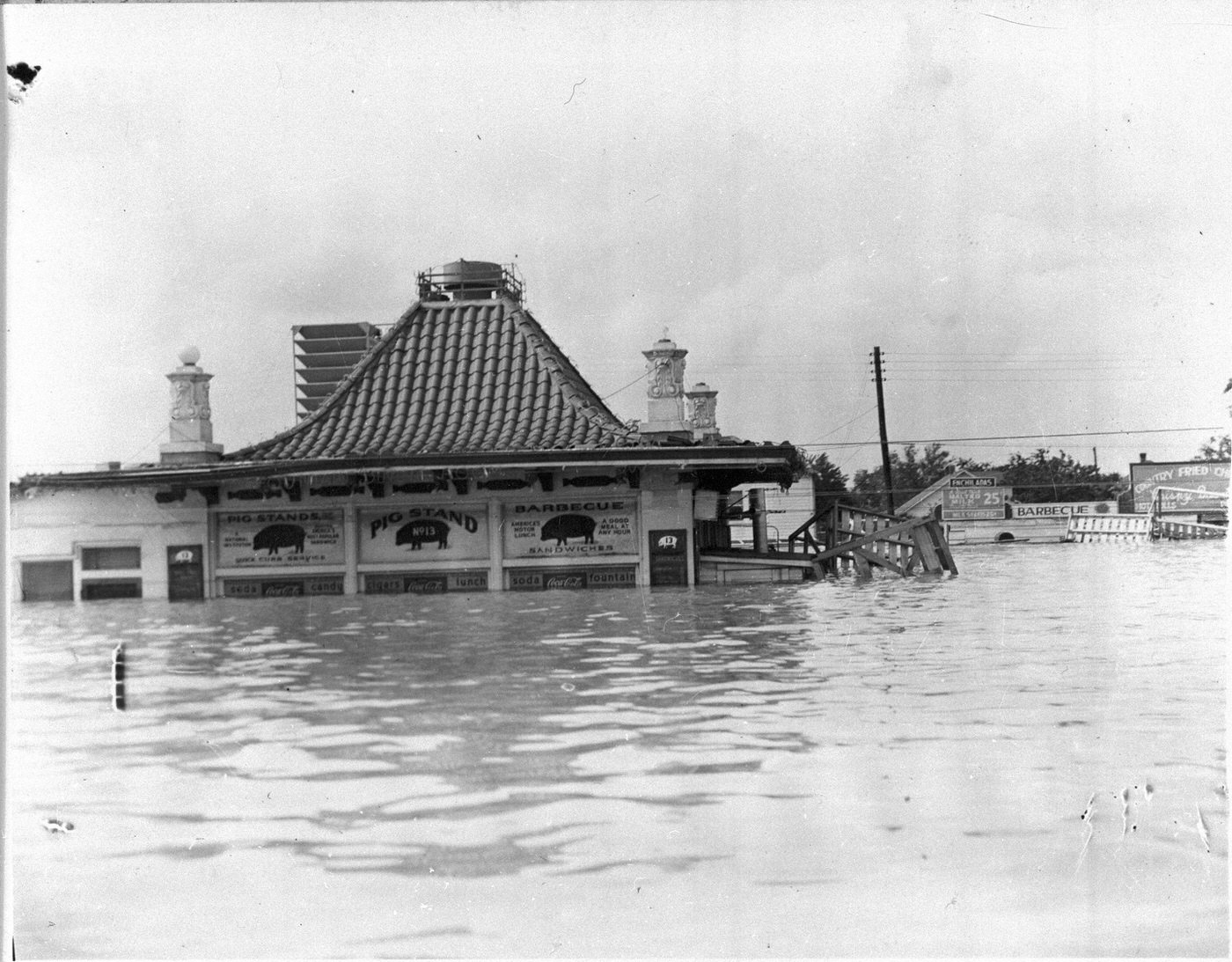
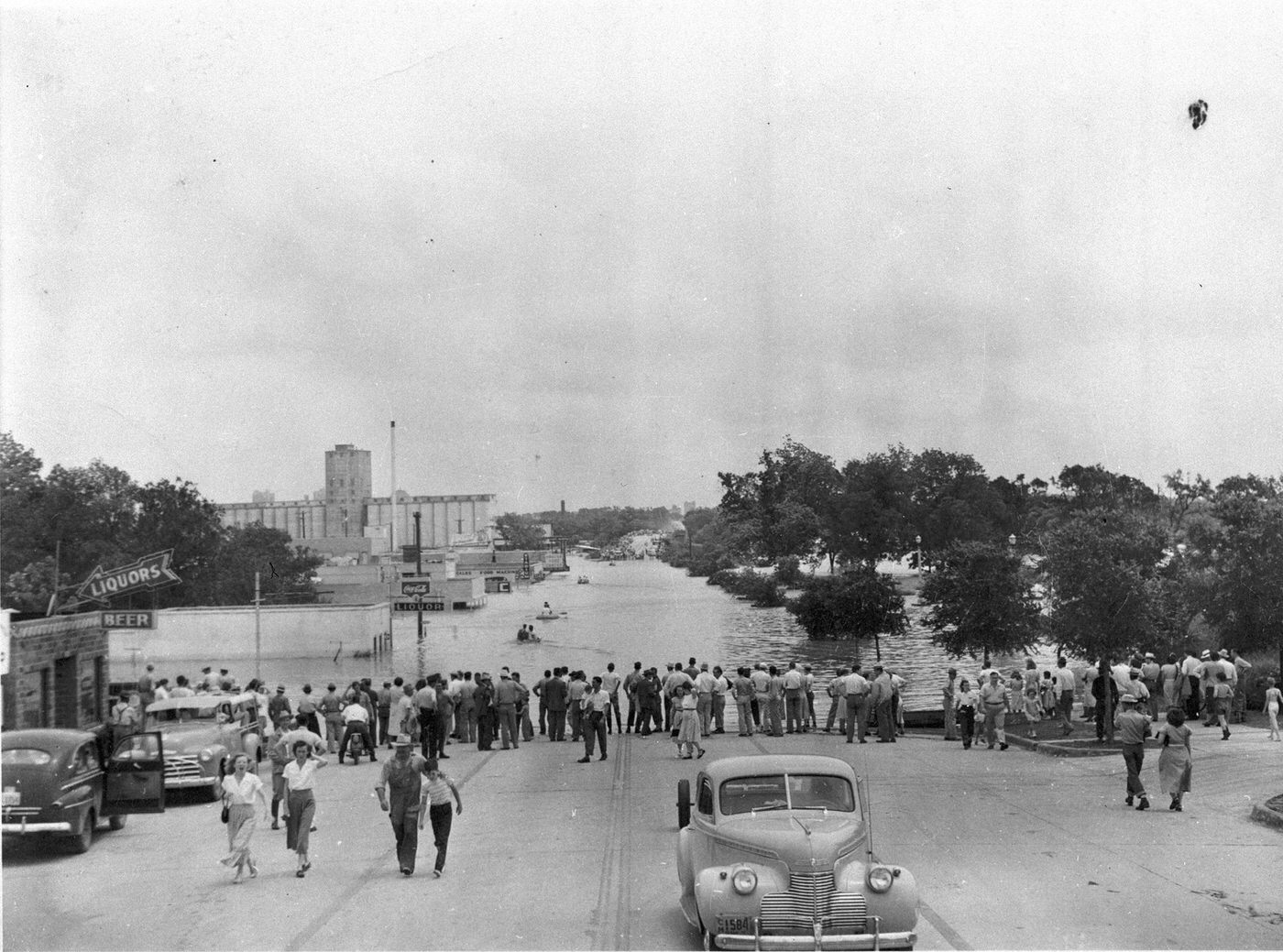
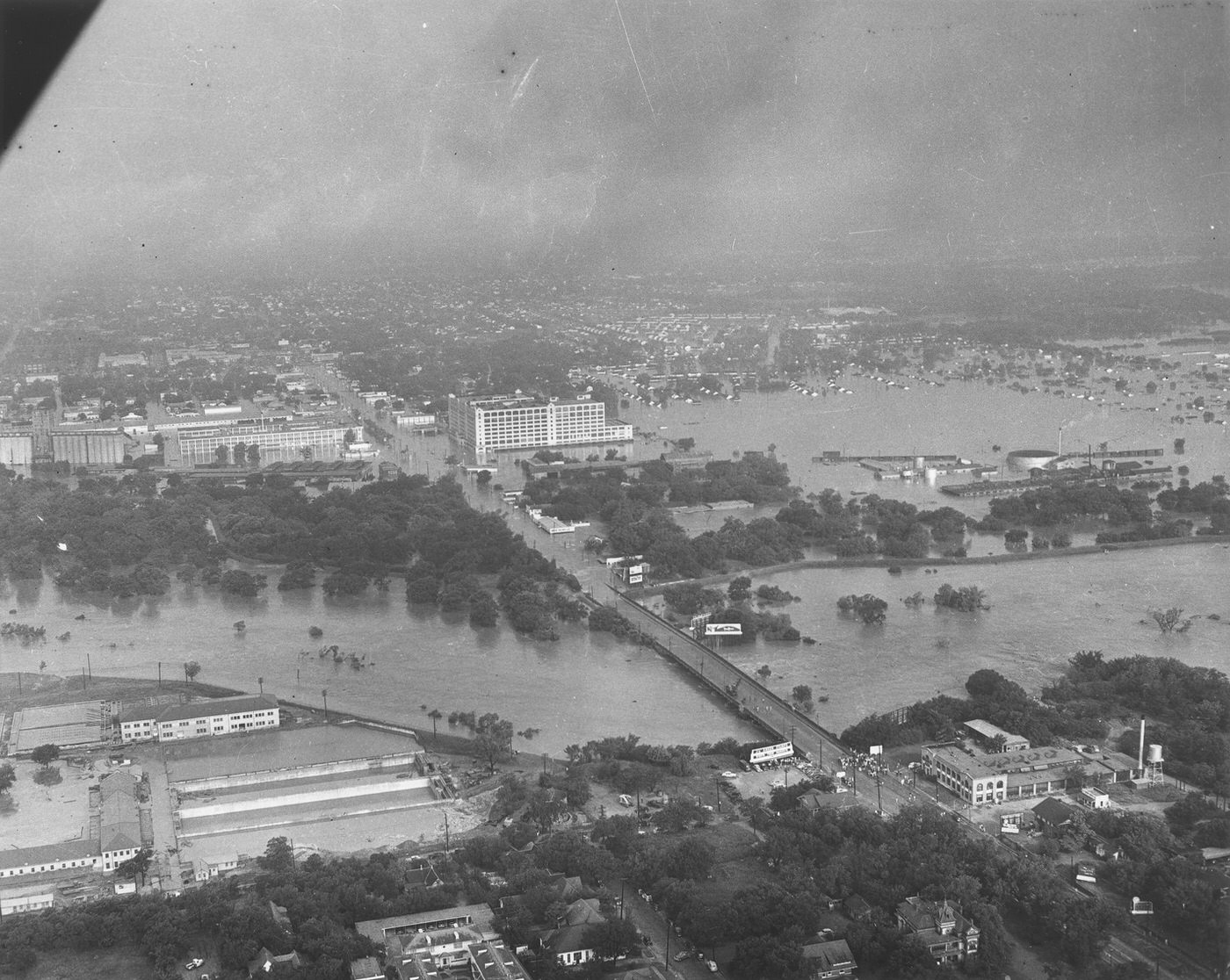
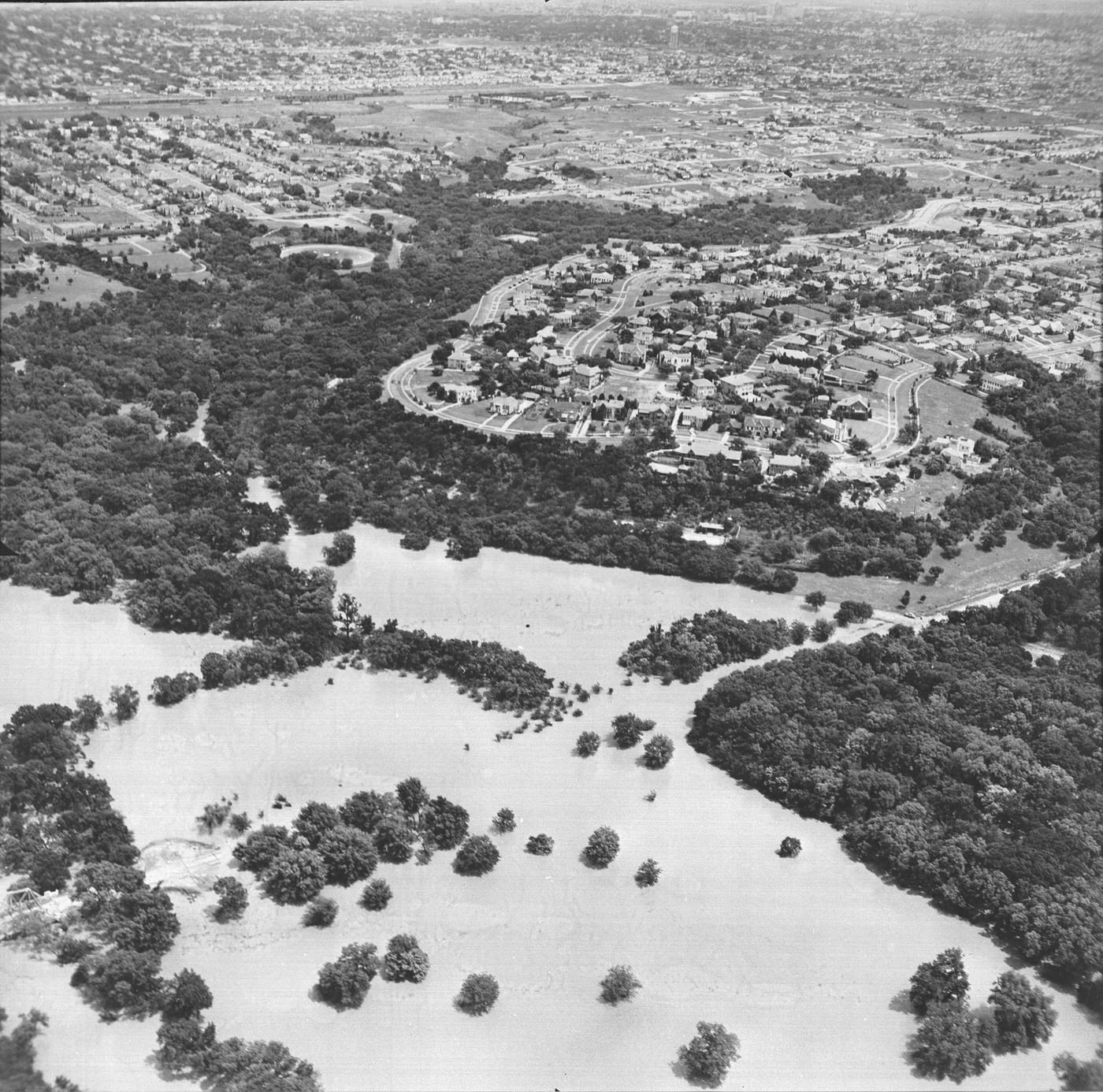
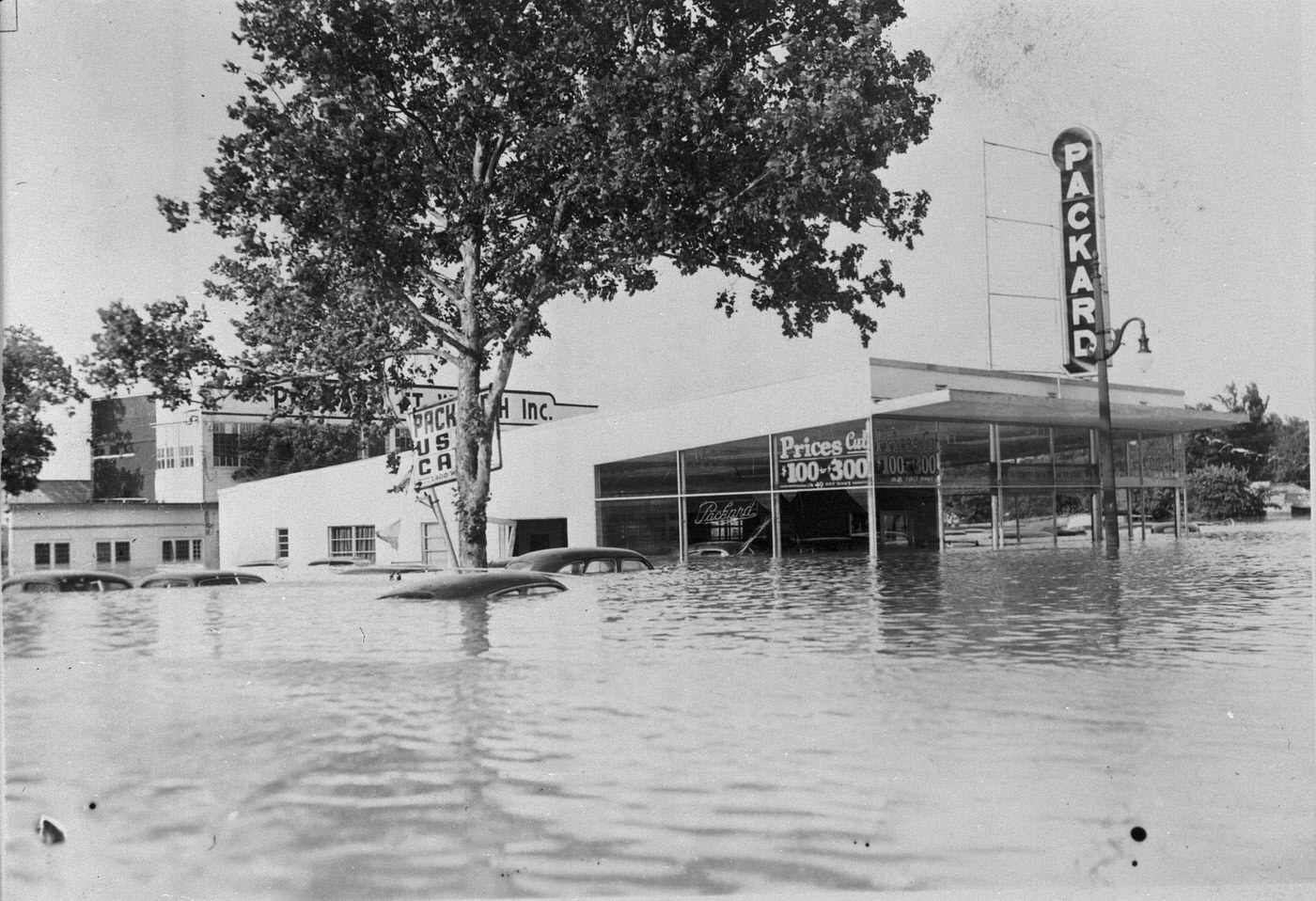
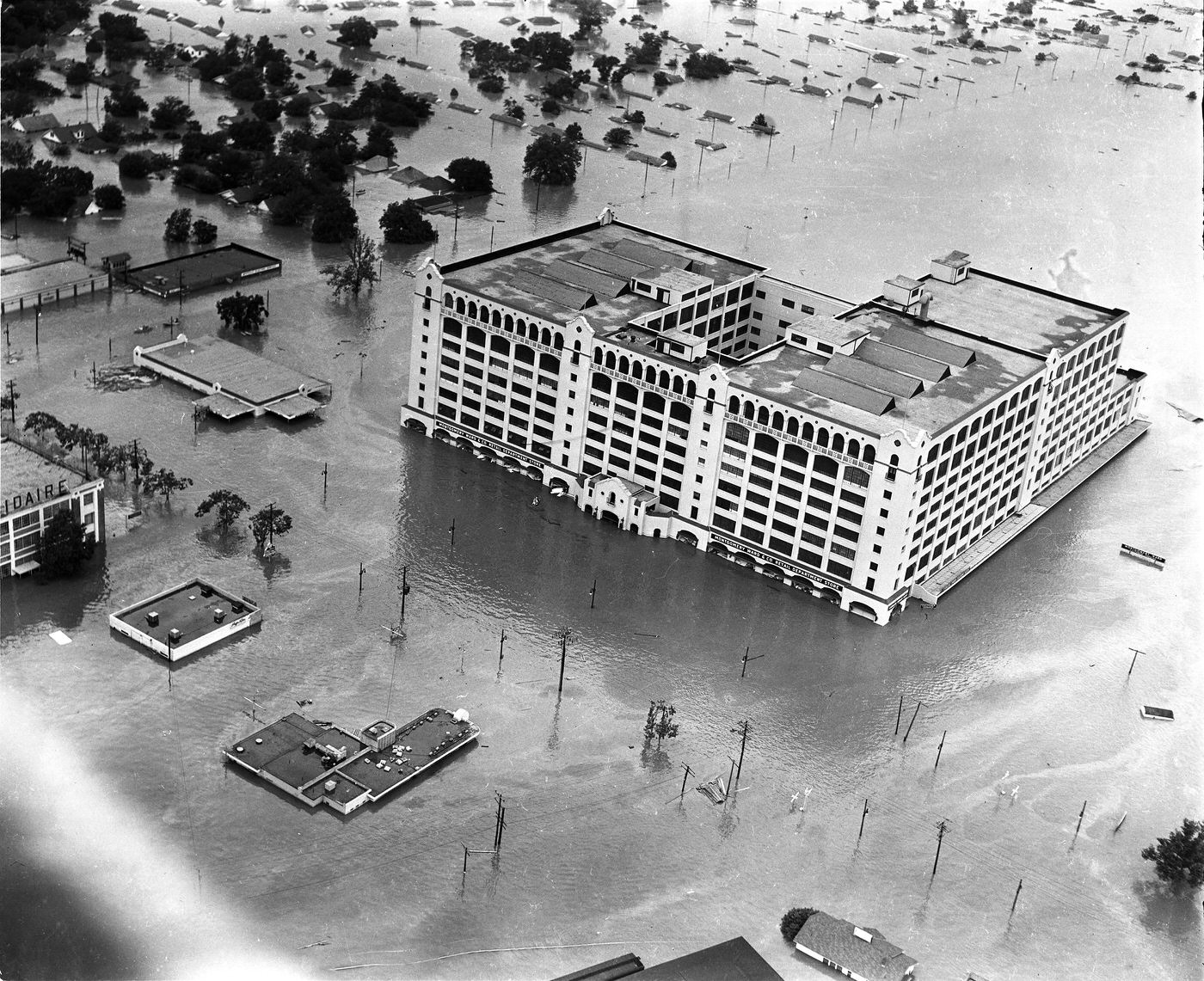
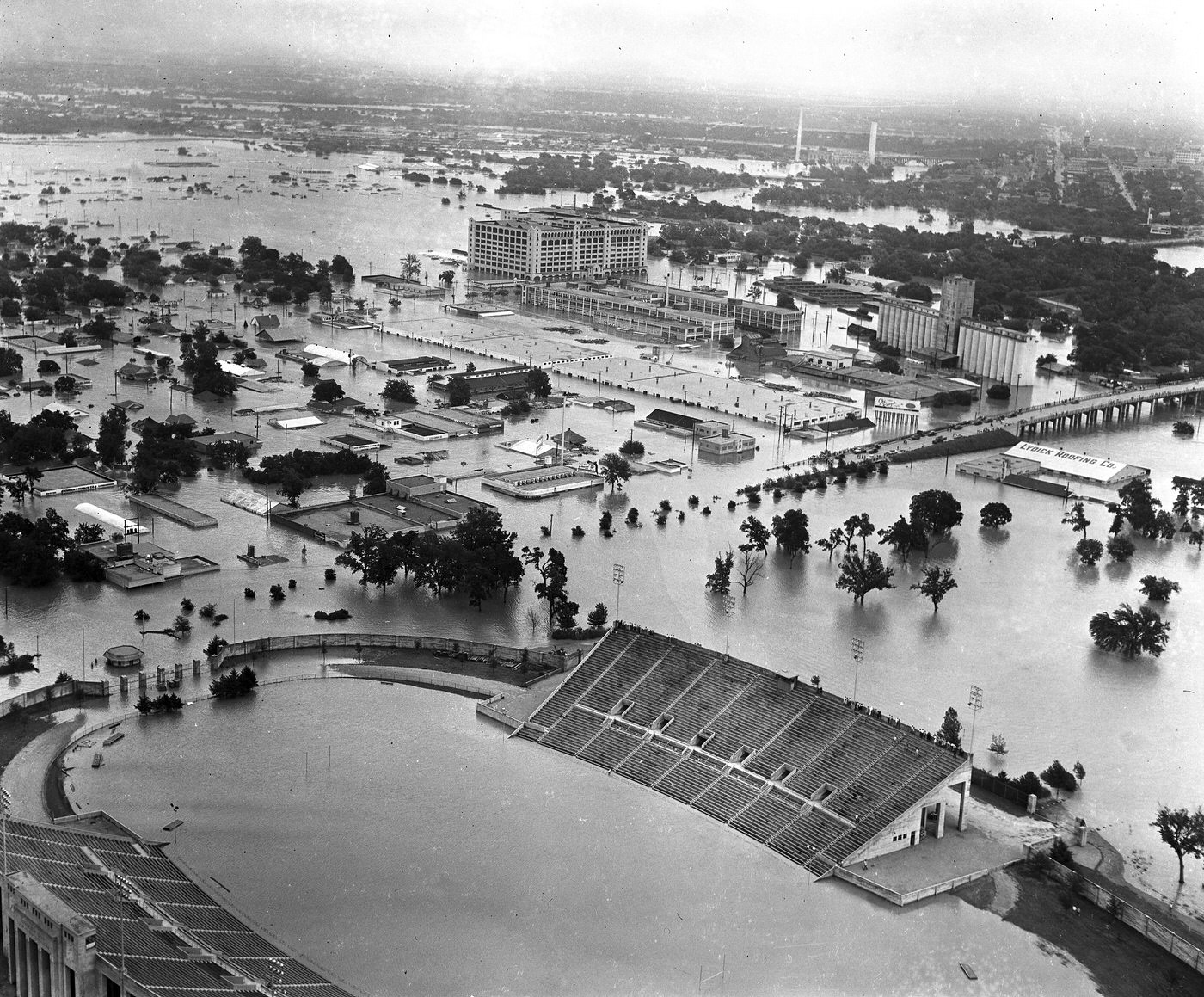
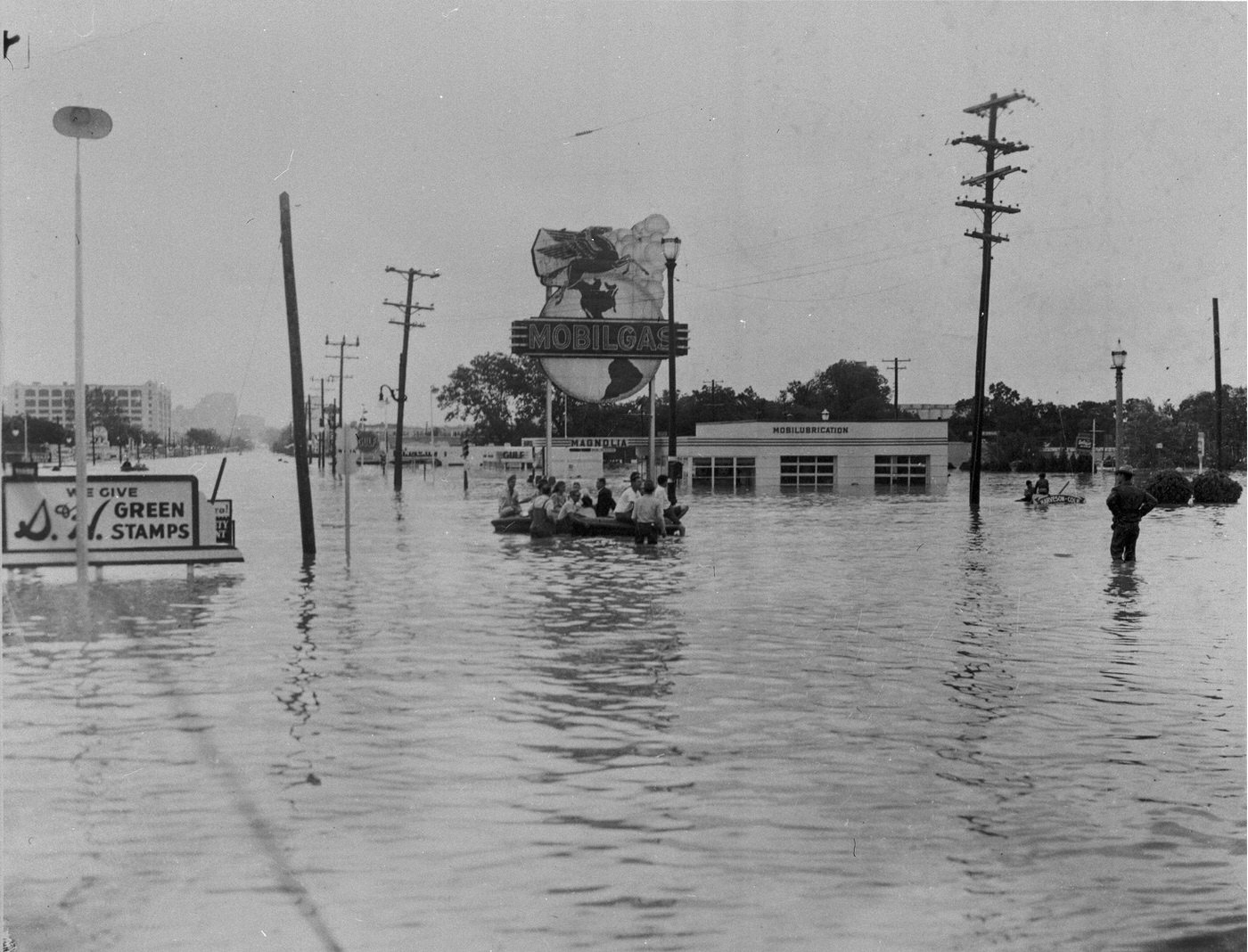
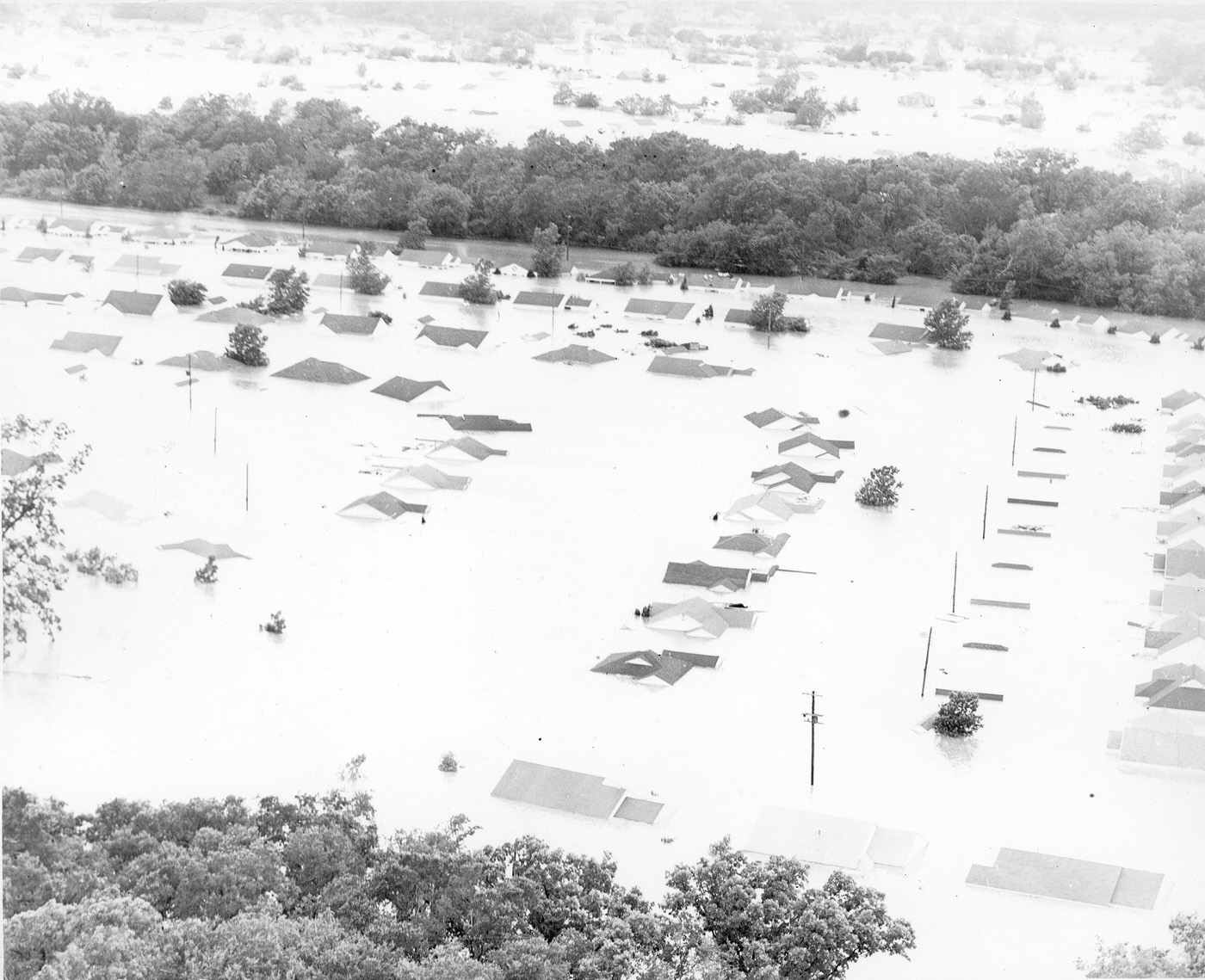
The worst disaster of the decade struck in May 1949, when the Trinity River overflowed its banks and sent floodwaters surging through Fort Worth’s streets. The 7th Street corridor was hit hard — the Montgomery Ward building, the Pig Stand restaurant, a Mobil gas station, and surrounding neighborhoods were swamped. Aerial photographs showed the 7th Street bridge cutting through a wide brown lake where familiar streets used to be. Residents stood at the water’s edge in large crowds, watching the city they knew disappear under the current.
Aerial photo of 1949 flood in Fort Worth showing Trinity River overflowing its banks, 7th St., and Montgomery Ward building, 1949Pig Stand restaurant partially under water during the May 1949 flood in Fort Worth, Texas, 1949People lining street at water’s edge during flood of May, 1949, Fort Worth, 1949
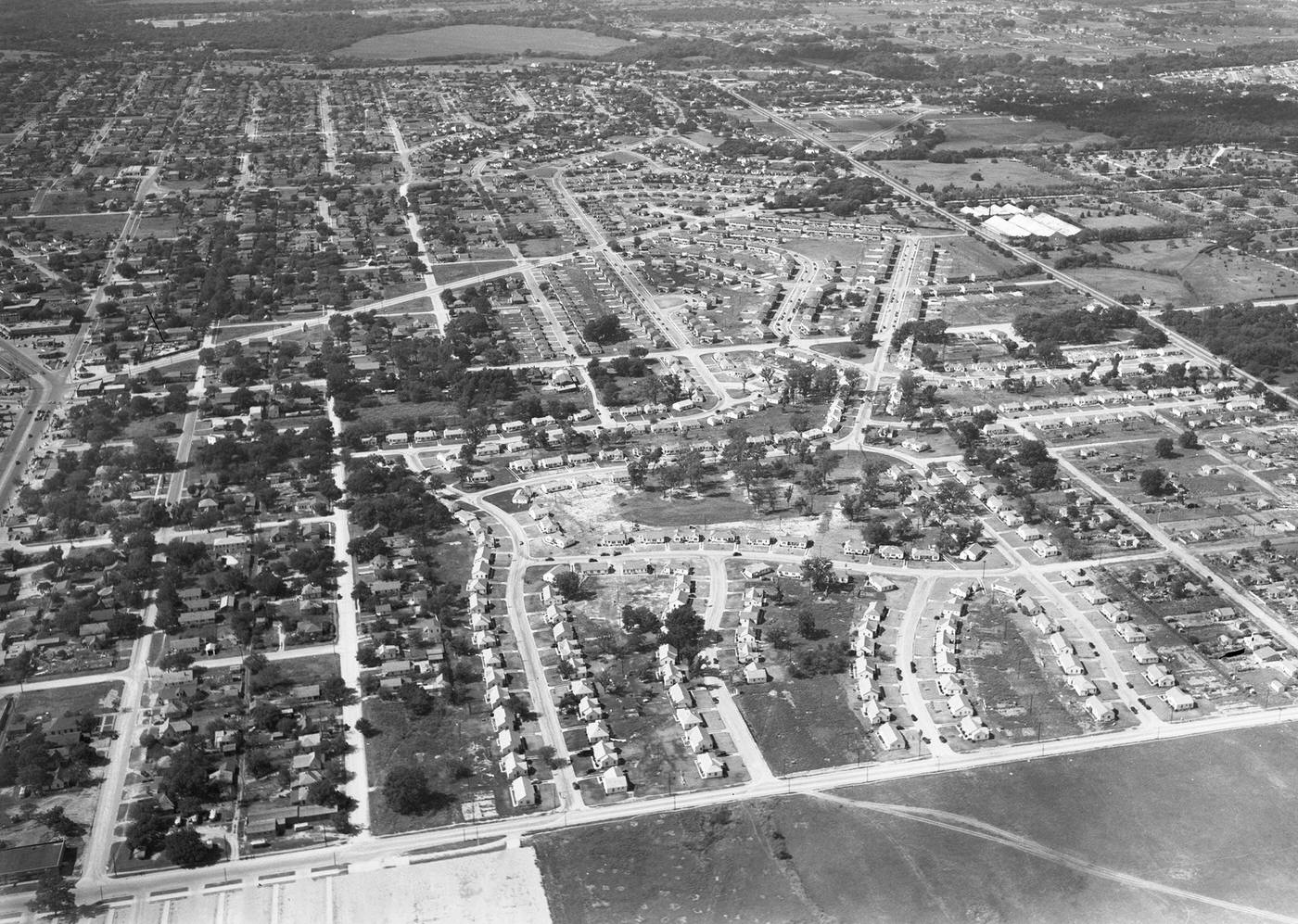
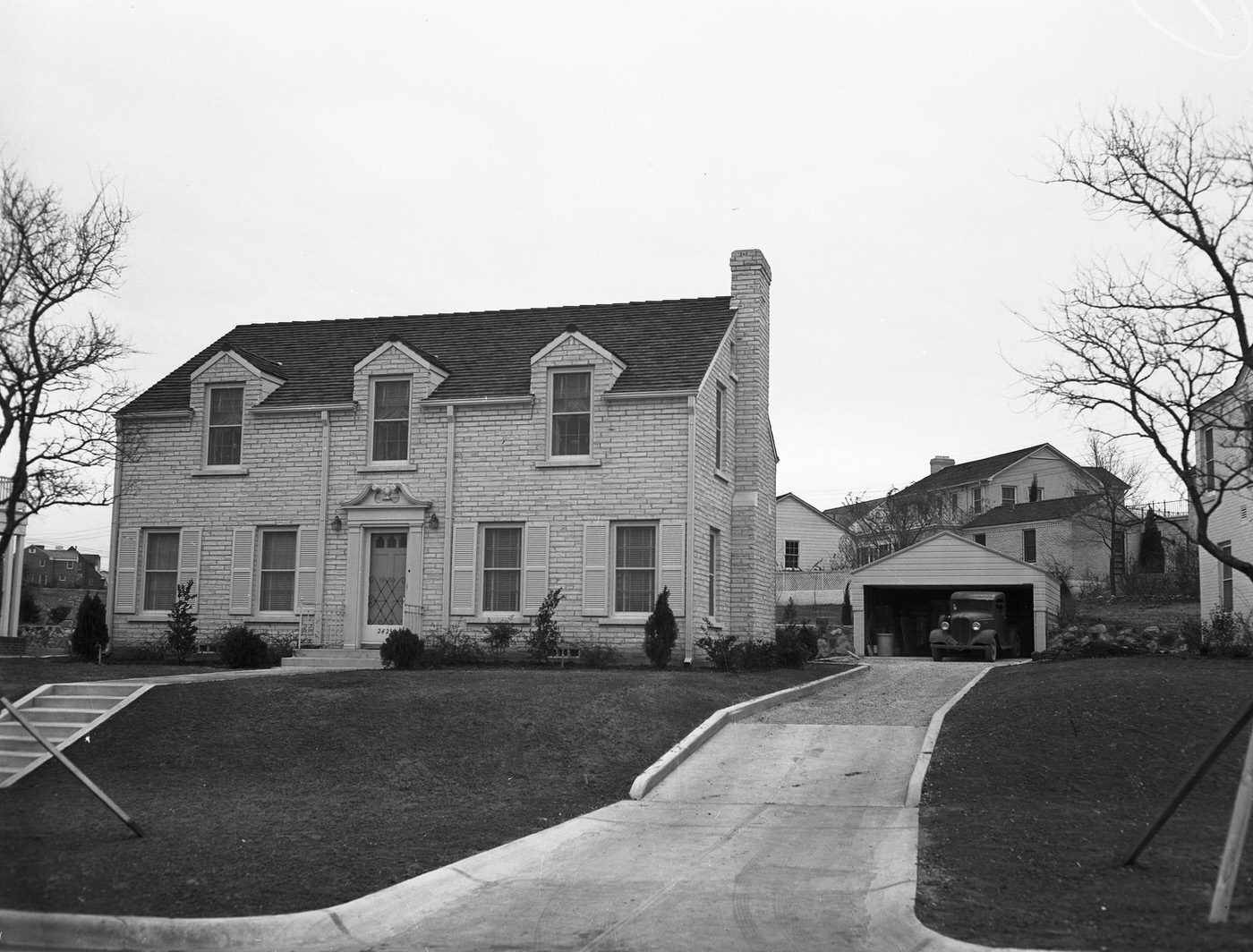
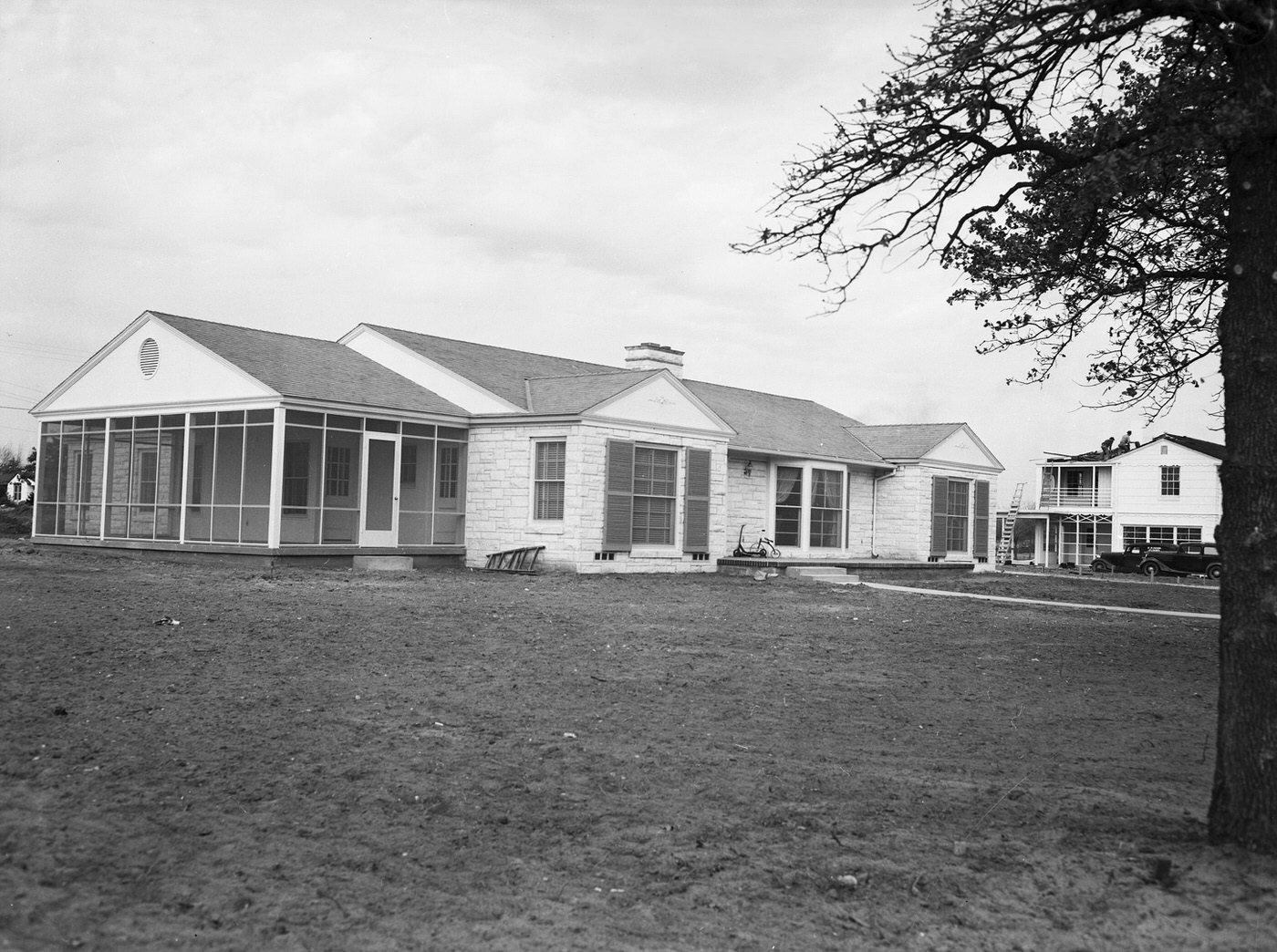
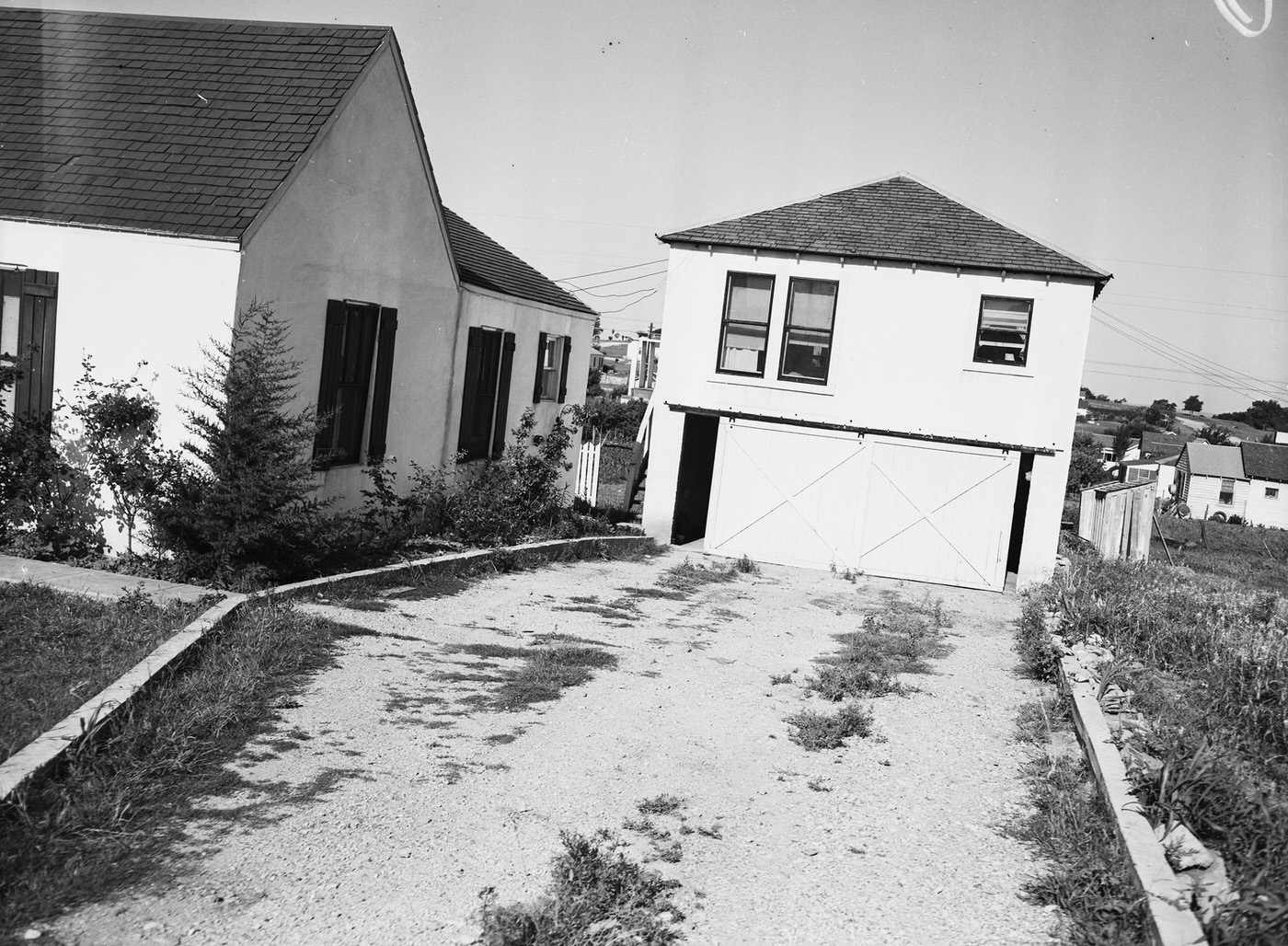
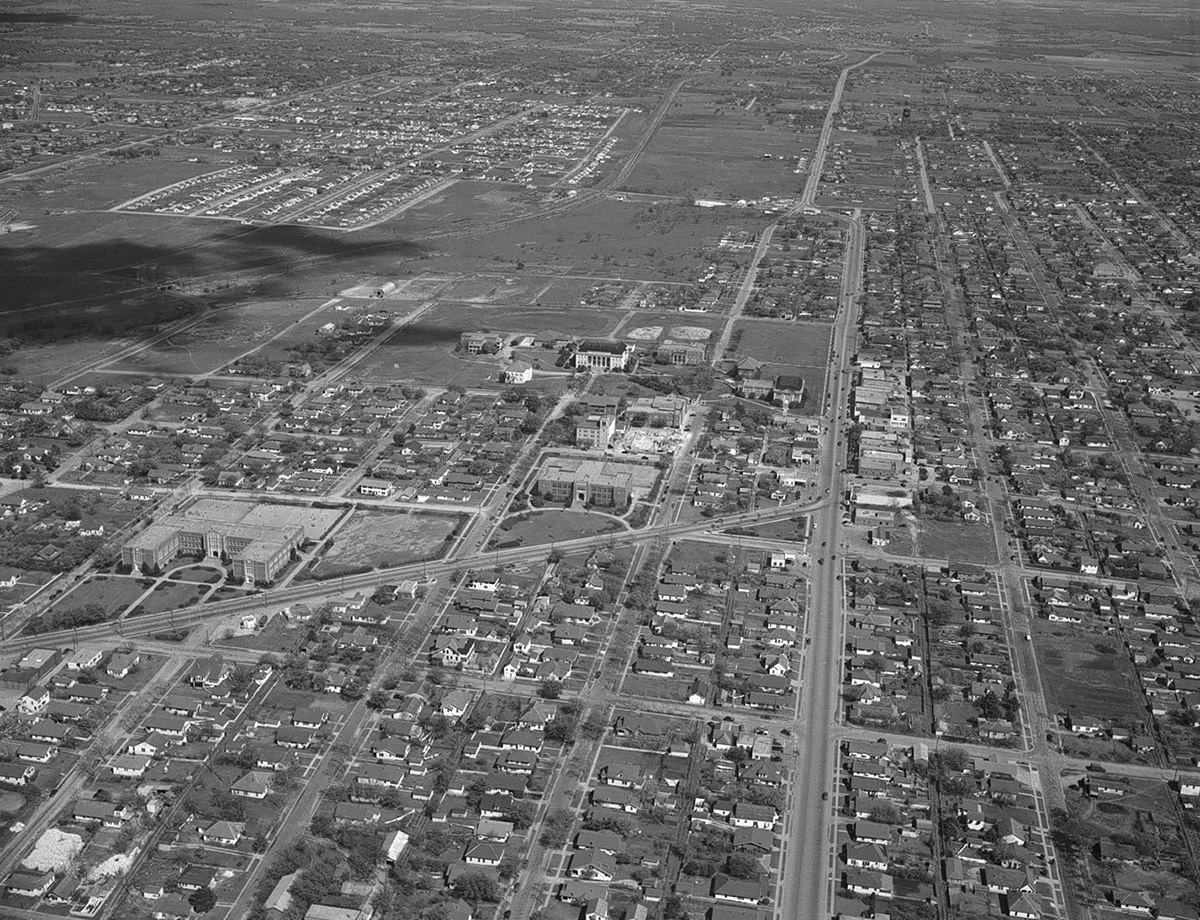
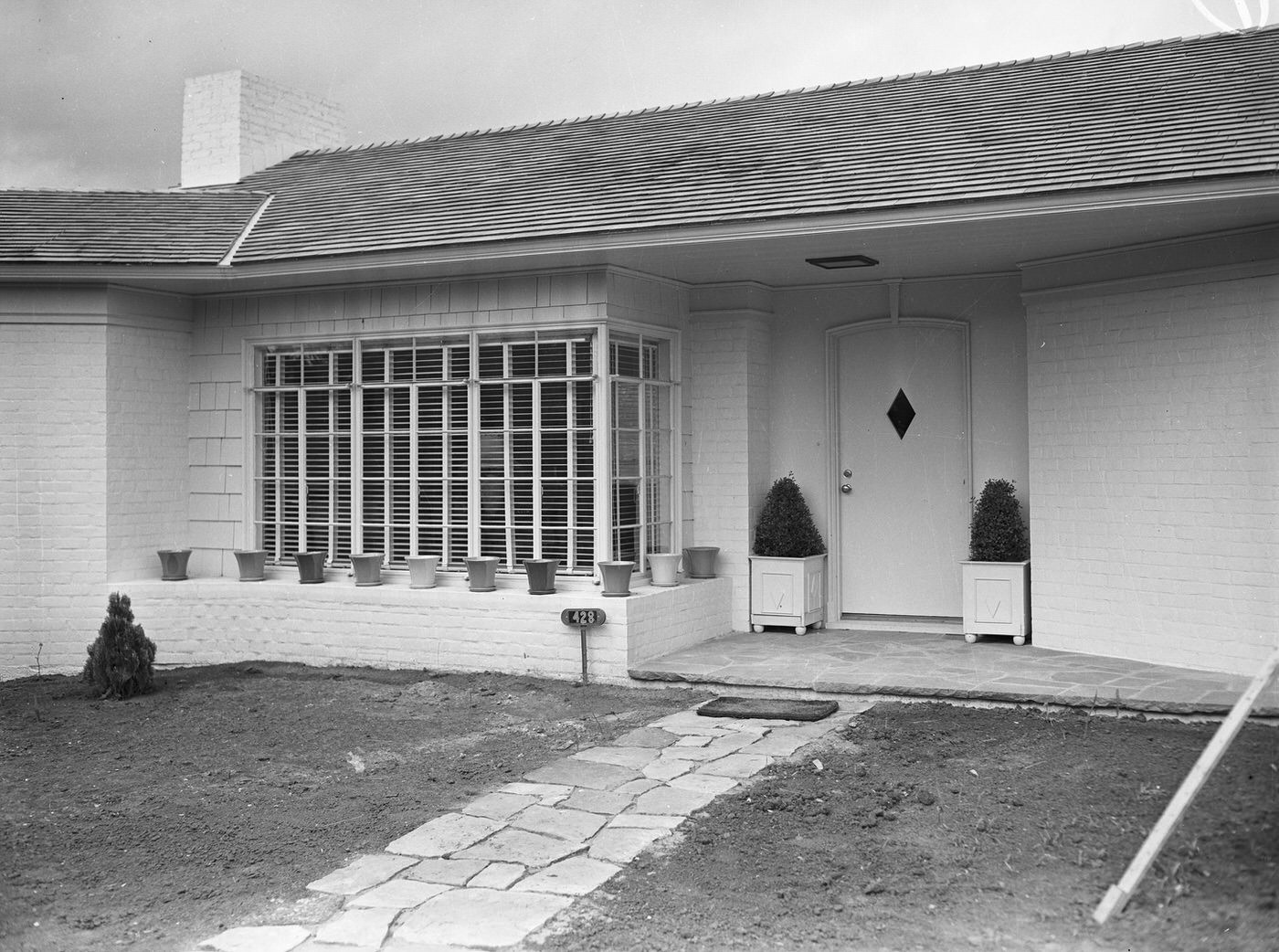
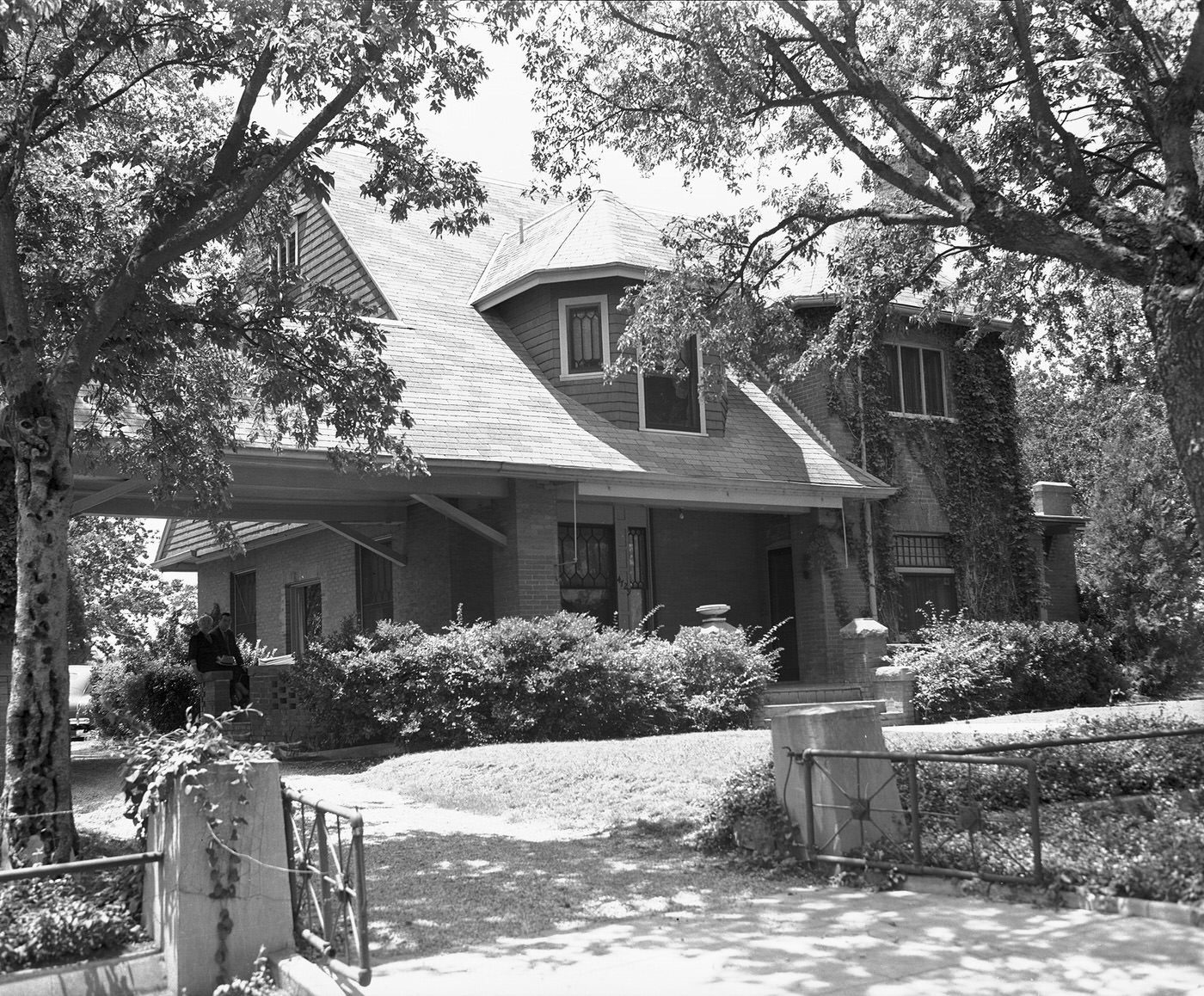
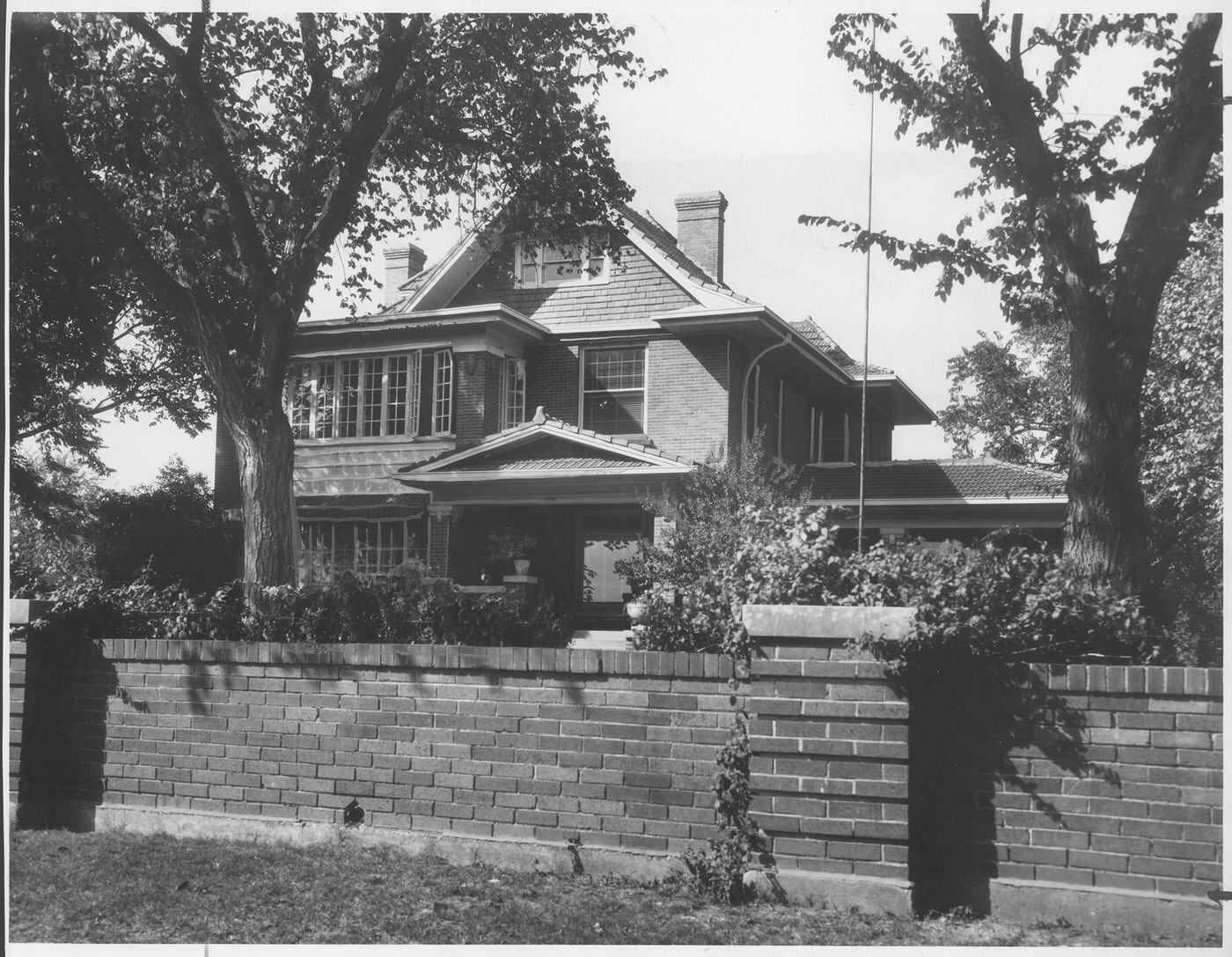
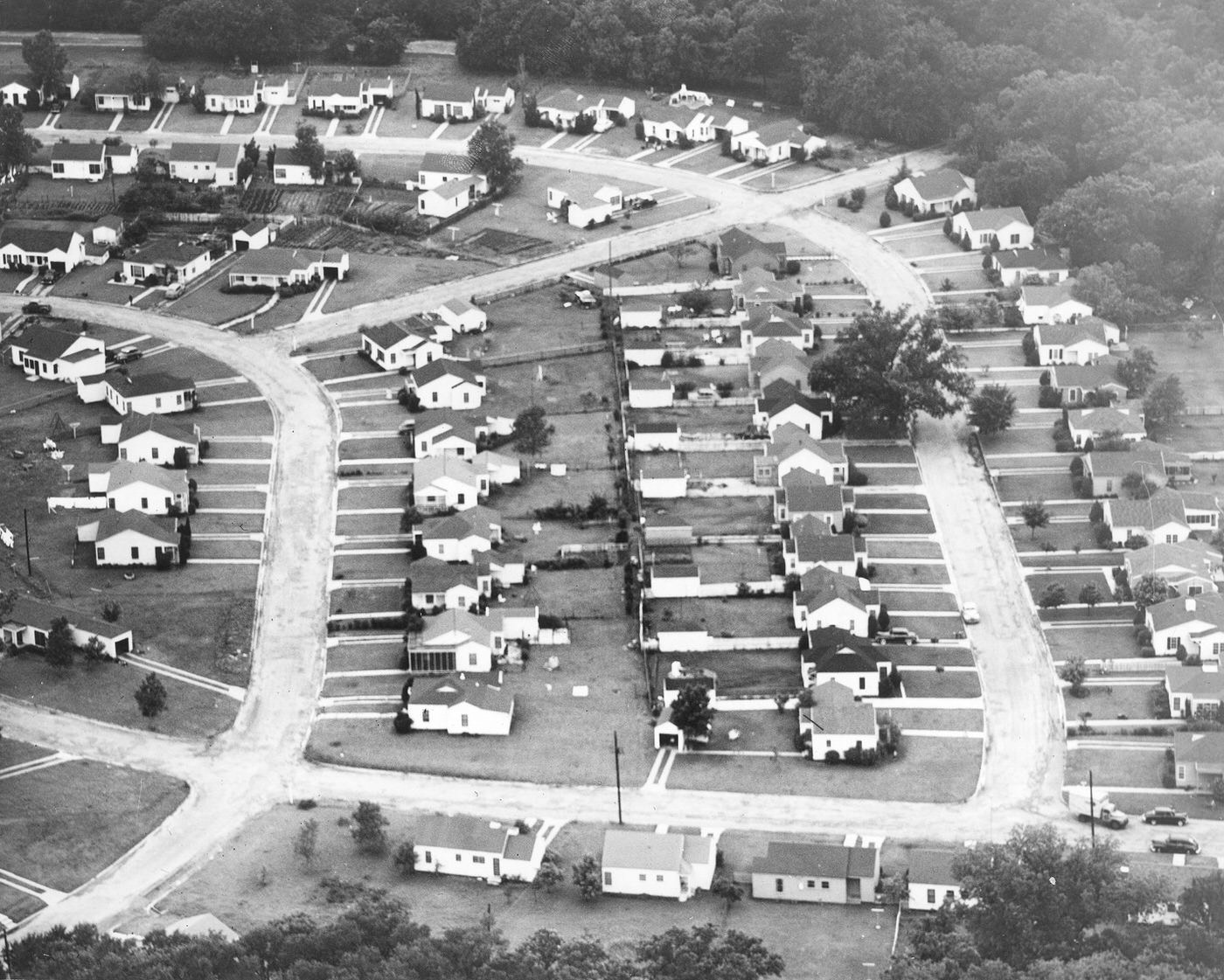
Neighborhoods across the city showed the range of Fort Worth’s residential life. Aerial views of west Fort Worth between Seventh Street and White Settlement Road revealed block after block of modest homes packed together. Arlington Heights featured larger properties with wide yards and distinctive architecture. On Colonial Parkway, the two-story brick home of Dr. and Mrs. M. J. Bisco sat on a slight hill, its portico and dormers visible from the street, with a two-car garage tucked at the back of the property.
Aerial view of west Fort Worth homes between Seventh Street and White Settlement Road near Bailey, 1945The new home of Doctor and Mrs. M. J. Bisco is at 2425 Colonial Parkway, Fort Worth, Texas, 1942
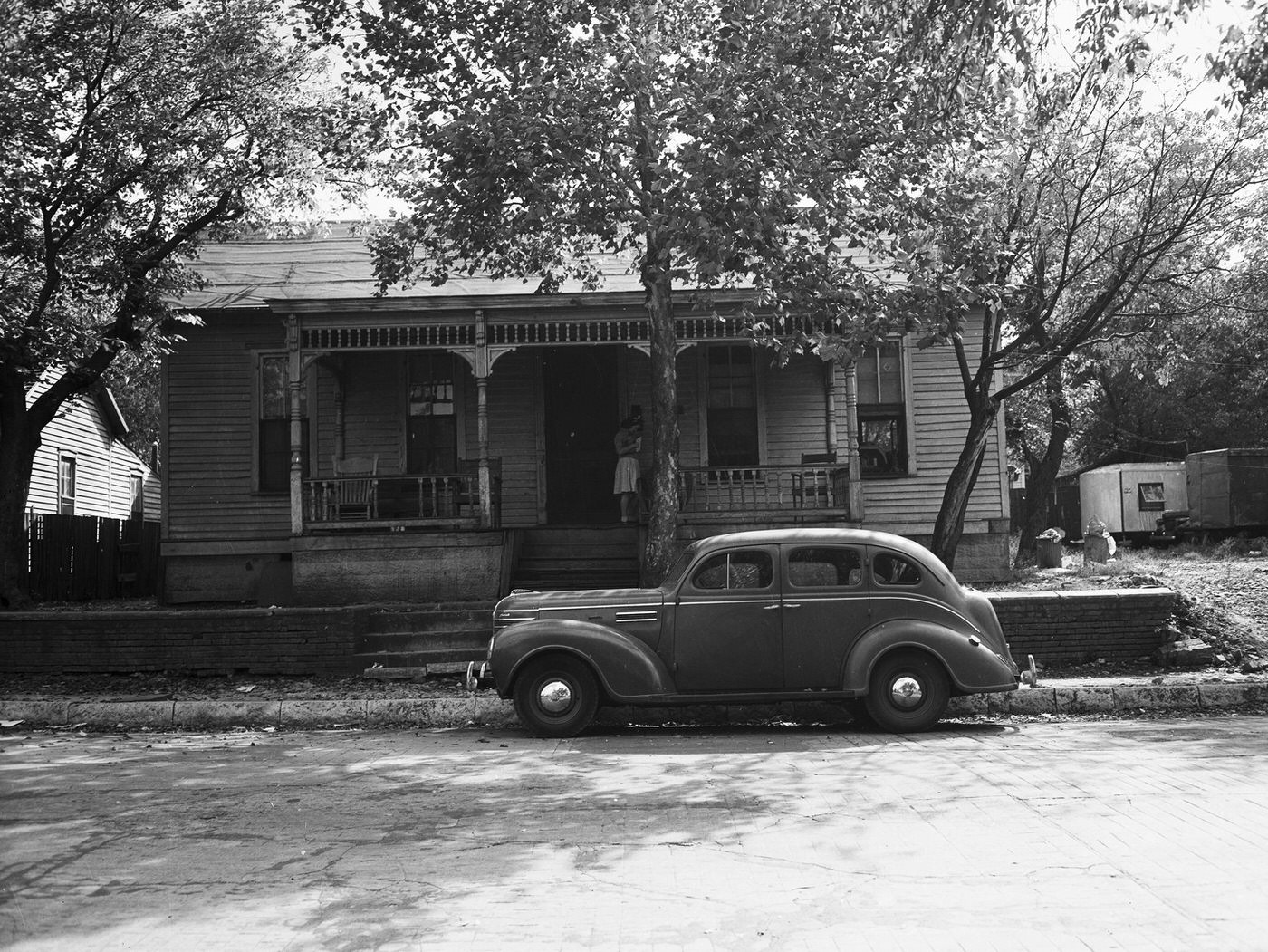
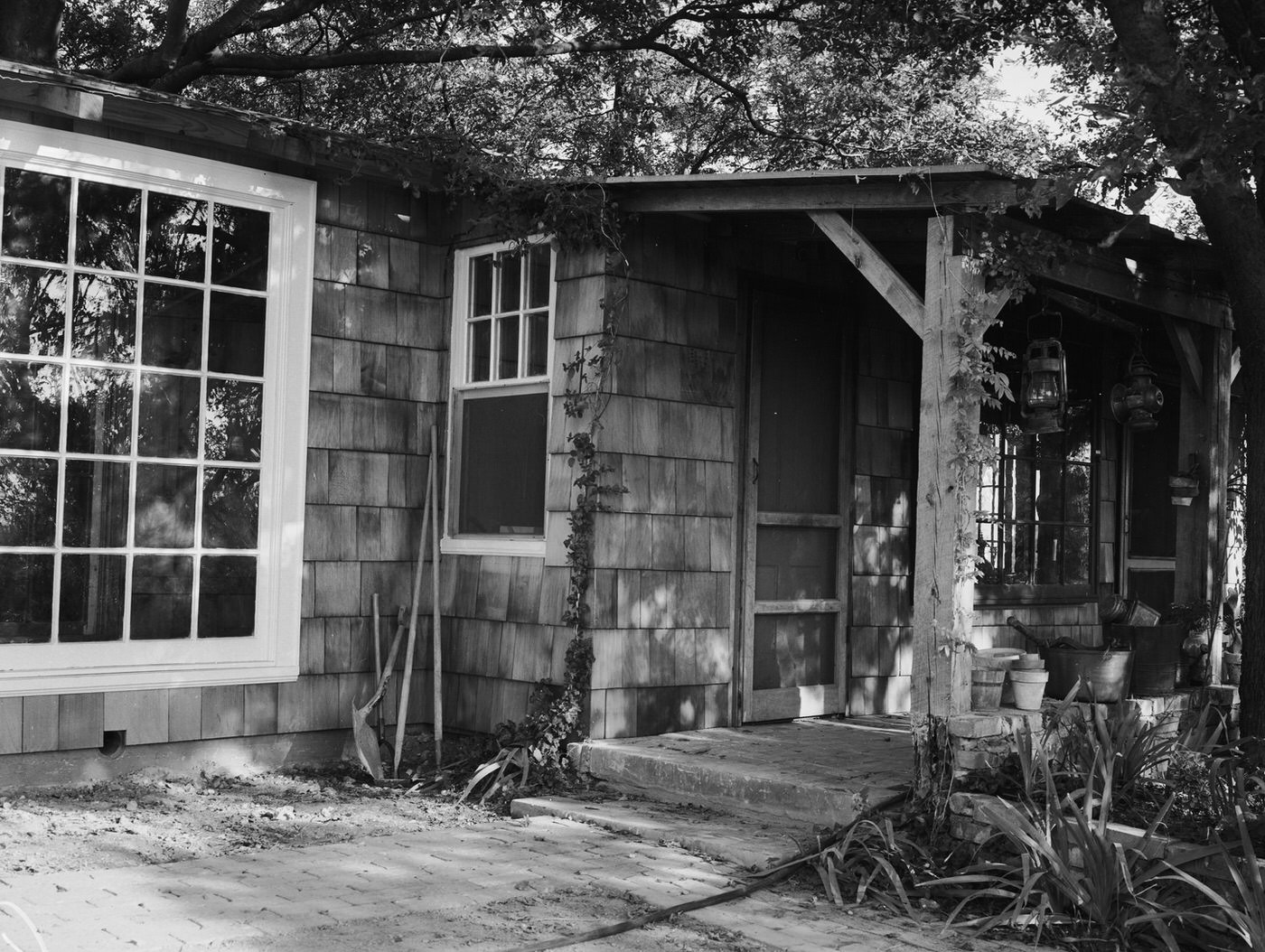
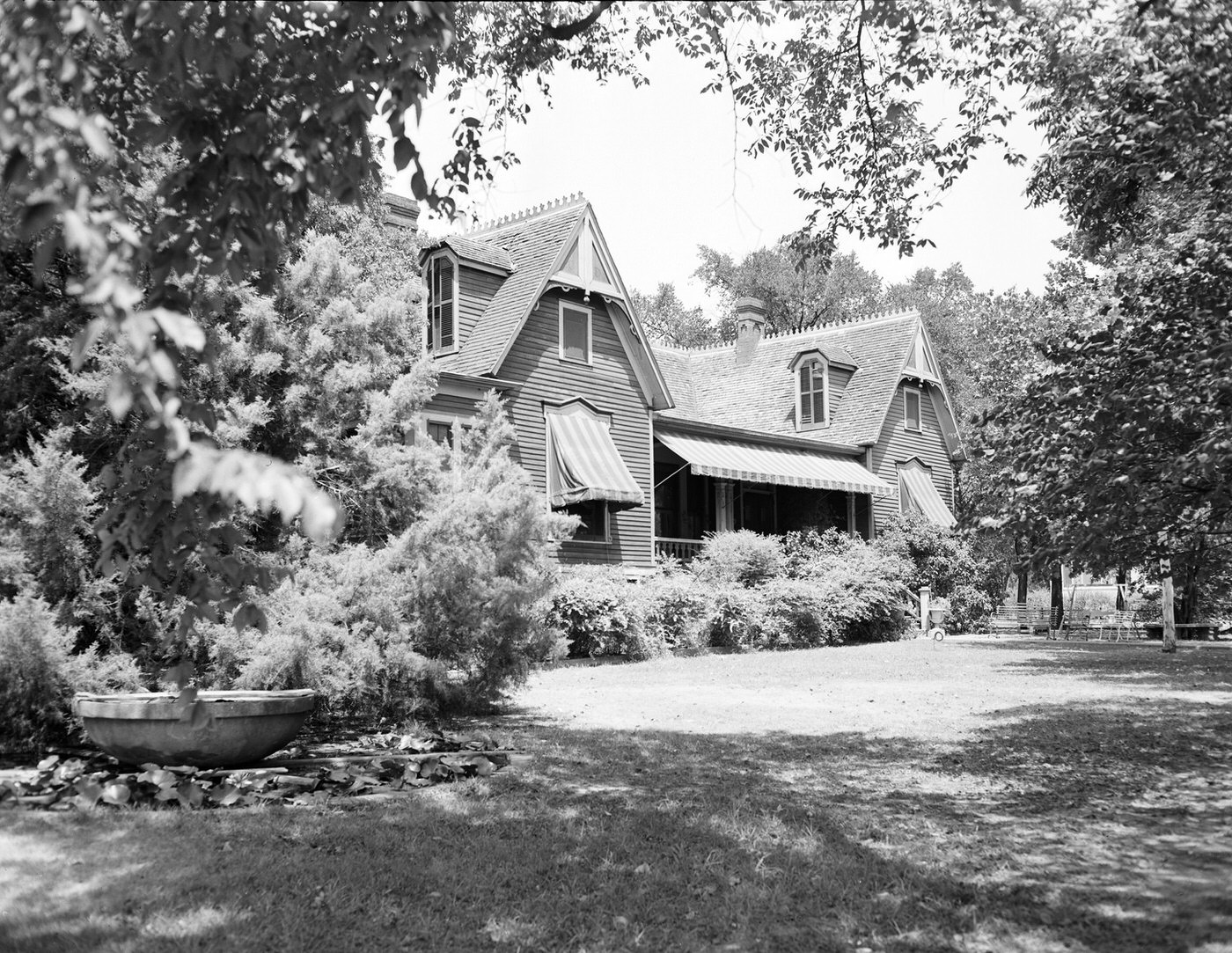
Some of Fort Worth’s oldest buildings were still standing and still in use. The cottage at 605 West First Street had been built in 1880 by E. H. Keller on land his wife’s father, Charles Turner, had purchased years before. The family later moved the small frame house from its original location on Second Street to face First Street, making room for a larger twelve-room home behind it. By 1944, the cottage — with its seven rooms and old-fashioned folding doors — was serving as a rental property, having housed four generations of the same family.
Exterior views of the cottage at 605 West First Street, Fort Worth, Texas owned by Mr. and Mrs. E. H. Keller, 1944
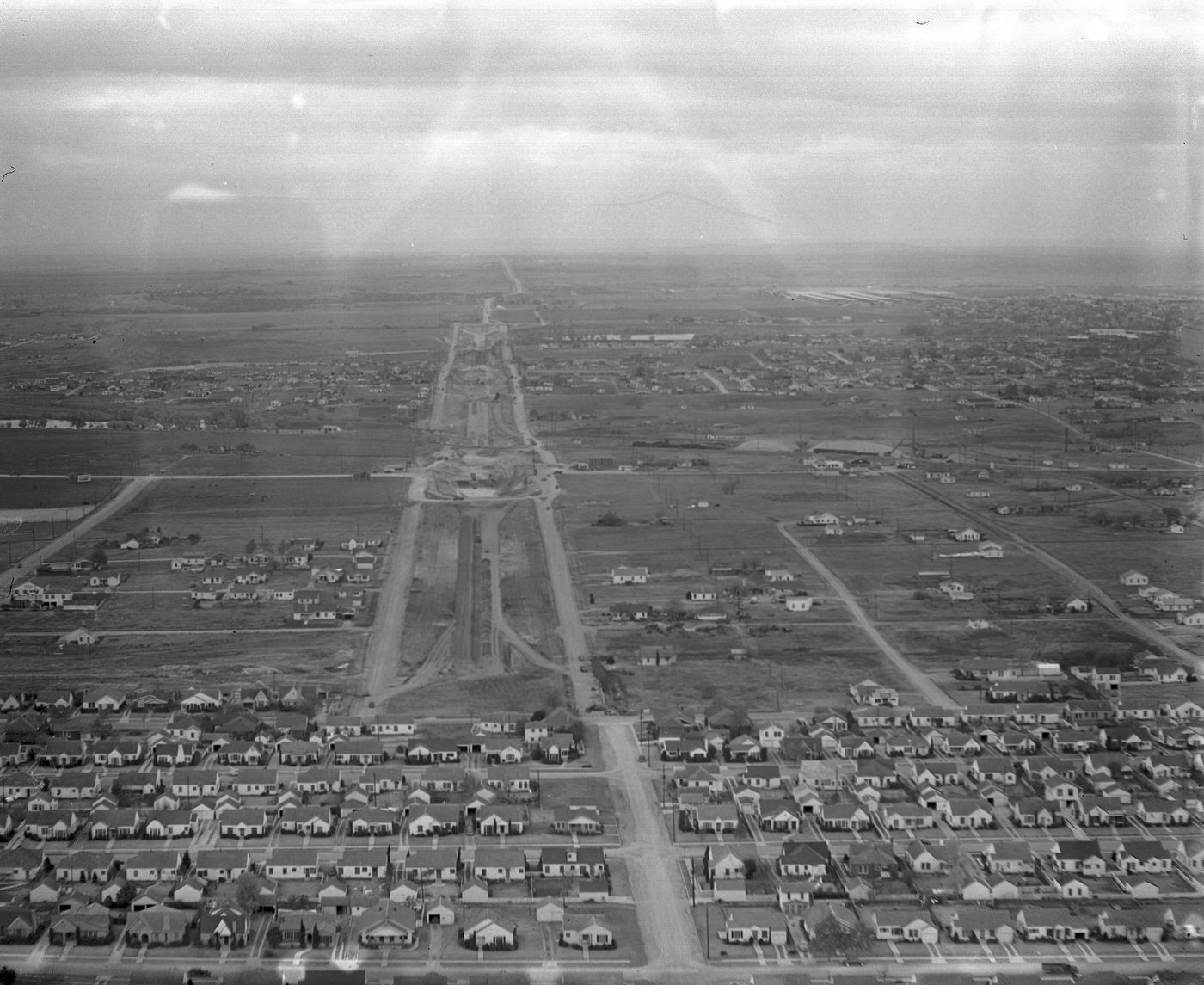
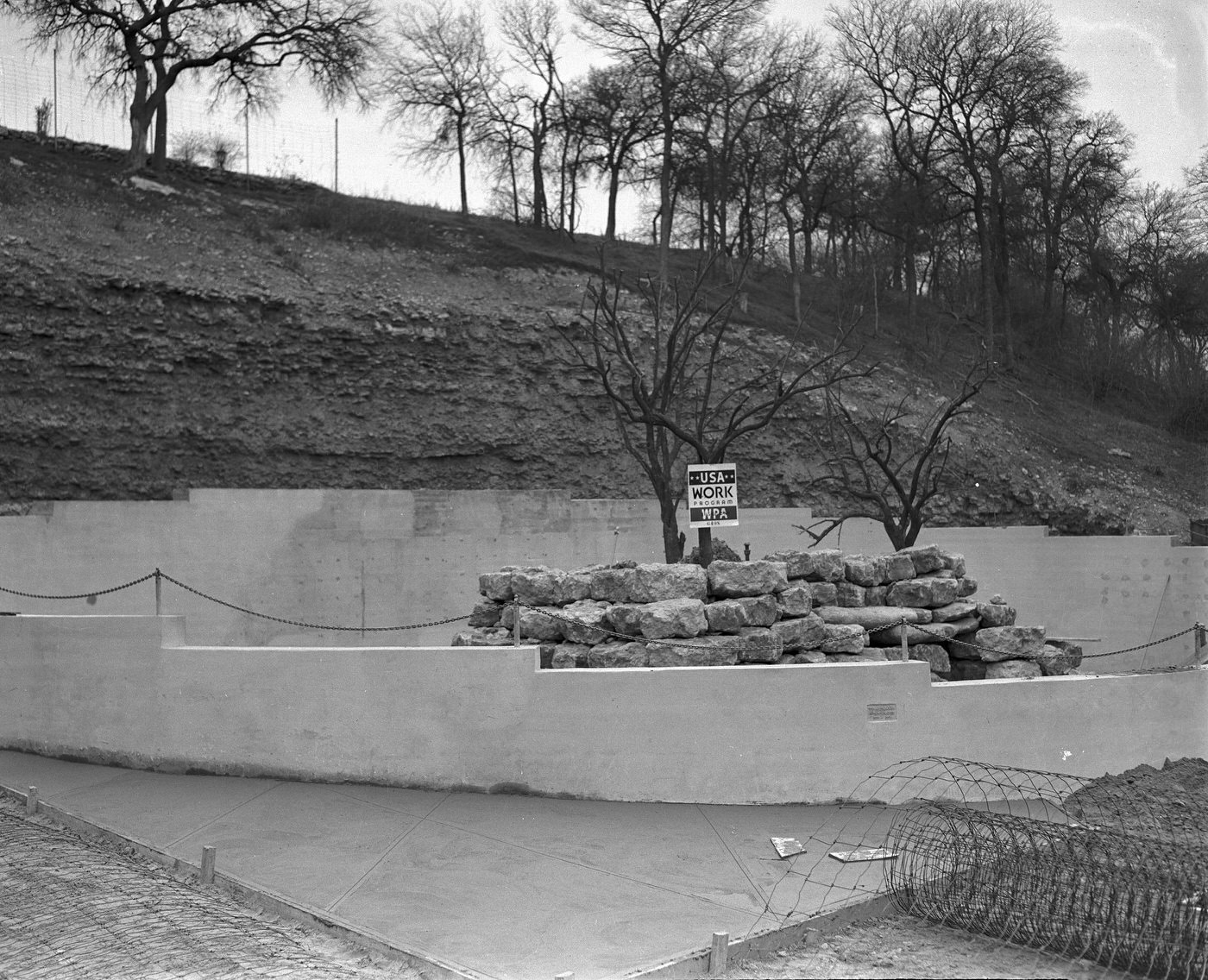
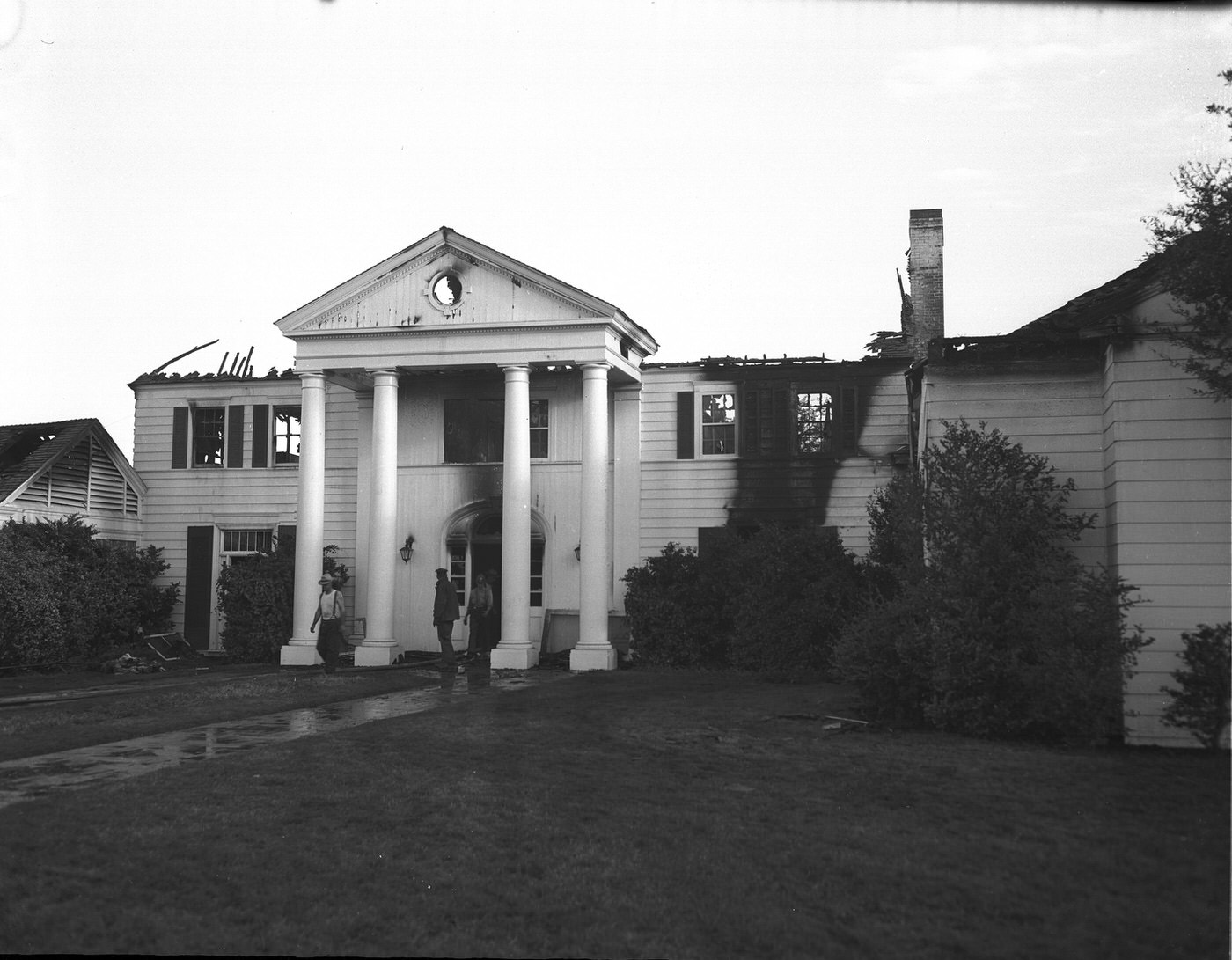
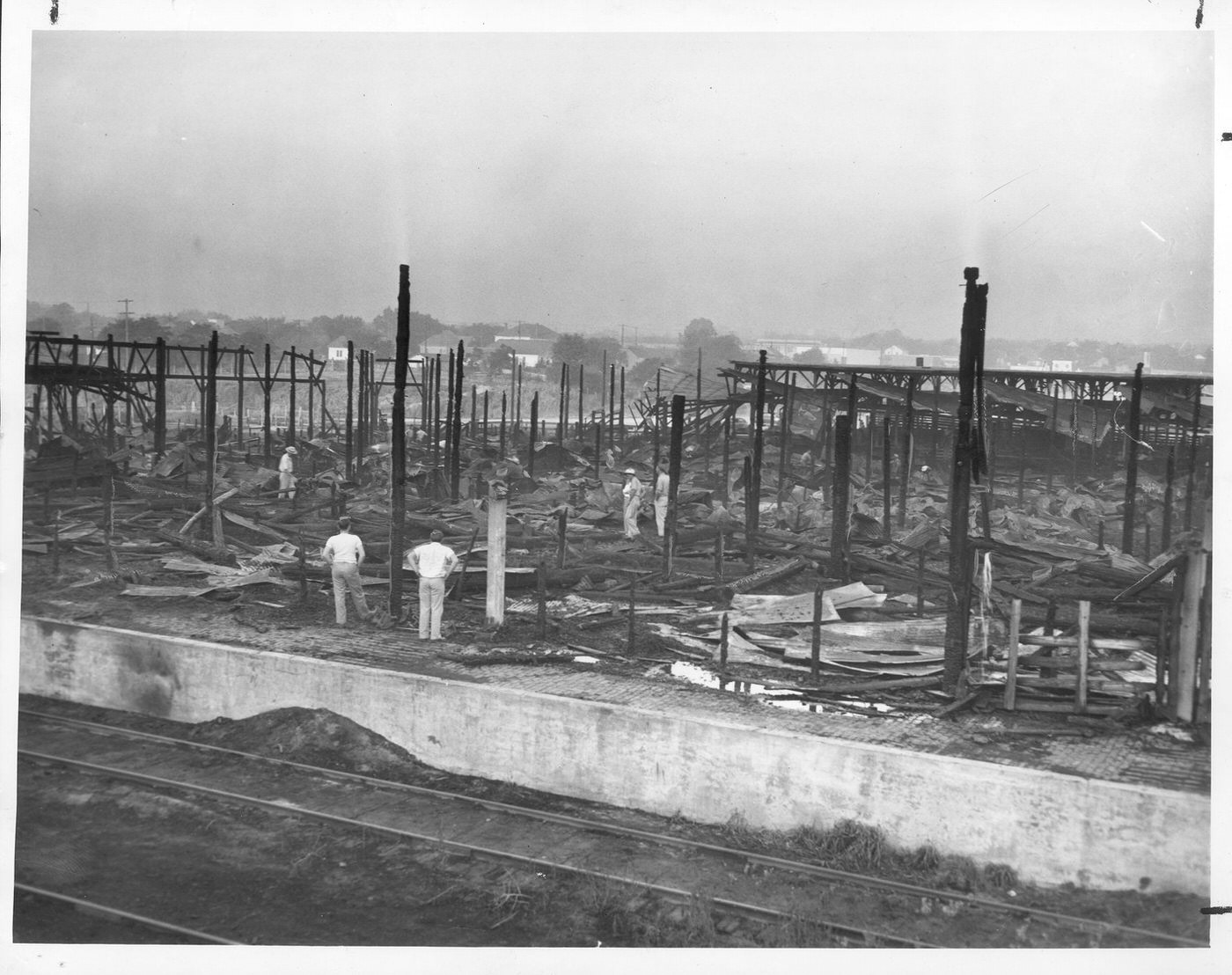
The city was also building toward the future. The North-South Expressway’s first section took shape by 1947, photographed from the air as construction crews carved new infrastructure through the landscape. The North Side Recreation Center went up in 1948. Forest Park Zoo’s Monkey Mountain was under construction that same year. Across town, the Colonial Country Club’s clubhouse burned in 1949, the charred shell left standing as workers assessed the damage. Fort Worth was constantly tearing down, building up, and starting over.
The air views of first section of North-South expressway, 1947Forest Park Zoo Monkey Mountain under construction, 1948Colonial Country Club clubhouse after being ravaged by fire, 1949
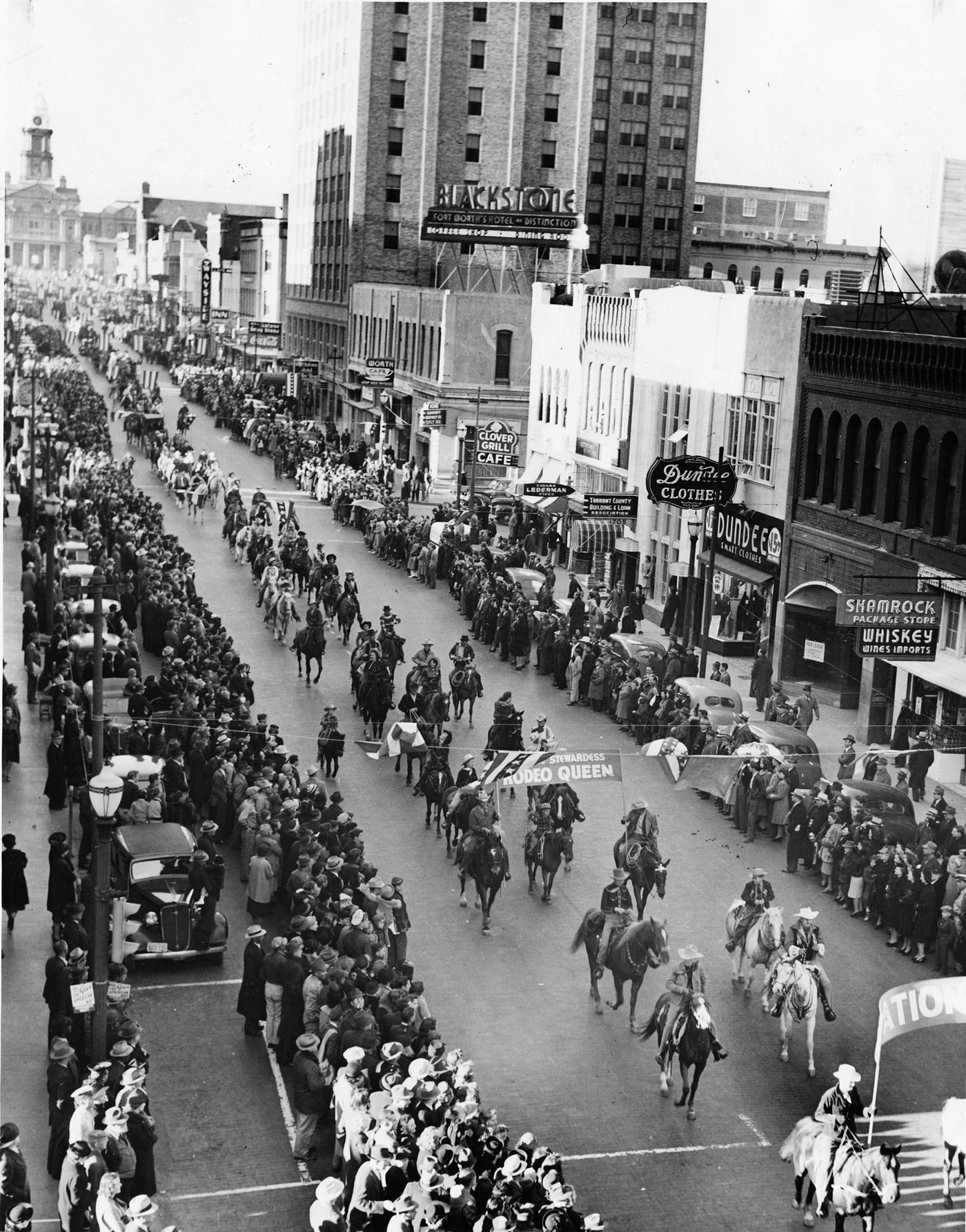
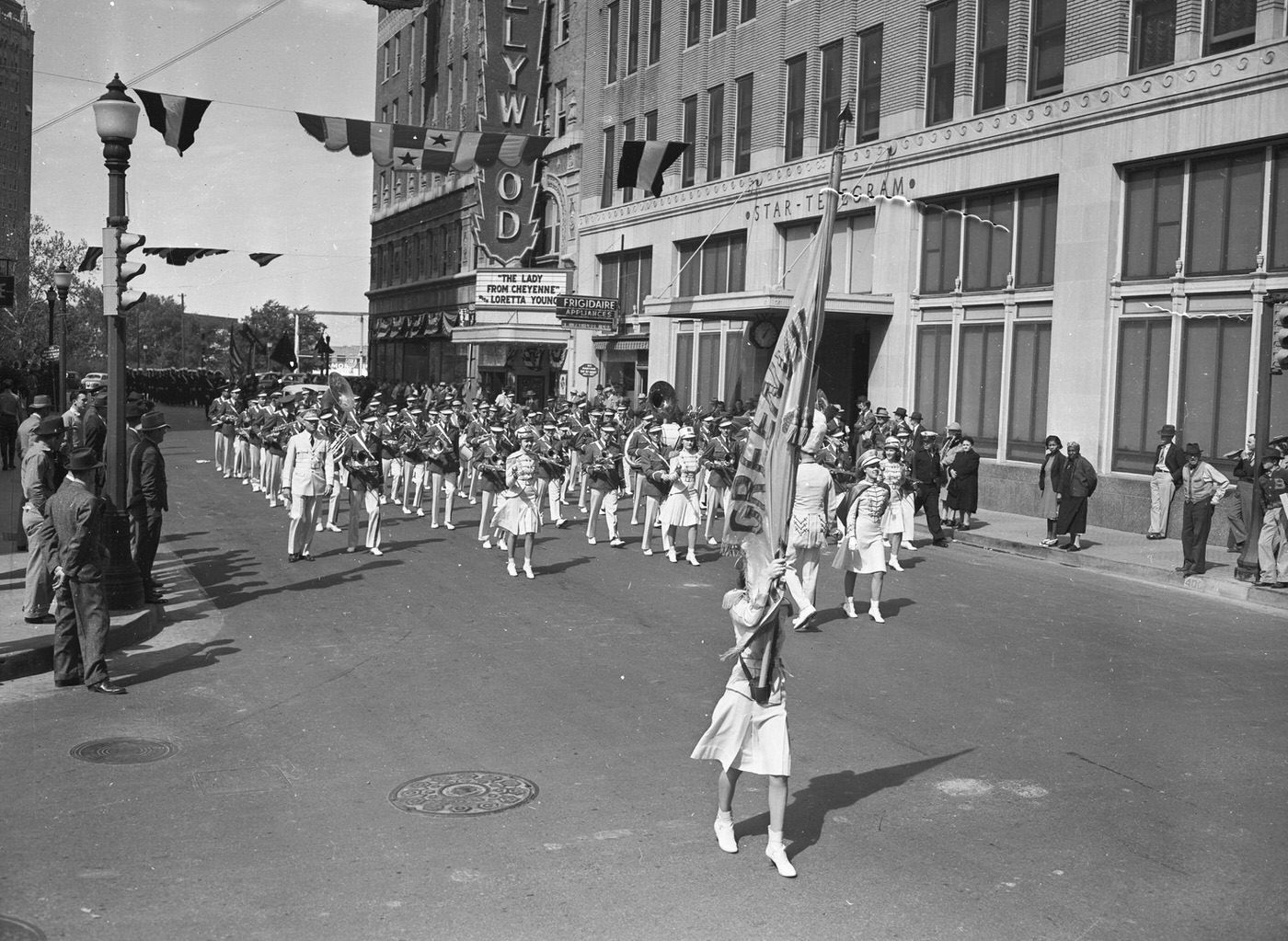
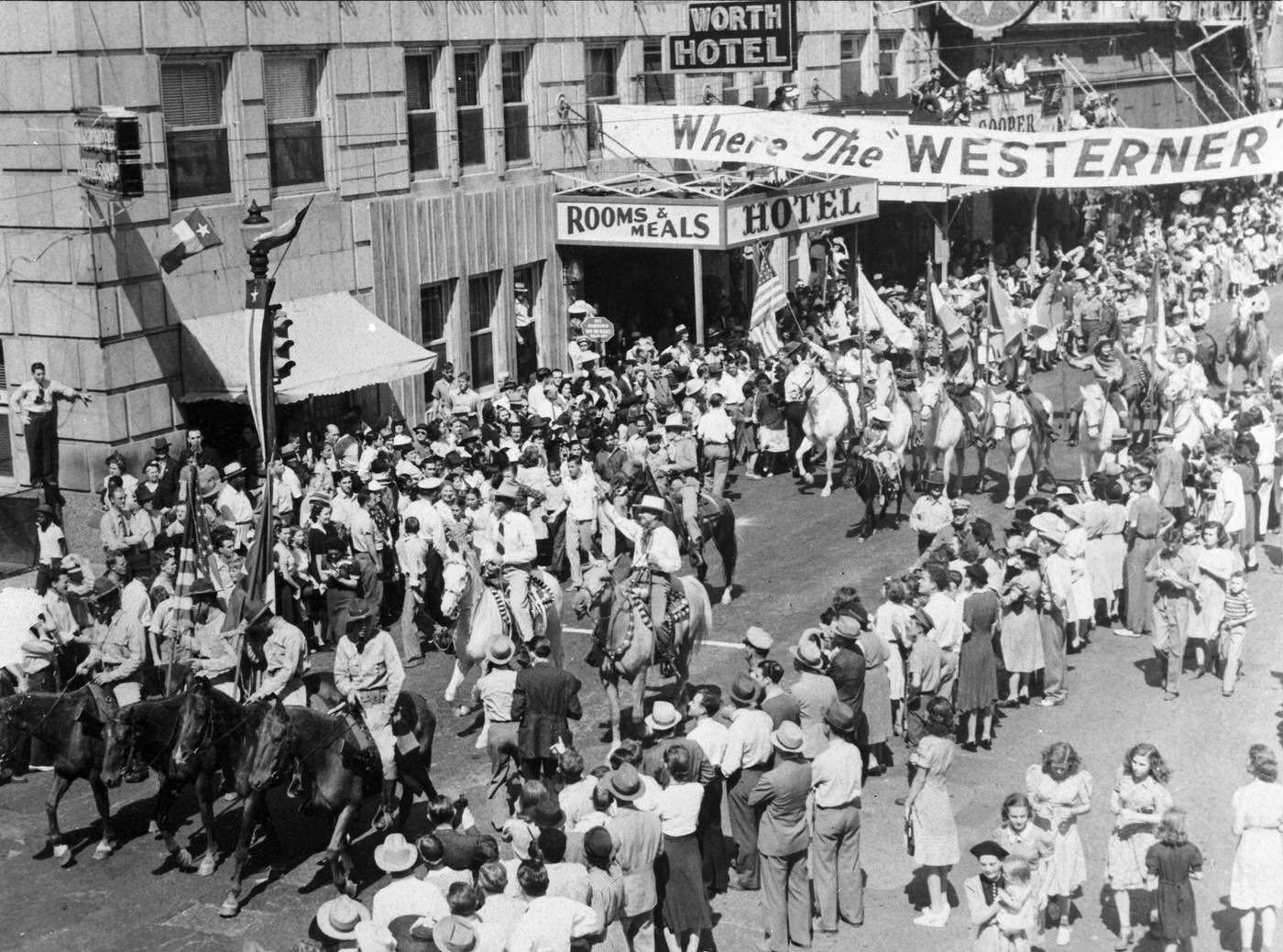
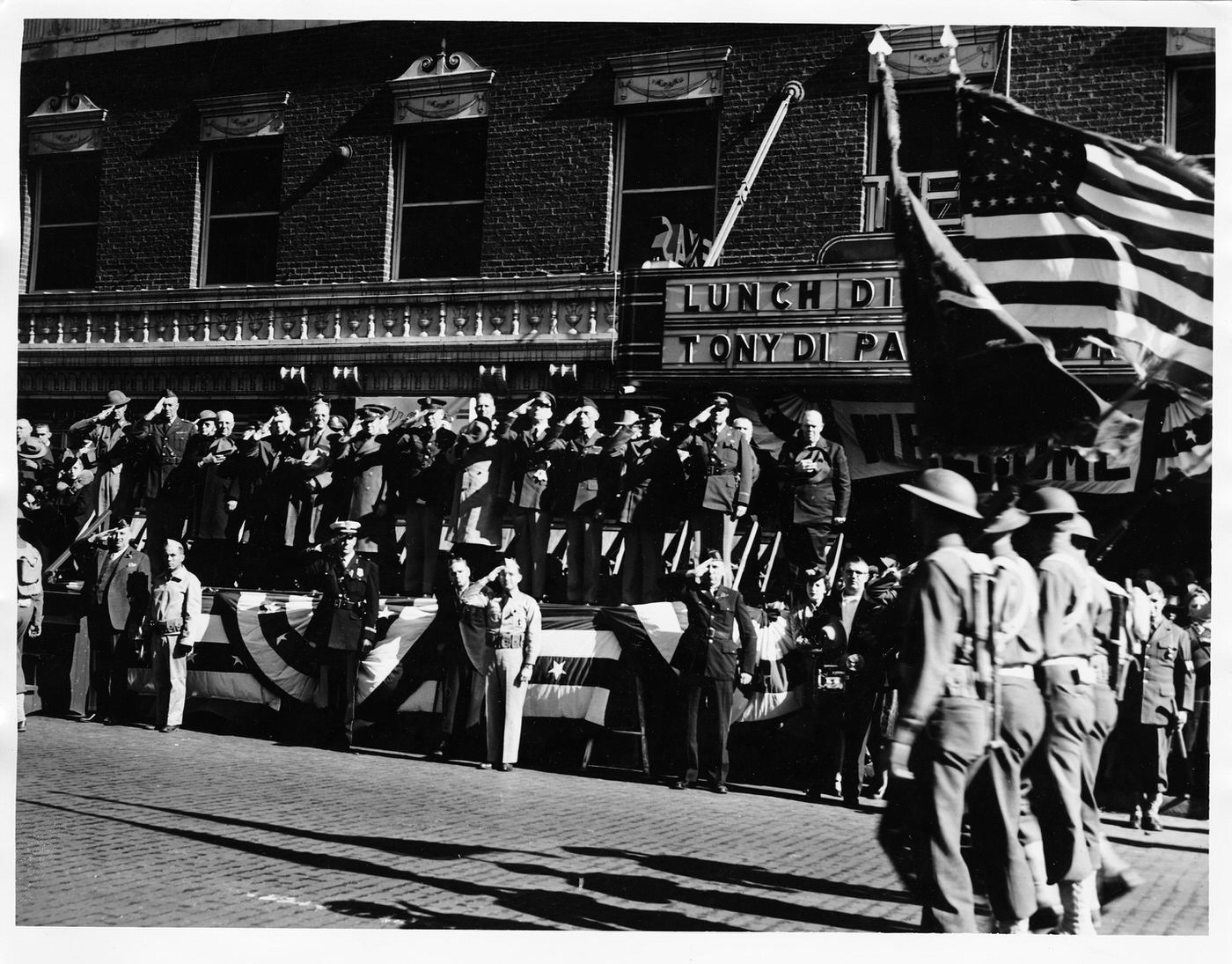
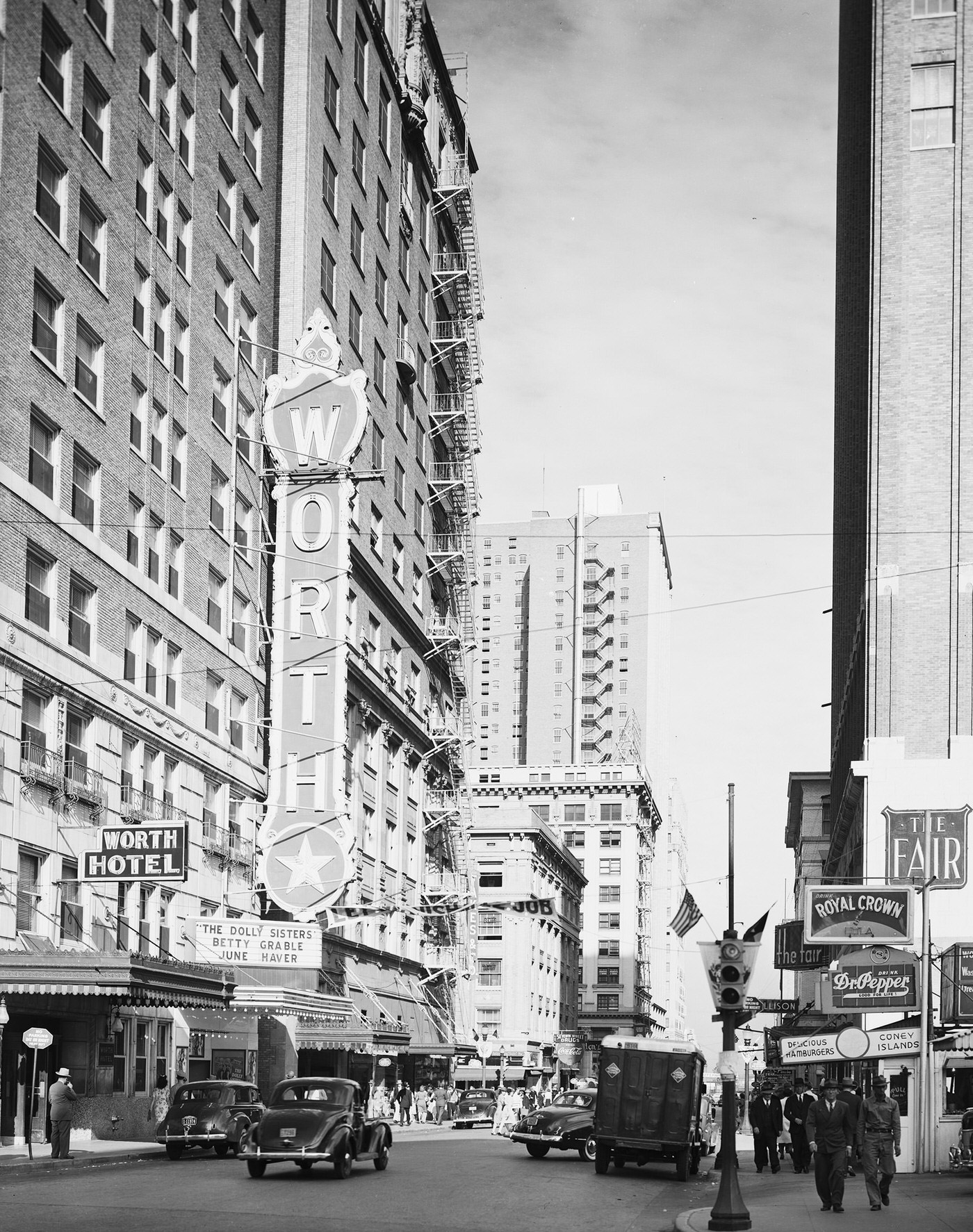
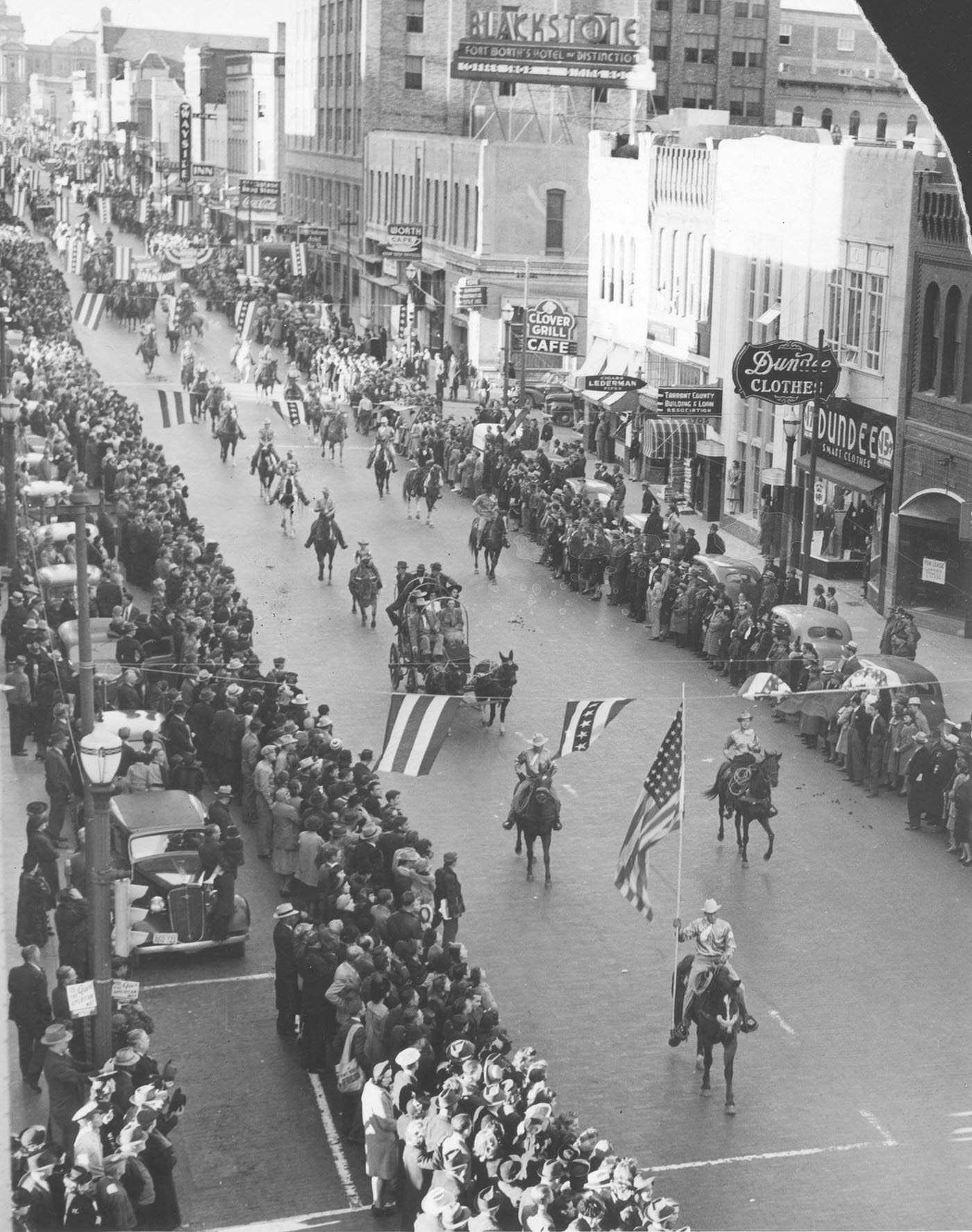
Parades were a regular part of Fort Worth life throughout the decade. The All-American Rodeo and Horse Show brought horses and riders through downtown streets in 1940 and again in 1946. Knights Templar paraded before hundreds of onlookers during their 88th conclave in 1941, with the Greenville High School Band marching in front of the Star-Telegram building. The 1940 parade celebrating the movie premiere of “The Westerner” drew crowds in front of the Worth Hotel. Fort Worth always found a reason to fill its streets.
The All American Rodeo and Horse Show Parade in downtown Fort Worth, Texas, 1940Knights Templar of Texas paraded before hundreds of onlookers in downtown Fort Worth, Texas, as a feature of their 88th conclave, 1941Parade through downtown Fort Worth in front of the Worth Hotel to celebrate the movie premier of “The Westerner”1940
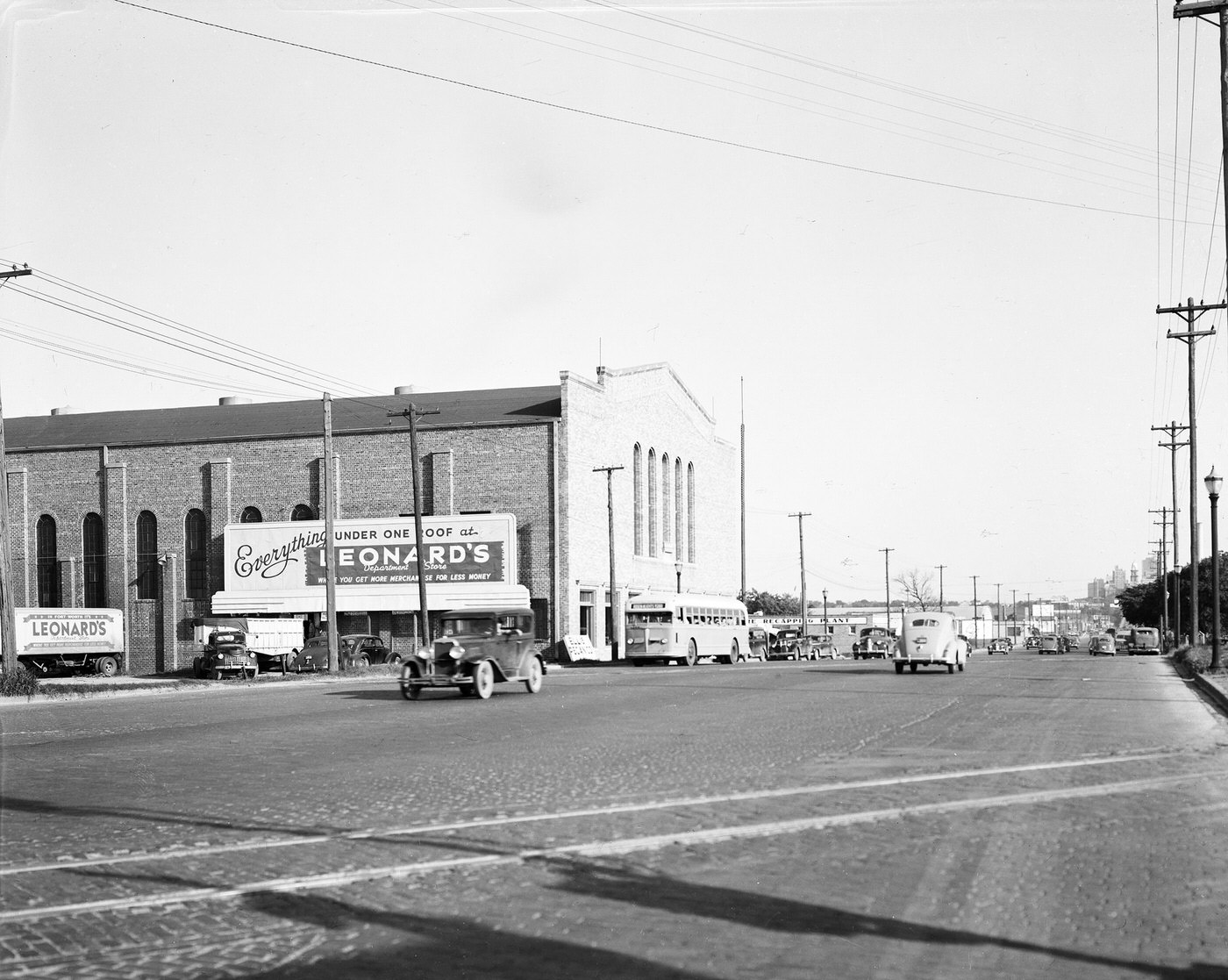
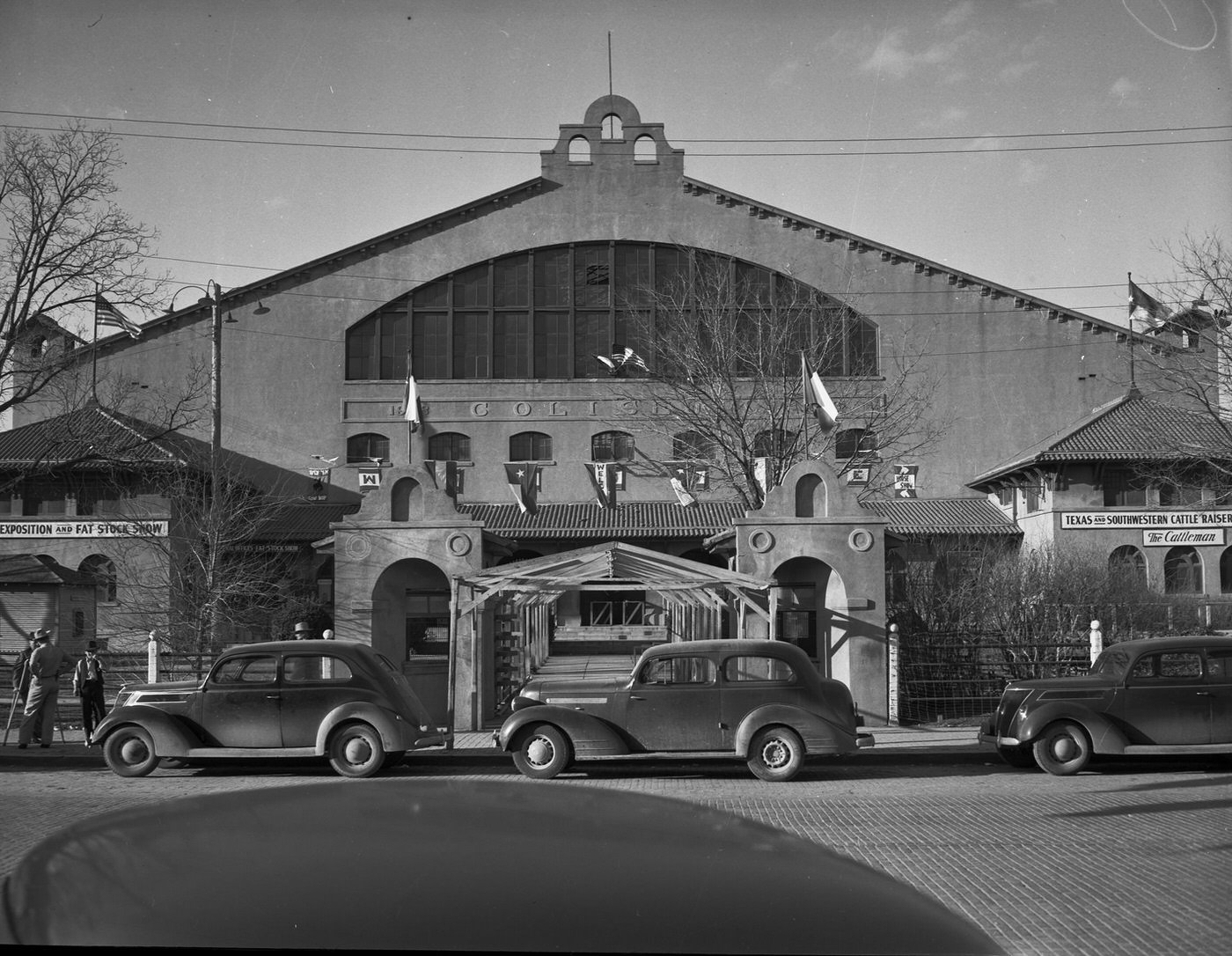
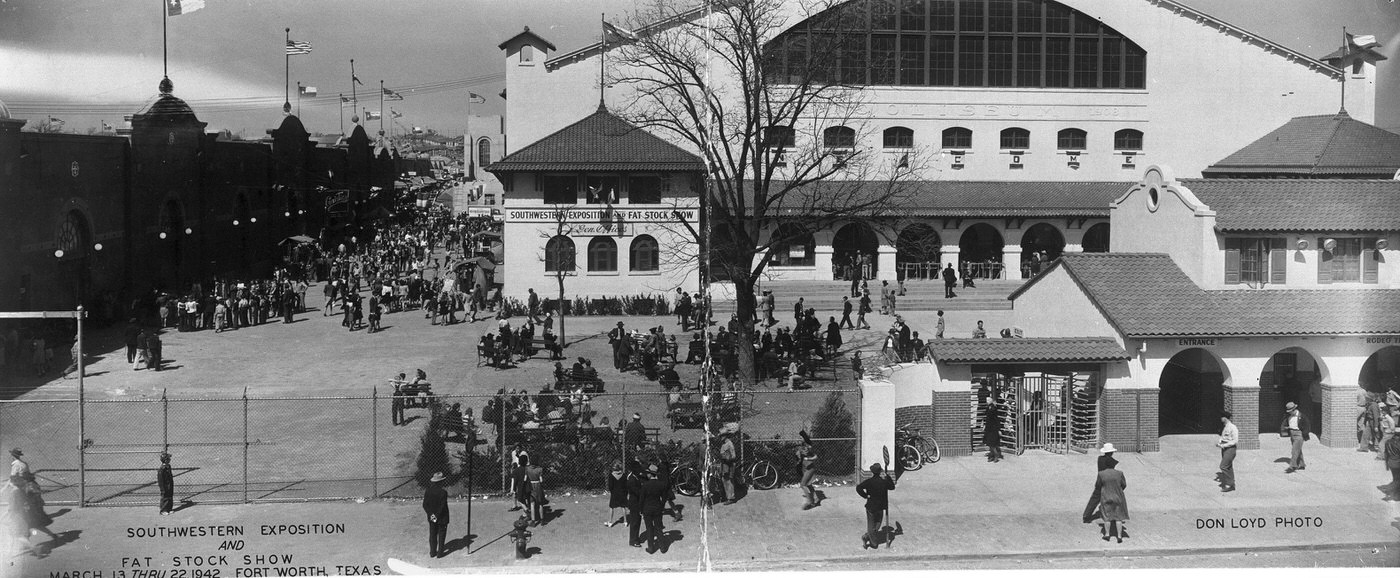
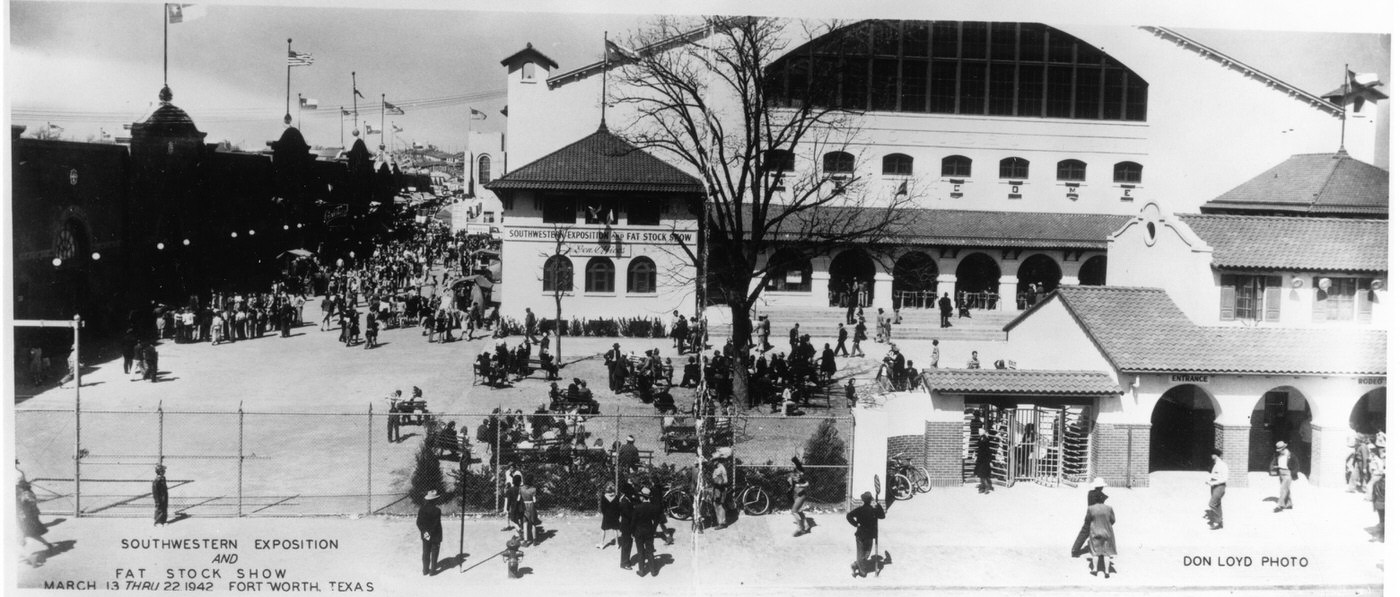
The Southwestern Exposition and Fat Stock Show at the North Side Coliseum was one of the city’s biggest annual events. Cars lined up along the curbs outside the Coliseum, and inside, the crowds were thick. The Fat Stock Show ran through the war years without stopping, and the stockyards surrounding it stayed busy no matter what else was happening in the world. Fort Worth had always been a cattle town, and the 1940s did nothing to change that.
North Side Coliseum, home of the Southwestern Exposition and Fat Stock Show, 1940North Side Coliseum during Southwest Exposition & Fat Stock Show, crowds, Fort Worth stockyards, 1942
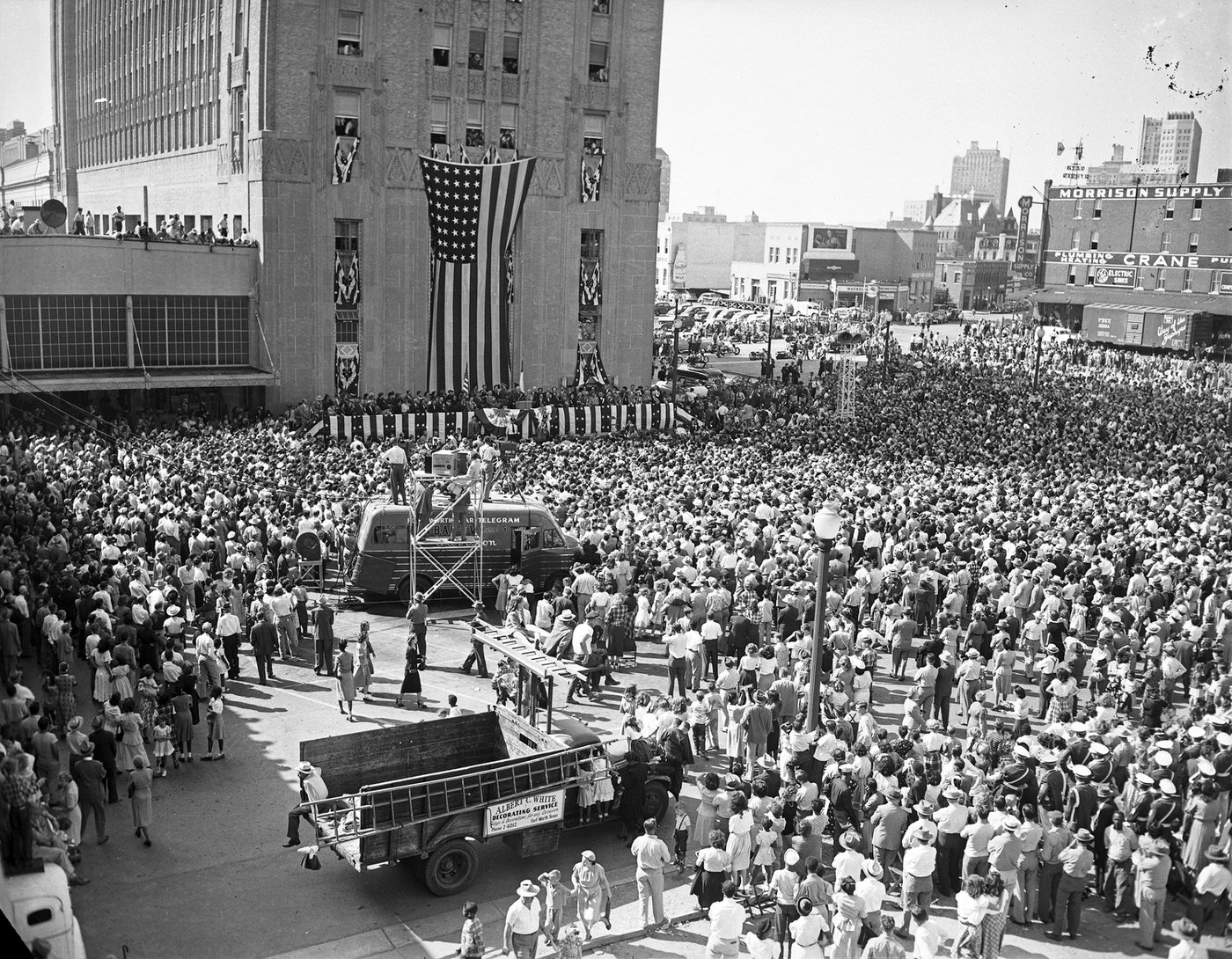
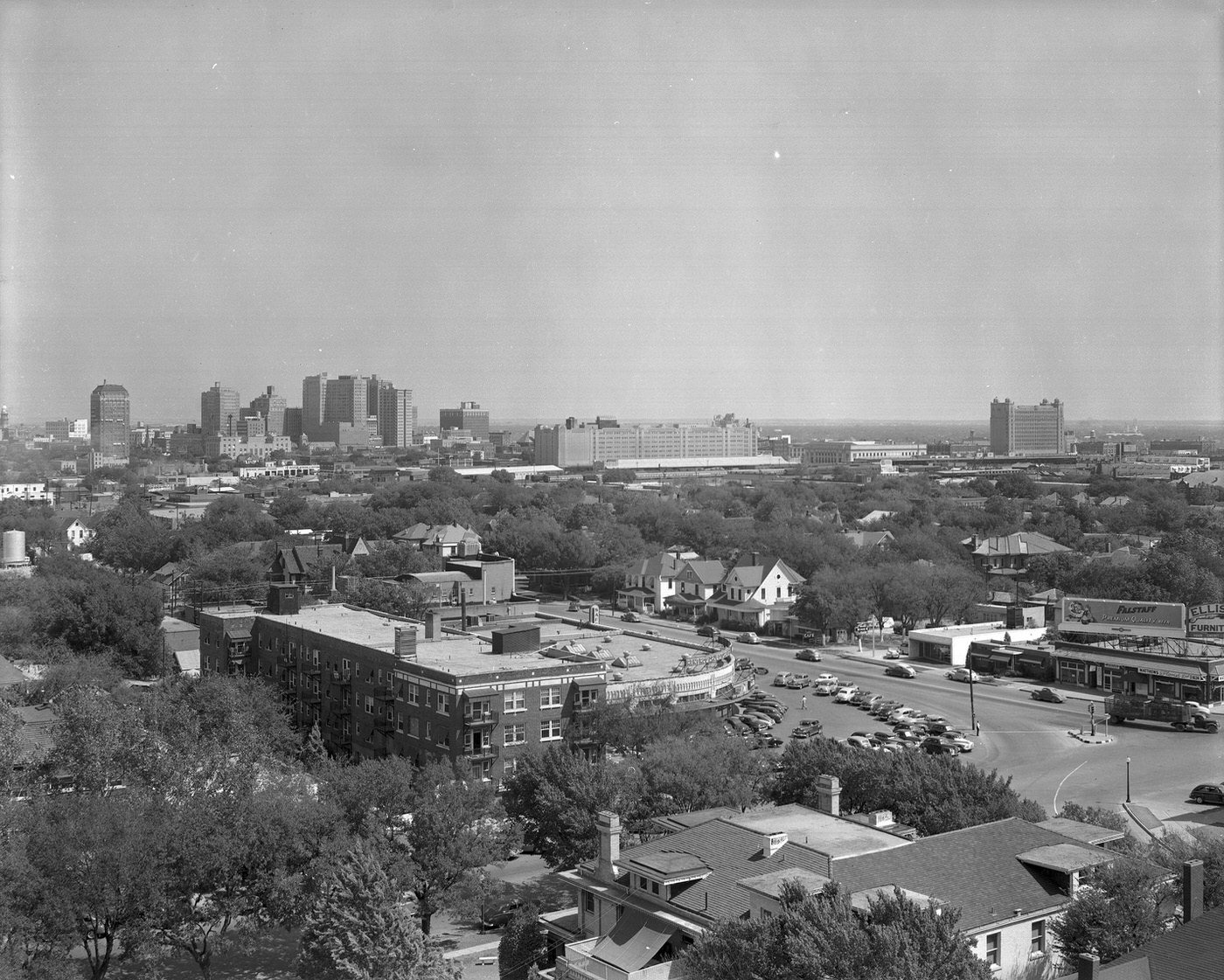
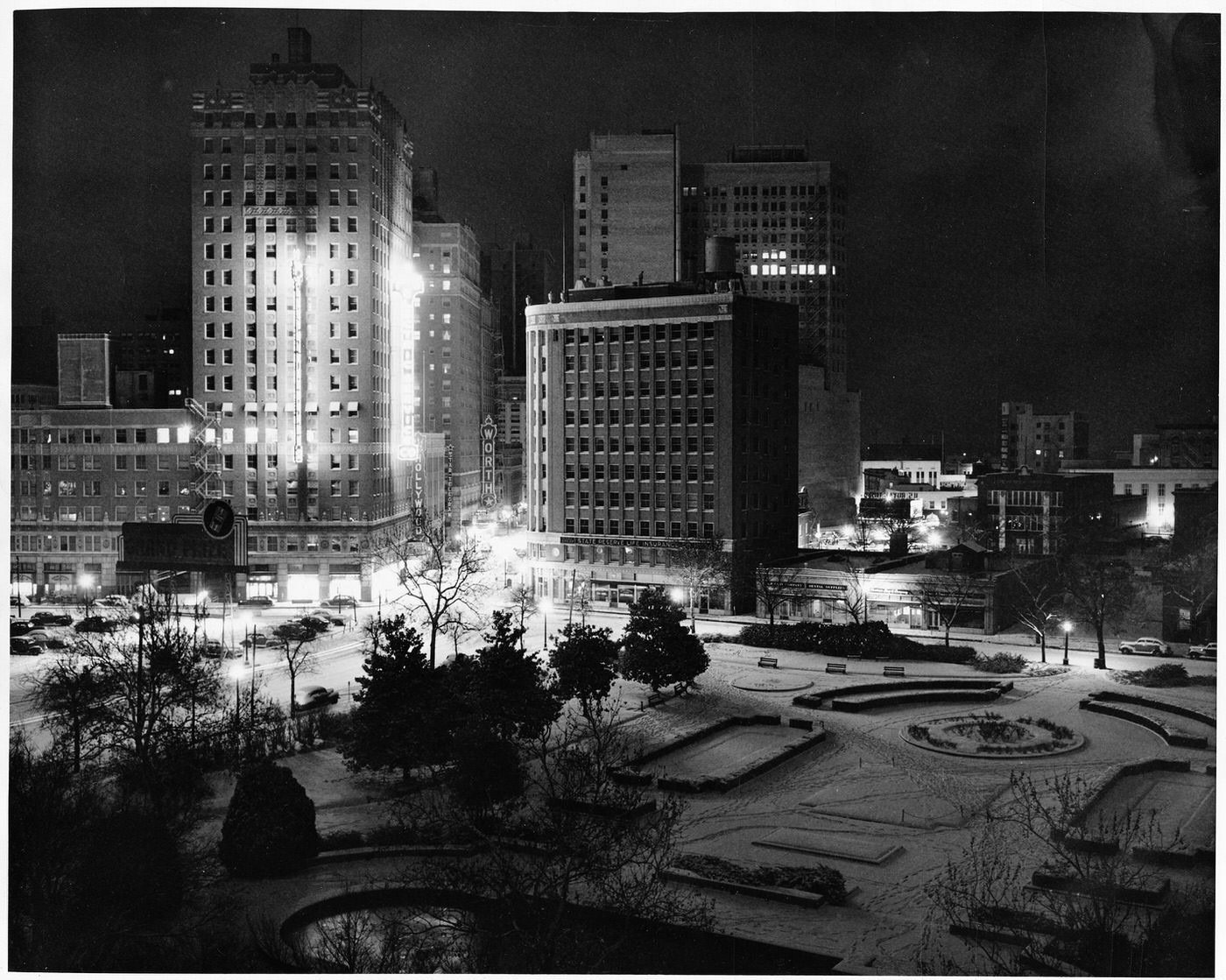
President Harry Truman visited Fort Worth in 1948, drawing large crowds into the streets. That same year, the Tarrant County Courthouse and the Paddock Viaduct appeared under a blanket of snow — a rare sight in North Texas. The city’s skyline, photographed from the corner of Henderson Street and Pennsylvania Avenue, showed a dense cluster of mid-rise buildings that had grown up over decades of steady development.
Crowd during President Truman’s visit to Fort Worth, 1948Tarrant County courthouse looking north on Fort Worth’s Main Street with the snow covered Paddock Viaduct, 1948Skyline of Fort Worth, Texas, from Methodist Hospital, corner of Henderson Street and Pennsylvania Avenue, 1948.
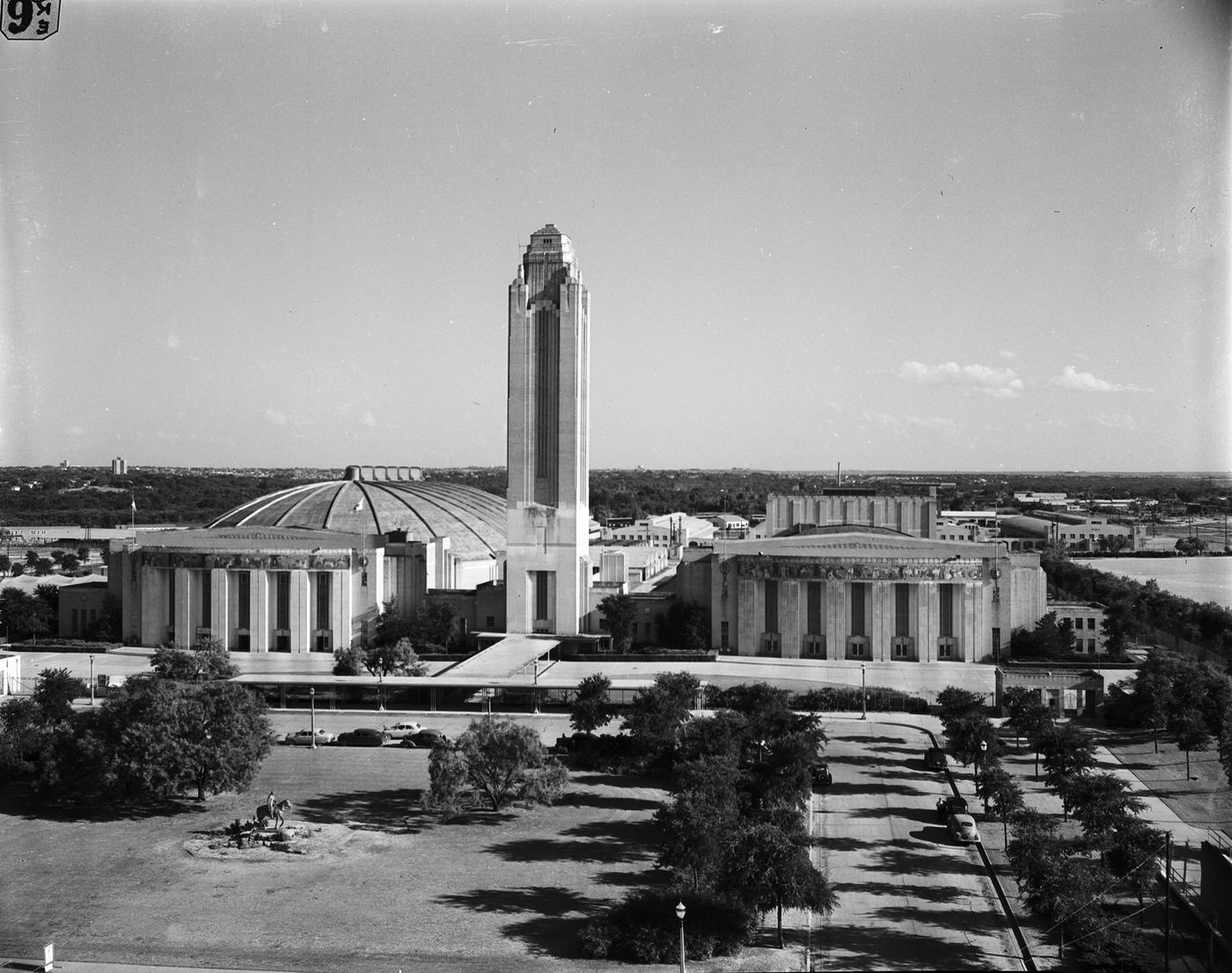
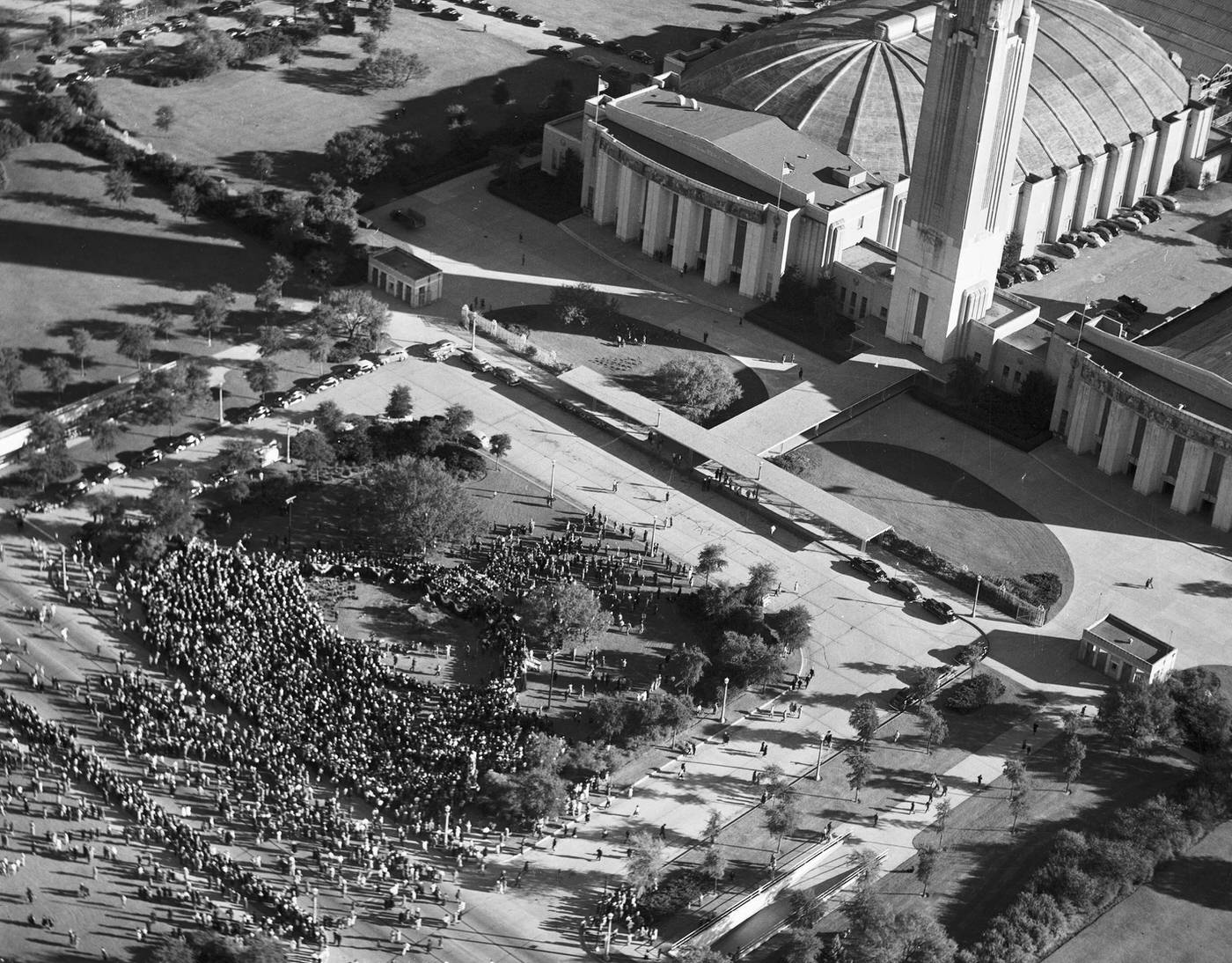
The Will Rogers Memorial complex was unveiled in 1947, giving the city a landmark that would anchor its cultural identity for decades to come. The front view of the complex showed the scale of the project — a coliseum, arena, and equestrian statue combined into one site that reflected Fort Worth’s western heritage. The statue itself was the centerpiece of a ceremony that drew a large crowd, cementing the memorial’s place in the city’s story.
Front view of Will Rogers Memorial complex, 1949Unvieiling of Will Rogers Statue, 1947
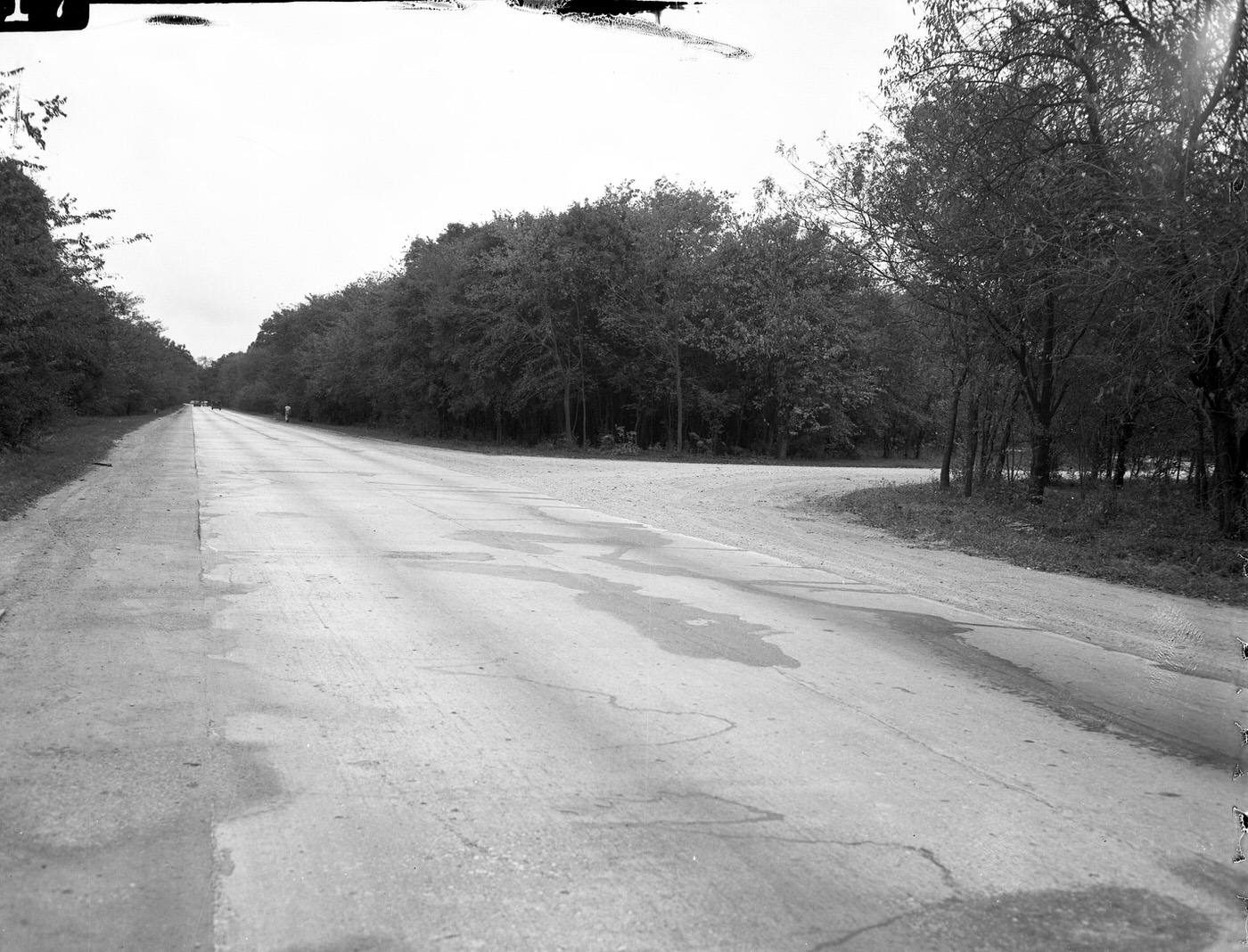
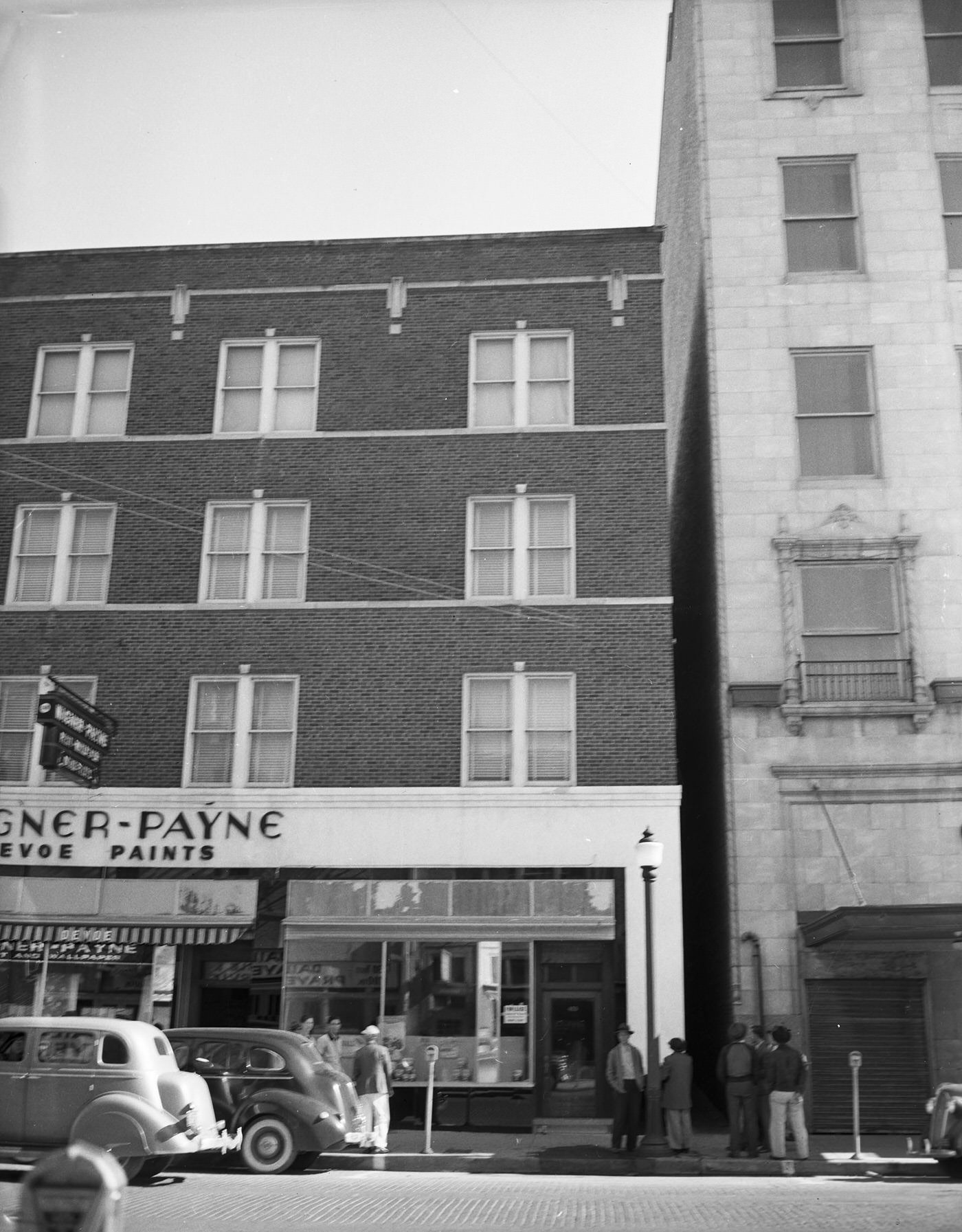
Crime and tragedy also left their marks on the decade. On the morning of October 30, 1946, the body of Donna Kathleen Zeck, 25, the bride-to-be of a Texas Christian University basketball player, was found on University Drive near Crestline Road, close to the winding approach to the Botanic Garden. Captain Mark R. Stephens discovered her while driving his wife to the hospital. Earlier in the decade, E. A. Larkin, 70, plunged to his death from the Ladd Furniture and Carpet Company building in 1941, dying of multiple injuries from the fall.
Death scene on University Drive.1946Ladd Furniture and Carpet Company building, 1941
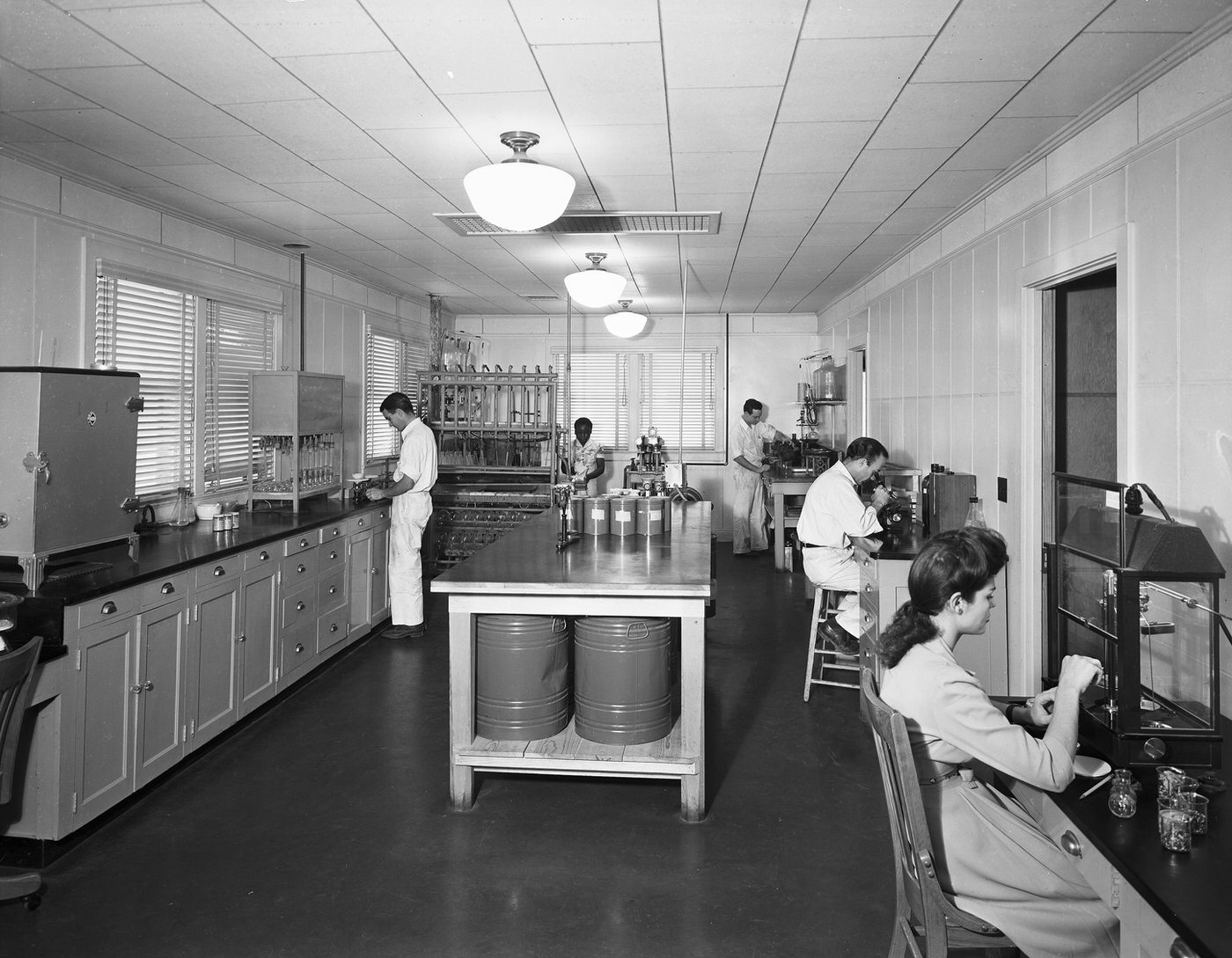
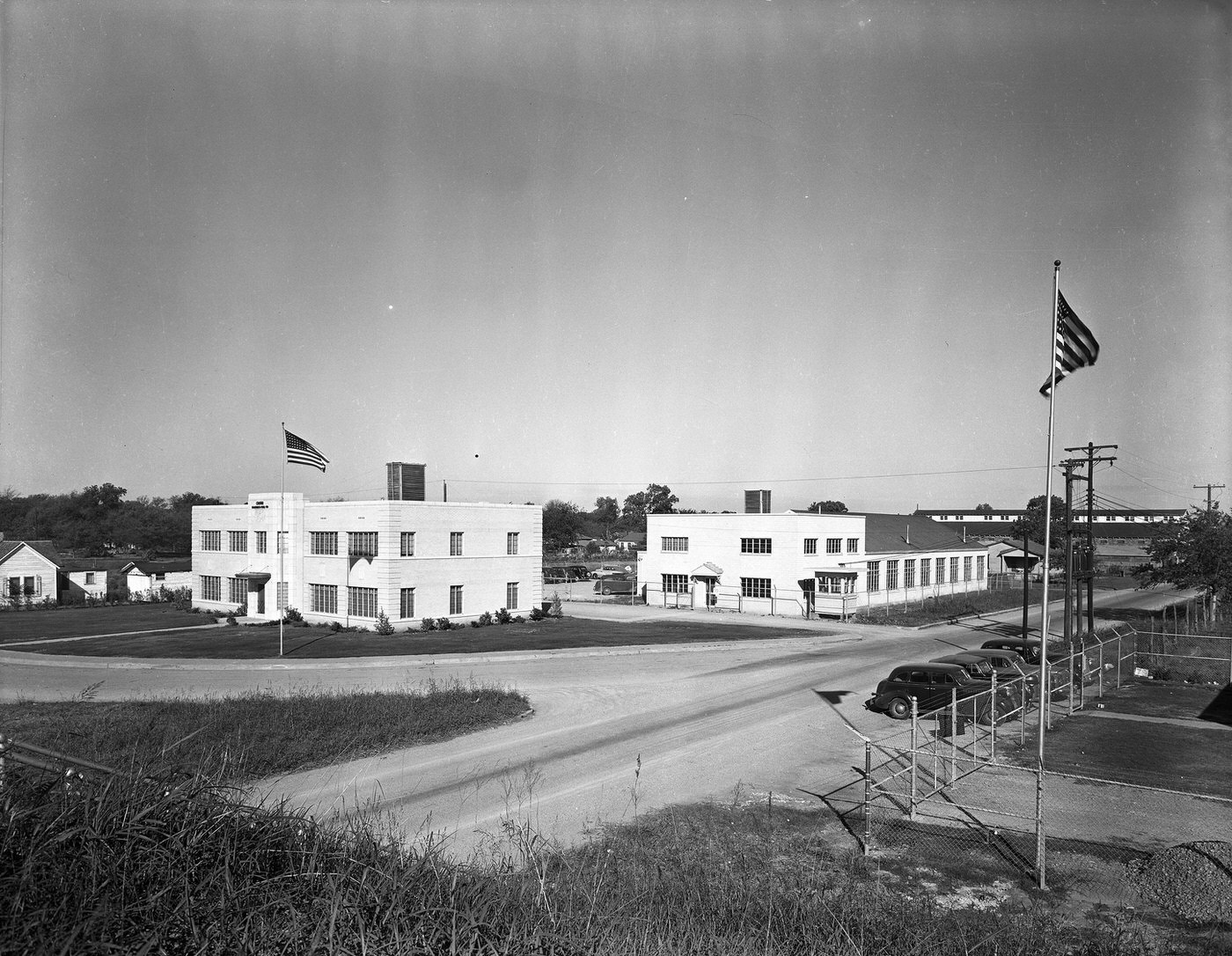
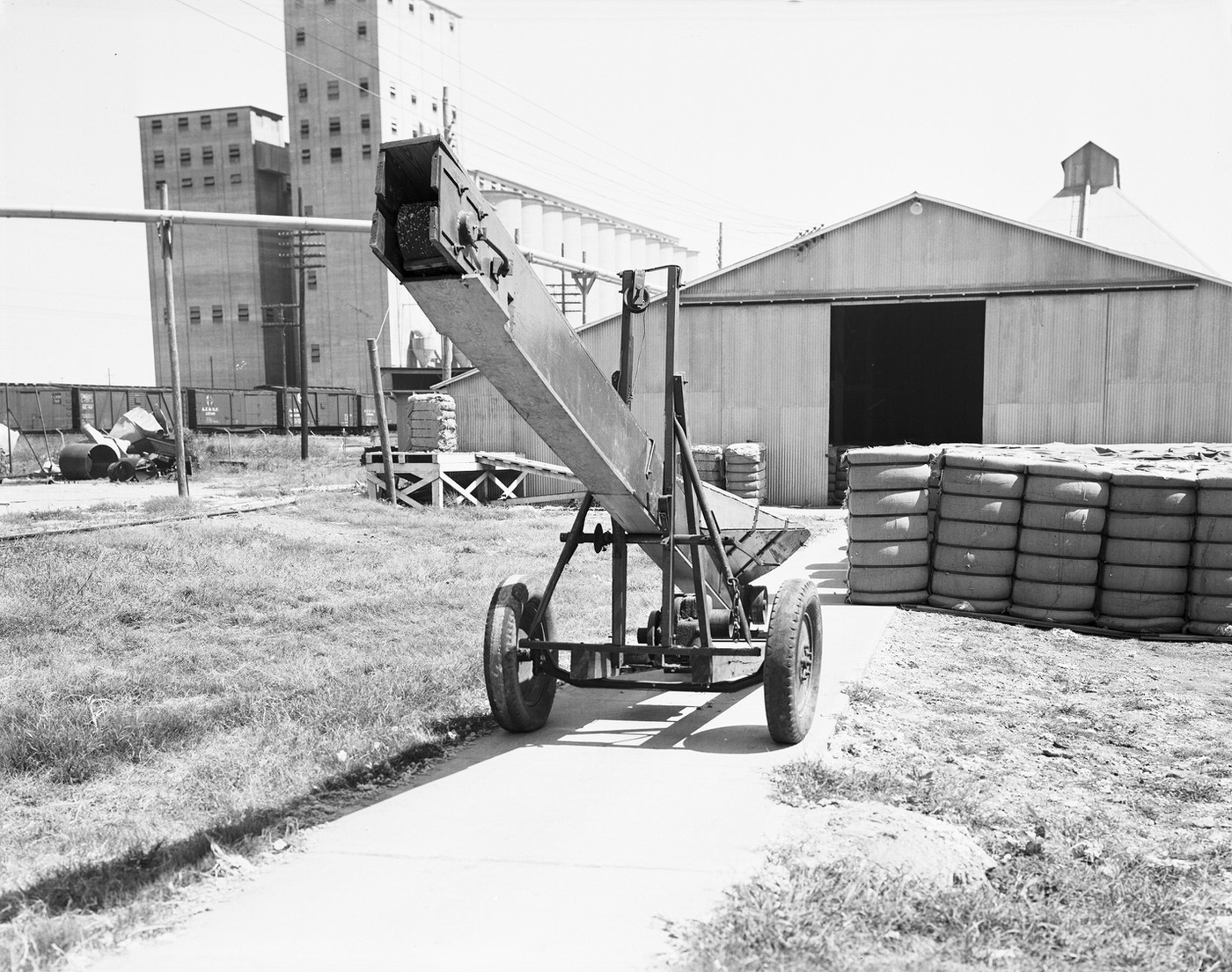
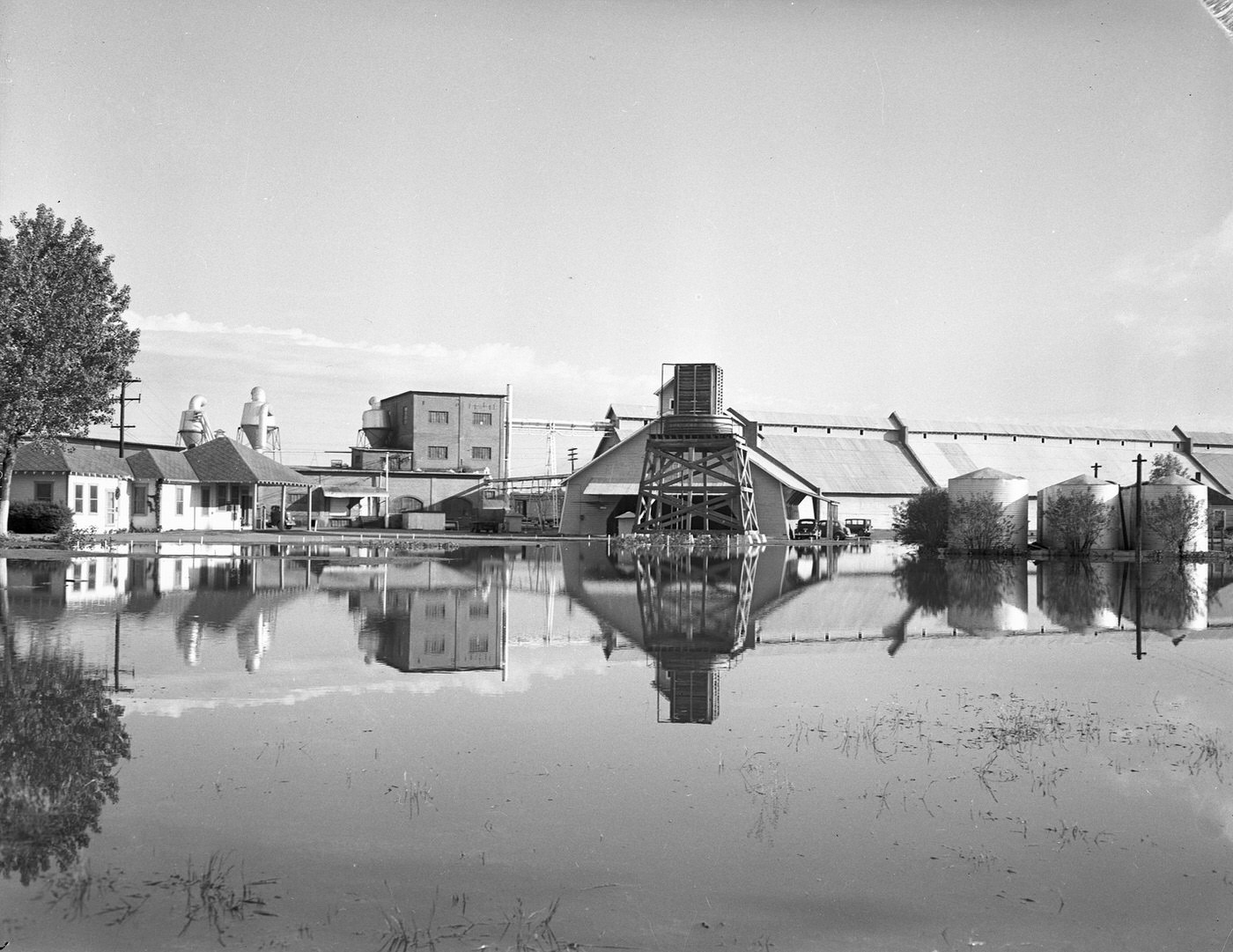
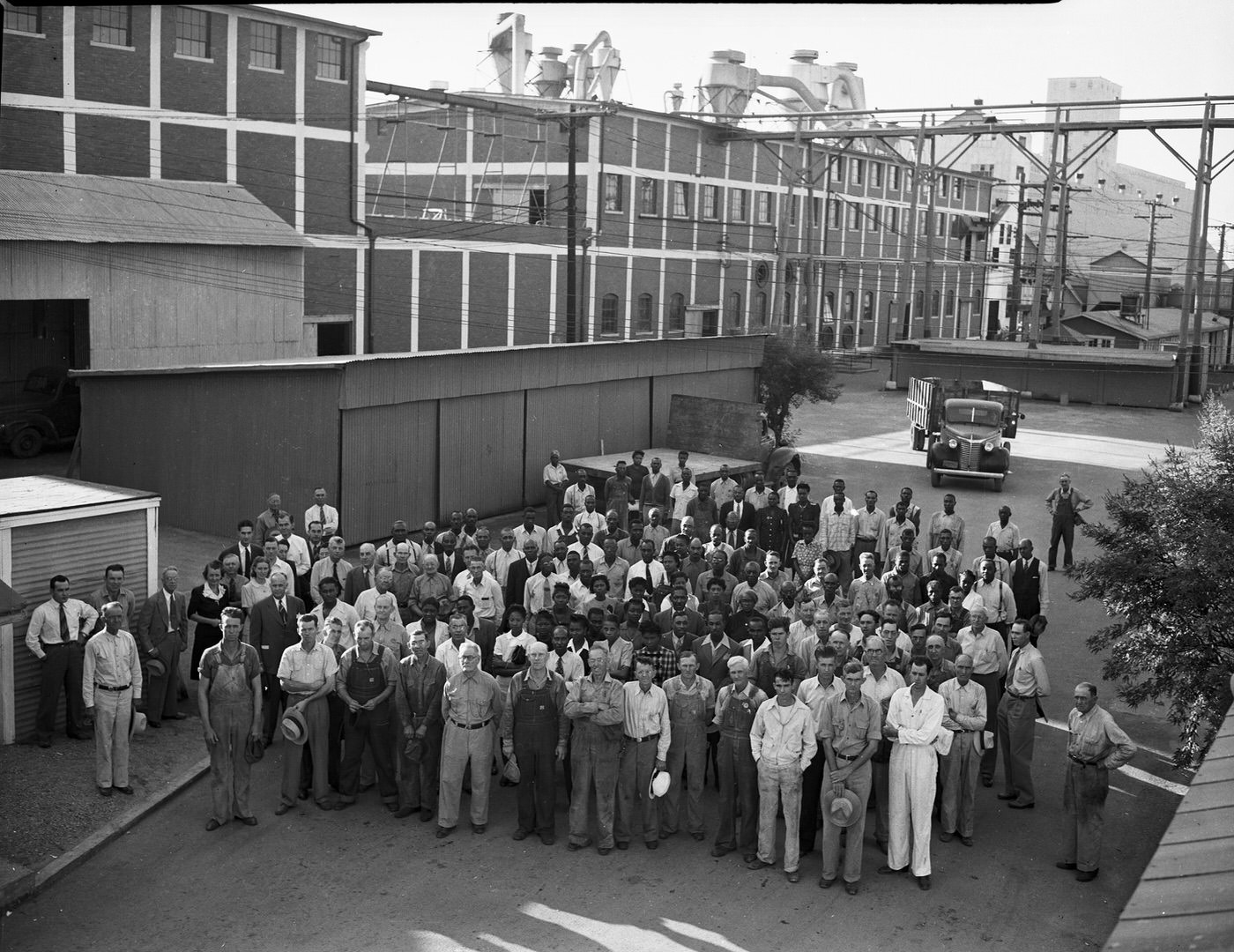
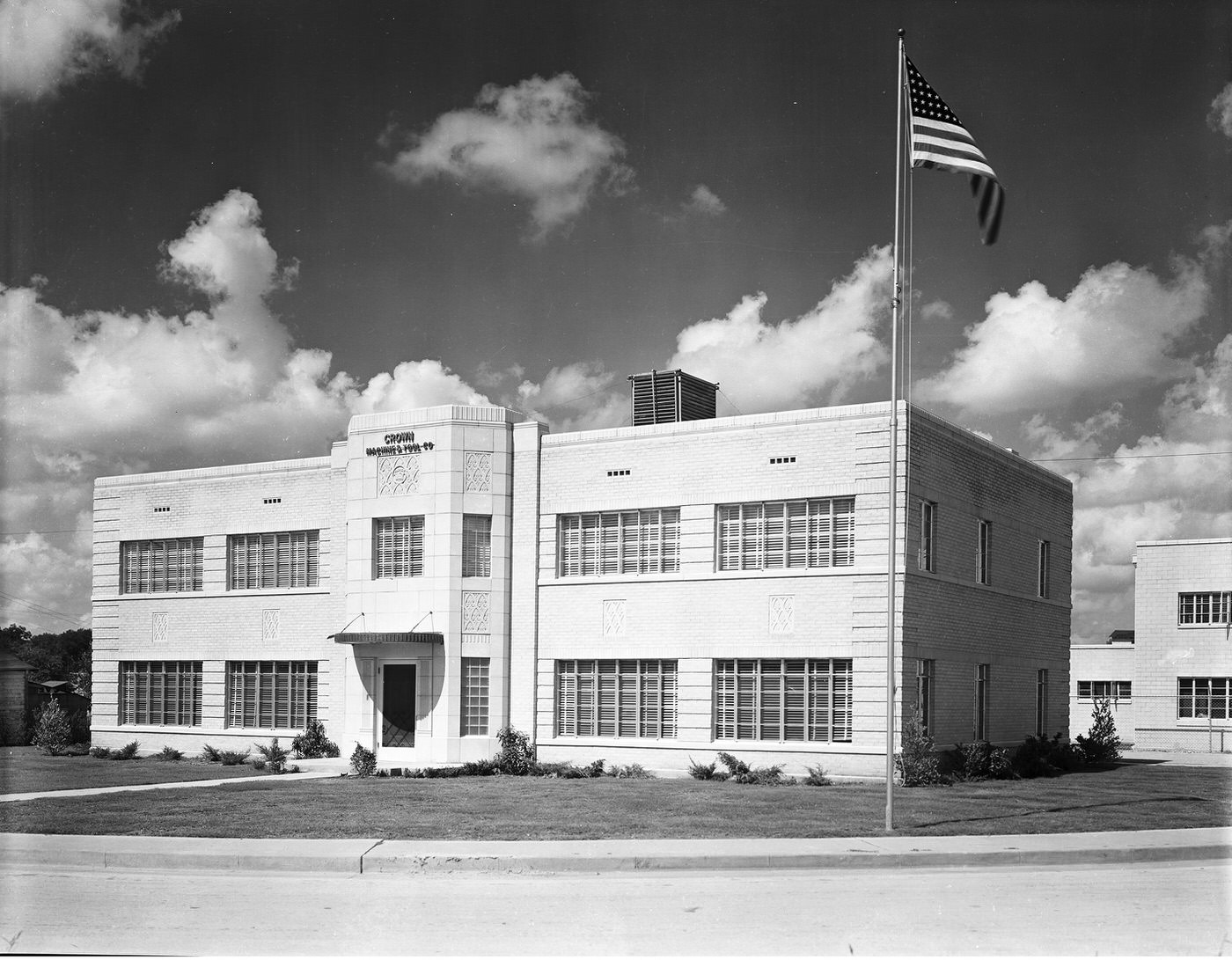
Industry outside the stockyards and bomber plant also kept the city running. The Traders Cotton Oil Mill Company processed cotton at its Fort Worth plant, with workers photographed inside and out across multiple years. Crown Machine and Tool Company at 2800 W. Lancaster operated throughout the war years, its break room and factory floor documented in detail. Hicks Rubber and Salvage Company and the Dickson-Jenkins Manufacturing Company were among the smaller operations that kept thousands employed across the city’s industrial corridors.
Interior of Traders Cotton Oil Mill Co, 1943Crown Machine and Tool Co., 2800 W. Lancaster Avenue, Fort Worth, 1944
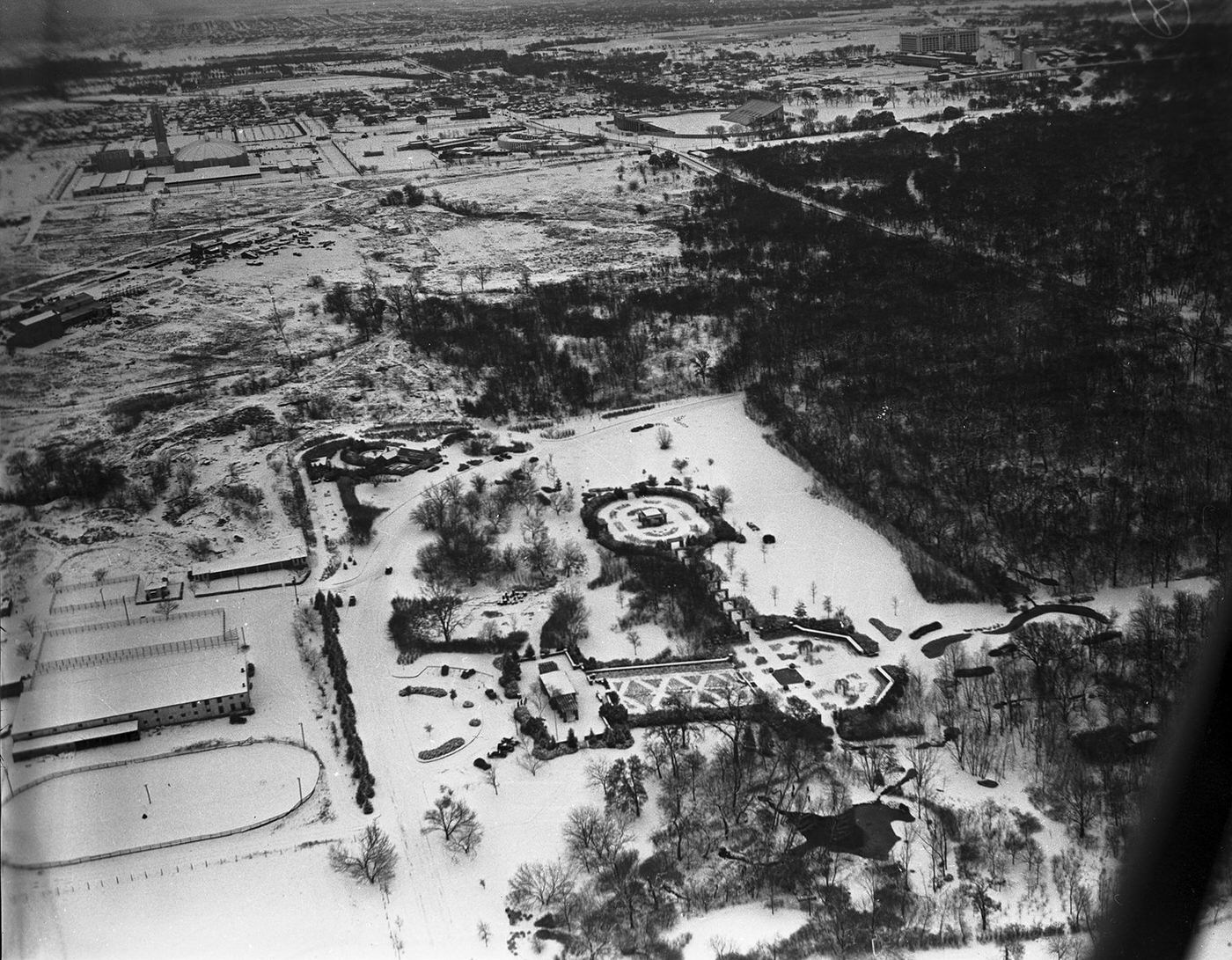
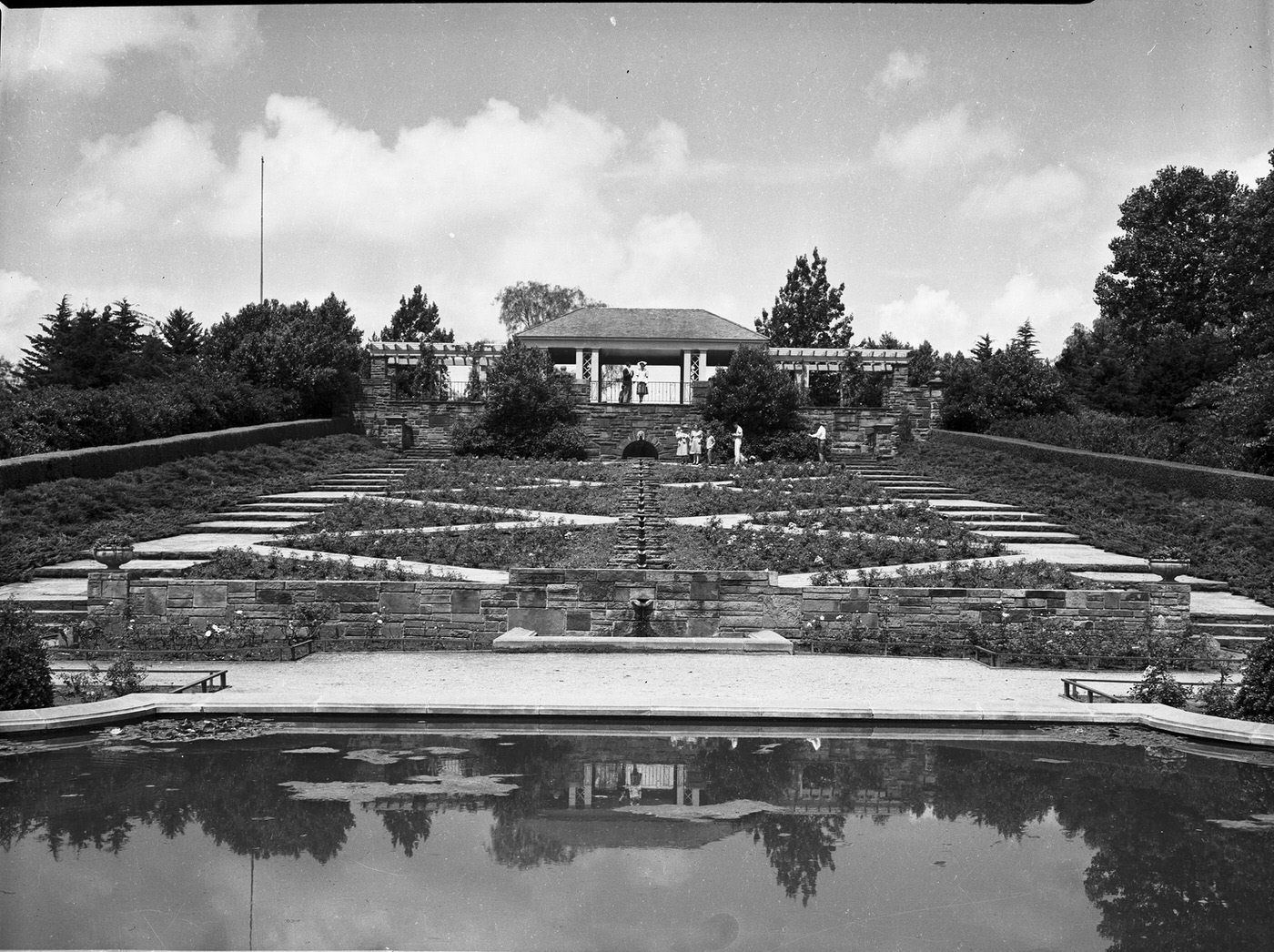
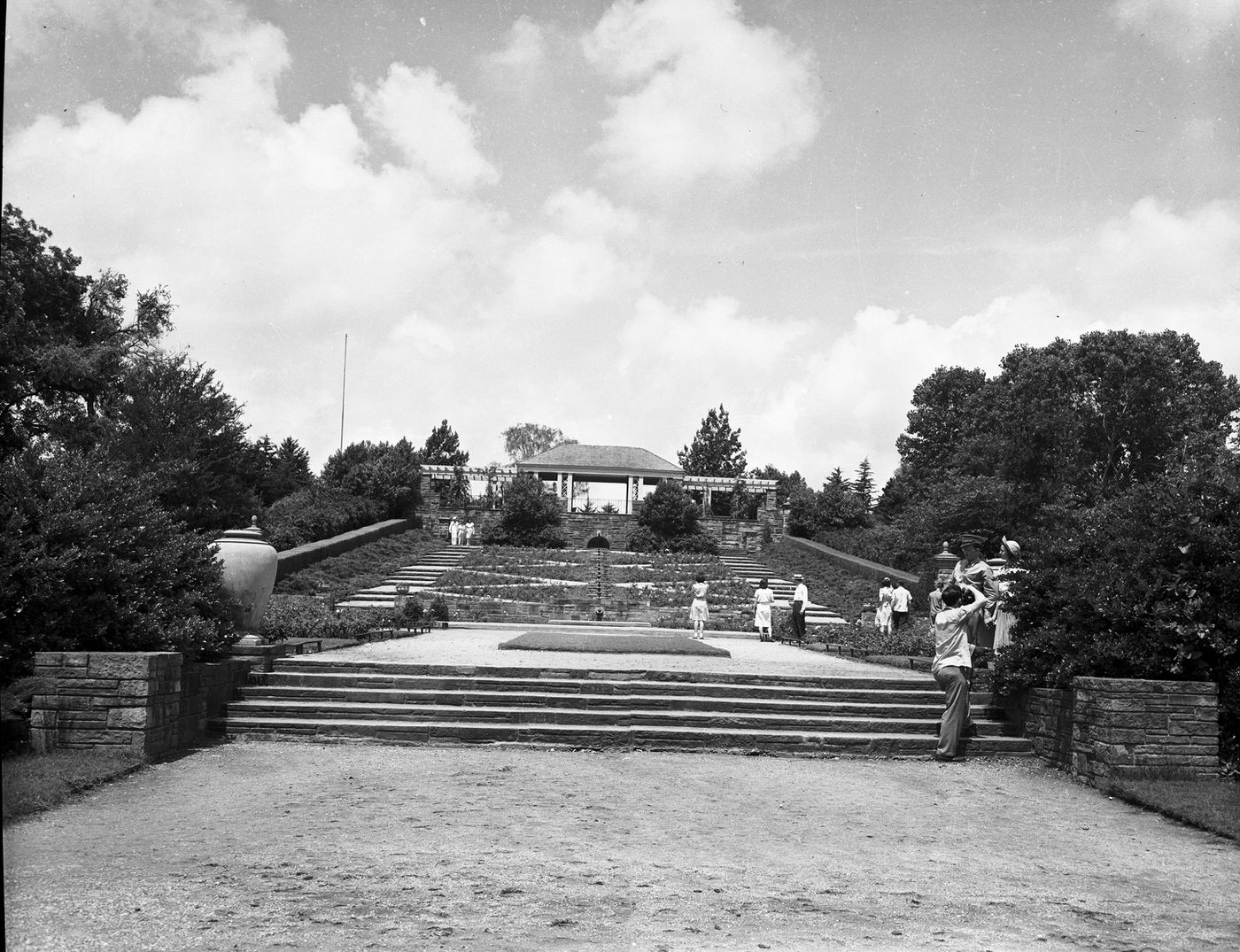
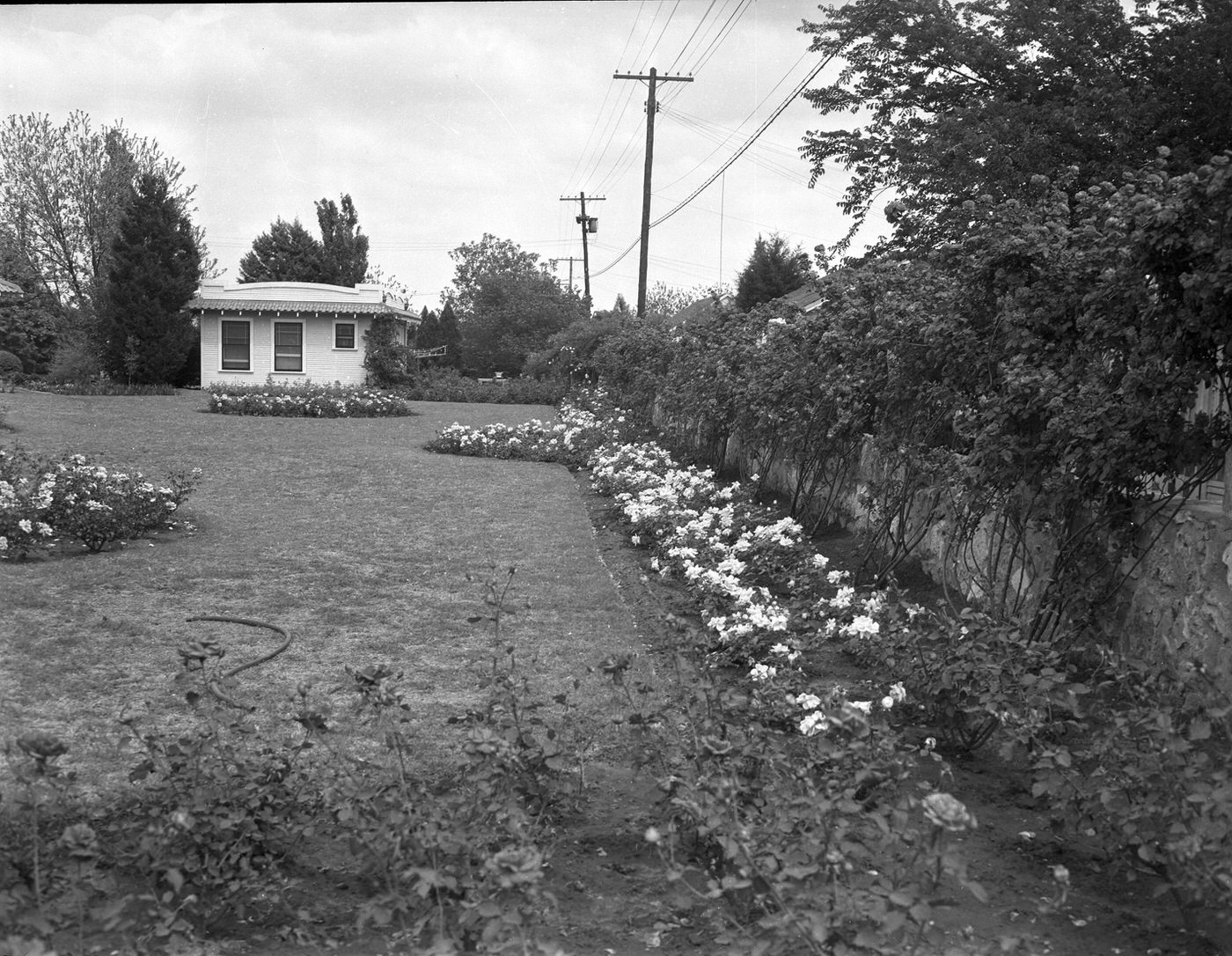
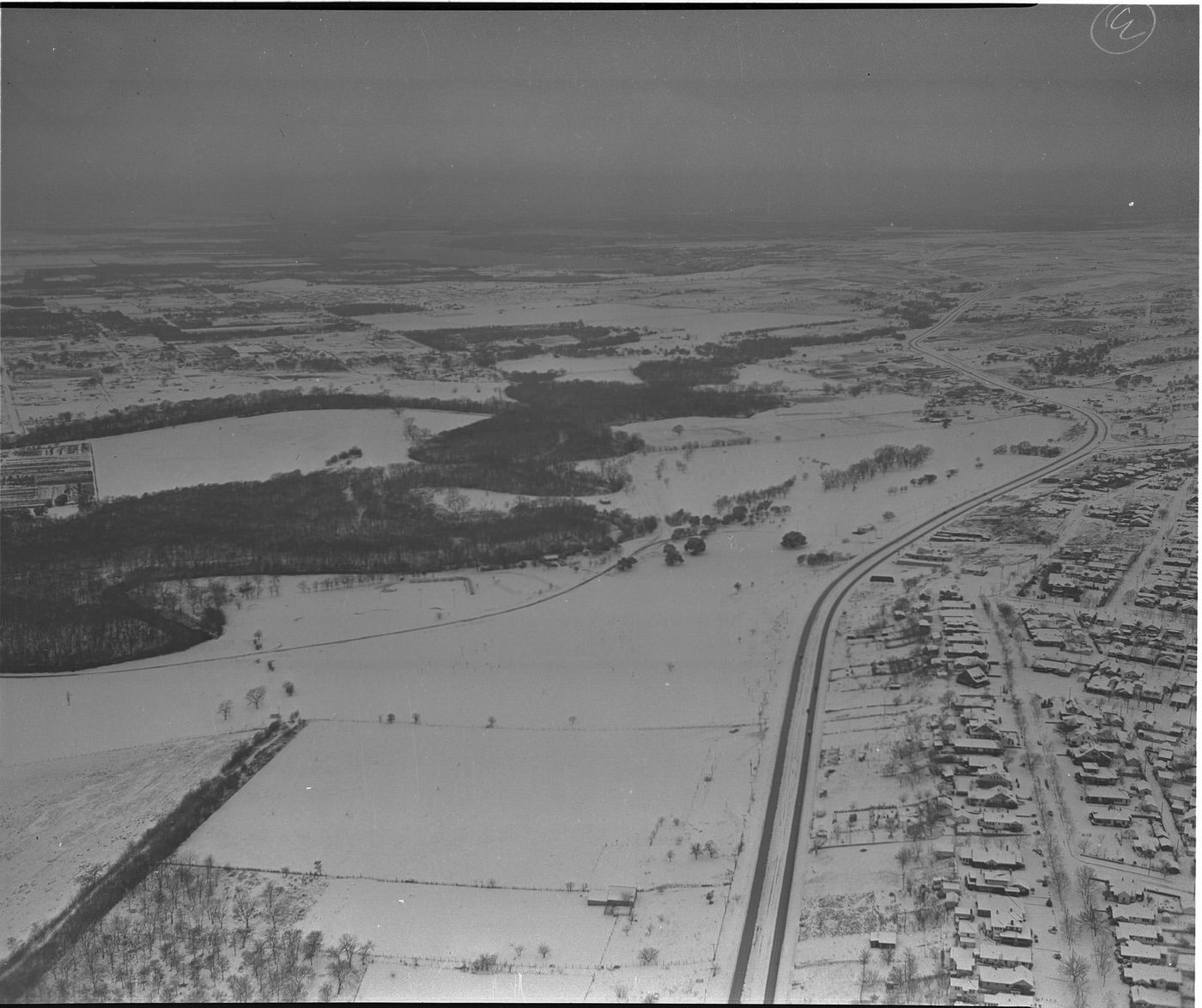
The Fort Worth Botanic Garden offered a quiet escape throughout the decade, even in winter. In early 1940, a thick snowfall covered the Rose Garden, leaving the paths and pergola outlined in white against the gray sky. By spring, the roses bloomed across terraced beds visited by families walking the paths around the central pond. The garden was a constant in a decade that was anything but constant.
Air view of the Rose Garden, Fort Worth, Texas and Botanic Garden, Fort Worth, Texas, covered in snow, 1940Fort Worth Botanic Garden.1942
By the end of the 1940s, Fort Worth was a fundamentally different city than it had been at the start. The Bomber Plant, the military installations, the labor strikes, the floods, and the infrastructure projects had all reshaped it — physically, economically, and demographically. The city that entered the decade as a regional center left it as something larger, with a skyline, an air force base, a television station, and a population hungry for what came next. These photographs are what that transformation looked like from the ground.
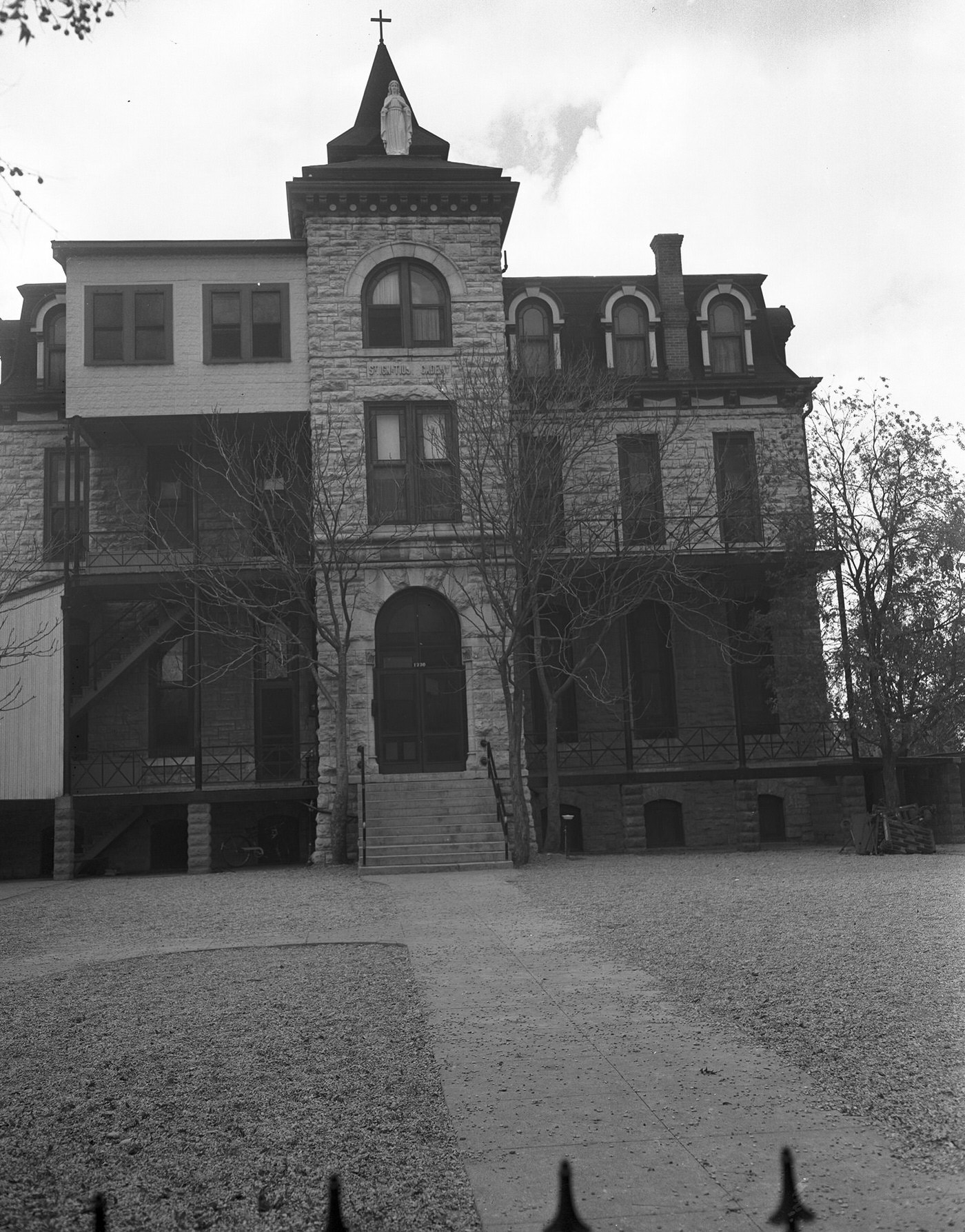
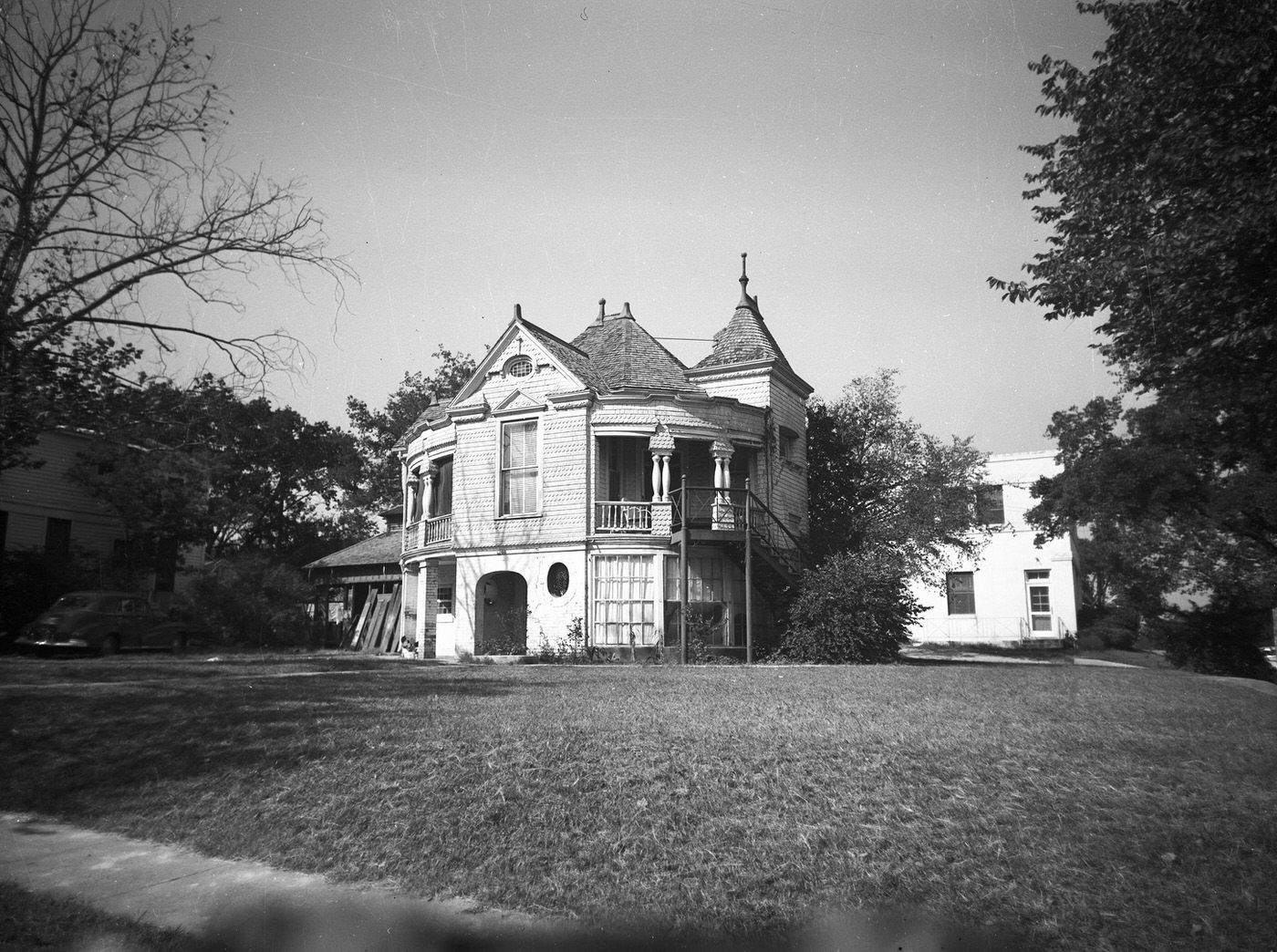
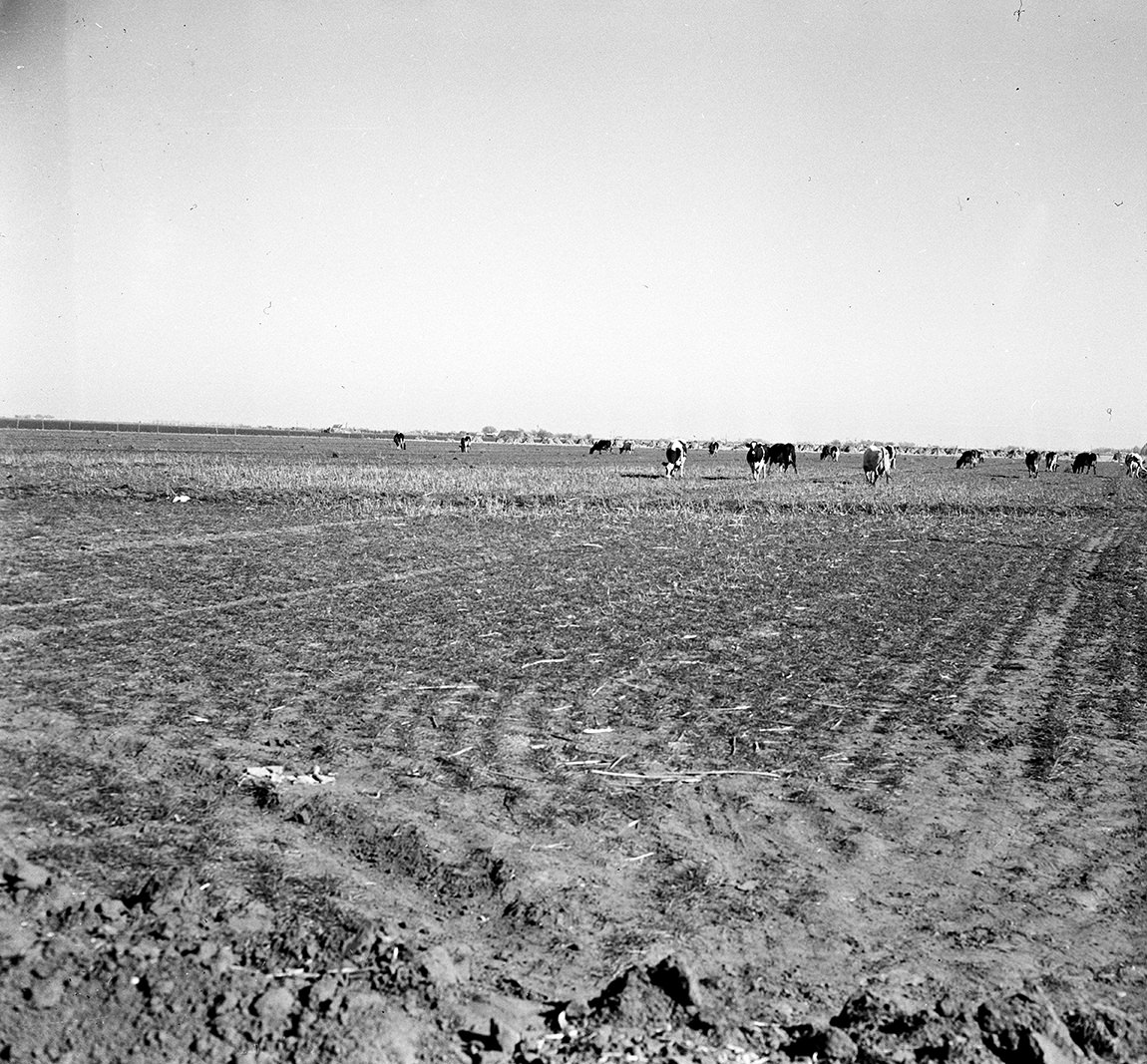
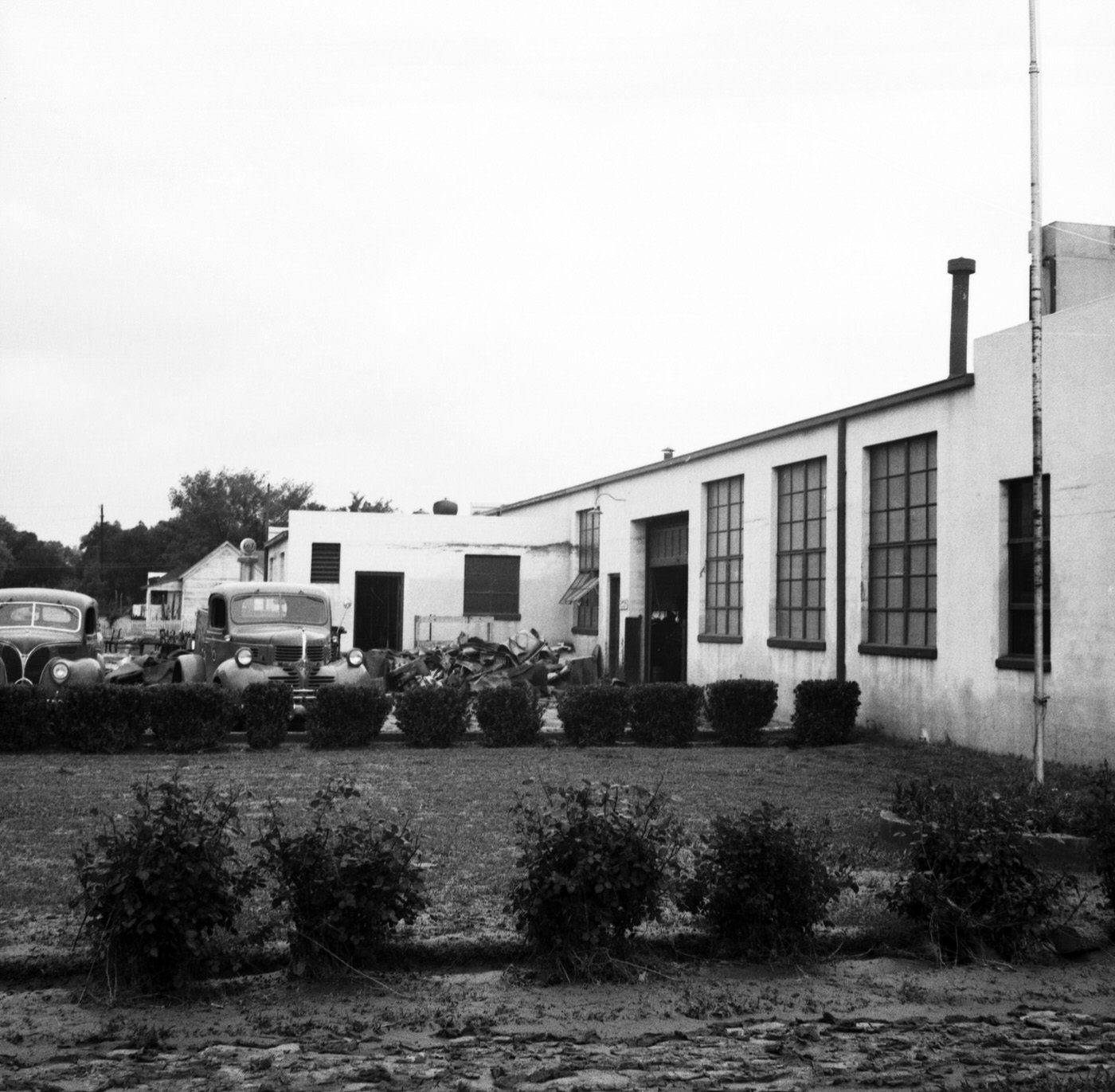
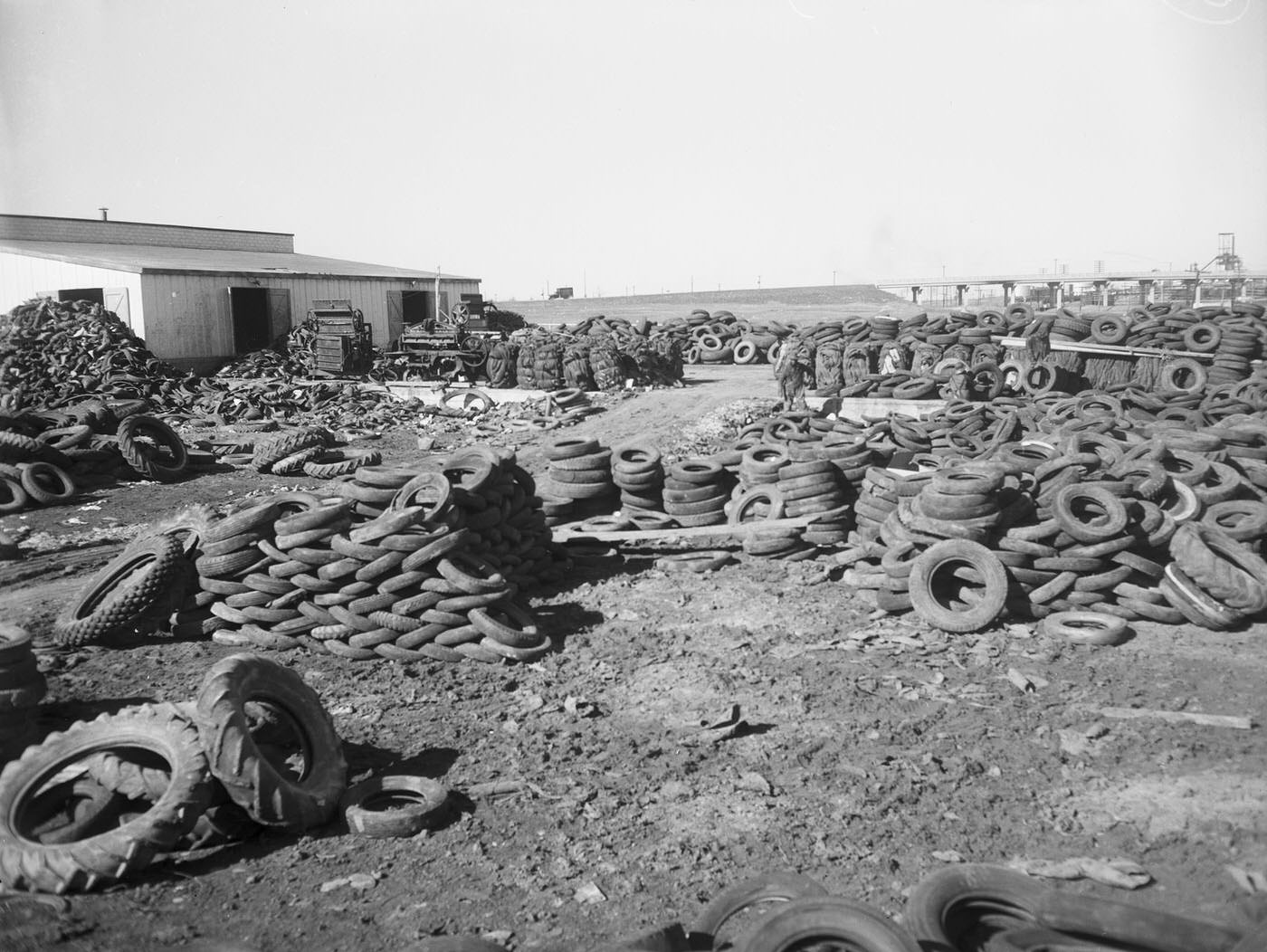
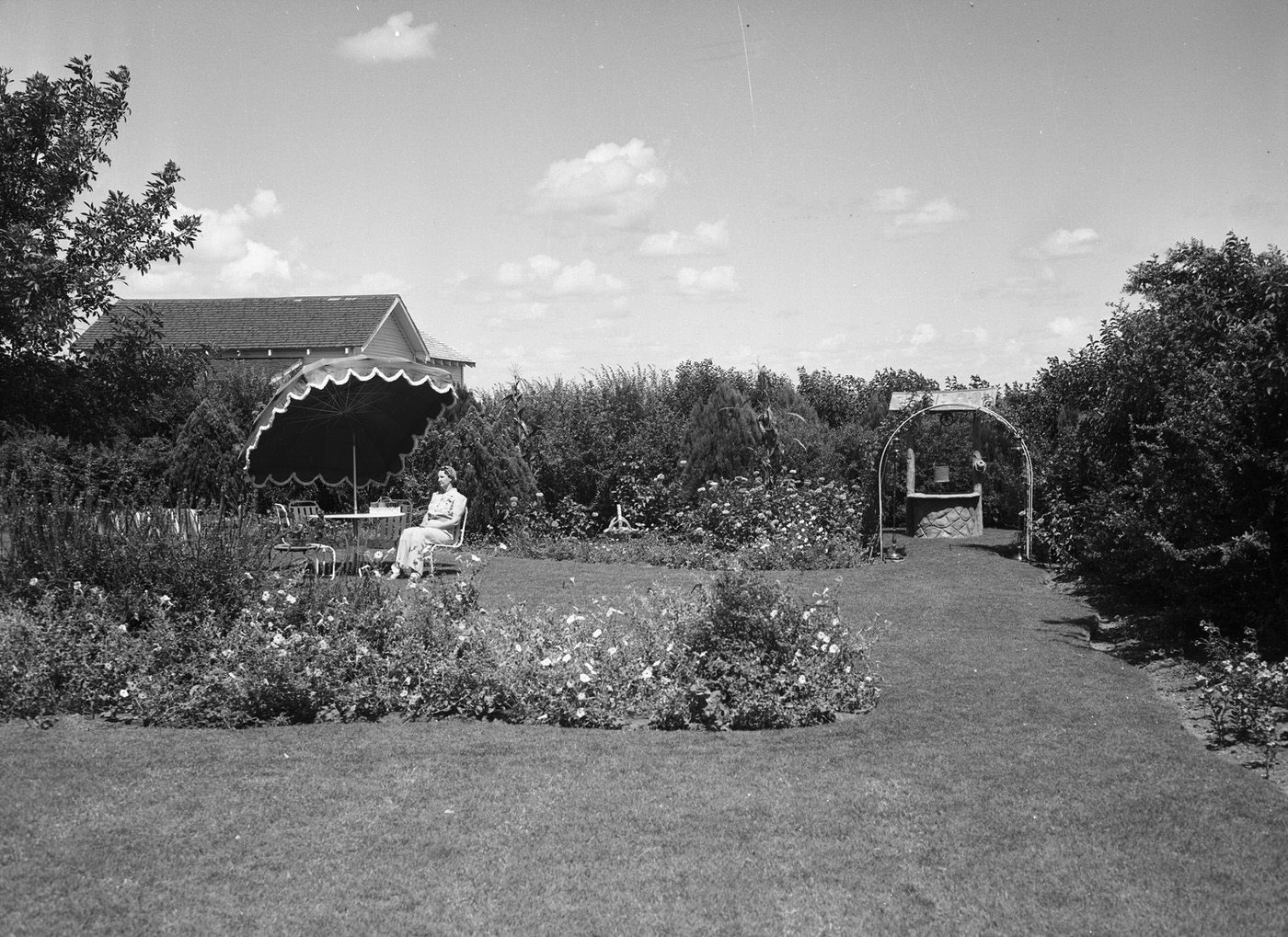
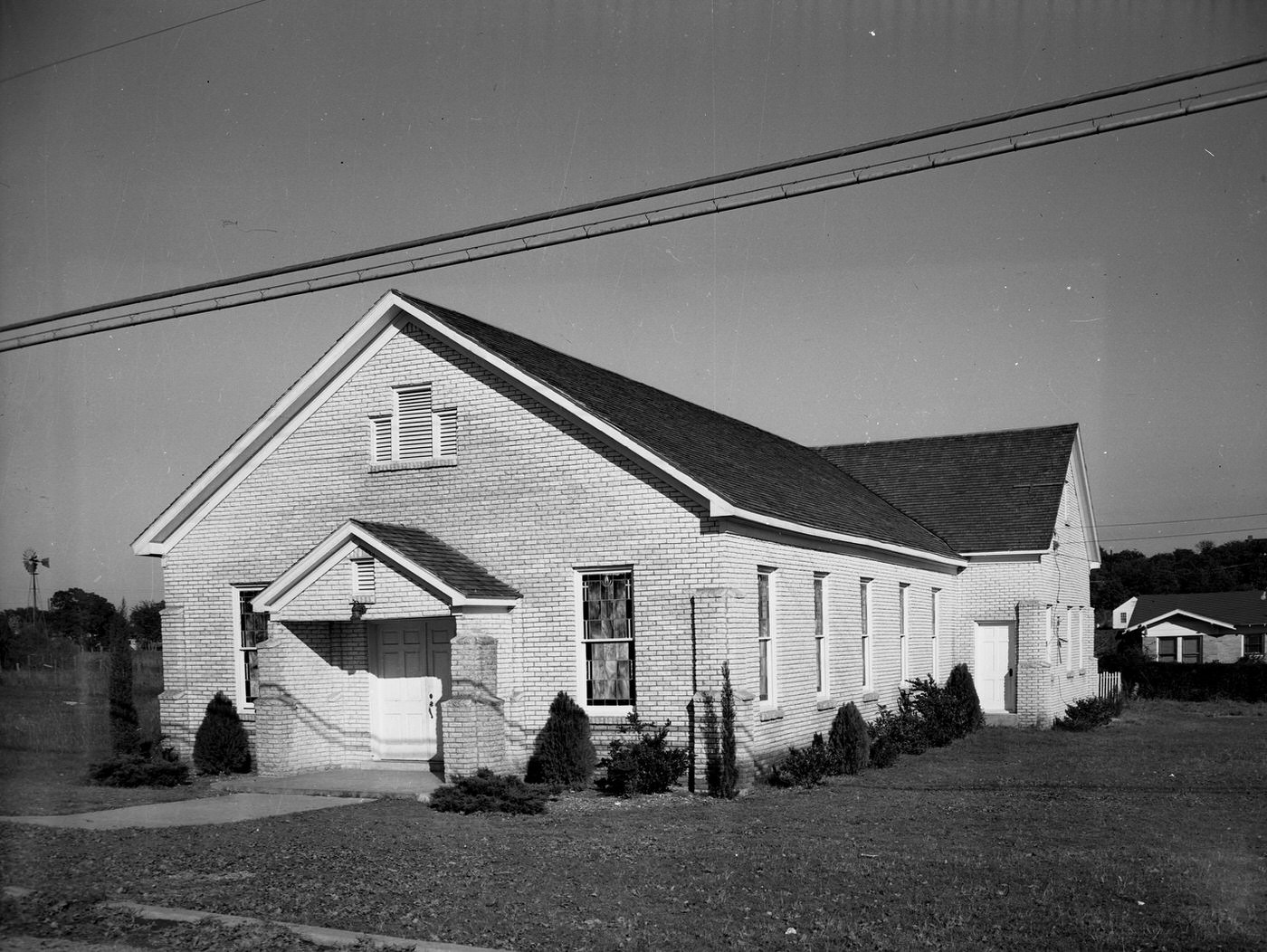
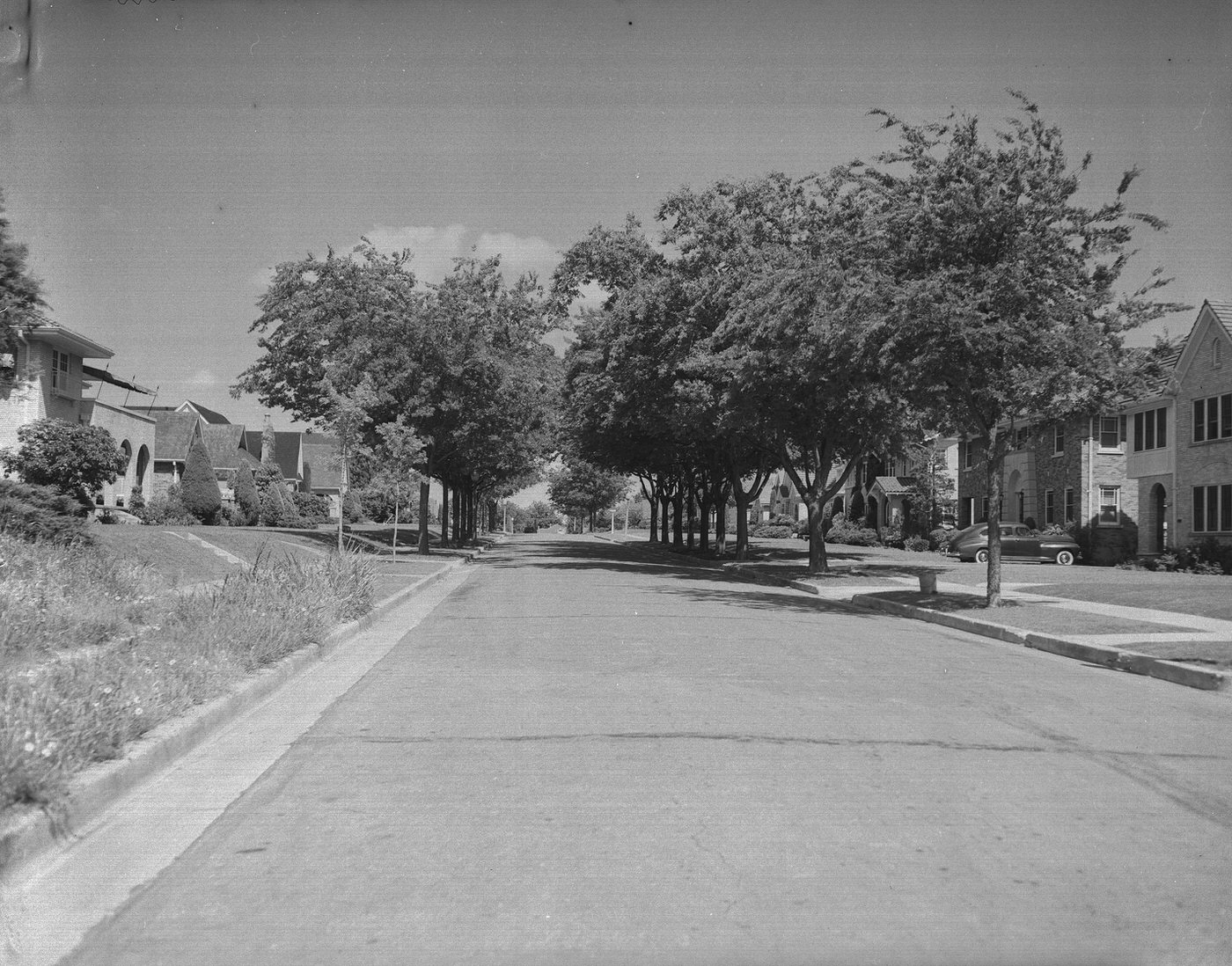
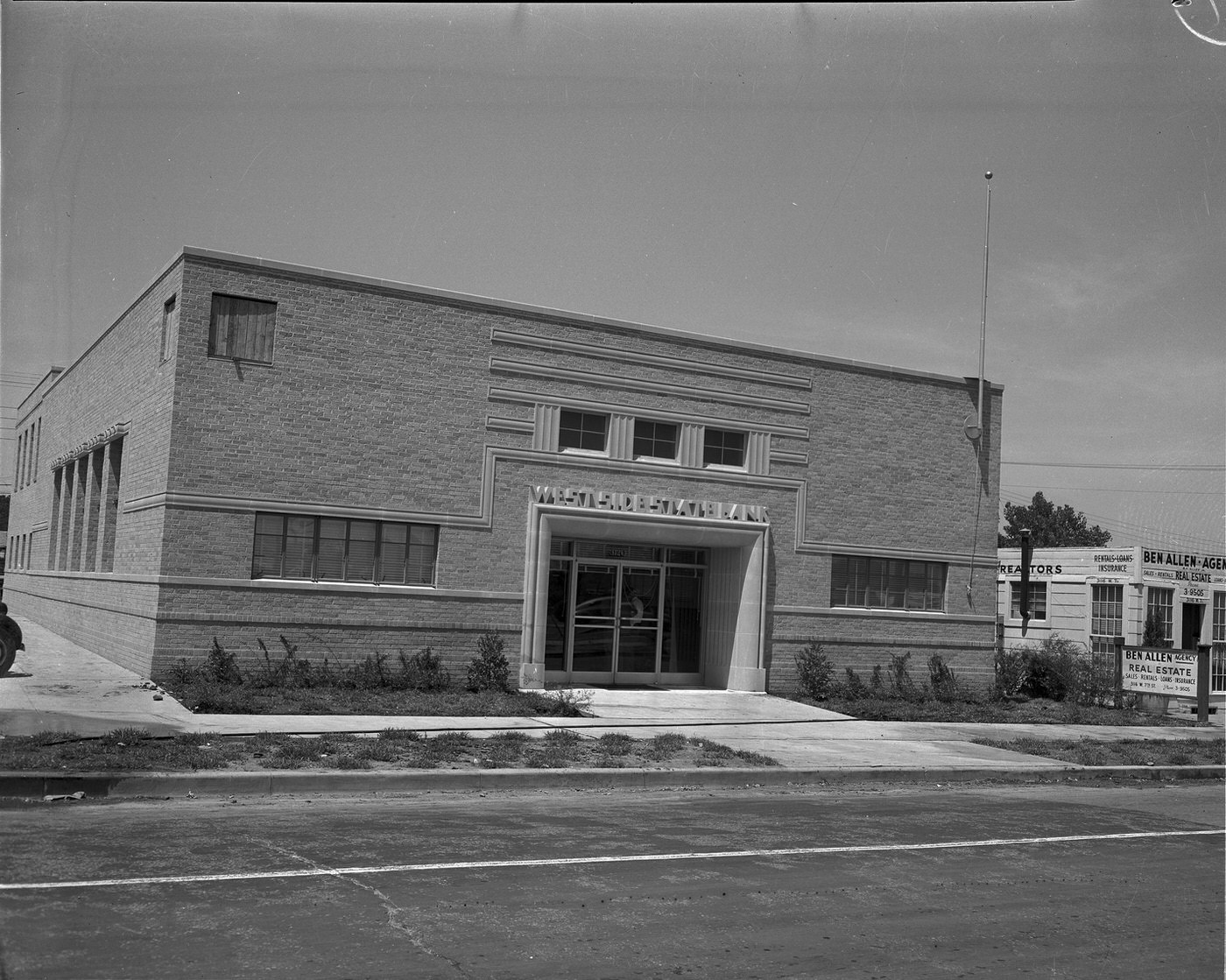
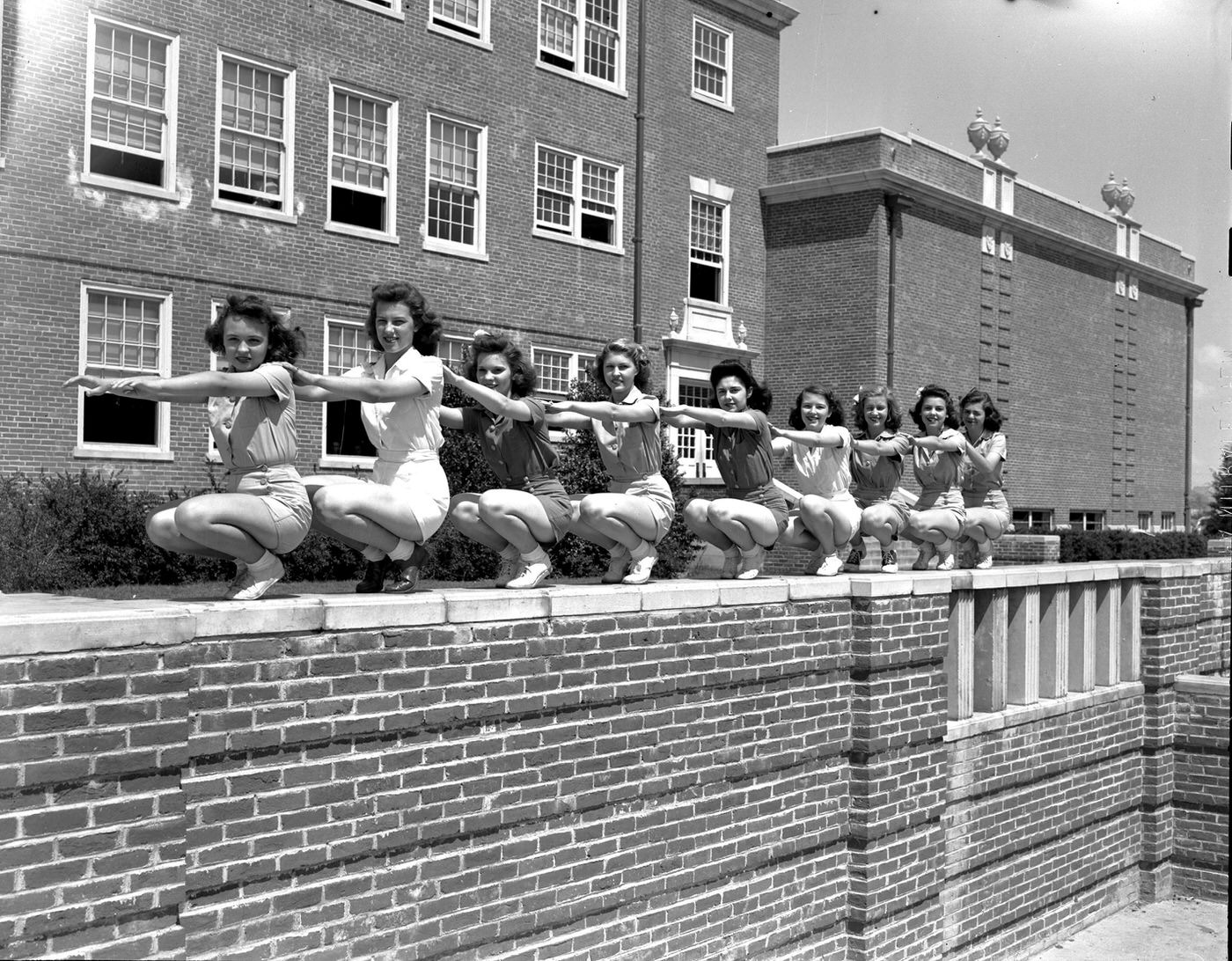
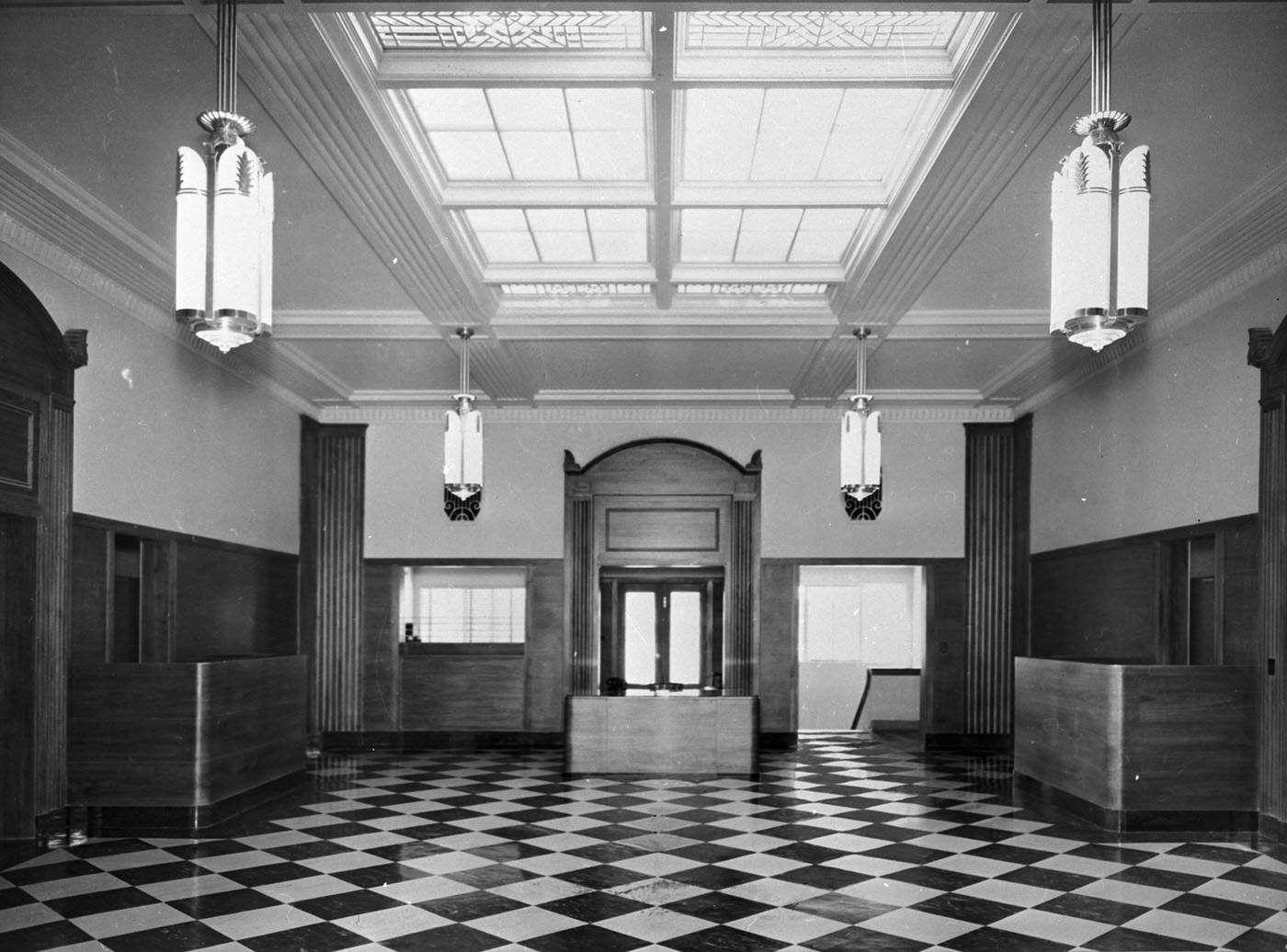
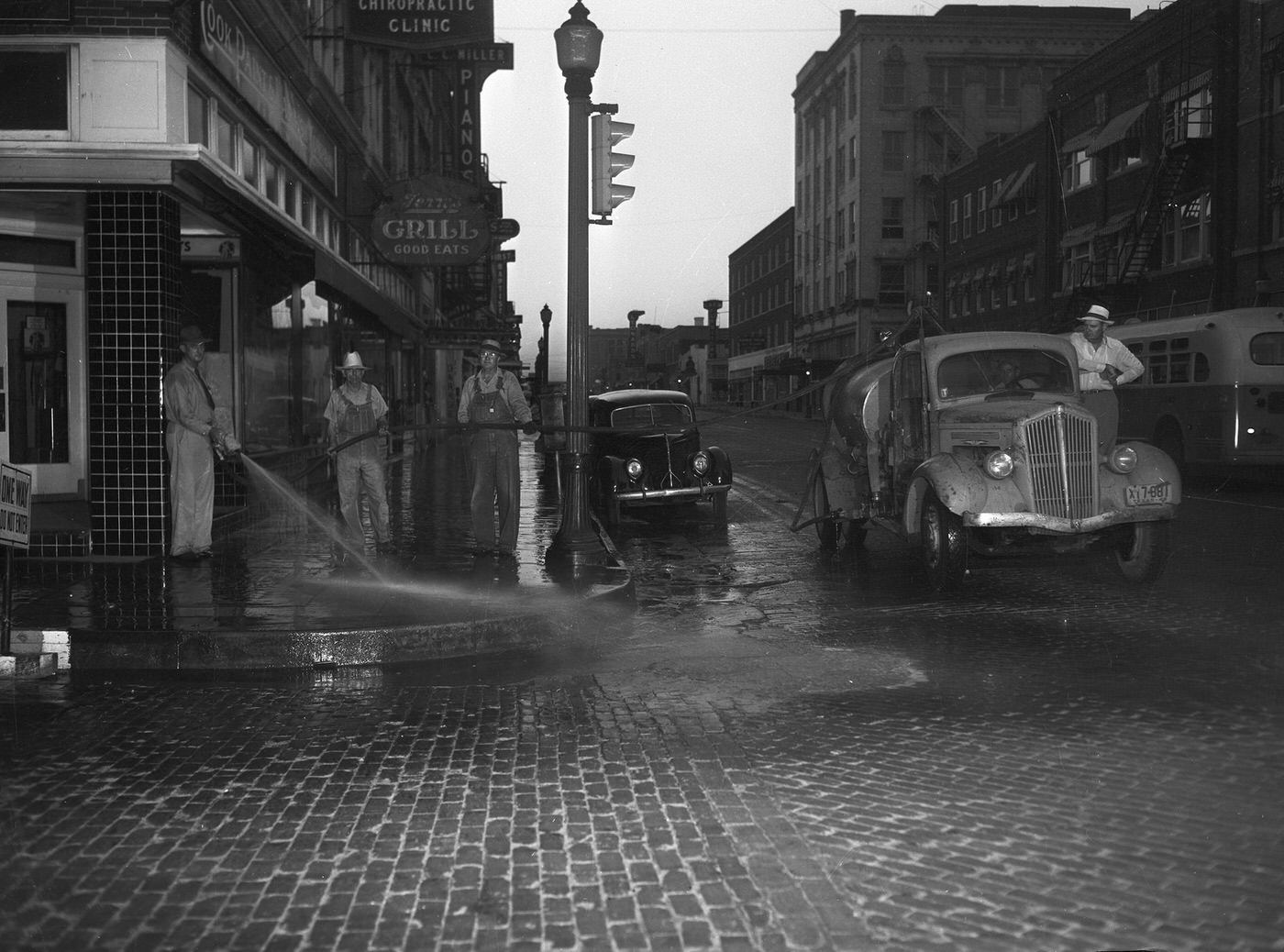
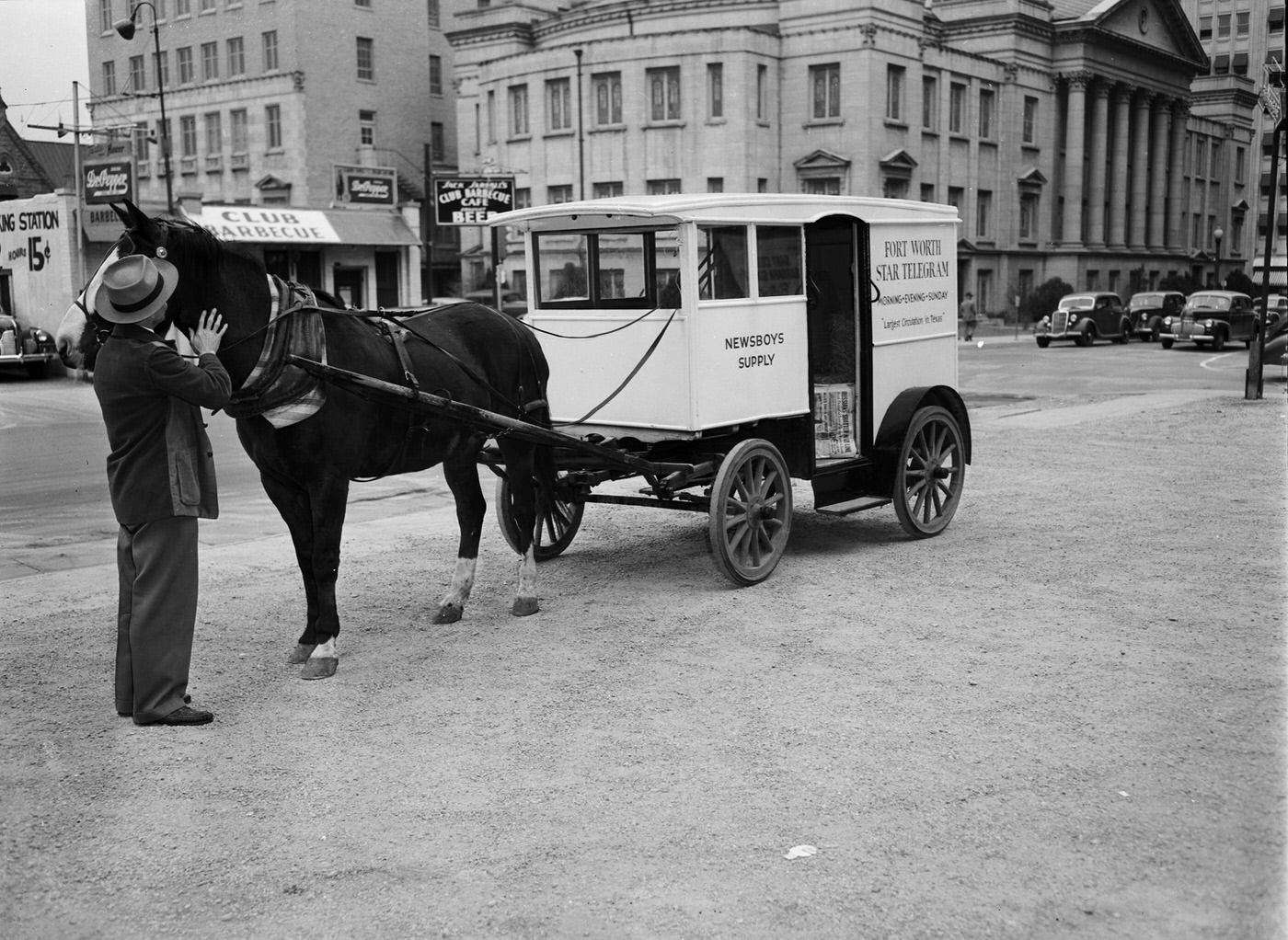
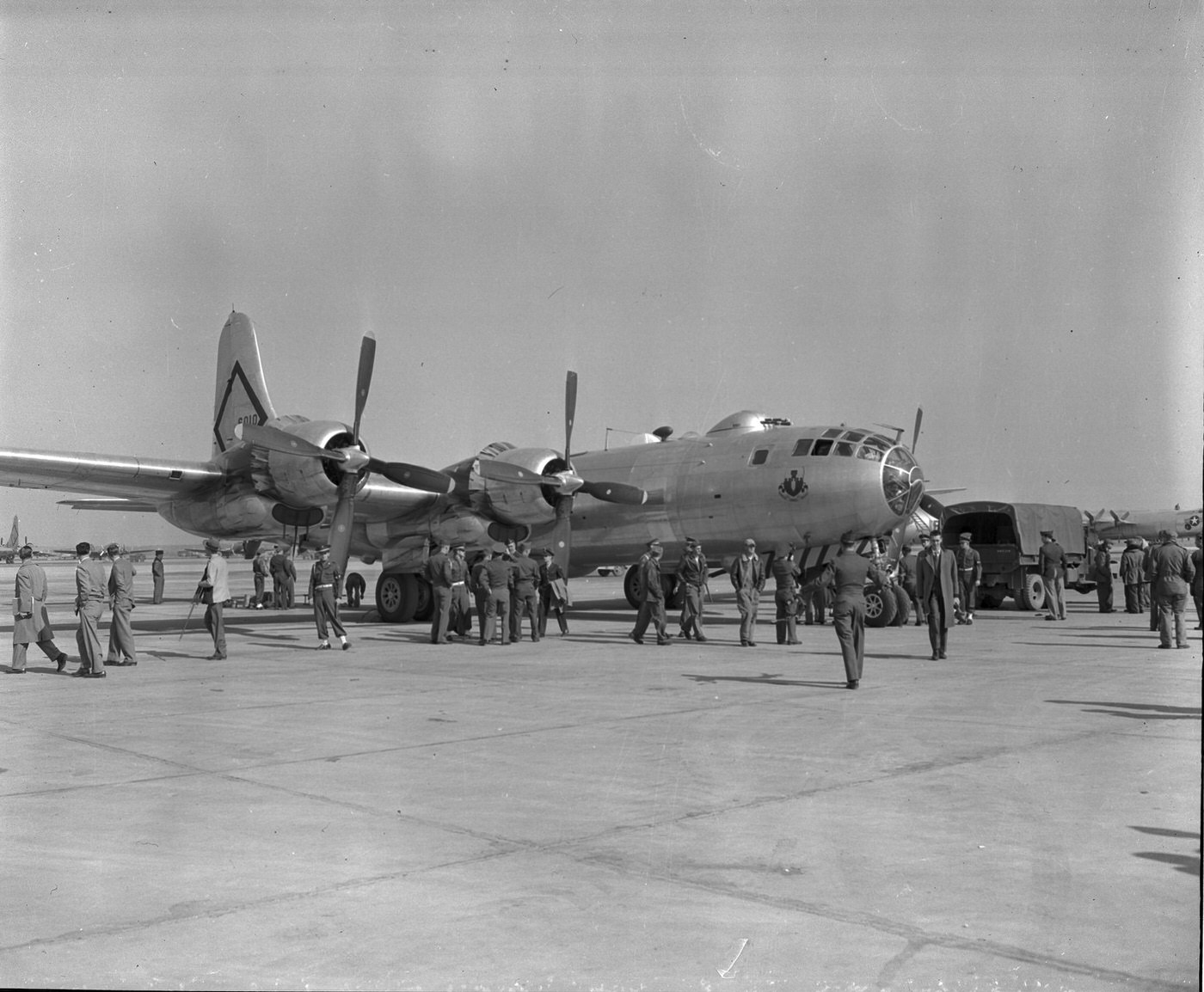
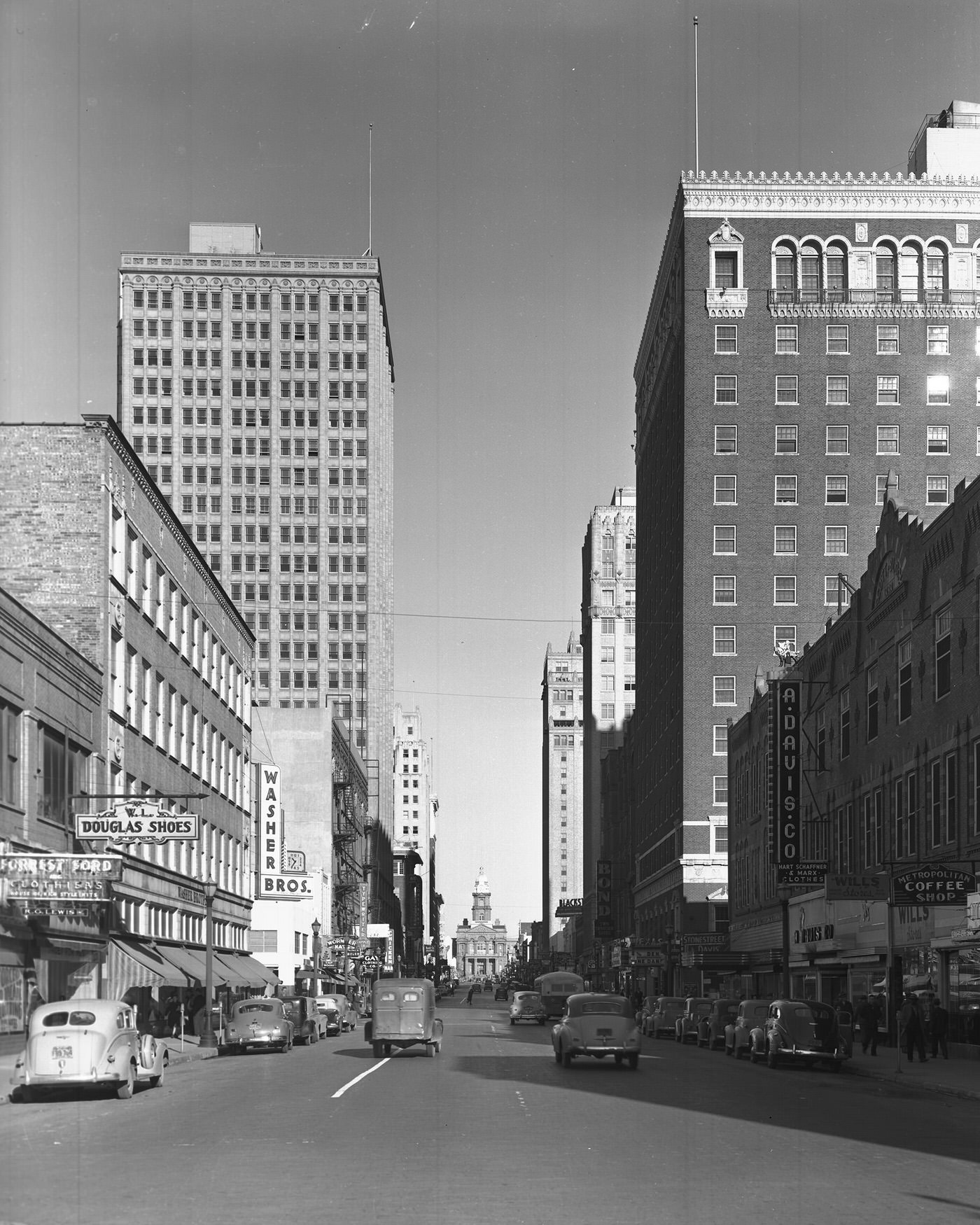
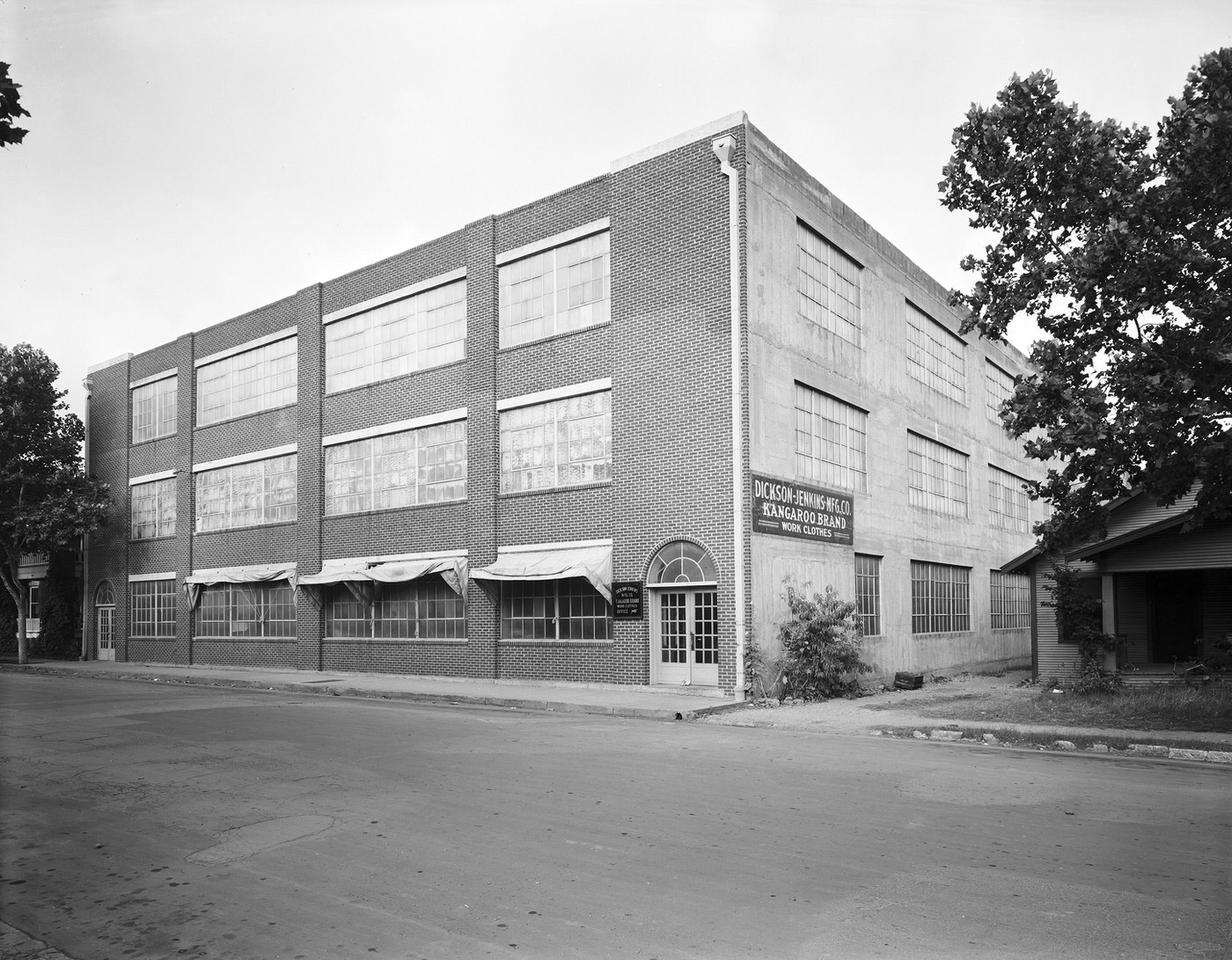
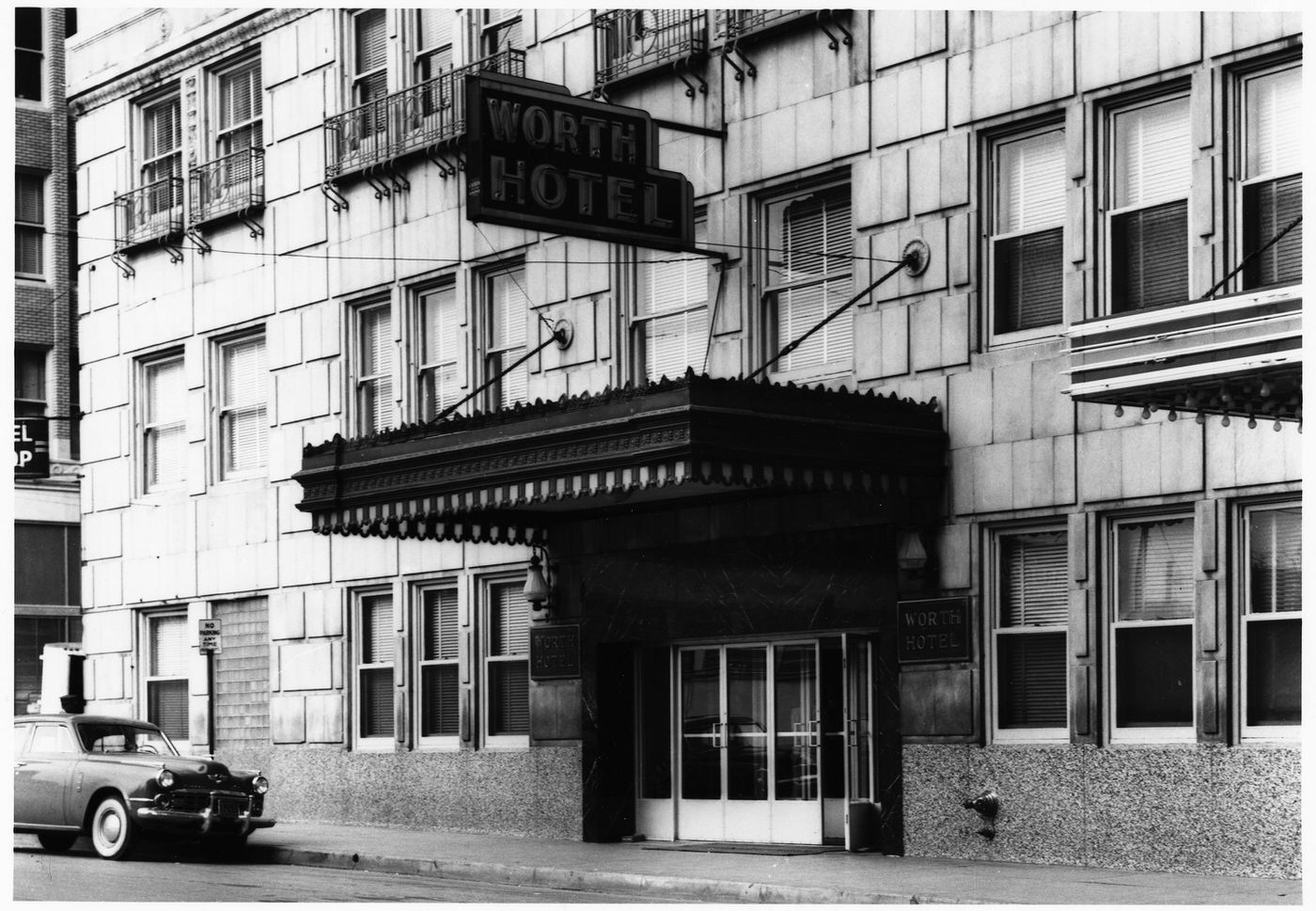
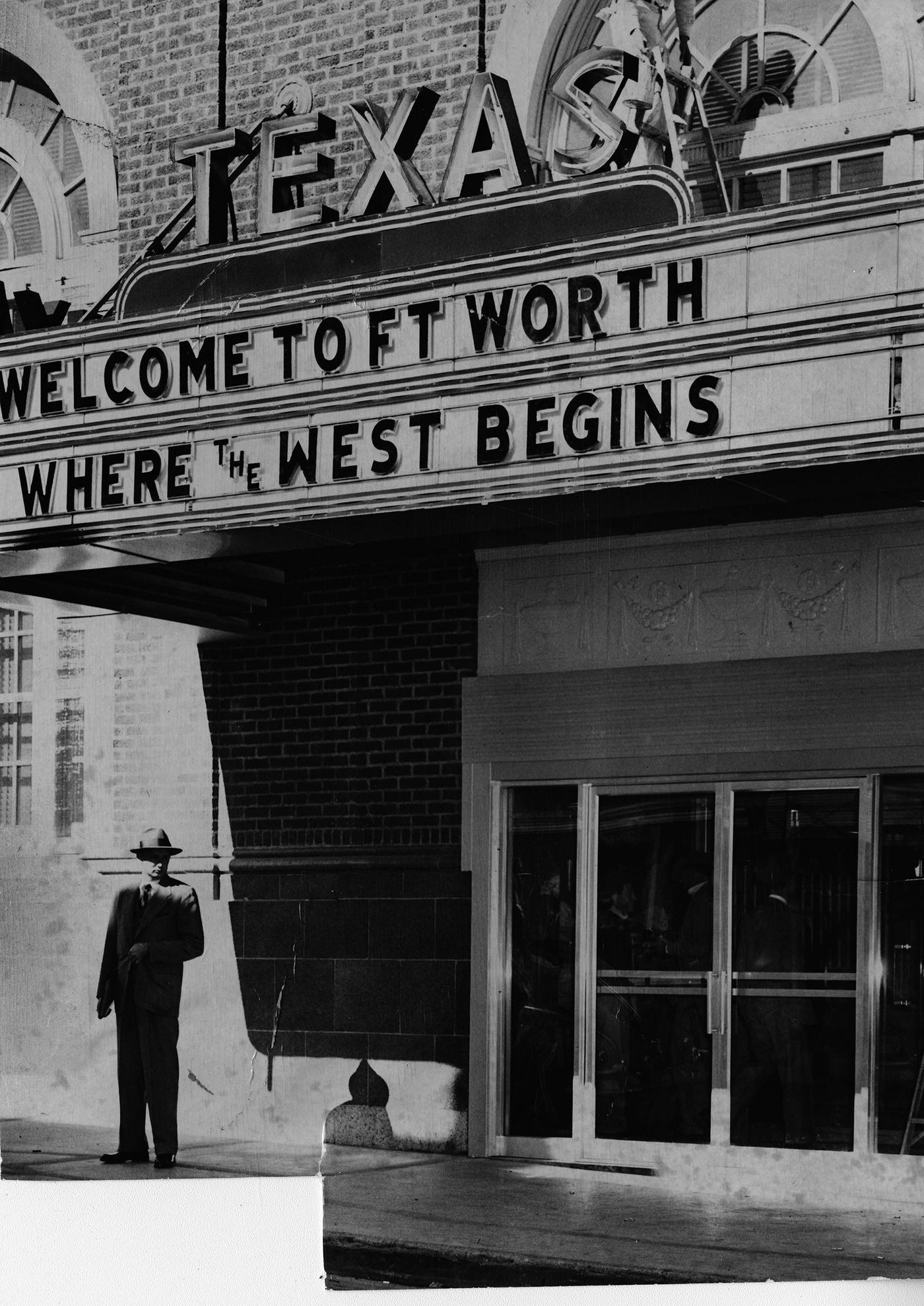
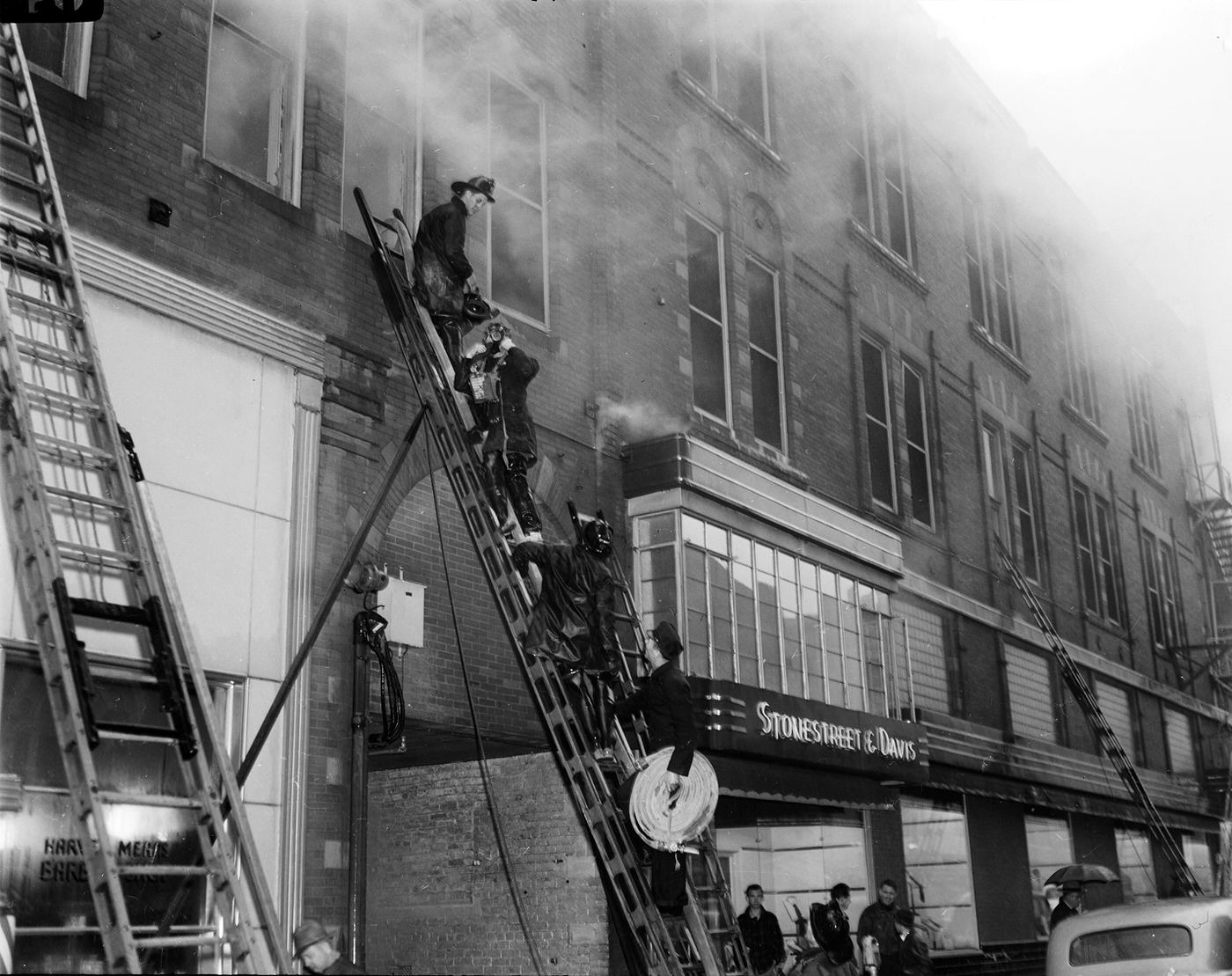
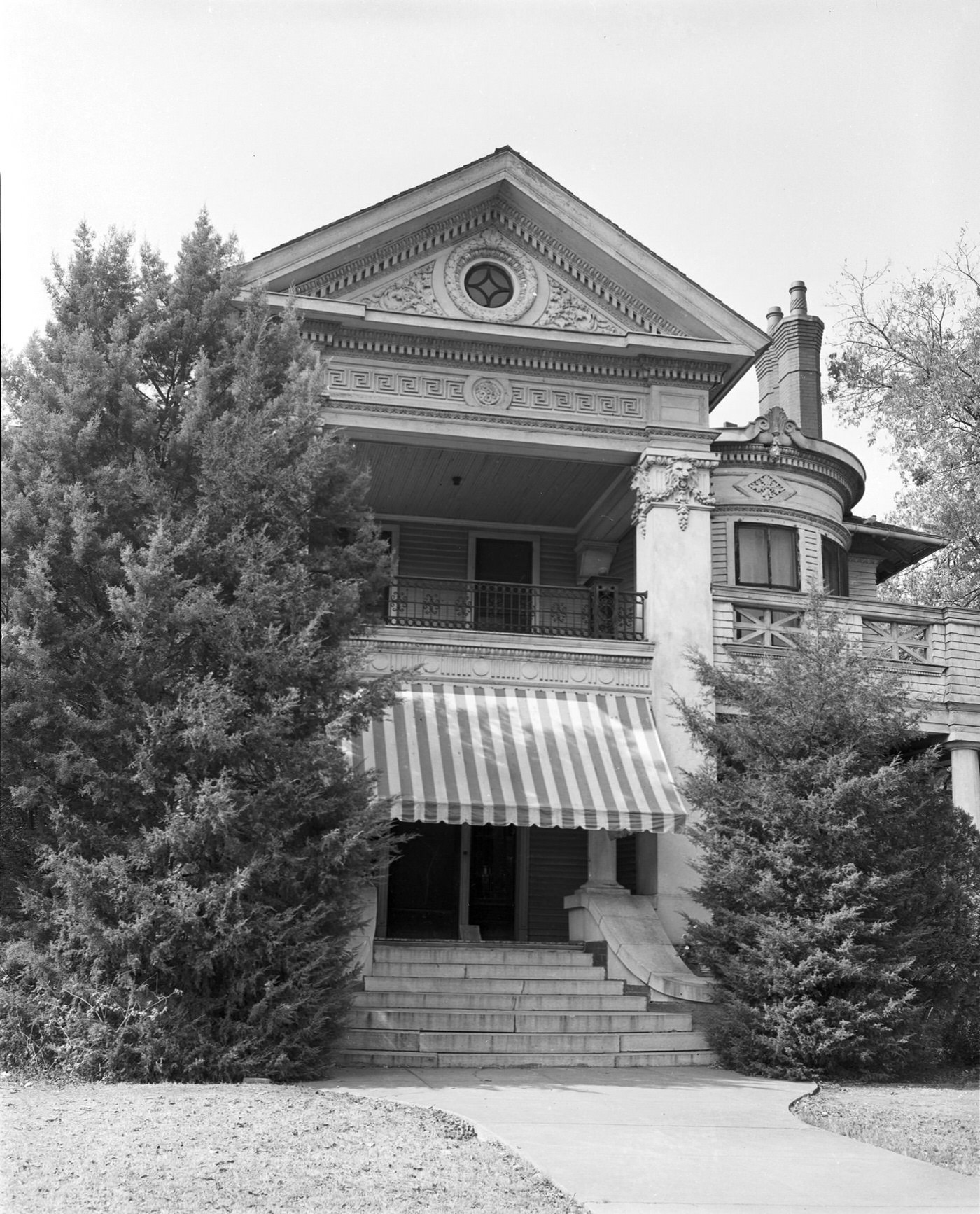
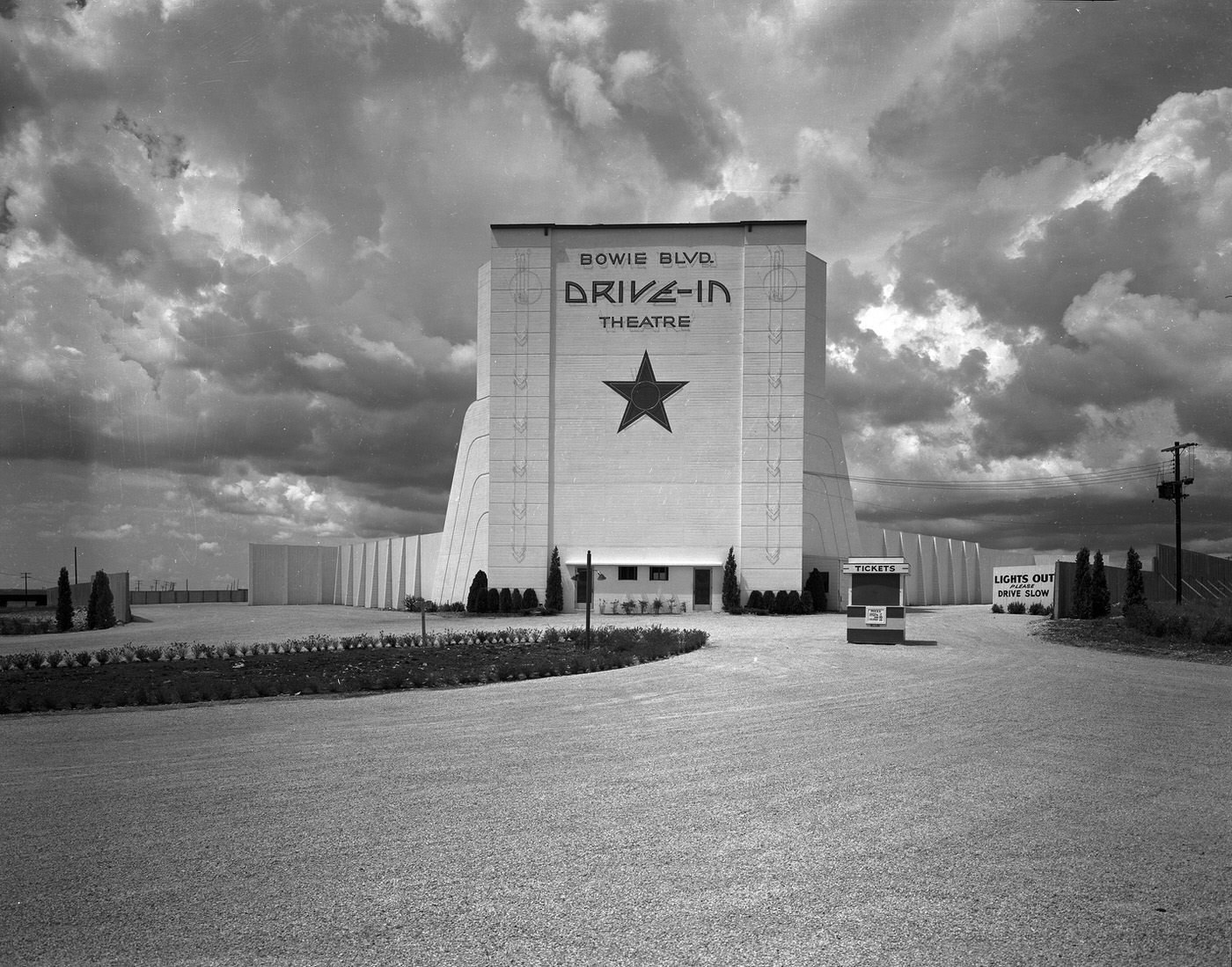
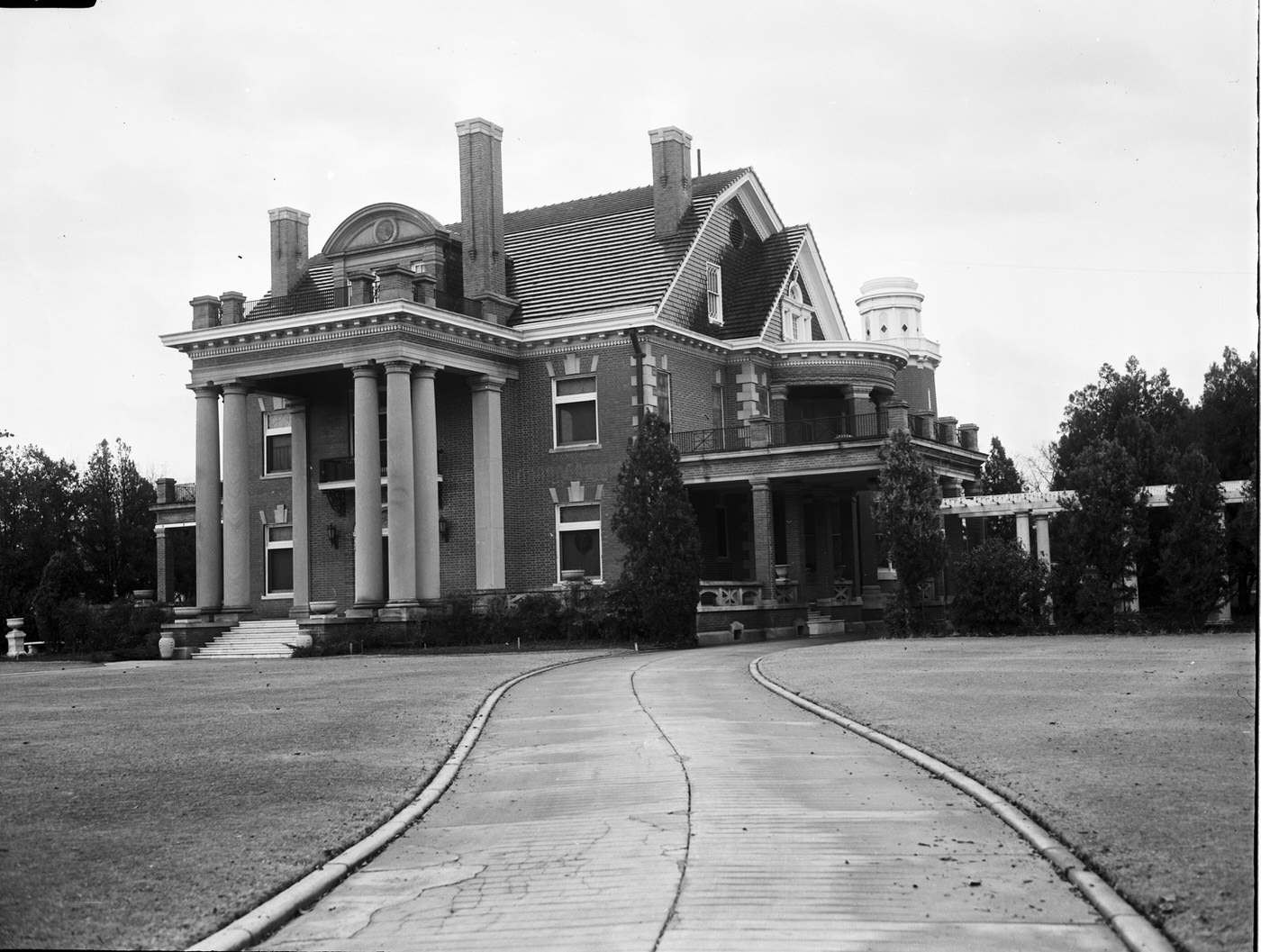
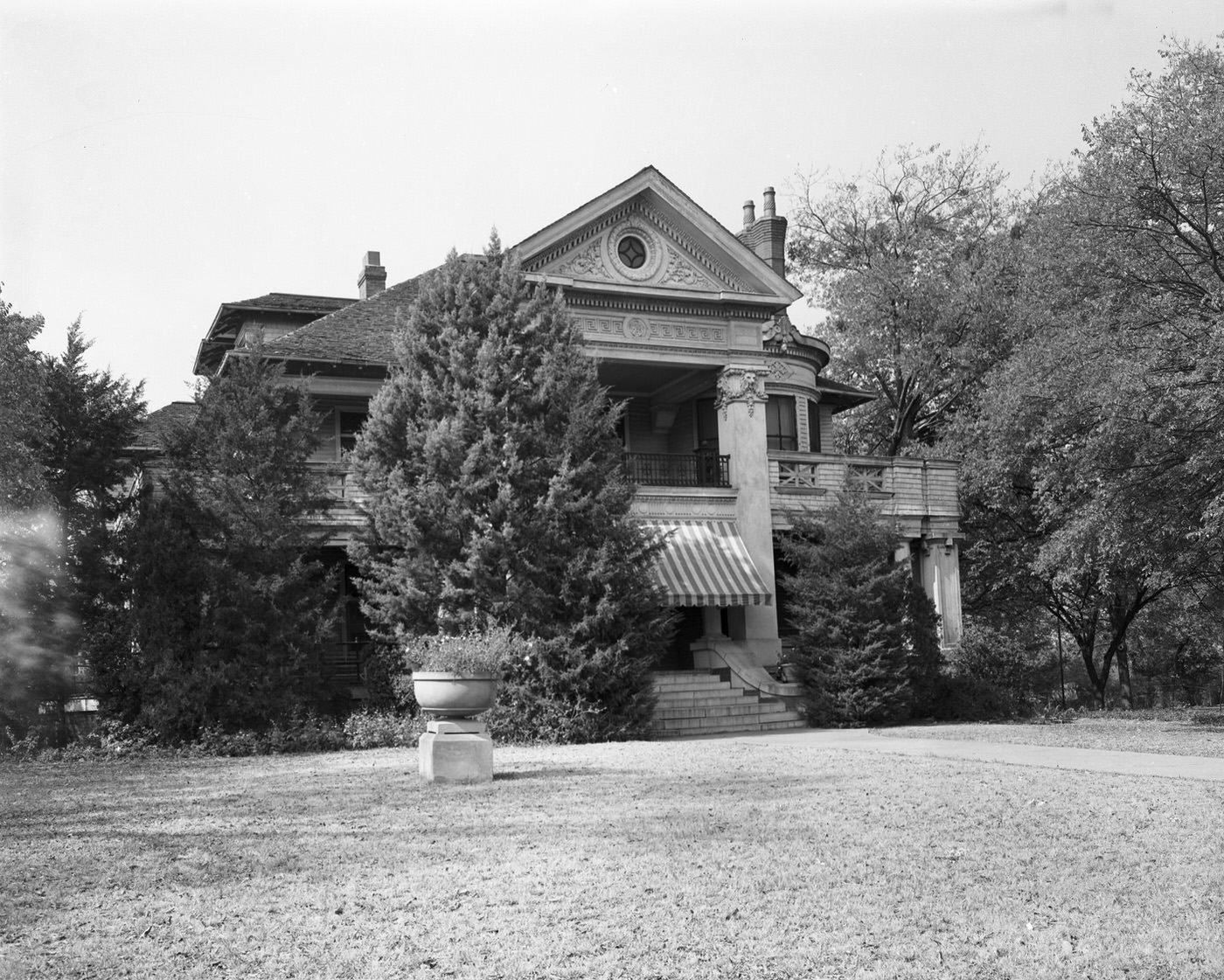
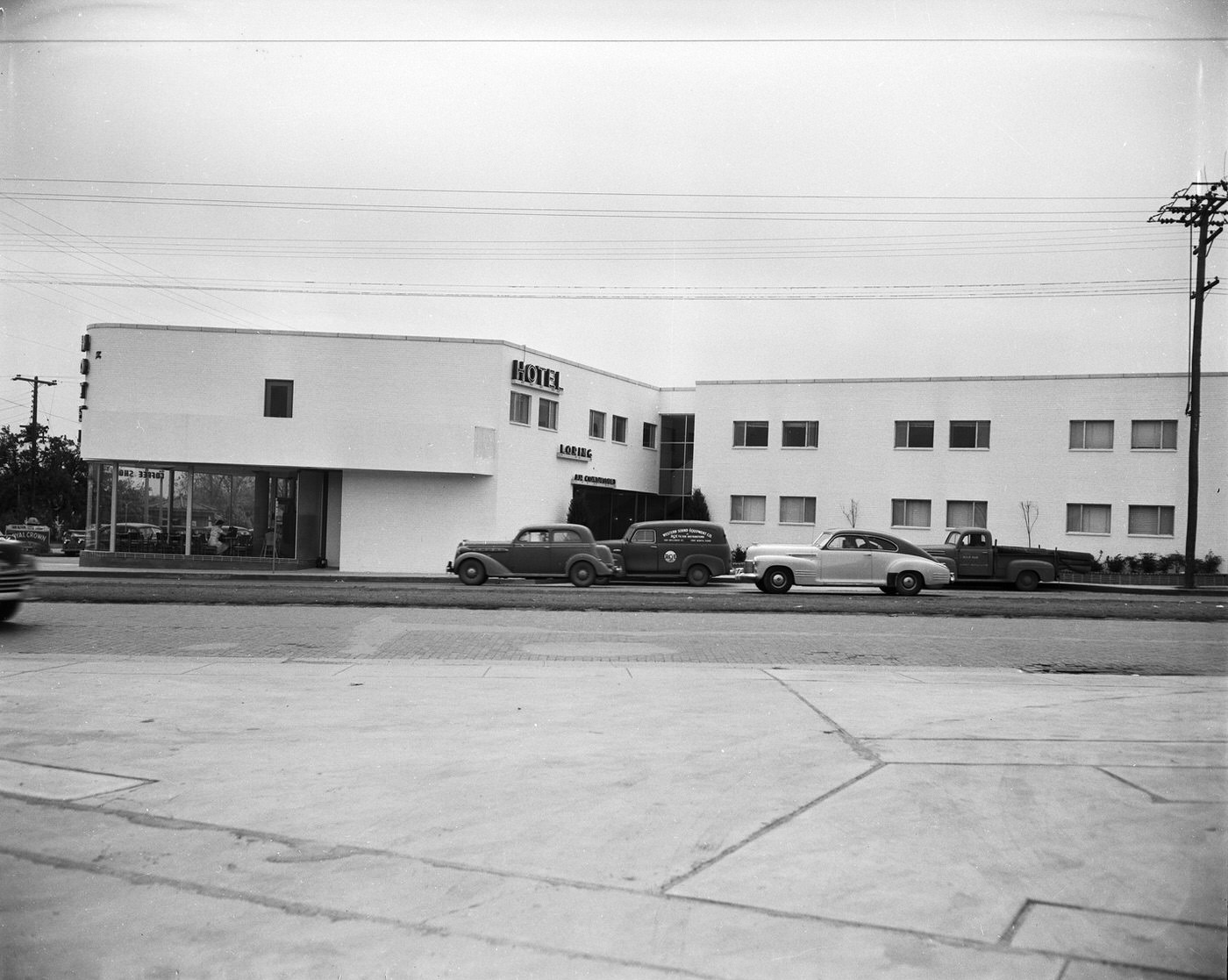
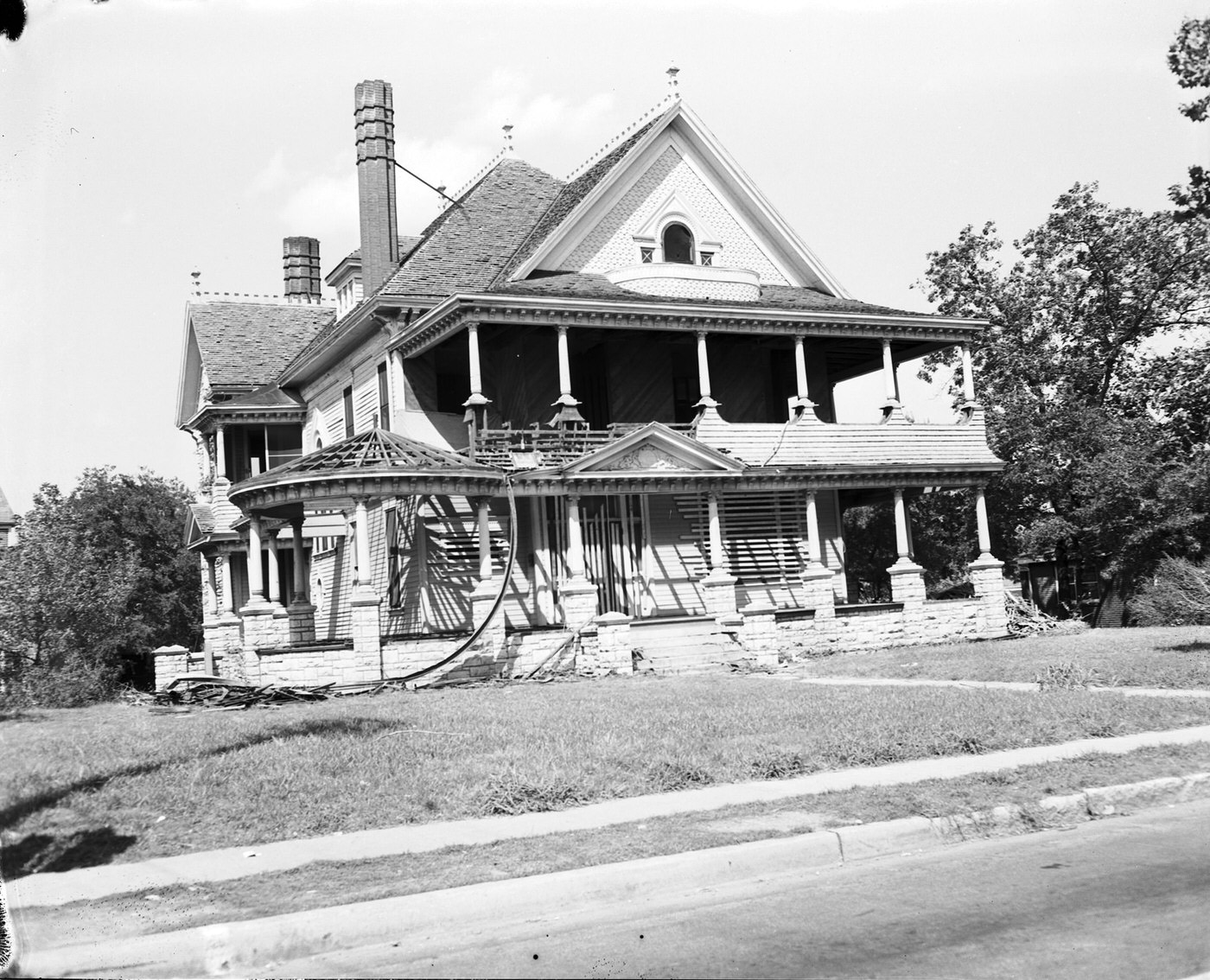
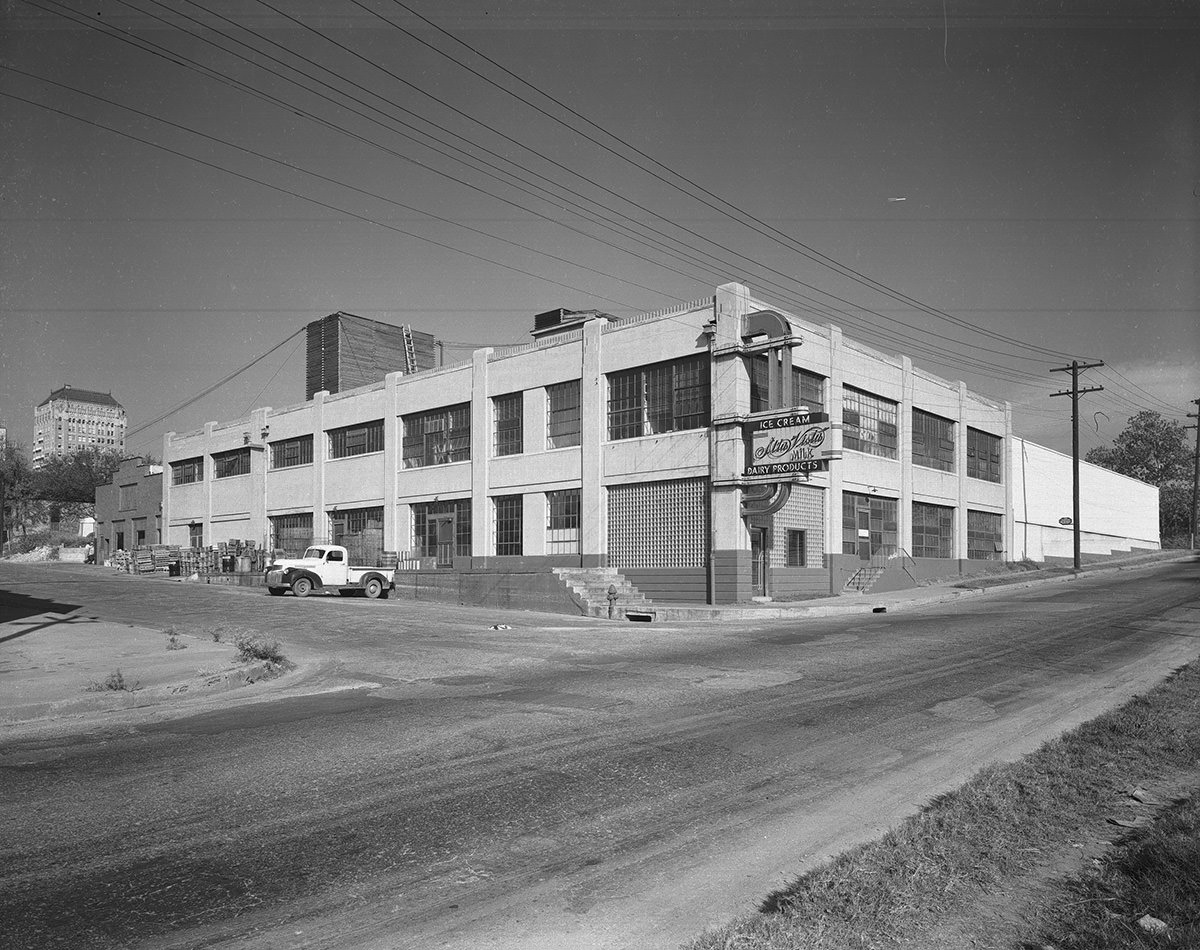
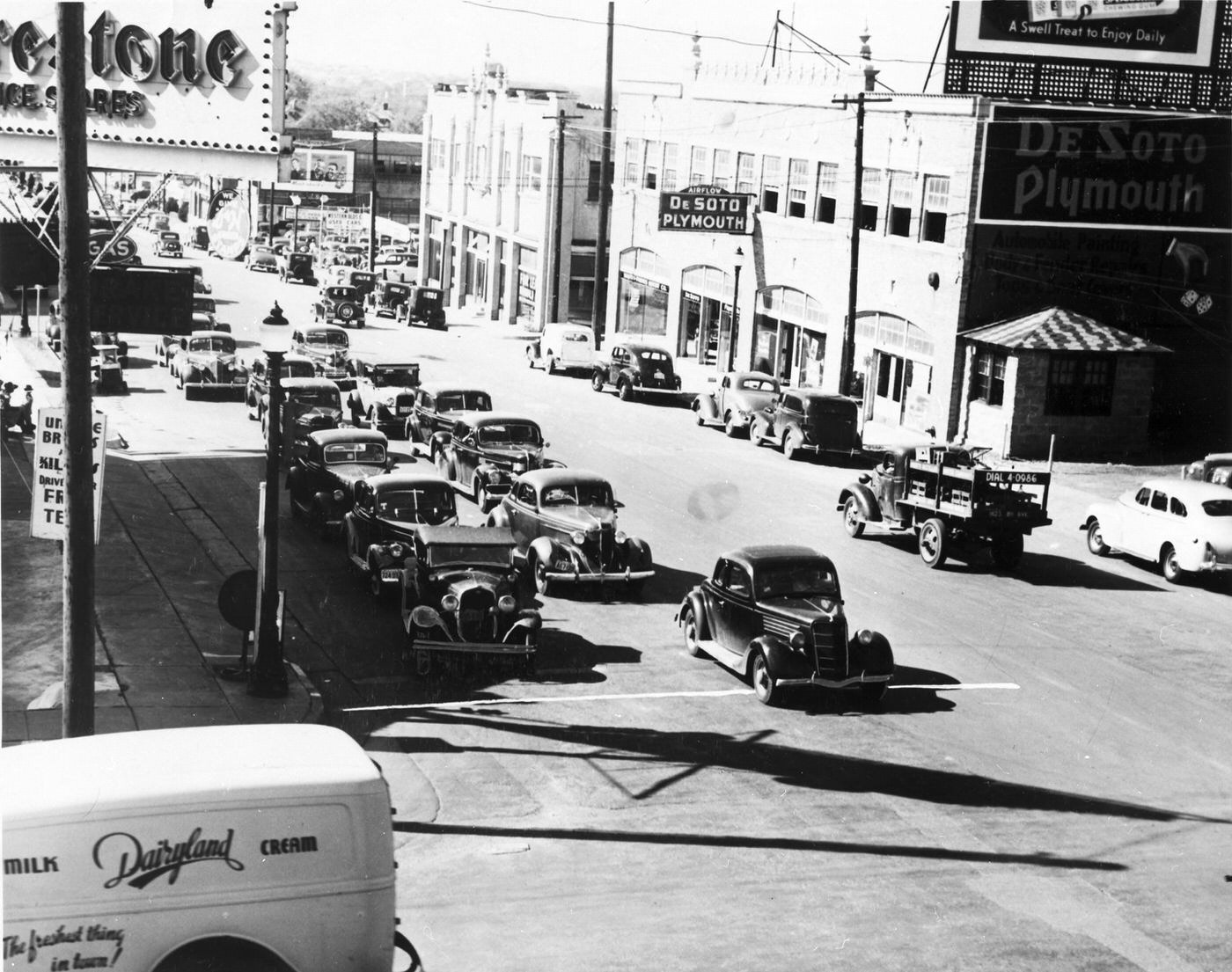
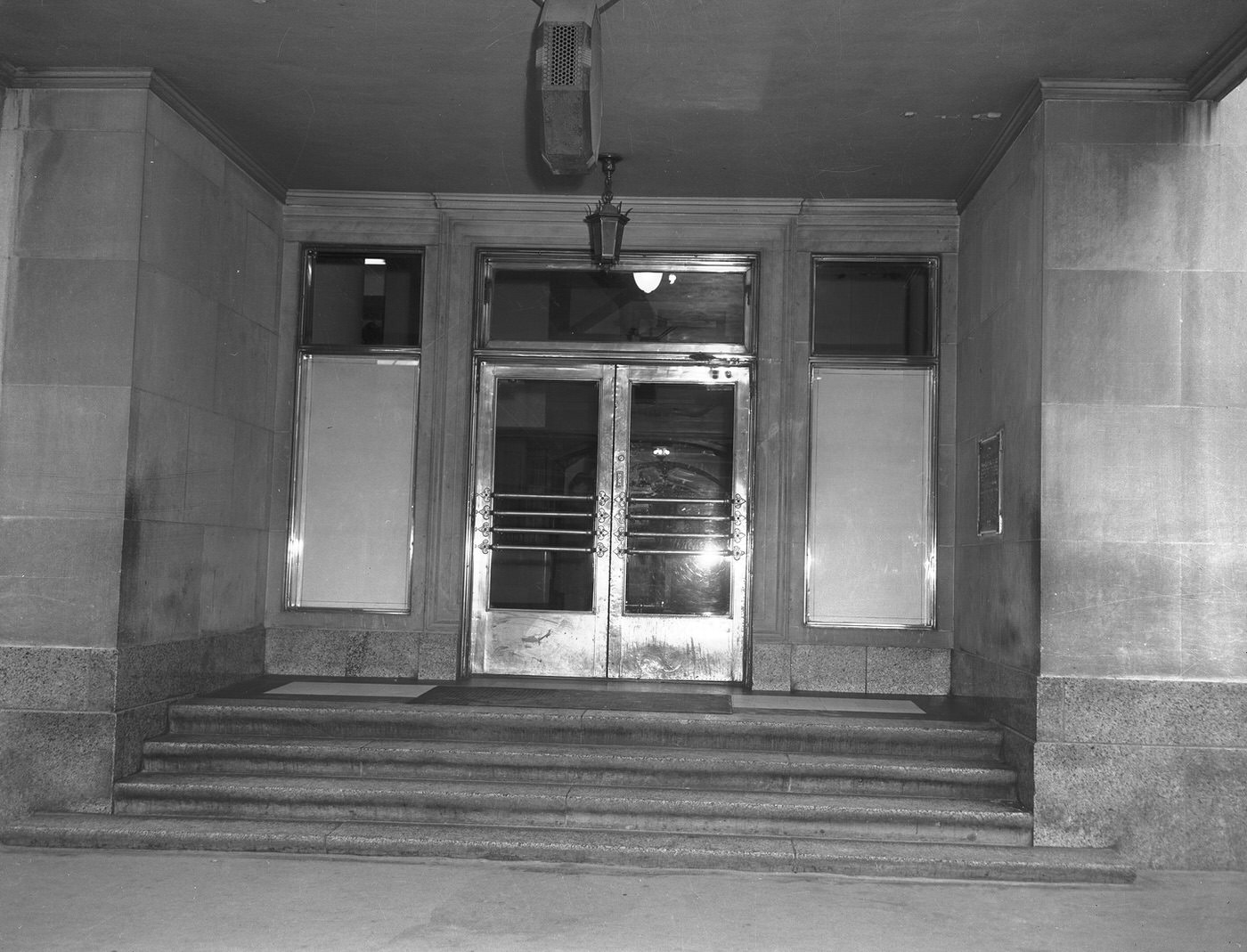
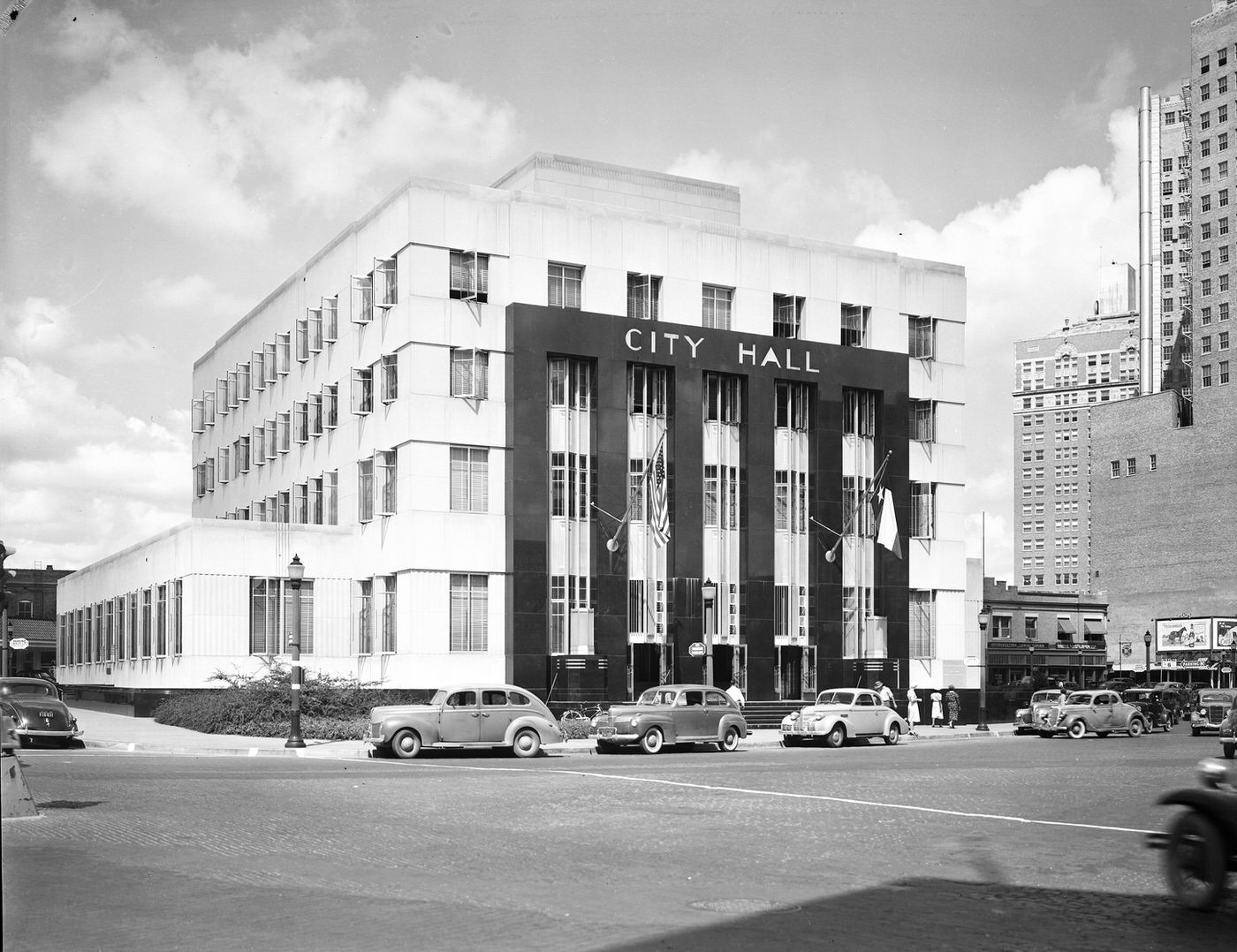
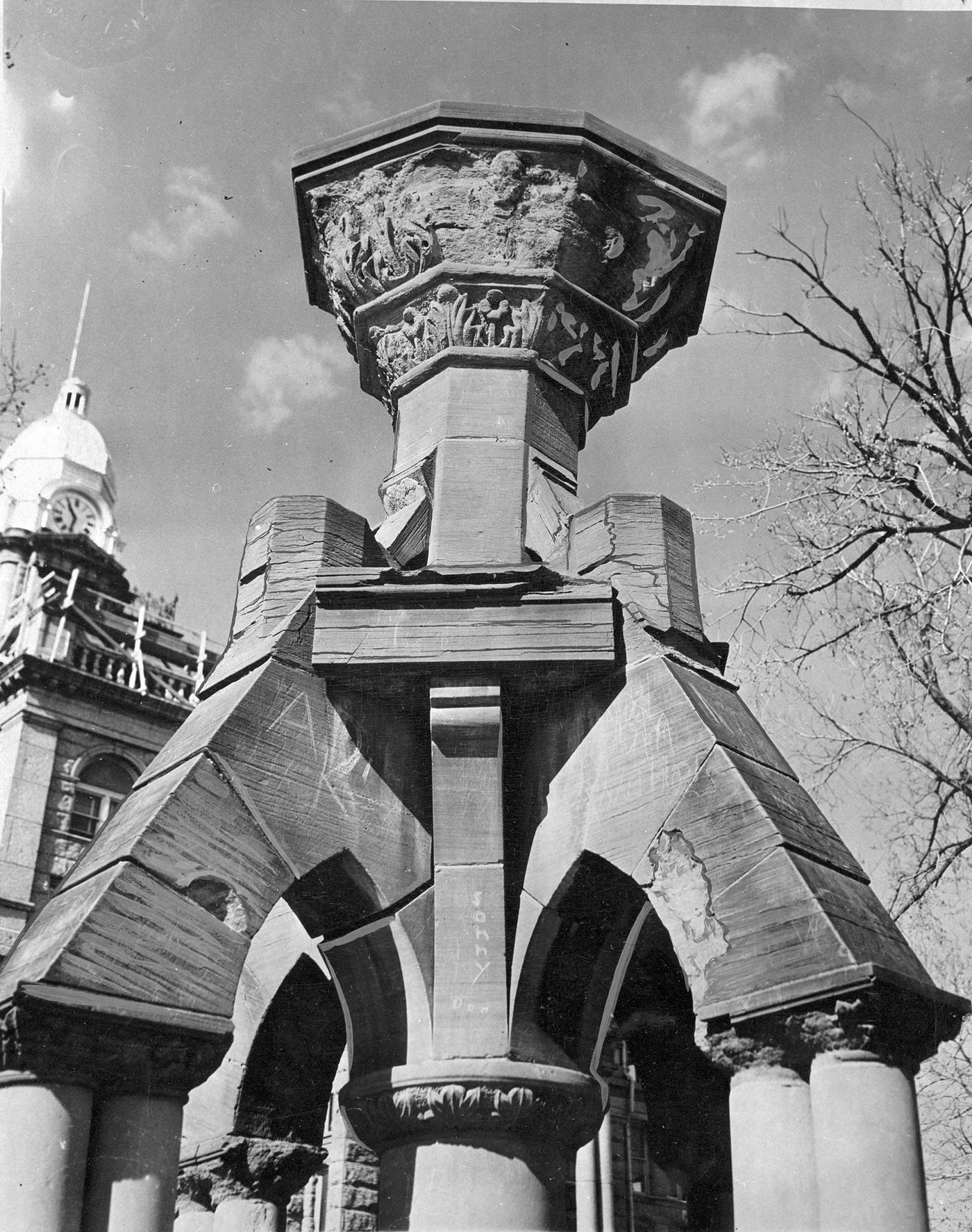
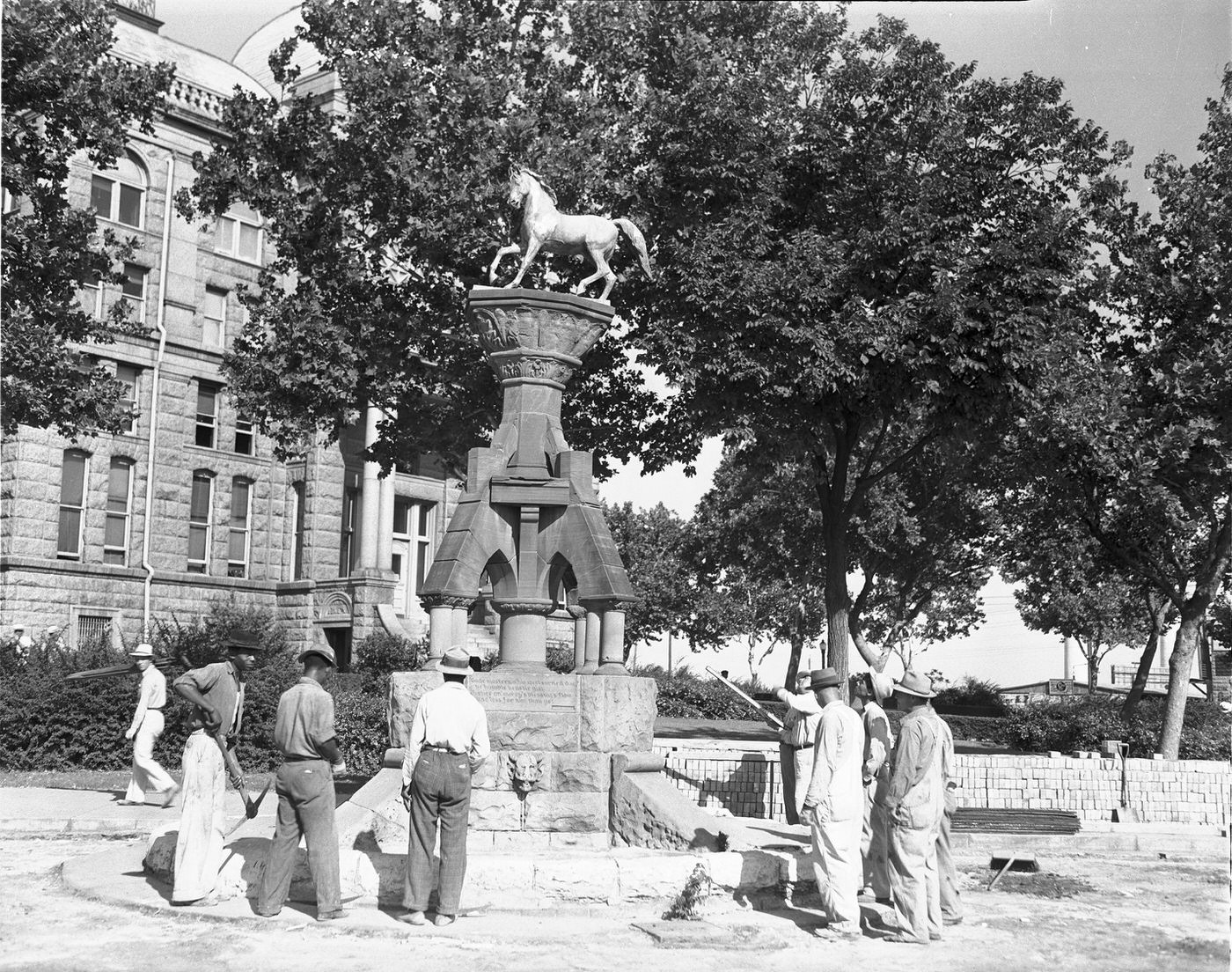
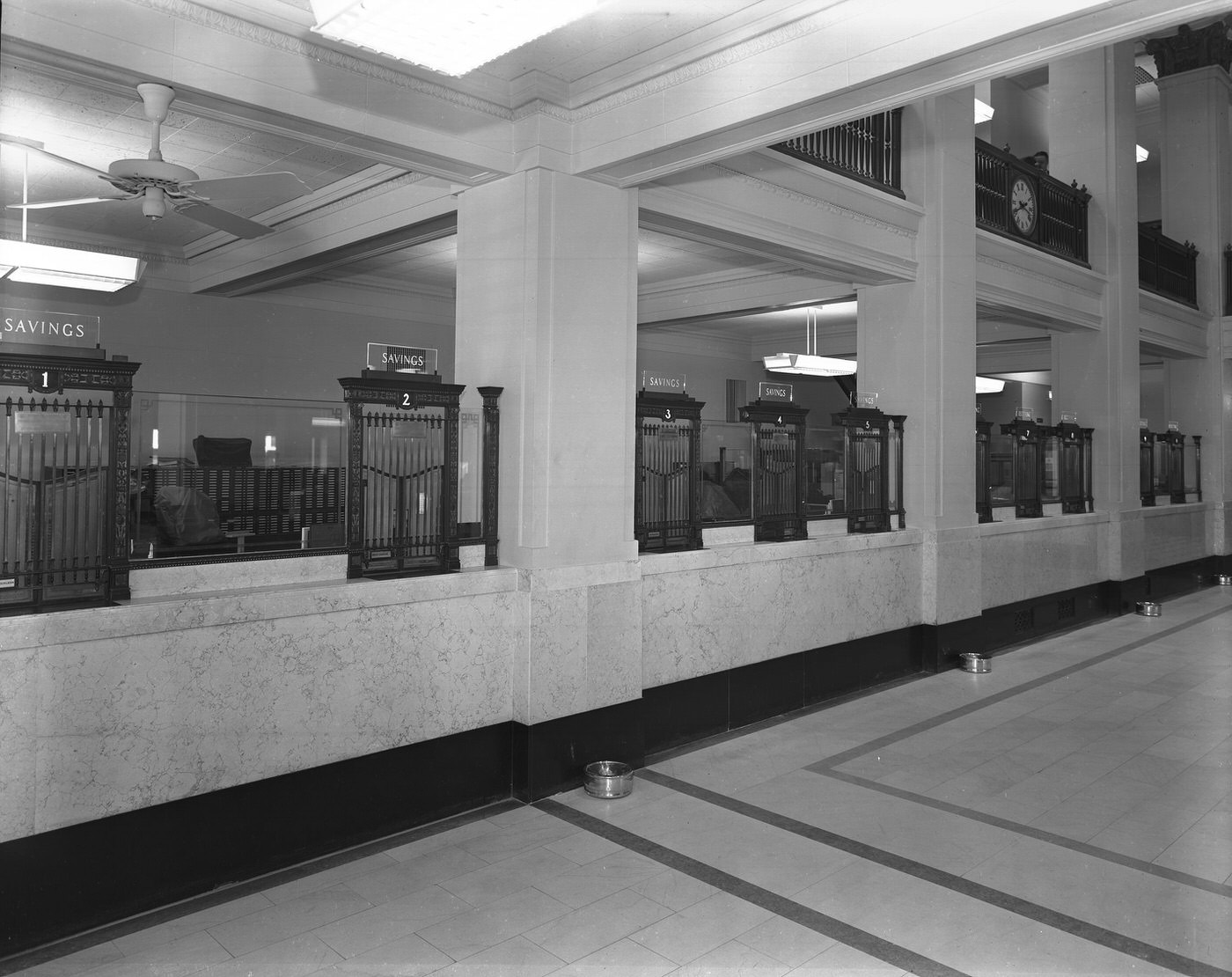
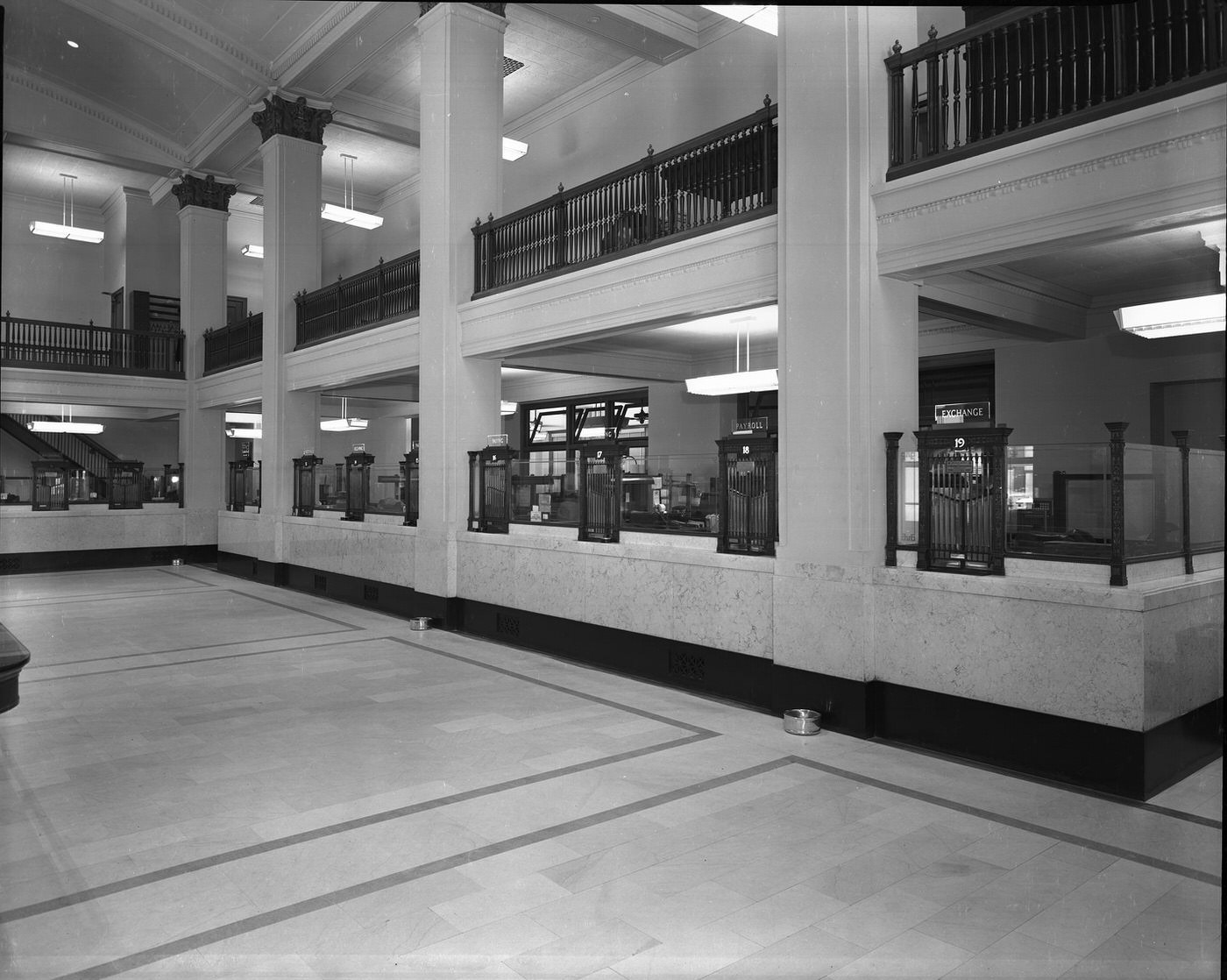
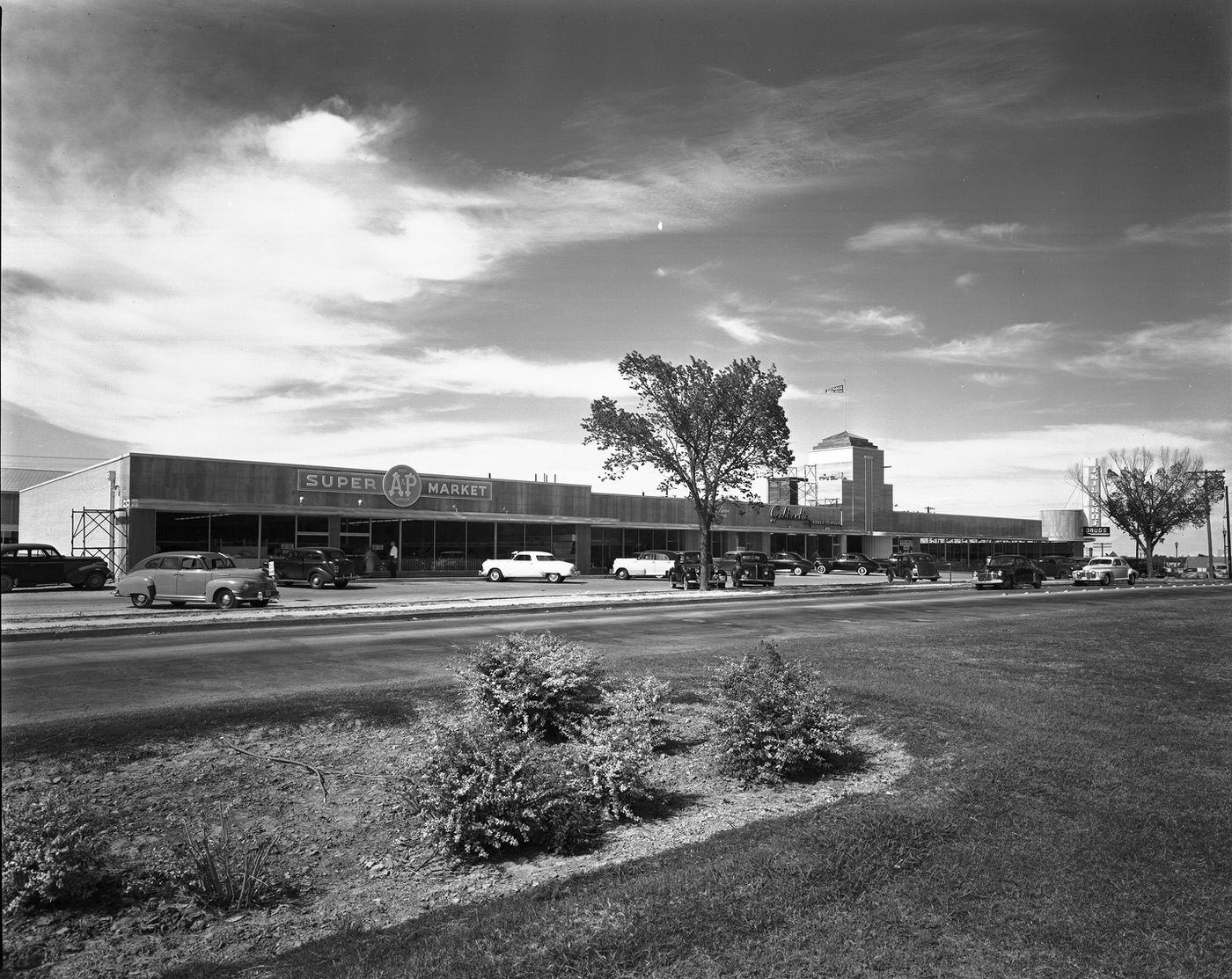
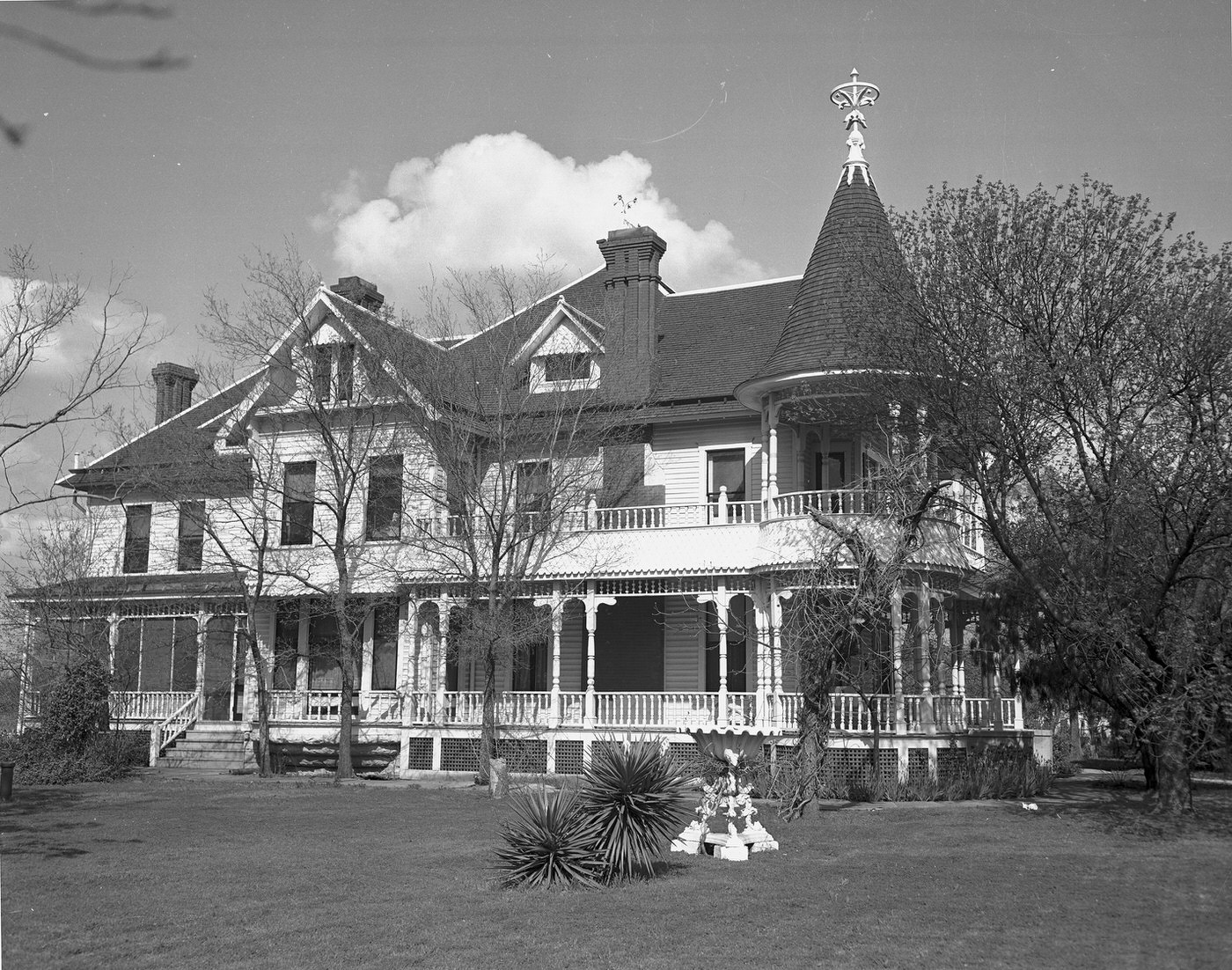
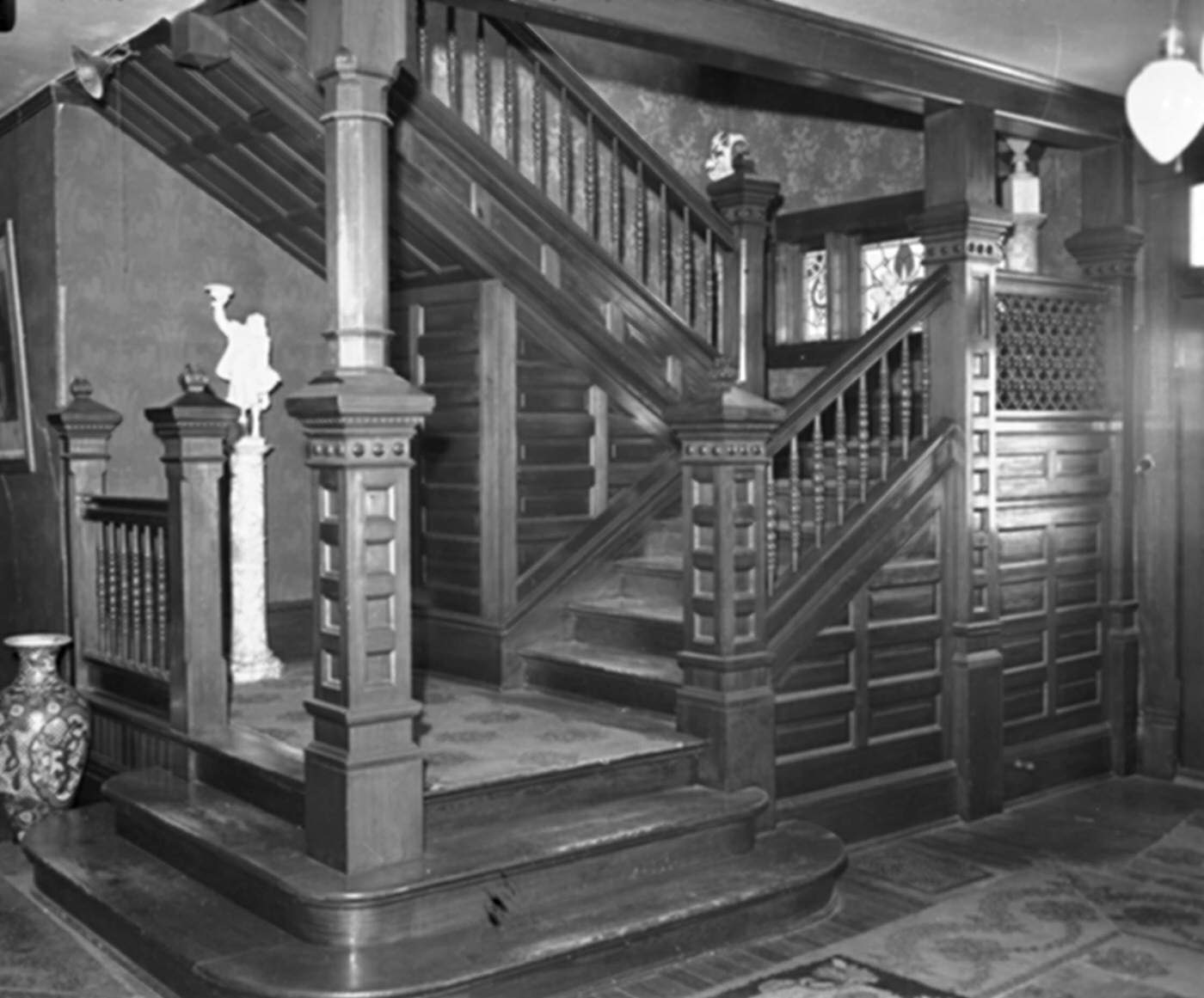
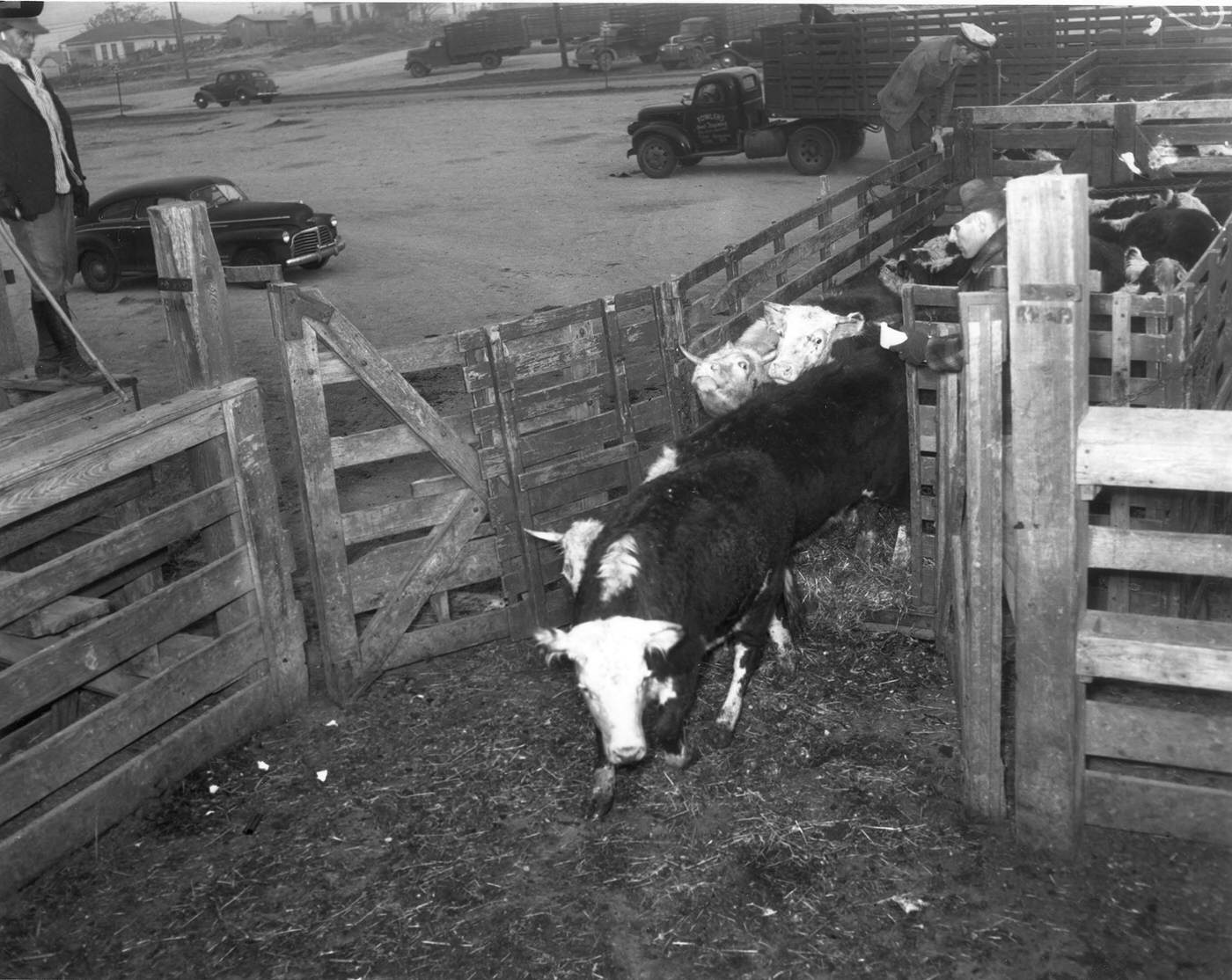
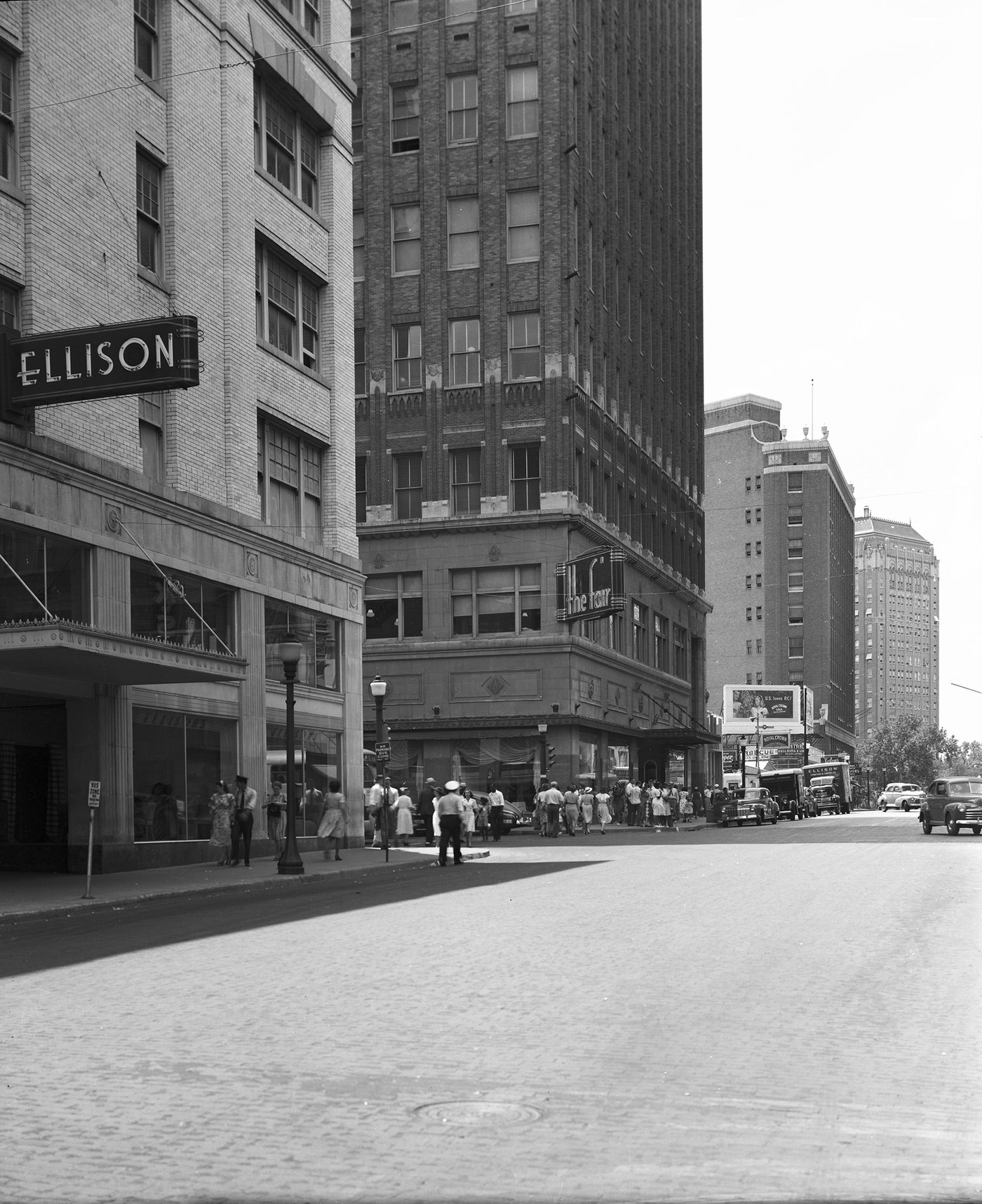
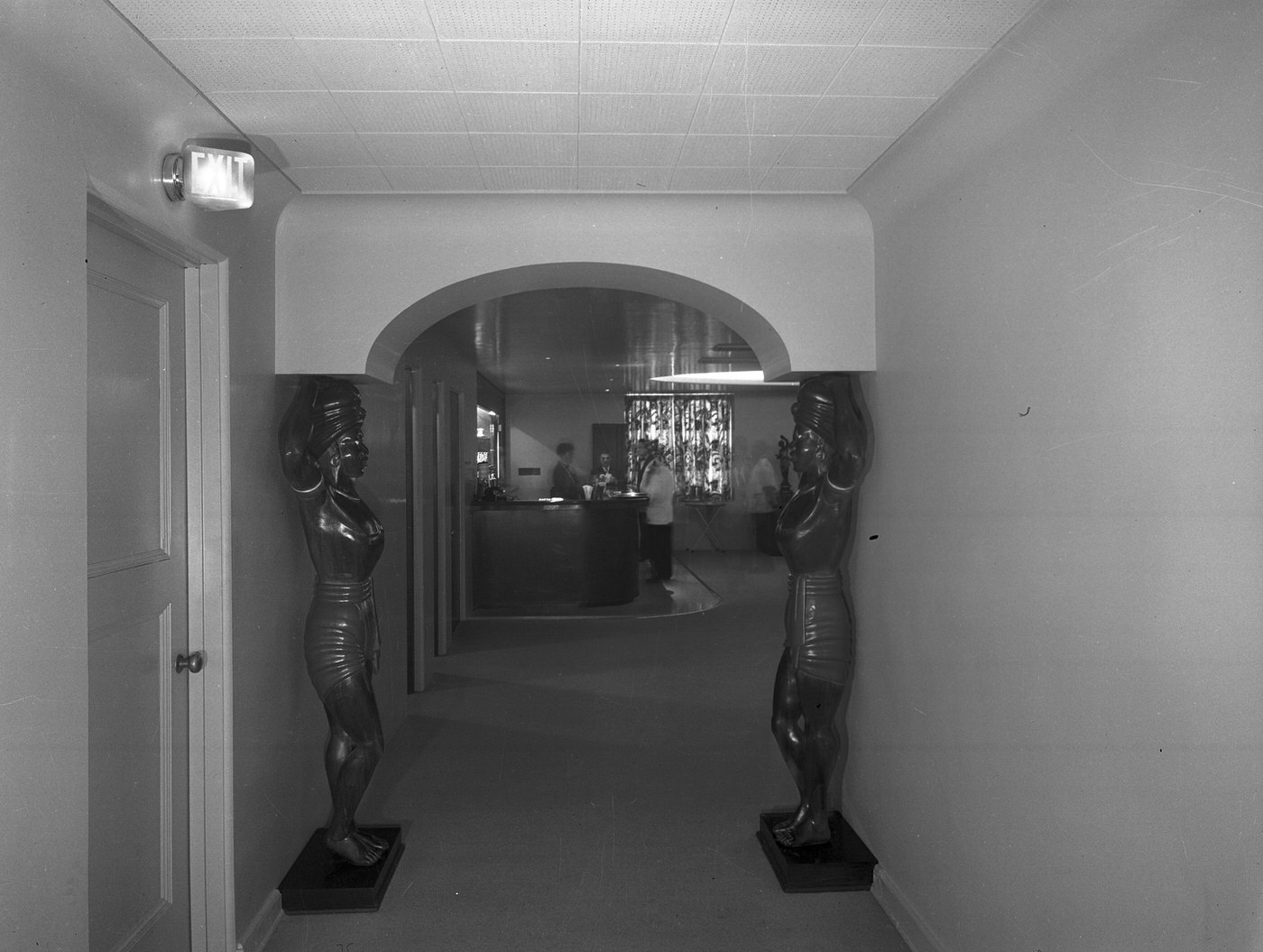
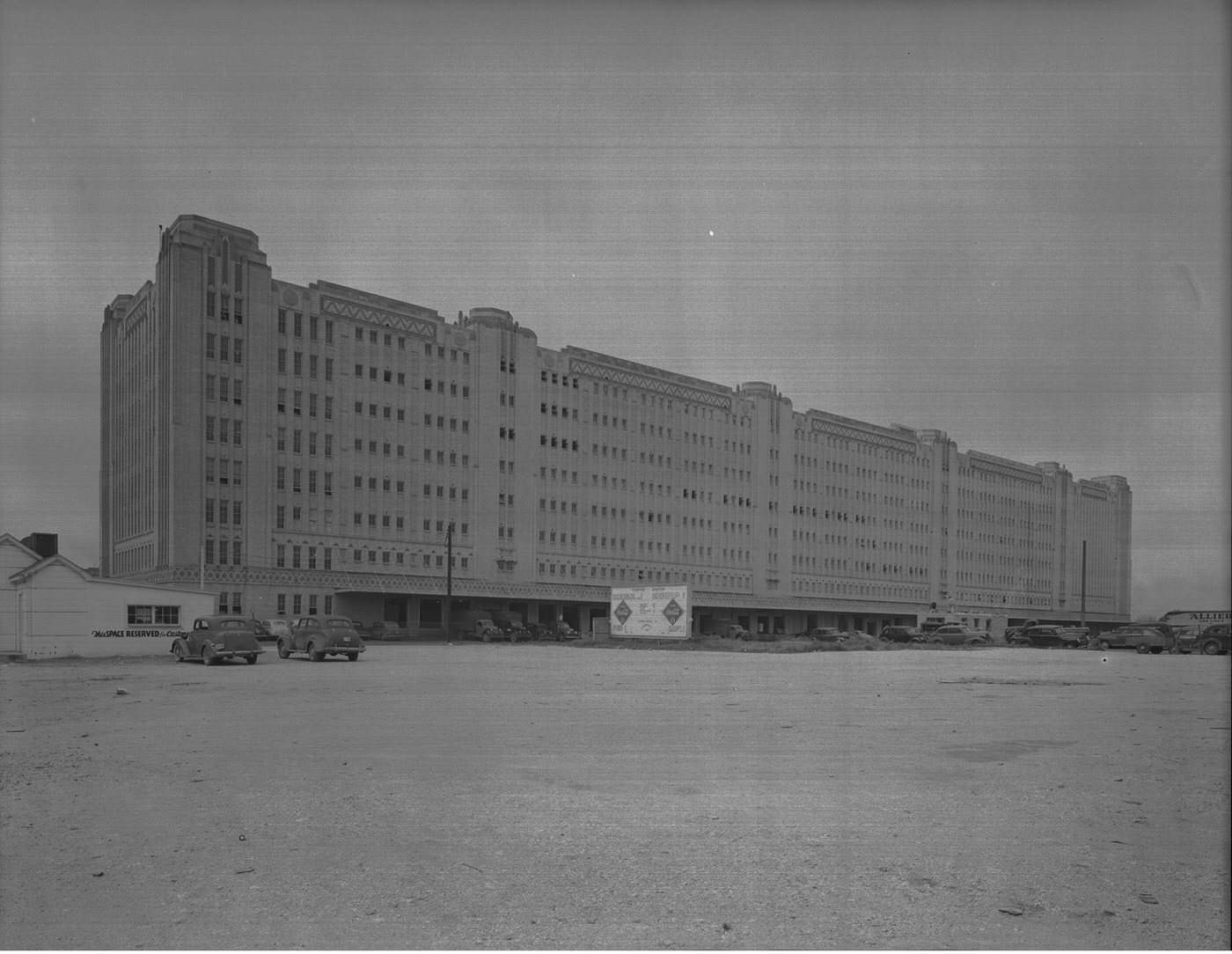
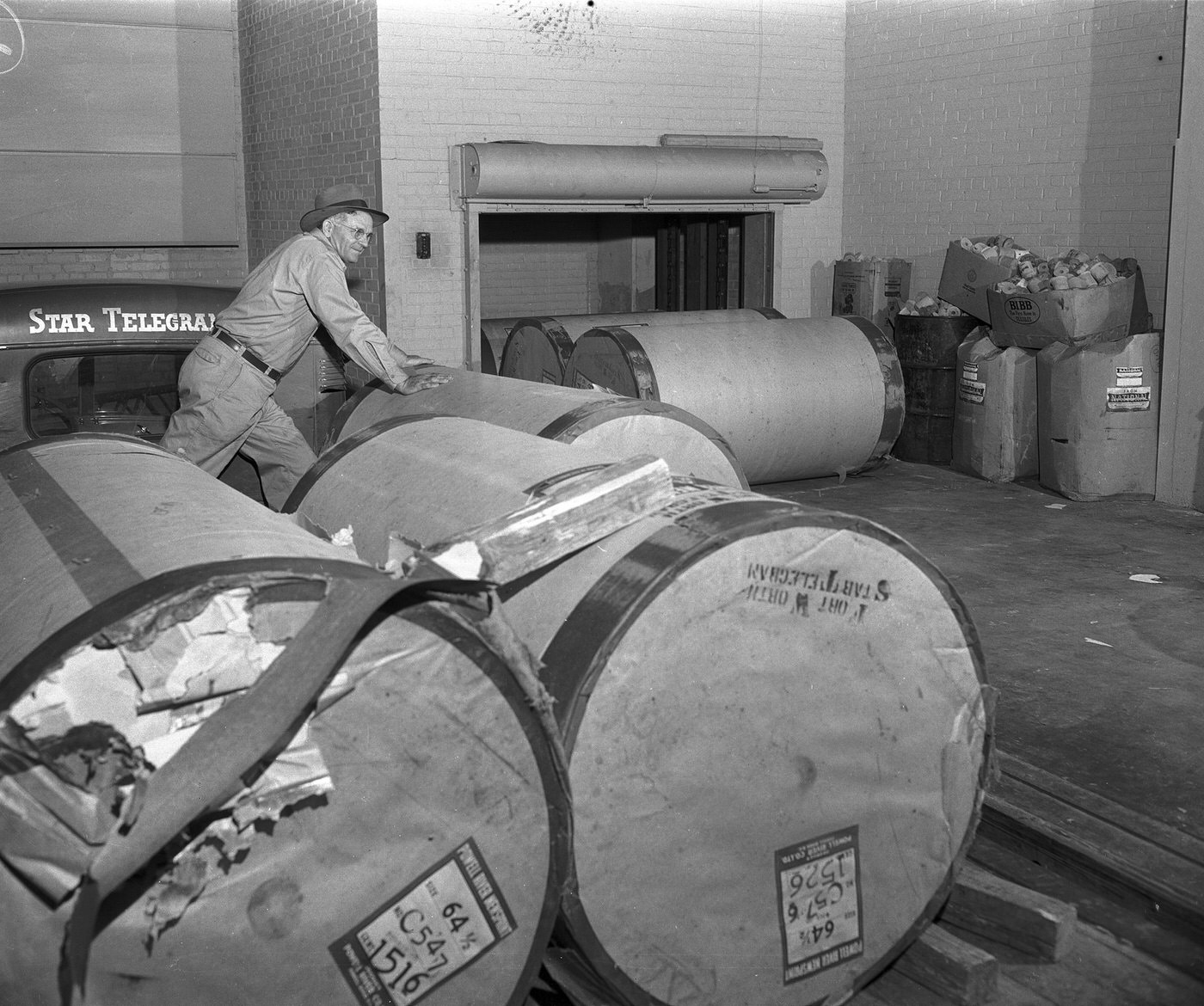
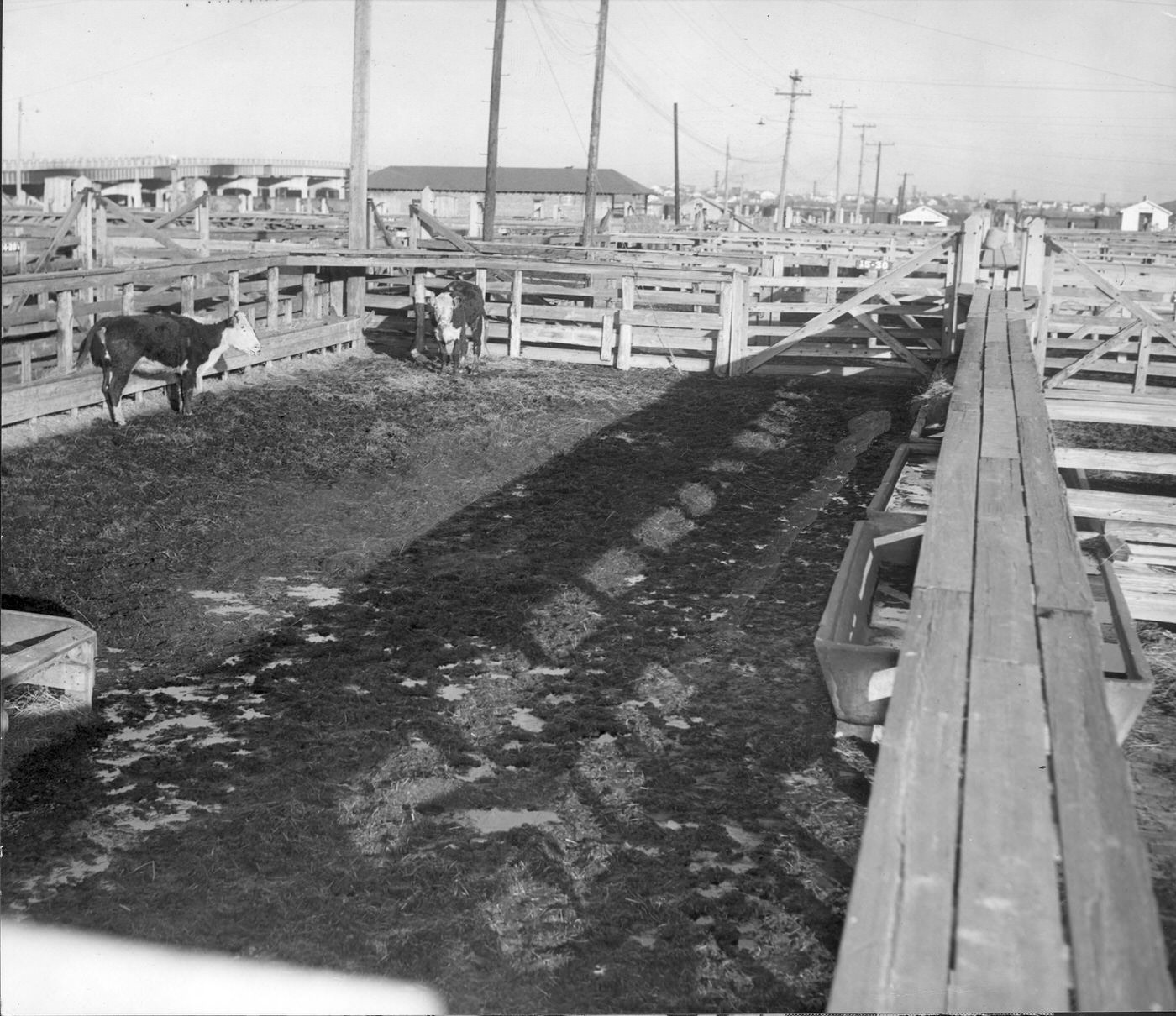
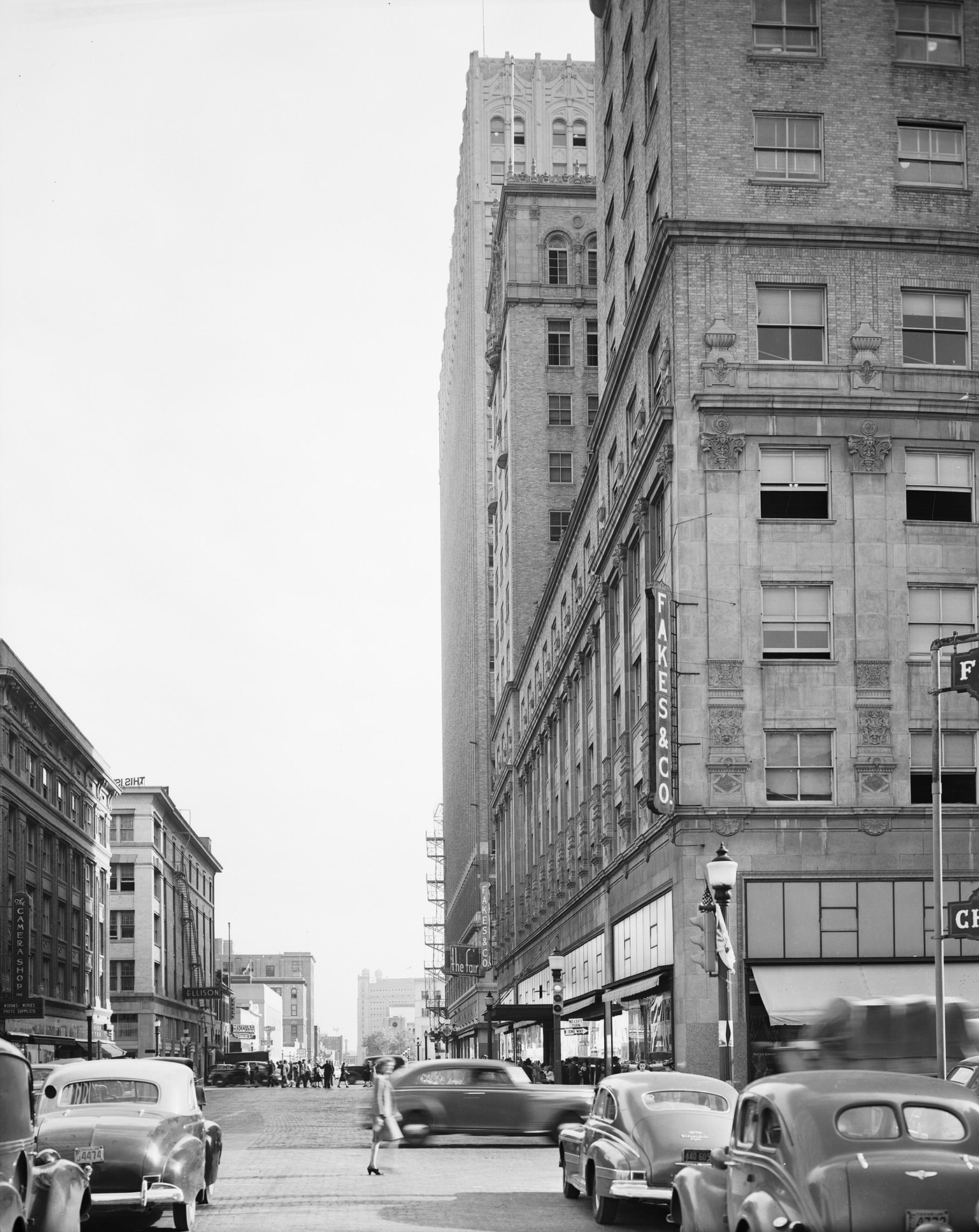
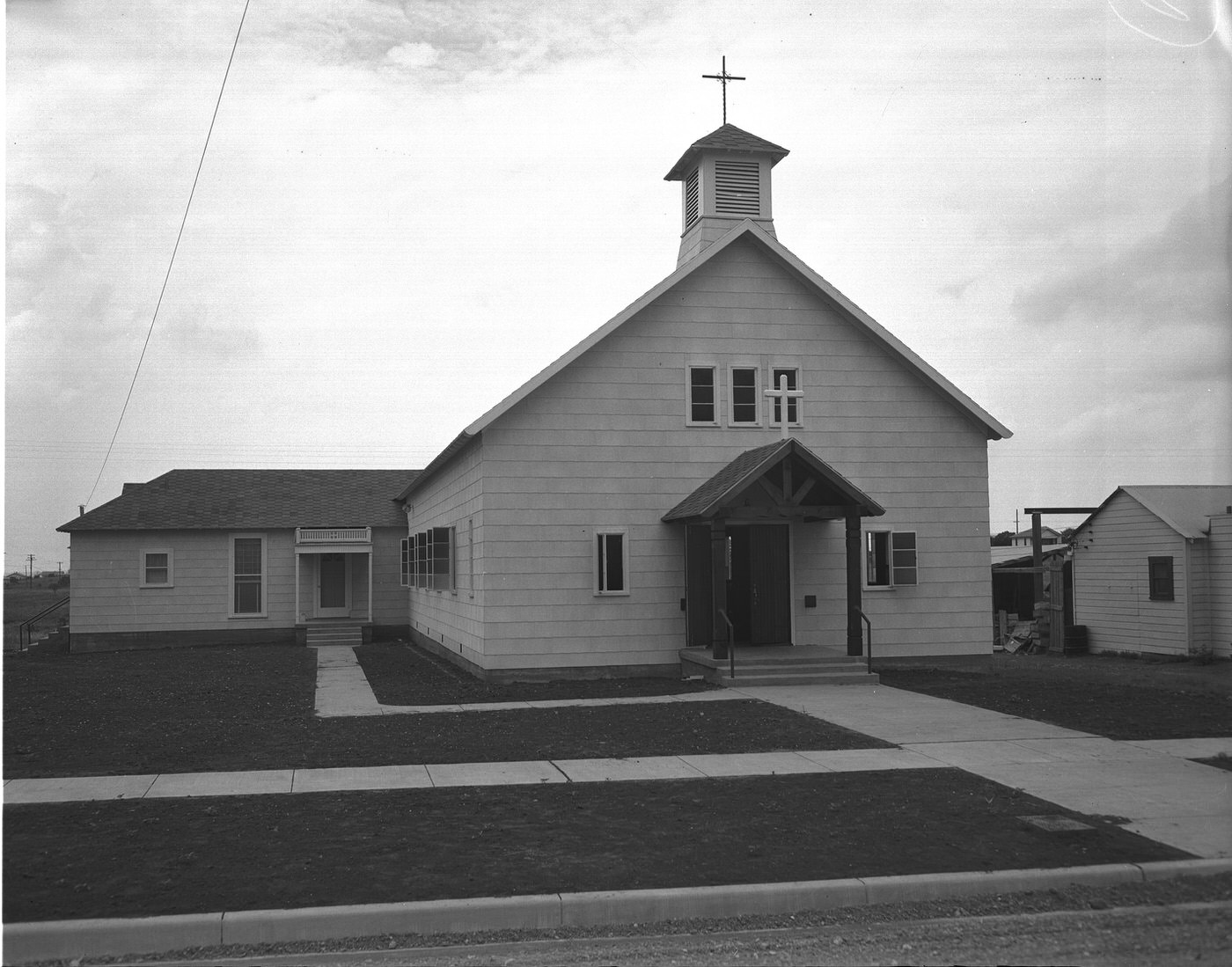
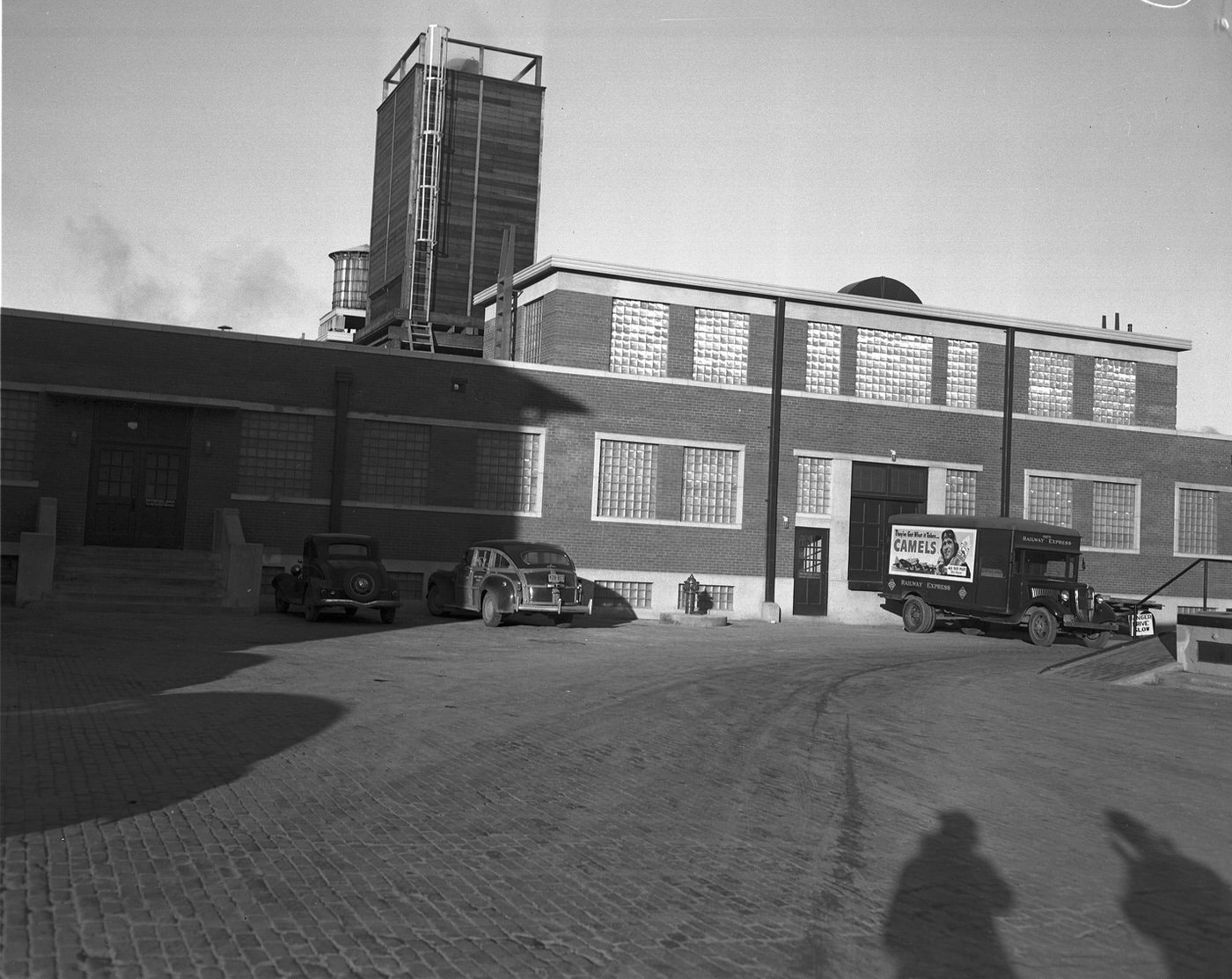
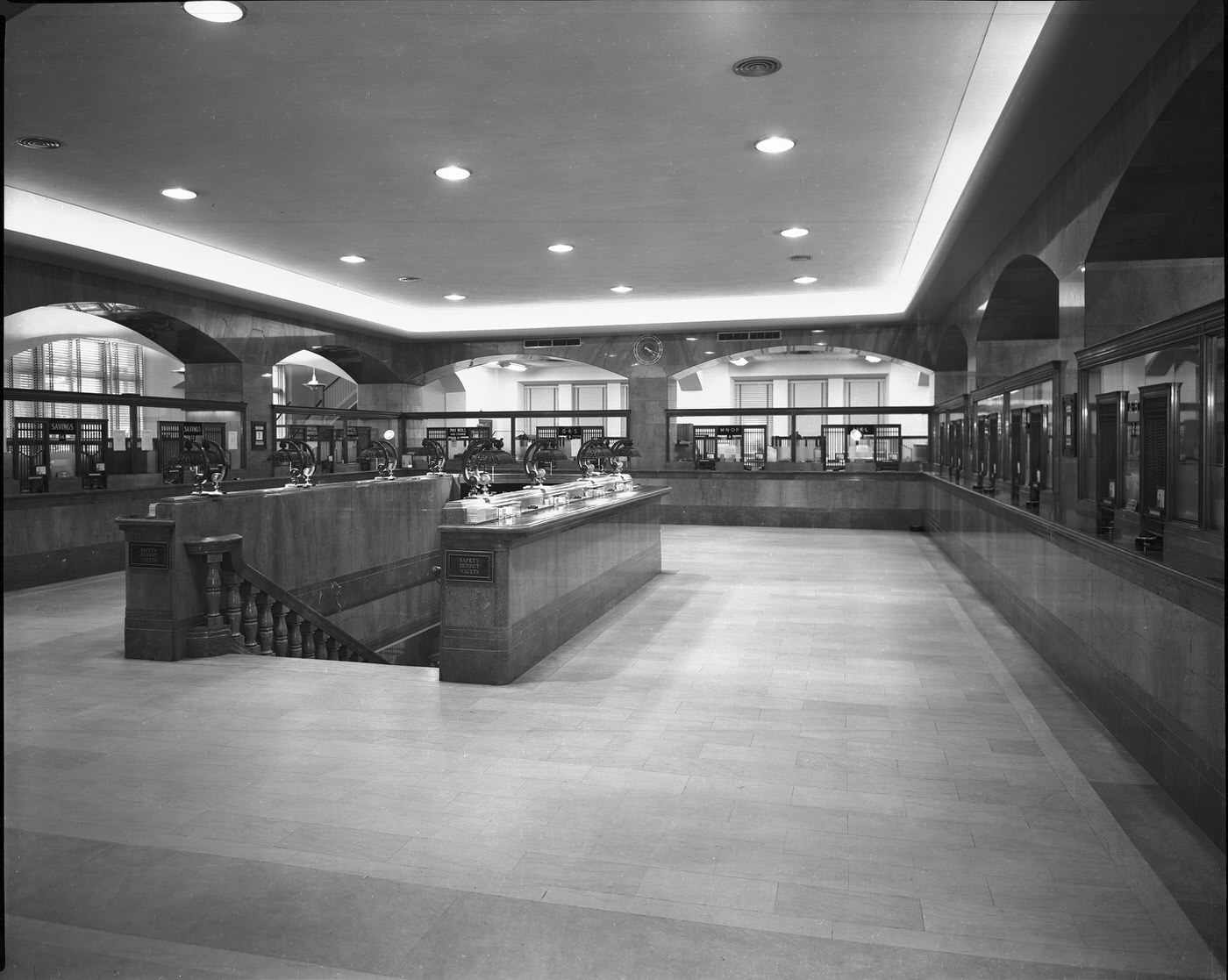
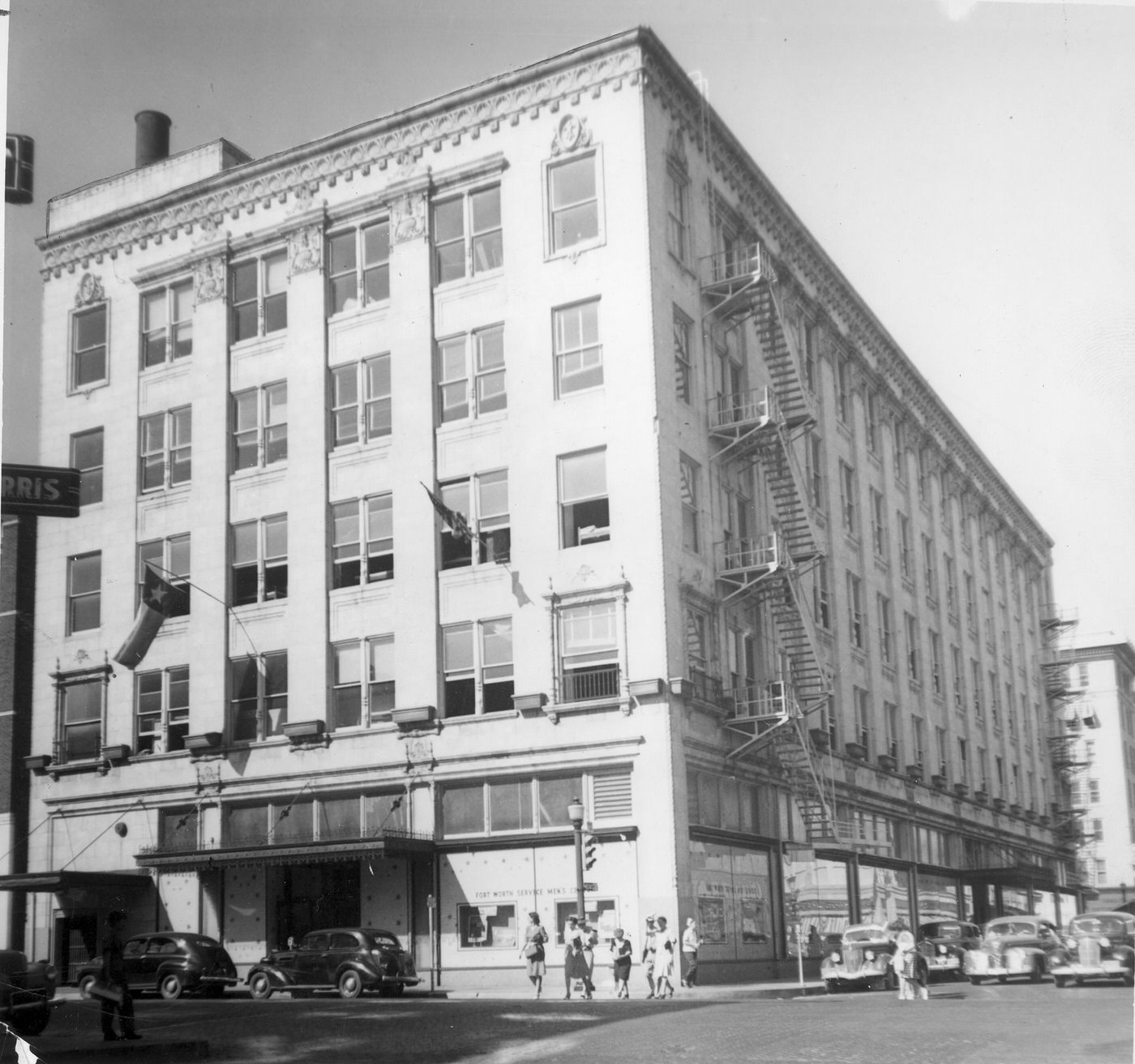
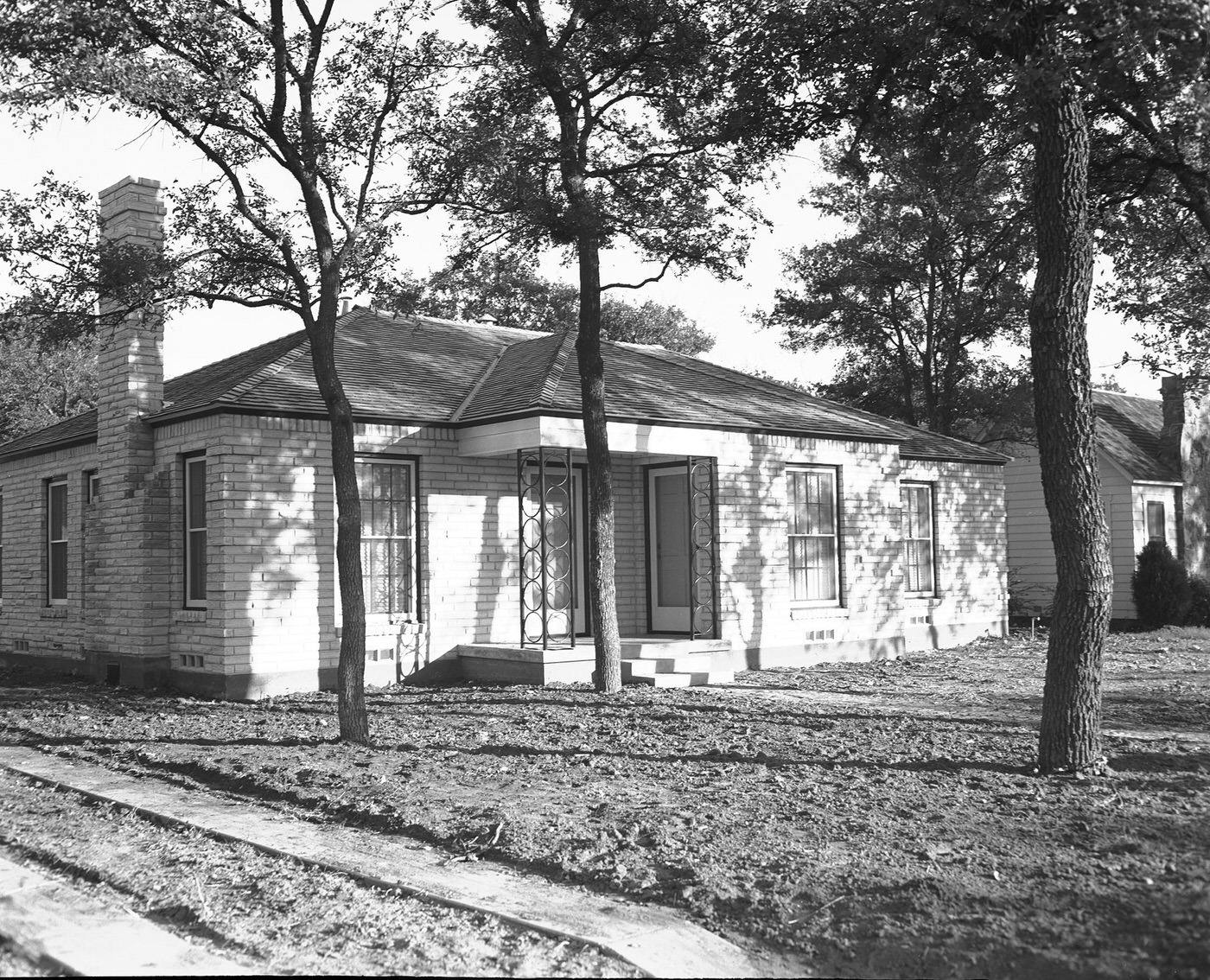
Looking south down Main St. from Tarrant County Court House, Fort Worth in 1949St. Ignatius Academy, first Catholic school in the area, 1944Historic Fort Worth buildings, 1200 West Presidio Street, 1944The Holstein cattle on the G. R. Fain farm near Plainview graze peacefully and contentedly on an irrigated pasture which Fain has put in to keep up his milk production, 1949Side view of the Plastelite Engineering Company building after flood, 1949Bewley Building, 1946City’s smaller industries: Hicks Rubber & Salvage Company, 1946Mrs. C. H. Bertram, shown sitting at an umbrella-protected table in her “outdoor living room,” which is surrounded with flowerbeds and hedges, 1940Exterior view of Wichita Avenue Methodist Church at Knox and Wichita street, Fort Worth, Texas, 1946The new home of J. B. Baker Junior is at 1801 Bolton Street, Fort Worth, Texas, 1942Explosion at Convair Employee’s House, 1946Harry Todd’s long putt for birdie stopped short on No. 18 green Saturday as the huge gallery held its breath, 1946Airview of Farrington Field and football game between Highland Park and Wichita Falls, 1945Fort Worth National Bank, 1945Texas Wesleyan College, 1945Texas Wesleyan College, 1946Parade and Spectators: Football T. C. U. Horned Frogs vs. Texas A&M Aggies, 1941A college football game between Texas Wesleyan College vs. Trinity University is being held at Farrington Field in Fort Worth, Texas, 1941Exterior of Mr. and Mrs. Brooks Morris’ House, 1941Southwestern Exposition and Fat Stock Show, 1942Farm elevator and equipment outside the Traders Cotton Oil Mill Co. plant, 1943Aerial view of the 1949 flood showing the 7th Street bridge and the Montgomery Ward building, Fort Worth, Texas, 1949A cotton oil mill, the foreground appears to be flooded. Exterior of the Traders Cotton Oil Mill Company in Fort Worth, Texas, 1942Group picture of employees of Traders Cotton Oil Mill Co., 1943Ladd Furniture and Carpet Company building, where E. A. Larkin plunged to his death, 19411012 North Main Street, 1946Trees along 2200 block of Huntington, Fort Worth, Texas, 1947The exterior of West Side State Bank.1947Fort Worth Botanic Garden.1942Charles E. Armstrong residence, 1941Fort Worth Garden Club, 1940Aerial view of Farrington Field and the Casa Manana revolving stage, 1947M.M. Barnes home, 1502 Summit Avenue, Fort Worth; bequeathed to city for a park, originally built by George B. Loving ca. 1880; bought by E.G. Harrold, father of Mrs. Barnes, 1947Physical training at Arlington Heights High School, 1943Westbrook Hotel, 4th and Main Street, Fort Worth, 1949Westbrook Hotel, 4th and Houston, Fort Worth, 1942Westbrook Hotel at 4th and Main Street, Fort Worth, 1942Harris Memorial Hospital lobby, Fort Worth, Texas, 1942Fort Worth sanitation drive, 1945An aerial of meat packing plants in the Fort Worth Stockyards, 1949Crown Machinery and Tool Company, Fort Worth, Texas, 1944An aerial of flooded neighborhoods, 1949Fort Worth, Texas flood, 1949.Base of TV tower at WBAP-TV, 1949Interior break room at Crown Machine and Tool Company, 2800 W. Lancaster Avenue, Fort Worth, 1944Star-Telegram horse-drawn delivery wagon supplies downtown salesmen, 1942Lucky Lady II 8th AF B-50 bomber at Carswell Air Force Base, 1949Buildings at Main Street looking North from 9th Street, Fort Worth, Texas, 1945Dickson-Jenkins Manufacturing Company exterior, 202-208 Saint Louis, Fort Worth, Texas, 1942Armistice Day parade in front of Hotel Texas, Fort Worth, November 1941Entrance to the Worth Hotel, 7th Street at Taylor Street, Fort Worth, Texas.Hotel Texas “Welcome to Ft. Worth Where the West Begins” marquee at entrance, 1949Firemen on ladder fight fire at Metropolitan Hotel building, Fort Worth, Texas, 1943Petroleum building at 6th and Throckmorton, downtown Fort Worth, Texas, 1949Entrance to the Blackstone Hotel, Fort Worth, Texas, 1949Aerial of 1949 flood in Fort Worth; Montgomery Ward store along West 7th Street, looking northwest, 1949Aerial of 1949 flood in Fort Worth; looking north from Farrington Field high school football stadium toward West Lancaster Street, West 7th Street, and Montgomery Ward, 1949Flooded street, Green Stamps sign and Mobil Gas station, 7th St., University Dr., Camp Bowie intersection, Fort Worth, 1949Cass Edwards house at Pennsylvania and Summit; close-up of front entrace, 1948Bowie Boulevard Drive-in Movie Theatre, Camp Bowie Boulevard, Fort Worth, Texas, 1941Exterior of the Winfield Scott home (Thistle Hill), 1509 Pennsylvania Avenue, Fort Worth, 1940Cass Edwards house at Pennsylvania and Summit, built late 1890s and scheduled to be torn down, 1948Downtown Fort Worth, West 7th Street looking east, 1940Loring Hotel on Camp Bowie Boulevard, Fort Worth, Texas, 1949Hyde Jennings house, northeast corner Lancaster and Summit; once a showplace on Fort Worth’s Quality Hill, to be moved to lot in Sycamore Heights, 1947View from the Tarrant County courthouse of a snow covered downtown Fort Worth, Texas, 1948A group poses in front of a “Howdy Stranger” sign at Shady Oak Farm, 1940Pennsylvania Avenue Hospital with Kenney’s Pharmacy on the left, Fort Worth, Texas, 1947Farrington Field, Fort Worth’s high school stadium, 1944Alta Vista Dairy Products, 1945Looking west on West 7th Street from Henderson Street; Firestone building on left, 1940Entrance to Star-Telegram building on 7th St., Fort Worth, 1948The Tarrant County Courthouse, 1940Golfers at Rockwood Golf Course, 1941Fort Worth’s City Hall, Throckmorton and 9th St., 1941.Horse trough carving on the exterior of the Courthouse Square, in downtown Fort Worth, 1940Workmen looking at 48-year-old horse trough on Courthouse Square, downtown Fort Worth, 1940Teller windows in First National Bank, Fort Worth, Texas, 1949Revielle ceremony at Hicks Field ends 4-year training program for World War I and II pilots, Fort Worth, Texas, 1944First National Bank teller cages, Fort Worth, Texas, 1949156th Infantry from Camp Bowie, Texas, marching on Fort Worth’s Main St., 1940Skillern Drugs and A&P Super Market on Camp Bowie, Arlington Heights, 1949An exterior of Arlington Heights home, Fort Worth, Texas, 1941A staircase in Robert McCart home ,Arlington Heights, Fort Worth, Texas, 1941Burned sheep pens in Fort Worth stockyards, 1947Cows entering pens in Fort Worth Stockyards, 1946The Fair Department Store with Ellison’s Furniture Store in the foreground; 7th Street, downtown Fort Worth, 1947Fort Worth Club remodeling, showing statues in hallway, 1948The Texas & Pacific terminal warehouse, 1940Newsprint being unloaded at the Fort Worth Star-Telegram, 1949Stockyards pens lonely, cattle pen with 2 cows during workers strike, Fort Worth Stockyards, 1940East-West expressway construction, 1940Bewley Building–Worth Hotel in foreground. People are walking on the pavement and automobiles are on the street, 1945A view seen from Texas & Pacific station, 1945Exterior shot of home of Mrs. M. R. Sanguinet, Arlington Heights, Fort Worth, Texas, 19407th and Taylor Street, downtown Fort Worth, 1940
All-American Horse Show and Rodeo parade in downtown Fort Worth, 1946
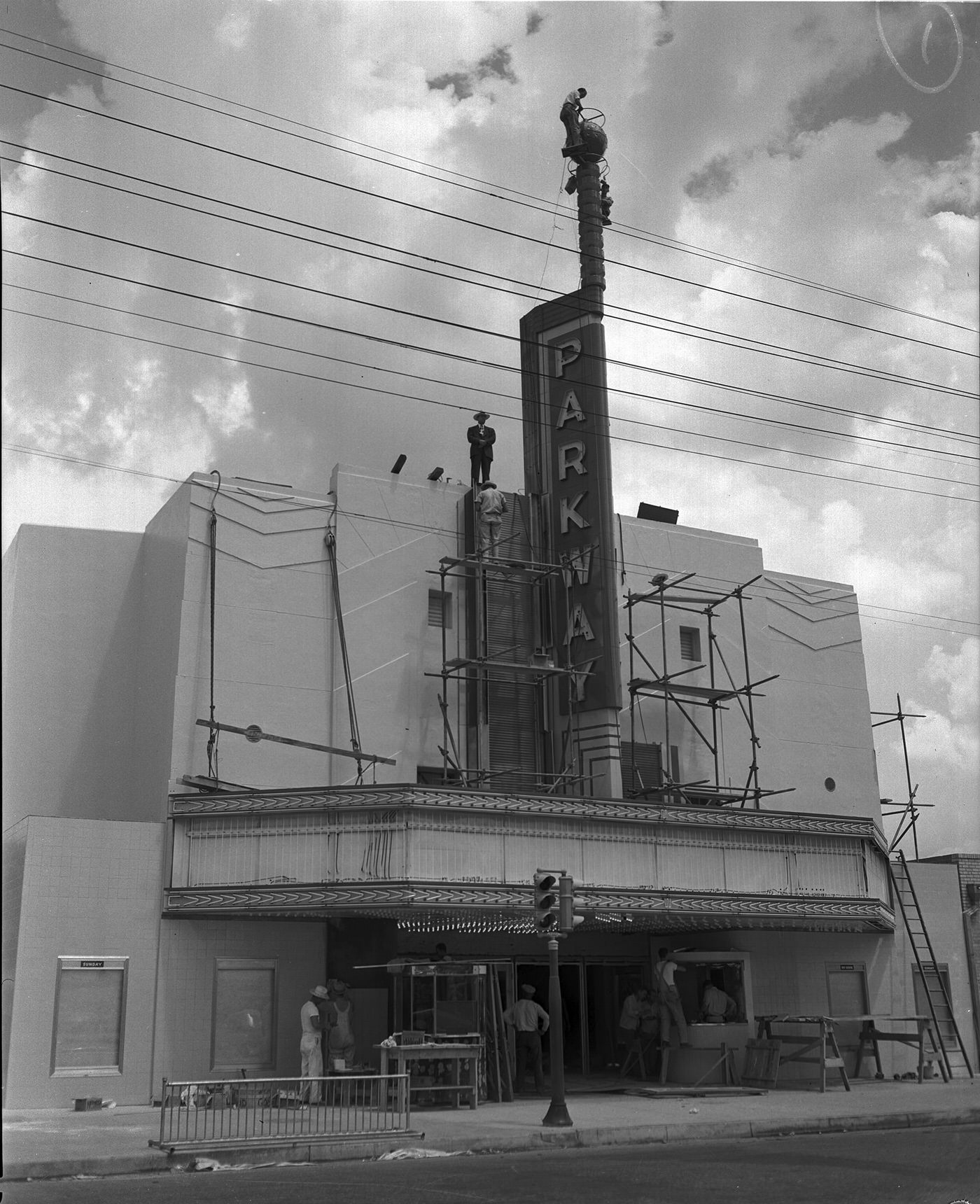
The Parkway Theater exterior remodeling, Fort Worth, Texas, 1948
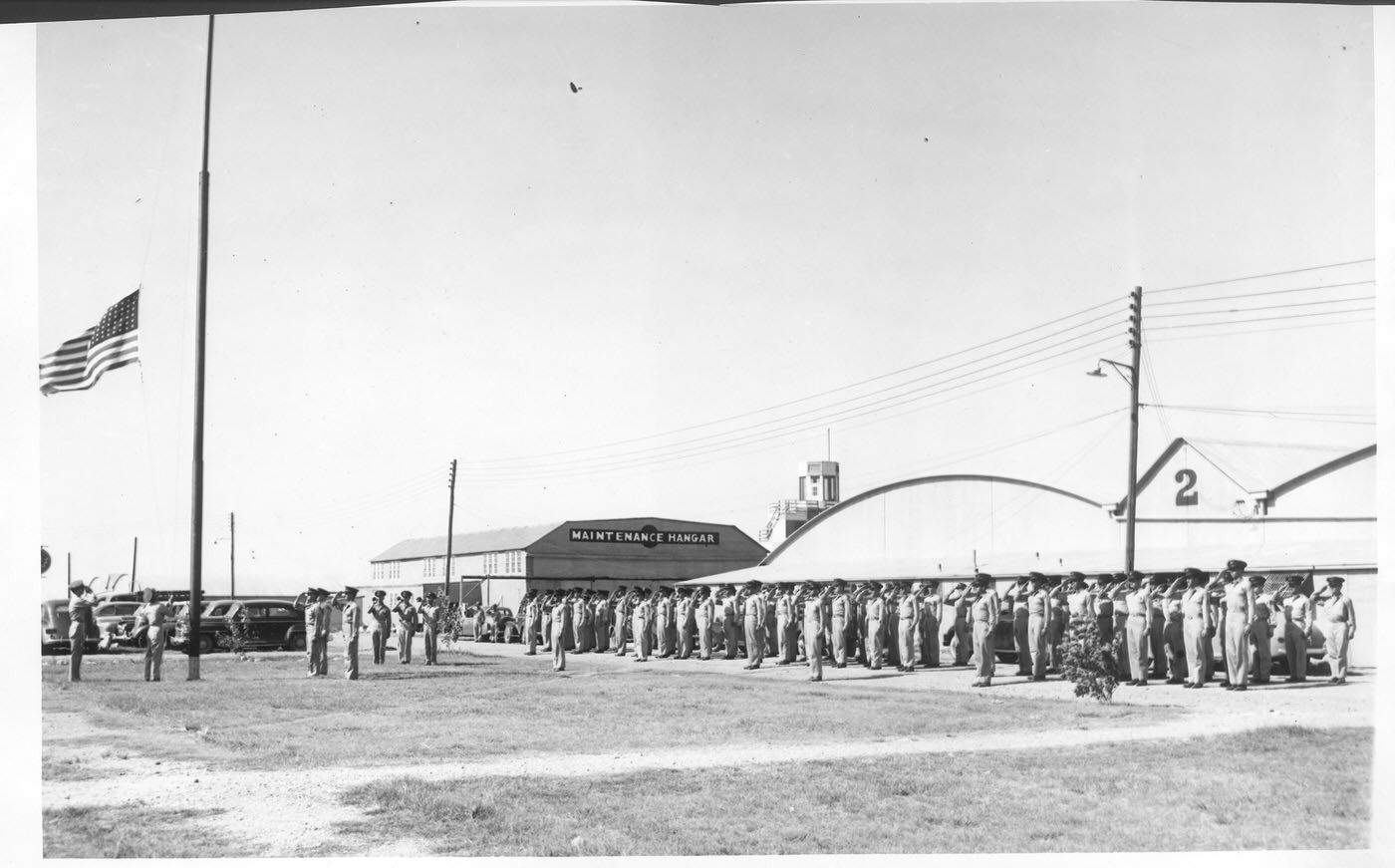
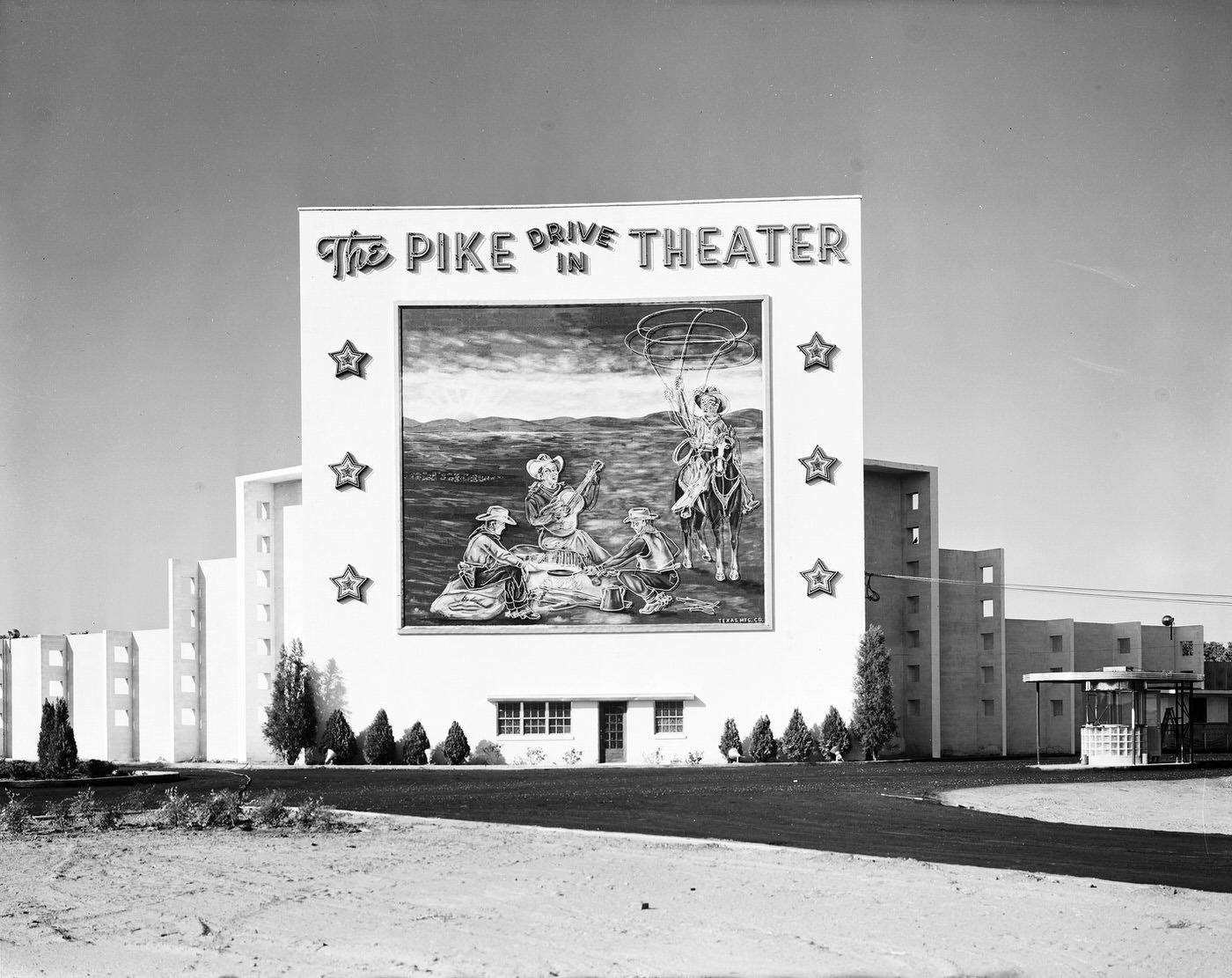
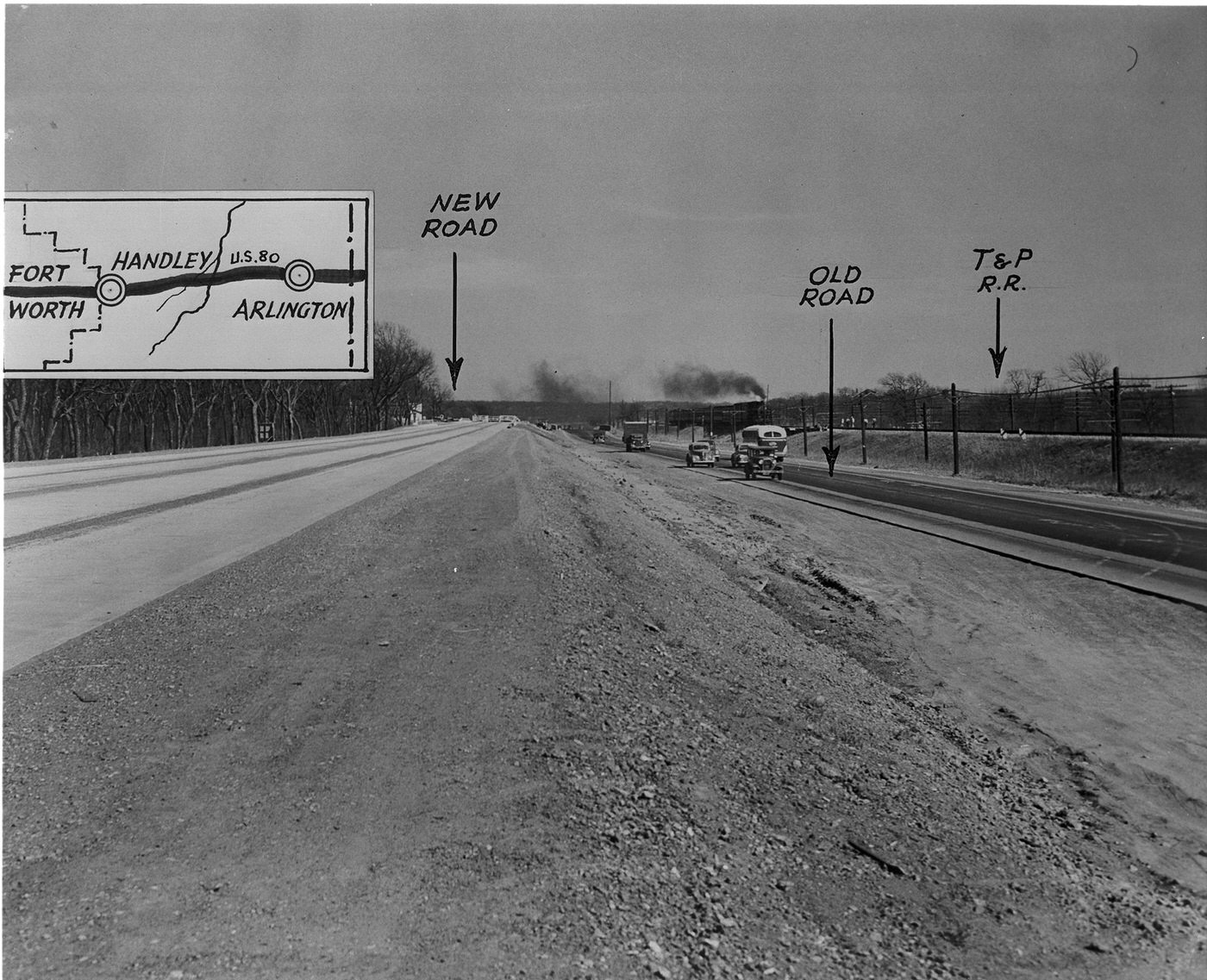
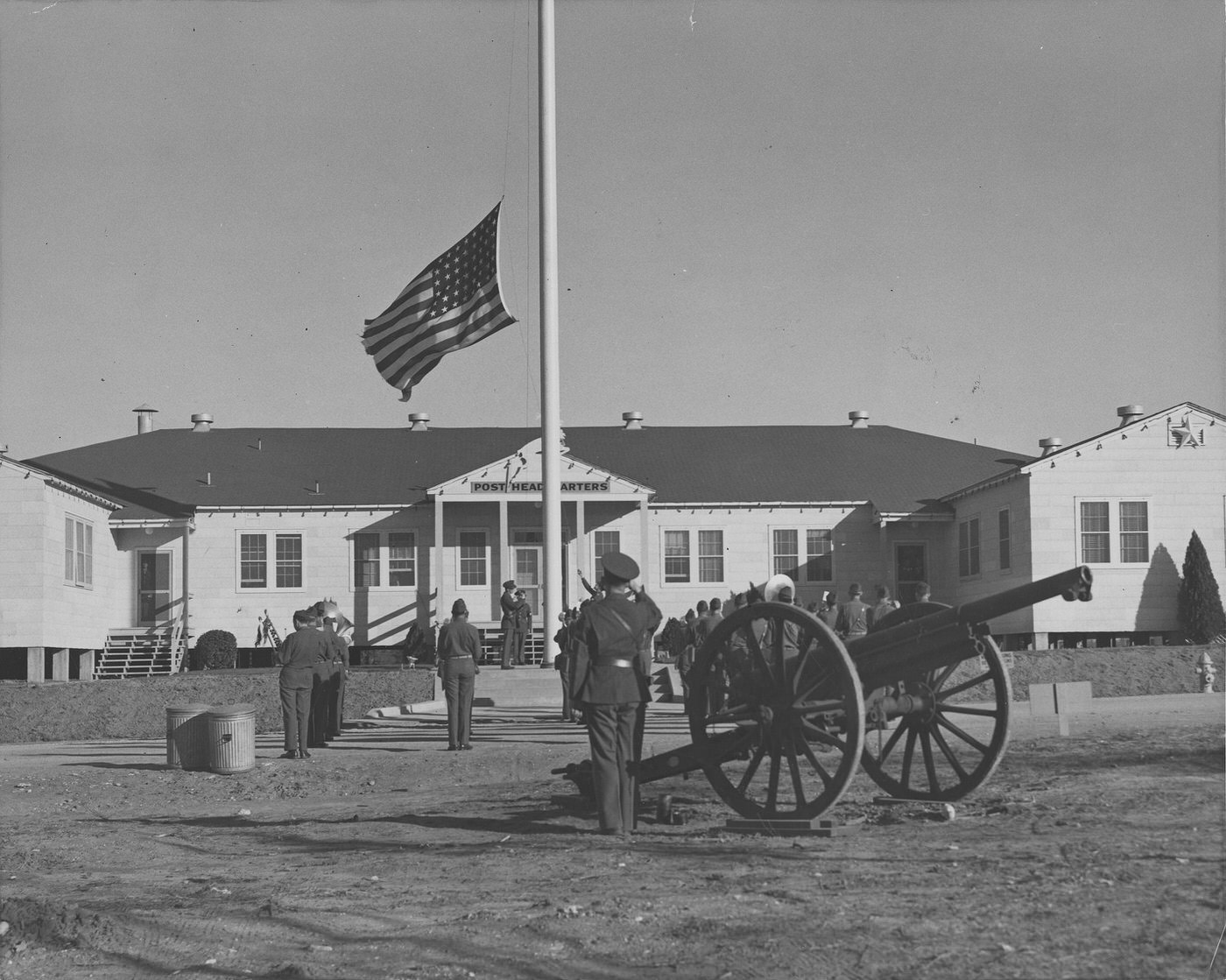
Looking south on Throckmorton Street from 6th Street, 1945Military parade in downtown Fort Worth along Houston St. with Leonard’s and Meacham department stores along the street, 1948Construction of the North Side Recreation Center, Fort Worth, Texas, 1948The A. T. Byers home in Arlington Heights, Fort Worth, Texas, 1947Looking south on Throckmorton Street from 9th Street, 1945Burk Burnett Park at night in the snow, at 7th and Lamar streets; lights from surrounding buildings Texas Electric Service Company and Neil P. Anderson, 1948Retreat soldiers saluting lowering of flag as cannon booms, 1943The Pike Drive-In Movie Theater, 7500 East Lancaster Dr., near Sandy Lane, Fort Worth, Texas, 1947Looking south on Throckmorton Street from 9th Street, 1945Fort Worth City Club exterior, 7th and Throckmorton Sts., car at traffic light, 1944Mrs. Frank Goldthwaite making a long putt, River Crest Country Club, 1940The exterior of St. Alice’s Catholic Church, 1942Highway U.S. 80 (Dallas Pike) between Fort Worth and Arlington near Handley, 1947
Fort Worth National Bank building, 1945
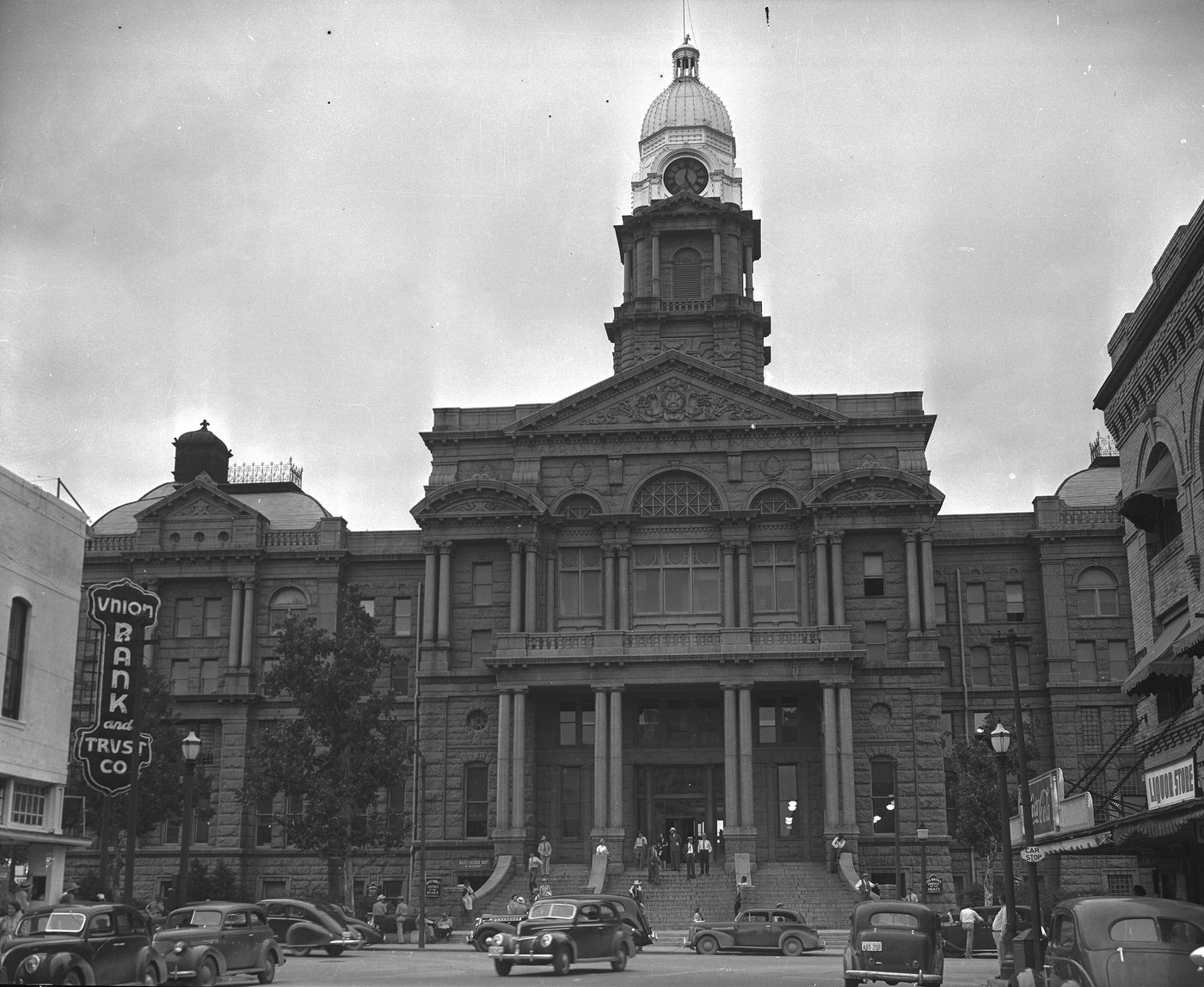
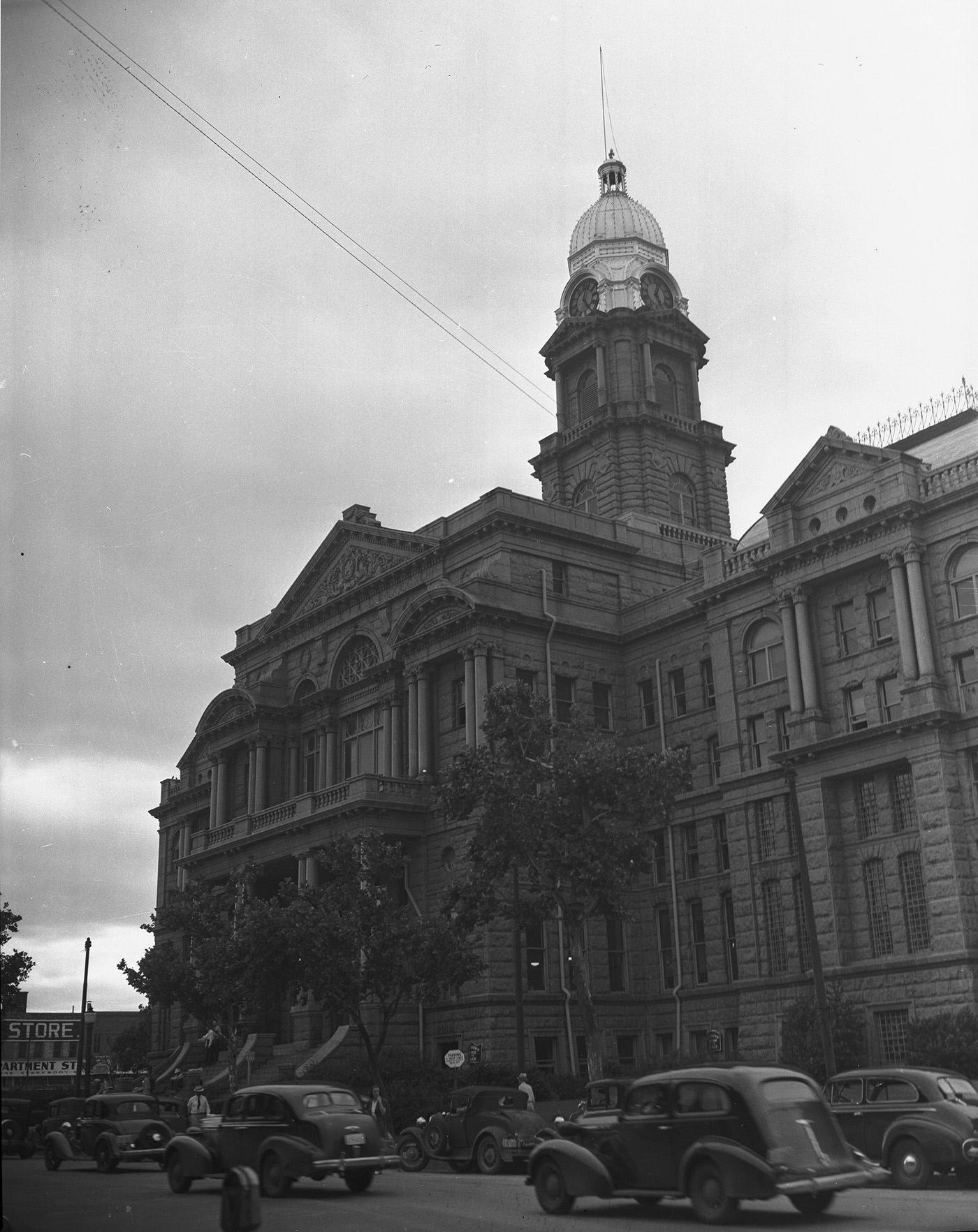
Exterior of the Tarrant County Courthouse with 1930s cars on street in front of building, 1940
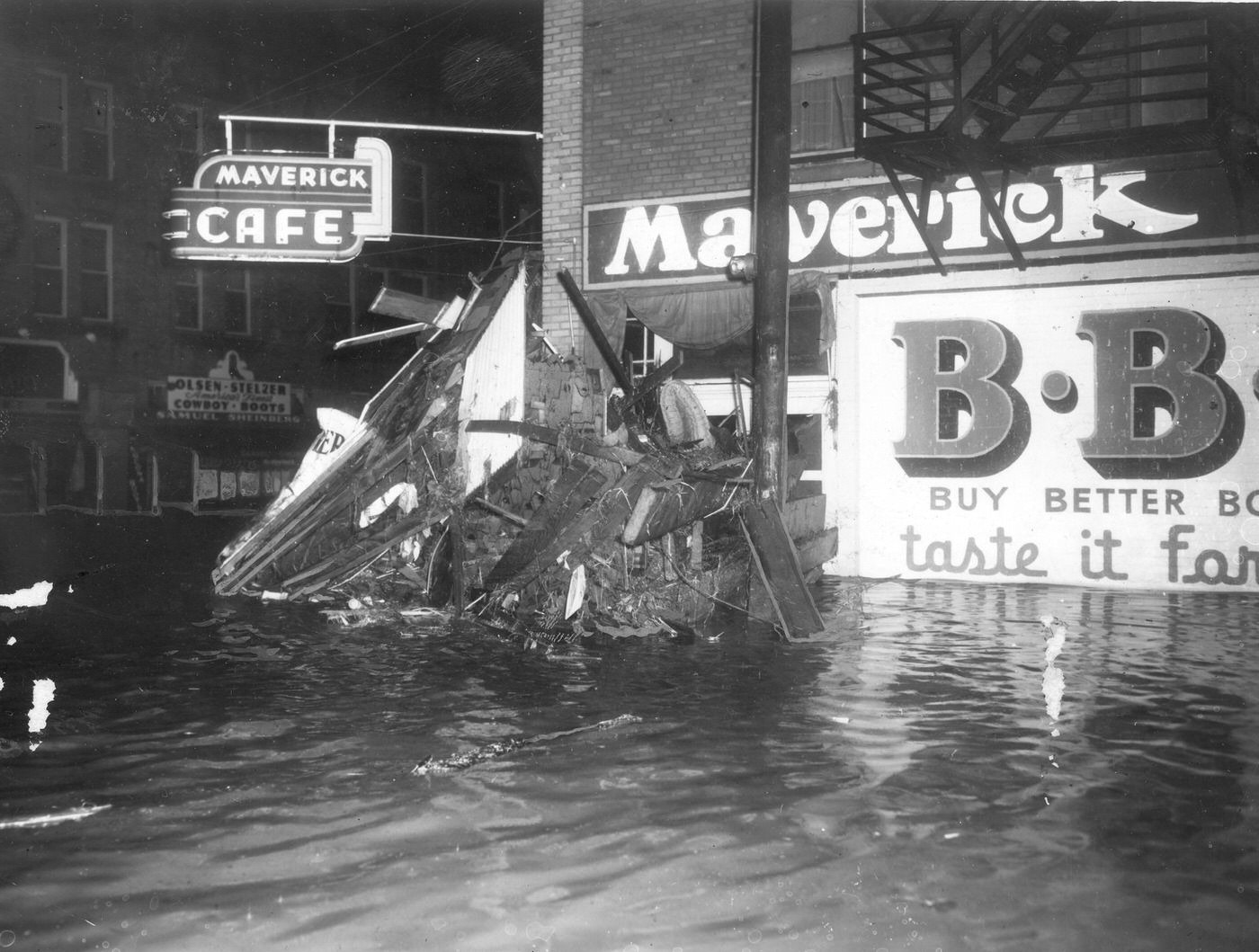
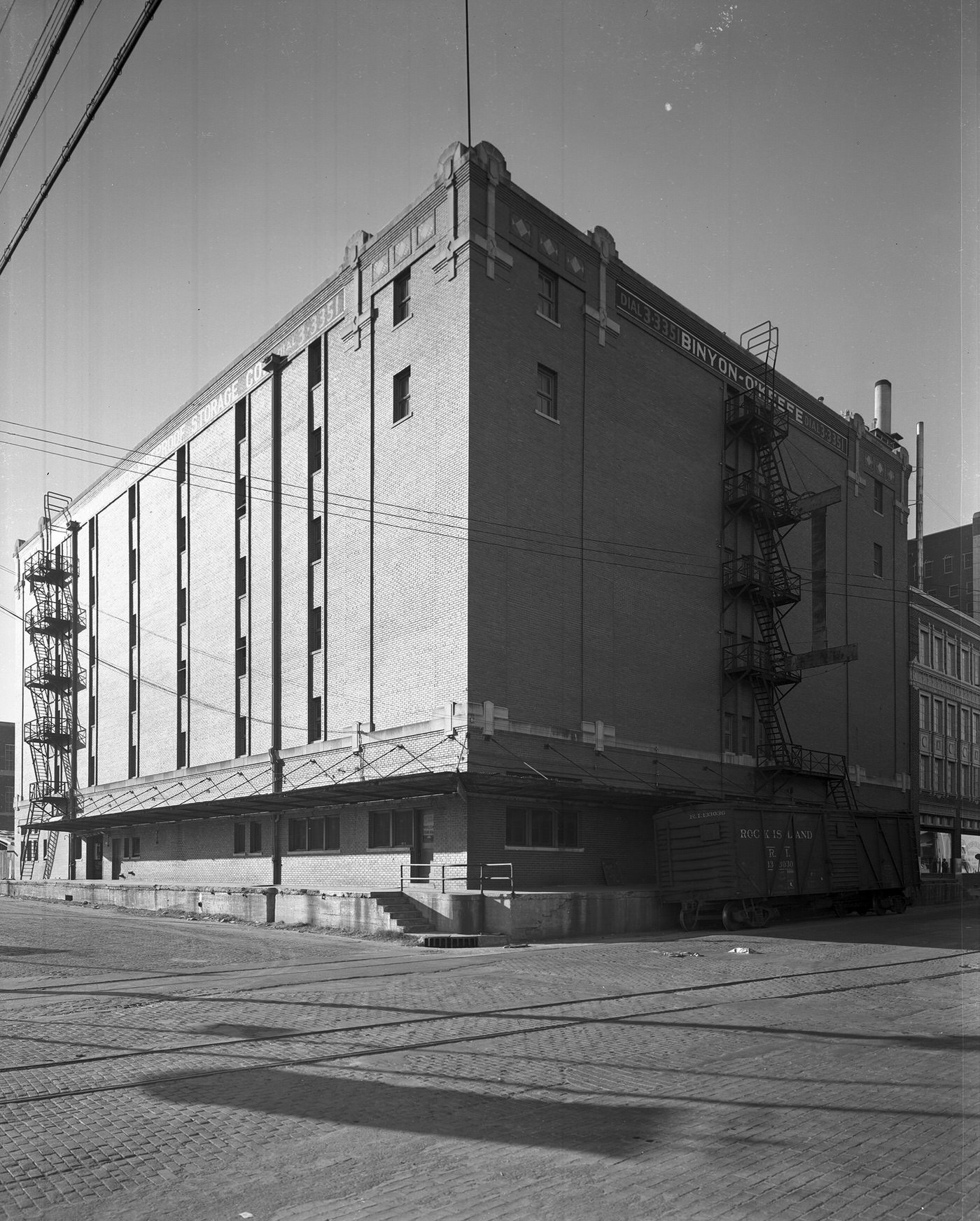
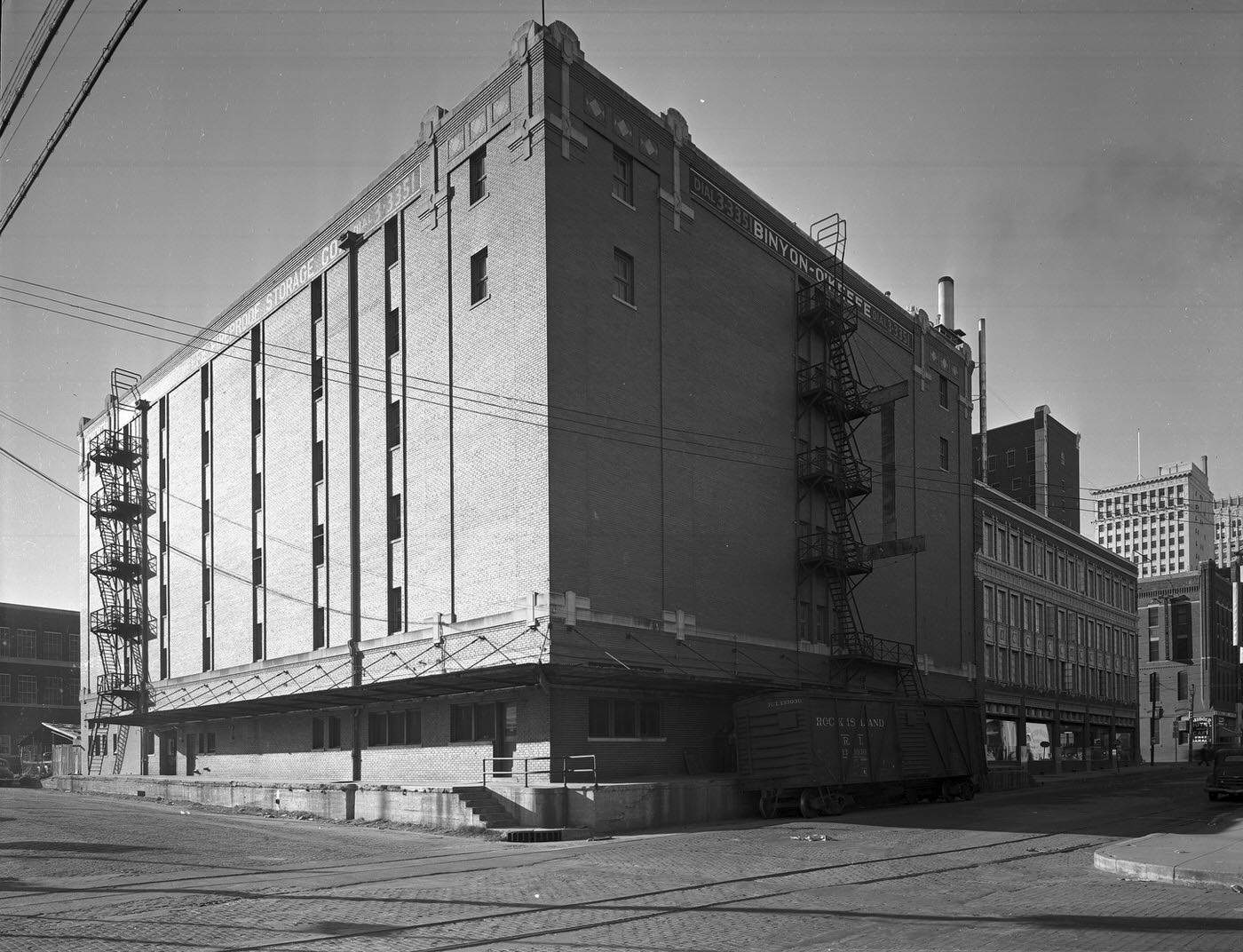
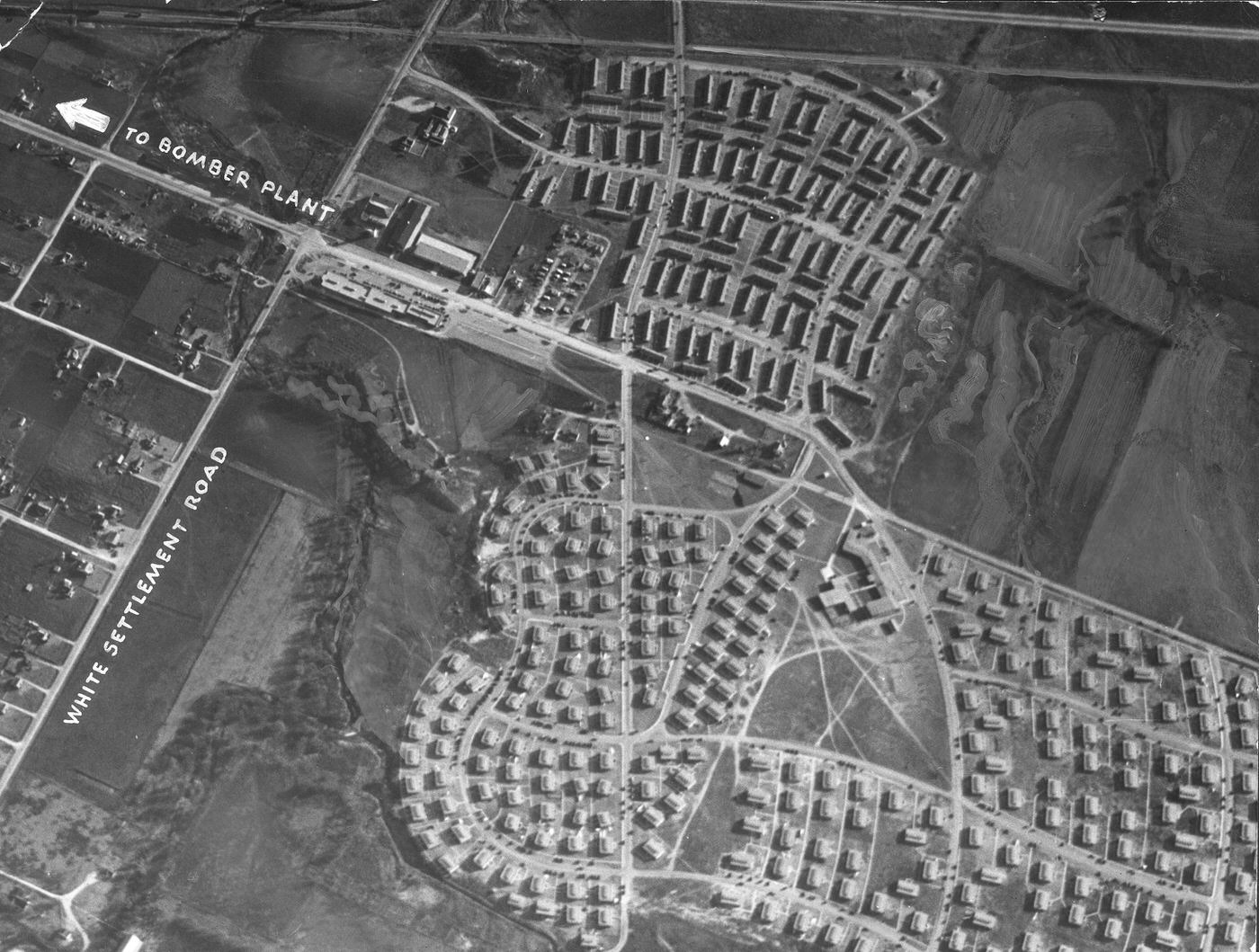
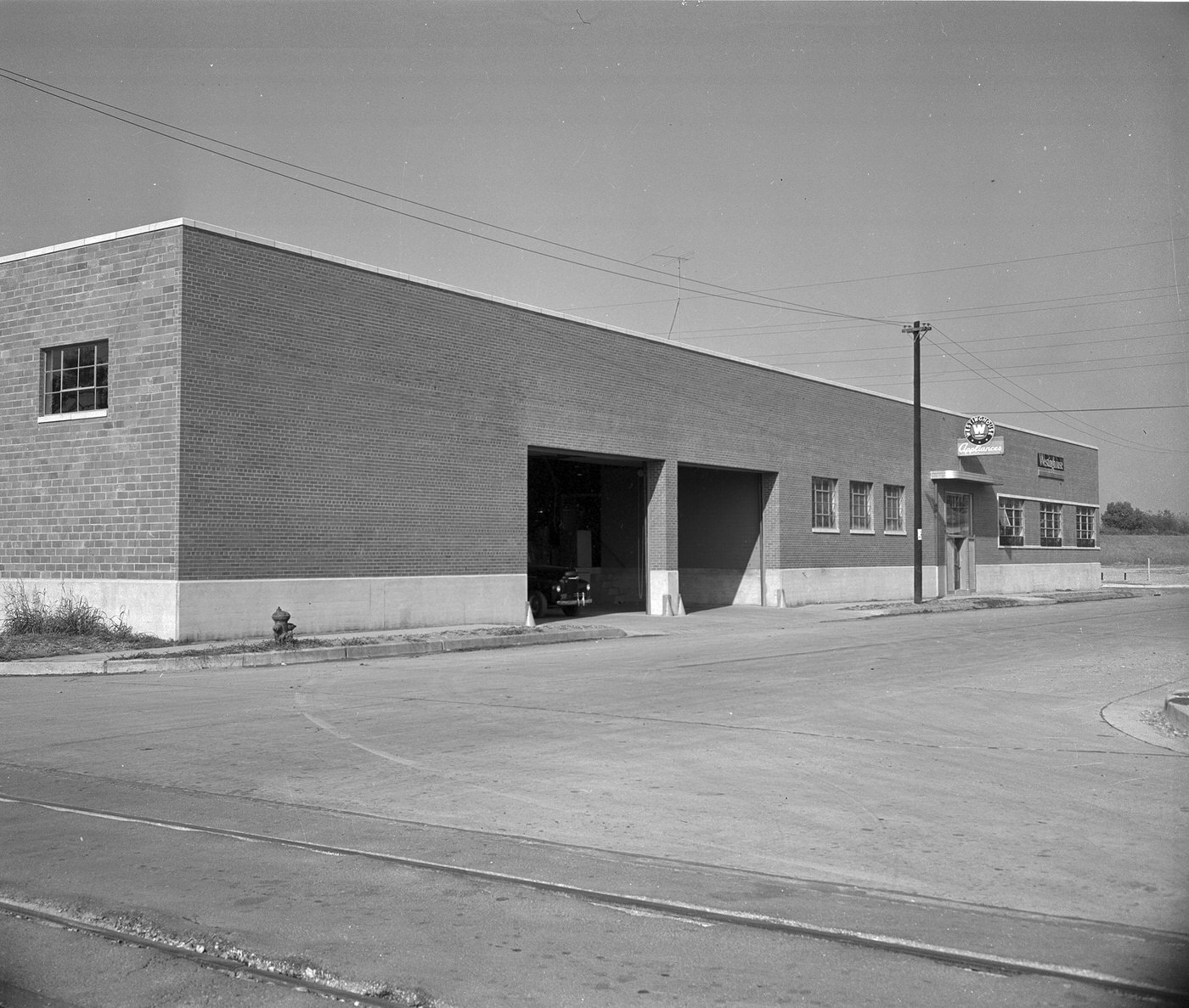
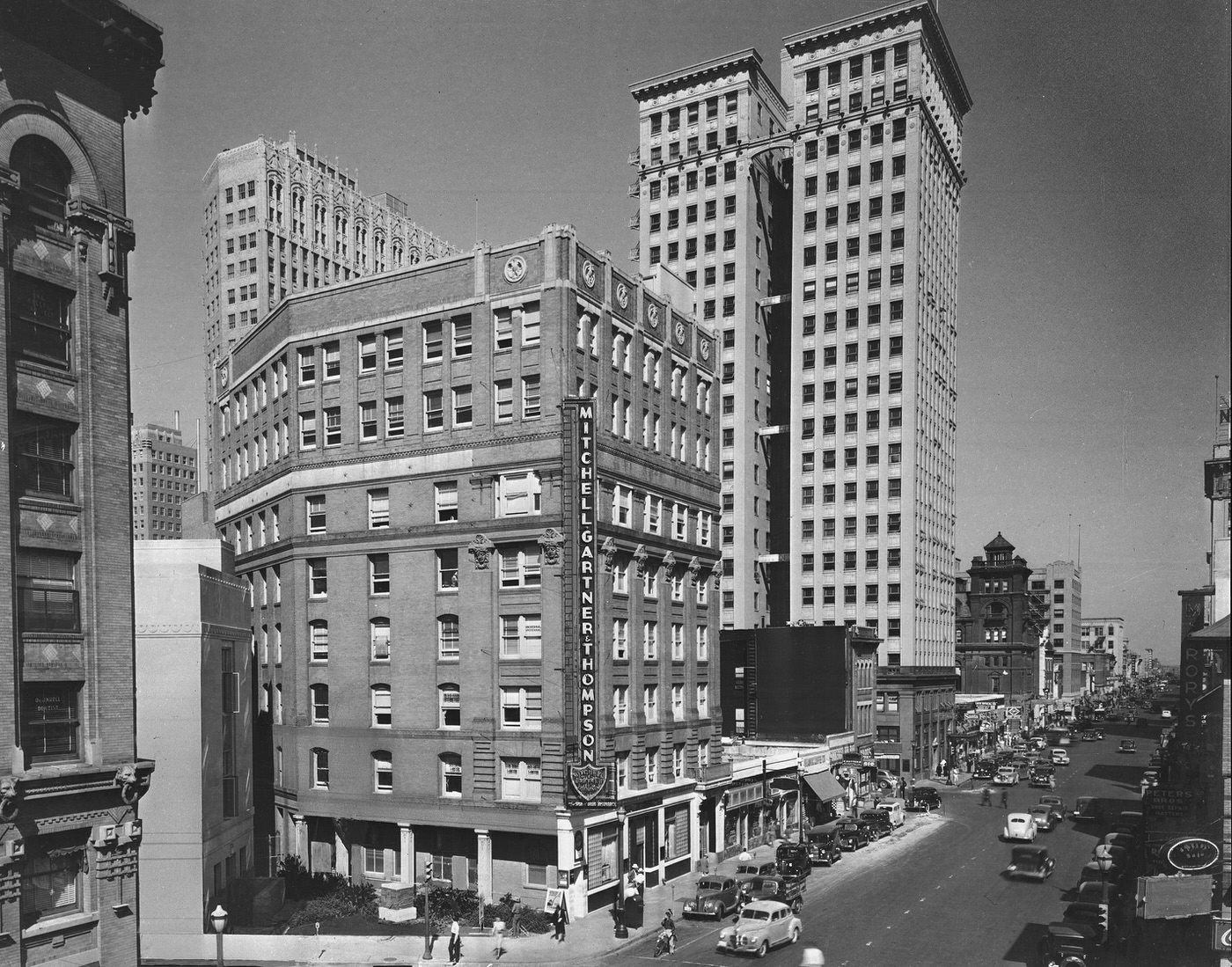
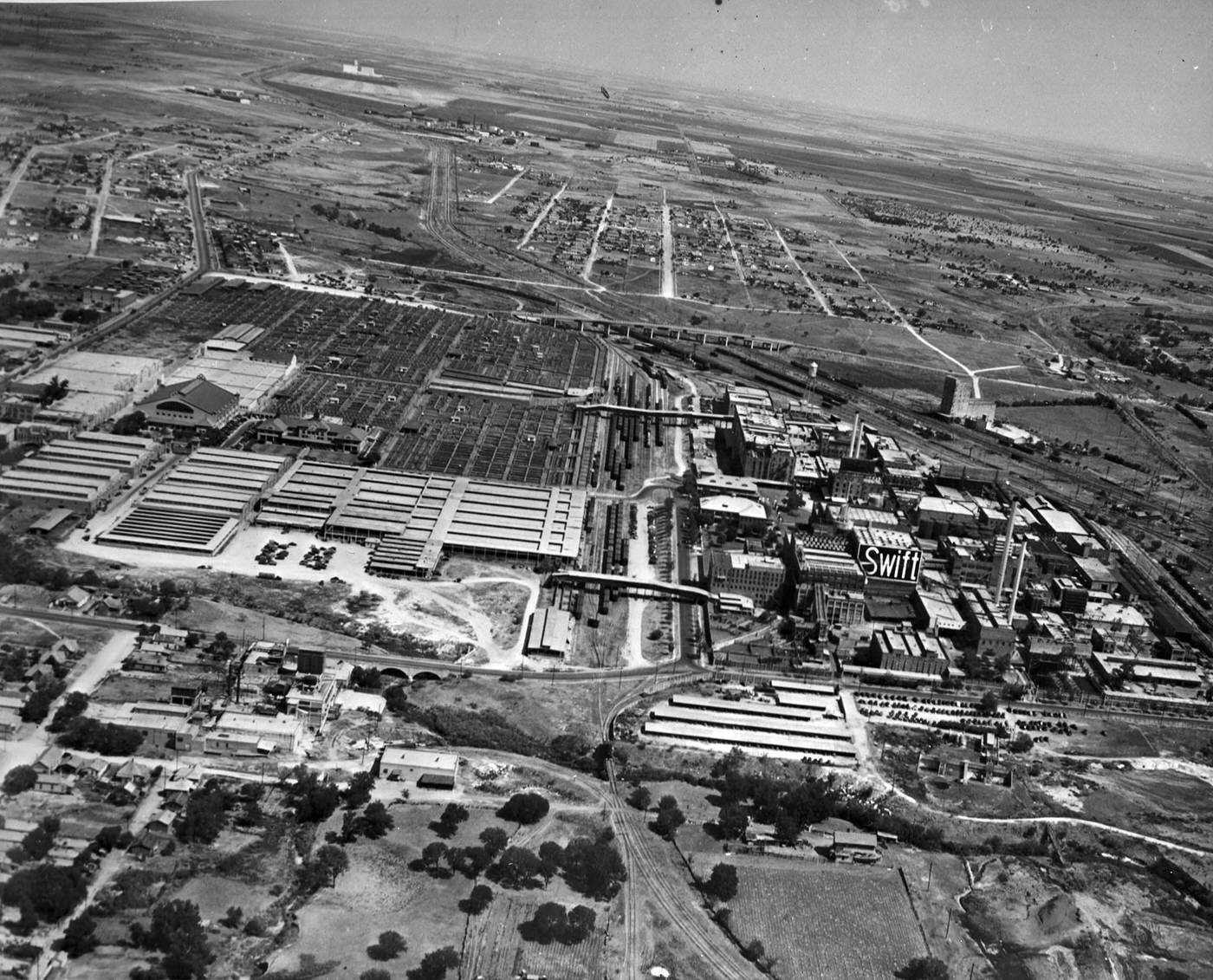
WBAP-TV’s new studio-transmitter building at 3900 Barnett [Broadcast Hill], Fort Worth, 1949Fort Worth, Texas flood, 1949The flood of Marine Creek which submerged Maverick Café, 1942Fort Worth, Texas flood, 1949The exterior of Binyon-O’Keefe Storage Company, Fort Worth, Texas, 1942An exterior photograph of Armour & Company blood lab in the Fort Worth stockyards, 1943An aerial view of Fort Worth stockyards and Swift meat packing company, 1945The exterior of Binyon-O’Keefe Storage Company, Fort Worth, Texas, 1942Sinclair Building, 512 Main Street, Fort Worth, Texas, 1945An aerial view of Fort Worth Stockyards, Armour & Company and Swift Company, 1945An aerial view of base housing, Carswell Air Force Base, Fort Worth, Texas, 1945Westinghouse Electric Supply Company branch office at 205 N.E. 7th Street, Fort Worth, 148Mitchell, Gartner & Thompson Insurance building and the W. T. Waggoner building, Fort Worth, Texas, 1942Aerial view of Rockwood Golf Course, covered in snow, 1940
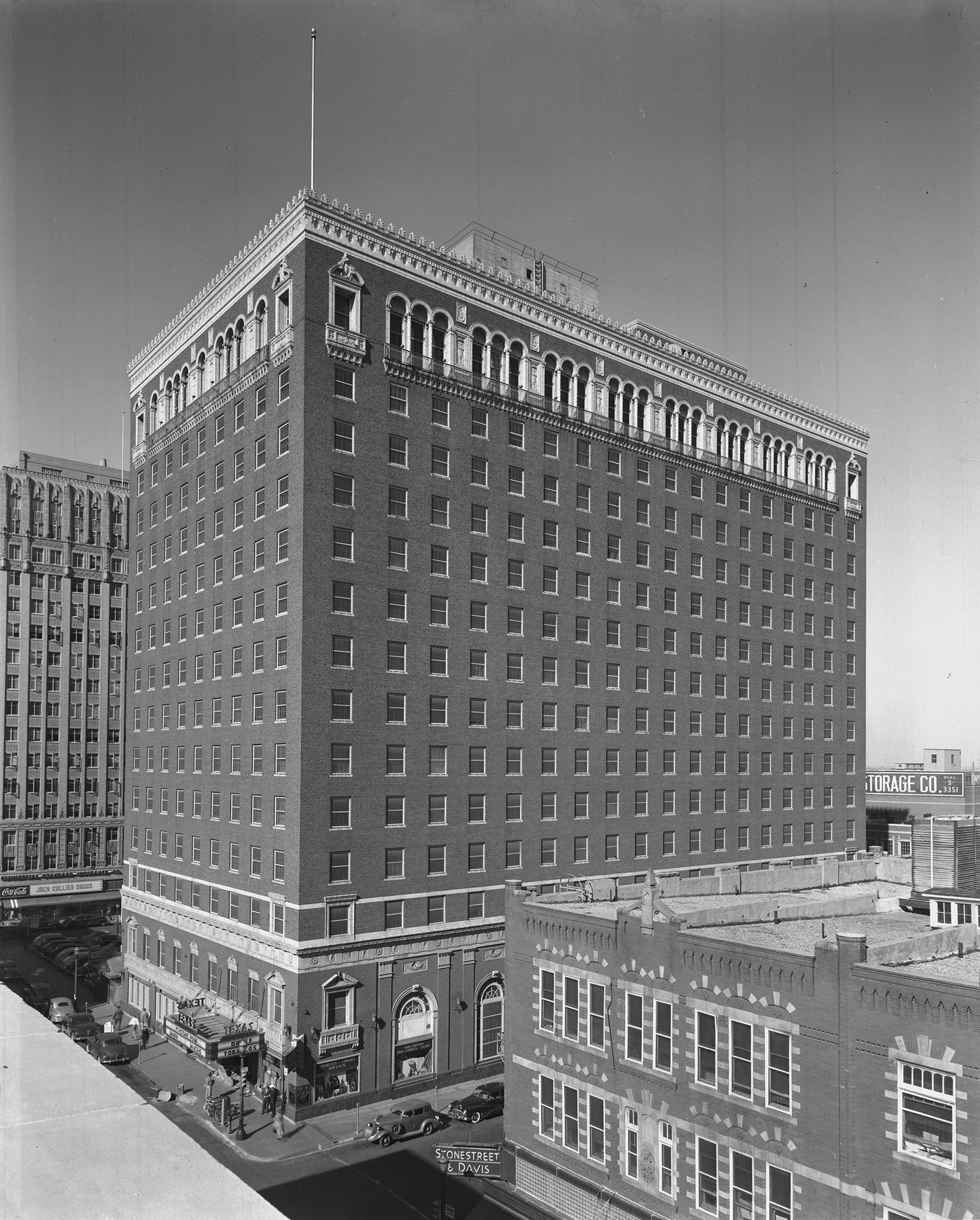
Exterior of Hotel Texas, 8th St., between Commerce and Main streets, 1948
Fort Worth National Bank, 714 Main Street, Fort Worth, Texas, 1942
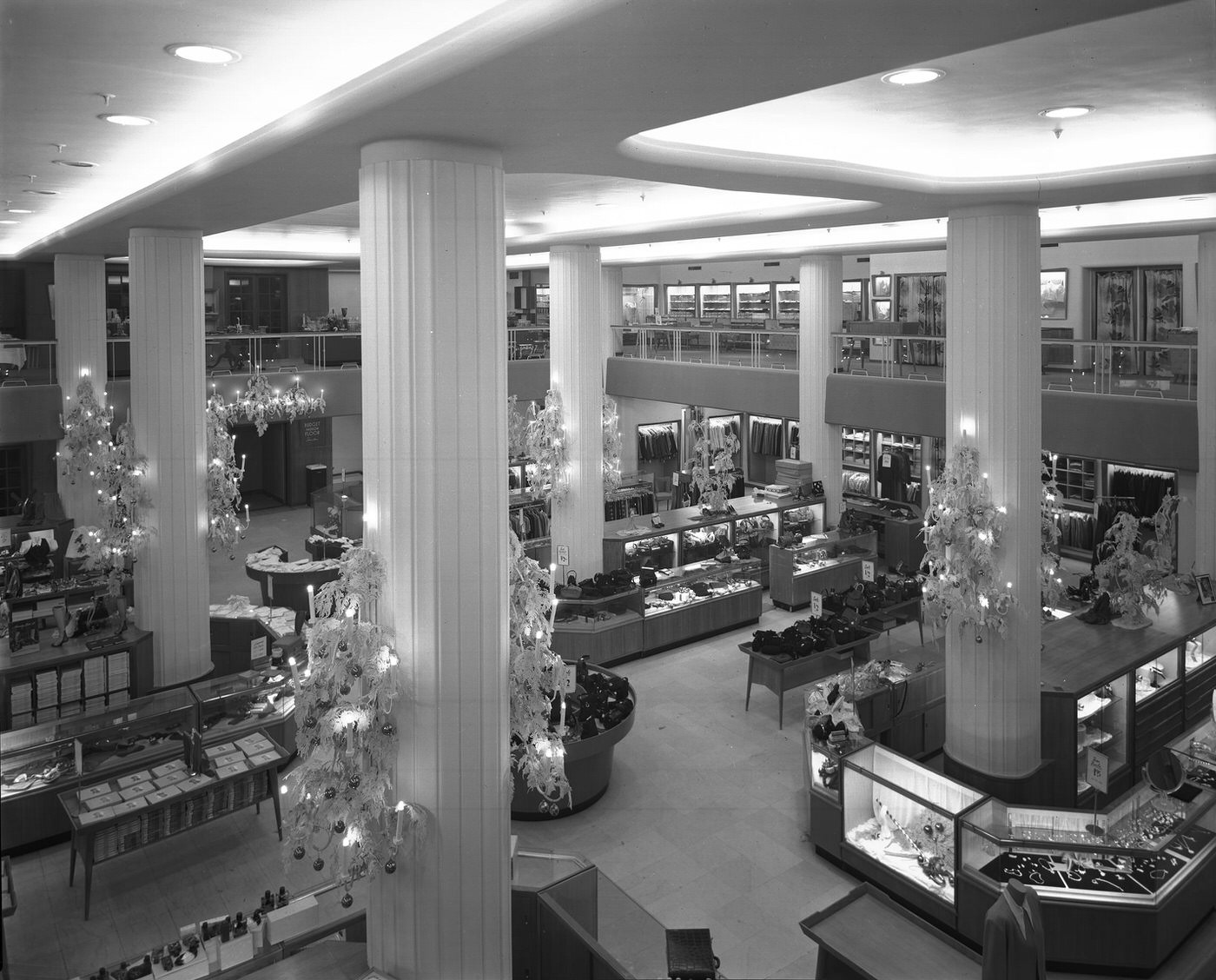
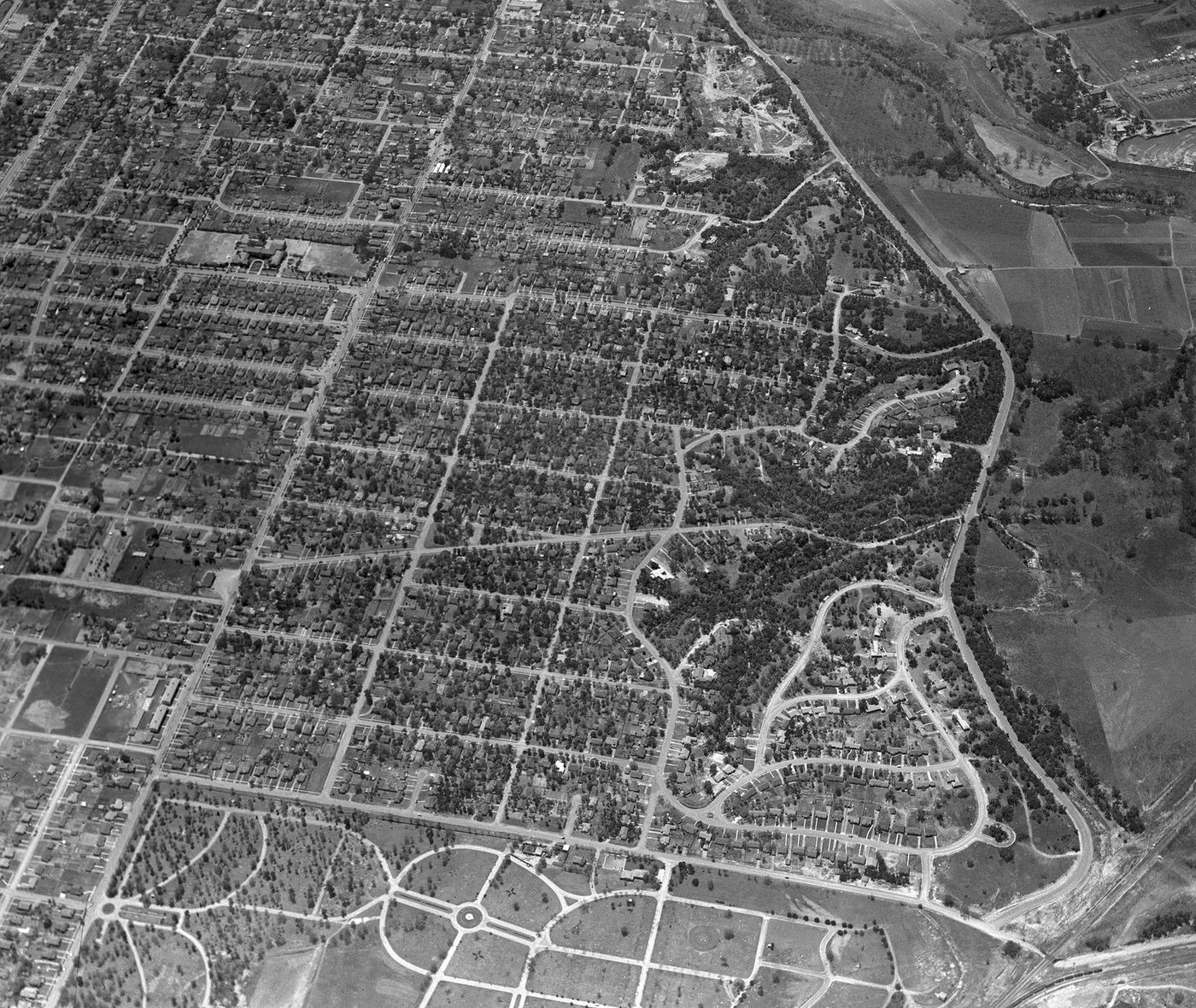
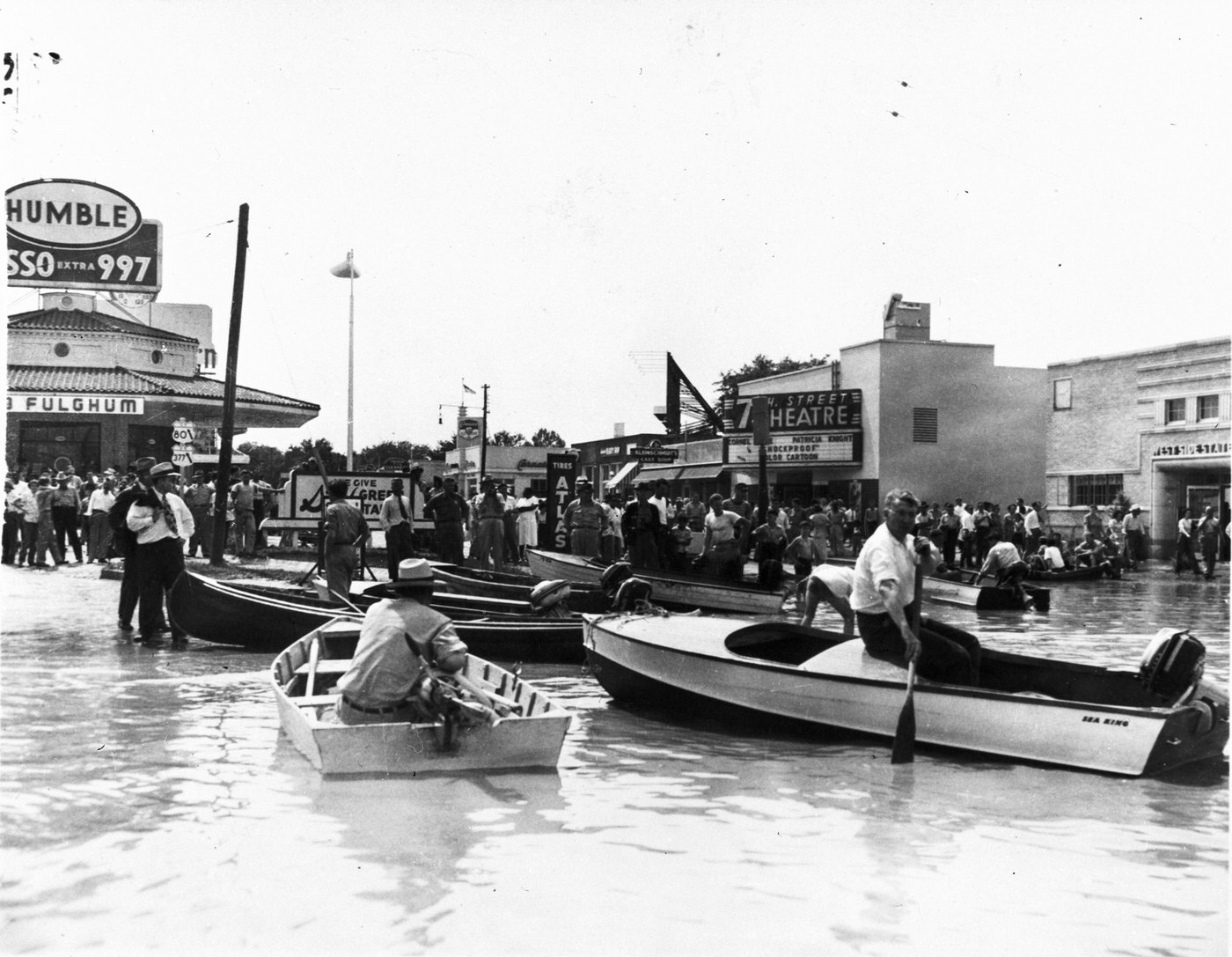
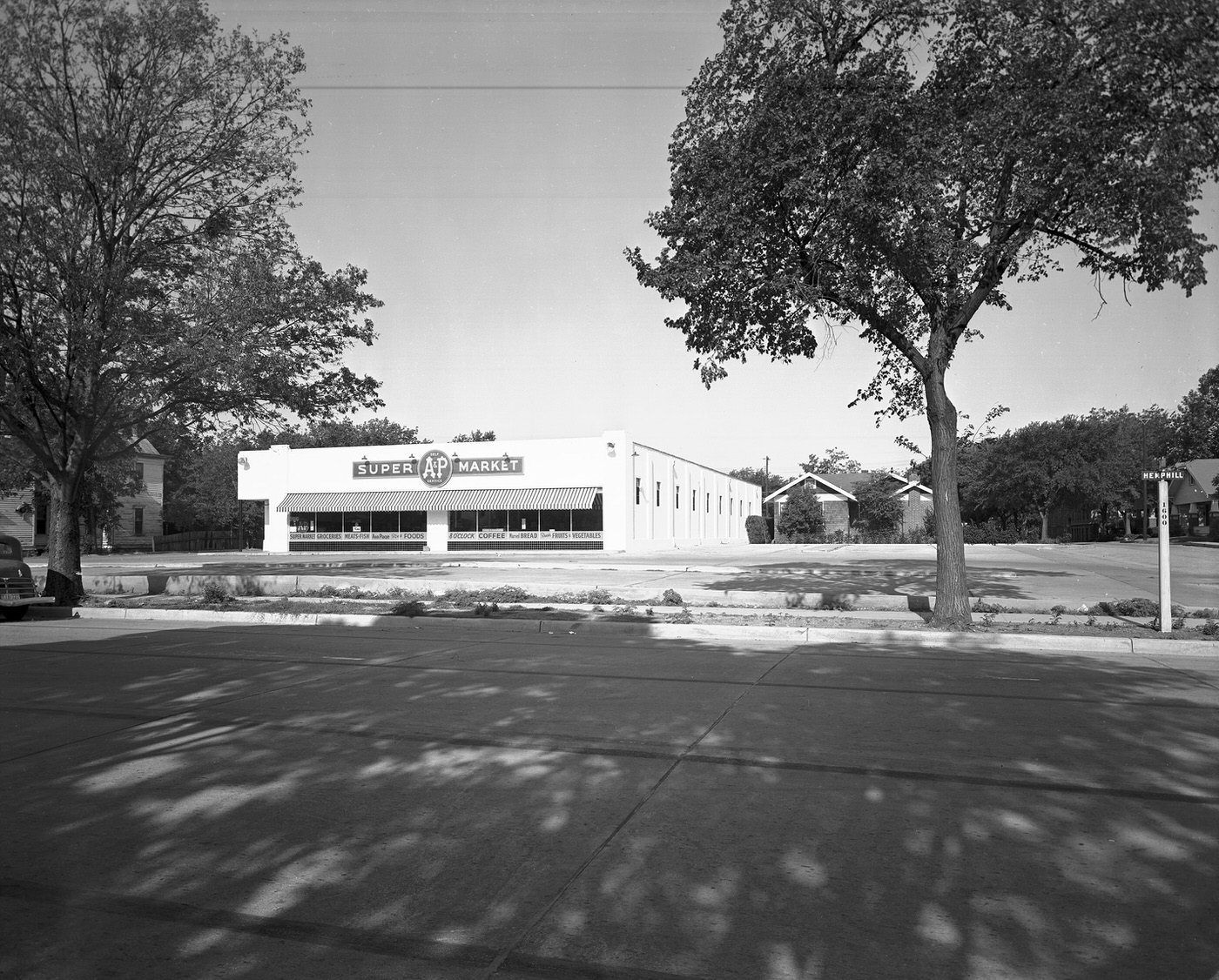
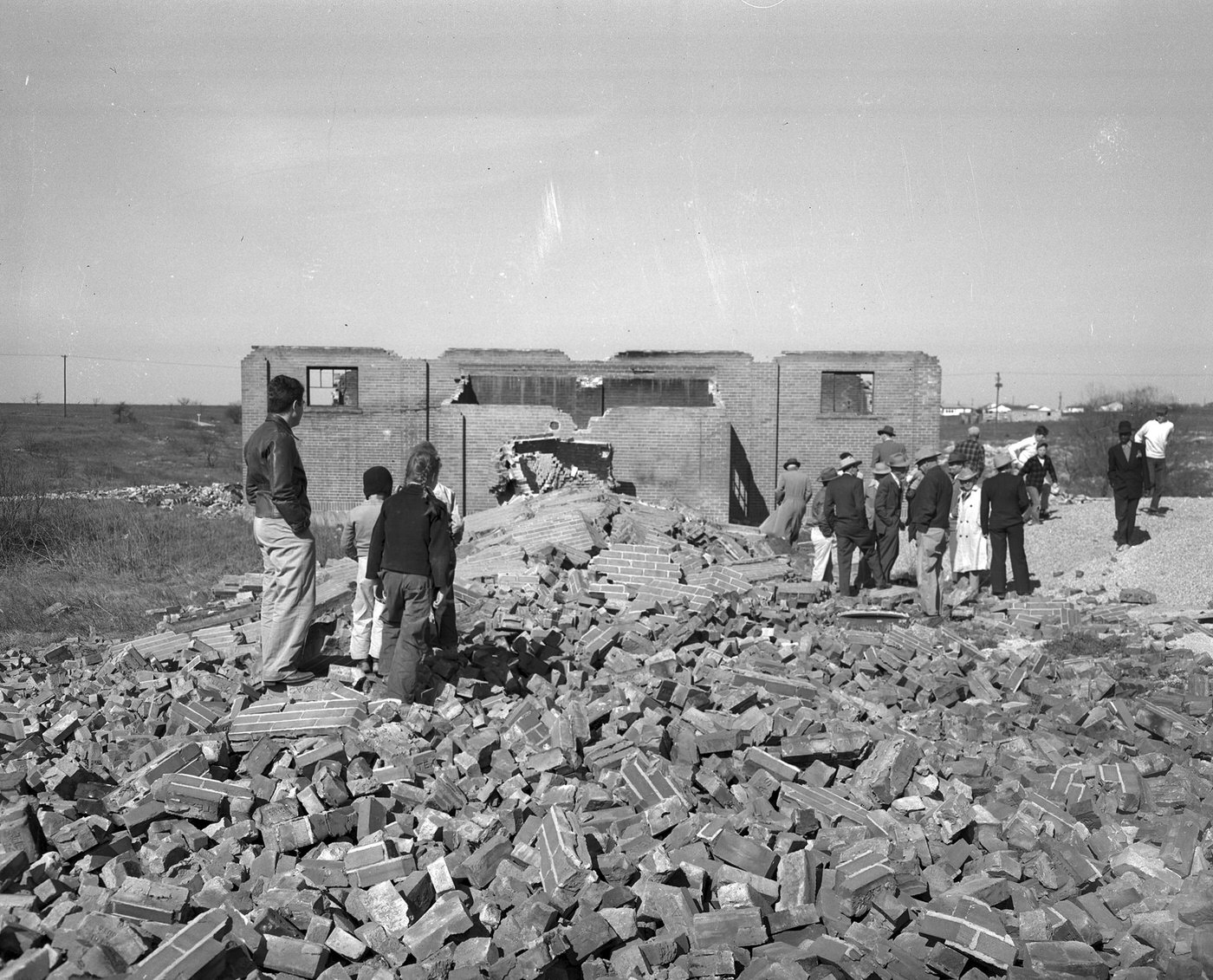
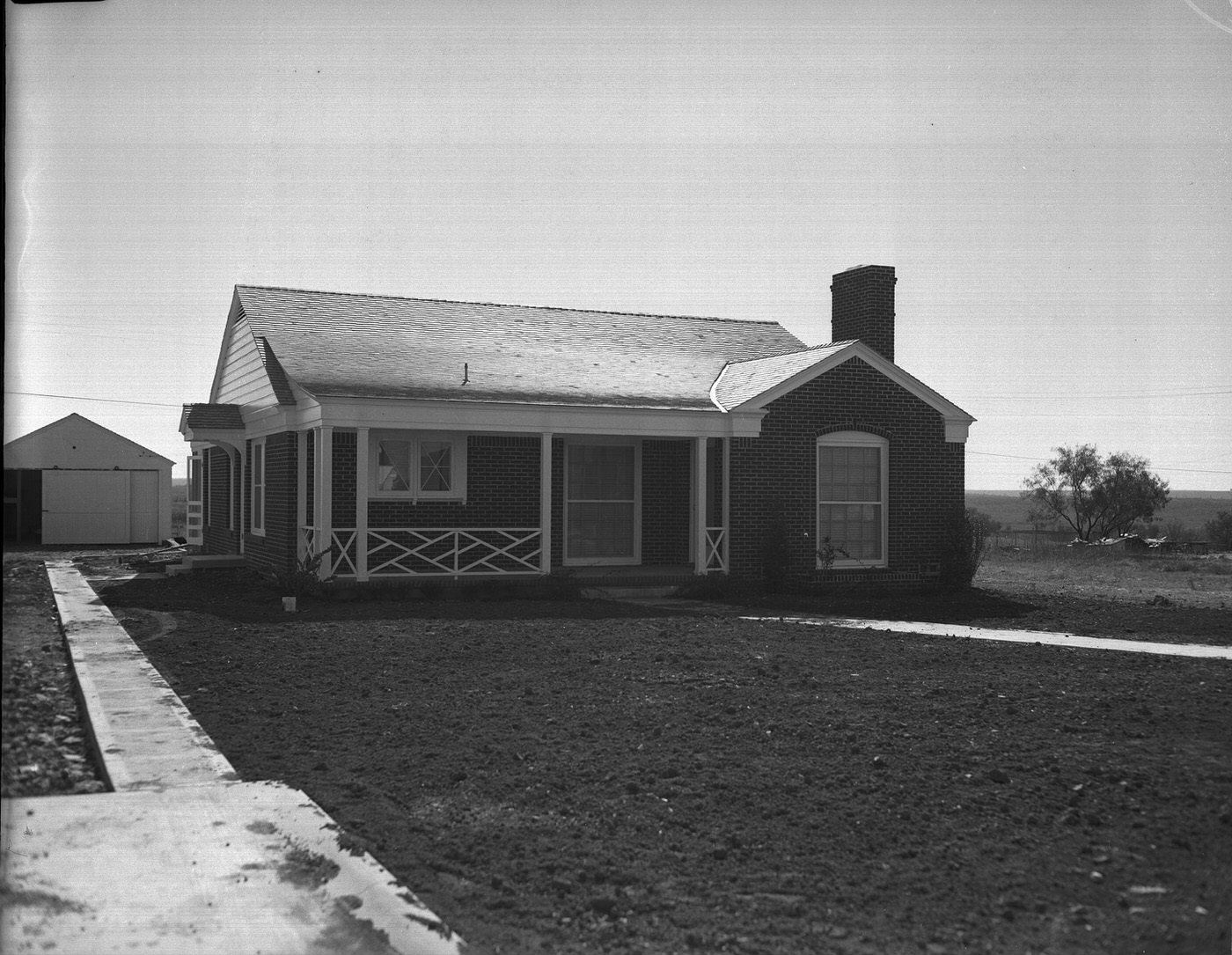
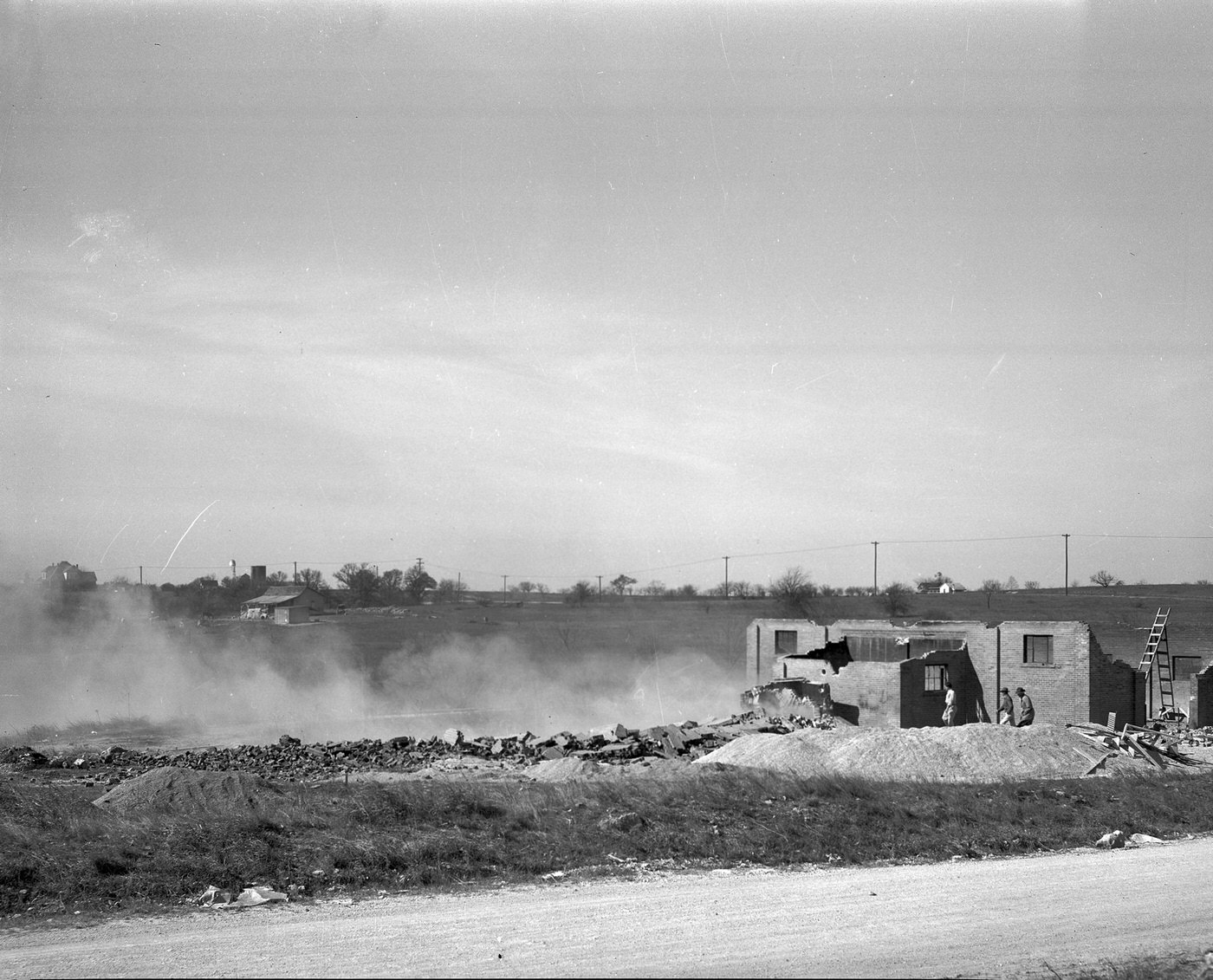
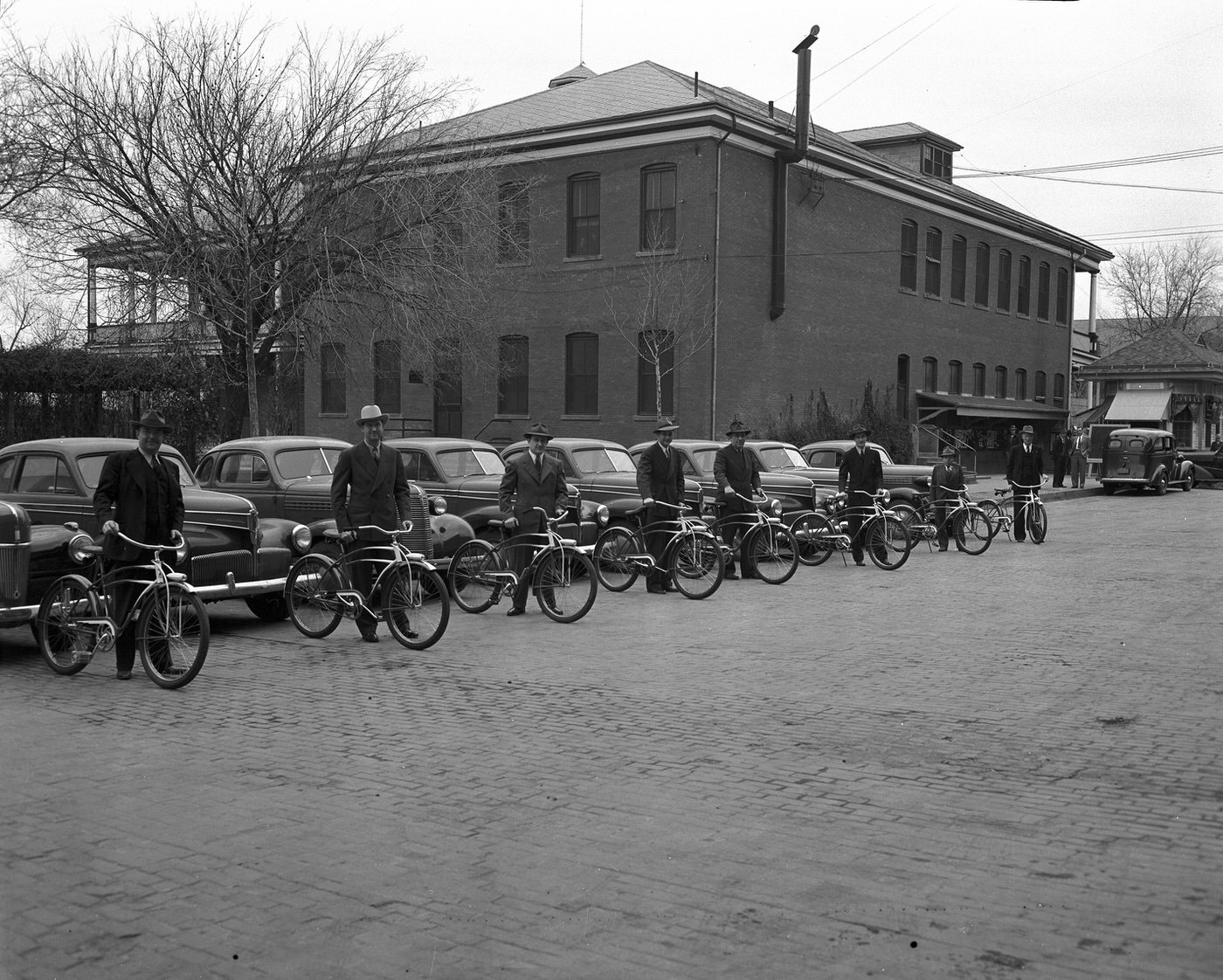
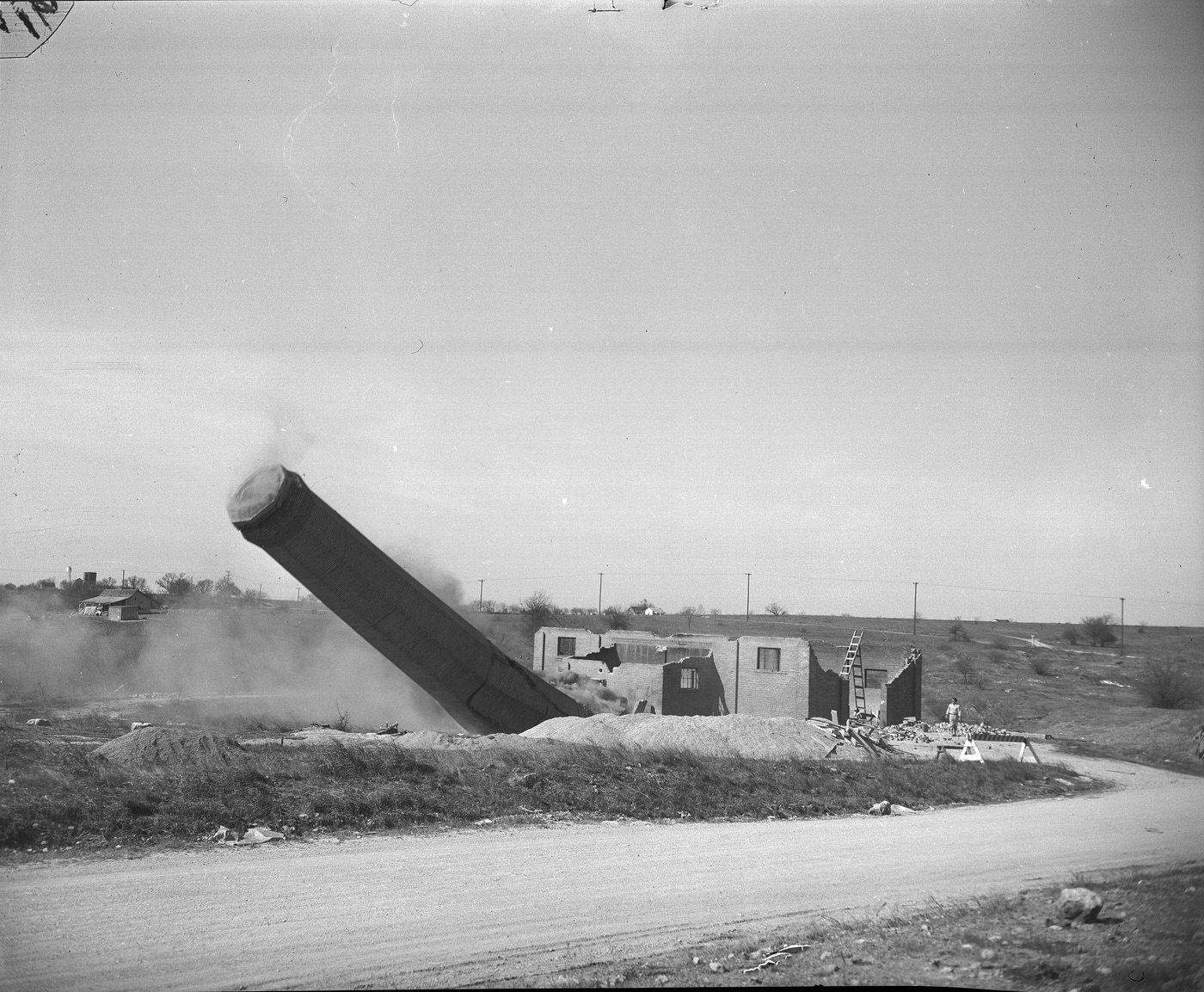
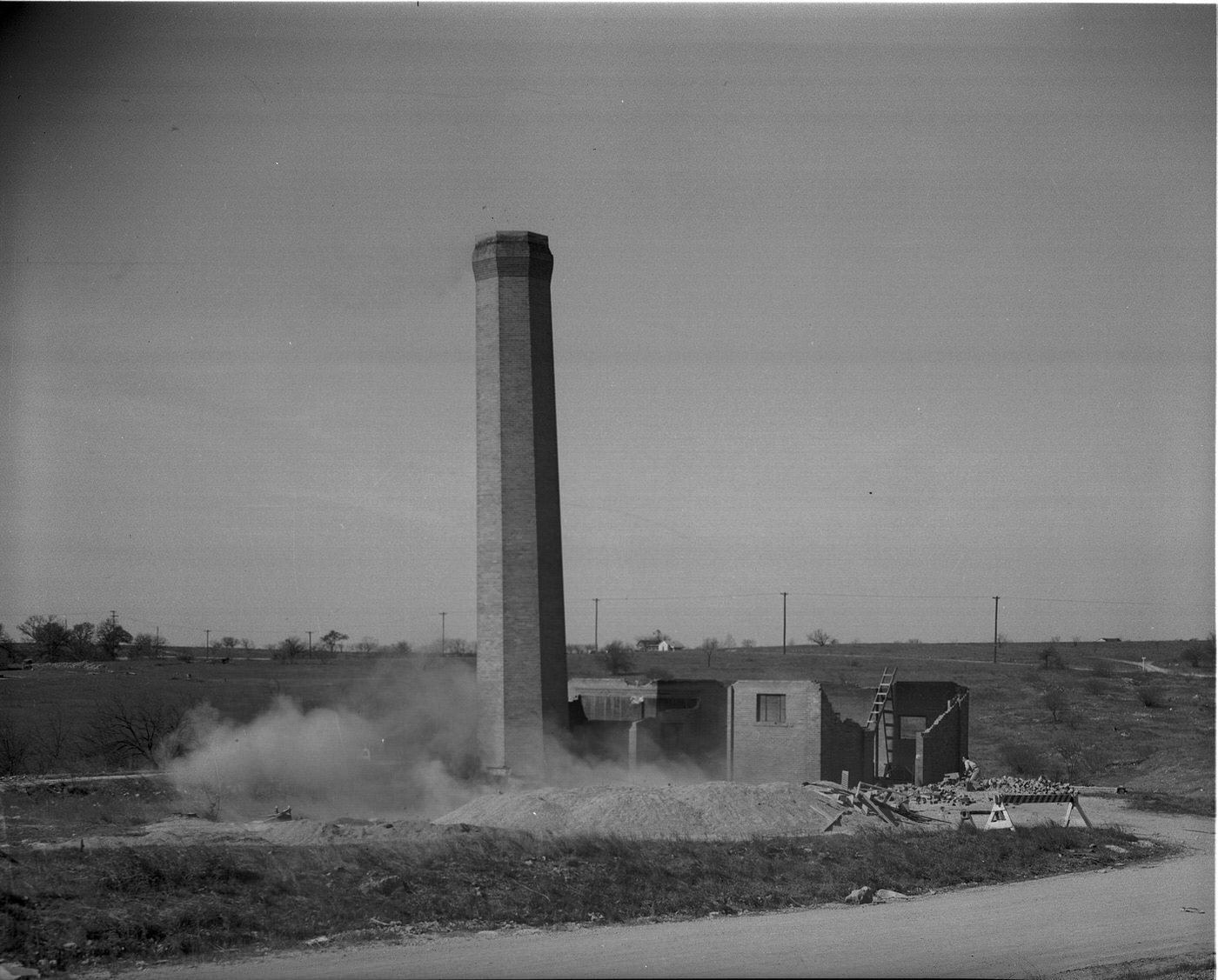
Sinclair building, 512 Main Street, downtown Fort Worth, Texas, 1942Fort Worth National Bank building interior, 1948Technical High School, 1944Interior of Meacham, 1940sAerial view of Fort Worth, Texas, Districts – Oakhurst neighborhood, 1949Sanger building, 410-414 Houston Sreet, downtown Fort Worth, Texas. 1944Flood at Fort Worth intersection of University and 7th Street near 7th Street Theater with people in boats, May 19491604 Blue Bonnet Dr. in Oakhurst neighborhood, Fort Worth, Texas, 1941H.H. Morse Company, A&P Market, 1600 Hemphill, Fort Worth, 1942The Arlington Heights landmark demolition of a 75 foot incinerator, 19483811 Hilltop Road, Fort Worth, Texas, 1941Soldiers fire a cannon during lowering of an American flag in front of the post headquarters building, Tarrant Army Air Field (later renamed Carswell Air Force Base), Fort Worth, Texas, 1943The Arlington Heights landmark demolition of a 75 foot incinerator, 1948Swift & Company employees exchanging bicycles for cars, 1942The Arlington Heights landmark demolition of a 75 foot incinerator, 1948An aerial of Swift & Company and stockyards, 1942The Arlington Heights landmark demolition of a 75 foot incinerator, 1948
Thank you for sharing these; I found them quite enjoyable. Would anyone happen to know where I could find additional vintage photos of the zoo? I have always been fascinated by them.
Awesome post and article. Timely, as I just started reading a book called Fort Worth in the Civil War by James Farber. It’s a very interesting, apparently historically accurate book. Ft. Worth was named after Gen. William J. Worth in 1849, and there was an actual fort (US Army post) in Fort Worth. There are some very old oak trees in Ft. Worth that still exist from that era and mark the general area of Ft. Worth’s beginning.



![WBAP-TV's new studio-transmitter building at 3900 Barnett [Broadcast Hill], Fort Worth, 1949](https://www.bygonely.com/wp-content/uploads/2022/12/Fort-Worth-1940s-163.jpg)





I possess numerous photographs of Ft. Worth taken in the past.
Please share!
Thank you for sharing these; I found them quite enjoyable. Would anyone happen to know where I could find additional vintage photos of the zoo? I have always been fascinated by them.
Oh, the convention center is actually that old? I had assumed it was designed to have a 1970s retro-futuristic style!
Could we see more pictures of the streetcars, please? I have been informed that they also traveled through the downtown area.
The convention center opened in 68′
Awesome post and article. Timely, as I just started reading a book called Fort Worth in the Civil War by James Farber. It’s a very interesting, apparently historically accurate book. Ft. Worth was named after Gen. William J. Worth in 1849, and there was an actual fort (US Army post) in Fort Worth. There are some very old oak trees in Ft. Worth that still exist from that era and mark the general area of Ft. Worth’s beginning.
That’s a fancy looking drive-in theater.