By the early 1930s, the Great Depression had stripped millions of American families down to almost nothing. Unemployment reached 25 percent. Banks failed. Farmers lost their land. In households across the country, spending money on store-bought clothing was simply out of the question. What families did have, though, were empty cotton sacks — the kind that came packed with flour, sugar, feed, and other dry goods. Those sacks would become one of the most iconic symbols of Depression-era resourcefulness.
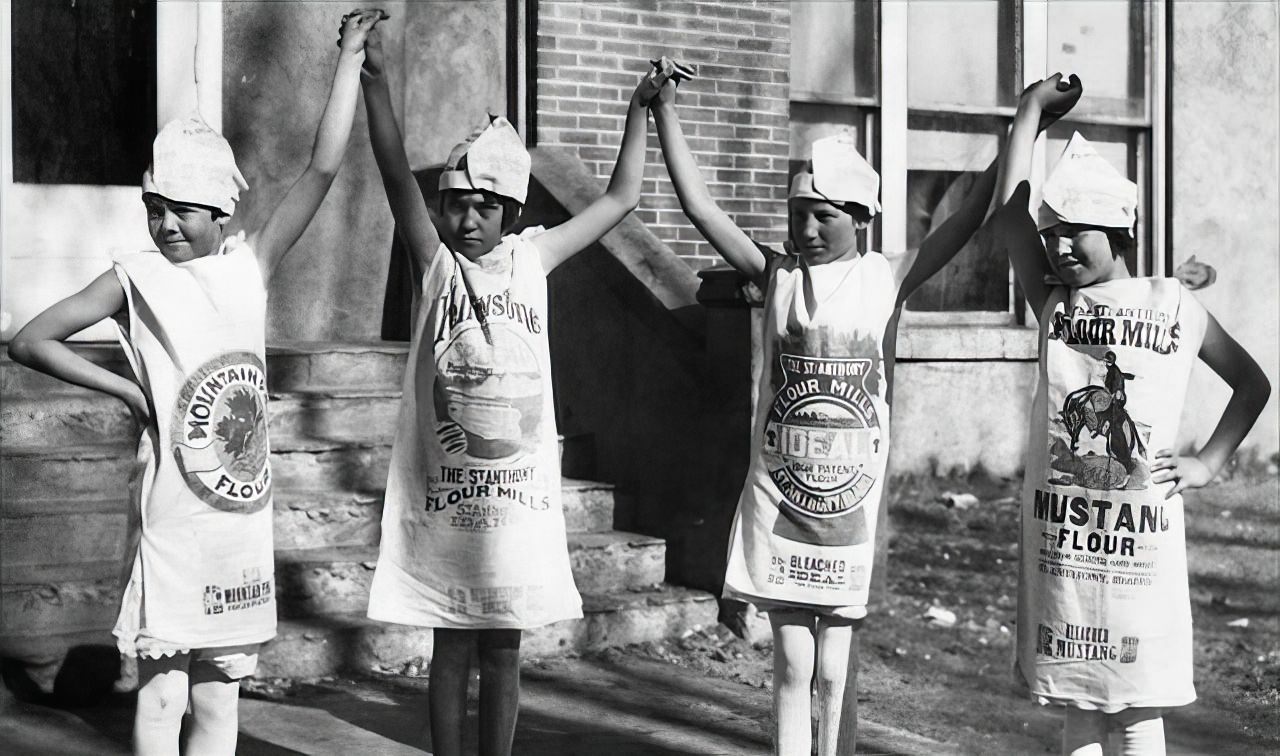
Flour sacks of that era were made from sturdy, tightly woven cotton — the same kind of fabric used in basic clothing. A standard 25-pound flour sack yielded enough material to make a child’s dress or a woman’s blouse. Two or three sacks sewn together produced a full adult dress. Homemakers washed the sacks in hot water to remove the flour residue and loosen the printed branding on the fabric. With some scrubbing and soaking, the ink came out, leaving behind a clean, workable piece of cloth.
The process was straightforward but required real skill. Women used paper patterns — some purchased from dime stores, others passed between neighbors — to cut shapes from the washed sack fabric. They stitched the pieces together by hand or on treadle sewing machines, finishing the garments with whatever trim they had available: ribbon, lace salvaged from worn-out clothes, embroidery thread, or hand-stitched ruffles. The finished dresses were often indistinguishable from those bought at a department store.
Not every woman came to this practice already knowing how to sew. Many learned out of necessity. Neighbors taught each other. Church groups shared patterns and tips. Older women passed techniques down to younger ones. The skill of turning a sack into a wearable garment became a point of community pride, not shame. Wearing a flour sack dress was not something to hide — it was evidence that a family was managing, making do, and holding together.
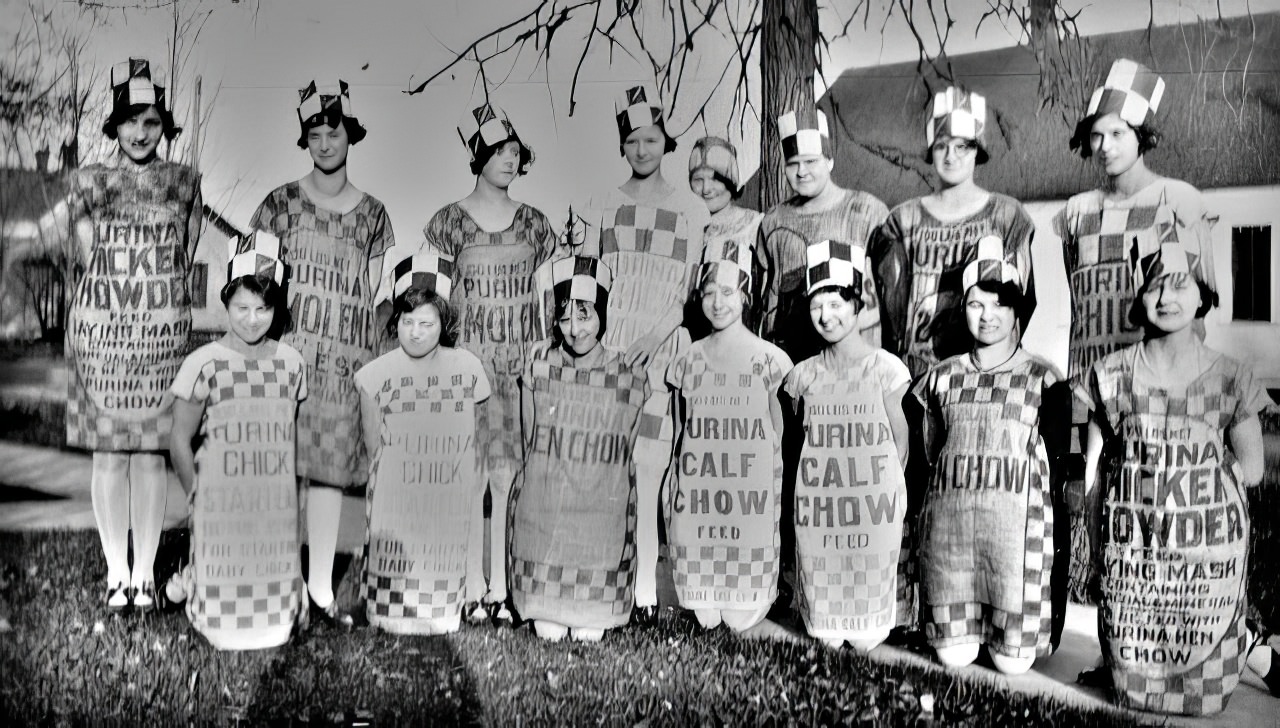
Clothing wasn’t the only use for the repurposed fabric. Families stretched the material further by sewing dish towels, curtains, quilts, aprons, pillowcases, and underwear. Baby clothes — diapers, gowns, and bonnets — were commonly made from the softer, washed sack fabric. Nothing was wasted. Every scrap left over from cutting a dress pattern went toward something else.
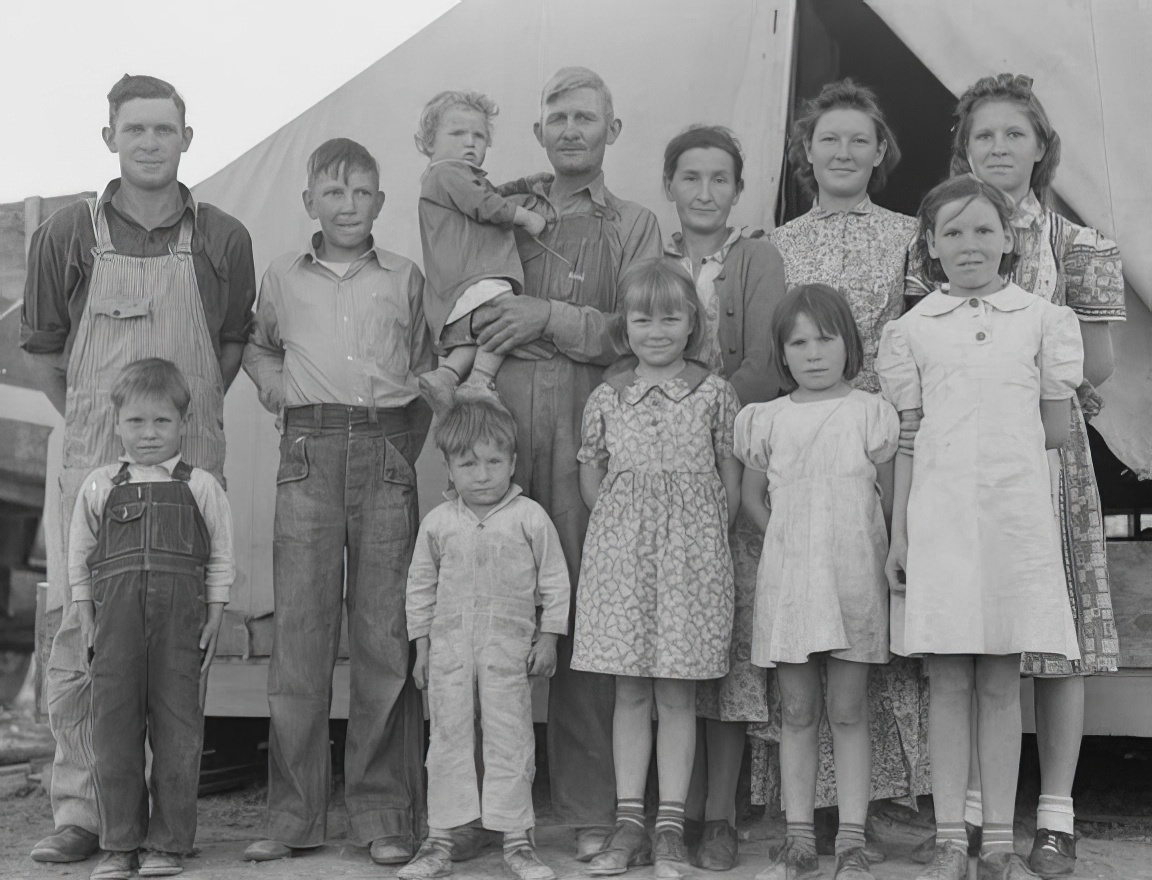
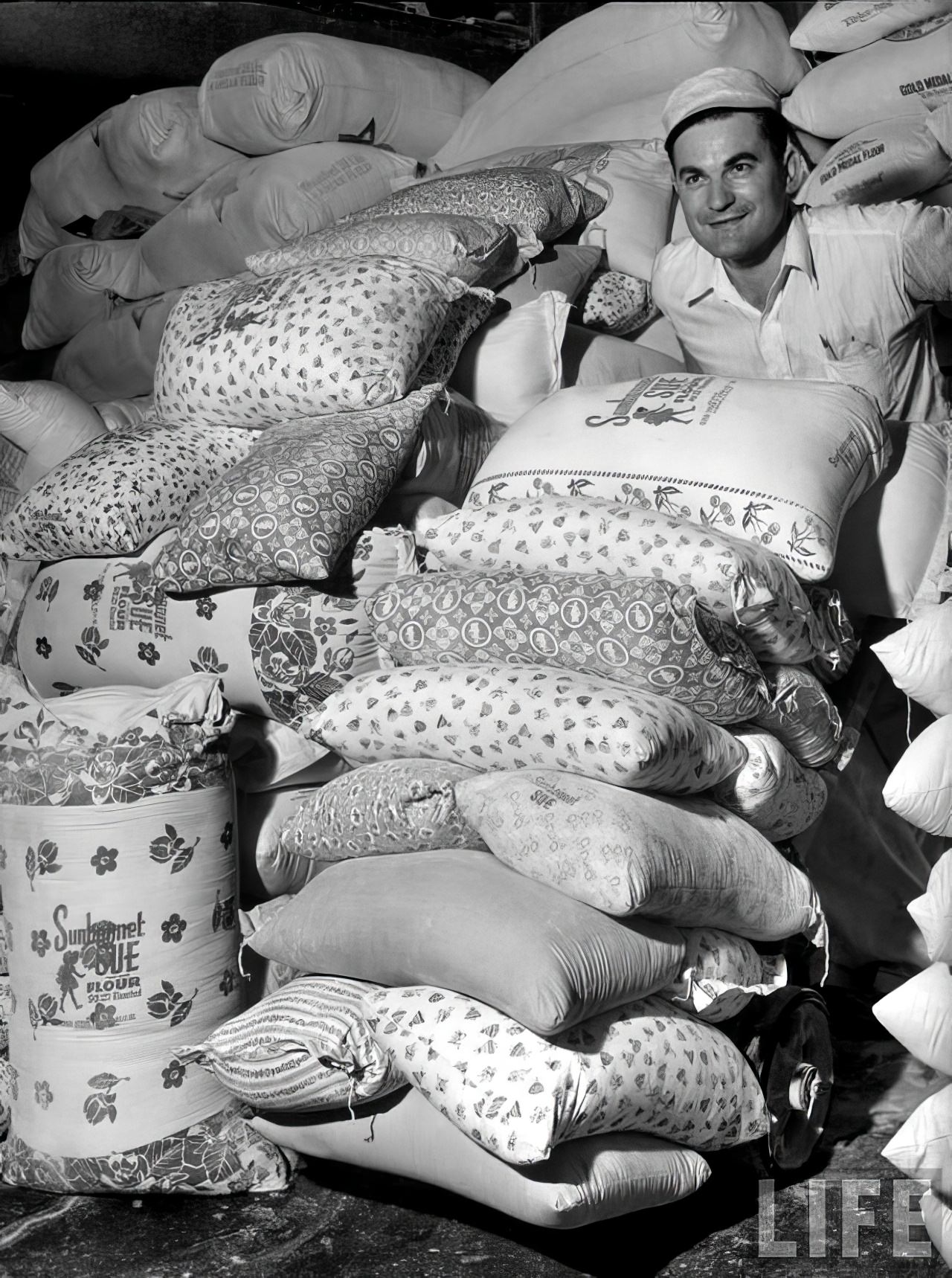
Flour and feed companies noticed what was happening. Women were selecting which brand of flour to buy based on which sack fabric they preferred — and manufacturers paid close attention. By the mid-1930s, many companies had begun printing their sacks with cheerful floral prints, plaids, polka dots, and children’s novelty patterns specifically designed to appeal to homemakers. The fabric itself became part of the product’s value.
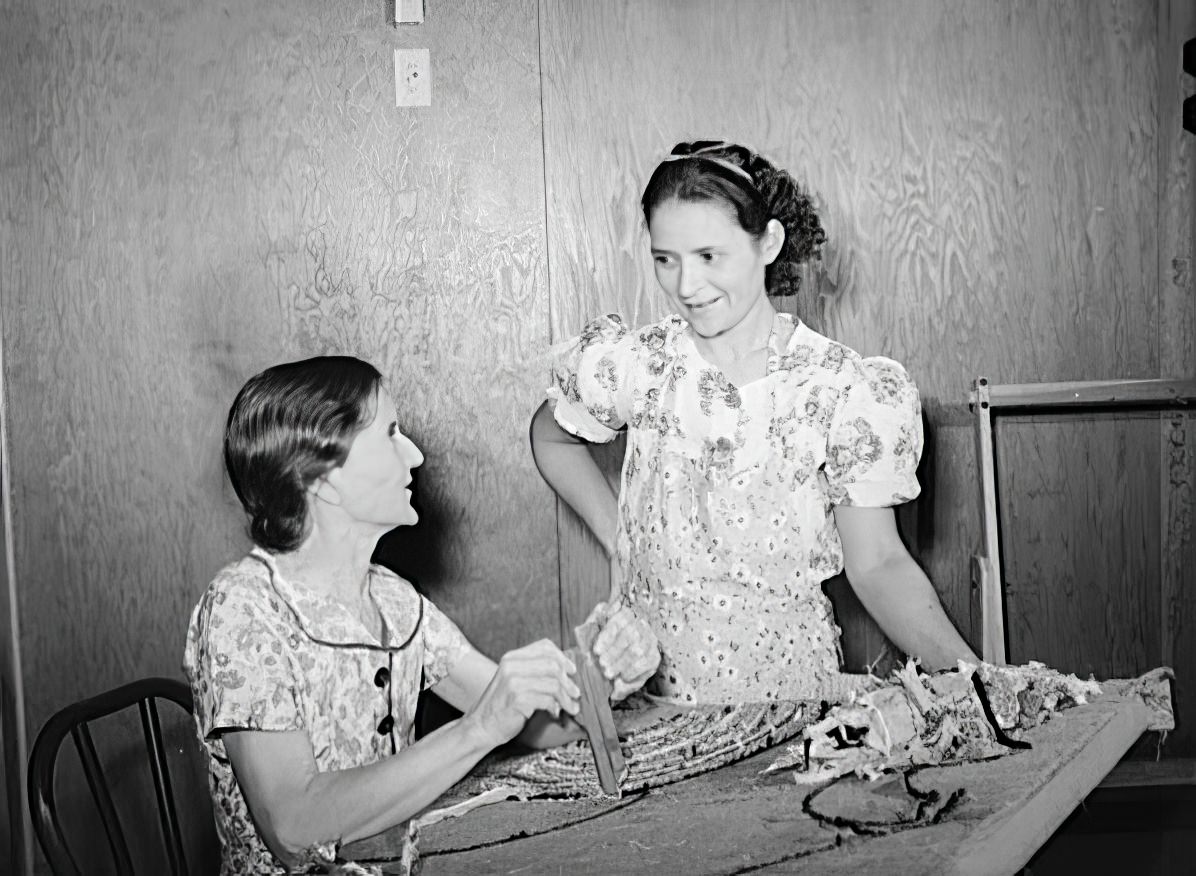
Some companies went further, printing sewing patterns directly onto the sack fabric itself, so that a woman could cut along the lines and sew the pieces together without any additional materials. Others included small instruction booklets inside the sack. The Rose Milles Cotton Company and Gingham Girl were among the brands that marketed their fabric prints directly to women, treating the sack as a dual product — food container and dress goods at once.
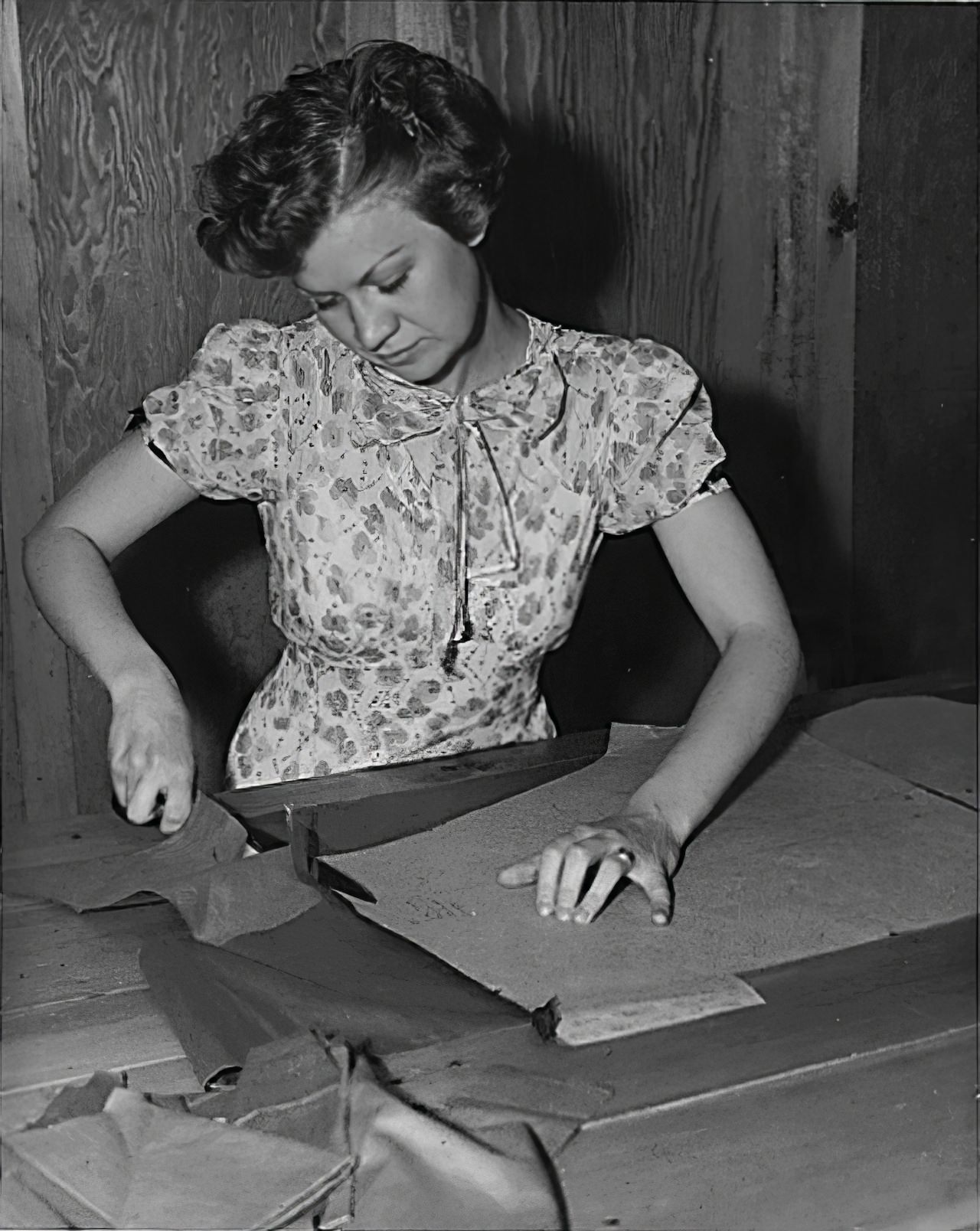
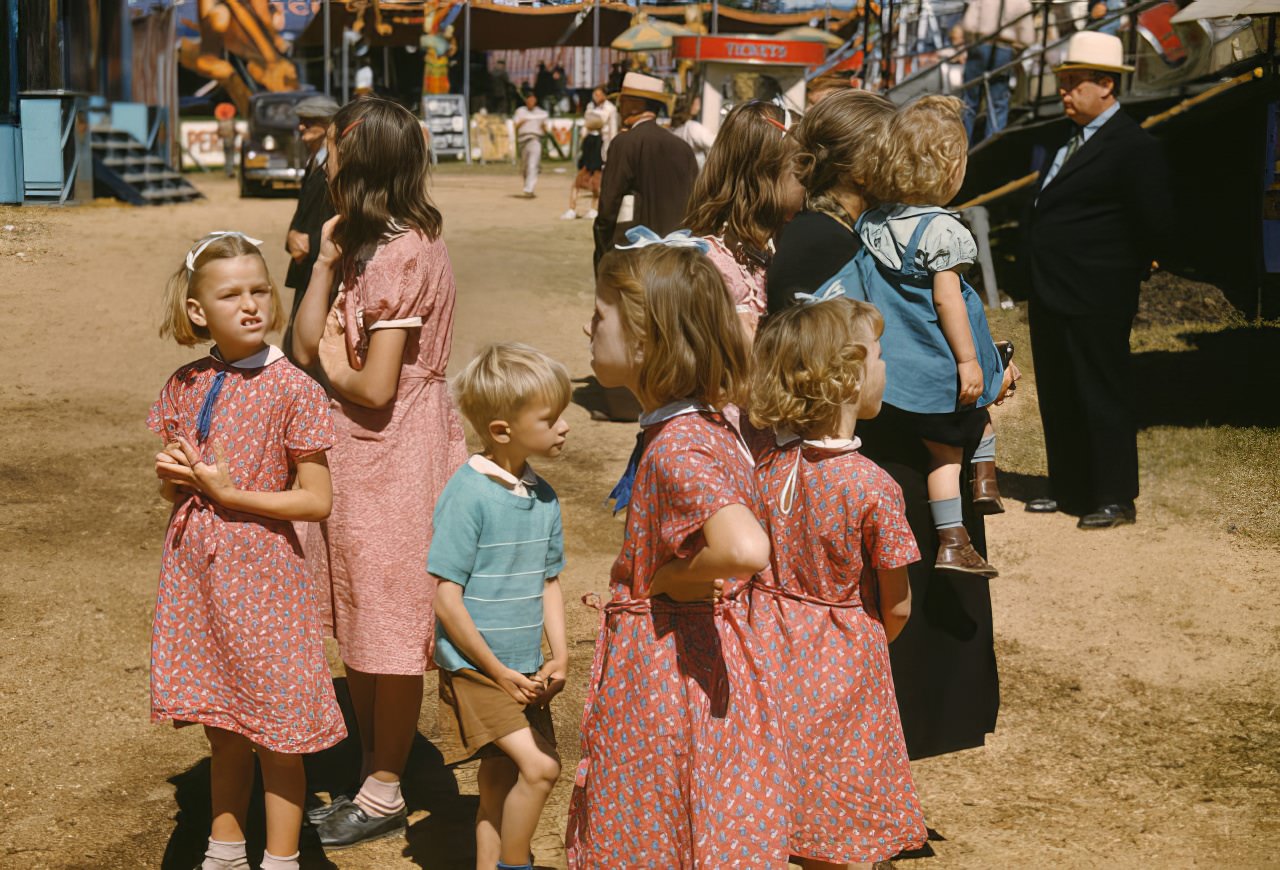
Children wore flour sack clothing just as often as adults did. Schools across rural America were filled with kids dressed in garments their mothers had sewn from sacks. A mother who managed to find three matching sacks could outfit a child in a coordinated outfit. Finding matching prints was its own challenge — women sometimes drove to multiple stores or swapped sacks with neighbors to collect enough of one pattern for a single garment.
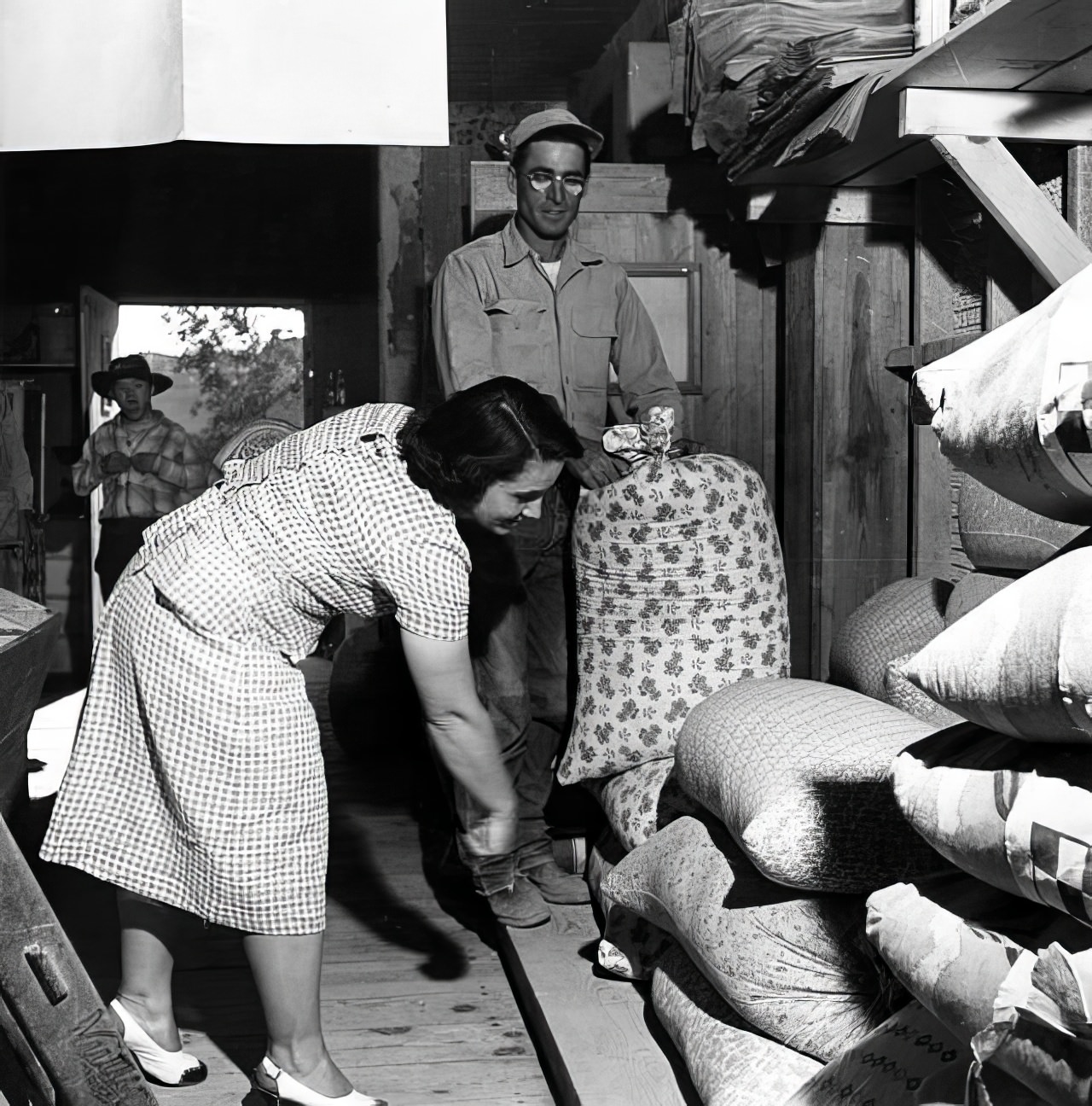
Rural families, especially those in the South and Midwest, relied most heavily on the flour sack tradition. Farm wives who were already accustomed to making do with limited resources adapted quickly. But the practice spread to cities too, where unemployment hit factory workers and office employees just as hard. Urban women who had never sewn their own clothes before the Depression learned because they had no other choice.
The quality of the sack fabric improved noticeably as competition between brands grew. Companies hired textile designers to create prints that rivaled what was sold in fabric shops. Some of the patterns from the late 1930s featured bright colors and detailed illustrations that would have looked at home on any bolt of cloth at a dry goods store. Manufacturers understood that the woman holding the flour sack was also making the purchasing decision, and they designed accordingly.
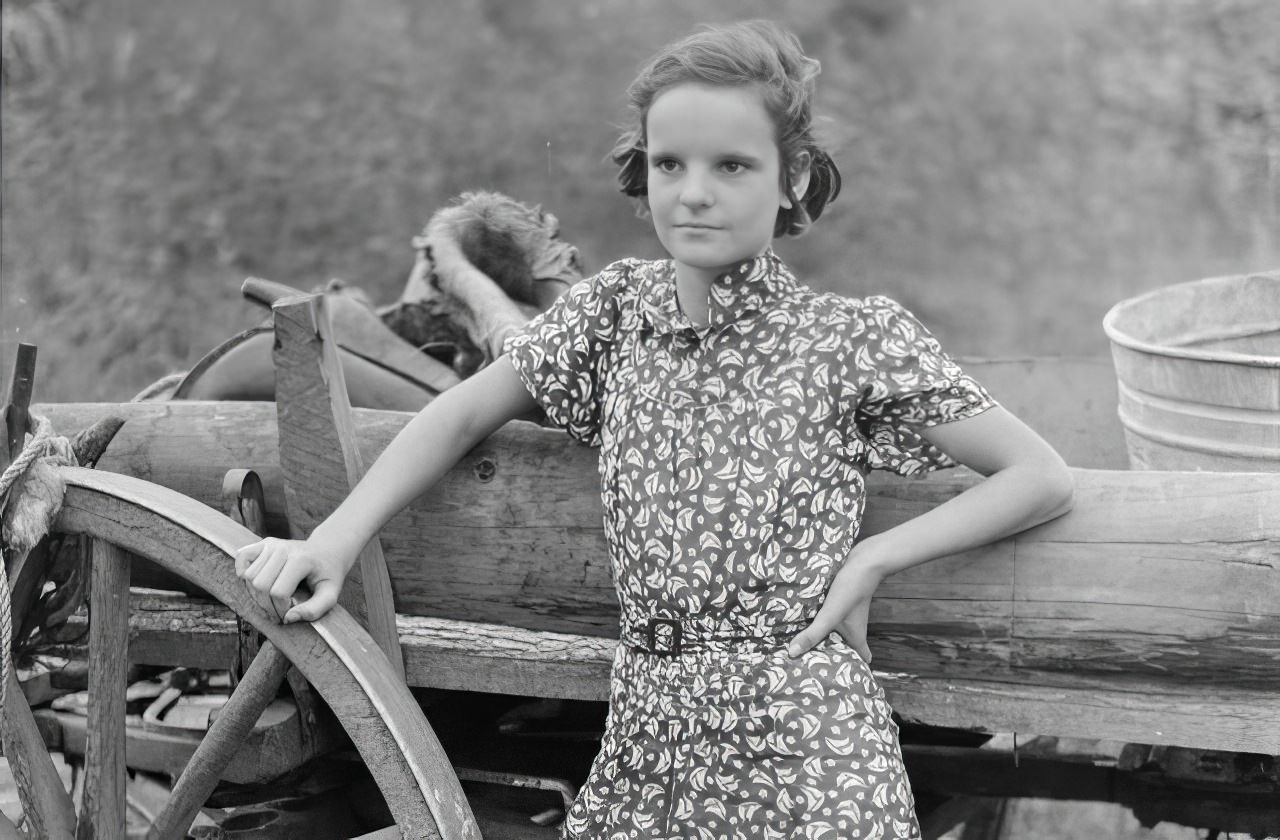
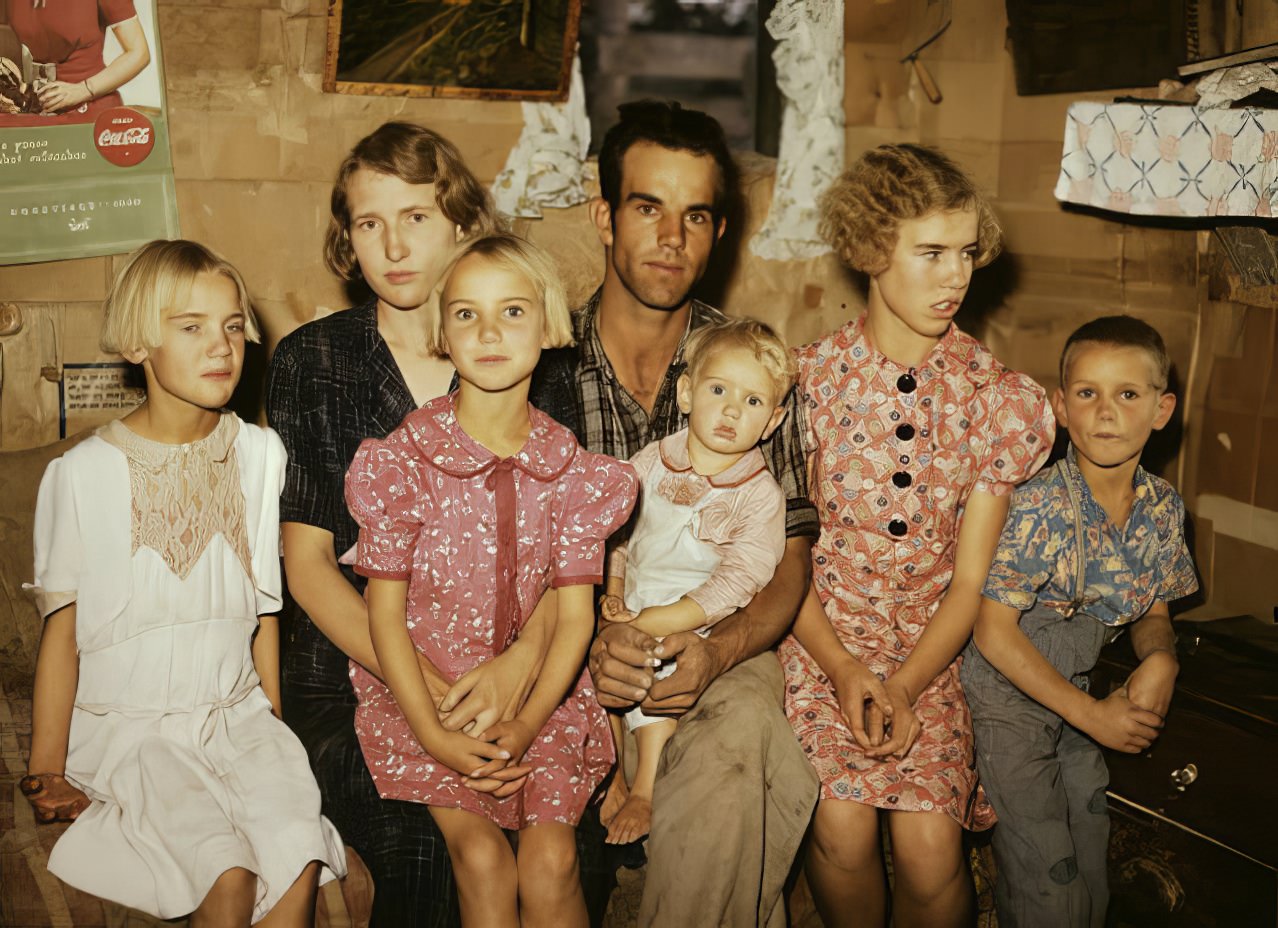
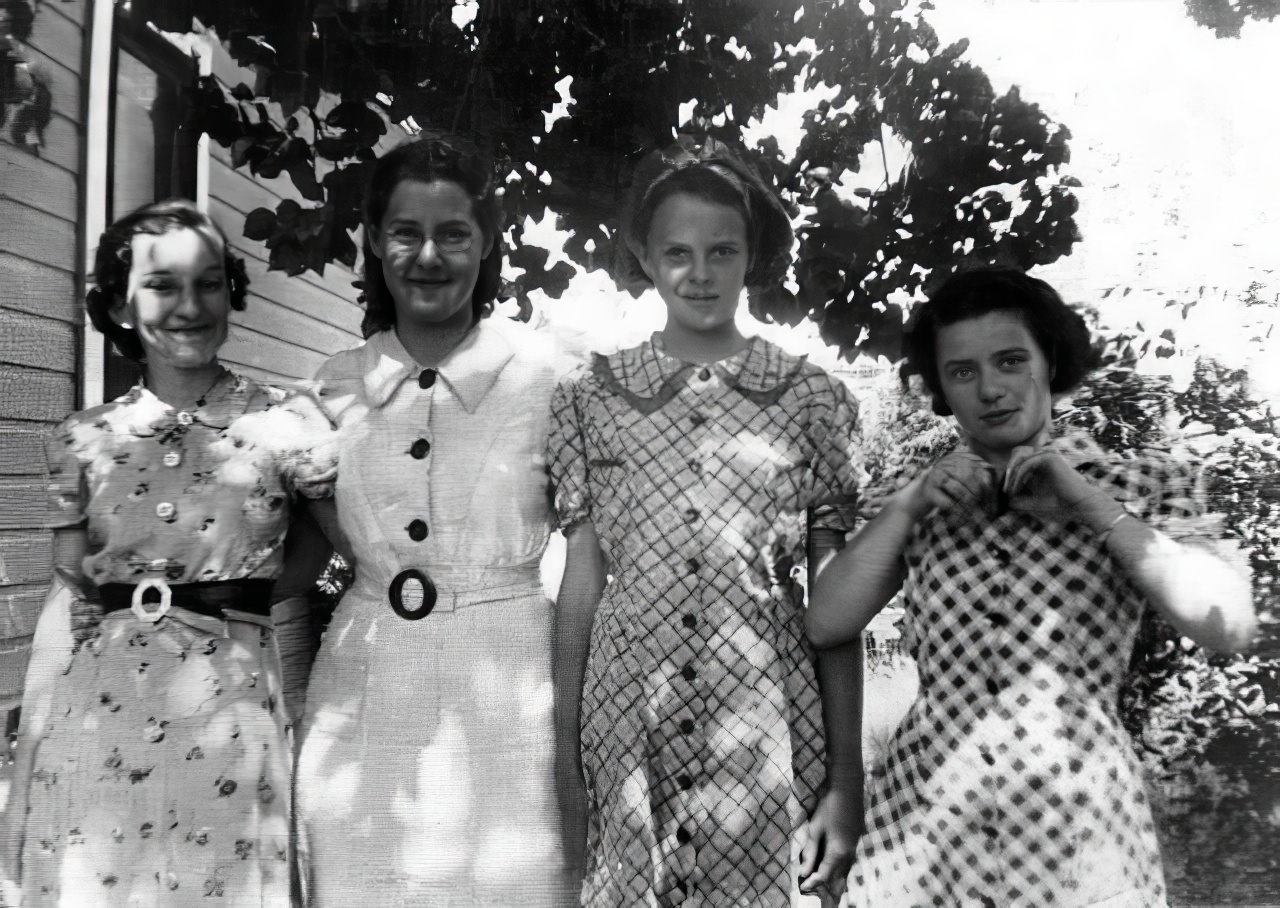
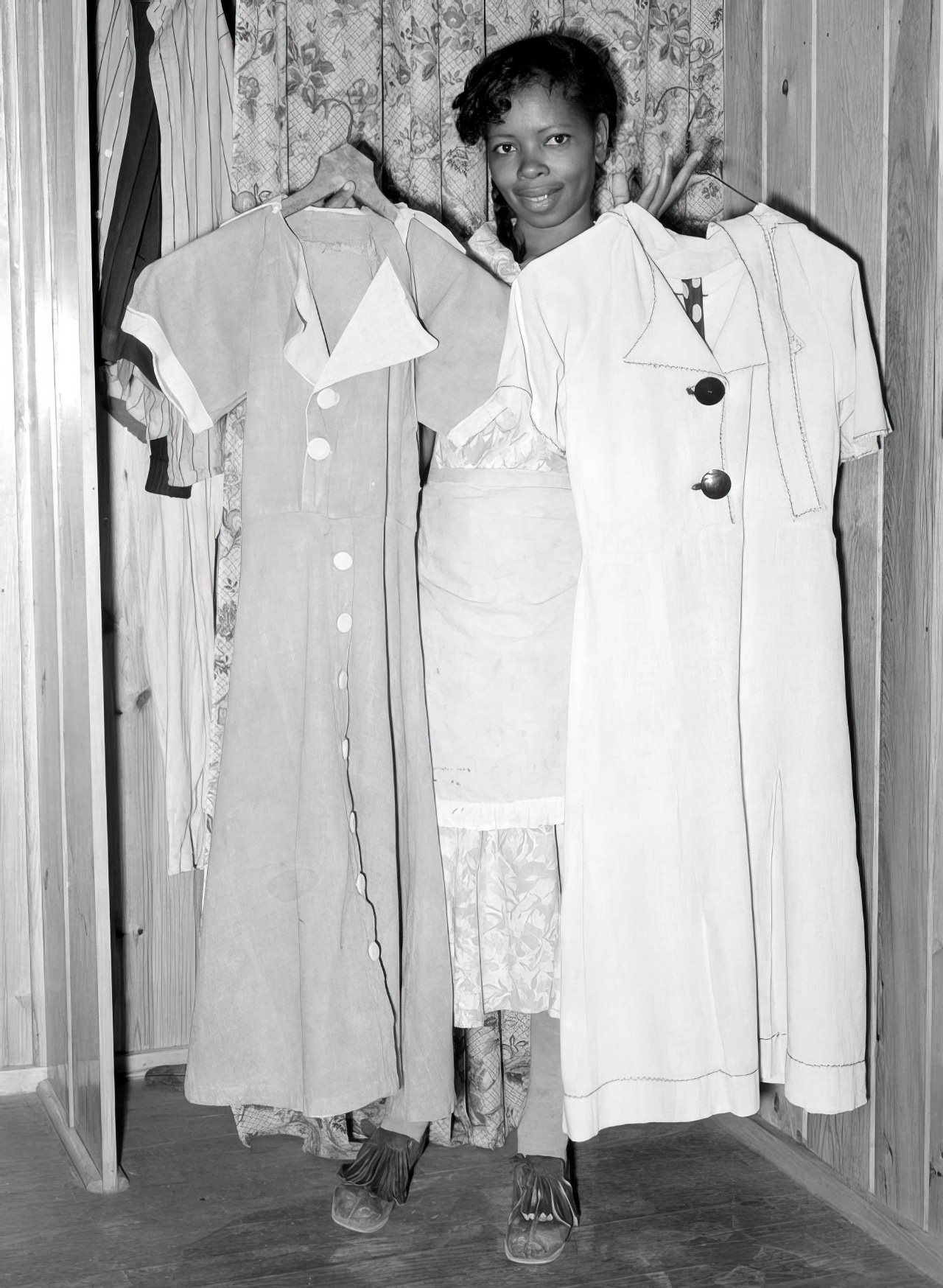
Photographs from the Depression era show women and children in well-made, neatly pressed flour sack dresses standing in front of farmhouses or posing in yards. The garments look carefully constructed. Seams are straight, hems are even, and details like Peter Pan collars or puffed sleeves reveal the time and attention their makers put into the work. These were not rough, makeshift coverings — they were real clothes made with real care.
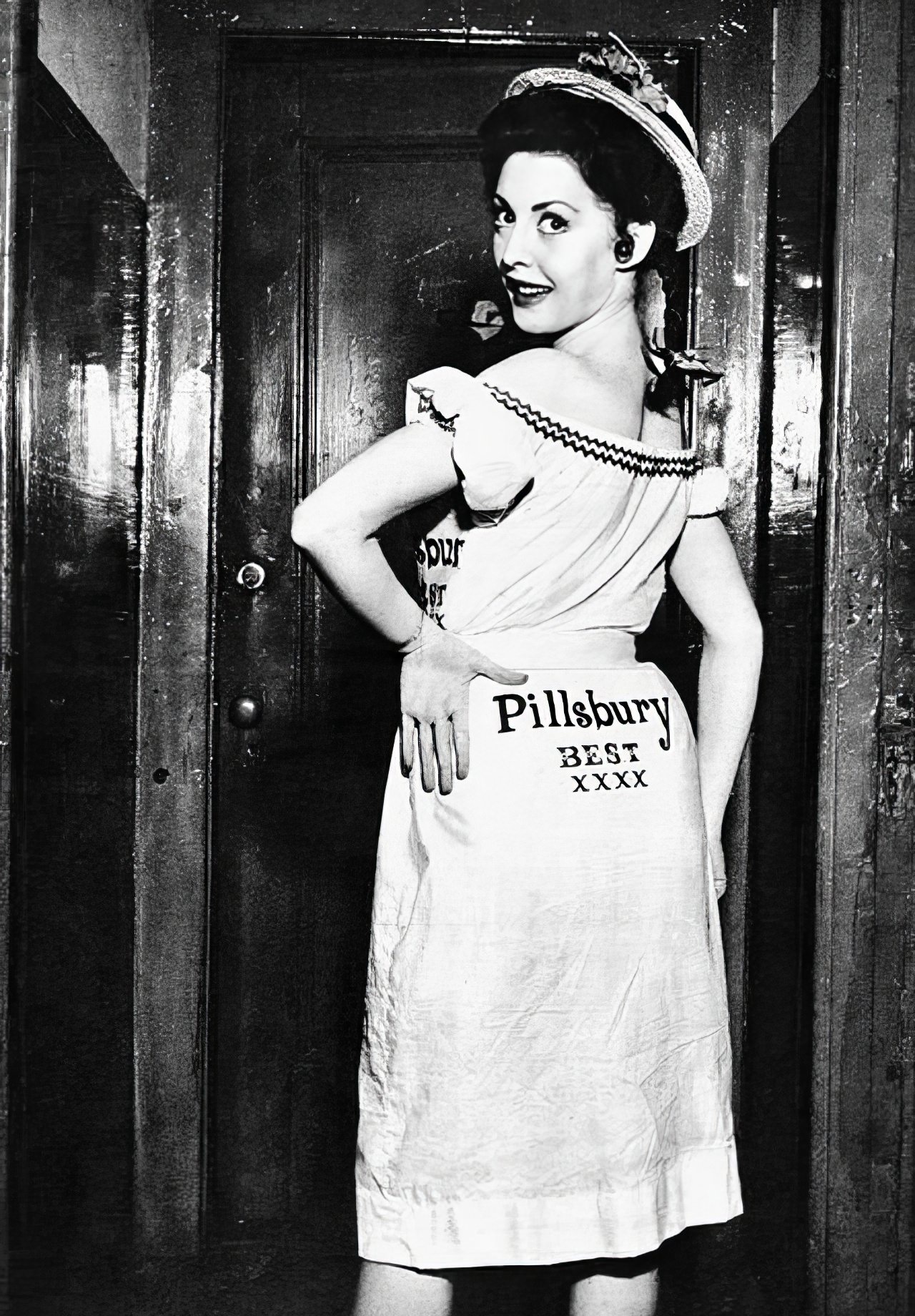
The flour sack dress was a product of necessity, but it was also an act of dignity. In a time when so much was being lost — savings, homes, livelihoods — the ability to clothe a family in clean, well-made garments was a form of control. It said that hardship had not beaten a household into carelessness. The women who made these dresses were not simply surviving; they were maintaining a standard of life with whatever raw materials came through the door.
By the time World War II began pulling the economy back from the depths of the Depression, flour sack sewing had become deeply embedded in American domestic culture. Families who no longer needed to sew from sacks out of desperation continued doing it out of habit, preference, and practicality. The tradition had moved from a crisis response to a valued household skill — a lasting mark of what American families built from the ground up during the hardest decade of the twentieth century.