
Fighting a fire is dangerous enough on its own. Add sub-zero temperatures, buried hydrants, and equipment locked in ice, and the job becomes something most people can barely fathom. These rare historical photographs, spanning nearly a century, show firefighters across the United States and beyond doing exactly that — battling raging fires while their gear, their hoses, and sometimes even their uniforms froze solid around them.
Winter firefighting is not simply cold firefighting. It is an entirely different physical and mechanical challenge. Water freezes in hoses mid-stream. Ladders become brittle. Hydrants are buried under feet of snow and must be dug out before a single drop of water can flow. Every task that takes seconds in mild weather can take minutes in extreme cold — and in a fire, minutes cost lives.
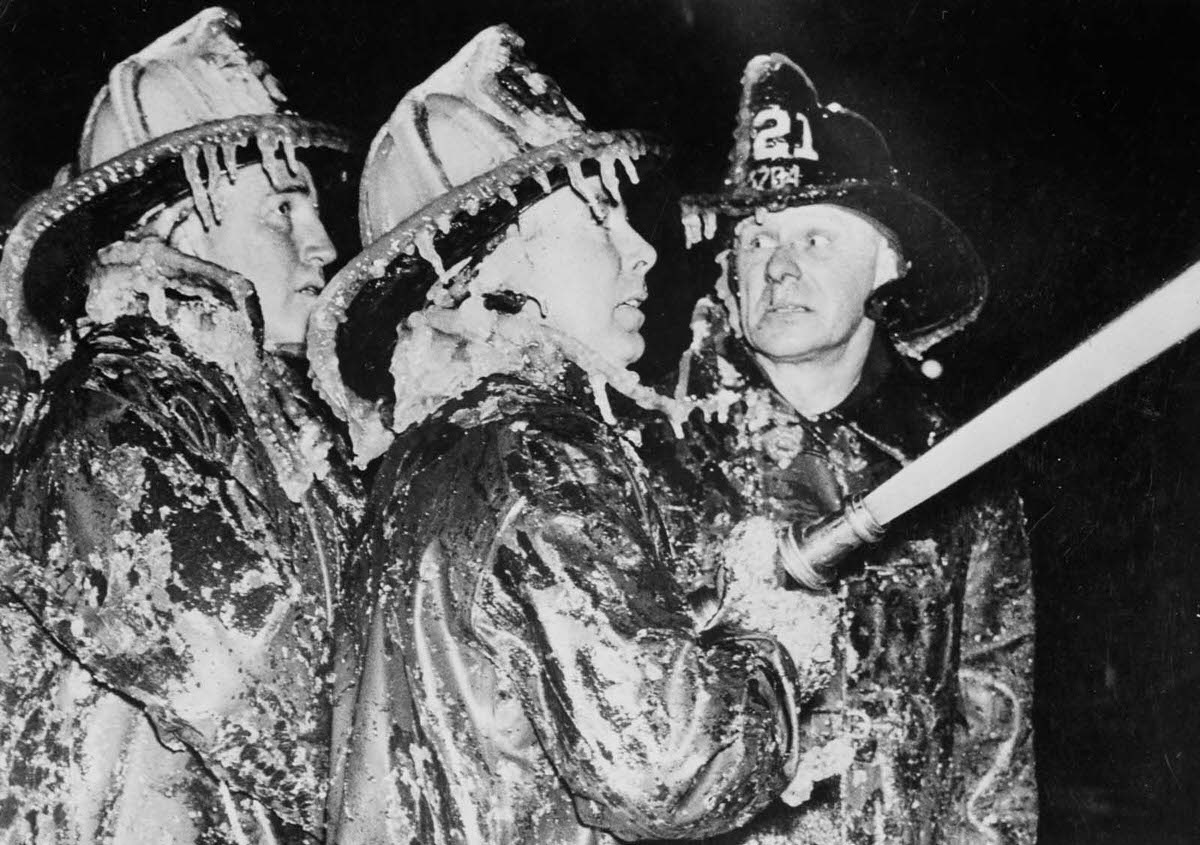
One of the cruelest ironies of cold-weather firefighting is that water — the very tool used to fight the fire — becomes the enemy the moment it hits a firefighter’s body or gear. As hoses spray water onto burning buildings, the wind-blown mist coats everything nearby in a thin, then rapidly thickening, layer of ice. By 1904, New York firefighters were already well acquainted with this reality, arriving at scenes and leaving them looking like statues carved from ice.
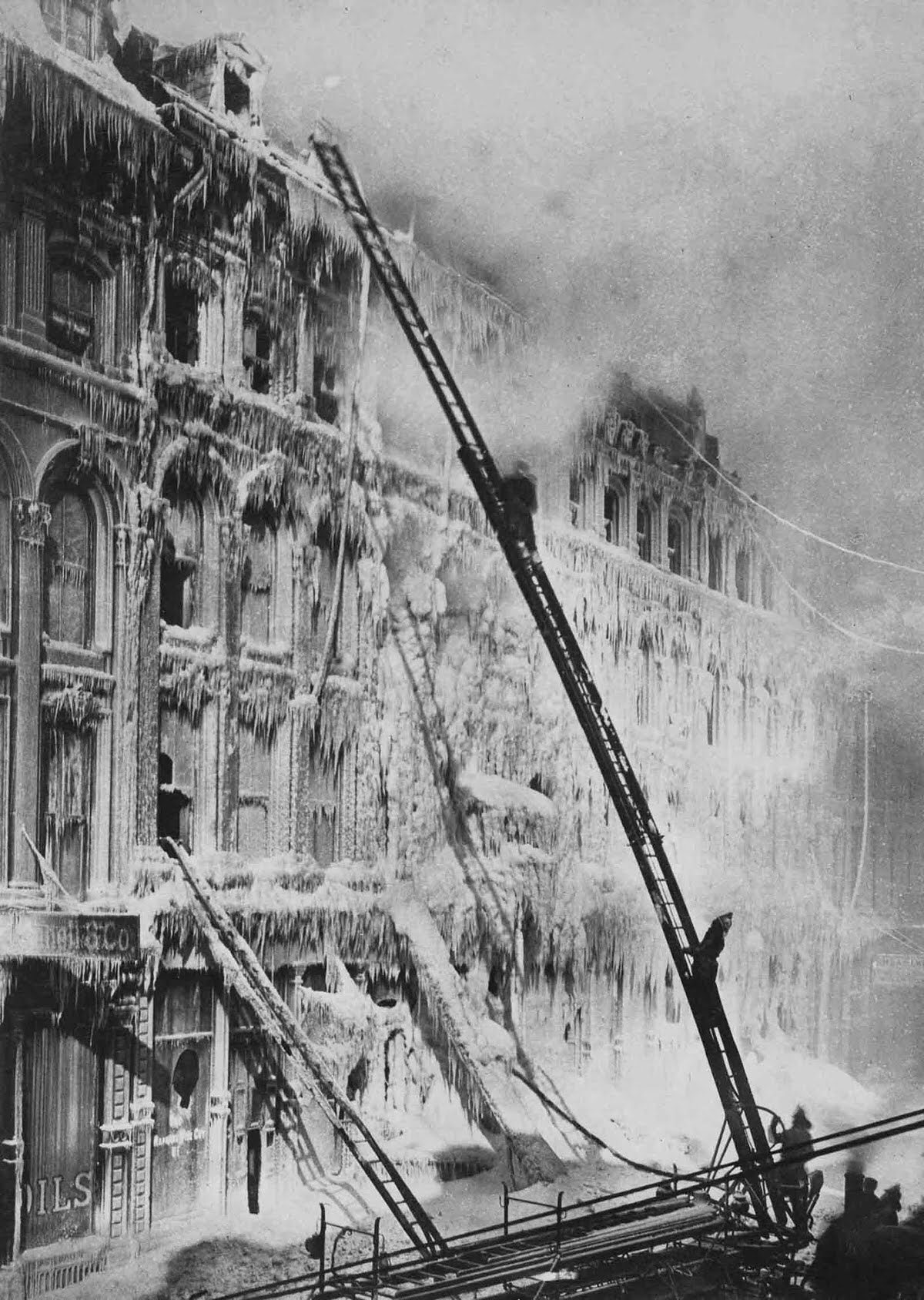
Montreal in 1889 was no stranger to brutal winters, and the firefighters who worked its streets understood that cold was not just uncomfortable — it was operationally crippling. Canadian winters regularly pushed temperatures far below freezing, and fires in those conditions produced extraordinary ice formations on buildings, equipment, and the men themselves.
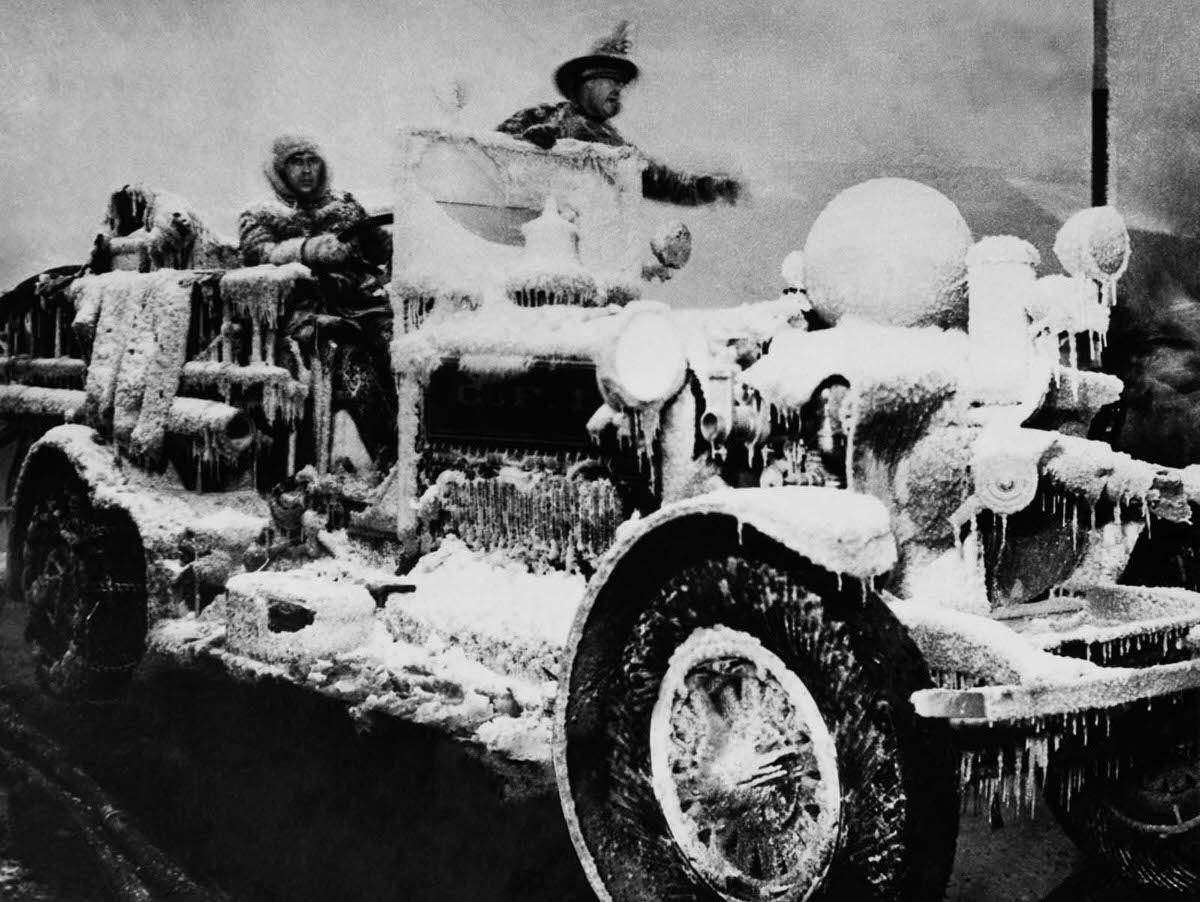
Chicago earned a reputation early on as one of the hardest cities in America to fight fires in during winter. The wind off Lake Michigan drove temperatures down and made the cold feel far more severe than the thermometer indicated. A firefighter soaked through from water and sweat would find that wind cutting straight through their clothing the moment they stepped back from a burning structure.
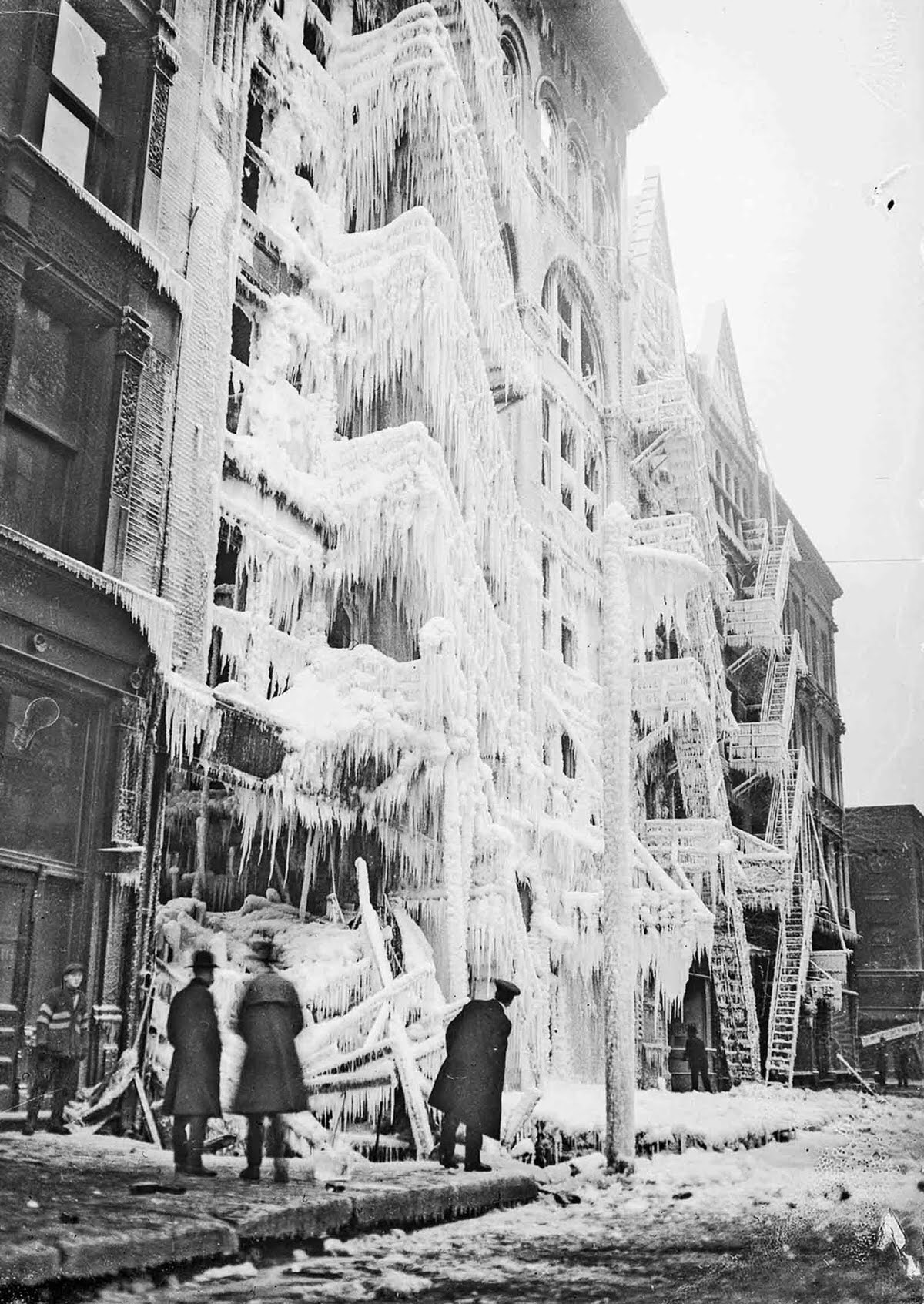
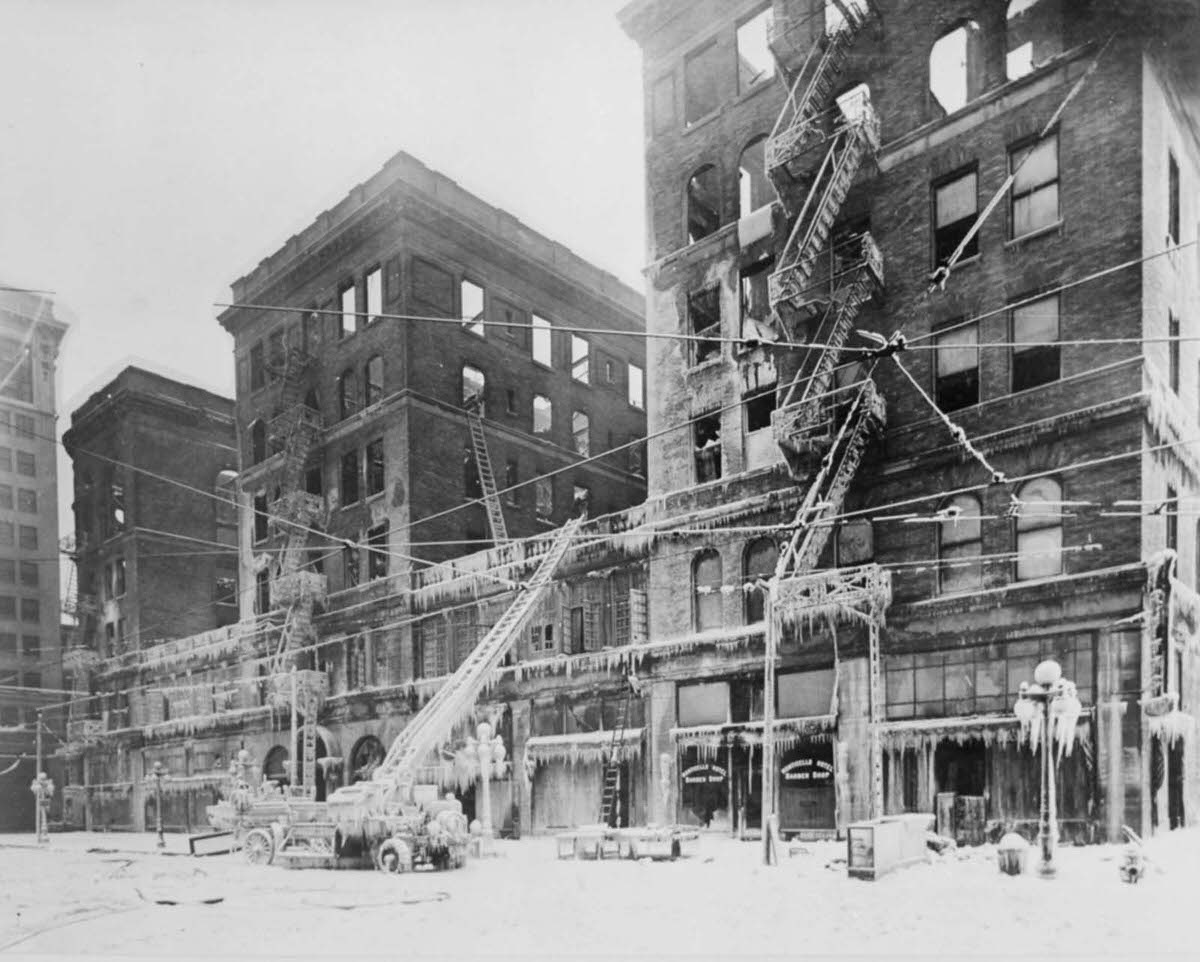
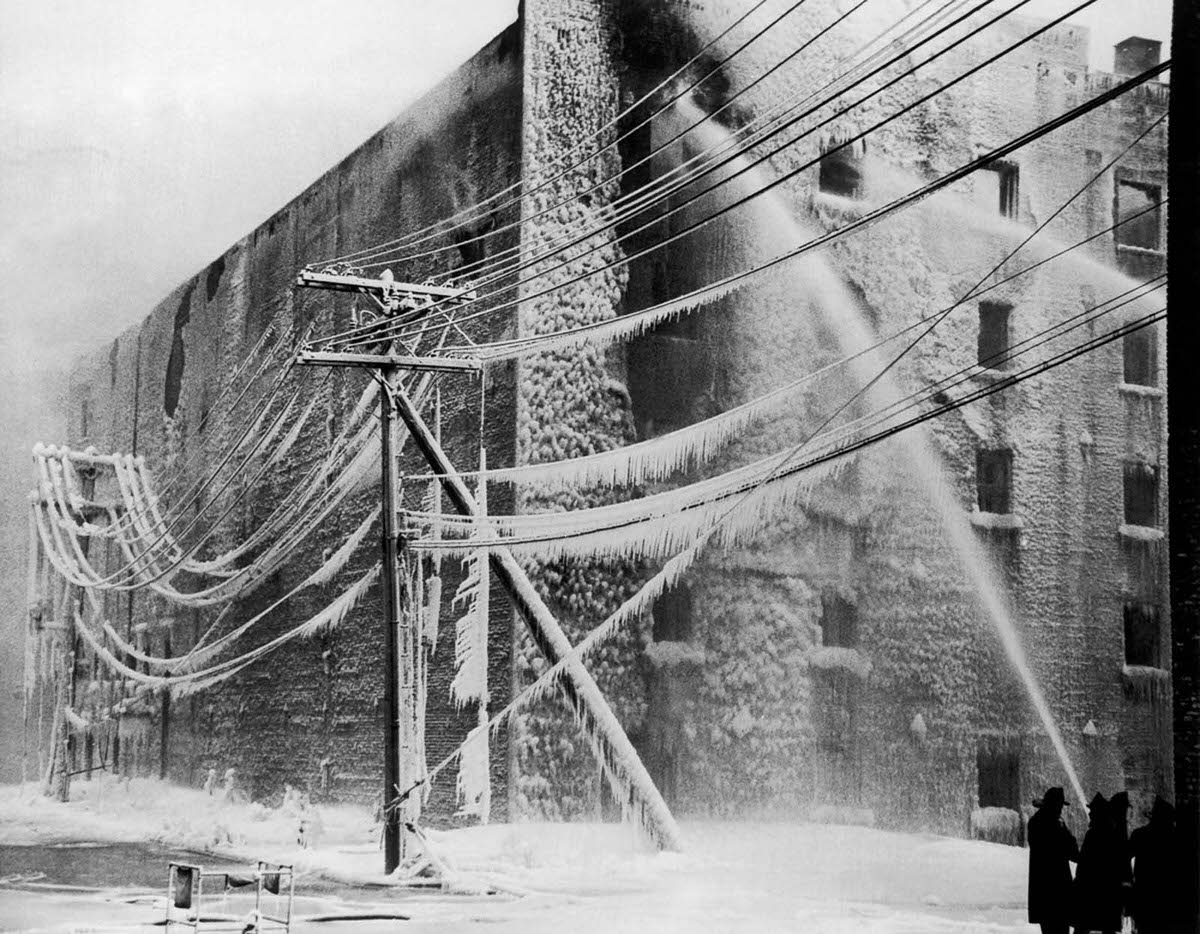
When a fire was finally put out in freezing temperatures, what remained was a strange and devastating landscape — charred timber and brick encased in thick, clear ice. The Monticello Hotel in Norfolk, Virginia, after its 1918 blaze, looked less like a burned building and more like something frozen in time. The water poured onto the fire simply stayed where it landed, turning the wreckage into an ice sculpture of destruction.
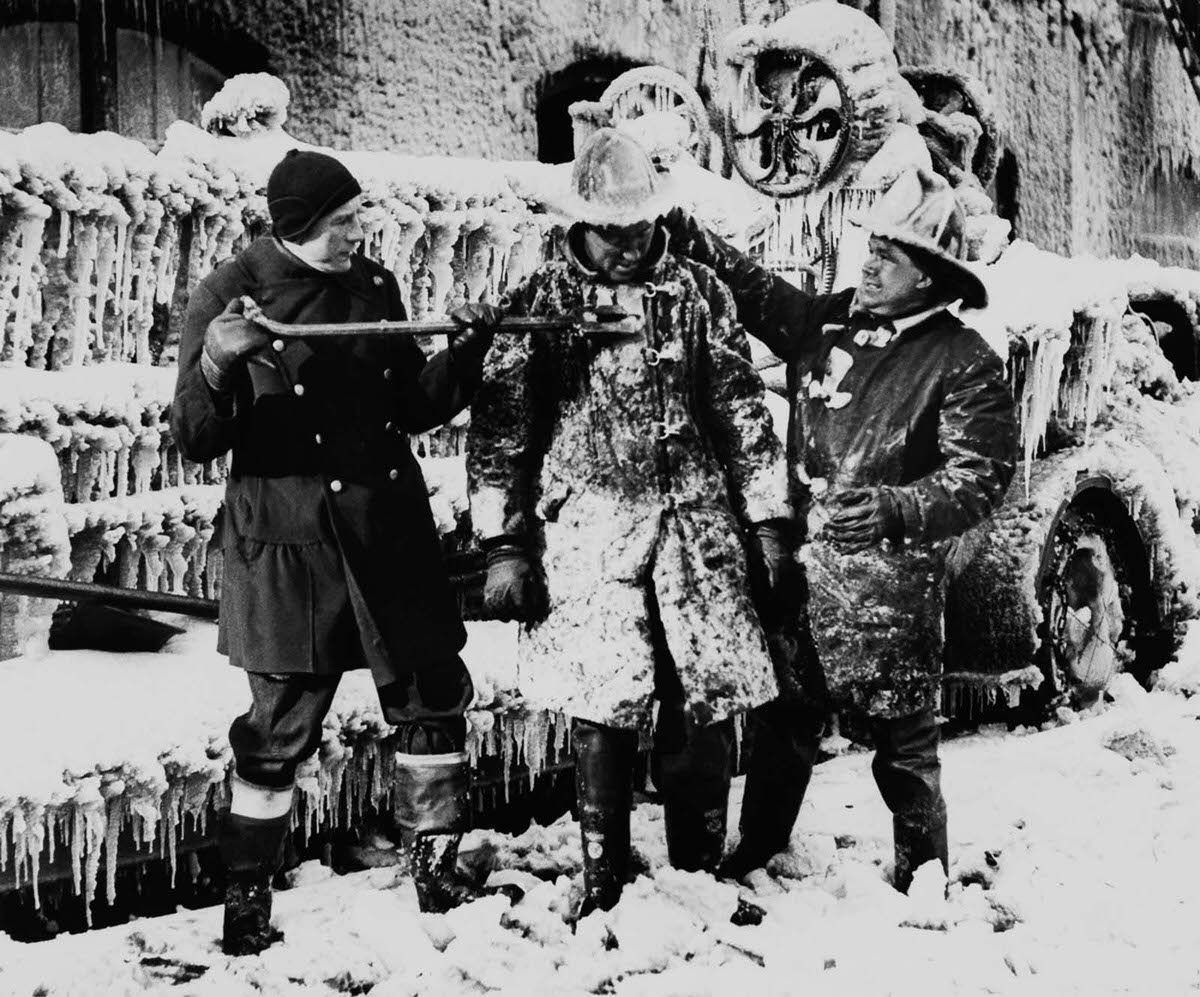
A firefighter’s uniform offered protection from heat and flame, but it was no match for prolonged exposure to freezing temperatures and water. Ice would build up layer by layer on the outside of a coat until the fabric was completely rigid. The man inside could barely bend his arms. In New York in 1936, it was common to see firefighters helping each other chip ice off their uniforms after a call — not as a curiosity, but as a necessary step before they could move freely again.
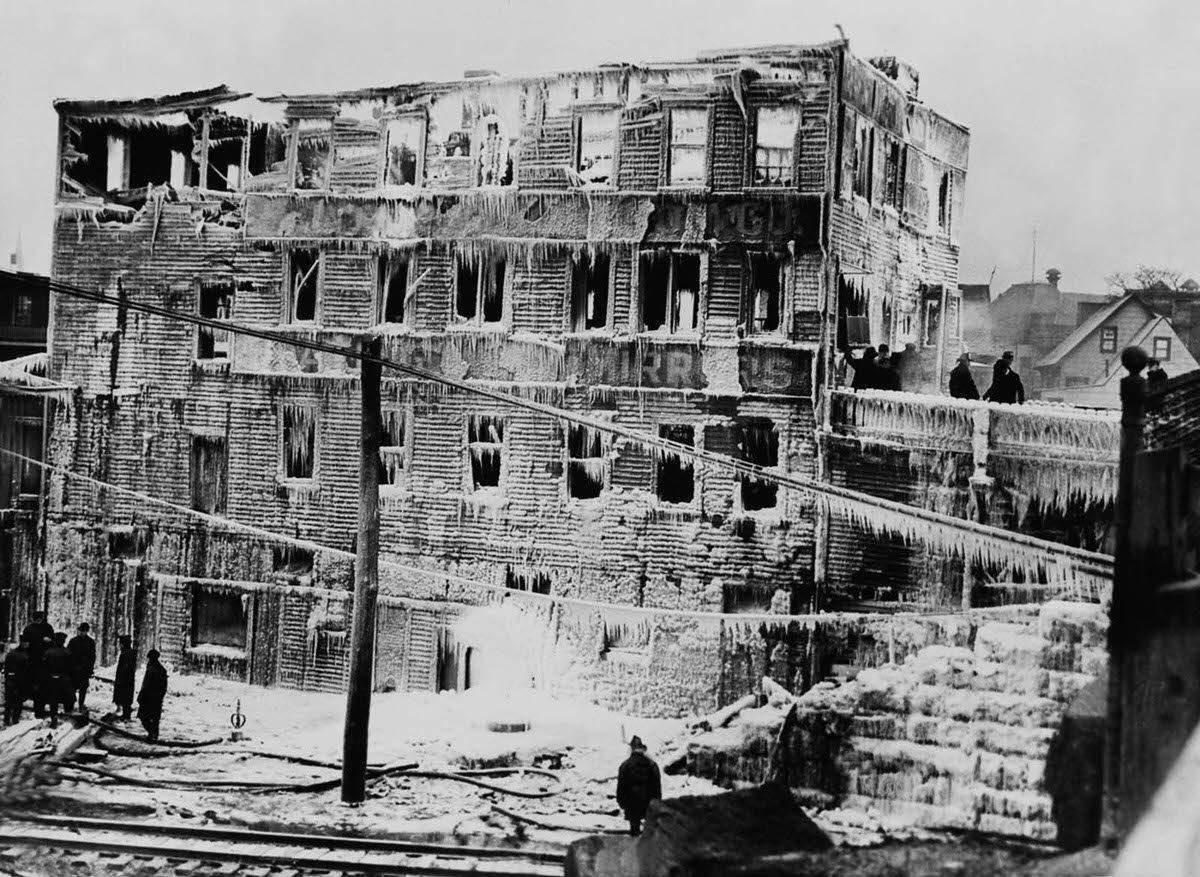
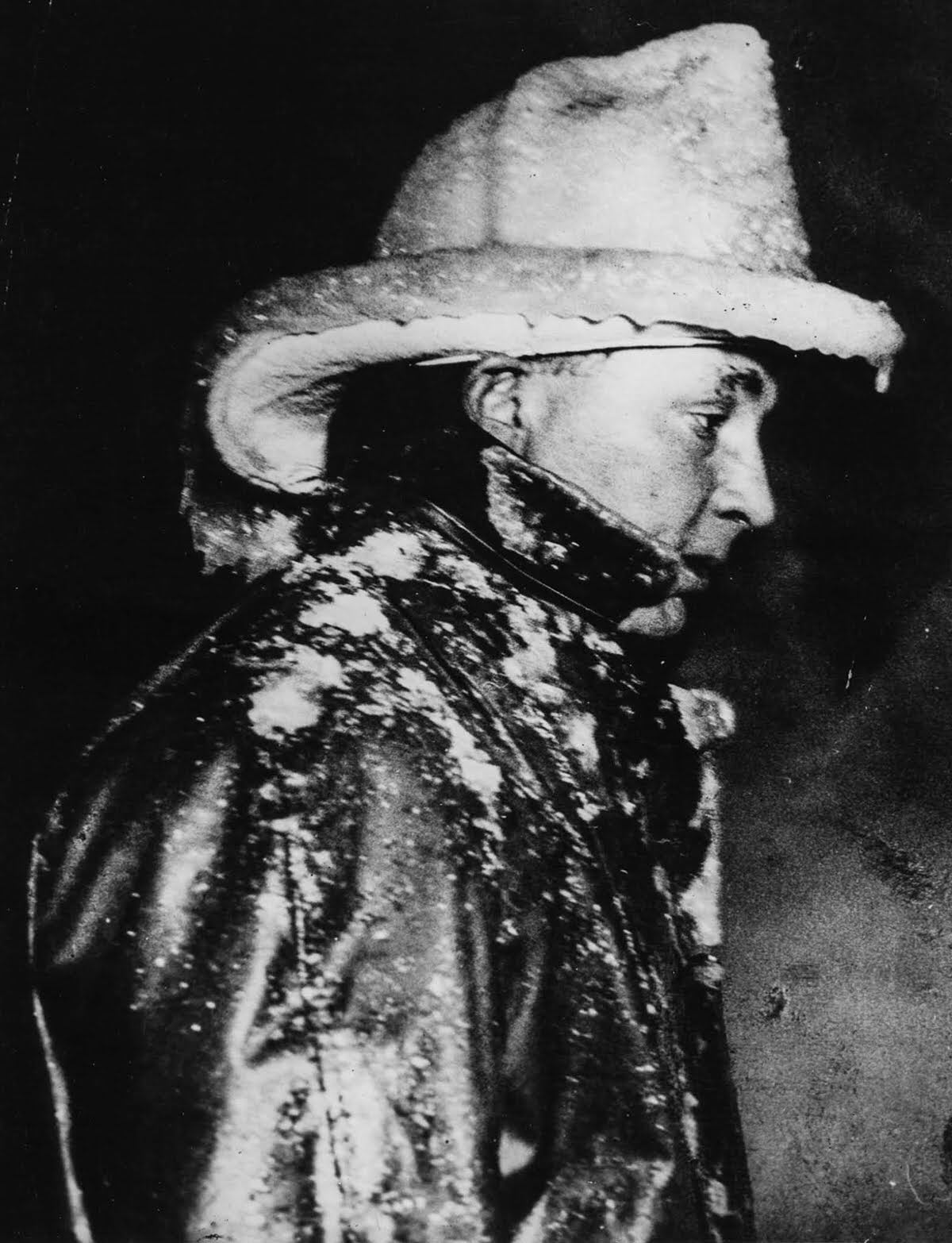
The year 1940 was particularly brutal for firefighters across the northeastern United States. Coney Island, more commonly associated with summer crowds and boardwalks, became the scene of a frigid winter emergency that left one firefighter photographed alone amid a landscape of frozen debris. The contrast between the summer identity of the place and the harsh winter reality captured in that image is stark.
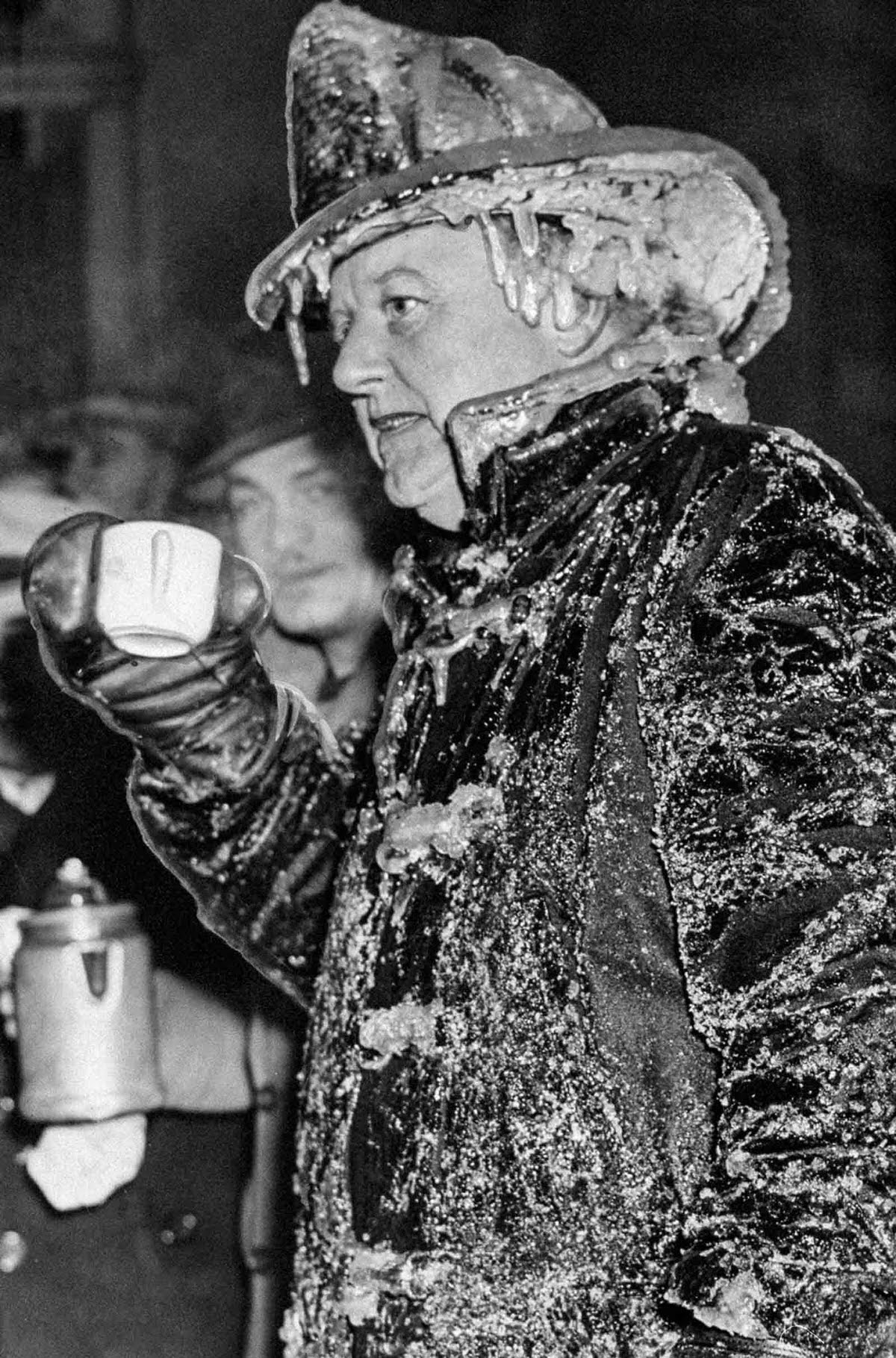
Even battalion chiefs felt the cold. FDNY’s 35th Battalion Chief William Travers was photographed at a Brooklyn fire in 1942, gripping a cup of coffee in the middle of a scene still smoldering around him. It was a brief, human moment in the middle of a brutal job. Firefighters working these scenes could spend hours in freezing air, alternating between the intense heat near the flames and the bone-deep cold the moment they stepped back.
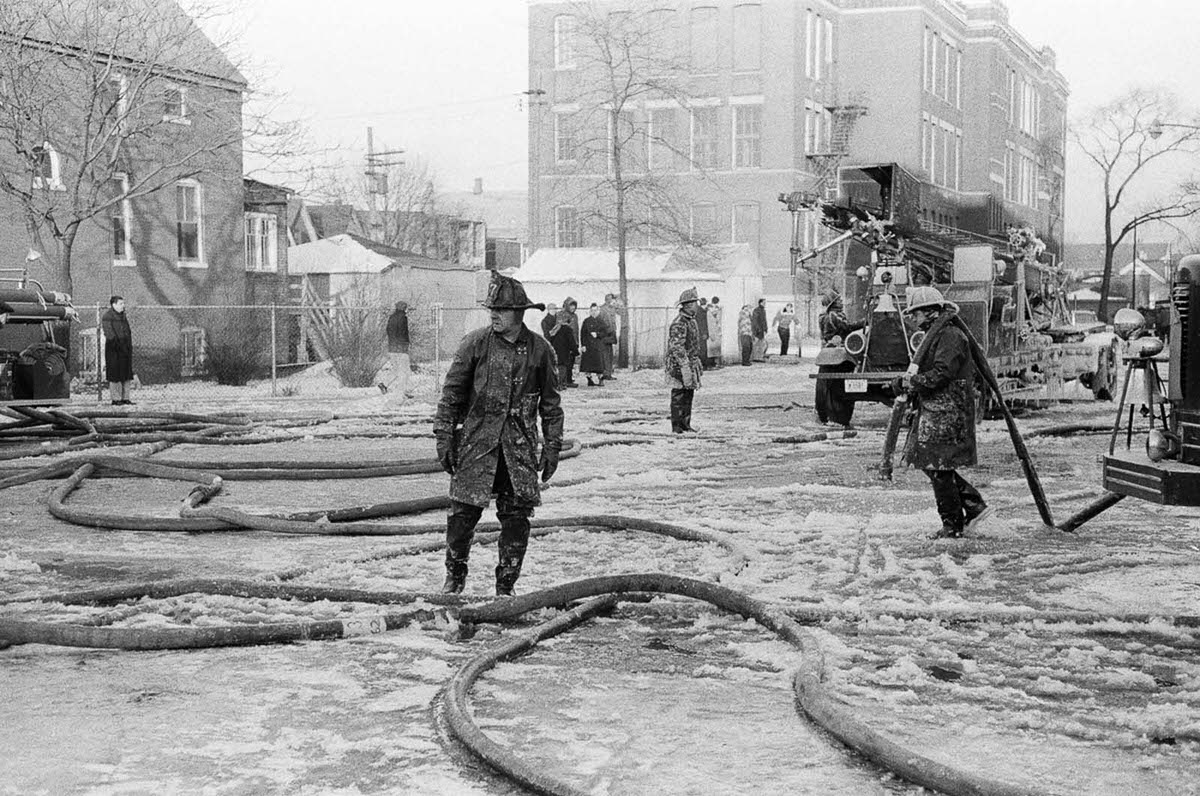
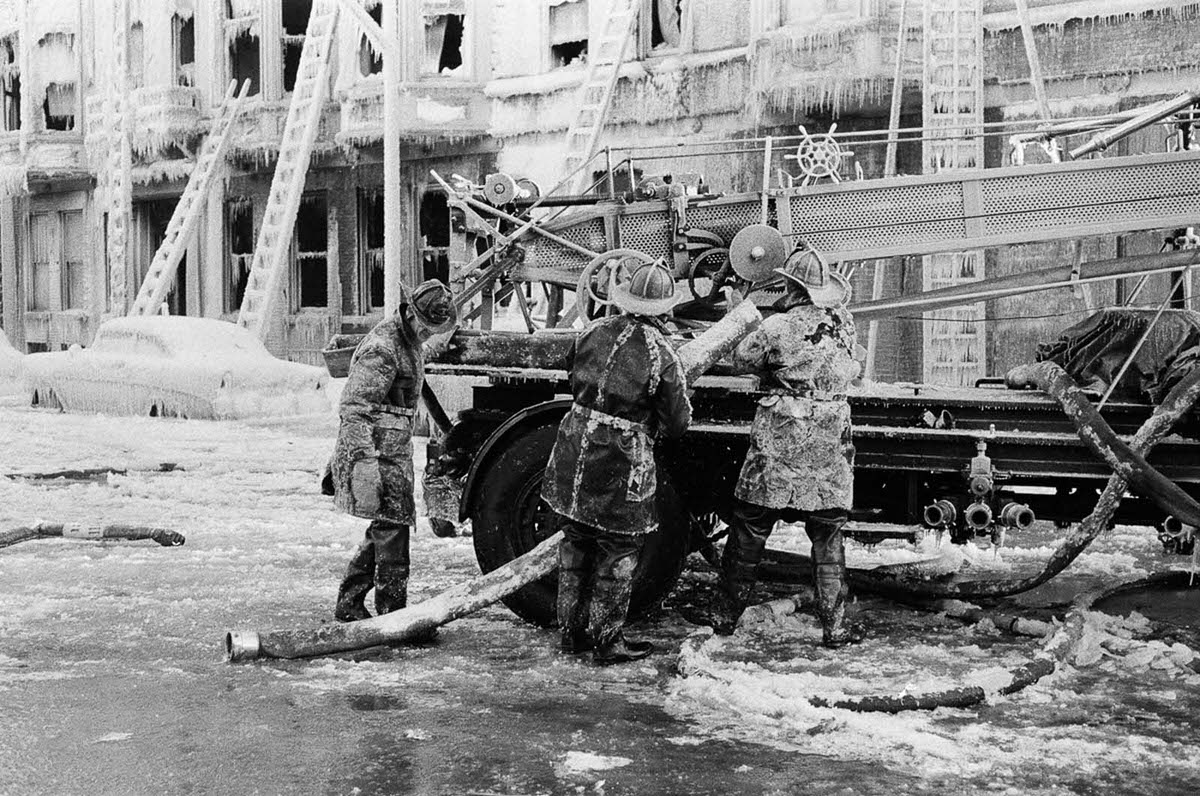
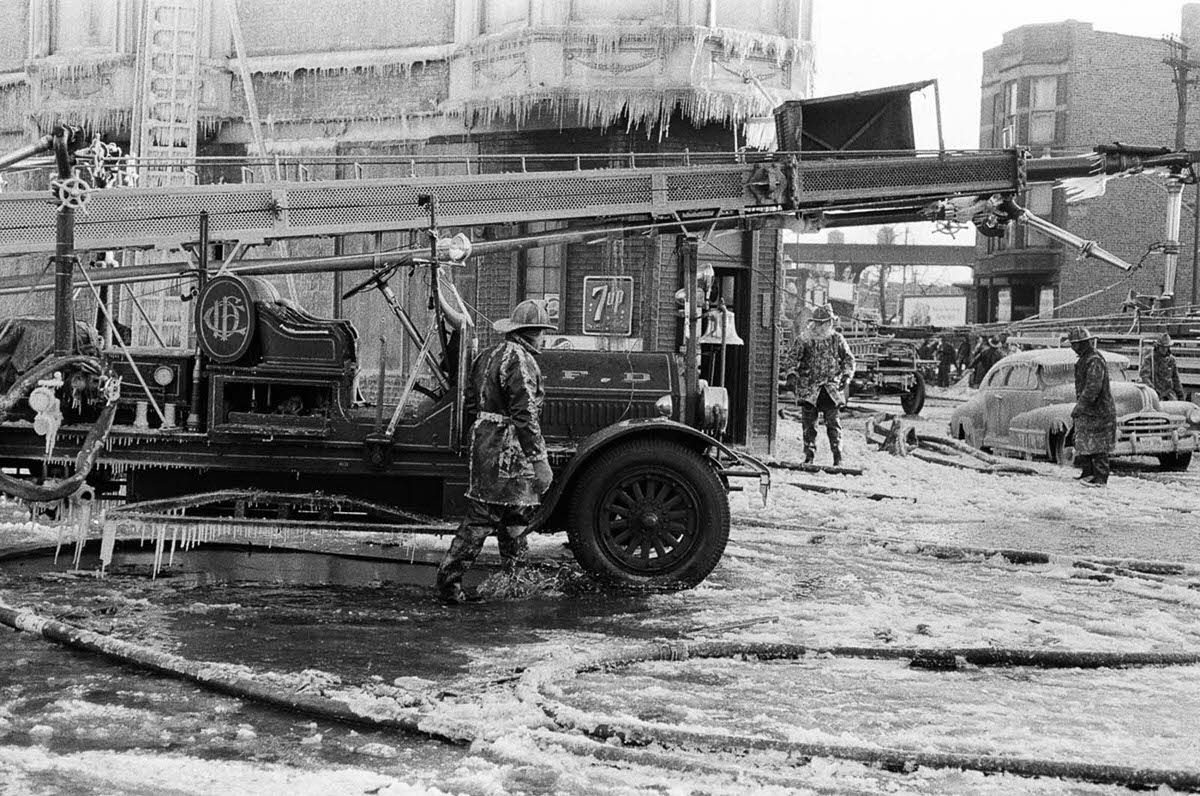
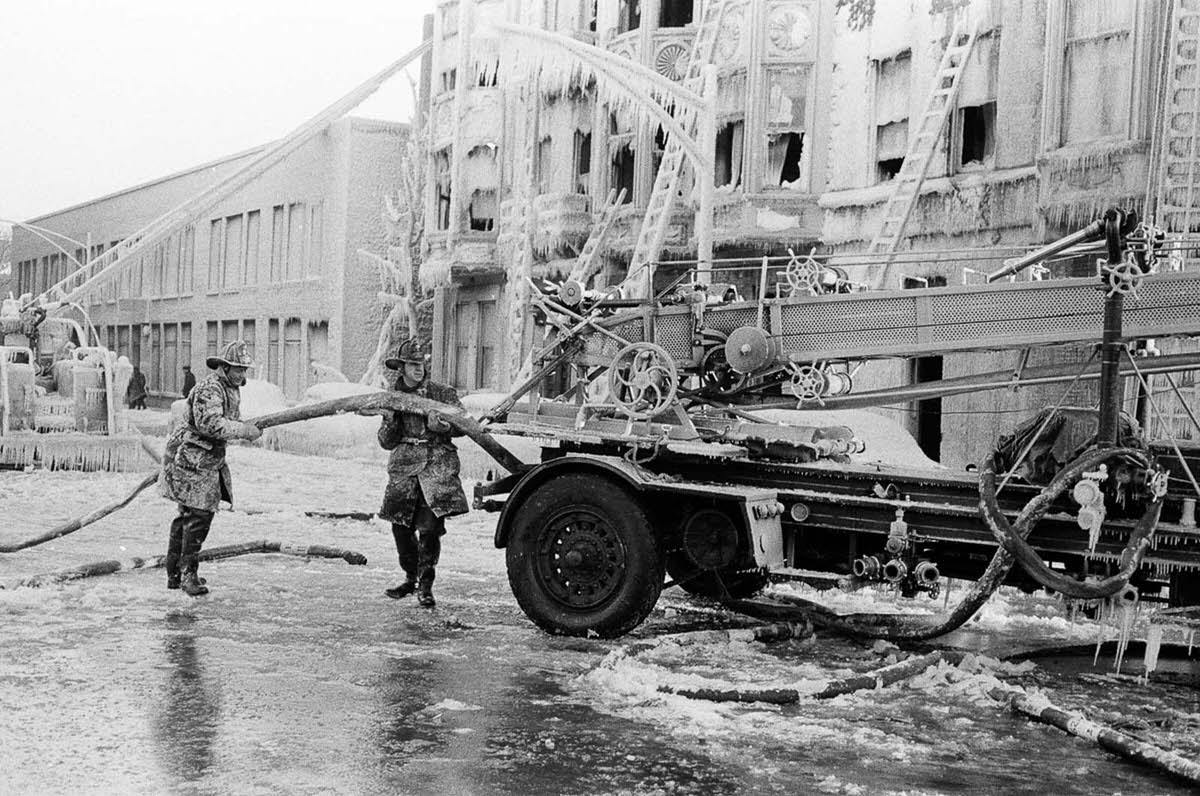
Chicago in 1958 saw a series of devastating winter fires that produced some of the most striking images of cold-weather firefighting ever captured on film. The combination of the city’s already harsh winters and a stretch of particularly low temperatures turned multiple fire scenes into ice-coated catastrophes. The photographs from those events remain among the most referenced in the history of American firefighting.
The physical challenge of adding extra clothing layers in extreme cold is significant. More insulation means more bulk and more weight. A firefighter already carrying a hose, an air pack, and heavy protective gear now also carries the burden of multiple clothing layers that restrict movement and make simple actions — climbing a ladder, opening a valve, pulling a colleague to safety — significantly harder. Every degree the temperature drops adds to that burden.
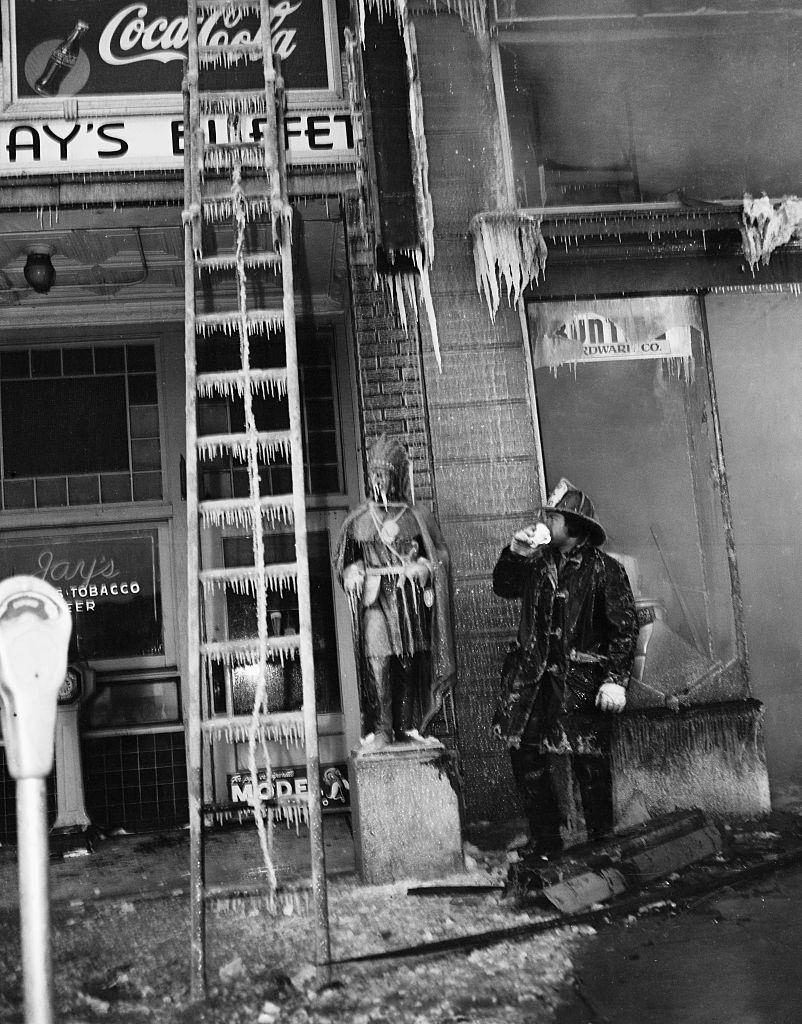
A frozen ladder is not just inconvenient — it is useless or worse. Rungs coated in ice become deadly footholds, and the metal itself becomes brittle at extreme temperatures. Firefighters in the early 1900s had no modern materials designed to resist ice buildup or retain flexibility in the cold. They worked with what they had, often improvising and always accepting that their equipment could fail them in ways that summer fires never required them to consider.
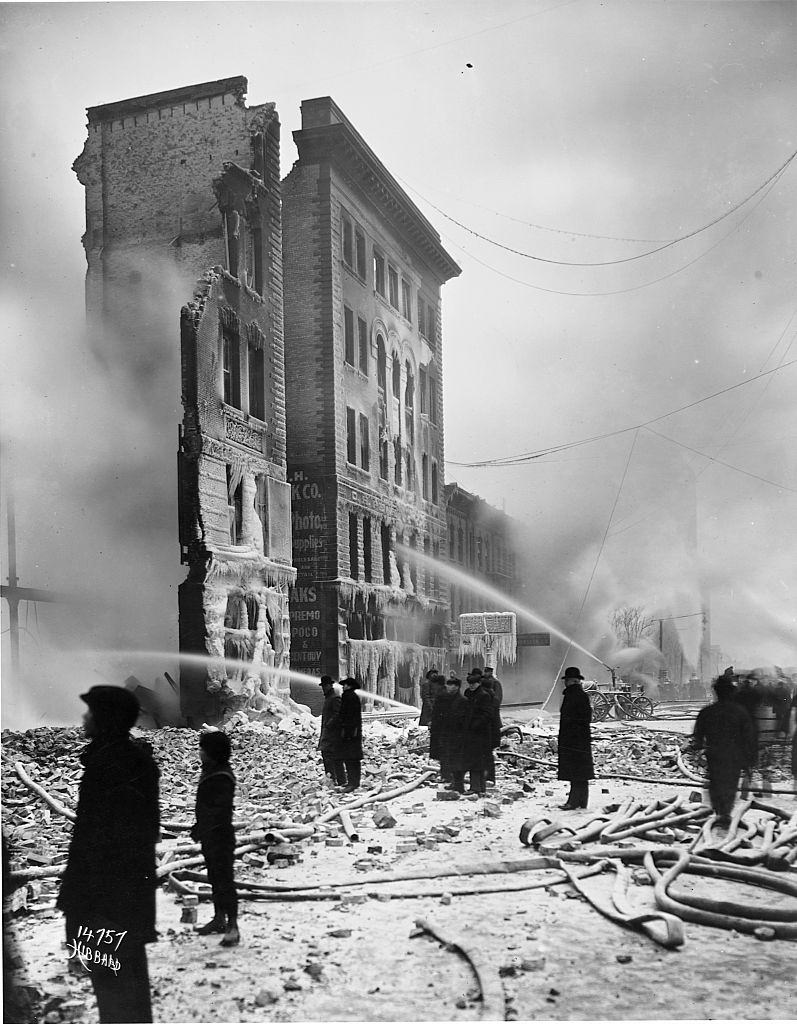
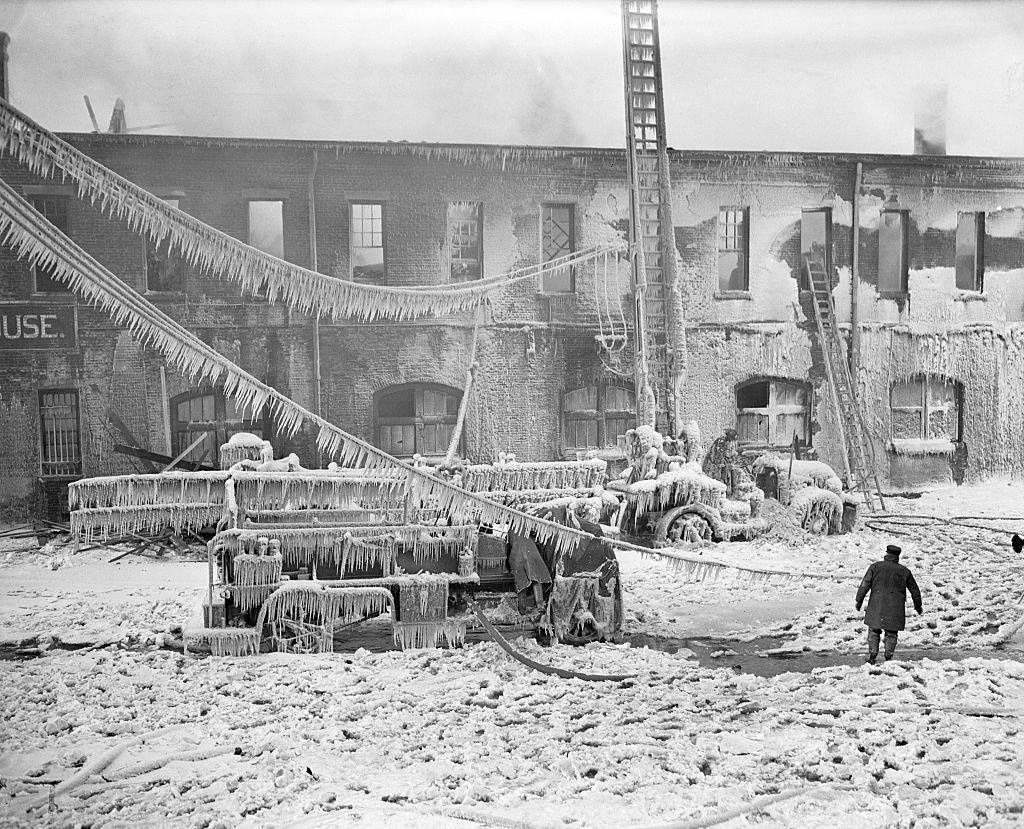
Temperature swings made things even harder. A mild stretch of winter weather could end abruptly, with temperatures plunging back to near zero while a fire was already in progress. The 1936 New York blaze on 33rd Street and Eleventh Avenue was one such event. Firefighters who had dressed for slightly warmer conditions found themselves suddenly working in near-zero air, with the water they were spraying freezing before it even reached its mark.
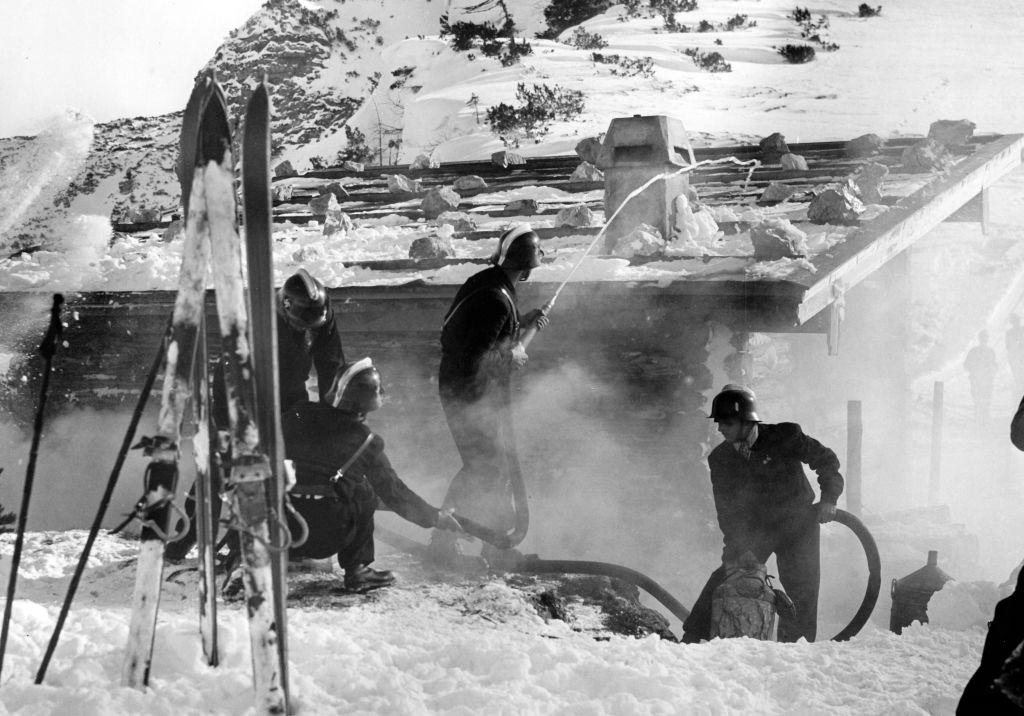
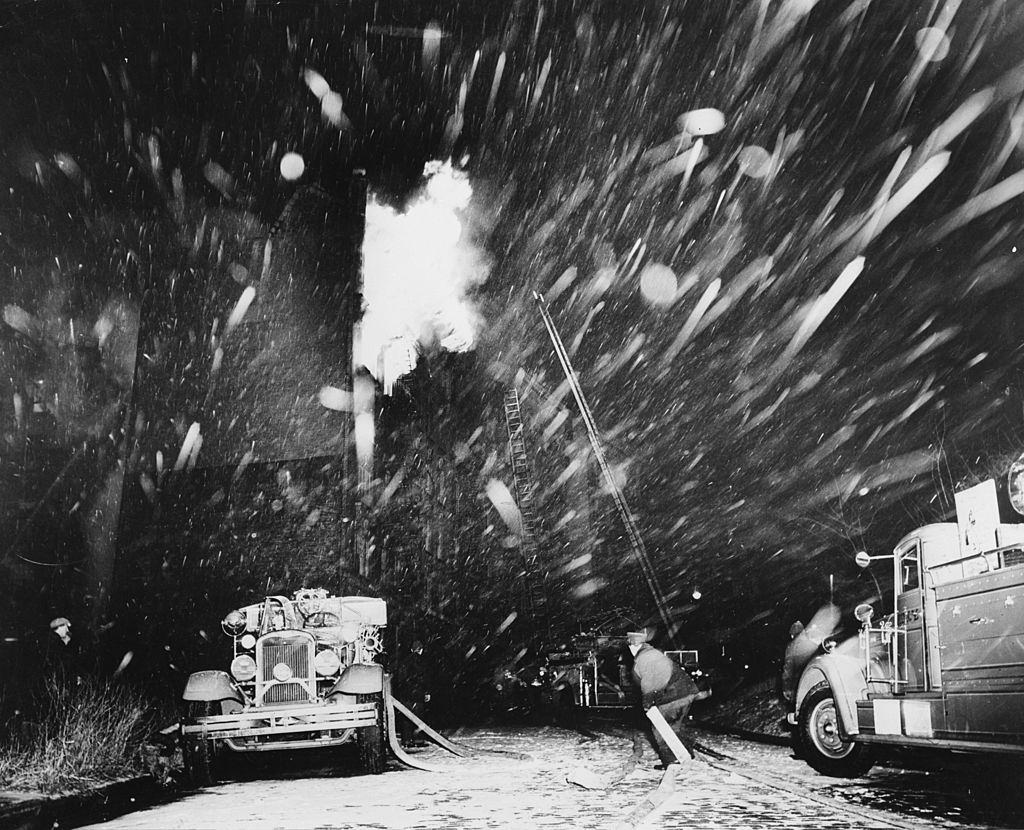
Getting to the fire at all was its own problem. Fire trucks navigating through snowstorms in cities like New York in 1940 dealt with packed snow on streets, reduced visibility, and other vehicles blocking their path. Every extra minute spent fighting through traffic or weather conditions was another minute the fire had to grow unchecked.
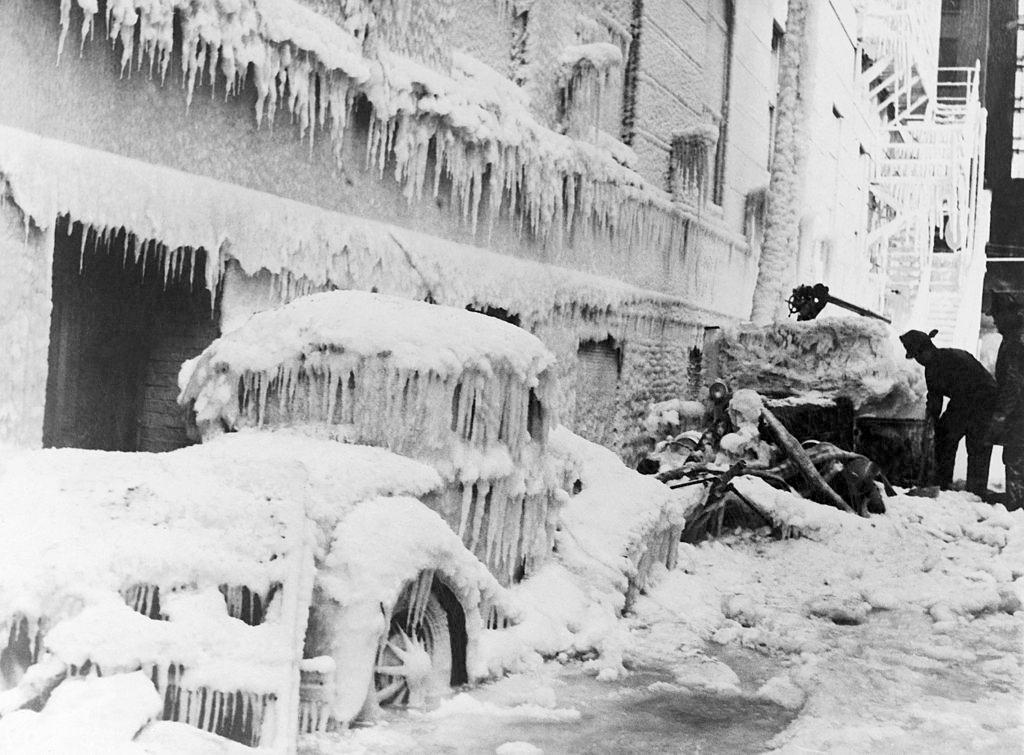
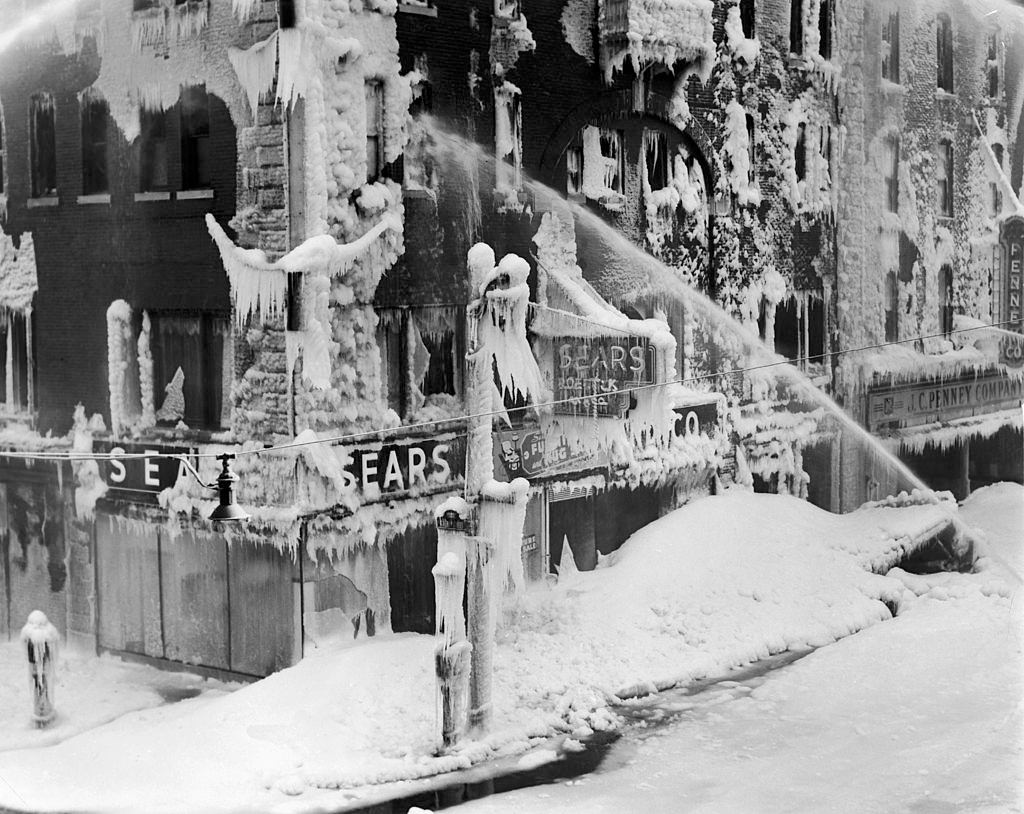
A hotel fire in Burlington, Vermont, in 1940 required firefighters to work in temperatures below zero until the blaze was fully out. The water coating the building and the surrounding area froze almost immediately, leaving a crystalline shell over the remains. Conditions like these also created serious risks for the firefighters themselves — hypothermia, frostbite, and ice-induced falls were constant threats.
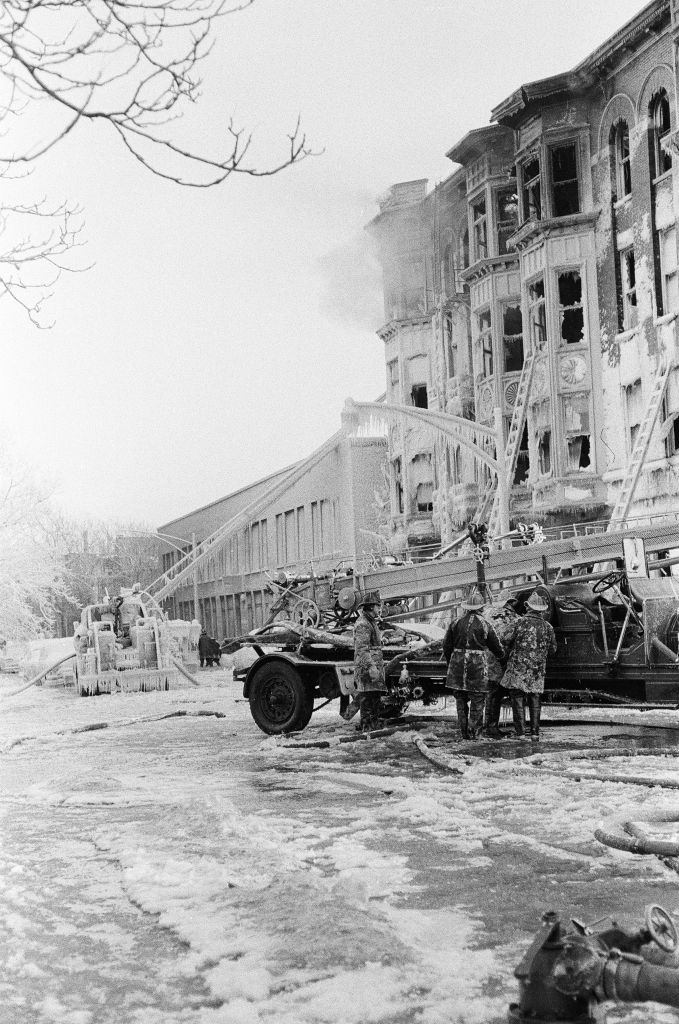
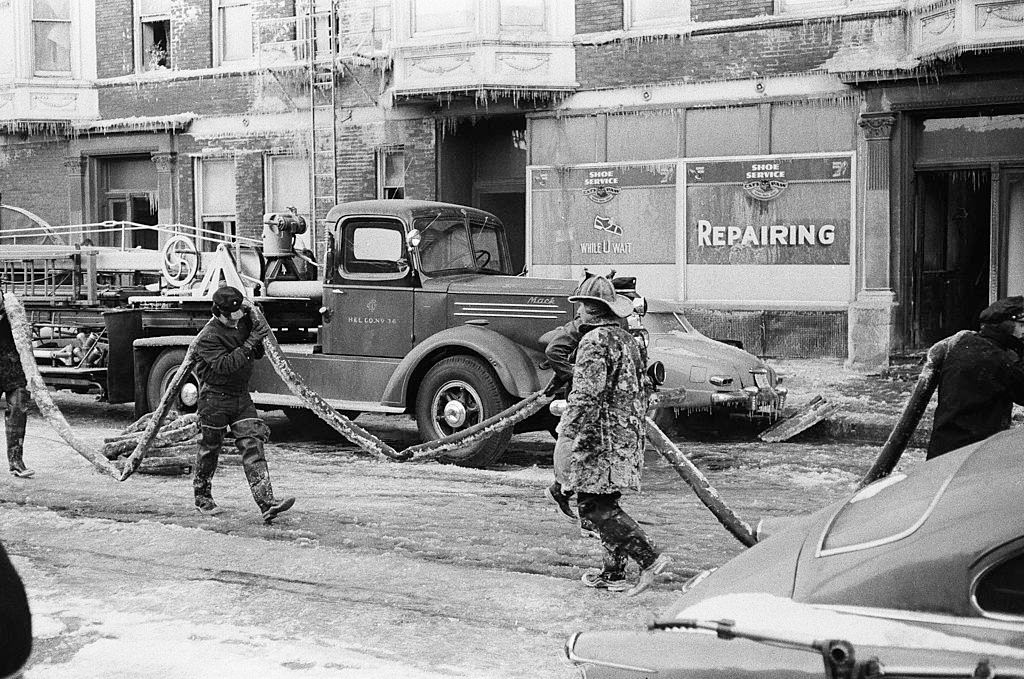
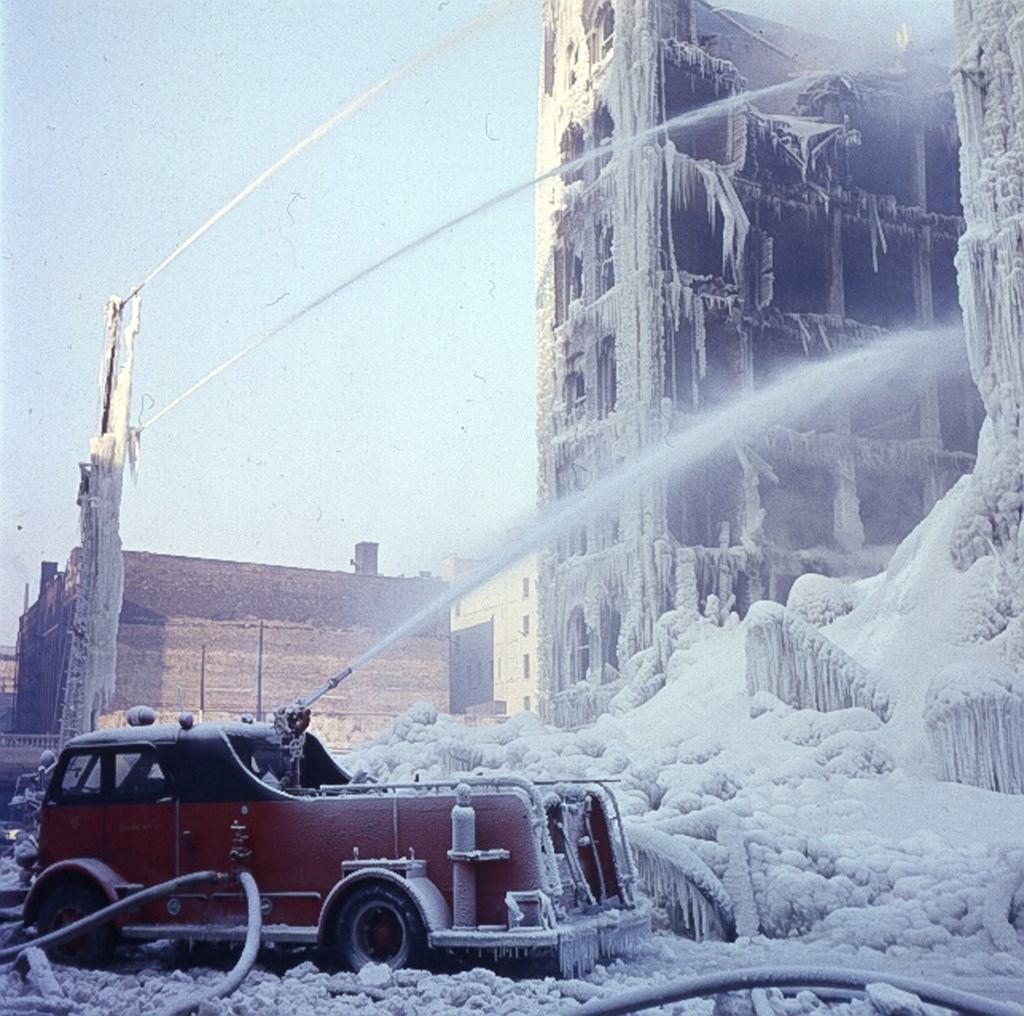
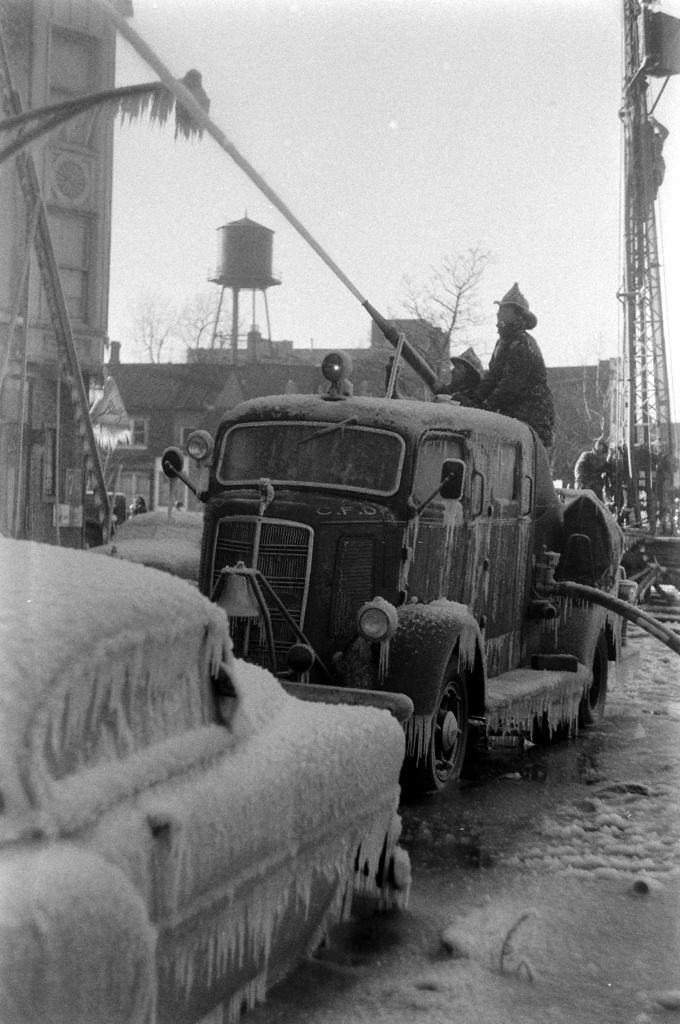
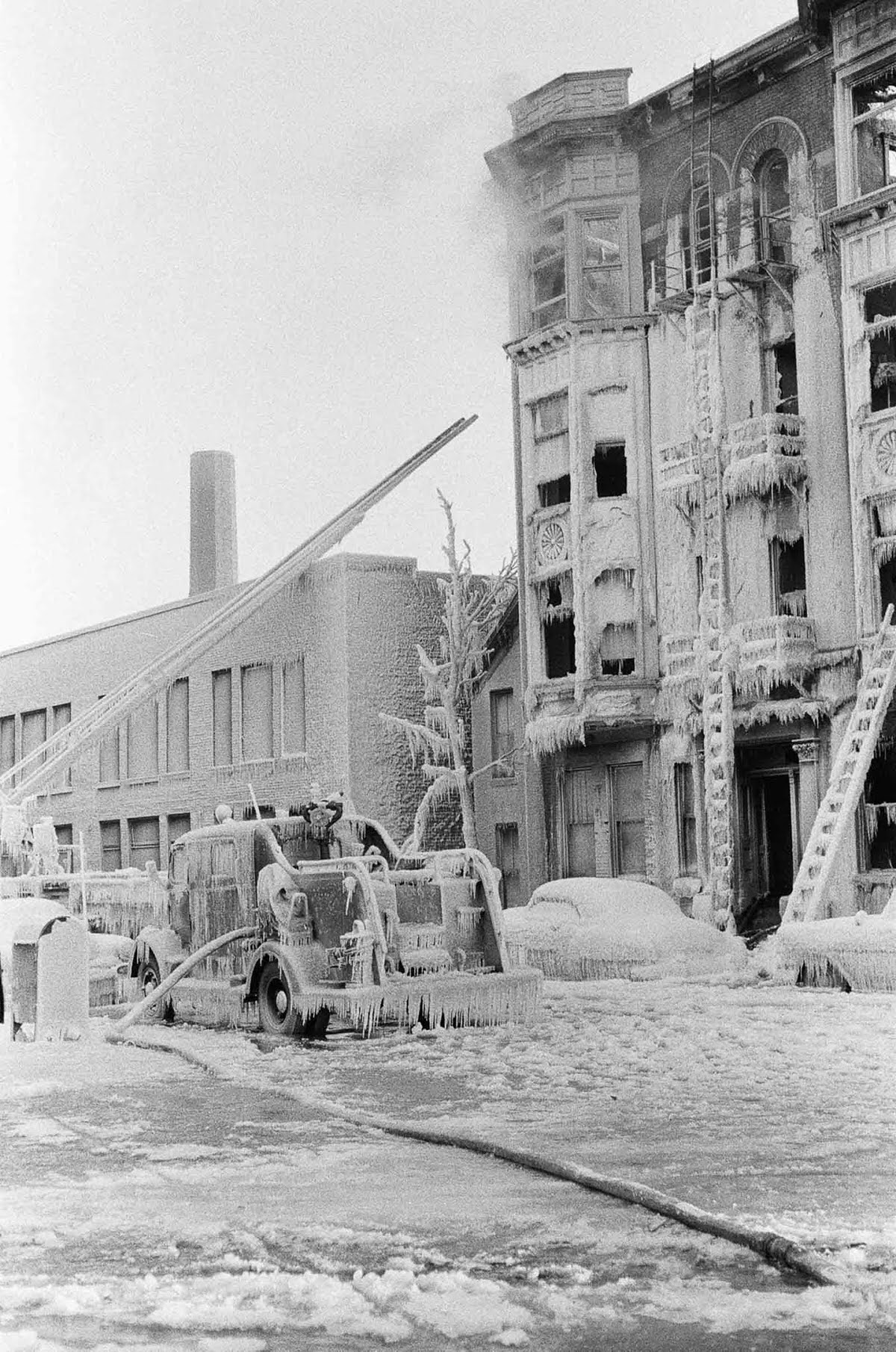
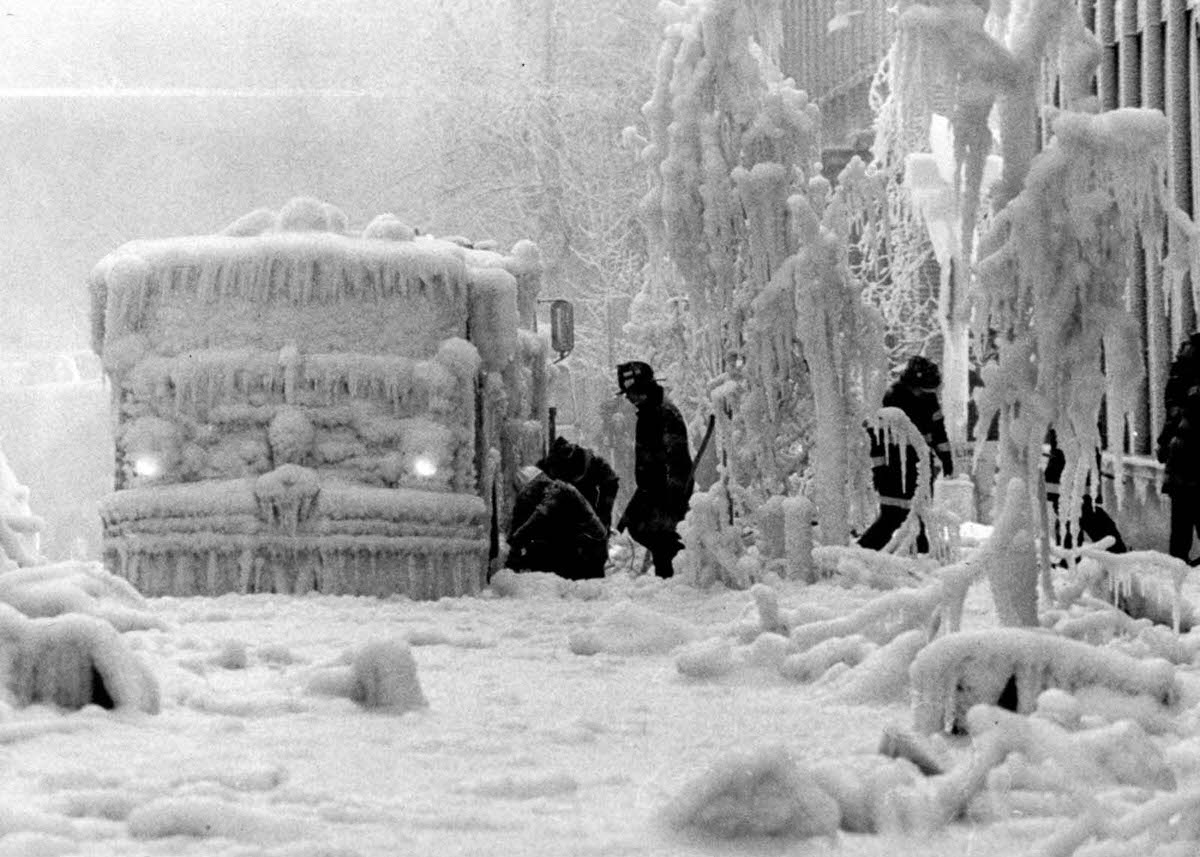
The 1958 Chicago fires generated image after image of firefighters working in conditions that seem almost impossible to endure. Streams of water arching through the air froze into curves before they hit the building. Men standing behind hoses were encased in ice from the waist down. The buildings themselves became enormous ice structures, their frames locked in frozen water while the fire still burned somewhere deep inside.
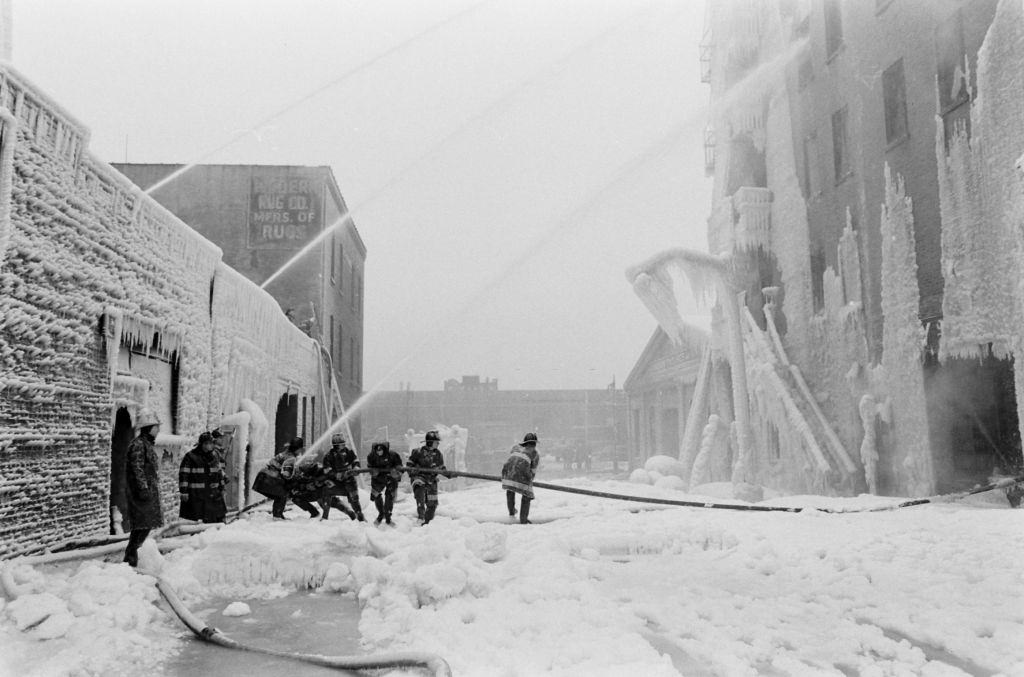
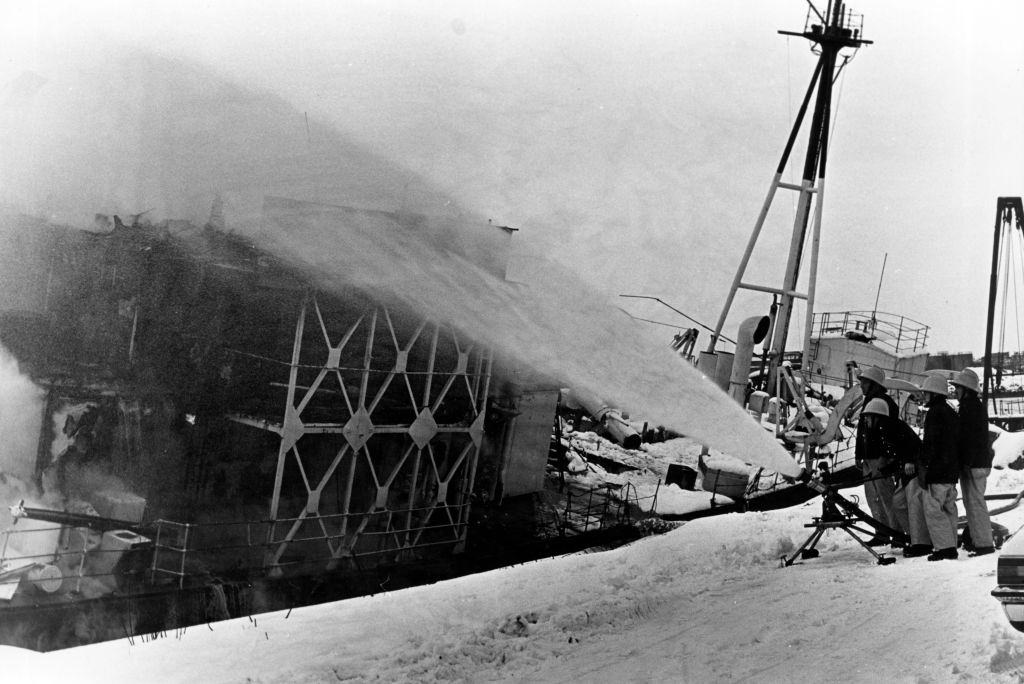
By the late 1970s, the equipment had improved, but winter fires remained just as dangerous. Snow and ice at industrial sites like the Tees Marine Dry Dock in February 1978 added structural hazards on top of the fire itself. Water on metal decking froze instantly, making every step a potential fall. Industrial fires also burned hotter and faster than residential ones, which meant firefighters had to get closer — and stay wet — longer.
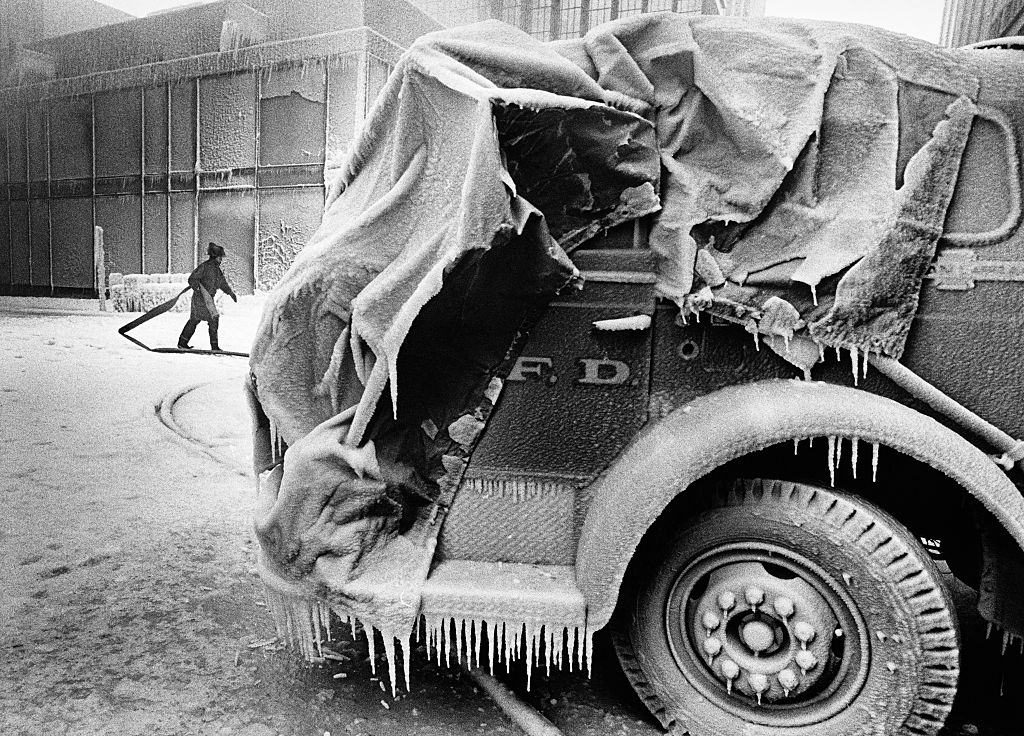
On Thanksgiving Day in 1982, a downtown Minneapolis firefighter was photographed carrying a hose between an ice-covered engine and a row of burning buildings. The image captures, in a single frame, everything that defines cold-weather firefighting: the fire still raging, the equipment already frozen, and one person moving through it all, doing the job regardless.




