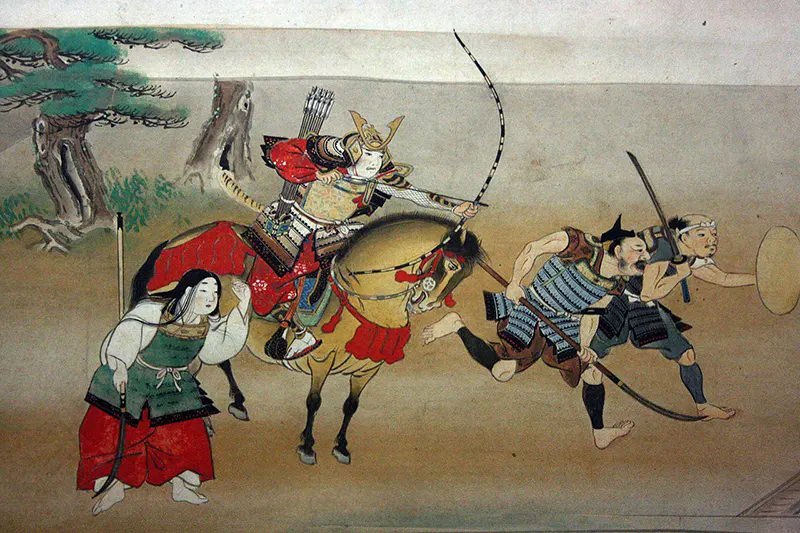
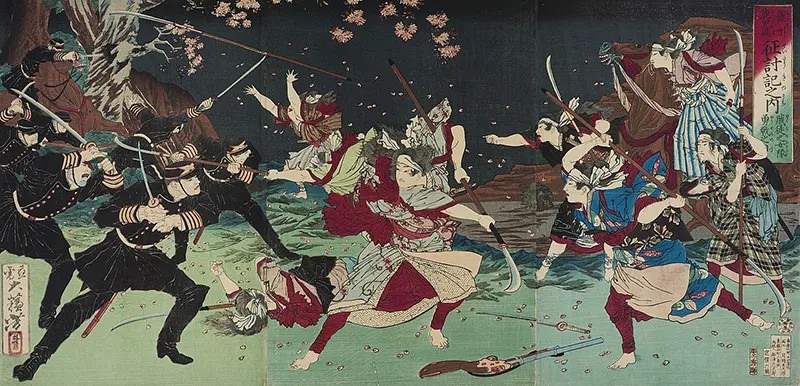
In feudal Japan, a select group of women trained in the same martial arts as male samurai and fought alongside them in battle. These women were known as onna-bugeisha — a term that translates roughly to “woman warrior.” They were not a rare curiosity. They were a recognized part of samurai culture, bound by the same codes of loyalty, discipline, and duty that governed the men around them.
Most onna-bugeisha came from samurai families. They were daughters or wives of warriors, and their training began early. The naginata — a long pole weapon with a curved blade at the end — was their primary weapon of choice. Its reach made it effective against mounted opponents, and it required less raw strength than a straight sword. Many women also trained with the yari, a straight-bladed spear used for thrusting in close combat.
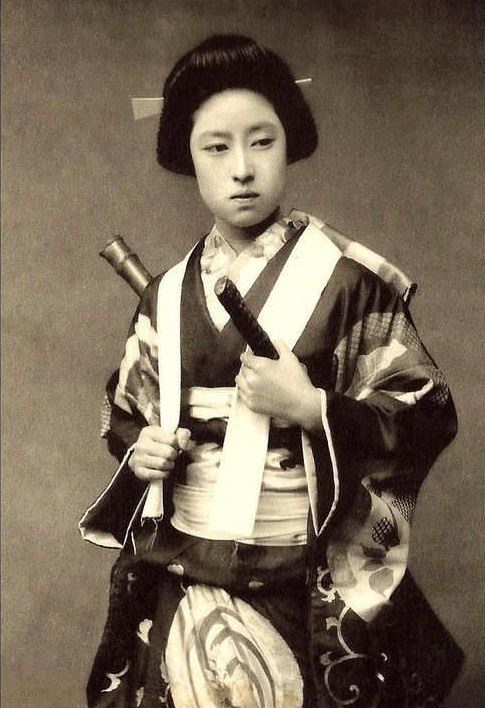
Beyond weapons, onna-bugeisha trained in jujutsu and kenjutsu — unarmed grappling and swordsmanship, respectively. These were not casual hobbies. Training was rigorous and structured, designed to produce fighters who could defend their homes and communities when the men were away or dead. Some women also carried a small dagger called a kaiken, worn tucked into their obi, used for close-range combat or, in extreme circumstances, ritual suicide to avoid capture.
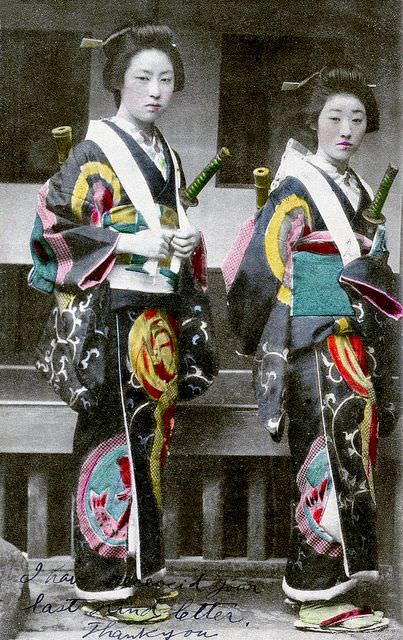
Martial skill alone was not enough. An onna-bugeisha was also expected to be educated. Literature, poetry, and the arts were all part of her upbringing. She was expected to converse knowledgeably on a wide range of subjects and to carry herself with refinement. The combination of physical ability and cultural knowledge defined what it meant to be a female warrior of the samurai class.
Two names stand above all others in the history of onna-bugeisha. The first is Tomoe Gozen, who lived in the 12th century. She was described in the war chronicle Heike Monogatari as a superb archer and swordswoman who led troops into battle. She fought in the Genpei War between the Taira and Minamoto clans, and her reputation for fearlessness on the battlefield was recorded in detail by those who witnessed it.
The second great name belongs to the 19th century: Nakano Takeko. She led an all-female combat unit called the Aizu Bugeisha during the Boshin War of 1868, a conflict that pitted pro-imperial forces against those loyal to the Tokugawa shogunate. Takeko led her unit in a charge against rifle-armed imperial troops at the Battle of Aizu. She was shot in the chest and killed at age 21. To prevent her body from being taken as a war trophy, her sister cut off her head and buried it at Hokai Temple in Fukushima Prefecture, where it remains honored to this day.
The Edo period (1603–1868) brought significant change to the role of the onna-bugeisha. As Japan entered a long era of relative peace under the Tokugawa shogunate, samurai duties shifted away from combat and toward administration and bureaucracy. The demand for female fighters dropped accordingly. However, some women continued to train in secret, refusing to let the martial traditions of their families die out.
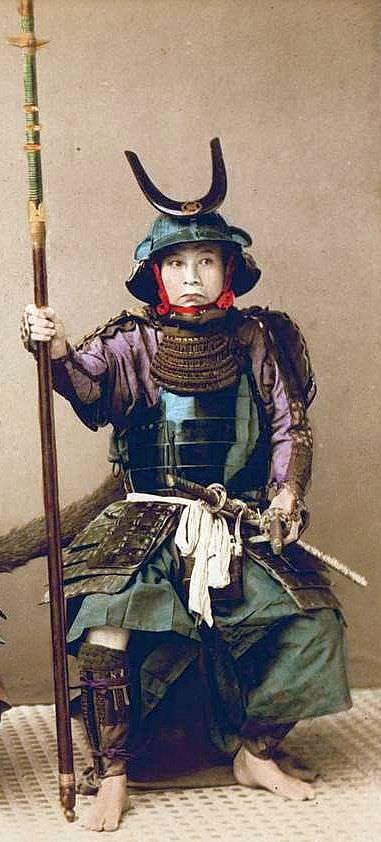
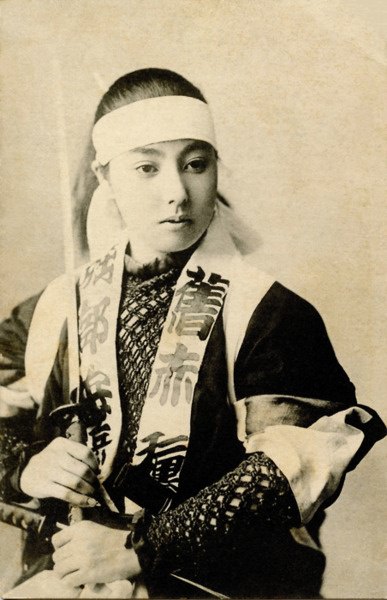
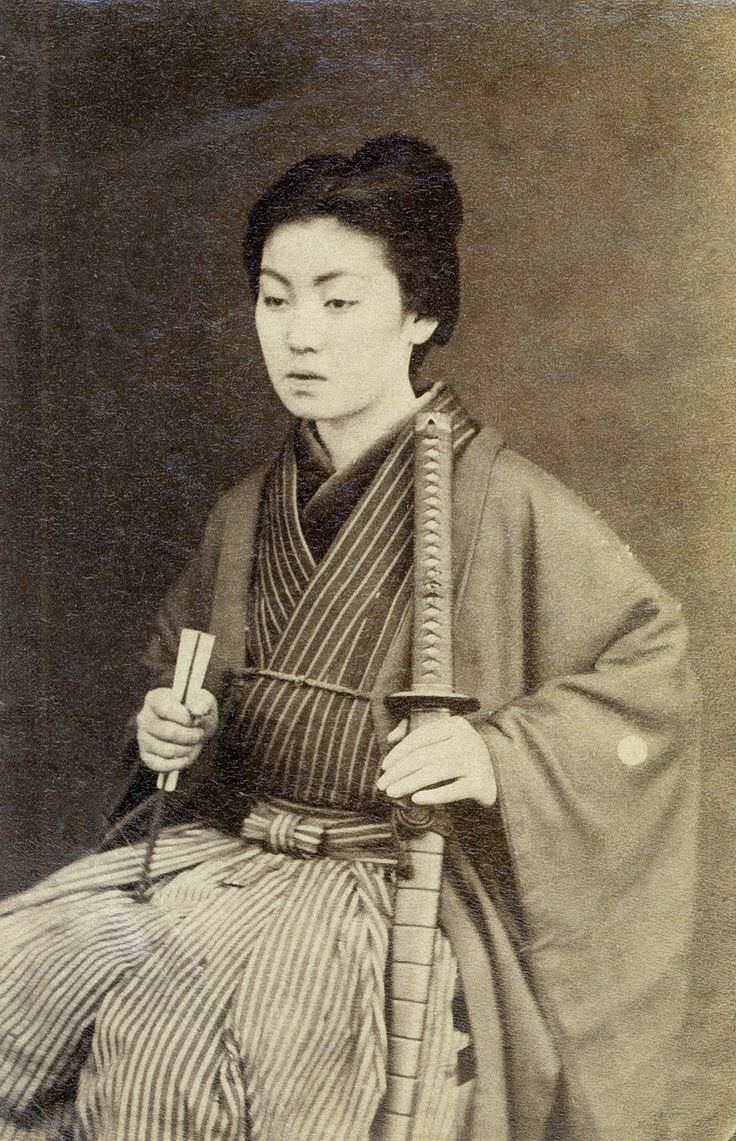
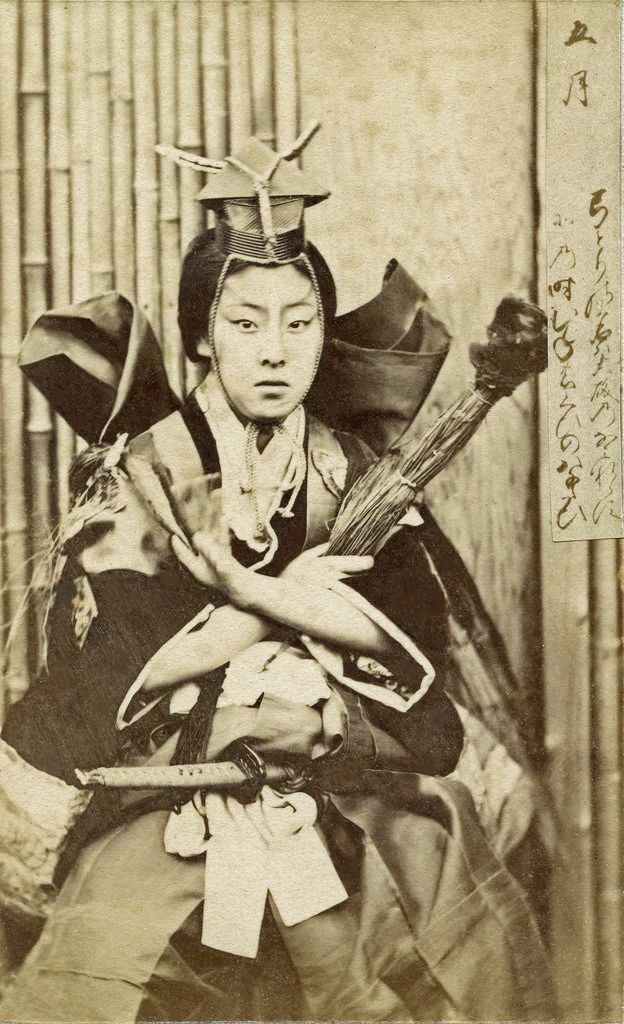
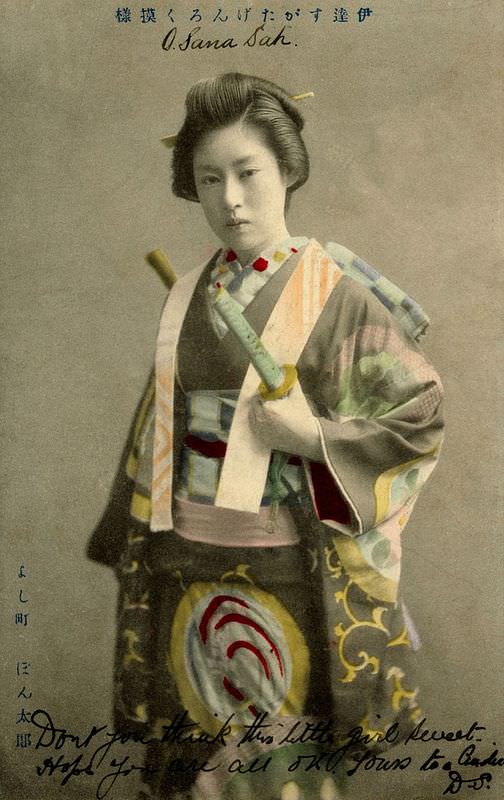
Photography arrived in Japan in the mid-19th century, and a number of onna-bugeisha were captured on film before their way of life fully disappeared. These photographs — many taken in the 1860s and 1870s — show women posed with naginata, swords, and armor. They are among the most striking historical images of the period.
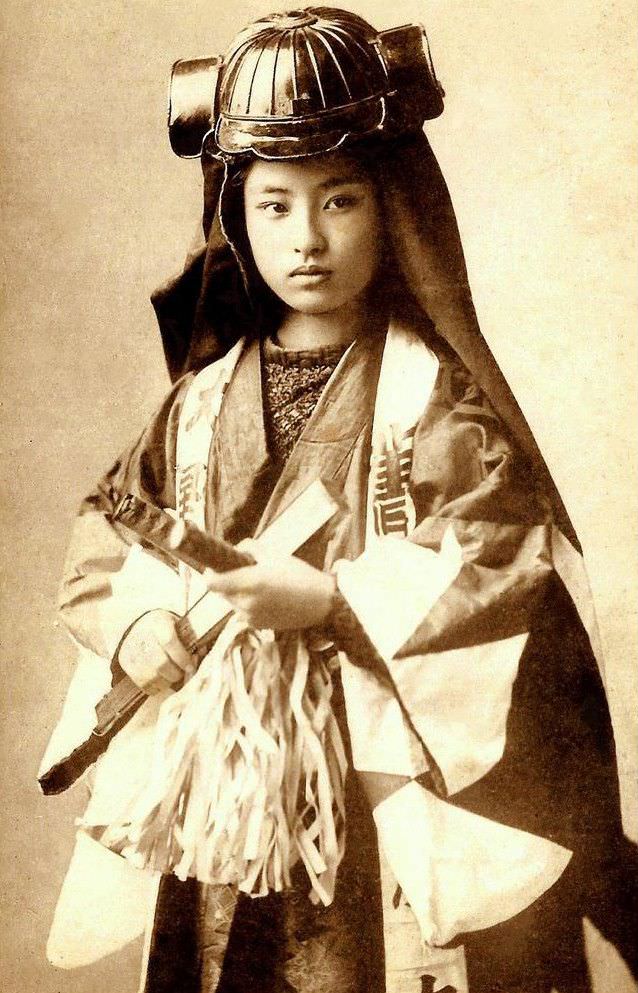
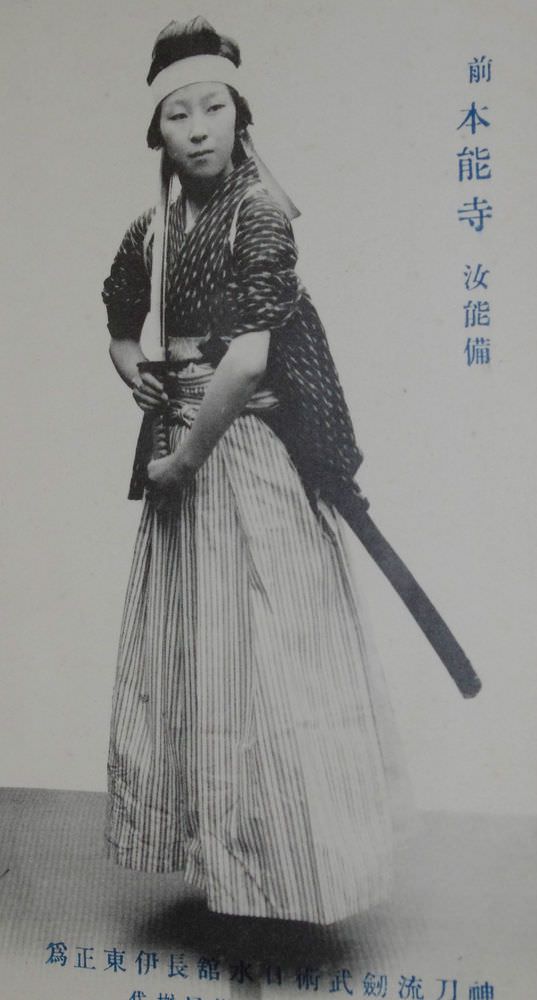
Western photographers and Japanese studios alike documented these women during the Meiji era, a time when Japan was rapidly modernizing and traditional samurai culture was being phased out by government decree. The Sword Abolition Edict of 1876 banned the carrying of swords in public, effectively ending the samurai class as a legal institution. The photographs taken in those final decades preserve something that was already fading.
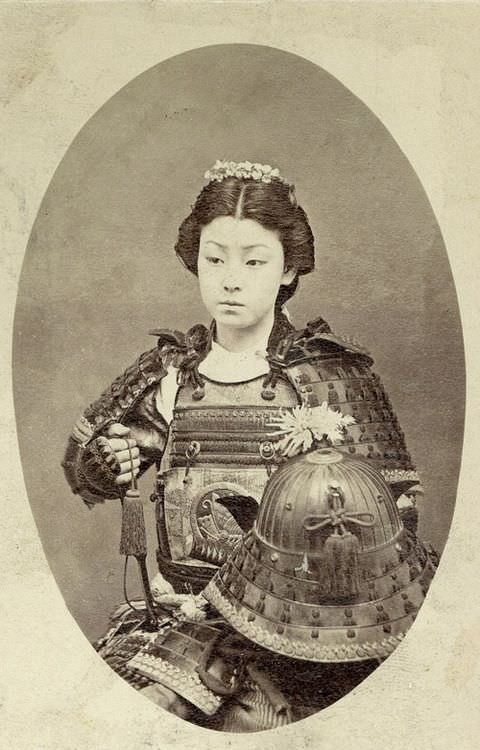
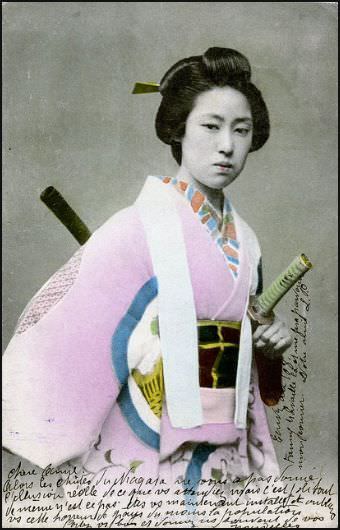
The women in these images are not performing for curiosity. Their stances are trained. Their grips on their weapons are practiced. Many of the photographs show women holding the naginata in formal ready positions that reflect years of disciplined repetition. These are not costumes — they are the tools of a warrior’s life.
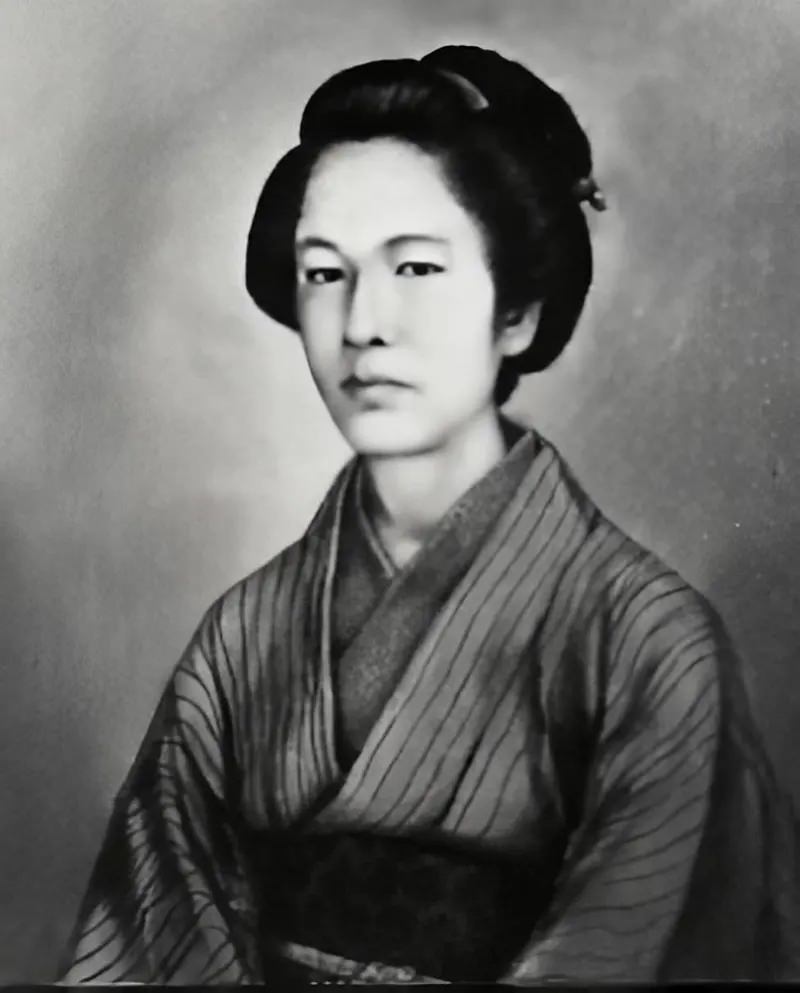
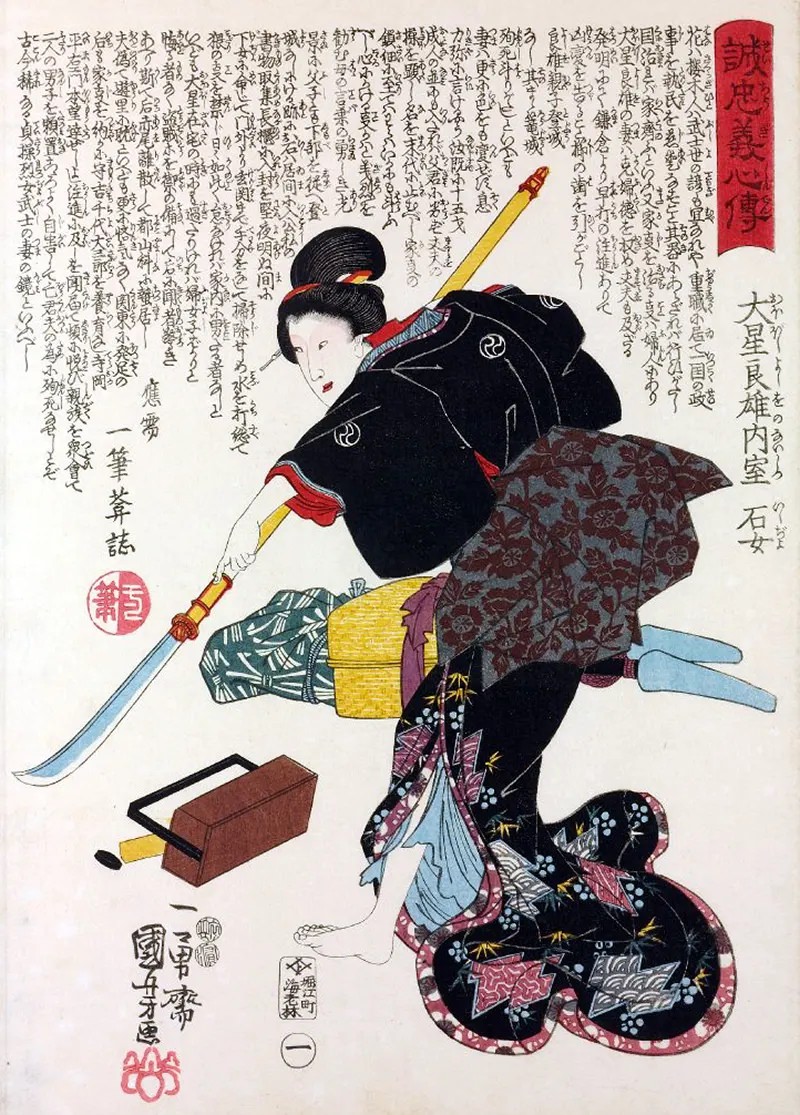
Some photographs show women in full or partial armor — lamellar plate chest guards, elaborate helmets, and layered robes built for movement in combat. Female samurai armor was adapted from male designs but tailored to the female form. It was functional, not decorative. The women who wore it expected to fight in it.
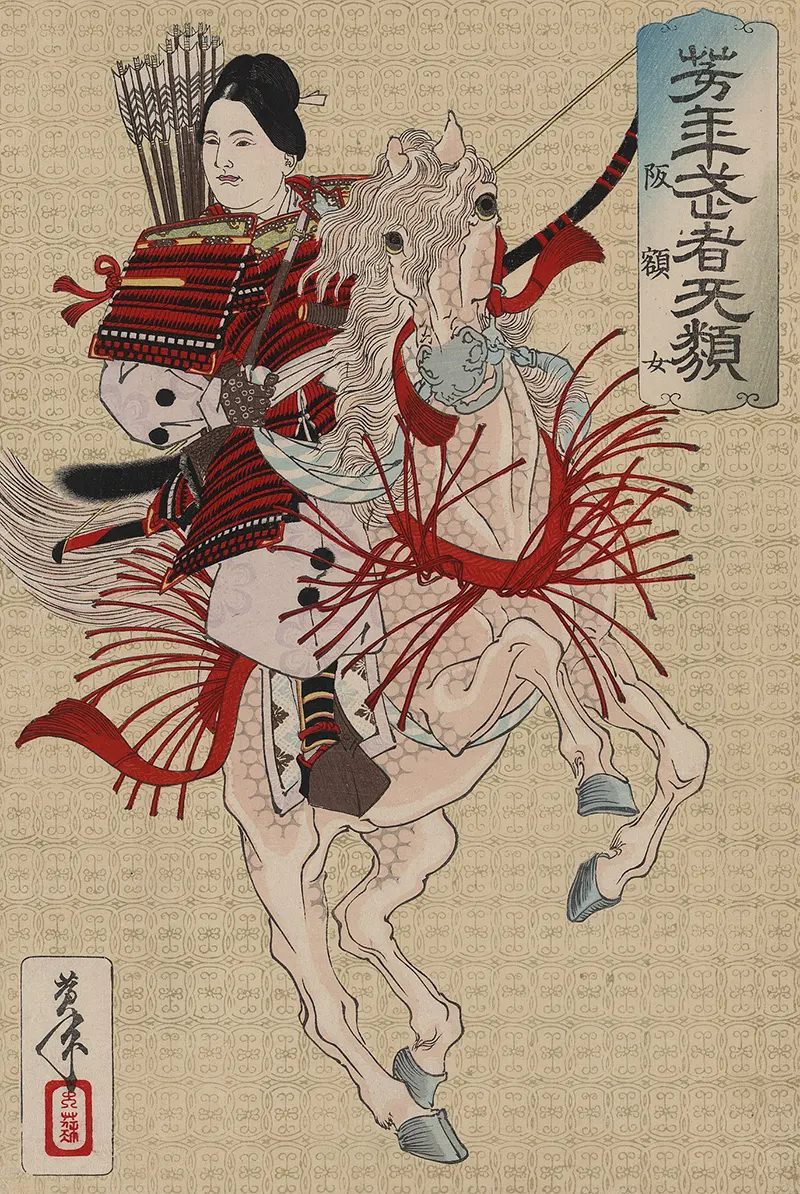
The onna-bugeisha were documented in woodblock prints and literary accounts long before cameras existed. But the 19th-century photographs ground their history in something undeniable. These women existed. They trained. They fought. The images collected here are a direct window into that world — taken at the precise moment when it was about to disappear forever.