
Dublin in the early 1980s was a city feeling the weight of economic recession. Jobs were scarce, emigration was high, and many families struggled to make ends meet. Yet despite the financial hardship, the city’s streets were alive with color, noise, and character. Markets buzzed, pubs filled up, and Dubliners got on with their lives in the way they always had — with energy and humor.
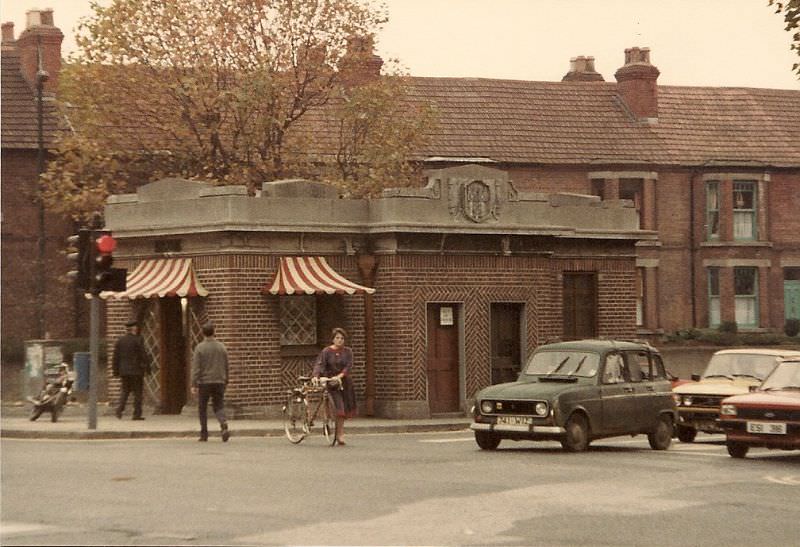
Corner kiosks and small street stalls were a fixture of Dublin life at the time. They sold newspapers, cigarettes, and small goods, and they served as informal gathering points for locals. The city’s street-level economy ran on these kinds of small, everyday exchanges — a far cry from the shopping centers that would soon begin to reshape the retail landscape.
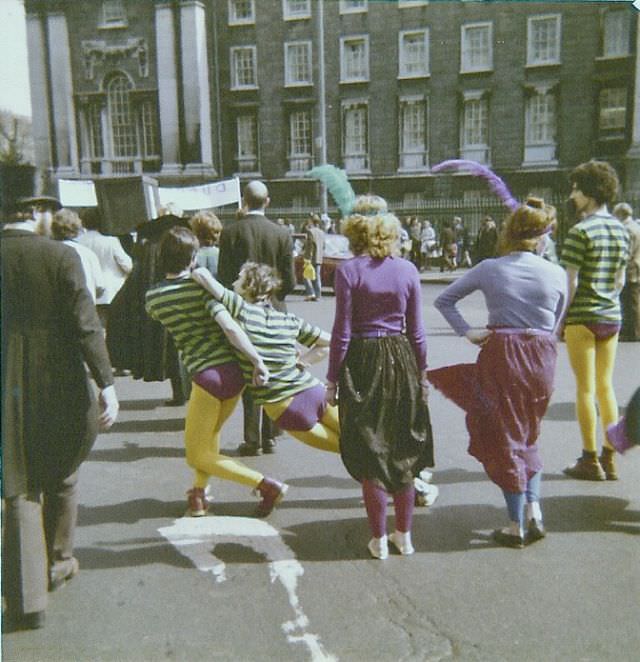
Culture gave the city some breathing room from economic pressures. The Dublin Arts Festival brought parades and performances into the streets, drawing crowds and offering a sense of shared celebration. Events like this kept the city’s creative spirit visible even during difficult years.
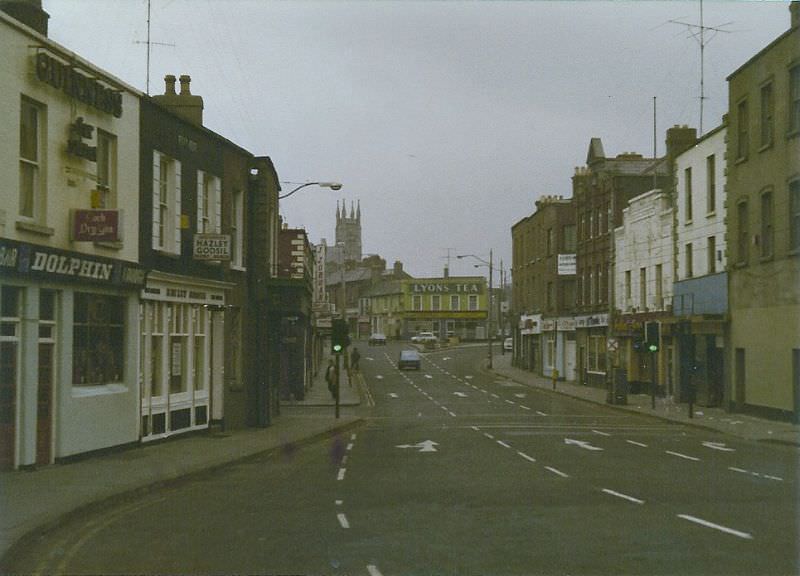
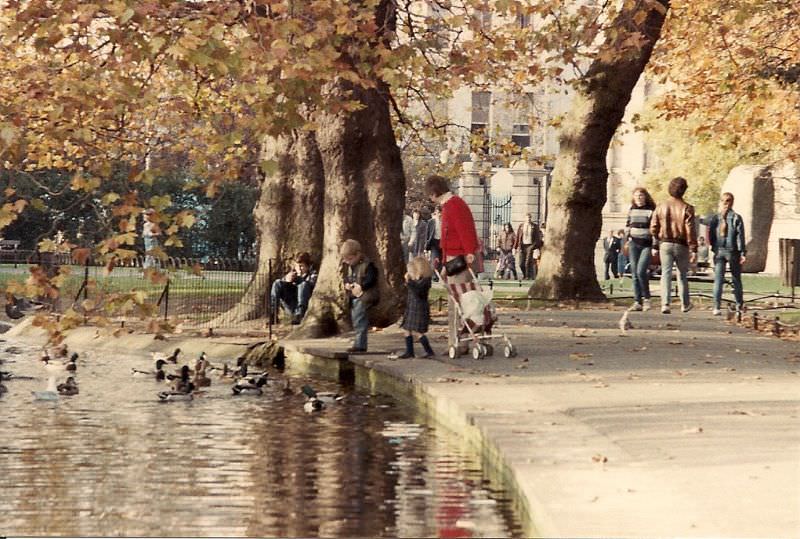
Everyday leisure in Dublin cost very little. Parks and canals offered free entertainment, and scenes of people feeding ducks were common across the city. These quiet moments existed alongside the bustle of commercial streets just blocks away.
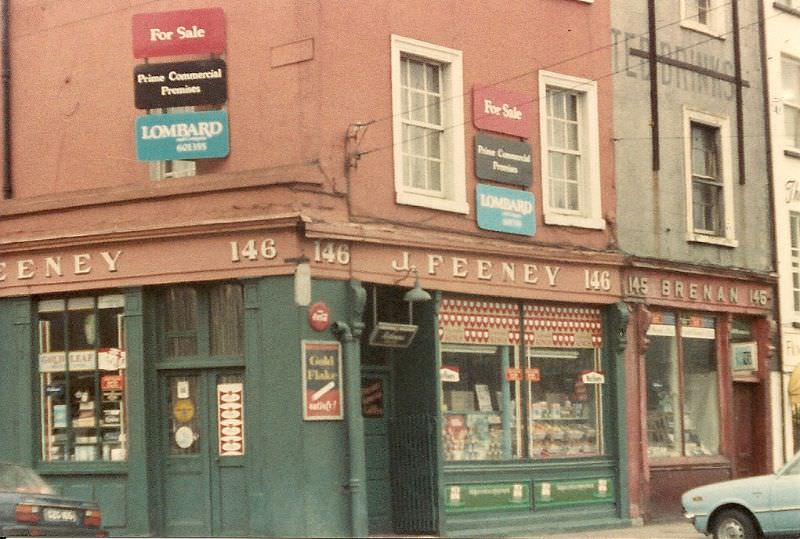
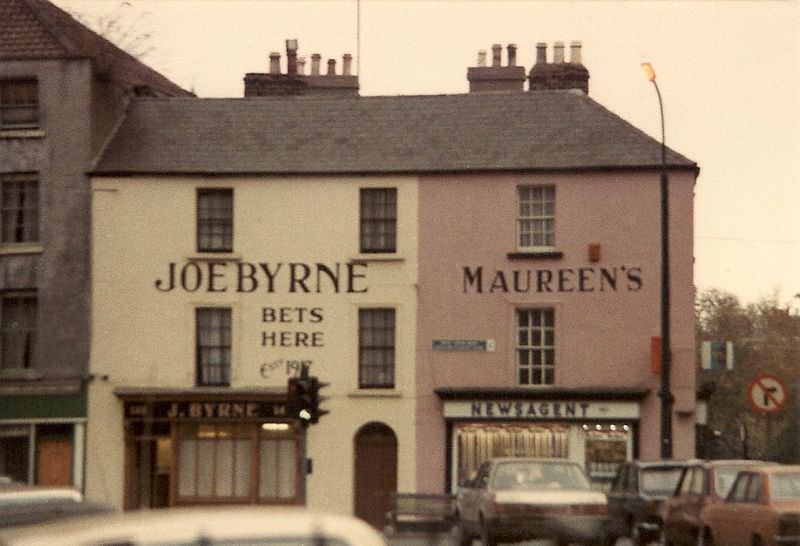
Small independent shops like Feeney’s and Maureen’s were the backbone of Dublin’s retail scene in 1980. These were family-run businesses with hand-painted signs and personal service — places where the owner often knew their customers by name. Many of these shops would face growing competition as larger commercial developments arrived later in the decade.
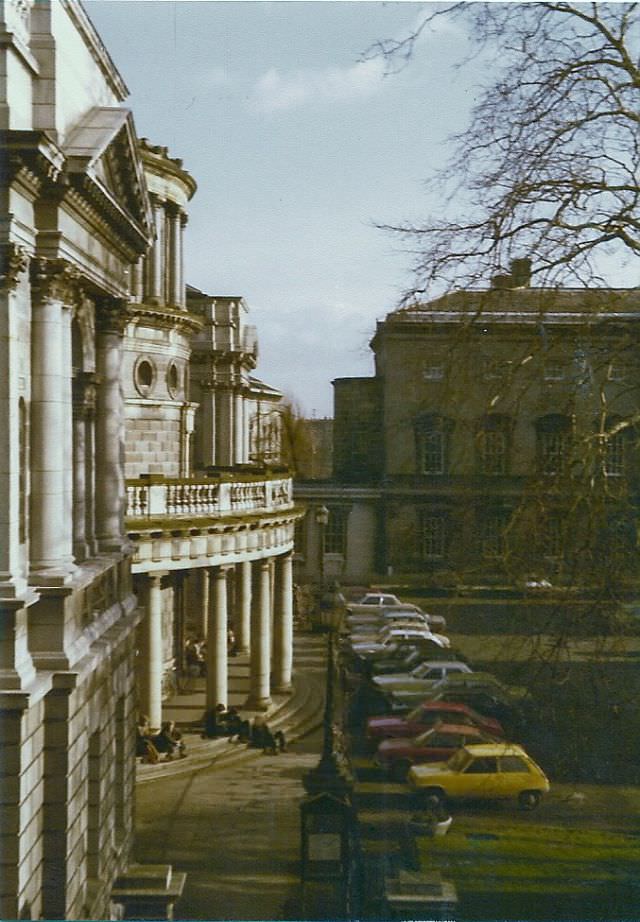
Dublin’s historic institutions stood firm amid the changes sweeping through the city. The National Library on Kildare Street remained one of the most important cultural landmarks in the country. Its Victorian reading rooms were — and still are — free to access, making them a resource for students, researchers, and curious Dubliners alike.
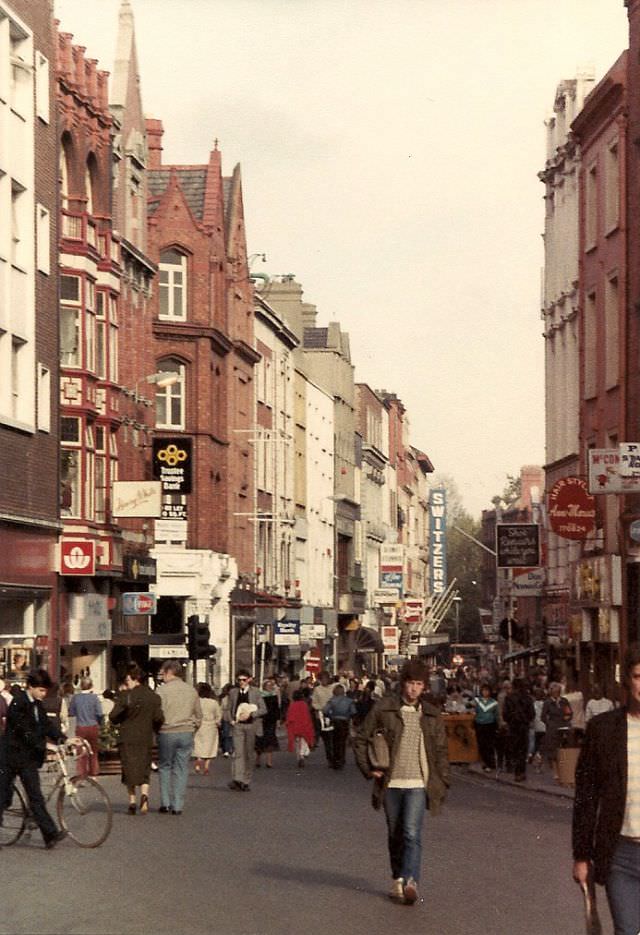
Grafton Street became a pedestrian-only zone around this time, transforming one of the city’s most famous thoroughfares. Removing traffic from the street made it far more pleasant to walk through and opened it up to buskers, flower sellers, and street traders who quickly made the space their own.
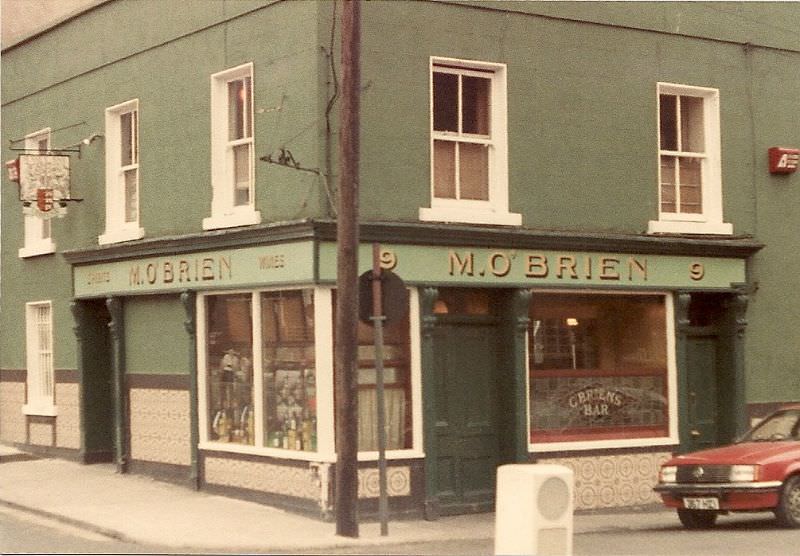
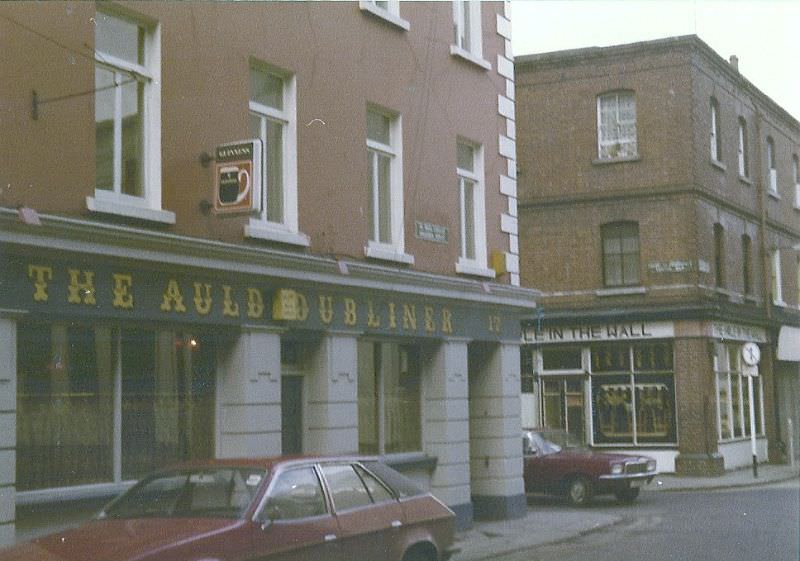
Dublin’s pubs were central to social life in a way that went beyond just drinking. They were places for conversation, music, and community. O’Brien’s and the Auld Dubliner were the kinds of establishments that had their own loyal followings, their interiors worn in and comfortable from years of regular use.
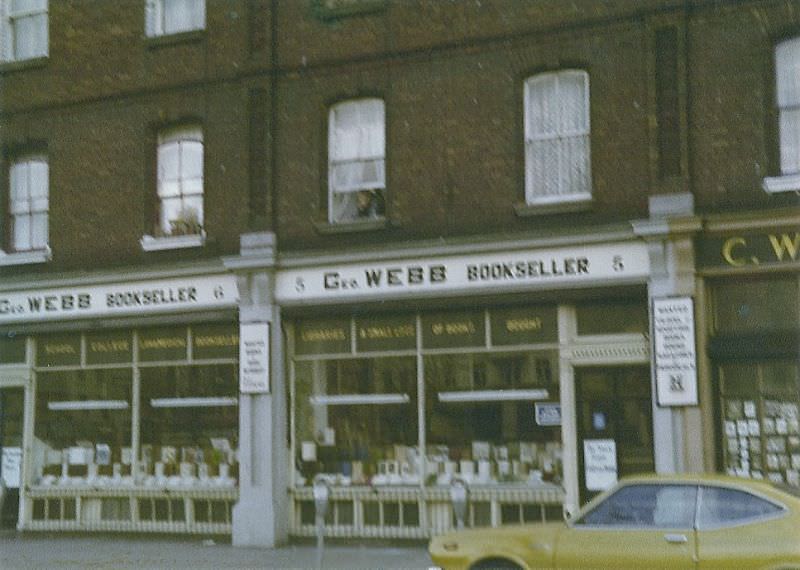
The Quays along the River Liffey were a working part of the city in 1980. Webbs Books on Aston Quay was a popular stop for readers, stacking second-hand and new titles in a way that invited browsing. The quaysides had a gritty, functional character that contrasted with the more polished commercial streets further from the river.
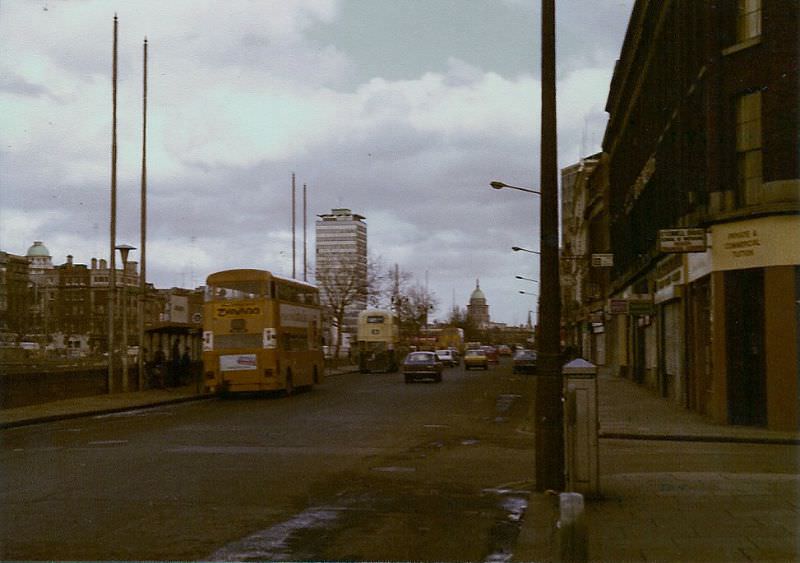
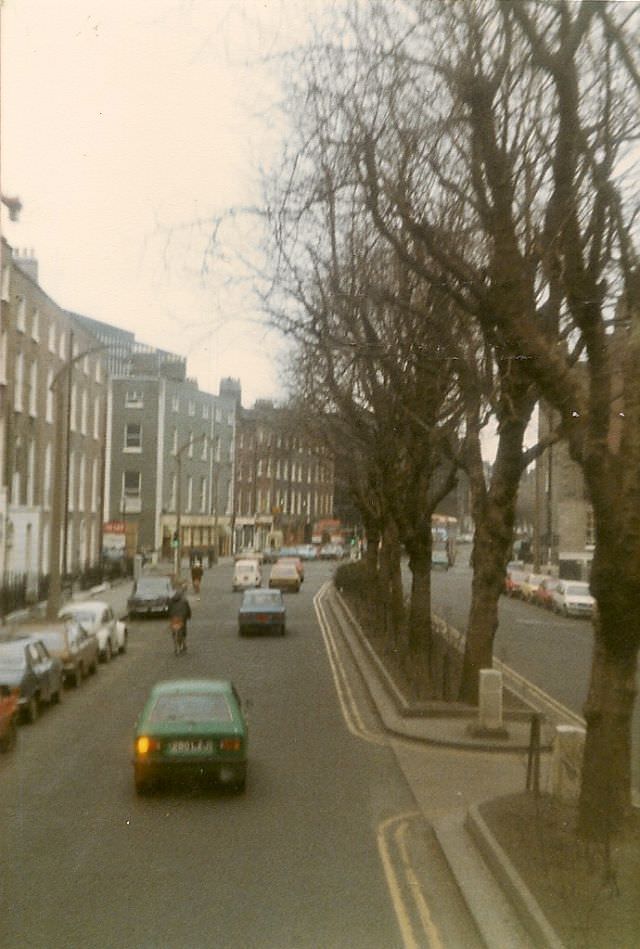
By 1982, the recession was biting harder. Baggot Street, one of Dublin’s more prosperous-looking thoroughfares, still carried its Georgian elegance, but the economic strain showed in the quieter foot traffic and shuttered windows on some stretches.
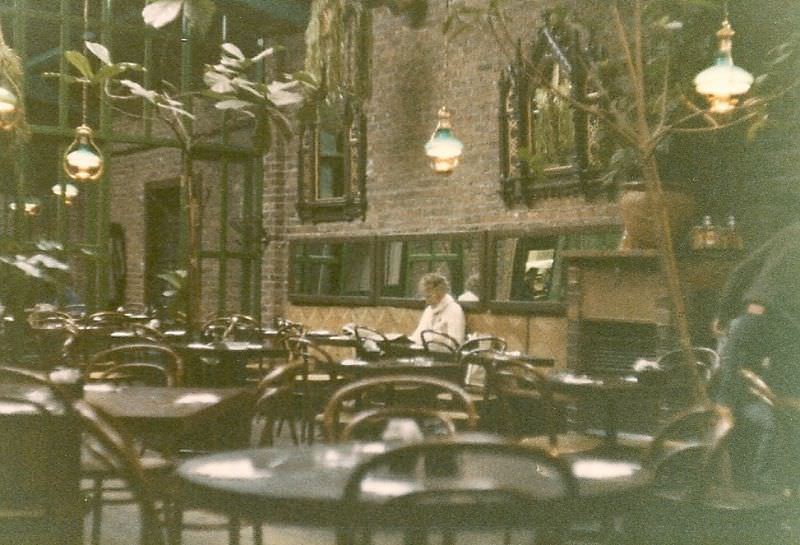
Bewley’s Oriental Cafes were an institution in Dublin, and the Grafton Street branch — known affectionately for its lofty, clattery interior — was one of the most beloved meeting places in the city. Marble-topped tables, stained glass windows, and the smell of coffee and buns made it a refuge from the streets outside.
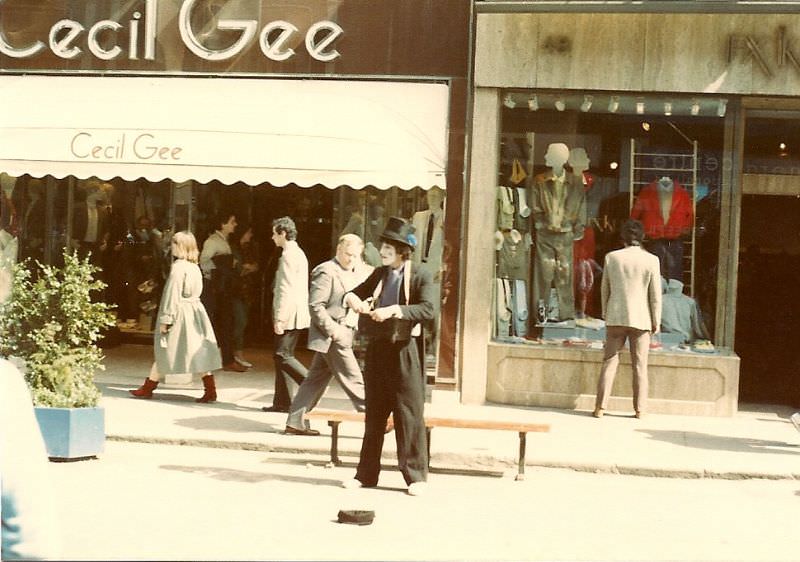
Grafton Street’s pedestrianization made it a natural stage for buskers. Musicians set up outside well-known shops like Cecil Gee, drawing passersby and earning what they could from the crowd. The street had a lively, spontaneous atmosphere that the city’s residents genuinely enjoyed.
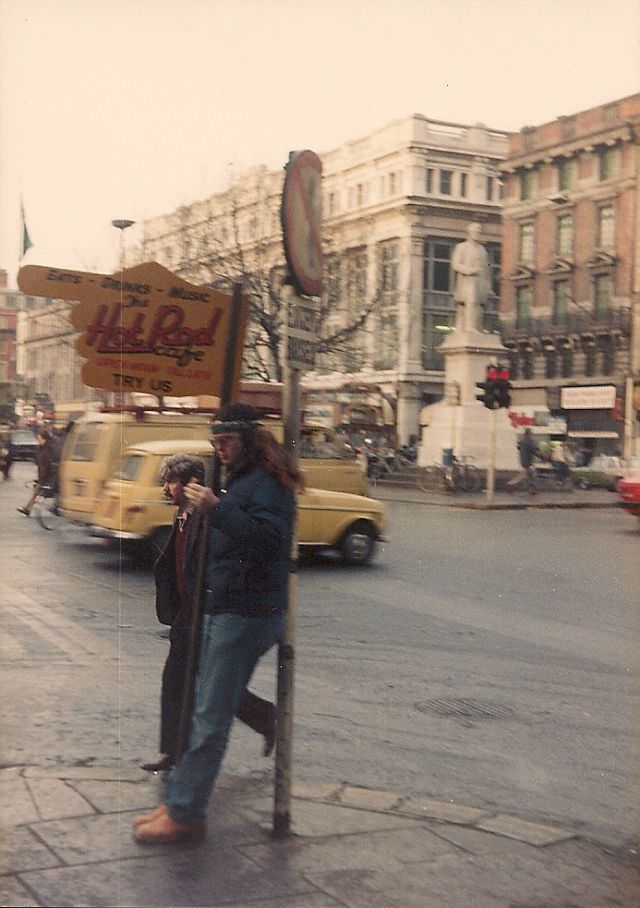
Moore Street was — and remains — one of Dublin’s most famous open-air markets. In 1982, the stalls were run largely by women traders who called out their prices with sharp wit and loud voices. Arnotts department store on Henry Street loomed in the background, representing the more formal retail world that existed just steps away from the market’s organized chaos.
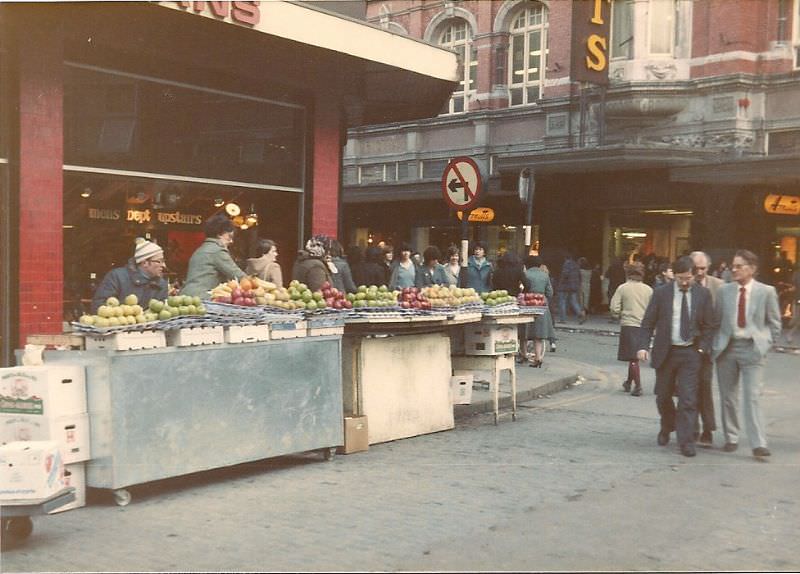
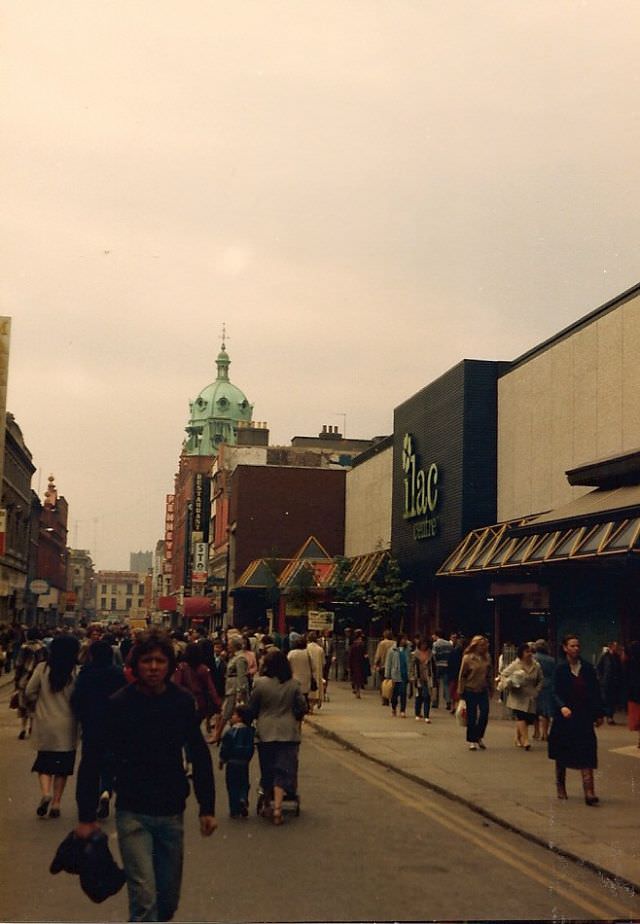
Henry Street itself was getting a facelift in 1982, with new paving laid as part of broader efforts to improve the city center. The ILAC Centre, which had opened nearby, was one of the first enclosed shopping centers to arrive in Dublin’s north inner city, bringing a new style of retail that was a sharp departure from the traditional street-level shops that locals were used to.
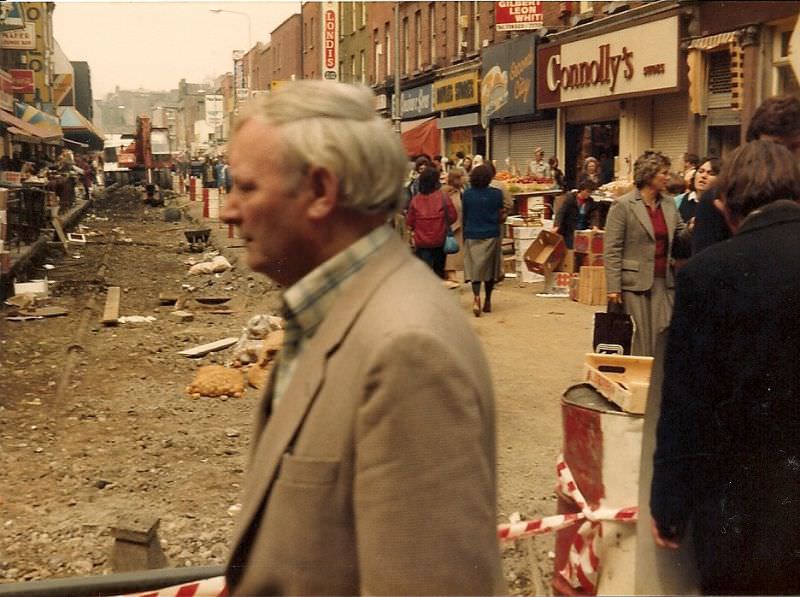
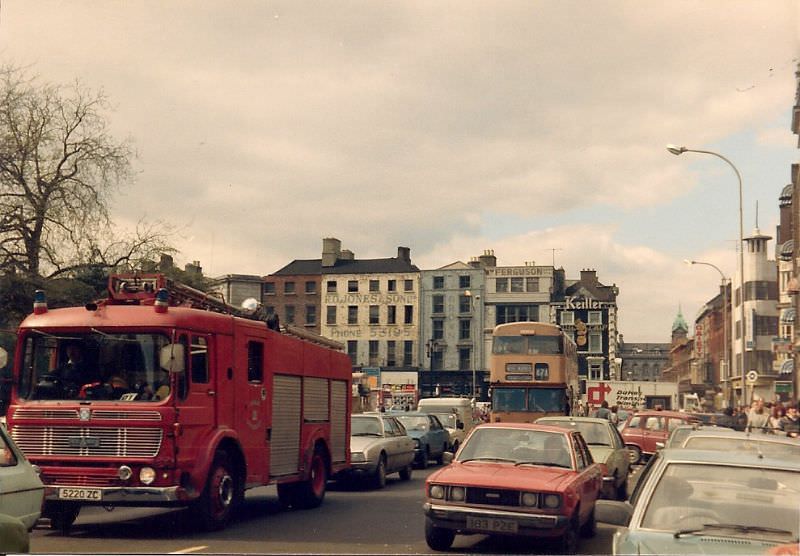
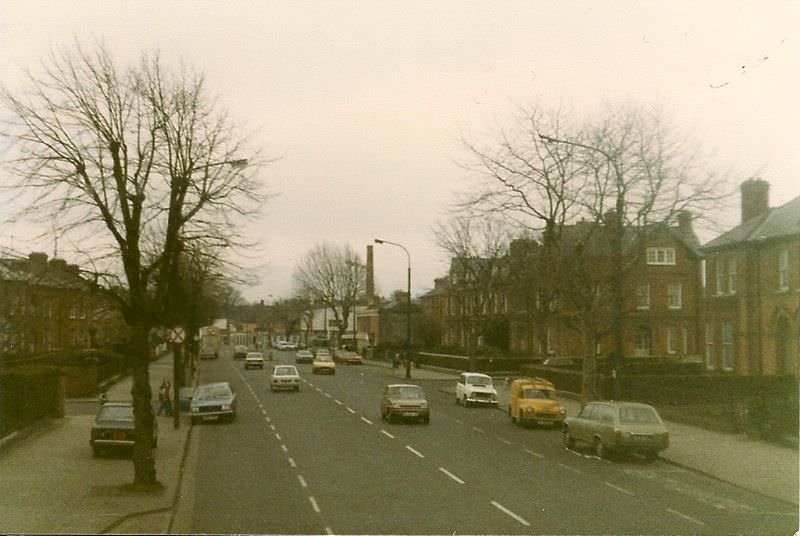
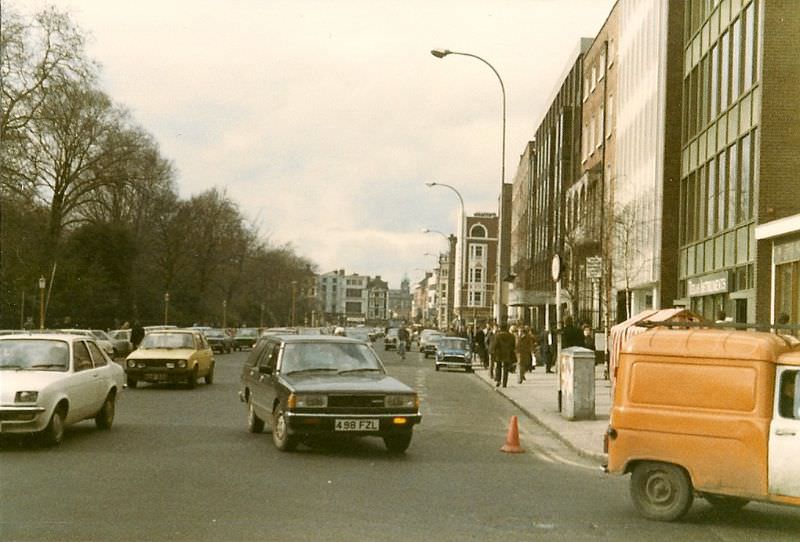
Traffic around St. Stephen’s Green was a constant feature of city life. The green itself was a popular escape from the noise, but the surrounding roads carried heavy flows of cars and buses throughout the day. Dublin’s road infrastructure was under increasing pressure as the population grew and private car ownership rose.
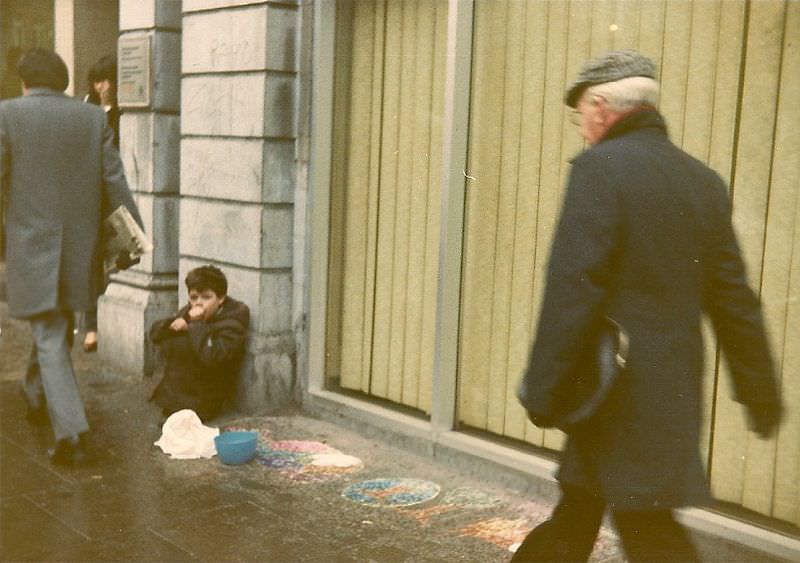
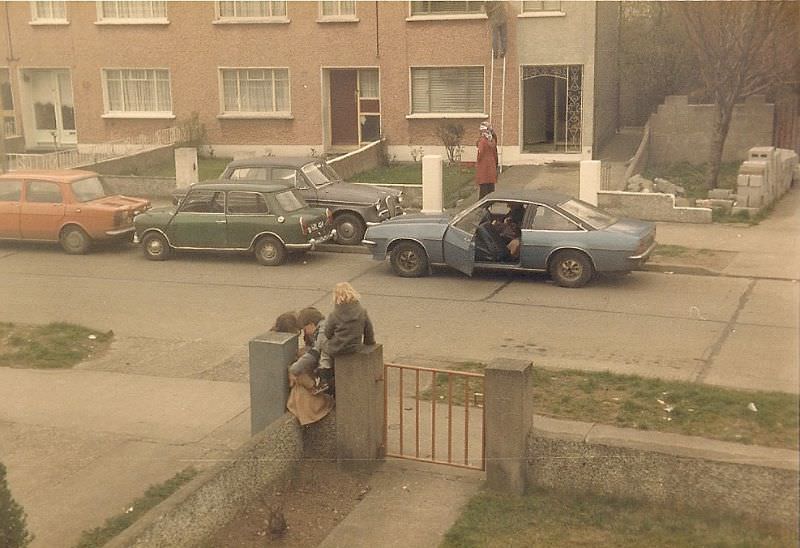
In the suburbs, housing estates like Greenhills in Dublin’s south-west were home to large numbers of working-class families. Young people gathered at gates and corners, and the community feel of these neighborhoods was strong, even as unemployment rates in the area remained high throughout the decade.
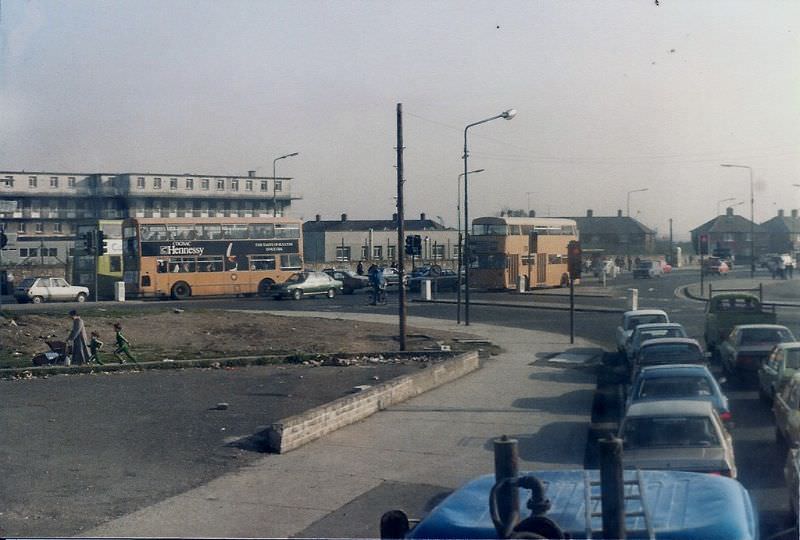
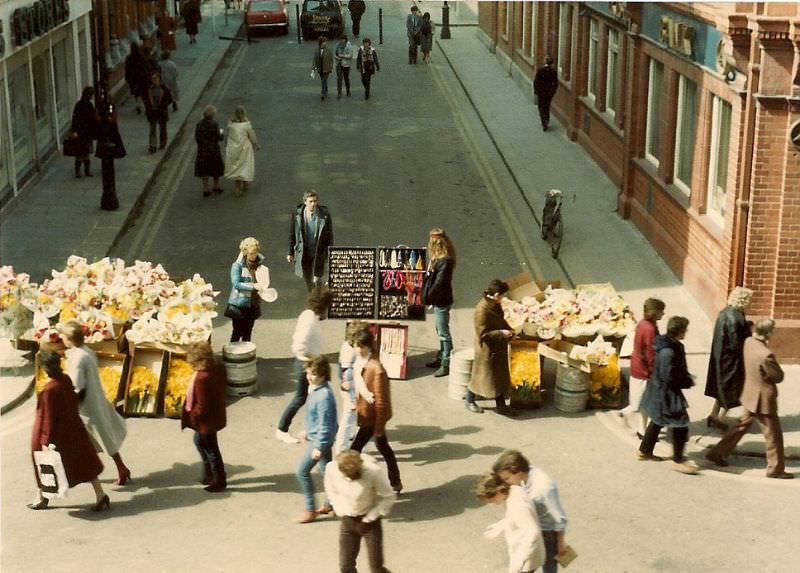
Grafton Street in 1983 continued to draw crowds. Flower sellers worked the pedestrian zone, a tradition stretching back generations. Three sellers photographed around this time show how the trade was still very much a fixture of the street — women with buckets of blooms, doing business in the open air regardless of the weather.
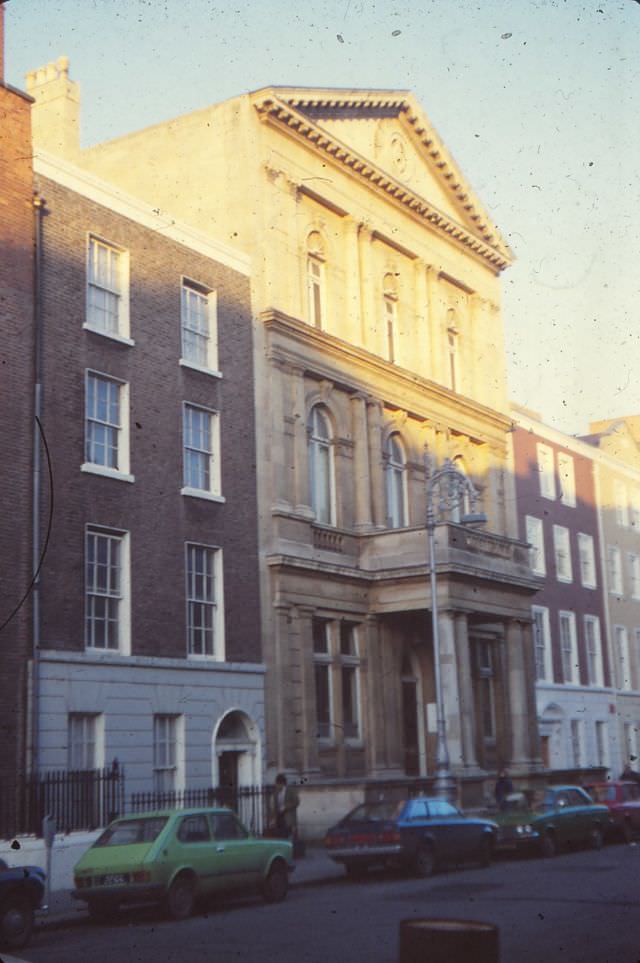
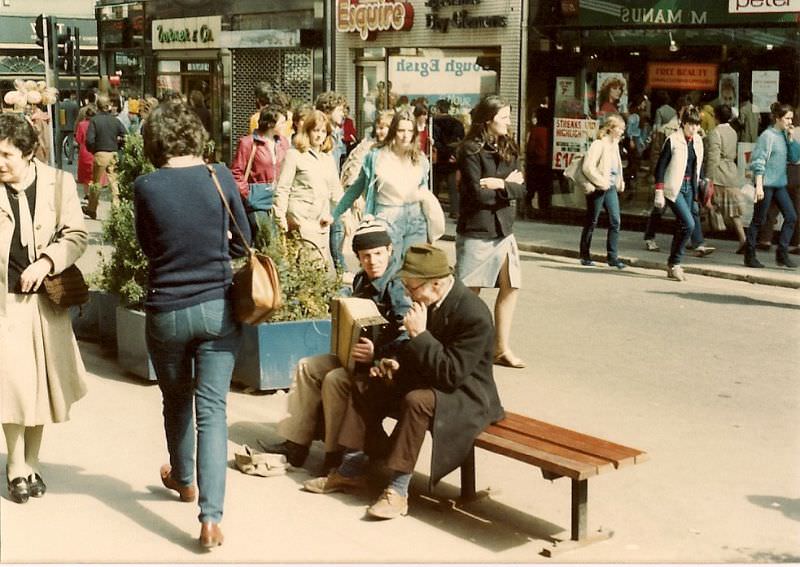
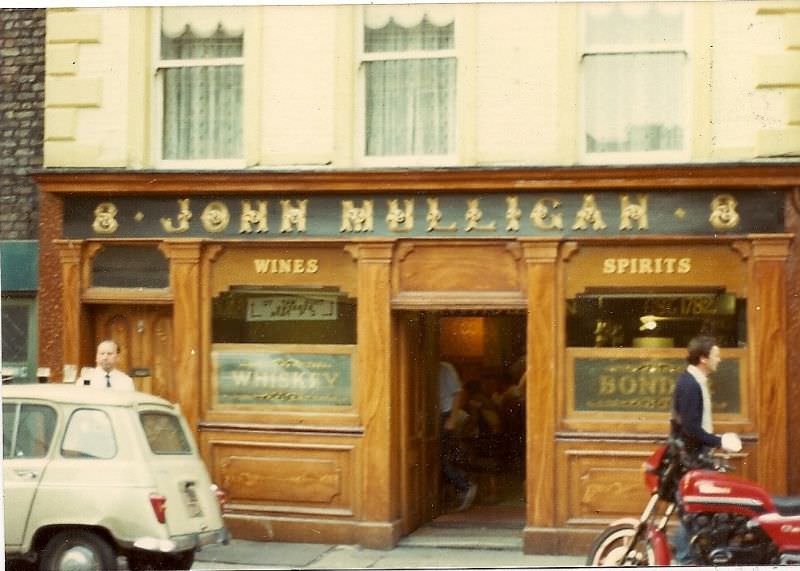
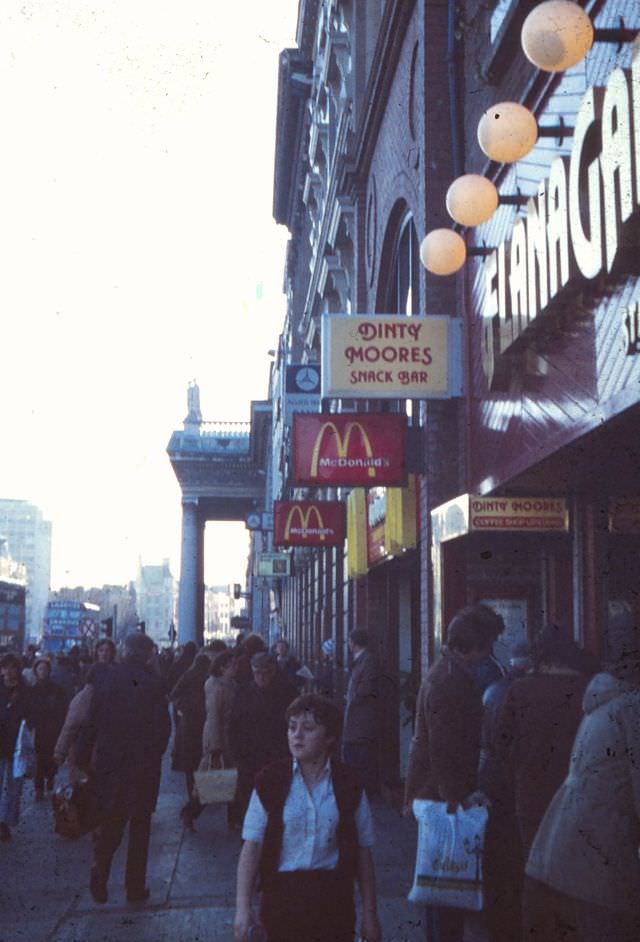
Mulligan’s pub on Poolbeg Street was already old by the time this photo was taken in 1983 — it had been trading since 1782. It was, and still is, regarded as one of the finest pubs in Dublin, known for its no-frills interior and quality pint. O’Connell Street, photographed the same year, showed the broad main avenue of the city with its mix of cinemas, shops, and foot traffic moving through at all hours.
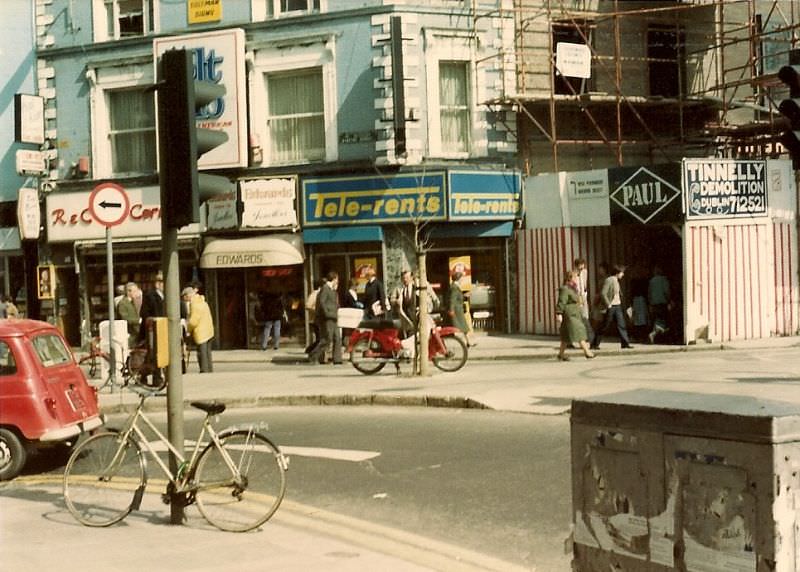
Tele-rents on Grafton Street reflected a specific reality of 1980s Ireland — many households rented their televisions rather than buying them outright. The cost of a TV set was too high for a lot of families to purchase, so rental shops filled a real need. It was a common sight on high streets across the country at the time.
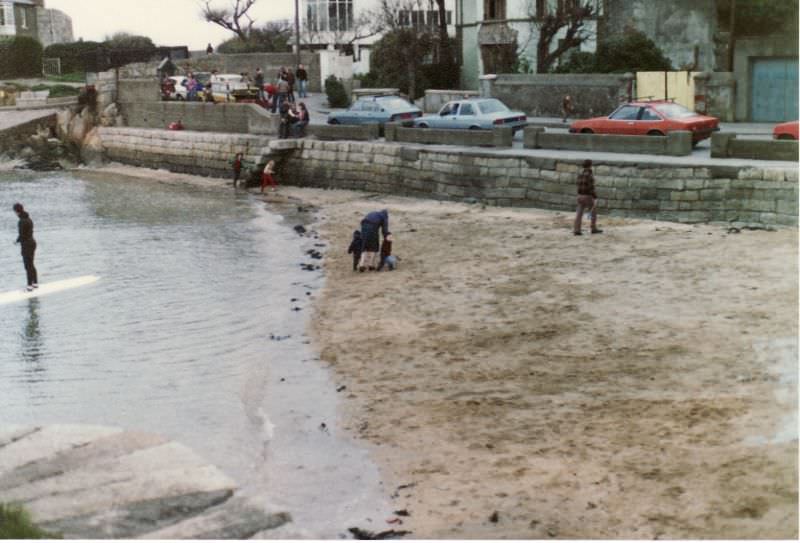
By 1984, street photographers were still a presence in Dublin, capturing candid moments of city life. The coastal suburb of Sandycove, just south of the city center, offered a quieter contrast to the busy inner-city streets — a stretch of seafront where Dubliners walked, swam, and watched the water.
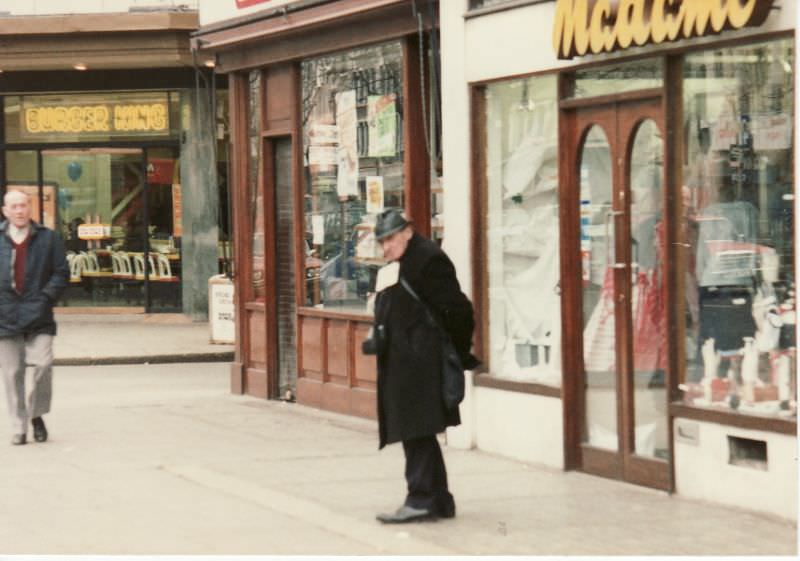





Stephen’s Green shopping center opened in 1988, not in the early 1980s.
Although these photos were taken between 1980 and 1983, most fashion, shop fronts, and cars remained the same until the mid-1990s. The 90s were new and shiny, showing how wealth was divided between there and Ireland. During that time, Dublin had made significant strides. I went back two years later, but I didn’t see the same progress.
Whenever I see old holiday pictures, I notice the same thing. I find it interesting how people always take pictures of old buildings and monuments that look the same decades later. On the other hand, the clothes, cars, shops, and ads are way more exciting, and no one ever takes pictures of them.
Surprisingly not that different
It still retains that charm that I always hear about from my older family members but never feel when I’m in town. It feels like home. In retrospect, it seems more like Dublin Town than Dublin City, but maybe it’s the rose-tinted glasses.
It was amazing how much nicer the cars looked. There isn’t a fat person in sight!
Unfortunately, the scan quality is so poor, it would be nice if we could zoom in a bit…
Fascinating Photos Show Life in Chile in 1988, Year of the Plebiscite and Pinochet’s downfall
In my opinion, they are cool but terrible at the same time, they don’t show much and aren’t as good as photos, but I don’t know.
Last one is Stephen’s Green /top of grafton at. It’s not I Connell bridge.
Fascinating… Amazing they’re colourised. Wouldn’t it be fantastic if we could get first hand accounts from people who were alive back then? Shame it’s so long ago.
The late 1900s are such a fascinating time in history
Can almost see the cigarette and diesel fumes
Leaded petrol fumes too. And Ringsend power station was operating using the chimneys. Regular smog from heavy industry in Germany. Homes were using bituminous smoky coal before the smokeless was introduced in the early 90s.
And two way traffic on both sides it the quays. Grafton street not being pedestrian – I remember it all.
Wow, they’re really great. Anyone know where number 5 was taken?
The busker in 11 is the Diceman.
Wow, what a time to be alive
These are great, thanks for sharing it!
These are great. Funny that while a lot of the shops have changed, the flower and fruit sellers on Grafton/Moore St are still there, albeit a lot less of them on Moore St.
I’ve never seen photos from this time and doubted any existed. Surreal to look at and the city is unrecognisable. Fascinating indeed.
There can be a lot of misty eyed looking back on the 80s. It was also a very repressive and depressing place BUT successive governments absolutely destroyed the architecture and history of the city particularly on the Northside. O’Connell street had the potential to be the most beautiful place but they allowed everything old be ripped out and replaced. I’ve no problem with Moore Street adapting to demands from our new immigrant population but what they allowed to happen to that street is disgraceful.. the plastic hoardings and that shopping mall yoke is disgraceful. They could demand some sort of regulatory control on shop fronts etc. and get some road cleaners .. I used to see road cleaners all the time in the 90s.. do they even exist anymore or is it just one clean every few days with that van that just pushes the dirt around
“Adapting to demands from our new immigrant population” 🙄😖
Why’s that funny? Different cultures eat different foods and meats. The butchers on Moore Street now sell offal again.. my mother used to buy kidney, tripe etc but it went out of fashion and then came back in. A lot of the dealers sell different fruits and veg now.
I wasn’t laughing. Just a bit cringe at how people are so ready to accommodate any changes good or bad when it comes to immigrants. It’s just your wording has that feeling embedded in it. Maybe you meant nothing by it. What is disgraceful that’s happened to Moore St?
They allowed unregulated opening of vape shops, those shitty phone repair shops and they built the ugliest shopping mall in Dublin. There are some nice little restaurants in there but it’s a shit hole. They could have controlled that and demanded owners reach some mandatory level of decent shopfront design. Most of the people opening are immigrants so I don’t accept everything immigration brings BUT if Dublin City Council don’t demand some actual investment by shopowners in control of plastic hoarding etc them people won’t do it. .. and if you can’t afford to open a decent looking establishment then sorry you can’t open it.. but I blame DCC on this. It could be a nice street with original traders, butchers and new immigrant shop owners or stall holders.. all controlled and regulated
Right yea I get you. I have it on well placed authority all those vape shops and Turkish barbers are some kind of tax fraud certain immigrant populations are pulling off. They are being constantly investigated but clearly they’re winning, so those kind of shops have zero interest in improving the buildings they get into
Not sure about the tax fraud. My sons and husbands go to Turkish barbers by choice as they love the service and those dudes are out the door busy with customers. what exactly is the scheme? I’ve heard mention of it before but no one’s ever explained it to me? And regardless my point still stands.. if there was proper regulation their shop fronts would violate them and be shut down regardless.. so blame DCC.
there are non-fraud ones of course, but apparently it’s not the majority. The person who knows this works in this specific area. Mainly I think just running fake business through the books than actuality, letting you clean dirty money you didnt pay tax on somewhere else. Effectively, I’m sure it’s more intricate than that.
Ah, the smell of toasted hops, the friendly bark of the Lockhard as you got out of your car and the tickle of the syringe as you were robbed.
Parnassian summer afternoons by the canal and burning cars to warm yourself by in winter.
Still, there were no foreigners and everyone feared God.