In 1840, a woman sat perfectly still on a rooftop in New York City while her brother pointed a camera at her face. What resulted was the first photographic portrait ever made in the United States — and the first photograph ever taken of a female face. The woman was Dorothy Catherine Draper, and her name deserves far more recognition than history has given her.
Dorothy was the older sister of John William Draper, a chemist, professor, and one of the most driven scientific minds of early 19th-century America. The two had a close relationship built on mutual support. Dorothy contributed both financially and intellectually to John’s research over the years. She wasn’t simply a bystander in his work — she was an active participant, working as an artist and collaborating on his early experiments.
John Draper was born in England and made his way to the United States, eventually settling in Virginia before facing a series of professional setbacks. He pushed through, completed medical school, and in 1837 secured a professorship at New York University. That appointment changed everything. It gave him access to resources, a platform for his ideas, and the stability to pursue ambitious experiments.
The technology that made the portrait possible had only just become public knowledge. In 1839, French inventor Louis Daguerre announced his daguerreotype process to the world. The method used a silver-coated copper plate treated with chemicals to capture a highly detailed image when exposed to light. John Draper recognized its potential almost immediately and began working to adapt it for portrait photography — a use case that was still largely untested.
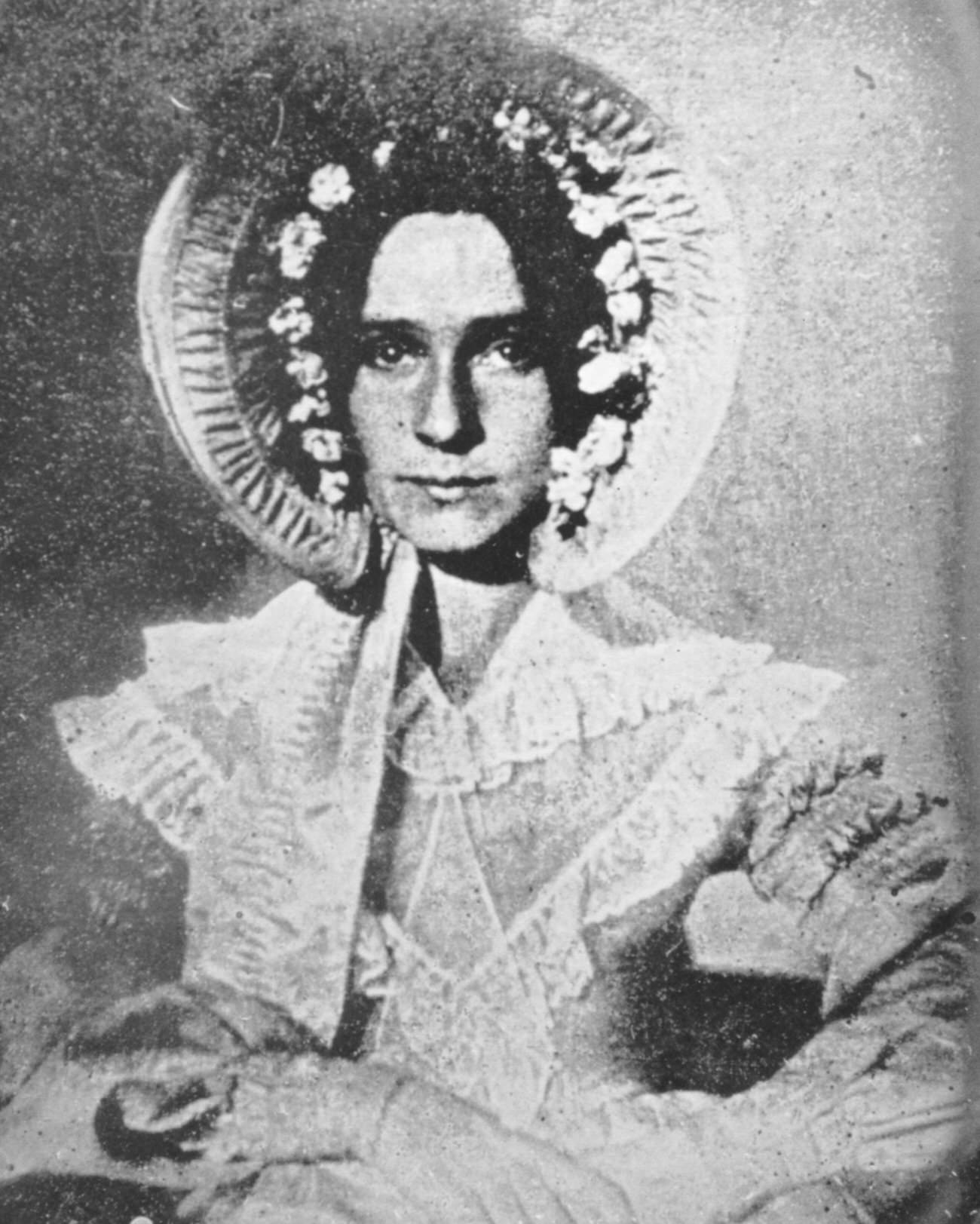
The sitting took place on the rooftop of what would become New York University’s main building. Dorothy sat for a 65-second exposure — completely still, eyes open and unblinking. That length of time was necessary because the daguerreotype process required extended light exposure to properly burn the image into the plate. Any movement would have blurred the result entirely. To help the camera pick up the details of her face more clearly, John dusted her skin with white flour. The flour reflected more light, boosting contrast in the final image. The finished portrait was remarkably natural for its time, capturing Dorothy’s features with a clarity that earlier photographic attempts had failed to achieve.
John Draper’s background in chemistry was central to his success with the daguerreotype. The process demanded precise chemical treatments at each stage — from preparing the silver plate to developing the exposed image. A wrong step in any part of the sequence could ruin the result. His understanding of how light interacted with chemical compounds allowed him to fine-tune the process in ways that most contemporaries could not.
At the time the portrait was made, it attracted little public attention. Photography itself was still a novelty, and the significance of what had been captured on that rooftop was not immediately understood. Decades passed before the image received the recognition it warranted. It was not until the 1890s — fifty years after the sitting — that Dorothy’s role in the portrait was widely acknowledged.
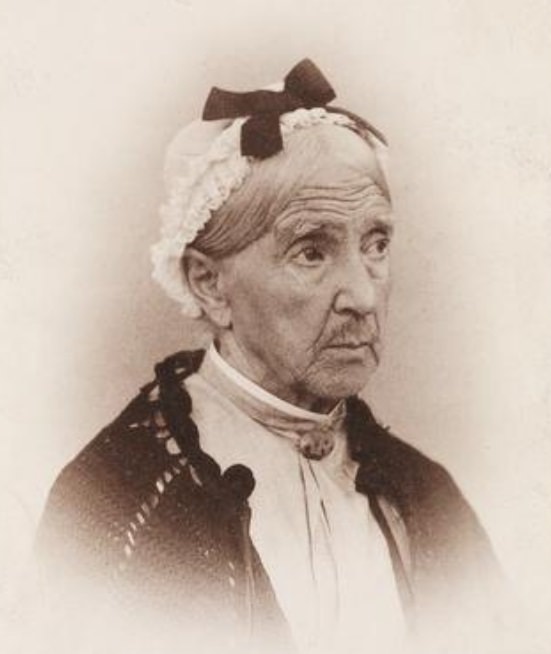
By then, Dorothy was an elderly woman. The renewed interest in the portrait brought her a measure of public recognition that had long been overdue. She had spent much of her adult life contributing to her brother’s work without credit, and the belated acknowledgment confirmed what those close to the Draper family had always known — that the historic portrait was as much her achievement as it was John’s.
The daguerreotype of Dorothy Catherine Draper stands as a document of a precise moment in American history — 1840, a rooftop in New York, a 65-second exposure, and a face dusted with flour. It marks the point at which portrait photography in the United States began.