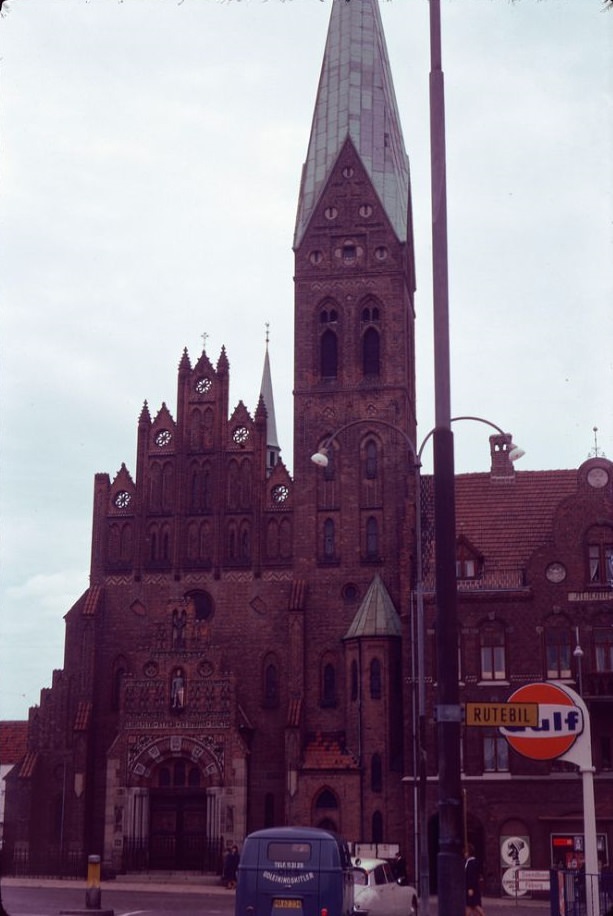
In October 1966, the Huebner family set off on a European trip and brought their camera to Denmark. What they captured in Kodachrome color is a vivid window into a country that looked and felt very different from today. The photos span cities, countryside, ancient monuments, and quiet street corners — each frame a precise record of a specific moment in Danish life.
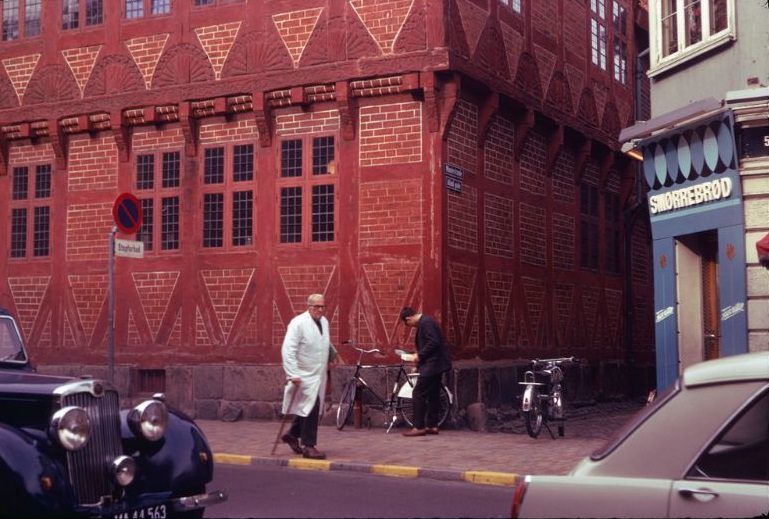
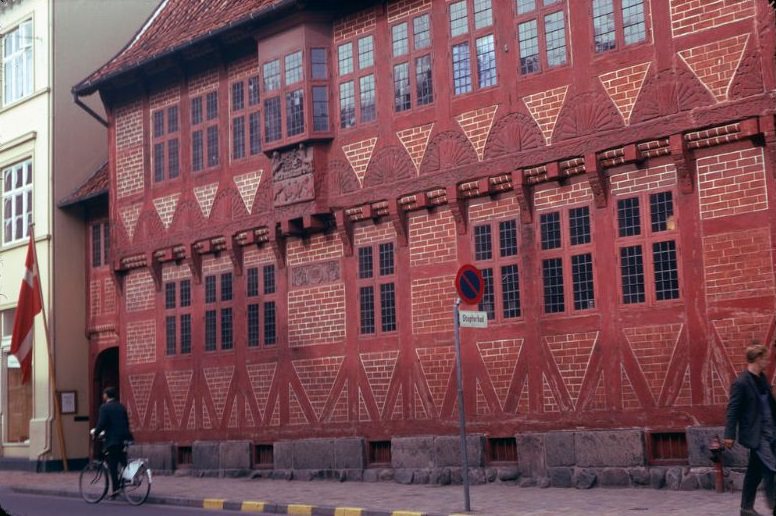
Odense, on Funen Island, was Denmark’s third-largest city in 1966. It’s best known as the birthplace of fairy tale writer Hans Christian Andersen, but the Huebners found a living, working city — brick buildings, busy streets, and everyday Danish life carrying on as it had for generations.
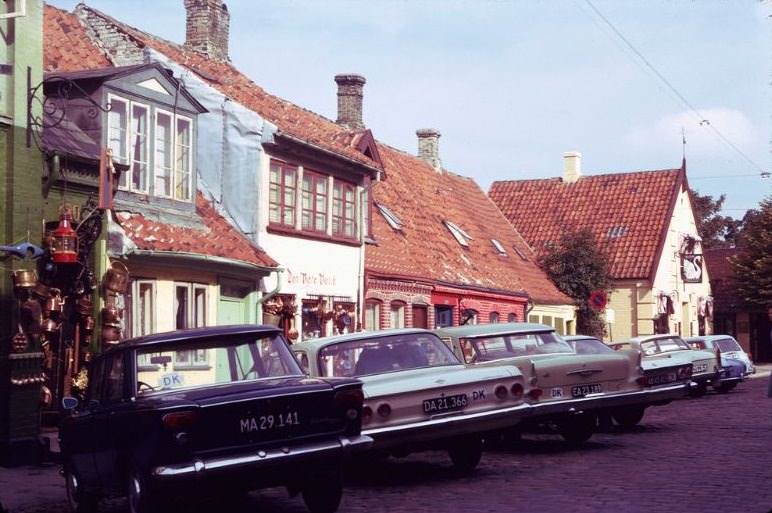
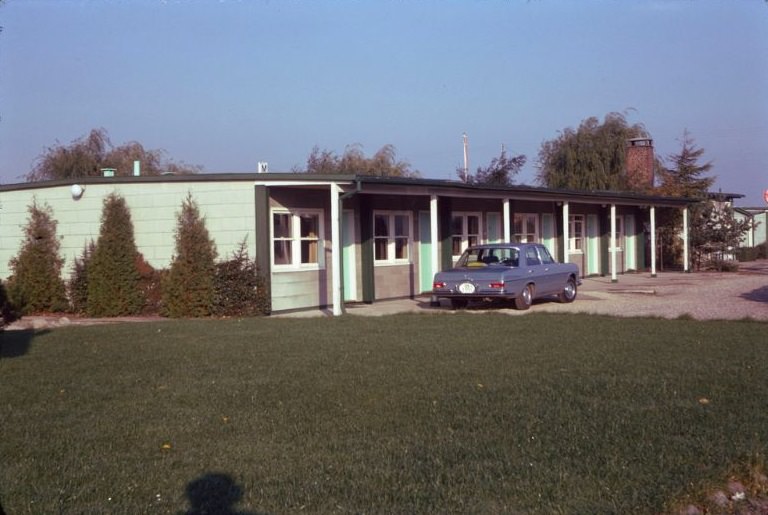
Before reaching Copenhagen, the family stopped at the Wittrup Motel in Albertslund, a town on Zealand Island just west of the capital. The motel was a modern roadside stop, and their Mercedes 250S parked out front tells its own story about mid-1960s European travel.
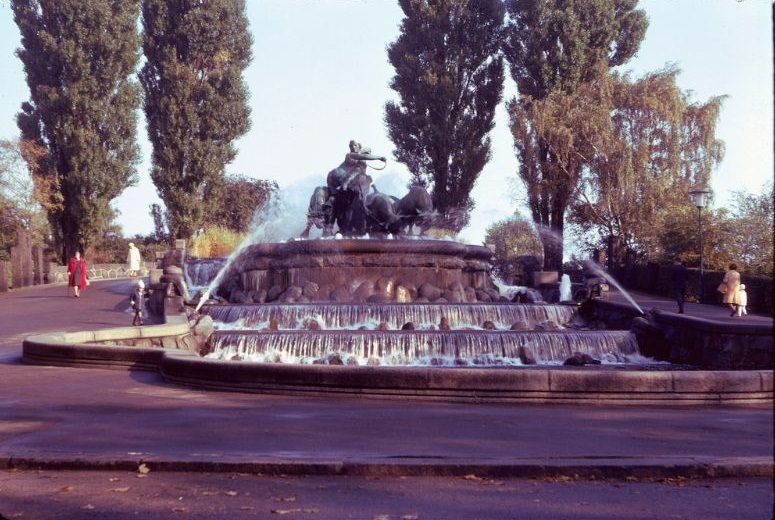
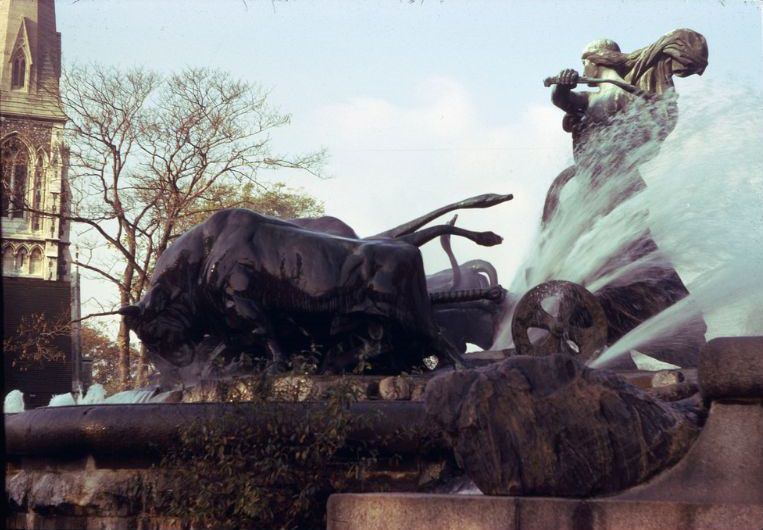
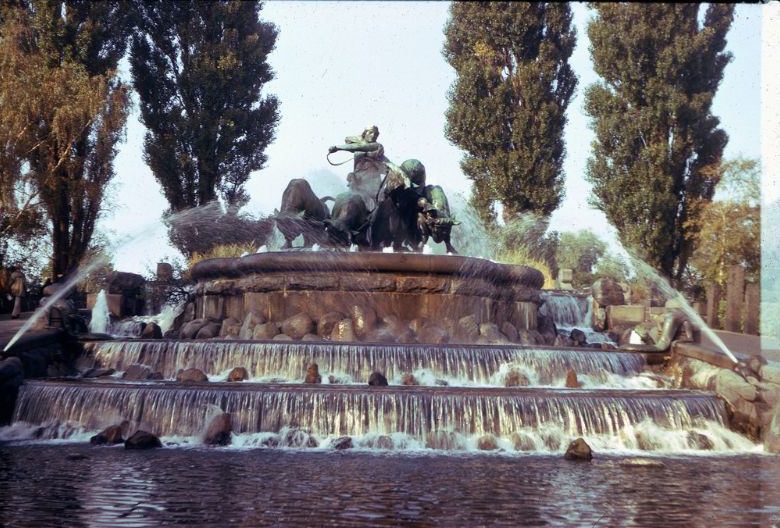
Copenhagen held some of Denmark’s most recognizable landmarks. The Gefion Fountain, located near the harbor in Churchill Park, is one of the largest fountains in the city. It depicts the Norse goddess Gefion plowing the sea with four oxen, according to the legend of how Zealand was created. The Huebners photographed it from several angles.
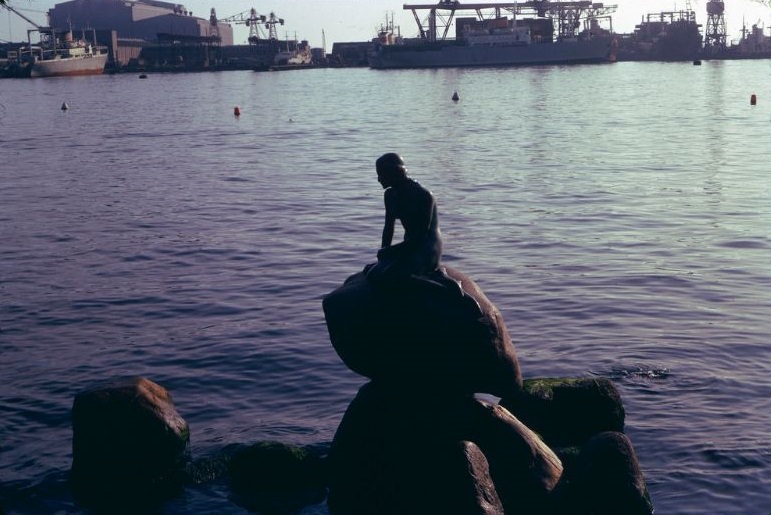
Not far from the fountain sits the Little Mermaid — a small bronze statue perched on a rock at the harbor’s edge. Sculpted by Edvard Eriksen and unveiled in 1913, the statue is based on Andersen’s fairy tale. By 1966 it was already a well-established tourist landmark, drawing visitors from across Europe.
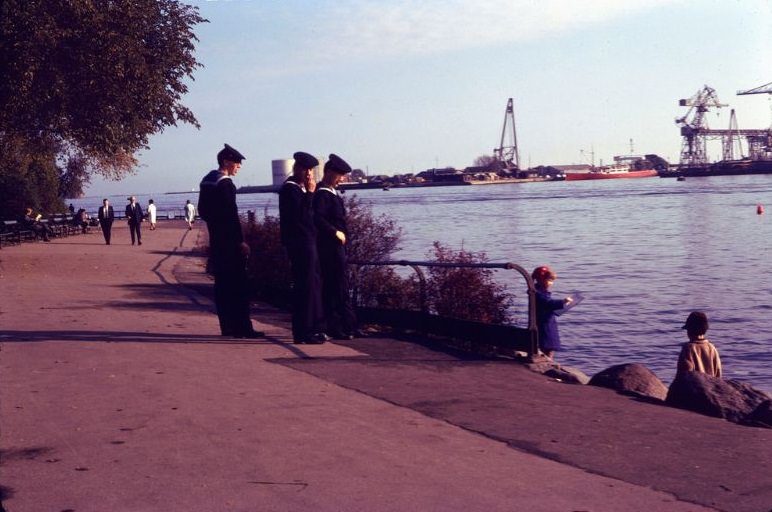
One of the more charming photos from the Copenhagen visit shows a little girl sitting near the Little Mermaid, sketching the statue while a group of passing sailors looks on. It’s an unplanned, candid moment that no staged photo could replicate.
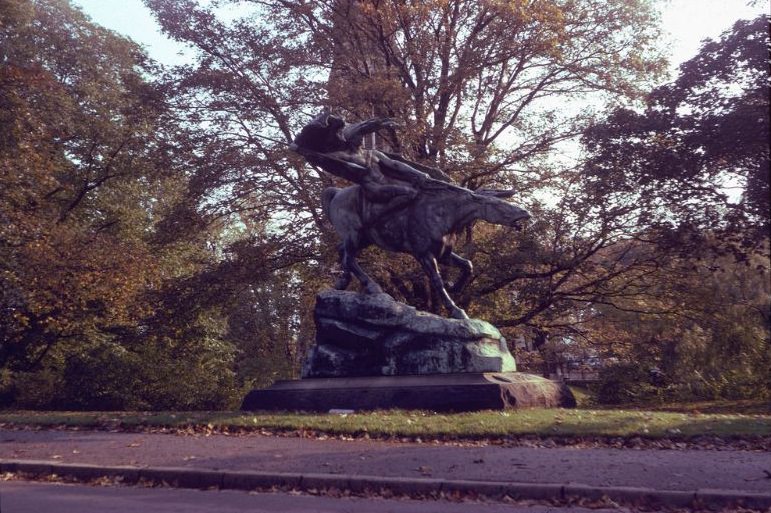
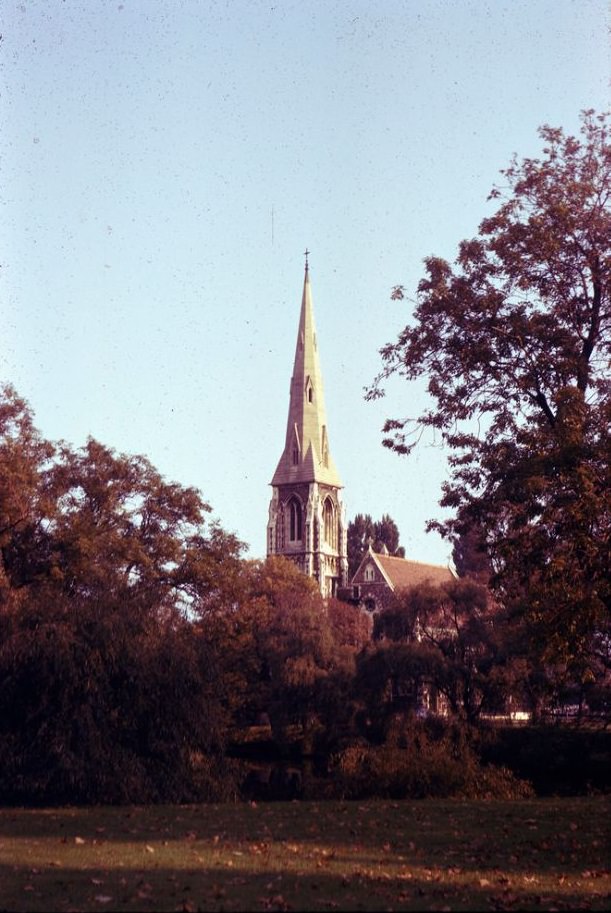
Churchill Park holds more than just the fountain and the Little Mermaid. The Huebners also photographed the Valkyrie sculpture and St. Alban’s Church — an Anglican church built in Gothic style in 1887 for the English-speaking community in Copenhagen.
The trip then moved to Roskilde, a city on Zealand Island with deep Viking roots. The Viking Ship Museum there houses five original Viking ships recovered from Roskilde Fjord, where they had been deliberately sunk around 1070 AD to block enemy vessels from entering the harbor. They were excavated in 1962, just four years before this photo was taken.
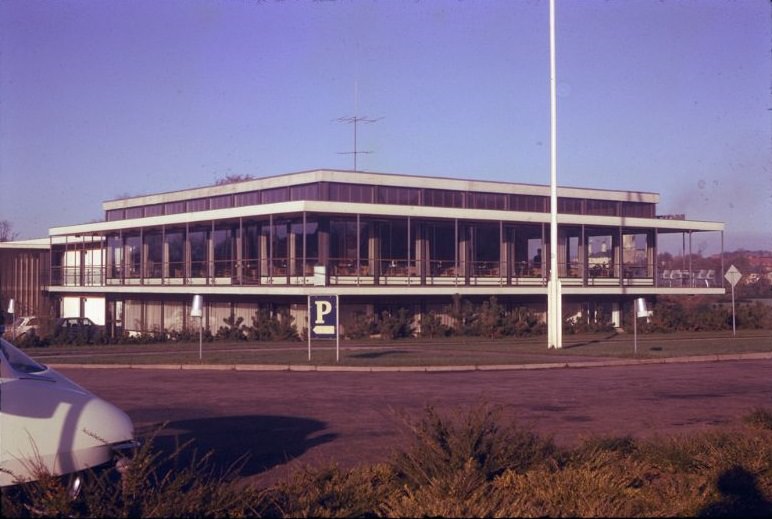
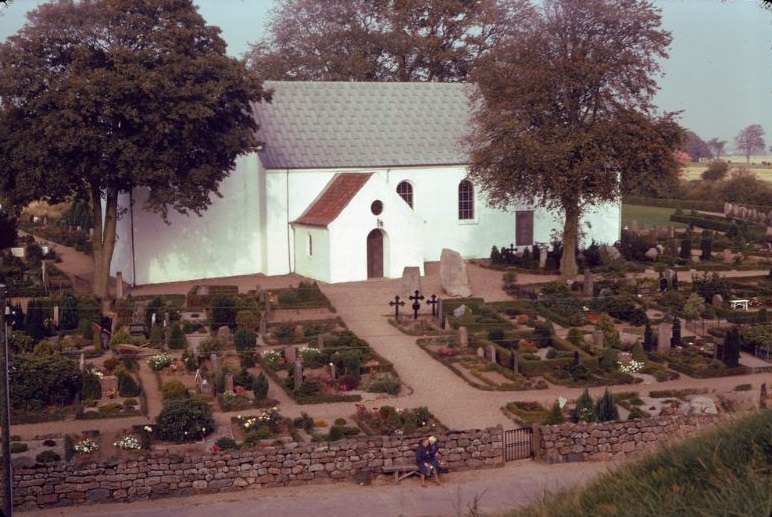
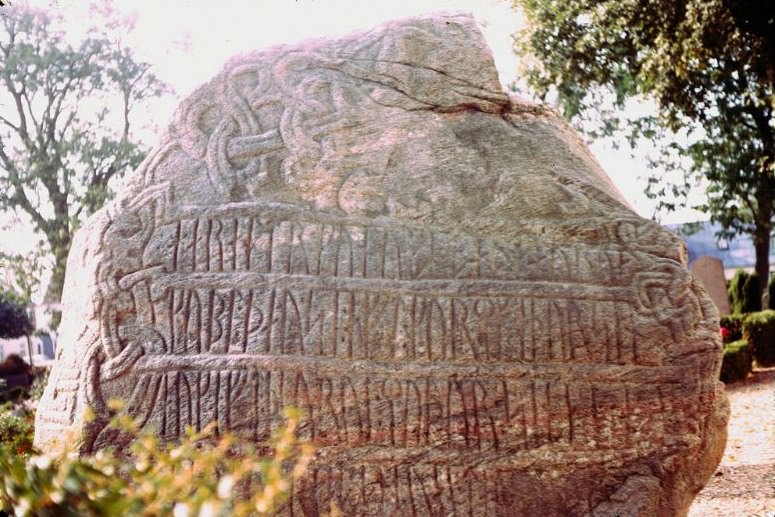
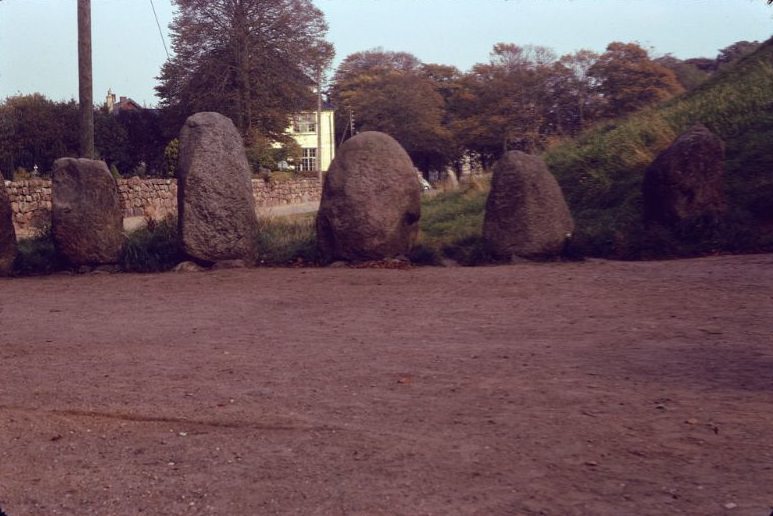
Jelling, a small town in Jutland, holds some of Denmark’s oldest and most important historical monuments. The Jelling runestones stand in the churchyard there and date back to the 10th century. The larger of the two was raised by King Harald Bluetooth around 965 AD and bears one of the earliest references to Christianity in Denmark, as well as the first known use of the word ‘Denmark.’
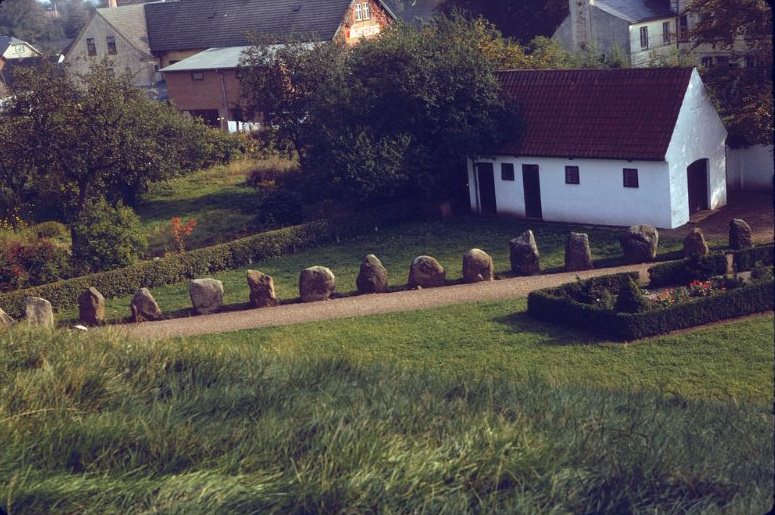
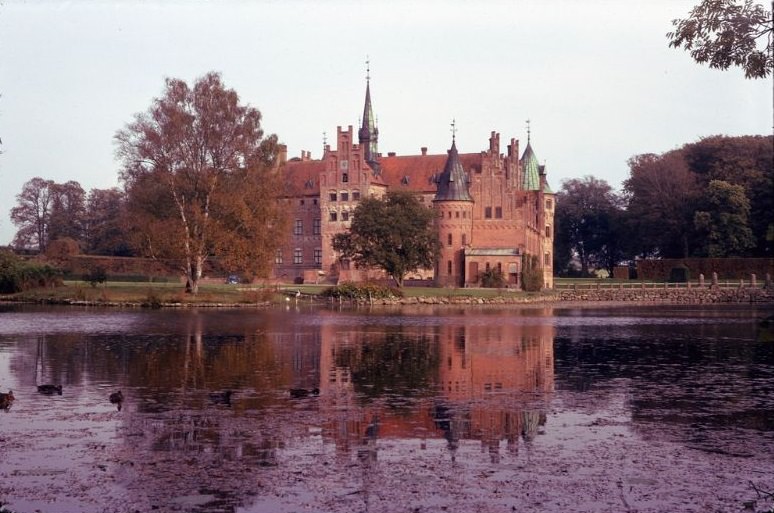
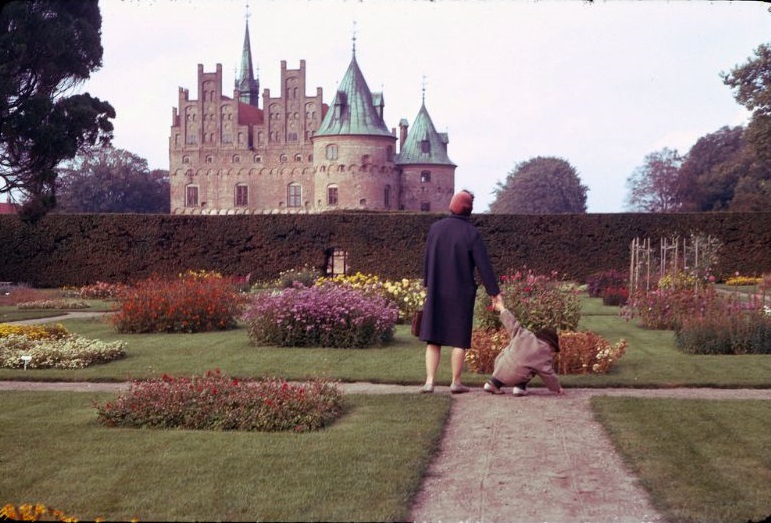
Back on Funen Island, the Huebners visited Egeskov Castle — one of the best-preserved Renaissance water castles in Europe. Built in 1554, the castle sits on a foundation of oak piles driven into a lake. By 1966, its grounds featured formal gardens, a maze, and open parkland that drew families from across Denmark.
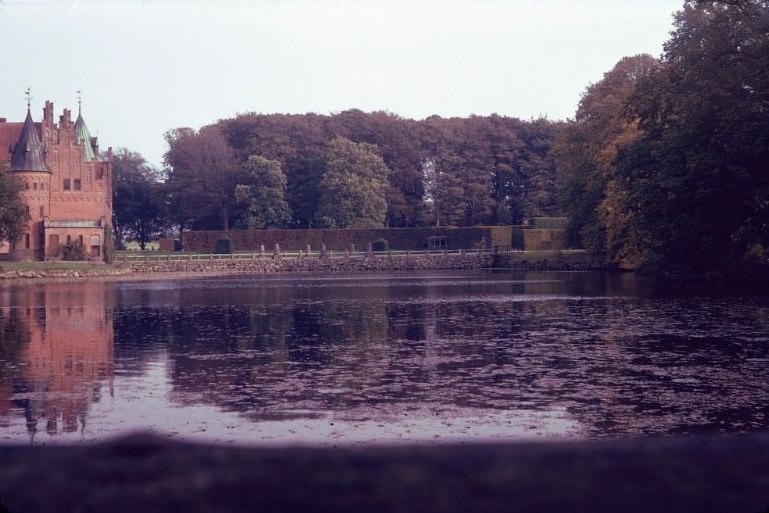
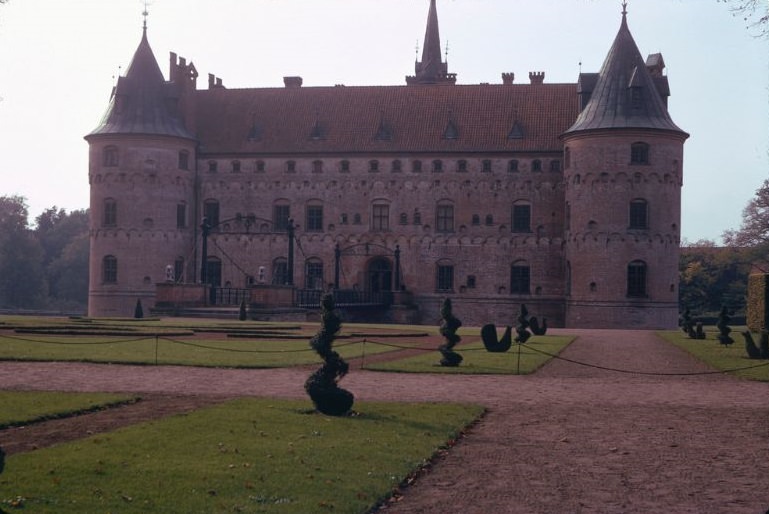
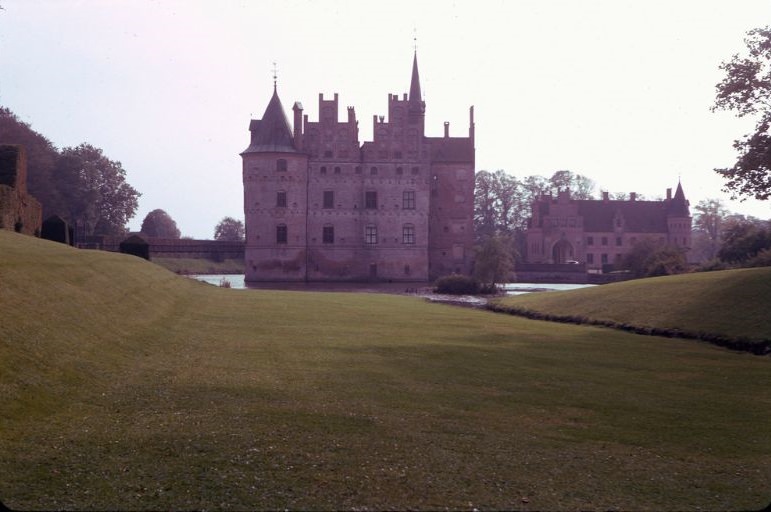
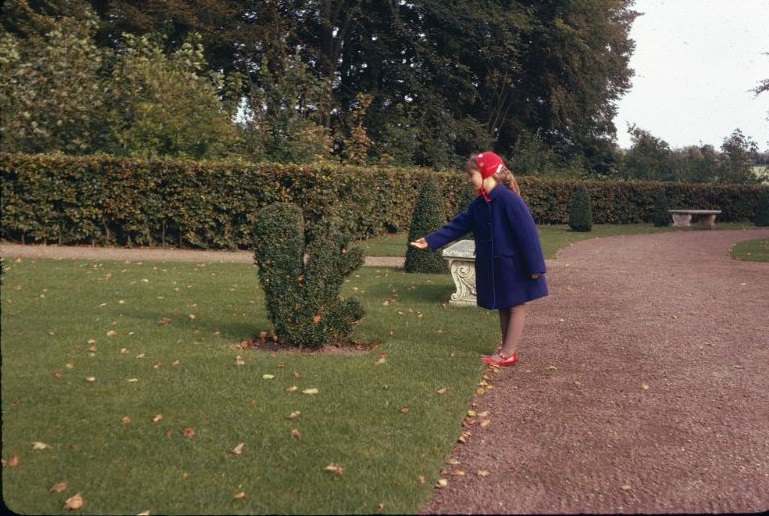
The castle’s Renaissance garden featured carefully trimmed hedges, including topiary sculptures shaped into animals. One photo shows a young girl standing next to a topiary squirrel, which perfectly sums up the playful, meticulous craft that defined the garden’s design.
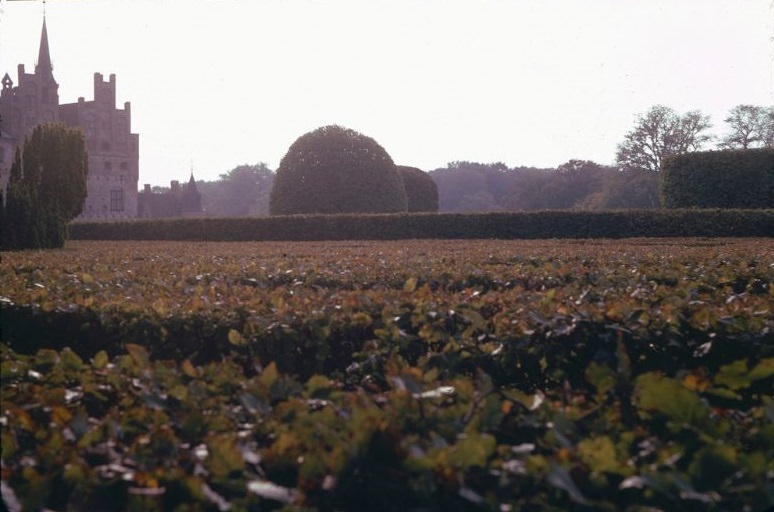
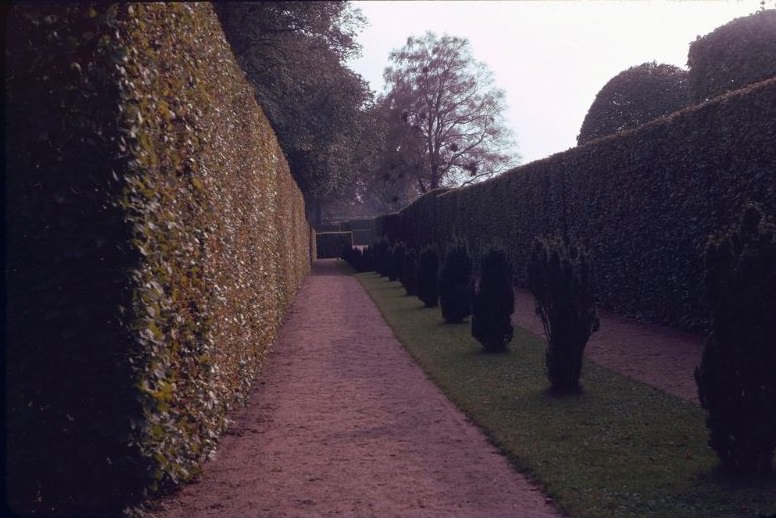
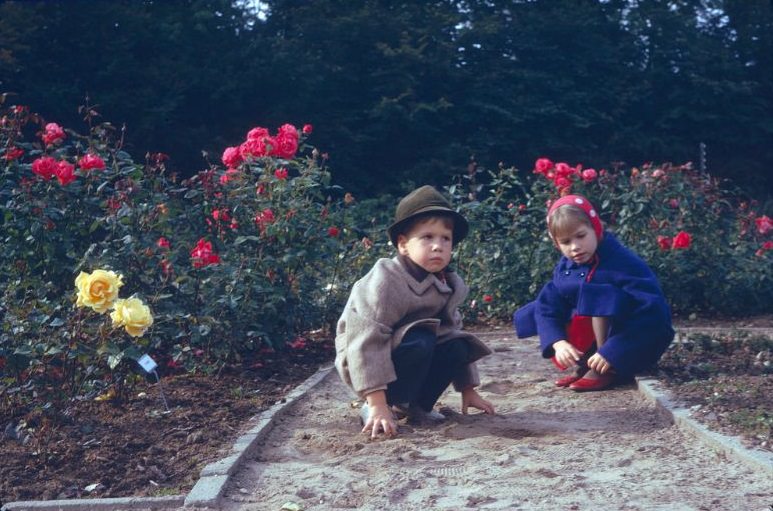
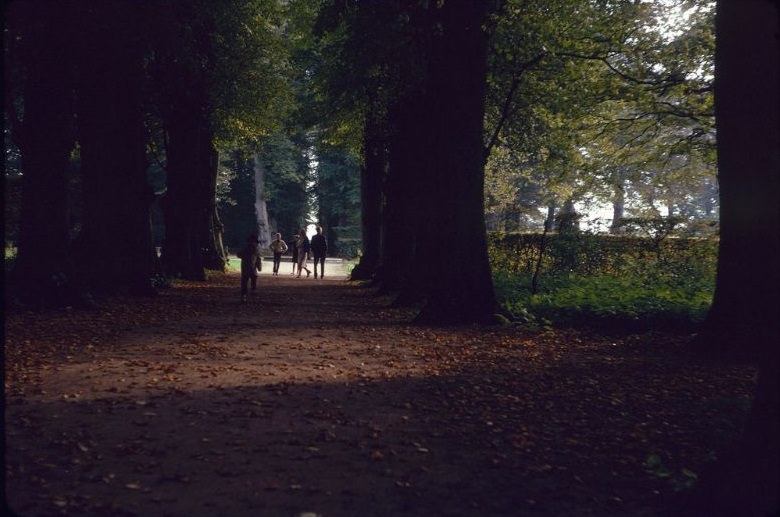
The parkland around Egeskov gave visitors plenty of open space. The Huebner family spent time there, and several candid shots capture children playing and a mother walking with her son through the grounds.
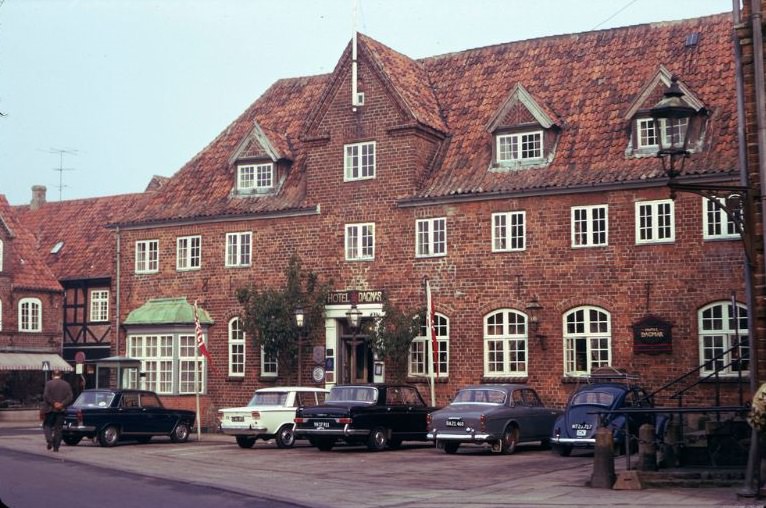
The family also visited Ribe, the oldest town in Denmark, with records going back to around 700 AD. Ribe Cathedral dominates the town center and has stood in various forms since the early 12th century. Hotel Dagmar, also photographed here, is considered one of the oldest hotels in Denmark, dating to 1581.
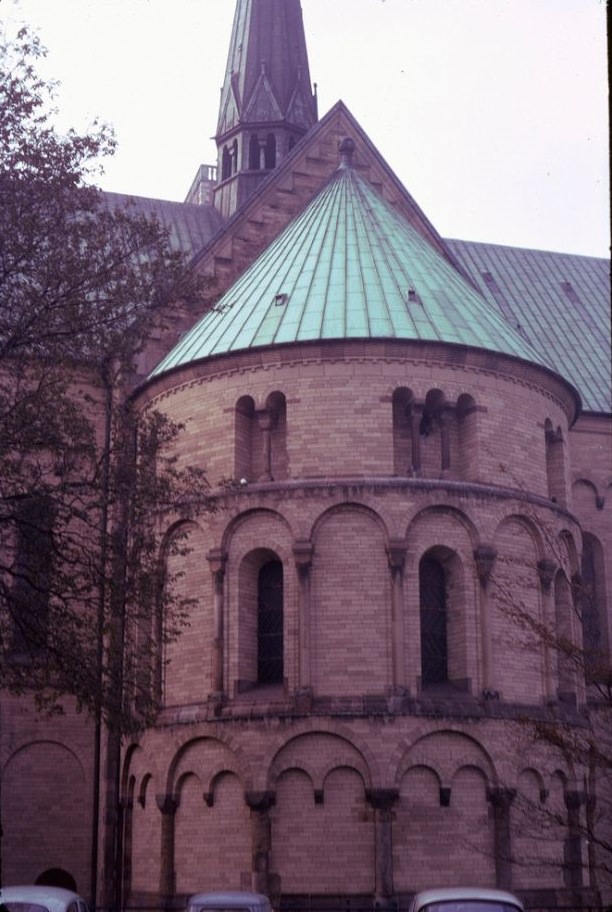
The Odense portion of the trip also included a visit to St. Alban’s Church on Funen Island — a different church from the one in Copenhagen, though sharing the same name. These final Kodachrome frames close out a journey that touched ancient stones, royal castles, harbor statues, and quiet Danish streets, all in the sharp, saturated color that only Kodachrome could deliver in 1966.