
Daegu sits in the southeastern corner of South Korea, nestled in a basin formed by the Nakdong and Geumho Rivers, roughly 80 kilometres (50 miles) from the coast. Known today as one of Korea’s largest cities, it ranks third in the country’s urban hierarchy, behind only Seoul and Busan. In the 1970s, however, it was a city still finding its modern footing — its streets full of vendors, workers, and everyday life that rarely made it into history books.
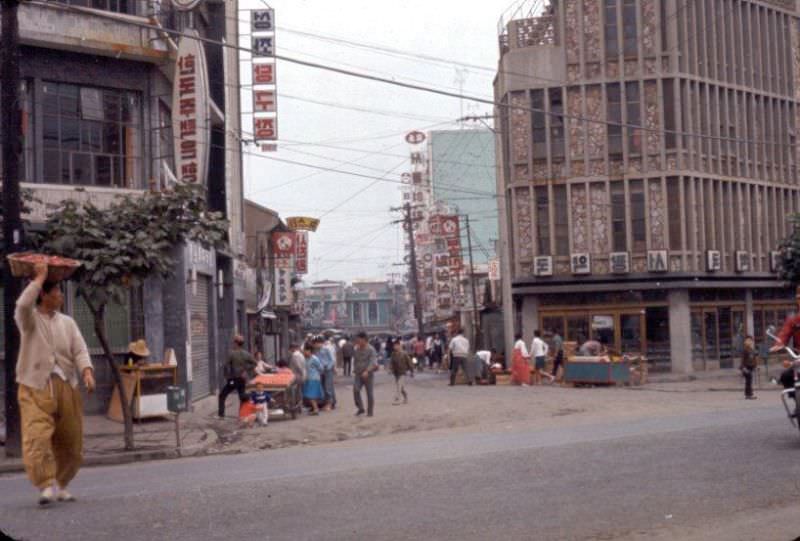
A U.S. Army soldier known as DRC was stationed at Camp Walker in Daegu — then commonly spelled “Tague” by American servicemen — from May 1970 to June 1971. During that time, he walked the city’s streets with a camera and documented what he saw. The photos he took are a rare ground-level record of daily life in a city that was rapidly changing but had not yet left its older ways behind.
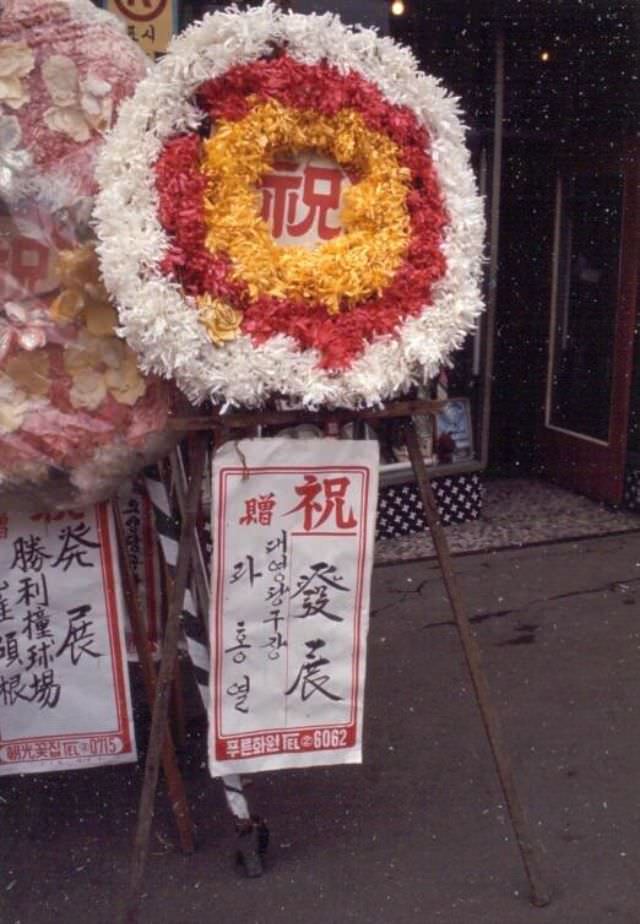
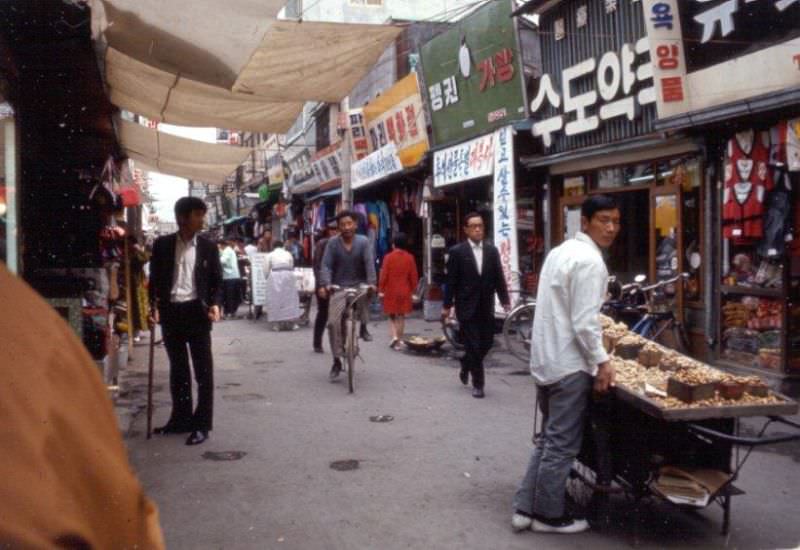
Daegu had long been known as “Textile City.” Textiles were the backbone of its economy for much of the 20th century, and by the 1960s and into the 1980s, electronics manufacturing had also taken root. But on street level, commerce looked far more informal. Vendors spread their goods on the pavement, merchants pushed carts, and small shops lined every block.
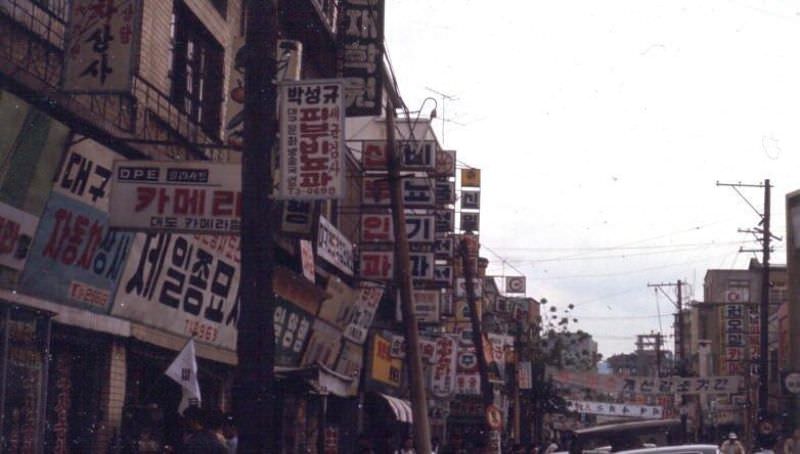
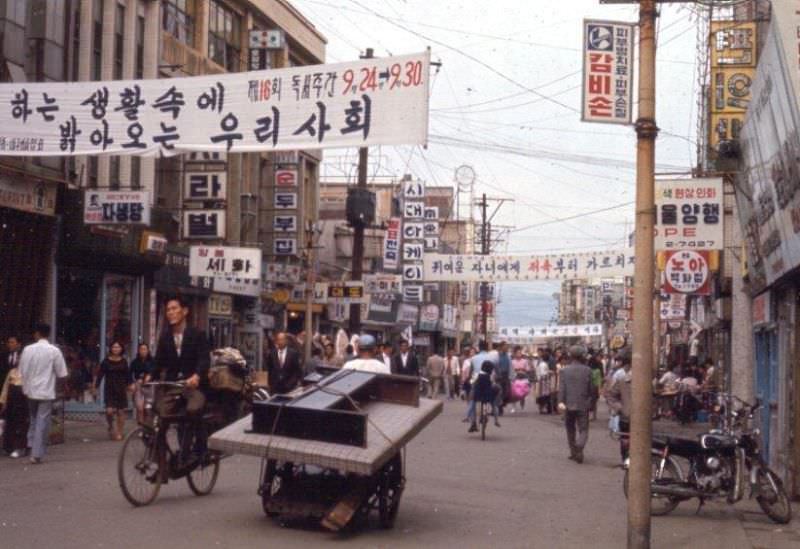
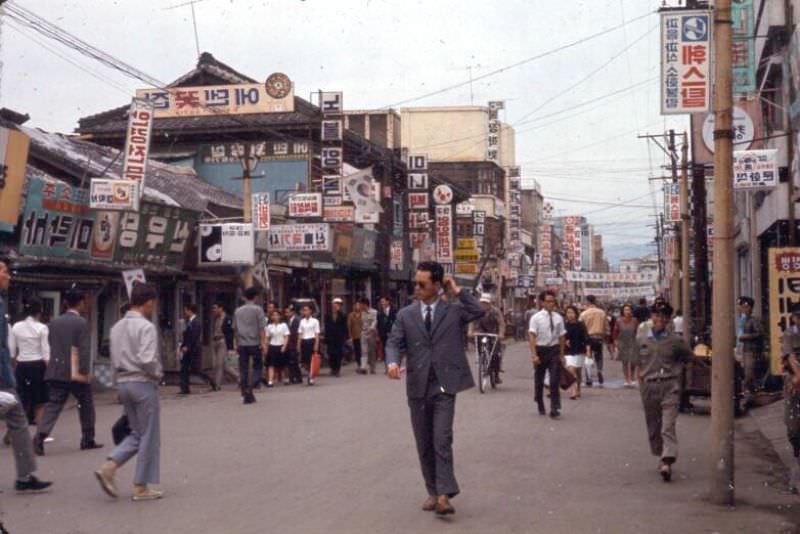
The city’s downtown core was busy and layered. Foot traffic mixed with vehicles, and shop signs crowded the storefronts in dense Korean script. Street-level commerce was everywhere — not tucked into malls or supermarkets, but spilling out onto sidewalks and corners.
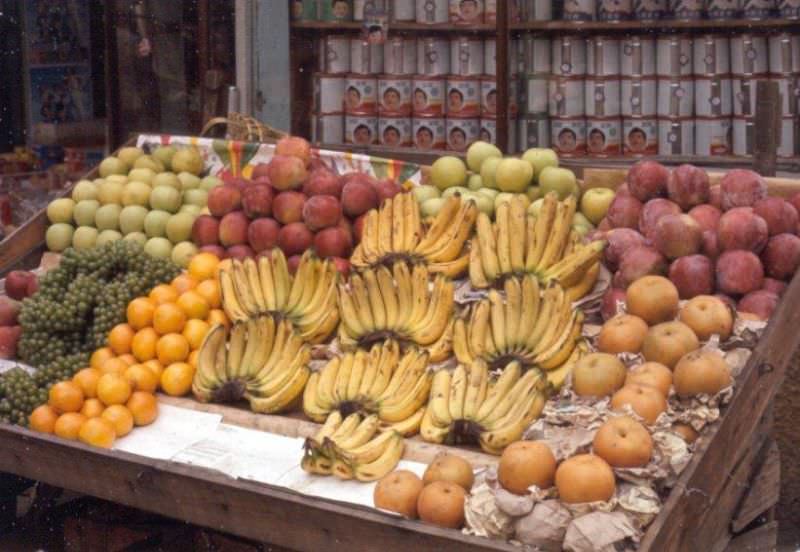
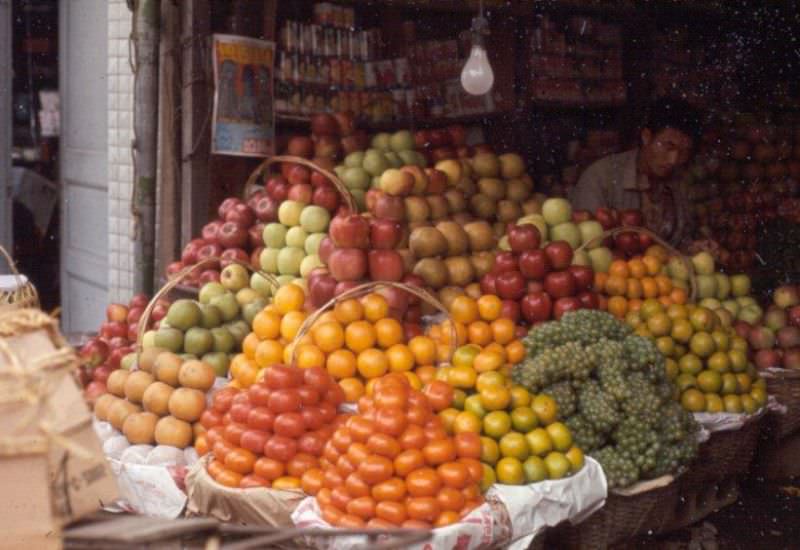
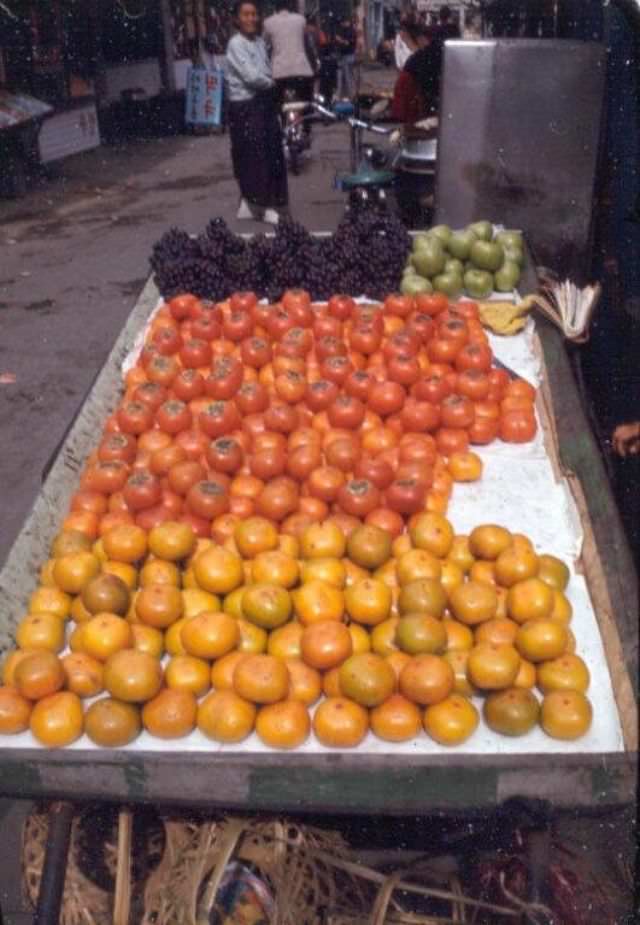
Fruit sellers were a common fixture on Daegu’s streets. The city’s humid subtropical climate made it ideal for growing apples, earning it the nickname “Apple City.” Fresh fruit was sold directly from stalls and carts, with vendors arranging their stock in neat piles to attract buyers passing by.
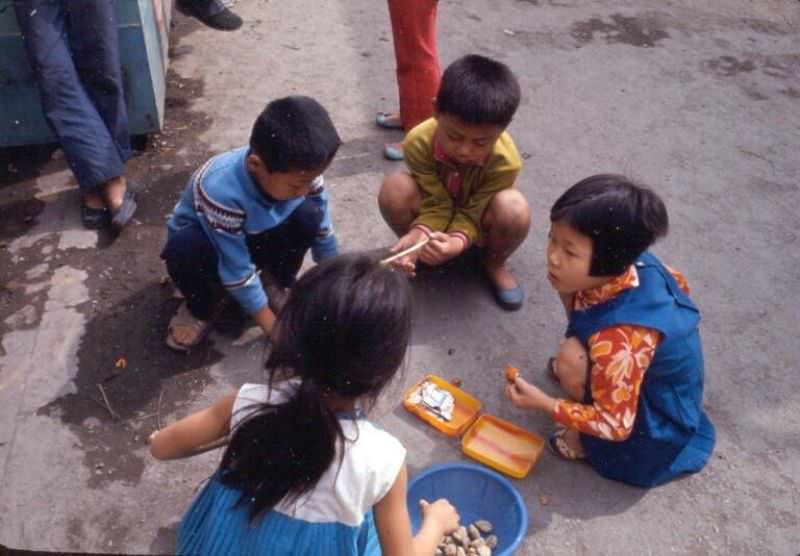
Children were a natural part of the street scene. They played in open spaces between buildings and along the edges of busy roads, largely unsupervised in the way common to the era. Their presence gave the streets a sense of neighborhood life beyond pure commerce.
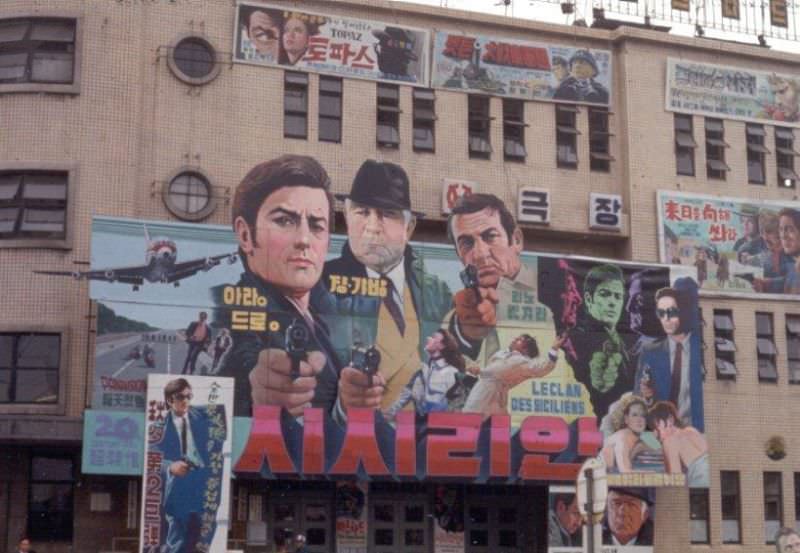
Entertainment in the city centered around places like movie theaters, which drew large crowds in the 1970s before television became widespread in Korean homes. Theater facades were decorated with bold hand-painted film posters, announcing whatever was currently showing in large, eye-catching lettering.
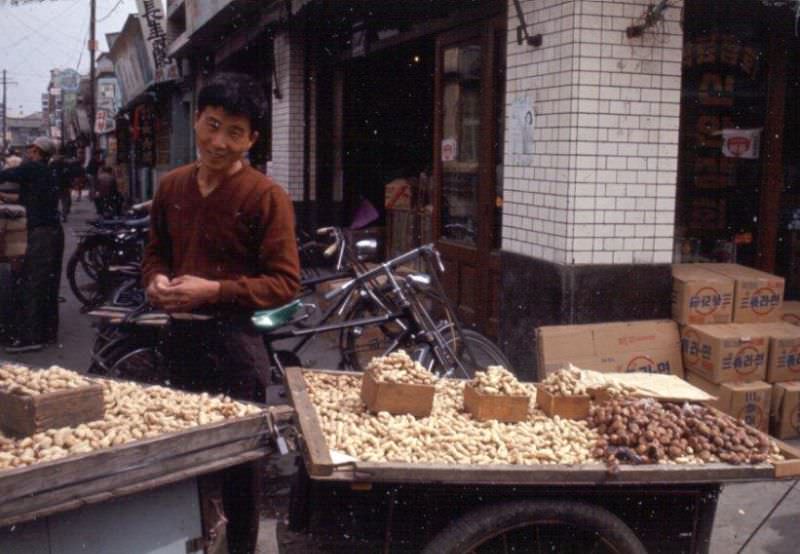
Street food vendors of all kinds worked the sidewalks. Peanut sellers roasted and packaged their goods on the spot, filling the air with a familiar smell that drew customers in. Selling food from a cart or a small portable setup required little overhead and was one of the most accessible ways to earn a living in the city.
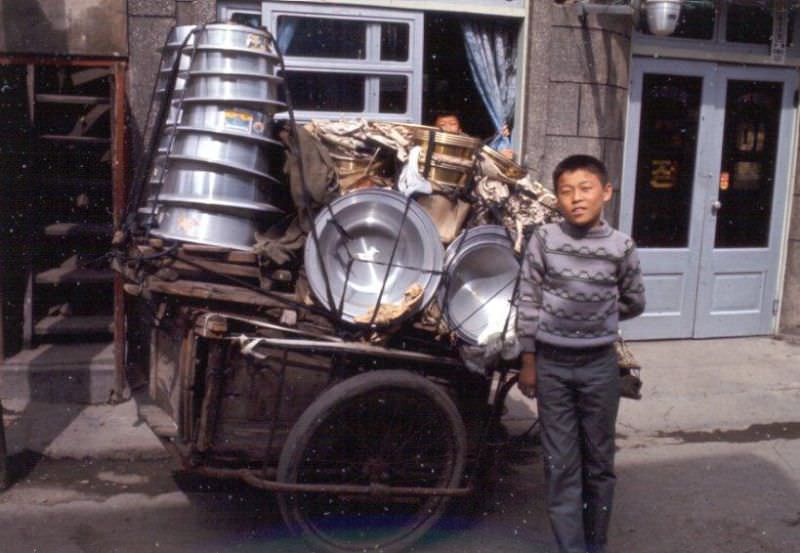
Not all commerce was stationary. Some sellers went door to door, carrying their goods directly to customers. Pots and pans were sold this way — a practical approach in neighborhoods where residents had little reason or means to travel to a central market for household goods.
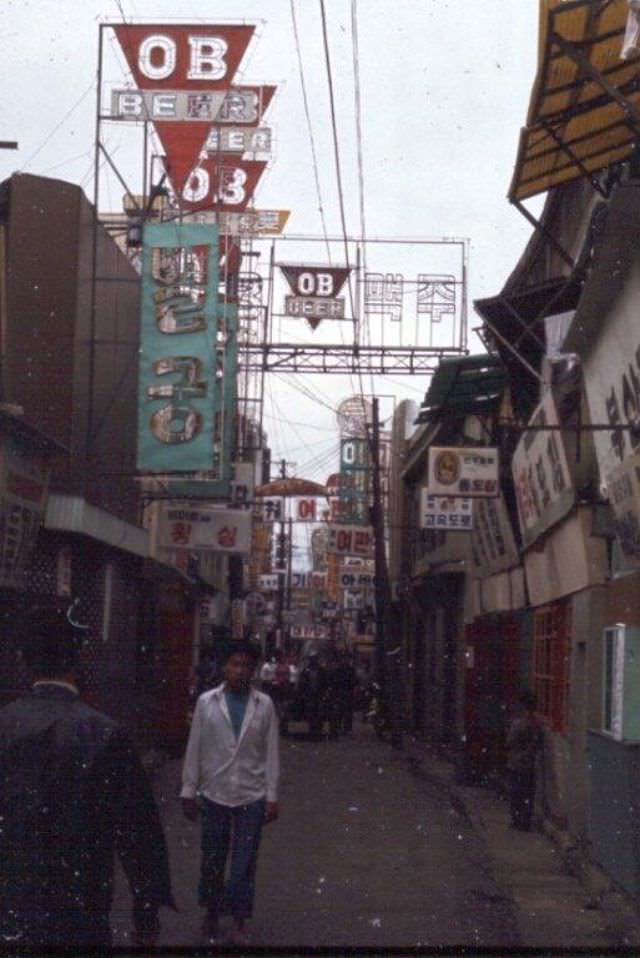
The restaurant and bar district in downtown Daegu was a distinct part of the city’s character. Rows of small eateries and drinking establishments catered to workers, soldiers, and locals alike. Signs advertised food and drink in close quarters, the businesses pressed tightly together along narrow streets.
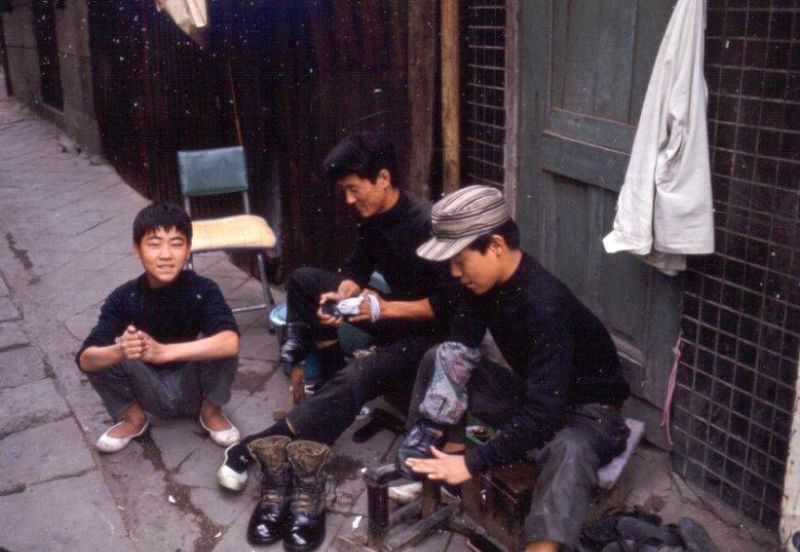
Shoe-shine boys worked busy corners and pedestrian areas, offering quick polishes to city workers and passersby. It was one of the more visible forms of child labor in Korean cities of that era, where boys took up small service jobs to contribute to family income.
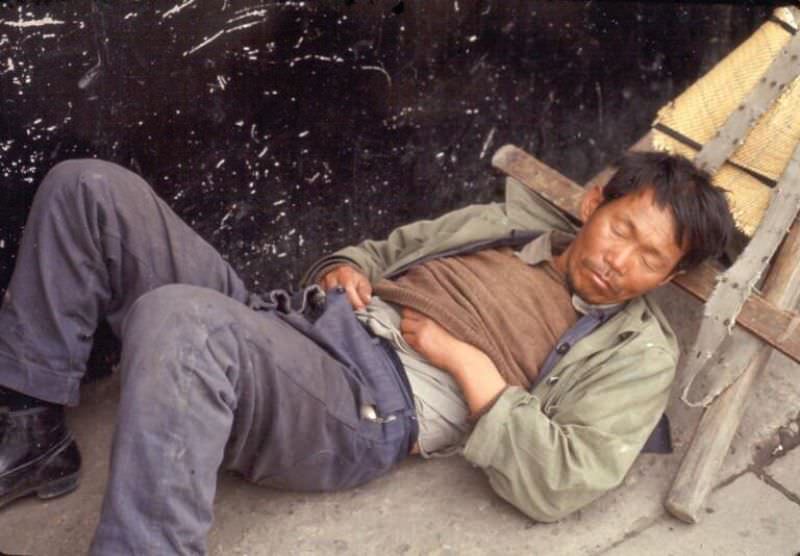
The A-frame carrier — called a jige in Korean — was a wooden backpack frame used to haul heavy loads. Workers who carried goods using these frames were a common sight throughout Korean cities. DRC captured one such worker resting mid-day, the frame still strapped to his back as he slept.
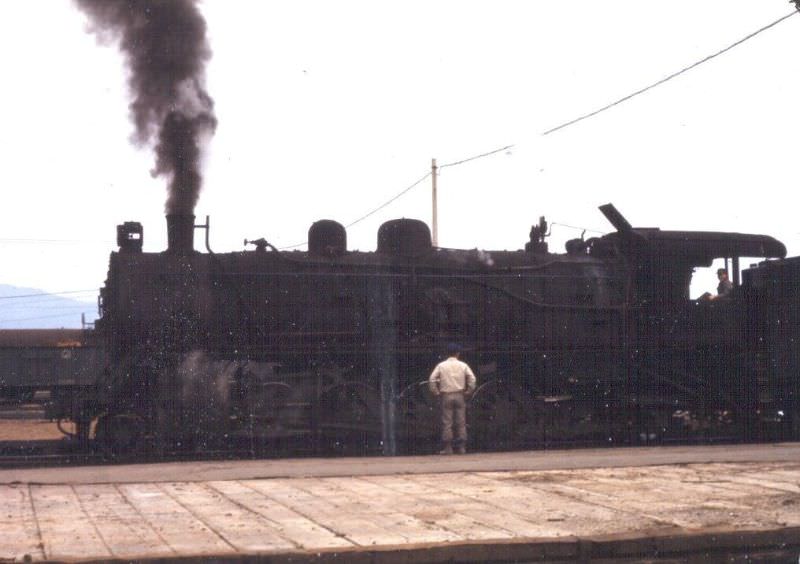
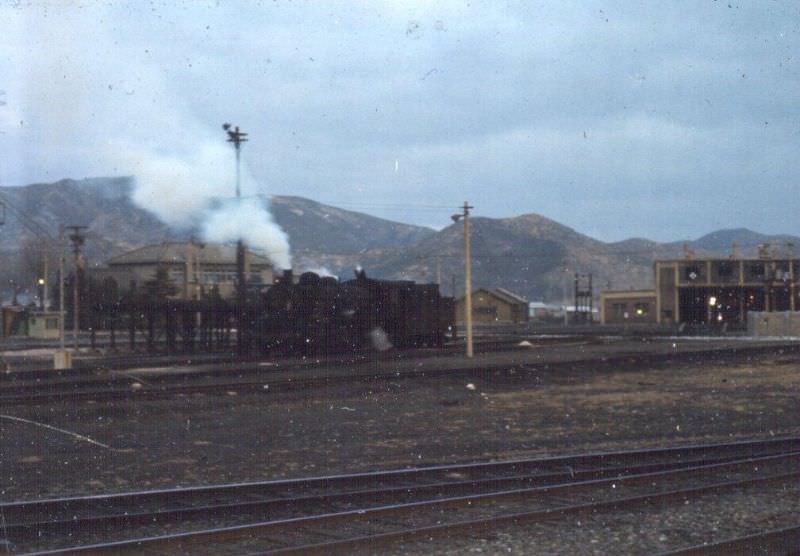
Daegu Station connected the city to the rest of Korea by rail, and steam locomotives were still in active use during DRC’s time there. The sight of a working steam engine at the station — and others waiting in the yard — reflected the state of Korean rail infrastructure in the early 1970s, before diesel and electric trains replaced them.
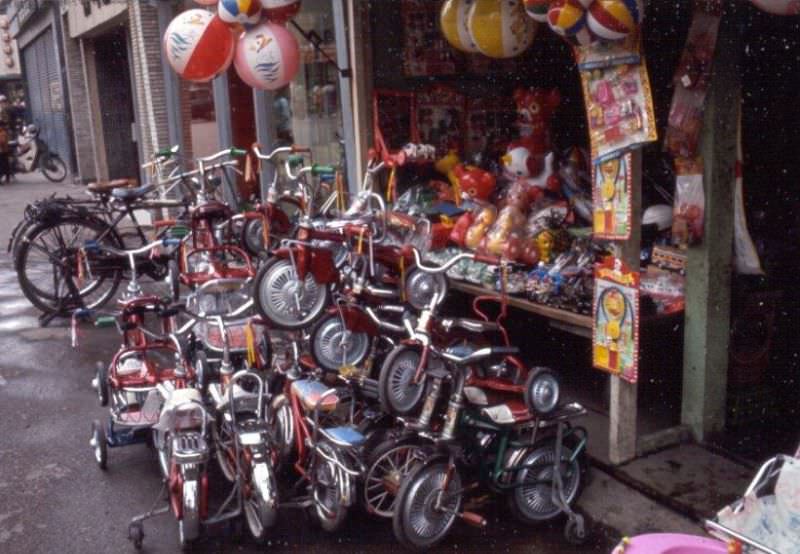
Even small toy shops found space among Daegu’s crowded storefronts, their shelves and window displays packed with goods aimed at the city’s children. These shops offered a glimpse into what leisure and childhood looked like for Korean families navigating the economic growth of the 1970s.
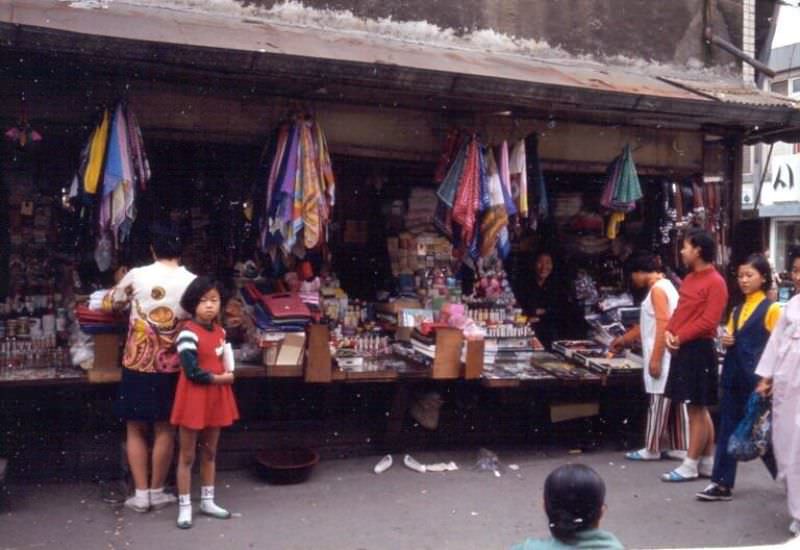
Markets and vendor clusters brought together sellers of all types in one place. Food, household goods, clothing, and crafts were laid out side by side, and buyers moved between stalls looking for the best prices. These open-air setups were the commercial heartbeat of the city’s working-class neighborhoods.
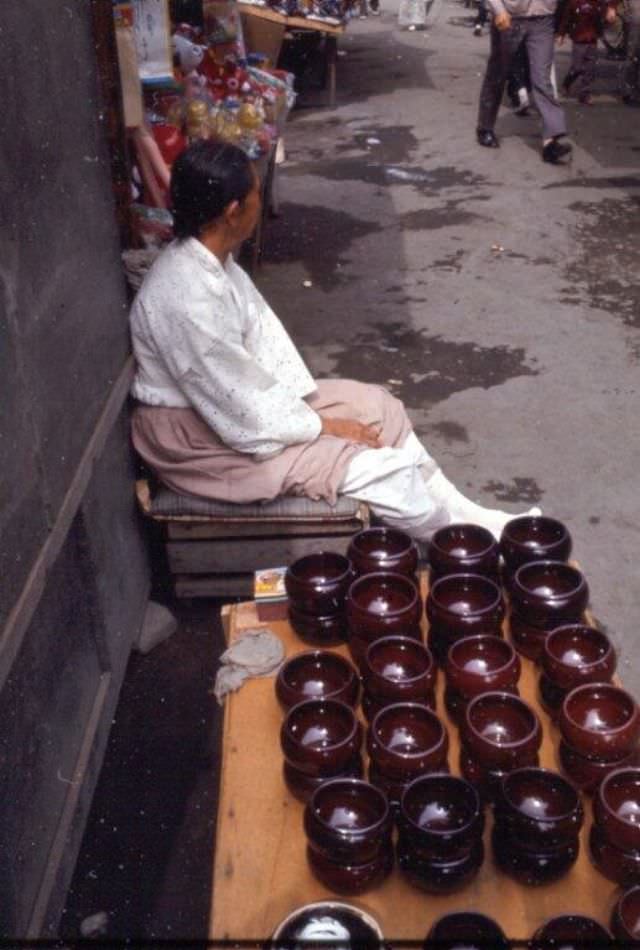
Among the vendors DRC photographed was a woman selling ceramic bowls. Handmade ceramics had deep roots in Korean culture, and even in a modernizing city, traditional goods still found buyers on the street. Her presence in the photo collection is a reminder that older craft traditions held their ground even as the city around her changed.





Nothing like an article about Daegu (formerly spelt Taegu) with every single description spelling it Tague
Daegu is a city in South Korea that was formerly spelt Taegu.
I appreciate your post! Having arrived in Korea in 2017 and witnessing its remarkable growth and transformation, I find such stories intriguing and captivating.
As a native of Daegu, South Korea, these pictures evoke memories of my hometown. Although I was born in the early 80s, the scenery in these pictures seems unfamiliar to me. Thank you for sharing them!
I wonder how many of these buildings are still standing today. There’s a neighborhood I was checking out last week in Daegu that’s meant to be demolished so it’s abandoned and looks so strange and different than all the other giant high rise developments popping up I took some interesting photos there.