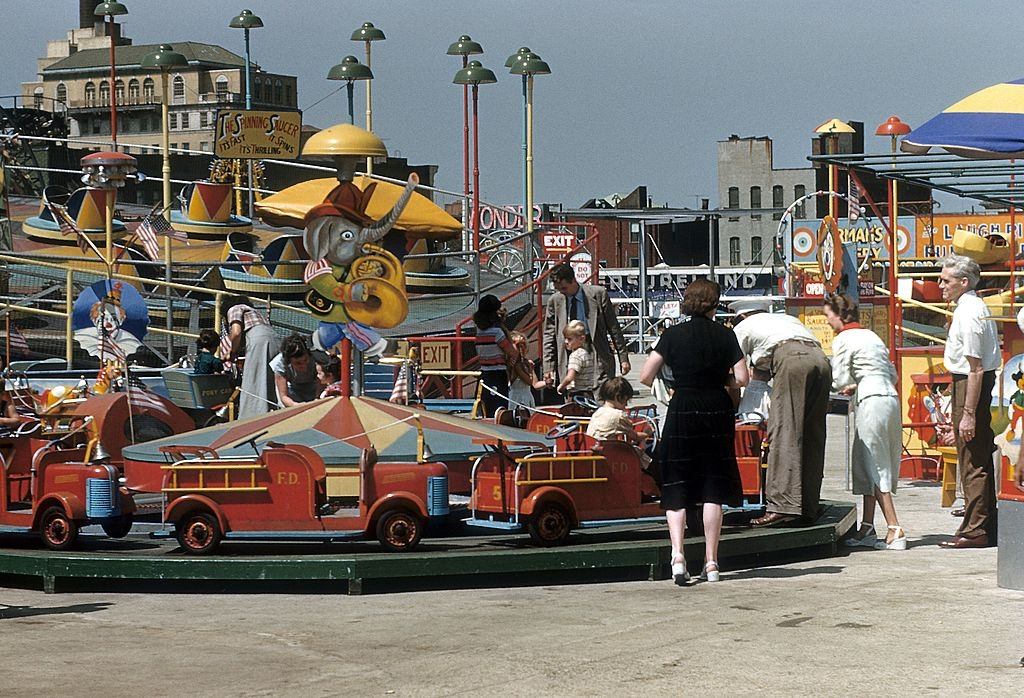
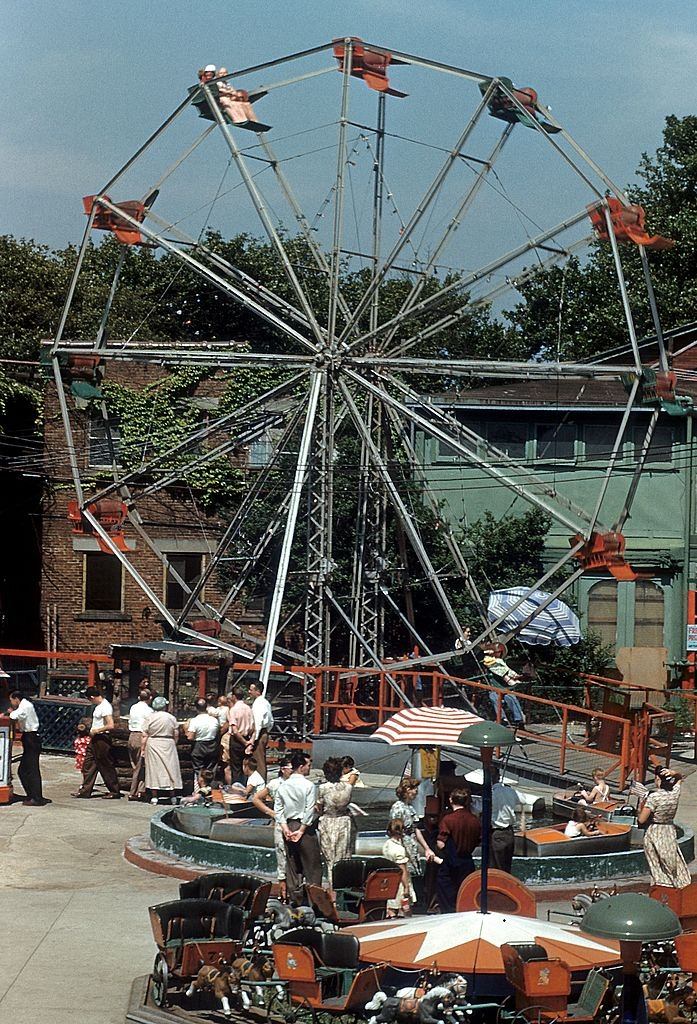
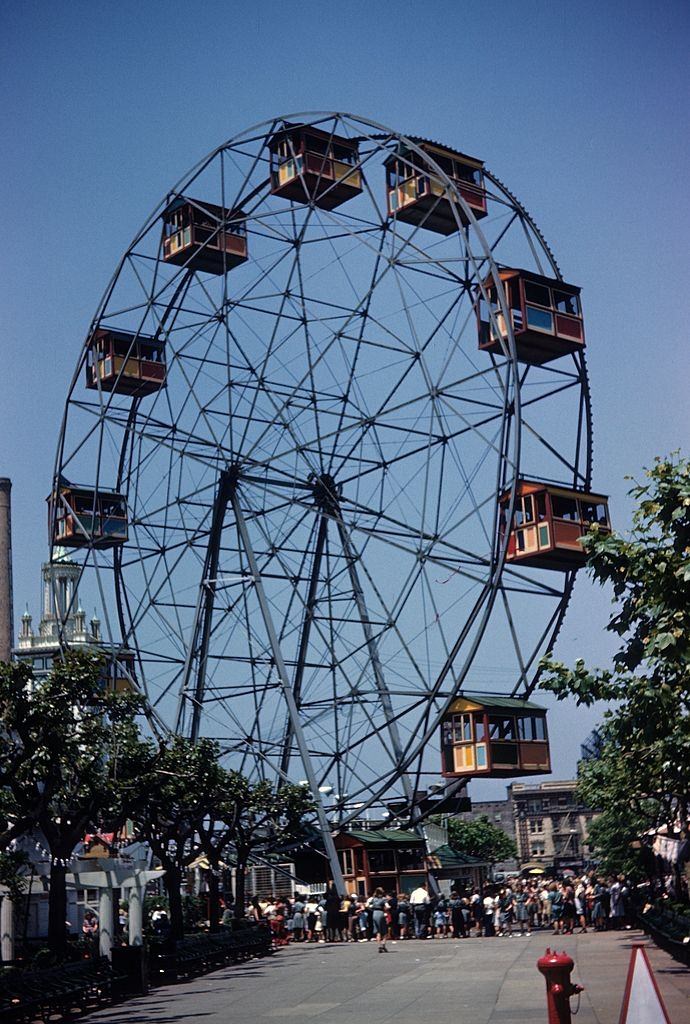
By 1948, Coney Island in Brooklyn, New York, was the most visited amusement destination in the United States. On a single summer weekend, over a million people could crowd onto its beaches and boardwalk. Three major amusement parks — Steeplechase Park, Luna Park, and Dreamland — had each carved out their own identity over the decades, drawing working-class families, young couples, and thrill-seekers from across the country.
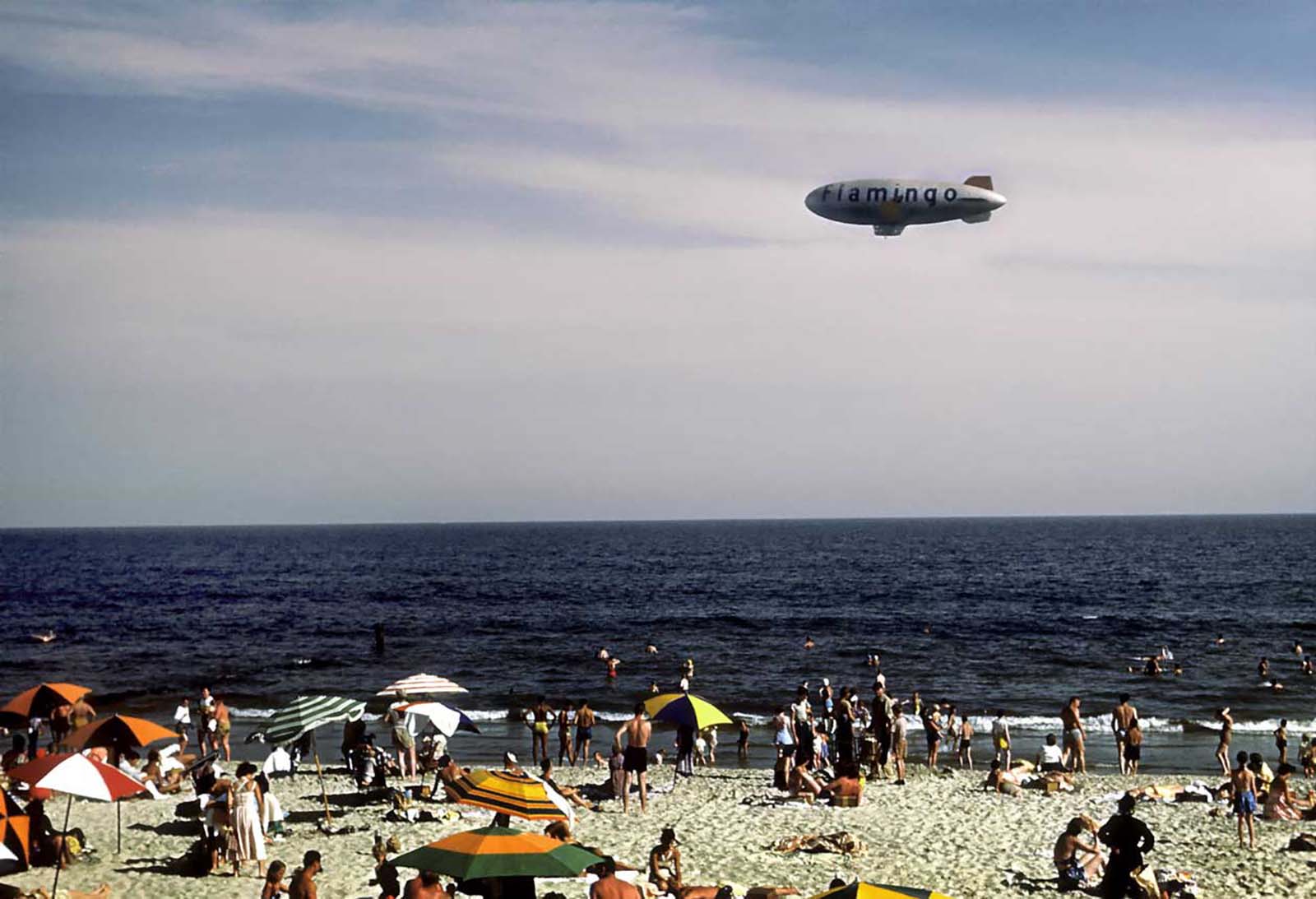
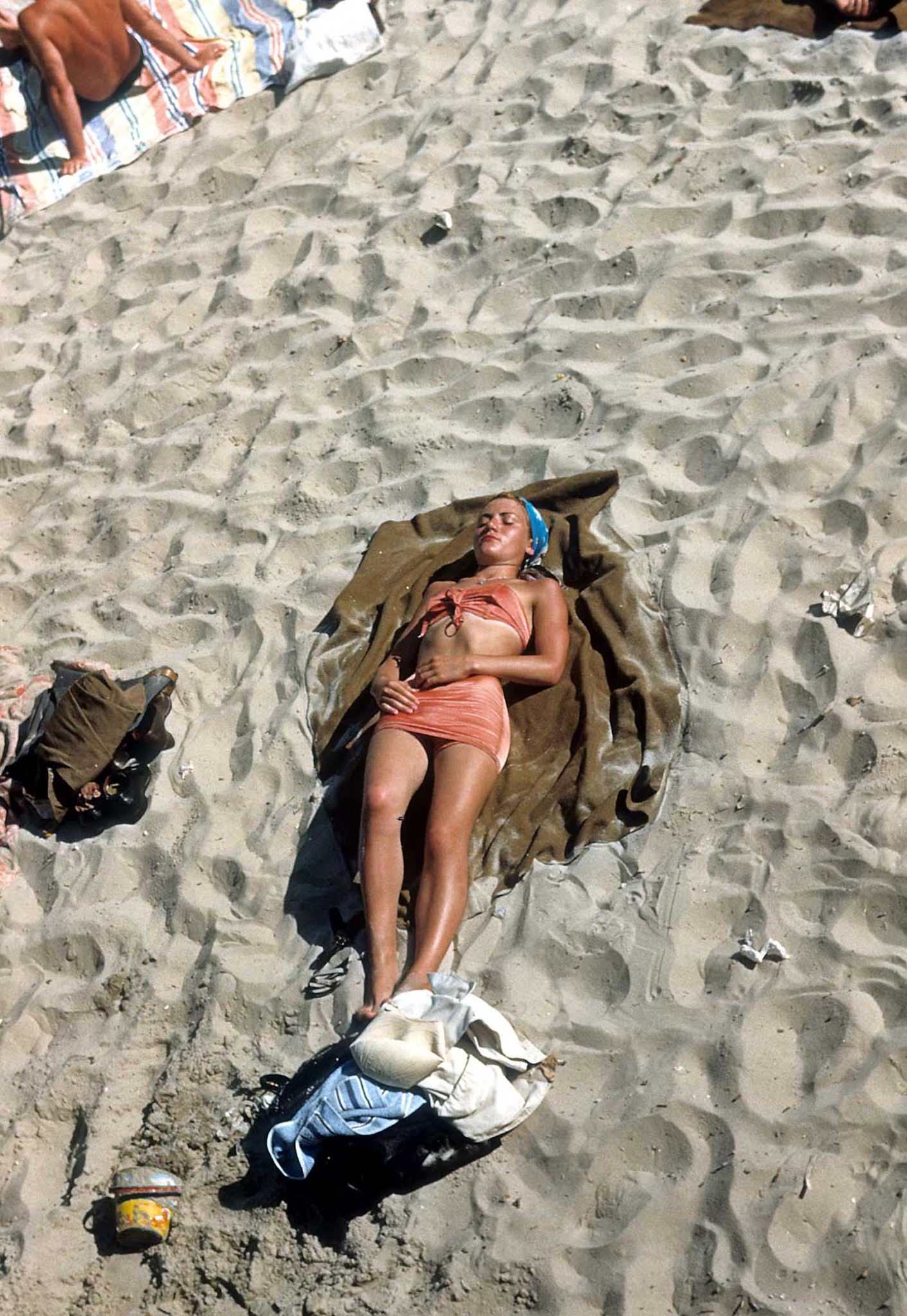
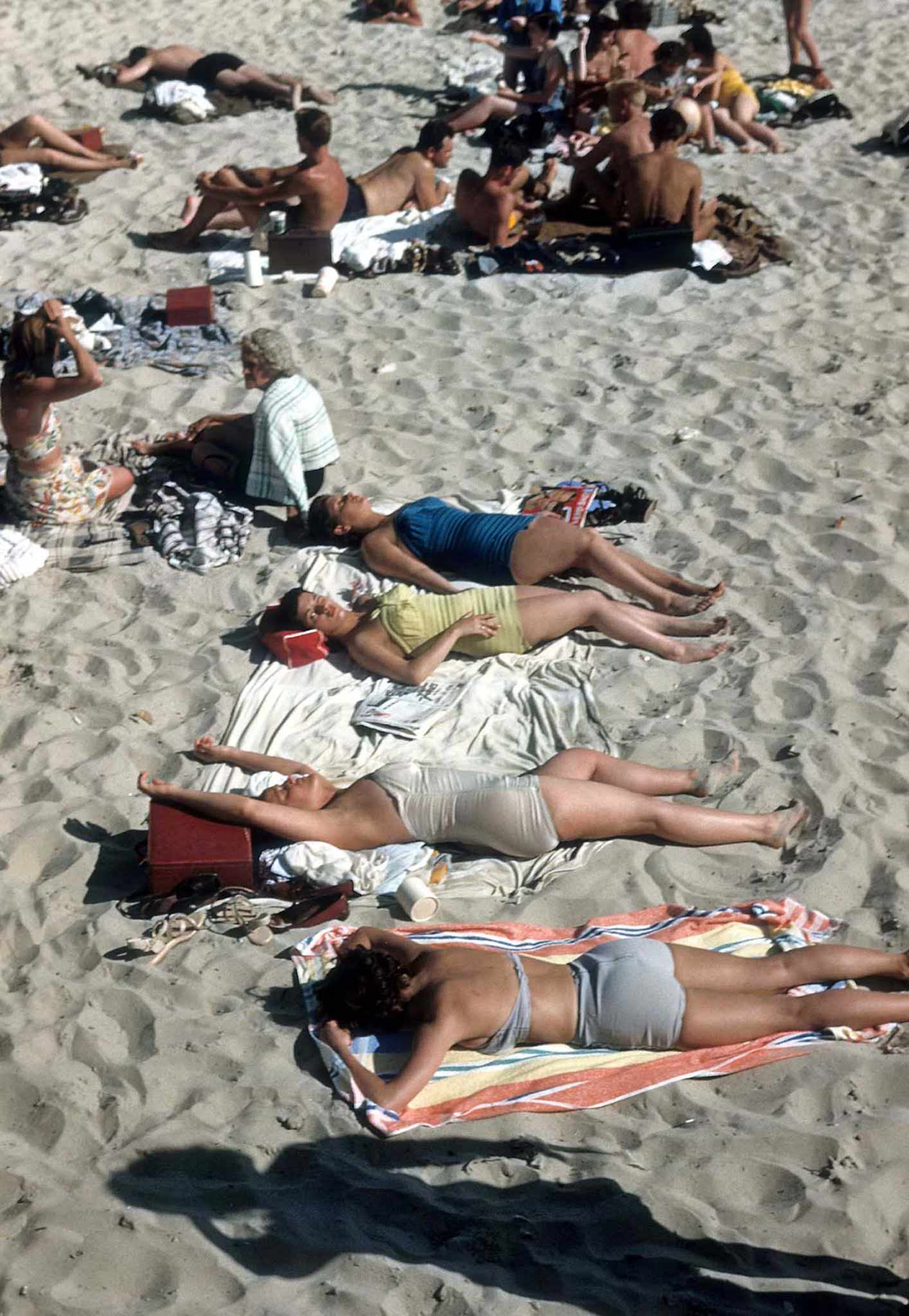
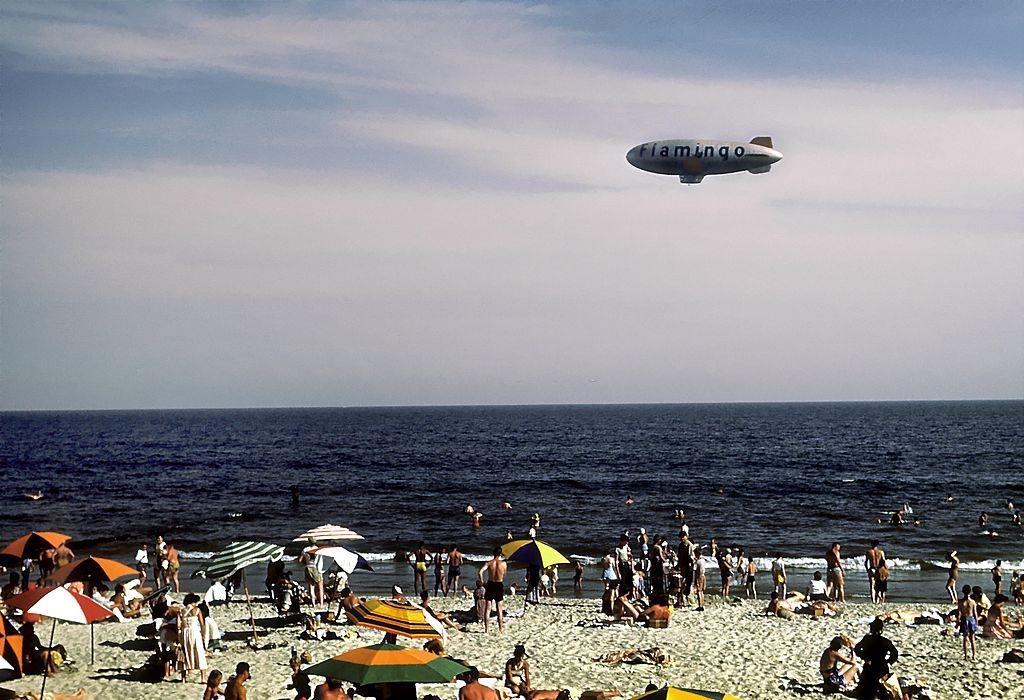
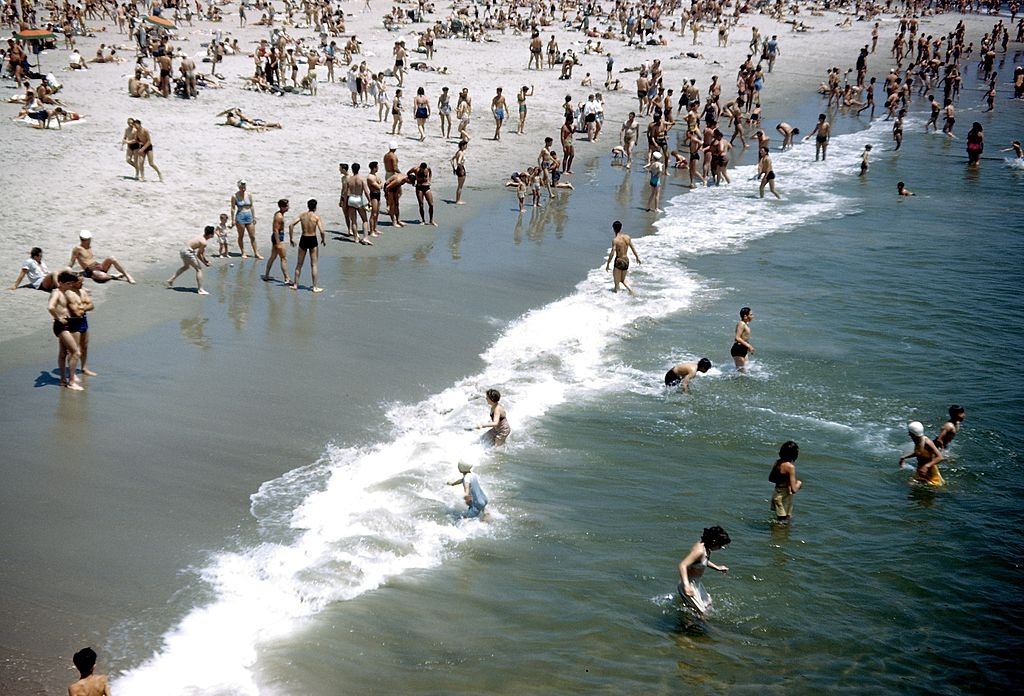
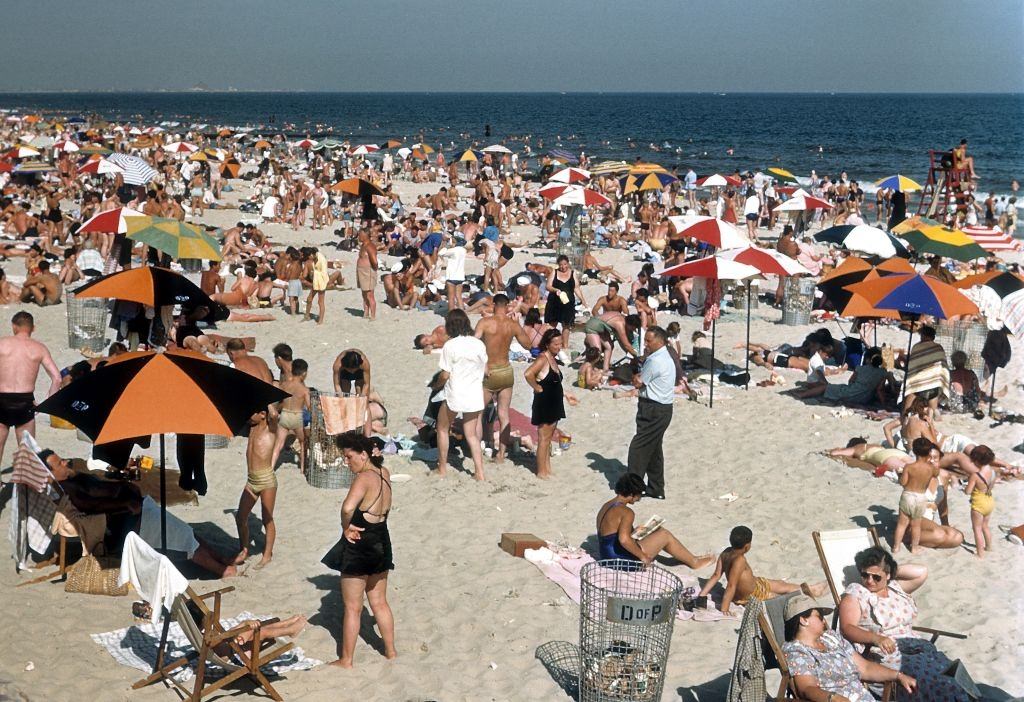
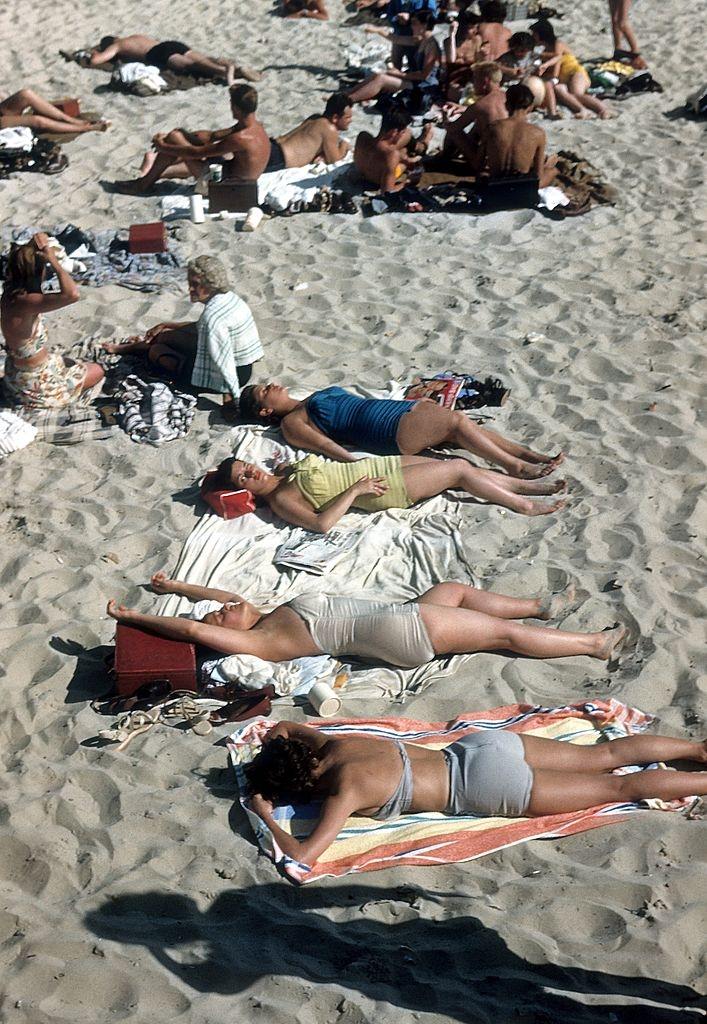
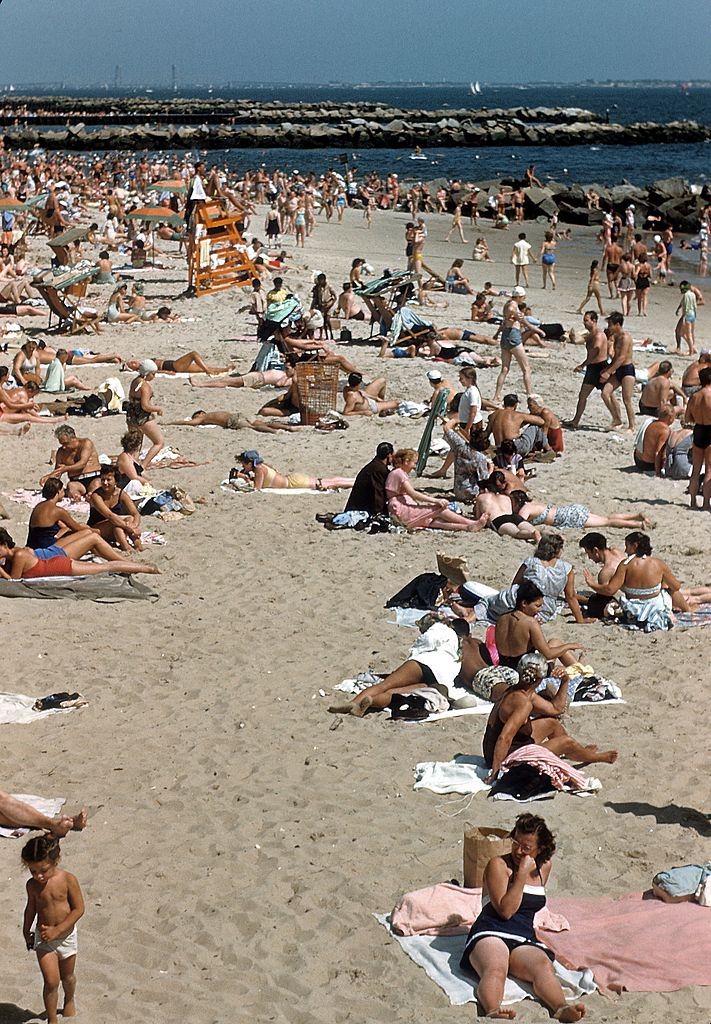
The beach itself was the center of gravity. Thousands of sunbathers packed the sand shoulder to shoulder, and the water was just as crowded. Overhead, a Flamingo blimp drifted along the shoreline — a reminder that even the sky above Coney Island was used as advertising space. The scene was loud, colorful, and alive.
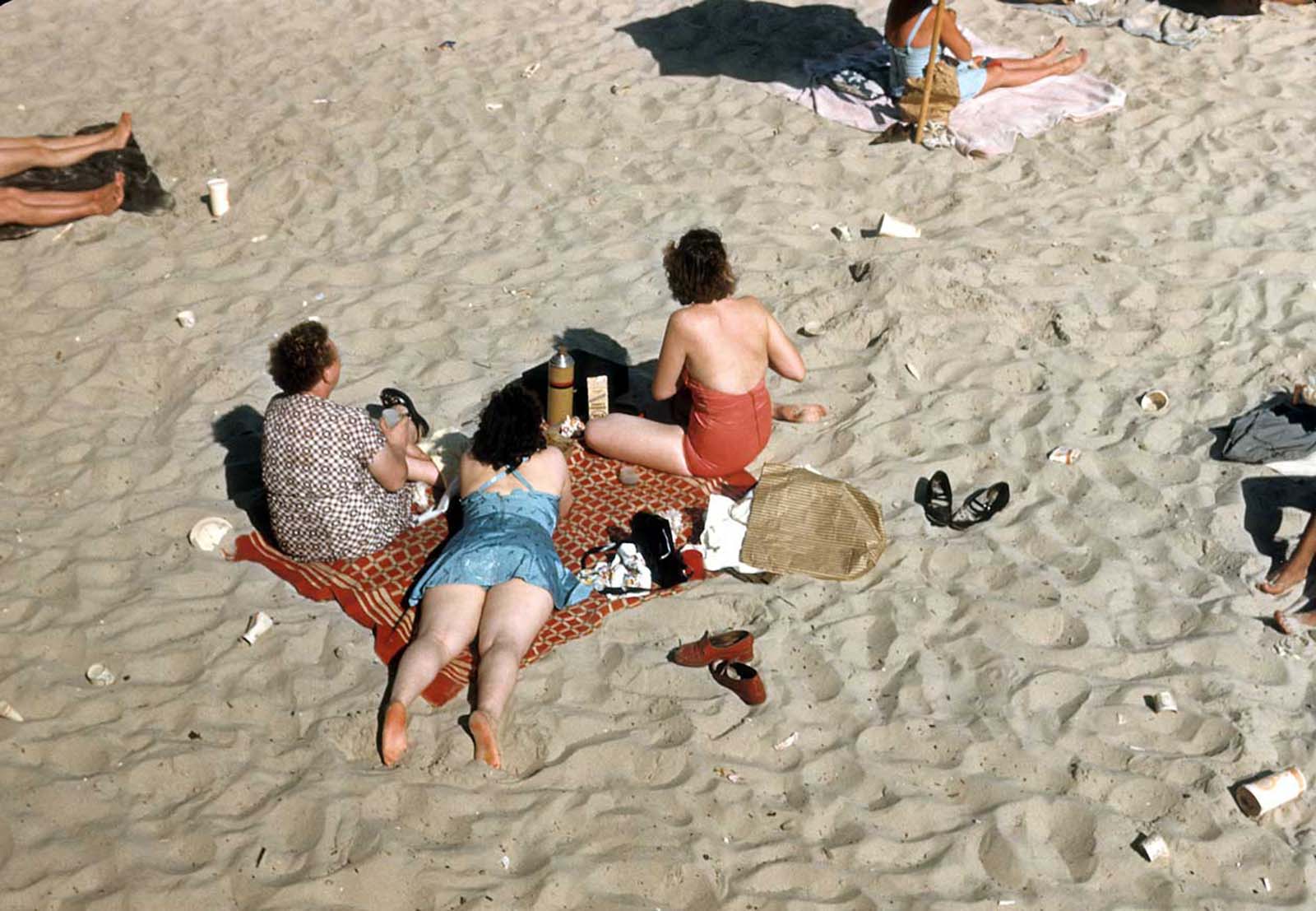
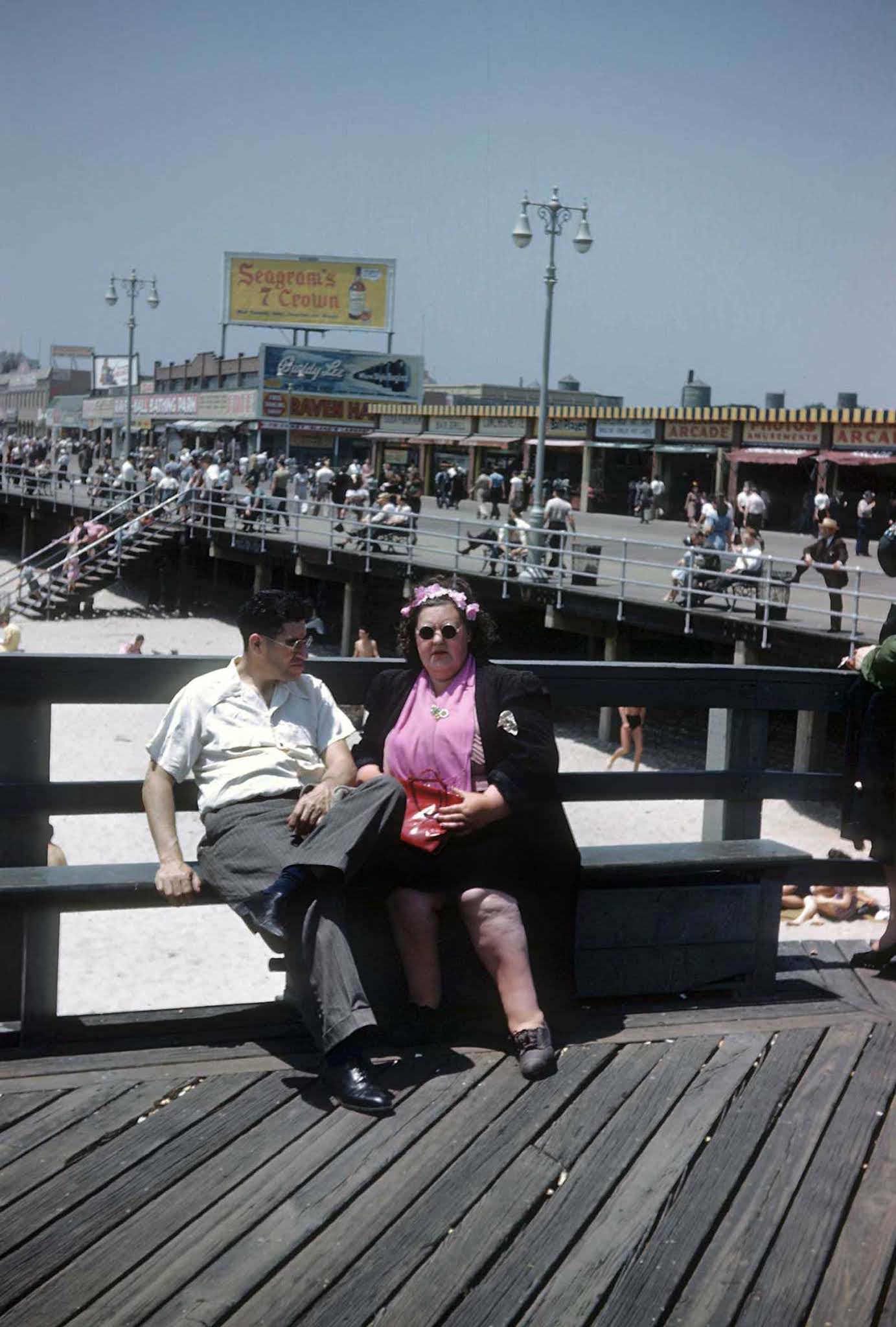
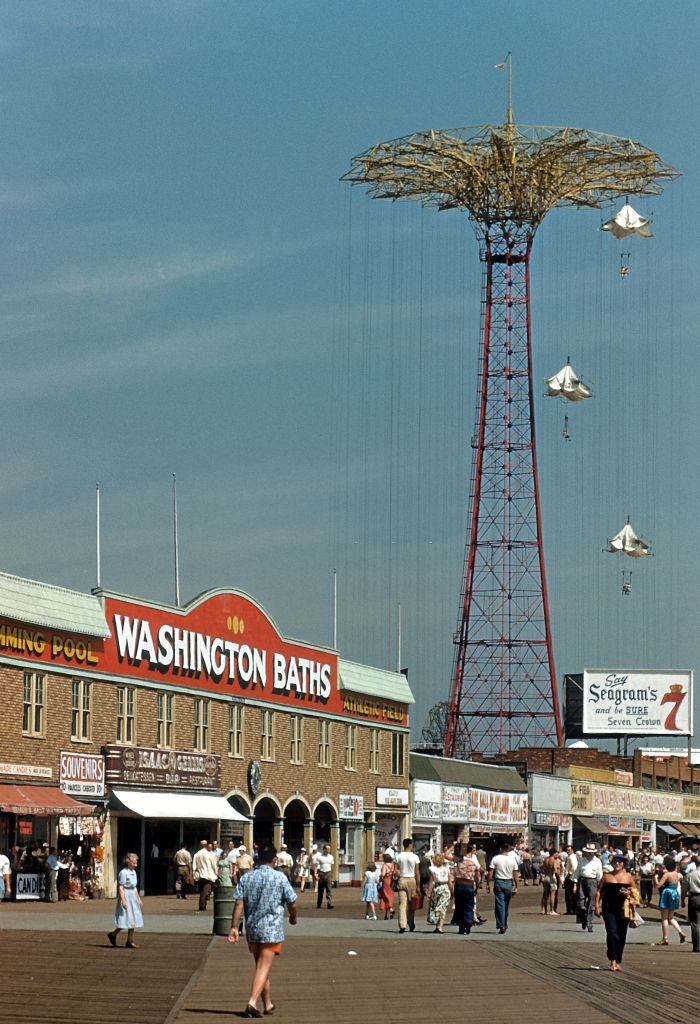
The boardwalk ran along the beach and served as Coney Island’s main artery. Visitors strolled past food vendors, carnival games, and storefronts. It connected the beach to the parks and gave people a place to watch the ocean, people-watch, and take in the full spectacle of the resort at its busiest.
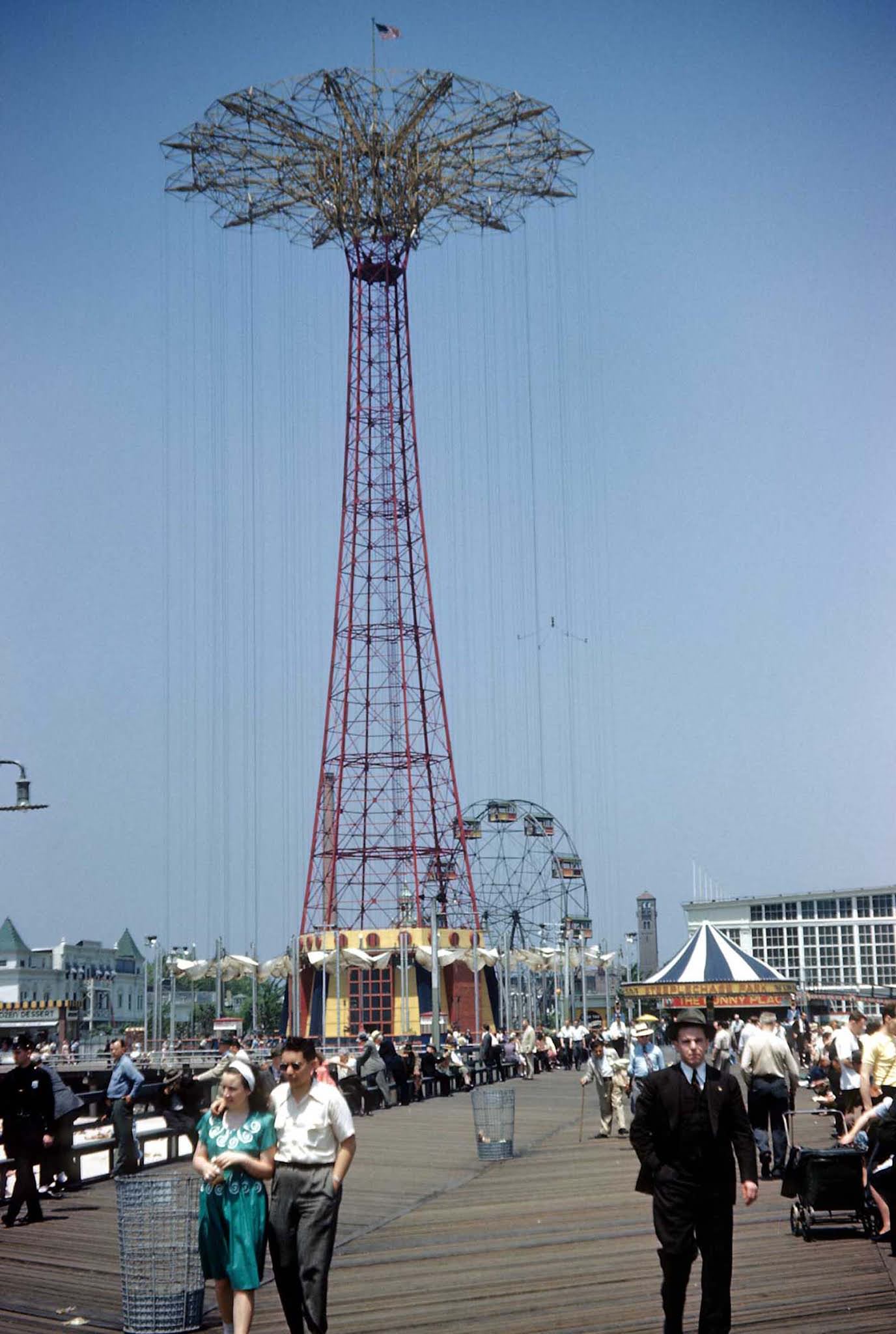
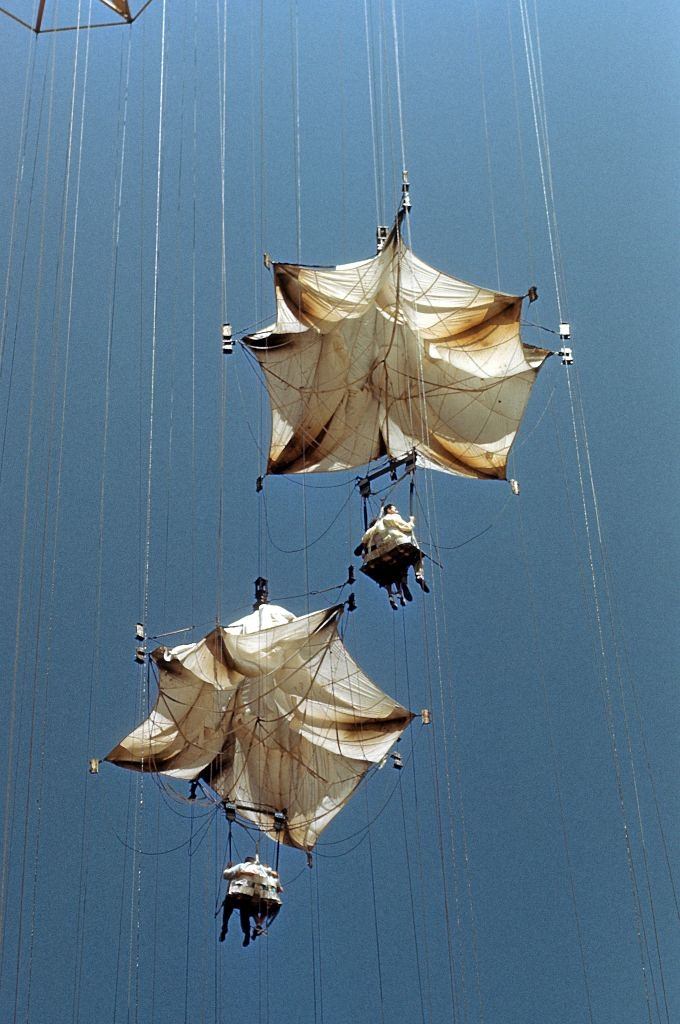
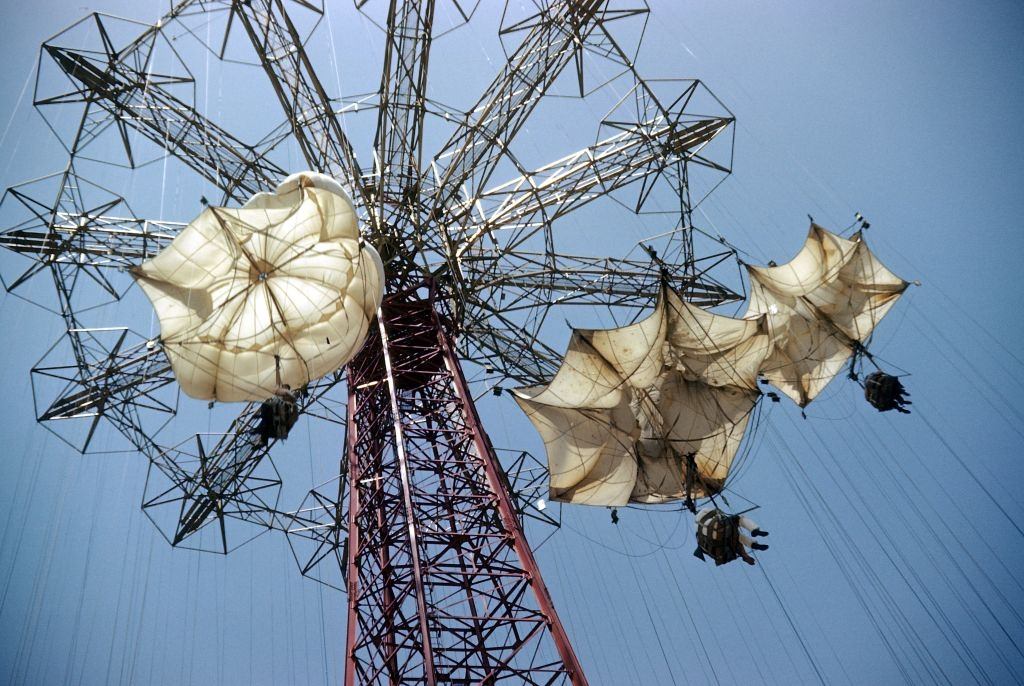
Steeplechase Park, founded by George Tilyou in 1897, was the oldest of the three parks still operating in 1948. Its signature attraction was the mechanical horse race that gave the park its name, but by mid-century it had expanded to include a wide range of thrill rides. The Parachute Jump stood as its most recognizable structure — a 262-foot steel tower that lifted riders to the top before dropping them down on parachutes.
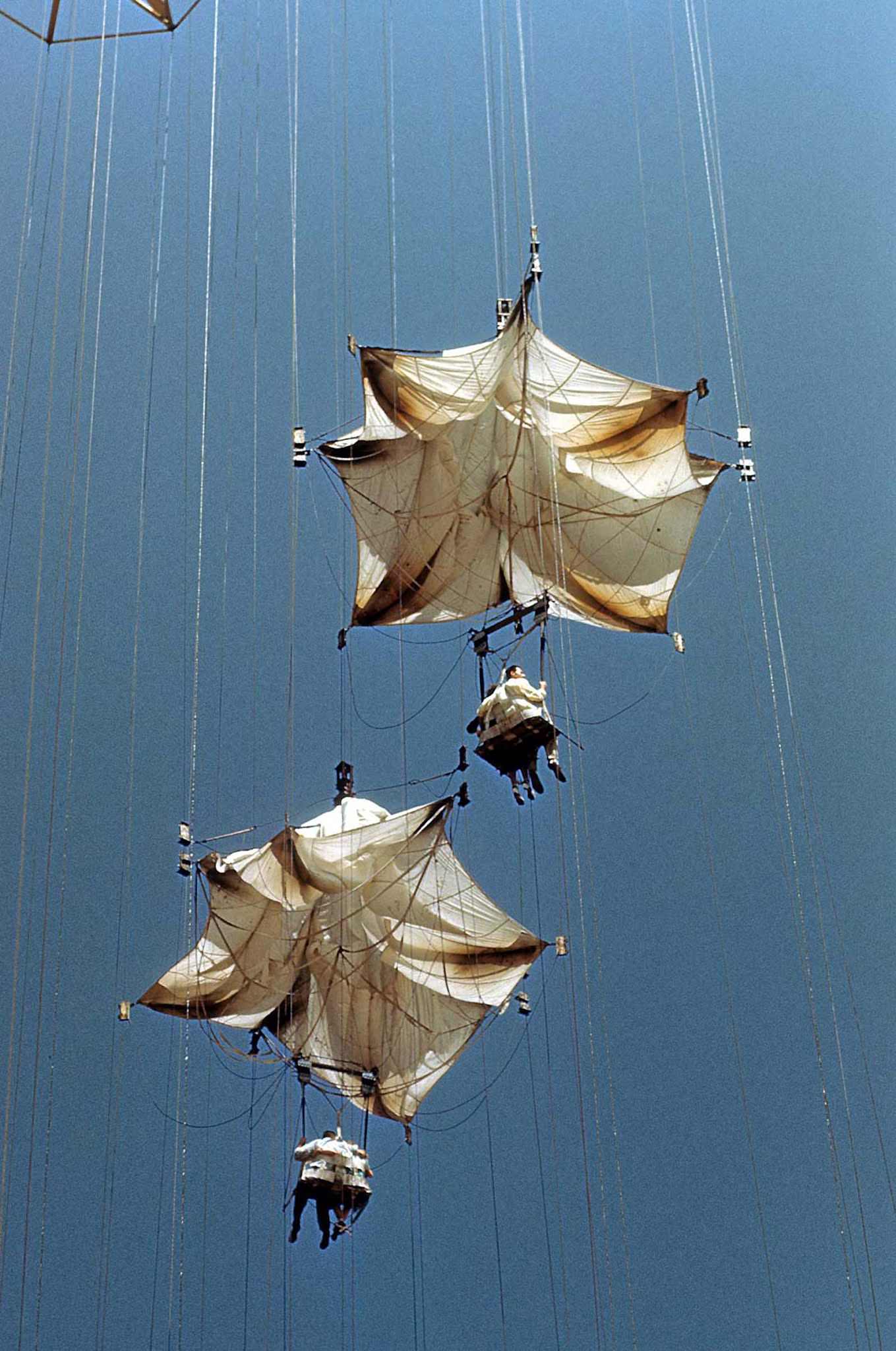
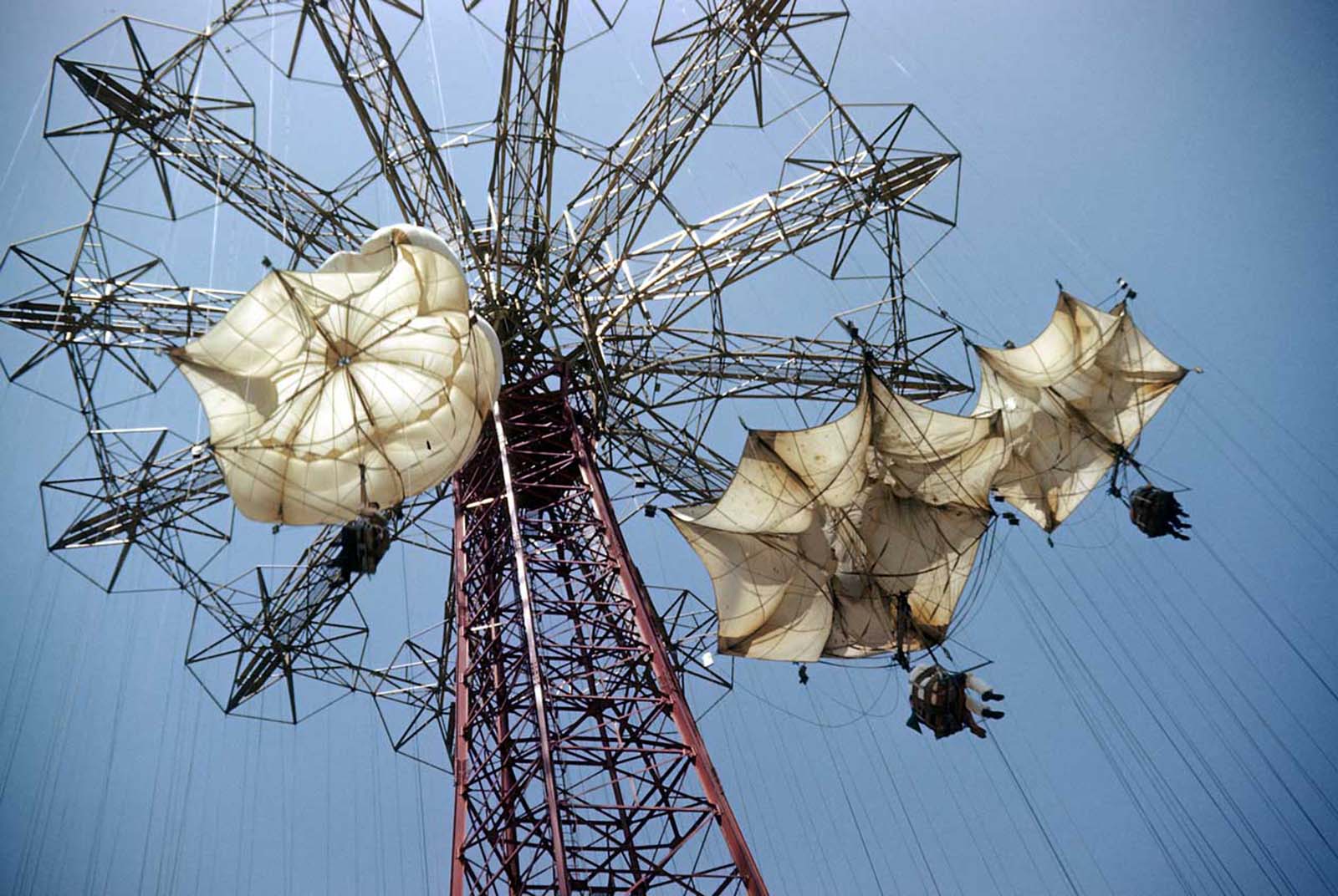
The Parachute Jump had originally been built for the 1939 New York World’s Fair in Flushing Meadows. After the fair closed, it was relocated to Steeplechase Park in 1941. Its height made it visible from miles away, and it became the unofficial symbol of Coney Island. Riders climbed into a seat beneath a folded parachute, were hoisted to the top, and then floated down — a controlled drop that gave a full view of the beach and ocean below.
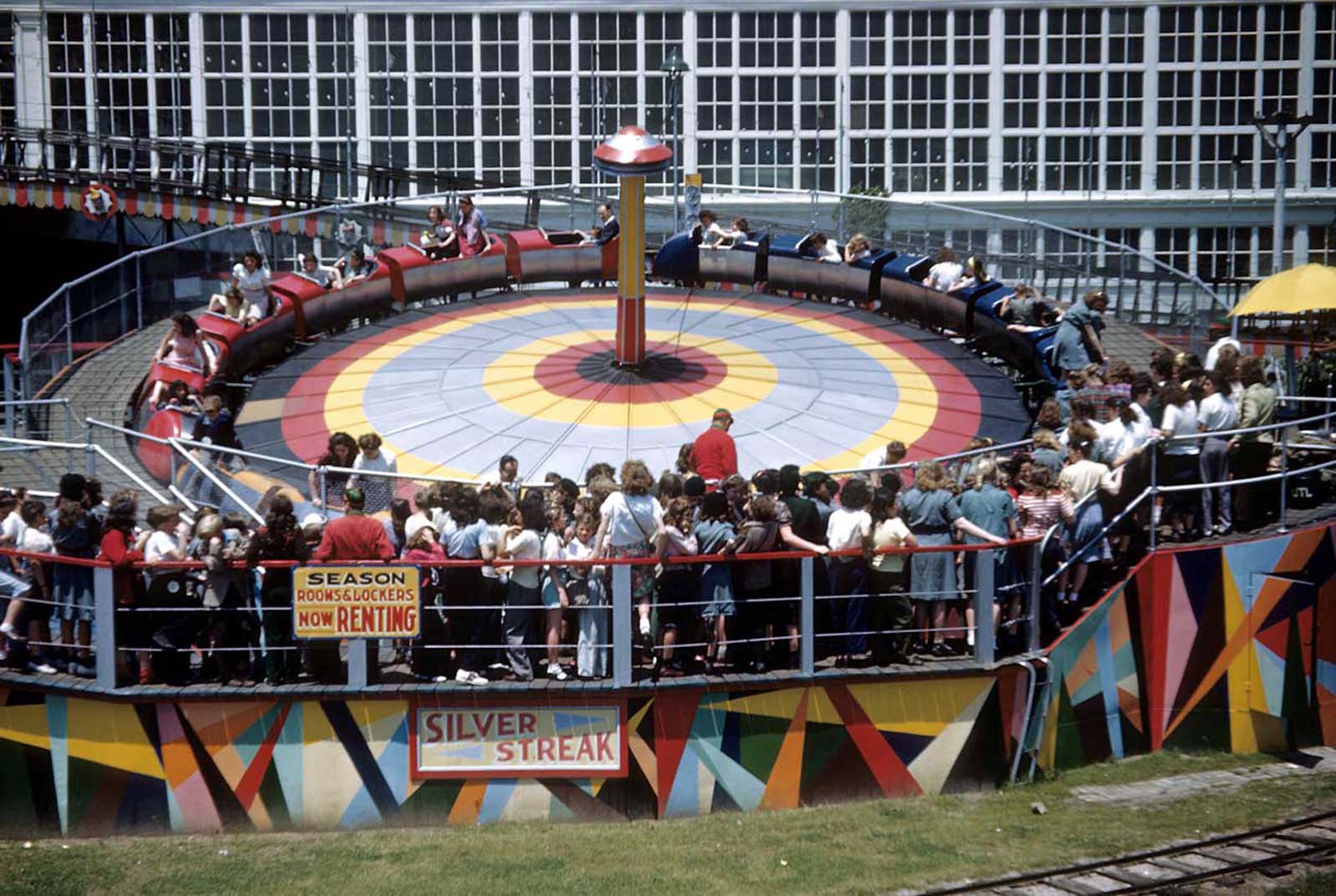
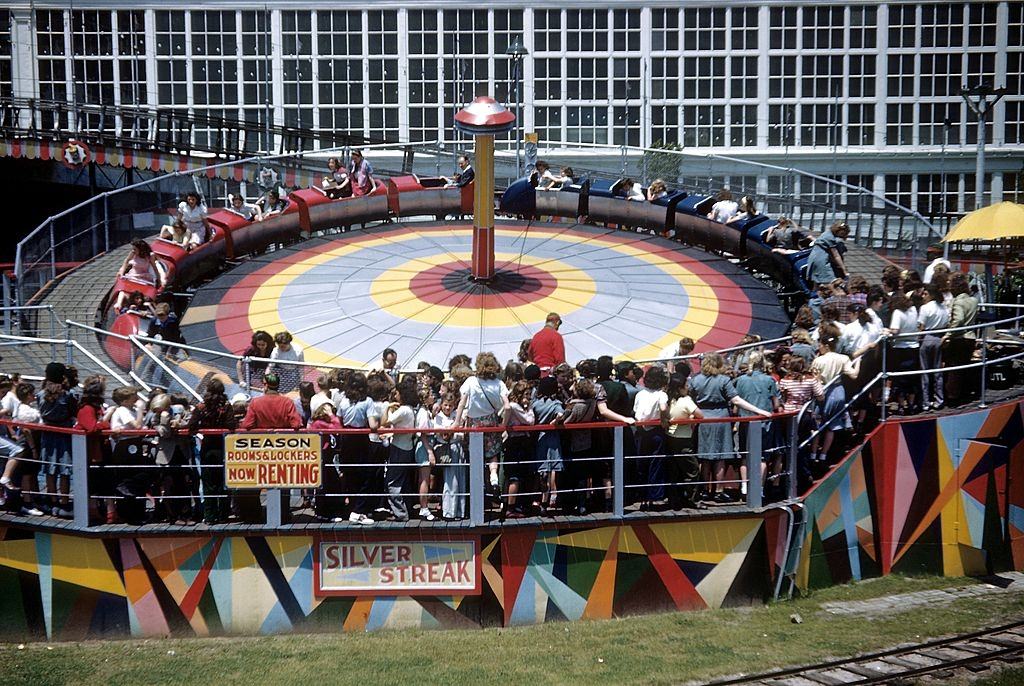
The Silver Streak was another Steeplechase staple. A sleek, fast coaster, it ran alongside other mechanical attractions that filled every corner of the park. Steeplechase had a reputation for being more working-class and rougher around the edges compared to Luna Park’s ornate design, but that never stopped the crowds from coming.
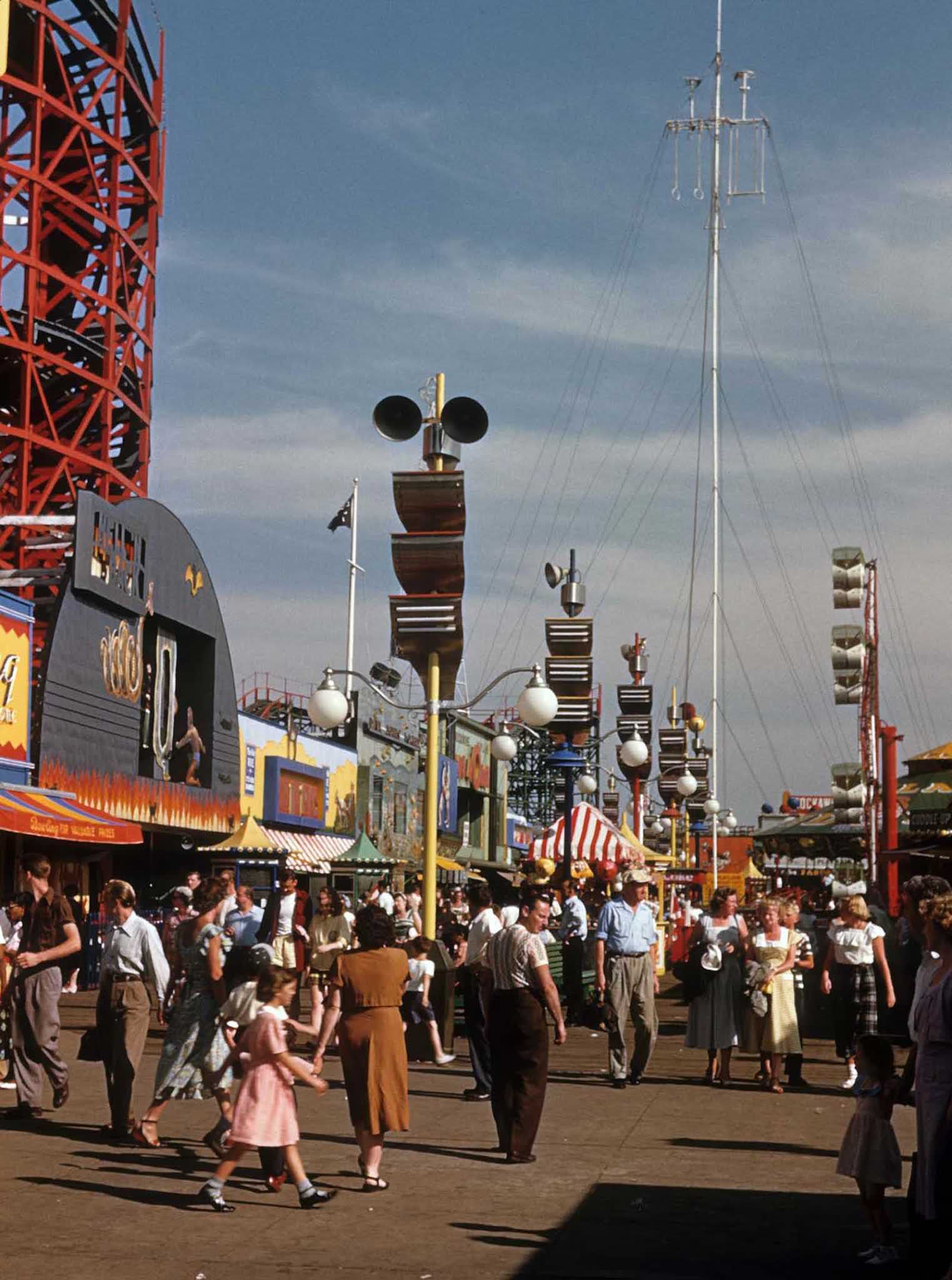
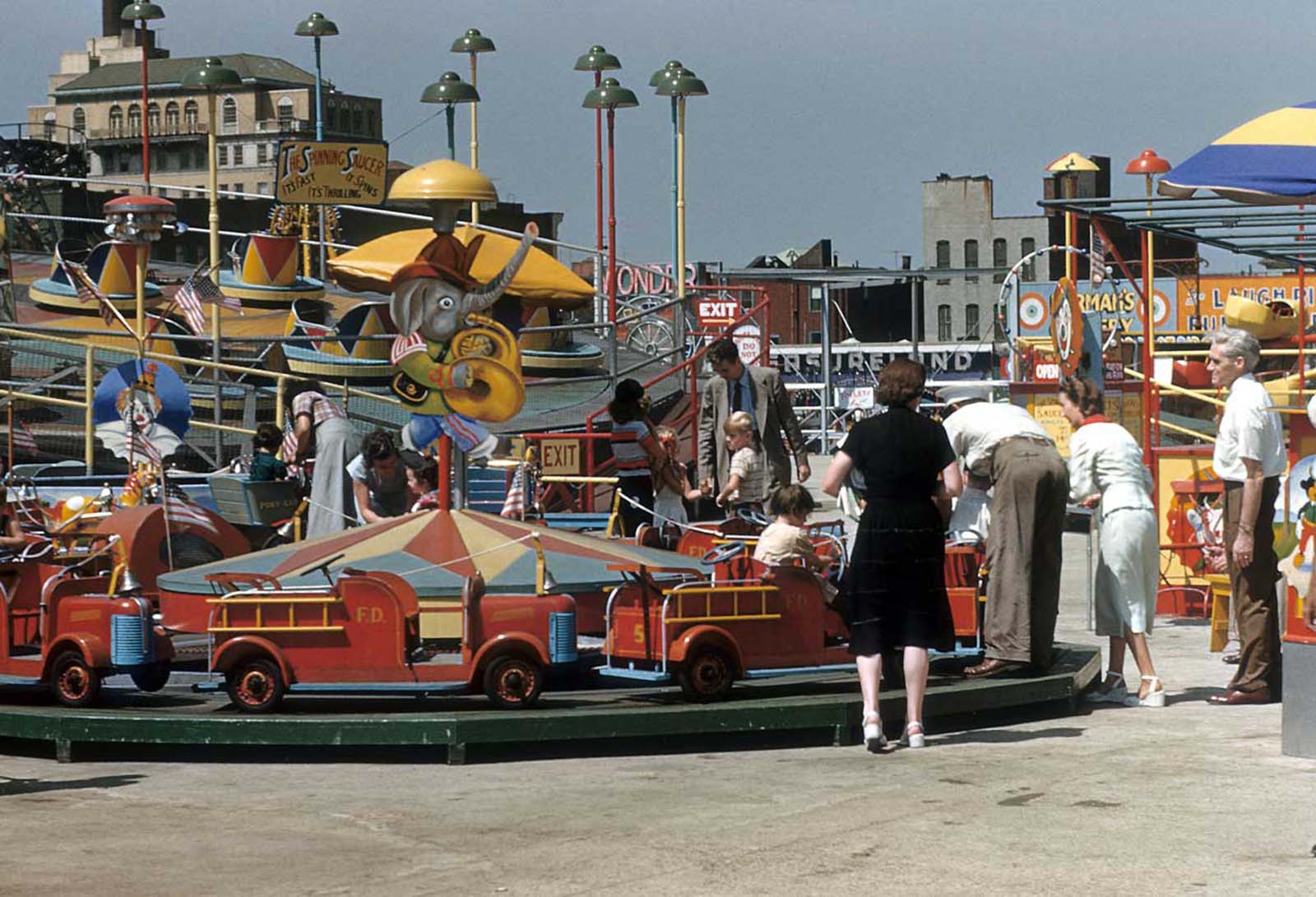
Luna Park had once been the crown jewel of Coney Island. When it opened in 1903, it was lit by 250,000 electric light bulbs — an almost incomprehensible number at a time when most homes still used gas lamps. Its towers and domes were decorated in an exotic mix of architectural styles. By 1948, Luna Park was past its peak; a fire in 1944 had caused serious damage, and the park never fully recovered. Still, it remained open and operational.
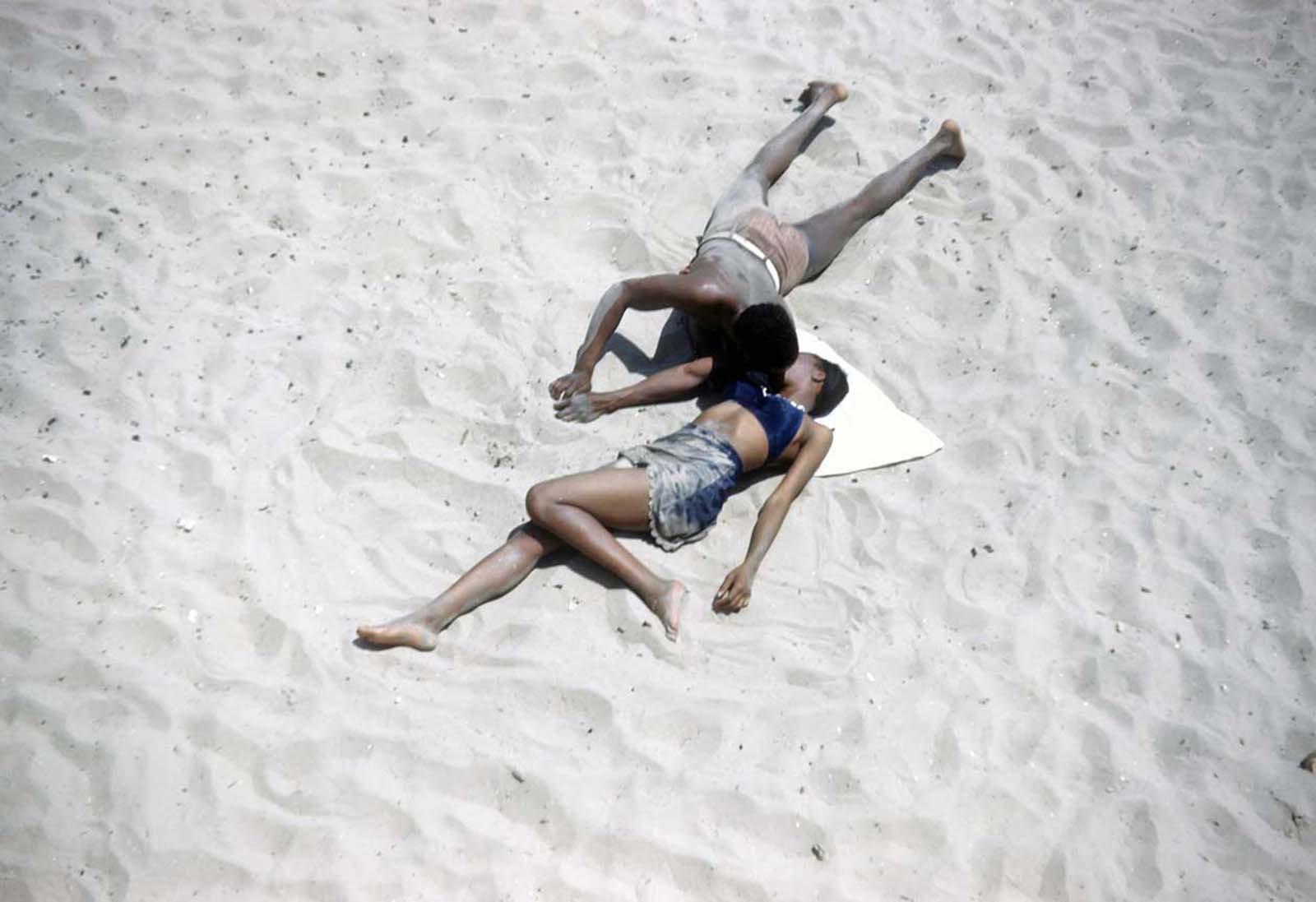
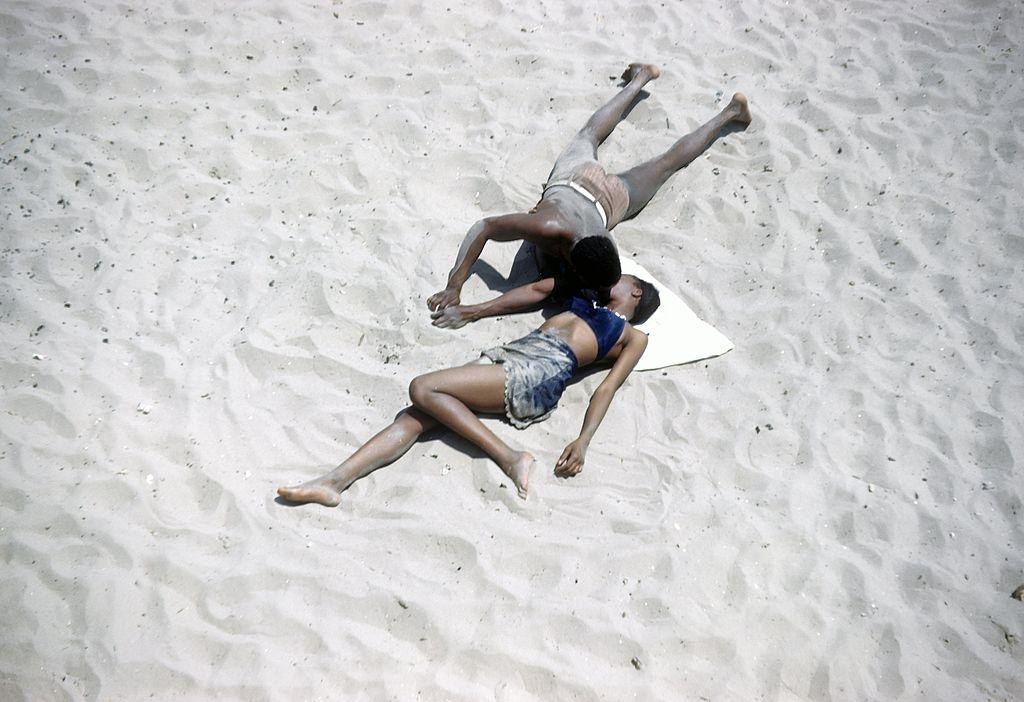
Coney Island in 1948 drew a diverse crowd. African American visitors came to the beach and the boardwalk, particularly after the wartime years had shifted social patterns in New York City. The beach was one of the few places where people of different backgrounds shared the same public space, side by side on the sand.
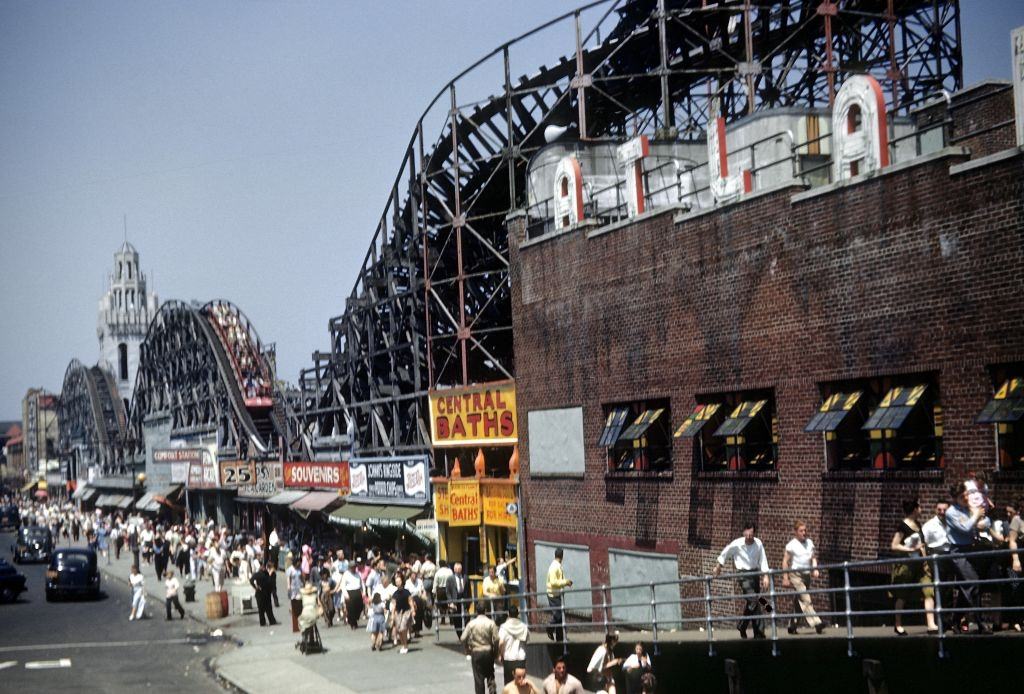
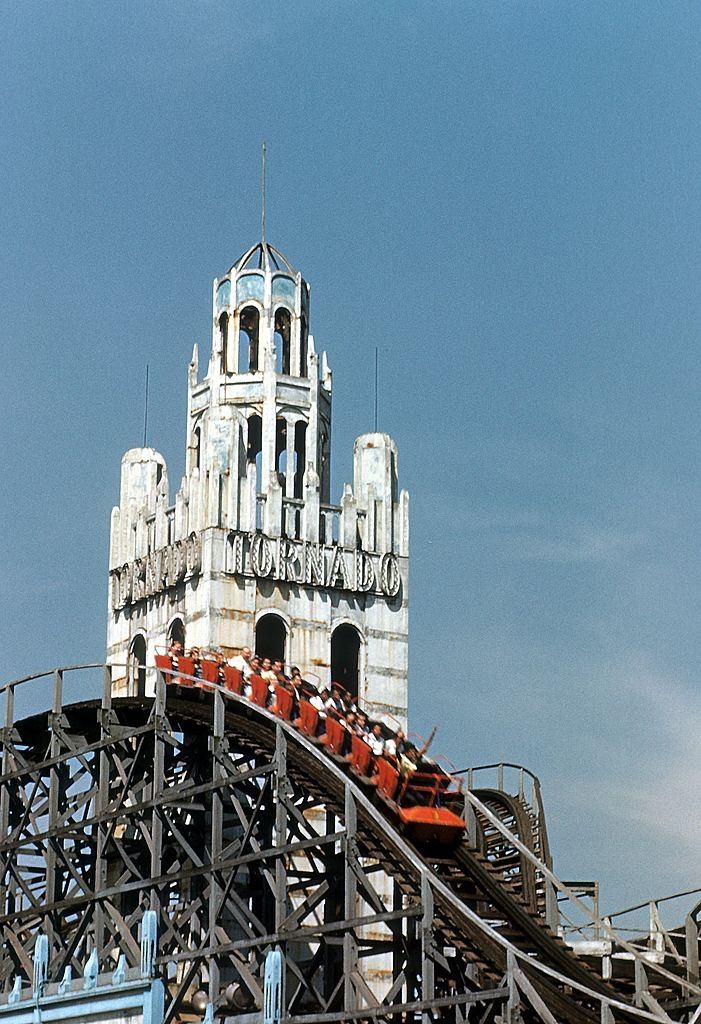
Bob’s Coaster, also known as The Tornado, was one of several wooden roller coasters that rattled and roared across Coney Island’s skyline. These were not smooth, computer-designed rides — they were raw, loud, and physically demanding. The sound of the coaster cars clattering over the wooden tracks was part of the ambient noise of the entire neighborhood.
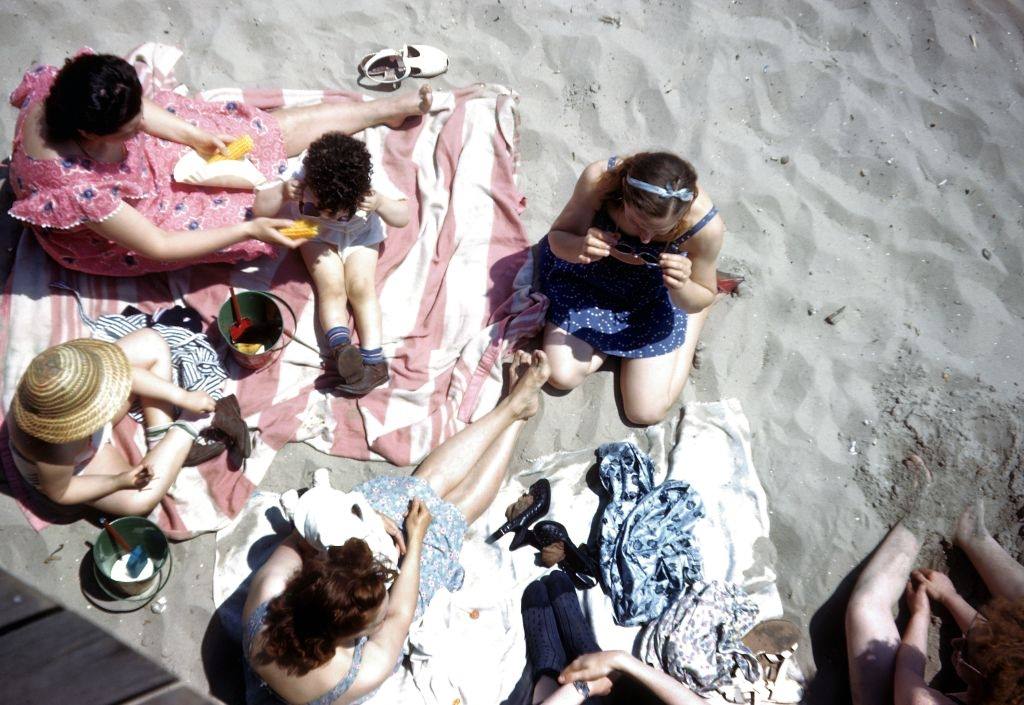
The summer of 1948 came just three years after the end of World War II. Americans were eager to spend money, take vacations, and enjoy themselves after years of rationing and sacrifice. Coney Island absorbed that energy. The beach was packed from early morning until after sundown, and the rides ran nonstop.
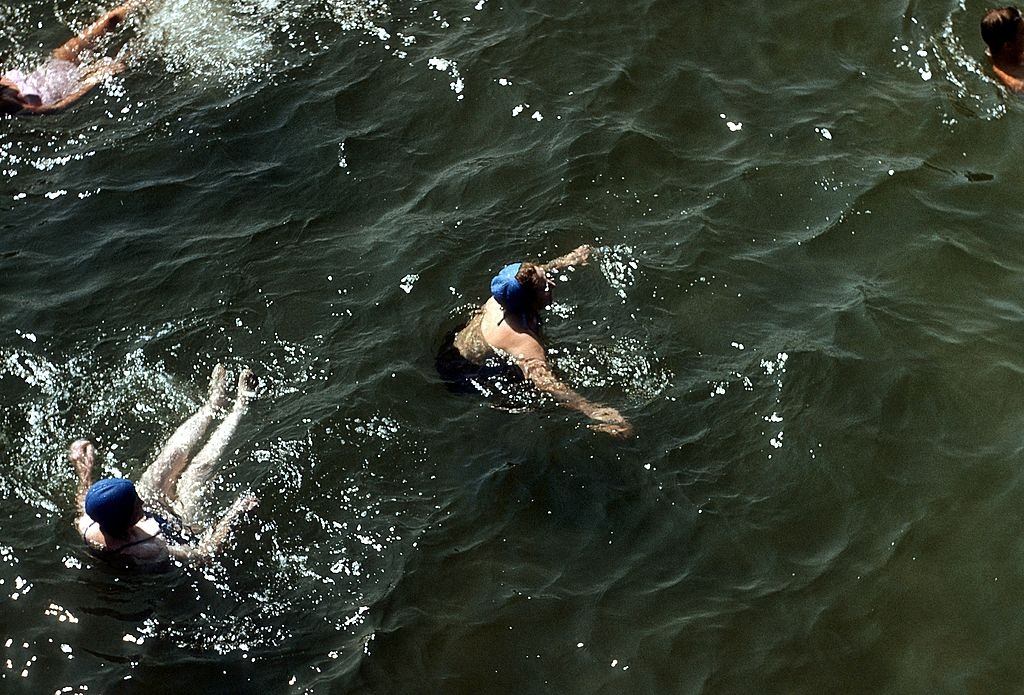
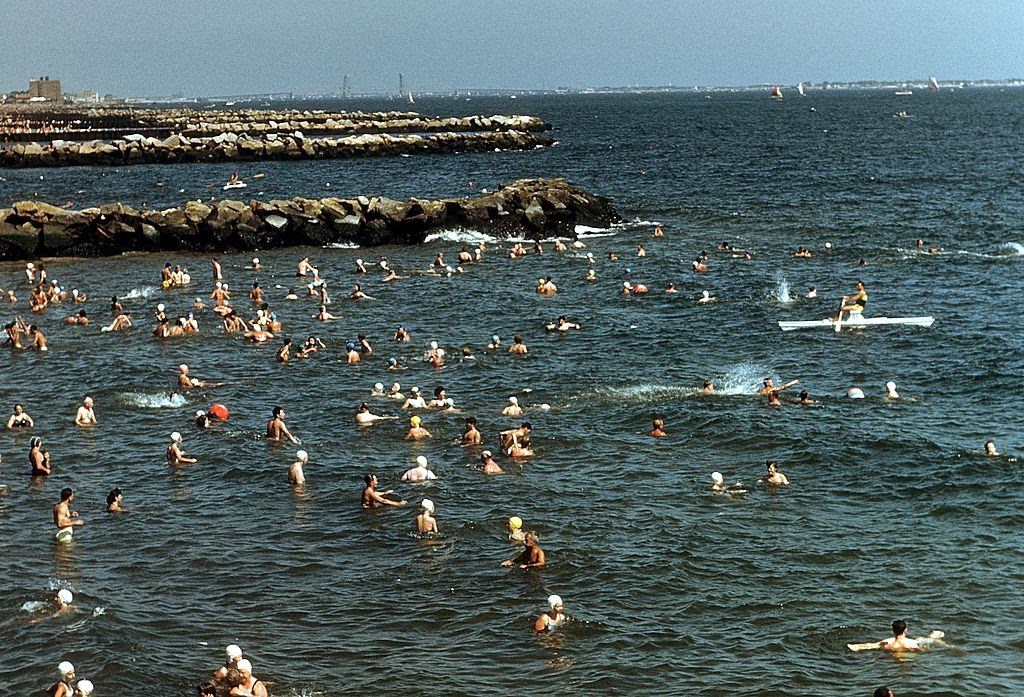
The Atlantic Ocean at Coney Island was open to anyone willing to wade in. No admission fee, no reservation — just the water. For millions of New Yorkers who couldn’t afford a trip to the Catskills or the Jersey Shore, this free access to the ocean was a genuine luxury. Families came by subway for a nickel fare and spent the whole day.
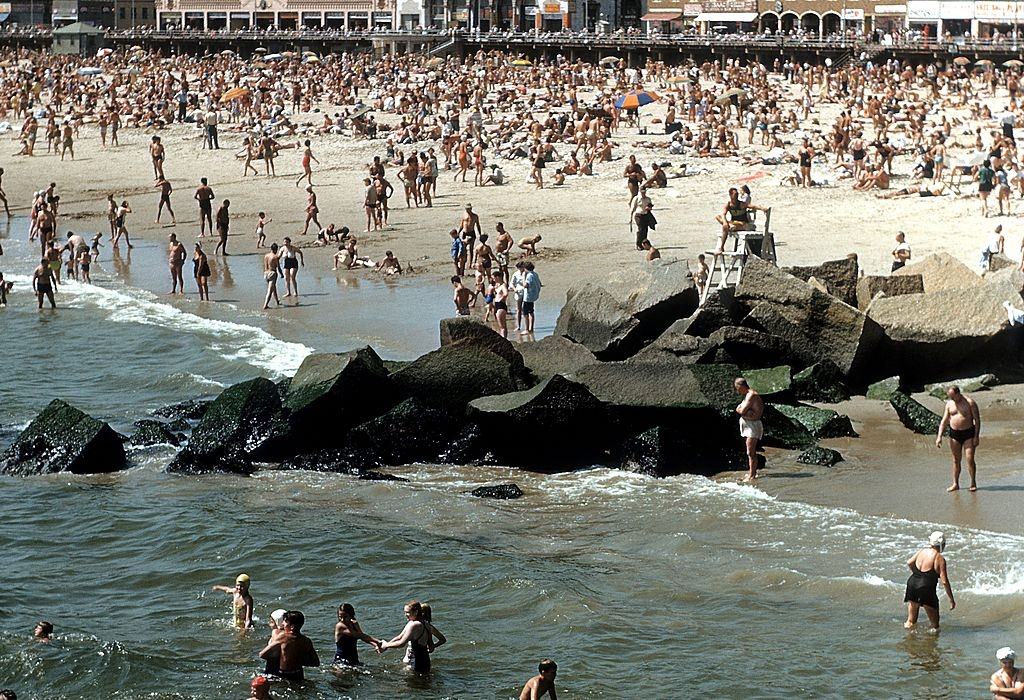
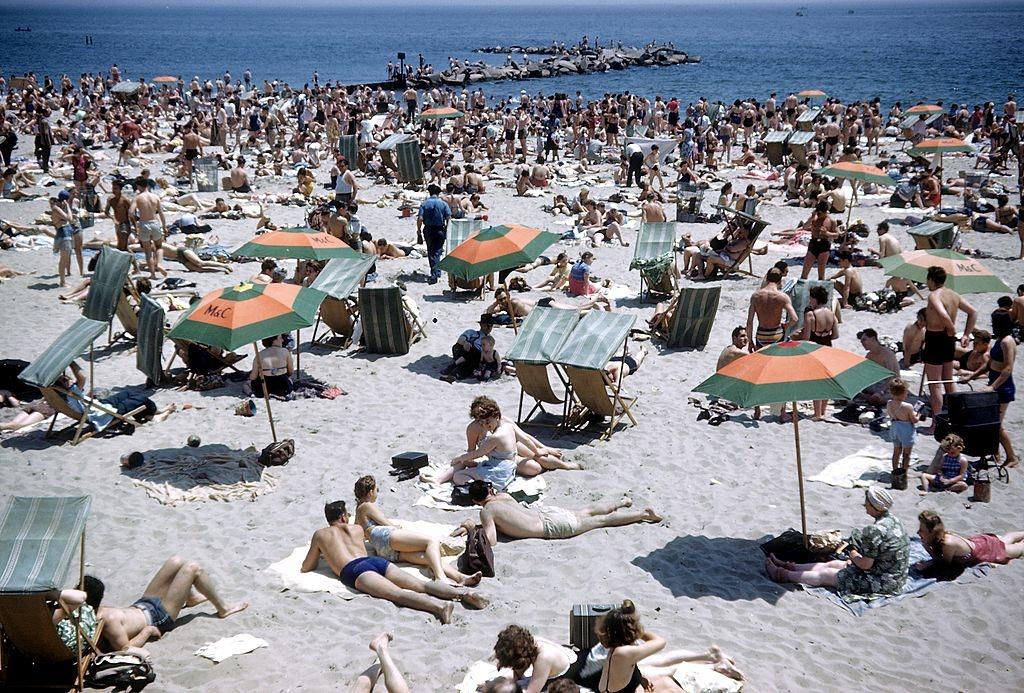
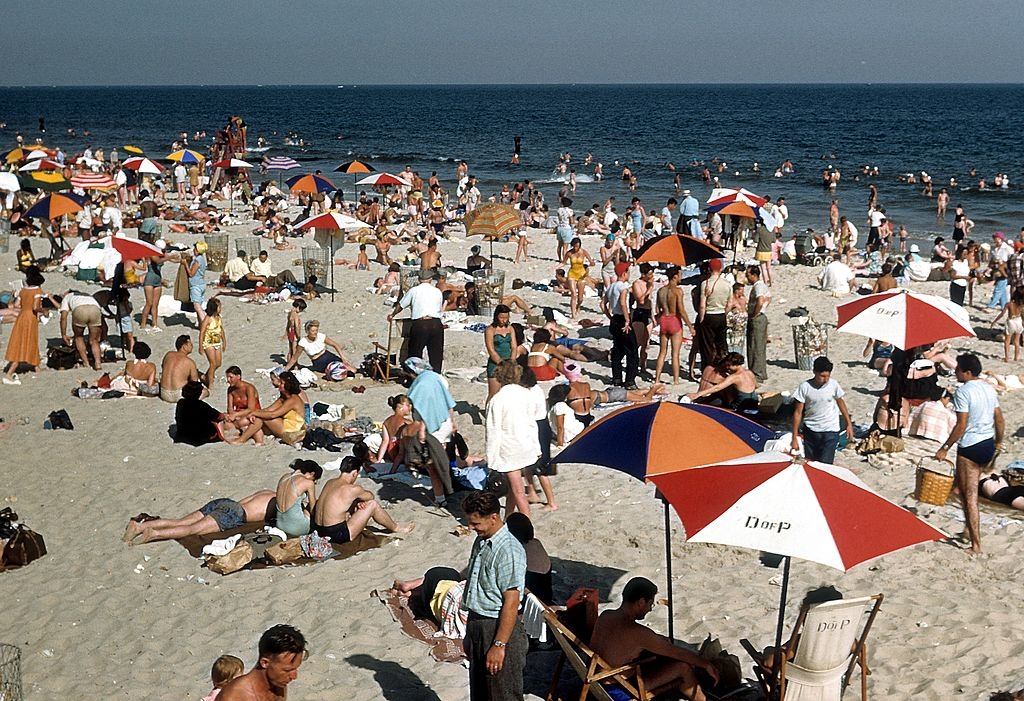
Looking down from the boardwalk onto the beach in 1948 was a staggering sight. The sand was barely visible beneath the mass of people — blankets, umbrellas, and bodies stretched from the boardwalk’s edge to the waterline. This was a city at play, compressed into a few miles of Brooklyn shoreline.
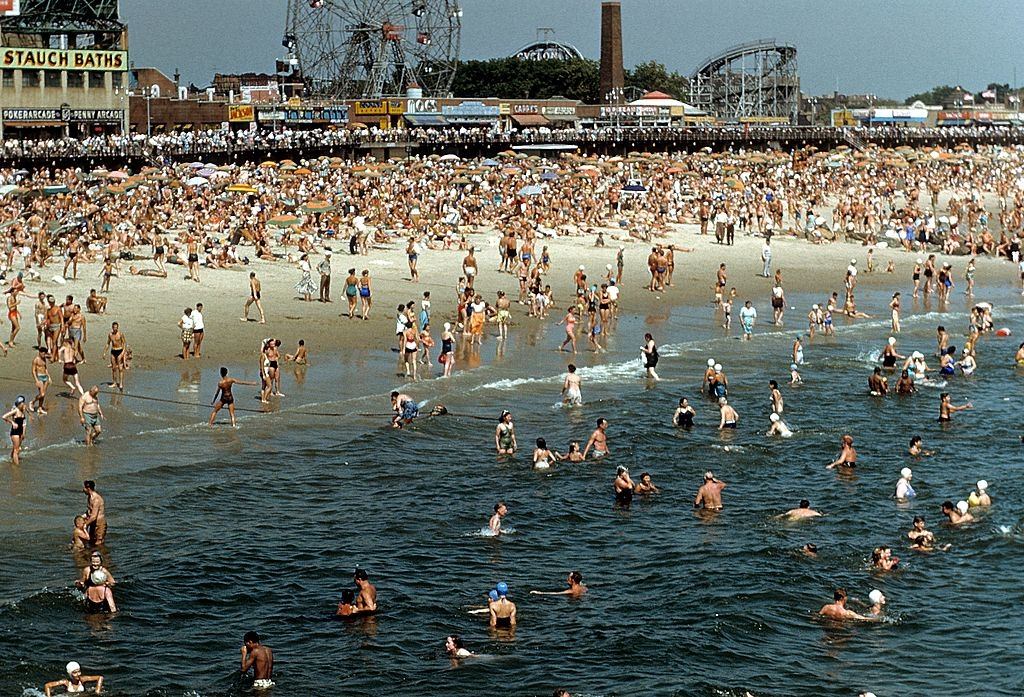
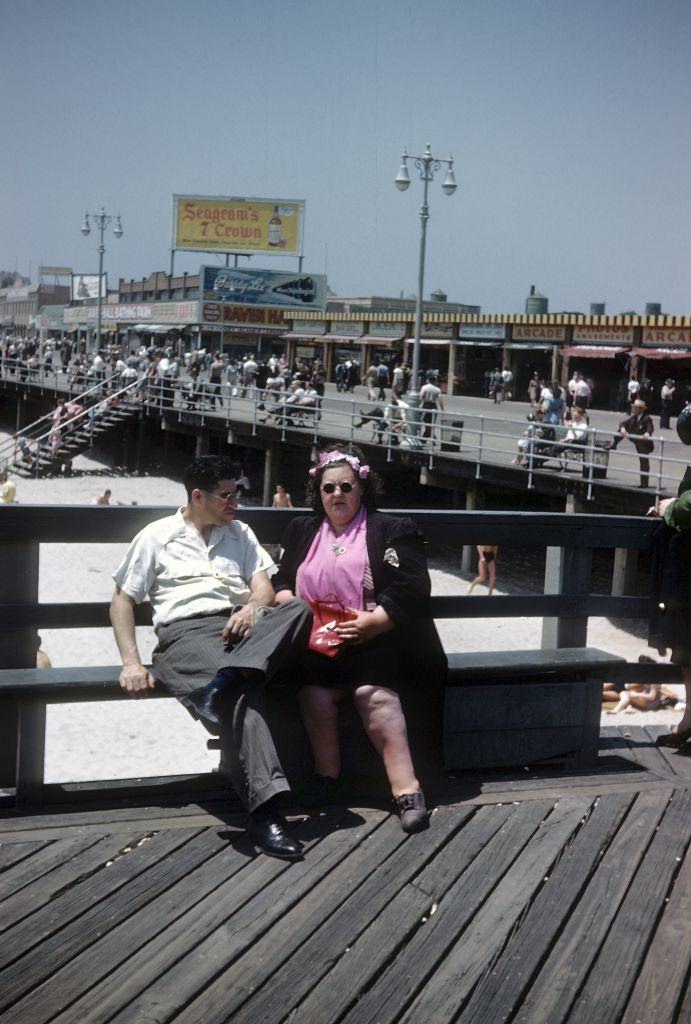
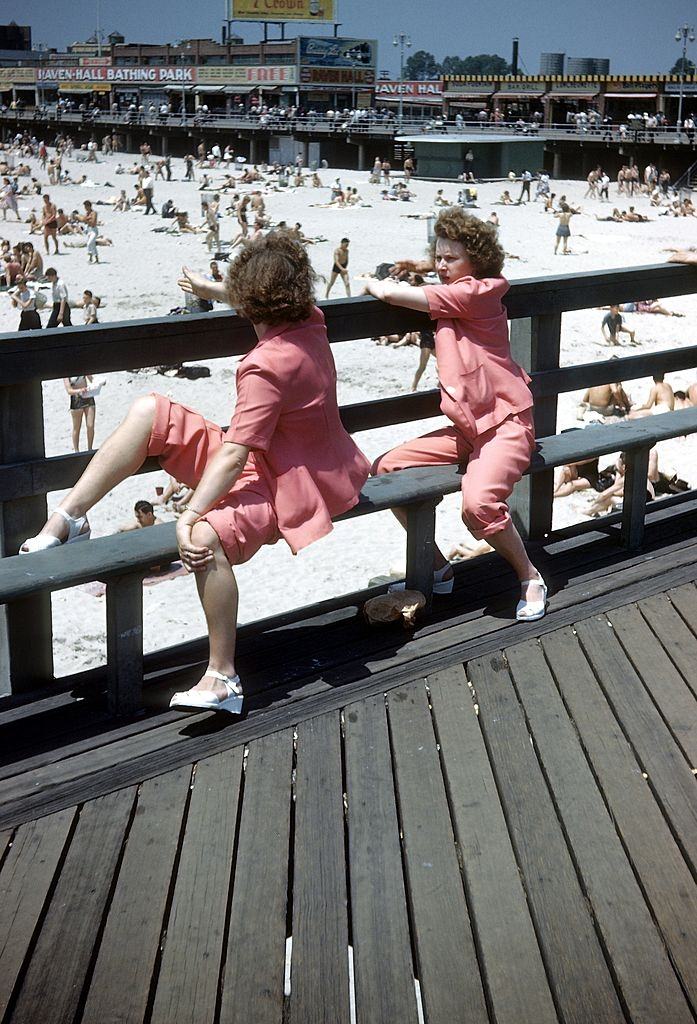
The boardwalk drew all kinds of visitors. Some came for the rides, some for the food, and some simply to walk and watch. Identical twins dressed in matching outfits stood at the railing, looking out over the beach below — an ordinary moment captured in color that now reads like a time capsule.
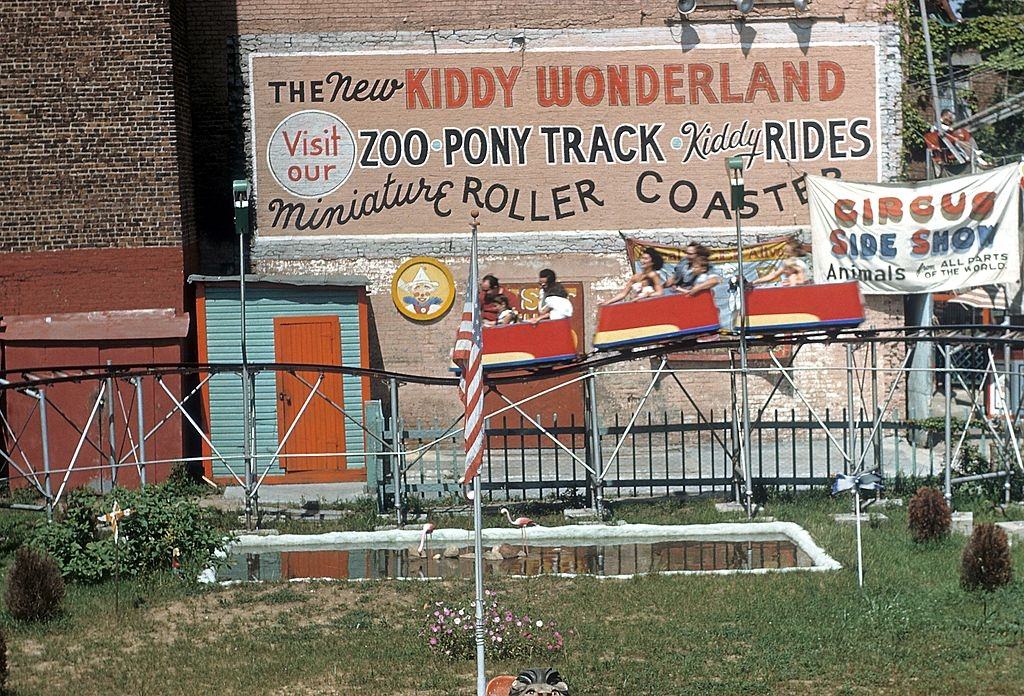
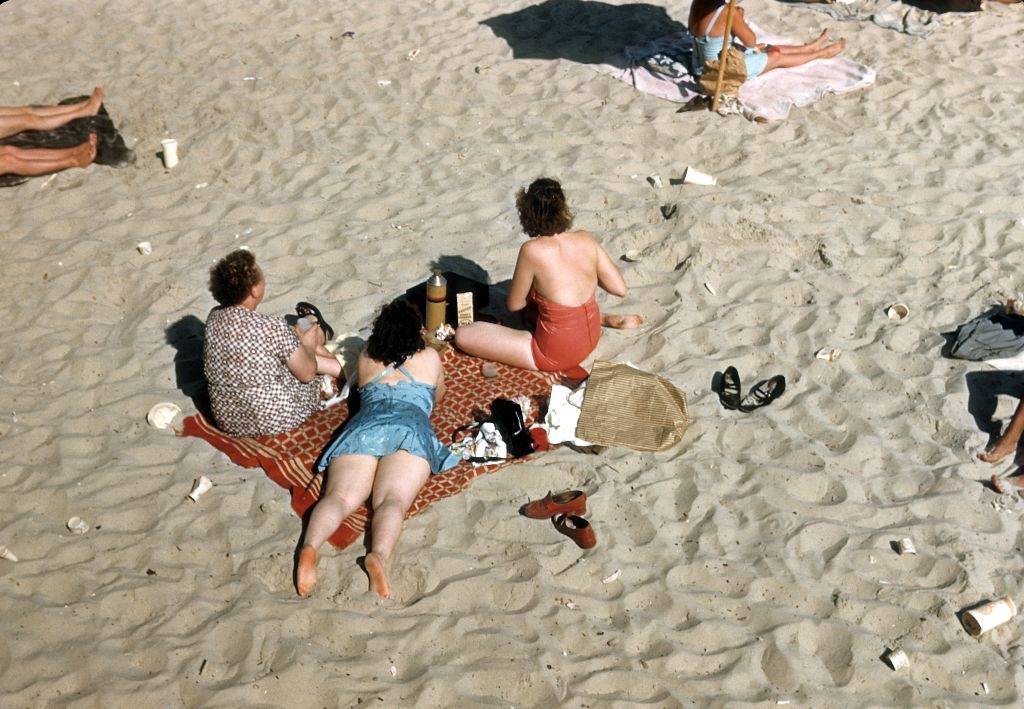
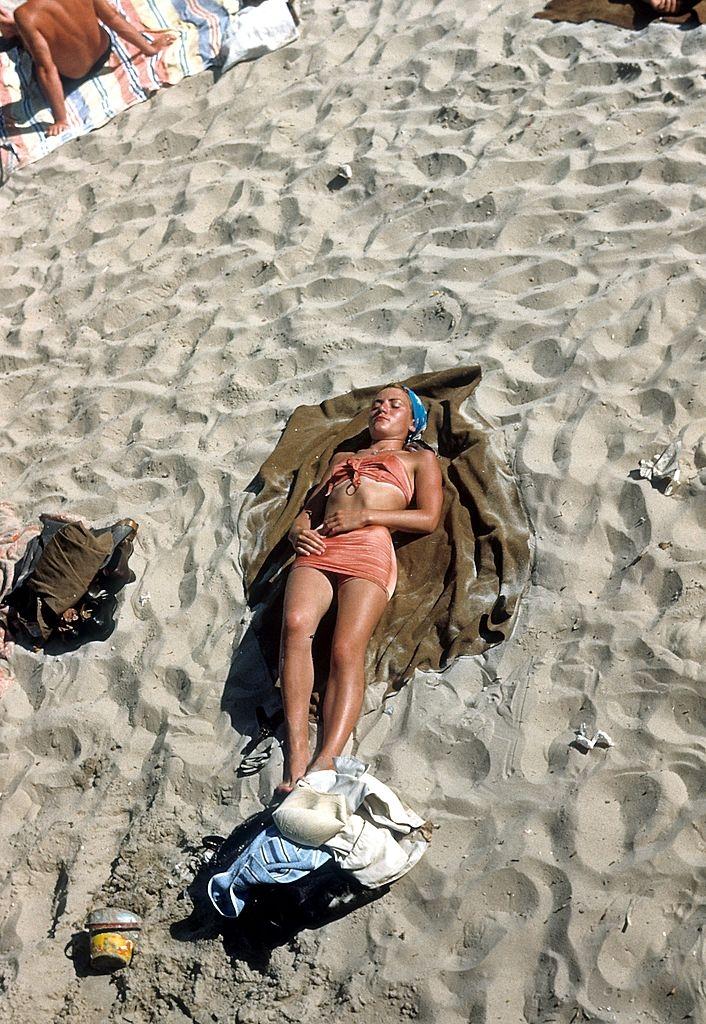
Even as Coney Island thrived in the summer of 1948, the forces that would slowly diminish it were already at work. The post-war boom brought cars and highways. New entertainment options spread across the country. Television sets were beginning to appear in living rooms. Coney Island’s dominance as the nation’s premier amusement destination was built on the fact that it was accessible and affordable — but those same qualities became less unique as the country changed.
Dreamland, the third of Coney Island’s great amusement parks, had actually burned down in 1911 and never reopened. But its rides — including the Creation, Hell Gate, and the End of the World — had set the standard for what an amusement park could offer in the early 20th century. By 1948, Dreamland’s memory lived on in the DNA of every attraction that had followed it.
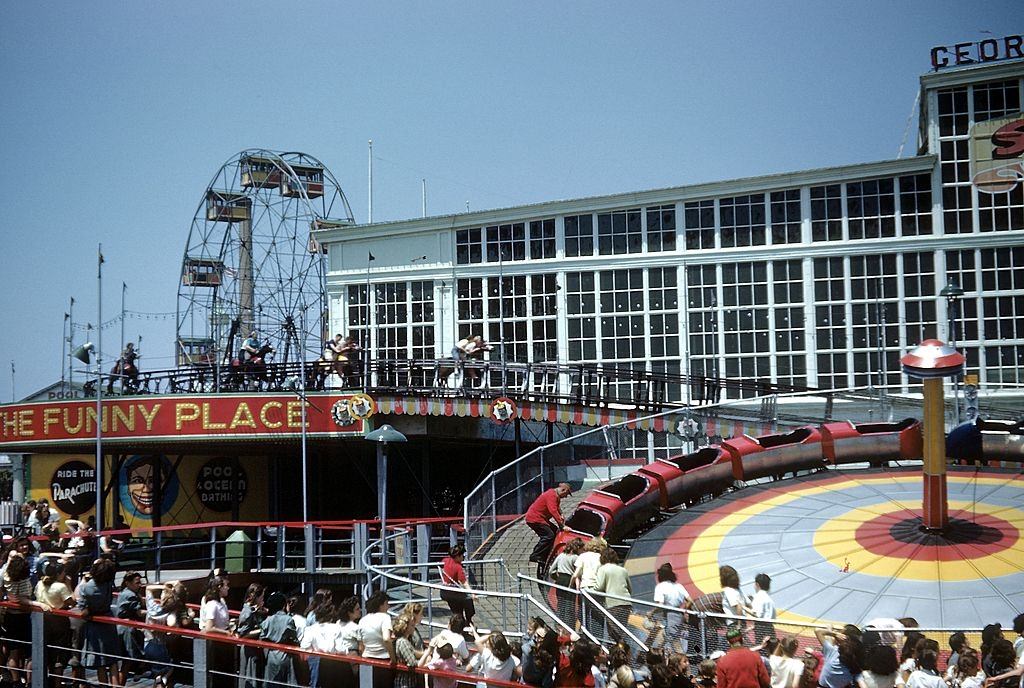
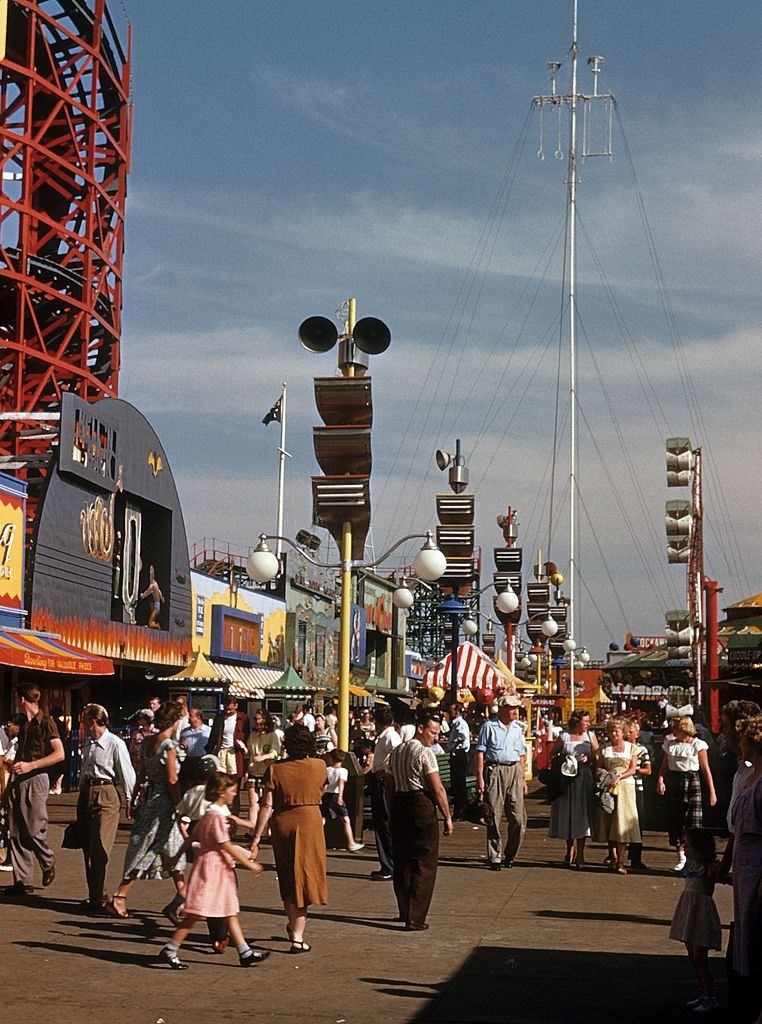
The Funny Place was a standard fixture at Steeplechase — a walk-through attraction with distorting mirrors, tilted floors, and mechanical surprises designed to knock visitors off balance and get them laughing. It sat close to the Silver Streak, and the two attractions together represented the dual appeal of Steeplechase: speed and spectacle on one hand, slapstick fun on the other.
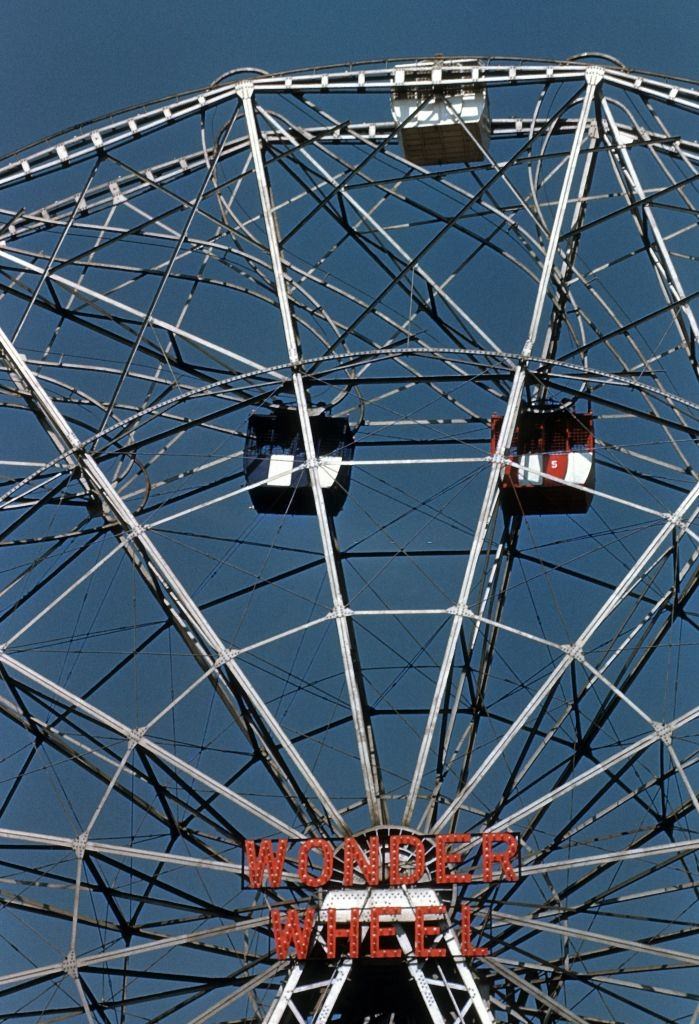
The Wonder Wheel was a standalone attraction, not tied to any of the three parks. It stood 150 feet tall and featured a unique design: some of its passenger cars were fixed in place, while others slid along tracks inside the wheel as it turned. Built in 1920, it was already a Coney Island institution by 1948.
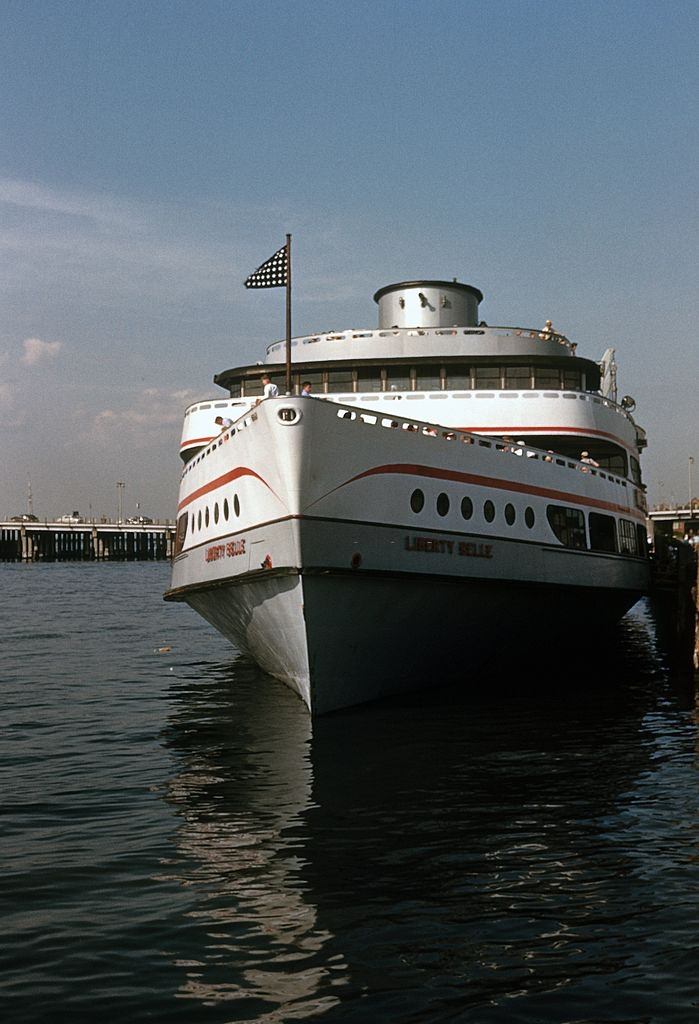
The Liberty Belle ferry offered visitors another way to reach or leave Coney Island by water. Moored at the dock, it was part of the wider transportation network that brought New Yorkers to the resort. The subway was far more common, but the ferry added a nautical dimension to the Coney Island experience for those who chose it.
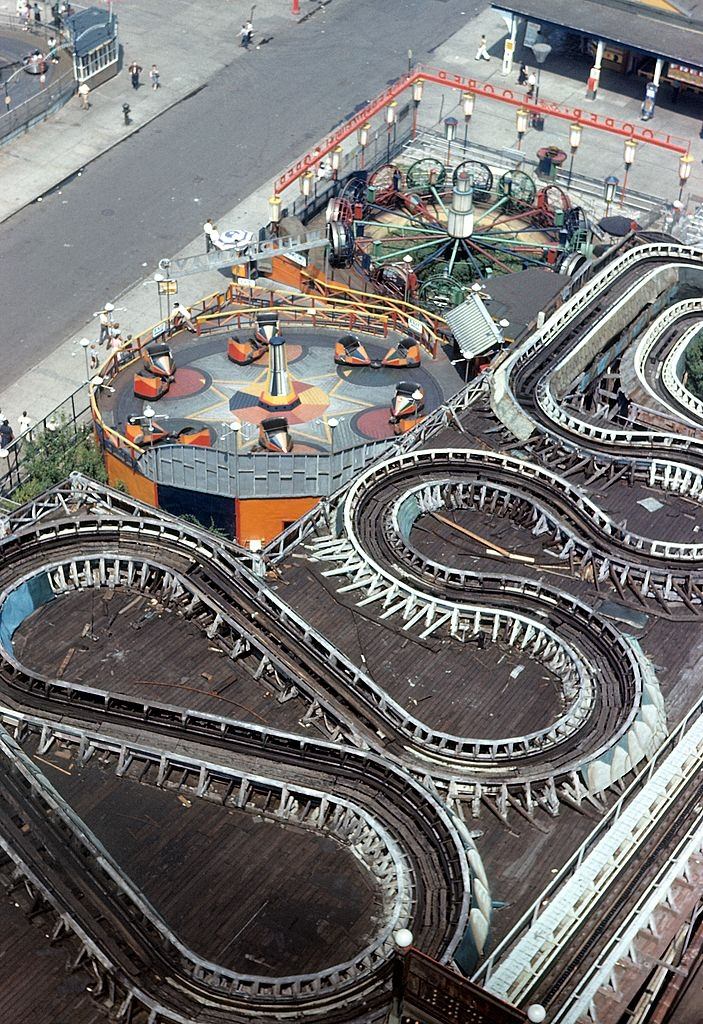
An aerial view of Luna Park in 1948 reveals the sheer density of the place. The Virginia Reel roller coaster, the Looper, and the Whirlaway rides were packed tightly together within the park’s footprint. There was no wasted space — every square foot was either a ride, a walkway, or a concession stand.
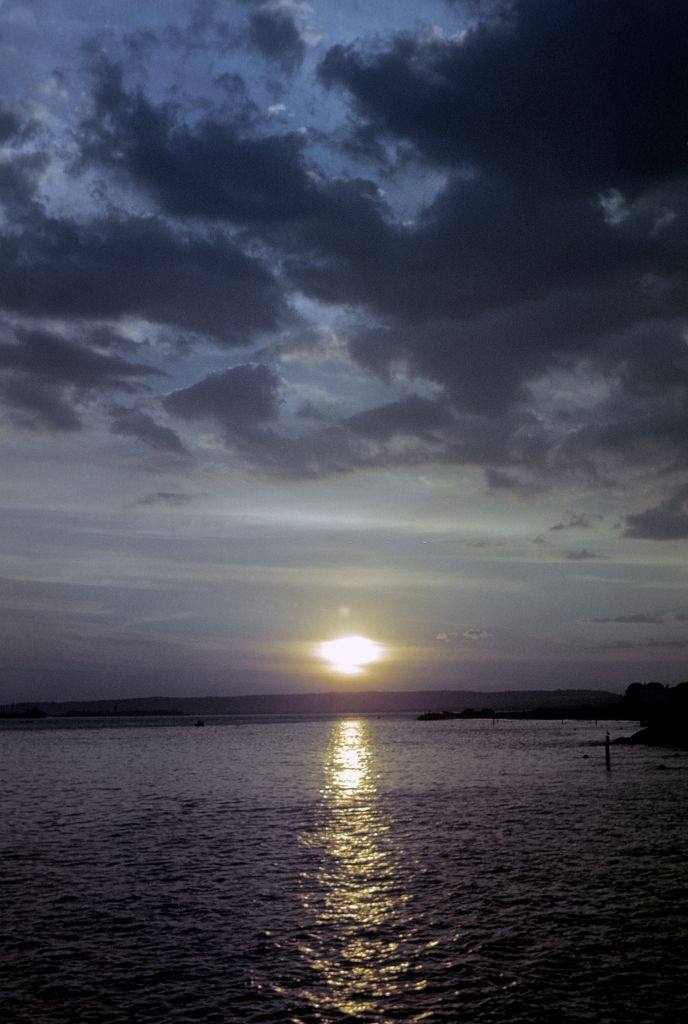
As the sun set over the Atlantic, the beach gradually cleared and the lights of the parks took over. The neon signs, ride lights, and illuminated storefronts along the boardwalk turned Coney Island into a different kind of spectacle after dark. The 1948 summer season ran from Memorial Day through Labor Day, and every evening ended with this same transition from daylight to artificial light.