By 1963, the Berlin Wall had already stood for two years. Concrete slabs and barbed wire cut through neighborhoods, splitting families and sealing off entire streets. On the western side, life pressed on — and for the children who grew up in its shadow, the Wall was simply part of the landscape. Magnum photographer Thomas Hoepker was there to document it.
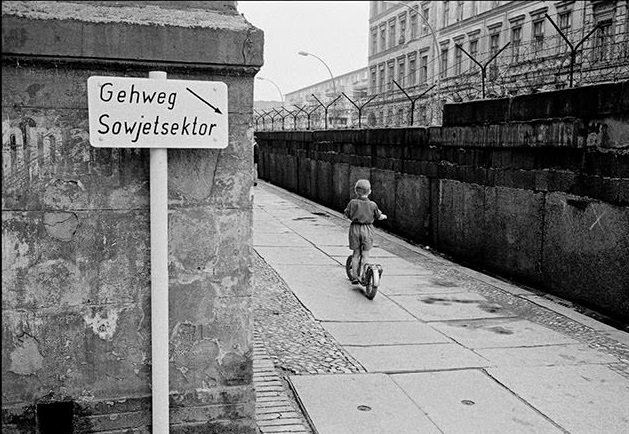
Hoepker had been photographing life in East Germany since 1959. His work from this period builds a detailed visual record of a nation cut in two. In 1963, his lens turned to something rarely associated with the Wall — children at play. The images he captured that year are stark, honest, and at times quietly unsettling.
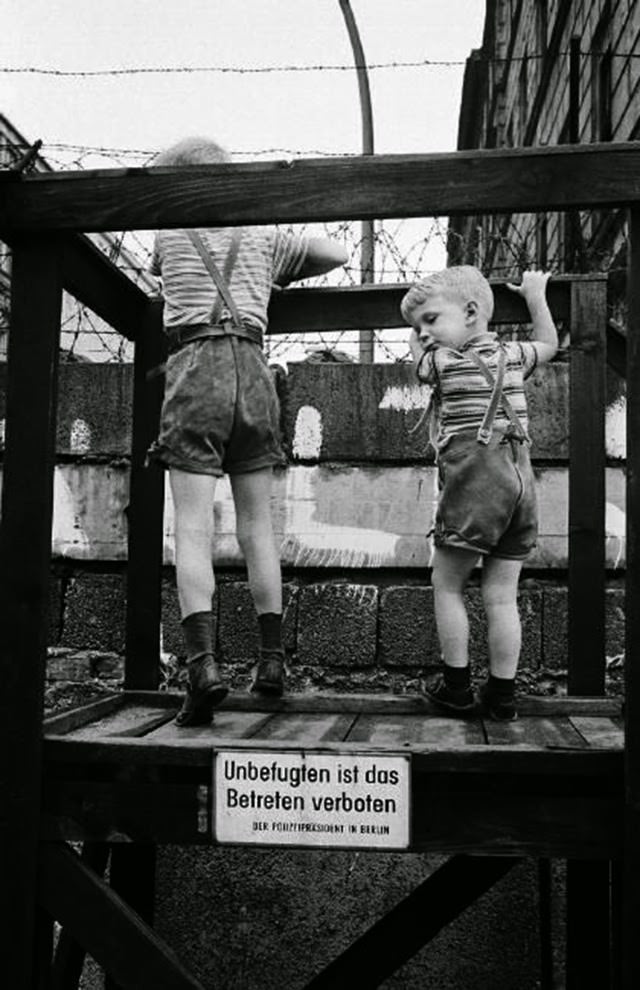
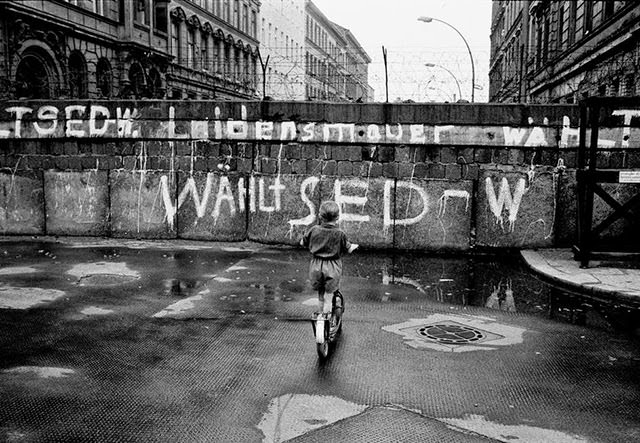
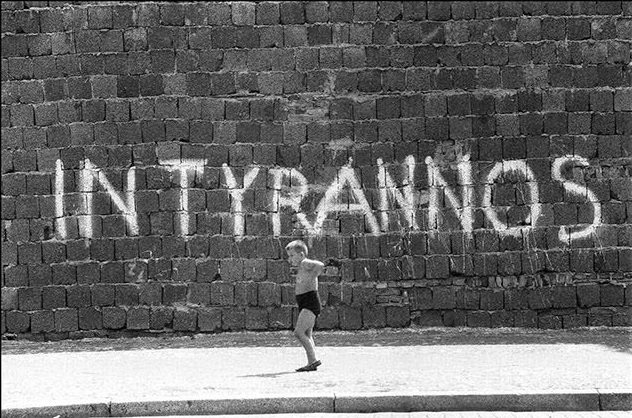
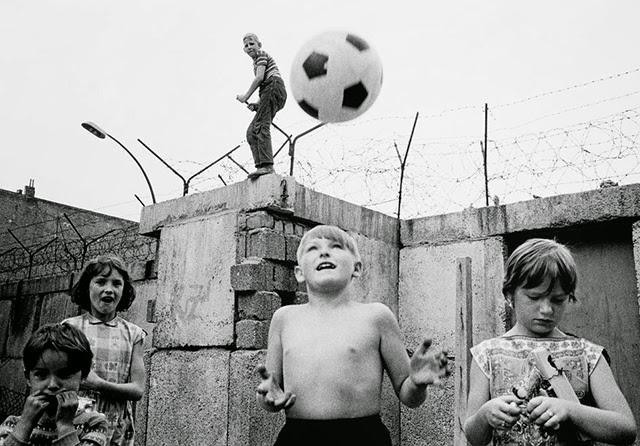
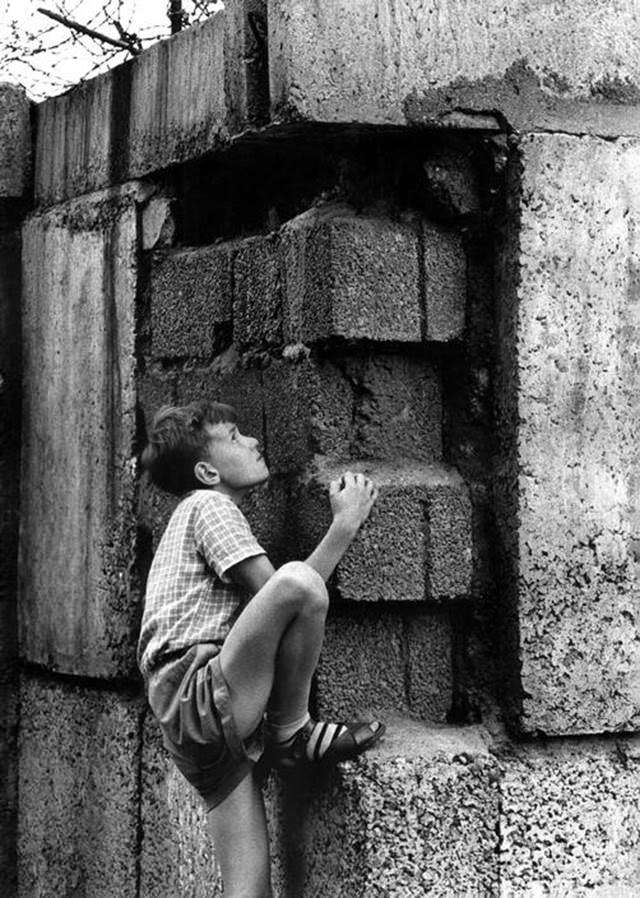
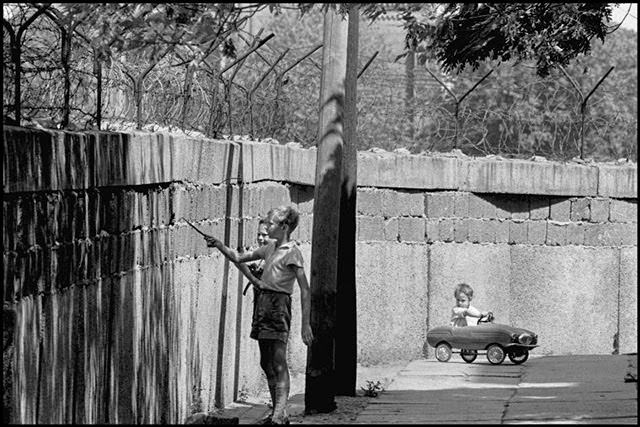
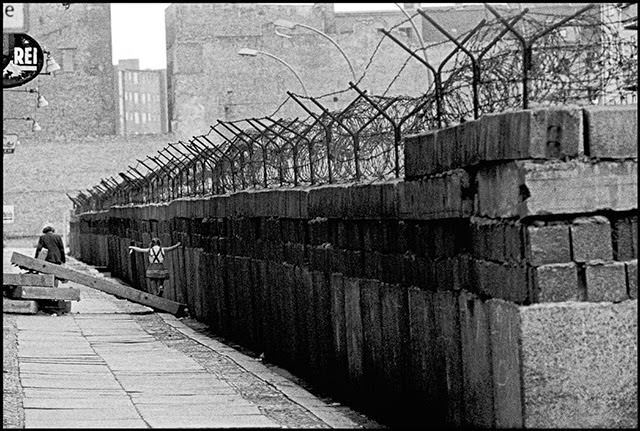
Along the Wedding district in West Berlin, children used the Wall the way kids use any large structure — as a climbing frame, a goalpost, a boundary to test. The concrete surface bore graffiti and scrawled slogans, yet it didn’t stop small hands from gripping its edges.
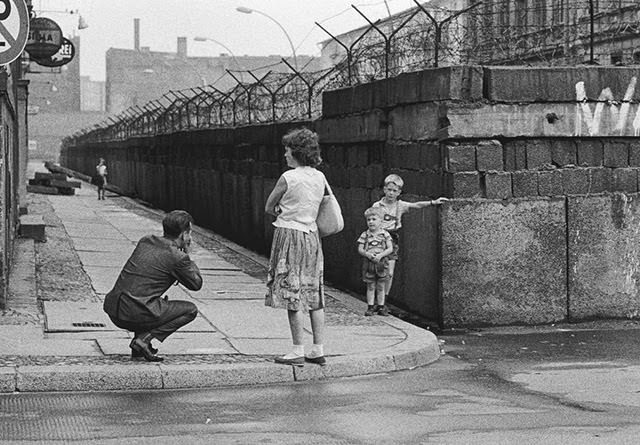
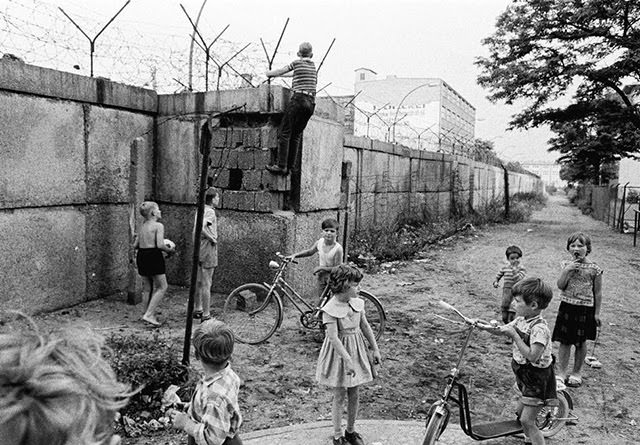
Near Bernauer Strasse, one of the most closely watched stretches of the Wall, families still ventured out. A father lined up his sons for souvenir photos. Children kicked footballs in the open strips of pavement that ran alongside the barrier. One photo shows four children watching a fifth scramble up the Wall’s face — one carrying a soccer ball, another with a bike parked nearby.
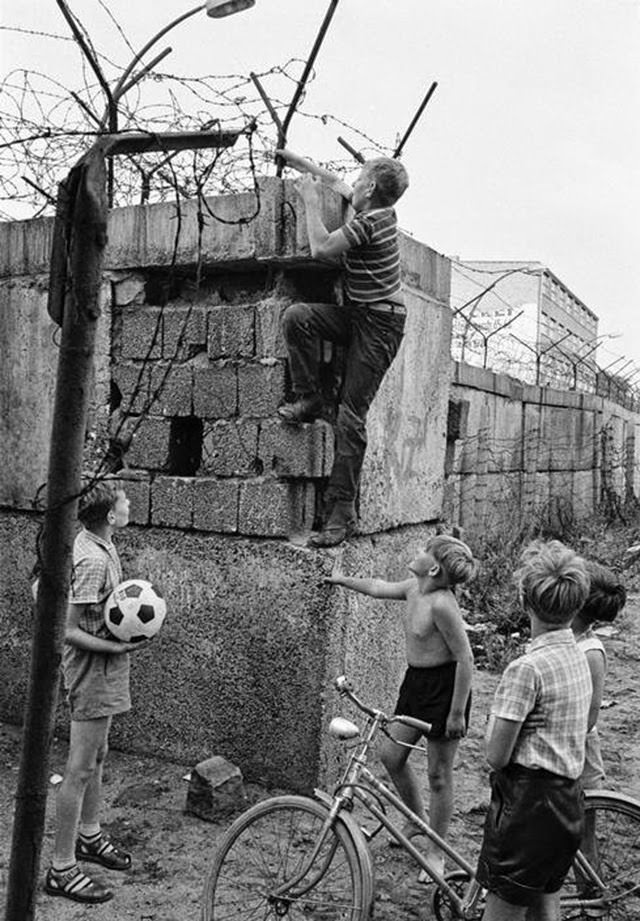
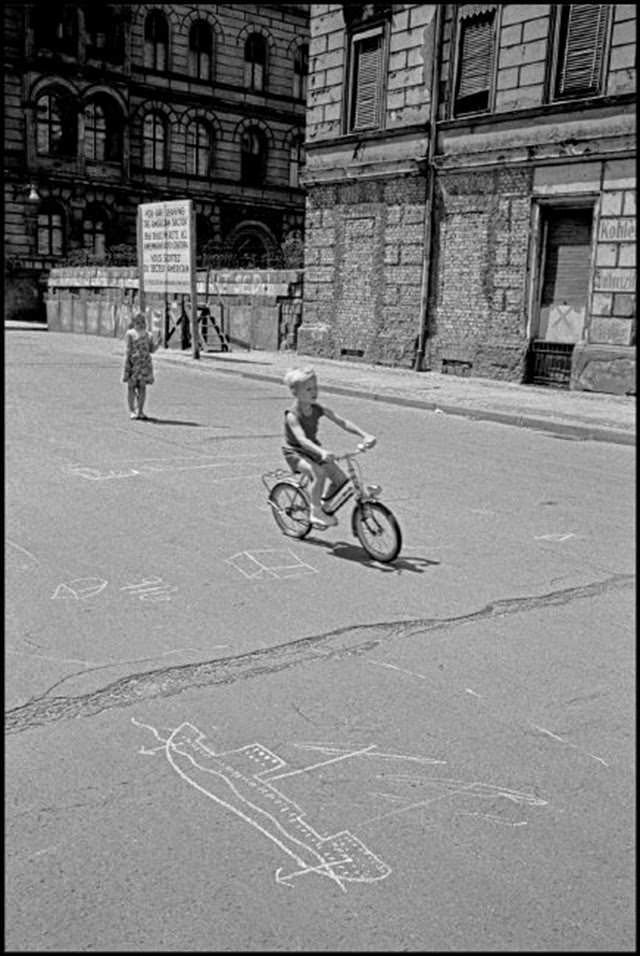
Hoepker photographed children across the western side of the Wall in multiple locations and at different times of day. The scenes repeat in variation — small groups gathered, running, watching, and climbing — as though the Wall had simply become another fixture of the playground.
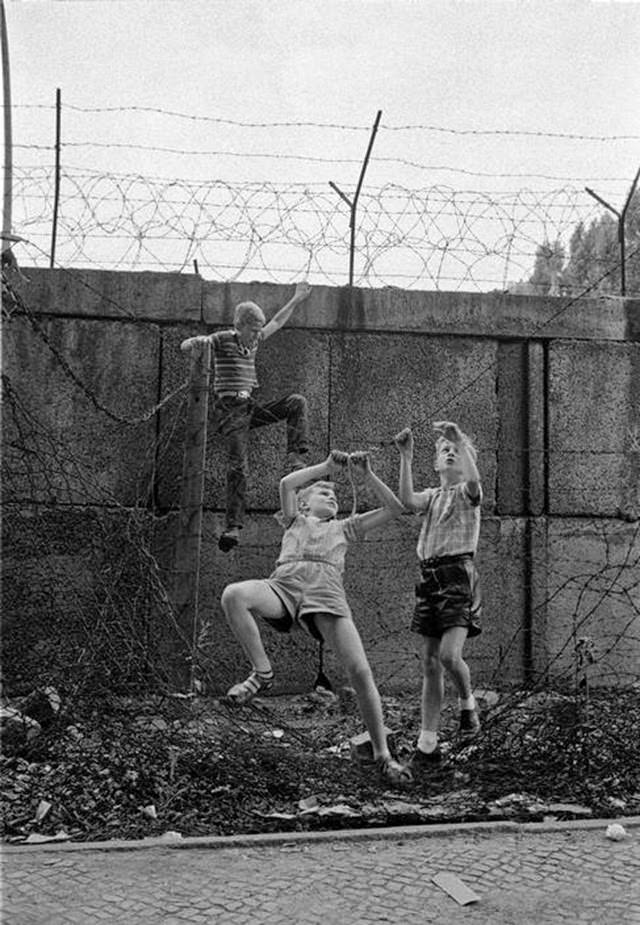
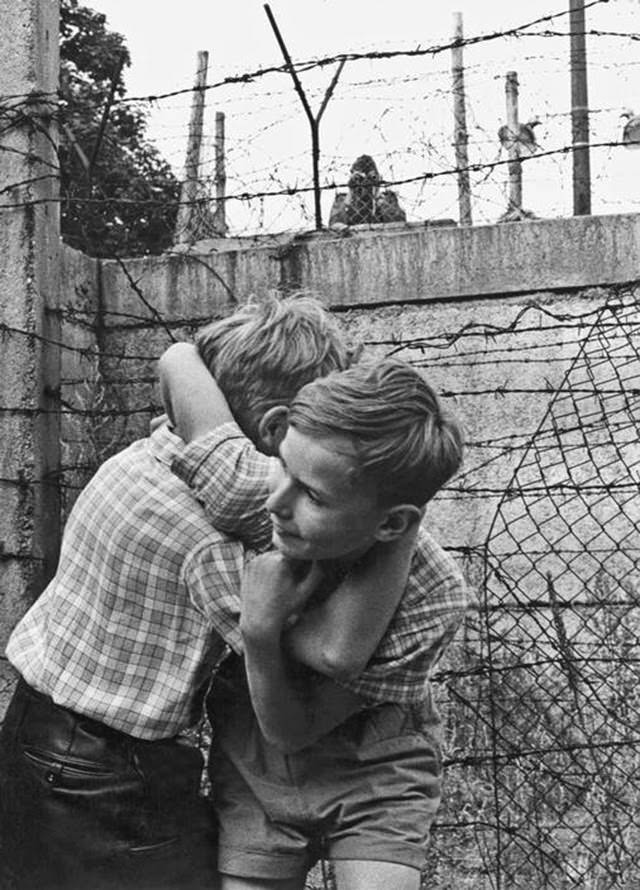
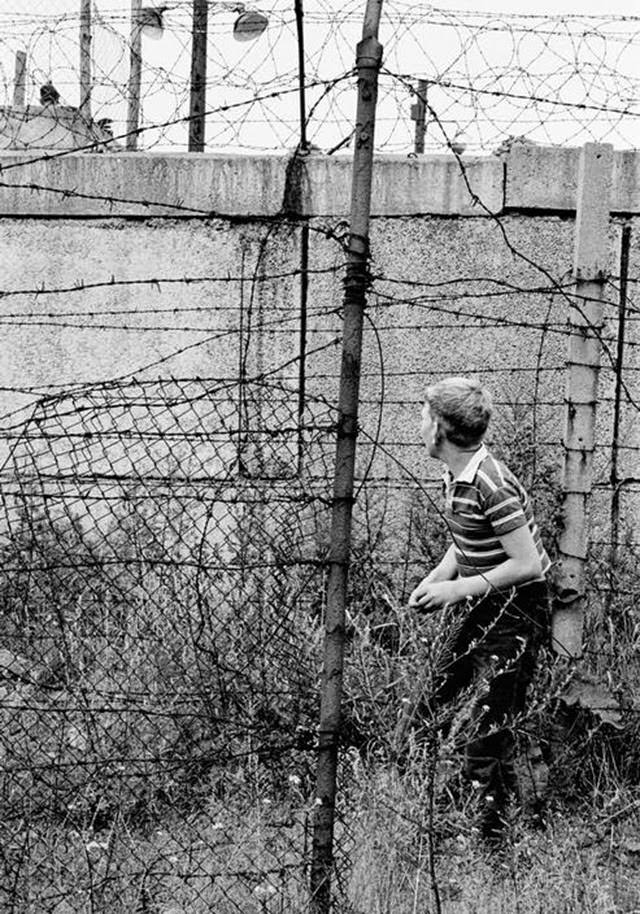
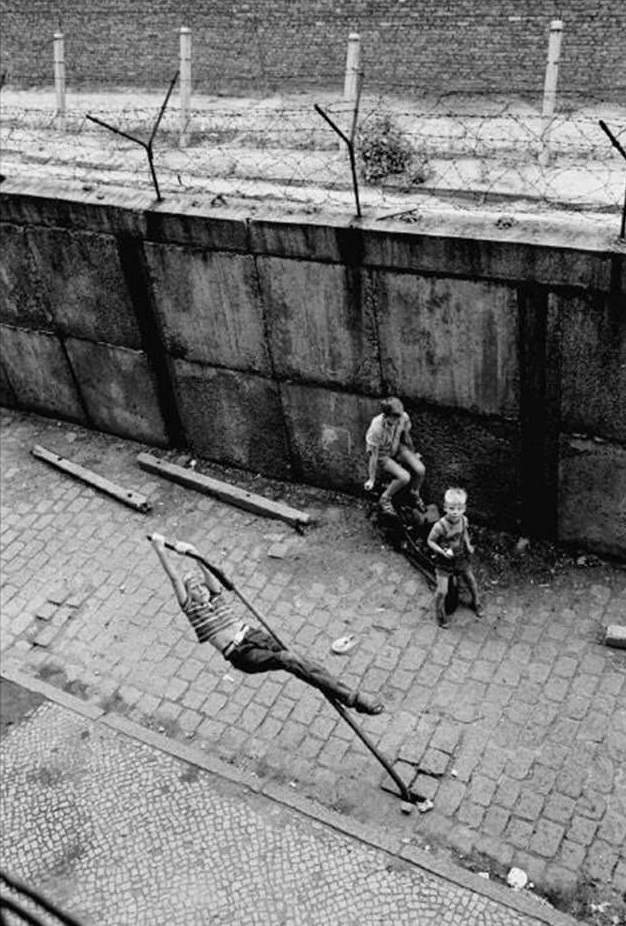
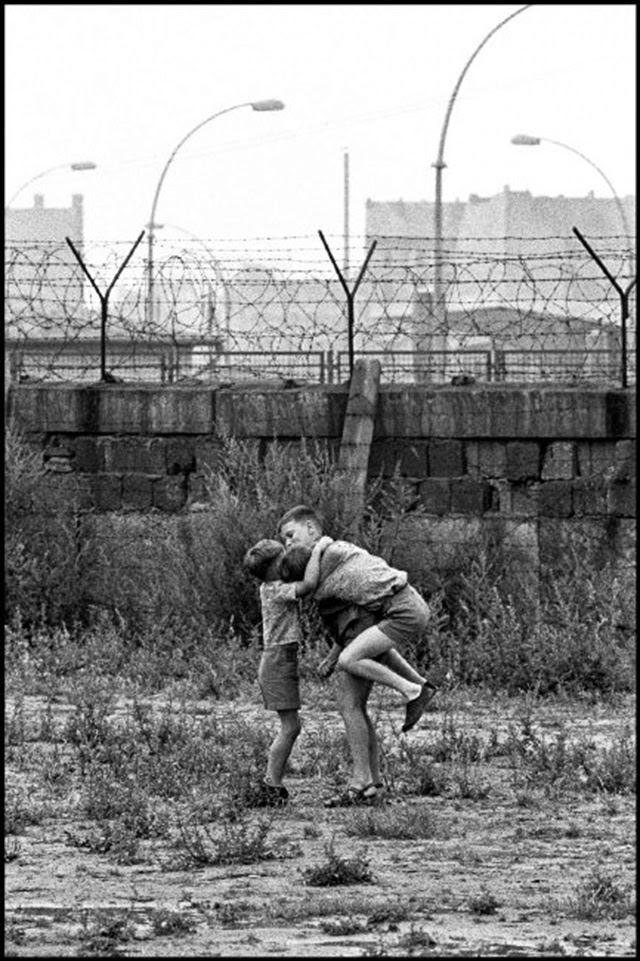
Three boys were photographed at Bernauer Strasse climbing the Wall and moving along a barbed wire fence, passing hand over hand. On the eastern side of that same fence, East German border guards monitored everything. In one shot near Bernauer Strasse, boys wrestle on the ground while a guard watches them through binoculars from the other side.
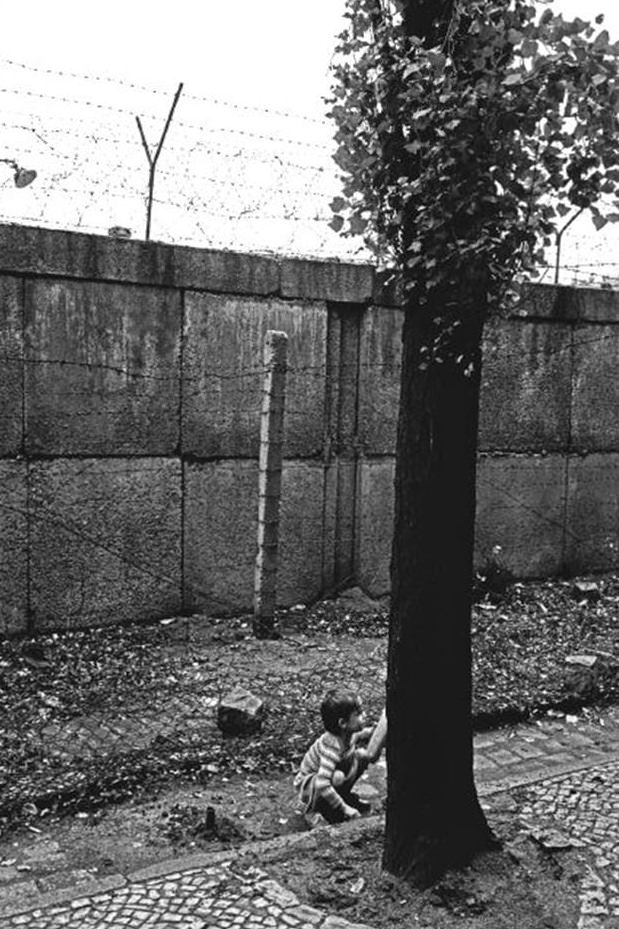
The barbed wire that ran alongside the Wall was a constant presence in the lives of children on both sides. Girls and boys played near it, peered through it, and treated it as a familiar boundary rather than a warning.
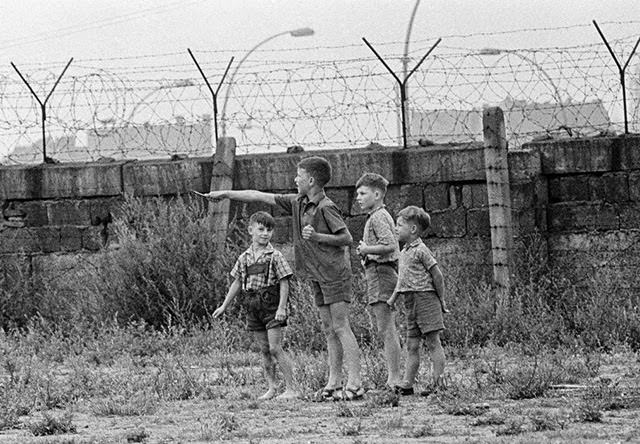
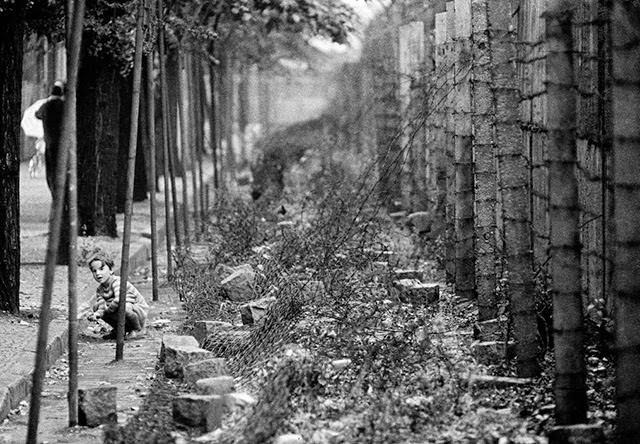
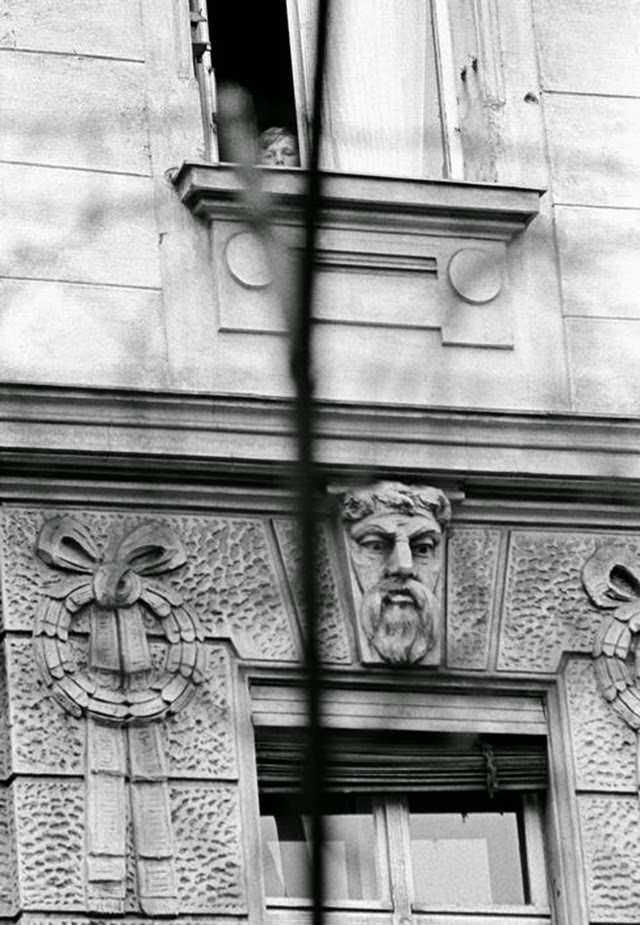
Hoepker’s photographs from the Wedding district show the Wall woven into the texture of daily neighborhood life. Children gathered in groups along its base, climbed its surface, and ran games in its shadow. The Wall was not kept at a distance — it was right there, at the end of the street.
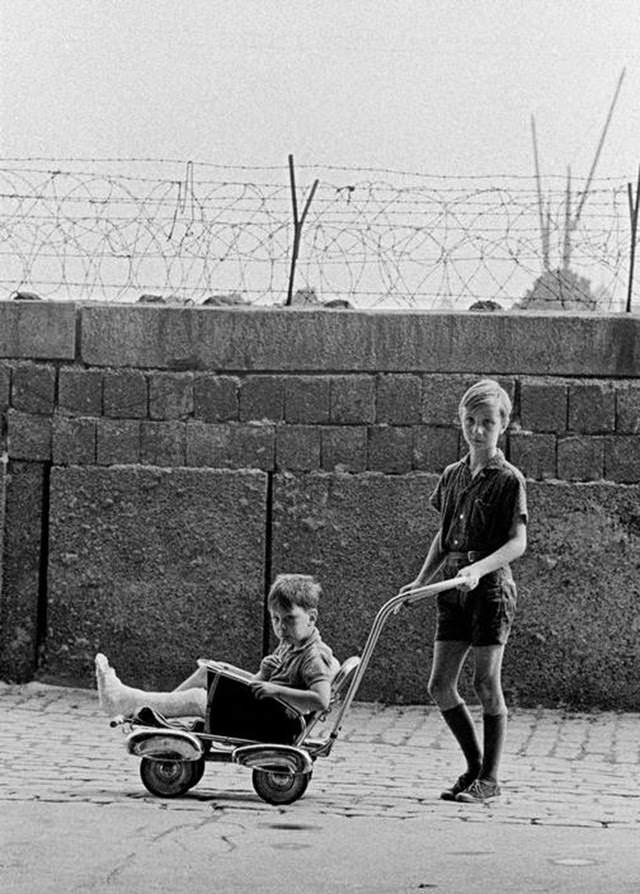
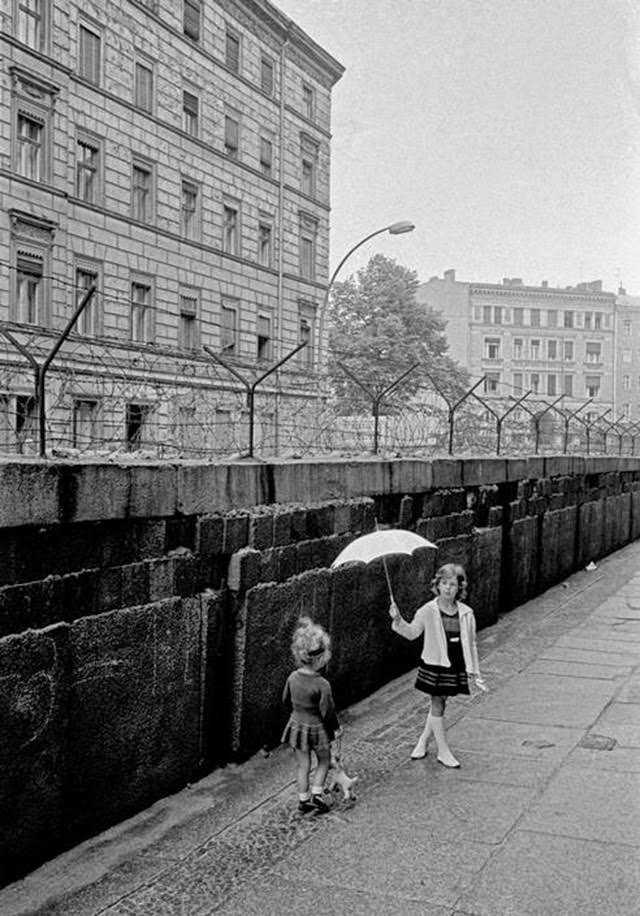
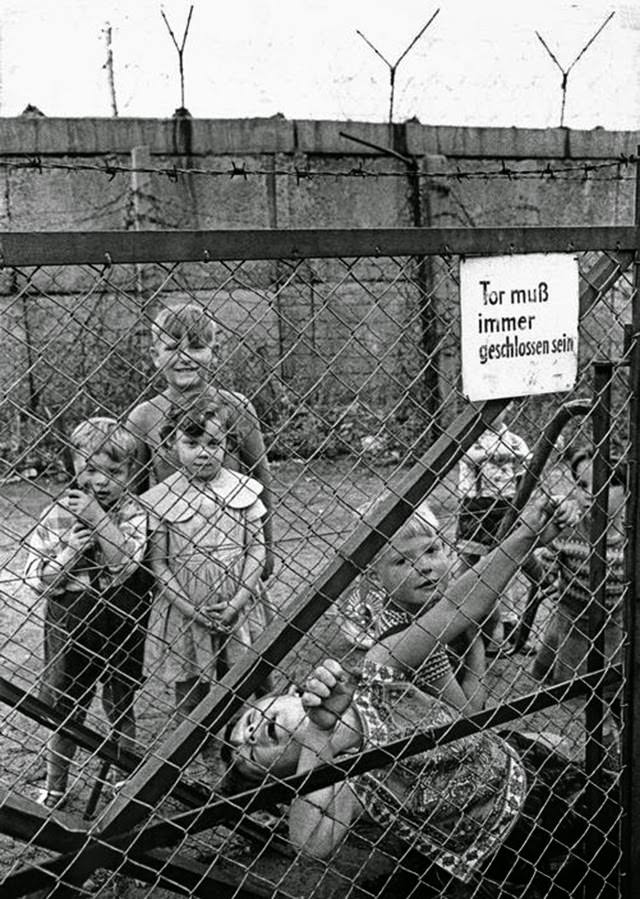
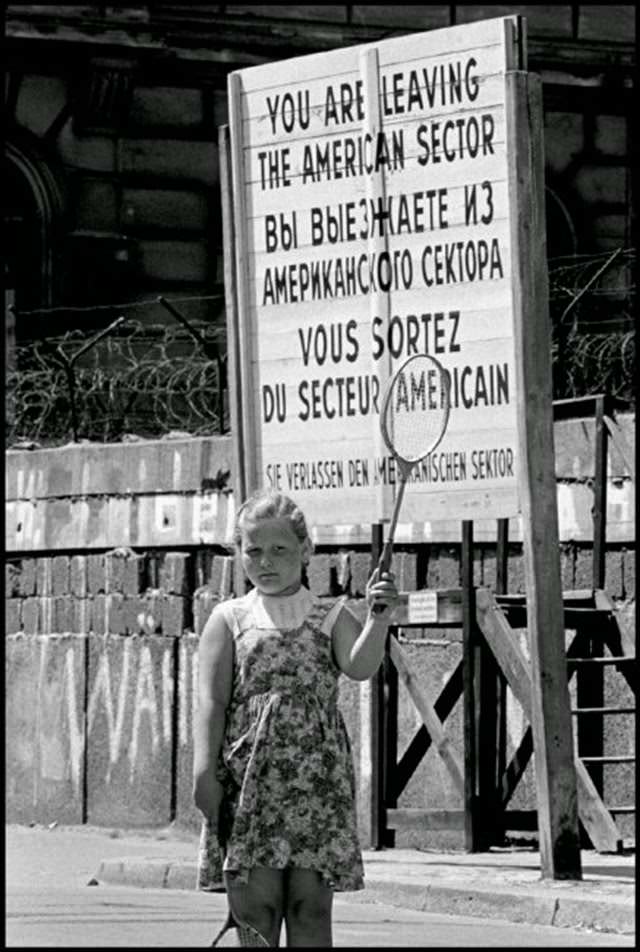
Not every person in these photos is a child. A West Berlin police officer stands near the Wall in Wedding as a young girl plays in the foreground. The officer’s presence is a reminder that this was an actively enforced border, not an abandoned monument.
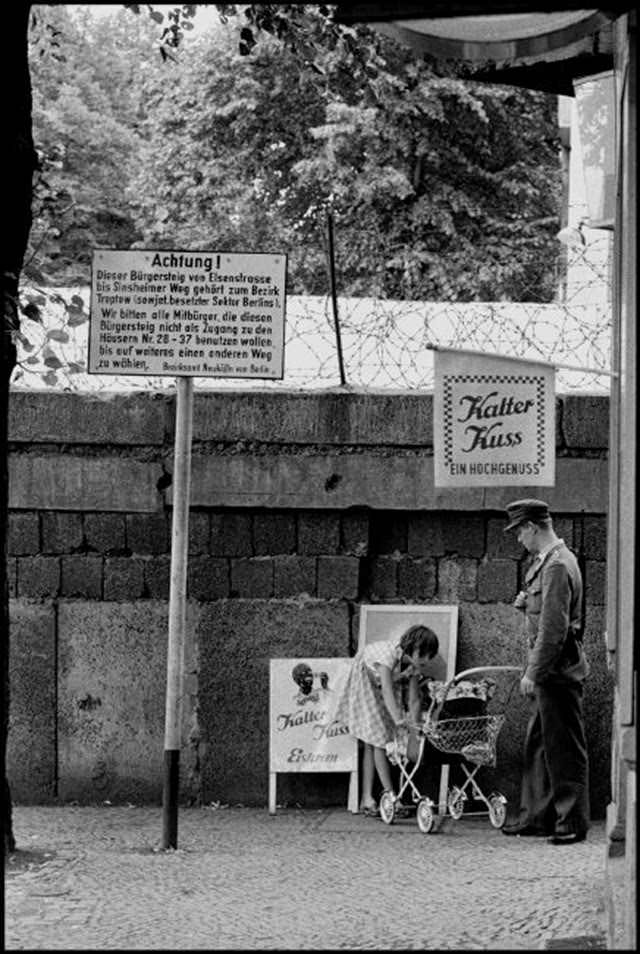
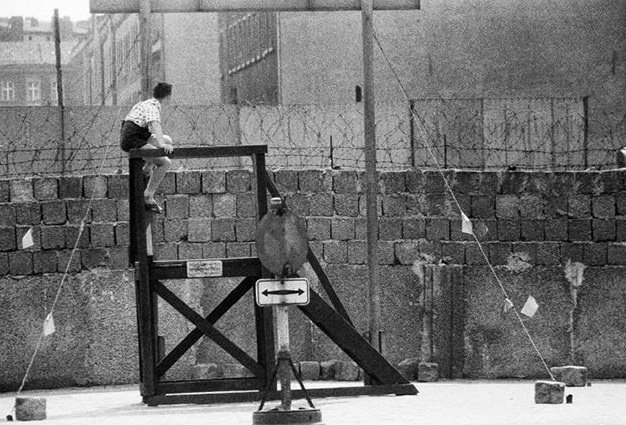
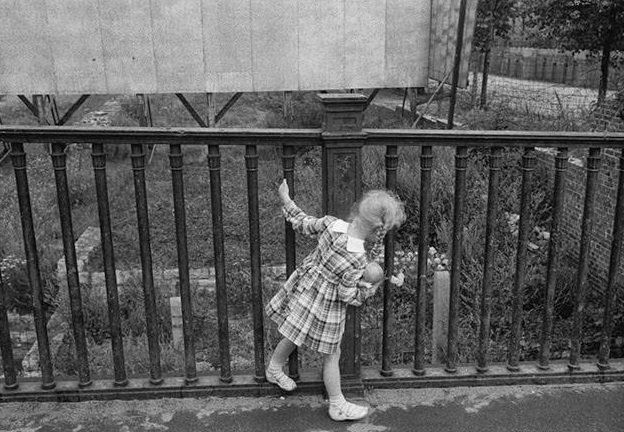
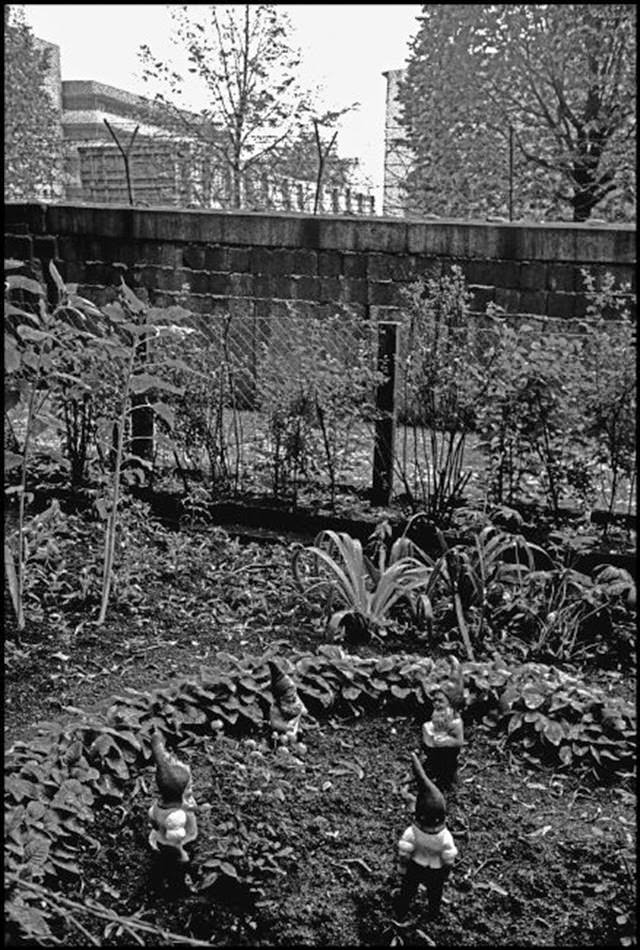
Domestic details appear throughout the series. A garden gnome sits in front of the Wall in Wedding — someone had placed it there, making a small domestic claim on a space dominated by concrete and wire. A girl stands alone on an overpass overlooking the Wall, looking out across the divide.
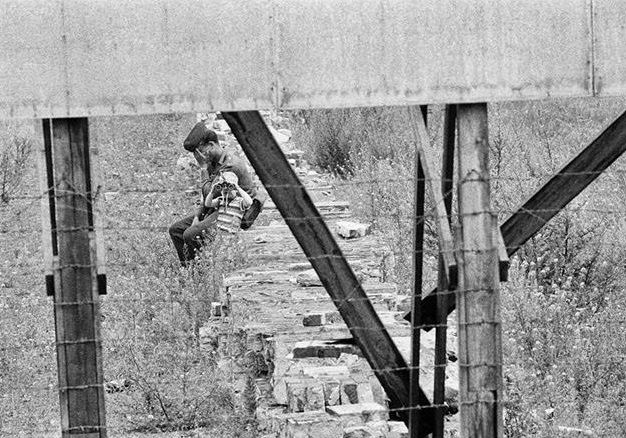
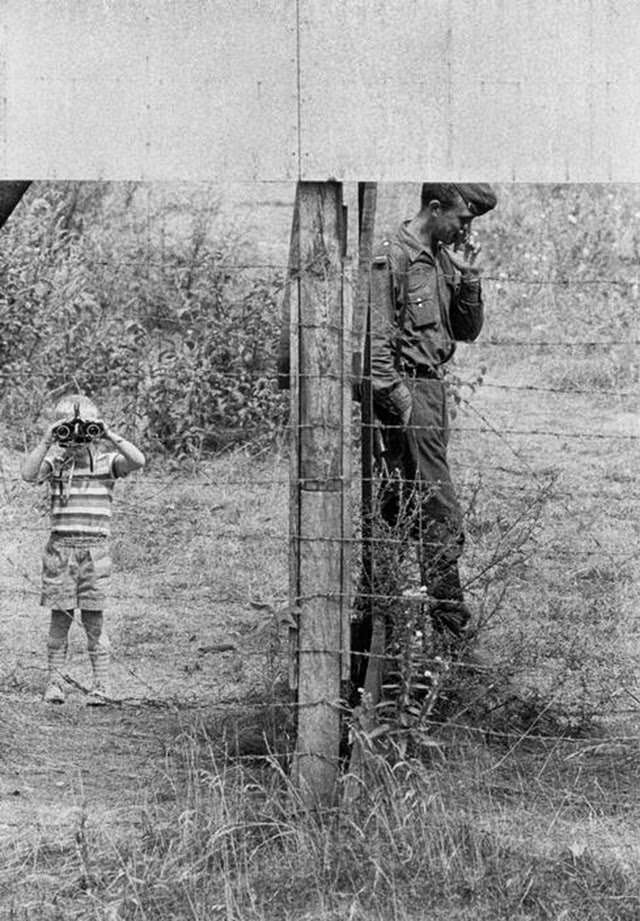
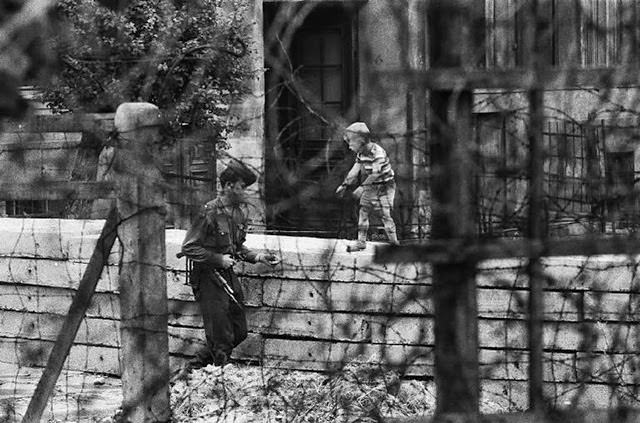
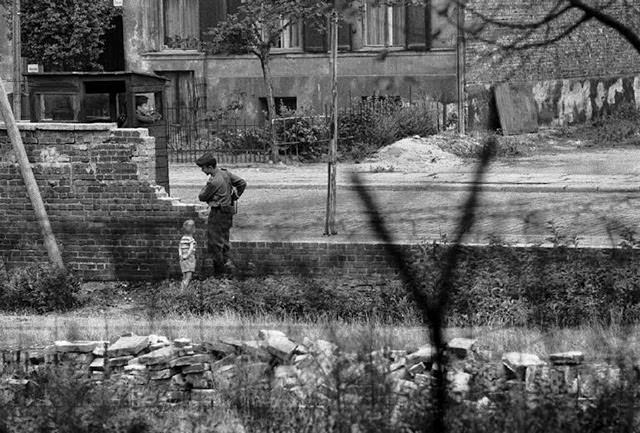
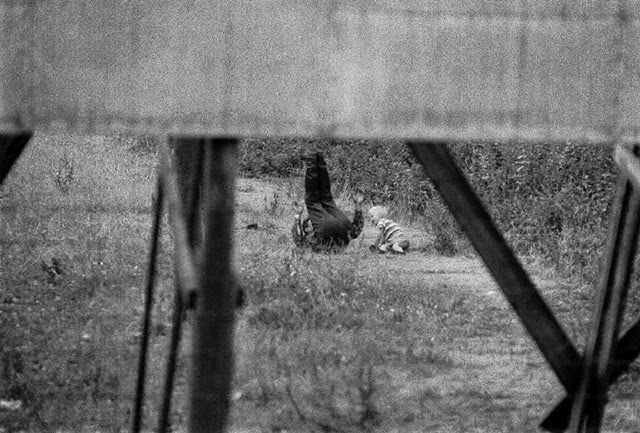
Some of the most striking images in the series come from the eastern side of the border. Hoepker photographed a young East German boy interacting with a border guard near a barbed wire fence. In two frames, the boy peers through binoculars into the West while the soldier stands nearby. In another, the guard lies in the grass performing gymnastics while the boy watches him. These are not images of menace — they are moments of ordinary human contact across an extraordinary divide.