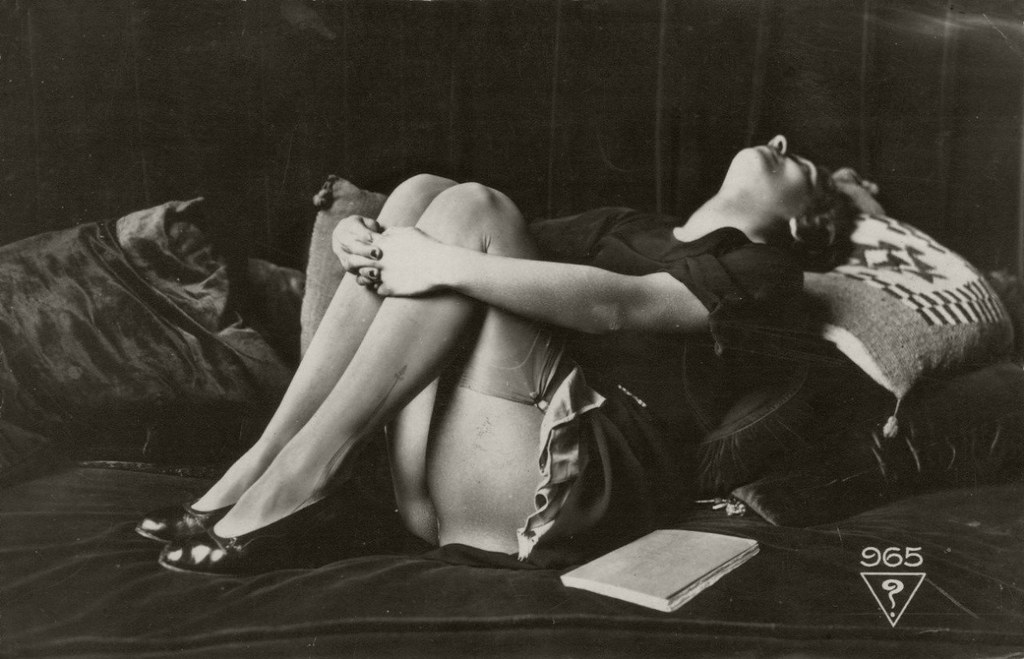
The 1950s was a golden era for bridal fashion. Ball gowns with full, sweeping skirts dominated the decade, while tea-length dresses offered a playful and elegant alternative. Tulle was everywhere, helping designers create the cinched-waist silhouette that defined the look of the postwar bride. By the late 1950s, strapless designs began appearing as a bold departure from the high-neck, long-sleeved styles that had come before. Through it all, the classic white gown — rooted in Victorian tradition — remained the undisputed choice for brides at every level of society, from small-town ceremonies to royal palaces. Hollywood gave these trends their greatest showcase, with actresses and public figures stepping into elaborate gowns that became some of the most photographed images of the century.
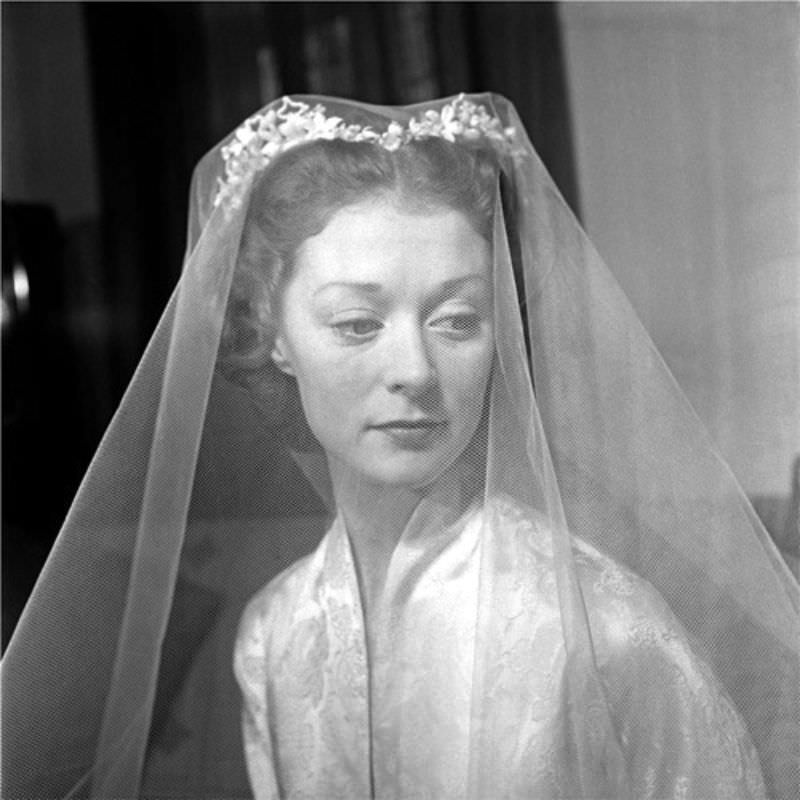
The decade opened with a series of memorable weddings that set the tone for bridal style to come. British ballet dancer and actress Moira Shearer was among the early examples of the 1950s bride, bringing a dancer’s grace to her wedding look.
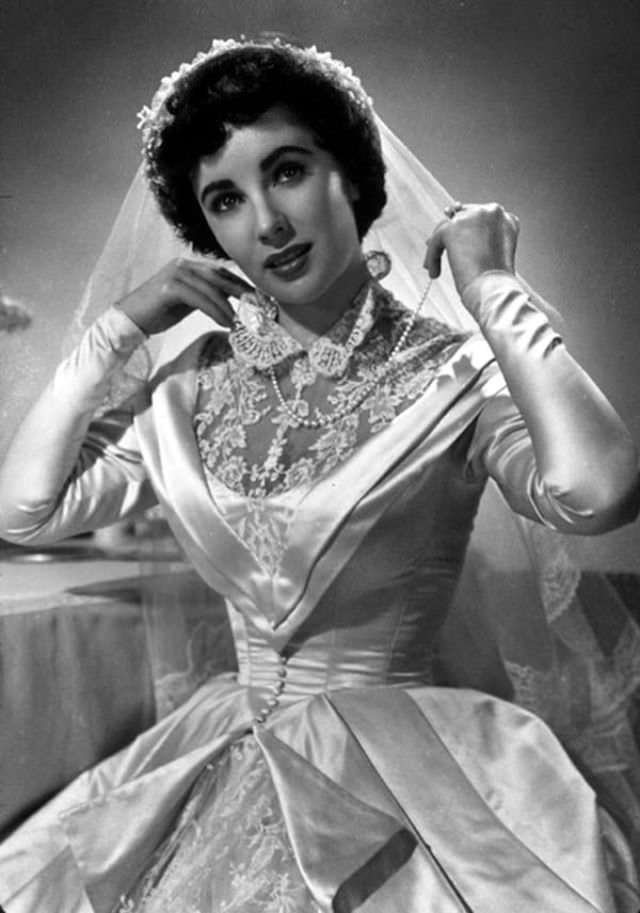
Elizabeth Taylor was already a household name by 1950, and her on-screen bridal appearance that year gave audiences an early glimpse of the decade’s bridal aesthetic. In the film ‘Father of the Bride,’ Taylor wore a full, white gown that perfectly captured the romantic ideal of the era.
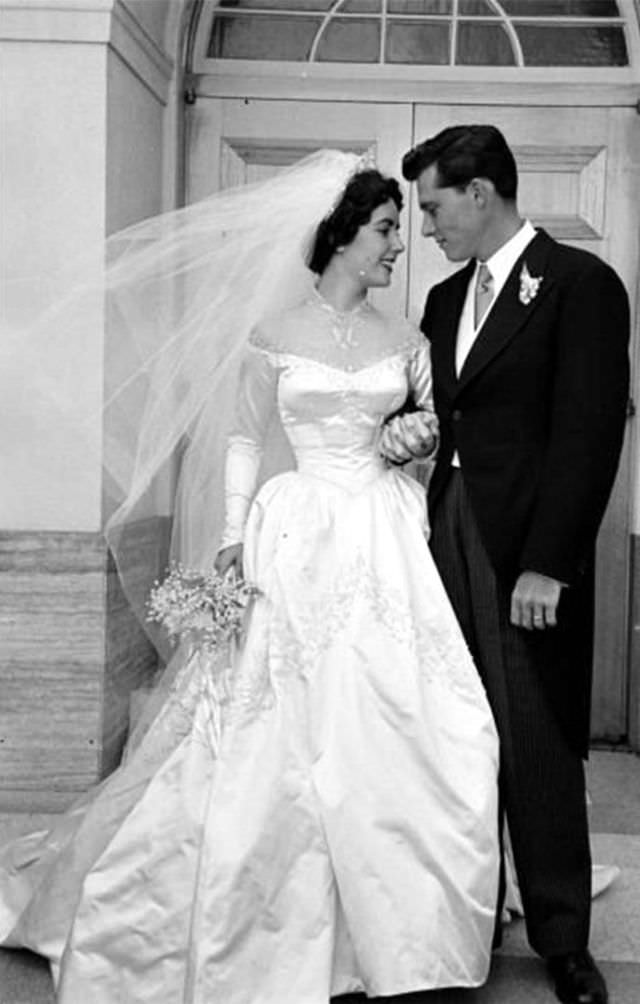
That same year, Taylor’s real-life wedding made headlines. She married hotel heir Conrad ‘Nicky’ Hilton in a gown created by Hollywood costumer Helen Rose, a designer who would go on to shape the look of several iconic celebrity brides throughout the decade.
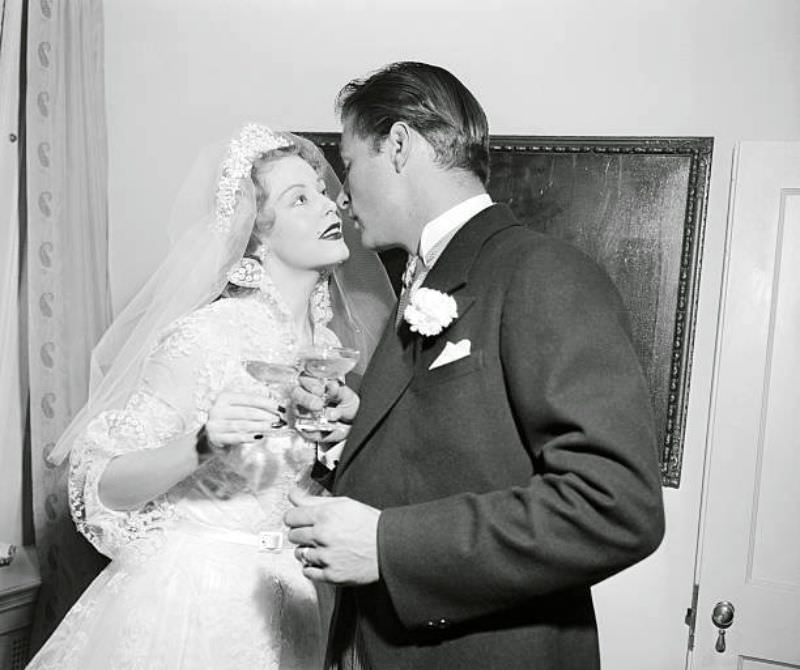
1951 brought several notable weddings to the public eye. Actress Arlene Dahl married actor Lex Barker in a ceremony that reflected the polished, glamorous style associated with Hollywood’s leading ladies of the time.
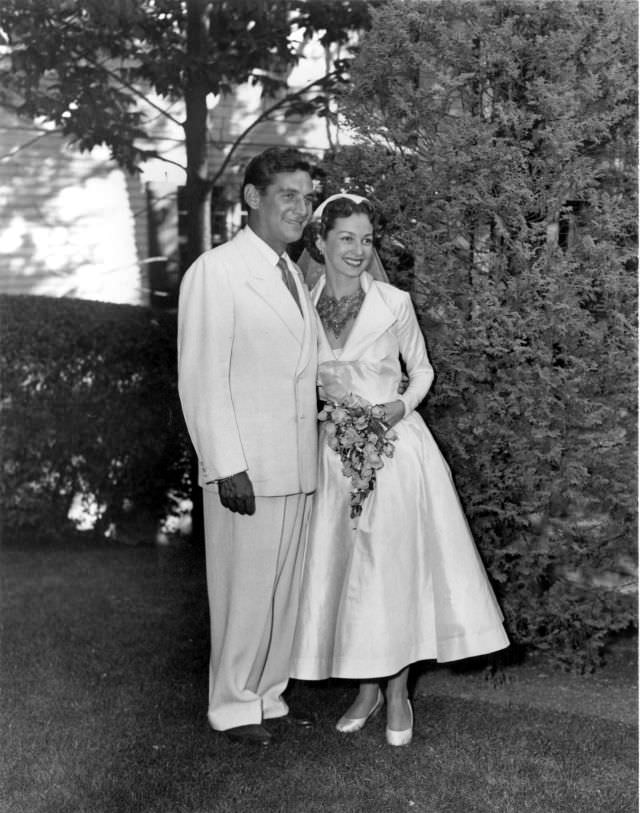
That same year, Chilean actress Felicia Cohn Montealegre wed American composer and conductor Leonard Bernstein. The union of two figures from the worlds of performance and music made for a wedding that attracted significant attention on both sides of the Atlantic.
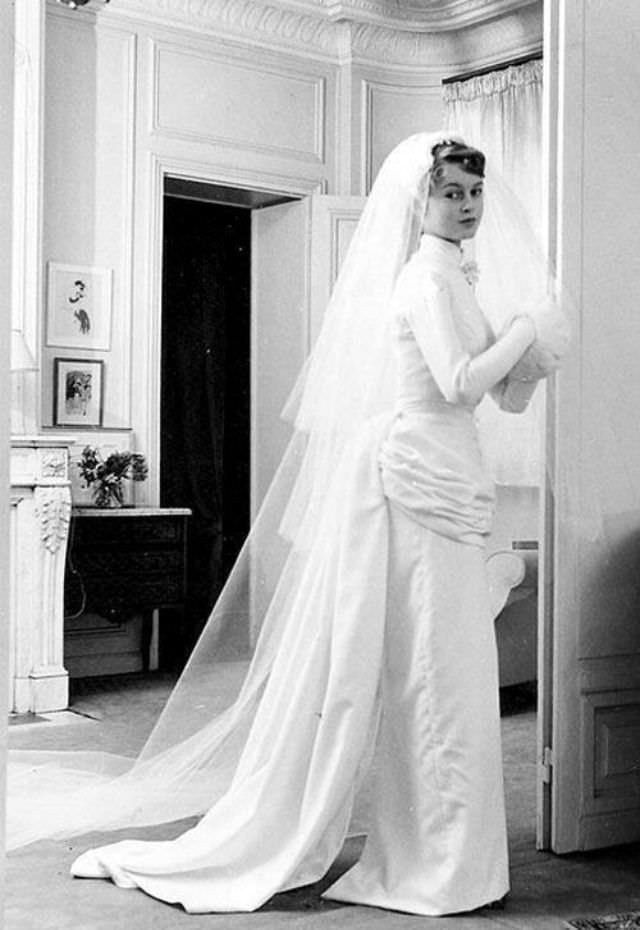
In 1952, Brigitte Bardot married filmmaker Roger Vadim in a ceremony that became one of the most talked-about weddings in France. Bardot’s gown was simple and romantic, a contrast to the elaborate confections worn by many of her Hollywood counterparts.
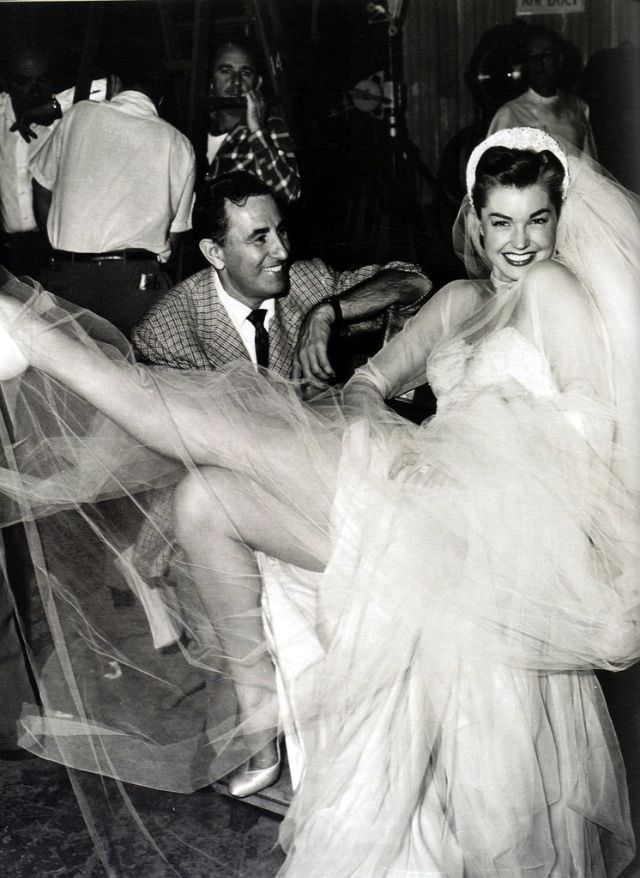
Swimmer and actress Esther Williams, famous for her elaborate aquatic film productions, posed in a striking wedding dress that same year, demonstrating the era’s fondness for full skirts and structured bodices.
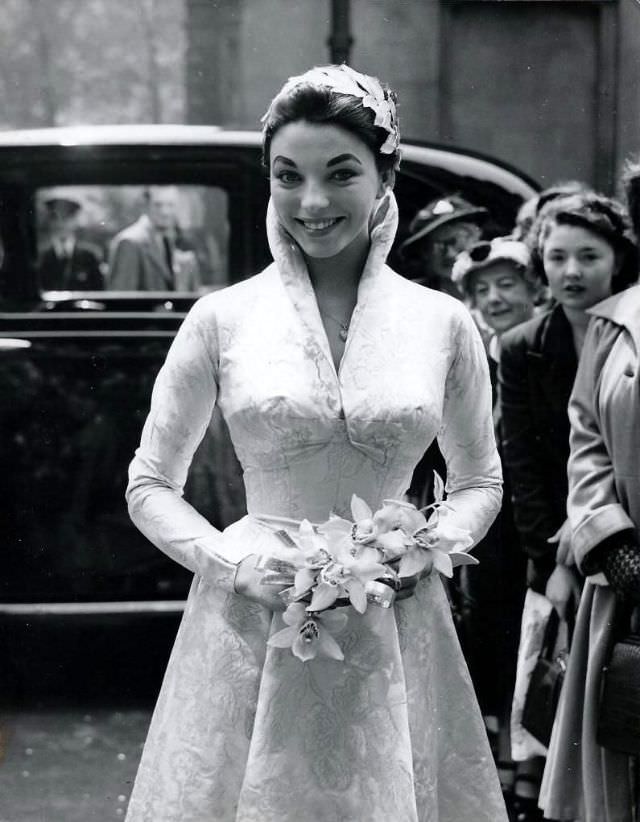
Also in 1952, a young Joan Collins married actor Maxwell Reed in her first of several marriages. Collins was just beginning her rise to fame, and her wedding look was a reflection of the understated elegance that defined early 1950s bridal style.
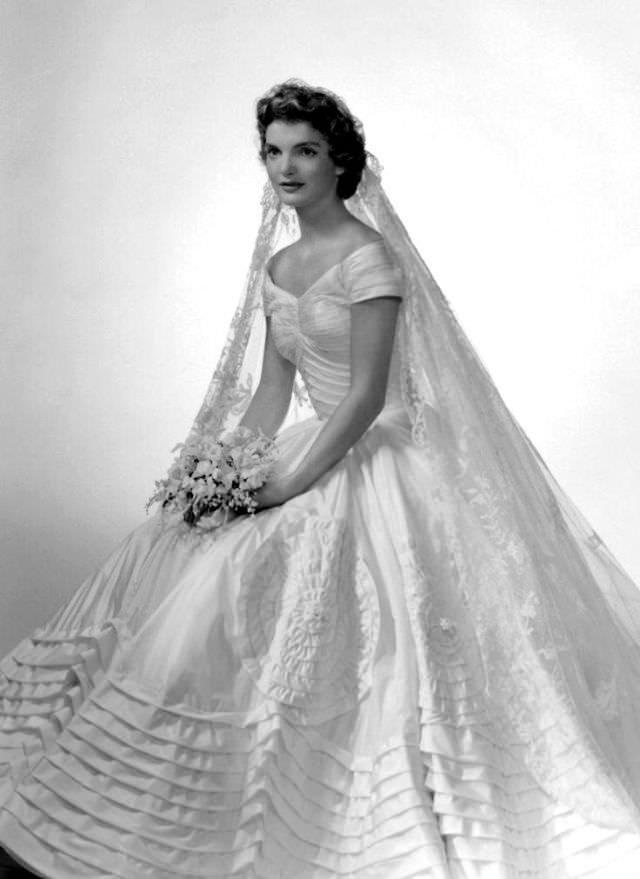
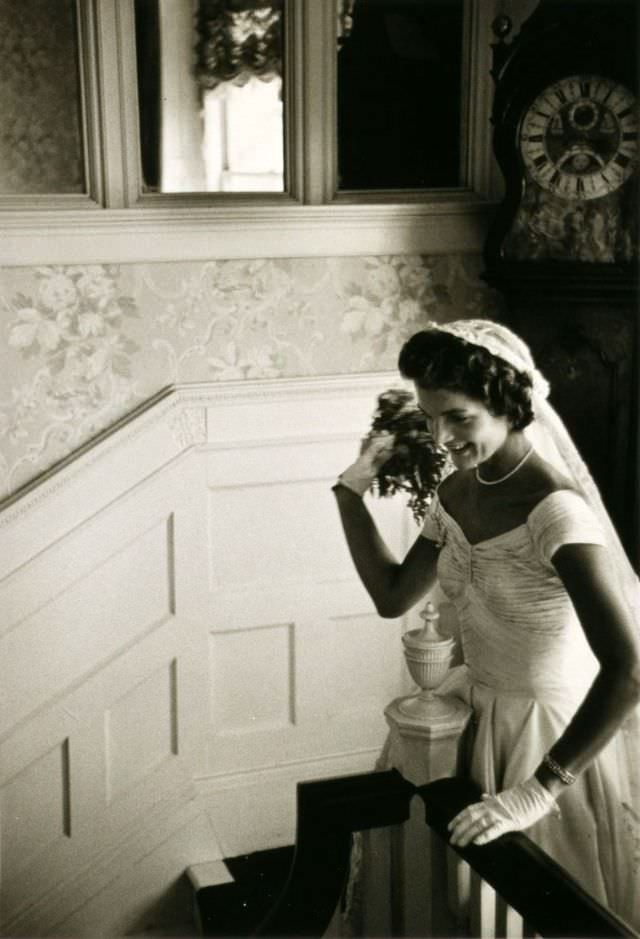
One of the most historically significant weddings of the decade took place in September 1953, when Jacqueline Bouvier married then-U.S. Representative John Fitzgerald Kennedy in Newport, Rhode Island. Her gown was designed by Ann Cole Lowe, an African American designer from Alabama who built her career crafting gowns for New York and Hollywood’s elite.
1953 also saw several other notable bridal moments. Jane O’Neil’s wedding dress stood out as an example of mid-decade craftsmanship.
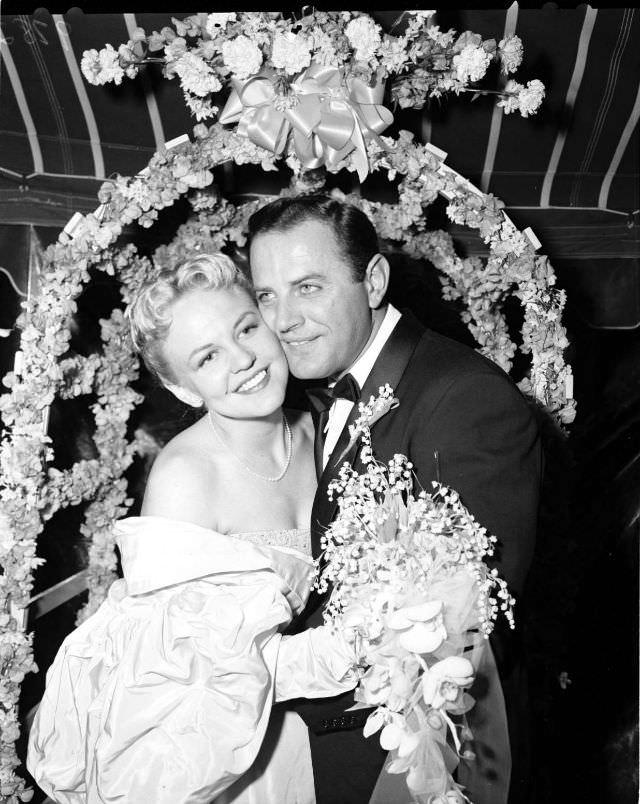
Singer and actress Peggy Lee married husband Brad Dexter in Los Angeles that year, adding another celebrity wedding to an already eventful bridal season in Hollywood.
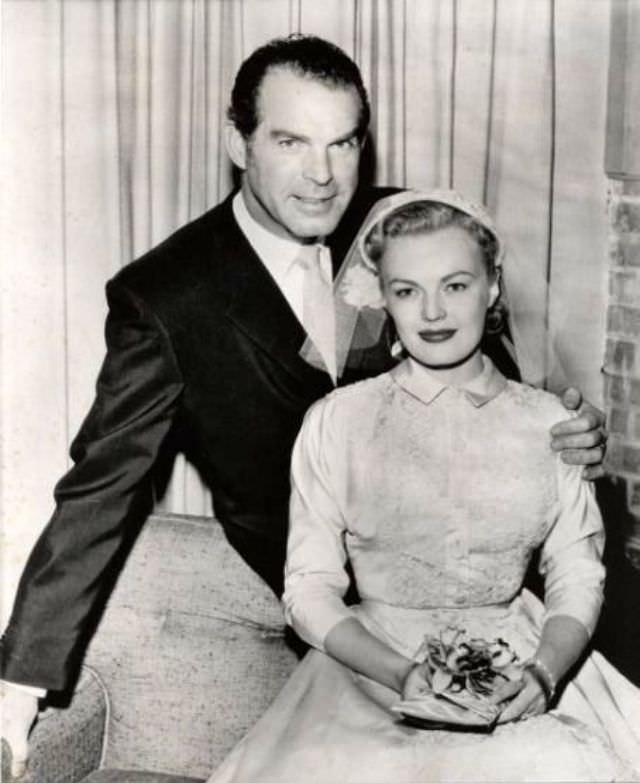
Actor Fred MacMurray and actress June Haver chose a quieter path in June 1954, marrying in a simple ceremony in Ojai, California. Their understated celebration was a contrast to the grand productions that many of their peers staged.
Actress Pier Angeli married singer Vic Damone in November 1954 in a white silk chiffon gown designed by Helen Rose — the same costumer who had dressed Elizabeth Taylor and would later design Grace Kelly’s legendary wedding gown. Rose’s repeated appearances at major celebrity weddings throughout the decade cemented her status as Hollywood’s most trusted bridal designer.
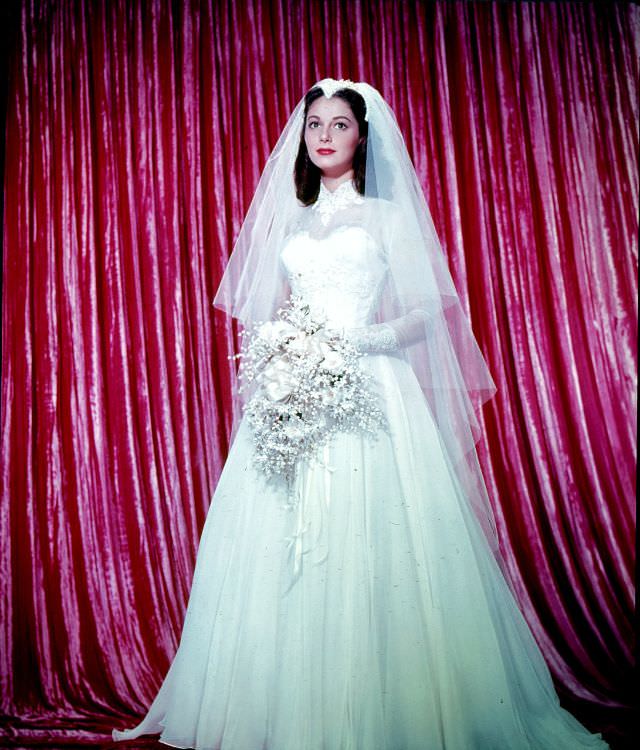
Actress Suzan Ball married fellow actor Richard Long in 1954 while battling cancer that had developed in her right leg. She passed away just one year later at the age of 21.
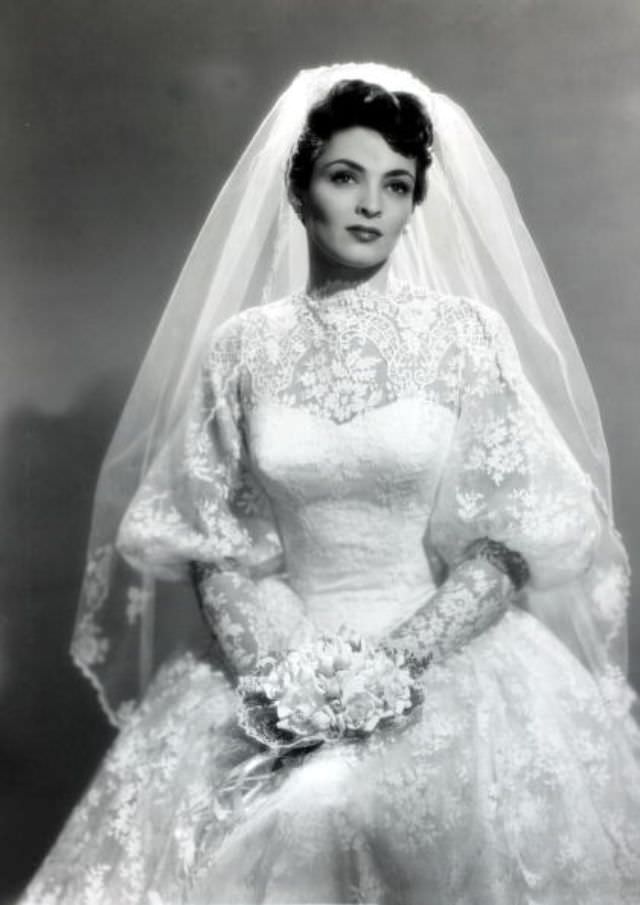
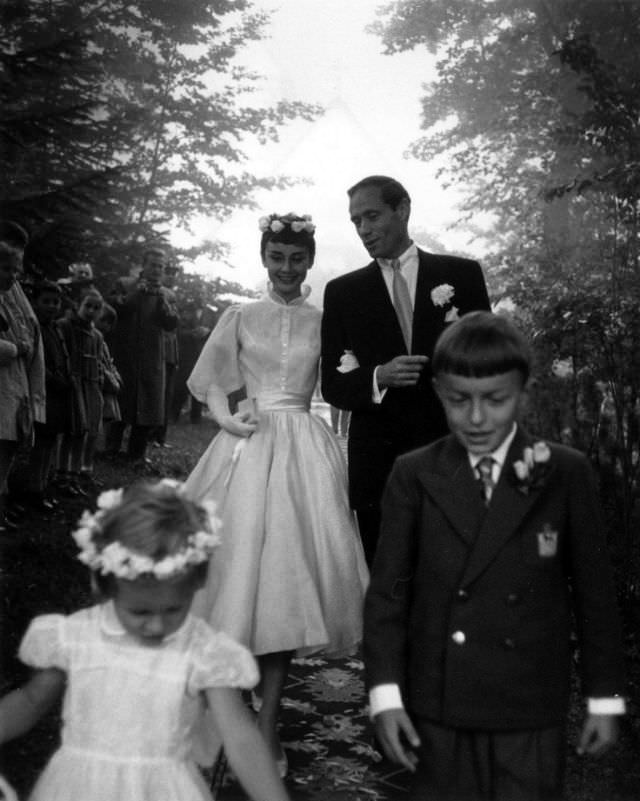
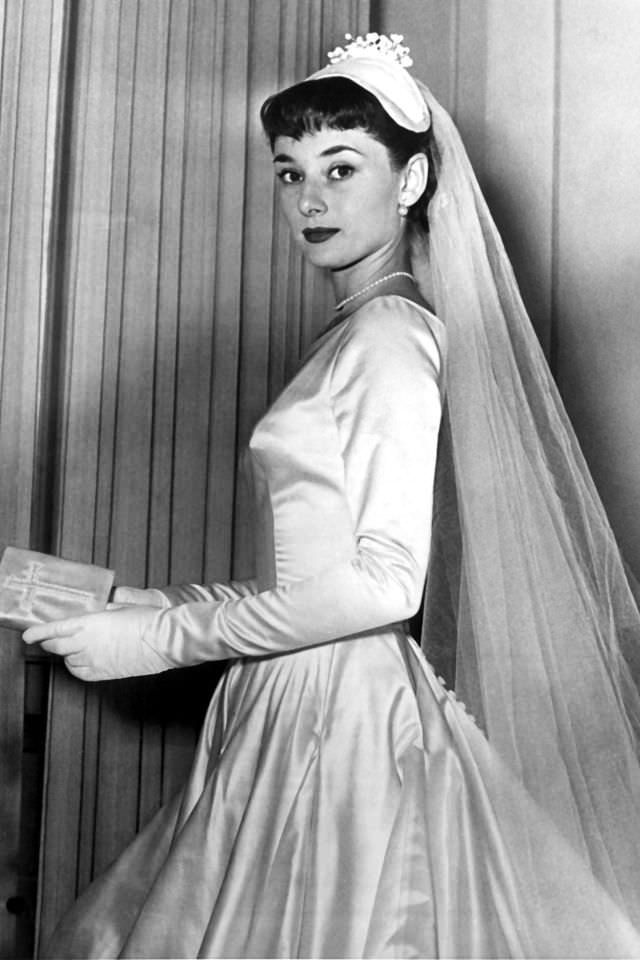
Audrey Hepburn’s 1954 wedding to actor and director Mel Ferrer took place in Bürgenstock, Switzerland. Hepburn, already an Academy Award winner at the time, wore a gown that matched her signature style — refined, simple, and effortlessly elegant.
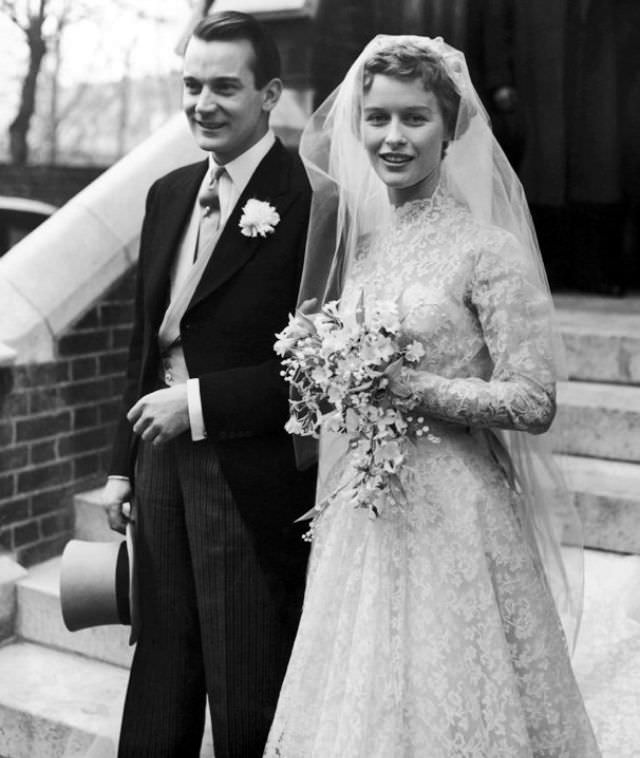
Also in 1954, English actors Denholm Elliott and Virginia McKenna married, adding another notable union to a year packed with celebrity weddings.
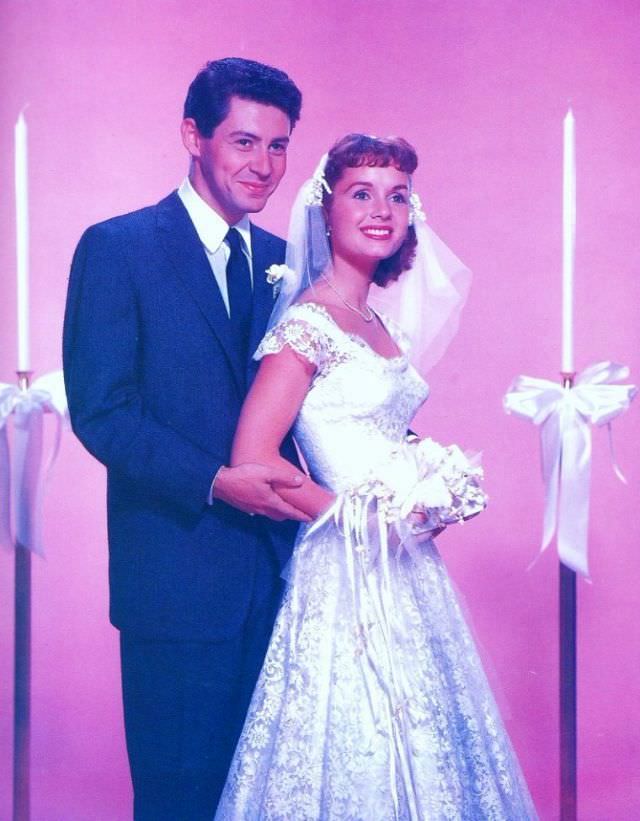
In 1955, singer Eddie Fisher and actress Debbie Reynolds became one of Hollywood’s most celebrated couples when they wed. Their wedding drew enormous media attention, with Reynolds’s gown capturing the full-skirted, feminine aesthetic that was at its peak mid-decade.
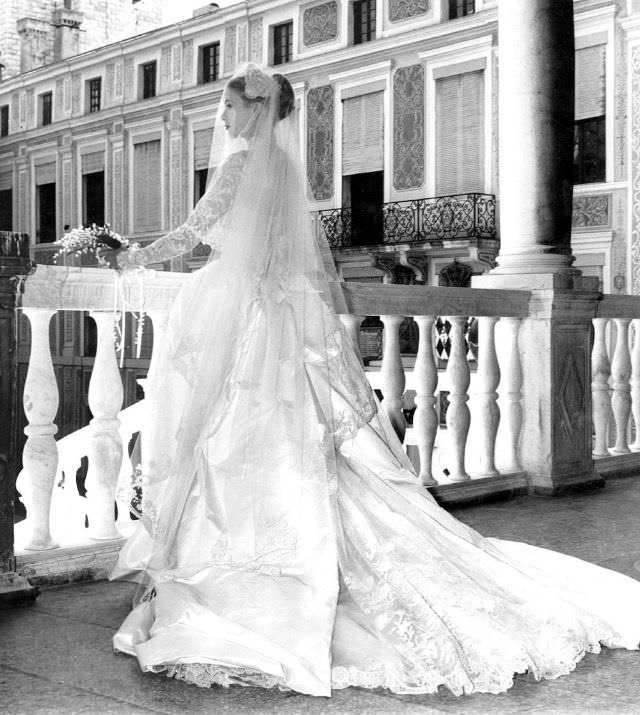
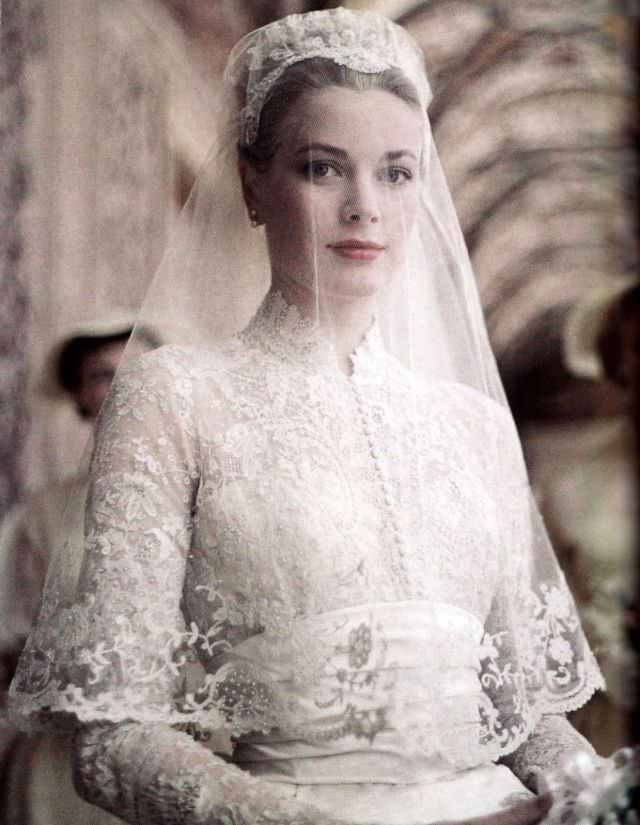
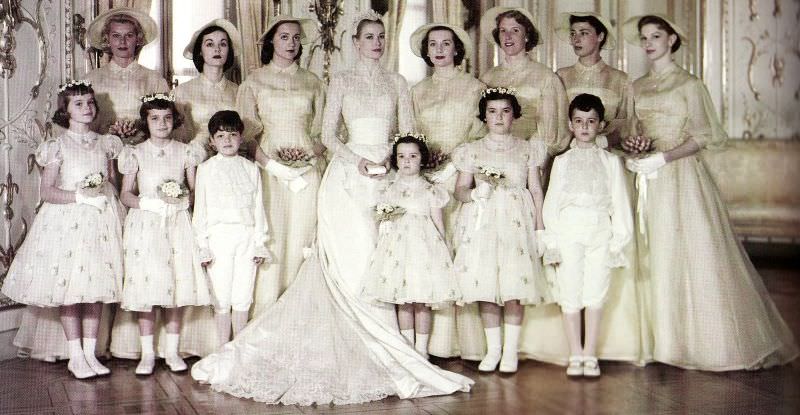
If one wedding dress came to define the entire decade, it was Grace Kelly’s. When the American actress married Prince Rainier III of Monaco in April 1956, her gown — also designed by Helen Rose — became one of the most replicated and studied wedding dresses in fashion history. The gown featured ivory silk taffeta, rose-point lace, and a long cathedral train.
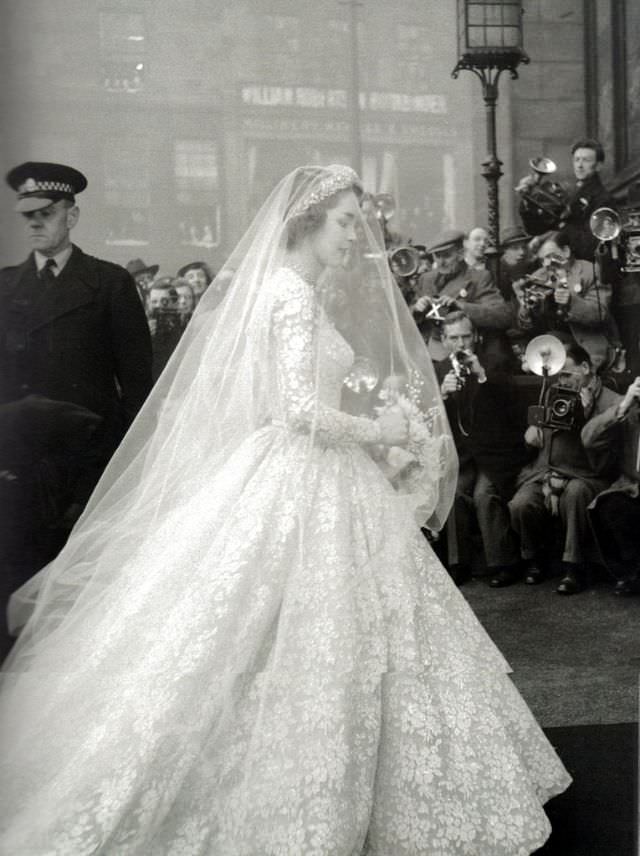
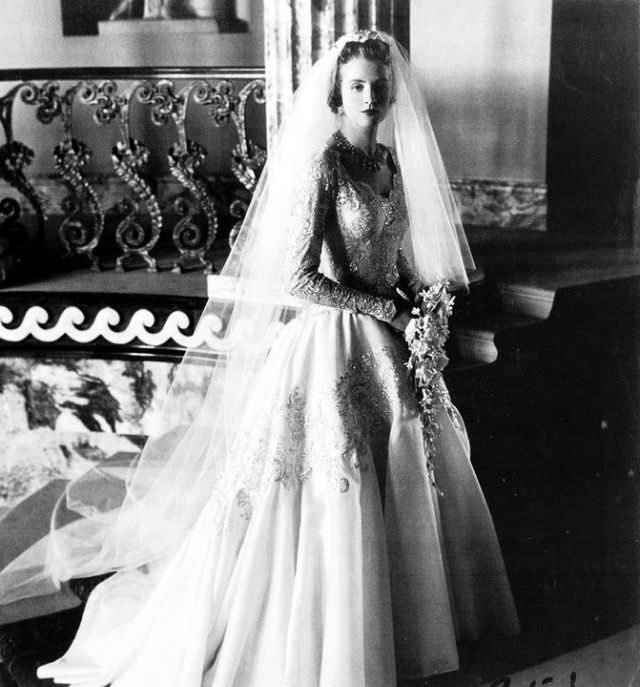
Also in 1956, Lady Anne Glenconner wore a gown designed by Norman Hartnell — the same designer responsible for Queen Elizabeth II’s coronation gown — for her wedding. Hartnell’s elaborate, structured designs were a hallmark of British formal dress in the postwar years.
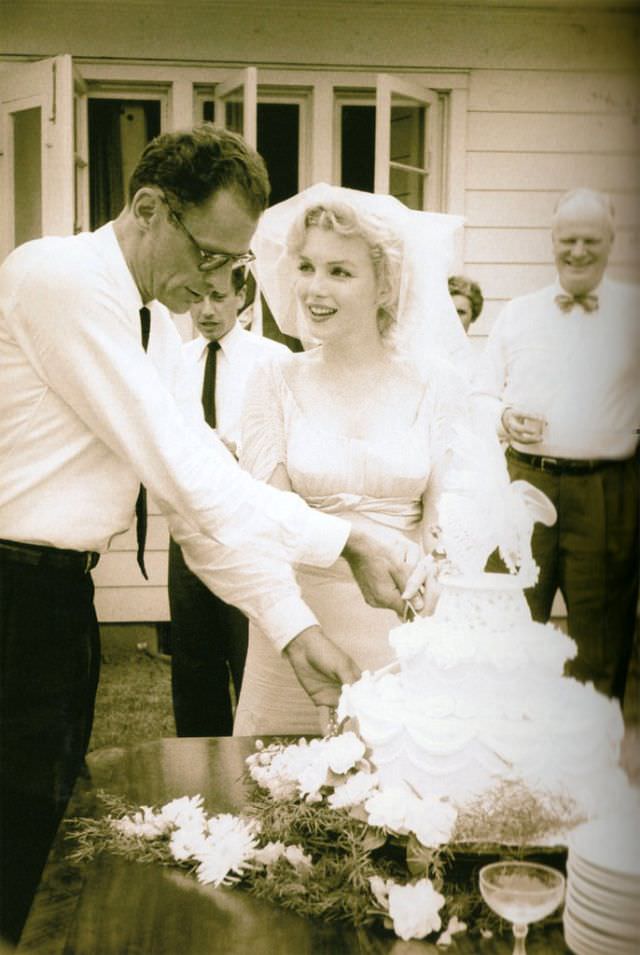
Marilyn Monroe also married in 1956, wedding playwright Arthur Miller. Monroe’s gown was a departure from the voluminous ball gowns popular at the time — a more fitted, understated silhouette that suited her personal style.
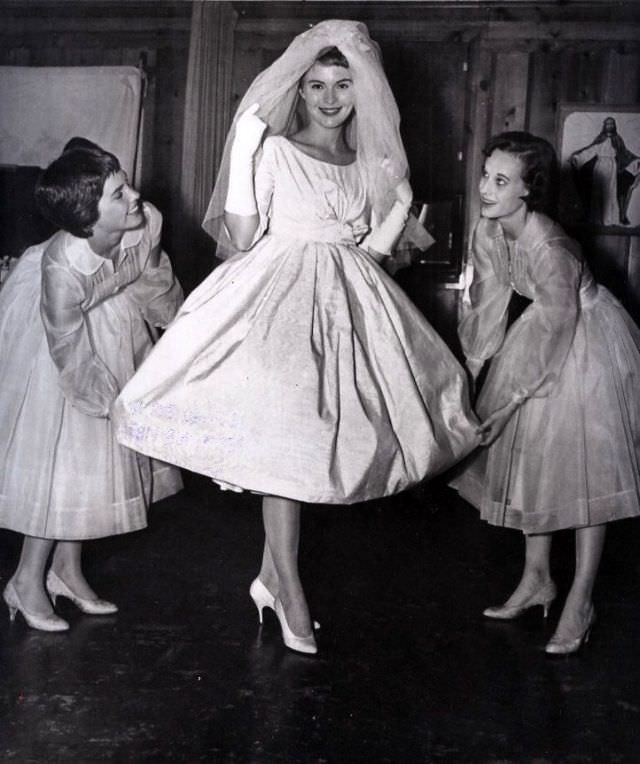
By 1958, the decade’s bridal trends were beginning to shift. Strapless necklines gained ground, and silhouettes became slightly more streamlined. Actress Jean Seberg married French attorney François Moreuil in her hometown of Marshalltown, Iowa, in a ceremony that blended American simplicity with a European sensibility.
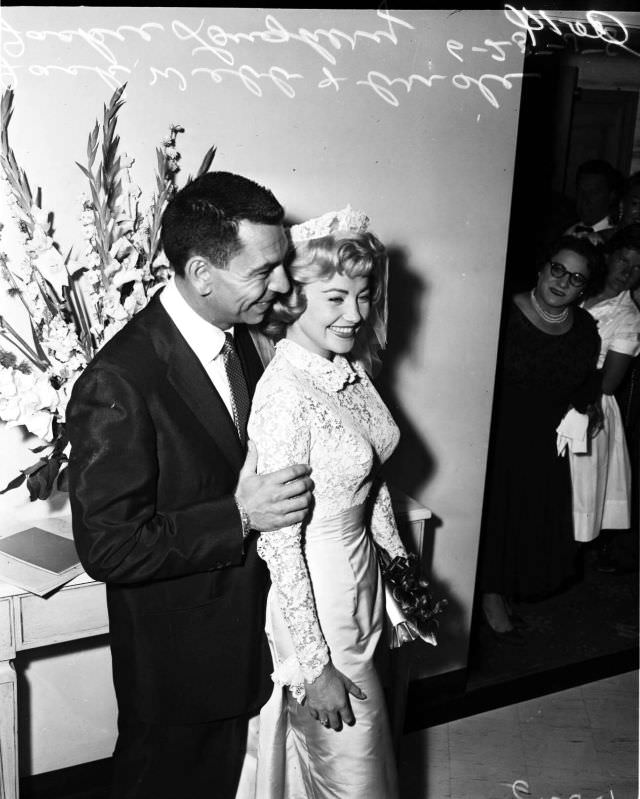
Hollywood actress Debra Paget married David Street in Los Angeles in 1958, while Jackie Loughery — winner of the first Miss USA pageant — married actor Jack Webb the same year in another high-profile Los Angeles ceremony.
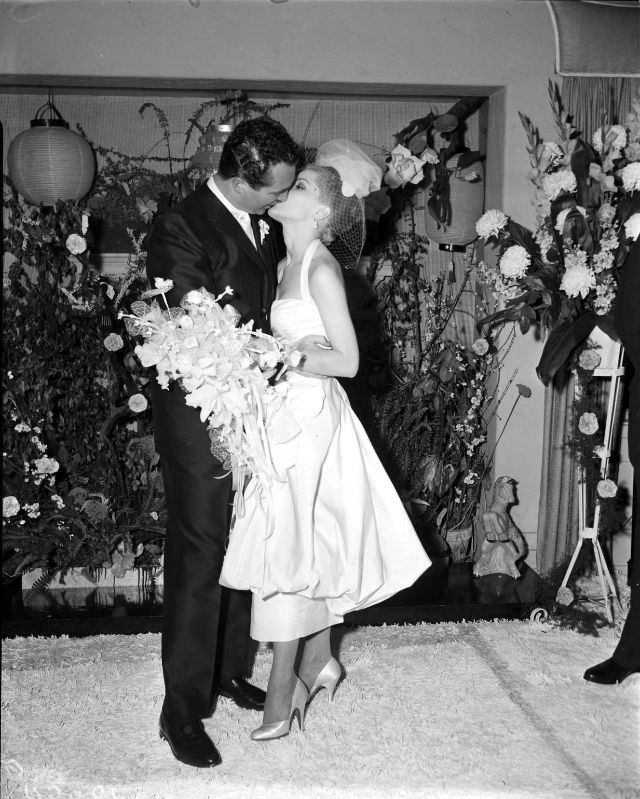
Jayne Mansfield married Hungarian-American bodybuilder and actor Mickey Hargitay on January 13, 1958. True to her larger-than-life public persona, Mansfield’s wedding gown was dramatic and attention-commanding — a fitting choice for one of the decade’s most flamboyant stars.
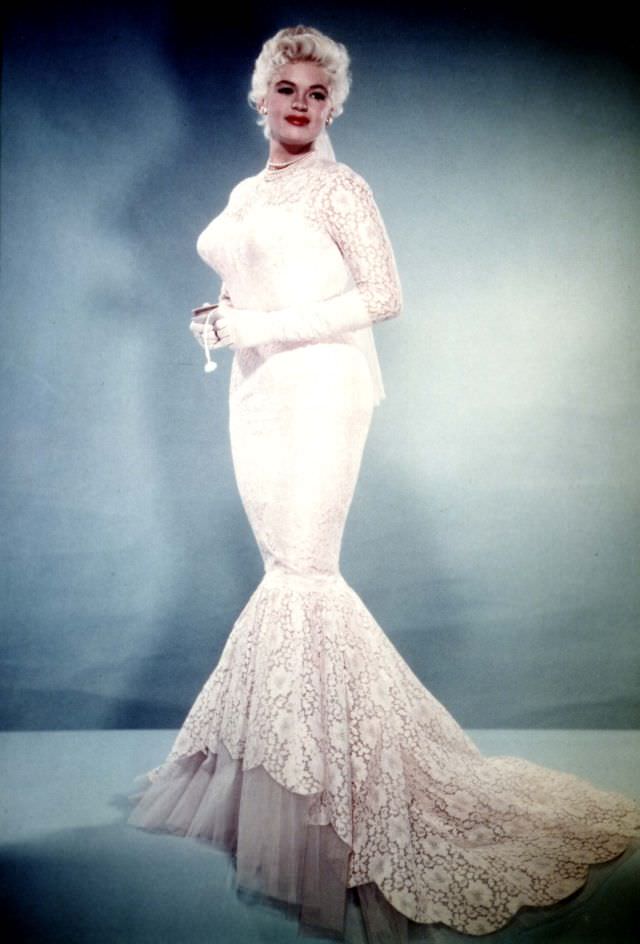
Singer Ronnie Carroll married actress Millicent Martin in 1958, in a pairing of two rising British entertainment figures whose wedding reflected the polished formality still expected of public figures in that era.
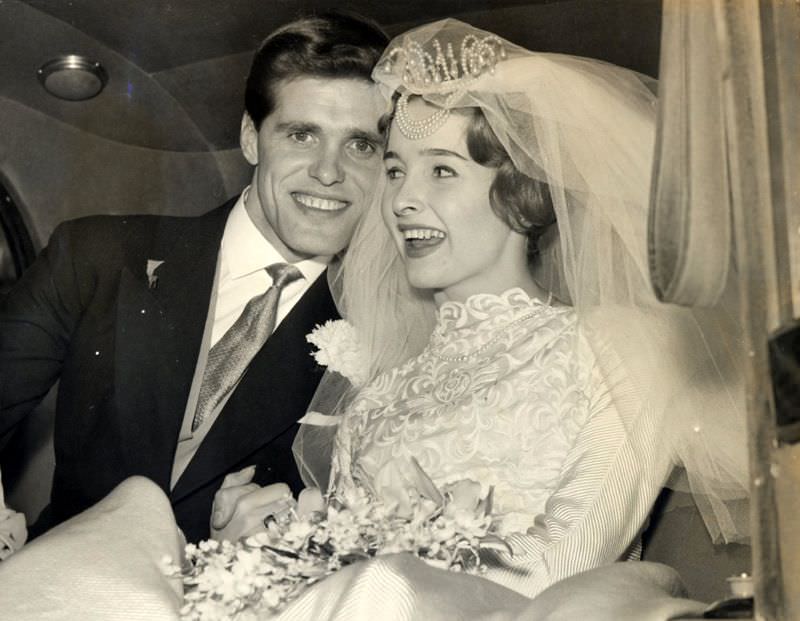
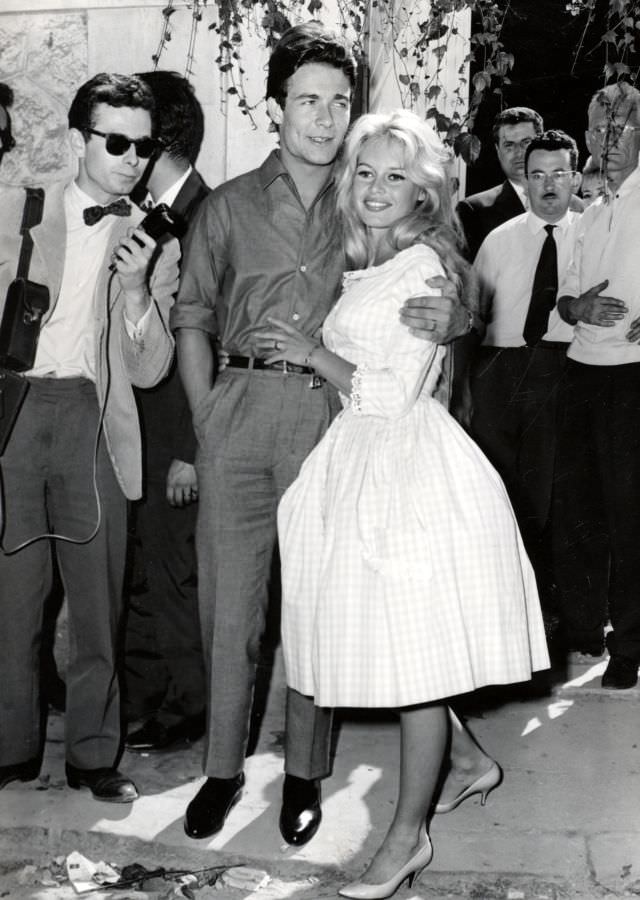
The decade closed with a string of high-profile weddings in 1959. Brigitte Bardot, already once divorced, married actor Jacques Charrier in a ceremony that attracted intense media coverage across Europe.
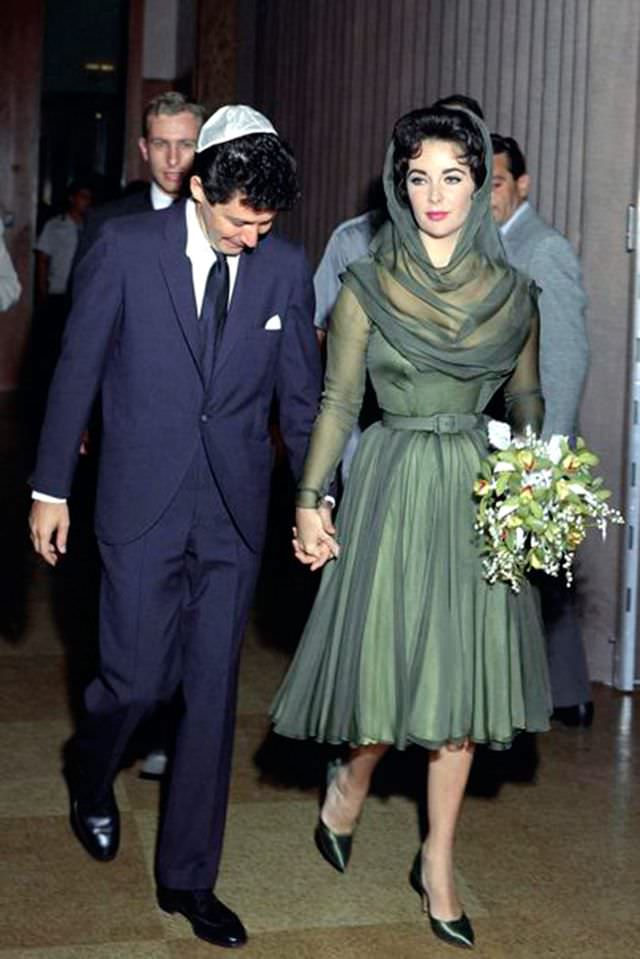
Elizabeth Taylor, whose 1950 marriage to Nicky Hilton had opened the decade, married singer Eddie Fisher in 1959 — her third trip down the aisle. The wedding marked a personal scandal, as Fisher had been previously married to Debbie Reynolds, but the bridal fashion was as polished as ever.
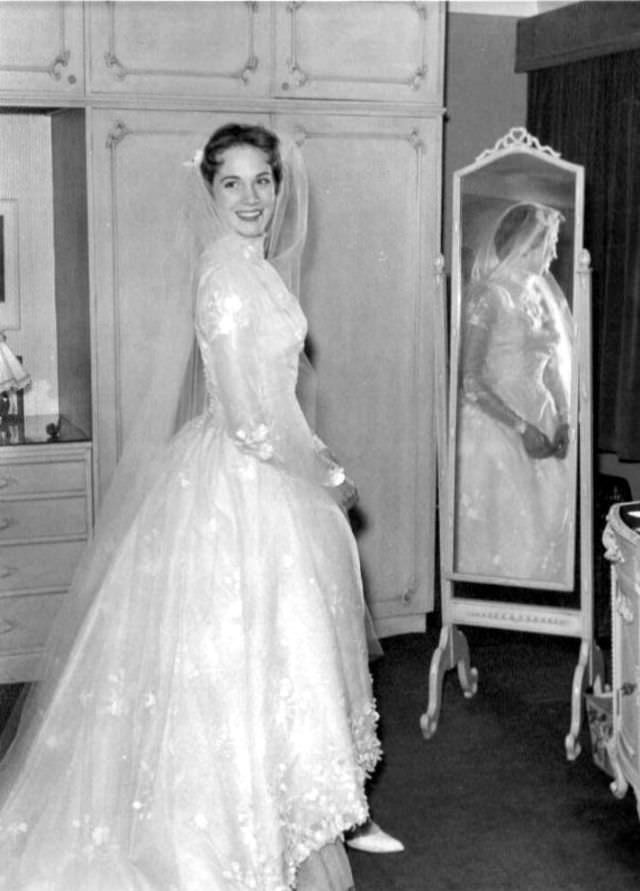
Julie Andrews rounded out the decade’s celebrity weddings with her 1959 marriage. The British actress, who would soon become a global star through stage and screen, wore a gown that reflected the classic, modest bridal style that had defined so much of the decade.