
Brooklyn in the 1950s was a borough caught between two worlds. It was still carrying the muscle it had built up during World War II, when its factories and shipyards fed the war machine. But by the time the 1950s arrived, that industrial strength was fading fast. Heavy manufacturers were packing up and heading to cheaper cities. The ports grew quieter as massive container ships — ones that needed deeper harbors than Brooklyn could offer — took over the shipping trade. The dockyards, once full of workers and noise, fell largely silent.
Even the streets changed. In 1950, streetcar service was discontinued on the Brooklyn Bridge and other crossings, ending an era of urban transit that had defined how Brooklynites moved through the city for decades. New infrastructure was rising to replace the old. The Brooklyn Battery Tunnel opened in 1951, connecting Brooklyn to Lower Manhattan and linking up with the northbound Brooklyn-Queens Expressway.
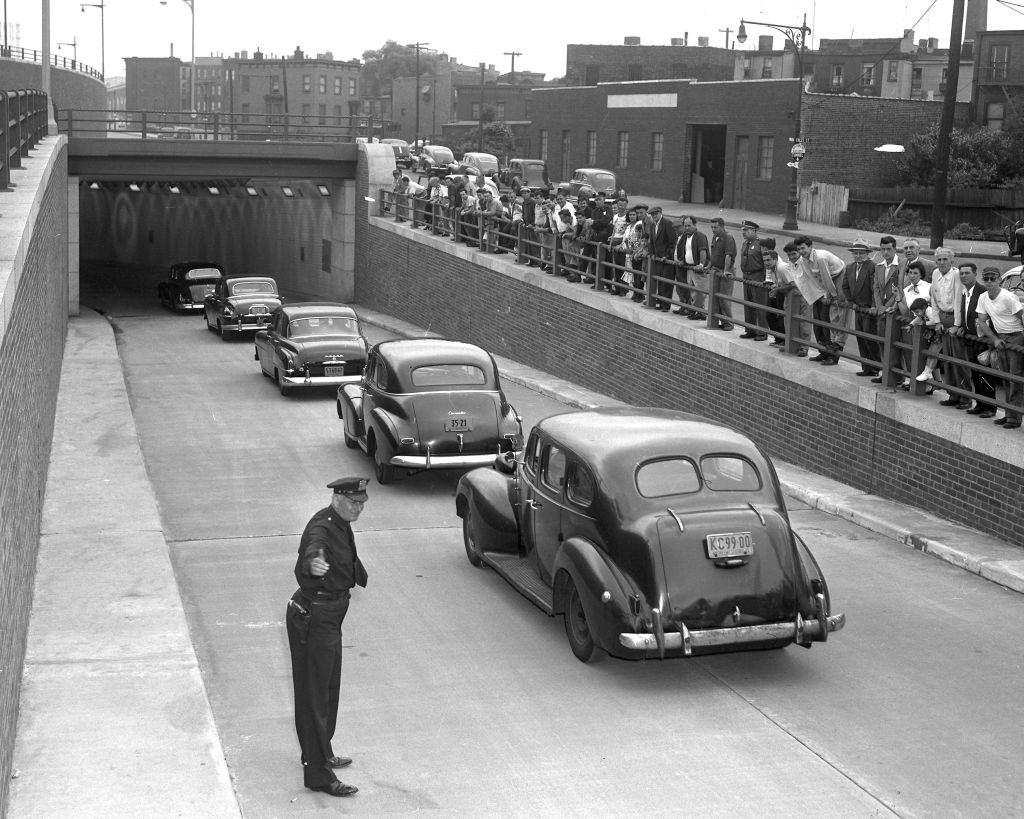
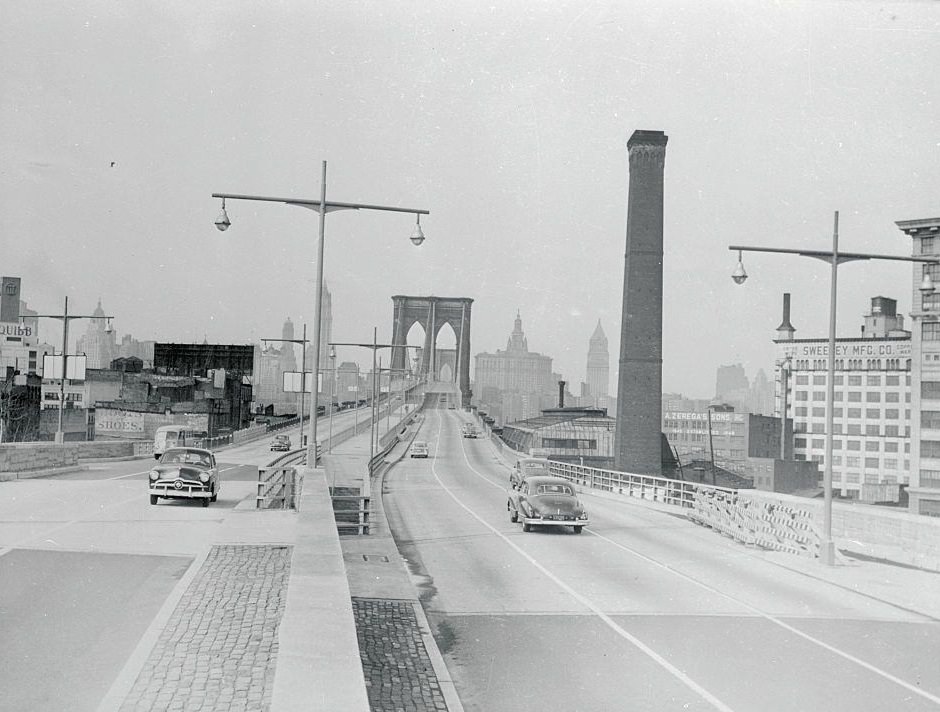
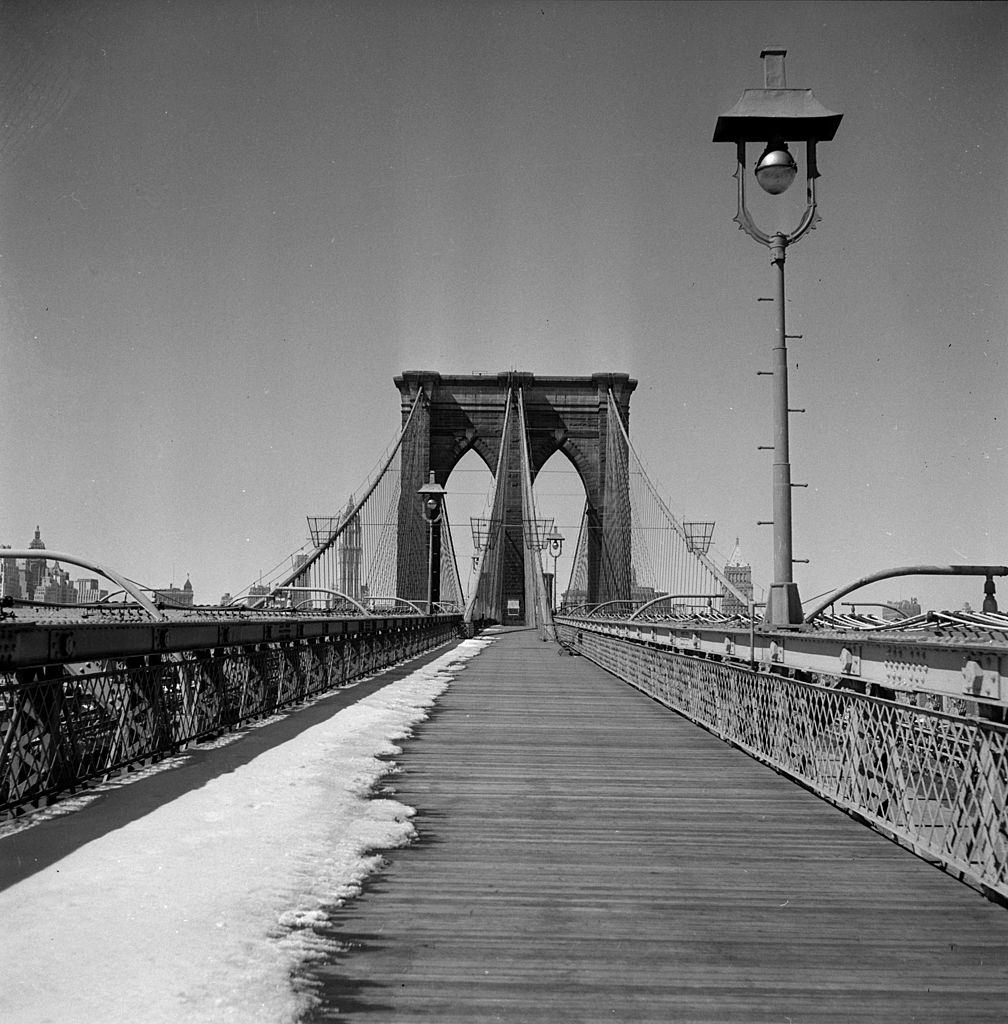
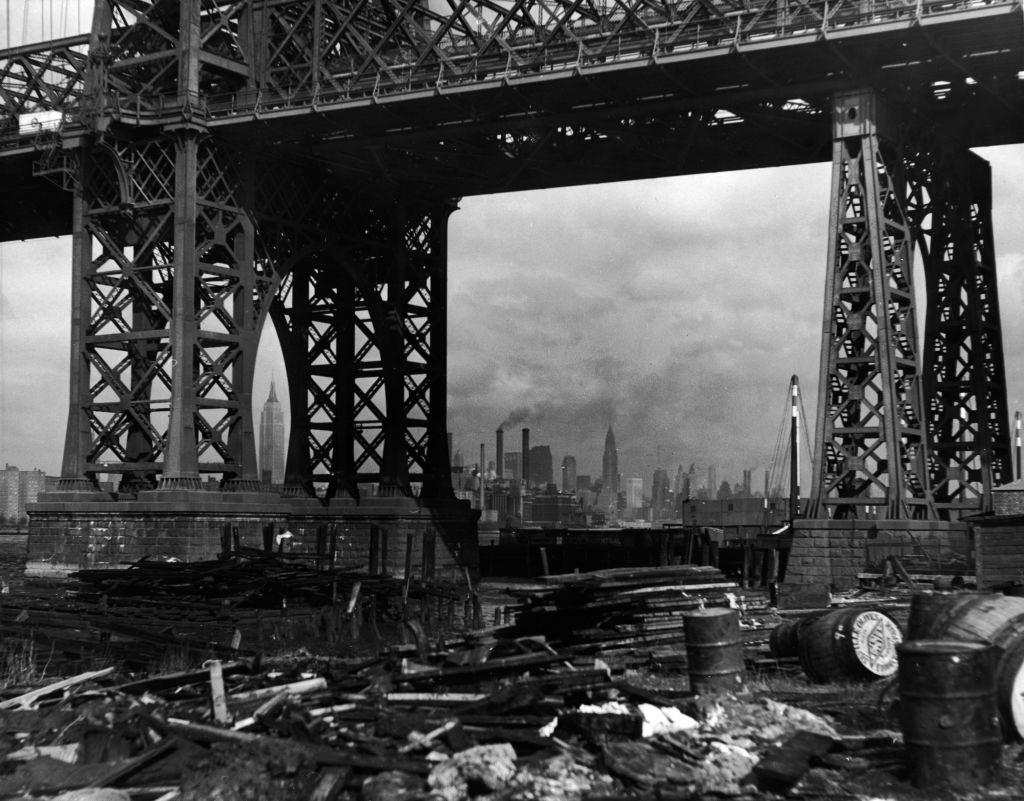
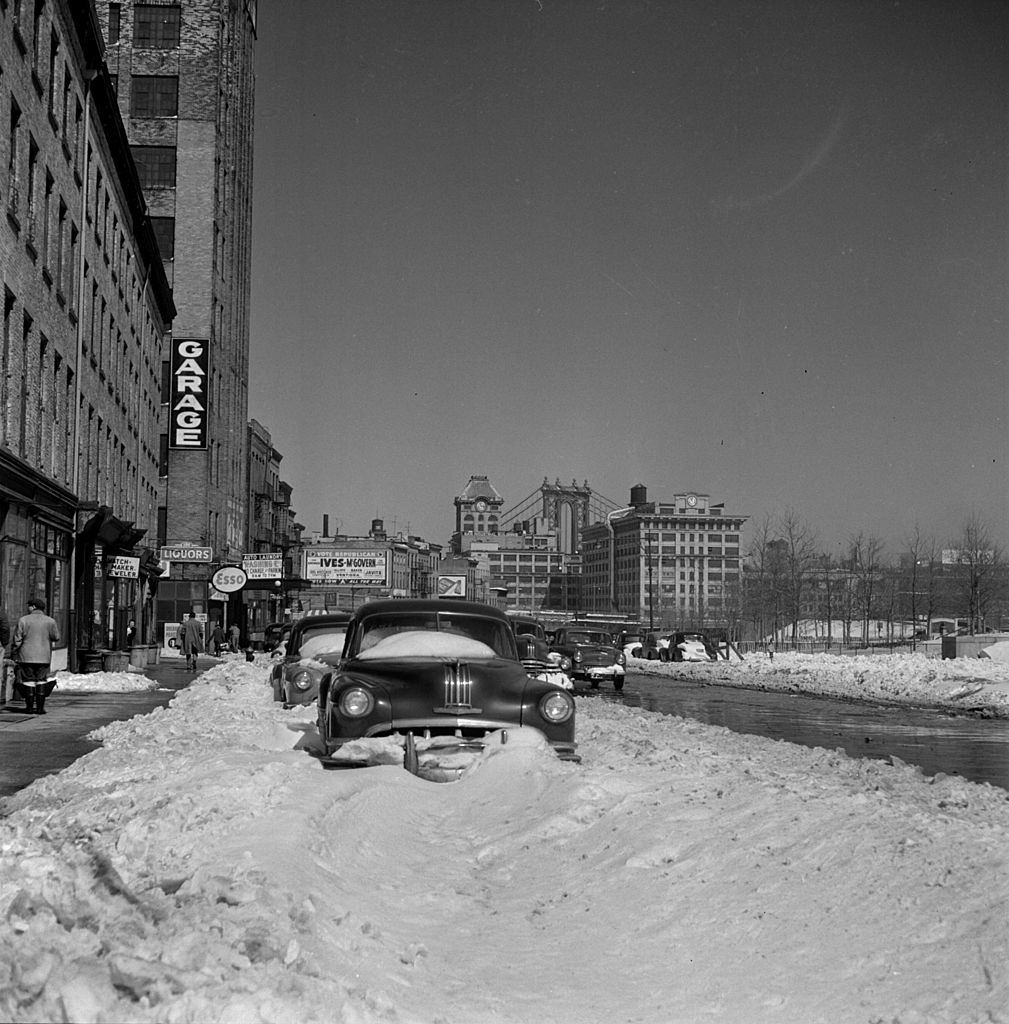
The Brooklyn Bridge itself was also undergoing work during this period. Reconstruction efforts in the early 1950s kept the iconic span relevant for a new generation of commuters and residents. These photos from the bridge show a structure both familiar and in the middle of change.
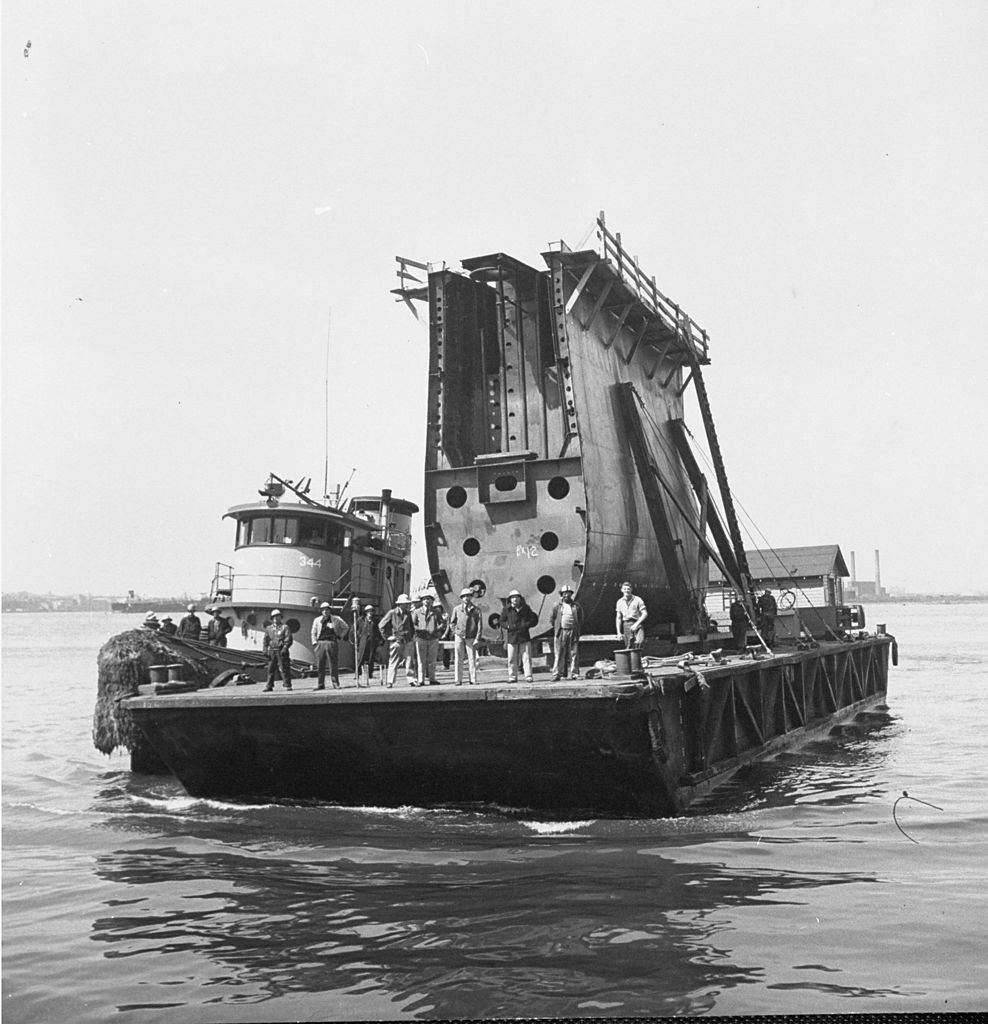
The waterfront still had its moments of activity. The U.S. Navy moved ship components through Brooklyn’s waters, including parts for major vessels like the USS Wasp, ferried from the Brooklyn Navy Yard to Bayonne, New Jersey.
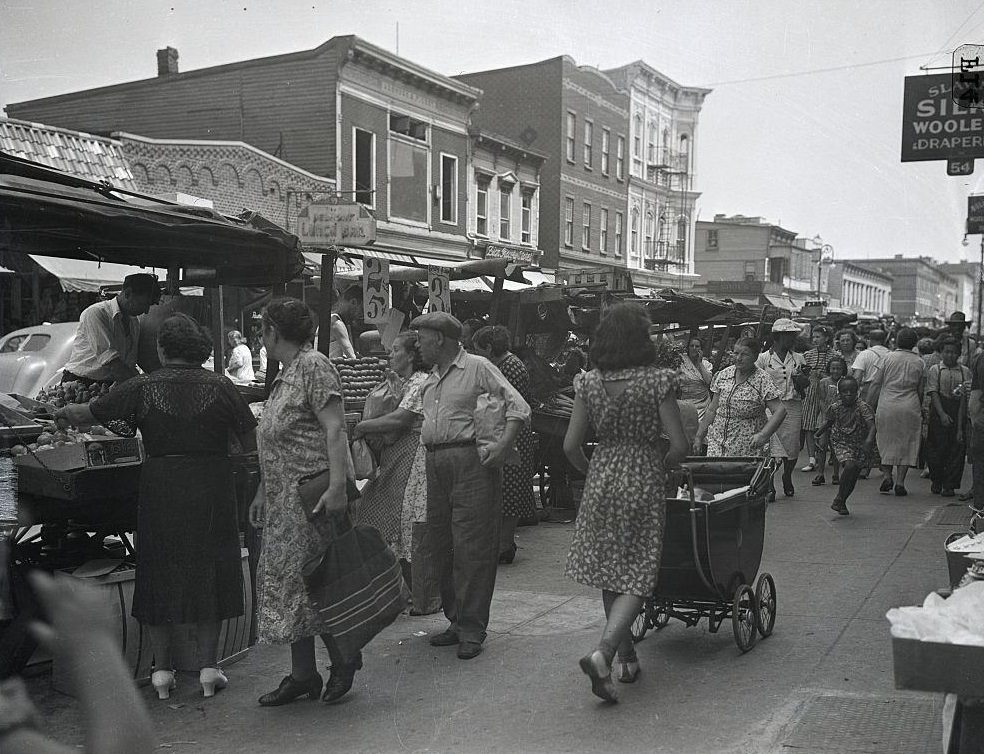
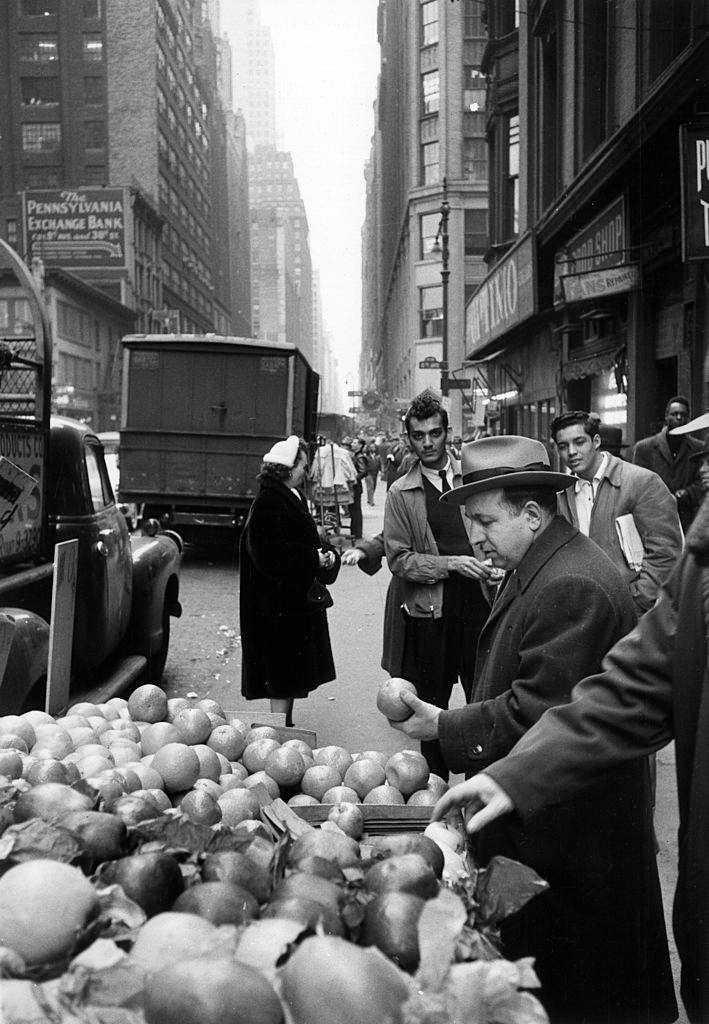
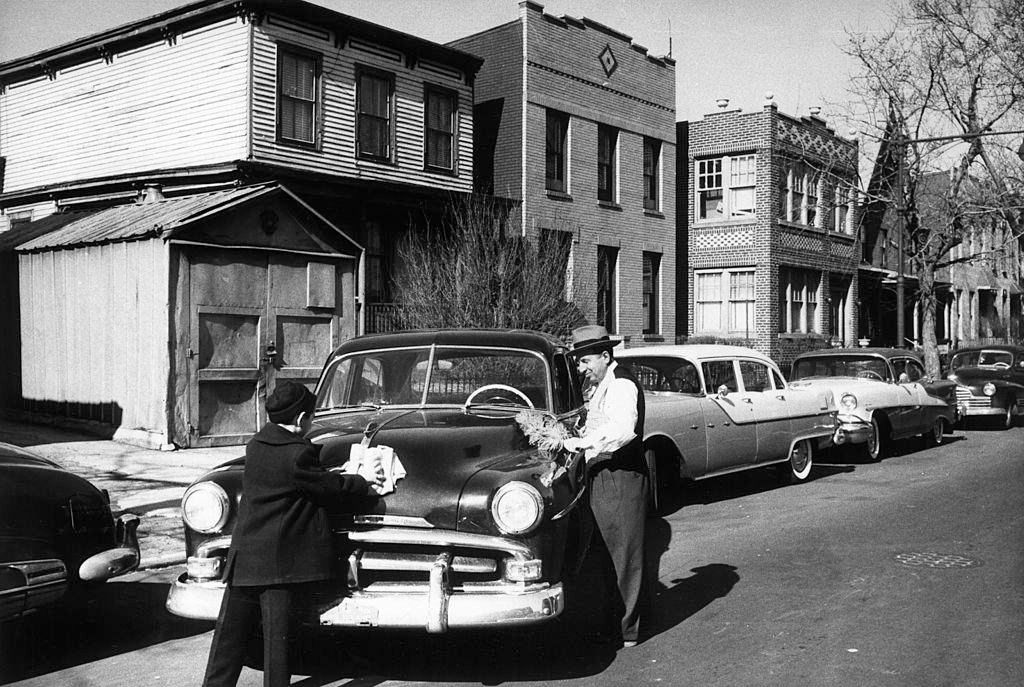
Away from the docks and bridges, Brooklyn’s streets had a rhythm all their own. Push cart markets, fruit stalls, and neighborhood sidewalks buzzed with daily life. Vendors set up along streets like 38th Street, and Italian-American families were a visible and active part of the borough’s social fabric.
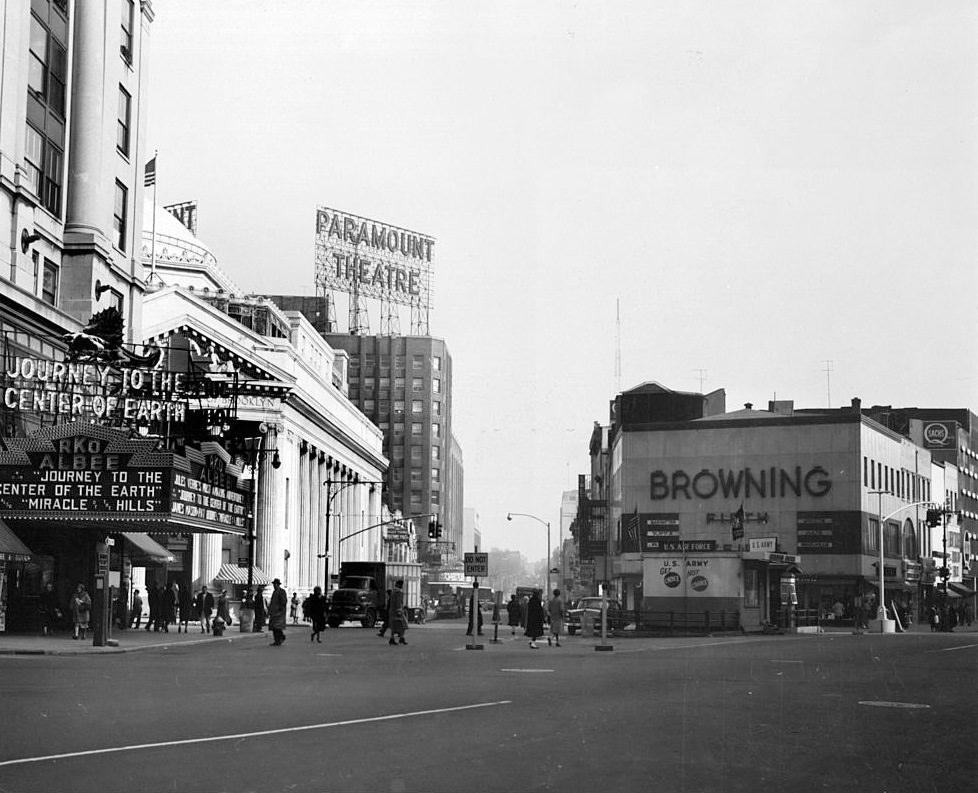
Fulton Street was one of Brooklyn’s main commercial arteries. Its storefronts and movie houses drew crowds regularly. The RKO Albee Theater stood as a neighborhood landmark, showing popular films like Journey to the Center of the Earth in 1955 to audiences who filled its seats.
Brooklyn’s civic character showed up in its public spaces too. Grand Army Plaza, with its towering monument, anchored the northern entrance to Prospect Park. Borough Hall stood as a symbol of local government, photographed in 1955 as a steady, familiar presence in the civic landscape.
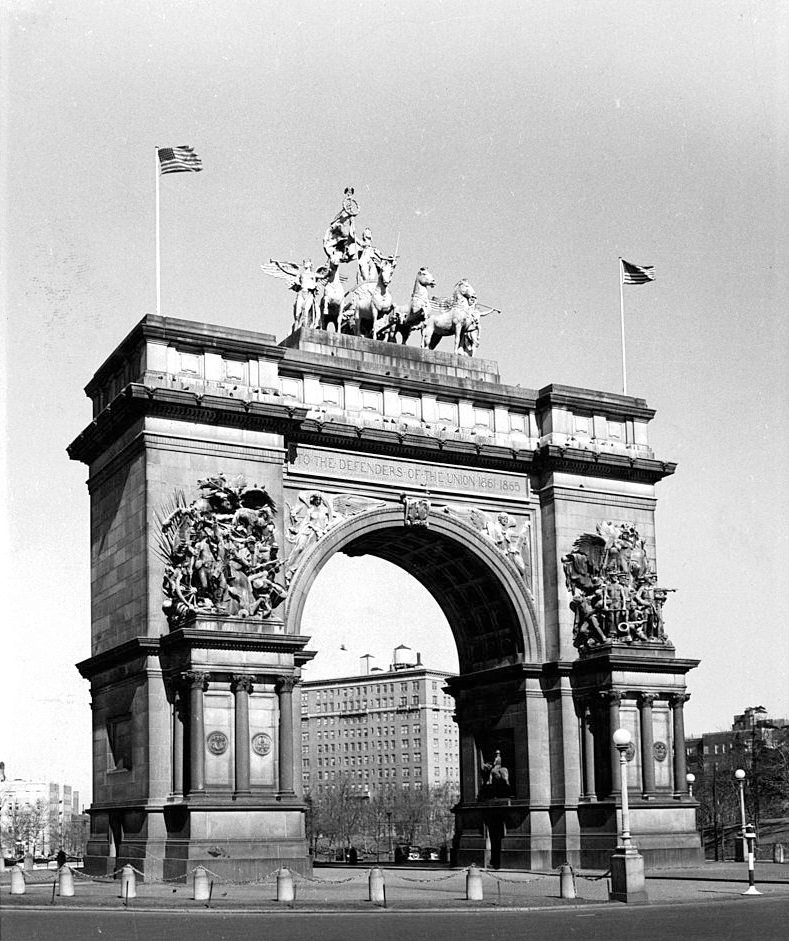
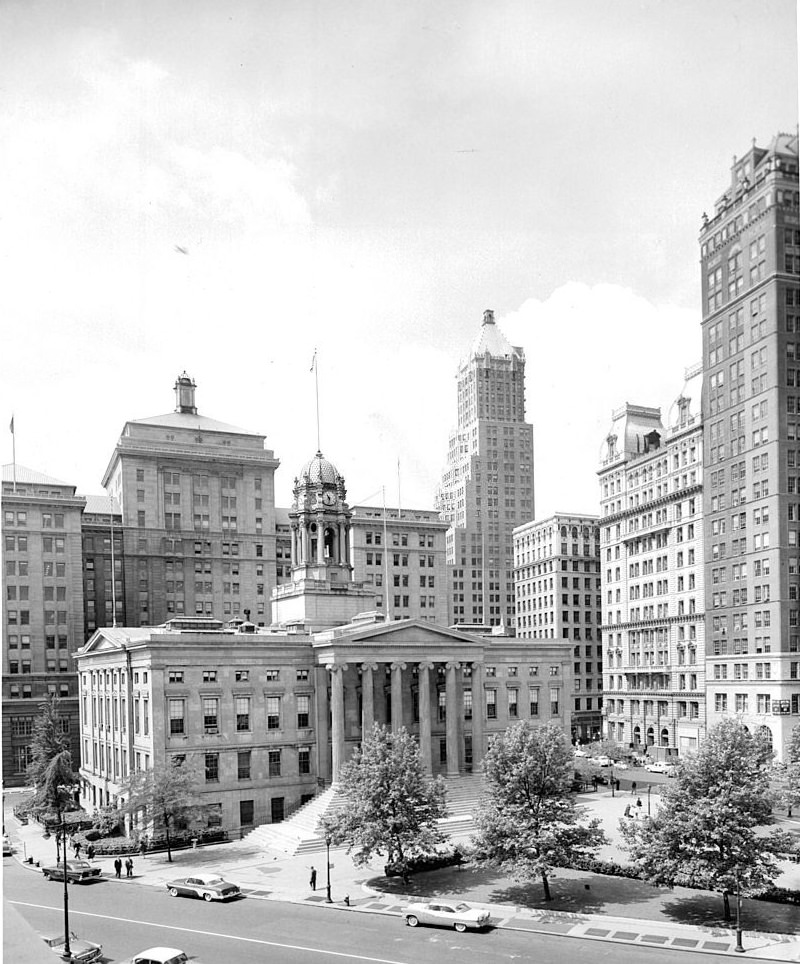
Prospect Park gave Brooklynites an escape from the concrete. Children paddle-boated on its lake in 1955, and the park served as one of the borough’s most beloved gathering spots through all four seasons.
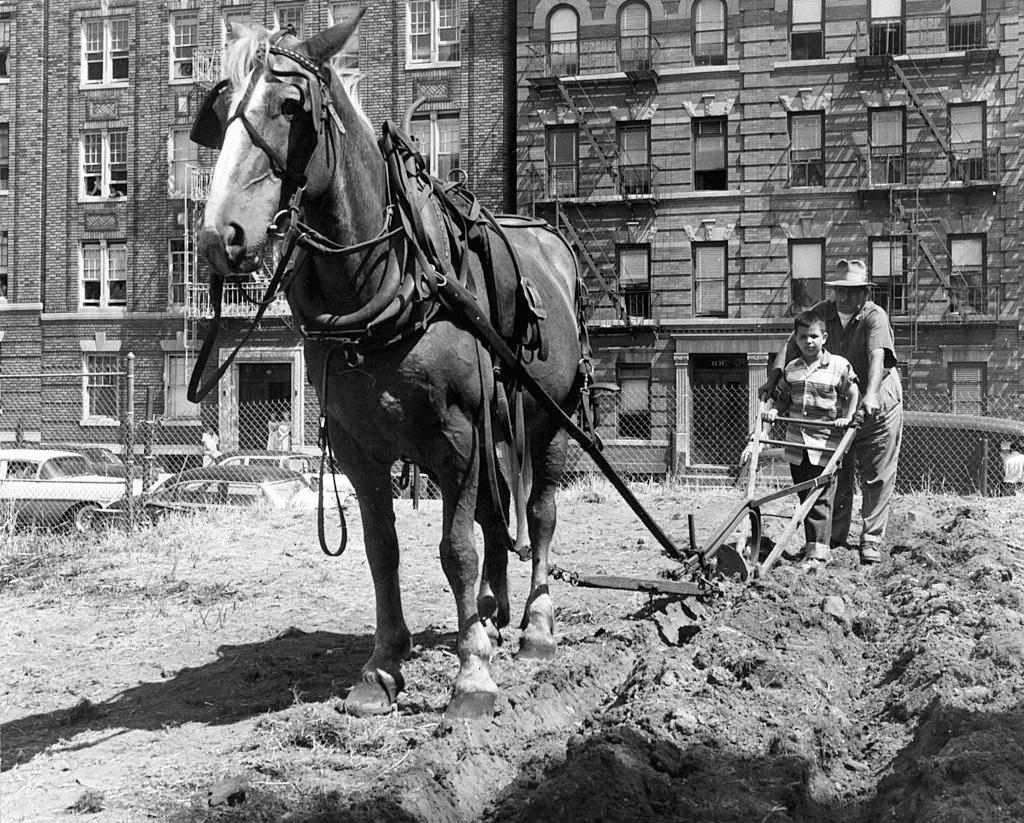
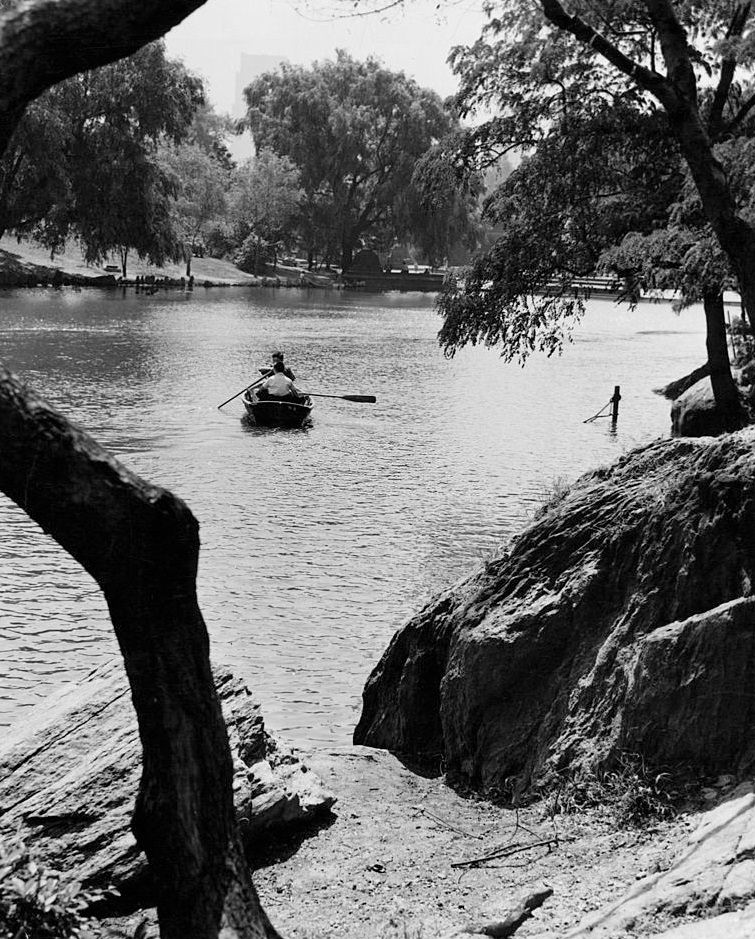
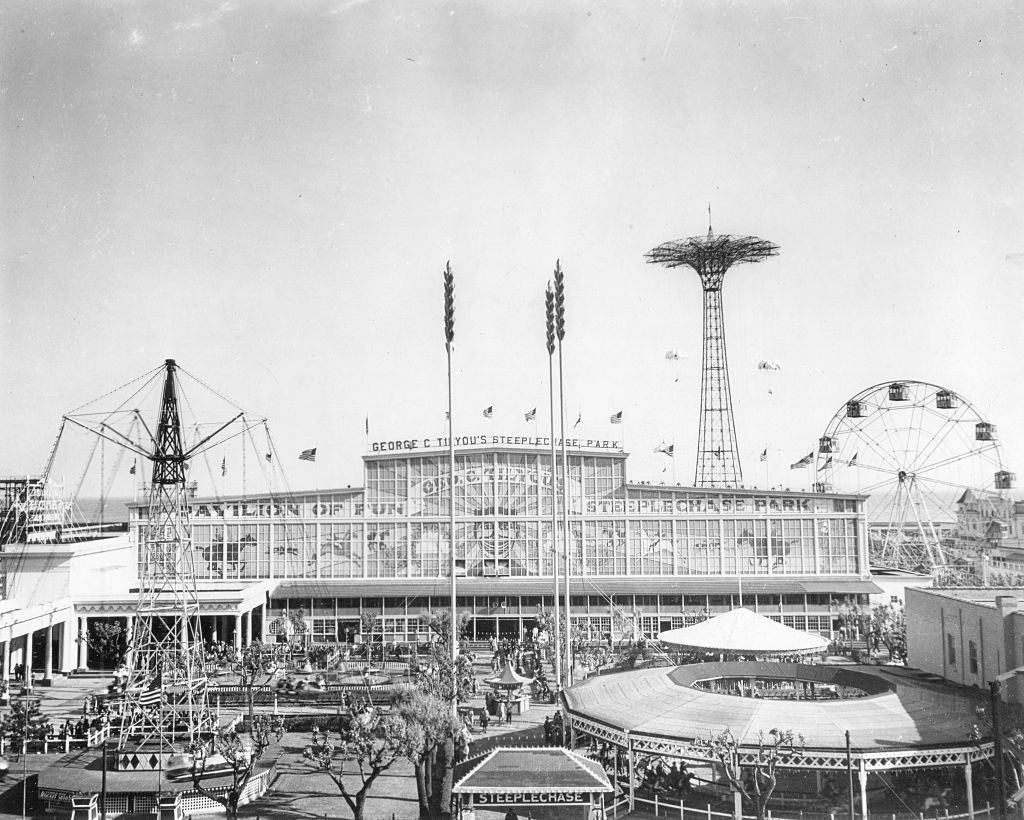
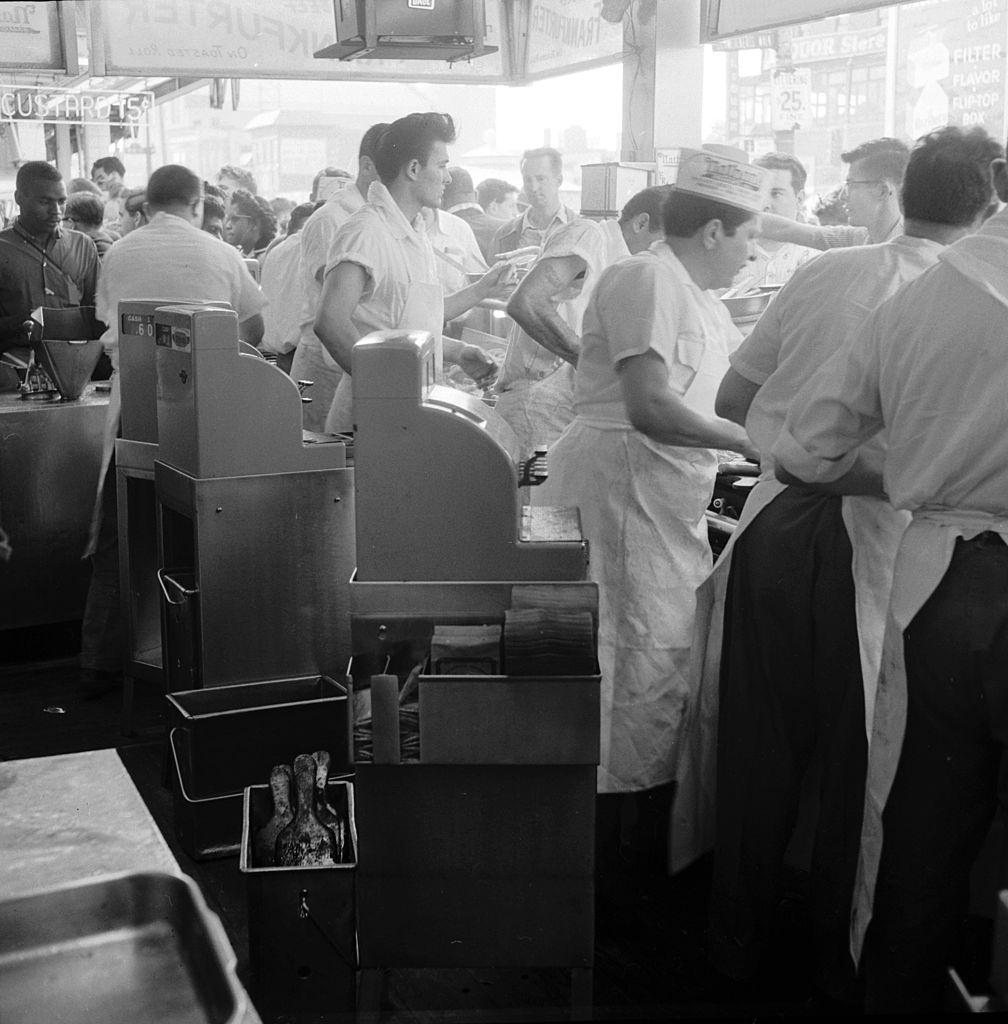
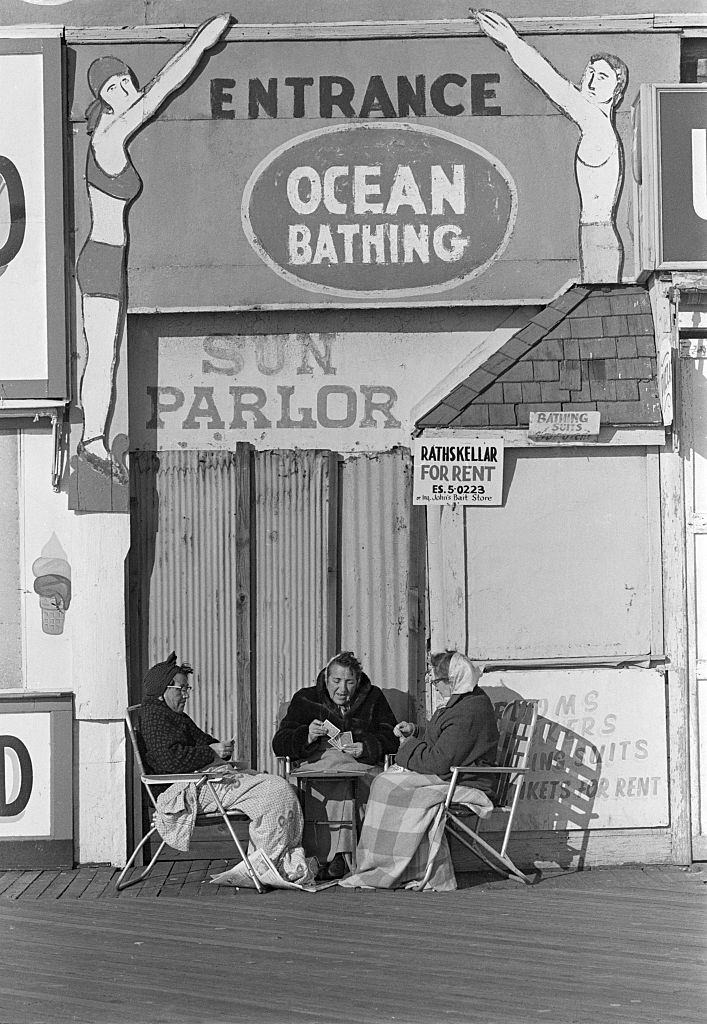
Coney Island was still in its prime. Steeplechase Park packed in thrill-seekers with its rides and amusements, and Nathan’s Famous hot dog stand on the boardwalk was as busy as ever. Even in the dead of winter, Coney Island had its diehards — three elderly women bundled up and playing cards in front of a bathhouse in December 1959, completely unbothered by the cold.
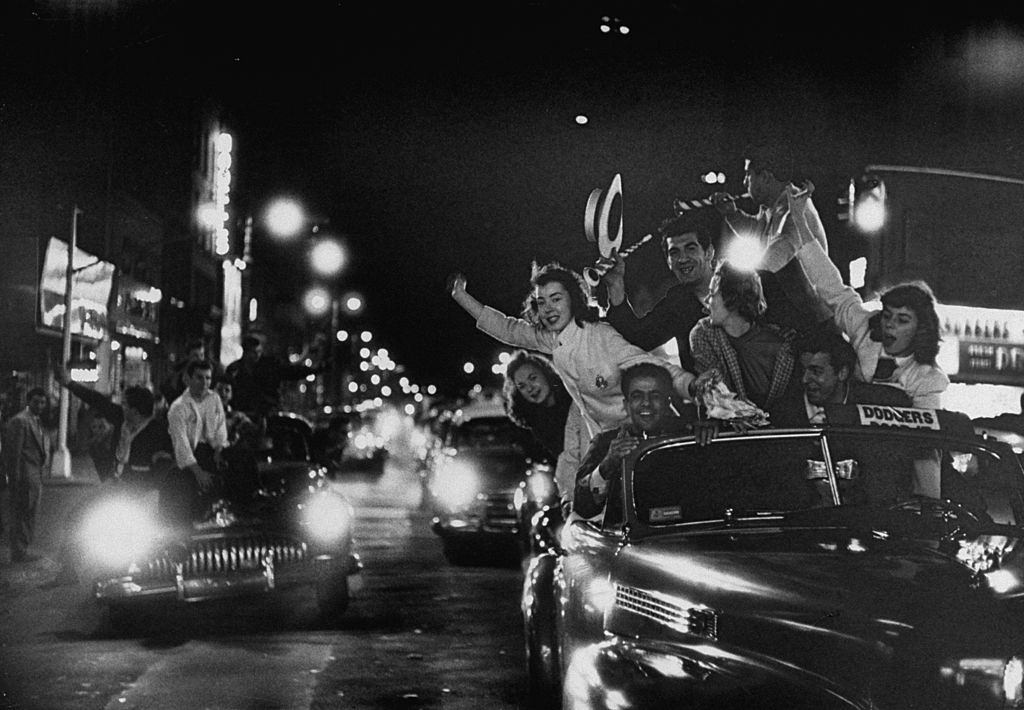
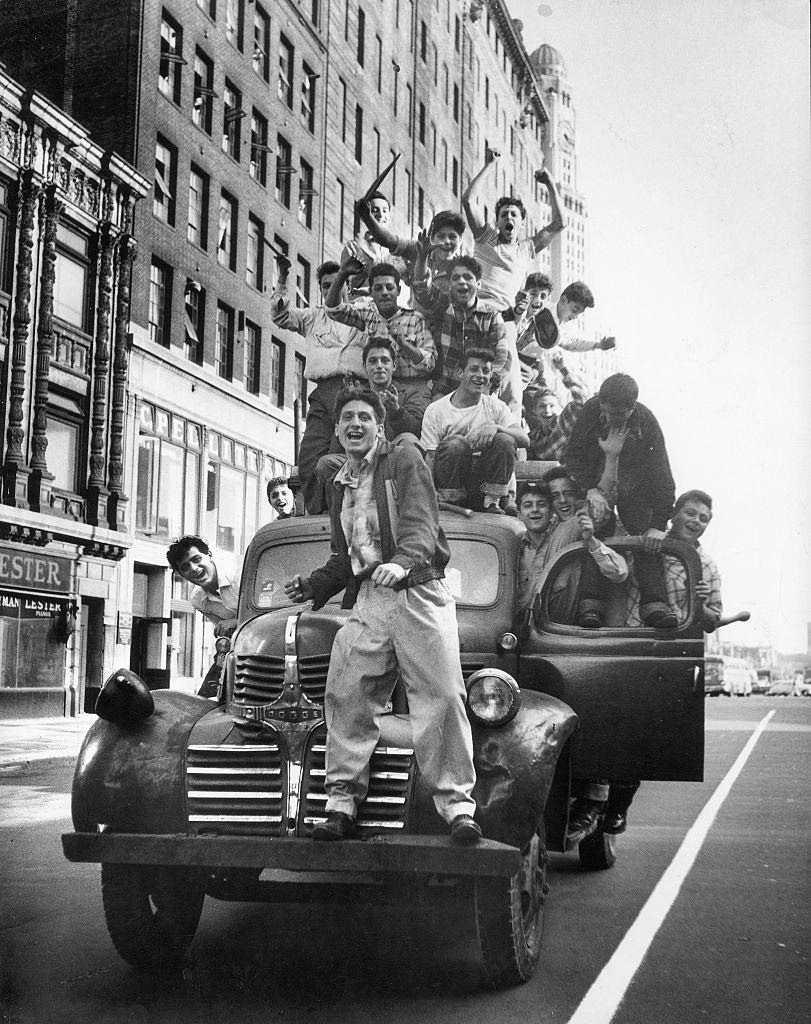
The biggest single event of Brooklyn’s entire 1950s decade happened on October 4, 1955. The Brooklyn Dodgers defeated the New York Yankees to win the World Series — the only World Series championship the Dodgers ever won while playing in Brooklyn. The celebrations that erupted in the streets were unlike anything the borough had seen. Fans poured out of homes, bars, and storefronts. The noise, the crowds, the sheer release of decades of frustration — it was all captured in photographs that still carry that electric charge.
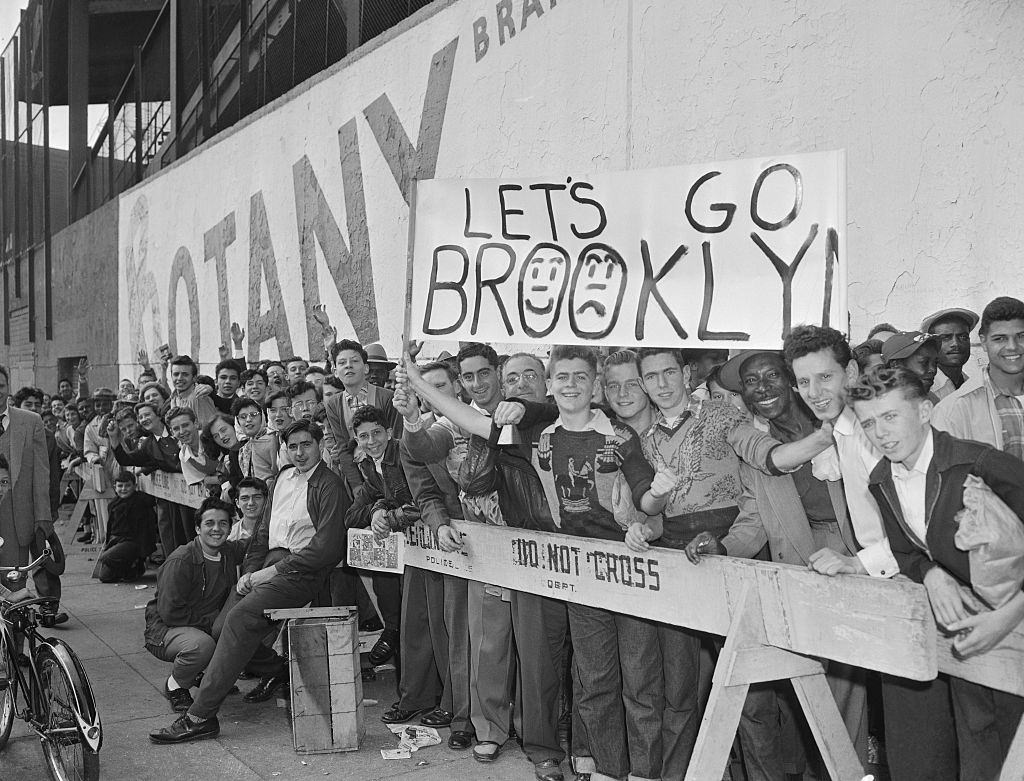
Ebbets Field was the house where that championship was built. Baseball crowds packed the stadium for games that drew in fans from across the city. The Giants and Dodgers rivalry was fierce, and so was the Braves matchup — both documented in photographs from the early 1950s that show the bleachers full and the energy high.
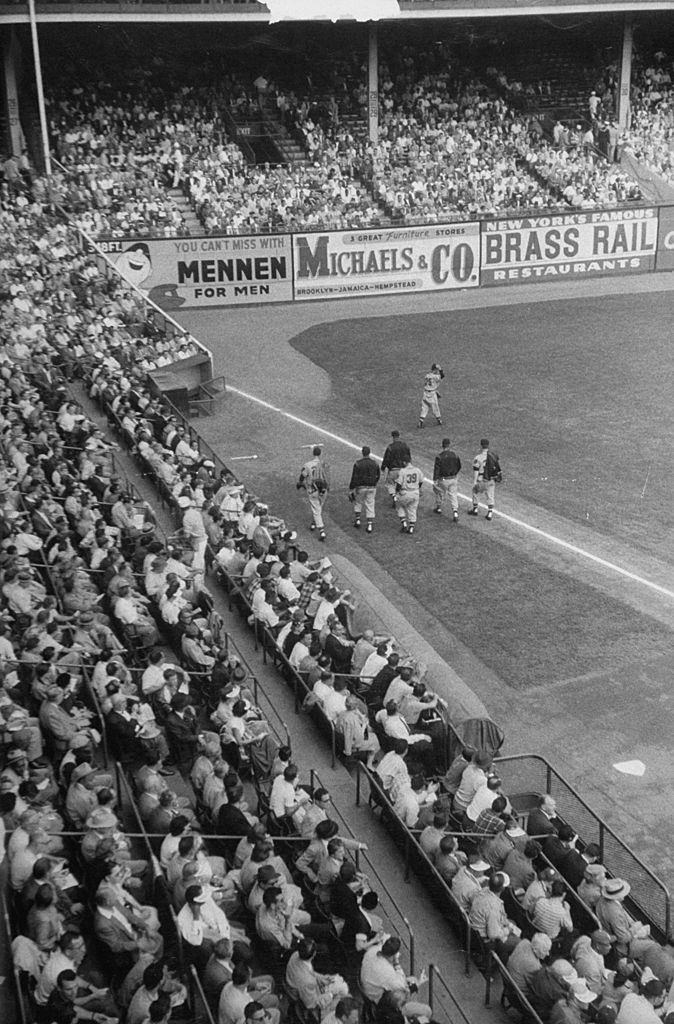
But the Dodgers didn’t stay. In 1957, the team moved to Los Angeles, taking a piece of Brooklyn’s identity with them. The stadium would eventually be demolished, and the borough would never again have a Major League Baseball team to call its own.
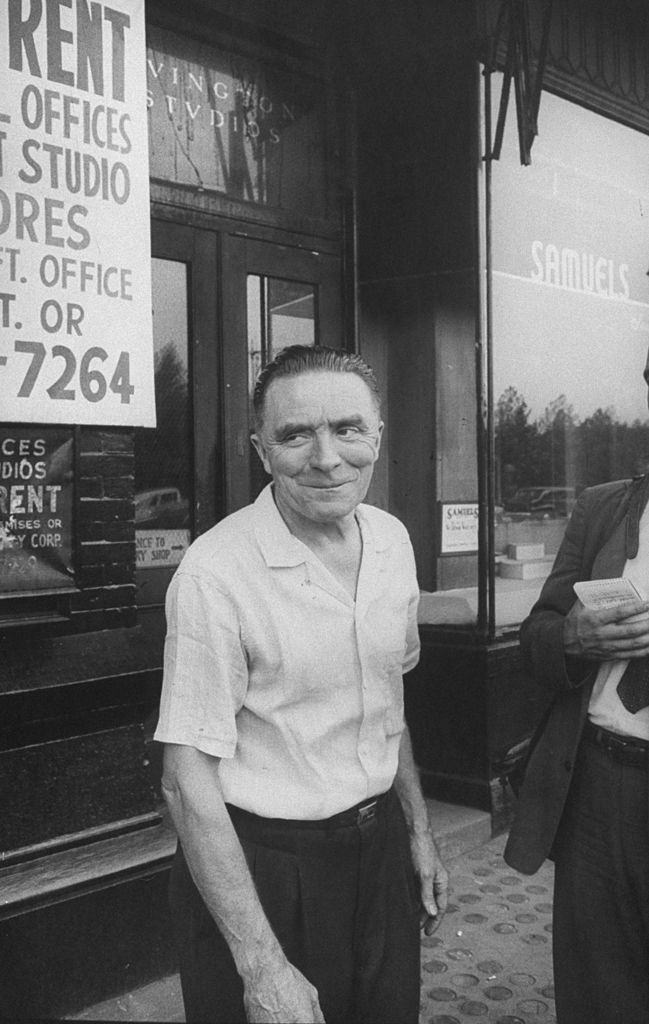
Brooklyn in the 1950s also made national headlines for less celebratory reasons. In 1957, Soviet spy Rudolf Ivanovich Abel was arrested by the FBI. He had been living quietly in Brooklyn under an assumed name. The superintendent of his apartment building, Harry McMullen, was photographed managing the property where one of the Cold War’s most wanted spies had made his home.
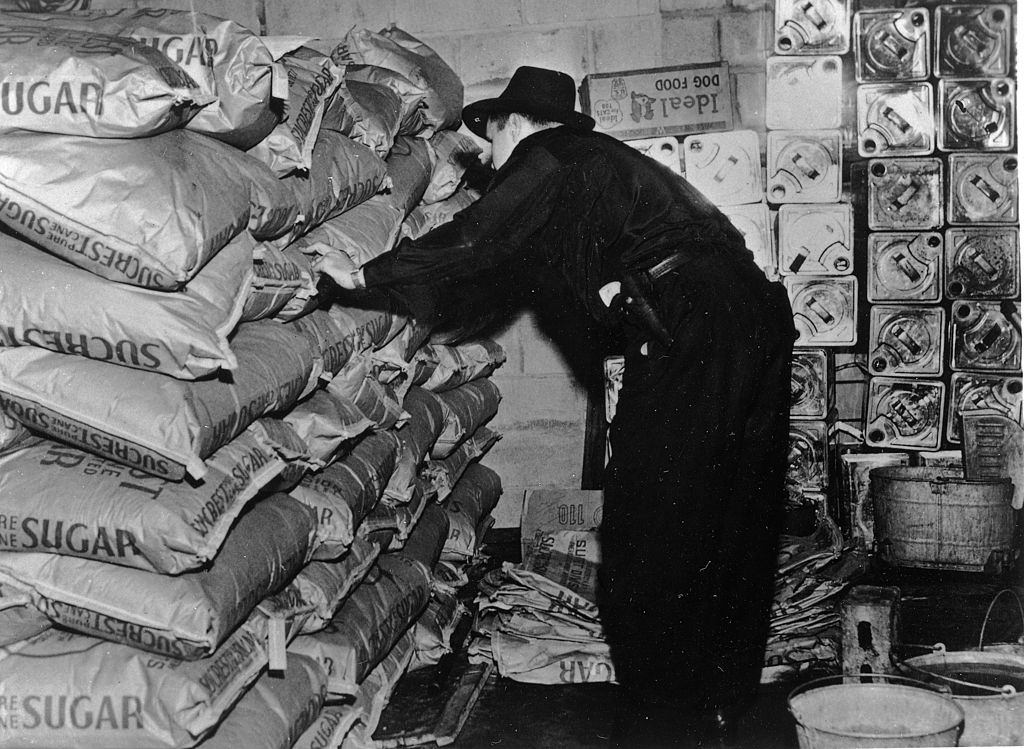
Law enforcement had other concerns in Brooklyn too. In 1950, a Revenue agent uncovered a major bootlegging operation — 200 bags of sugar stashed in a Brooklyn warehouse capable of producing 2,500 gallons of illegal liquor per day.
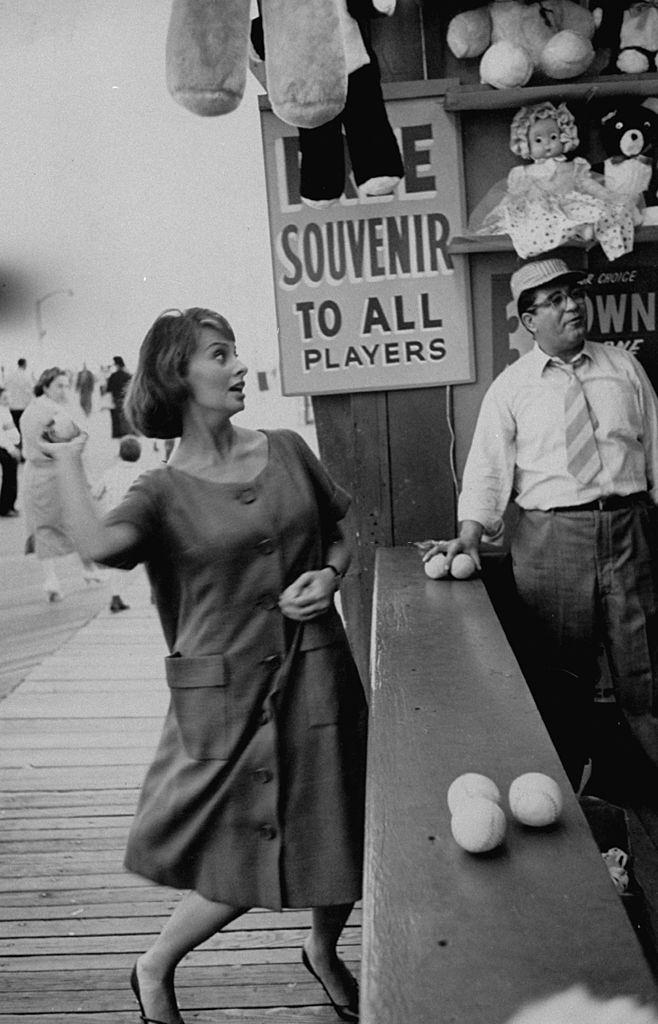
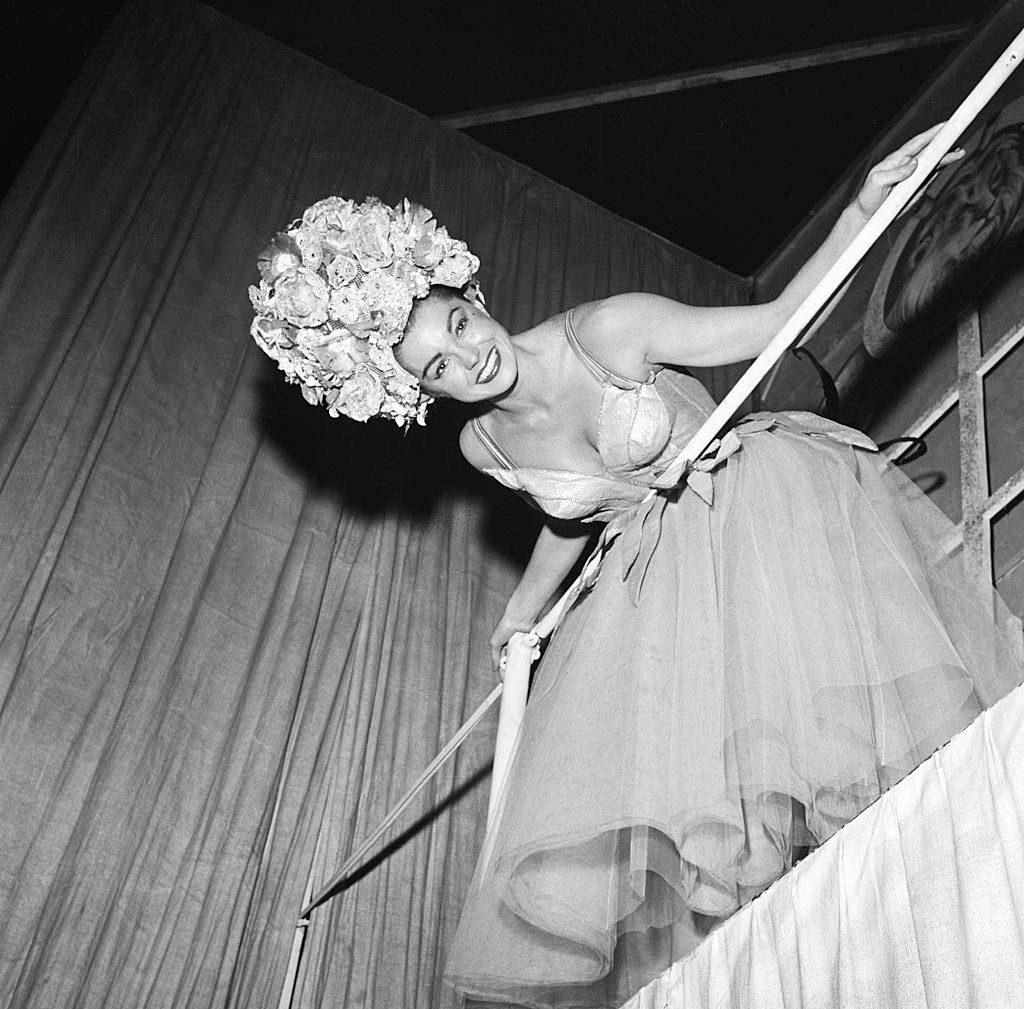
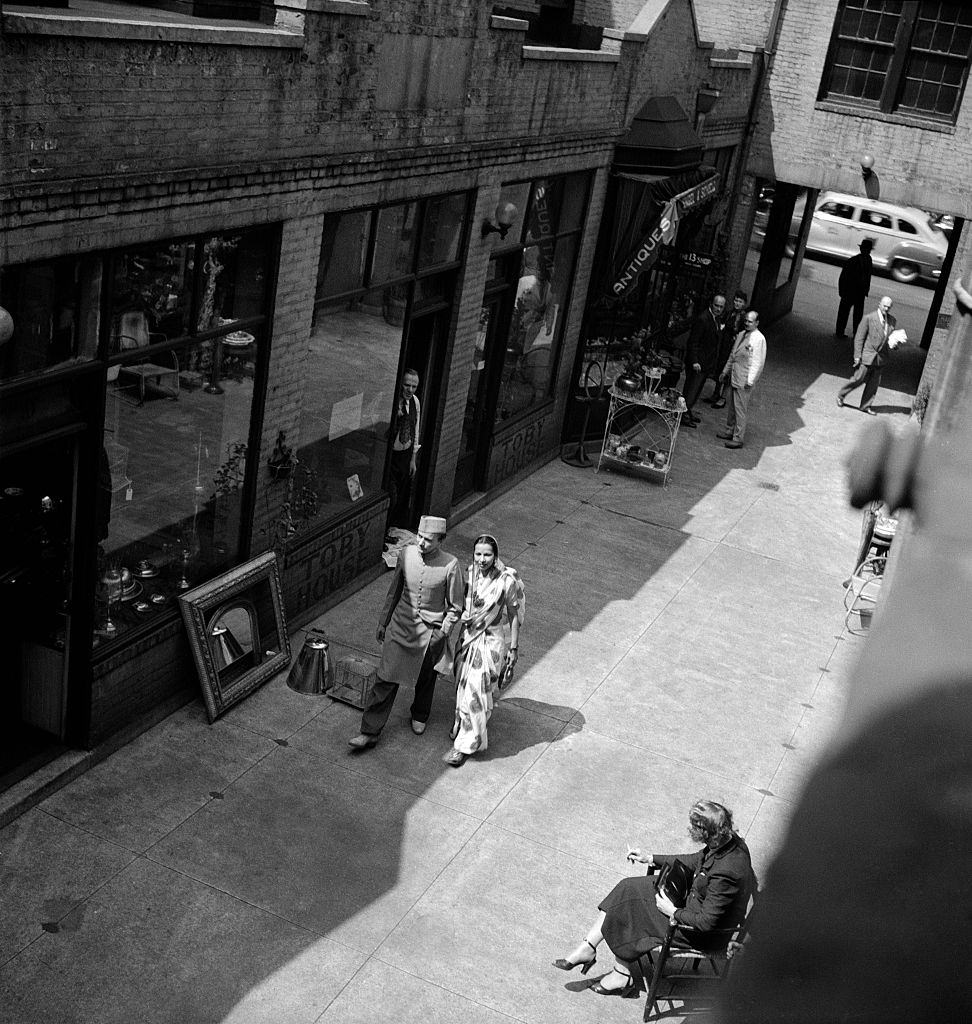
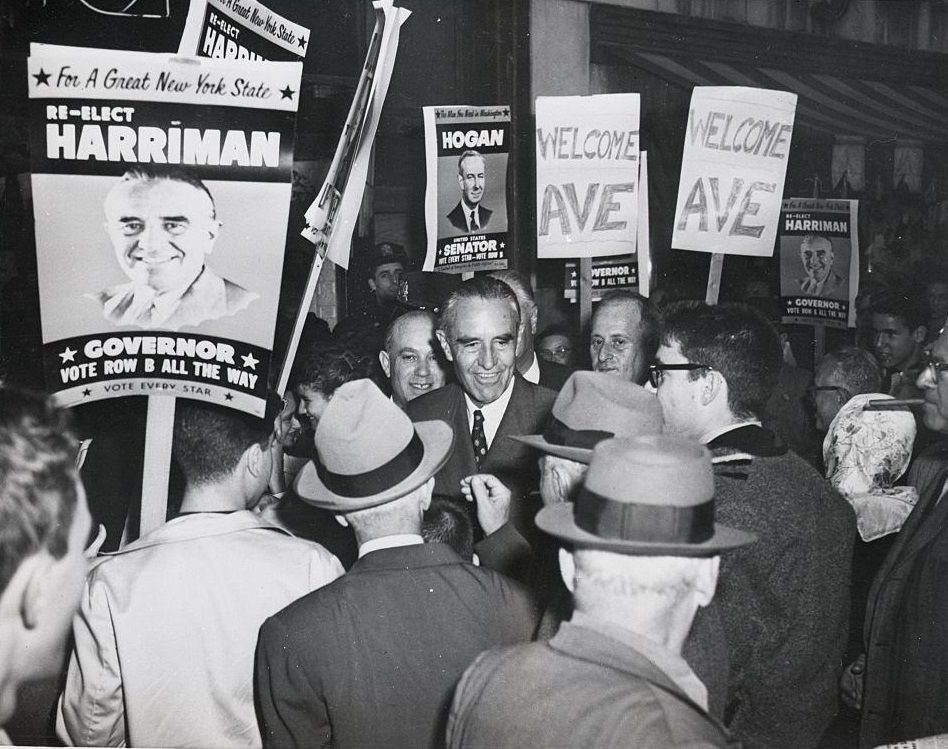
The borough’s streets were also a stage for celebrities passing through. Actress Sophia Loren was photographed throwing a ball at a carnival in 1958. Esther Williams, the swimming film star, was captured in Brooklyn in 1956. South Asian dancers Asoka and Sujata walked Brooklyn’s streets in 1950. And New York Governor Averell Harriman found himself surrounded by crowds when he visited one of Brooklyn’s busiest shopping centers in 1958.
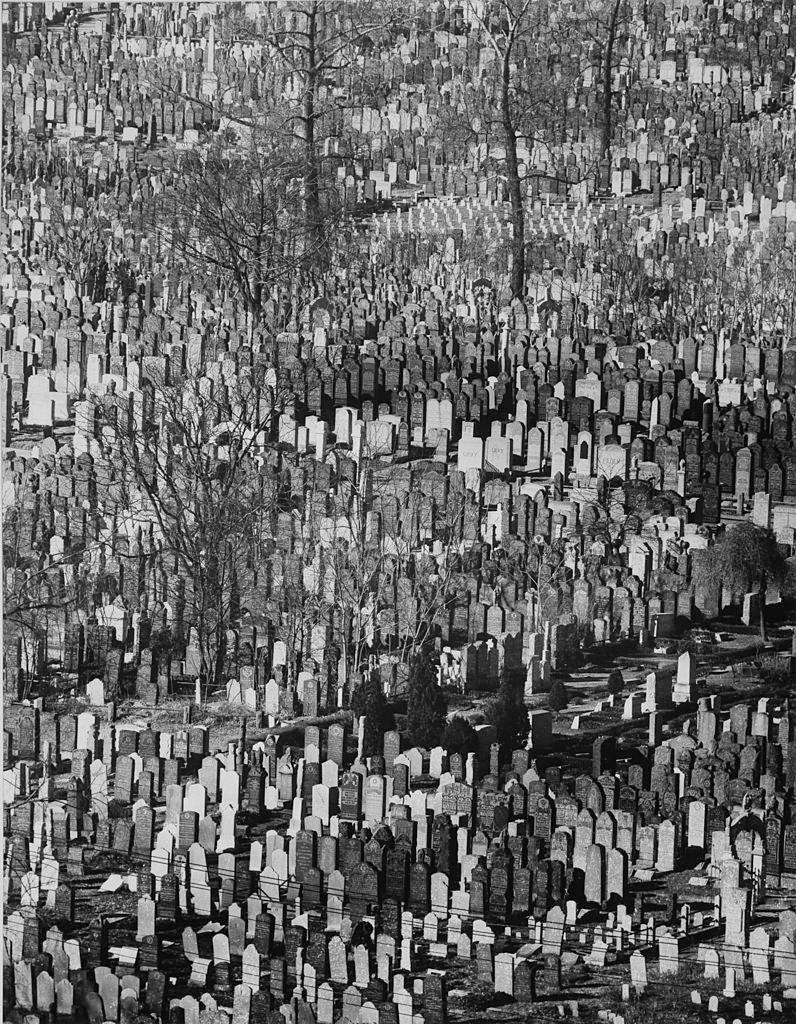
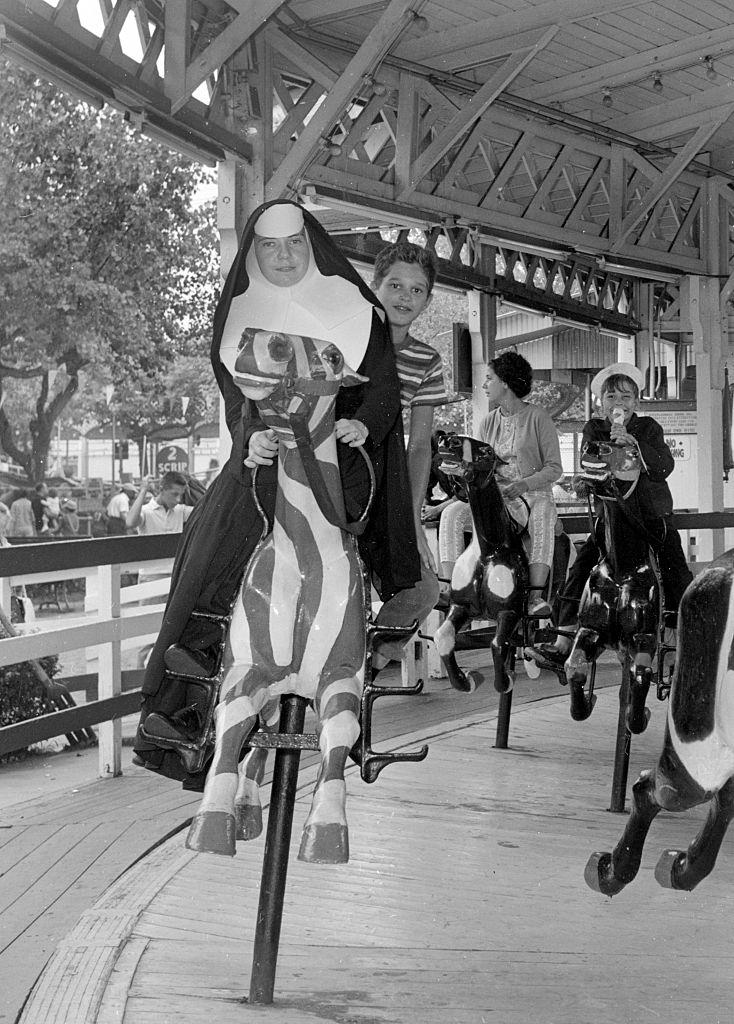
Religion and community were woven into everyday Brooklyn life. A Jewish cemetery photographed in 1952 reflected the borough’s deep and long-established Jewish community. Church picnics drew nuns and children to carnival rides. Schools ran civic programs — students at the Brooklyn School of Automotive Trades pledged to offer free, honest mechanical service to the public, a snapshot of practical education and community responsibility.
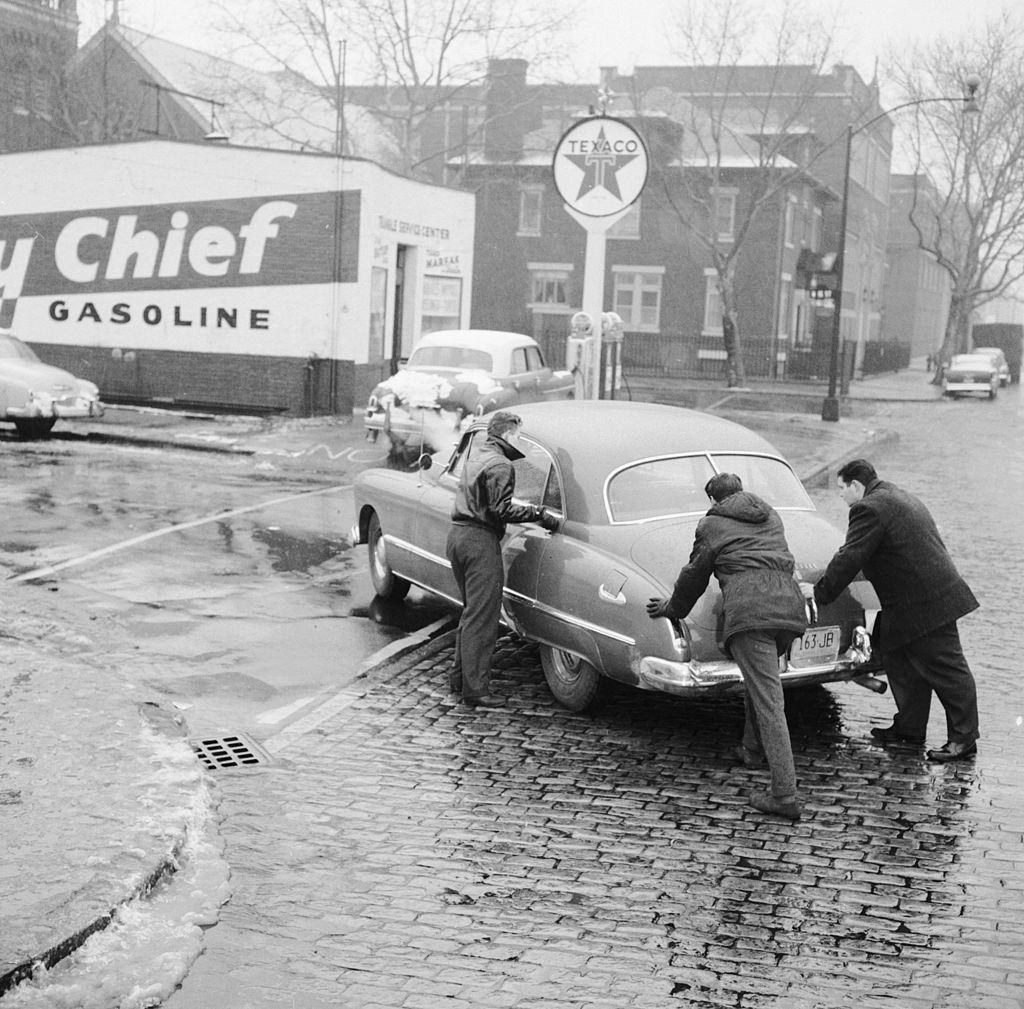
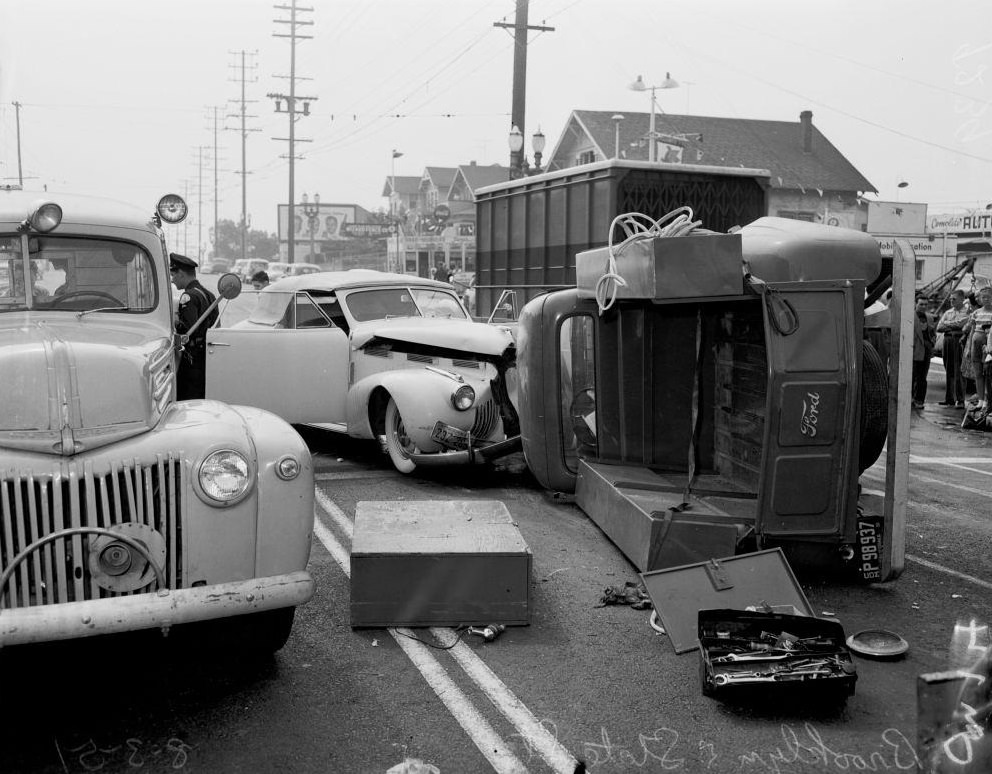
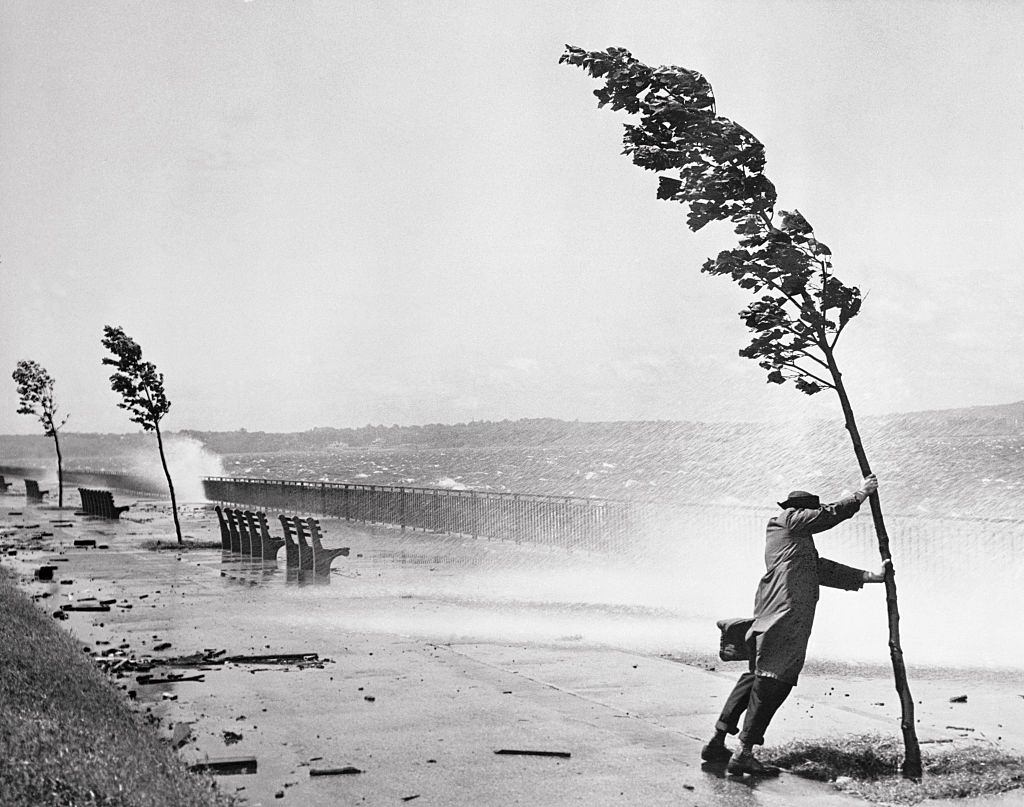
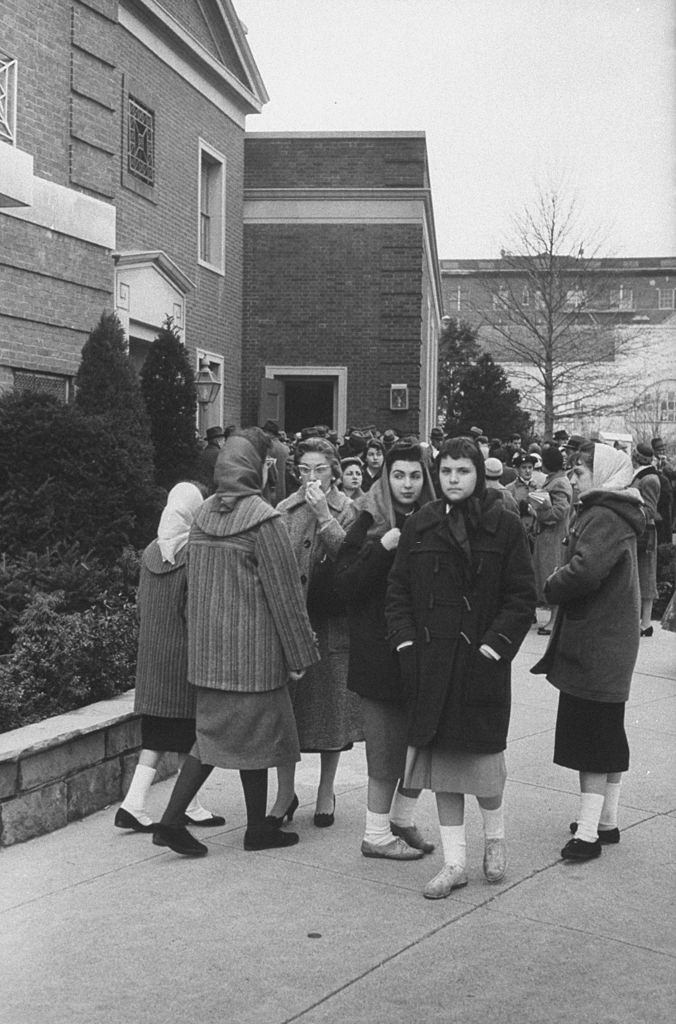
Not every moment in 1950s Brooklyn was festive. A car crash on Brooklyn Avenue in 1951 was one of many reminders that the borough’s busy roads carried real dangers. A hurricane sent waves crashing over the sea wall near the Belt Parkway at 72nd Street, forcing at least one passerby to grip a tree just to stay upright. And in 1958, students from John Marshall Junior High School attended the funeral of classmate George Goldfarb — a quiet, somber scene amid a decade that is often remembered through a more optimistic lens.
Brooklyn in the 1950s was a borough of extremes — industrial decline alongside neighborhood vitality, championship joy alongside Cold War intrigue, celebrity visits alongside ordinary street life. These photographs preserve all of it without filter.





Such historical photos are my favorite. It seems like a different time.
Dead Horse Bay contains trash from this period. A few years ago, you could find things that the people in these photos may have discarded.