Hey There! Before You Go. 😧
Get the best vintage content straight into your inbox!

Don't worry, we don't spam

Vintage Photos Capture the Chaos and Confrontations Between British Police and Football Hooligans, 1970s-1990s

From the early 1970s through the 1990s, British football was gripped by a wave of hooliganism that turned stadiums and surrounding streets into battlegrounds. What drew hundreds of thousands of fans to the terraces every weekend also drew gangs of violent men looking for a fight. Police were caught in the middle, outnumbered, underprepared, and operating in stadiums that were never designed with crowd safety in mind.
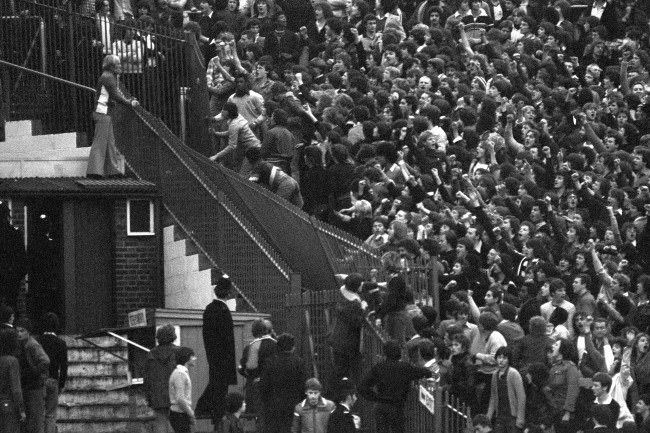
Tottenham Hotspur fans tear down a section of iron railings in a bid to reach Chelsea supporters, 1970s.

The organized nature of football violence set it apart from ordinary public disorder. Fans formed tightly knit groups known as ā€œfirmsā€ — coordinated gangs that traveled to away matches with the specific intention of confronting rival supporters. These firms had names, reputations, and hierarchies. They communicated, planned, and fought with a level of organization that caught police off guard in the early years.
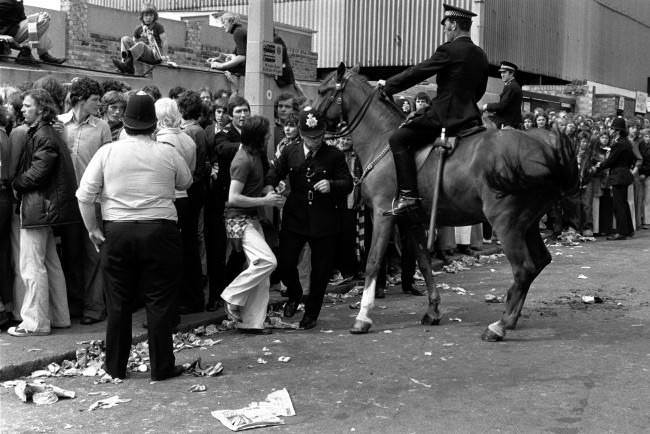
A mounted policeman watches the situation as colleagues deal with crowd trouble, 1970s.
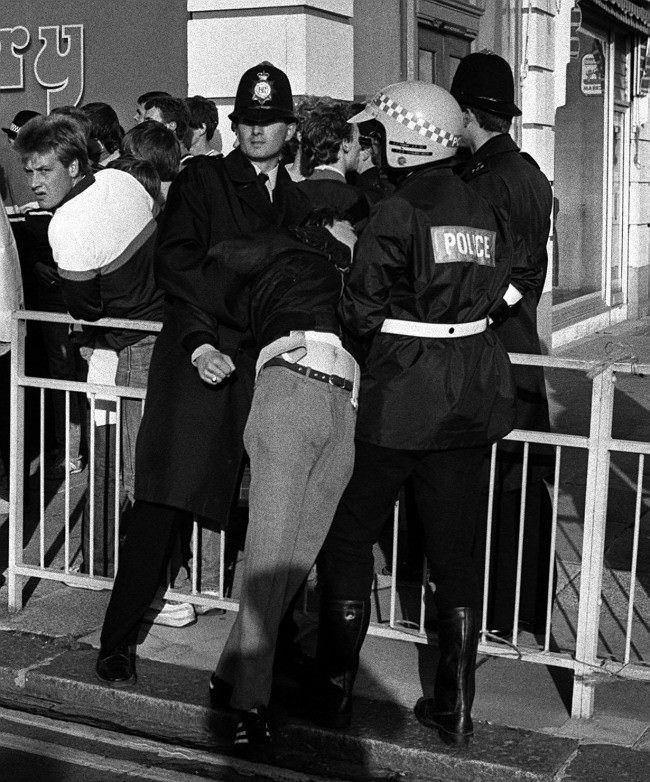
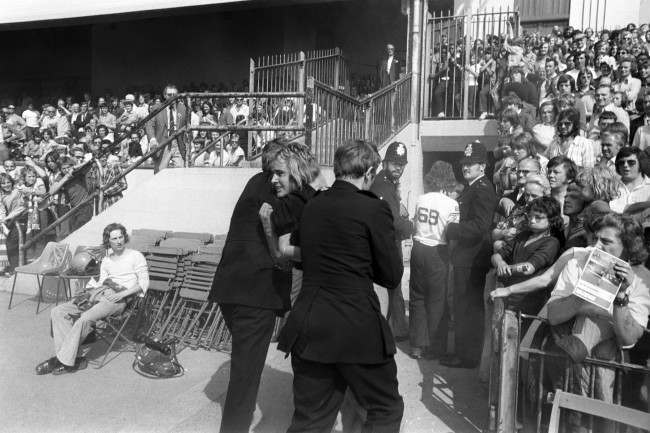
Two policemen remove a football supporter from Highbury, 1970s.

Stadiums in the 1970s were ill-equipped to handle the scale of violence that was breaking out. Terraces — standing areas packed with fans — had little physical separation between rival supporters. Iron railings, concrete barriers, and thin police lines were often the only things standing between opposing firms. When those barriers failed, the consequences were immediate and brutal.
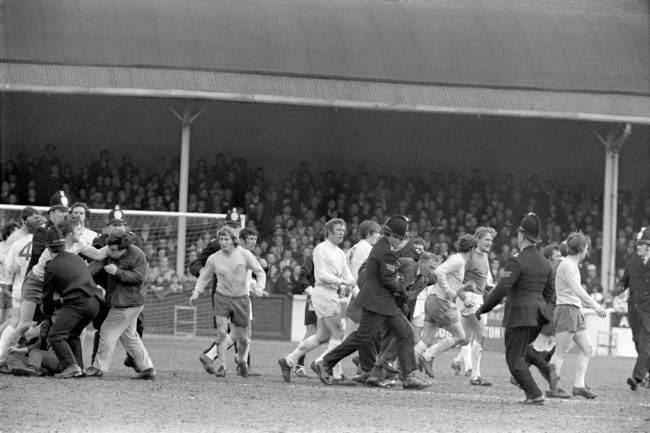
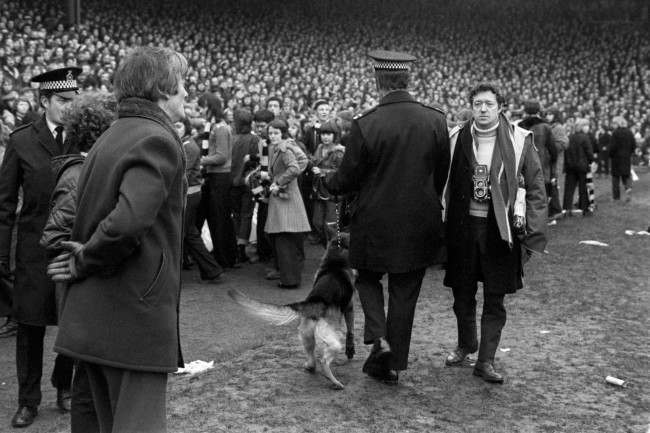
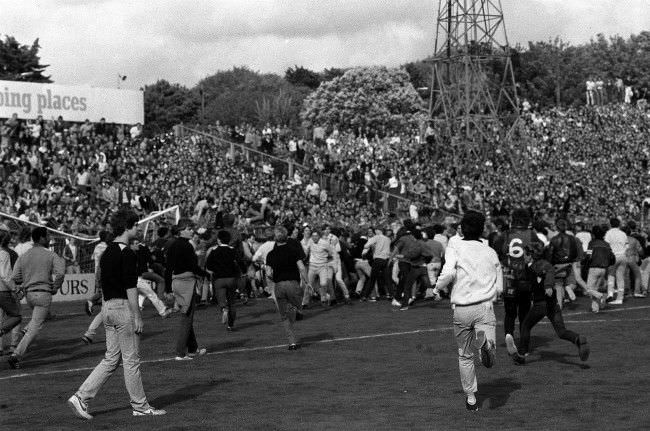
Policemen try to restore order after several Leeds United fans invaded the pitch, 1970s.
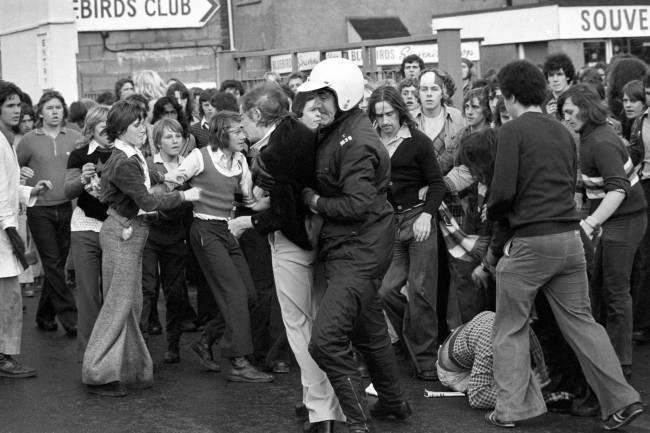
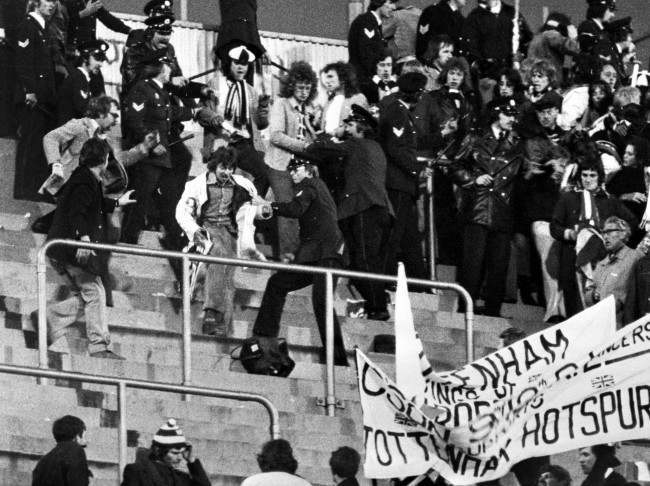
Police clash with Tottenham Hotspur supporters during the second leg of the UEFA Cup final, 1970s.

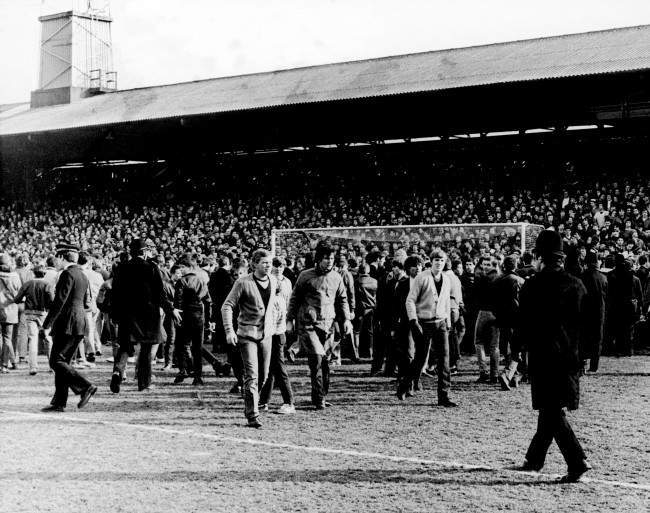
Pitch invasions were a common feature of matches during this era. Fans breached the touchline regularly — sometimes in celebration, often with violent intent. Officers on the touchline had to physically push crowds back onto the terraces, sometimes fighting individual fans while trying to maintain a wider perimeter. The sheer press of bodies made controlled policing nearly impossible.
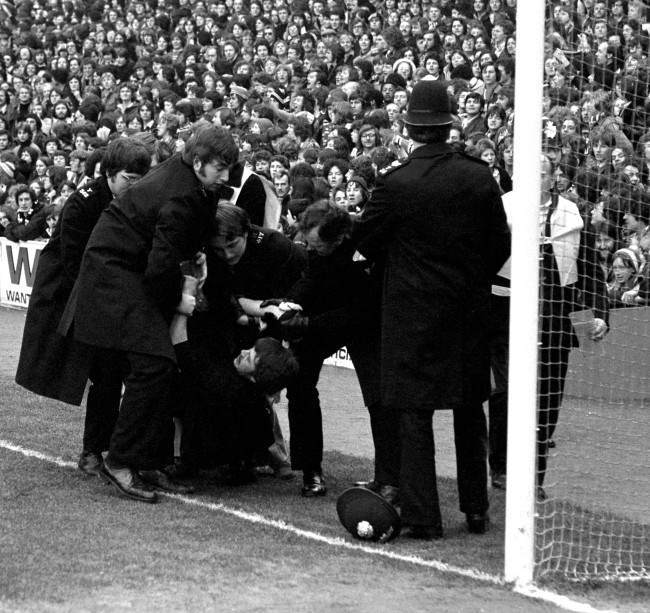
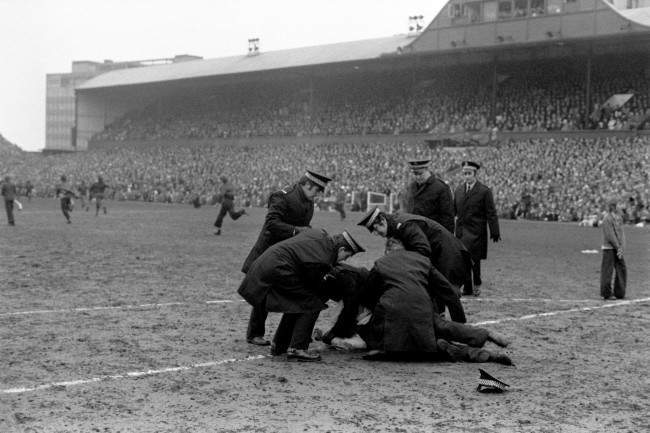
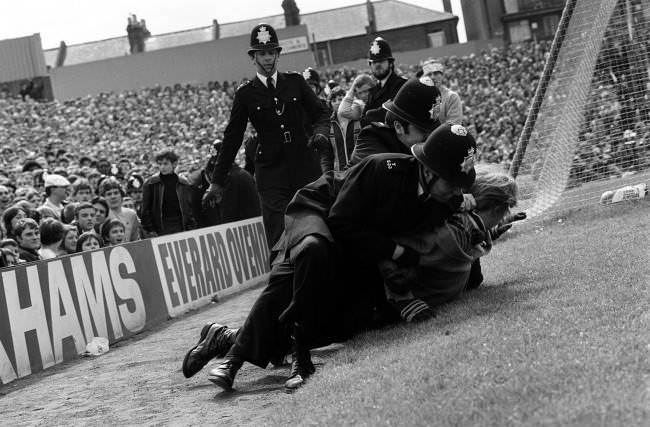
A touchline tussle, as police deal with unruly spectators, 1970s.
Vintage Photos Capture the Chaos and Confrontations Between British Police and Football Hooligans, 1970s-1990s
A policeman herds the Newcastle United fans back onto the terraces after they invaded the pitch, 1970s.

Individual arrests were frequent but rarely deterred the wider crowd. Officers wrestled fans to the ground, applied physical holds, and dragged individuals away while the noise and chaos of thousands of people continued around them. Photographs from the period show the raw physicality of these confrontations — no tasers, no pepper spray, just officers using their hands and batons in close-quarters struggles.
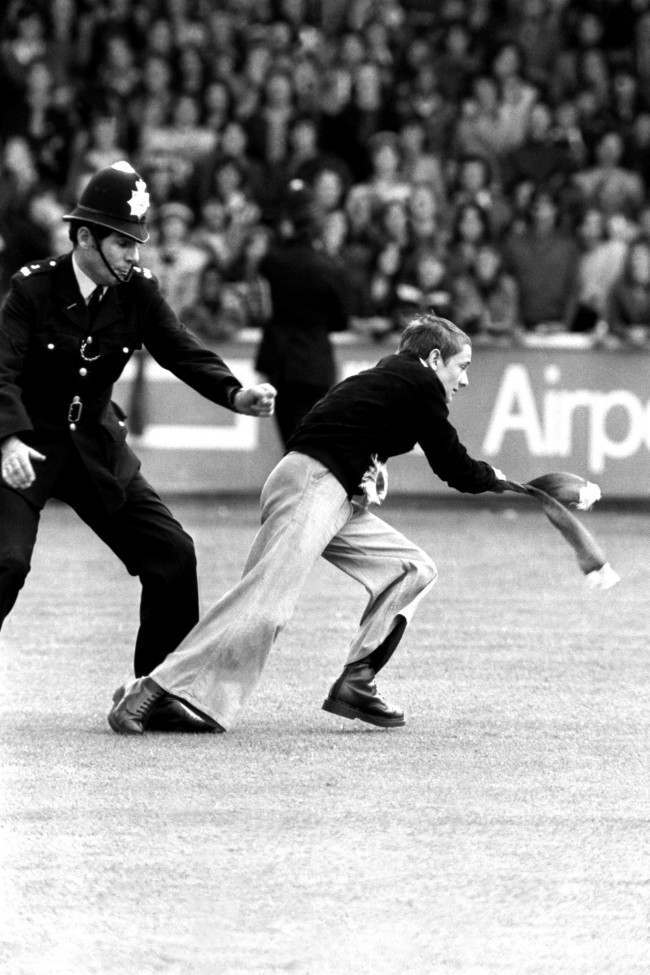
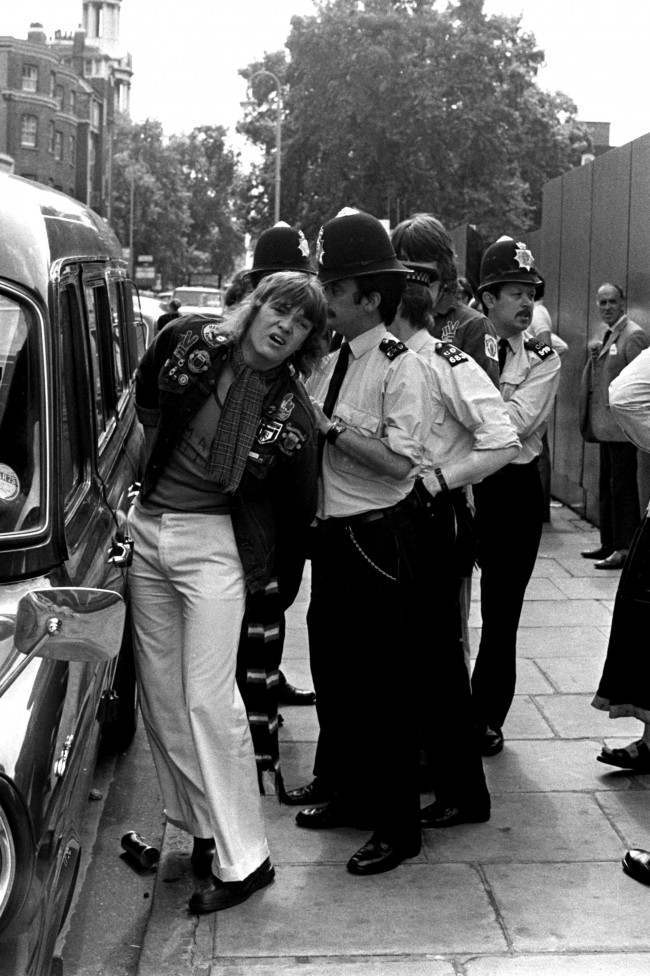
A Manchester United fan is chased by a policeman, 1970s.
A Manchester United fan is arrested by a policeman after the riot, 1970s.
A fan is arrested during scuffles between rival fans, 1970s.

Mounted police became a regular feature at high-risk fixtures. Officers on horseback could move through densely packed crowds in ways foot patrols could not, and the size of the horses alone served as a deterrent. They were used to push fans back, separate rival groups, and clear areas quickly when fighting broke out.
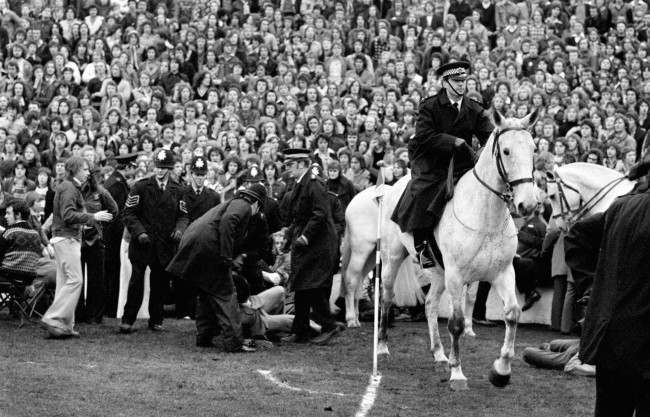
Mounted policemen help to deal with trouble making fans, 1970s.
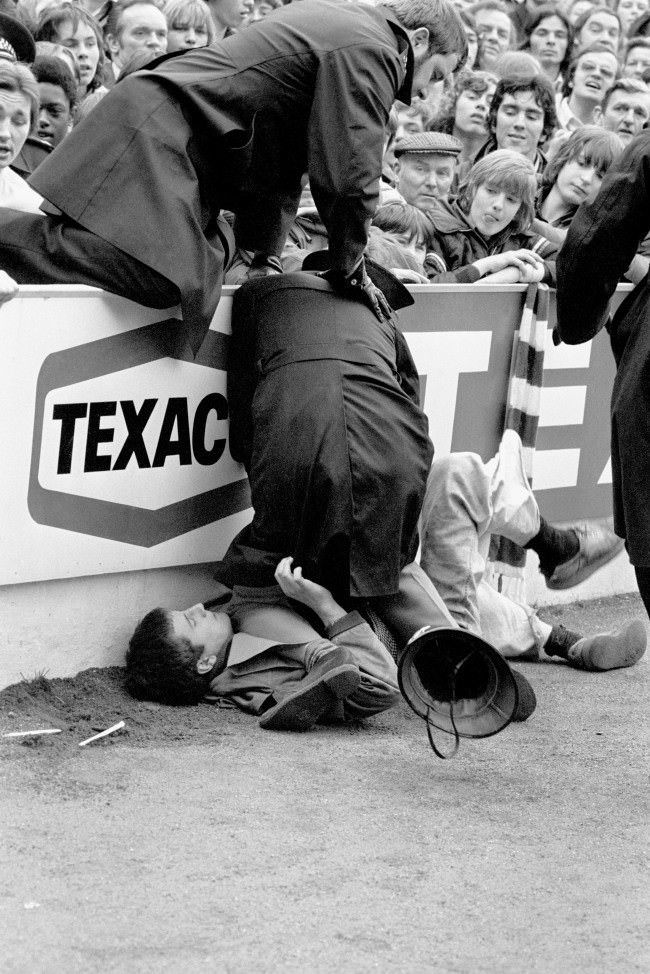
An unruly fan is pinned down by a policeman after trouble erupted before the match, 1970s.
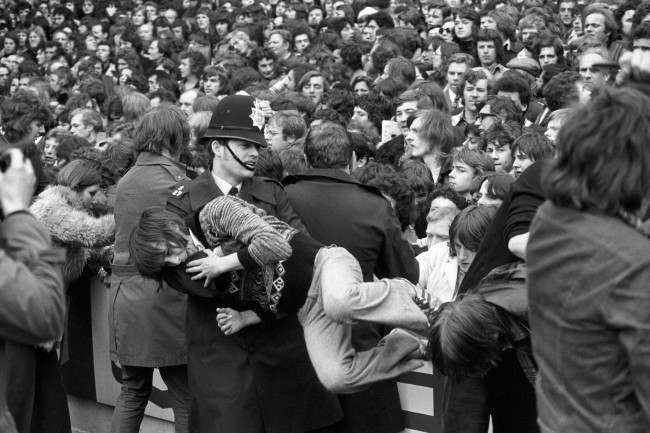
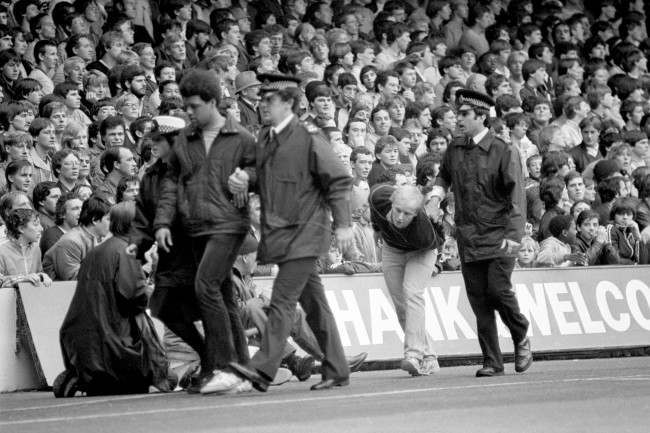
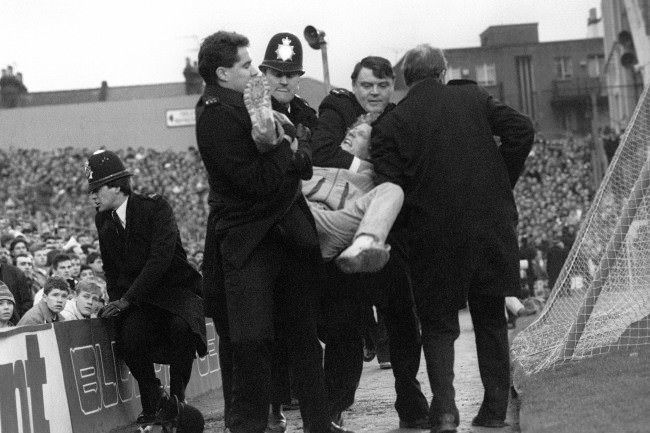
A young fan is carried away by a policeman after trouble erupted before the match, 1970s.

The violence did not spare young fans or bystanders. Injuries were common, and first aid teams worked at every major fixture expecting casualties. The photos from this era document not just fighting men, but frightened children, bloodied teenagers, and overwhelmed officers trying to manage the fallout.
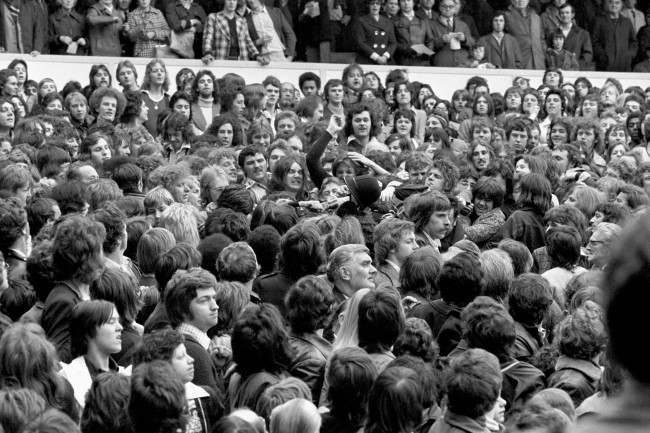
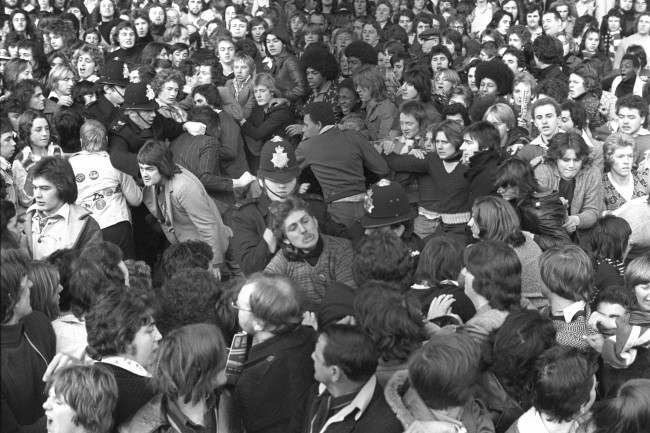
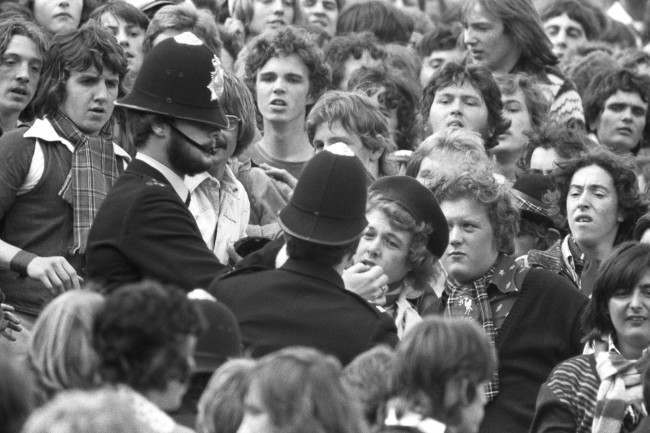
A policeman's helmet goes flying as he wades into the crowd, 1970s.
A policeman’s helmet goes flying as he wades into the crowd, 1970s.
Police try to control the crowd at Highbury before Arsenal's match against Manchester United, 1970s.
Police try to control the crowd at Highbury before Arsenal’s match against Manchester United, 1970s.
Police break up a scuffle in a crowded Loftus Road, 1970s.

Physical force was applied directly and openly. Officers used headlocks, neck holds, and arm grabs to subdue individuals resisting arrest. There were no formal restraint protocols widely in use — officers responded to each situation as it unfolded, making split-second decisions in front of thousands of witnesses.
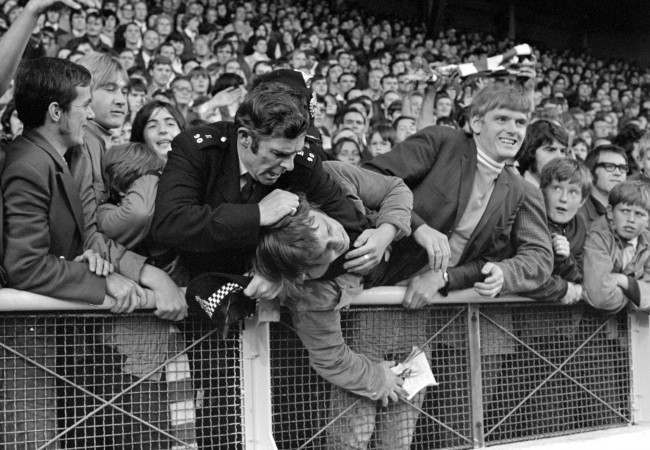
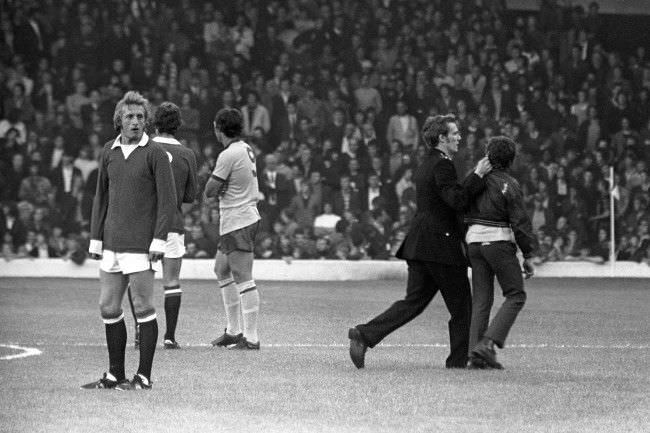
A policeman applies a headlock as he struggles with a youth in the crowd, 1970s.
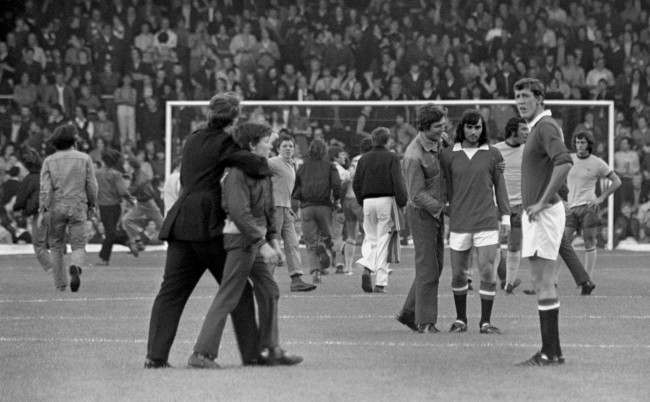
Denis Law waits patiently as a Policeman grabs a youth by his ear, 1970s.
A policeman gets a neck hold on a youth, 1970s.

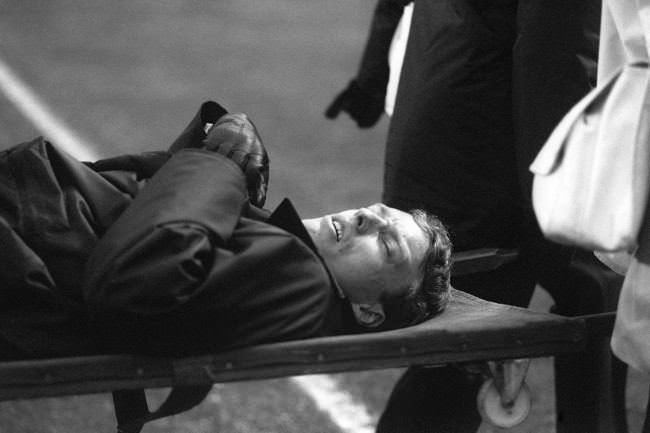
Injuries on both sides were routine. Fans left grounds with split heads and broken bones. Officers were regularly hurt during confrontations — some badly enough to be stretchered off. The physical toll on police was significant, and officers attending volatile fixtures knew they were likely to face direct assault from the crowd.
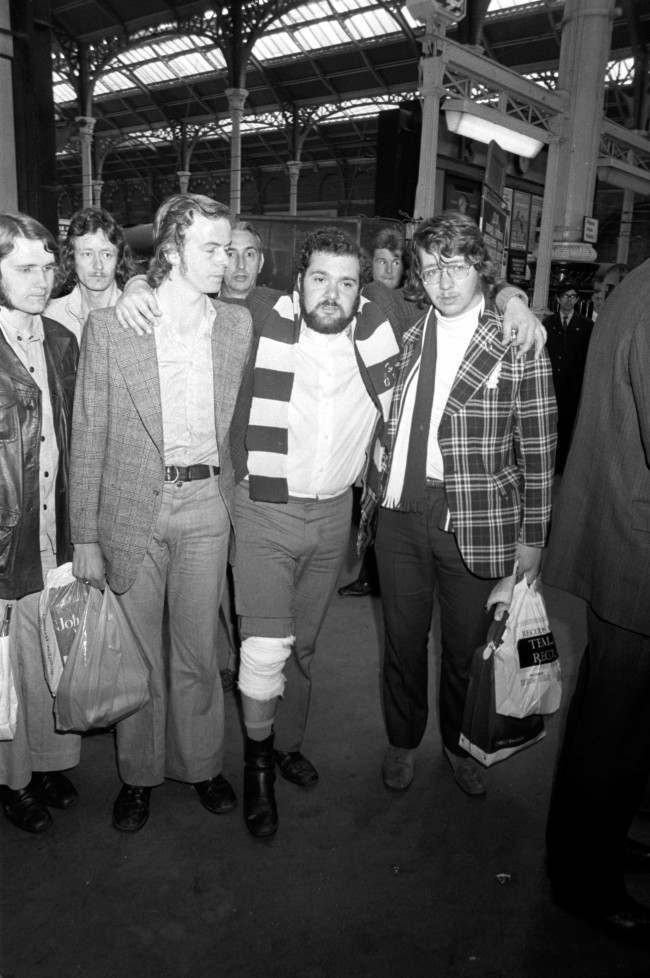
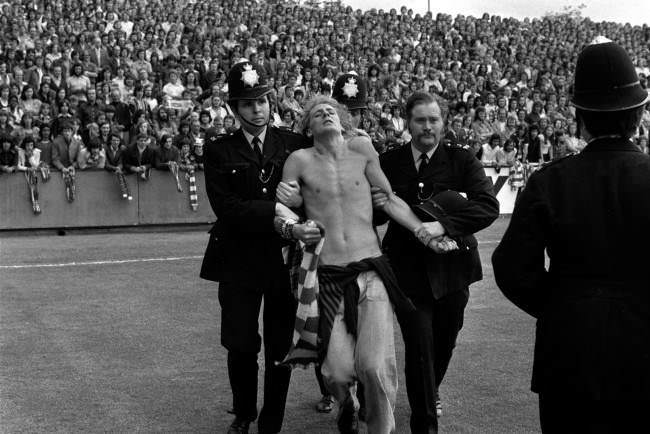
Tottenham Hotspur fan Errol Rassin is helped off the platform, 1970s.
Stripped to the waist, a man is led away by police, 1970s.
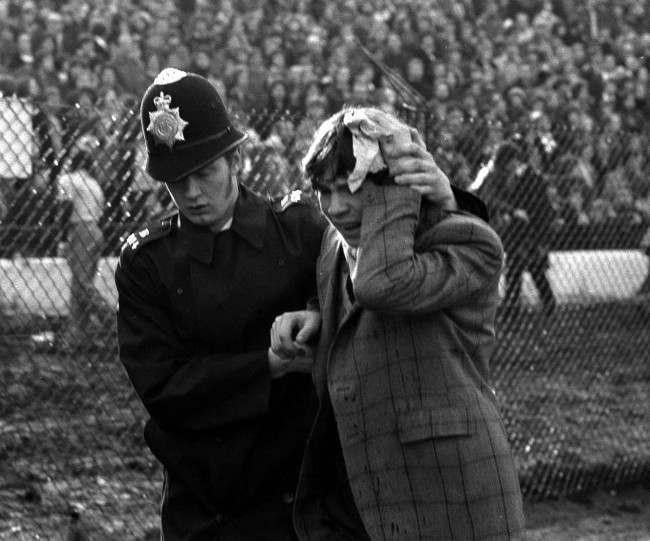
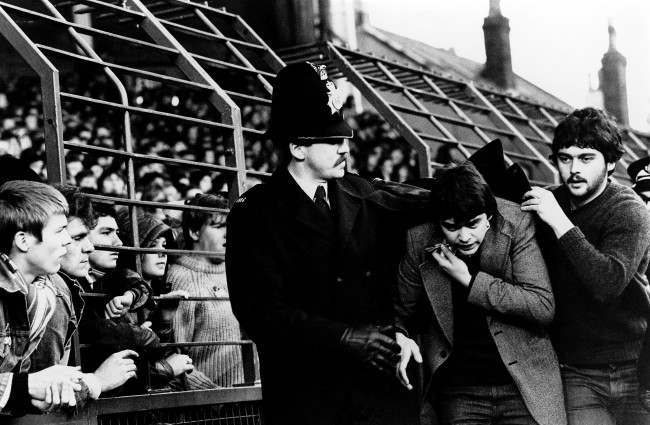
A Policeman escorts a young fan nursing an injured head, 1970s.
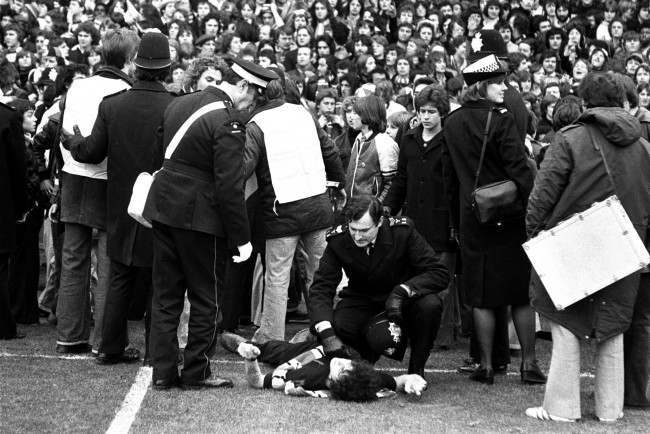
First aid for a young fan after crowd trouble broke out, 1970s.

Club stewards were also drawn into the violence. At some grounds, they took direct action against fans who broke through barriers or attacked rival supporters. The line between crowd management and physical confrontation was routinely crossed — and documented on camera.
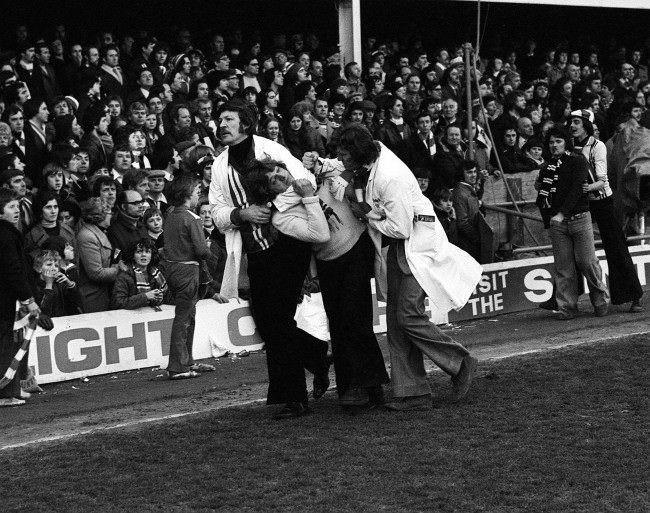
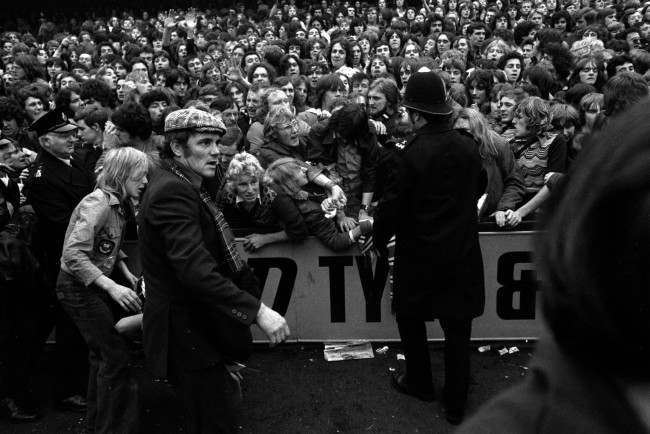
Southampton stewards 'handling' a fan after fights broke out, 1970s.
Southampton stewards ā€˜handling’ a fan after fights broke out, 1970s.
A terrified girl clings to one of the ambulance men, 1970s.

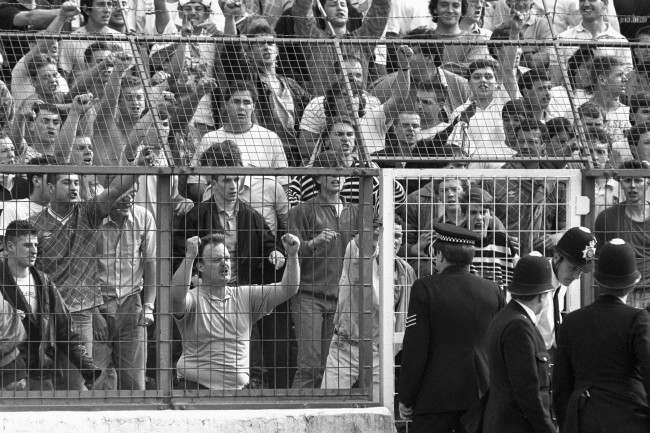
By the 1980s, the disorder had escalated further. English clubs were competing in European competitions, and their firms traveled abroad, bringing the violence with them. England internationals became flashpoints in cities across Europe. Spanish riot police, Italian carabinieri, and other European forces encountered English hooligans at tournaments and had to respond with their own crowd control methods.
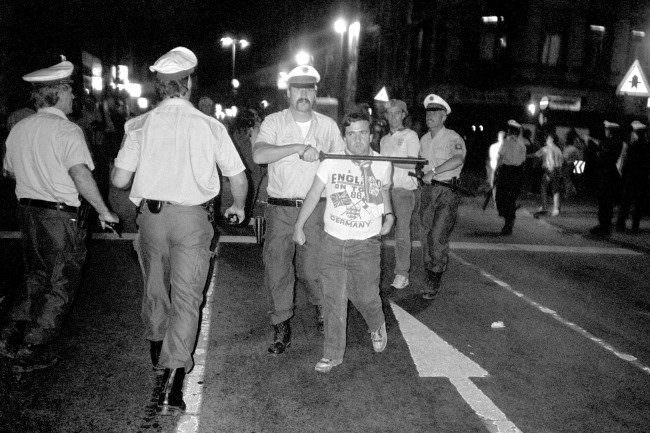
An England fan is led away by a policeman holding a baton to this throat, 1980s.
Chelsea fans hurl abuse at police officers, 1980s.
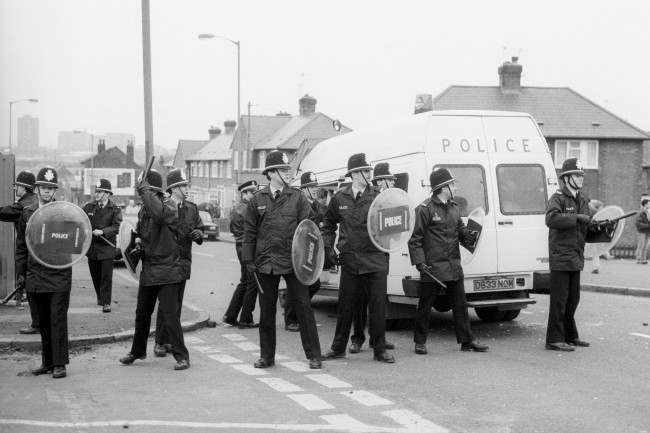
Riot police at the ready to stamp out any trouble, 1980s.

The 1985 Heysel Stadium disaster brought the issue to its most catastrophic point. During the European Cup final between Liverpool and Juventus in Brussels, fighting broke out between fans before kick-off. The crush that followed caused a retaining wall to collapse. Thirty-nine people died. English clubs were banned from European competition for five years as a direct result.
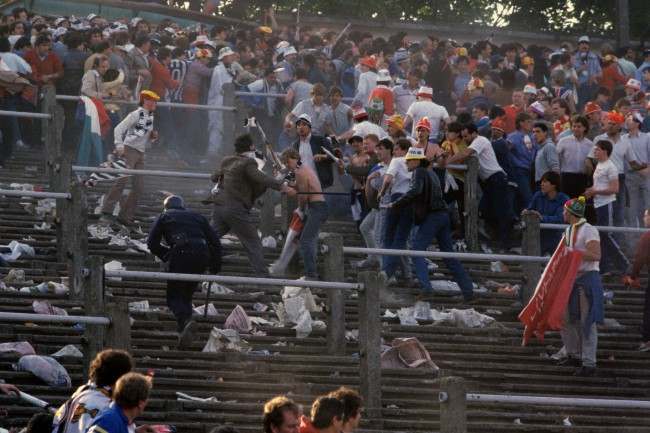
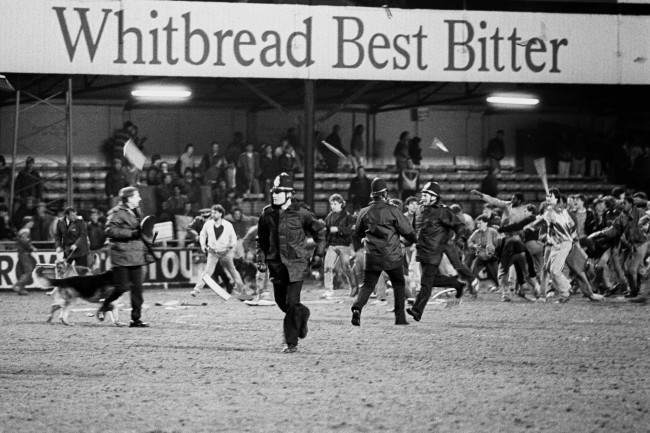
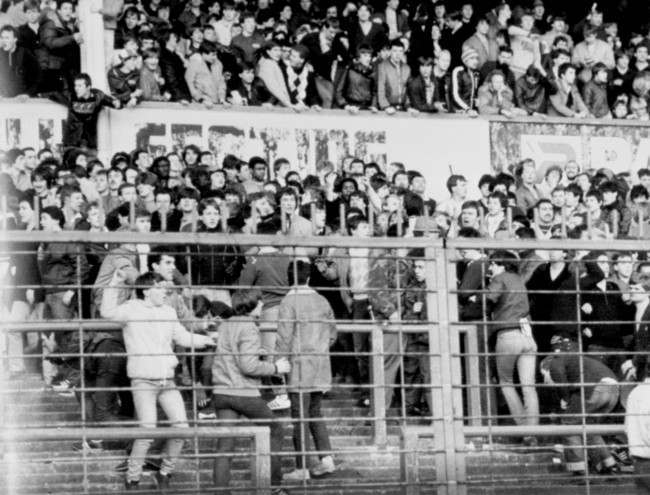
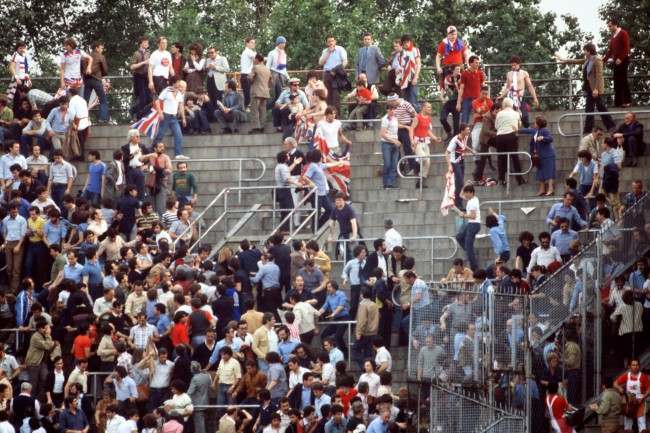
Chaos erupts on the terraces, 1980s.
Vintage Photos Capture the Chaos and Confrontations Between British Police and Football Hooligans, 1970s-1990s
The 44th anniversary of the start of World War II was marked in Brighton by a day of vioence, 1980s.
Vintage Photos Capture the Chaos and Confrontations Between British Police and Football Hooligans, 1970s-1990s

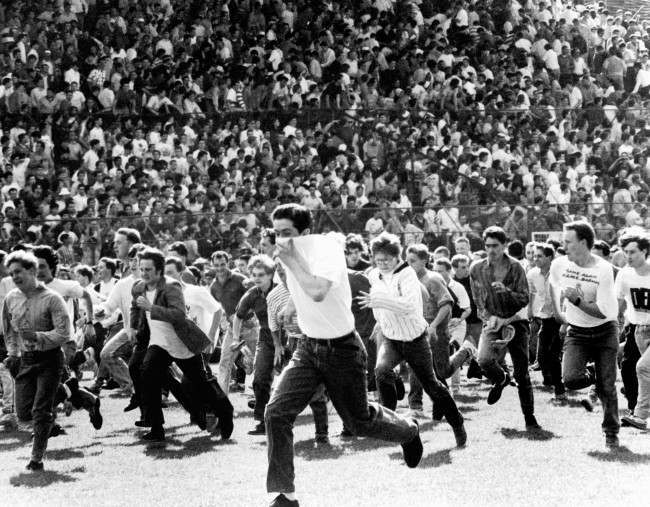
Rival firms also damaged stadiums themselves. Seats were ripped out and hurled as projectiles. Fixtures, barriers, and stadium furniture became weapons. Officers at affected grounds had to navigate debris-strewn stands while still trying to control the fans responsible.
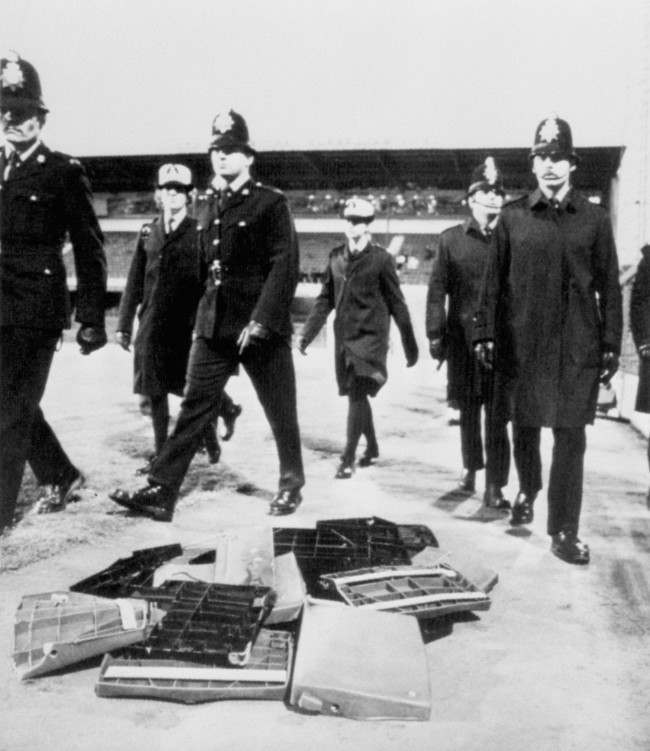
Police officers skirt around a pile of seats thrown from the stands by irate Chelsea fans, 1980s.
Chelsea fans on the rampage, 1980s.
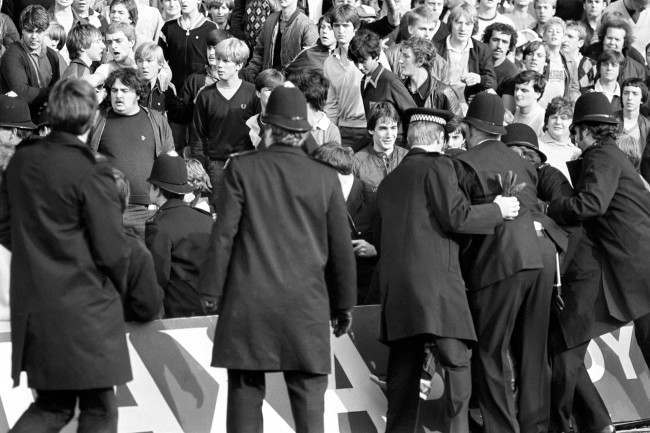
Police move in to quell crowd trouble, 1980s.

England’s away support at international tournaments during the 1980s became notorious across Europe. Riots in Turin, clashes in Spain, and running battles in other European cities made English football fans a serious public order problem far beyond the domestic league. Foreign police forces deployed riot gear as standard when England played.
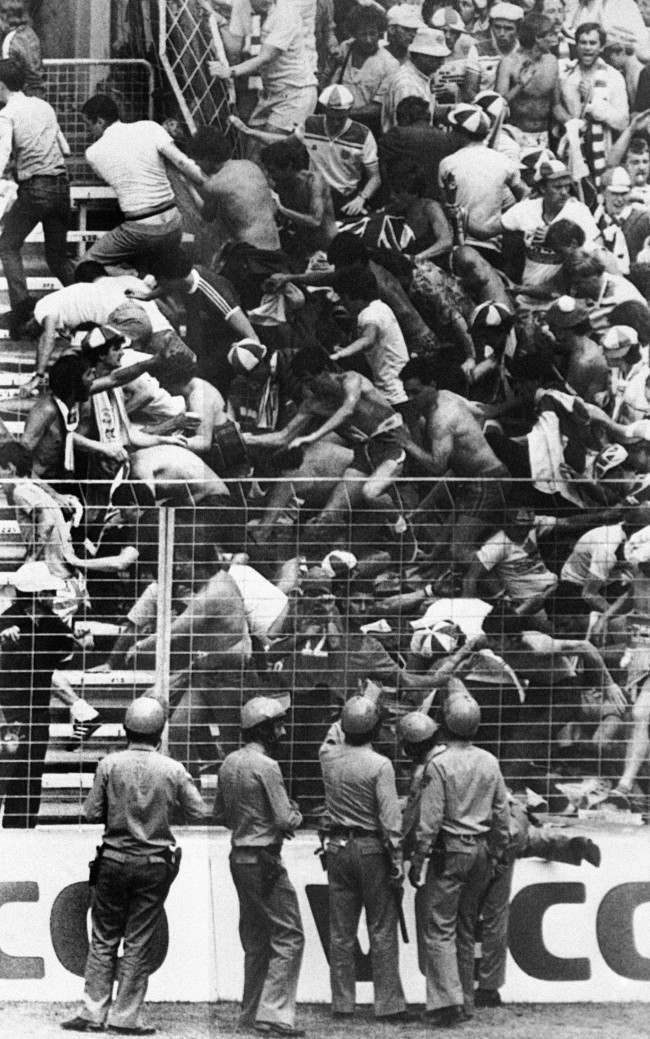
Spanish riot police with batons look on as England football fans tumble over barriers, 1980s.
Police try to hold back Chelsea fans, 1980s.
Police wrestle a spectator to the ground, 1980s.
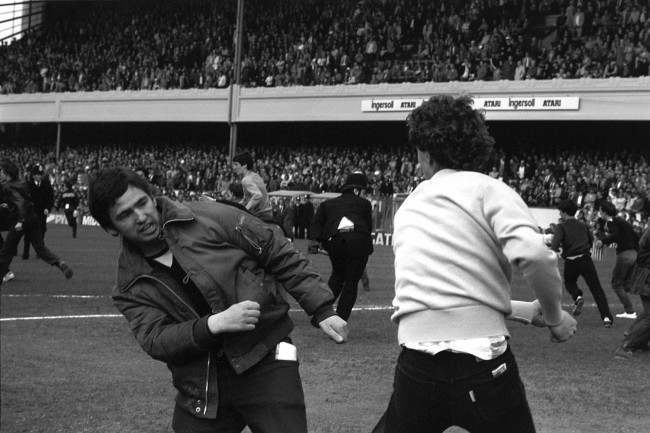
Fighting on the pitch, 1980s.

Back in England, police refined their tactics throughout the decade. Intelligence units were set up to monitor known firms. Plainclothes officers attended matches to identify ringleaders. Football banning orders — legal restrictions preventing convicted hooligans from attending matches — became a formal tool. Police began confiscating passports from known offenders to prevent them from traveling to international fixtures.
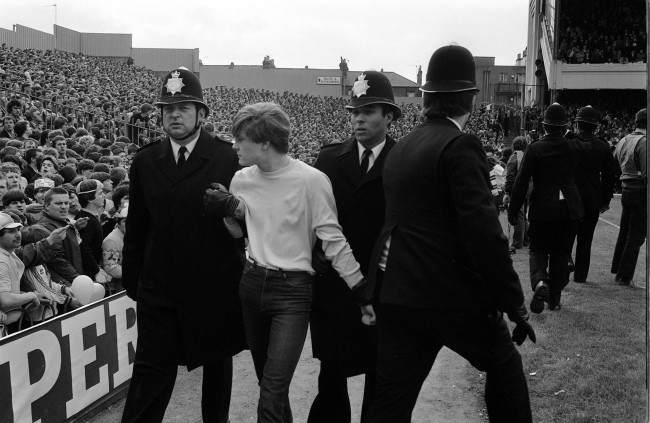
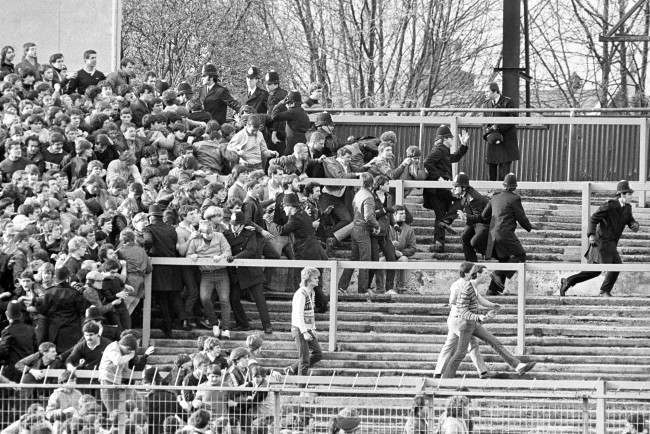
Fans are led away by police after fighting broke out in the crowd, 1980s.
England fans riot in Turin, 1980s.
A Tottenham fan is escorted past the Anfield Road end by police, 1980s.
Vintage Photos Capture the Chaos and Confrontations Between British Police and Football Hooligans, 1970s-1990s

Arrests at matches became more systematic. Officers documented individuals, cross-referenced intelligence, and built cases rather than simply ejecting fans from grounds. The shift from reactive crowd control to proactive intelligence-led policing marked a turning point in how authorities approached football violence.
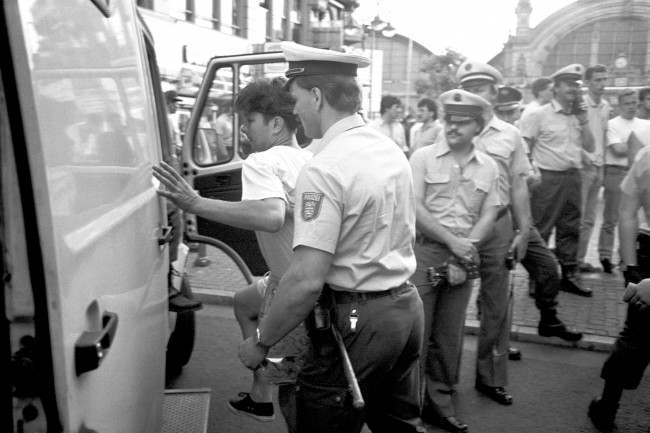
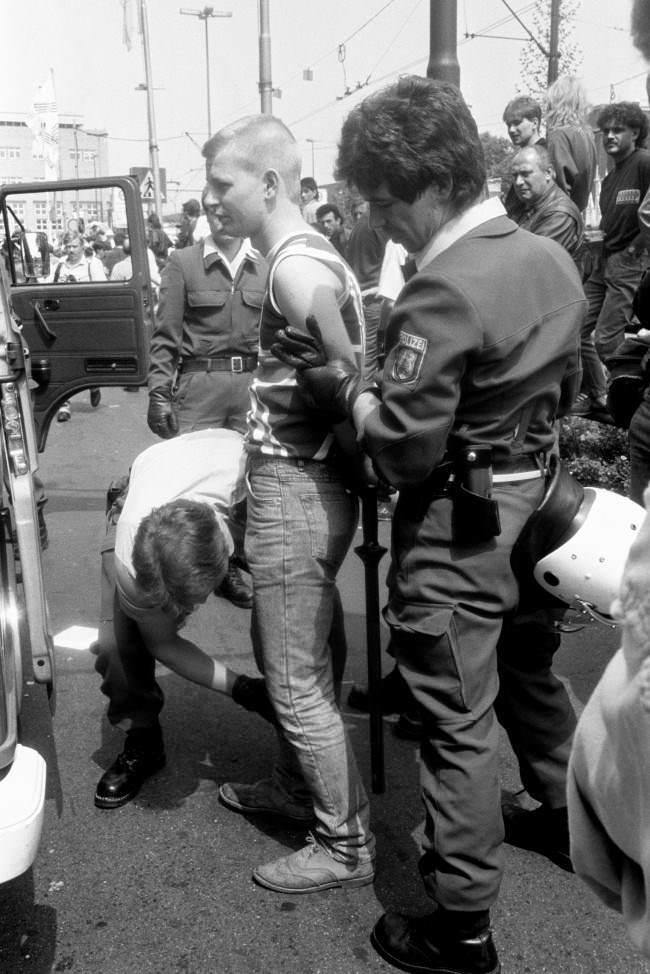
An England fan is loaded into the back of a police van, 1980s.
An England fan is arrested, 1980s.
An injured Policeman is stretchered away, 1980s.
Police handle a fan who has been pulled out of the crowd, 1980s

The introduction of all-seater stadiums following the Taylor Report — commissioned after the 1989 Hillsborough disaster — changed the physical landscape of English football. Standing terraces, which had long been the hub of hooligan activity, were phased out at top-flight grounds by 1994. Seating, CCTV, and segregated entry points made it harder for firms to operate in the way they had throughout the 1970s and 1980s. Police presence remained heavy, but the nature of the confrontations began to shift as the infrastructure around them changed.

Enjoyed this post? Get new ones in your inbox.

Leave a Comment

Your email address will not be published. Required fields are marked *

Share this Post 🄺

Please take a moment to share this content. Your support is greatly appreciated! šŸ™ŒšŸ™

Share this Post 🄺

Please take a moment to share this content. Your support is greatly appreciated! šŸ™ŒšŸ™
Scroll to Top
 
Hey Friend, Before You Go.. Please like & follow for more interesting content