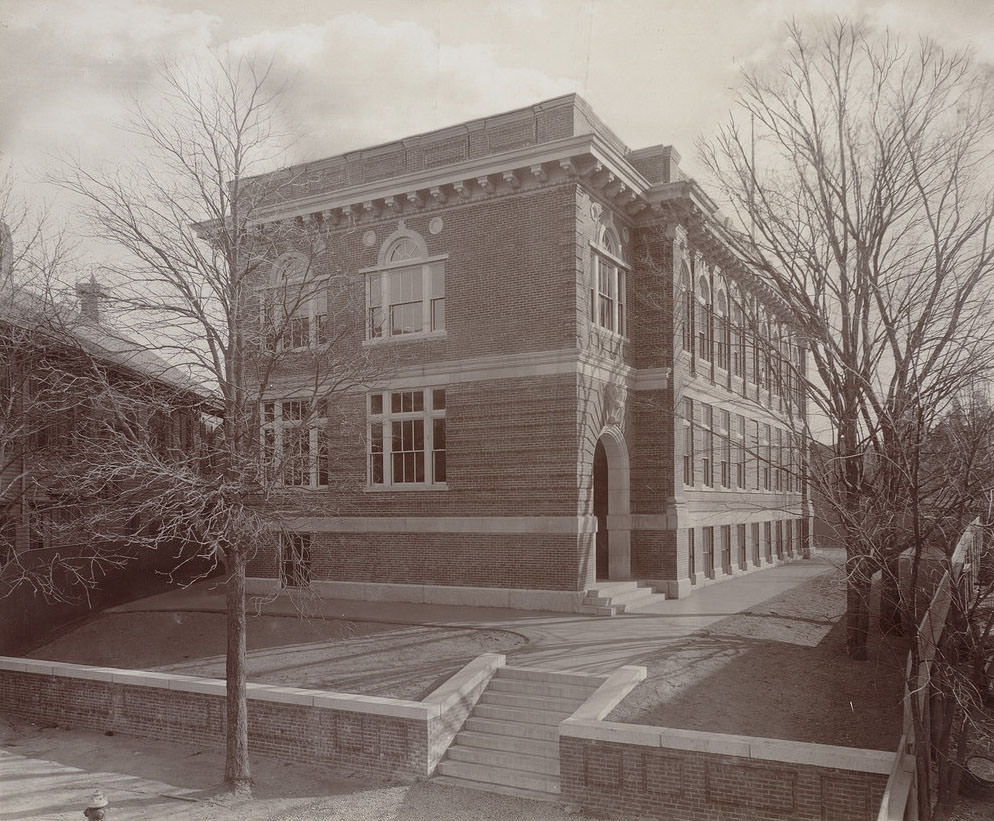
The Boston Pictorial Archive holds a remarkable collection of photographs documenting public school life in Boston during the late 19th century. The bulk of the collection covers the years between 1890 and 1893, offering a detailed visual record of what education looked like in one of America’s oldest and most prominent cities. The photographs capture building exteriors and interiors, students at work, and adults enrolled in evening classes — a side of Boston’s history that rarely gets this level of visual attention.
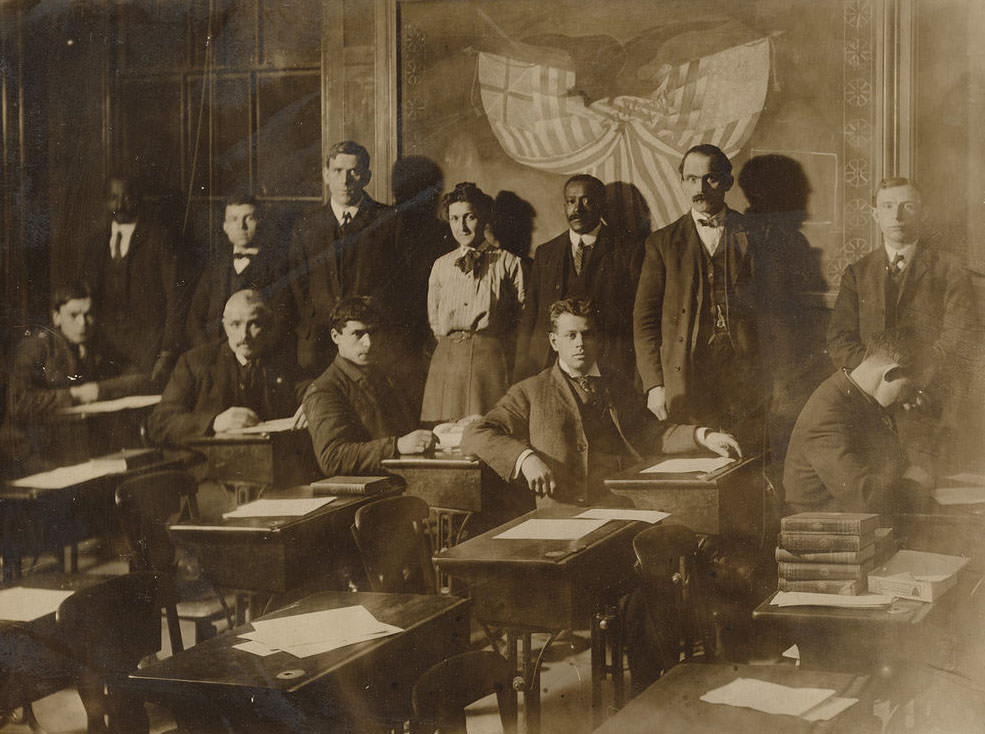
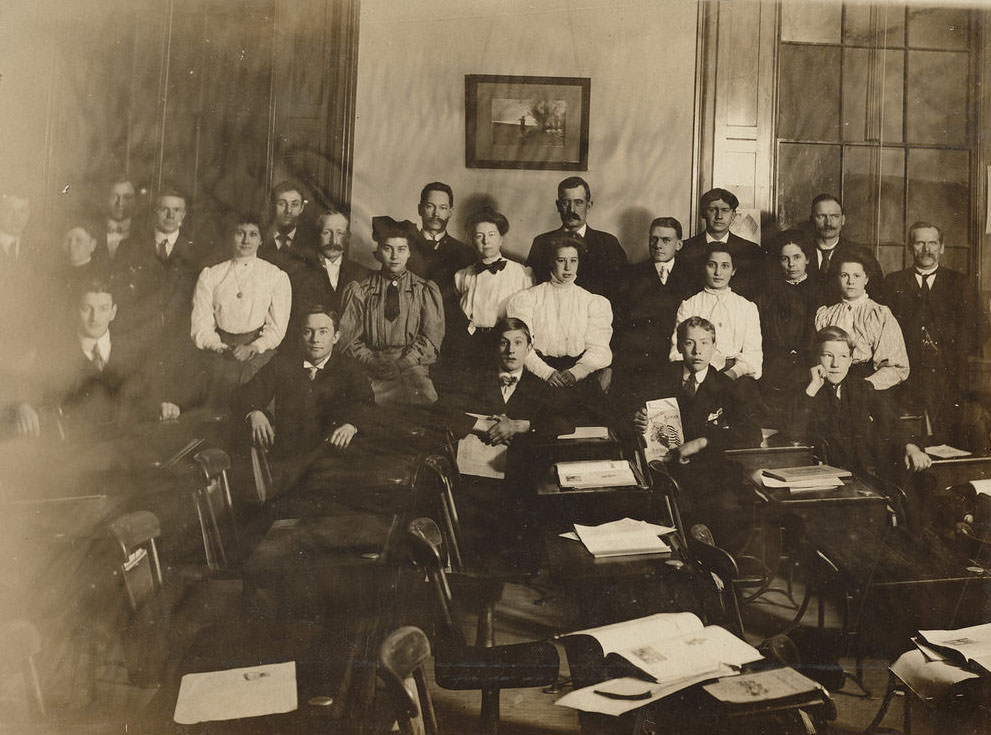
Boston’s public school system in this era served a wide range of students. Traditional daytime schools educated younger students, while evening schools gave working adults a path to learning new skills. The city invested heavily in both, and these photographs show classrooms that were organized, well-equipped for the time, and populated by students who were clearly engaged in structured learning. Looking at these images, it becomes clear that education in 1890s Boston was not a casual affair.
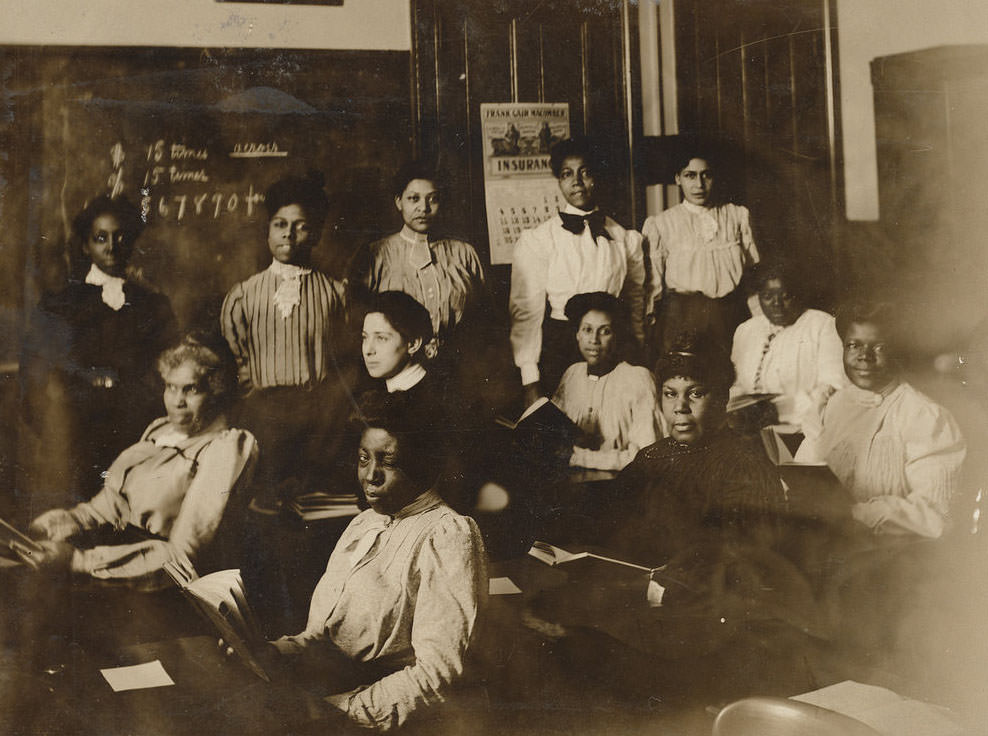
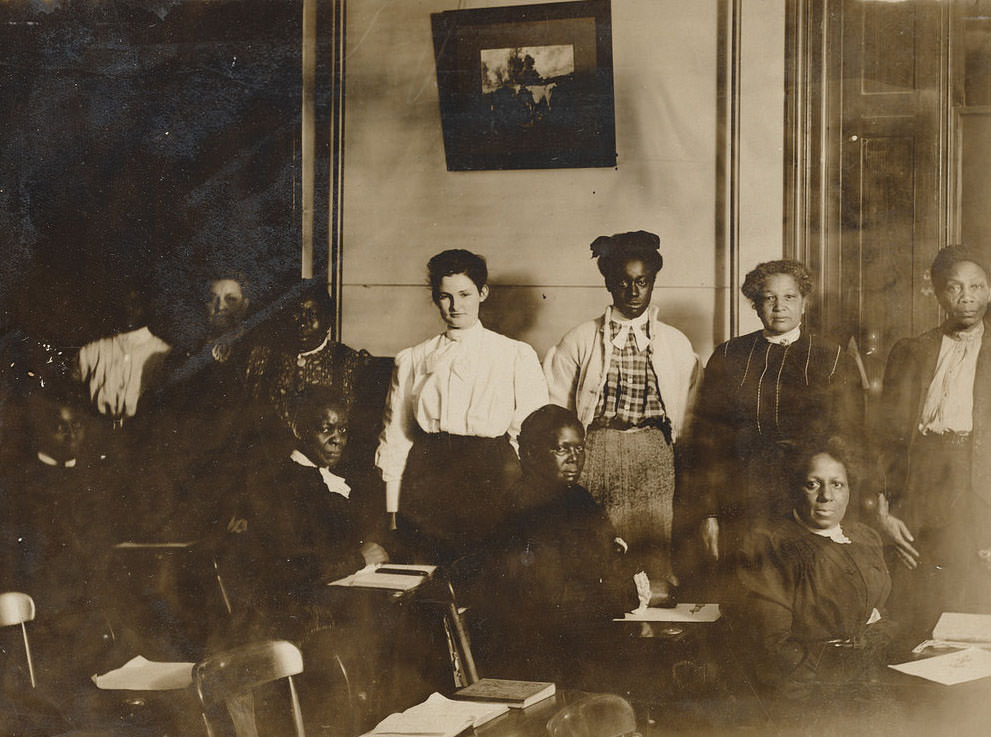
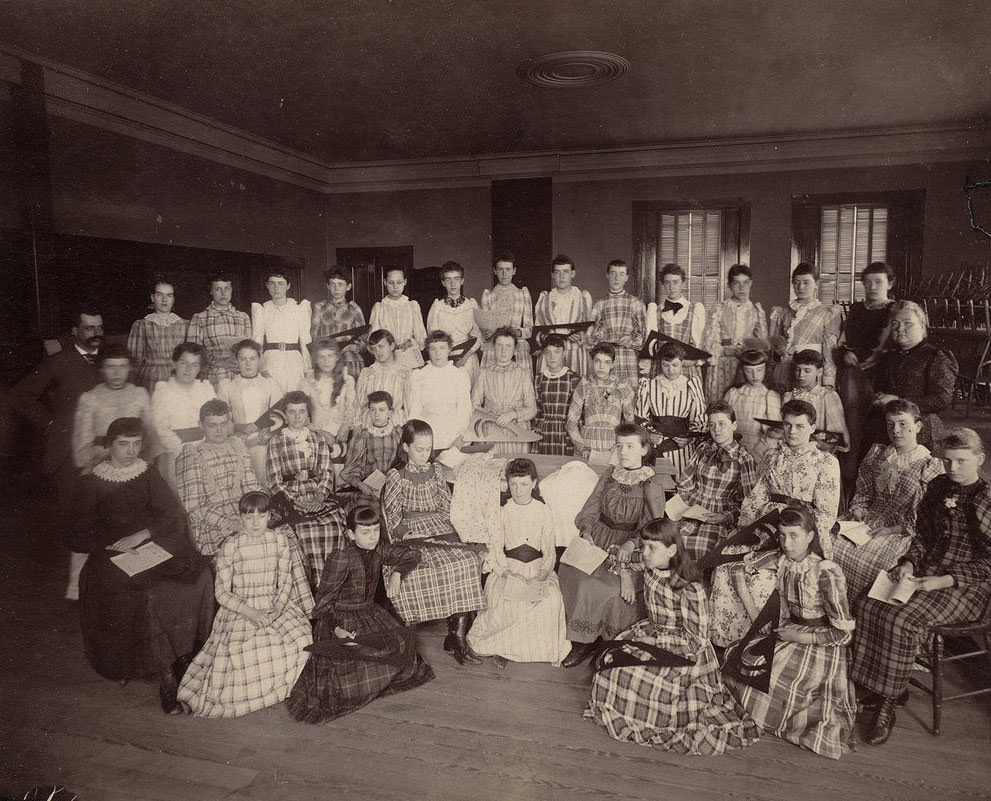
Women made up a significant portion of the student body in many of these schools. Several photographs show groups of women seated in classrooms, dressed in the formal attire typical of the period. Their presence in these images reflects a broader shift happening across American cities at the time — women were enrolling in vocational and academic programs in growing numbers, seeking skills that could translate directly into employment or household management.
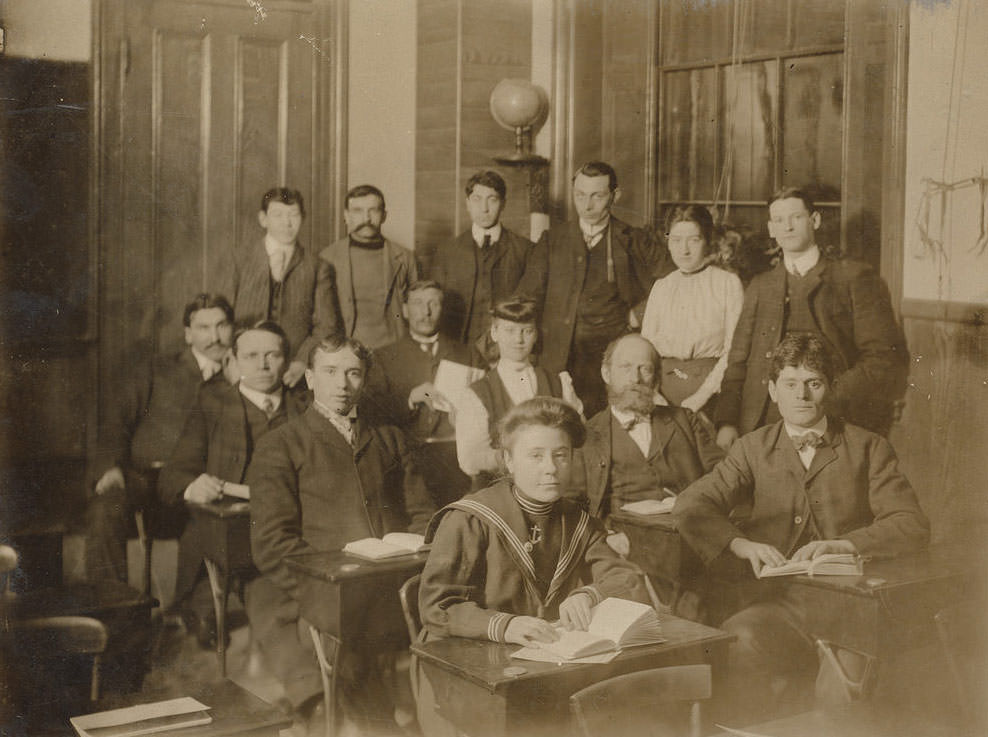
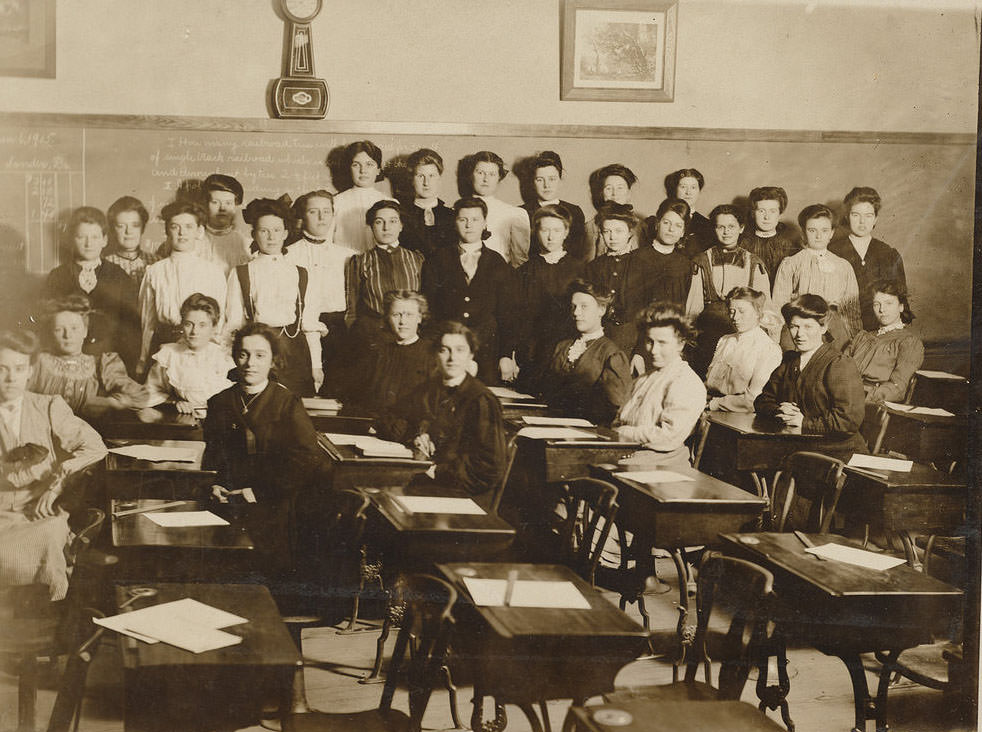
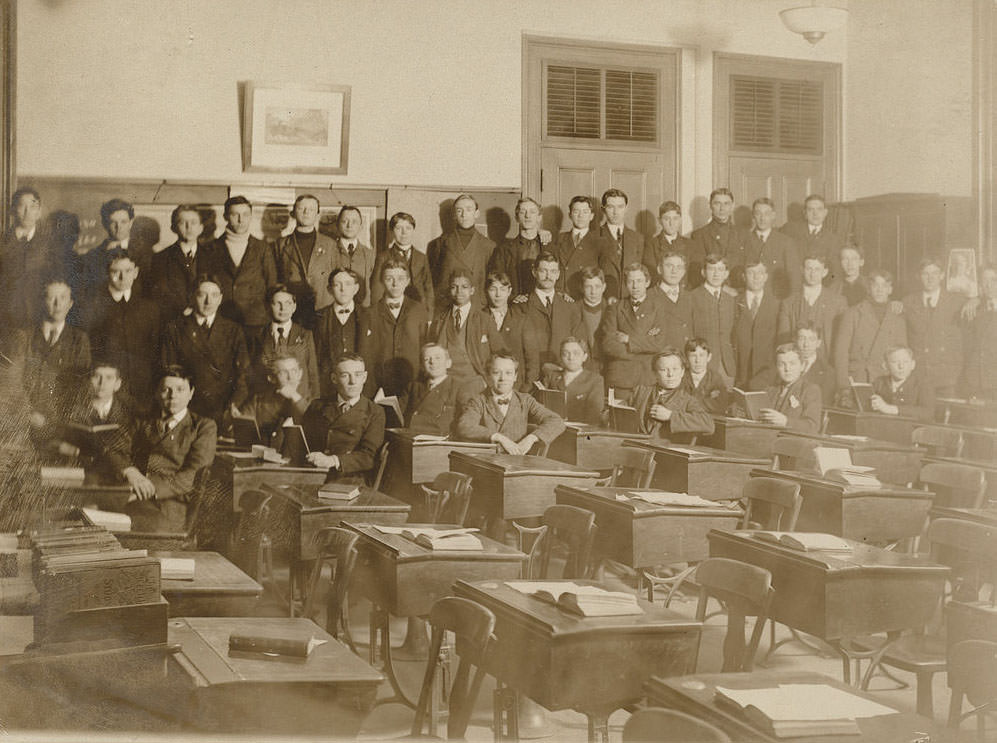
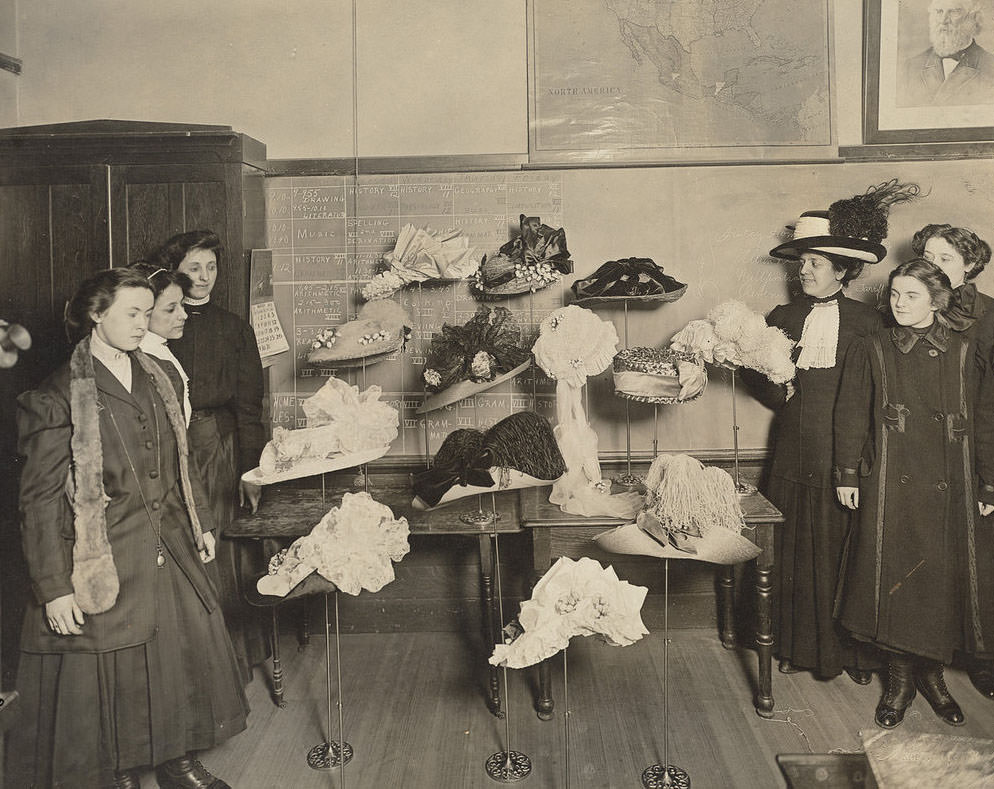
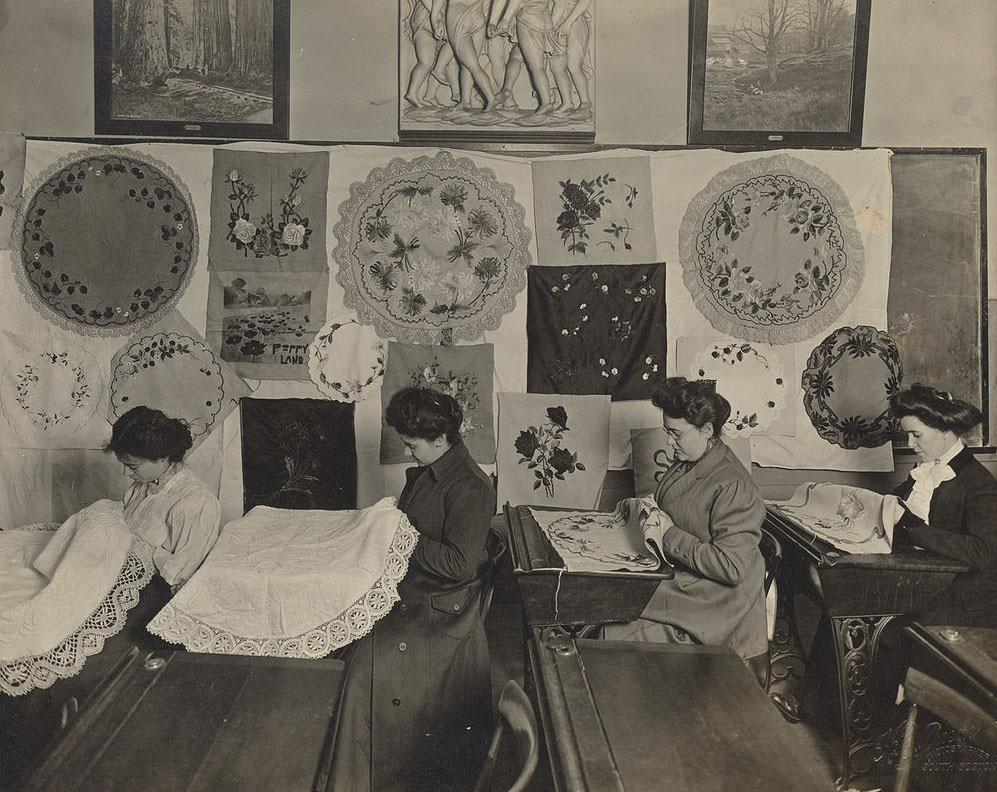
The Hancock Evening School appears prominently in the archive. This institution offered a range of hands-on courses that went well beyond basic reading and writing. Two subjects that stand out in the photographs are millinery and embroidery — both skilled trades that required precision and practice. Millinery, the craft of designing and making hats, was a serious profession in this period. Women who mastered it could find steady work in Boston’s many shops and department stores.
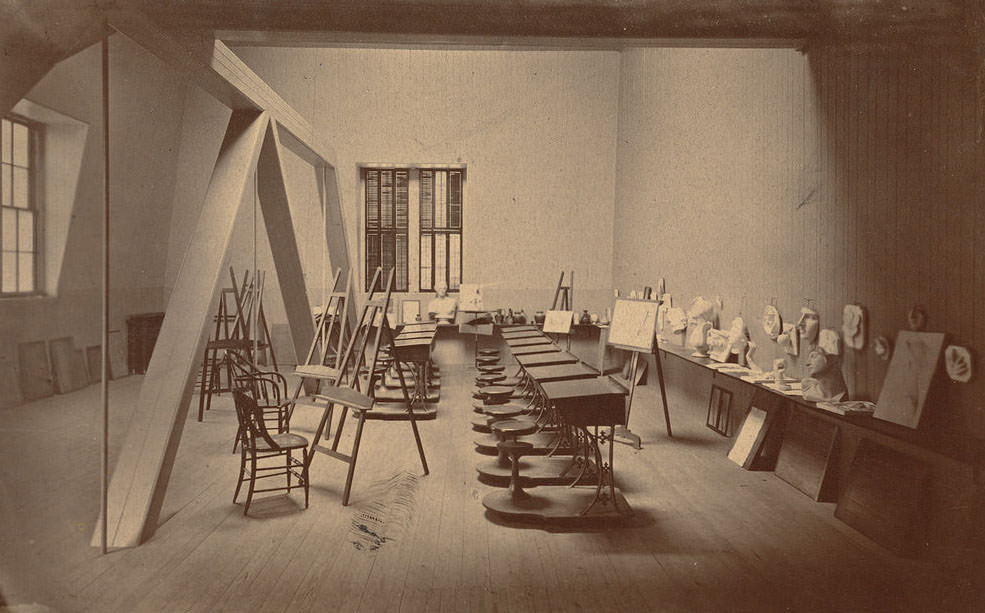
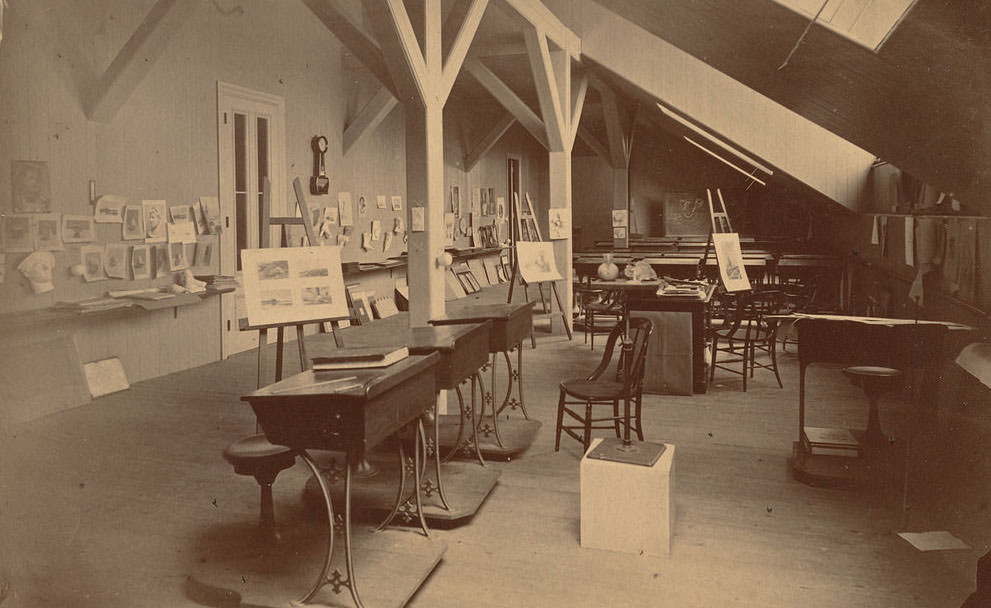
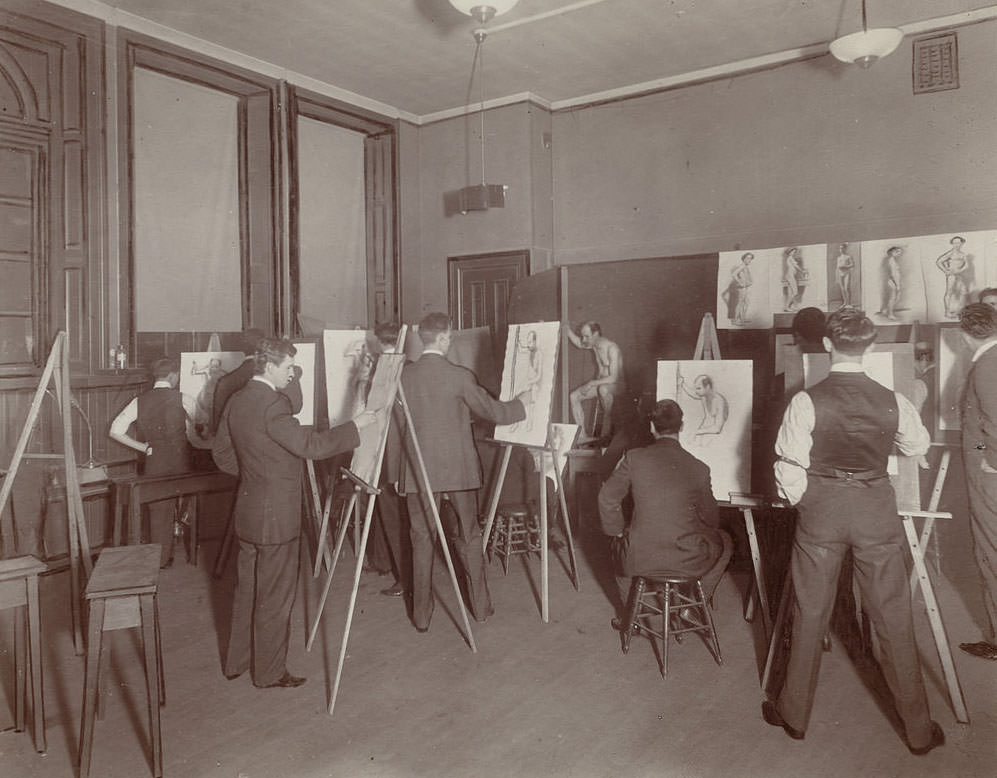
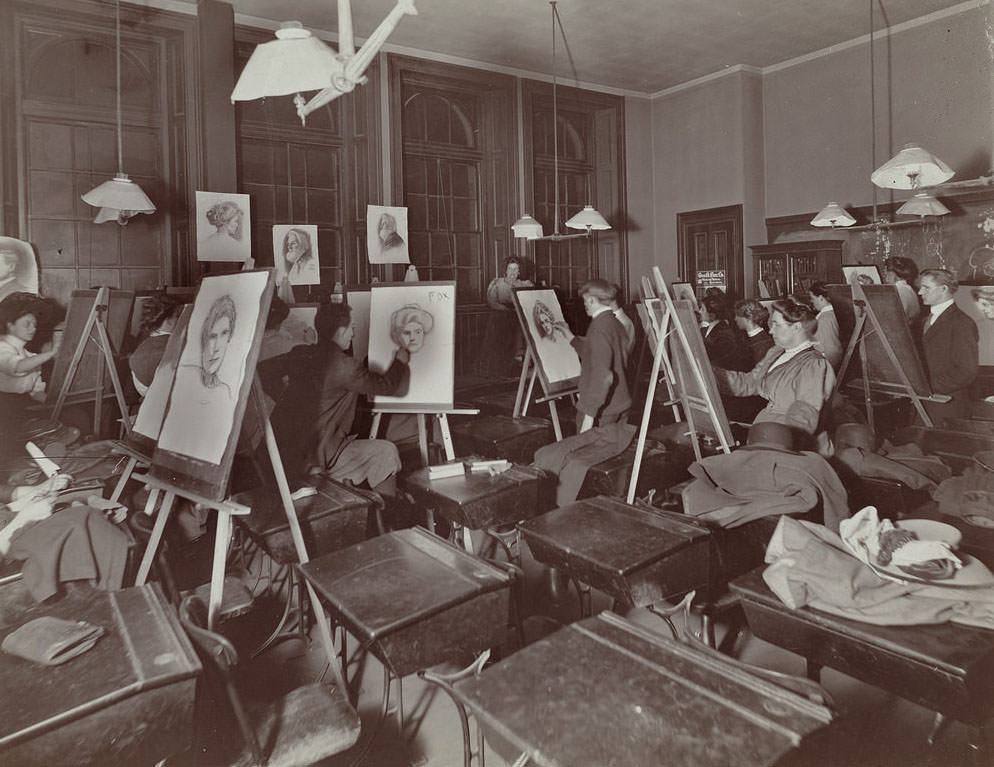
Drawing and the fine arts were also a core part of Boston’s evening school curriculum. Multiple photographs in the archive show classrooms dedicated specifically to art instruction. Students worked from models, sketched busts and heads, and developed technical drawing skills. These were not casual hobby classes. The instruction was rigorous and structured, with students progressing through year-by-year levels just as they would in any academic subject.
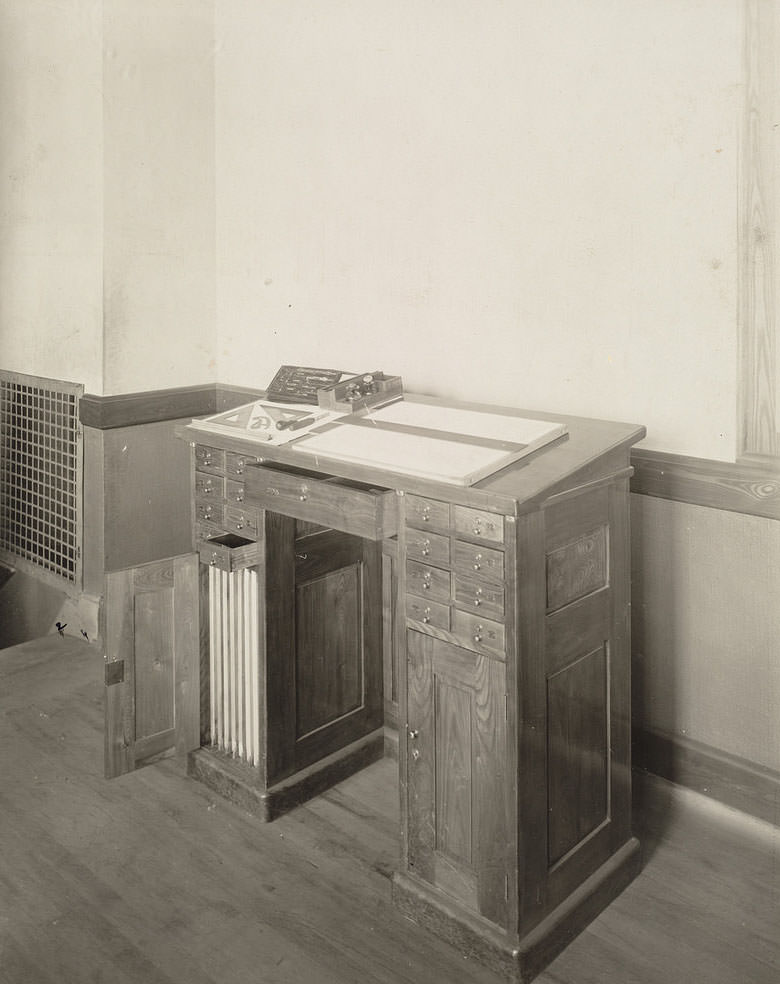
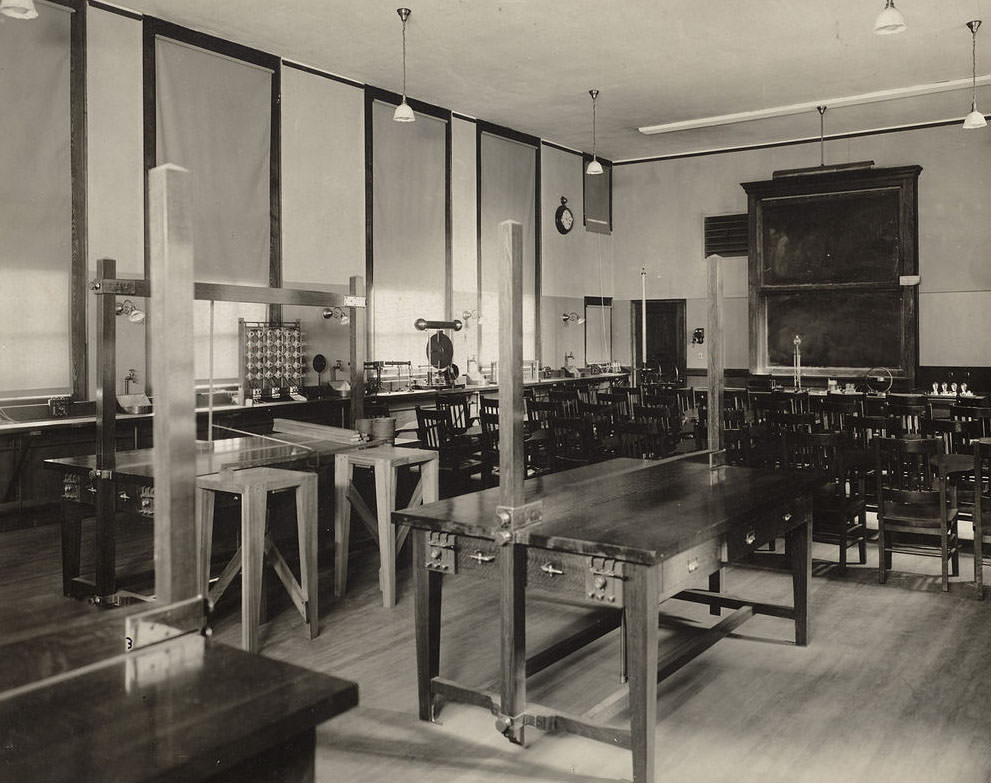
The Evening Industrial School focused on more technical disciplines. Its drafting room was set up with rows of angled desks, each positioned to give students the right working angle for precise technical drawings. This kind of drafting instruction prepared students for careers in architecture, engineering, and manufacturing — fields that were expanding rapidly in late 19th-century Boston. The school also maintained a physical laboratory, where students could engage with scientific instruments and experiments.
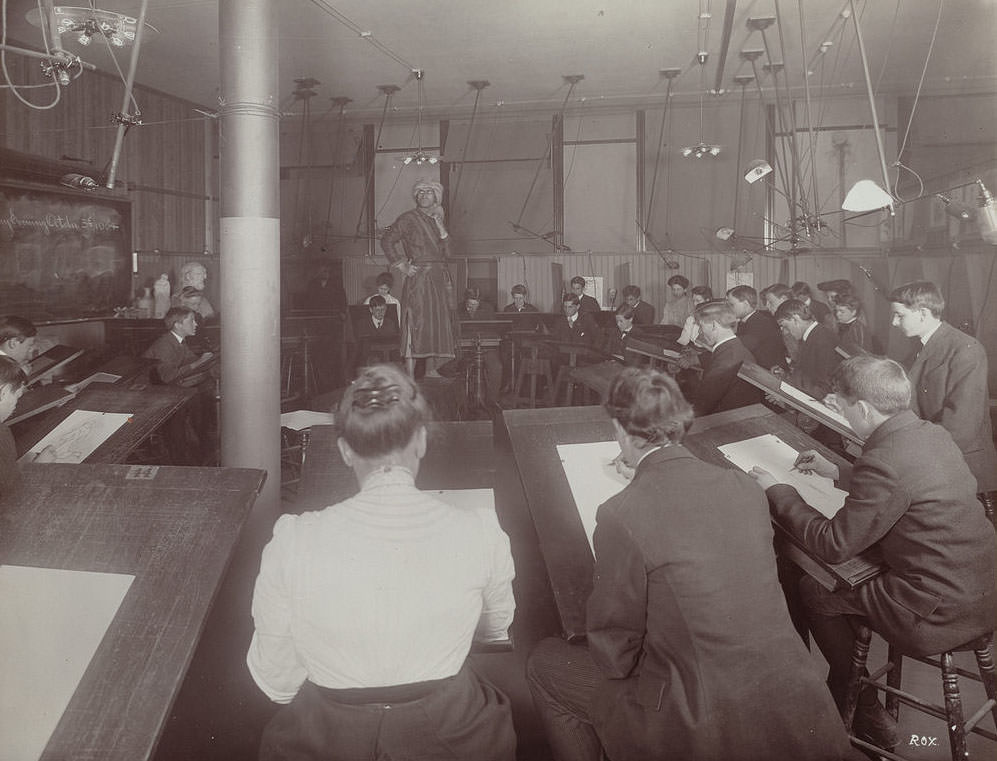
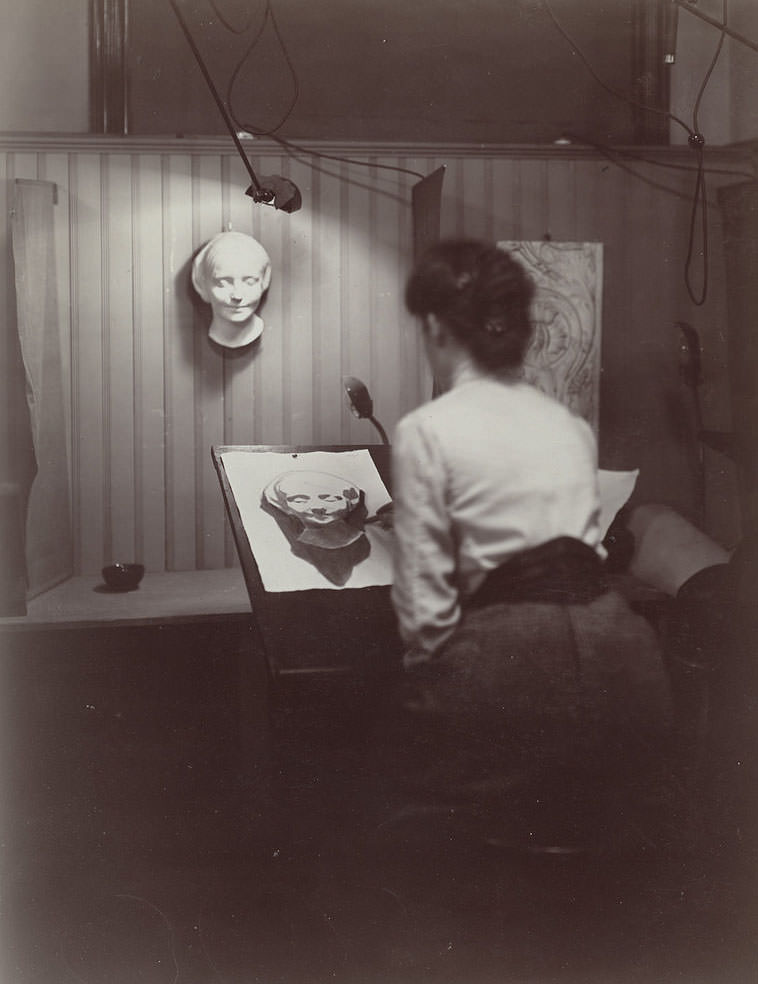
Among the most detailed photographs in the collection are those from the Warren Avenue Evening Drawing School. These images show third-year and second-year students working directly from live models — a standard method in formal art training at the time. Drawing from life required focus, skill, and hours of practice. The fact that an evening school offered this level of instruction speaks to the seriousness with which Boston approached public arts education in the 1890s.
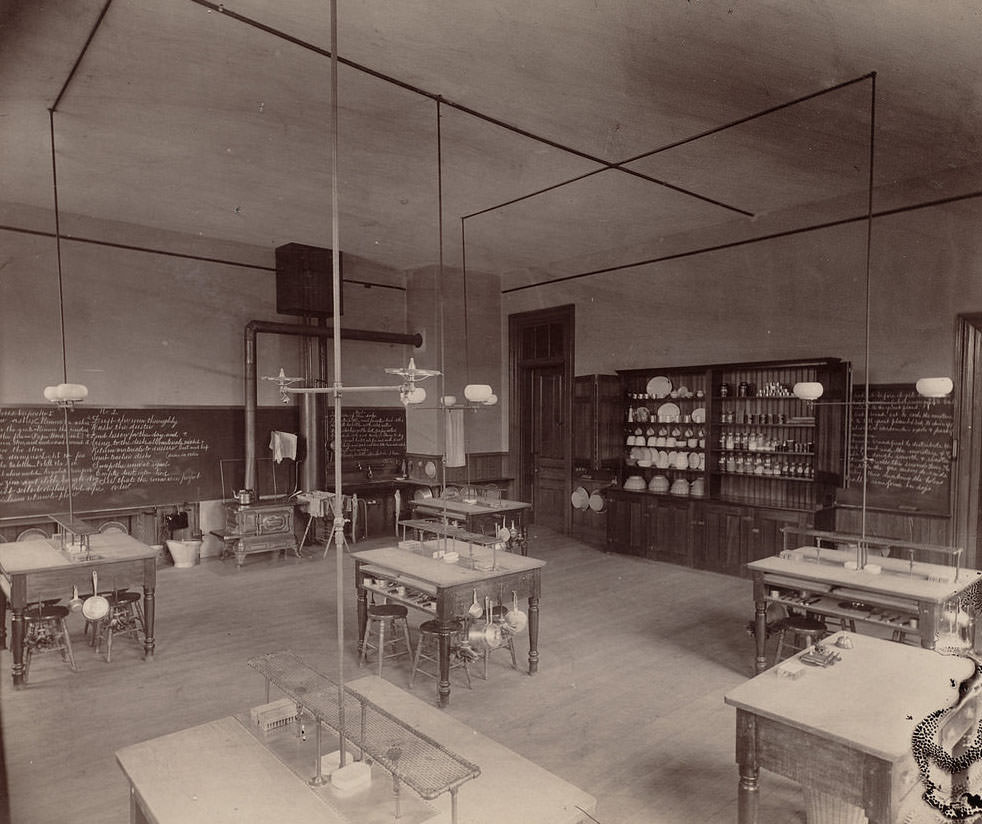
Cooking classes were another key offering. The cooking classroom photographed in the archive shows a well-organized space with work surfaces, equipment, and an orderly layout designed for practical instruction. Cooking education at this time was tied closely to domestic science — a movement that treated household management as a subject worthy of formal study. These classes taught not just recipes but also nutrition, food safety, and efficient kitchen organization.
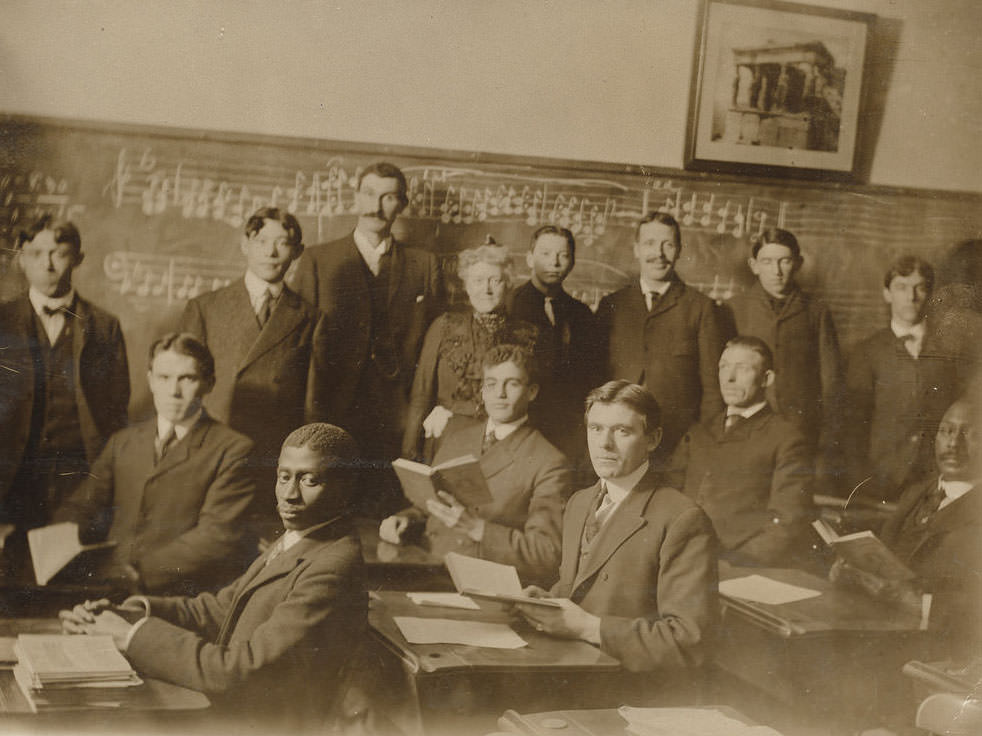
Music education also had a place in Boston’s school system. One photograph shows a group of students gathered for a music class, instruments in hand or positioned nearby. Boston had a strong musical culture in the 19th century, and the public schools reflected that. Formal music instruction in schools was still a relatively new concept nationally, but Boston was ahead of the curve — the city had introduced music into its public school curriculum as far back as 1838.
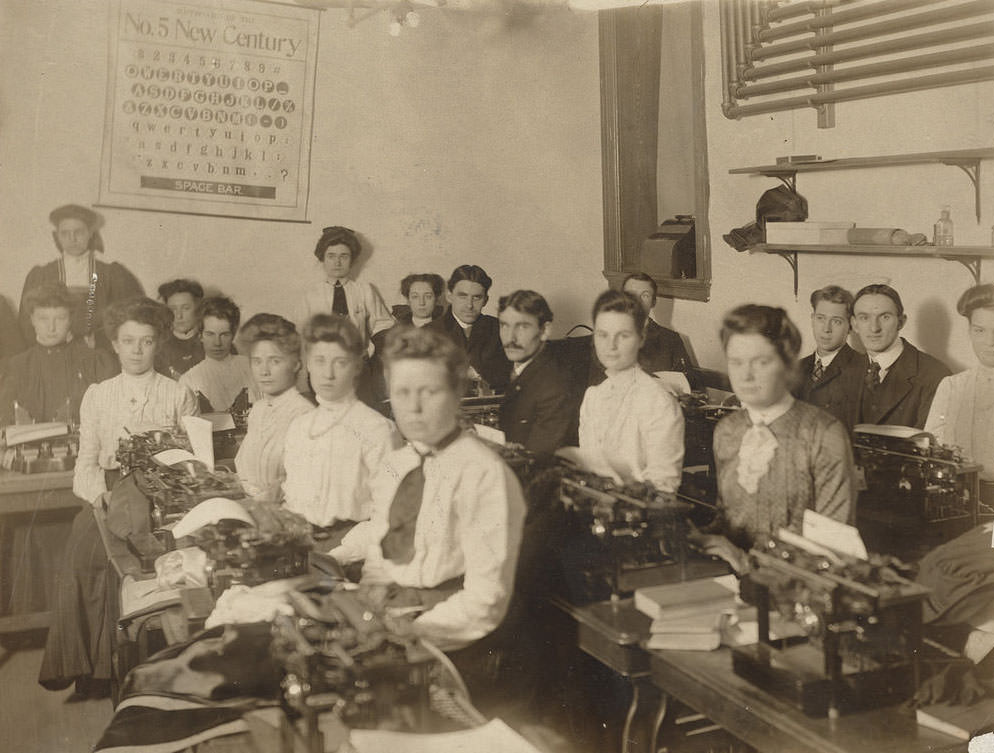
Commerce and technology were not left out either. The High School of Commerce, one of the named institutions in the archive, had a typewriting class — a photograph that feels almost jarring in how modern it looks compared to other images in the collection. Rows of students sit at typewriters, learning a skill that was rapidly becoming essential in American business offices. Typewriting was a new profession in the 1890s, and schools that offered it were giving students a direct advantage in the job market.
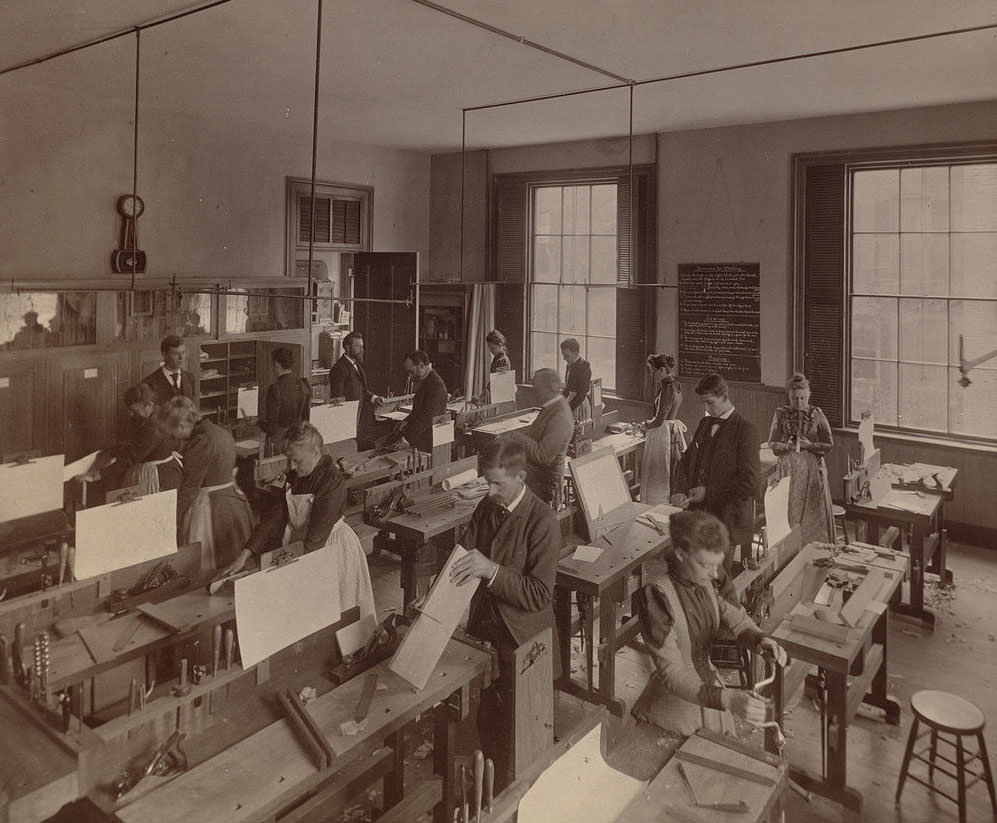
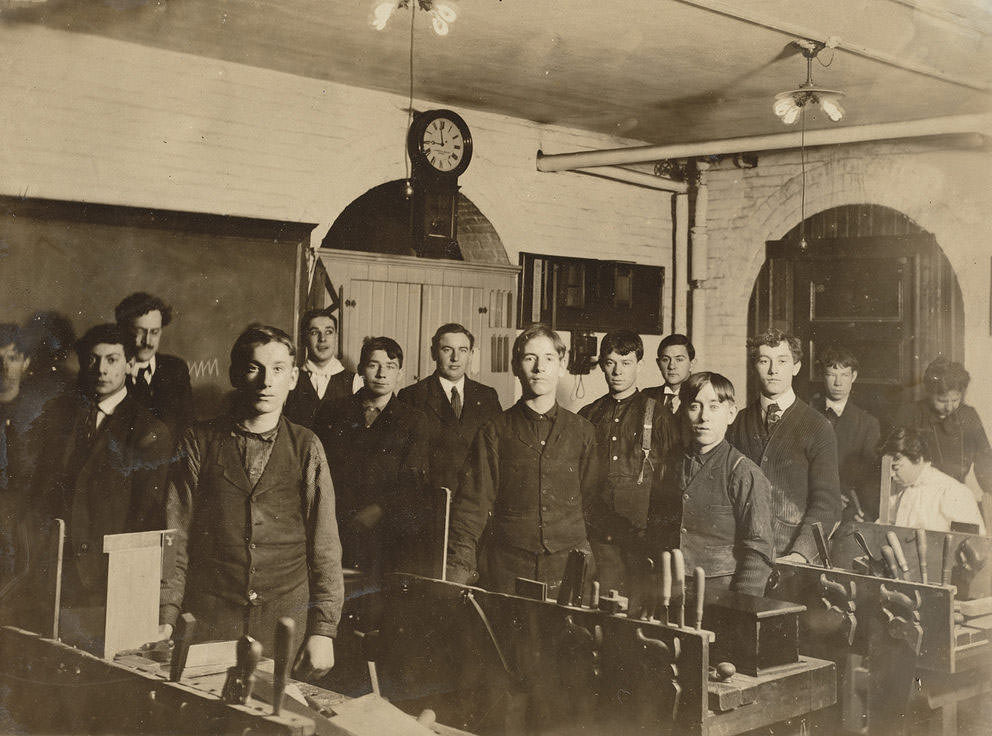
Woodworking rounded out the vocational offerings documented in the archive. Two photographs show woodworking classes in session — one notably featuring both men and women working side by side. This was not common for the era. Mixed-gender vocational classes were unusual, and the fact that Boston offered one in woodworking suggests the city was willing to step outside conventional norms when it came to practical education. Students are seen working at benches with hand tools, learning joinery and woodcraft techniques that had real-world applications.