The Bonneville Salt Flats sit in northwestern Utah, stretching across a vast, blindingly white expanse that looks more like a frozen lake than a racetrack. The surface is hard-packed salt, almost perfectly flat, and it gives drivers and riders something that no paved road can offer — mile after mile of uninterrupted space to go fast. The Speed Trials have been held here annually since 1914, governed by organizations like the Southern California Timing Association (SCTA) and the American Motorcyclist Association (AMA). By 1966, the event had grown into one of the most celebrated speed competitions on earth.
Competitors came from across the country — and beyond — to run their machines across the salt in pursuit of official speed records. Vehicles were sorted into classes based on engine size, fuel type, and body style, which meant a small-displacement roadster and a jet-powered monster could both walk away with a record on the same day. That variety is part of what made Bonneville unique. A backyard builder with a modified coupe could line up in the same event as a factory-backed streamliner with a supercharged engine.
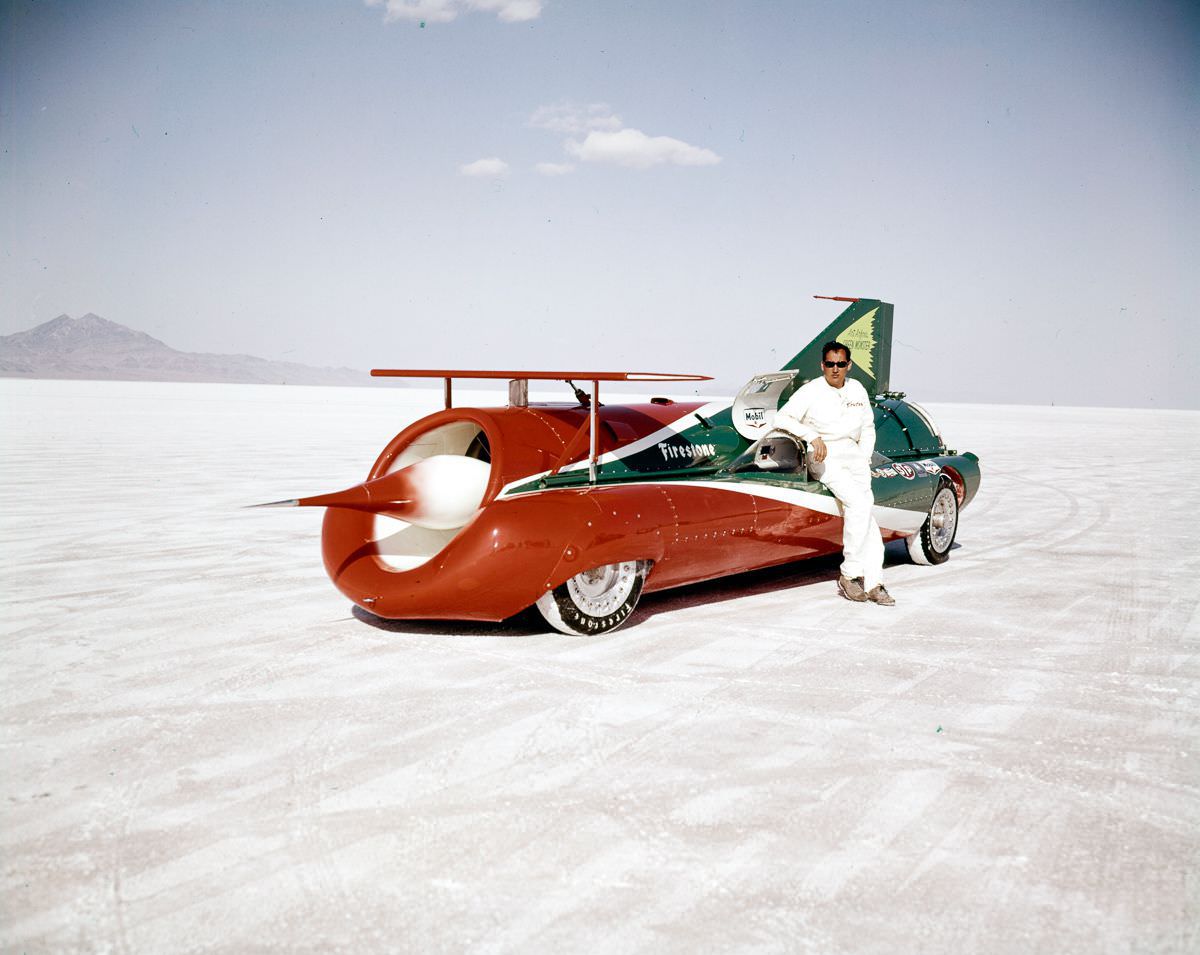
Among the most recognized names at Bonneville was Art Arfons, whose jet-powered “Green Monster” had already claimed the land speed record in prior years. His machine ran on a General Electric J79 jet engine — the same powerplant used in military fighter jets. Arfons was a self-taught engineer from Ohio who built his cars in a workshop rather than a professional racing facility. His presence at the 1966 trials kept spectators and rivals alike watching the salt closely.
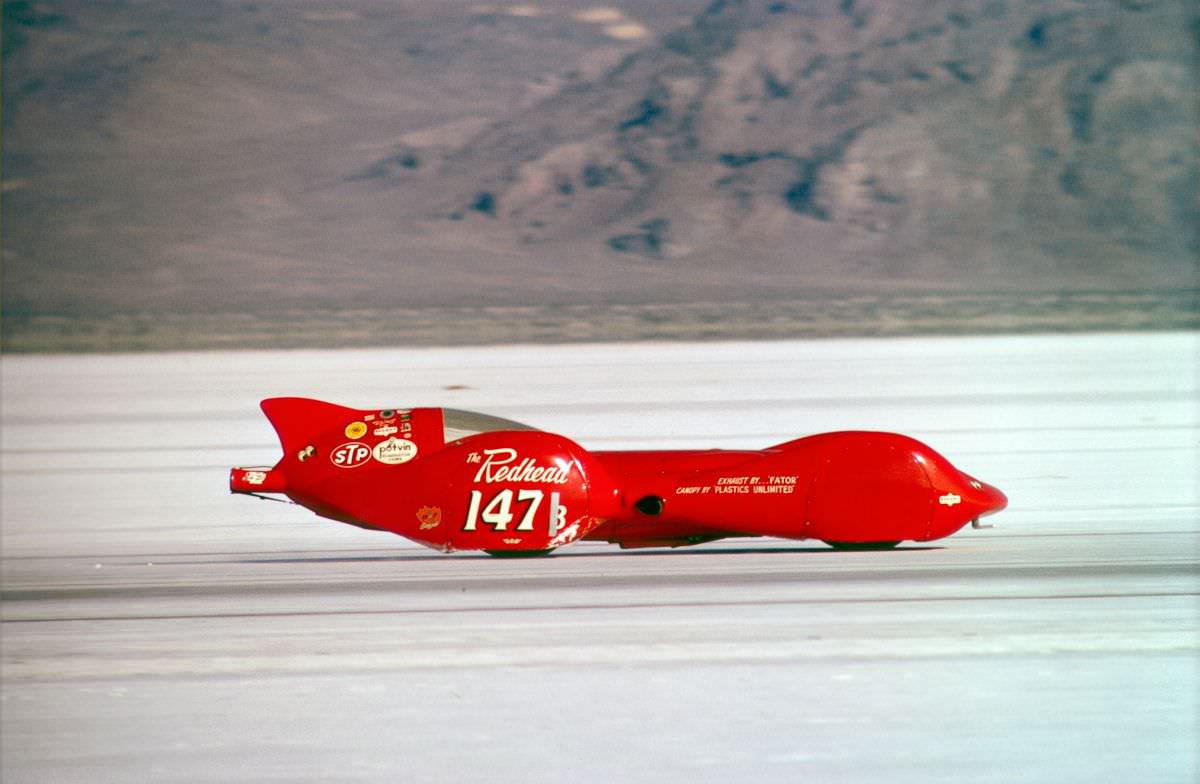
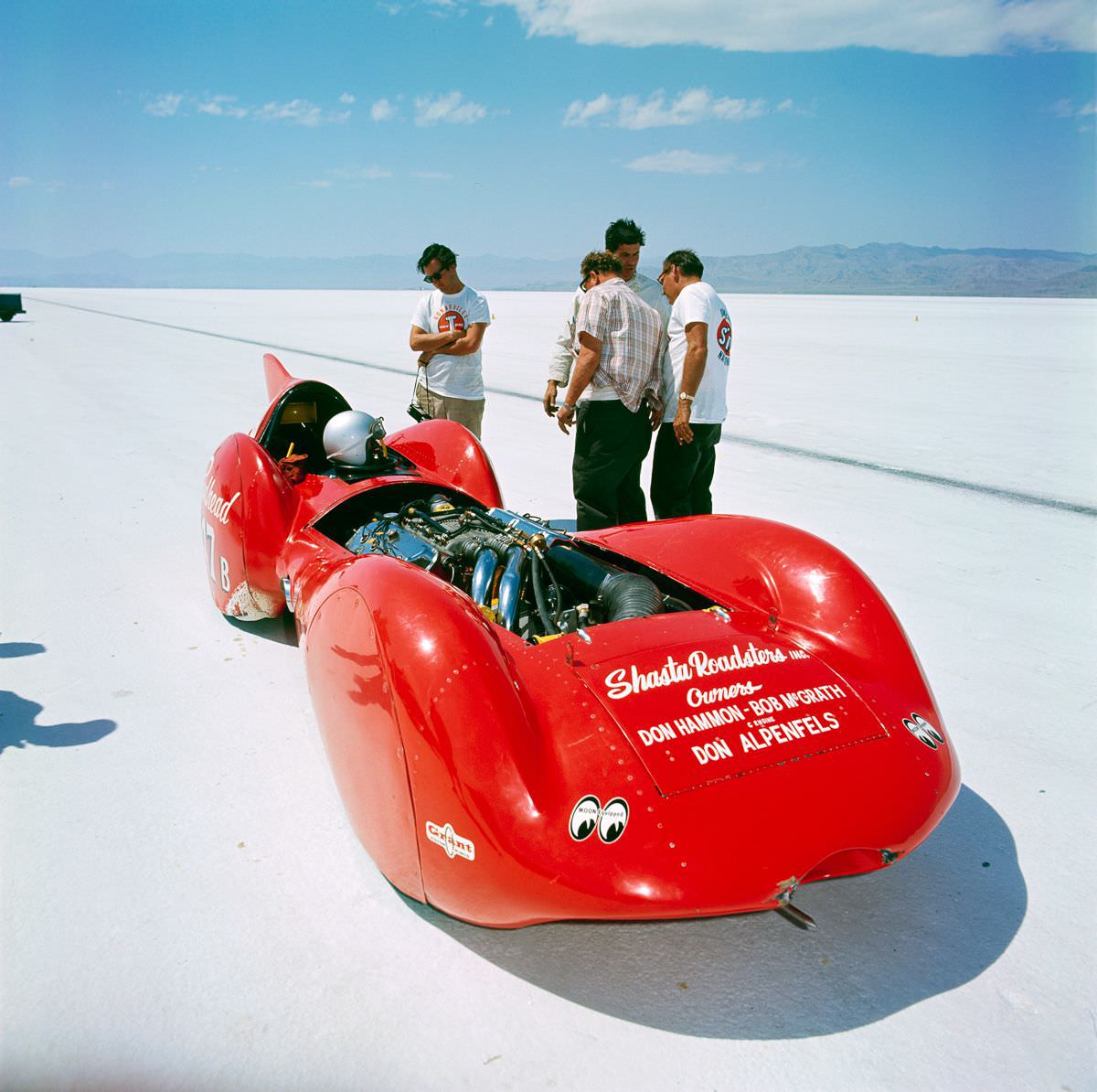
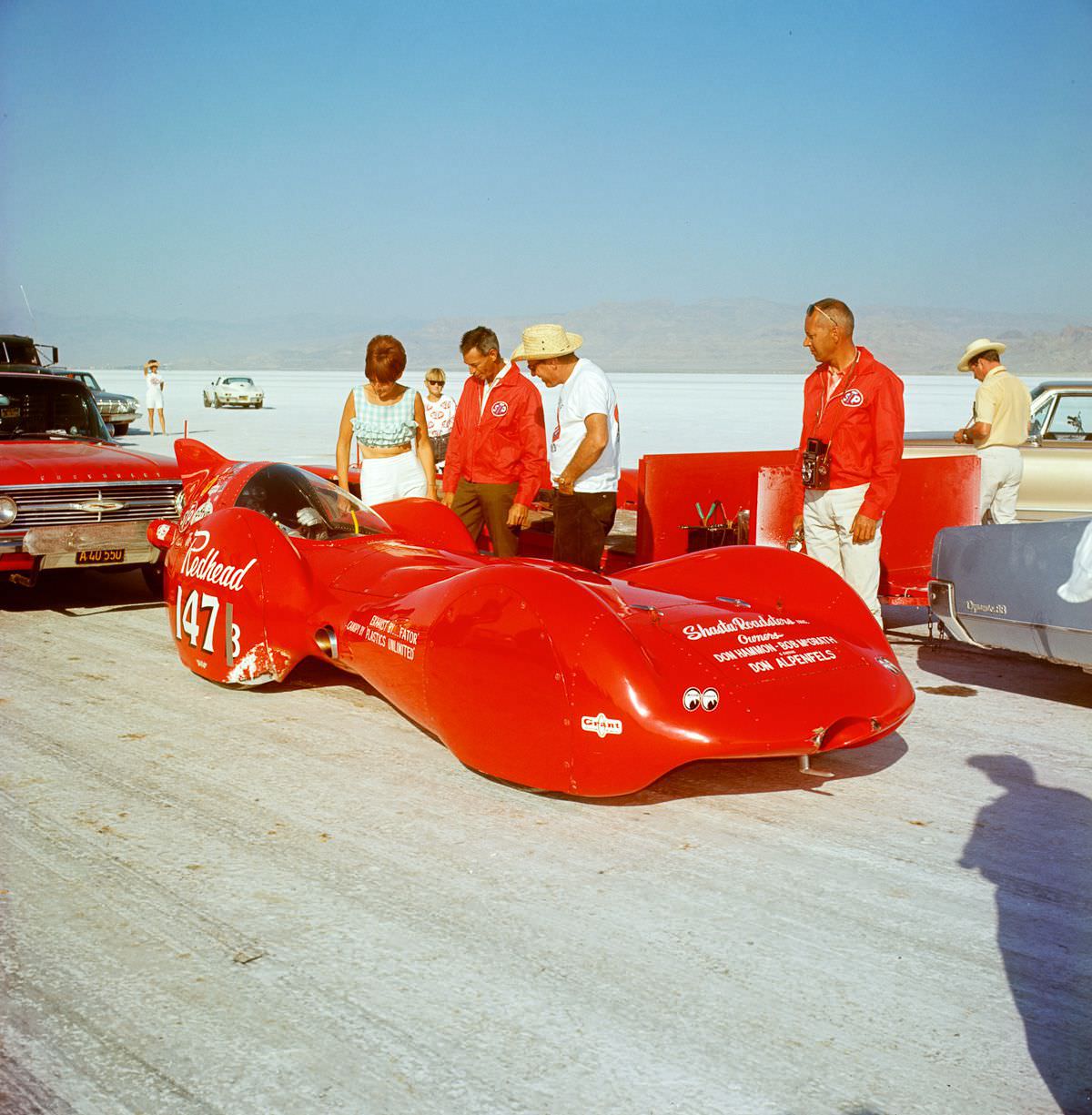
Not far from the jet-powered machines, the Hammon-McGrath-Appenfels team brought their “Redhead” streamliner, car number 147B, to the flats. Powered by a supercharged Hemi engine tucked beneath a sleek body, the Redhead ran hard enough to claim its class trophy with a recorded speed of 331.46 miles per hour — a performance that few wheel-driven cars could match.
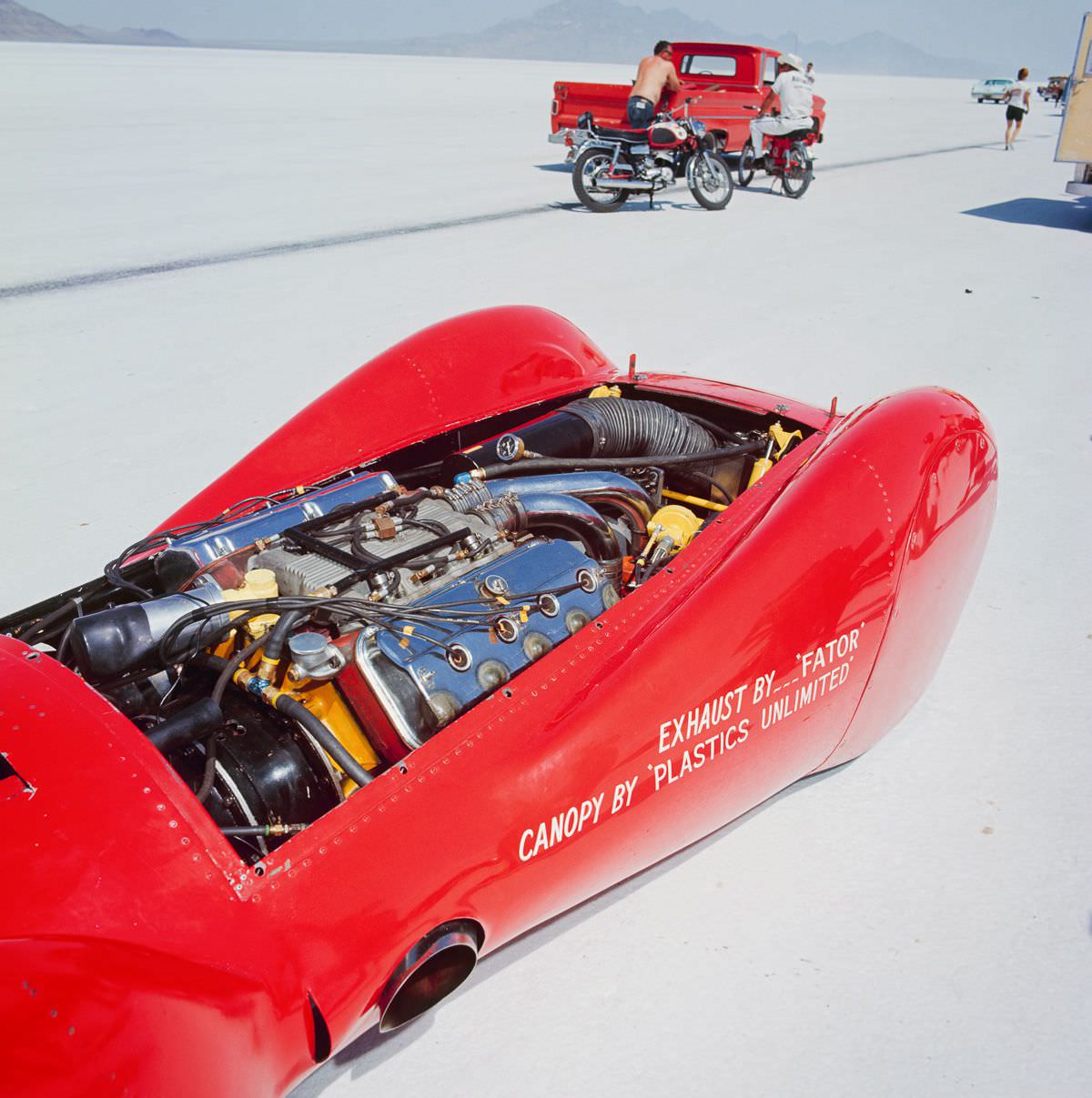
The engine that made the Redhead’s run possible was a supercharged Hemi — a type of V8 engine with hemispherical combustion chambers that allow for more efficient burning of fuel and air. Removing the cowling revealed the full scale of the powerplant crammed into the car’s narrow body.
While American teams dominated much of the competition, one of the most talked-about figures at the 1966 trials was Bert Munro, a 67-year-old motorcycle racer from Invercargill, New Zealand. Munro had spent decades hand-modifying his 1920 Indian Scout, machining his own parts and grinding his own pistons in a shed at home. He brought the streamlined Scout to Bonneville and set about preparing it on the salt itself, working on the bike between runs as he always did.
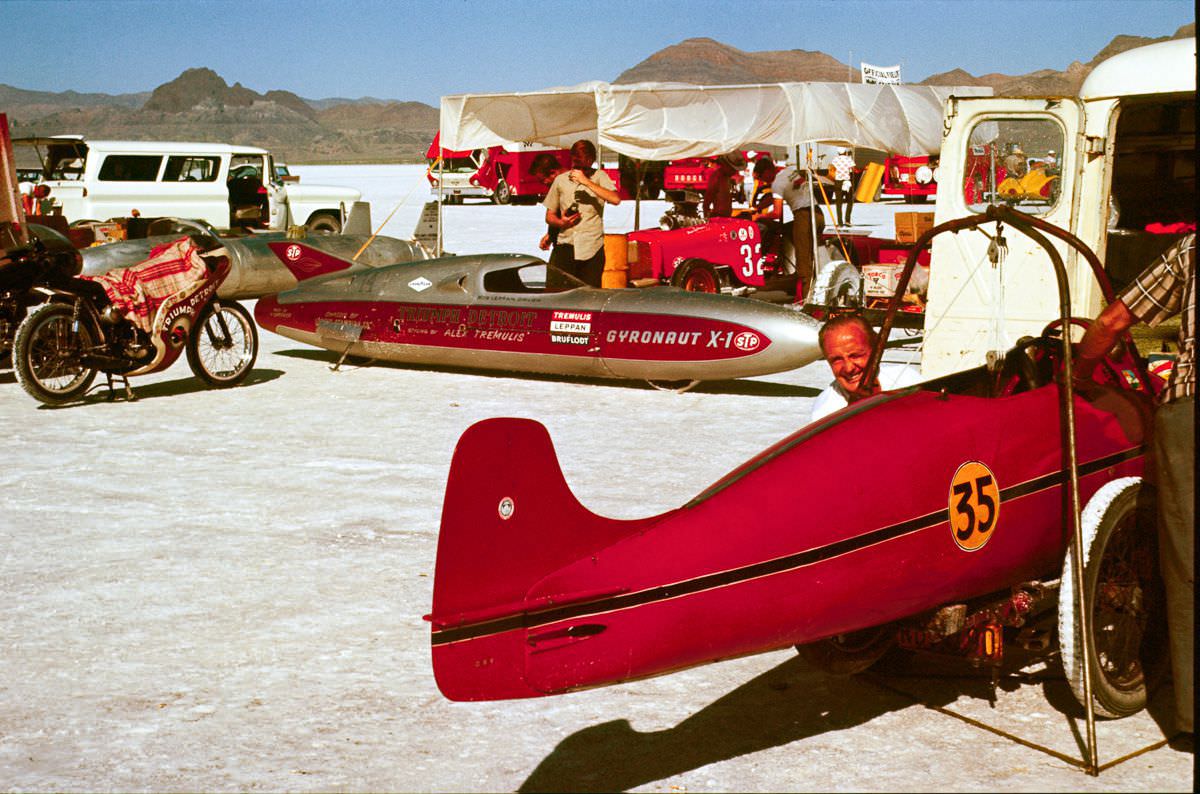
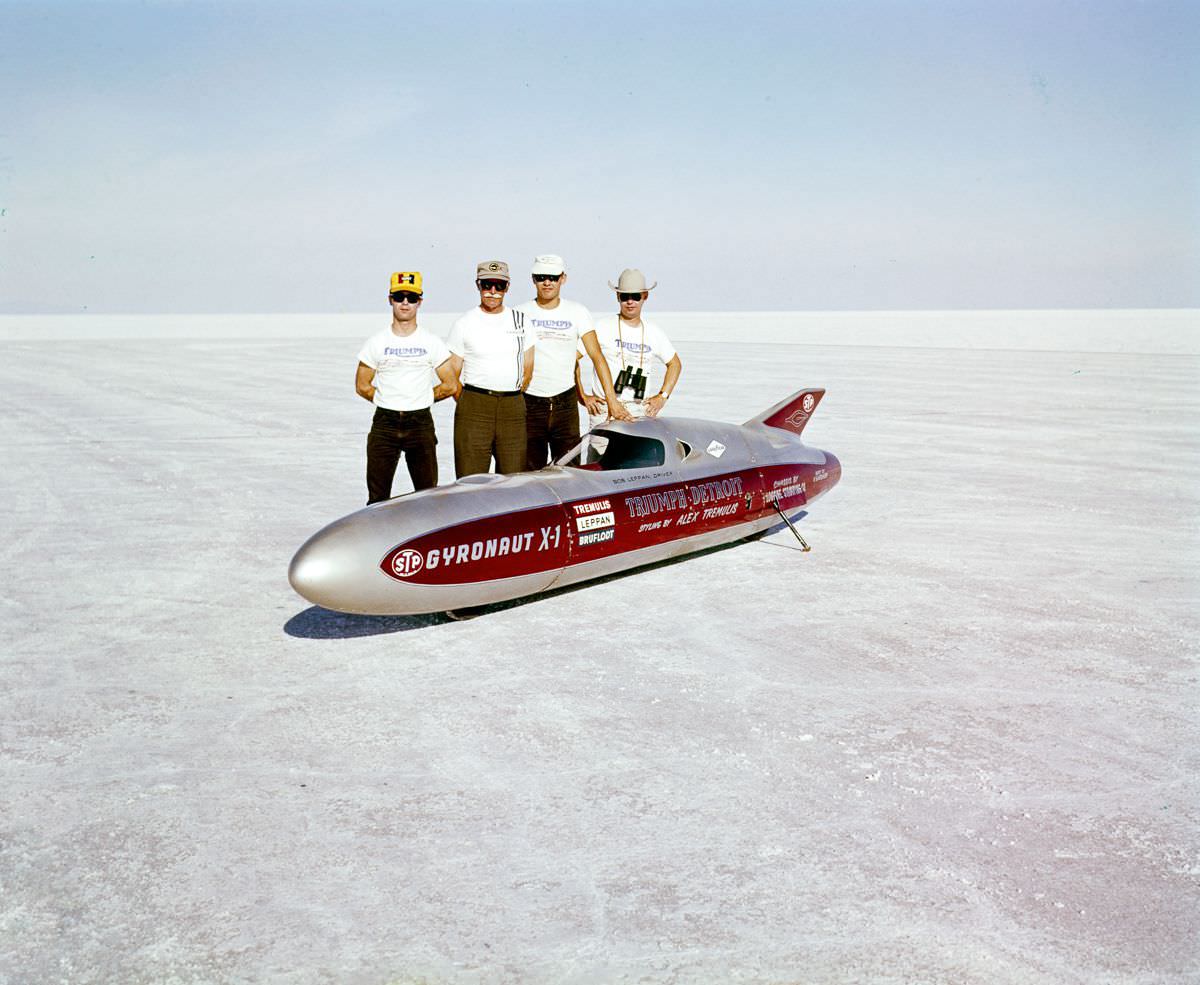
Visible in the background of Munro’s workspace was the Detroit Triumph Gyronaut X-1, a purpose-built motorcycle streamliner designed by Alex Tremulis — the same designer responsible for the futuristic Tucker 48 automobile. The Gyronaut X-1 was built to chase the motorcycle land speed record and represented exactly the kind of serious, well-funded effort that Munro’s hand-built machine stood in contrast to.
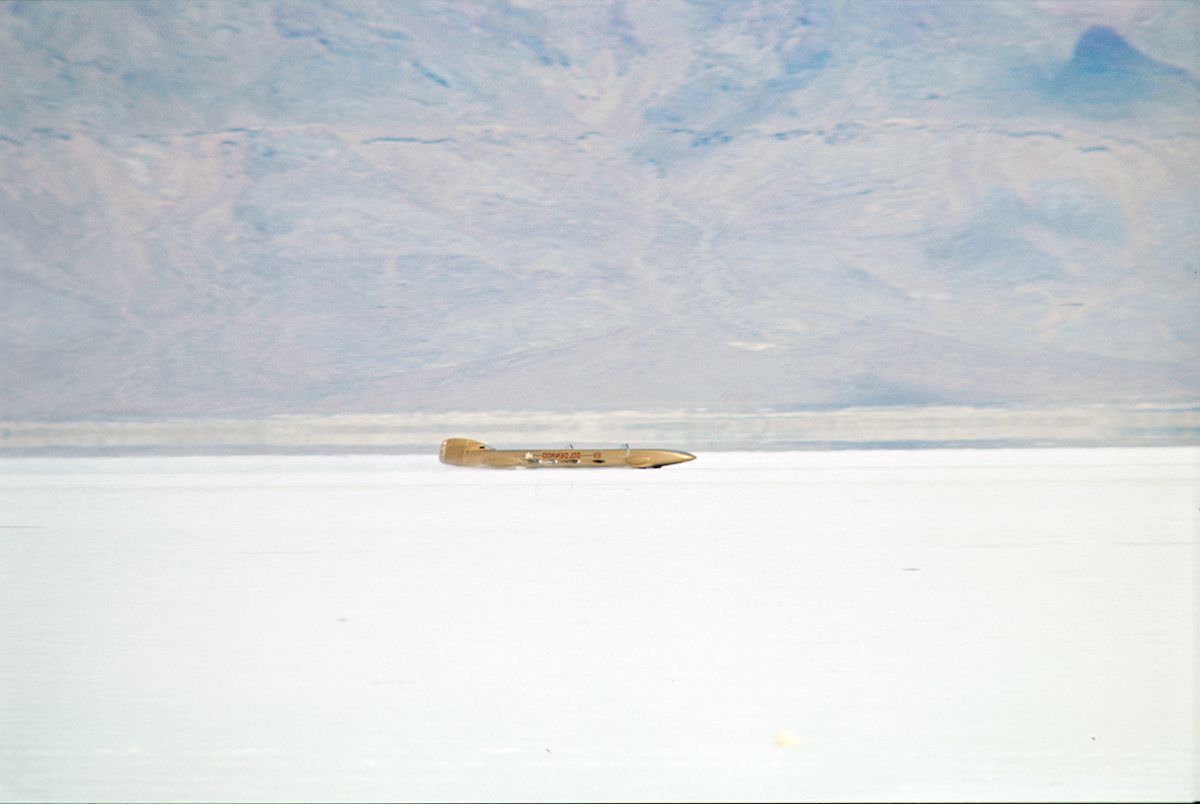
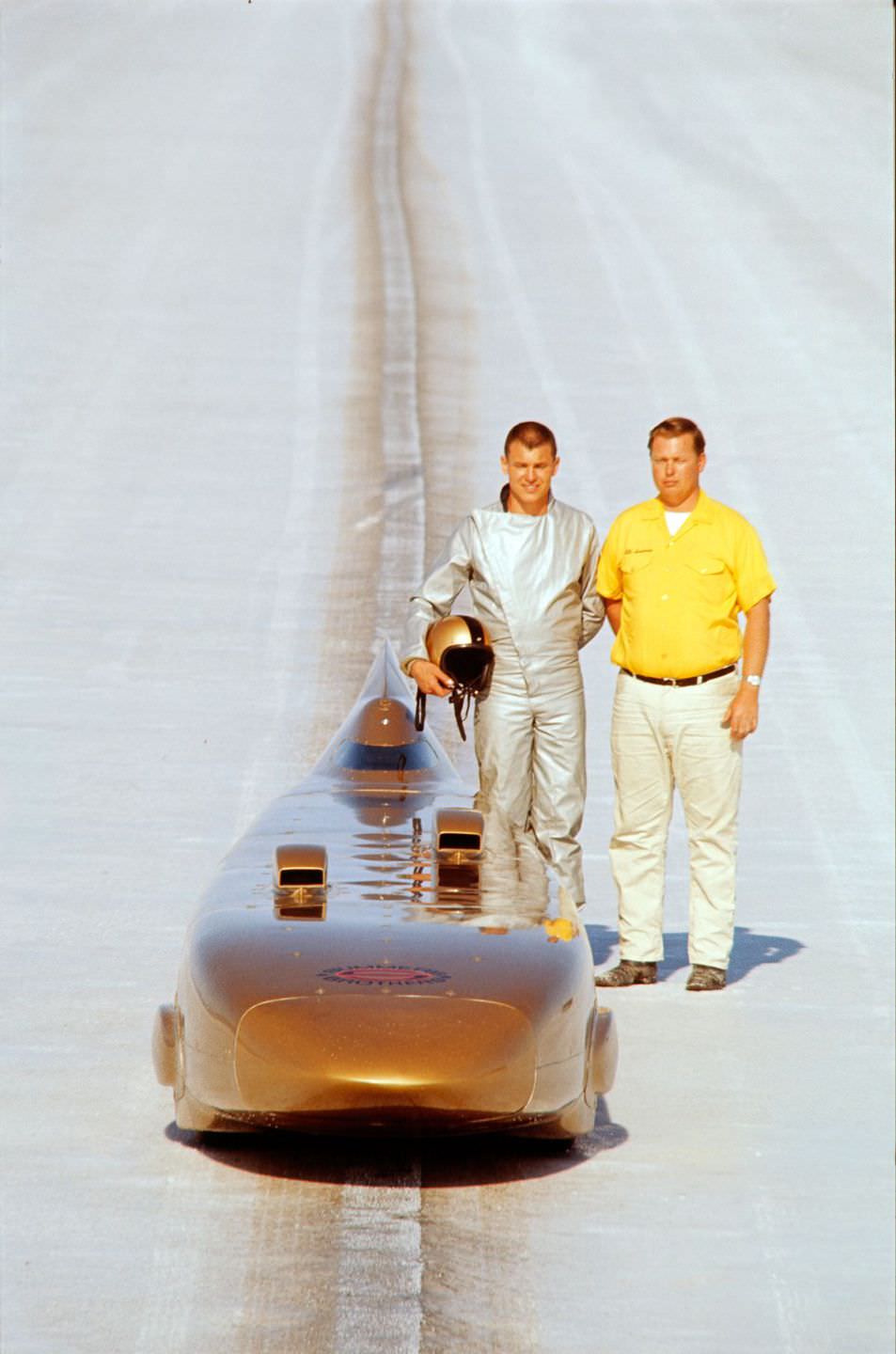
The Summers Brothers brought their “Goldenrod” streamliner to the salt for the C-Class competition. Bill and Bob Summers had designed and built the car themselves. The Goldenrod was a long, cigar-shaped machine powered by four Chrysler Hemi engines mounted in a row. It had already set the wheel-driven land speed record the year before, and the brothers continued to run it in 1966.
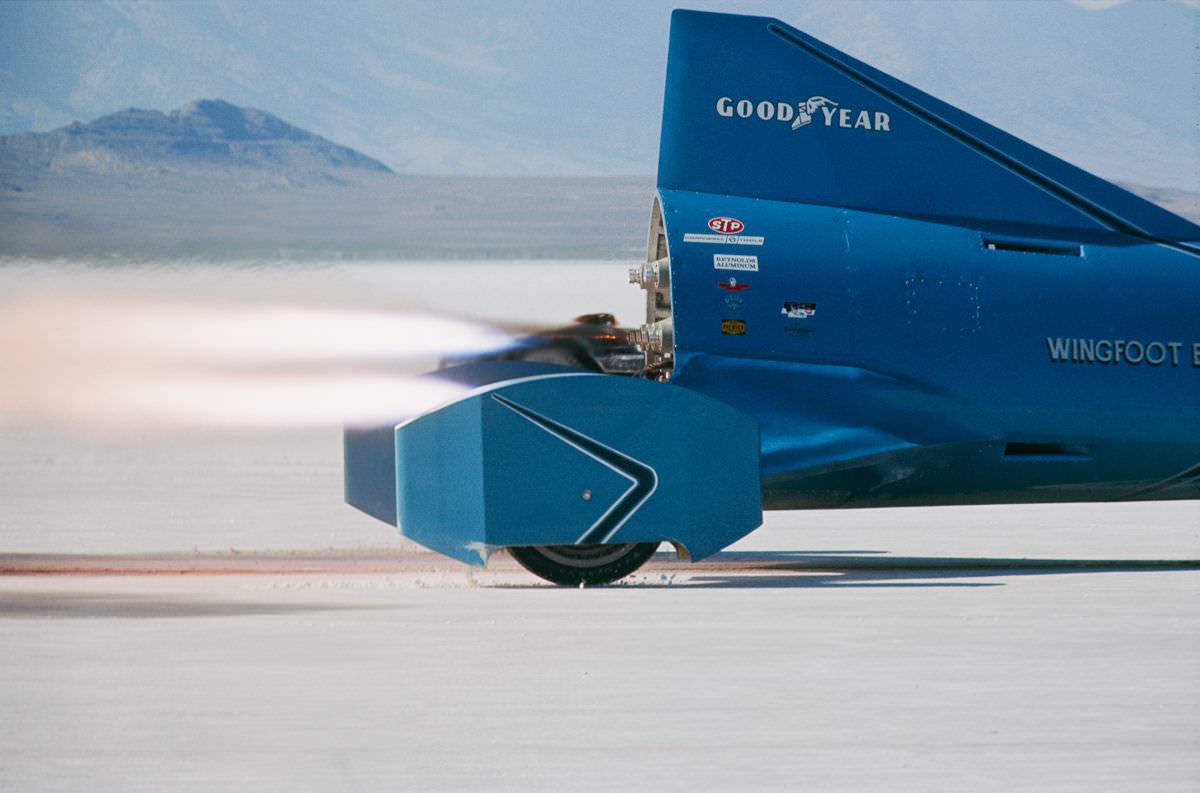
Walt Arfons — brother of Art — ran a very different kind of machine. His Wingfoot Express 2 was rocket-powered, propelled by 35 Jet-Assisted Take Off pods mounted to the vehicle. JATO rockets were originally developed to help heavily loaded aircraft get airborne from short runways, and Walt repurposed them to push a land vehicle across the salt at extraordinary speeds.
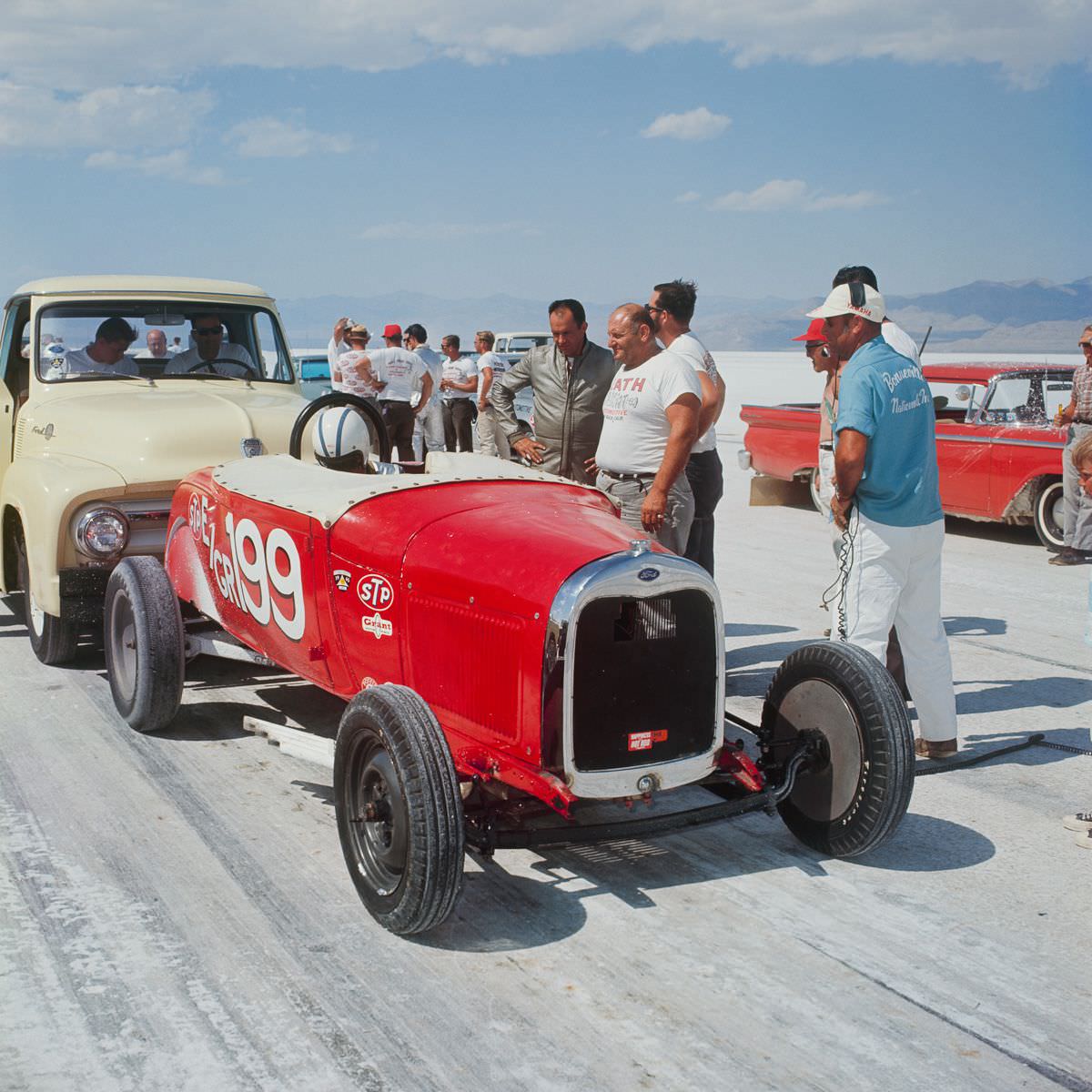
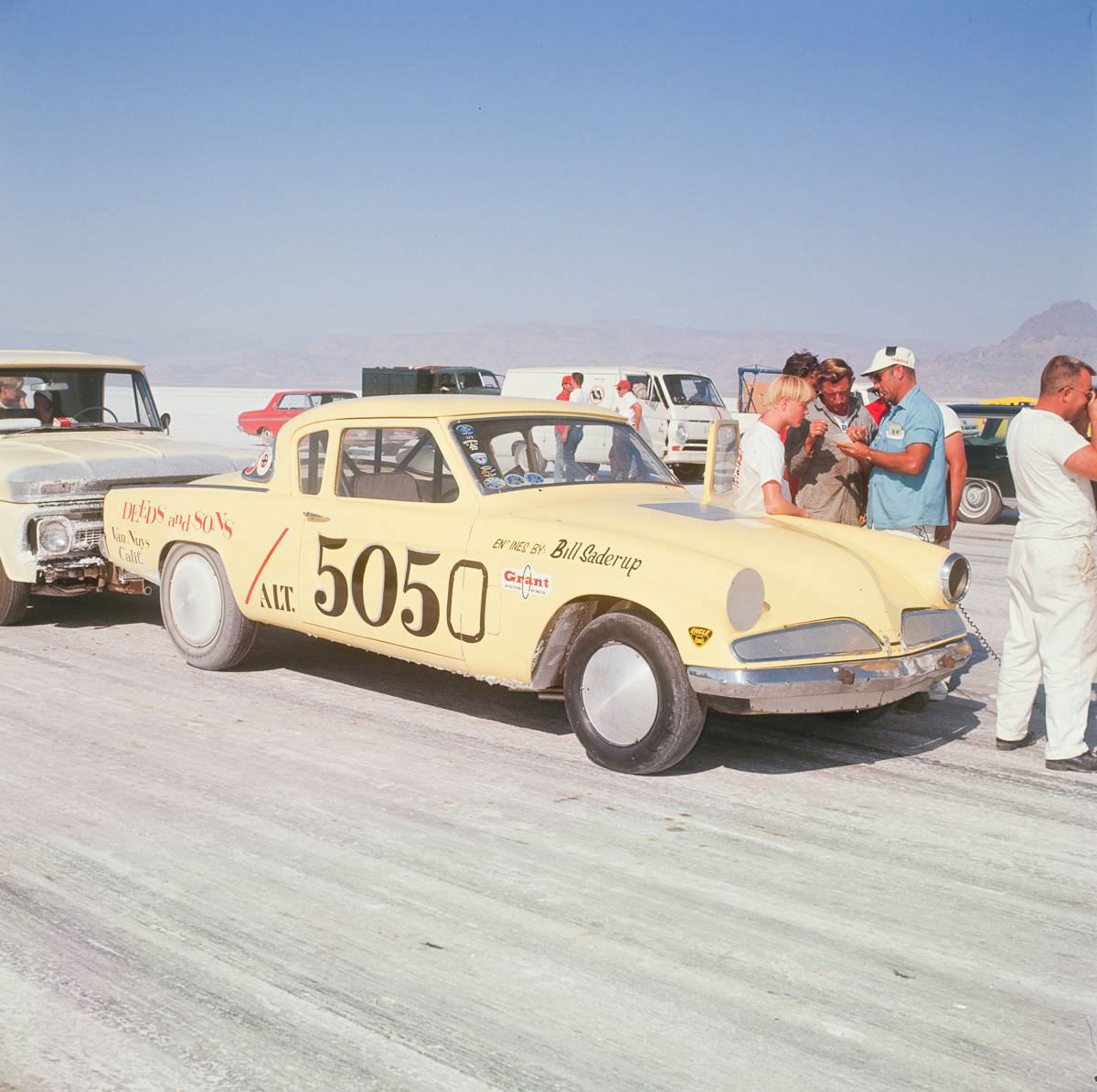
Not every record-chaser at Bonneville was running exotic fuel or jet propulsion. The Ratliff & Zook E/Gas Roadster ran on pump gasoline and posted a speed of 158.45 miles per hour — modest by the standards of the streamliners, but legitimate enough to earn its place in the record books within its class. The Deeds and Saderup Studebaker took home the D/Fuel Coupe and Sedan class trophy at 191.48 miles per hour, proving that older American iron could still hold its own on the salt.
The Larson-Cummins Streamliner claimed the D-Class trophy with a run of 225 miles per hour, while the Designers International Special — nicknamed “Tempest in a T-pot” and campaigned by Ron Benham and Don Hurley — represented the creative and sometimes eccentric naming traditions that Bonneville teams loved. Neil M. Thompson arrived with a gold metalflake-painted sports car, and J.R. Lufkin ran his C/Modified Sports entry, number 646, with sponsorship from Autolite and performance work done by AK Miller.
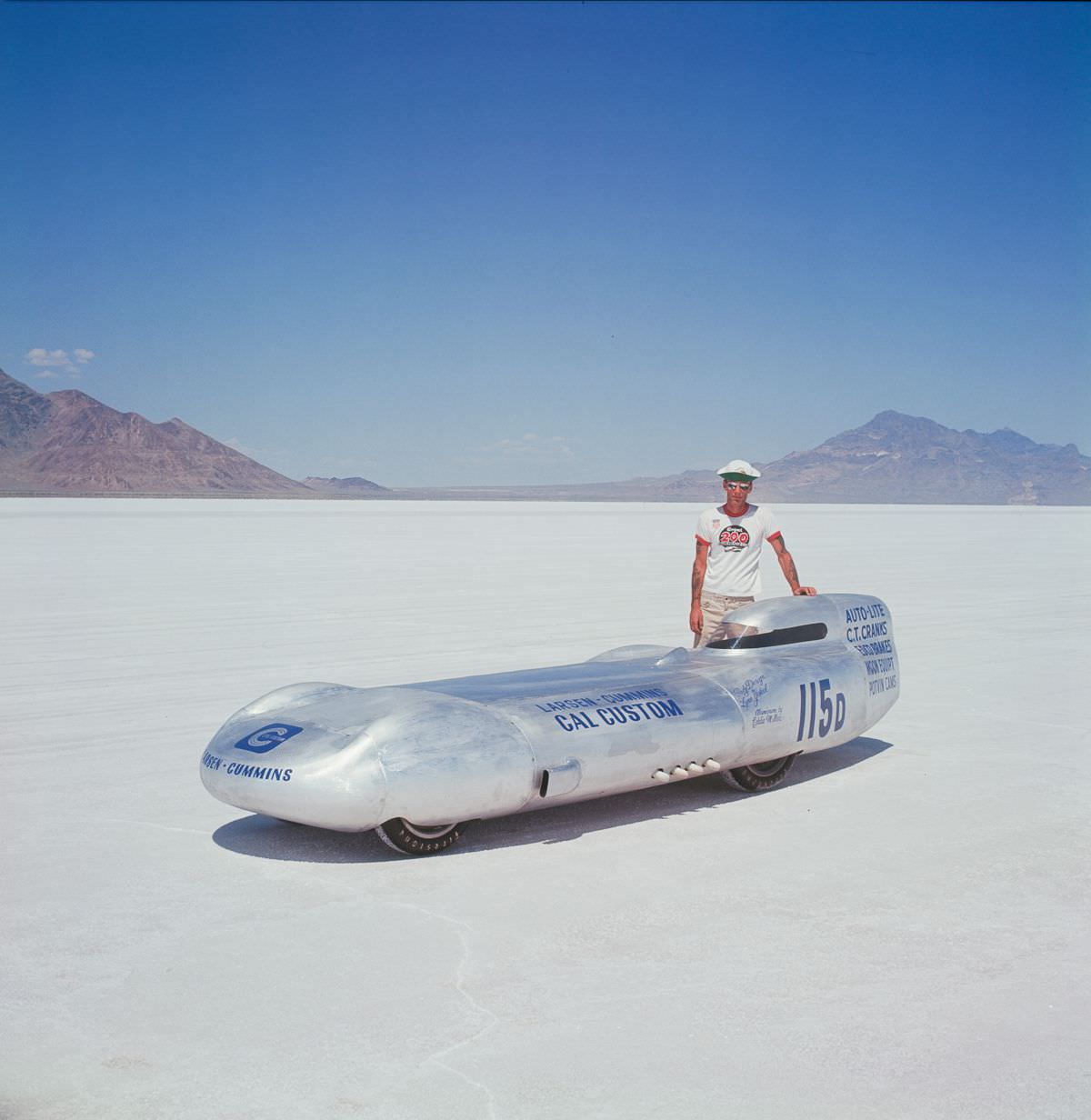
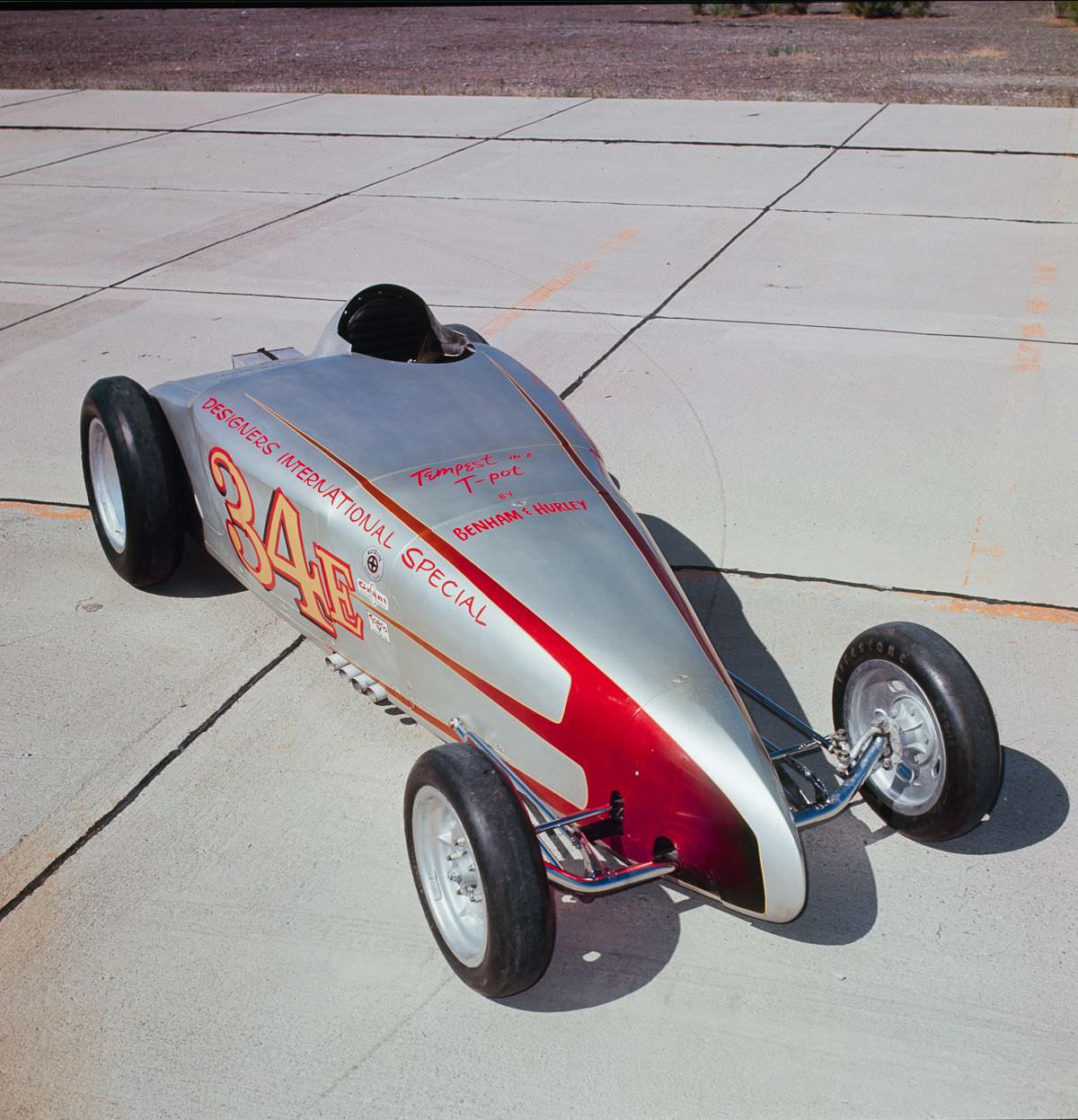
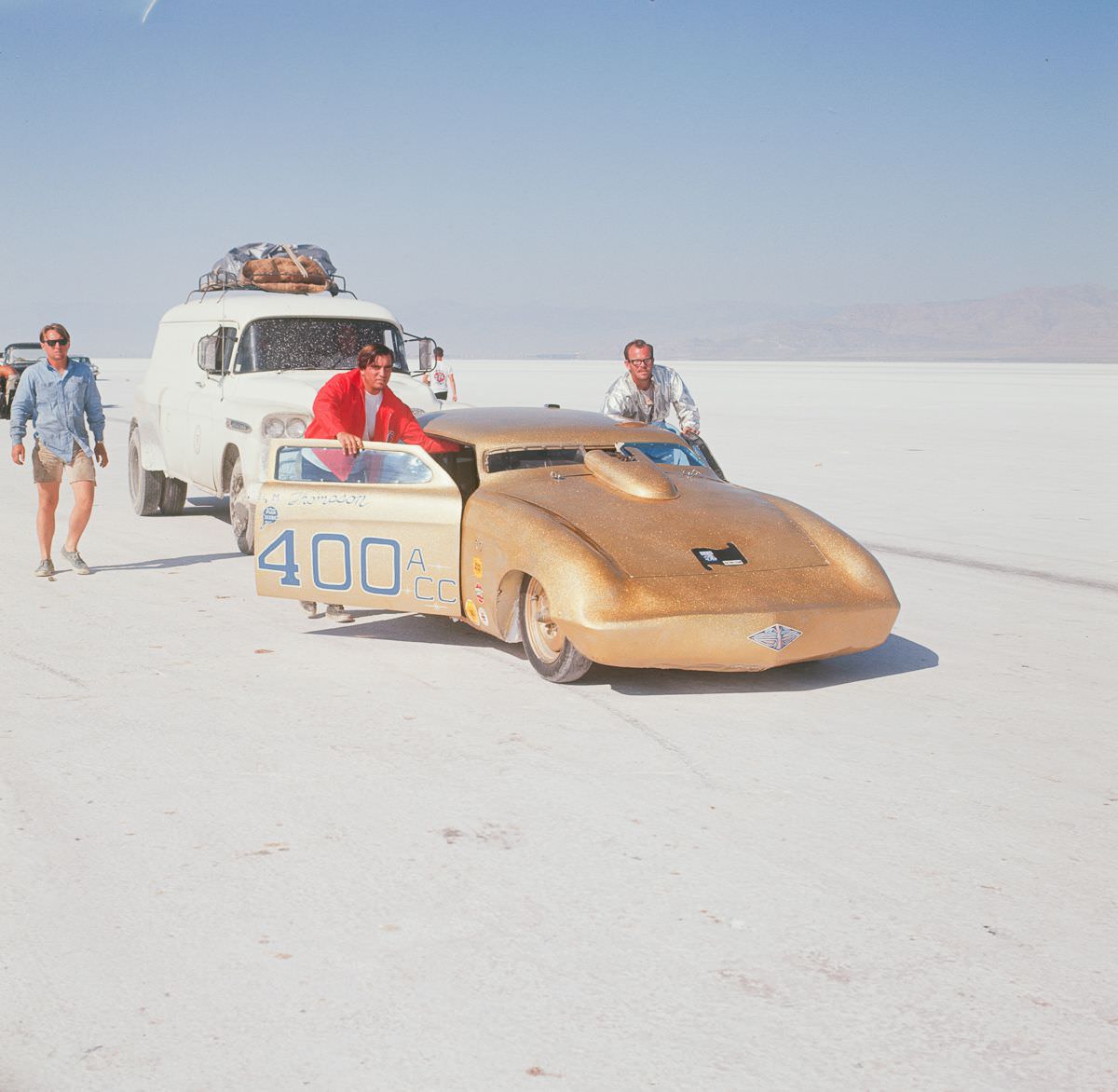
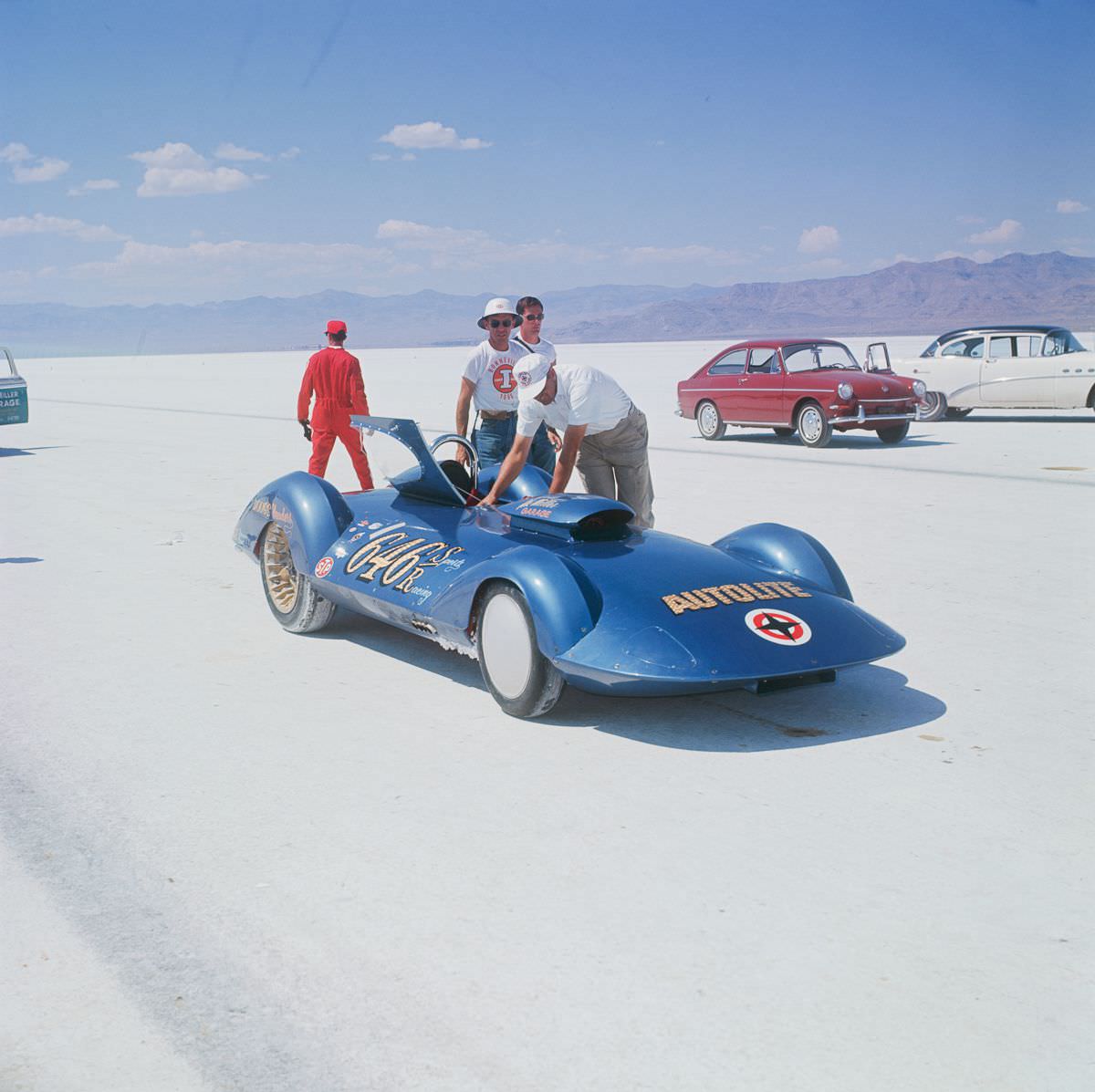
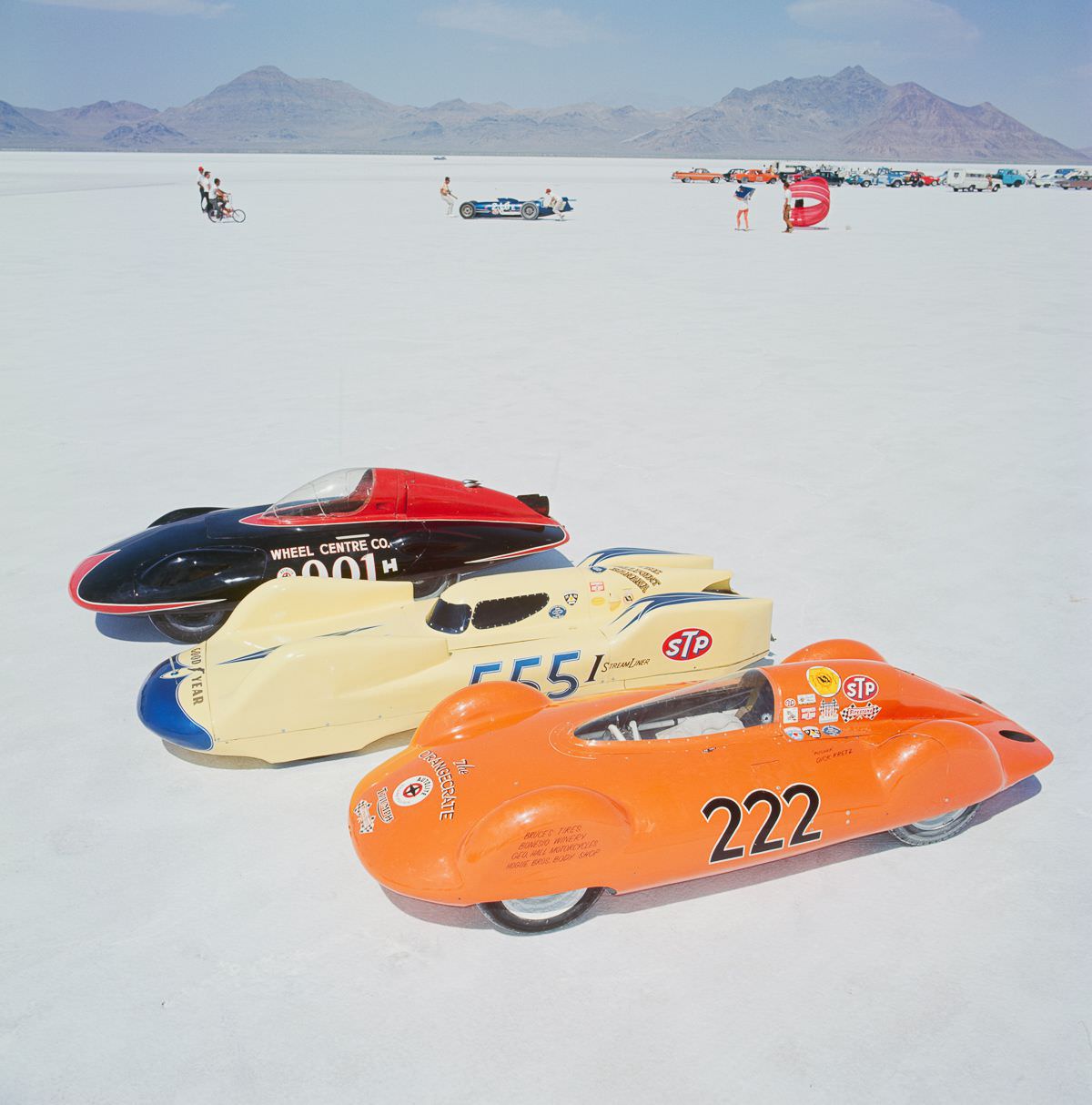
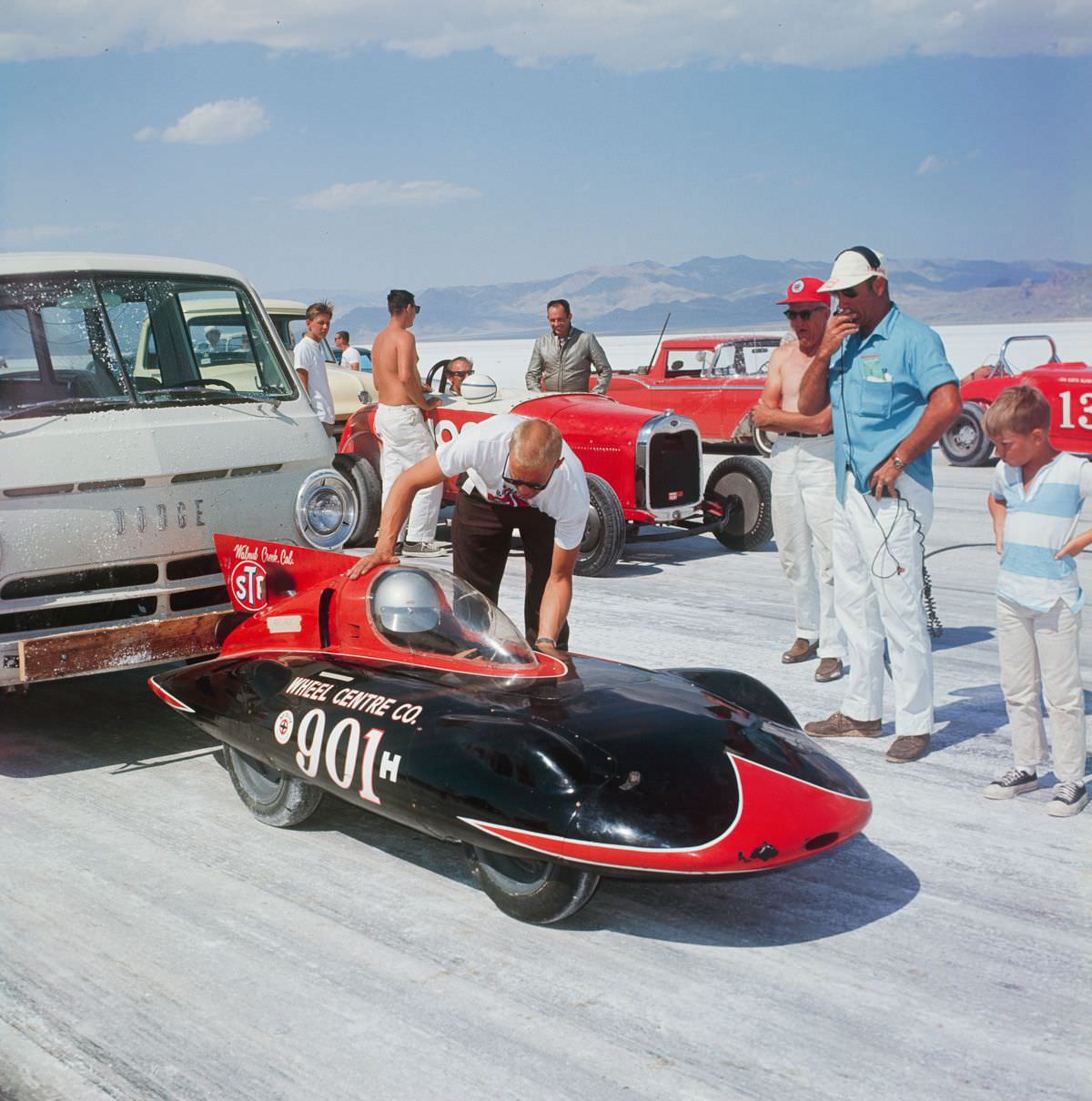
The smaller classes brought their own set of fierce competitors. Donald Barr ran his H-Class Streamliner to a recorded speed of 145.92 miles per hour, a strong result for the small-engine category. Three H- and I-class streamliners — the Wheel Centre Company’s #901H, “The Ball Point Banana” #555, and “The Orange Crate” #222 — lined up alongside each other, each one representing a team that had poured serious time and money into chasing a class record on the salt.
The 1966 Speed Trials covered an enormous range of machinery — from hand-built bikes ridden by a pensioner from New Zealand to rocket sleds with military-surplus propulsion systems. Each class had its own records, its own drama, and its own winners. The SCTA and AMA officially recognized every record set during the event, cementing each achievement in the sport’s permanent history. Bonneville in 1966 was exactly what it had always been: a place where anyone with enough speed and nerve could put their name in the books.