Hey There! Before You Go. 😧
Get the best vintage content straight into your inbox!

Don't worry, we don't spam

Berlin in the 1950s: The Berlin Crisis and Stunning Photos of Life in East and West Berlin

By the early 1950s, Berlin had become the most visible fault line of the Cold War. The city was split in two. The eastern half fell under the control of East Germany’s communist government, backed by the Soviet Union. The western half was occupied and supplied by the United States, Britain, and France. Two entirely different worlds existed within the same city, separated not yet by a wall, but by ideology, economics, and heavily enforced borders.
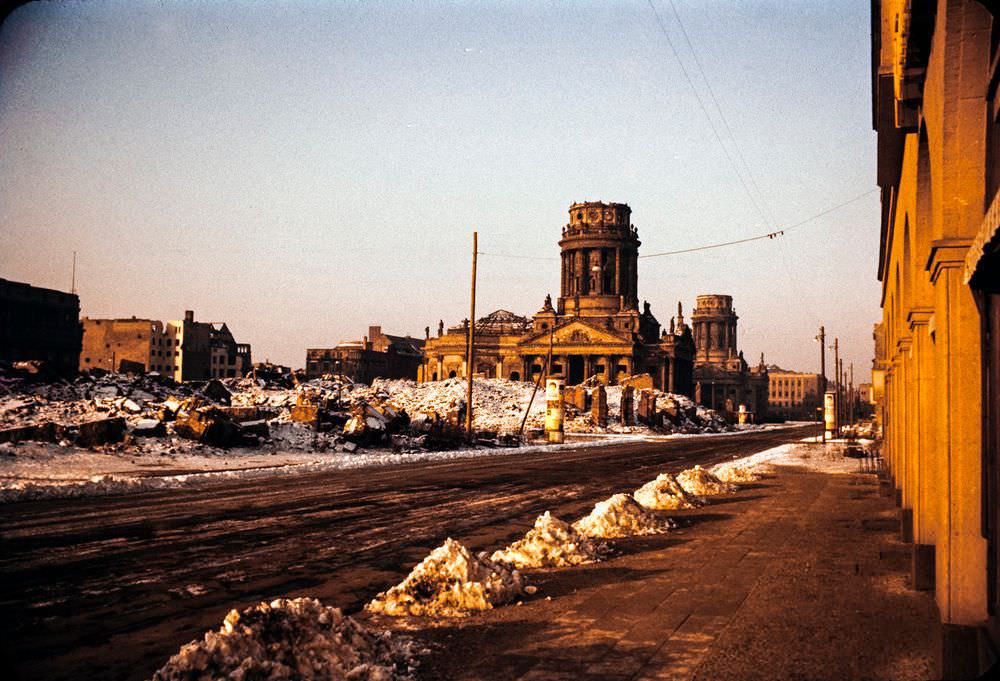
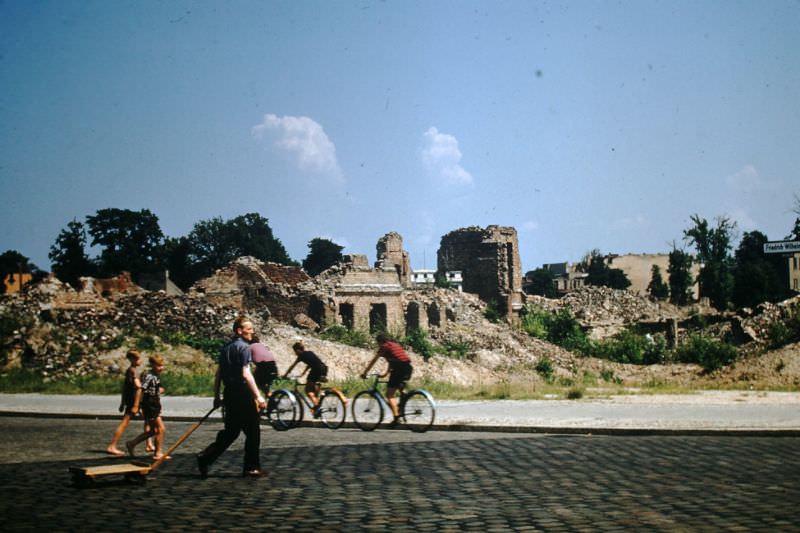
Ten years after the end of the war, large swathes of Berlin still lay in ruins.

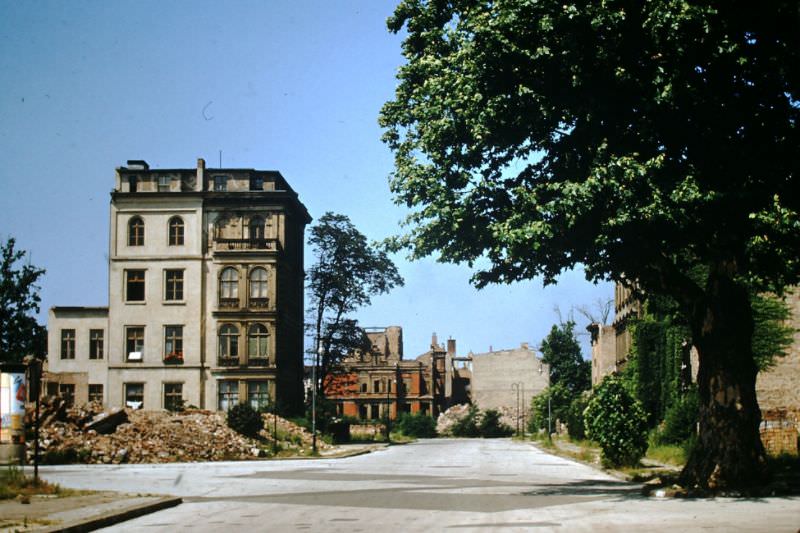
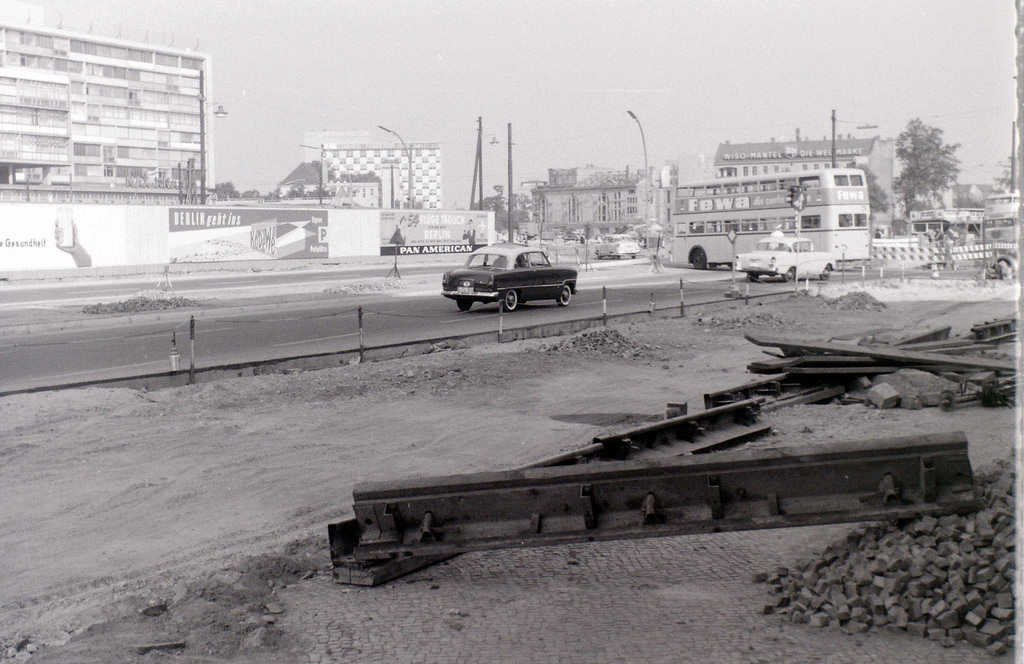
A decade after World War II ended, Berlin still bore deep physical scars. Bombed-out buildings, rubble-strewn lots, and shattered facades were common across the city. Reconstruction was slow and uneven, and the damage served as a constant reminder of the war’s destruction. The photographs taken during the mid-1950s capture this in stark detail — empty streets, crumbling facades, and vast stretches of cleared wasteland where apartment blocks once stood.
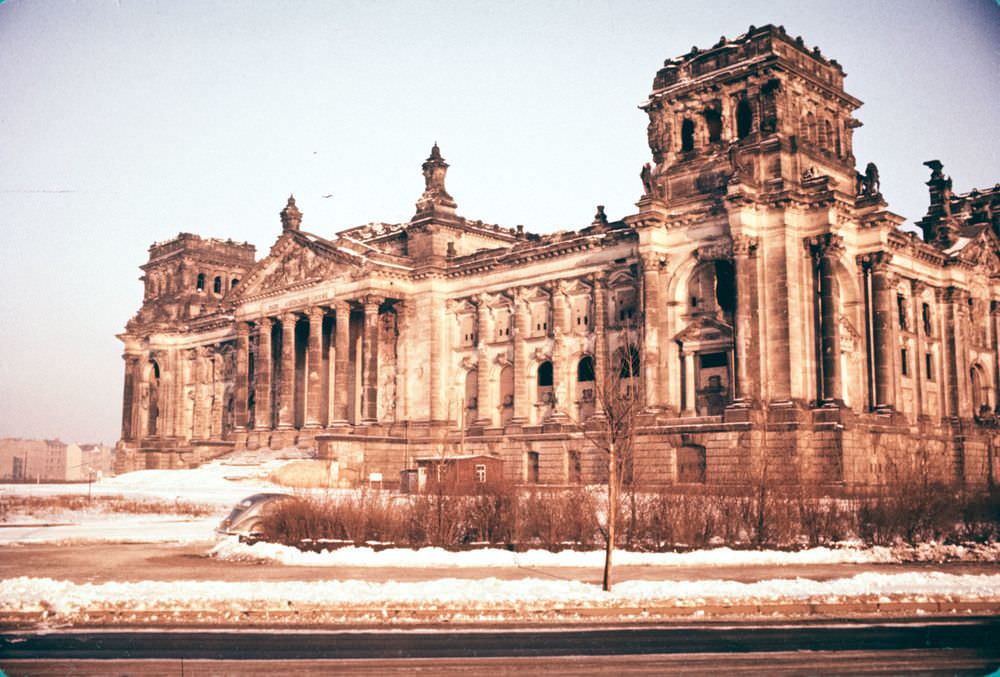
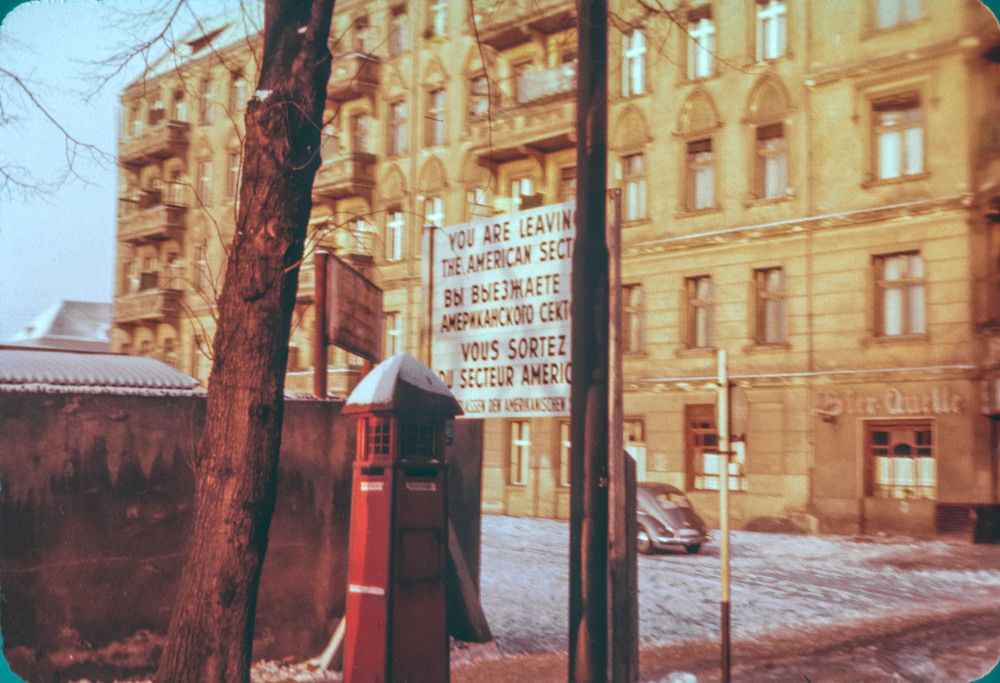
The scene during the winter of 1956 was bleak.
The Berlin Wall was still some years away from being erected in the winter of 1956

Life in East Berlin was shaped by the demands of the communist state. The government set ambitious production quotas for workers but did not raise wages to match. Food, clothing, and housing were subsidized, but shortages and long queues were routine. Consumer goods — the kind West Berliners could browse freely — were scarce in the East. Industrial output took priority over everyday comfort. And looming over all of it was the Stasi, East Germany’s secret police, one of the most invasive surveillance agencies in the entire Soviet bloc.
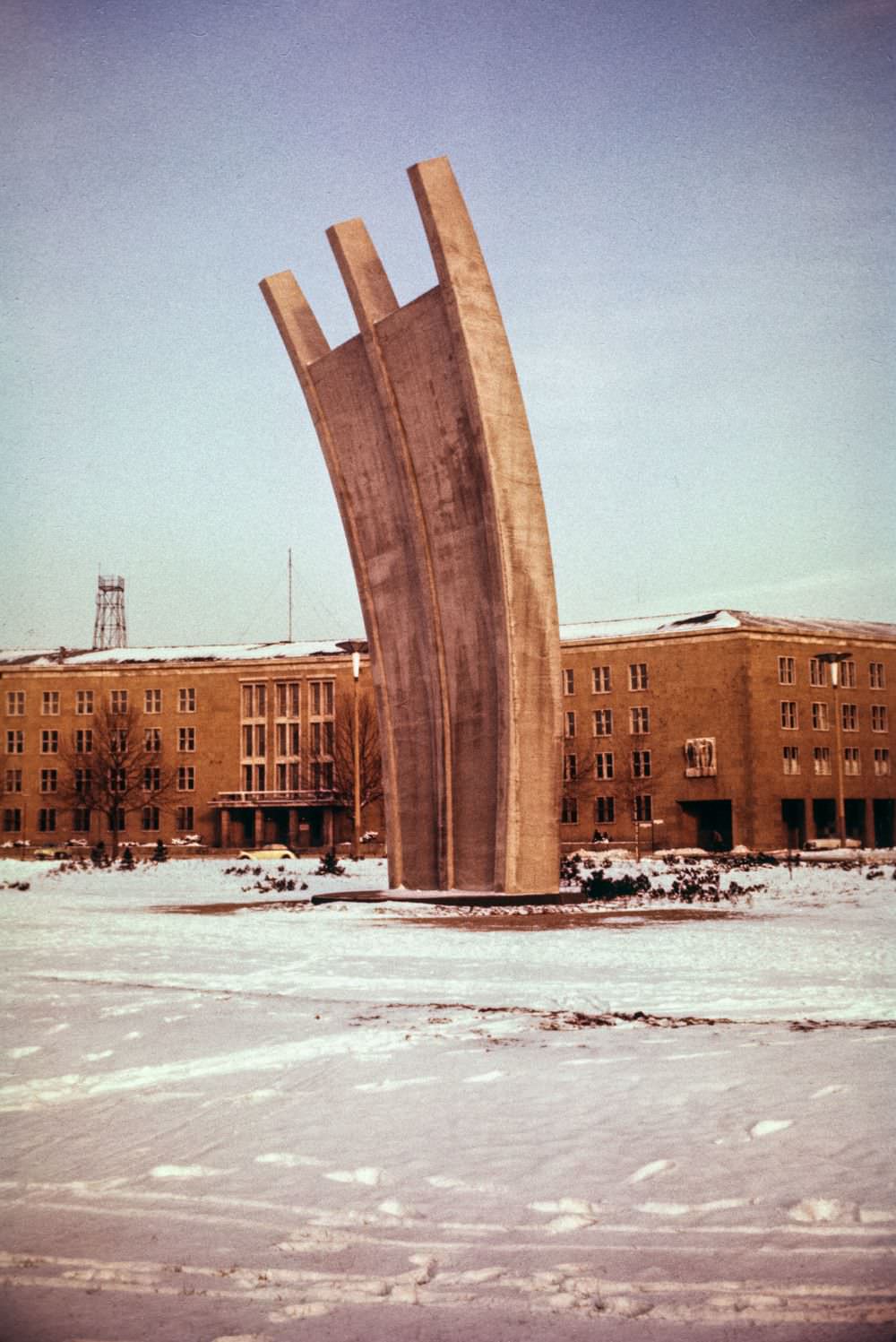
The 'hunger rake' memorial at Templehof Airport. The memorial commemorates the Berlin Airlift of 1948
The ‘hunger rake’ memorial at Templehof Airport. The memorial commemorates the Berlin Airlift of 1948

The border between East and West Germany stretched from Czechoslovakia to the Baltic Sea, lined with barbed wire, fortifications, and armed guards. West Berlin’s borders, however, were less heavily fortified, making illegal crossings difficult but not impossible. That gap became a lifeline. Political refugees from East Germany and other communist nations poured into West Berlin, where they could then relocate to West Germany or elsewhere in western Europe. By 1950, more than 1.5 million Germans were living in West Berlin.
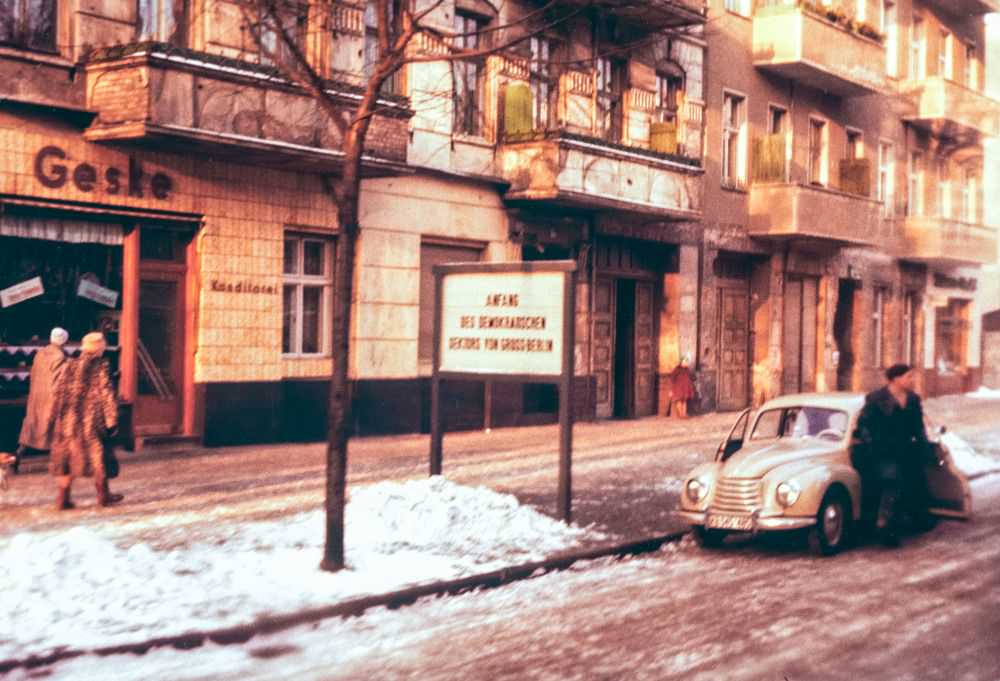
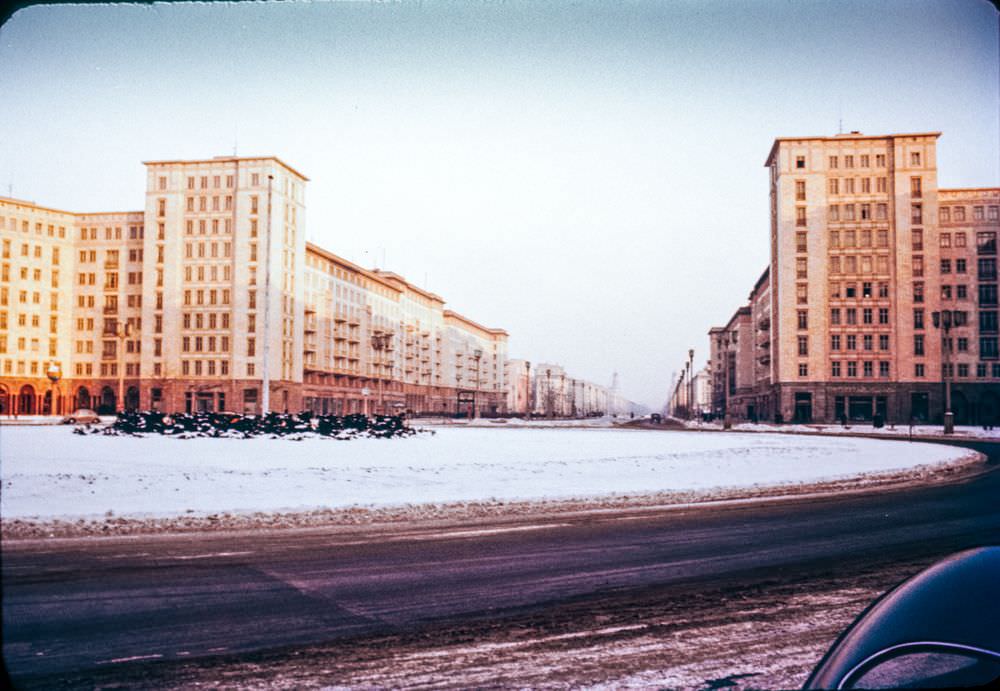
A snowy Berlin street scene in the winter of 1956.
Strausberger Platz in Berlin, in the winter of 1956.

In June 1953, the tensions boiled over. The East German government threatened to cut pay for construction workers who failed to meet their production targets, without offering any increase in wages. Around 40,000 people joined a strike that began with construction workers on East Berlin’s building sites. Protesters initially demanded lower quotas and political reforms. As the strike grew, some called outright for the removal of the East German government. Soviet troops and police moved in to confront the crowd on Unter den Linden — the grand central boulevard of East Berlin. Police opened fire. At least 55 people were killed, though estimates of the actual death toll run ten times higher.
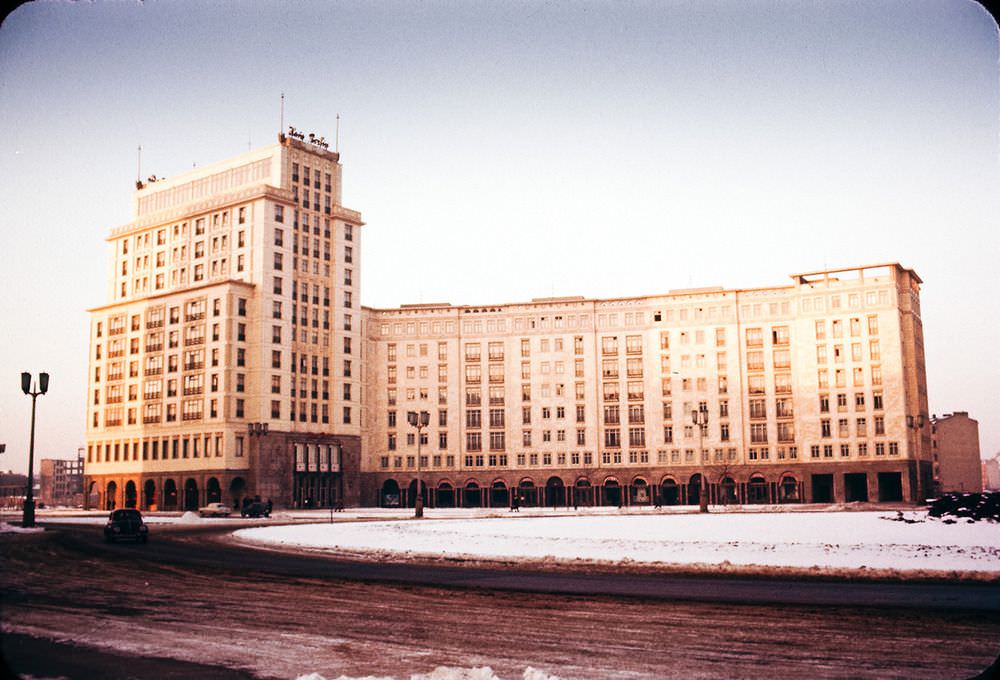
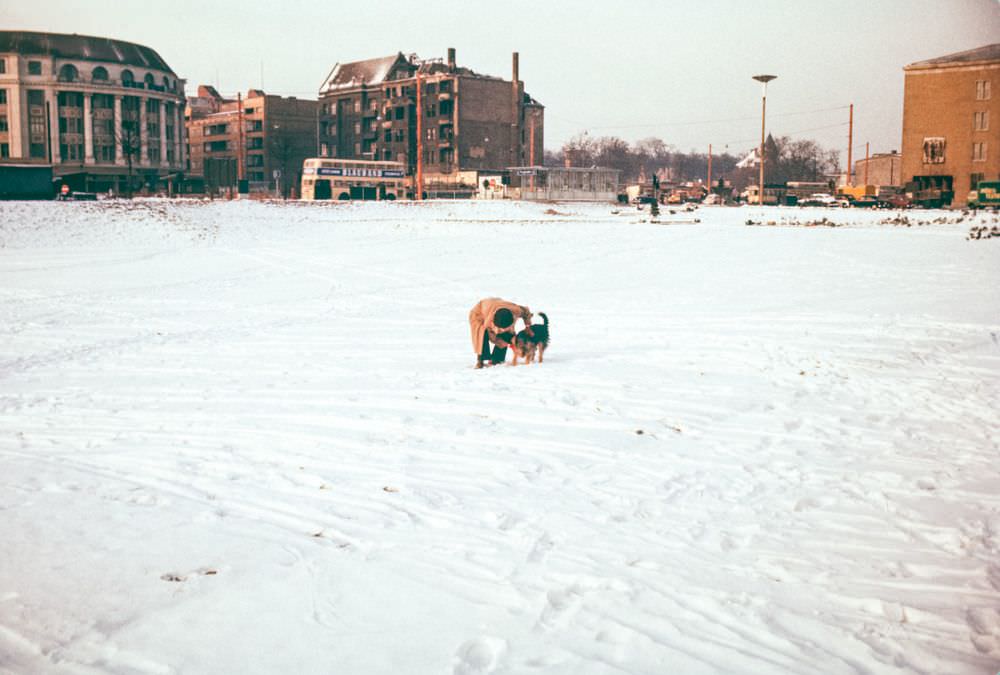
The brutalist post-war Soviet buildings and near-deserted streets make some of the photographs almost surreal.
Walking the dog in one of post-war Berlin's many areas of waste ground.
Walking the dog in one of post-war Berlin’s many areas of waste ground.

The refugee numbers climbed sharply through the decade: 144,000 left in 1959, rising to 199,000 in 1960 and 207,000 in 1961. What alarmed Soviet and East German officials most was who was leaving. The majority of westbound refugees came from professional backgrounds — doctors, lawyers, teachers, and university graduates. Moscow and East Berlin feared a brain drain that would strip the communist state of its most skilled workers.
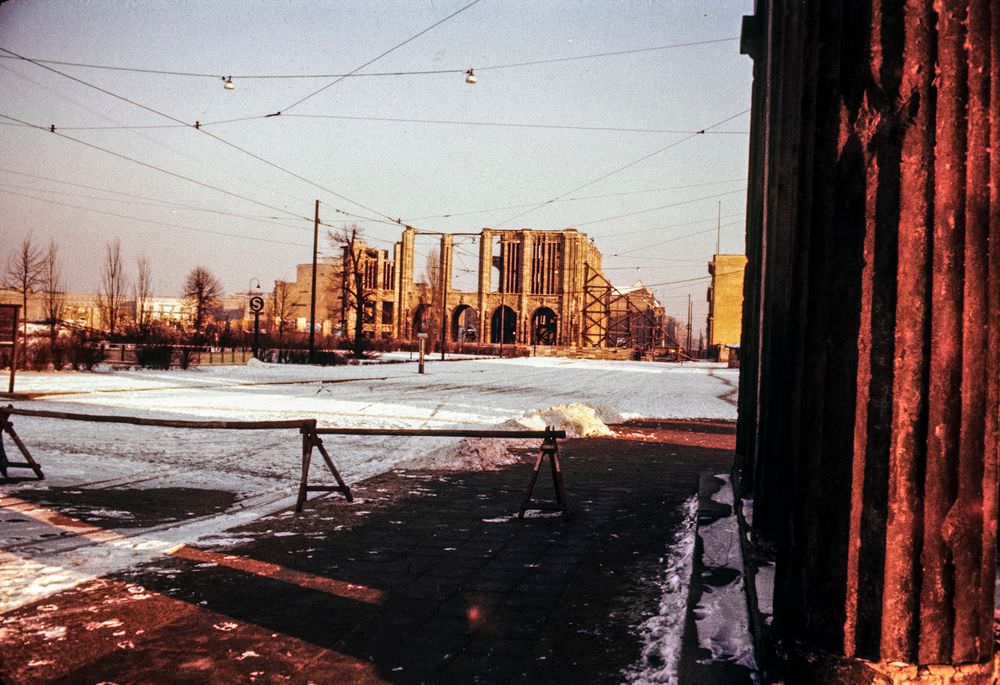
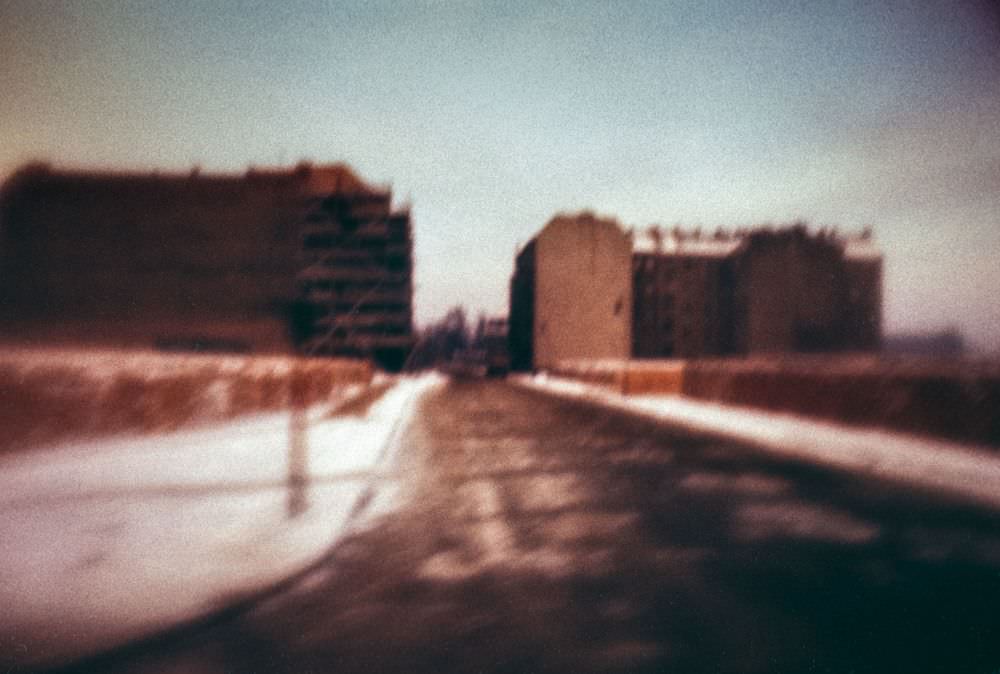
Berlin, winter 1956. Many of these images (like this one) were shot from inside moving vehicles.
Berlin in ruins.
Berlin in ruins.

Soviet leader Nikita Khrushchev responded to the crisis in 1958 with a bold ultimatum. He demanded that the Western powers — the United States, Britain, France, and West Germany — sign treaties transferring control of West Berlin to East Germany within six months. After the deadline passed, he claimed, all access to West Berlin would be subject to East German approval. The Western powers refused, stating they had the legal right to remain in the city. When the deadline came and went in May 1959, Khrushchev backed down and withdrew his demands.
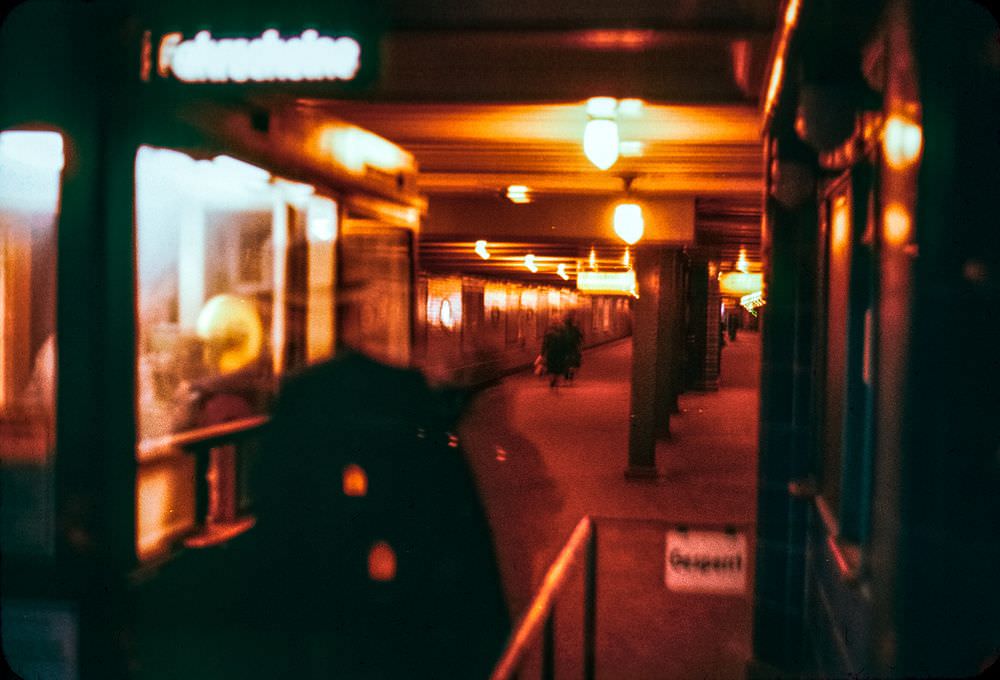
Camera shake has rendered this snapshot of Berlin's U-Bahn rather impressionistic.
Camera shake has rendered this snapshot of Berlin’s U-Bahn rather impressionistic.
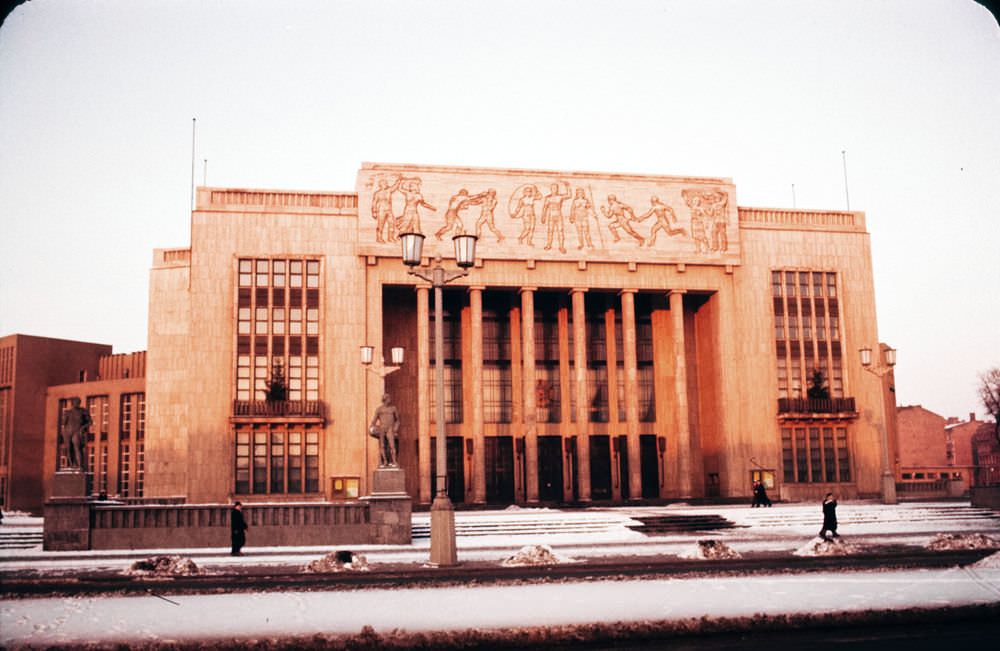
This is the Haus des Sports, on Stalinallee (now Karl-Marxallee) built for the World Festival of Youth and Students in 1951 and demolished in 1971.

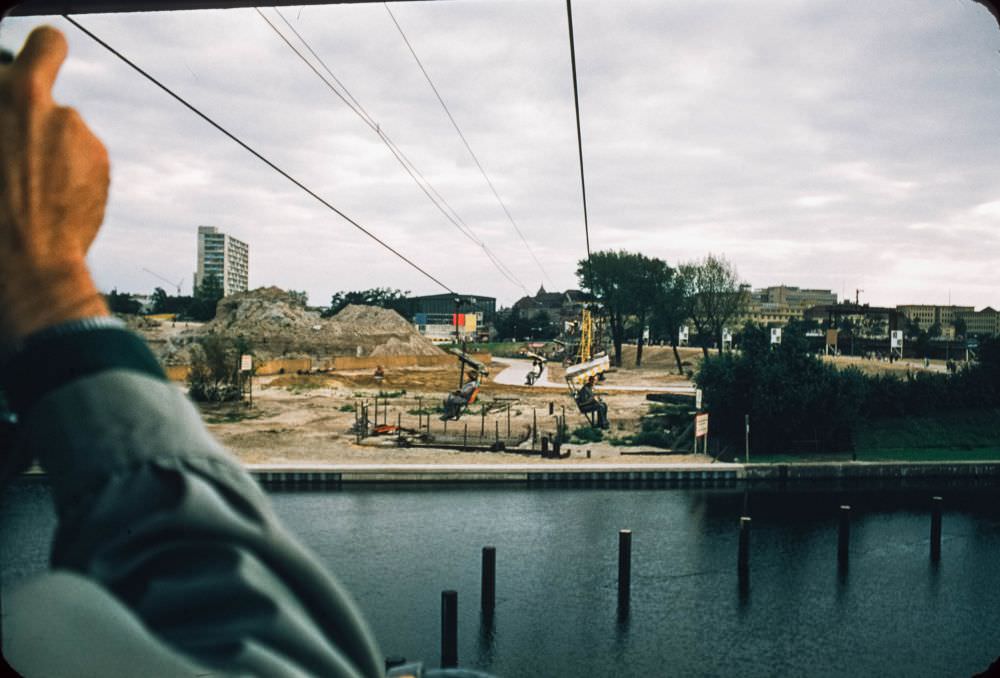
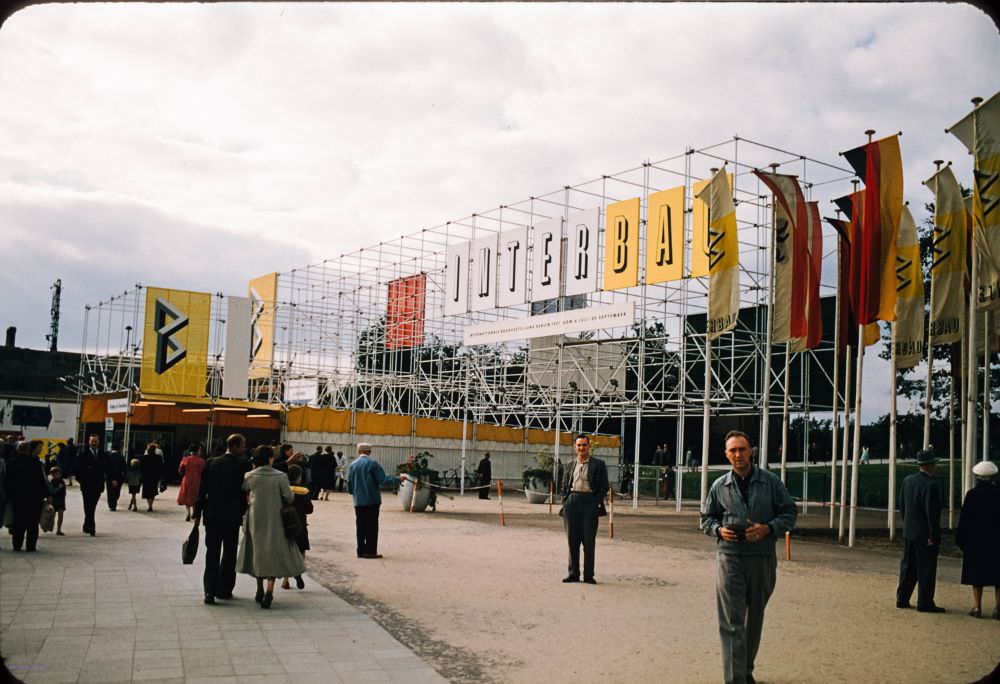
West Berlin, meanwhile, was actively rebuilding and projecting confidence. In 1957, the city hosted the International Building Exhibition, known as Interbau. The exhibition showcased modern architecture as a direct contrast to the socialist-era buildings rising along East Berlin’s Stalinallee. The Hansaviertel district was redesigned by internationally renowned architects, and the Congress Hall was built in Tiergarten park. A cable car was even installed to give visitors an aerial view of the new construction.
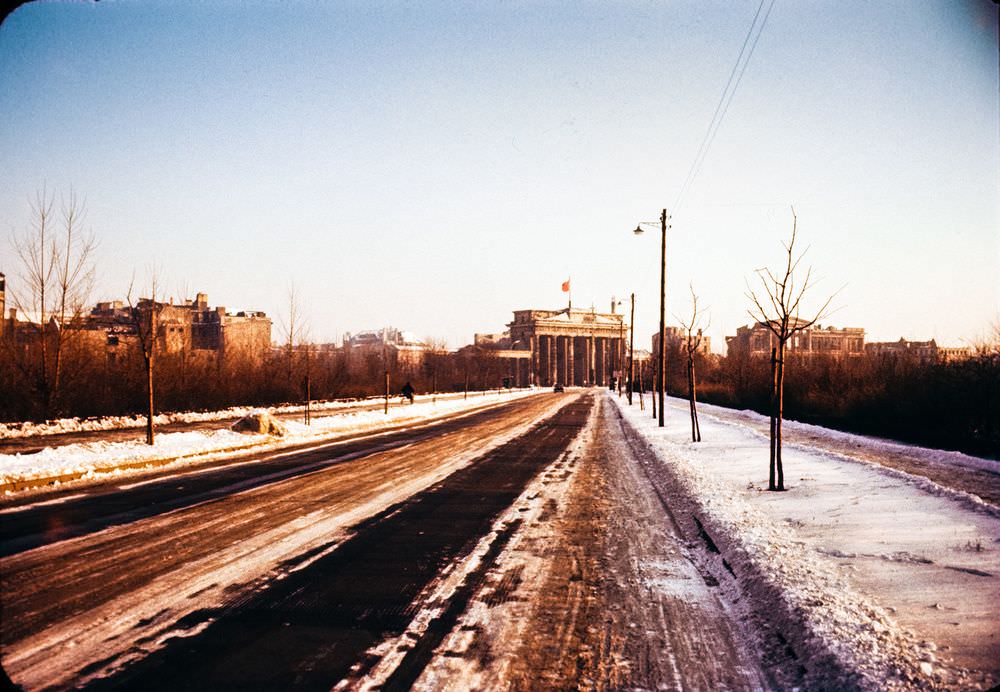
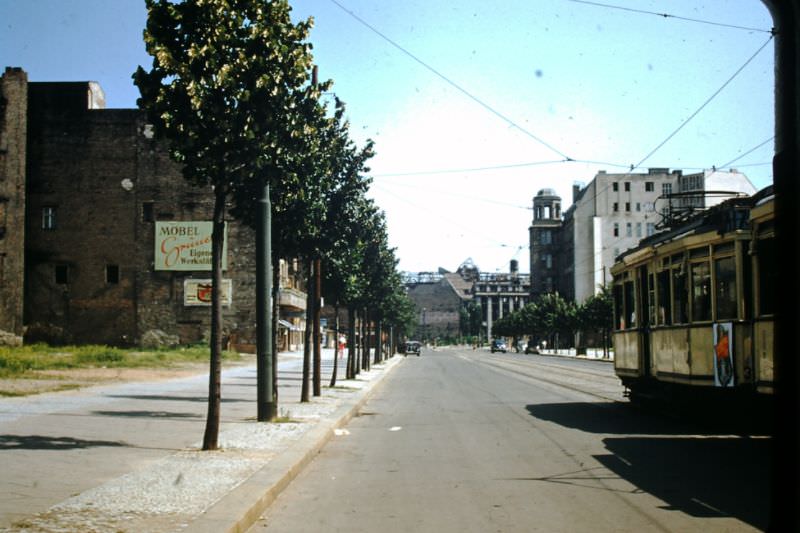
One of Berlin's many wide boulevards, with wartime ruins still clearly visible.
One of Berlin’s many wide boulevards, with wartime ruins still clearly visible.
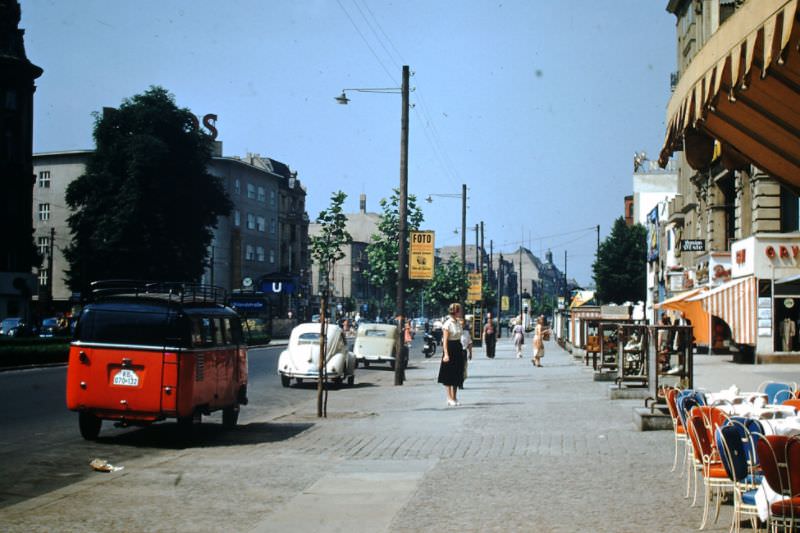
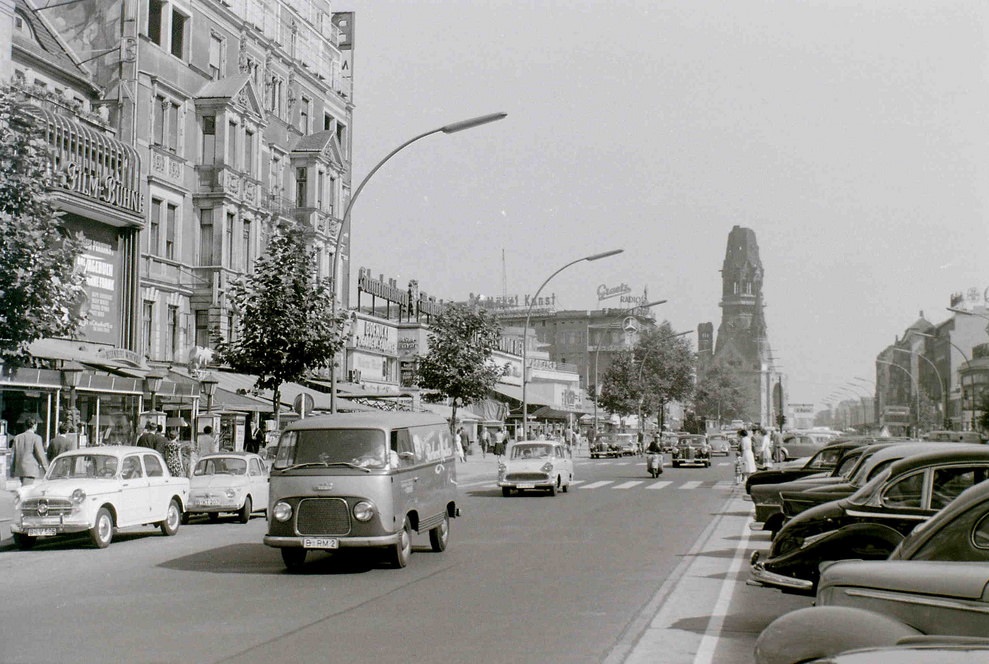
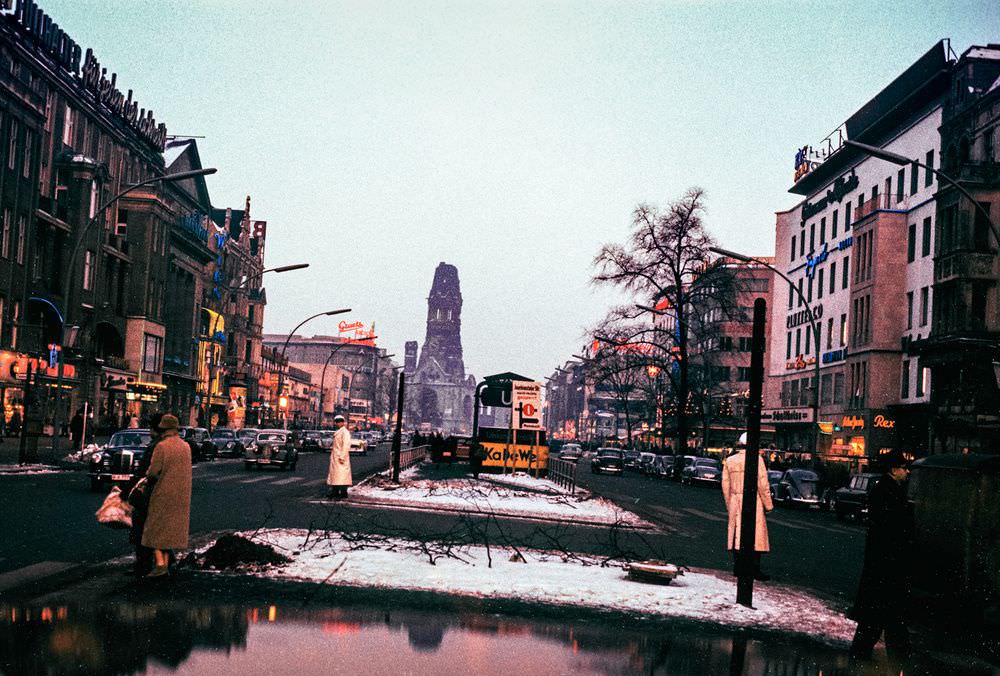
Shot from inside a car, this photograph shows the Kurfürstendamm - one of West Berlin's busiest commercial streets in 1956 (and today).
Shot from inside a car, this photograph shows the Kurfürstendamm – one of West Berlin’s busiest commercial streets in 1956 (and today).
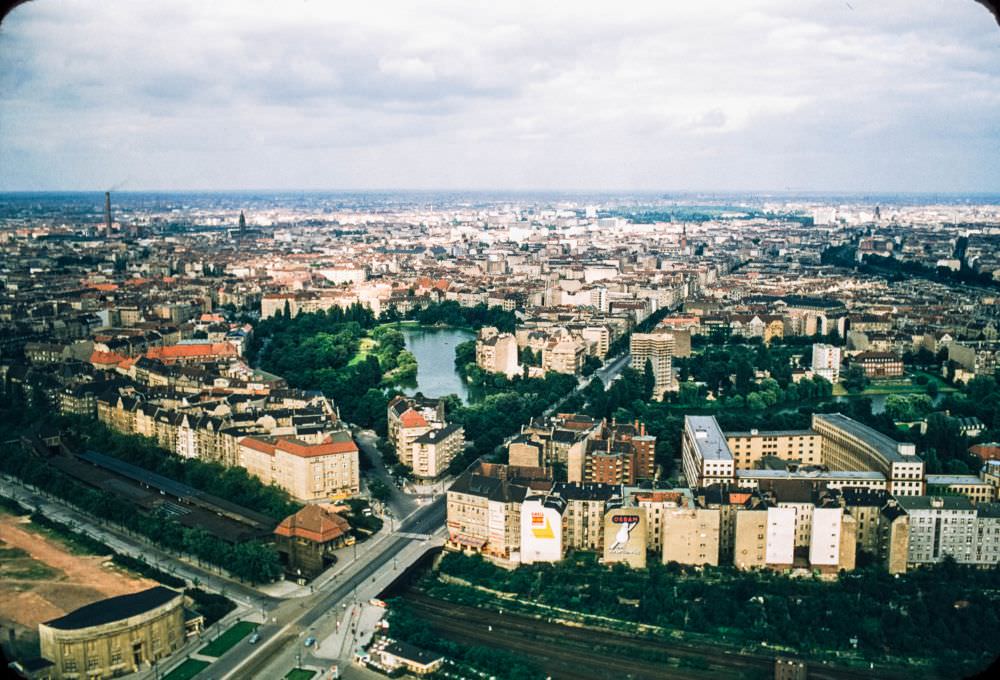
Berlin in spring/summer of 1957.
A view of Berlin in the spring of 1957 (presumably from the top of the Berliner Funkturm), looking east along Neue Kantraße.
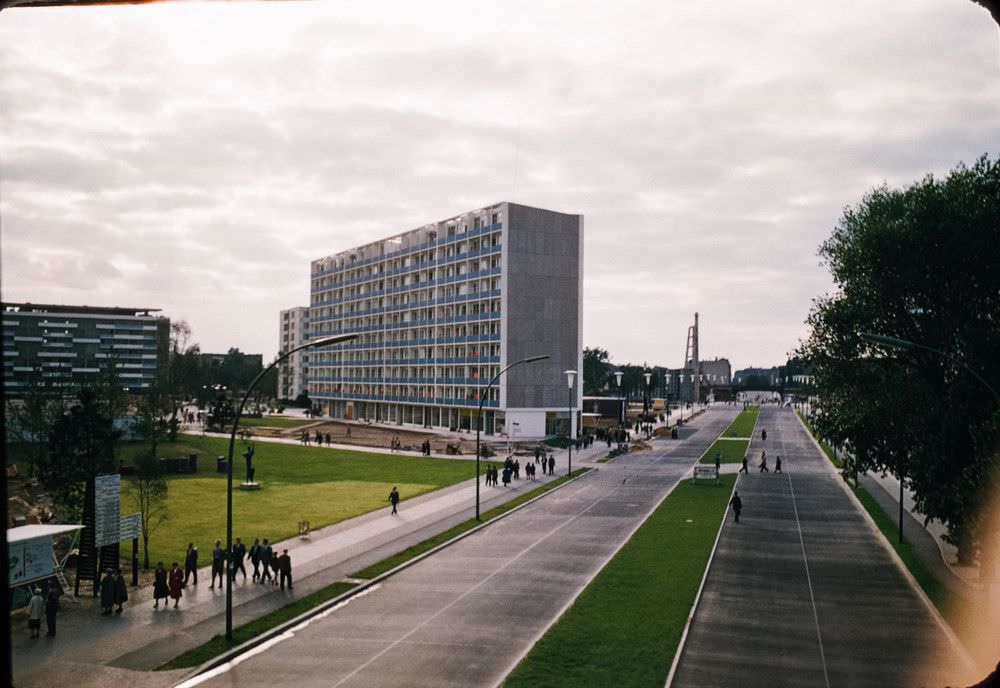
A shot of one of the many new Interbau buildings, constructed as part of the 1957 International Building Exhibition.
Another shot from the cable car.
Interbau' was a housing development in West Berlin, constructed as part of the 1957 International Building Exhibition.
Interbau’ was a housing development in West Berlin, constructed as part of the 1957 International Building Exhibition.

Khrushchev’s failed ultimatum did not end his pressure on Berlin. The foreign ministers of the four powers met in Geneva in mid-1959 to discuss German reunification, but the talks produced nothing. Khrushchev then met with President Eisenhower in September 1959, which temporarily lowered the temperature. But the election of John F. Kennedy in November 1960 renewed Khrushchev’s appetite for confrontation. At a summit in Vienna in June 1961, Khrushchev told Kennedy directly that he planned to sign a separate peace treaty with East Germany — a move that would cancel the existing Soviet-Allied agreement guaranteeing road, rail, and air access to West Berlin. The East Germans would then hold the keys to the city, and there was little doubt they would shut the door.
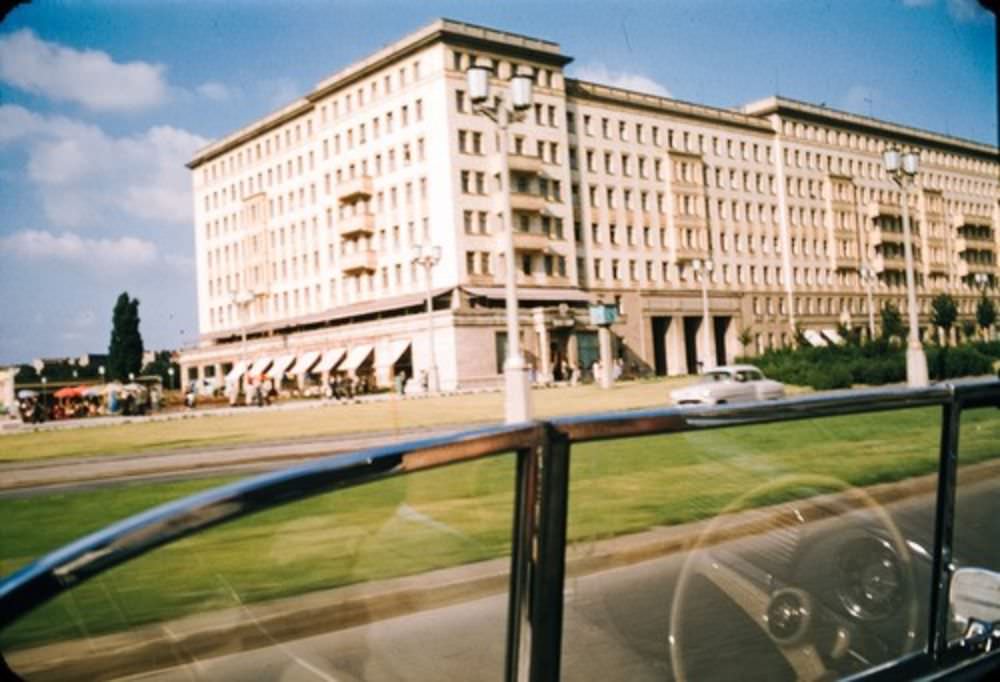
A snapshot from inside our photographer's convertible VW Beetle, taken in Berlin in spring/summer of 1957.
A snapshot from inside our photographer’s convertible VW Beetle, taken in Berlin in spring/summer of 1957.
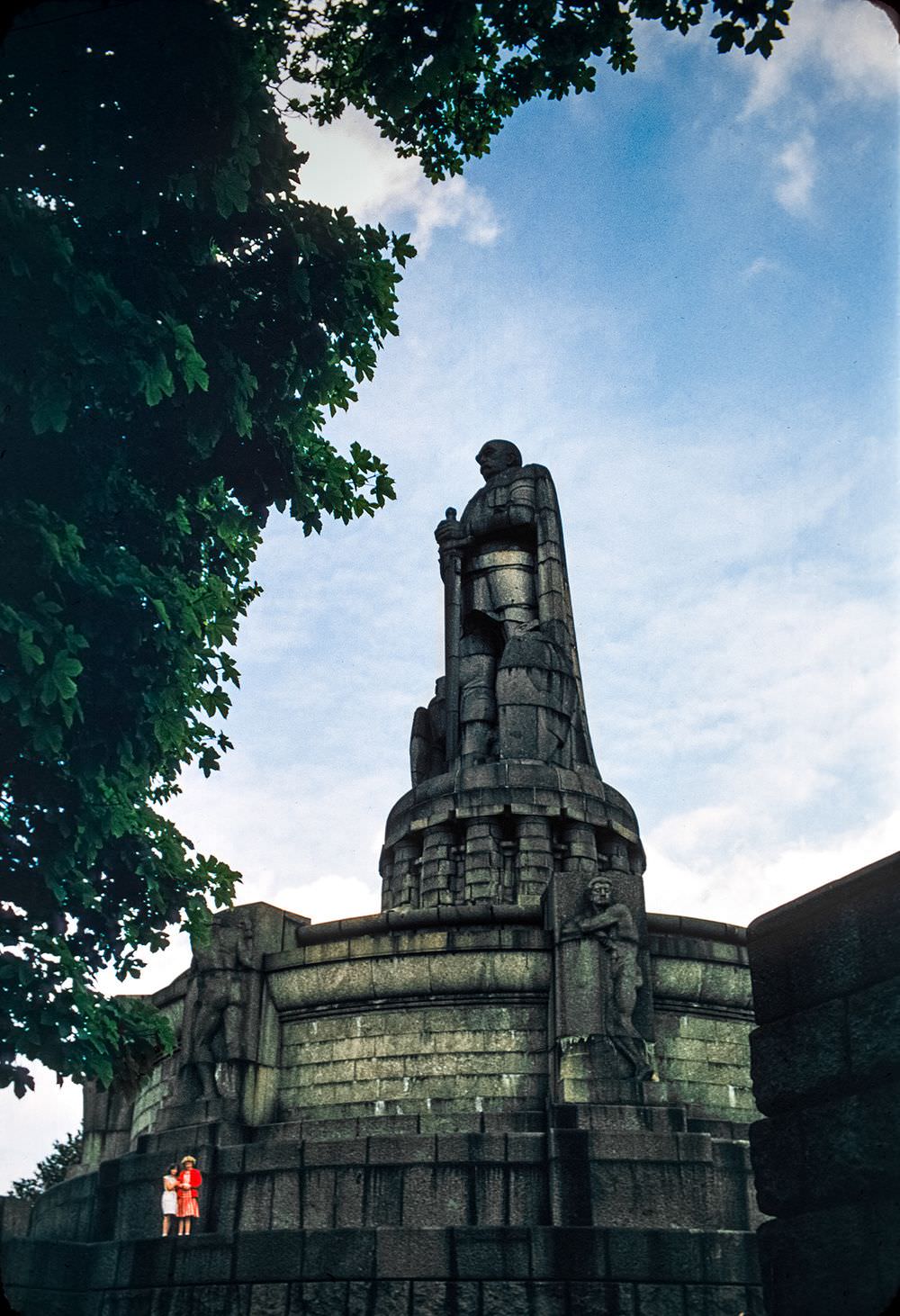
Two little girls add a splash of color to this shot of what seems to be the Bismarck monument in Hamburg.
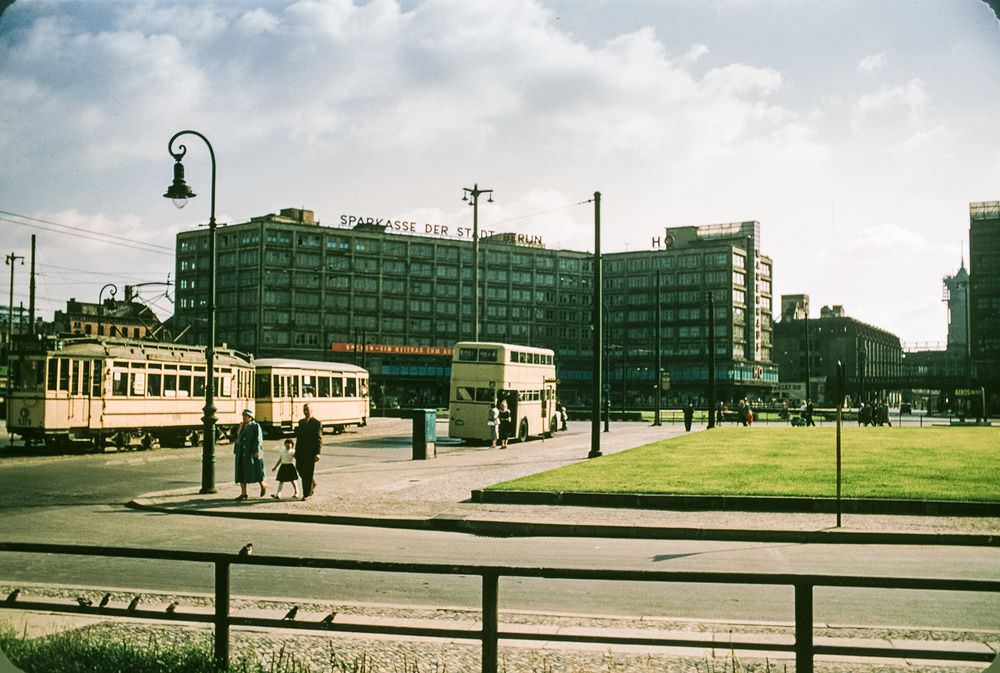
Berliner Sparkasse (savings bank) - the current headquarters of Landesbank Berlin, in Alexanderplatz.
Berliner Sparkasse (savings bank) – the current headquarters of Landesbank Berlin, in Alexanderplatz.
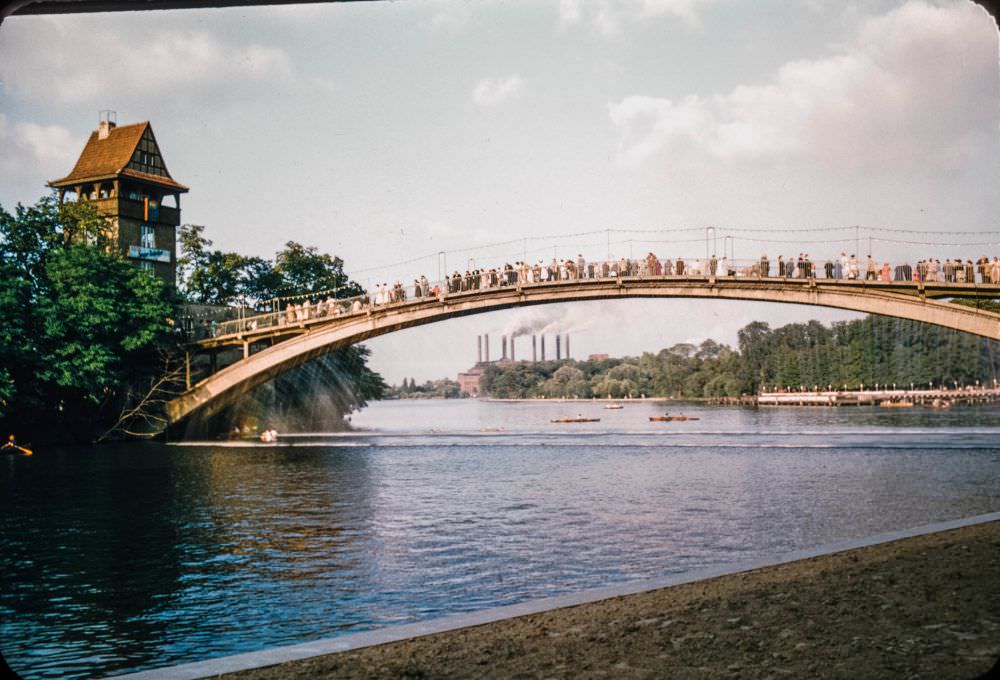
The 'Abteibrücke' bridge, leading to the 'Insel der Jugend' (island of youth) in Treptower Park.
The ‘Abteibrücke’ bridge, leading to the ‘Insel der Jugend’ (island of youth) in Treptower Park.
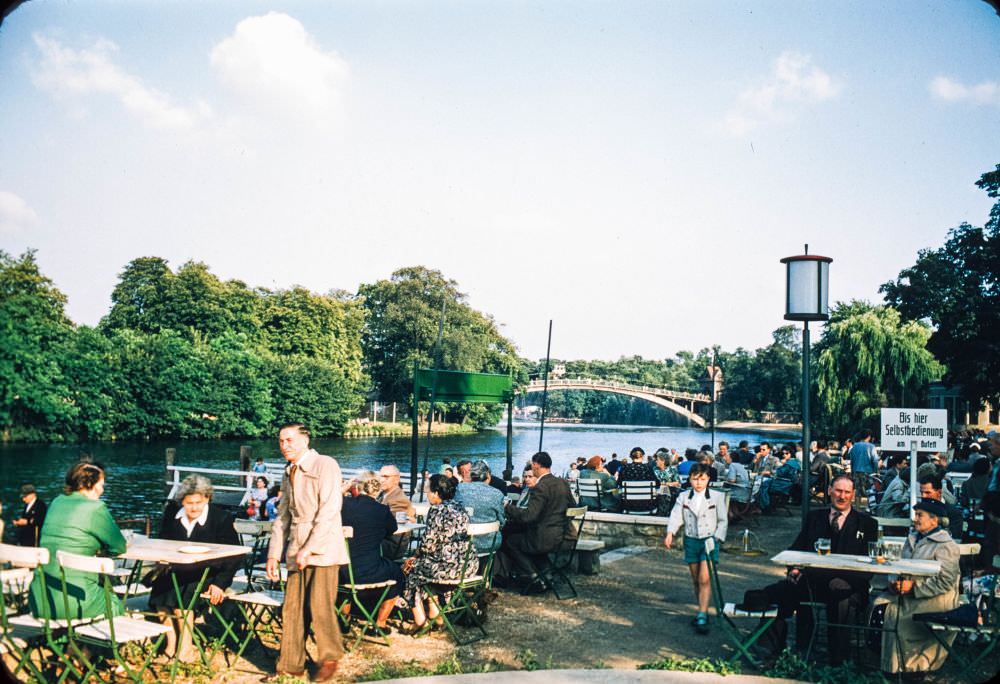
This shot shows the same bridge from farther away, with Berliners enjoying a drink in the foreground.
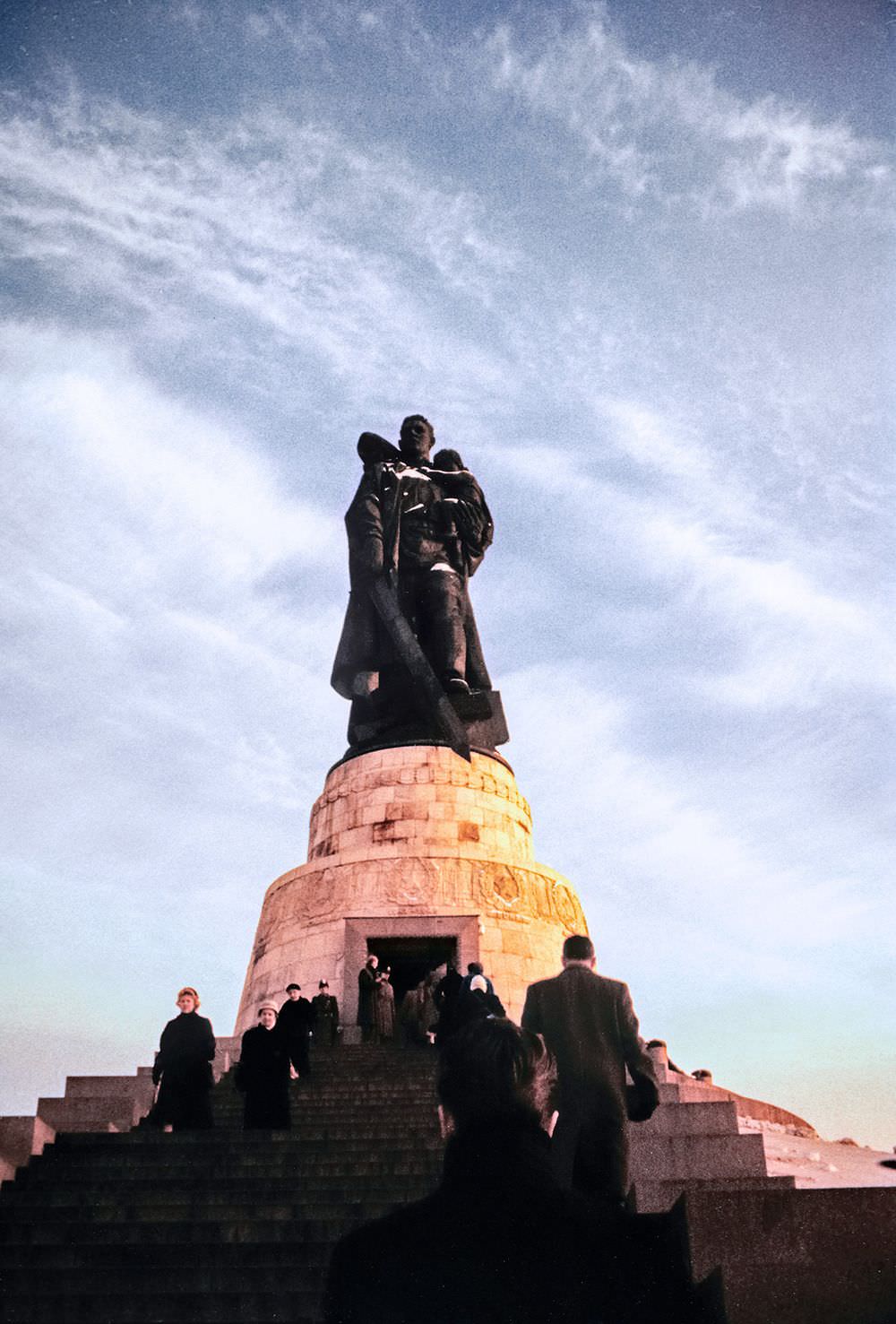
Jumping back in time, this picture was taken the previous winter, at the Soviet War Memorial at Treptower Park, in Berlin.
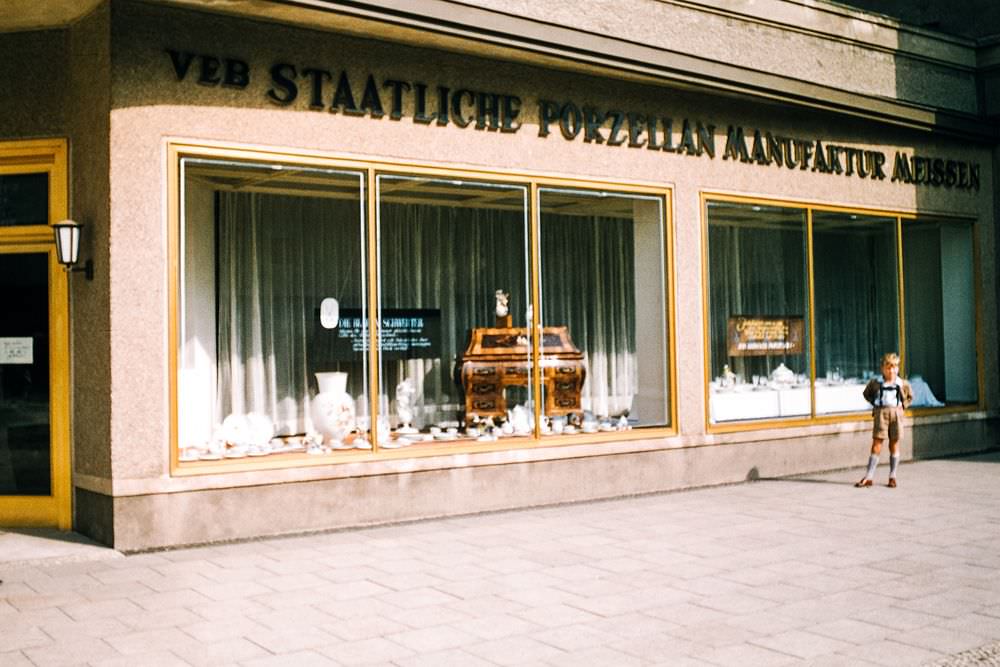
A shop in Berlin - probably in the East (VEB stands for 'Volkseigener Betrieb' or 'People's Enterprise').
A shop in Berlin – probably in the East (VEB stands for ‘Volkseigener Betrieb’ or ‘People’s Enterprise’).
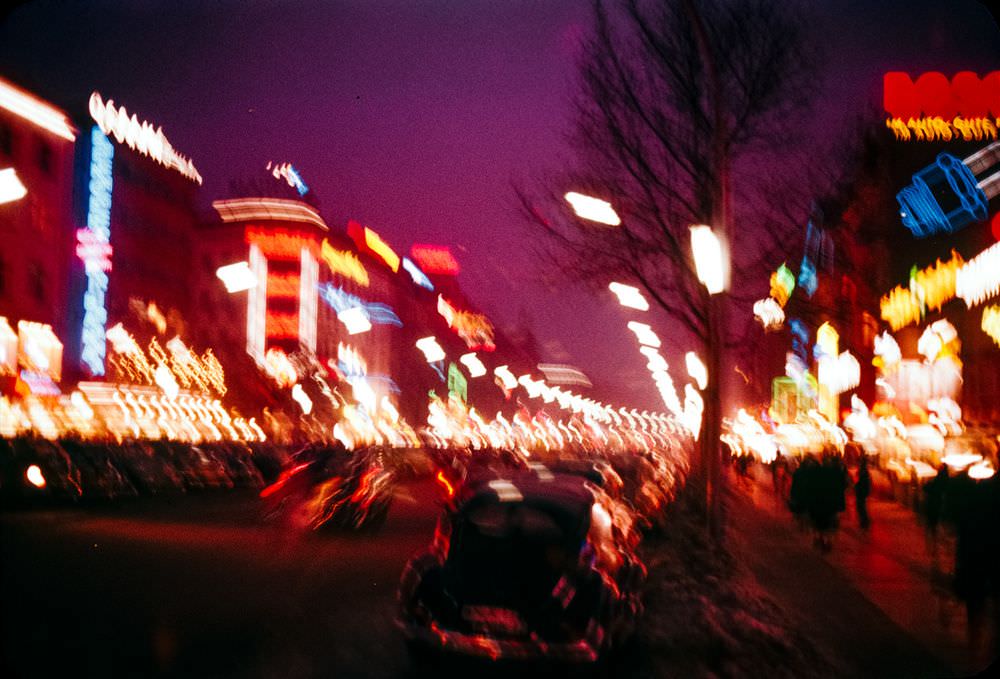
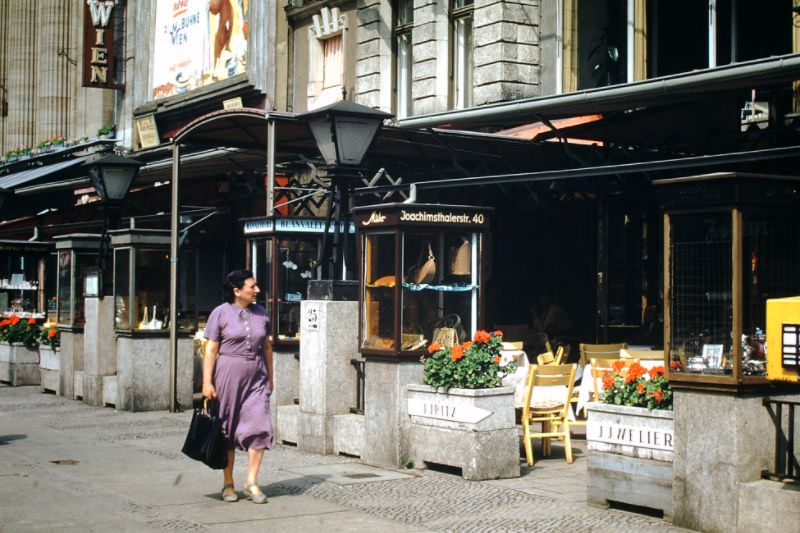
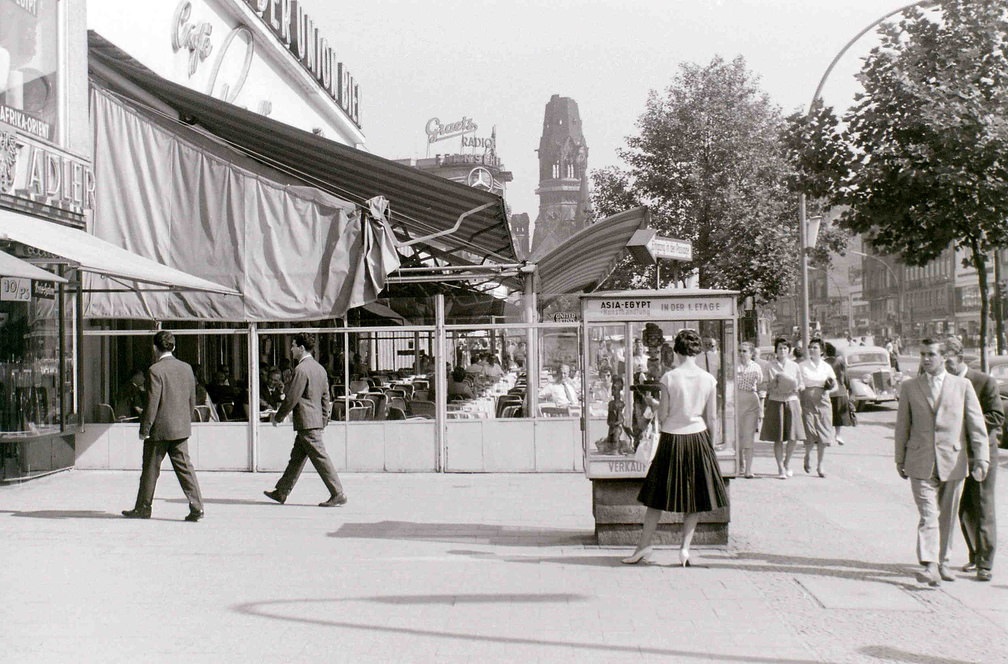
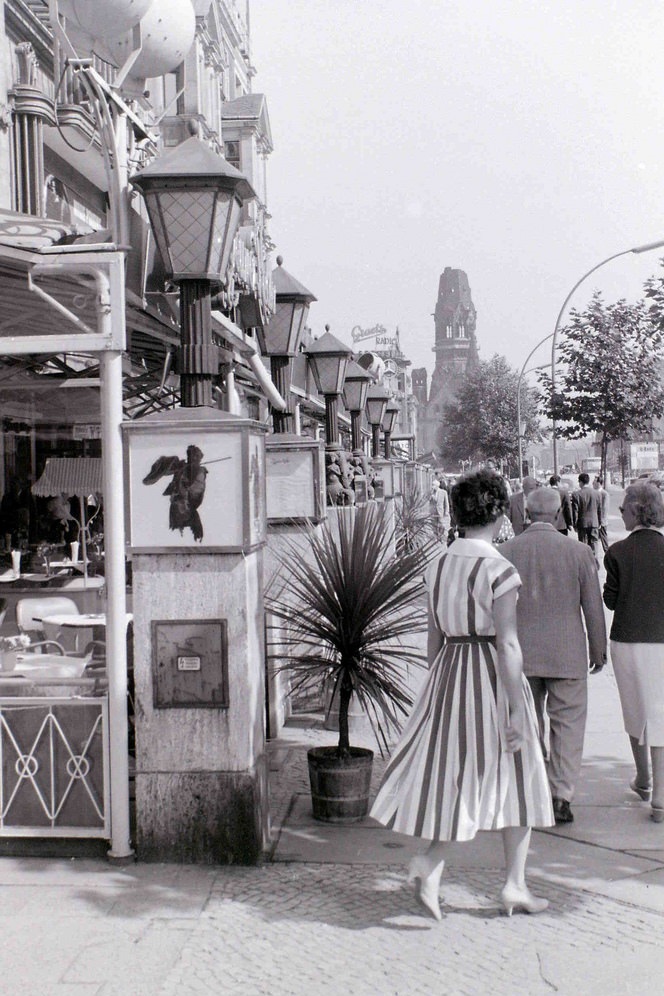
An evocative, possibly intoxicated handheld shot of Berlin's Kurfürstendamm, a busy retail street in West Berlin.
An evocative, possibly intoxicated handheld shot of Berlin’s Kurfürstendamm, a busy retail street in West Berlin.
Kurfurstendam
Kurfurstendam
Corner-East-West-Axelstrasse
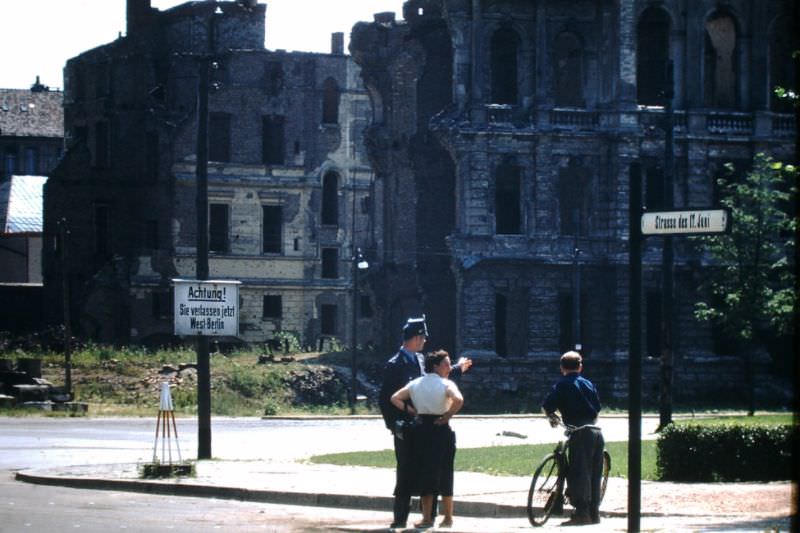
Apt Bldgs destroyed nr Potsdamerplatz
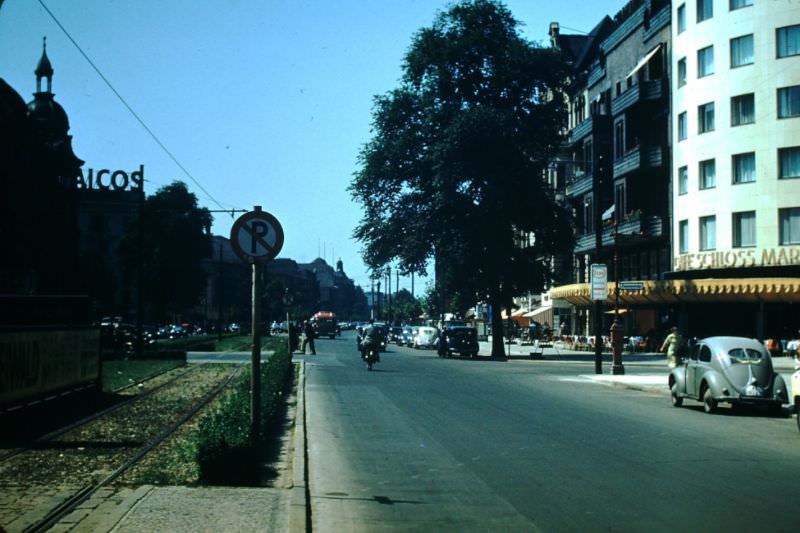
Kuefurstendam Strasses
Kurfurstendam
Kurfurstendam
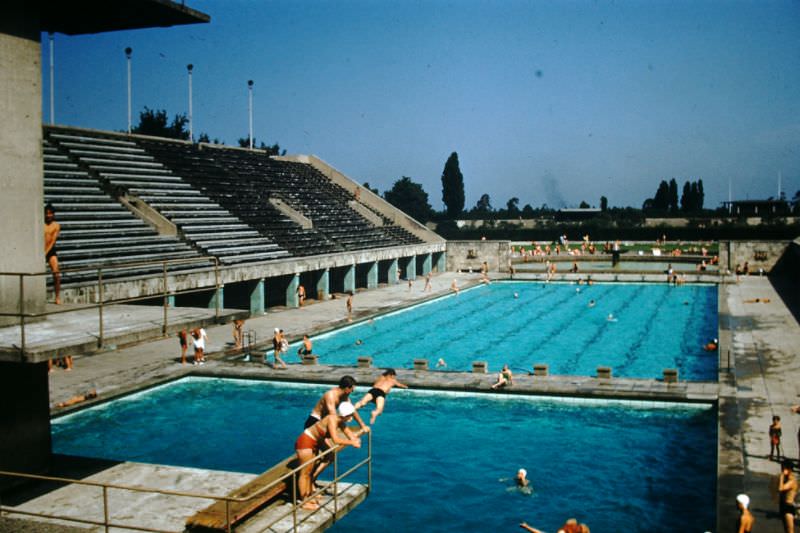
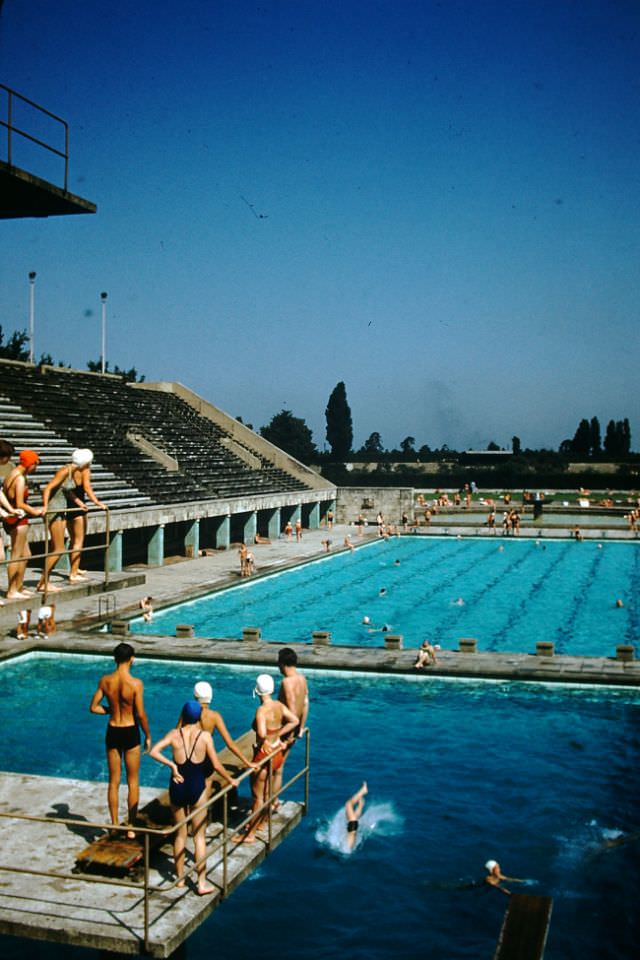
Olympic Stadium swimming pool
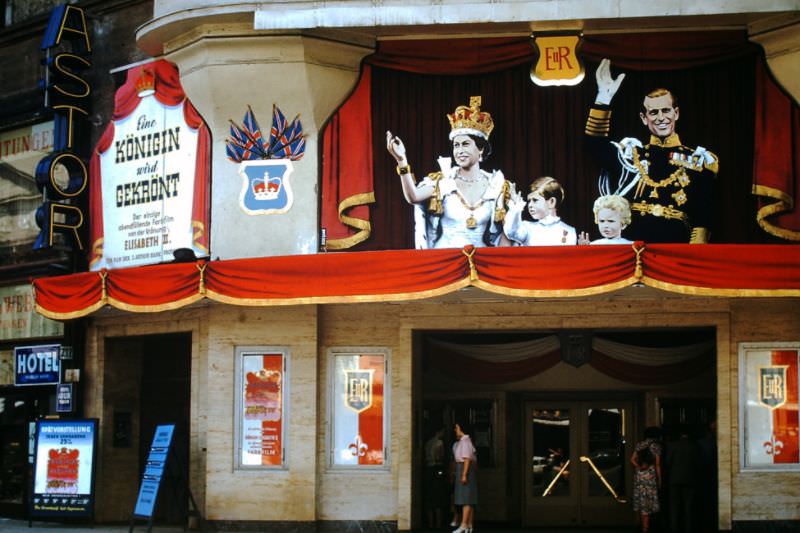
Coronation Film Showing
East Berlin Gate
East Berlin Gate
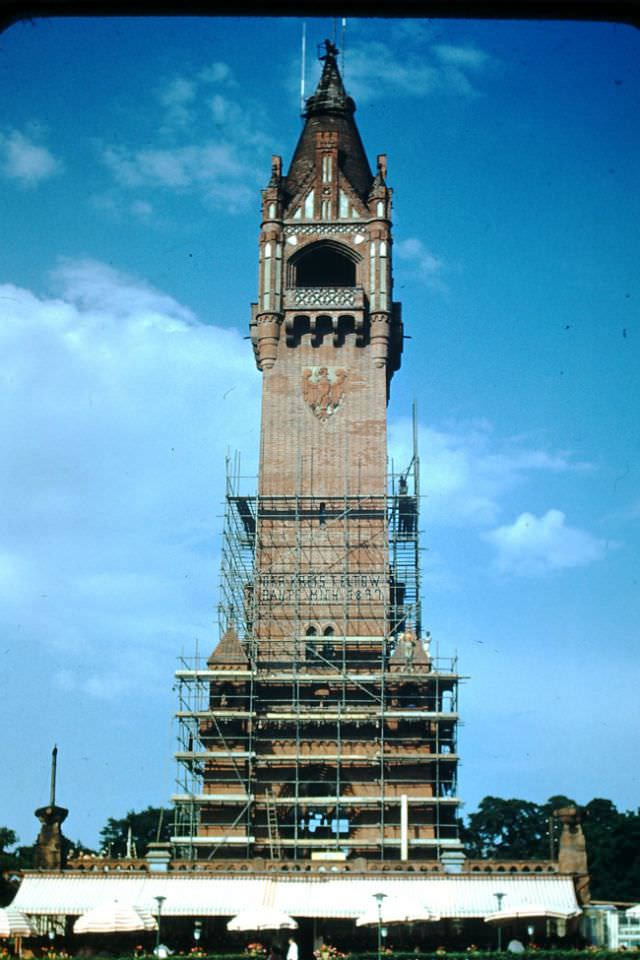
Kaiser Wilhelm Tower
Kurfurstendam
Kurfurstendam
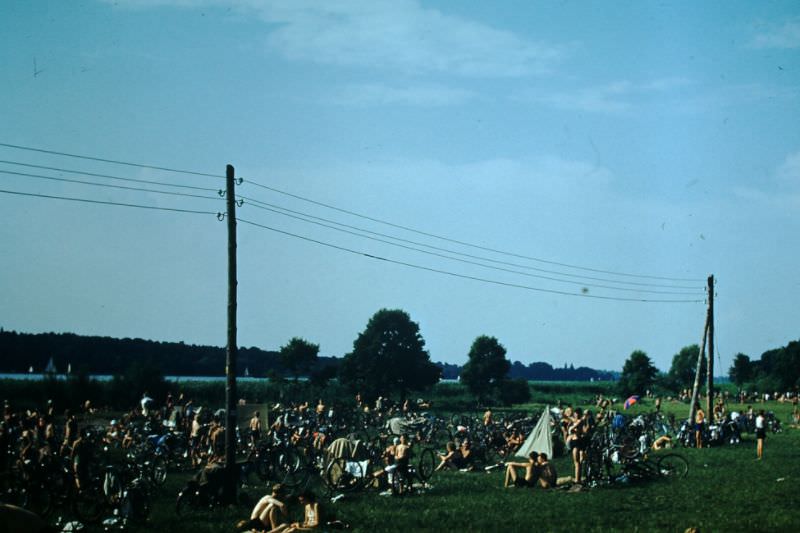
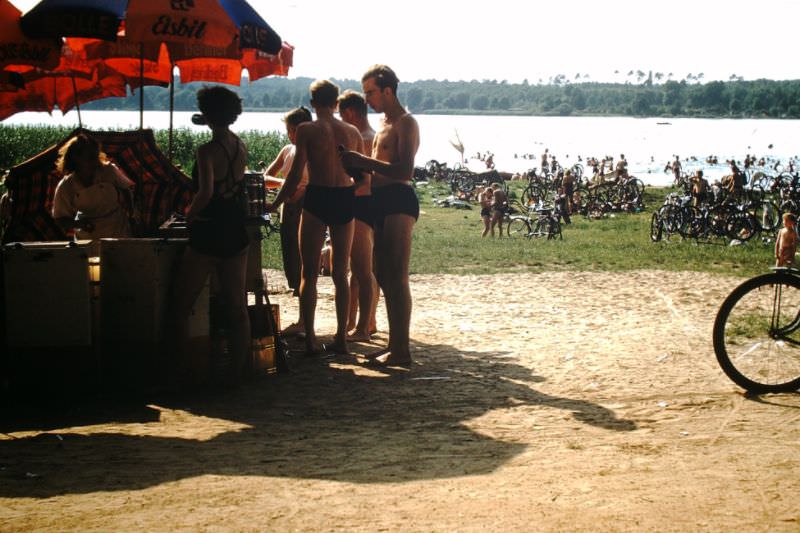
Crowds at Wannsee
Crowds at Wannsee
Crowds at Wannsee
Crowds at Wannsee
Construction
Construction
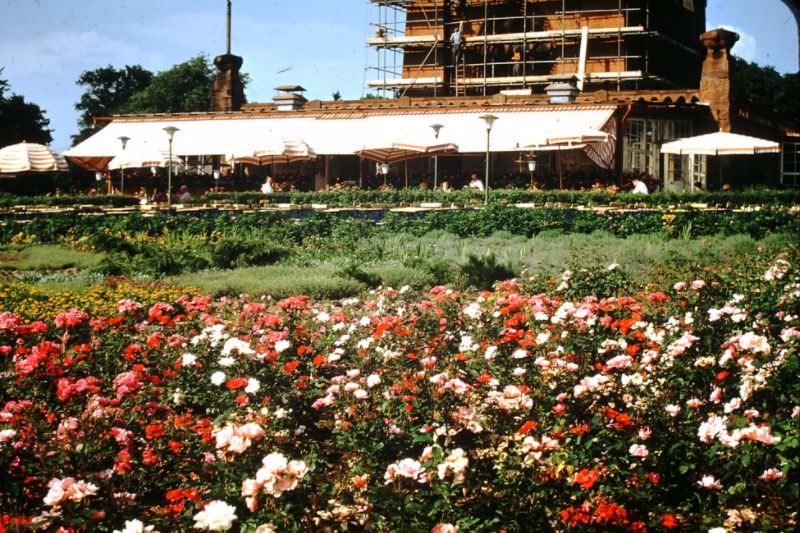
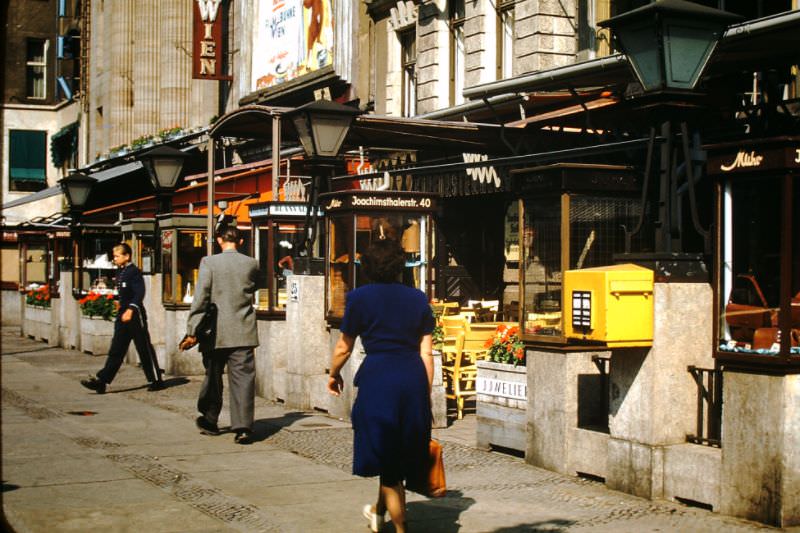
Restaurant
Restaurant
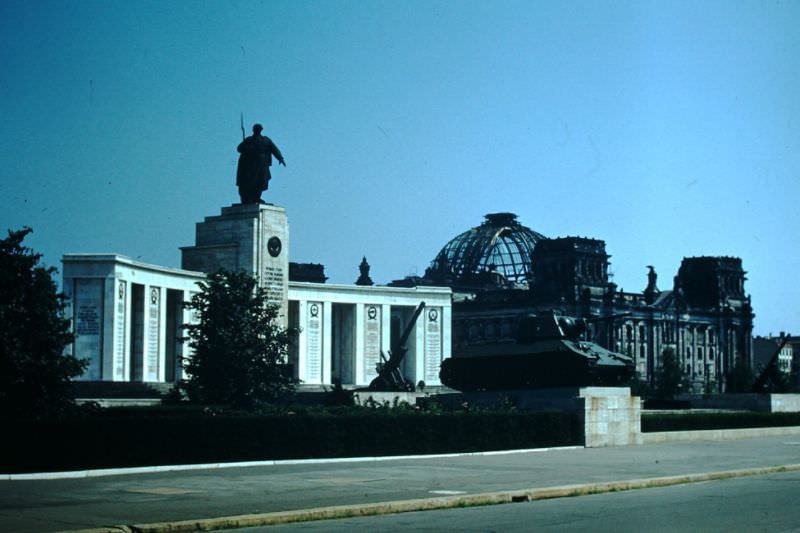
Russian Memorial & Reichstag
Kuefurstendam Strasses
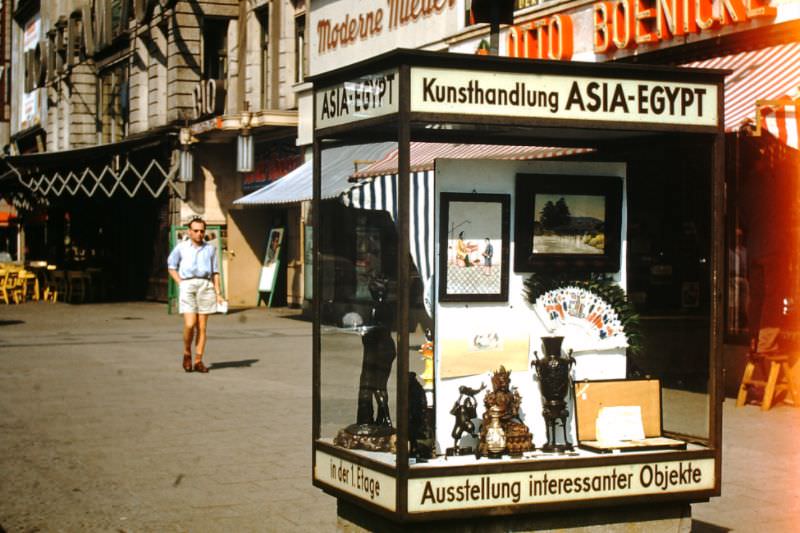
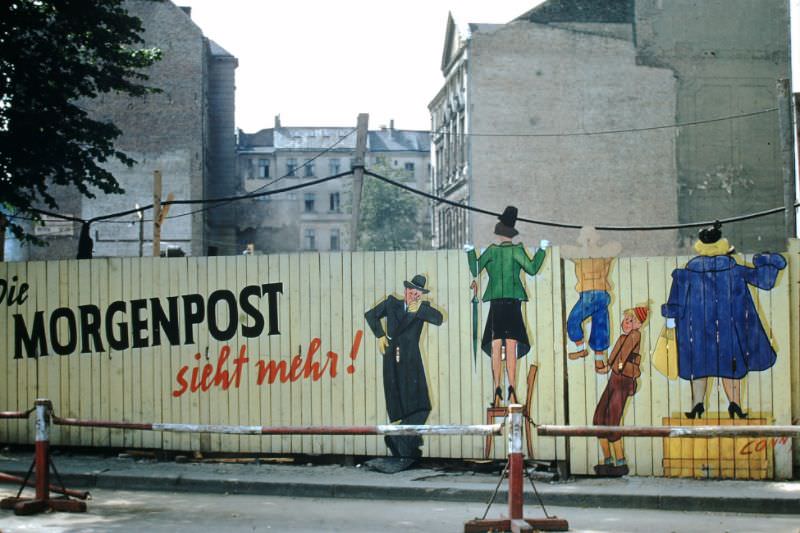
Street scene
Street scene
Luetzow Platz
Luetzow Platz
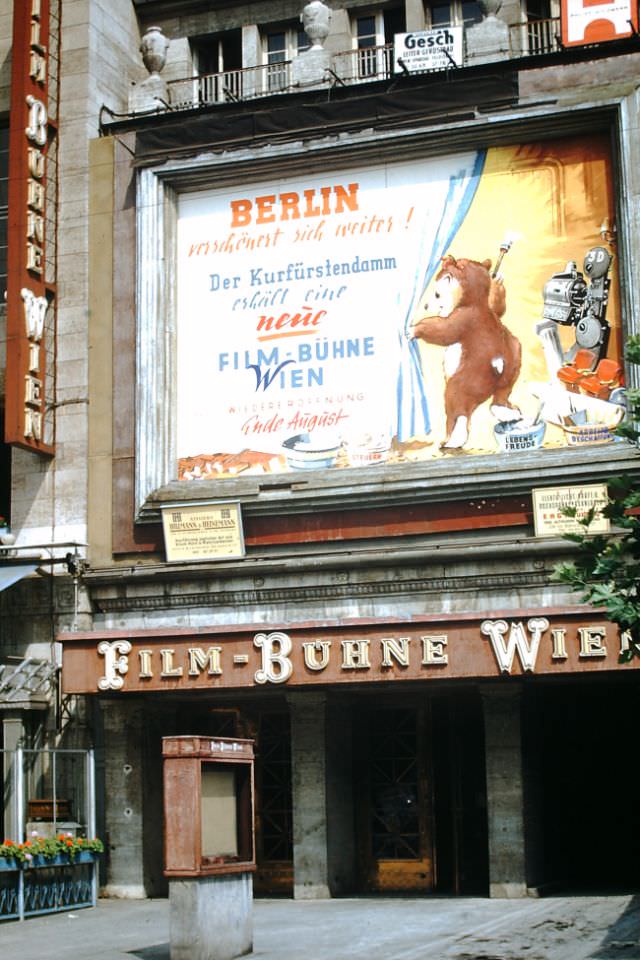
Movie theatre
Movie theatre
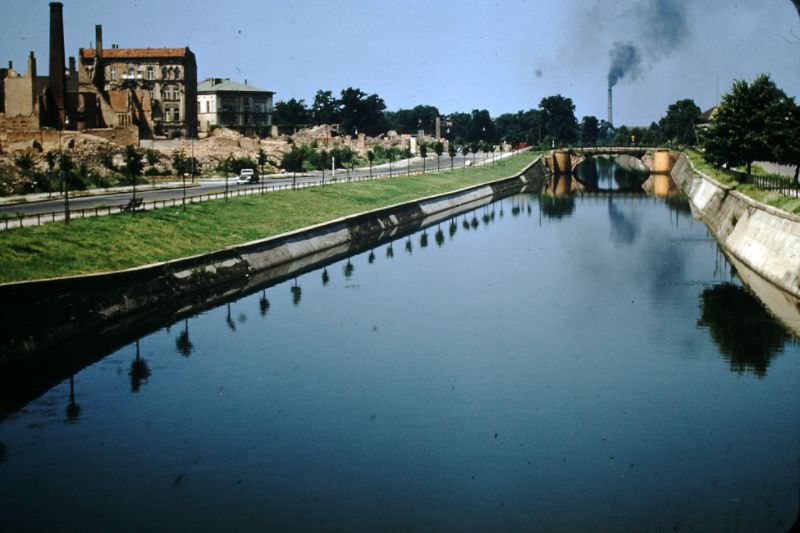
Spree River
Spree River
Potsdamerplatz at end of street
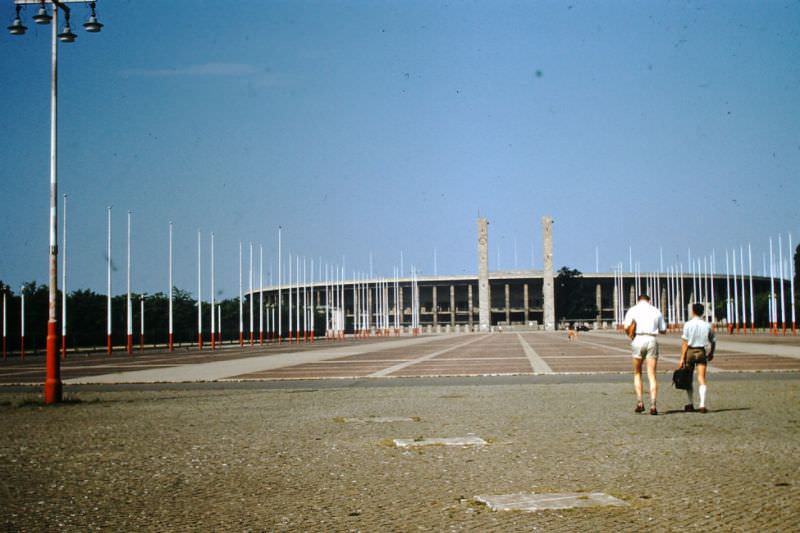
Olympic Stadium
Olympic Stadium
Kurfurstendam
Kurfurstendam
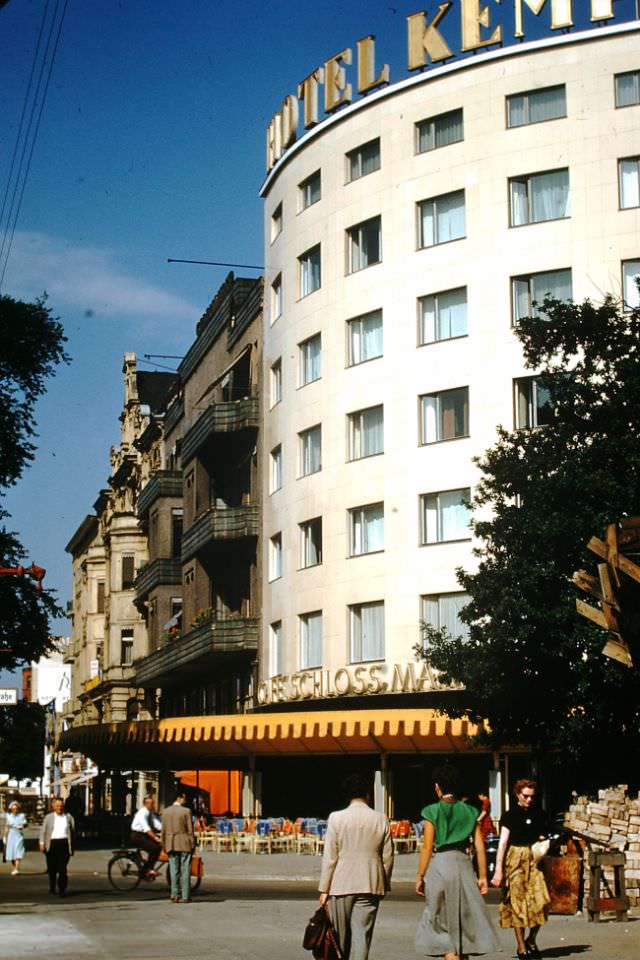
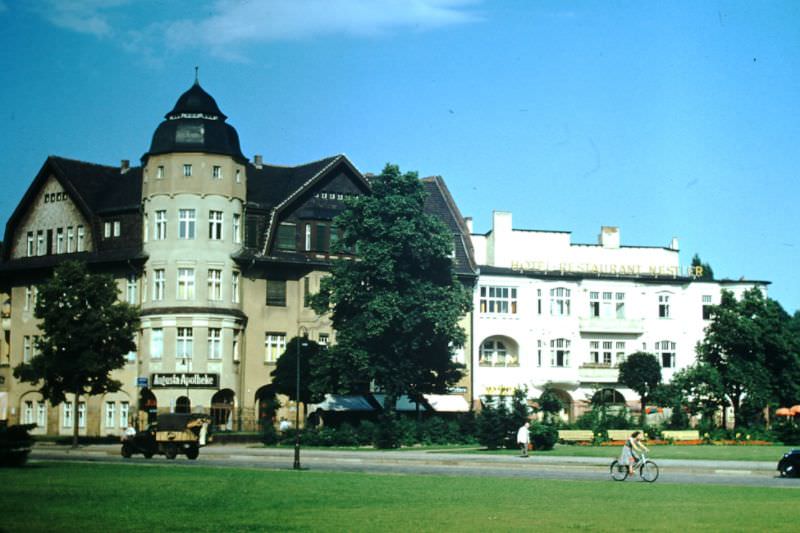
Hotel and restaurant
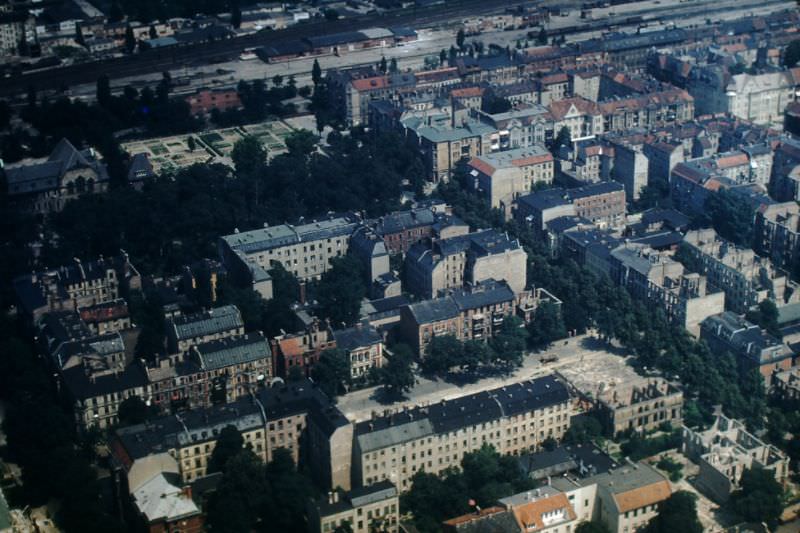
Aerial view of Berlin
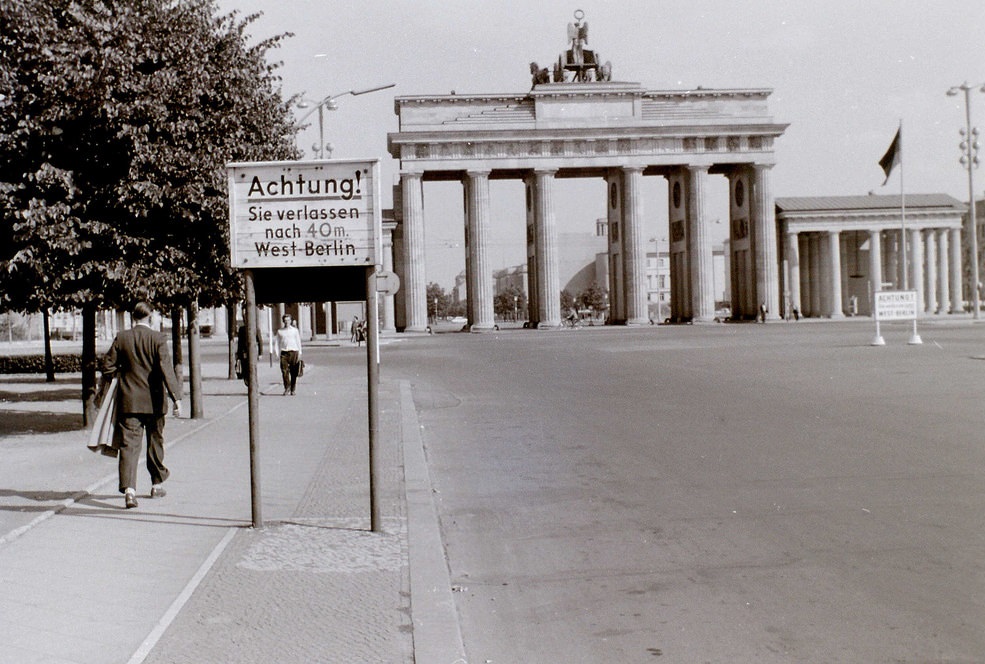
This view is looking into East Berlin from the western sector.
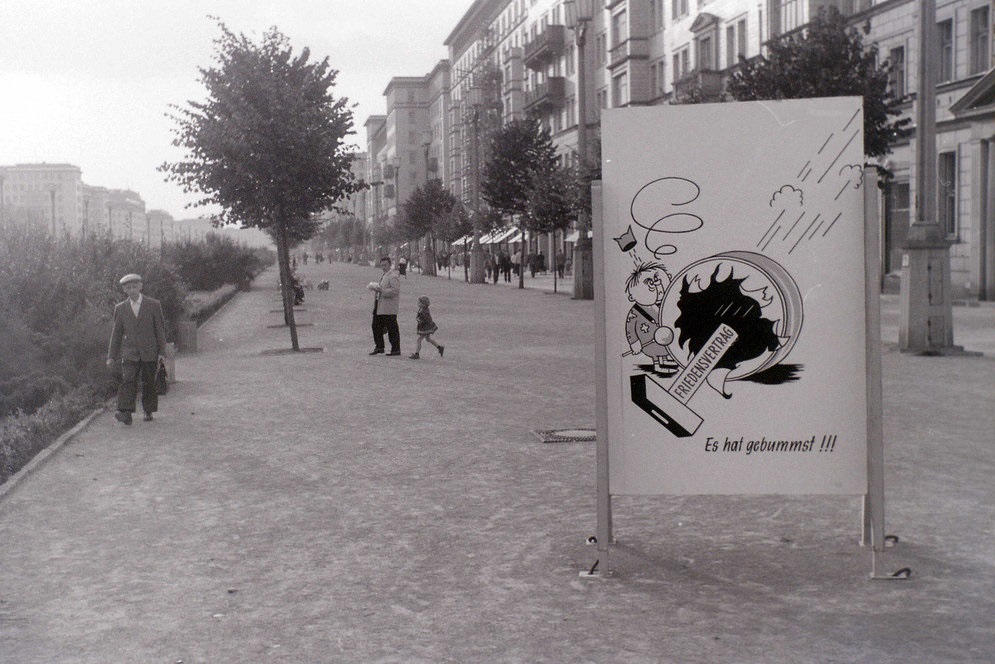
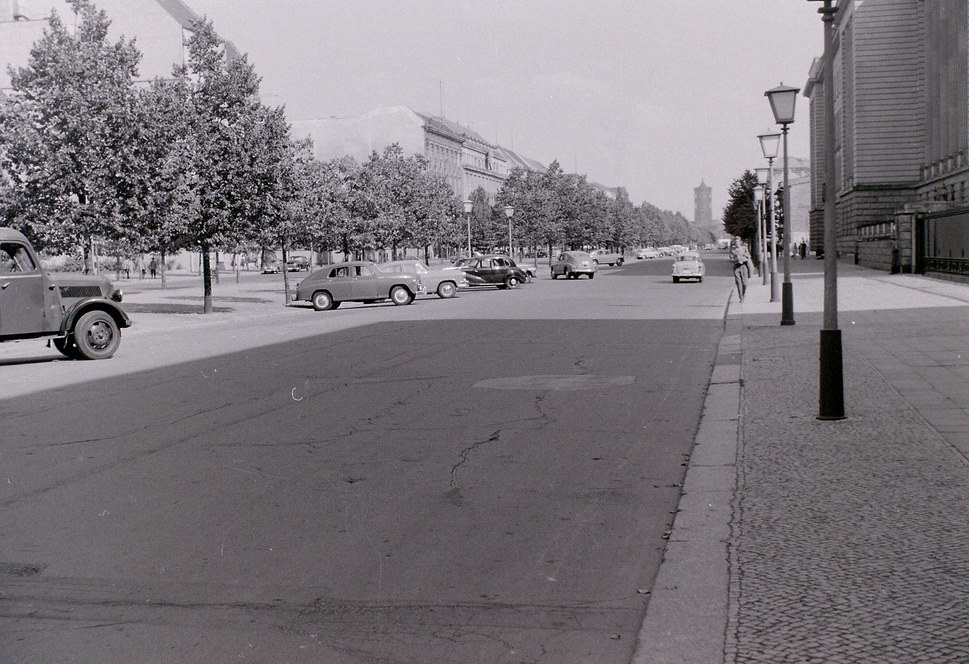
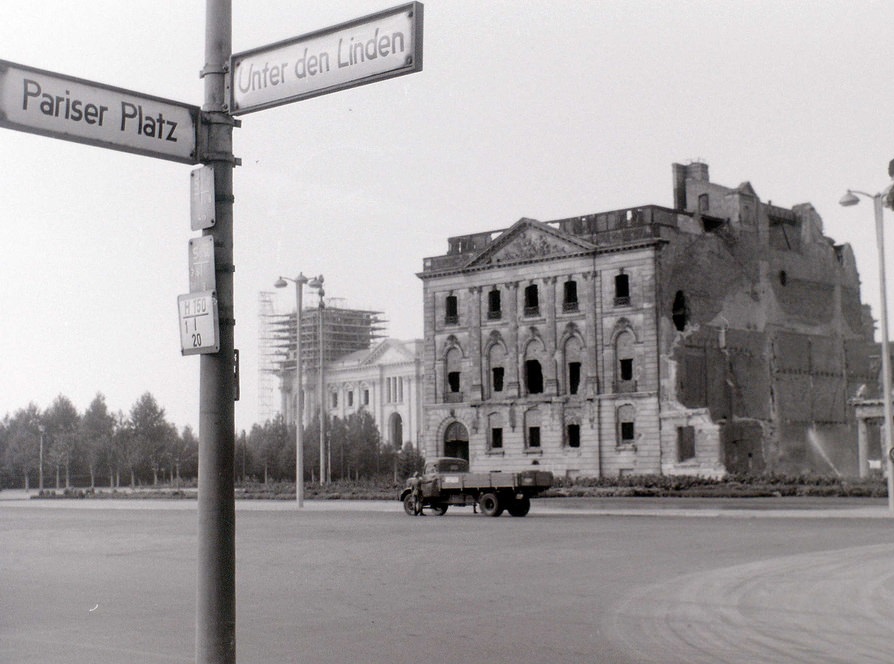
Unter den Linden was the boulevard in East Berlin encountered after passing through the Brandenburger Tor.
Stalinallee was later renamed Karl Marx Allee.
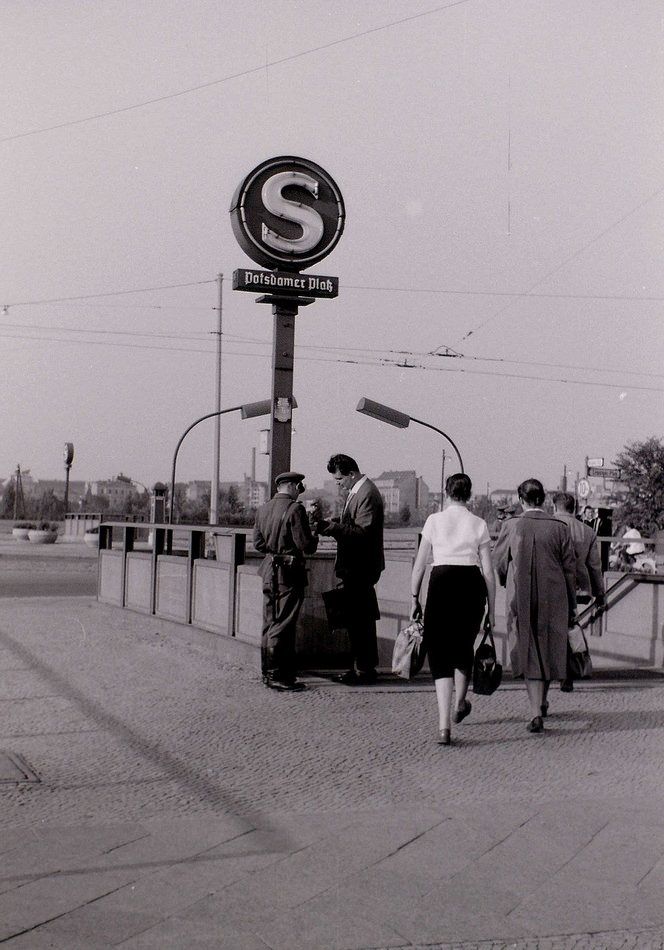
The People's Police checking documents of people entering Potsdamer Platz S-Bahn.
The People’s Police checking documents of people entering Potsdamer Platz S-Bahn.
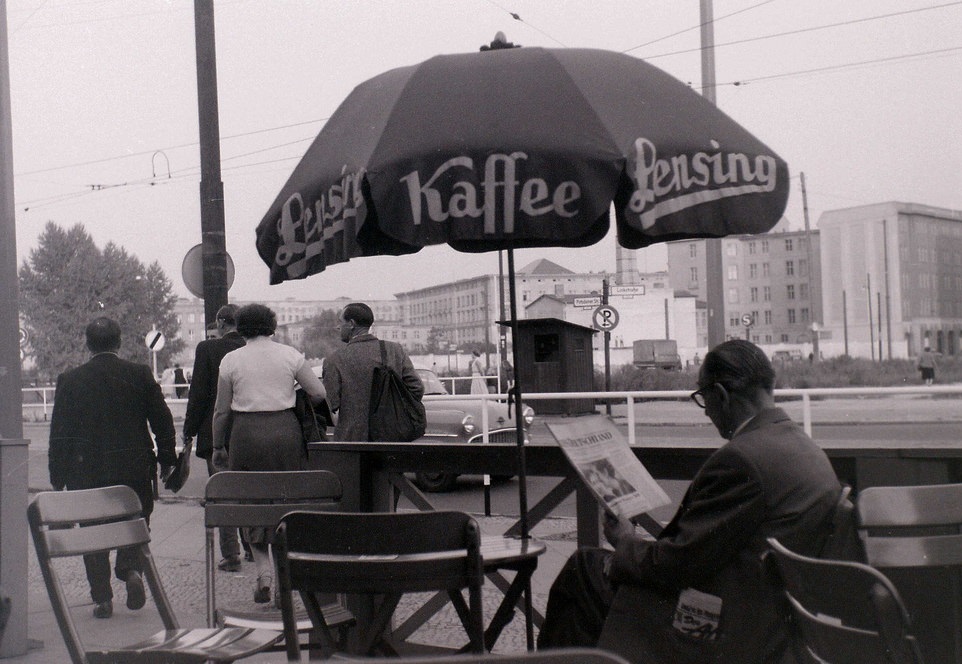
This cafe at Potsdamer Platz was just inside West Berlin, with the pavement in the West and the road in the East.
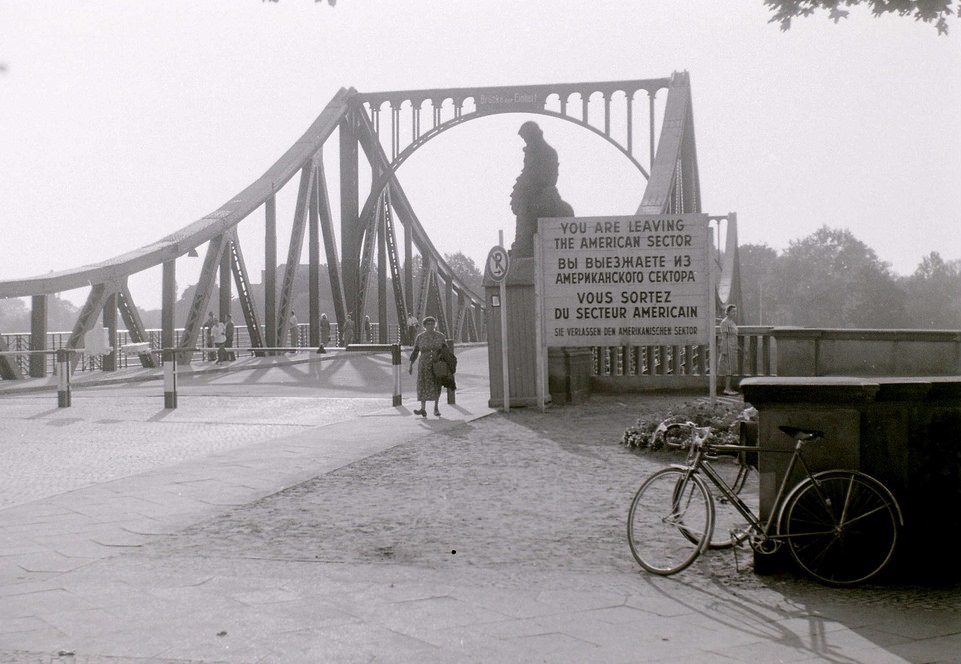
Glienicker Bruecke (Glienicke Bridge) is on the edge of Berlin at Lake Havel, and was on the border with East Germany proper (not East Berlin). It was the scene of a number of spy exchanges during the Cold War.
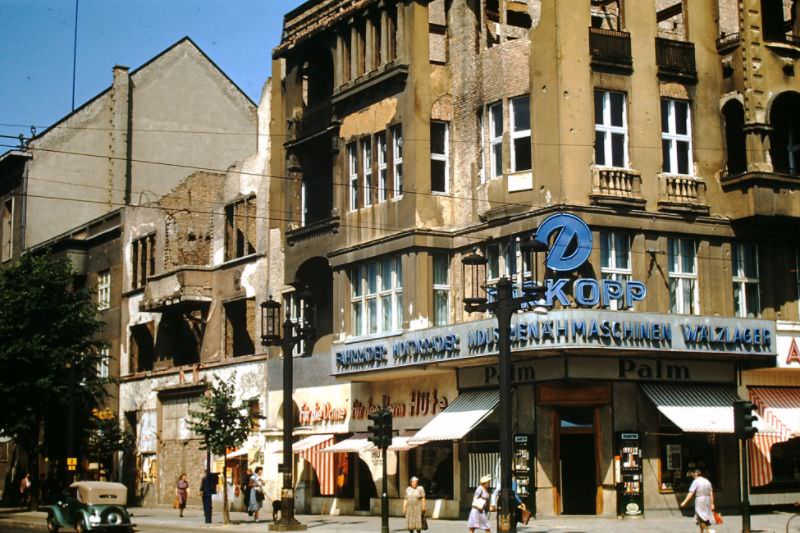
Kurfuerstendamm, West Berlin.
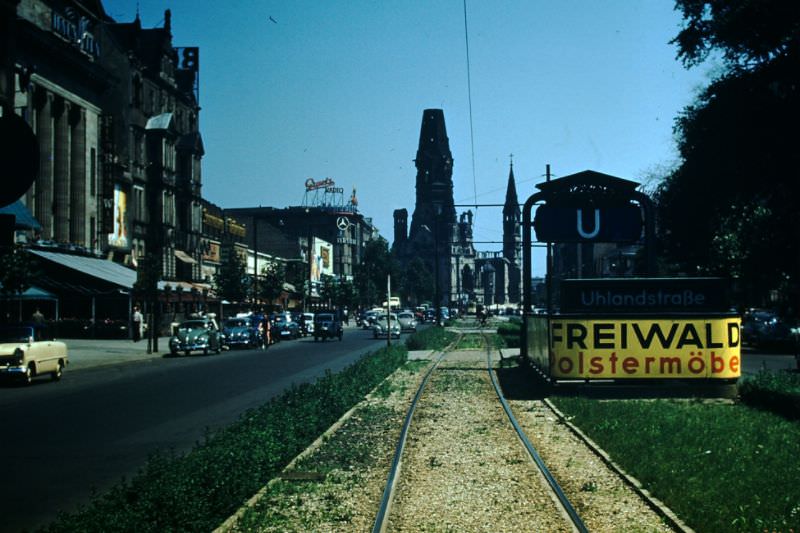
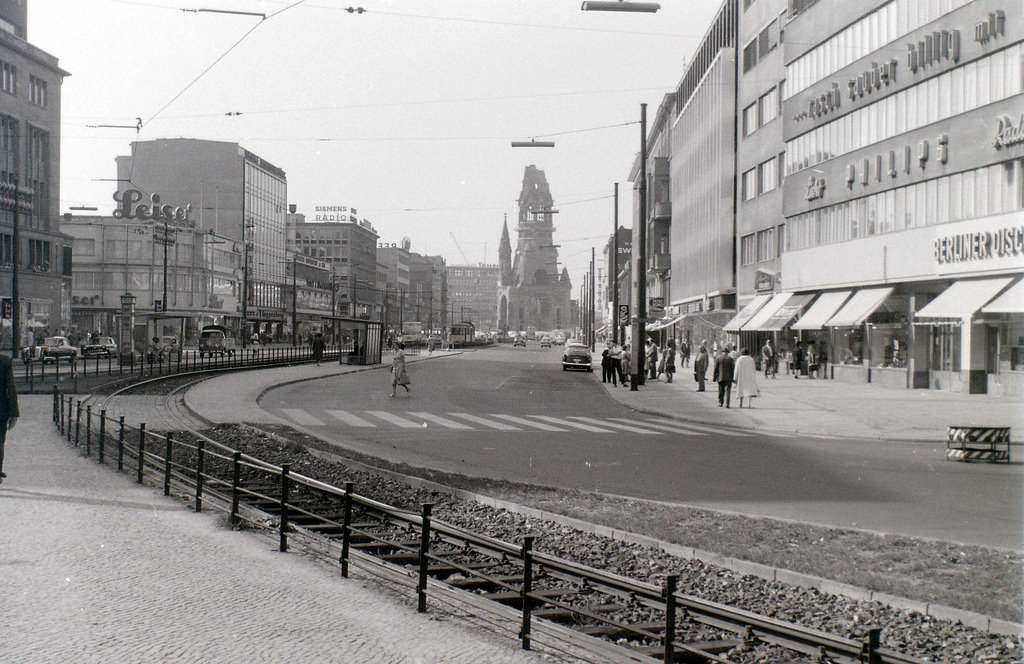
Tauentzienstrasse meets Kurfuerstendamm at the ruin of the Kaiser Wilhelm memorial church, which can be seen in the distance.
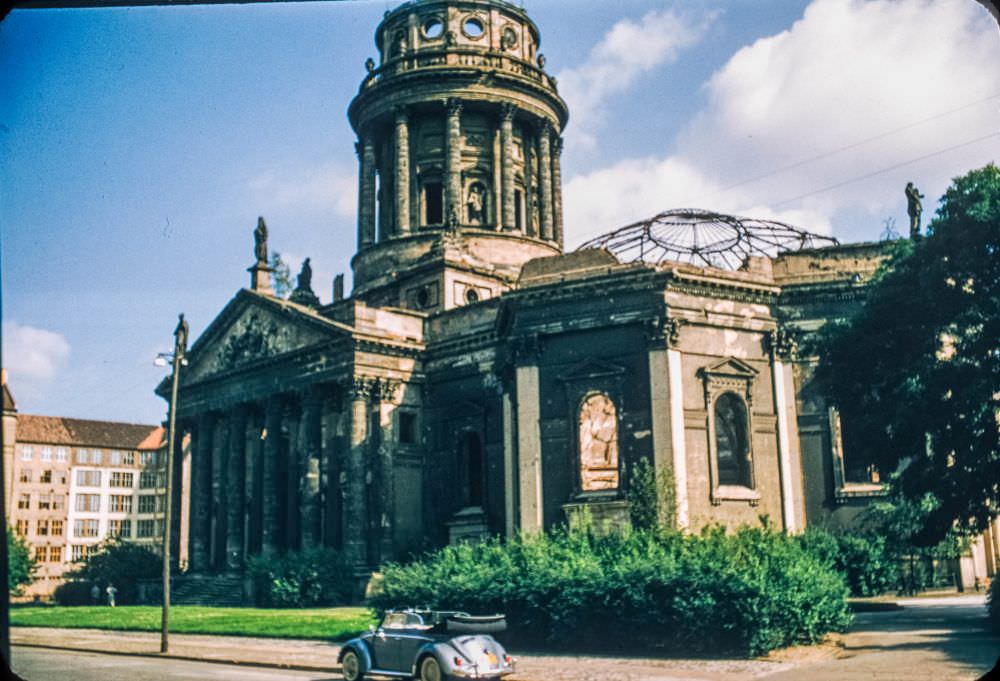
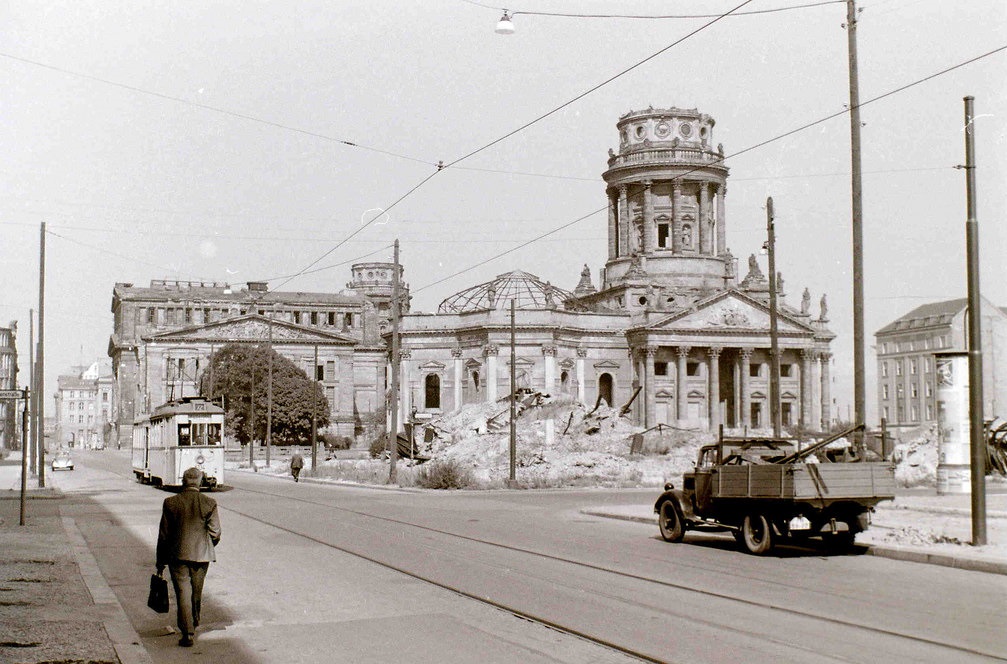
The bombed ruin of one of the twin churches in Gendarmenmarkt, East Berlin.
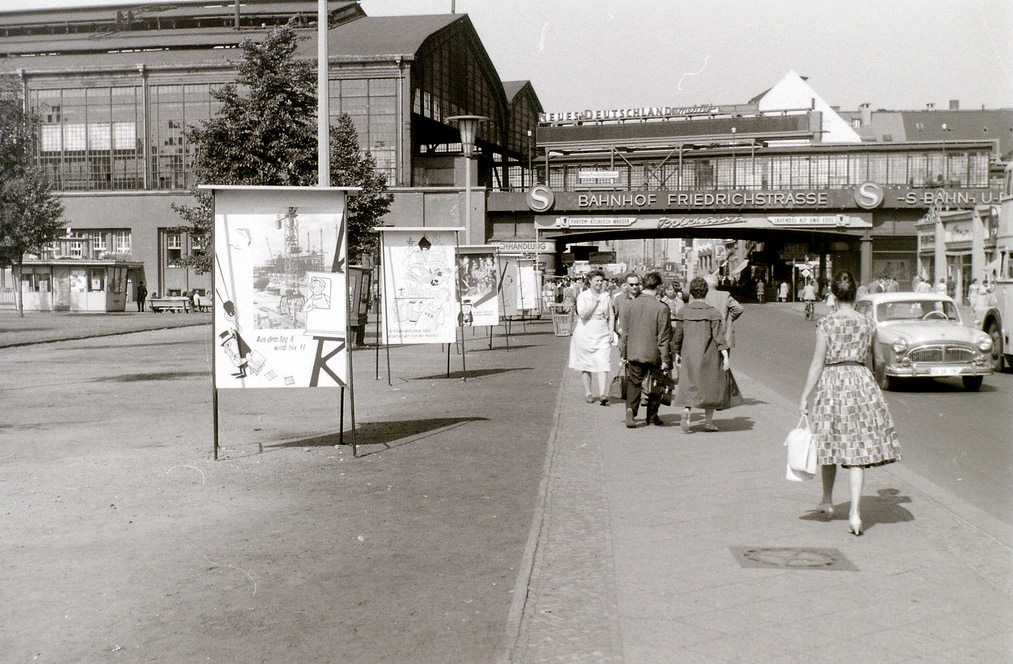
Political posters near Friedrichstrasse station, looking north along Friedrichstrasse.
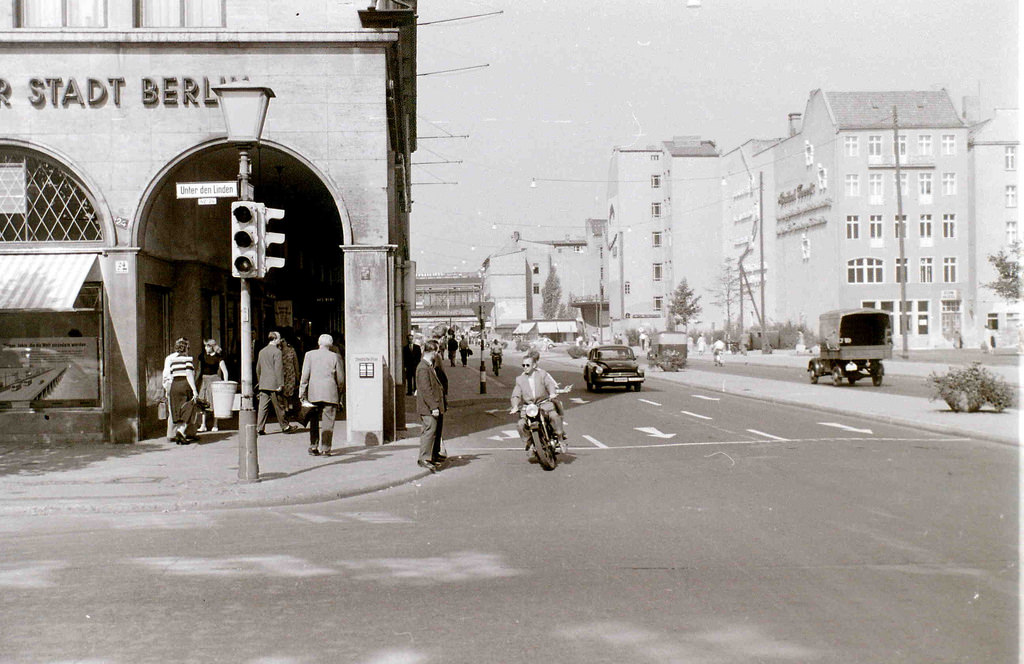
The view looking north along Friedrichstrasse at the junction with Unter den Linden.
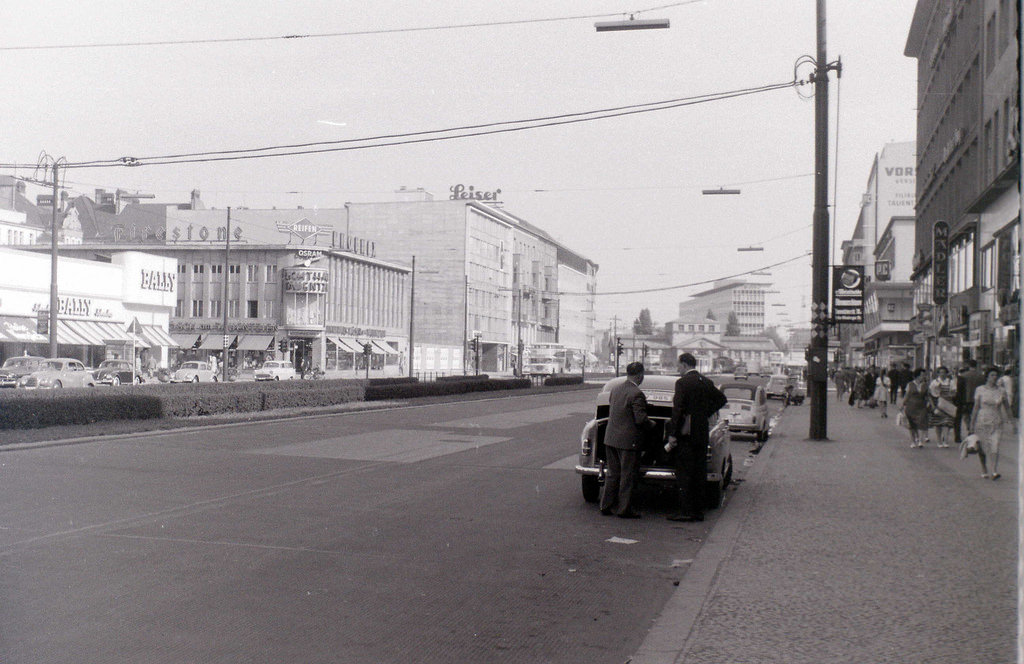
Tauentzienstrasse, looking towards Wittenbergplatz.
Scene somewhere near the Zoo in West Berlin.
The bombed building was on the north side of Unter den Linden in East Berlin, very near the Brandenburger Tor, with the Reichstag beyond it being in West Berlin.
Enjoyed this post? Get new ones in your inbox.

1 thought on “Berlin in the 1950s: The Berlin Crisis and Stunning Photos of Life in East and West Berlin”

Leave a Comment

Your email address will not be published. Required fields are marked *

Share this Post 🥺

Please take a moment to share this content. Your support is greatly appreciated! 🙌🙏

Share this Post 🥺

Please take a moment to share this content. Your support is greatly appreciated! 🙌🙏
Scroll to Top
 
Hey Friend, Before You Go.. Please like & follow for more interesting content