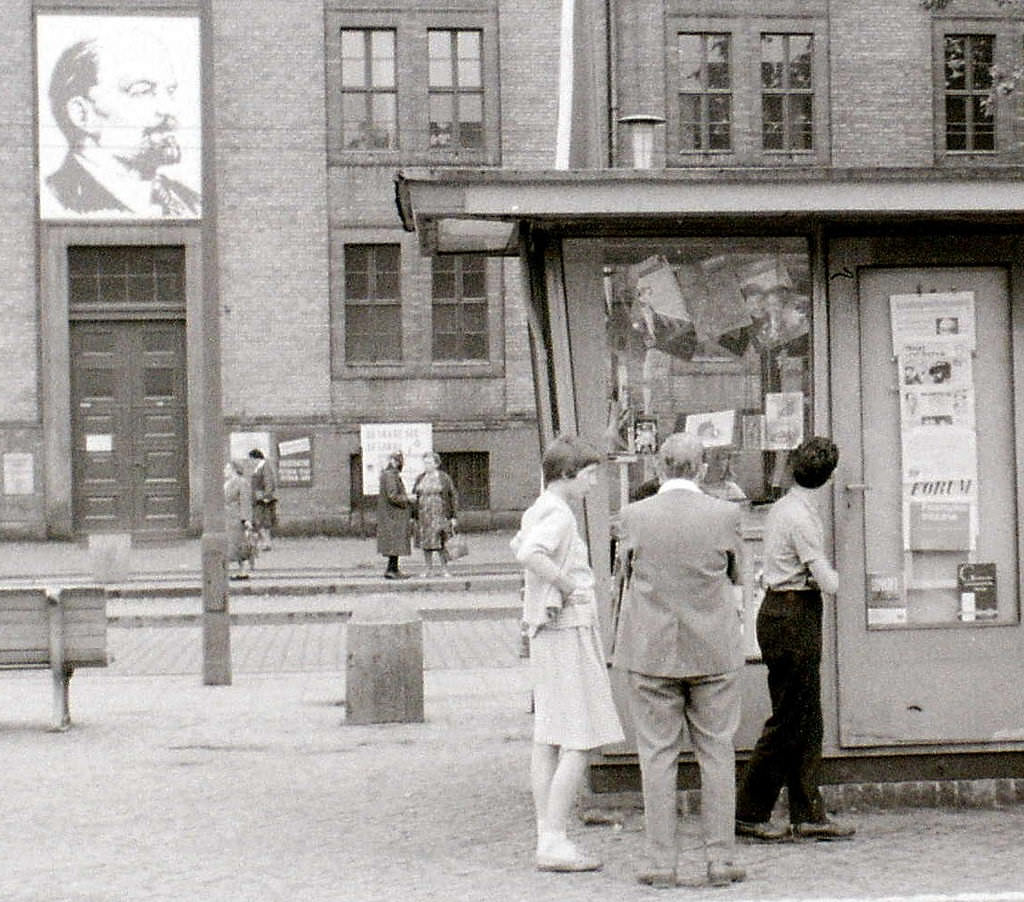
By 1964, Berlin had been a divided city for nearly two decades. The Berlin Wall, built in 1961, cut through neighborhoods, streets, and families alike. On one side sat West Berlin — a Western-backed enclave deep inside East German territory. On the other, East Berlin operated under a Socialist government with tighter controls on daily life. Winter made this divide feel even sharper.
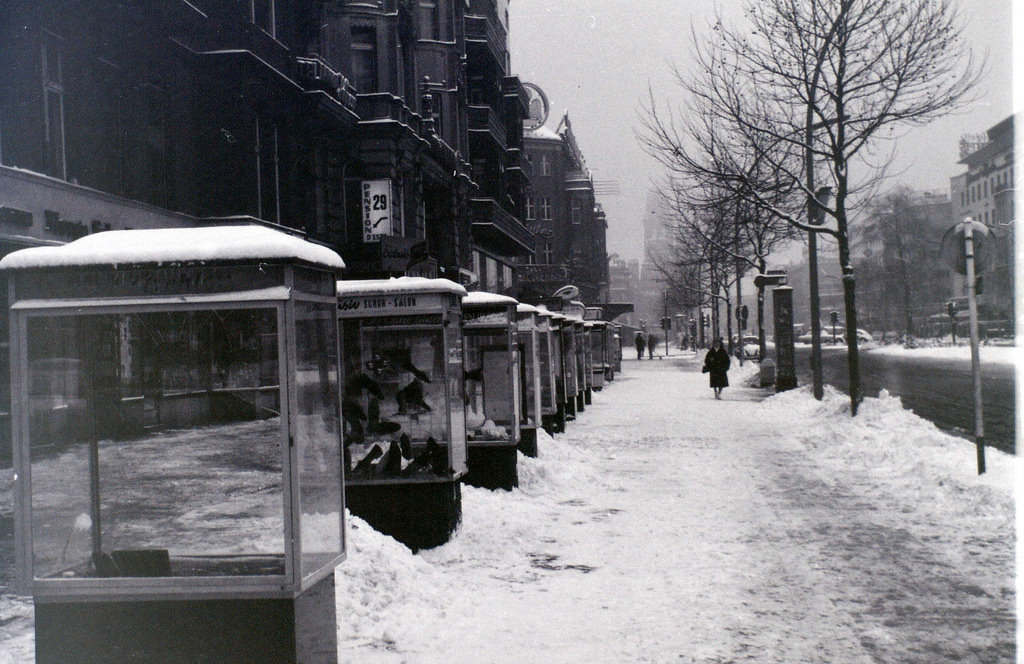
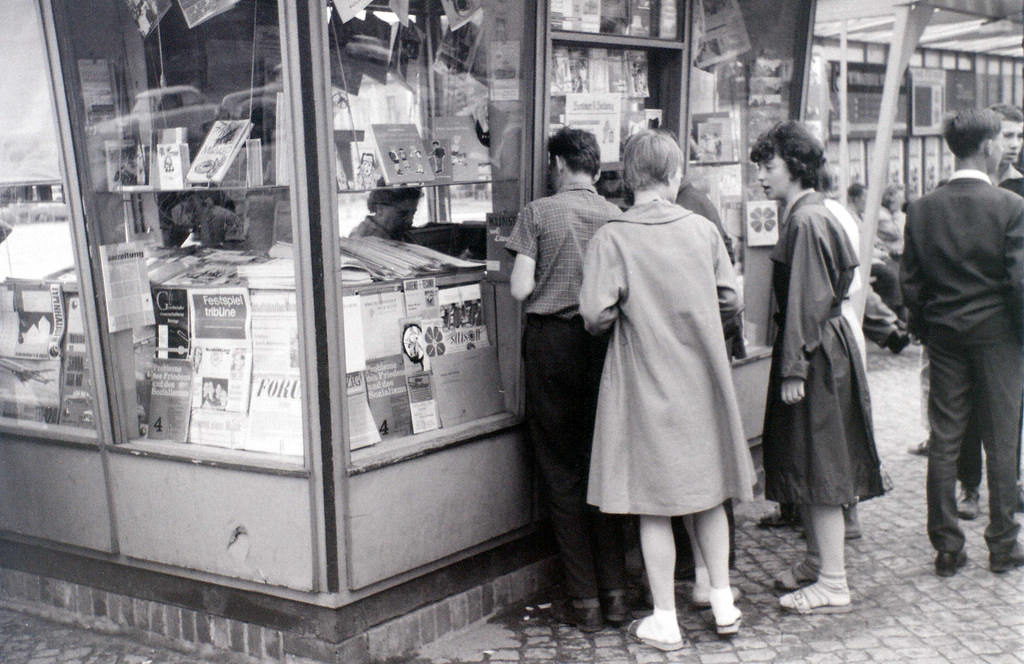
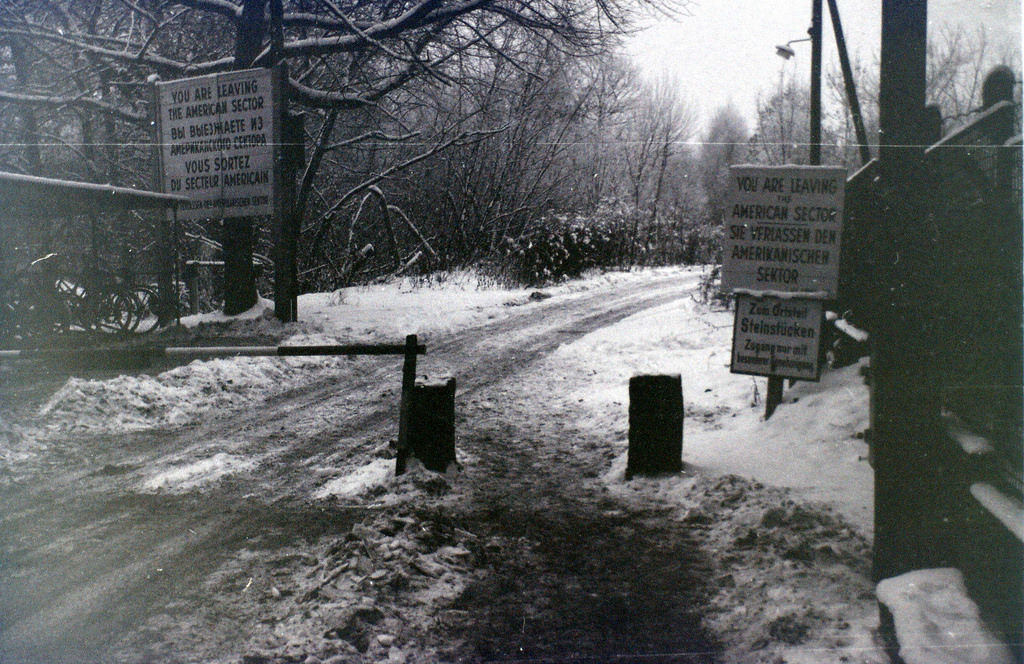
West Berlin in the winter of 1964 was a busy, modern city. Its economy was growing fast, and its shopping districts drew crowds even in the coldest months. Allied soldiers — American, British, and French — maintained a visible presence throughout the western sectors, a constant reminder of the city’s unusual political status.
Christmas markets lit up the streets of West Berlin each December. Shop windows were packed with goods, and the smell of roasted nuts and mulled wine filled the cold air. Ice skaters glided across frozen ponds while families browsed stalls stacked with toys, ornaments, and food.
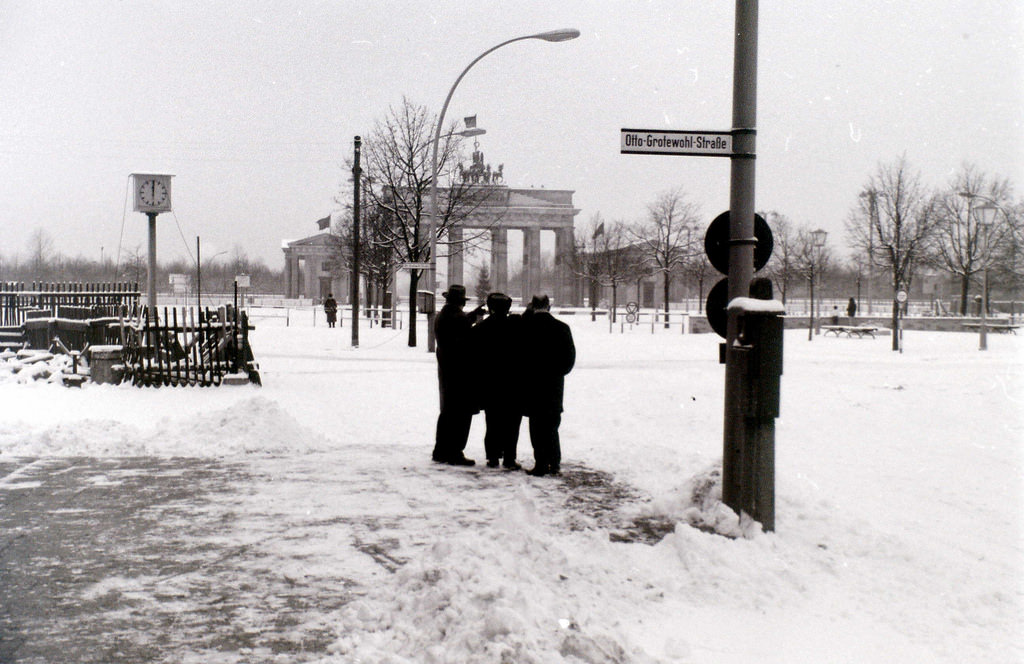
East Berlin told a different story. Resources were scarcer under the Socialist government, and the range of goods in shops was limited. Still, daily life continued. Families gathered at home, children played in snow-covered parks, and church choirs sang traditional carols that carried through the cold streets.
Christmas trees in East Berlin were often decorated with homemade ornaments rather than store-bought ones. The season was simpler but not absent of warmth. Neighbors shared what they had, and the holiday held real meaning for those who celebrated it, even within the constraints of the regime.
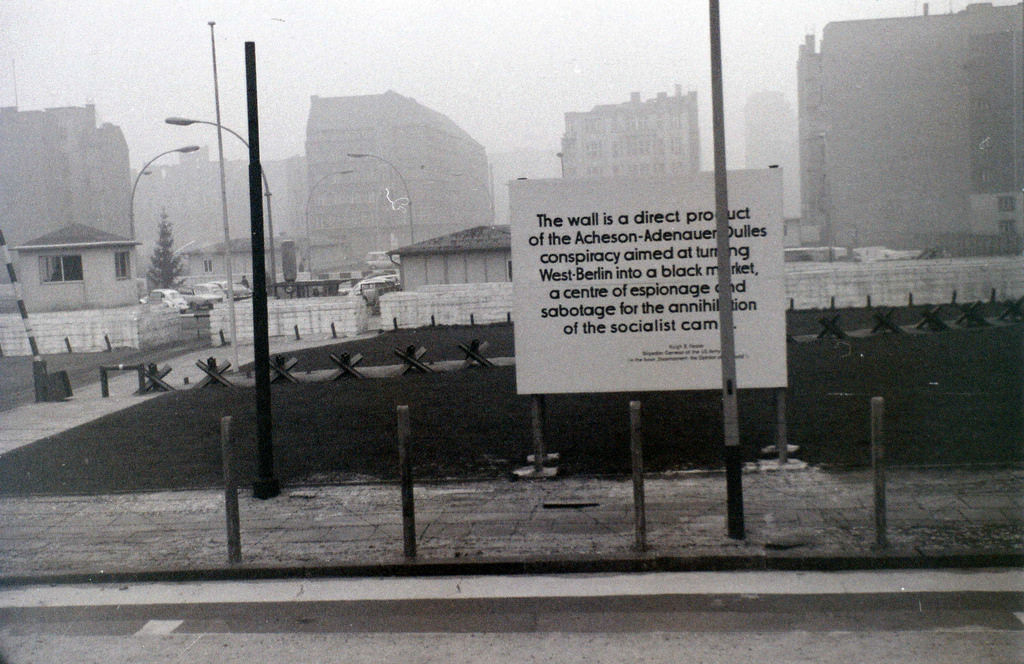
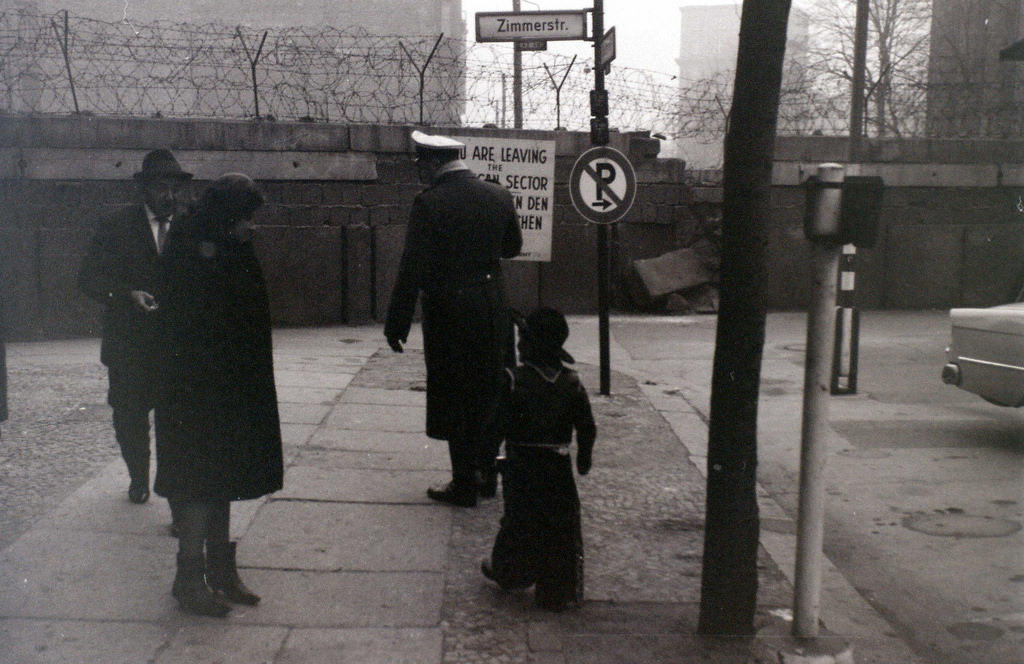
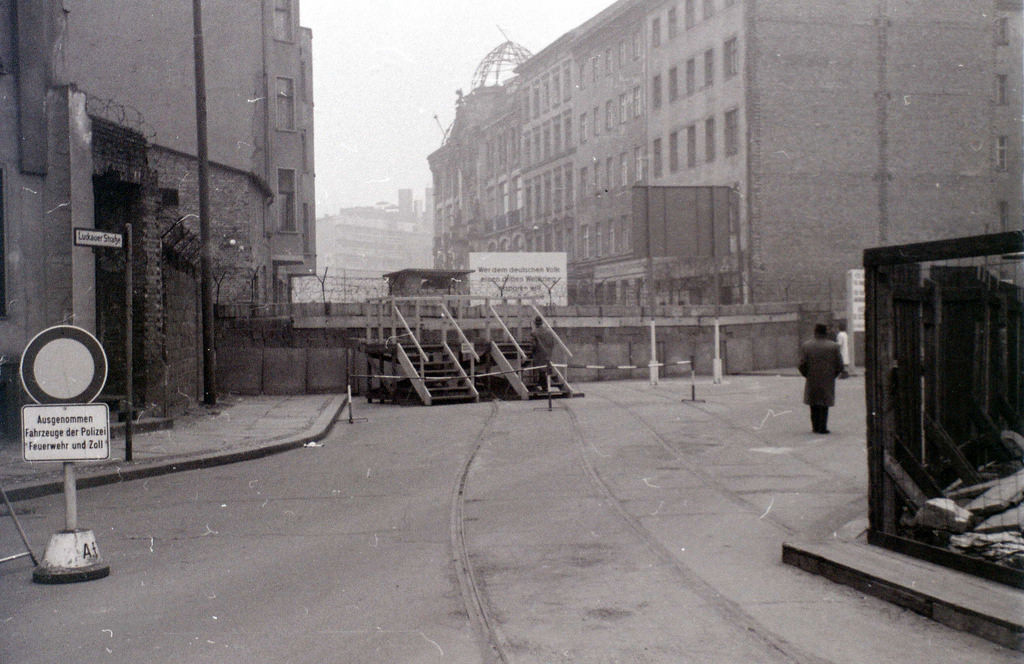
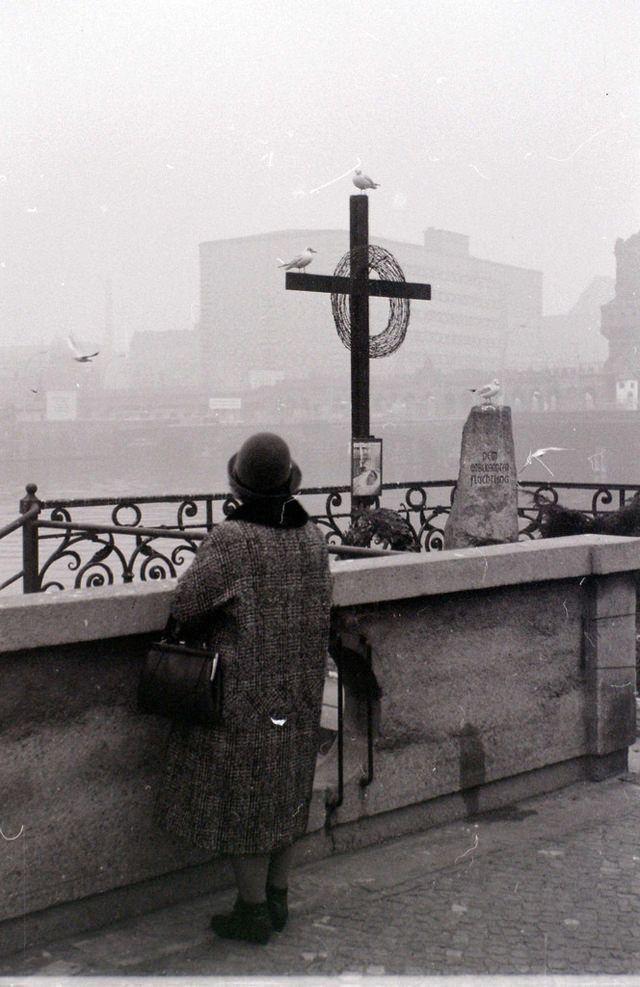
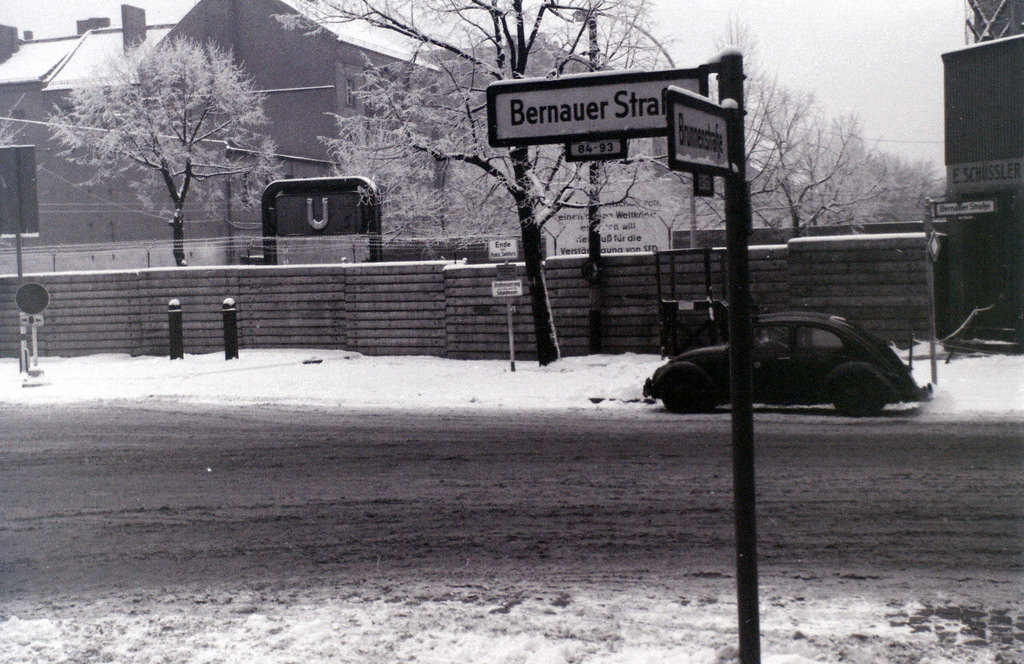
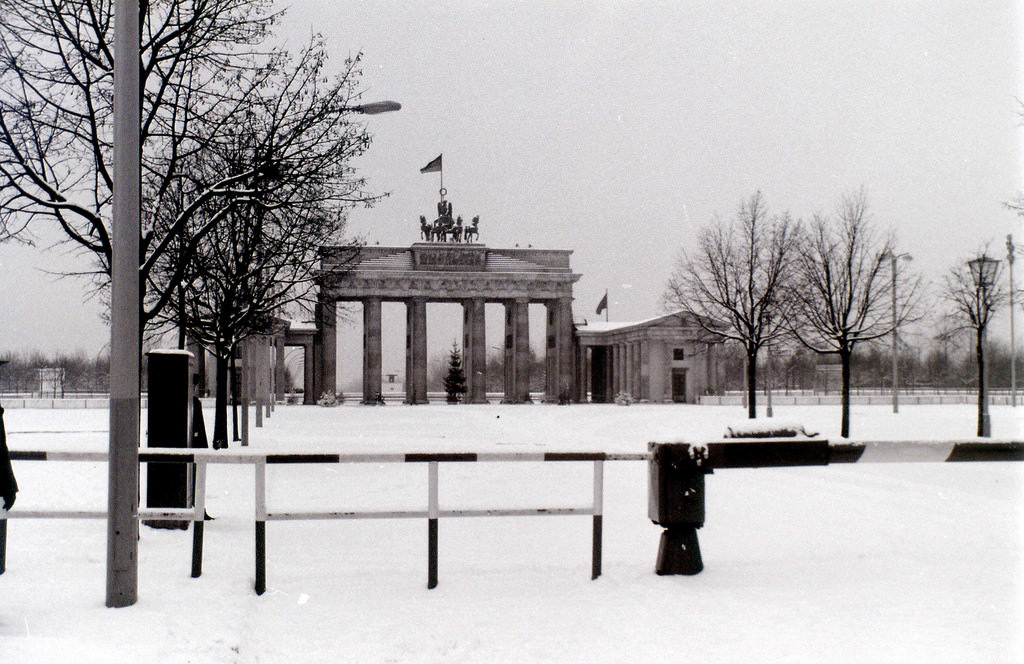
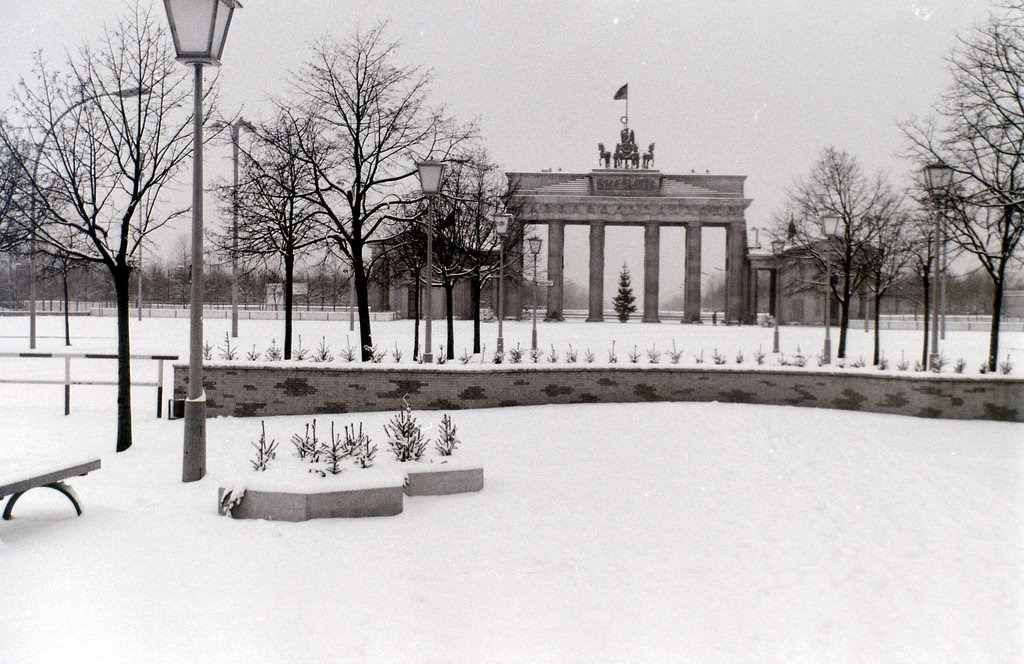
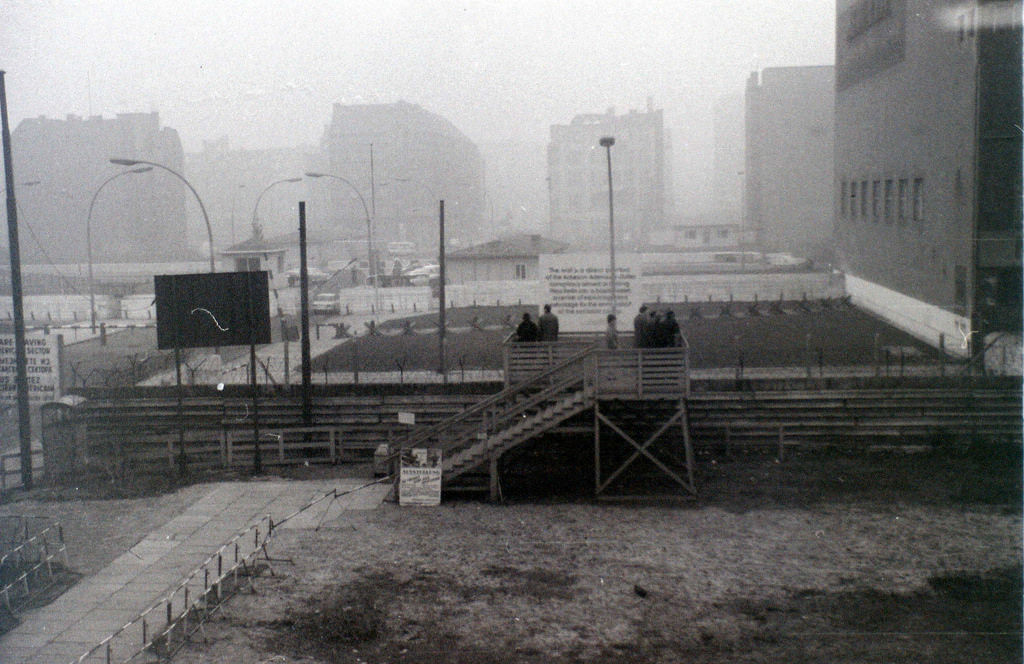
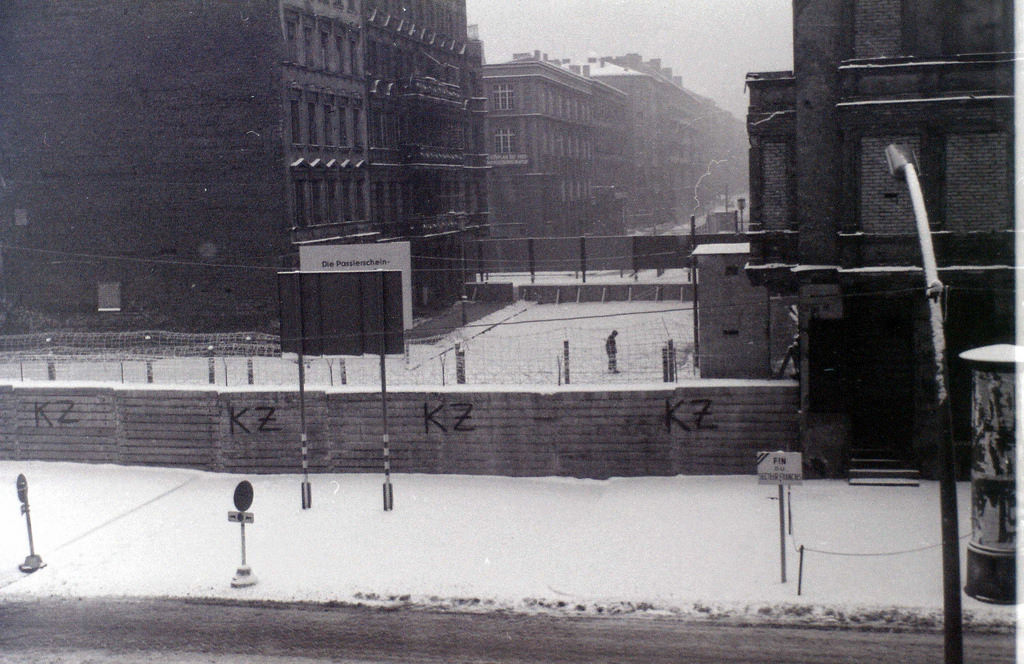
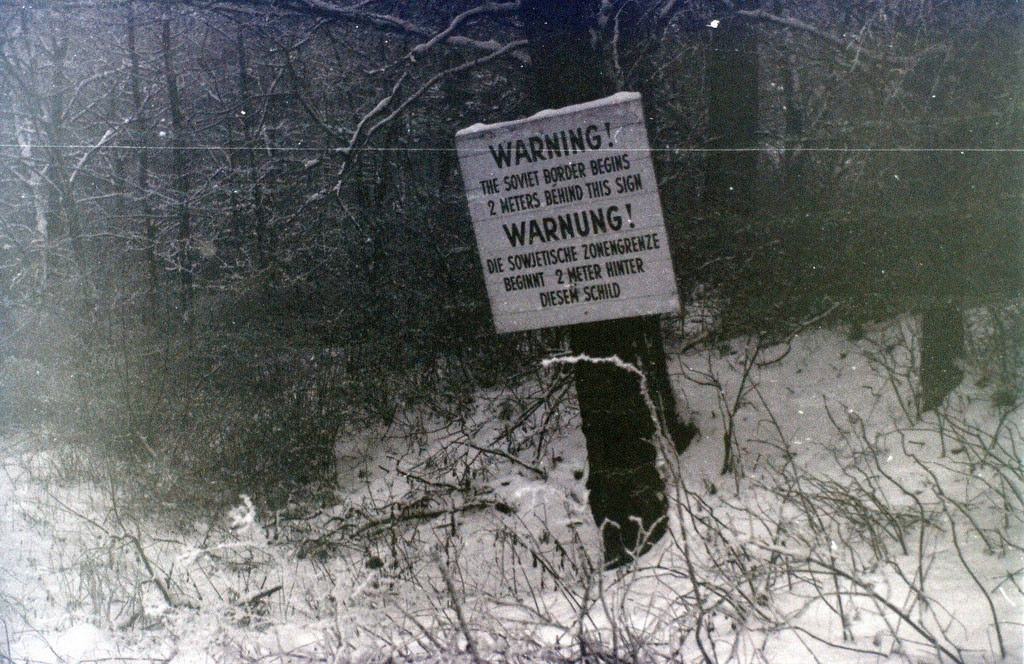
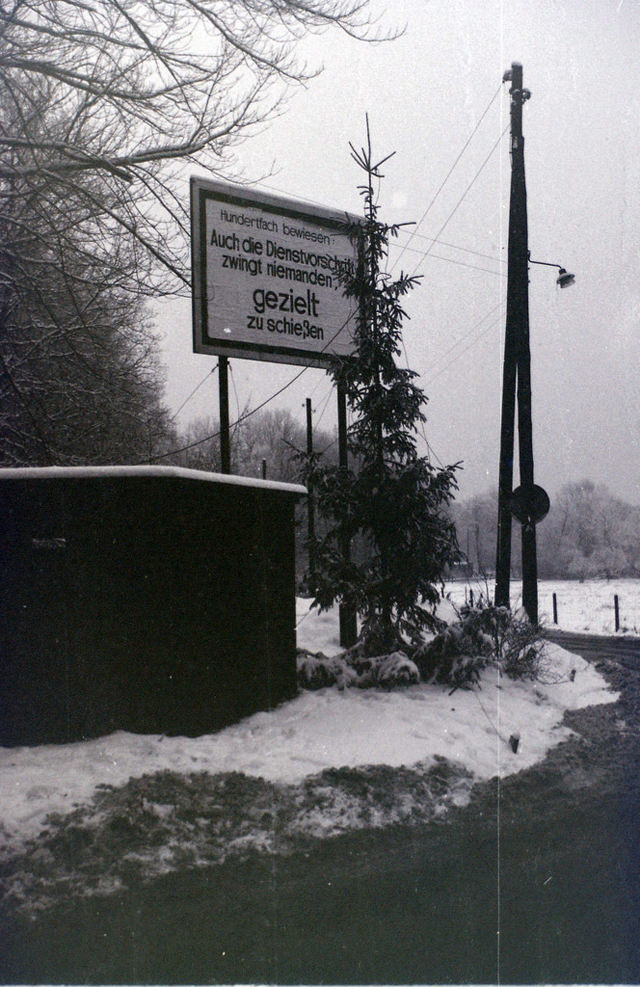
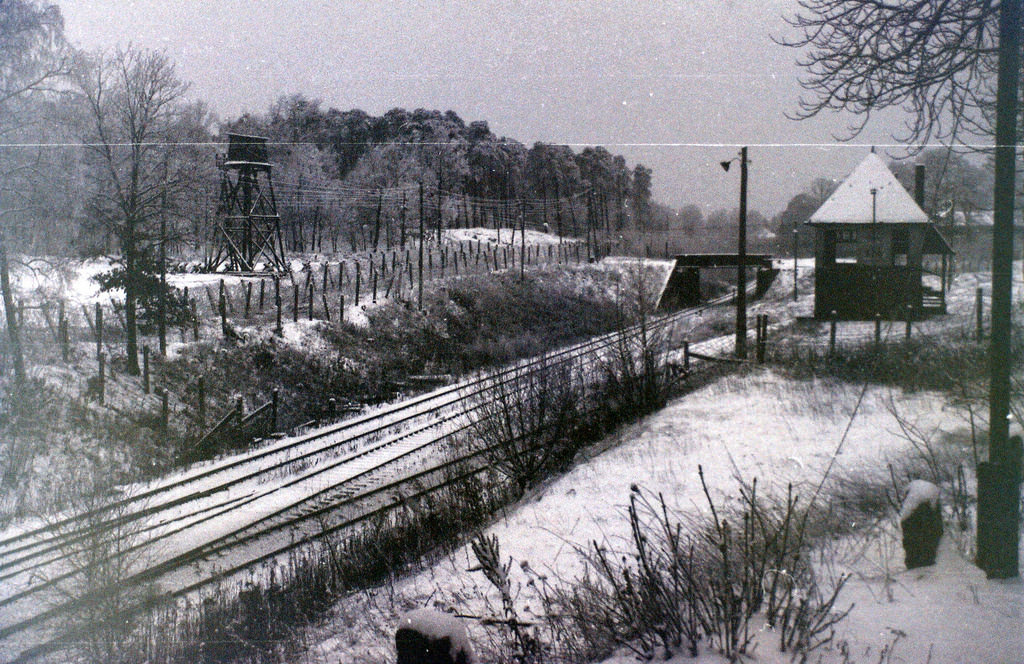
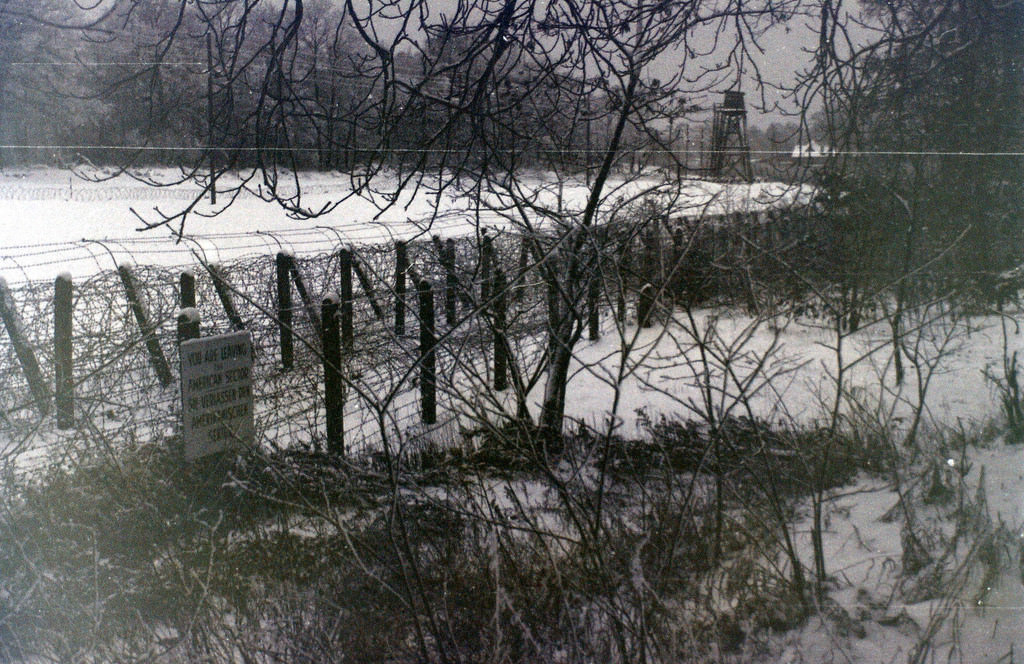
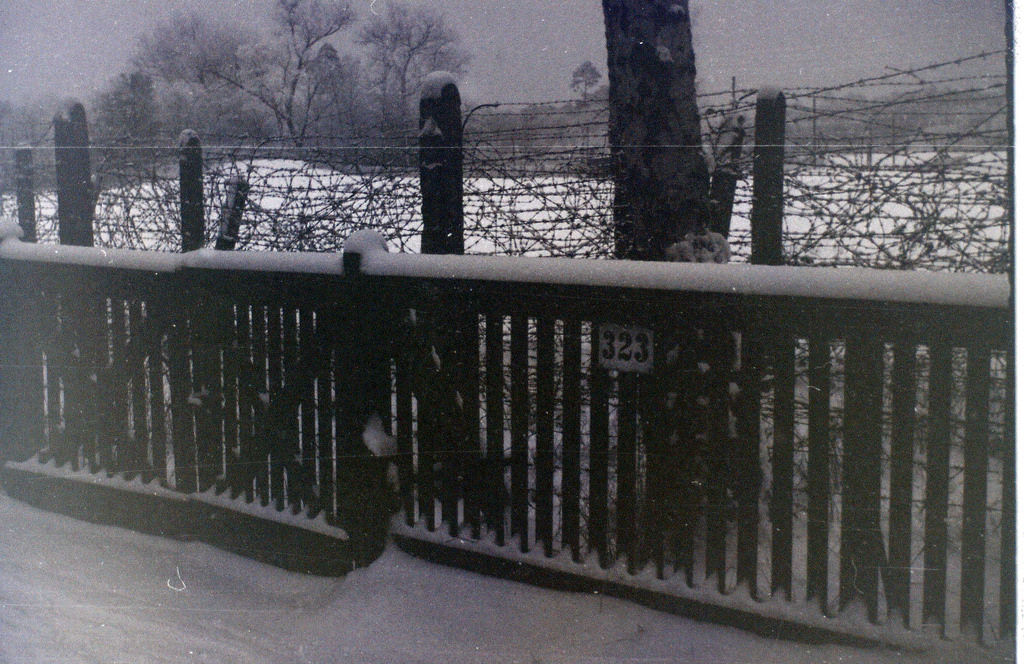
The Wall itself was an ever-present feature of the city’s landscape. Watchtowers stood along its length, manned by East German border guards with orders to stop anyone attempting to cross. In 1964 alone, the tension around the Wall remained high, as escape attempts continued and the political standoff between NATO and the Soviet bloc showed no signs of easing.
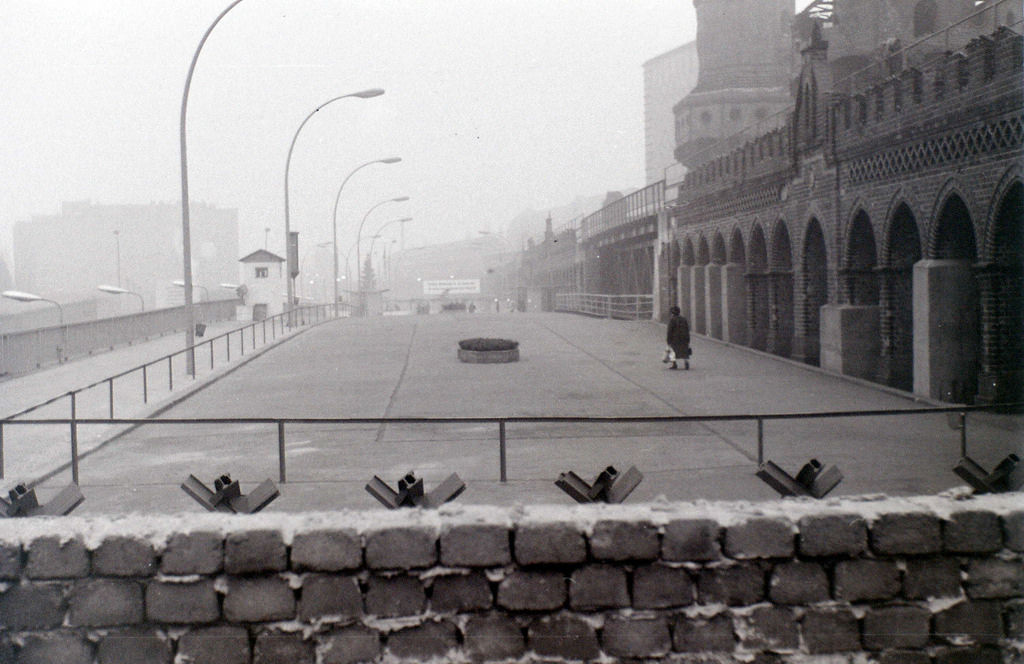
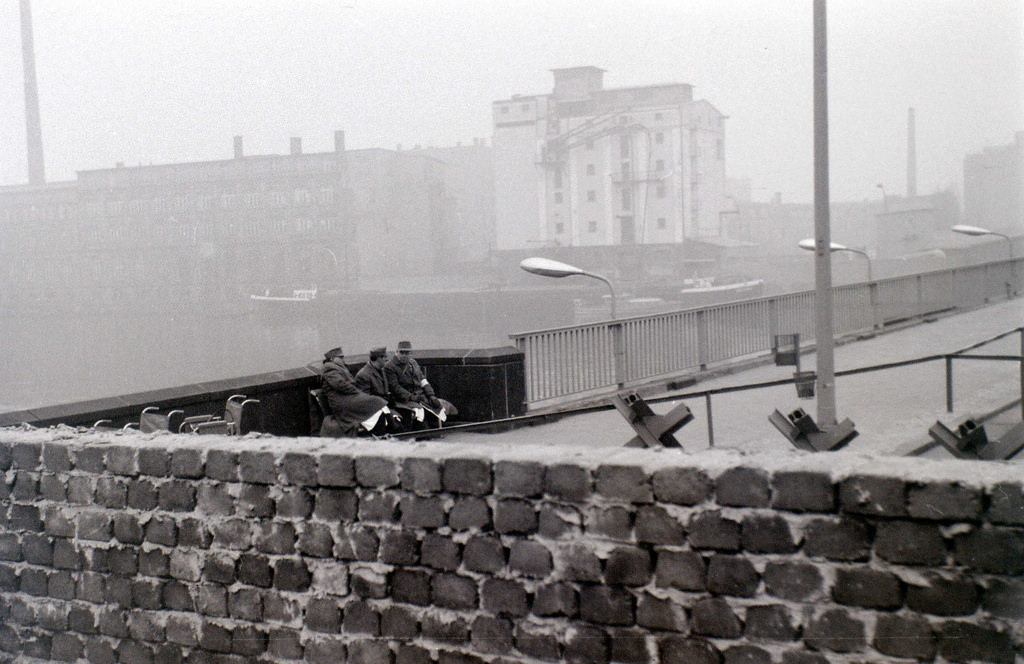
West Berliners could look east across the Wall, but crossing was heavily restricted. Visits between families separated by the divide required difficult paperwork and were rarely approved. For many residents, relatives on the other side were effectively unreachable for years at a time.
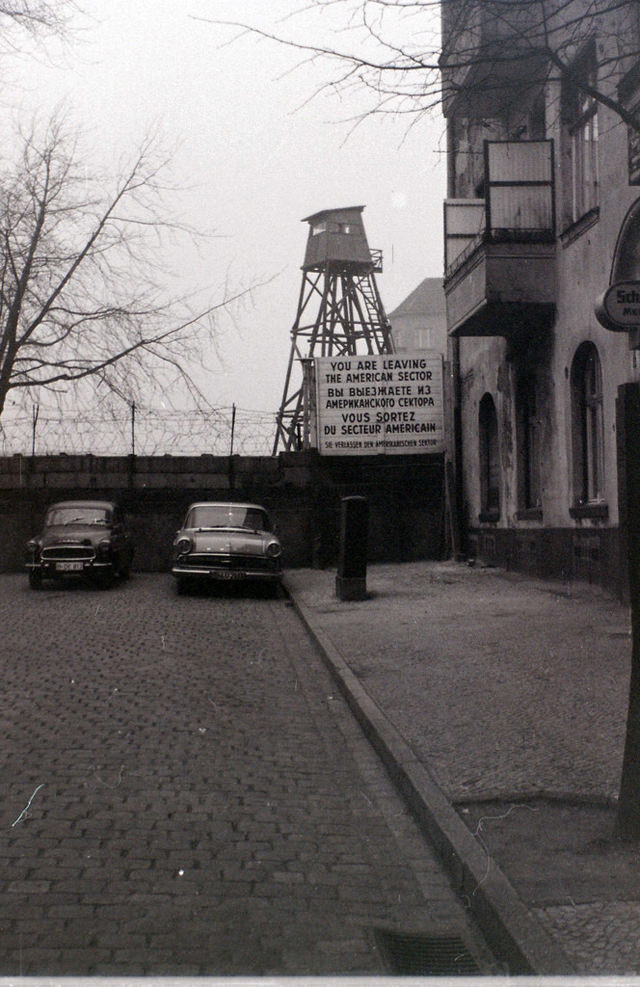
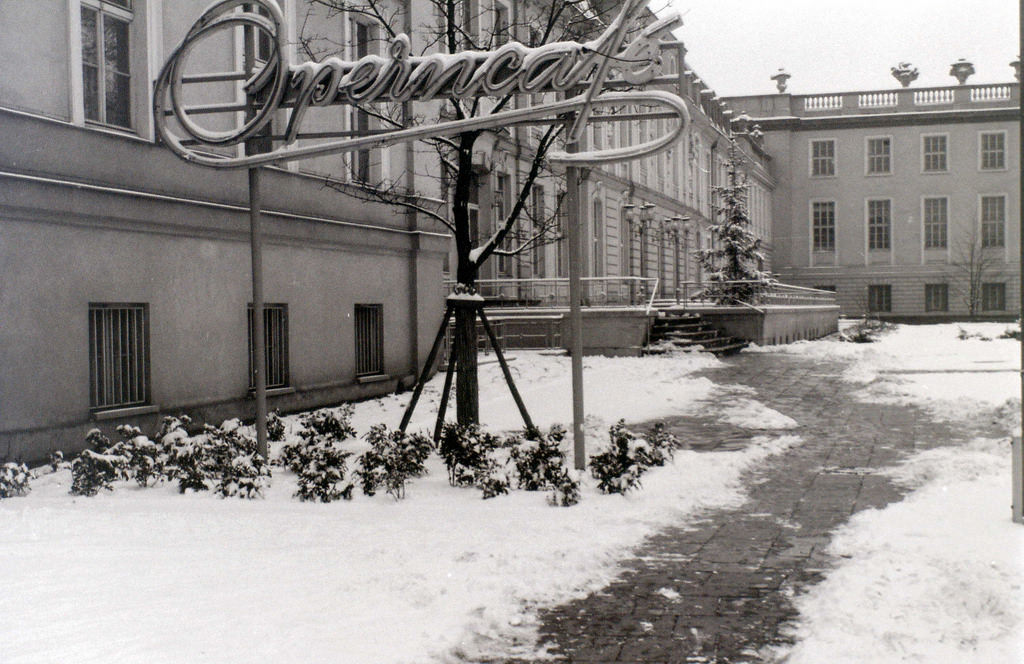
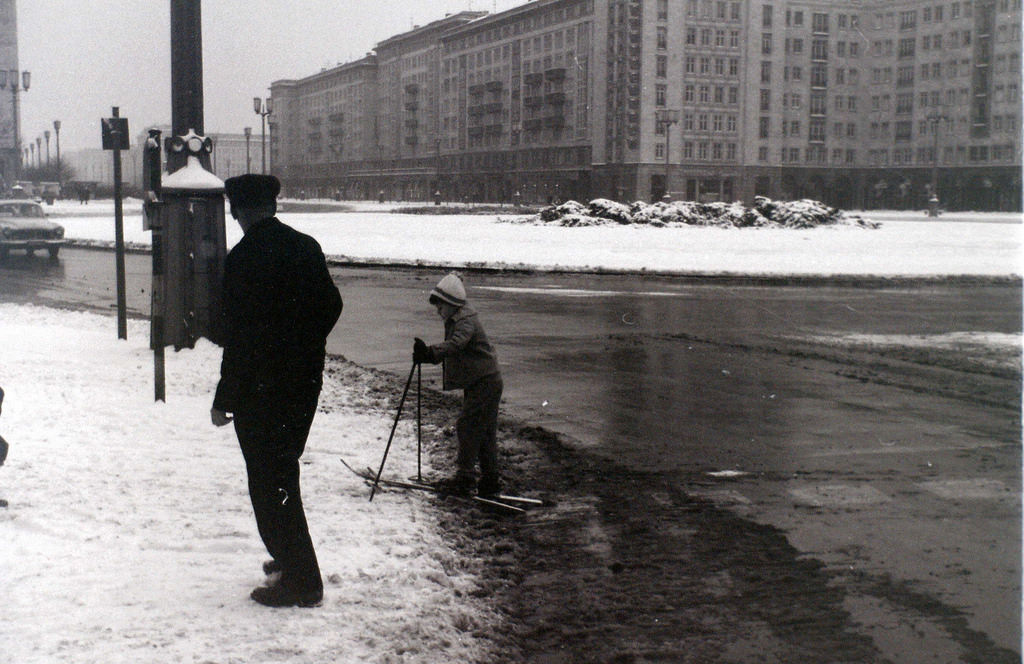
Despite the political weight of everything around them, Berliners on both sides found ways to get through the winter. Markets, parks, cafés, and churches all served as gathering points. Snow brought a brief visual uniformity to a city otherwise defined by contrast.
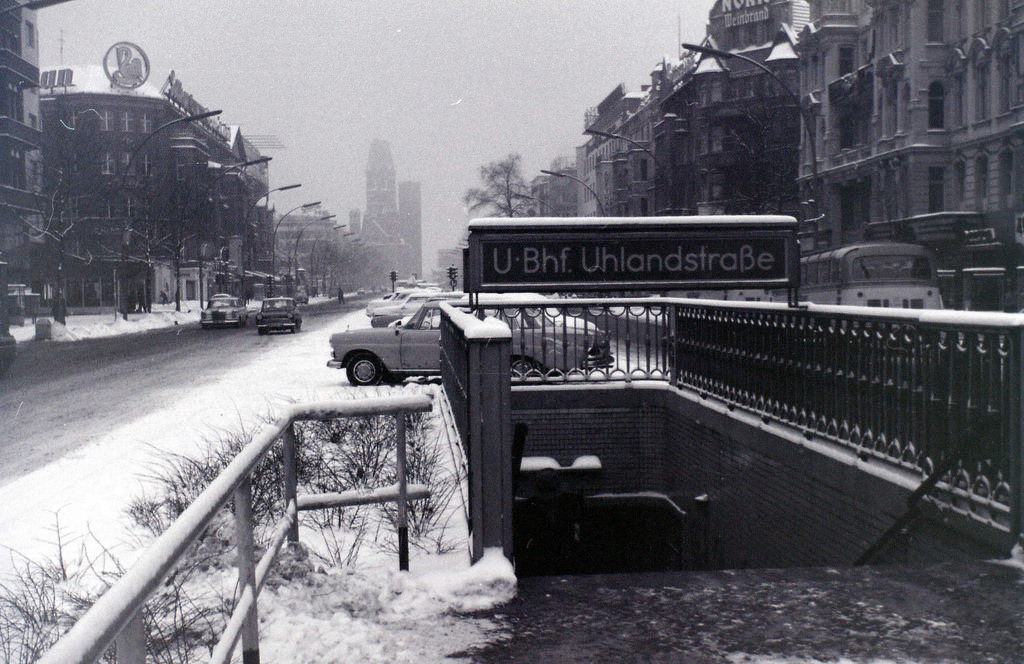
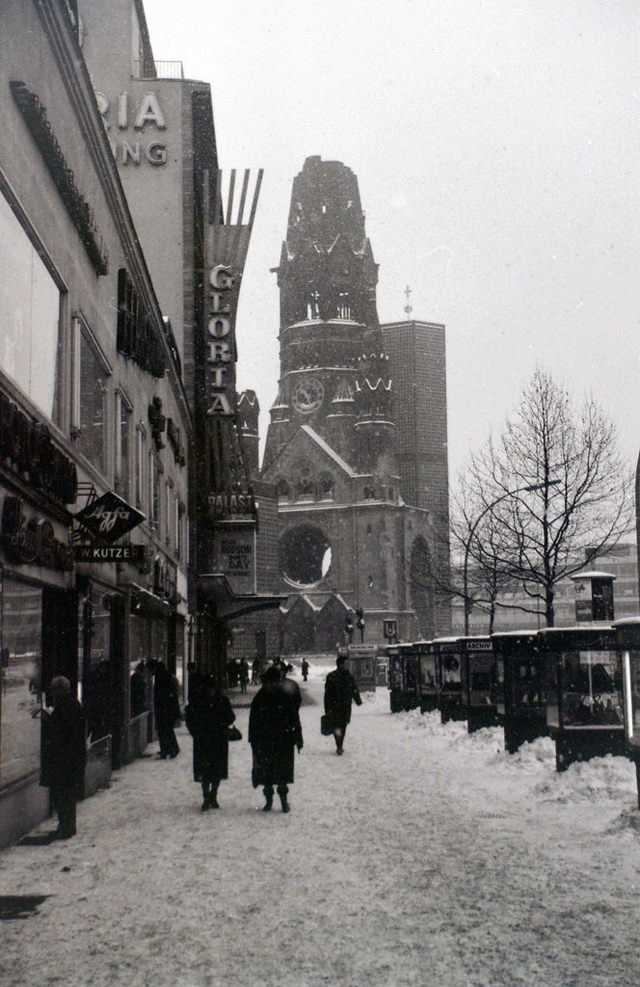
West Berlin’s Kurfürstendamm boulevard, known locally as the Ku’damm, was the commercial heart of the western sector. Department stores lined the avenue, and the ruins of the Kaiser Wilhelm Memorial Church — deliberately left standing as a war memorial — rose at its eastern end, a stark reminder of the destruction from World War II just nineteen years earlier.
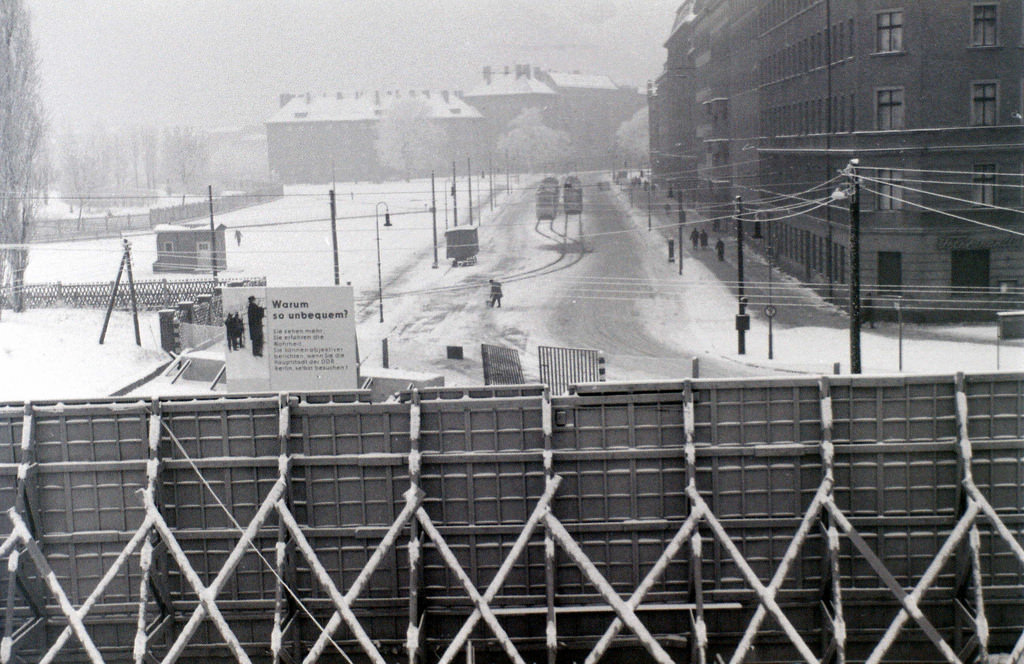
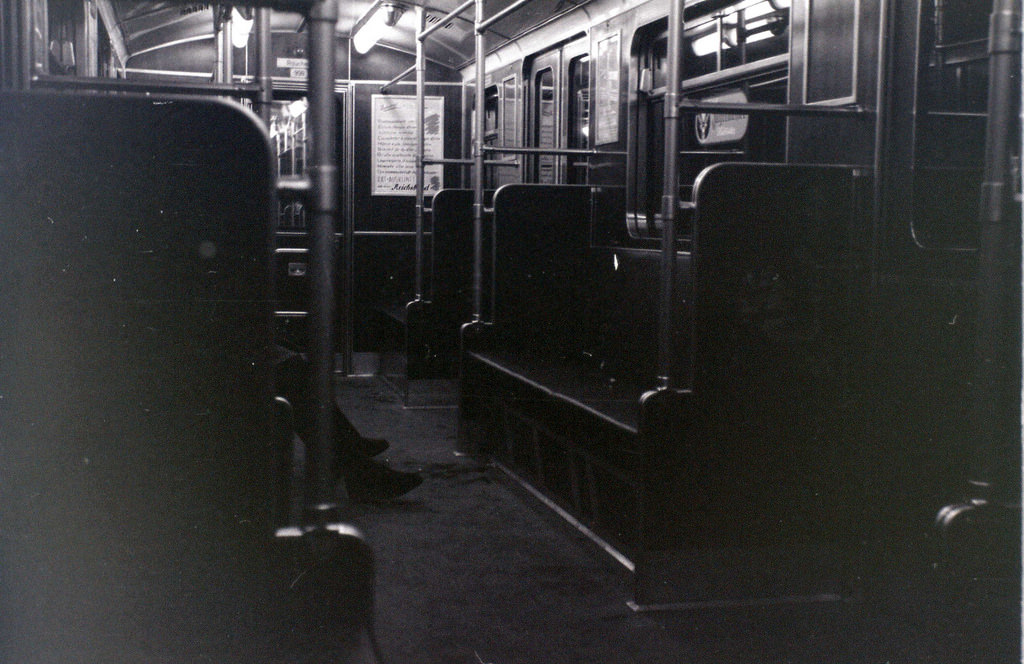
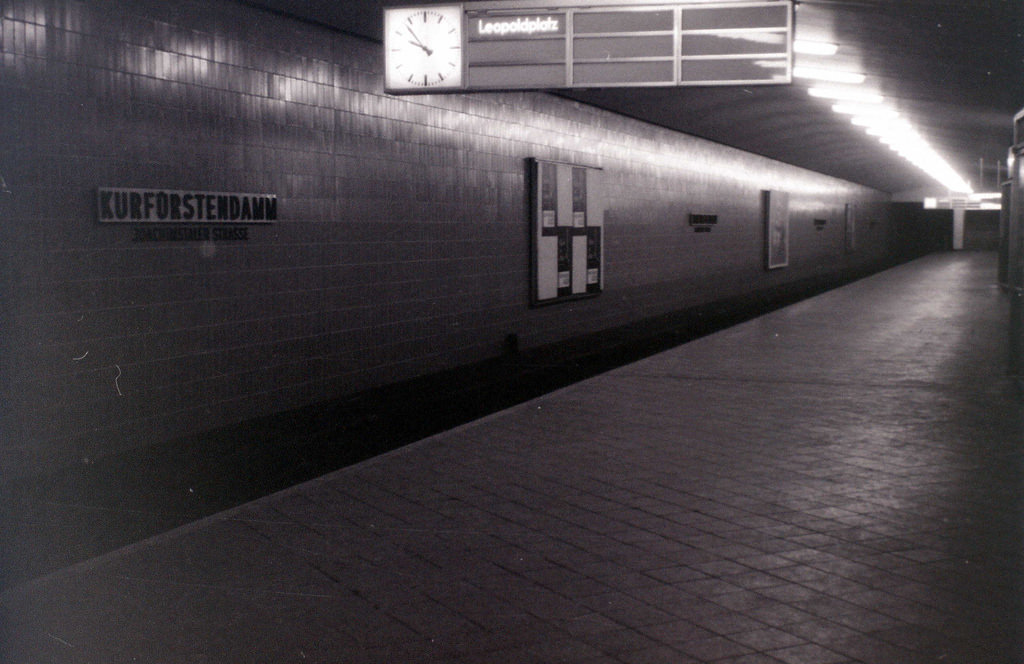
Public transport kept the city moving through the frost. Buses and trams ran their routes on both sides of the Wall, though the S-Bahn and U-Bahn networks were split by the division. Some western subway lines still passed through eastern stations, which were sealed shut and guarded — the so-called ghost stations.
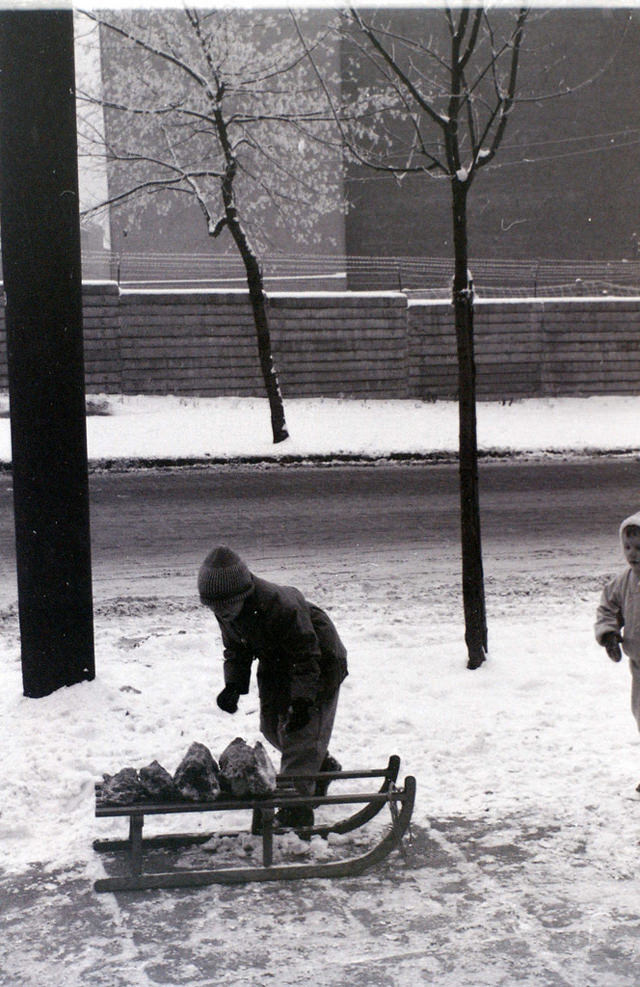
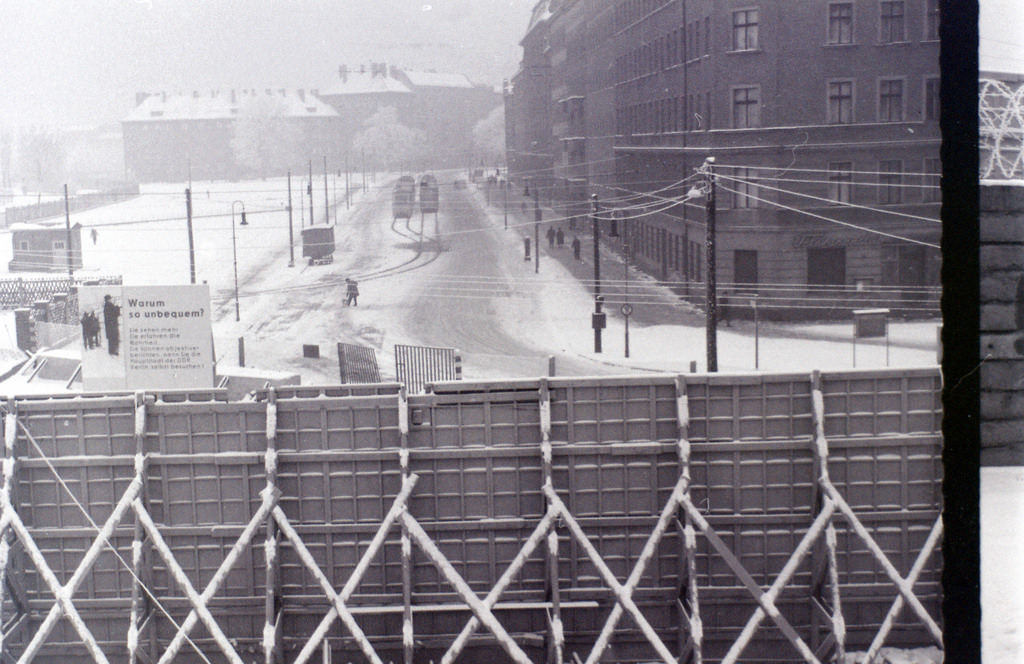
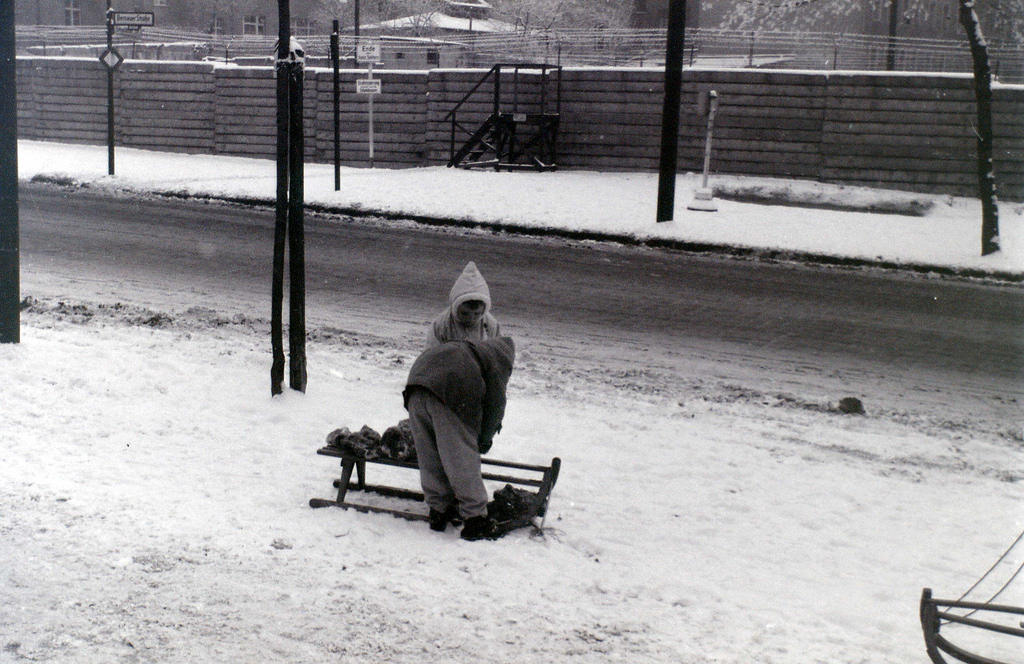
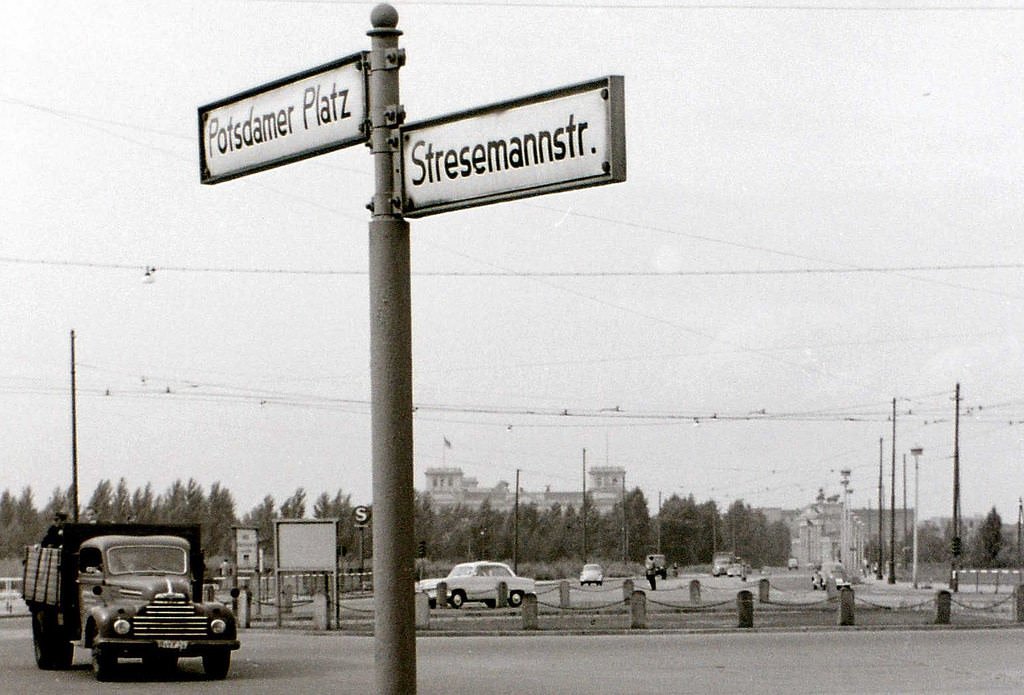
Street scenes from 1964 show Berliners dressed for the cold — heavy coats, hats, and scarves were standard. Cars from the era filled the western streets, while East Berlin’s roads were quieter, with the Trabant and Wartburg among the few models available to citizens there.
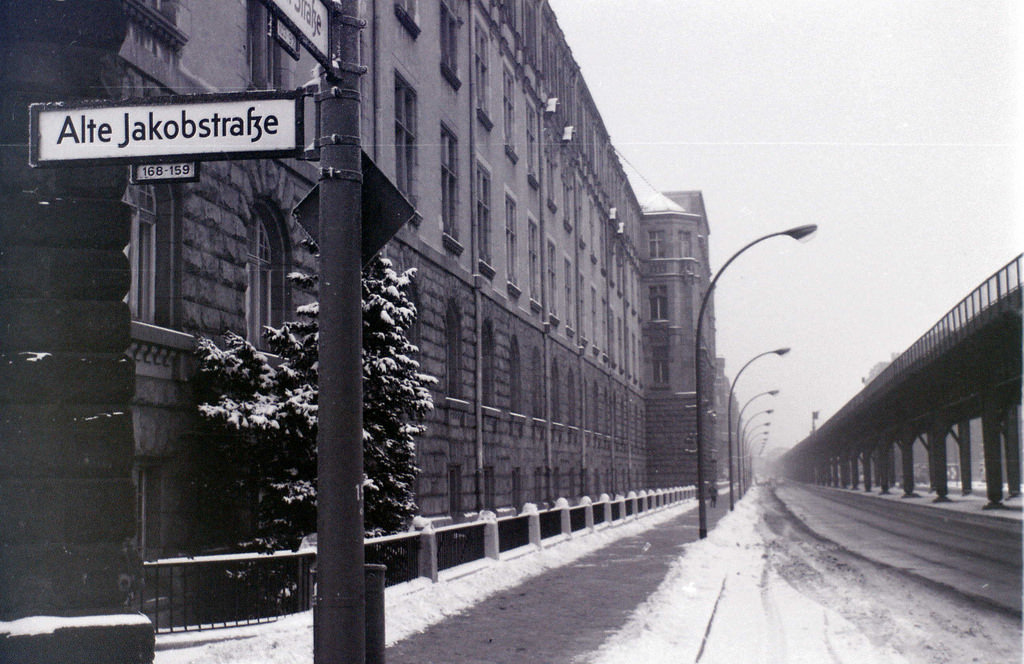
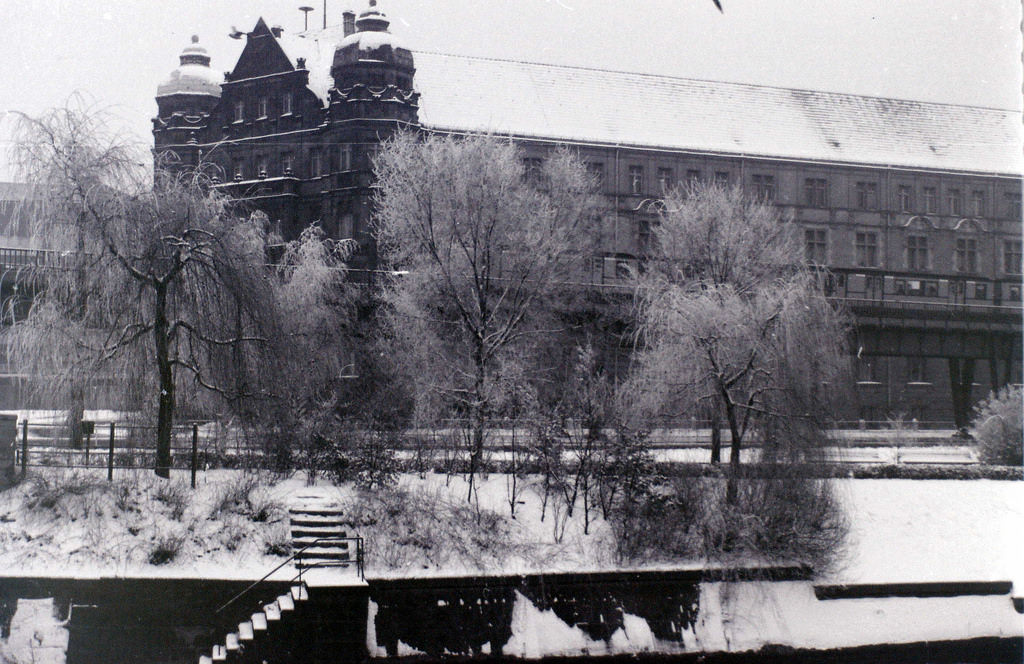
The Cold War shaped nearly every aspect of life in 1964 Berlin. American, British, and French forces operated freely in West Berlin under post-war agreements, while Soviet troops backed the East German state. The city was, in effect, the most visible front line of the ideological standoff gripping the entire world.
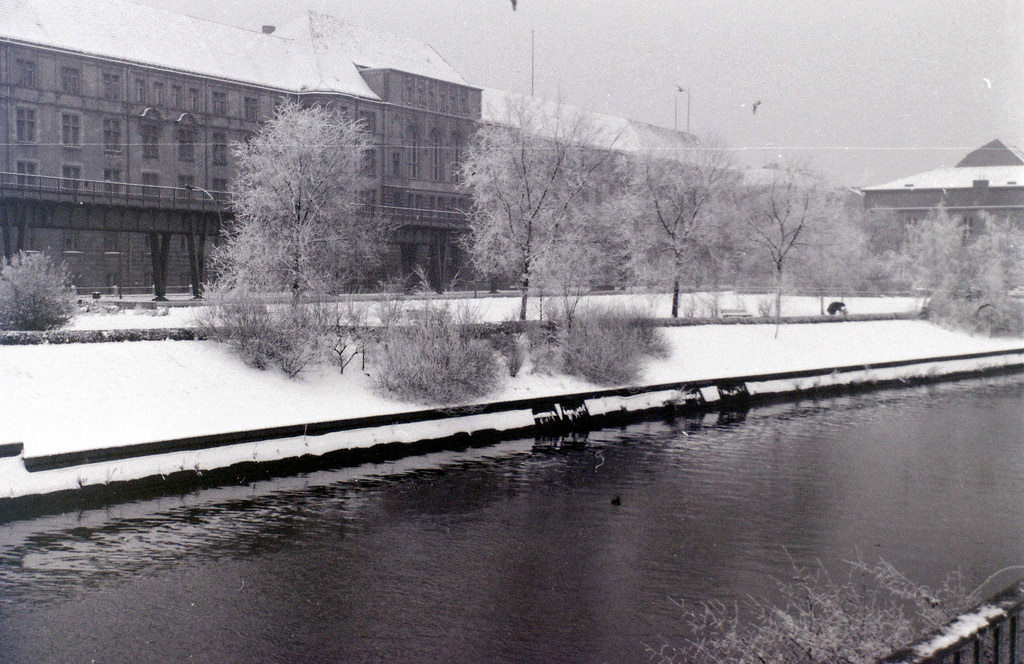
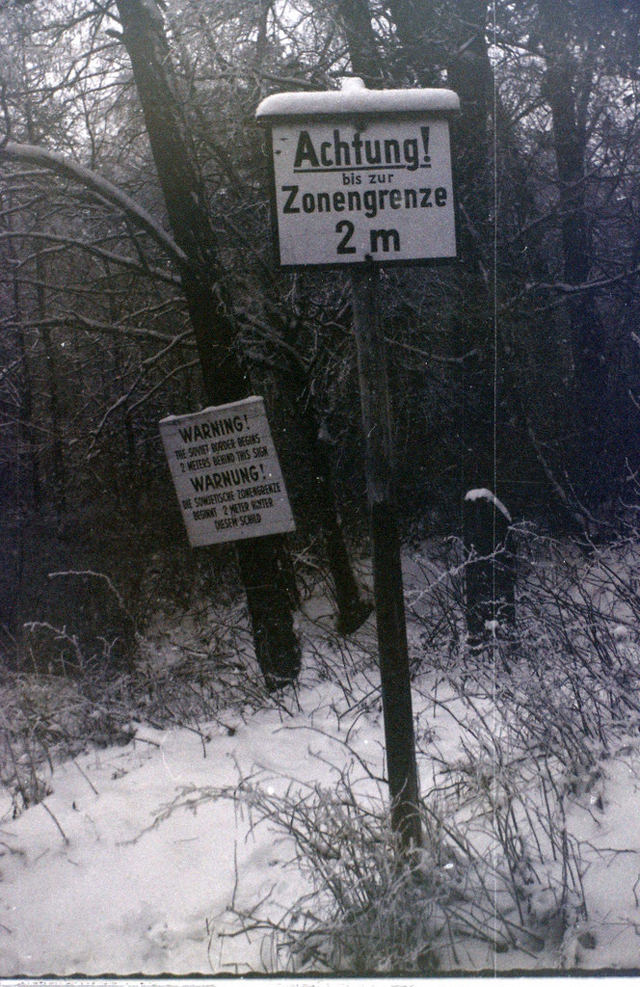
Winter light in Berlin is brief and pale. By mid-afternoon in December, darkness falls. That early nightfall gave the Christmas lights of West Berlin’s markets and storefronts extra drama, glowing against a black sky while temperatures dropped well below freezing.
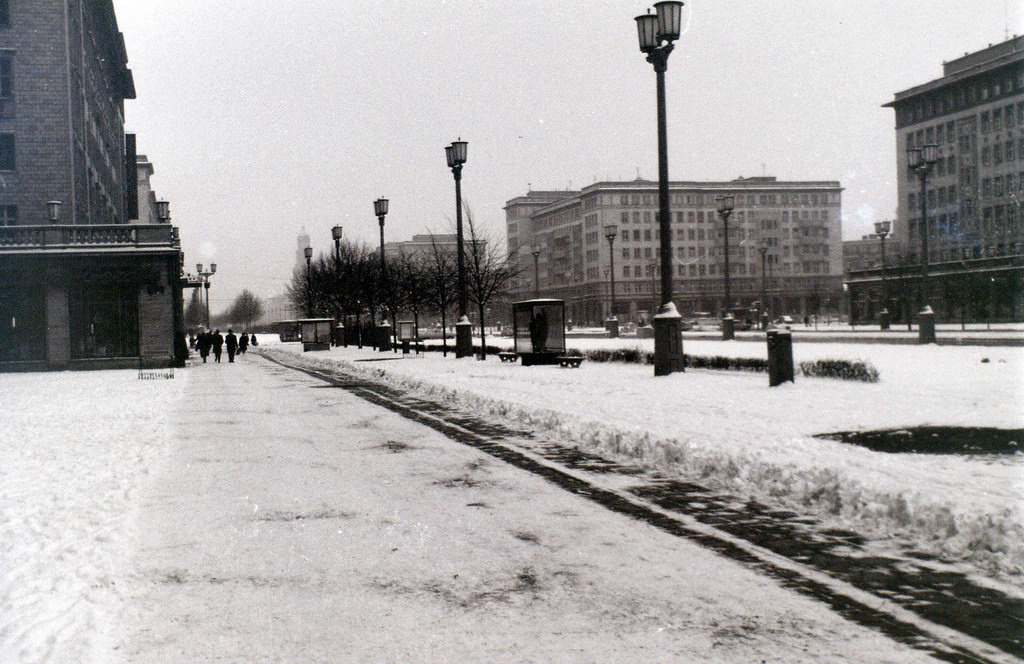
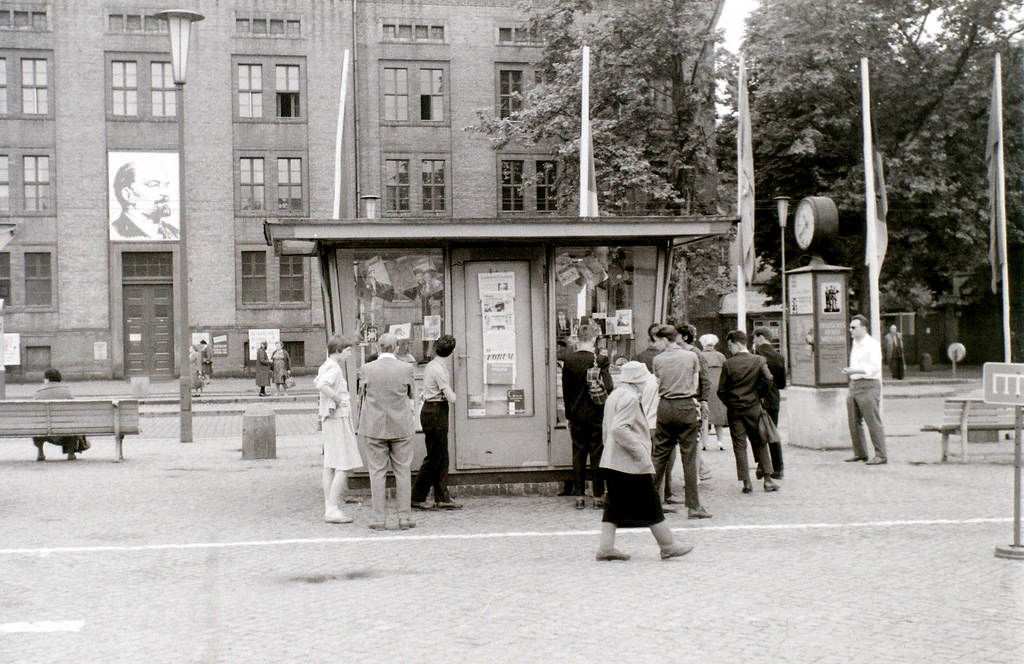
East Berlin’s main showpiece boulevard was Karl-Marx-Allee, a wide avenue lined with Soviet-style buildings constructed in the early 1950s. In winter, the broad street was exposed and windy, but the architecture made a deliberate statement about the power and permanence of the Socialist state.
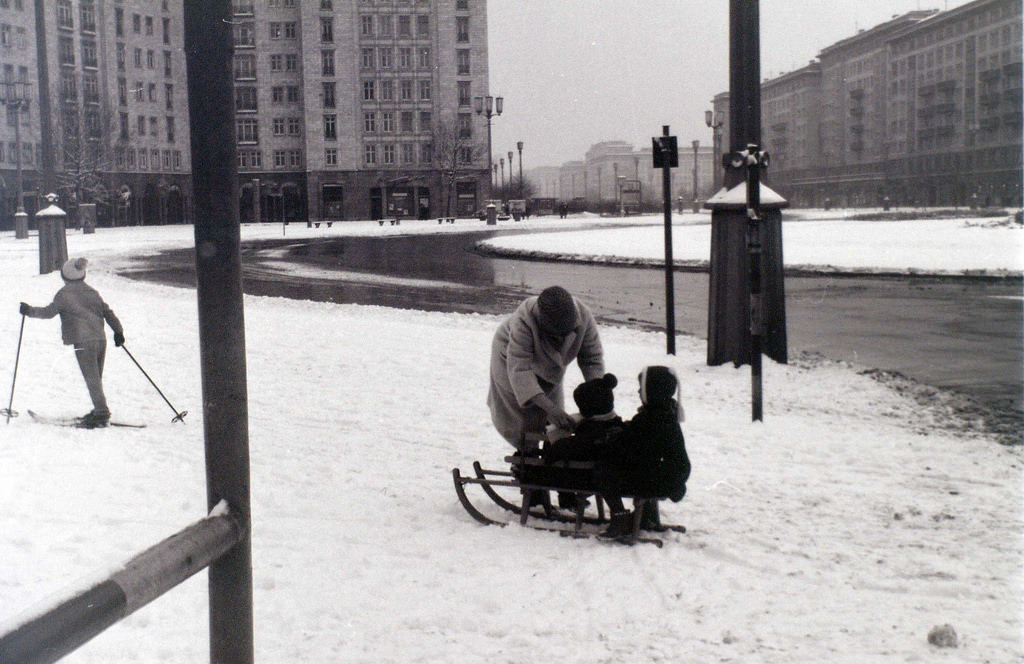
Children in both halves of the city shared certain winter experiences — building snowmen, sledding on park hills, and waiting for the holidays. Those moments existed largely outside politics, even if the world those children grew up in was defined by it.
These vintage photographs capture a Berlin that no longer exists in the same form. The Wall came down in 1989, and the city reunified. But in 1964, none of that was visible on the horizon. The divide was total, the Cold War was in full force, and two very different versions of the same city faced each other across a concrete barrier in the winter cold.