Hey There! Before You Go. 😧
Get the best vintage content straight into your inbox!

Don't worry, we don't spam

Against All Odds: The Battle of Stalingrad in Rare Photos, Where the Red Army Held the Line

The Battle of Stalingrad lasted from the summer of 1942 to February 2, 1943, and stands as one of the deadliest military confrontations in all of human history. Fought in and around the Soviet city of Stalingrad — now called Volgograd — the battle drew in millions of soldiers from both sides and left an estimated two million people killed, wounded, or captured. What began as a German push to seize a strategically vital city turned into a grinding, months-long nightmare of urban warfare, starvation, and extreme cold.
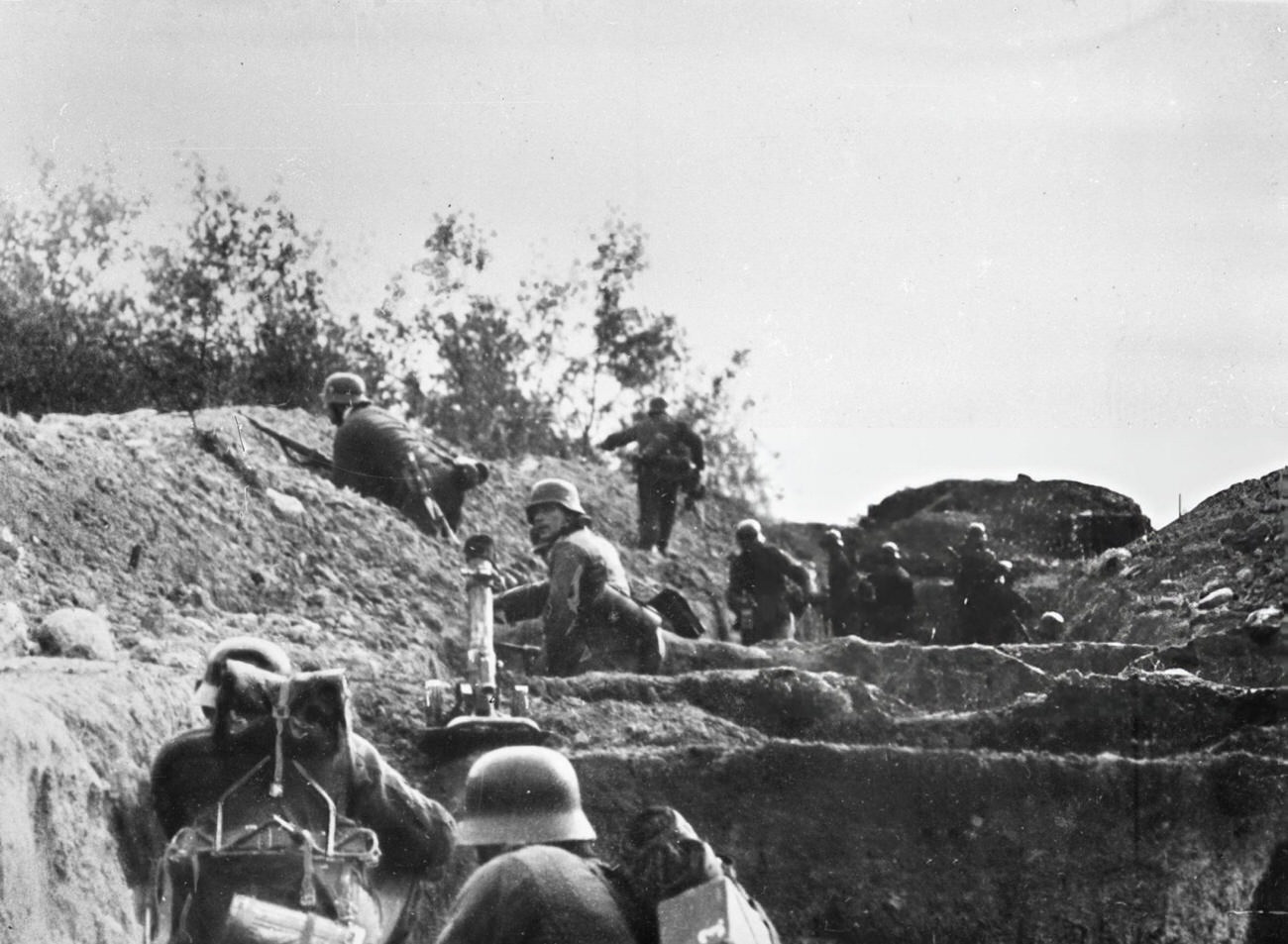
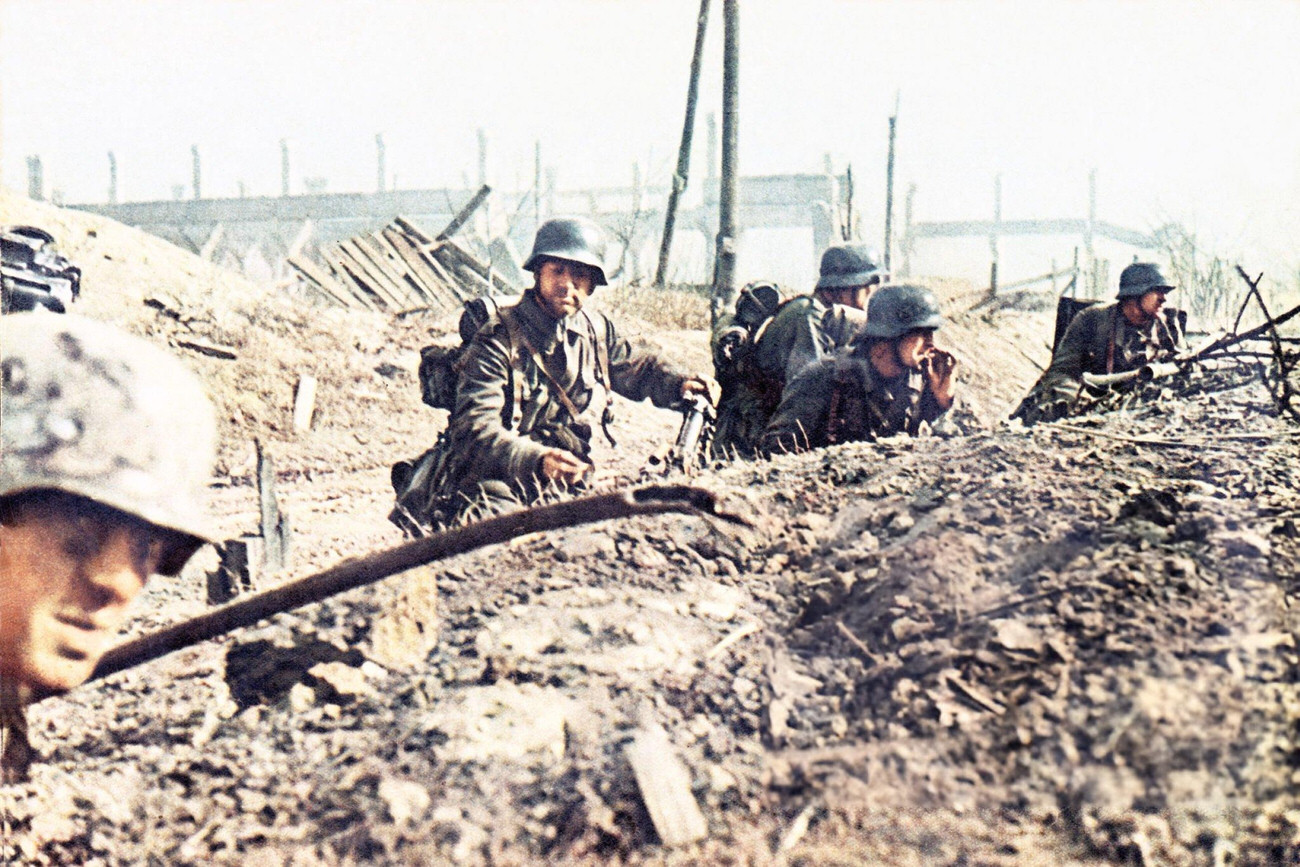
German soldiers in a trench during the Siege of Stalingrad, 1941.

By the summer of 1942, Nazi Germany had already swept across much of Europe. Following the launch of Operation Barbarossa in June 1941, German forces pushed deep into Soviet territory with speed and force. Adolf Hitler became fixated on Stalingrad for two reasons. First, the city bore the name of Soviet leader Joseph Stalin, making its capture a powerful symbolic prize. Second, Stalingrad sat on the western bank of the Volga River — a critical supply and transportation artery. Seizing it would sever Soviet logistics and open the door to the oil-rich Caucasus region to the south.
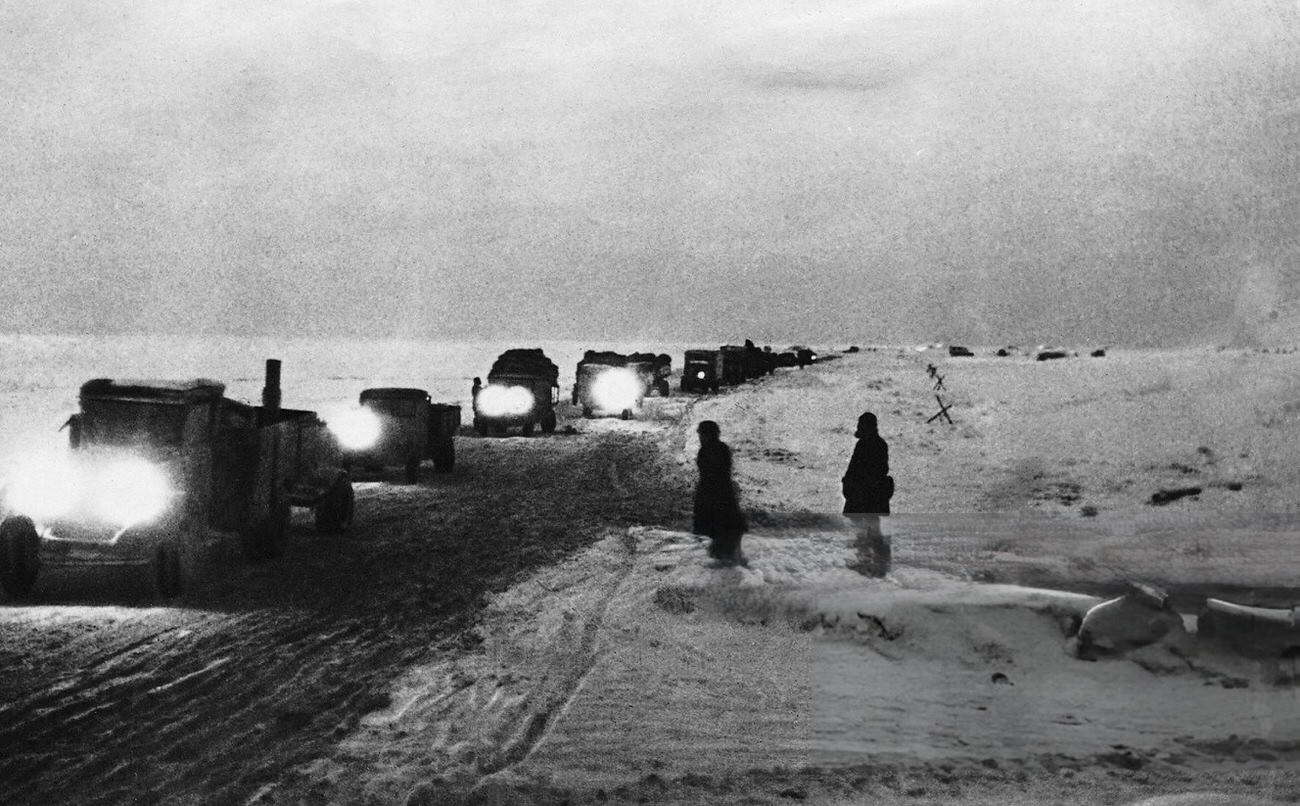
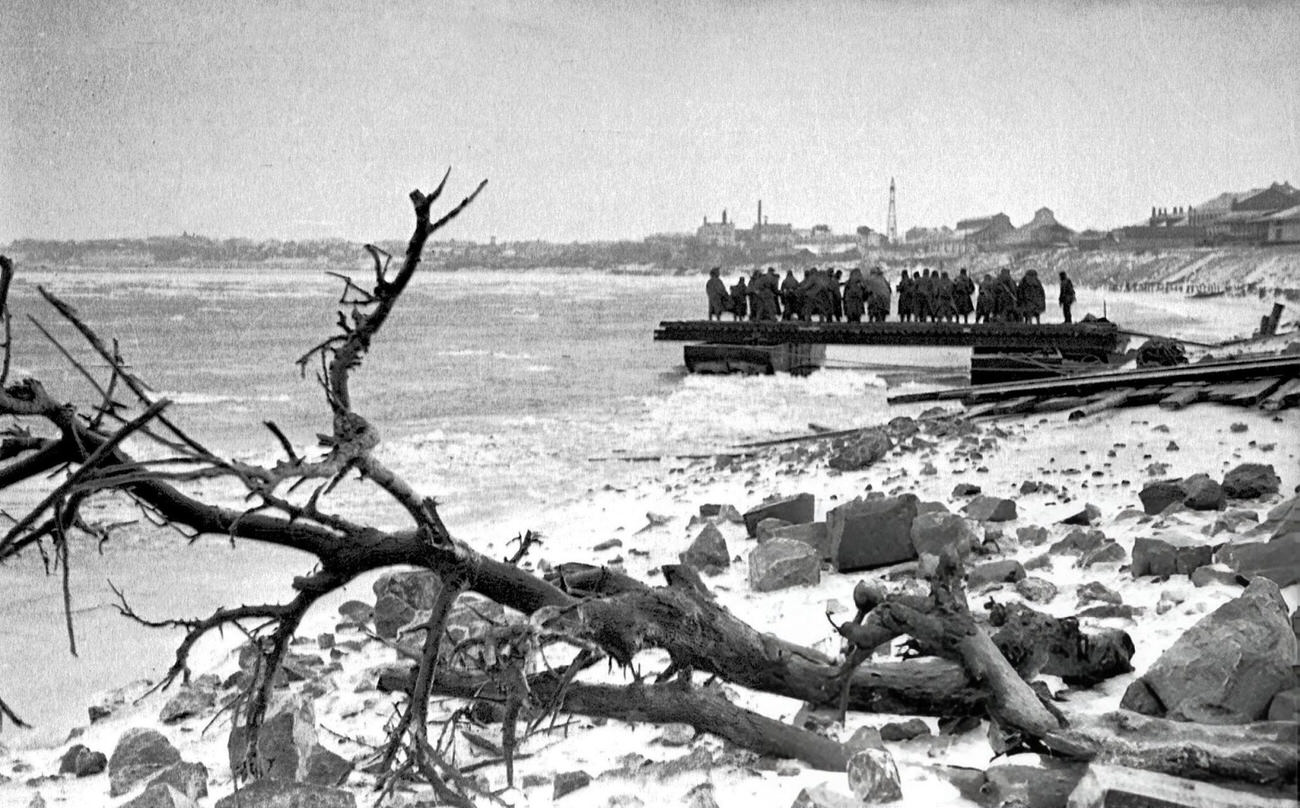
Russian units crossing the Lagoda lake during the winter battle, 1940s.

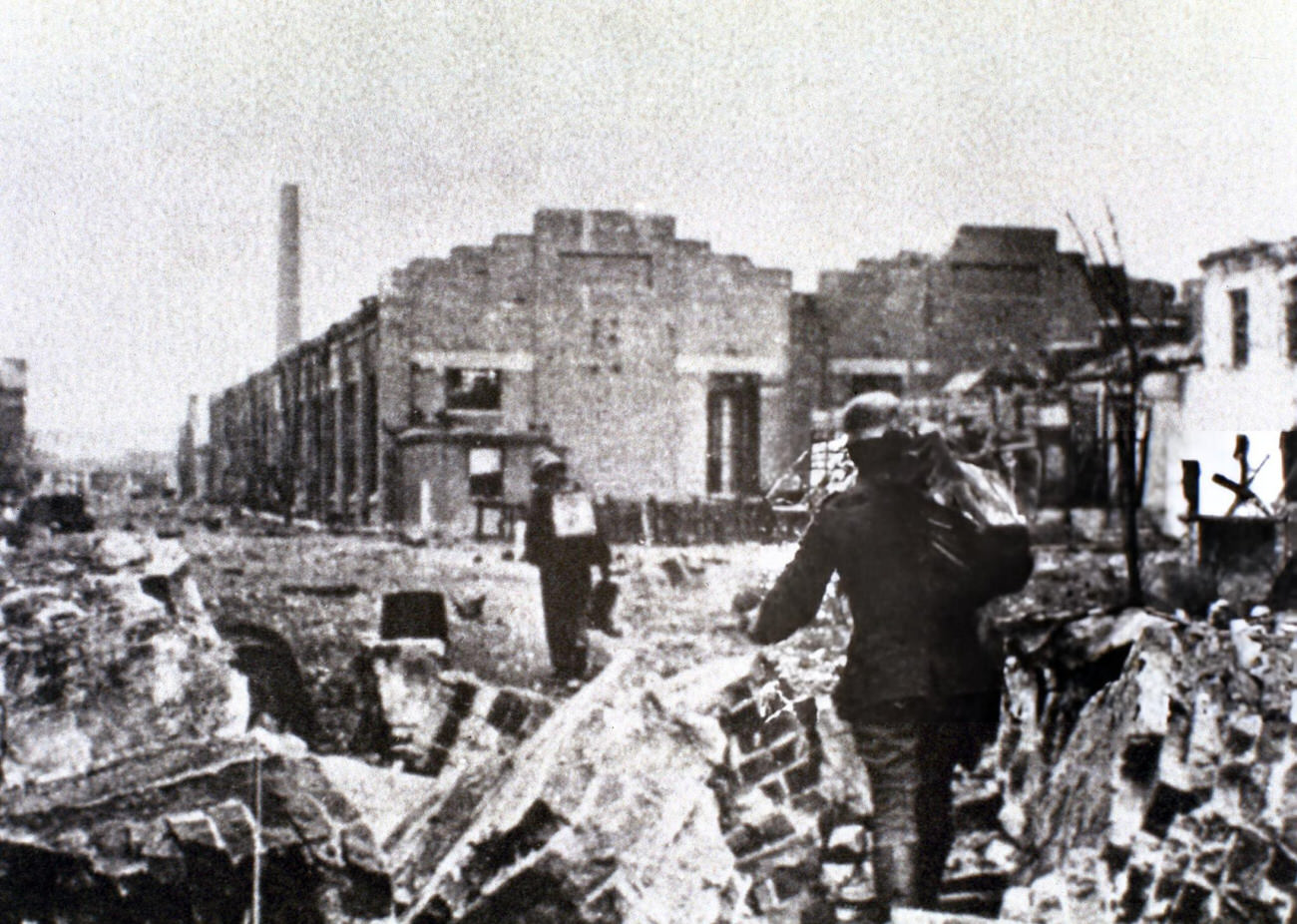
Hitler assigned the German Sixth Army, commanded by General Friedrich Paulus, the task of taking Stalingrad. In the early weeks, German forces advanced rapidly across the open Soviet steppe, their tanks, aircraft, and artillery overwhelming whatever resistance they encountered. The Luftwaffe launched massive bombing raids on the city before German ground troops even arrived at its outskirts. Tens of thousands of civilians were killed in those early raids. Entire neighborhoods were flattened. By the time German soldiers entered Stalingrad, much of it was already rubble.
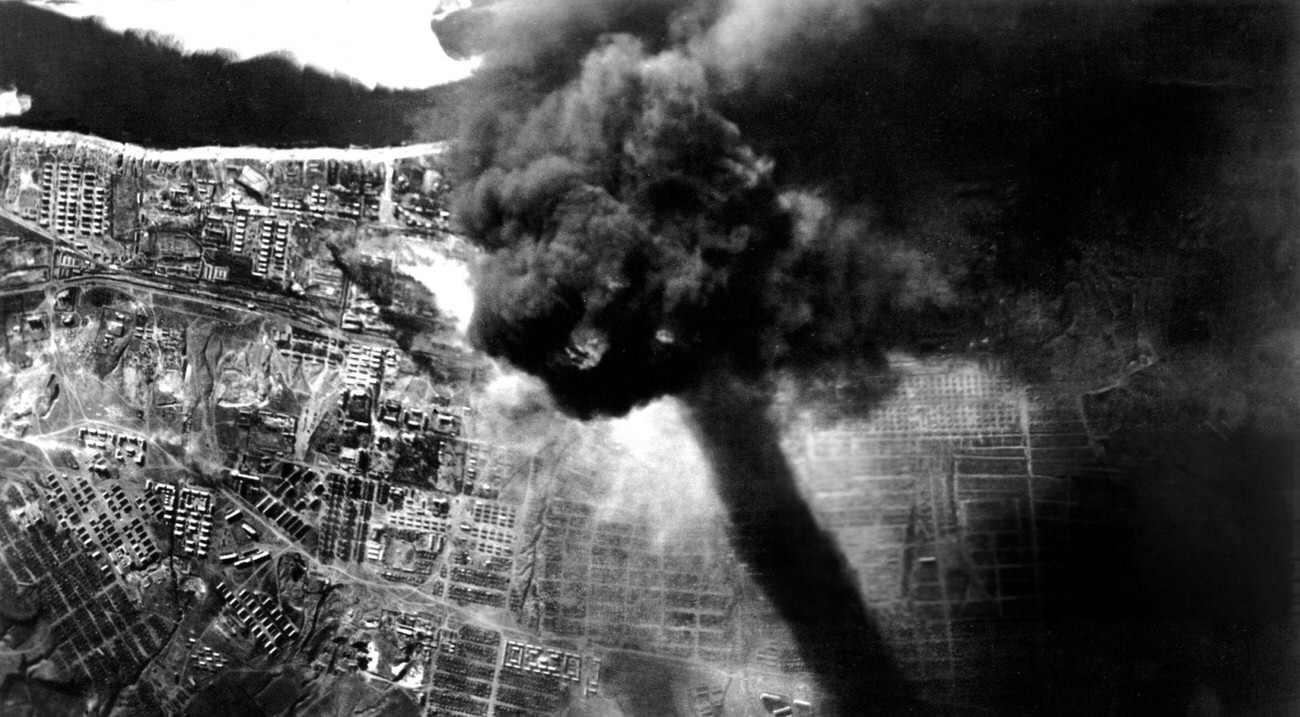
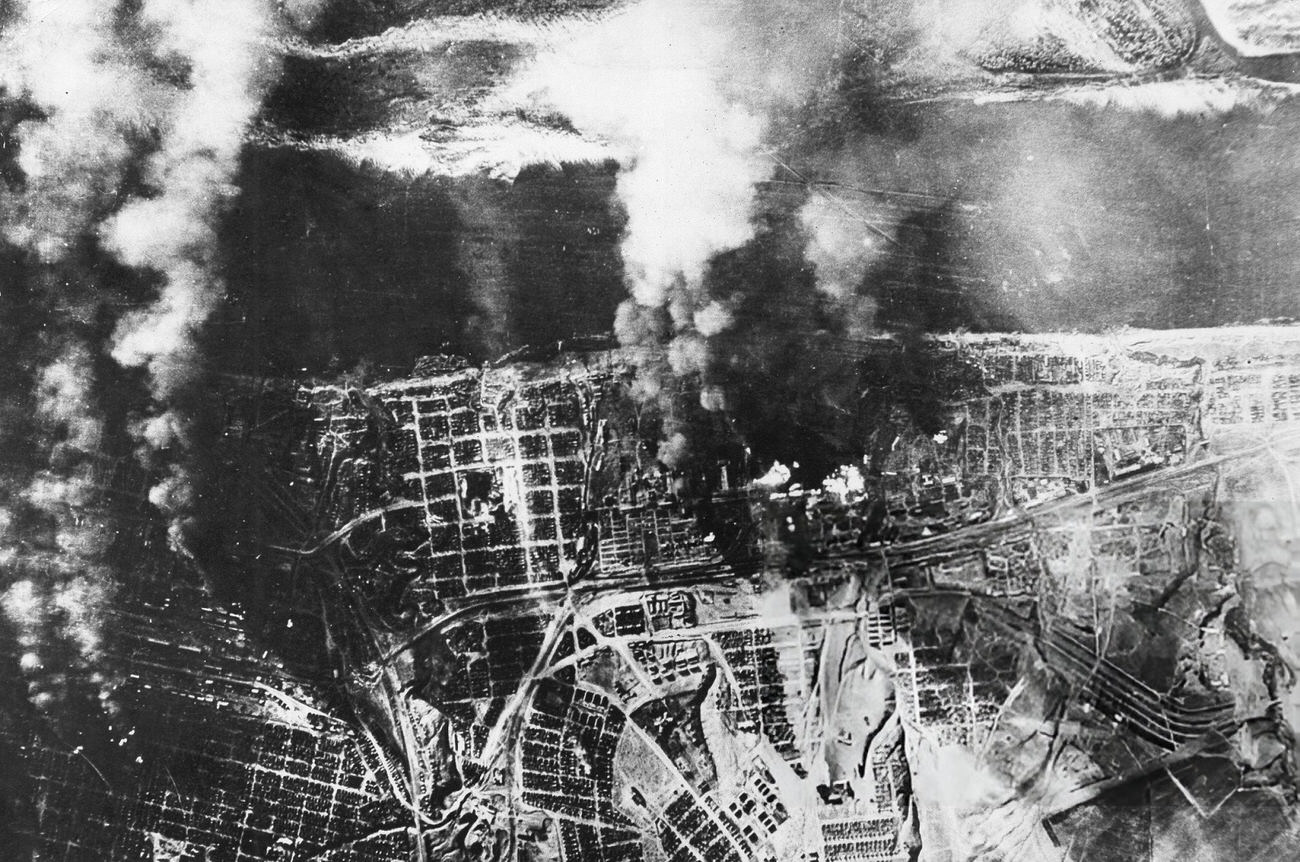
A view of smoke clouds in Stalingrad from a fire set off by German bombing, 1942.
Aerial view of Stalingrad during a German military air raid, 1942.

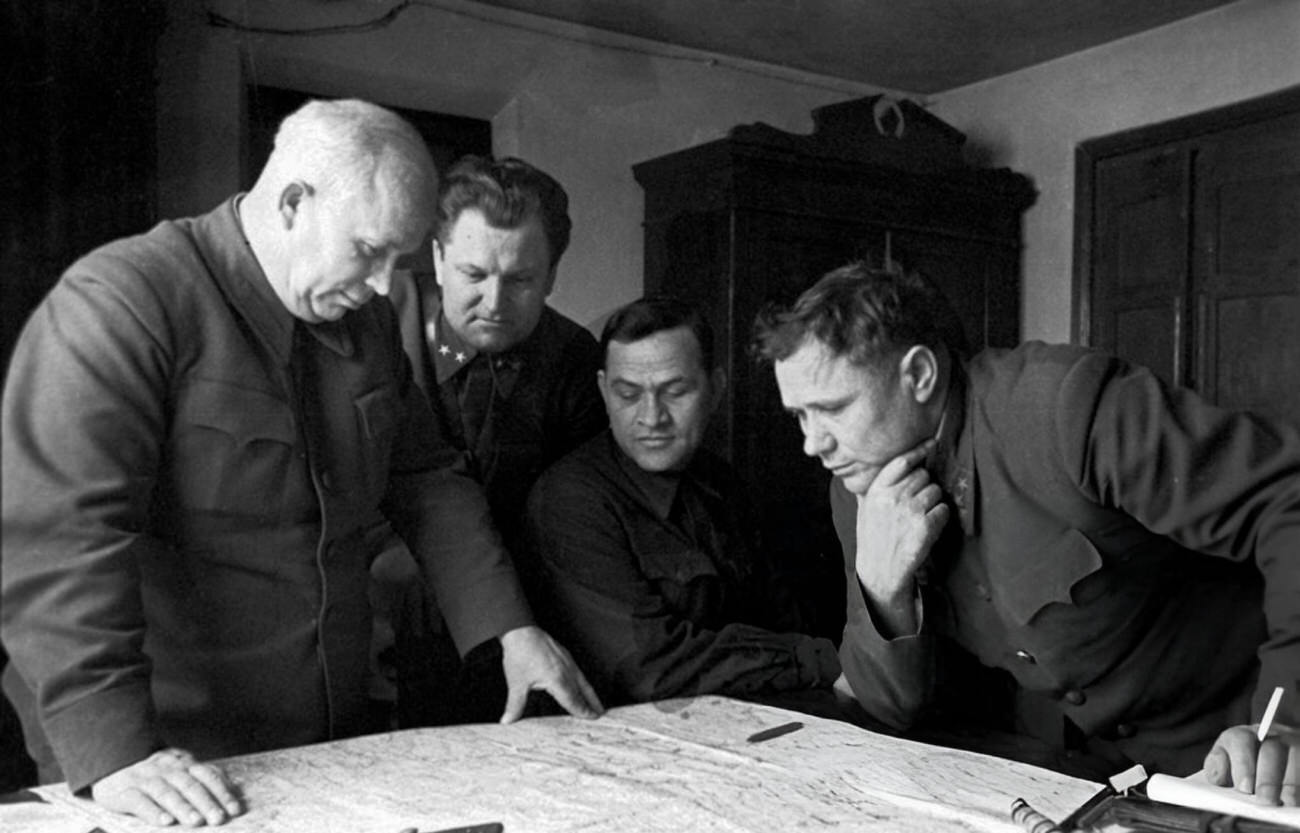
Stalin’s response was direct and uncompromising. He issued Order No. 227, known by its blunt phrase: “Not one step back.” Retreat was forbidden. The Red Army was to hold Stalingrad regardless of cost. Generals Vasily Chuikov and Georgy Zhukov coordinated the defense, and Soviet troops made a calculated decision to use the city’s destruction to their advantage. Shattered factories, collapsed apartment blocks, and cratered streets became fortified defensive positions. Snipers operated from the upper floors of gutted buildings. Machine gun nests were dug into basements and rubble heaps.
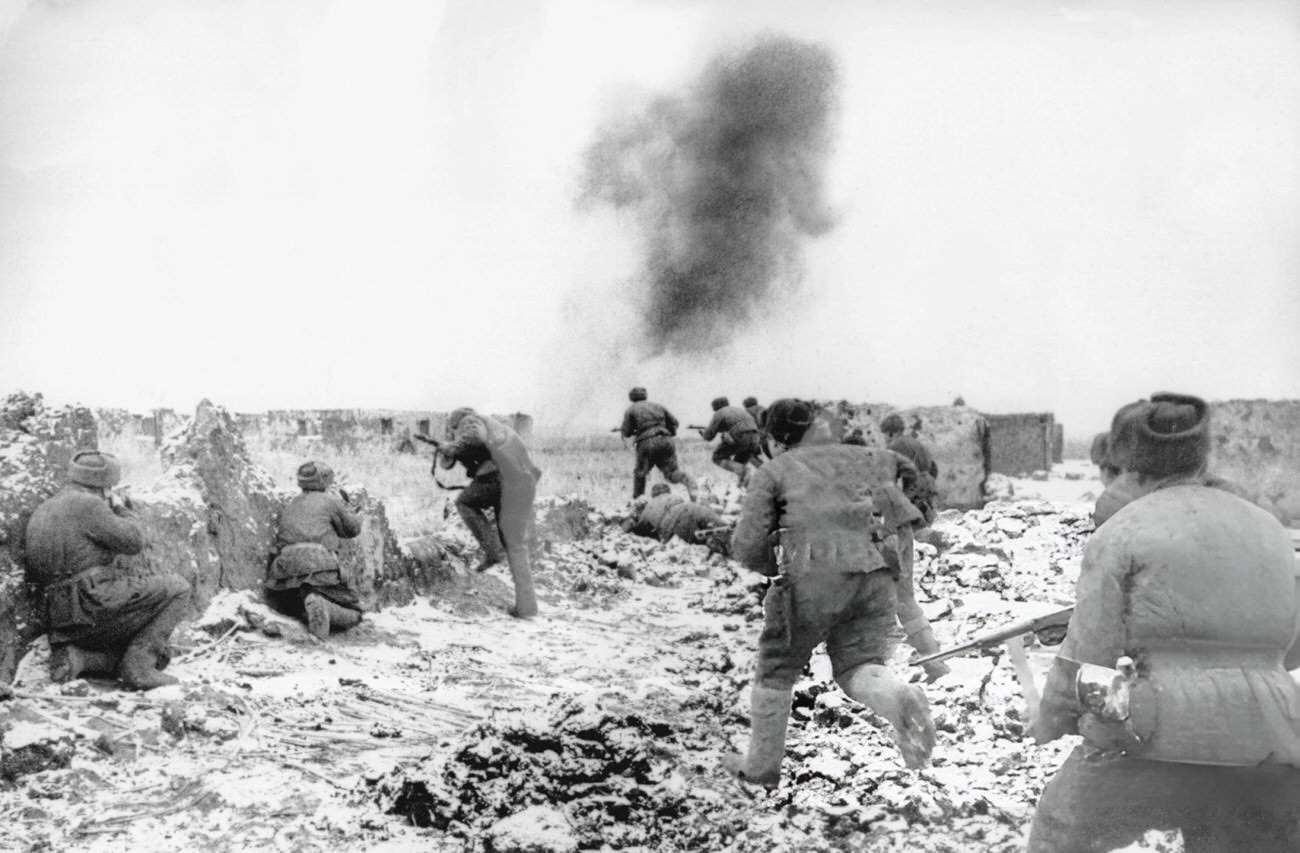
Soviet troops fighting for Stalingrad, 1943.

This style of fighting — cramped, chaotic, and brutally close — rendered much of Germany’s conventional military strength useless. Tanks had little room to maneuver in the narrow, debris-choked streets. Air support became difficult to coordinate when German and Soviet troops were separated by only a few meters of rubble. German soldiers were forced to fight building by building, floor by floor, and sometimes room by room. They called it “Rattenkrieg” — war of the rats. Progress was measured in meters and paid for in lives.
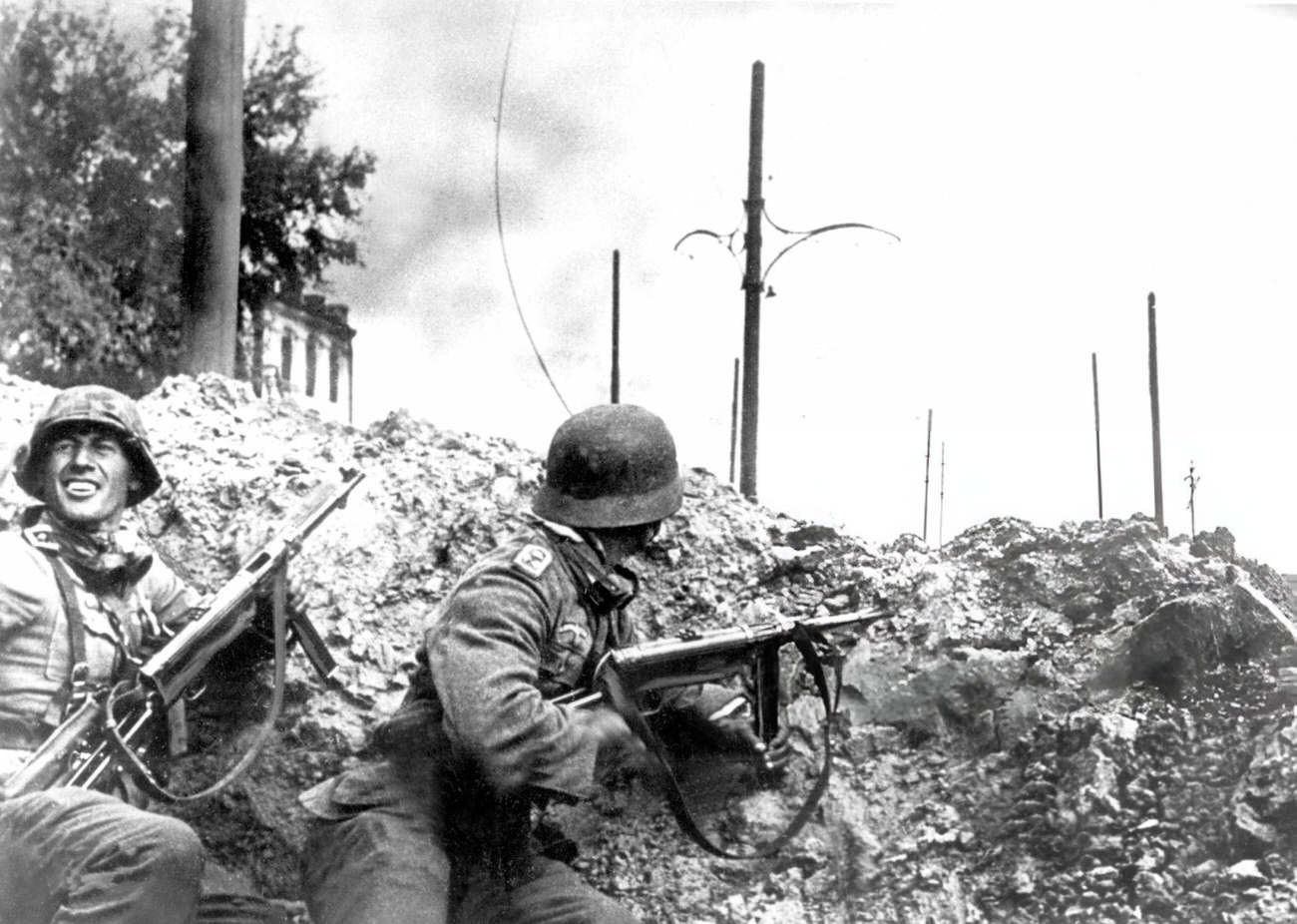
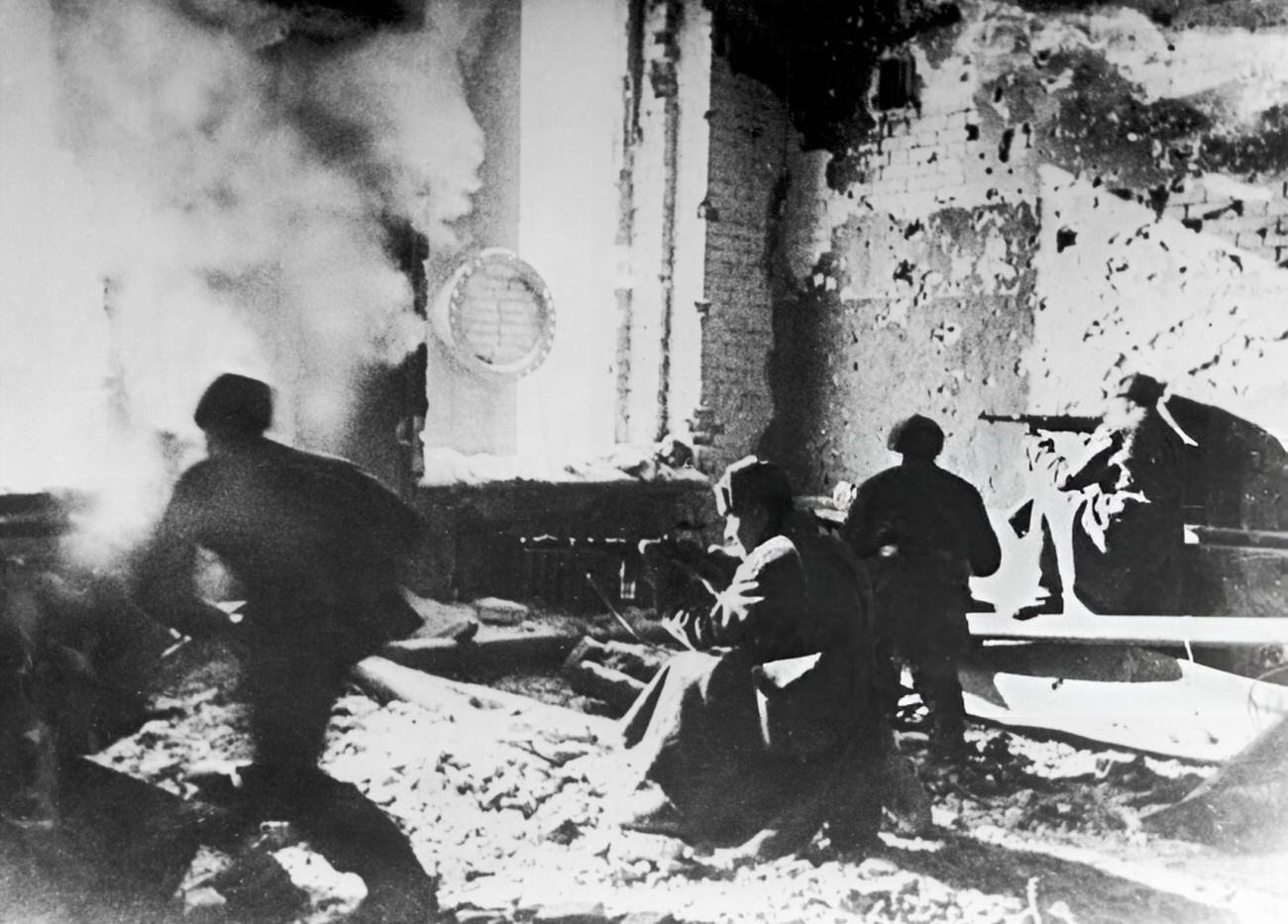
German infantry in street fights for Stalingrad, 1943.
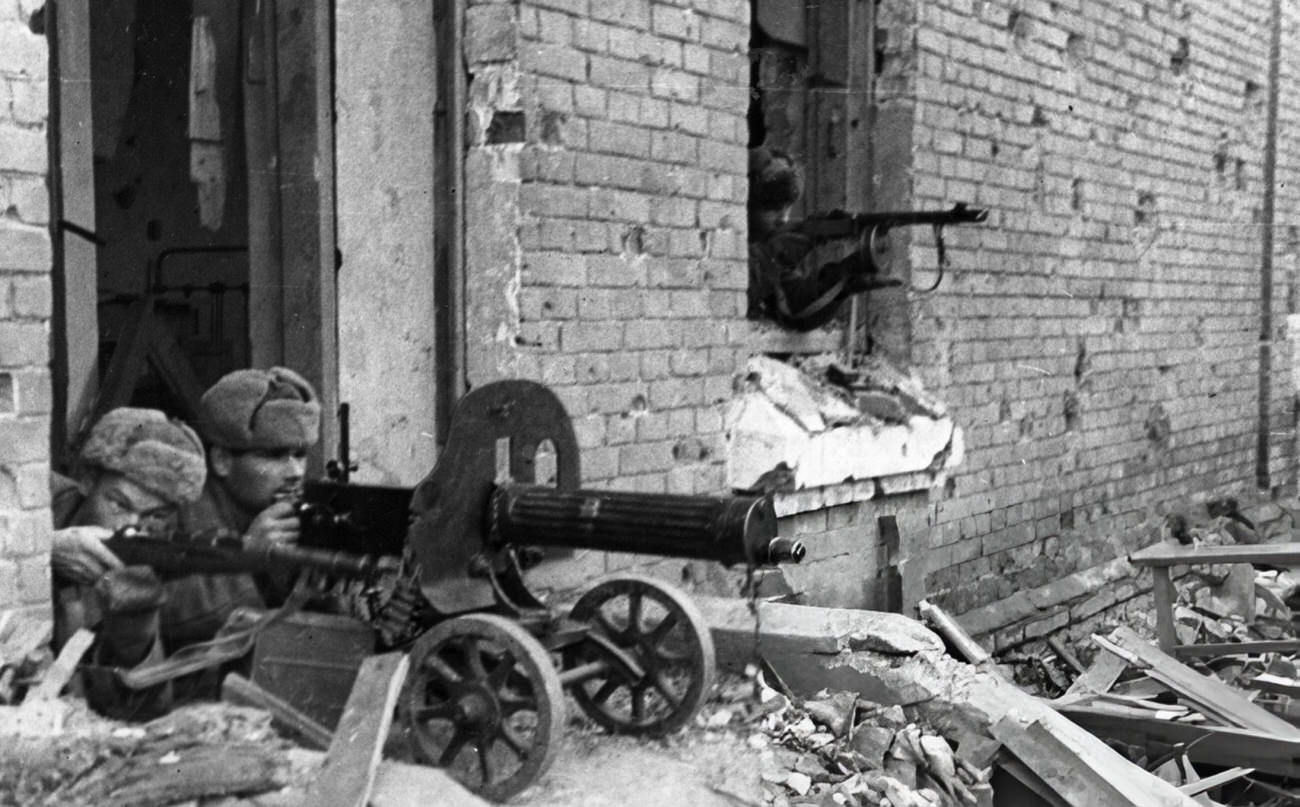
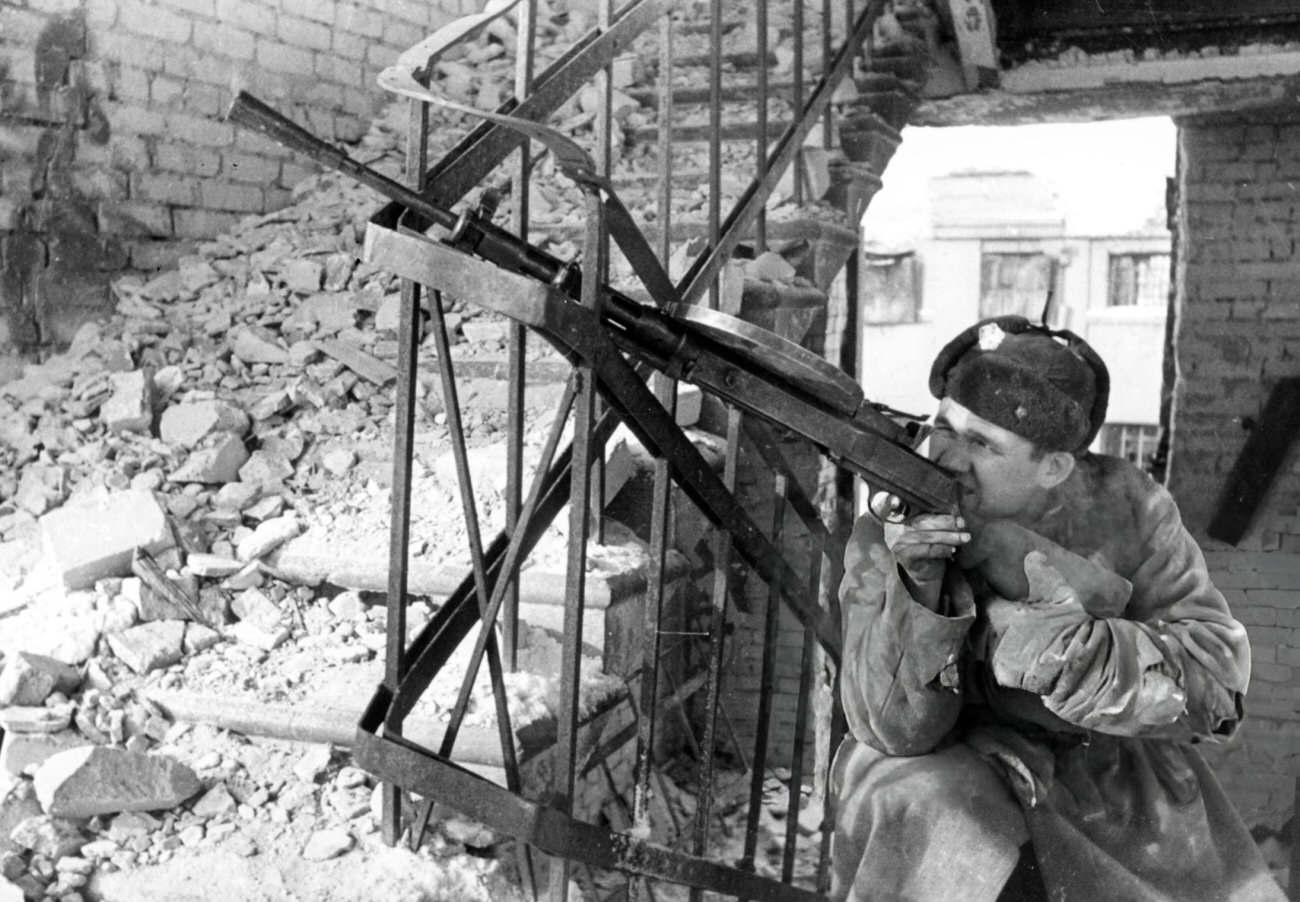
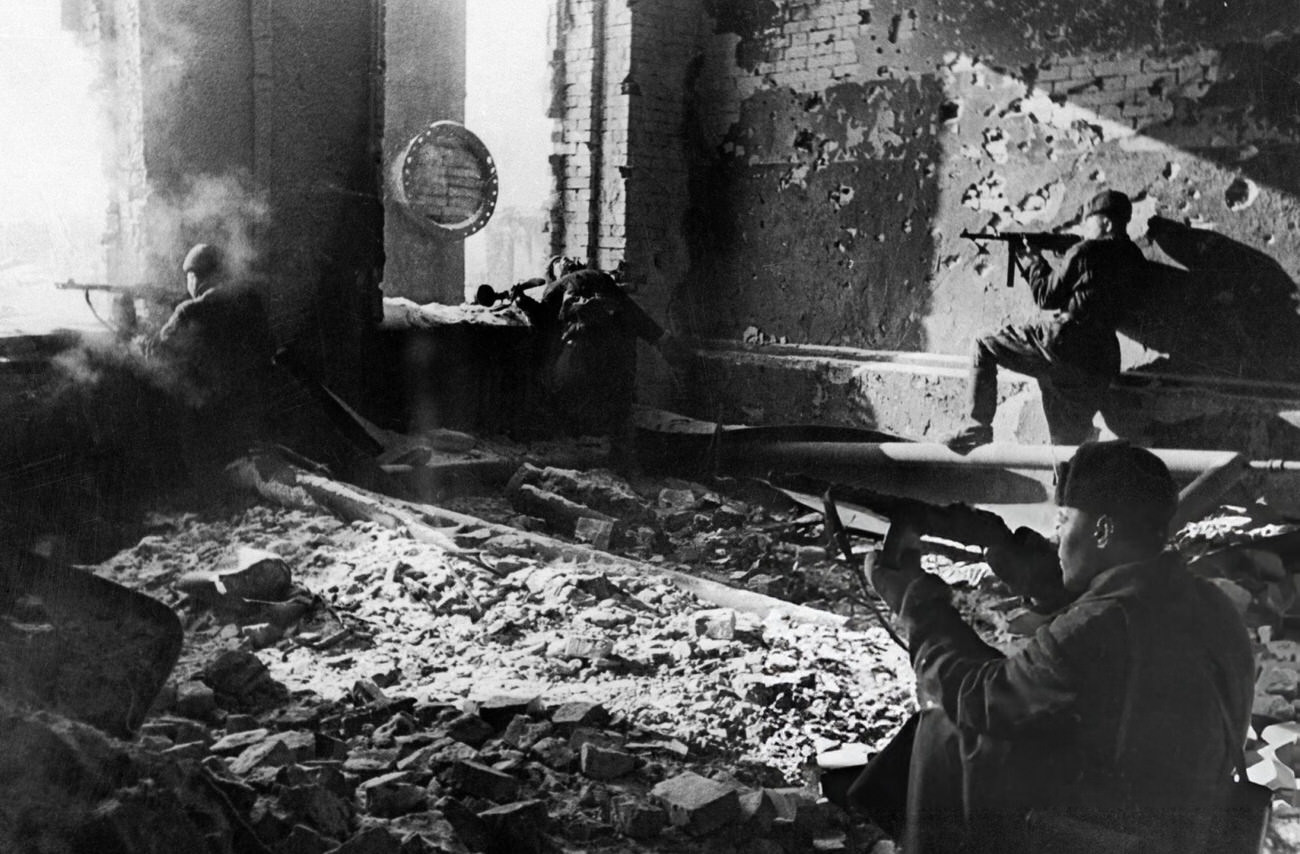
Russian soldiers target the Germans from within an abandoned building during the Battle of Stalingrad, 1942.

The German bombing of Stalingrad created a desperate situation for civilians. Large-scale evacuation never happened, and many residents remained trapped in the city as the fighting closed in around them. Those who stayed lived in the ruins of their own homes, sharing cellars and rubble with soldiers. Food and clean water were nearly impossible to find. As the German encirclement tightened, supply lines into the city were cut, and people survived on whatever scraps they could locate — grass, rats, scraps of leather.
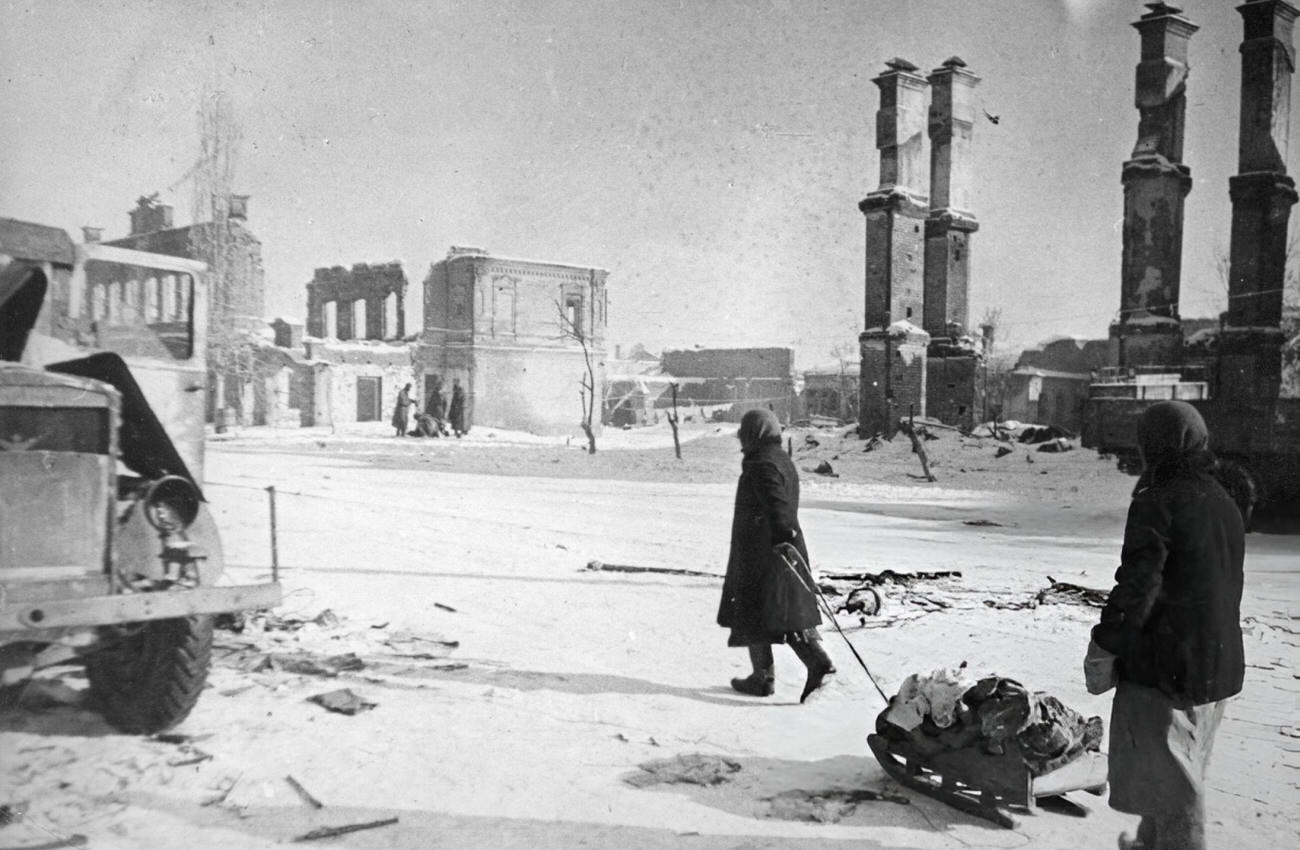
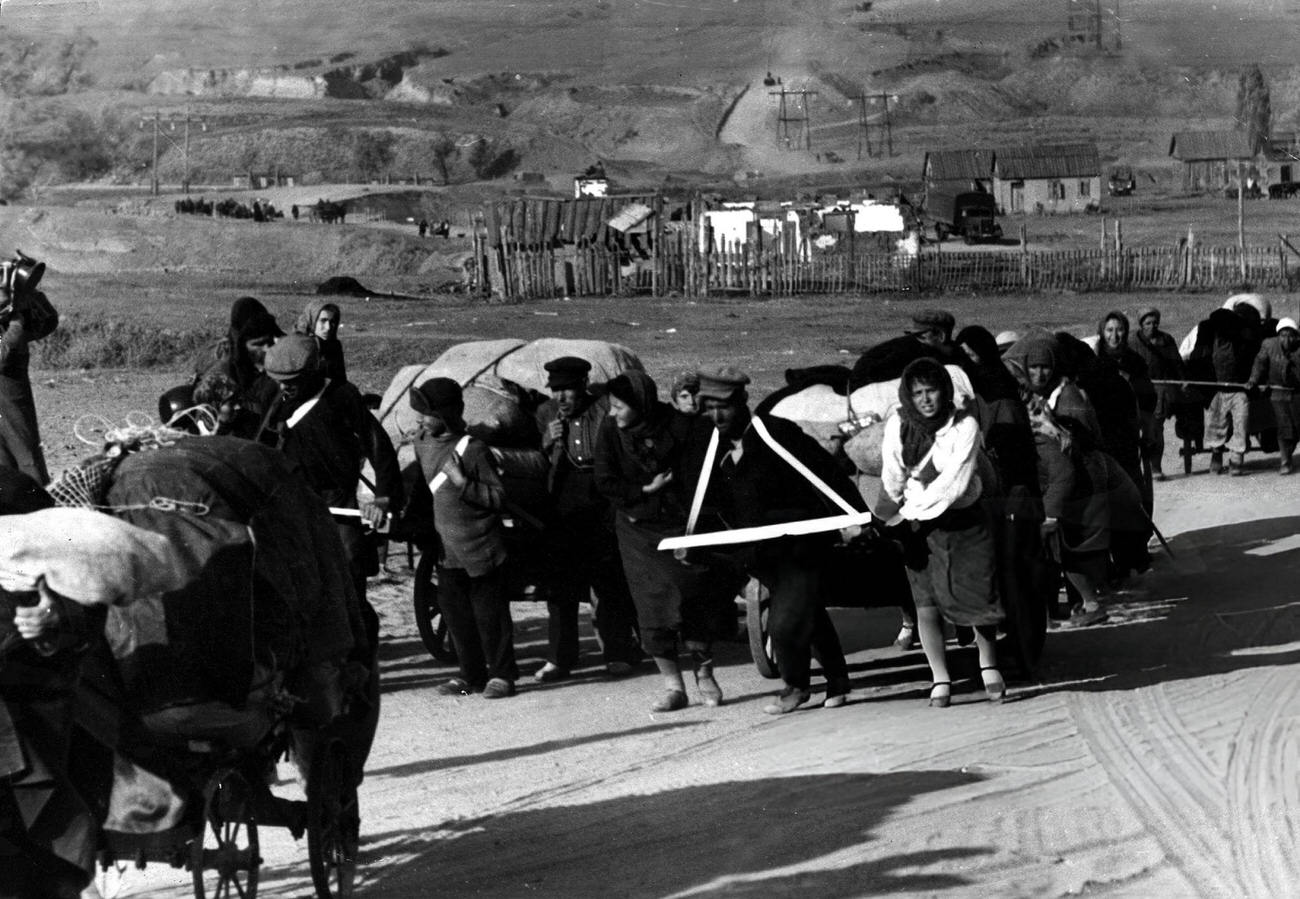
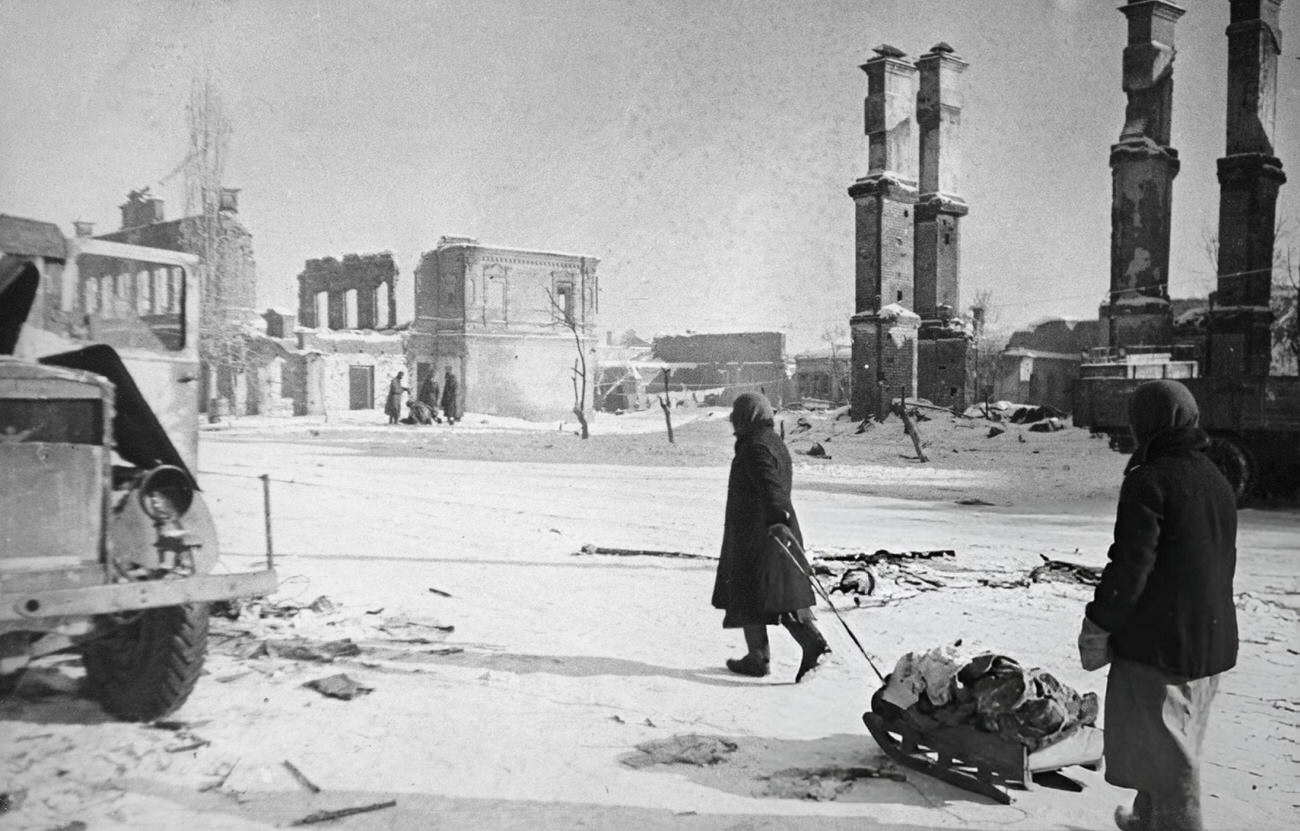
A handful of people remained on Stalingrad's streets during its siege by the Nazis, 1942.
A handful of people remained on Stalingrad’s streets during its siege by the Nazis, 1942.
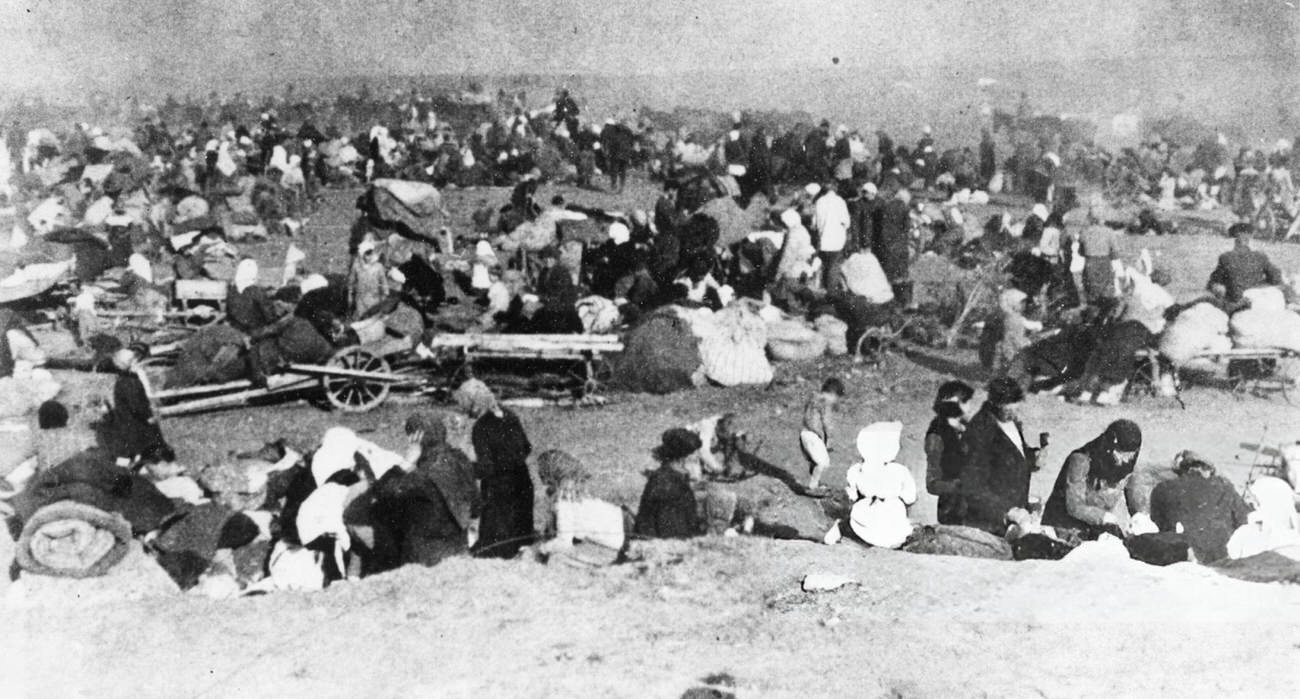
Refugees leaving Stalingrad with hand drawn cars filled with their possessions, 1942.
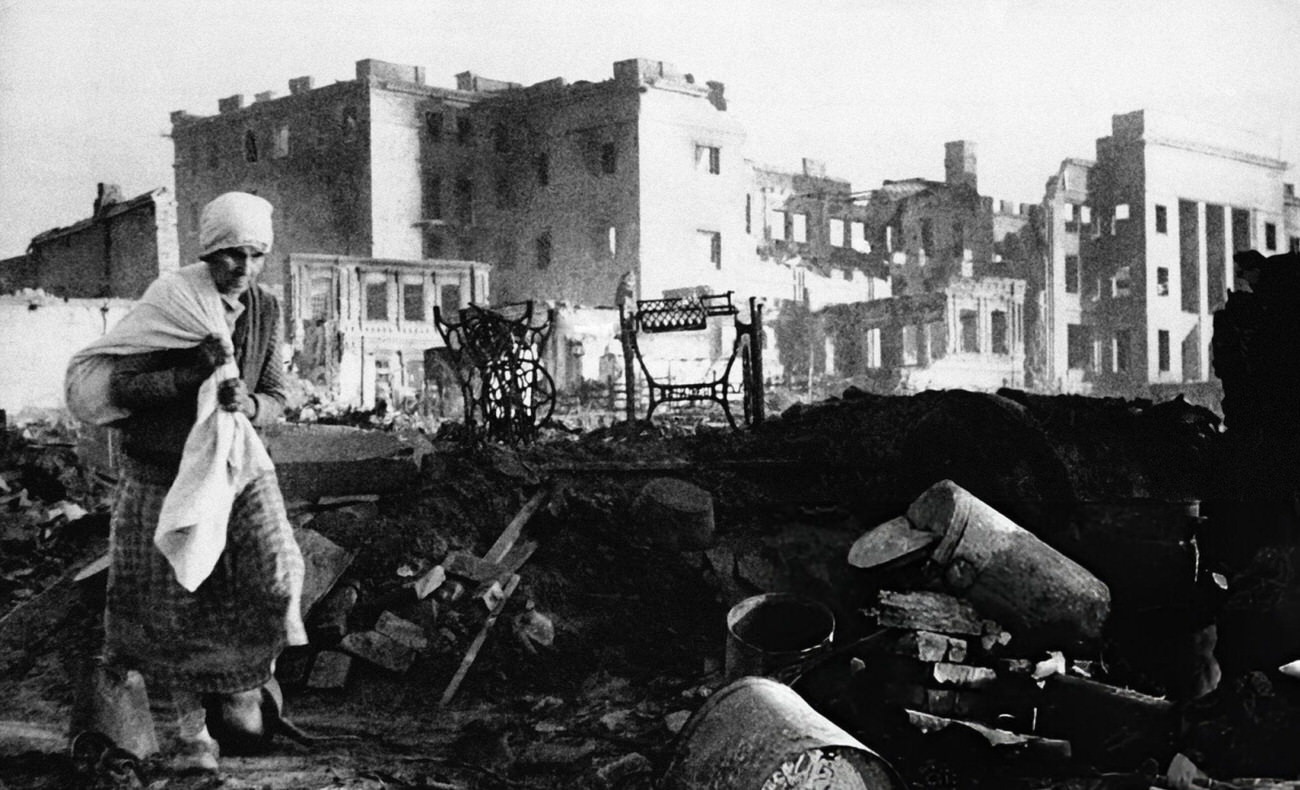
A woman crossing the ruins of Stalingrad, 1942.

Despite the horror, Stalingrad’s remaining workforce kept producing. Factories that had been partially destroyed by bombs continued operating. Workers — many of them women, elderly men, and teenagers — worked continuous shifts under the threat of German artillery and air raids. They built tanks and manufactured ammunition for the soldiers fighting just outside the factory walls. Across the broader Soviet Union, civilians donated jewelry, clothing, and whatever money they had to fund the war effort. Farmers gave food despite widespread shortages.
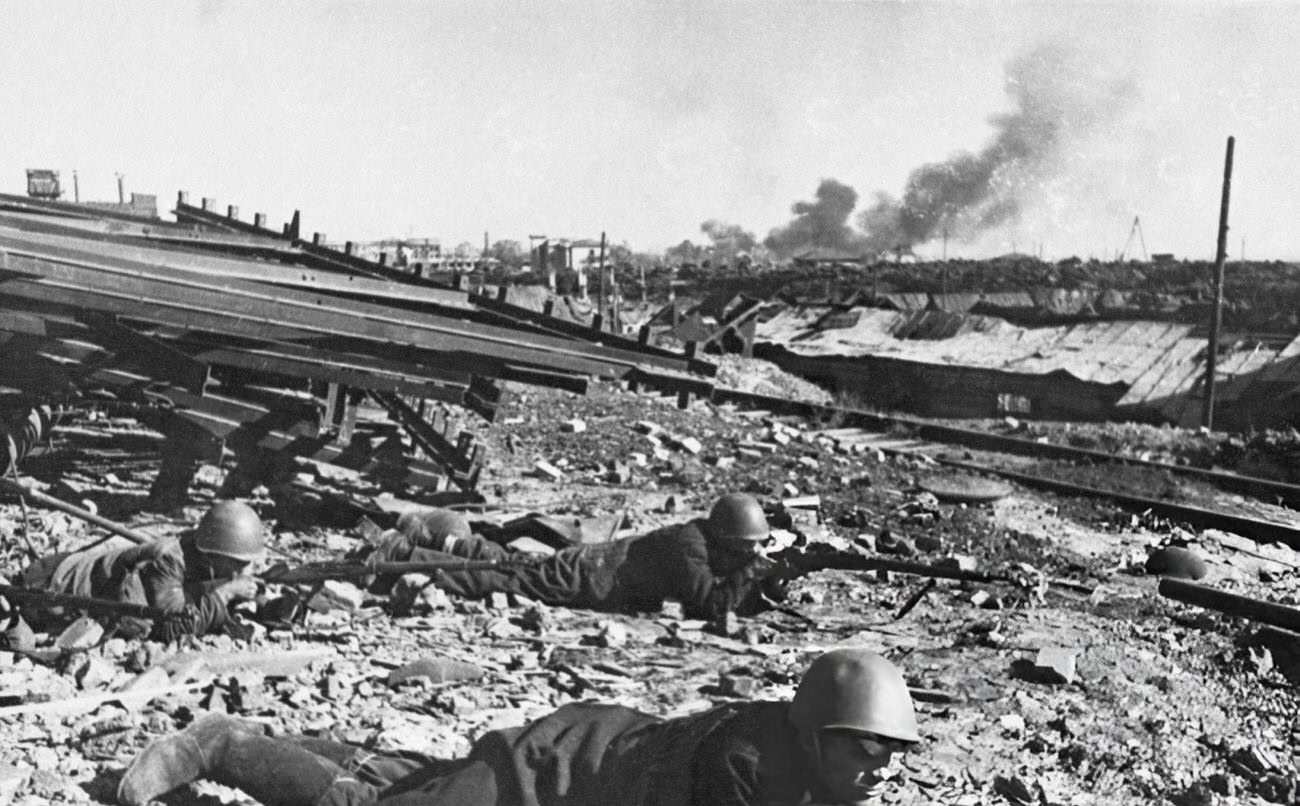
Members of a worker's battalion defend their plant from the Nazi onslaughts on the outskirts of Stalingrad, 1942.
Members of a worker’s battalion defend their plant from the Nazi onslaughts on the outskirts of Stalingrad, 1942.
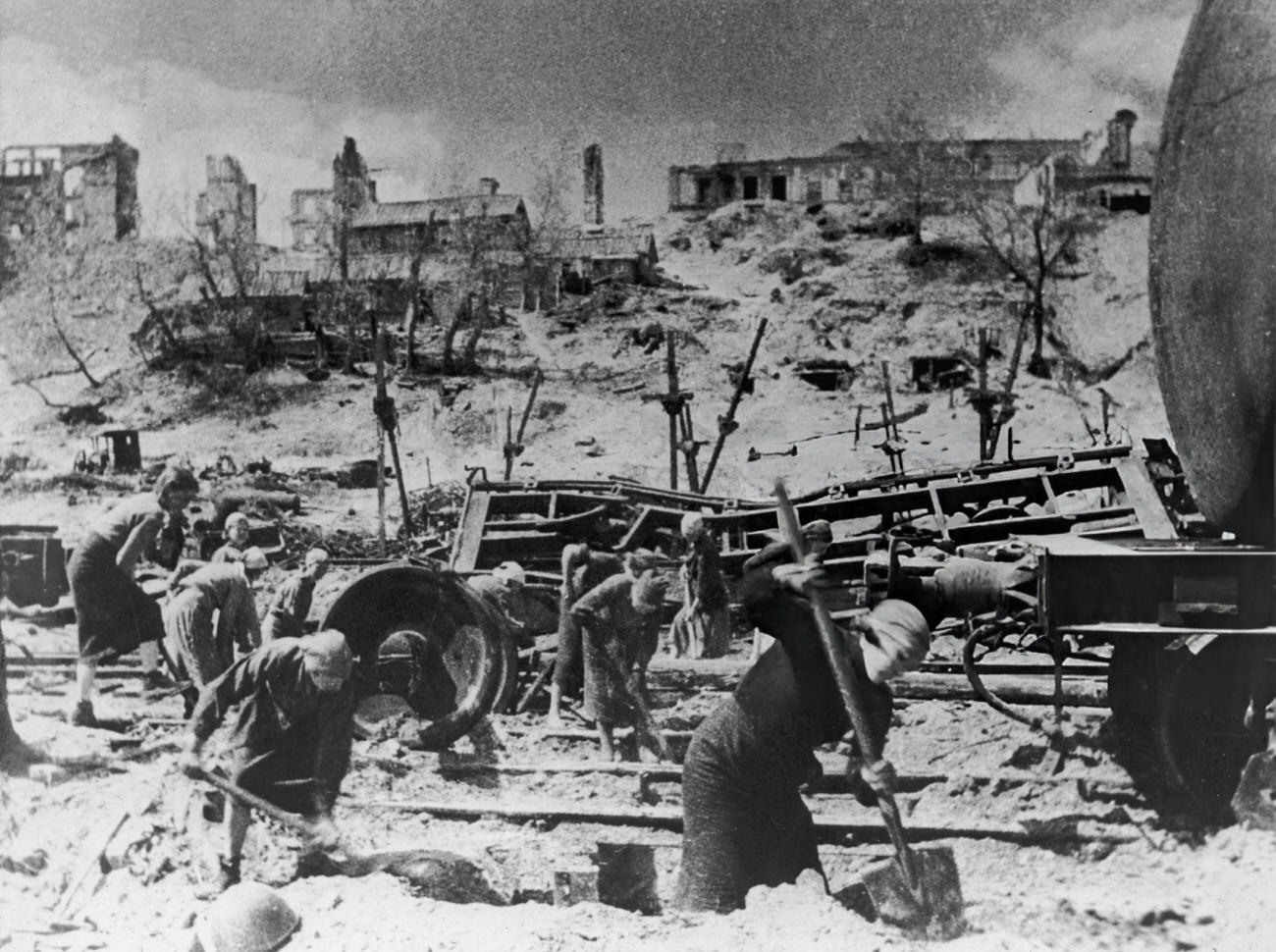
Women digging near damaged train tracks during the Battle of Stalingrad, 1942.

The Nazi forces advancing through Stalingrad committed systematic atrocities. Soviet prisoners of war and civilians suspected of supporting the Red Army were executed — some shot, others tortured. The Nazis’ racial ideology cast Soviet people as subhuman, which translated directly into how German soldiers treated those they captured or encountered. Hunger was also weaponized deliberately. By cutting off supplies to the city, German command intended to starve the population into submission alongside the defenders.
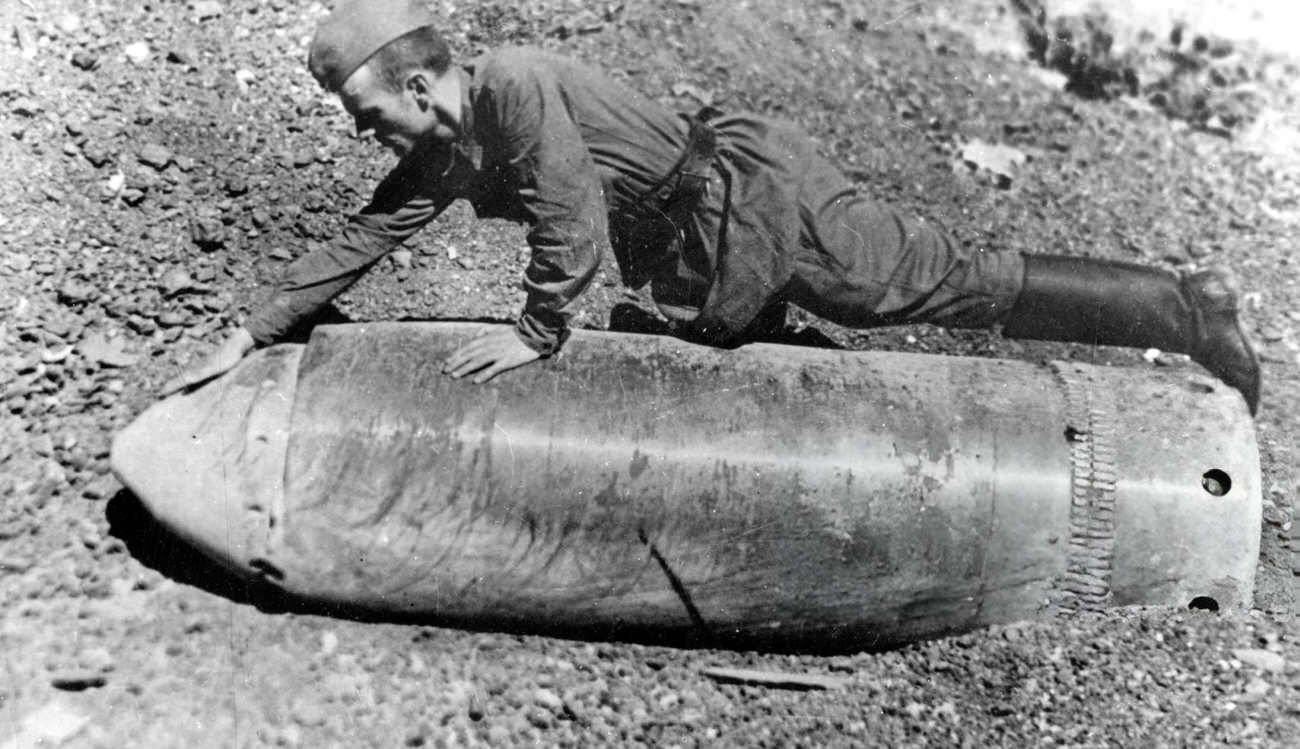
A Soviet soldier examines a huge-calibre projectile fired at Stalingrad by the Germans, 1942.
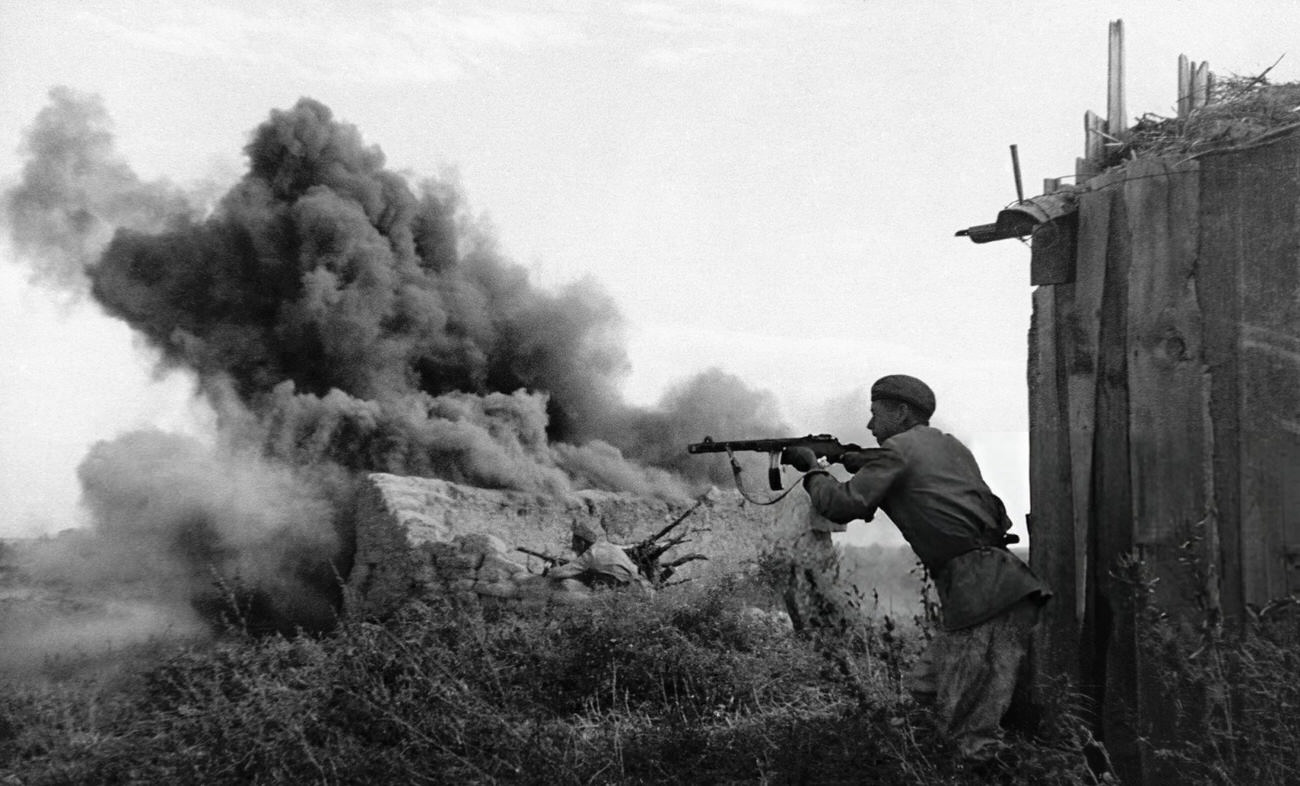
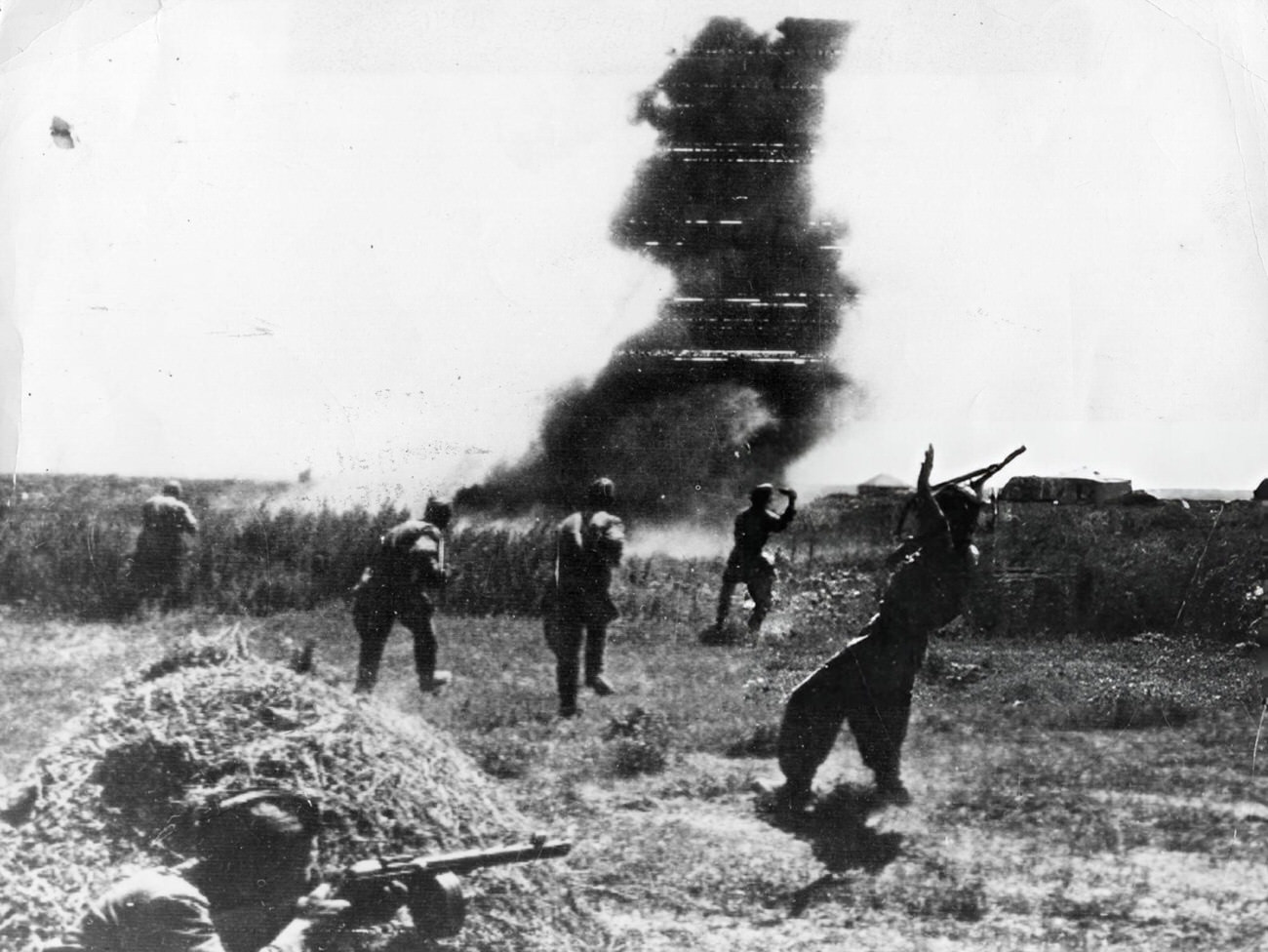
Soldiers face an explosion in the thick of the battle for Stalingrad, 1942.
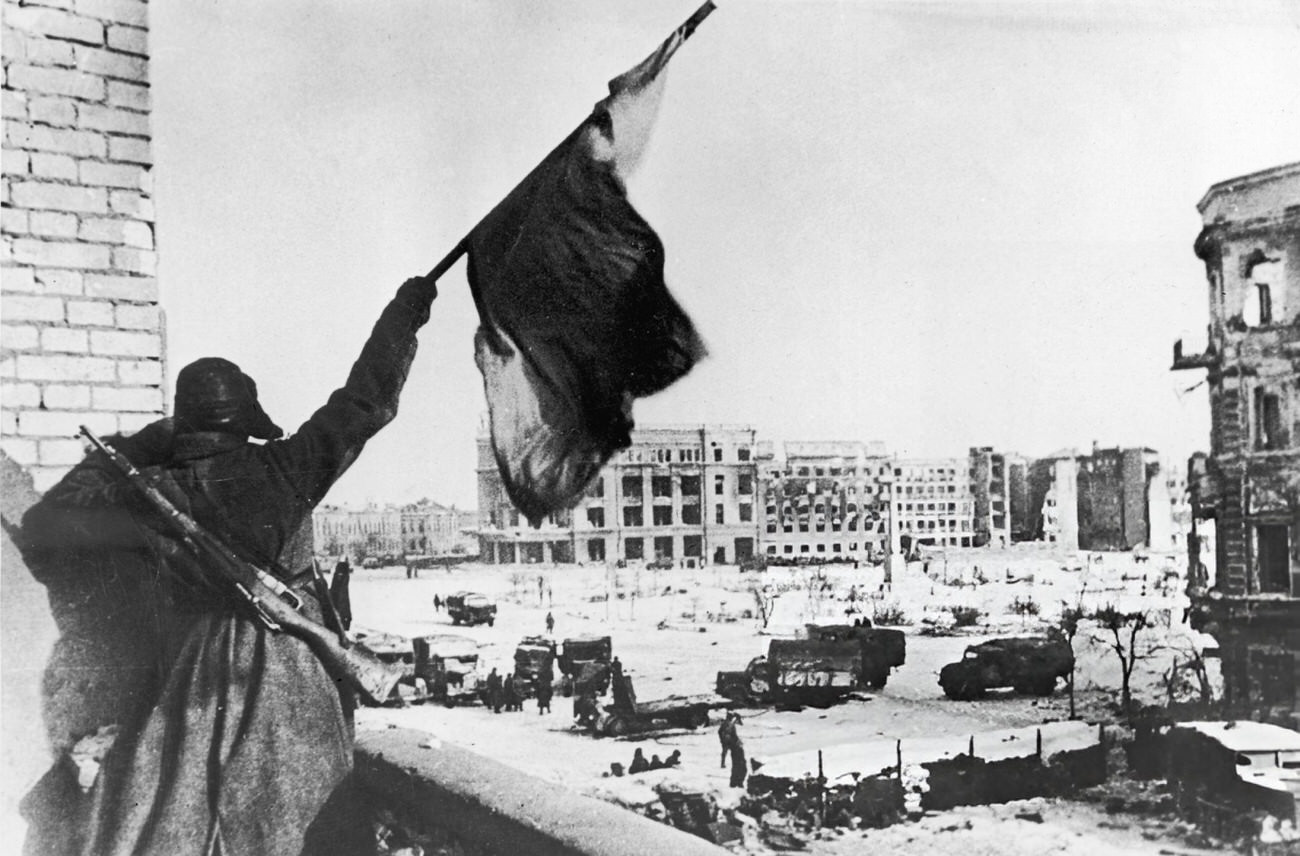
A Russian soldier waves a flag while standing on a balcony during the Battle of Stalingrad, 1942.

While the brutal street fighting continued inside the city, Soviet military planners were preparing something far larger. In November 1942, the Red Army launched Operation Uranus — a massive two-pronged counteroffensive aimed not at the German Sixth Army directly, but at the weaker Axis forces protecting its flanks. Romanian, Italian, and Hungarian troops held those flanks and were far less equipped than the German divisions at the center. Soviet armored columns tore through their lines within days.
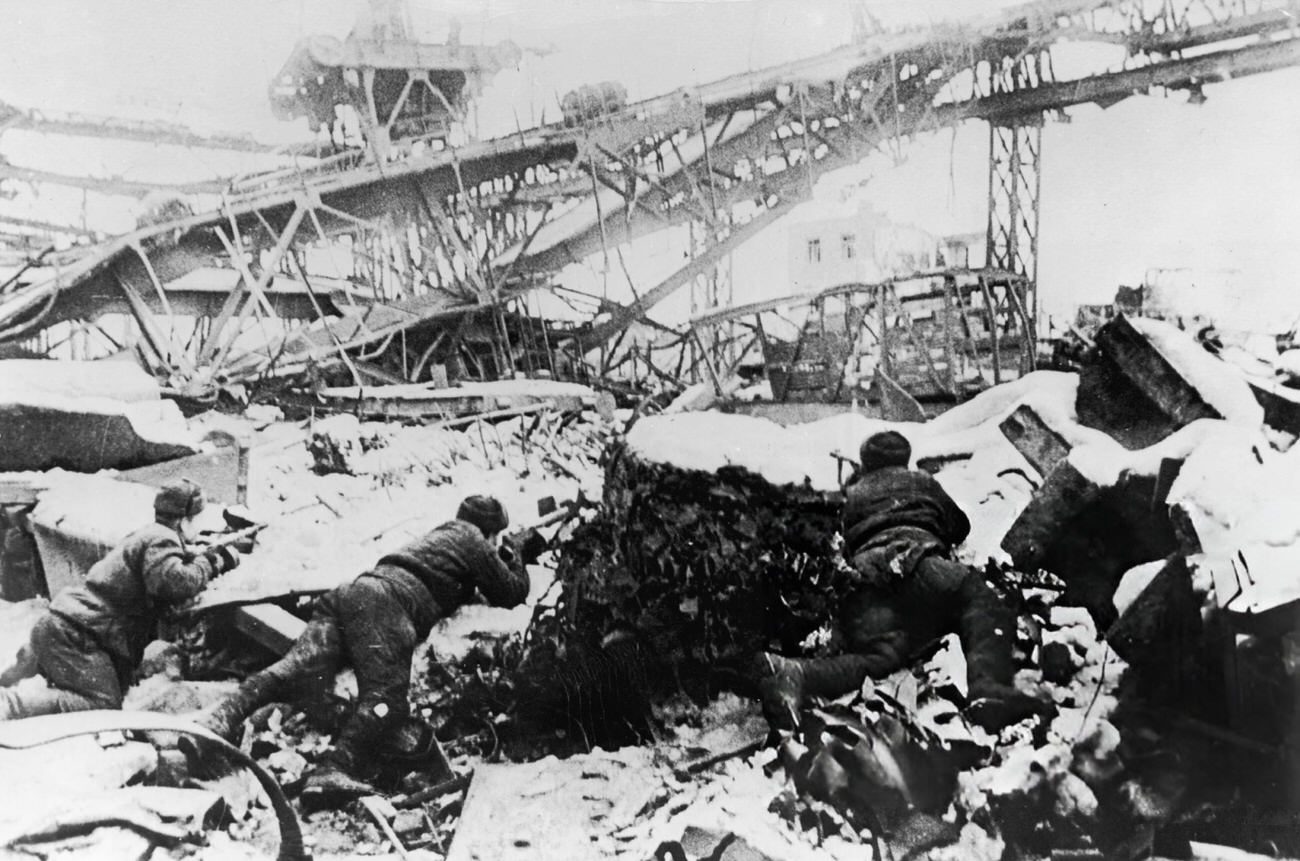
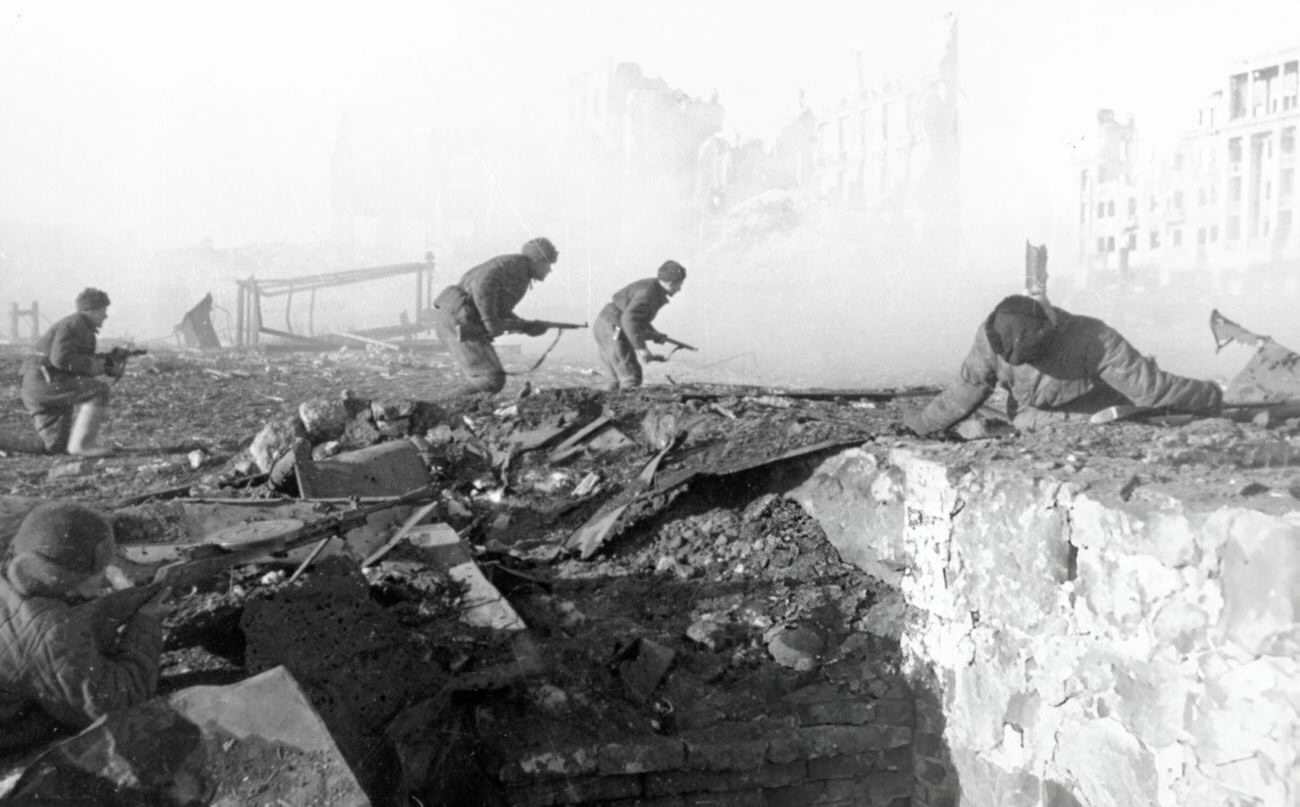
Russian soldiers aim their rifles from behind snow-covered rubble during the Battle of Stalingrad, 1942.
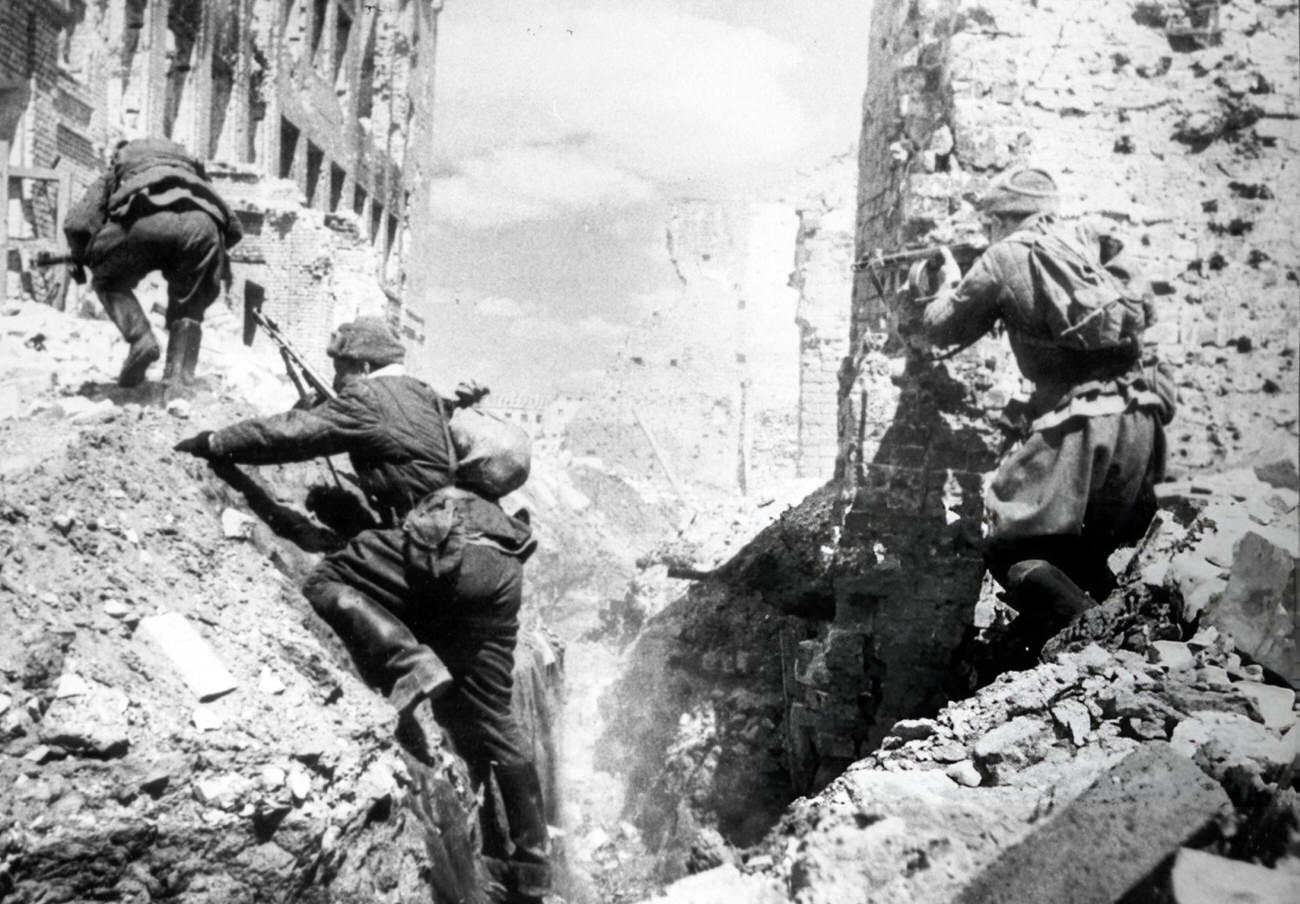
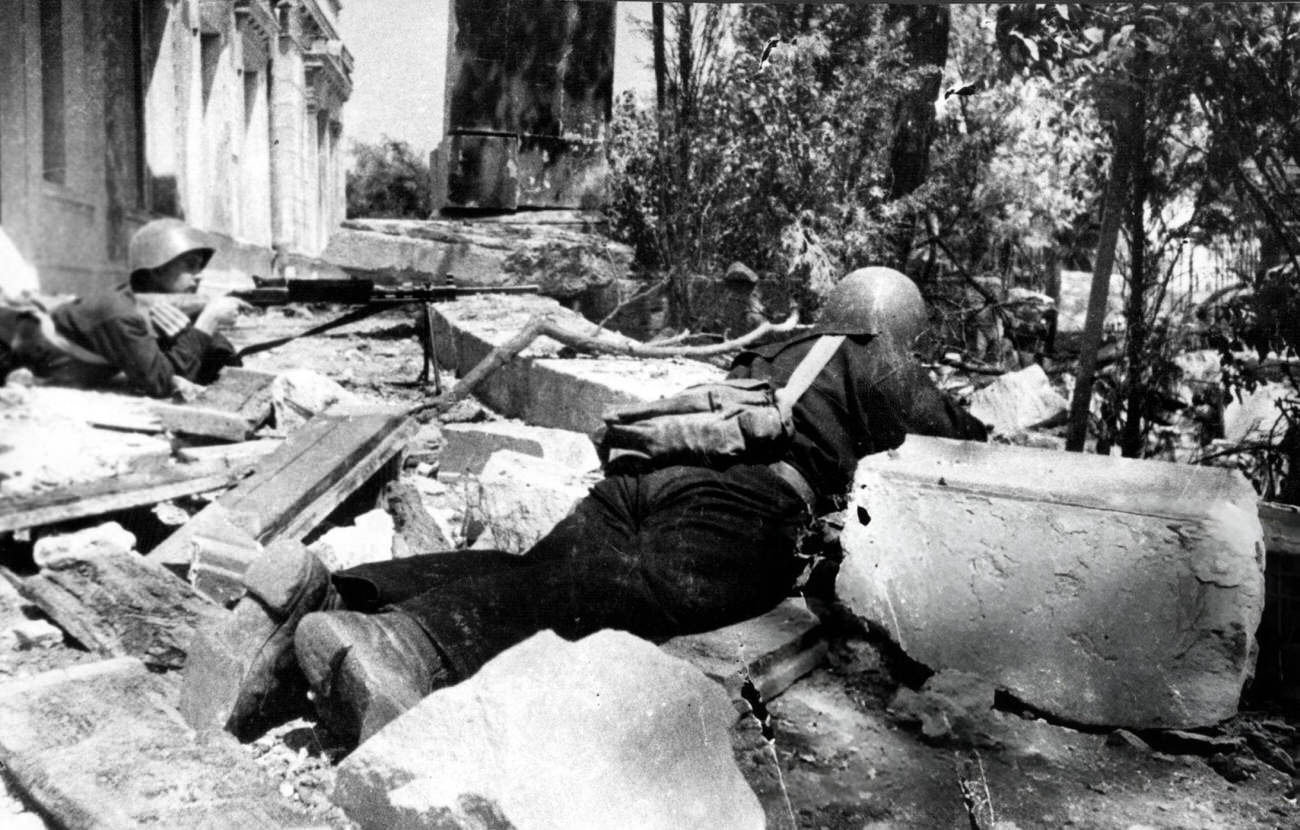
Two Russian soldiers positioned amongst the rubble in the defence of Stalingrad, 1942.
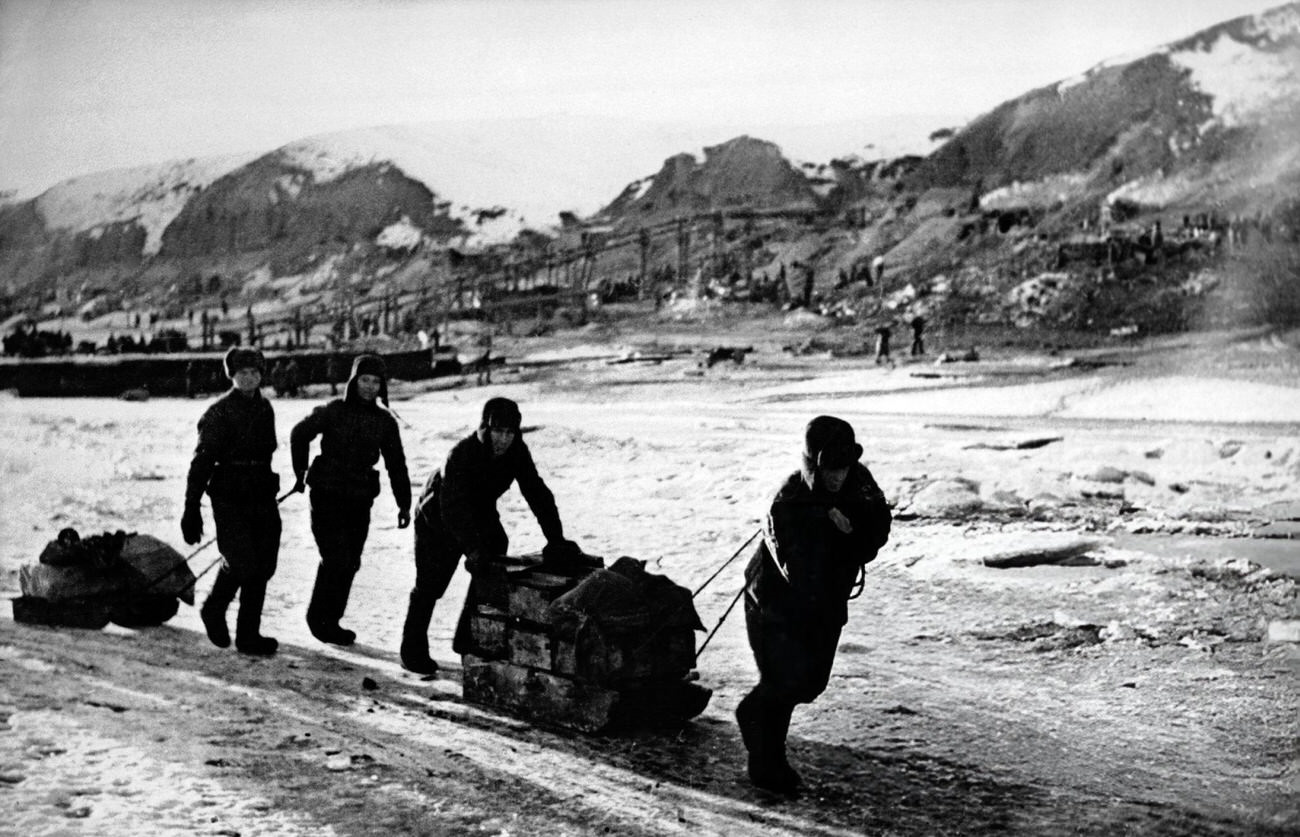
Delivery of ammunition pulled by Russian soldiers on the frozen Volga, 1942.

The speed of the Soviet breakthrough stunned the Germans. Within days, the entire German Sixth Army — roughly 300,000 soldiers — was encircled inside Stalingrad. Cut off from resupply and reinforcement, with the Russian winter tightening its grip, the trapped Germans faced a catastrophic situation. Hitler refused to allow Paulus to attempt a breakout, ordering his forces to hold their position and fight to the last. The Luftwaffe attempted to deliver supplies by air, but it was nowhere near enough to sustain an army of that size.
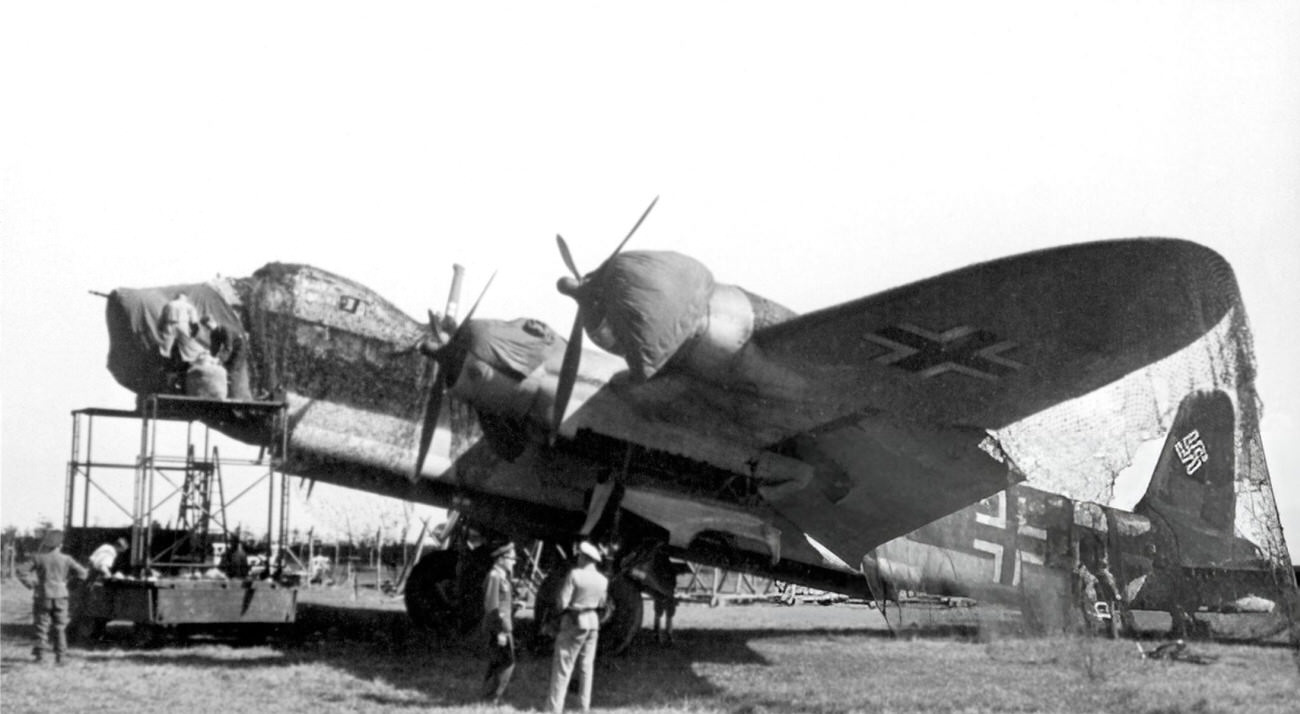
The German bomber STIRLING EF-366 is being readied to supply the troops attacking Stalingrad, 1942.
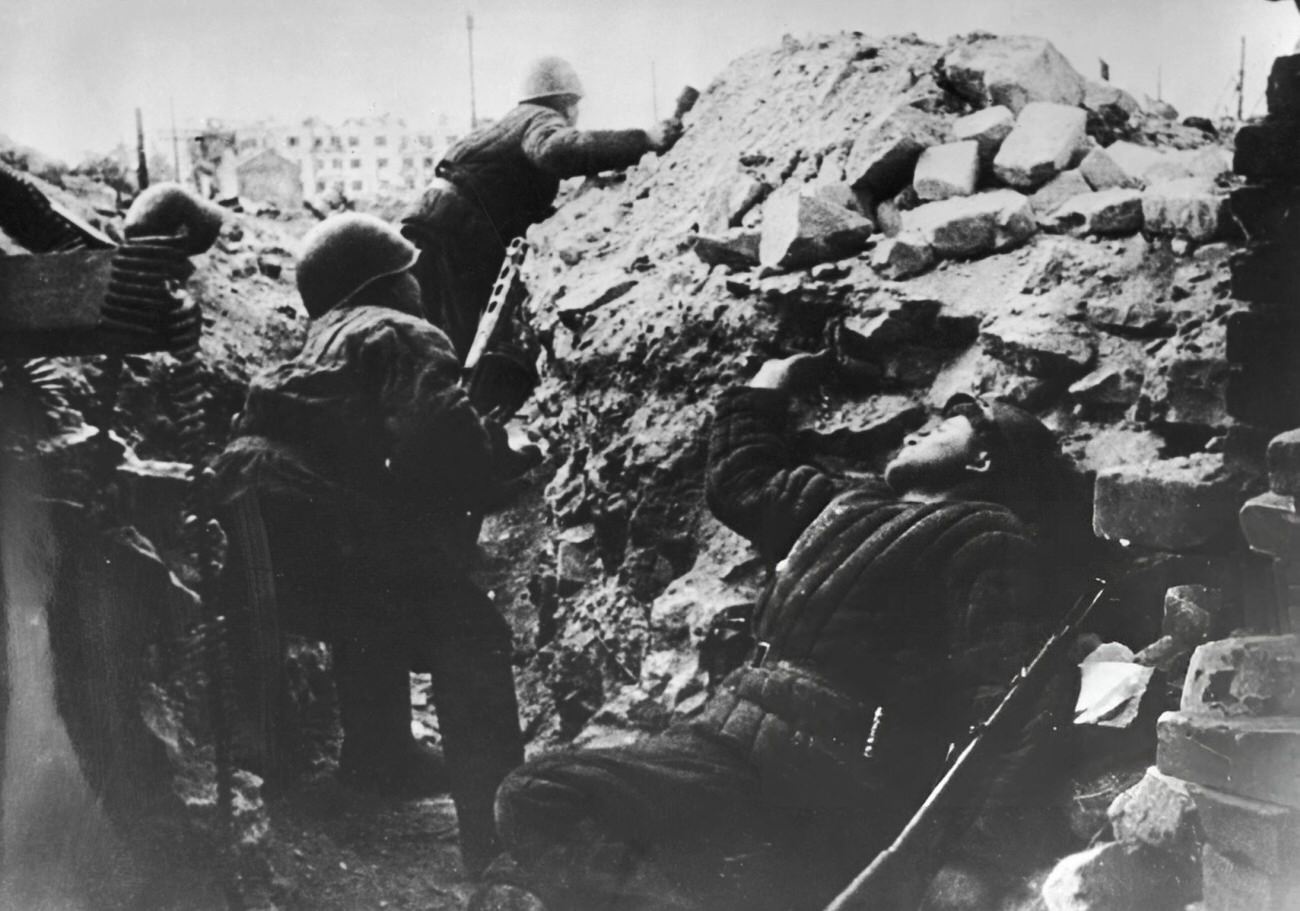
Soldiers in a trench during the Battle of Stalingrad, 1942.
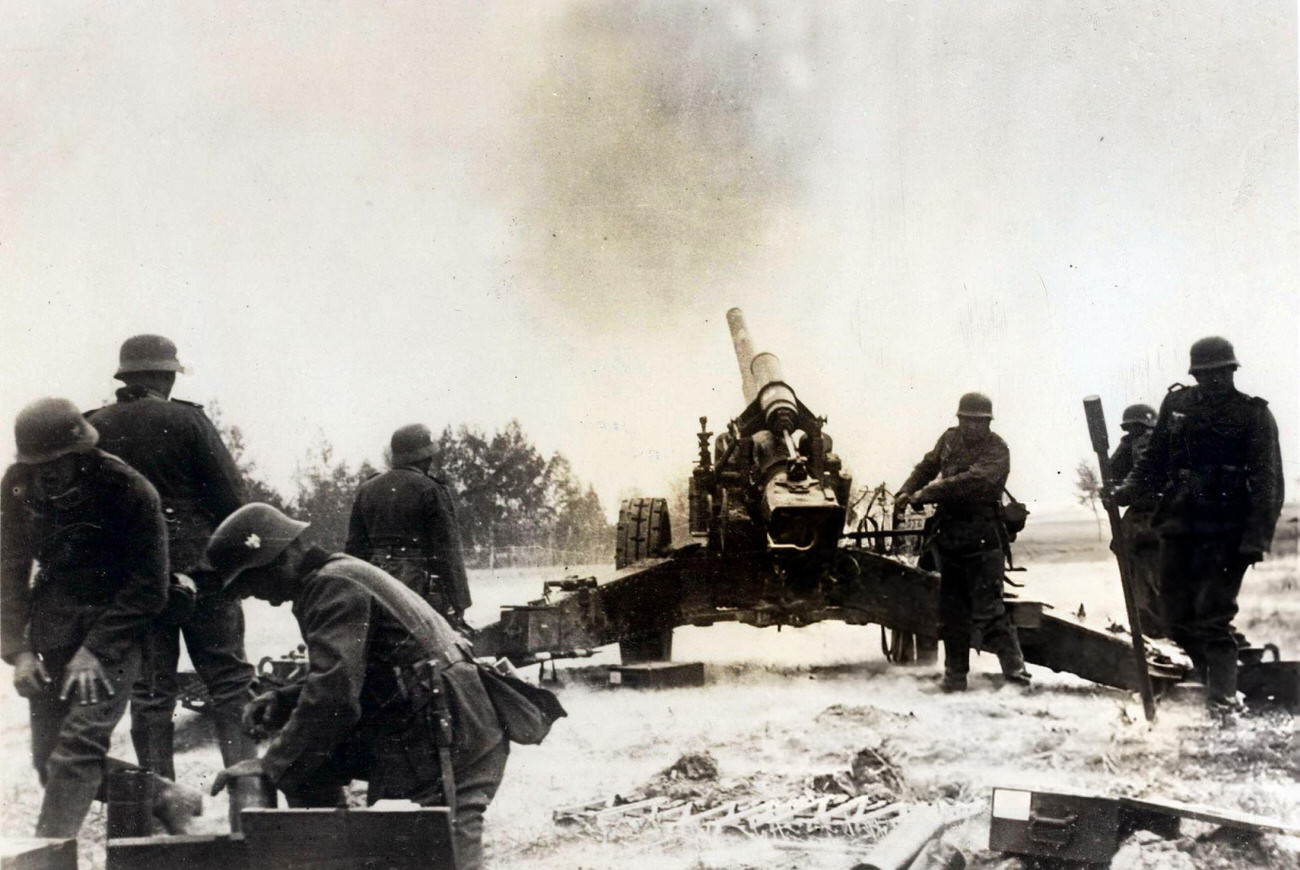
German troops in action during the Battle for Stalingrad, 1942.

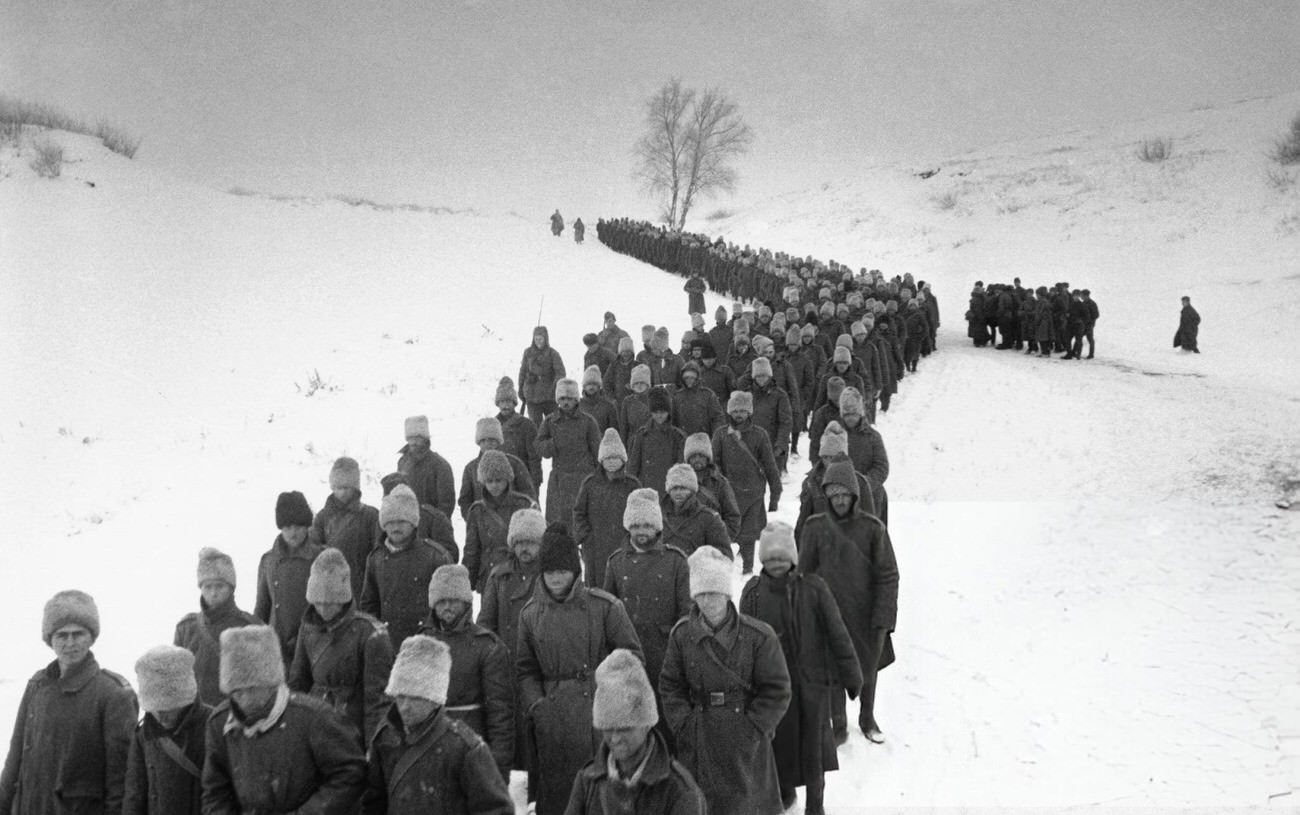
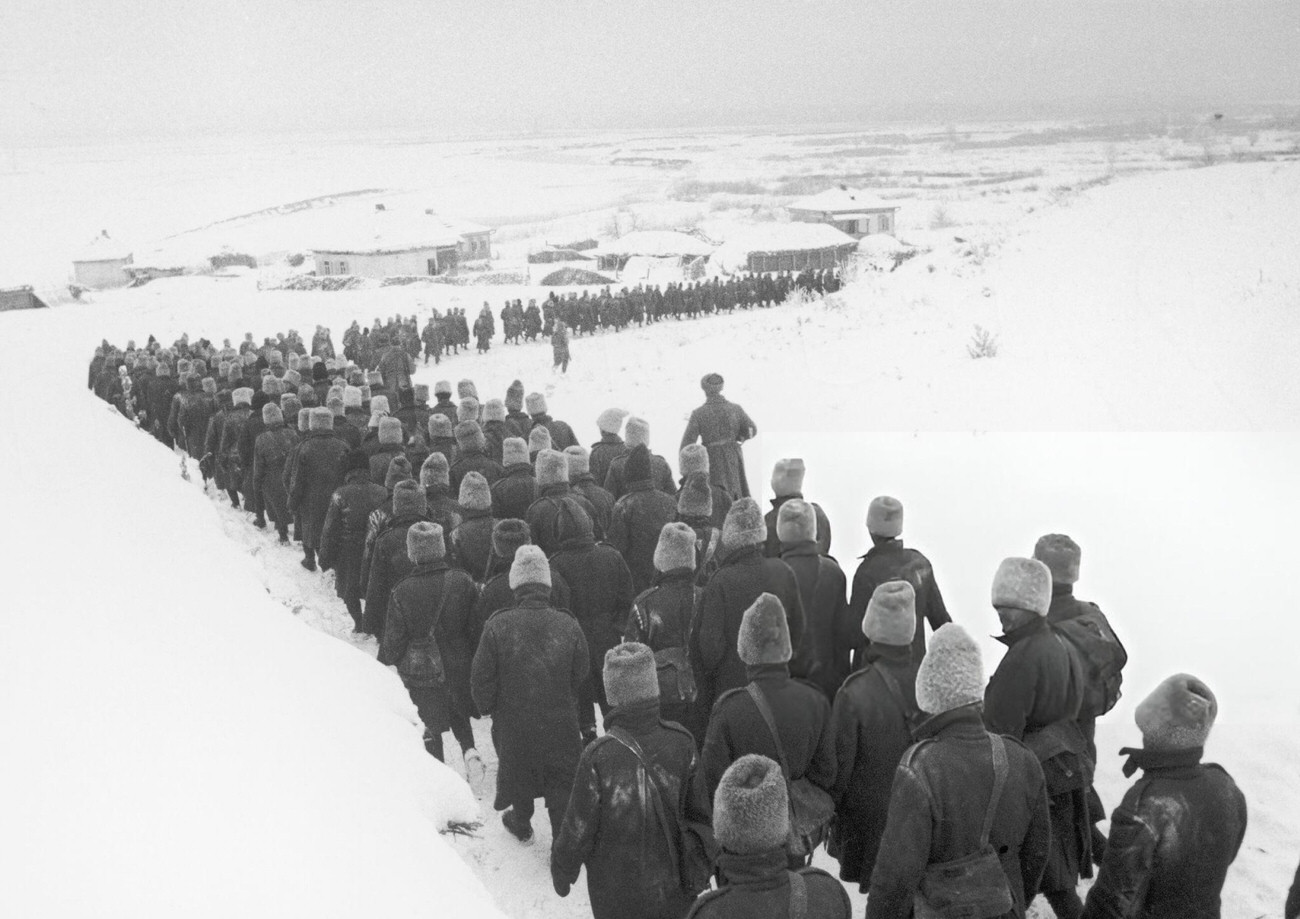
Inside the pocket, conditions deteriorated rapidly. German soldiers were starving, frostbitten, and running out of ammunition. Disease spread through the crowded positions. Morale collapsed as soldiers understood that no relief was coming. Romanian and other Axis troops who had been captured during Operation Uranus began the long marches into Soviet captivity. Thousands of them died from cold, hunger, and exhaustion before ever reaching a prison camp.
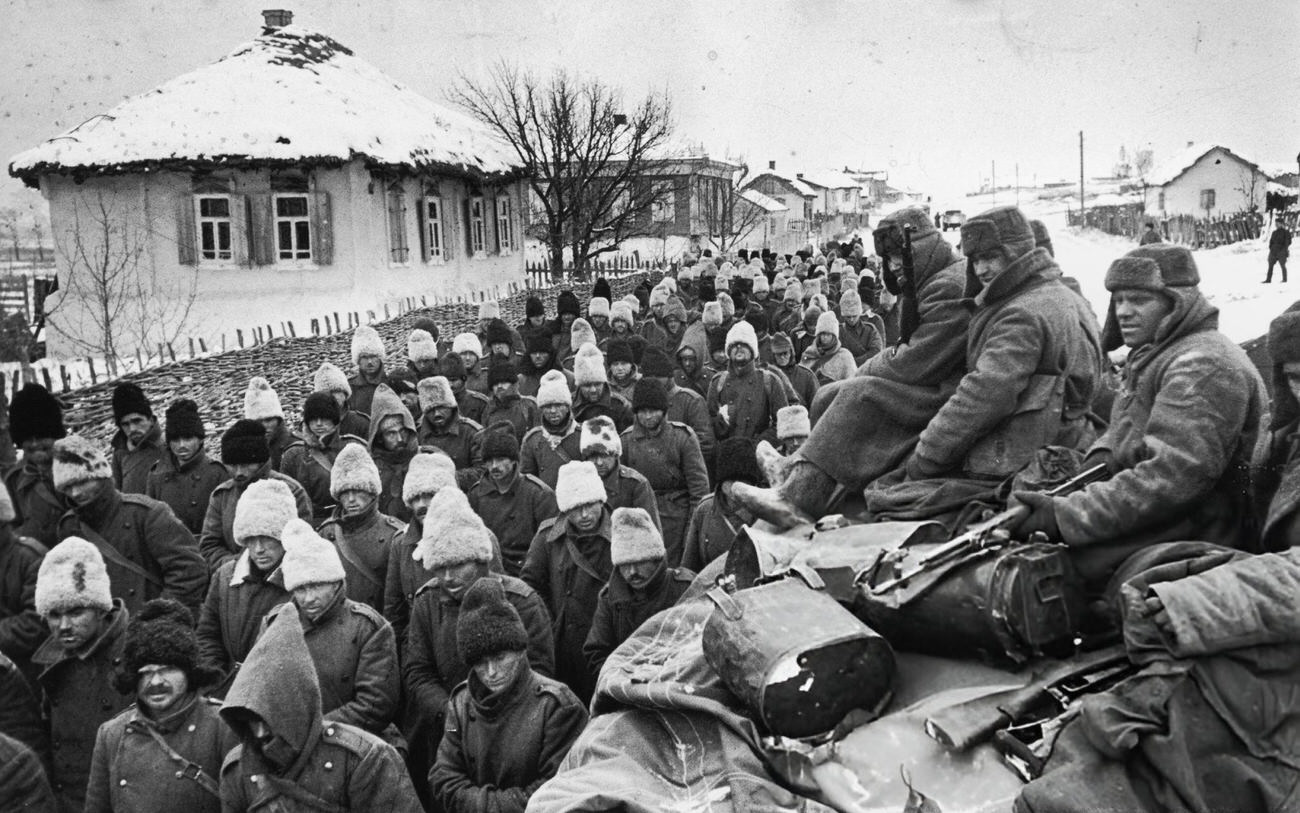
Romanian POWs from the Battle of Stalingrad, 1942.
Long march of Romanian POWs from the Battle of Stalingrad.
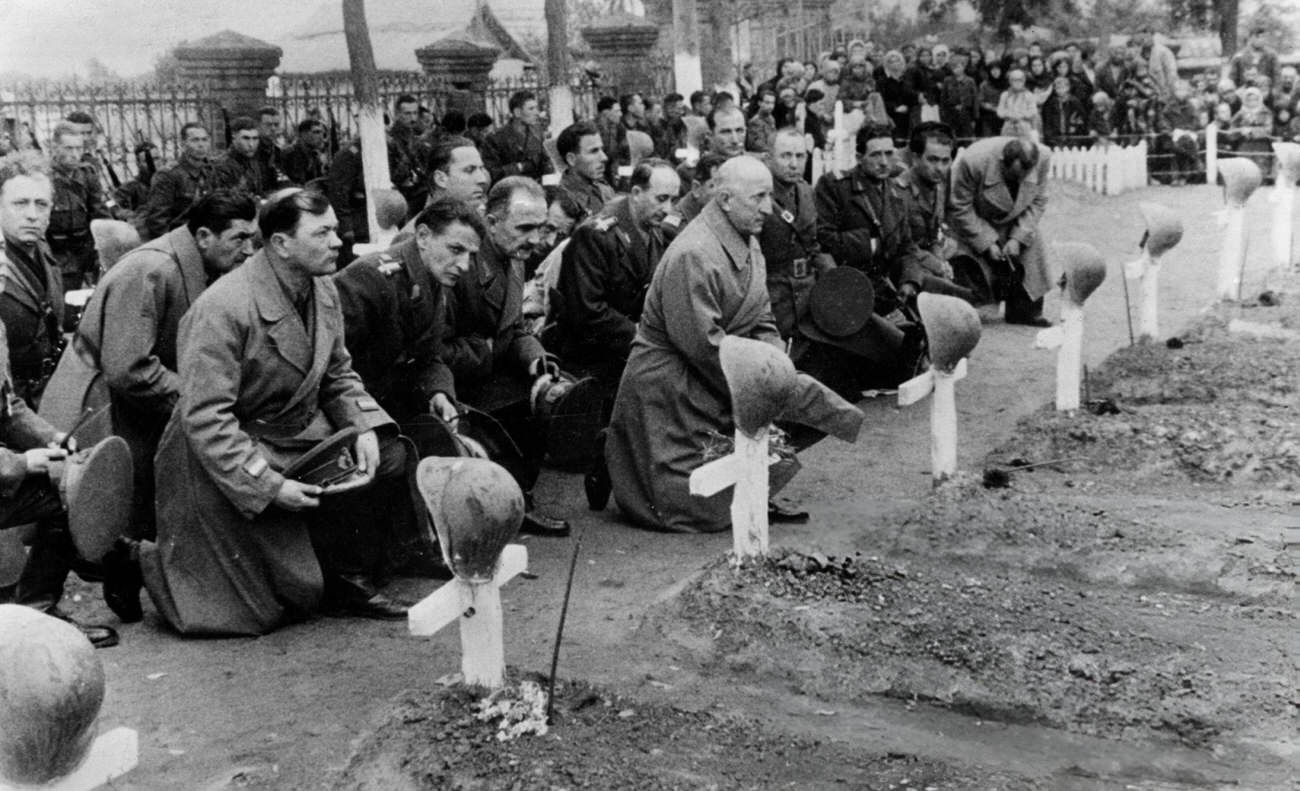
Romanian soldiers and officers paying homage to their fallen comrades, 1942.

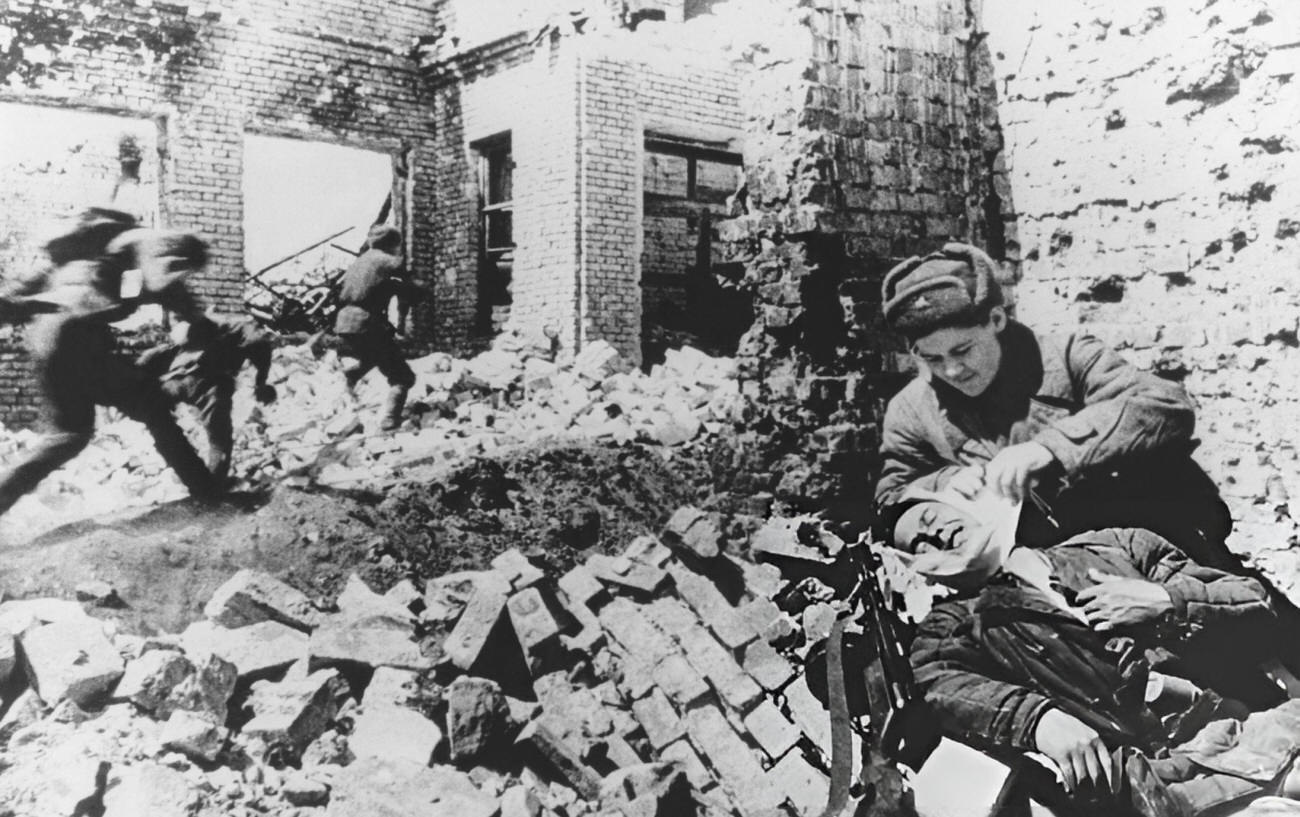
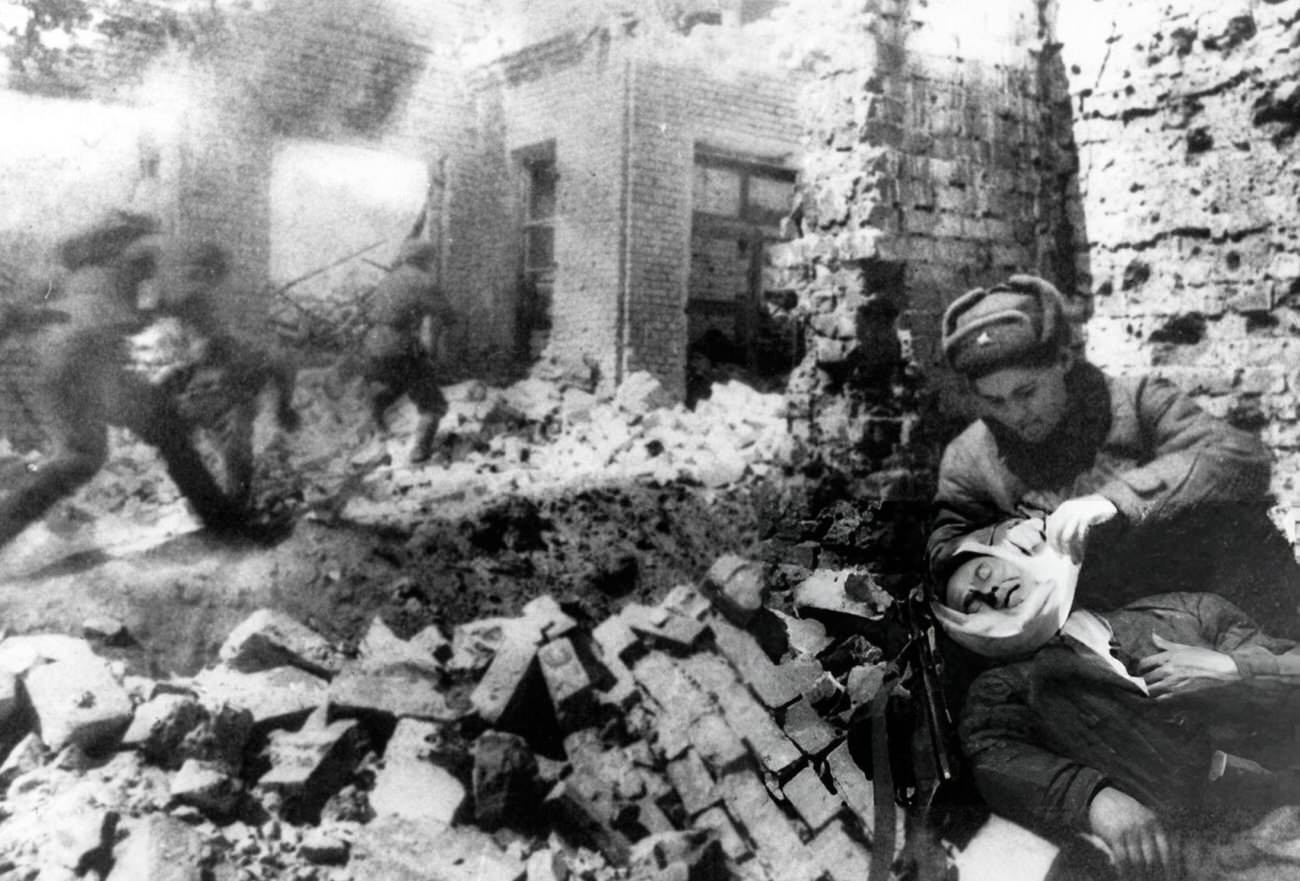
Red Army medics and nurses worked under constant fire to treat the wounded on both sides of the front line. Soviet artillery crews maintained their fire around the clock, even as German shells and bombs fell on their positions. Snipers on both sides turned individual buildings into battlefields. Every Soviet soldier who held a position in that frozen, broken city was part of a deliberate strategy to exhaust and destroy an army that had seemed unstoppable just months before.
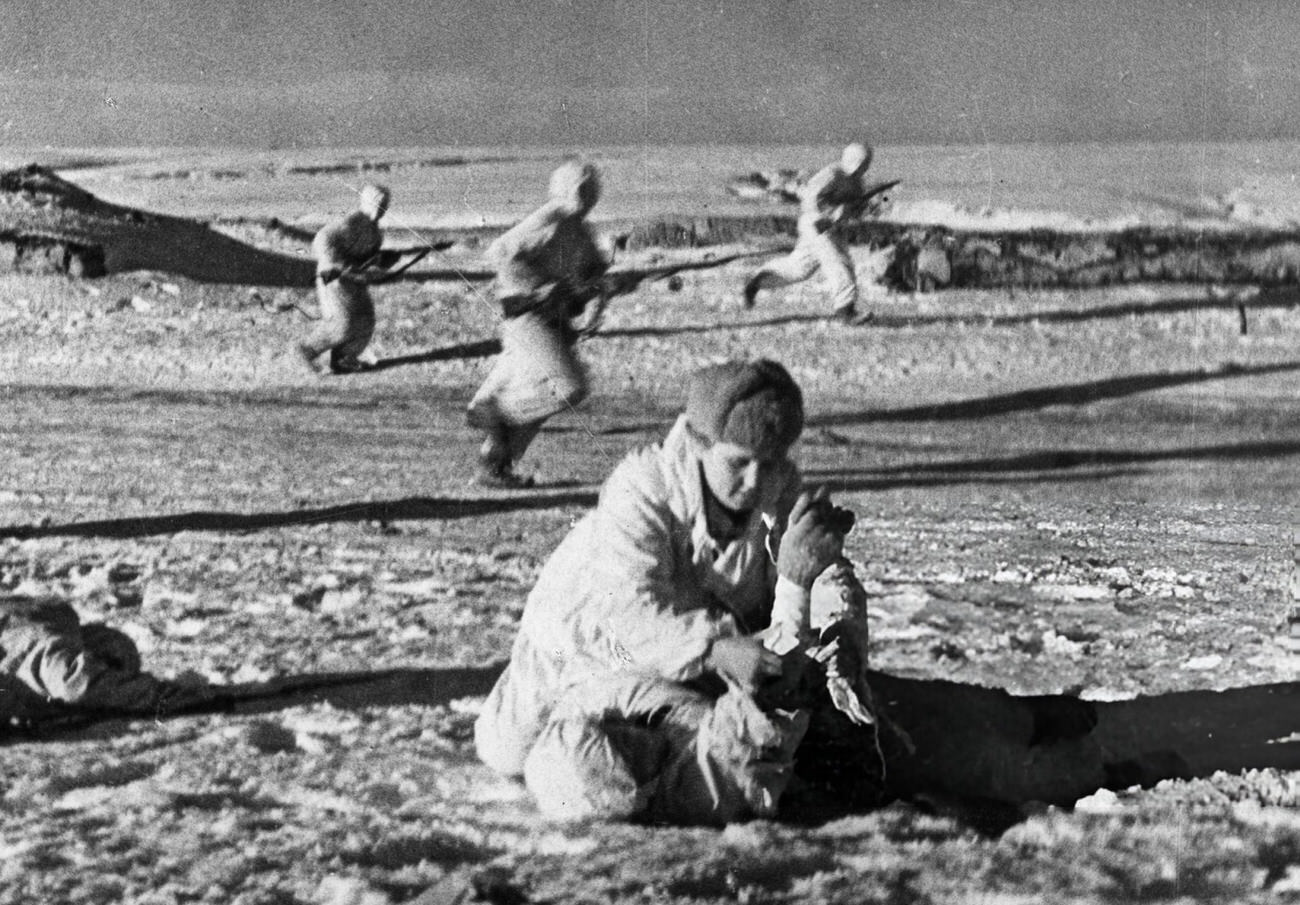
A medic rendering first aid to a wounded red army man, 1942.
Nurse bandaging a wounded soldier during street fighting in Stalingrad, 1942.
Soviet Soldiers Leaping As A Military Male Nurse Treats A Wounded Soldier, 1942.
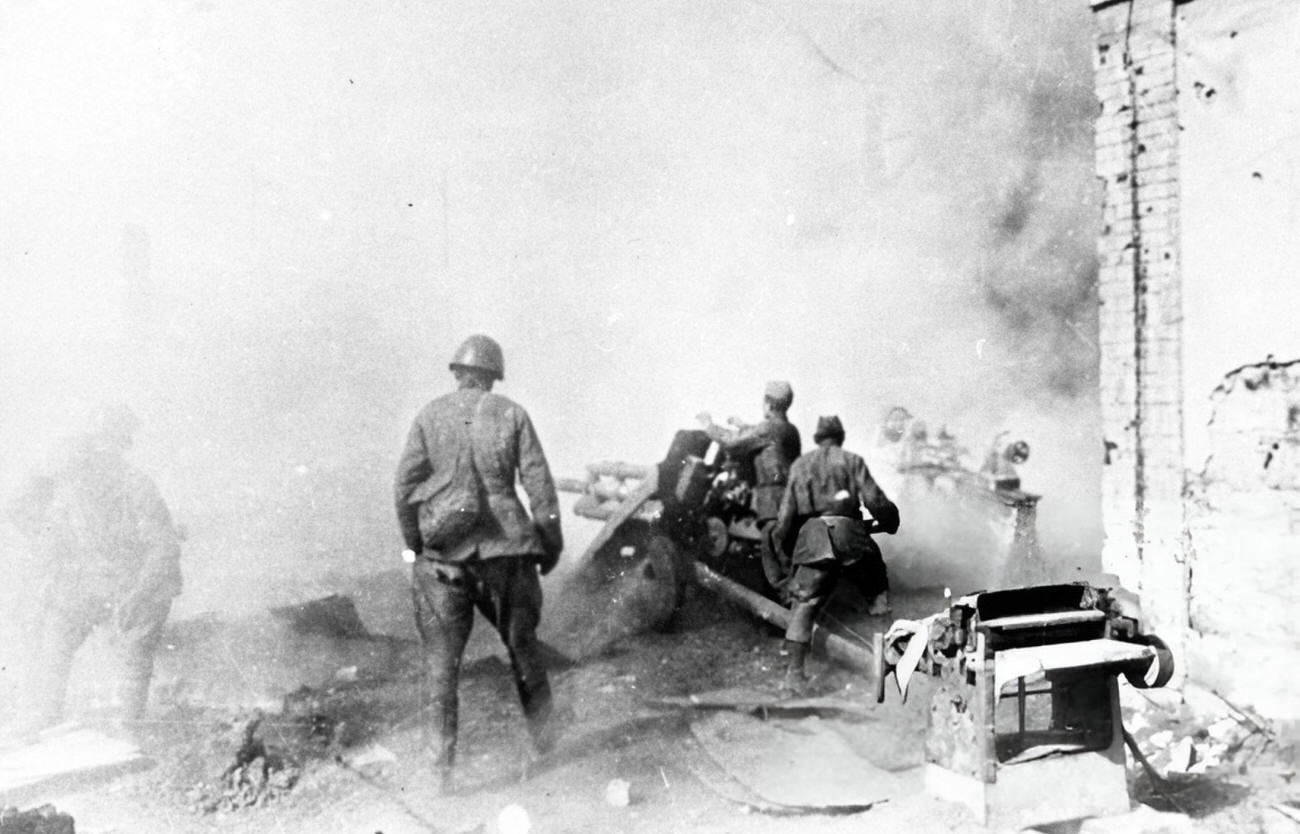
A Soviet artillery crew firing at the enemy, 1942.
Soviet guardsmen firing on German automatic riflemen, 1942.
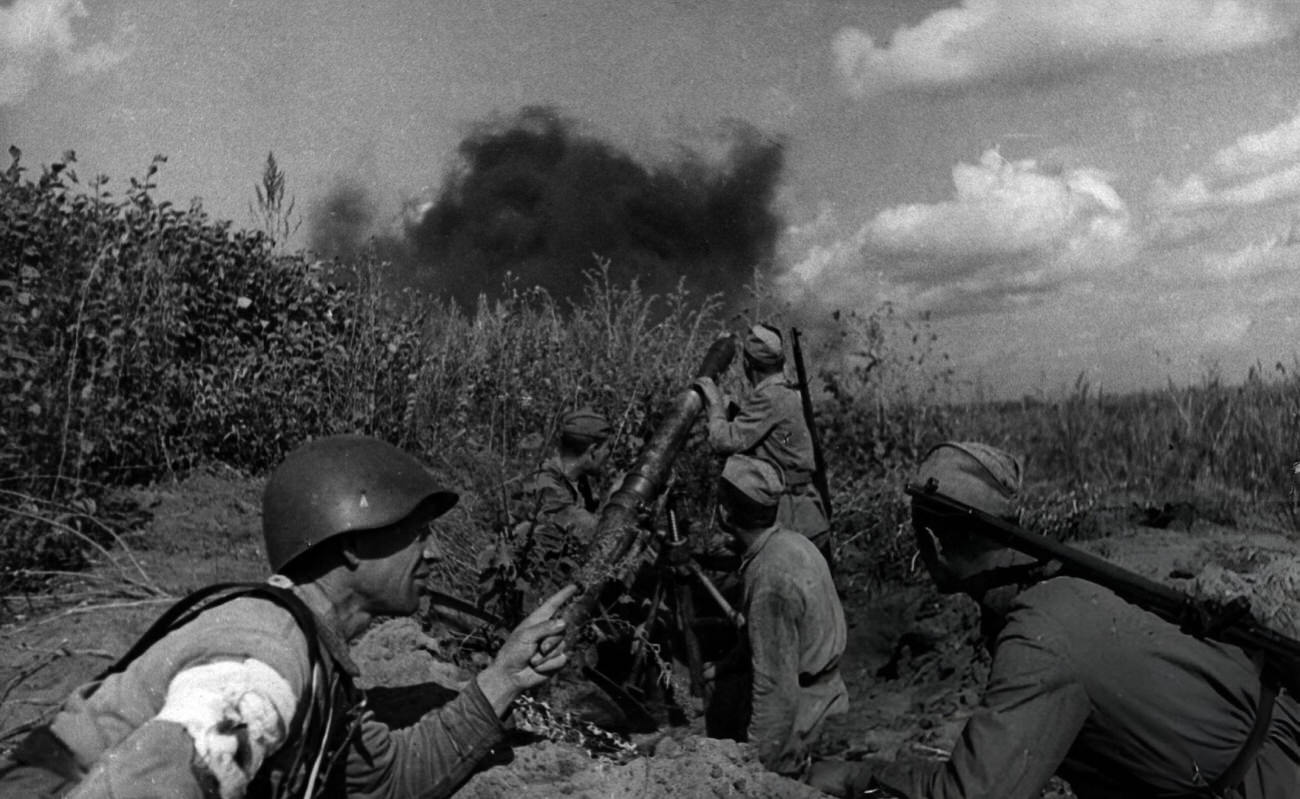
Soviet Soldiers Firing Mortar from Trench.

By January 1943, the German Sixth Army’s end was no longer in doubt — only its timing. Soviet forces tightened their grip, pushing the remaining German positions into an ever-smaller area of the city. On January 31, 1943, General Paulus — promoted to Field Marshal by Hitler just days earlier, partly in the expectation that he would fight to the death — surrendered to Soviet commanders. The last isolated German units surrendered on February 2, 1943, officially ending the battle.
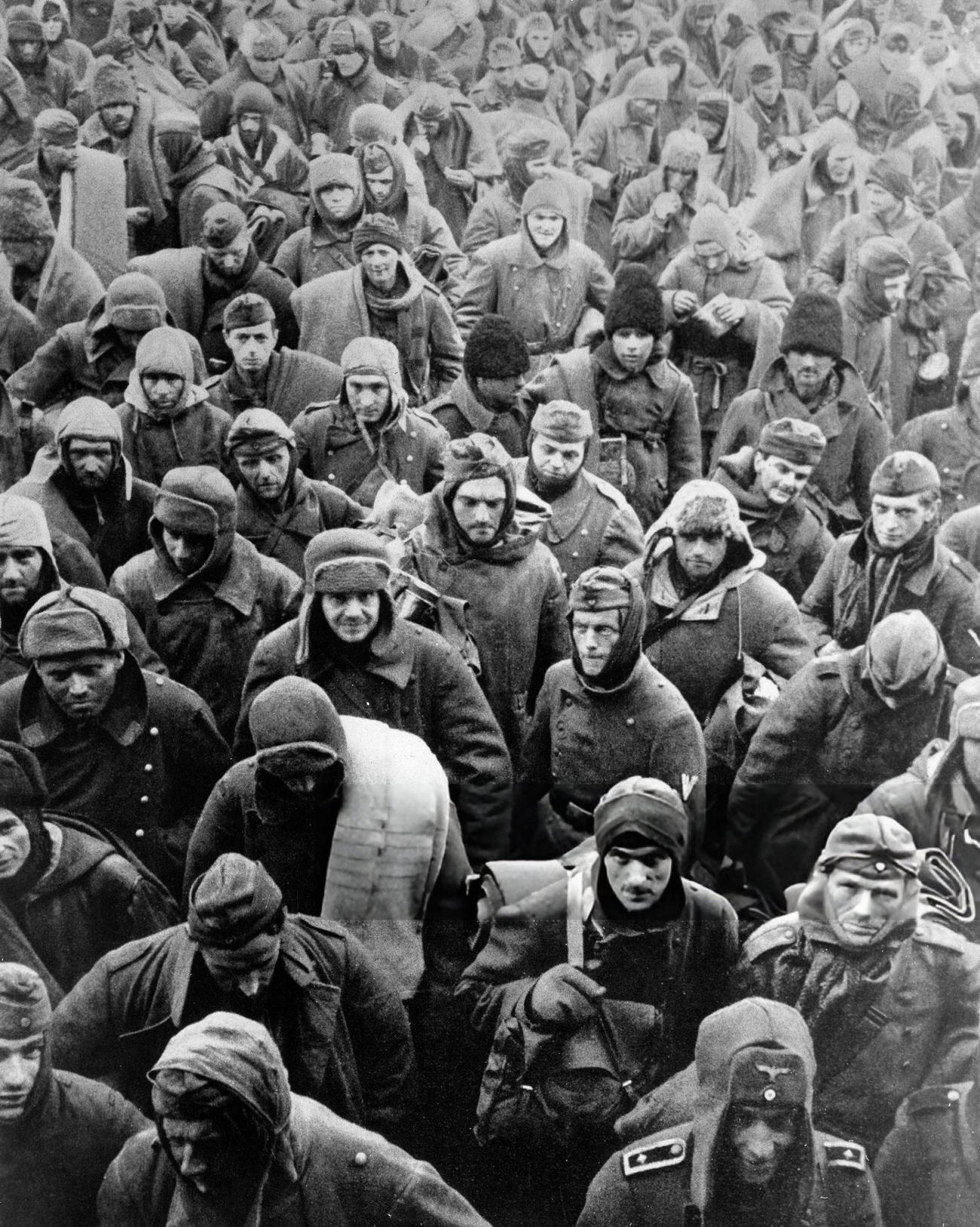
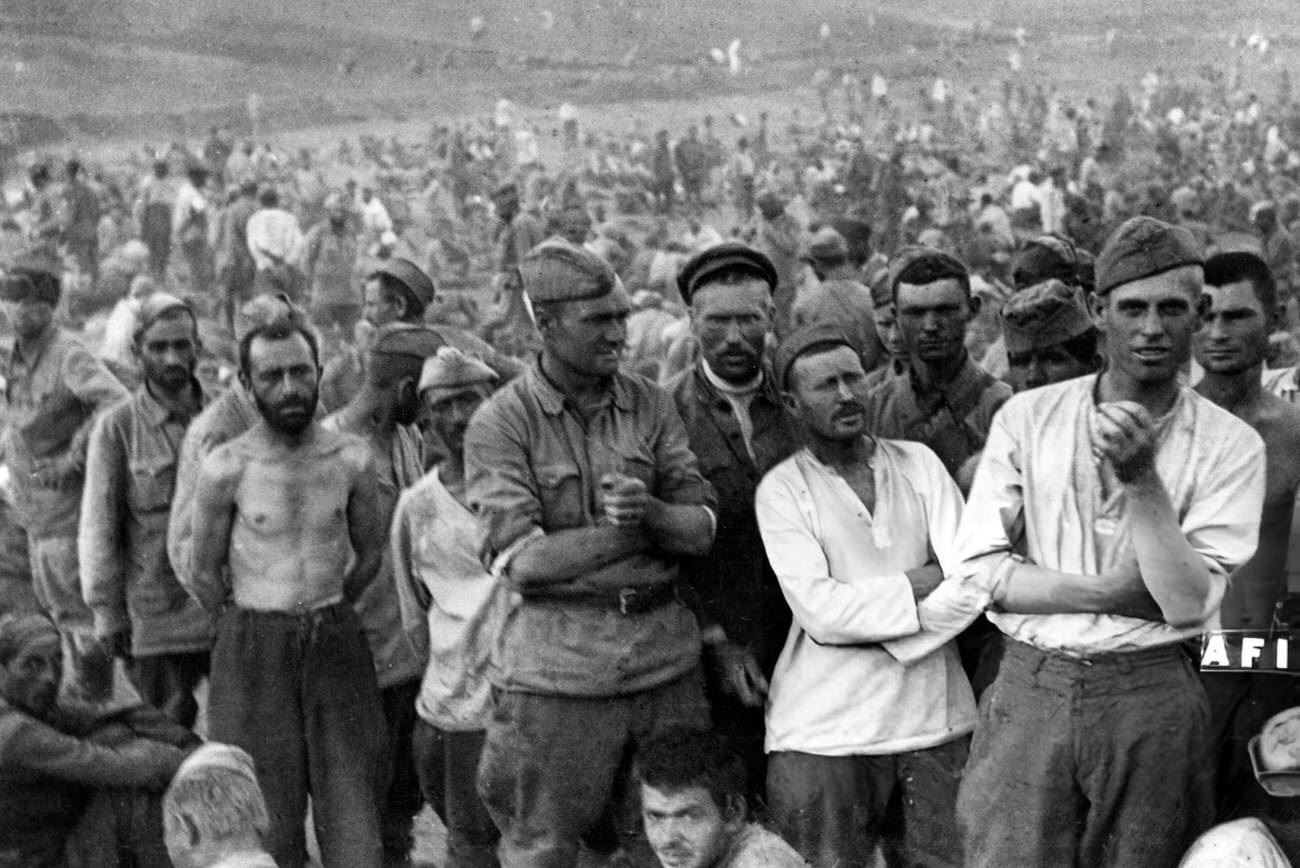
German soldiers following their capitulation to Soviet forces, 1943.
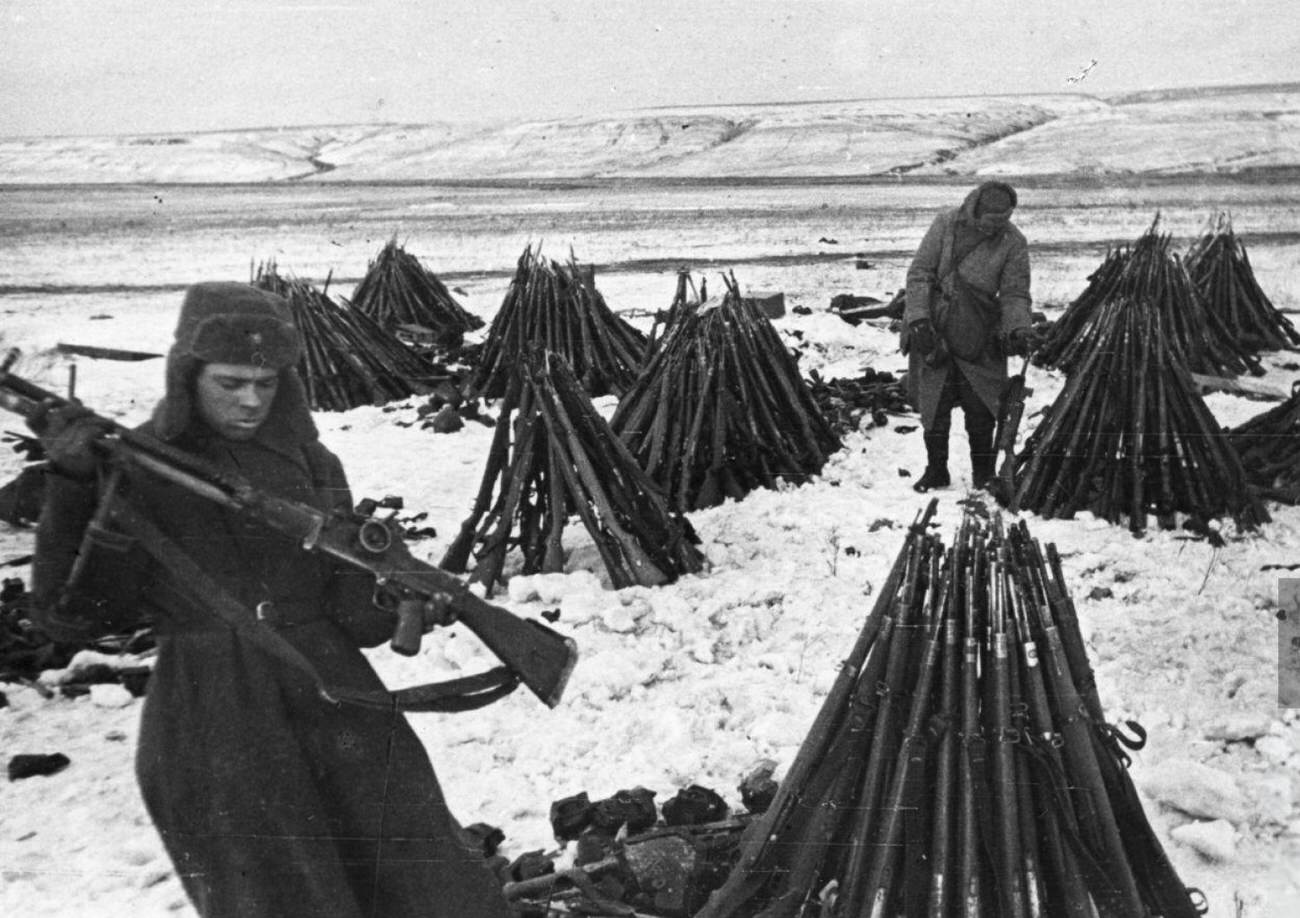
Soviet soldiers counting the captured rifles, 1943.
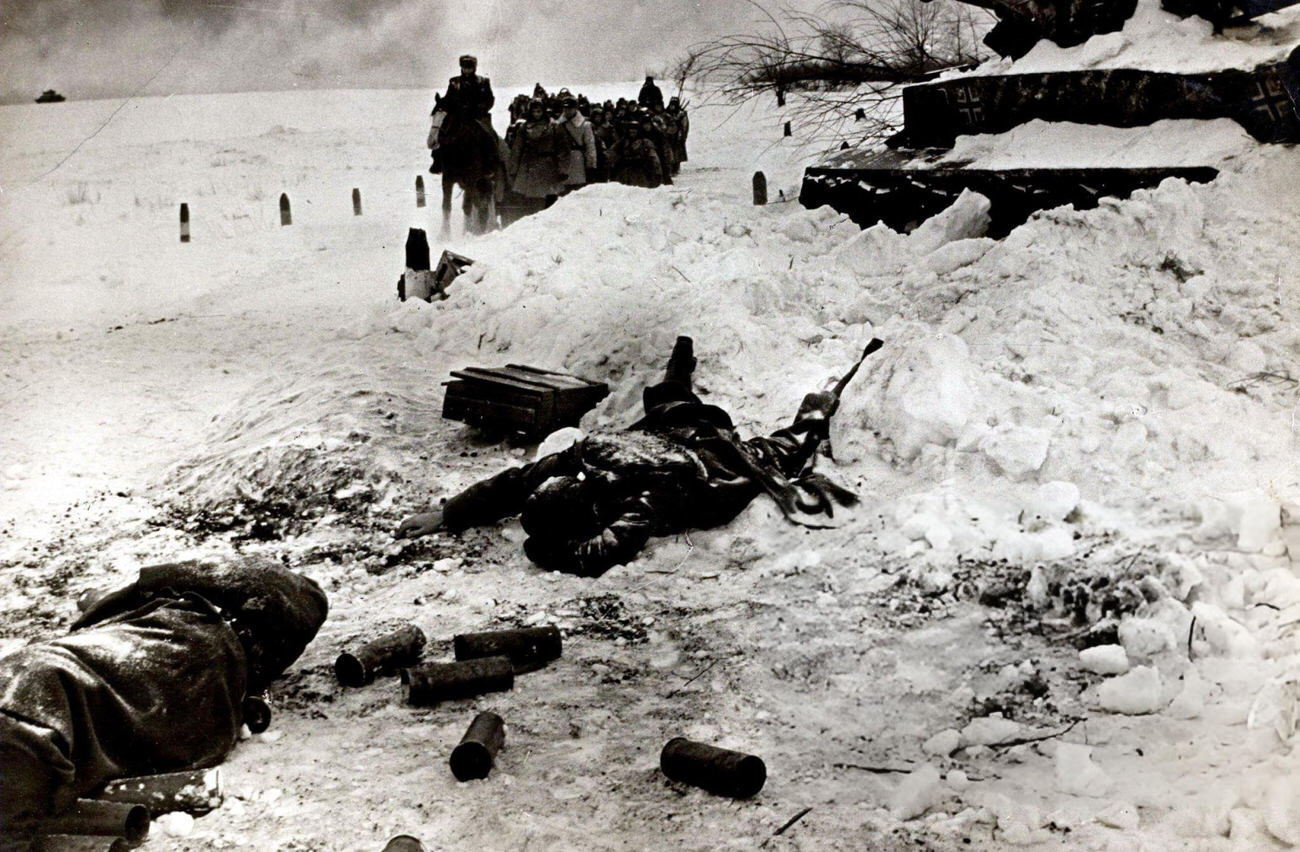
A dead Russian soldier lies by a wrecked German tank as a troop of Russian soldiers pass during the battle of Stalingrad, 1942.
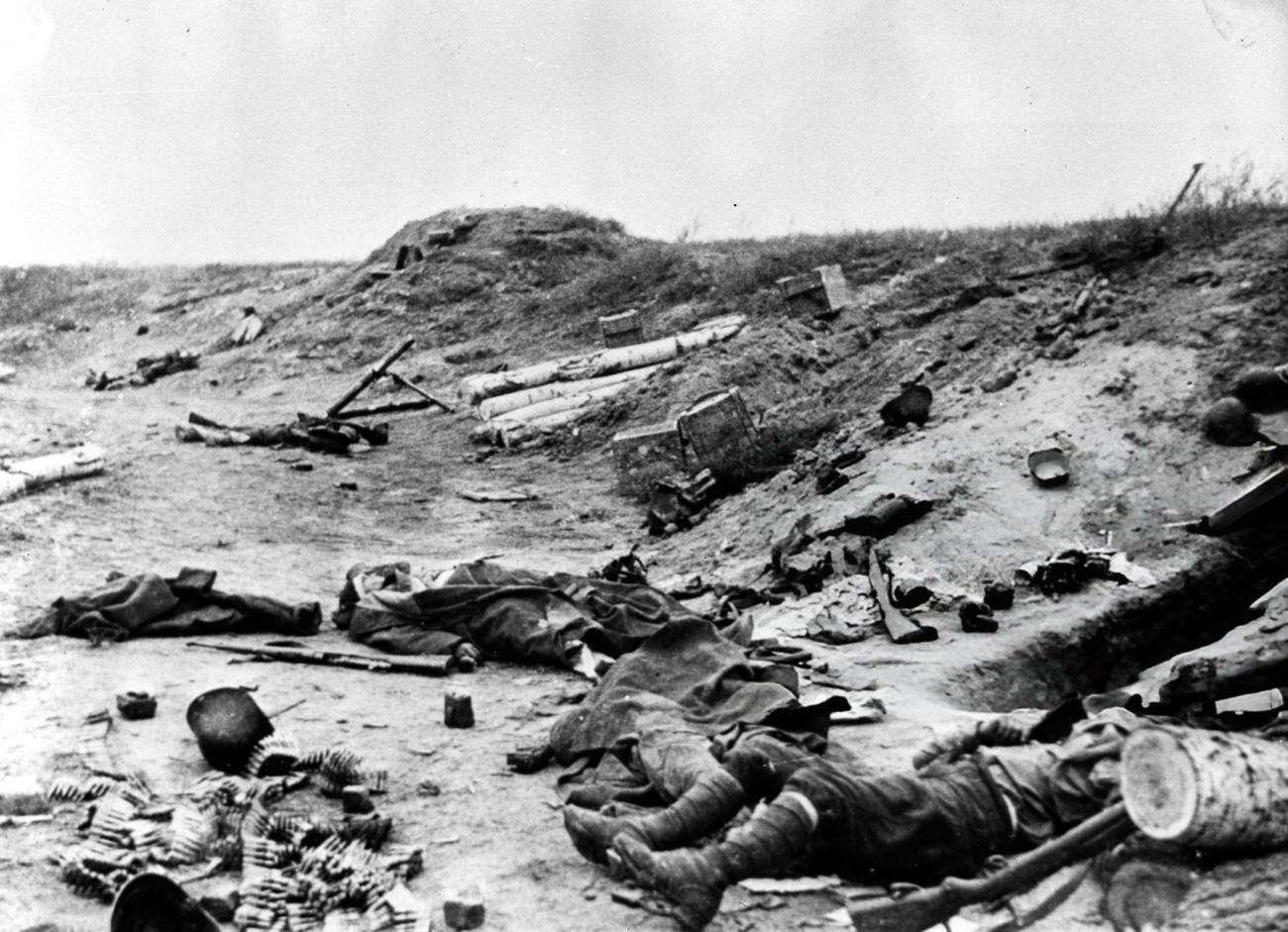
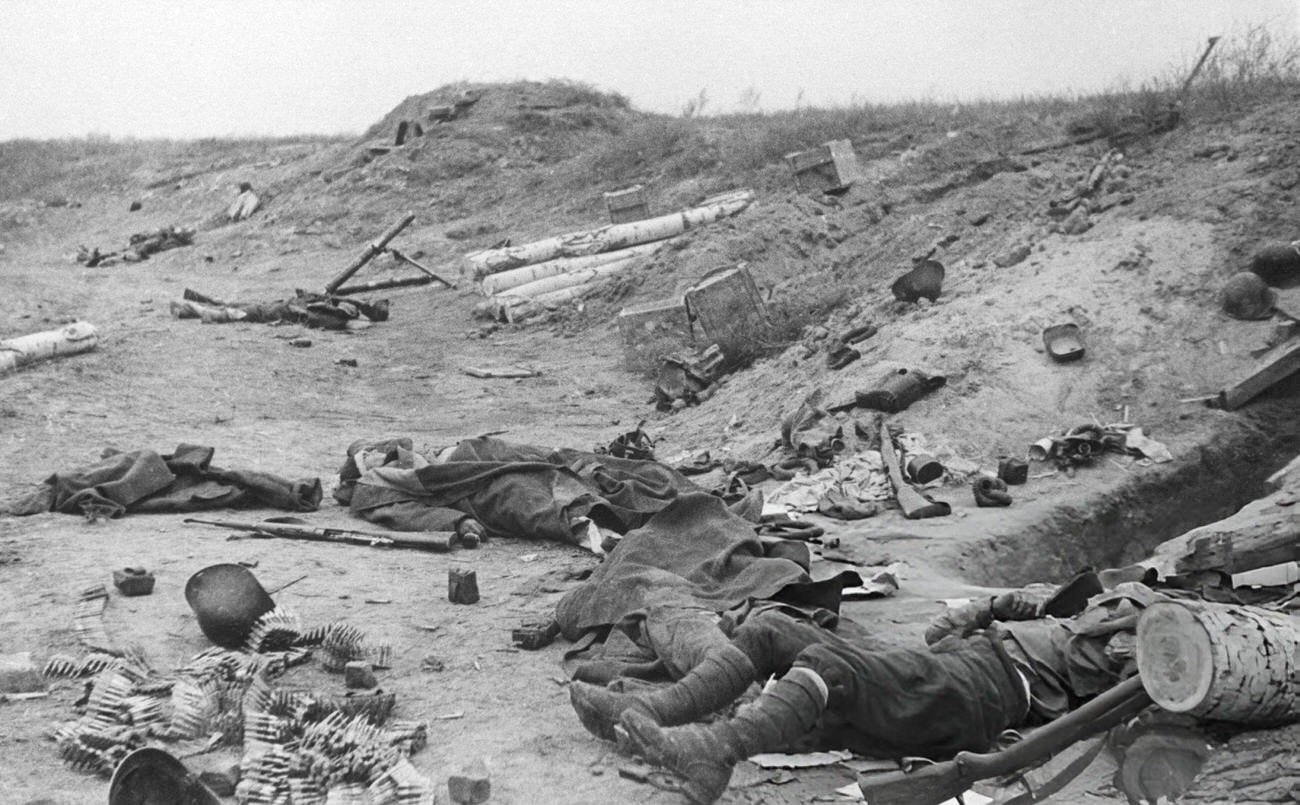
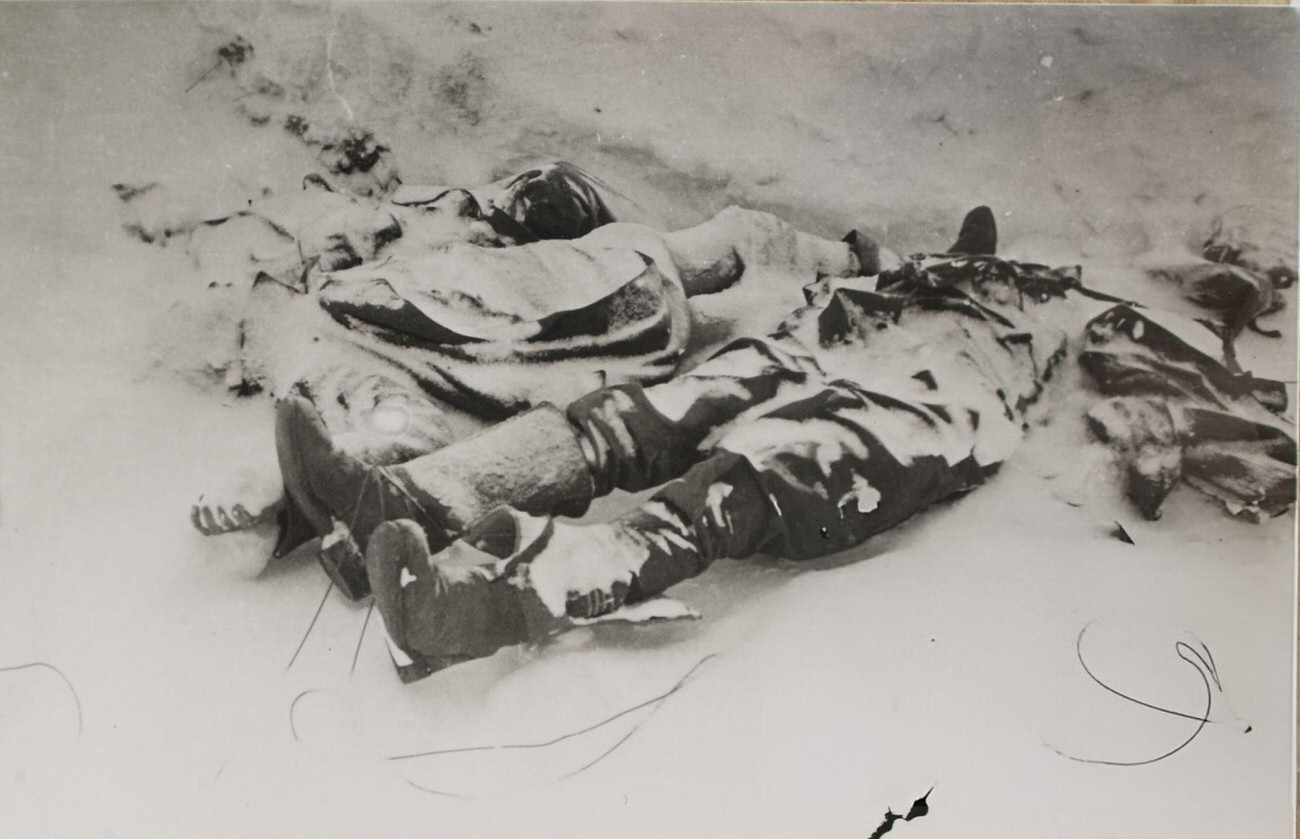
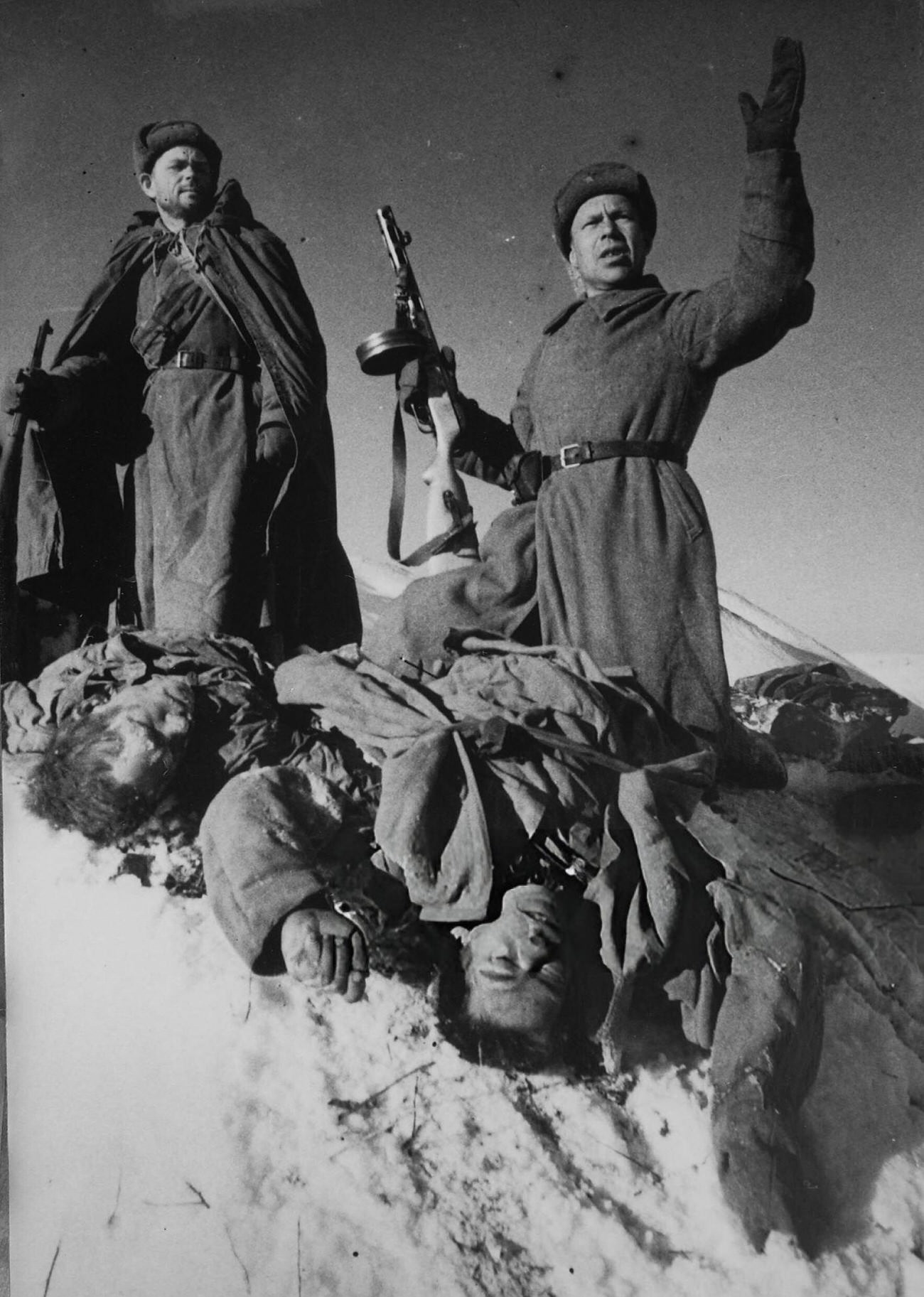
Dead Romanian troops southwest of Stalingrad, 1943.
Dead Romanian troops southwest of Stalingrad after the Battle of Stalingrad, 1943.
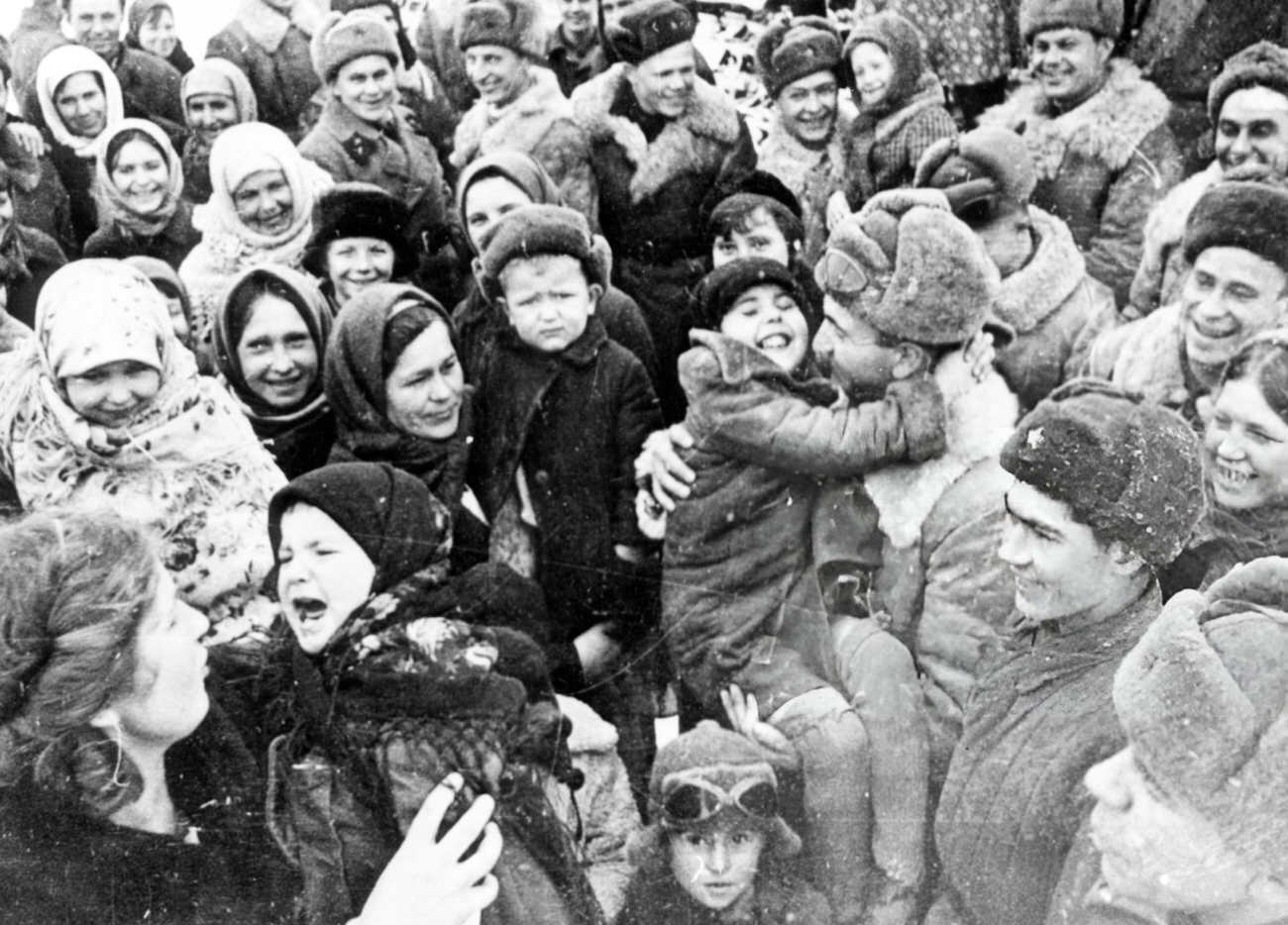
Liberation of Stalingrad, 1943.
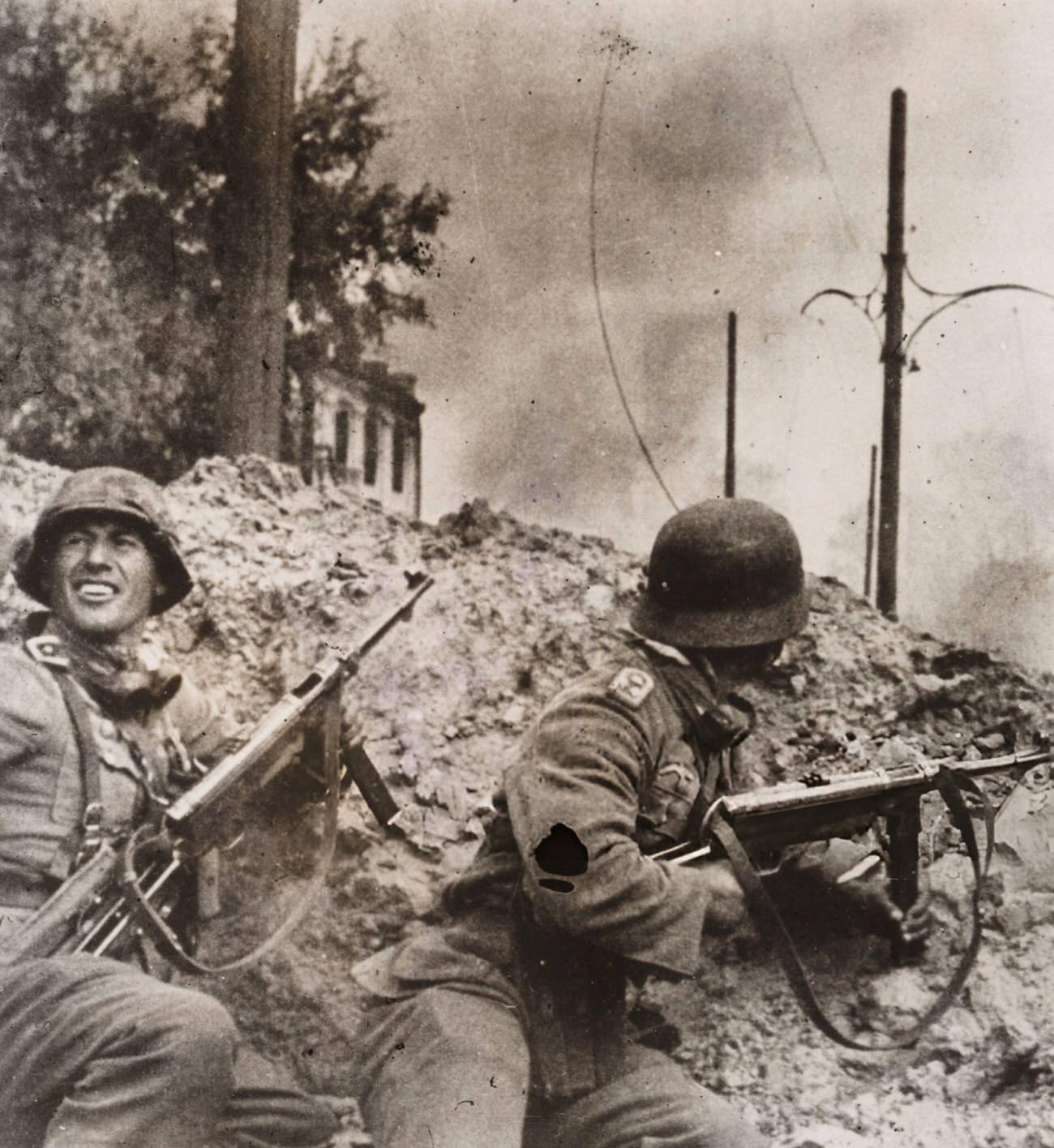
Two German soldiers shelter in a crater during a street fight in Stalingrad, 1942.
The battle of Stalingrad, 1940s.
Battle of Stalingrad fought between Russian and German troops, 1942.
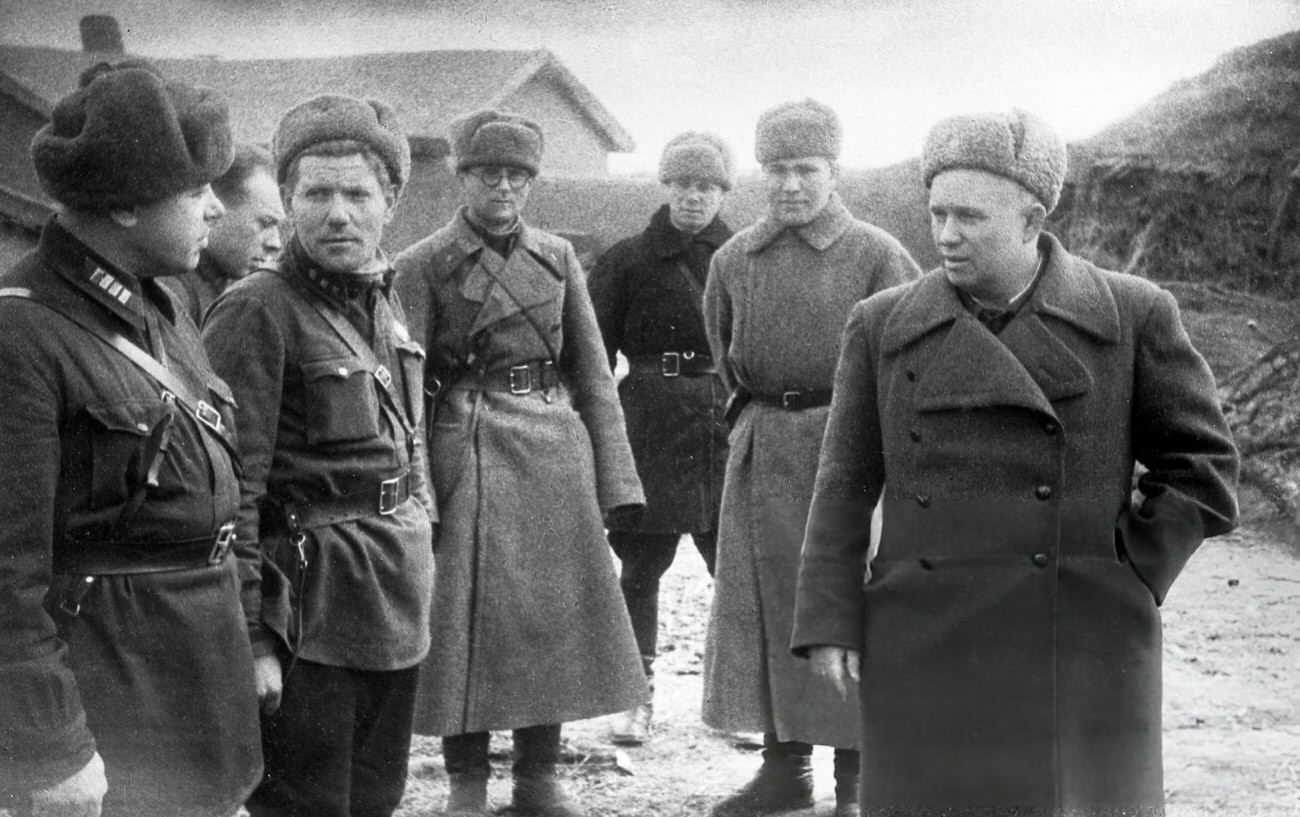
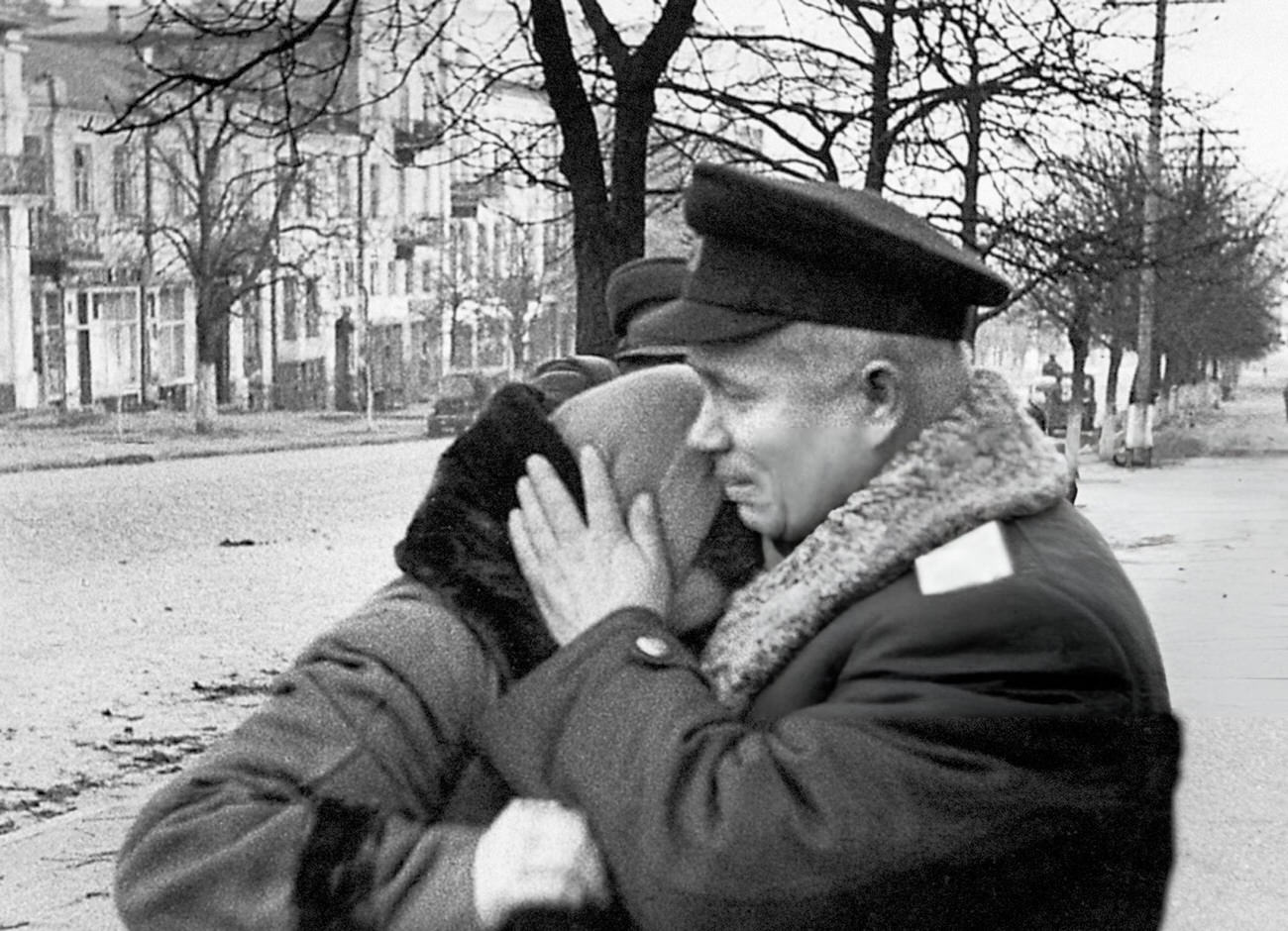
Nikita Khrushchev at Stalingrad, 1940s.
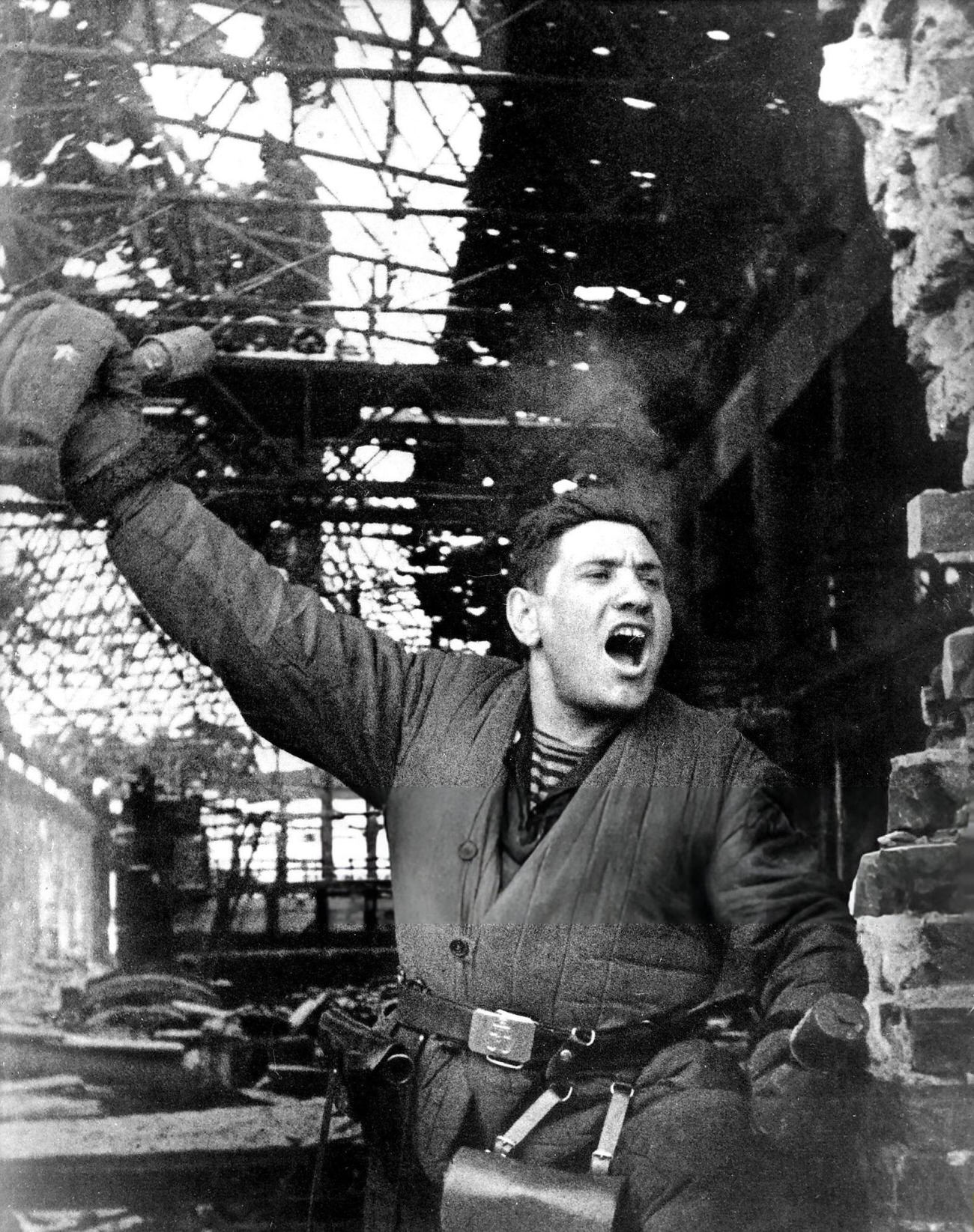
A Soviet soldier during the Battle of Stalingrad, 1942.
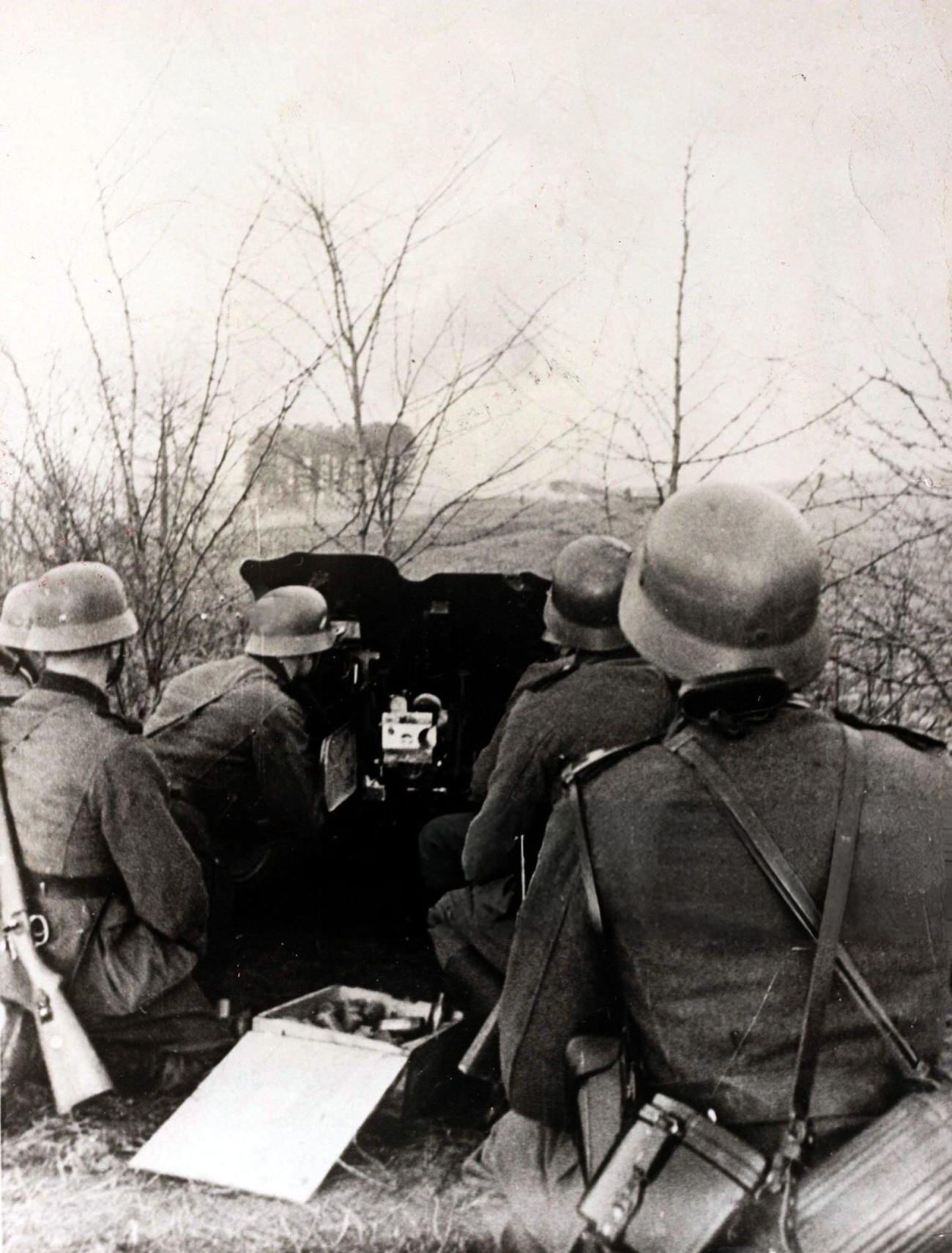
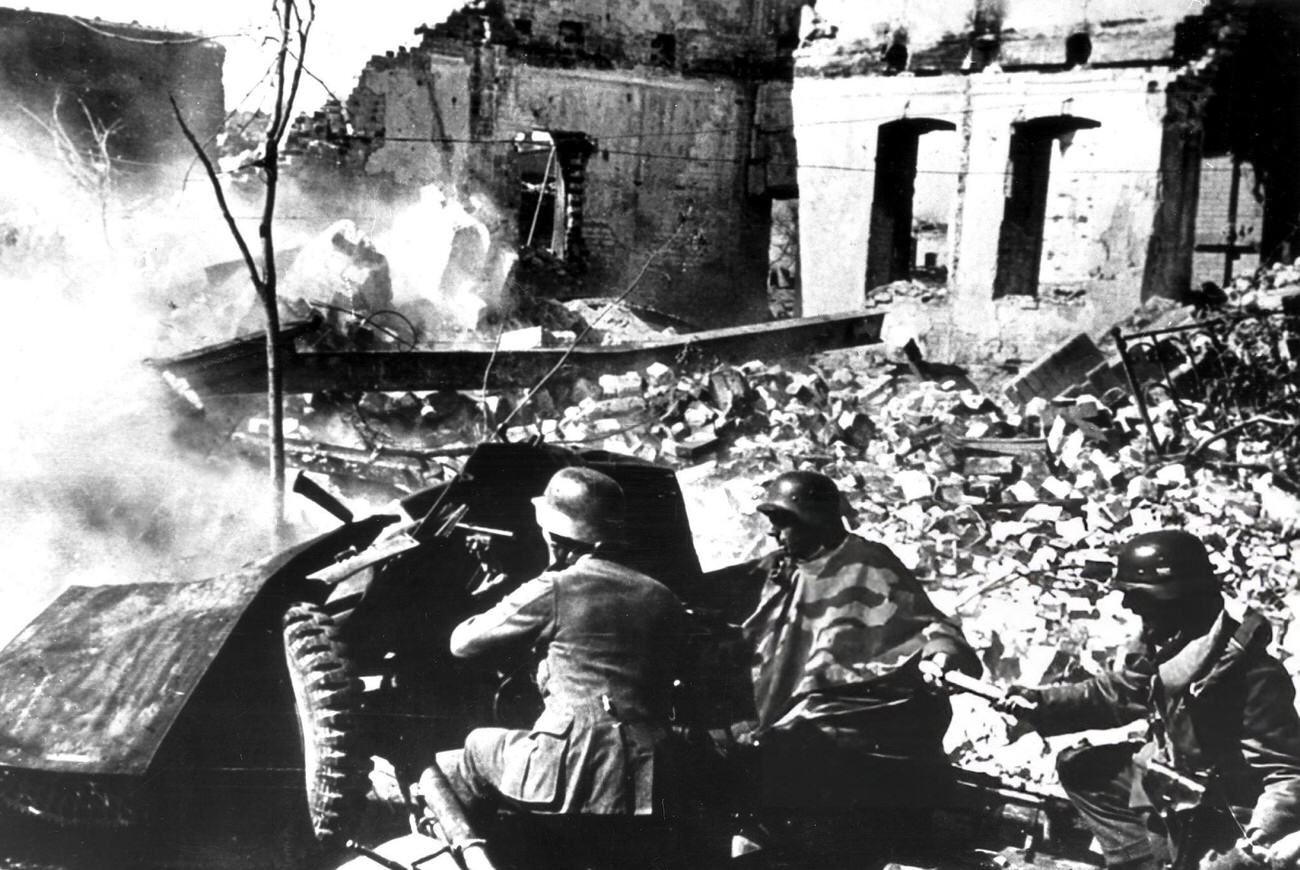
German infantrymen with anti-tank guns during the Battle of Stalingrad, 1942.
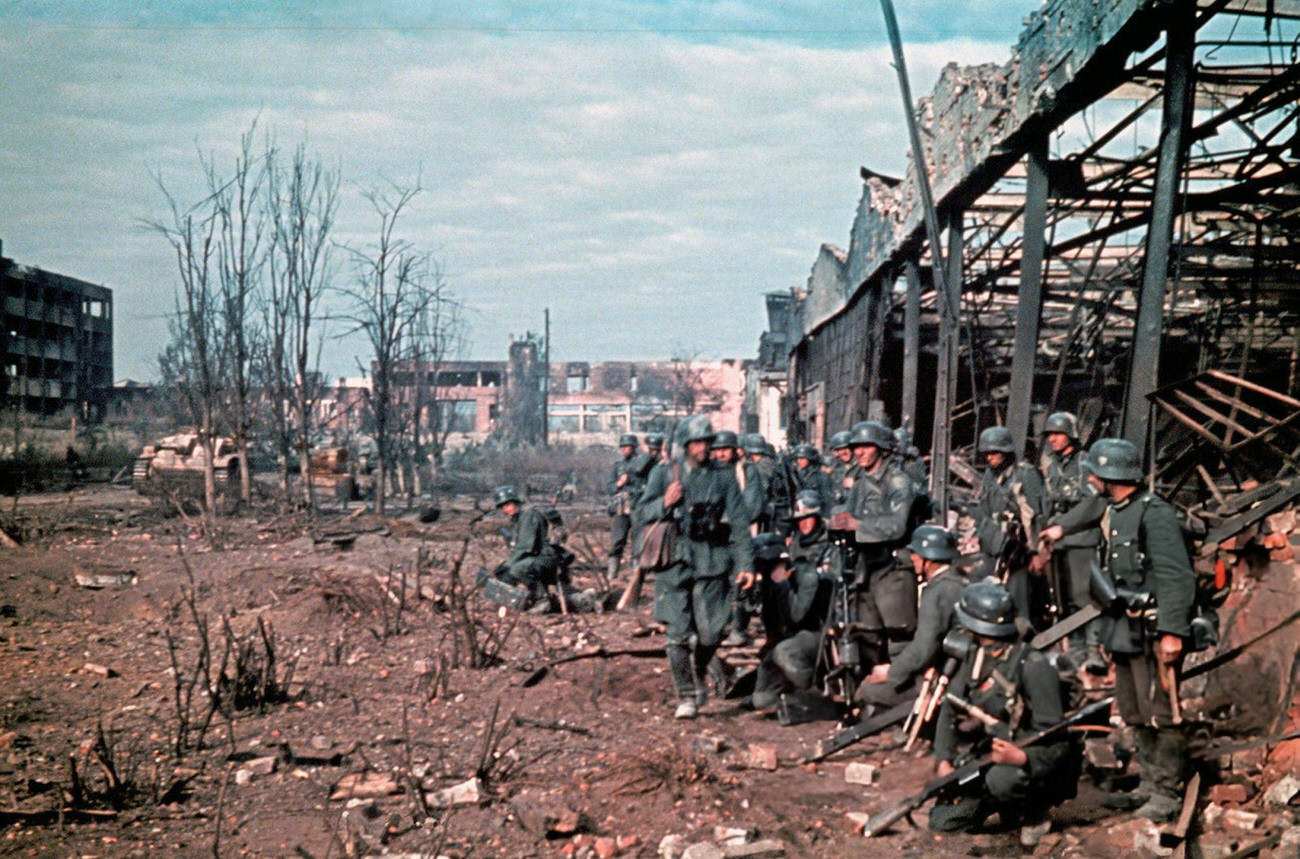
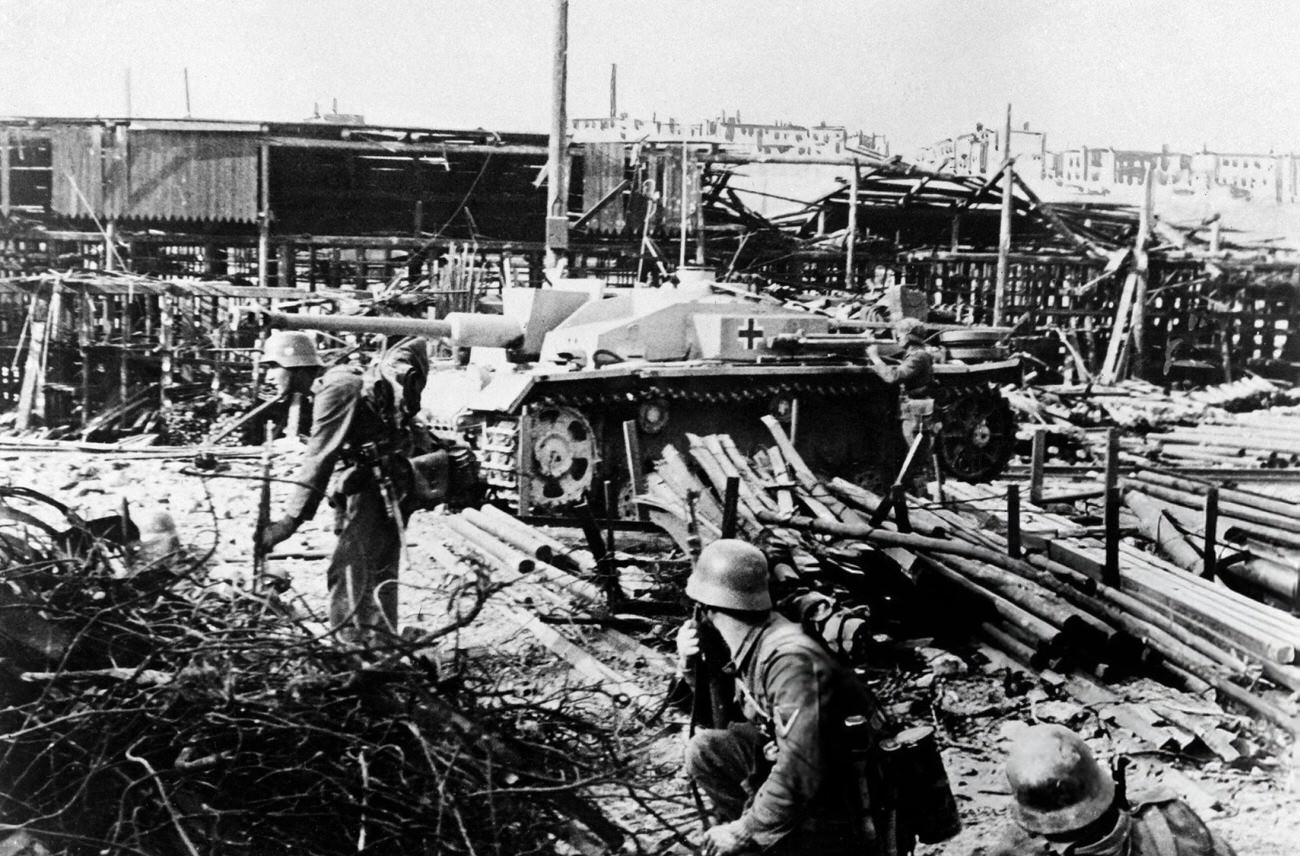
German forces in an assault on a warehouse in Stalingrad, 1942.
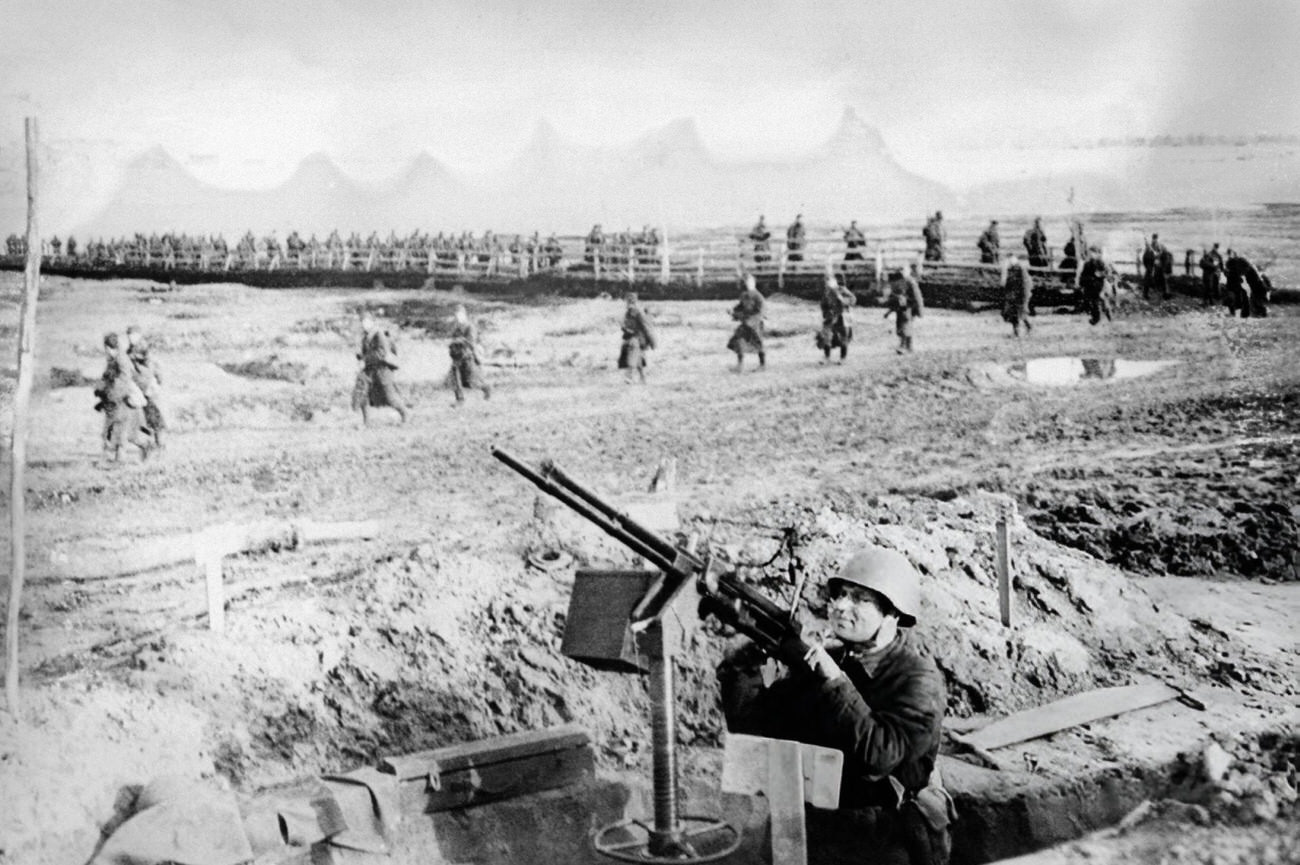
Soviet Anti aircraft machine gun during the Stalingrad battle, 1942.
Refugees after the Battle of Stalingrad.
Battle of Stalingrad during the fall of 1942.
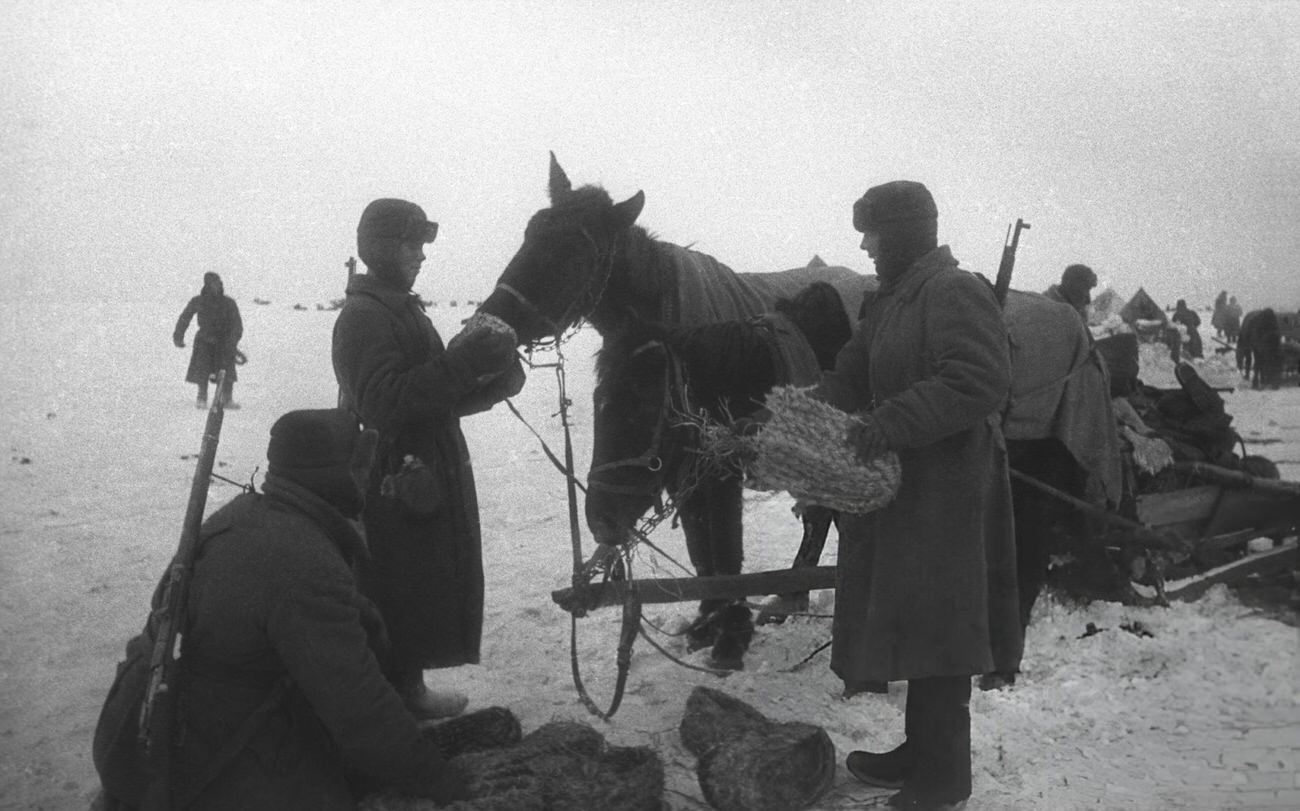
Red Army soldiers stopping to feed their horses captured German 'boots', 1942.
Red Army soldiers stopping to feed their horses captured German ‘boots’, 1942.
Stalingrad, 1942.
Stalingrad, 1942.
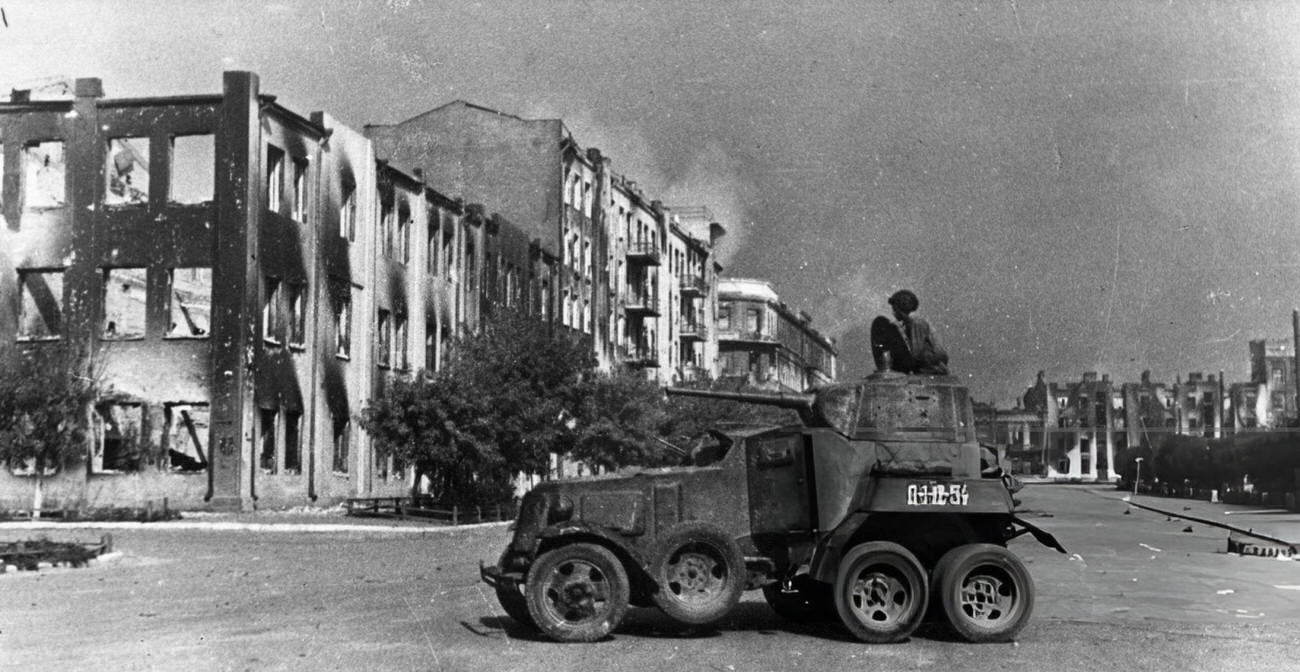
A Soviet armored car in a Stalingrad street, 1942.
Battle of Stalingrad, 1942.
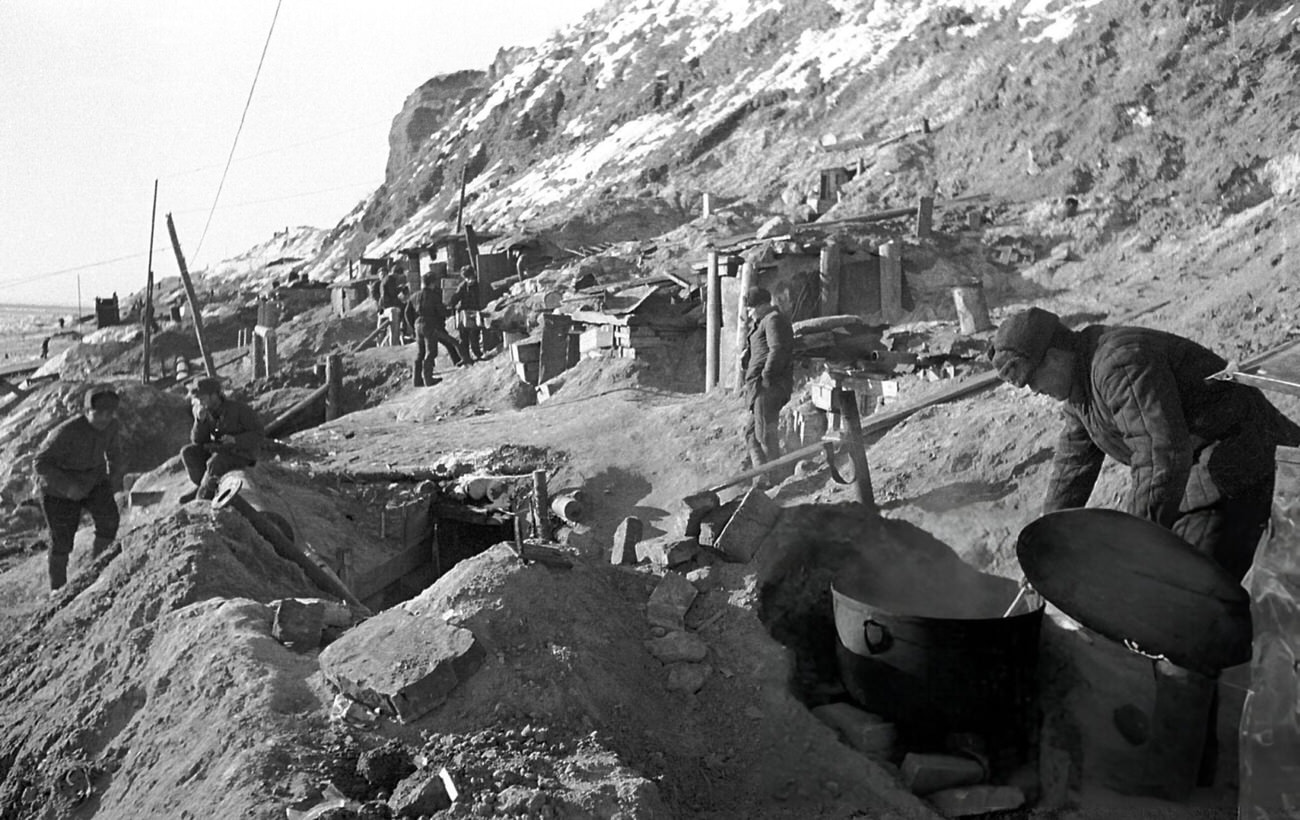
Fortifications on the Volga bank during World War Two, 1942.
Volga River crossing during World War Two, 1942.
Women, children, and old men cluster on the outskirts of Stalingrad, 1942.
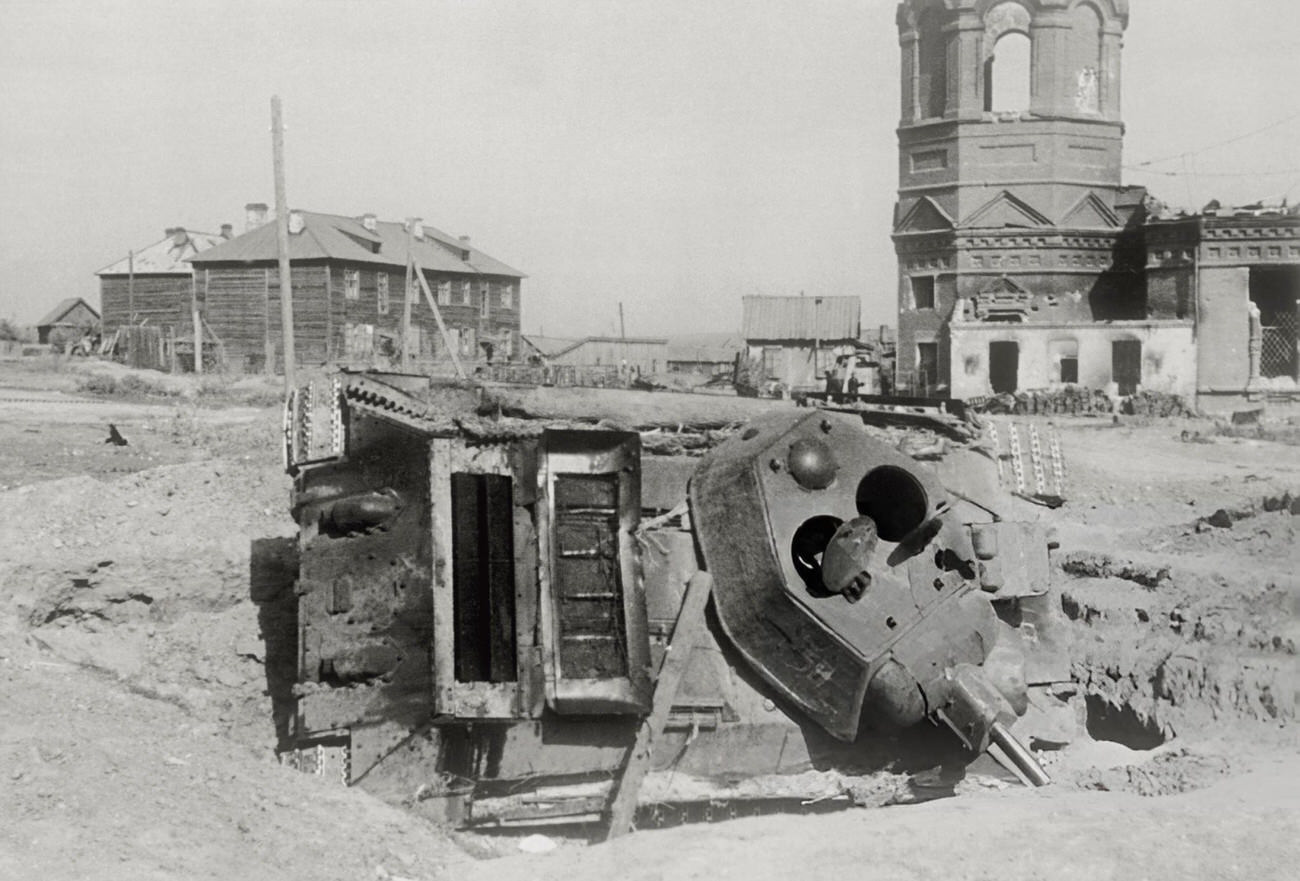
The wreck of a Soviet tank abandoned in the outskirts of Stalingrad, 1942.
Soviet soldiers gathering in a transit camp in Stalingrad, 1942.
Soviet Troops Defending The City during the Battle of Stalingrad, 1940s.
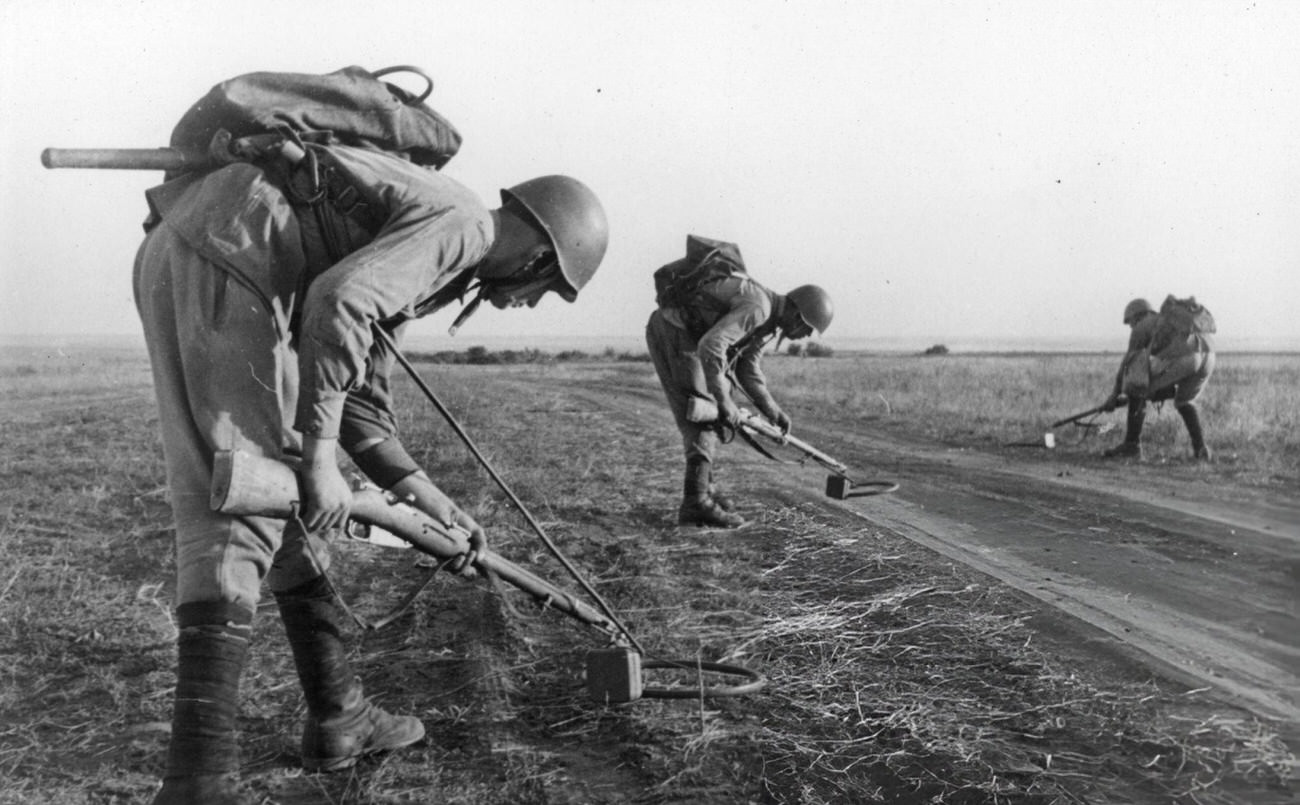
Russian sappers searching for mines near Stalingrad, 1942.
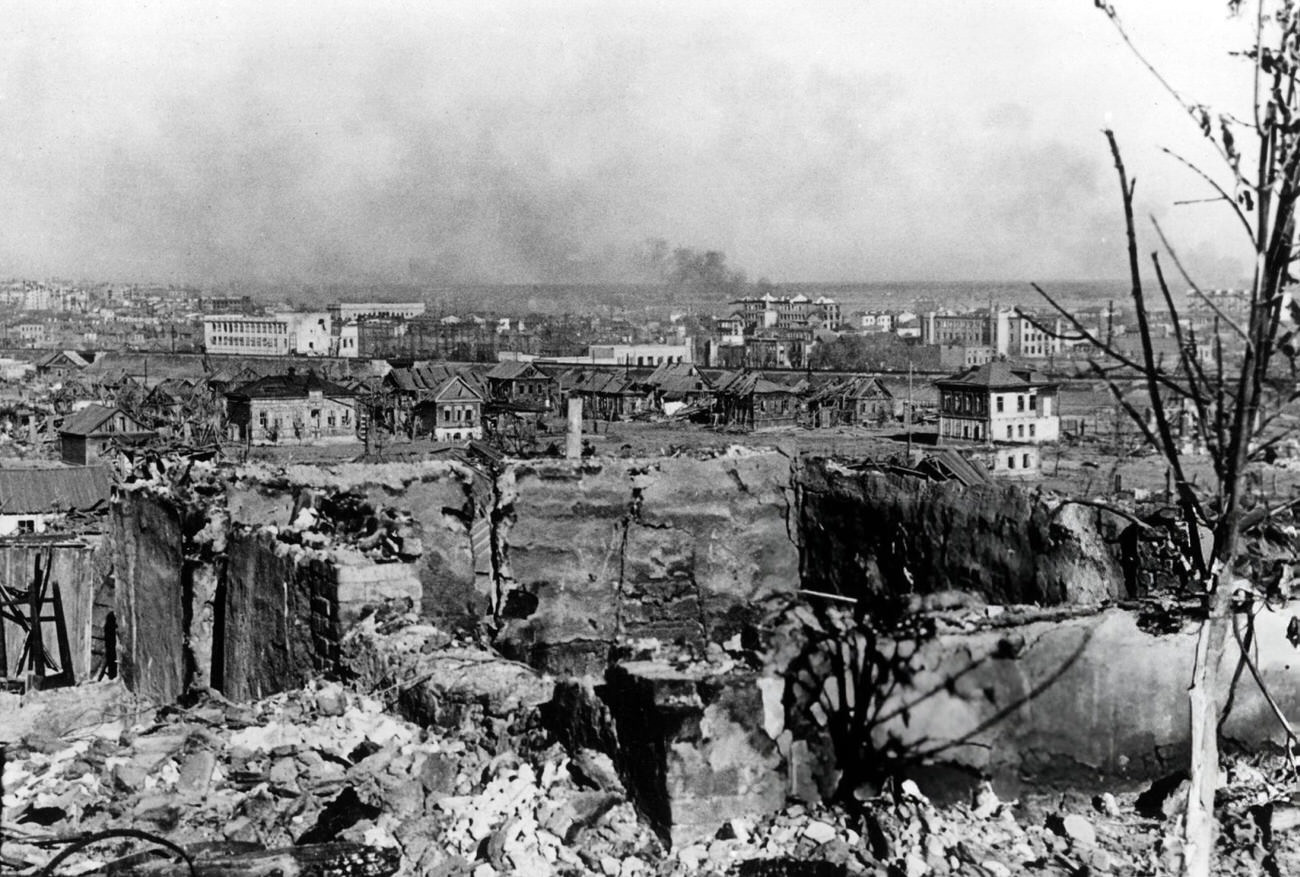
Stalingrad, 1942.
Stalingrad, 1942.
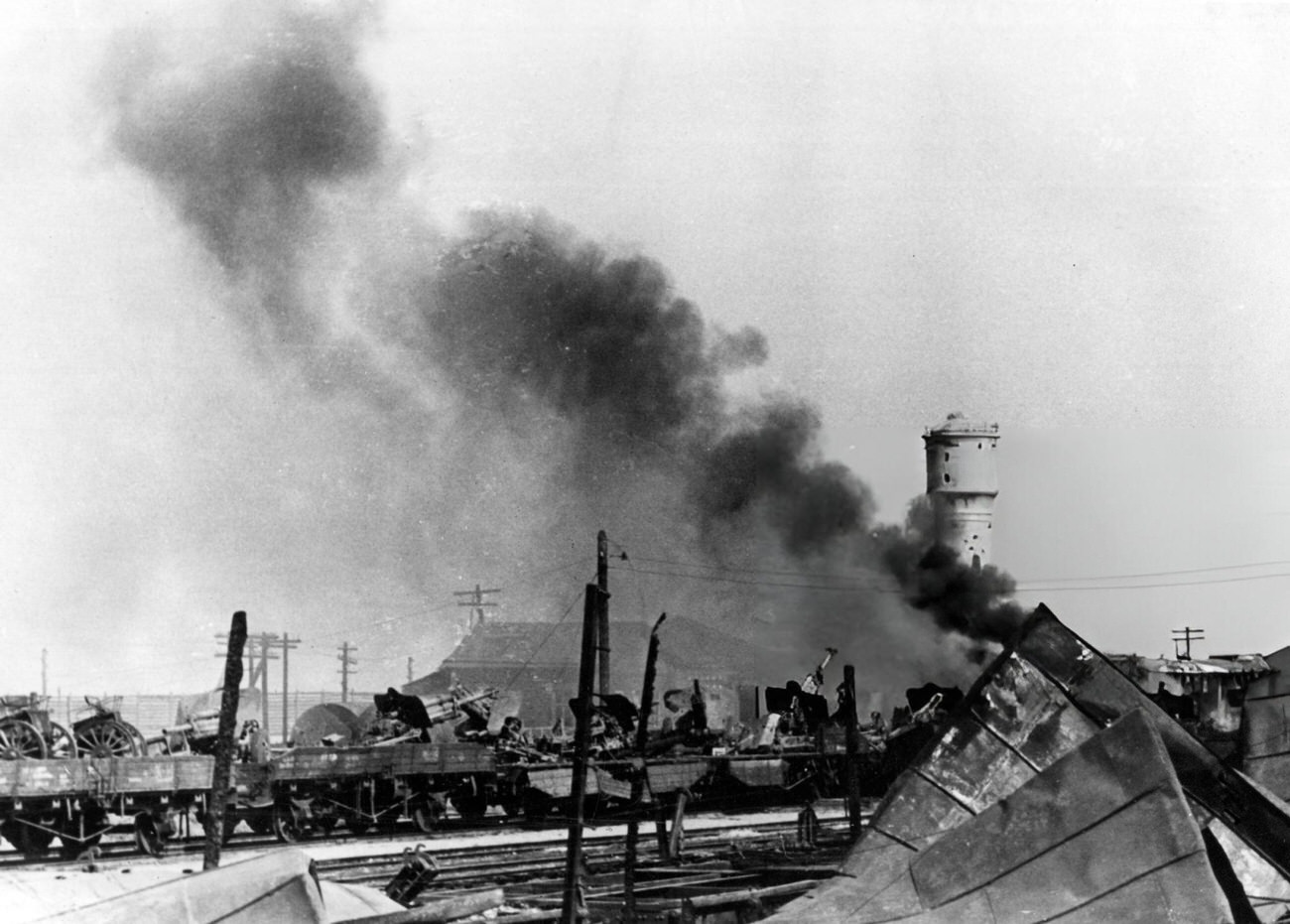
Train loaded with Russian artillery in a station on fire in Stalingrad, 1942.
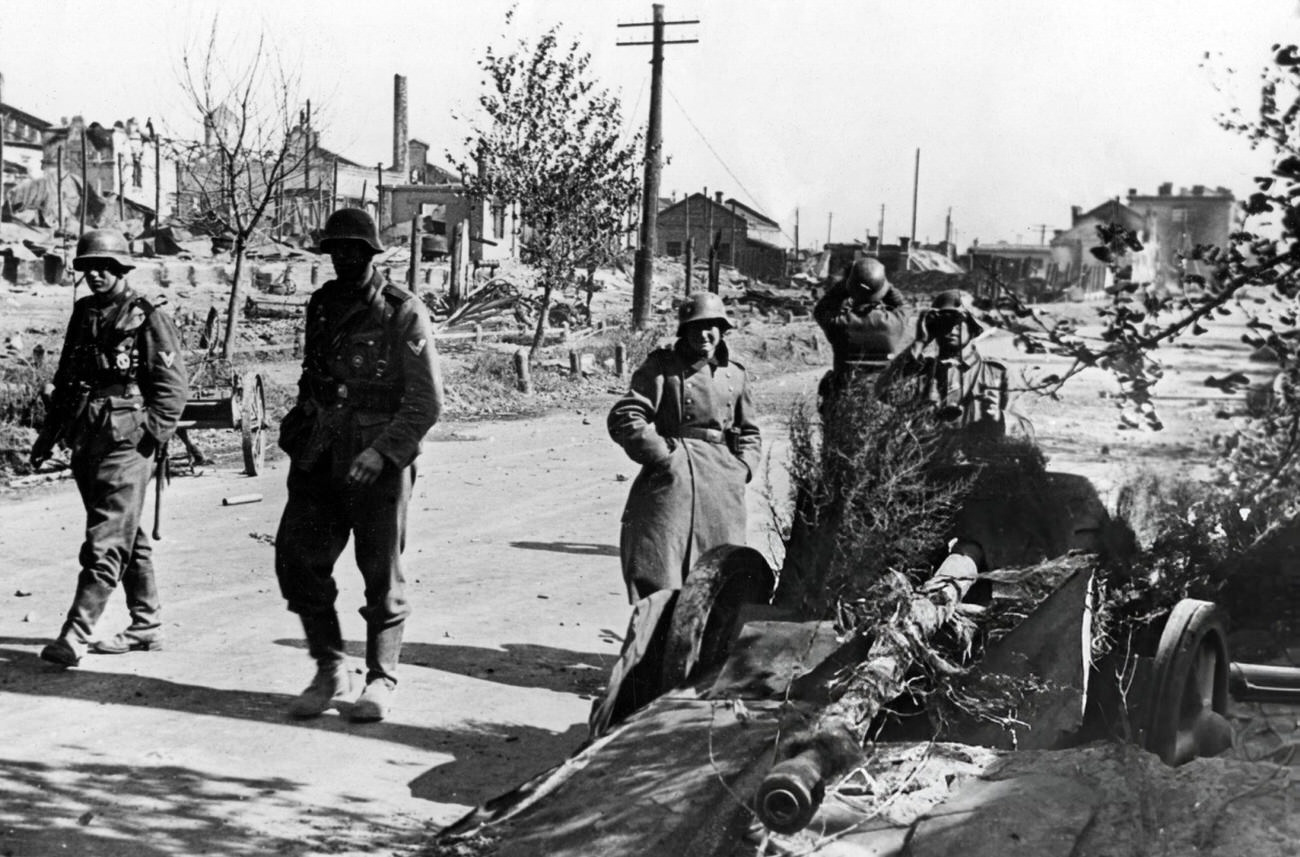
German soldiers checking the horizon next to a camouflaged antiaircraft piece among the ruins of a street in Stalingrad, 1942.
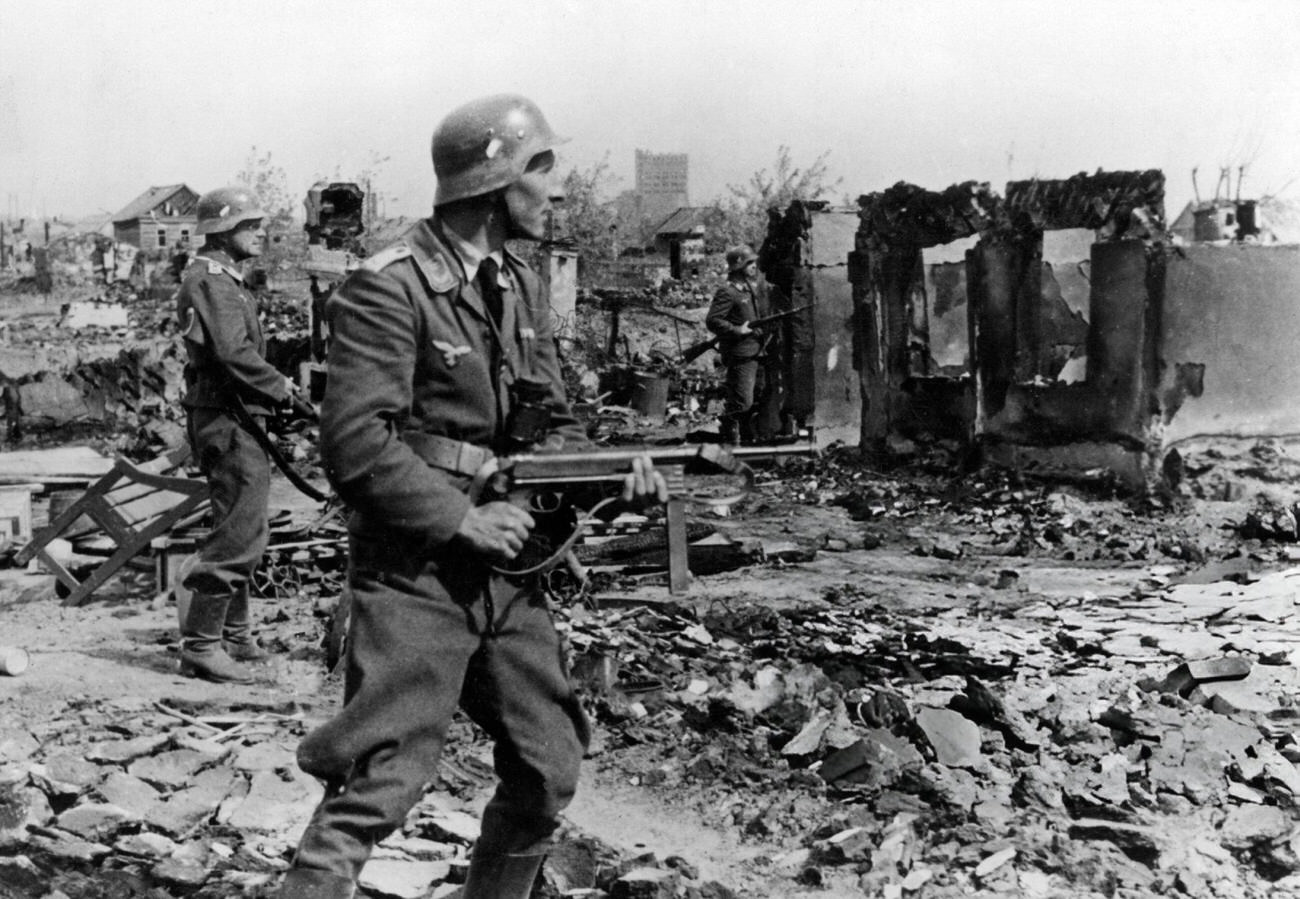
Luftwaffe's German soldiers mopping up the area of Stalingrad, 1942.
Luftwaffe’s German soldiers mopping up the area of Stalingrad, 1942.
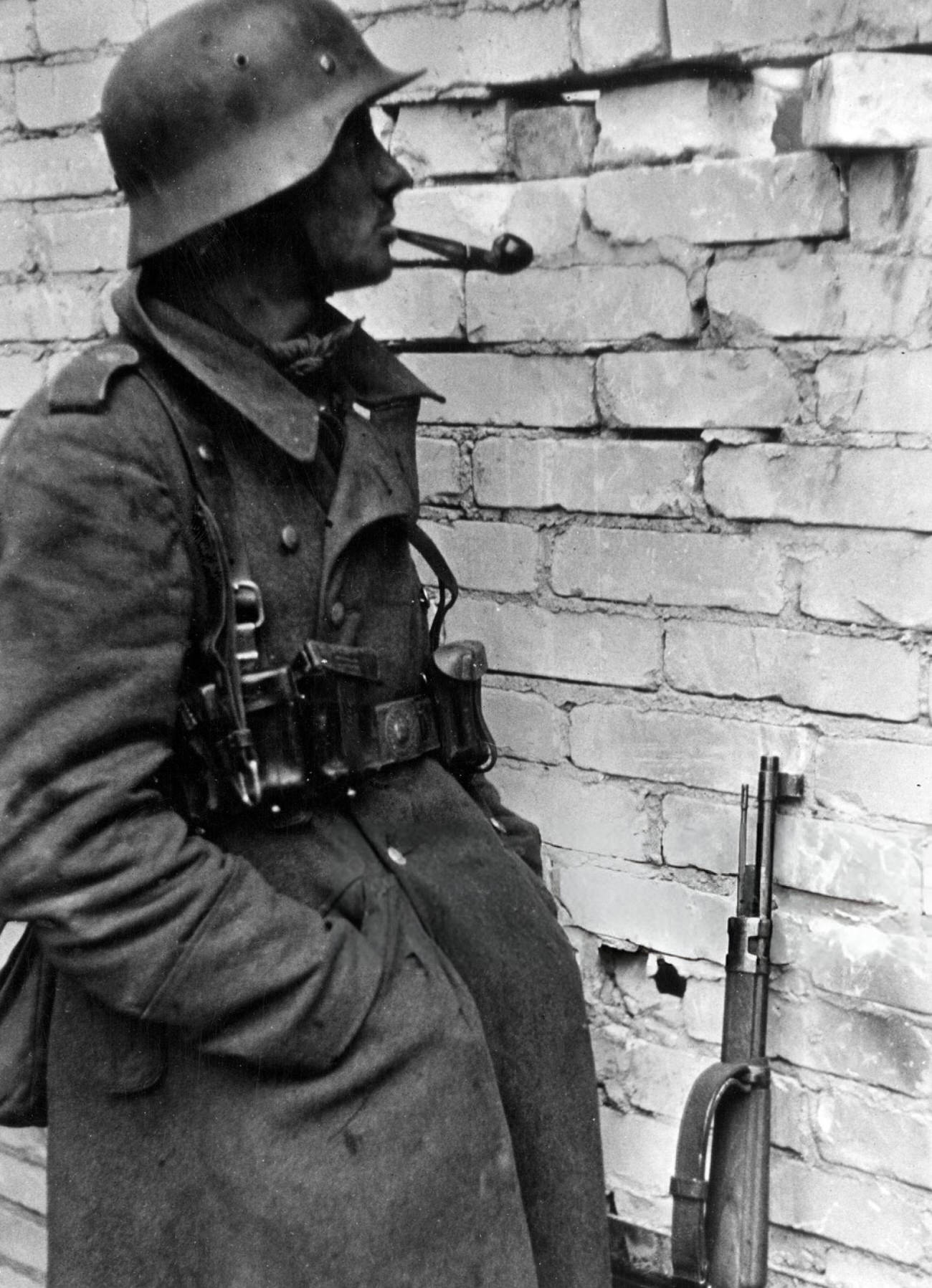
German sentry observing Russian soldiers moves through a wall's hole in Stalingrad, 1942.
German sentry observing Russian soldiers moves through a wall’s hole in Stalingrad, 1942.
German soldiers are pictured during the battle of Stalingrad, 1940s.
An automatic rifle man fights on the outskirts of Stalingrad, 1942.
Battle of Stalingrad, 1940s.
Enjoyed this post? Get new ones in your inbox.

1 thought on “Against All Odds: The Battle of Stalingrad in Rare Photos, Where the Red Army Held the Line”

Leave a Comment

Your email address will not be published. Required fields are marked *

Share this Post 🥺

Please take a moment to share this content. Your support is greatly appreciated! 🙌🙏

Share this Post 🥺

Please take a moment to share this content. Your support is greatly appreciated! 🙌🙏
Scroll to Top
 
Hey Friend, Before You Go.. Please like & follow for more interesting content