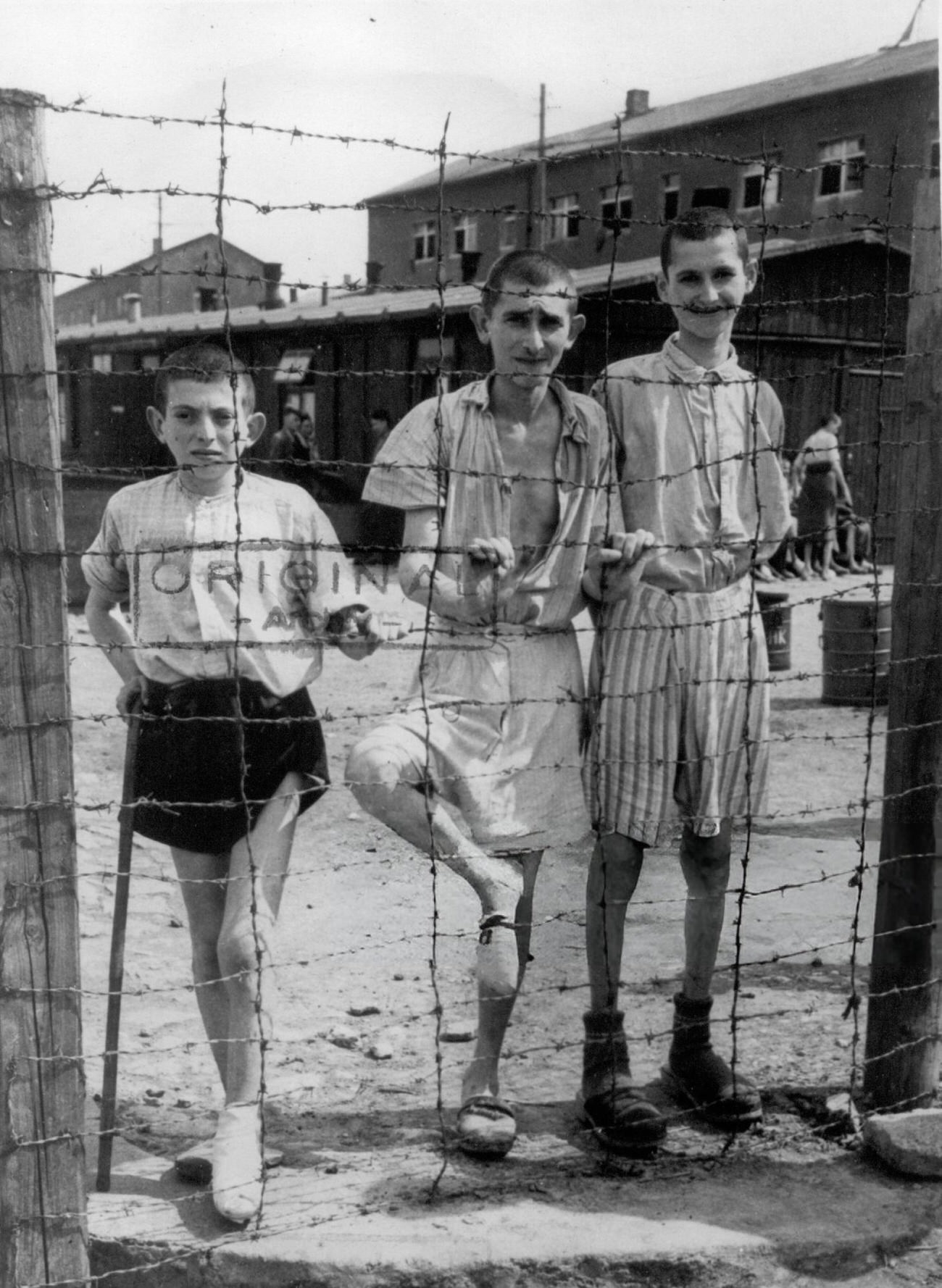
Buchenwald concentration camp was established in July 1937 near Weimar, Germany — years before the first shots of World War II were fired. The Nazi regime built it initially to imprison political opponents: people who spoke out, organized, or simply refused to comply. But the camp’s purpose expanded rapidly. Jews, Romani people, disabled individuals, homosexuals, and anyone else the Nazis labeled undesirable were sent there by the tens of thousands. By the time American forces arrived in April 1945, more than 250,000 people had passed through its gates. An estimated 56,000 of them never left.
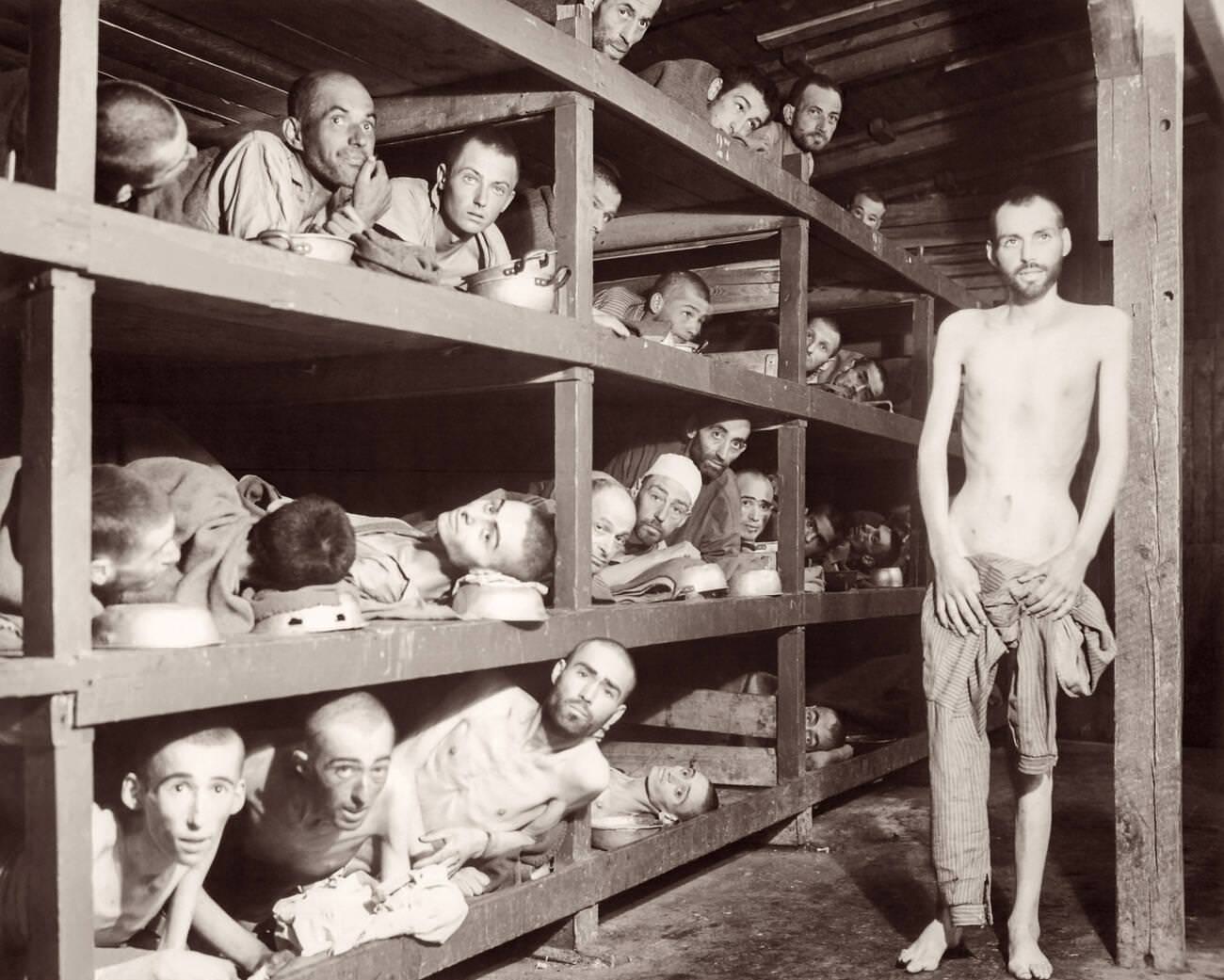
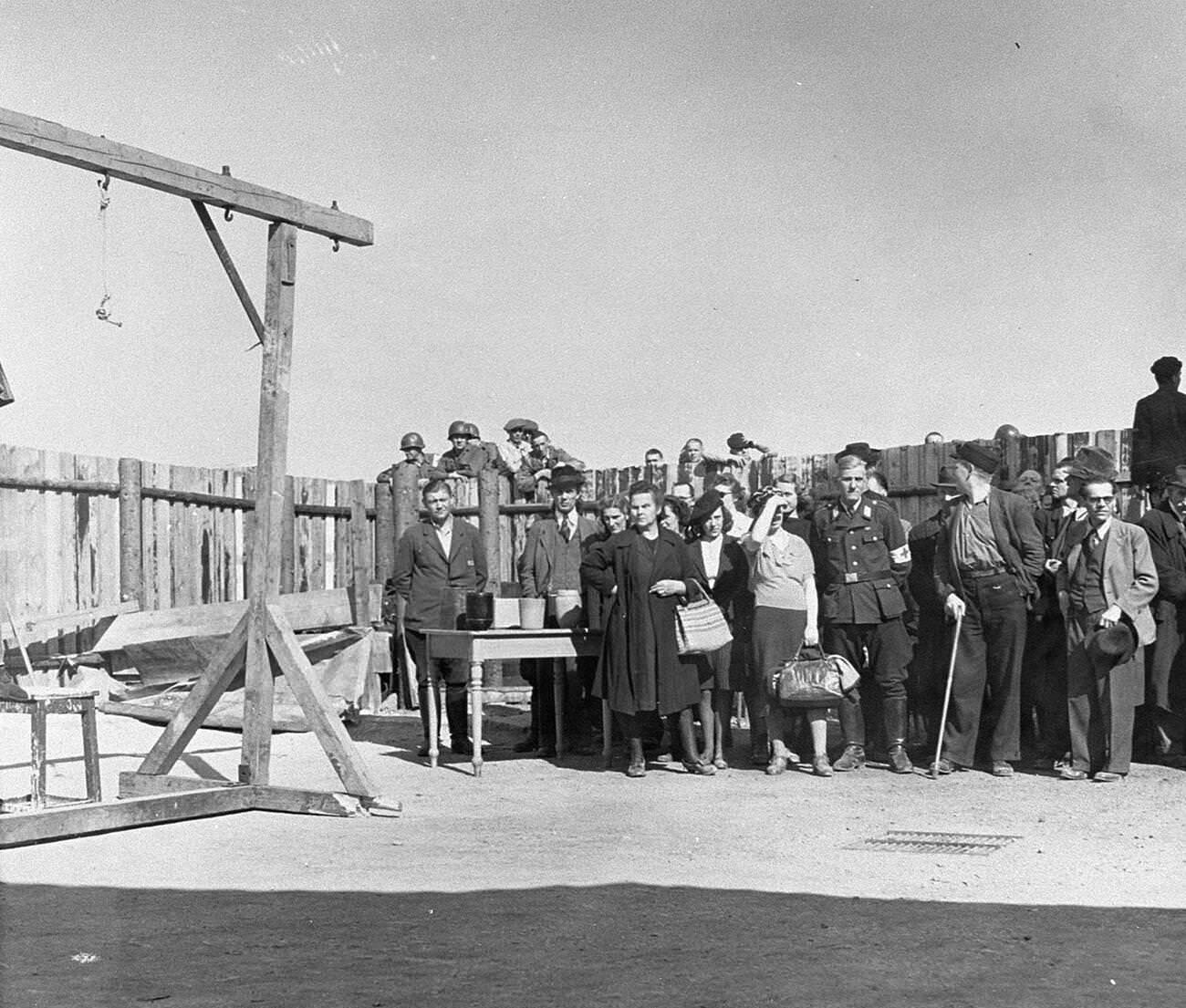
The forested hills surrounding Weimar gave Buchenwald a deceptively calm exterior. Inside, the reality was the opposite. Barracks were overcrowded, filthy, and infested with lice. Prisoners received a daily ration of watery soup and a small piece of bread — barely enough to keep a person alive. Most inmates were visibly malnourished within weeks of arrival. SS guards enforced discipline through beatings, and public executions were carried out as a routine tool of terror. Prisoners were forced to perform hard labor in nearby weapons factories, stone quarries, and road construction projects. Those who could no longer keep up with the work were simply left to die.
Buchenwald was also a site of medical experimentation. SS doctors used prisoners as test subjects without their consent, conducting procedures that frequently resulted in permanent injury or death. These experiments were not fringe activities — they were sanctioned as part of the broader Nazi scientific program rooted in racial ideology. The prisoners selected had no recourse and no protection.
By early 1945, the Allied advance made it clear that Germany was losing the war. The Soviet Red Army was pushing in from the east, while American, British, and French forces were closing in from the west. As the front lines drew closer to Buchenwald, the SS began evacuating prisoners on forced marches to other camps. These death marches, conducted through harsh terrain with no food or rest, killed thousands. Those left behind in the camp were in a state of severe physical collapse.
What the SS did not account for was the organized resistance operating inside the camp. Prisoners from multiple countries — including Communists, Socialists, and former military officers — had built a secret network over the years. As the SS began to flee in the first days of April 1945, the resistance moved quickly. They disabled electric fences, seized control of several watchtowers, and disrupted the guards’ plans to kill or remove the remaining prisoners. Their actions directly saved lives in the camp’s final days.
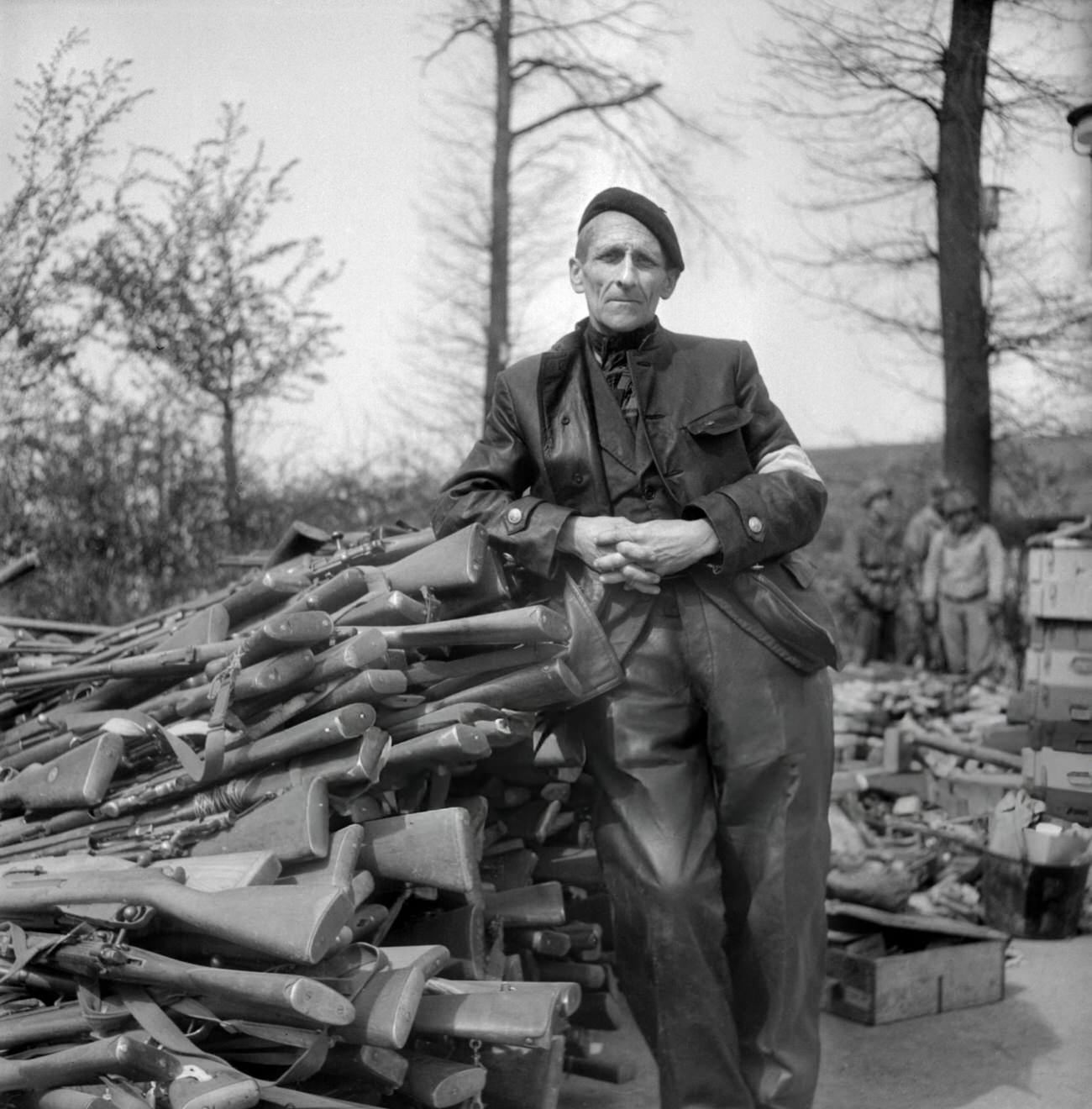
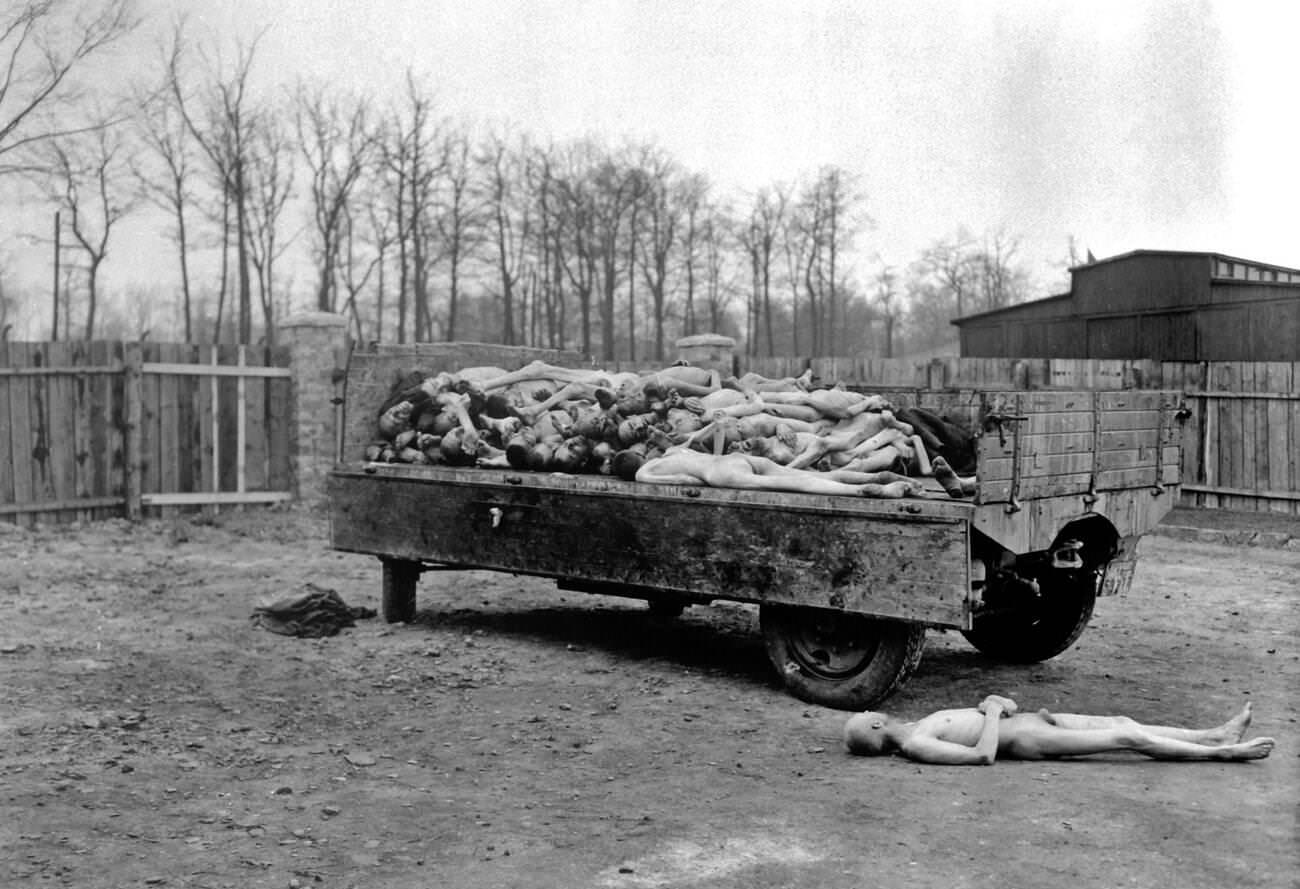
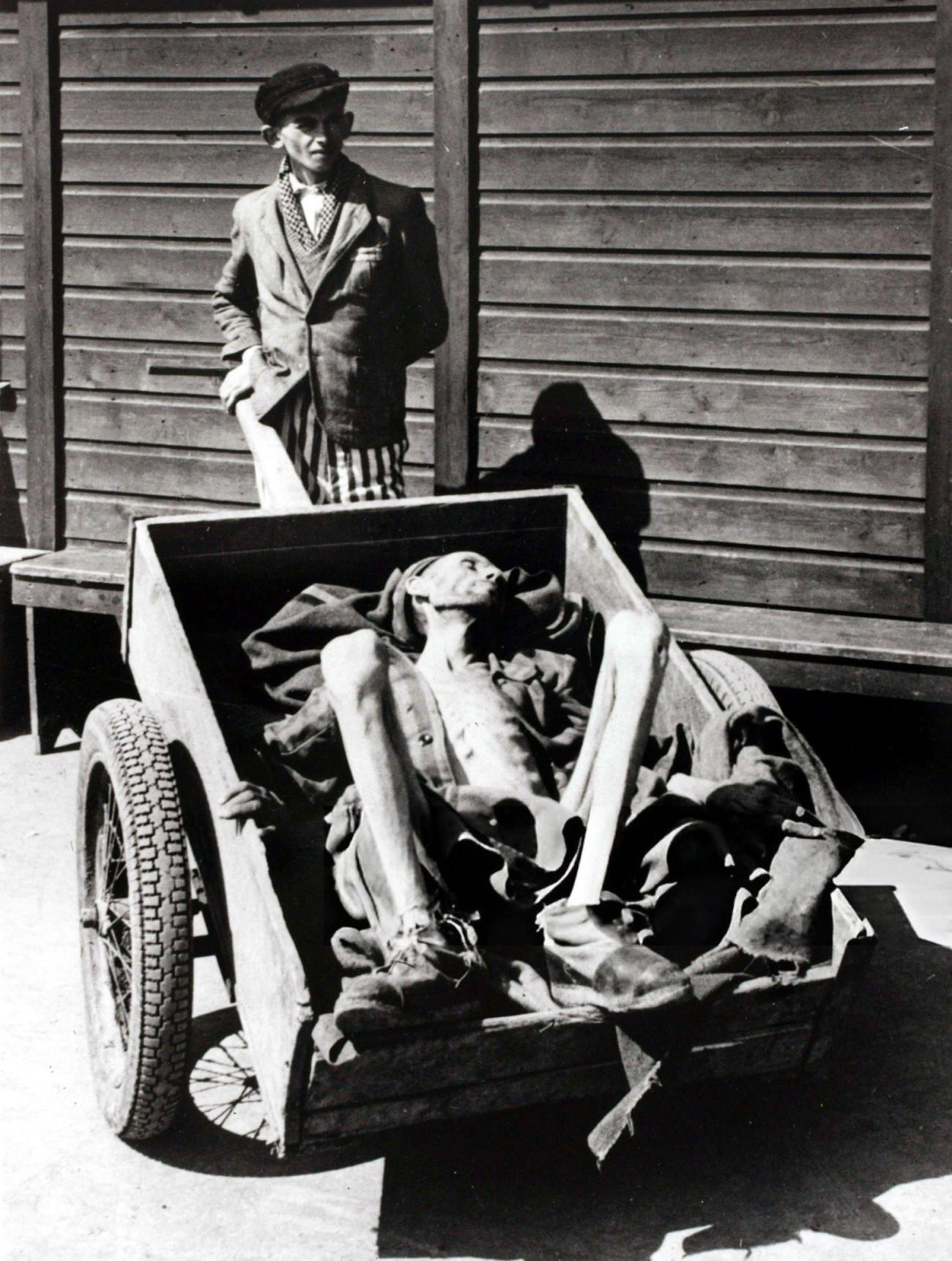
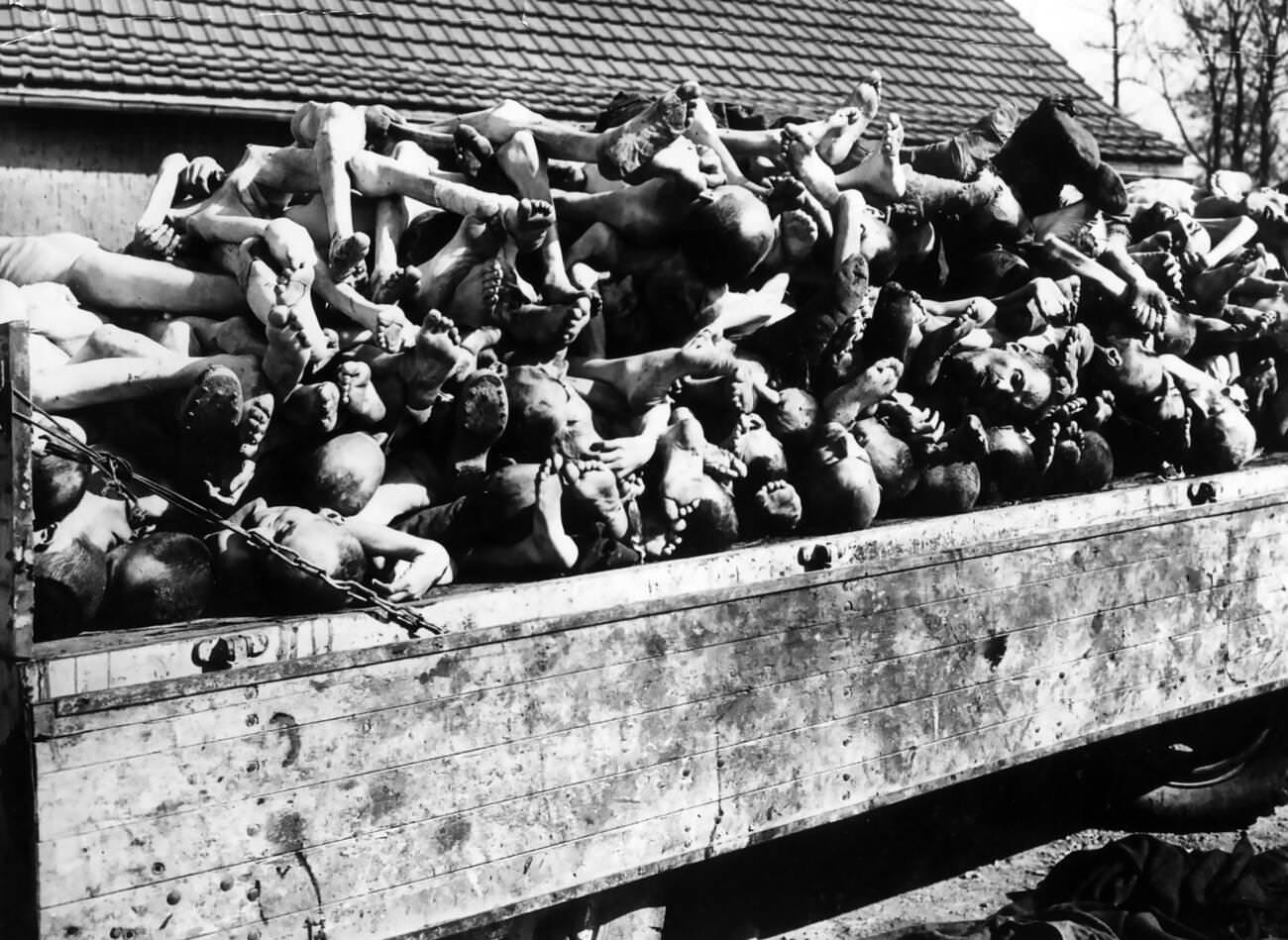
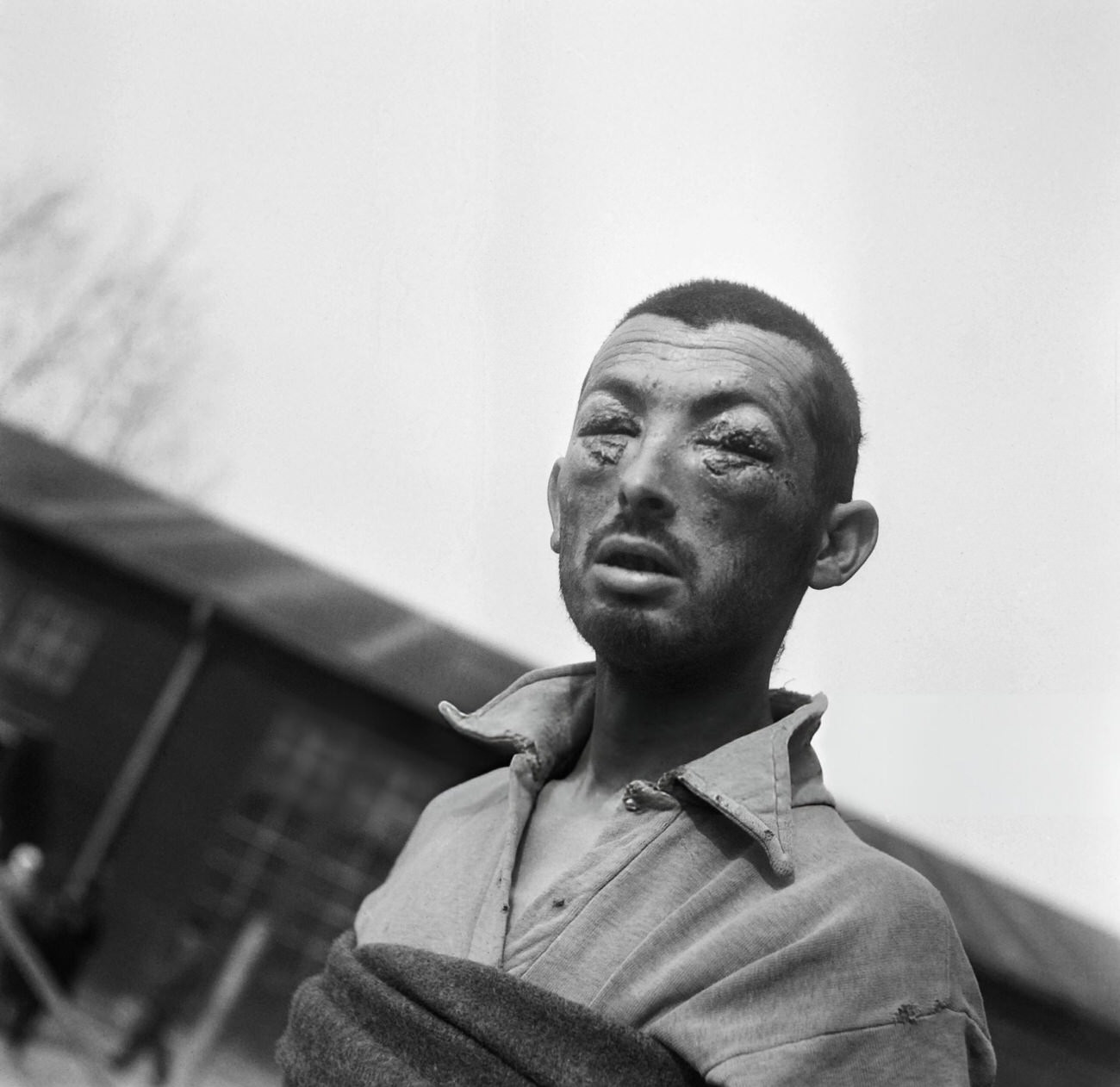
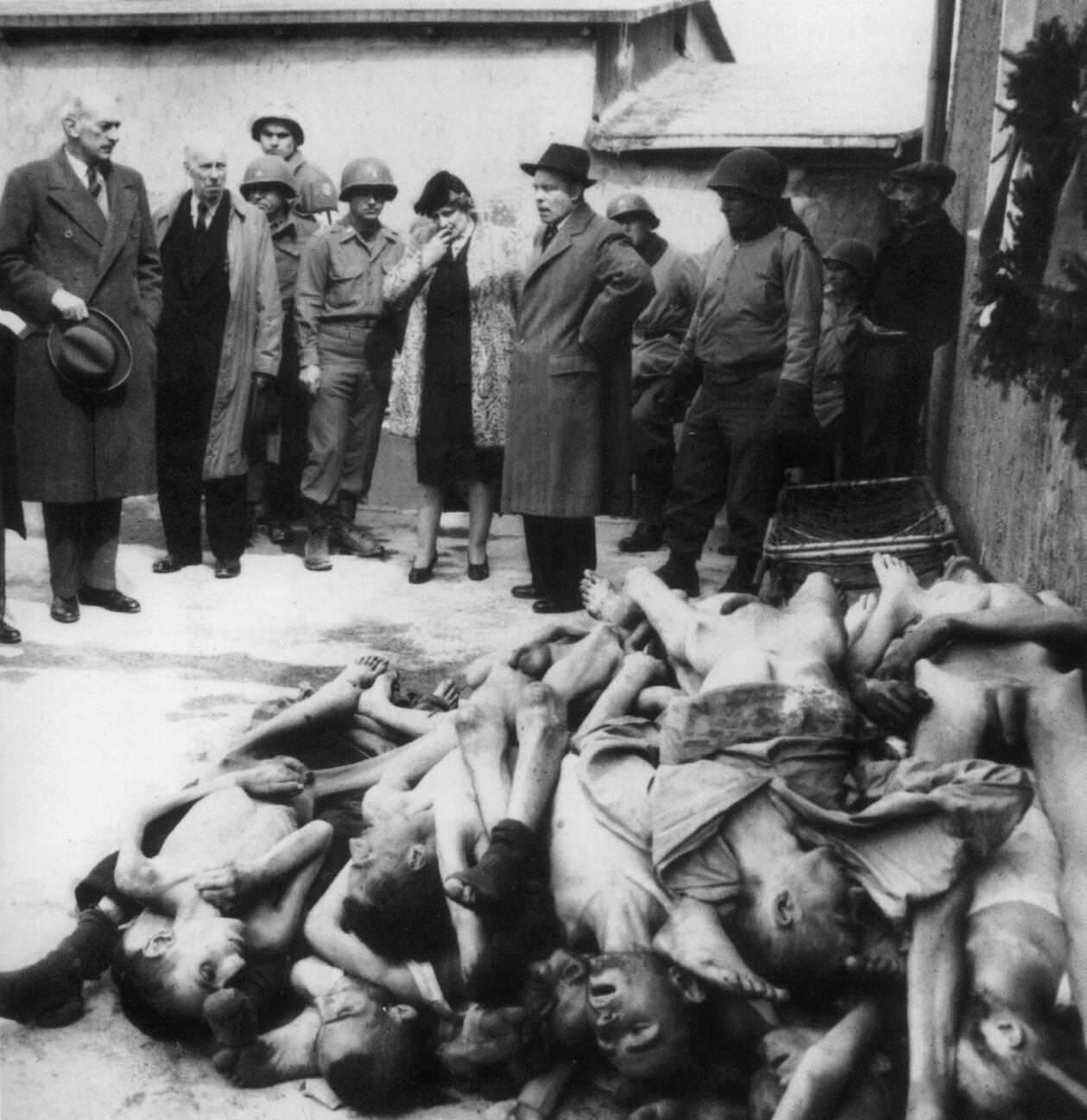
On April 11, 1945, soldiers of the U.S. Third Army, under General George S. Patton, entered Buchenwald. They found a camp that defied description. Piles of corpses lay in open view. The survivors who were still alive were skeletal, barely able to stand. The soldiers — combat veterans who had fought across Europe — were unprepared for what they encountered. Instruments of torture, remnants of mass graves, and the abandoned facilities where medical experiments had been performed were all left behind in plain sight.
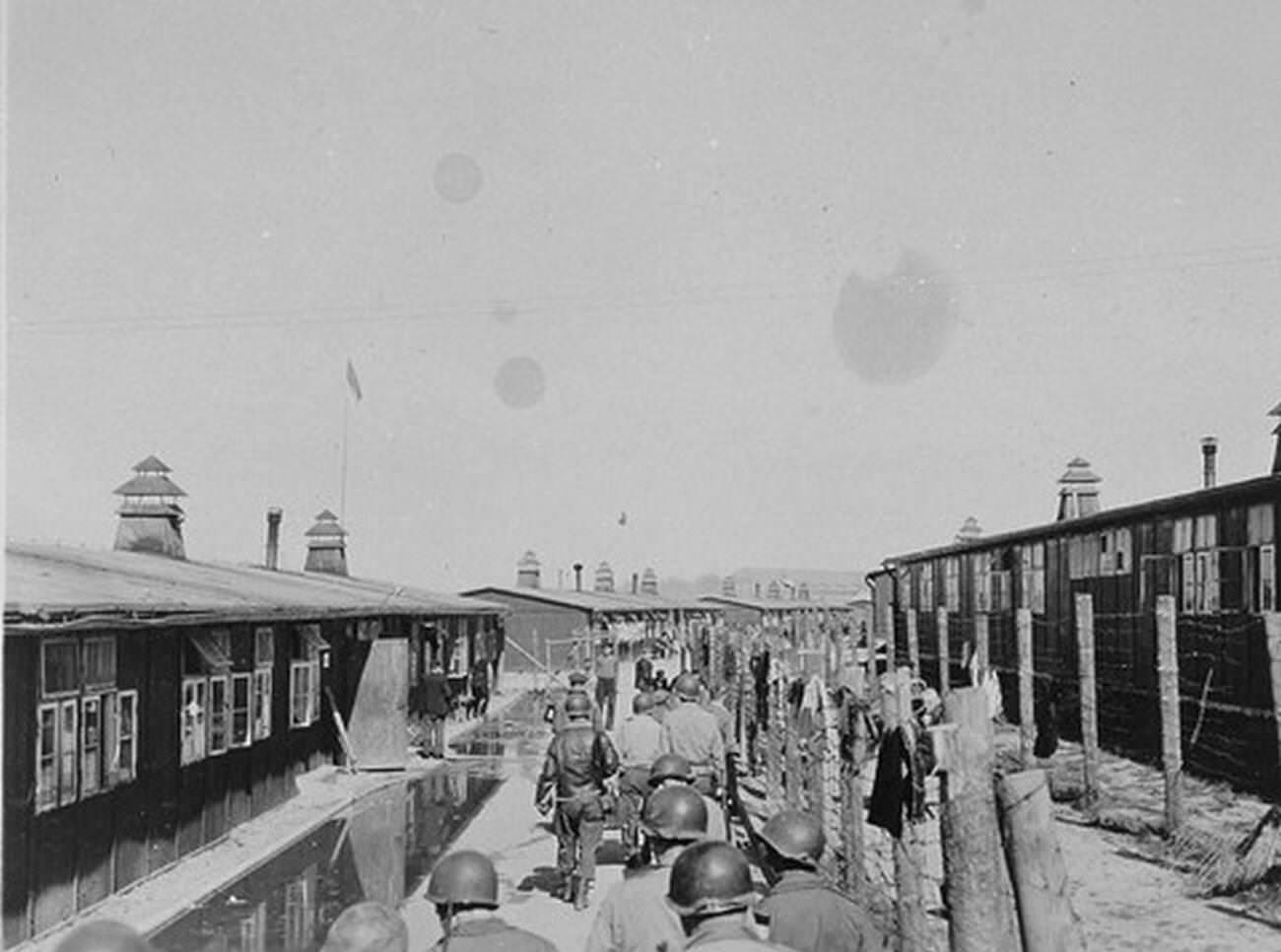
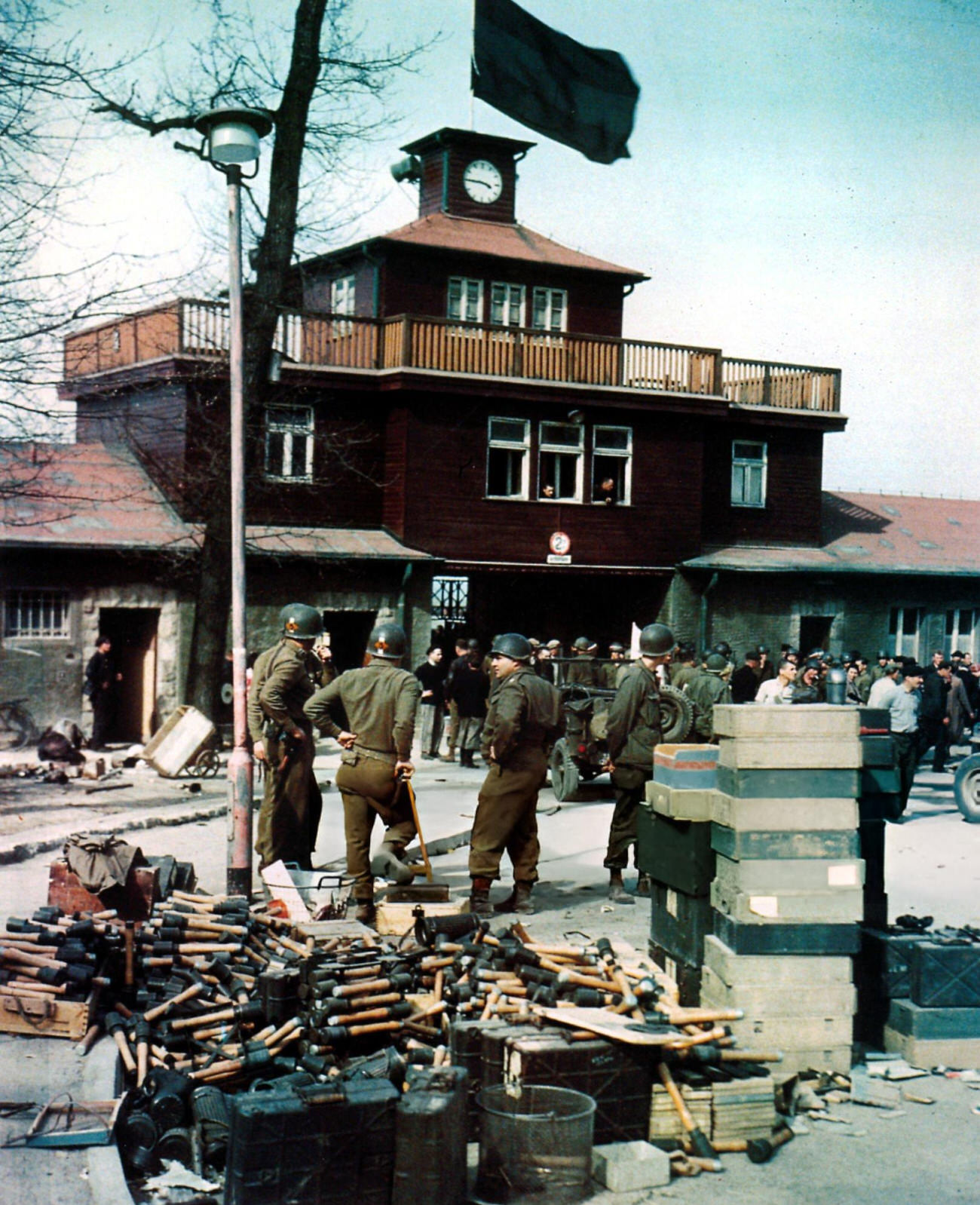
Photographers and journalists who entered the camp alongside the troops documented everything they saw. Their work was deliberate — the Allies understood that visual evidence would be essential for holding Nazi war criminals accountable. The photographs taken at Buchenwald were later presented as evidence at the Nuremberg Trials. American military cameramen moved through the camp recording conditions that most of the outside world had not yet seen.
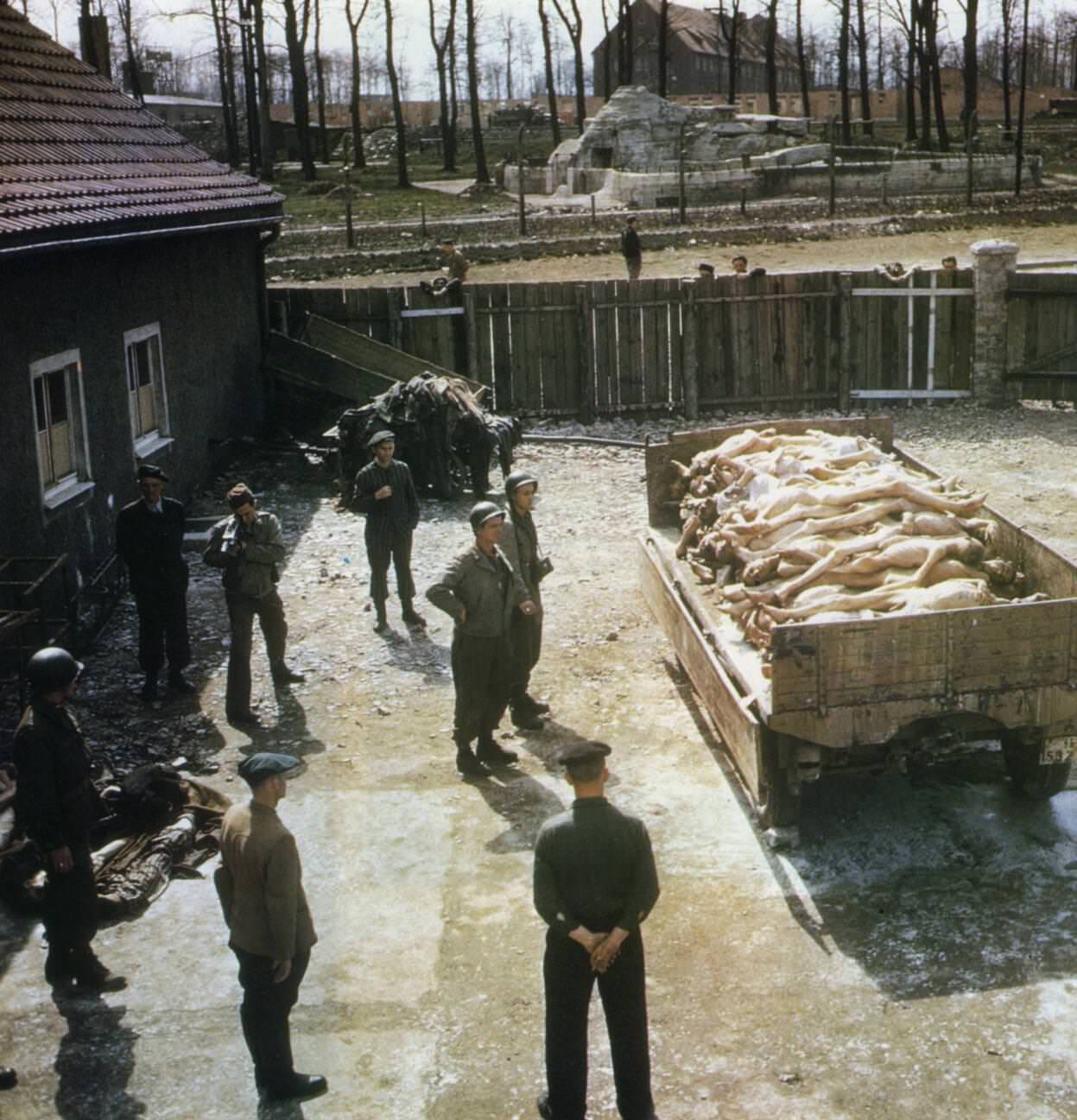
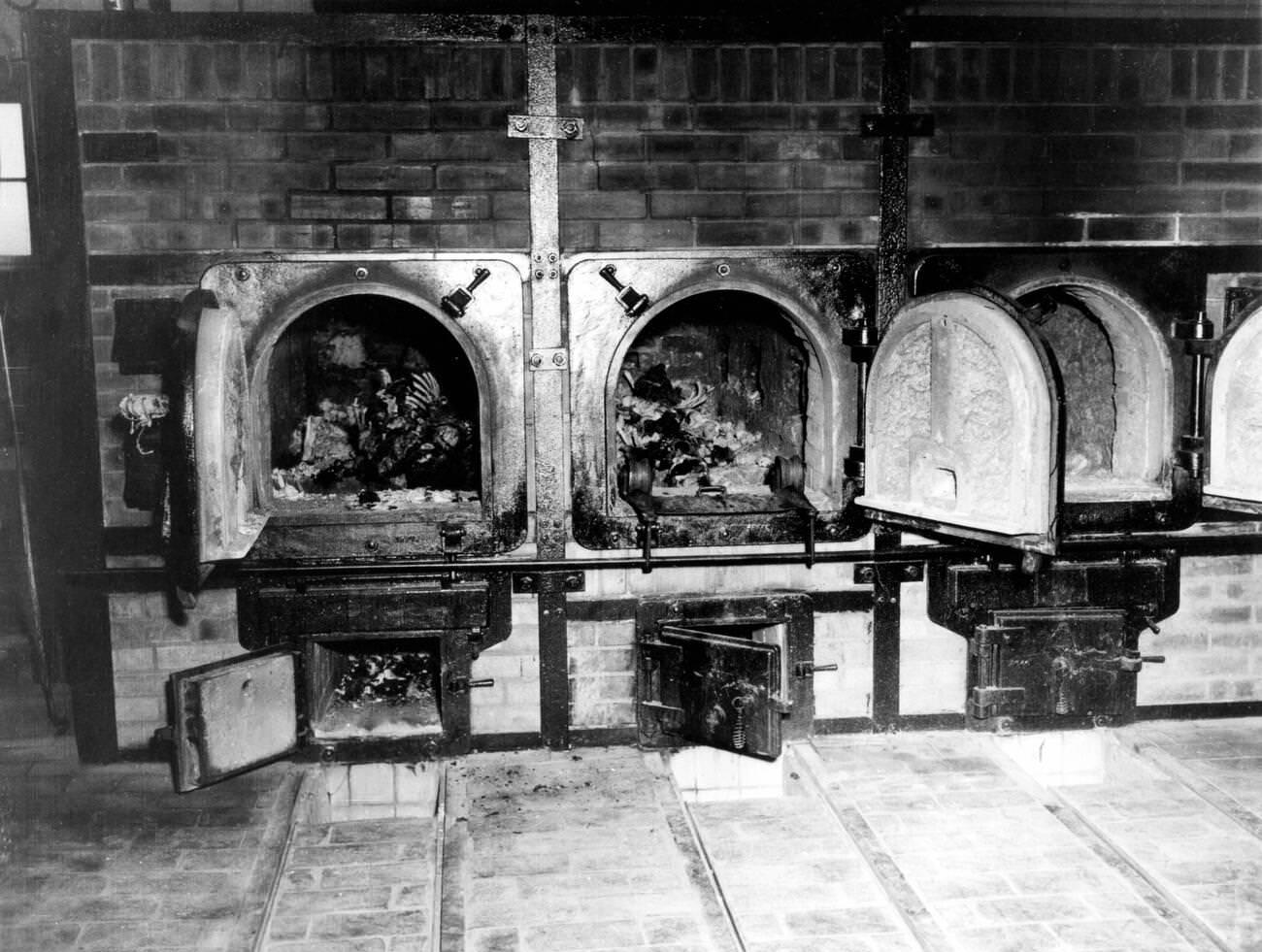
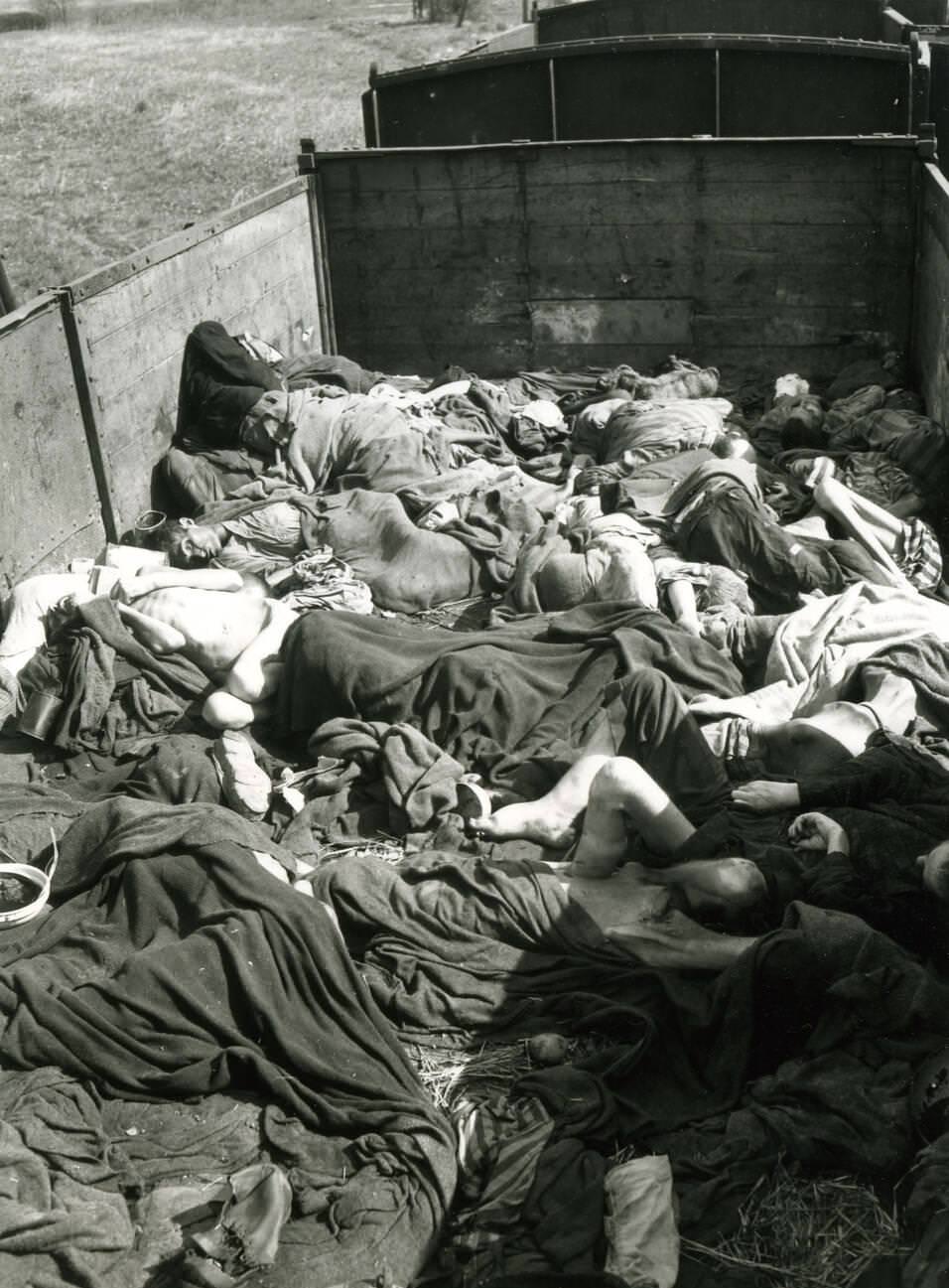
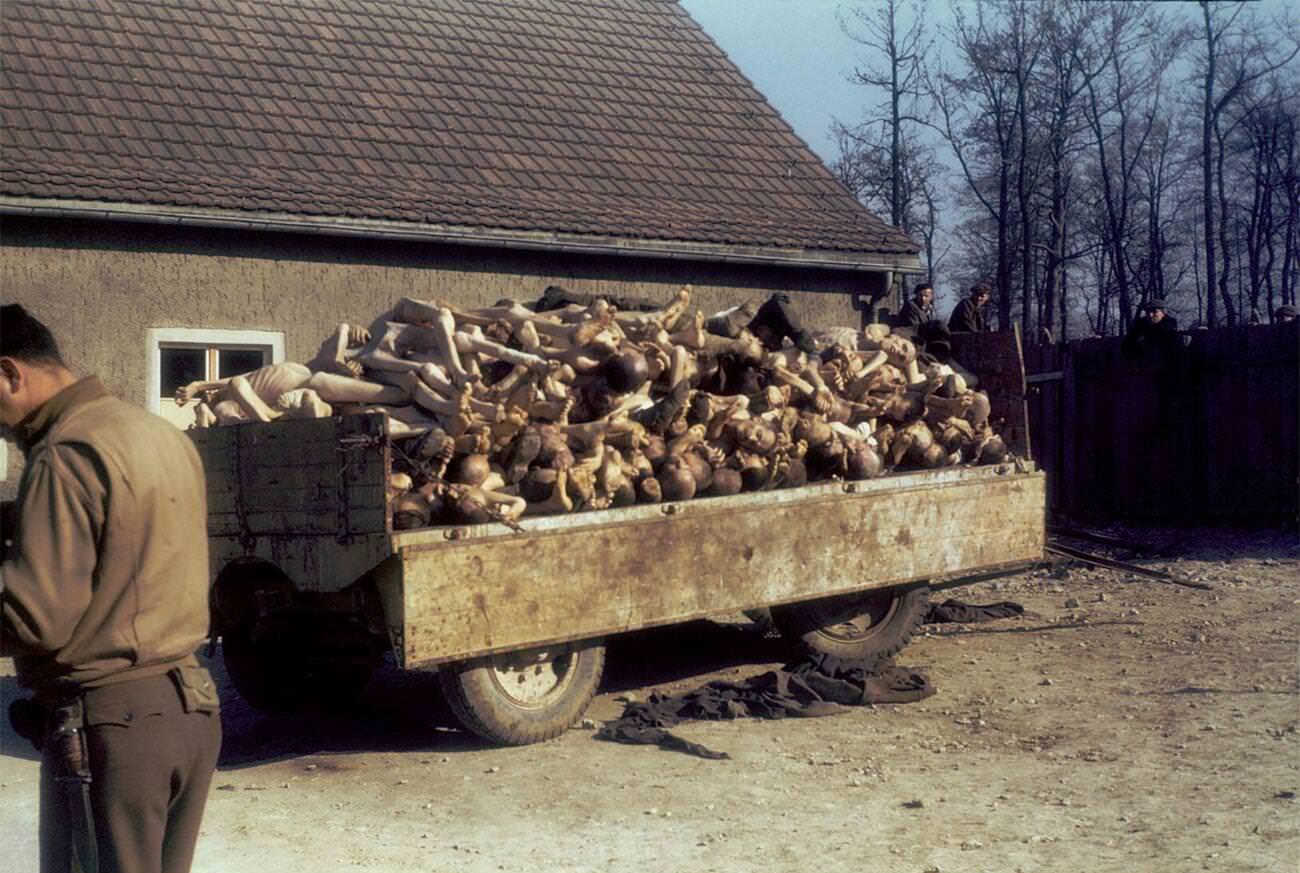
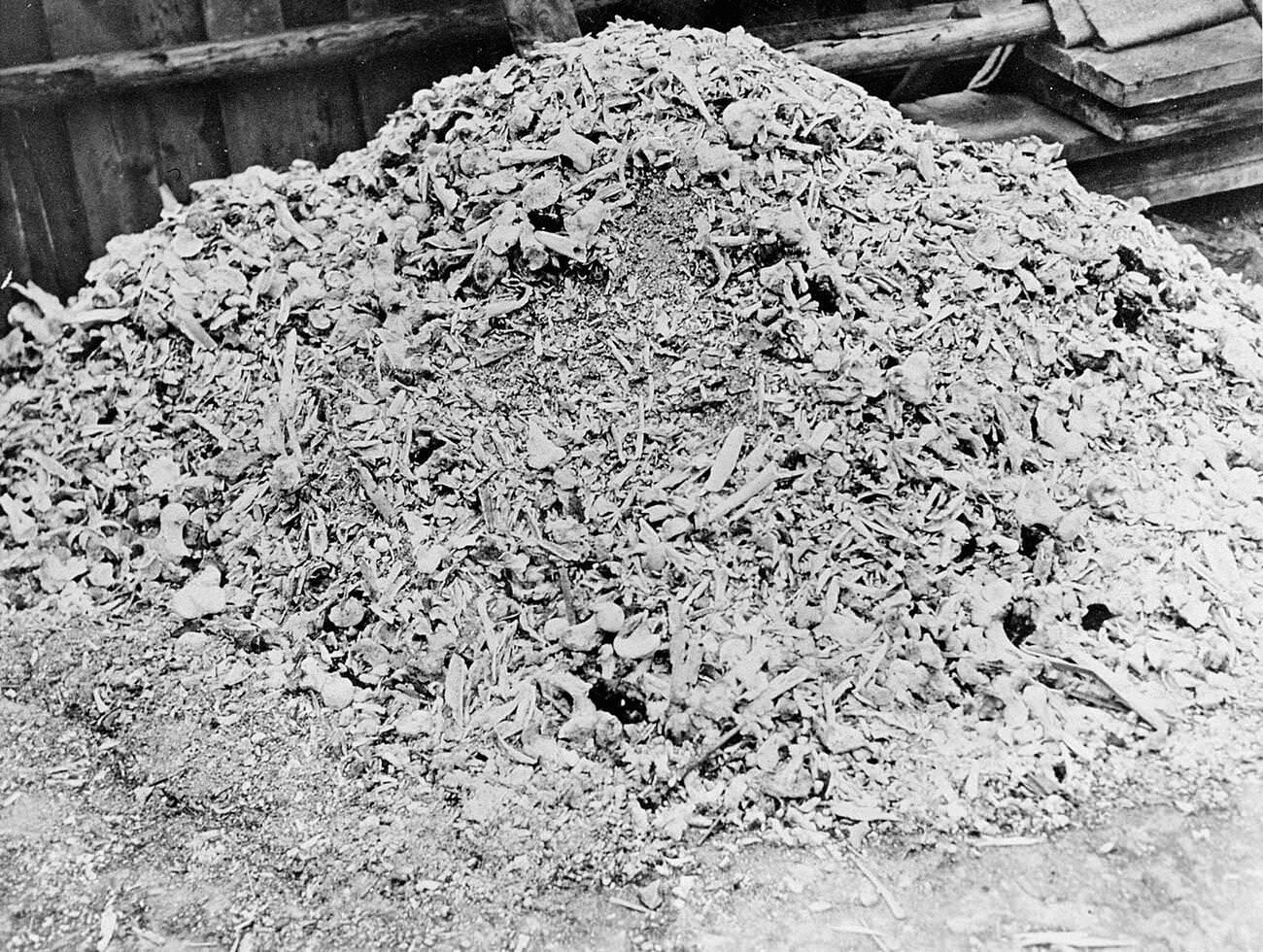
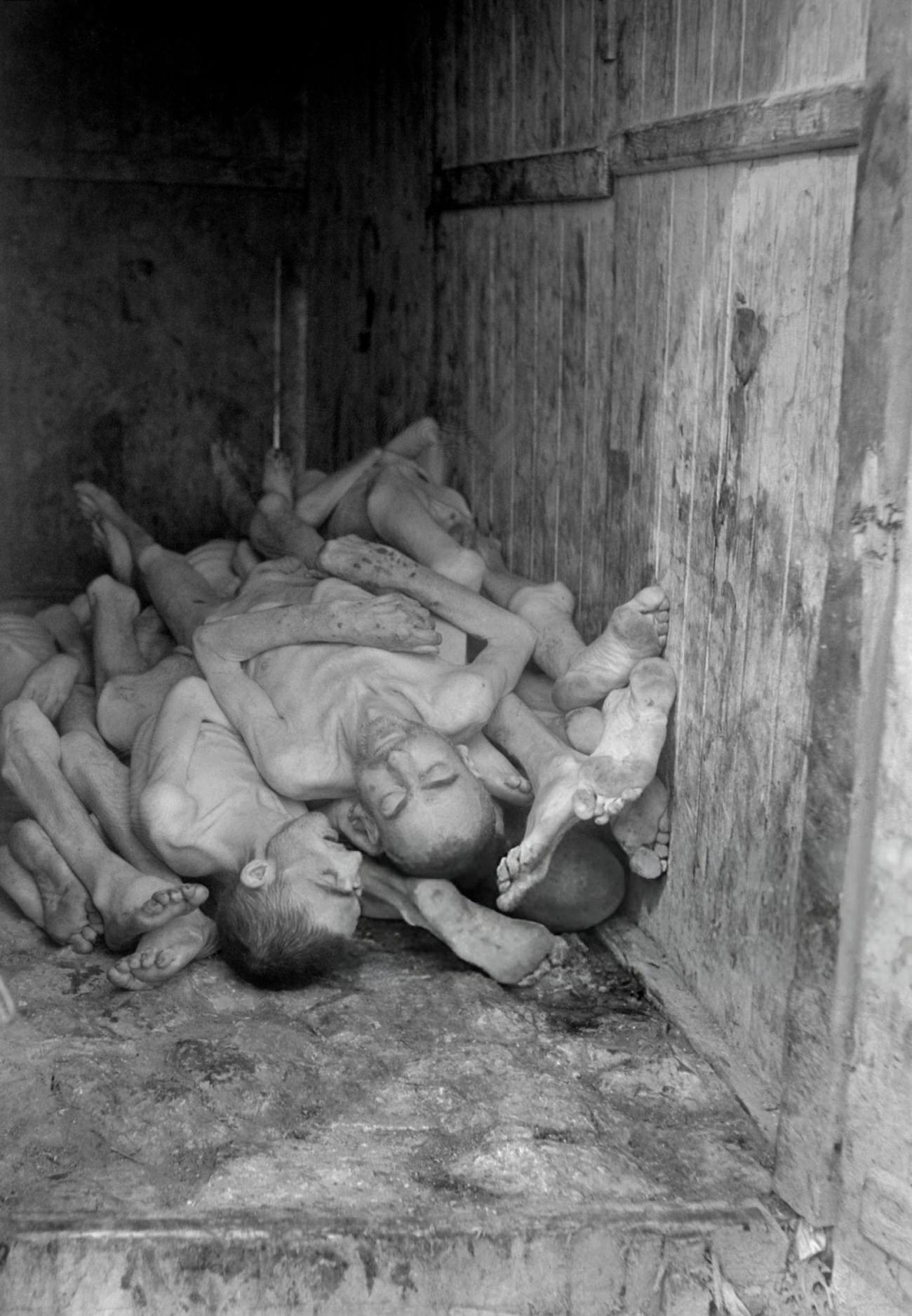
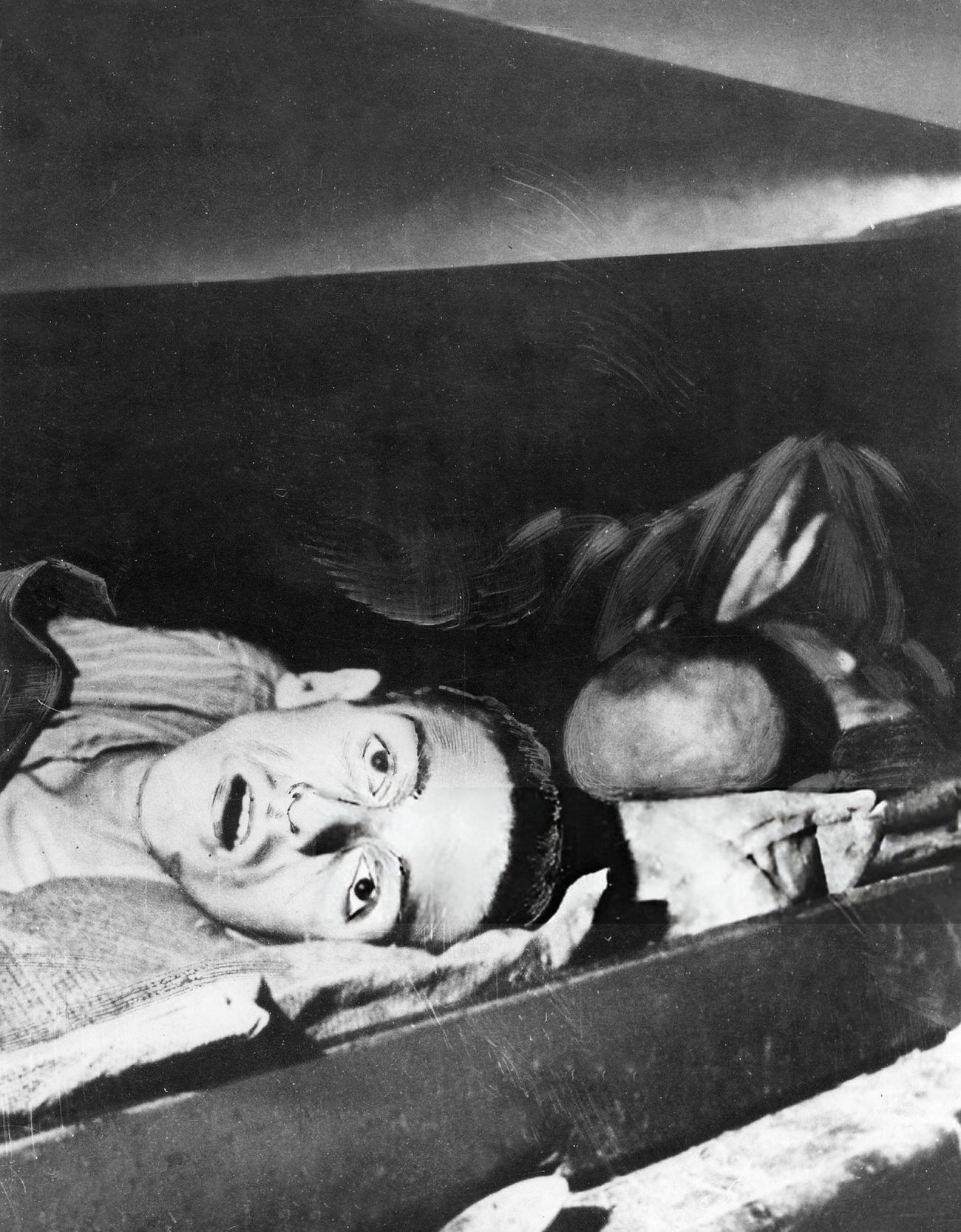
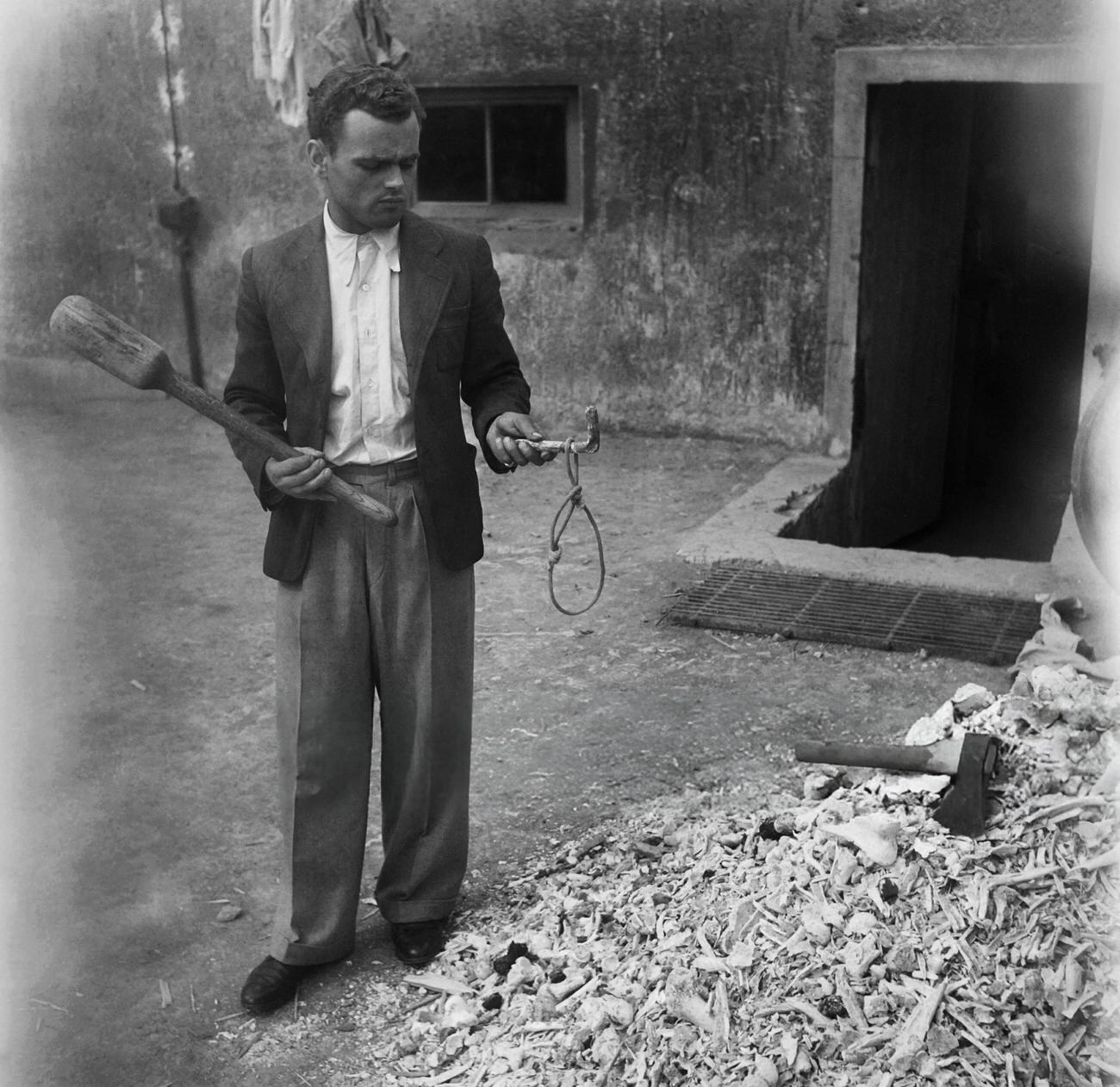
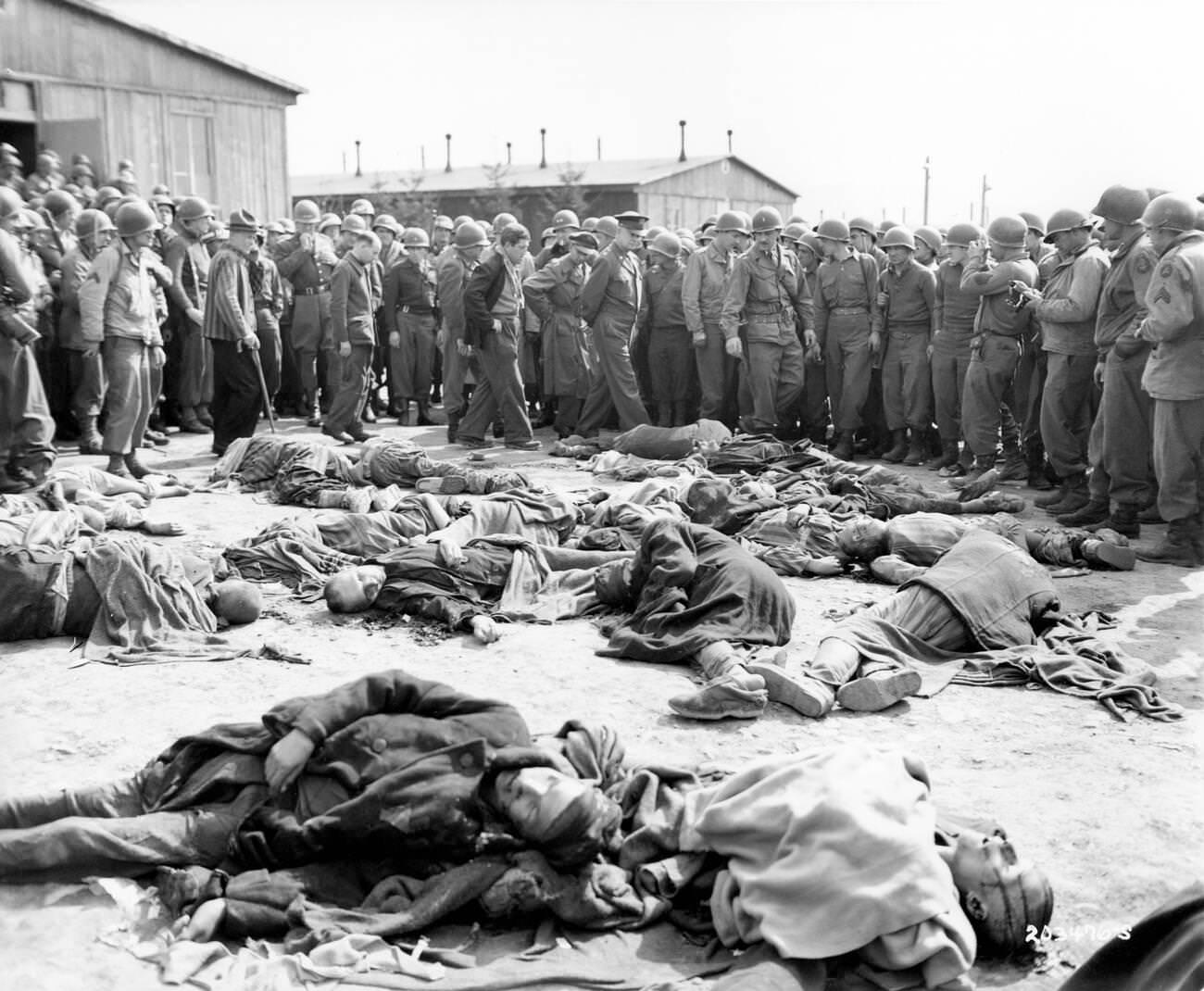
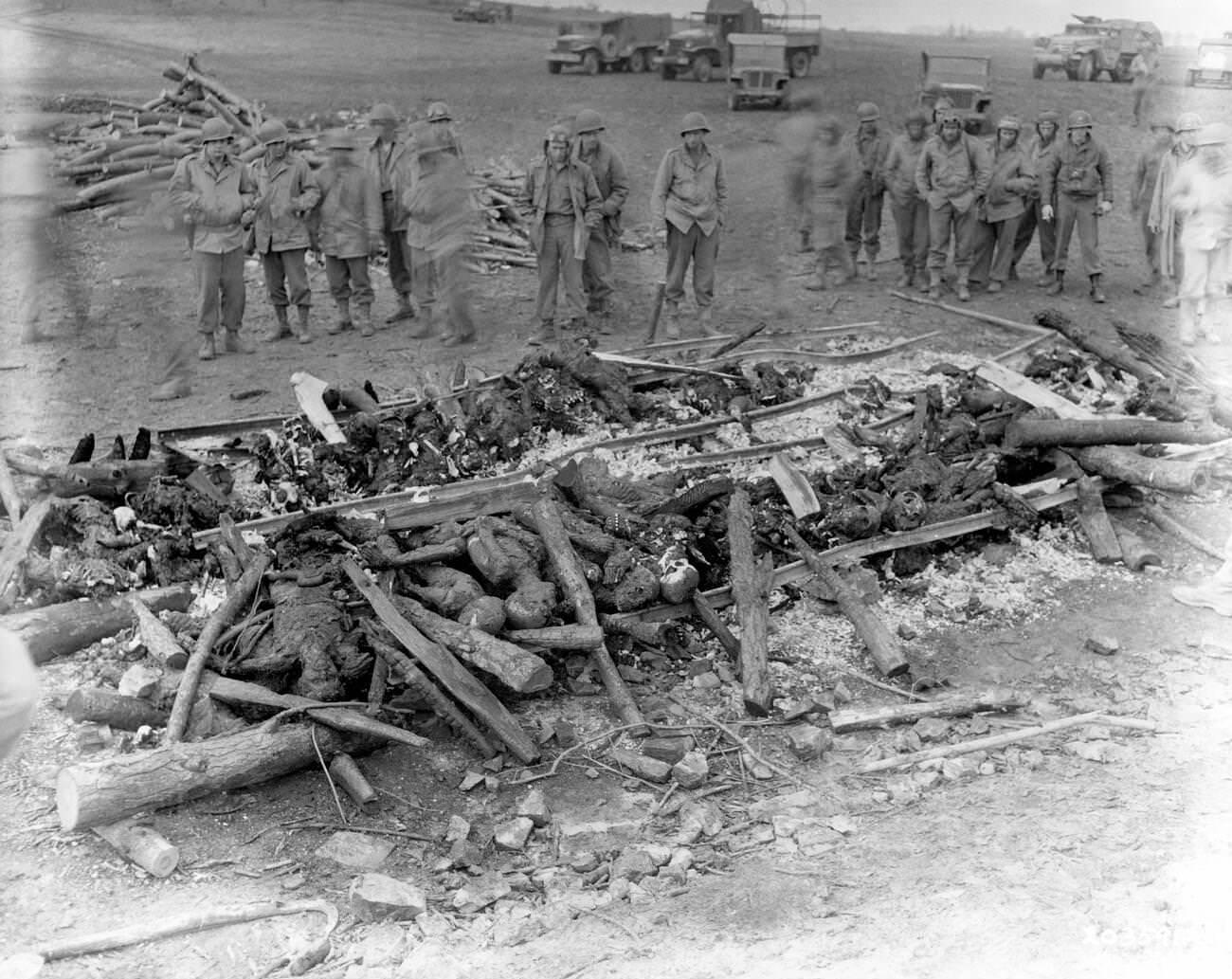
The physical evidence of mass killing was everywhere. A wagon loaded with corpses sat outside the crematorium. A rail truck was found packed with the bodies of dead prisoners. Heaps of ash and bone from the crematoria lay exposed after liberation. These were not accidental deaths — they were the result of a systematic effort to work, starve, experiment on, and execute human beings on an industrial scale.
Among those liberated from Buchenwald was a young Elie Wiesel, who would later receive the Nobel Peace Prize in 1986. In one of the most recognized photographs from the liberation, he appears in a crowded bunk, the seventh person from the left in the second row from the bottom. He was 15 years old.
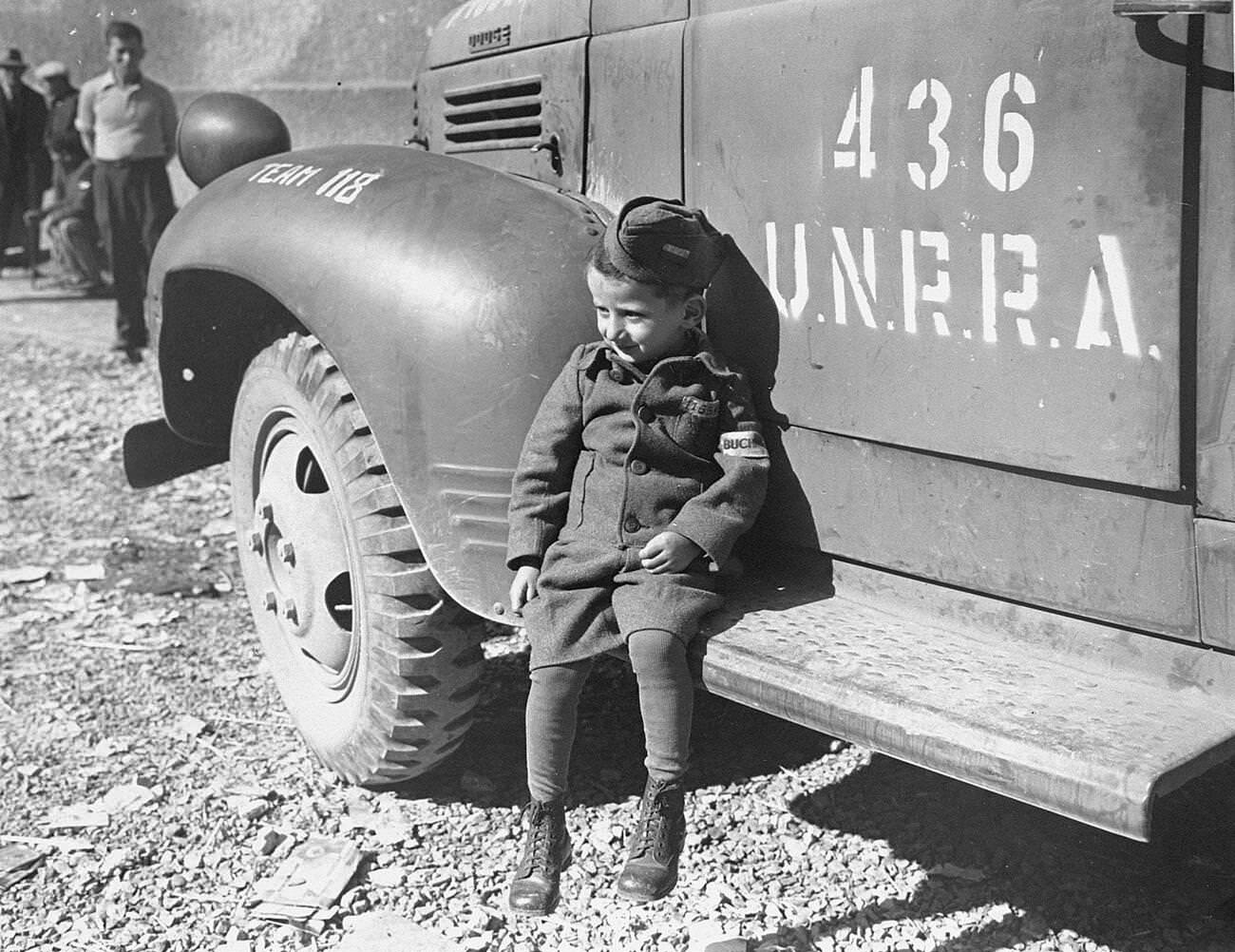
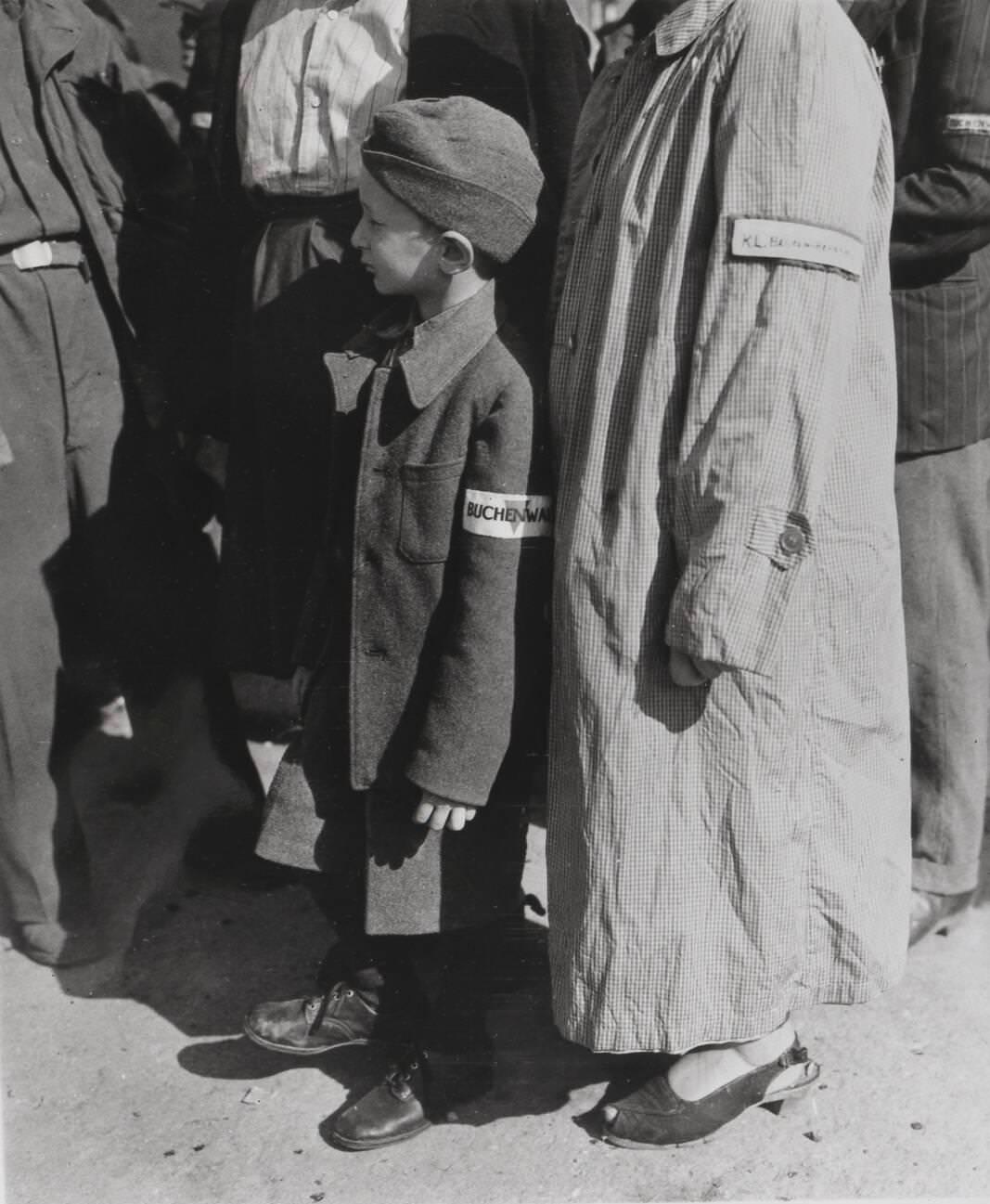
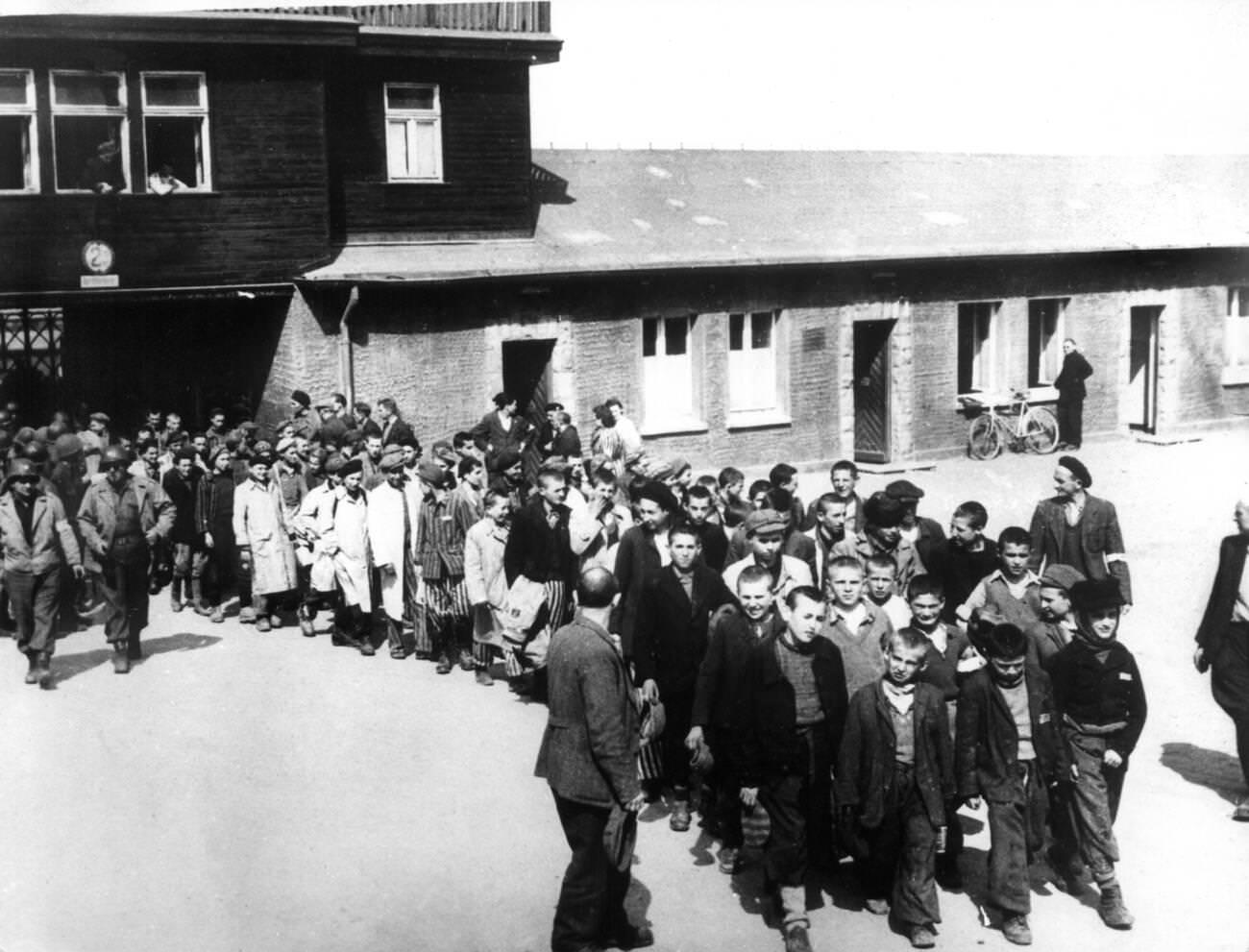
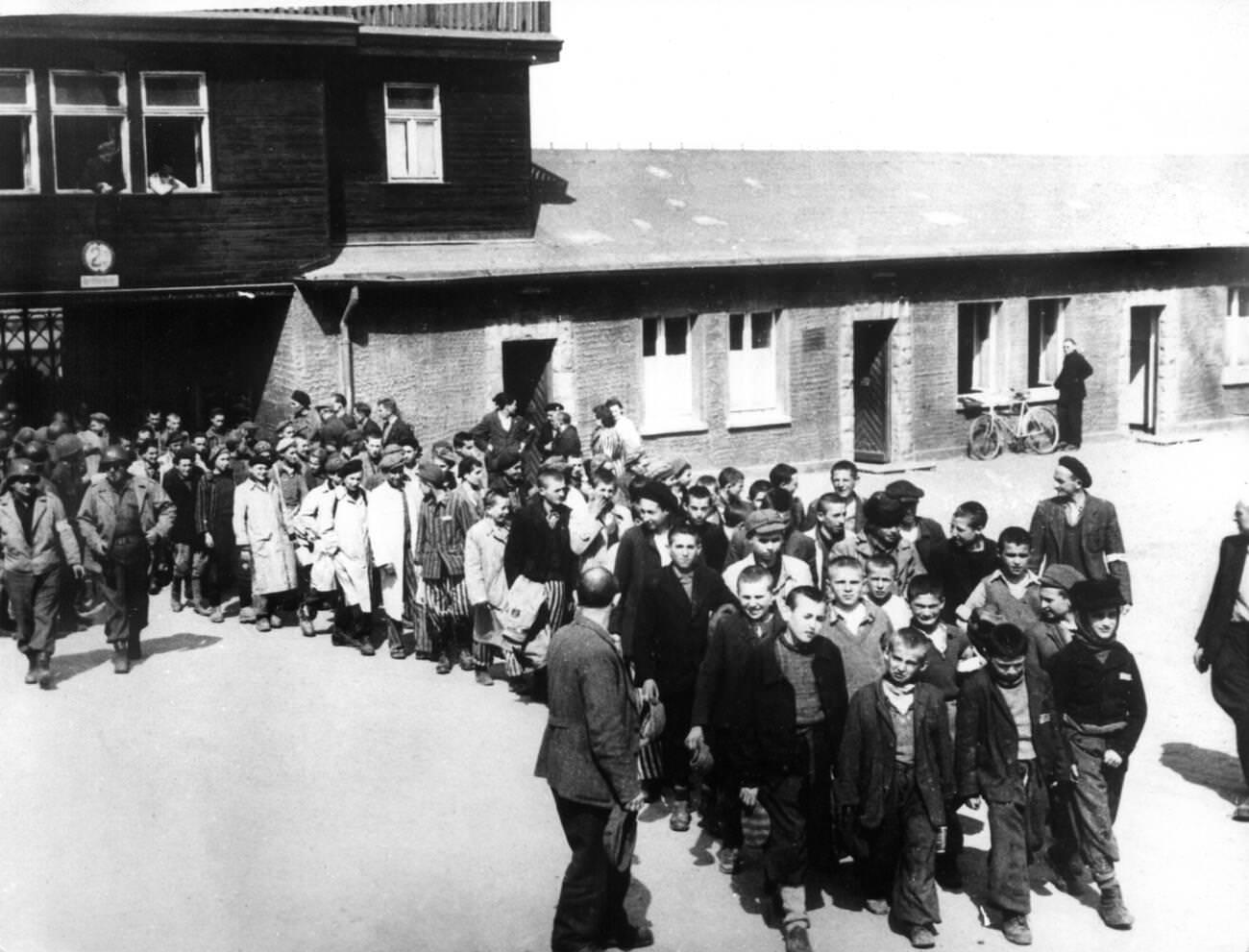
The survivors ranged from elderly men to very young children. A four-year-old was photographed sitting on the running board of a United Nations Relief and Rehabilitation Administration truck shortly after the camp was liberated. A seven-year-old child was photographed waiting to be processed by relief workers. Children and teenagers were led in groups by U.S. Third Army soldiers to medical facilities to receive treatment.
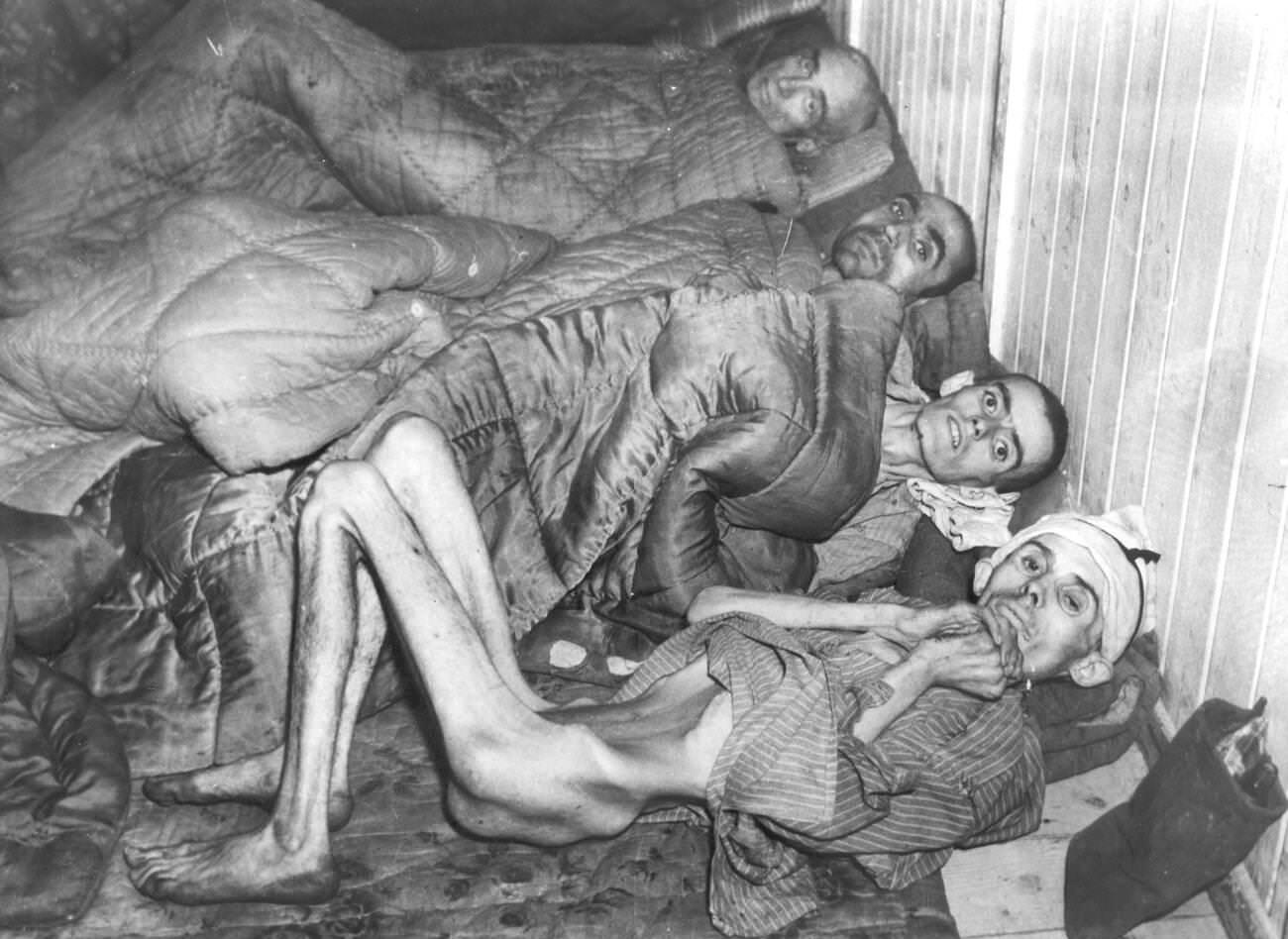
Medical teams moved quickly to treat the survivors, but many were beyond saving. Prolonged starvation, disease, and physical abuse had pushed their bodies past the point of recovery. Some died in the days and weeks after liberation, even with food and medical care now available. The camp’s hospital ward, when American soldiers entered it, held men in advanced stages of illness, lying in bunks with nowhere else to go.
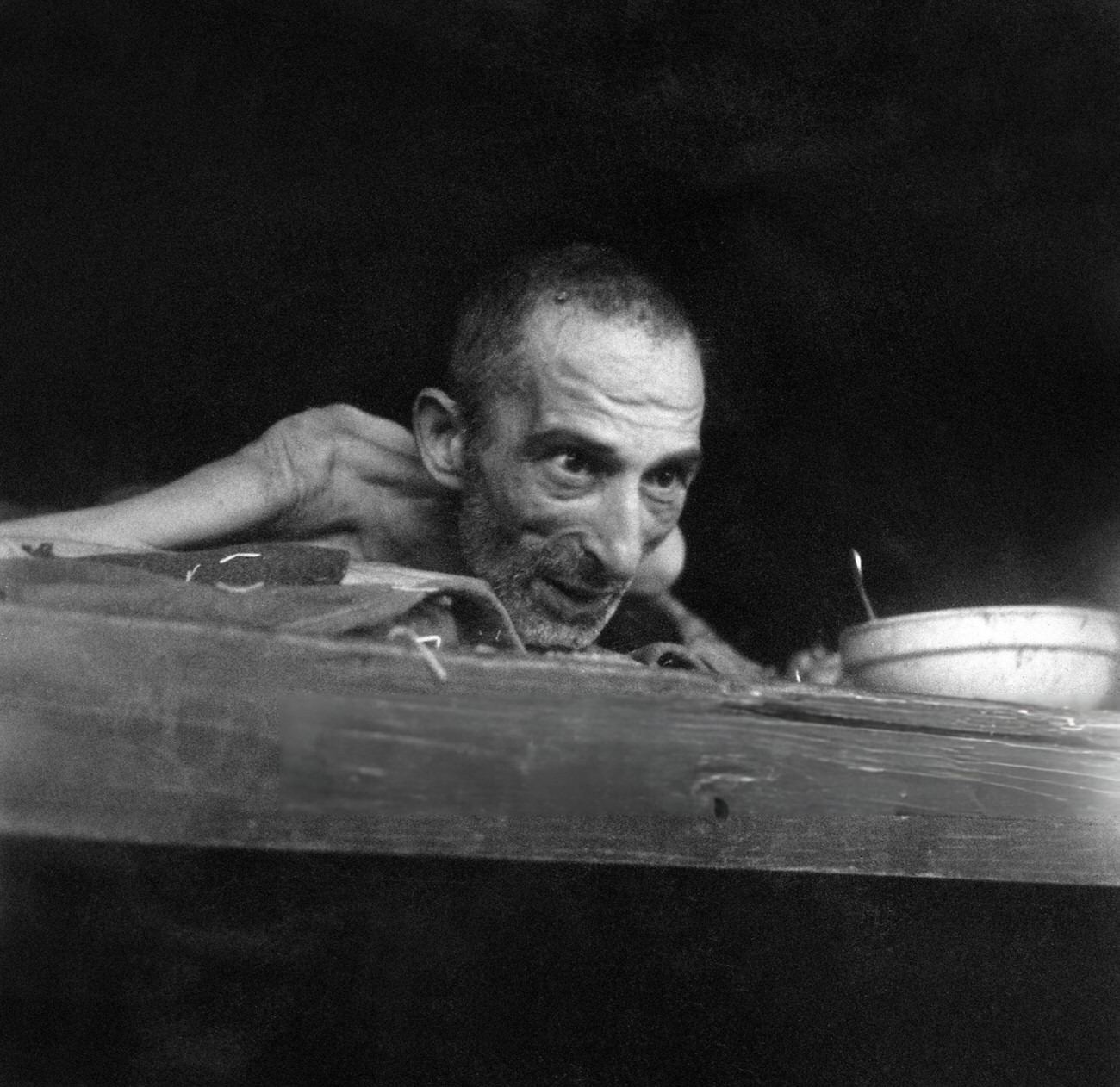
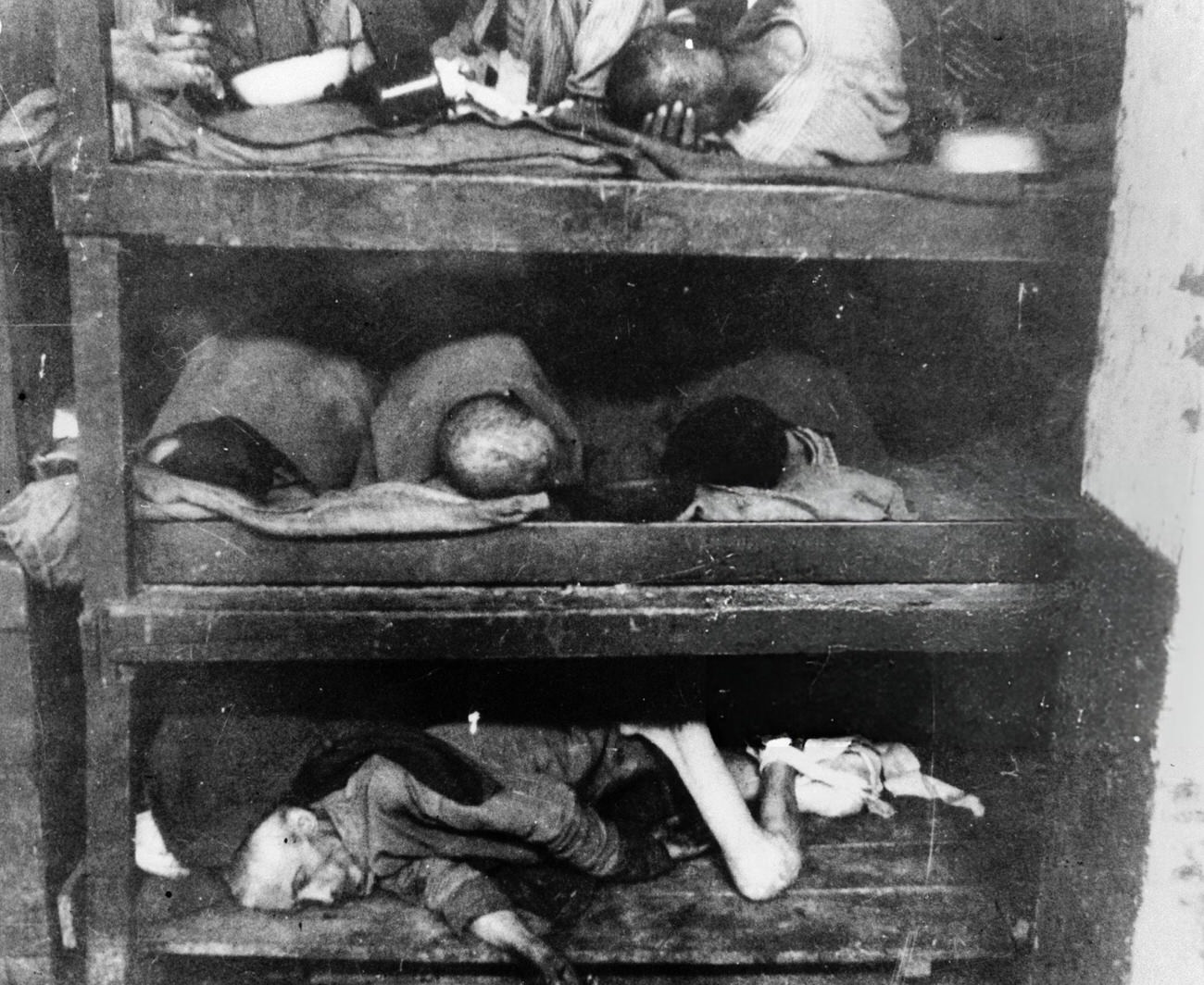
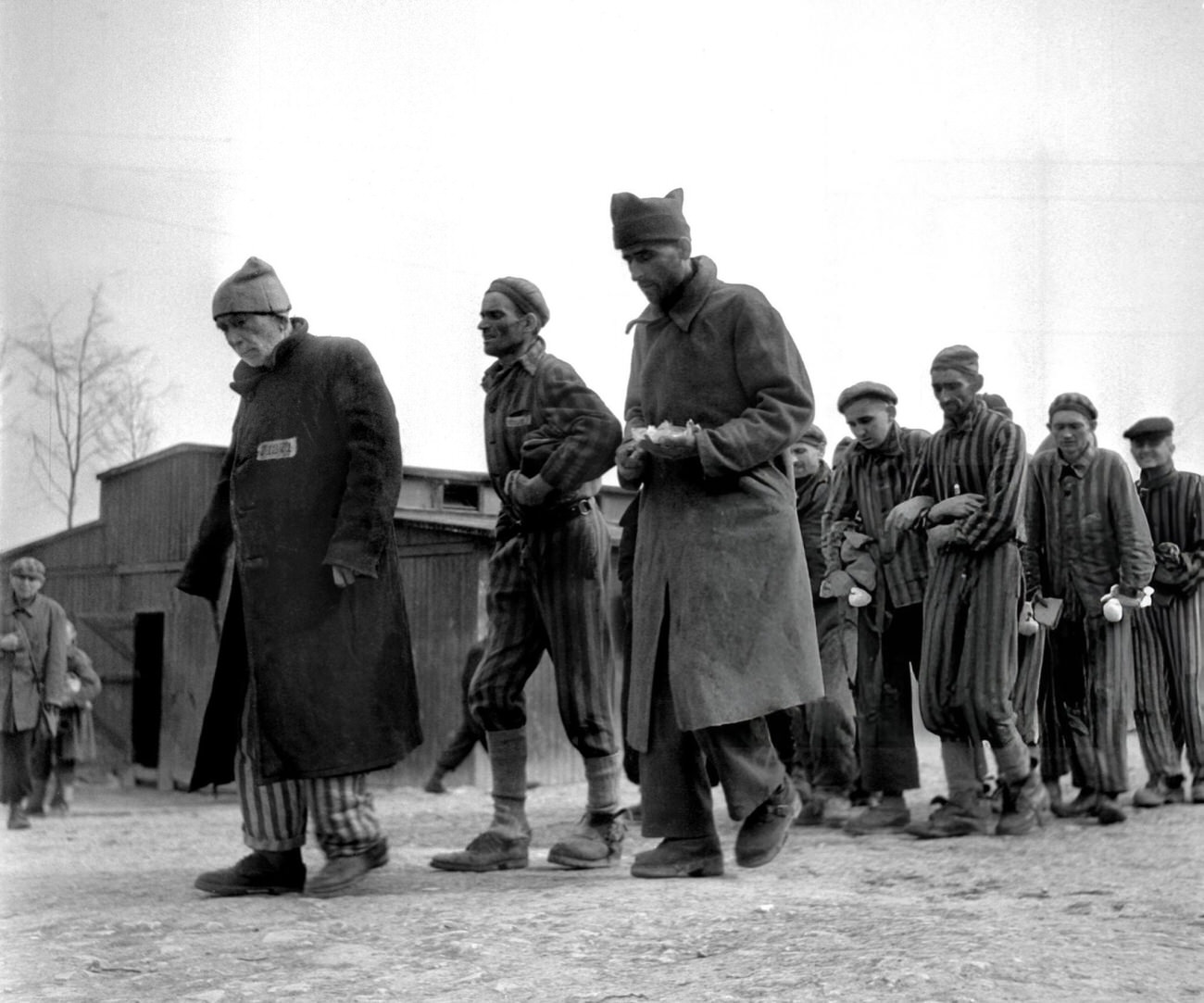
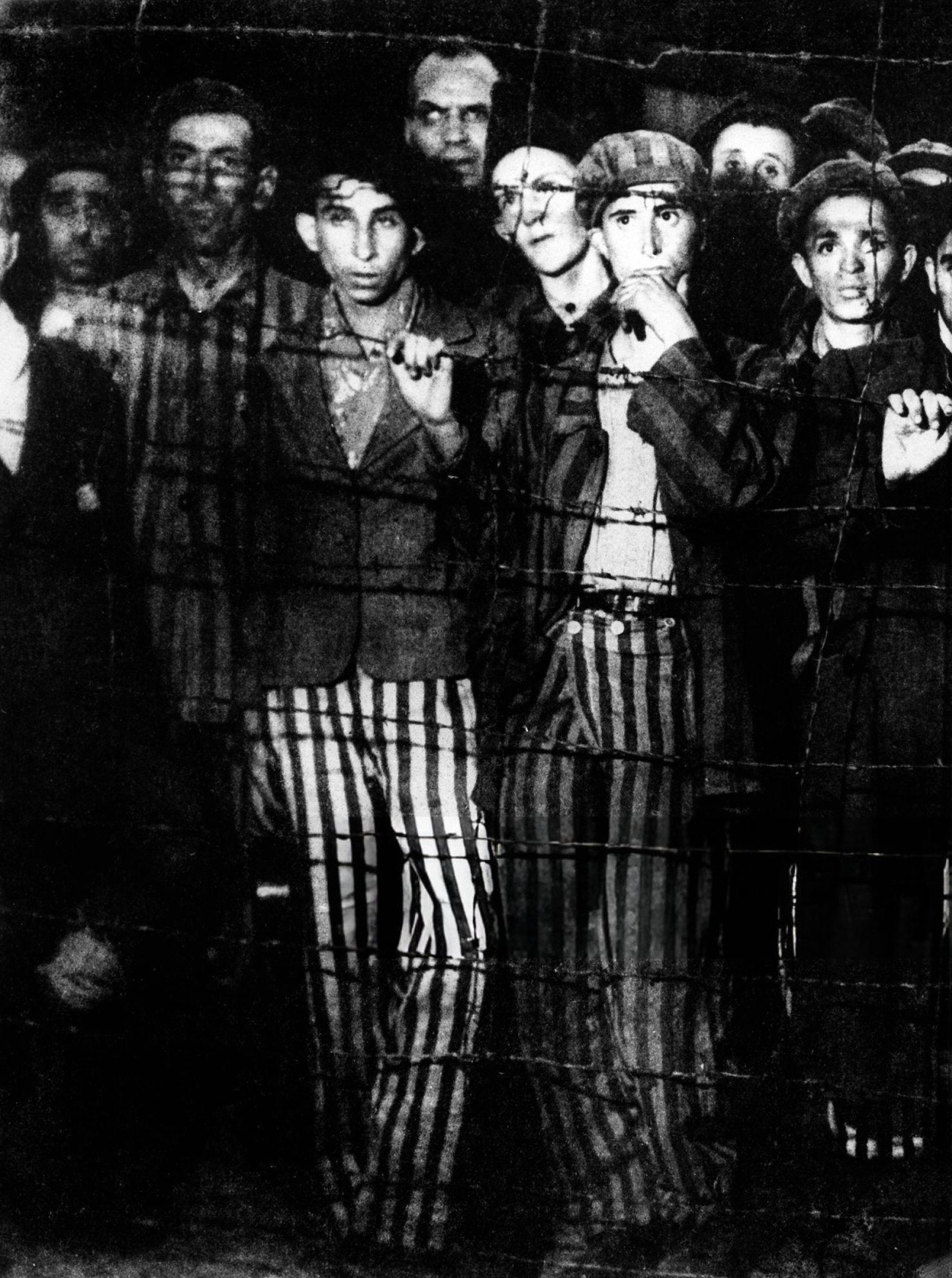
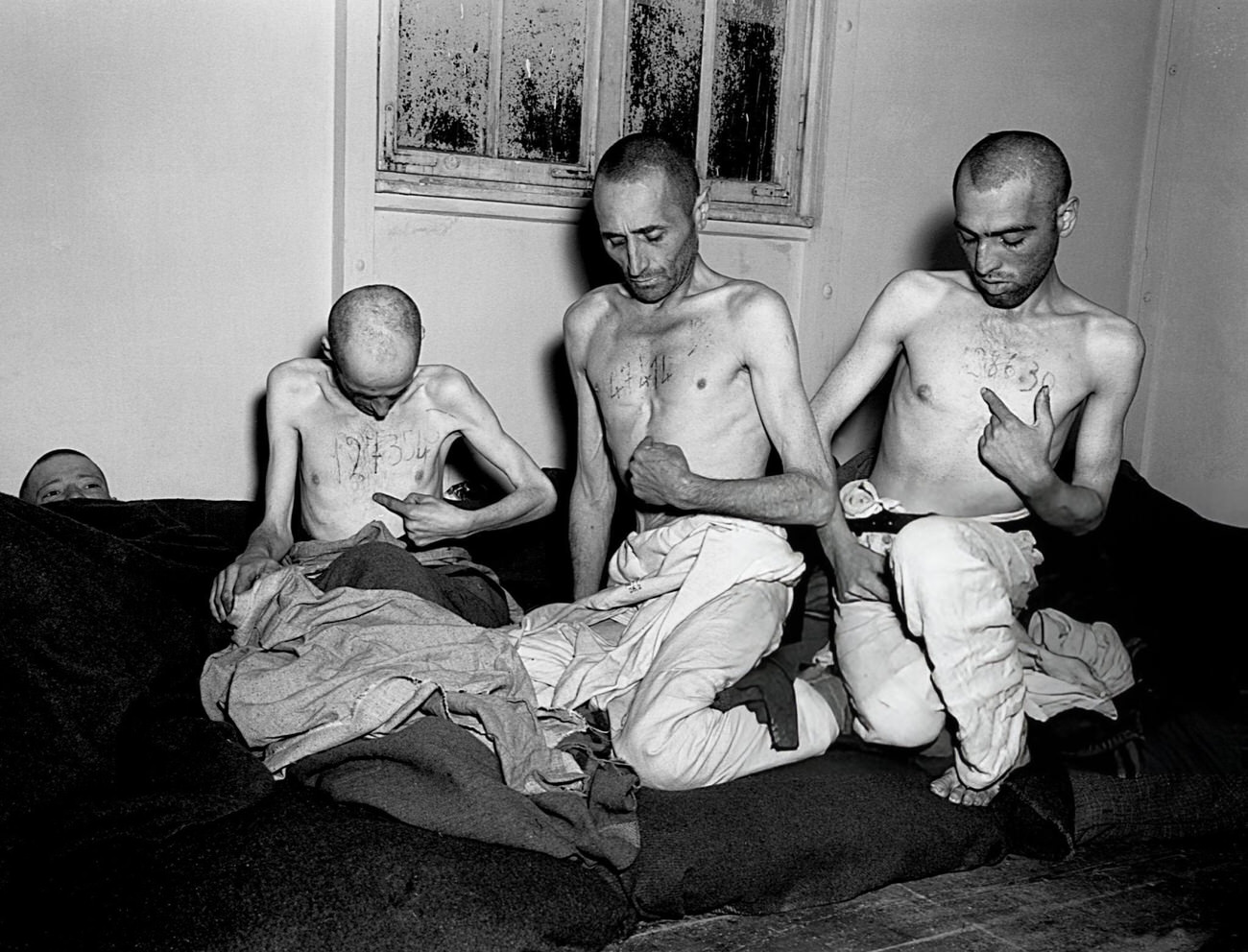
The visible condition of the survivors shocked every person who saw them. Two emaciated former prisoners were photographed leaning against a wall, sharing a loaf of bread — one of the first pieces of food many had eaten in days. Young survivors, their bodies wasted from years of deprivation, stared into the cameras of journalists and soldiers alike.
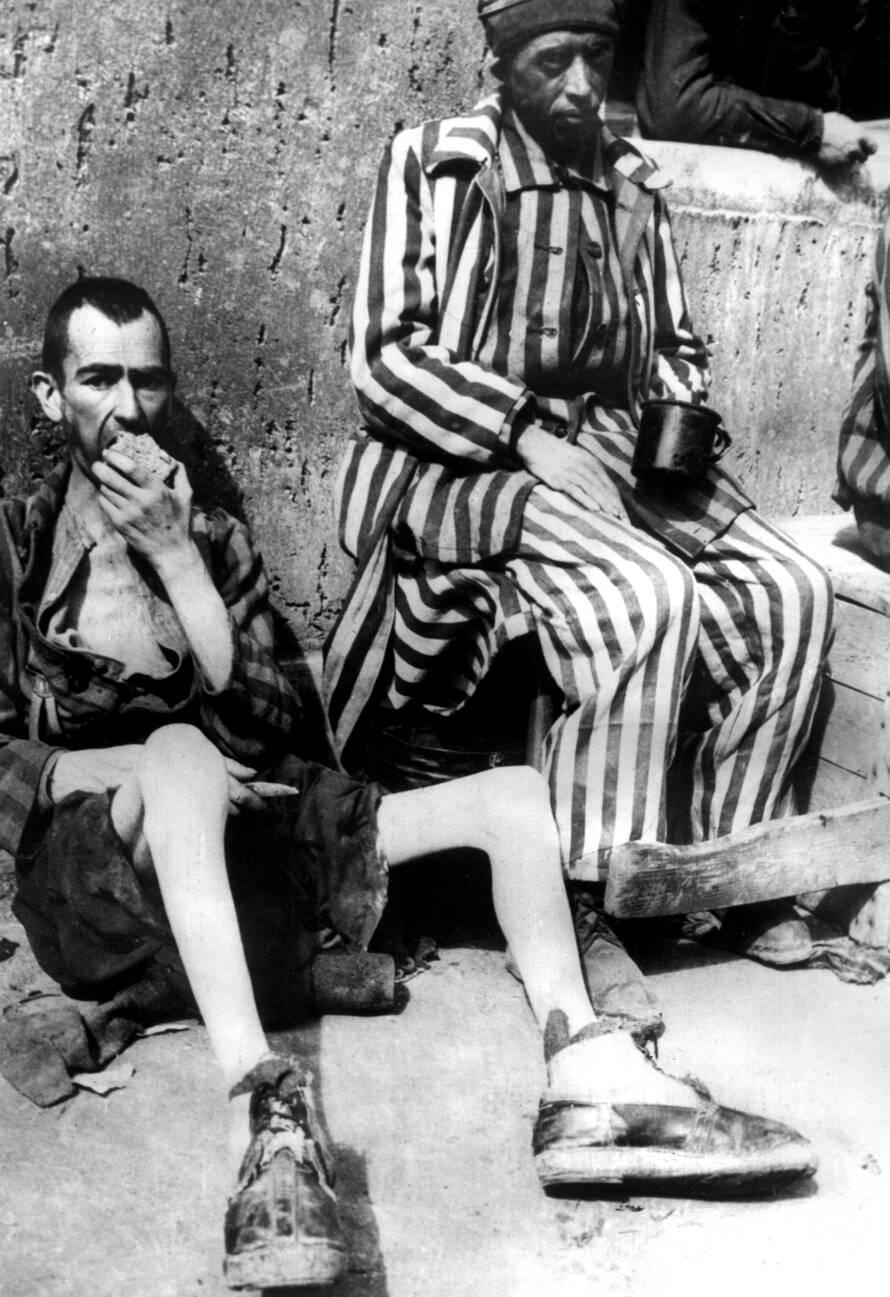
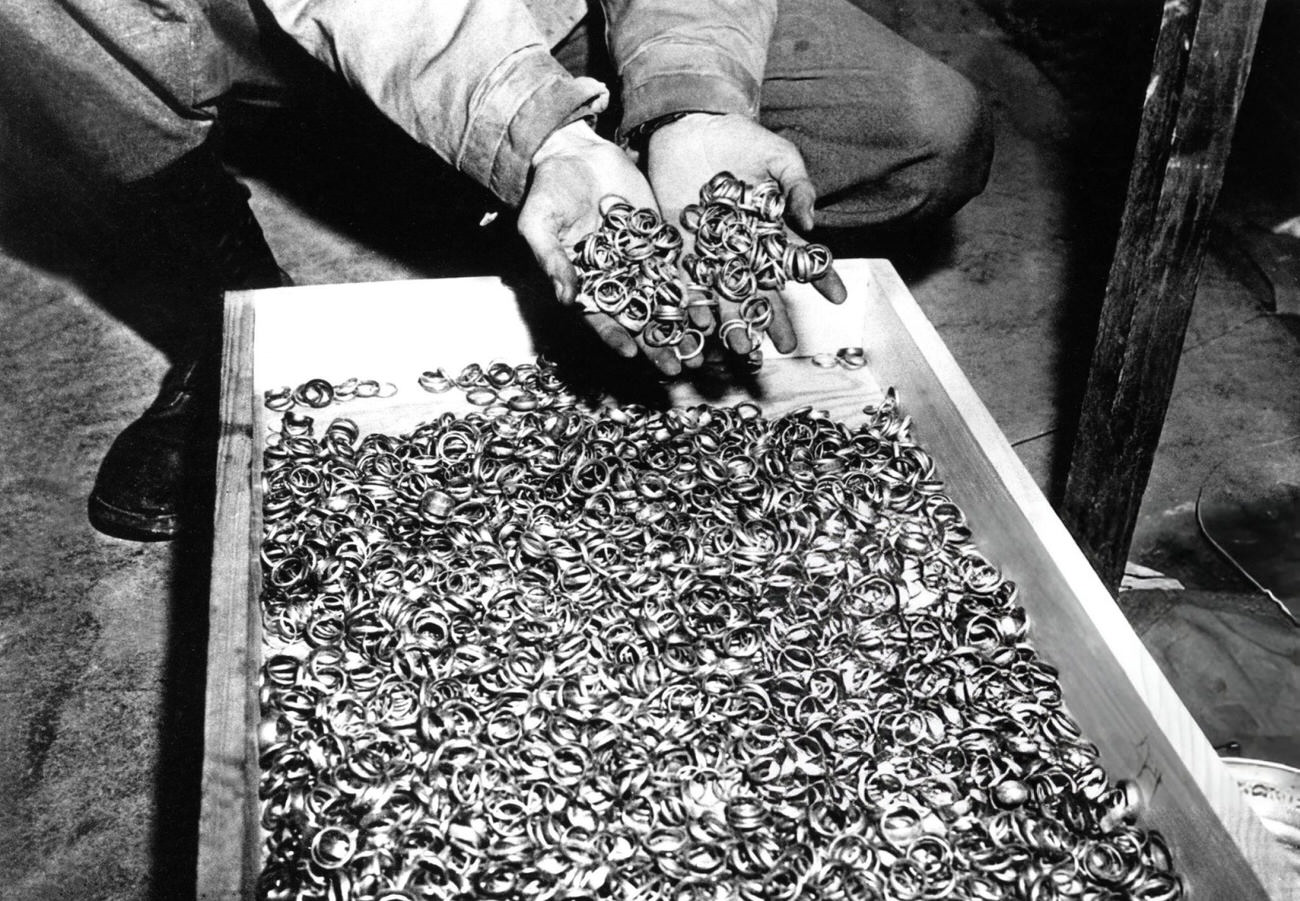
Allied forces also discovered the tools used to run the camp’s system of violence. A noose used for hangings was shown to reporters. Boxes of rings confiscated from deportees on their arrival were found by American soldiers — physical proof of the systematic stripping of prisoners’ possessions. Survivors showed investigators the numbered tattoos they had been given, identifiers that reduced human beings to inventory.
International delegations arrived in the days following liberation to see the camp for themselves. A Red Cross delegation toured the grounds. British members of parliament and journalists were brought in and shown the bodies of prisoners. The tours were intentional — Allied commanders wanted witnesses who would carry the truth back with them.
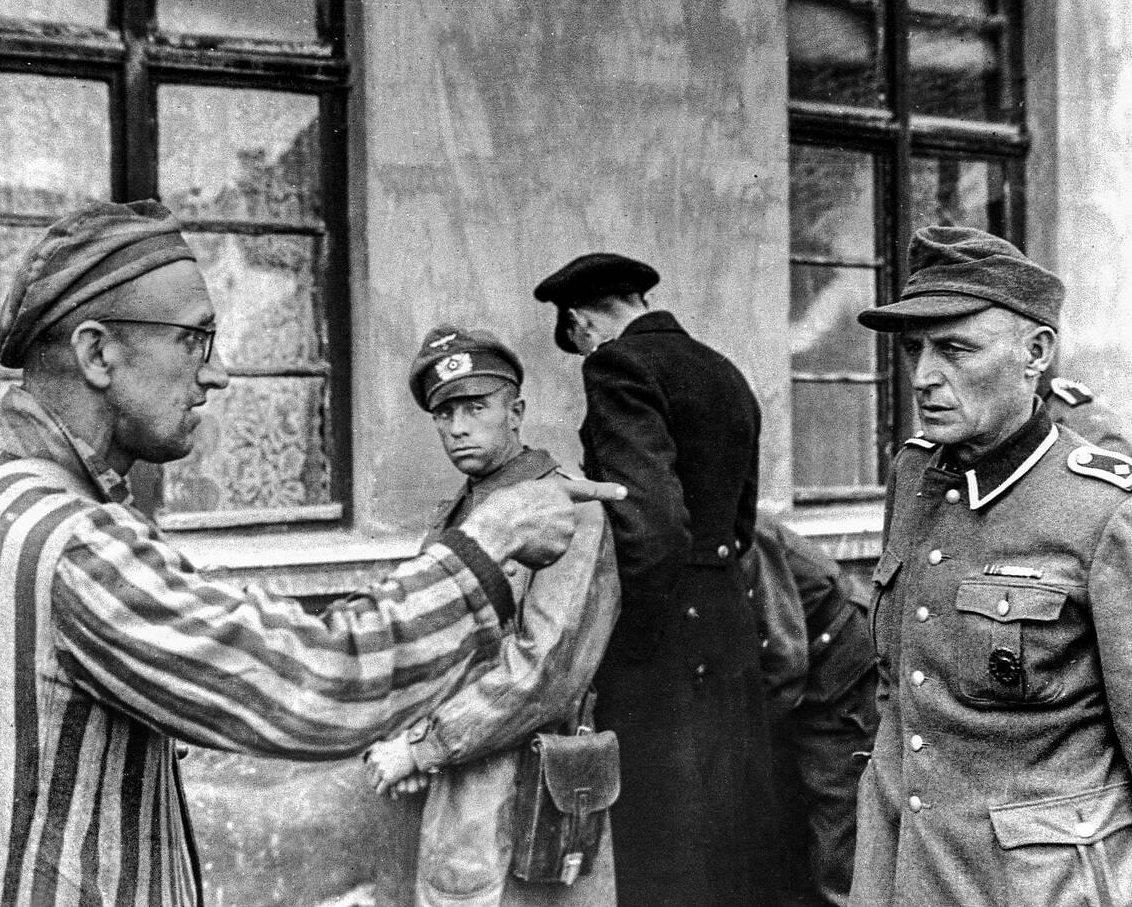
A Jewish Russian survivor, still on the camp grounds after liberation, confronted and identified a former SS guard in front of American soldiers. The moment was photographed. It was one of the first instances of survivors directly naming their oppressors to Allied authorities — a preview of the accountability process that would unfold at Nuremberg and in courts across Europe in the years ahead.
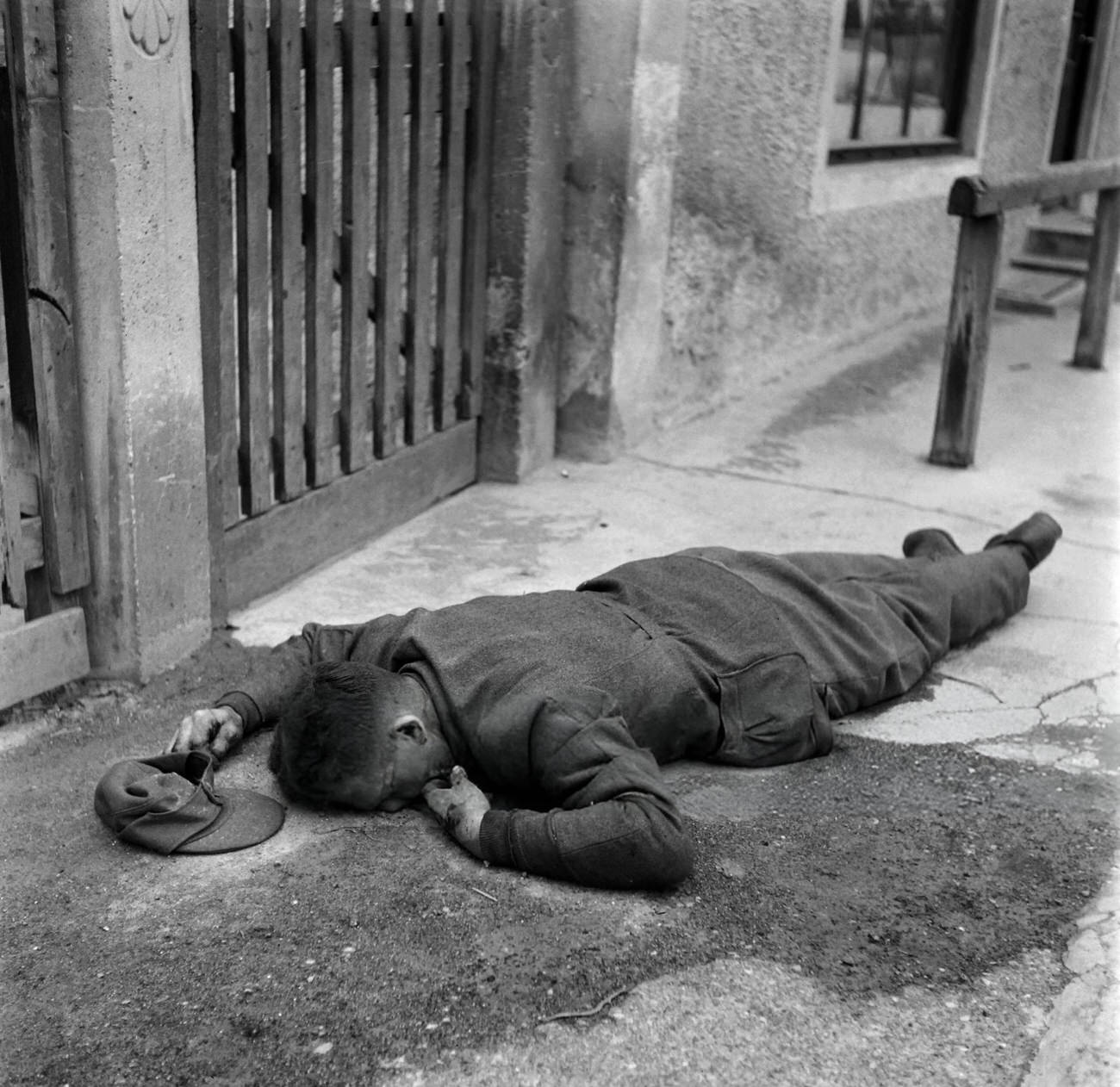
The Ohrdruf forced labor camp, a subcamp of Buchenwald, was actually the first Nazi concentration camp liberated by American forces — discovered on April 4, 1945, just days before Buchenwald itself. General Eisenhower personally visited Ohrdruf after hearing reports from the soldiers who arrived first. What they found there, including bodies of prisoners shot or left to die as the SS retreated, set the tone for what would be uncovered at Buchenwald one week later.
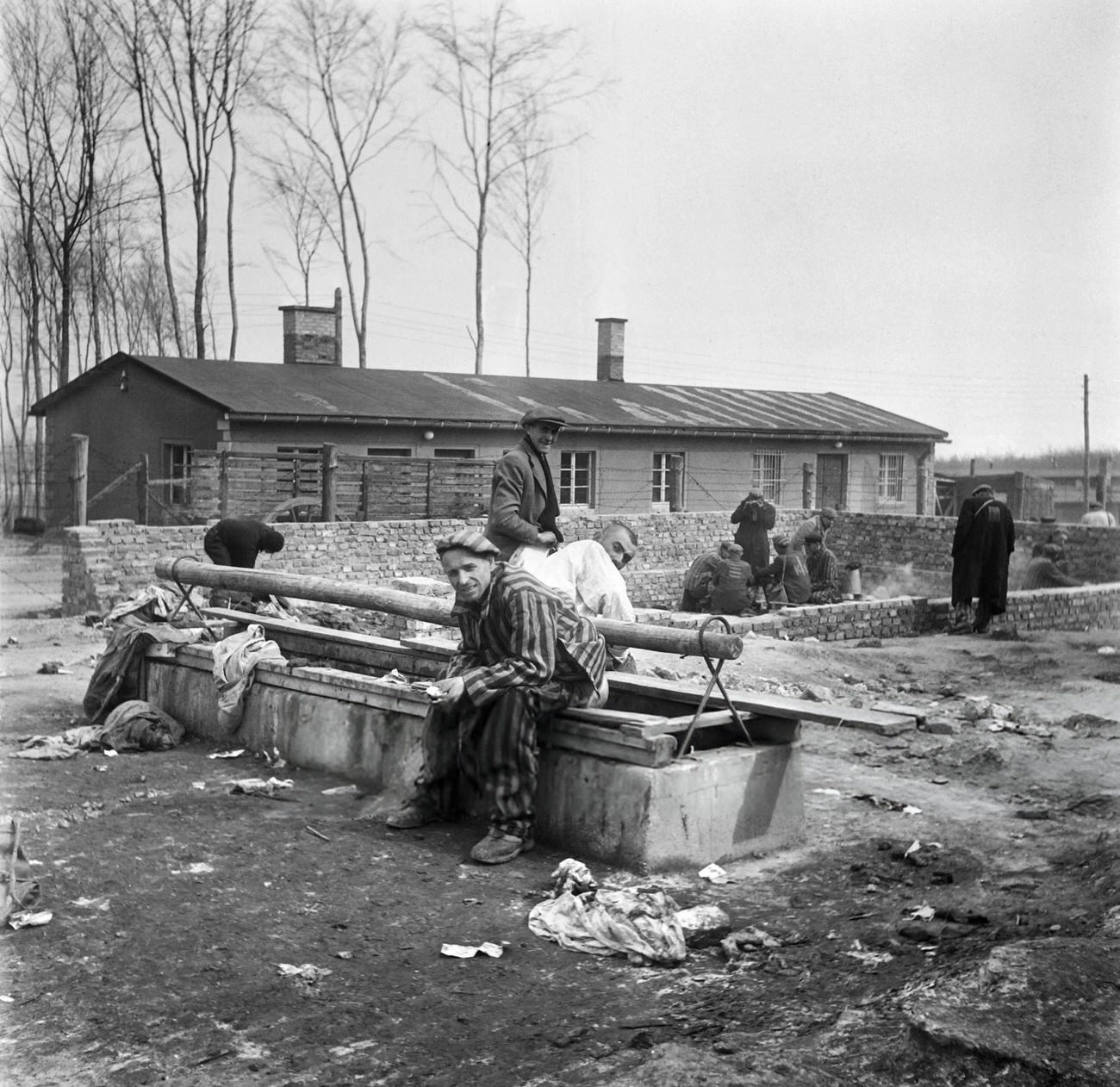
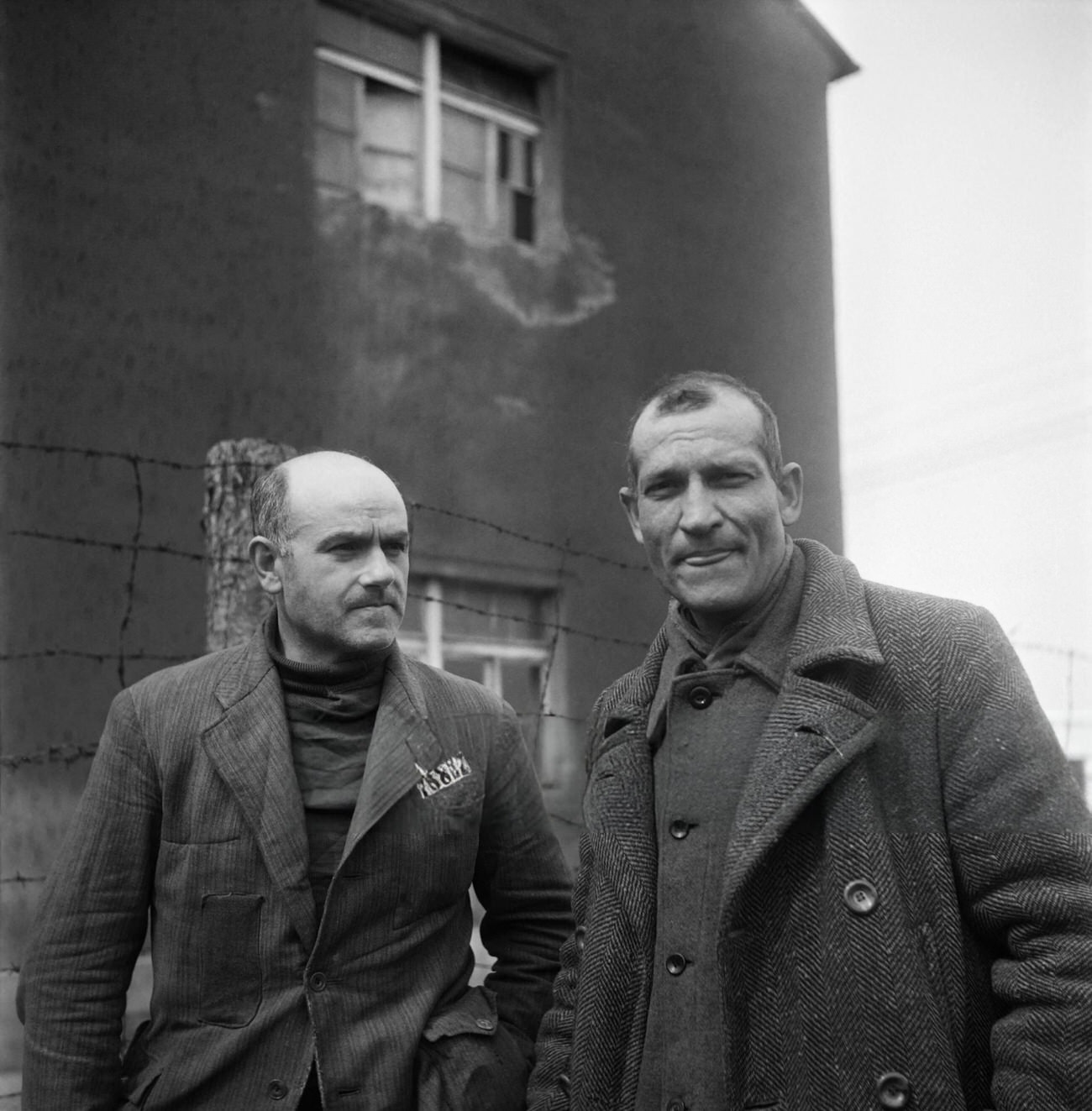
For survivors strong enough to move through the camp’s grounds, the liberation was a disorienting experience. Some were too physically weak to fully register what had happened. Others who had been starved and beaten for years struggled to process their sudden freedom. French prisoners who had survived the camp were photographed speaking quietly in the courtyard — two men among thousands trying to make sense of what came next.
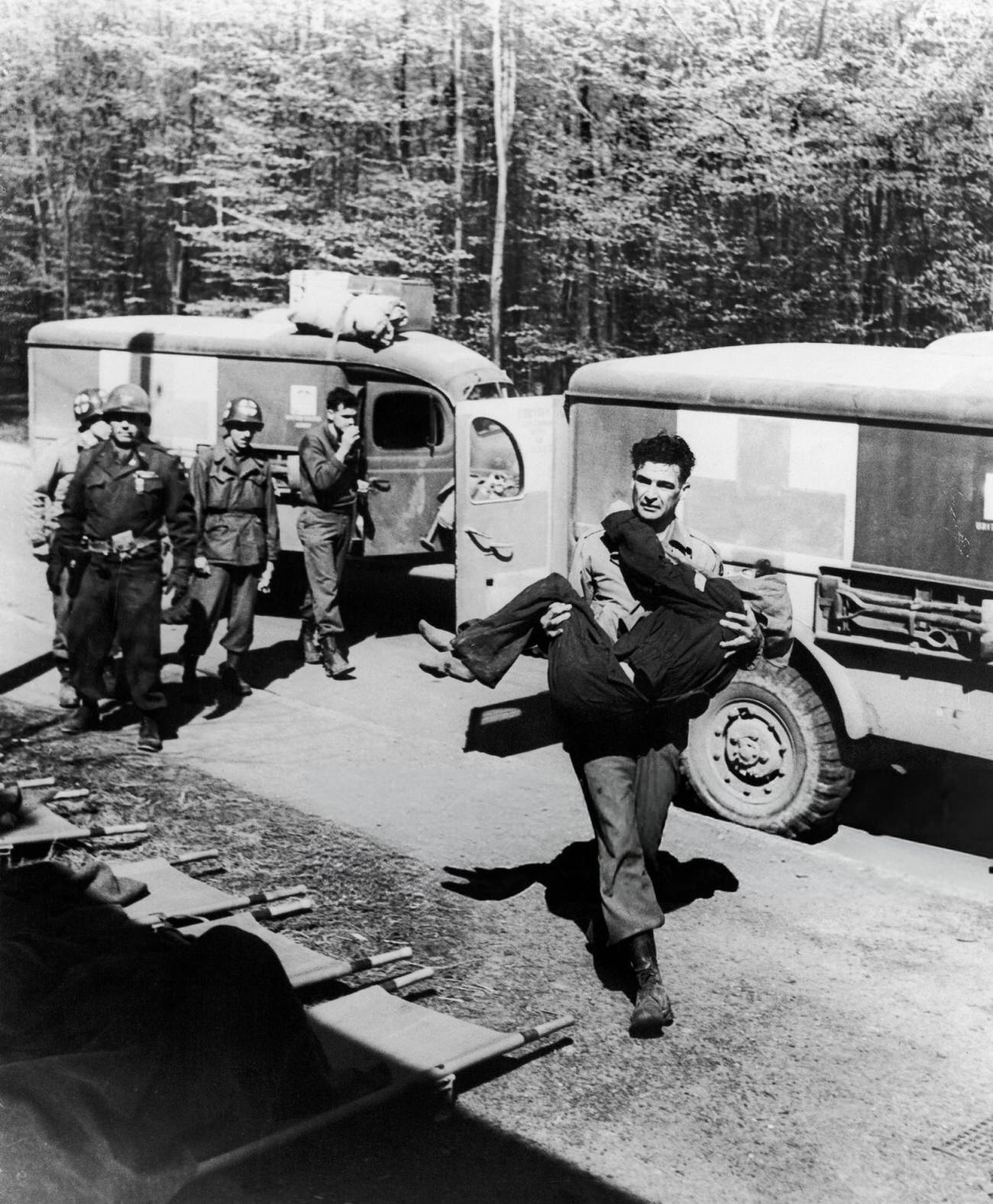
American soldiers also worked alongside relief organizations to move the most critically ill survivors to proper medical facilities. In nearby areas, soldiers from the 6th Armored Division were photographed carrying Hungarian women from ambulances into hospitals at the Penig-Langenleuba camp complex close to Altenburg. The scale of the humanitarian effort required was enormous, spanning multiple camps and thousands of patients.
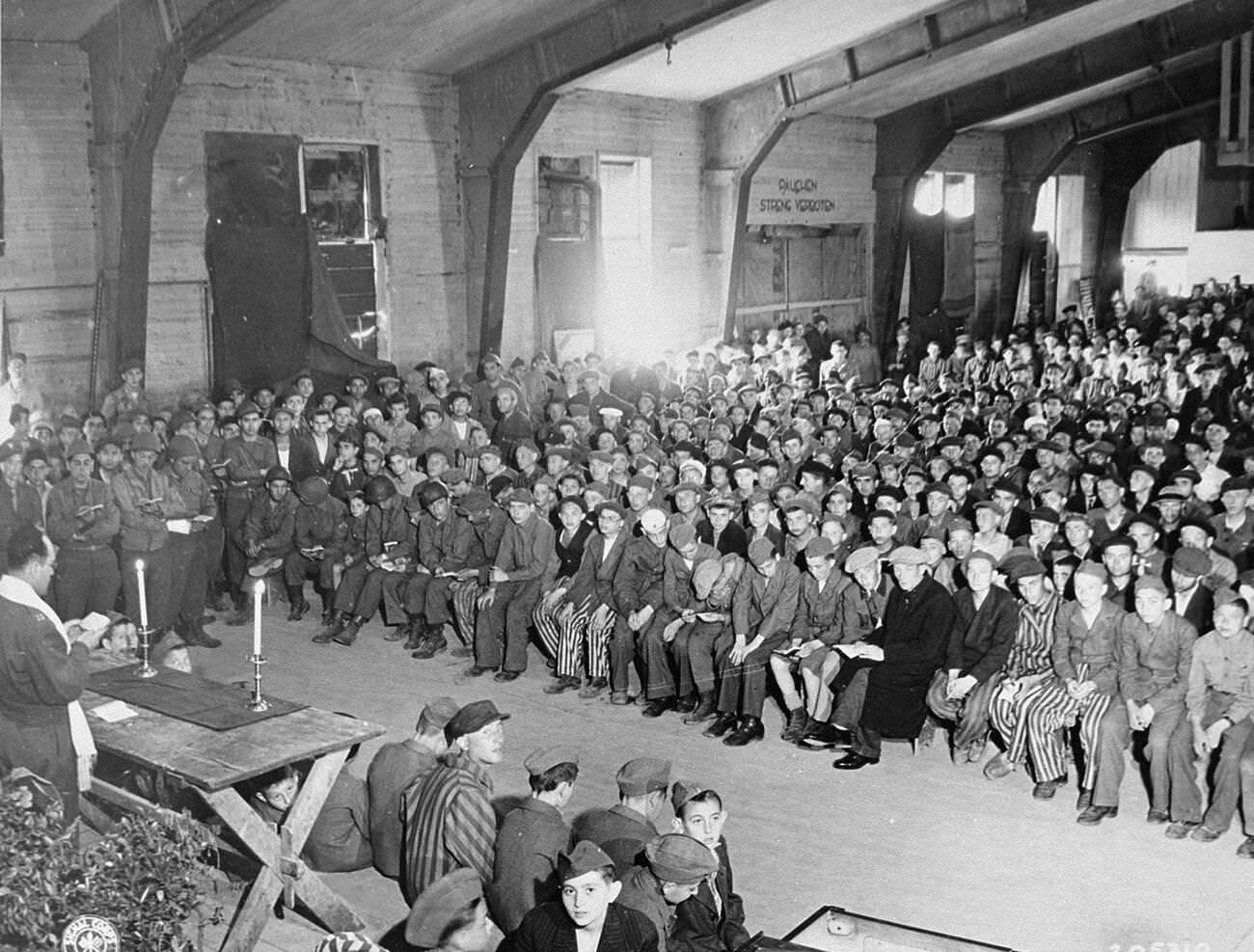
Jewish religious life, suppressed for years under the Nazi system, began to re-emerge almost immediately after liberation. An American rabbi conducted Shavuot services for survivors at Buchenwald — a direct act of cultural restoration for people who had been systematically stripped of their identity, their community, and their faith. For many survivors, it was the first religious observance they had been permitted in years.
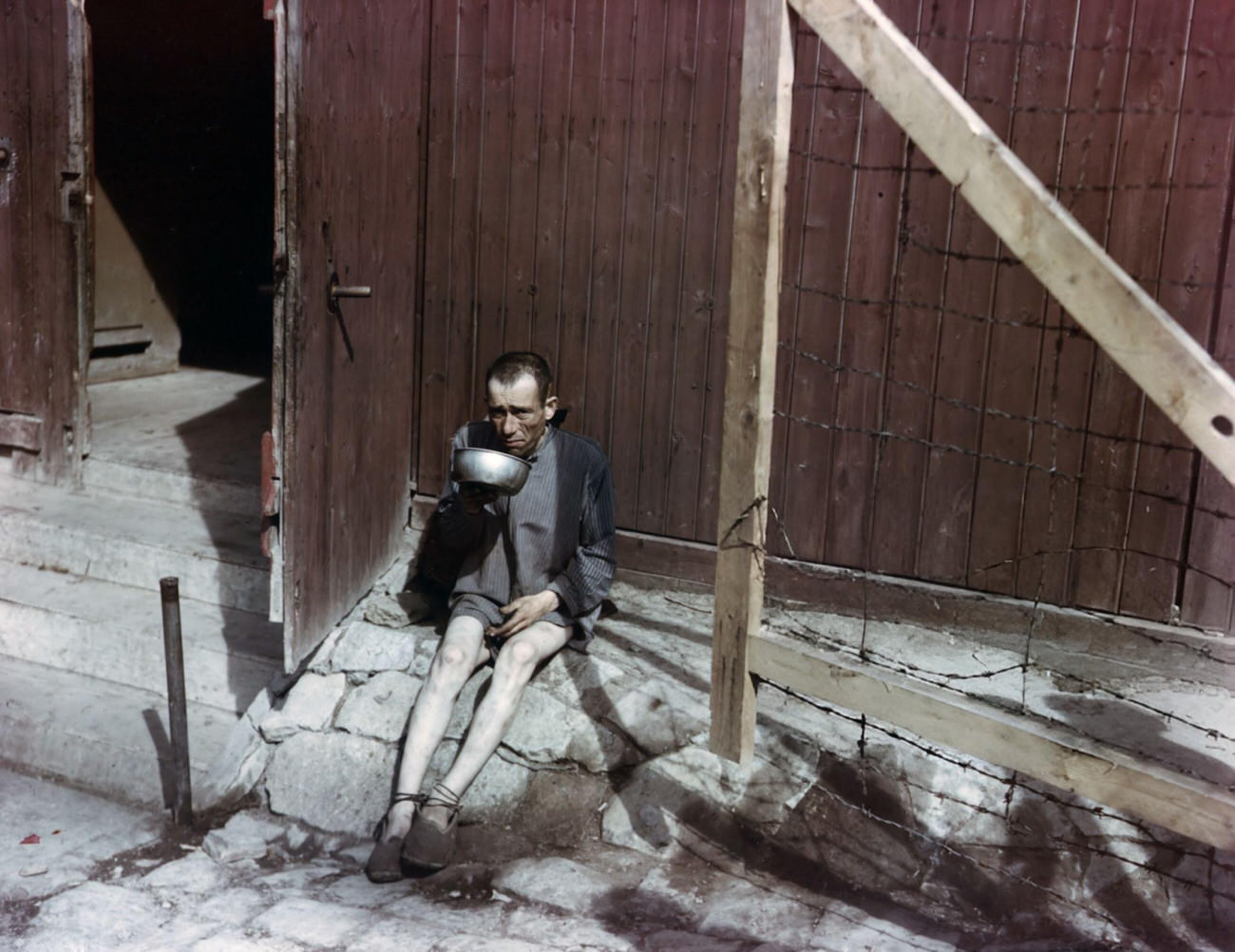
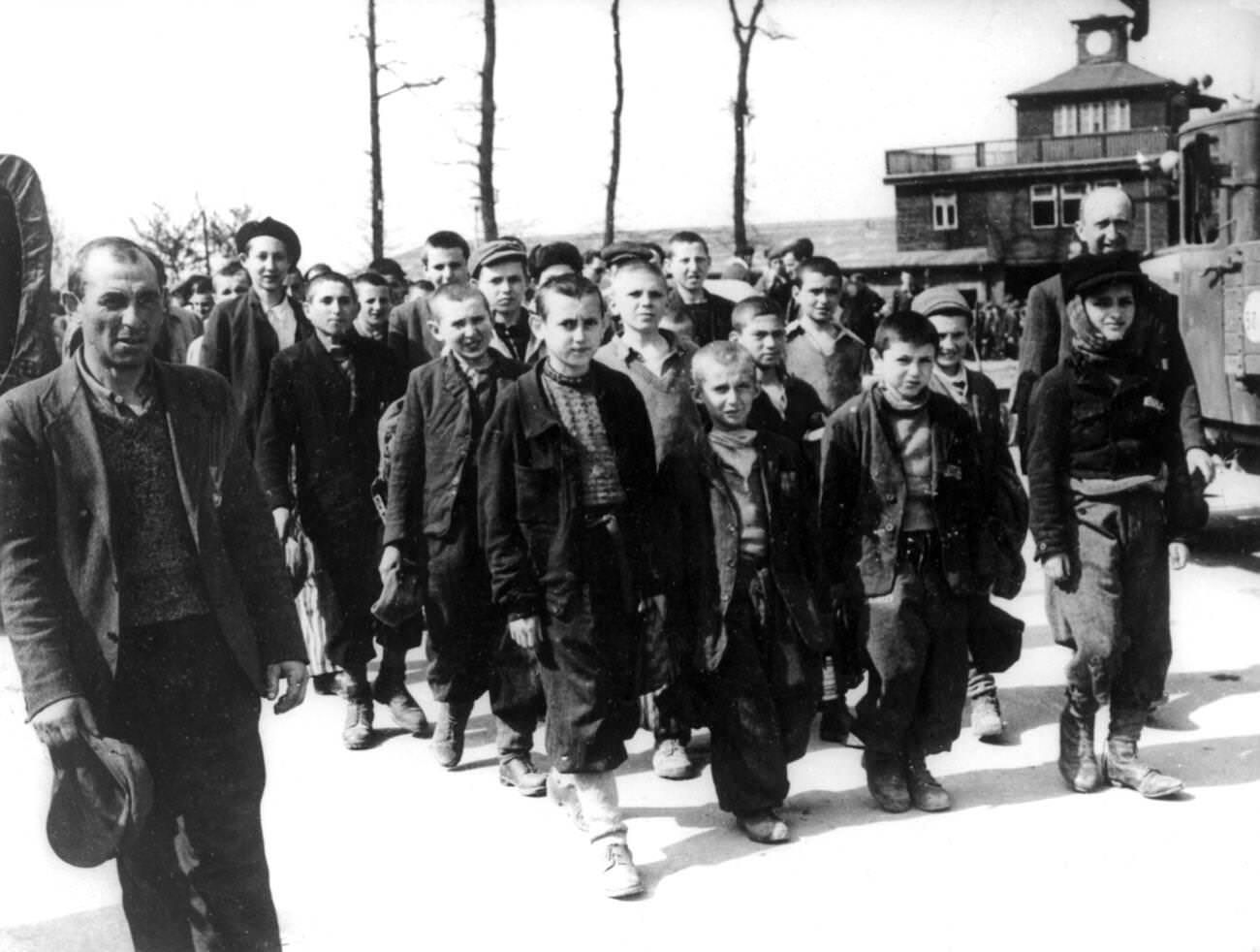
The photographs from Buchenwald were published in newspapers across the United States and Europe within days of the liberation. Many readers had known, in the abstract, that concentration camps existed. Seeing the images made it impossible to look away. Editors at major publications made deliberate choices to run the most graphic photos, believing the public needed to understand exactly what had been happening inside the Nazi camp system. The pictures from Buchenwald became part of the evidence record used at the Nuremberg Trials, where SS officers and Nazi officials were tried for war crimes and crimes against humanity.