Before astronauts ever left Earth’s atmosphere, two men squeezed into a hollow steel ball and sank nearly 3,000 feet beneath the ocean’s surface. No propulsion. No escape hatch they could open under pressure. Just a telephone line, a supply of oxygen, and a cable connecting them to the world above. This was the Bathysphere — and its story begins with two very different men who shared one obsessive goal.
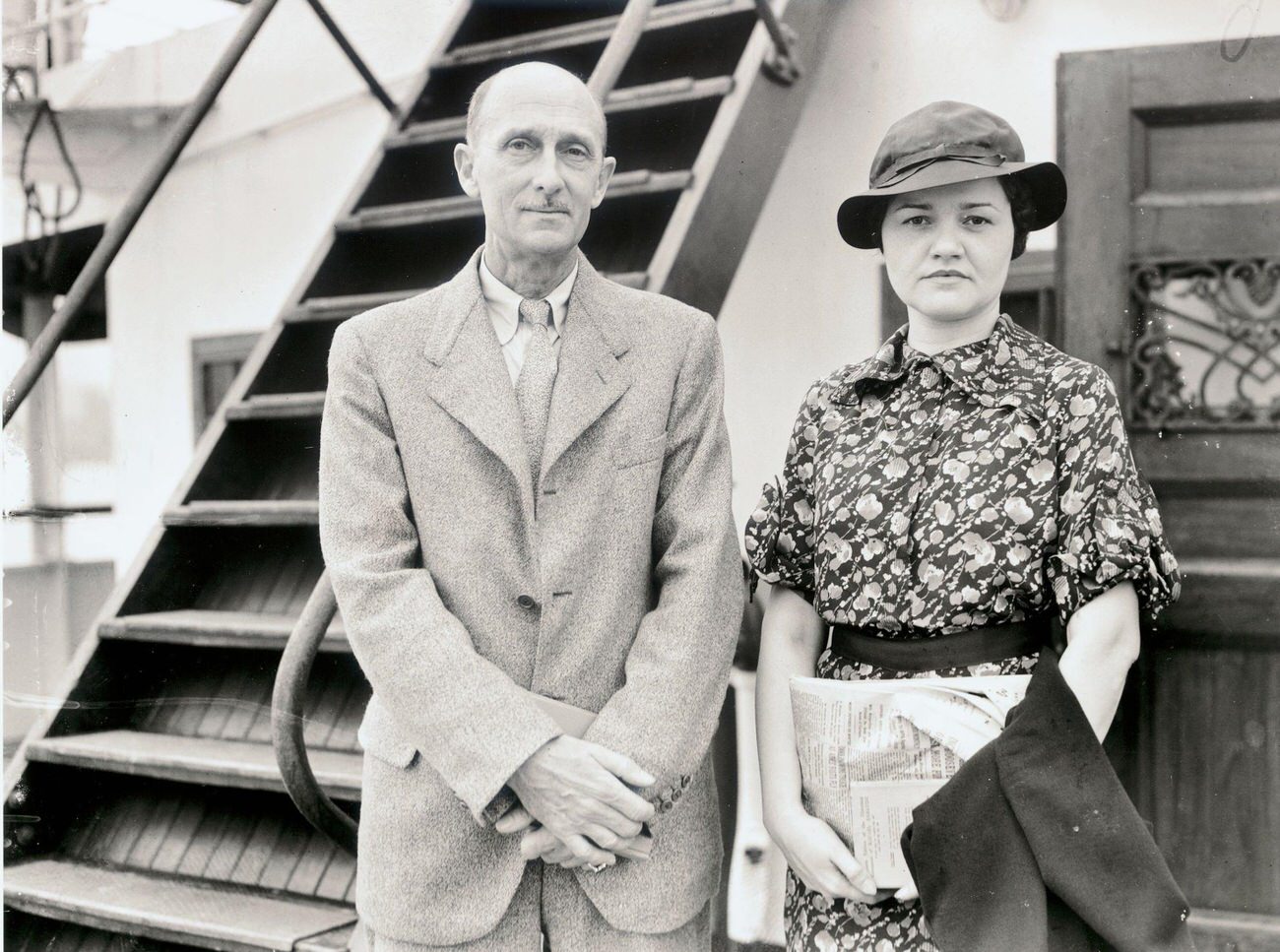
In the 1920s, the deep ocean was completely unexplored. Scientists had no way to observe life below a few hundred feet. William Beebe, a naturalist with the New York Zoological Society, wanted to change that. He had spent years studying wildlife above water and was determined to see what lived in the blackest depths of the sea. Otis Barton was an engineer with both the technical skills and the personal funding to make the idea real. Together, they designed the Bathysphere — a name drawn from the Greek word “bathys,” meaning deep.
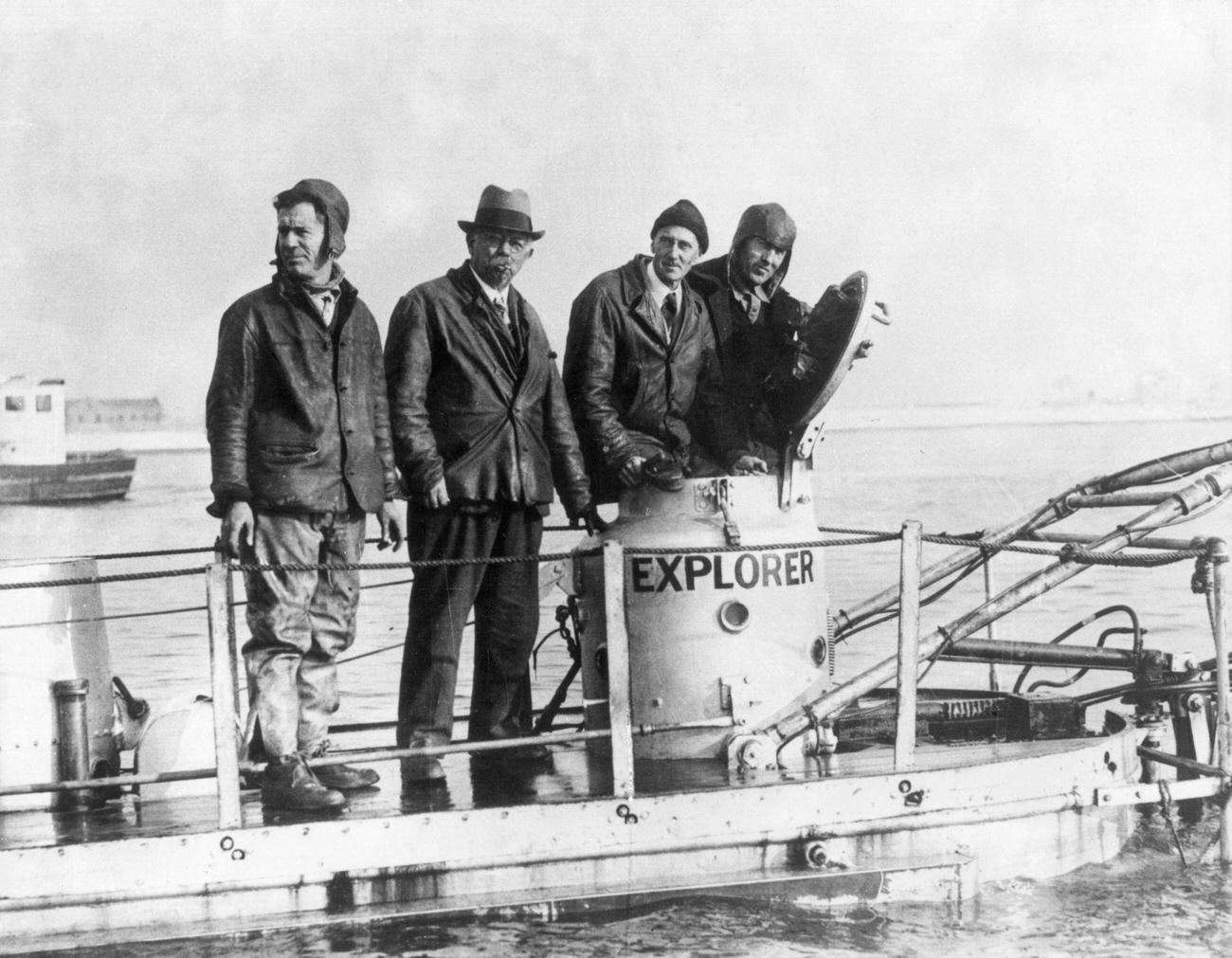
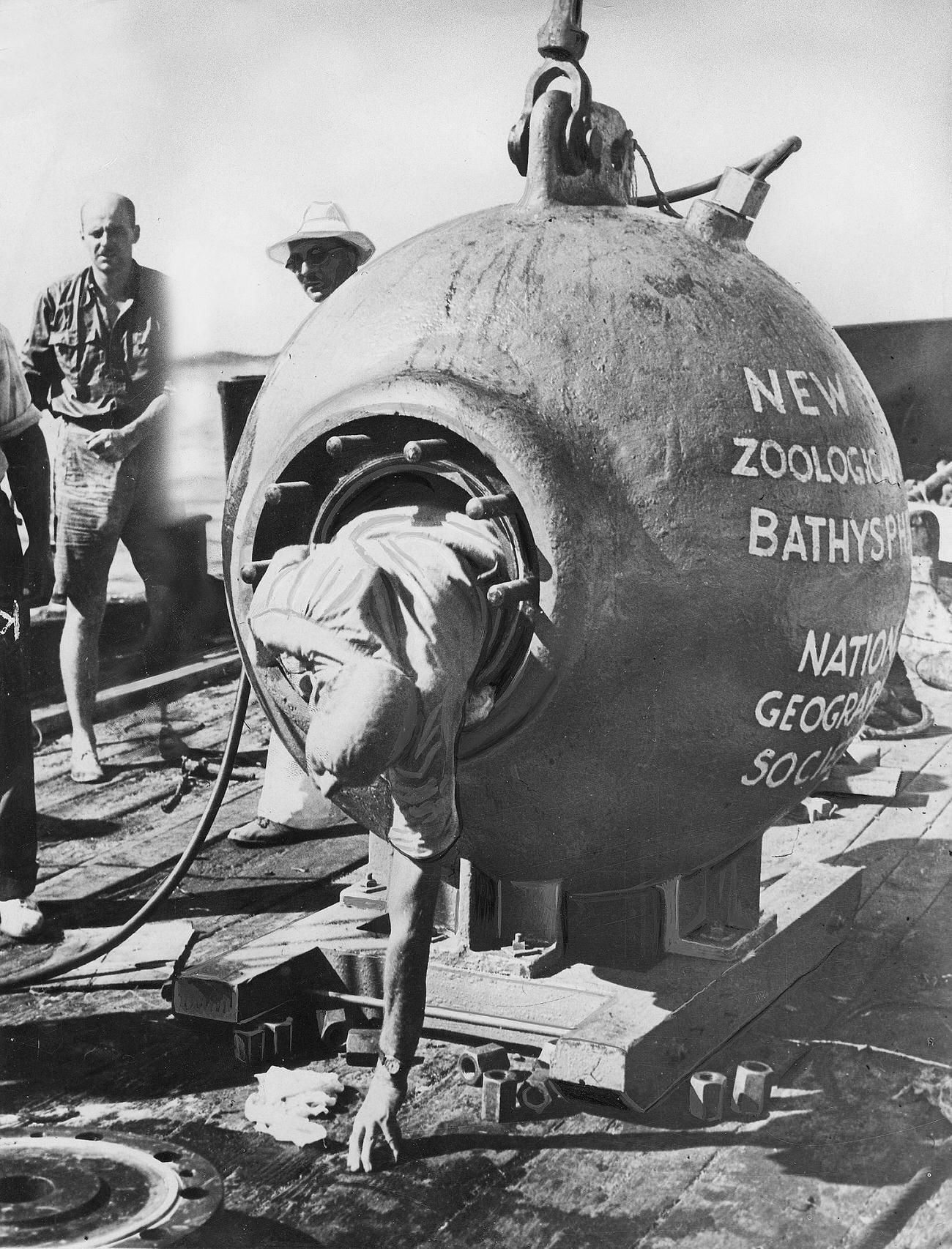
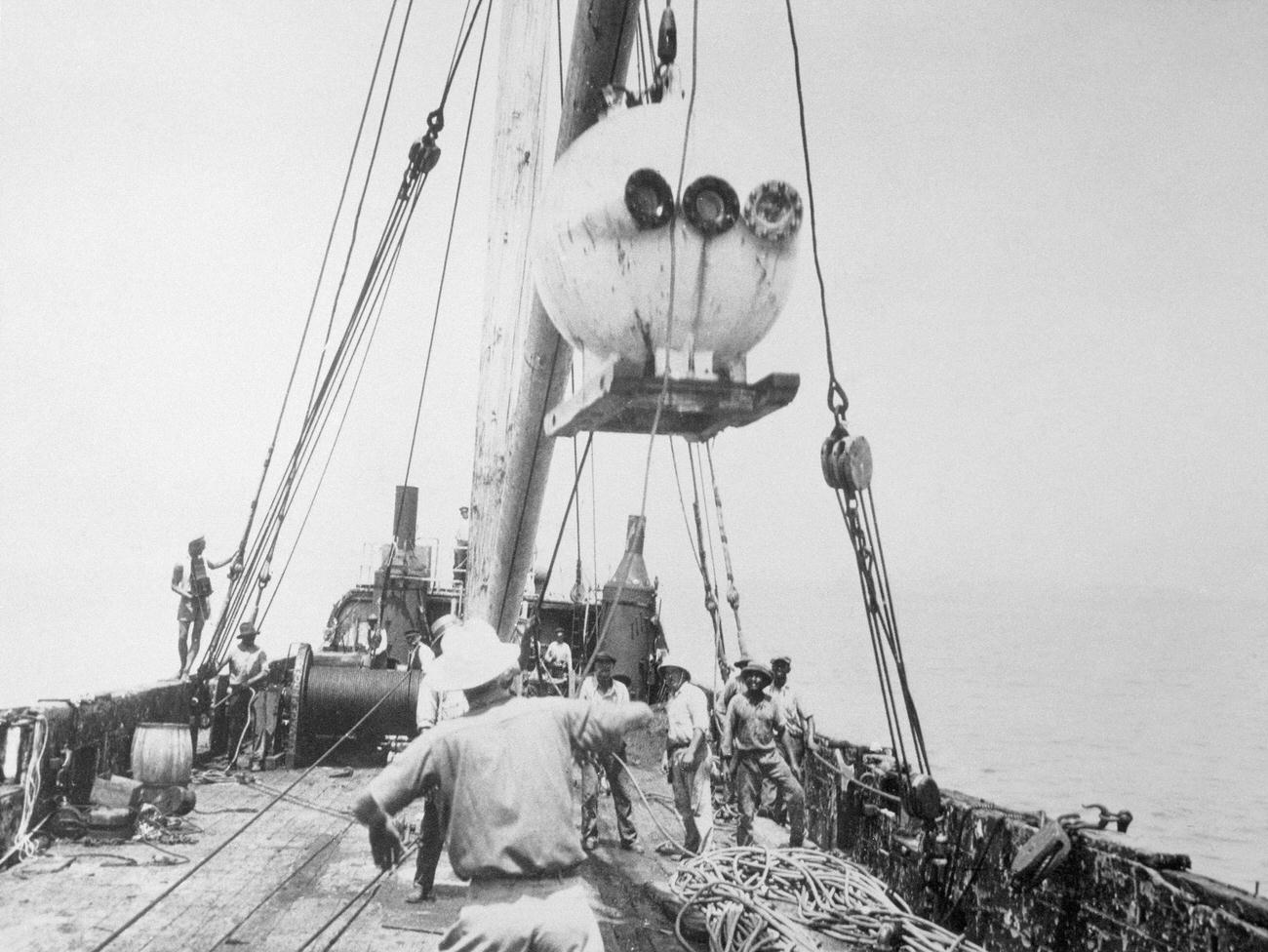
The vessel itself was a study in simplicity under extreme constraint. The Bathysphere measured just 4.5 feet in diameter — barely enough for two grown men to sit hunched inside. Its walls were cast steel, 1.5 inches thick, built to resist the crushing pressure of deep water. Three small windows made of fused quartz, each just 8 inches across, gave Beebe and Barton their only view of the outside world. A single entry hatch, sealed with a 400-pound steel door and 10 bolts, kept the ocean out. Inside, oxygen tanks fed breathable air while trays of calcium chloride and soda lime absorbed carbon dioxide and moisture.
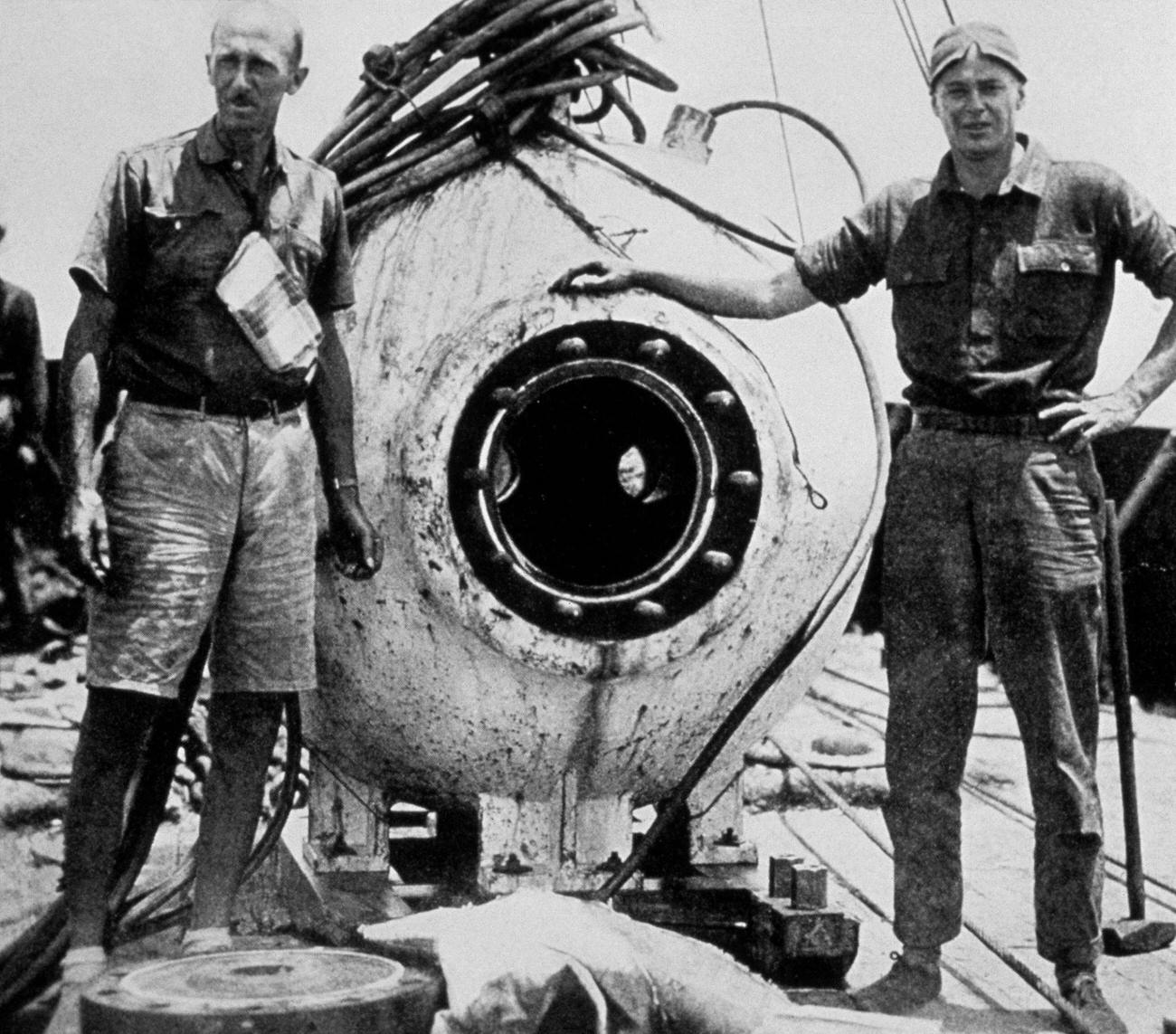
The sphere hung from a single 3,500-foot steel cable attached to the deck winch of a surface ship. There was no way for the Bathysphere to move on its own — no motor, no steering, no thruster. If the cable snapped at depth, Beebe and Barton would die. That risk was understood and accepted. Their first significant dive took place in 1930, off the coast of Bermuda, with the ship Ready serving as their surface link.
As the Bathysphere descended below 200 feet on early dives, sunlight began to fade into a dim blue-green haze. Below 800 feet, it disappeared entirely. In total darkness, Beebe pressed his face against the quartz window and described what he saw to Gloria Hollister, his aide on deck, who relayed his words over the telephone line and transcribed them in real time. He saw creatures that had never been seen alive by a human being — bioluminescent fish trailing light like sparks, shrimp that flashed blue fire when disturbed, and formations of jellyfish drifting in slow, silent procession.
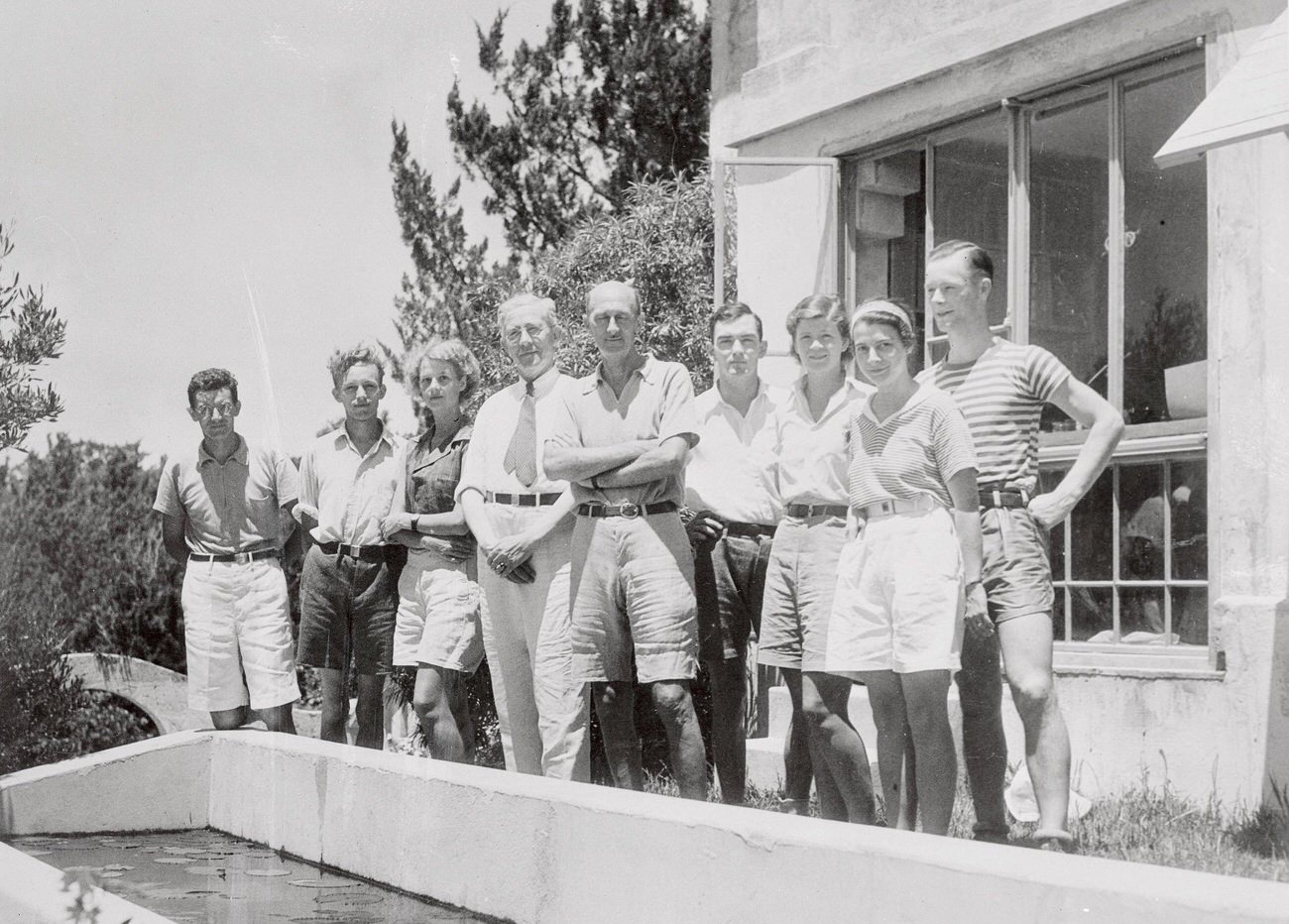
The team working alongside Beebe was small but essential. John Tee-Van served as general manager of the expeditions, coordinating logistics on deck. Gloria Hollister handled communications and recorded Beebe’s observations during dives. Herbert T. Strong also contributed to the team’s fieldwork. Their collective effort made each dive possible.
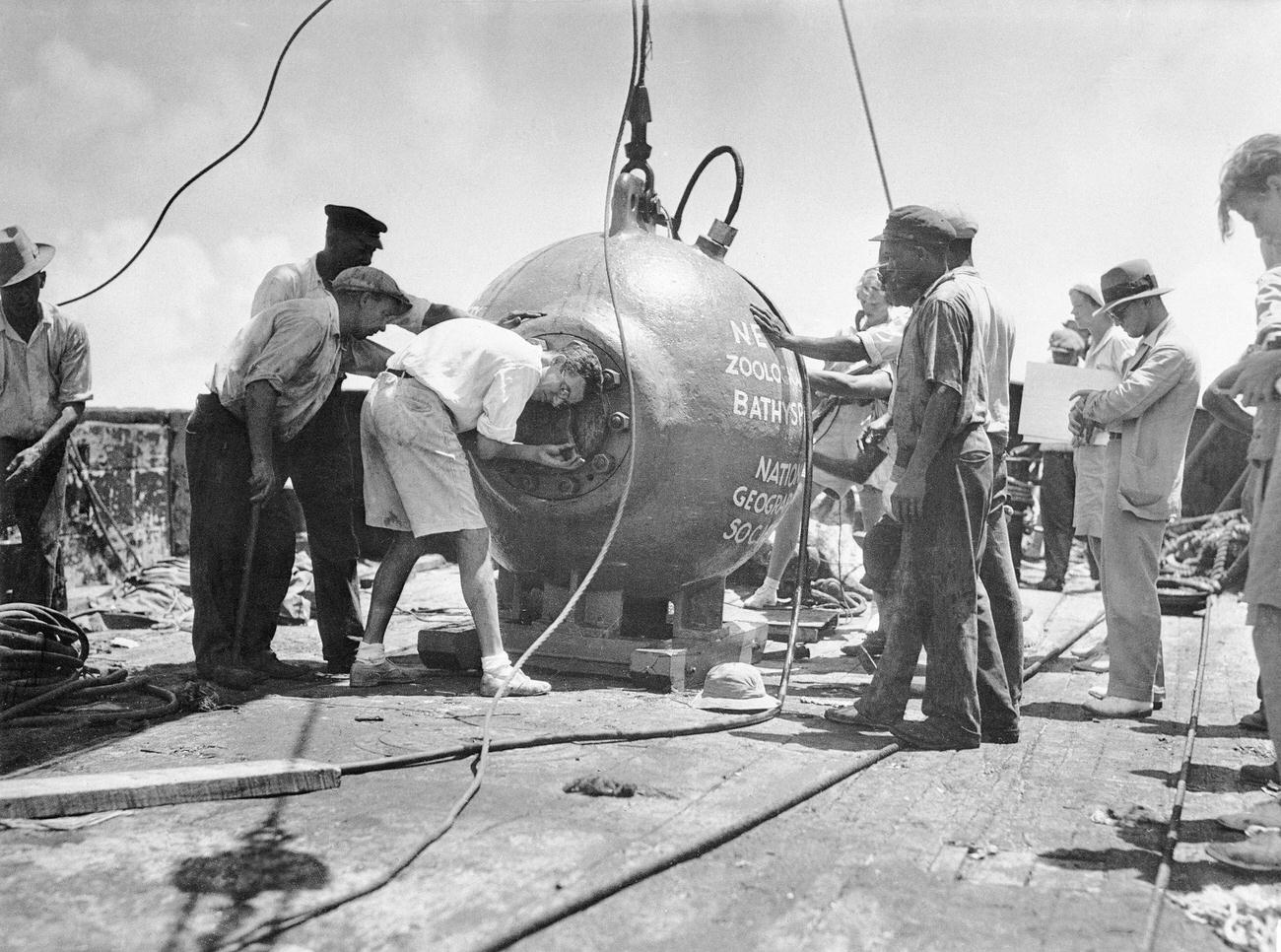
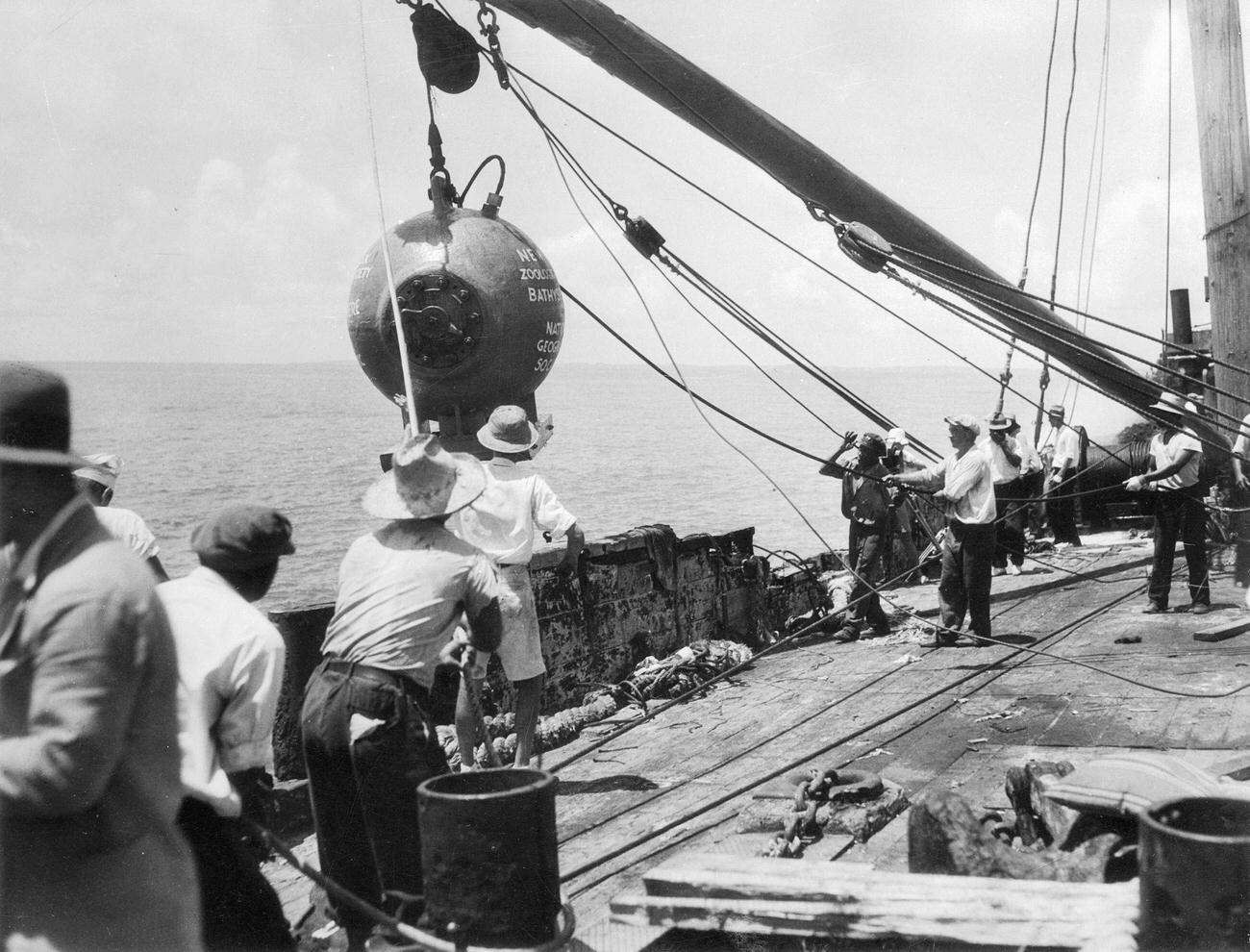
On August 15, 1934, Beebe and Barton made their deepest dive. The Bathysphere descended to 3,028 feet — well over half a mile below the surface. At that depth, the pressure on the exterior of the sphere exceeded 1,300 pounds per square inch. The dive broke all previous records for a crewed descent and stood as the world record for 15 years. Beebe described the color of the water at that depth as an absolute, total black — unlike anything seen at shallower levels.
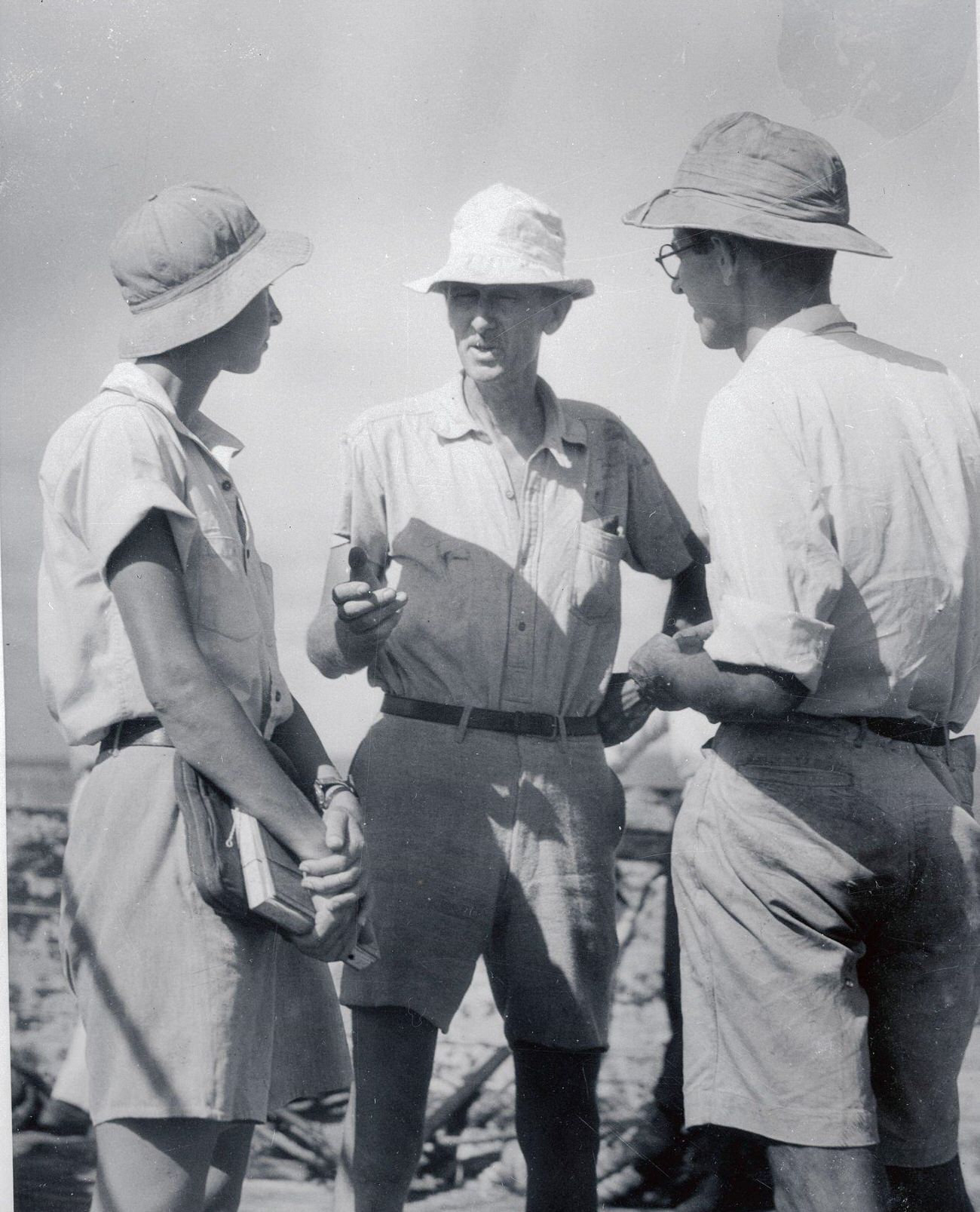
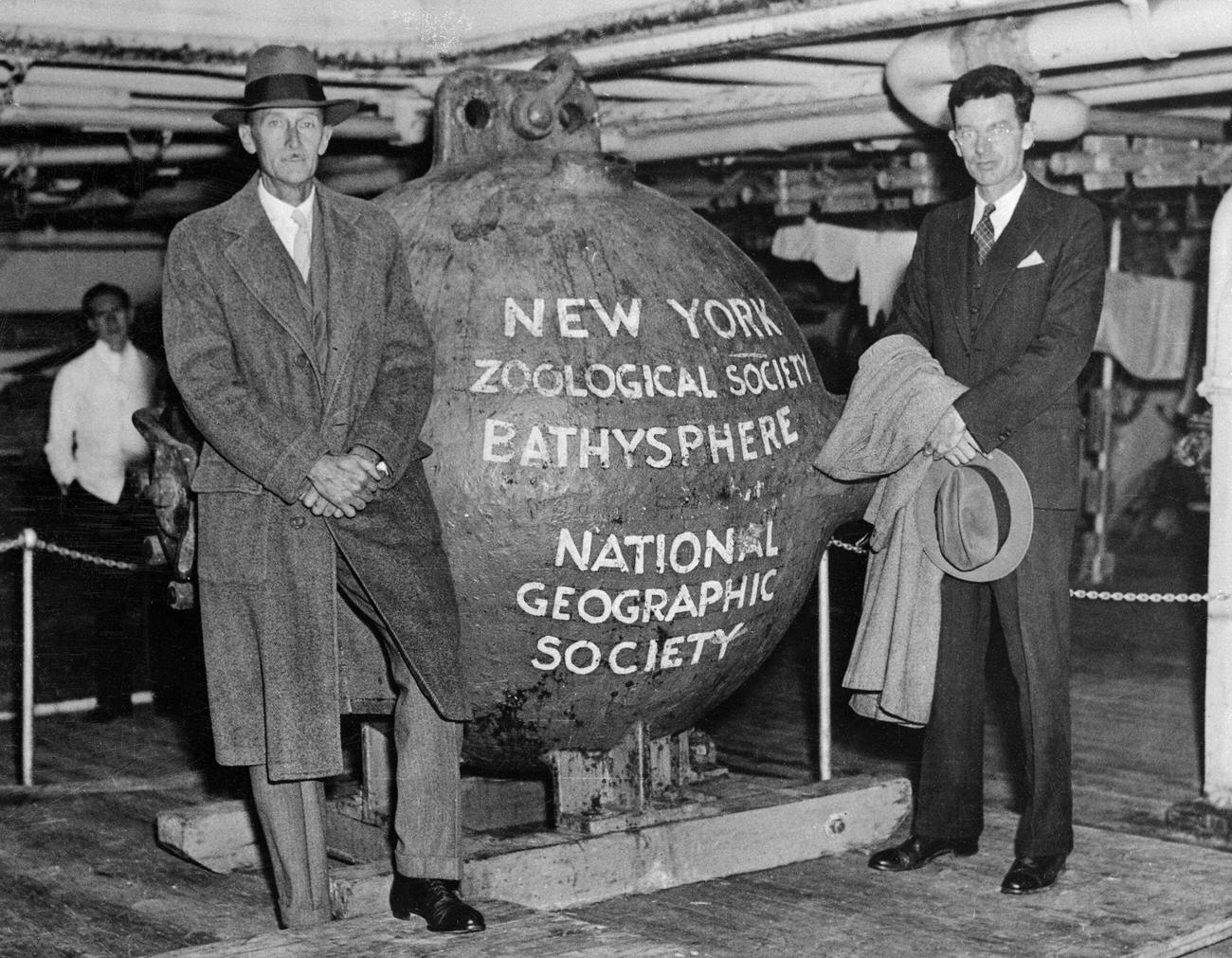
Beebe’s scientific observations from inside the sphere were detailed and immediate. He described a six-foot-long fish he called the “giant dragonfish” that science had never catalogued. He observed fangtooth fish, deep-sea eels, and multiple species of bioluminescent animals producing light in colors ranging from pale blue to vivid red. Some of what he described has since been matched to known species. Others remain unconfirmed. His reports were so unusual that some scientists of the day doubted them.
Despite its achievements, the Bathysphere had serious limitations. Its depth was capped by the length of its cable. It could not maneuver. If the ship above drifted, the sphere swayed dangerously. Mechanical issues were a constant concern, including gas leaks that threatened both the equipment and the men inside.
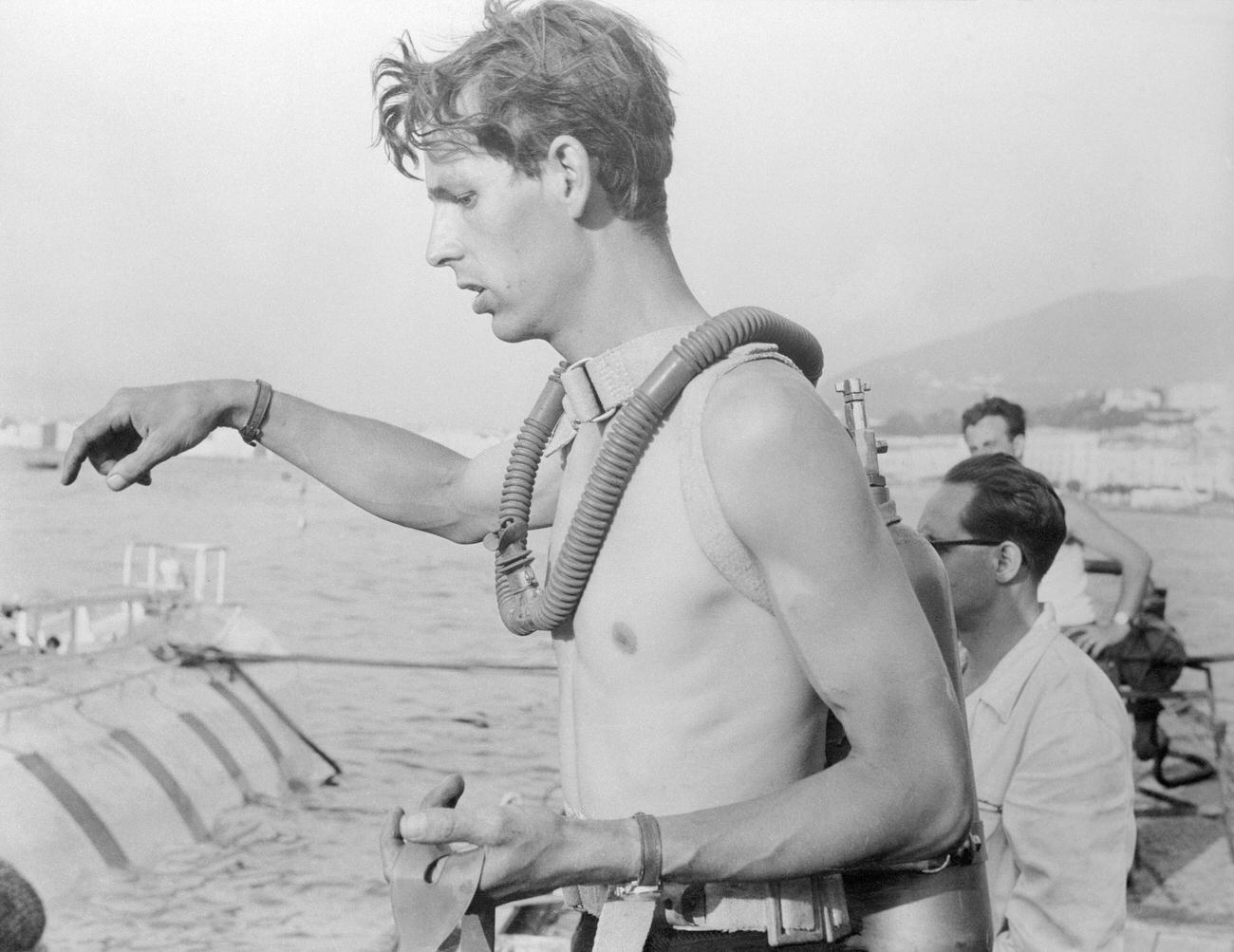
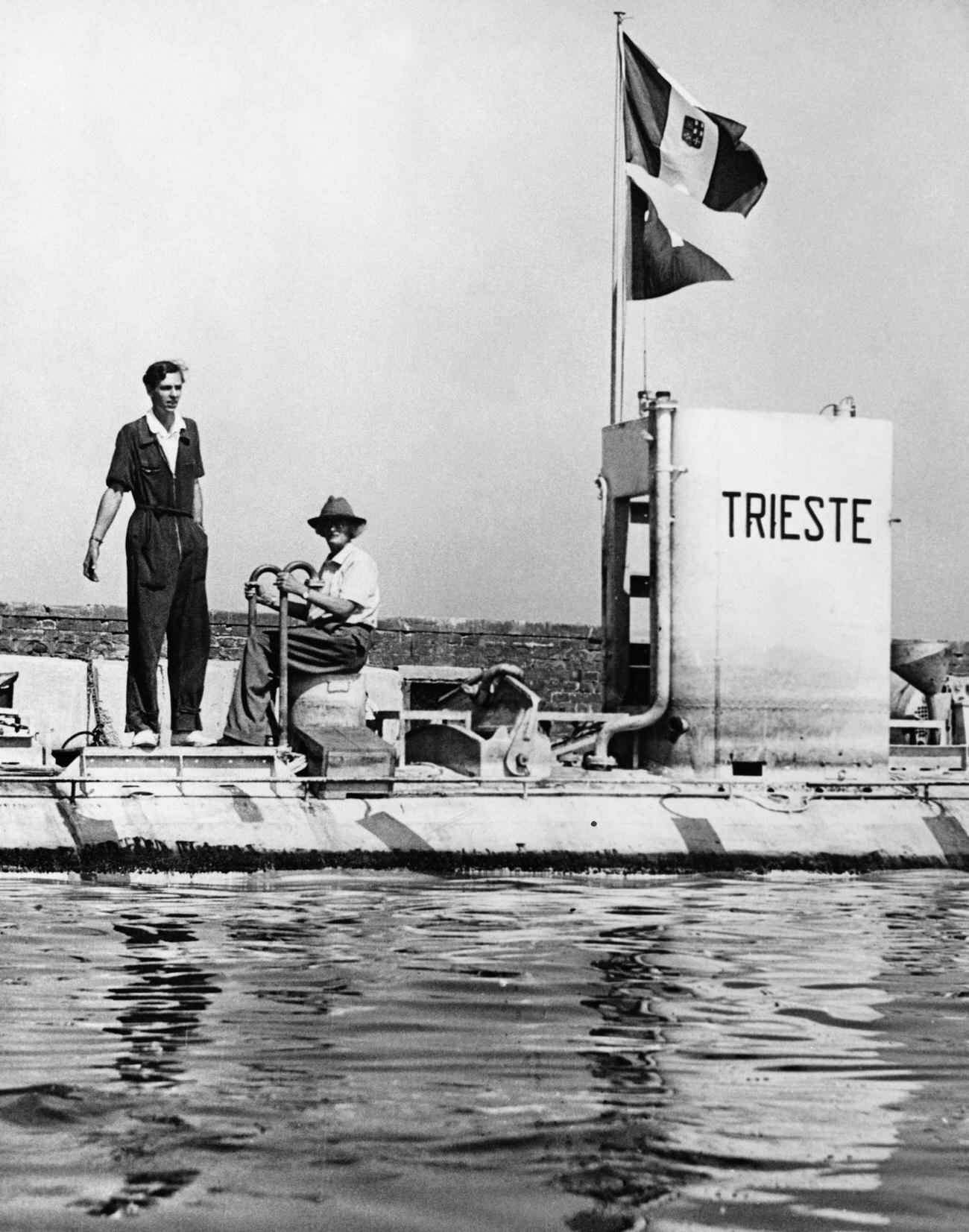
By the 1950s, a new generation of deep-sea vessels was being developed to push past what the Bathysphere could reach. Swiss physicist Auguste Piccard designed the bathyscaphe — a self-propelled craft that used gasoline for buoyancy and iron shot as ballast. Unlike the Bathysphere, it did not need a surface ship for support. Piccard’s most famous creation was the Trieste, launched in 1953 in Castellamare di Stabia, Italy. Where the Bathysphere could reach 3,028 feet, the Trieste was built to go tens of thousands of feet deeper.
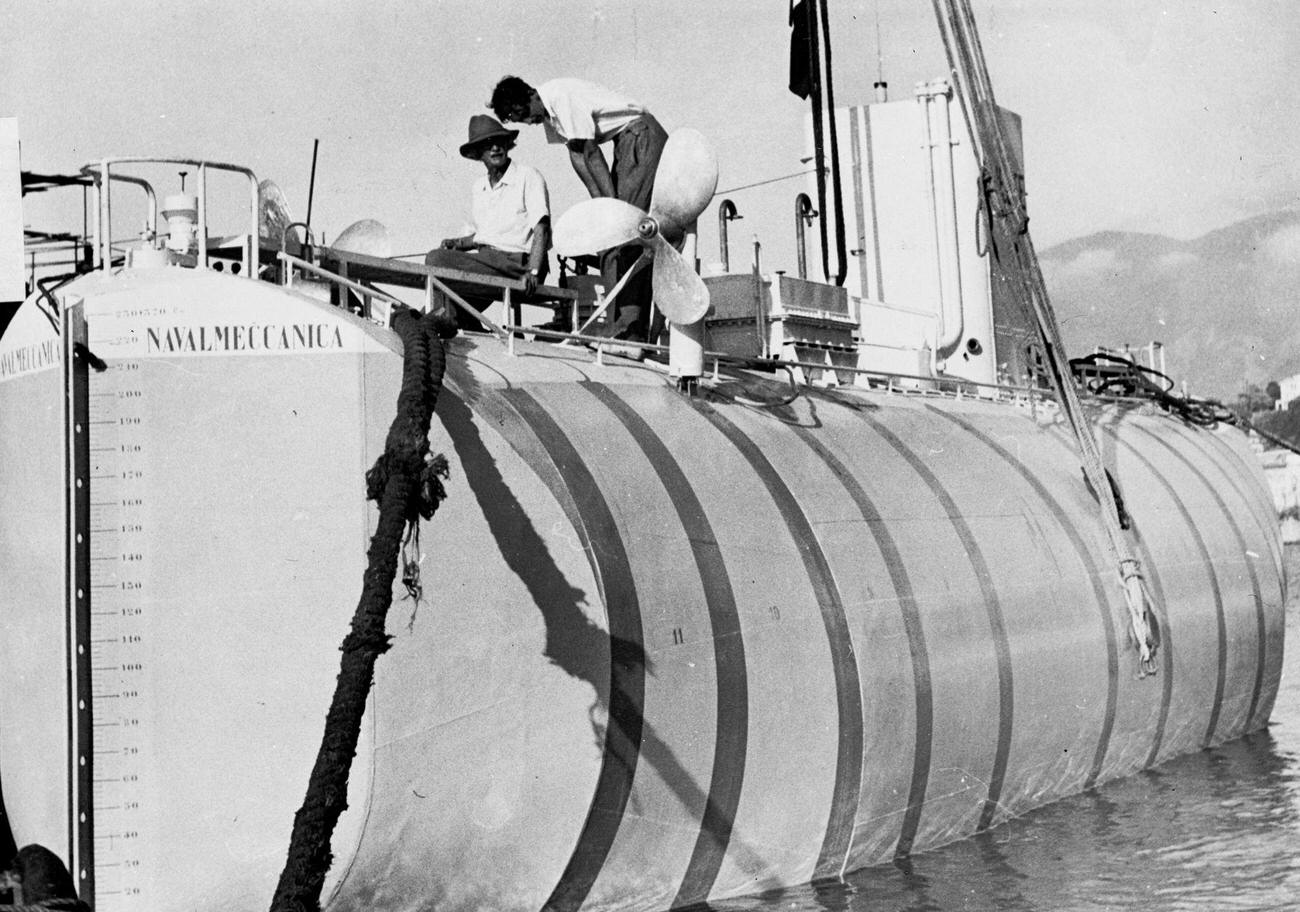
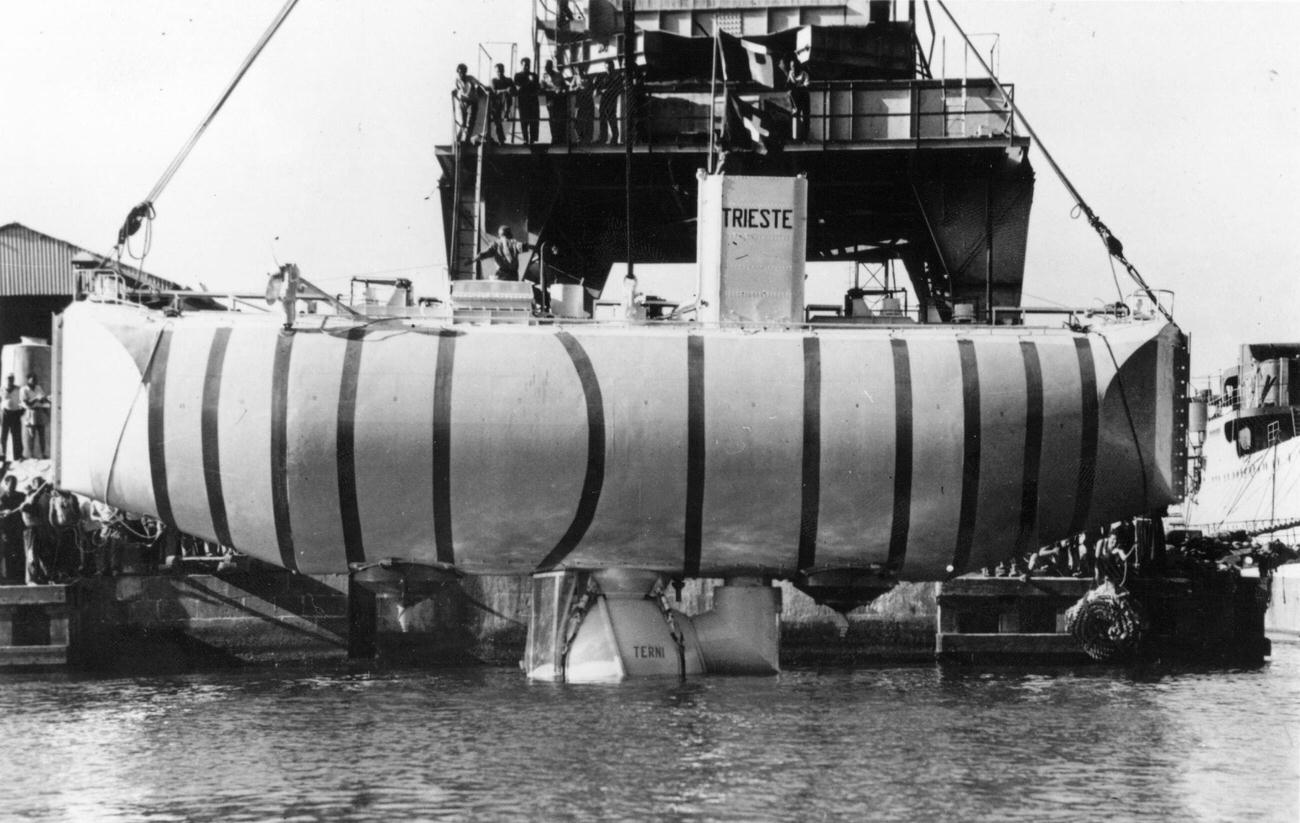
Auguste Piccard made the early test dives in the Trieste alongside his son Jacques. Their collaboration mirrored that of Beebe and Barton — a shared drive to go deeper than anyone had gone before. In 1953, father and son descended together, breaking depth records and validating the design of the bathyscaphe as a viable alternative to cable-dependent spheres.
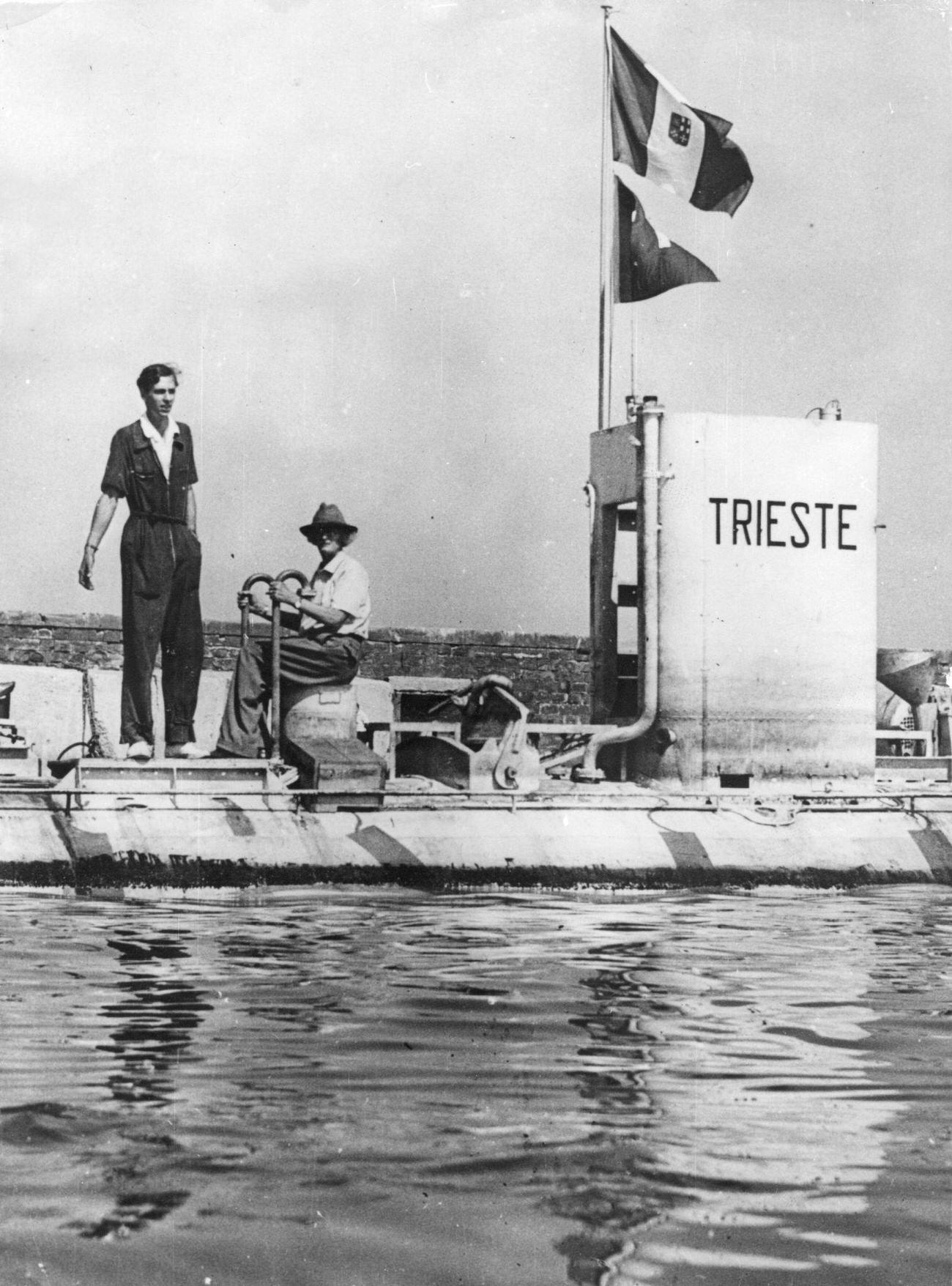
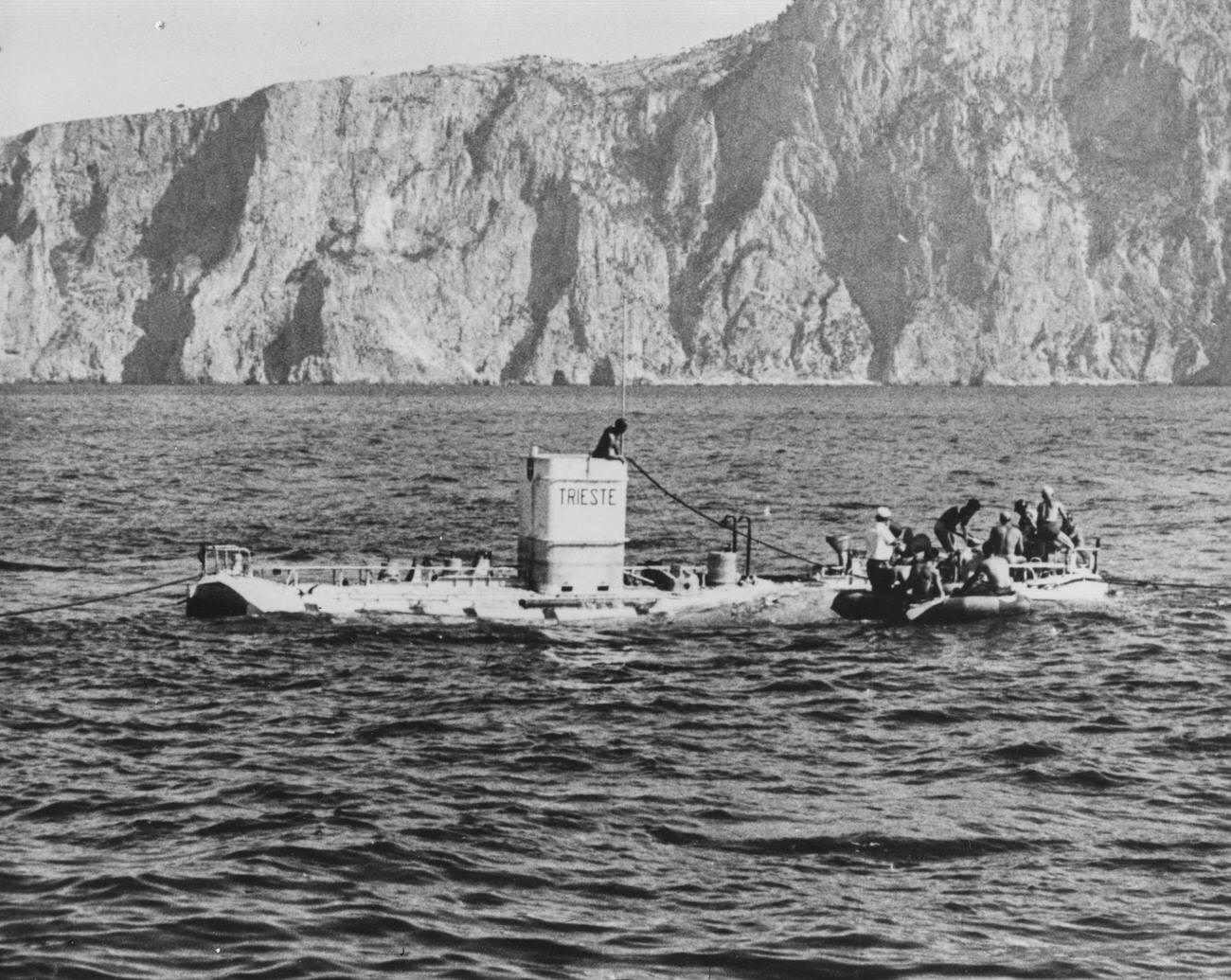
Auguste Piccard set new underwater depth records aboard the Trieste and became one of the defining figures of 20th-century deep-sea exploration. His work directly advanced the understanding of what a crewed vessel could survive at extreme depth, and the Trieste’s engineering was a major step beyond anything the Bathysphere era had produced.
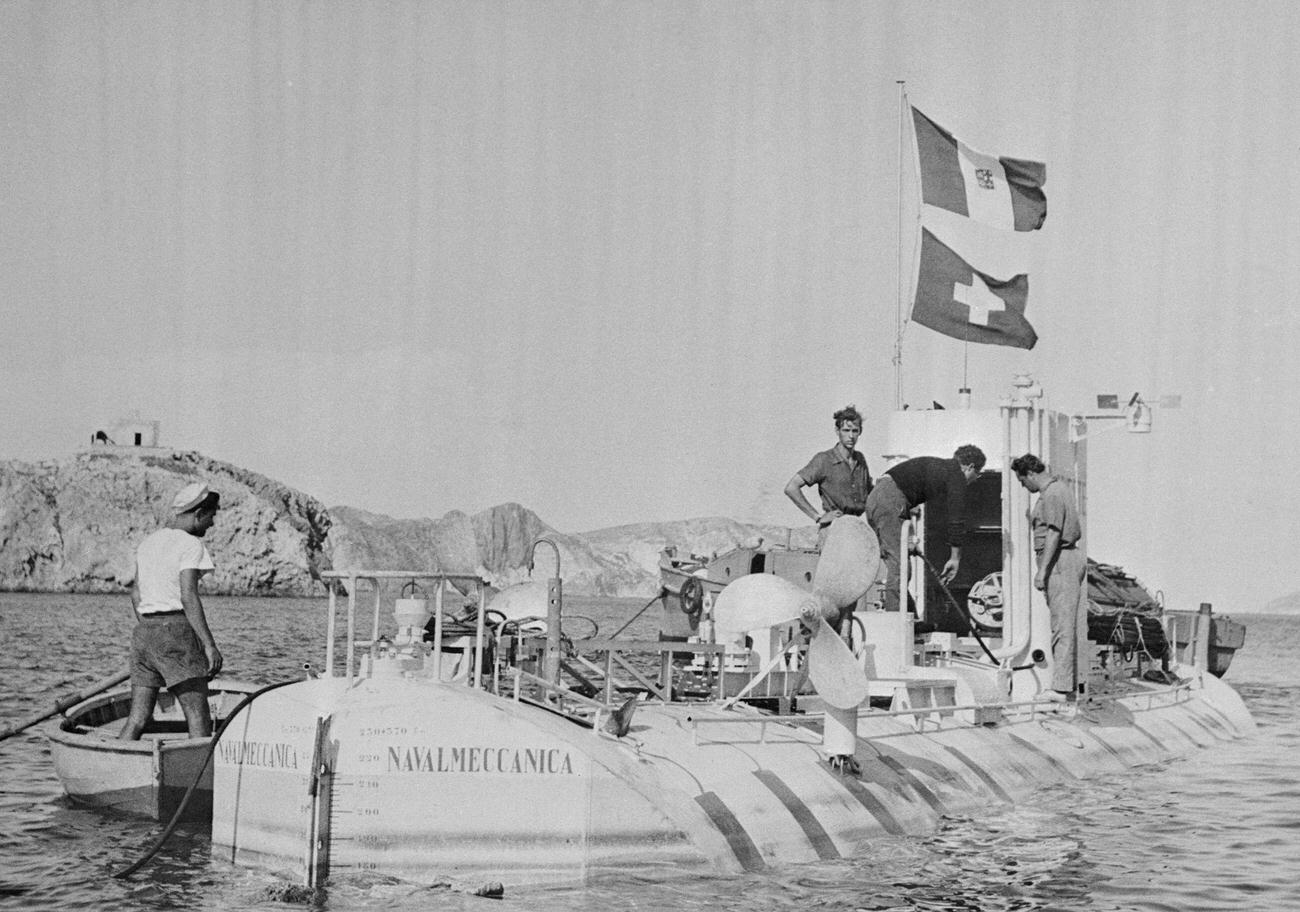
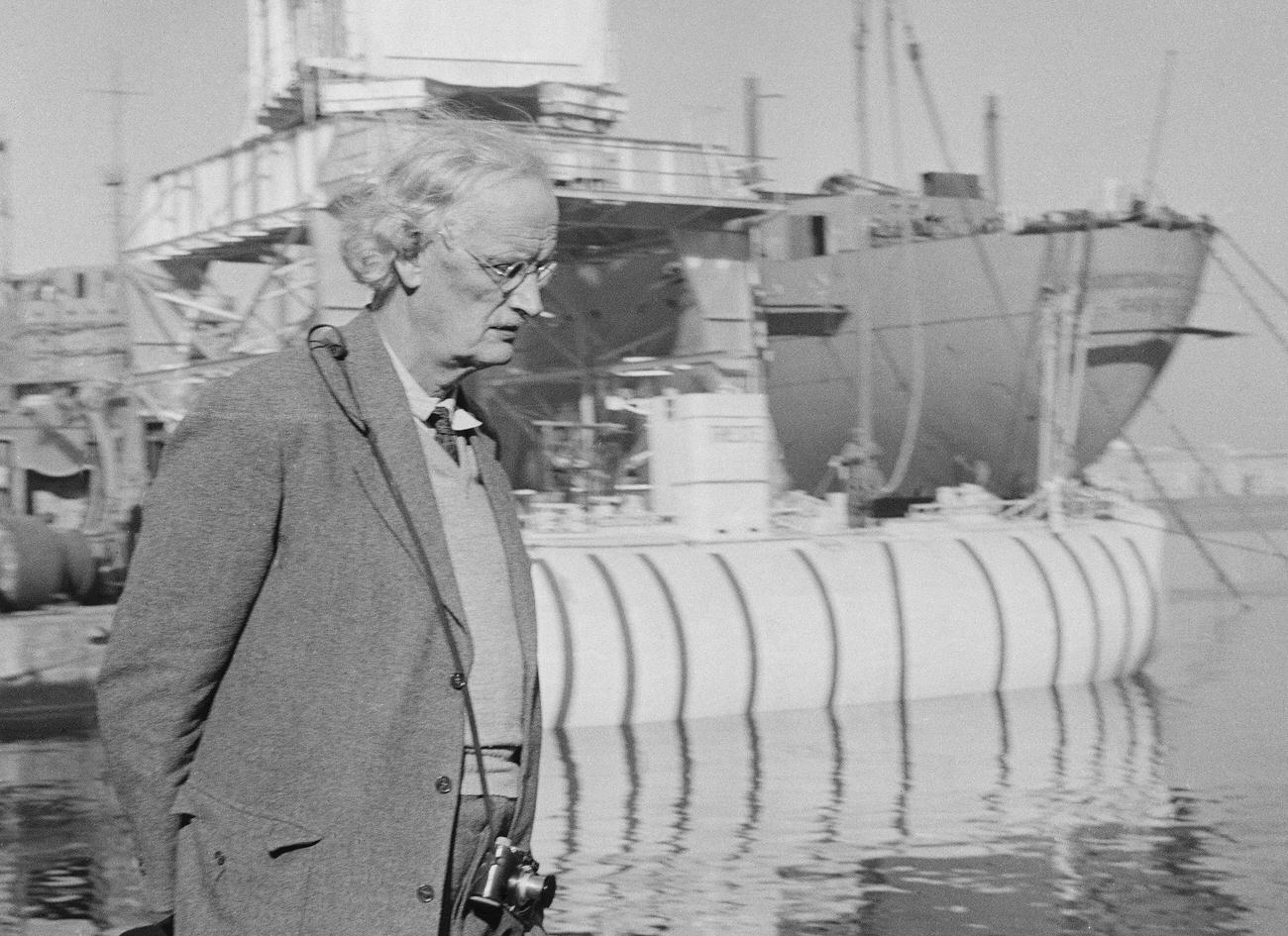
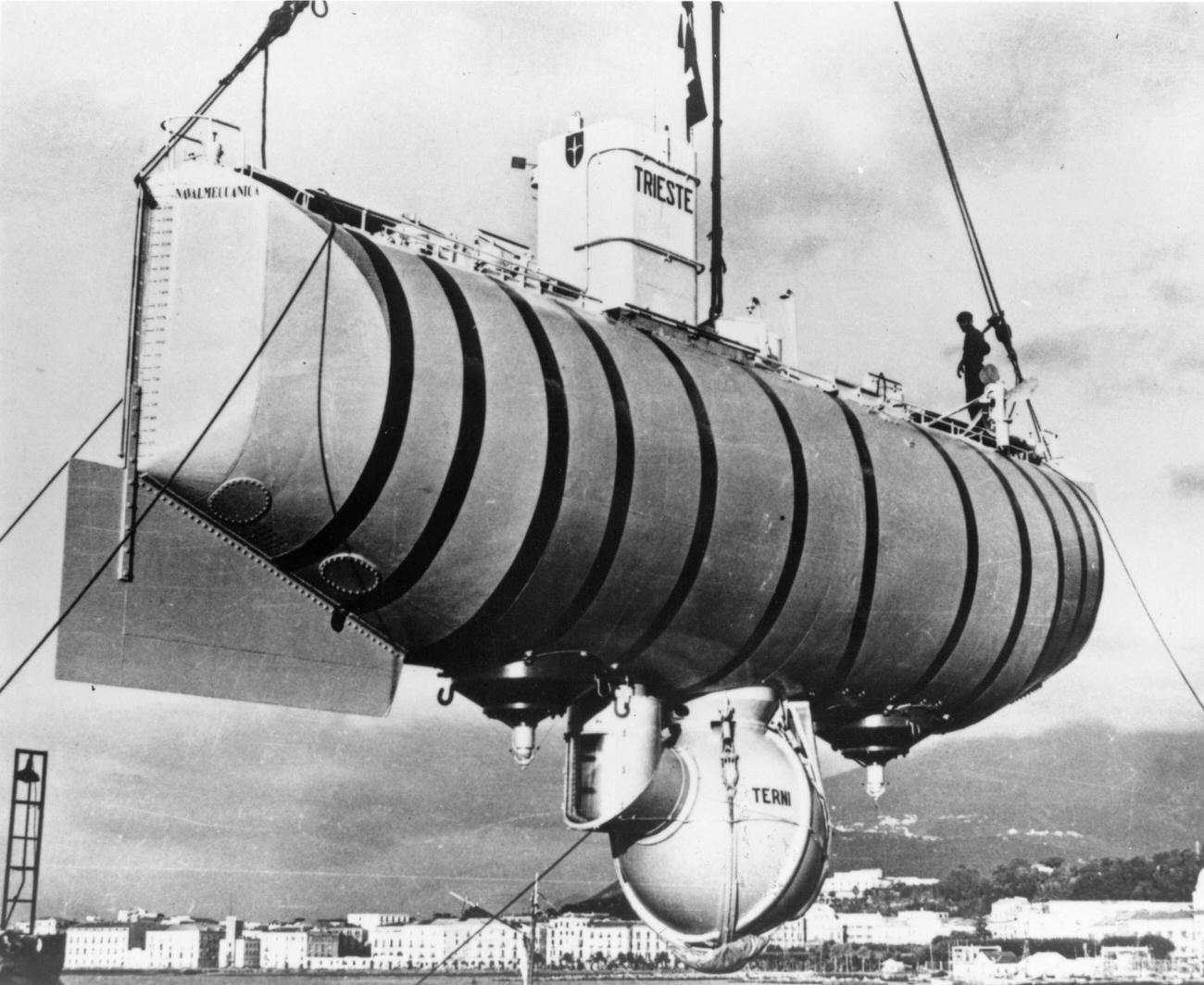
Jacques Piccard continued the deep-diving work after his father. In the 1950s, he and Auguste together reached 12,460 feet — a depth that shattered previous records and demonstrated the Trieste’s capabilities. Jacques went on to pilot the Trieste to the deepest known point in any ocean: the Challenger Deep in the Mariana Trench, reaching 35,800 feet in 1960. But those ambitions were seeded in the earlier test dives off the Italian coast.
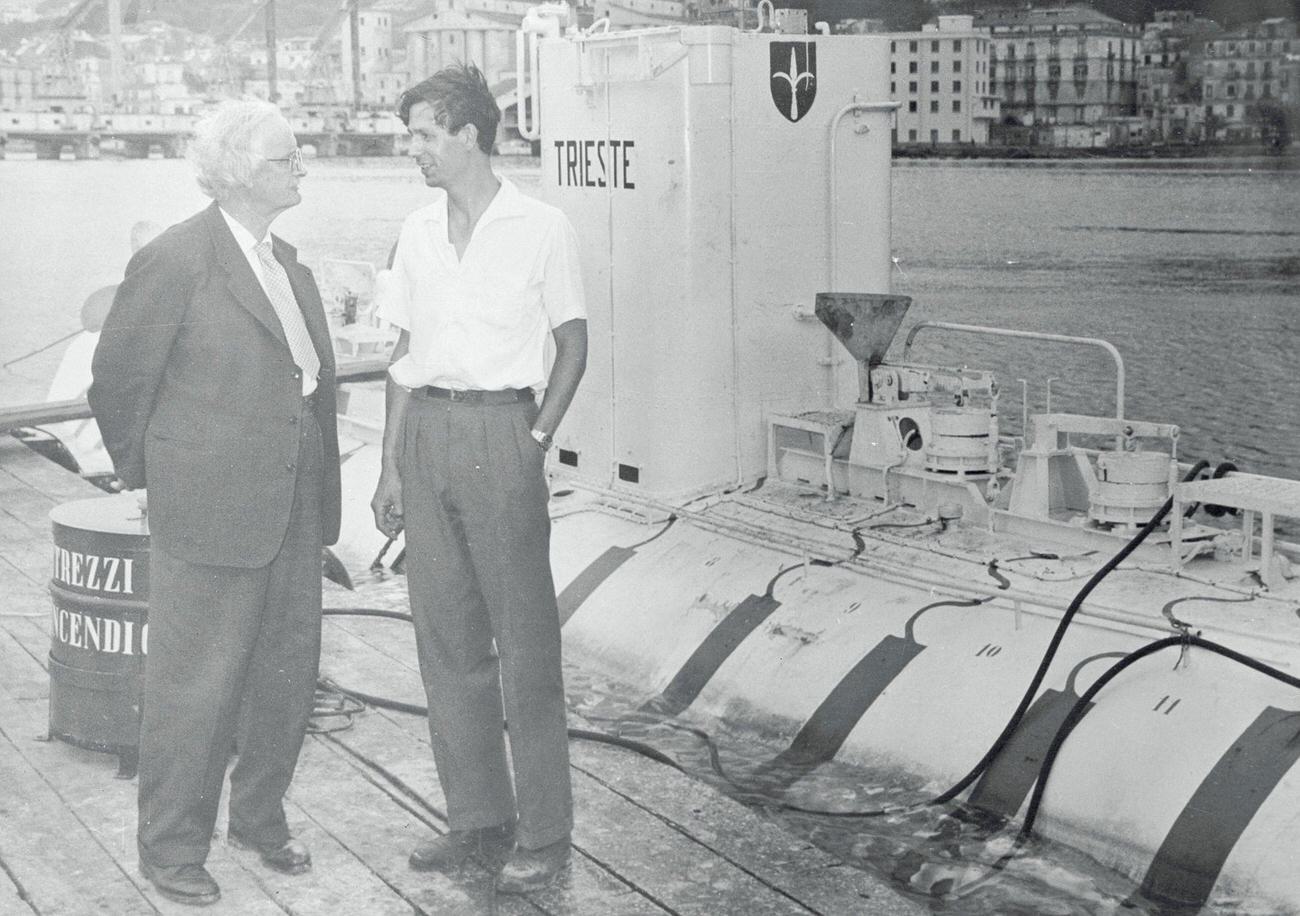
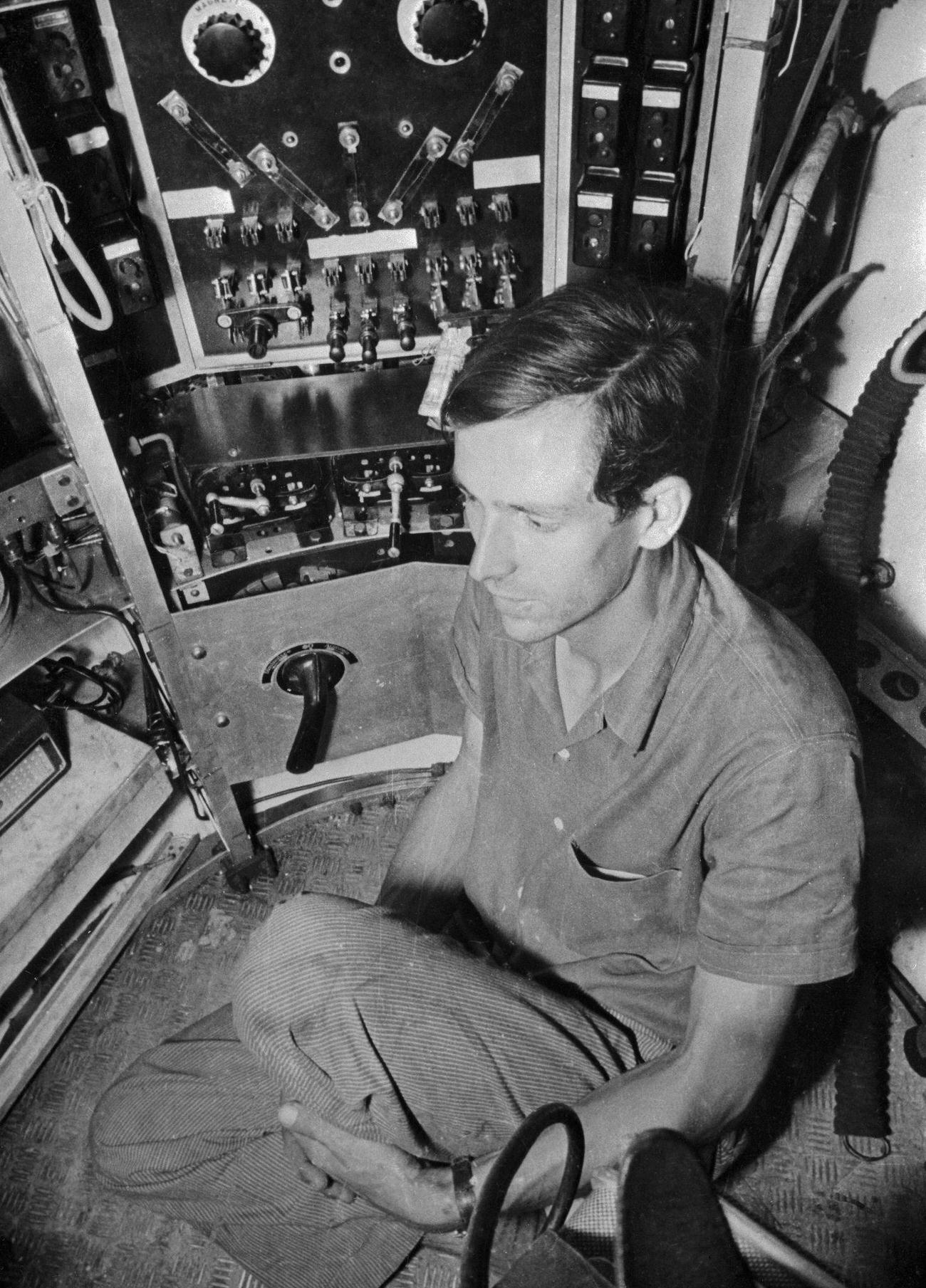
Back in the 1930s, Beebe and Barton carried out multiple dives from Nonsuch Island in Bermuda. The island served as their base of operations, where the Bathysphere was maintained, inspected, and prepared between dives. Photographs from these expeditions show the sphere being hoisted, opened, and examined — a massive steel ball that somehow held two men and changed what science knew about the deep ocean.
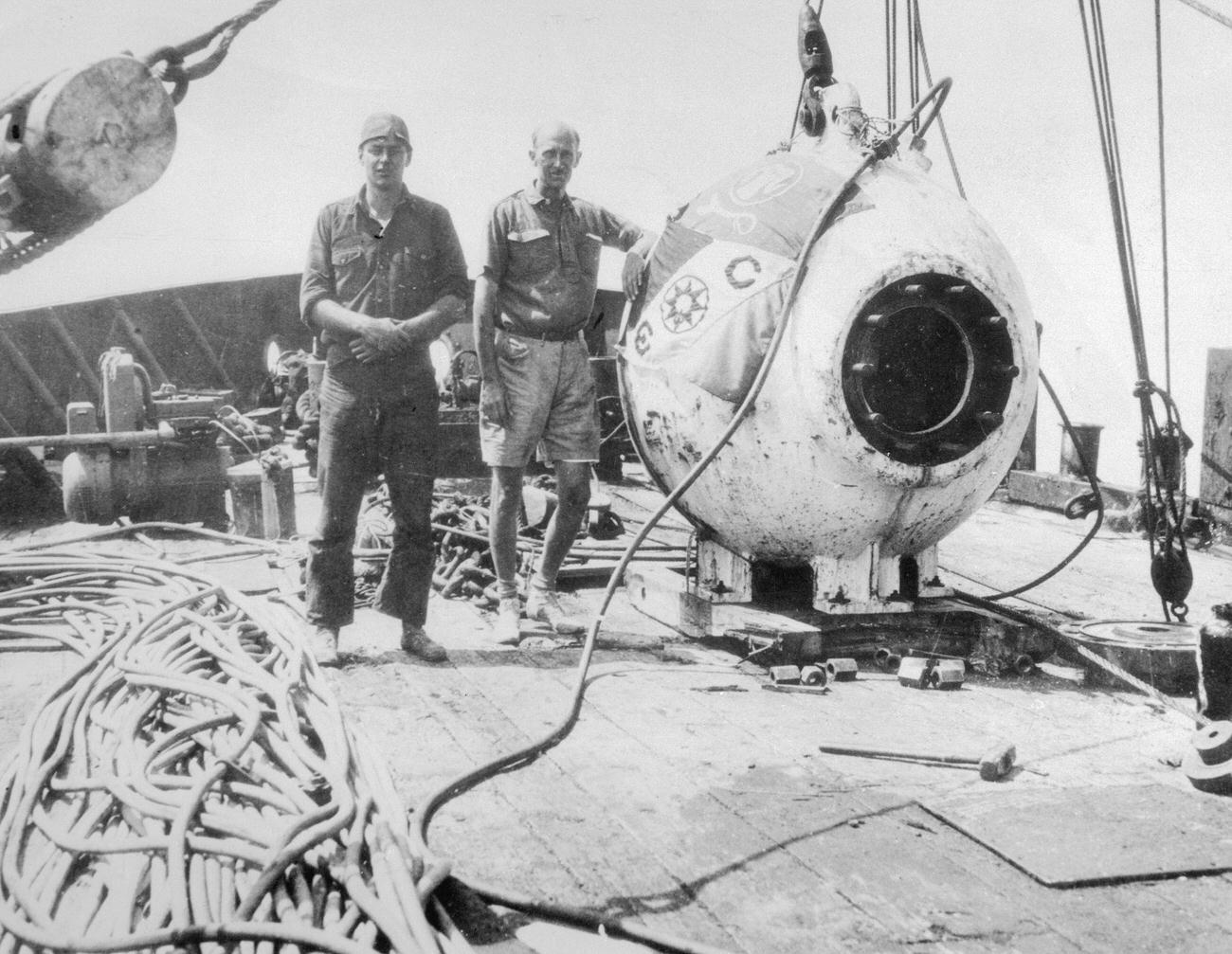
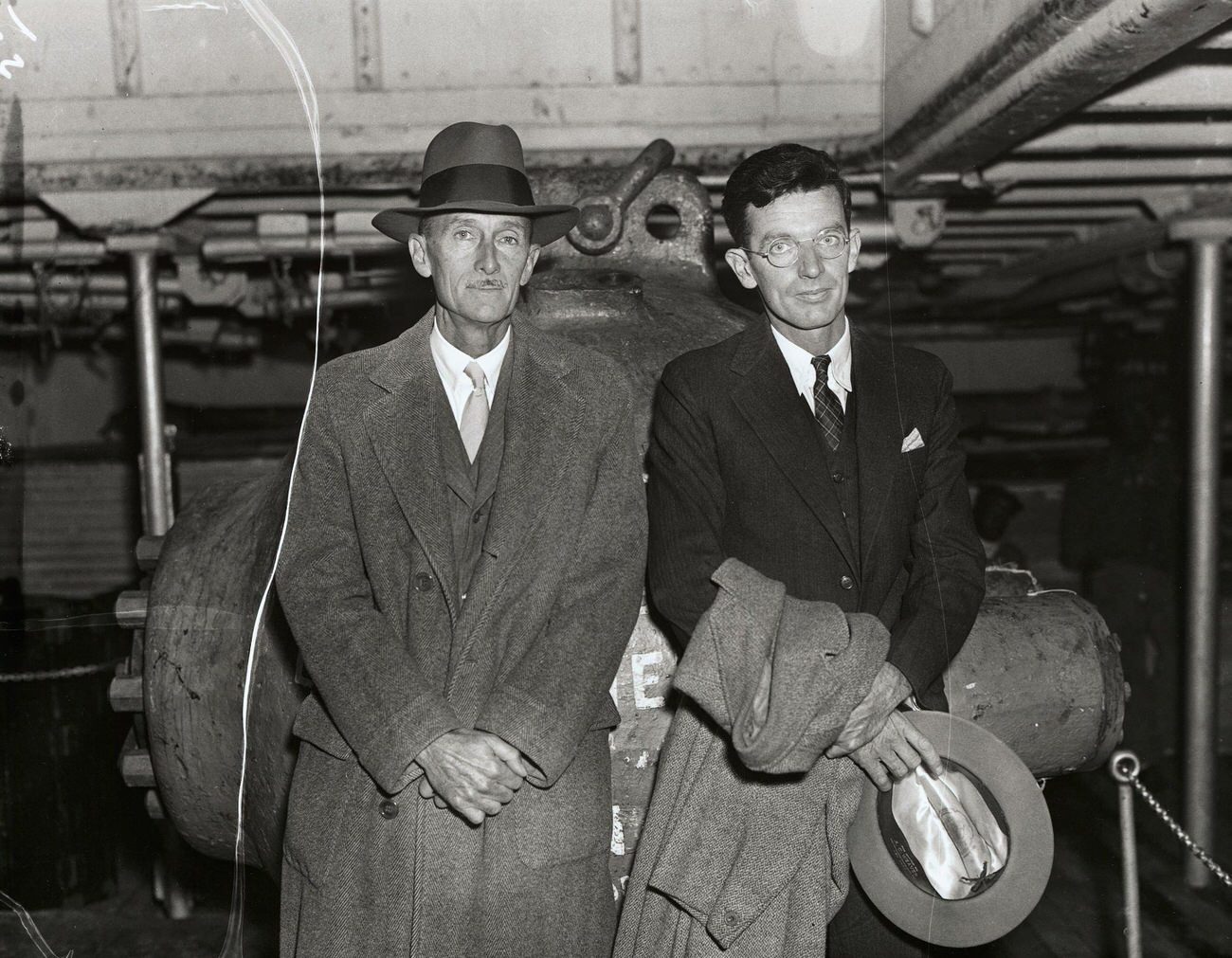
The partnership between Beebe and Barton was not always smooth. Barton, who had funded the construction of the Bathysphere himself, bristled at Beebe receiving most of the public attention. Beebe was the scientist and the communicator — his radio broadcasts from the Bathysphere in 1934 were heard by millions — while Barton’s engineering contributions were often overlooked. After the record dive, the two men drifted apart and rarely collaborated again.
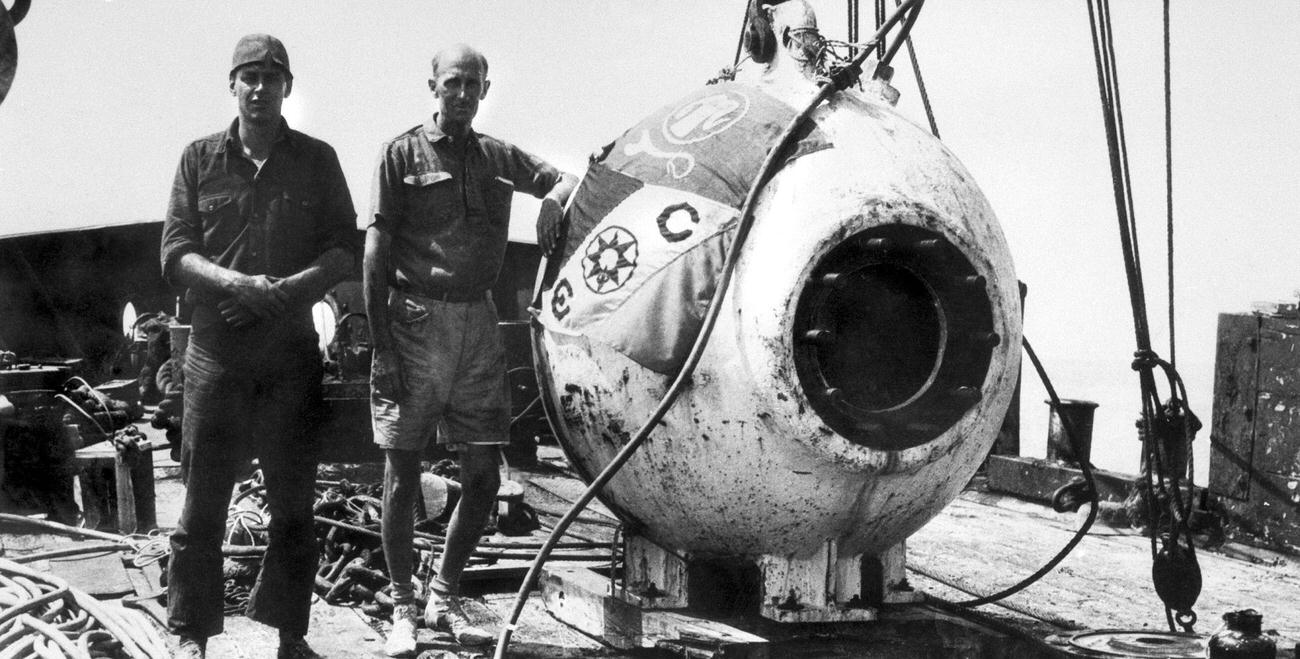
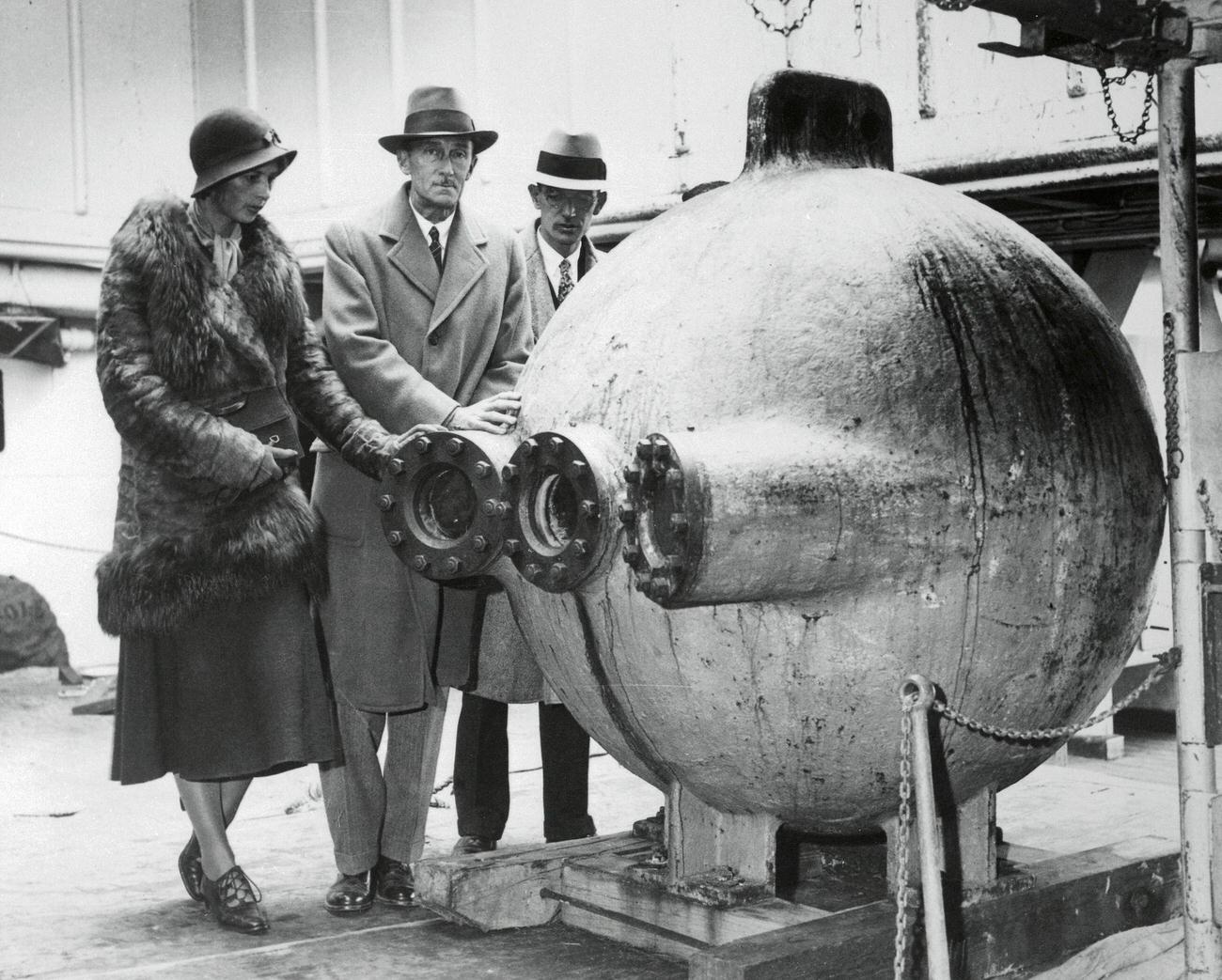
The Bathysphere itself survived the decades and is now on permanent display at the New York Aquarium. Its steel hull still bears the marks of its construction — a physical artifact from a moment when two men decided that the bottom of the ocean was worth risking their lives to see. Auguste Piccard’s work with the Trieste carried that spirit forward, proving that each generation of vessel could reach places the last one never could.