Bari sits on the Adriatic coast as both a working port city and the capital of the Puglia region in southeastern Italy. Its old town is one of the most tightly packed historic centers in southern Italy, a dense maze of narrow alleys, stone archways, and sun-bleached facades that have stood for centuries. In the 1980s, the city carried the weight of that history while also pushing through a period of steady growth and urban change.
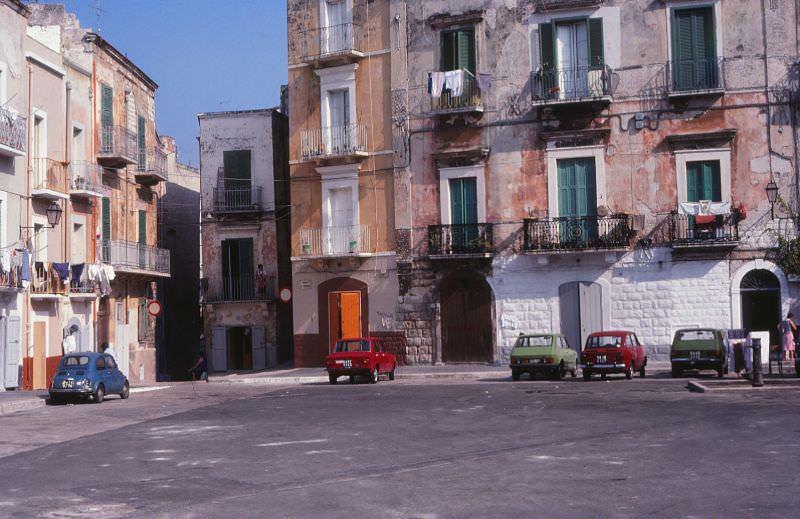
The streets of Bari in that decade were lively and layered. Modern residential zones built during the 1960s and 1970s had already replaced much of the old outskirts that had grown up around the city walls. By the 1980s, those newer neighborhoods formed a ring around the historic core, while the outer suburbs continued expanding further into the 1990s. Downtown, however, the rhythm of daily life played out much as it had for generations — on foot, in markets, and in the piazzas.
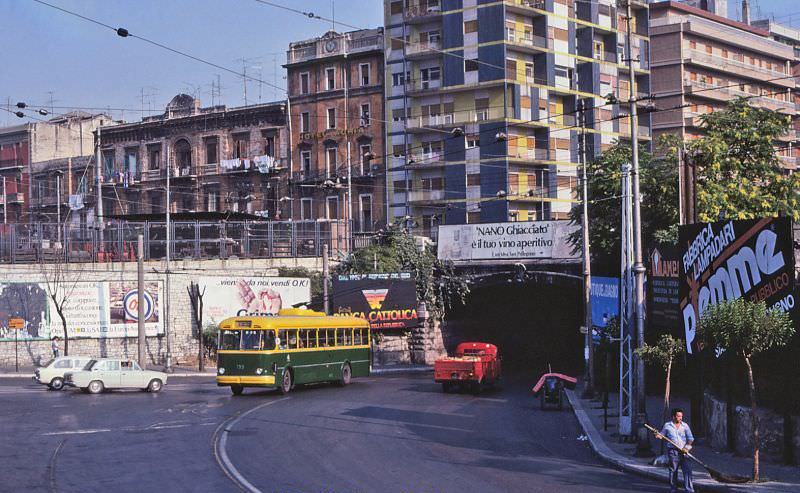
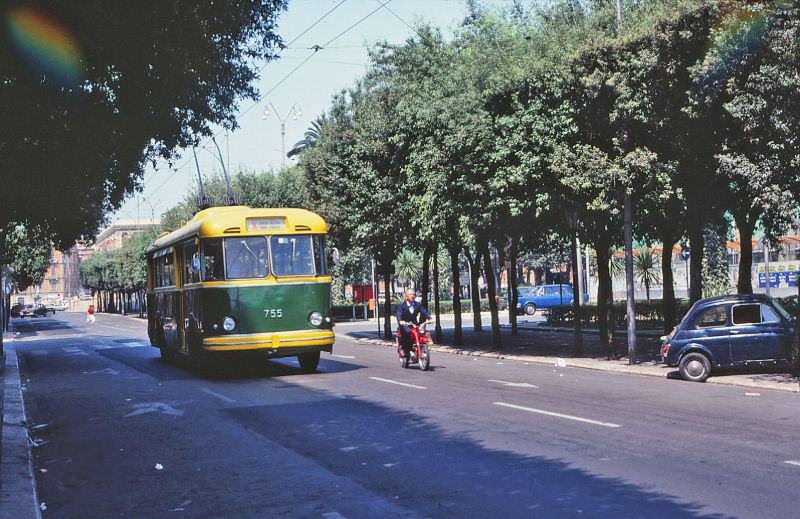
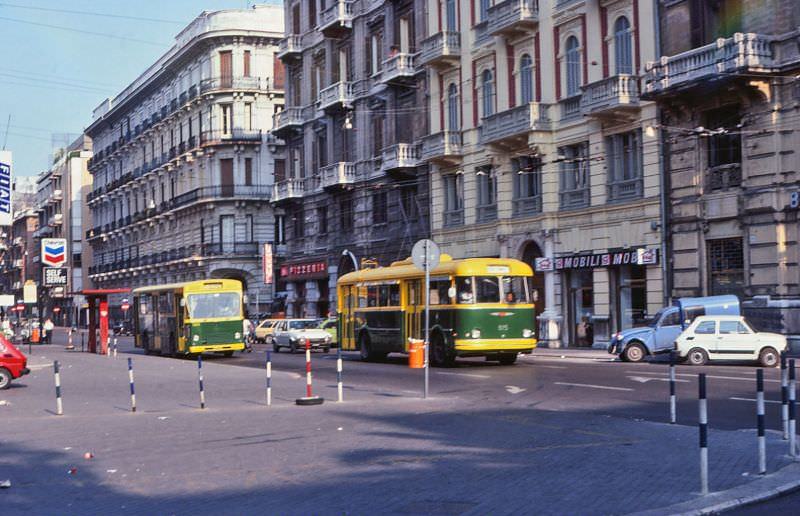
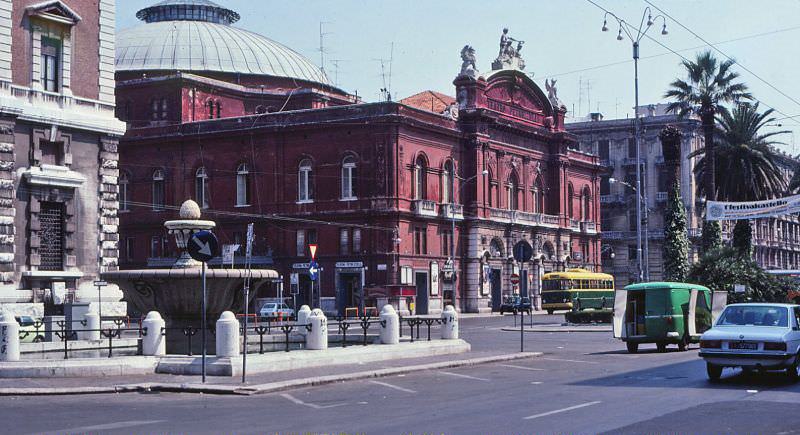
Public transport in 1980s Bari relied heavily on its trolleybus network. Trolleybuses — electric buses drawing power from overhead wires — ran through the city’s main arteries, including the busy Corso Cavour. Line 8 was one of the key routes, threading through both the underpass at Luigi di Savoia and the open boulevard above.
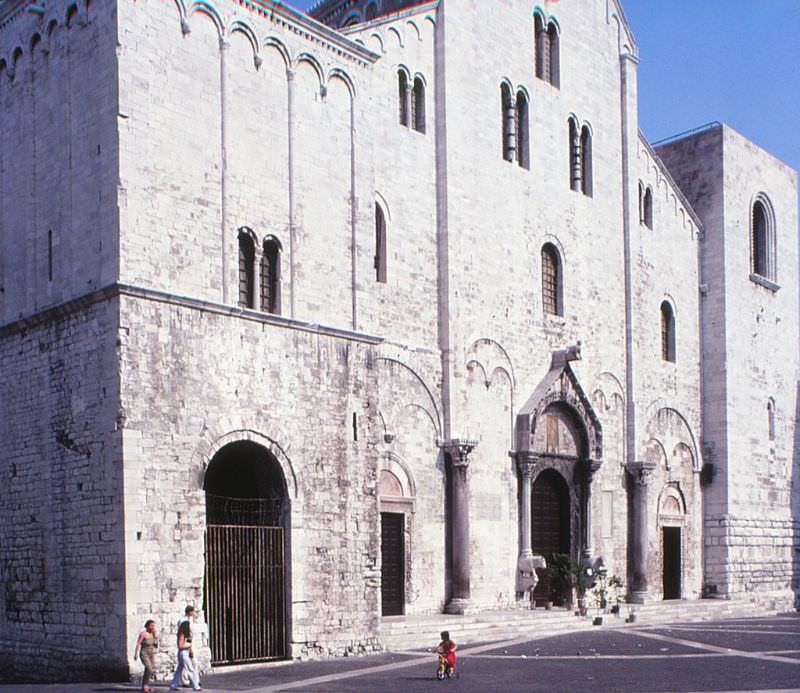
The spiritual heart of old Bari is the Basilica of San Nicola, founded in 1087 to house the relics of St. Nicholas — the same saint behind the legend of Santa Claus. Its broad Romanesque facade faces Piazza San Nicola, a wide open square that gave residents and visitors room to gather. The basilica remains one of the most important pilgrimage sites in southern Italy.
Not far away stands the Cattedrale di San Sabino, Bari’s 12th-century Romanesque cathedral and the seat of the city’s archbishop. Its entrance opens onto a quiet courtyard, while its main facade looks out over the Piazza dell’Odegitria. The surrounding streets — Largo San Sabino, Strada Incuria, Via Ruggero Il Normanno — made up the dense residential fabric of the old town.
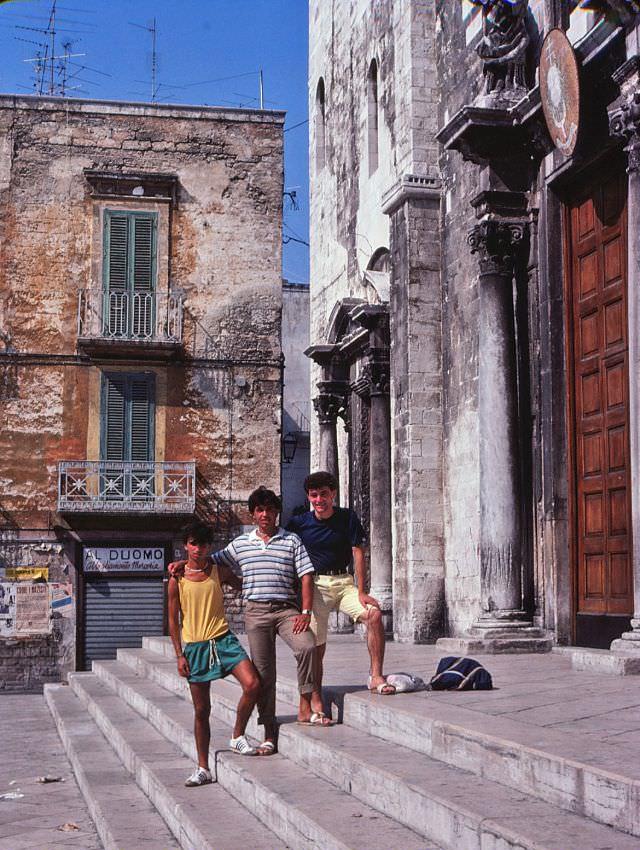
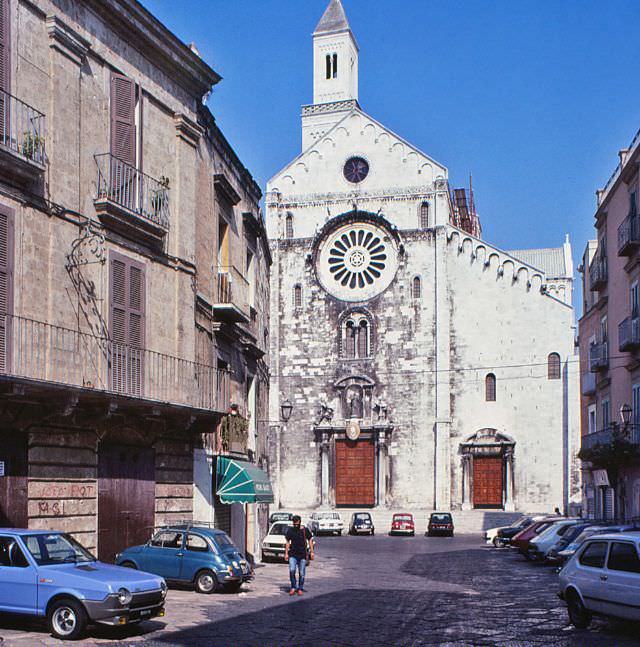
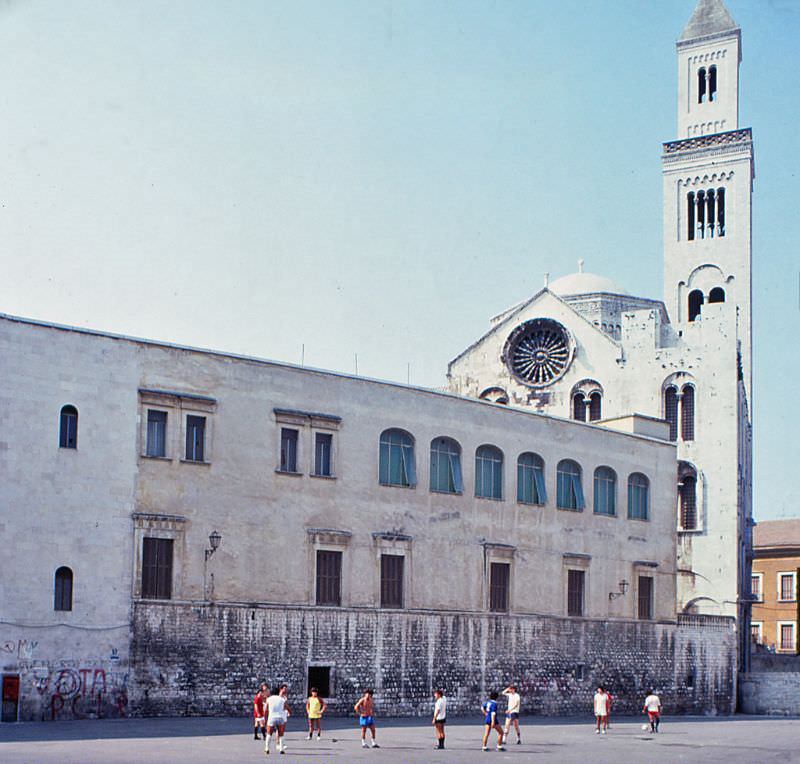
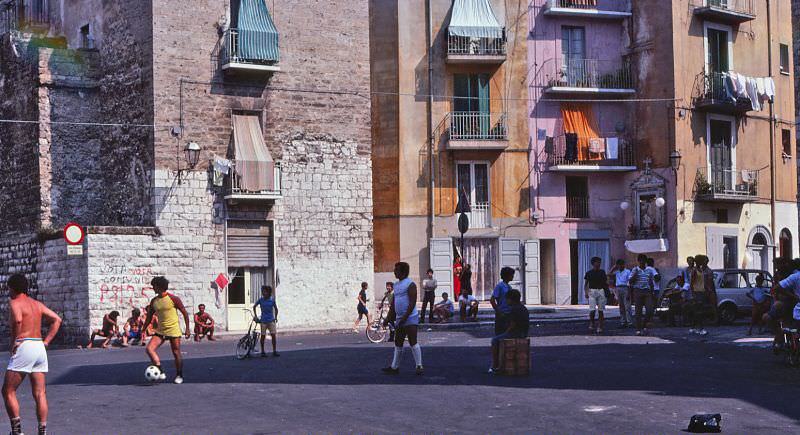
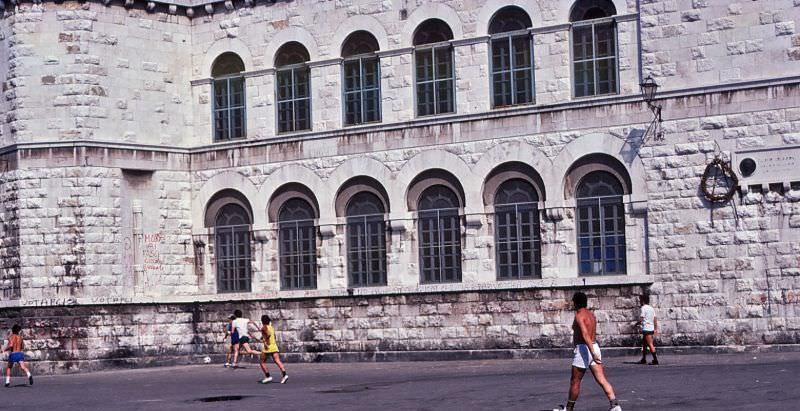
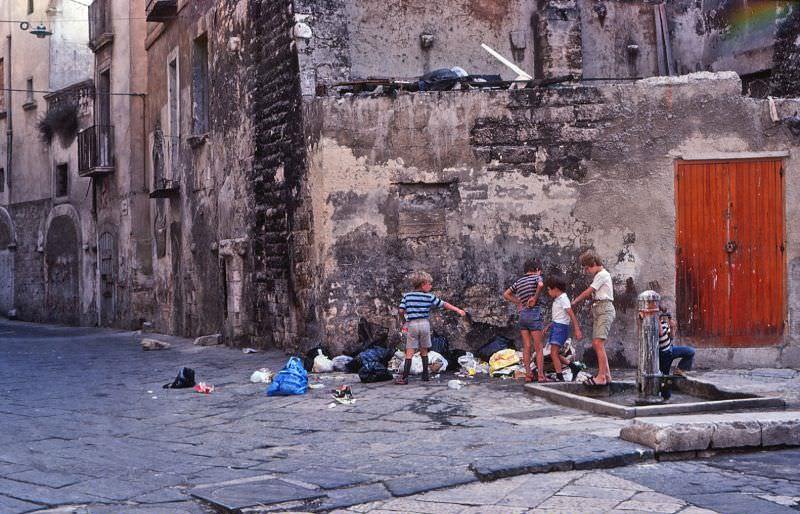
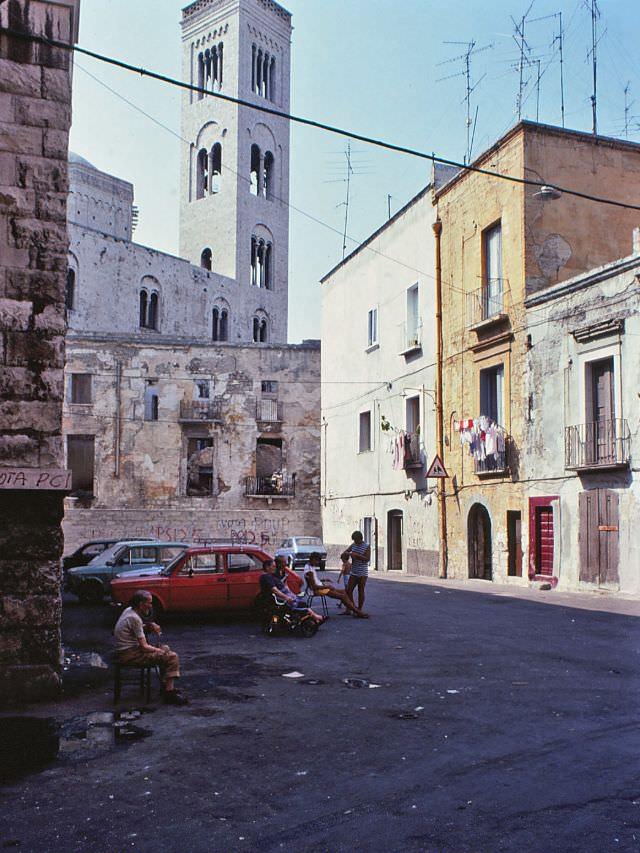
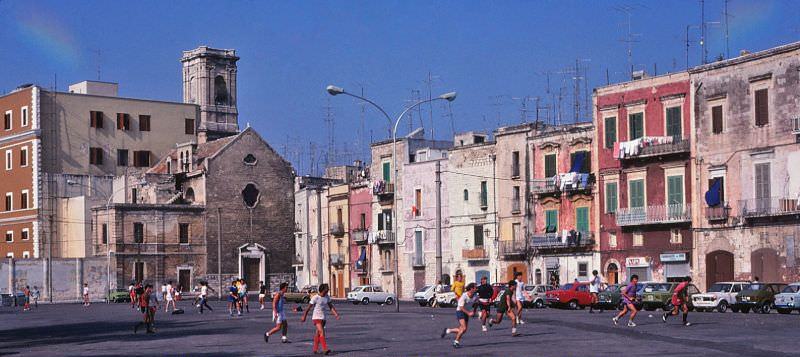
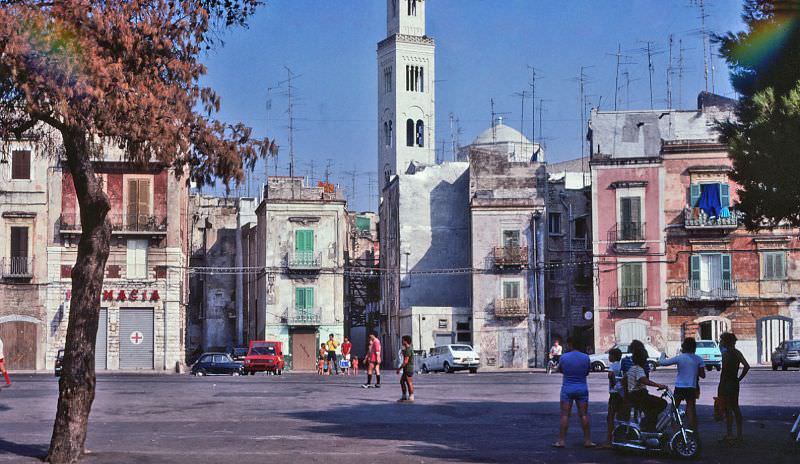
The San Nicola quartiere — the oldest district in the city — showed everyday life in its most unfiltered form. Laundry hung between buildings, children played in the alleys, and older residents sat outside their doorways. This part of Bari vecchia, as locals call the old town, had changed very little in outward appearance even as the rest of the city modernized.
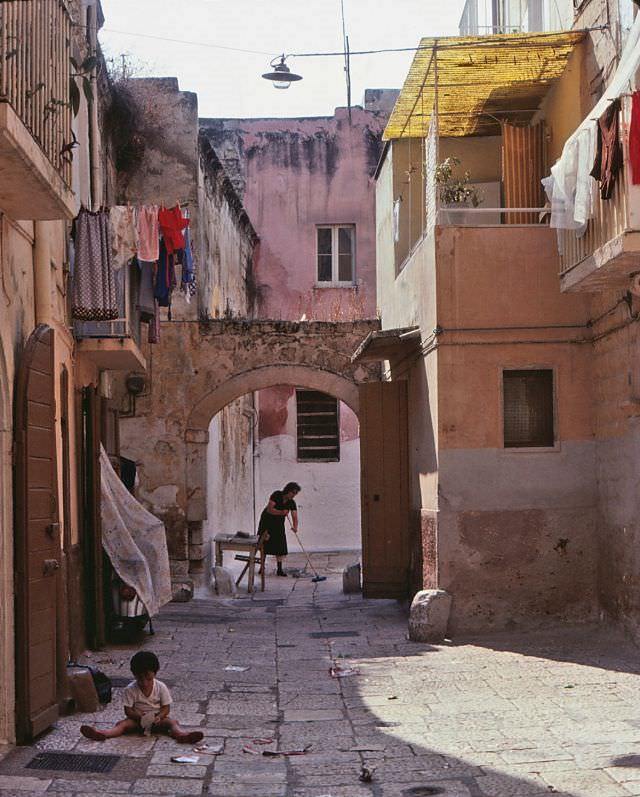
Piazza Mercantile was another center of daily activity. The square is anchored by the Palazzo Sedile, a historic building topped with a clock tower. On Saturday afternoons, locals waded in the piazza’s fountain and used it to wash their cars — a casual, communal scene that captured how public space worked in the city.
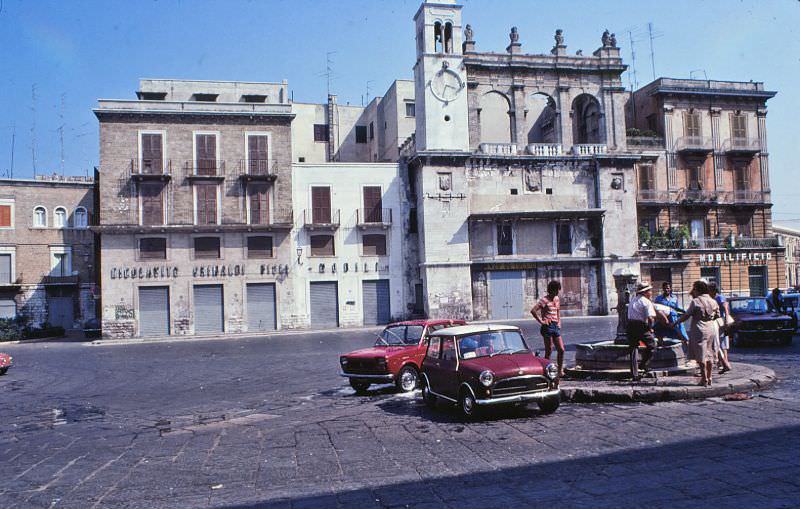
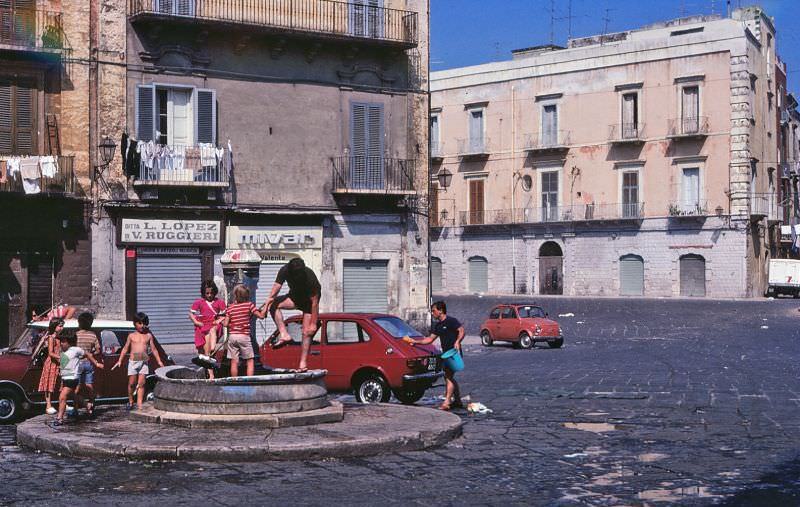
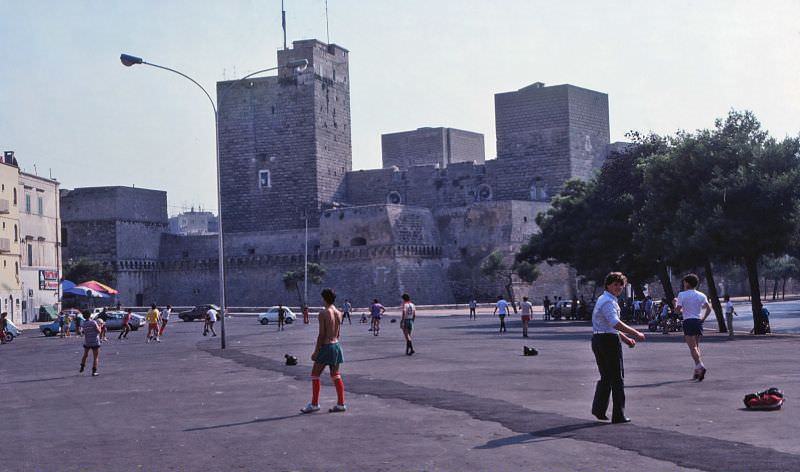
One of the city’s most striking landmarks is the Castello Svevo — the Norman castle that dominates Piazza Federico II di Svevia near the waterfront. Built under Norman rule and later expanded, the castle was a commanding presence in the urban landscape. Across the city, the Teatro Petruzzelli on Corso Cavour stood as Bari’s grand theater, one of the largest opera houses in Italy.
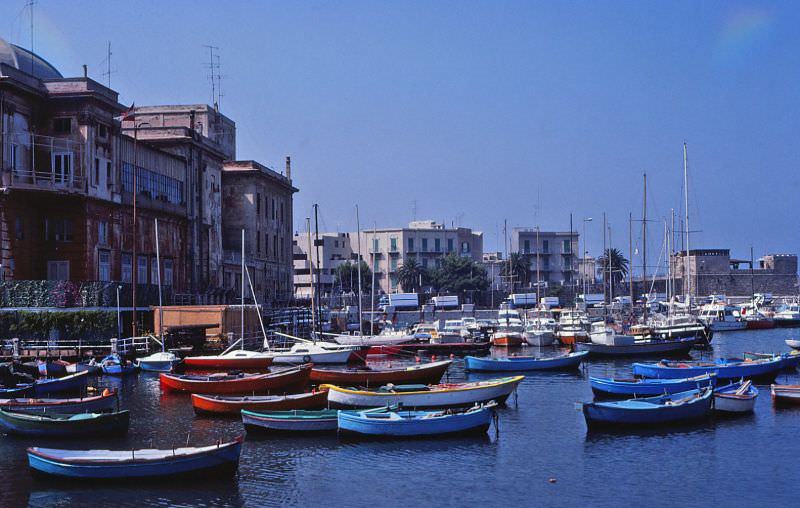
Bari’s small-craft harbor gave the city its maritime character. From the waterfront, the Fortino di Sant’Antonio Abate — a small coastal fort — was visible to the right, while the Teatro Margherita, a historic theater built on stilts over the sea, stood to the left. The harbor was active with fishing boats and pleasure craft throughout the decade.
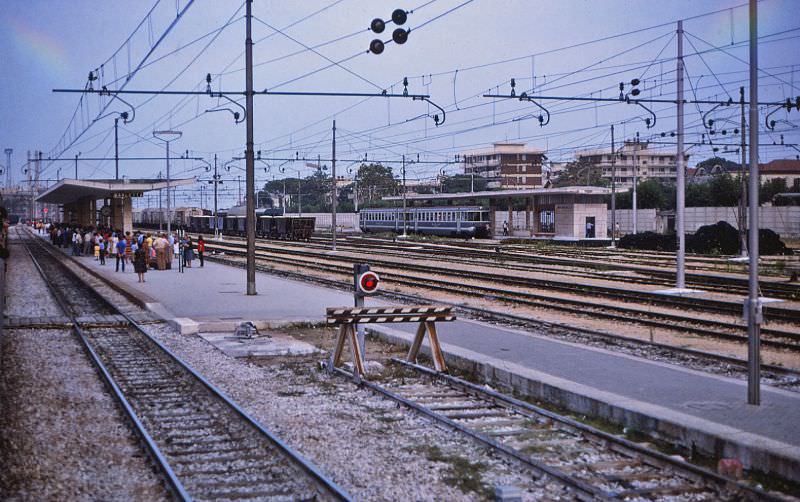
Bari Centrale station served as the main rail hub for the city, handling both national and regional services. Ferrovie dello Stato — Italy’s state railway — operated several types of electric locomotives and multiple unit trains through the station. The ALe 801/940 Class electric multiple unit (EMU) trains handled passenger runs, while Class E.428 electric locomotives, a design dating back to the 1930s, still appeared on freight and mixed duties. A Class 321 electric shunting locomotive also worked the yards.
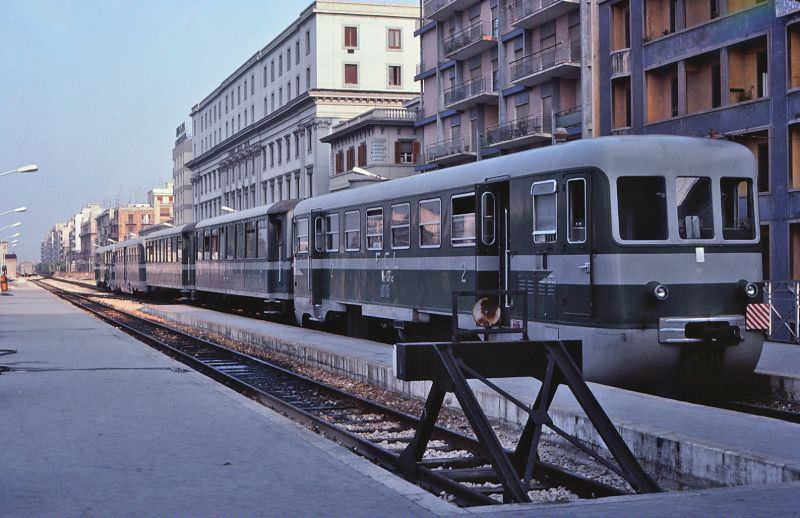
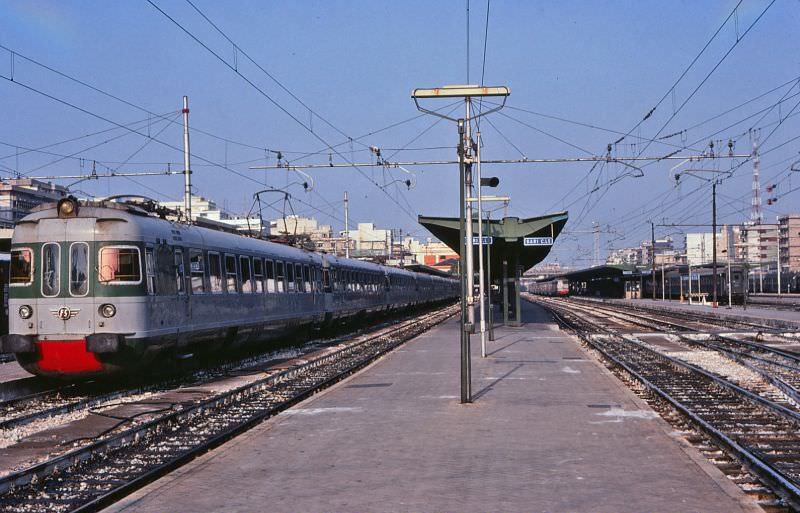
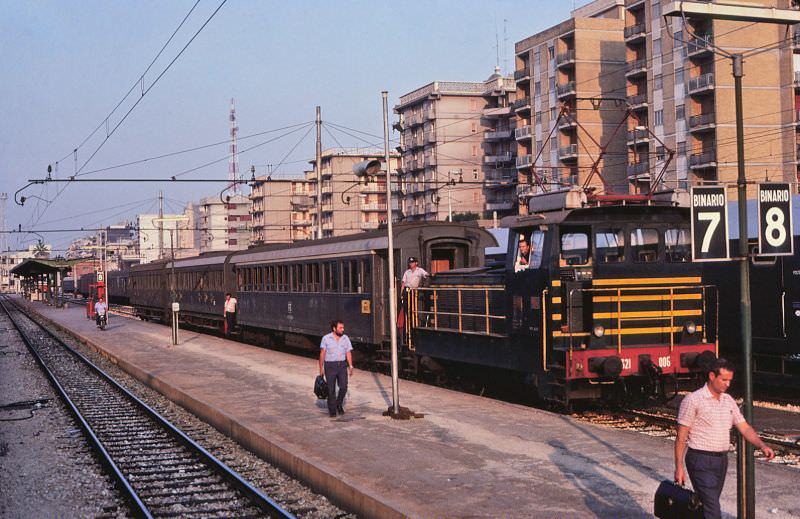
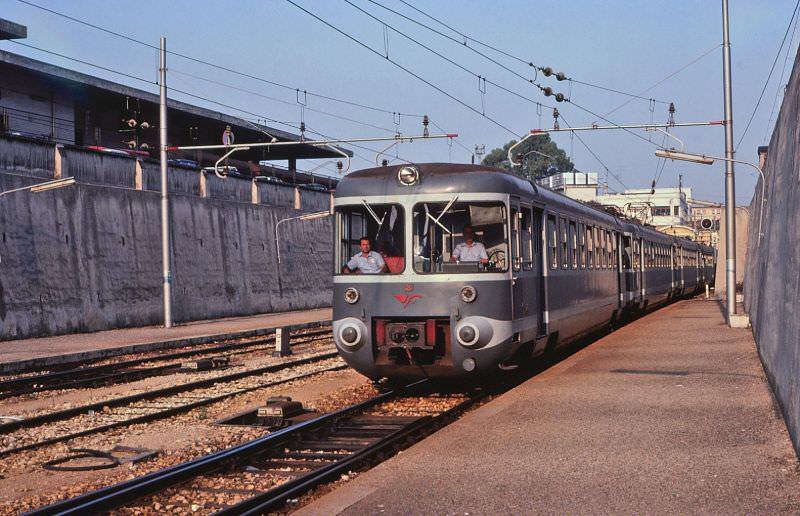
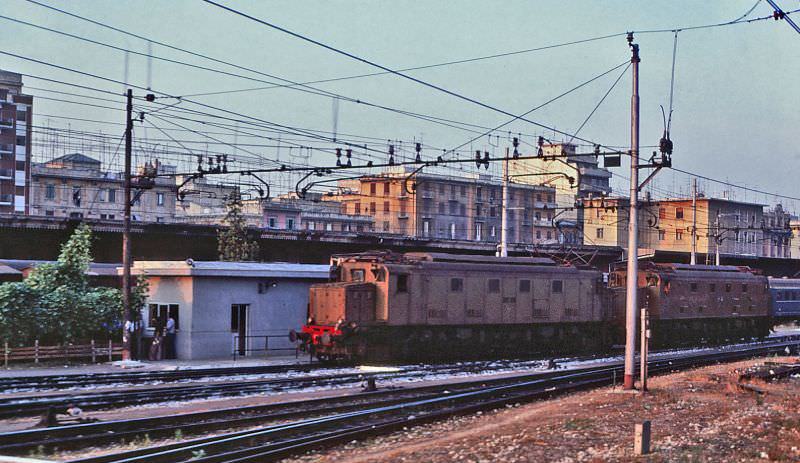
The Ferrovie Calabro-Lucane (FCL), a regional narrow-gauge railway, also operated from Bari Centrale, connecting the city to smaller towns across Basilicata and Calabria. Separately, the FT (Ferrovie del Sud Est) ran Stanga-TIBB rolling stock on approaches to the station, serving the towns and villages of the Salento peninsula to the south. The station’s north side faced Piazza Aldo Moro, a busy transit square that connected rail, bus, and trolleybus services.
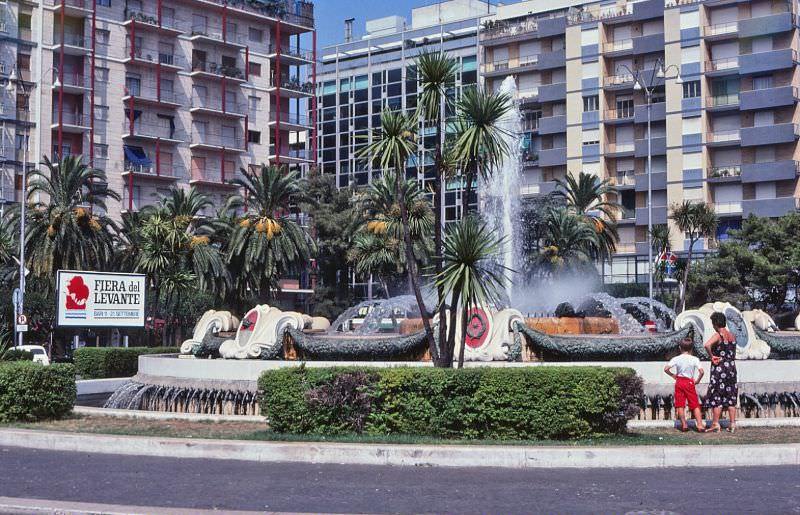
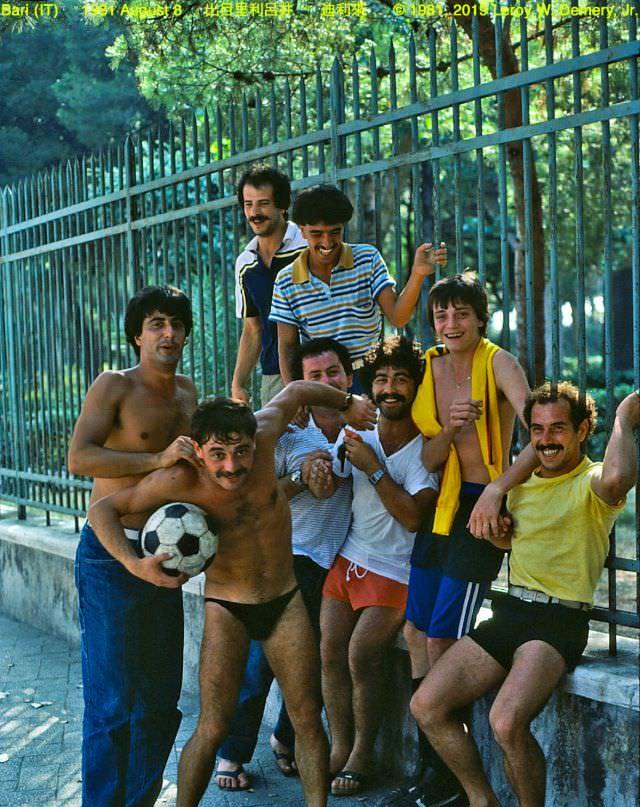
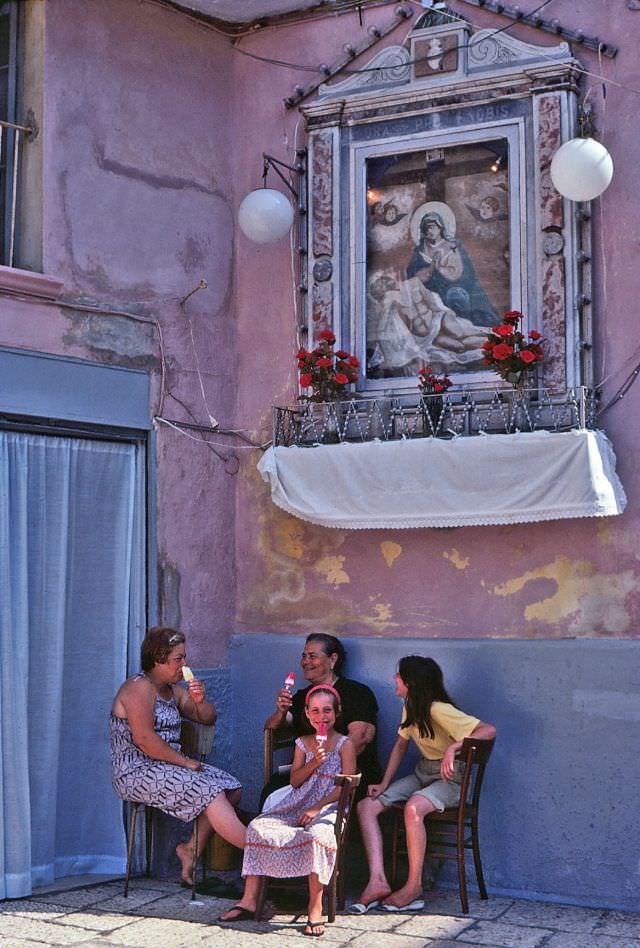
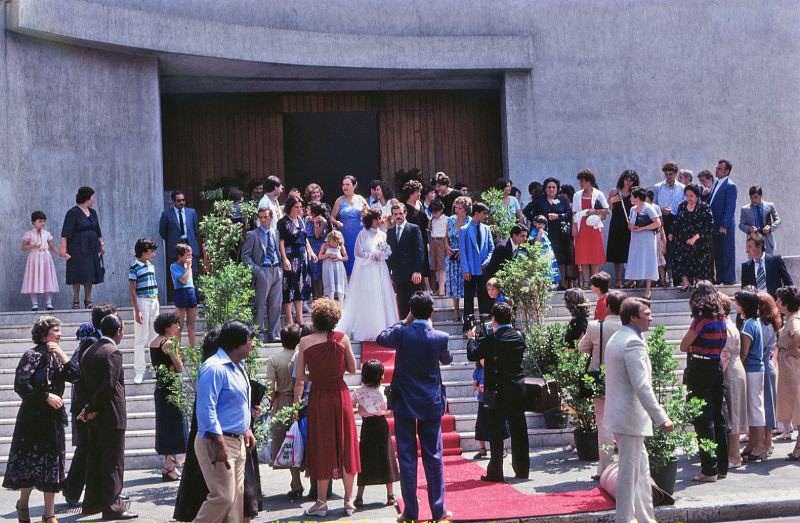
Beyond the monuments and transit lines, these photos catch the human side of Bari in the 1980s. A group of footballers posed for the camera. A wedding party gathered somewhere in the old streets. Residents stopped for ice cream in Corte Colagualano, just south of Largo San Sabino. These small moments sat alongside the grand architecture, making the city something more than a collection of landmarks.