
Long before helicopters dominated the skies, a strange-looking aircraft called the autogyro was spinning its way into history. Part airplane, part rotorcraft, and wholly unlike anything the public had seen before, the autogyro spent roughly two decades as one of aviation’s most promising—and peculiar—machines. It carried mail, set records, landed on the White House lawn, and flew over major American cities before fading from the spotlight almost as quickly as it had arrived.
An autogyro—also called a gyroplane or gyrocopter—generates lift using an unpowered rotor that spins freely in the wind as the aircraft moves forward. Unlike a helicopter, the rotor is not connected to the engine. Instead, a conventional propeller at the front pulls the craft through the air, and the passing airflow causes the overhead rotor to spin on its own. This self-spinning rotor is what gives the autogyro its name, derived from the idea of self-stabilization through a wind-turned horizontal screw.
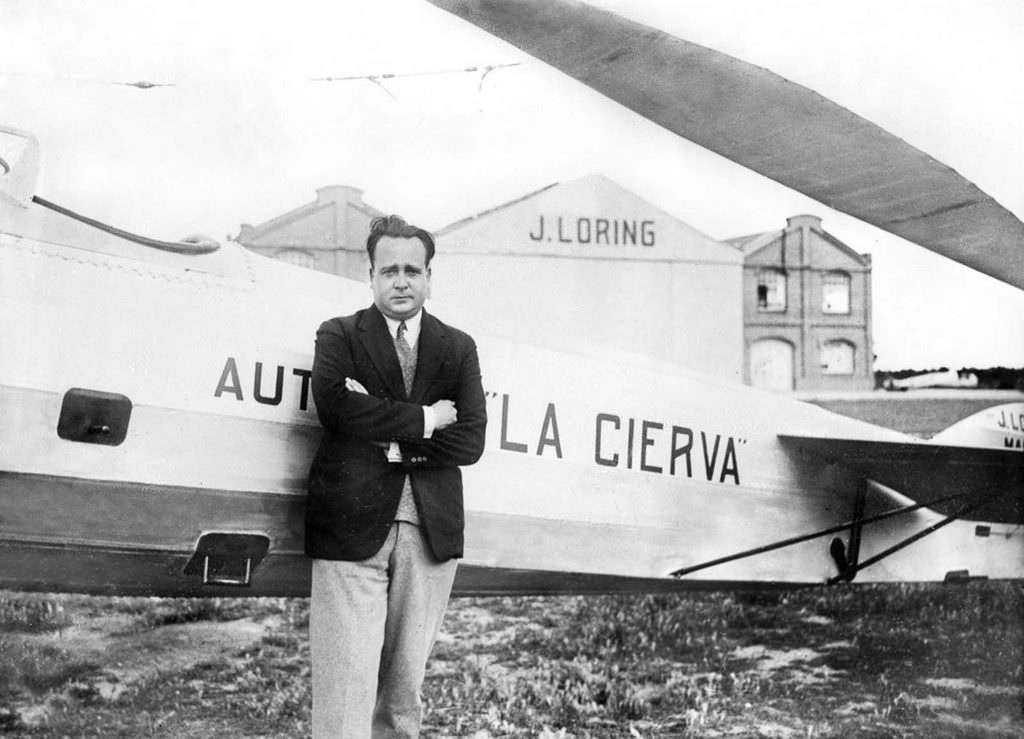
The autogyro was invented by Spanish engineer Juan de la Cierva in the early 1920s. His path to the invention came directly out of failure. In 1919, Cierva entered an aircraft design contest with a three-engine bomber piloted by Captain Julio Ríos Argüeso. The plane crashed on its first flight after the engines stalled. Determined to solve the stalling problem that plagued fixed-wing aircraft, Cierva began experimenting with rotating wings. He built and tested several models, and it was his fourth design that successfully flew. That breakthrough became the foundation for all future rotary-wing aircraft. Cierva eventually licensed his designs to manufacturers in the United Kingdom, the United States, and beyond.
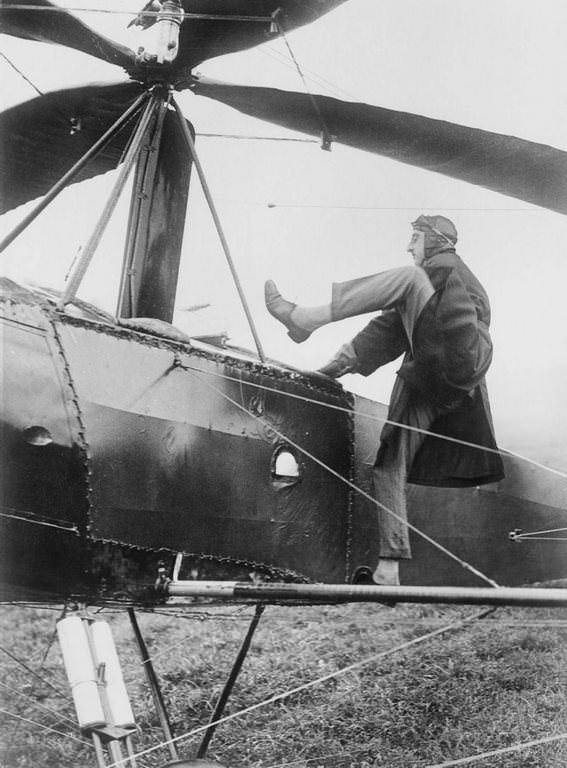
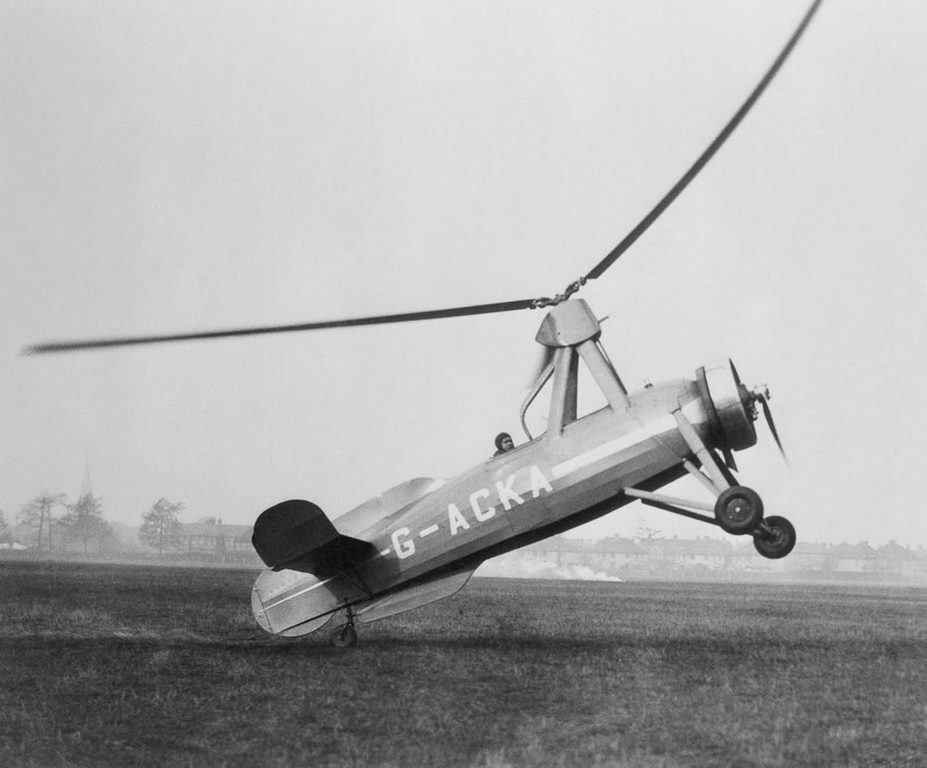
By the mid-1920s, test pilots were taking autogyros up across Europe. Early flights drew massive public attention. The aircraft’s short takeoff roll and ability to fly at very low speeds without stalling made it seem like a revolution in aviation safety. A British test pilot flying one of Cierva’s C-30 models in 1926 demonstrated just how controllable the new machine could be.
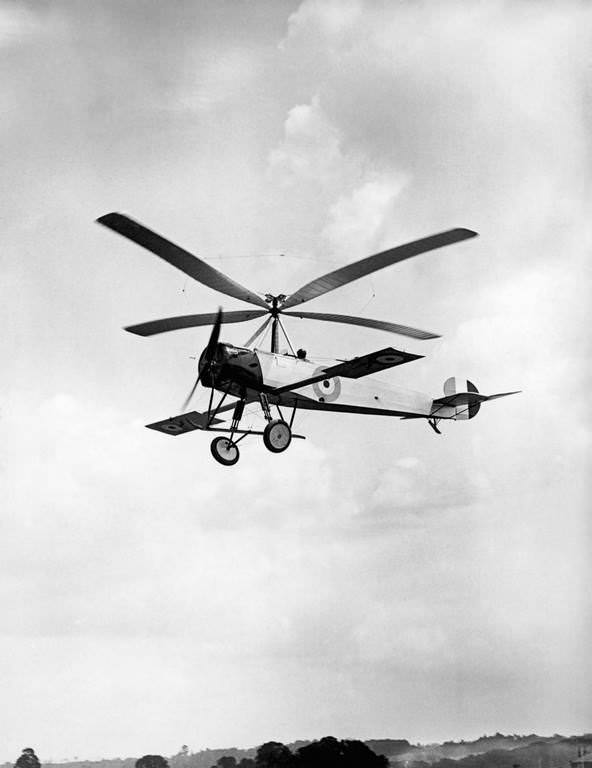
By 1930, autogyros were making headlines in the United States. Pilots flew them over New York City, and the aircraft became symbols of a bold new era of urban aviation. Their ability to take off and land in short distances—far shorter than any conventional airplane—made them attractive for city use, where open runways were scarce.
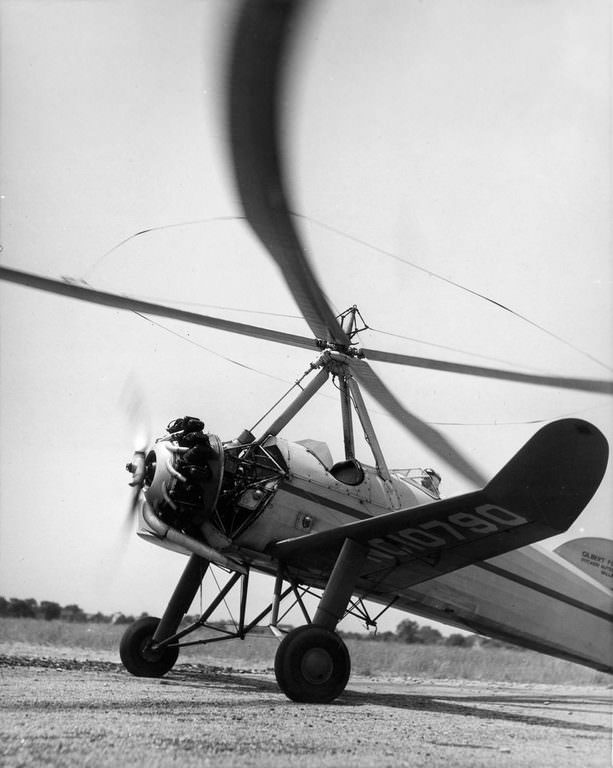
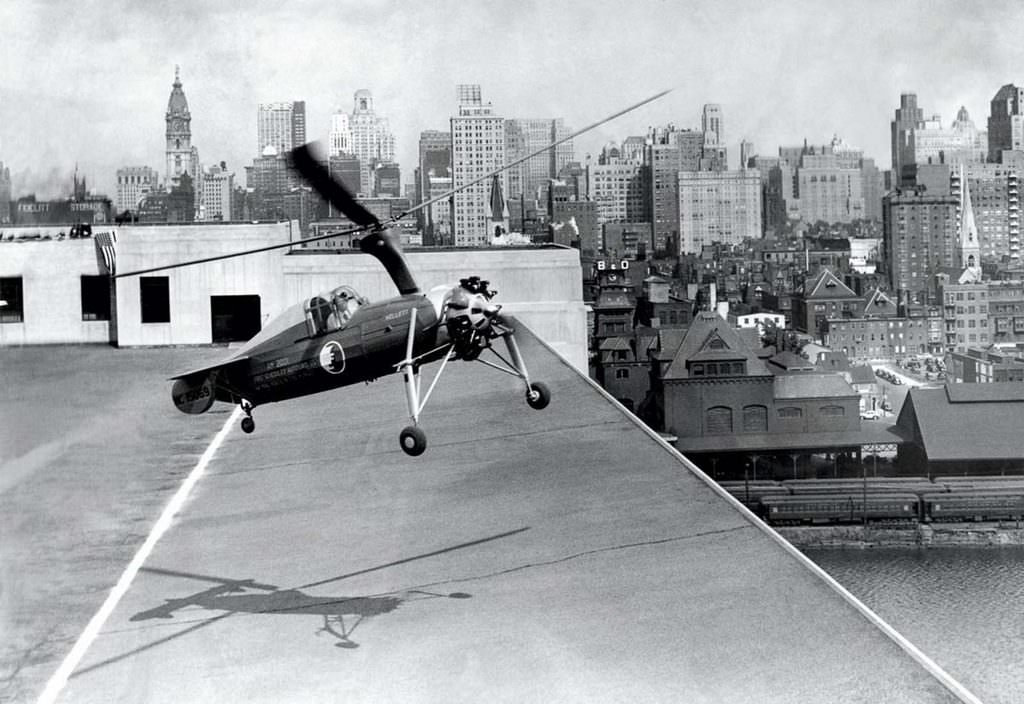
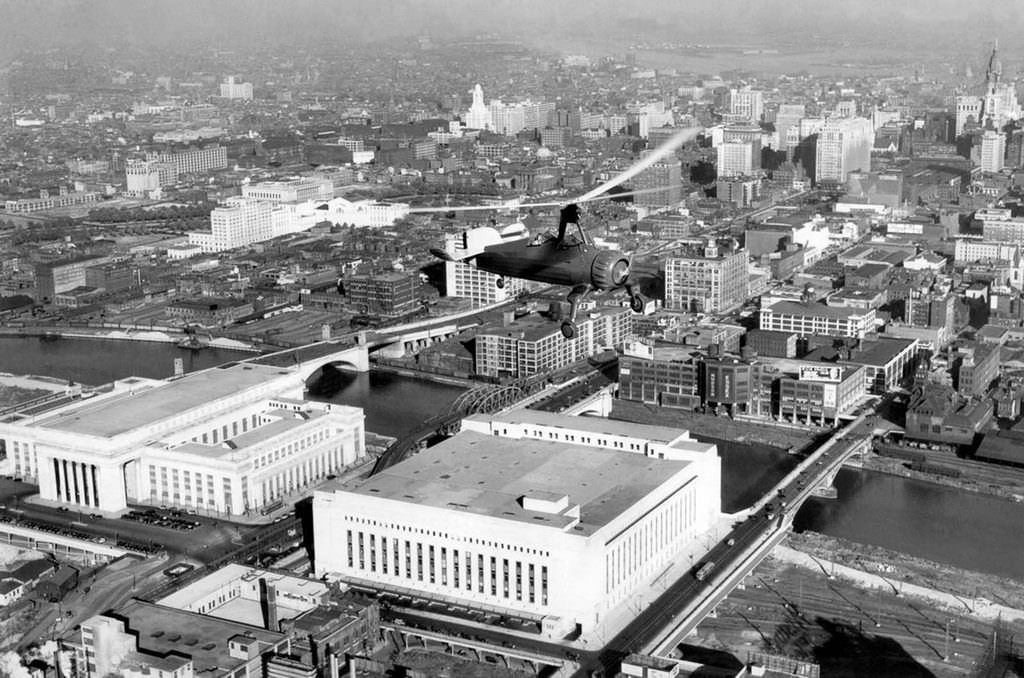
Philadelphia became an early testing ground for one of the autogyro’s most ambitious proposed uses: rooftop-to-rooftop mail delivery. The idea was straightforward—if an autogyro could land on a rooftop, it could pick up and drop off mail in the heart of a city without needing an airport. In 1930, autogyros were taking off directly from Philadelphia rooftops to prove this concept was viable.
Cierva continued refining his designs throughout this period. One notable development was a wingless variant that stripped away the fixed side wings entirely, relying more fully on the autorotating rotor for lift. This cleaner design represented his push toward an aircraft that was simpler, lighter, and easier to control.
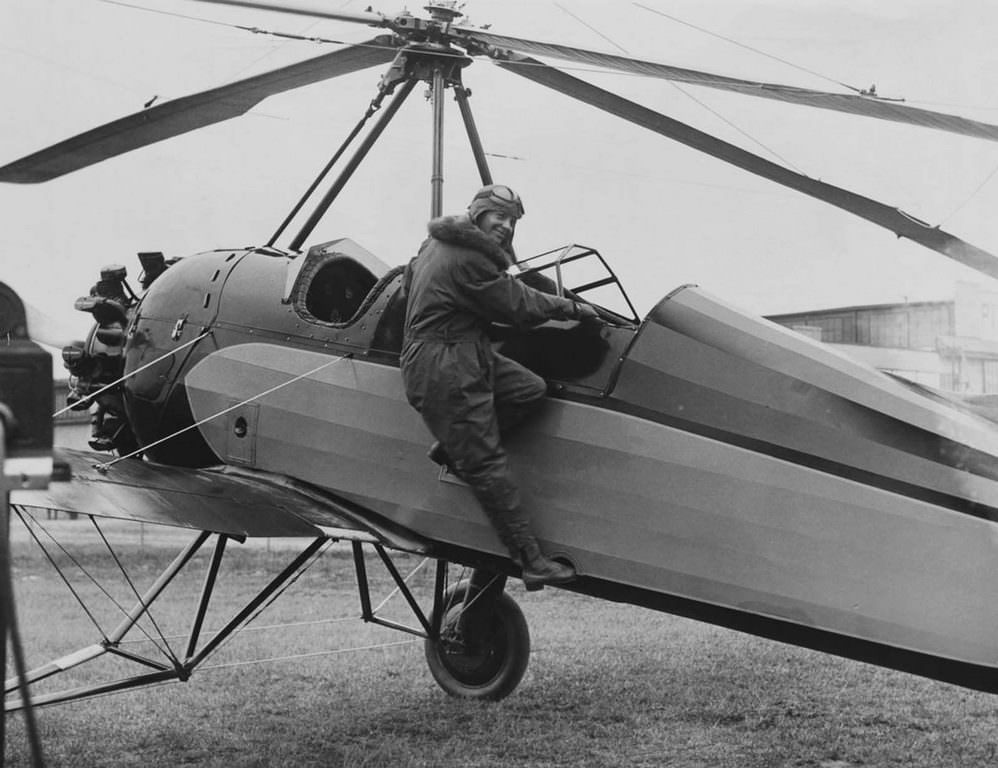
The autogyro also attracted some of aviation’s biggest names. In April 1931, Amelia Earhart piloted an autogyro to a women’s altitude record of 18,415 feet—a remarkable achievement that brought even more public attention to the aircraft.
That same year, an autogyro landed directly on the White House lawn—a demonstration of the aircraft’s precision landing capability that no fixed-wing plane could match. It was a publicity moment that put the autogyro at the center of the American imagination about the future of flight.
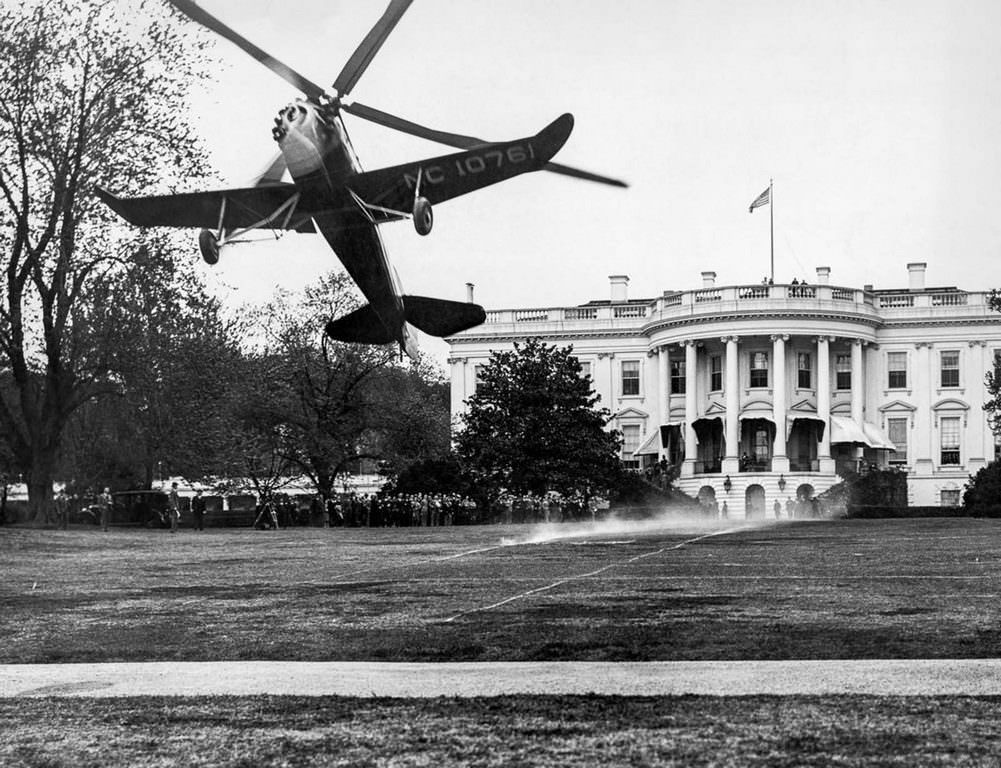
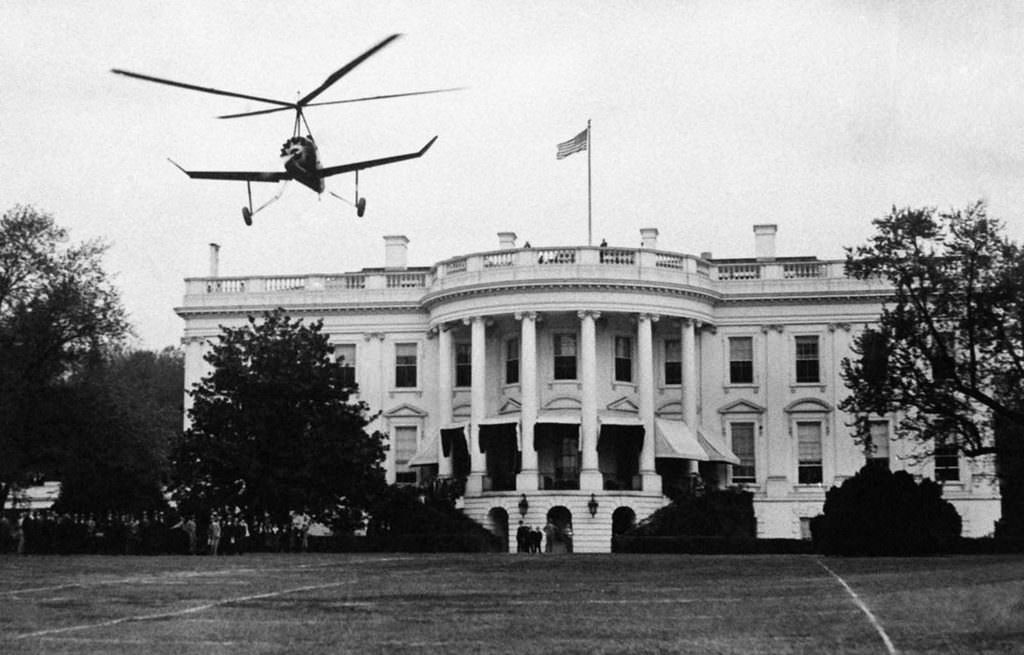
Five years later, autogyros were still flying at major landmarks. A 1936 flight in front of the United States Capitol reinforced the aircraft’s role as a symbol of modern progress. But the clock was already ticking on the autogyro’s moment in the spotlight.
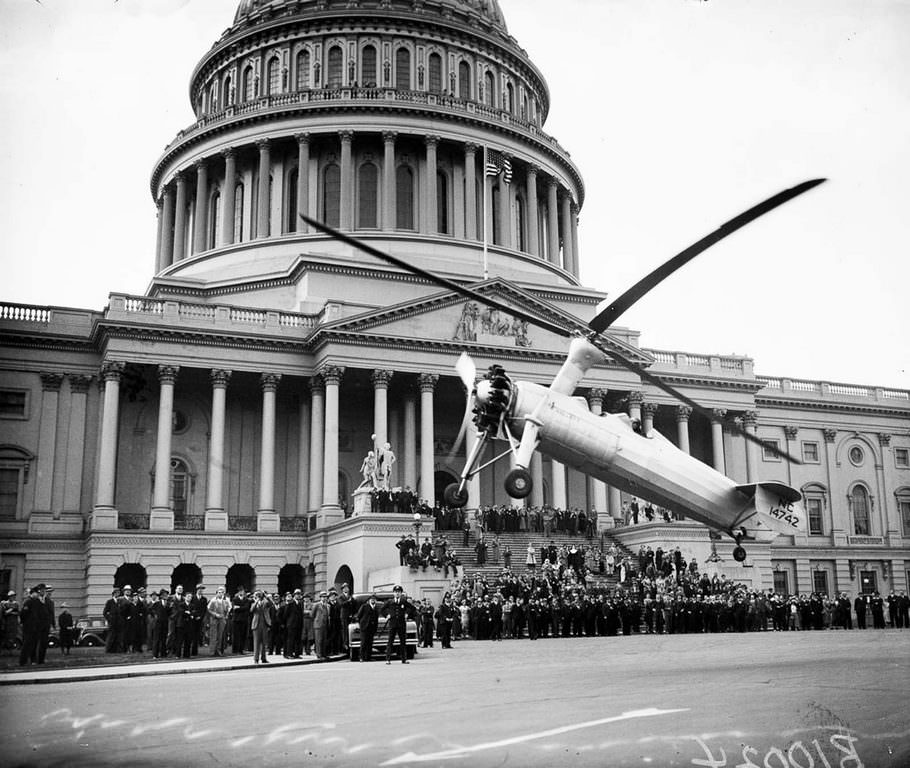
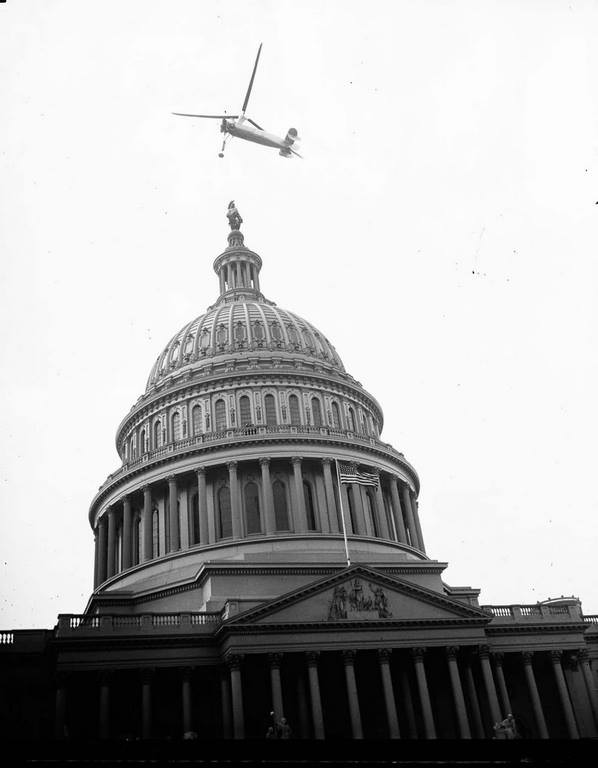
In 1938, autogyros were still being considered seriously for mail delivery. That year, one landed on the grounds of the Washington, D.C. post office specifically to demonstrate that the postal service could use them to move mail efficiently between city locations. It was one of the last major public demonstrations of the autogyro’s practical potential.
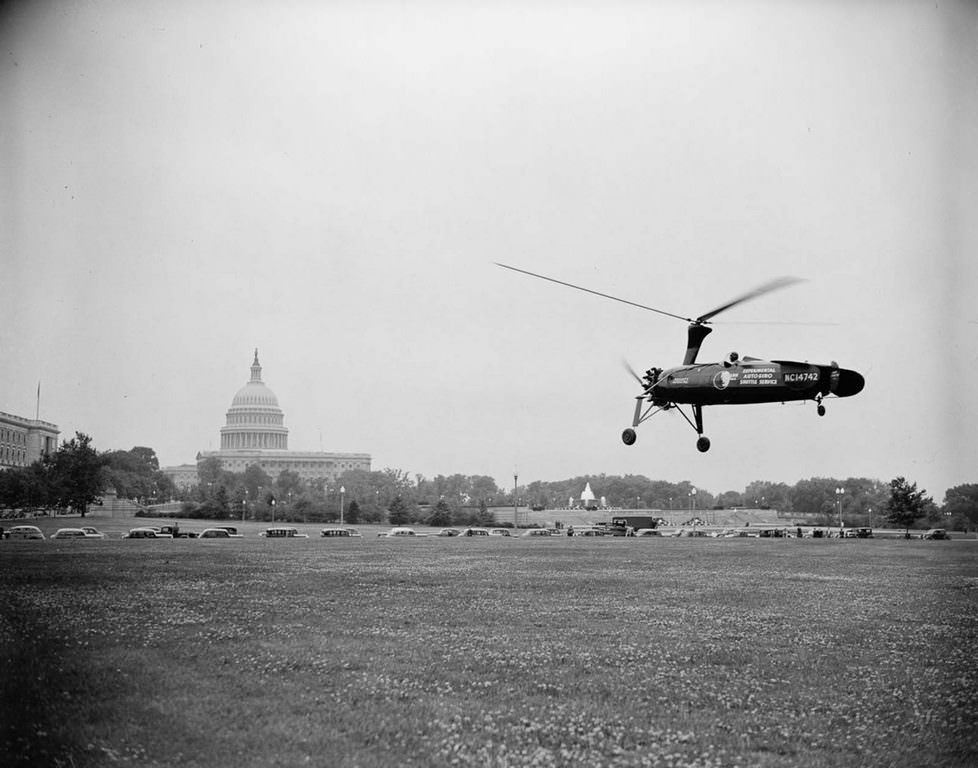
The autogyro’s downfall came not from any flaw in its design, but from a superior competitor. The helicopter, which reached practical maturity in the late 1930s, could do everything the autogyro did—and more. Helicopters could take off and land vertically with no forward roll at all, and they could hover in place indefinitely. The autogyro could not hover. Once helicopters proved themselves reliable, military and commercial operators shifted their focus entirely. Manufacturers retooled for helicopter production, and the autogyro was left behind. A handful of companies attempted updated designs in later years, but none gained traction, and the autogyro gradually disappeared from regular service.


I’d like to send this letter to the Prussian consulate in Siam by aeromail. Is 4:30 autogyro too late?
Beat me to it