From the gas-lit corridors of New York City to the sun-drenched facades of San Francisco, American hotels of the late 19th century were some of the most ambitious buildings of their time. Built during the Gilded Age, they weren’t simply places to sleep — they were statements of wealth, civic pride, and modern progress. Architects dressed them in Victorian ornamentation: high ceilings, carved stonework, iron balconies, and stained glass. A traveler stepping through the front door of a top-tier hotel in the 1860s or 1870s entered a world that most Americans had never seen.
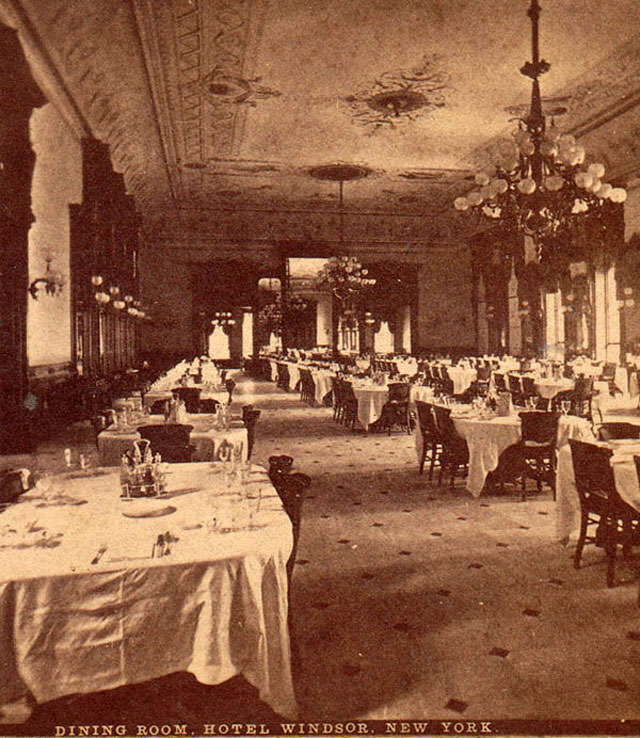
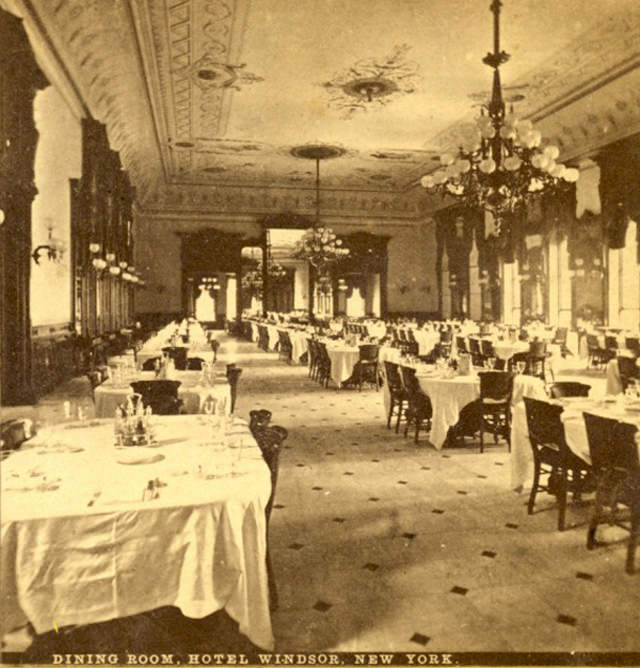
New York City was home to some of the era’s finest establishments. The Hotel Windsor and the Grand Union Hotel drew wealthy guests who expected nothing short of luxury. Dining rooms in these hotels were elaborate productions — long tables draped in white linen, gas chandeliers overhead, and trained waitstaff delivering multi-course meals.
The Grand Union Hotel was one of the most recognized names in 19th-century hospitality. Its exterior was a commanding presence on the New York streetscape, drawing visitors from across the country and abroad.
Not every grand hotel of the period was a household name, but each one reflected the architectural ambitions of the time. Ornate facades, rows of arched windows, and elaborate cornices were standard features across New York’s finest properties.
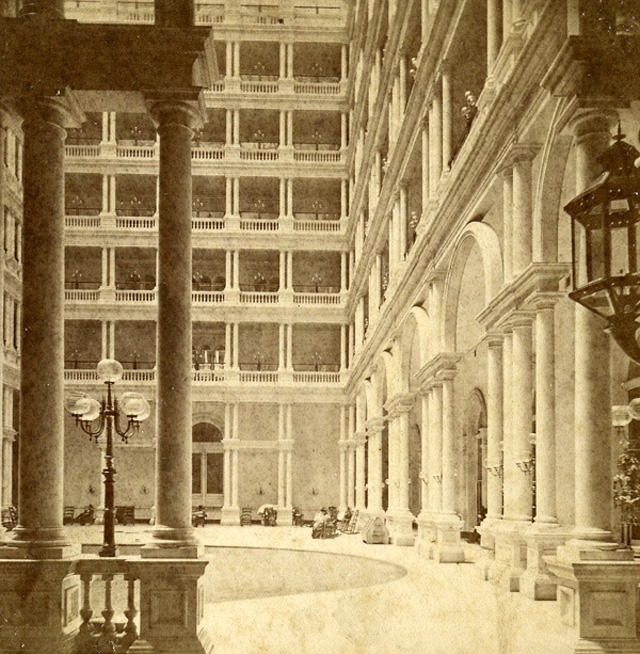
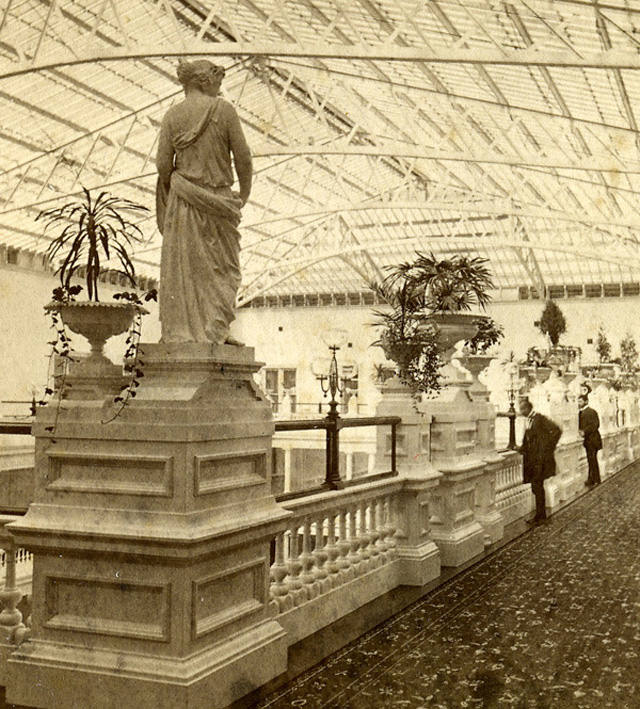
On the West Coast, San Francisco was establishing itself as a city of serious ambition. The Palace Hotel, opened in 1875, became the crown jewel of American hospitality in the West. It was one of the largest hotels in the world at the time of its construction, built by banker William Ralston at a cost of over $5 million. Its seven stories enclosed a grand central courtyard where horse-drawn carriages could pull directly inside.
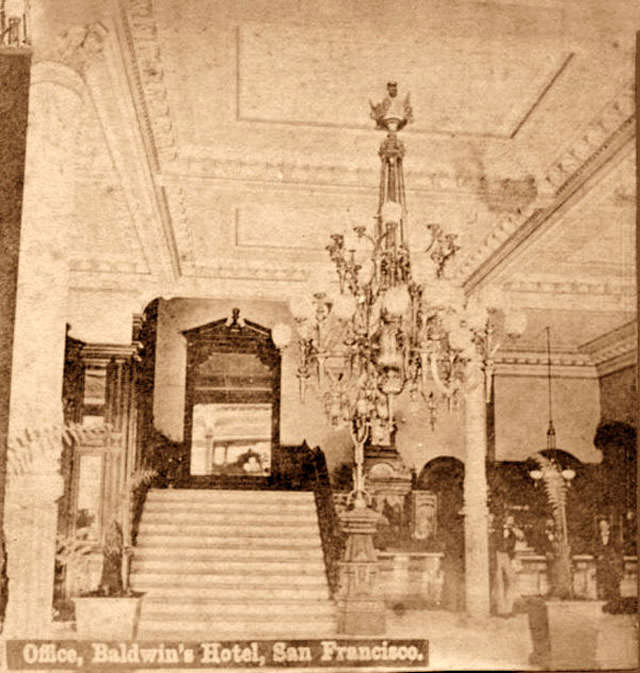
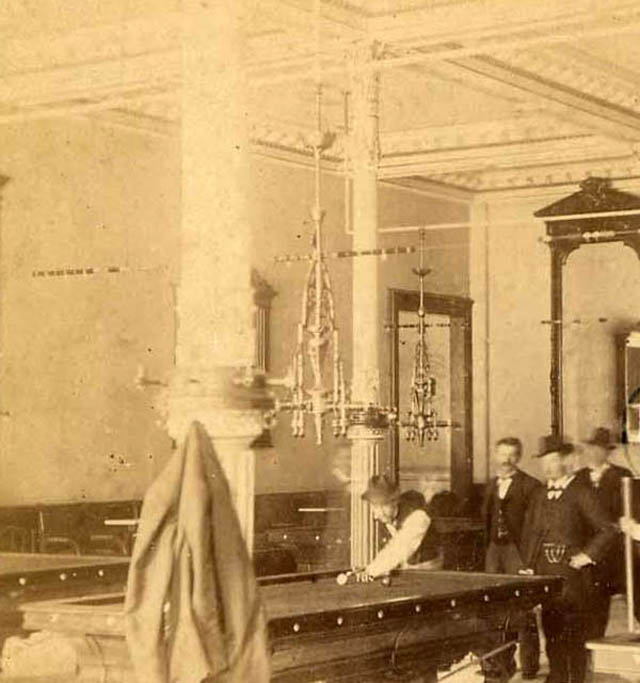
San Francisco’s Baldwin Hotel was another landmark of the city’s hotel scene. Built by Elias J. Baldwin — known as “Lucky” Baldwin — it opened in 1877 and quickly became a center of social life. The hotel’s interiors were richly decorated, and its billiard room was a popular gathering spot for the city’s well-heeled residents.
Back in New York, hotel dining rooms continued to grow more elaborate through the 1870s. The Windsor’s dining room expanded its offerings, while the St. Nicholas Hotel — one of the city’s grandest — hosted dining experiences that rivaled any restaurant in the country.
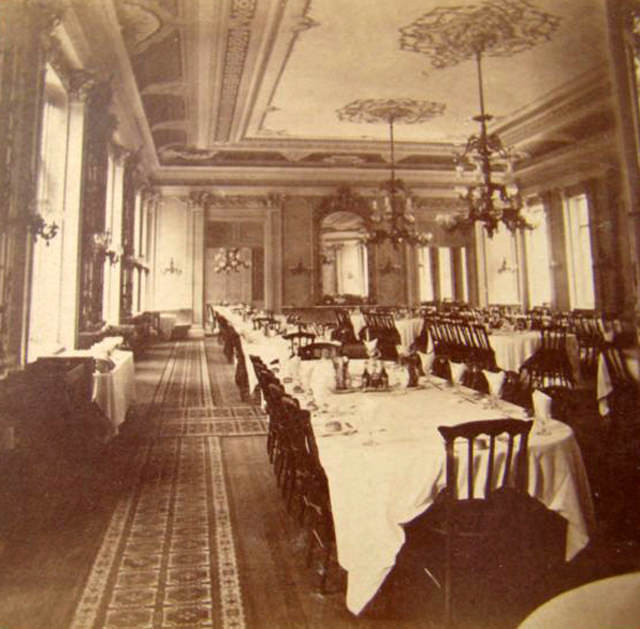
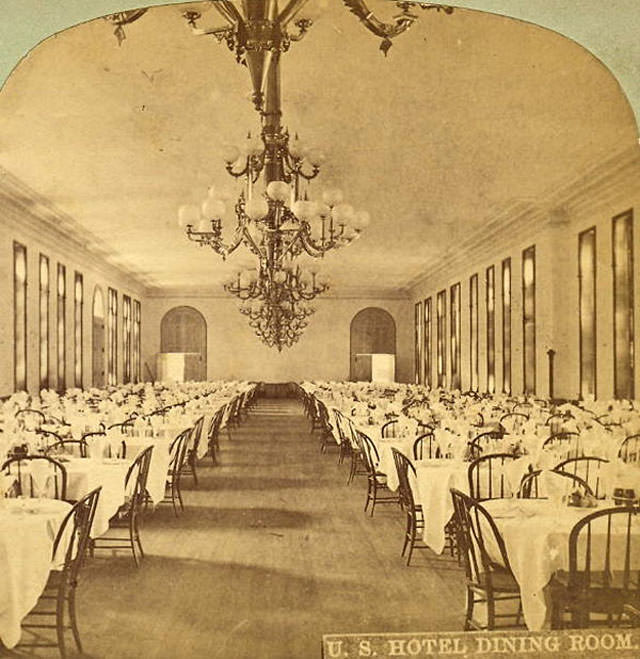
Fine dining wasn’t limited to New York. The US Hotel offered its own version of Gilded Age grandeur at the table, with sprawling dining rooms designed to accommodate large numbers of guests without sacrificing elegance.
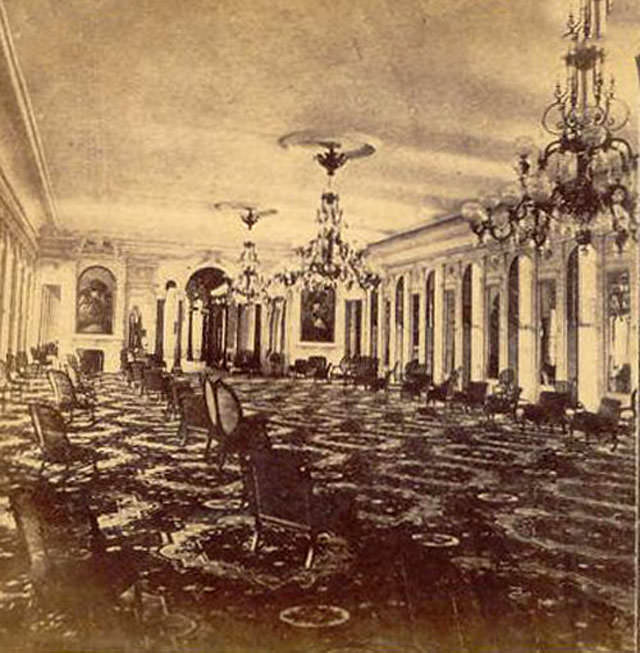
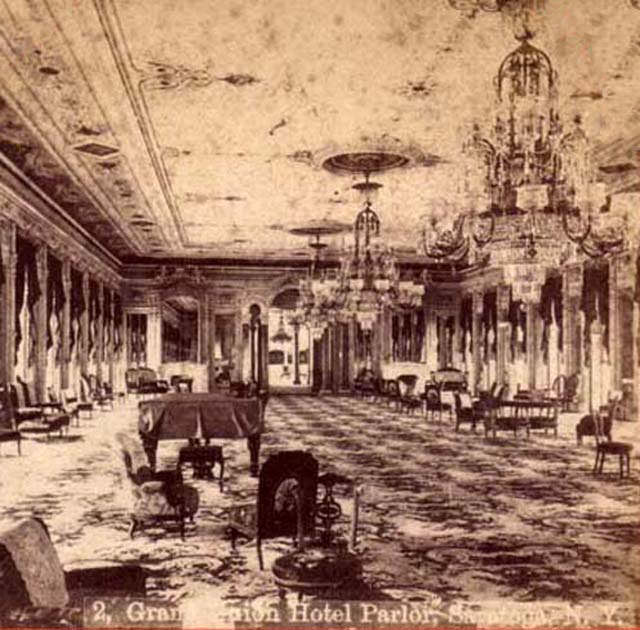
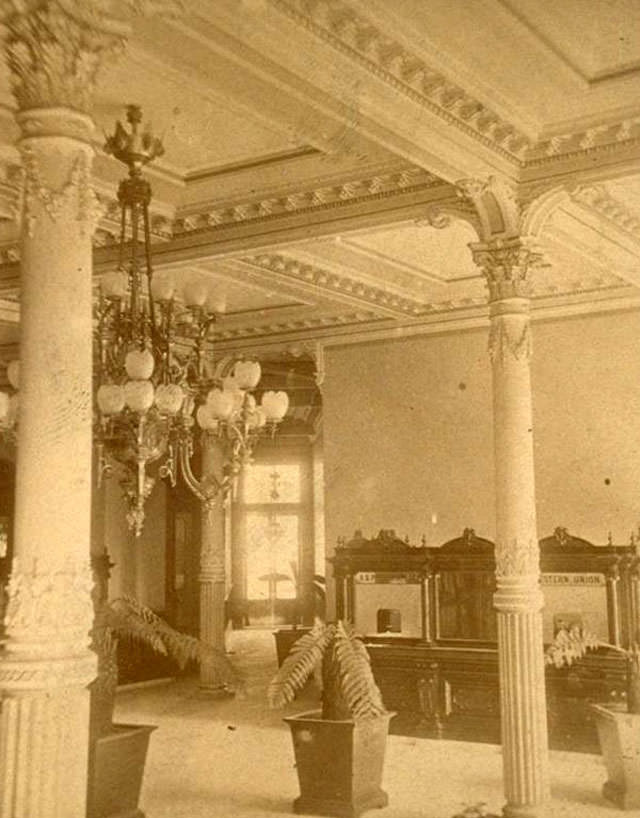
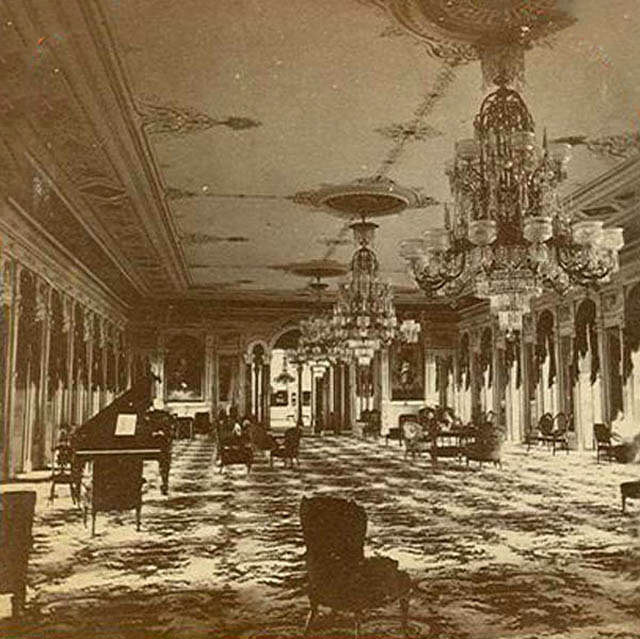
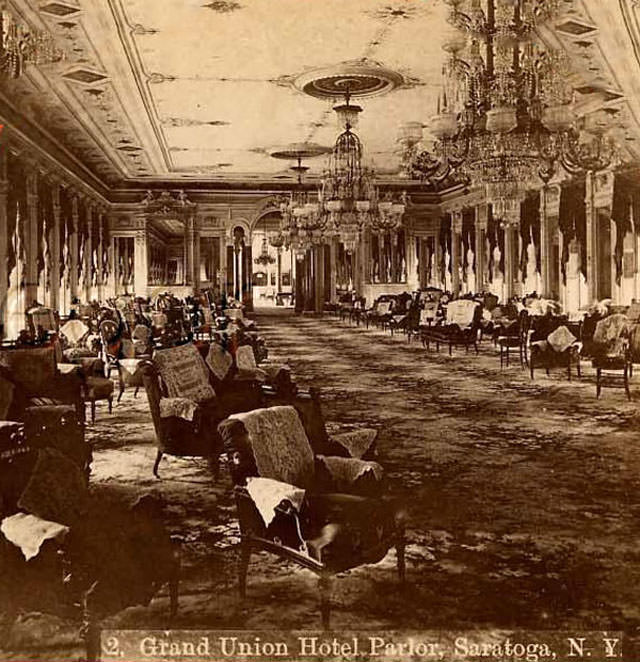
Hotel parlors — the term most commonly used for lobbies during this era — were designed as social hubs. Guests gathered in them to read newspapers, conduct business, and meet one another. The Grand Union Hotel in Saratoga, New York, was especially known for its grand parlor, a room that combined plush seating with live entertainment and drew some of the wealthiest Americans of the period.
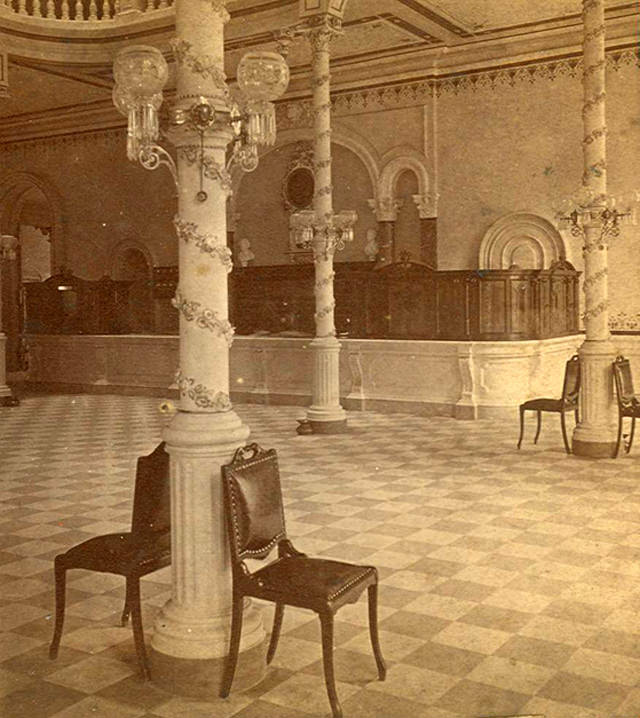
The Hotel Windsor in Montreal showed that the grand hotel tradition extended well beyond America’s borders during this period. Canadian cities embraced the same Victorian architectural ideals, producing buildings of comparable scale and formality.
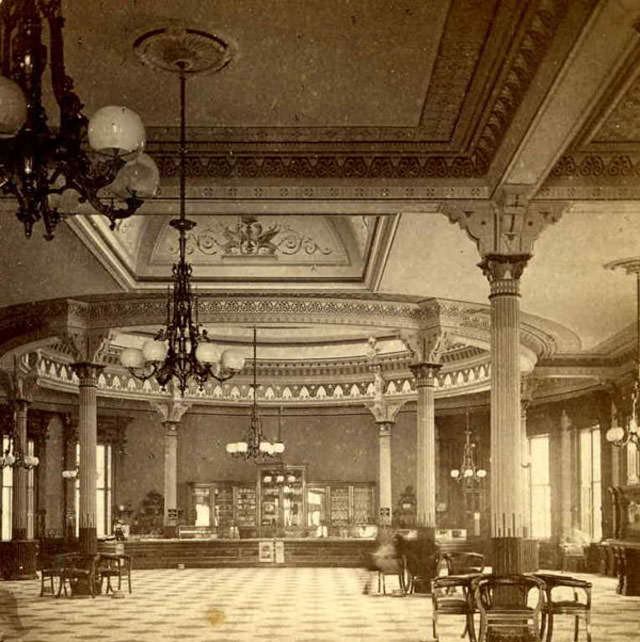
Resort hotels became a distinct category of their own during the 1870s. The Manhattan Beach Hotel on Coney Island offered wealthy New Yorkers an escape from the city’s summer heat. Situated near the ocean, it attracted guests who arrived by rail and expected the same level of service they would find in the city.
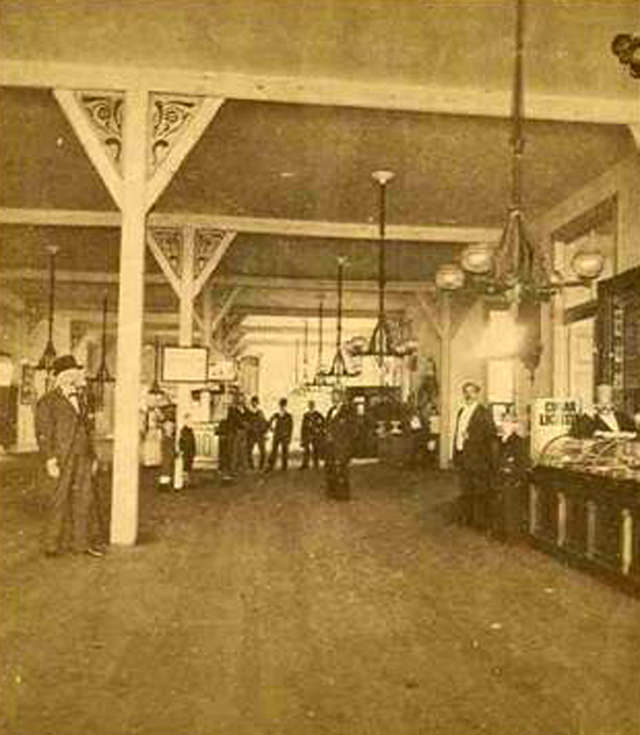
At the Baldwin Hotel in San Francisco, leisure was built into the hotel experience. A dedicated billiard room gave male guests a space to socialize outside of the dining room or parlor — a common feature in upscale hotels of the period.
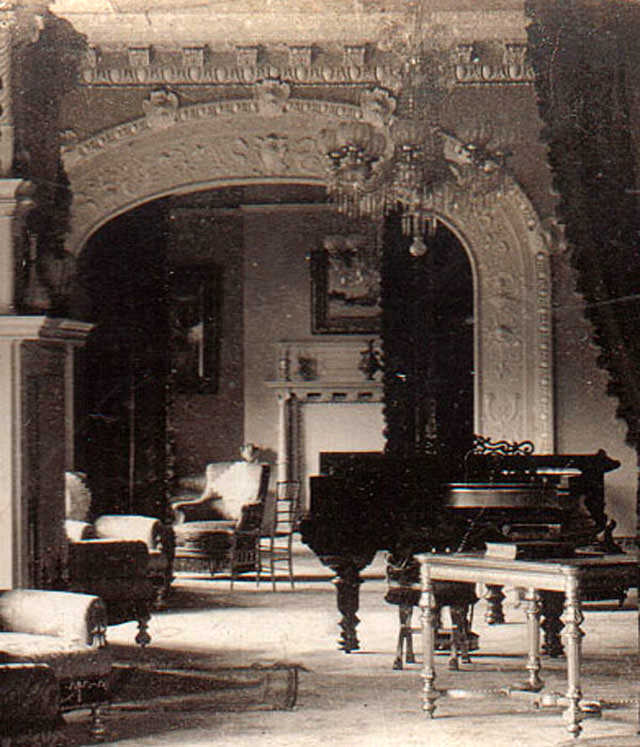
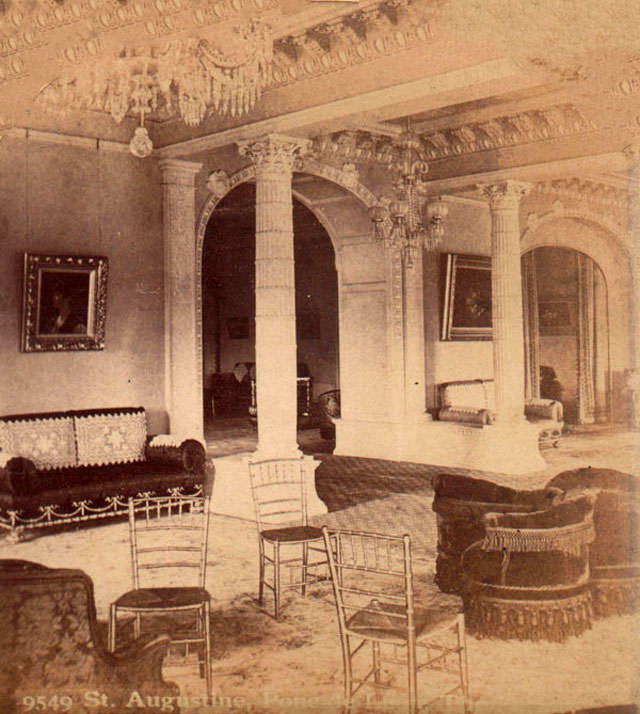
Florida’s Ponce de León Hotel in St. Augustine was a different kind of property altogether. Designed by architects Carrère and Hastings and financed by railroad magnate Henry Flagler, it opened in 1888 and was built entirely from poured concrete — an unusual choice for the time. Its music room reflected the resort’s emphasis on refined leisure.
The Palace Hotel’s central courtyard was its most photographed feature. Carriages entered through ground-floor archways and circled the open interior court, allowing guests to disembark under cover. The space was enclosed by tiered galleries rising several stories, lined with iron railings and potted plants.
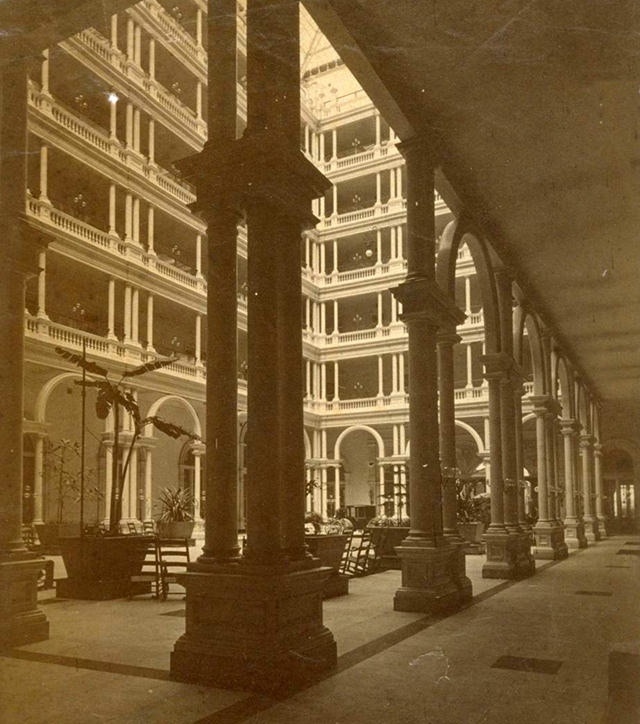
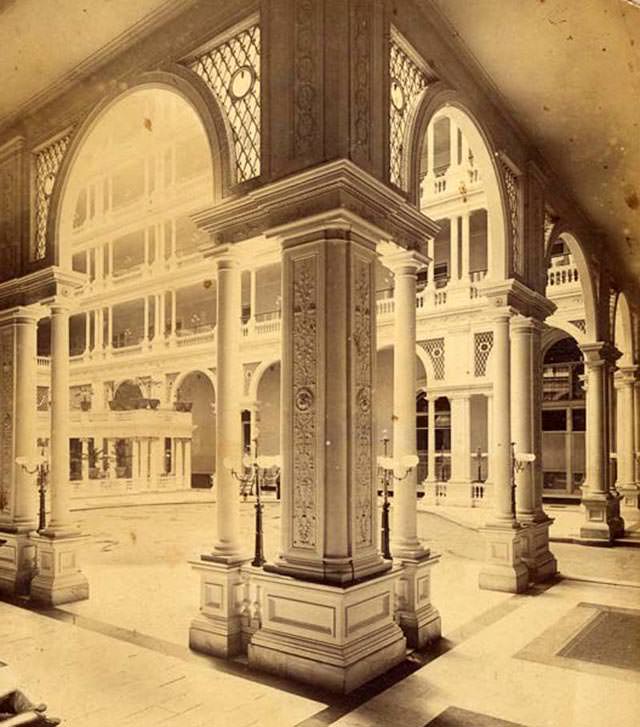
The Palace Hotel’s exterior was no less impressive than its interior. Its scale alone set it apart from anything else on the West Coast at the time.
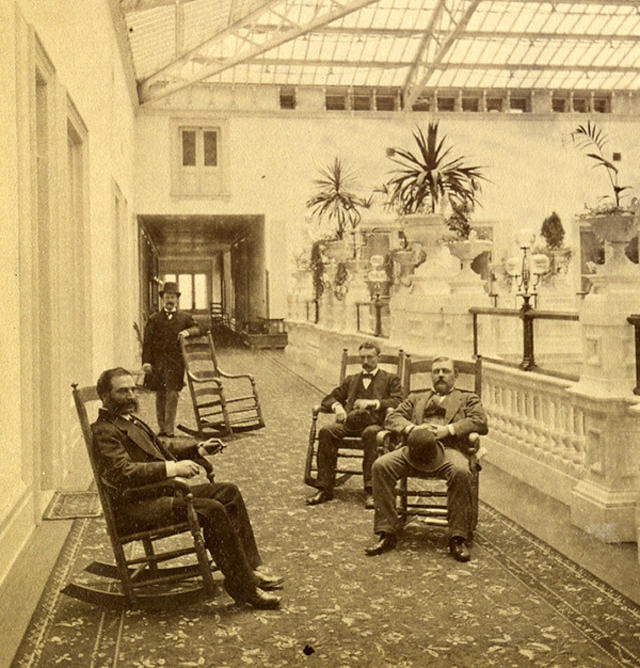
Saratoga Springs, New York, was arguably the resort capital of 19th-century America. Its hotels drew politicians, business magnates, and socialites every summer season. The United States Hotel was one of the town’s most prominent properties, and its reading room gave guests a quiet space to keep up with the news of the day.
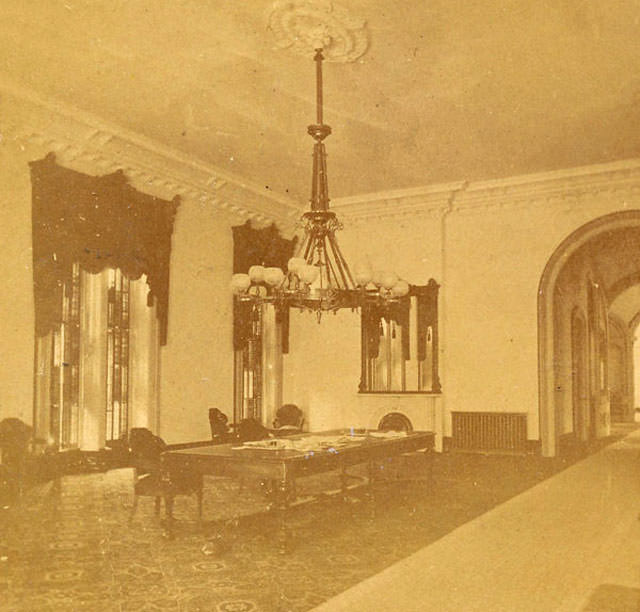
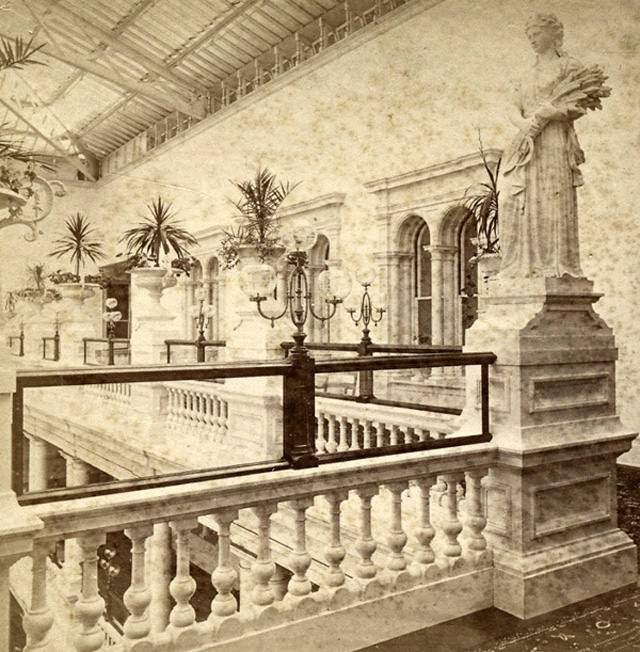
The hotel parlors of Saratoga were among the most fashionable gathering spaces in the country. Guests dressed formally, conversation was expected, and the parlor served as a stage for the social rituals of the Gilded Age.
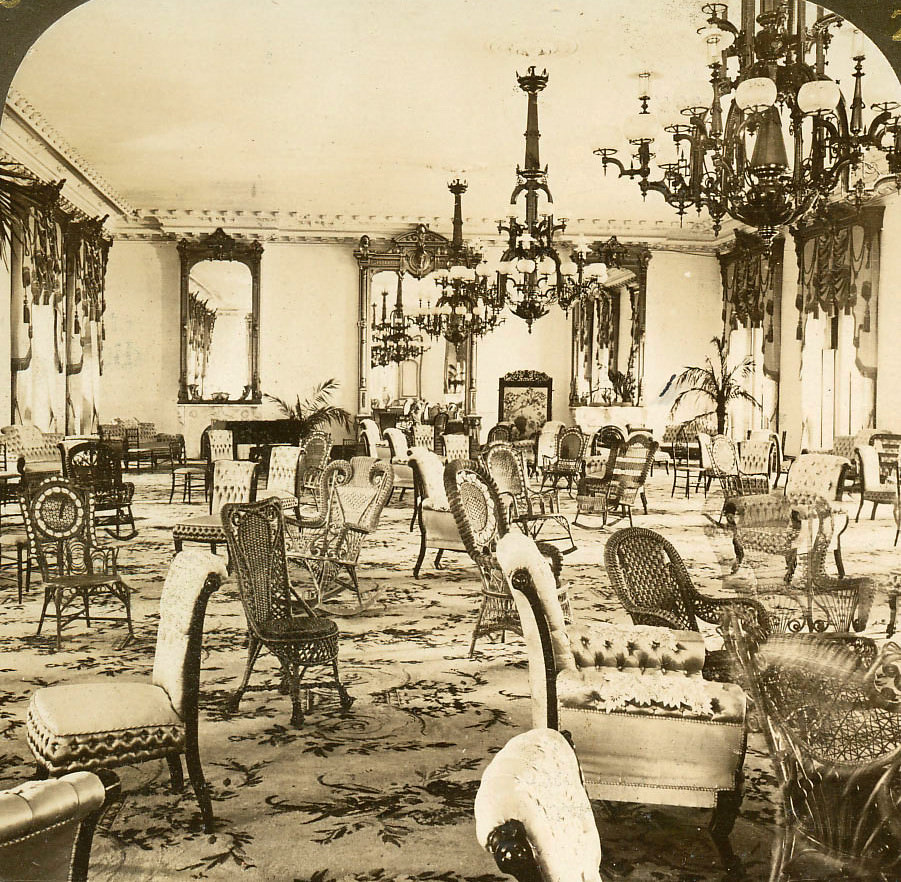
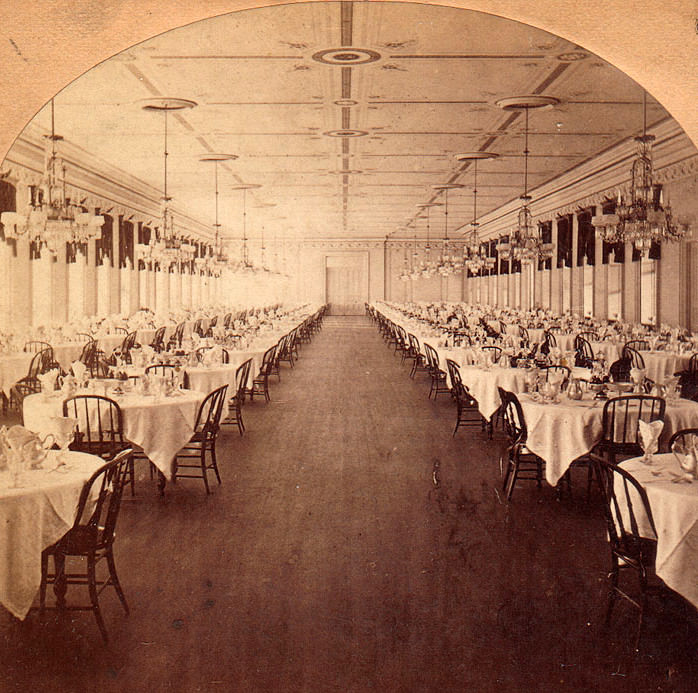
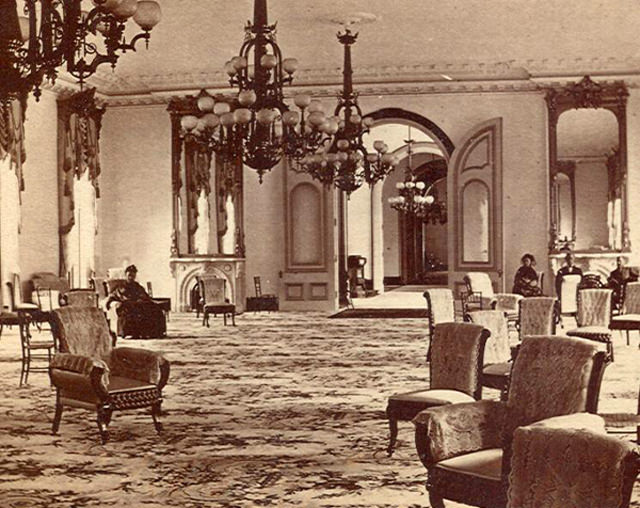
The exterior plazas and verandas of Saratoga hotels were equally important social spaces. Guests would sit in rocking chairs along wide porches, watching other guests arrive and depart — a daily spectacle that was very much part of the resort experience.
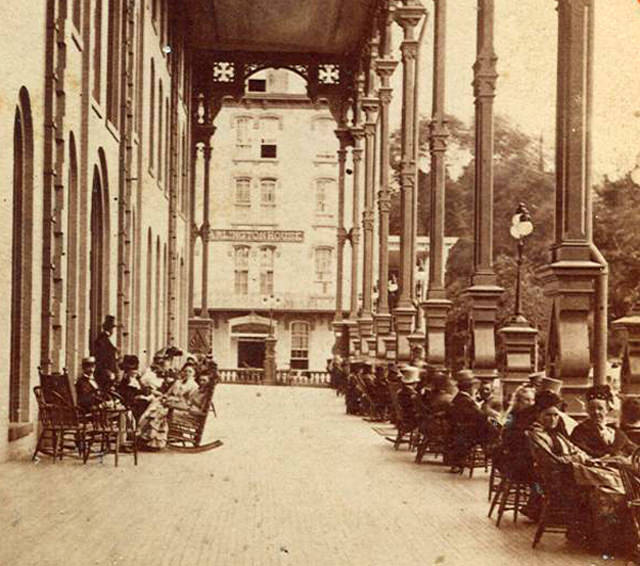
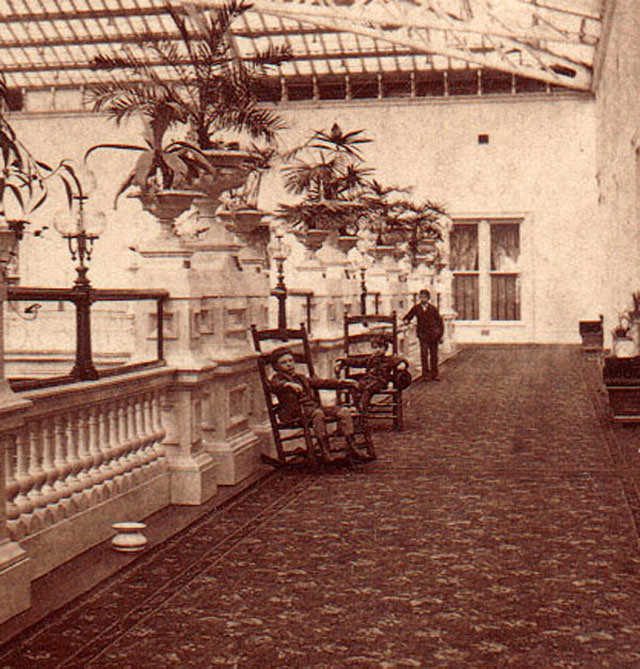
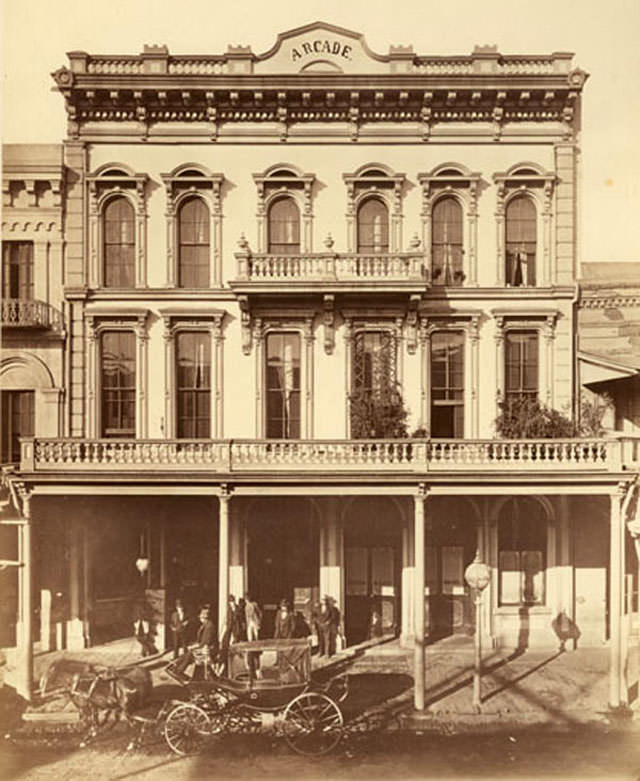
By the 1880s, hotel construction was spreading rapidly across the country. Sacramento’s Arcade Hotel brought the grand hotel tradition to California’s state capital, while cities like San Diego began developing their own prominent properties.
The Baldwin Hotel’s entrance in the 1880s showed how far San Francisco’s hotel architecture had evolved. Ornate ironwork, carved stone details, and a commanding street presence marked it as one of the city’s premier destinations.
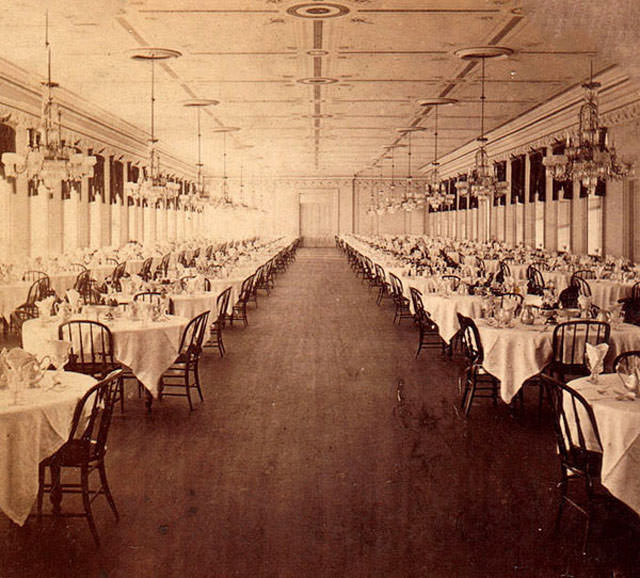
The Baldwin’s dining room matched its entrance in grandeur. Long rows of tables, high ceilings, and elaborately dressed staff were the hallmarks of a hotel dining experience that was meant to rival the finest restaurants in America.
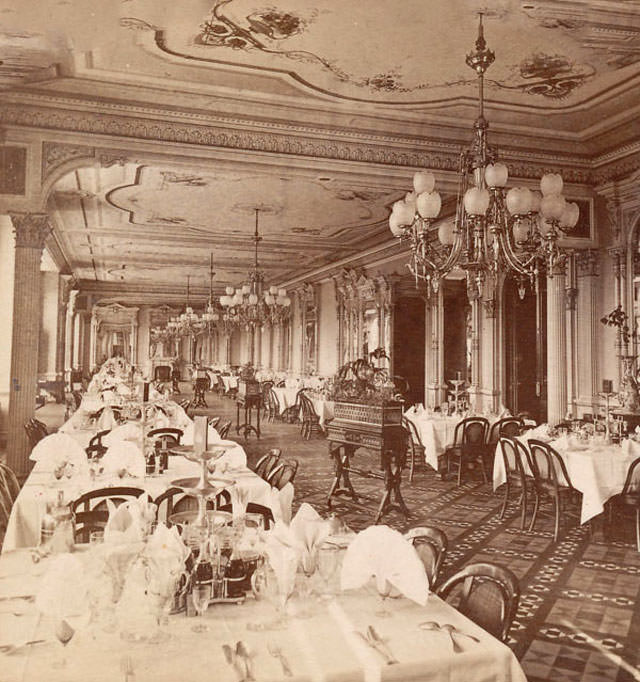
New York’s Hotel Fenimore offered its own take on the grand dining room in the 1880s, reflecting how widespread the emphasis on formal hotel dining had become across different tiers of the market.
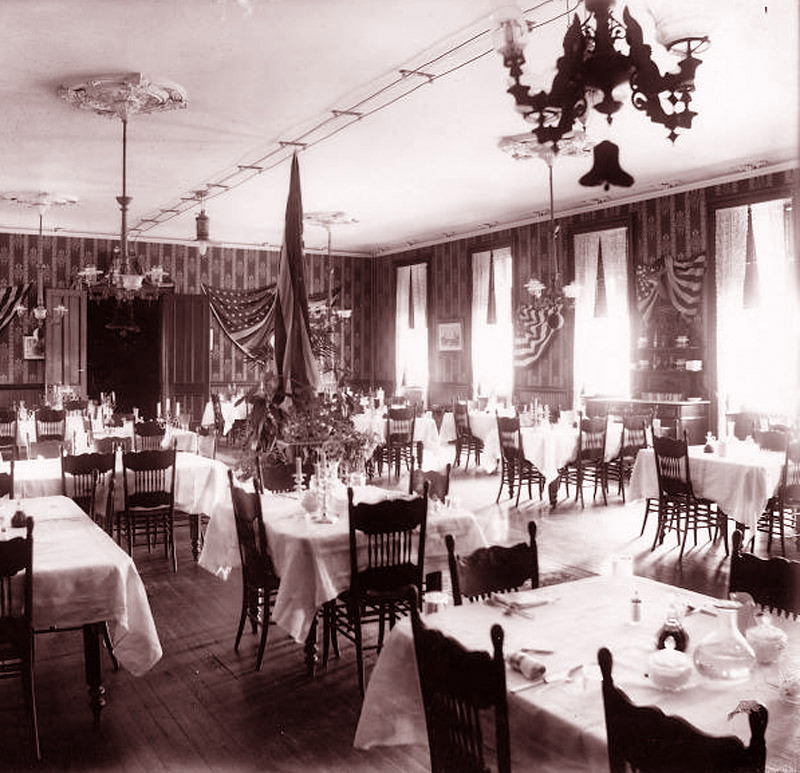
Florida’s Ponce de León Hotel brought the dining room experience to the South with similar ambition. Its dining room was vast and carefully appointed, designed to make guests feel they had not sacrificed any comfort by traveling to a warm-weather resort.
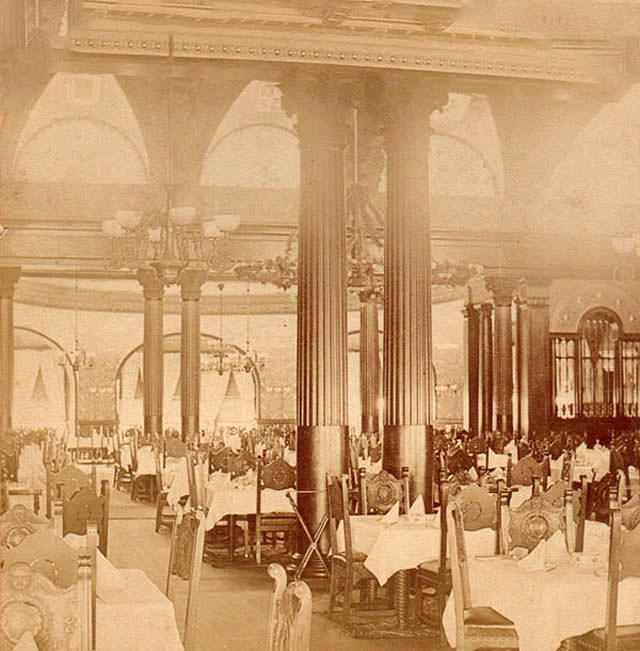
The Grand Union Hotel’s parlor remained one of the most photographed hotel interiors of the Gilded Age. By the 1880s, these spaces had become even more layered — more mirrors, more upholstery, more decorative detail than the decade before.
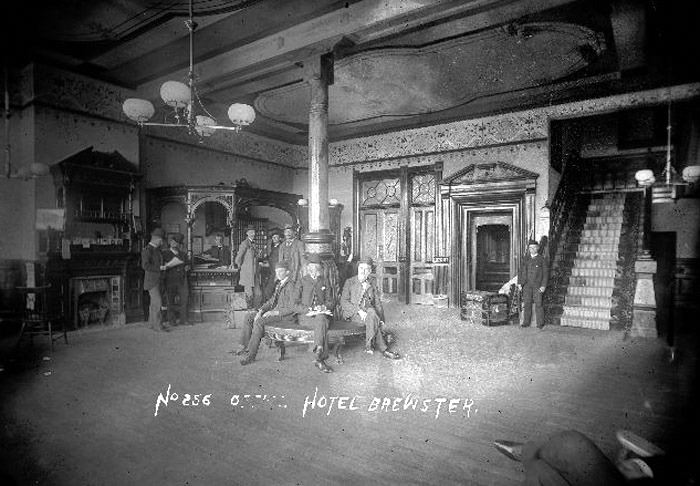
On the West Coast, San Diego was growing quickly, and the Hotel Brewster represented the city’s aspirations. Smaller than the great urban hotels of New York or San Francisco, it nonetheless brought a level of architectural polish that signaled San Diego’s intent to compete as a destination city.
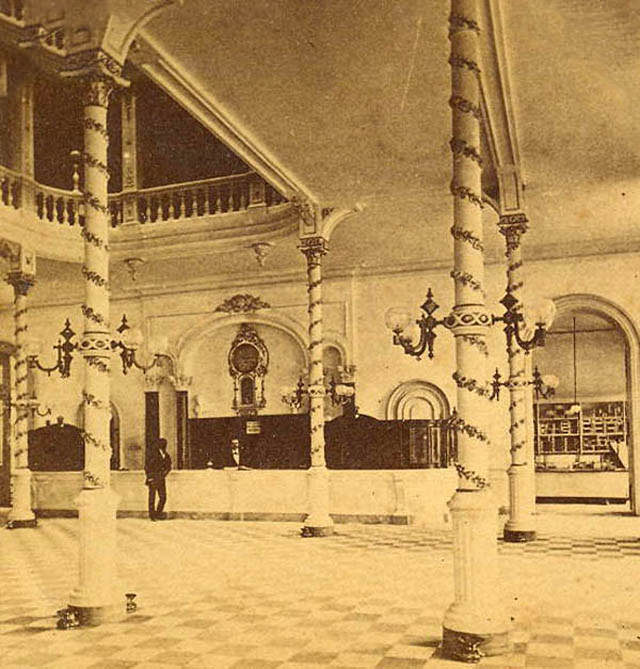
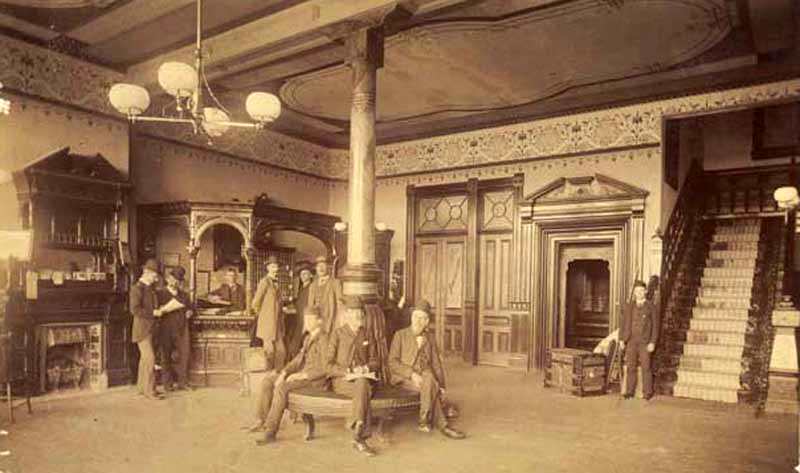
Chicago’s Pullman Hotel was a product of George Pullman’s planned company town, built in the early 1880s alongside his railroad car factory. The hotel’s lobby was designed to serve both business travelers and factory administrators, blending utility with the period’s taste for ornament.
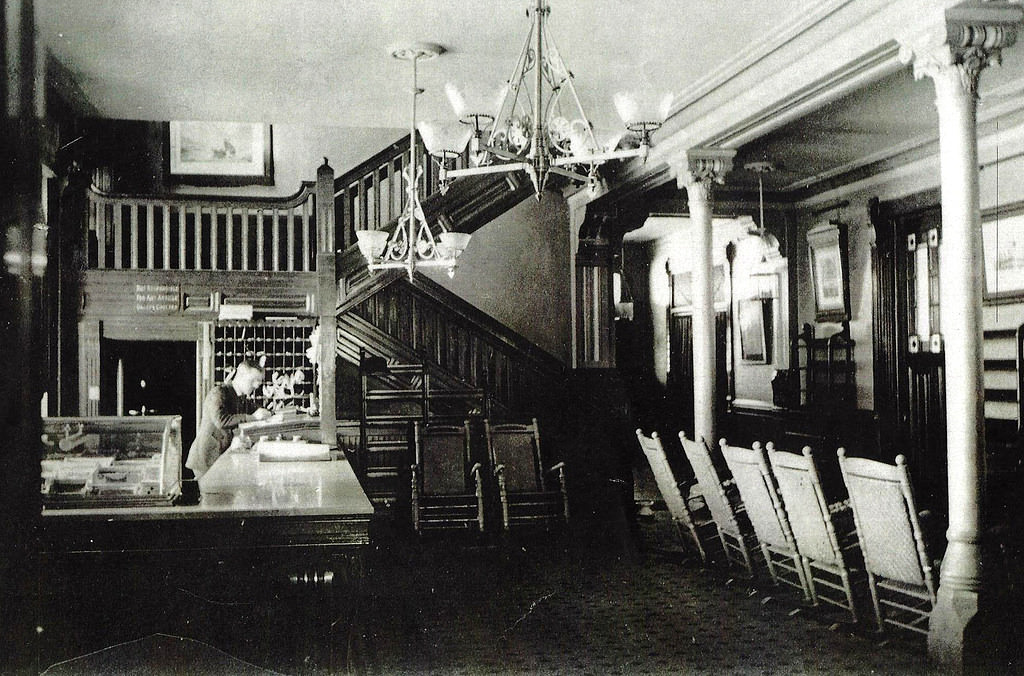
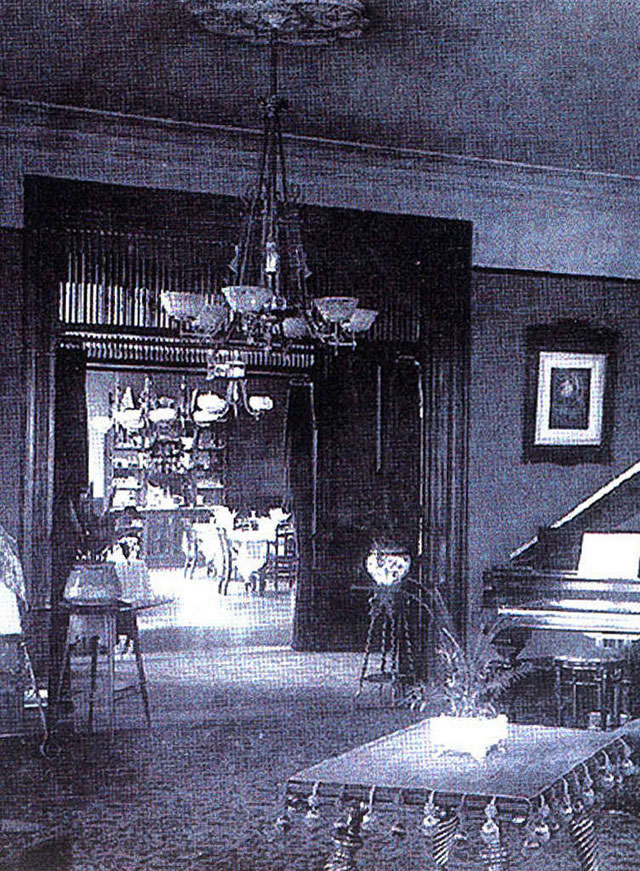
In St. Augustine, Florida, the hotel interiors of the 1880s reflected the region’s growing appeal as a winter retreat for wealthy Northerners. Henry Flagler’s investments in Florida tourism transformed the state’s hotel industry, and St. Augustine sat at the center of that transformation.
By 1887, San Diego’s Brewster Hotel had become a recognizable fixture of the city’s downtown. Its facade offered a clear picture of how Western hotel architecture had developed — drawing from Victorian traditions while adapting to local materials and climate.
The Hotel del Coronado, opened in 1888 on a peninsula across the bay from San Diego, was one of the largest wooden structures ever built in the United States. Its distinctive red-roofed towers became instantly iconic. By the 1890s, it was attracting presidents, celebrities, and socialites from across the country.
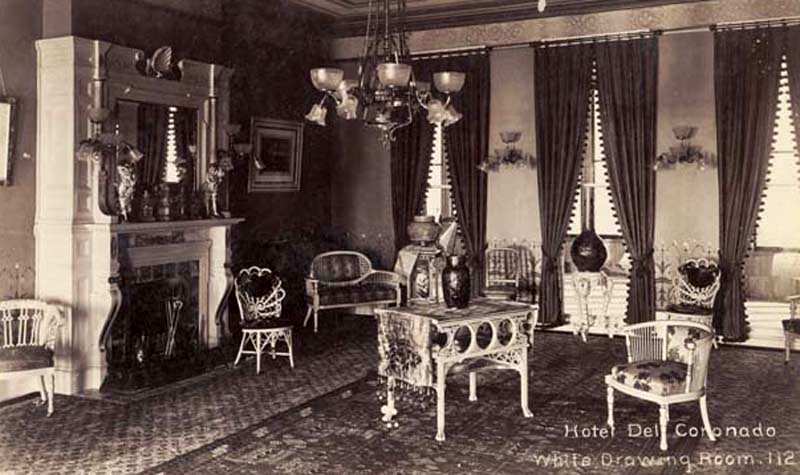
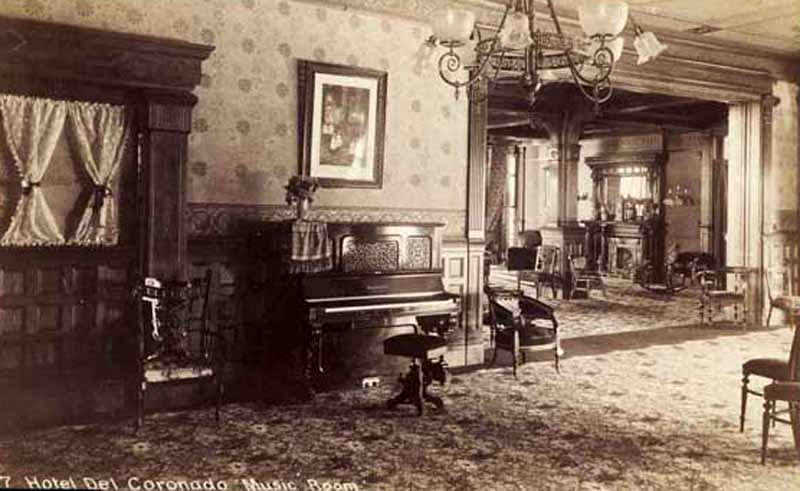
The Hotel del Coronado’s music room was one of its most celebrated interior spaces. Like the music rooms of other resort hotels of the period, it served as a venue for live performances and social gatherings, reinforcing the hotel’s role as a place of leisure rather than simply lodging.
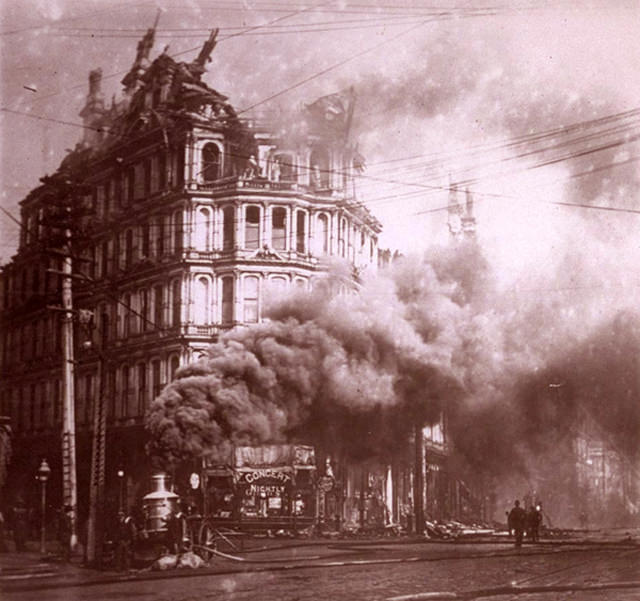
Not every grand hotel of the era survived into the 20th century. On November 23, 1898, fire broke out at San Francisco’s Baldwin Hotel. The blaze destroyed the building completely. Fire was a constant threat to the large wooden and mixed-construction hotels of the 19th century, and the Baldwin’s destruction was a dramatic reminder of how quickly these elaborate structures could be lost.