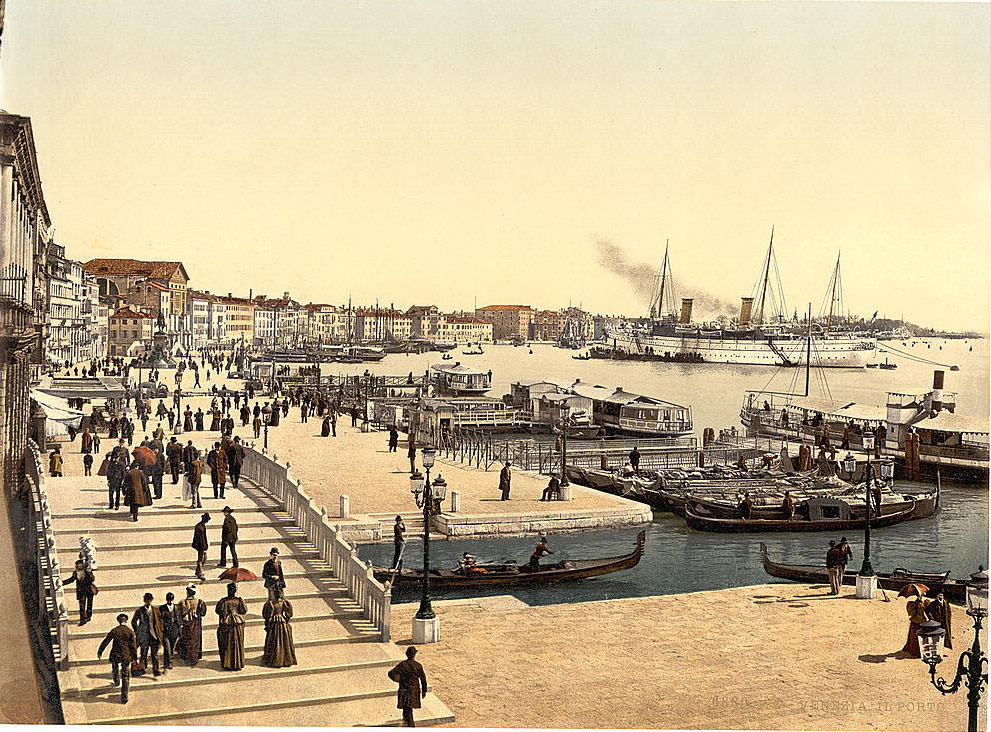
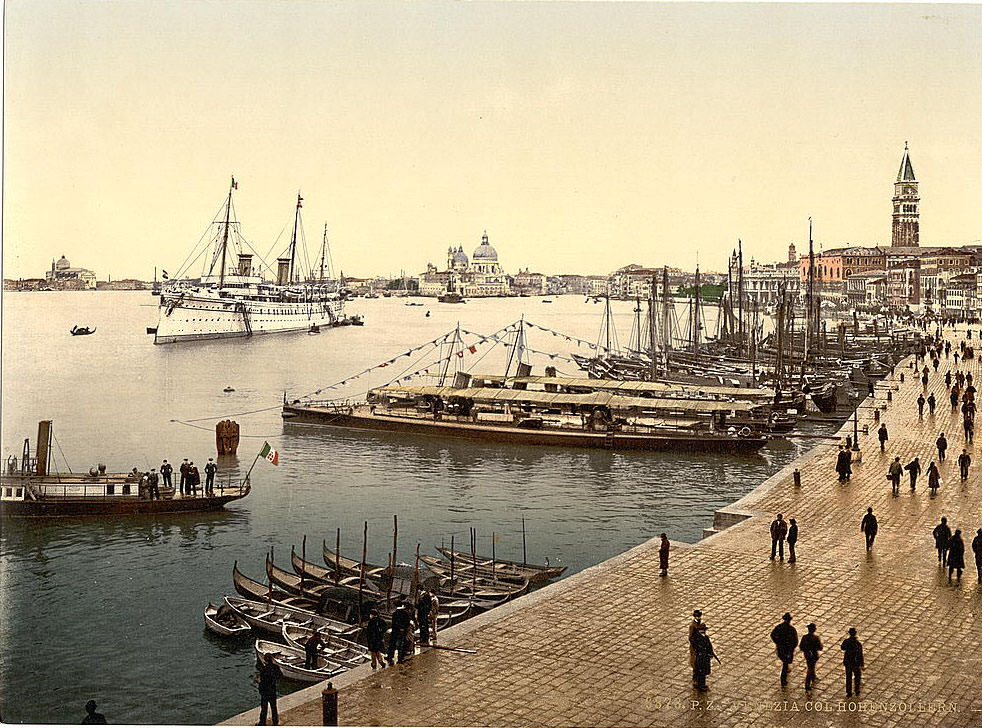
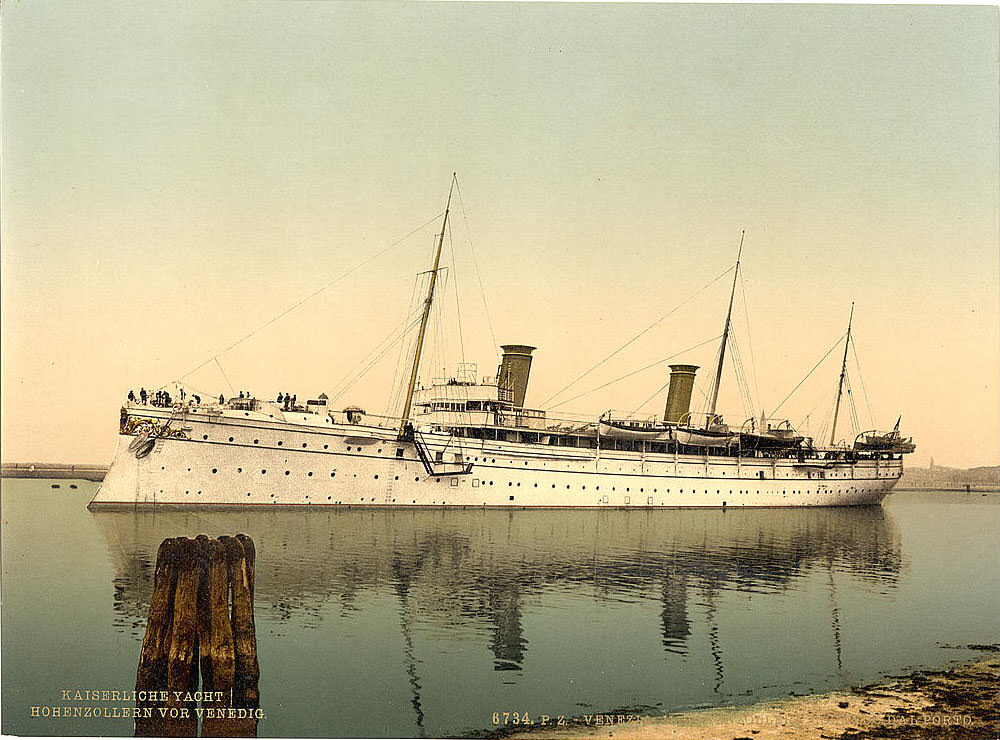
Venice in the late 19th century was a city caught between two worlds. Its canals and Gothic palaces told the story of a once-mighty maritime republic, while railways, steamships, and a growing flood of tourists pulled it firmly into the modern age. These photographs capture that moment — streets, waterways, landmarks, and everyday life frozen in vivid color from a city unlike any other on earth.
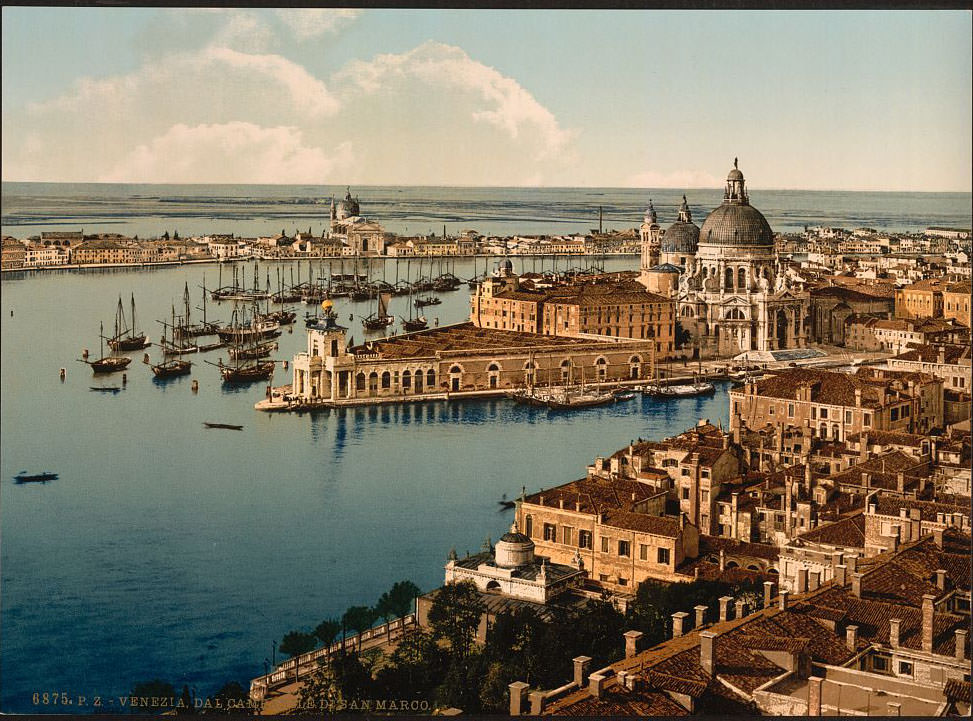
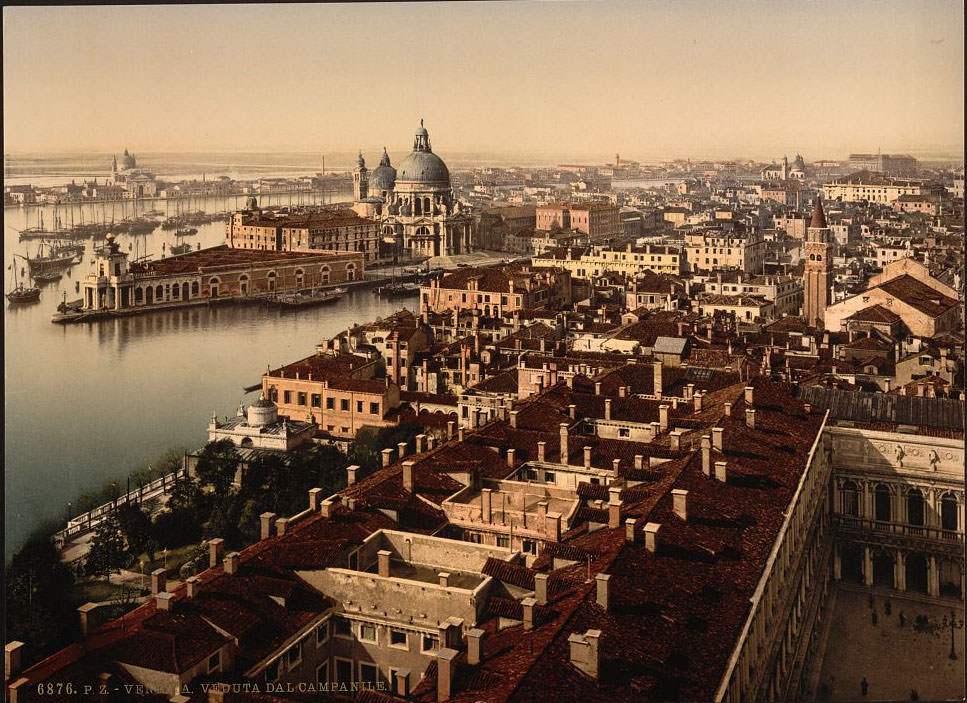
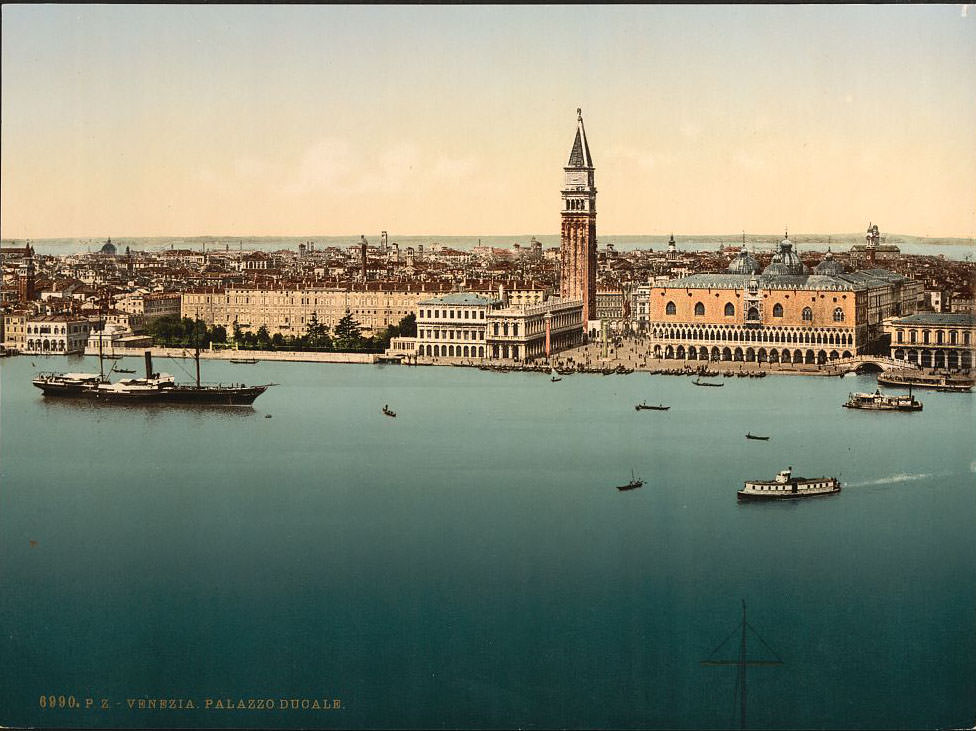
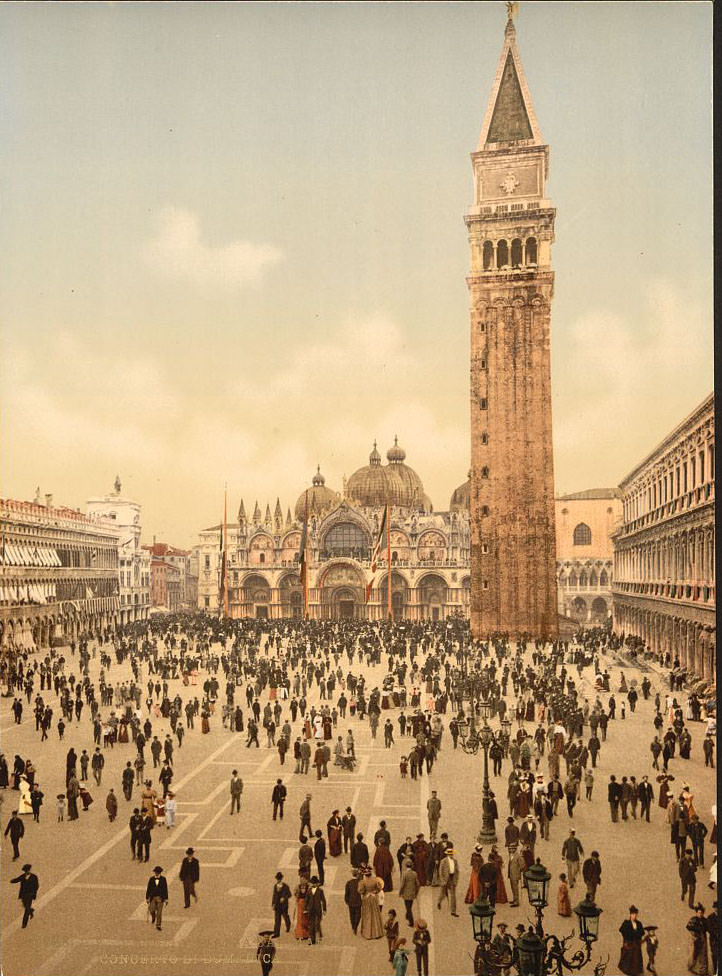
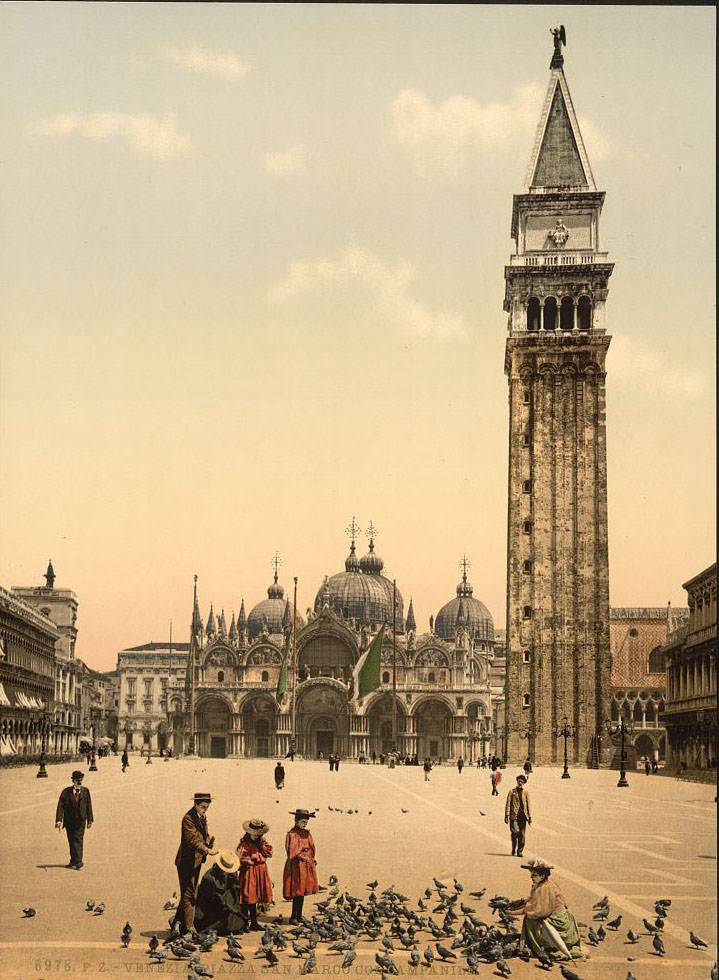
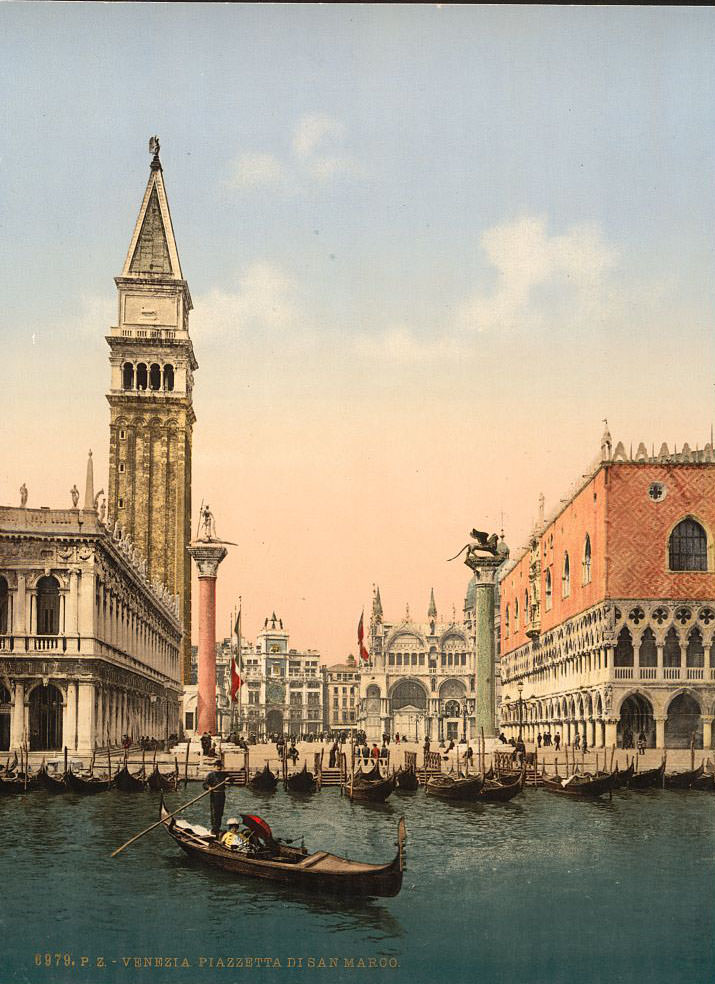
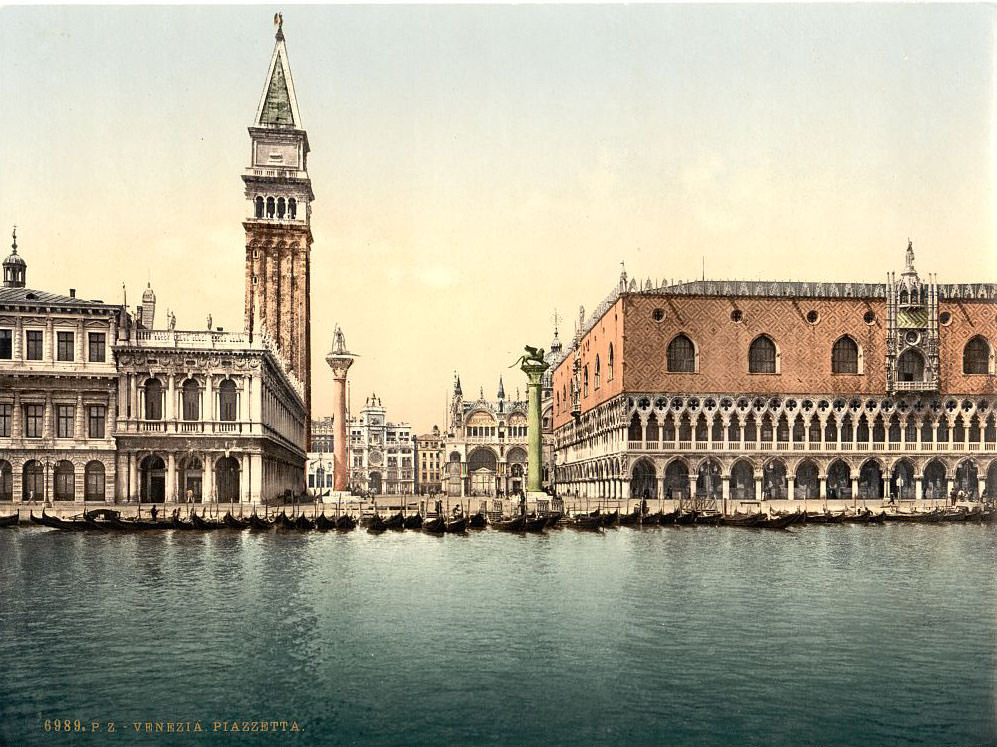
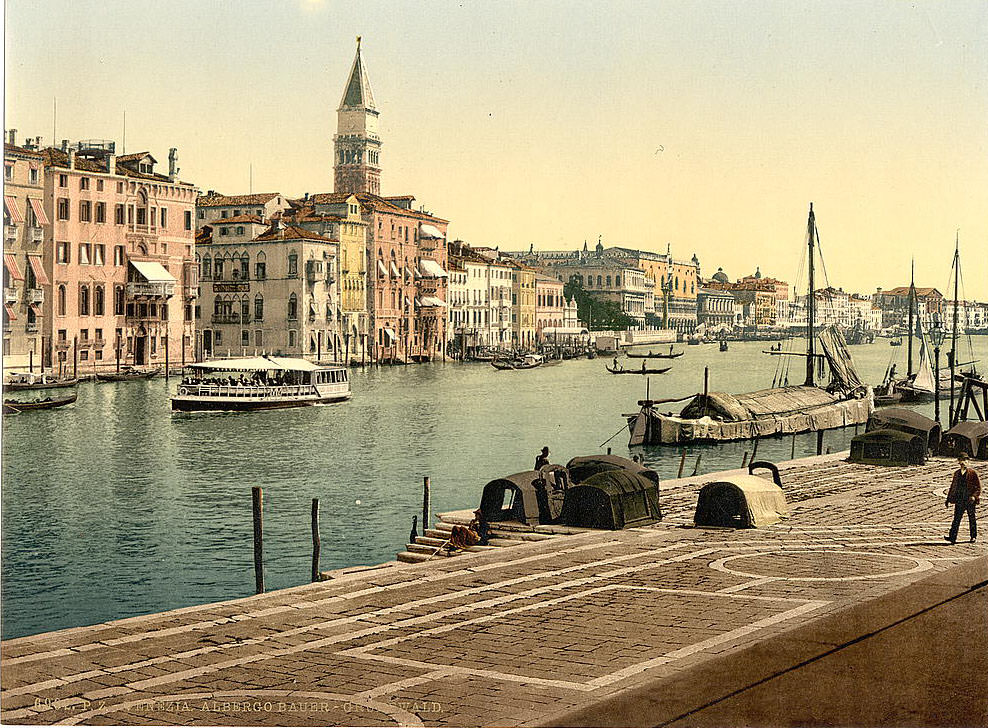
The campanile of St. Mark’s — the great bell tower rising over the Piazza San Marco — was the most visible landmark in all of Venice. It stood nearly 99 meters tall and served for centuries as a lighthouse, a watchtower, and a symbol of the city’s power. In the late 19th century, it remained the first thing visitors saw when they arrived by boat.
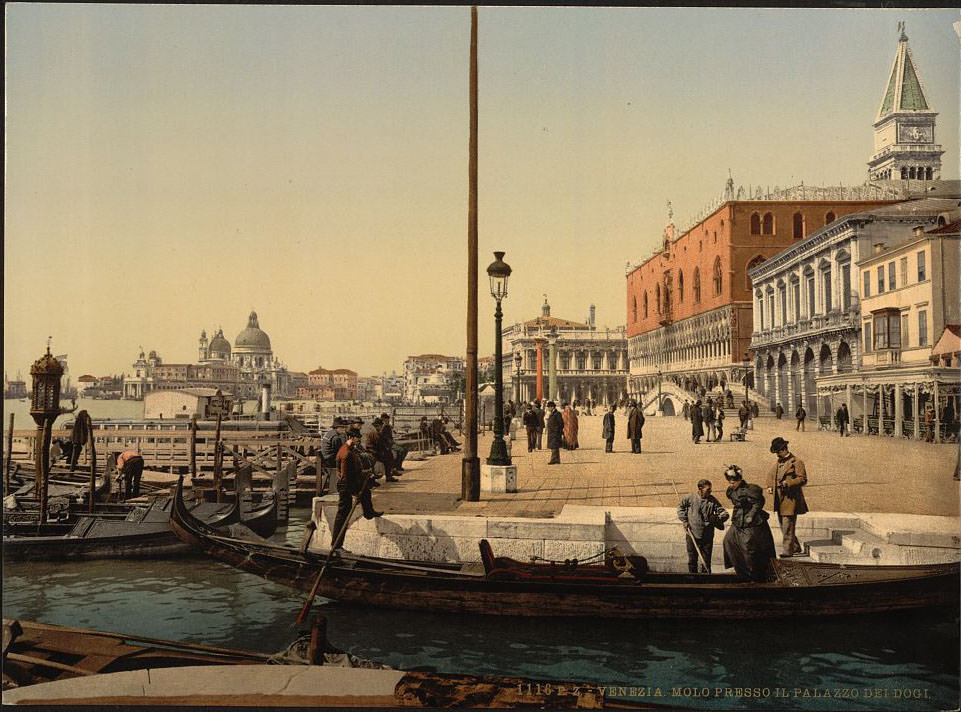
Dominating the waterfront beside St. Mark’s Basilica, the Doge’s Palace was the seat of Venetian government for nearly a thousand years. Its pink-and-white marble facade and ornate Gothic arcades made it one of the most photographed buildings in Europe. By the 1880s, it had become a museum, drawing visitors eager to walk its grand halls and council chambers.
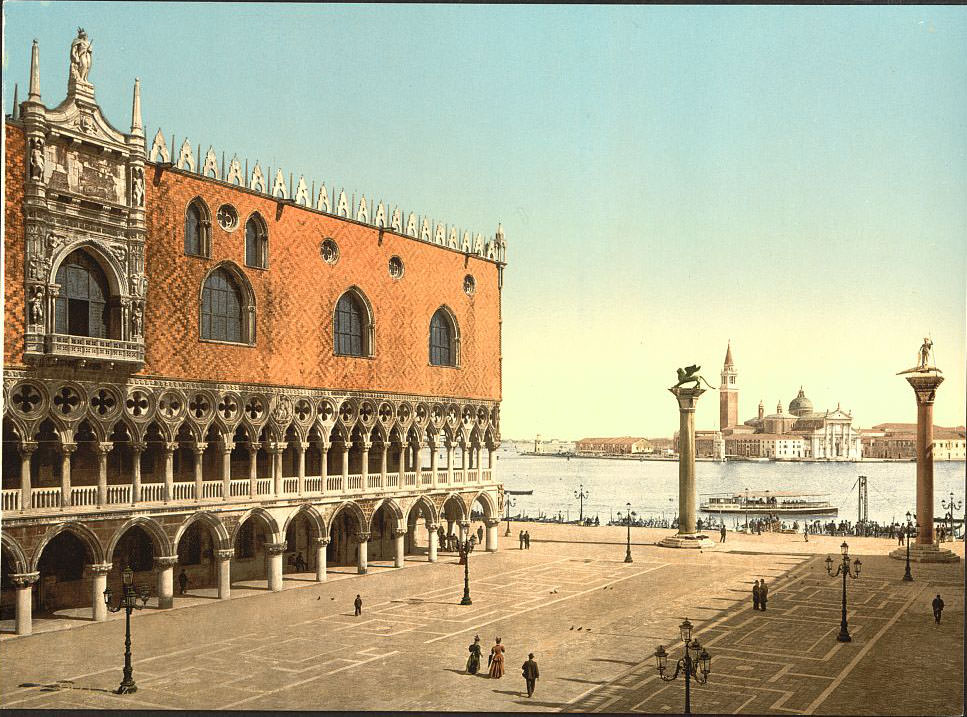
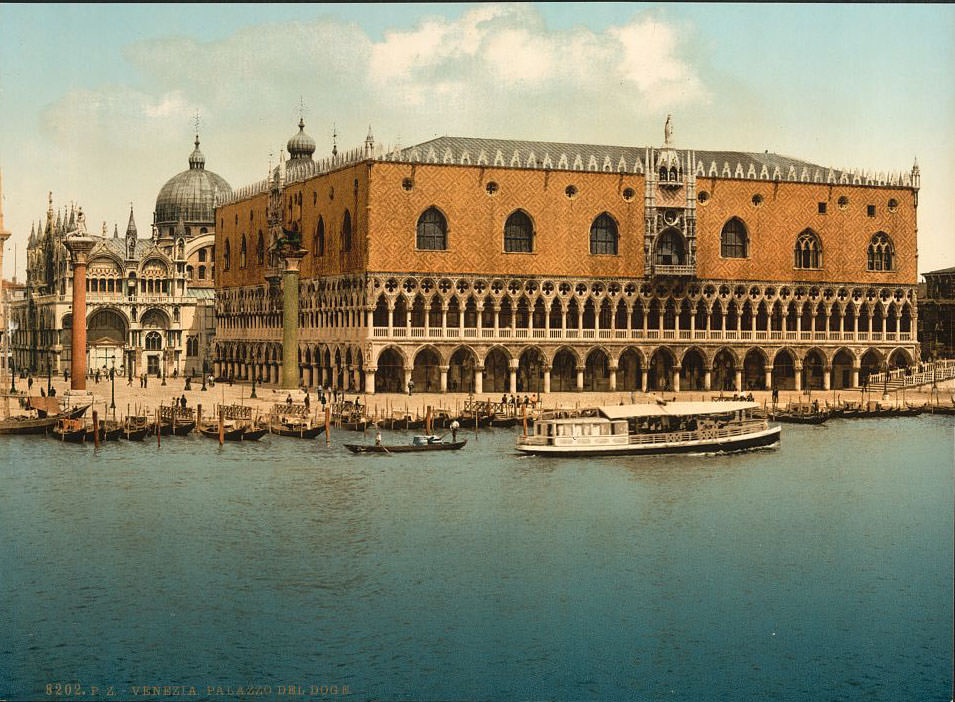
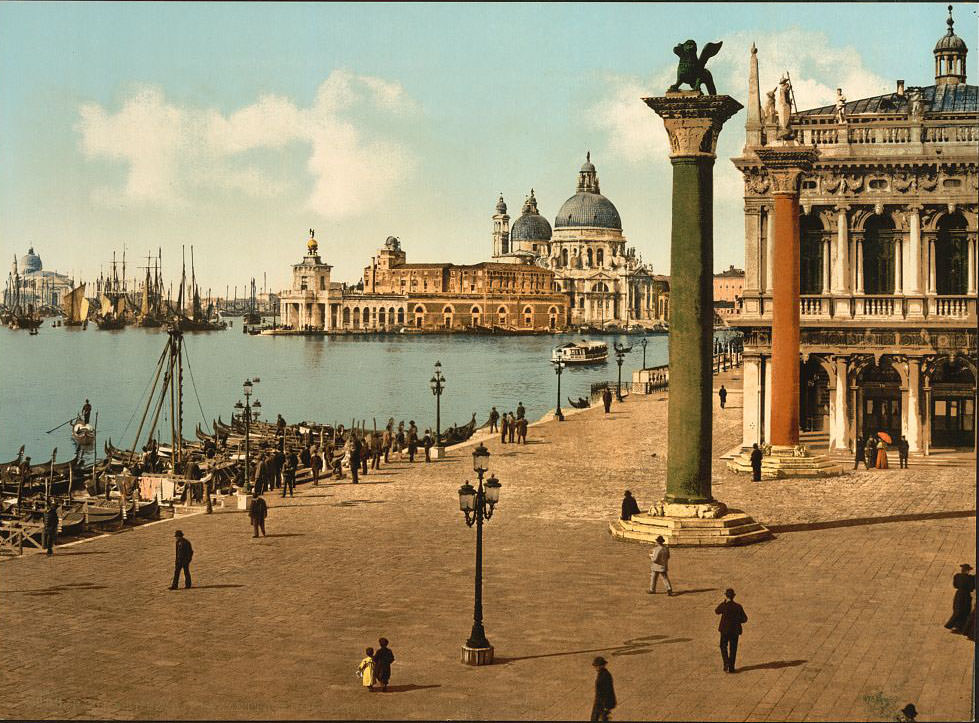
The Piazzetta — the small square linking the Piazza San Marco to the waterfront — was flanked by two ancient granite columns. One was topped with the winged lion of St. Mark, the other with a statue of St. Theodore. These columns marked the formal ceremonial entrance to the city, and executions were once carried out between them.
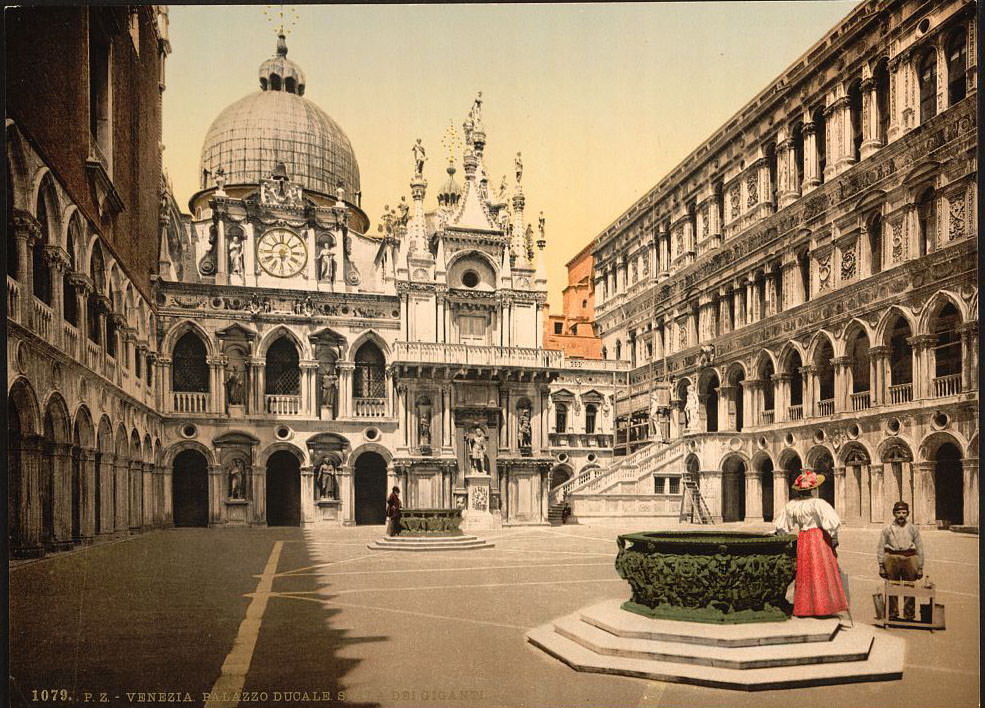
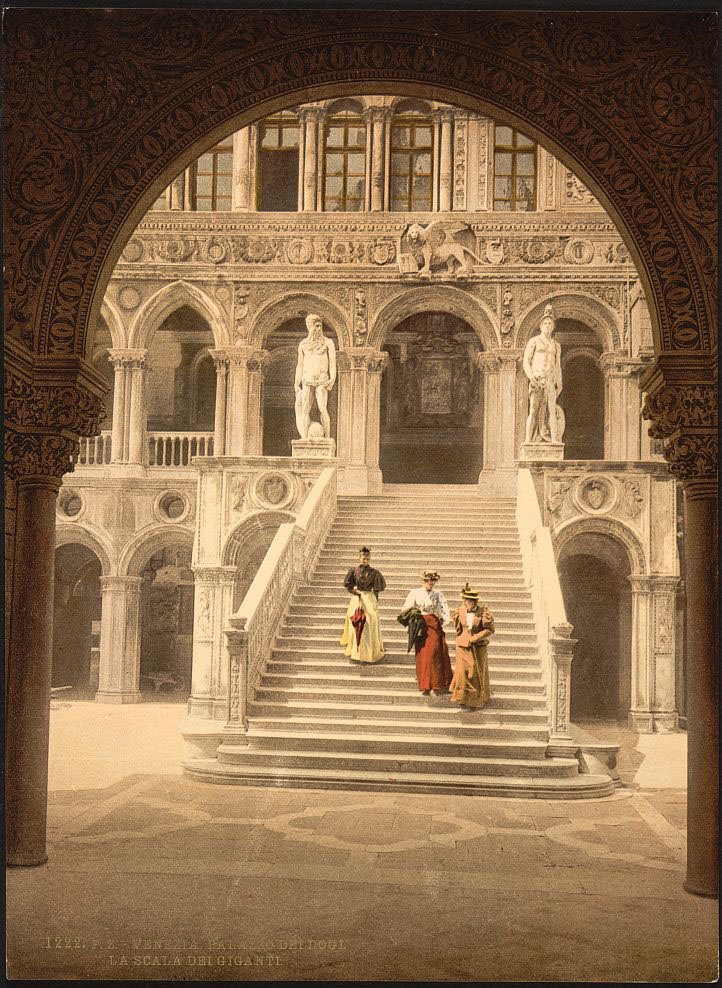
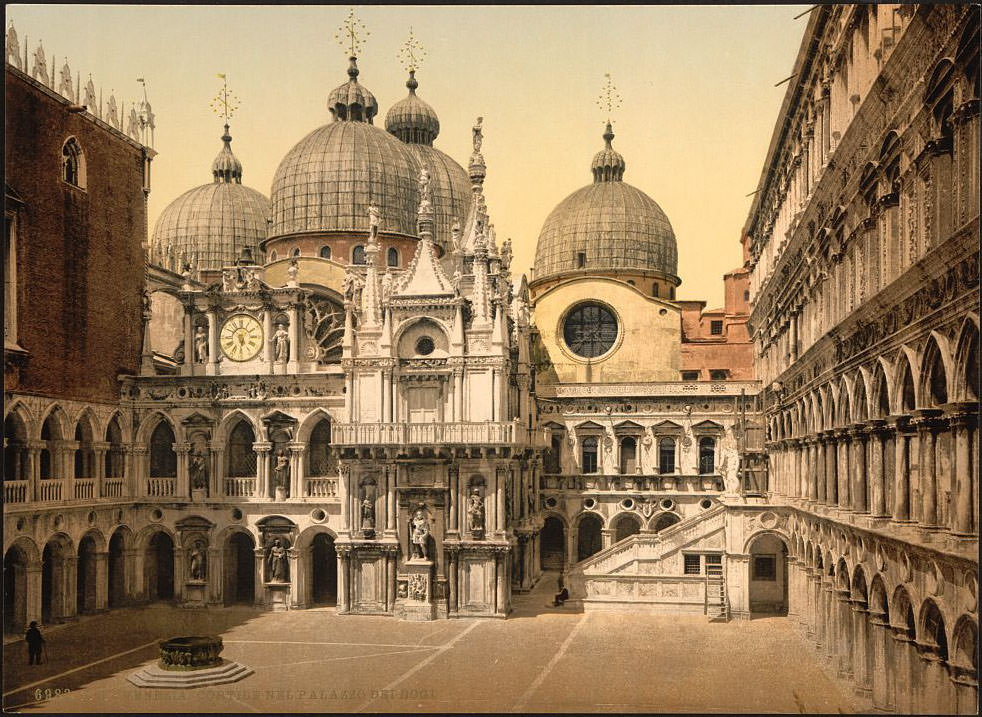
Inside the palace, the Scala dei Giganti — the Giant’s Staircase — was where the Doges of Venice were crowned. The staircase took its name from the two enormous statues of Mars and Neptune placed at its top in 1567, carved by Jacopo Sansovino. The courtyard below hosted ceremonies that showcased Venice’s wealth and political authority.
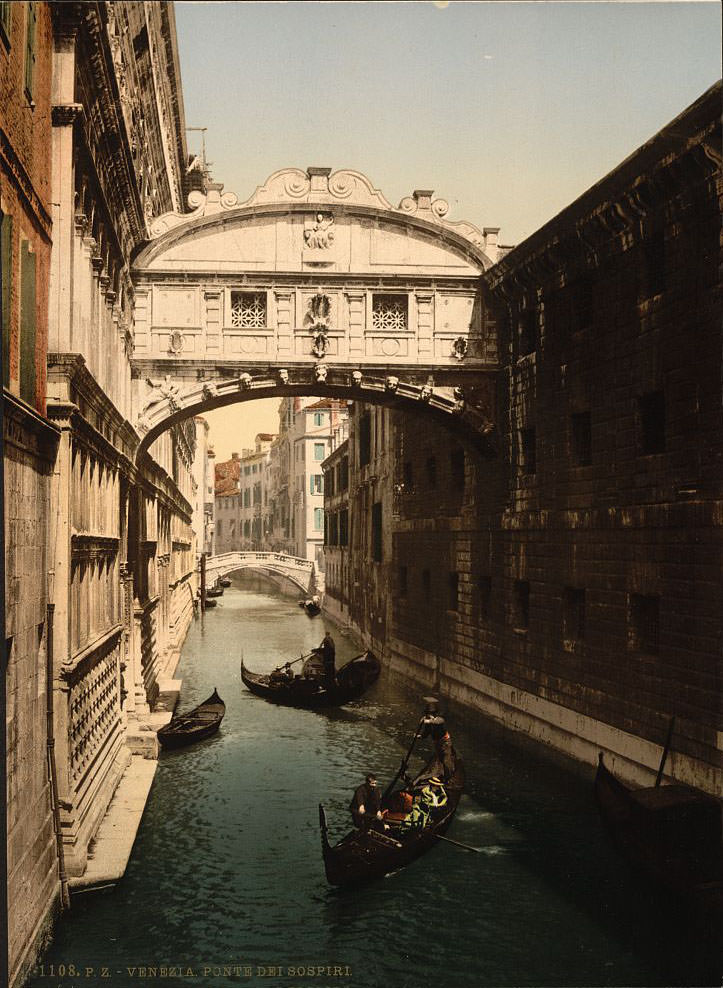
One of the most famous features connecting the Doge’s Palace to the old prisons was the Bridge of Sighs, built around 1600. Prisoners crossed it after being sentenced, catching their last glimpse of Venice through its small stone windows. By the late 19th century, it had become a romantic landmark and a favorite subject for photographers and painters alike.
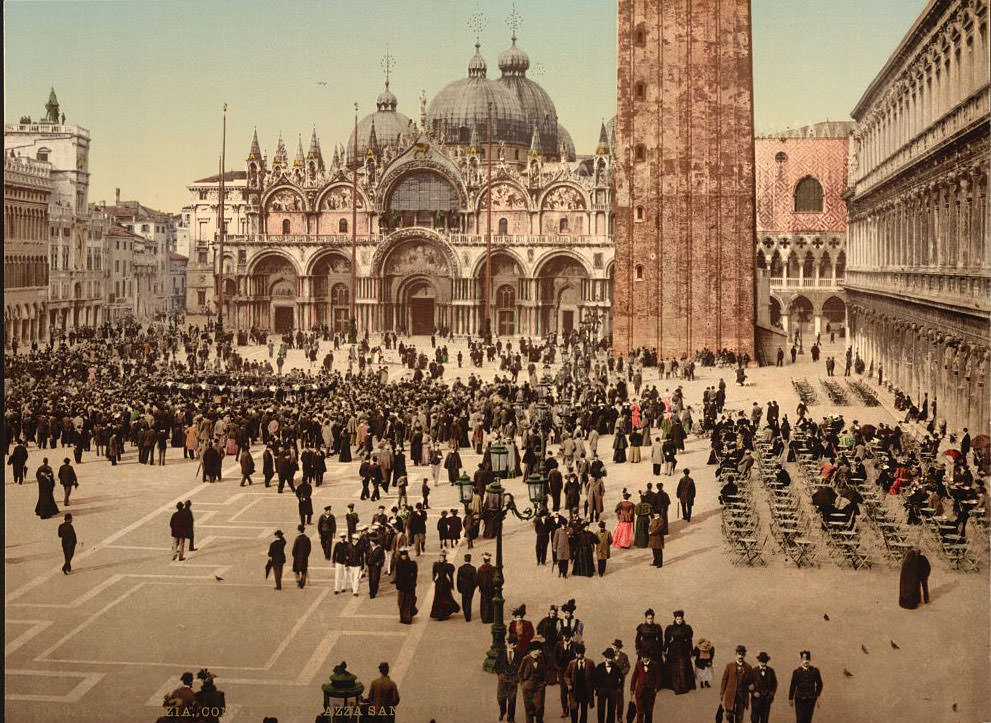
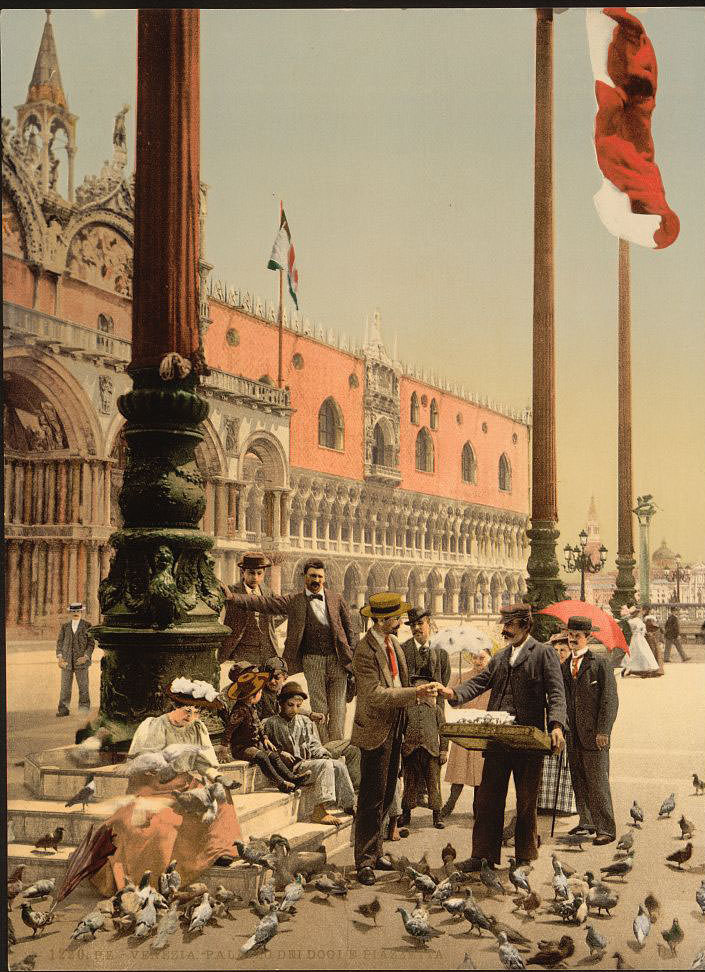
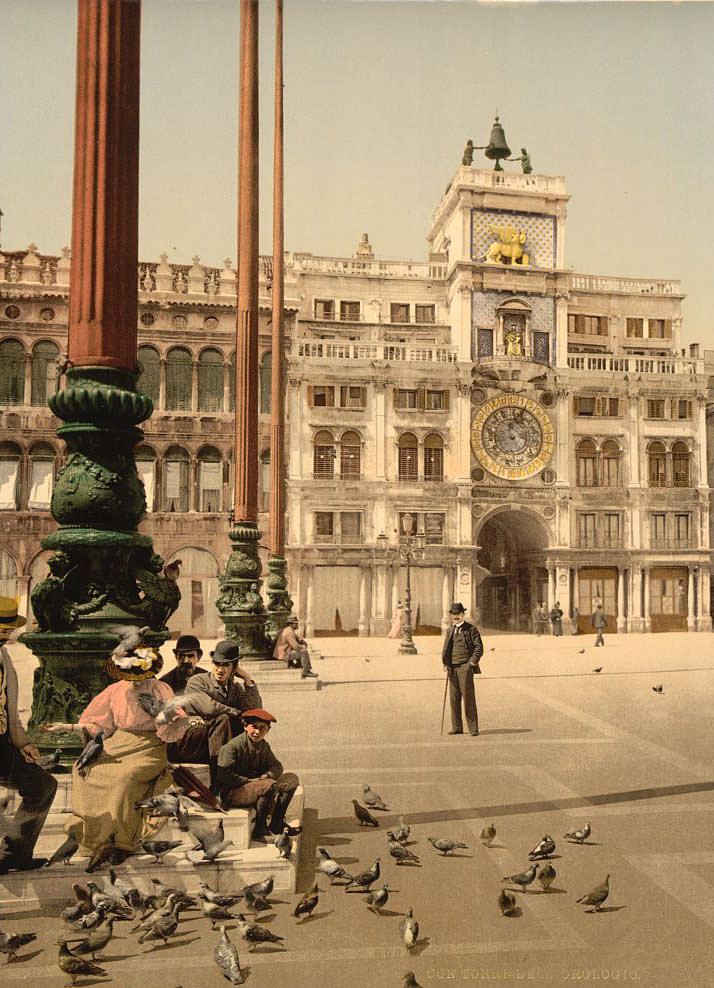
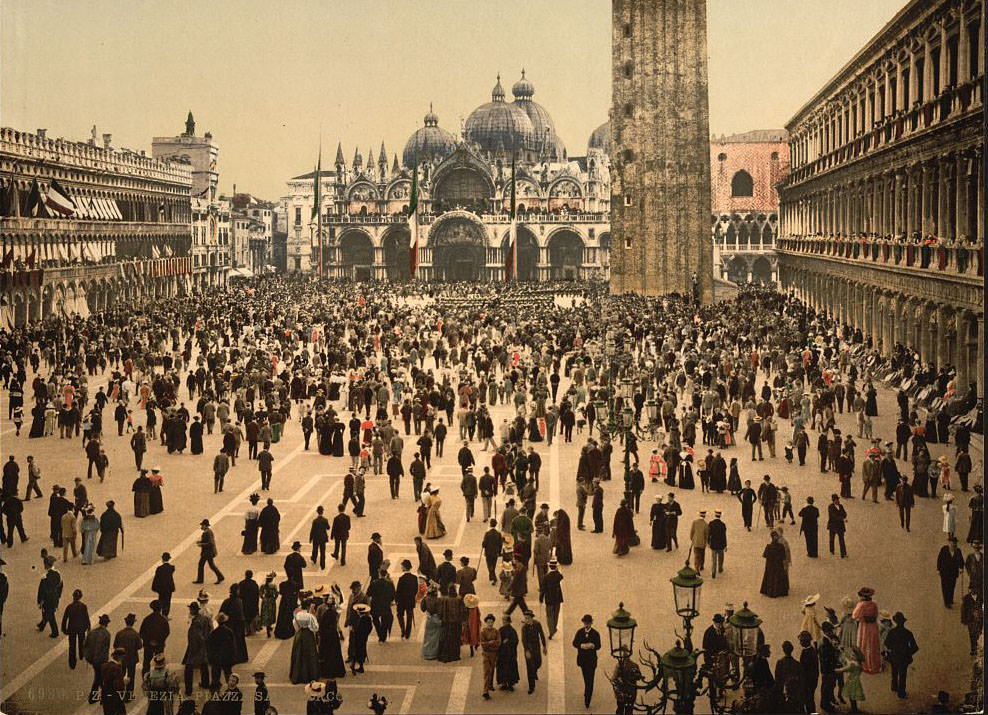
St. Mark’s Square — the Piazza San Marco — was the social and cultural heart of Venice. Open-air concerts filled the piazza regularly, with orchestras performing from the café terraces of Florian and Quadri. Pigeons packed the square in enormous numbers, a tradition tourists enthusiastically participated in by the late 1800s.
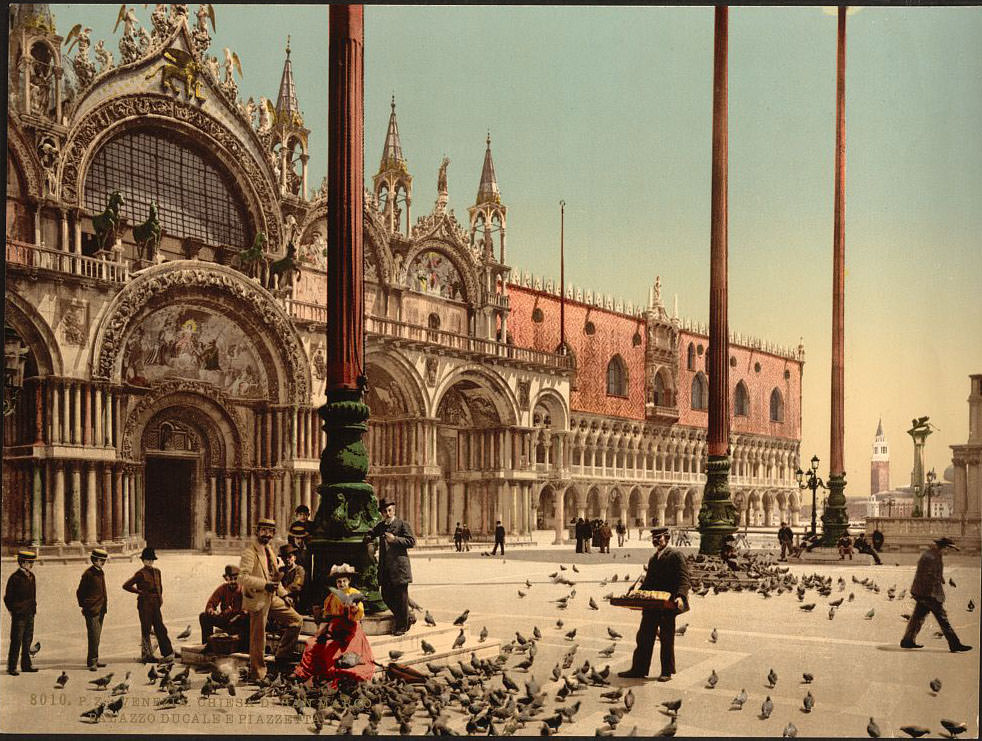
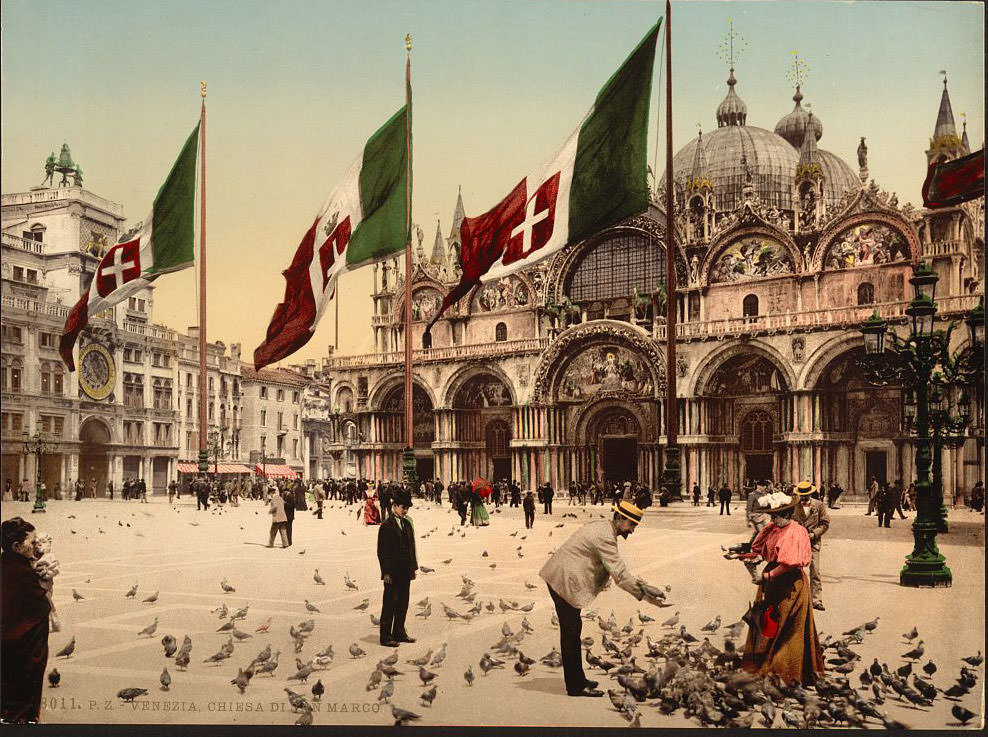
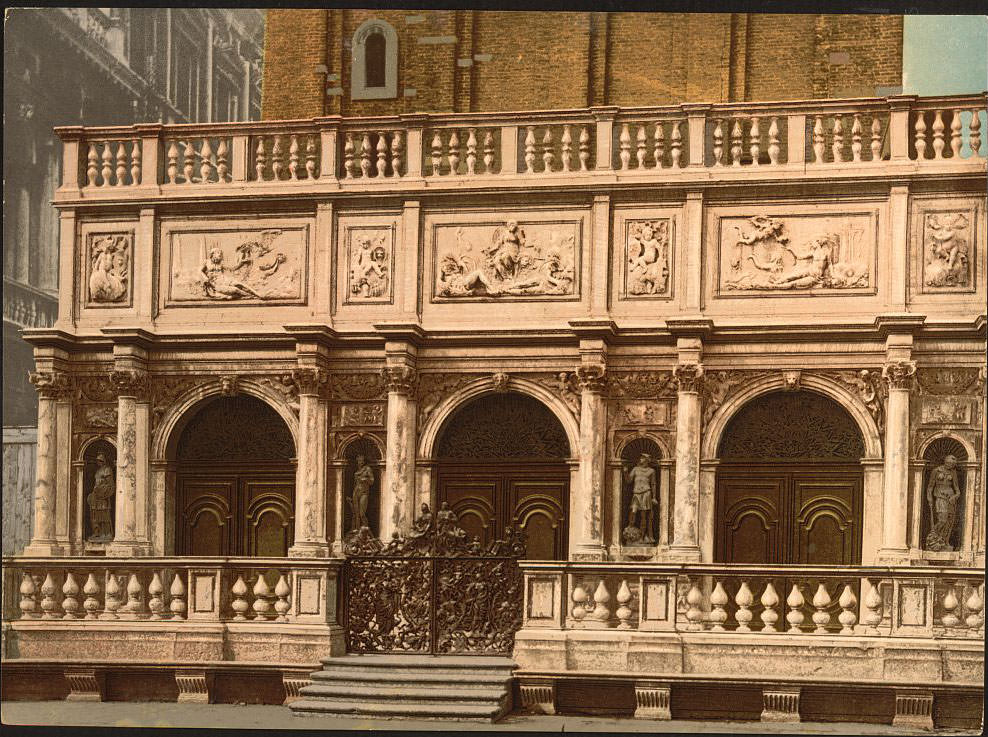
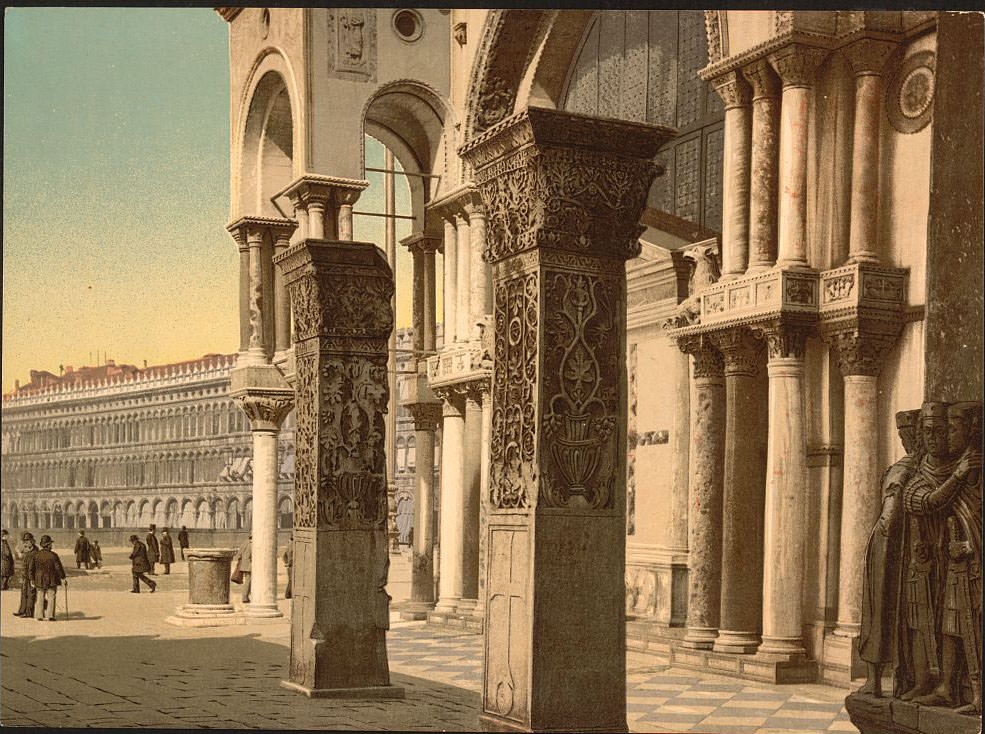
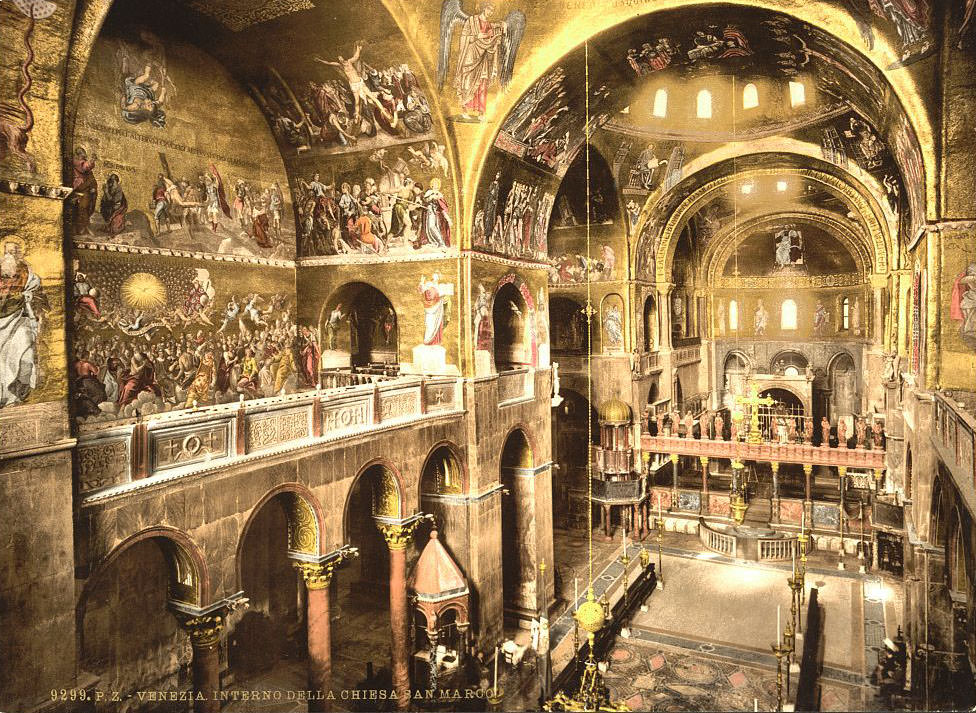
St. Mark’s Basilica itself was a dazzling mix of Byzantine and Gothic architecture. Its five domed rooflines, golden mosaics, and marble columns had been built up over centuries using materials brought back from Venice’s far-reaching trade routes. The basilica functioned as the private chapel of the Doges before becoming the city’s cathedral in 1807.
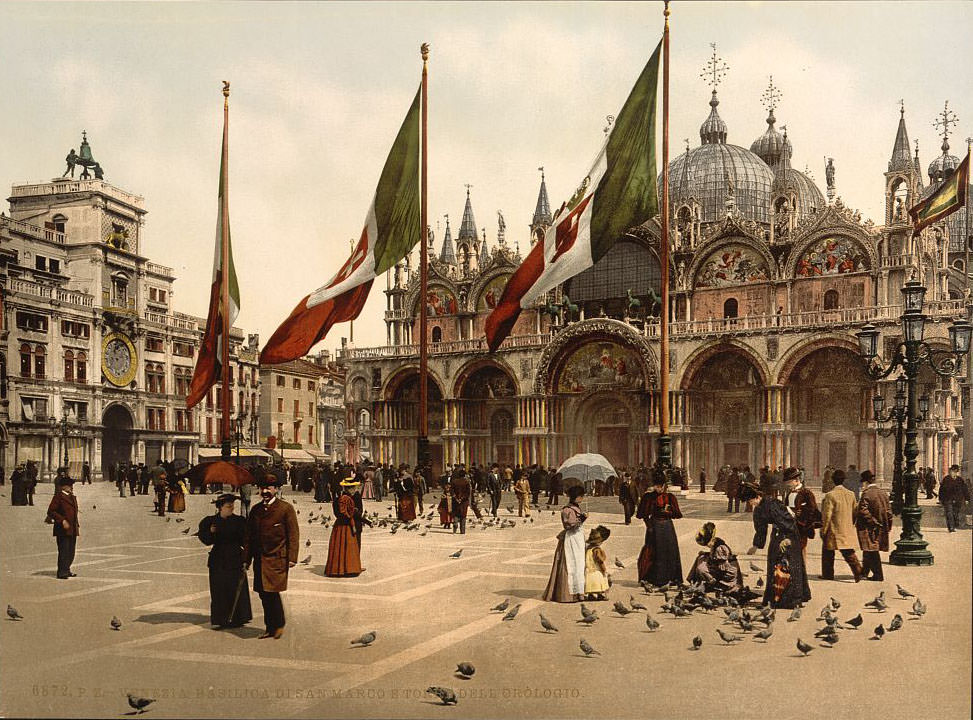
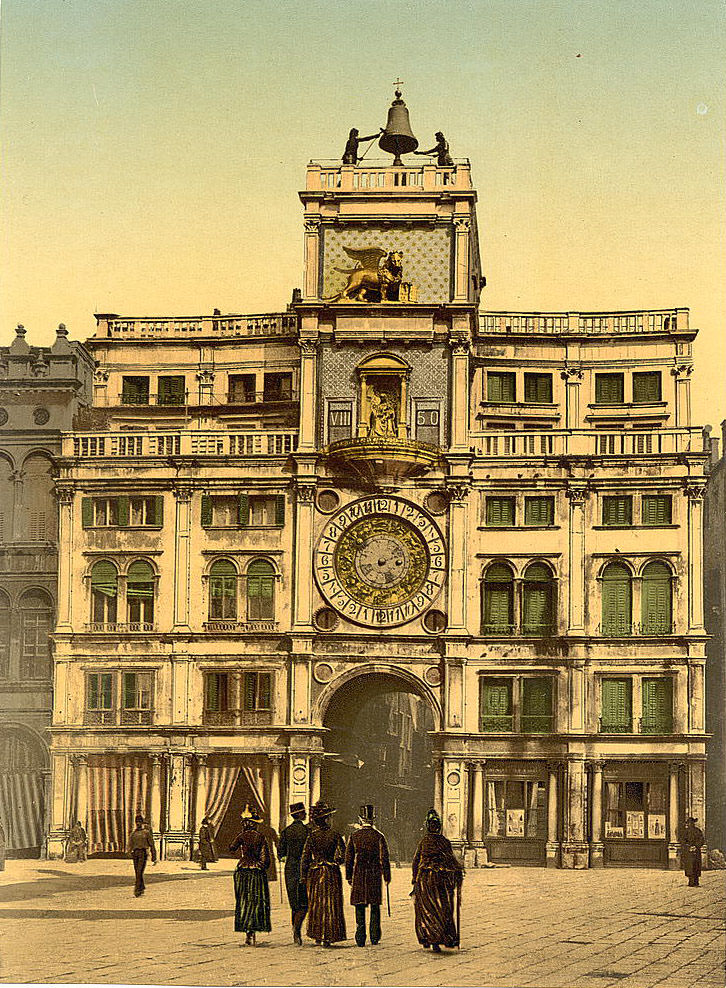
The Clock Tower — Torre dell’Orologio — stood at the north end of the piazza and had marked the hours since 1499. Its face showed the time, the phases of the moon, and the signs of the zodiac. Two bronze Moors on the rooftop struck a large bell on the hour, a spectacle that never failed to draw a crowd of onlookers below.
The piazza drew enormous crowds throughout the year, particularly during the Carnival of Venice and the Festa del Redentore. These festivals were central to Venetian identity — processions, fireworks, and public celebrations brought the city together in ways that connected the 19th-century population to traditions stretching back hundreds of years.
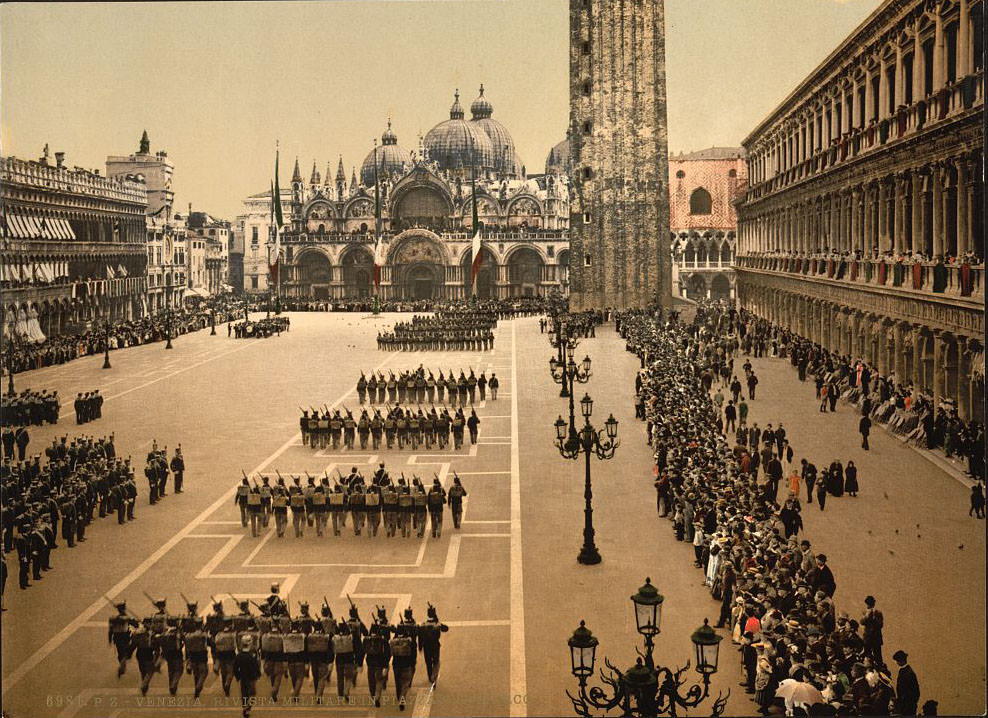
Military reviews in the piazza reflected Venice’s political reality after 1866, the year the city was annexed into the newly unified Kingdom of Italy. The Italian army maintained a visible presence, and formal reviews in St. Mark’s Square were a regular assertion of national authority over a city that had once governed itself independently for over a millennium.
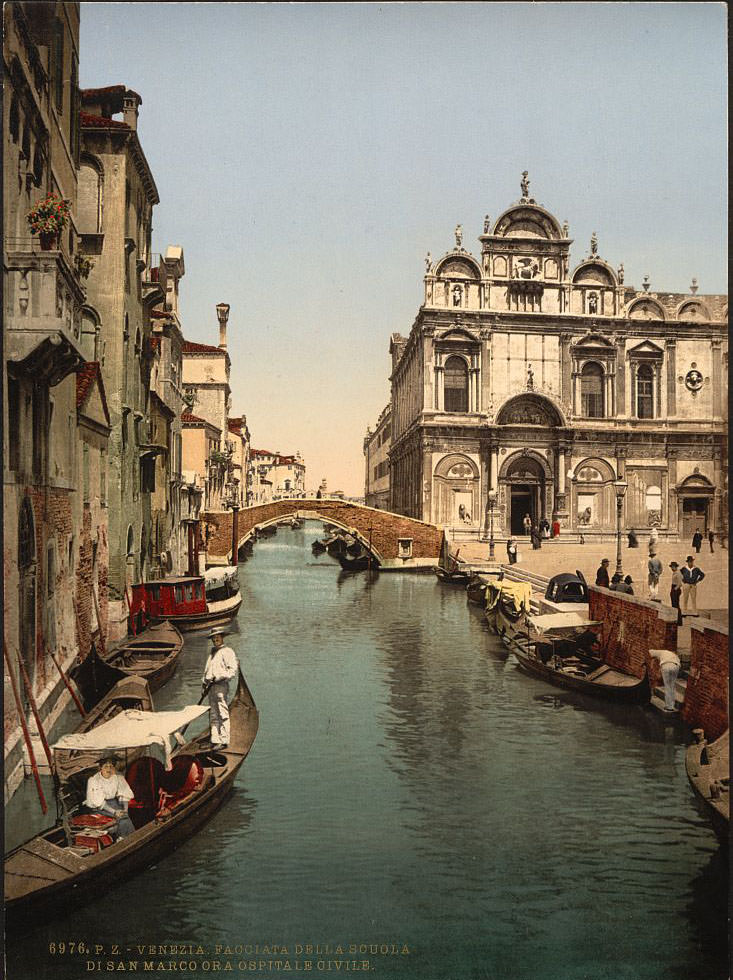
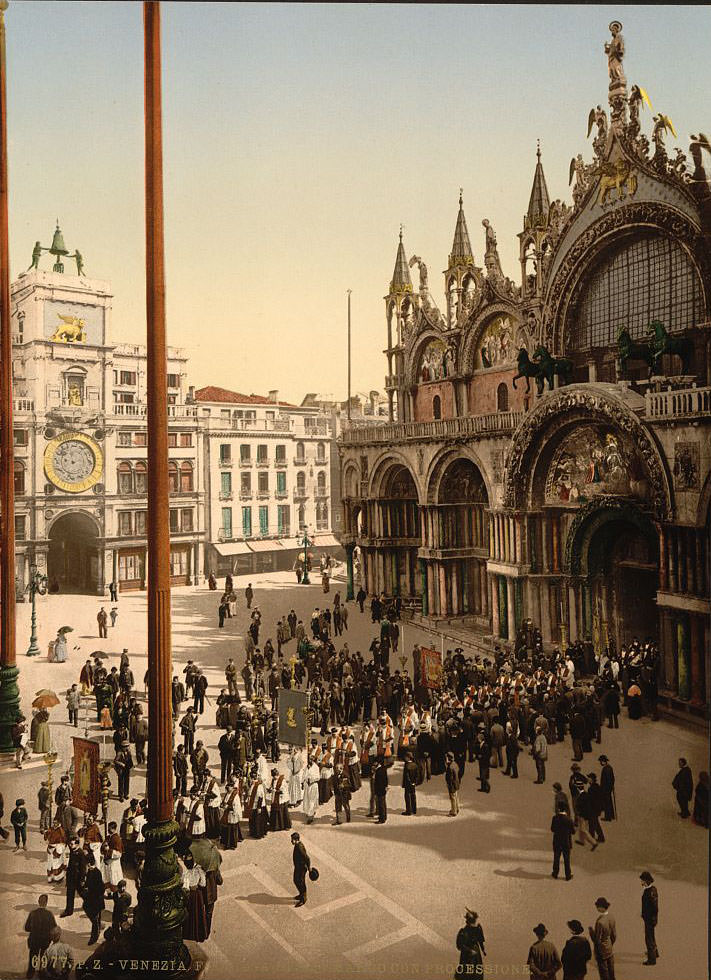
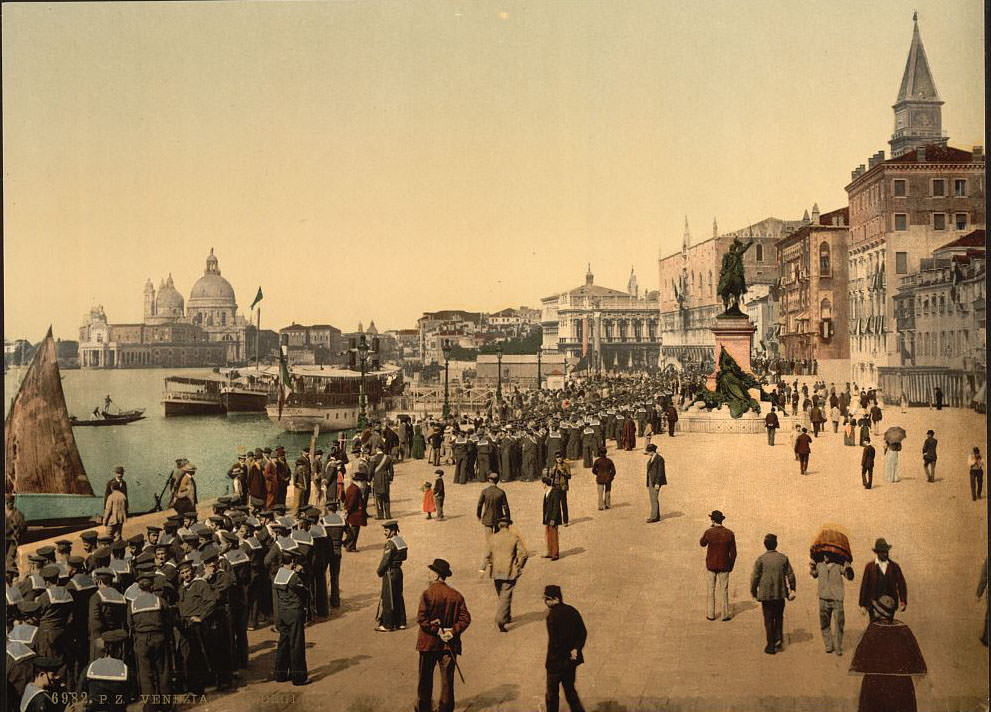
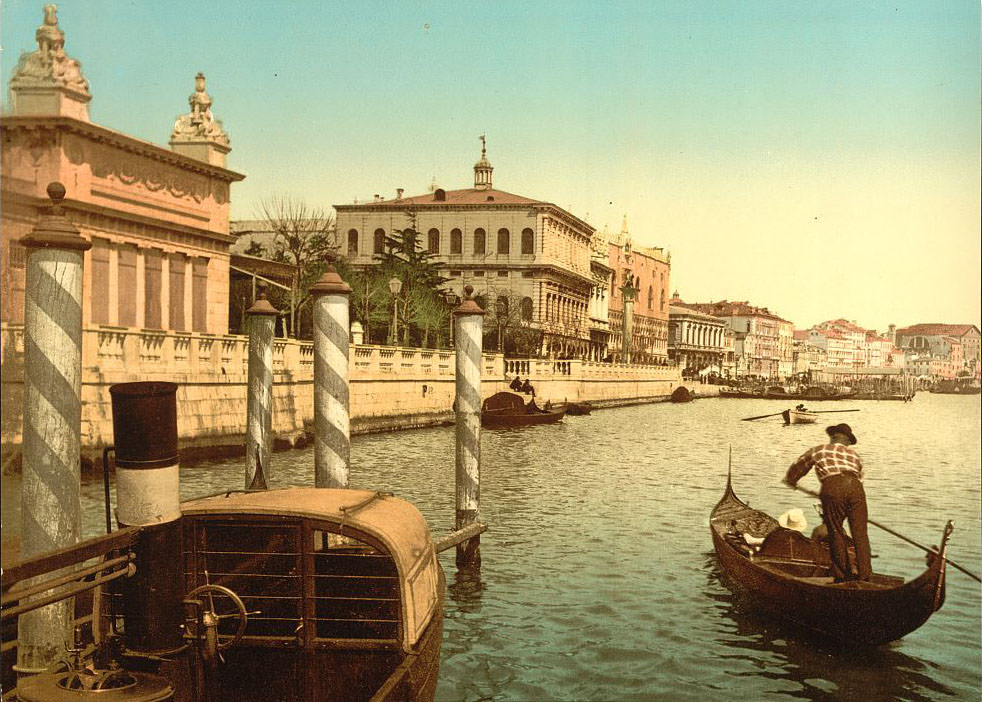
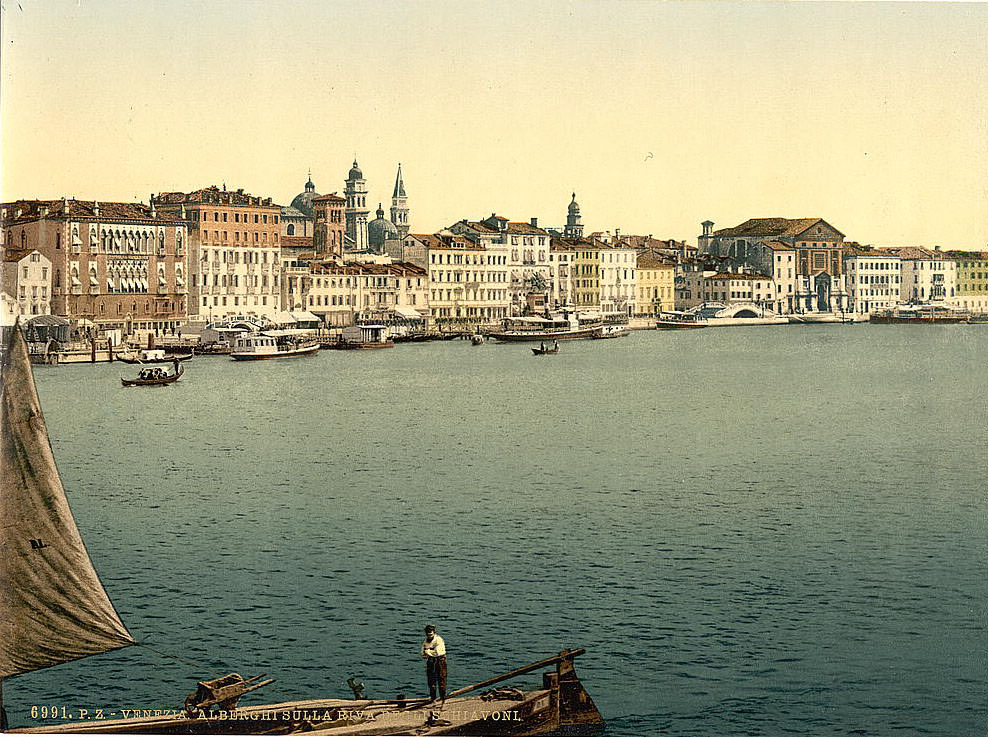
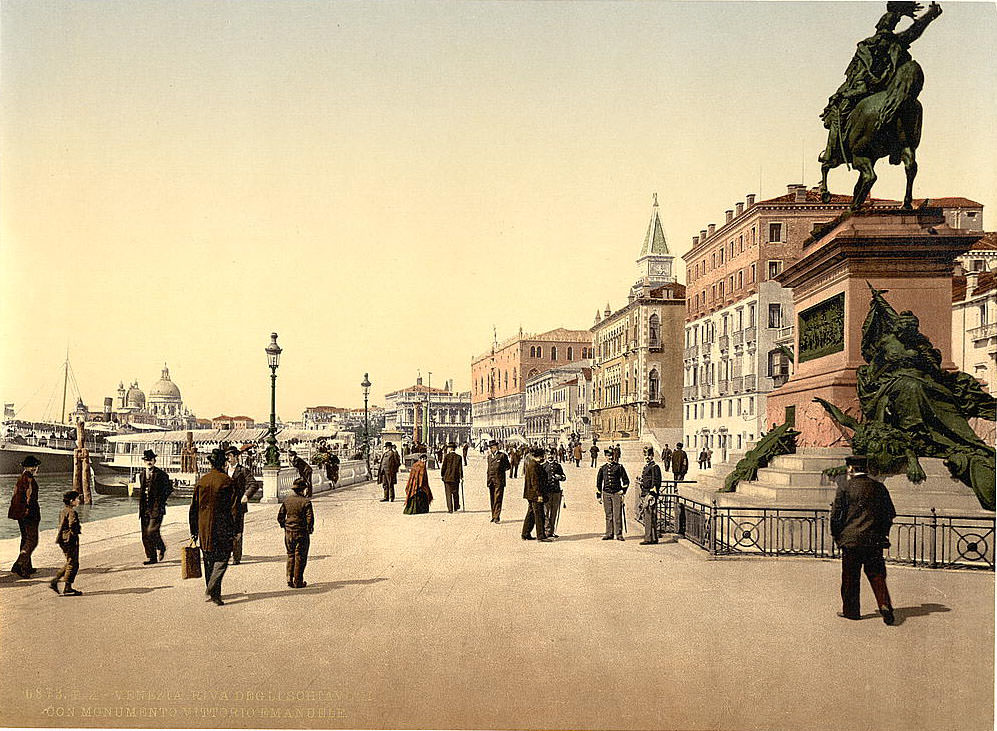
The Riva degli Schiavoni was the broad waterfront promenade stretching east from the Doge’s Palace. Named after the Slavic traders who once moored their ships there, it became one of the busiest and most picturesque areas in the city by the late 19th century. Hotels, cafés, and steamboat piers lined the riva, making it a constant hub of activity.
The Rialto Bridge was the oldest and most famous of the bridges spanning the Grand Canal. Built from stone between 1588 and 1591, it replaced a series of earlier wooden structures. Two rows of shops ran along its length, selling jewelry, fabrics, and souvenirs. The bridge and the bustling market district surrounding it remained the commercial center of Venice.
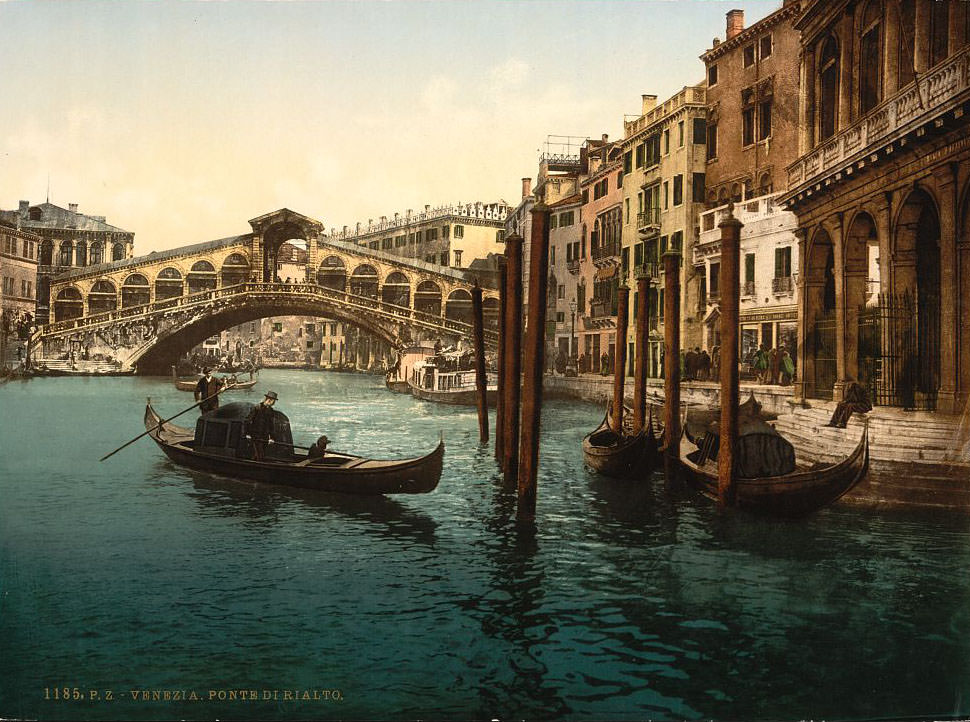
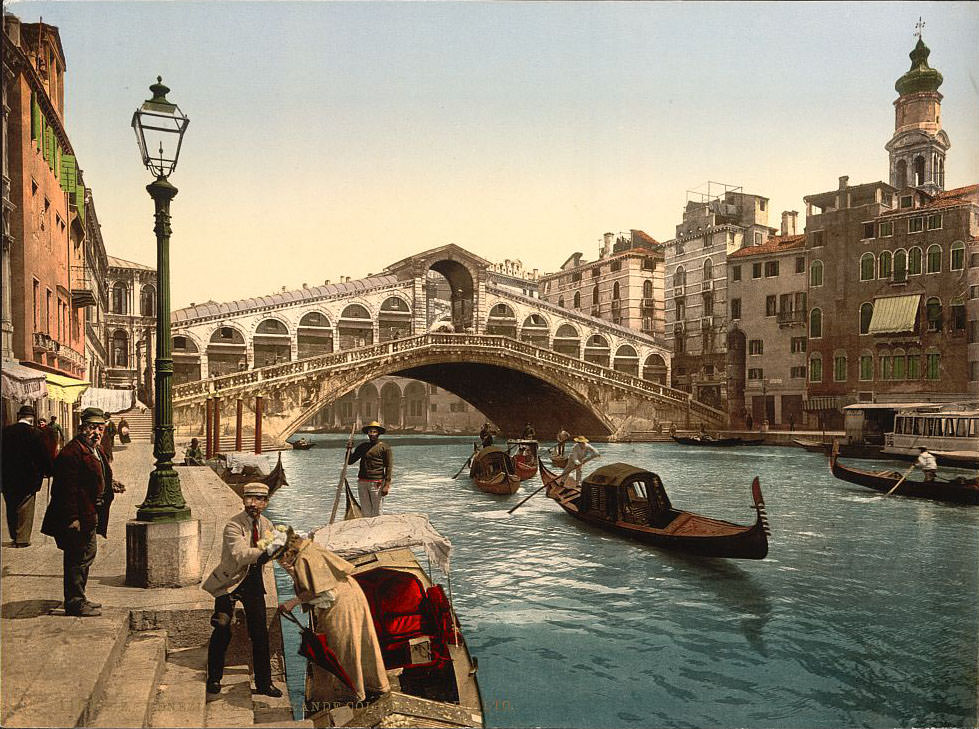
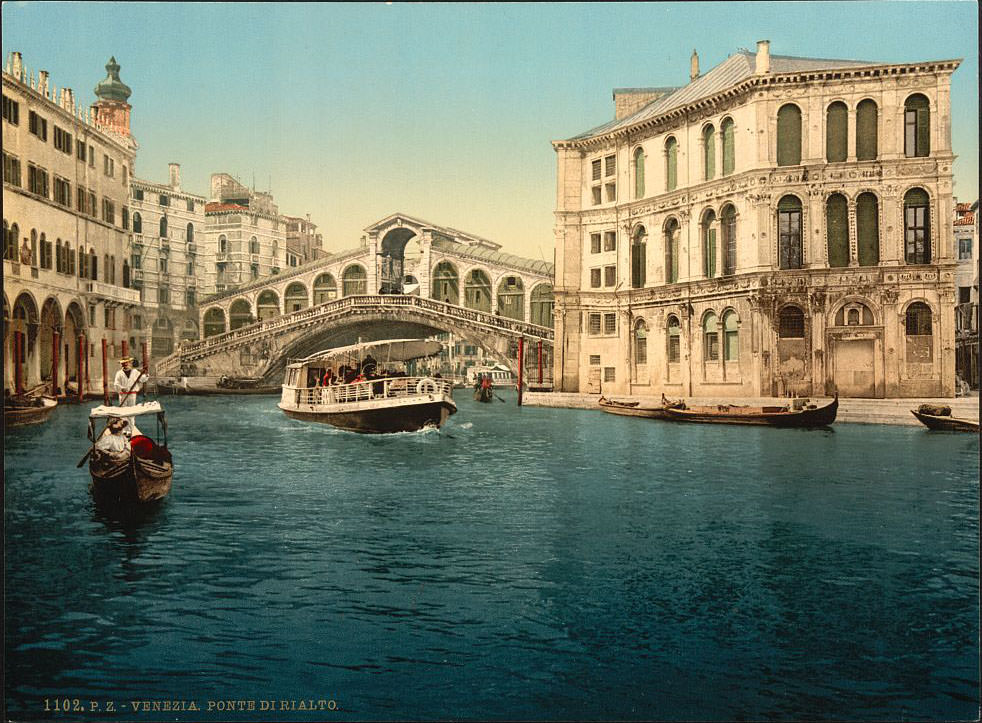
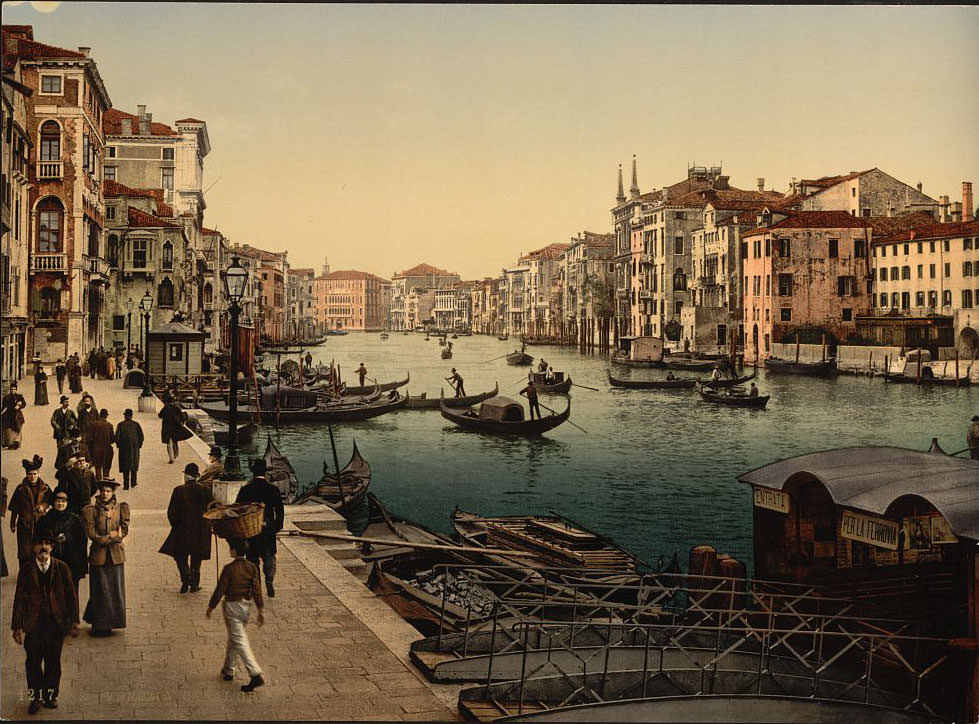
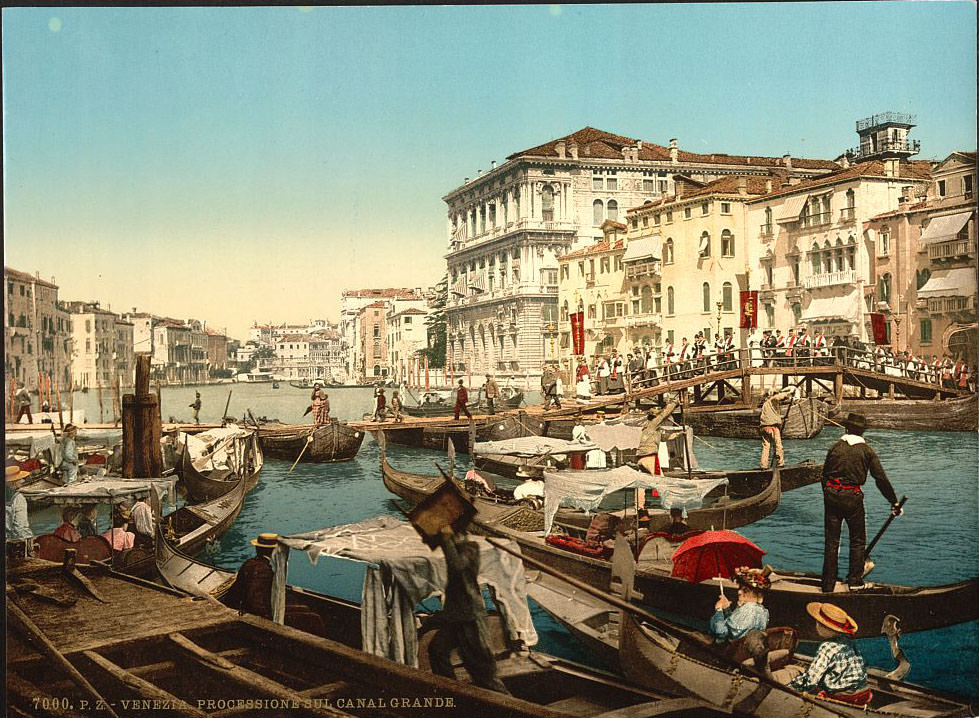
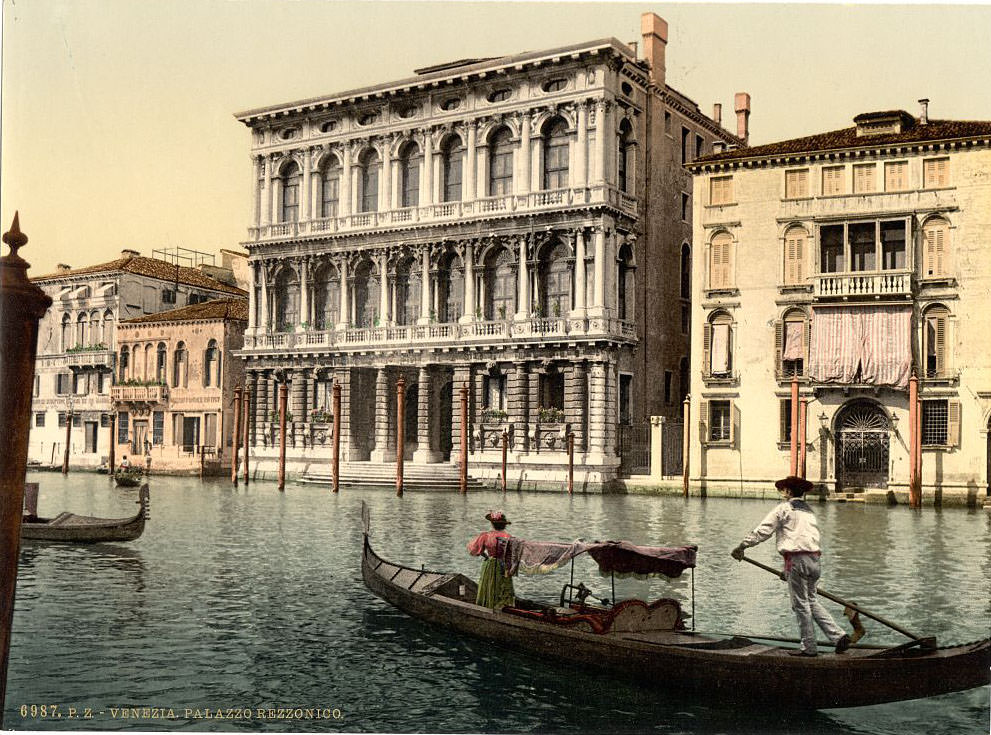
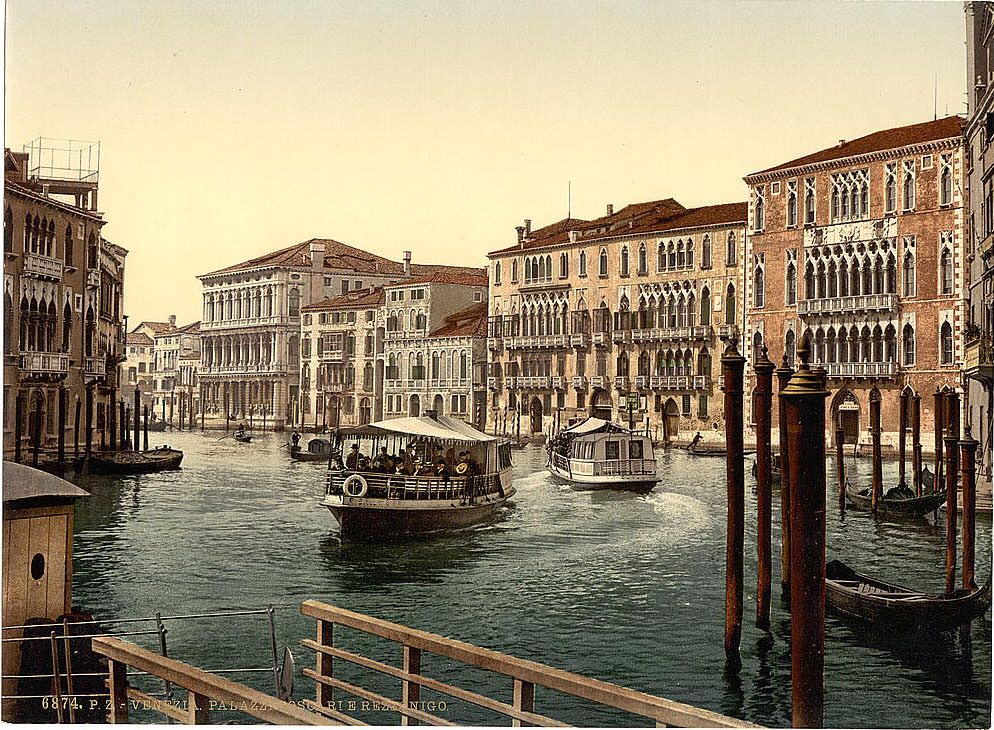
The Grand Canal — Venice’s main waterway — wound roughly two miles through the heart of the city in the shape of a reversed letter S. Palaces from the 13th through 18th centuries lined both banks, their facades reflecting off the water. Gondolas, freight barges, and the new steam-powered vaporettos all shared this busy corridor.
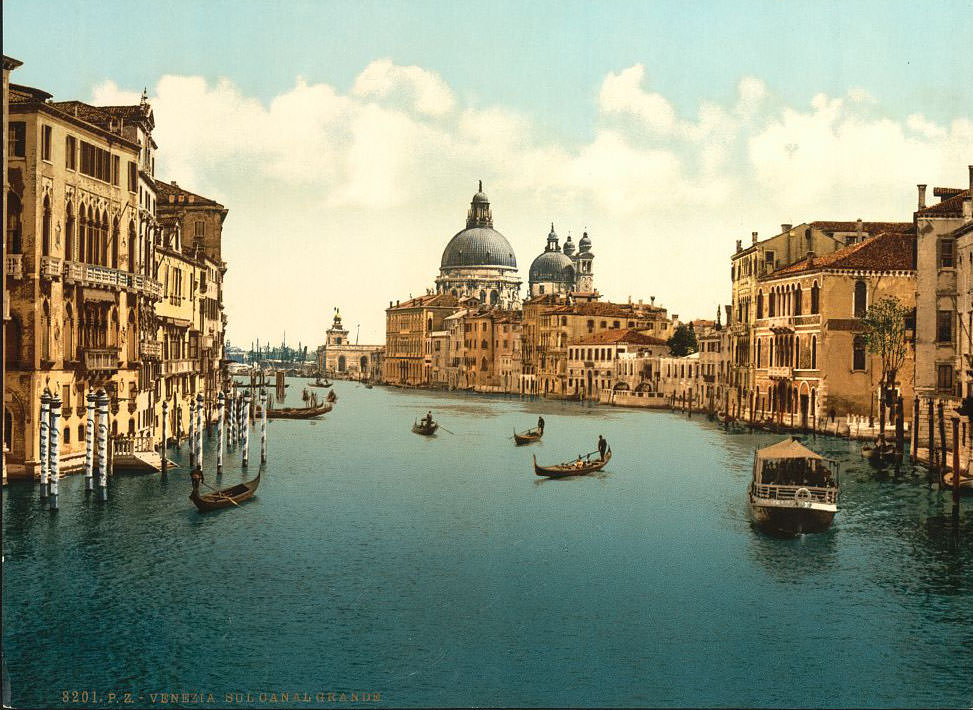
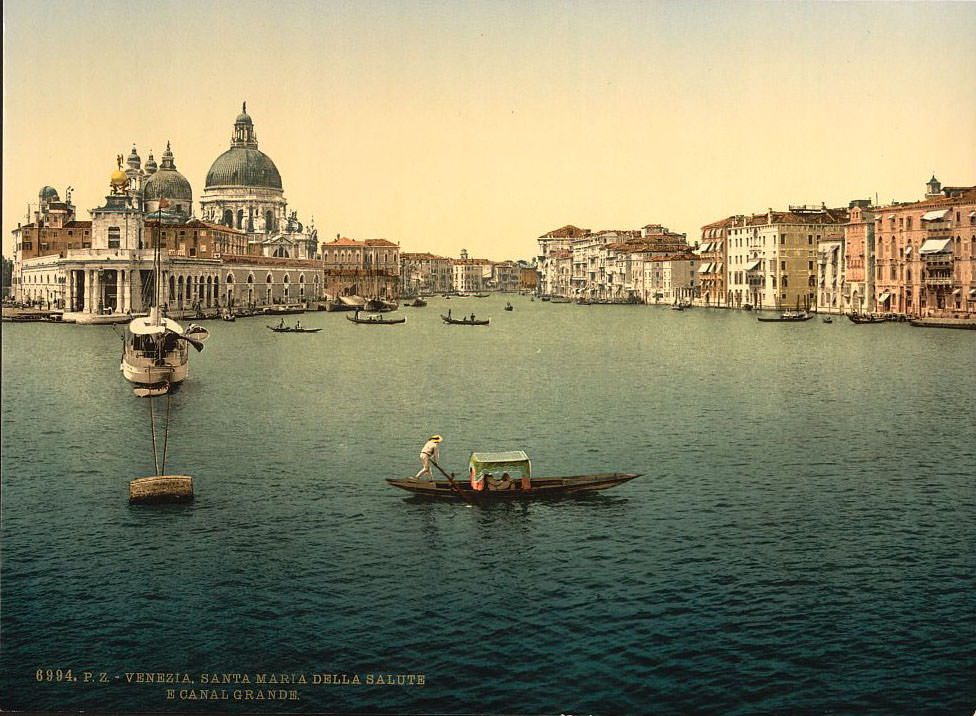
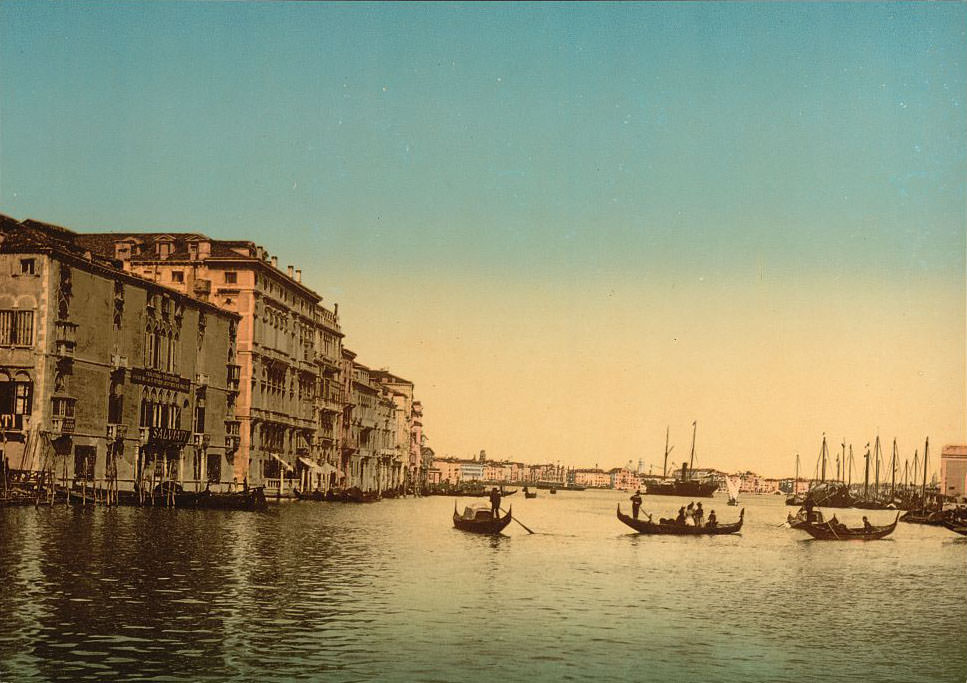
At the entrance to the Grand Canal stood the Basilica of Santa Maria della Salute, built in the 17th century as a votive offering after a devastating plague. Its massive white dome was a defining feature of the Venice skyline. International painters — including Claude Monet, John Singer Sargent, and James McNeill Whistler — came specifically to paint this view.
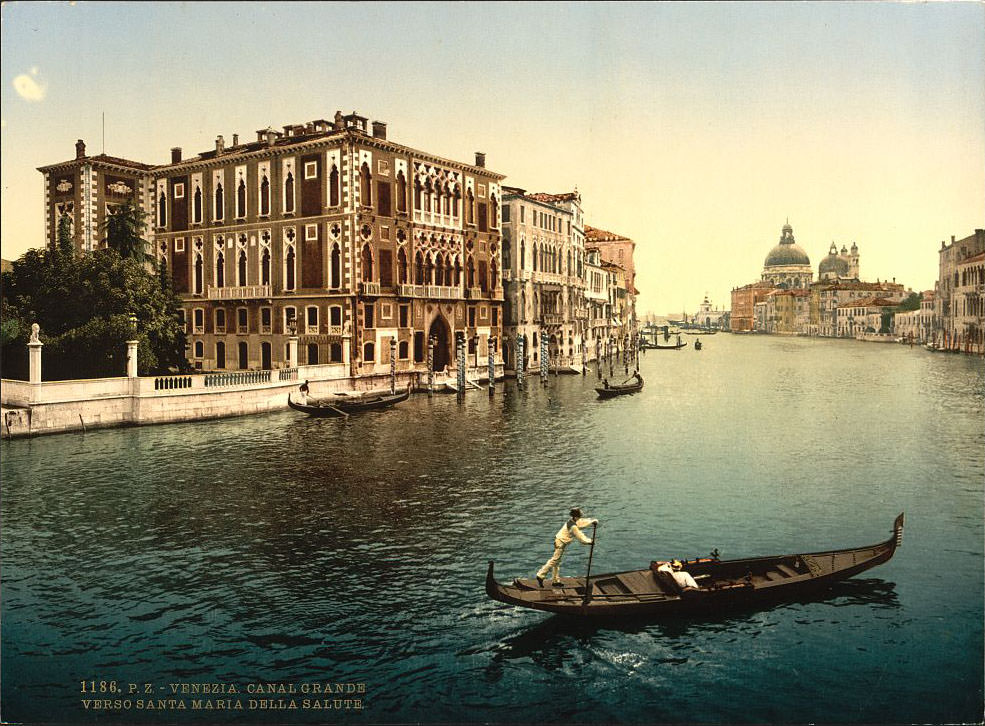
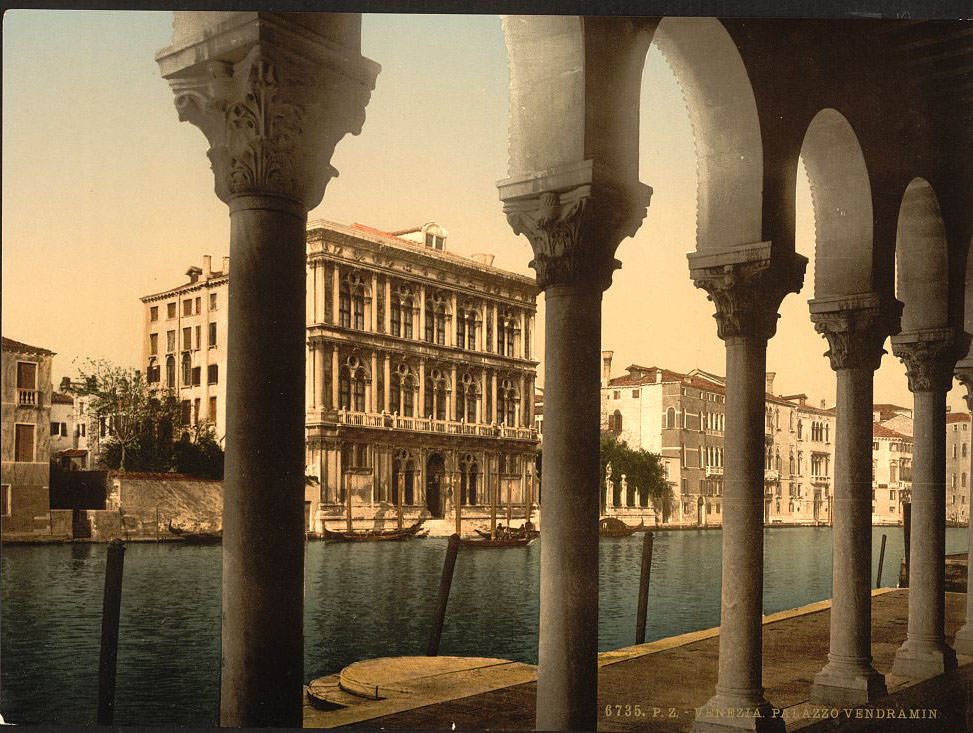
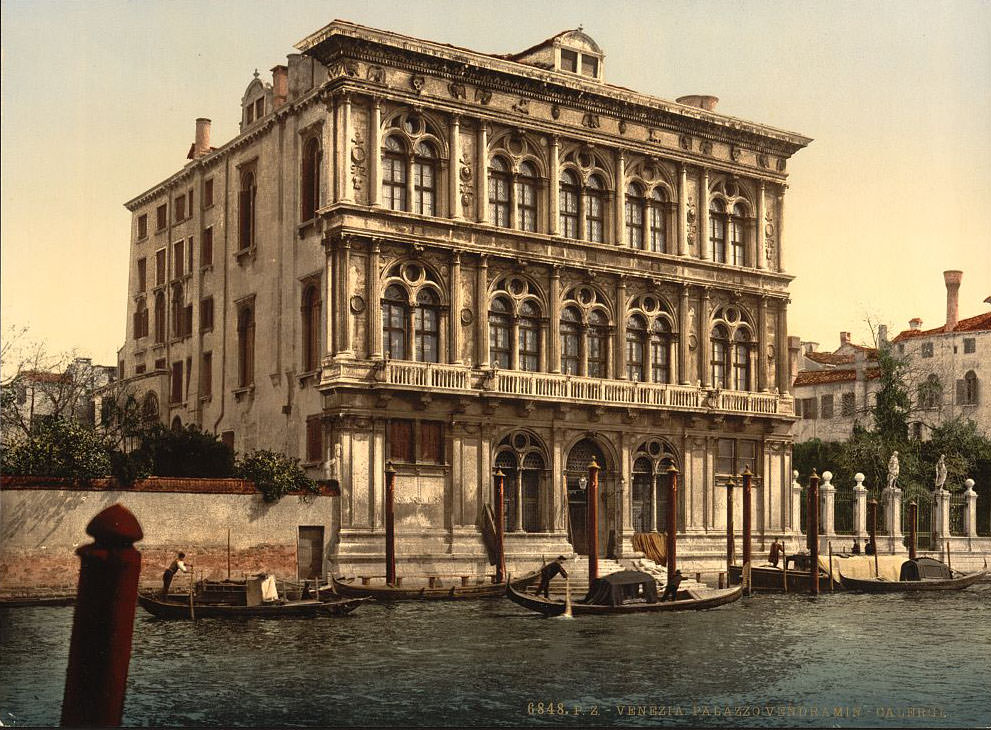
The Vendramin Calergi Palace, one of the grandest Renaissance palaces on the Grand Canal, gained special fame in 1883 when the German composer Richard Wagner died there in February of that year. By the late 1880s, the palace had become a pilgrimage site for music lovers traveling through Venice.
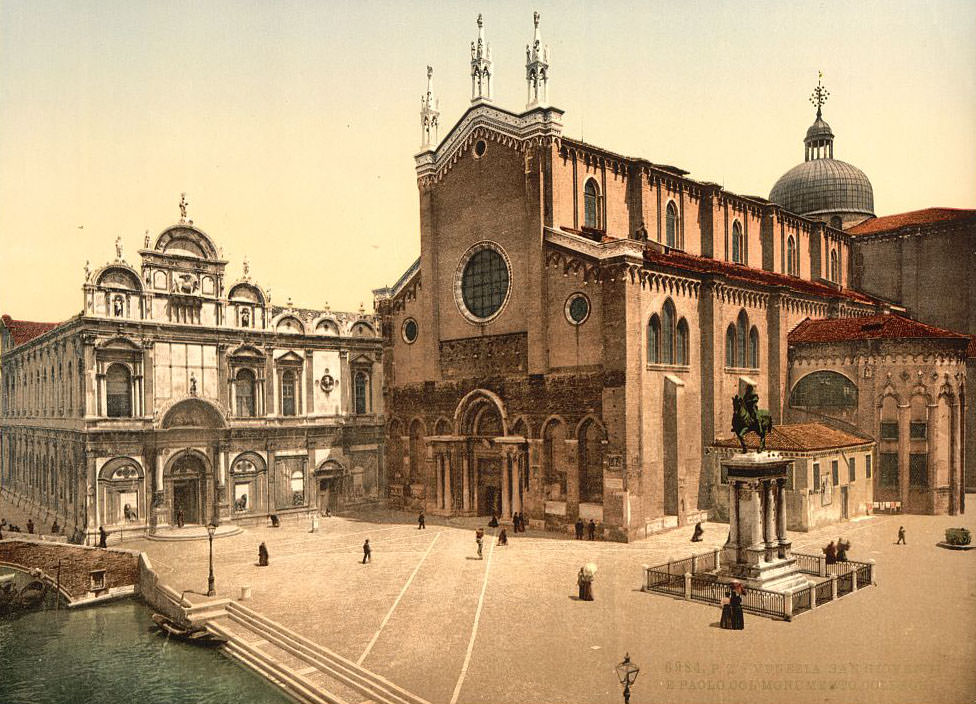
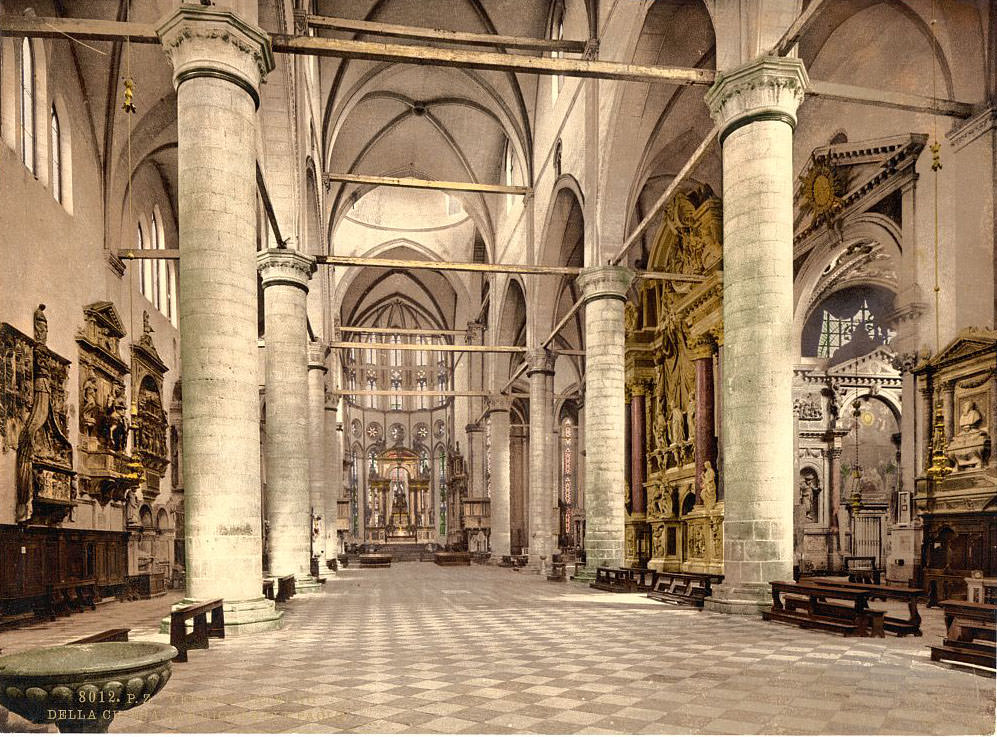
The Church of Saints John and Paul — known in Venetian dialect as San Zanipolo — was the largest Gothic church in the city. It served as the burial place of 25 Doges and contained some of the finest funerary monuments in northern Italy. Its interior was a gallery of Venetian sculpture and painting spanning several centuries.
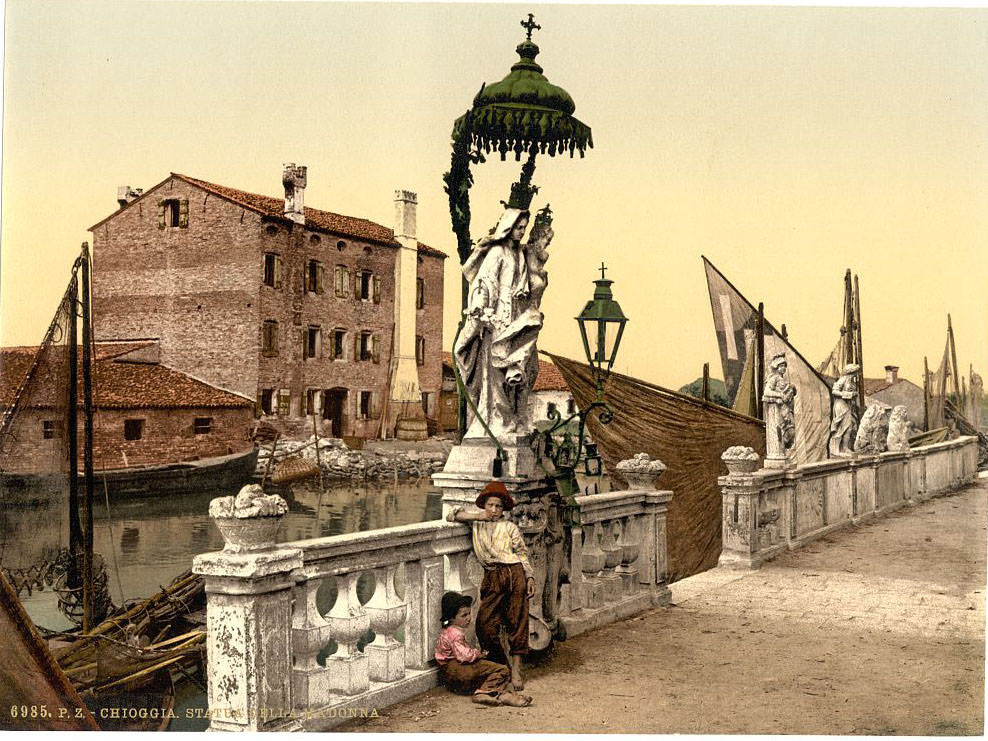
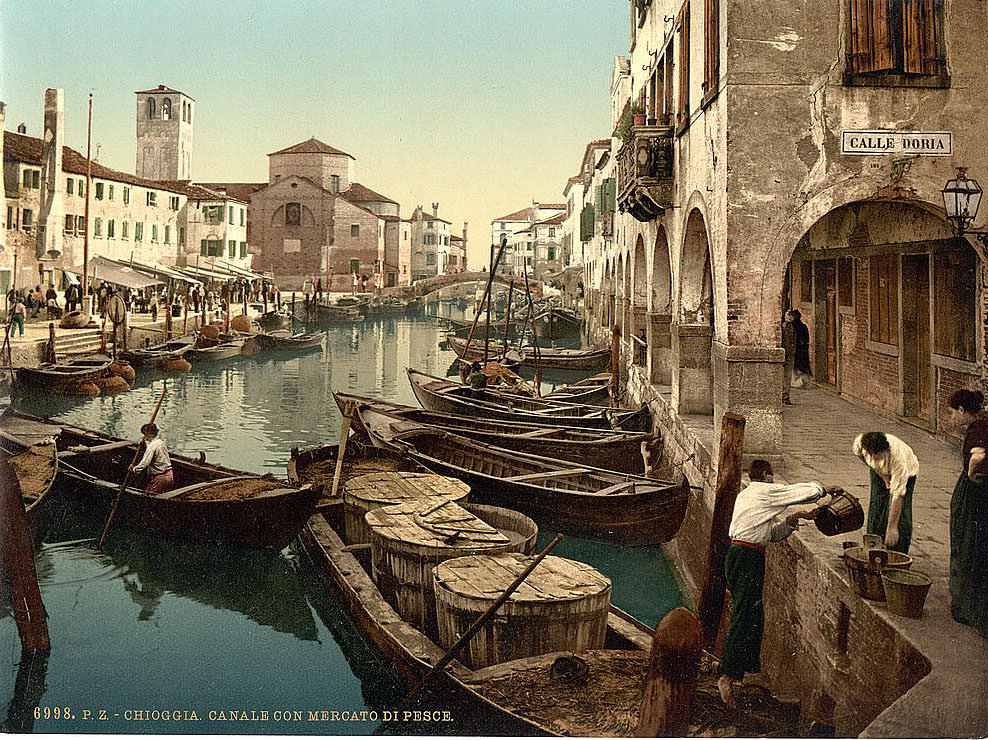
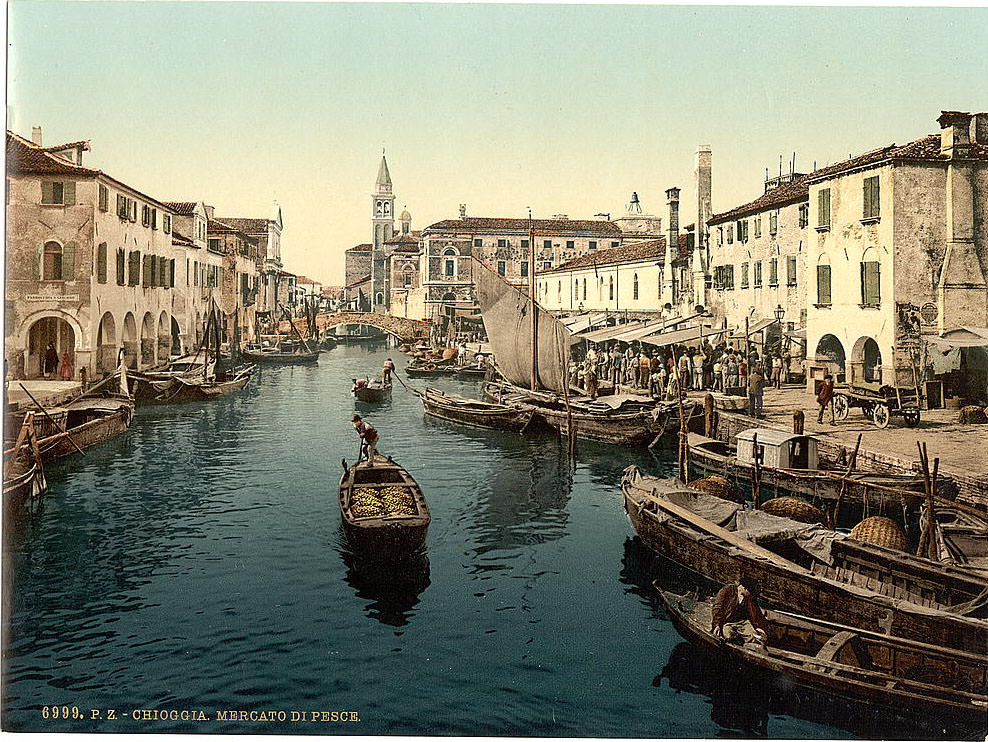
Beyond the main islands of Venice, the lagoon town of Chioggia offered a glimpse of a less-visited but equally genuine part of Venetian life. Its fish market was one of the most active in the northern Adriatic, supplying fresh catches to both local tables and the restaurants of Venice proper. The market’s energy and color made it a subject of great interest to visiting artists.
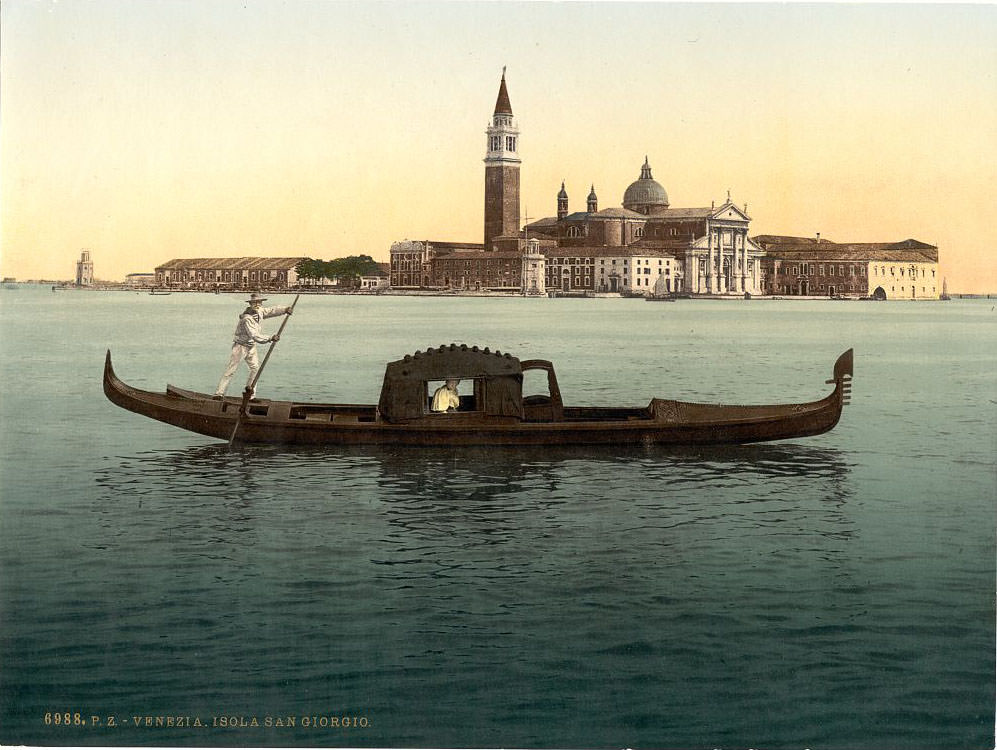
San Giorgio Maggiore, the island monastery and church designed by Andrea Palladio in the 16th century, sat directly across the basin from the Doge’s Palace. Its brilliant white marble facade and tall campanile created one of the most photographed views in Venice. The island also housed a functioning Benedictine monastery throughout the 19th century.
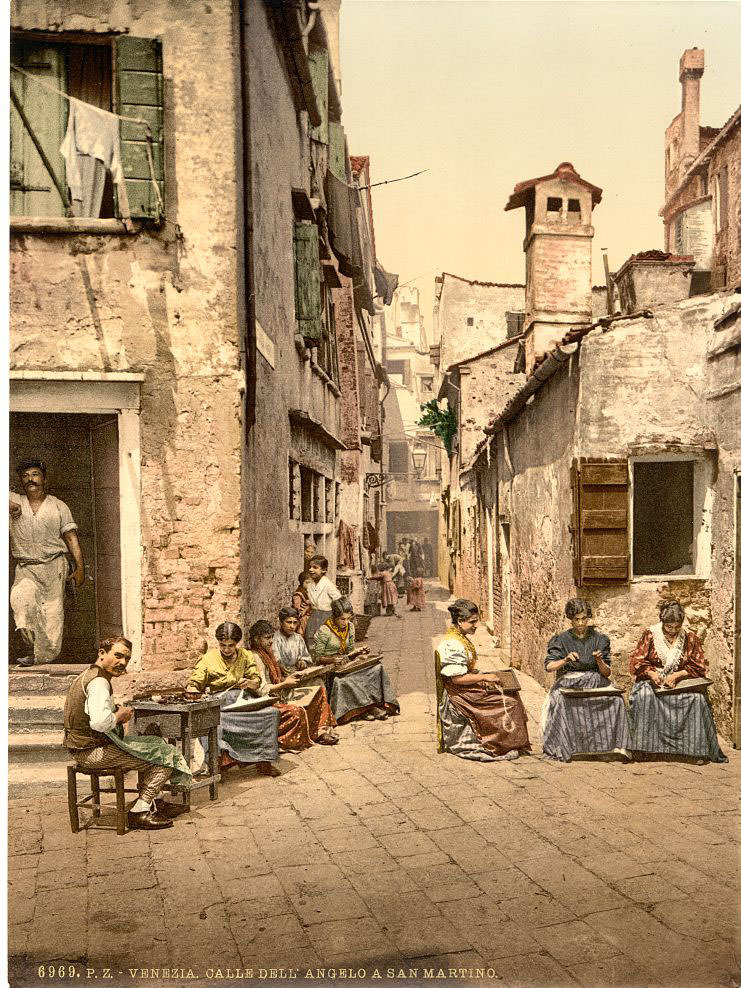
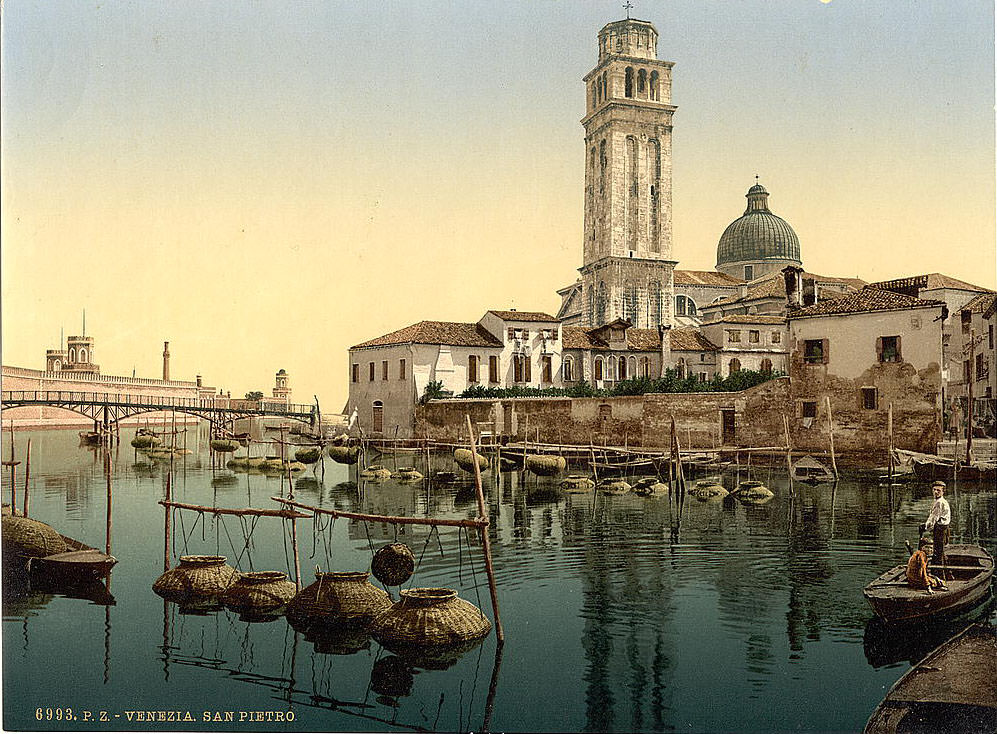
Away from the grand monuments and the busy piazza, everyday Venice was a maze of narrow alleyways, small courtyards, and quiet canals. Streets wide enough for only two people to pass each other wound between tall buildings that blocked out the sun for much of the day. These smaller spaces were where the working population — gondoliers, craftsmen, fishermen, and shopkeepers — actually lived.
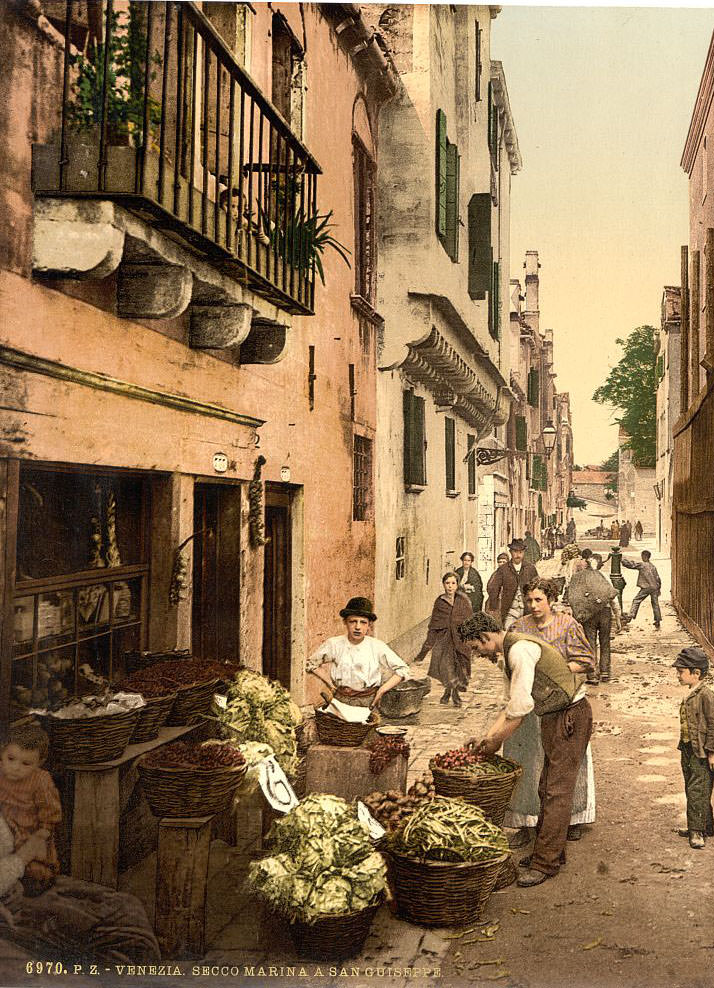
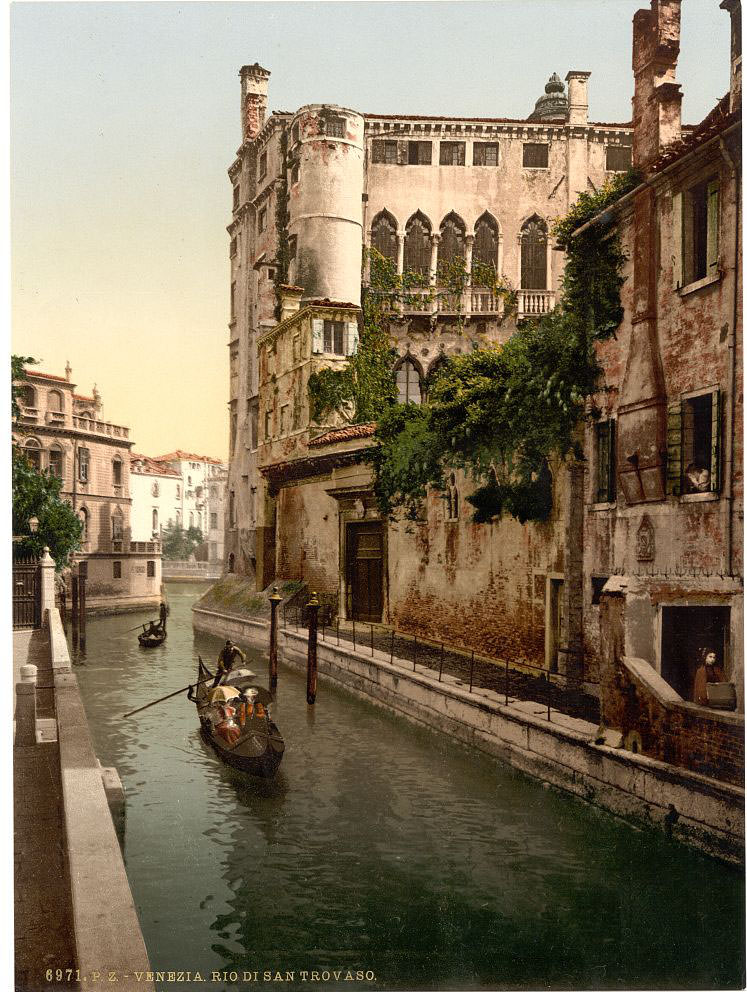
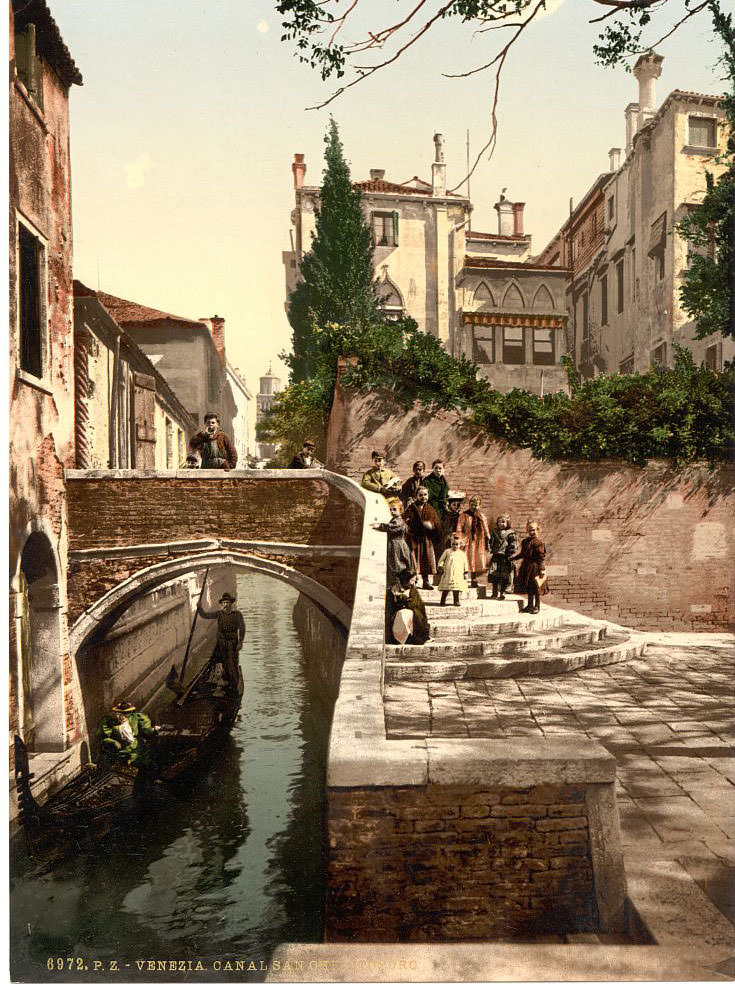
Venice’s smaller canals — the rii — carried the daily traffic of goods and people through the residential neighborhoods. Each canal was crossed by dozens of small bridges, and the constant need to maintain these waterways placed a heavy financial burden on the city. Canal walls were always at risk of erosion, and major flooding during winter storms required repeated repairs.
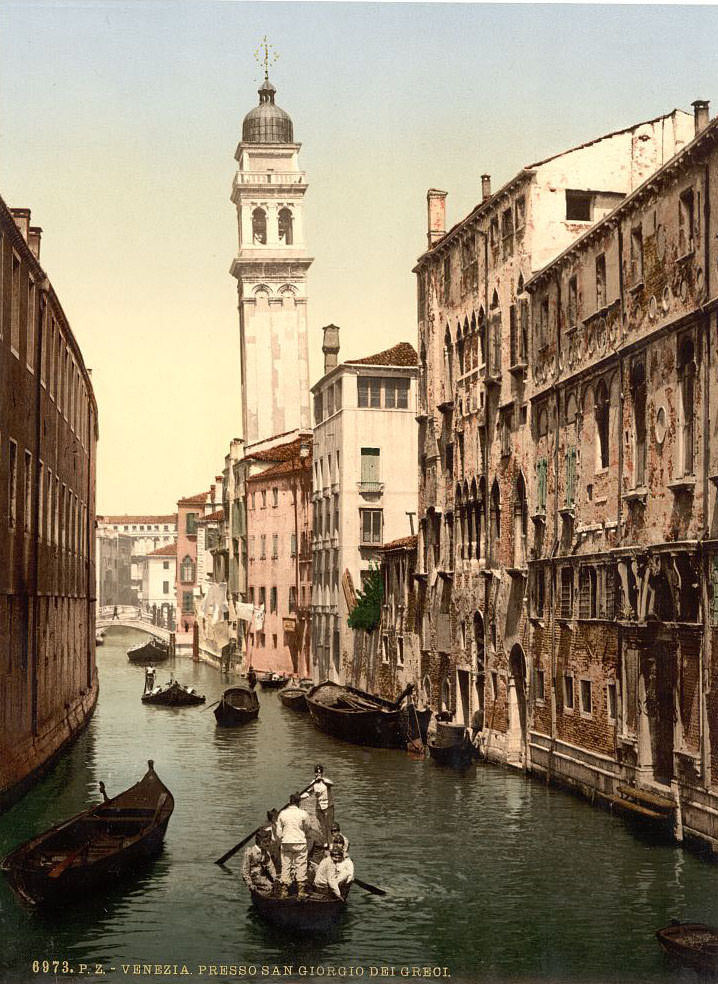
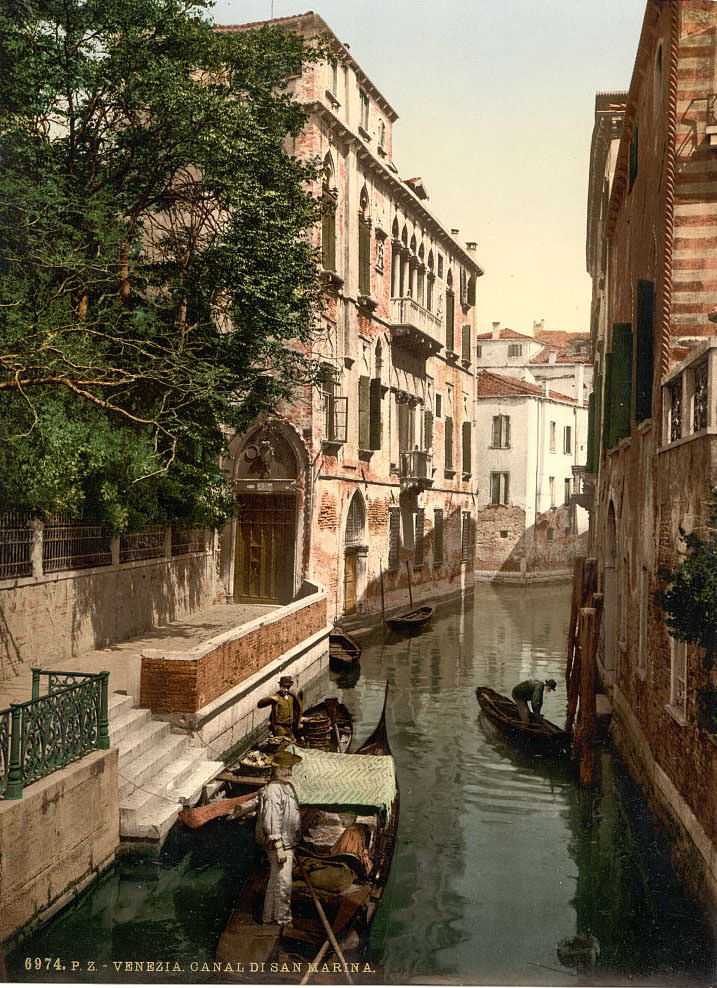
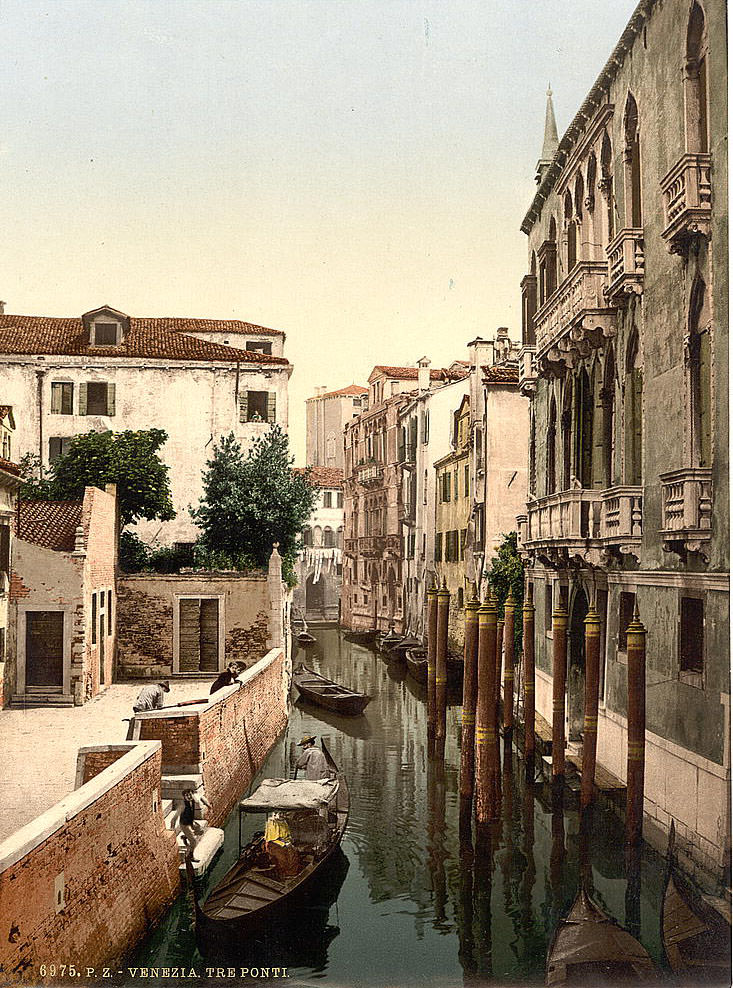
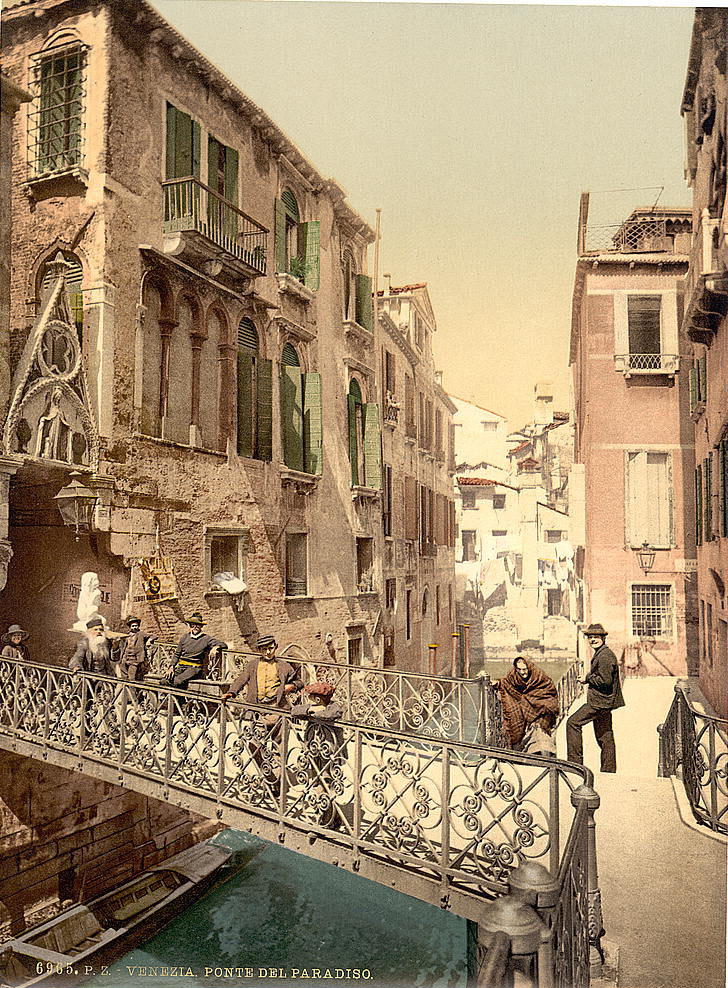
The streets near the Rialto Bridge were among the most commercially active in the city. Merchants selling textiles, spices, glassware, and food crowded the narrow lanes. Venice’s famous glassmaking industry, centered on the nearby island of Murano, still operated in the late 19th century, though it faced growing competition from cheaper glass produced elsewhere in Europe.
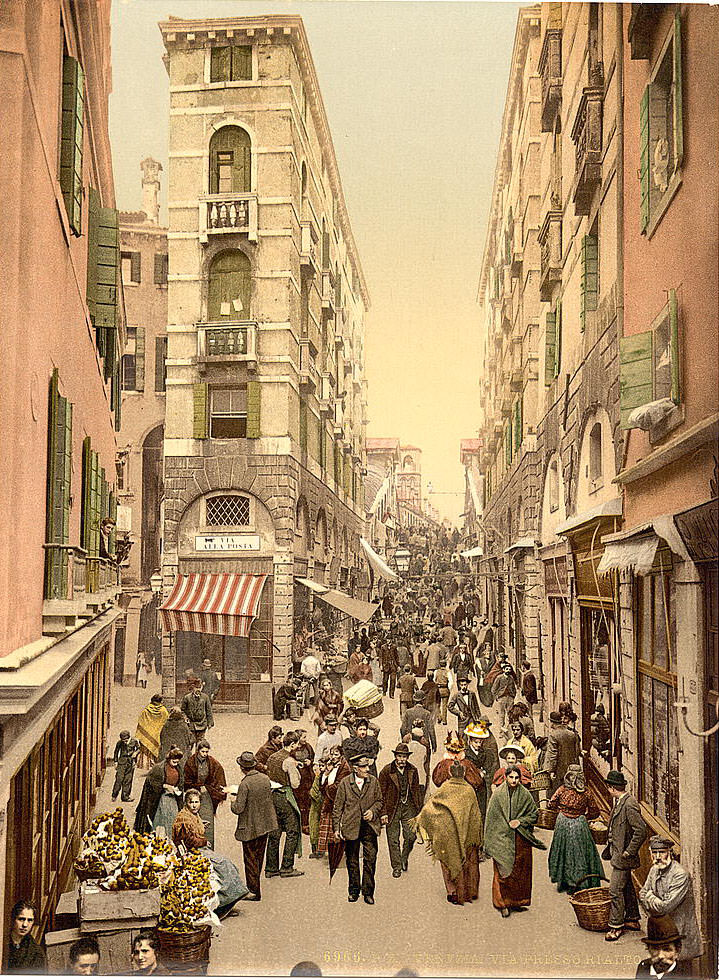
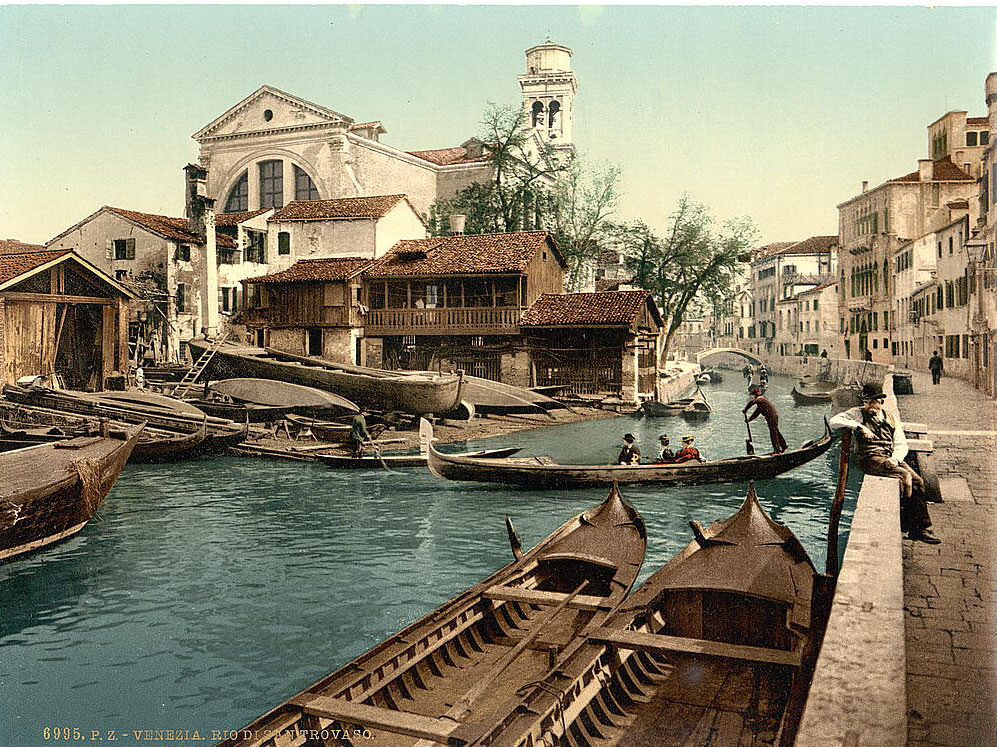
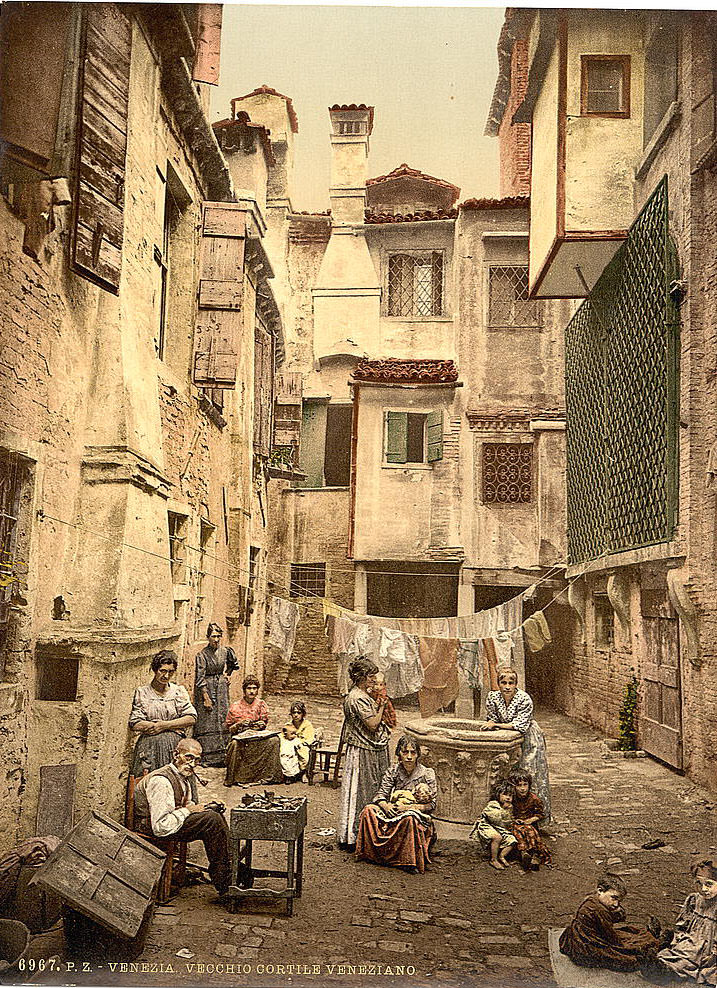
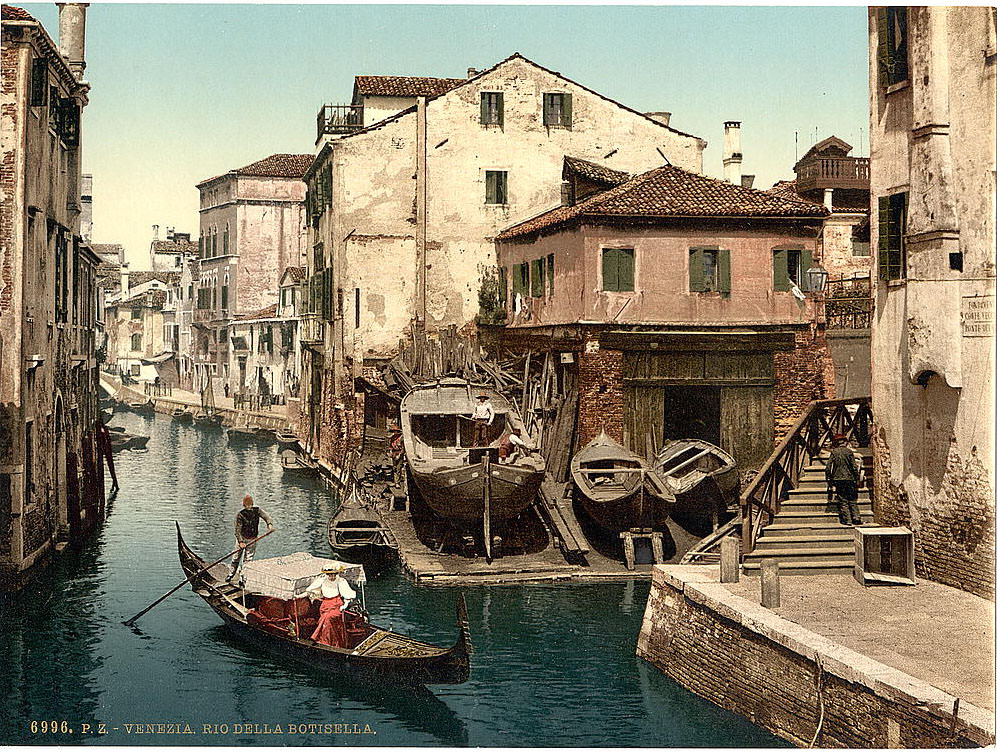
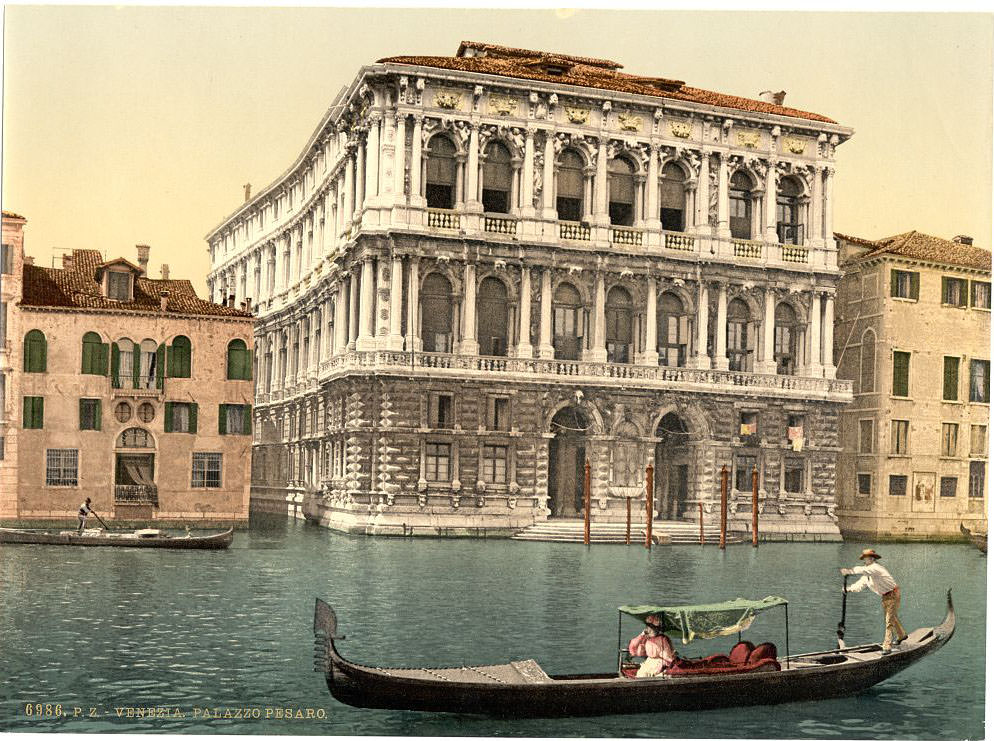
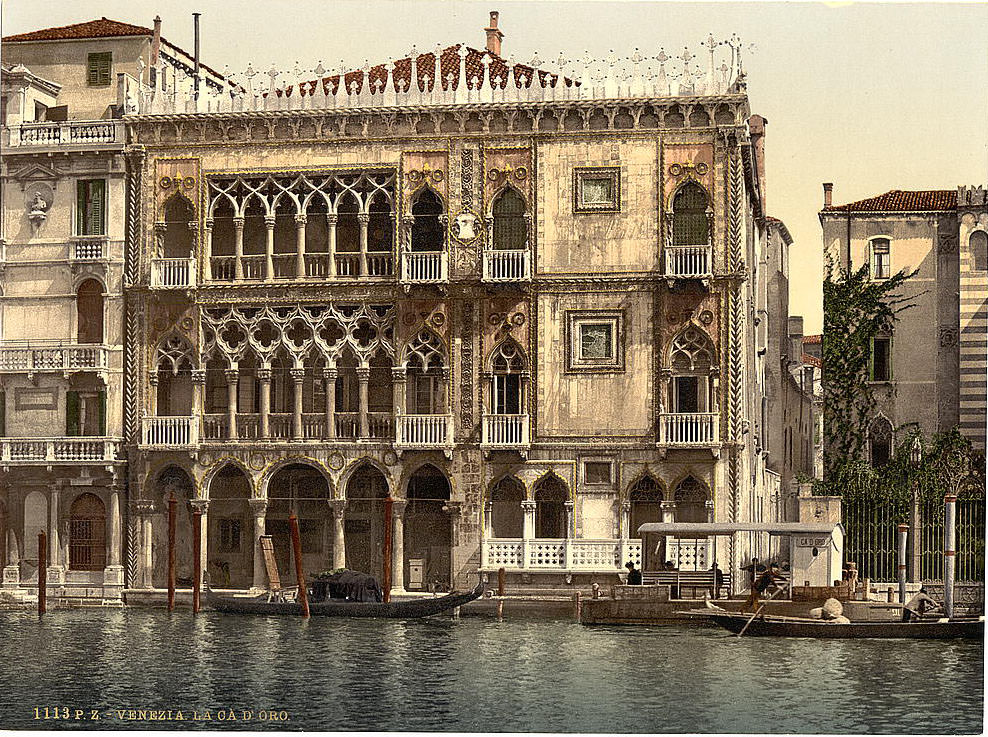
Traditional Venetian palaces lined even the smaller canals throughout the city. Many had fallen into disrepair by the late 19th century as their aristocratic owners lost wealth and the cost of maintenance proved overwhelming. Some were converted into hotels and boarding houses to serve the growing number of tourists arriving each season.
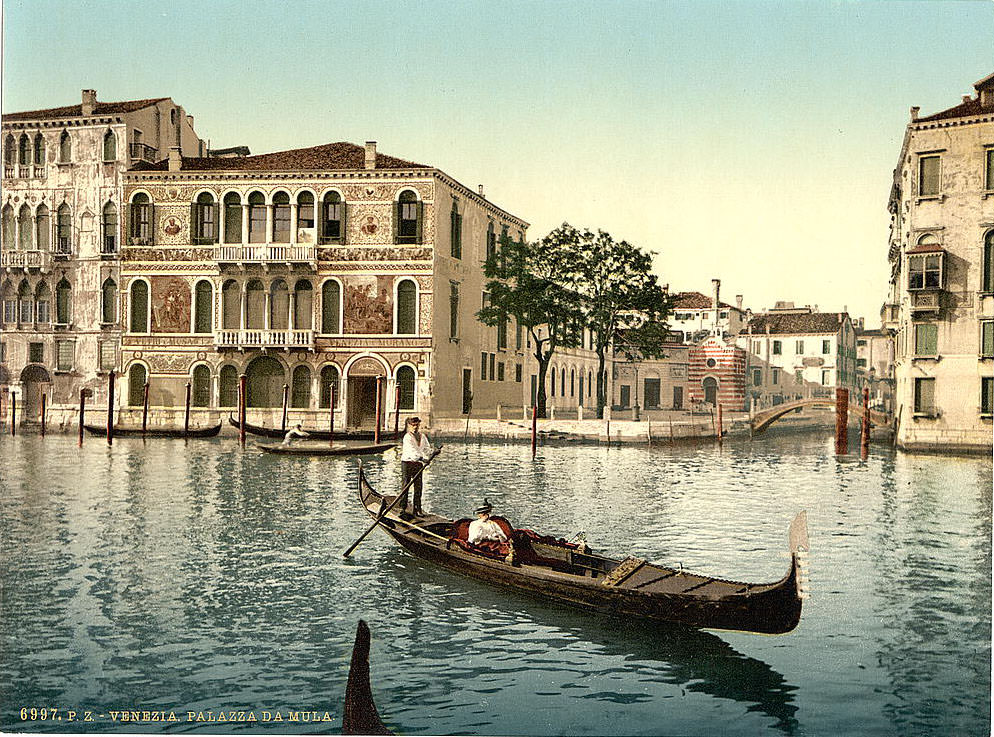
Back along the Riva degli Schiavoni, the waterfront remained one of the most active areas of the city throughout the day and into the evening. Vendors, travelers, sailors, and locals all passed through. The Bauer Hotel Grunewald, established to accommodate the wealthier class of European tourist, stood nearby as one of the early purpose-built grand hotels in the city.
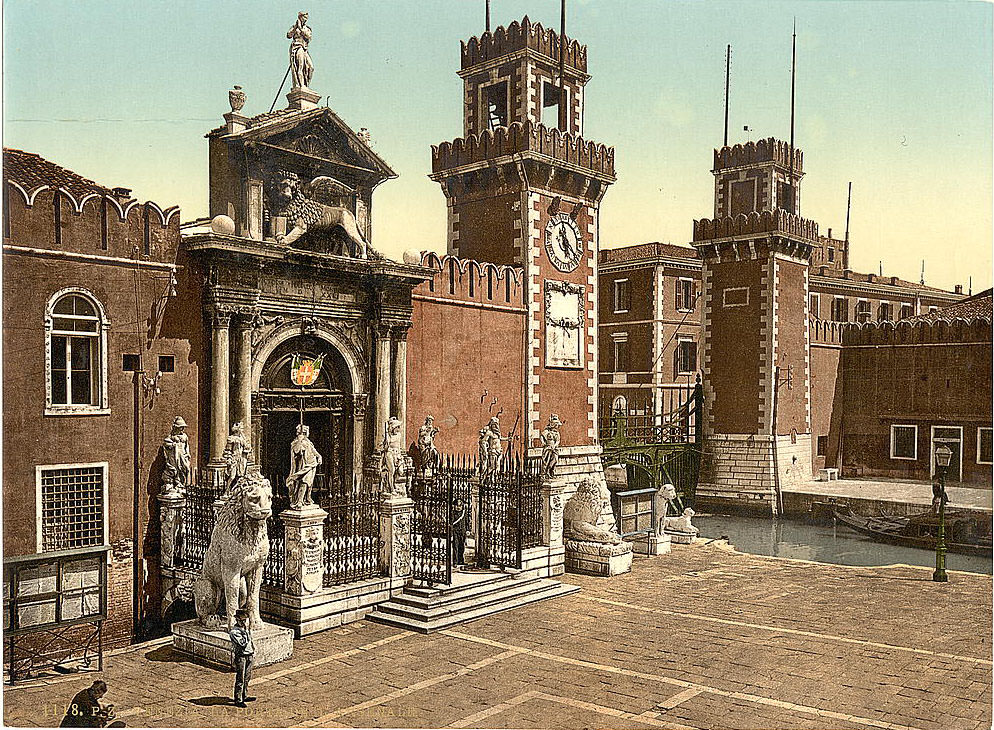
The Venetian Arsenal was one of the largest industrial complexes in medieval and early modern Europe. At its peak, it employed thousands of workers and could produce a complete warship in a single day using an early form of assembly-line production. By the late 19th century, the Arsenal’s military role had dramatically shrunk, though the Italian navy still maintained operations there.
The Victor Emmanuel Monument visible in Venice referenced the broader political transformation of Italy. After the Risorgimento — the unification movement — and Venice’s incorporation into the Kingdom of Italy in 1866, public monuments to the new royal house began appearing in cities across the country, marking the end of centuries of separate governance.
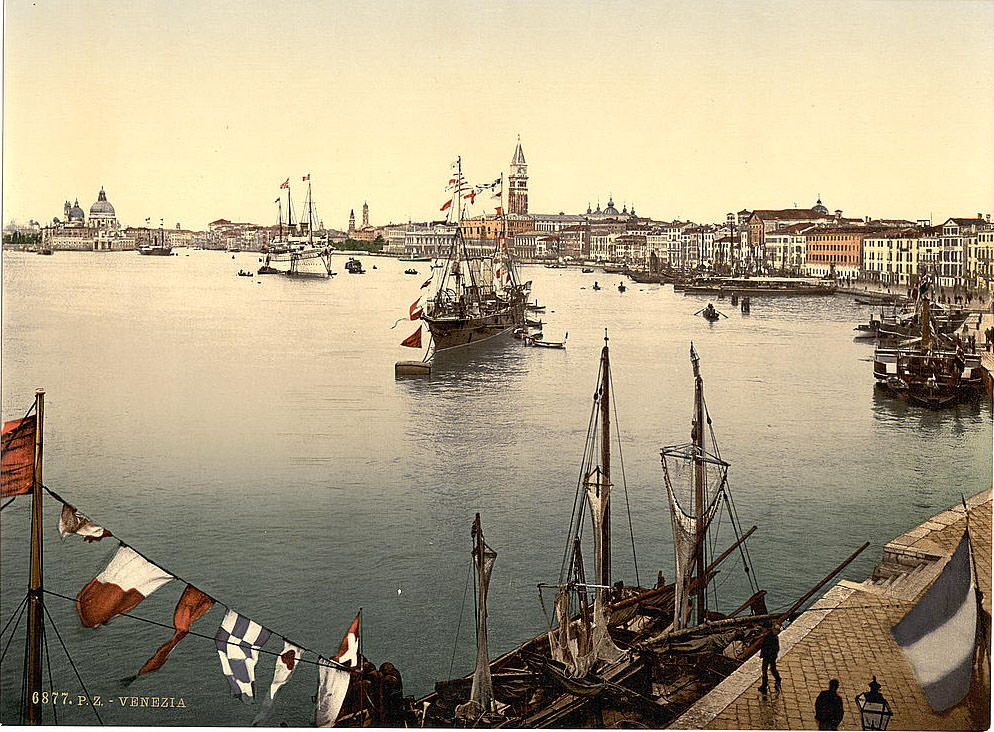
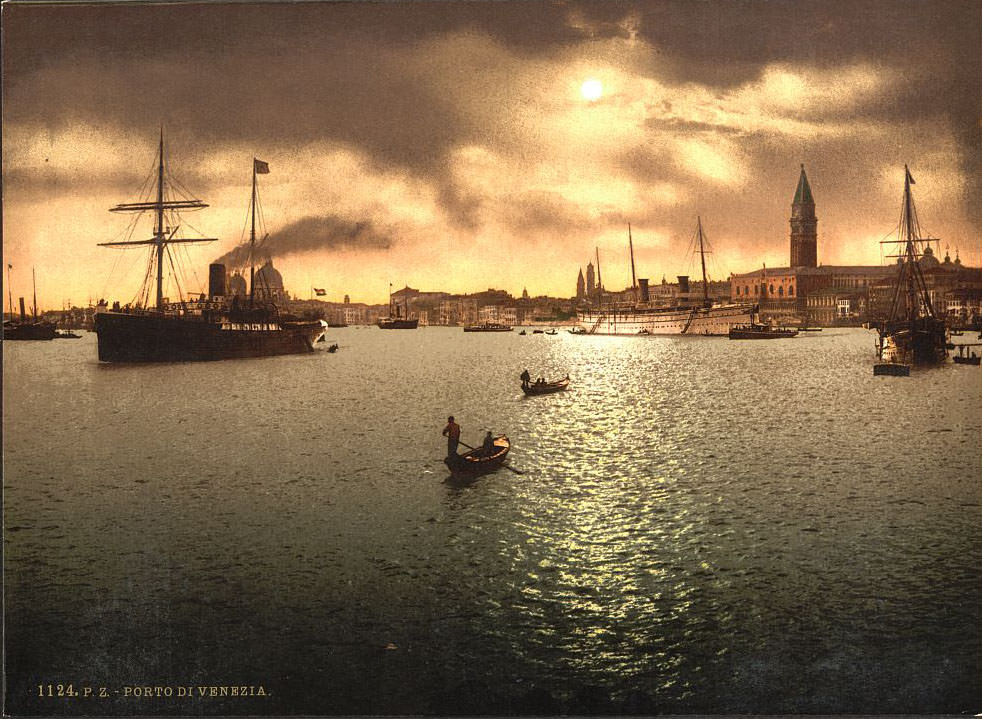
The harbor of Venice saw a remarkable range of vessels in the late 19th century — from traditional gondolas and fishing boats to modern steamships. Among the most notable visitors was the Hohenzollern, the imperial yacht of Kaiser Wilhelm II of Germany, which called at Venice during one of his Mediterranean voyages. Its arrival drew considerable attention from the city’s residents and visitors alike.