
Ireland in the 1960s was a country in motion. For decades, the Irish government had leaned toward economic self-reliance and the protection of its own culture. But by the time the 1960s arrived, that approach was giving way to something new. Economic growth became a national priority. Social planning moved to the center of government policy. Ireland was opening itself to the wider world, and the changes showed up everywhere — in its cities, its towns, its people, and its daily rhythms. The photographs in this collection bring that transformation to life. Taken across the full span of the decade, they capture pubs and processions, coastal villages and city streets, famous faces and ordinary moments. Together they form a vivid record of a country in the middle of becoming something different.
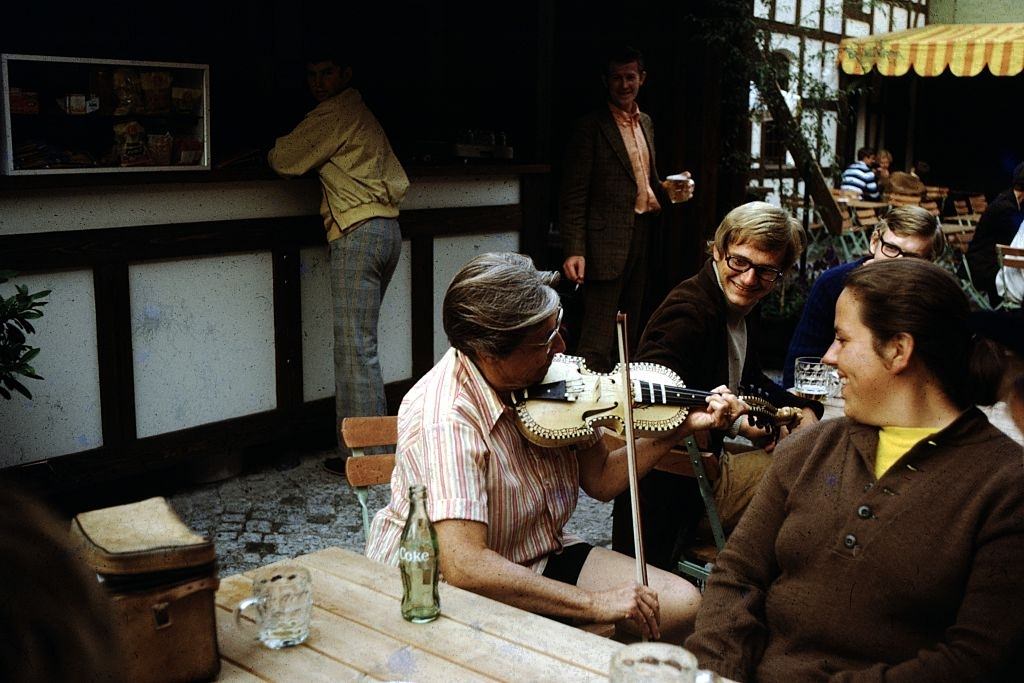
Traditional music remained deeply woven into Irish social life as the decade opened. A woman playing the fiddle in a café was not a performance staged for tourists — it was simply how evenings passed. The café, the pub, and the bar-general store were the centers of community life, especially in rural Ireland.
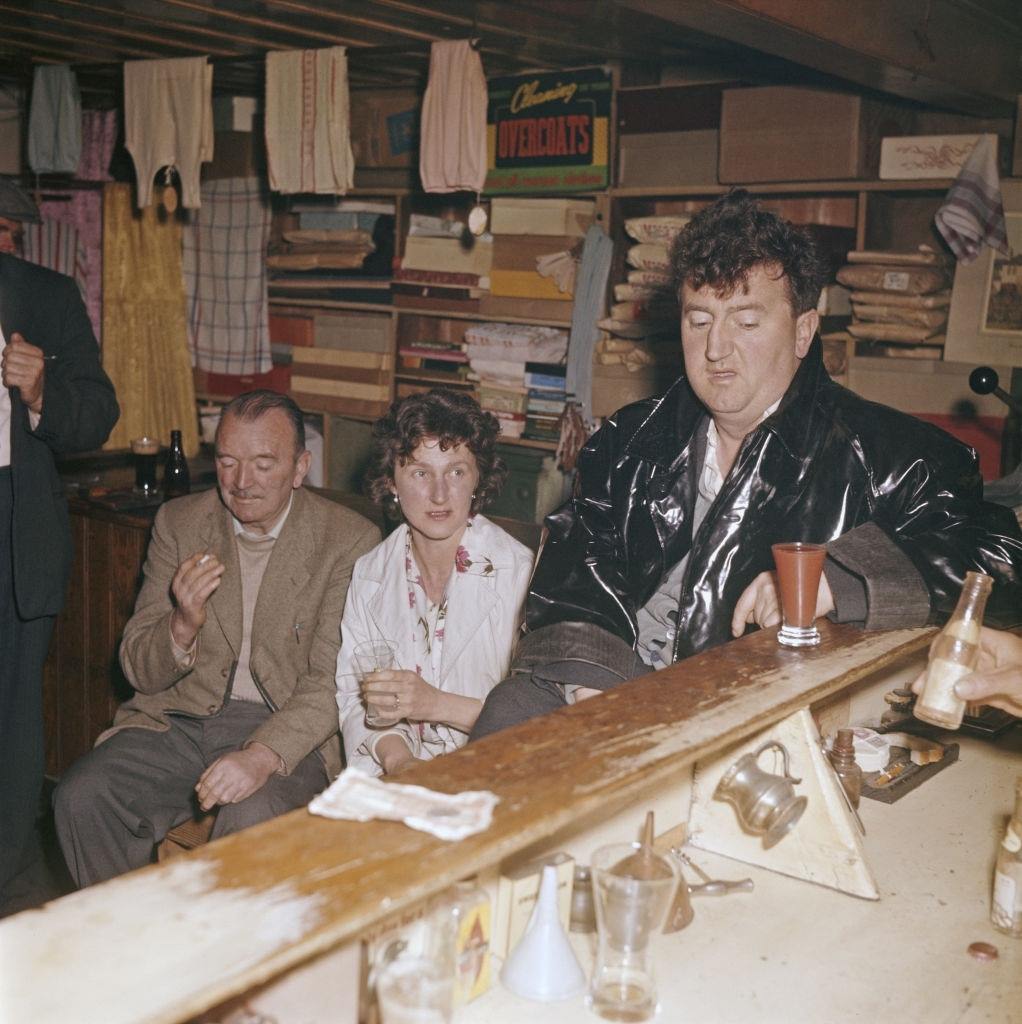
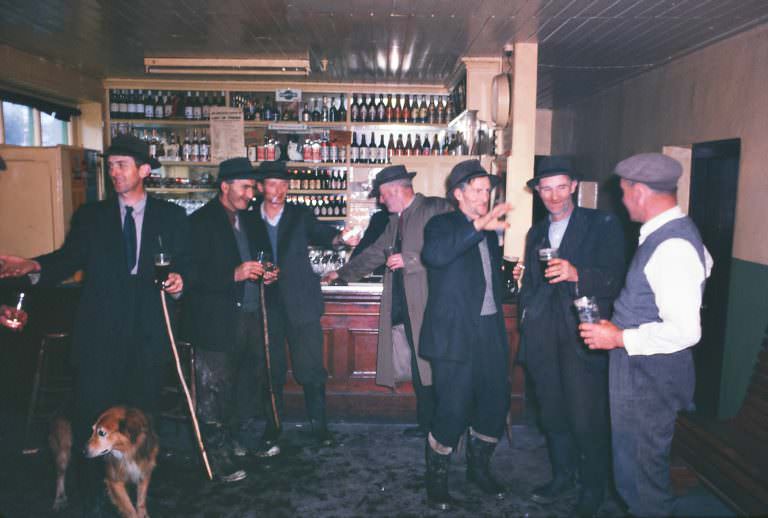
One of Ireland’s most recognizable literary figures was still a fixture at its bars and shops in 1960. Brendan Behan, the Dublin-born poet and playwright, had risen to international fame with works like The Quare Fellow and Borstal Boy. That same year, a photographer caught him in a bar-general store in County Donegal — a setting that fit him perfectly.
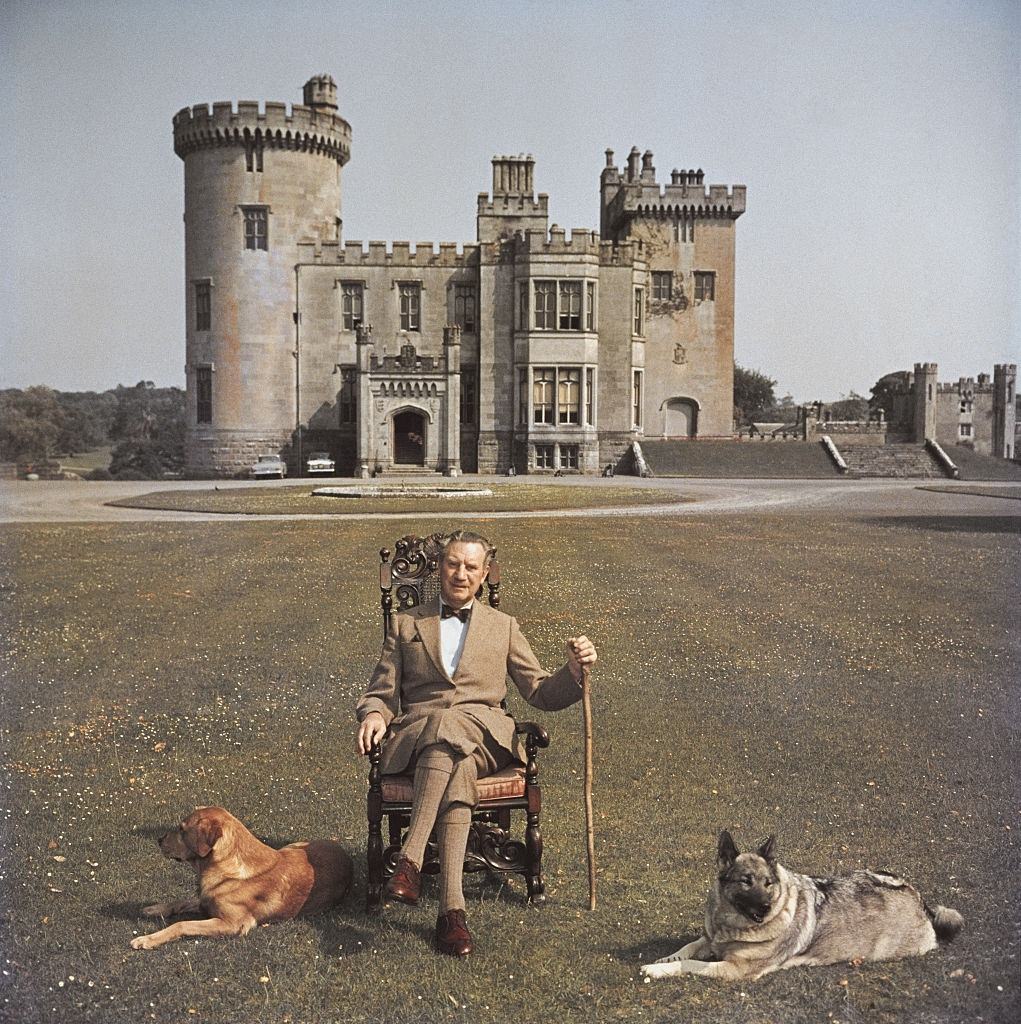
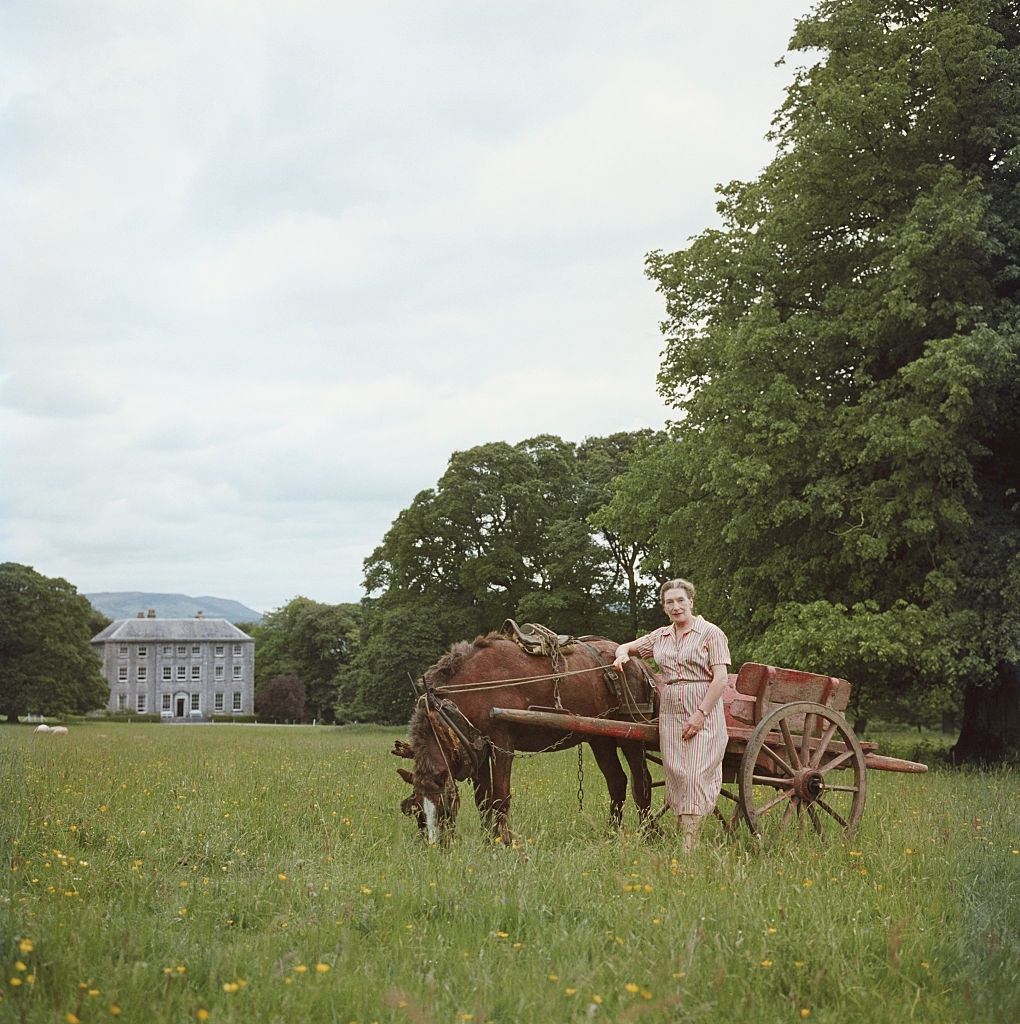
Donough Edward Foster O’Brien, a member of one of Ireland’s most storied aristocratic families, was also photographed that year at Dromoland — the grand castle estate in County Clare that his family had held for centuries. The O’Brien name stretched back to the High Kings of Ireland, and Dromoland itself dated to the 16th century.
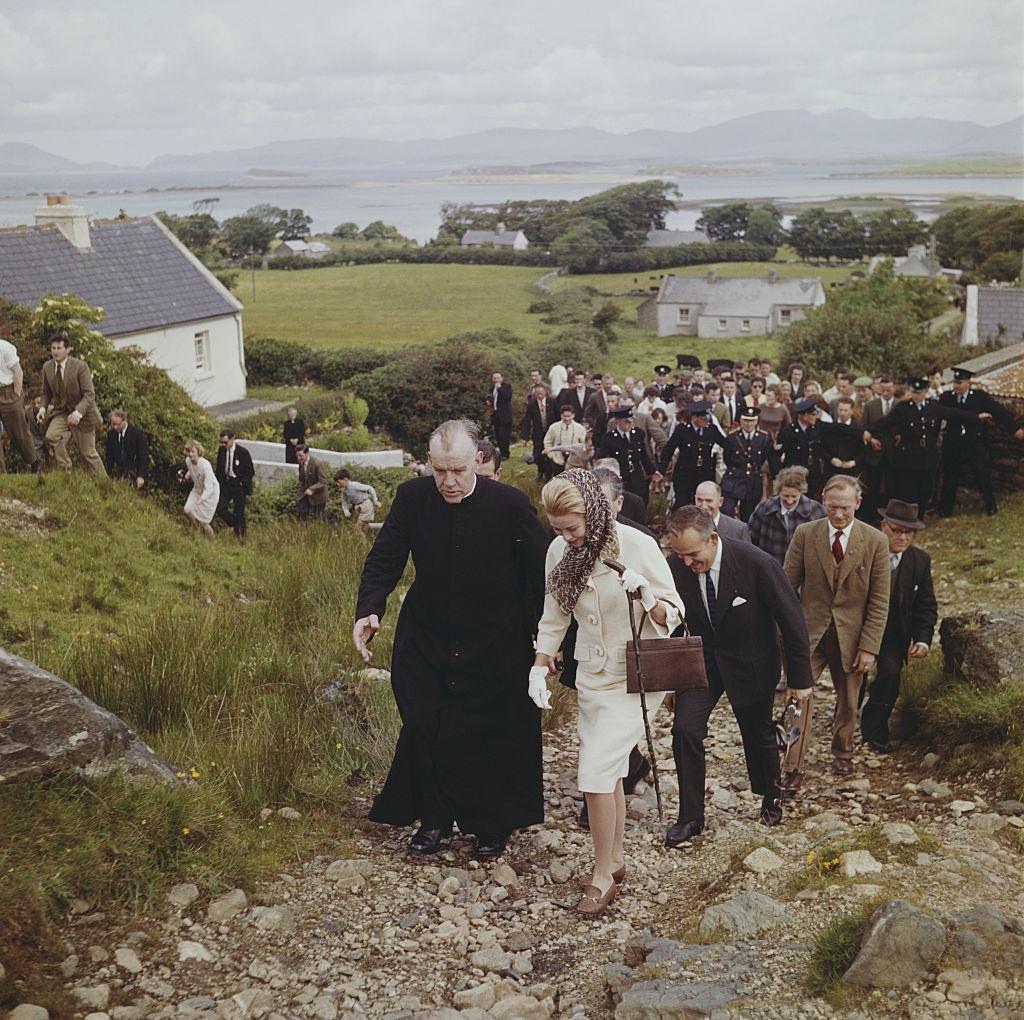
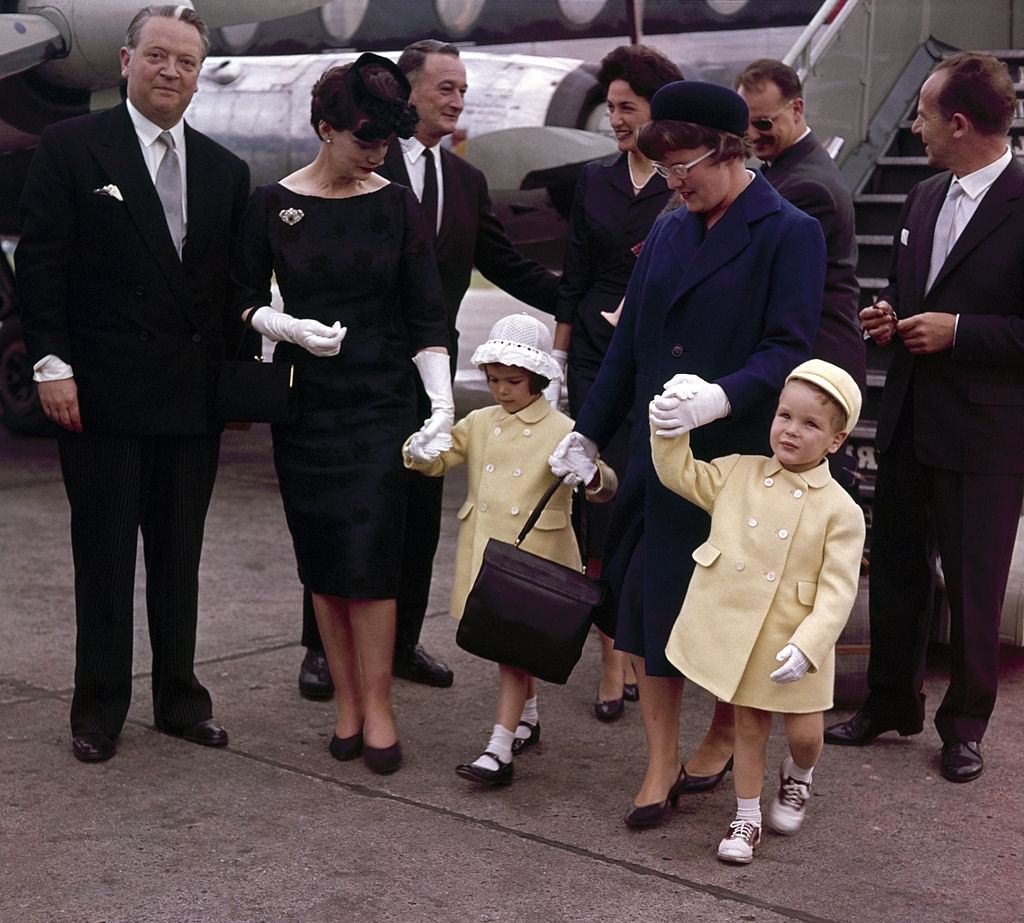
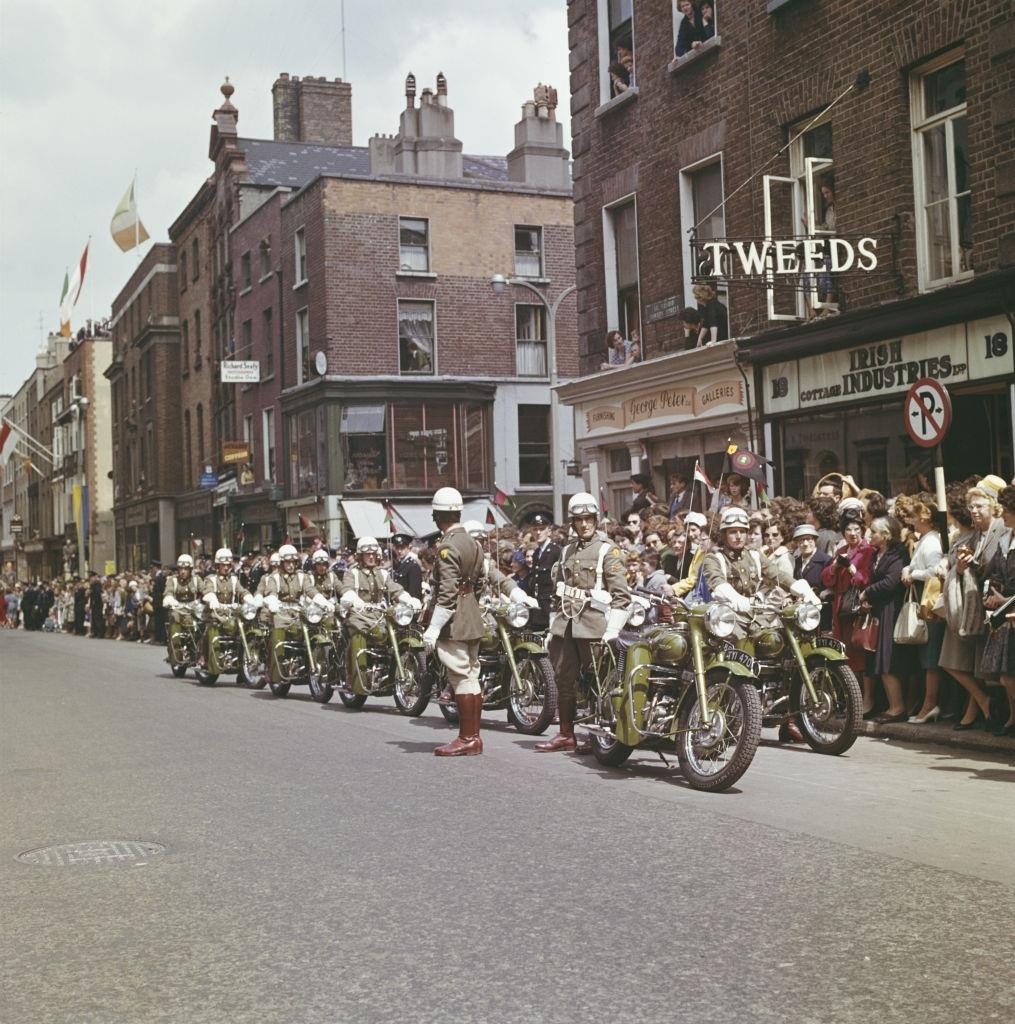
In June 1961, Ireland received a high-profile state visit. Grace Kelly — the American actress who had become Princess of Monaco after marrying Prince Rainier III in 1956 — arrived with her husband for an official trip. Their children, Princess Caroline and Prince Albert, flew into Dublin Airport as part of the delegation. Crowds lined Dublin’s streets while Garda motorcycle units stood ready along the route.
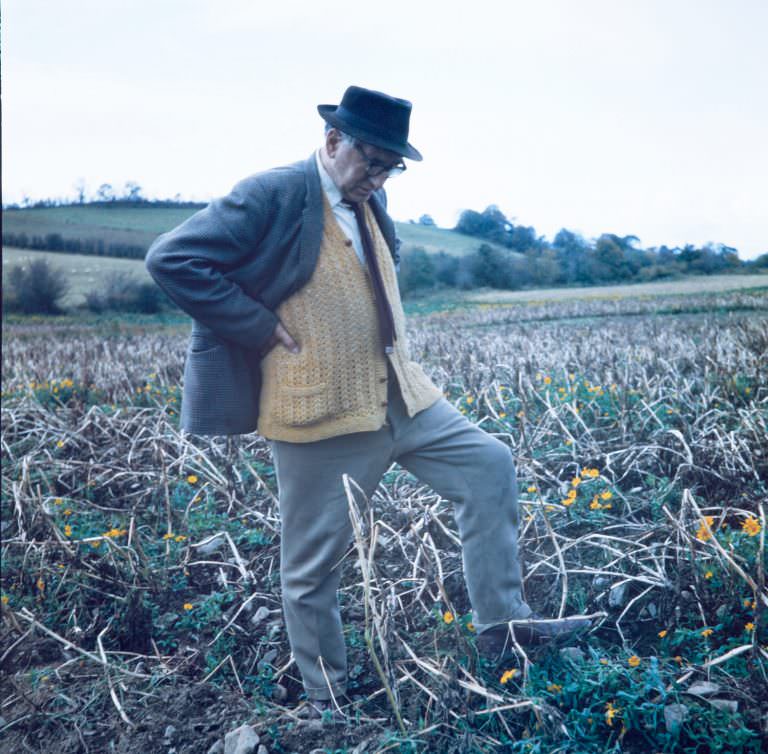
Literary life continued to intersect with Irish landscapes throughout the early 1960s. Novelist Elizabeth Bowen was photographed at Bowen’s Court in County Cork in 1962 — the Georgian mansion her Anglo-Irish family had owned since the 17th century. She sold the estate that same year, and it was demolished shortly after. Poet Patrick Kavanagh, known for his raw, unsentimental verse about rural Irish life, was captured in 1963 at his native Inniskeen in County Monaghan — the very landscape he had written about in his most celebrated poem, The Great Hunger.
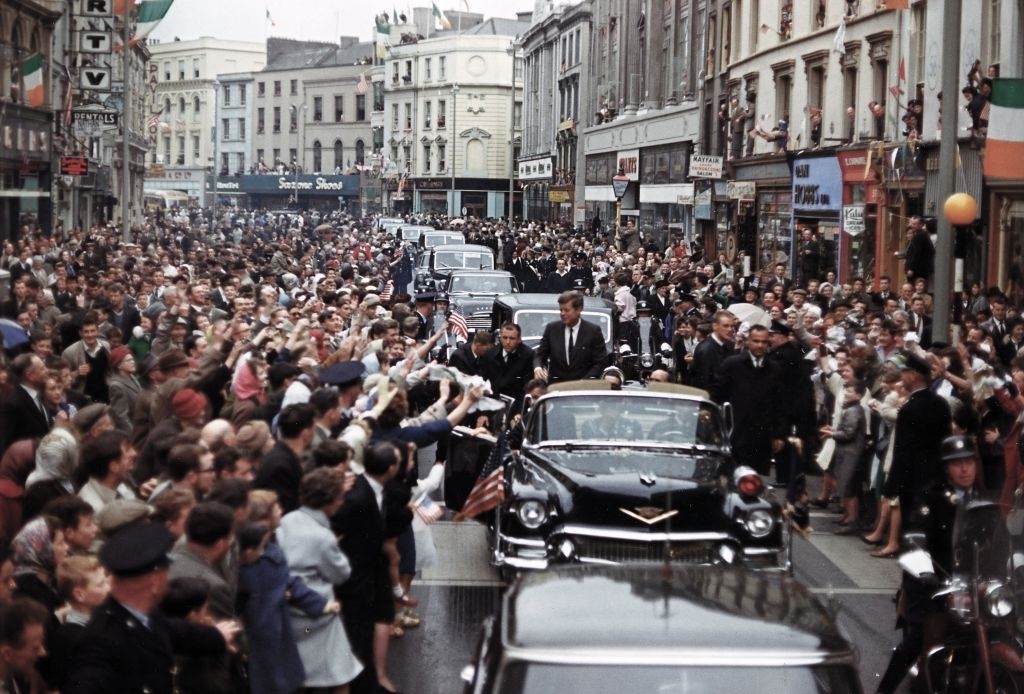
June 1963 brought one of the most significant visits in the country’s modern history. U.S. President John F. Kennedy — whose great-grandparents had emigrated from Ireland during the Famine — made a triumphant four-day visit to the island. He was photographed on Patrick Street in Cork, one of many stops on a journey that drew enormous crowds across the country. Kennedy was assassinated just five months later in Dallas, Texas.
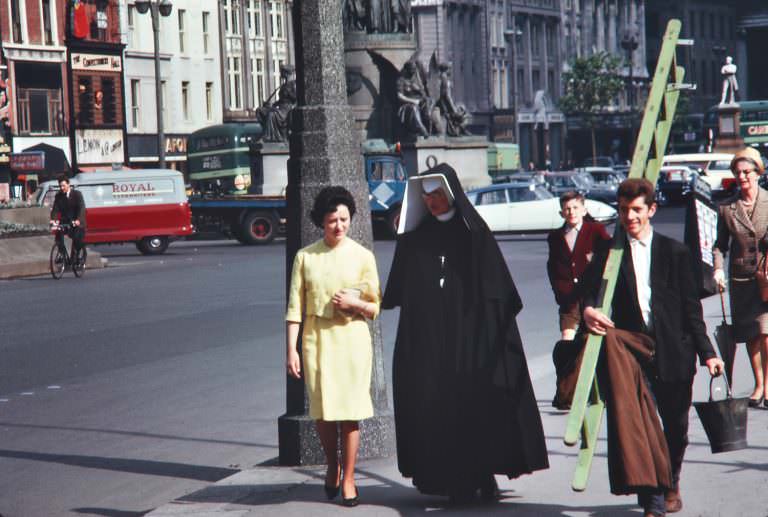
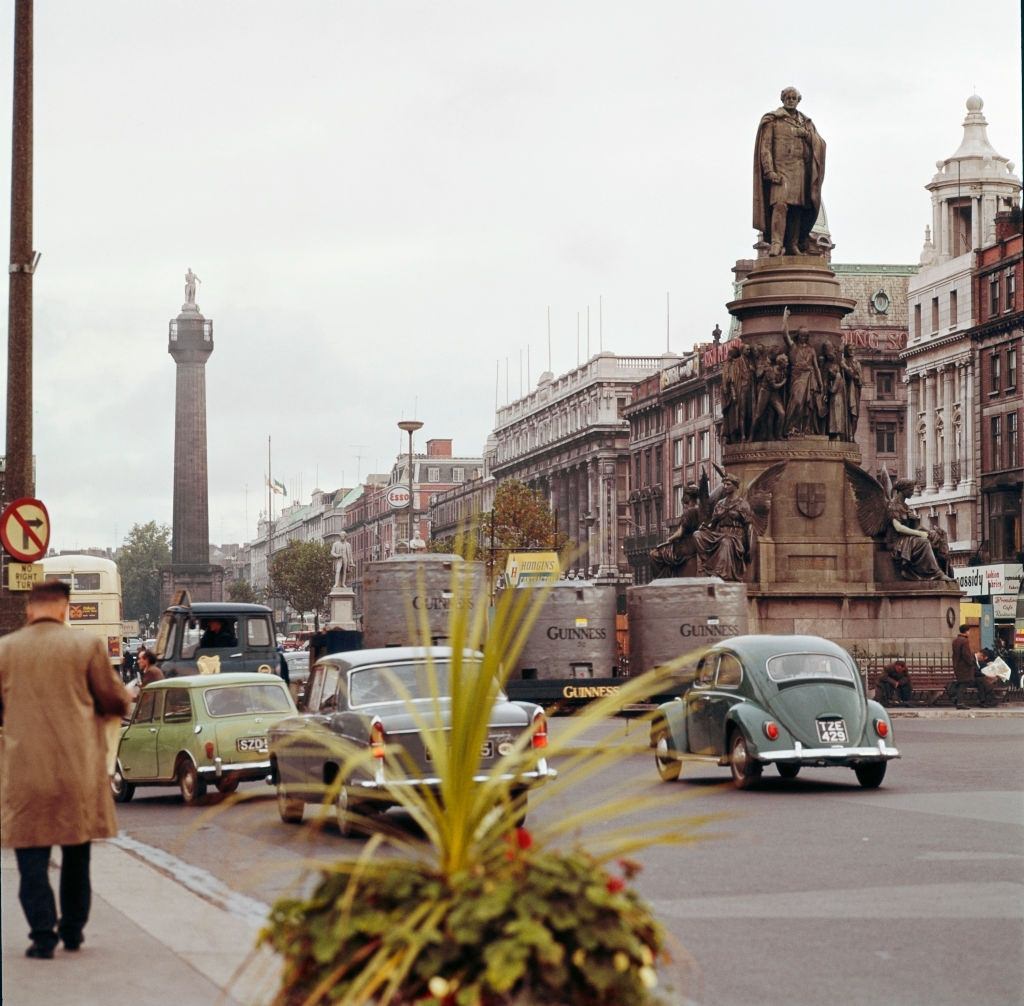
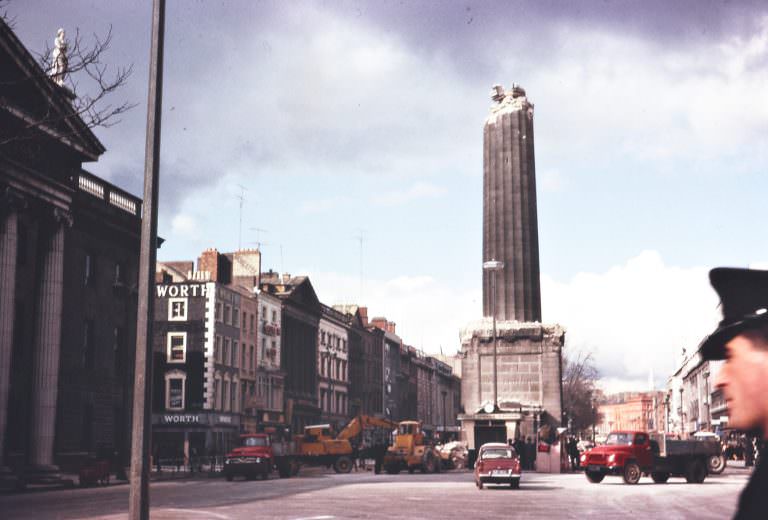
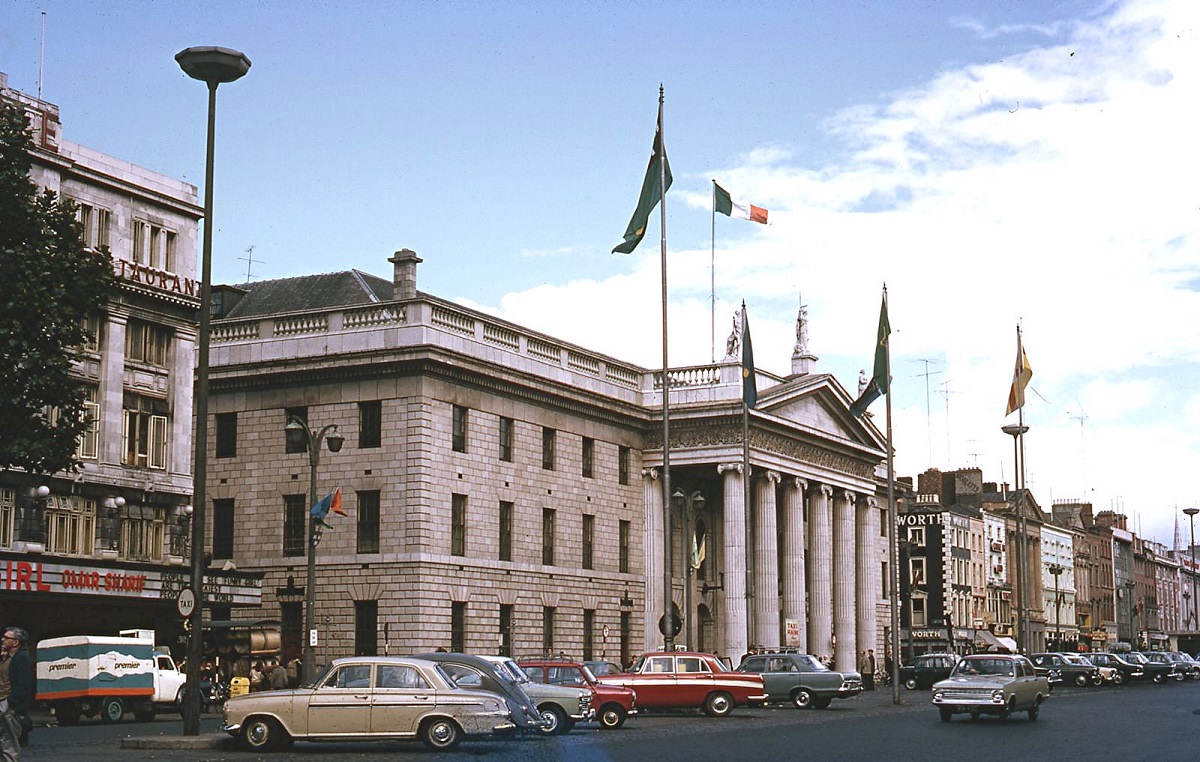
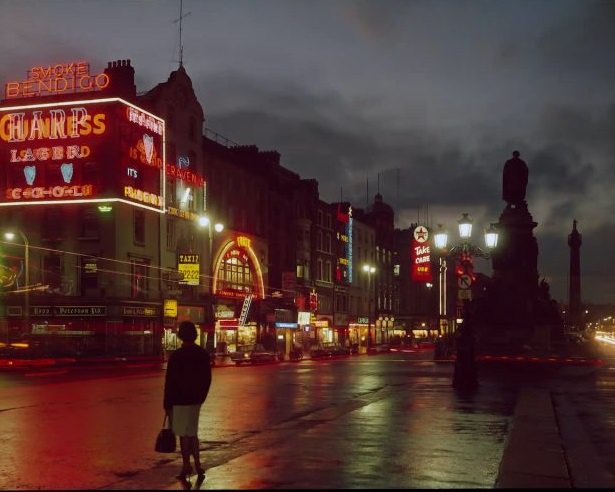
Dublin’s O’Connell Street was the country’s most prominent public avenue, anchored by monuments to two towering figures from Irish history. The O’Connell Monument honored Daniel O’Connell, the 19th-century lawyer and politician who won Catholic Emancipation. Nelson’s Pillar, a 40-meter column erected in 1809 to honor the British admiral, stood at the street’s center — a constant source of tension in independent Ireland. In March 1966, the pillar was blown up by Irish republicans, leaving a half-demolished stump that the Irish Army cleared days later.
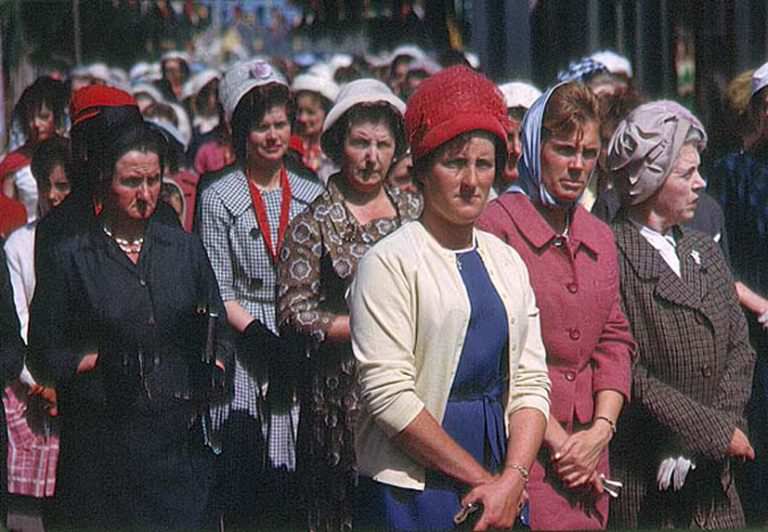
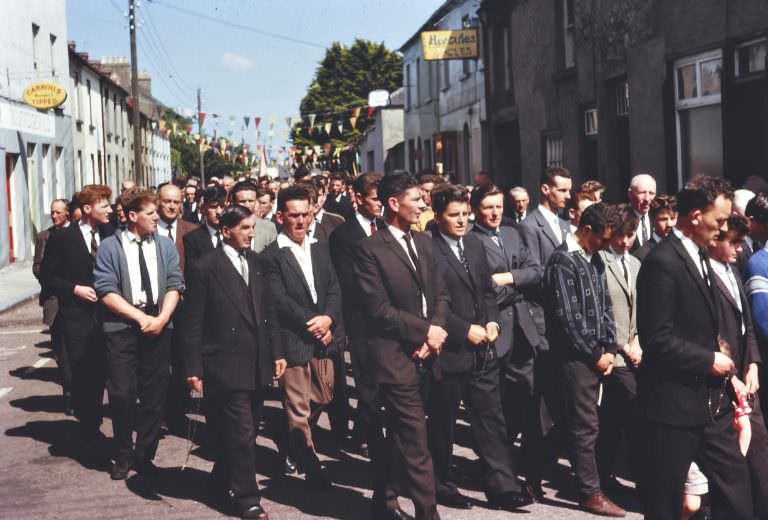
Religious processions were a regular feature of Irish public life throughout the decade. In Cahir, County Tipperary, the Corpus Christi procession of June 1963 drew both men and women through the town’s streets in formal observance. The Catholic Church held a strong presence in Irish social and civic life, and events like this were community-wide occasions.
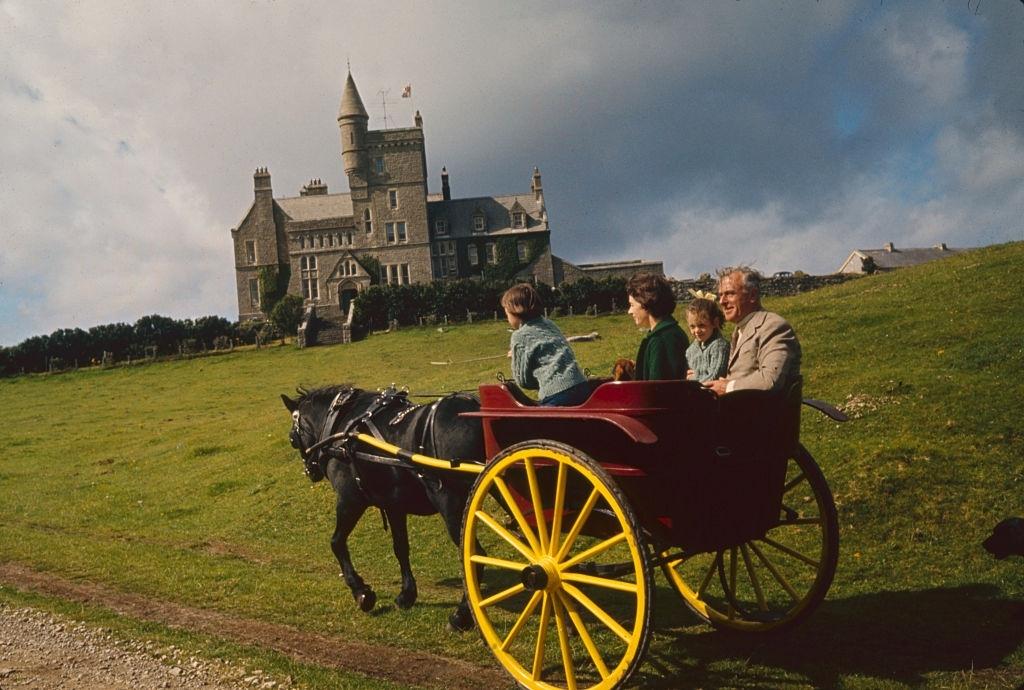
Louis Mountbatten, the British statesman and former Viceroy of India, spent summers with his family at Classiebawn Castle in County Sligo throughout the 1960s. He was photographed there with his family in 1963. Mountbatten had strong personal ties to Ireland and returned to the estate for years — until his assassination by the IRA in August 1979, when a bomb was placed on his fishing boat in Mullaghmore Harbour.
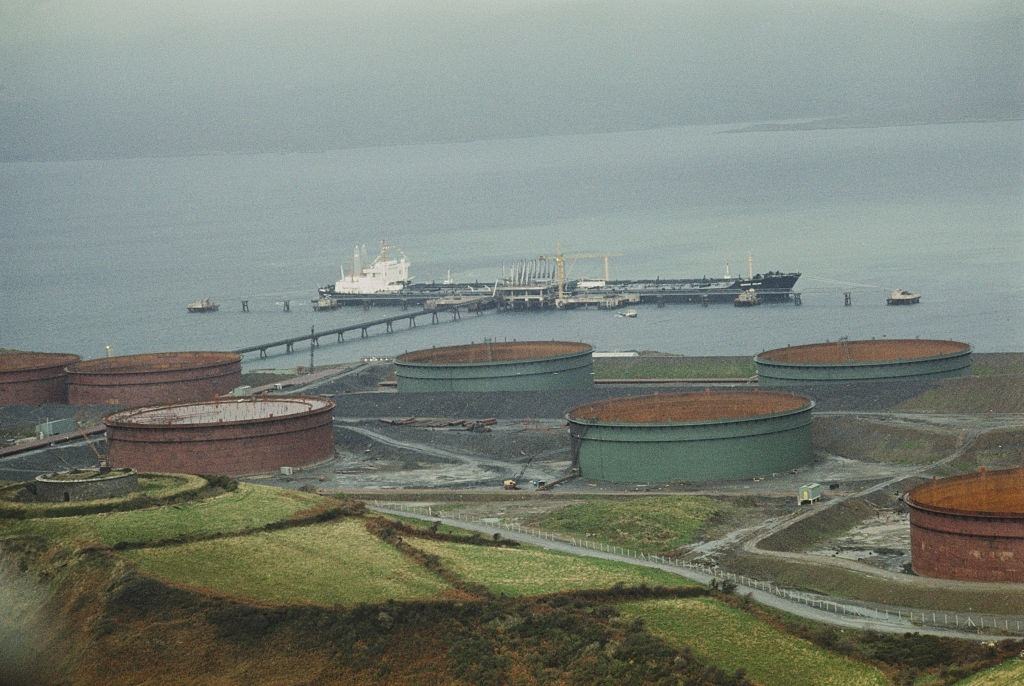
Ireland’s industrial modernization was visible by the late 1960s. Gulf Oil’s deep-sea terminal at Bantry Bay, completed in 1968, was one of the largest oil terminals in Europe at the time, built to handle supertankers too large for most other European ports. It represented exactly the kind of economic development the Irish government had been steering toward since the late 1950s.
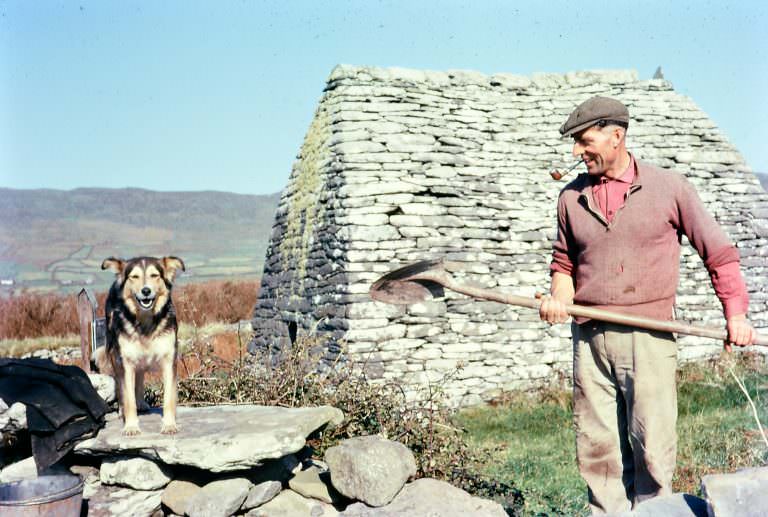
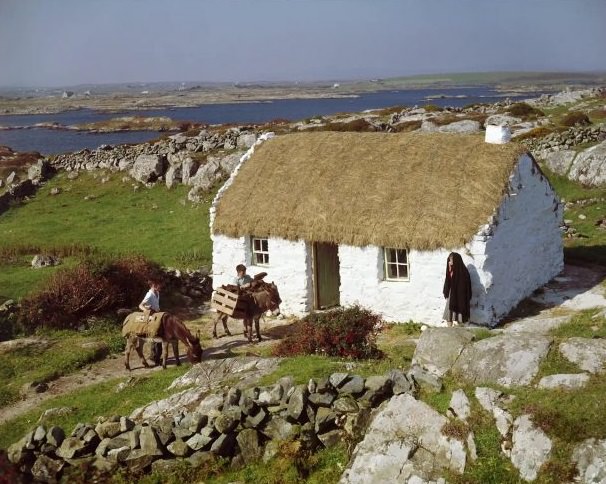
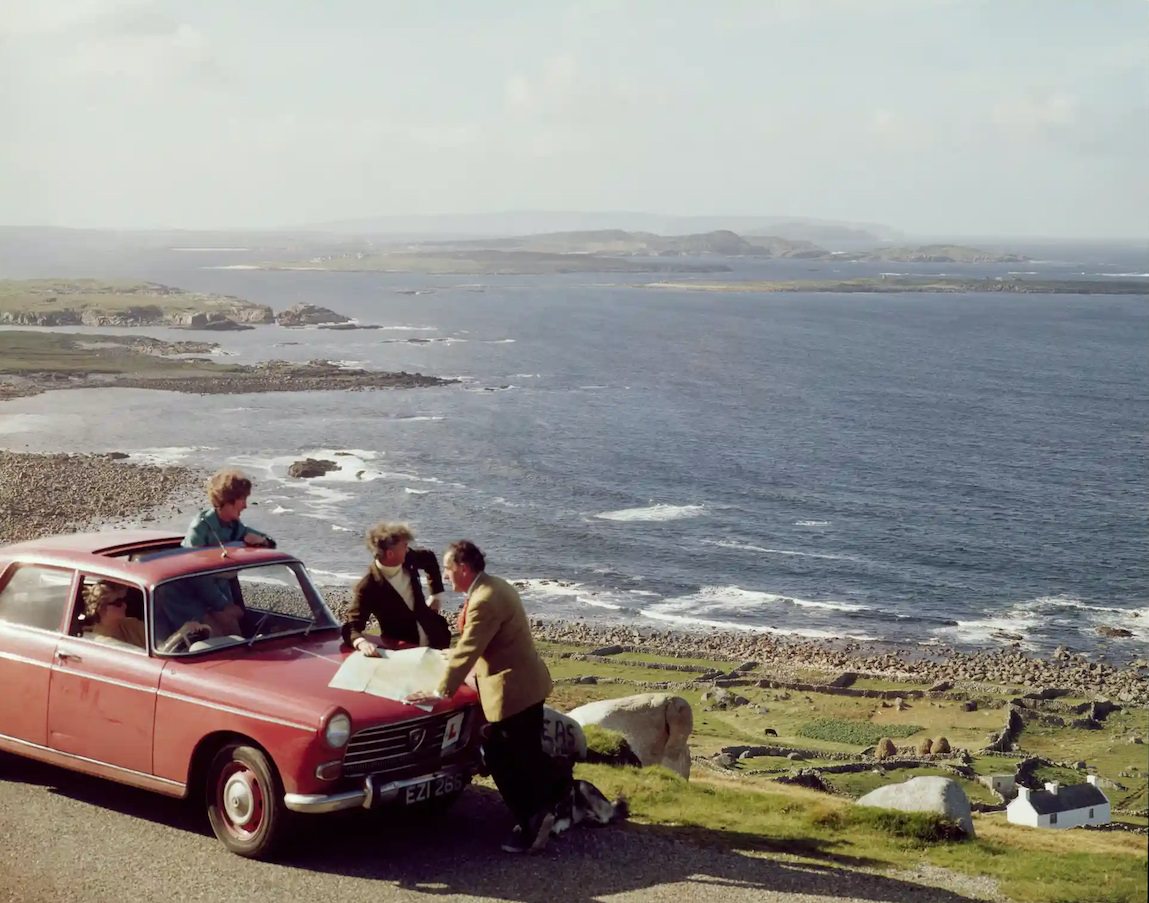
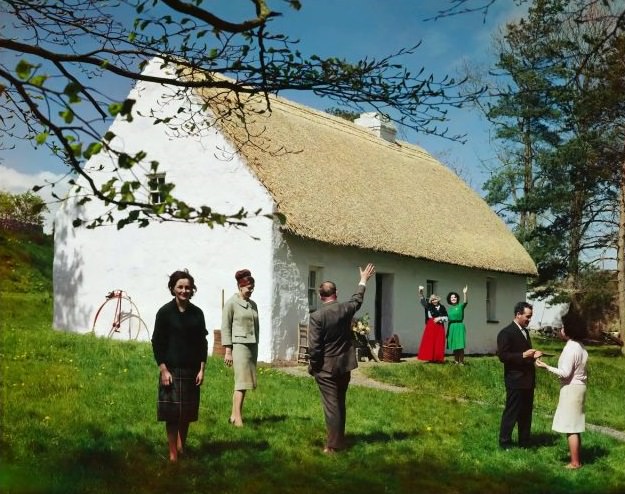
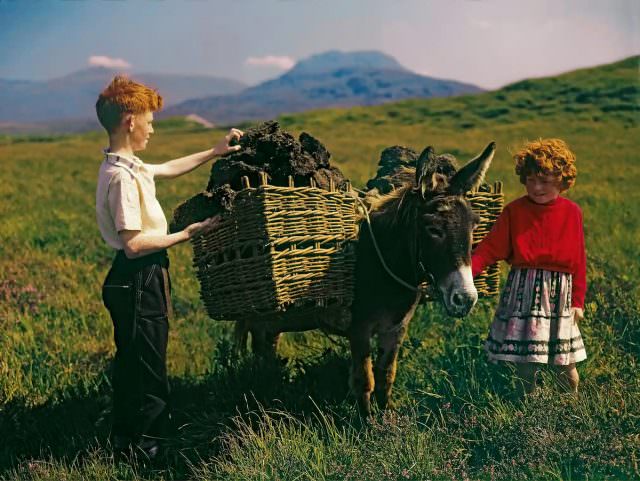
Not everything was changing. Thatched cottages still stood in County Donegal in 1968, with families living in them much as they had for generations. Fishing trawlers still returned to Skerries in County Dublin with full catches. Jaunting cars — the traditional horse-drawn carriages — still carried visitors through Killarney. Folk dancing still drew crowds. These older ways of life existed alongside the new oil terminals and government development plans, often in the same frame.
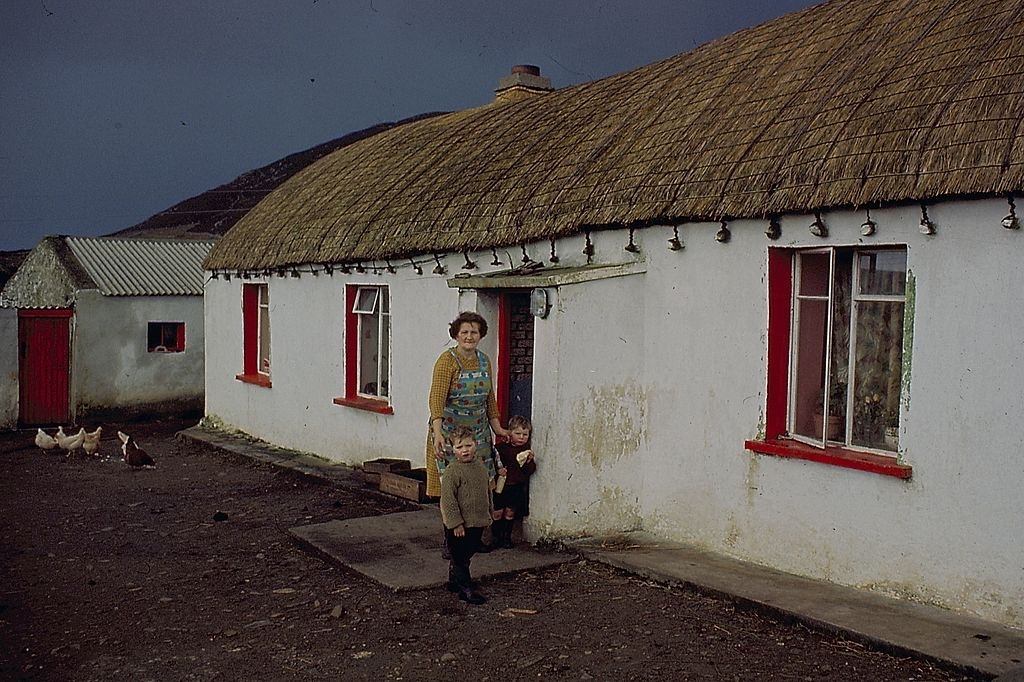
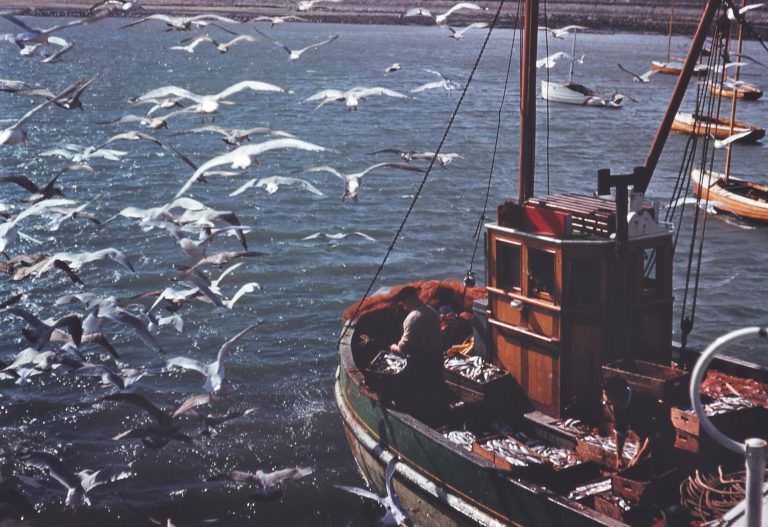
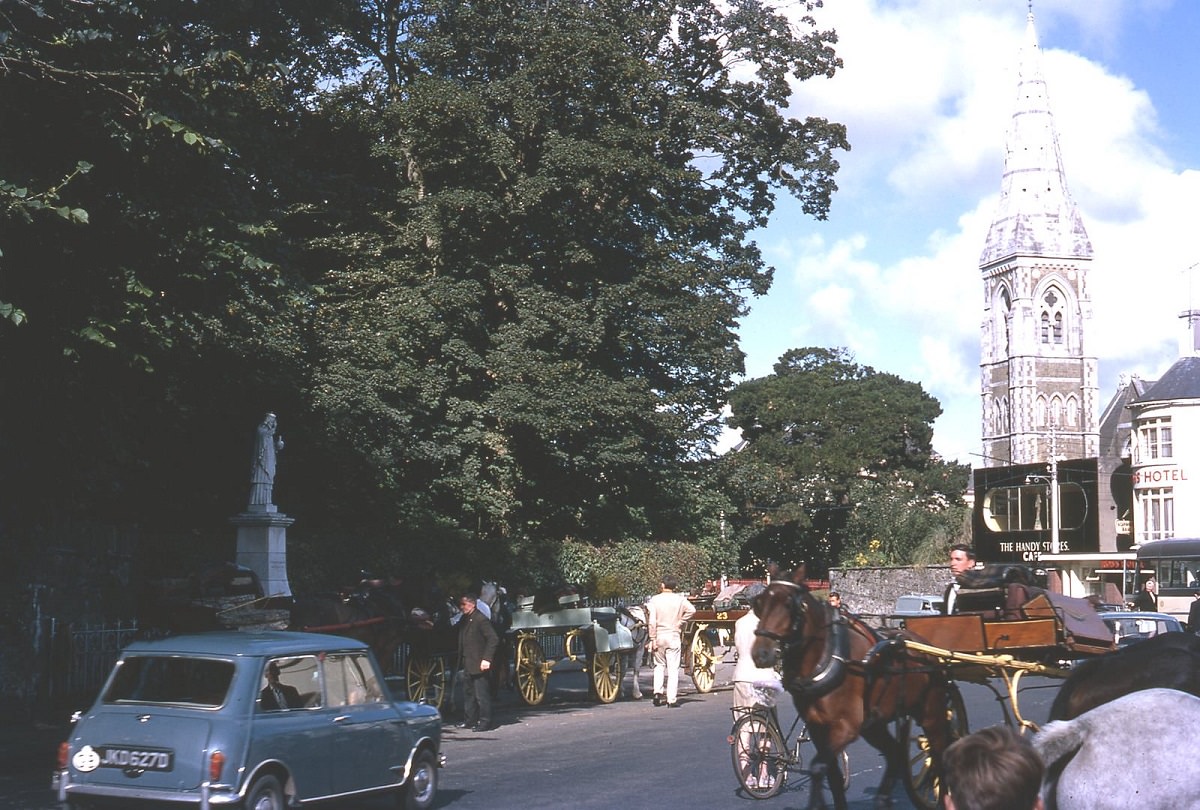
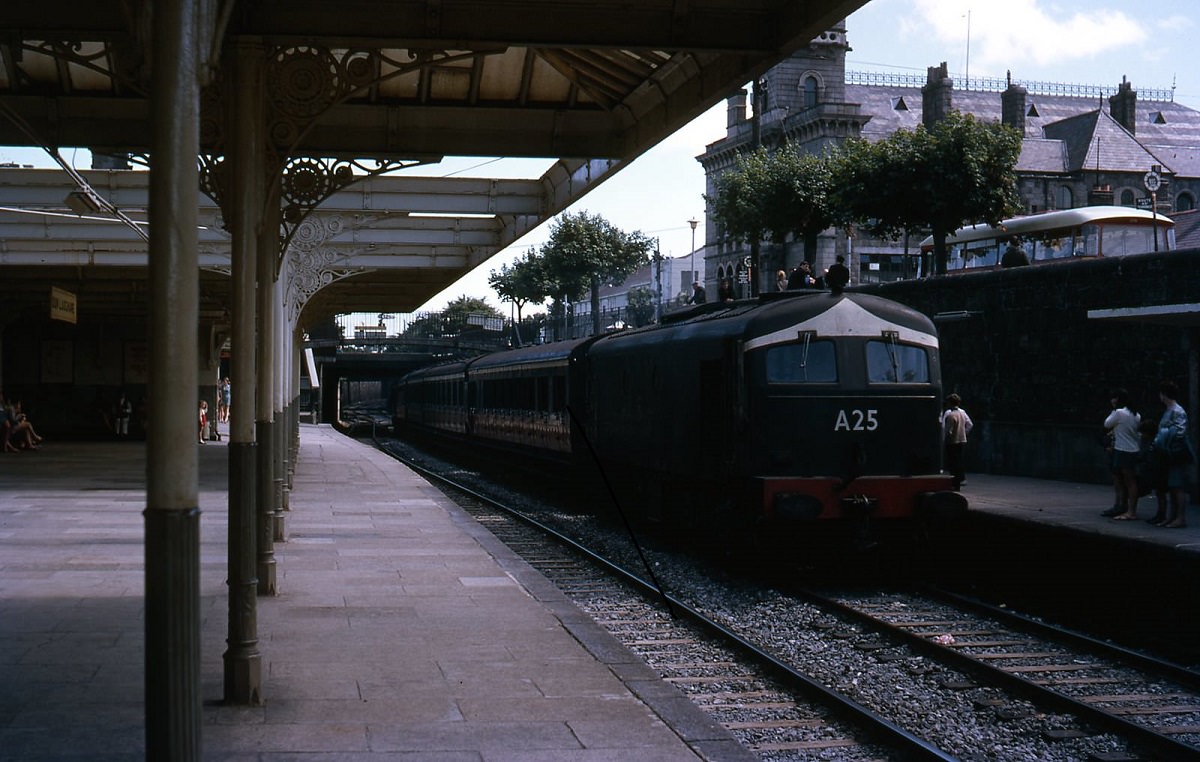
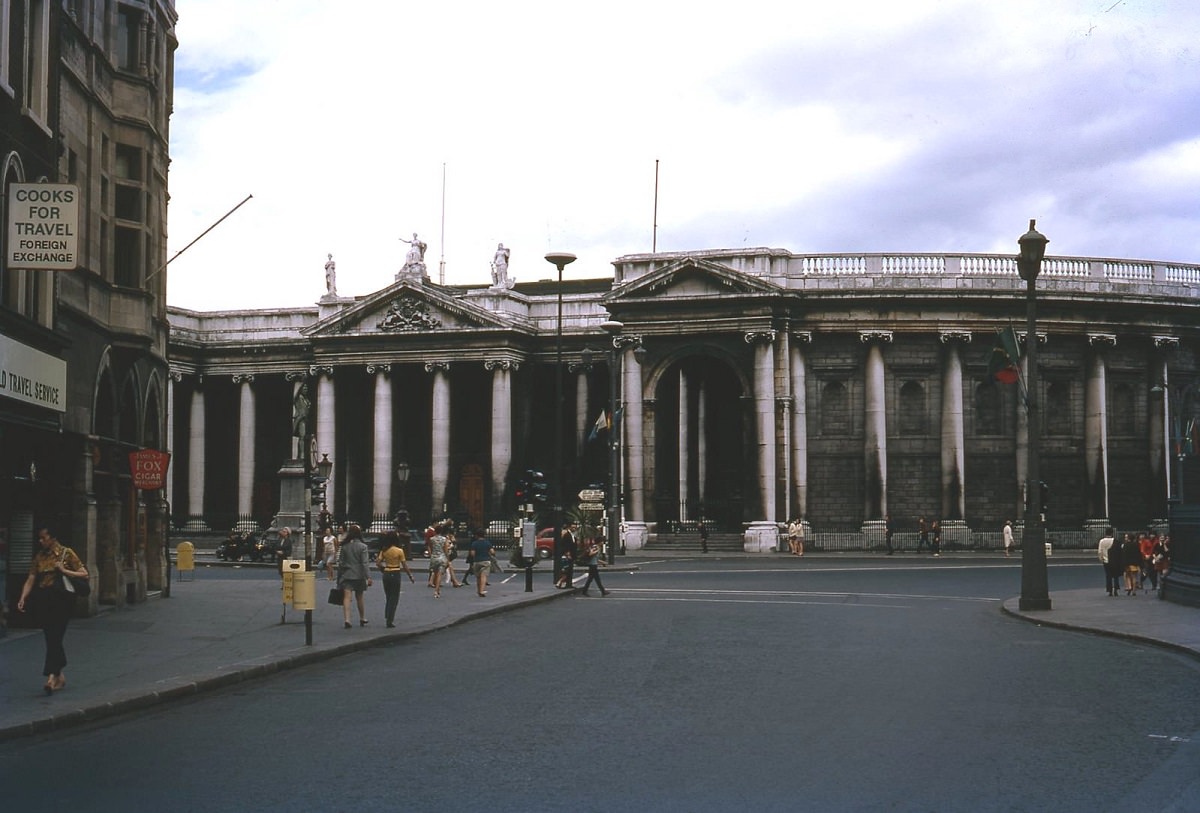
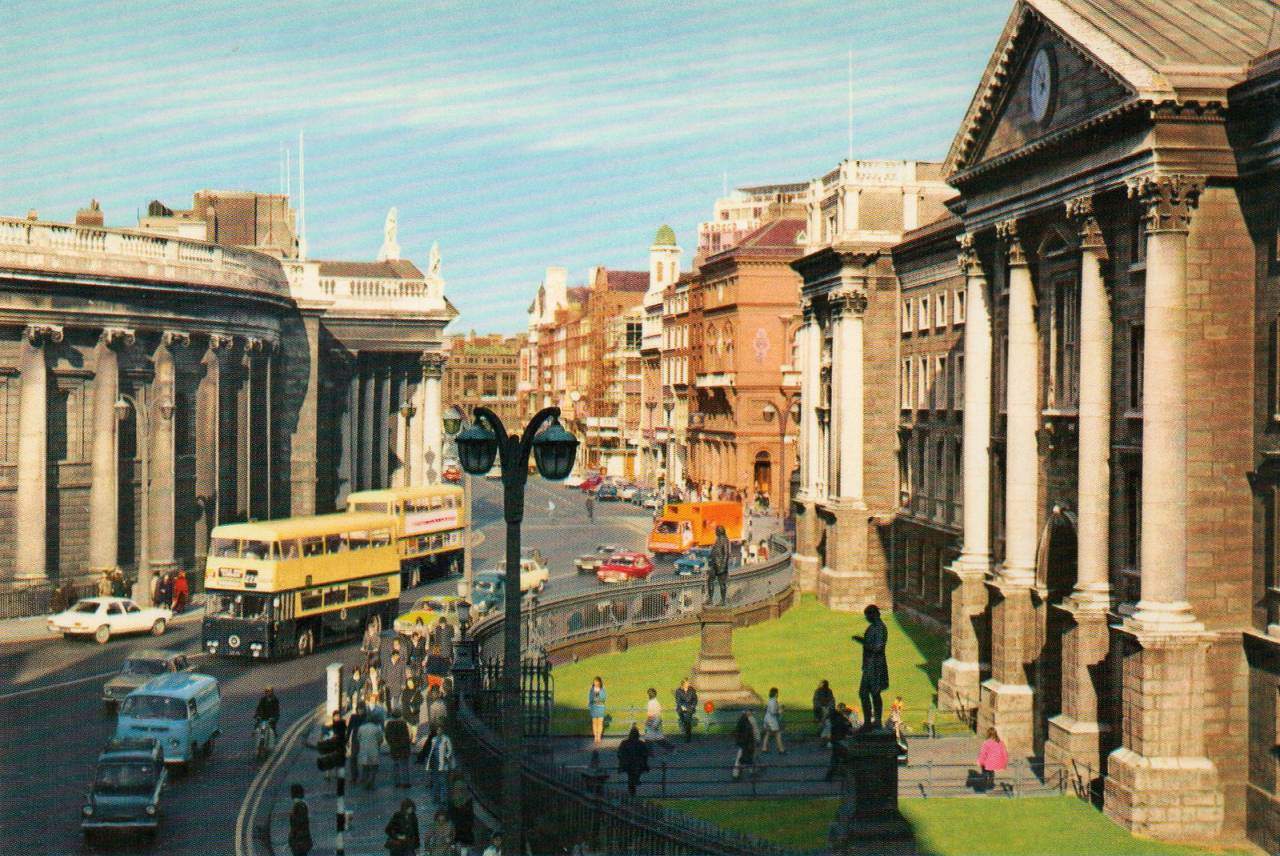
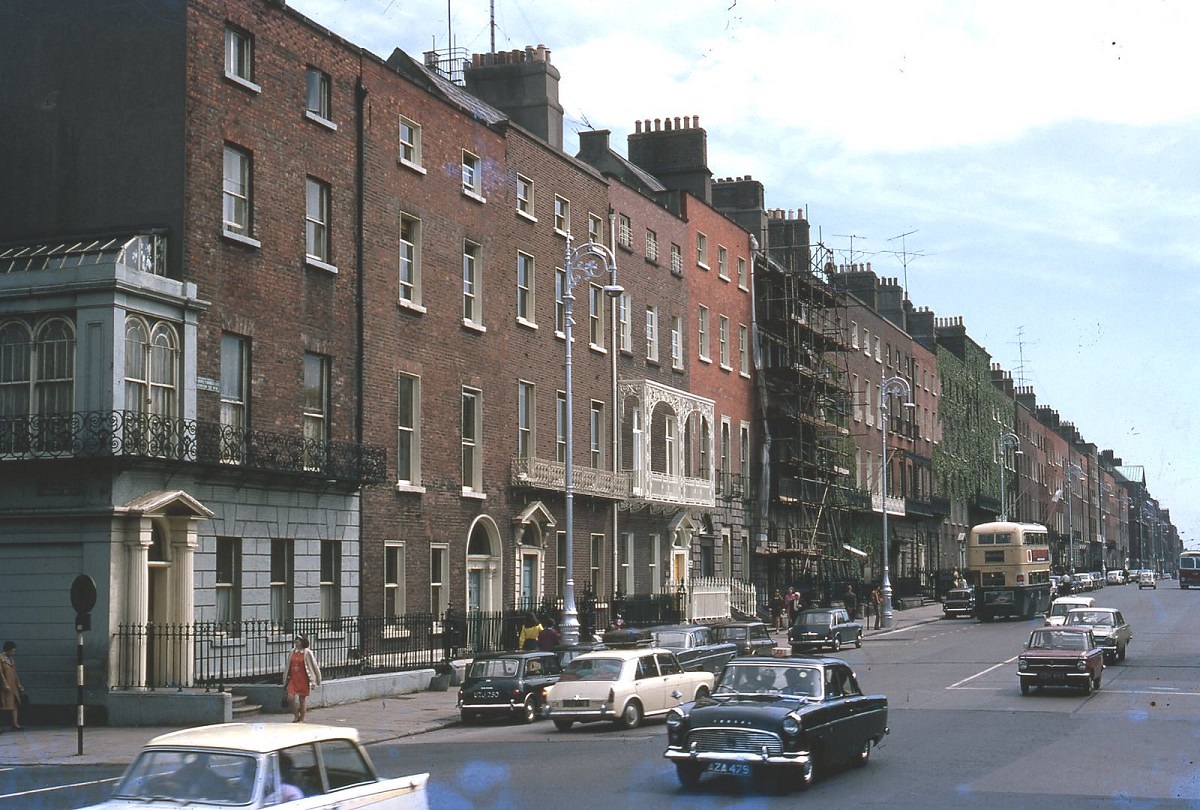
By 1969, photographers were moving across the whole country, documenting its cities, coastlines, and countryside in color. Dublin’s great landmarks — the GPO on O’Connell Street, the Bank of Ireland building at College Green, Trinity College, the River Liffey, Dublin Castle — were all captured in the warm, saturated tones that color film made possible. The house on Merrion Square where Oscar Wilde had lived with his mother as a boy was photographed alongside Georgian terraces and the Grand Canal.
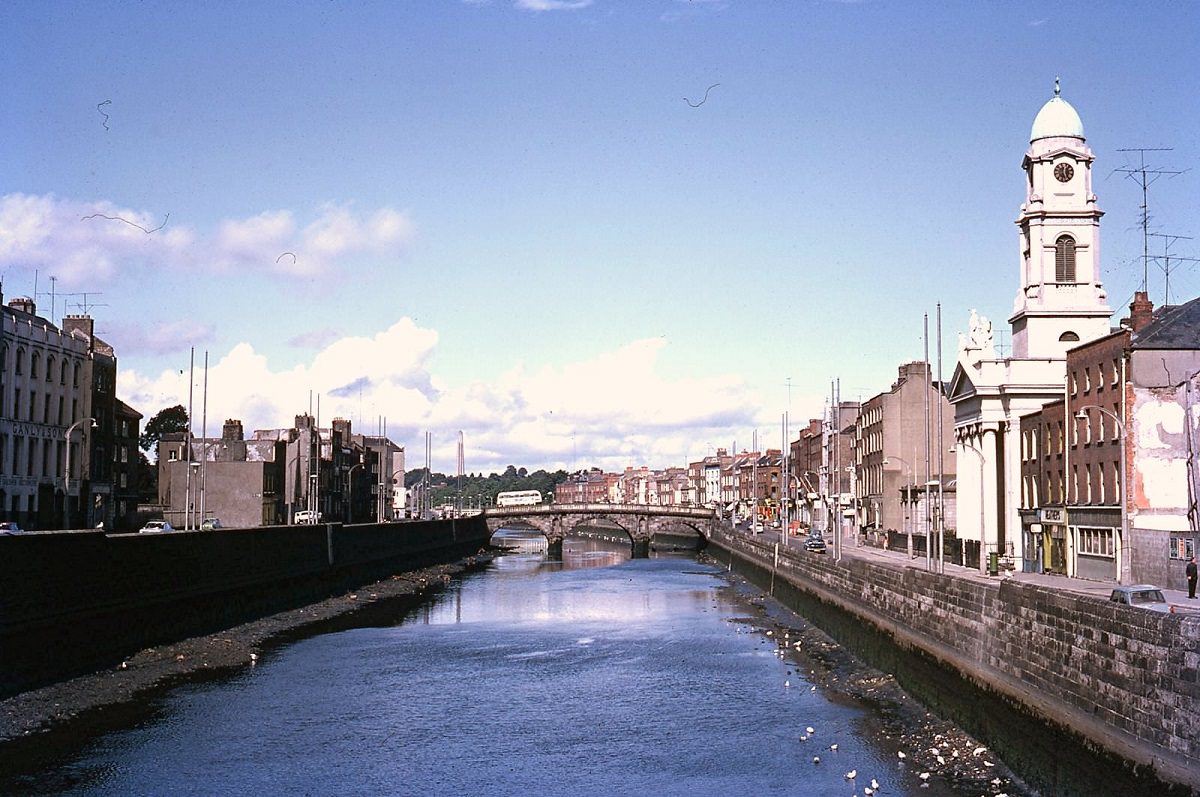
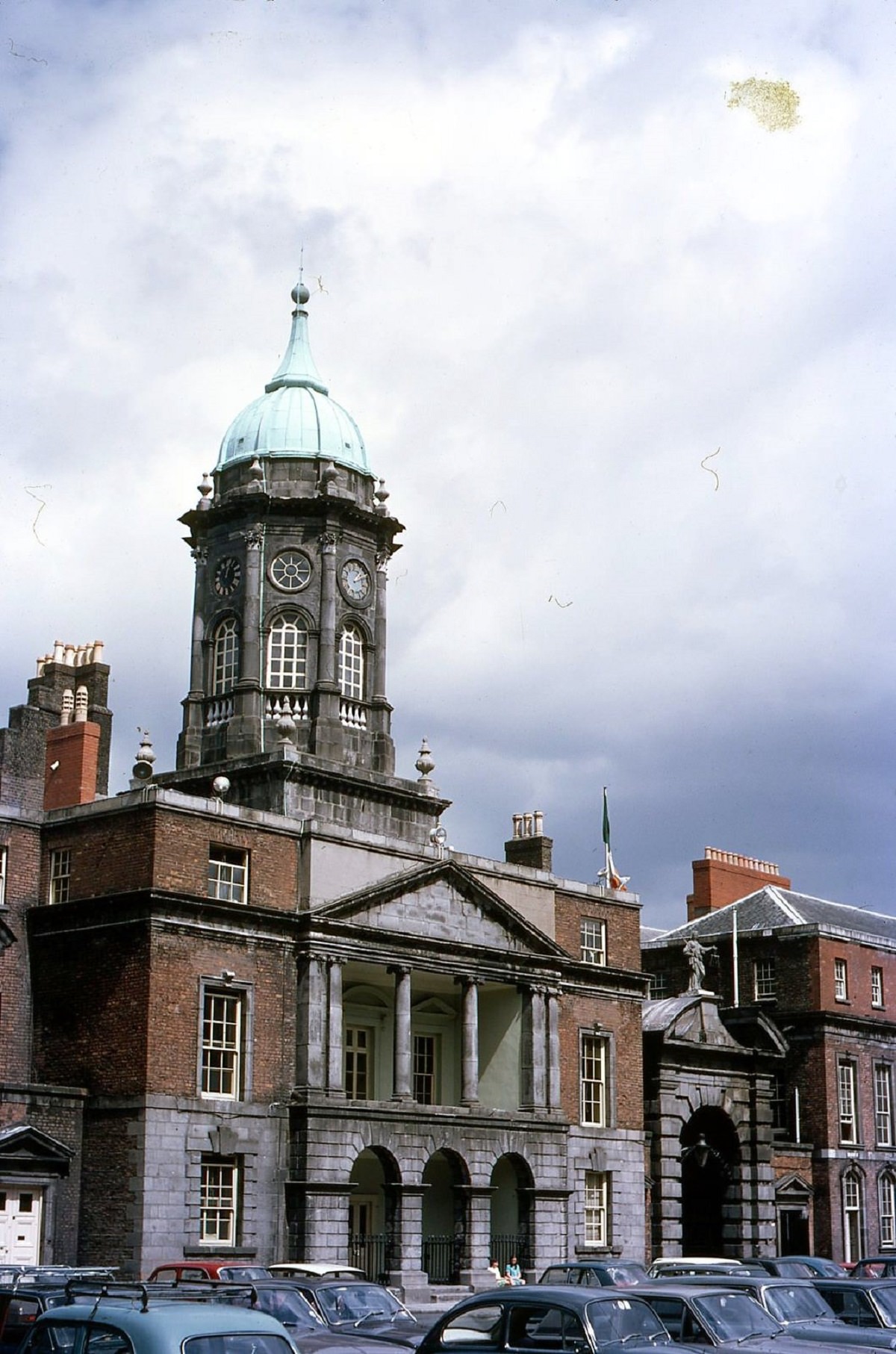
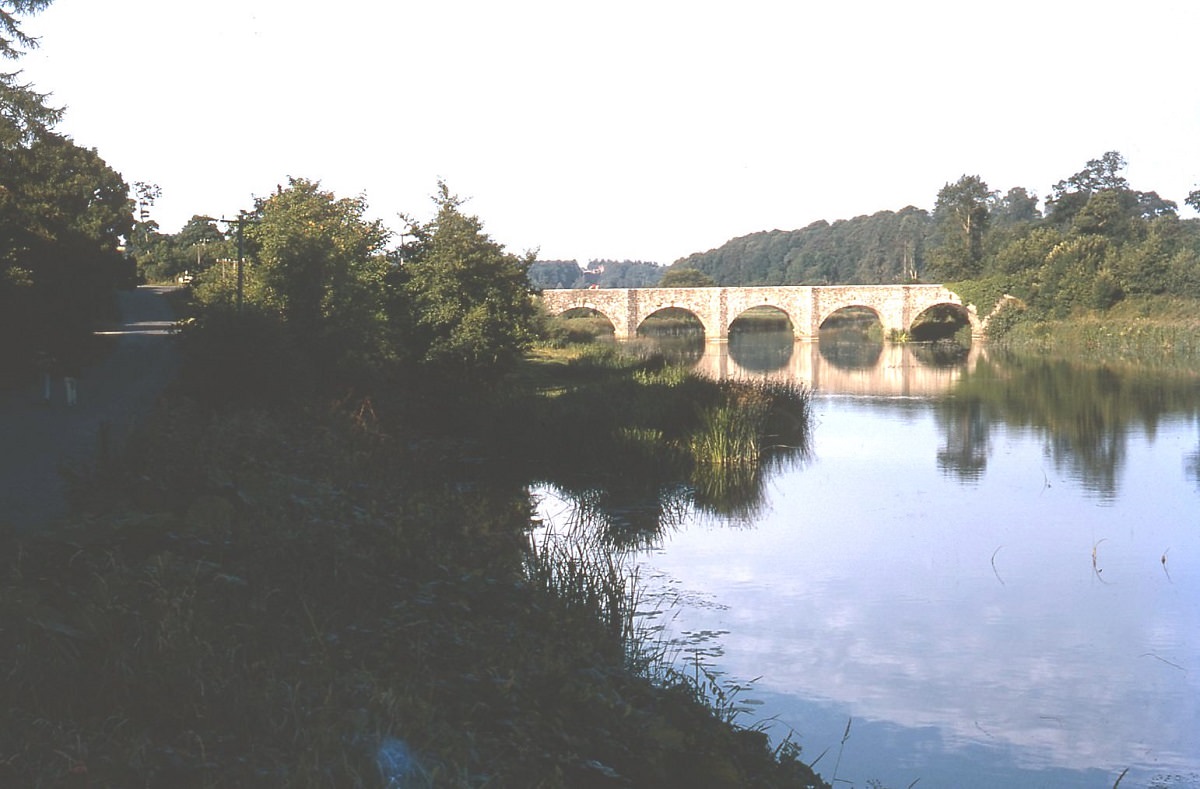
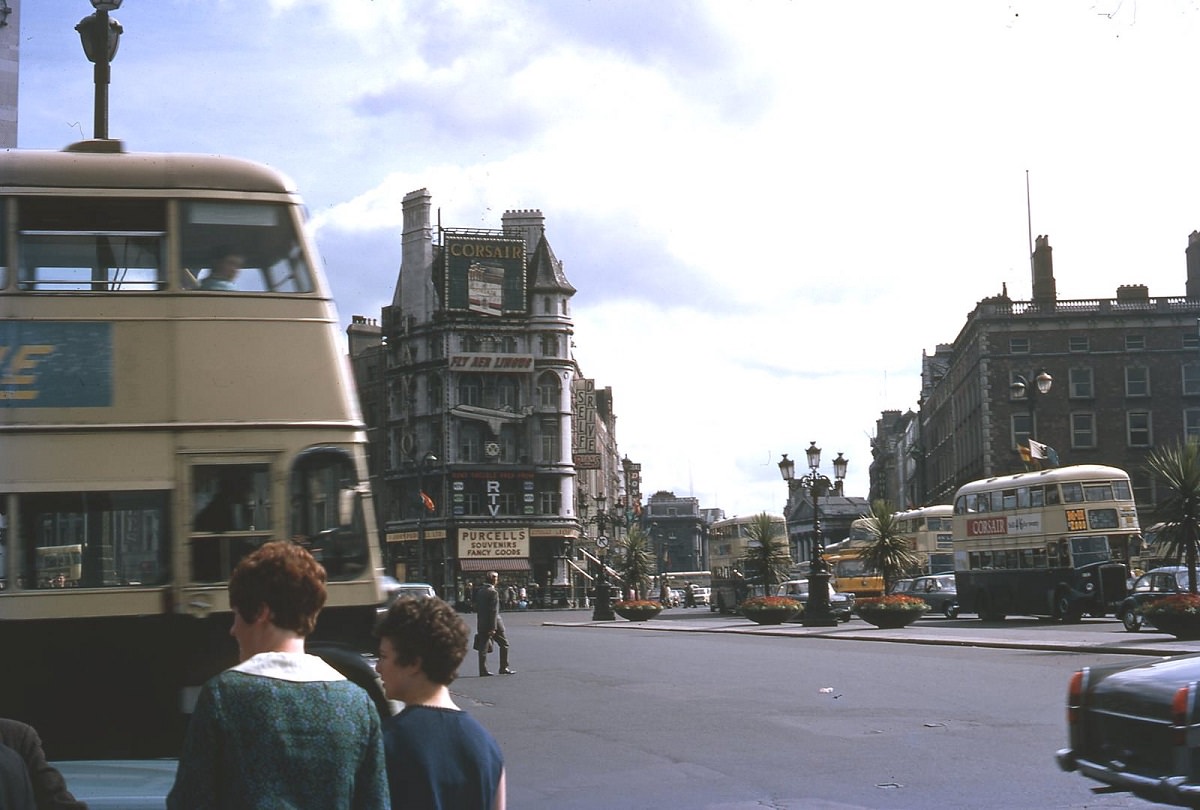
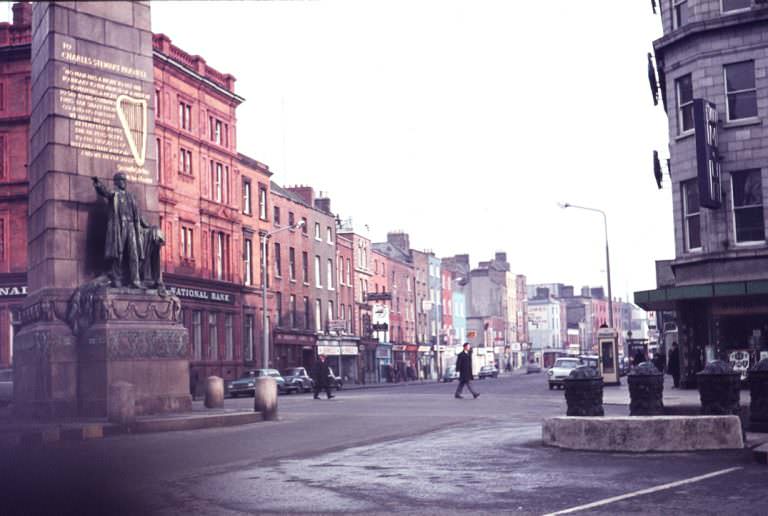
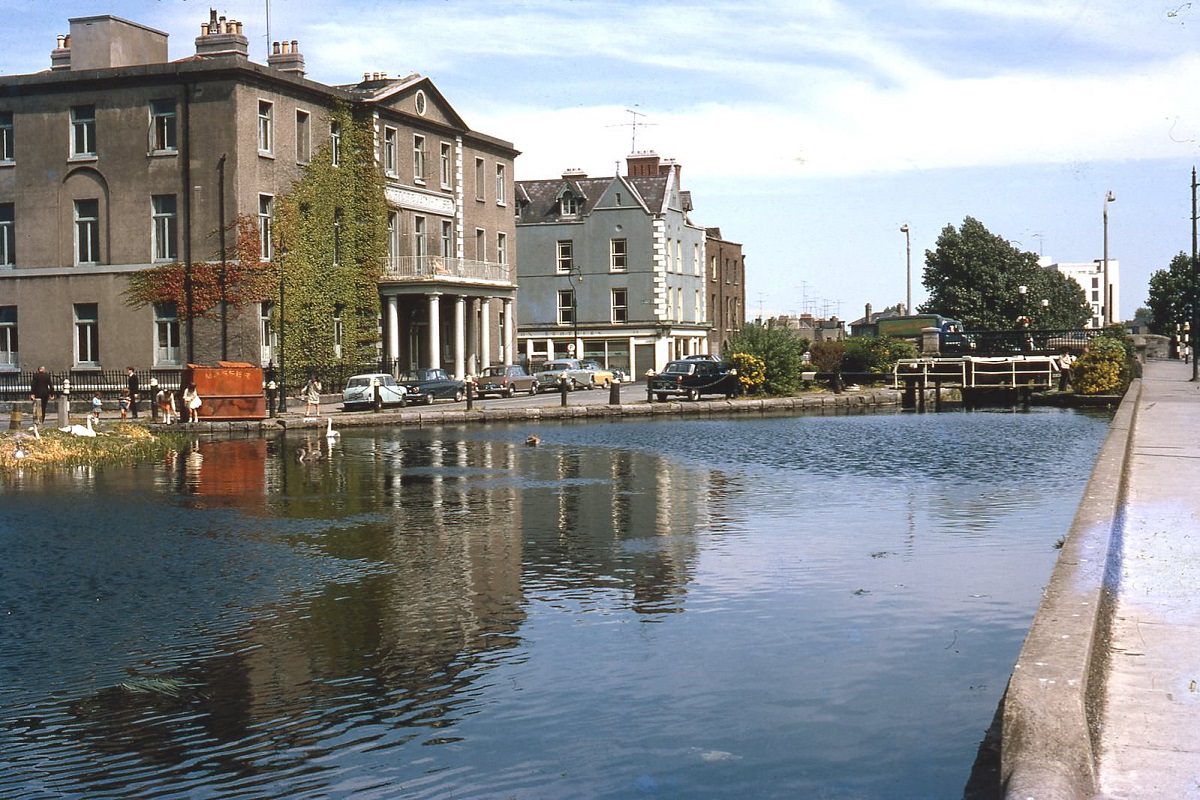
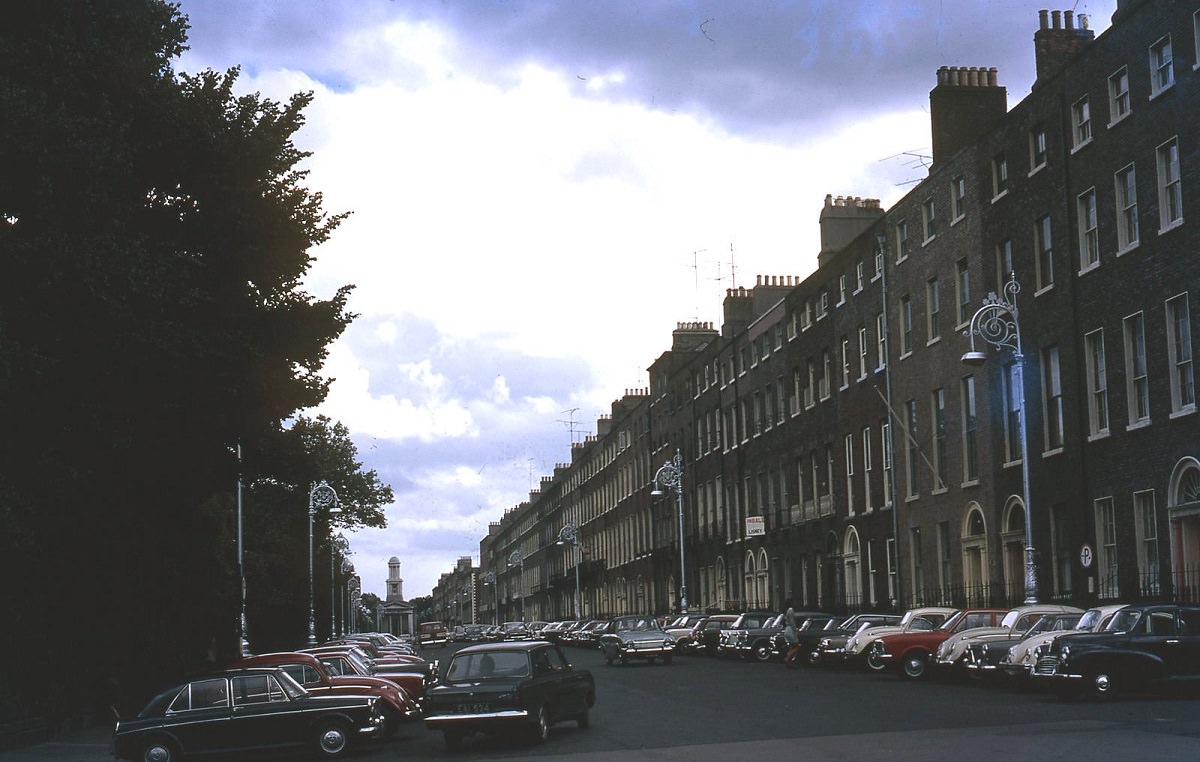
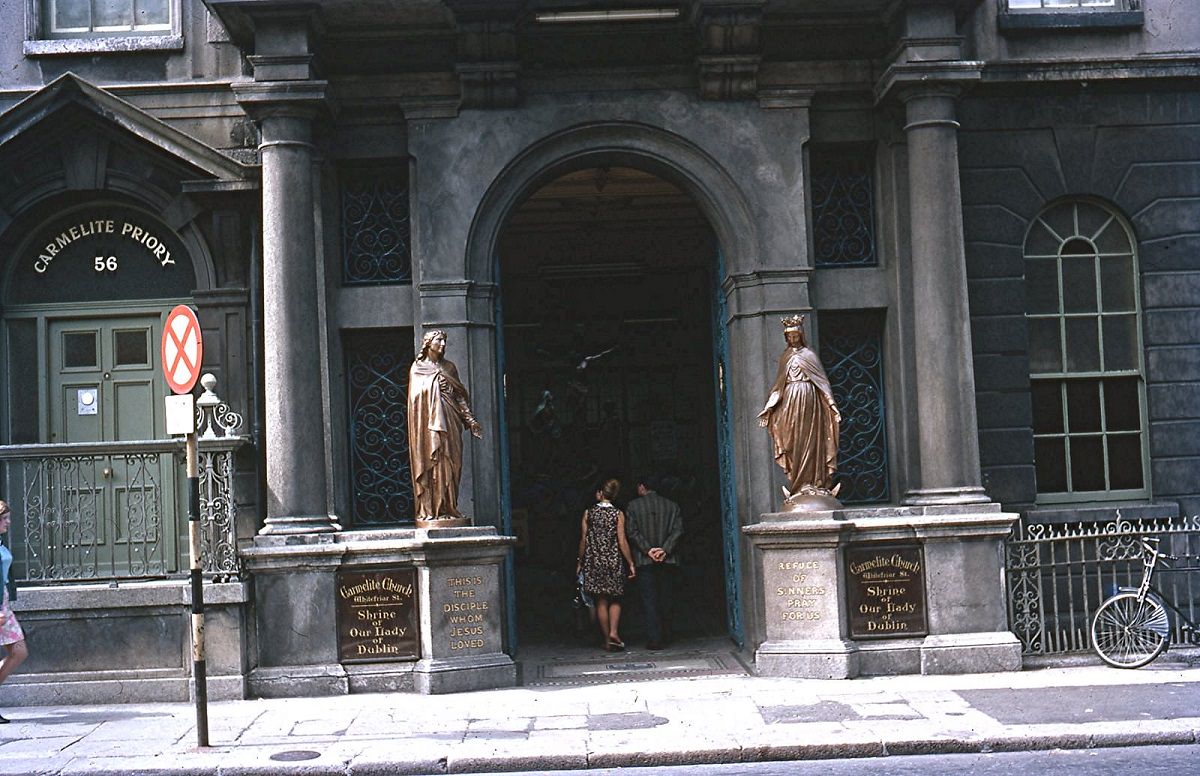
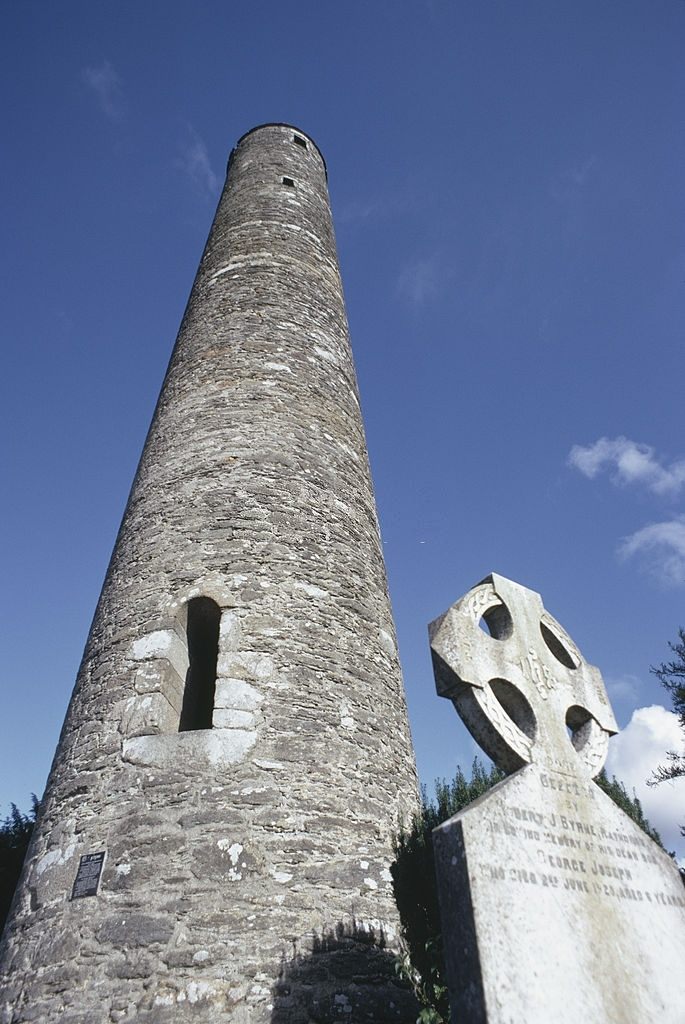
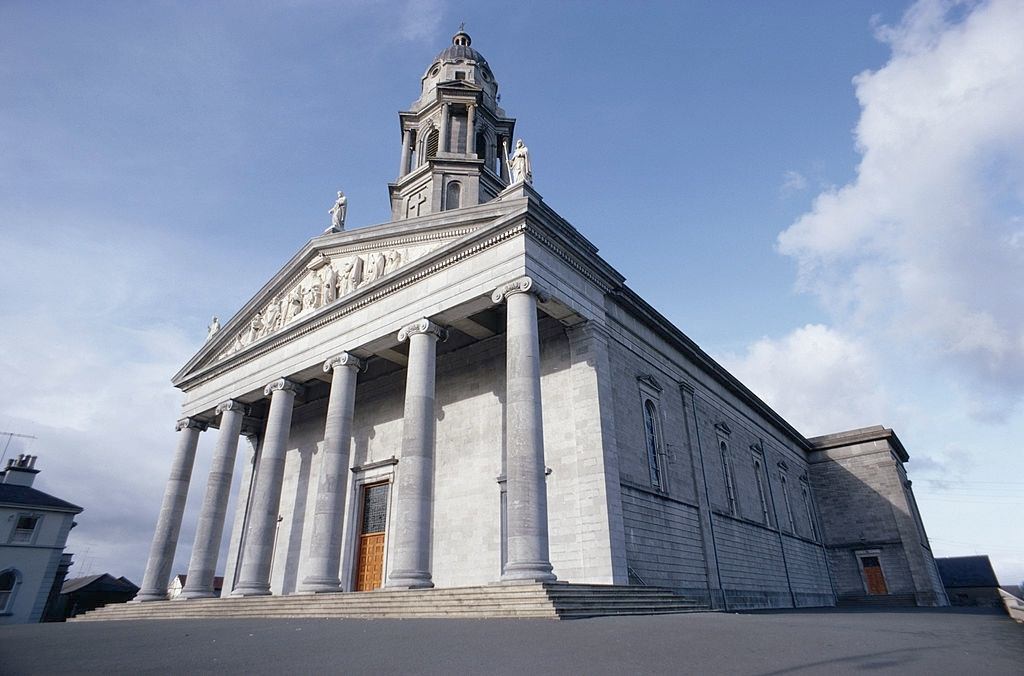
Outside the capital, the photographs range widely. The ancient round tower at Glendalough in County Wicklow, dating back to early Christian Ireland, was photographed in August 1967. St. Mel’s Cathedral in County Longford was captured in November of the same year. The Glendalough tower had already stood for roughly a thousand years by the time the 1960s photographer pointed a camera at it.
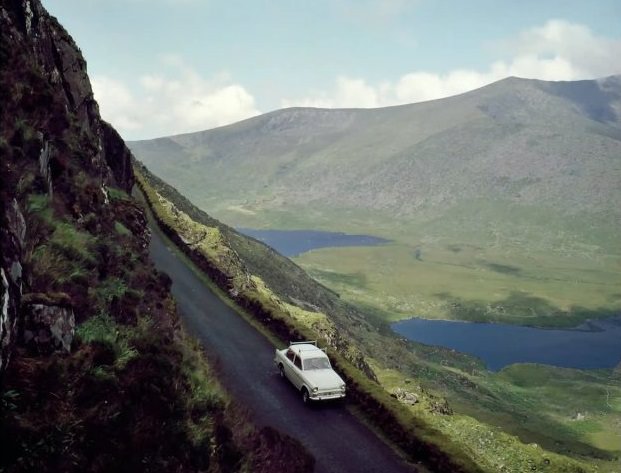
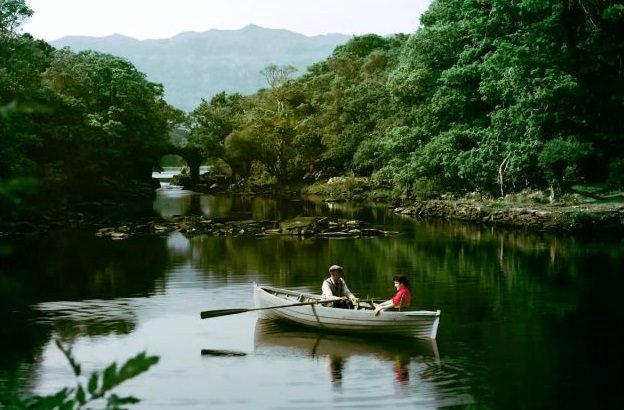
Kerry and Connemara provided some of the decade’s most dramatic natural color. The Ring of Kerry, the Connor Pass on the Dingle Peninsula, the Meeting of the Waters near Killarney, and the sweeping views of Galway Bay all appear in vivid hues that black-and-white photography had never conveyed. The Gallarus Oratory on the Dingle Peninsula — a dry-stone church built over a thousand years ago — was still standing perfectly intact, as it remains today.
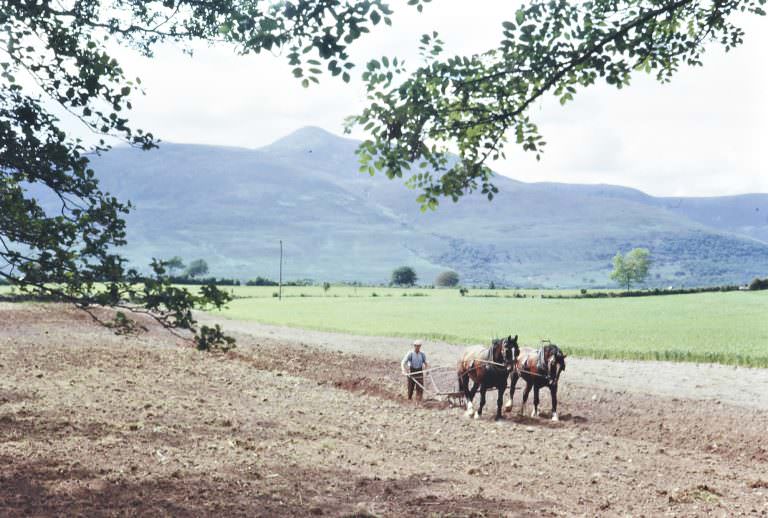
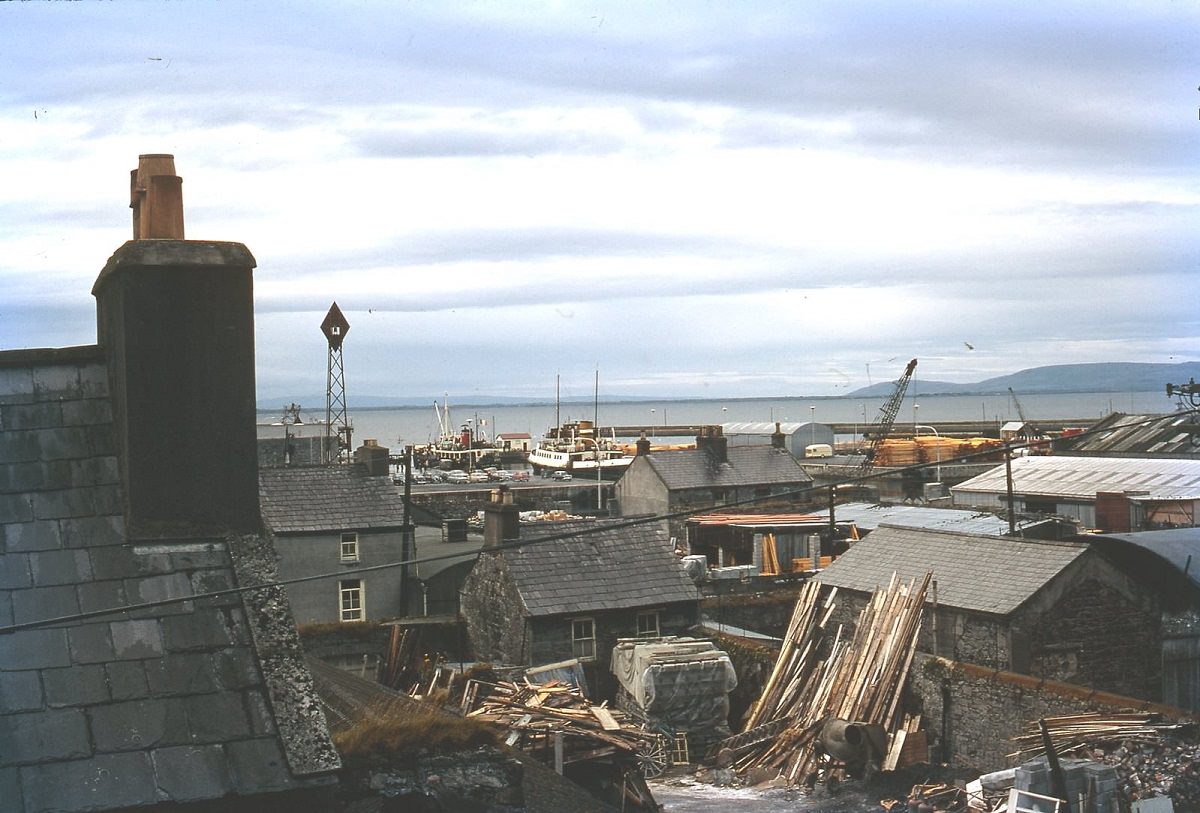
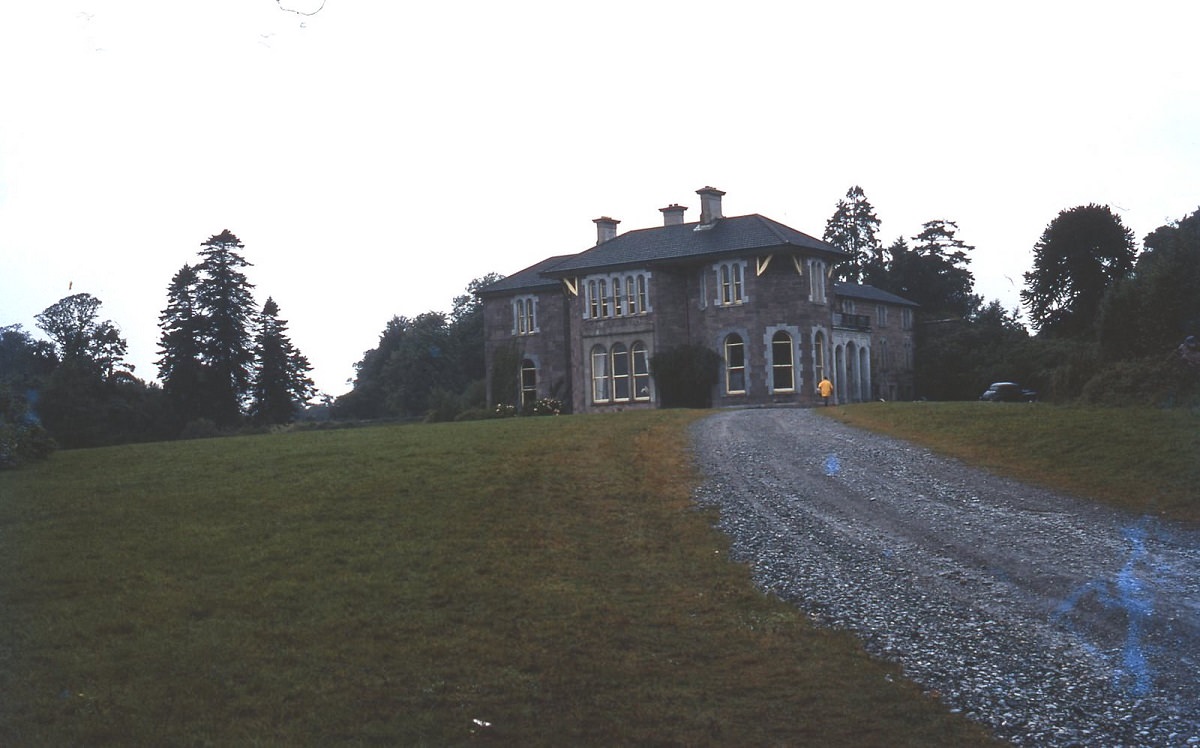
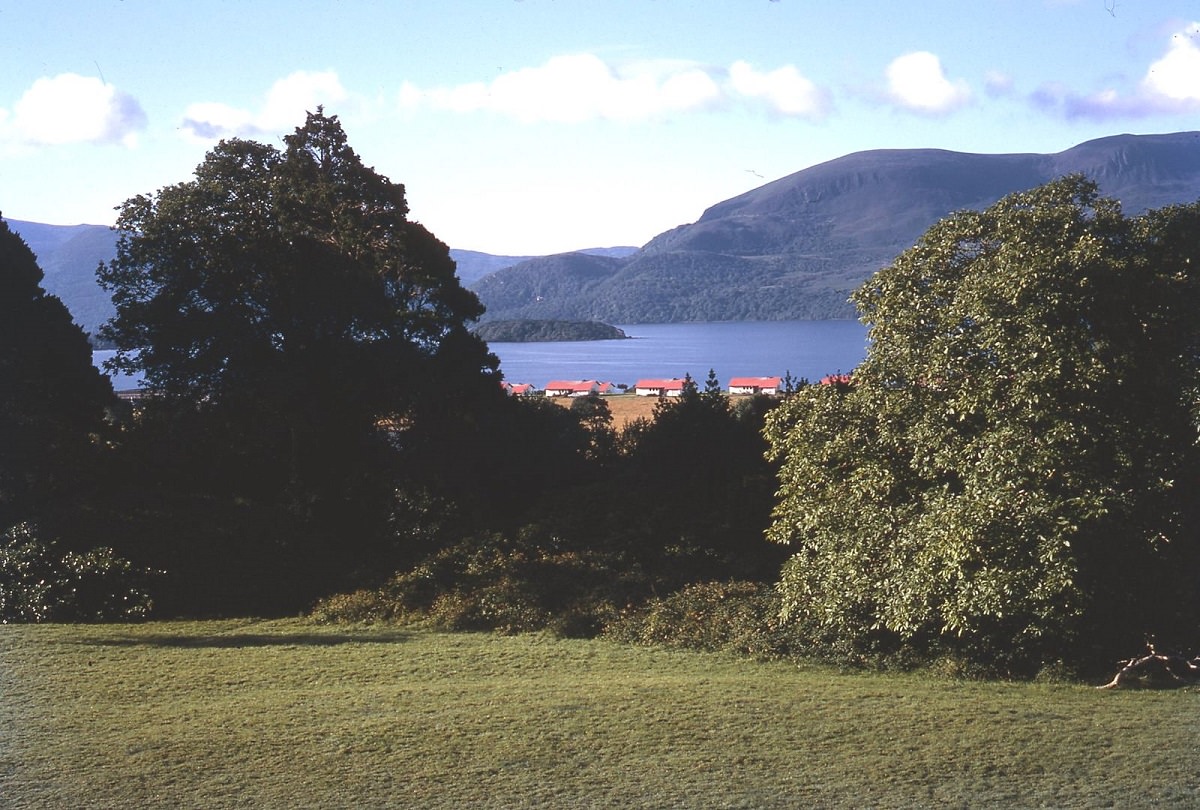
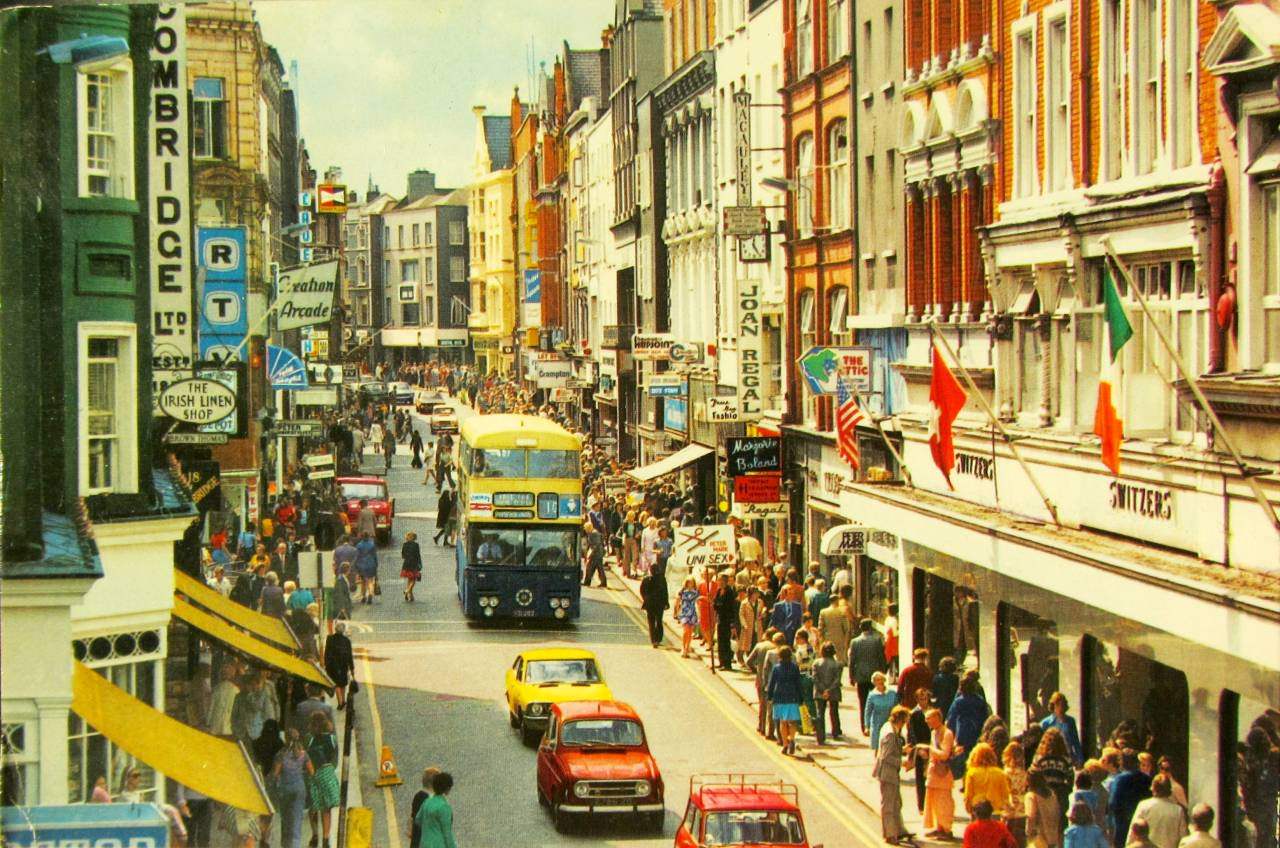
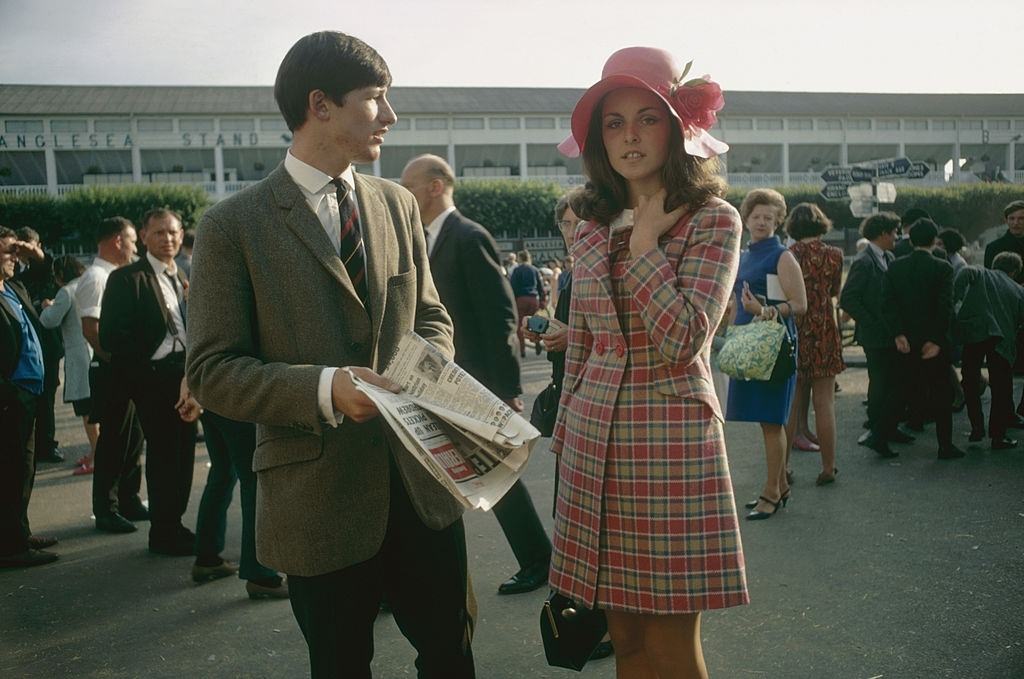
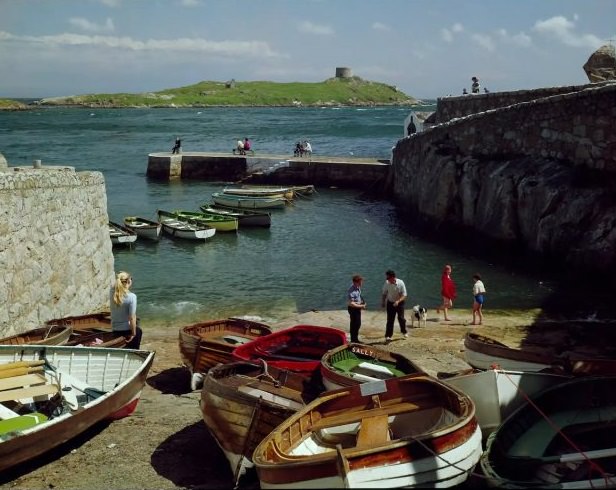
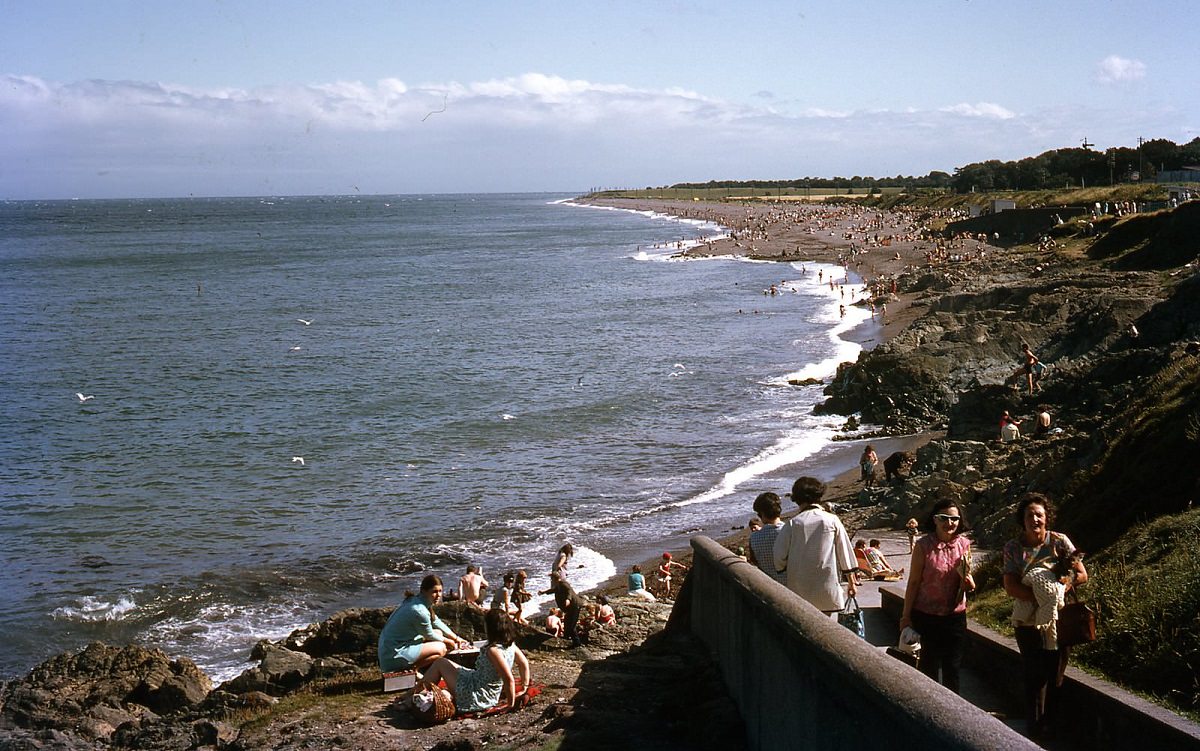
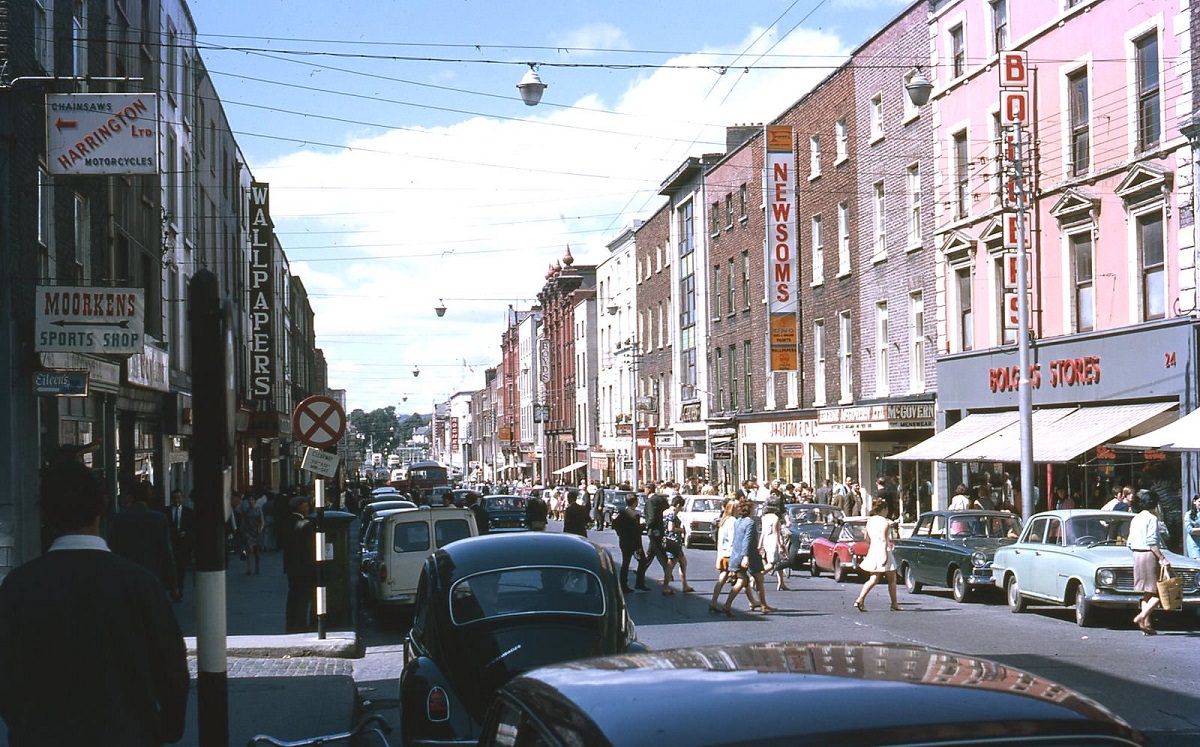
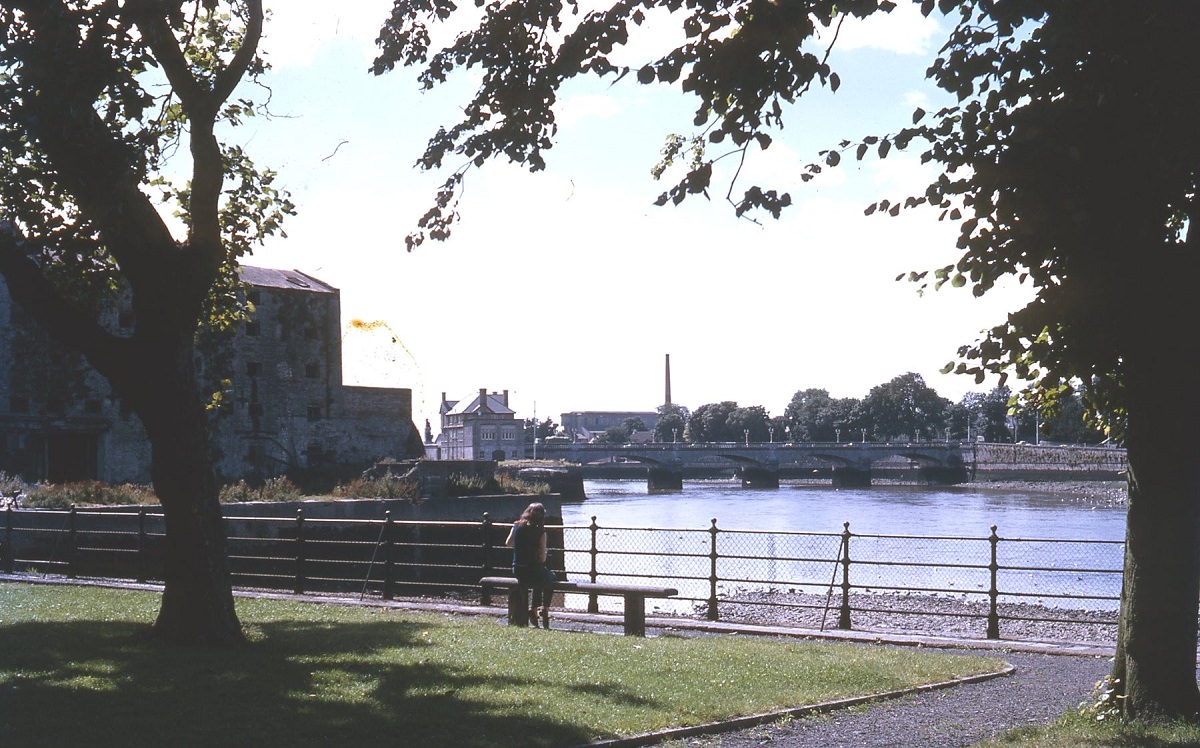
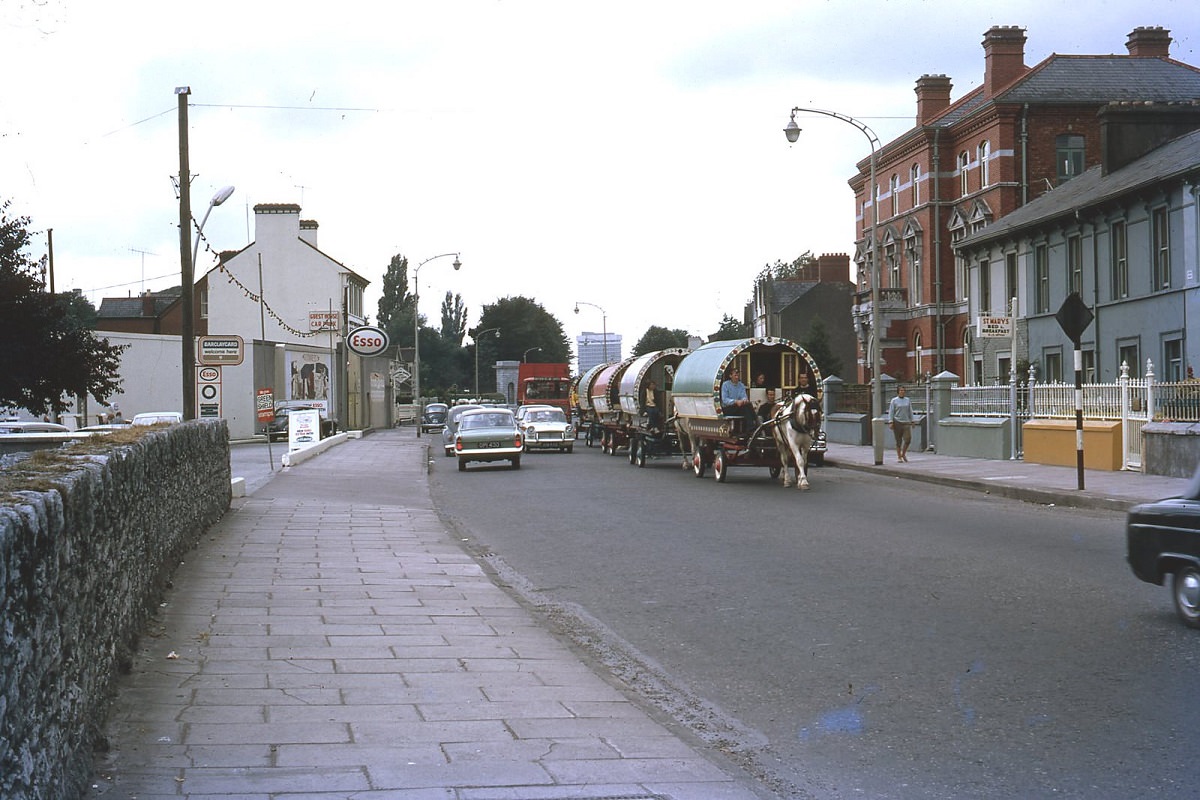
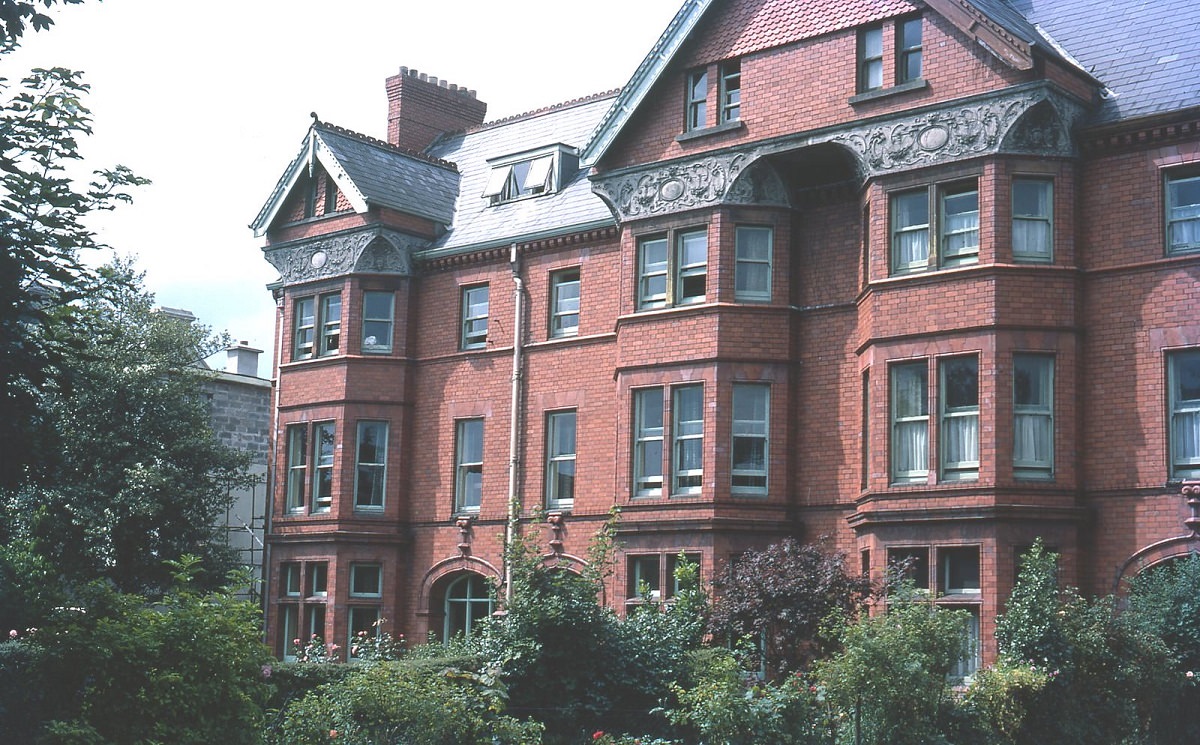
Towns like Kildare and Galway, coastal spots like Dún Laoghaire and Greystones, the Hill of Howth, Coliemore Harbour in Dalkey, and the Silver Strand in County Wicklow all feature in the collection. Limerick’s main shopping street and its riverside appear alongside caravans parked in Cork and the youth hostel on Cork’s outskirts. The Dublin Horse Show at the Royal Dublin Society grounds in August 1968 drew crowds in summer clothes to watch competition jumping.
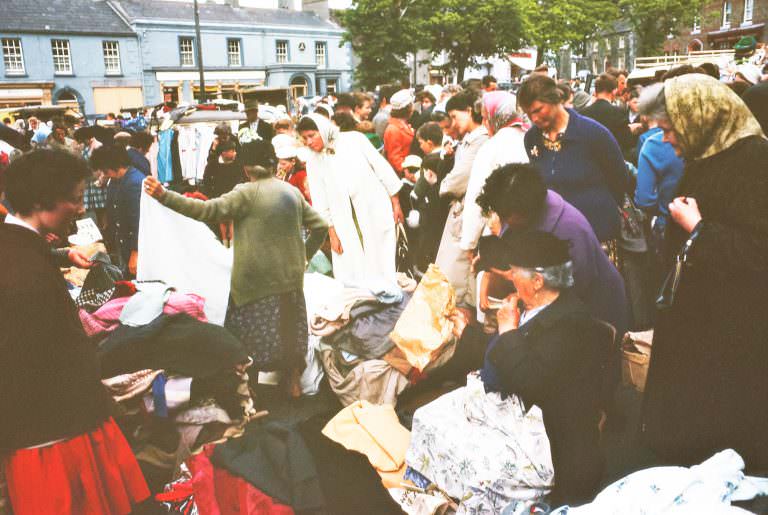
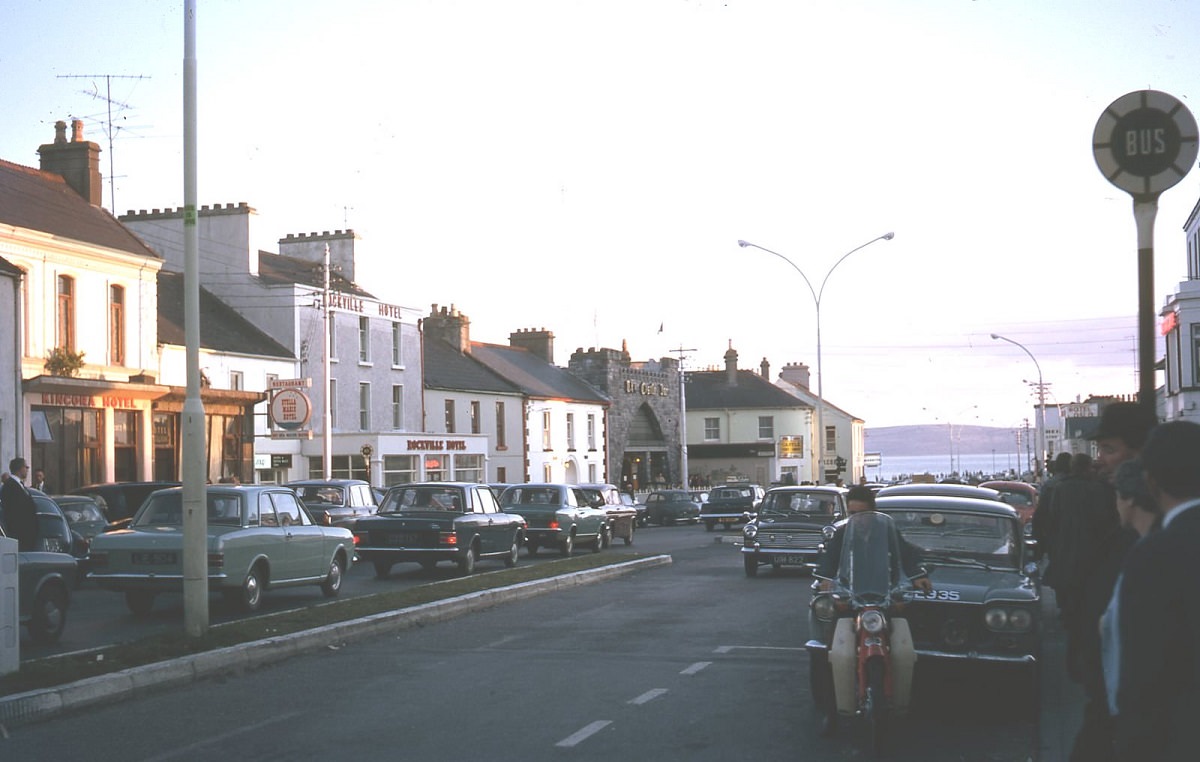
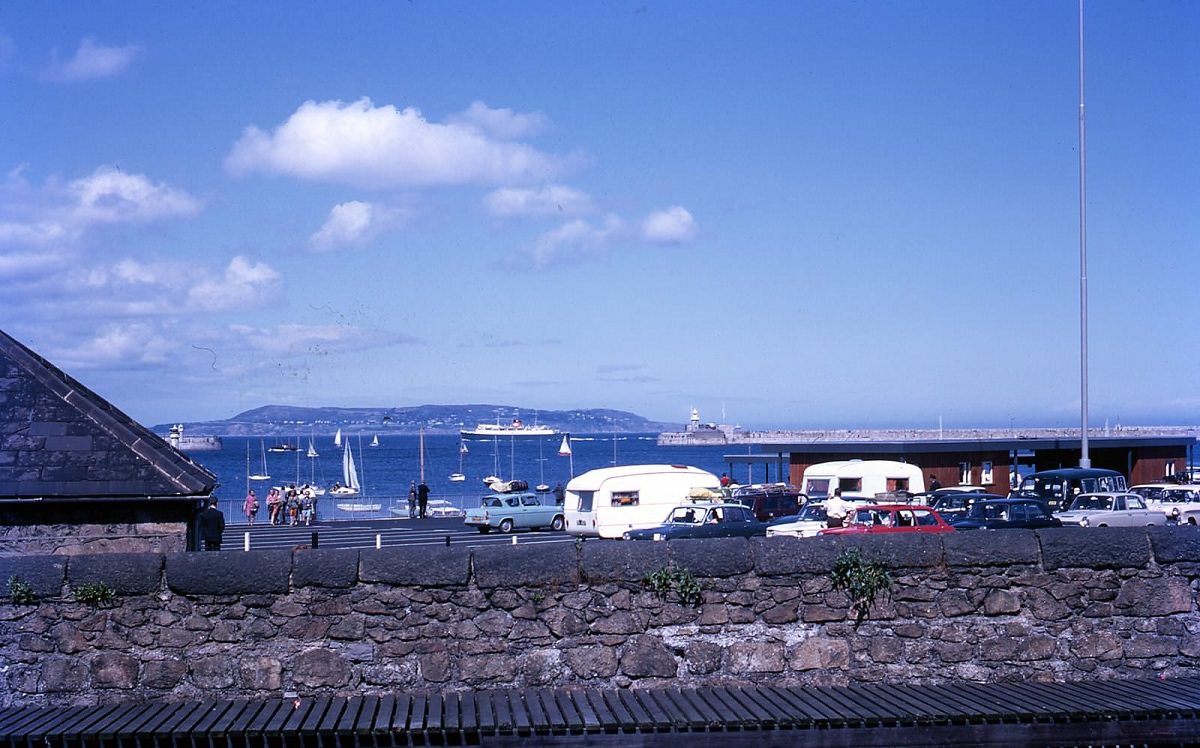
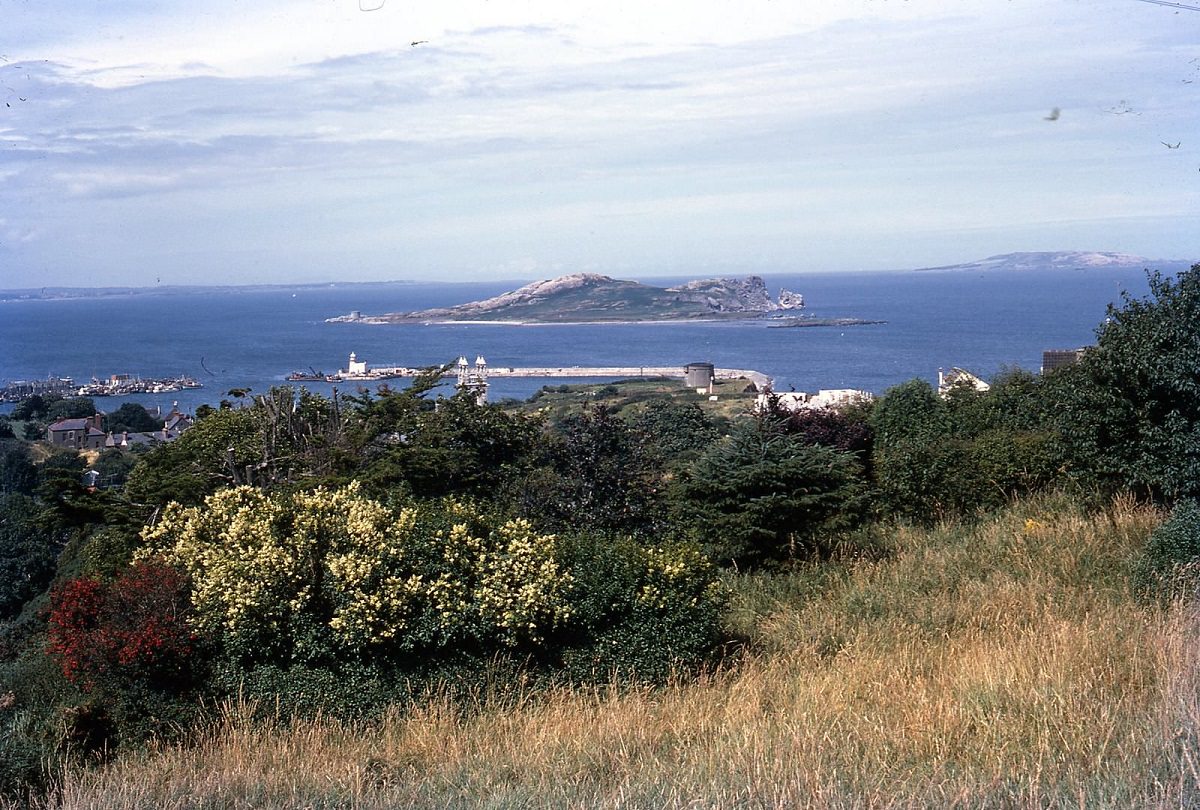
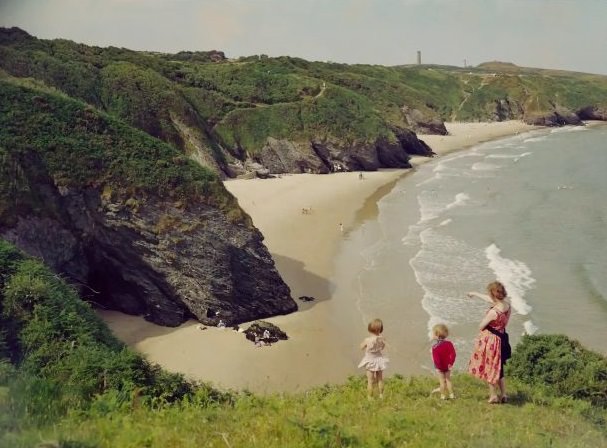
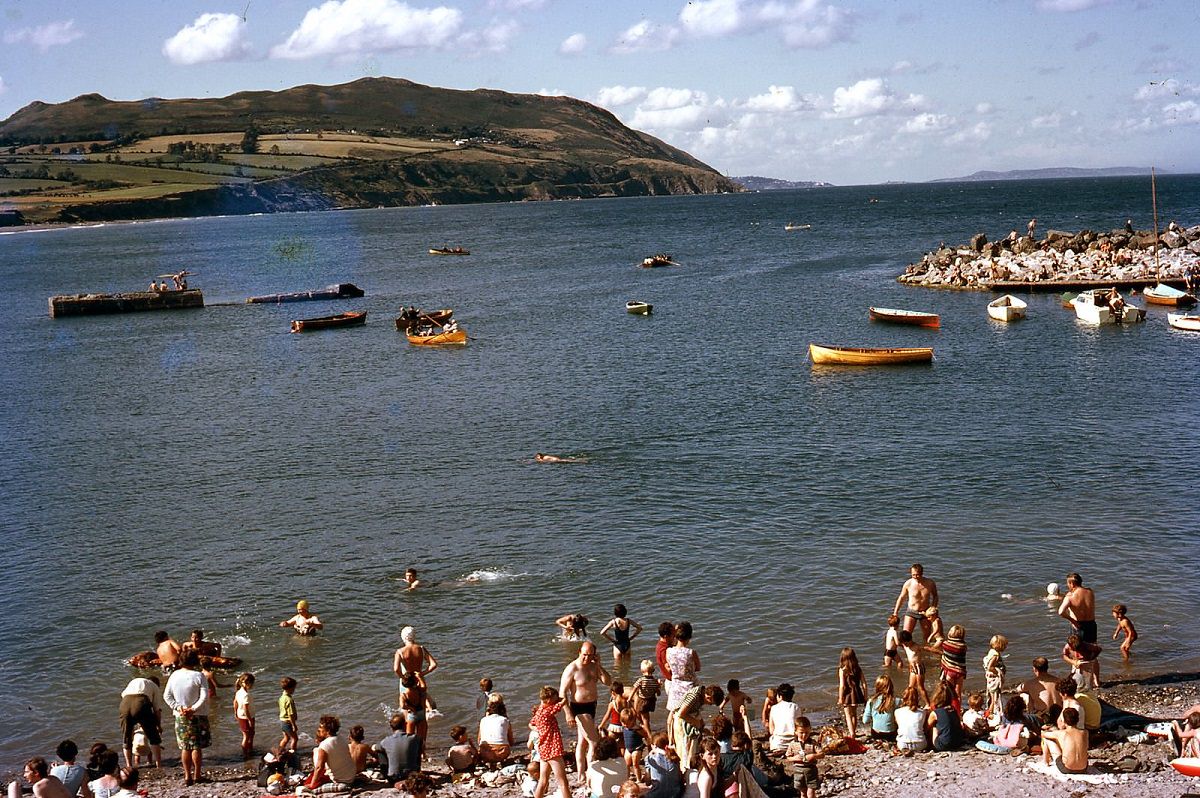
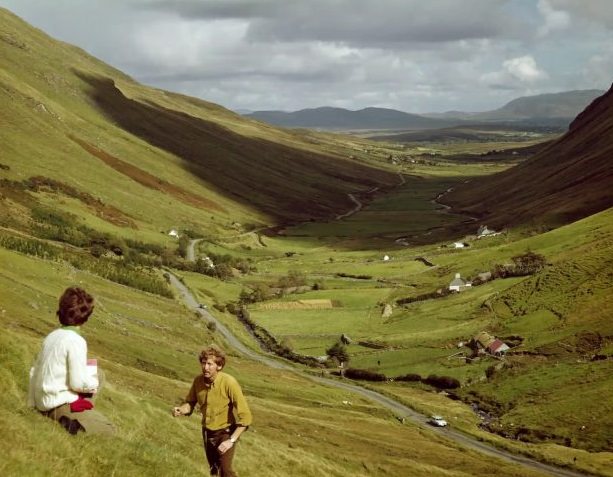
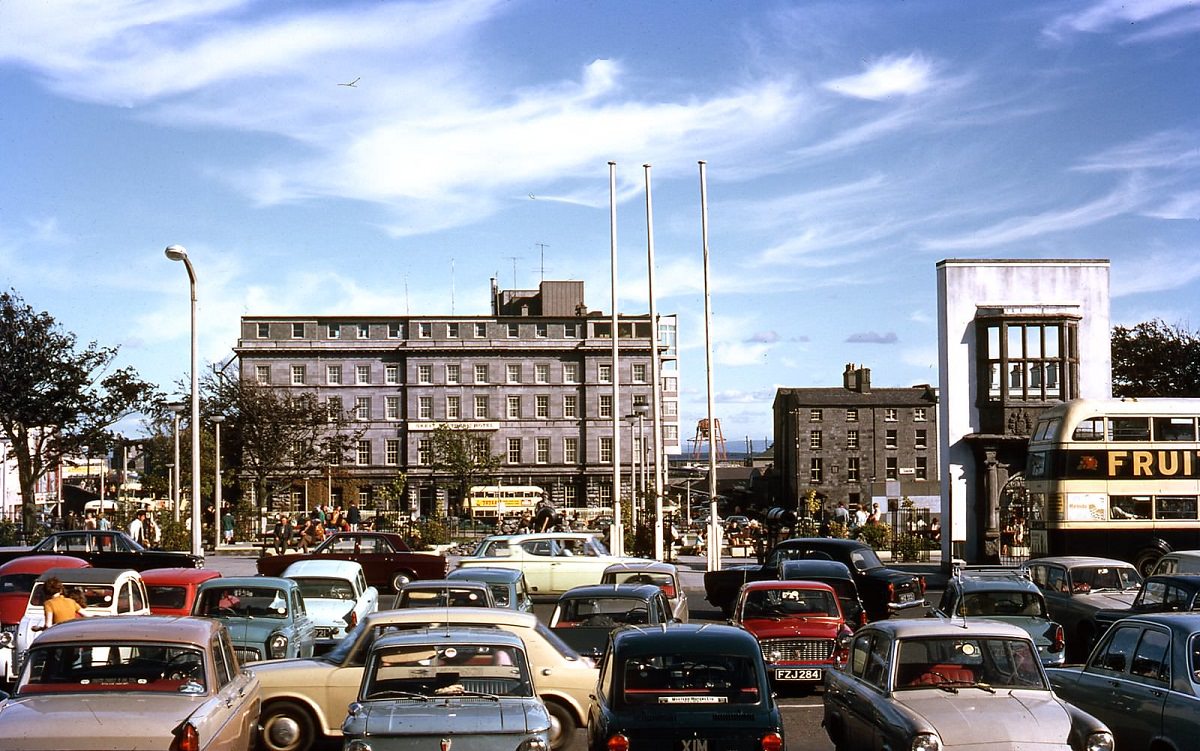
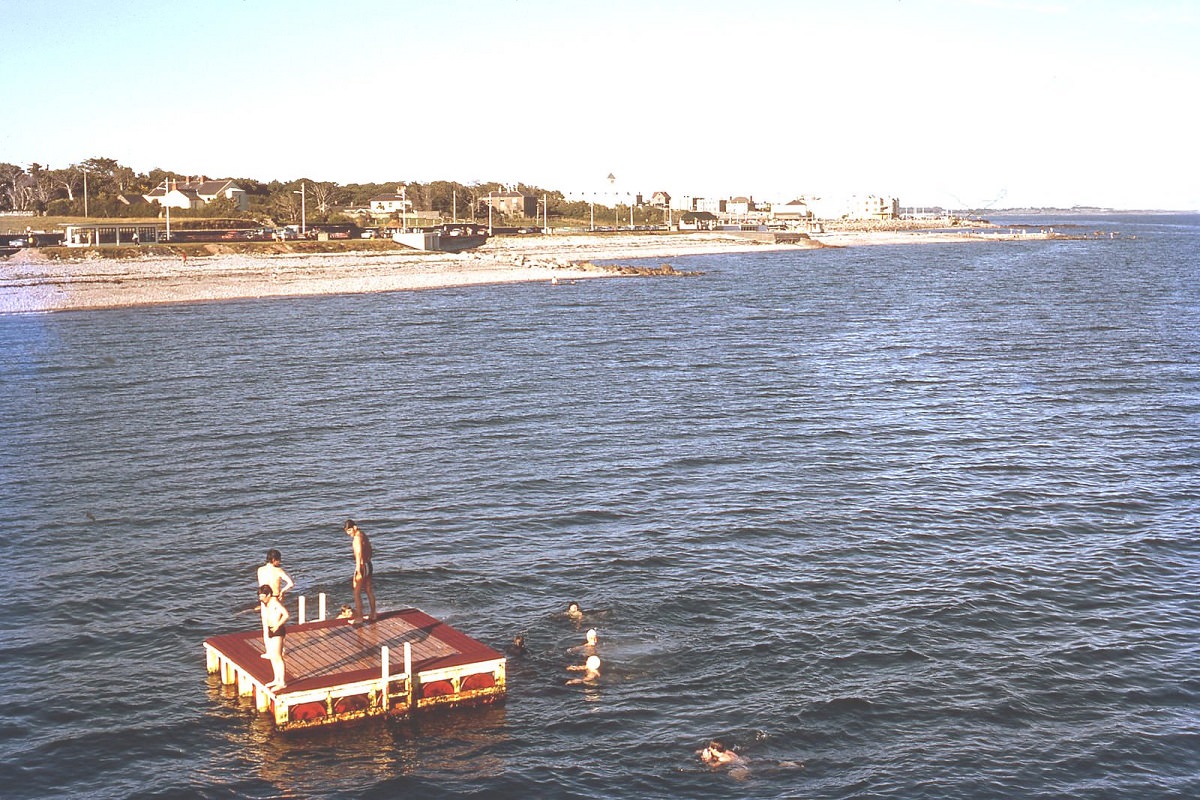
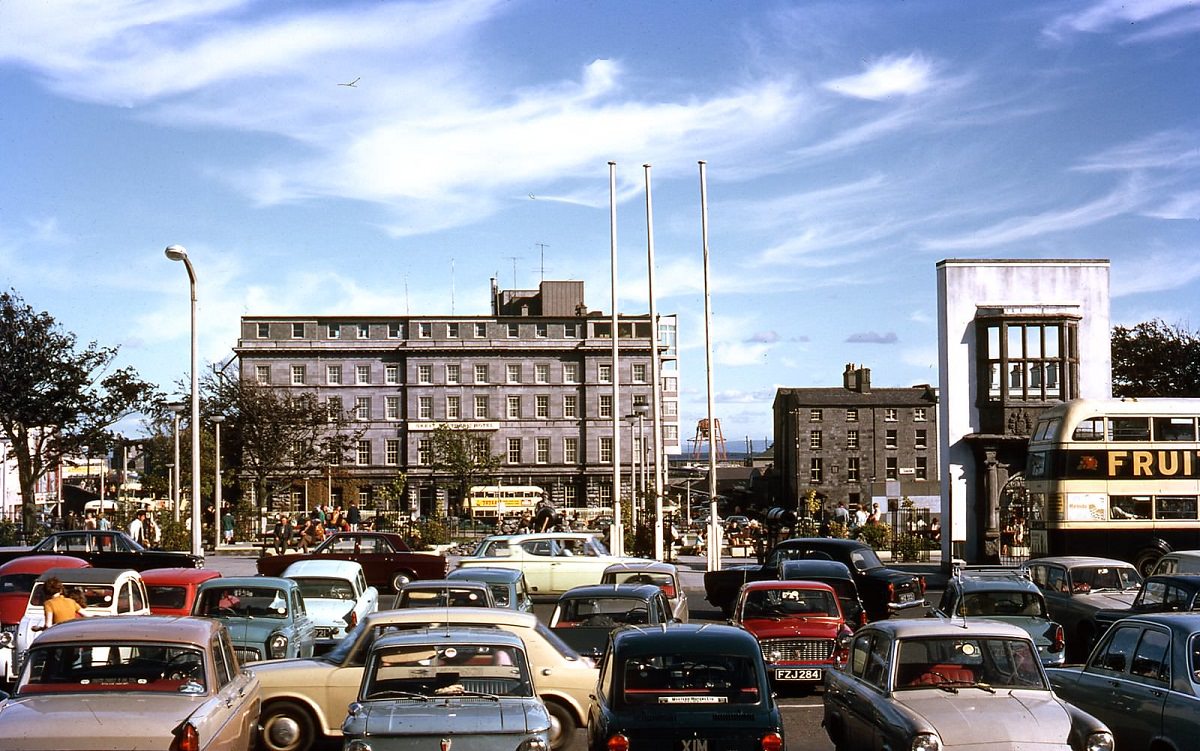
The western extremities of the island appear in some of the collection’s most striking images. Bloody Foreland in County Donegal, named for the red glow its quartzite rocks take on at sunset, and the Glengesh Pass near Ardara give a sense of how remote and rugged Ireland’s Atlantic coast remained. The Station Hotel in Galway and swimmers in Galway Bay round out the western scenes.
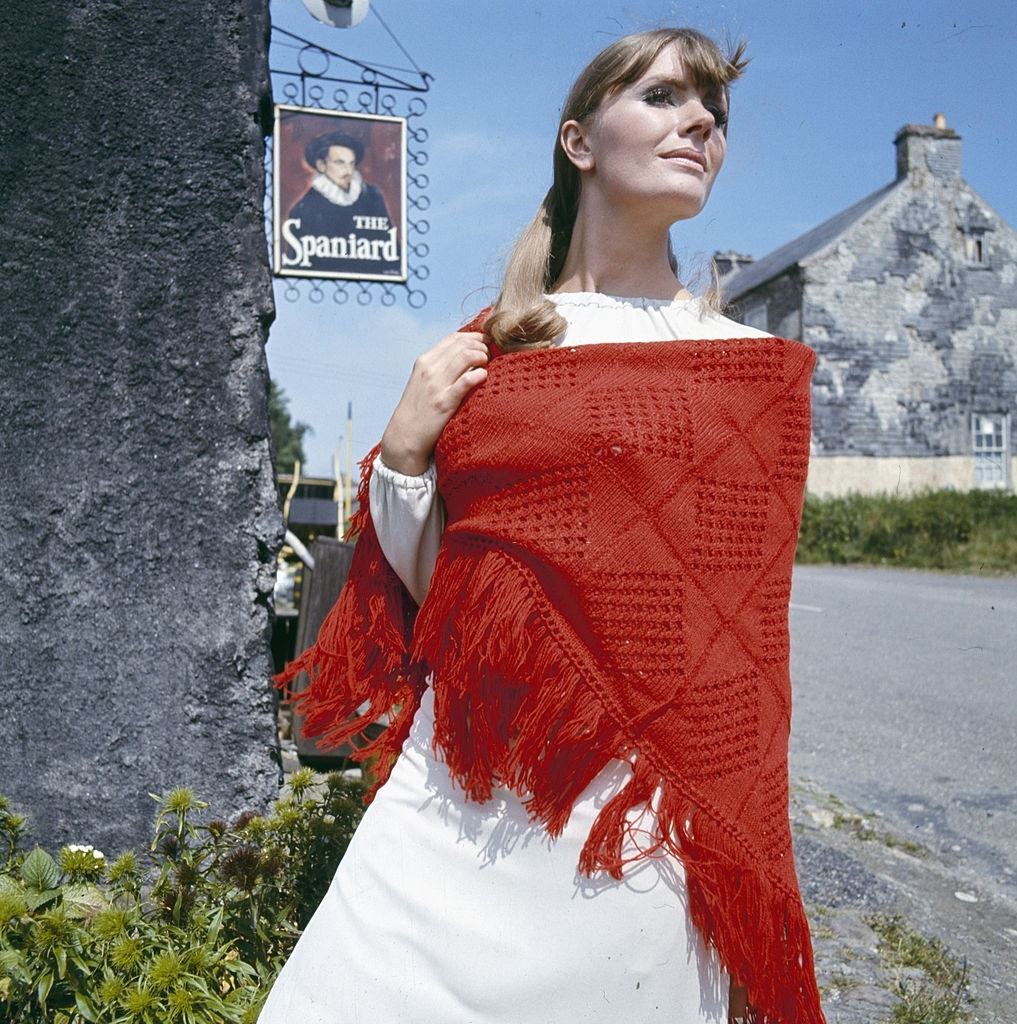
In 1966, a model was photographed outside The Spaniard pub in Kinsale, County Cork, wearing a red knitted Spanish shawl over a white dress. The pub’s name and the shawl both referenced the Spanish Armada and the long history of Spanish ships in Kinsale’s harbor — a reminder that even in a decade of modernization, Ireland’s older identities were never far from the surface.
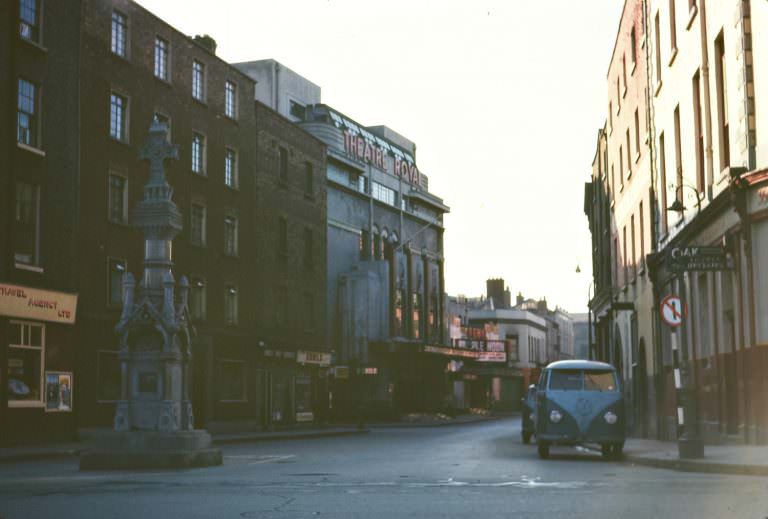
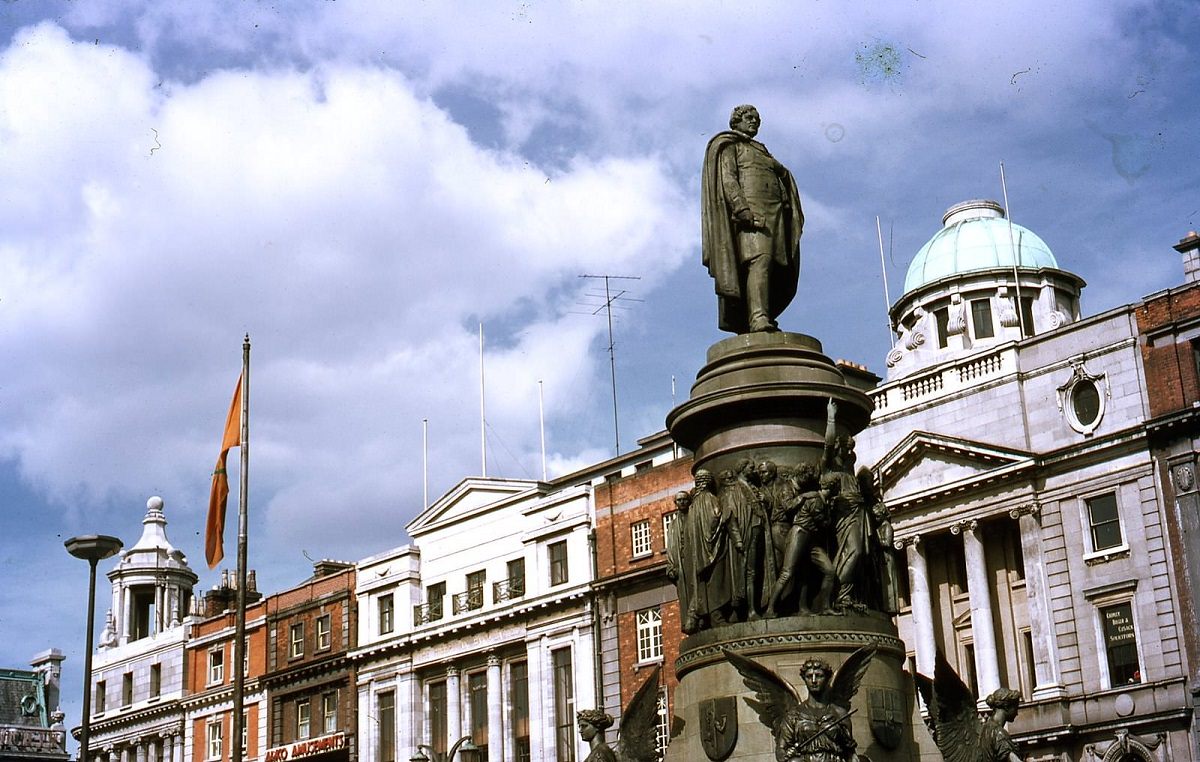
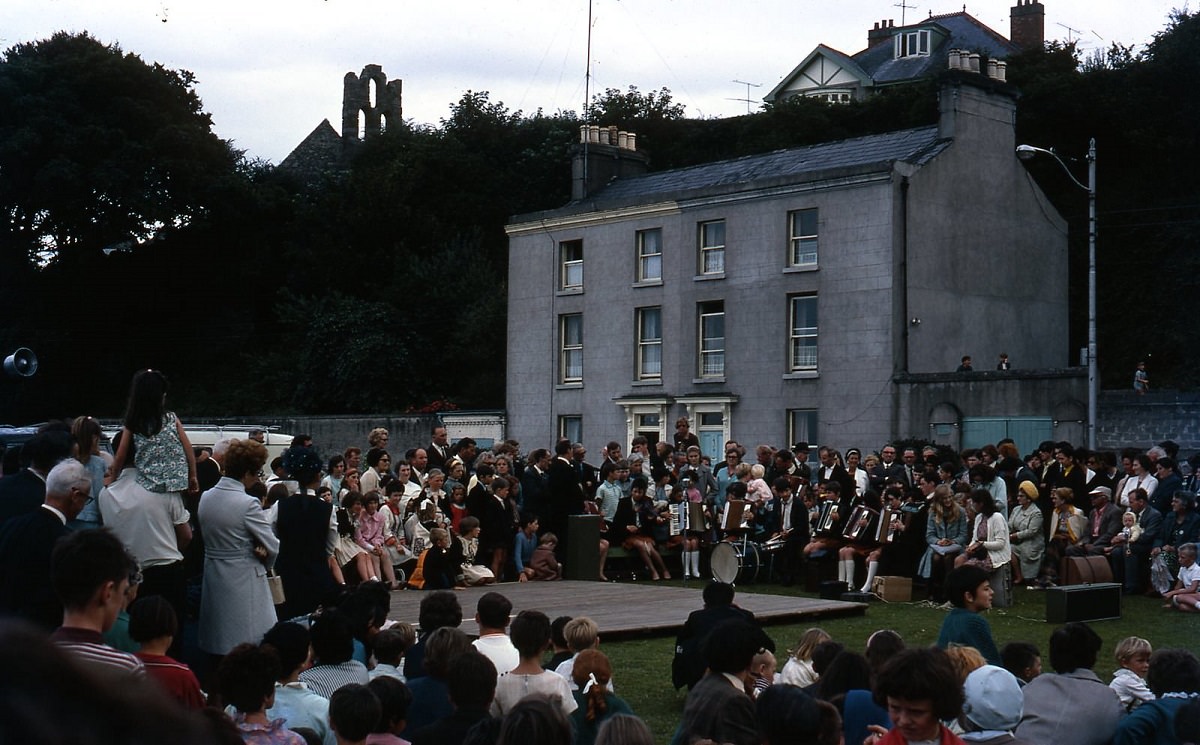





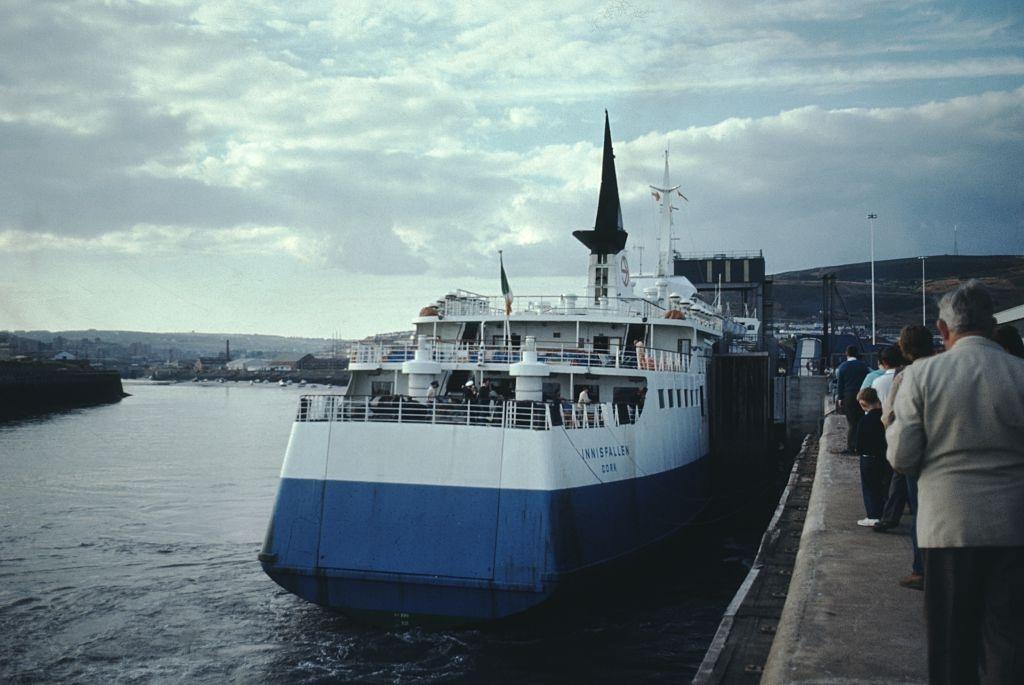
Where is the last photograph taken? the army out riders.
pic 20 is salthill
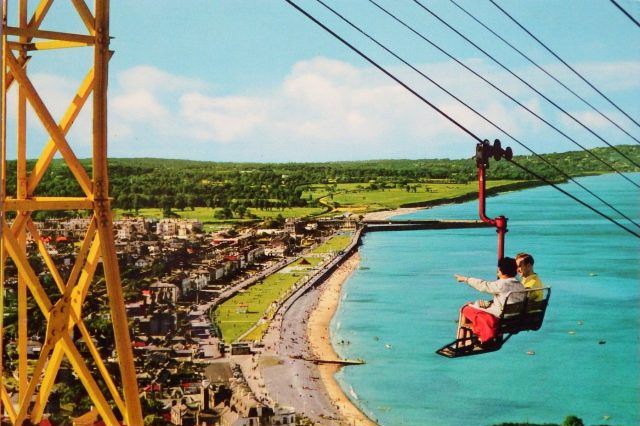
66 is Bray Head cable cars
When men were men and women were women, simpler times 😔
Some of those captions are very questionable, what makes that woman’s shawl Spanish? It looks like every Irish woman’s shawl I ever grew up with. There are also multiple labelled as cafes etc that are clearly the beer garden of a pub, the many of these are colourised black and white images
That’s not right. Everything was black & white in Ireland in the 1960s. At least that’s how I remember it, and all of the photos I have from that time prove it.
Except for a yellow, rubber Bowie knife I got from the rag and bone man. I think I gave him my brother’s shoes for it. Well worth it. My brother used to take it off me and when I asked him to give it back he’s say – “You want it do ya?” And then he’d stab me repeatedly with it. He never seemed to get tired of that joke…
BTW. What the hell is Brendan Behan drinking in that glass!? It looks like he’s thinking the same thing.
Colour was only introduced to Ireland when Crazy Prices brought in their Yellow Pack Range.
Superquinn were initially resistant to the change and hit back with their own Black And White ‘Thrift’ Range but by that stage it was too late, the Irish people demanded change and Superquinn lost out.