Paris in the 1950s was a city in the middle of a long, slow climb back to its former self. World War II had left France physically battered and economically exhausted. The French government spent the early part of the decade focused on repairing war damage while simultaneously trying to rebuild public confidence in the future. What followed was the beginning of what historians call “Les Trente Glorieuses” — thirty years of strong economic growth that would transform France from a war-torn nation into a modern industrial power. American aid through the Marshall Plan helped fuel this recovery, injecting capital and resources into a country that badly needed both.
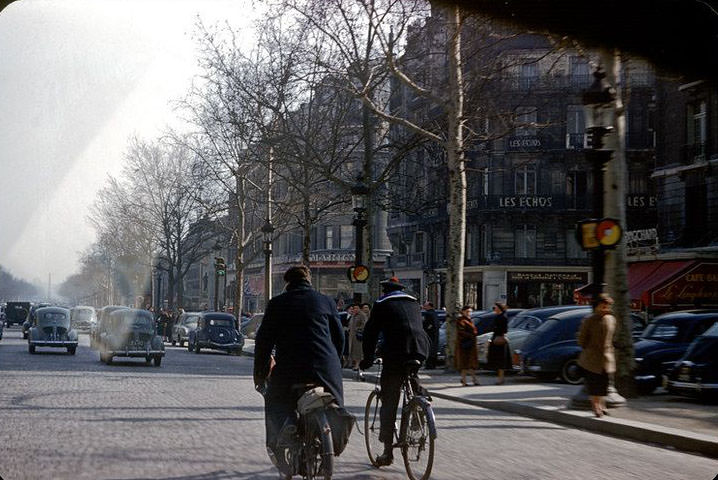
The streets of Paris in 1950 still carried the weight of the war years. Buildings were grimy and darkened by decades of soot, largely because no laws required property owners to clean their facades. A walk through most neighborhoods meant passing block after block of blackened stone. The housing stock was old — in 1954, thirty-five percent of apartment buildings in Paris had been constructed before 1871. Many of these buildings lacked basic modern amenities. Despite being in poor condition, housing remained expensive and in short supply, squeezing working-class and middle-class families alike.

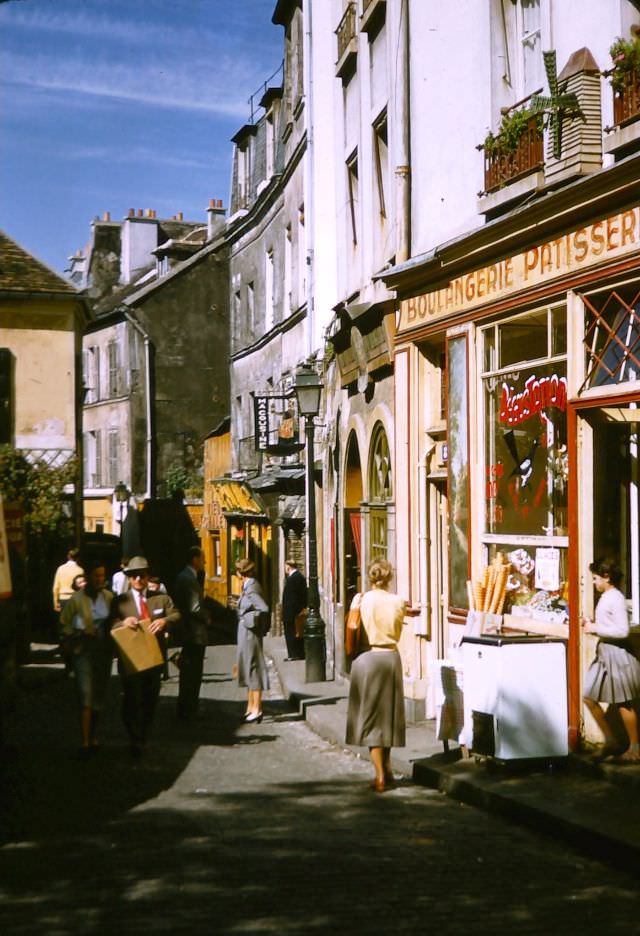
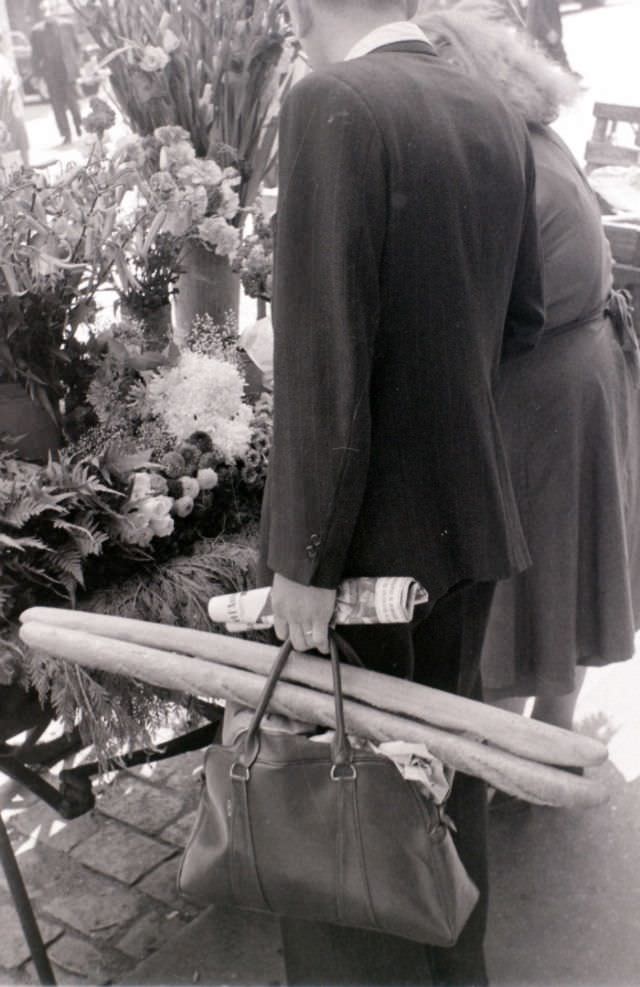
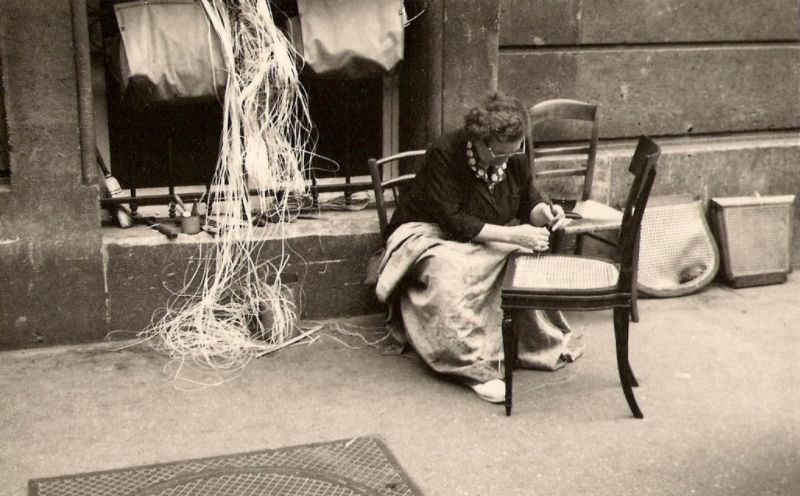
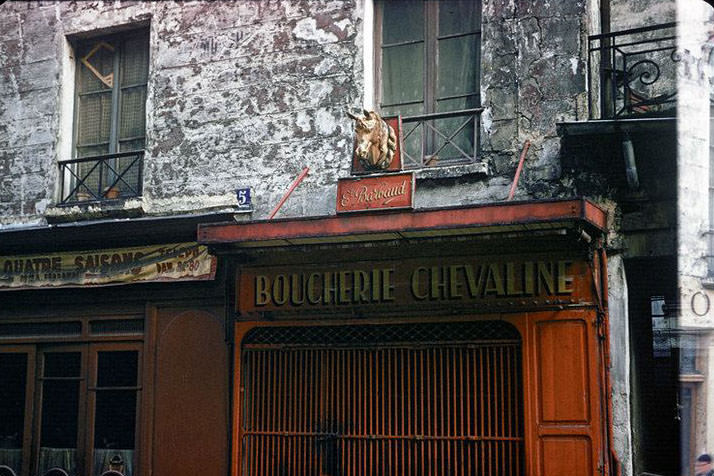
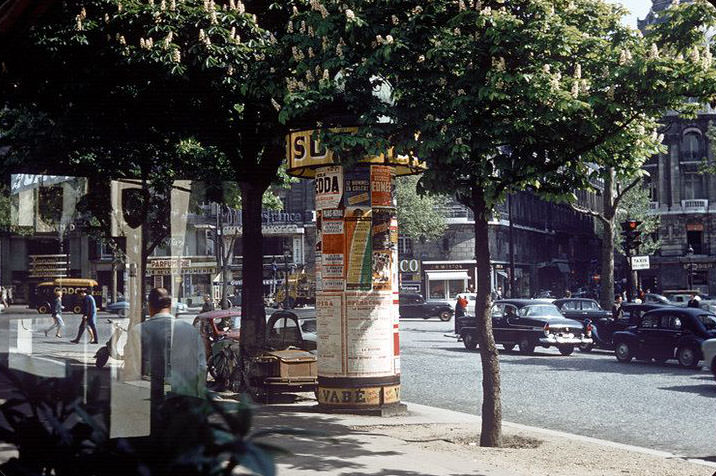
The French government responded to the housing crisis by launching large-scale construction programs aimed at building new apartment blocks for middle-class and low-income Parisians. These projects pushed development outward from the historic city center, reshaping the suburbs. Meanwhile, the streets of Paris itself remained dense with small, independent shops. There were no supermarkets in the modern sense. Instead, a vast network of small retailers handled nearly every type of goods — butchers, bakers, fishmongers, and grocers each operating their own storefronts. Shopping was a daily, neighborhood-level activity.
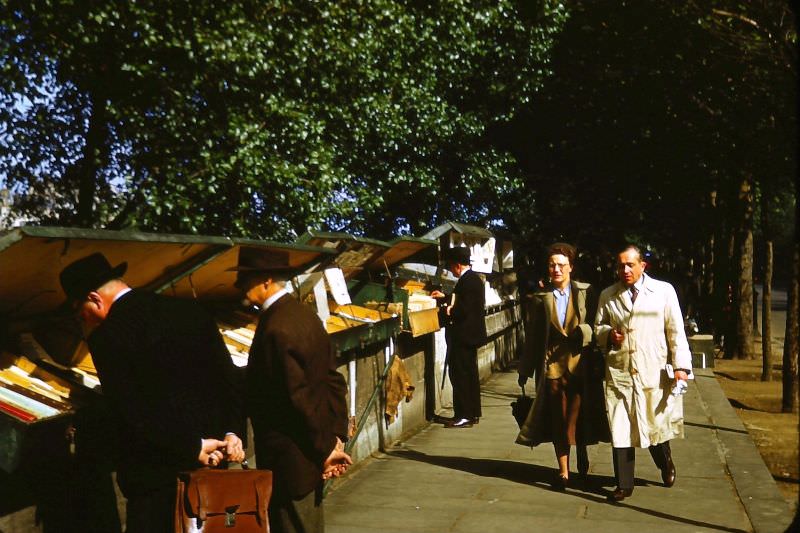
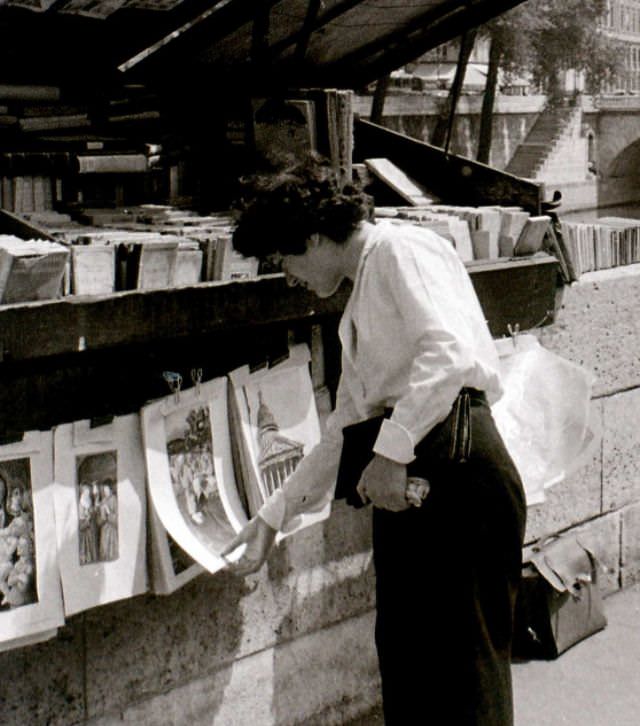
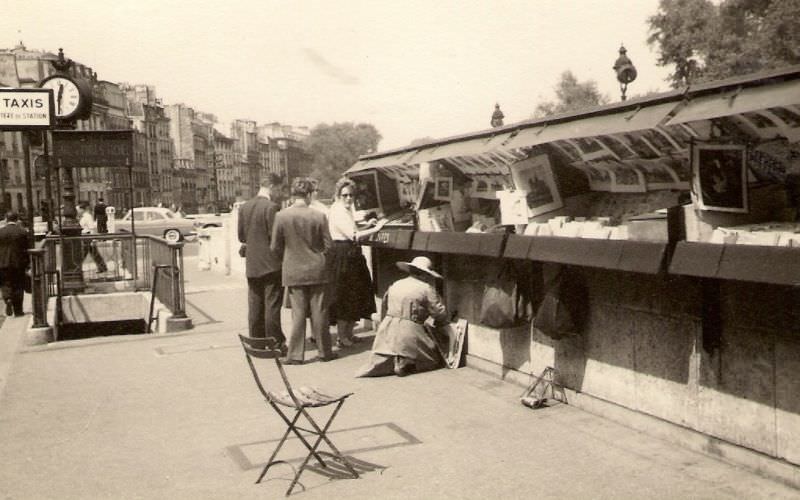
Along the Seine’s Left Bank, one of Paris’s most beloved traditions carried on regardless of the postwar hardship. Booksellers — the bouquinistes — lined the quays with their green wooden stalls, selling secondhand books, maps, prints, and postcards. These vendors had occupied the riverbanks for centuries, and in the 1950s they remained a fixture of daily Parisian life, drawing both locals and the growing stream of tourists arriving from abroad.
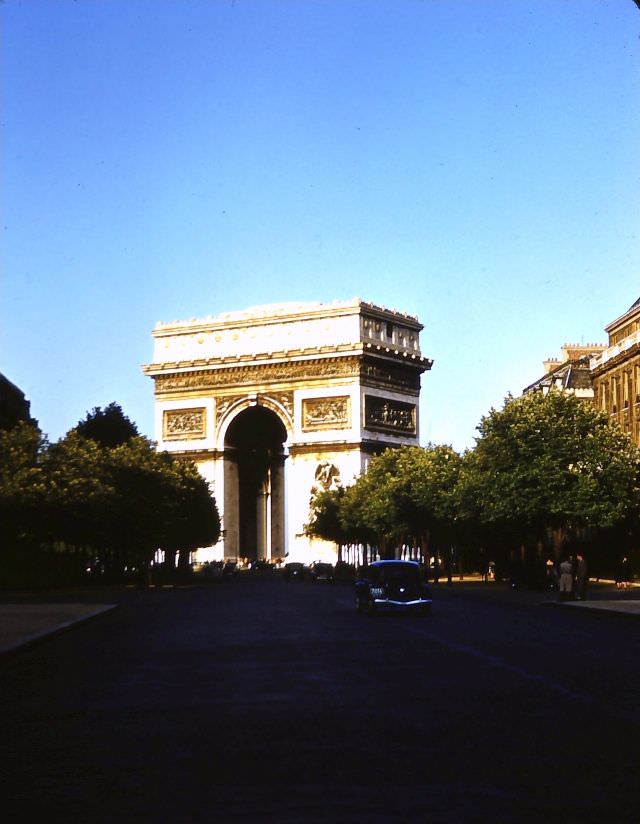
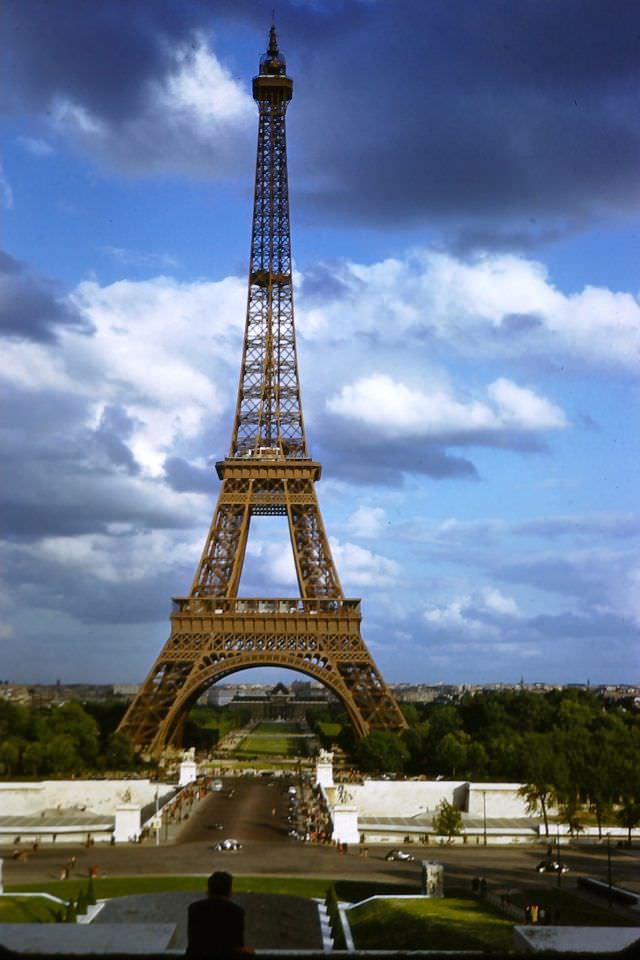
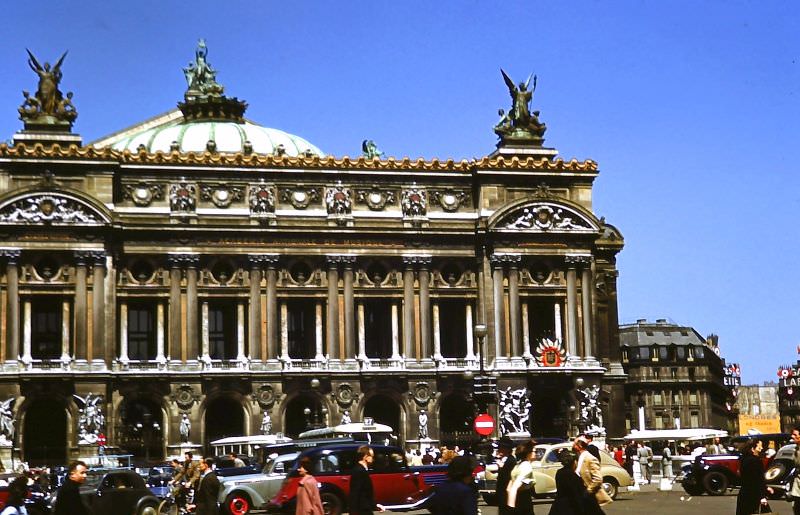
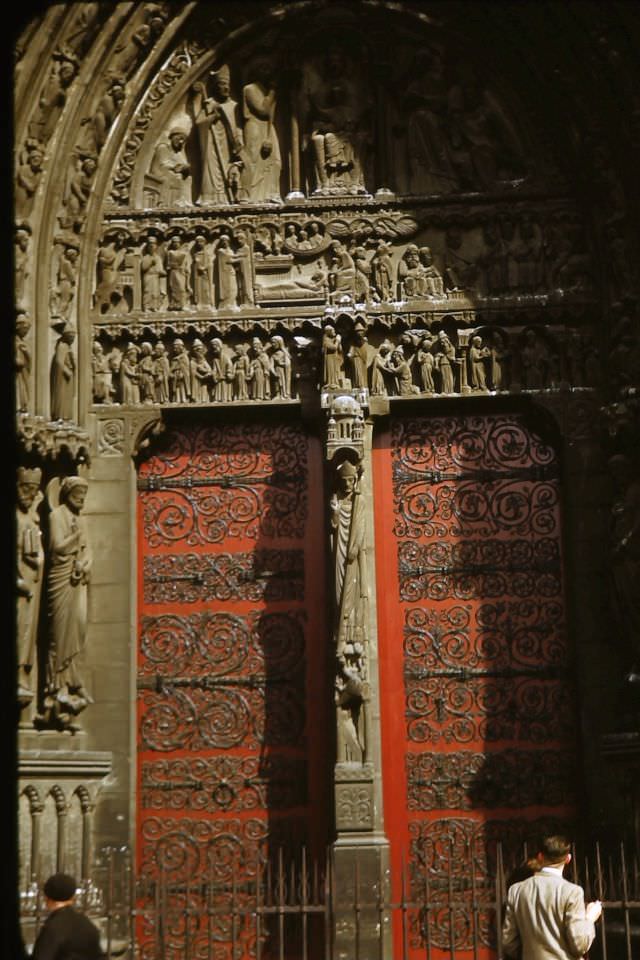
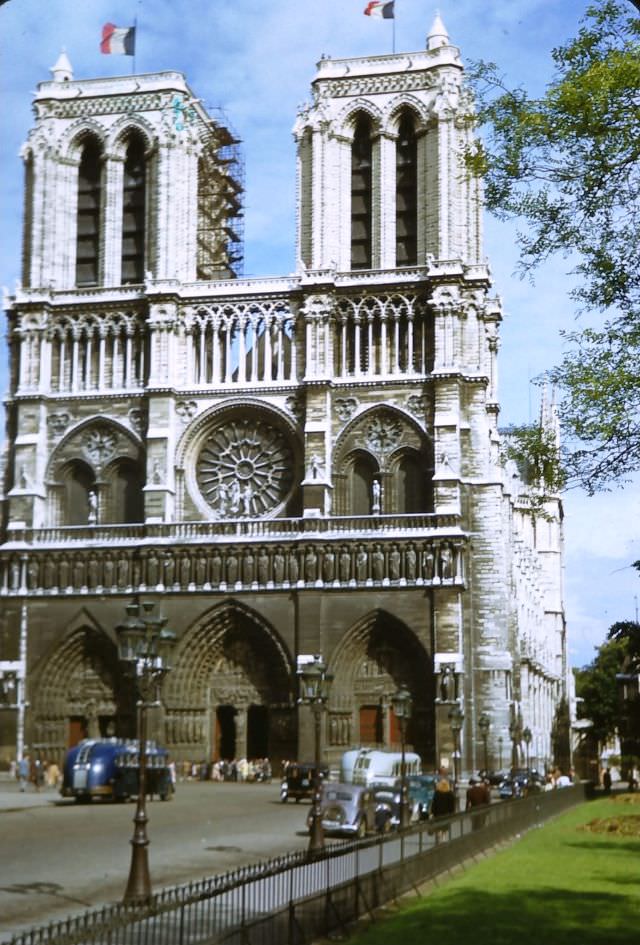
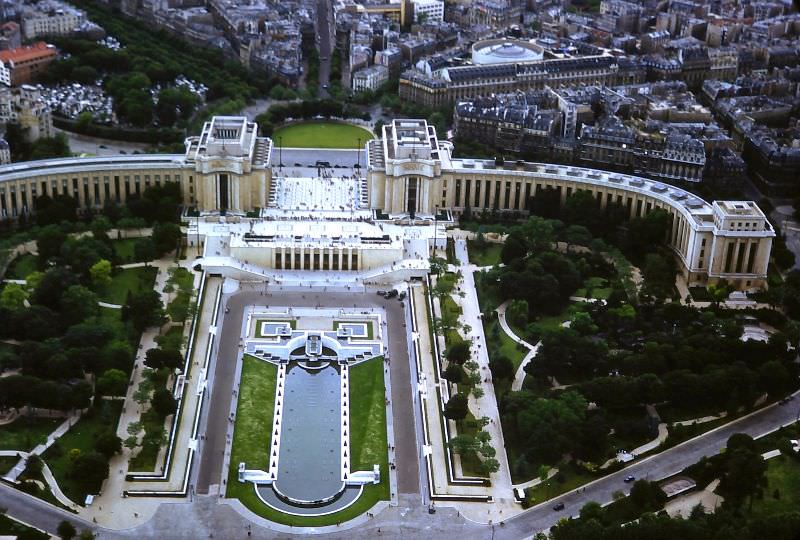
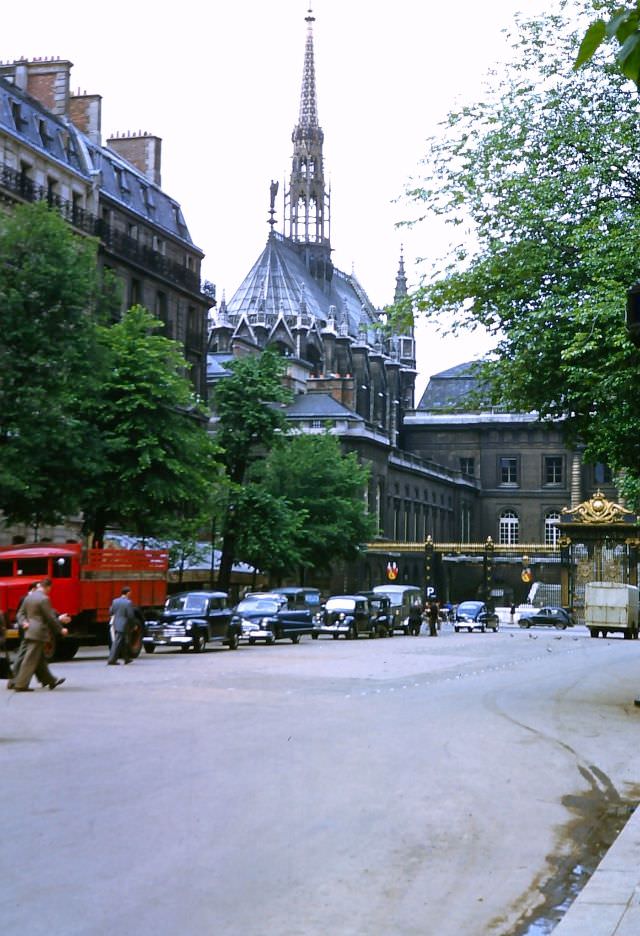
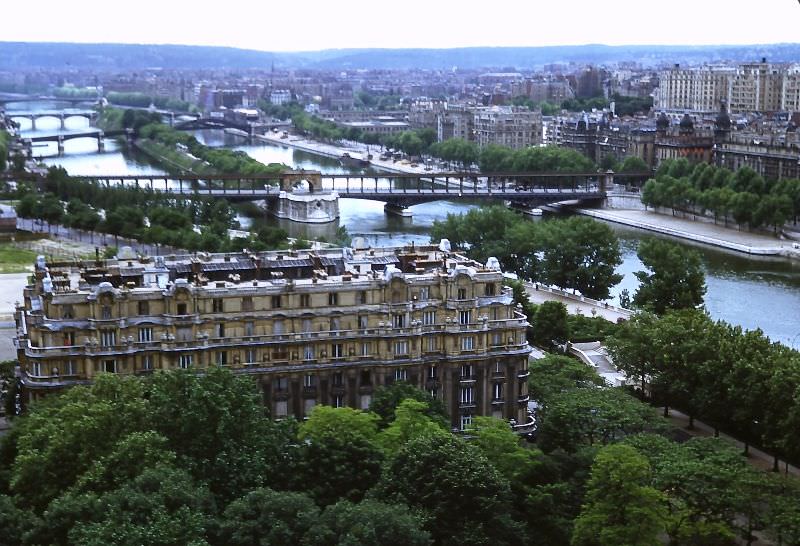
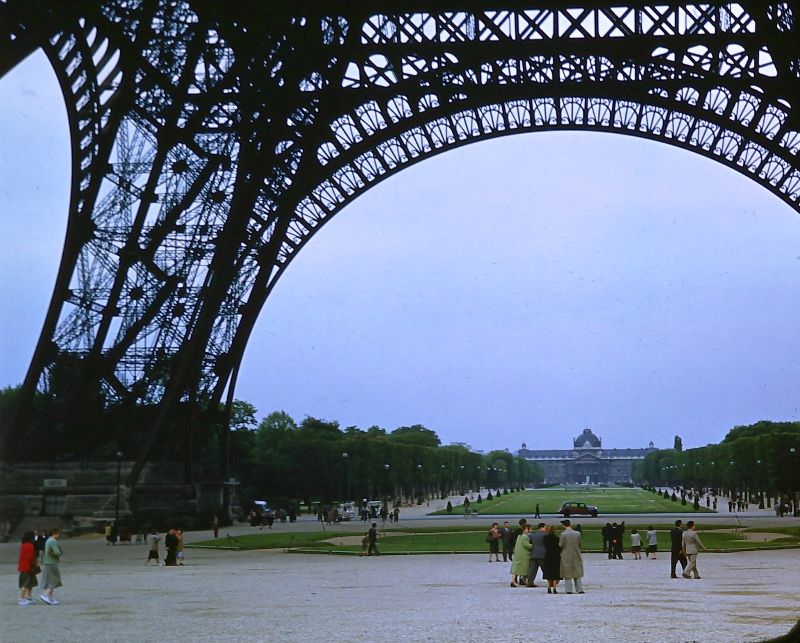
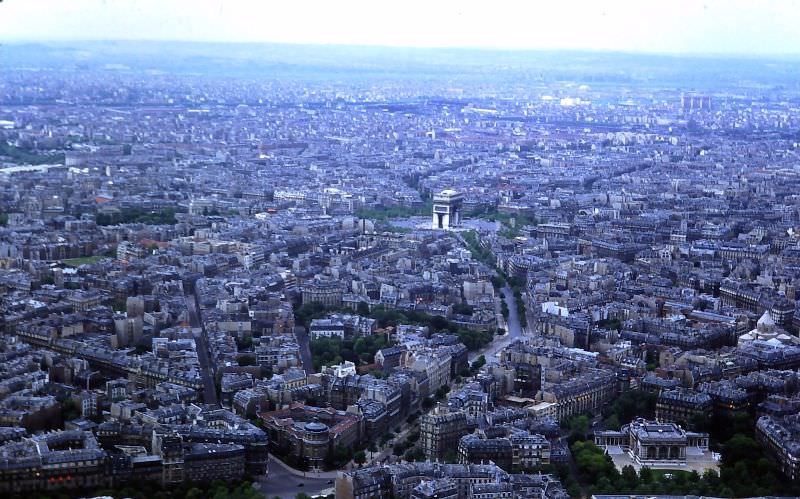
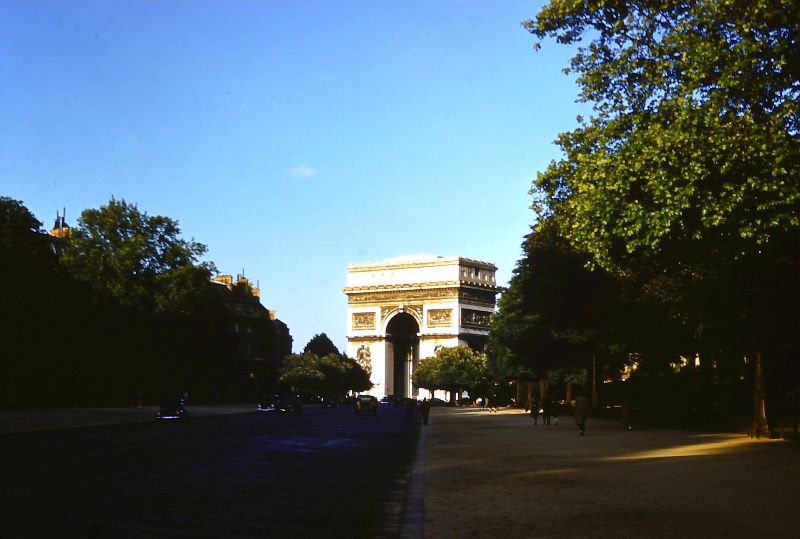
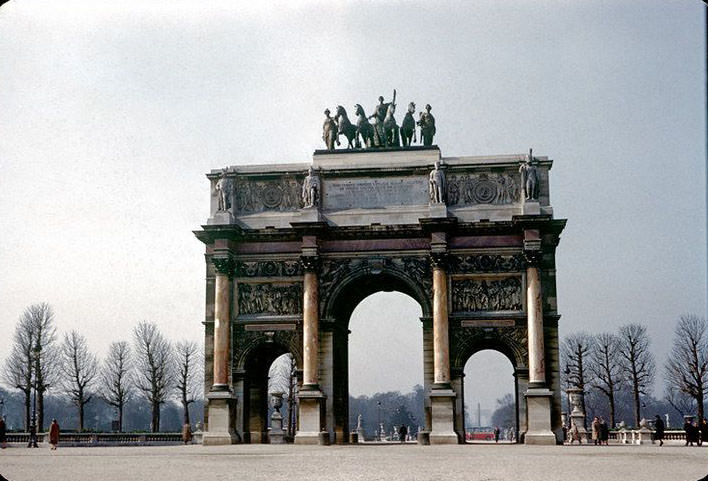
The grand monuments of Paris stood largely undamaged. The city had been spared the kind of aerial bombardment that leveled other European capitals, and its iconic landmarks — the Eiffel Tower, Notre-Dame, the Arc de Triomphe, the Opéra Garnier — remained intact. These structures continued to define the skyline just as they had before the war, giving Paris a visual continuity that cities like Dresden or Warsaw no longer possessed.
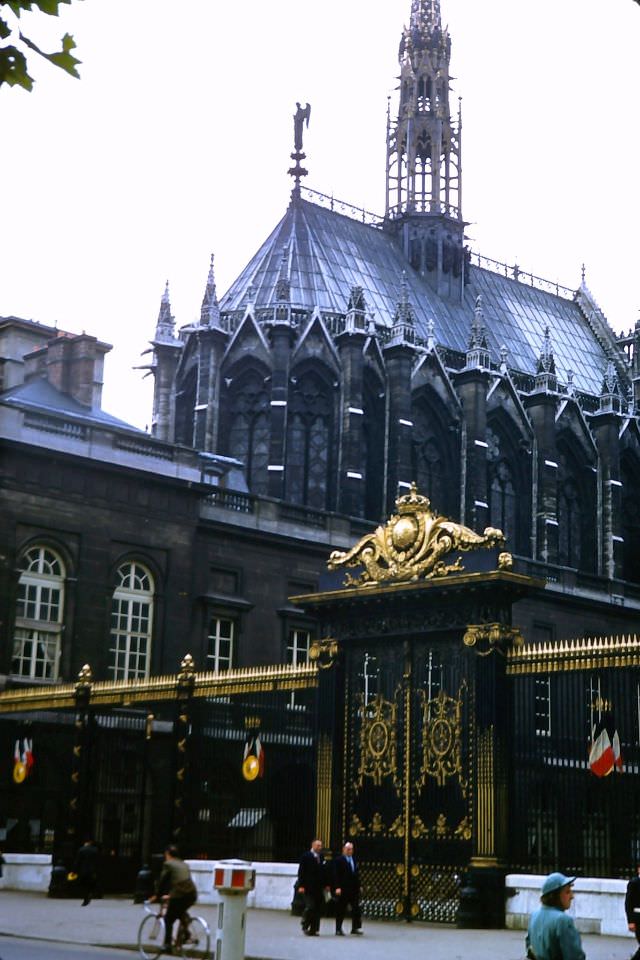
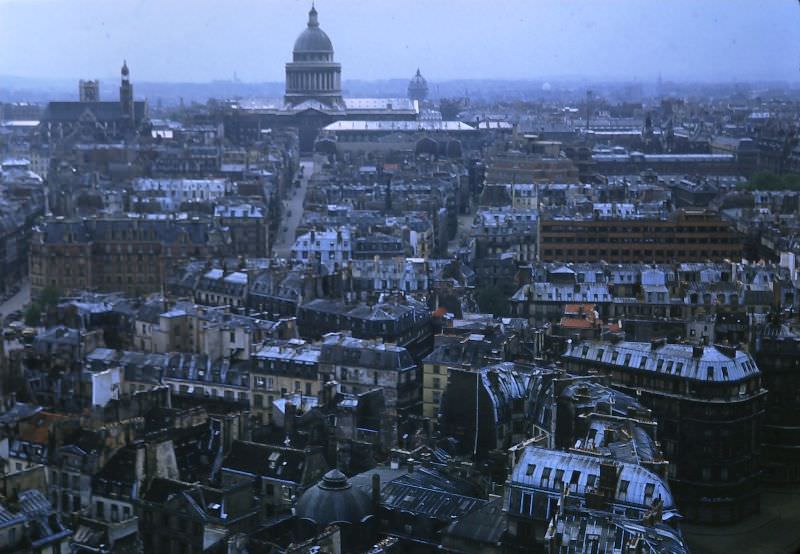
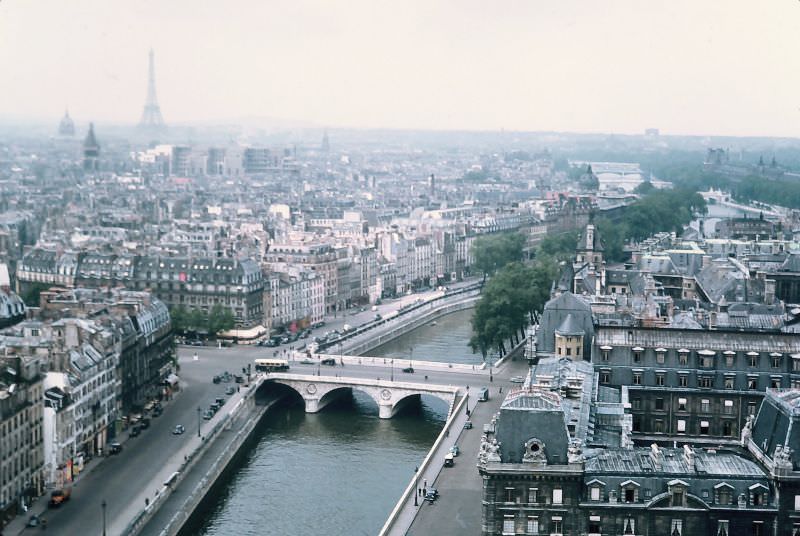
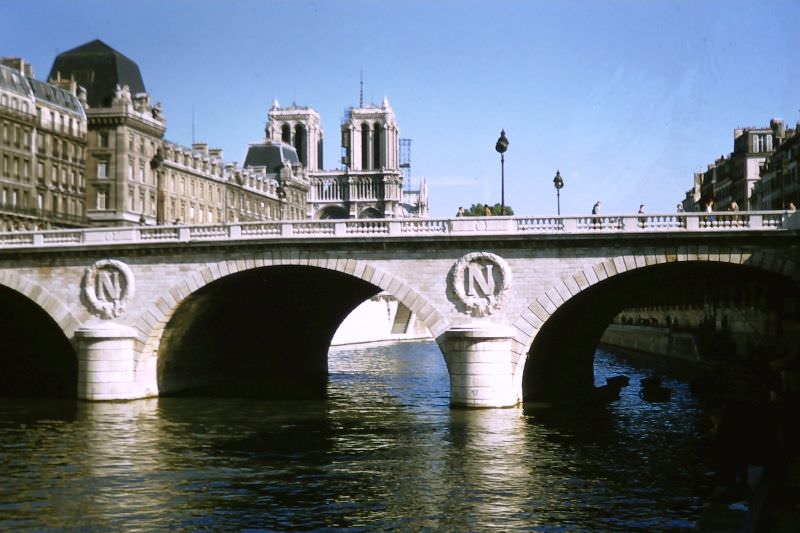
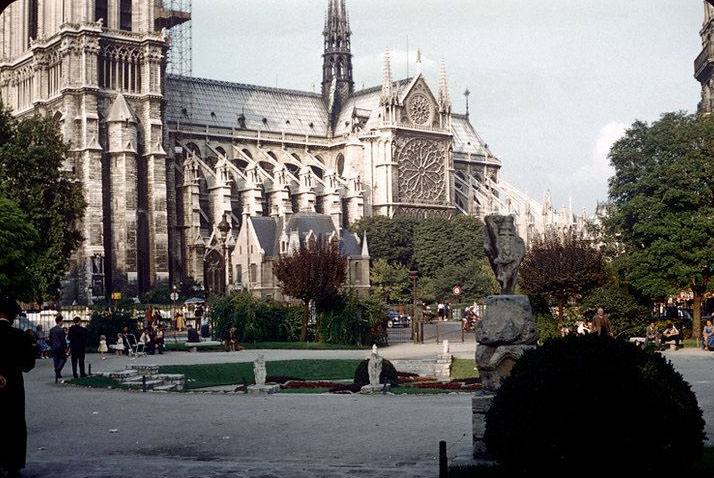
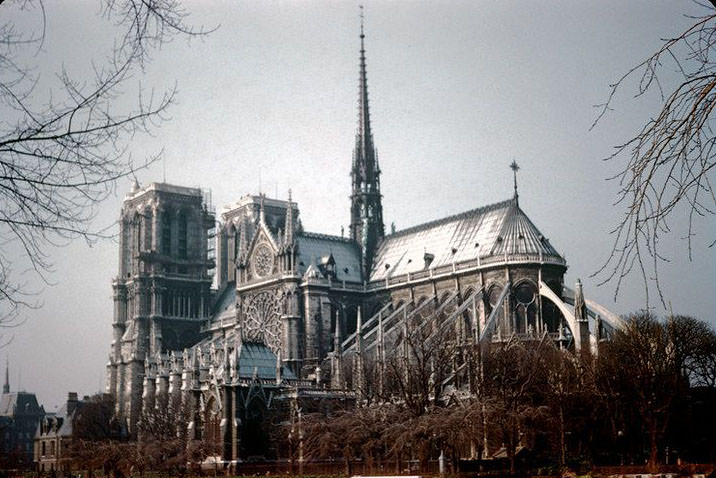
Notre-Dame Cathedral dominated the Île de la Cité as it had for nearly eight centuries. From its towers, visitors could take in sweeping views of the Seine, the rooftops of the Latin Quarter, and the dome of the Panthéon rising in the distance. The cathedral was still very much an active place of worship and a central point of Parisian identity in the 1950s, drawing both the faithful and sightseers in equal measure.
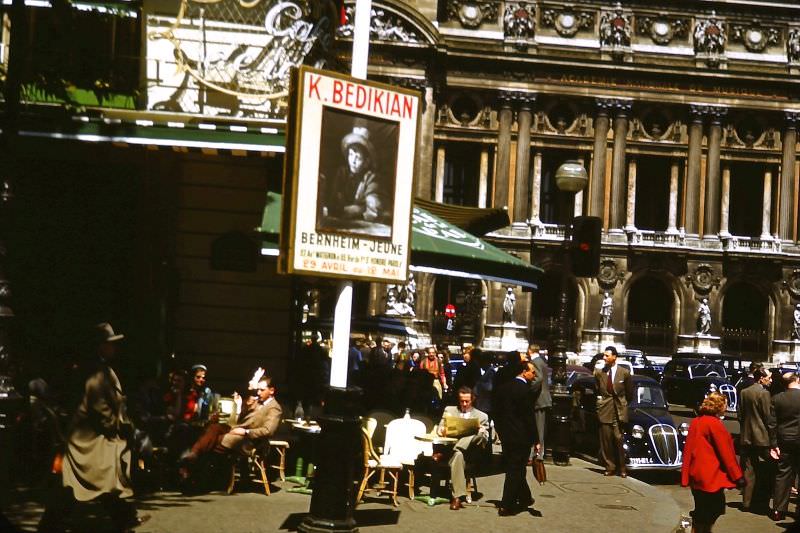
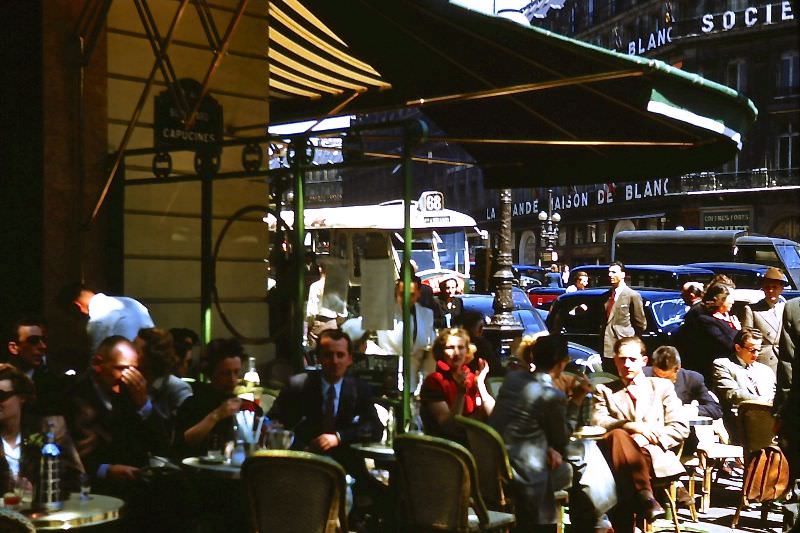
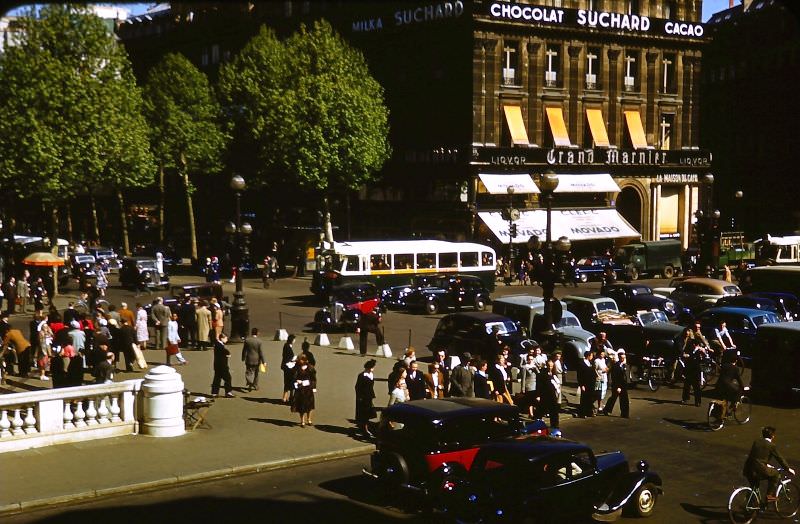
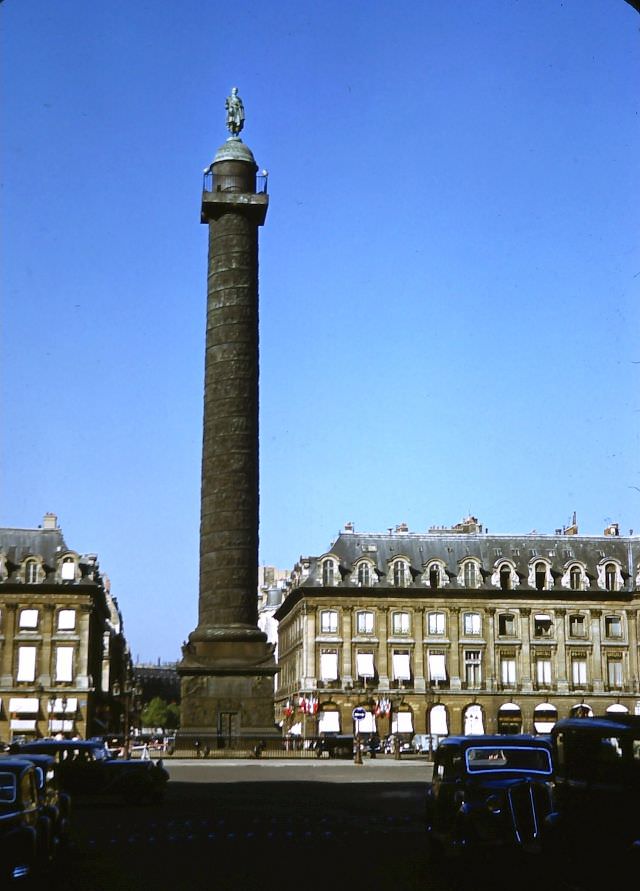
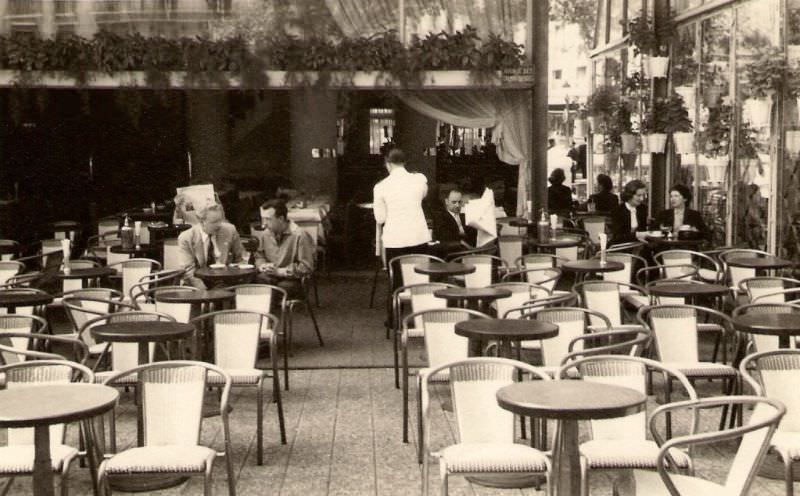
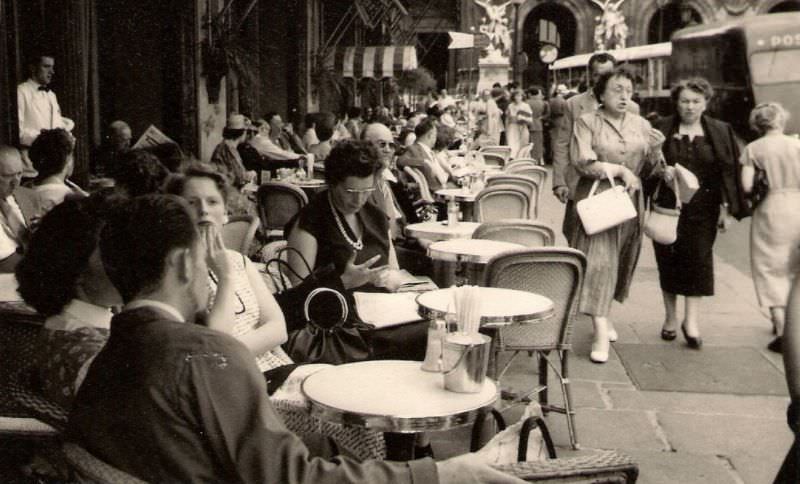
The Place de l’Opéra and the surrounding boulevards were among the busiest and most photographed areas in the city. The Café de la Paix, situated at the corner of the Place de l’Opéra, had been a gathering point for writers, artists, and politicians since the 19th century. In the early 1950s, it continued to draw a crowd of regulars and visitors. Nearby, the Place Vendôme with its tall bronze column presented a starkly different atmosphere — formal, quiet, and ringed by luxury jewelers and the Hôtel Ritz.
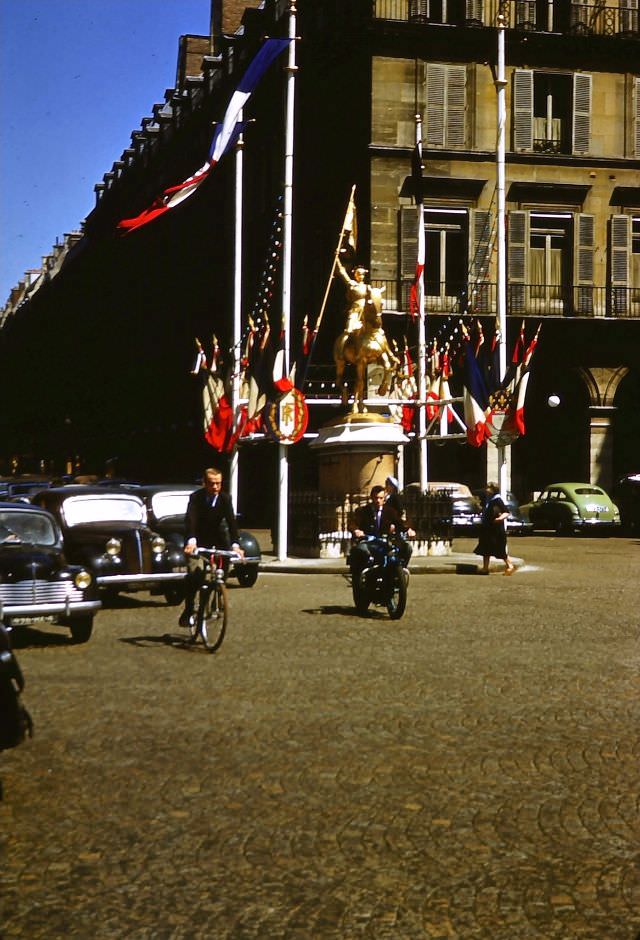
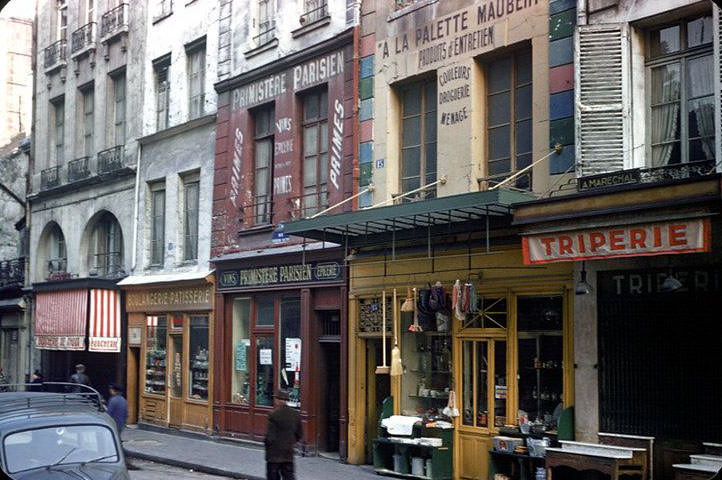
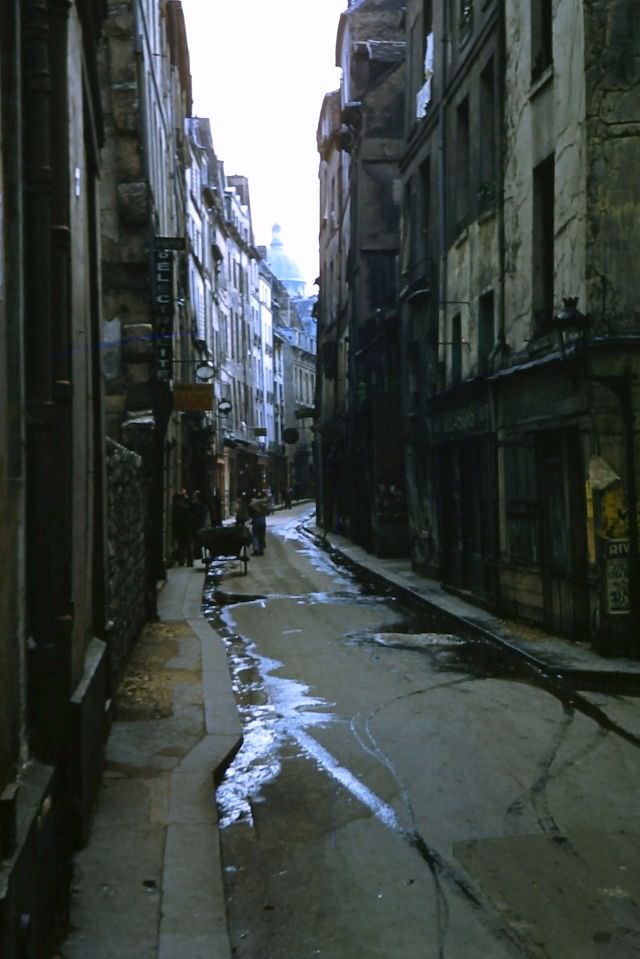
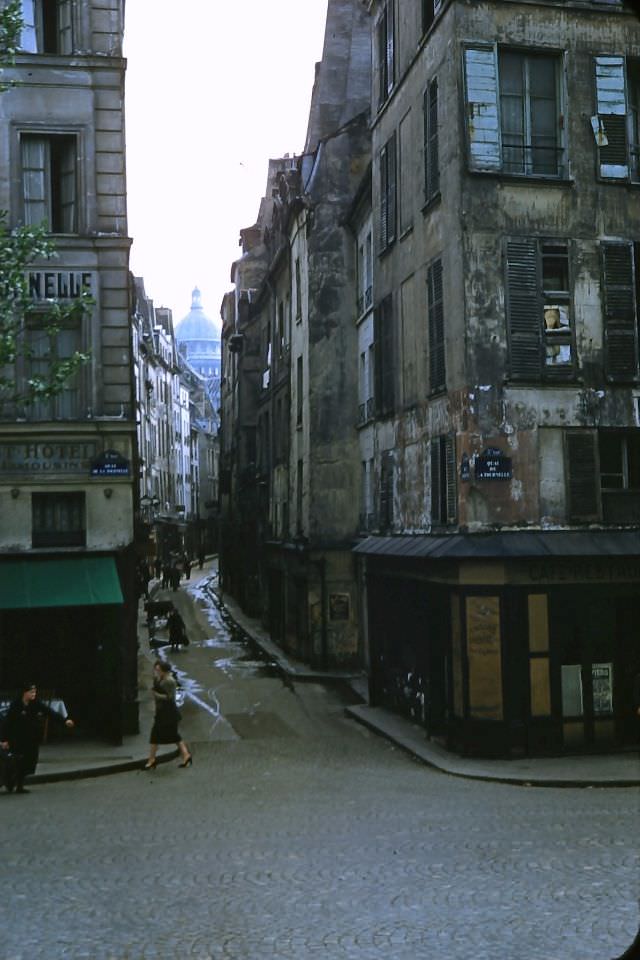
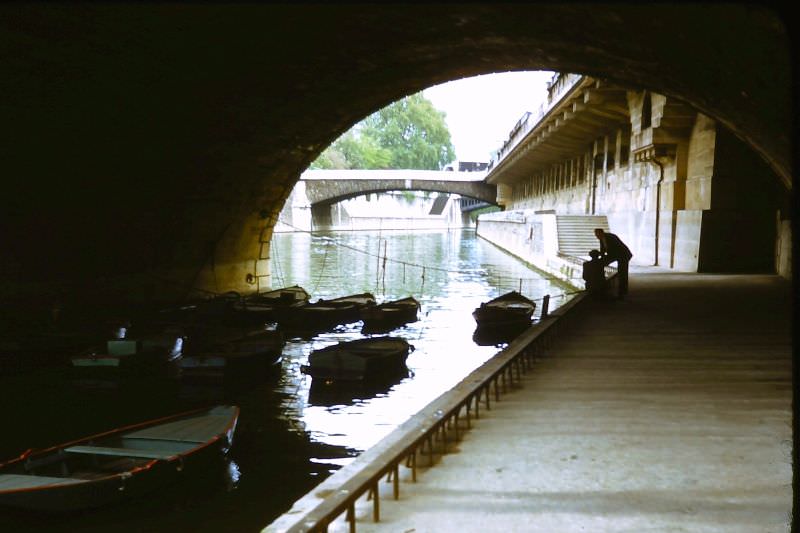
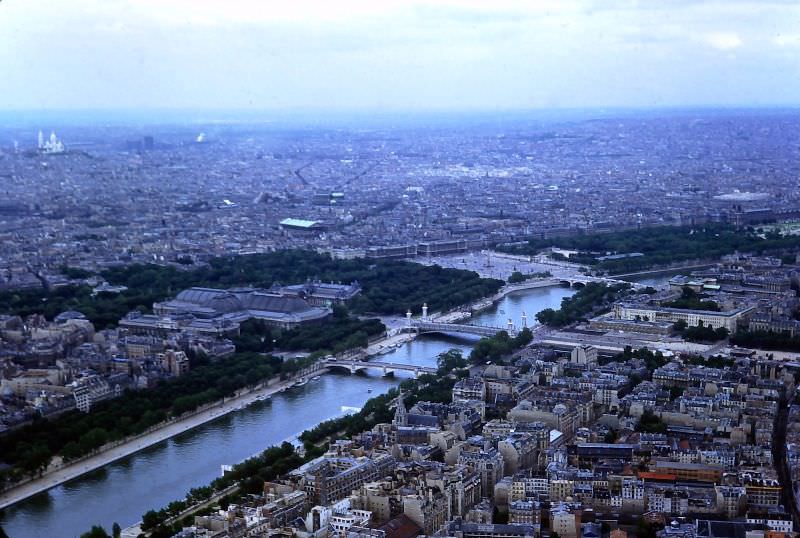
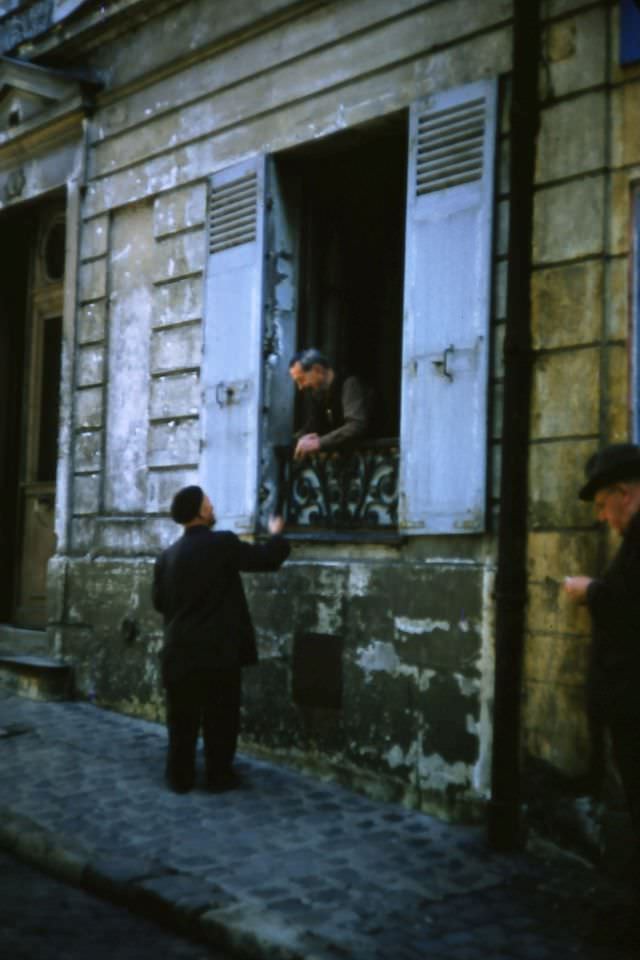
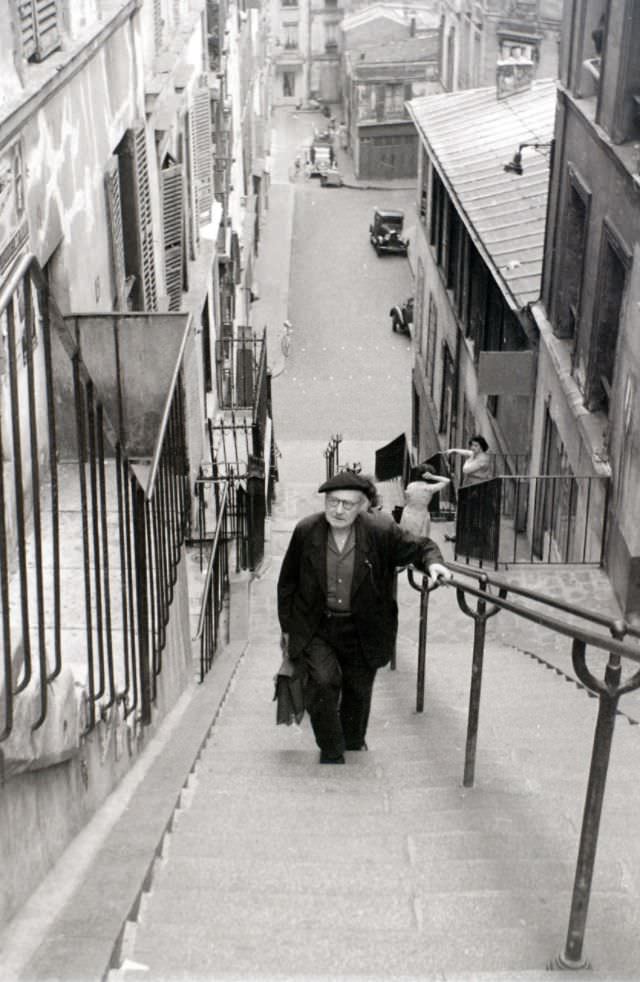
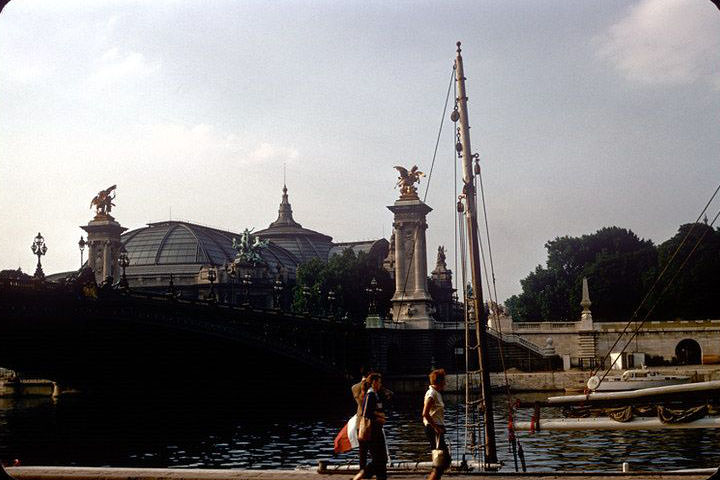
The narrow streets near the river on the Left Bank — like the Rue de Bièvre, running down from the Quai de la Tournelle — gave a clearer picture of ordinary Parisian life away from the grand boulevards. These were working streets, lined with modest buildings, small businesses, and residents going about their daily routines. The Seine itself remained central to life in the city, used for commerce, recreation, and simply as a backdrop to afternoon walks along its stone embankments.
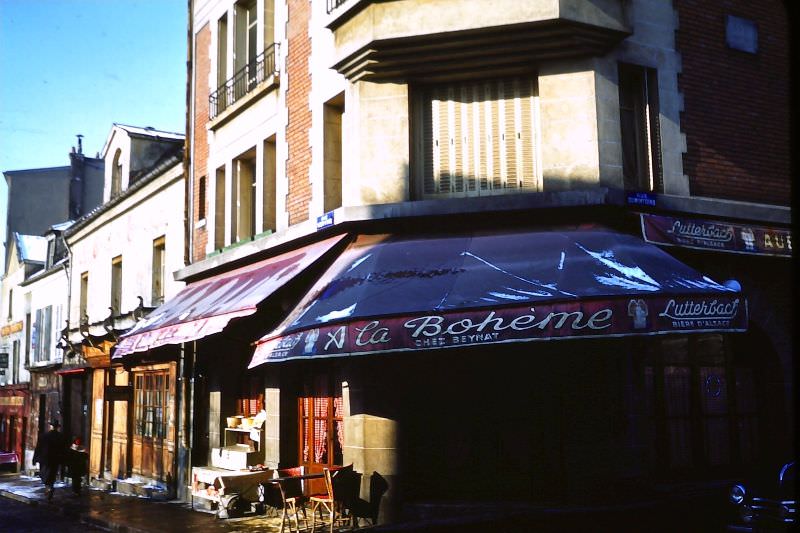
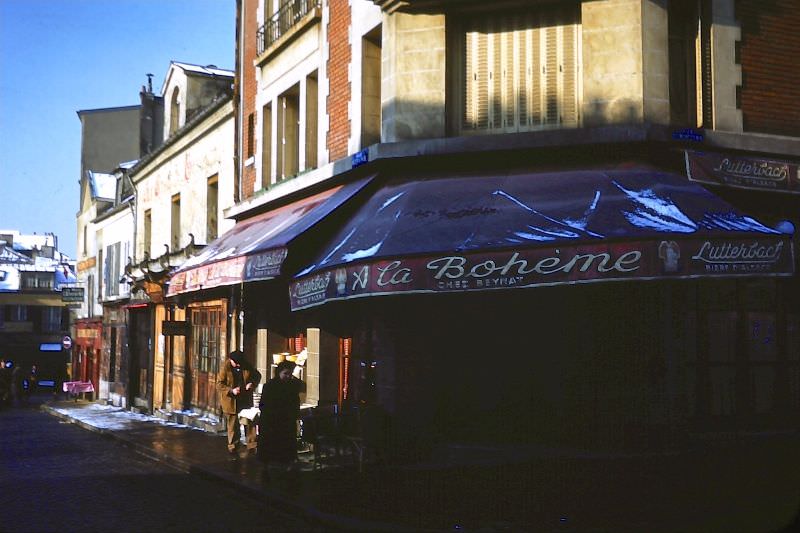
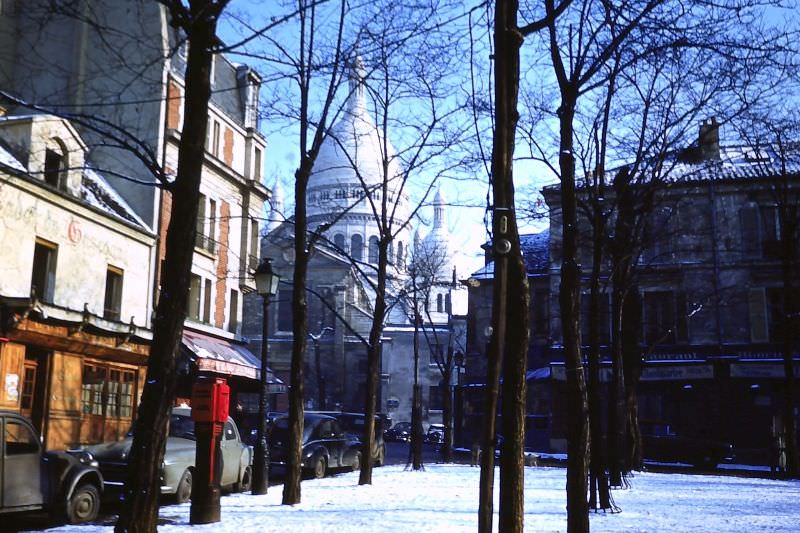
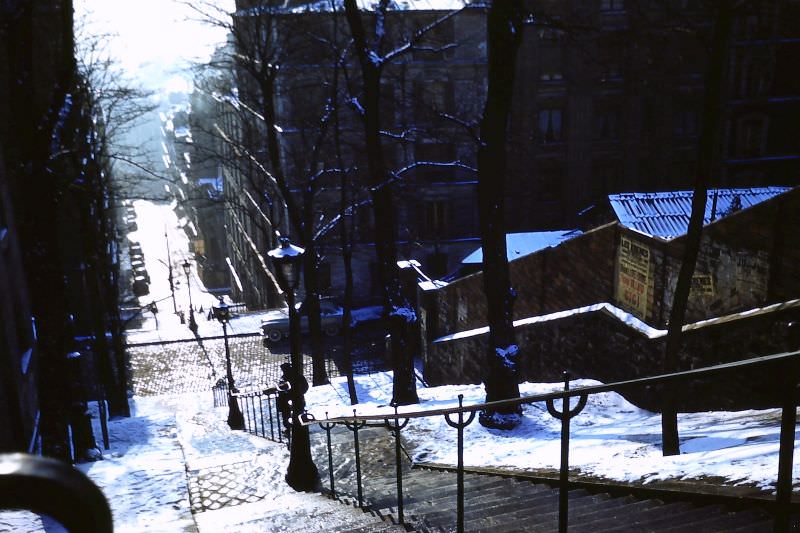
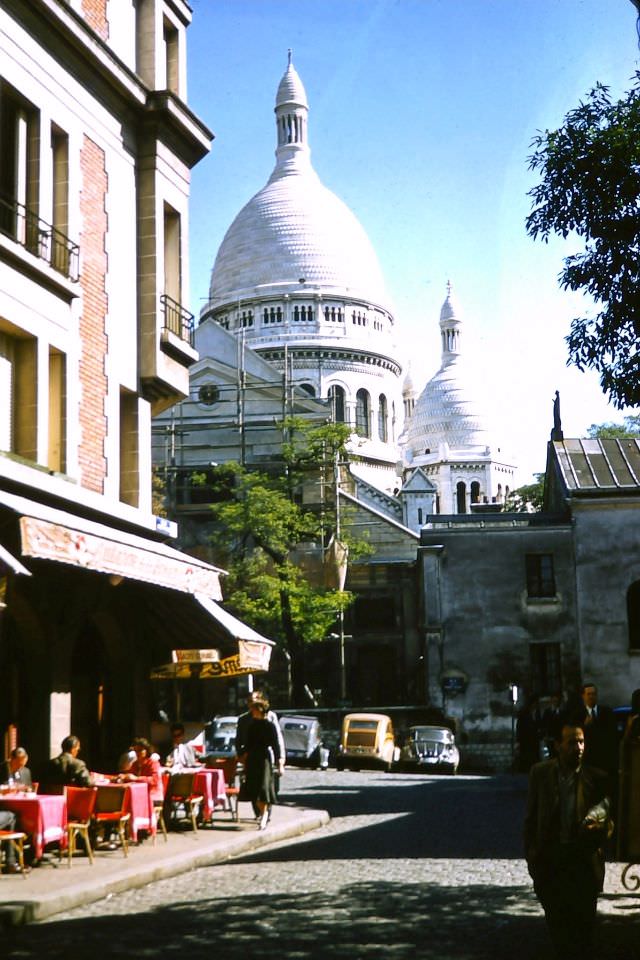
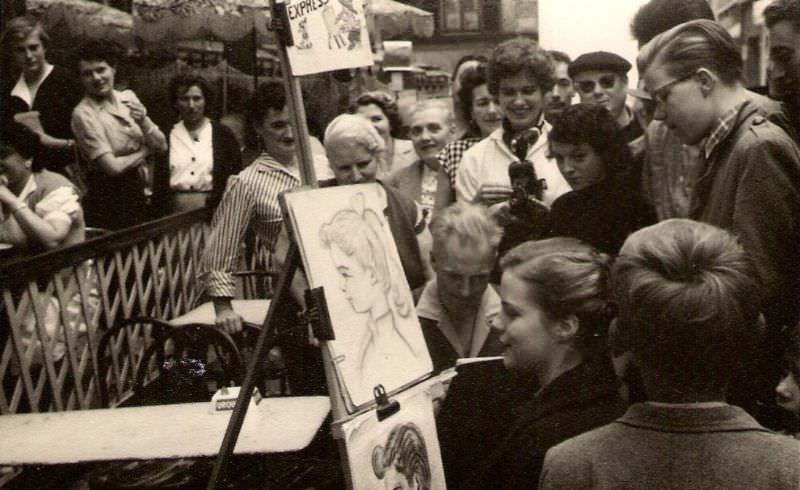
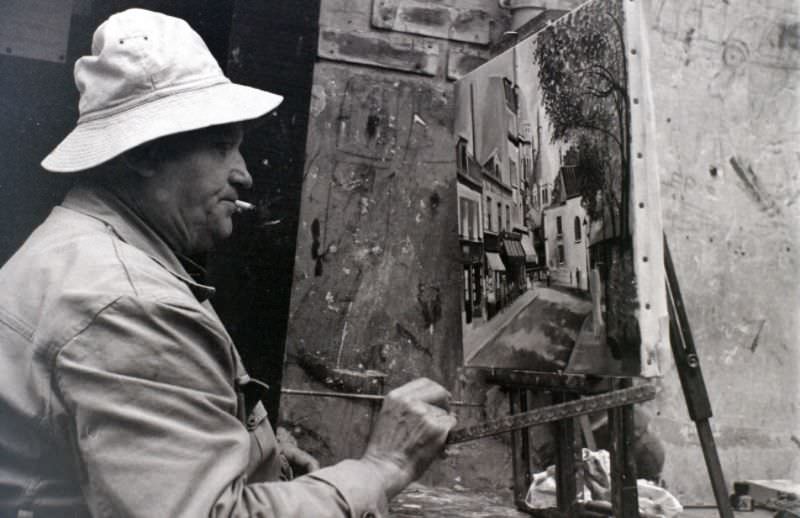
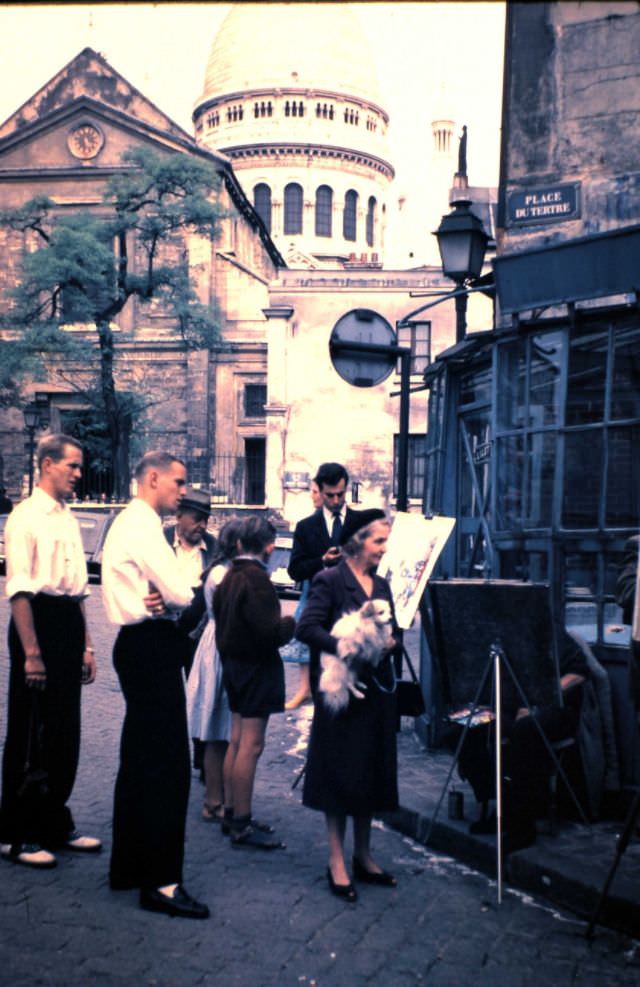
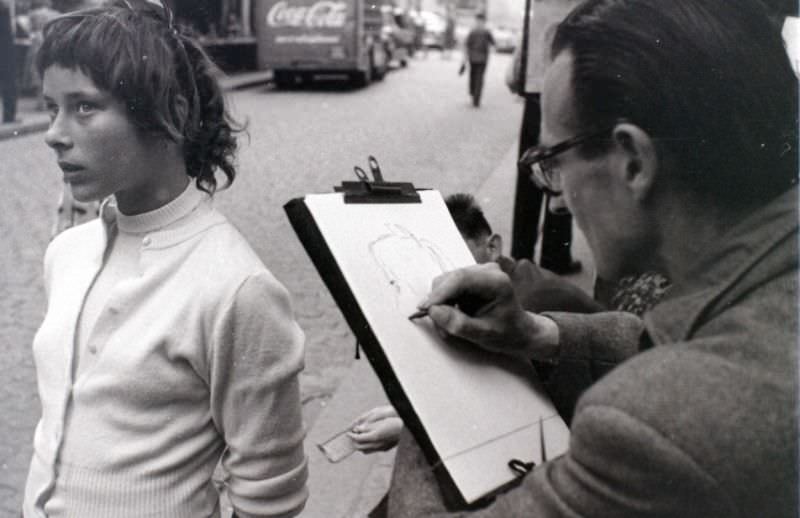
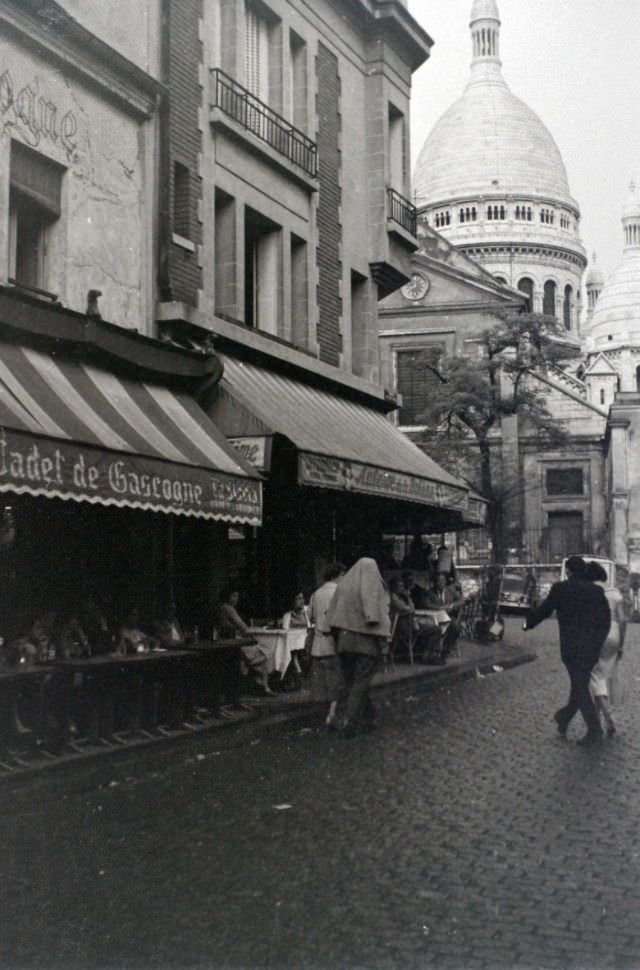
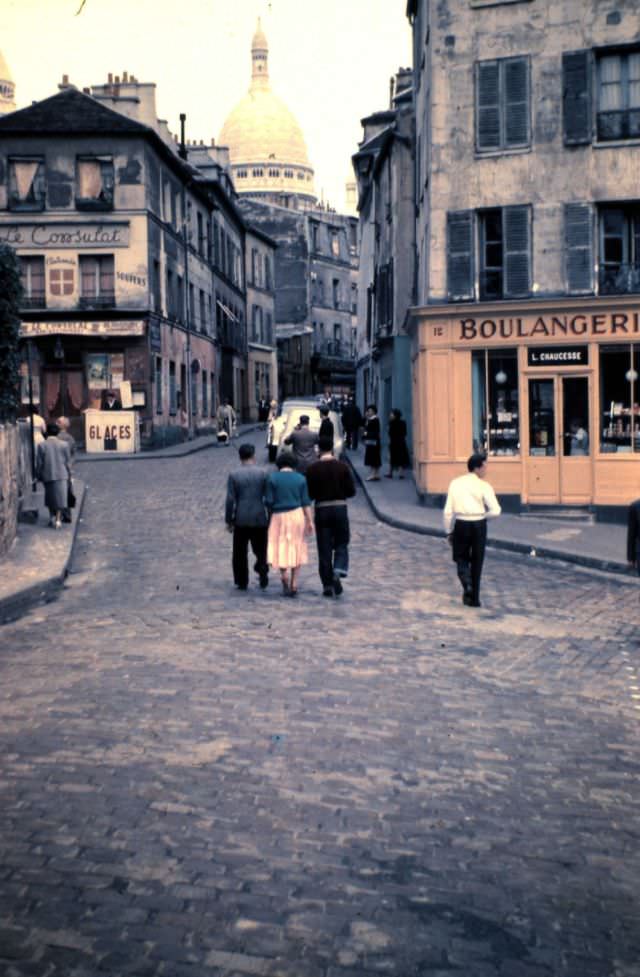
Perched on the hill of Montmartre, the white-domed Basilica of Sacré-Cœur looked out over the entire city. The neighborhood around it — particularly the Place du Tertre — was a well-known gathering spot for artists and street painters. In the early 1950s, the square was filled with easels and vendors, preserving a bohemian atmosphere that had drawn painters and writers to the area since the late 19th century. By February 1953, when early photographs were taken here, Montmartre still wore that artistic identity proudly.
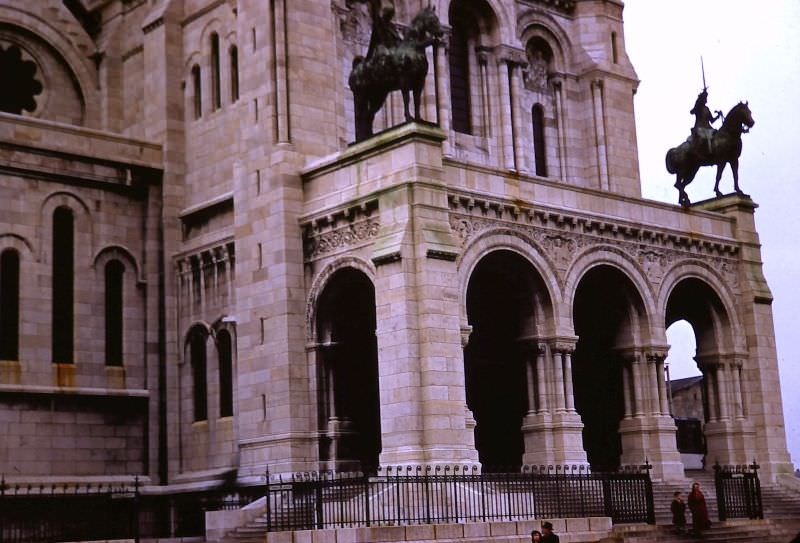
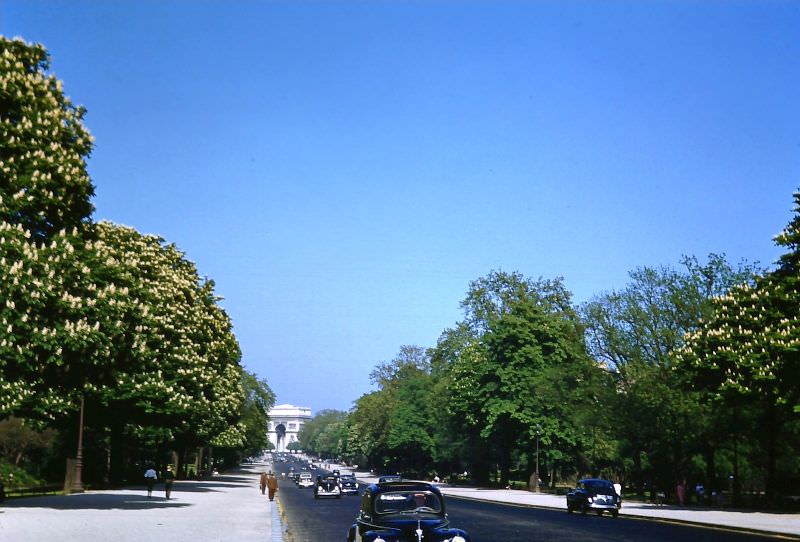
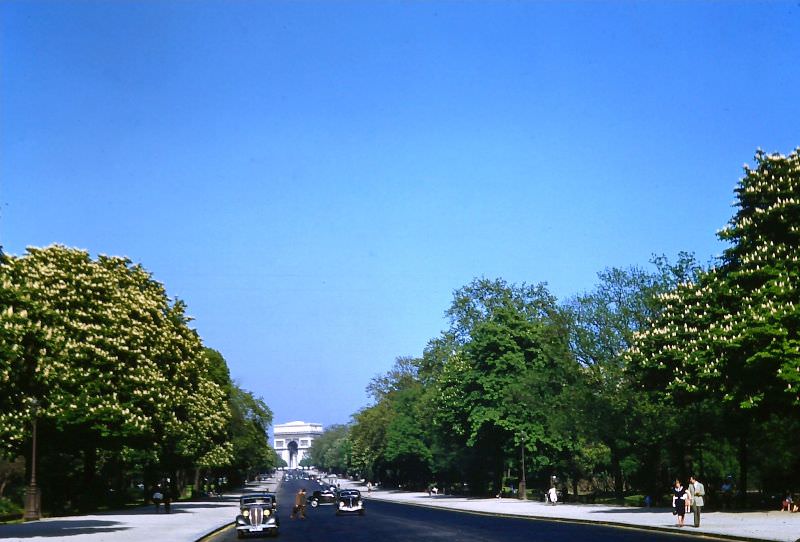
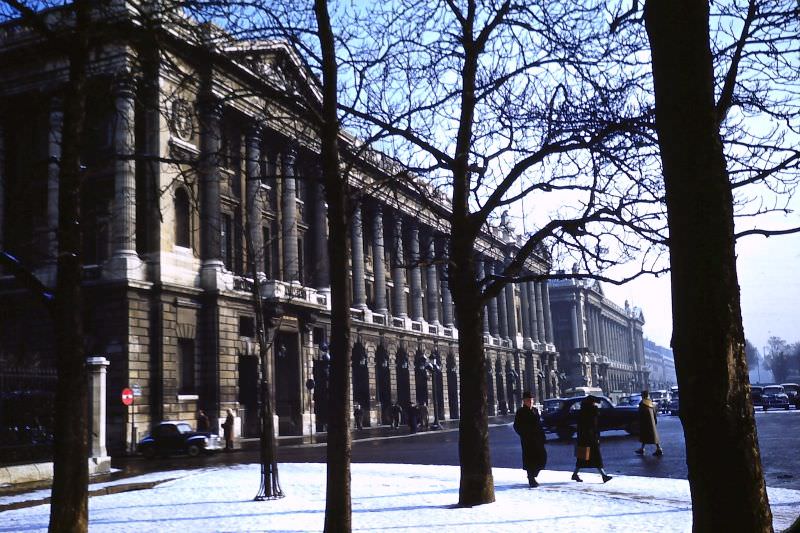
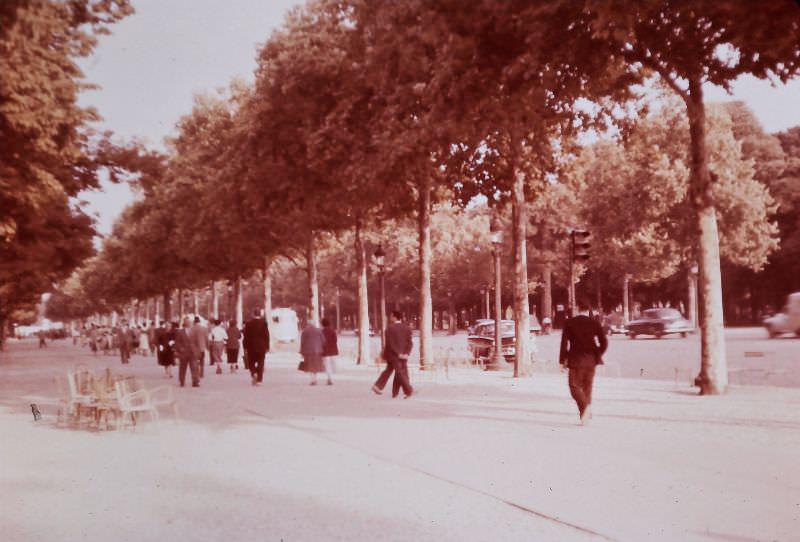
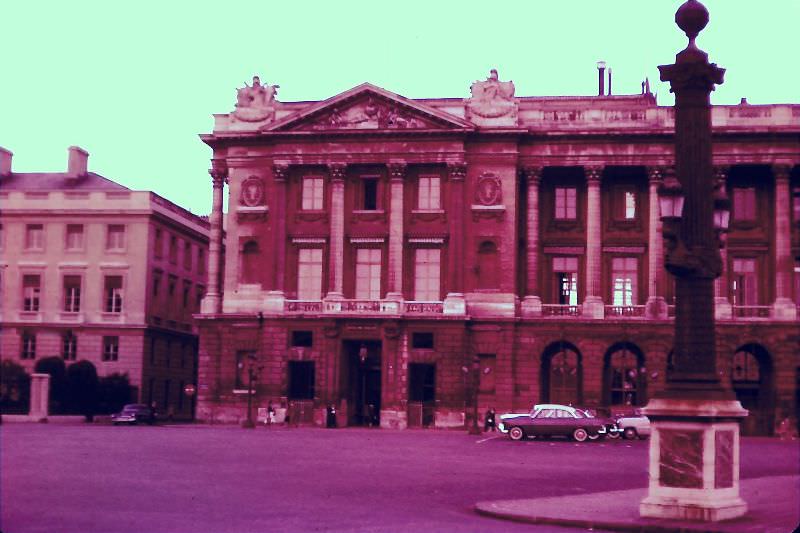
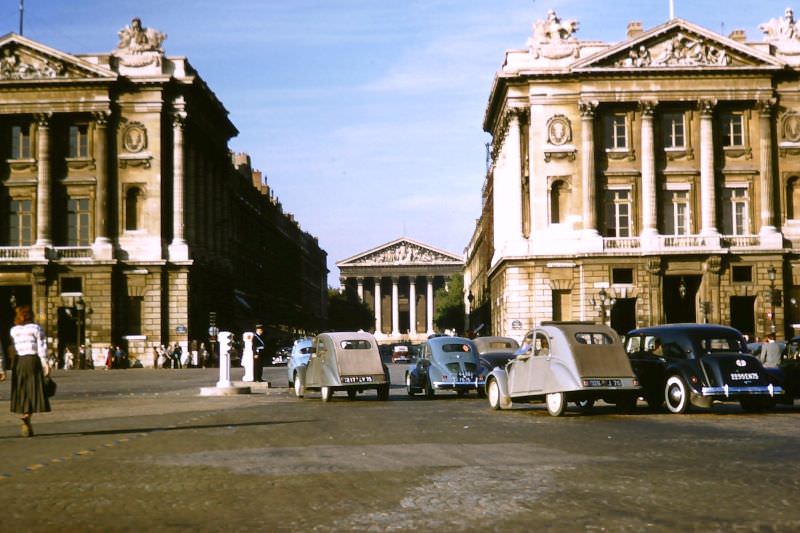
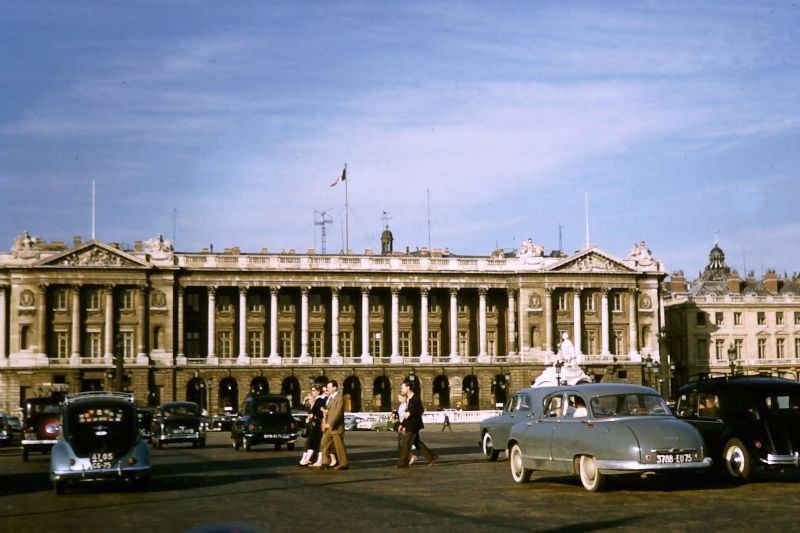
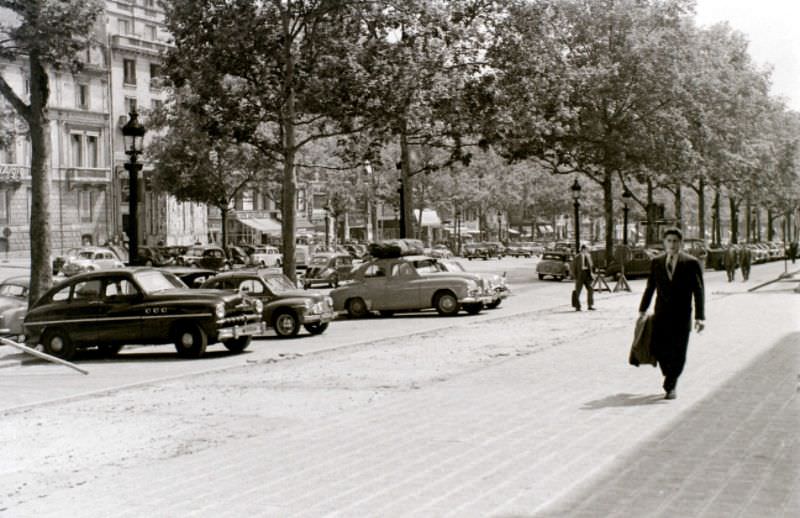
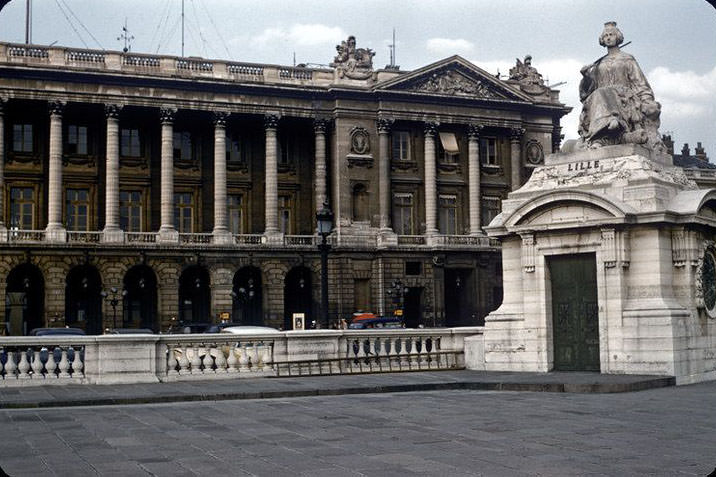
By January 1954, photographers were documenting the broader civic landscape of Paris — the American Embassy, the grand Hôtel de Crillon and Ministère de la Marine facing the Place de la Concorde, and the wide sweep of the Champs-Élysées stretching from the Concorde toward the Arc de Triomphe. These images show a city that, at street level, was functioning and even thriving despite the pressures of postwar recovery.
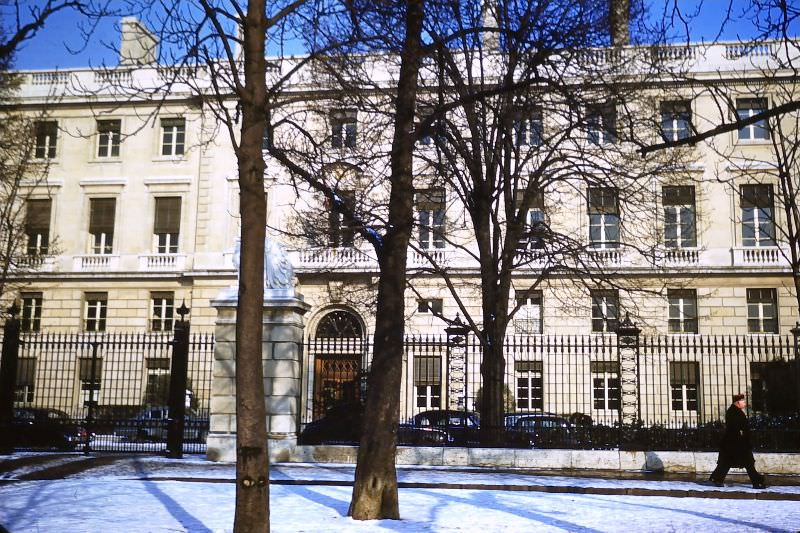
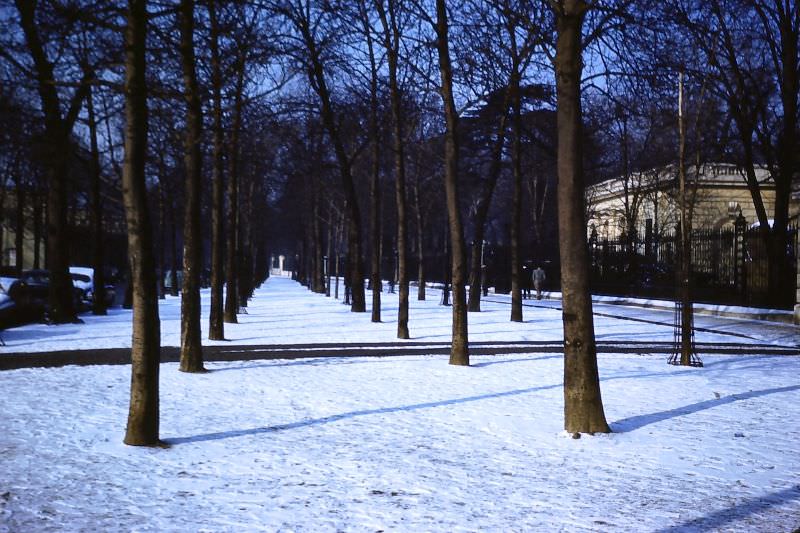
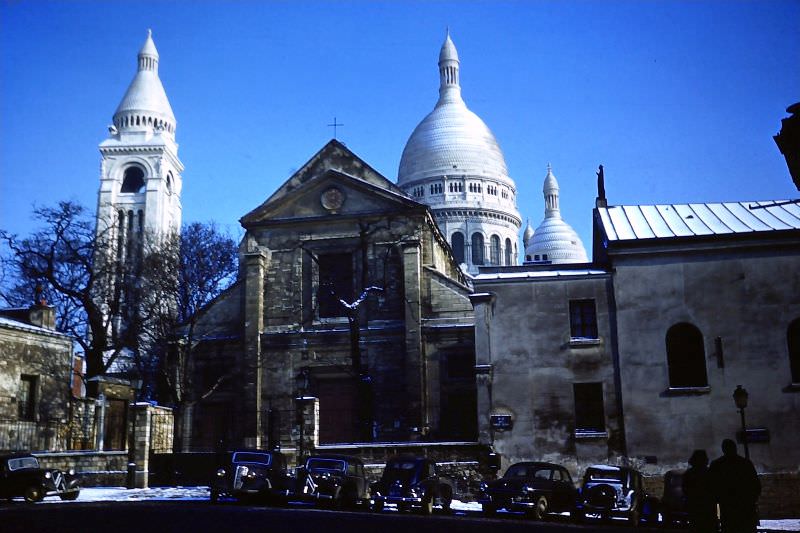
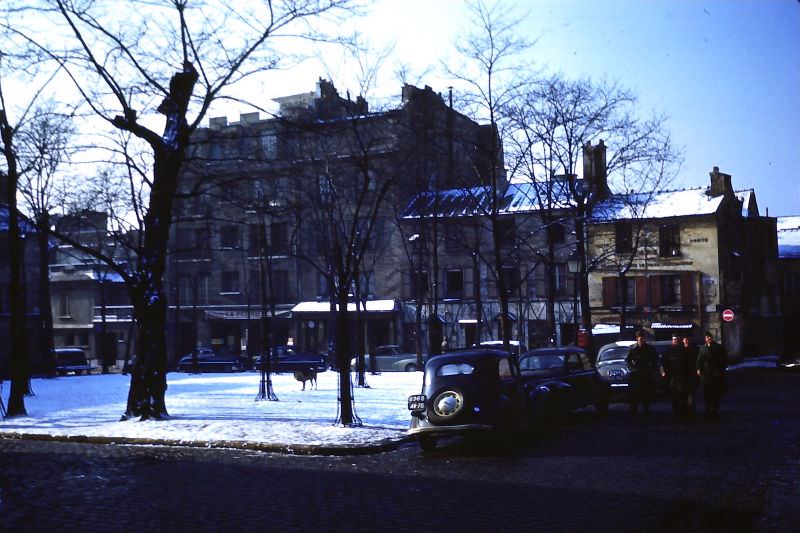
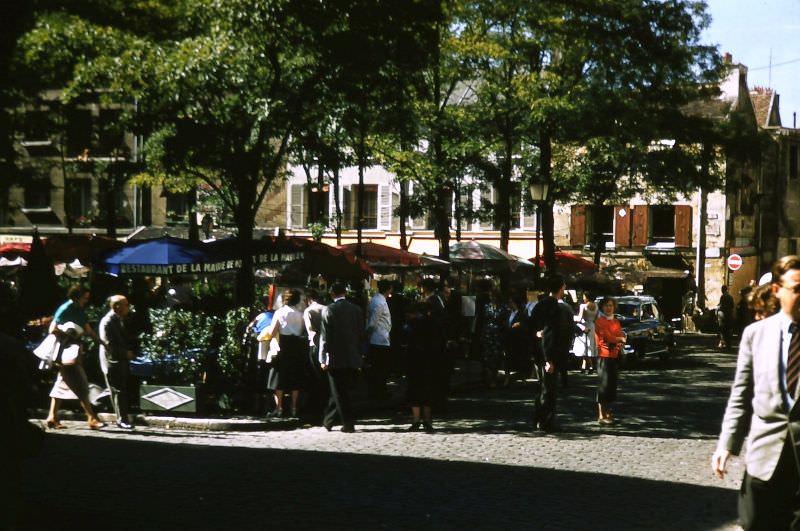
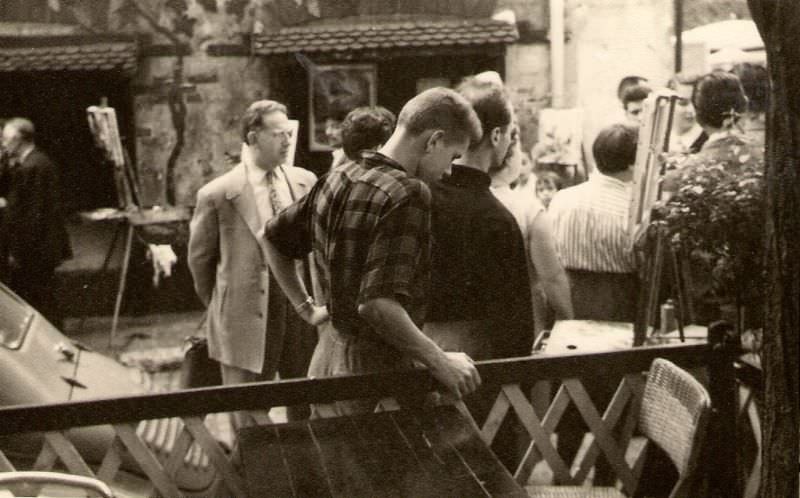
The Place du Tertre in Montmartre was one of the most active corners of the city for street-level cultural life. In February 1954, the square was populated with artists displaying their work, café-goers, and locals passing through. The cobblestoned square, just steps from Sacré-Cœur, had a distinct village-like feel even as it sat within the larger urban fabric of Paris.
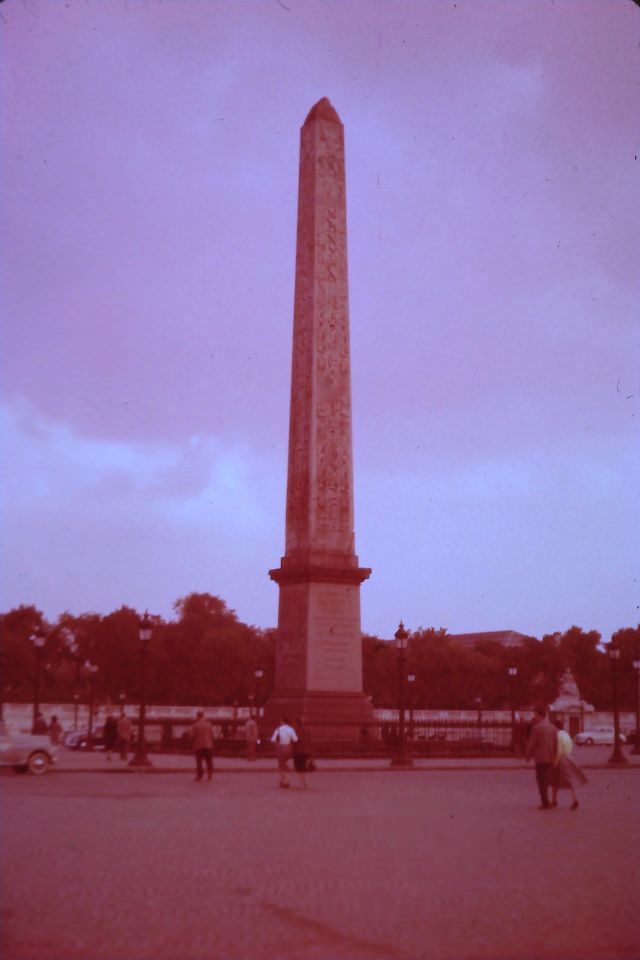
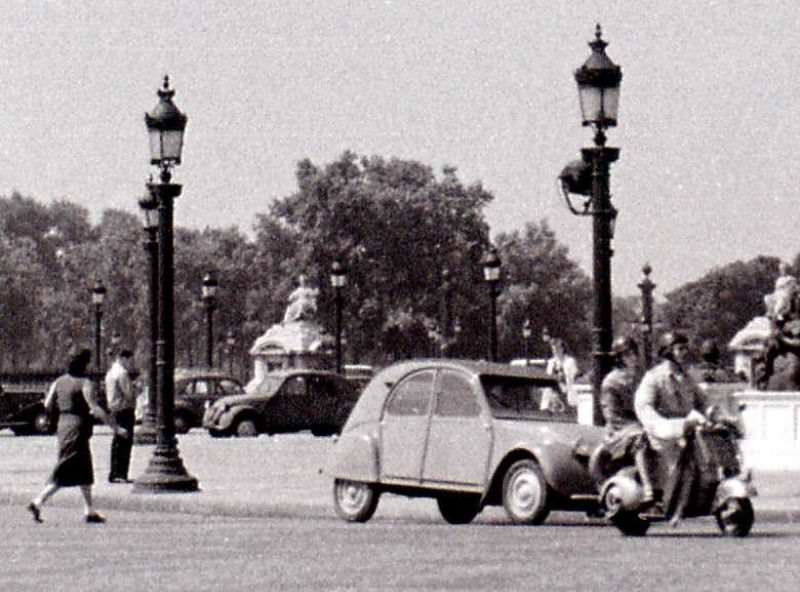
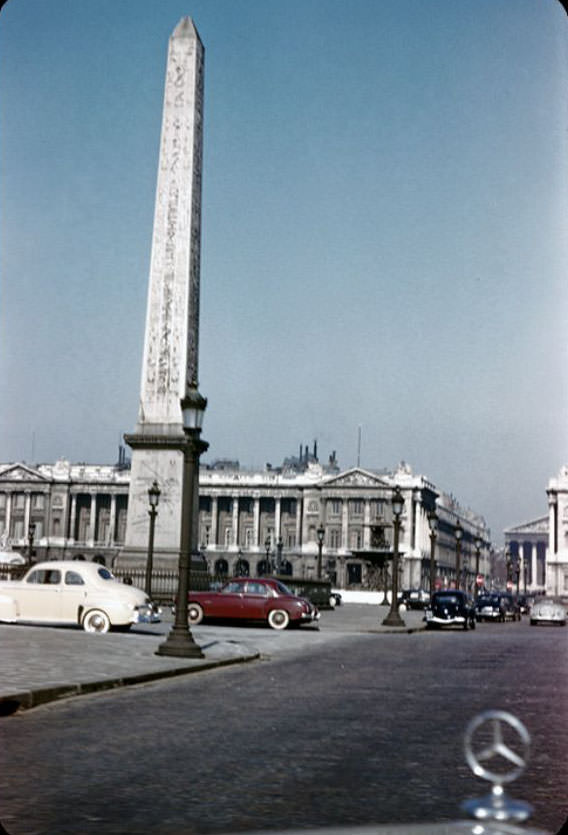
By the summer of 1955, the Place de la Concorde and its surroundings were a busy center of Parisian public life. The massive square — one of the largest in Europe — featured the ancient Egyptian Obelisk of Luxor at its center, flanked by two large fountains. The Hôtel de Crillon anchored one corner of the square, its neoclassical façade a familiar sight to anyone approaching from the Champs-Élysées. Avenue Marigny, running alongside the Élysée Palace gardens, offered a quieter contrast to the bustle of the main boulevards.
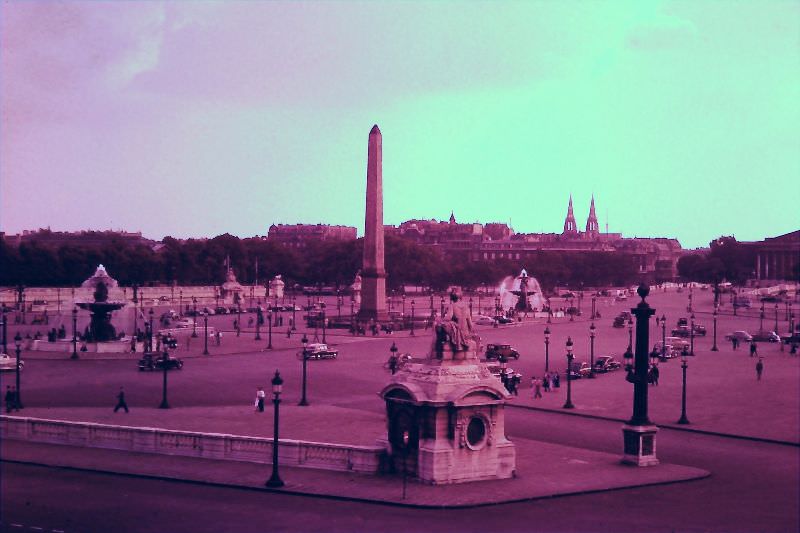
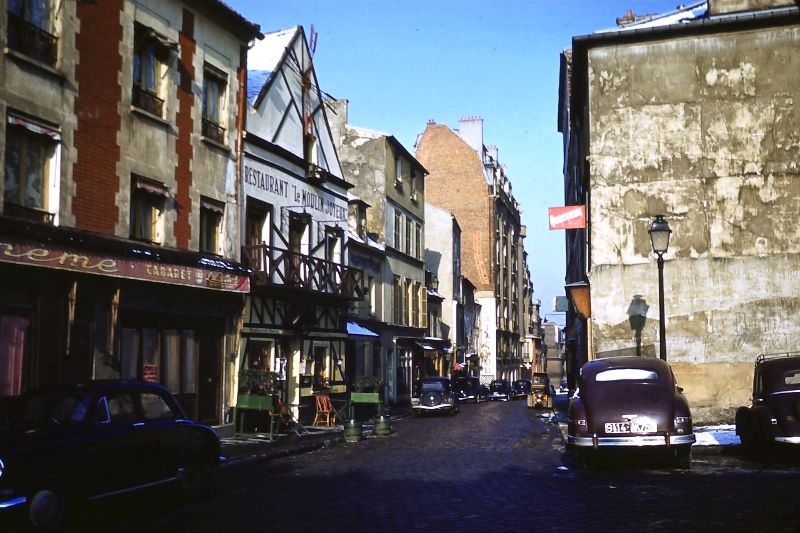
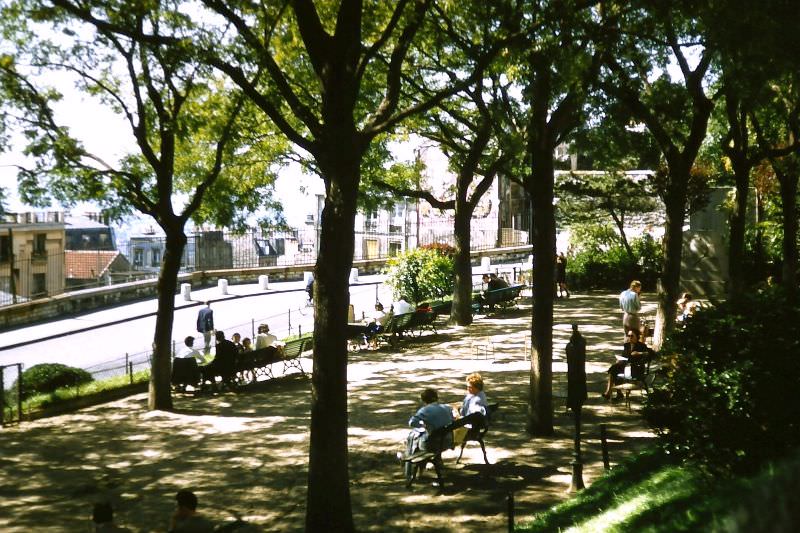
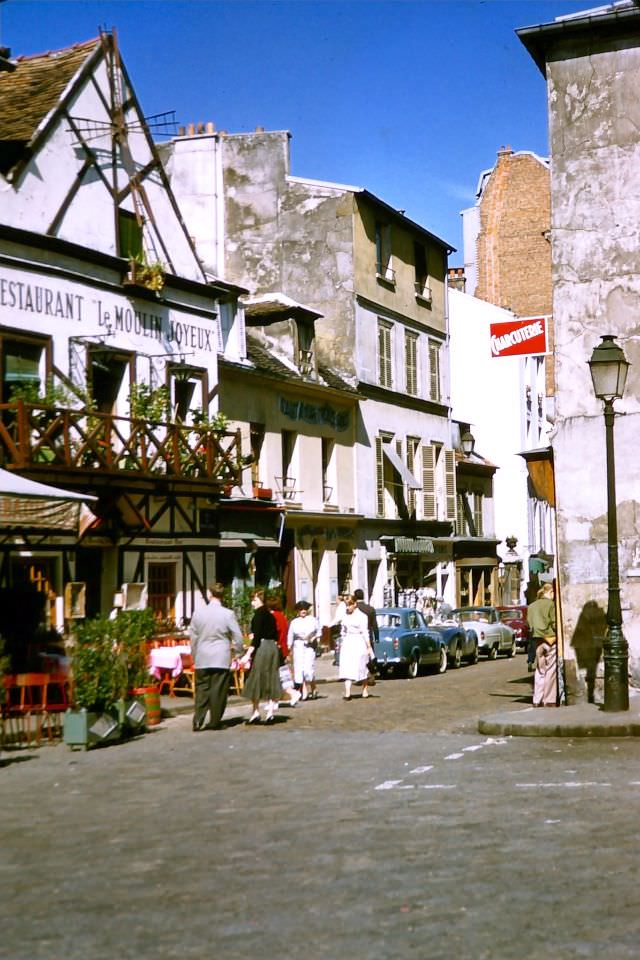
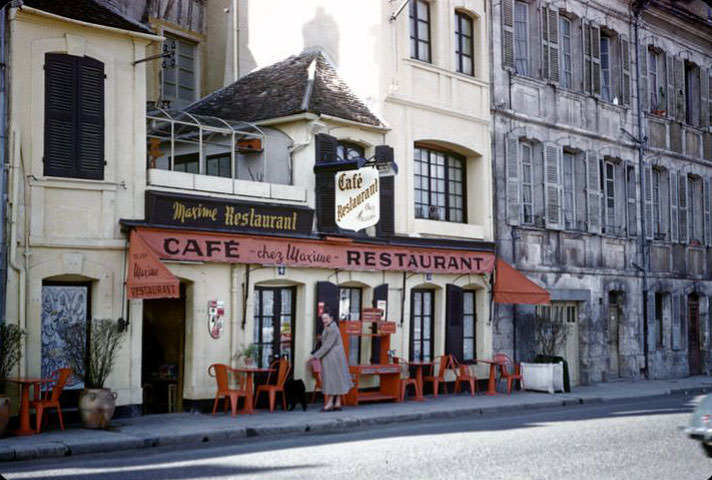
September 1956 brought more documentation of familiar Parisian spaces. La Madeleine, the imposing neoclassical church at the end of the Rue Royale, appeared across the Place de la Concorde. Pont St. Michel crossed the Seine near the Île de la Cité, connecting the Left Bank to the cathedral island. In Montmartre, the streets around Sacré-Cœur and the Place du Tertre remained as active as ever, with the neighborhood drawing both artists and working-class residents. A small restaurant — Le Moulin Joyeux at 5 Rue du Mont Cenis — appeared in one photograph, representing the countless small eating establishments that fed Parisians every day.
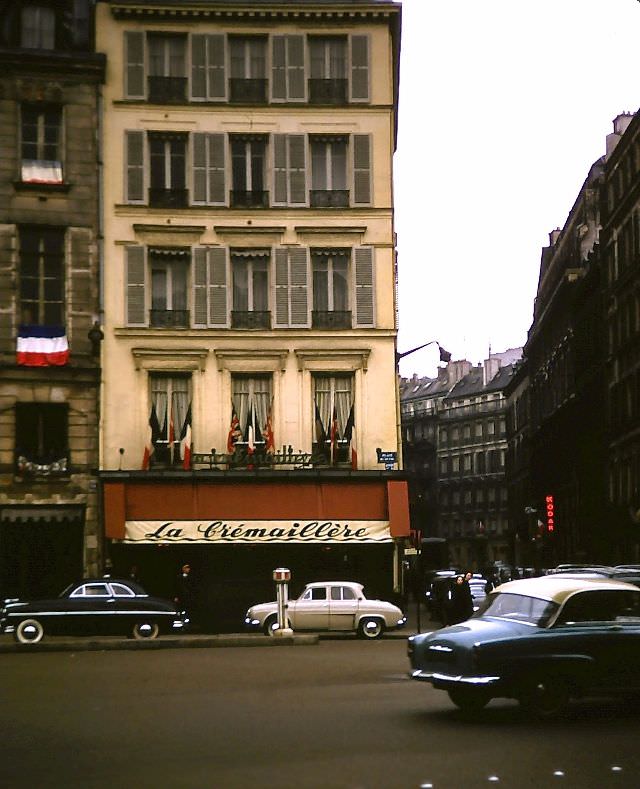
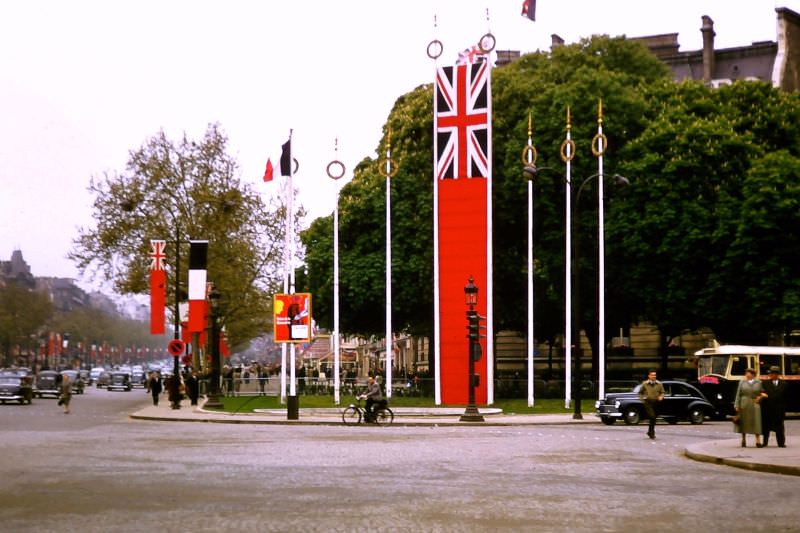
In April 1957, the Rond Point on the Champs-Élysées was decorated to welcome Queen Elizabeth II on a state visit to France. The decorations transformed the famous roundabout into a ceremonial display, marking one of the more prominent diplomatic events of the decade. Nearby, La Crémaillère — a well-known Montmartre restaurant — appeared in photographs from the same visit, representing the kind of upscale neighborhood dining establishment that contrasted with the city’s more modest eating spots.
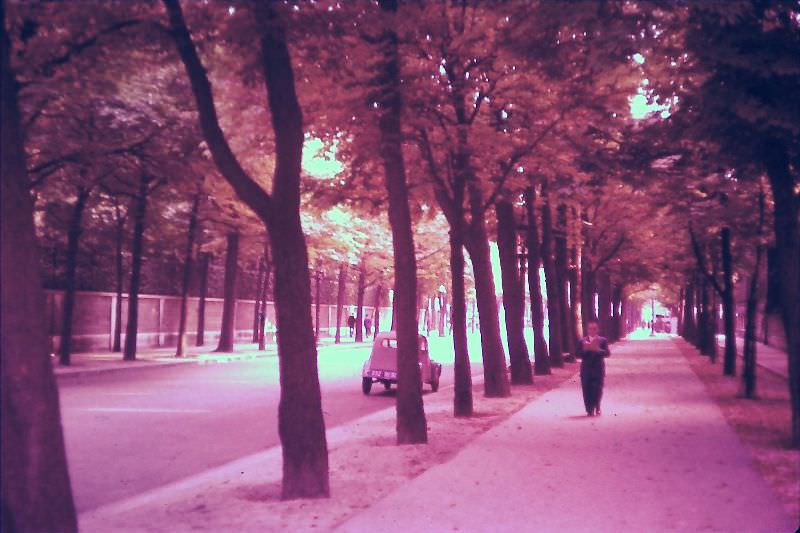
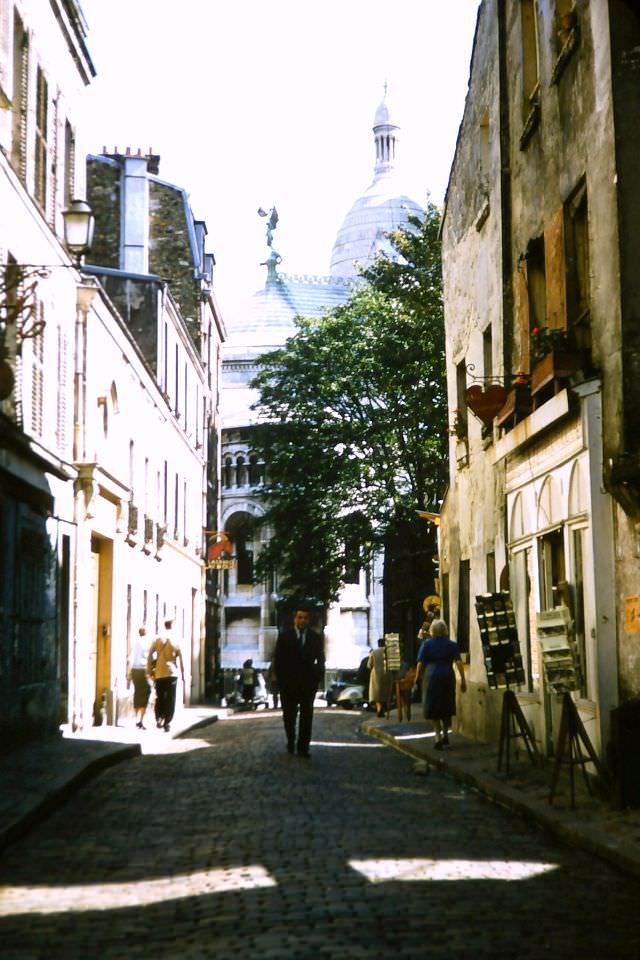
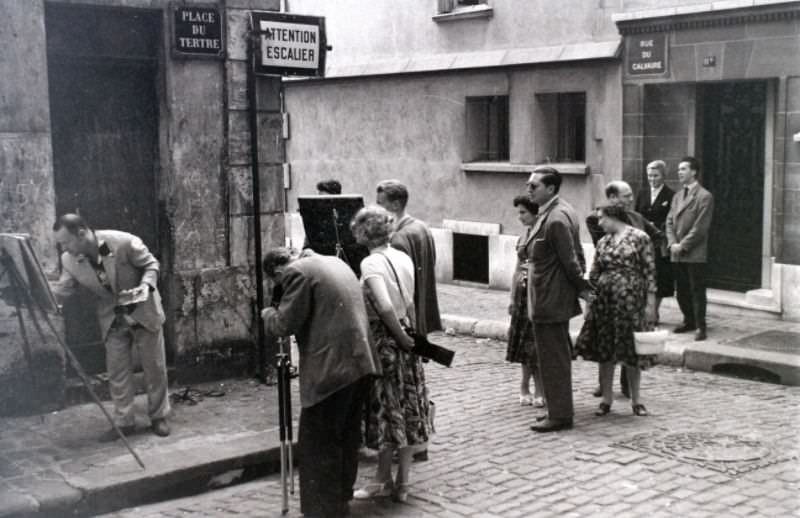
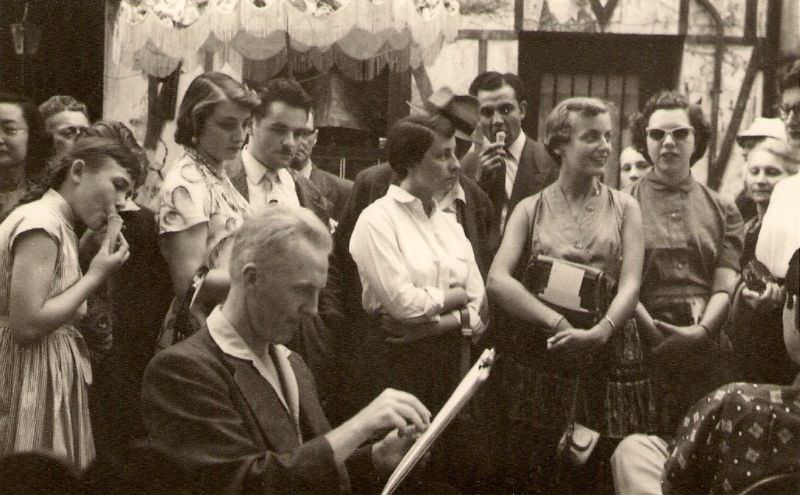
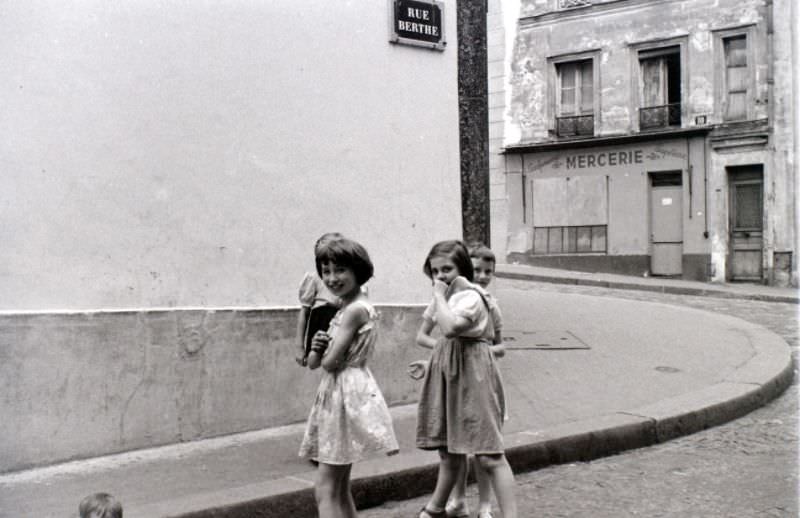
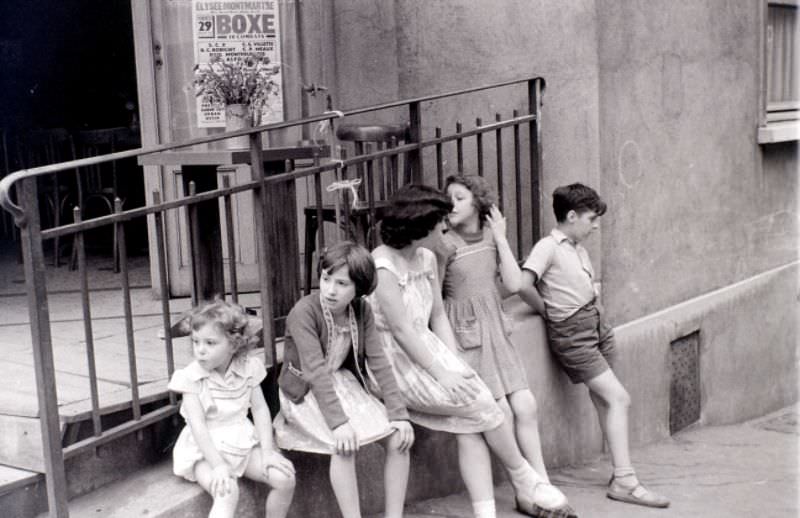
A broader set of undated 1950s photographs fills out the picture of everyday Paris. Place du Tertre appears repeatedly — crowded with outdoor painters, tourists stopping to watch them work, and café chairs spilling onto the cobblestones. The Champs-Élysées shows its dual character: a formal tree-lined boulevard by day, a busy commercial street at street level. Montmartre’s winding streets — Rue Berthe, Rue Drevet, Rue de Rochechouart — give a sense of the quieter, more residential side of the neighborhood beyond the tourist squares.
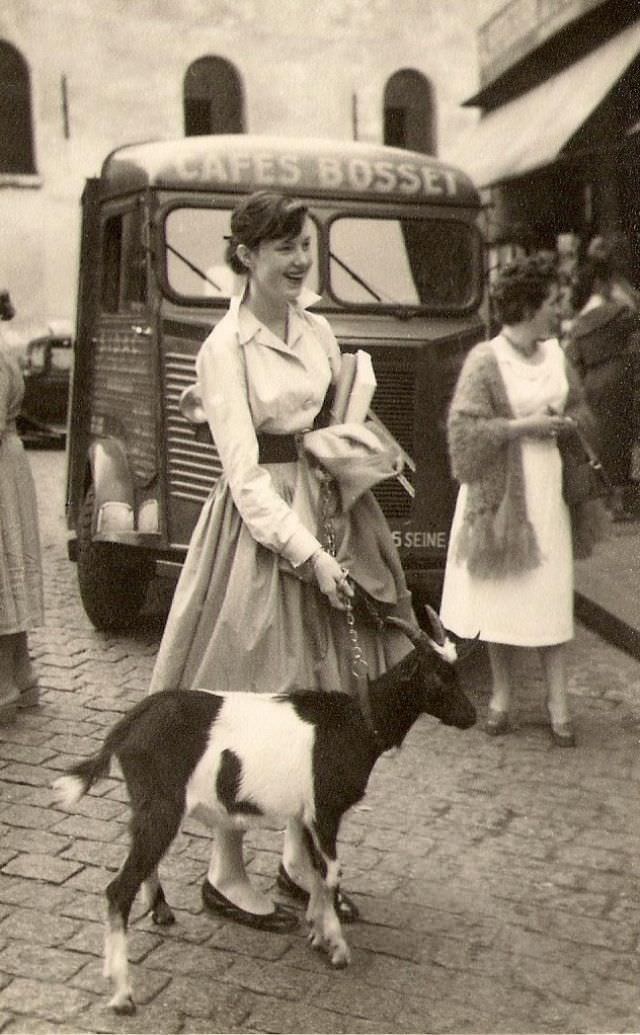
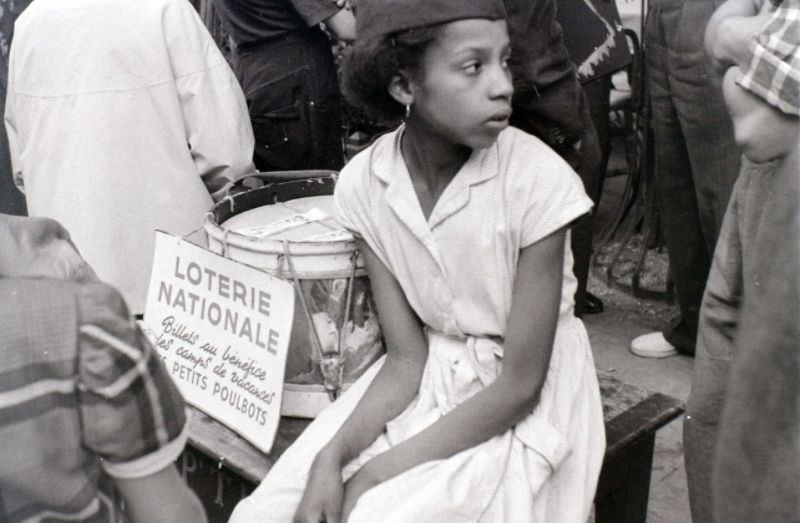
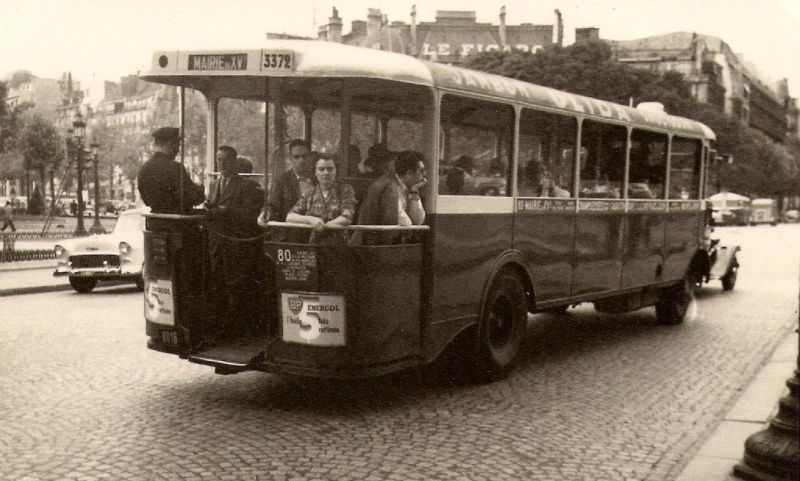
Public life in 1950s Paris extended beyond cafés and markets. At the Barbès-Rochechouart Métro station — a busy hub in the 18th arrondissement — lottery vendors set up near the entrance, attracting passengers on their way in and out. Street commerce of this kind was woven into the rhythms of the city. The Métro itself was the backbone of daily movement for working Parisians who could not afford a car, and the stations around Montmartre served some of the densest residential areas in the city.
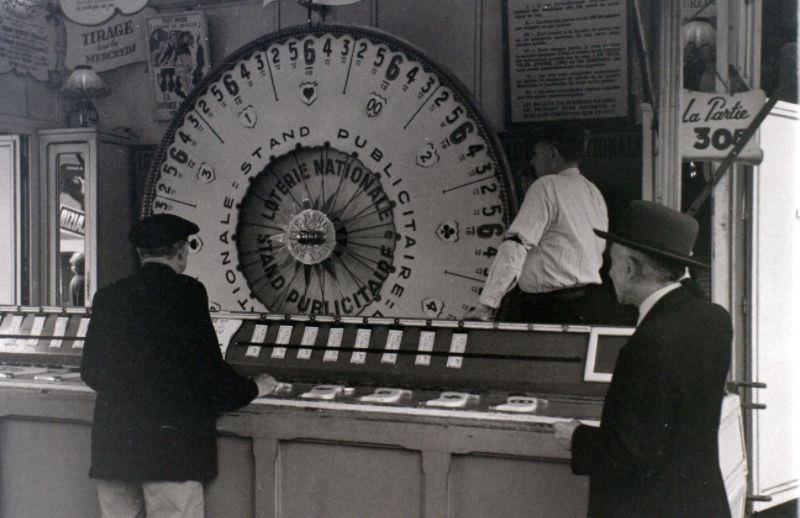
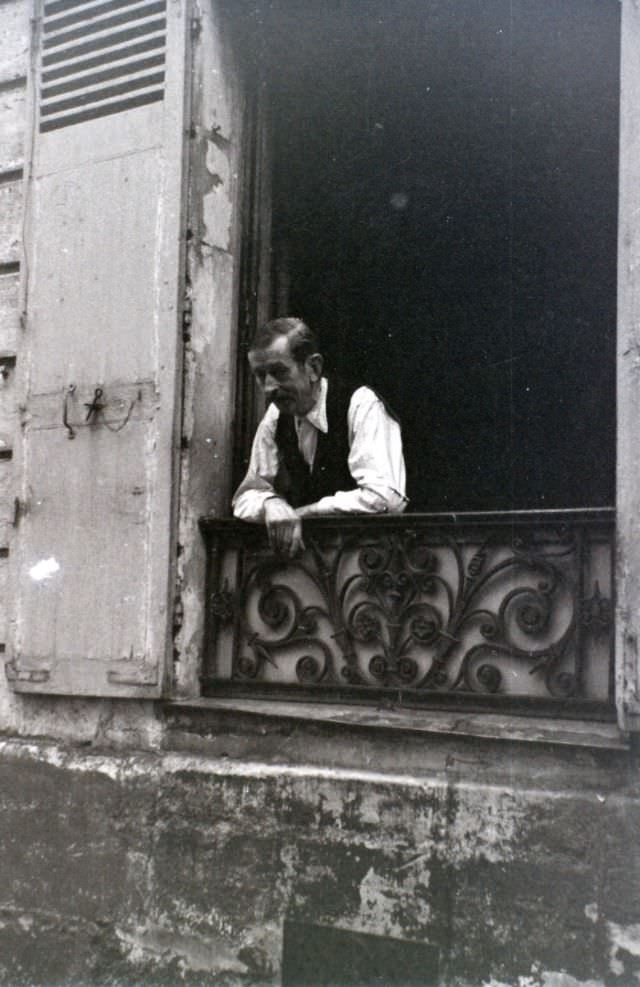
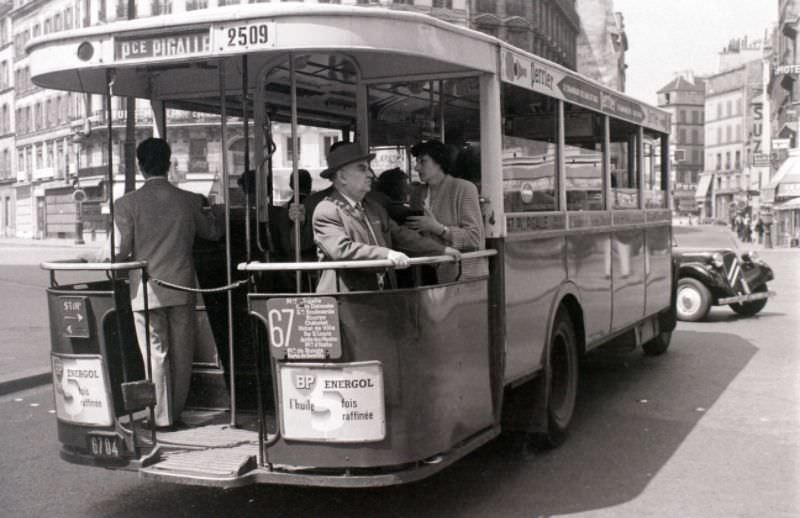
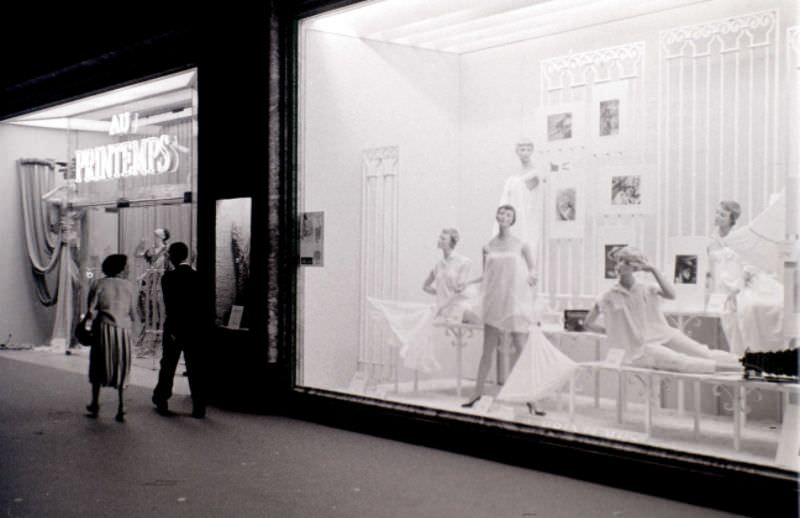
Department stores like Au Printemps on Boulevard Haussmann stood out as exceptions in a retail landscape otherwise dominated by small independent shops. These large stores offered a variety of goods under one roof and drew shoppers from across the city. Boulevard Haussmann, the wide avenue created during Baron Haussmann’s sweeping 19th-century redesign of Paris, remained one of the primary commercial arteries of the Right Bank. The contrast between its broad, organized streetscape and the narrow lanes of Montmartre illustrates how varied Paris was as a city.
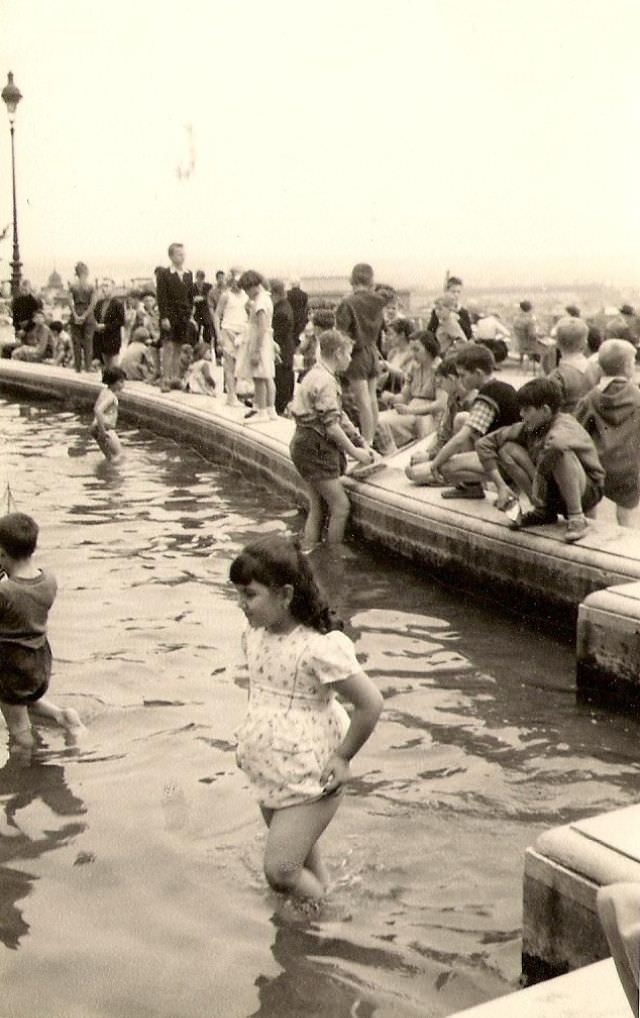
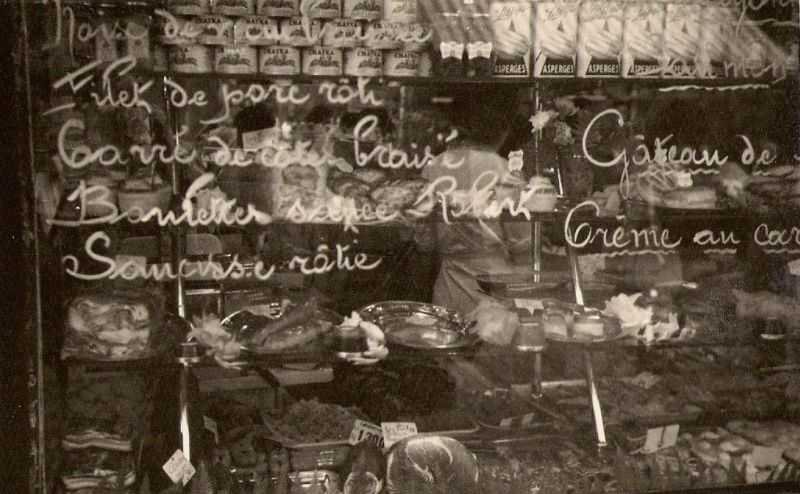
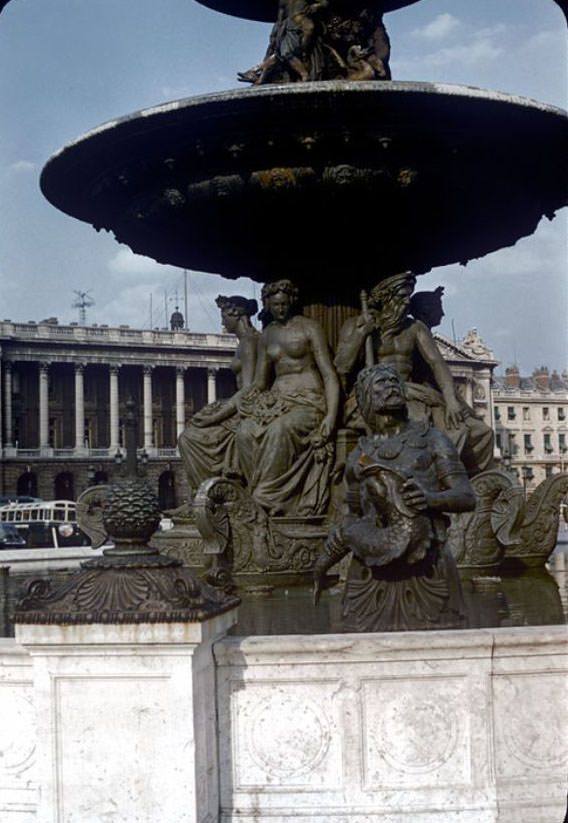
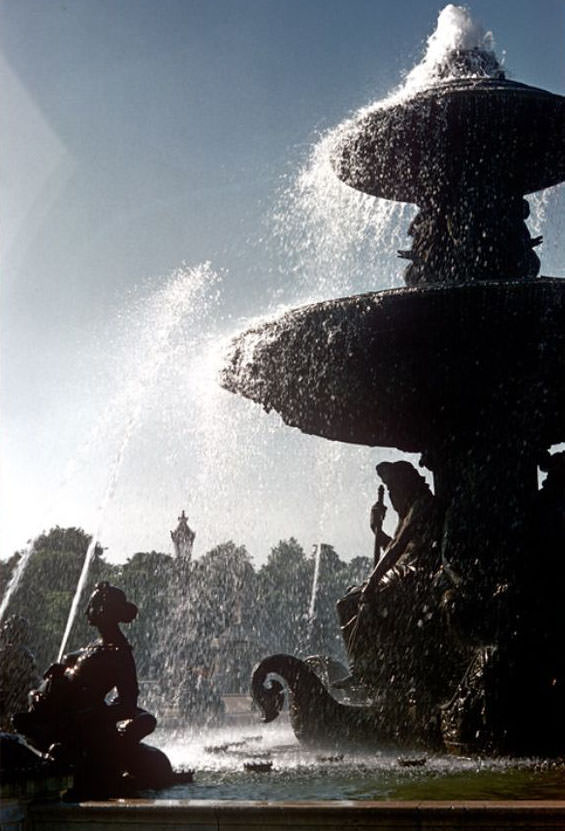
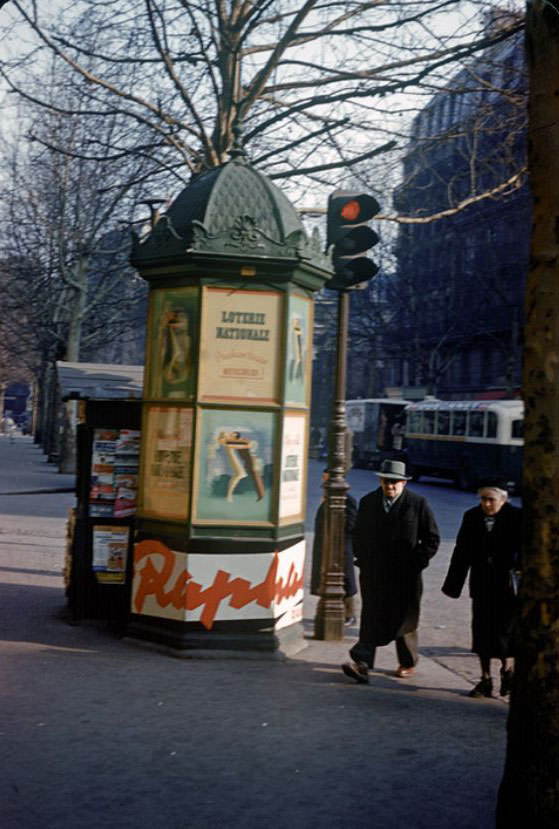
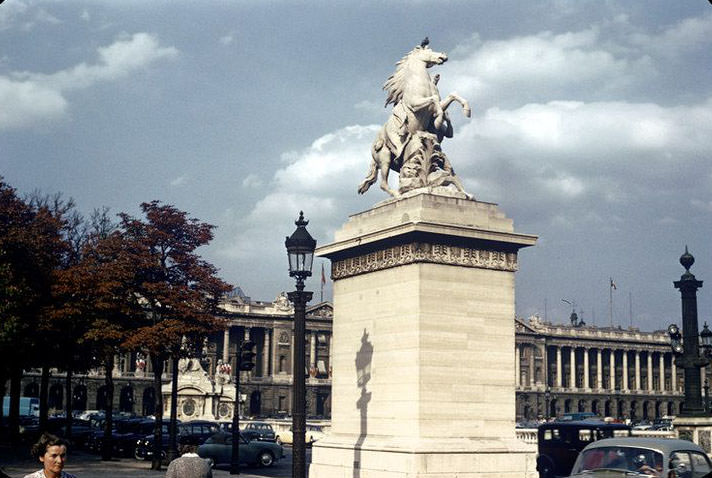
By May 1959, near the end of the decade, Paris was visibly different from the city that had emerged from World War II just fourteen years earlier. The Champs-Élysées carried heavier traffic. The Place de la Concorde’s fountains — the Fontaines de la Concorde — shot jets of water into the air against a backdrop of the Obelisk of Luxor and the Marly Horses standing at the entry to the avenue. Street-level commerce was as varied as ever: a Boucherie Chevaline sold horse meat, a standard feature of French butcher culture; a Triperie offered offal to shoppers who relied on cheaper cuts of meat; newspaper kiosks and street stalls served the daily needs of pedestrians.
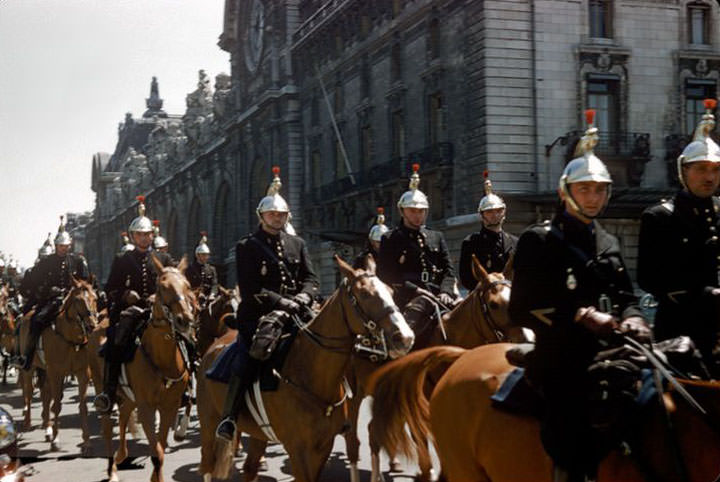
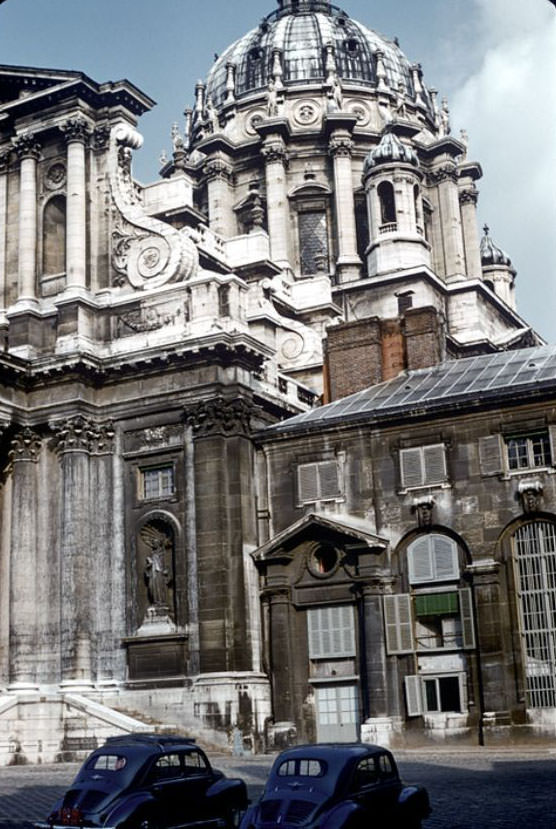
The French Republican Guard’s cavalry was still a visible presence in the city in 1959, photographed near the Gare d’Orléans. This unit, with its ceremonial horses and formal uniforms, represented a link to an older France even as the country modernized rapidly around it. The Church of Val-de-Grâce, a 17th-century landmark in the 5th arrondissement, anchored another part of the city’s visual history, its dome visible from nearby streets.
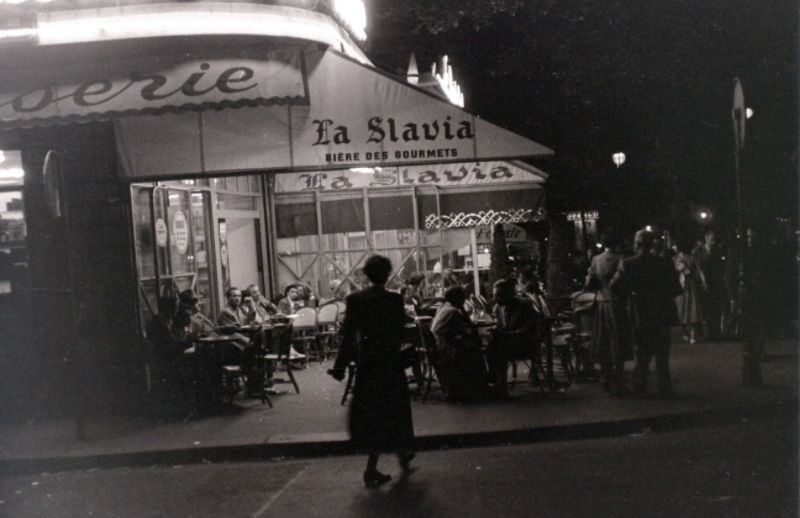
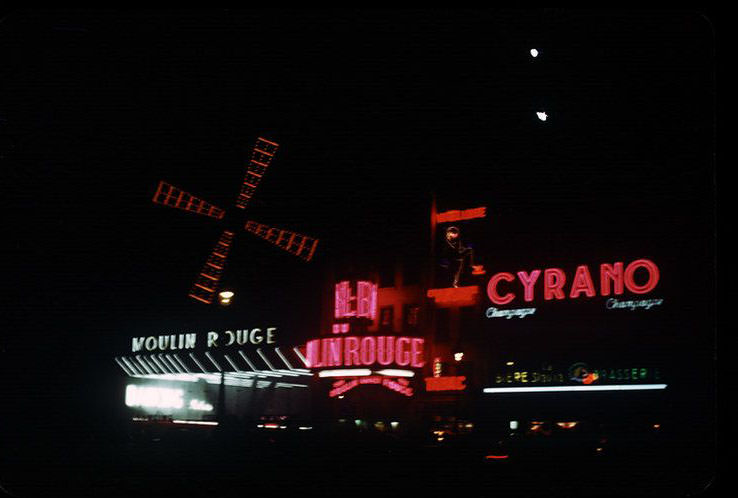
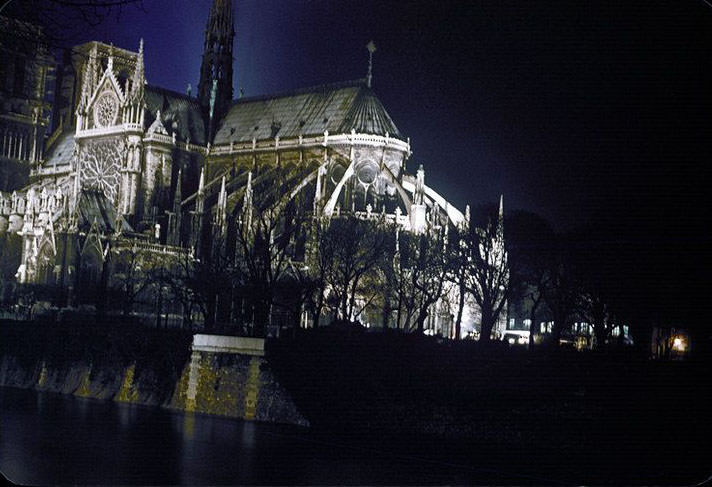
After dark, Paris showed a completely different face. The Moulin Rouge on the Boulevard de Clichy blazed with electric light, its red windmill turning above a busy street in Pigalle. Notre-Dame at night was equally dramatic — its Gothic towers and flying buttresses lit against a dark sky, reflected faintly in the Seine below. These nighttime photographs from May 1959 capture the city at a moment when it had largely recovered its confidence, even if the deeper structural changes of postwar France were still unfolding.
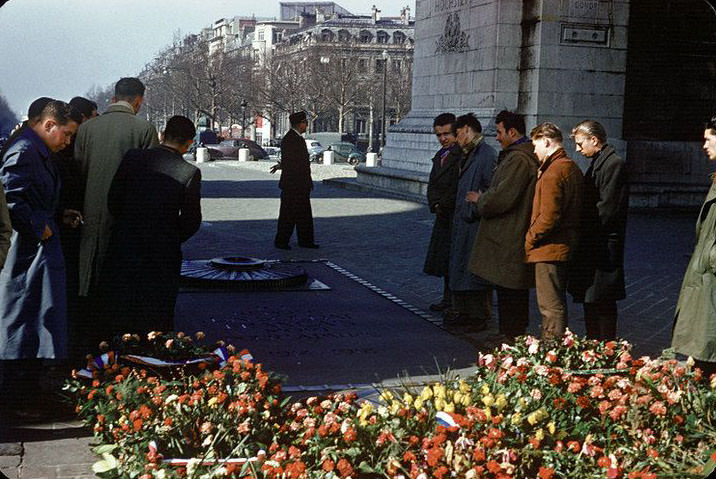
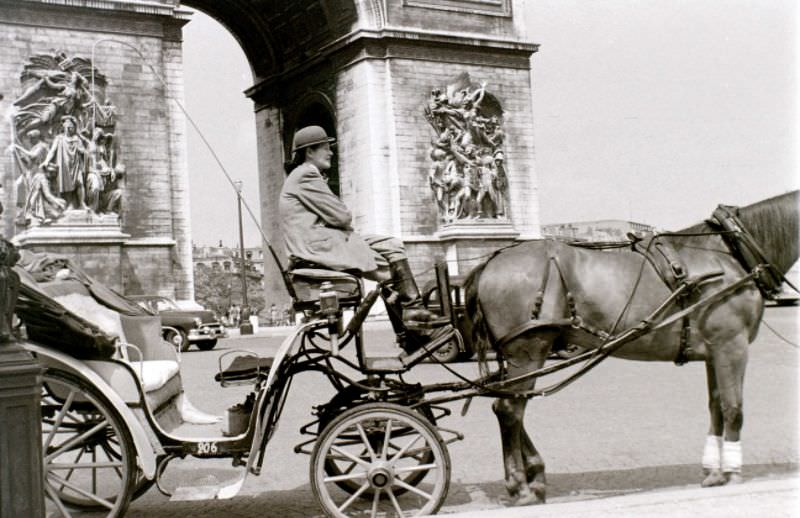
At the Arc de Triomphe, the Tomb of the Unknown Soldier — placed beneath the arch after World War I — carried added weight in a decade still close to the devastation of a second world war. The eternal flame burning there marked not only the losses of 1914–1918 but also those of the conflict that had ended just years earlier. These final images from May 1959 close out a decade-long visual record of a city that endured occupation, emerged from destruction, and pressed forward into an era of rapid change.