
Belfast in the 1950s was a city caught between two worlds. Its industrial past was still very much alive — cranes towered over the shipyards, linen mills hummed with machinery, and steam trains thundered toward Derry, Enniskillen, and Newcastle. But the years after World War II had left deep marks. The old industries that once made Belfast famous were shrinking, and unemployment was rising. At the same time, the city was full of life — children played in cobblestone streets, pipe bands competed for European titles, and royal visits drew massive crowds.
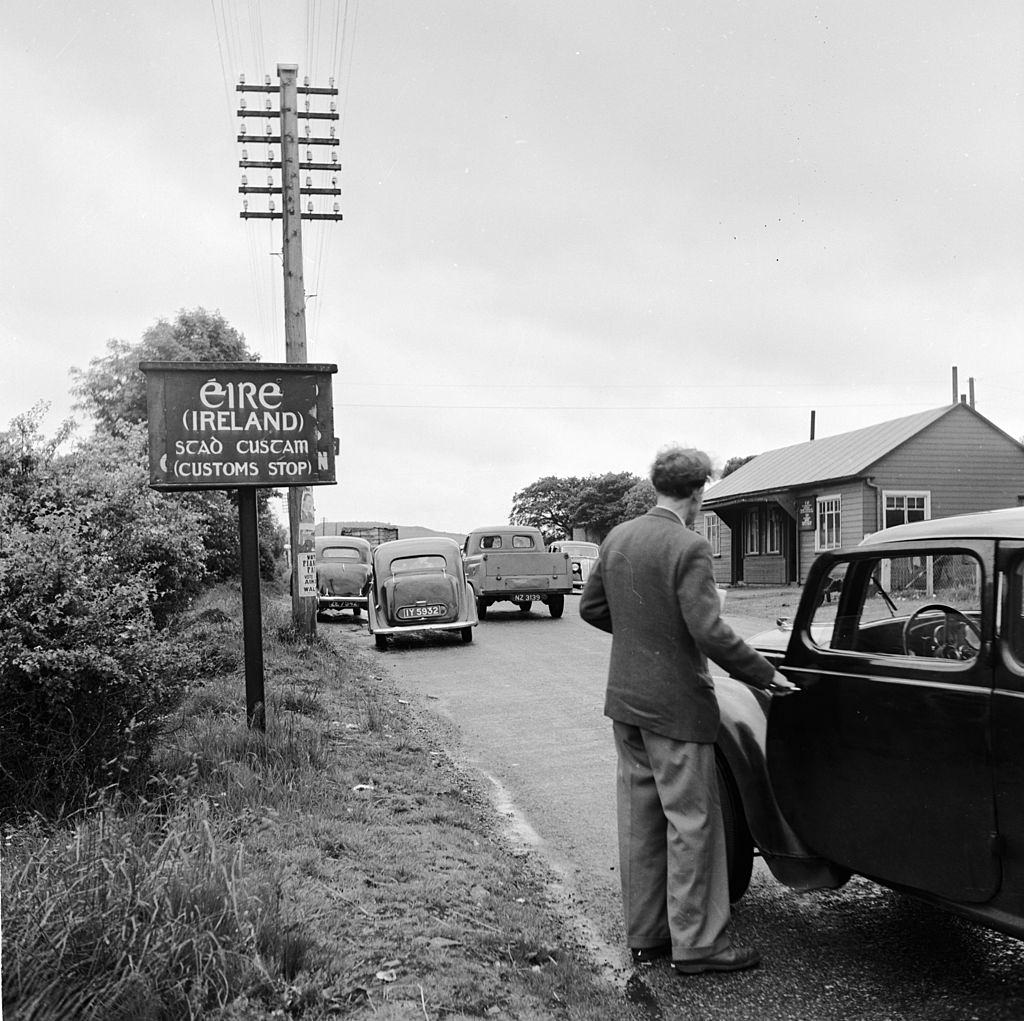
The border between Northern Ireland and the Irish Republic was a physical reality that shaped daily life. Travelers on the road between Belfast and Dublin passed through a customs stop, a reminder that two separate jurisdictions sat side by side on the same island. While most people went about their lives without much thought to the crossing, it was a visible symbol of the political divide that defined the region.
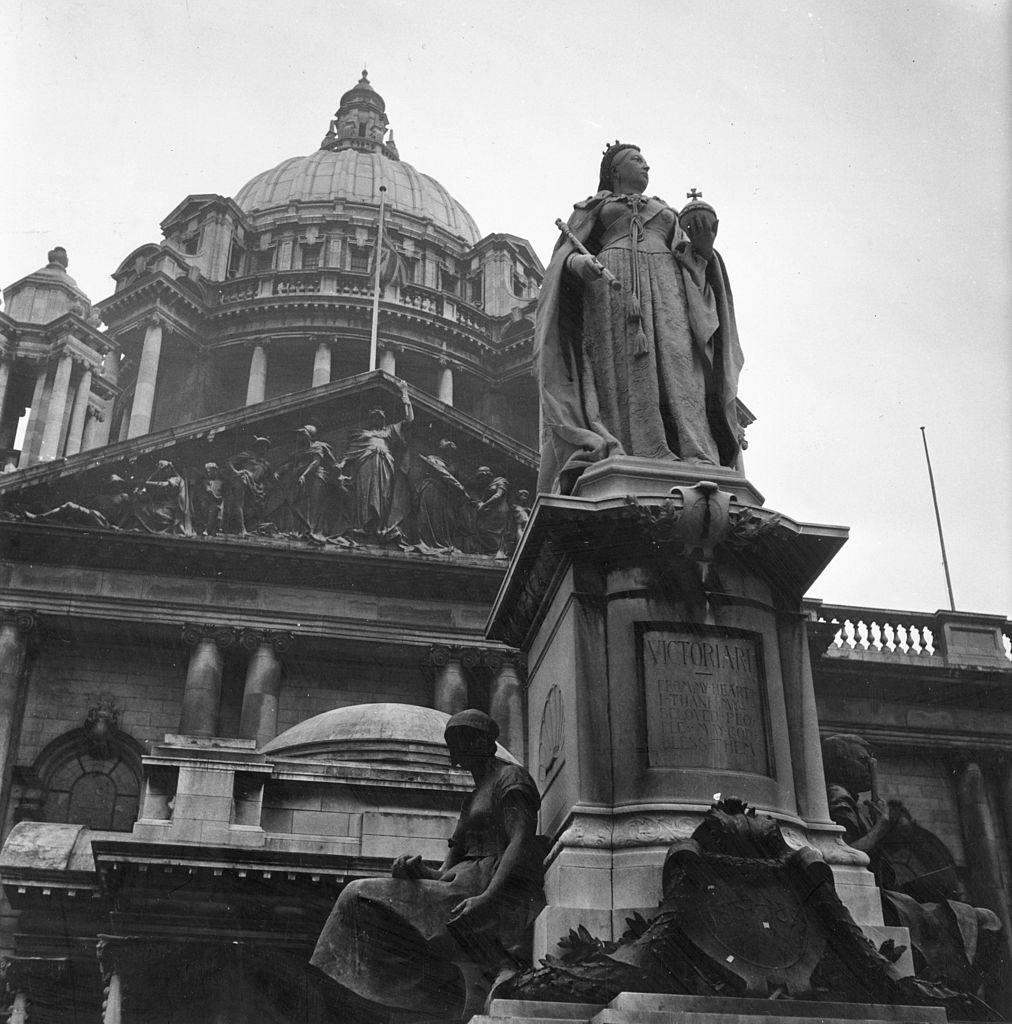
Belfast City Hall stood as the most prominent landmark in the city center. The imposing Queen Victoria statue outside it said something about the city’s identity — firmly British, rooted in the Victorian era that had seen Belfast grow from a modest town into one of the most industrially powerful cities in the world. That growth had been built on linen, engineering, and above all, shipbuilding. Before World War I, more than 25,000 workers had been employed in the Belfast shipyards alone, earning the city the title of ‘the greatest shipbuilding center of the world.’
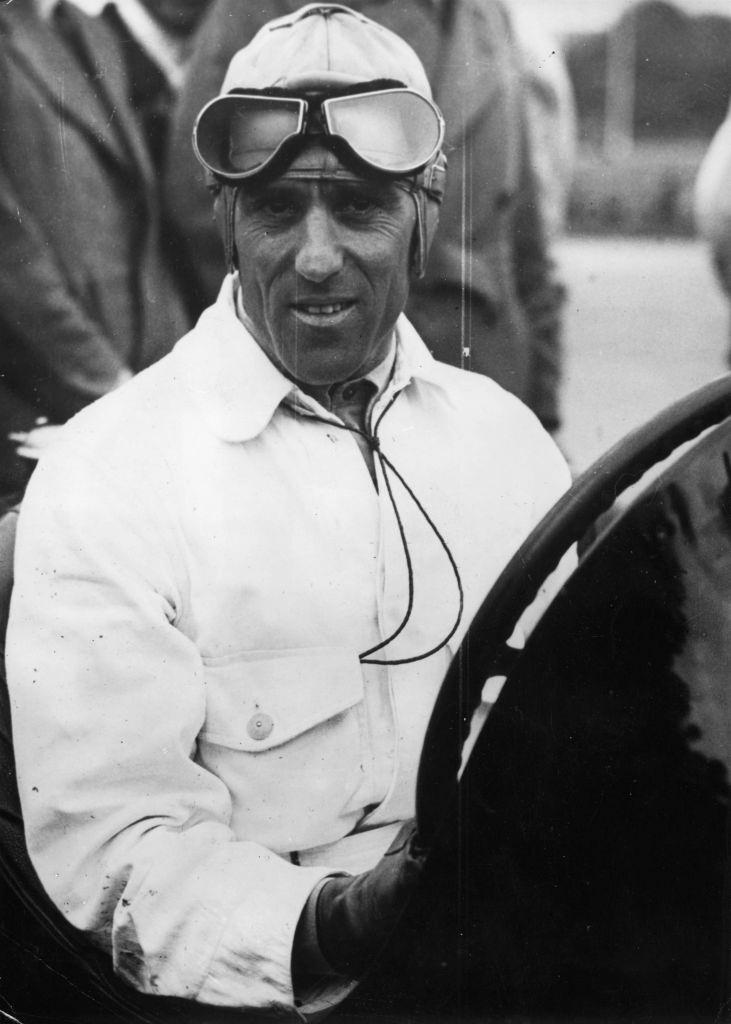
Belfast wasn’t only about industry. The city hosted major sporting events, including the Ulster Tourist Trophy car race, which attracted some of the finest motorsport talent in the world. Tazio Nuvolari, the legendary Italian driver known as Il Campionissimo — The Great Little Man — celebrated a victory there in 1950, his wife by his side. Nuvolari was already a giant of motorsport by that point, and his presence at a Belfast race showed the international profile these events carried.
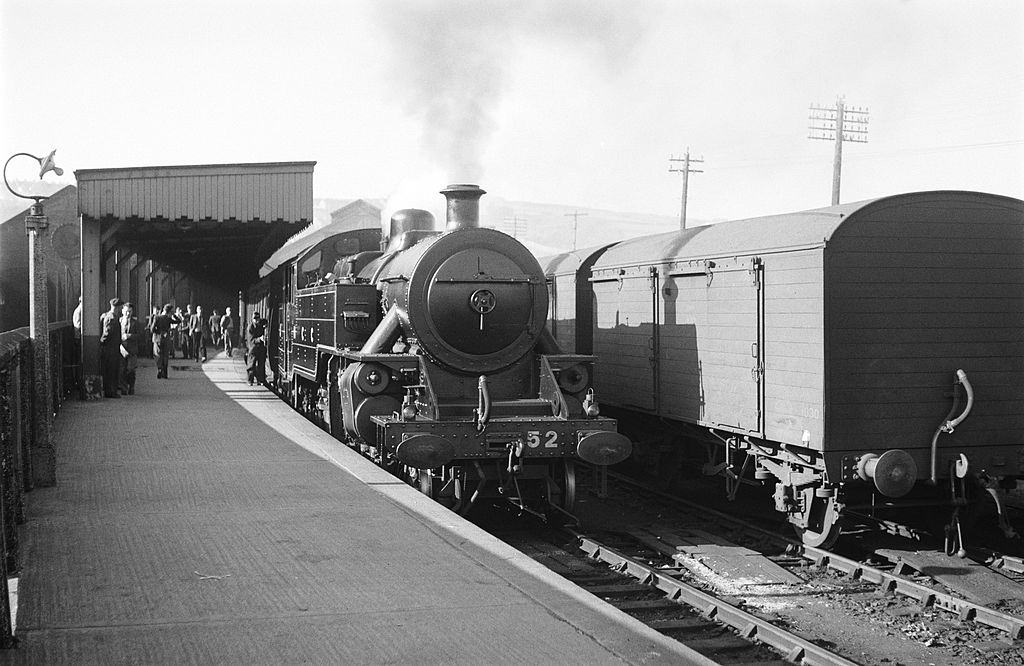
The railways were still a vital part of how people and goods moved across Northern Ireland. Steam trains made regular runs between Belfast and Londonderry, connecting the two major cities and the communities in between. In the early 1950s, the Fintona horse tram was still running — one of the last horse-drawn trams in the British Isles. Automobiles were growing in number, but Ulster farms still kept around 50,000 horses, and horses continued to play a real role in transportation across the region.
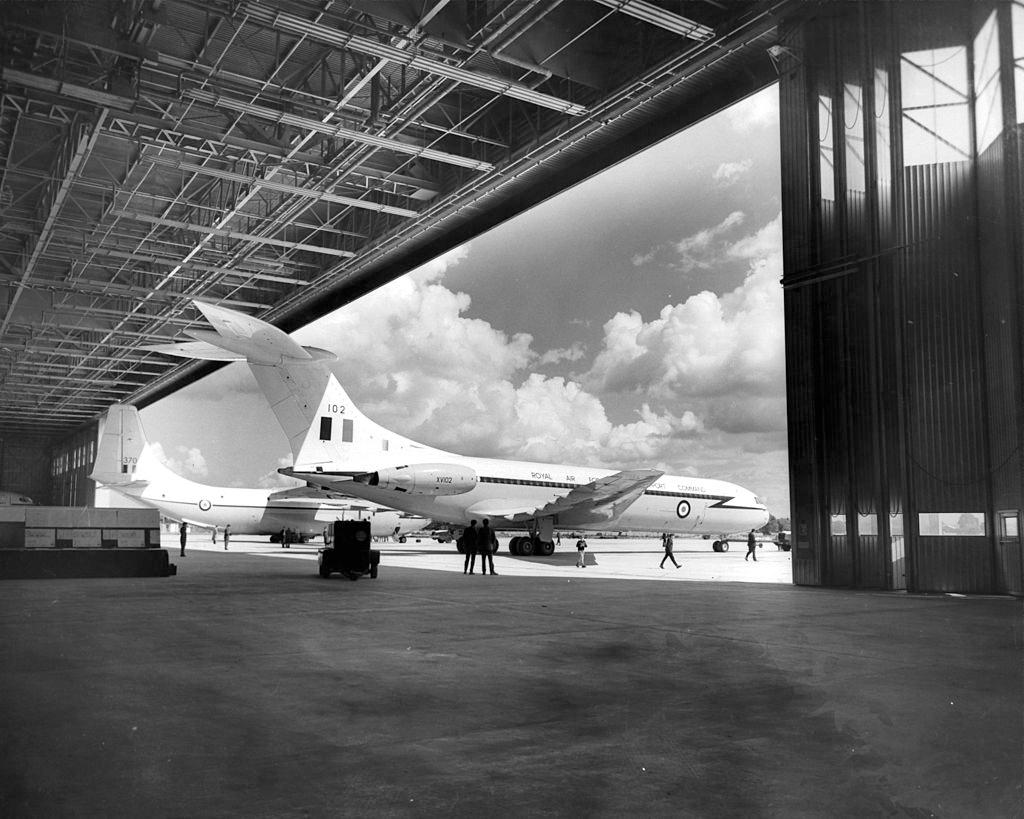
Aviation was becoming a growing industry in Belfast. A new 350-foot-long aircraft hangar opened in 1950, reflecting the city’s ambitions beyond its traditional industrial base. The Short Brothers factory was already producing aircraft, and Belfast was positioning itself as a serious player in aerospace manufacturing.
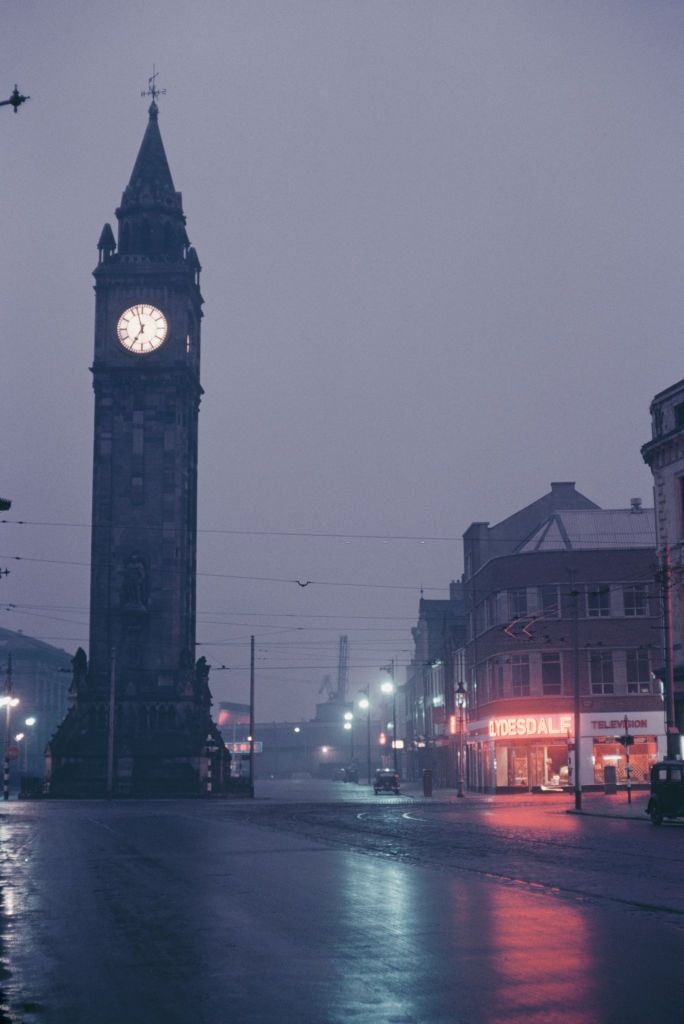
Queen’s Square was one of Belfast’s most recognizable public spaces, dominated by the Albert Memorial Clock tower. The clock, built in the 1860s, leaned slightly to one side due to its foundations being set into soft ground near the River Lagan — a quirk that locals knew well. The square and the streets around it gave photographers a clear picture of everyday Belfast: trams, pedestrians, and the dense Victorian architecture that defined the city center.
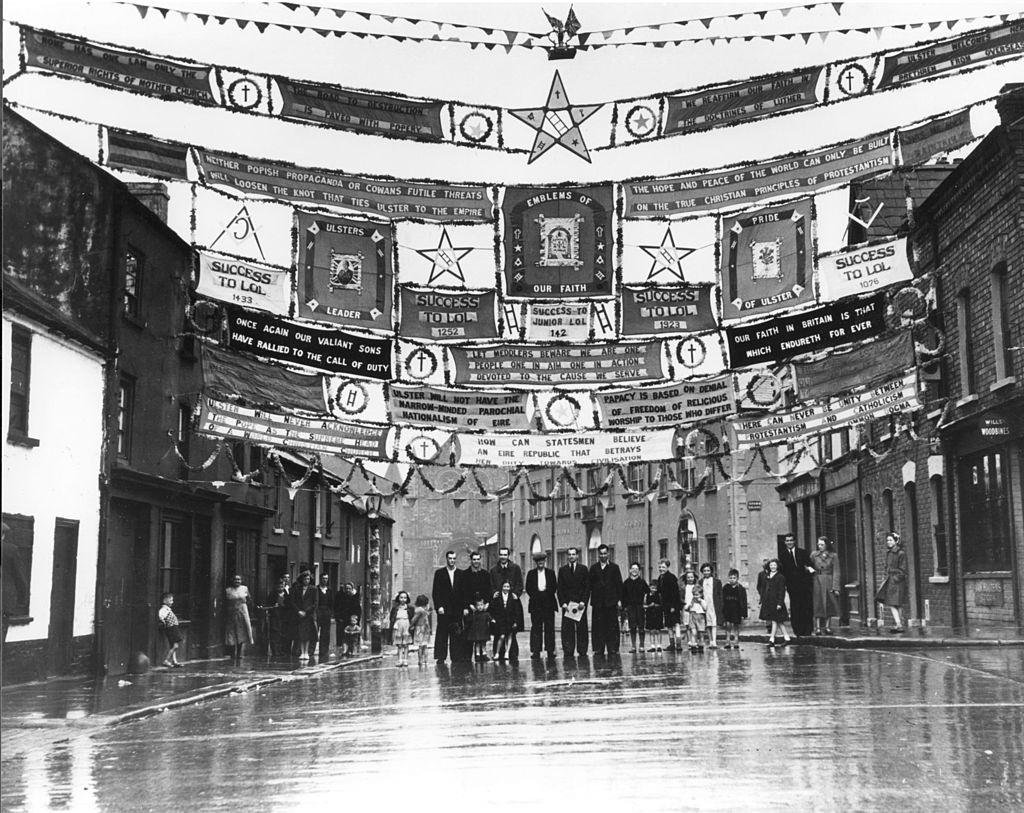
The Orange Order’s annual celebrations were among the most visible expressions of Protestant and Unionist identity in Belfast. Every year, streets were draped in banners and filled with the sound of flutes and lambeg drums. The marches drew large crowds and were a central part of the cultural calendar for a significant portion of the population.
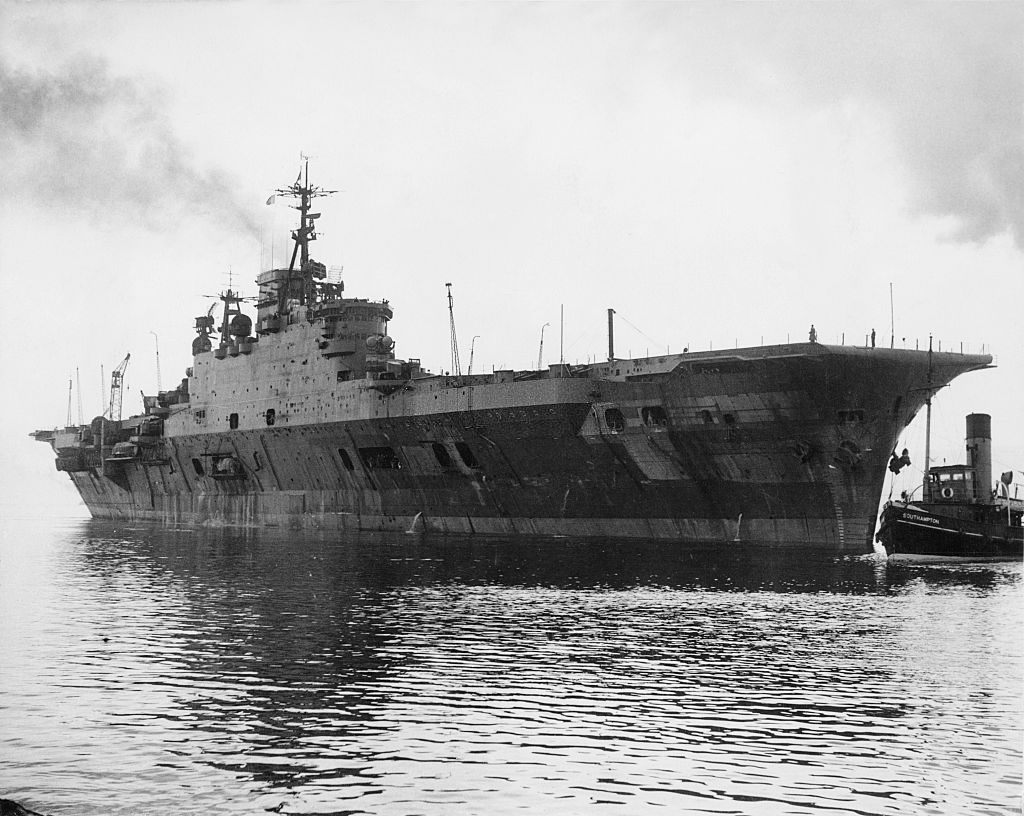
Belfast’s shipyards were still producing major vessels in the early 1950s, even as the industry began its long decline. HMS Eagle, an Audacious-class fleet aircraft carrier for the Royal Navy, was photographed in Belfast in 1951 — a sign that the yards were still capable of delivering some of the most complex and powerful ships afloat. The carrier was one of the largest warships of its time.
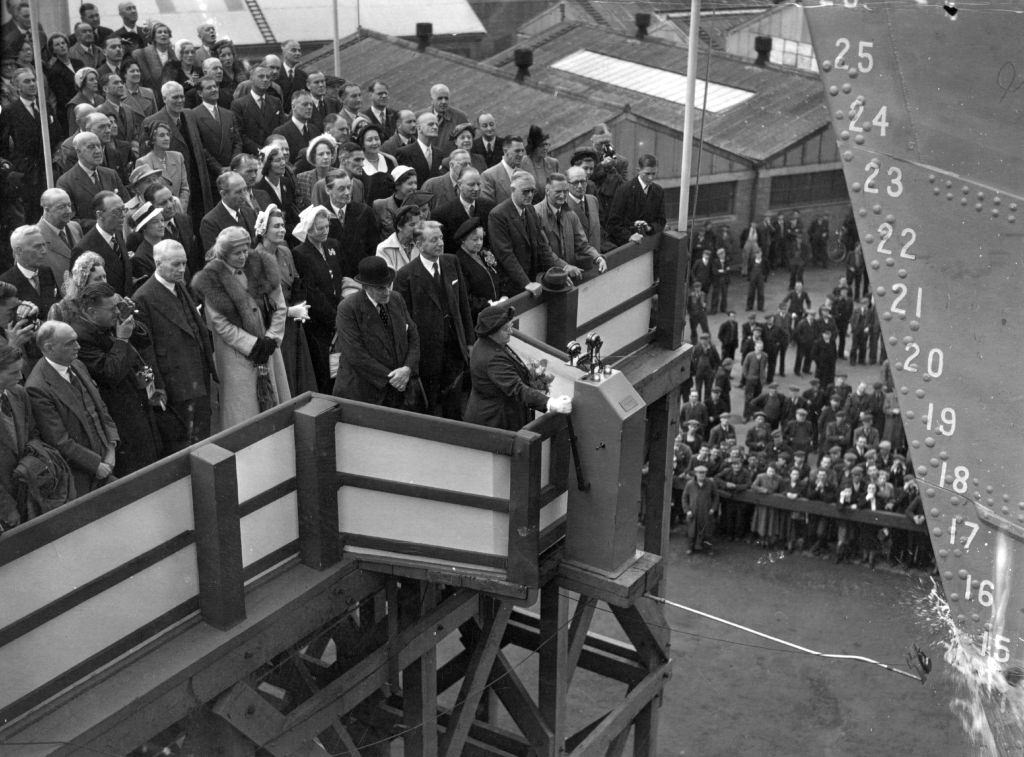
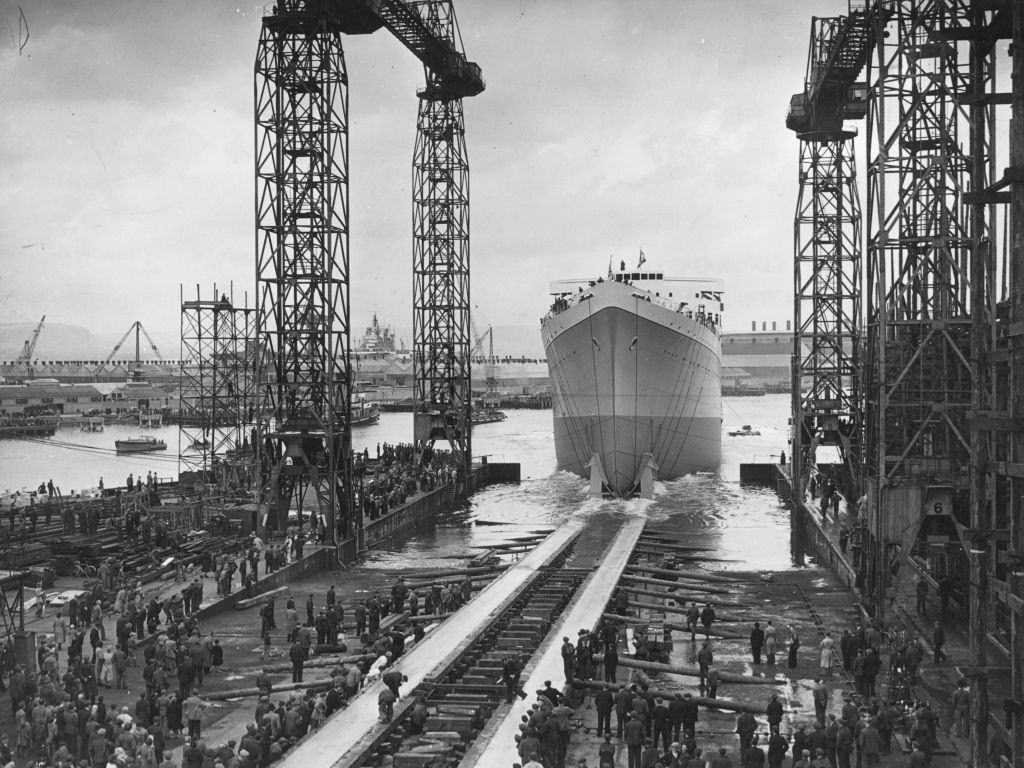
Harland and Wolff remained the beating heart of Belfast’s shipbuilding identity. The launch of the Union Castle liner Kenya Castle in 1951 was a major occasion, with Lady Mitchell, wife of Major General Sir Philip Mitchell, performing the christening. Ship launches drew crowds and press coverage, offering a moment of civic pride at a time when the wider industry was contracting. Workers at the yard were building not just ships, but the city’s sense of itself.
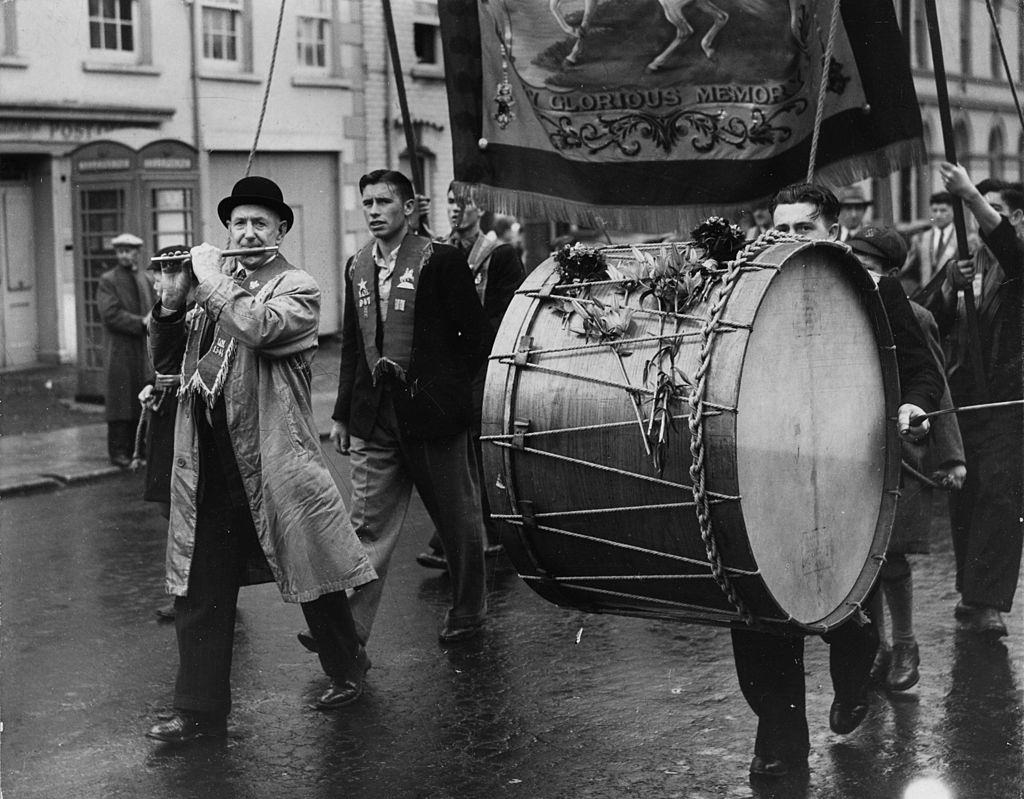
The lambeg drum is one of the loudest acoustic instruments in the world, and it was — and remains — central to Orange Order marching culture. Beaten with canes while the drummer walks, a single lambeg drum can produce sound levels exceeding 120 decibels. Paired with flute players, these bands were a thunderous presence on Belfast’s streets every marching season.
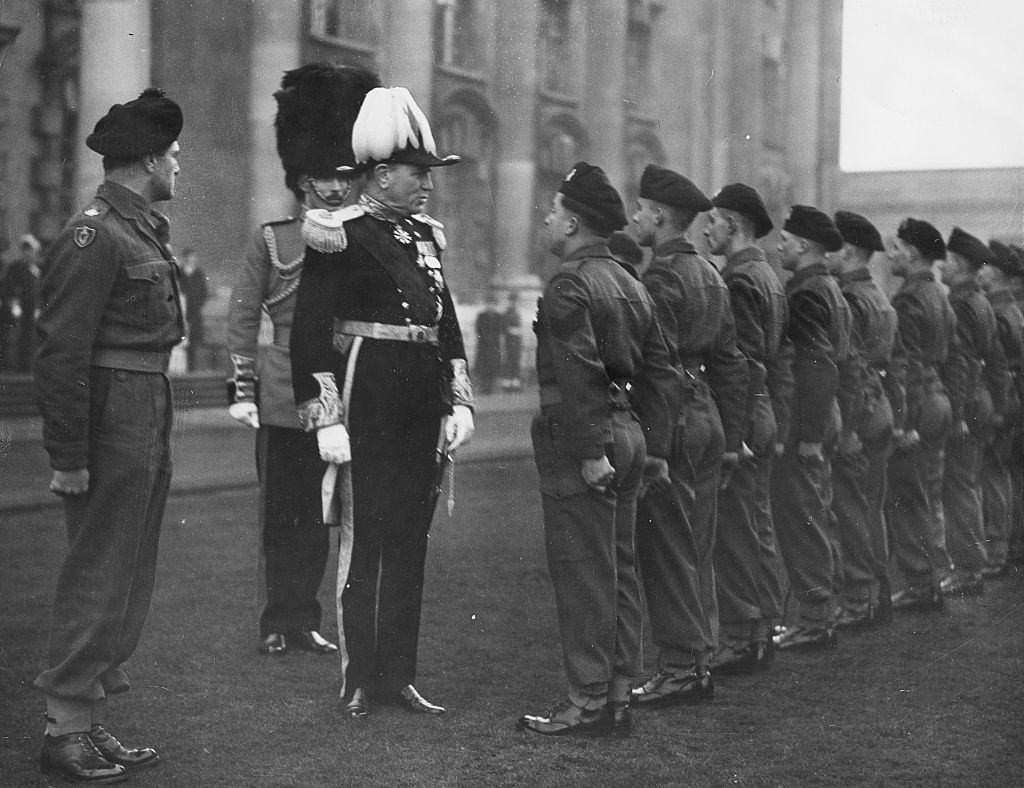
In 1952, Lord Wakehurst arrived in Belfast as the new Governor of Northern Ireland, inspecting the Guard of Honor of the Northern Irish Brigade upon his arrival. The ceremony underlined the constitutional relationship between Northern Ireland and the Crown — a relationship that Unionists celebrated and Republicans rejected, and which played out in the graffiti, posters, and political banners visible across the city’s walls.
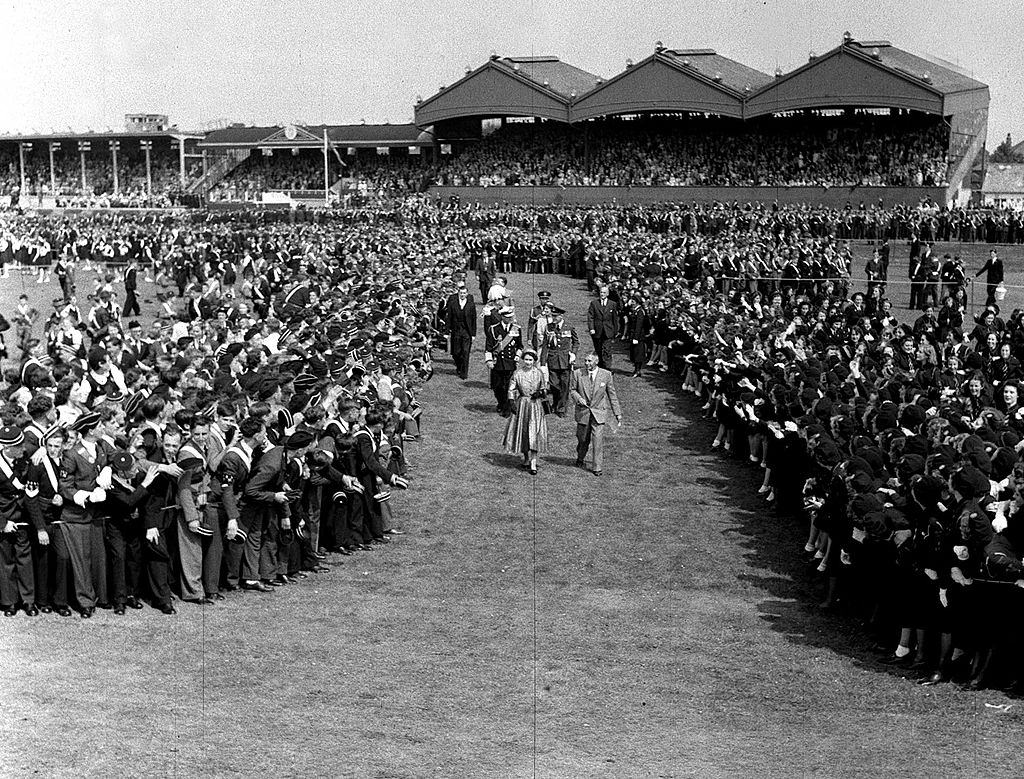
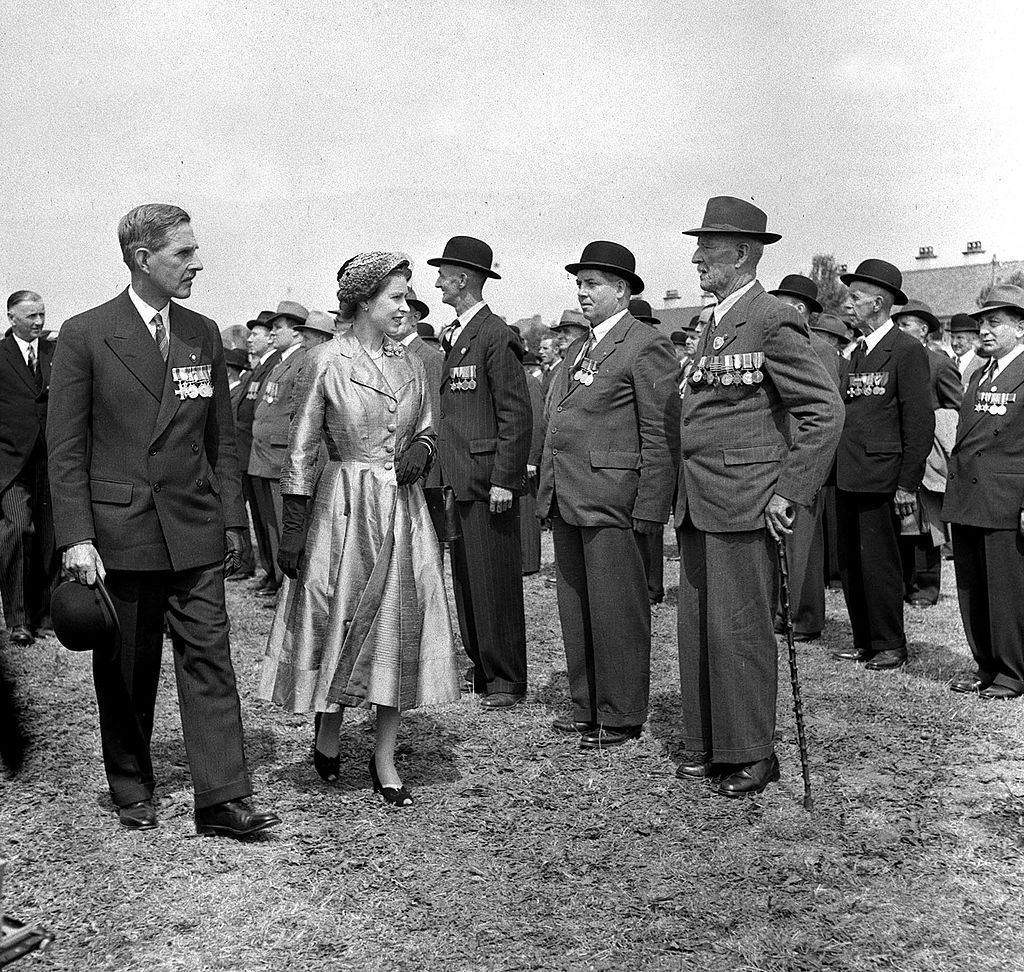
Queen Elizabeth II’s visit to Belfast in 1953 drew enormous crowds. At Balmoral showgrounds, thousands of members of Ulster Youth Organisations gathered to see her pass through, and she reviewed ex-servicemen in a formal ceremony. It was the year of her coronation, and her appearance in Belfast carried the full weight of that occasion. For Unionists, the visit was a direct expression of Belfast’s place within the United Kingdom.
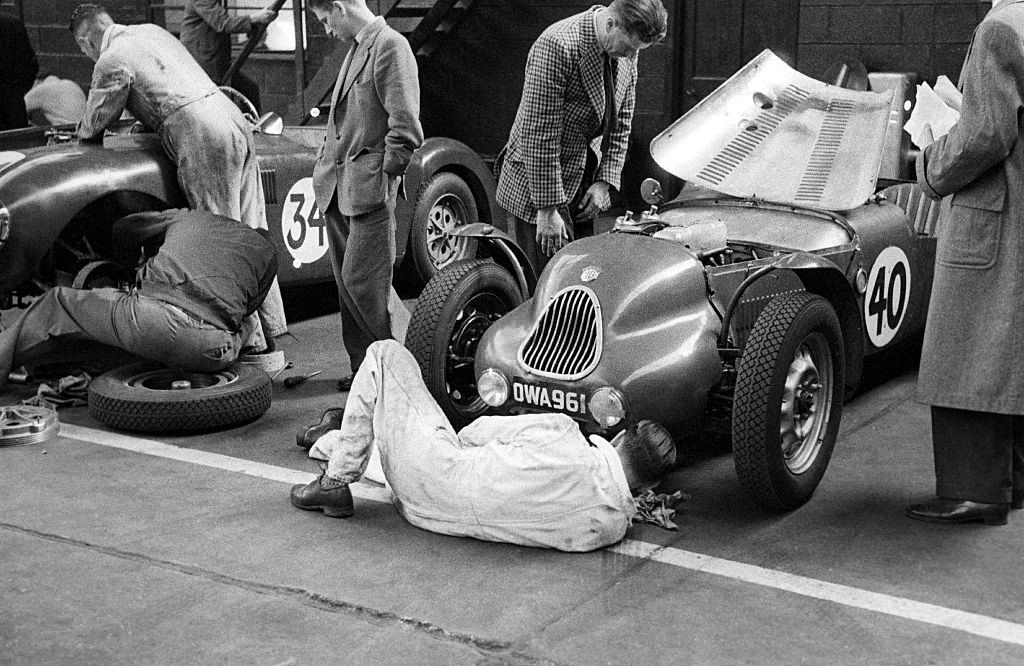
The Dundrod circuit, just outside Belfast, hosted some of the most demanding motorsport events in the British Isles. Preparations for the Tourist Trophy races were serious business, with mechanics working over cars like the Jackson/Lane Lester T51 MG in Belfast garages before they hit the course. Dundrod’s fast, narrow country roads made it one of the most challenging — and dangerous — circuits in the world.
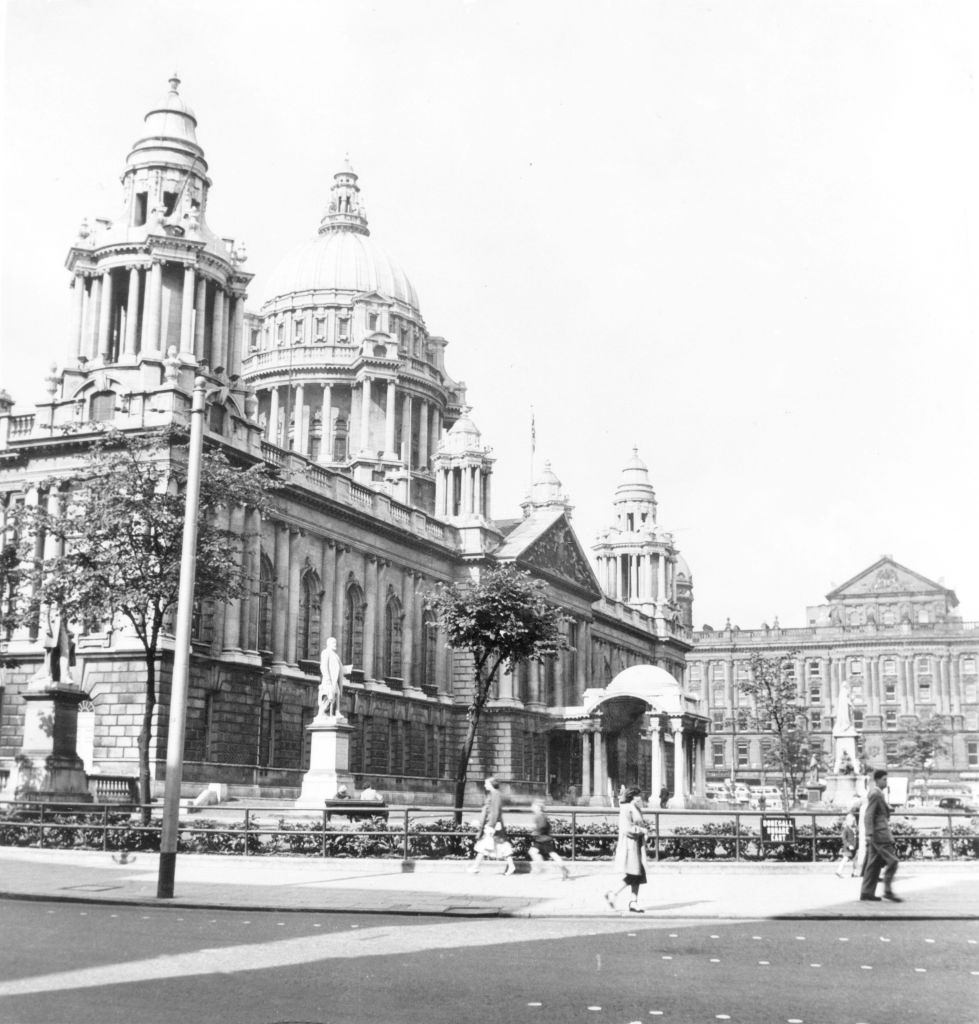
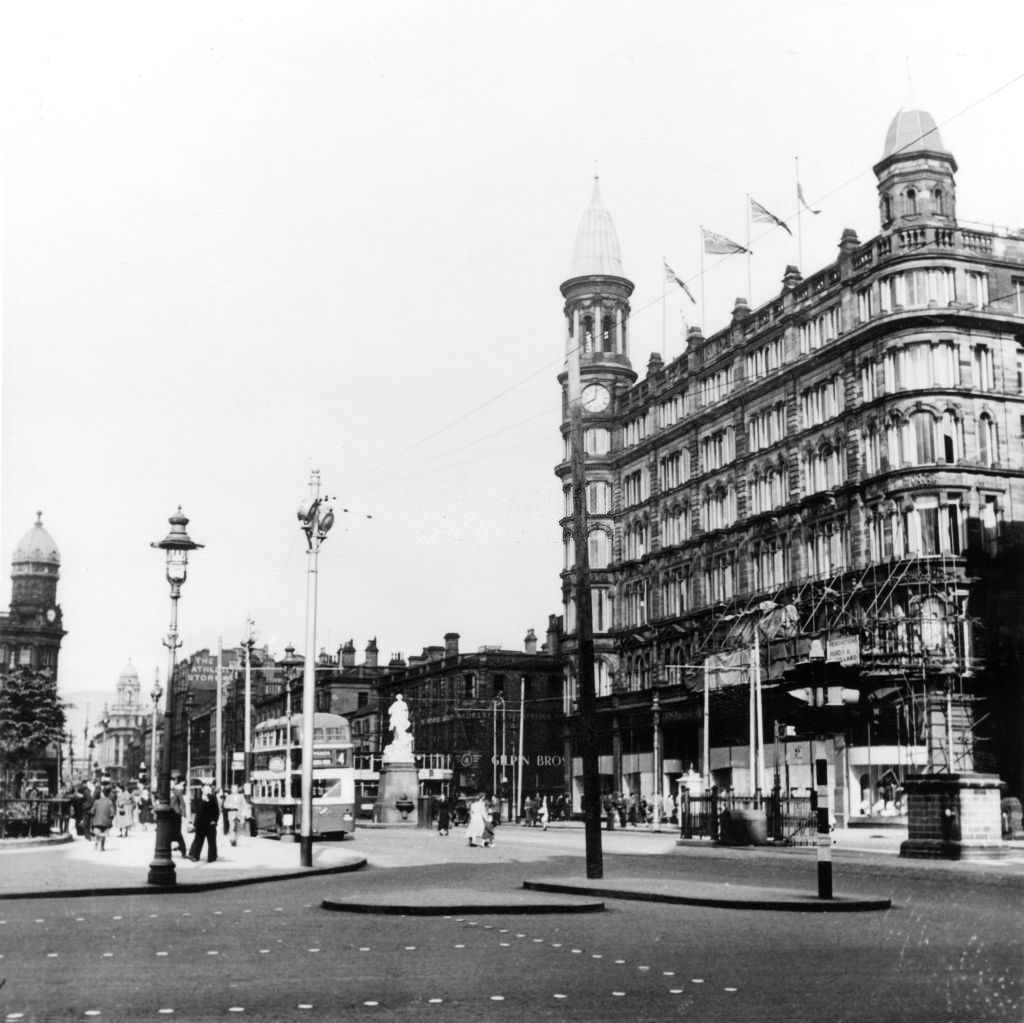
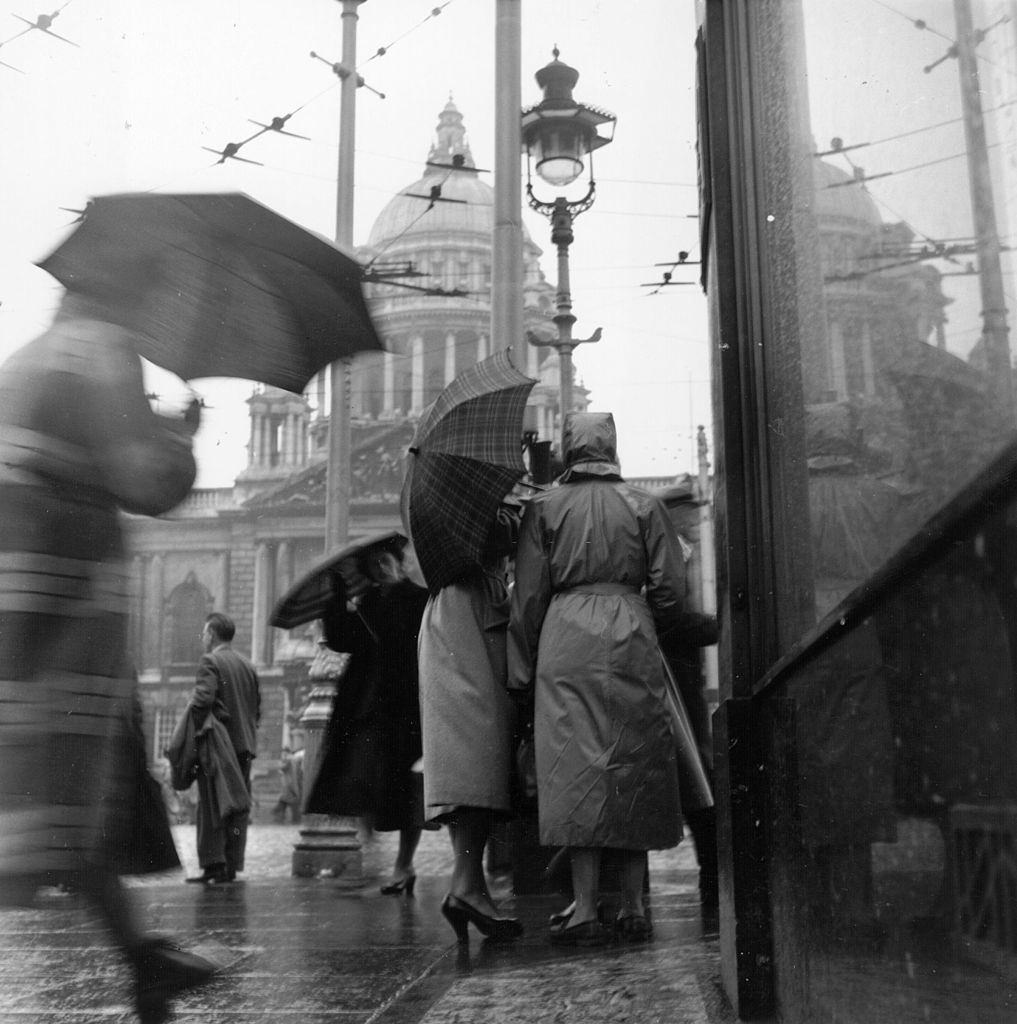
The city center in 1953 showed a Belfast that was dense, busy, and compact. Shops lined the main streets, pedestrians moved in numbers, and the grand civic architecture of the Victorian era still set the tone. Belfast City Hall, completed in 1906, dominated Donegall Square and served as the backdrop for major events and ceremonies throughout the decade.
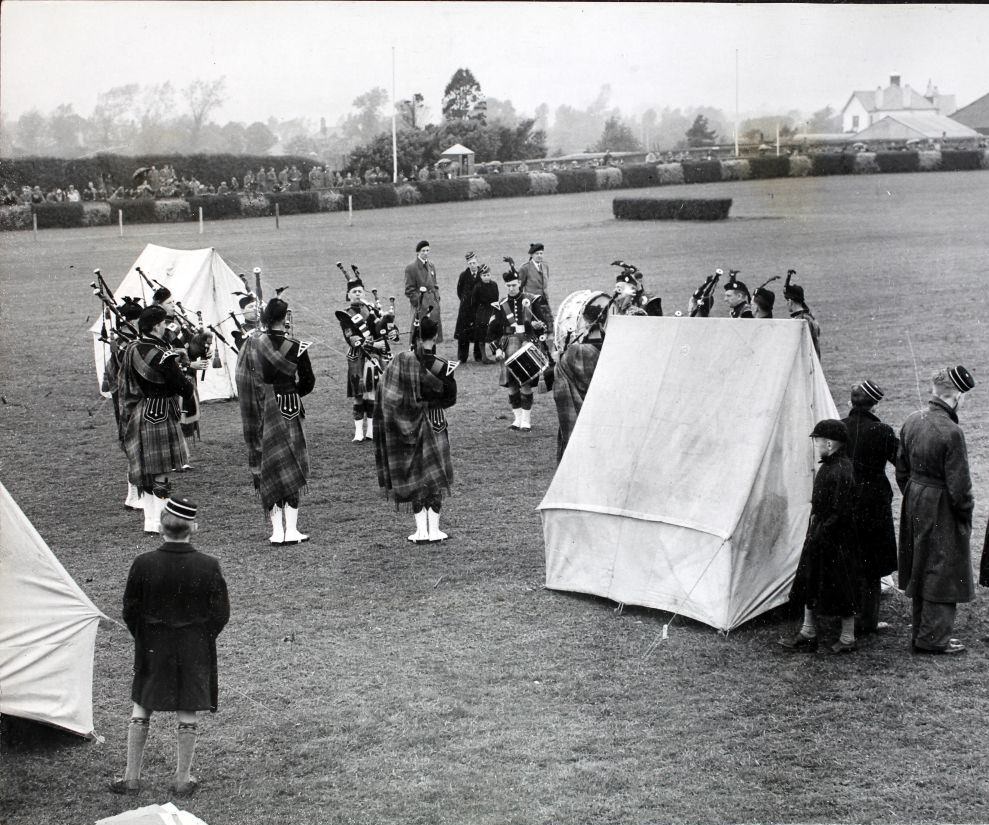
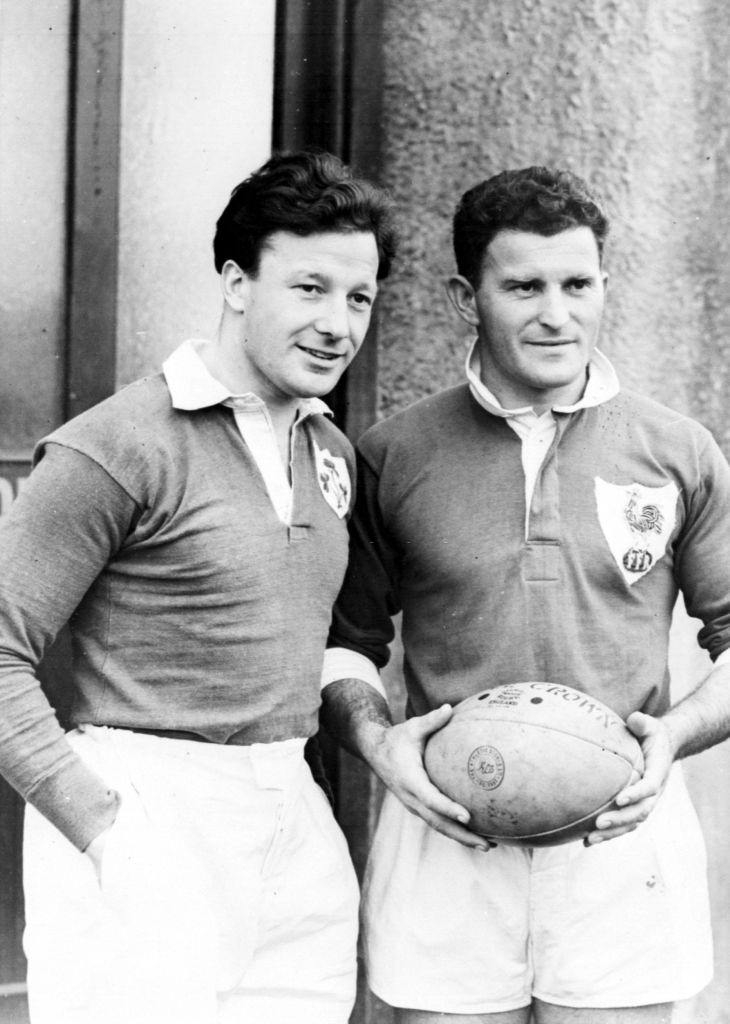
Belfast hosted the European Pipe Bands Championship in 1953, drawing competitors from across the continent. Pipe bands were — and still are — deeply tied to Ulster’s Scots-Irish cultural identity. The competition brought together some of the finest players in Europe, filling the air with the distinctive sound of the great highland bagpipe.
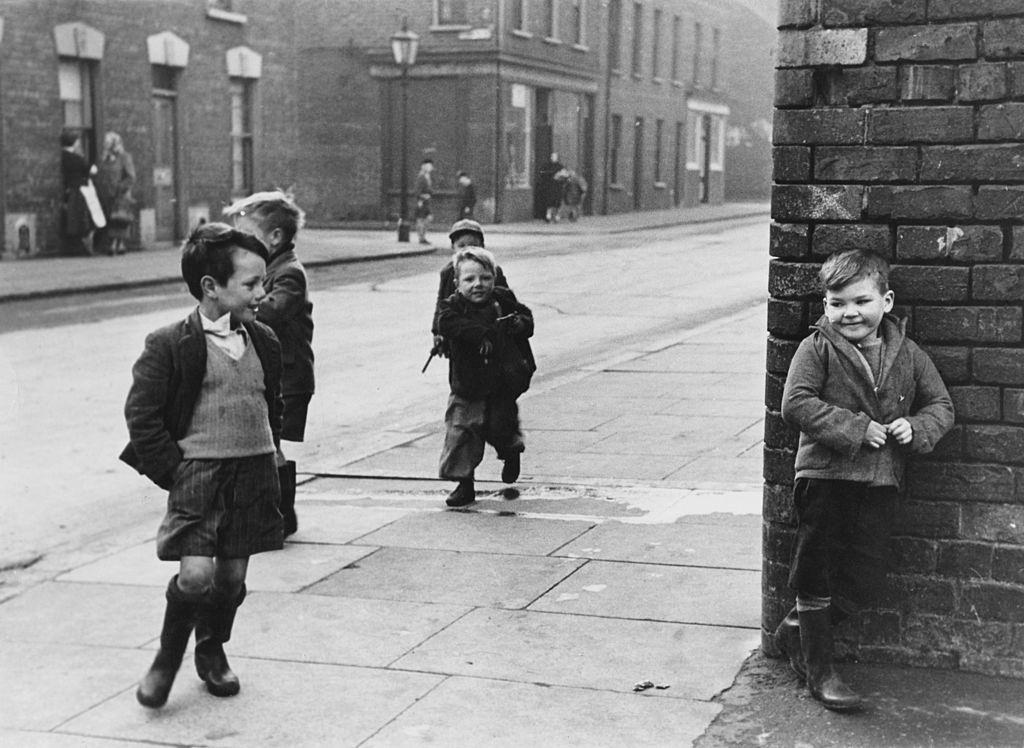
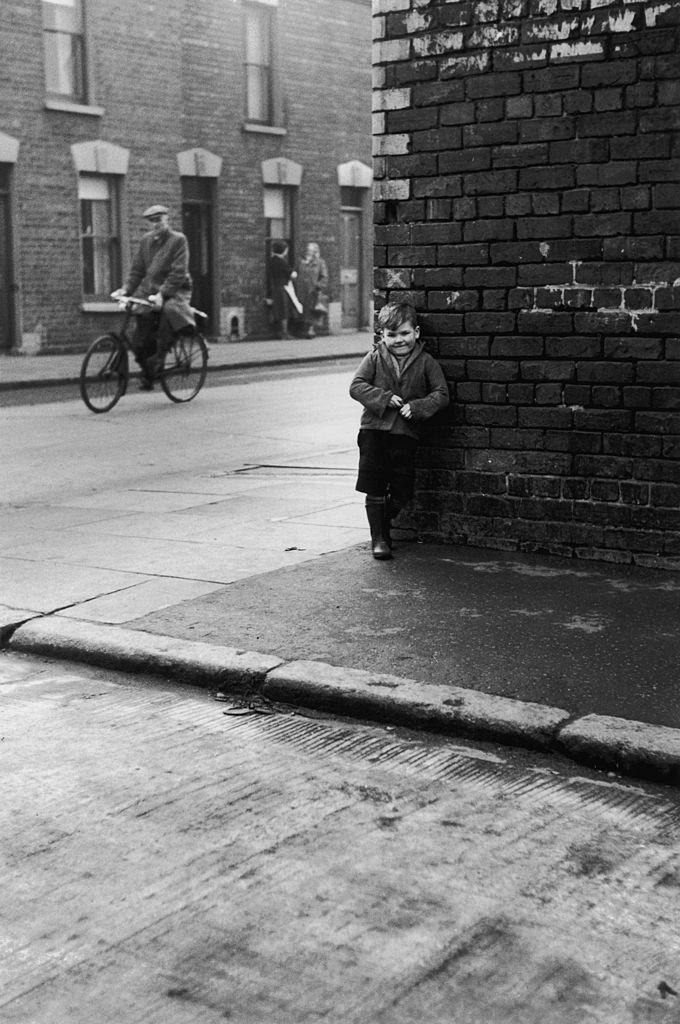
For children growing up in working-class Belfast in the 1950s, the street was the playground. Few families had televisions or refrigerators. Entertainment was found outdoors — running, playing, and filling the narrow terraced streets with noise and life. The photographs from 1954 capture this world vividly: kids running in packs, older children looking after younger siblings, and a general sense of a community that lived much of its life in public.
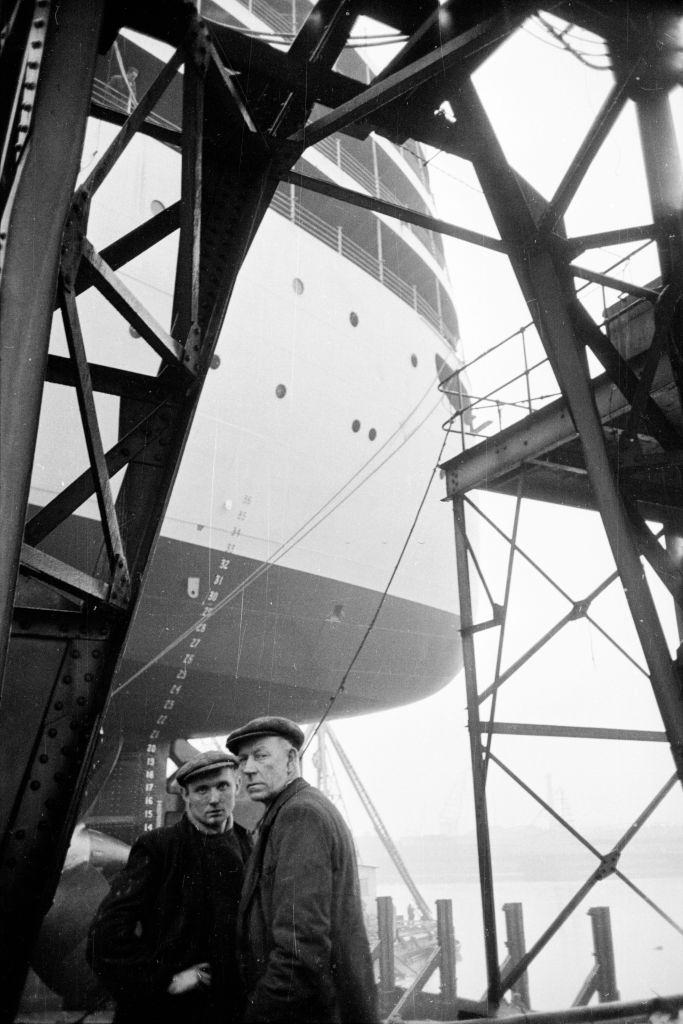
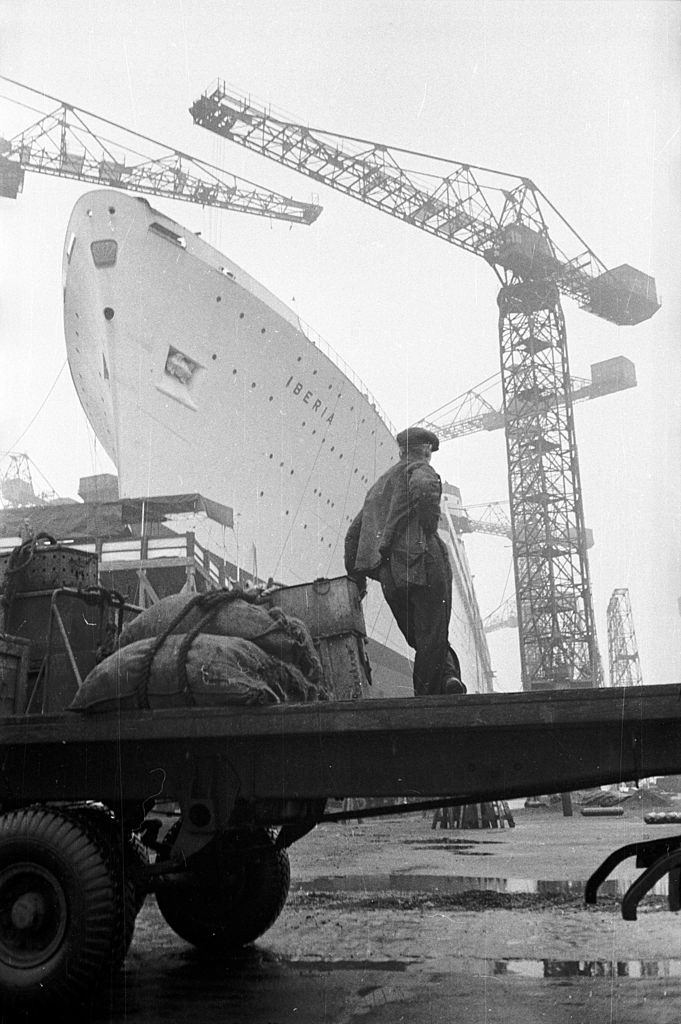
Harland and Wolff continued to employ large numbers of workers through the mid-1950s, even as the broader shipbuilding industry was contracting. Men worked in the shadow of enormous cranes, building liners piece by piece. The work was physically demanding and often dangerous, but it was steady employment in a city that was beginning to feel the pain of industrial decline.
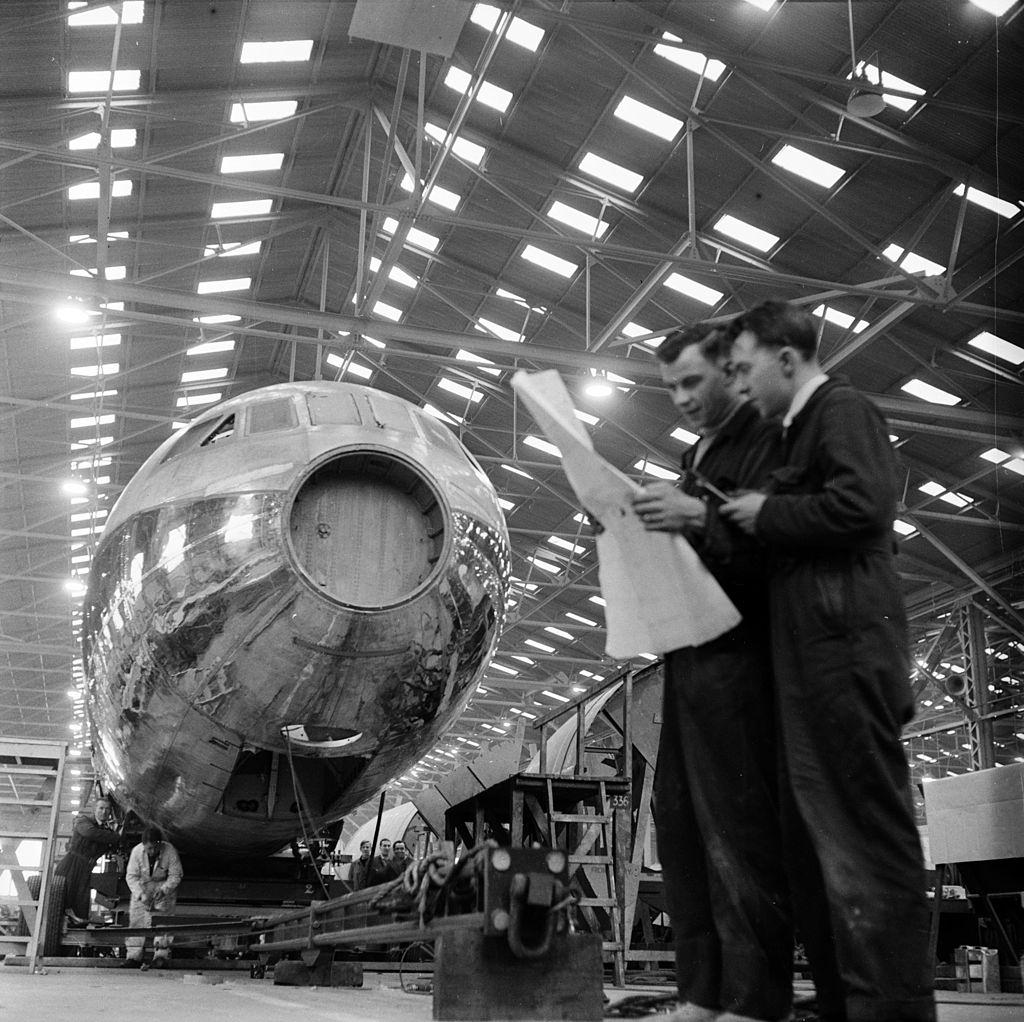
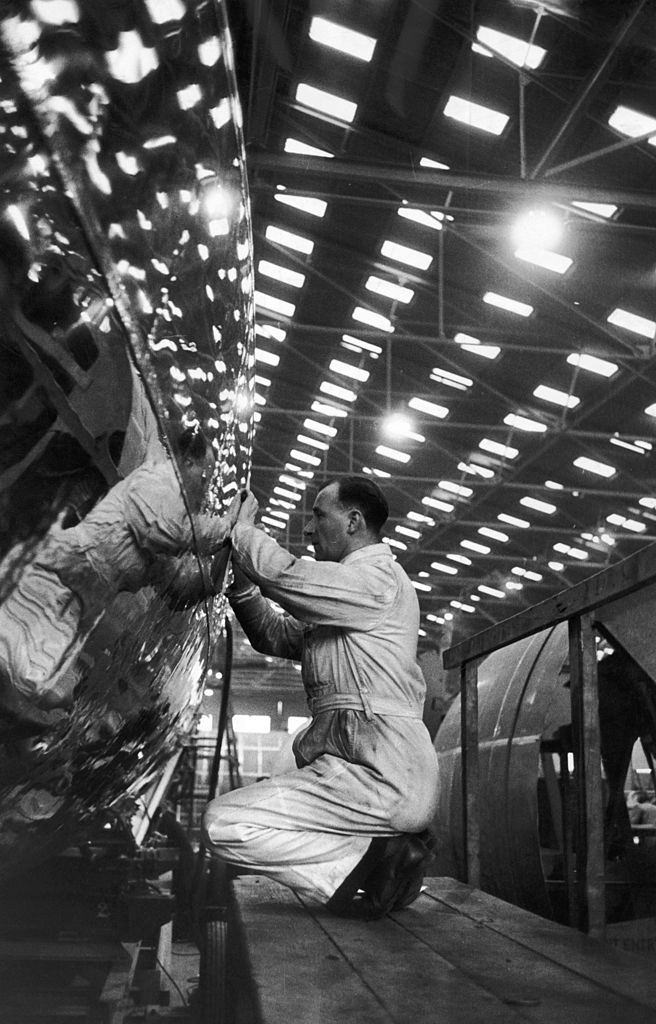
Short Brothers was building the future at its Belfast factory. In 1954, a De Havilland Comet — the world’s first commercial jet airliner — was under construction there. The Comet had entered service in 1952, revolutionizing air travel, and Short Brothers’ involvement in its production placed Belfast at the cutting edge of aerospace technology during the decade.
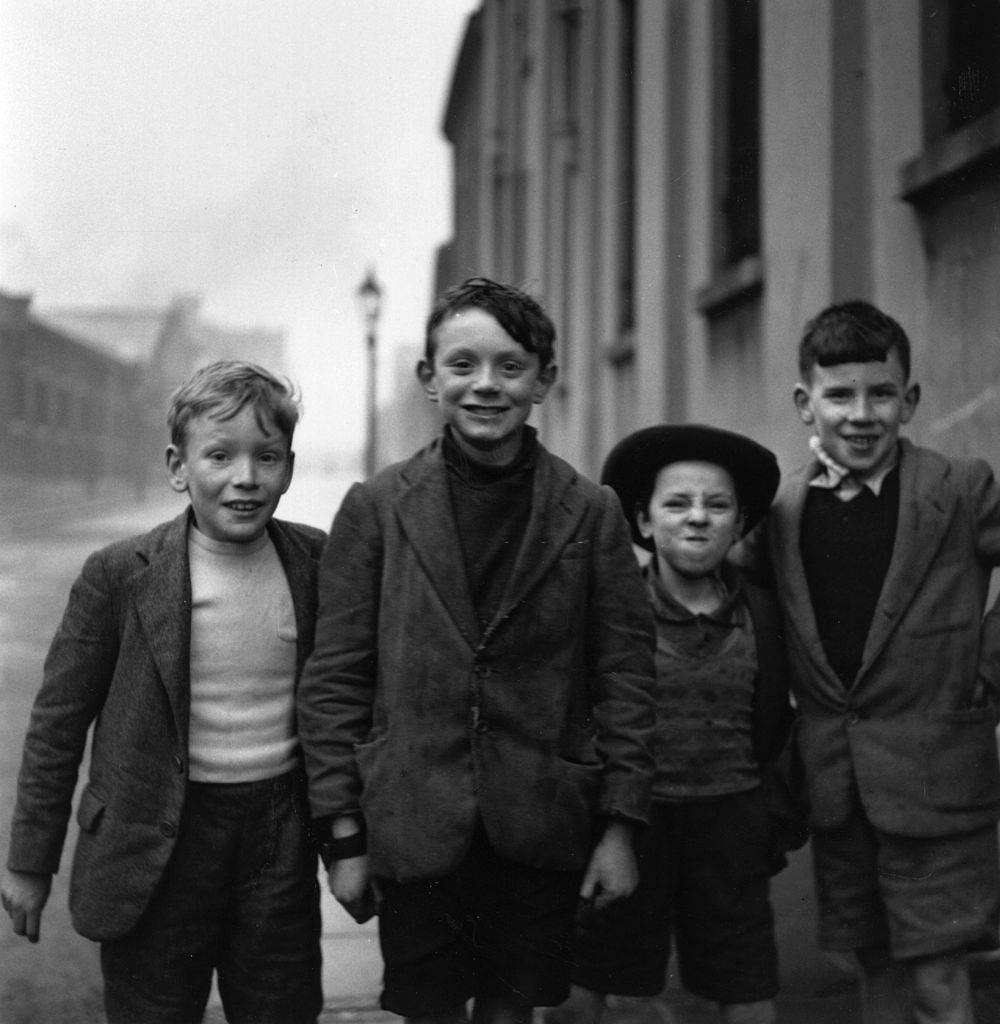
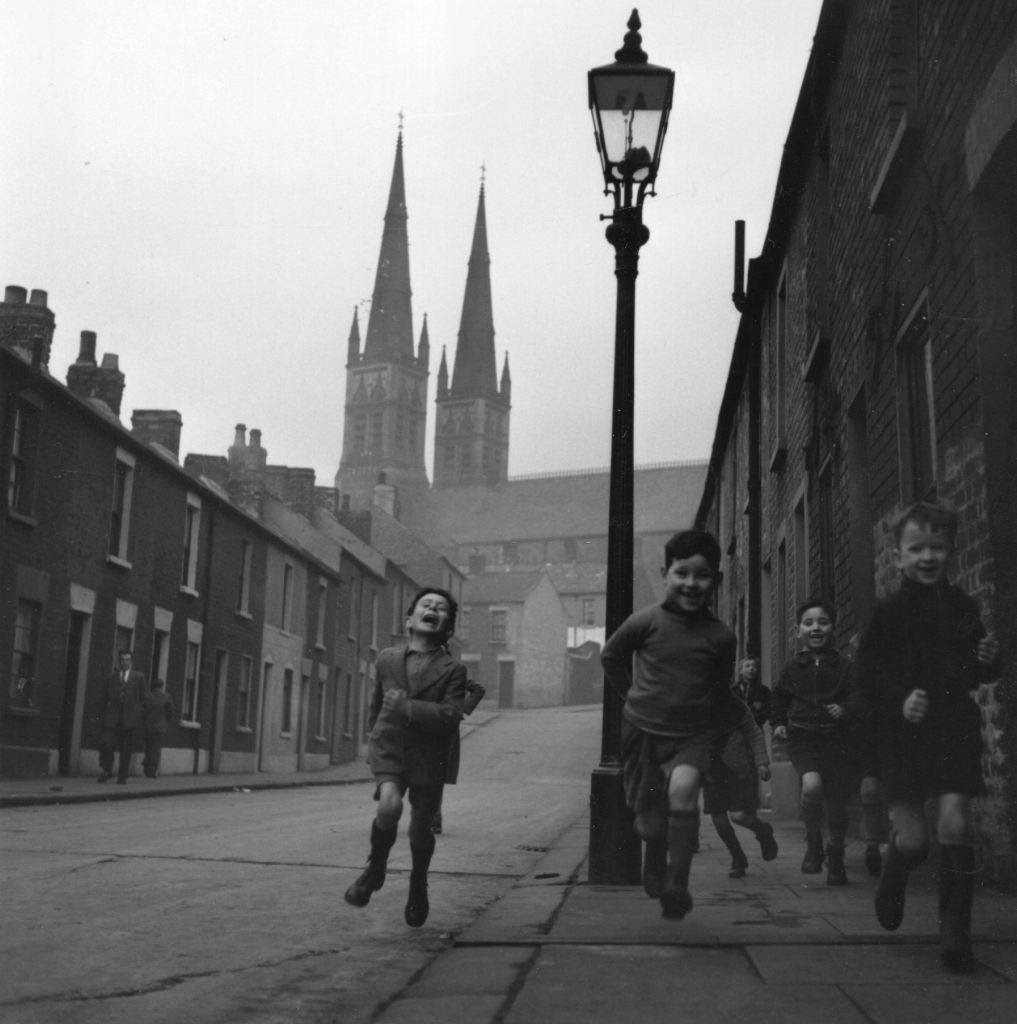
The streets of working-class Belfast neighborhoods were rarely quiet during daylight hours. Children were everywhere — running between terraced houses, kicking balls against walls, and generally occupying the spaces that their parents used for work and community. Many of these streets also served as canvases for political expression, with painted slogans and election posters competing for space on every available wall.
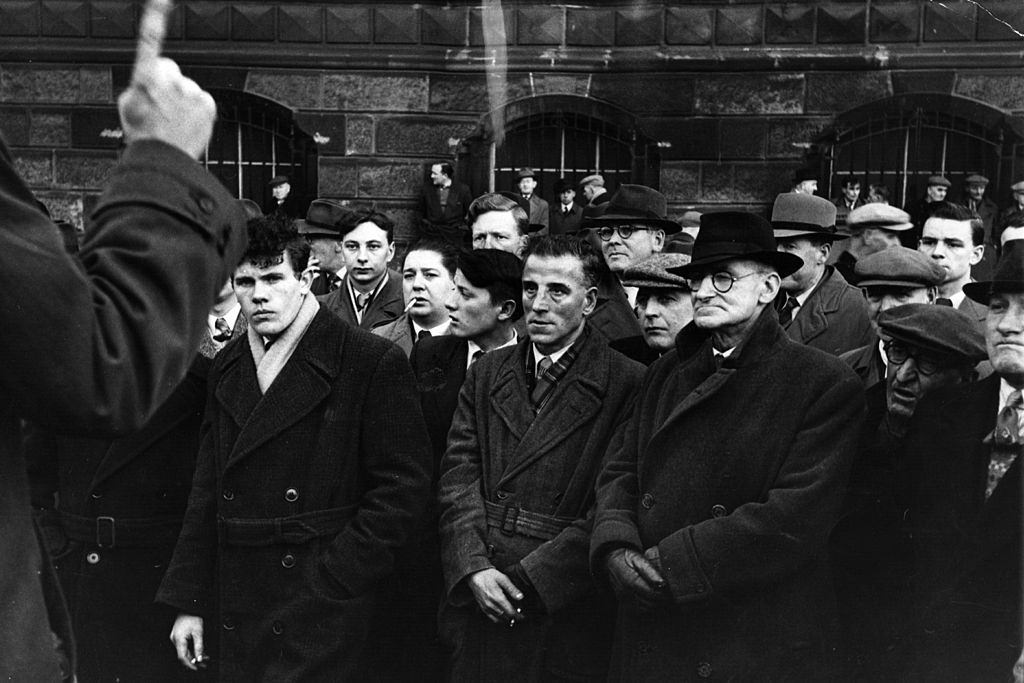
Sunday afternoons at the Customs House drew crowds of working men to hear speakers hold forth on religion. Public oratory was still a genuine form of entertainment and debate in 1950s Belfast, and corners and squares around the city regularly hosted speakers addressing everything from theology to politics. Religion was not a private matter in Belfast — it was the framework through which much of public life was organized and understood.
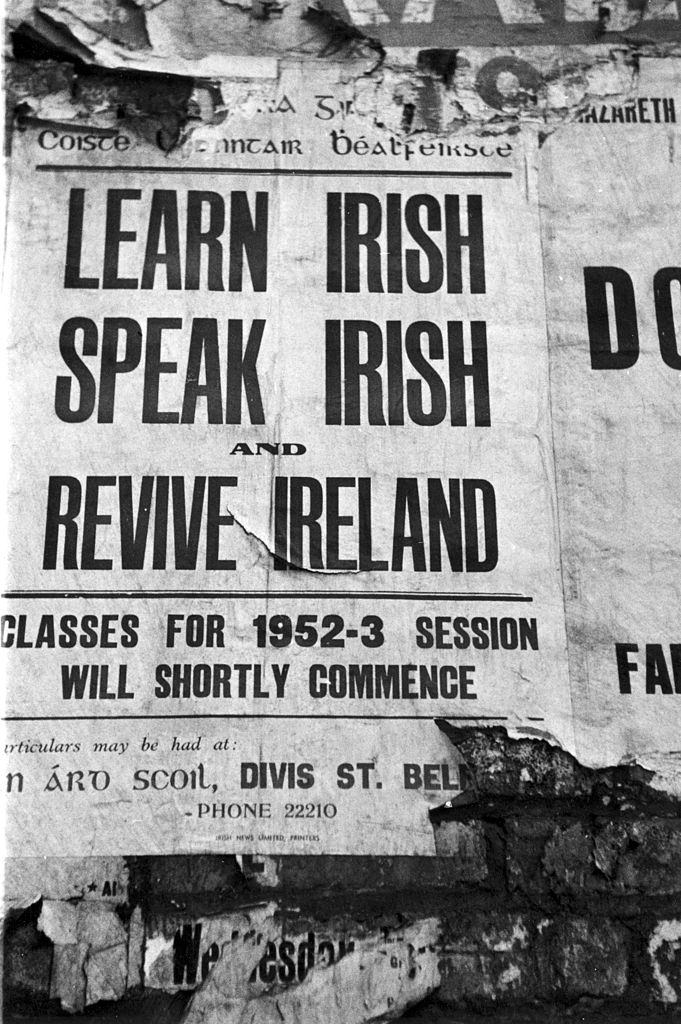
Even in the political climate of 1950s Belfast, the Irish language had its advocates. A poster advertising Irish language lessons on a city wall in 1954 represented a quiet act of cultural persistence. The Irish language was closely associated with nationalist and Republican identity, and its presence on Belfast walls — alongside Unionist slogans and election posters — illustrated how contested even the most basic symbols of identity were in the city.
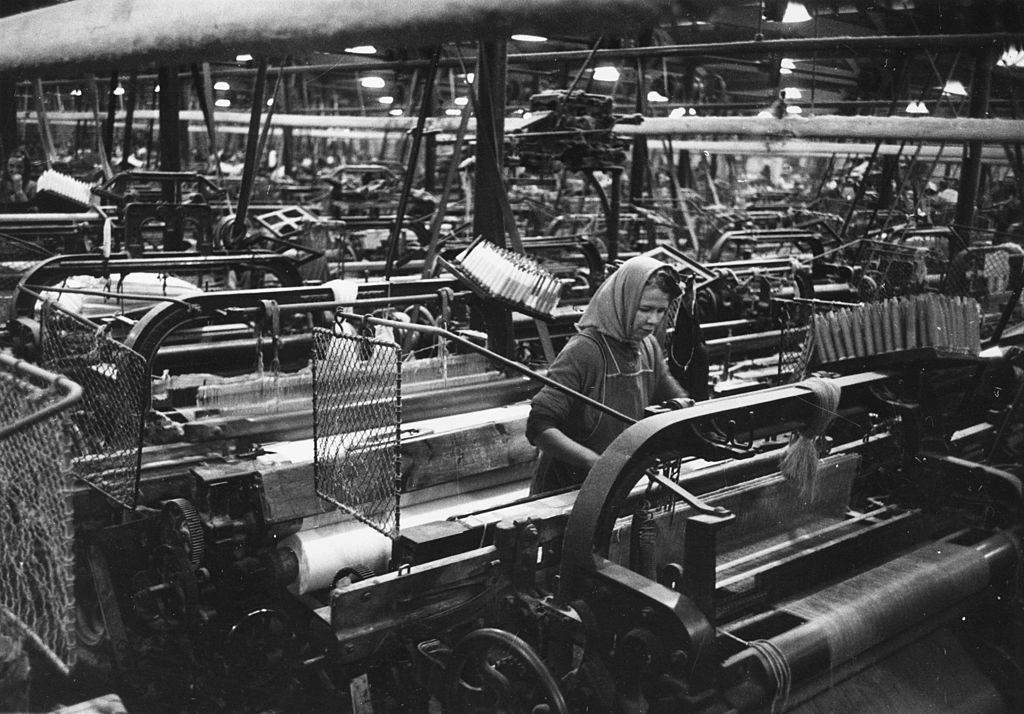
The linen industry had once made Belfast as famous as its shipyards. By the 1950s it was declining, but mills like the Blackstaff Flax Spinning and Weaving Company still operated, employing large numbers of women who worked the spinning and weaving machines. The work was loud, dusty, and physically wearing, but it provided income for many Belfast families at a time when male employment in the shipyards was becoming less reliable.
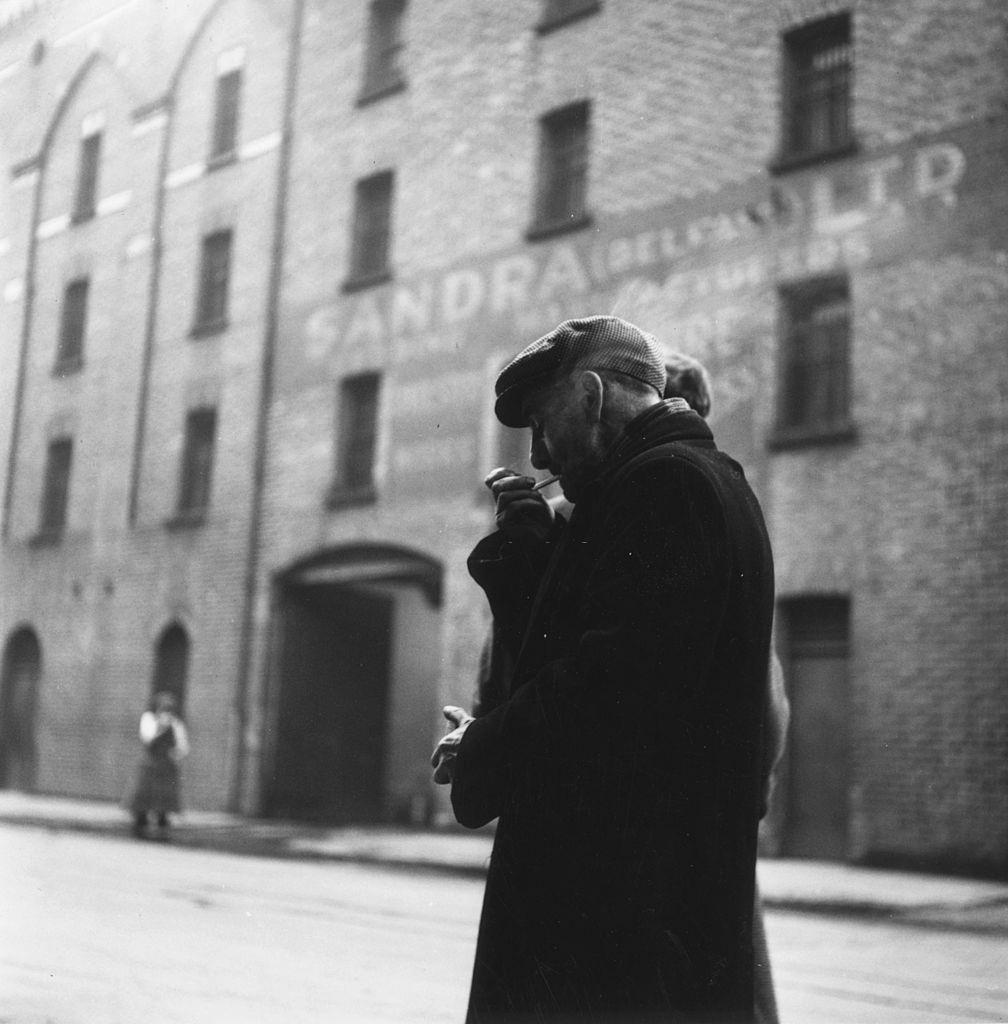
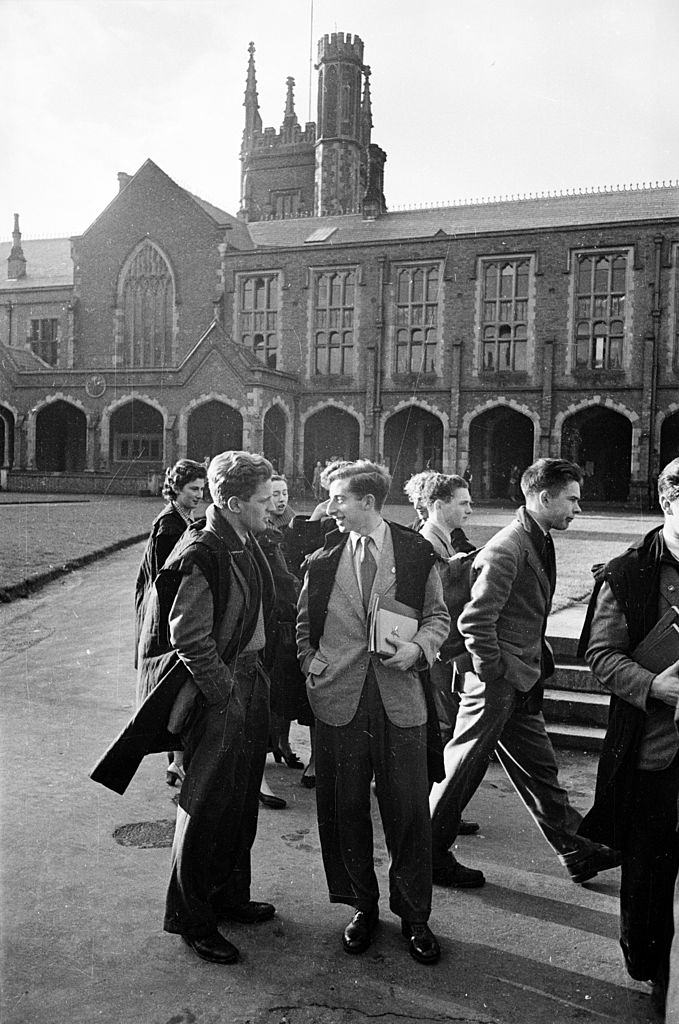
Queen’s University Belfast offered a different path from the factories and shipyards. Students there in 1954 were part of a relatively small portion of the population that accessed higher education. The university, founded in 1845, occupied a grand red-brick campus in the south of the city and produced graduates who went on to careers in medicine, law, and public life — a world largely separate from the working-class neighborhoods that made up much of Belfast.
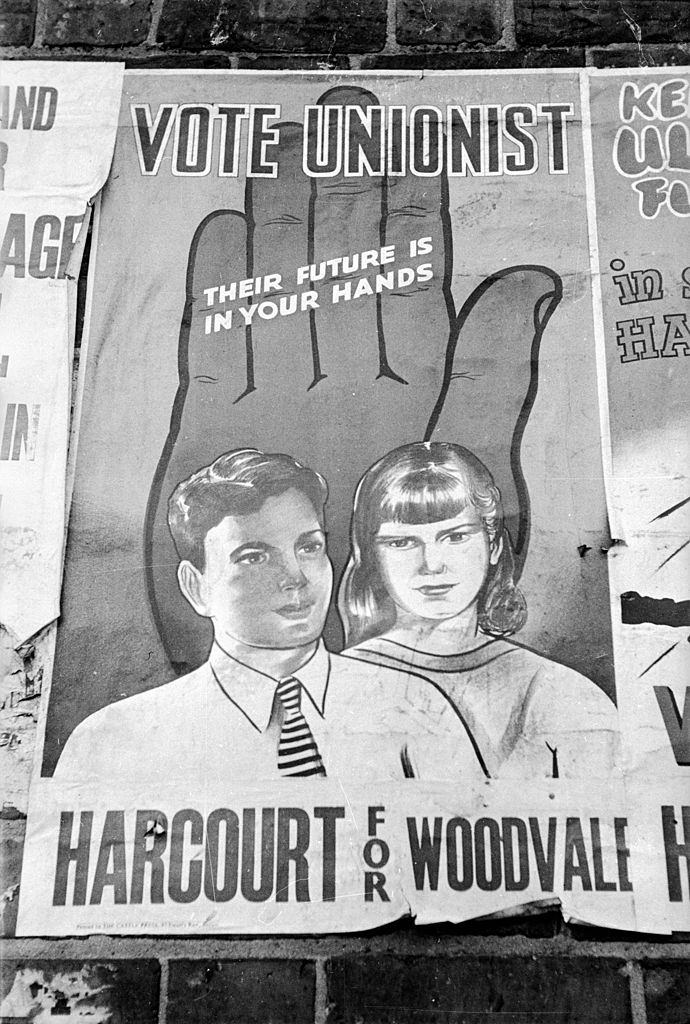
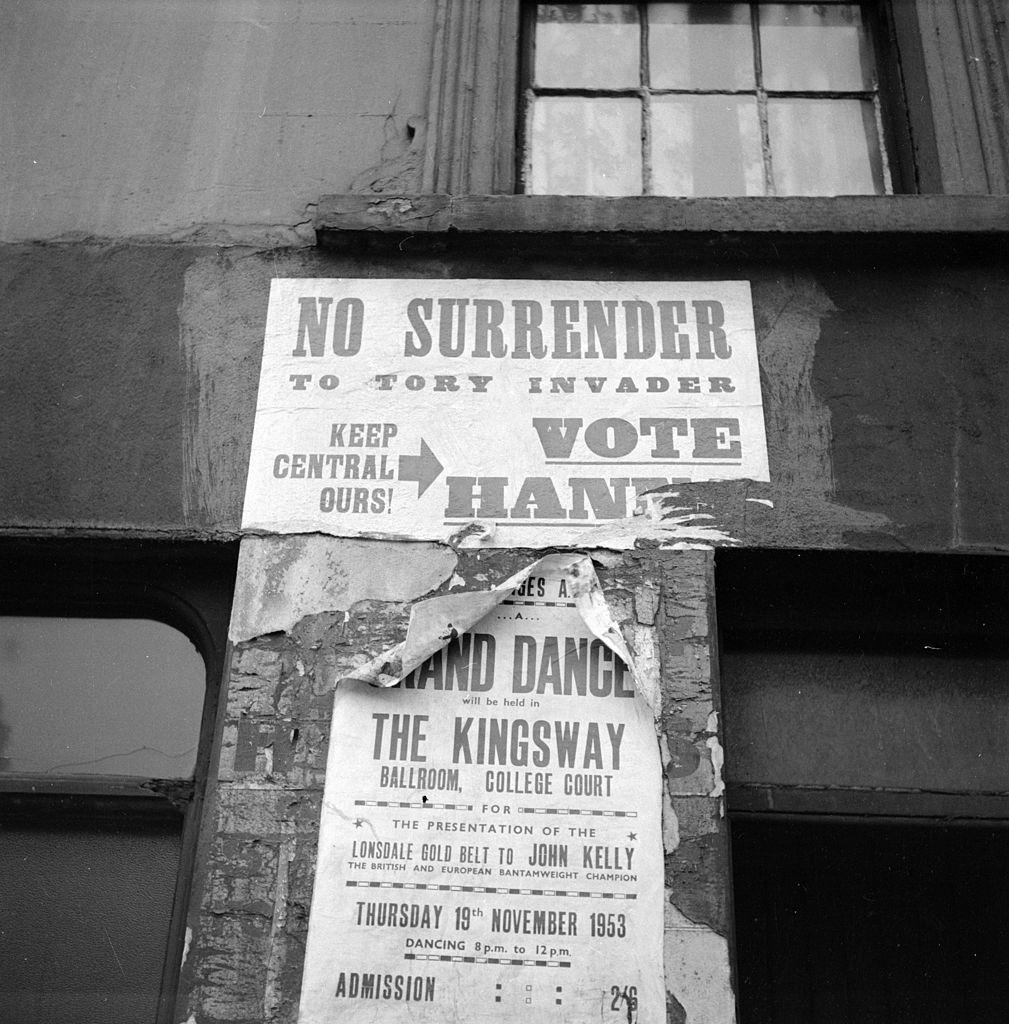
Election season in Belfast turned the city’s walls into political battlegrounds. Unionist posters urged votes for their candidates, while Republican and nationalist messages appeared in other neighborhoods. The 1954 elections were contested against a backdrop of sectarian tension and economic hardship, with Belfast carrying some of the highest unemployment figures in the United Kingdom. By mid-decade, the city’s unemployment rate was a stark indicator of how badly the post-war industrial contraction had hit.
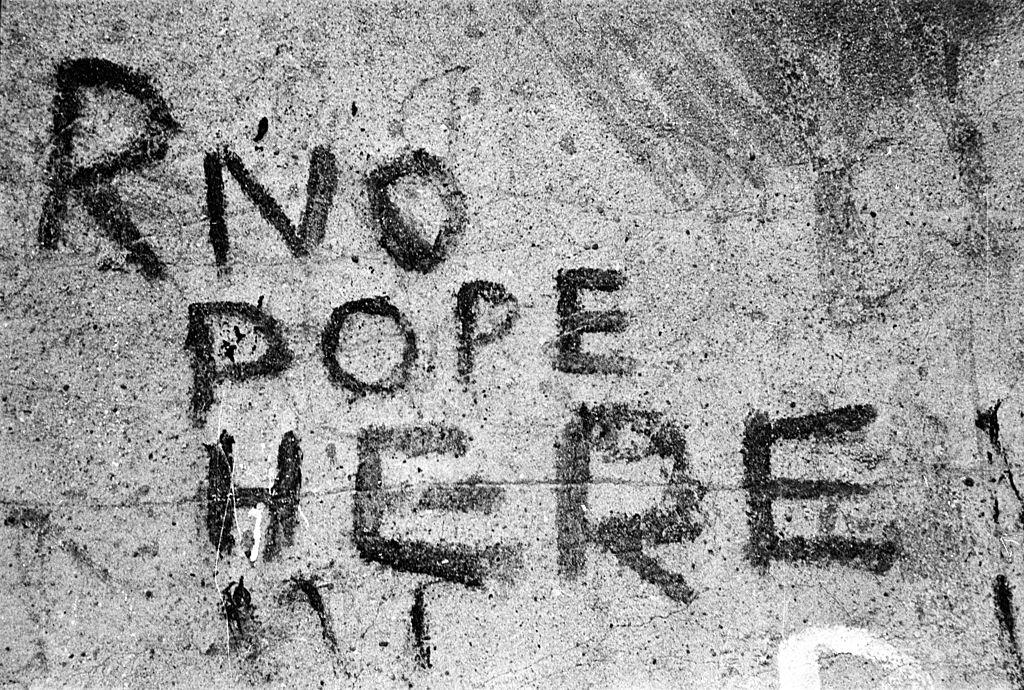
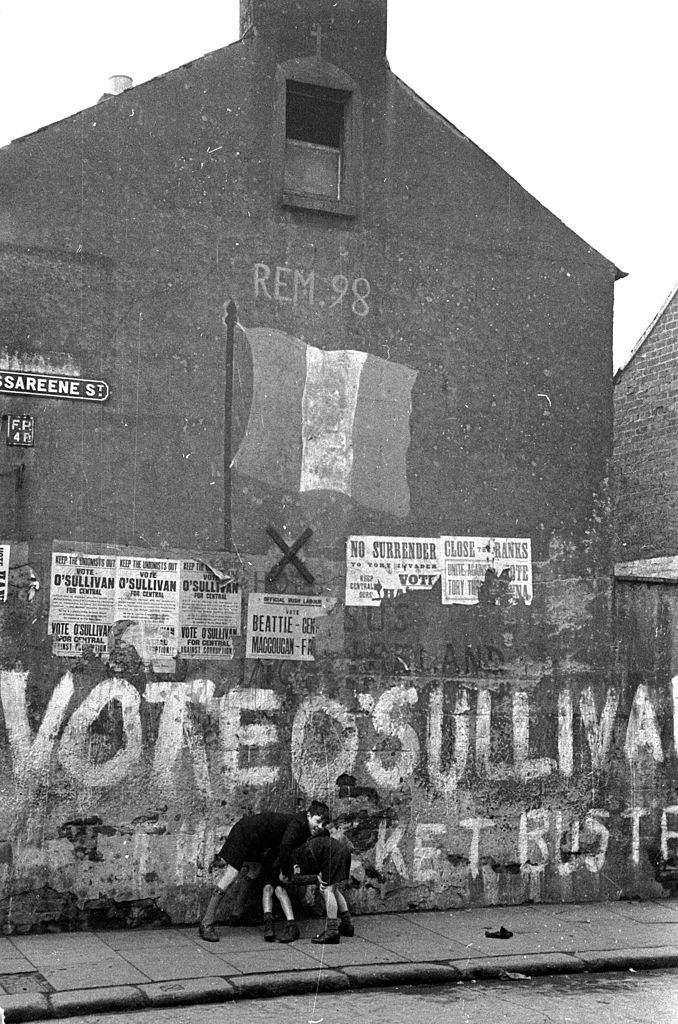
Sectarian slogans were a routine feature of Belfast’s streetscape in the 1950s. ‘No Pope Here’ appeared on walls across Protestant neighborhoods, a blunt declaration of anti-Catholic sentiment that was accepted as ordinary political expression by many in the city. Children played beneath election slogans and graffiti without appearing to give them a second glance — this was simply the environment they grew up in.
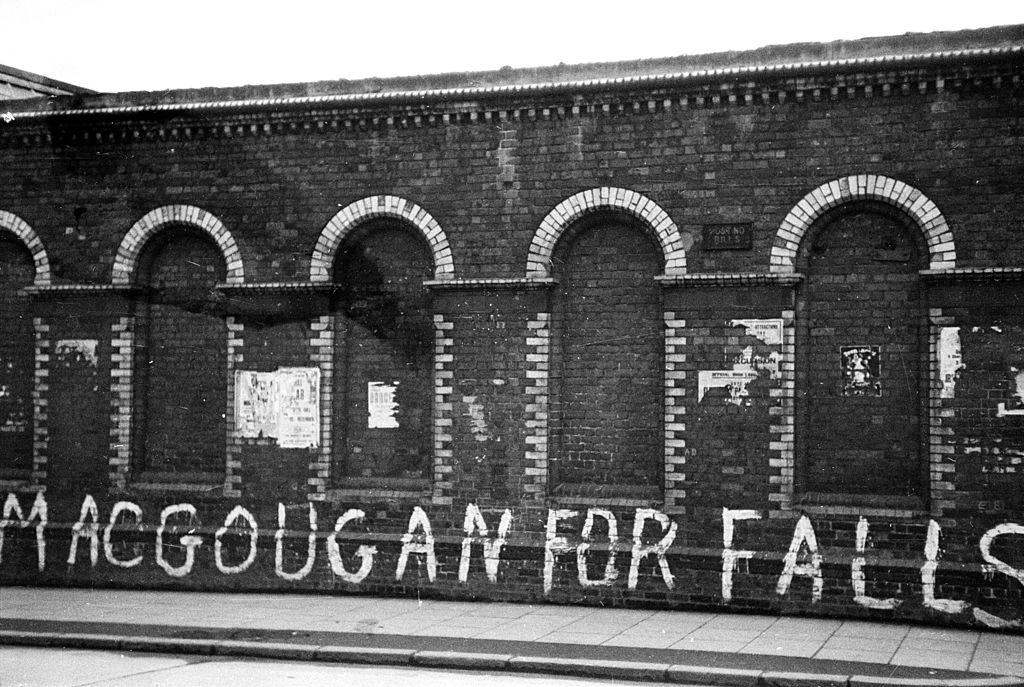
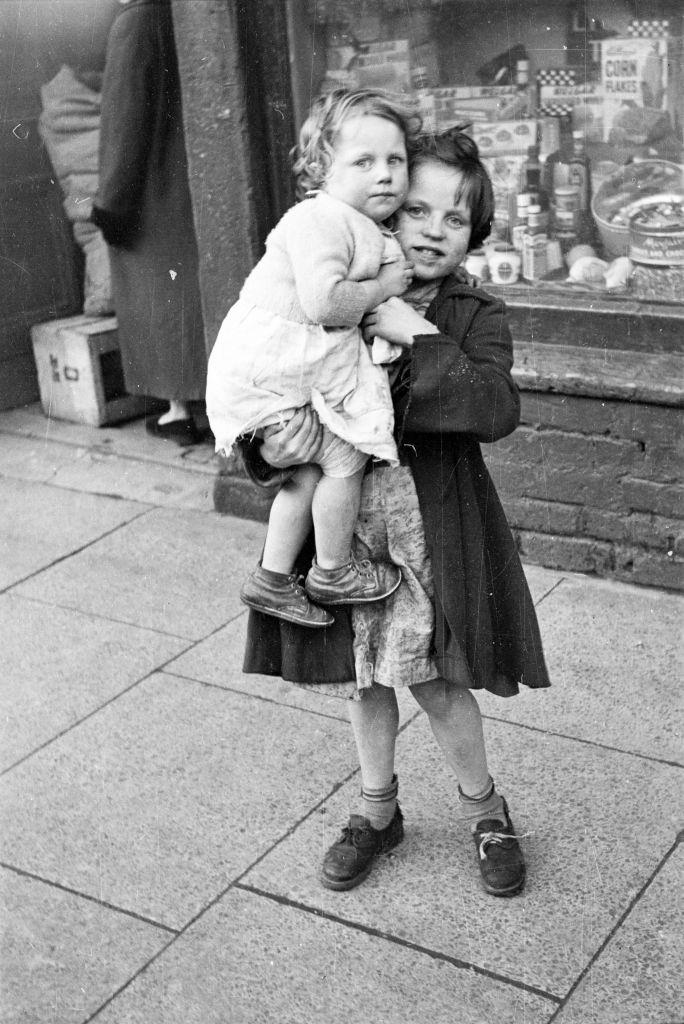
Falls Road was the heart of nationalist West Belfast, and its name appeared regularly in political graffiti and messaging. The road and the community around it had a distinct identity from the Unionist areas of the city, with different murals, different slogans, and different loyalties painted on the same kinds of terraced streets. Amid all of it, ordinary family life continued — older children watching younger ones, neighbors talking on doorsteps, and daily routines carrying on regardless of the politics surrounding them.
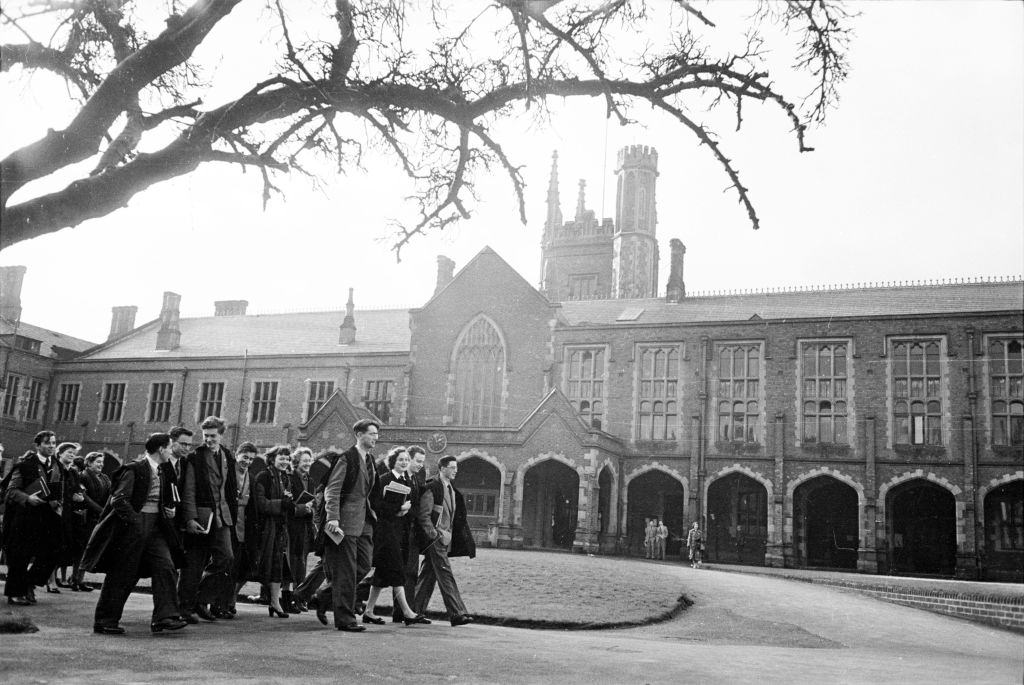
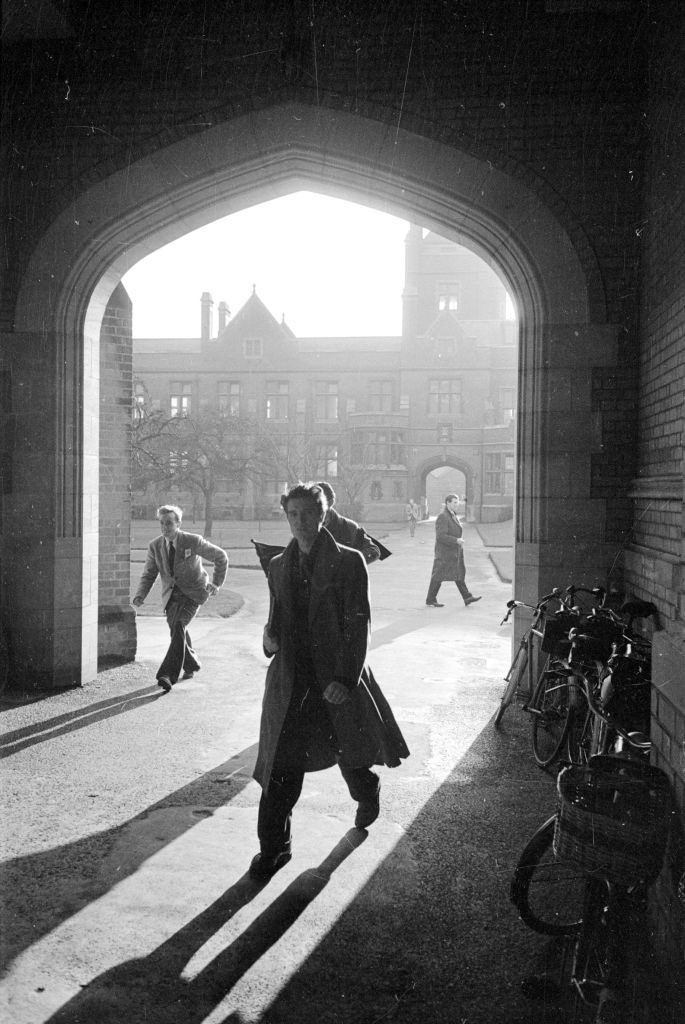
Queen’s College students in their academic gowns presented a striking contrast to the working-class neighborhoods a few miles away. The university grounds were a world of their own — formal, relatively prosperous, and insulated from the harsher realities of industrial decline. Students walked the campus paths and attended lectures in an institution that was one of the few in Northern Ireland offering a route into professional and academic life.
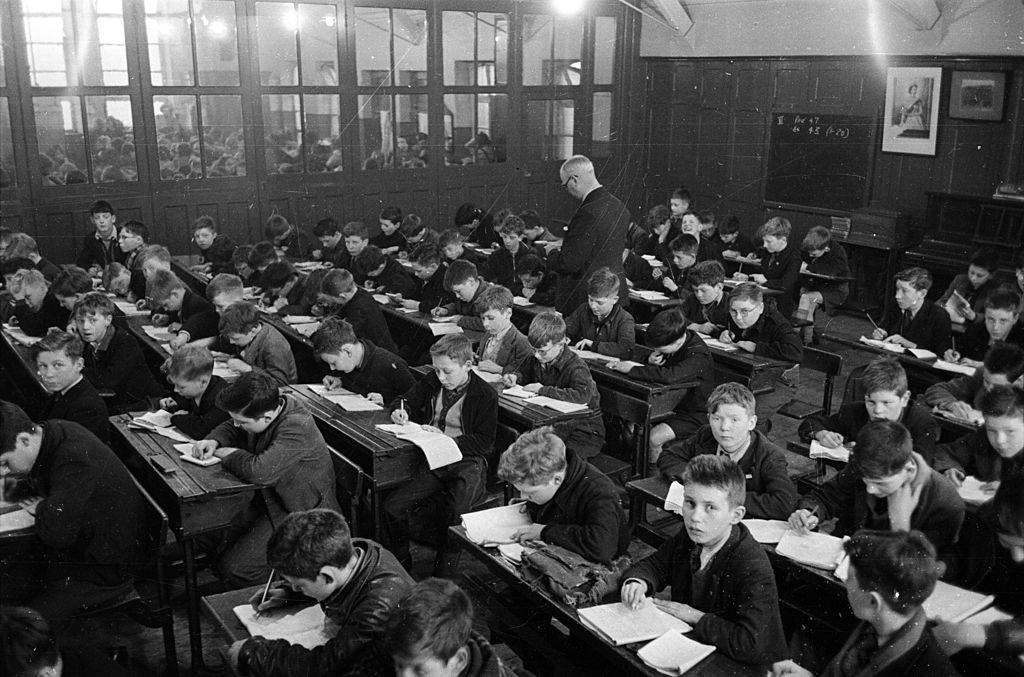
One photograph from 1954 makes the pressures on Belfast’s education system impossible to ignore: 248 children being taught in a single classroom. The image is extraordinary by any standard. Schools in working-class areas were severely overcrowded, and conditions for students and teachers alike were extremely challenging. Resources were stretched, and the infrastructure simply hadn’t kept pace with the population.
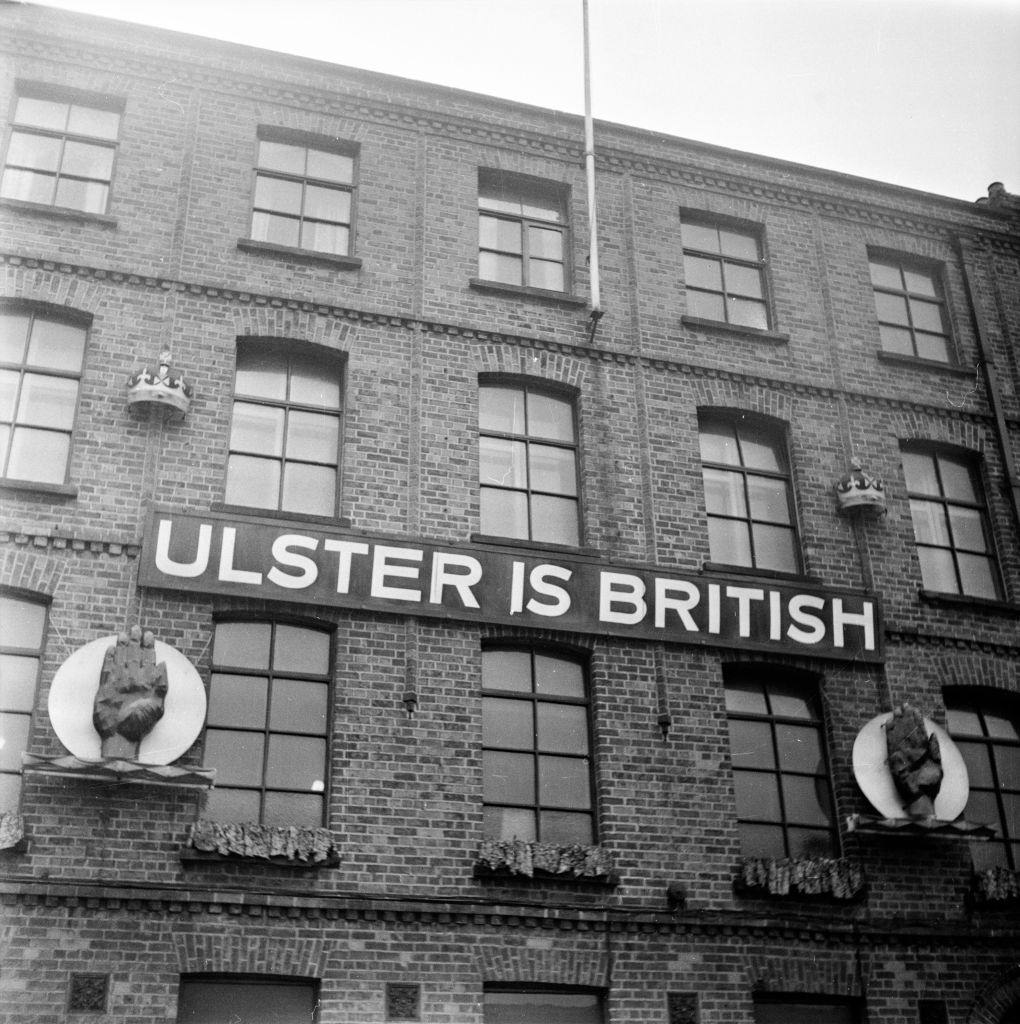
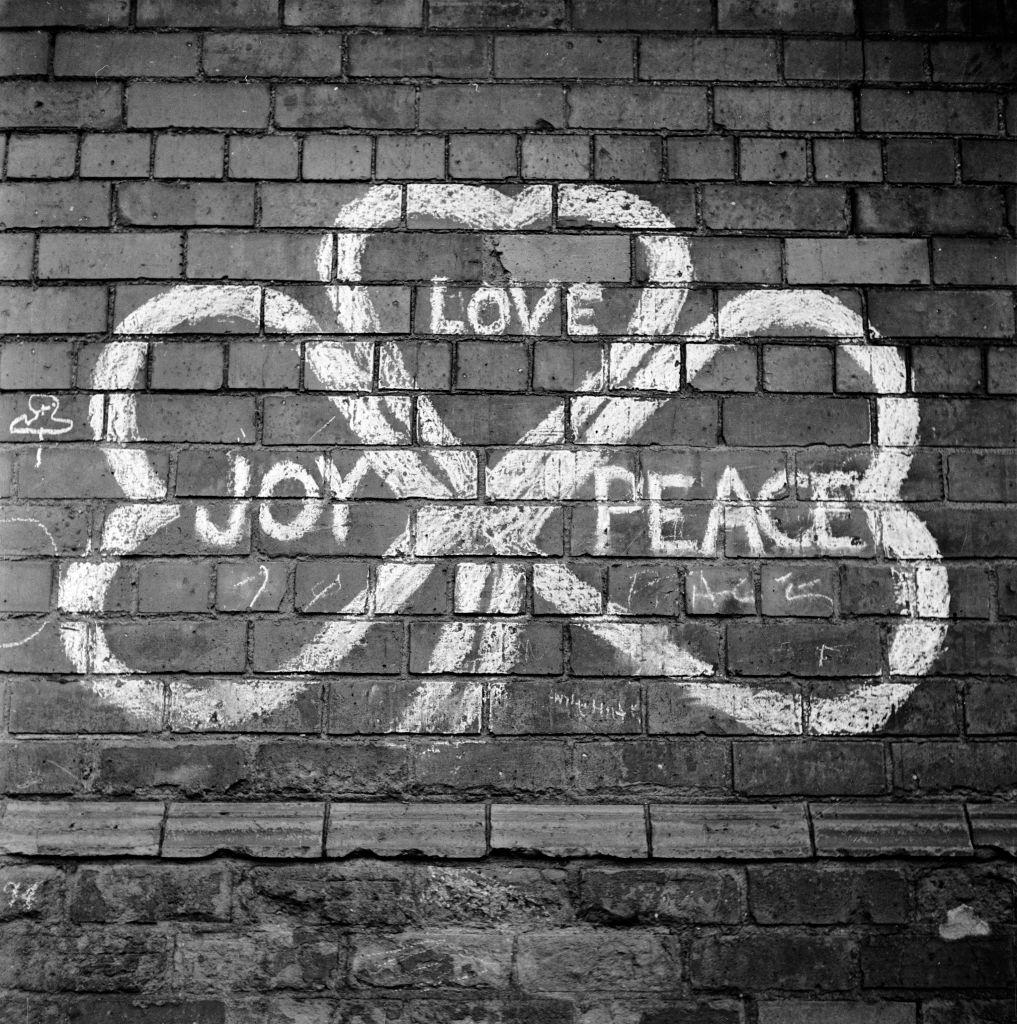
The political messaging on Belfast’s walls ranged from the confrontational to the aspirational. ‘Ulster Is British’ was a declaration of constitutional loyalty. A shamrock-shaped ‘Joy, Love, Peace’ sign offered something entirely different — a message of hope painted in a symbol closely associated with Irish cultural identity. These images, side by side across the city, captured the competing visions of what Belfast was and what it should be.
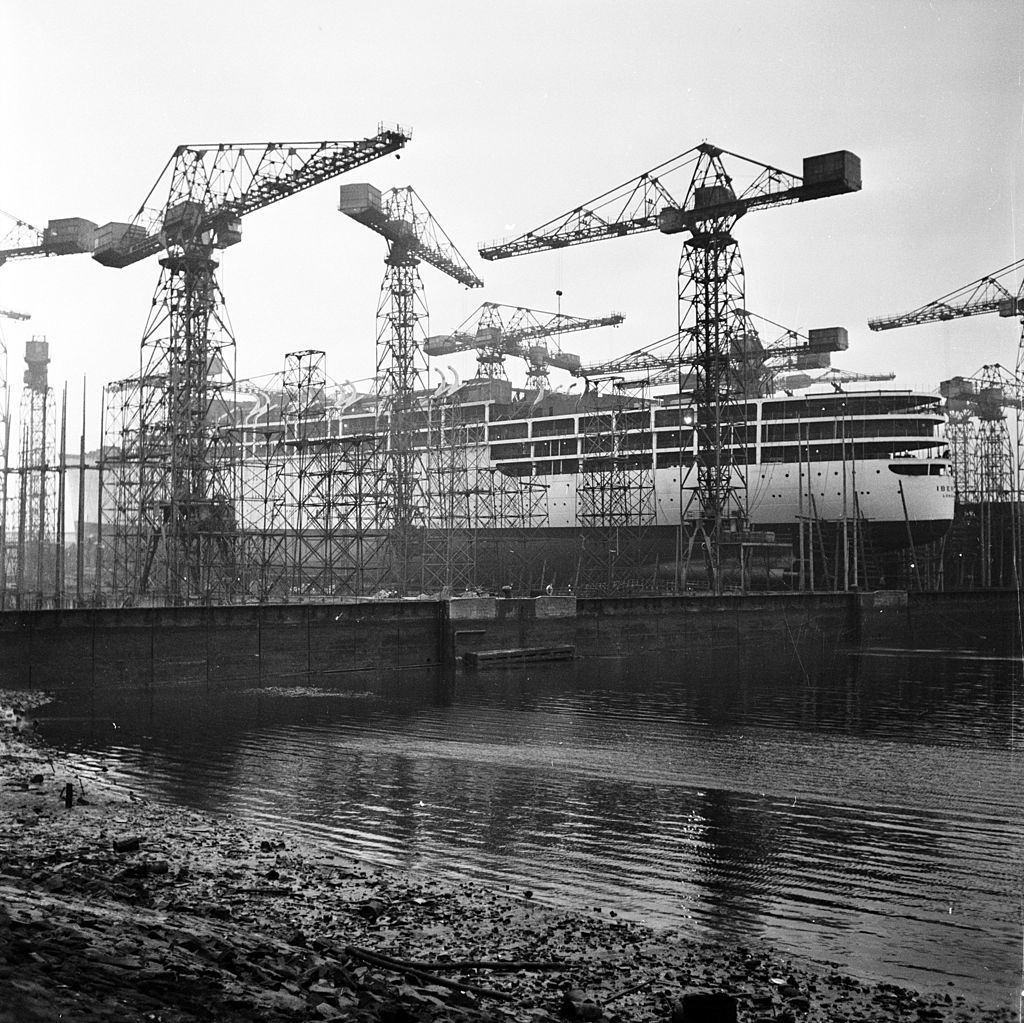
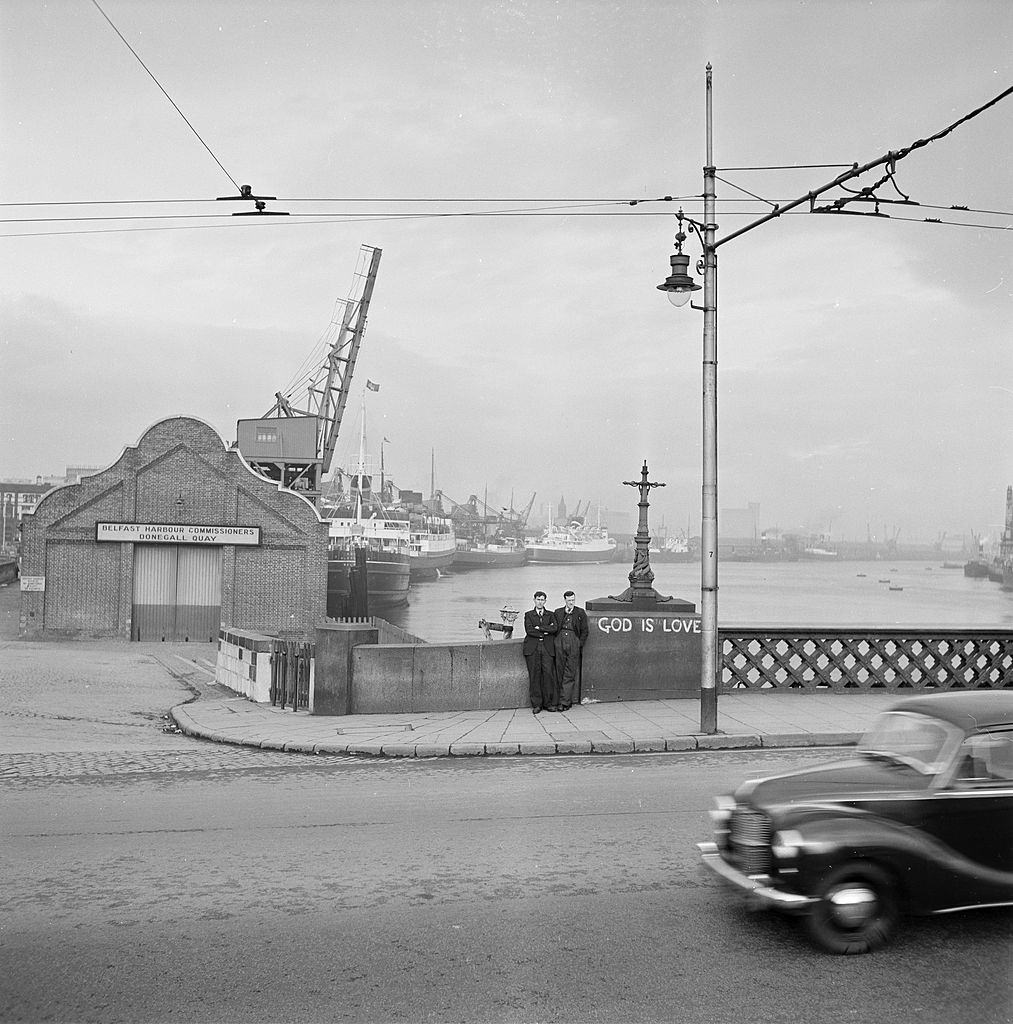
The cranes of the Belfast shipyards remained the most recognizable feature of the city’s skyline throughout the 1950s. Even as orders declined and workers were laid off, new ships were still being completed. The yards represented both what Belfast had been — a global center of shipbuilding — and what it was struggling to remain in a changing post-war world.
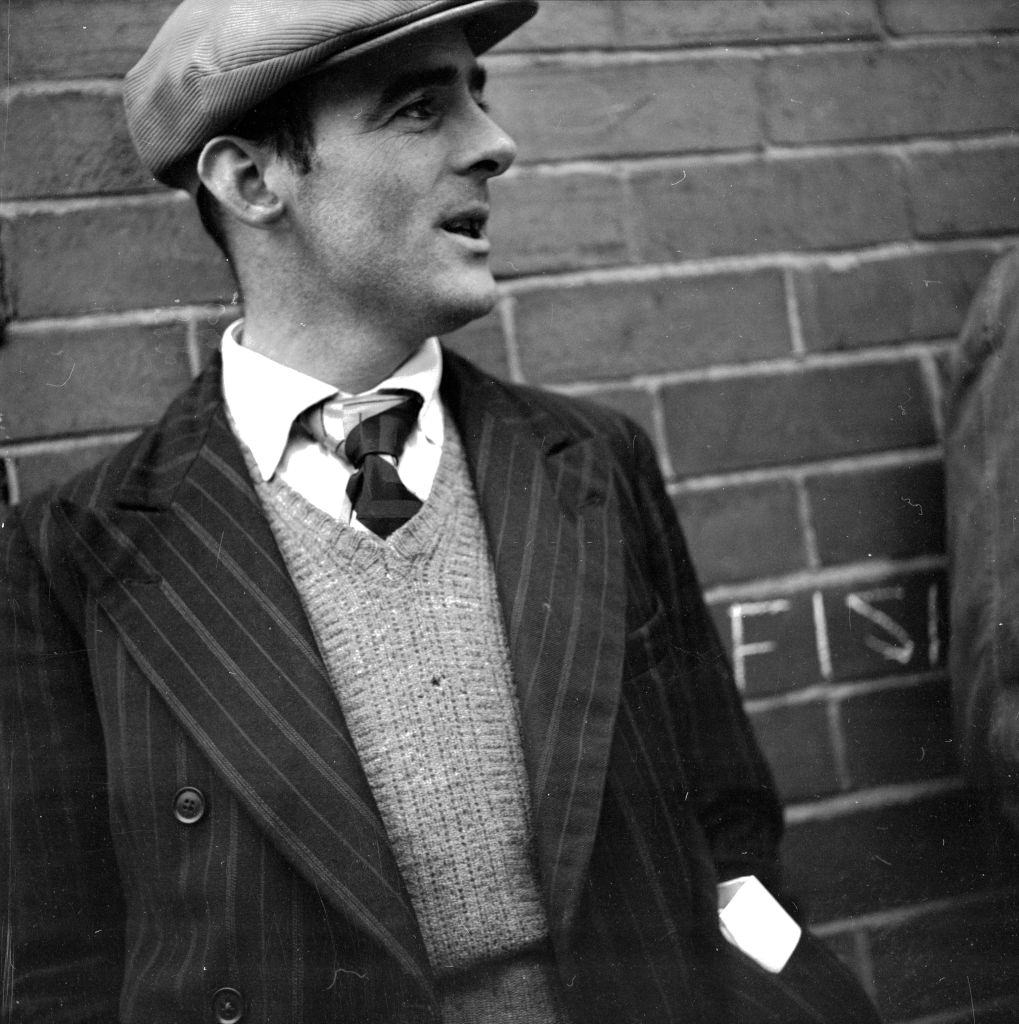
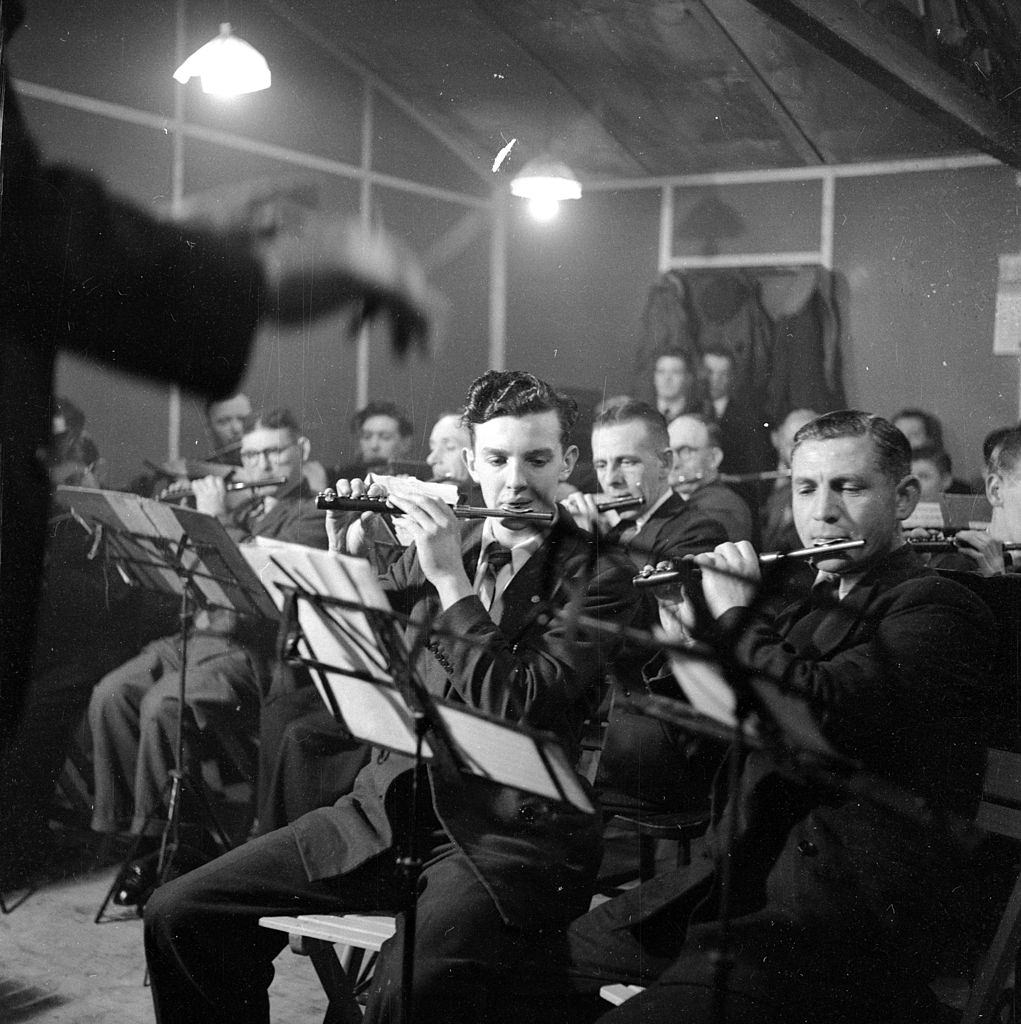
By 1954, Belfast had the highest unemployment figures in the United Kingdom. The collapse of linen, the slowdown in shipbuilding, and the contraction of engineering had left thousands of men without steady work. Many of those who were still employed in the yards and factories found community and identity outside of work through flute bands and lodge memberships — a social world that provided belonging at a time when economic security was uncertain.
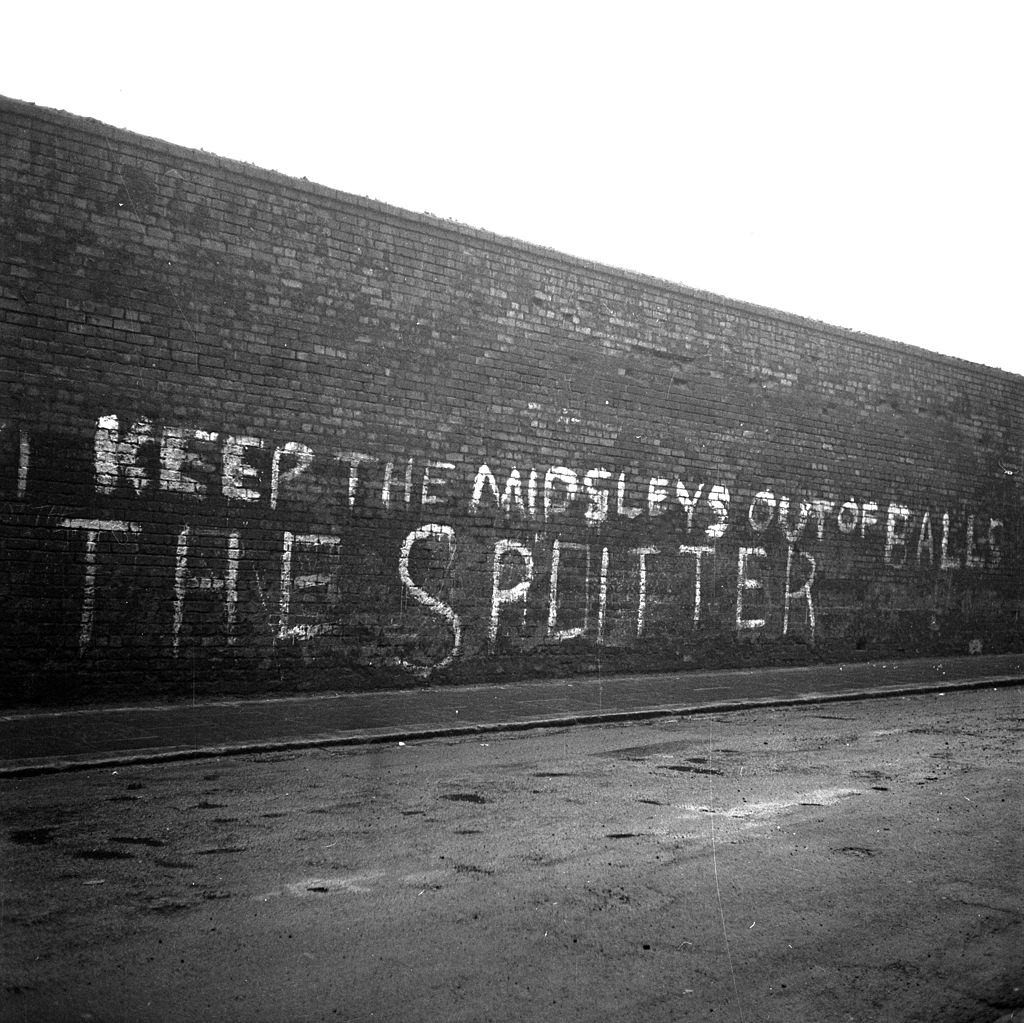
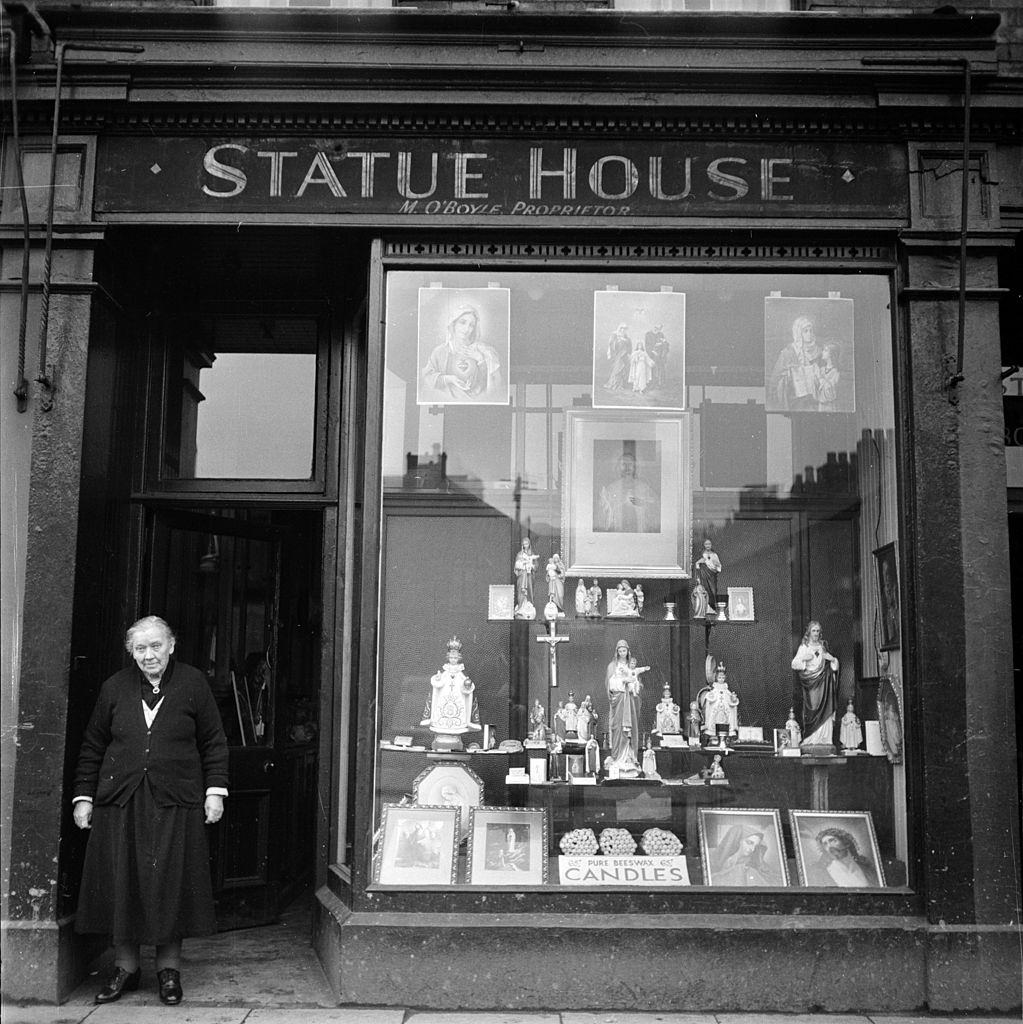
Republican graffiti appeared regularly on walls in nationalist parts of the city. ‘Join The IRA’ was painted openly in some areas, a reflection of the political undercurrents that ran beneath the surface of daily life. Religion was commercial as well as political — shops selling Catholic and Protestant religious artefacts were a normal part of the city’s retail landscape, each catering to its own community.
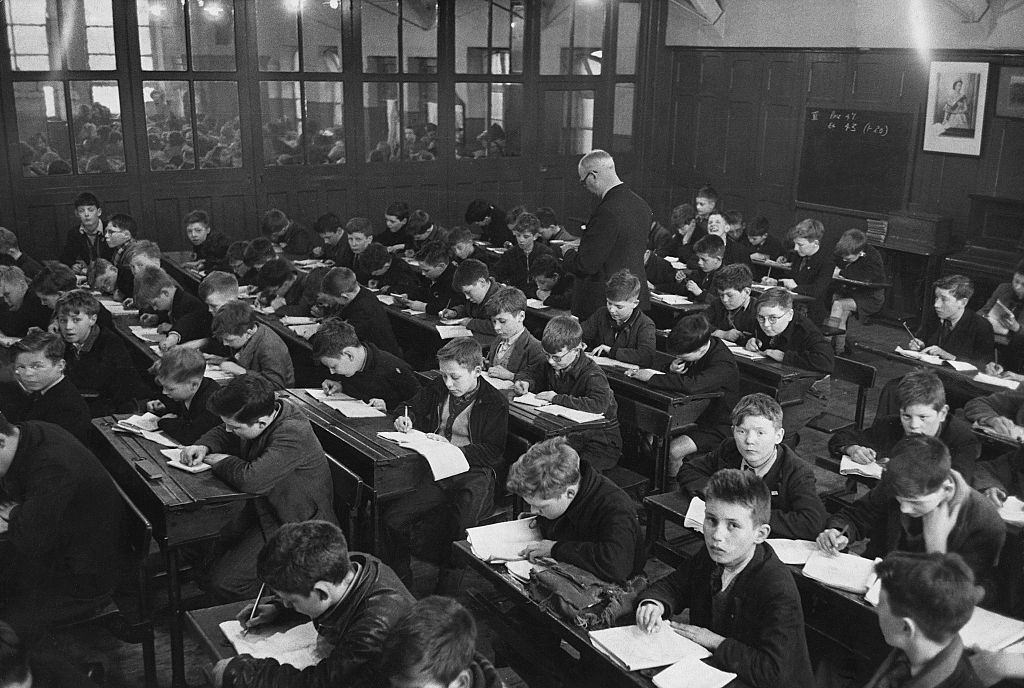
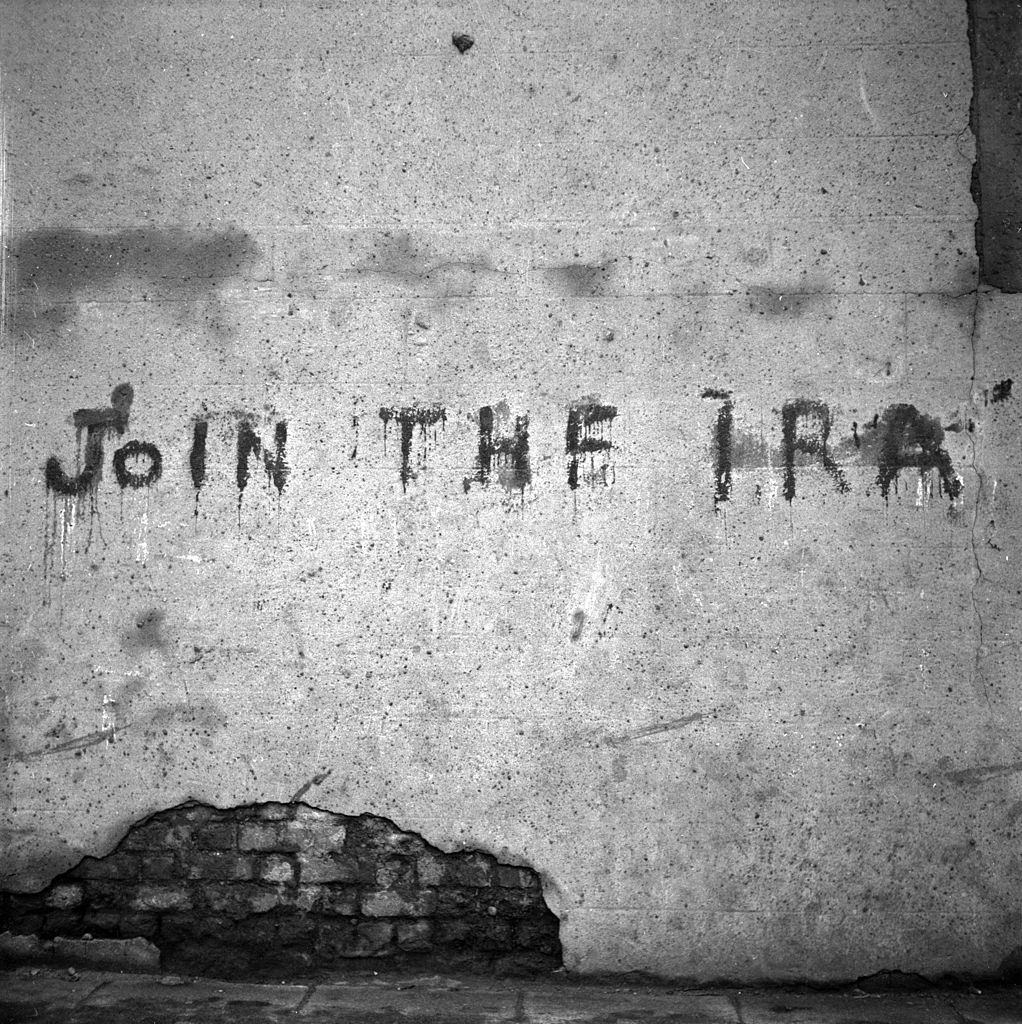
The overcrowding in Belfast’s schools was one of the city’s most pressing social problems in the mid-1950s. Students studying in jammed classrooms reflected a city that was growing faster than its public services could accommodate. Meanwhile, on the streets outside, political and paramilitary messaging competed for wall space — a reminder that the pressures on the city were not only material but deeply ideological.
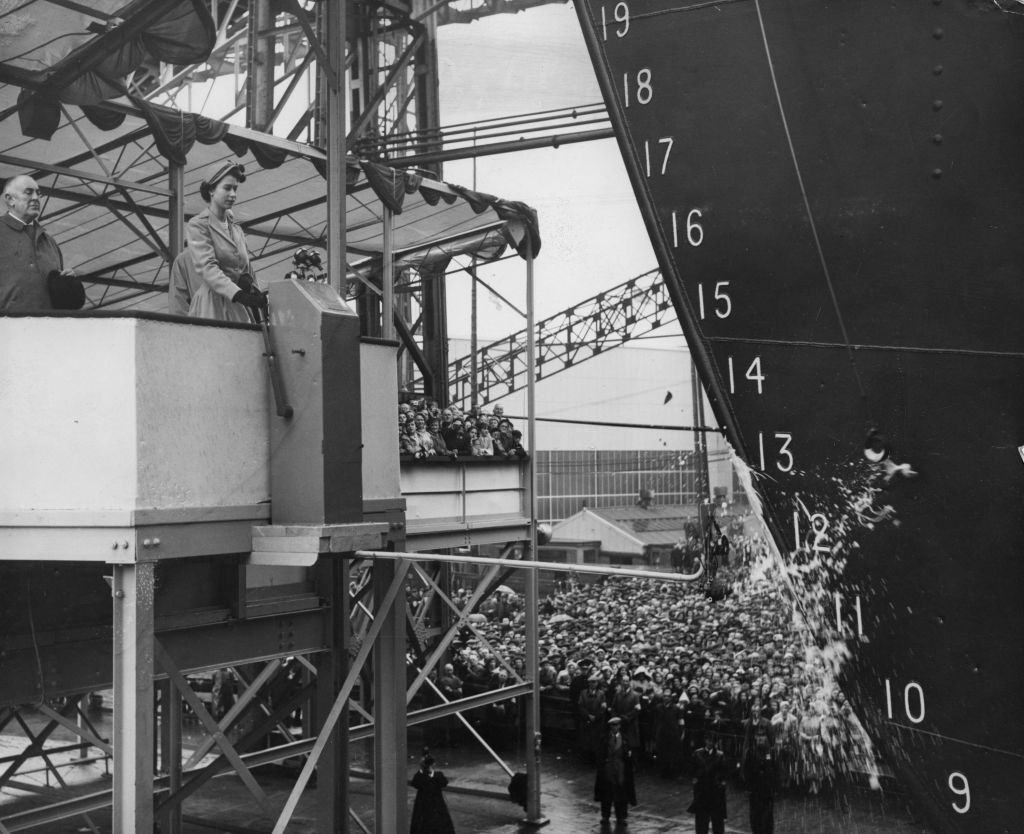
Queen Elizabeth II returned to Belfast in 1954 to launch the Shaw Savill liner Southern Cross at Harland and Wolff. The champagne bottle shattering against the hull was one of the great ritual moments of the shipbuilding world — a spectacle that combined civic ceremony with industrial pride. The Southern Cross was the first large passenger liner built with all tourist-class cabins, designed for the round-the-world cruise market.
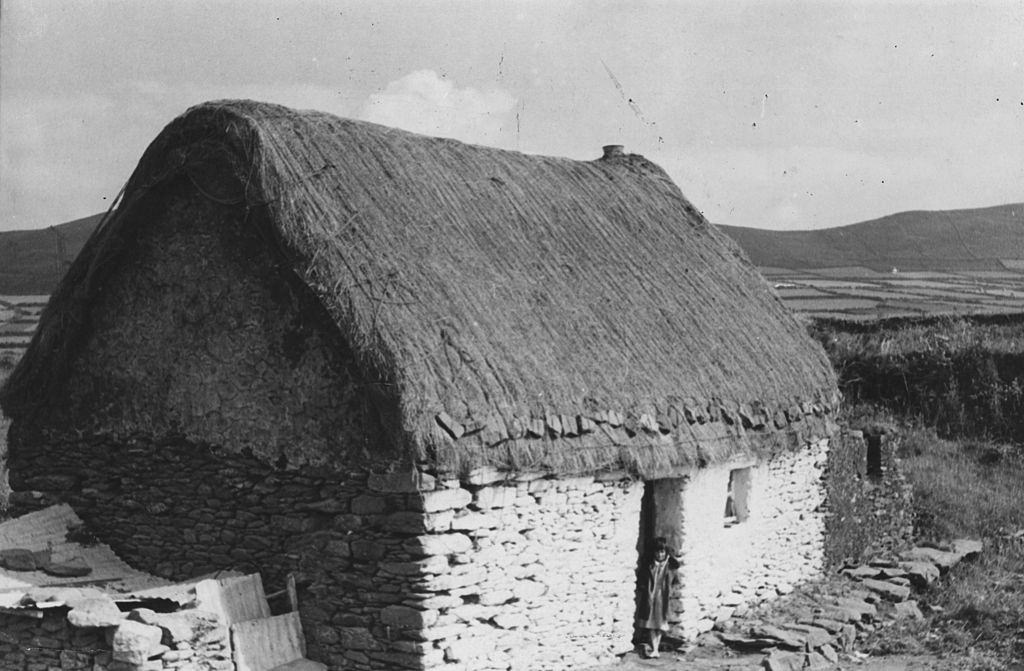
Beyond the city’s streets and factories, the countryside around Belfast offered a different picture of life in Northern Ireland. A typical Irish cottage near the city showed the rural world that still existed within easy reach of the urban center. Many families maintained connections to the land even as they worked in Belfast’s industries, and the contrast between the cramped terraced streets and the open countryside was stark.
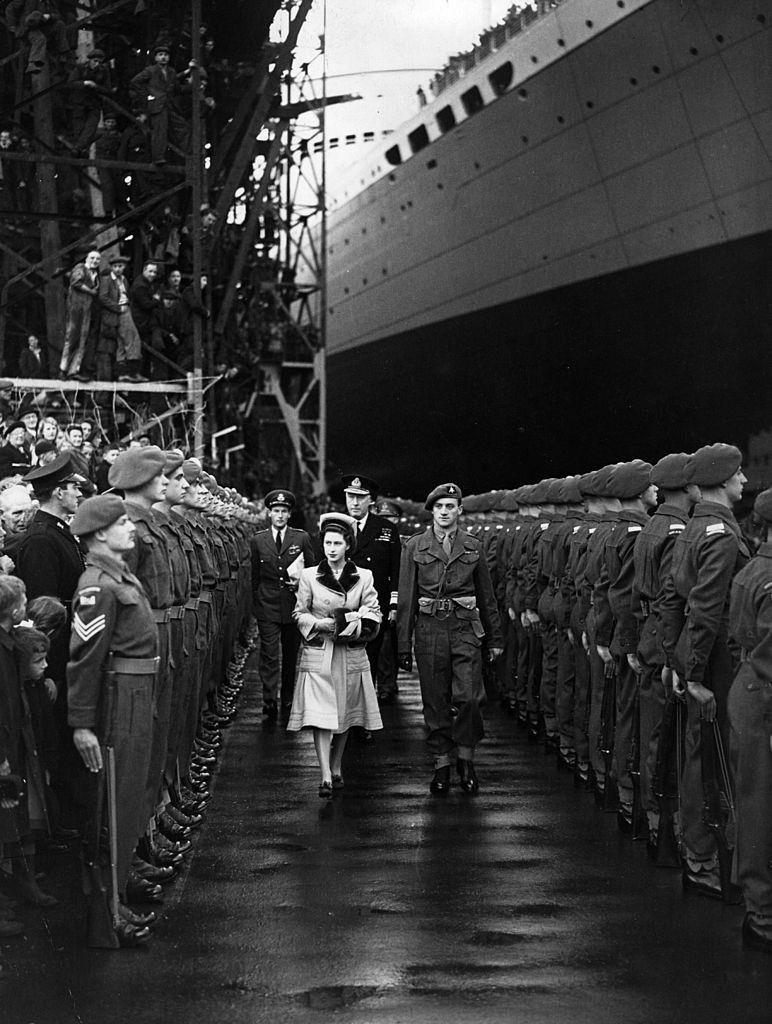
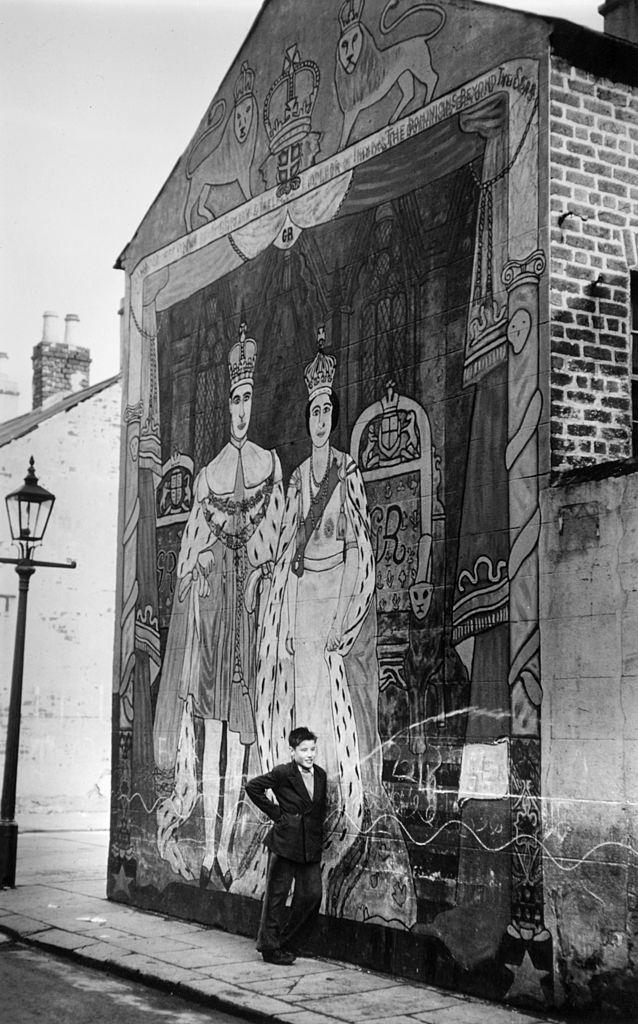
Royal visits were a recurring feature of Belfast life in the 1950s. Princess Margaret Rose walked through a guard of honour in the city in 1955, and murals of Queen Elizabeth II and Prince Philip appeared on the walls of Unionist neighborhoods — painted tributes to the monarchy that served as declarations of loyalty as much as acts of civic celebration. A young boy standing by one such mural captured the way these images were woven into the fabric of everyday life in loyalist Belfast.
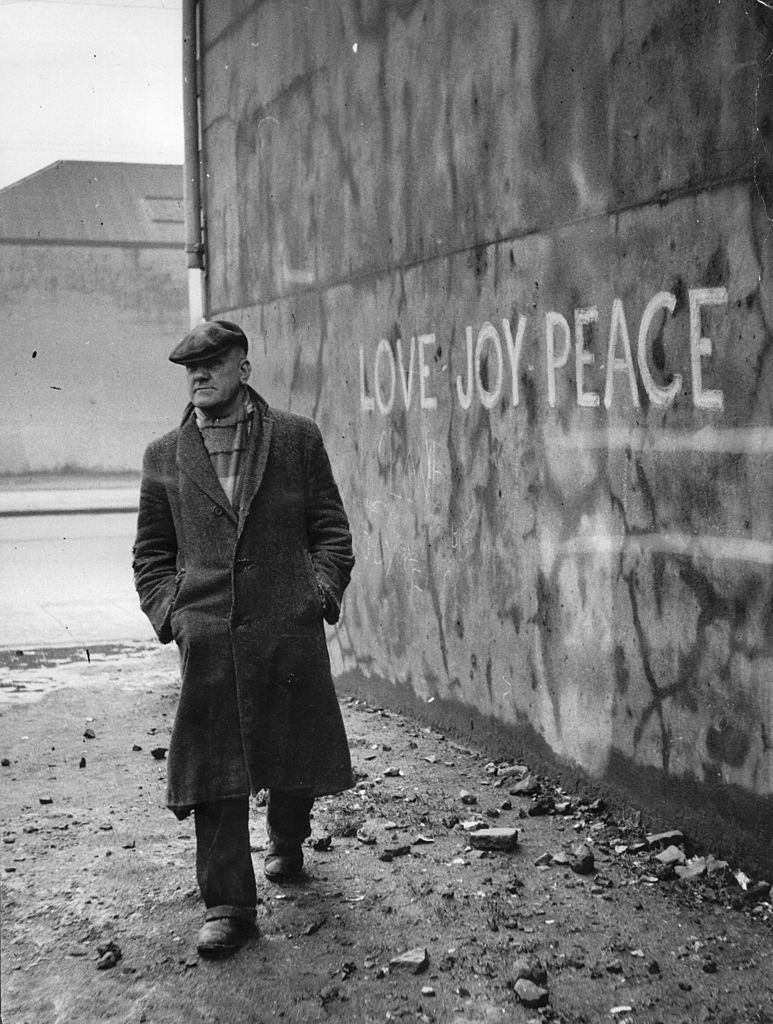
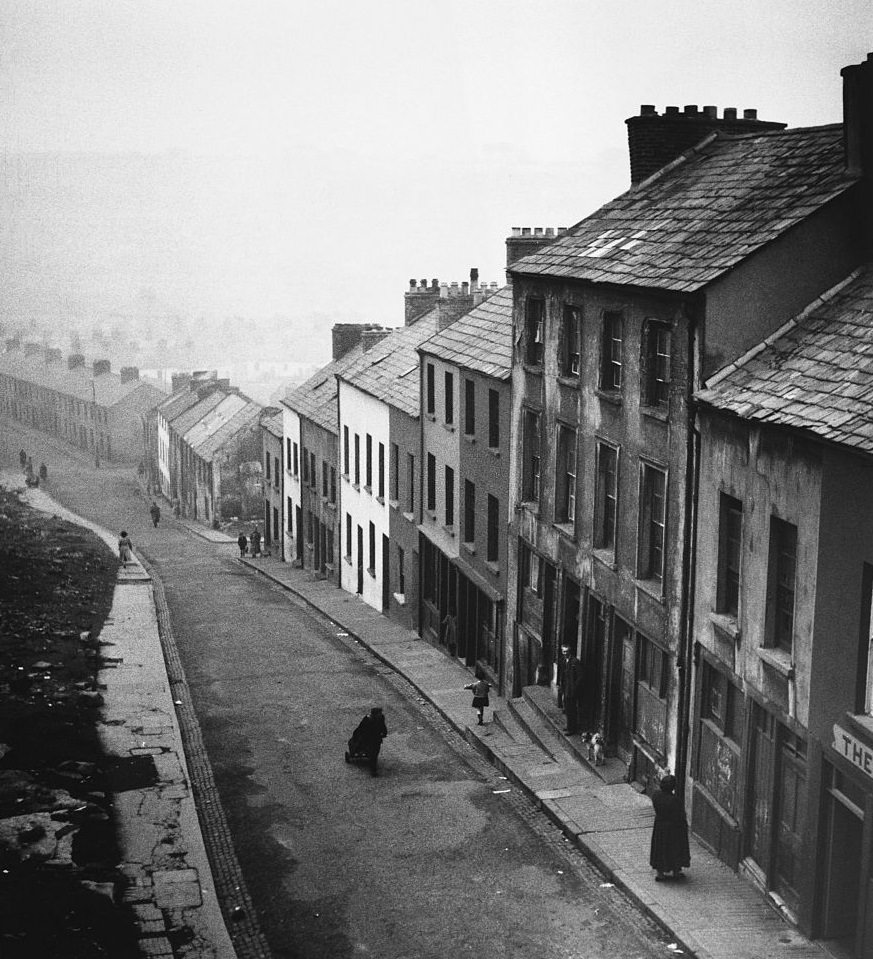
The poverty in parts of Belfast was visible and documented. Photographs from 1955 showed areas of clear deprivation — rundown housing, narrow streets, and the worn look of communities that had been hit hard by unemployment and industrial contraction. Against this backdrop, slogans like ‘Love – Joy – Peace’ painted on walls had an almost ironic quality, even as retired lion-tamer Alec Robinson walked past one without breaking stride.
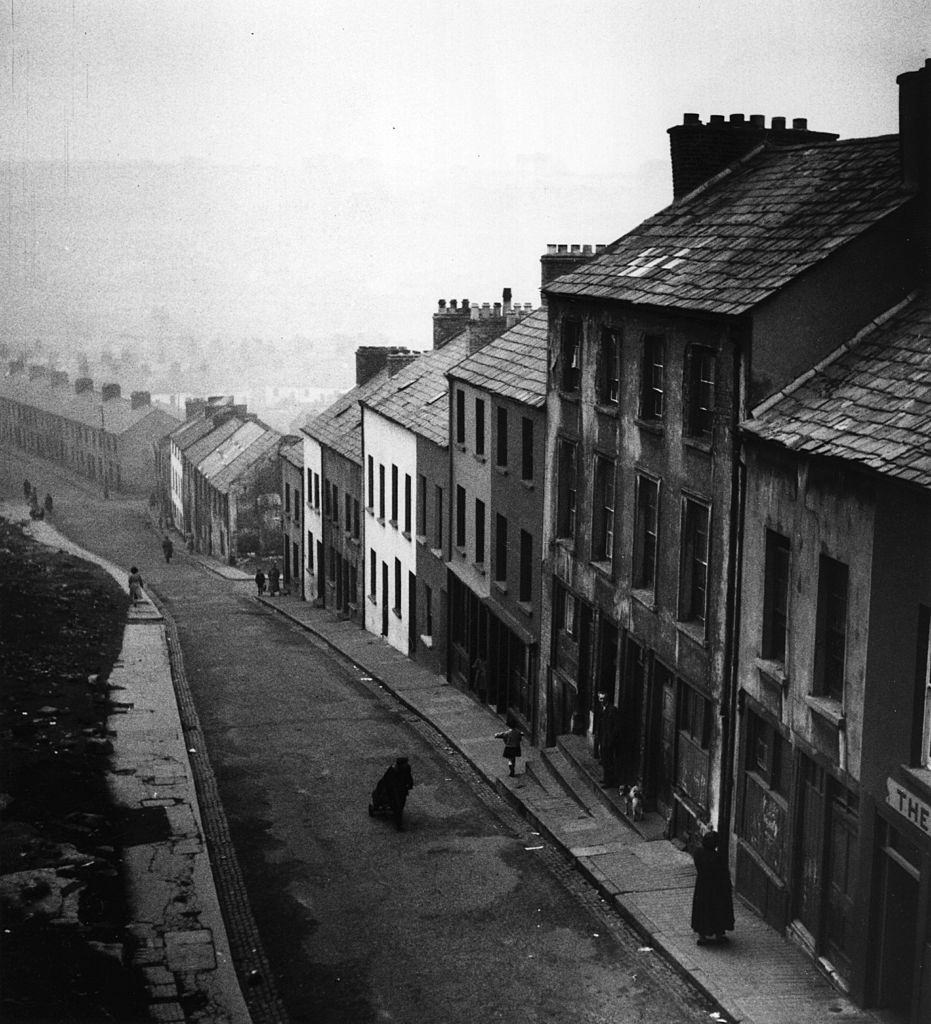
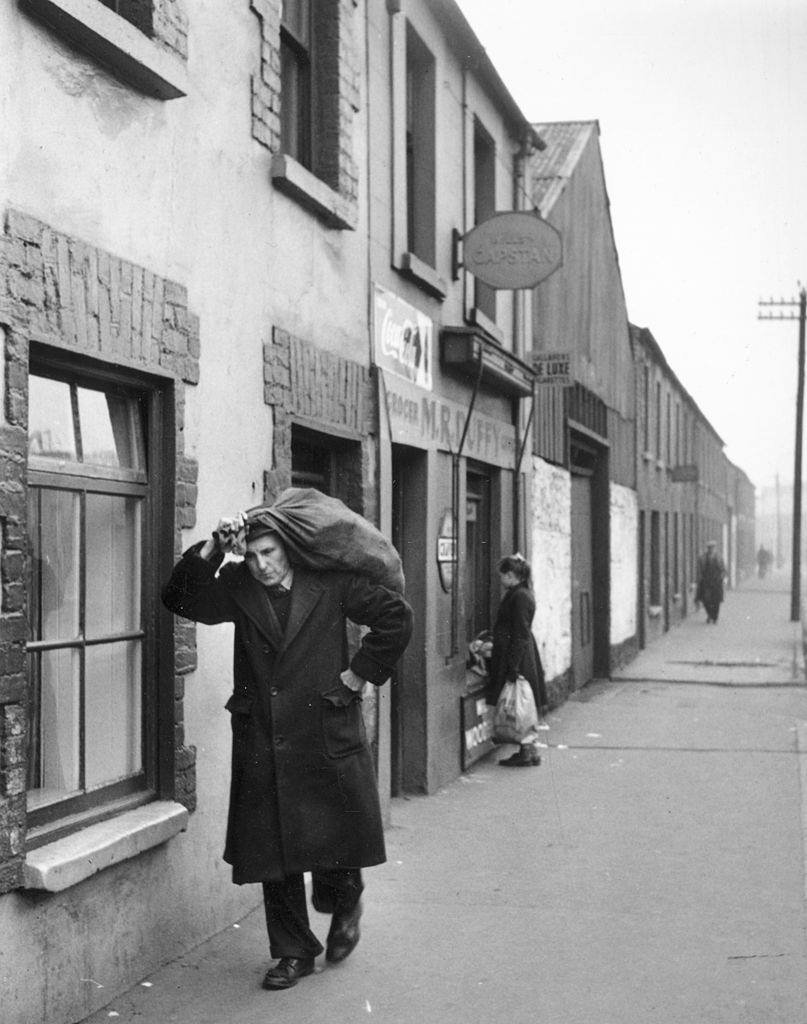
Residential streets in Belfast in 1955 were rows of identical terraced houses, red-brick and close together, with little space and few modern conveniences. Communication for most people relied on telegrams, letters, and postcards. Telephones were uncommon. The image of an unemployed man carrying a sack through the city streets was not unusual — Belfast’s unemployment figures remained among the worst in the UK throughout the mid-1950s, with laid-off shipyard and factory workers struggling to find alternative work.
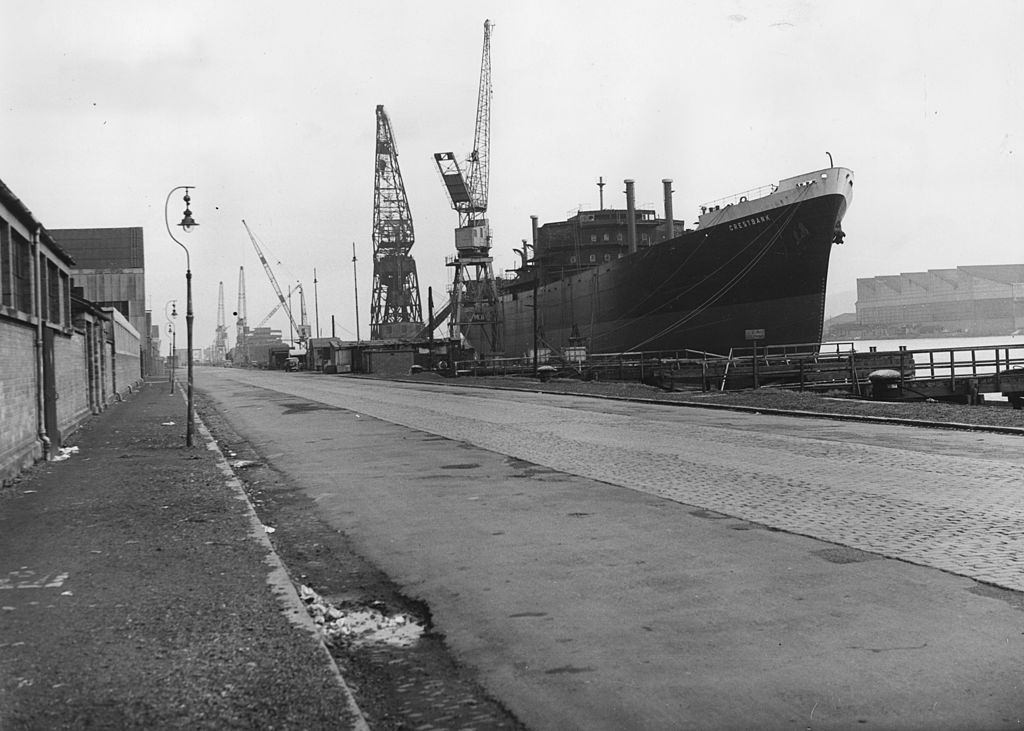
In 1957, a national shipbuilders’ strike brought the yards to a standstill. The empty docks and silent cranes during the strike offered an eerie preview of what Belfast’s shipbuilding future would eventually look like as orders continued to fall and the industry contracted further in the years ahead. The strike was a flashpoint in a longer story of industrial decline that was reshaping the city’s economy and its workforce.
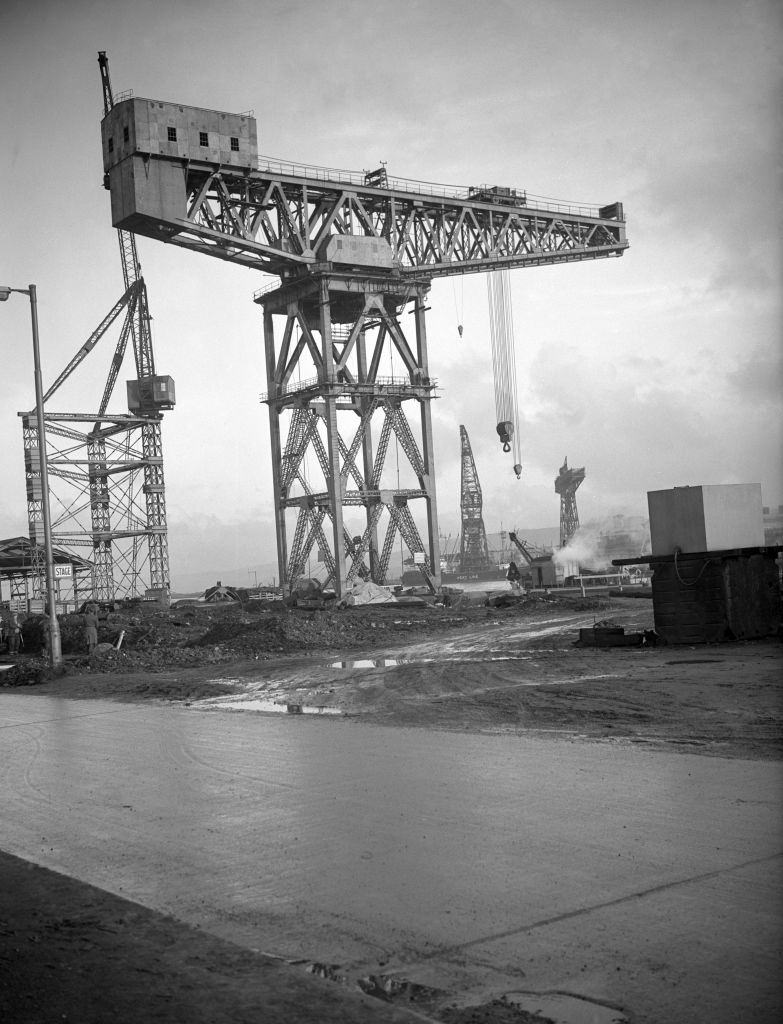
By 1958, the massive 200-ton cantilever crane at Belfast’s wharf remained one of the most powerful symbols of the city’s industrial capability. Cranes like this one defined Belfast’s skyline and its identity. They had lifted the steel frames of some of the greatest ships ever built, including vessels that had sailed to every corner of the world. In the 1950s, they were still working — still the dominant feature of a city that, for all its struggles, remained tied to the water and the work that the water brought.





That’s interesting. Thank you for sharing!
Translink probably still uses that train
I was personally shocked by how little has changed in Belfast.