Hey There! Before You Go. 😧
Get the best vintage content straight into your inbox!

Don't worry, we don't spam

What Los Angeles looked like in the 1930s

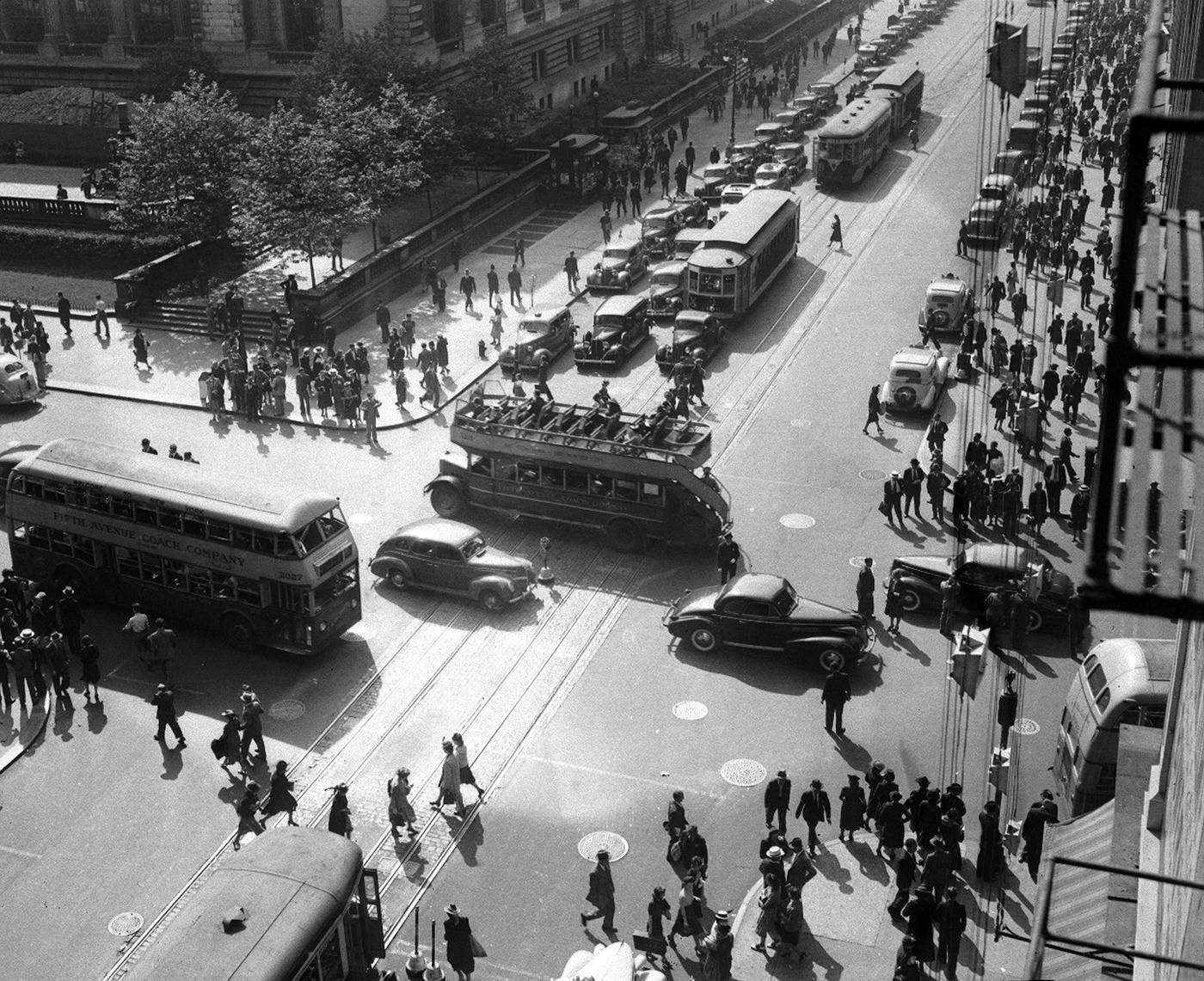
In 1930, Los Angeles was home to just over one million people. By 1940, that number had climbed to nearly 1.5 million. The city was building itself fast — new streets, new businesses, new landmarks — and the photographs from this decade capture every layer of it. Broadway buzzed with shoppers and street traffic. Wilshire Boulevard stretched westward through polished new neighborhoods. And in between, real people went about their days in a city that was equal parts glamour and grit.

Crowds at Broadway and 7th Street, Los Angeles, CA, 1930

Broadway and 7th Street was one of the busiest corners in the entire city. Department stores, movie theaters, and retail shops lined the blocks, drawing thousands of shoppers every day. The area was the commercial heart of Los Angeles, where working-class families rubbed shoulders with office workers and tourists. These streets tell the story of a city on the move, even as economic storm clouds gathered on the horizon.

6th and Olive Streets, 1930
Traffic at Seventh and Spring, 1930

The Great Depression hit Los Angeles hard. Unemployment reached as high as 30% in some parts of the city. Homeless populations grew visibly on downtown streets. Residents who had moved to Los Angeles chasing opportunity suddenly found themselves scraping by. Yet the city’s commercial corridors — Broadway, Spring Street, Wilshire — kept moving. Buses ran. Storefronts stayed open. People kept showing up.

Crowds at Broadway and 7th Street, Los Angeles, CA, 1930

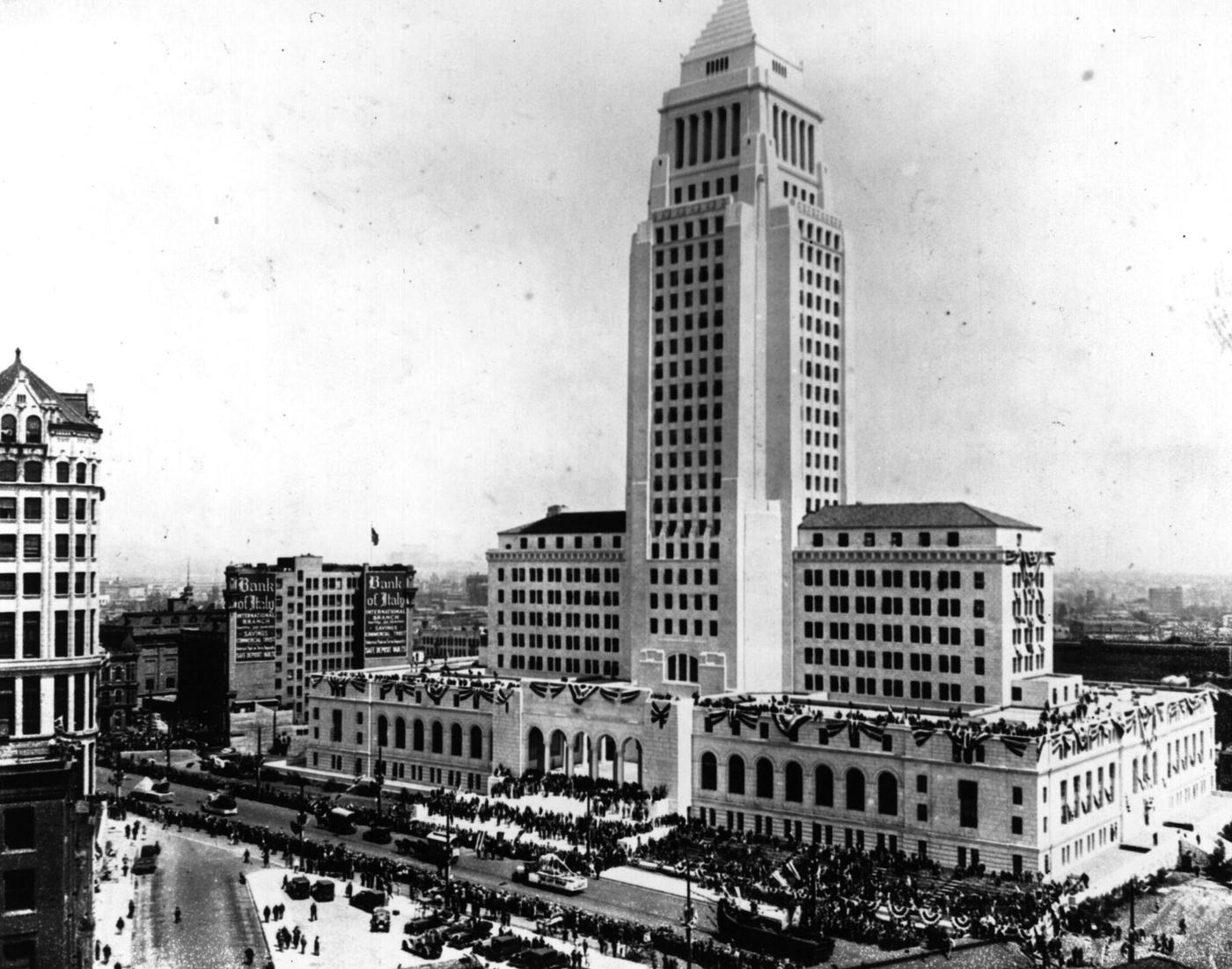
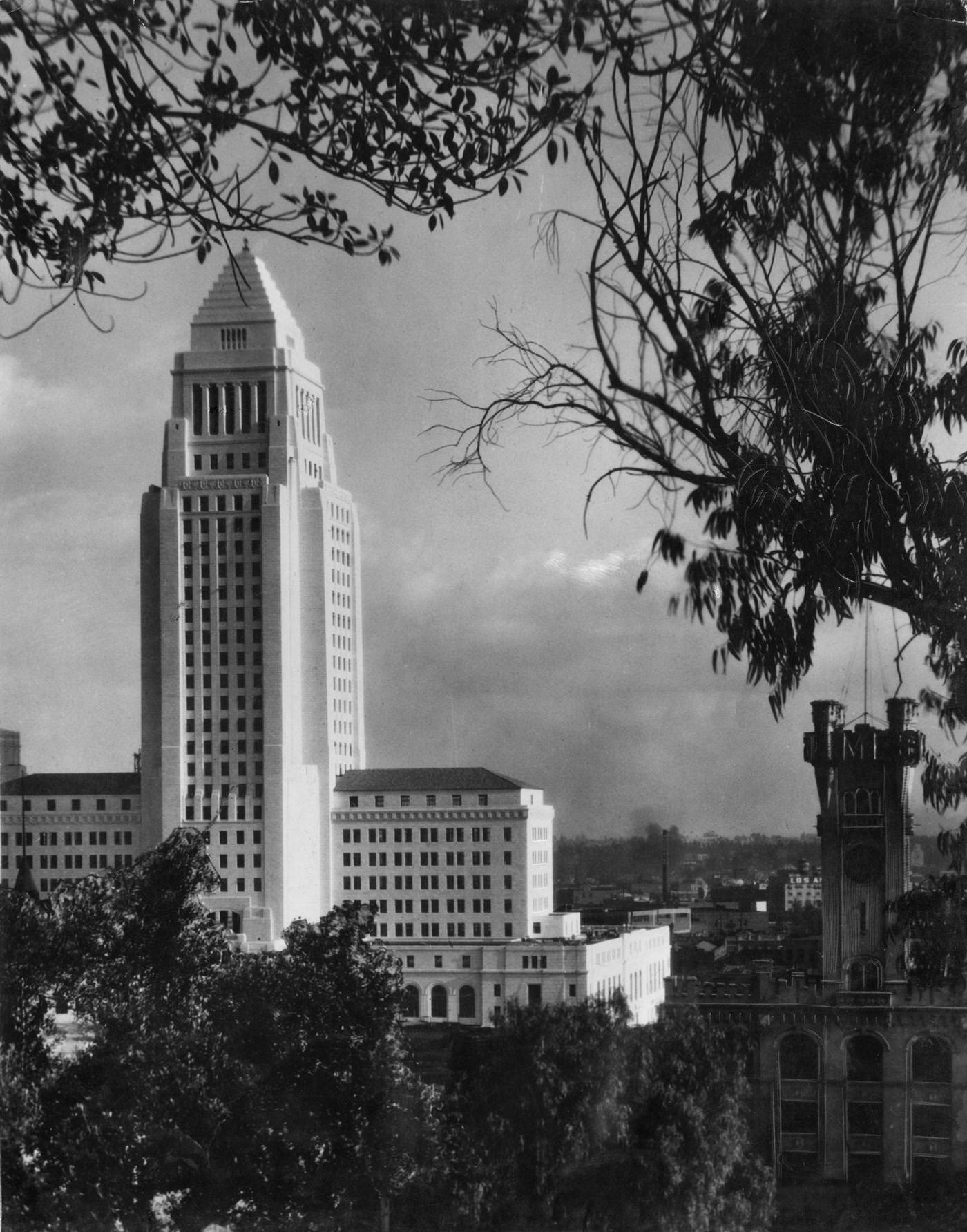
Nearby cities like Culver City actively promoted themselves to draw new residents and businesses. The film industry had already set up major operations in the area, and civic boosters were eager to capitalize on that reputation. Meanwhile, the Los Angeles City Hall — a 28-story tower completed in 1928 — stood as the tallest building in the city and a symbol of civic ambition. Its Lindbergh Beacon, mounted 500 feet above street level, was dedicated in a formal ceremony in December 1930.

Culver City boosterism, 1930
Caliente Golf Park, 4th Street and Vermont Avenue, 1931

Leisure was woven into the fabric of the city even during hard times. A golf park at 4th and Vermont, a girl waiting at a bus stop on Beverly Boulevard, window shoppers pausing at J.W. Robinson’s — these quiet, ordinary moments are exactly what makes the decade’s photographs so compelling. Life continued at street level, one block at a time.

Girl waiting for bus on Beverly Boulevard, interesection at Van Ness, July 17, 1931
Looking north on Broadway at 7th Street, 1931
Looking south on Broadway from 4th Street, 1931

Wilshire Boulevard was transforming into one of the most recognizable commercial streets in America. Traffic moved steadily through its wide lanes, passing department stores, hotels, and churches. The May Company Department Store on 8th Street and Broadway celebrated its golden jubilee in 1931, drawing large crowds to the festivities. Retail in Los Angeles, even mid-Depression, was a serious industry.

Traffic on Wilshire Boulevard, Los Angeles, 1931
May Company Department Store golden jubilee, 8th Street and Broadway, 1931
Traffic on Wilshire Boulevard, Los Angeles, 1931
W. 8th Street and S. Broadway, 1931
Intersection West Temple Street and North Broadway, Los Angeles, CA, 1932

By 1932, the downtown grid was fully established. The intersection of West Temple and North Broadway appeared in multiple photographs from that year, showing the steady flow of cars, streetcars, and pedestrians navigating the city’s core. Hotels like the Morgan at 629 W. 8th Street served travelers and longer-term residents alike, offering affordable rooms in walking distance of offices and shops.

Traffic on Wilshire Blvd., 1932
Intersection West Temple Street and North Broadway, Los Angeles, CA, 1932
Morgan Hotel shown at 629 W. 8th Street, 1932
Intersection West Temple Street and North Broadway, Los Angeles, CA, 1932

In March 1933, a powerful earthquake struck the Long Beach area, killing 115 people and causing widespread damage across Los Angeles County. Schools, hospitals, and civic buildings crumbled. The disaster forced major changes to building codes across the state. On the streets, the aftermath was visible in rubble and boarded storefronts. Life in neighborhoods like the one along Apablasa Street carried on under the shadow of that destruction.

Looking south on Flower Street at 4th, 1933
7th and Hope Streets, 1933
Looking west on Apablasa from Juan Street, 1933
Looking west on Apablasa Street from Juan Street, 1933
Looking west on east 7th at Mateo Street, 1933

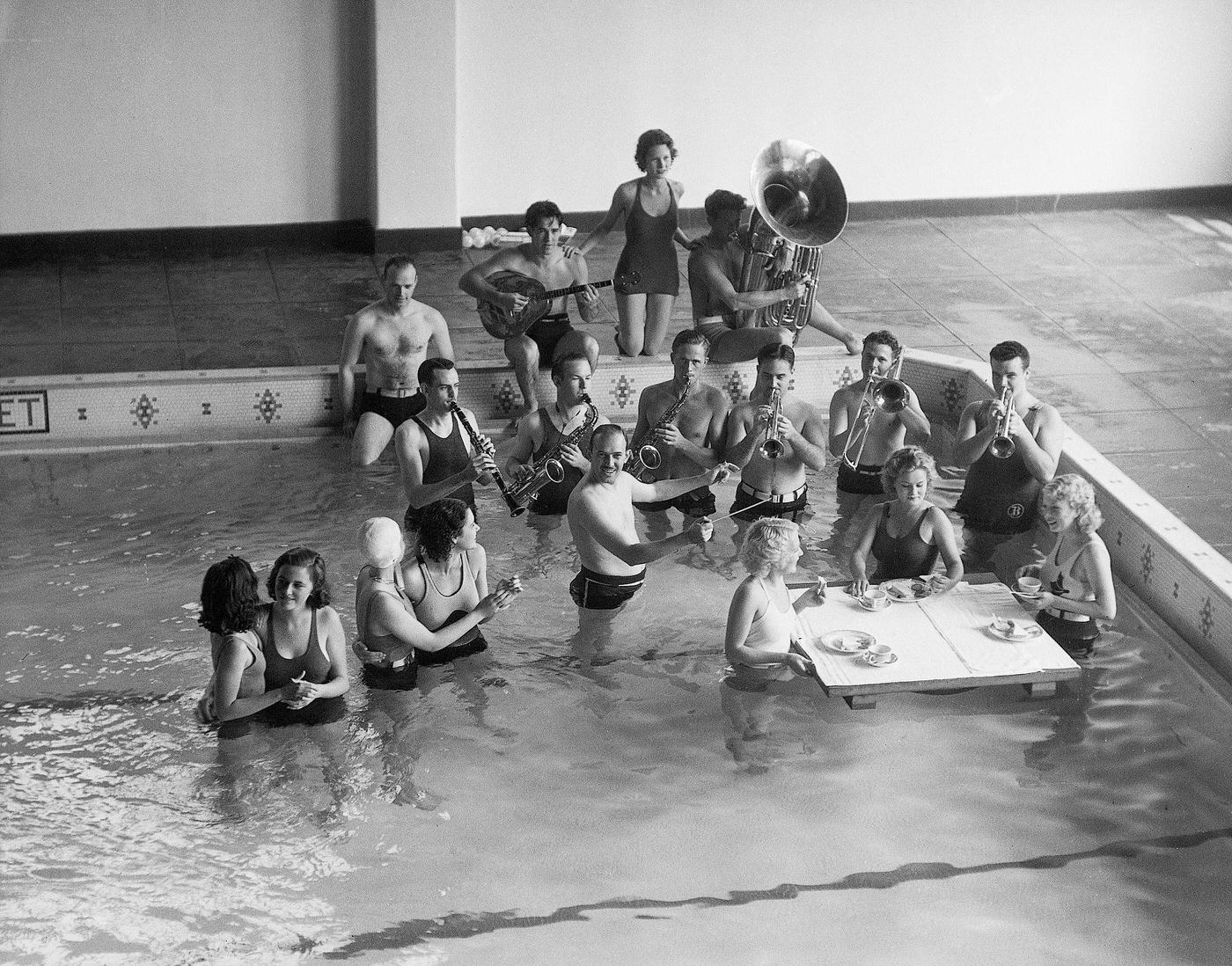
Even as the Depression dragged on, entertainment remained a priority. A jazz band played in the swimming pool at the Santa Monica Hotel in June 1933, drawing a crowd of dancers and diners. Hollywood’s film studios were producing some of the most iconic movies ever made, and the city attracted actors, directors, and crew members from across the country. A group of extras and performers for the Busby Berkeley musical “Footlight Parade” posed during a studio break in 1934, offering a rare look behind the camera.

Window-shoppers at J.W. Robinson's, 1933
Window-shoppers at J.W. Robinson’s, 1933
Looking east on 1st Street from Broadway, 1934
Looking east on Wilshire Boulevard at Vermont Avenue, 1934

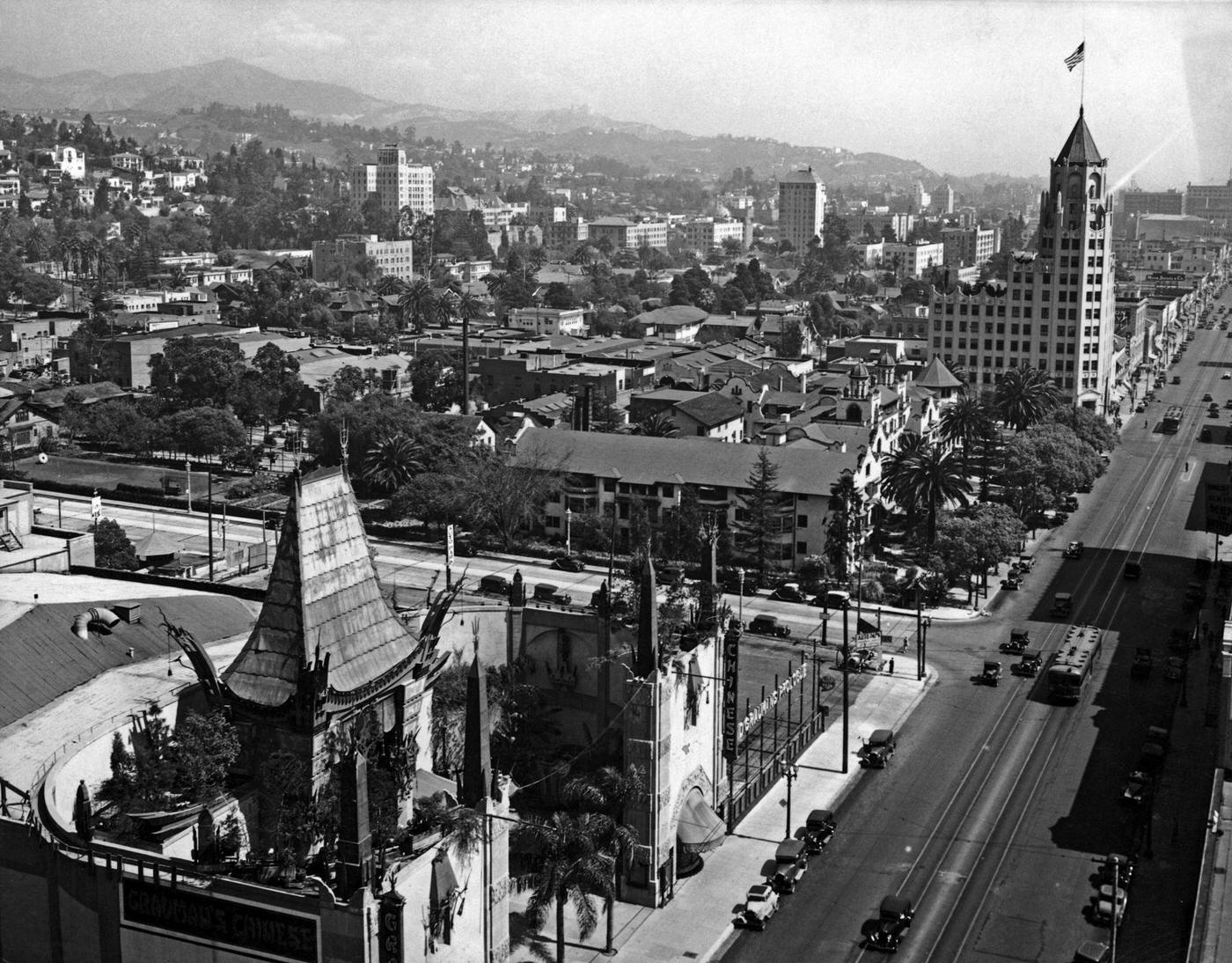
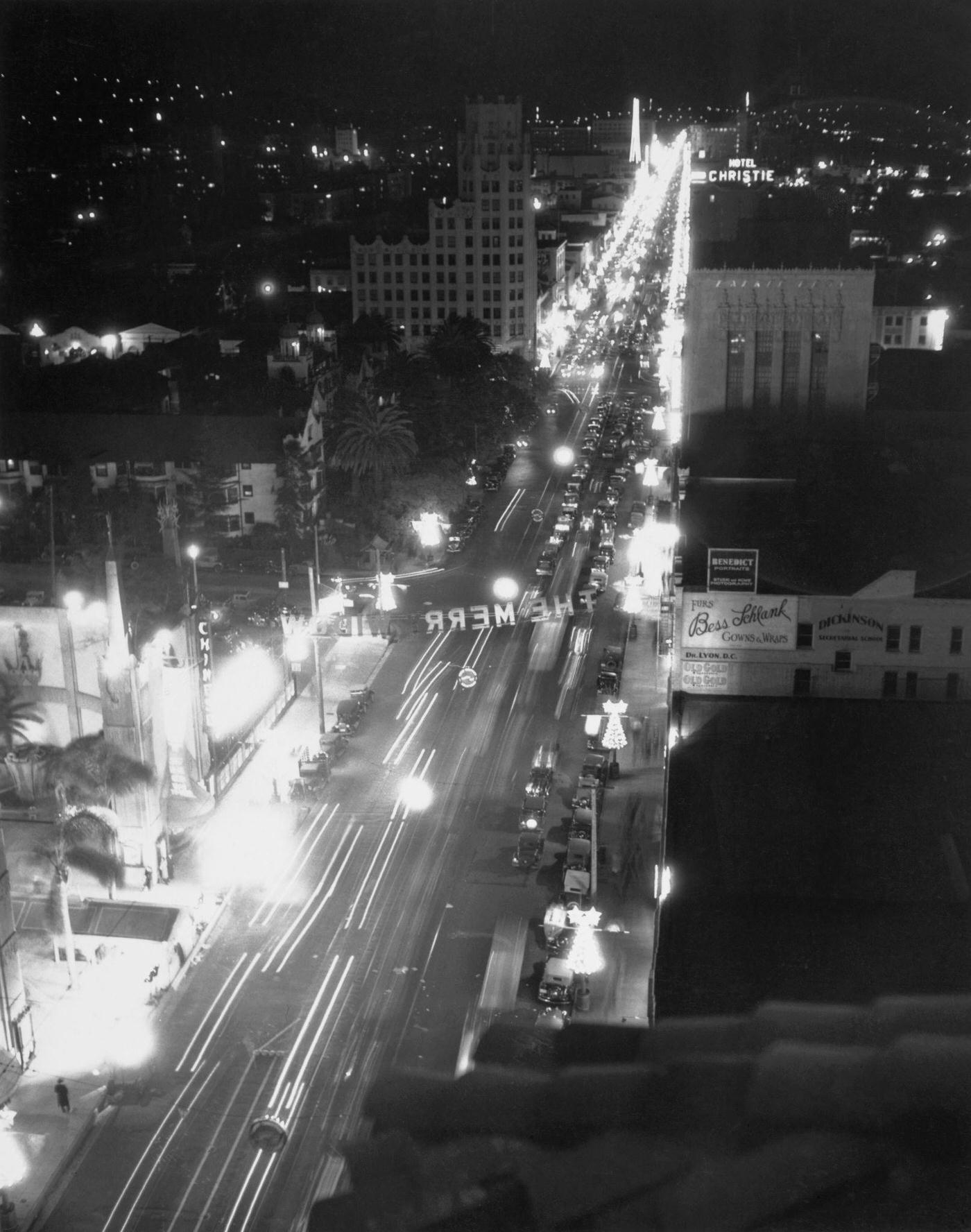
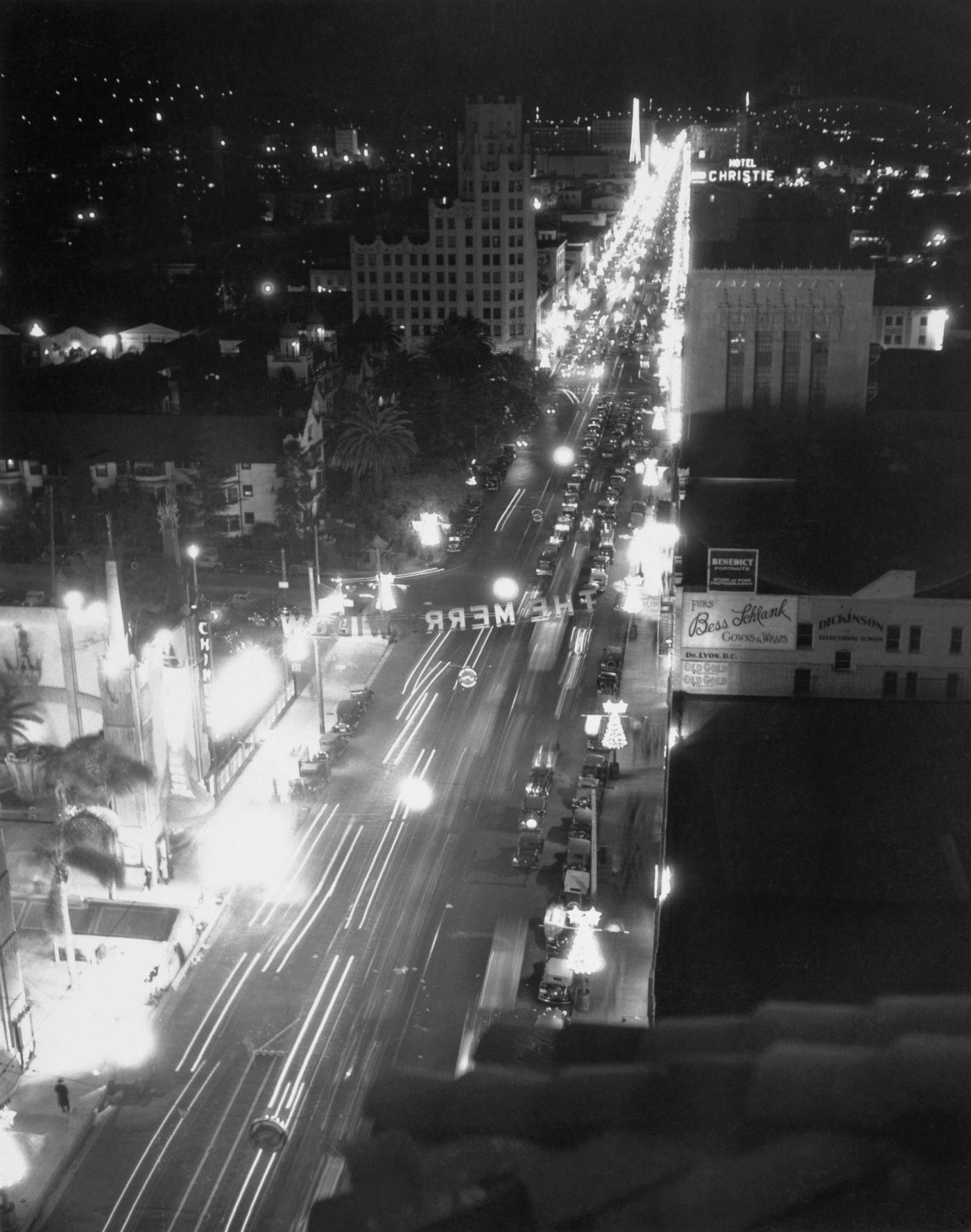
Hollywood Boulevard was already a destination by the mid-1930s. The Santa Claus Lane Parade drew large crowds to its illuminated streets in 1934, with aerial photographs showing the full scale of the event. Grauman’s Chinese Theatre anchored the boulevard’s identity, and the surrounding blocks were thick with marquees, foot traffic, and the constant buzz of a city building its own mythology.

Bankers Building on Hill Street, 1935
Looking northeast on Figueroa from tunnel no. 1, 1935
Looking south on Broadway at 8th Street, 1935
Looking west on 7th Street at Broadway, 1935

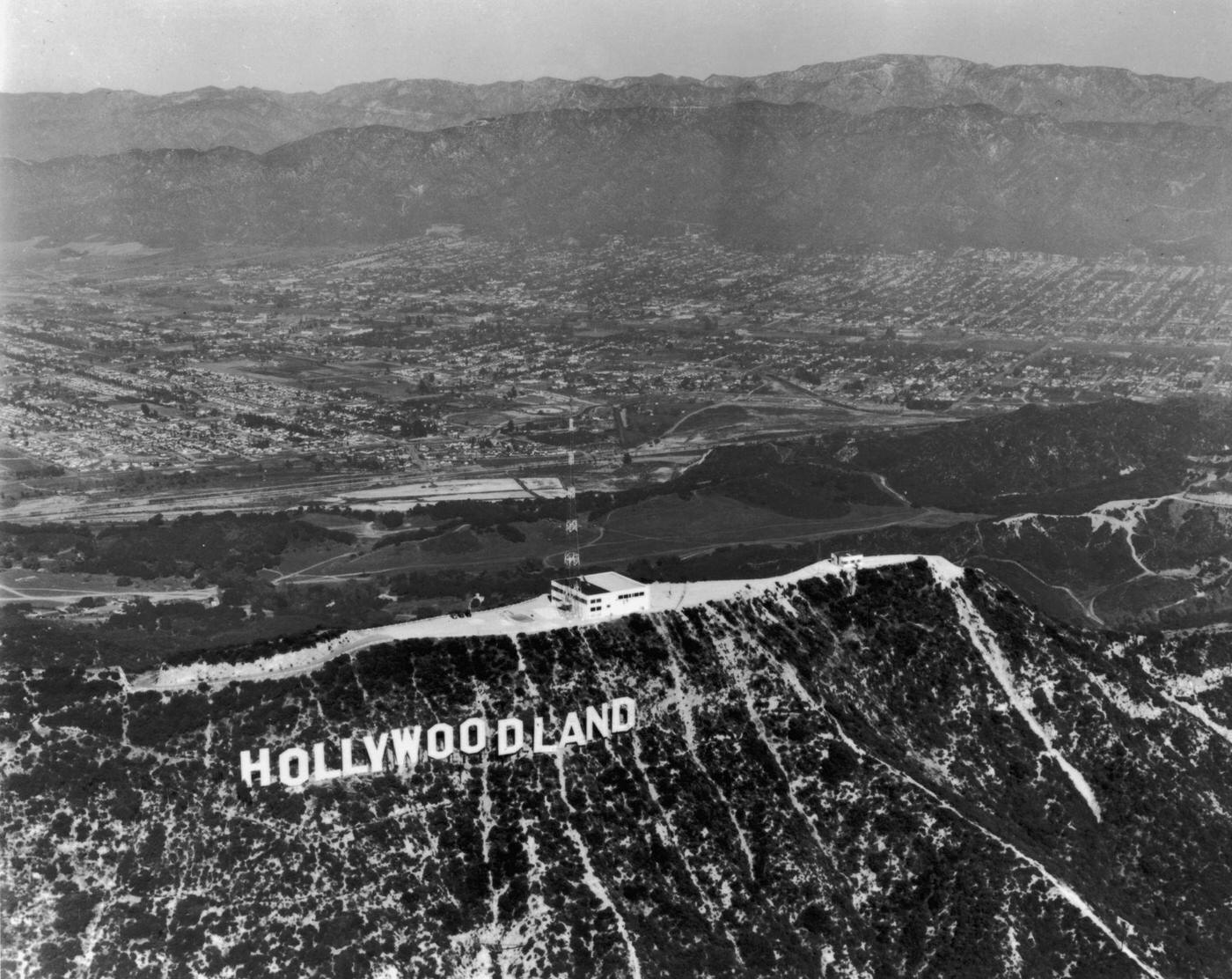
The Hollywood Sign — originally installed in 1923 as an advertisement for a real estate development called Hollywoodland — still stood in 1935, spelling out its full original name across the hillside. Howard Hughes was also making headlines that year, piloting his own experimental aircraft on its first real test flight over Los Angeles. The city had become a proving ground for new ideas in aviation, entertainment, and architecture all at once.

Clifton's Brookdale at 648 S. Broadway, 1936
Clifton’s Brookdale at 648 S. Broadway, 1936
Looking east on Wilshire Boulevard at Berendo Street, 1936
On the Boulevard, Los Angeles, 1936

Clifton’s Brookdale Cafeteria at 648 S. Broadway was one of the most notable restaurants in Depression-era Los Angeles. Owner Clifford Clinton offered meals at reduced prices — or free — to anyone who couldn’t pay. The cafeteria became a lifeline for thousands of struggling Angelenos and a symbol of community solidarity during the worst years of the Depression. By 1936, it was already a well-known fixture on the Broadway dining scene, and photographs from 1937 show it still drawing steady crowds.

3rd Street tunnel, 1937
7th and Olive Streets, 1937
A young gentleman headed south on Grand Avenue across from the Mayflower Hotel, 1937
Biltmore Florists, Millennium Biltmore Hotel, 1937

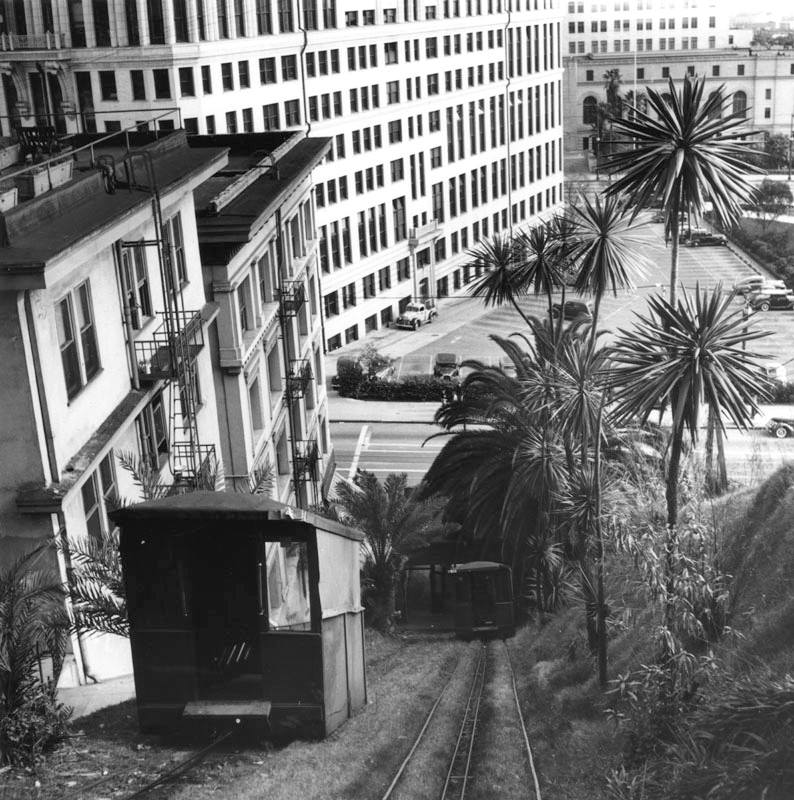
The Millennium Biltmore Hotel on Pershing Square was one of the grandest buildings in the city. A florist operating out of its ground floor served the hotel’s guests and the broader downtown community. Nearby, the Hotel Latour on Hill Street and the Union Pacific building at Hill and 6th represented the mix of hospitality and commerce that defined downtown Los Angeles in the late 1930s. The Court Flight funicular railway, running up a steep incline in the downtown hills, connected residents to the street grid below.

Broadway south at Seventh, 1937
Clifton's Brookdale at 648 S. Broadway, 1937
Clifton’s Brookdale at 648 S. Broadway, 1937
Hill near 3rd Street, 1937
Looking west on 7th Street at Hill, 1937
Main at 9th Street, 1937
The Hotel Latour, Hill Street, 1937
Twelfth east at Main, 1937
Union Pacific building, Hill and 6th streets, 1937

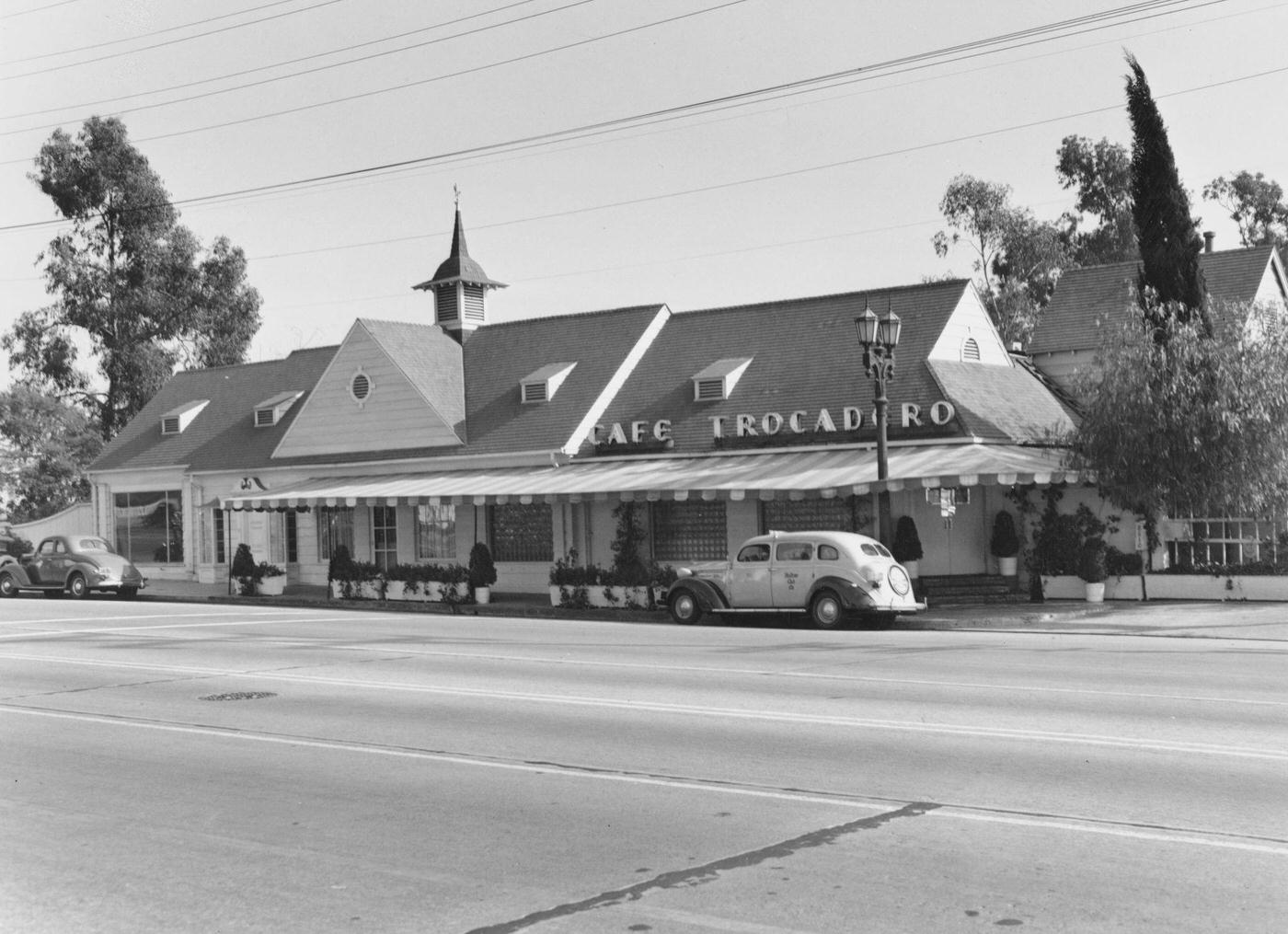
La Grande Station served as a major rail hub for the city in 1937, with passengers waiting on its platforms for trains heading across California and beyond. The Figueroa Street tunnels, bored through the hills south of downtown, carried both pedestrians and vehicles, and photographs from that year show people walking the paths between the tunnel mouths. The Cafe Trocadero on the Sunset Strip was already drawing Hollywood’s elite to its tables, cementing the Strip’s reputation as the nightlife center of the film industry.

Waiting for trains at La Grande Station, 1937
Walking between the Figueroa Street tunnels, 1937
Looking east on 5th Street across Olive, 1938

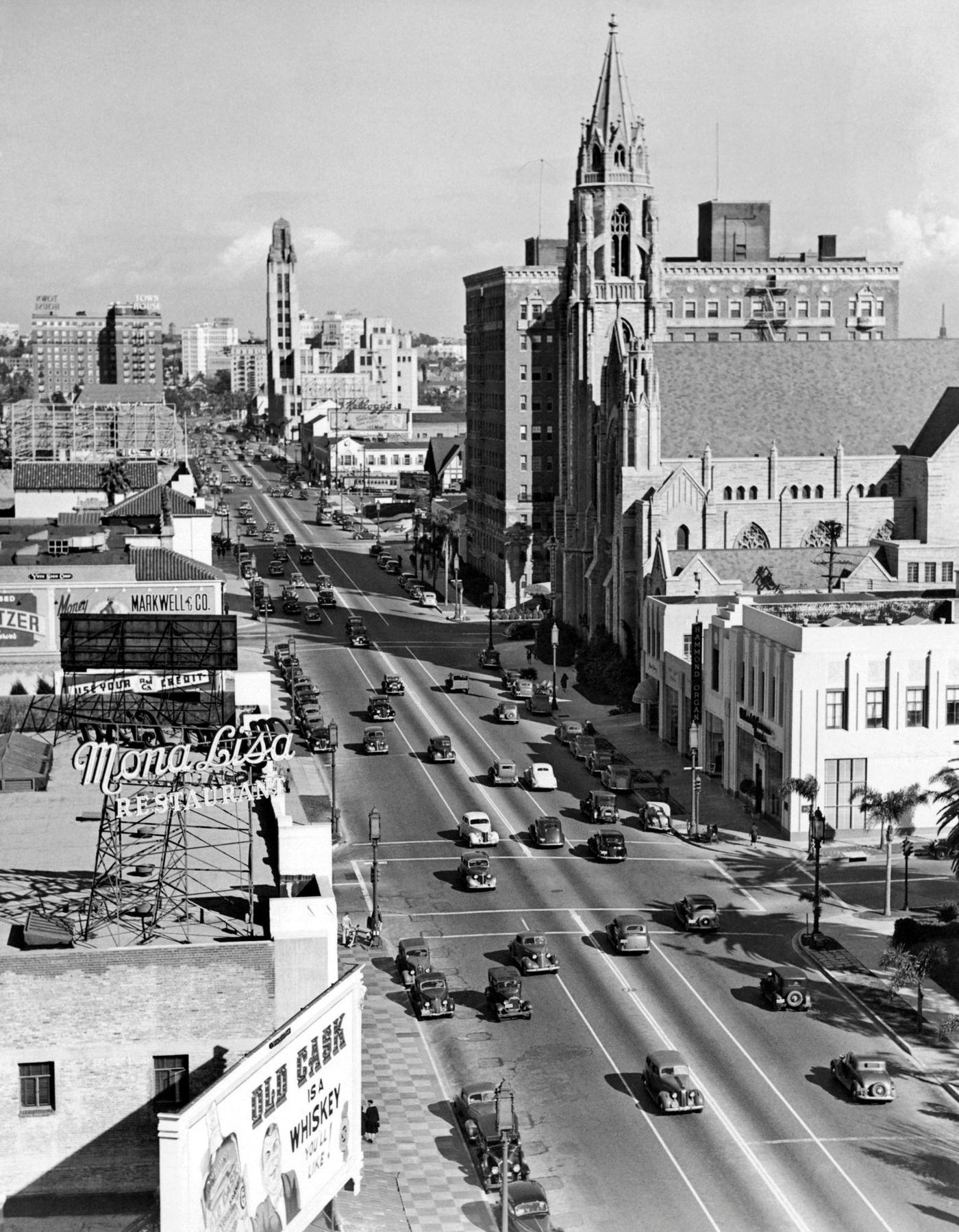
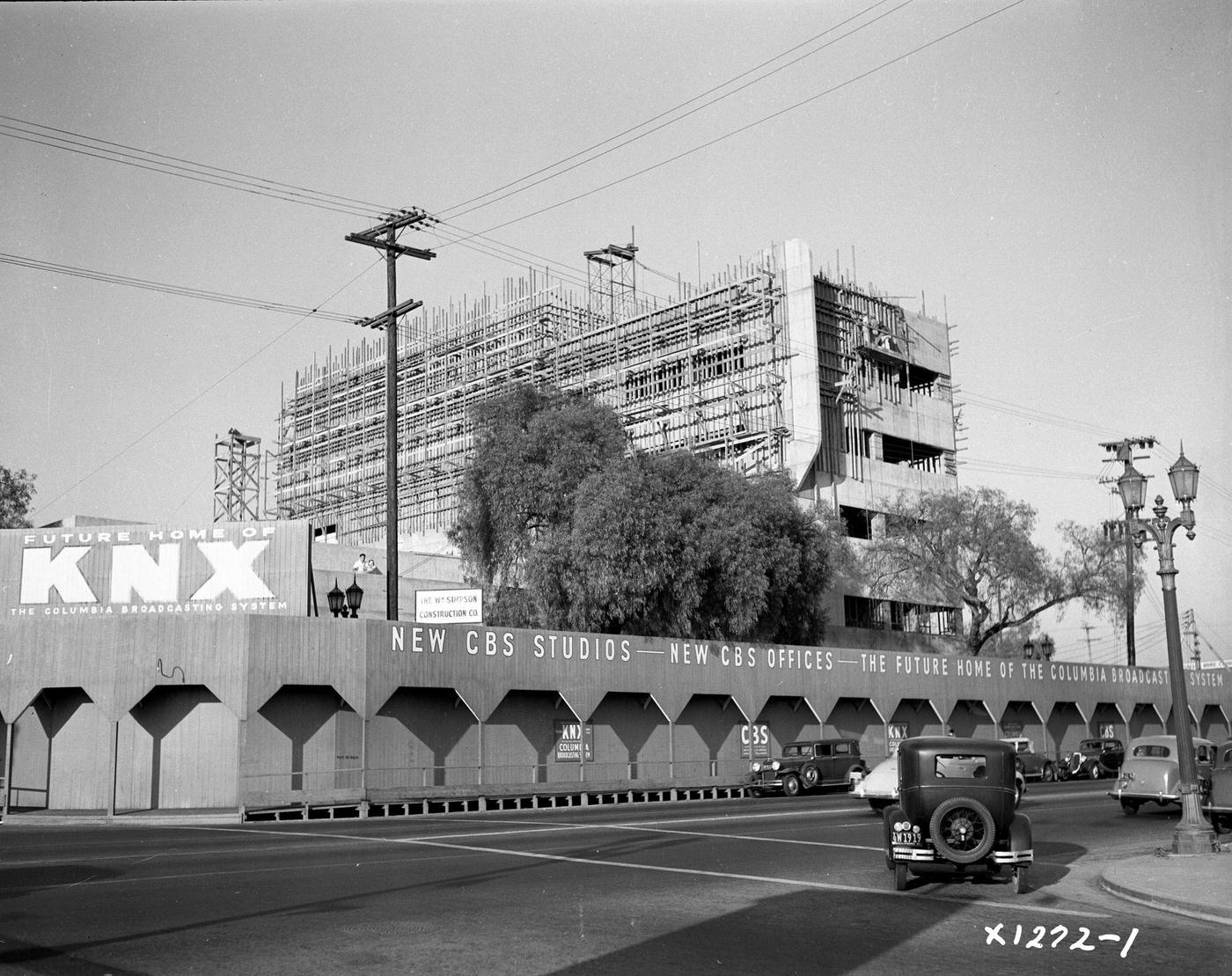
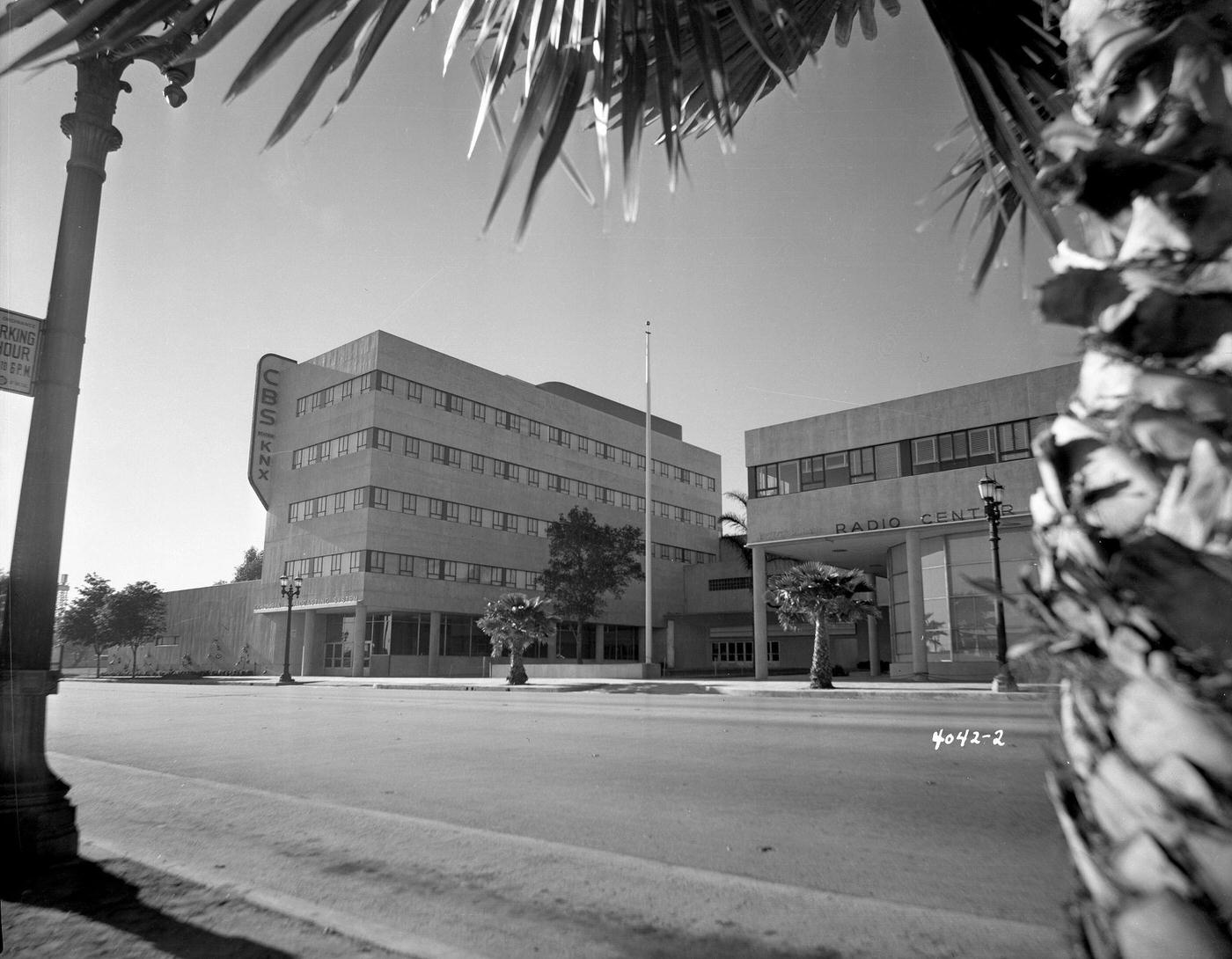
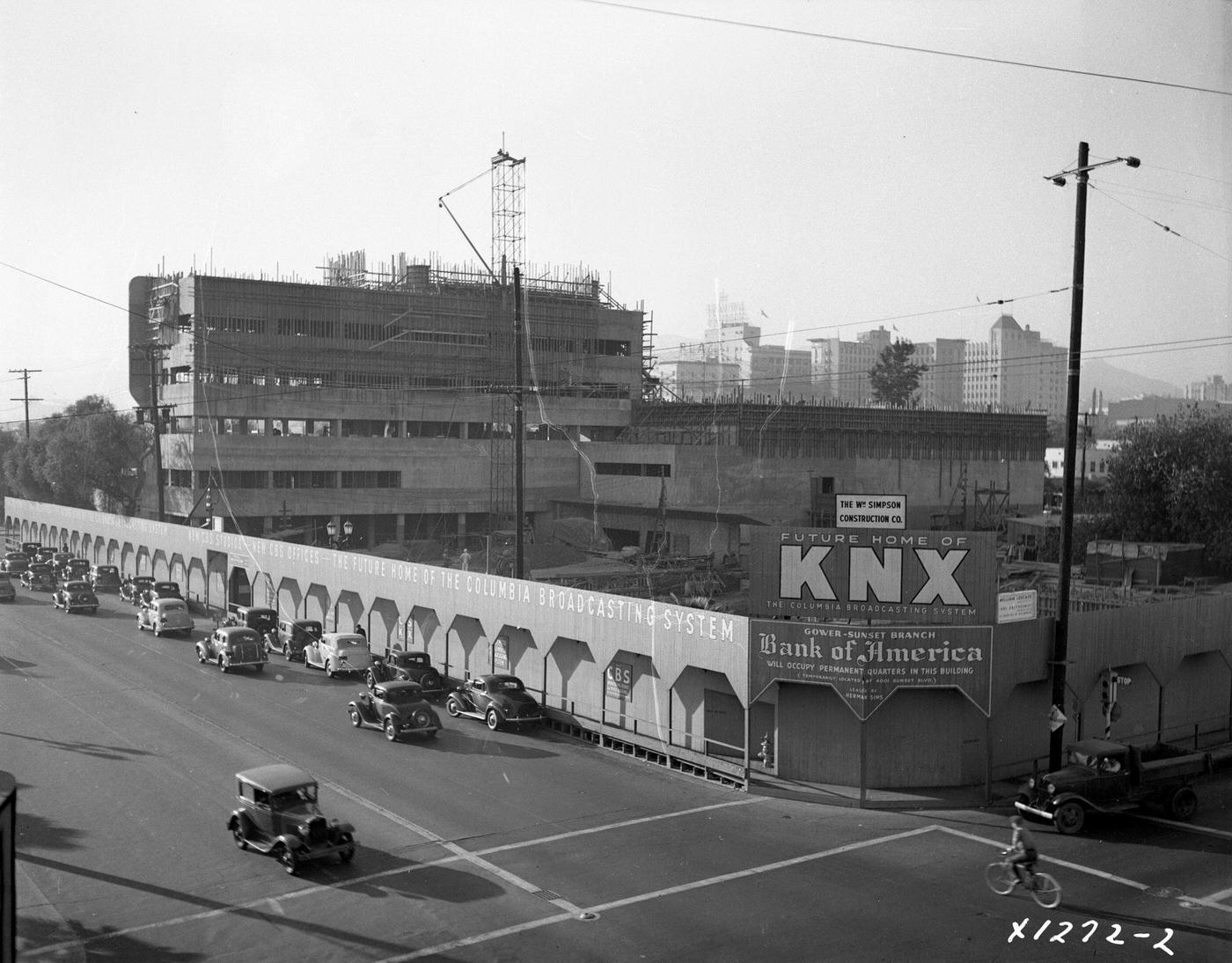
By 1938, the CBS Columbia Square building was rising on Sunset Boulevard in Hollywood. Its Art Deco design made it one of the most striking new structures in the city, and photographs from Gower Street show the building still unfinished, its clean lines already visible against the sky. The building housed KNX radio studios, bringing national broadcasts from the heart of Hollywood. Wilshire Boulevard at Catalina, photographed the same year, shows the Mona Lisa Restaurant, Immanuel Presbyterian Church, and the iconic tower of Bullock’s Wilshire Department Store all visible in a single frame.

Looking east on W 43rd Place at Garthwaite Avenue, 1938
Looking north on Hill Street at 4th, 1938
Looking north on Spring Street from 5th, 1938
Looking west on Hollywood Boulevard at Cahuenga, 1938
Coulter's, Wilshire Boulevard, 1939
Coulter’s, Wilshire Boulevard, 1939
Warner Brothers Downtown, 7th and Hill Streets, 1938

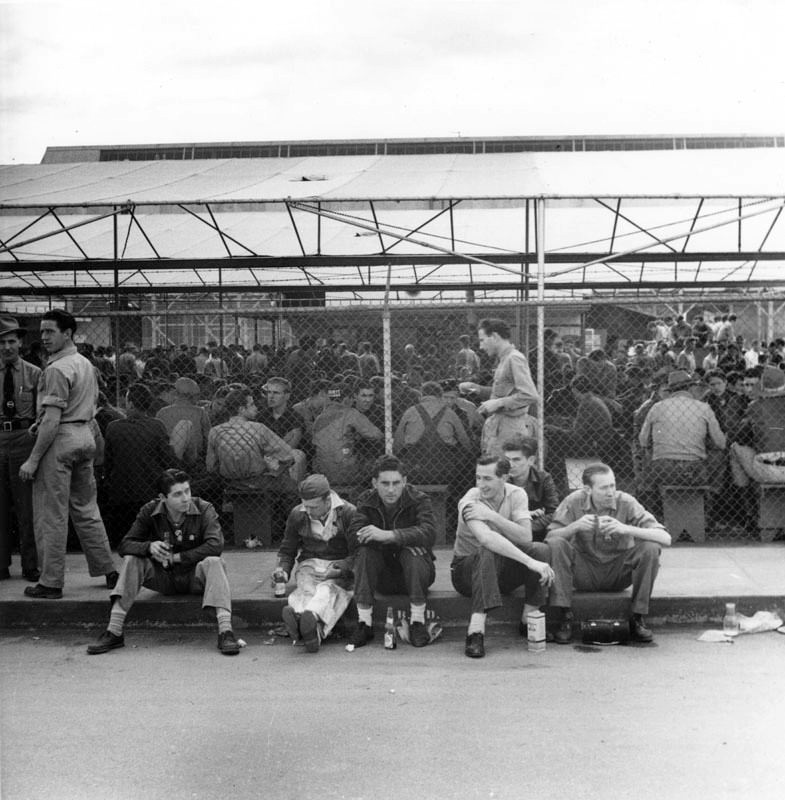
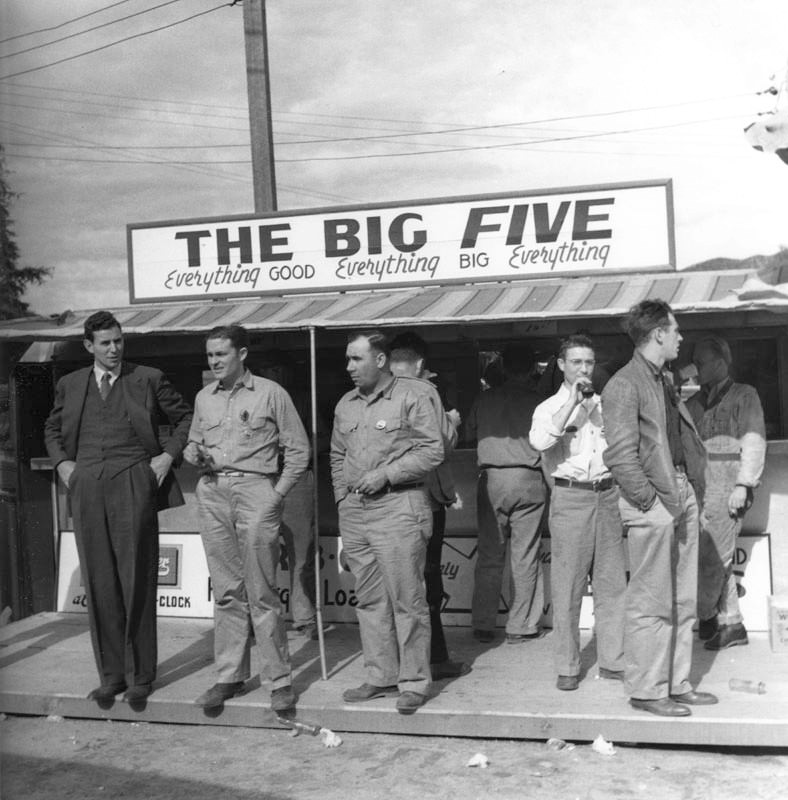
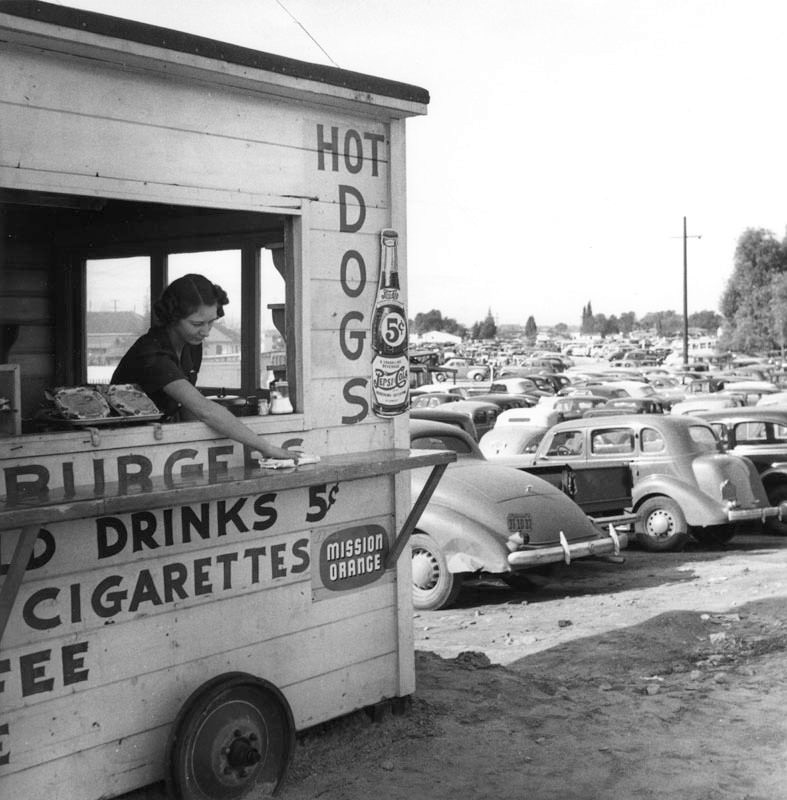
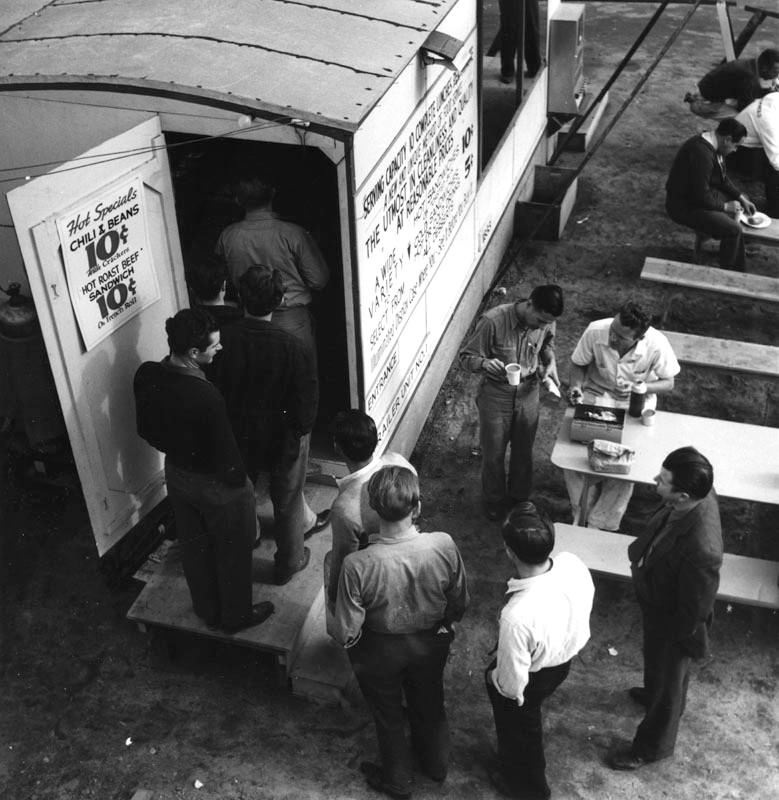
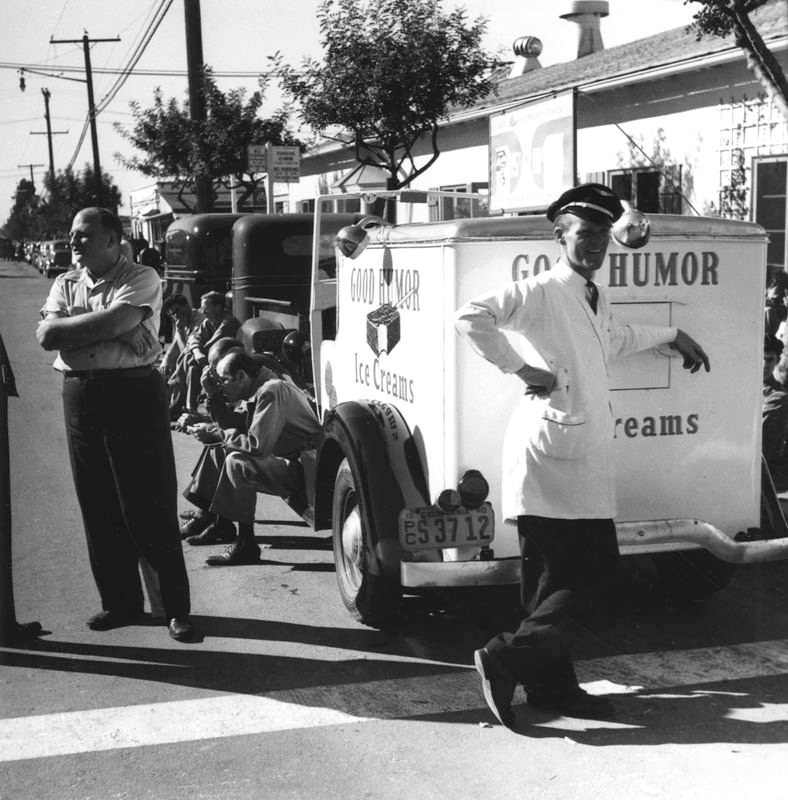
The labor movement gained serious strength in Los Angeles during the 1930s. The Screen Actors Guild and other AFL-affiliated unions marched through downtown streets on Labor Day, with an estimated 40,000 union members participating. Workers in the growing defense and aviation industries — at plants like Lockheed in Burbank and Douglas Aircraft in Santa Monica — organized as their numbers swelled. These workers ate lunch together, waited in carpool lines, and bought hot dogs and ice cream from vendors who set up shop just outside the factory gates.

Looking north on Spring Street at 2nd, 1939
Looking west on Wilshire Boulevard at S Westlake Avenue, 1939
Rainy day on Broadway, 1939
Traffic at Wilshire and South Grand Avenue, 1939
Looking west on 8th Street from Main, ca. 1930s
South of Hill Street, Los Angeles, ca. 1930s

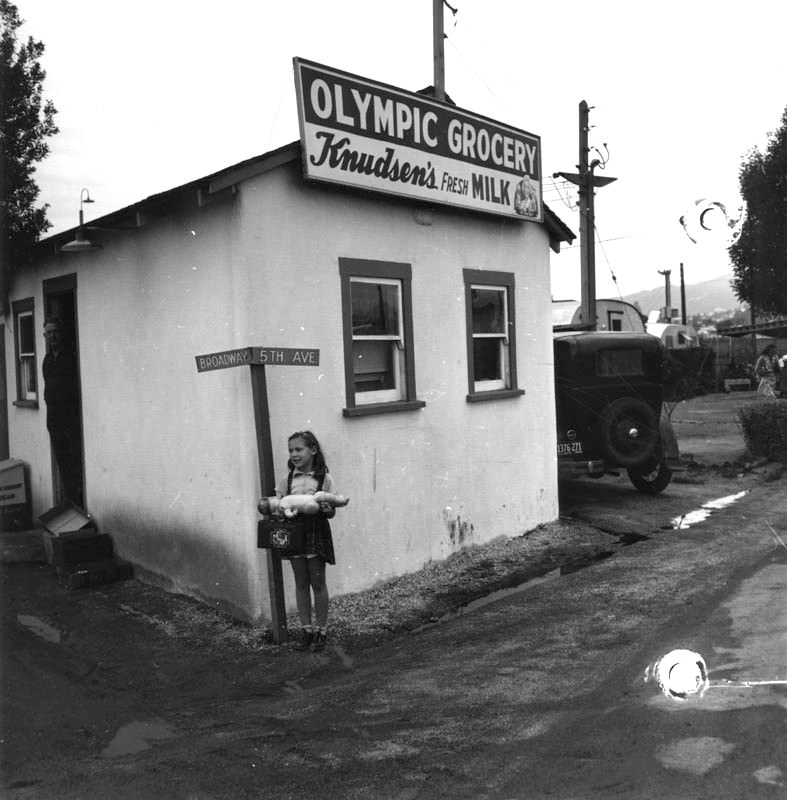
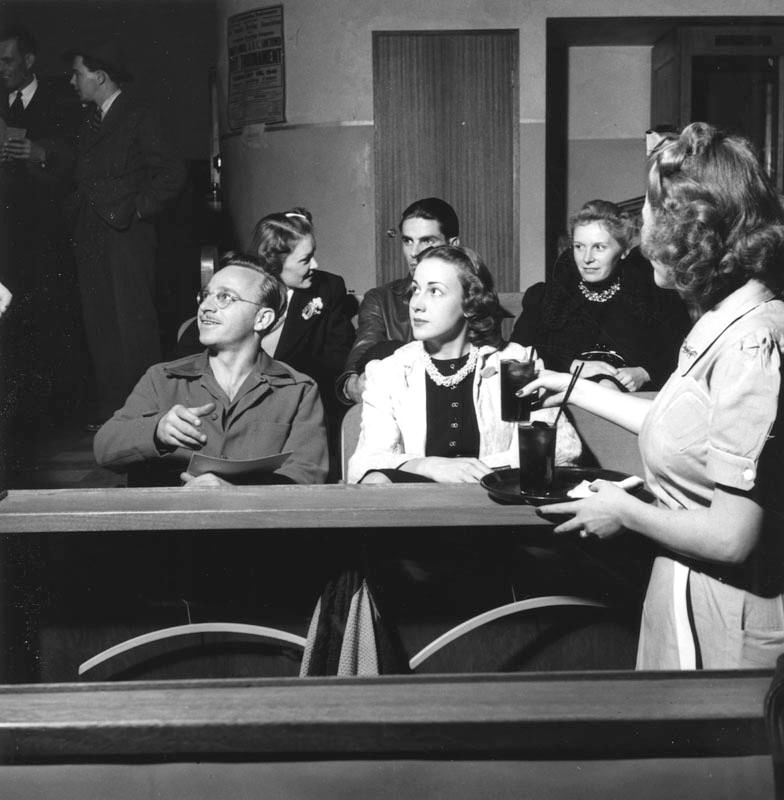
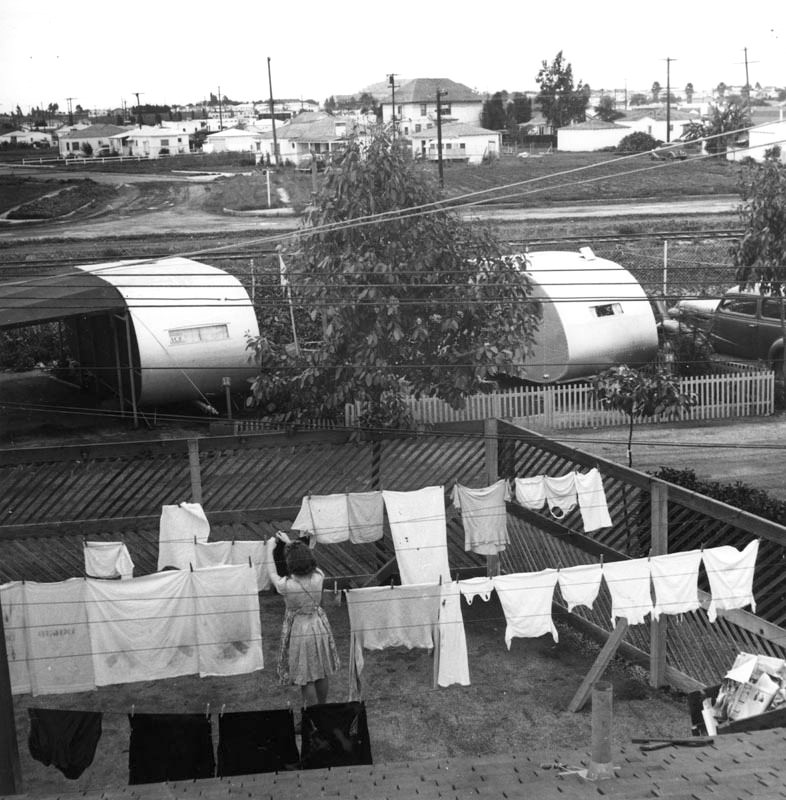
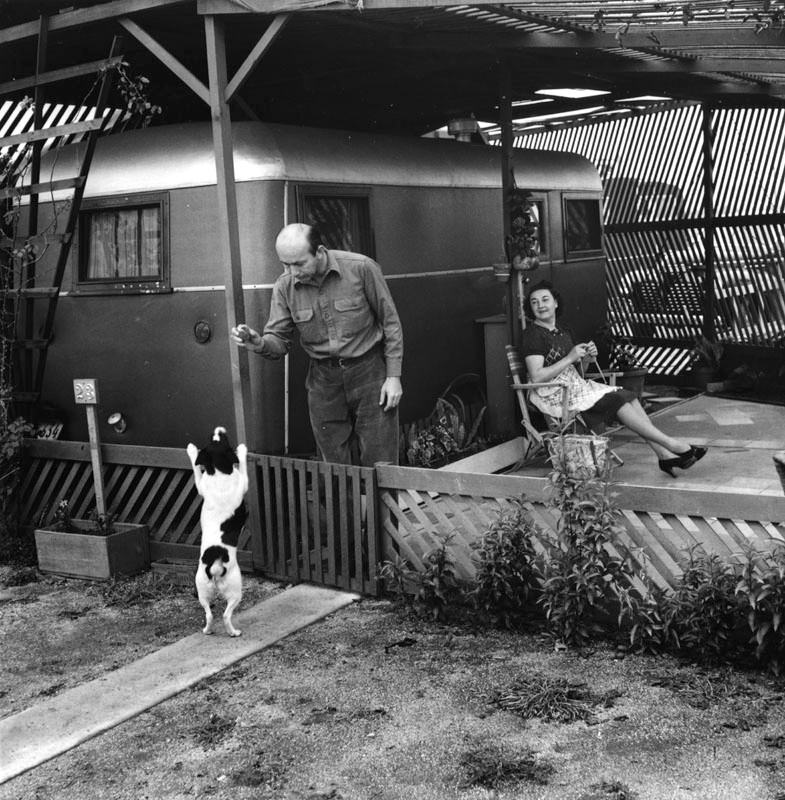
Outside downtown, life in the greater Los Angeles area had its own rhythms. The Olympic Trailer Court, on the border of Santa Monica and West Los Angeles, housed families drawn by the booming defense industry. Residents hung laundry between trailers, children played outside the small market, and fathers talked with their kids in the dirt lanes between units. The demand for temporary housing was fierce, and trailer courts like this one filled up fast.
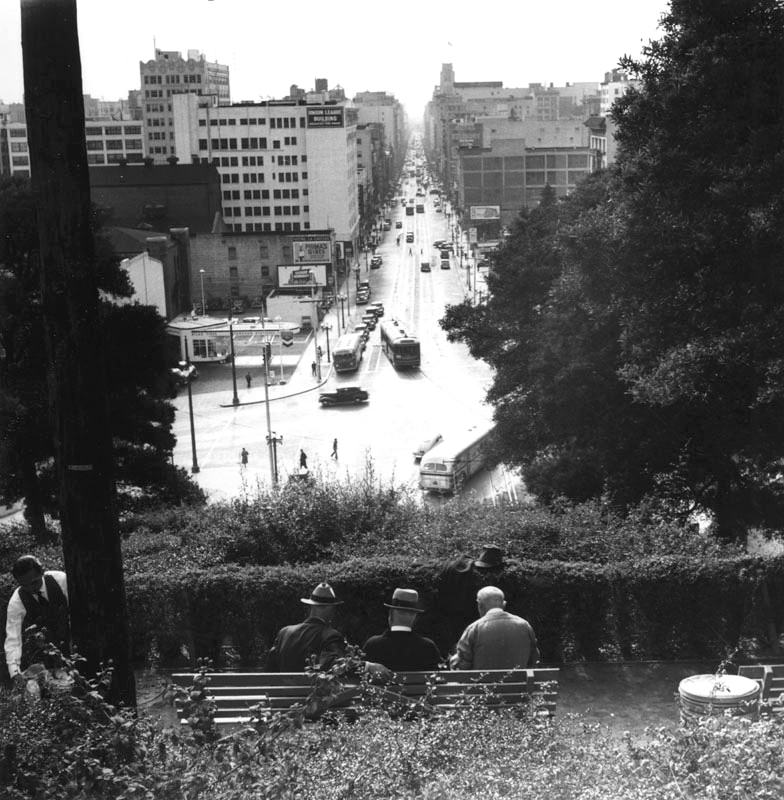
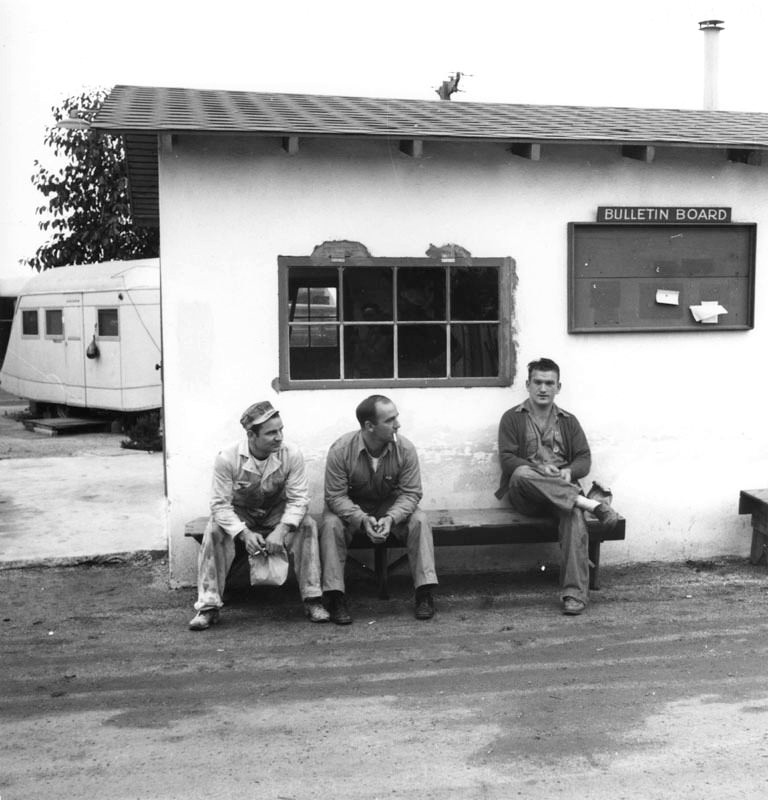
Three men relaxed on a bench overlooking South Hill Street in Los Angeles.
Hanging laundry at Olympic Trailer Court on the border of Santa Monica and West Los Angeles.
Workers at Lockheed's Burbank plant gathered on their lunch break.
Workers at Lockheed’s Burbank plant gathered on their lunch break.
A young girl outside a market at Olympic Trailer Court.
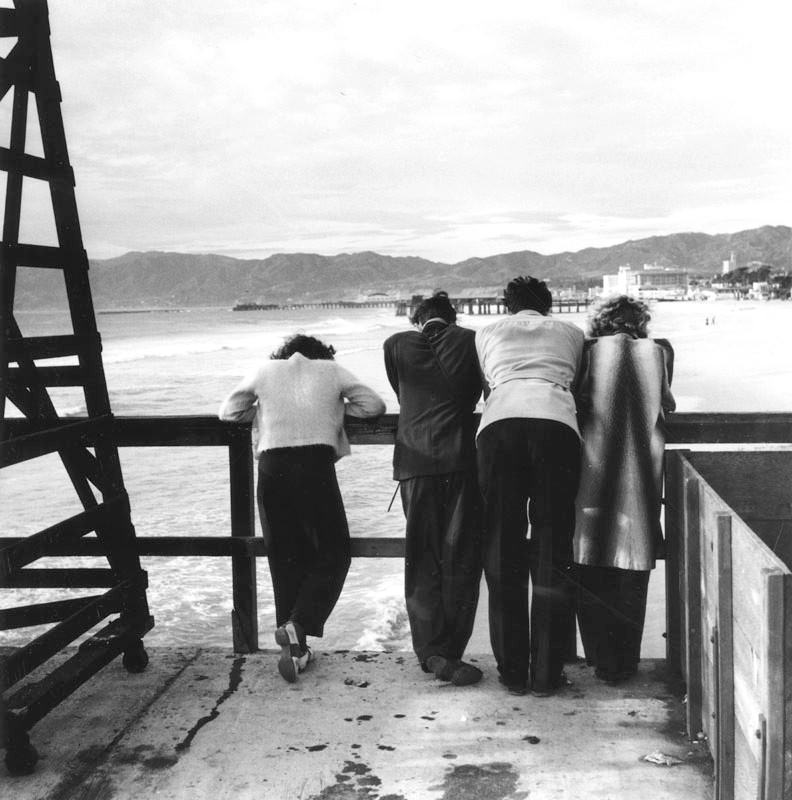
People on Santa Monica's Ocean Park pier.
People on Santa Monica’s Ocean Park pier.

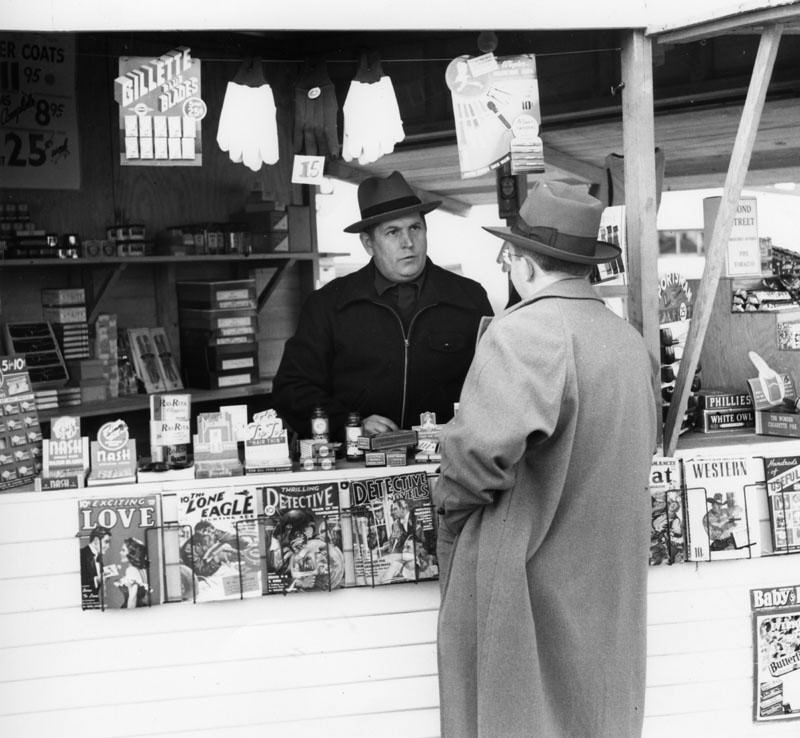
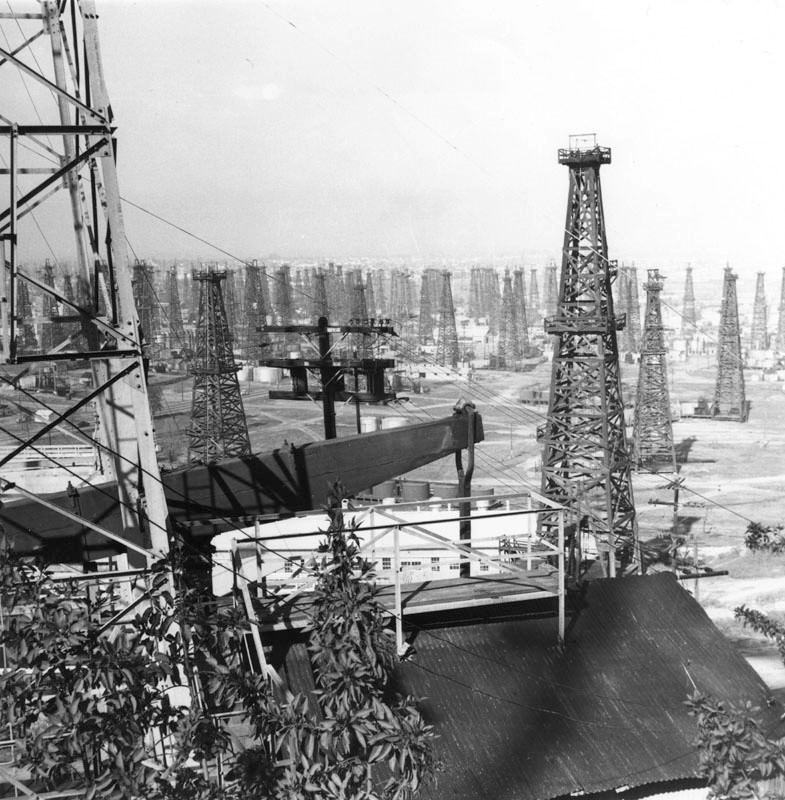
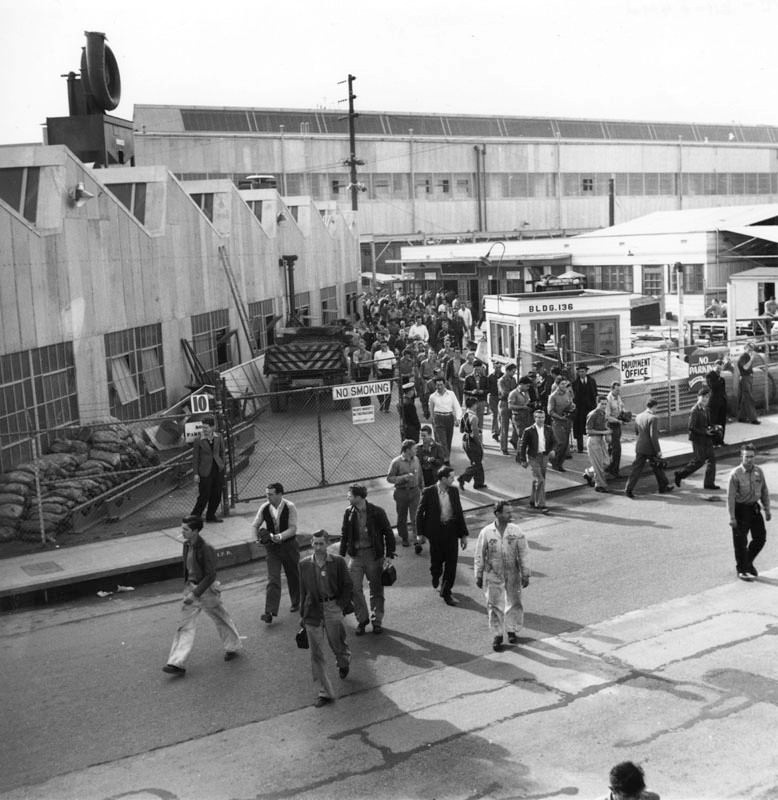
Oil derricks dotted unidentified stretches of the Los Angeles basin throughout the decade. The city’s oil industry was one of the key drivers of its economic growth, even as manufacturing expanded rapidly. Lockheed’s Burbank plant employed thousands of workers by the late 1930s, and the end-of-shift photographs — crowds of employees streaming out the gates — show just how large these operations had grown. A newsstand near the Burbank plant stocked snacks, comic books, and even Lockheed uniforms, serving workers before and after their shifts.
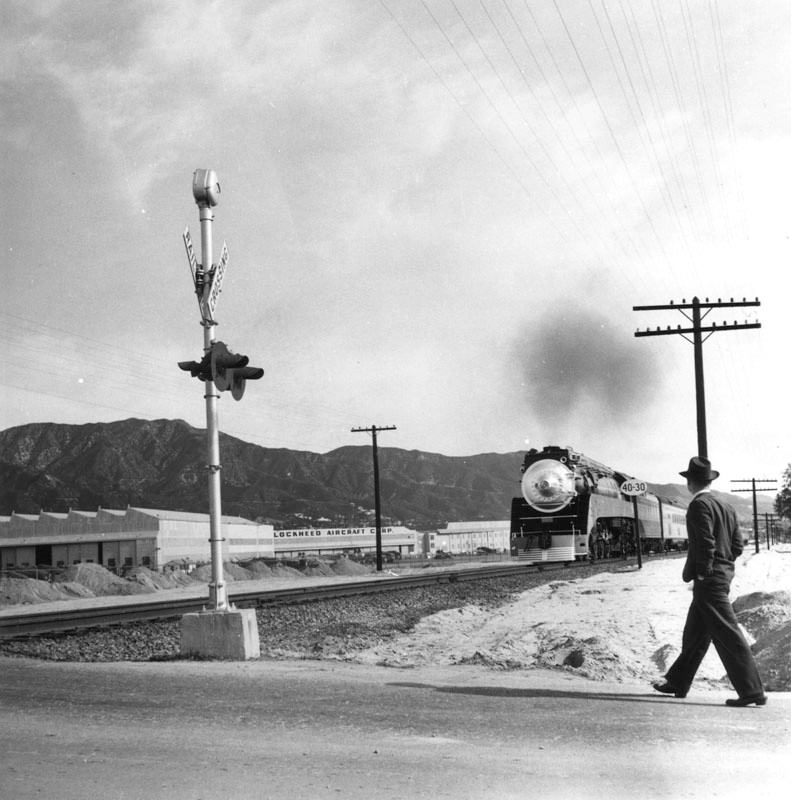
A man on an unidentified street in Burbank. In the distance is a Lockheed plant.
Residents at Olympic Trailer Court. A booming defense industry fueled fierce demand for temporary housing.
The Court Flight railway took passengers up and down a steep incline in downtown Los Angeles.
Douglas Aircraft Company workers on their lunch break in Santa Monica.
A woman wiped off the counter of a lunch stand near an aircraft plant in the Los Angeles area.
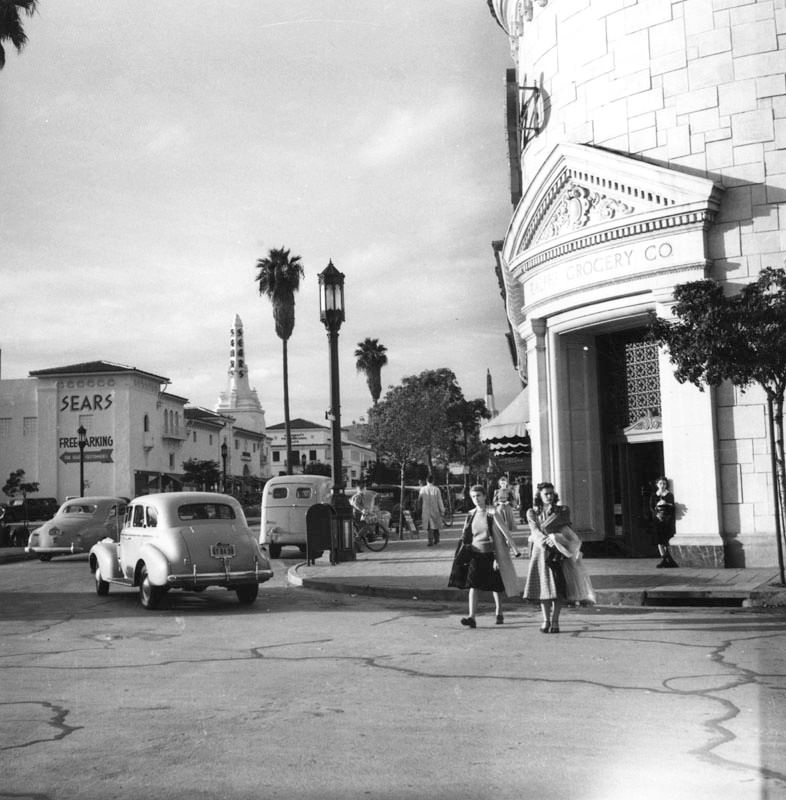
Shoppers on Lindbrook Drive in Westwood Village, home to a Sears and Ralphs supermarket.
A newsstand offered snacks, comic books, and even Lockheed uniforms in Burbank.
An oil field covered with derricks in an unidentified area of Los Angeles.
Employees of Lockheed Aircraft Corporation in Burbank leave the plant at the end of their shifts.

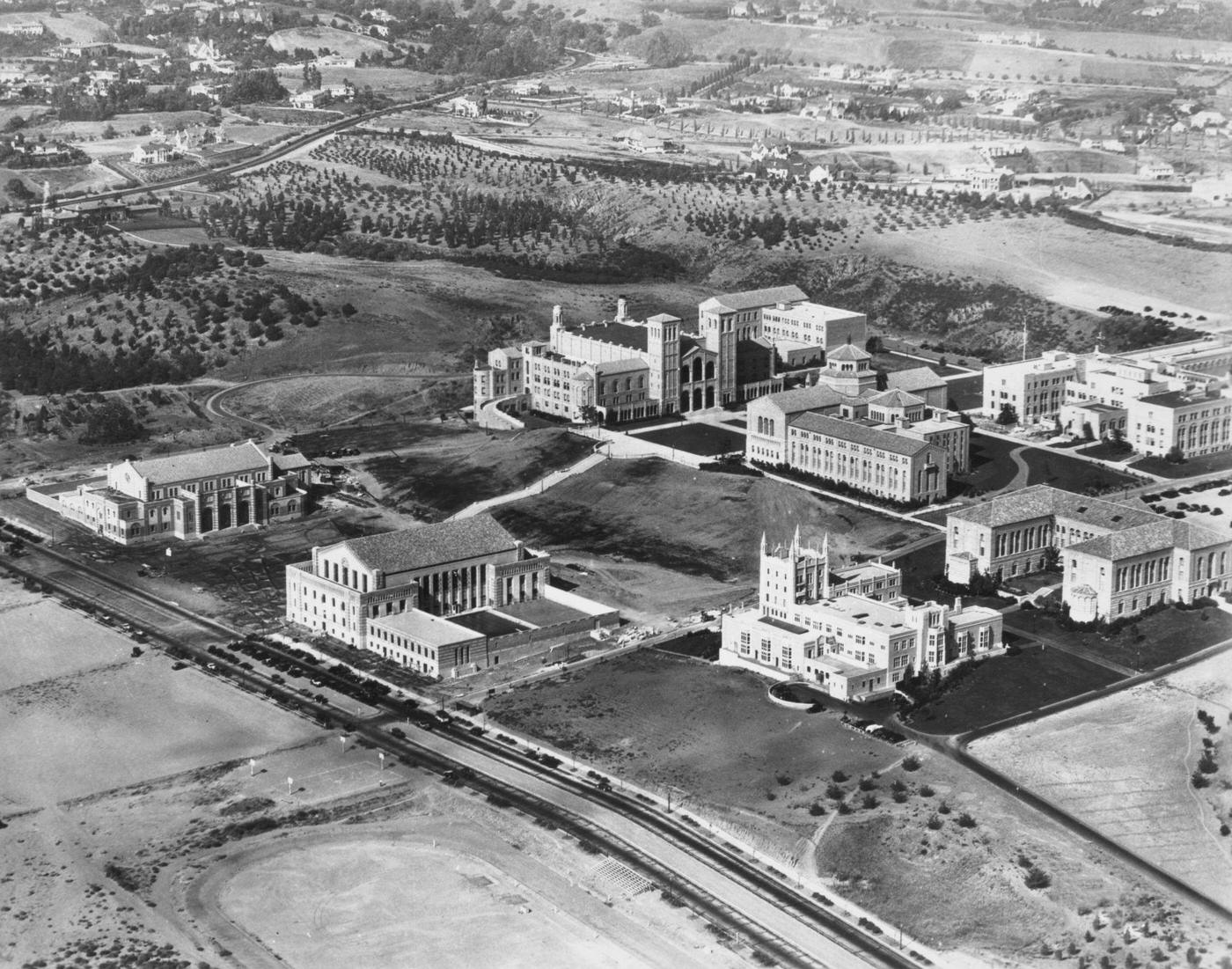
Westwood Village opened in 1929 and was already a thriving commercial district by the 1930s. Shoppers browsed Lindbrook Drive, where a Sears and a Ralphs supermarket drew residents from the surrounding neighborhoods. The University of California’s Westwood campus — photographed from the air in 1934 — showed Royce Hall and Kerckhoff Hall already anchoring the new grounds. The campus had only opened in 1929, making it one of the newest major institutions in the region.
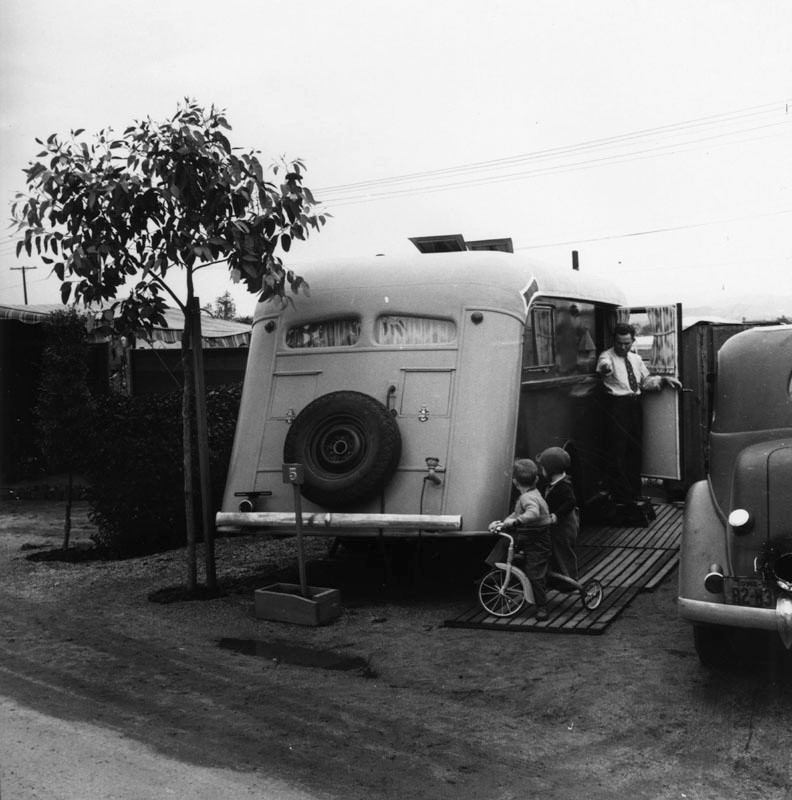
A father talks to his two young sons at Olympic Trailer Court.
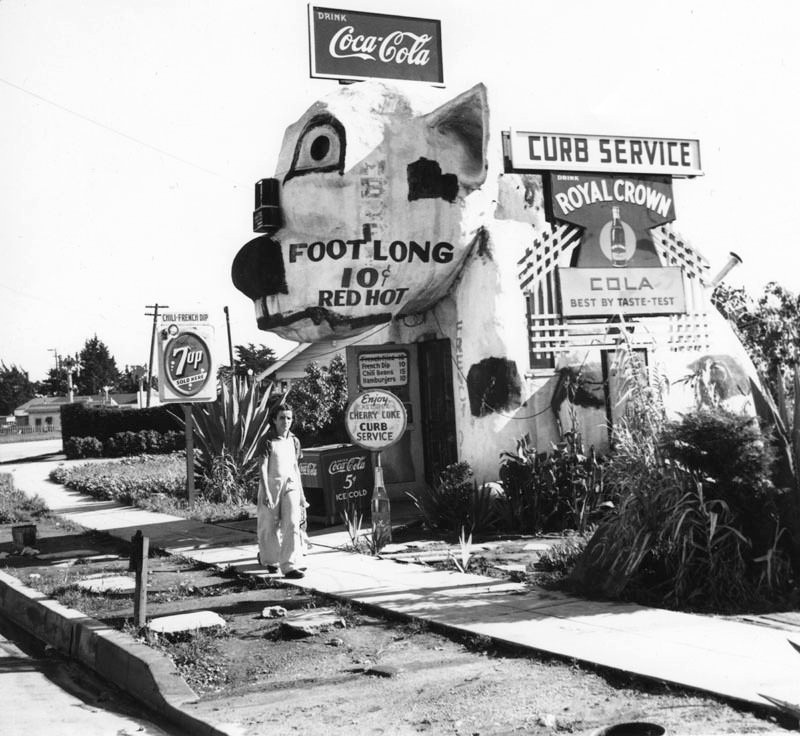
A young man walked by a hot dog stand on Washington Boulevard.
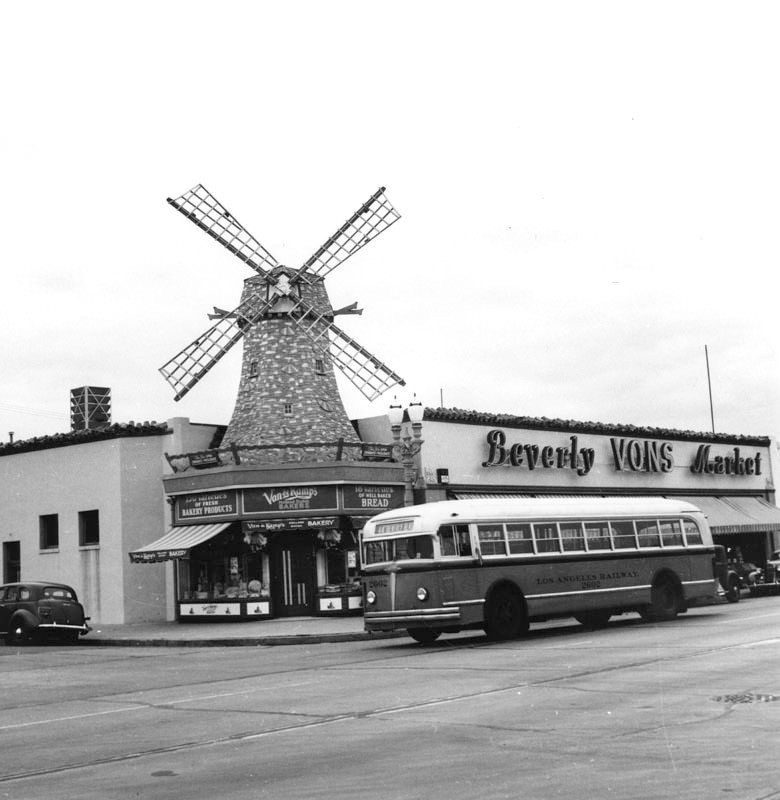
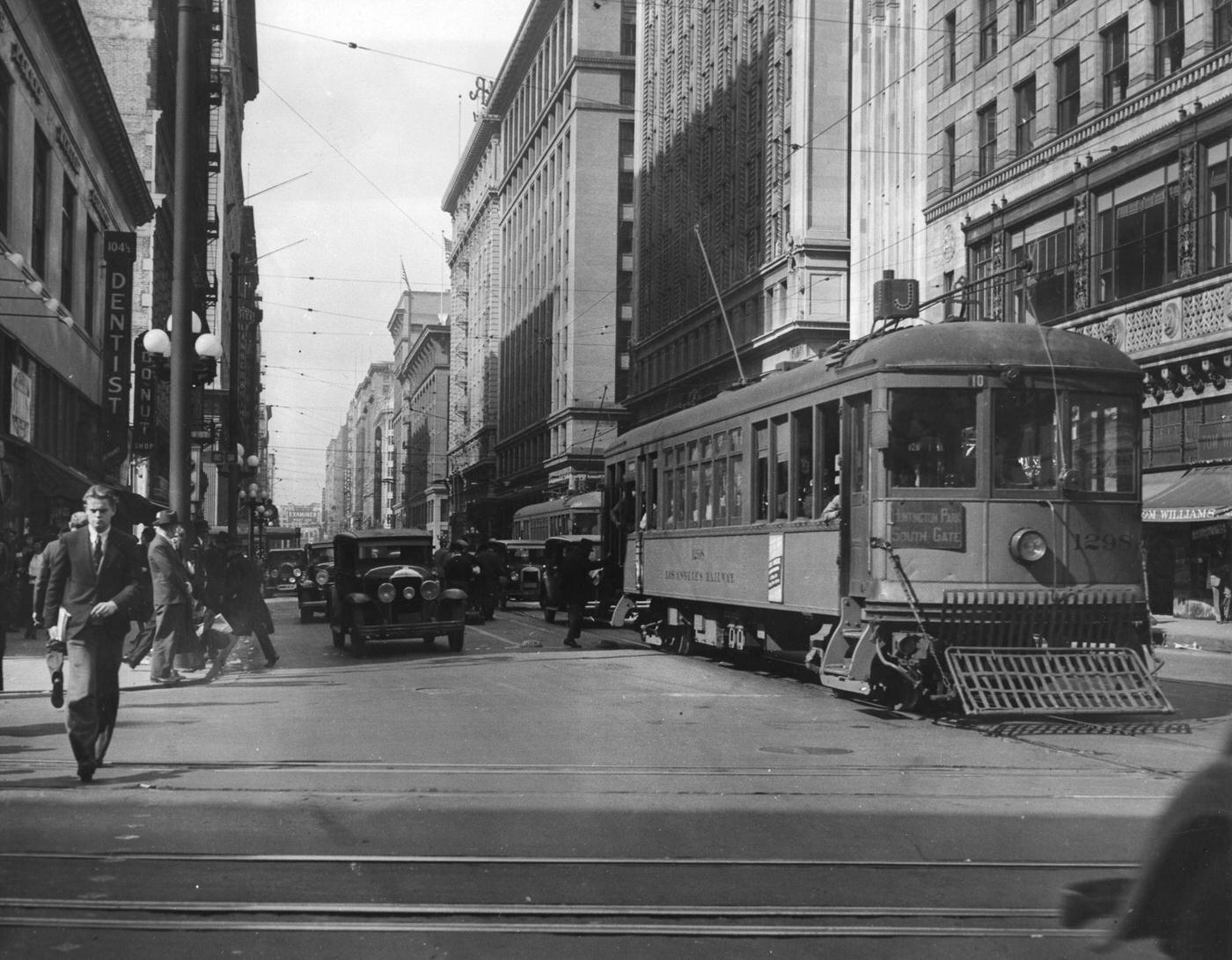
A Los Angeles Railway bus traveled through Los Angeles.
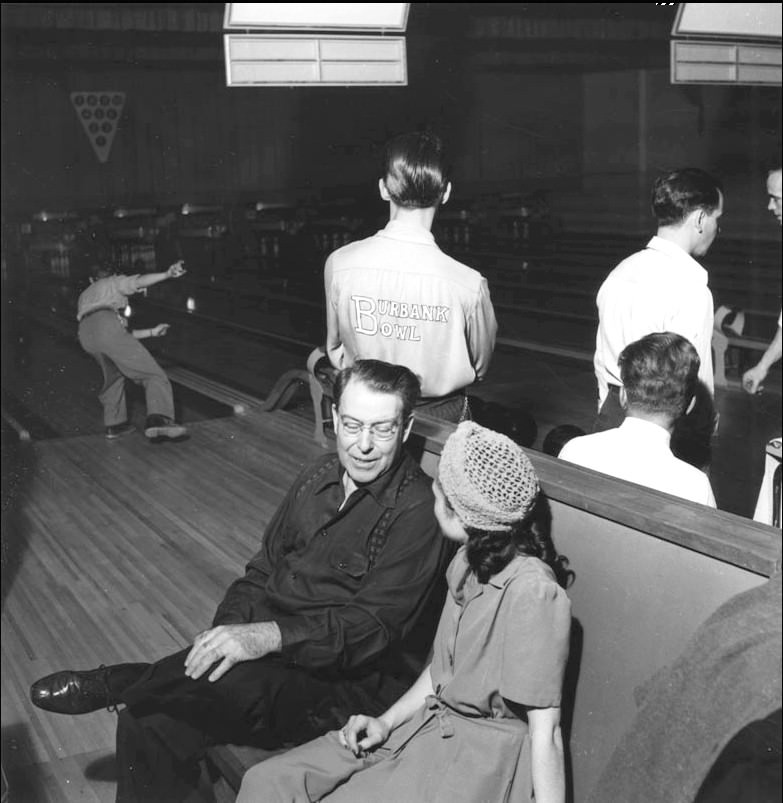
People gathered for a bowling tournament at Burbank Bowl.
Spectators watched the bowling tournament.
Lockheed workers in Burbank lined up to buy lunch.
Employees of the Douglas Aircraft plant, located at Santa Monica Airport, awaited a ride to work.
An ice cream vendor looked for customers near the Douglas Aircraft Company plant in Santa Monica.

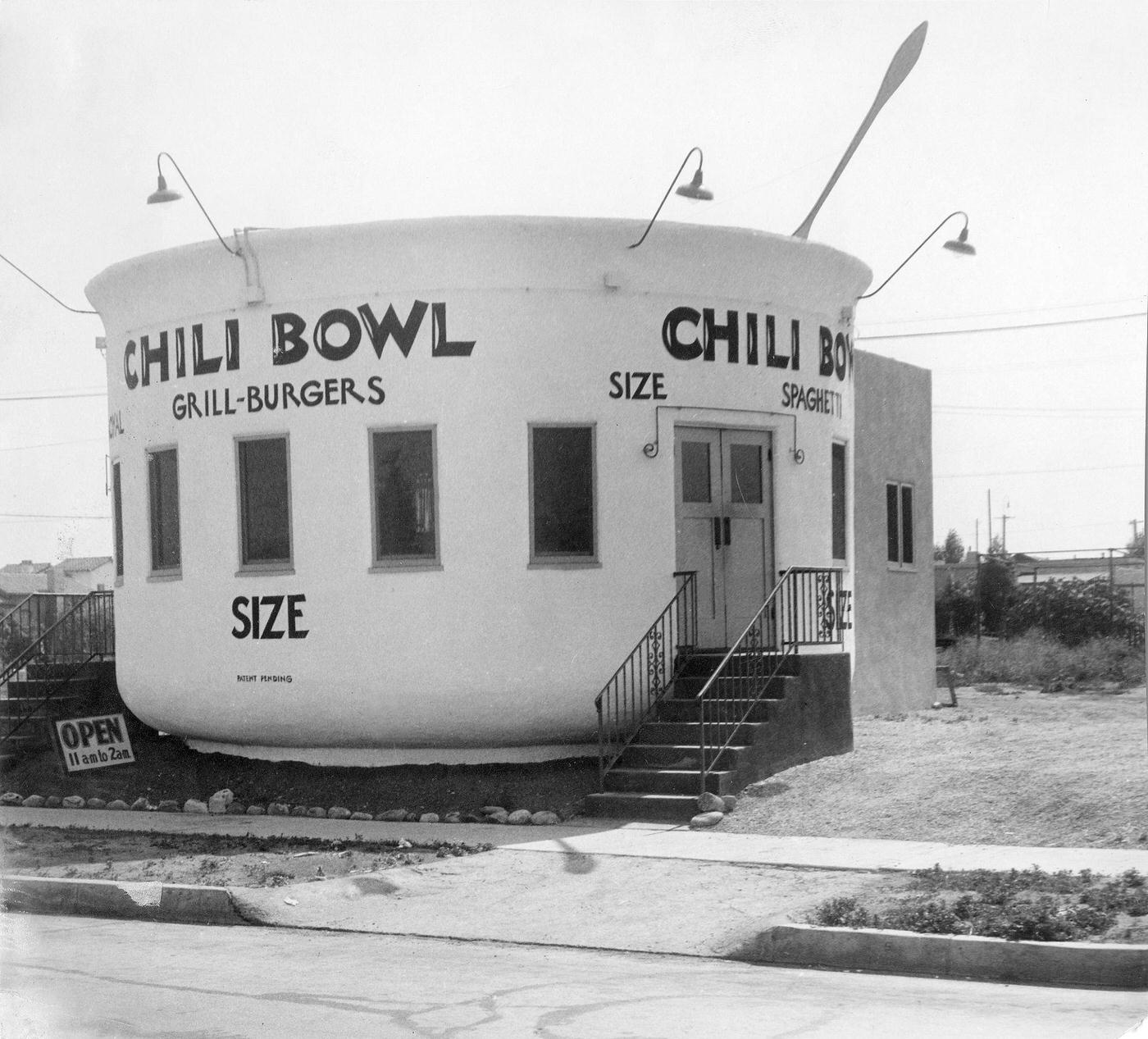
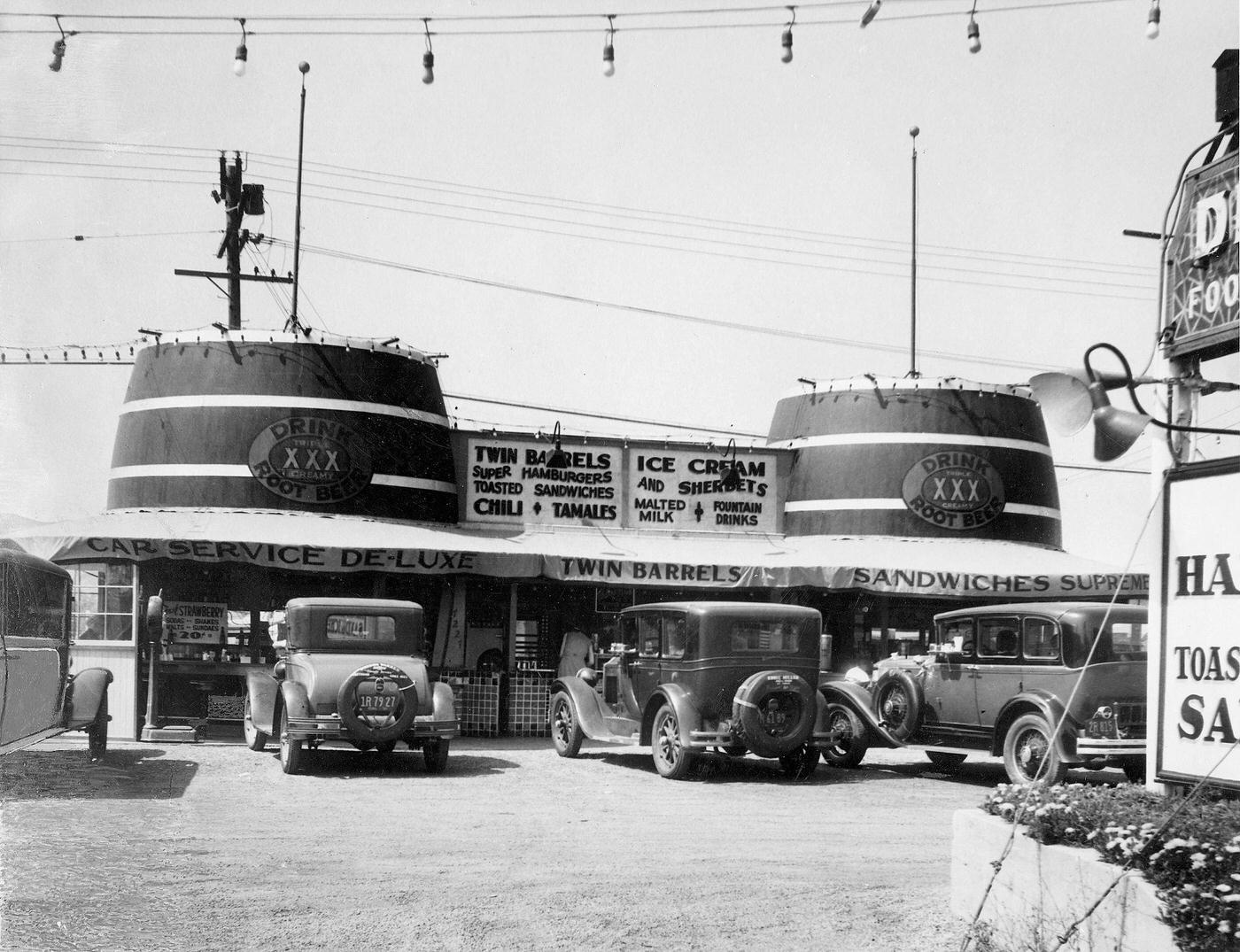
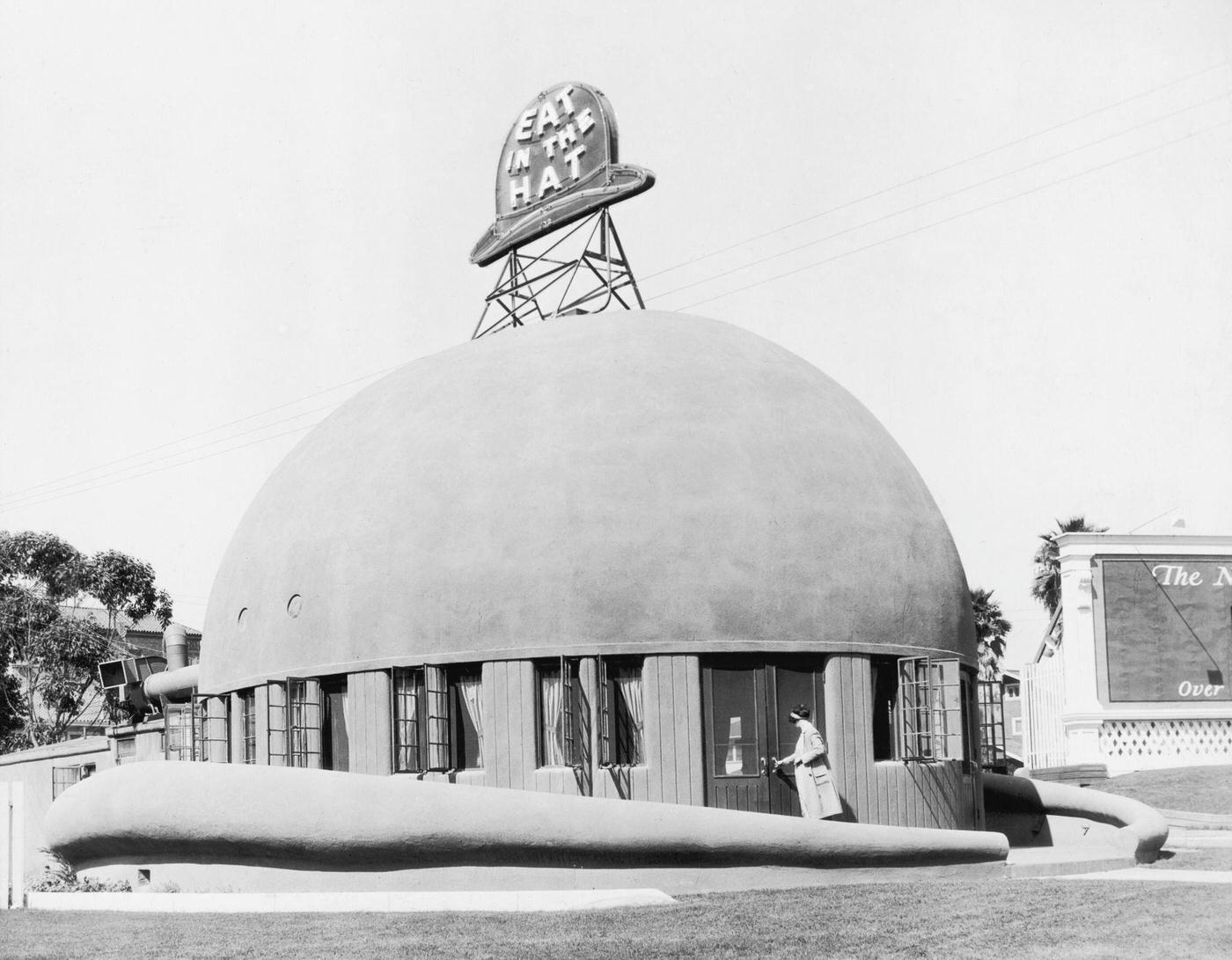
Drive-in restaurants were becoming a distinctly Los Angeles institution by the late 1930s. Simon’s Drive-In on Wilshire, the Twin Barrels near Los Angeles, and a chili bowl-shaped diner in 1939 all pointed toward a car culture that was already shaping how the city ate and socialized. Coulter’s department store on Wilshire, the Warner Brothers Downtown theater at 7th and Hill, and the Los Angeles Examiner building on Broadway all stood as markers of a city with both commercial muscle and cultural ambition.
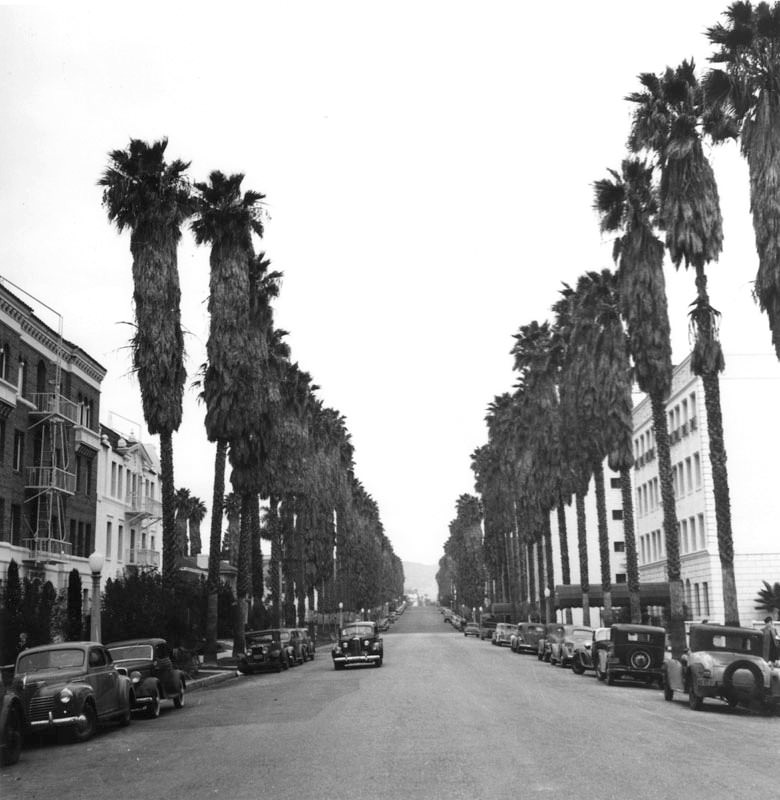
The palm-lined South Kenmore Avenue in Los Angeles.
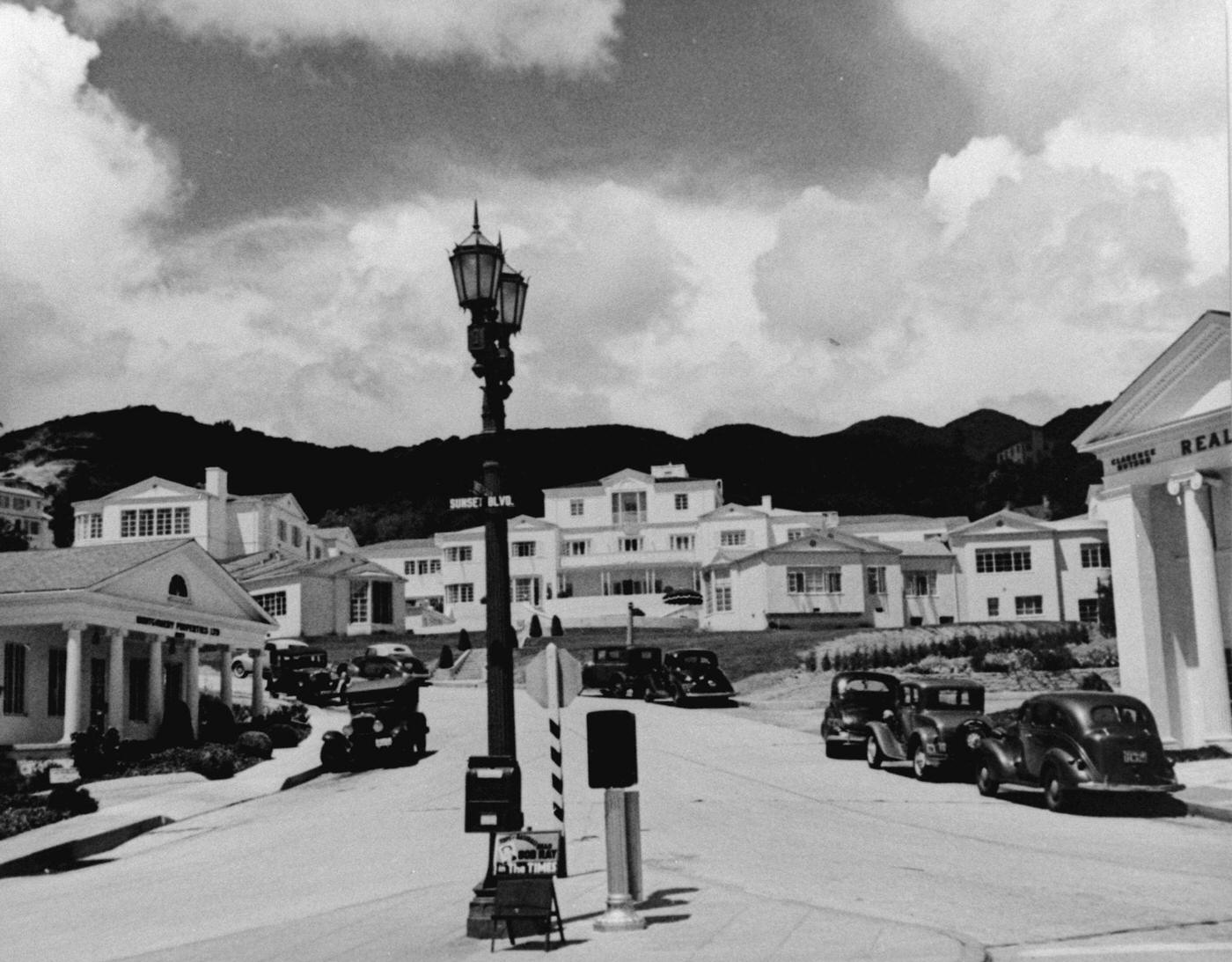
Sunset Boulevard - 1939
Sunset Boulevard – 1939
Wilshire Boulevard at Catalina, with the Mona Lisa Restaurant at the left, the Immanuel Presbyterian Church across the street, and Bullock's Wilshire Department Store tower can be seen further west on Wilshire, Los Angeles, 1938.
Wilshire Boulevard at Catalina, with the Mona Lisa Restaurant at the left, the Immanuel Presbyterian Church across the street, and Bullock’s Wilshire Department Store tower can be seen further west on Wilshire, Los Angeles, 1938.
View of unfinished CBS Columbia Square KNX Art Deco style building, looking northwest from Gower Street, Los Angeles, 1938

Howard Hughes circled the globe in his aircraft in 1938, completing the trip in just under four days and setting a new world record. An American Airlines plane flying over Los Angeles captured his world-circling aircraft in 1938. Hughes had already made his name in Hollywood as a film producer, but his aviation achievements in the 1930s cemented a different kind of fame. When actor Laurence Olivier arrived in Los Angeles in 1939 aboard the ocean liner Normandie to film “Wuthering Heights” opposite Merle Oberon, he stepped into a city where celebrity arrivals were routine front-page news.
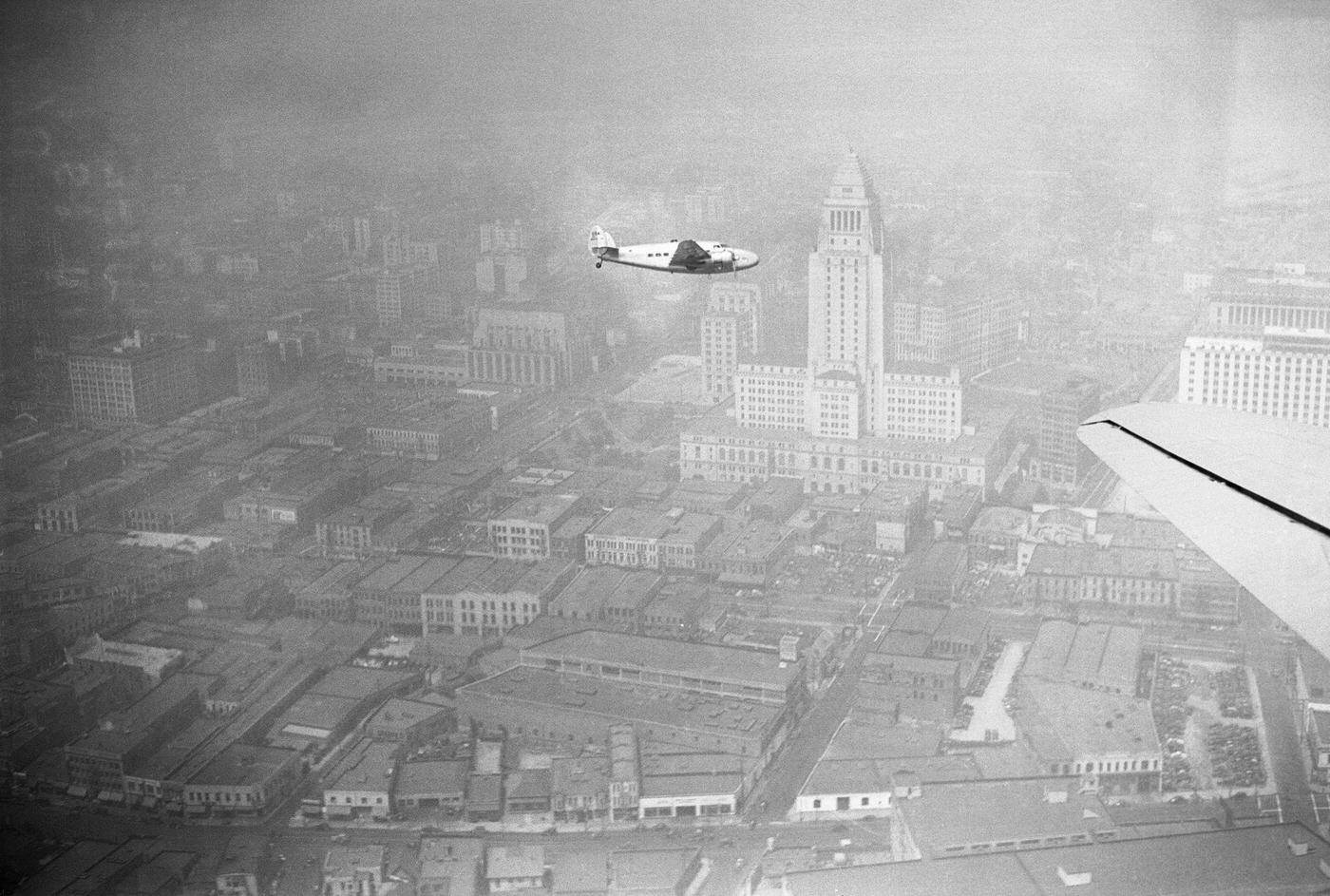
Howard Hughes' world-circling plane pictured from an American Airlines plane as it flew over Los Angeles, 1983
Howard Hughes’ world-circling plane pictured from an American Airlines plane as it flew over Los Angeles, 1983
Laurence Olivier as he arrived this morning on the Normandie, en route to Hollywood where he will play opposite Merle Oberon in "Wuthering Heights" - 1939.
Laurence Olivier as he arrived this morning on the Normandie, en route to Hollywood where he will play opposite Merle Oberon in “Wuthering Heights” – 1939.
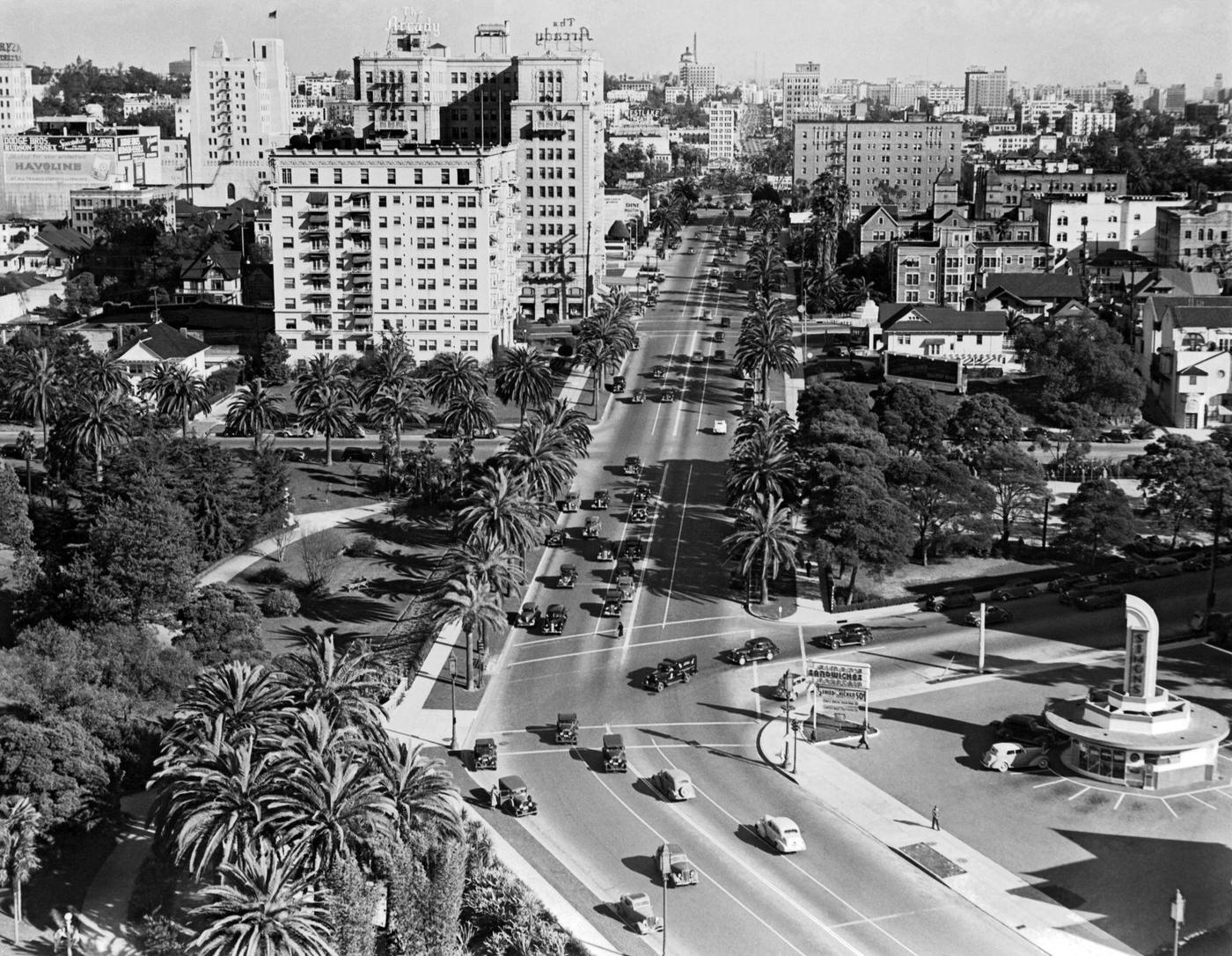
Looking east on Wilshire Blvd at Hoover St with Simon's Drive-In in the lower right and the Arcady Hotel a couple of blocks up on the left, Los Angeles, 1939.
Looking east on Wilshire Blvd at Hoover St with Simon’s Drive-In in the lower right and the Arcady Hotel a couple of blocks up on the left, Los Angeles, 1939.
Eatery serving 'Grill-Burgers' and other dishes that is shaped like a 'Chili Bowl', 1939.
Eatery serving ‘Grill-Burgers’ and other dishes that is shaped like a ‘Chili Bowl’, 1939.
The Twin Barrels drive-in restaurant near Los Angeles, 1939.
The exterior of the 'Cafe Trocadero', a nightclub on Sunset Strip, a stretch of Sunset Boulevard, in West Hollywood, 1937.
The exterior of the ‘Cafe Trocadero’, a nightclub on Sunset Strip, a stretch of Sunset Boulevard, in West Hollywood, 1937.

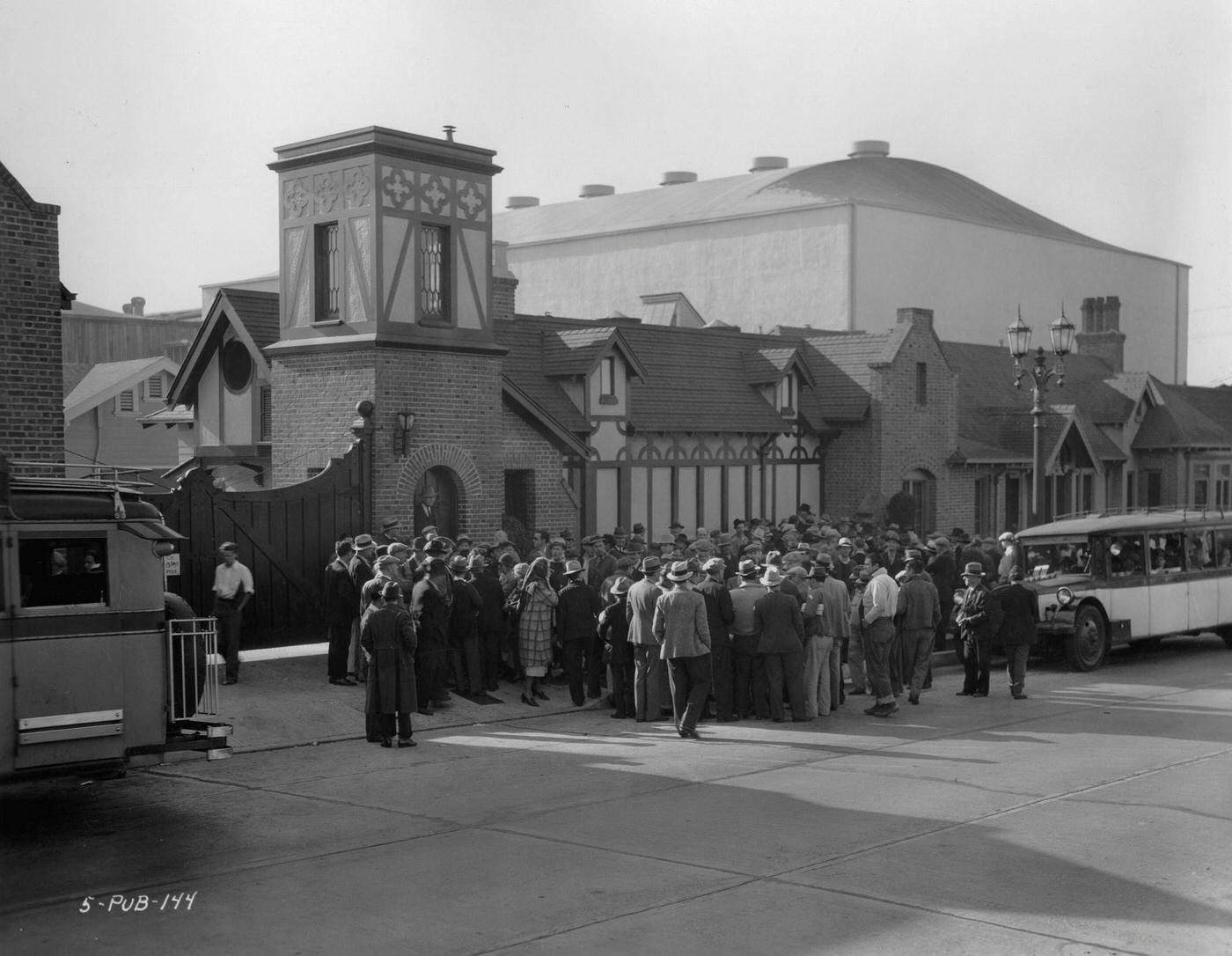
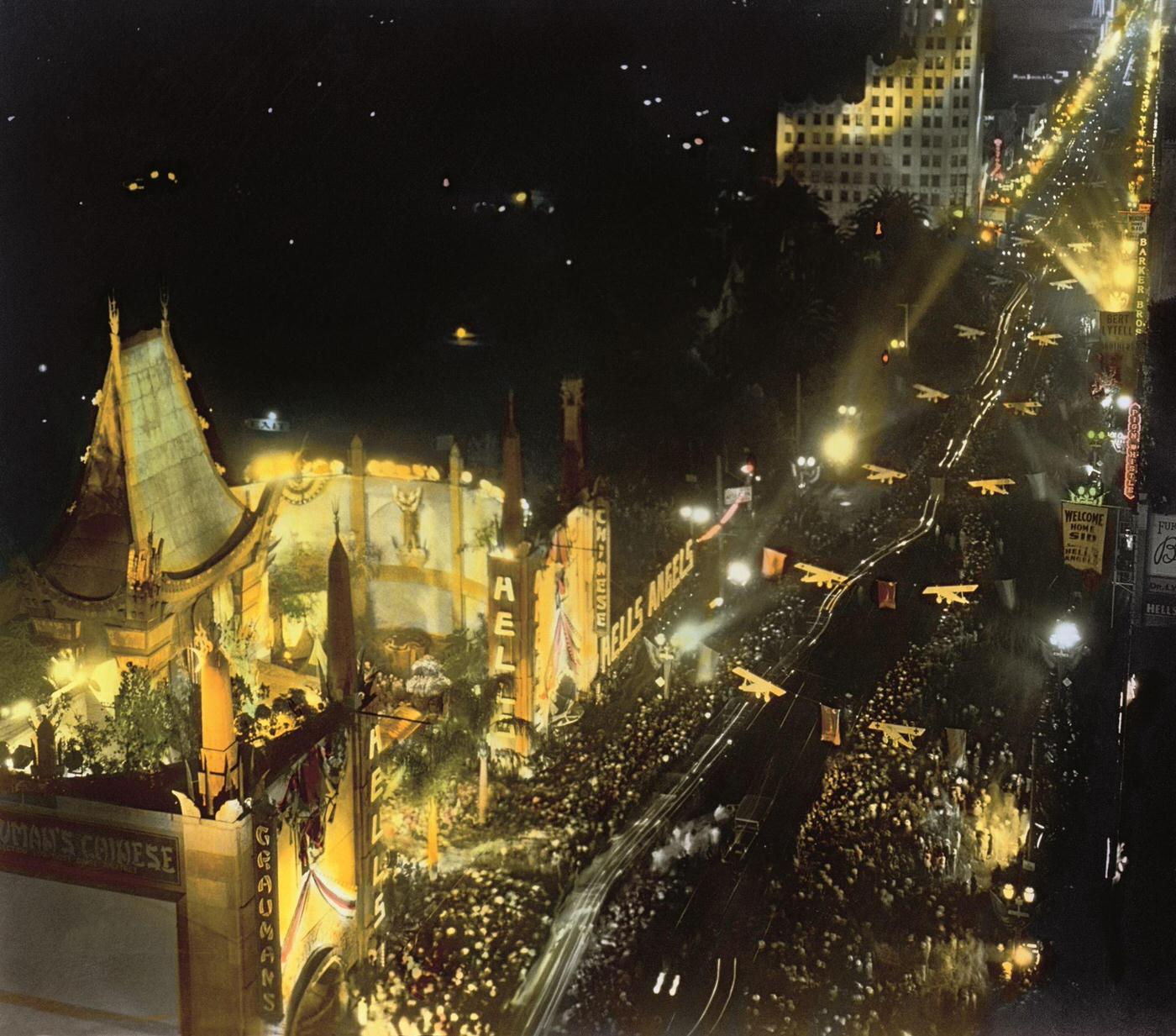
The film industry shaped every corner of Los Angeles culture. A crowd gathered outside Charlie Chaplin’s studio in the heart of Hollywood for photographs. Premiere nights at Grauman’s Chinese Theatre — like the one for “Hell’s Angels” — drew massive throngs to Hollywood Boulevard. Movie star homes in Bel Air, the Hollywood Hills, and Toluca Lake became subjects of fascination, with publications running exterior shots of houses belonging to Warner Baxter, Ramon Novarro, and Joan Fontaine. The Screen Actors Guild marched alongside 40,000 other union members in the Labor Day Parade, demonstrating that even Hollywood’s talent was organizing.
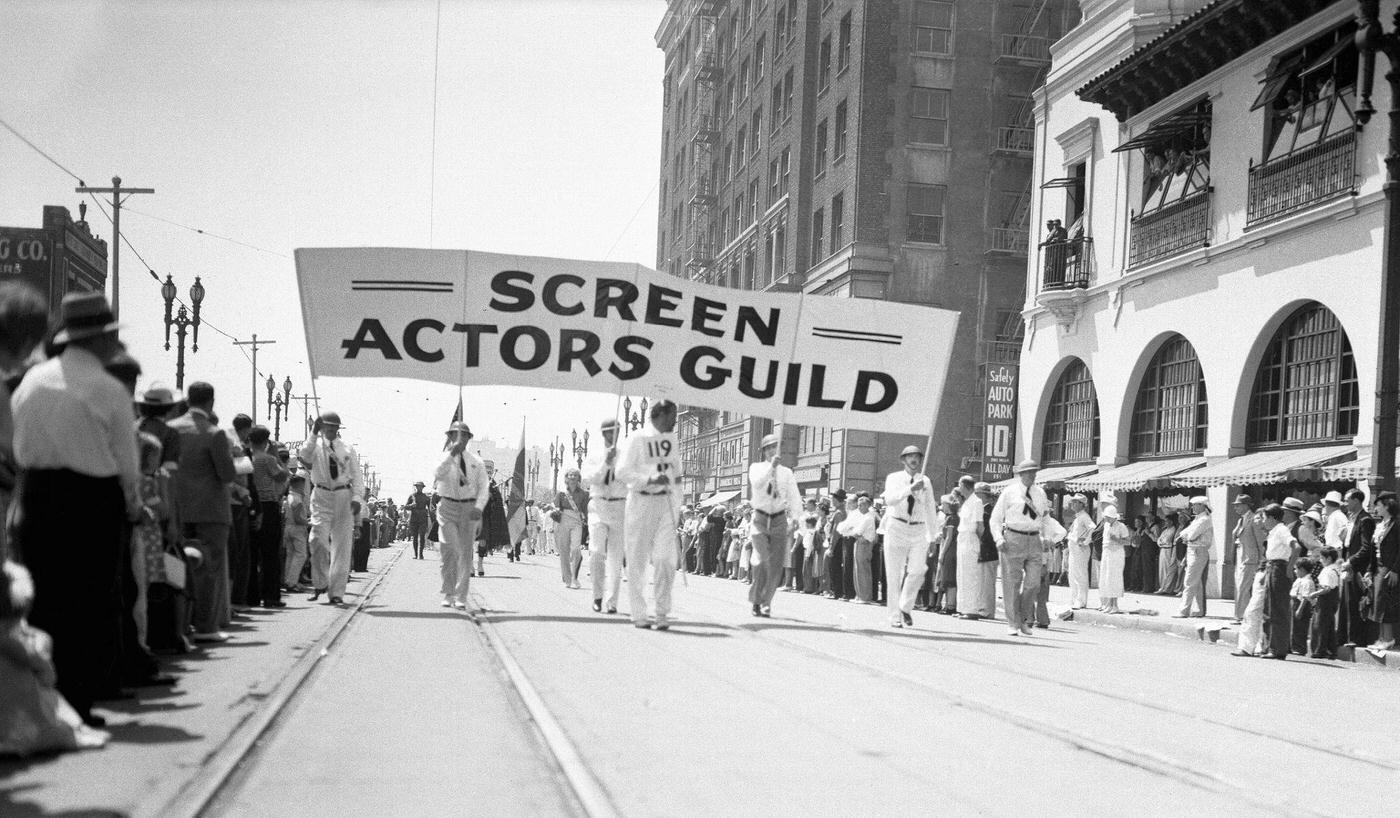
Screen Actors Guild marching in Labor Day Parade. Forty thousand union men and women marched through the streets of Los Angeles to demonstrate their rising strength. None but AFL unions were represented.
Hollywood sign, Hollywood, California - 1935.
Hollywood sign, Hollywood, California – 1935.
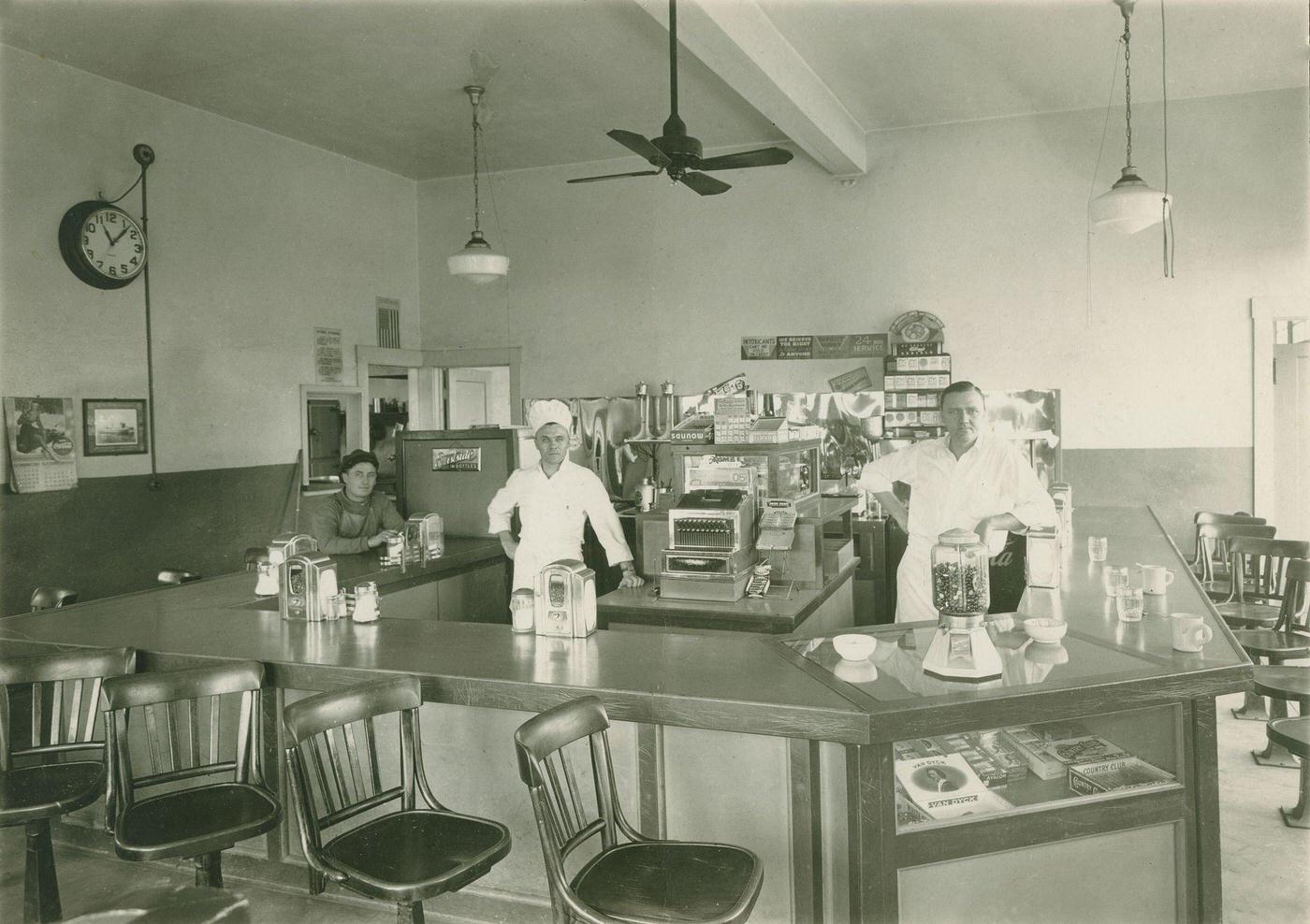
Black and white photograph of staff posed in Earl's Light House Restaurant
Black and white photograph of staff posed in Earl’s Light House Restaurant
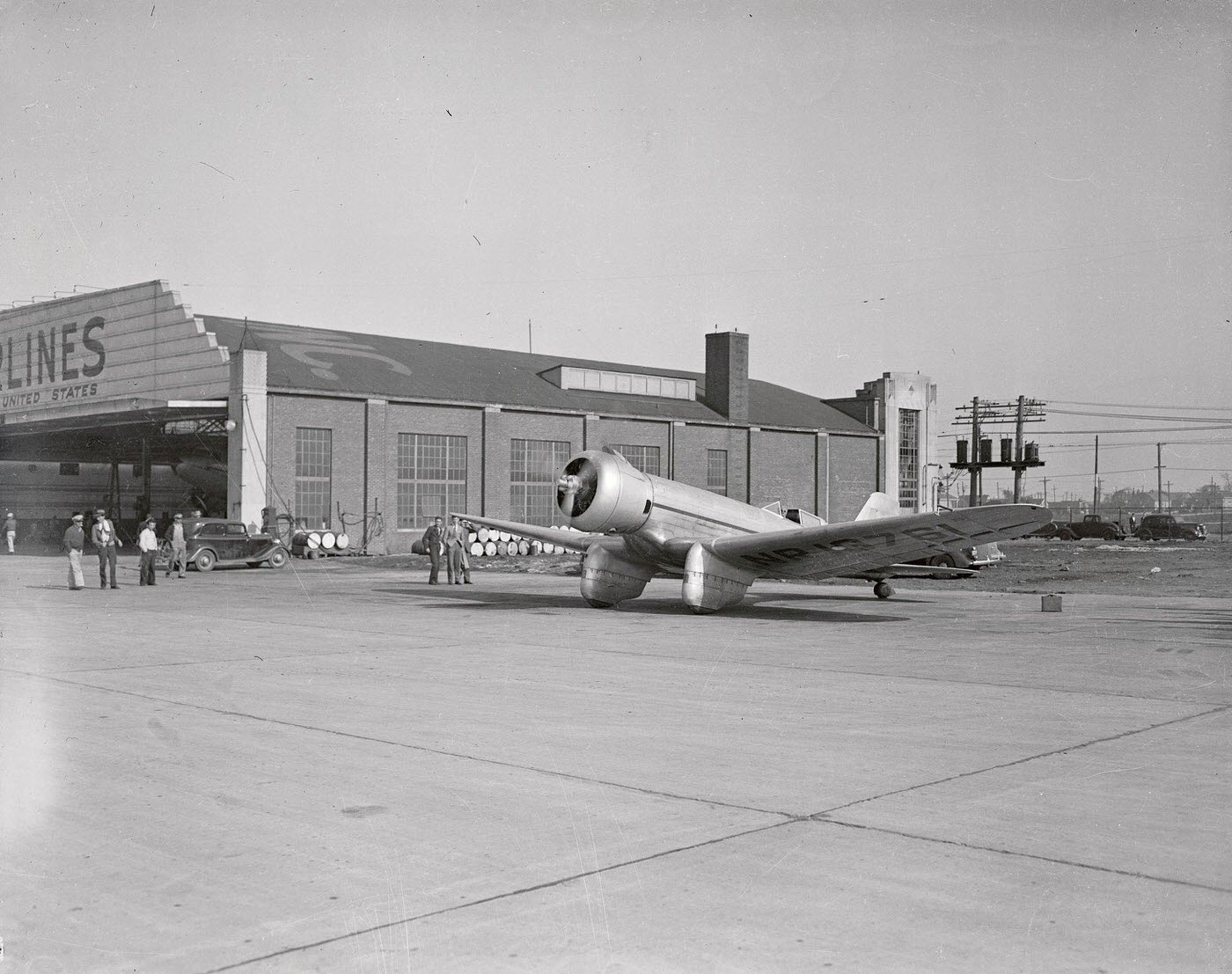
Howard Hughes, motion picture producer, was at the controls when his Mystery Plane had its first real test flight in Los Angeles, 1935
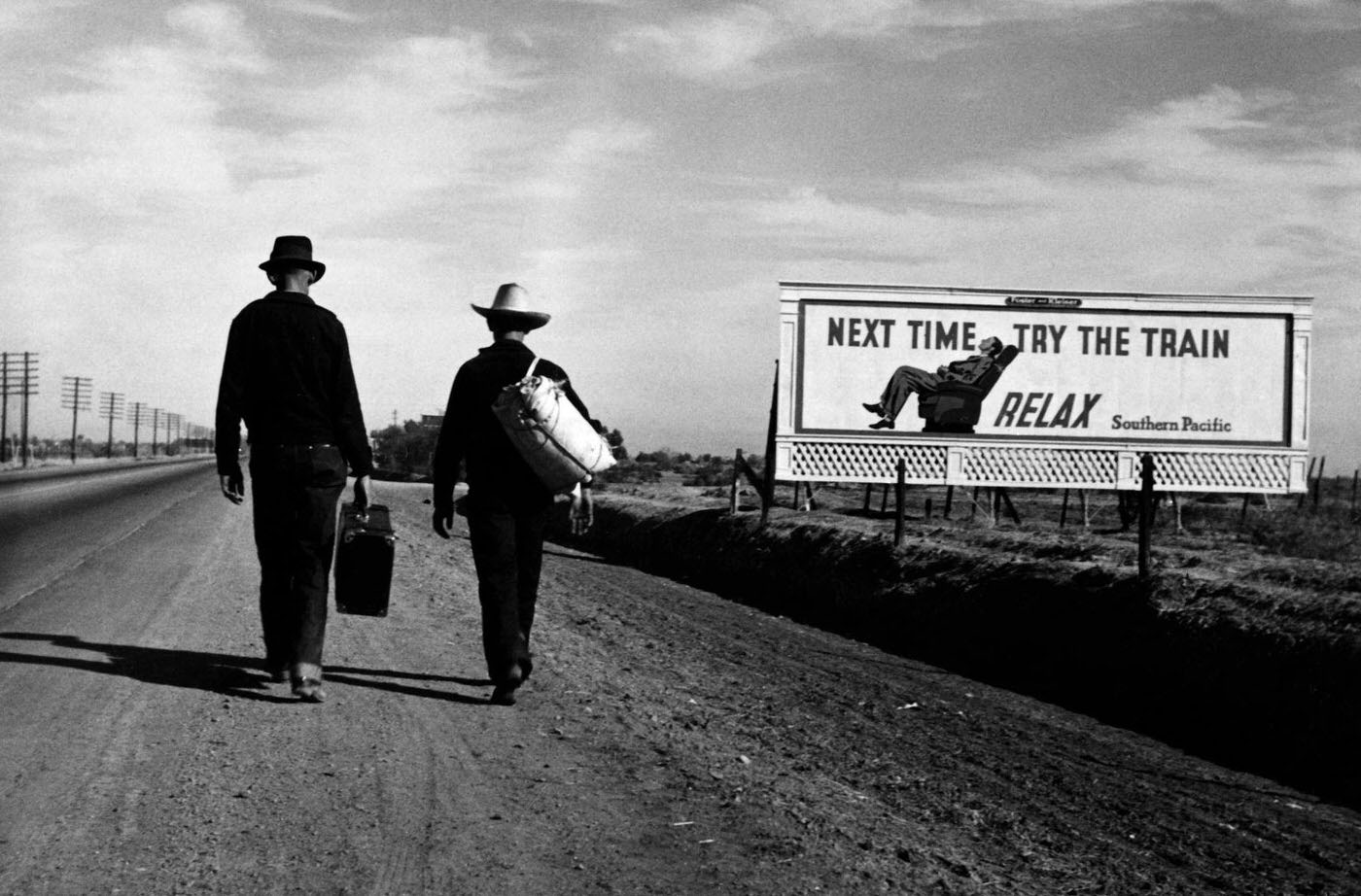
Toward Los Angeles, 1937.
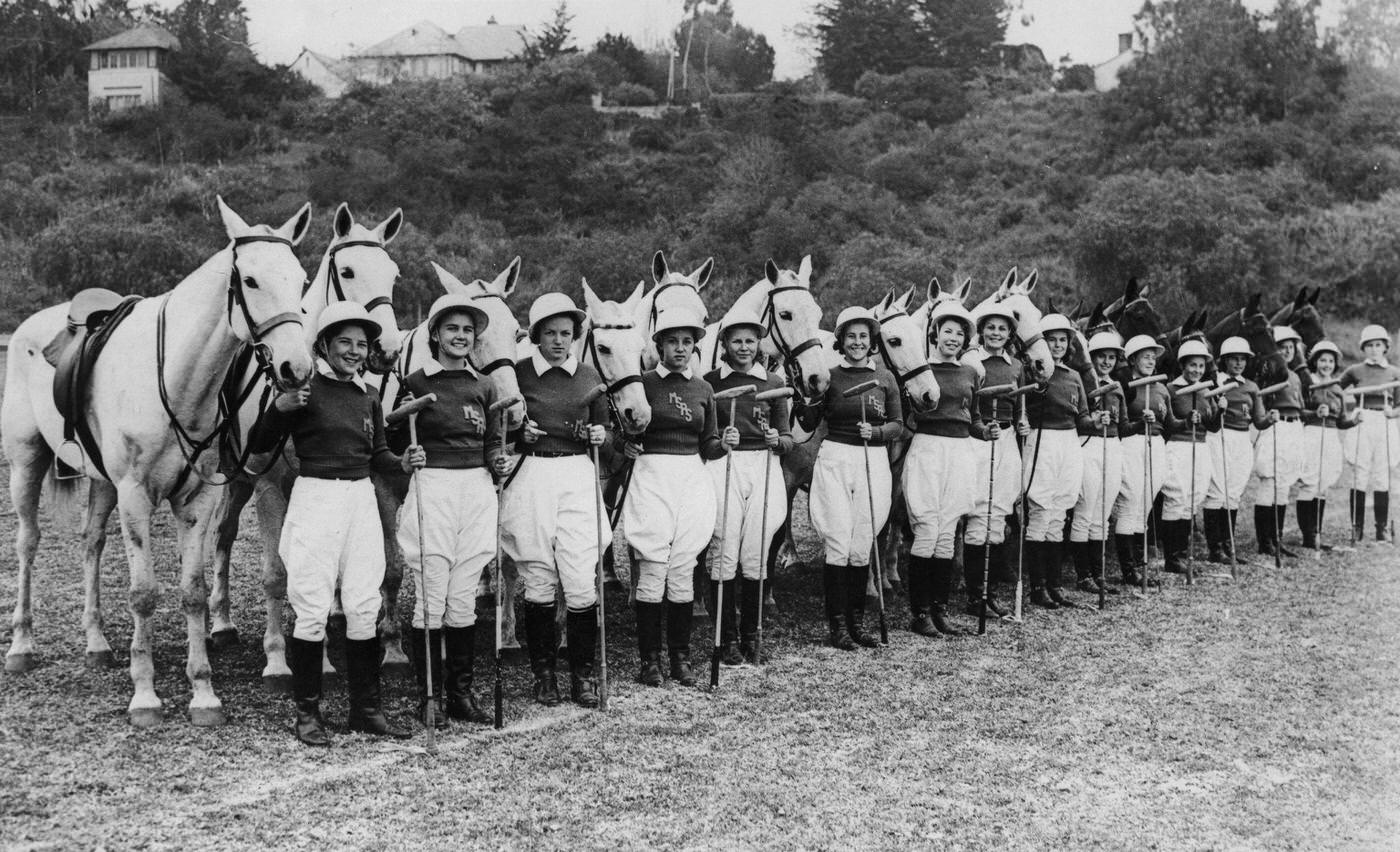
Polo-school team of the Mabelle Scott Rancho School in Santa Monica, 1937.
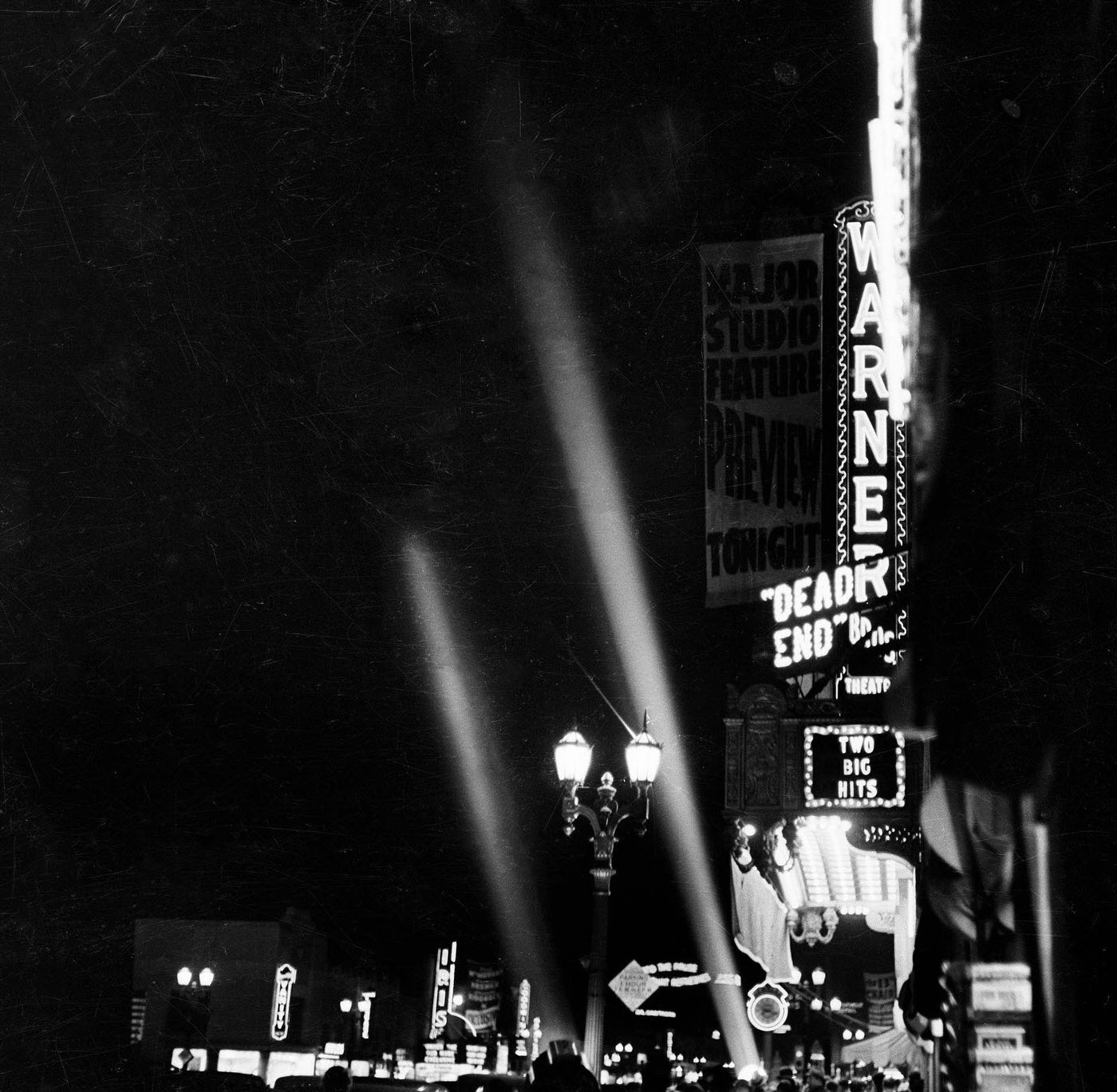
A night view down Hollywood Boulevard in Los Angeles, California, 1937.

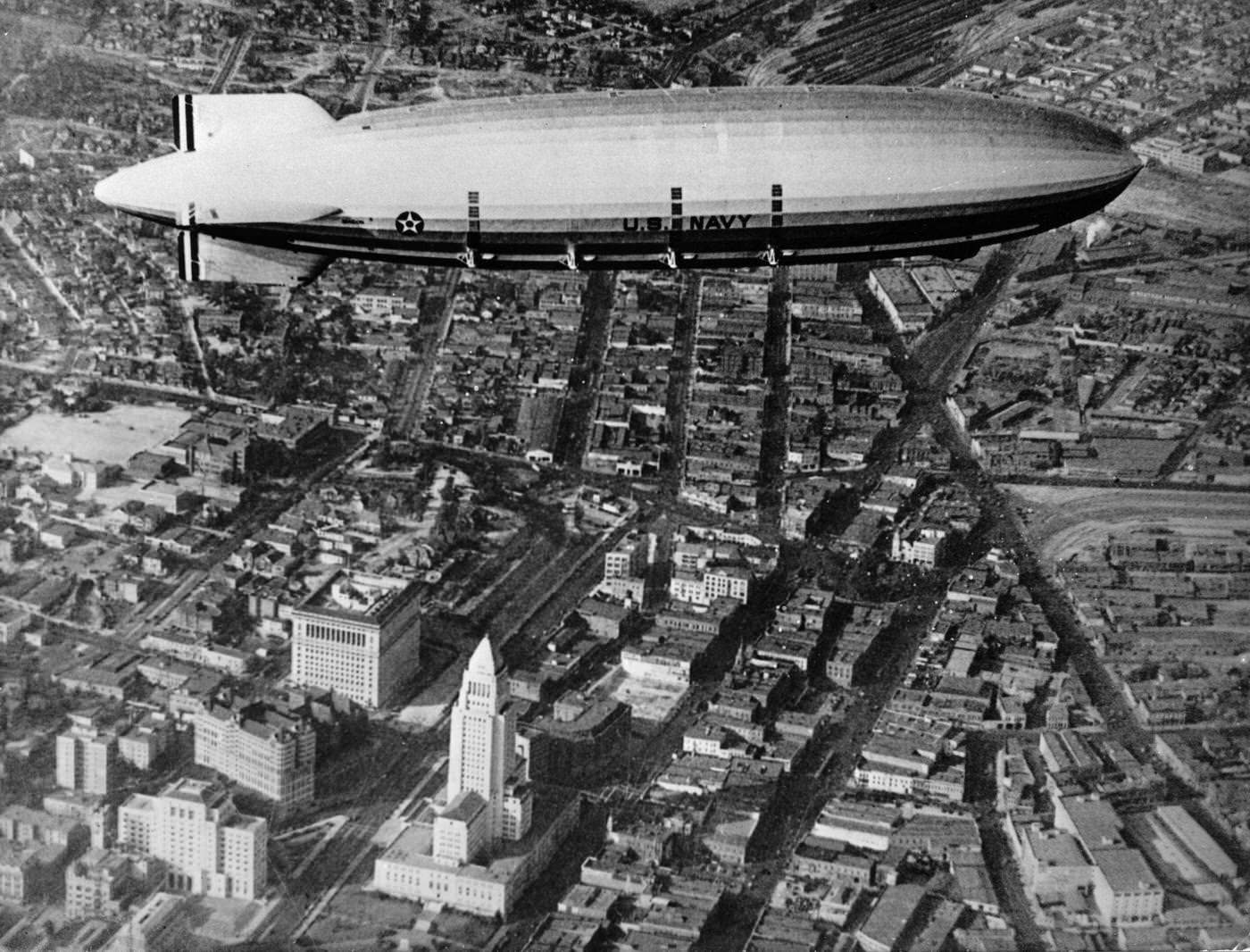
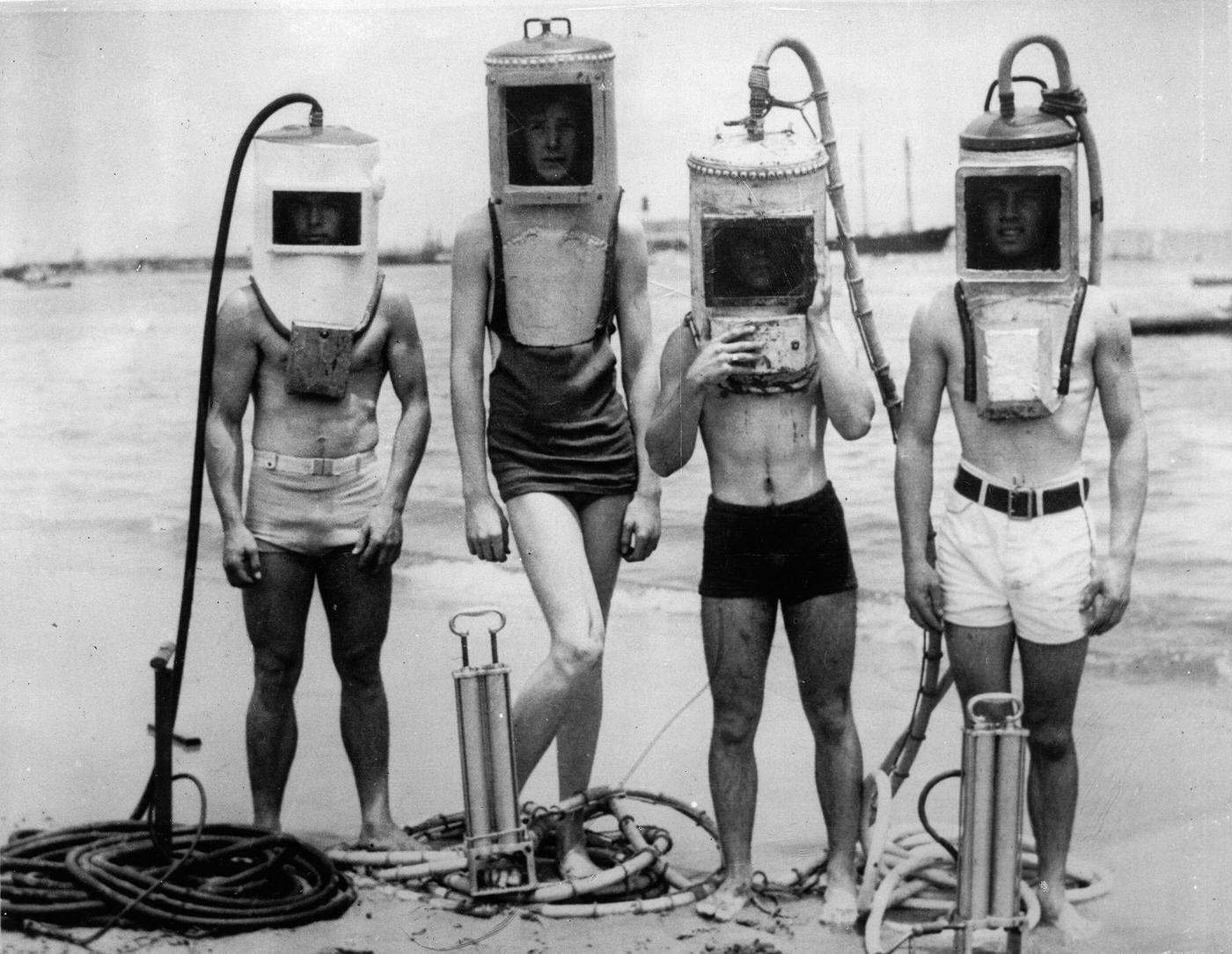
The US Navy airship Macon flew over Los Angeles in 1934, its massive silver hull catching the light above the city’s rooftops. It was one of the largest flying objects ever built — nearly 800 feet long — and its appearance over the city drew crowds into the streets. Boys in the city found their own ways to push limits. In June 1933, a group of Los Angeles kids fashioned diving helmets from hot water heaters, boilers, and salvaged scrap metal, then used them to explore underwater. Their improvised gear made the newspapers.
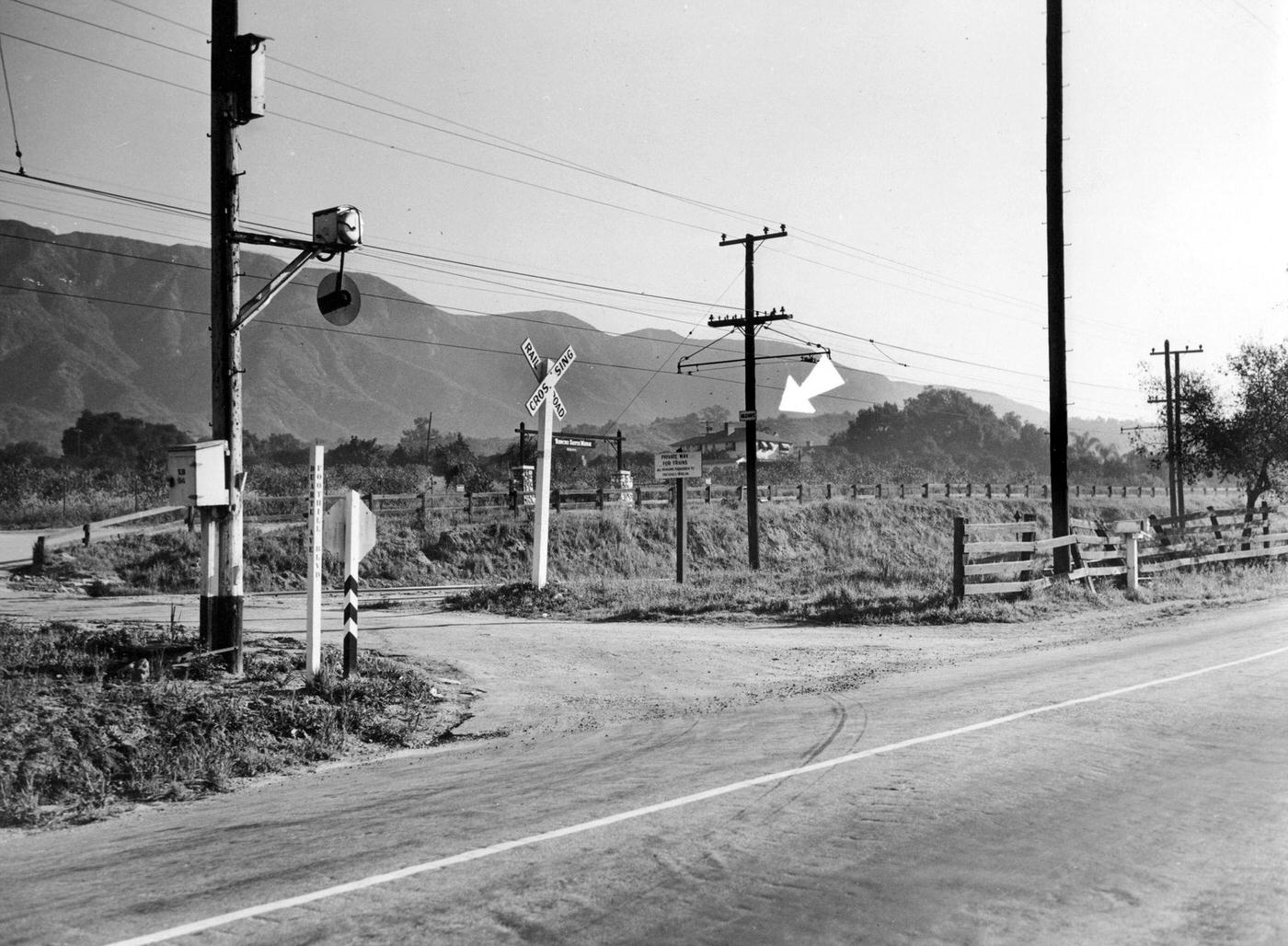
At this junction of two suburban roads, District Attorney Buron Fitts narrowly escaped death when ambushers fired shots that wounded him in the arm, 1936
High angle view of the Santa Claus Lane Parade on an illuminated Hollywood Boulevard in Los Angeles, 1934
Pause in a Hollywood studio. Extras and actors of the Hollywood Beauty Chorus in the movie 'Footlight Parade' shot from above, 1934.
Pause in a Hollywood studio. Extras and actors of the Hollywood Beauty Chorus in the movie ‘Footlight Parade’ shot from above, 1934.
The US-Airship Macon over Los Angeles, 1934.
Jazz band playing in the swimming pool at the Santa Monica Hotel. There are girls eating and dancing as well - June 19, 1933.
Jazz band playing in the swimming pool at the Santa Monica Hotel. There are girls eating and dancing as well – June 19, 1933.
A group of boys made diving helmets from sections of hot water heaters, boilers and other easily secured "junk". Los Angeles. USA - June 23, 1933.
A group of boys made diving helmets from sections of hot water heaters, boilers and other easily secured “junk”. Los Angeles. USA – June 23, 1933.
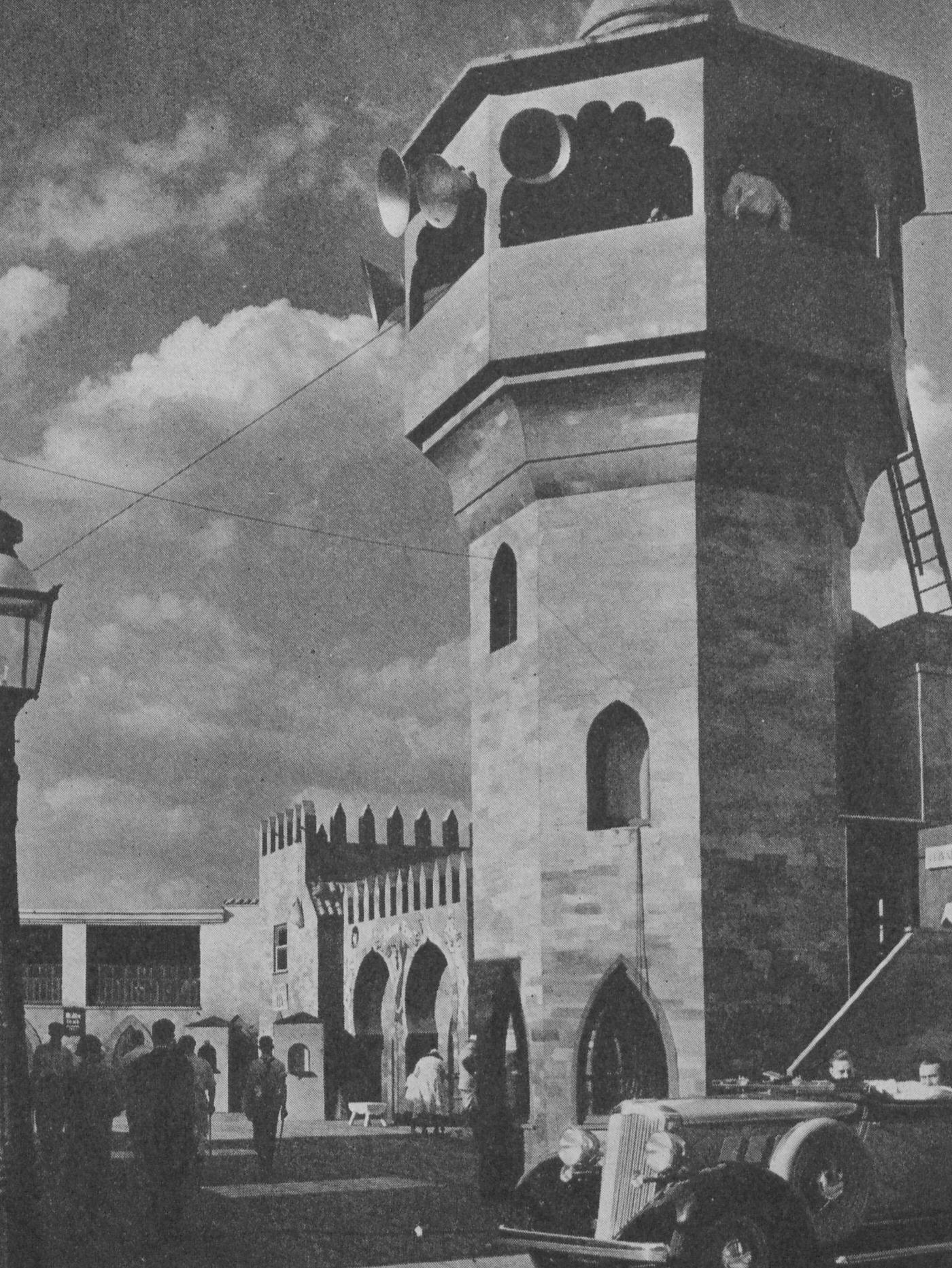
Loud speakers protrude from the Hollywood Tower at the Century of Progress International Exposition (1934).
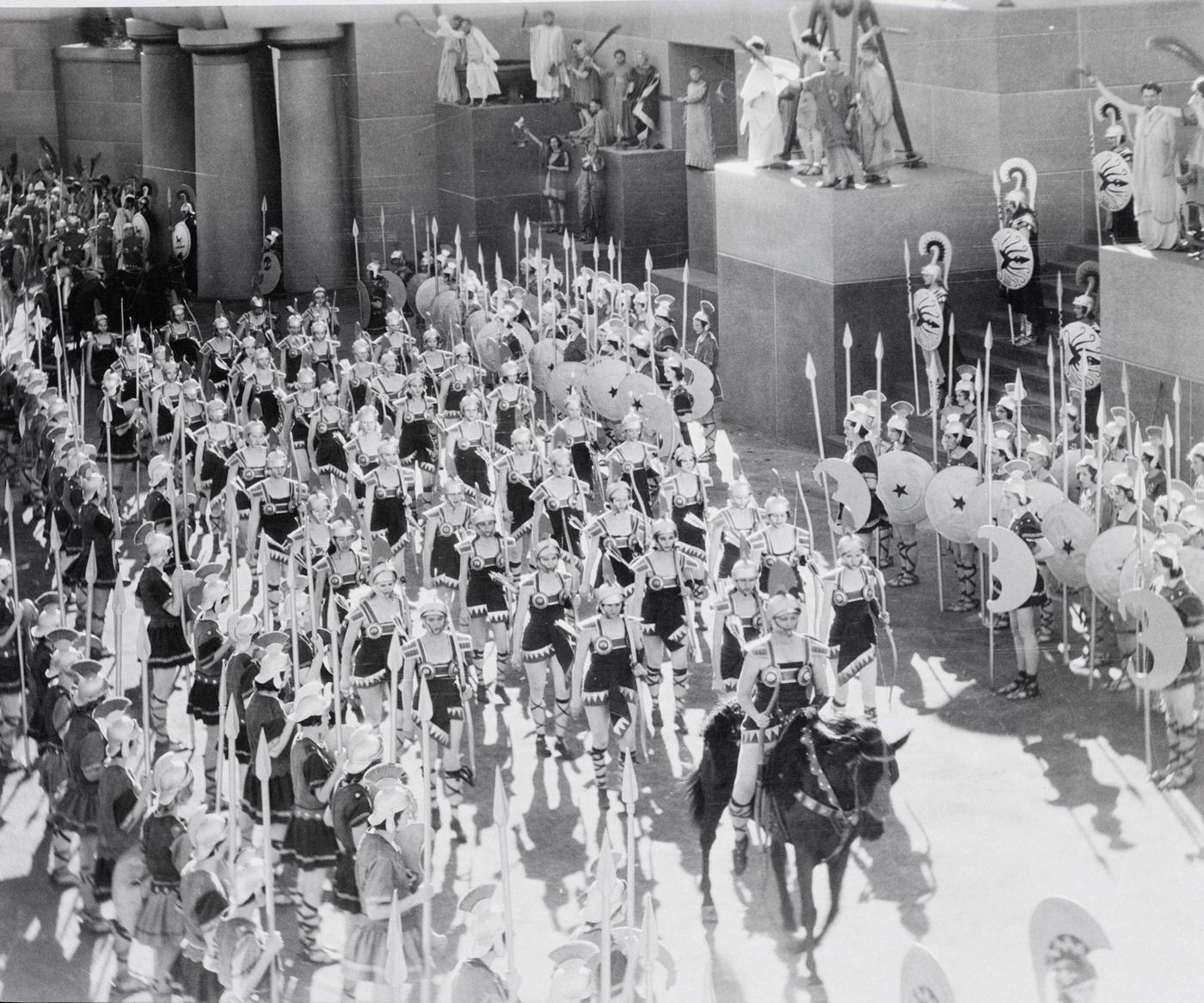
Actors in costume and horses during Amazon staging.

Quirky advertising was a hallmark of the Los Angeles commercial scene. A tire dealership in Hollywood stacked thousands of used tires into a record-breaking tower and placed a lifelike dummy on top to attract attention. Novelty architecture — like the hat-shaped Brown Derby restaurant on Wilshire Boulevard, directly across from the Ambassador Hotel — drew customers as much through spectacle as through the food they served. The Earl’s Light House Restaurant, with its staff posed for a formal photograph, represented the more traditional end of the city’s dining scene.
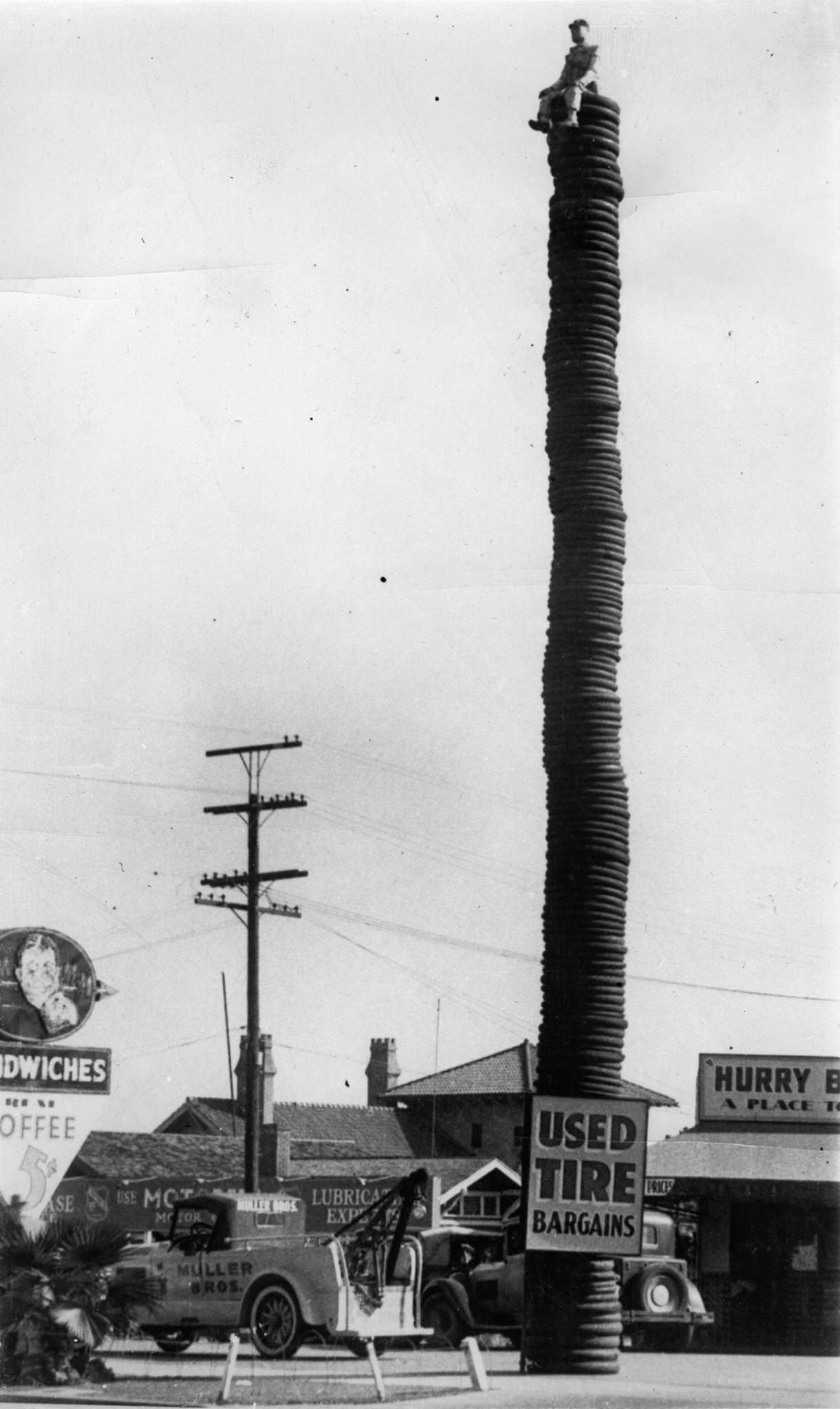
A record breaking stack of tires is used as advertisement at Hollywood, California. To attract attention to a large stock of used tires two salesmen put a lifelike dummy sitting on the top. 2044
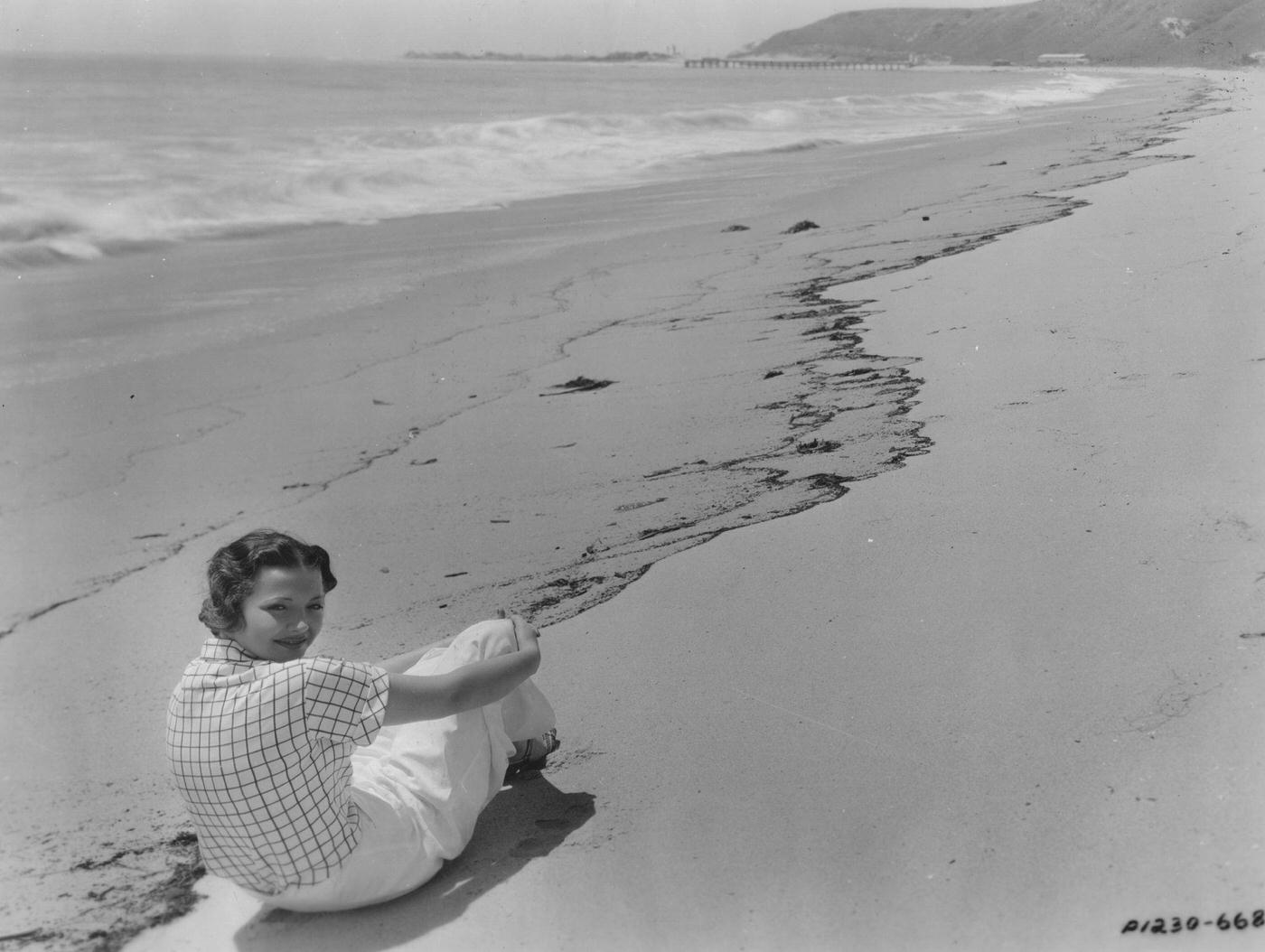
Sylvia Sidney (1910 - 1999) the American film and television actress on the beach in front of her Malibu home where she spends her time when she is not working
Sylvia Sidney (1910 – 1999) the American film and television actress on the beach in front of her Malibu home where she spends her time when she is not working
A procession passes Los Angeles' new $10,000,000 City Hall at the opening ceremony for the building which is surmounted by the Lindbergh Beacon 500 feet above street level - December 4, 1930.
A procession passes Los Angeles’ new $10,000,000 City Hall at the opening ceremony for the building which is surmounted by the Lindbergh Beacon 500 feet above street level – December 4, 1930.
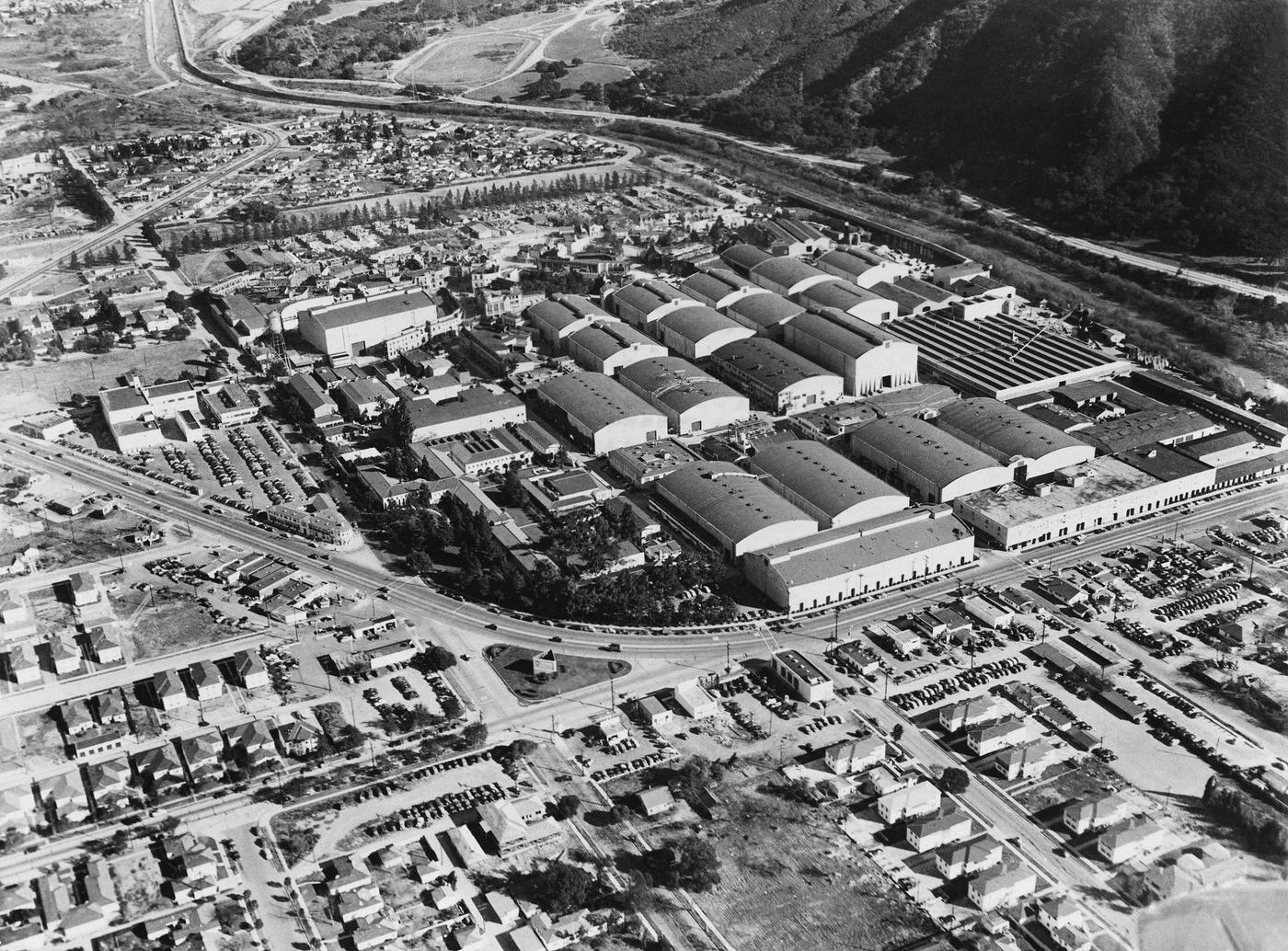
Aerial view of Warner Brothers Studios - undated.
Aerial view of Warner Brothers Studios – undated.
Sixth Street, looking west from Main street, Los Angeles, California, early to mid 20th century
Los Angeles City Hall, Los Angeles, California, with the third Los Angeles Times Building on the right, 1930

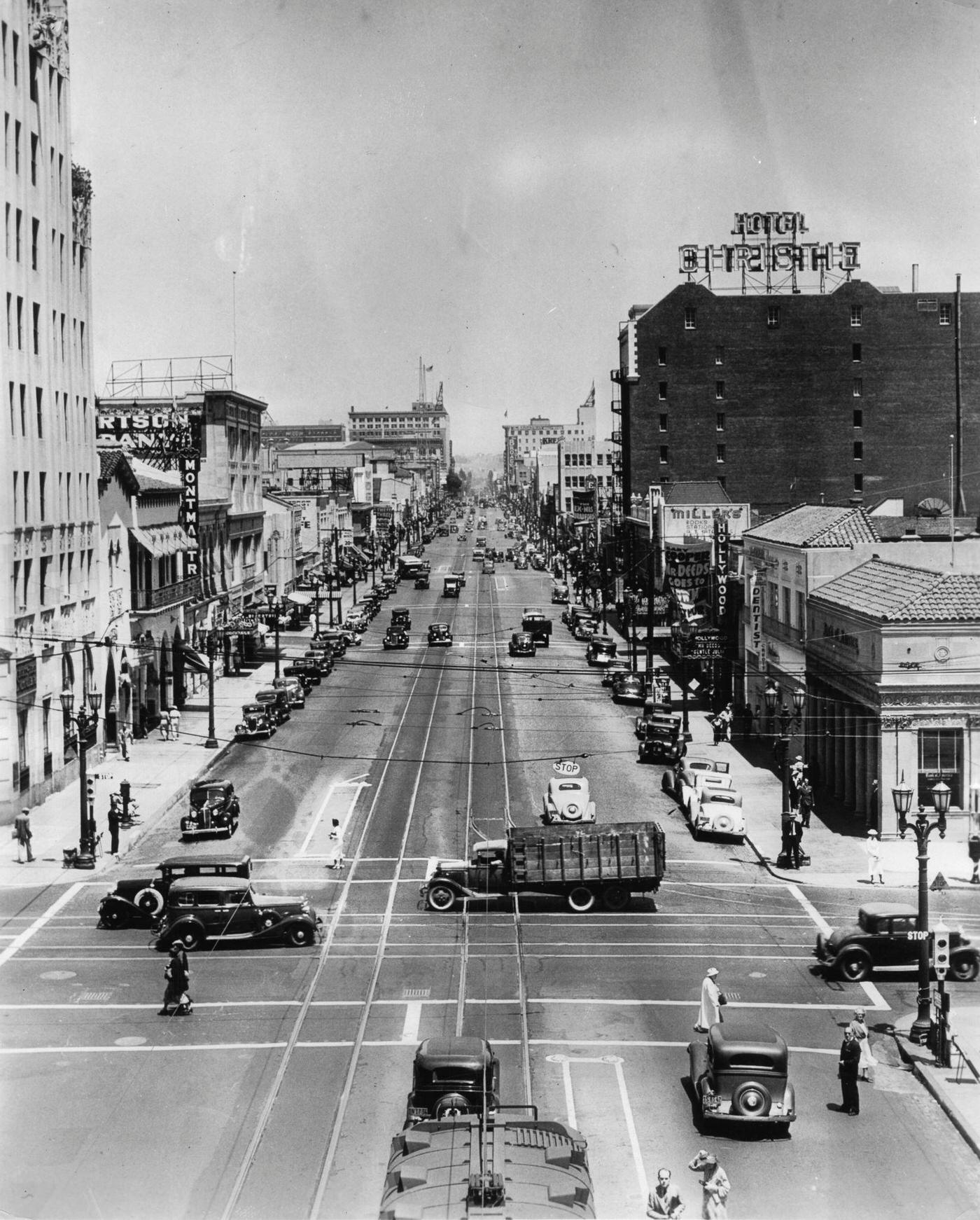
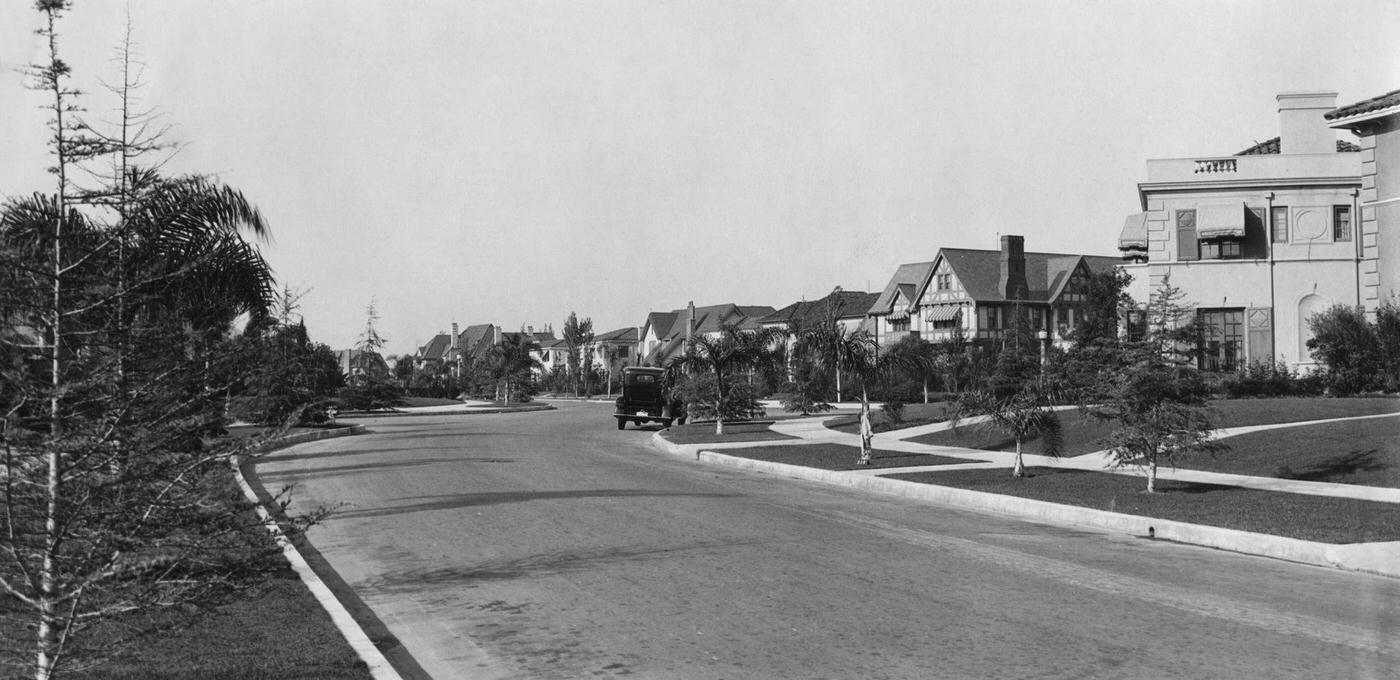
Looking north from 7th Street, Broadway in 1930 stretched as far as the eye could see, lined with stores and packed with pedestrians. The Wilshire district’s suburban boulevards, lined with mature trees and low-rise buildings, offered a quieter contrast to the downtown bustle. Palm-lined streets like South Kenmore Avenue gave the city its postcard identity — wide, sunlit corridors running straight toward a horizon that always seemed just slightly out of reach.
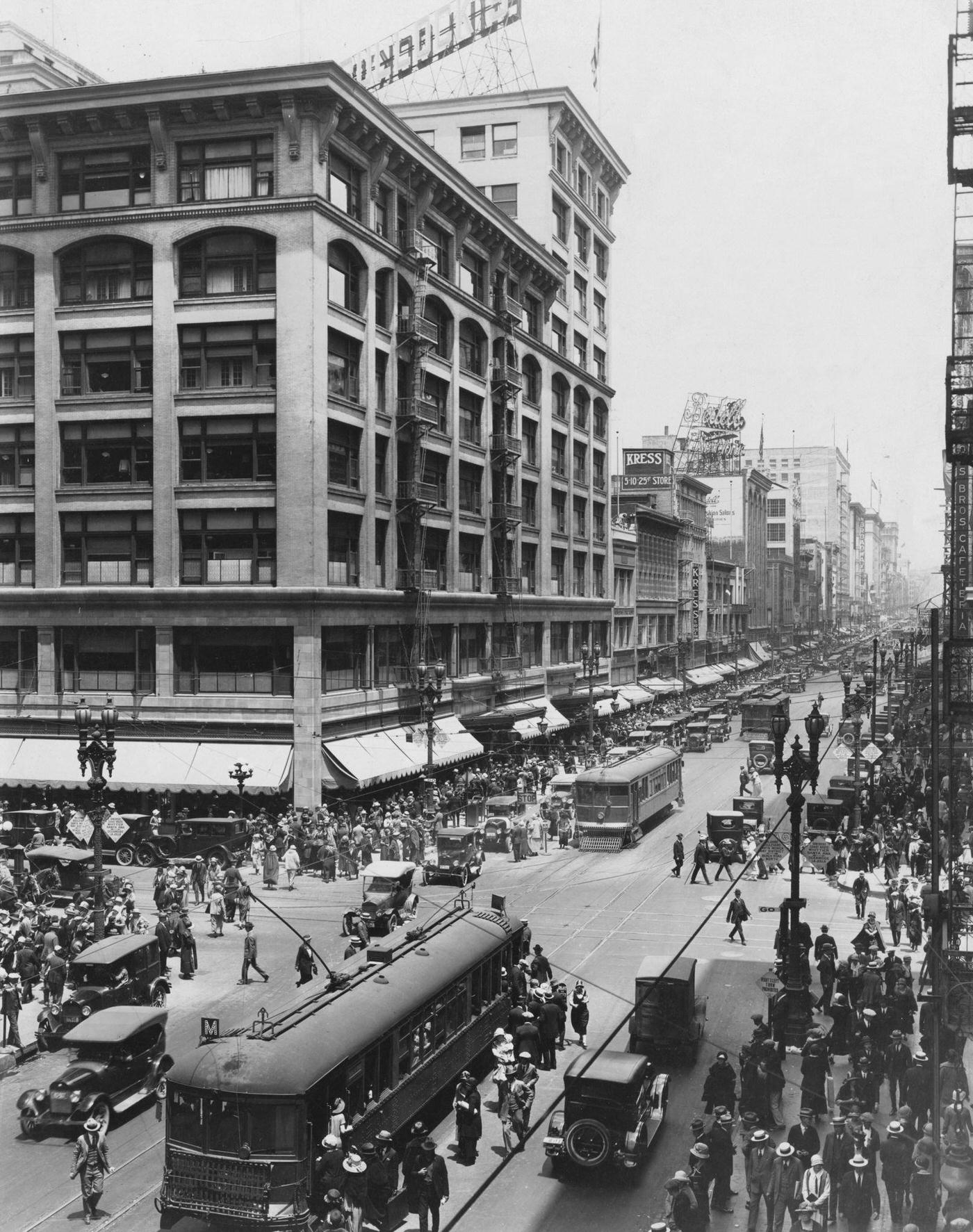
A view, looking north from Seventh Street, of crowds on Broadway, Los Angeles, California, 1930.
A suburban boulevard in the Wilshire district of Los Angeles, California, 1930.
A bunch of people in front of Charlie Chaplin's studio in the heart of Hollywood
A bunch of people in front of Charlie Chaplin’s studio in the heart of Hollywood
View of Hollywood Boulevard. Hollywood. Los Angeles. California, 1930
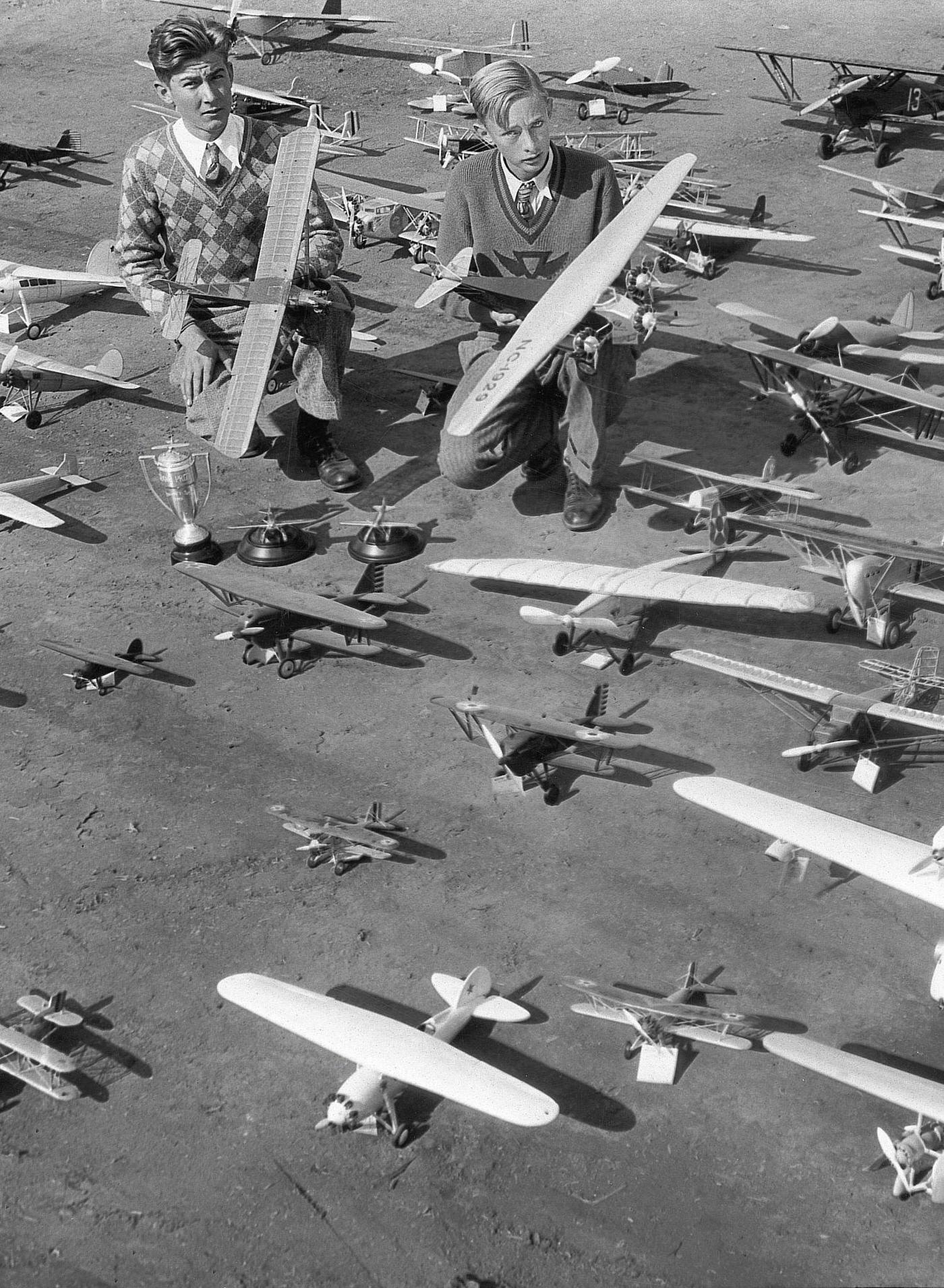
Two young Americans, who had just won a model aircraft contest in Los Angeles, 1930s
A view over Hollywood Boulevard and Grauman's Chinese Theatre (bottom, left), Hollywood, California.
A view over Hollywood Boulevard and Grauman’s Chinese Theatre (bottom, left), Hollywood, California.
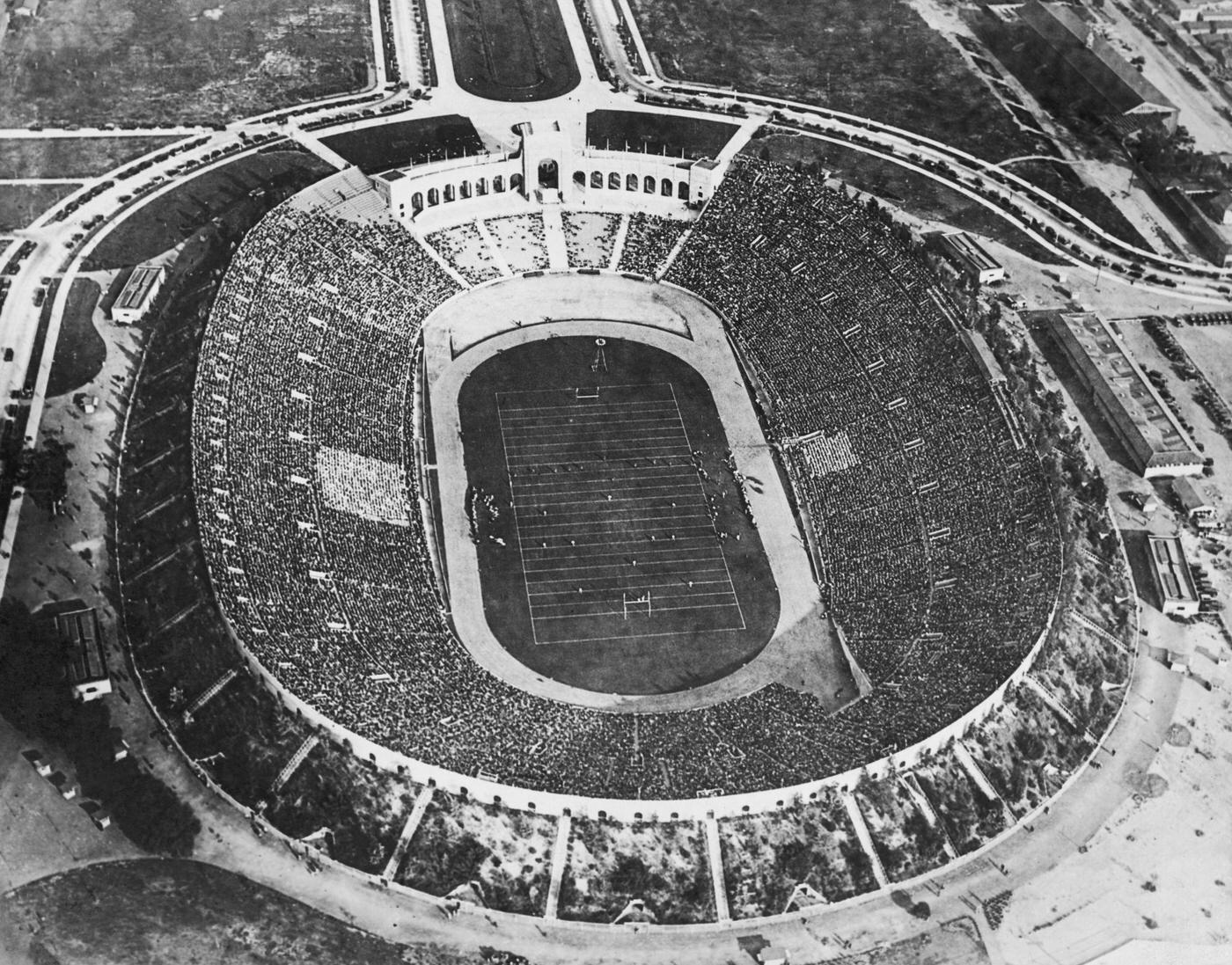
Crowds watching an American football match at the Los Angeles Memorial Coliseum, 1930.
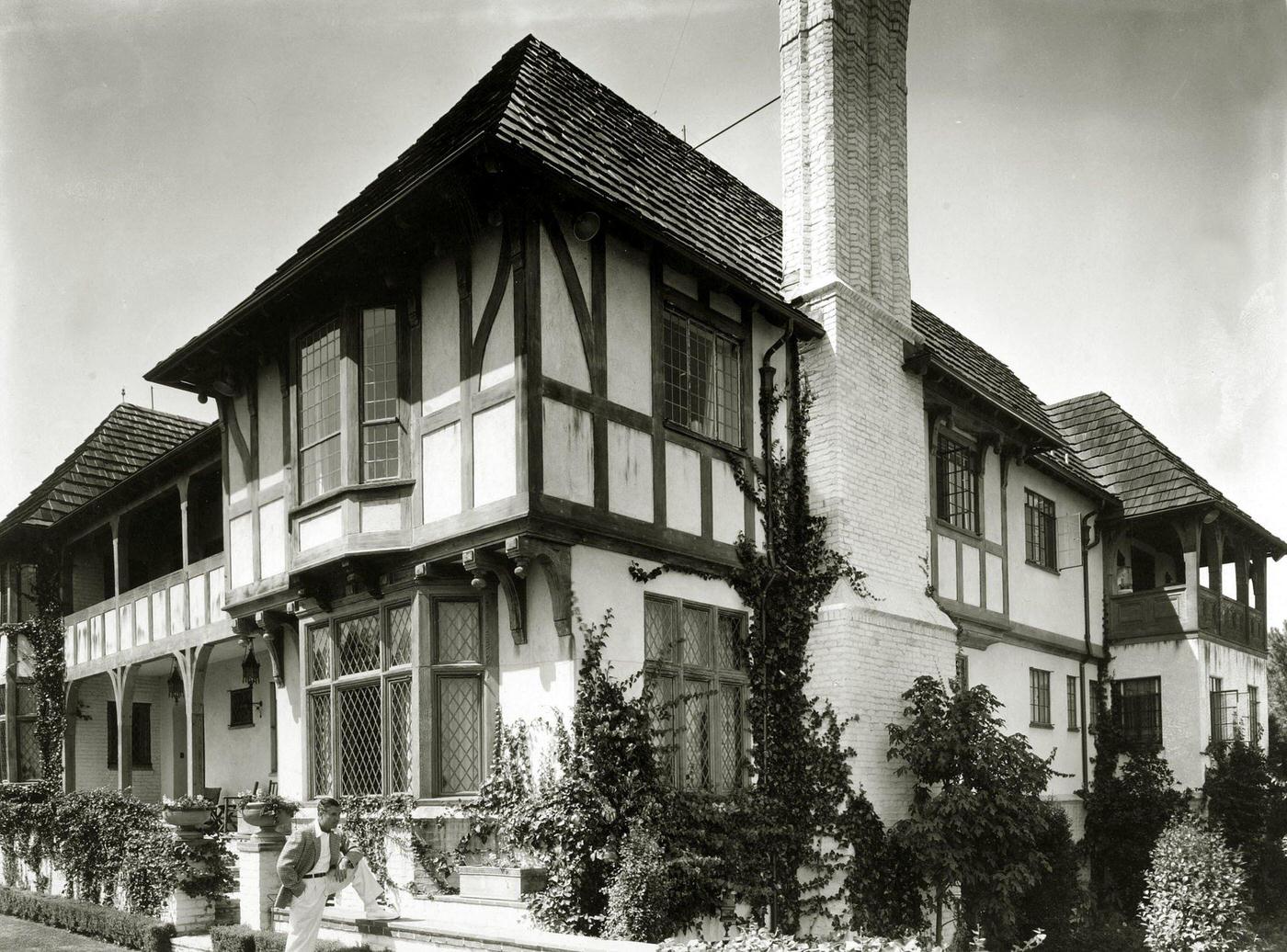
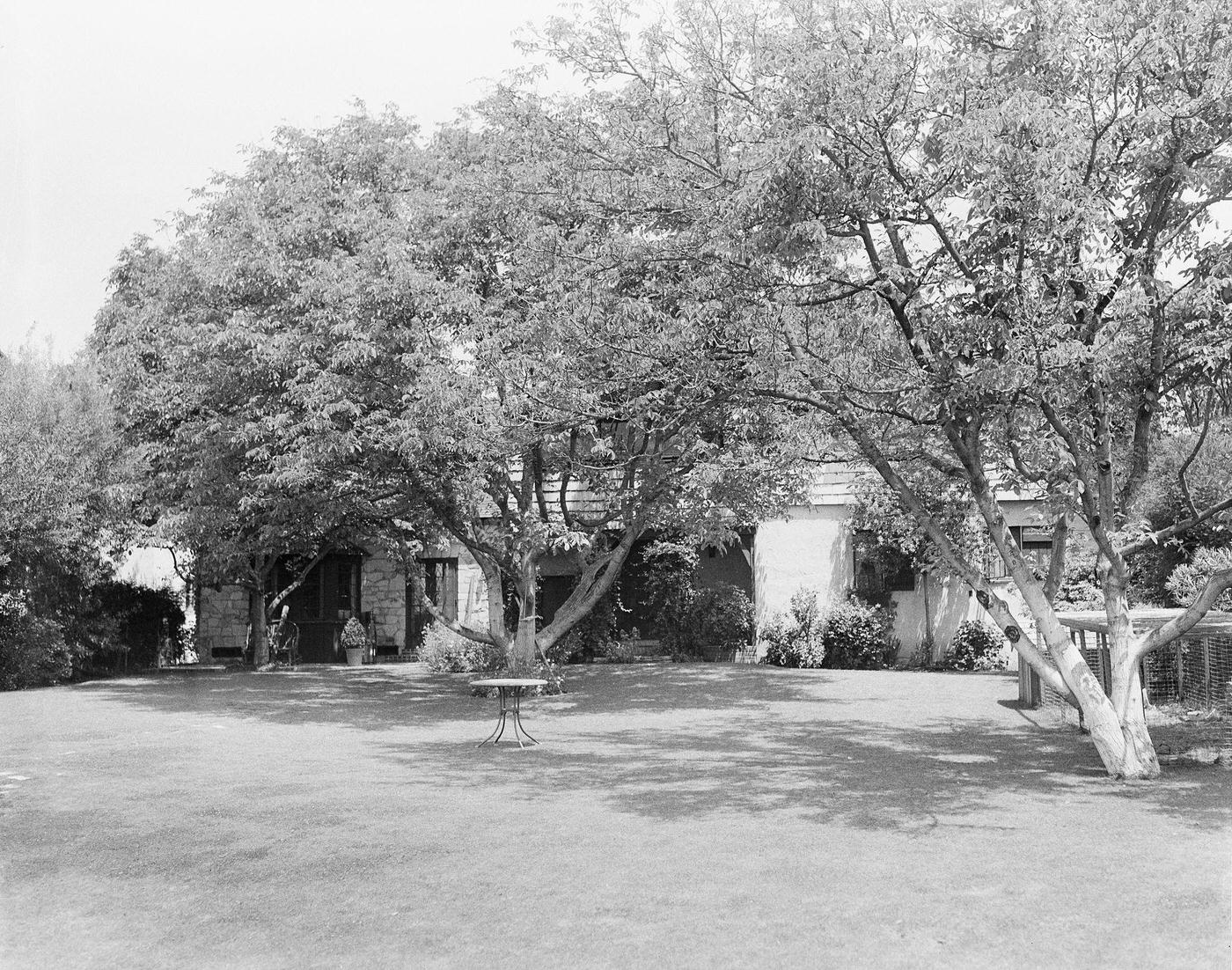
The mock Tudor house of American actor Warner Baxter at Bel Air, Los Angeles, 1930s.
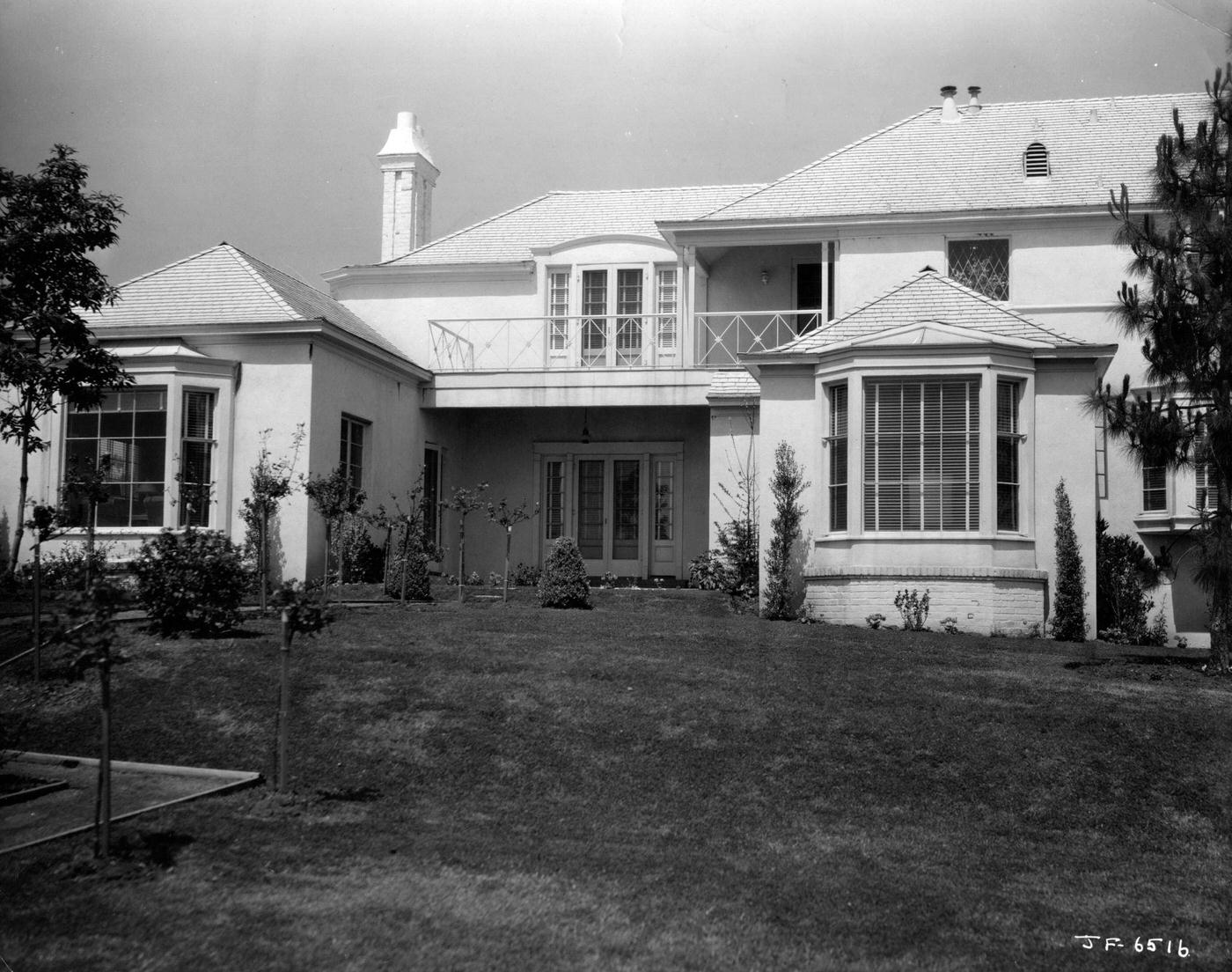
An exterior shot of Joan Fontaine's house in Hollywood, signed to RKO,  1930.
An exterior shot of Joan Fontaine’s house in Hollywood, signed to RKO, 1930.
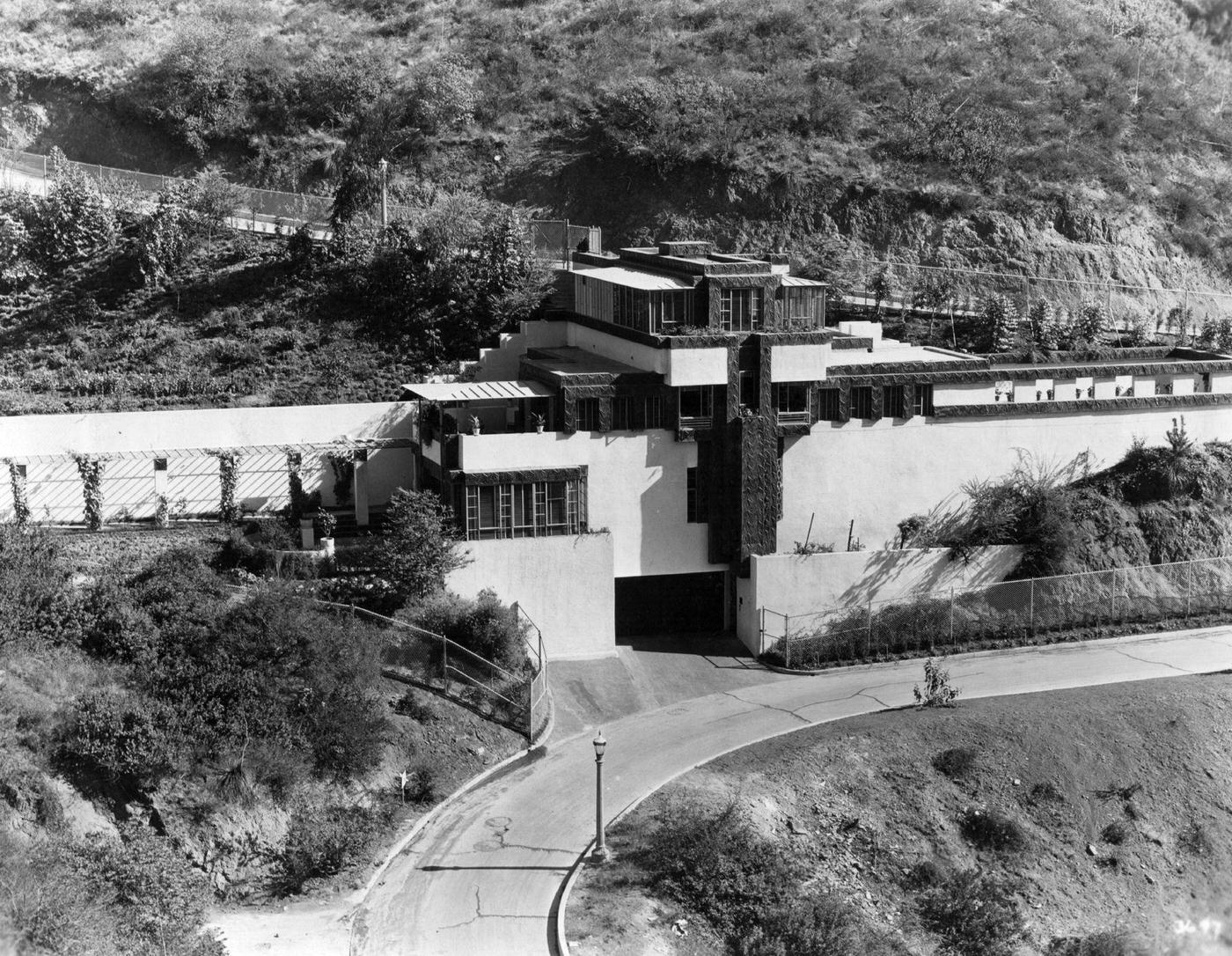
An exterior view of the home of Ramon Novarro, the Metro Goldwyn Mayer star, designed by Ramon Novarro himself, situated in the hills overlooking Los Angeles, 1930.
Exterior view of a woman entering the hat-shaped Brown Derby restaurant on Wilshire Boulevard, opposite the Ambassador Hotel in Hollywood, California, 1930
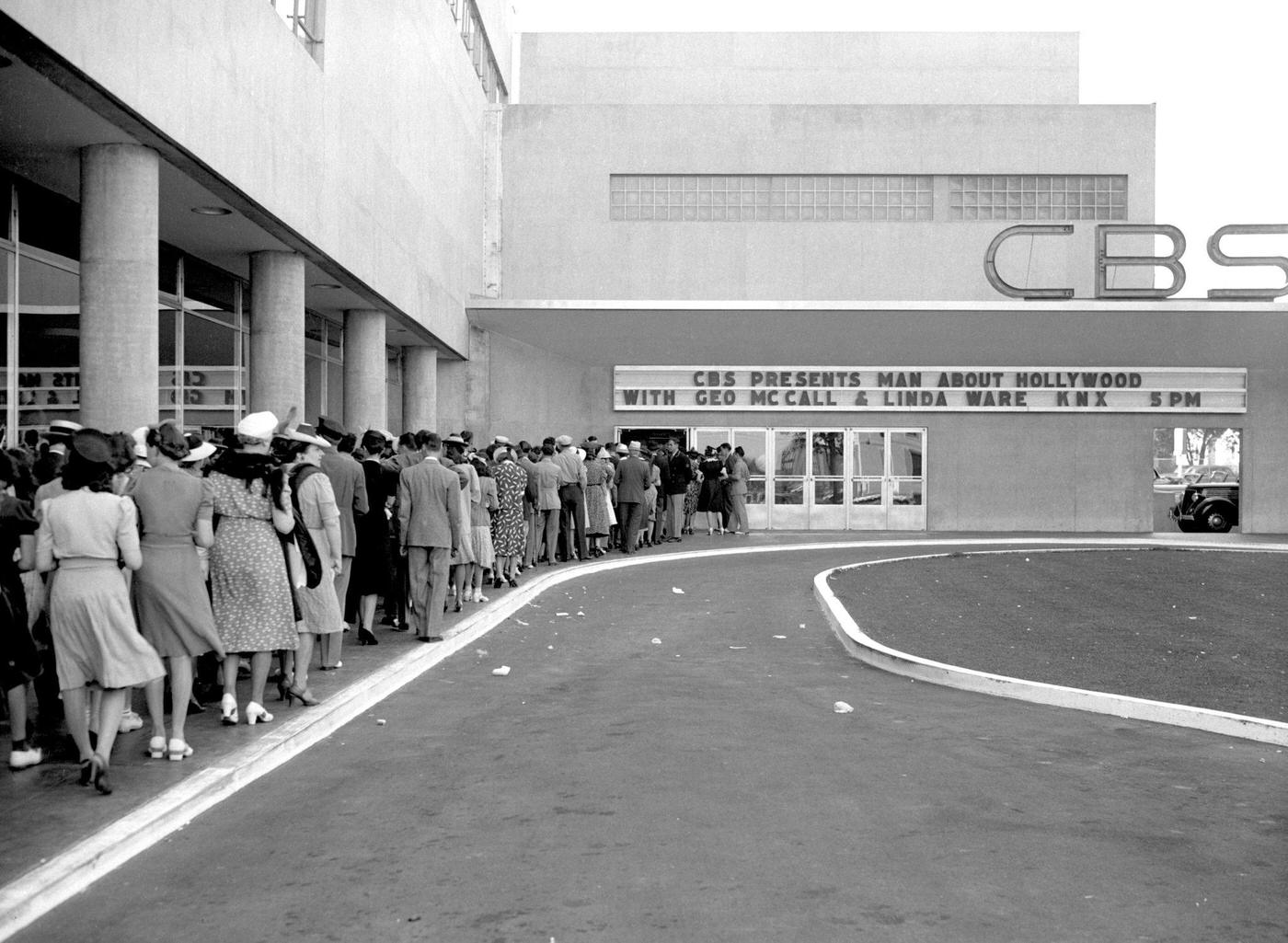
Audience members queue in line to enter the CBS Radio program, Man About Hollywood, which broadcasts from CBS KNX studios at Columbia Square, 1939.
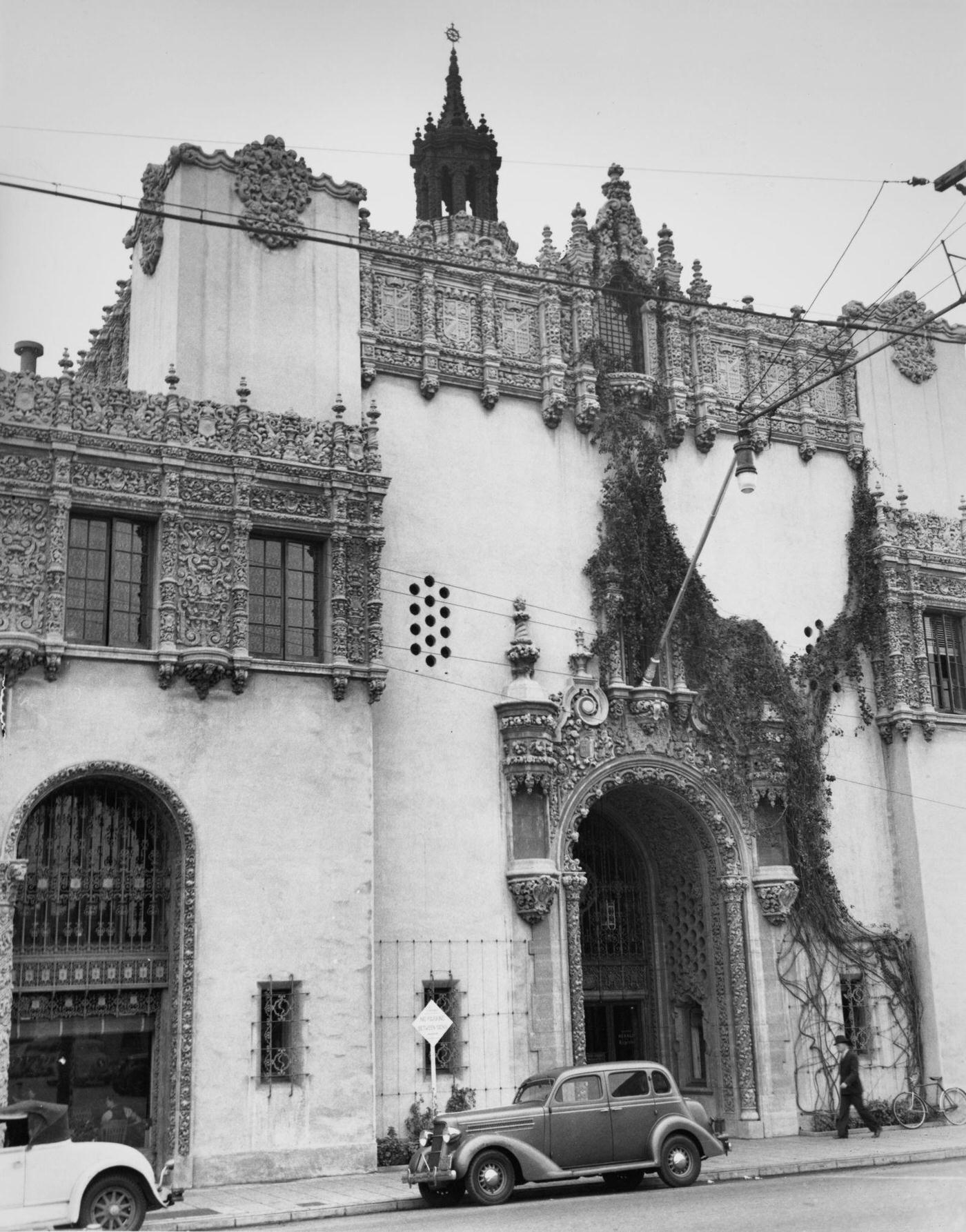
Exterior view of the Los Angeles Examiner Building, situated at the southwest corner of Broadway and 11th Streets in Los Angeles, 1939.
Exterior view of the CBS Columbia Square KNX Art Deco style building on Sunset Boulevard, Hollywood, California, 1938.
View of unfinished CBS Columbia Square KNX Art Deco style building, looking northwest from Gower Street, Los Angeles, 1938.
A view of actor George Brent House in the Toluca Lake area in Los Angeles,  1935.
A view of actor George Brent House in the Toluca Lake area in Los Angeles, 1935.
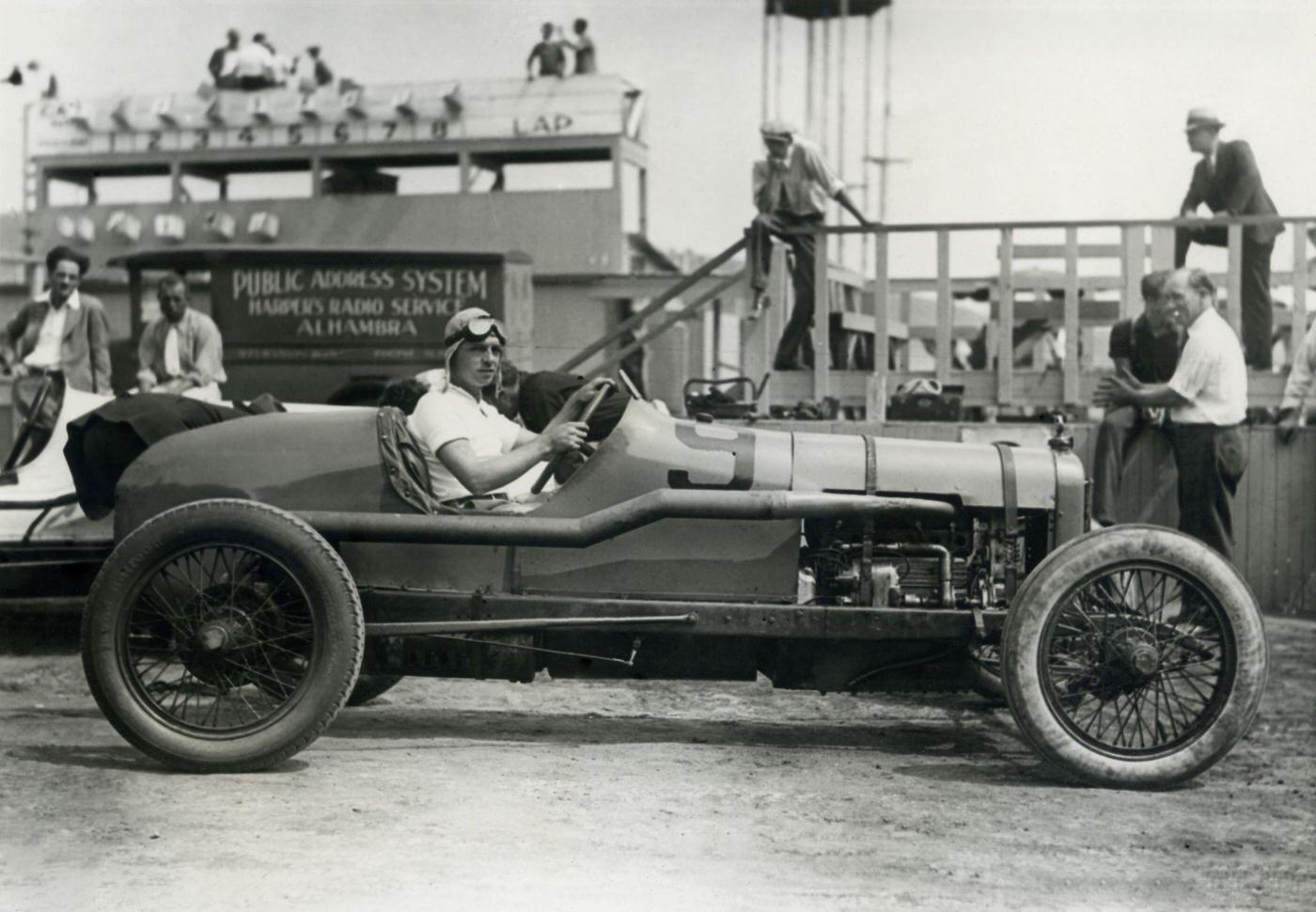
Joe Crocker poses in a race car at the speedway with a group of spectators milling about in the background, 1935.
High angle view of the Santa Claus Lane Parade on an illuminated Hollywood Boulevard in Los Angeles, 1934.
Aerial view of the Westwood campus of the University of California, with the Royce Hall building (top, centre), Kerckhoff Hall (bottom, right) in the Westwood neighbourhood of Los Angeles, 1934.
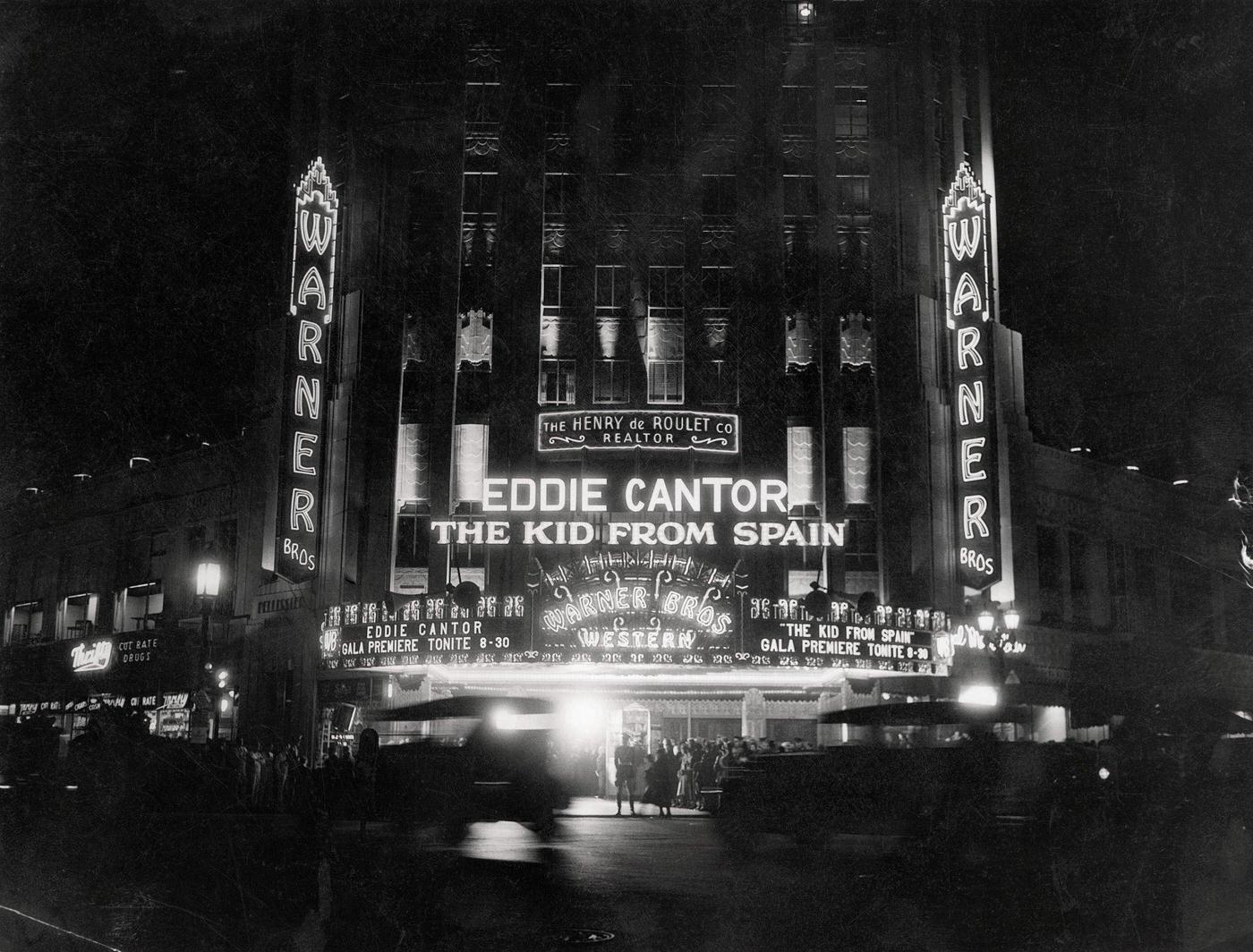
Crowds at the West Coast premiere of Eddie Cantor's The Kid from Spain at the Warner Brothers' Western Theater, on the corner of Wilshire and Western in Los Angeles, 1930s.
Crowds at the West Coast premiere of Eddie Cantor’s The Kid from Spain at the Warner Brothers’ Western Theater, on the corner of Wilshire and Western in Los Angeles, 1930s.
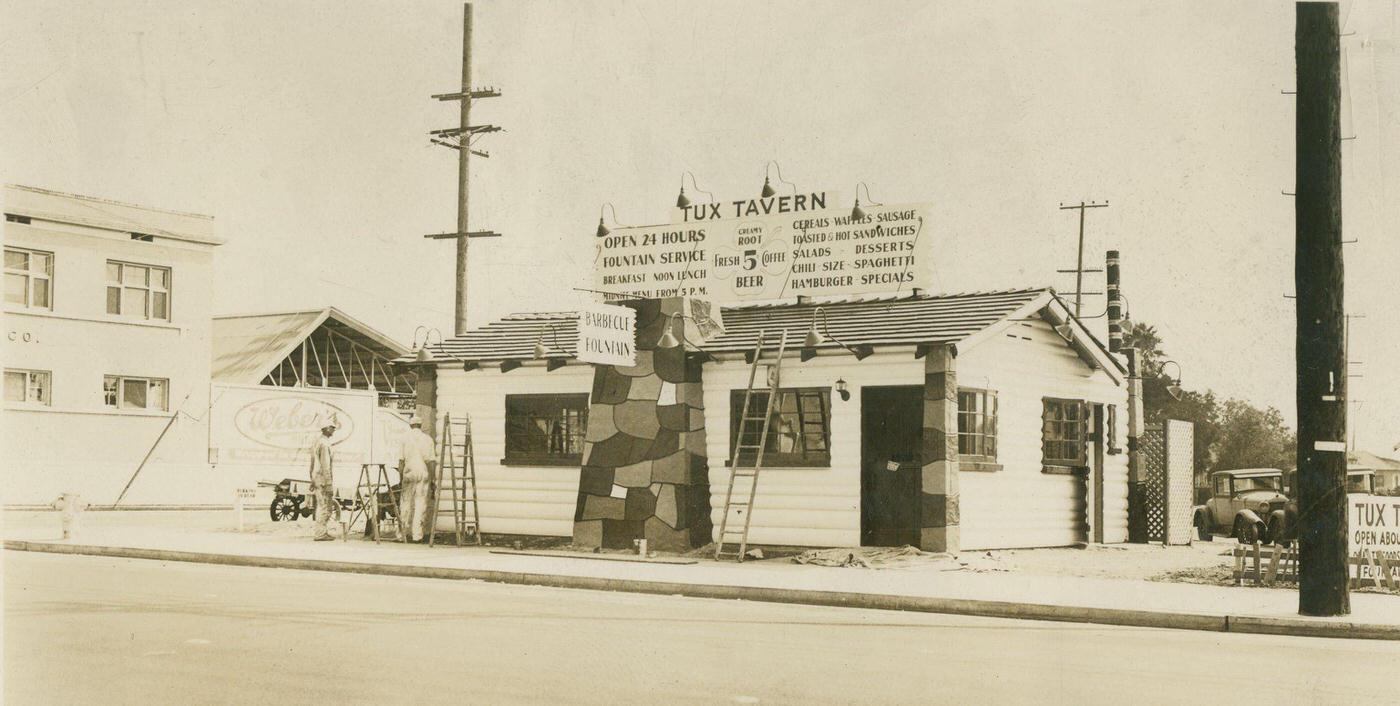
Exterior of Tux Tavern, a small building with a Tux Tavern sign on top, wood siding and a ladder leading against it, 1930s.
Premiere Of 'Hell's Angels' At Grauman's
Premiere Of ‘Hell’s Angels’ At Grauman’s
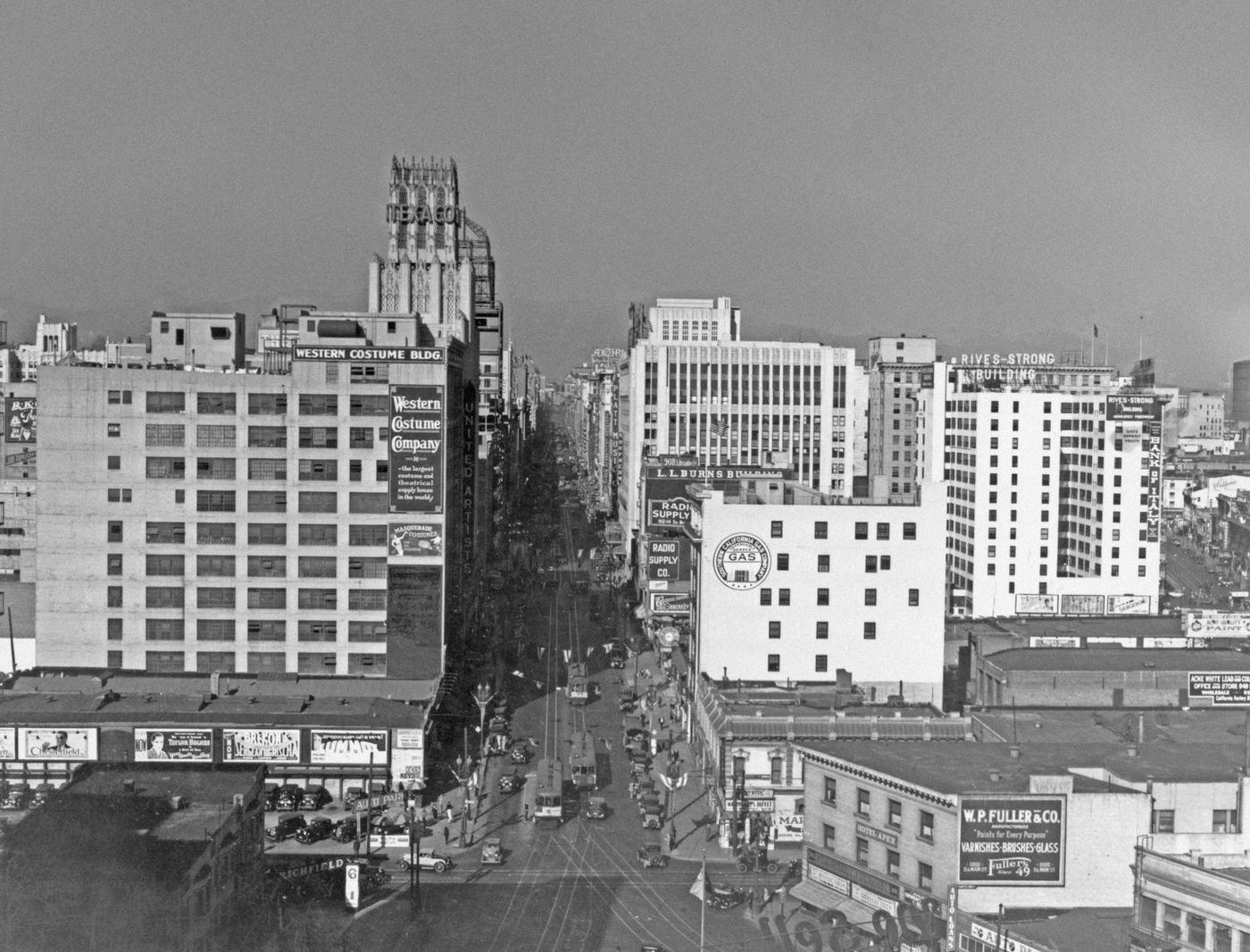
High angle view looking north on Broadway from 11th Street, with the Western Costume Building on the left, with a Texaco sign beyond that, 1930
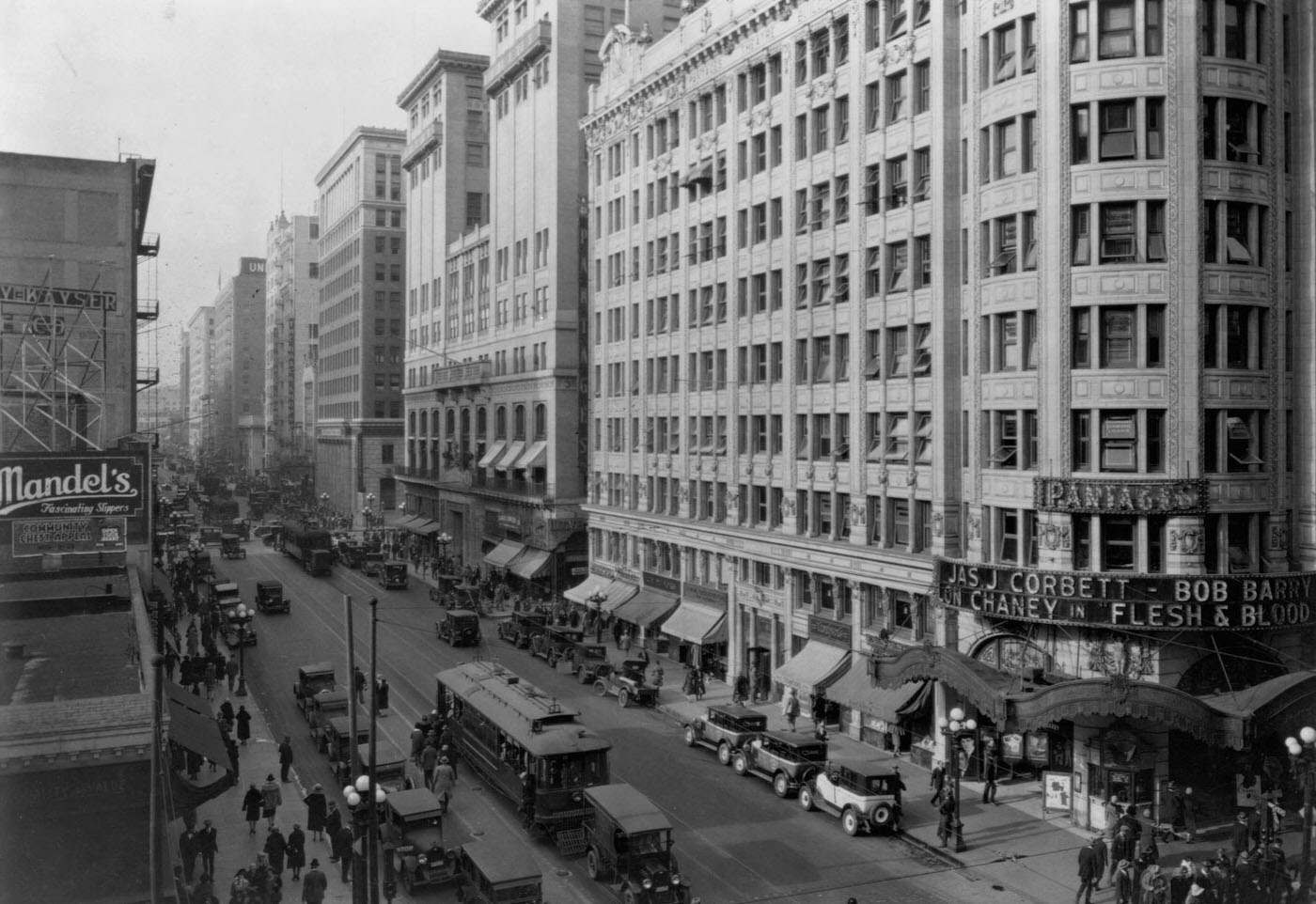
Overview of a busy Los Angeles street, 1930
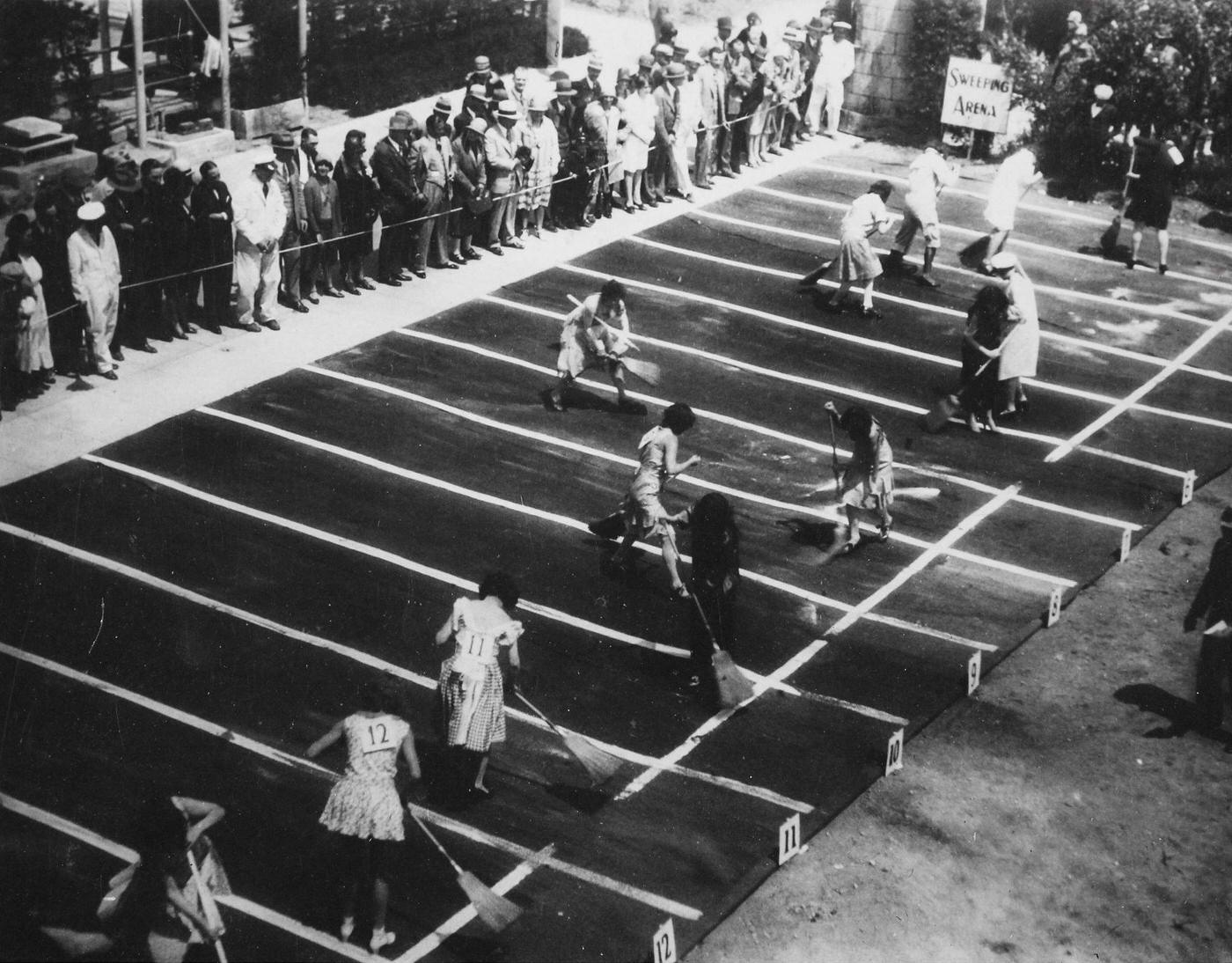
Female Competition in the Dust Sweeping, 1930
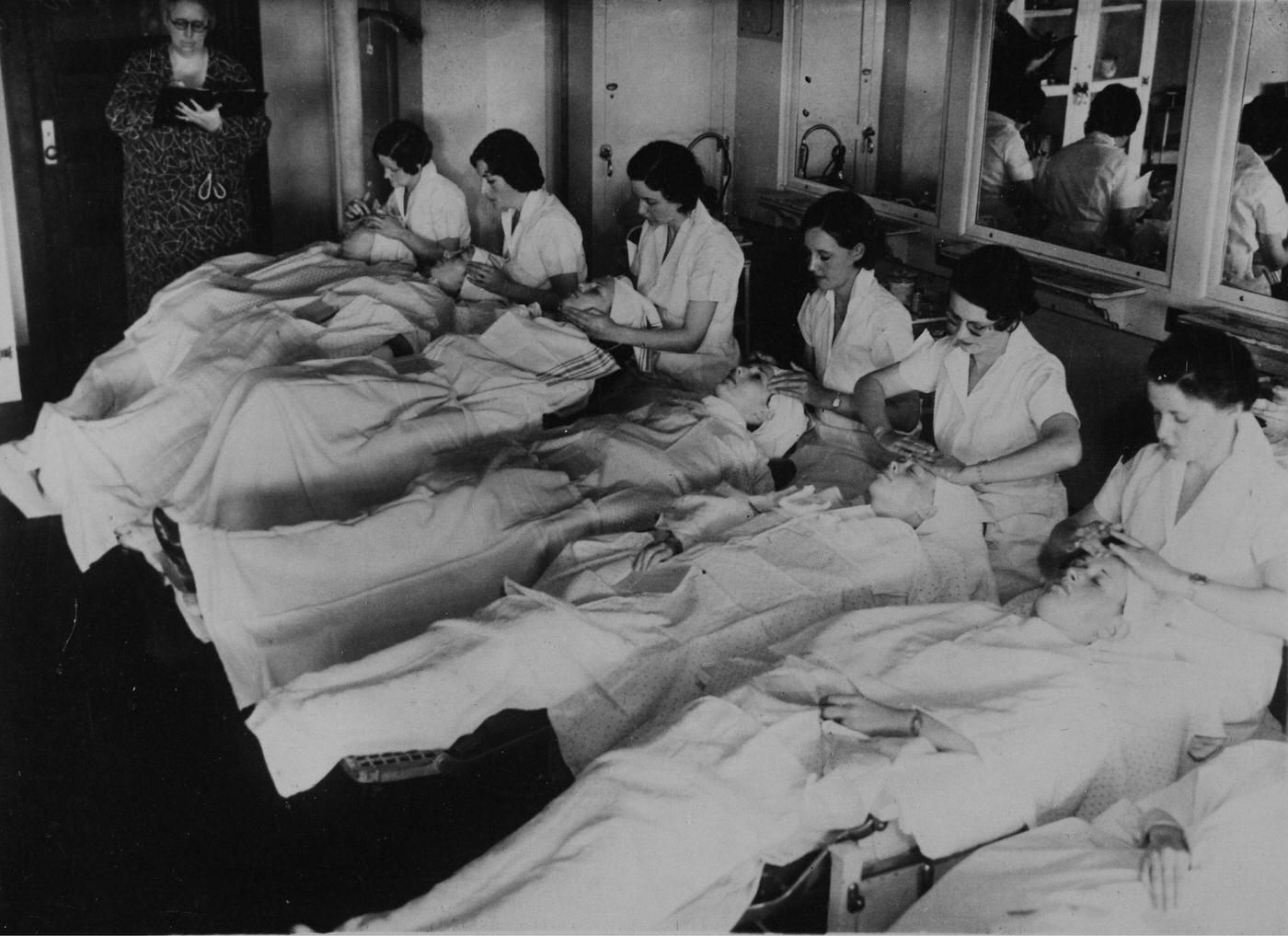
Women in a beauty Salon, Los Angeles, 1930
Enjoyed this post? Get new ones in your inbox.

8 thoughts on “What Los Angeles looked like in the 1930s”

  1. Some truly fascinating, wonderful photos here, but one sticks out to me – Number 58.

    There’s nothing entirely special about it, I’m just flabbergasted about how that neighborhood, which I’m in at that exact moment, can have 2’+ of standing water.

    I was complaining just last week about how terrible the drainage is in my neighborhood. I guess it’s gotten better over the years.

  2. These are great. I was a kid in West LA and Santa Monica in the 1960s, and buildings, movies, and artwork from the 1930s seemed ancient to me, almost as old as the tar pits. These days 30 years feels like almost no time at all. Our son is older than that.

    /OK Boomer

Leave a Comment

Your email address will not be published. Required fields are marked *

Share this Post 🥺

Please take a moment to share this content. Your support is greatly appreciated! 🙌🙏

Share this Post 🥺

Please take a moment to share this content. Your support is greatly appreciated! 🙌🙏
Scroll to Top
 
Hey Friend, Before You Go.. Please like & follow for more interesting content