During World War II, the United States military needed bombers that could fly farther, carry more, and strike targets that conventional aircraft simply couldn’t reach. One aircraft rose to answer that challenge in the most dramatic fashion possible — not with a fuselage, not with a tail, but with nothing but wing. The Northrop XB-35 was unlike anything that had ever lifted off a runway, and its story is one of bold ambition, relentless setbacks, and a design so ahead of its time that it took decades for the world to catch up.
The XB-35 was the brainchild of Jack Northrop, founder of the Northrop Corporation. Northrop had long believed that the flying wing — an aircraft with no traditional fuselage or tail assembly — was the future of aviation. By stripping the design down to just the wing itself, he argued that drag could be slashed dramatically, giving the aircraft a far greater range and fuel efficiency than any conventional bomber. When the Army Air Forces put out a call for a long-range heavy bomber capable of striking targets across the Atlantic, Northrop saw the perfect opportunity to prove his theory on the grandest possible scale.
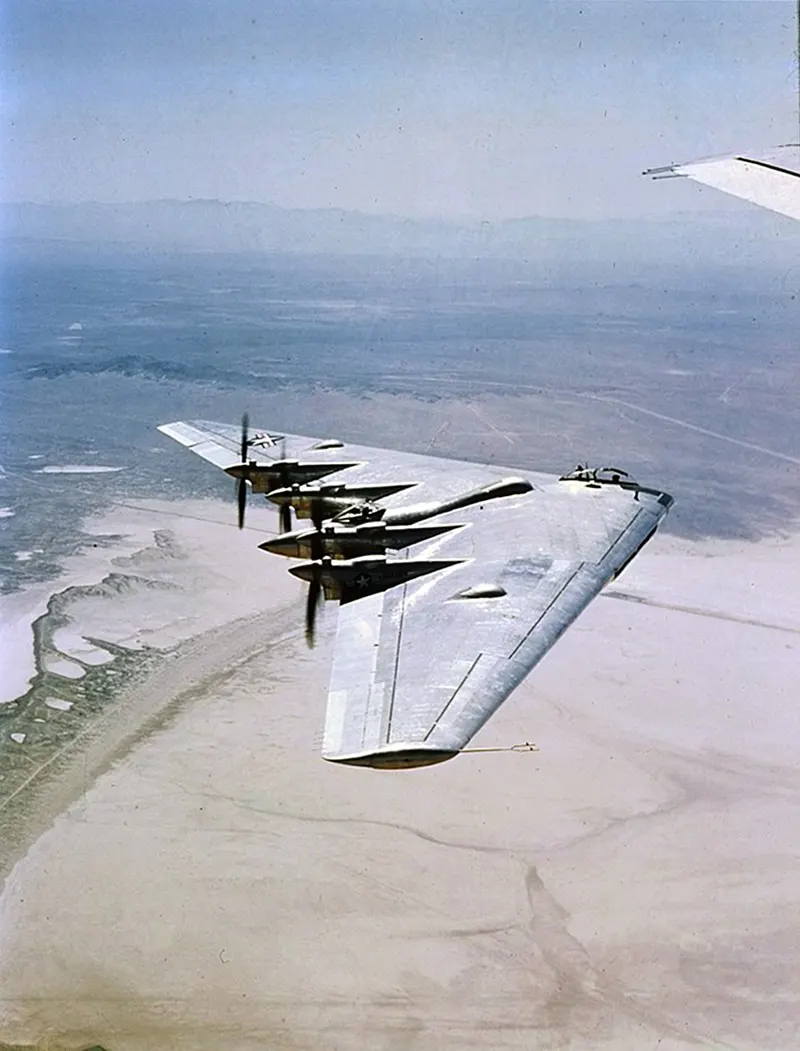
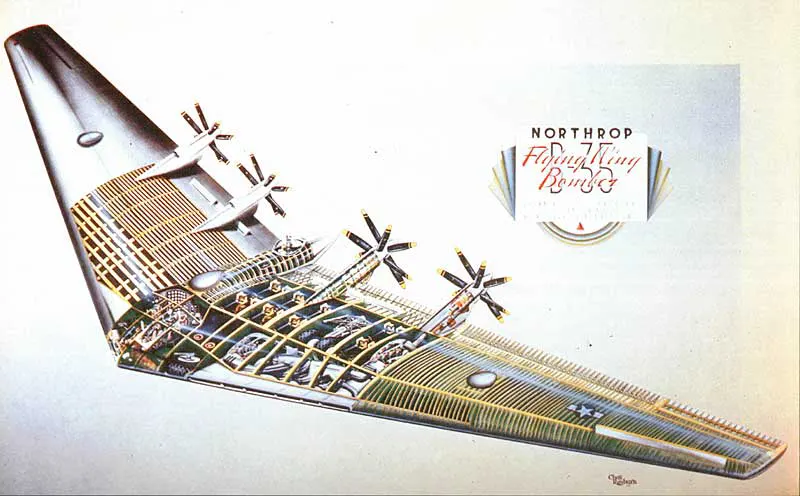
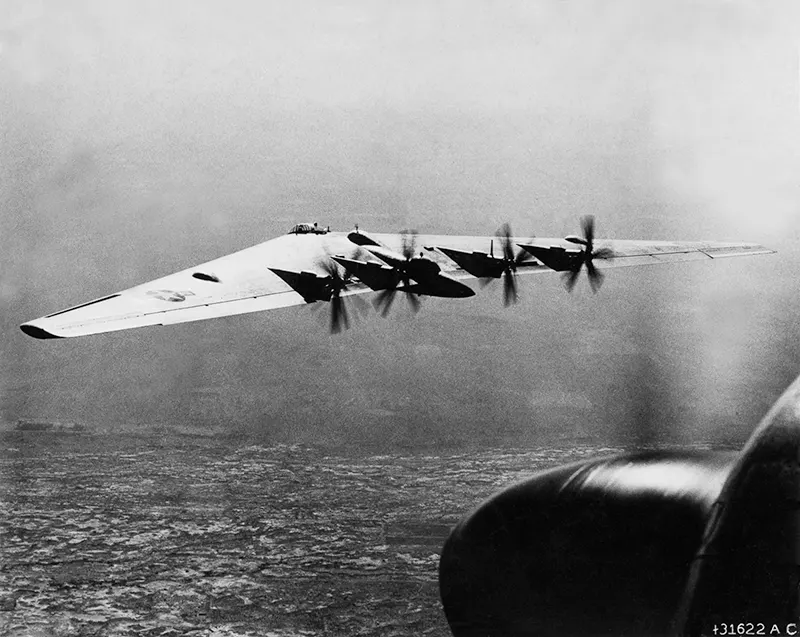
The XB-35 was massive. Its wingspan stretched 172 feet — roughly comparable to that of a B-29 Superfortress. Four massive Pratt & Whitney R-4360 ‘Wasp Major’ radial engines powered the aircraft, each one driving a set of contra-rotating pusher propellers mounted at the trailing edge of the wing. These engines were among the most powerful piston engines ever built. Jet propulsion was still in its earliest stages, so piston power was the only realistic option for an aircraft of this size and range.
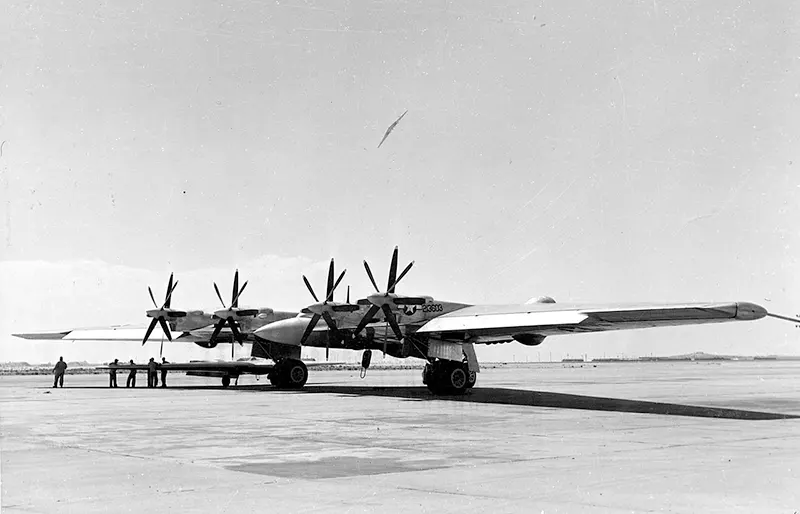
The contra-rotating propellers were one of the XB-35’s most distinctive features, but they also became one of its biggest headaches. Keeping the propellers synchronized proved far more difficult than engineers anticipated. The vibration they produced in flight was severe enough to threaten the aircraft’s structural integrity, and the problem was never fully solved. Engineers eventually abandoned the contra-rotating configuration entirely and switched to conventional single-rotation propellers — a significant step back from the original vision.
Years of engineering struggles preceded any attempt to fly the aircraft. Propeller synchronization was only part of the problem. Engine reliability was inconsistent, structural issues emerged as the design was stress-tested, and the sheer complexity of managing a flying wing — which relies on sophisticated control systems rather than a conventional rudder and elevator — pushed the engineering team to its limits. By the time the XB-35 was ready to fly, the war it was designed to fight had already ended.
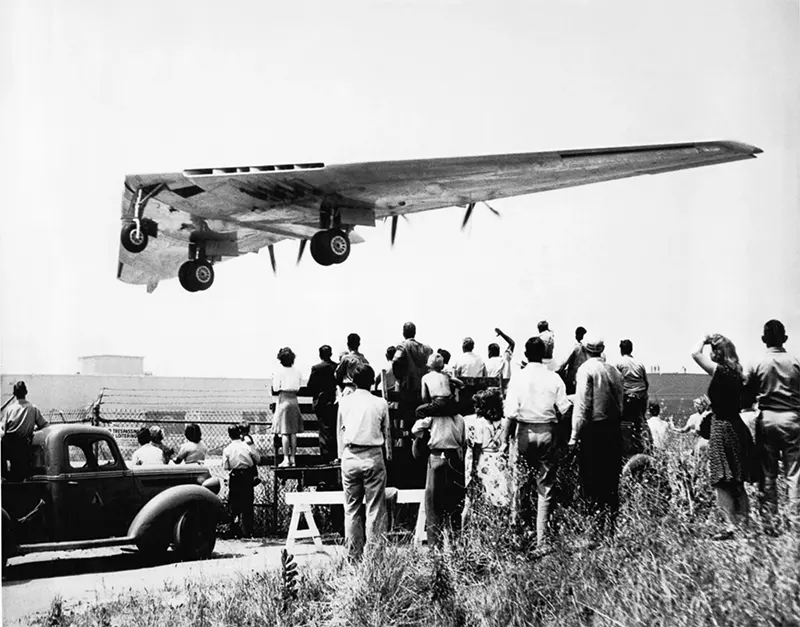
The XB-35 made its maiden flight on June 25, 1946, taking off from Northrop’s facility in Hawthorne, California. A crowd gathered to watch the enormous flying wing lift into the sky — a sight that few had ever seen anything like. The performance numbers were promising. The aircraft demonstrated the range and payload potential that Northrop had promised. But by 1946, the strategic landscape had changed completely. The war was over, military budgets were contracting, and a new technology was rapidly making piston-engined aircraft obsolete: the jet engine.
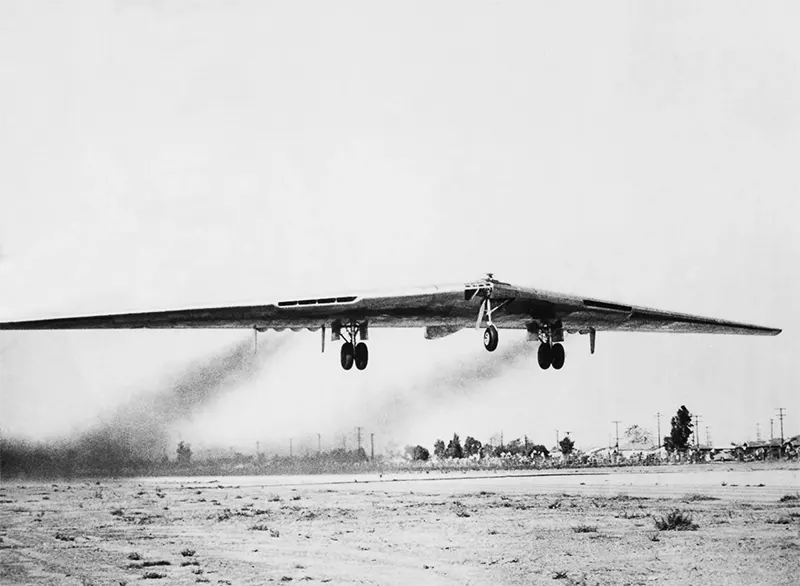
Northrop and the Army Air Forces recognized that jet propulsion was the future, and they worked to adapt the flying wing concept accordingly. The result was the YB-49, a jet-powered version of the flying wing that replaced the piston engines with eight Allison J35 turbojet engines. The YB-49 was sleeker and faster, and it demonstrated the same elegant, almost otherworldly appearance in the air that had made the XB-35 so striking.
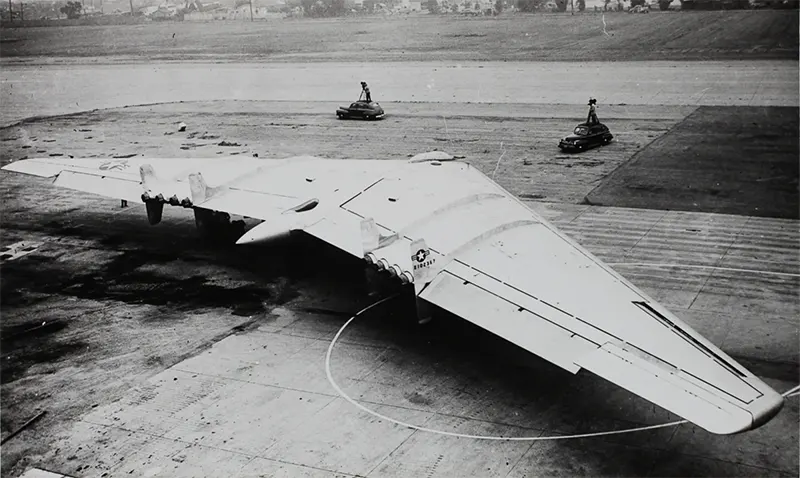
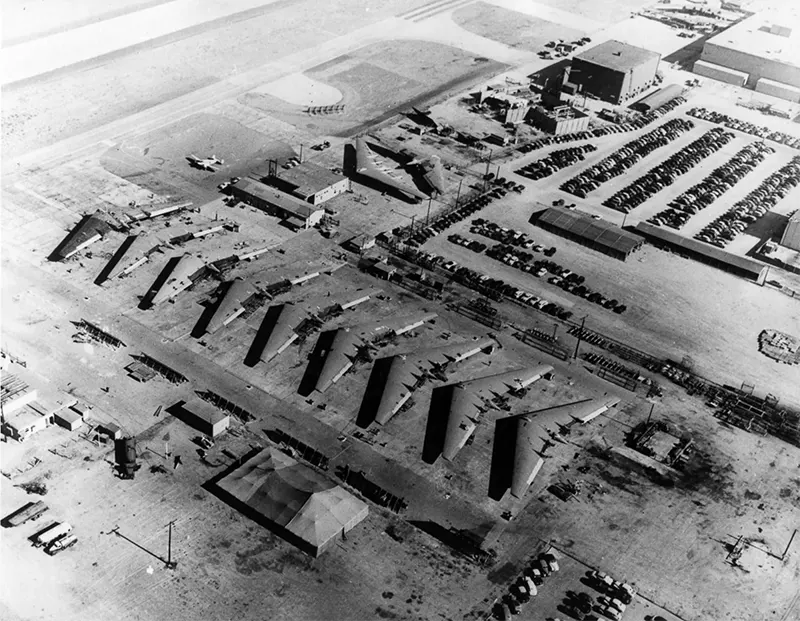
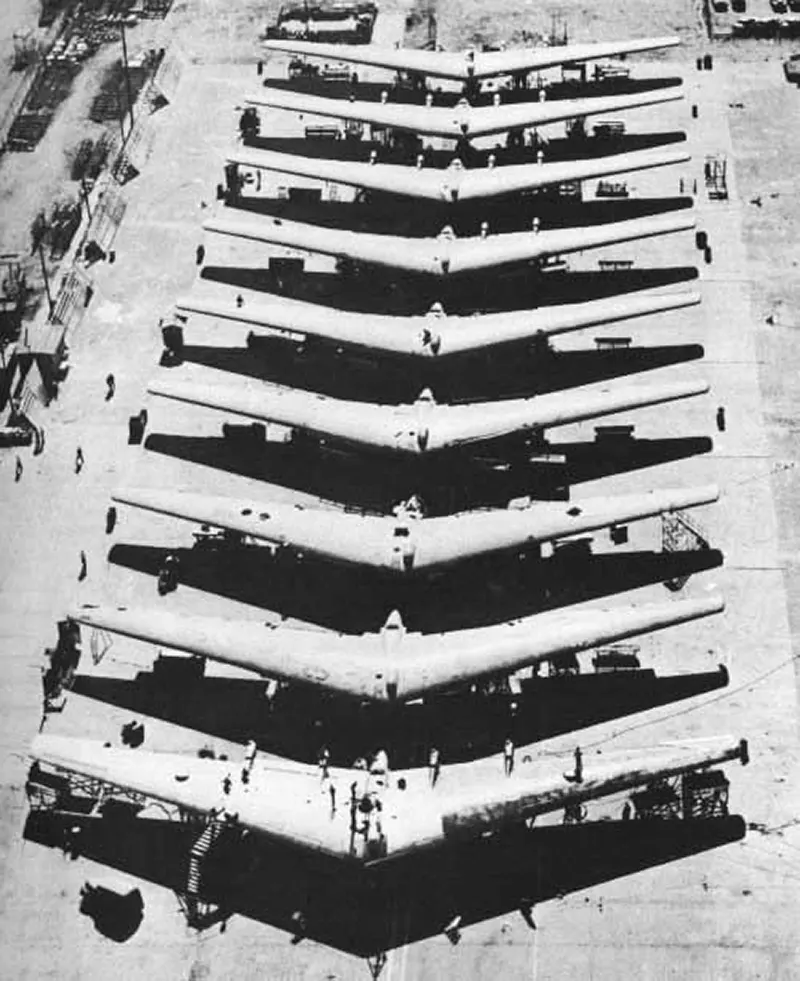
Northrop’s Hawthorne factory became the nerve center of the flying wing program, producing multiple prototypes across both the XB-35 and YB-49 programs. The scale of the operation was significant, though much of it remained out of public view.
The YB-49 underwent extensive flight testing throughout the late 1940s. It was fast and had a clean aerodynamic profile, but it suffered from its own set of problems. Stability in the bombing run configuration was a persistent issue — the aircraft tended to yaw unpredictably, making precise bomb delivery unreliable. A tragic crash in June 1948 killed test pilot Glen Edwards and four crew members, a loss that cast a long shadow over the program. Edwards Air Force Base was later named in his honor.
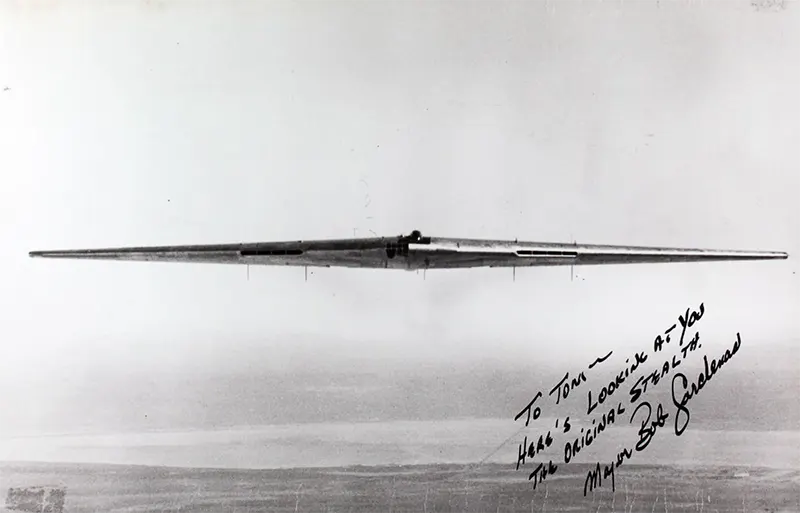
One of the most remarkable and least-known facts about the flying wing program is just how many prototypes were actually built. Most people assume only one or two examples were ever constructed, but the reality tells a very different story.
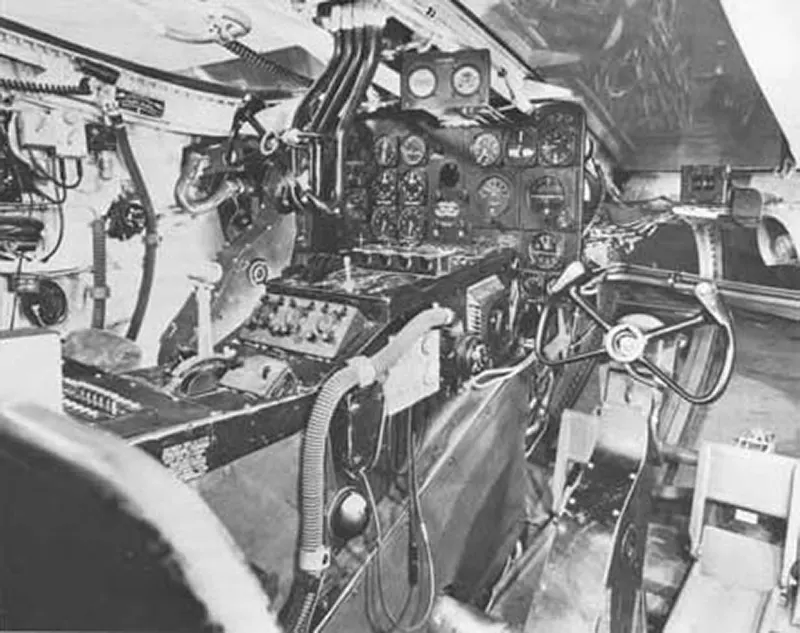
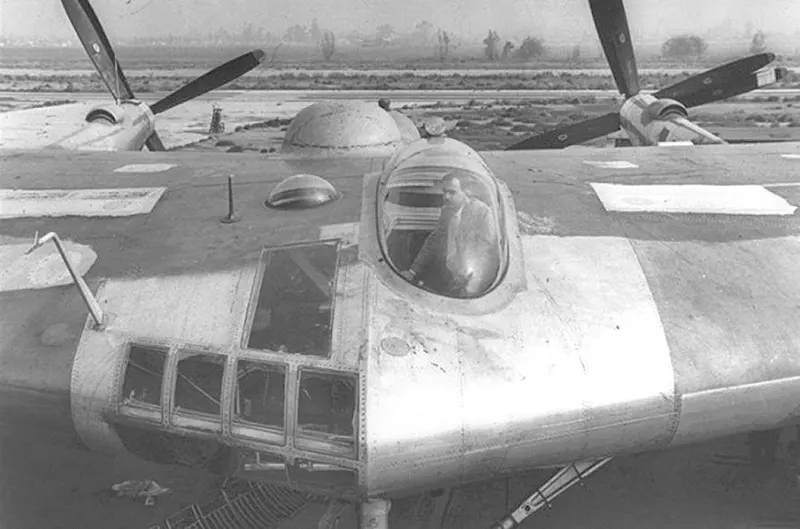
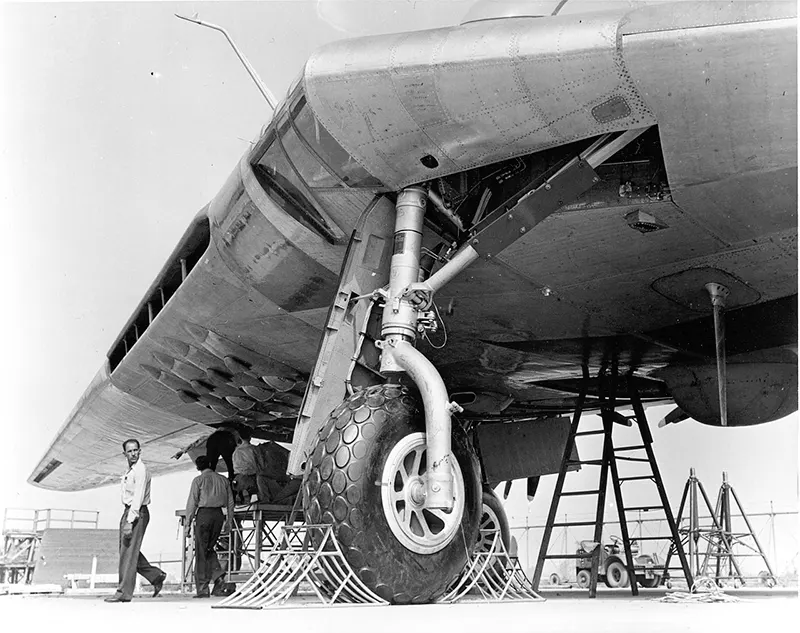
A detailed cutaway of the XB-35 reveals just how complex the aircraft’s internal layout was. Every system — fuel, weapons, crew stations, landing gear — had to be packed into the wing itself, with no fuselage to absorb overflow. The crew compartment sat within the thick center section of the wing, a pressurized space that gave crew members a deeply unusual working environment compared to any conventional bomber.
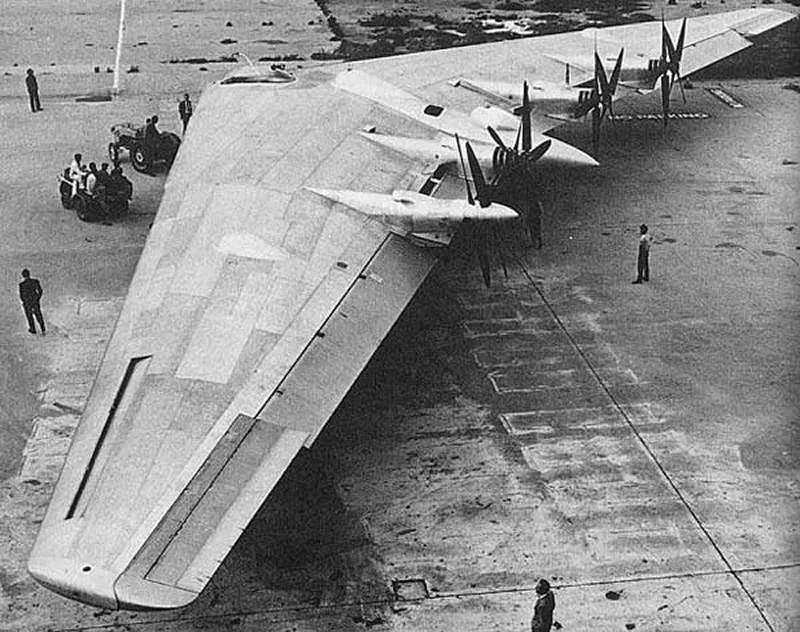
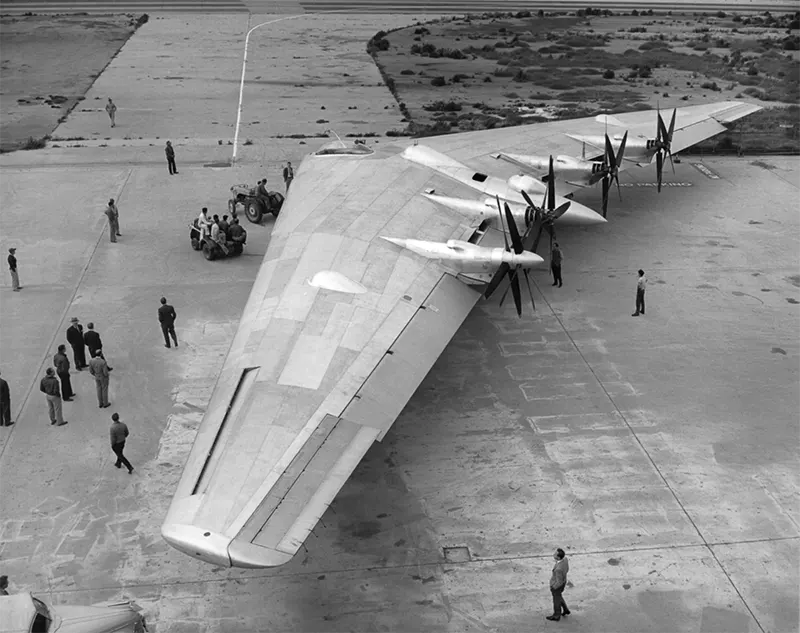
The XB-35’s profile on the ground was just as commanding as it was in the air. Its sheer scale, combined with the complete absence of a tail or fuselage, gave it an appearance that felt more like science fiction than military hardware.
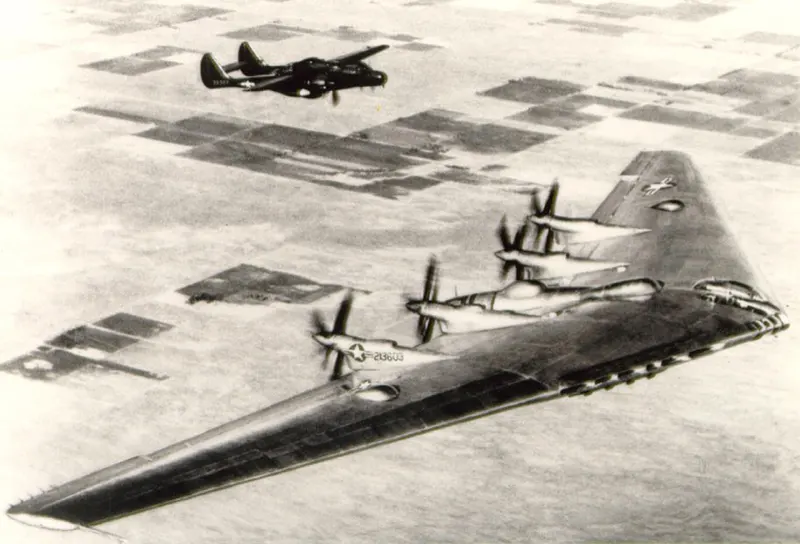
Whatever its mechanical shortcomings, the flying wing in the air was genuinely spectacular. Observers who watched it fly consistently described it as something apart from every other aircraft they had ever seen — smooth, silent from a distance, and almost impossibly graceful for something so large.
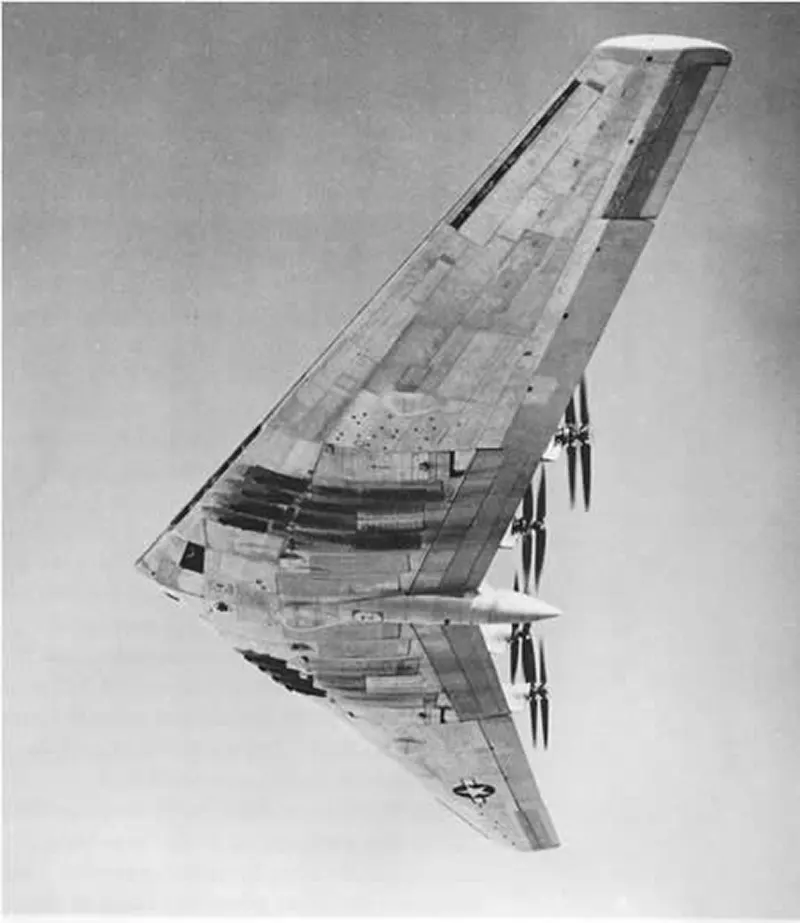
The XB-35 and YB-49 programs were ultimately canceled in 1949. Rising costs, persistent technical problems, and the emergence of the Convair B-36 and, later, the Boeing B-47 and B-52 as proven long-range bombers sealed the program’s fate. The Air Force ordered all existing flying wing airframes destroyed — a decision that still draws controversy among aviation historians. Jack Northrop, by then aging and in failing health, was devastated by the cancellation. He had spent decades pursuing the flying wing as his defining contribution to aviation.
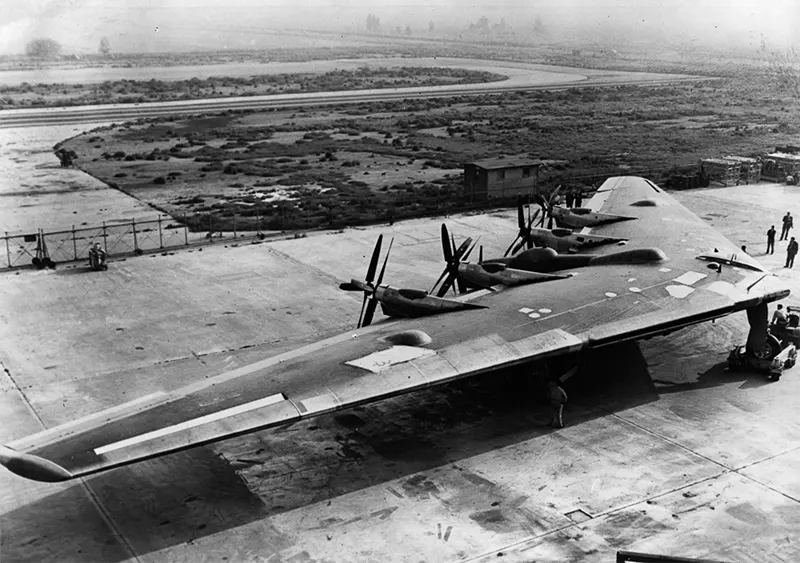
The aerodynamic principles behind the XB-35 were never flawed — they were simply ahead of what the available technology could reliably support. Managing a flying wing’s stability and control requires computational power and fly-by-wire systems that didn’t exist in the 1940s. Later generations of engineers, armed with digital flight control computers, would solve the problems that defeated Northrop’s team. In 1980, just months before he died, Jack Northrop was shown classified design drawings of the B-2 Spirit stealth bomber — a flying wing built on the exact principles he had championed. He reportedly wept.