Hey There! Before You Go. 😧
Get the best vintage content straight into your inbox!

Don't worry, we don't spam

What Waikiki, Honolulu looked like in the 1940s

Long before the towers and tourist shops crowded every block, Waikiki was a quieter place — still glamorous, still sun-soaked, but with wide stretches of open land and a pace that felt distinctly unhurried. The name itself means “spouting waters” in Hawaiian, and the area had once been a retreat for Hawaiian royalty before it opened to the wider world. By the time the 1940s arrived, Waikiki was already drawing visitors from the mainland and beyond, anchored by Kalakaua Avenue — the main drag running parallel to the beach — and framed by Diamond Head to the east and the Ala Wai Canal to the north.
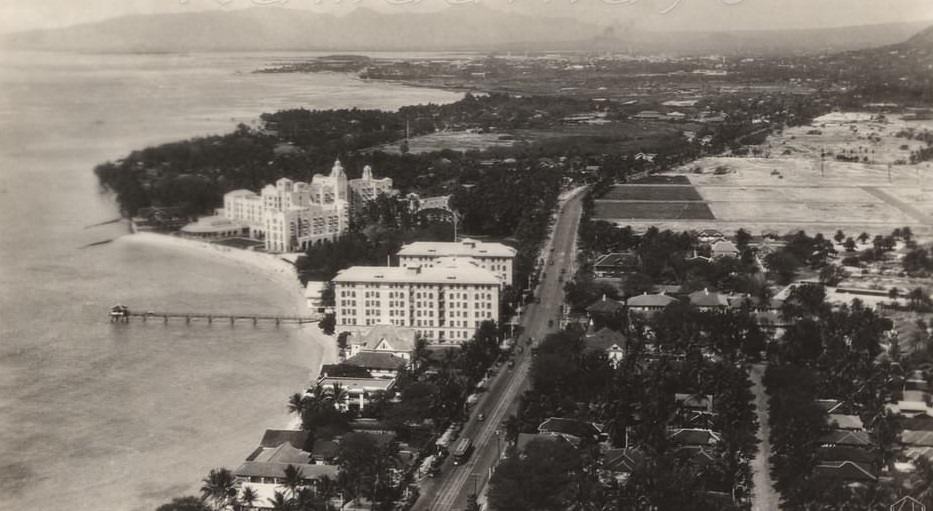
Kalakaua Birdseye Waikiki.

This aerial view reveals just how much open, undeveloped land still existed on the mauka (inland) side of Kalakaua Avenue compared to the makai (ocean) side. Platted lots visible in the upper right quadrant signal that the transformation was already underway — homebuilders and businesses were ready to fill in the gaps quickly.

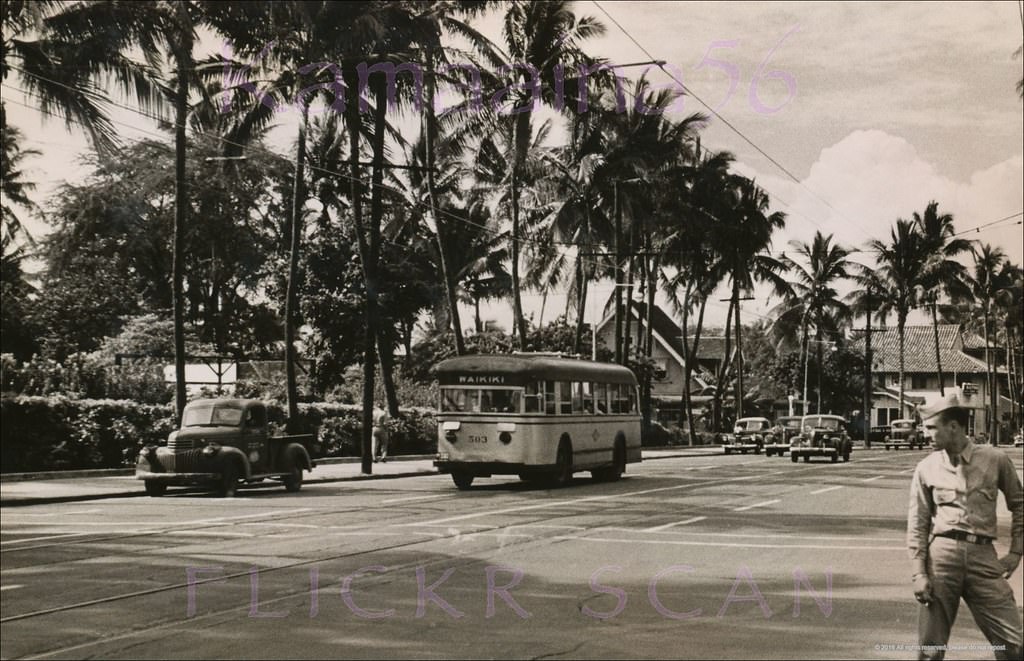
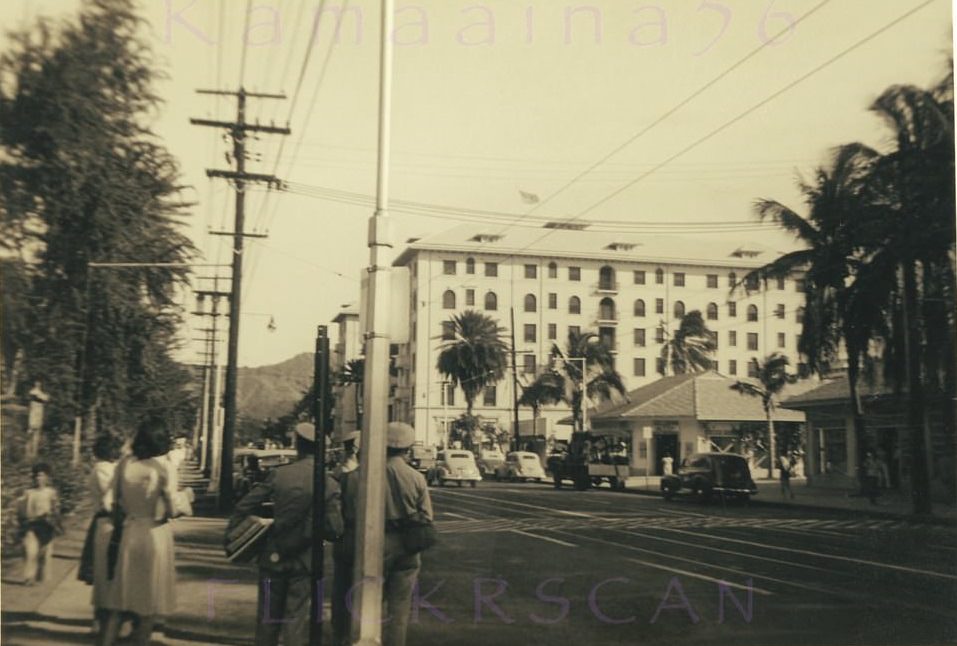
The street-level view of Kalakaua Avenue in those years showed a mix of low-rise buildings, open-air shops, and the occasional grand structure. Trolley buses operated by the Honolulu Rapid Transit system ran the route, and the sidewalks carried both civilians and, increasingly as the war years arrived, men in uniform.
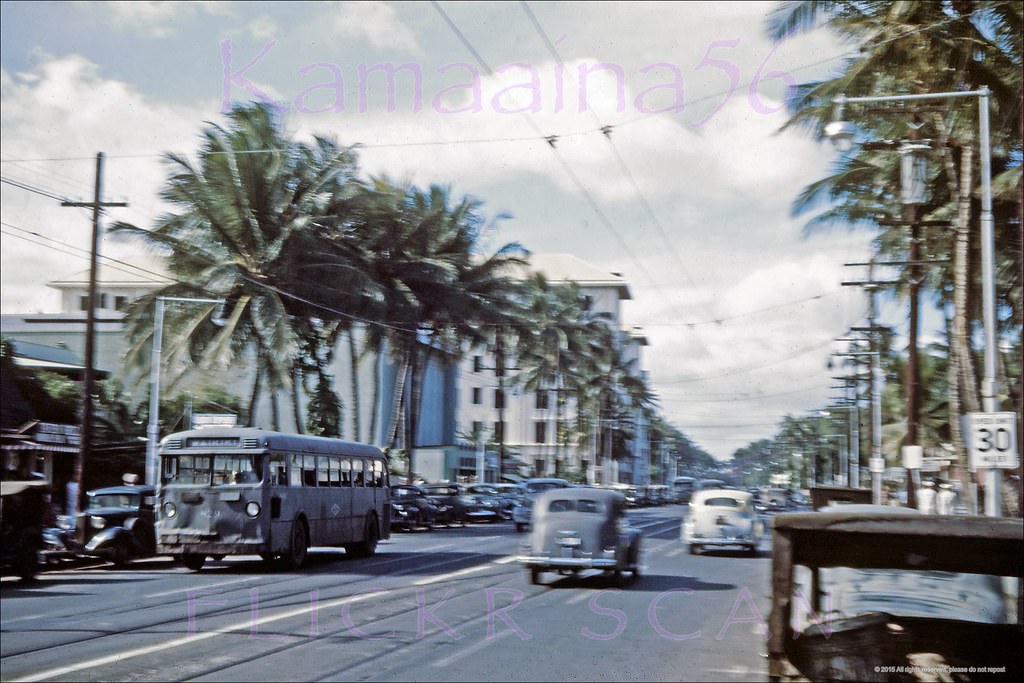
Old Waikiki, looking west along Kalakaua Avenue from east of the Kaiulani Avenue intersection, 1945

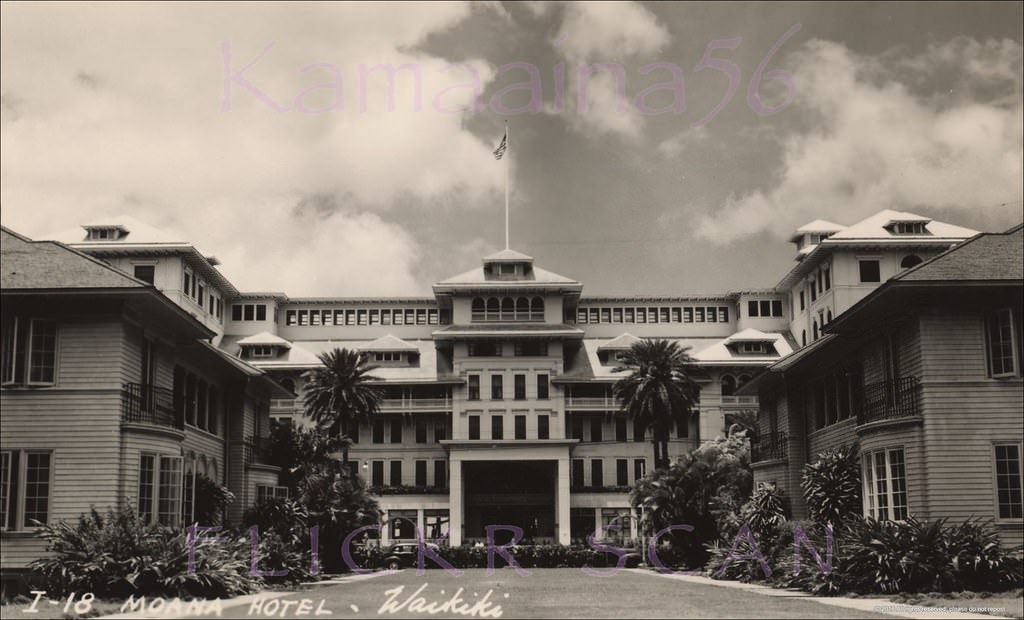
At the heart of Waikiki stood the Moana Hotel, built in 1901 and still the neighborhood’s most iconic landmark. It was Oahu’s first hotel, and its white colonnaded facade gave Kalakaua Avenue a sense of permanence and elegance that newer buildings couldn’t replicate. In 1918, reinforced concrete wings were added to both ends of the original structure, expanding its footprint without diminishing its stately appearance.
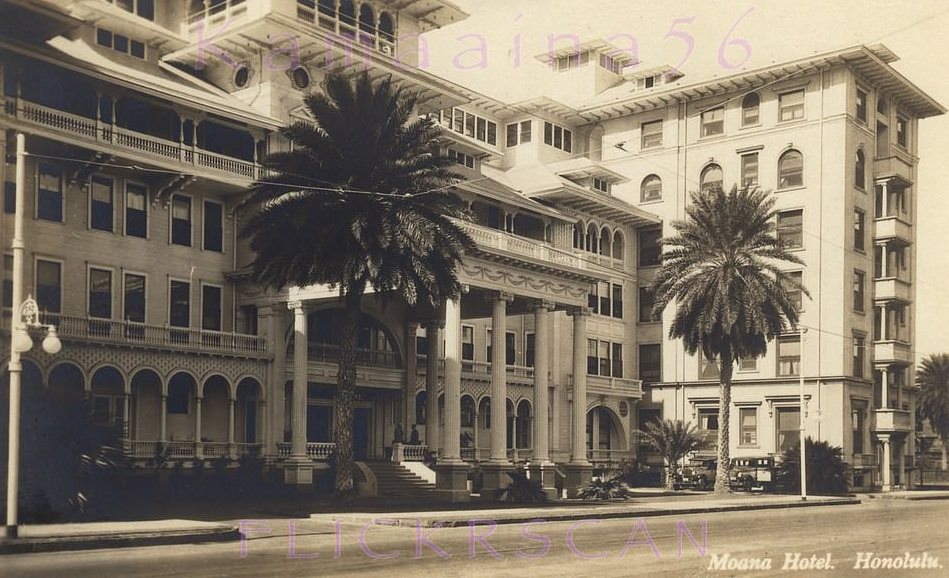
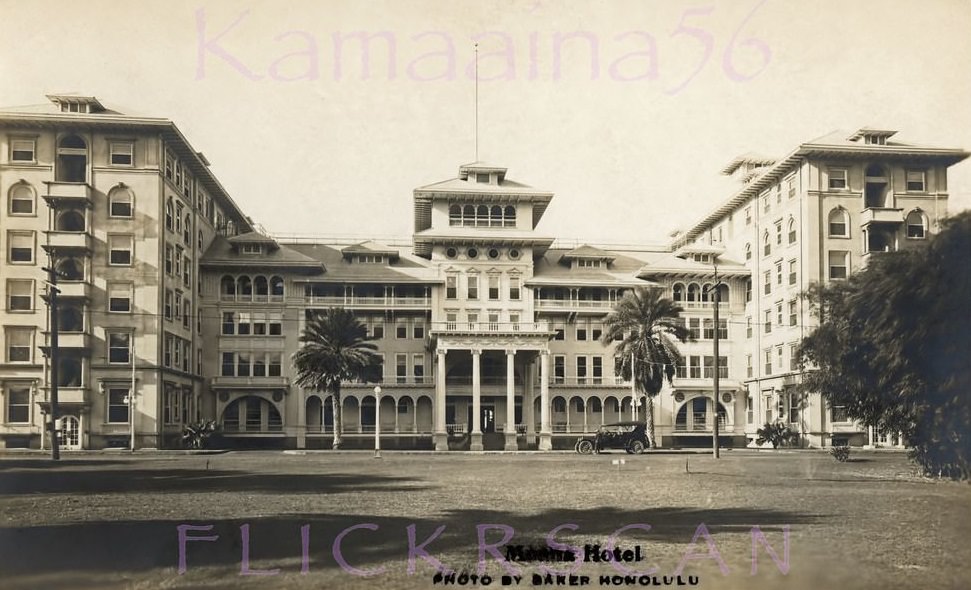
The stately 1901 Moana Hotel on Waikik's Kalakaua Avenue some time after the 1918 reinforced concrete end wings were added, 1930s
The stately 1901 Moana Hotel on Waikik’s Kalakaua Avenue some time after the 1918 reinforced concrete end wings were added, 1930s
Waikiki's magnificent Moana Hotel viewed from across Kalakaua Avenue.
Waikiki’s magnificent Moana Hotel viewed from across Kalakaua Avenue.

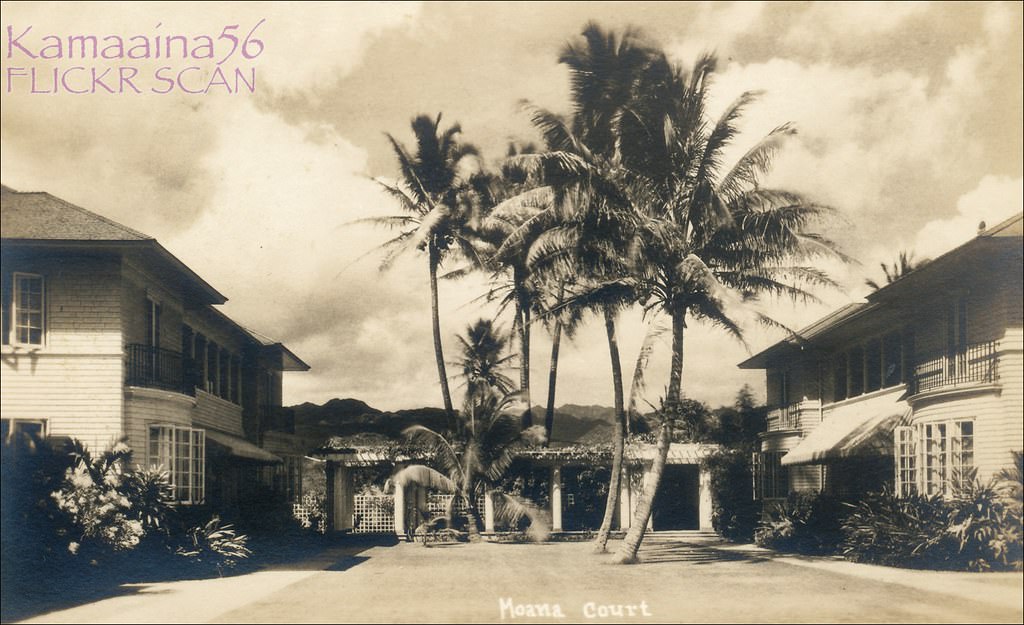
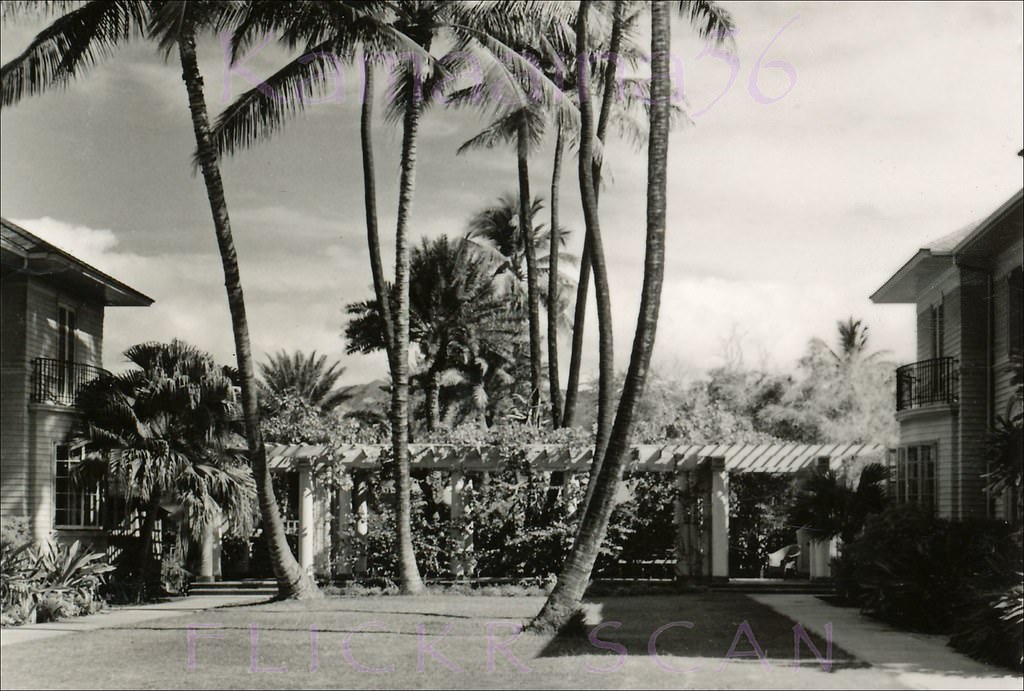
Across Kalakaua Avenue from the Moana sat a collection of cottages and bungalows that formed what was known as Moana Court. These low-slung structures created a quiet residential counterpoint to the grand hotel just steps away. Guests at the cottages looked out across the avenue at the Moana’s porte-cochère, while hotel guests looked back at the shaded bungalow gardens.
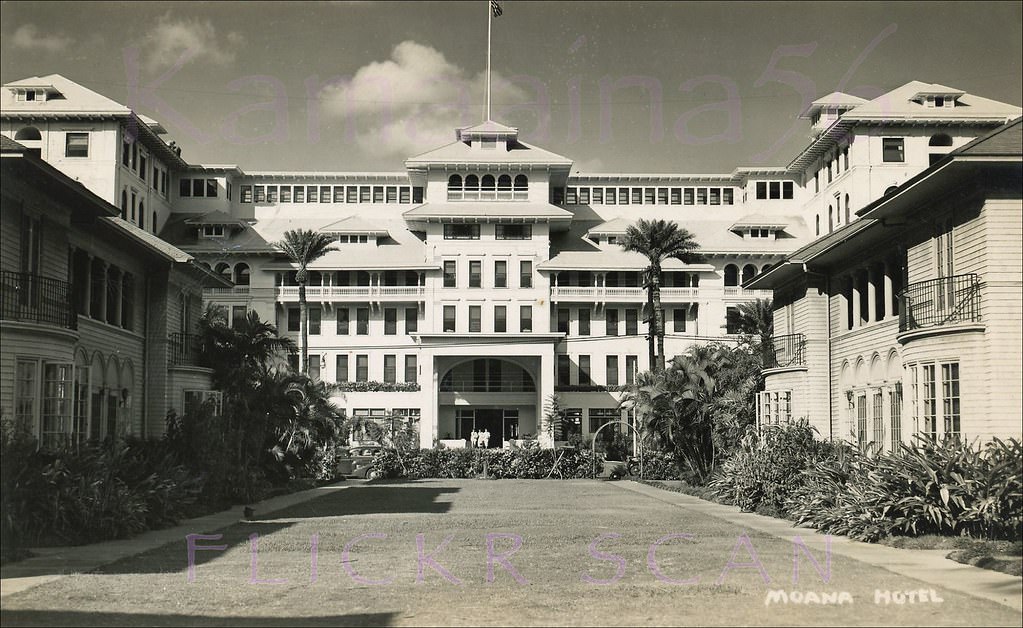
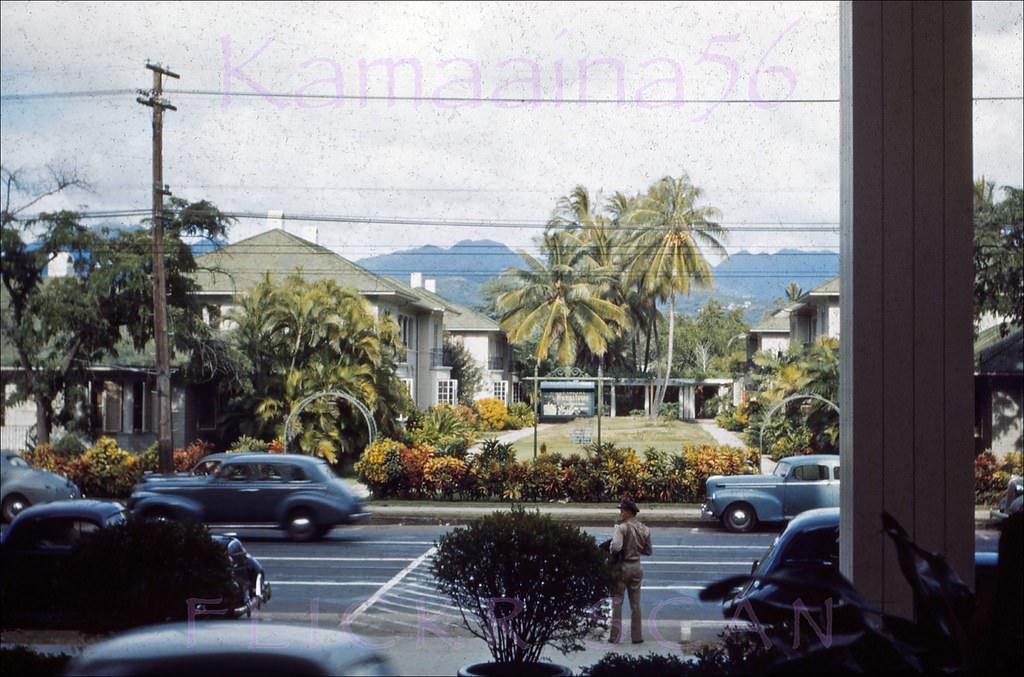
View from courtyard of the Moana Cottages looking across Kalakaua Avenue towards the Moana Hotel, 1948
Nice sharp photo of the stately Moana Hotel taken from the 1920s Moana Bungalows looking across Waikiki's Kalakaua Avenue, 1940s
Nice sharp photo of the stately Moana Hotel taken from the 1920s Moana Bungalows looking across Waikiki’s Kalakaua Avenue, 1940s
Looking makai at the courtyard and bungalows across Kalakaua Avenue from the Moana Hotel.
The tranquil courtyard and bungalows across Kalakaua Avenue from the Moana Hotel, 1940.
Moana Court Bungalows, 1940s.

This was once the view from the Moana Hotel porte-cochère looking across Kalakaua Avenue at the Moana Court bungalows. Moana Court came down in the early 1950s to be replaced by the 1955 Princess Kaiulani Hotel.

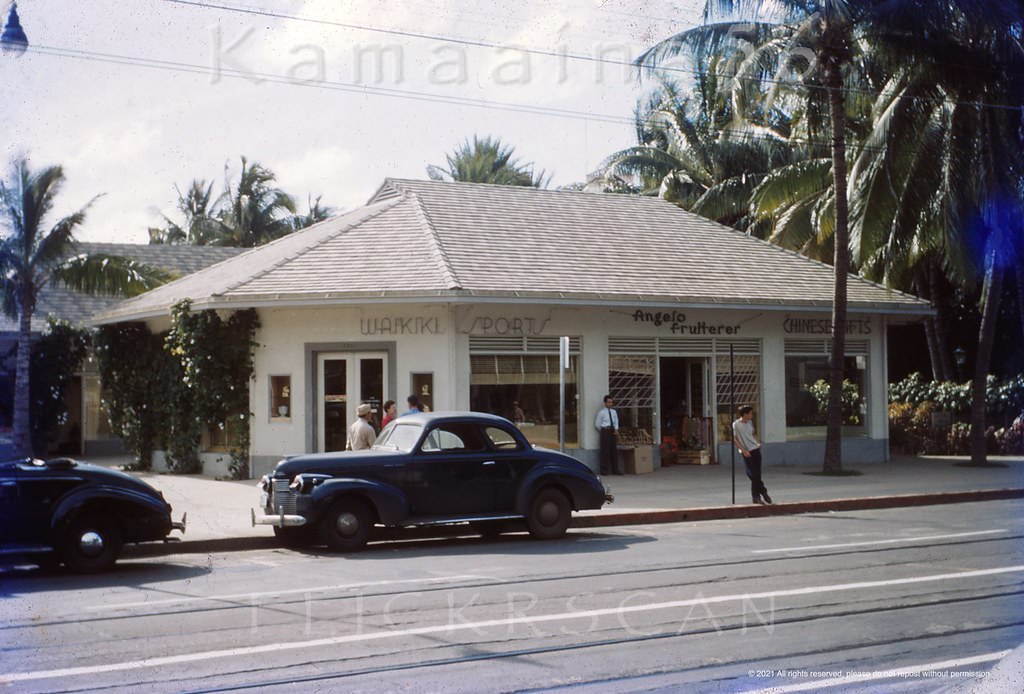
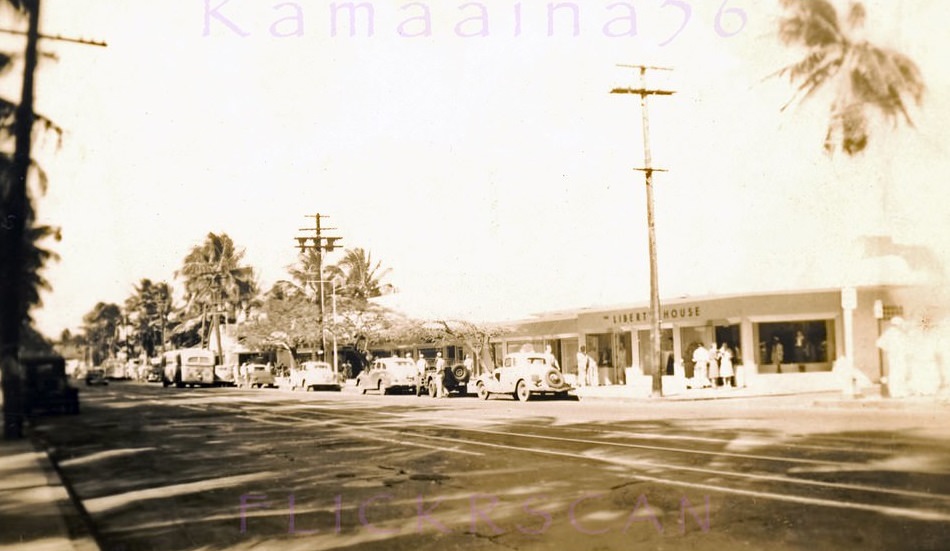
Nearby businesses on Kalakaua Avenue reflected the neighborhood’s mix of leisure and commerce. The Earl Thacker Co. operated directly across from the Moana, part of a block that also included small shops, a drugstore, and the Liberty House department store — one of the avenue’s most recognizable retail anchors during the wartime years.
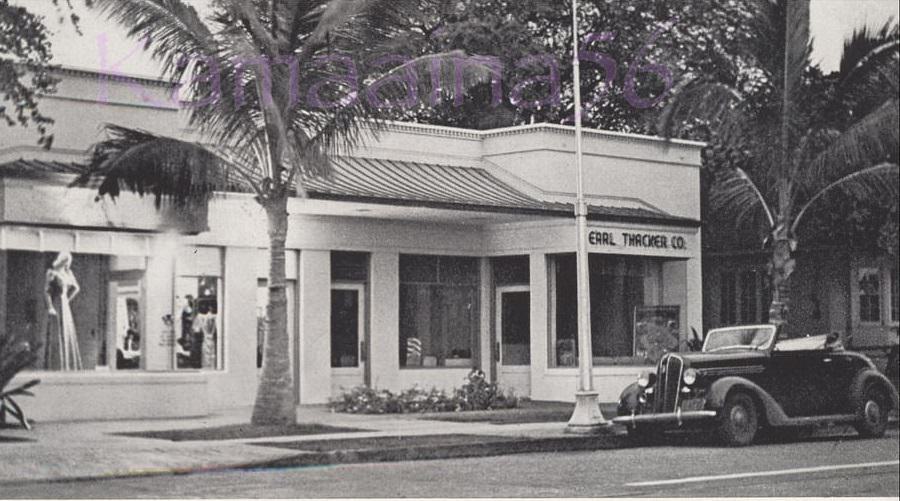
The Earl Thacker Co. on Waikiki's Kalakaua Avenue across from the Moana Hotel, 1940s.
The Earl Thacker Co. on Waikiki’s Kalakaua Avenue across from the Moana Hotel, 1940s.
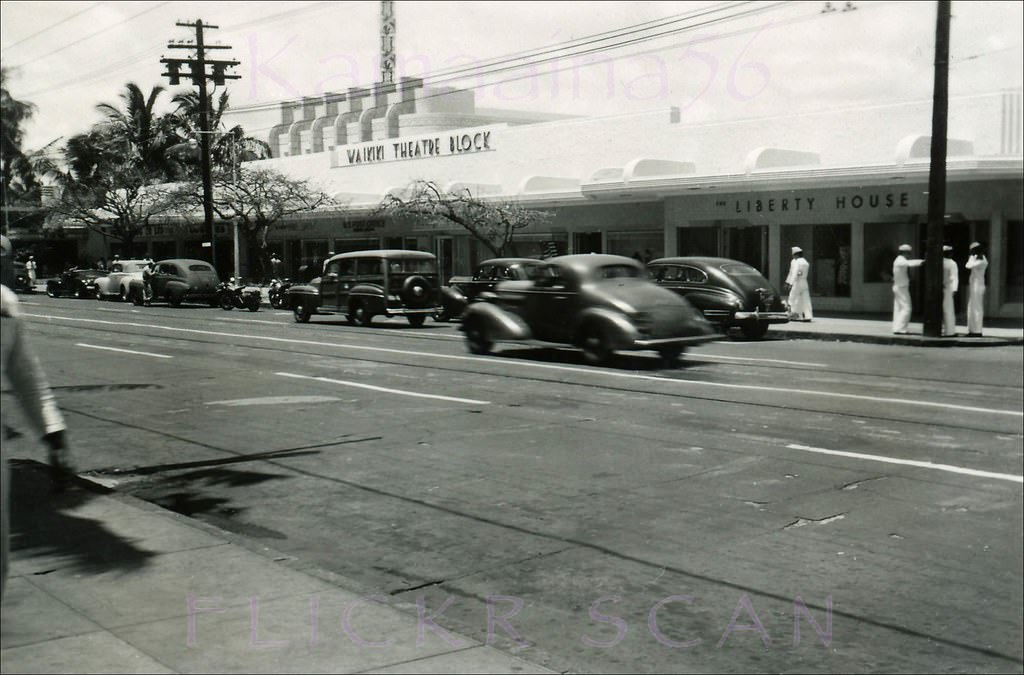
Wartime streetview of Kalakaua Avenue looking more or less east from the bus stop at the Waikiki Theater Block, 1940s

From the upper floors of the Moana Hotel, the full length of Kalakaua Avenue came into view — the rooftop of the 1941 Outrigger Arcade directly below, and further down the block, the distinctive facade of the 1936 Waikiki Theater. That theater, and the commercial block surrounding it, defined the entertainment district of wartime Waikiki.
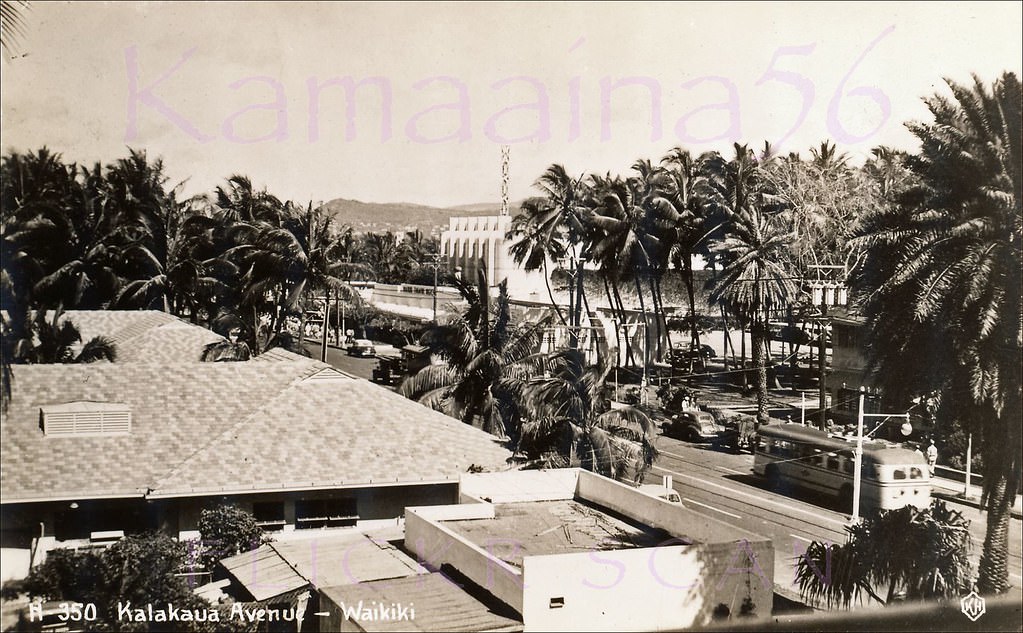
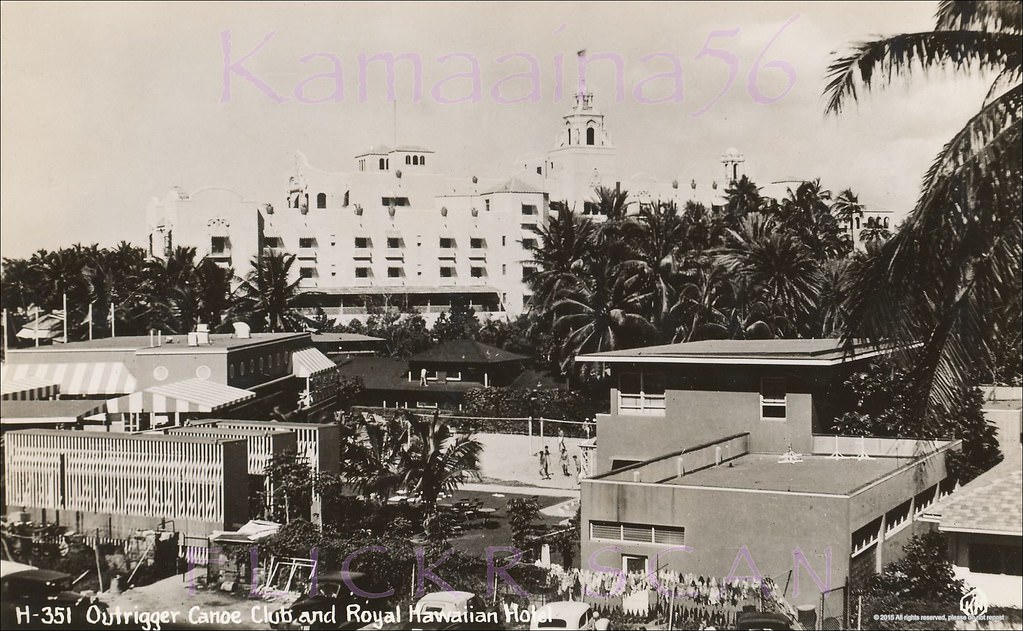
Kalakaua from the Moana, 1940s.
Looking west from an upper floor at the Moana Hotel at the Outrigger Canoe Club and the Royal Hawaiian Hotel, 1940s
Outrigger Arcade on the Kalakaua Avenue side of the Outrigger Canoe Club, 1940s
Kalakaua Avenue at the intersection with Royal Hawaiian Avenue in Waikiki Town, 1944

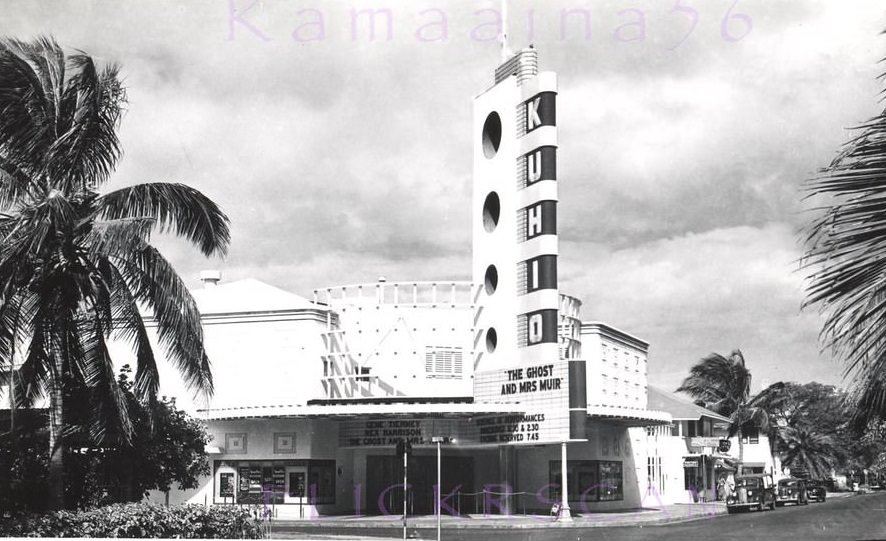
A few blocks off the main avenue, Waikiki’s side streets told a different story — one of everyday life still ticking along. On Kalaimoku Street, a driver could stop to get the car lubed while catching a movie at one of the neighborhood’s Art Deco theaters. The 1941 Kuhio Theater on Kuhio Avenue brought a second movie house to the area, giving residents and servicemen alike another escape.
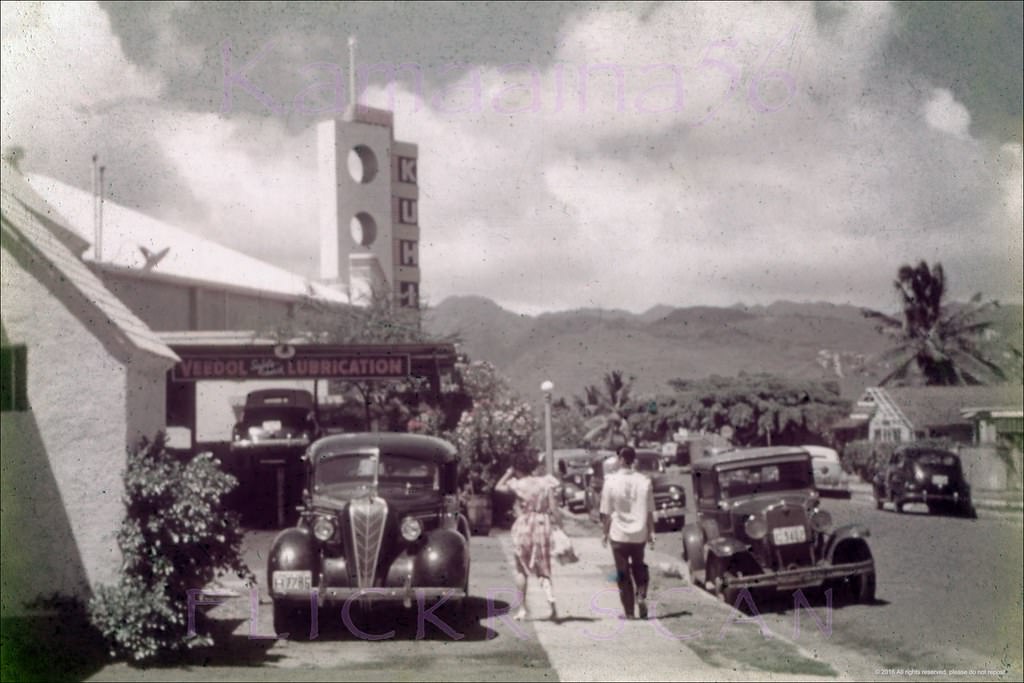
Looking mauka along Kalaimoku Street in Waikiki. You could get your car lubed while taking in a movie, 1946
Early days at Waikiki's other Art Deco movie house, the 1941 Kuhio Theater on Kuhio Avenue at Kalaimoku, 1947
Early days at Waikiki’s other Art Deco movie house, the 1941 Kuhio Theater on Kuhio Avenue at Kalaimoku, 1947

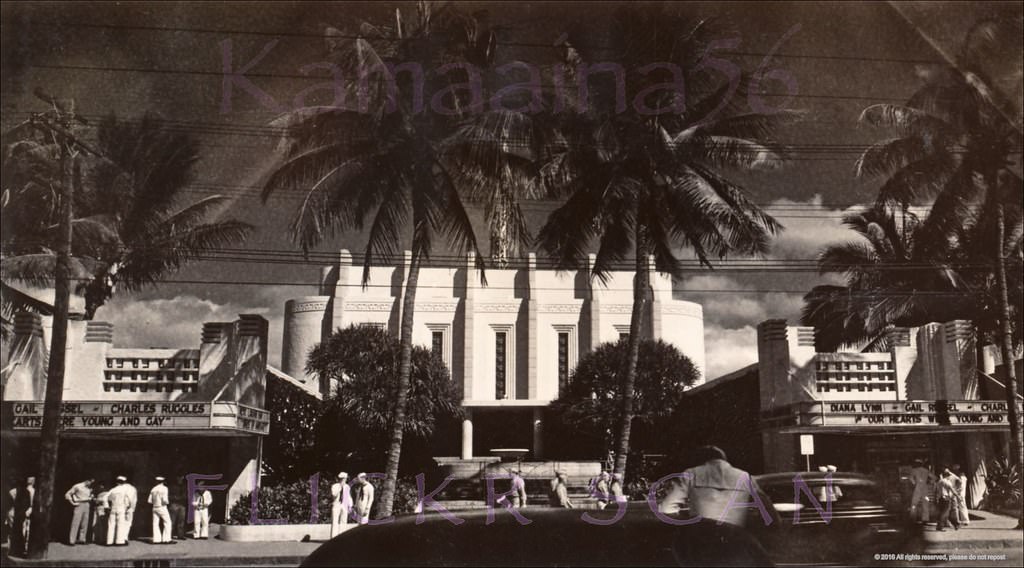
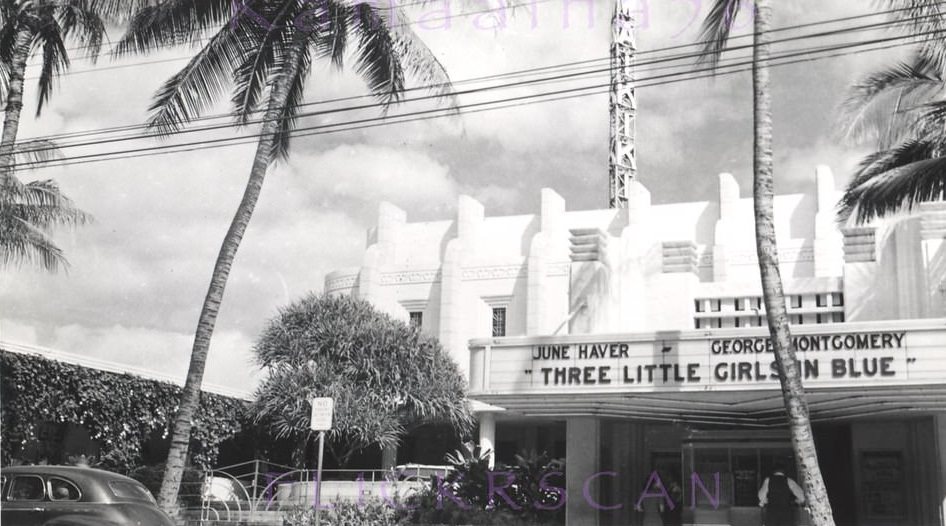
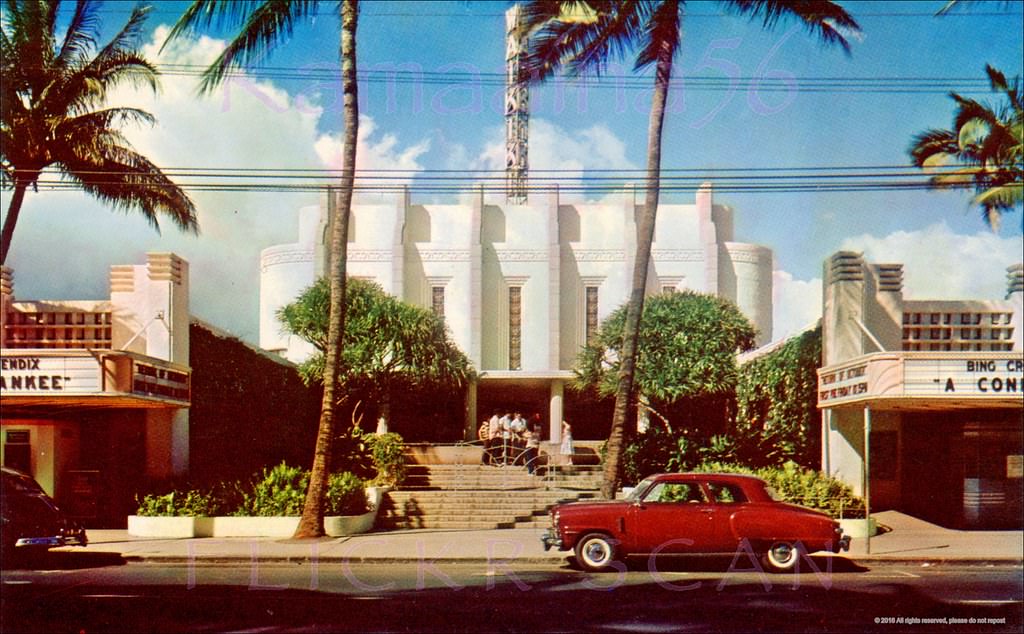
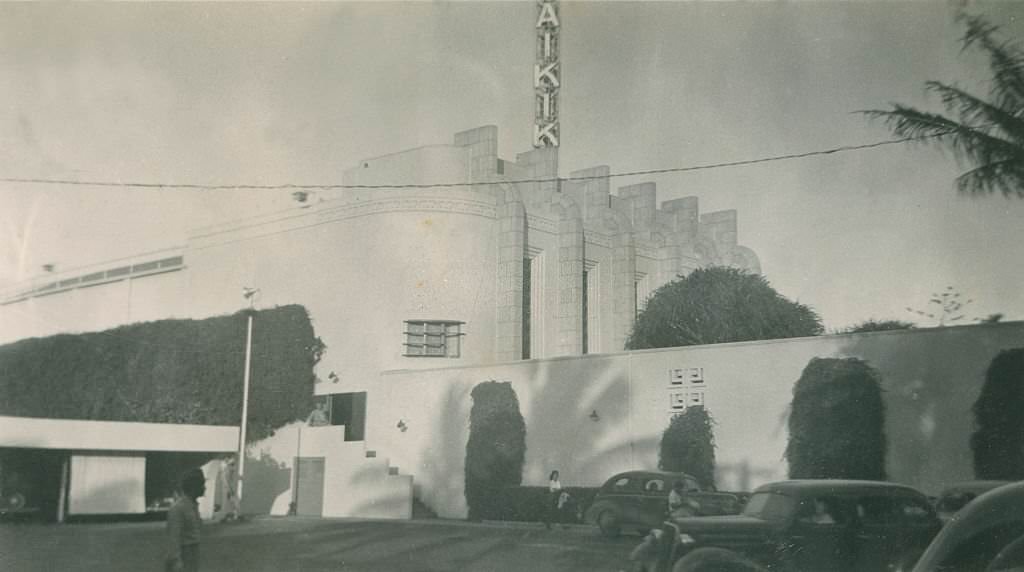
The crown jewel of Waikiki’s entertainment block was the Waikiki Theater on Kalakaua Avenue. Opened in 1936, it was a pure Art Deco statement — bold lines, vertical signage, and a tropical interior that set it apart from anything on the mainland. The theater sat on the mauka (inland) side of Kalakaua Avenue, directly across from the Royal Hawaiian Hotel, and became one of the most photographed buildings in the neighborhood throughout the 1940s.
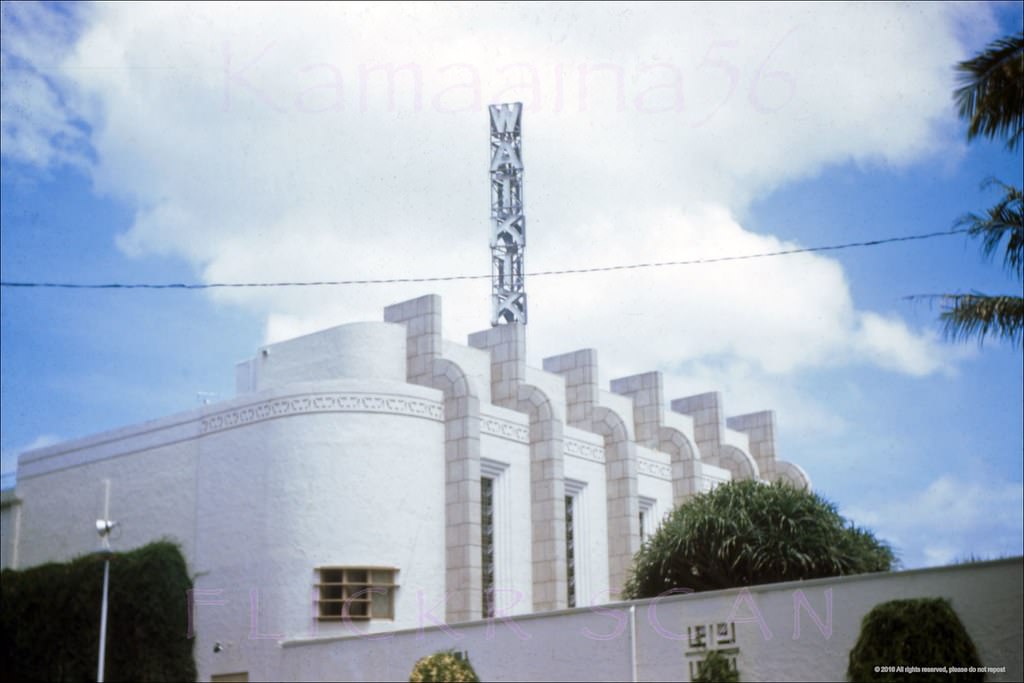
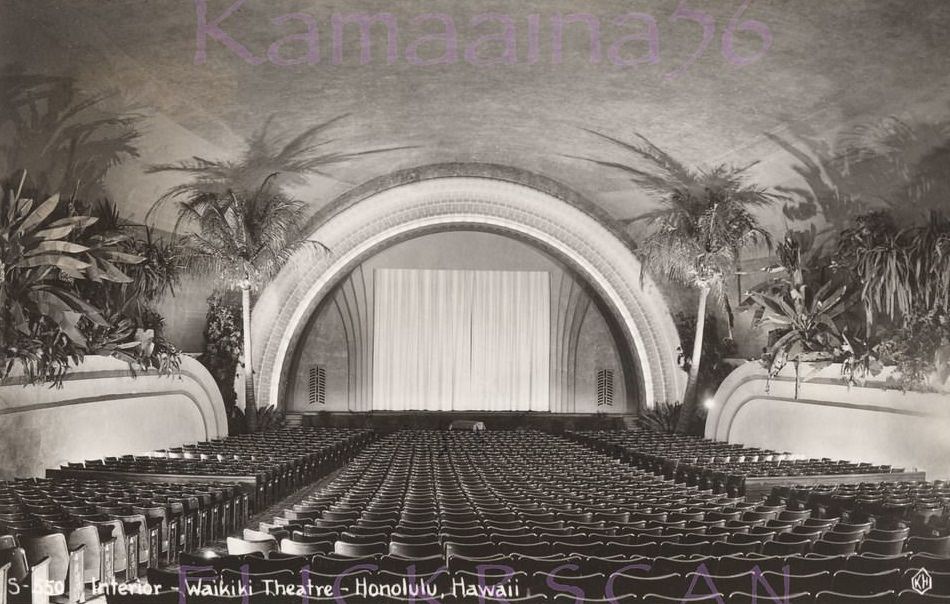
The art deco Waikiki Theater on Kalakaua Avenue, 1945
The tropical interior of the Waikiki Theater, 1940s
The art-deco Waikiki Theater on Kalakaua Avenue across from the Royal Hawaiian Hotel, 1943.

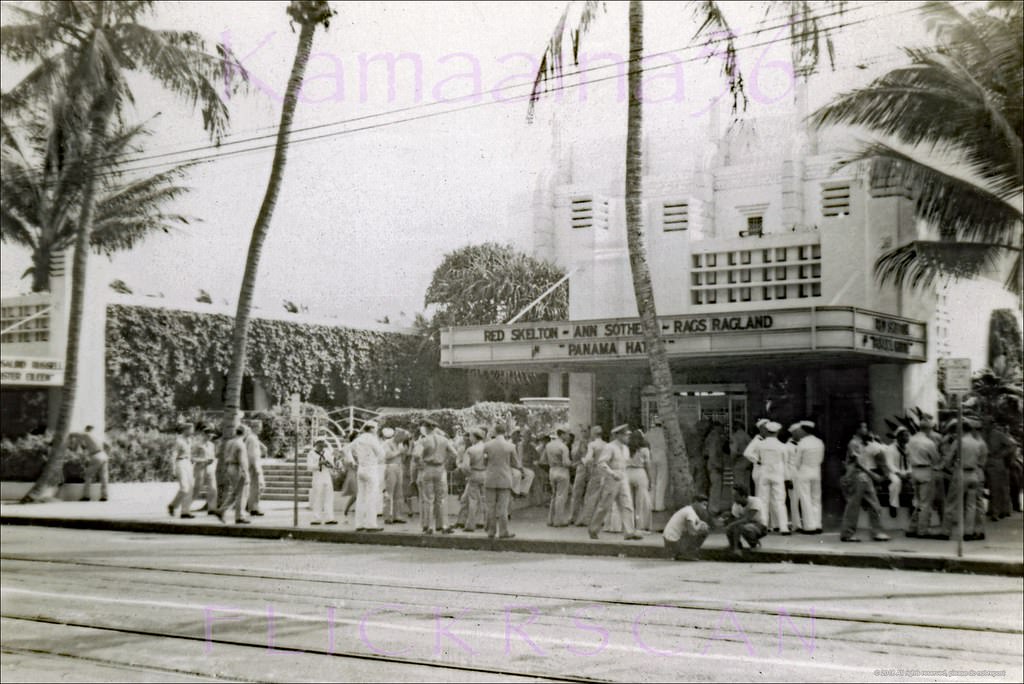
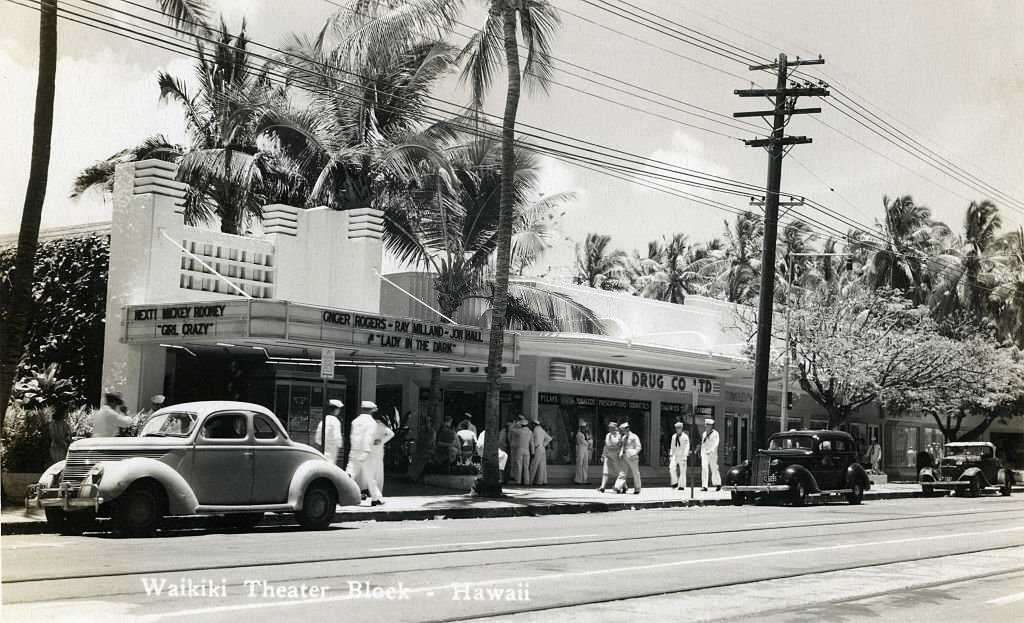
During the war years, the Waikiki Theater drew heavy crowds of uniformed servicemen. With tourism shut down following the attack on Pearl Harbor in December 1941, Waikiki pivoted entirely into a rest and recreation zone for the U.S. military. Soldiers and sailors filled the streets, the beaches, and every venue willing to host them — including the Waikiki Theater, which remained open throughout the war.
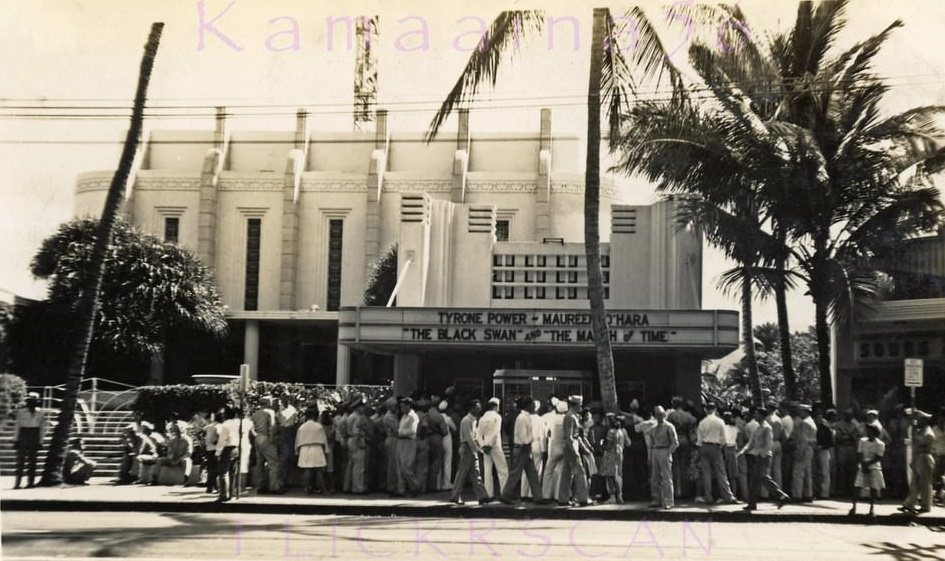
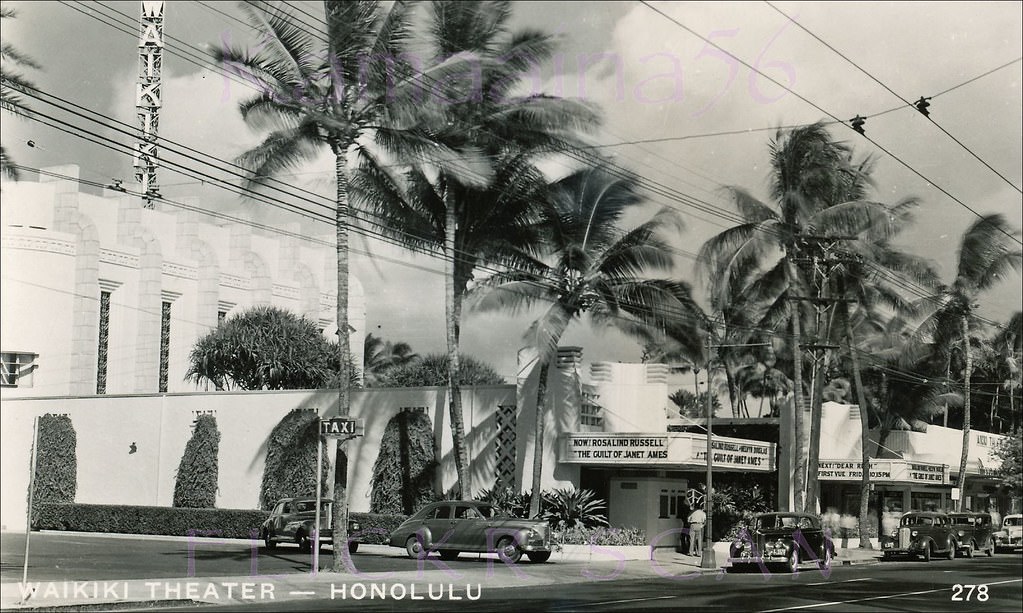
Quite a crowd of uniformed servcemen and a few civilians showed up at the Waikiki Theater on Kalakaua Avenue, 1943
Art Deco Waikiki Theater on Kalakaua Avenue in the center of Waikiki, 1947
Looking across Kalakaua Avenue at the Waikiki Theater, 1945
Art Deco Waikiki Theater on the mauka (inland) side of Kalakaua Avenue across from the Royal Hawaiian Hotel, 1946
Art Deco masterpiece on Kalakaua Avenue, 1949

It was closed in 2002, and demolished in 2005.

By 1948, the theater was showing Hollywood releases like “Adventures of Don Juan” starring Errol Flynn and Viveca Lindfors. The glowing marquee at night turned that stretch of Kalakaua Avenue into something genuinely cinematic.
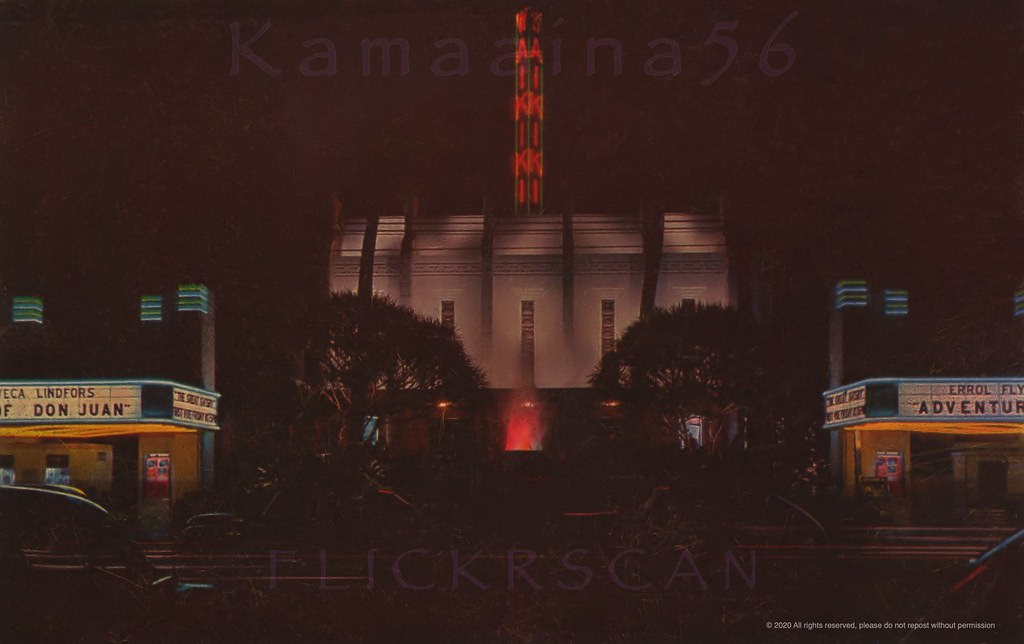
Waikiki Theater at Night, 1948.
Liberty House department store on the mauka side of Kalakaua Avenue in the Waikiki Theatre Block, 1944
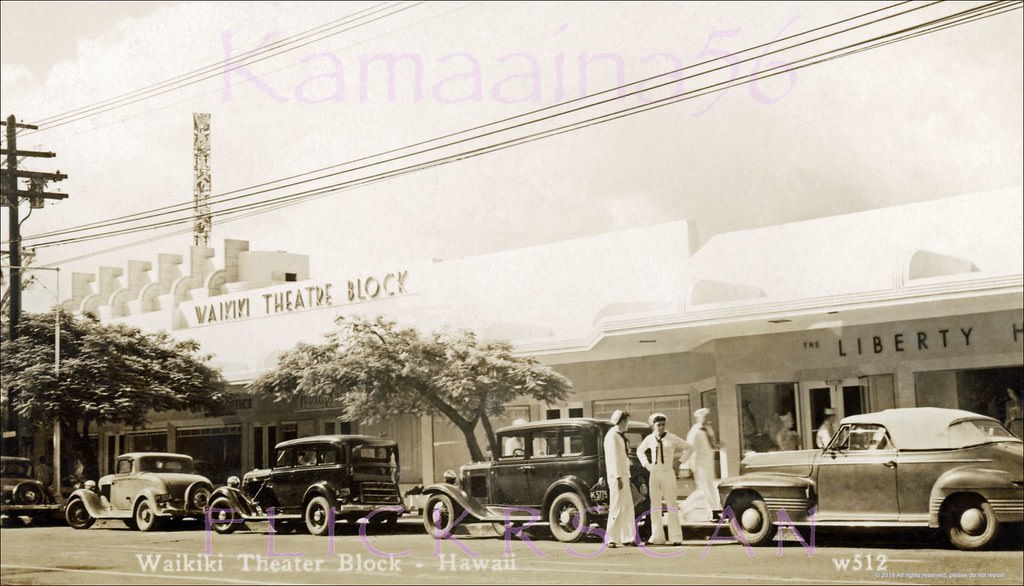
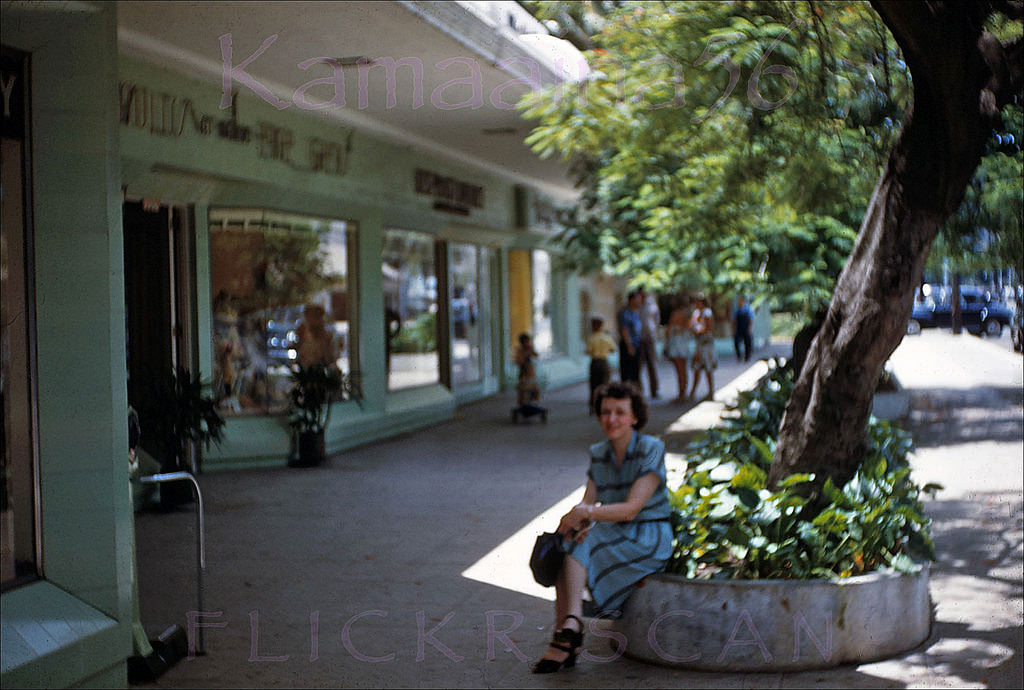
The Waikiki Theater Block on the mauka (inland) side of Kalakaua Avenue between Kaiulani and Seaside Avenues, 1940s
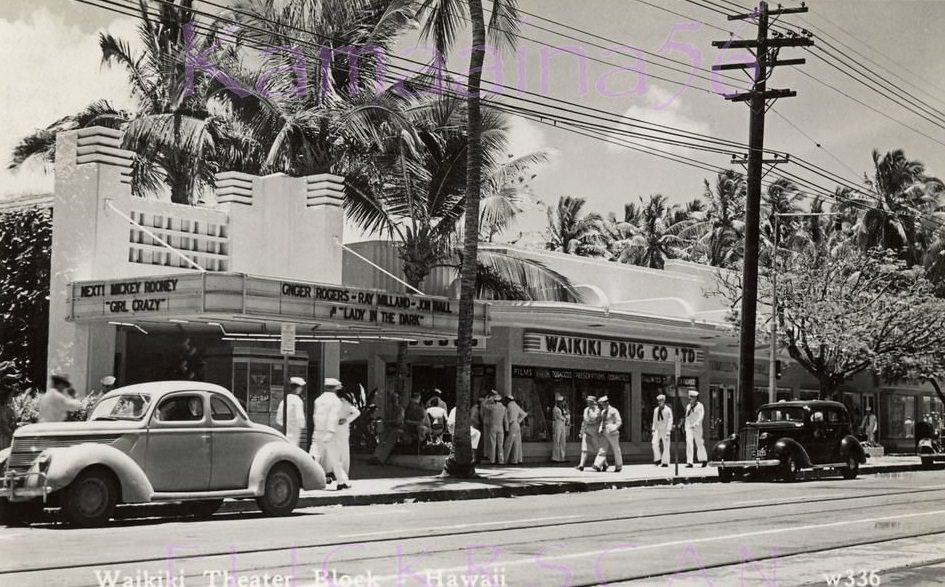
Sailors at the Waikiki Theater on Kalakaua Avenue, 1940s
The old Waikiki Theater Block on Kalakaua Avenue, 1944
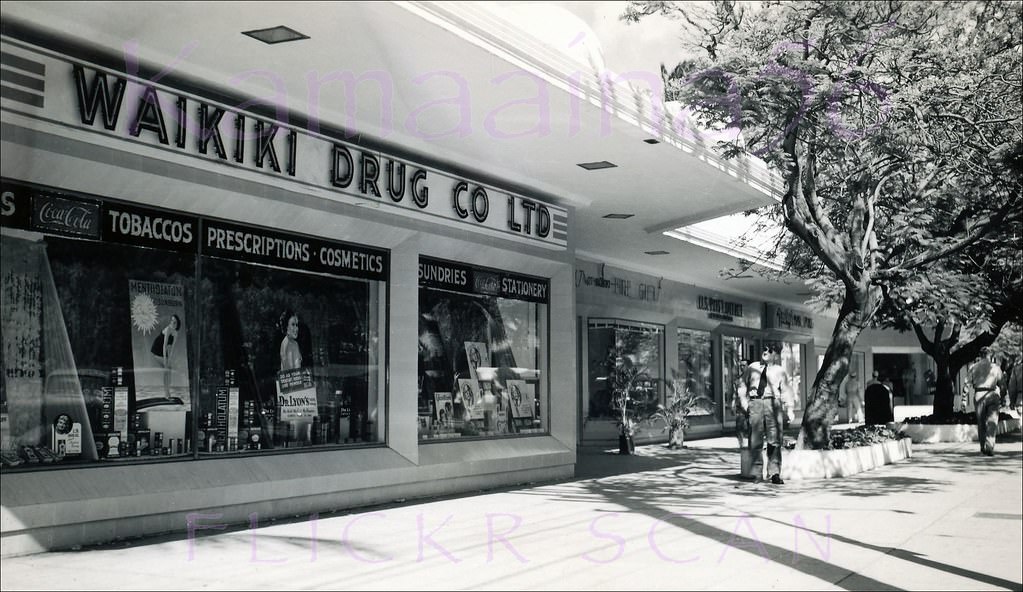
The old Waikiki Drug Co. on Kalakaua Avenue between the Waikiki Theater and Liberty House Waikiki, 1946
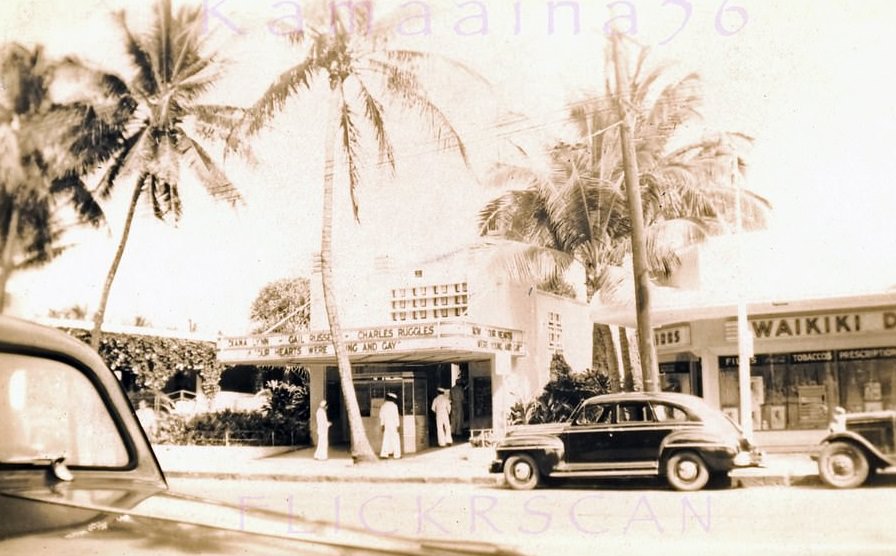
The shops between the old Waikiki Theater and Liberty House on the mauka side of Kalakaua Avenue, 1947
Overexposed but interesting view looking more or less west at the Waikiki Theater Block on Kalakaua Avenue, 1940s
Looking towards the mauka side of Kalakaua Avenue at the Waikiki theater block, 1946

Away from the main avenue, Waikiki had quieter pockets that felt more like a village than a resort district. The Willard Inn on Lewers Road at Kalia offered European-style cottage accommodations surrounded by tropical gardens. It was a low-key, low-rise property — a world away from the Moana’s grandeur — with a rattan-furnished lanai lounge where guests relaxed and individual lanai guest rooms that opened onto the greenery.
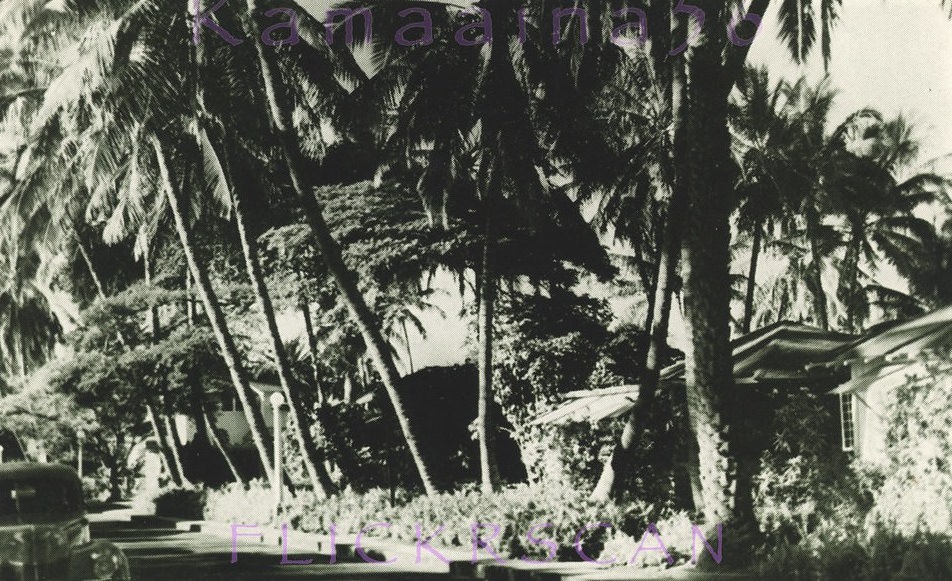
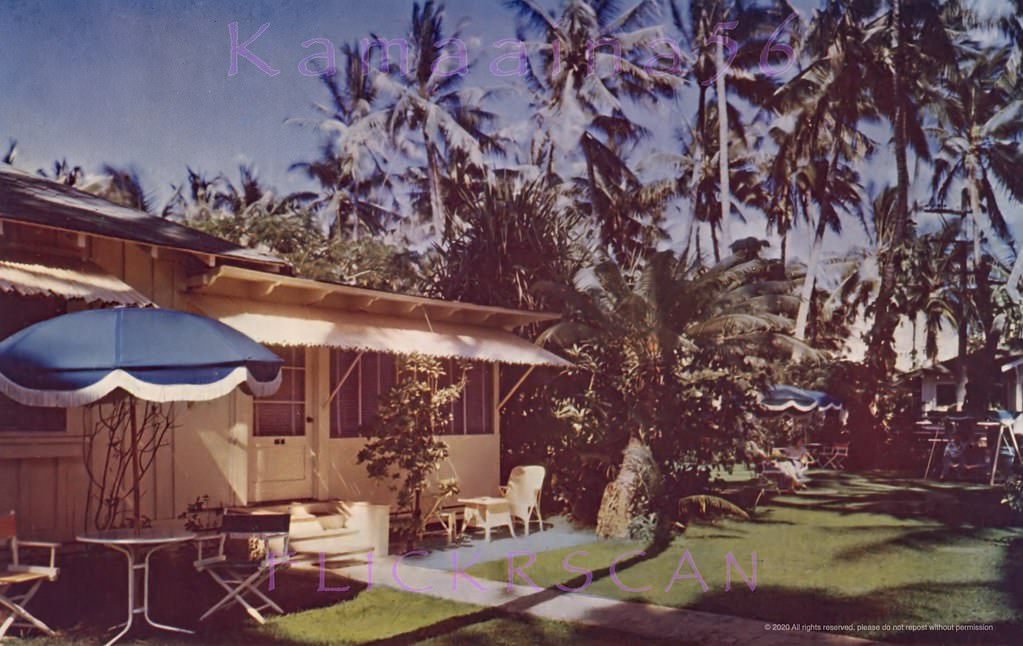
The Willard European hotel cottages in the "garden spot of Waikiki" on Lewers Road at Kalia, 1940s
The Willard European hotel cottages in the “garden spot of Waikiki” on Lewers Road at Kalia, 1940s
The Willard Inn cottages on Lewers Road at Kalia in Waikiki. Demolished late to make way for the Edgewater Hotel, 1940s
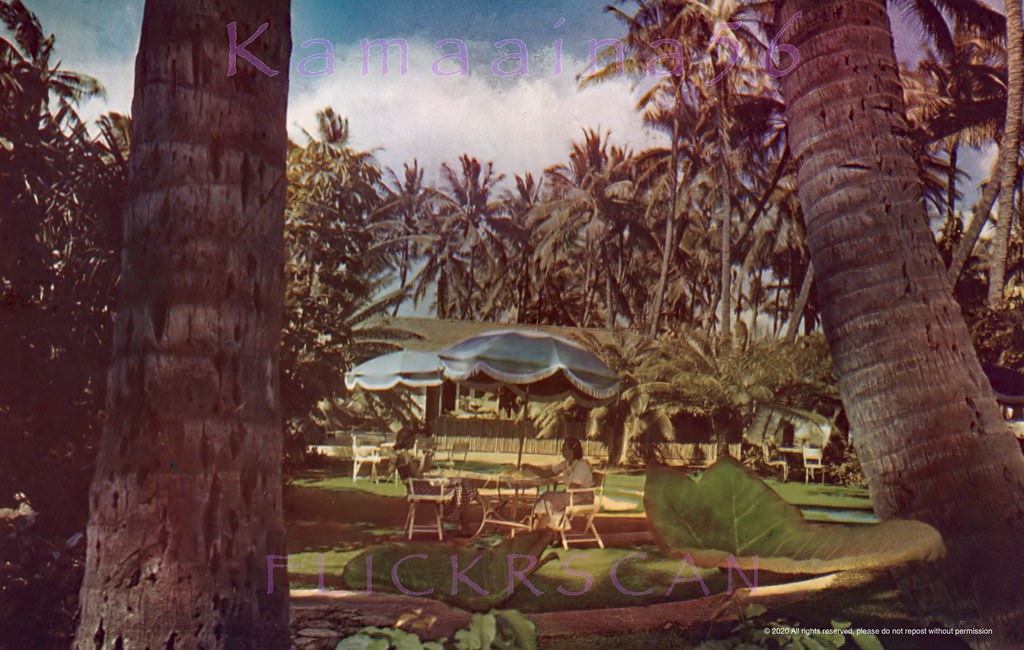
The tranquil tropical gardens at the long gone Willard Inn which used to be on the corner of Waikiki's Kalia Road at Lewers Road (now Lewers Street), 1940s
The tranquil tropical gardens at the long gone Willard Inn which used to be on the corner of Waikiki’s Kalia Road at Lewers Road (now Lewers Street), 1940s

This low rise cottage hotel became the site of the architect/hotelier Roy Kelley’s seven floor 1950-2005 Edgewater Hotel.
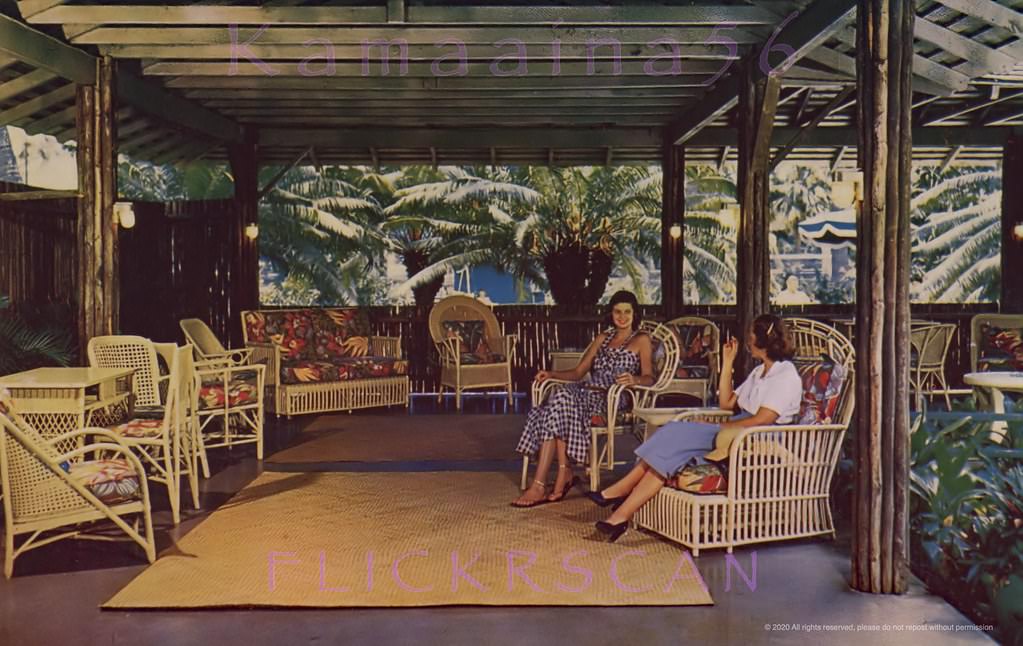
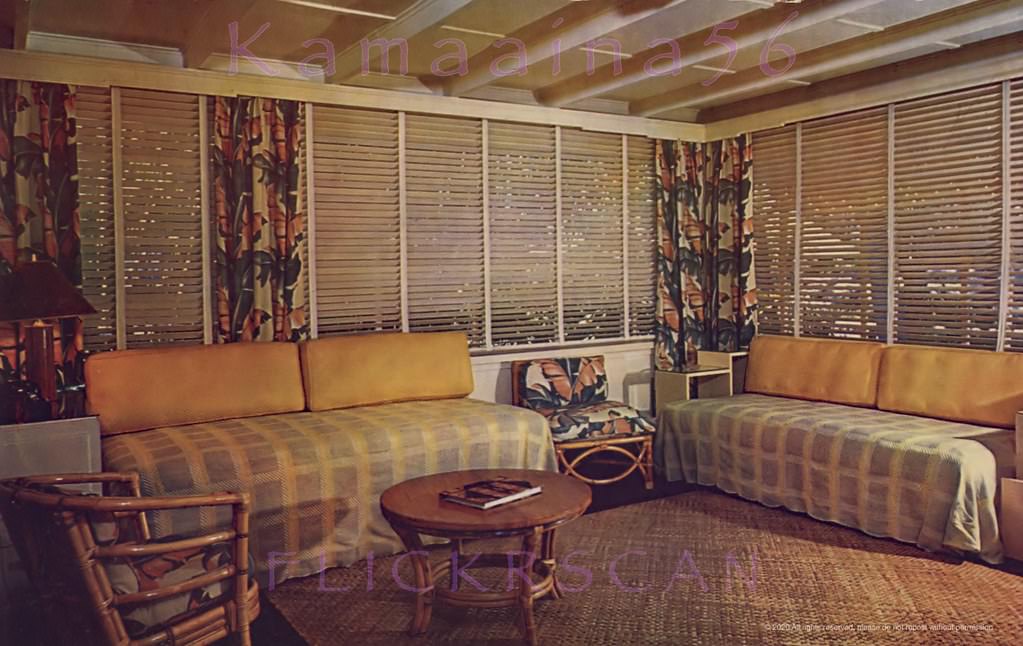
Ladies enjoying a smoke in the rattan furnished Lanai Lounge at the Willard Inn, Waikiki, 1940s
A lanai guest room at the Willard Inn on Lewers at Kalia, Waikiki, 1940s

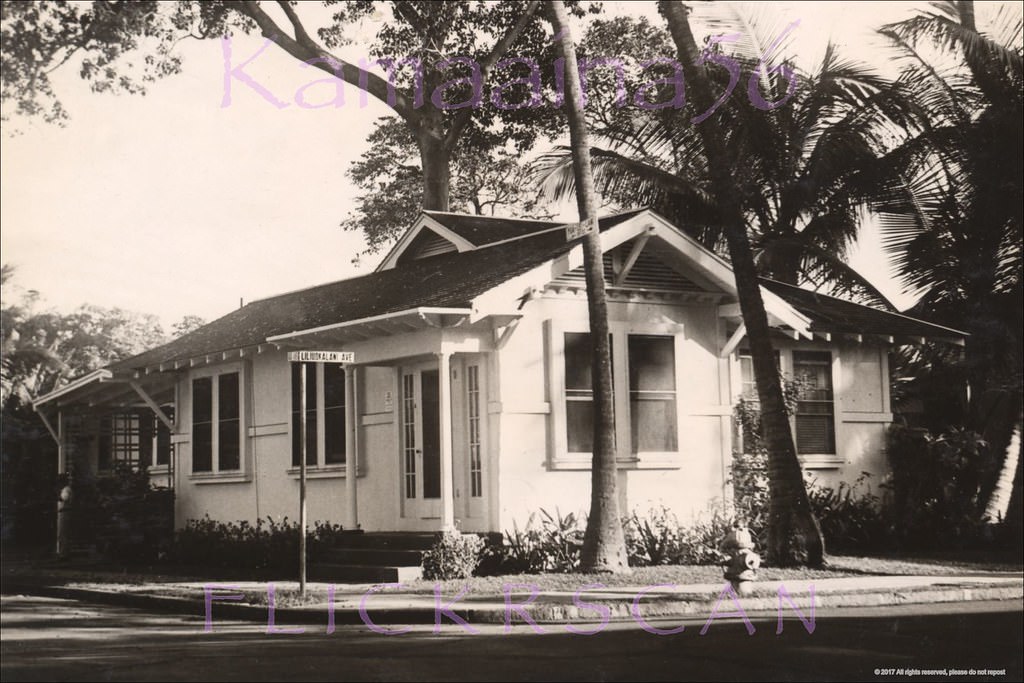
Street life in 1940s Waikiki had its own rhythm. Lei stringers worked the park on the makai side of Kalakaua Avenue near Beachwalk. Picturesque wooden cottages still stood on residential corners just a block from the beach — like the one at the northwest corner of Liliuokalani and Koa Avenues, near Kuhio Beach. Lewers Street between Kuhio Avenue and the Ala Wai Boulevard retained a genuinely residential character, with homes and small apartment buildings lining the sidewalks.
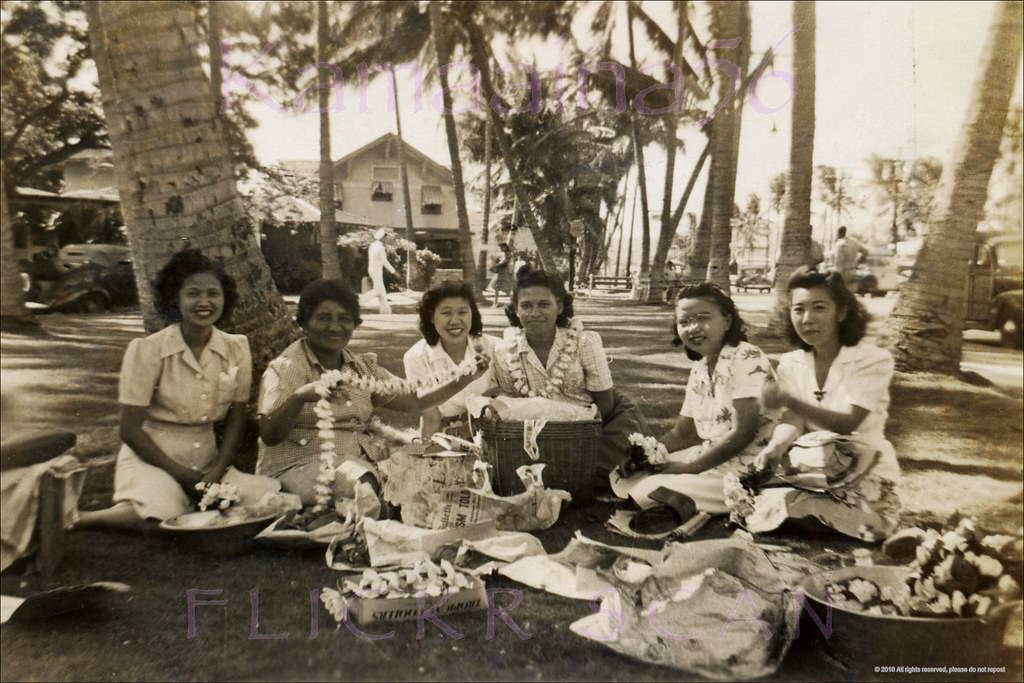
Lei stringers at the park on the makai side of Kalakaua Avenue at Beachwalk, 1940s
Liliuokalani Ave at Koa Waikiki, 1944.

Picturesque cottage on the NW corner of Waikiki’s Liliuokalani and Koa Avenues, just a block mauka from Kuhio Beach. The 1970 19-story Waikiki Resort Hotel is on the site today.
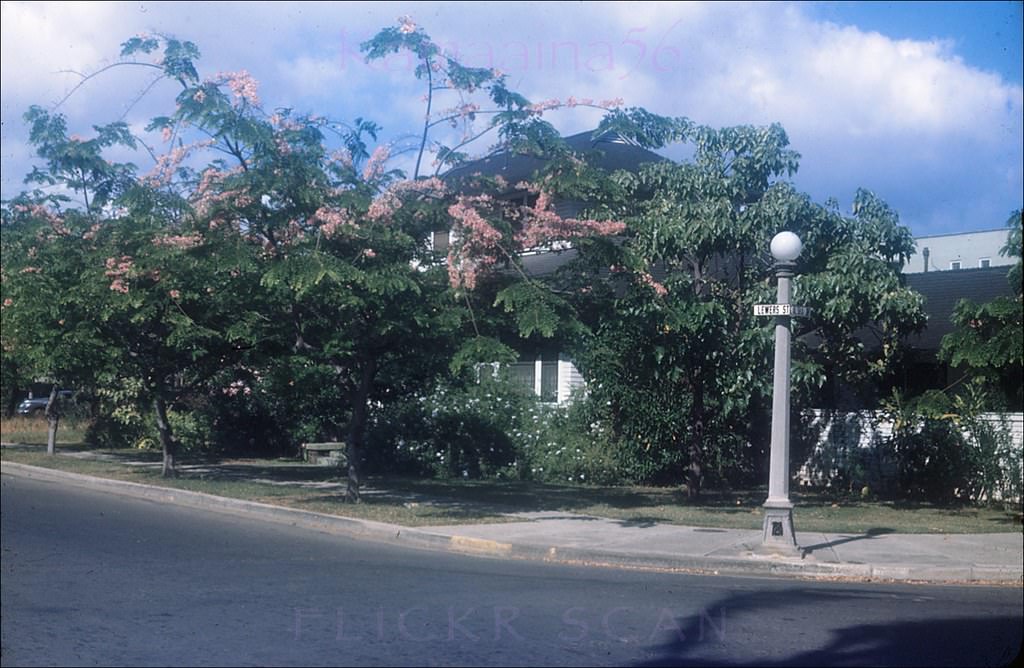
Residential section of Waikiki on Lewers Street at Aloha Drive, between Kuhio Avenue and Ala Wai Blvd. 1940s

Hotelier Roy Kelley made his mark on Waikiki during this period with a string of modest but well-designed properties. His first hotel, the five-story Islander at 351 Seaside Avenue just makai of Kuhio Avenue, opened in the 1940s with tropical decor and penthouse views stretching toward Diamond Head. Kelley’s approach — practical, well-located, affordable — made his properties popular with the servicemen and postwar visitors that Waikiki was beginning to welcome back.
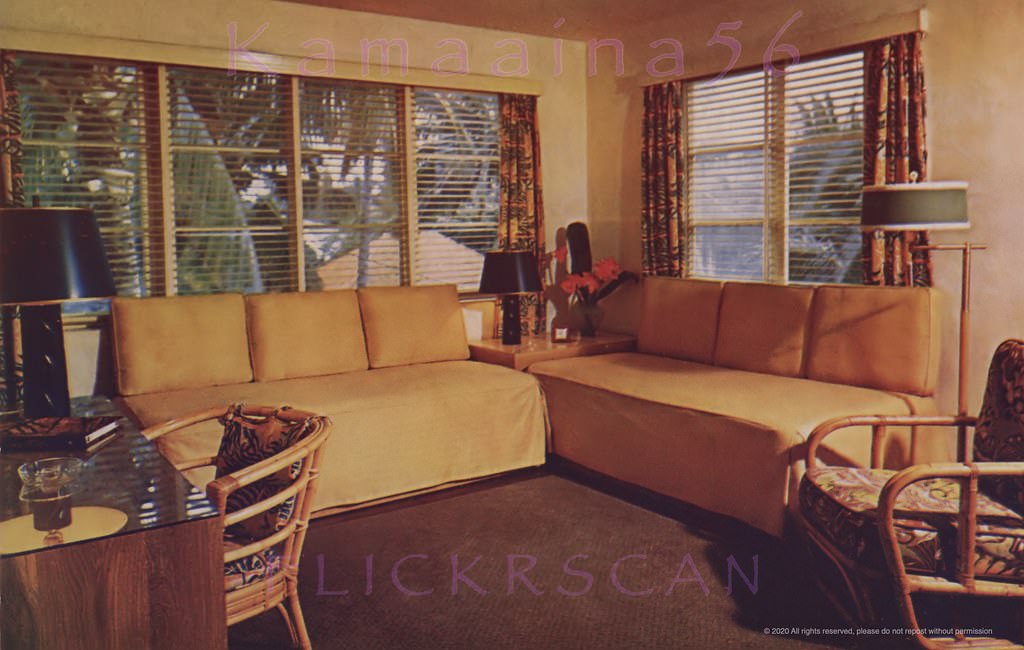
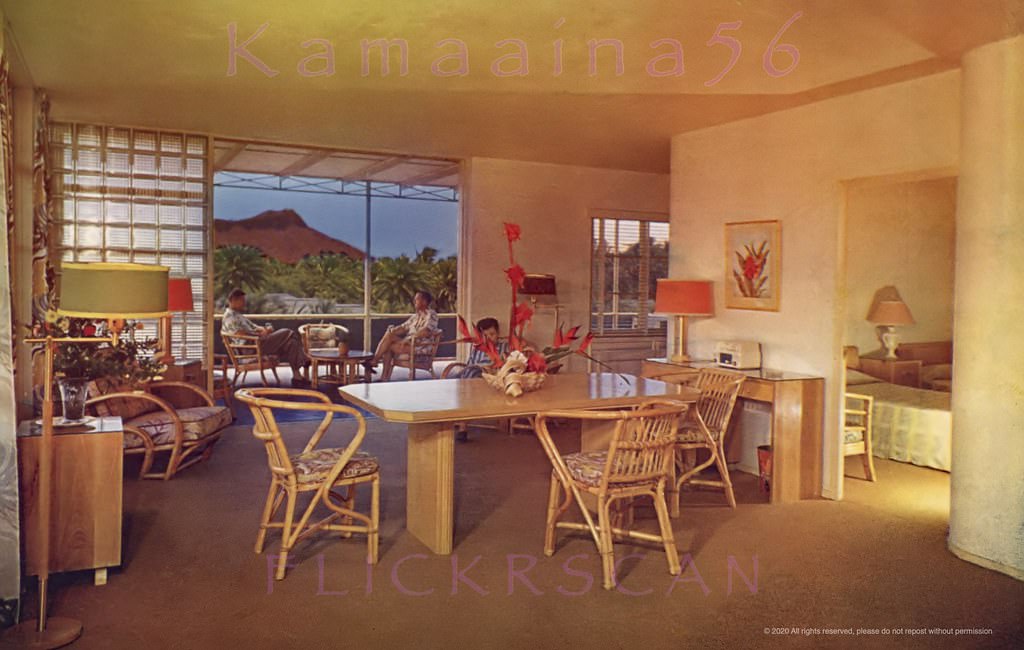
Tropical decor at Roy Kelley's Islander Hotel on Seaside Avenue, 1940s
Tropical decor at Roy Kelley’s Islander Hotel on Seaside Avenue, 1940s
Diamond Head from the penthouse at Hotelier Roy Kelley's Islander Hotel on Seaside Avenue in Waikiki, 1940s
Diamond Head from the penthouse at Hotelier Roy Kelley’s Islander Hotel on Seaside Avenue in Waikiki, 1940s
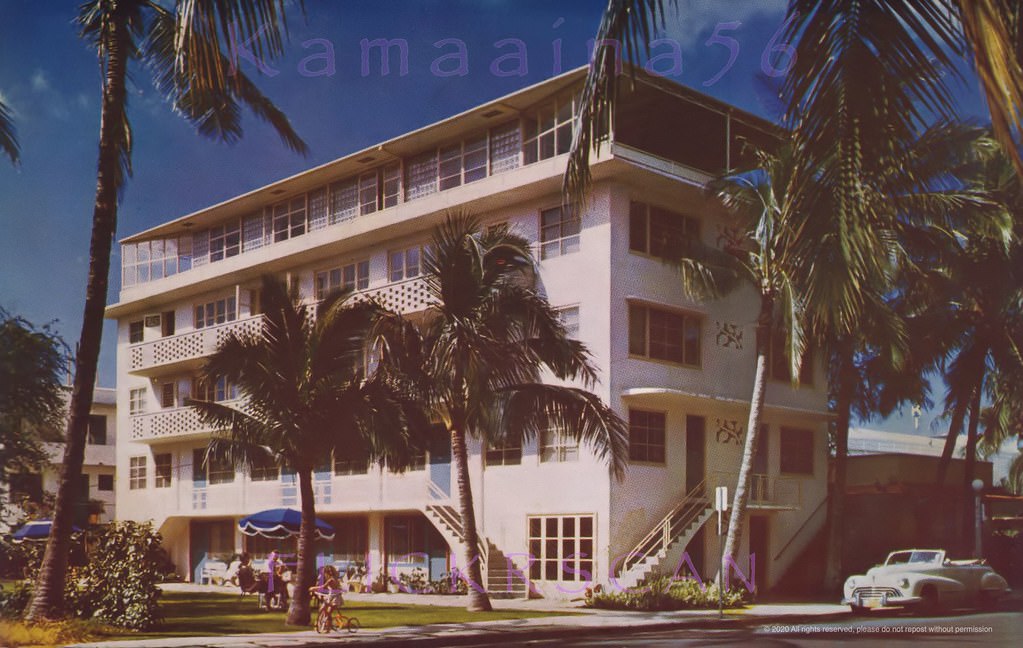
Roy Kelley's first hotel, the five story Islander at 351 Seaside Avenue, just makai of Kuhio, 1947
Roy Kelley’s first hotel, the five story Islander at 351 Seaside Avenue, just makai of Kuhio, 1947

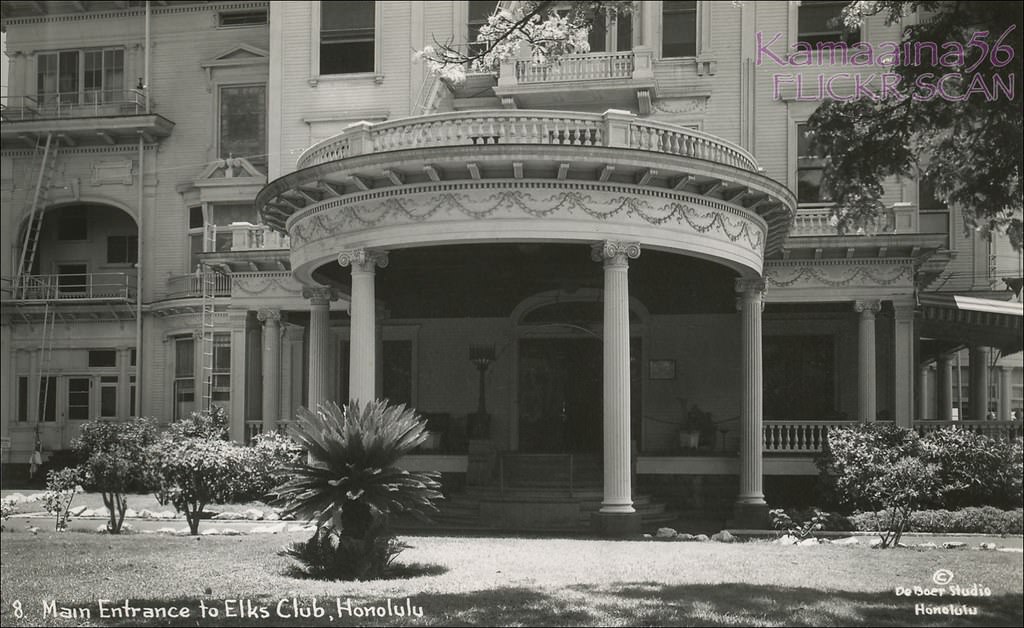
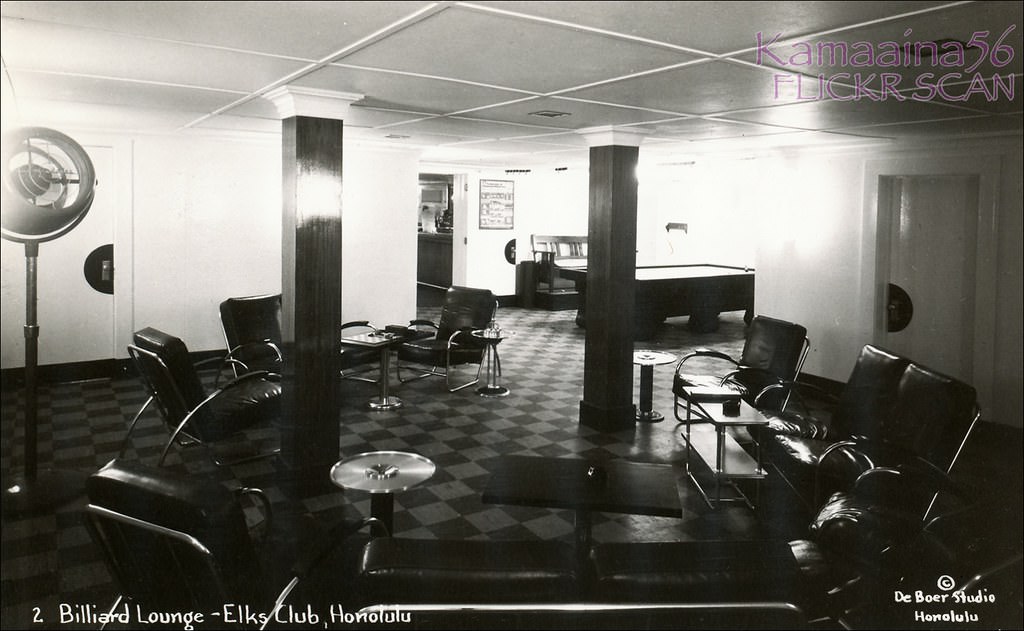
Other Kalakaua Avenue landmarks filled out the neighborhood’s personality. The Waikiki Tavern and Inn sat on the makai side of the avenue in the 1930s and into the early 1940s. St. Augustine’s Catholic Church occupied the northwest corner of Kalakaua and Ohua Avenues. The Waikiki Elks Club offered its members a billiards lounge and a formal main entrance. The Waikiki Aquarium drew visitors to the eastern end of the avenue near Kapiolani Park. And at the edge of the park, the Waikiki Natatorium — a seawater swimming venue built as a World War I memorial — still had a pair of 7-inch naval cannons mounted on the Kalakaua Avenue side of the structure.
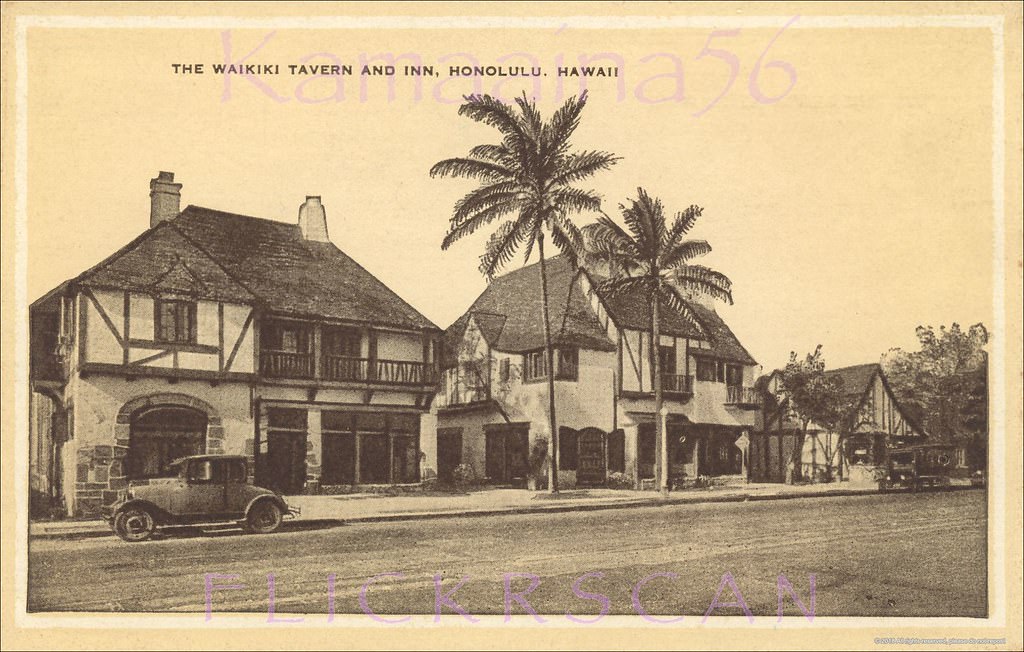
The old Waikiki Tavern and Inn on the makai (ocean) side of Waikiki's Kalakaua Avenue, 1930s.
The old Waikiki Tavern and Inn on the makai (ocean) side of Waikiki’s Kalakaua Avenue, 1930s.
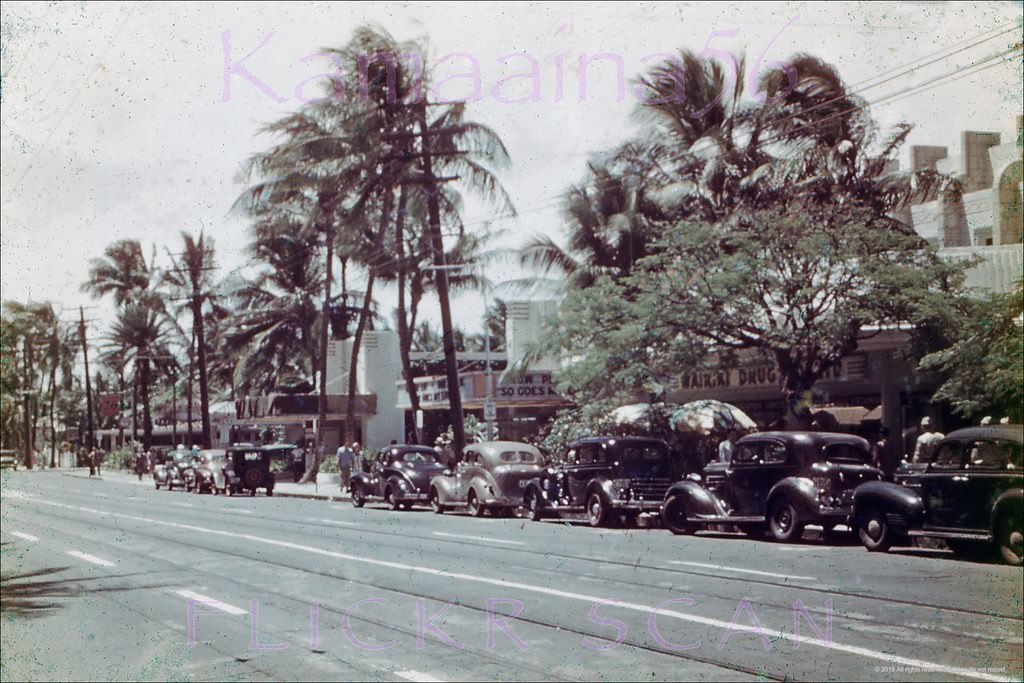
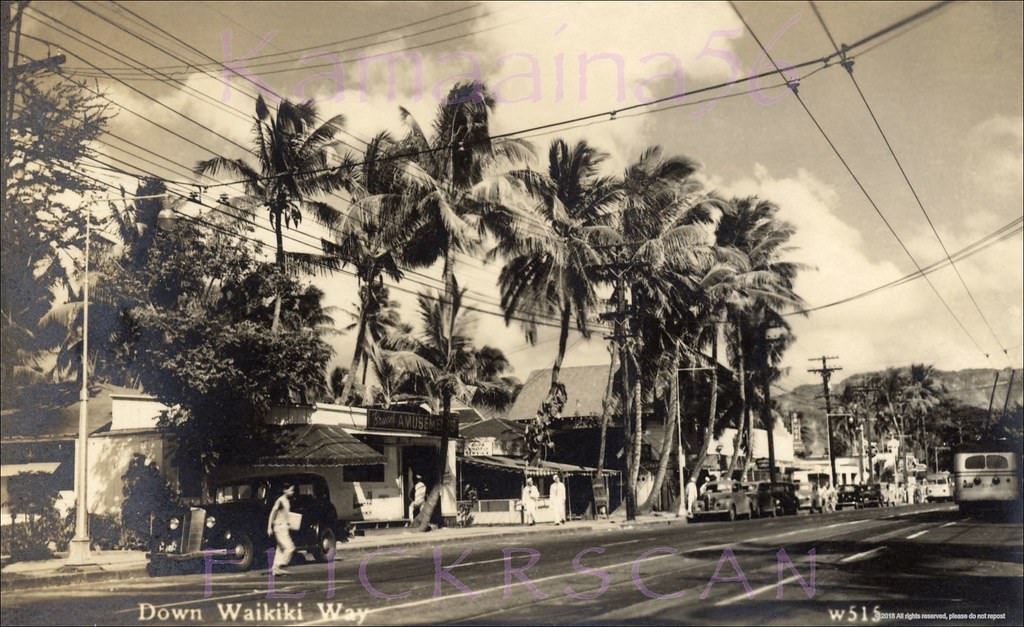
Looking Diamond Head along the mauka (inland) side of Waikiki's Kalakaua Avenue, 1940s
Looking Diamond Head along the mauka (inland) side of Waikiki’s Kalakaua Avenue, 1940s
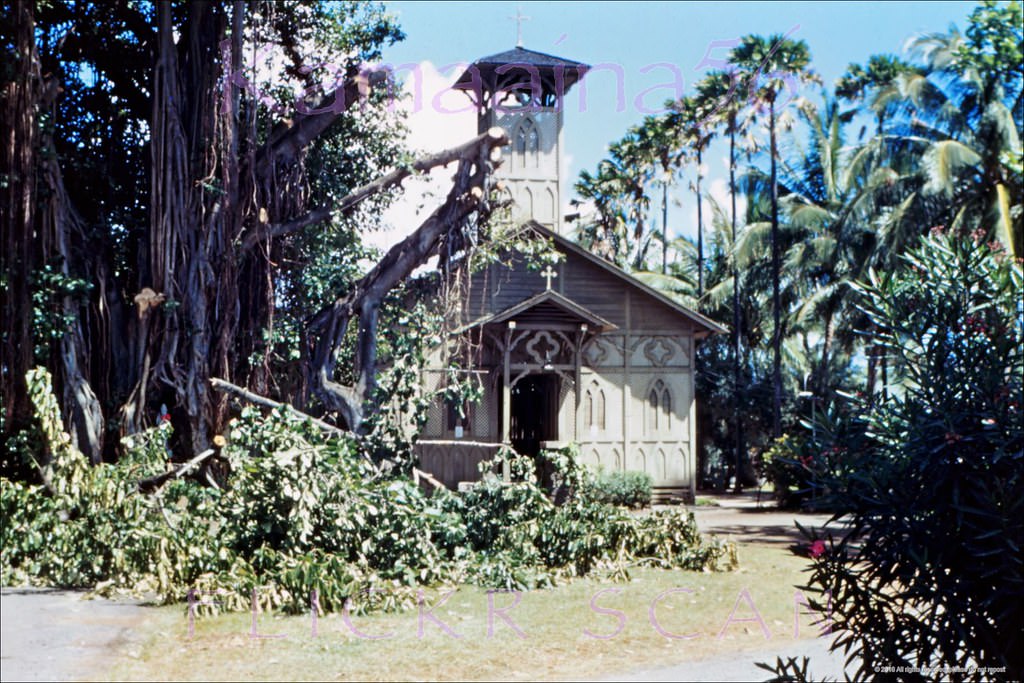
St. Augustine's Catholic Church on the NW corner of Kalakaua and Ohua Avenues in Waikiki, 1949.
St. Augustine’s Catholic Church on the NW corner of Kalakaua and Ohua Avenues in Waikiki, 1949.
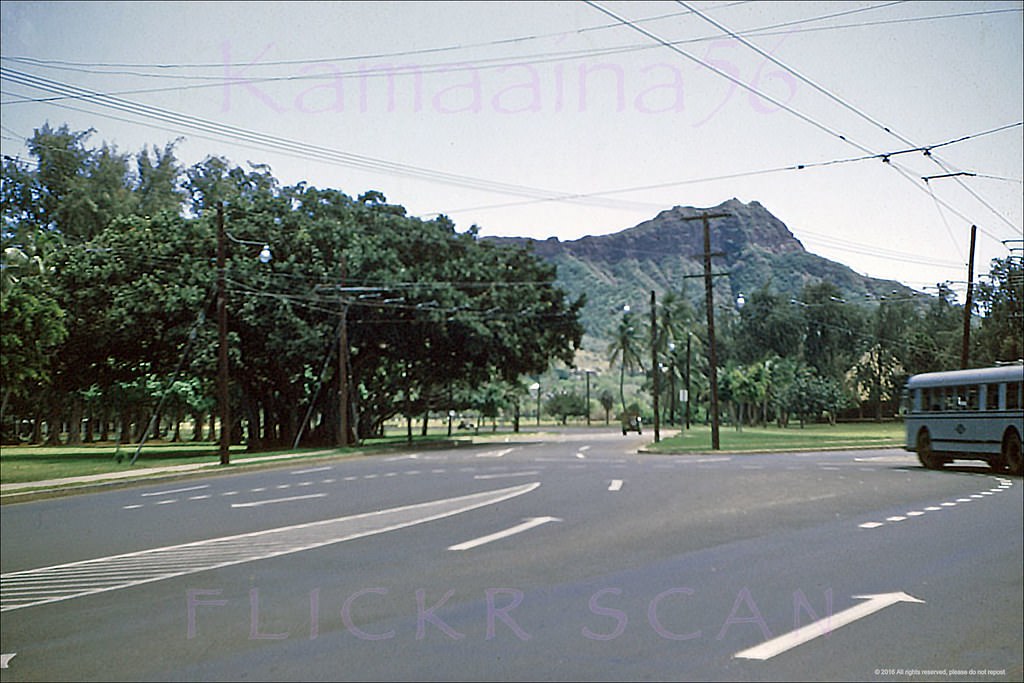
Kind of unusual photo of an HRT (Honolulu Rapid Transit) electric trolley bus making a wide U-turn at the Kalakaua - Monsarrat Avenue intersection, 1940s
Kind of unusual photo of an HRT (Honolulu Rapid Transit) electric trolley bus making a wide U-turn at the Kalakaua – Monsarrat Avenue intersection, 1940s
Old Waikiki Aquarium, 1949.
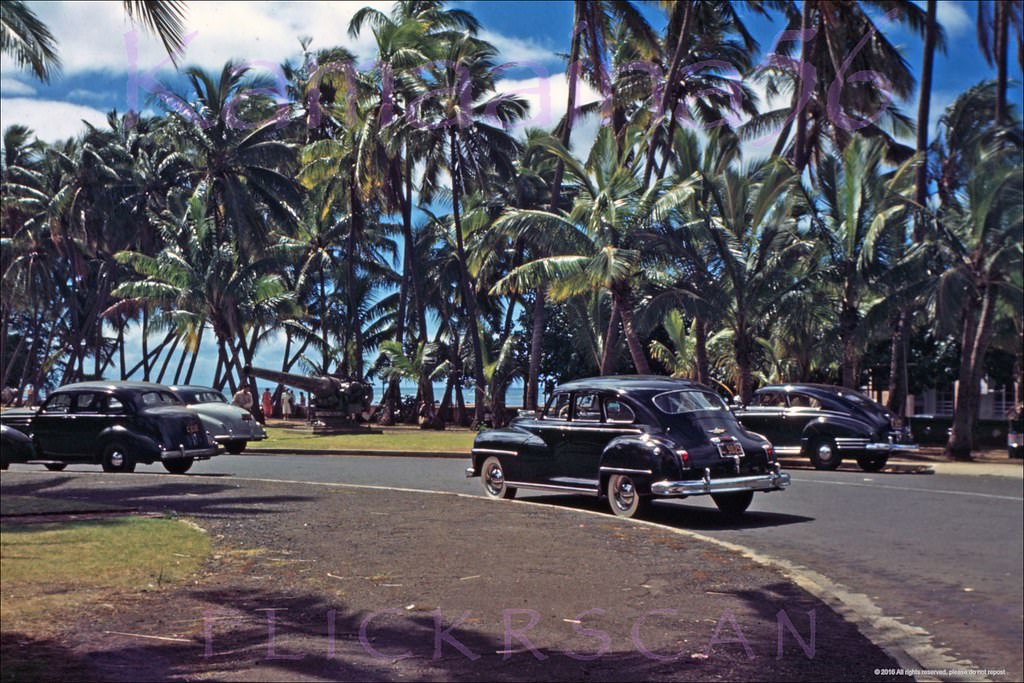
One of two 7" naval cannons that used to be on the Kalakaua Avenue side of the Waikiki Natatorium, 1949
One of two 7″ naval cannons that used to be on the Kalakaua Avenue side of the Waikiki Natatorium, 1949
Kalakaua Avenue side of the landmark James B. Castle mansion "Kainalu" on the water at the tip of Diamond Head.
Kalakaua Avenue side of the landmark James B. Castle mansion “Kainalu” on the water at the tip of Diamond Head.
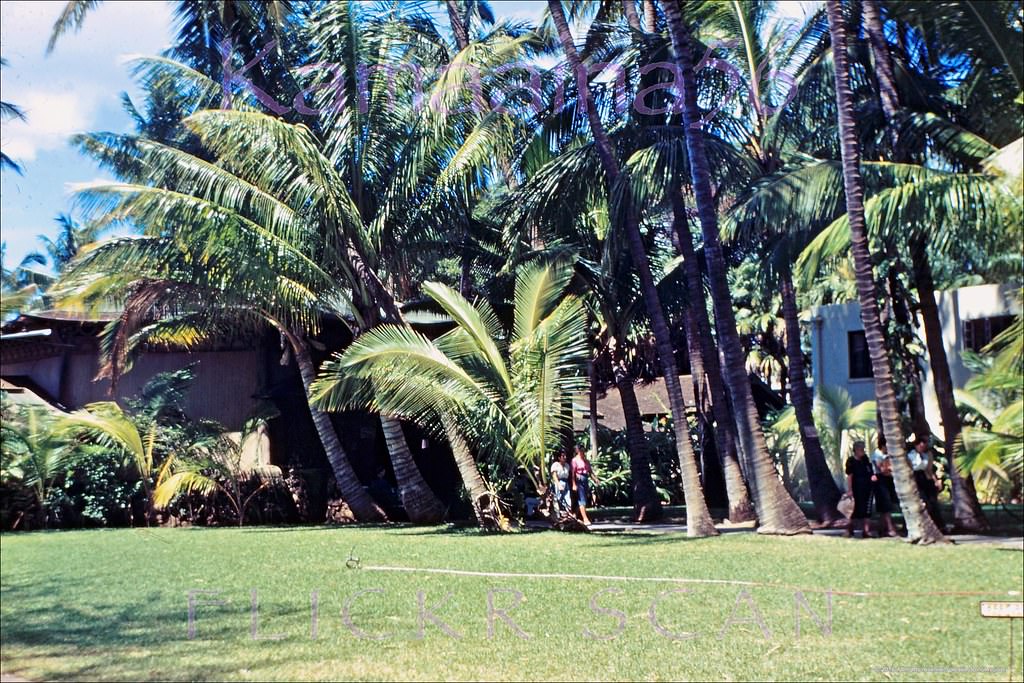
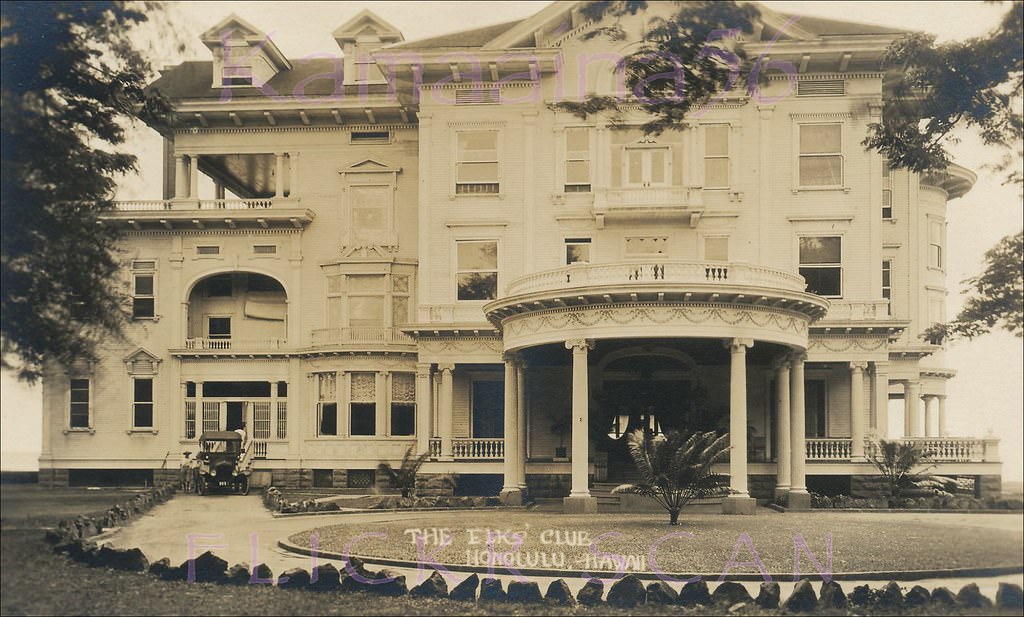
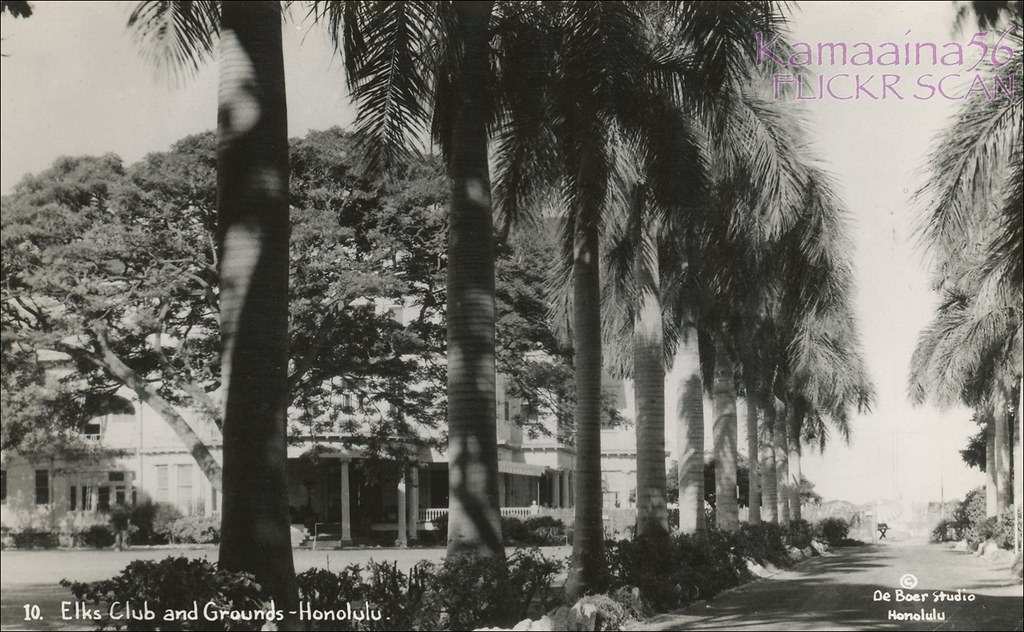
Waikiki Elks Club from Kalakaua, 1940s
Waikiki Elks Club Main Entrance, 1940s
Waikiki Elks Club Billiards Lounge, 1940s

The Ala Wai Canal formed Waikiki’s northern boundary, separating the resort district from the rest of Honolulu. Looking mauka from the canal’s edge in 1947, the view stretched toward Manoa Valley — a reminder that Waikiki was, geographically, a narrow strip of land sandwiched between mountains and sea. The canal itself had been completed in the 1920s as a drainage project, and by the 1940s it was simply part of the landscape.
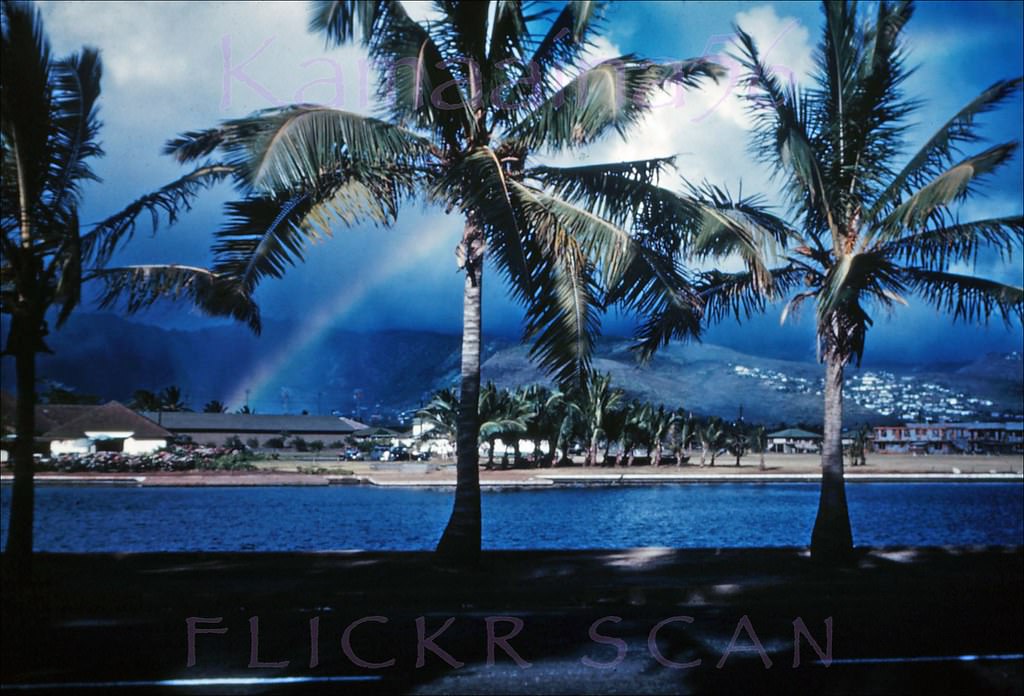
Looking mauka towards Manoa Valley from the Ala Wai Canal which separates Waikiki from the rest of Honolulu, 1947
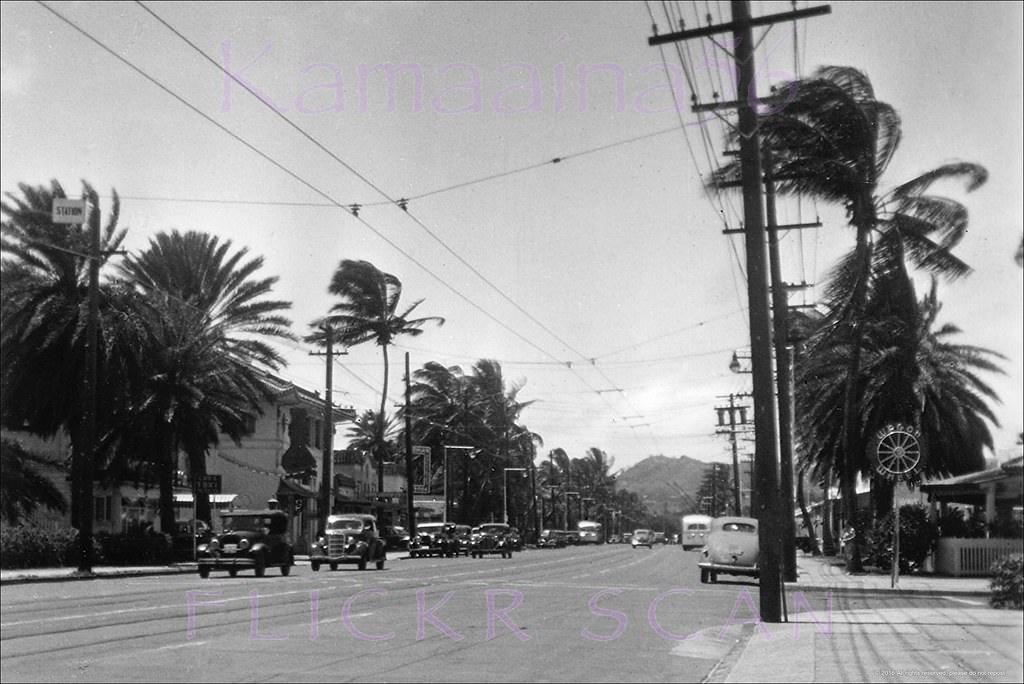
Nice sharp street level snap of Kalakaua Avenue looking west, 1940s

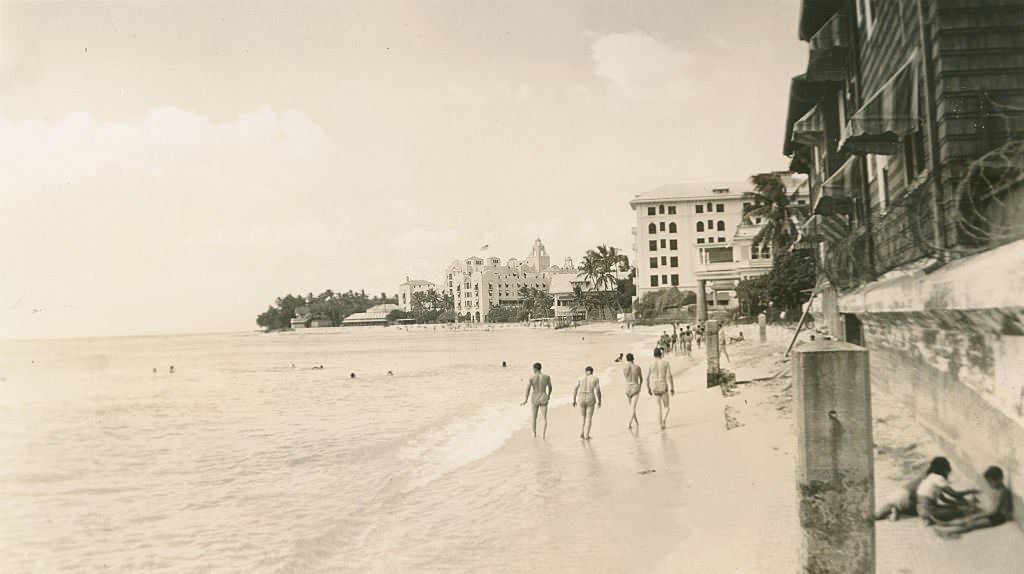
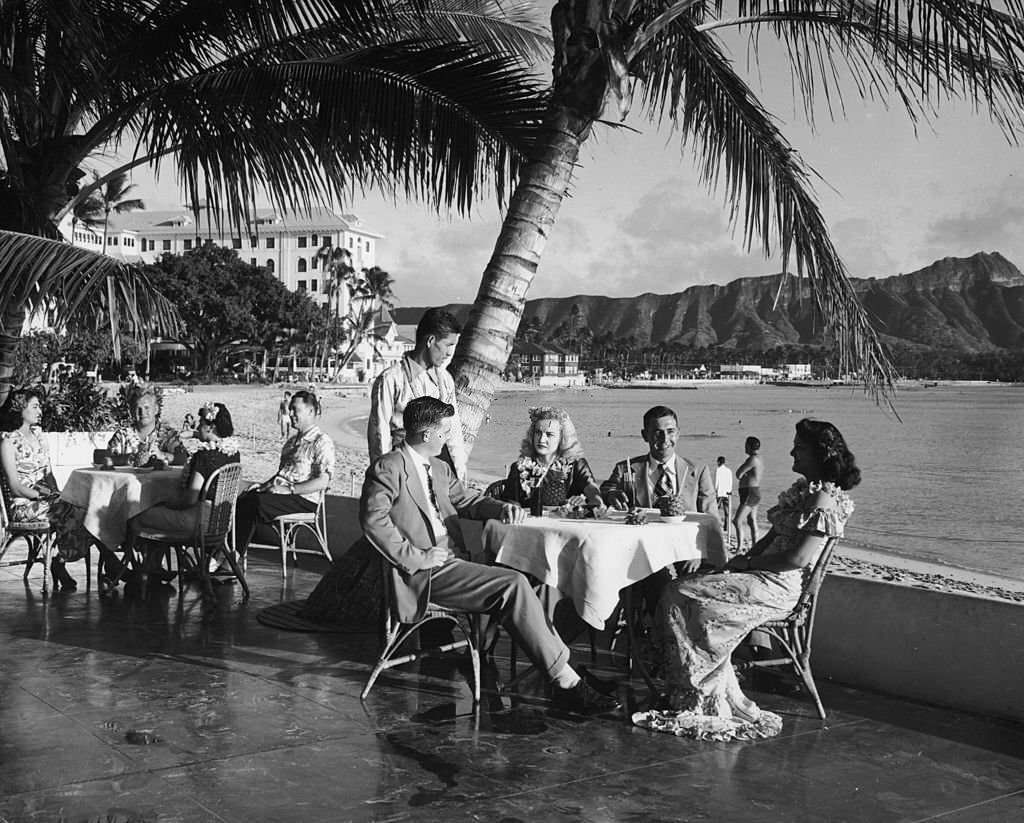
The beach itself remained the center of everything. The Outrigger Canoe Club operated along the waterfront, and beachside restaurants served meals at open-air patio tables while waiters worked the tables just steps from the sand. The Moana Hotel’s beachfront setup drew officers and guests, while the wider stretch of Waikiki Beach stayed accessible to servicemen, locals, and the occasional civilian tourist.
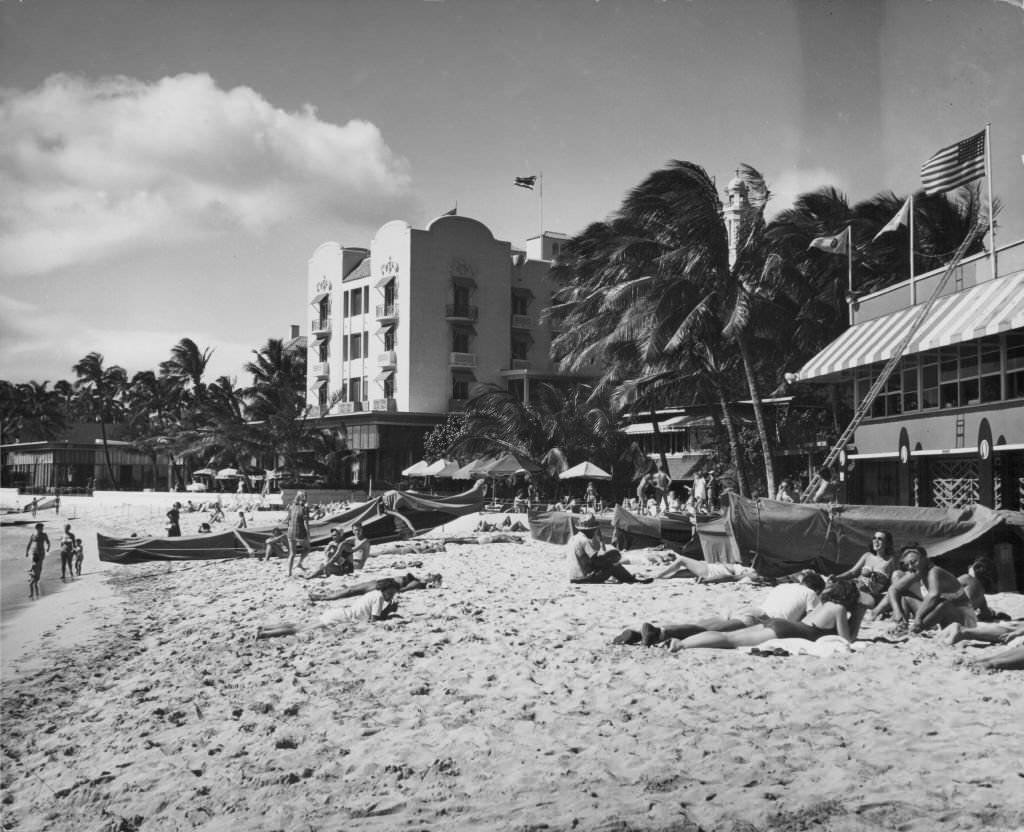
Outrigger Waikiki on the Beach, a club and hotel in Honolulu, 1940
Couples sit outdoors at patio tables, having a meal at a beach side restaurant while a waiter looks on, Waikiki Beach, 1945
Grandiose Waikiki building, 1940s
Men walk on sand at Waikiki, 1940s
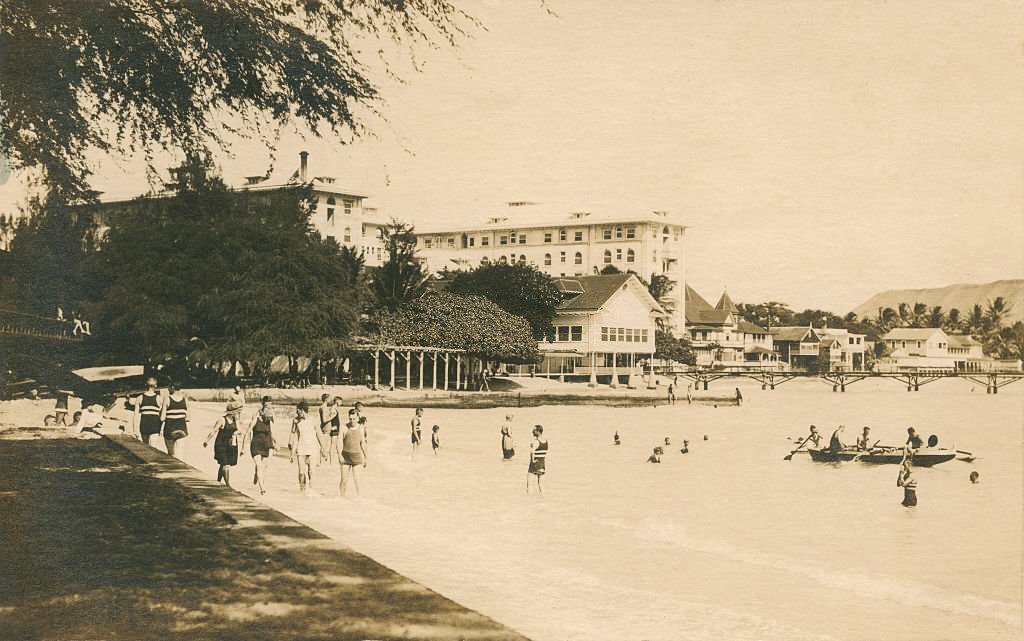
Wide shot of people bathing in water, 1940s

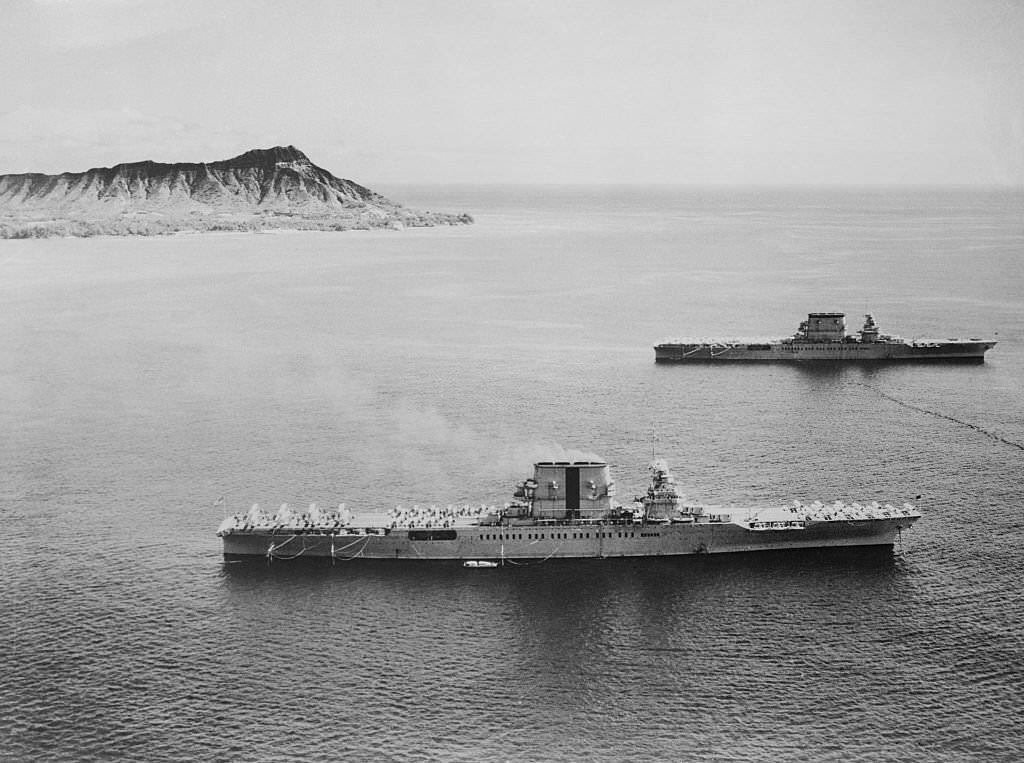
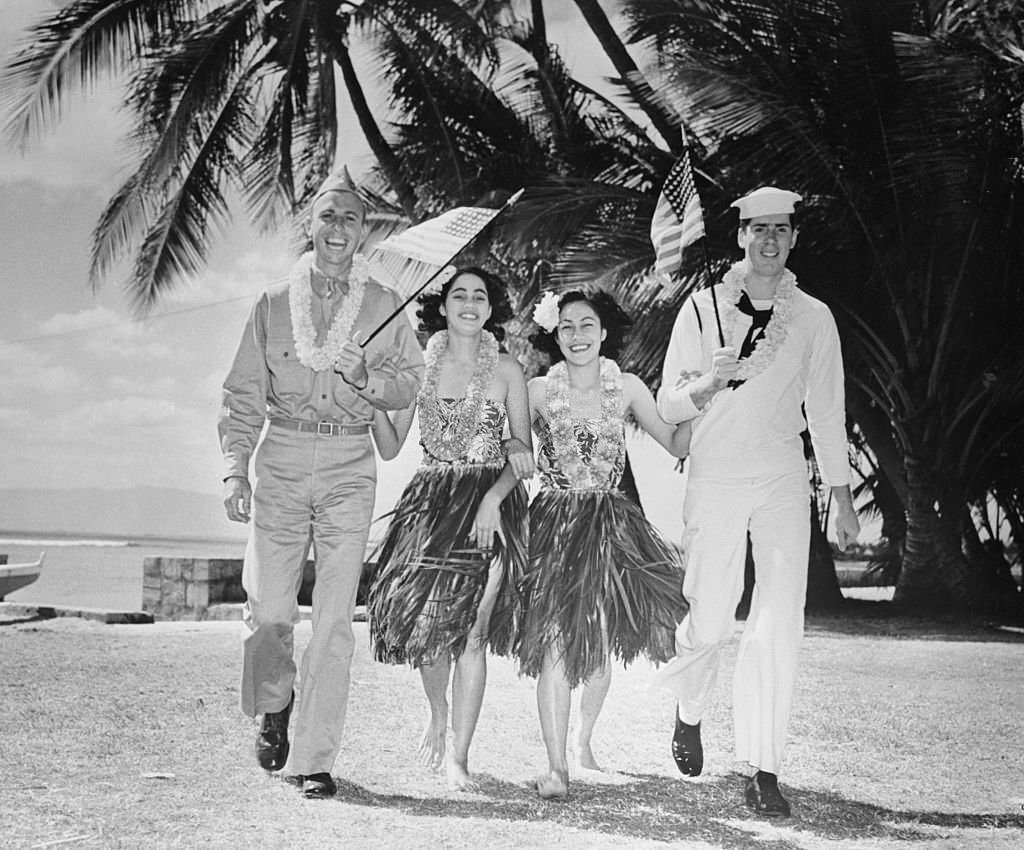
From 1941 through 1945, with civilian tourism halted by the war, Waikiki operated primarily as a military recreation zone. The Moana Hotel served as a formal rest and respite facility for soldiers throughout this period. Sailors walked the beach in uniform. The Moana Hotel served as a formal rest and respite facility for soldiers, and military ships filled the waters near Pearl Harbor just a short distance to the west. When the war ended, celebrations broke out on the same streets where servicemen had spent years waiting.
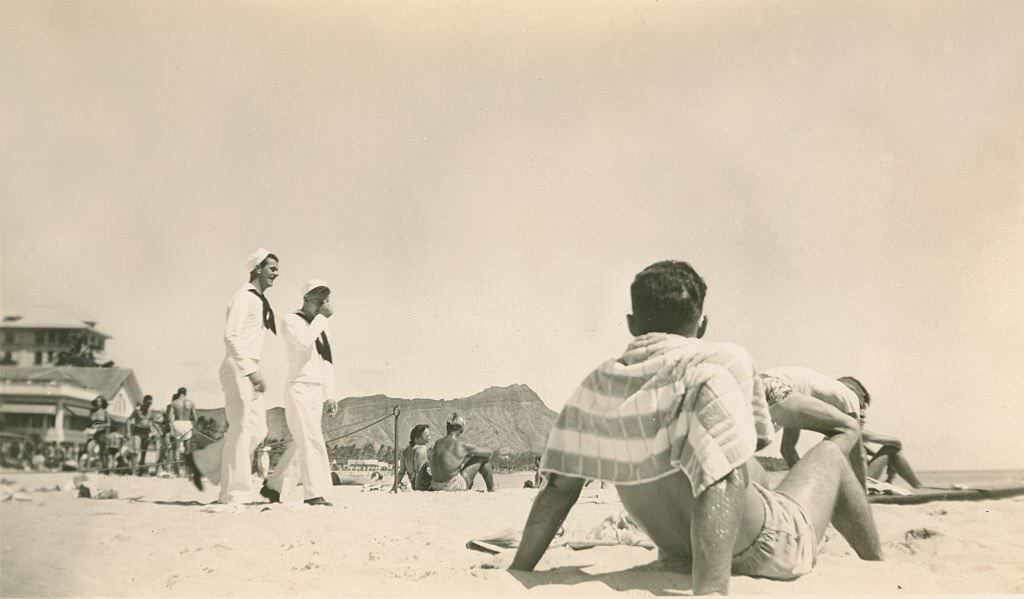
Two sailors walk in uniform on beach, 1940s
Sailors mill outside of Waikiki theater block on quiet street with parked cars and palm trees, 1940s
U.S. Military Ships in Water Near Pearl Harbor Attacks, 1940s
Soldiers Celebrating with Hawaiian Women in Waikiki, 1940s

Waikiki Beach itself required constant maintenance even in this era. Chronic erosion wore away more than a foot of shoreline each year, and restoration efforts brought in sand by boat and barge from Southern California — a practice that dated back to the 1920s and continued through the postwar decades at a cost of $2.4 million per cycle. The beach that looked so effortlessly natural was, in fact, actively maintained to stay that way.
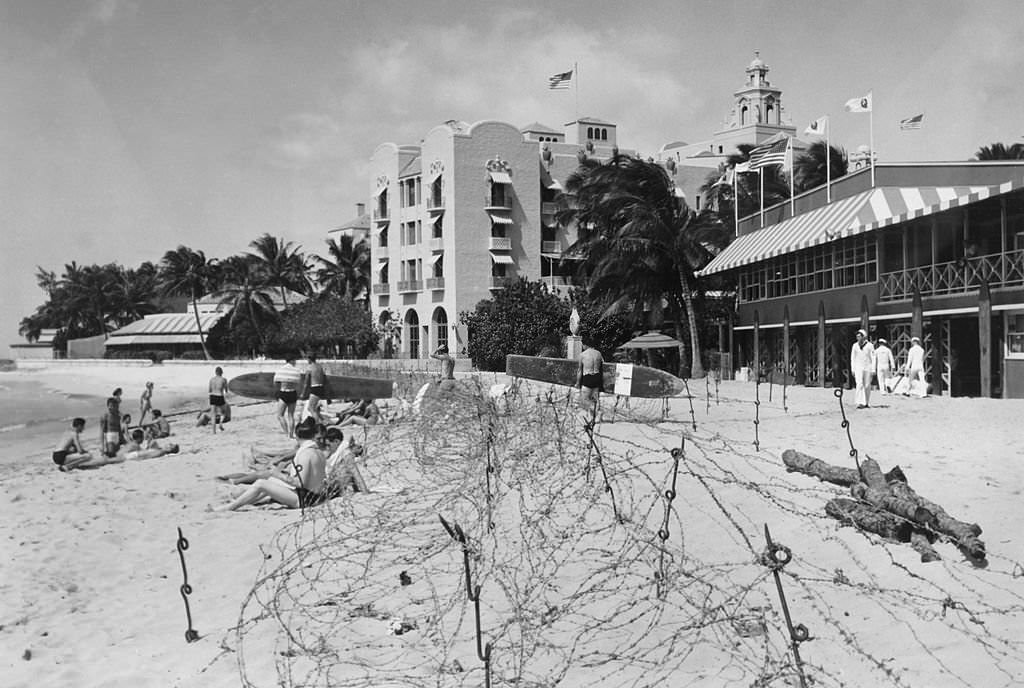

Waikiki Beach, 1940s
Enjoyed this post? Get new ones in your inbox.

Leave a Comment

Your email address will not be published. Required fields are marked *

Share this Post 🥺

Please take a moment to share this content. Your support is greatly appreciated! 🙌🙏

Share this Post 🥺

Please take a moment to share this content. Your support is greatly appreciated! 🙌🙏
Scroll to Top
 
Hey Friend, Before You Go.. Please like & follow for more interesting content