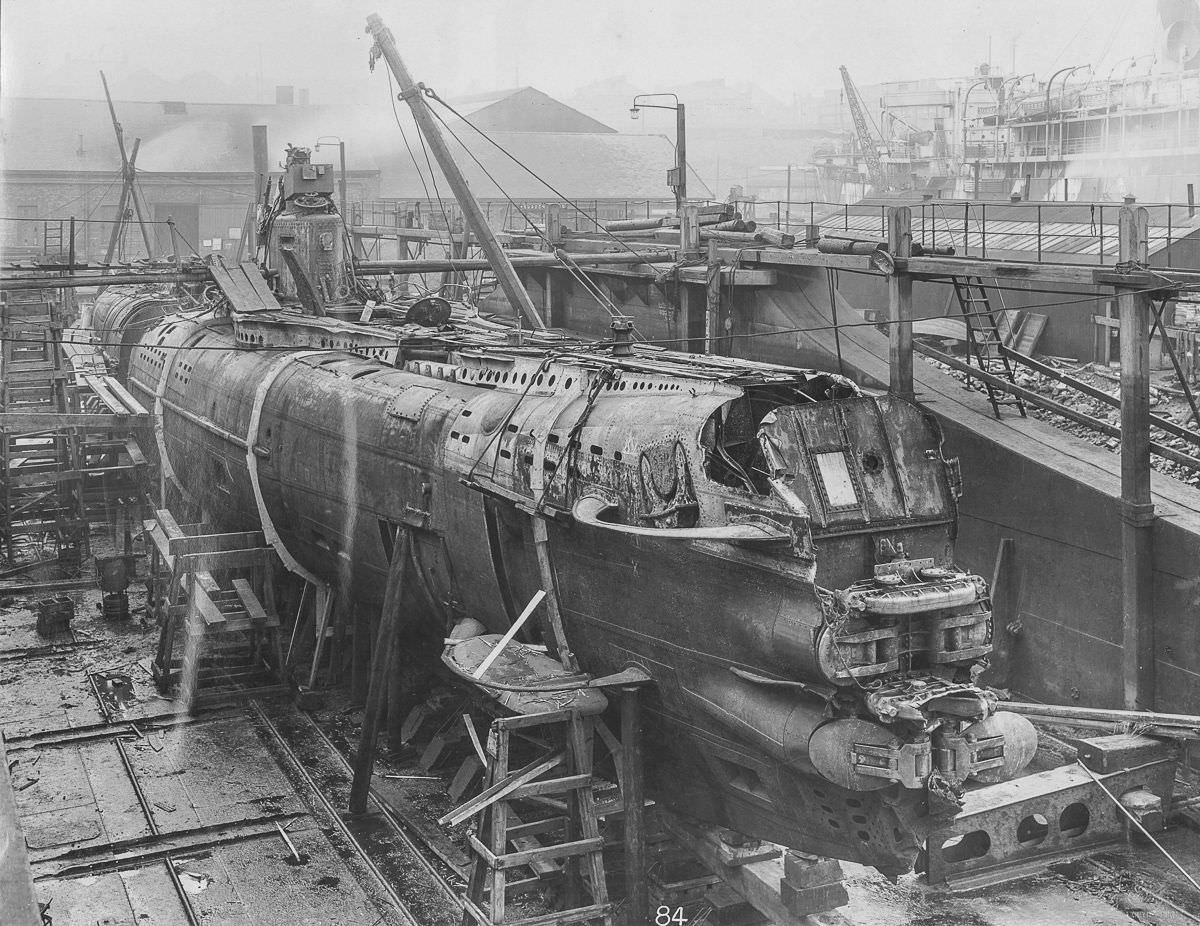
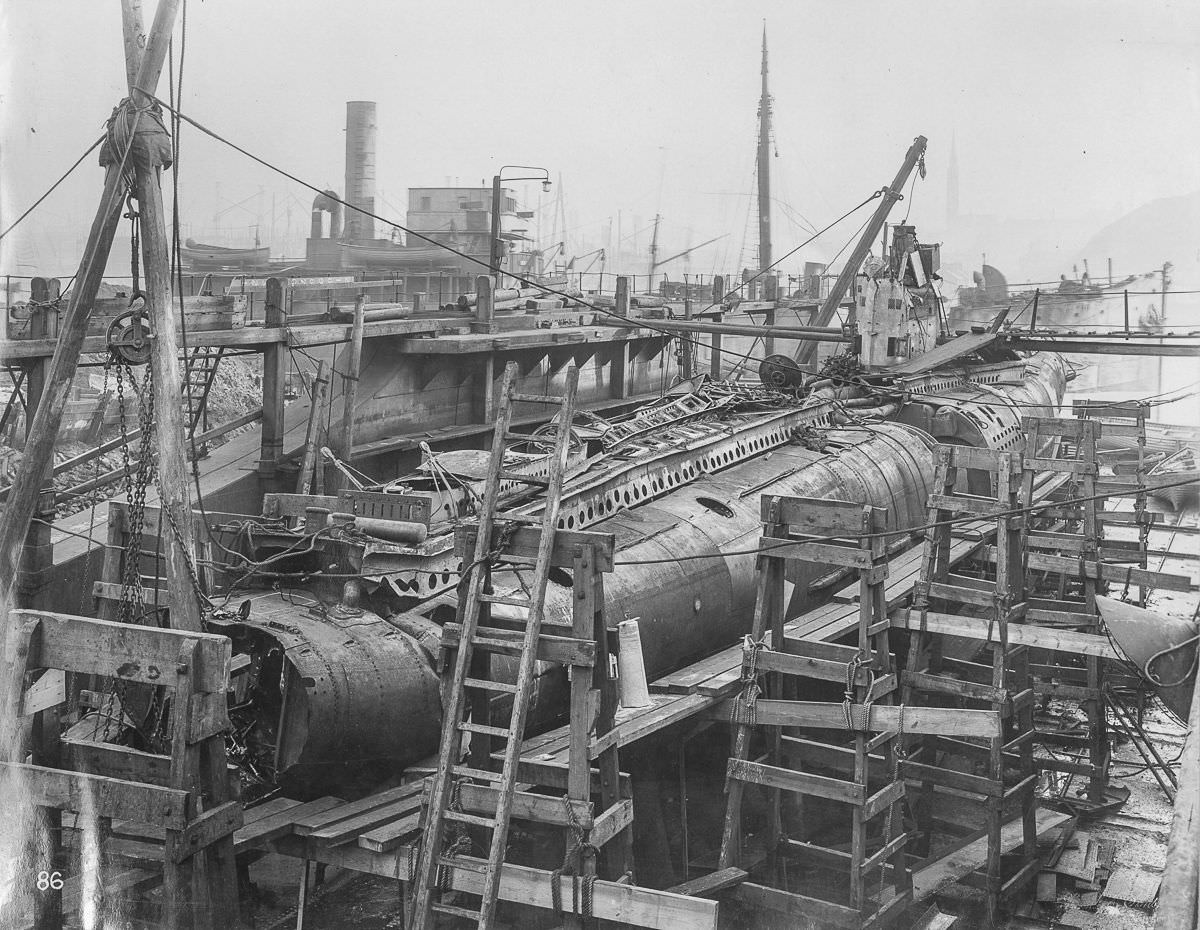
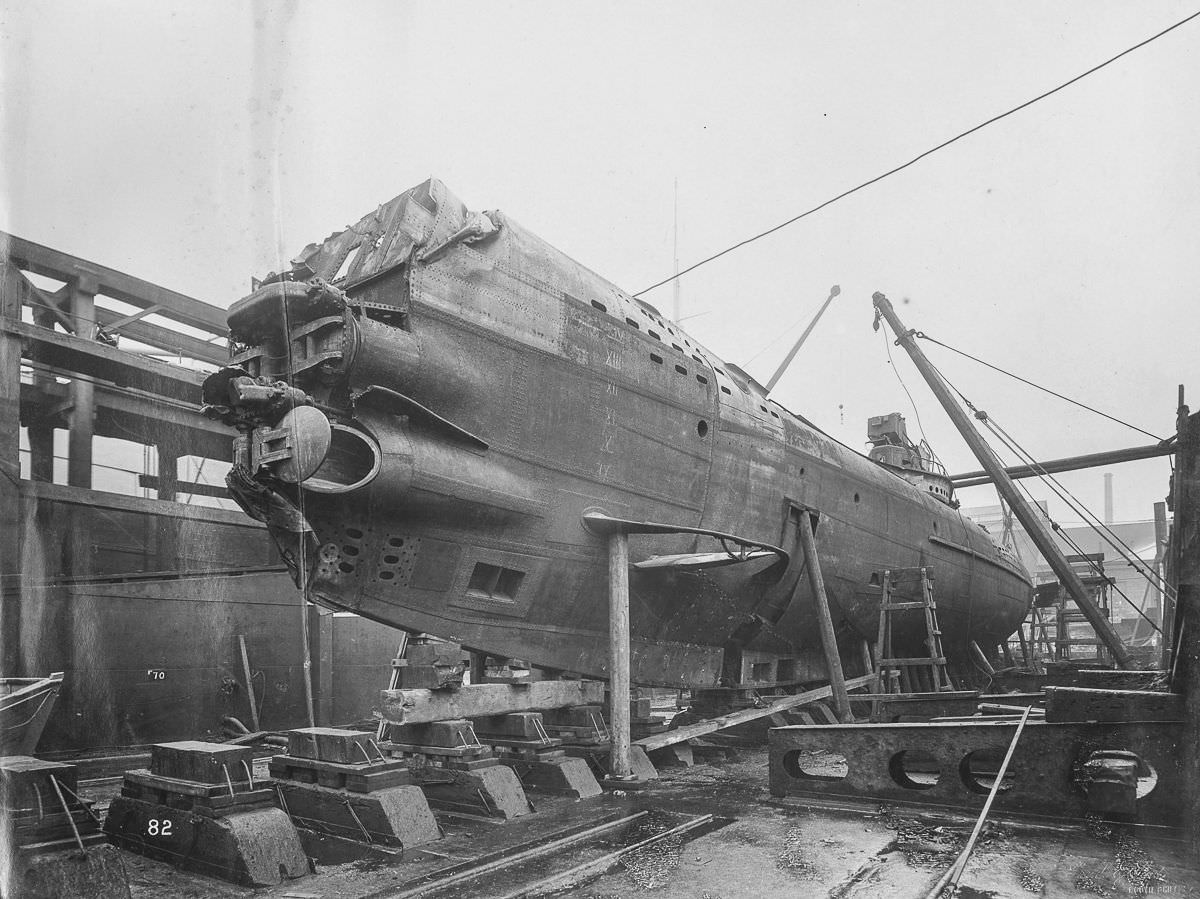
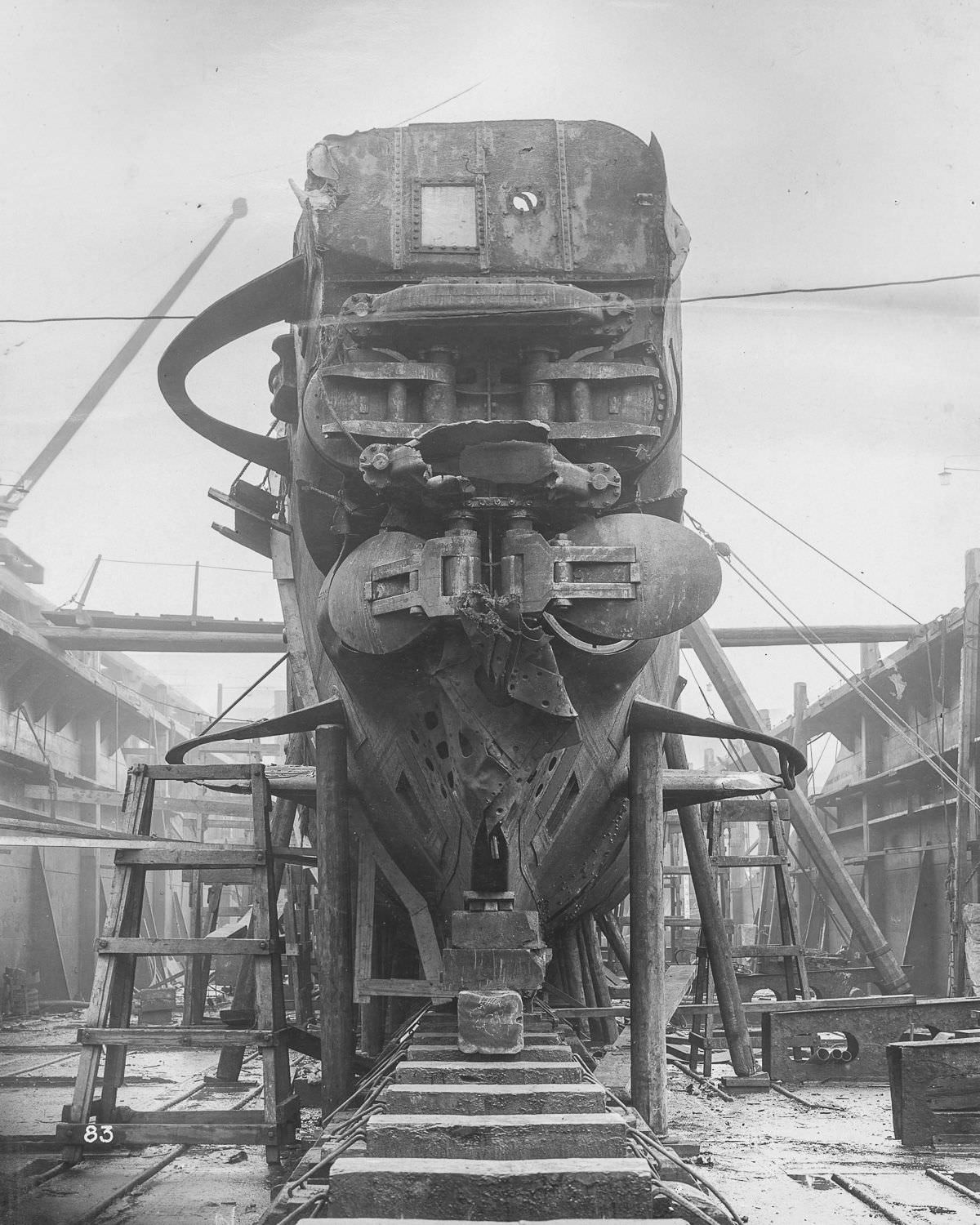
By the summer of 1918, German U-Boats had spent four years terrorizing Allied shipping across the Atlantic and North Sea. These submarines were among the most feared weapons of World War I. One of them, UB-110, met its end not at the ocean floor but in British hands — captured, hauled into dry dock, and documented in extraordinary detail by official British photographer John Ernest Victor Whitcomb.
UB-110 was depth-charged and forced to the surface in July 1918 by British naval forces. What followed was rare: a systematic photographic record of a German submarine’s interior, compartment by compartment. The resulting black-and-white images preserve one of the most complete visual records of what life and warfare looked like inside these vessels.
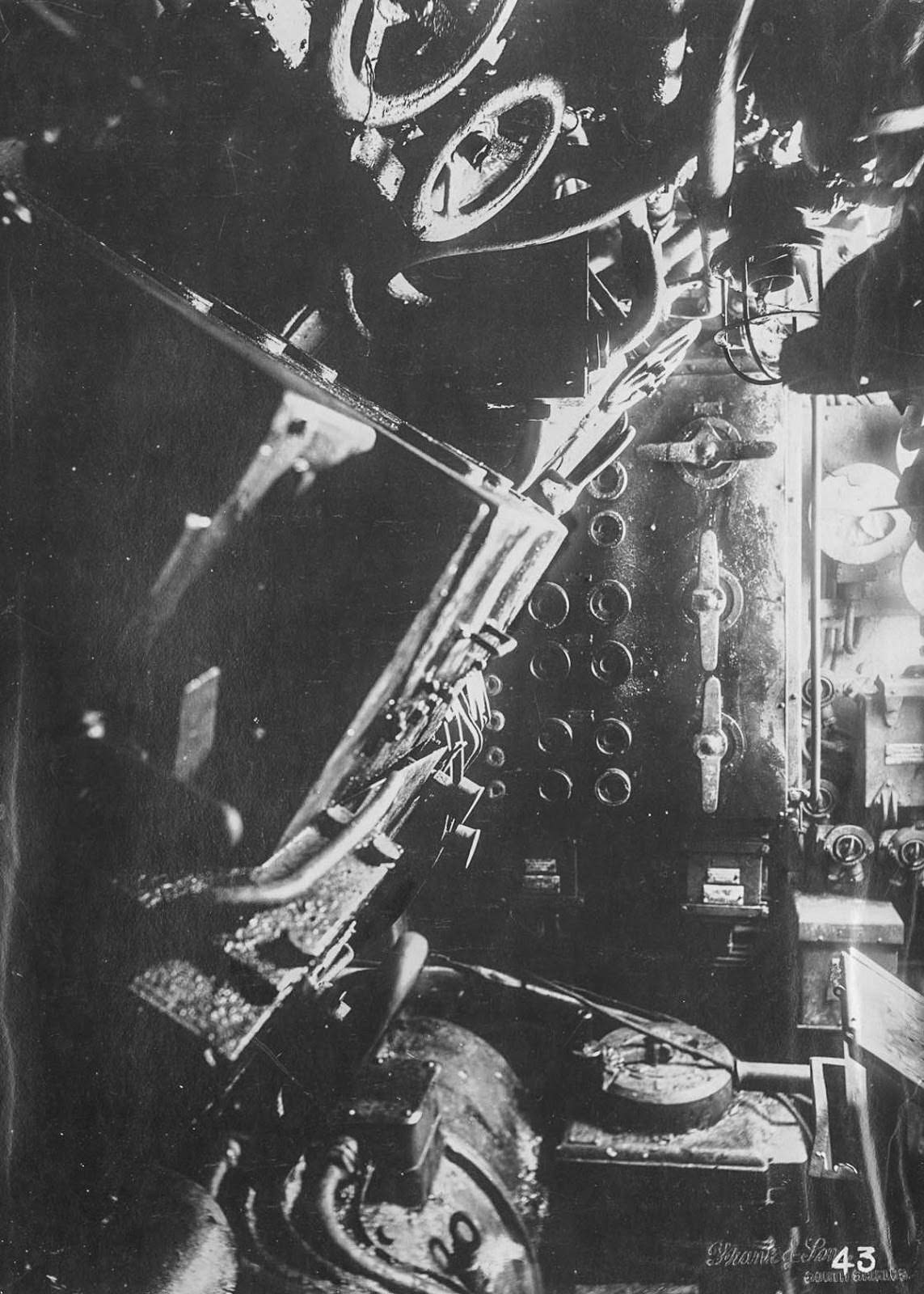
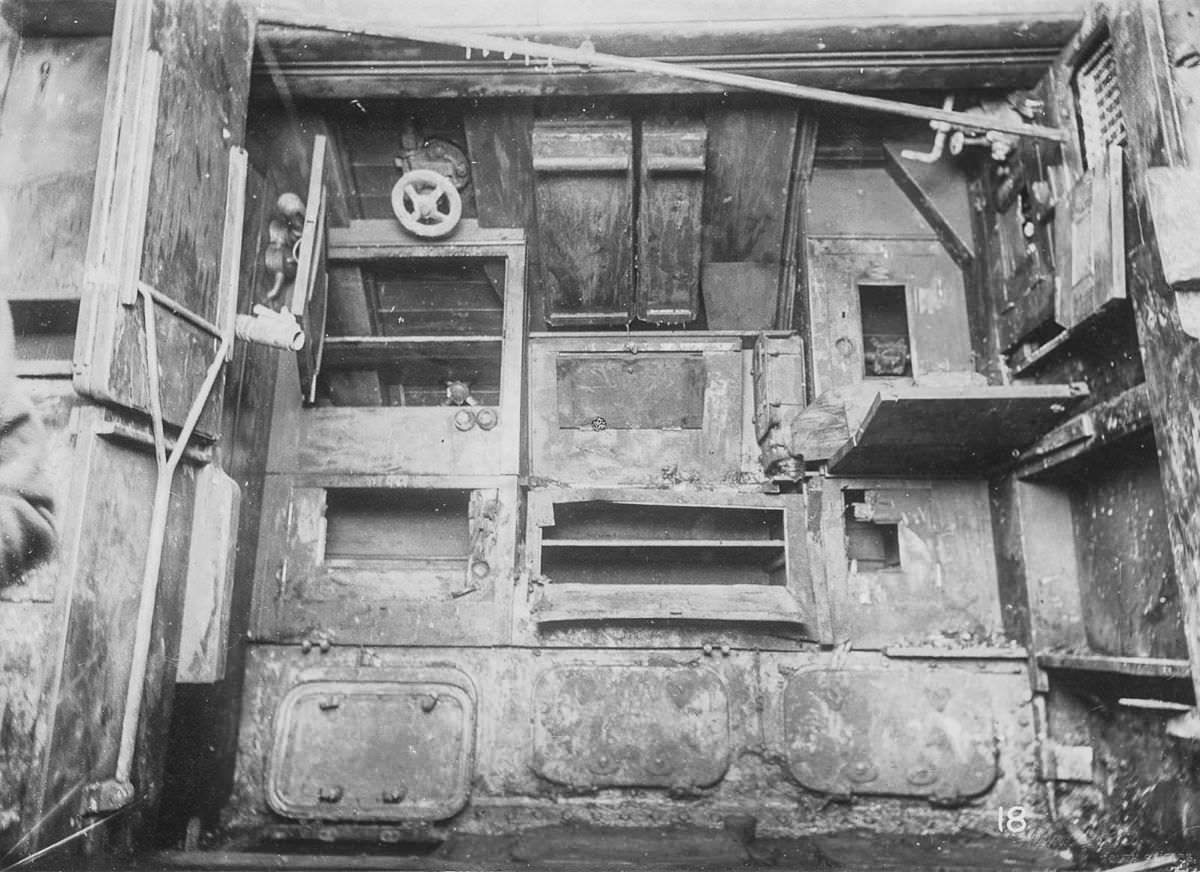
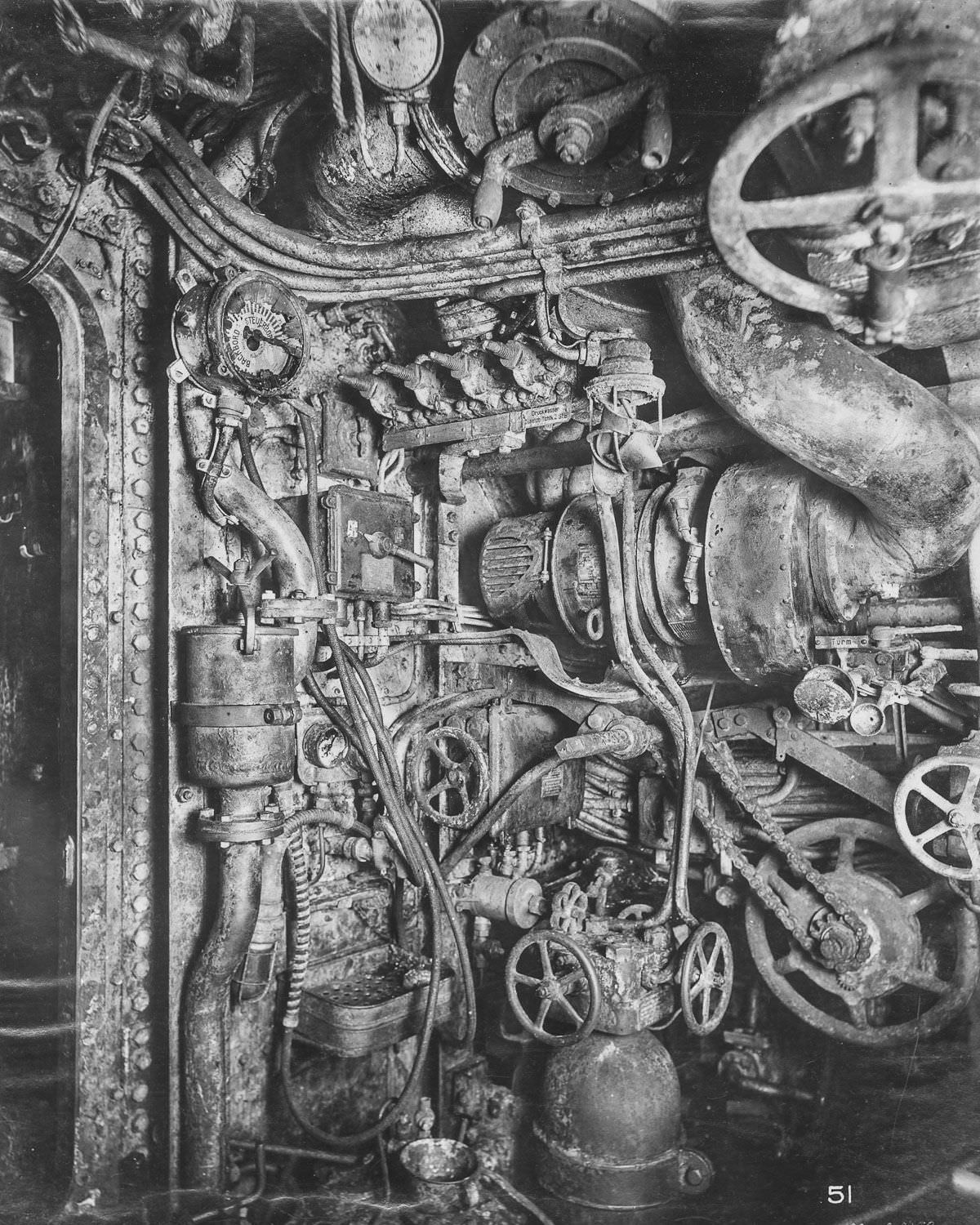
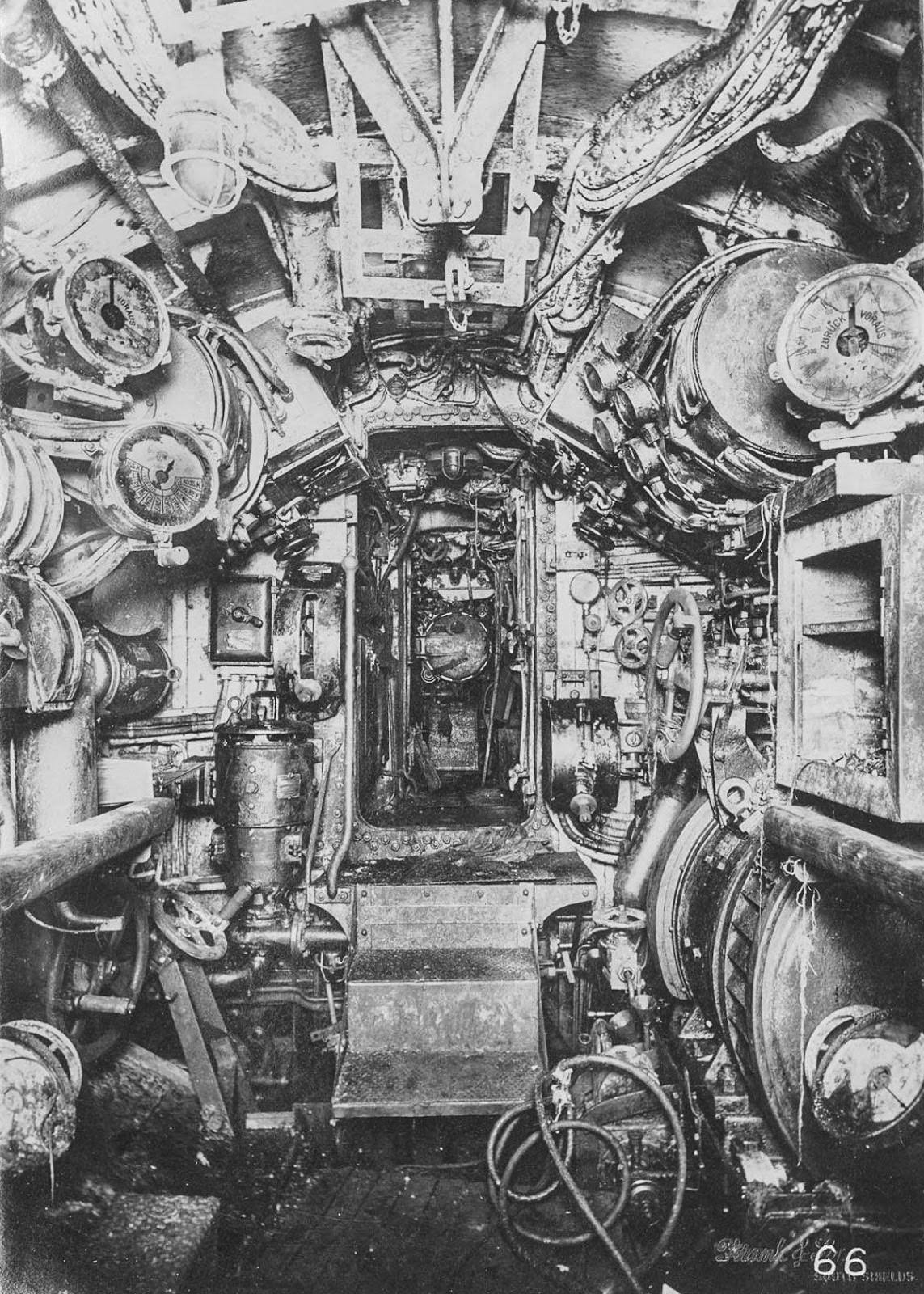
The control room was the brain of the submarine. Crew members monitored depth, heading, and speed from this packed space, surrounded by gauges, valve wheels, and voice pipes. Every surface served a purpose. The gyro compass and engine telegraphs sat alongside the steering control shaft, giving the crew precise command over the boat’s movement.
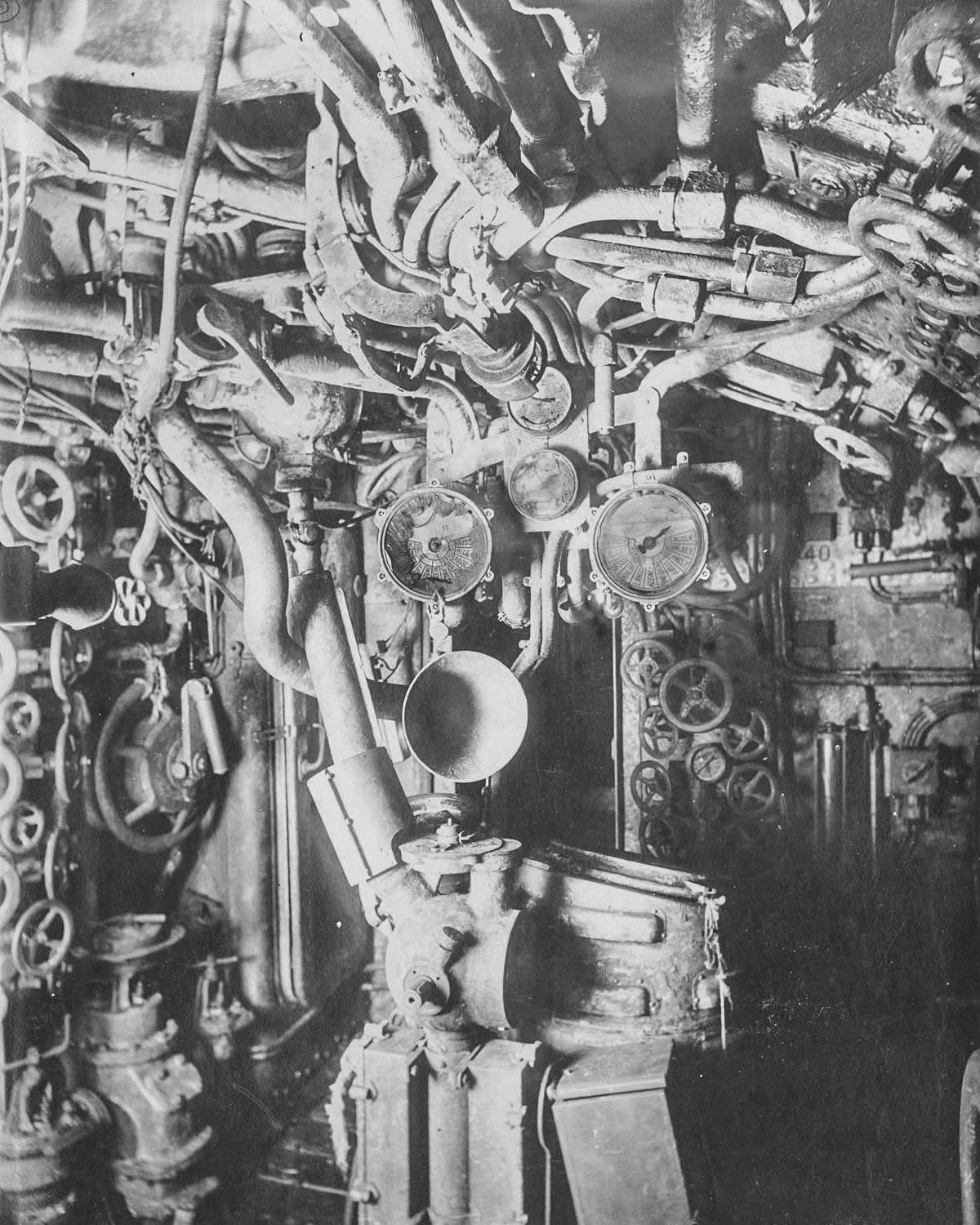
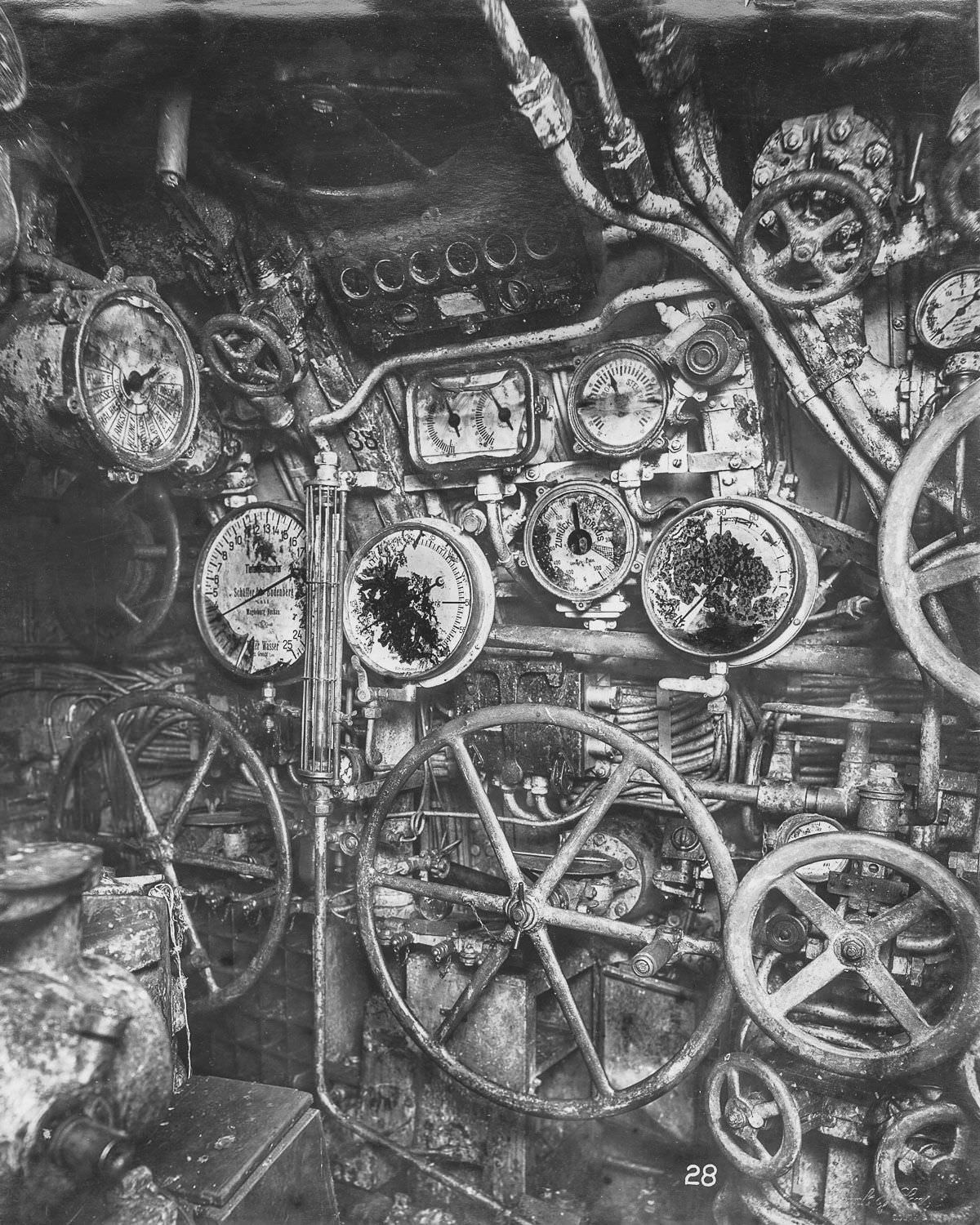
Diving and surfacing were controlled through a system of flooding and blowing valves — letting seawater in to descend, forcing it out with compressed air to rise. The hydroplane controls adjusted the boat’s angle in the water, while periscope wheels allowed the crew to raise and lower their only eyes above the surface.
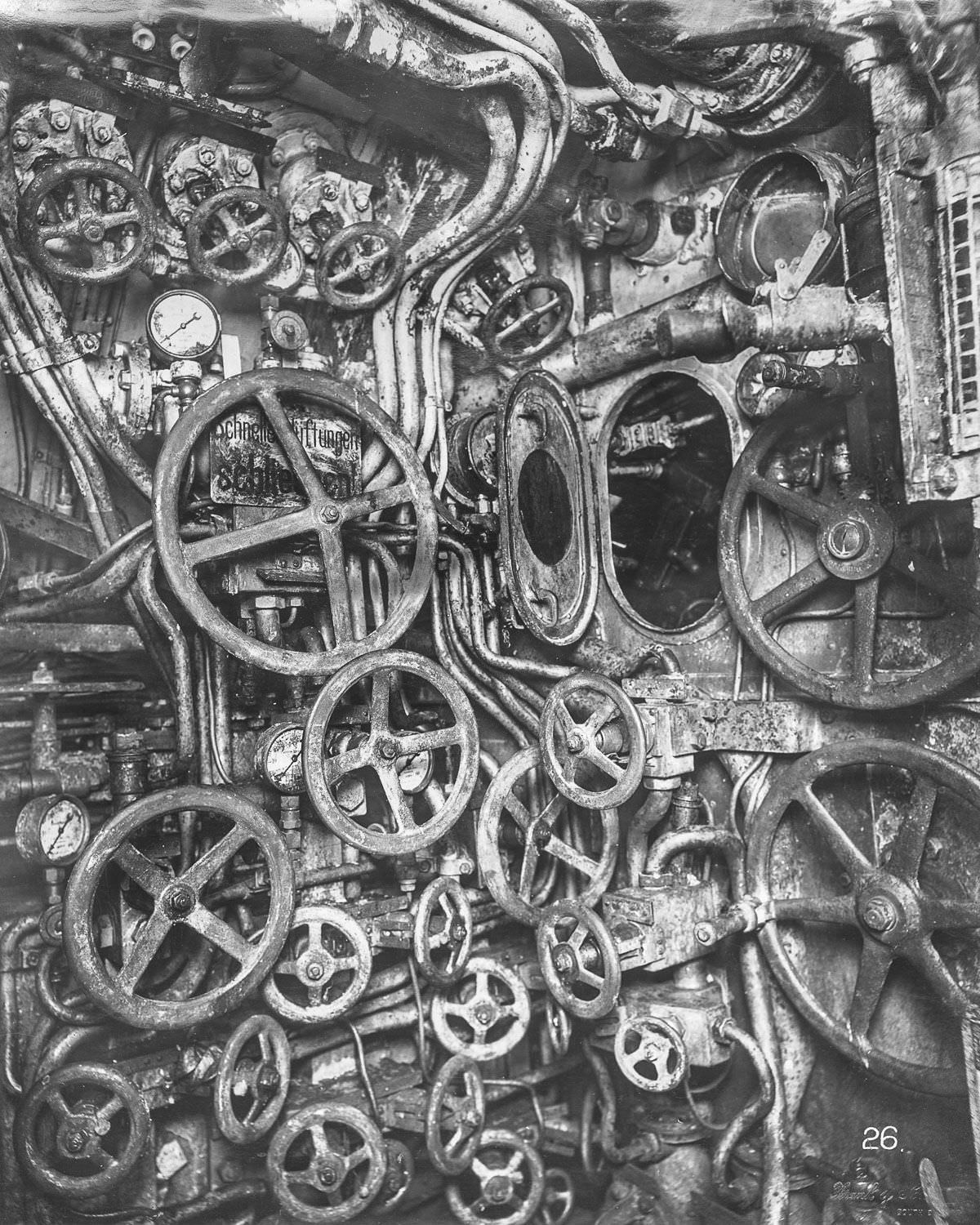
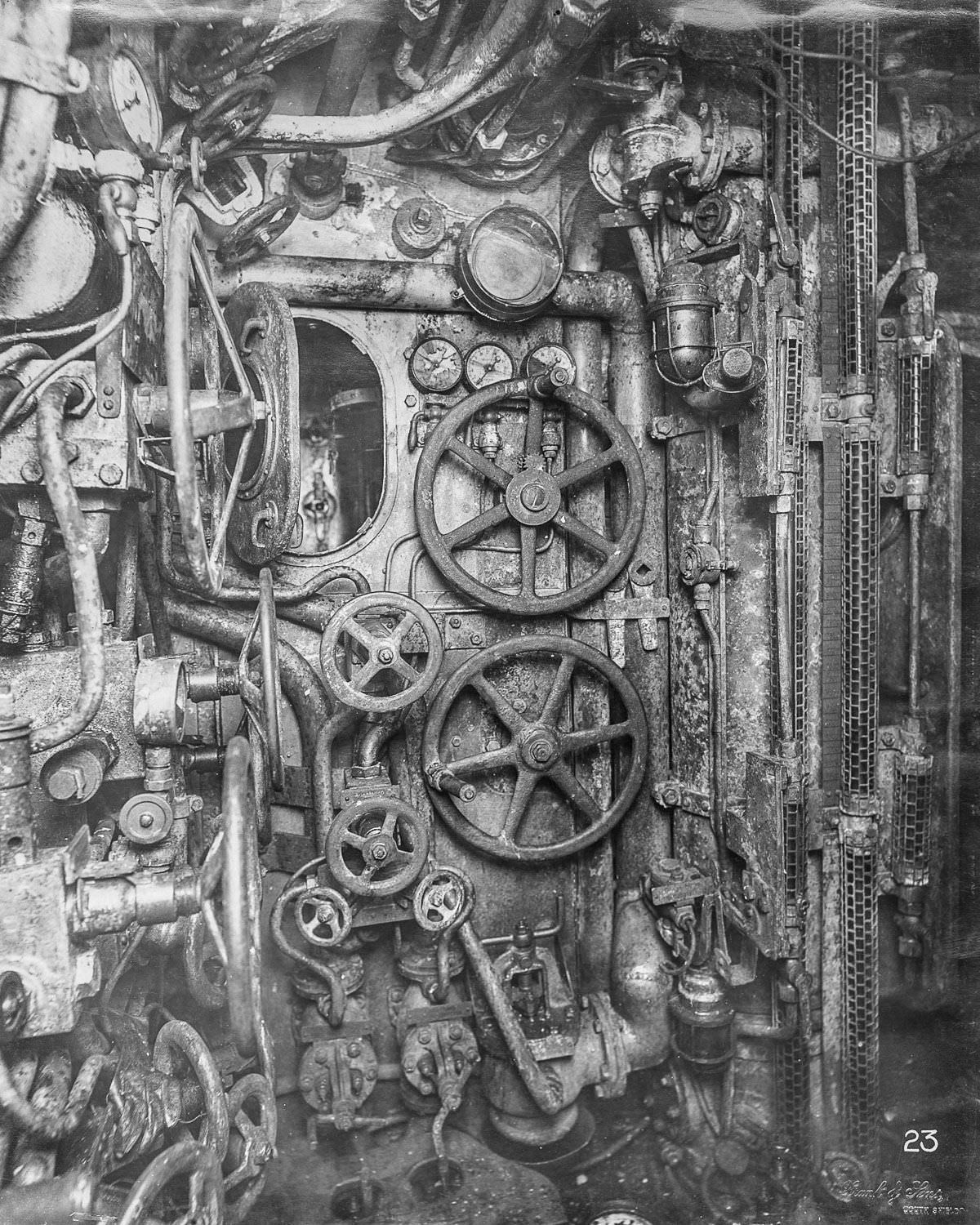
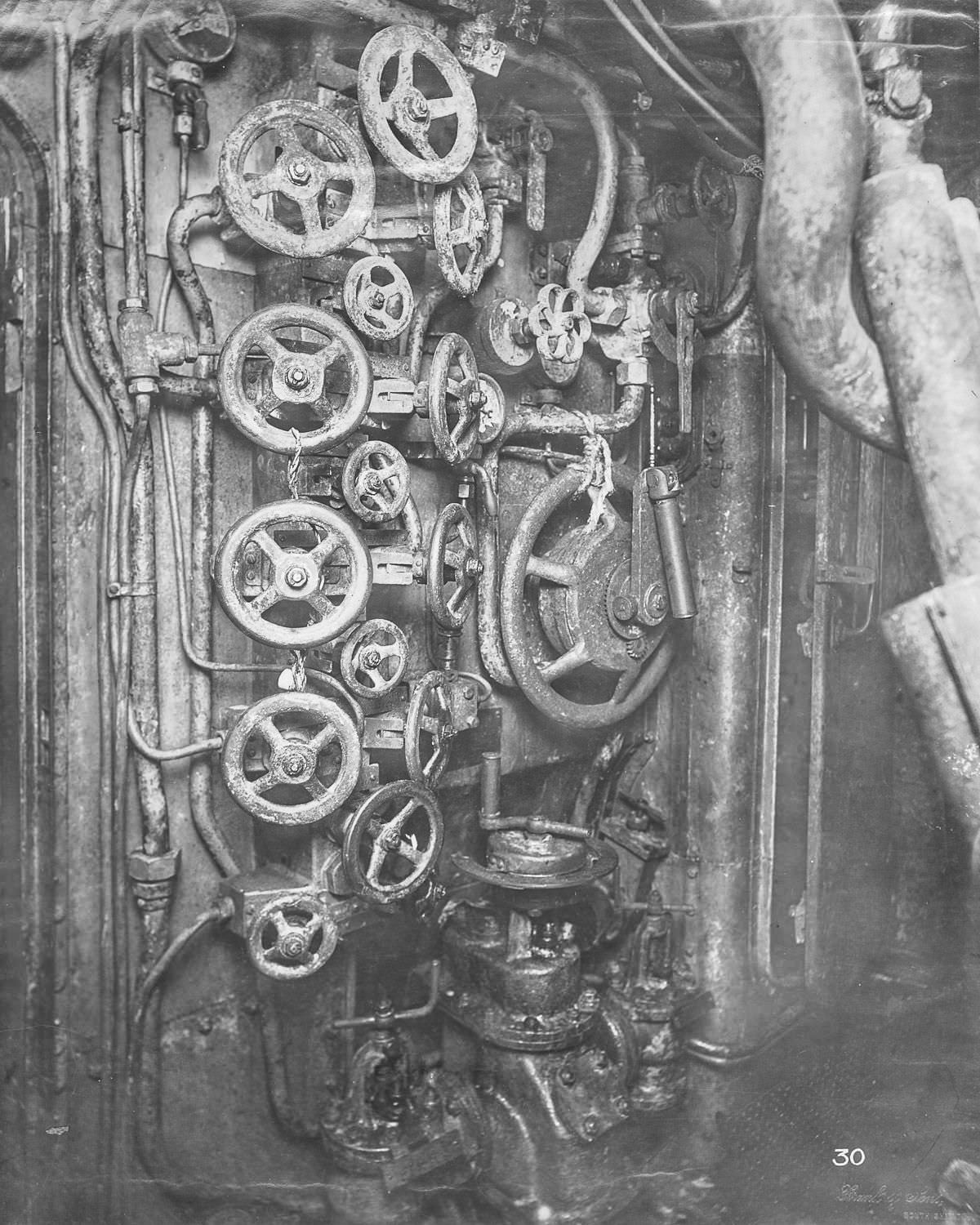
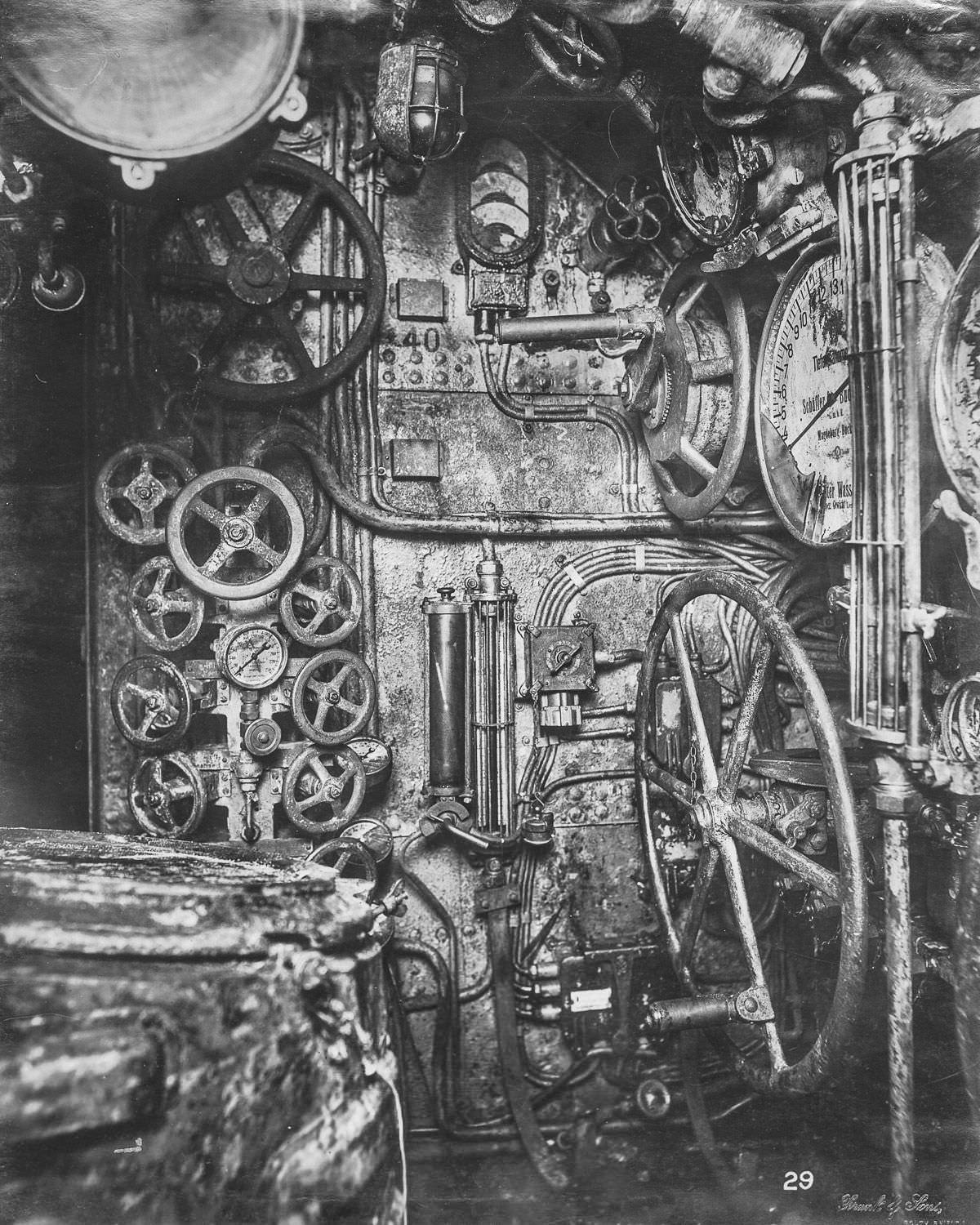
UB-110 carried torpedoes both fore and aft. The forward torpedo room held the tubes from which these weapons were fired at Allied ships. A heavy overhead beam ran along the compartment ceiling — used to manhandle torpedoes into the loading position, a physically demanding task in an already cramped space.
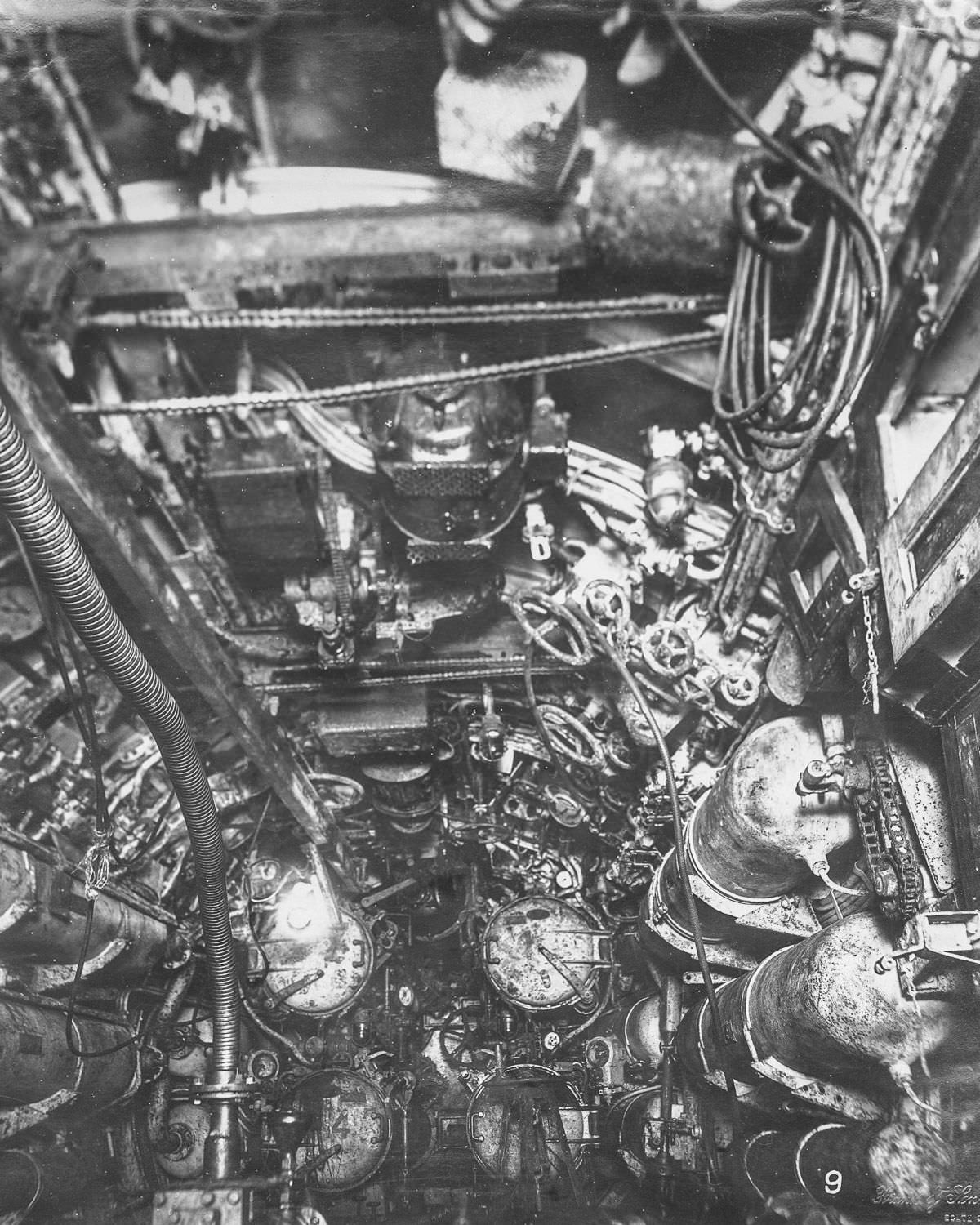
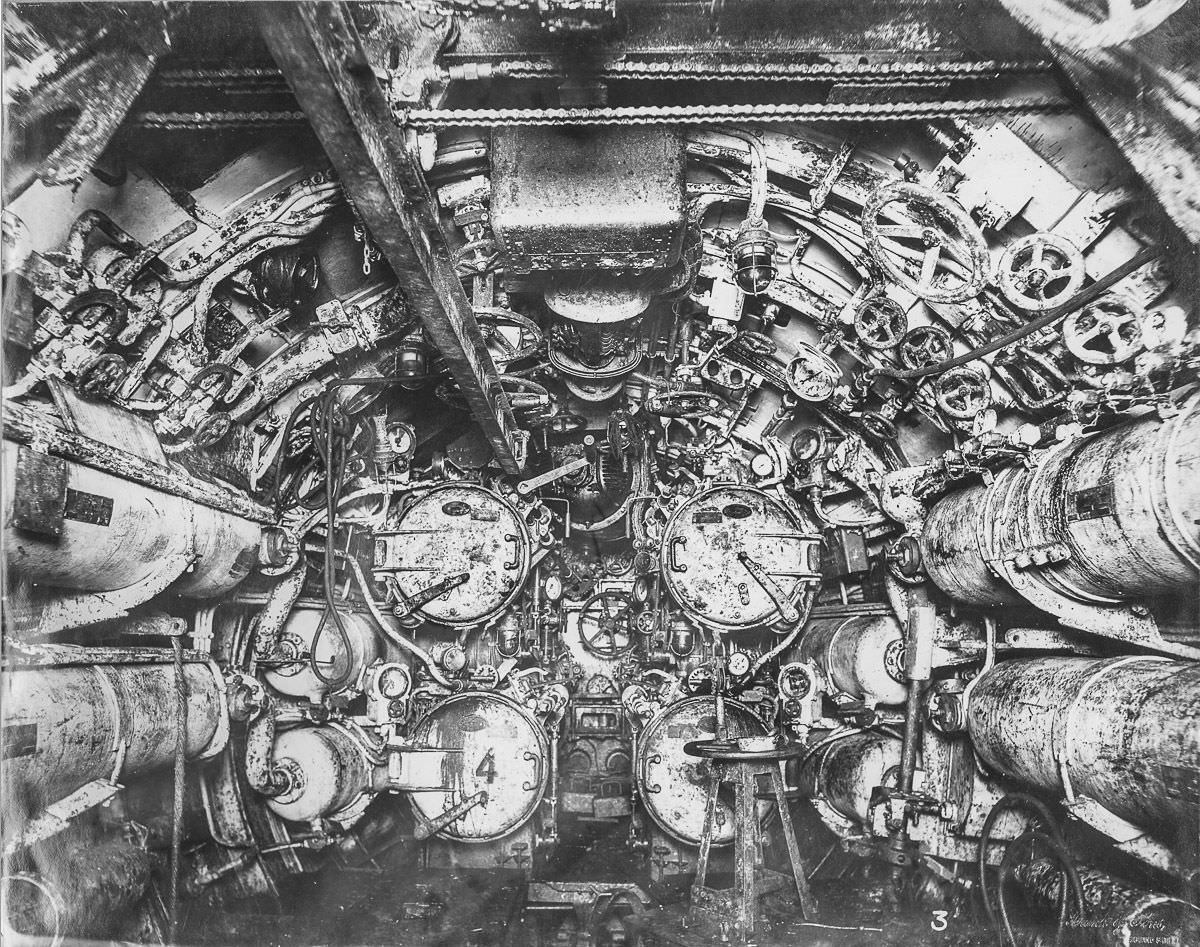
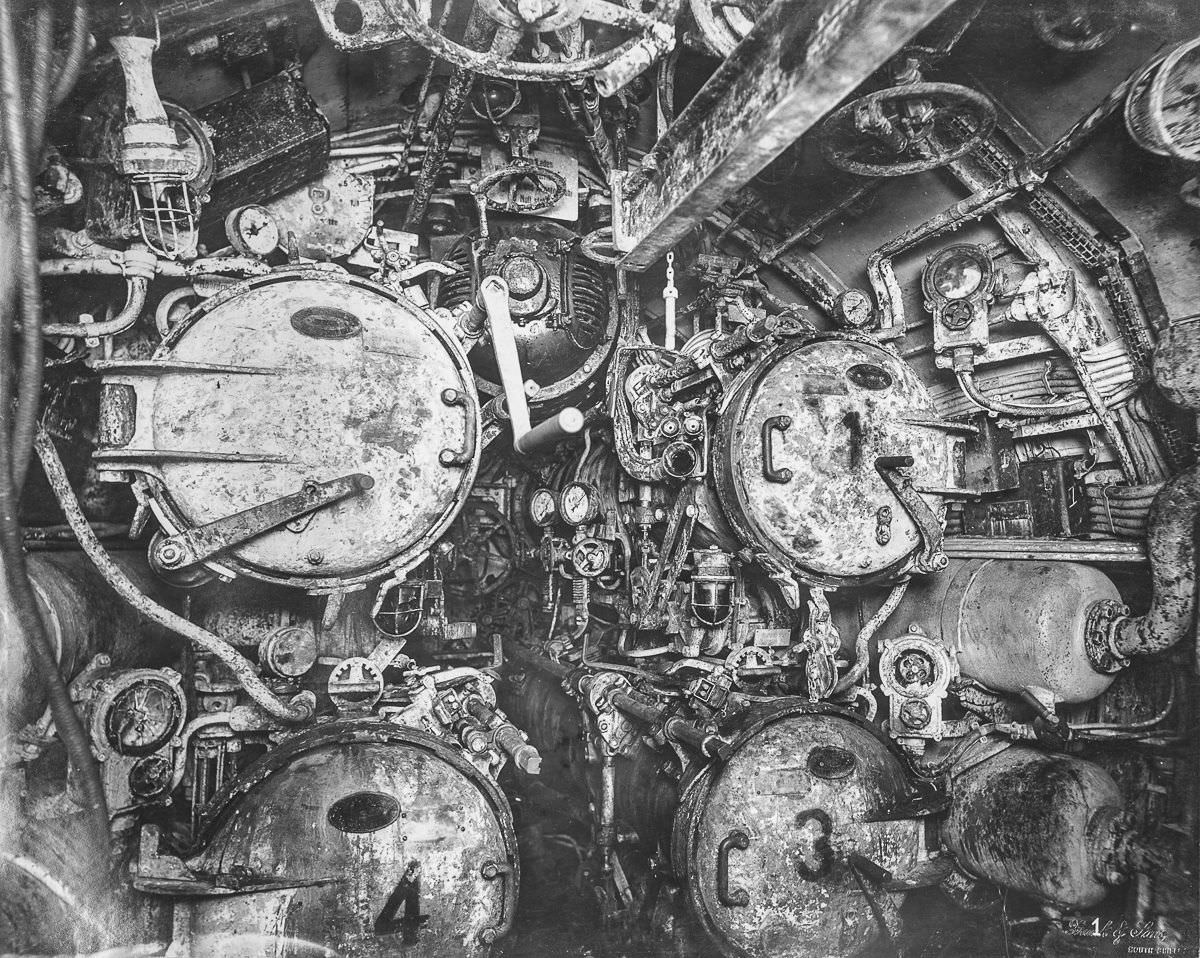
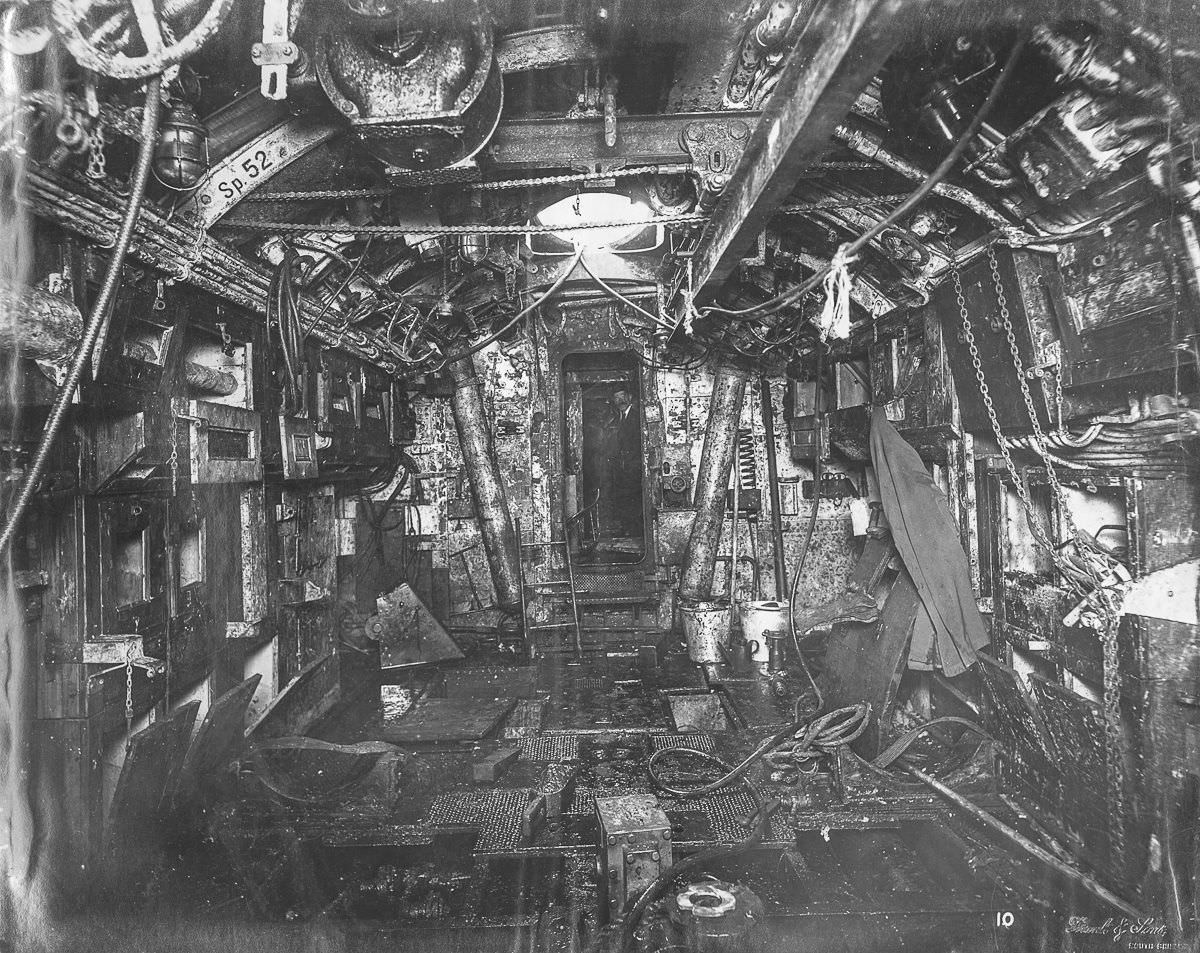
The submarine also had an aft torpedo room, extending the boat’s offensive reach to multiple directions. This layout meant the crew operated in a weapon from end to end, with living and working spaces wedged in between the armaments.
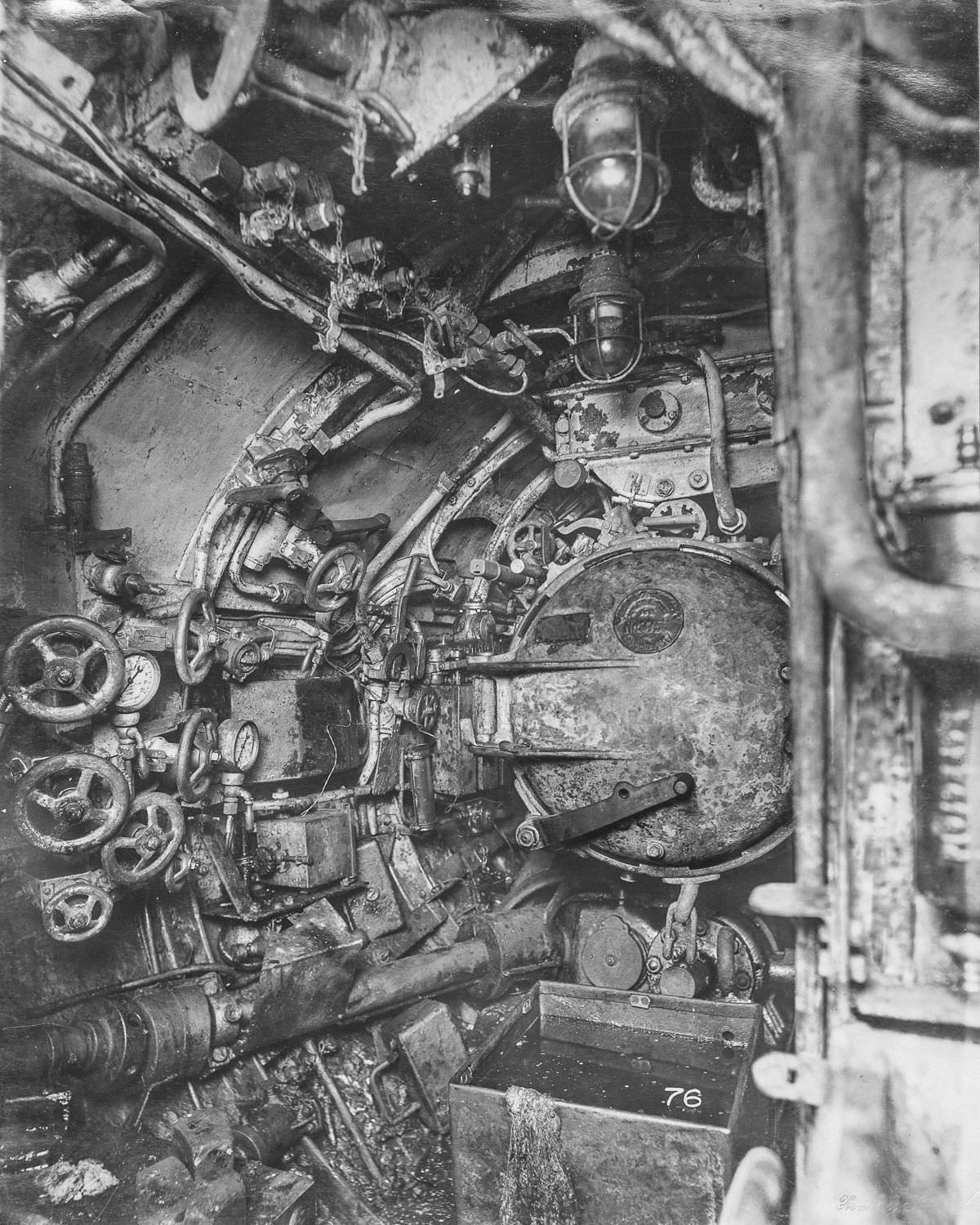
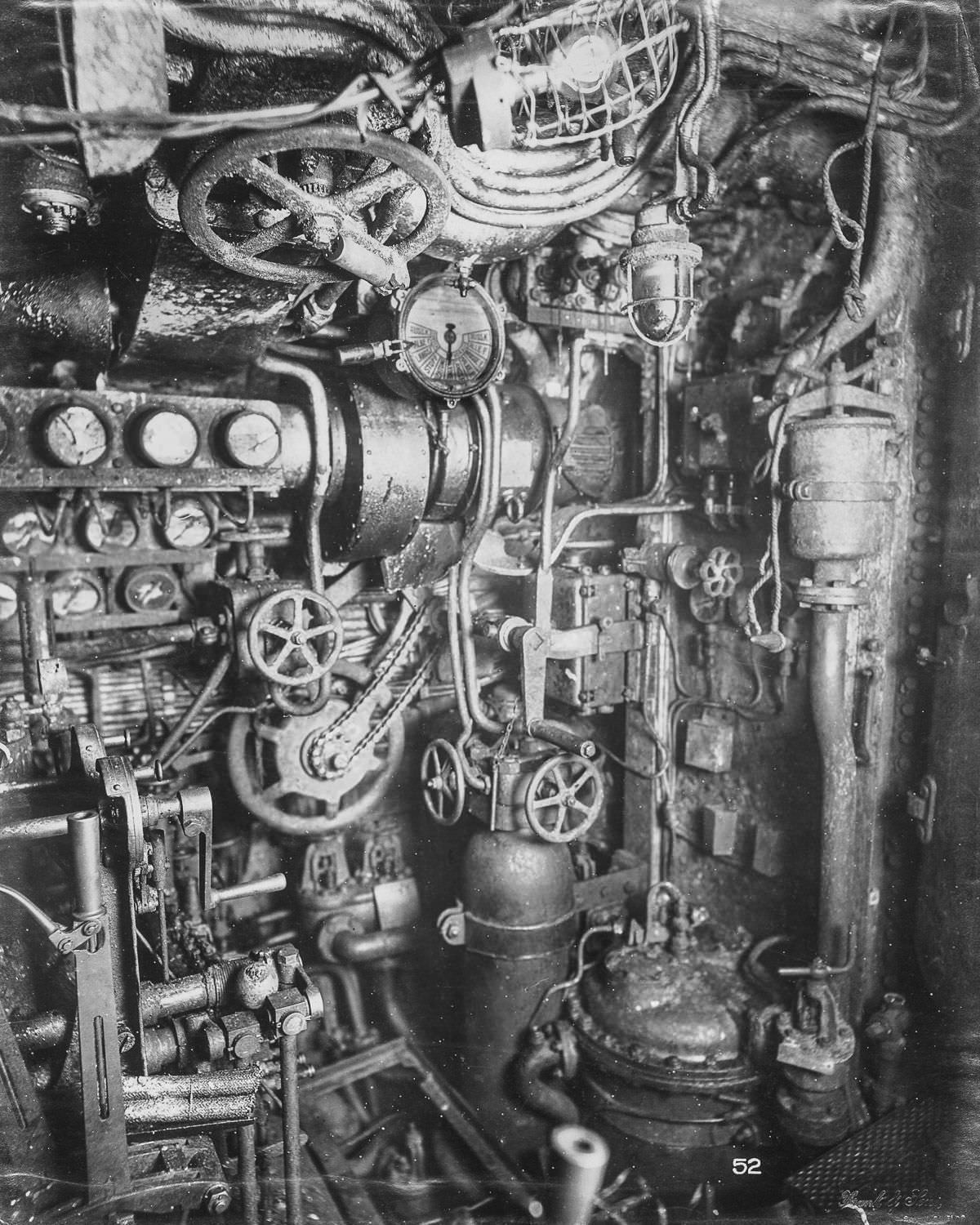
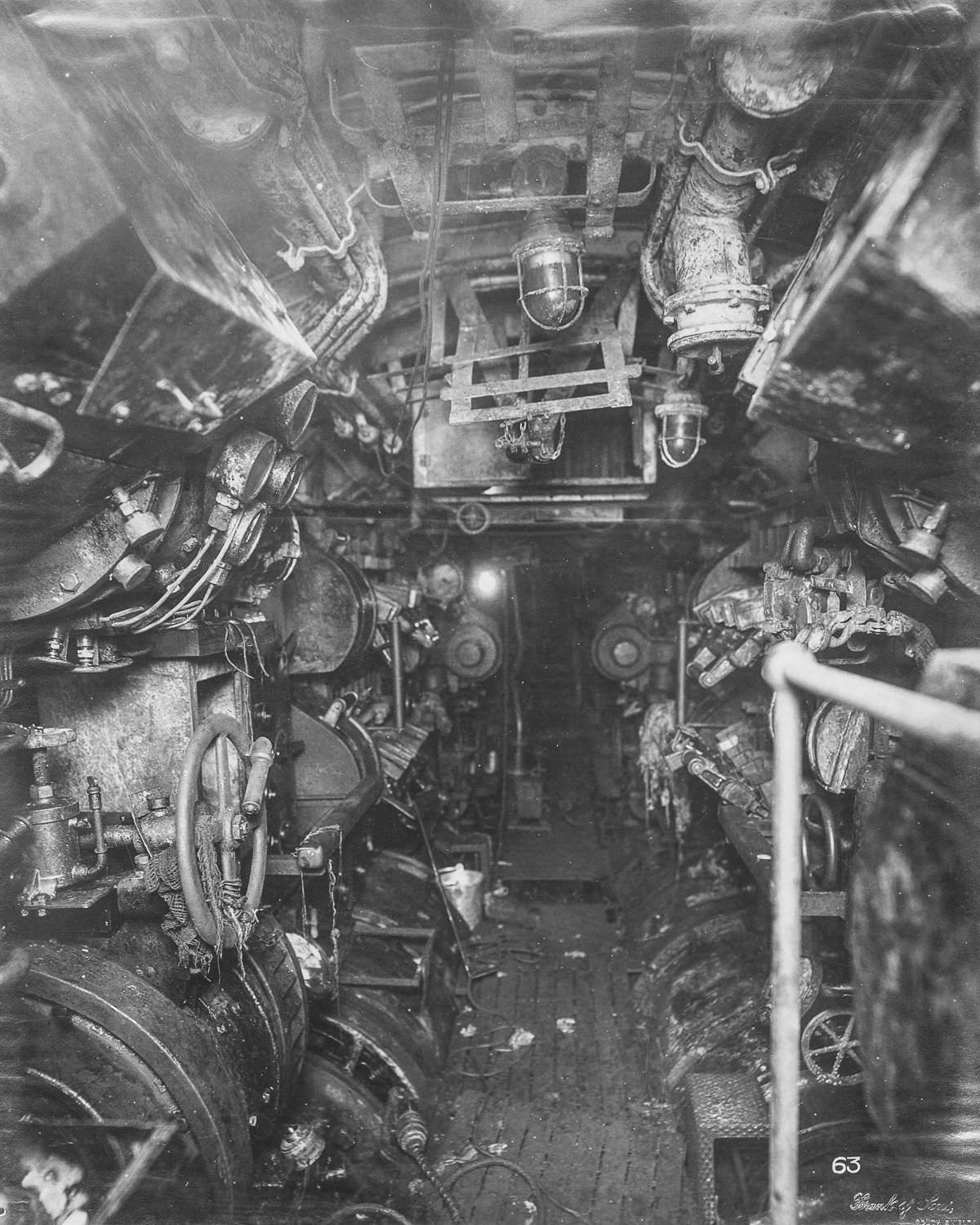
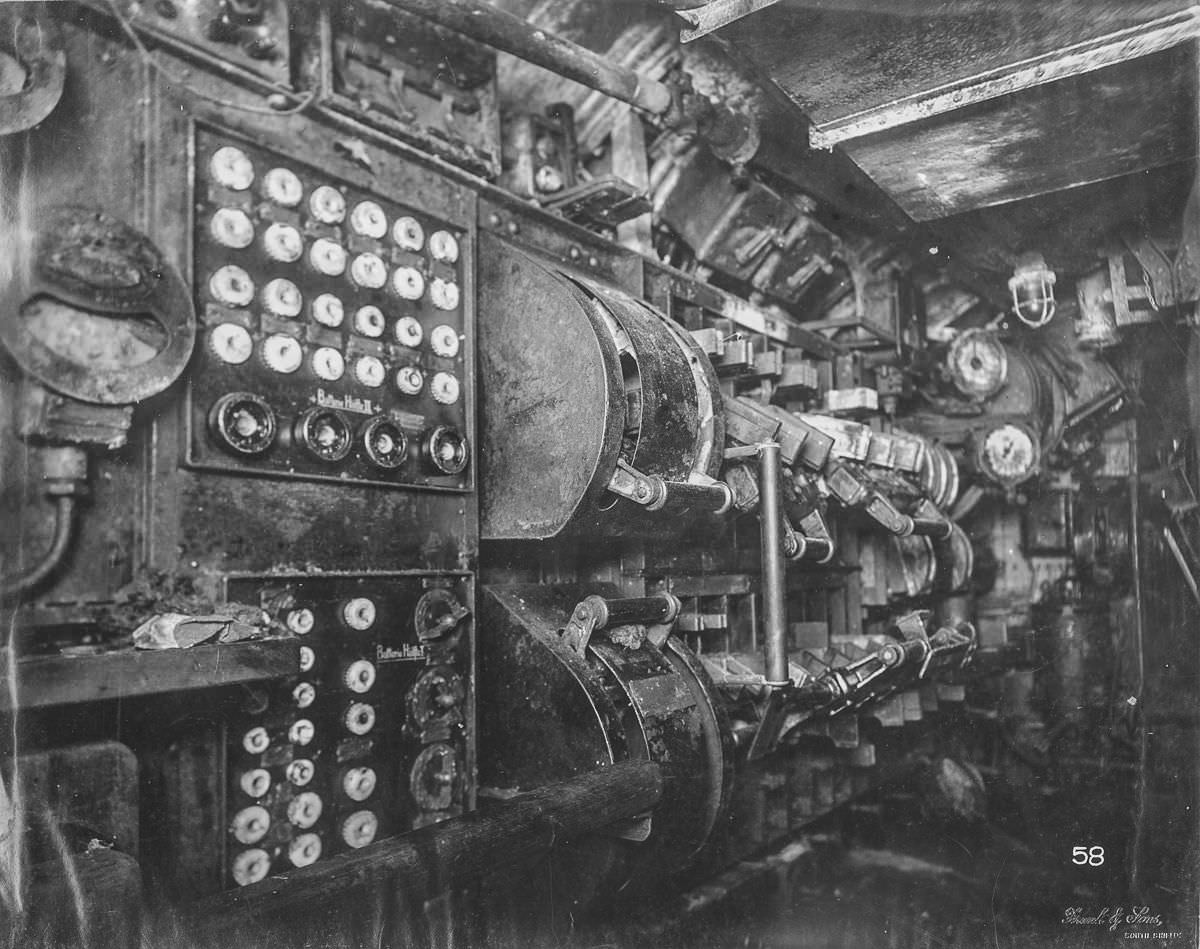
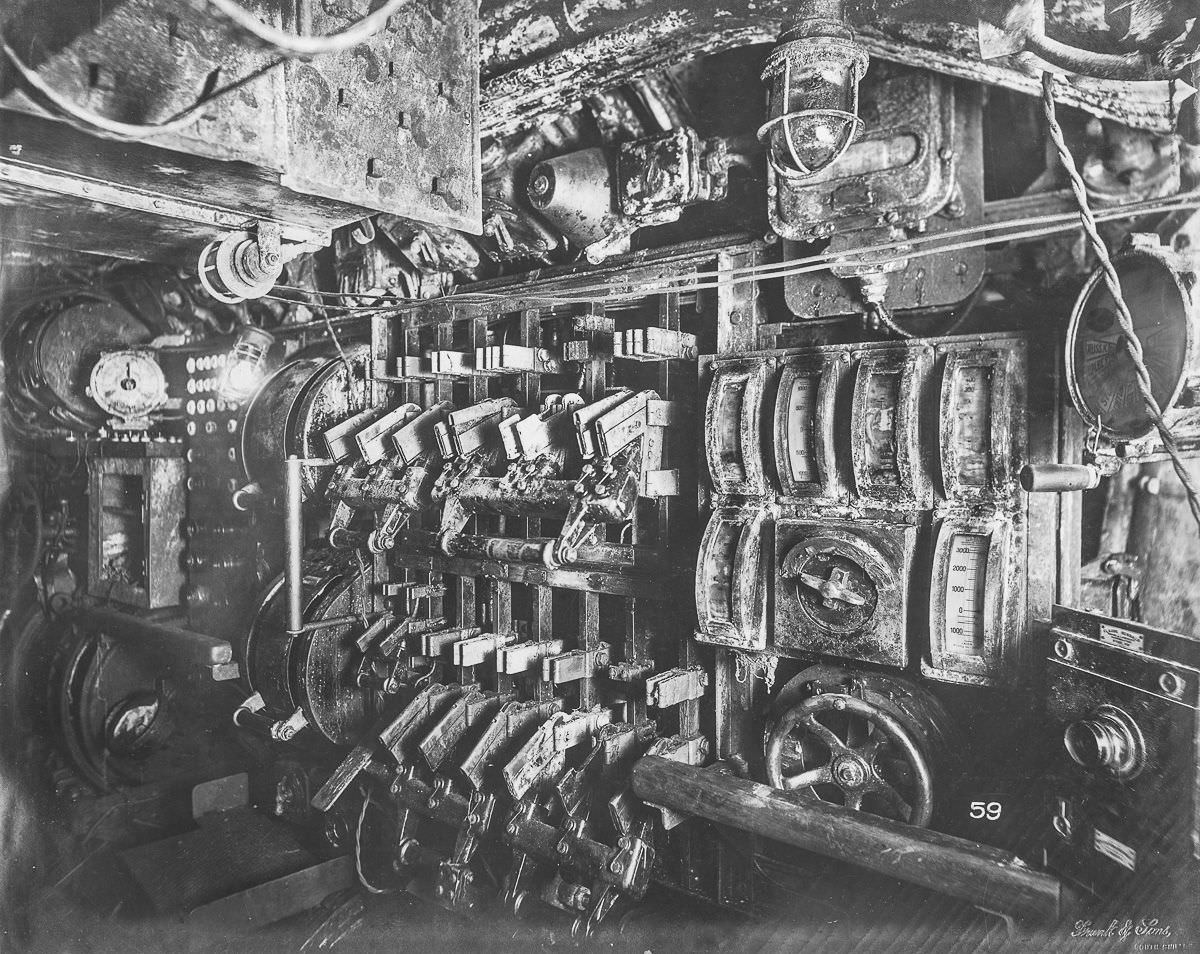
Power came from two sources. On the surface, diesel engines drove the boat and recharged the batteries. Submerged, electric motors took over. The engine room photographs reveal large, heavy machinery crammed into the hull alongside narrow walkways. The electric control room managed the transition between these two power systems.
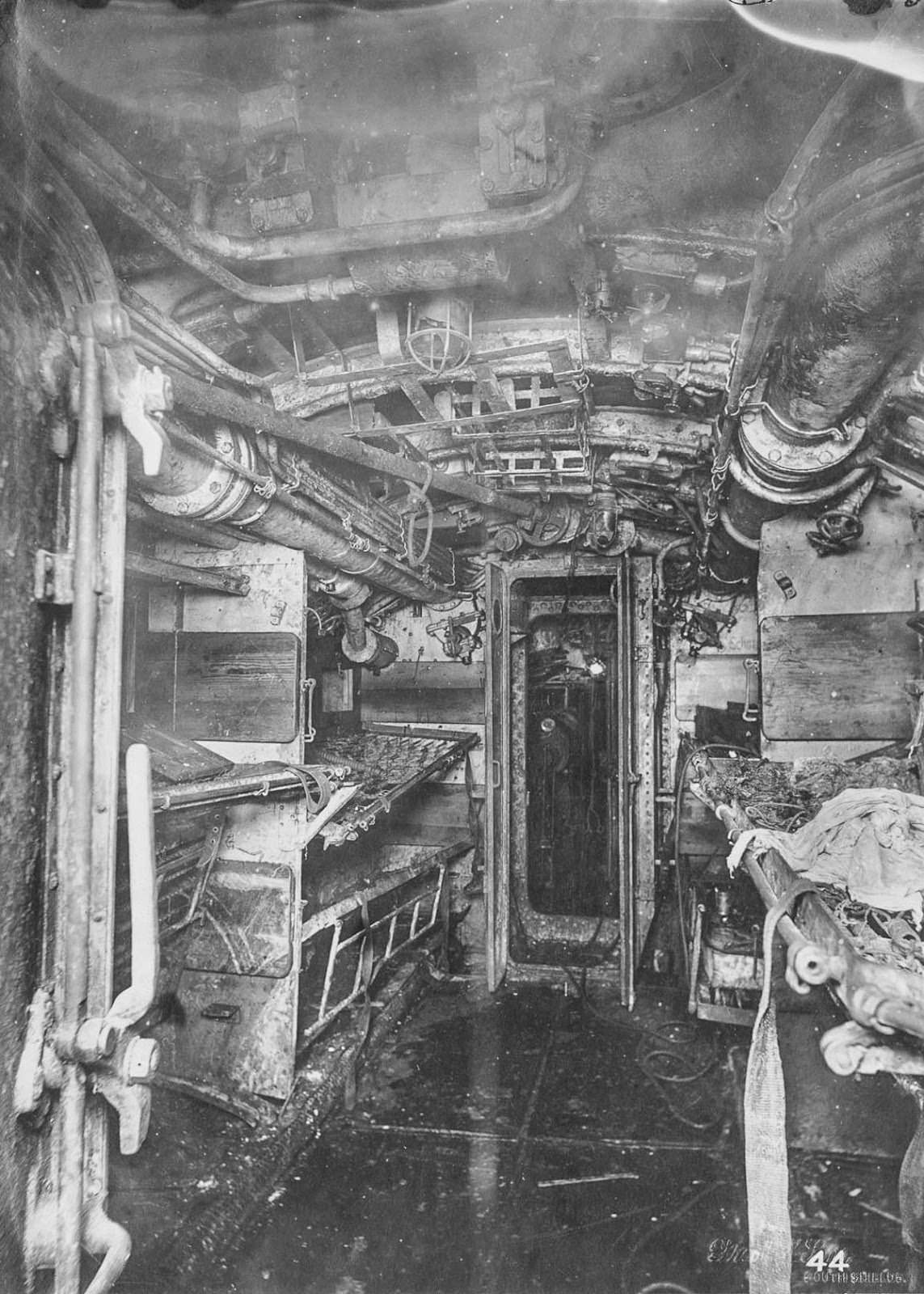
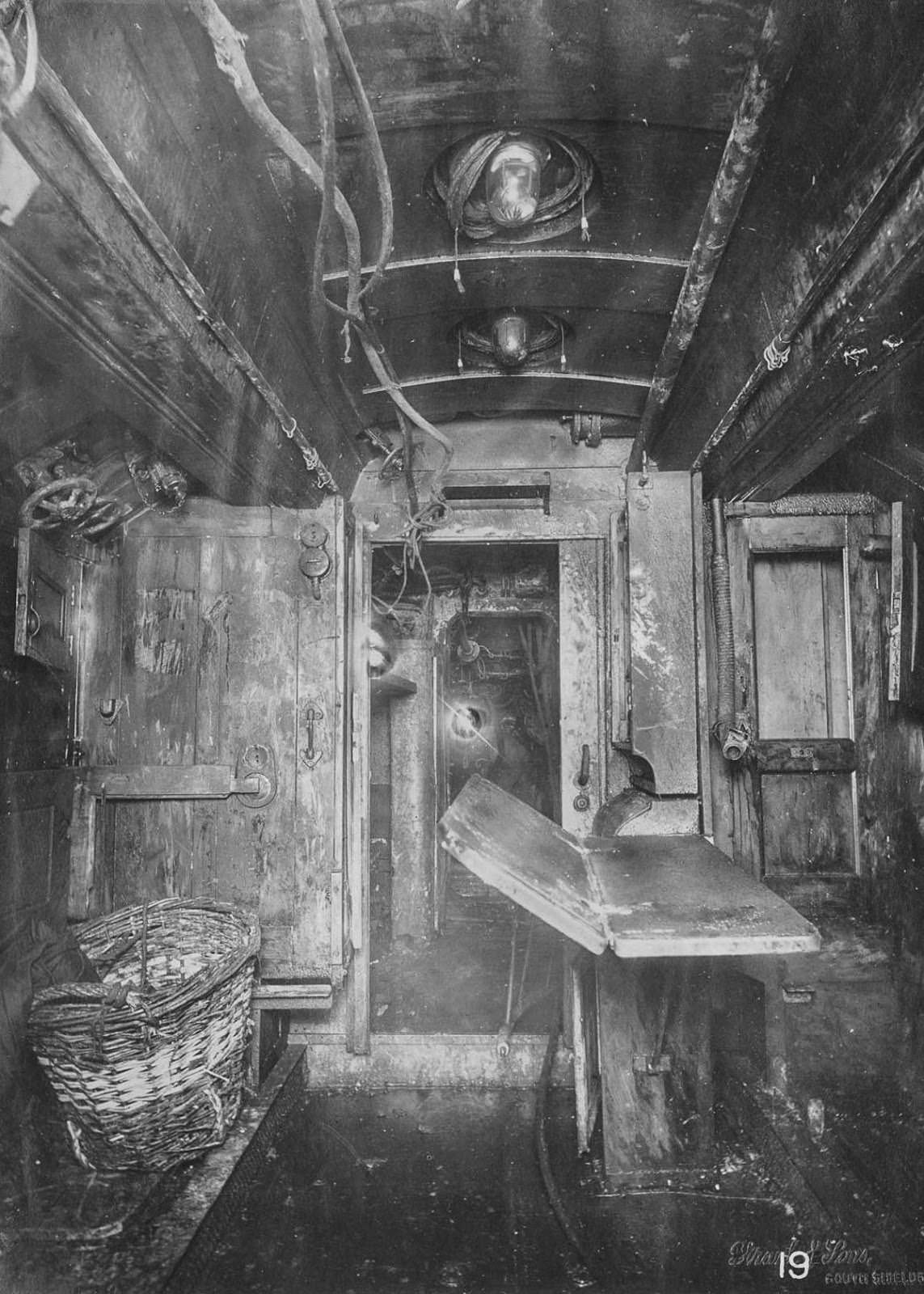
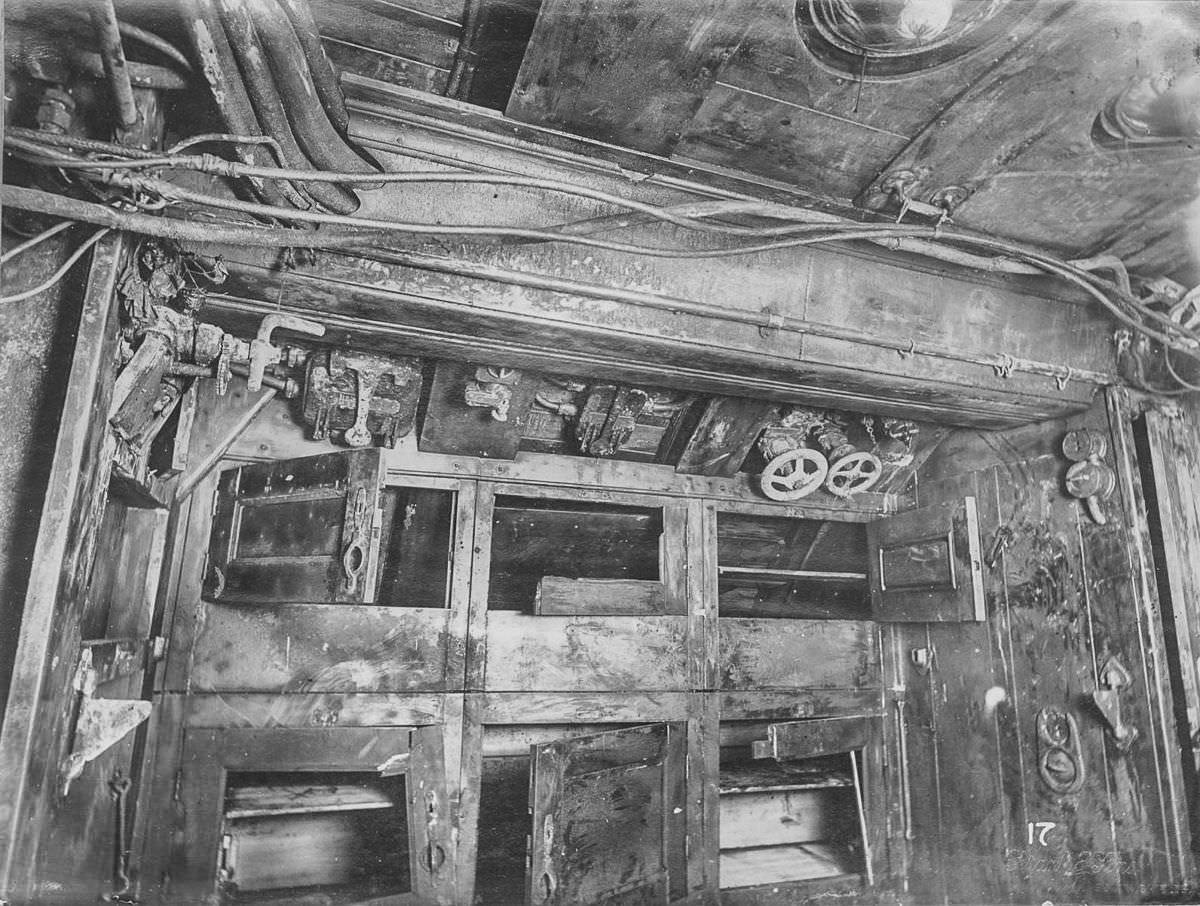
The crew of UB-110 lived in whatever space the machinery left behind. Bunks were fitted into compartments alongside pipes and equipment. Lockers held personal belongings and kit. A mess table gave the men a place to eat during long patrols, though comfort was never part of the design. These men lived inside a weapon.